St. Paul’s young adults are claiming the faith as their own
By John Sorce john.sorce@theleaven.org
OLATHE — Roughly nine out of 10 cradle Catholics stop attending weekly Mass as adults. That staggering statistic was in a study published in Notre Dame’s Church Life Journal back in August.
But St. Paul Parish in Olathe has a group trying to keep the young adult community rooted in their faith.
Currently led by Theresa Burg, the St. Paul young adult group started just under two years ago when associate pastor Father Agustin Martinez approached Burg’s brother Karl, who initiated the group but had since gotten engaged and was no longer able to dedicate the time to run it.
“He saw a need for community amongst young adults, especially those who are coming out of college and had built a lot of community there,” Burg said. “I think there was a need for this type of ministry at the parish, and they were more than
THEY SAY YOU ARE MOST LIKE THE FIVE PEOPLE YOU SPEND THE MOST TIME WITH, AND I THINK THAT’S ESPECIALLY TRUE. SO, I WANT TO SURROUND MYSELF WITH OTHER CATHOLIC ADULTS.
THERESA BURG ST. PAUL YOUNG ADULT GROUP LEADER
happy to support the formation of this group.”
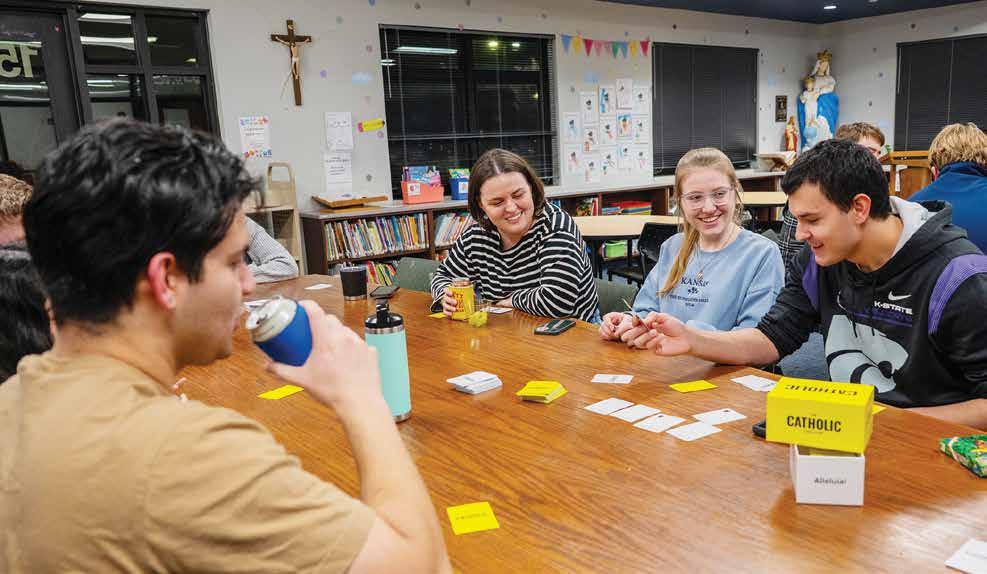
The group tries to get together a few times a month. Their one constant is currently a game night on the second Thursday of each month.
They are also working on implementing events around book clubs and Bible studies, and are also brainstorming ways to incorporate the Beatitudes from the Heartland.
“We’re always looking for ways that we can serve our church and our fellow brothers and sisters,” Burg said.
While open to young adults from ages 18 through 35, most of the members of the group are either in college or a few years out.
Trying to find community during that season of life can be difficult.
“There are a lot of difficulties trying to transition into new aspects of life,” Burg said. “In my case, I’m out of school and starting to work, and I’m trying to find the people that I want to spend time with who are like-minded.
“They say you are most like the five people you spend the most time with, and I think that’s especially true. So, I want to surround myself with other Catholic adults.”
One of the group’s members, Carson Ritter, is currently a senior at the University of Kansas. But he makes the time to travel back from Lawrence when the group has events.
“My college has some things, but this is a good community here,” Ritter said. “I’ve known a few of
Major developments in the U.S.-Iran conflict are unfolding quickly, often beyond the reach of our weekly print deadline. Please look for stories on how these events are impacting Catholics here and around the world in upcoming issues; on our website (theleaven.org); and on Facebook and Instagram (theleavenkc).
these people for a while and they are all around my age, so we have similar things going on in our lives.”
The community aspect is important to Ritter, and it has helped him be more open about being Catholic.
“[This group has] helped me speak out about my faith a lot more,” he said. “After being with people that are my age and believe the same thing, I talk about it more often.”
The group also gets involved in the Olathe community, having organized a service project in November to rake leaves in the yards of
>> See “YOUNG” on page 4
LEAVENWORTH — The University of Saint Mary (USM) here is now the only institution in the country offering fully in-person prison education degree programming across state, federal and military correctional facilities.
In February, USM received final authorization from the U.S. Department of Education to continue operating its Prison Education Program at two additional correctional facilities, expanding its approval to three fully accredited locations.
With this authorization, USM now operates federally approved programs at Lansing Correctional Facility, the U.S. Disciplinary Barracks and the Federal Correctional Institution, Leavenworth.
“This approval represents a significant milestone for the University of Saint Mary and for the
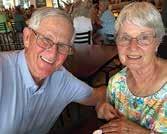
Murray and Carolyn Anderson, members of Annunciation Parish, Baldwin City, celebrated their 60th wedding anniversary in February with family. The couple was married in Jamestown on Feb. 26, 1966. Their children are: Michele King, Baldwin City; Rene Edwards, Dallas; and Bradley Anderson, Roeland Park. They also have seven grandchildren.
students we serve,” said Michelle Workman, Prison Education Program director. “Our commitment is to provide high-quality, in-person, higher education that meets students where they are and supports degree completion.”
Saint Mary began offering programming under the Second Chance Pell initiative and, following the restoration of Pell Grant eligibility for incarcerated students, successfully completed the Department of Education’s Prison Education Program approval process for all three sites.
USM offers associate and bachelor’s degree pathways for incarcerated students as they serve their sentences. Courses are delivered in person by USM faculty, maintaining the same academic standards, curriculum and institutional oversight as all USM programs.
POLICY: The Leaven prints 50, 60, 65 and 70th anniversary notices.
DEADLINE: 10 days before the desired publication date.
INCLUDE THE FOLLOWING:
• The couple’s names
• their parish
• the date they were married
• church and city where they were married
• what they are doing to celebrate
• date of the celebration
• names of children (no spouses)
• number of grandchildren and great-grandchildren;
WHERE TO SUBMIT: Email: todd.habiger@theleaven.org.

March 6
Archbishop’s Invitational High School Canvas and Quill Exhibit awards and reception — Savior Pastoral Center
March 7
Confirmation Mass — Christ the King Parish, Topeka
March 8
Pastoral visit and Mass, Sacred Heart-St. Joseph Parish — Sacred Heart Church, Topeka
Confirmation Mass — Most Pure Heart of Mary Parish, Topeka
March 9
USCCB Committee on Laity, Marriage, Family Life and Youth — virtual meeting
March 11
Presbyteral Council meeting — chancery library
Legatus Mass and dinner presentation — Rockhurst High School - Sacred Heart Chapel, Kansas City, Missouri
March 12
Confirmation Mass — Church of the Nativity, Leawood
March 17
Confirmation Mass, St. Benedict Parish/Maur Hill-Mount Academy — St. Benedict Church, Atchison
March 18
Mass — Maur Hill-Mount Academy, Atchison
March 20
Tour of Jewish Community Center, Overland Park
March 9
Confirmation — Holy Cross, Overland Park
March 10
Confirmation of Leavenworth parishes — Immaculate Conception, Leavenworth
By Josephine Peterson Catholic News Service
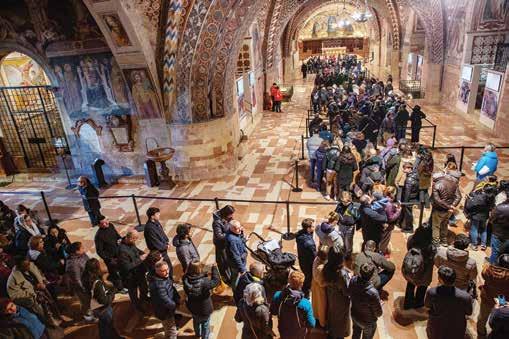
ROME (CNS) — Eight hundred years after his death, the bones of St. Francis of Assisi have been placed on public display for the first extended public viewing in history, drawing hundreds of thousands of pilgrims to the hilltop town.
Following Pope Leo XIV’s approval and blessing of this exposition, St. Francis’ skeleton was exhumed from the sarcophagus where it normally rests and placed on a specially prepared table in the crypt of the Basilica of Saint Francis of Assisi Feb. 21. His remains will be on display until March 22, when Cardinal Matteo Maria Zuppi, archbishop of Bologna and president of the Italian bishops’ conference, is to preside over a closing celebration.
As of the opening day Feb. 22, more than 370,000 people had registered to venerate the remains, according to the Franciscan community at the Sacred Convent of Assisi. The majority have been Italian pilgrims, though the secondhighest number of registrations have so far come from the United States.
The friars at the Sacred Convent in Assisi described the exposition as “an invitation to rediscover the legacy of Francis, a man whose message of peace and fraternity continues to resonate deeply with humanity.”
For some, the sight of a saint’s bones inspires devotion. For others, it may provoke discomfort or morbid curiosity about why the Catholic Church displays the physical remains of its holy men and women.
According to Catholic tradition, the physical remains of a saint are known as first-class relics. They are venerated not as magical objects, but as tangible reminders that holiness touches both body and soul.
Elizabeth Lev, a U.S. art historian who teaches in Rome, said relics serve as “a concrete reminder that the blessed or saint’s body is here on earth and his or her soul is with God.”
“It feels like you’ve got almost like a hotline into heaven,” she told Catholic News Service in 2011. The relic is “something we can see and touch, and it becomes our portal to a world we cannot see and cannot touch.”
Relics, she emphasized, are not

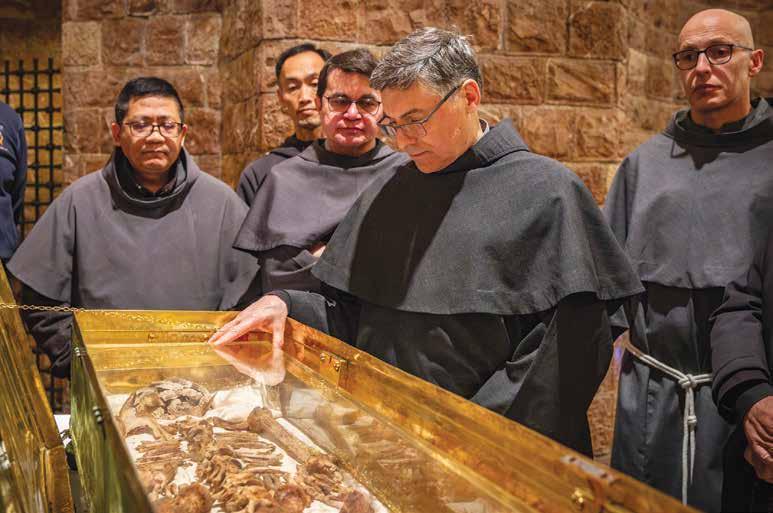
charms or spiritual talismans.
“God controls what he’s going to do and how he’s going to do it,” she said.
The object itself has no power; it is understood as a channel through which believers direct their prayers.
Even in a secularized age, relics continue to draw large crowds. Tours of saints’ remains in Europe and the United States in recent decades have attracted hundreds of thousands of visitors, including many who might not otherwise attend church regularly.
Assisi also holds the remains of the first millennial saint, St. Carlo Acutis, who was canonized last year. His body can be found at the Church of St. Mary Major, where more than 620,000 individuals visited in the first eight months of 2025, according to the Diocese of Assisi.
While in Paris, an estimated 2-3 million annual visitors go to see St. Catherine Labouré’s preserved body. Next to the altar, she lies in a glass shrine in the Chapel of Our Lady of the Miraculous
Medal, where she is reported to have seen the Virgin Mary in 1830.
The body of St. Thérèse of Lisieux went on a tour of the United States last year, attracting an estimated one million visitors across more than 30 stops. Her permanent shrine in Lisieux brings more than 600,000 visitors annually.
Lev suggested that the enduring appeal may reflect a deeper hunger.
“An oversecularized world that rejects the divine and embraces the finite and man-made leaves a void in people,” she had said. Relics, and the traditions surrounding them, offer a reminder that death does not sever the bonds between the living and the dead in the Christian imagination.
At the Basilica of Saint Francis in Assisi, the friars said in the press release that they invite the faithful to be inspired by the mortal remains of St. Francis, that death can bear fruit.
“This awareness, eloquently expressed through the mortal remains of St. Francis, serves as an invitation
to view one’s personal life in a similar light: Like Francis, each person is called to give themselves generously in relationships, becoming a living tree of fraternity that continues to bear fruit in the history of the church and the world,” the convent’s press release said.
The monthlong exposition includes a vigil with members of the Italian Parliament, a youth gathering titled “Sister Death: An Experience to Embrace” and a theological conference exploring St. Francis’ understanding of death not as an end, but as a passage.
Though he died 800 years ago, St. Francis is still reminding the faithful that death should be viewed as a transition. During his life, he was known for his love of nature, renounced his wealthy upbringing to live as a beggar and restored several chapels. He viewed death not with fear, but as a sibling, calling it “Sister Death.” For the saint, death was not the end, but a peaceful transition to eternal life with God.
By Jan Lewis Special to The Leaven
KANSAS CITY, Kan. — During its Pastoral Week in Portland, Oregon, in late January, the National Catholic Office for the Deaf (NCOD) presented the 2026 Father David Walsh Pastoral Worker of the Year Award to Katie Locus, deaf ministry consultant for the Archdiocese of Kansas City in Kansas.
Named in honor of NCOD’s founder, the award recognizes individuals whose leadership and dedication have made a lasting impact on the lives of deaf Catholics. It is a way of expressing gratitude for faithful service and for creating accessibility, inclusion and belonging within the church.
Locus lives these values through her ministry and groundbreaking work to ensure that deaf Catholics can encounter the fullness of the faith in their own language.
Locus’ path into deaf ministry began unexpectedly. She grew up deaf and became a teacher. While she was teaching English, her relationship with God began deepening and she began discerning her future. After applying to doctorate programs and not being accepted, she found herself discouraged and uncertain about what direction to take.
She recalls going to church, feeling sad and confused. During Mass, the hymn “Here I Am, Lord” was sung. In that moment, she sensed God inviting her toward something new.
“That is how I ended up in this ministry,” she said. “God knew what I needed more than I did.”
Through discernment and redirection, she accepted a vocation that has since touched countless lives. As deaf ministry consultant for the archdiocese, Locus serves as a bridge between the Catholic Church and the deaf community throughout the archdiocese.
Her work goes beyond accommodation, however; it fosters true belonging.
When reflecting on receiving the national award, Locus responded with humility.
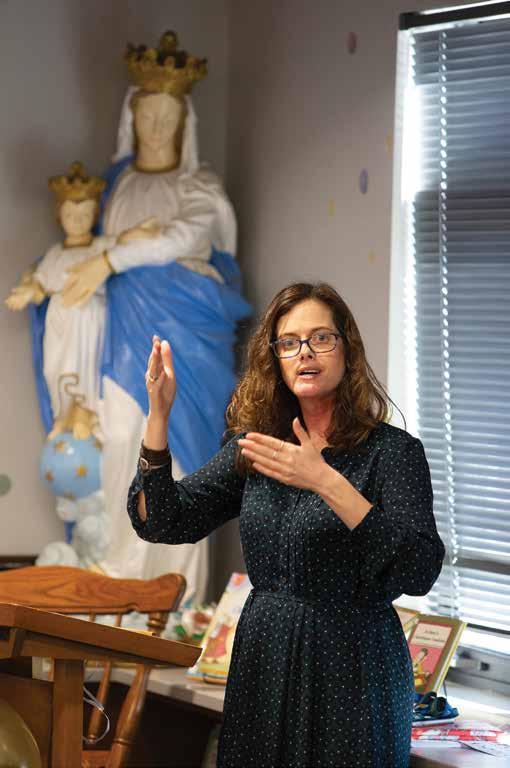
“Since NCOD has been around for a long time, the organization works with many, many people all over the country,”
>> Continued from page 1
parishioners in need.
“It’s important to pour into our community, to be involved and show love and support,” Burg said. “I especially see the need for help in areas with us being young adults, we are able-bodied and capable of helping others.
“Having events like that not only brings us together as a young adult community, but it helps us bridge the gap to see who else we can serve.”
Narrowing that gap between younger and older parishioners, Burg said, is important.
“There’s a lot of mentorship and stewardship that can happen when you befriend people of different ages,” she said. “There’s so much wisdom and life experience we can draw on and hope to aspire to.”
Another member, Samuel Curnes, found out about the group from a flyer he received after Mass last year.
“The more I come to these groups, the more it helps me to remember that Catholicism is meant to be the center of my life,” he said.
“We are built for community, and it’s worth it,” he added.
Getting involved is as simple as joining the group chat. That and more information can be found online at: spcatholic.org/young-adults.
Burg knows that many young people are searching for community. Here, she thinks they find it.
“Most young adults are looking for community,” Burg said. “I think this has been a fantastic way to encourage people and help them find like-minded individuals who are going to help make them good Catholics and, hopefully, good saints.”
been in ministry for almost nine years, so it is both surreal and extremely humbling that they would recognize me.”
Her words reveal the heart of her ministry: service rooted in gratitude and love for the deaf Catholic community.
Among Locus’ most significant contributions is her leadership in developing the ASL YouCat Translation Project, which brings Catholic catechetical teaching to deaf Catholics in American Sign Language. This is the first (and continues to be the only) catechism that is translated into American Sign Language (ASL). It is a resource that strengthens faith formation and honors ASL as a living language.
She was also recognized for her presentations on “The Joy and Beauty of Womanhood,” based on the writings of St. Pope John Paul II. Locus has been asked to present for retreats and reflection days.
“It is a true blessing to have her work in our archdiocese!” said Debra Niesen, lead consultant for pro-life ministries. Locus and her team are currently developing lesson plans to accompany each YouCat video.
“After that, we will start trying to discern with our deaf Catholic community what is next,” she said. “God willing, the Holy Spirit will guide us and it will be something even more amazing.”
But they could use help.
“This ministry is God’s ministry,” she said, “and prayers are always needed to make sure we do what the Lord wants of us, especially with the constant challenges that we face with this particular ministry.”
“Ninety-nine percent of the deaf community in the United States are not affiliated with any church at all,” she continued, “so your prayers are needed to help each deaf person encounter God.”
Locus said. “They also have a list of nominated candidates every year for this award from all over the country! I’ve only

Father Walsh devoted his life to ensuring that deaf Catholics were fully included in the life of the church. Through her leadership, humility and vision, Locus continues that legacy.
By Bill Tammeus
Adapted and reprinted with permission from Bill Tammeus and Flatland
If you were to visit the Condé Nast travel site about the World Cup games coming here to the Heartland in June, you might conclude that athletes and their fans have zero interest in religion.
The site, after all, never mentions all the planning that people of faith here are doing now to make sure they can meet the spiritual needs of World Cup athletes and fans.
Many of the area’s faith communities, in fact, are making detailed plans to ensure that everyone has religious support while they’re here.
And that should be no surprise. The connection between religion and such major sporting events goes back at least to the ancient Olympic games almost 800 years before Jesus was born. Those games were mostly religious festivals dedicated to the Greek god Zeus.
Yet it is Catholicism that arguably has the closest tie to modern organized soccer — owing to a 19th-century believer inspired by words from the head of the church. Local Catholic organizers are, in fact, among the most active in planning how to serve World Cup visitors, along with leaders of other Christian denominations.
For instance, the Diocese of Kansas City-St. Joseph is working closely with the Archdiocese of Kansas City in Kansas to help people who “have never been to Kansas City and may be looking for that anchor for them while they’re here to be able to practice their faith,” says Ashlie Hand, director of communications for the diocese.
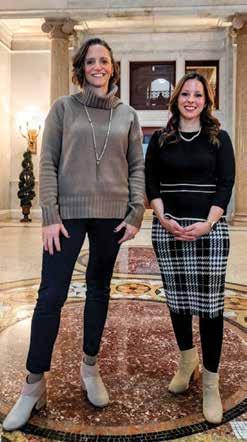
Hand is working with Marissa Easter, director of communications for the archdiocese, on World Cup plans.
The planning isn’t done yet, but Easter says that “from a religious aspect, we want them to be able to find Catholic services. We also have multiple religious sites and special sites for them to see if they have time. We’ve also talked about having special Masses.”
In fact, Catholic leaders here have created a special website for all of this, which is based on the OneKC website created by the Kansas City Area Development Council.
The Episcopal Diocese of West Missouri is also “discussing plans with our staff and parishes” to make “sure our parishes are aware of the World Cup and discussing how we can prepare to welcome those visiting,” says diocesan communications director Zachary Phillips.
Beyond that, UniteKC, dedicated to racial healing and reconciliation, reports that in January, some 70 leaders gathered at Colonial Presbyterian Church to dream and plan how churches here can welcome and minister to World Cup guests.
The group said it “shared multiple ‘lanes’ (tracks) where individuals, churches and mission groups can join in to serve. You’ll have the opportunity to explore several areas of impact, including prayer, evangelism, watch groups,

The World Cup is coming to the United States this year, with several games being played
As Kansas City prepares to become a host city for the World Cup this summer, The Leaven is searching for Catholic stories related to soccer’s most prestigious tournament.
Are you or a parishioner you know volunteering during the World Cup, attending a game or hosting visitors from other countries?
Is your parish holding watch parties, or scheduling special Masses or other activities related to the World Cup?
Let us know by sending an email to Moira Cullings at: moira.cullings@theleaven. org. Any stories we don’t cover in print will be shared on our social media channels.
concerts, camps, community outreaches, serving opportunities and combating sex trafficking.”
And a KC2026 spokesperson said that faith came up in a media briefing with KC2026 CEO Pam Kramer recently and that “our team has been looking to share the story of faith communities that are planning to accommodate an influx of worshipers during the nearly six-week tournament.”
Not surprisingly, large congregations here also are planning ways to connect with the World Cup.
For instance, the Rev. Adam Hamilton, founding and senior pastor of the United Methodist Church of the Resurrection, said, “We have a sermon series planned around the World Cup with interviews with pro soccer players . . . and the vacation Bible school theme is built around the World Cup.”
And that church’s downtown location has painted a huge welcome sign on its flat roof that can be seen from airplanes and nearby tall buildings.
But the Catholic effort here may be the most organized and advanced when it comes to institutional religion engaging with the soccer tournament.
the
“When this opportunity really started to take off,” said Hand, “we started to think about how to embrace that regional idea, knowing that these international visitors aren’t coming to Kansas City, Missouri, or to Kansas City, Kansas, but they’re coming to the region. So how could we present the face of the Catholic community from that regional perspective?”
That’s how the OneKC Catholic website was born, but she said that although “we’ll use it to welcome World Cup visitors, it’s also going to have a life beyond that in welcoming new residents here looking for that Catholic connection.”
What’s the theology underlying such efforts? For Catholics, said Hand, “we talk a lot about Catholic hospitality being a tenet of our faith. Such as welcoming the stranger, being a comforting source and a place to land.”
Beyond that, as this 2018 article from The Leaven (theleaven.org/the-catholicroots-of-the-world-cup), the archdiocese’s newspaper, describes it, the World Cup has Catholic roots: After “Pope Leo XIII issued what is considered the first major encyclical on social justice,” 17-year-old Jules Rimet, “a devout Catholic in France
to prepare local Catholics to welcome World Cup athletes and visitors in various ways. They are
at the time, was so moved by the pope’s words he helped form an organization to provide social and medical aid for the poor.”
But Rimet later went beyond that after he noticed how sporting events
>> See “SPORTS” on page 7
By Lorene Hanley Duquin OSV News
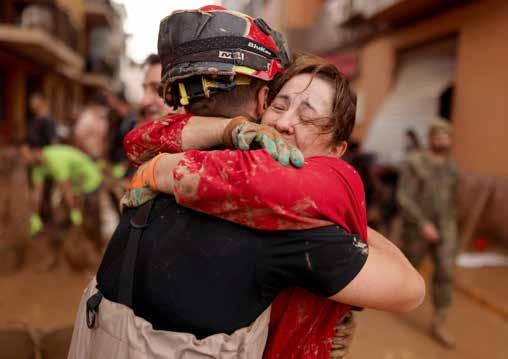
We need mercy because we live in an imperfect world. We all know people who have suffered a death in the family, a serious illness, divorce, a job loss or some other personal tragedy. We have heard shocking stories of violence, oppression, poverty, prejudice and abuse. And while we can’t stop every bad thing from happening, we can become more merciful in our response to people in need.
But what exactly is mercy? We tend to think of “mercy” as compassion or sympathy, but the word has a much deeper meaning. It is more than feeling sorry for someone. Having mercy means that we enter into the other person’s suffering. We feel the other person’s pain, see through the other person’s eyes, and place ourselves inside the other person’s heart and mind. When that happens, we are moved to respond in a merciful way.
The church gives us the spiritual and corporal works of mercy — seven each — to inspire us to action. You probably practice many of the corporal works of mercy through food and clothing drives, visits to the sick and homebound, and attending wakes and funerals. You practice the spiritual works of
mercy when you share your faith, spend time listening to someone who is going through difficulties, forgive those who hurt you, and pray for living and deceased family members and friends. The following are eight ideas rooted in the works of mercy to help you be more merciful every day: 1. Dare to really care. Allow yourself to look beneath another person’s surface needs and feel what that person is going through. Maybe it is physical pain. Or, maybe it is loneliness, rejection, discouragement or fear. Imagine that you are seeing this person through the eyes of Jesus. Then decide how you can help that person.
2. Don’t judge. Merciful people don’t say, “You got what you deserved,” or “You caused
this yourself.” Maybe the person did act recklessly, or refused to see a doctor, or continued to smoke or eat junk food. Let God be the judge of what happened. You are called to offer mercy and help in whatever way you can — no matter what the circumstances.
3. Avoid gossip. Merciful people refrain from gossip because they know that gossip is another assault on an already injured person. Pope Francis tells us: “It is so terrible to gossip! At first, it may seem like a nice thing, even amusing, like enjoying a candy. But in the end, it fills the heart with bitterness, and even poisons us.”
4. Refuse to retaliate. Merciful people don’t hold a grudge or try to even the score. They let it go, give whatever happened to God and forgive.

6. Cultivate little kindnesses. Small chances for kindness arise every day. No opportunity for mercy is ever insignificant. Allowing another car to merge into your lane, calling a grieving friend, checking on an elderly neighbor, helping a coworker and holding the door for someone are just a few examples. Sometimes, a smile or a word of encouragement can change a person’s whole outlook.
145:8-9). Mercy grows in us as we reflect on how God has been merciful with us.
Forgiveness allows you to let anger, hurt and bitterness drain out of your heart. It restores a sense of peace to your soul. Without forgiveness, you become a prisoner to your own resentments. With forgiveness, you mirror God’s mercy.
5. Don’t turn away. When faced with an opportunity to be merciful, our greatest temptation is to look away. It’s easy to rationalize that someone else is better able to help than you are. But the reality is, when we turn away from someone in need, we are turning away from Christ himself. If we want to be more merciful, we have to be willing to stand beside the other person — even if it makes our own lives more difficult. When we do that, we become more humble, kinder and more compassionate.
7. Accept mercy from others. It takes humility to admit that we, too, are in need of mercy. When you allow others to be merciful to you, you give them the opportunity to reach outside of themselves and enter into your pain. When that happens, they become instruments of God’s love to heal and comfort you.
8. Pray for mercy. Pray to become more merciful. Pray also for family members, friends, neighbors, co-workers and people you know who are in need of mercy. Pray for people who have hurt you. Pray for people around the world who are suffering. Pray that everyone in the world will respond to God’s mercy and, in turn, be merciful to one another.
We can be merciful because God is merciful: “The Lord is gracious and merciful, slow to anger and abounding in mercy. The Lord is good to all, compassionate toward all your works” (Ps
Jesus is our model of merciful living. Throughout his life, Jesus responded with mercy to people in all walks of life. He befriended the rich and the poor, tax collectors, prostitutes, lepers, a Roman centurion and a Samaritan woman. He healed the sick, gave sight to the blind and fed the hungry. He grieved when his friend Lazarus died, accepted the human weakness of his disciples and forgave the people who crucified him.
Mercy was not generally practiced in the time of Jesus. The Romans considered mercy a weakness. The Pharisees were so self-righteous that they showed little mercy. But the people who experienced the mercy of Jesus were transformed, and they became merciful to others. In fact, in the Acts of the Apostles, we see how the early Christians followed in the merciful footsteps of Jesus.
Jesus said, “Blessed are the merciful, for they shall obtain mercy” (Mt 5:7). Our efforts to become more merciful will not only change the people around us, they will change us as we become ever kinder and more compassionate.
Hanley Duquin is a Catholic author and lecturer who has worked in parishes and on a diocesan level.
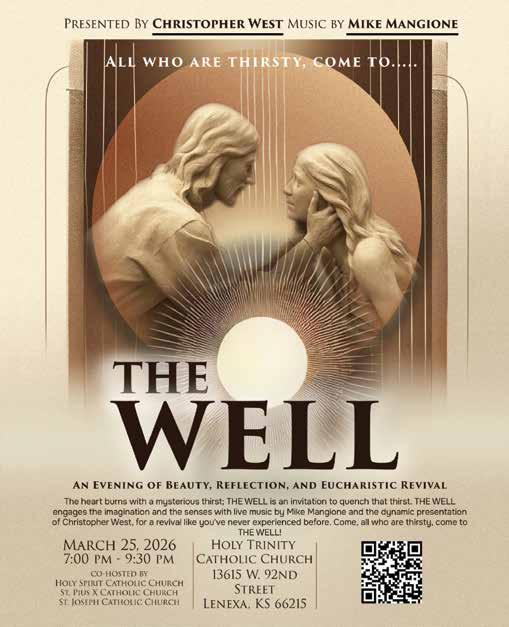
KANSAS CITY, Kan. — Four parishes from the Archdiocese of Kansas City in Kansas are coming together on March 25 to host “The Well” with Christopher West and Mike Mangione.
An evening of enlightenment, entertainment and reflection, “The Well” has been called “a renewal like you’ve never experienced before.”
Designed to satisfy a deep, often misdirected, human thirst for love and meaning, “The Well” engages the imagination and senses with live music, lights, graphics and a powerful presentation on how God reveals himself through creation and how our desires are meant to draw us closer to him.
Mangione is a professional American folk/blues musician who has toured the world, and West is one of the world’s most recognized speakers on St. John Paul II’s theology of the body.
The event will be held at Holy Trinity Church in Lenexa, and co-sponsored
T“The Well: An Evening of Beauty, Reflection and Eucharistic Revival”
Date: March 25 at 7 p.m.
Place: Holy Trinity Church, 13615 W. 92nd St., Lenexa
Cost: $25 (early bird tickets); $30 day of event.
For tickets, go online to: aftontickets. com/TheWellLenexa.
For more information, contact Jeremy Heinen by email at: jheinen@ htlenexa.org or call (913) 895-0646.
by Holy Spirit in Overland Park; St. Joseph in Shawnee; and St. Pius X, Mission.
“It’s an event that ties the theology of the body into our understanding of the Eucharist,” said Jeremy Heinen, Holy Trinity director of adult faith formation and evangelization. “It’s transforming.”
OPEKA — The Kansas Interscholastic Athletic Administrators Association (KIAAA) announced that Kansas City, Kansas’ Bishop Ward High School athletic director Mike Beaven has been named the Kansas Class 3A Athletic Director of the Year.
In all, six high school athletic directors and one middle school athletic director
were honored by KIAAA.
Honorees were nominated by fellow Kansas athletic directors and selected by the KIAAA Past Presidents Advisory Council.
Recipients will be recognized at the KIAAA Spring Conference Awards Banquet on March 28 at 6 p.m. at the Manhattan Conference Center in Manhattan.

>> Continued from page 5
connected people.
He became “a founding member of the Fédération Internationale de Football Association (FIFA)” after World War I and became its president in 1921. Under his leadership, “FIFA proposed a world championship for national soccer teams,” which became the World Cup.
Since then, the religious interest in connecting with athletes and fans has spread well beyond Catholicism.
For instance, a recent MetroVoiceNews article describes how “an organization called Children’s Evangelistic Ministries, founded in 2004, has launched Energia 2026 with the mission of reaching out to the lost in North America with the Gospel using, yes, soccer balls!” (The term “lost” is evangelical Christian language for people at the World Cup who haven’t committed to Christianity.)
Area faith leaders seem to understand the connection between religion and sports, particularly in what Americans call soccer but what most of the world calls football.
An Observatoire International de Religieux 2022 article reports:
“Whereas religions are losing
followers due to increasing secularization, on the one hand, sport in general and particularly mega sport events such the FIFA World Cup [are] attracting more followers. . . . Sport has also been borrowing from religion a number of features related to spirituality. It is customary to see players of different faiths exhibit signs of their religion. The Brazilian (player known as) Kaka had a T-shirt under his jersey that said, ‘I belong to Jesus.’”
And, of course, we saw a similar connection between athletes and faith in the recent Winter Olympics.
So in many ways, faith communities here in the Heartland plan to join in the World Cup fun while also living out their theological callings to be good neighbors and sources of comfort.
Which raises this question: When soccer players and fans arrive at the Pearly Gates, do they shout, “GOAL!”
Tammeus, an award-winning columnist formerly with The Kansas City Star, writes the “Faith Matters” blog (substack.com/@billtammeus429970) for The Star’s website. Send him an email at: wtammeus@gmail.com.

The archdiocesan junior high youth rally went through a metamorphosis this year. The event rebranded itself as the Encounter Youth Rally and expanded from one location to three — Emporia, Topeka and Shawnee.
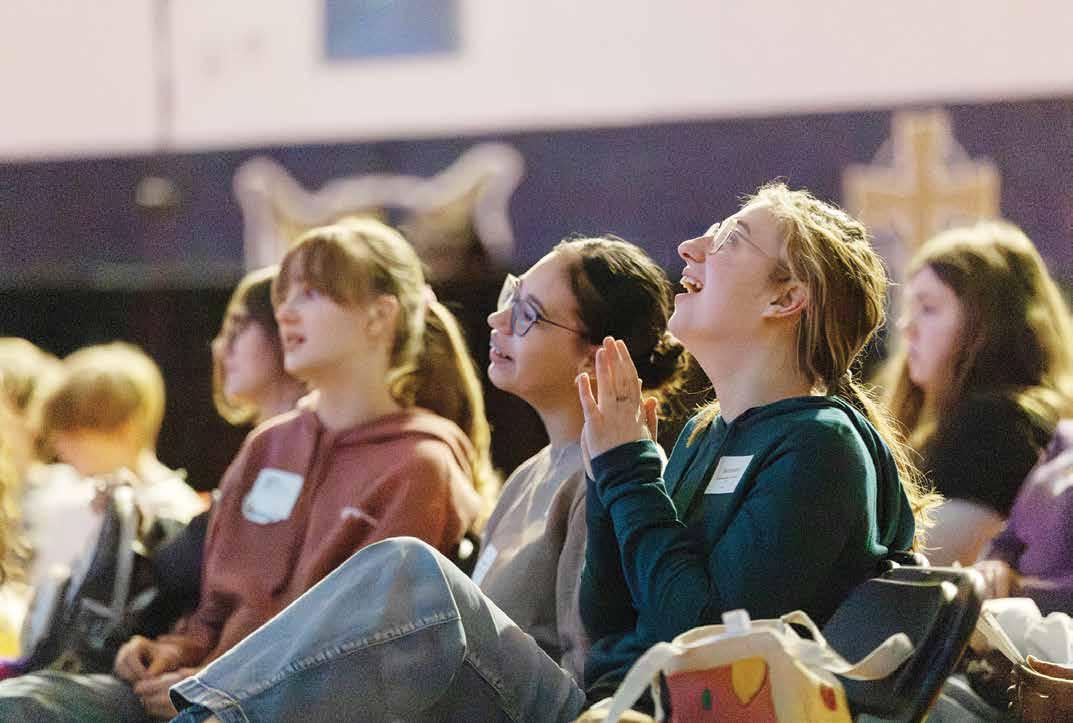
During all three rallies, students encountered Jesus in multiple ways: through motivational speakers, participating in small group discussions, praying in Mass and eucharistic adoration, and by doing works of mercy.
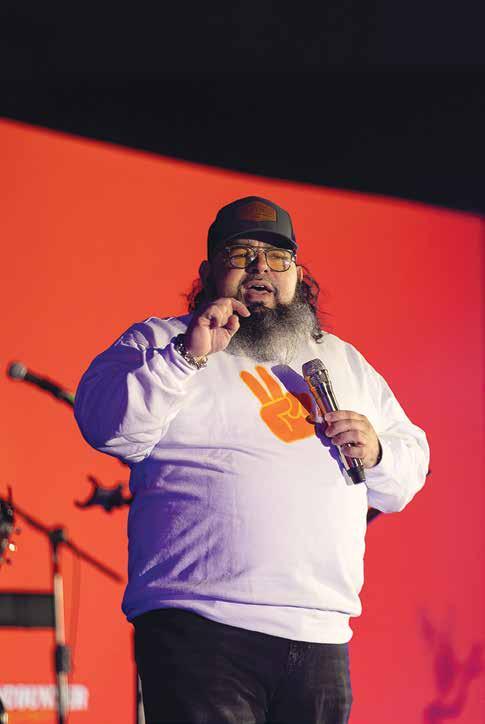
Oscar Rivera, who is also known as Two Ten, was the keynote speaker at all three rallies.
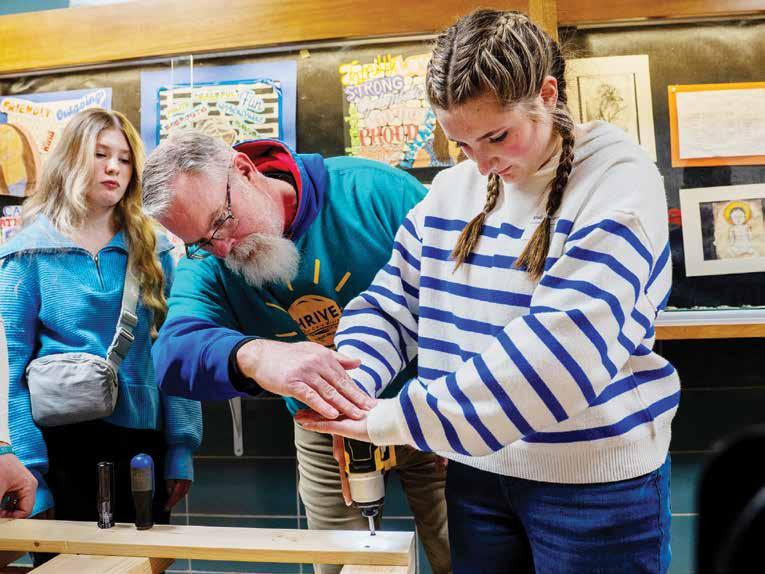
The Topeka rally included a bed-building work of mercy in collaboration with the foster care ministry of the archdiocese.
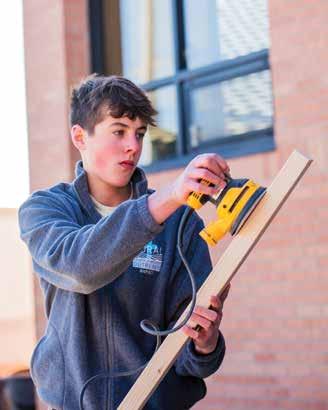
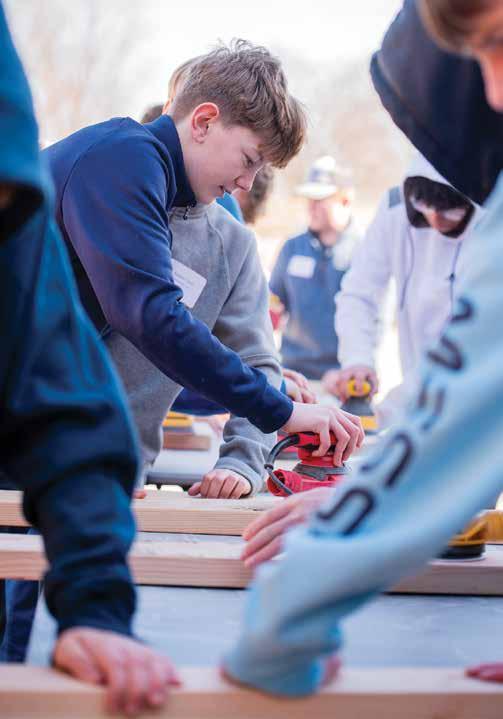
Sleep in Heavenly Peace is a nonprofit organization providing trained volunteer leaders, tools and the knowledge to support and train nearly 200 middle school students, on-the-spot, to sand, hammer, drill, assemble and brand lumber to make 30 beds, transforming the halls of Hayden High School in Topeka into a literal construction assembly line.
The lumber and hardware, totaling over $4,500, was donated by Michael Furman, owner of Schutte Lumber and a parishioner at Holy Spirit Church in Overland Park. Giving to this cause was personal for Furman.
“I wasn’t in foster care myself, but I was adopted as a baby by a loving family who provided everything I needed to succeed,” said Furman. “I appreciated that the students got to use their hands to build something real, and if providing materials helps give foster kids a safe, comfortable place to sleep, that’s an easy ‘yes’ for me.”
The middle school participants worked so diligently that they actually surpassed the targeted goal by creating 31 beds.
“I love that our students were introduced to a ministry — and this specific ministry, with Sleep in Heavenly Peace,” said Gina Sallman, director of faith formation from Sacred Heart of Jesus Church in Sabetha. “We talk to the kids a lot about serving one another, being a part of solutions to needs of others and this experience gave them an active, hands-on opportunity to love others as disciples of Jesus!”
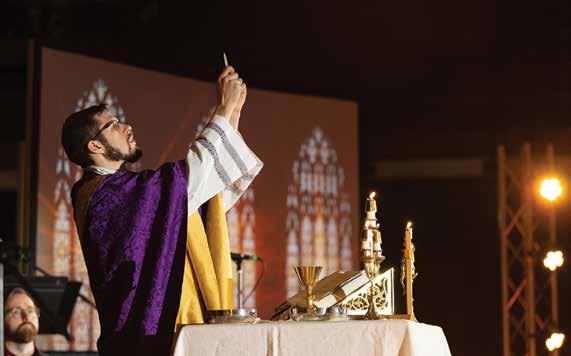
Father Will Carey, associate pastor of Christ the King Parish in Topeka, celebrates Mass at the Topeka Encounter Rally. During all three Encounter rallies, students experienced Jesus in multiple ways: through motivational speakers, participating in small group discussions, praying in Mass and eucharistic adoration, and by doing works of mercy.
By Gina Christian OSV News
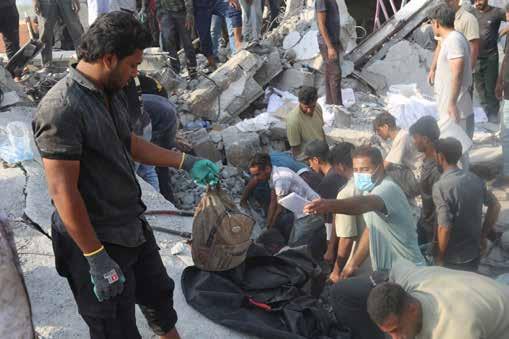
JERUSALEM (OSV News) — Catholics across the Middle East are reeling with shock and sorrow, and responding with prayer, amid joint strikes Israeli and U.S. forces launched on Iran Feb. 28, plunging the region into war.
The United States and Israel revealed that Iran’s supreme leader, 86-year-old Ayatollah Ali Khamenei, is among the country’s senior leaders killed in the initial assault, which targeted Tehran and cities across Iran. Following initial denials, Iranian state television authorities confirmed Khamenei’s death.
U.S. President Donald Trump described the attacks as part of “major combat operations” to overthrow Iran’s regime in order to “defend the American people.”
Trump, who gave an 8-minute statement from his Mar-a-Lago residence, warned that “the lives of courageous American heroes may be lost, and we may have casualties.”
By March 2, U.S. officials confirmed at least four U.S. soldiers had died and several more were seriously wounded in the military operation.
Separately, Israel’s Defense Minister Israel Katz announced the Feb. 28 “preemptive strike” against Iran, with a state of emergency declared across Israel.
The strikes follow a June 2025 attack by the United States that saw precision strikes on three Iranian nuclear facilities — Fordo, Natanz and Isfahan — which Trump at the time said were aimed at destroying Iran’s nuclear enrichment capacity.
Iran has retaliated with counterstrikes, targeting Israel and several U.S.-interest locations across a number of Middle East nations, including Dubai, the United Arab Emirates, Kuwait, Bahrain and Qatar. Flights across the Middle East have been disrupted.
Casualties on all sides — including countries caught in the crossfire — are still being assessed amid the ongoing exchanges.
Iran’s foreign minister, Seyed Abbas Araghchi, claimed on the X social media platform that a girls’ school in Minab was bombed in the U.S.-Israeli air assault and showed a photo.
“Dozens of innocent children have been murdered at this site alone,” he said. “These crimes against the Iranian people will not go unanswered.”
By March 2, Iranian media updated the death toll to at least 175 people, mostly children, killed from the strike.
Iran’s Red Crescent organization (part of the Red Cross global humanitarian network) reported more than 550 killed in Iran by the U.S.-Israel strikes as of March 2.
The U.N. Security Council convened an emergency session Feb. 28 in response to the attacks.
U.N. Secretary General António
Guterres begged “all parties to return immediately to the negotiating table, notably on the Iran nuclear program,” warning “the alternative is a potential wider conflict with grave consequences for civilians and regional stability.”
On March 1, Pope Leo XIV spoke out in the Sunday Angelus at St. Peter’s Square telling the warring parties they had a “moral responsibility” to end the fighting and return to diplomacy before the violence led to an “irreparable abyss.”
Archbishop Paul S. Coakley of Oklahoma City, president of the U.S. Conference of Catholic Bishops, issued a statement shortly after echoing the pope’s words, and warned, “We are faced with the possibility of a tragedy of immense proportions.”
The war has expanded to Lebanon, where Israeli warplanes March 2 struck Hezbollah militants who fired rockets into Israel in support of its ally Iran.
In the United States, the New York Police Department announced it was monitoring the situation and would be “enhancing patrols to sensitive locations throughout the city, including diplomatic, cultural, religious and other relevant sites,” citing “an abundance of caution.”
The FBI is investigating a mass shooting that took place early March 1 at a bar in Austin, Texas, for a nexus to terrorism that left three people dead, including the shooter, and 14 injured.
Bishop Aldo Berardi, apostolic vicar of northern Arabia — who shepherds the estimated 2.2 million Catholics, most of them migrant workers from other nations, in Bahrain, Kuwait, Qatar and Saudi Arabia — issued a Feb. 28 statement on Facebook, urging the faithful “to remain calm, united in prayer and attentive to the safety of everyone.”
“Please follow carefully the instructions of civil authorities and take all necessary precautions in your homes, workplaces and parishes,” said Bishop Berardi.
He also directed “all parish priests and rectors to take appropriate action and to make the necessary decisions, with prudence and responsibility, to ensure the safety of the faithful entrusted to their care.”
“Let us remain united in faith and charity, caring especially for the elderly, the sick and the vulnerable,” said Bishop Berardi. “May the Lord protect you and your families, and may Our Lady of Arabia, our mother, watch over us all.”
In Doha, Qatar, Our Lady of the Rosary Church announced on its website that it would “remain closed until further notice,” given “recent events in Qatar” and “the advisory issued by the ministry.”
Chaldean Catholic Archbishop Bashar M. Warda of Irbil, Iraq, told OSV News March 2 he “could see the whole scene” of nearby missile attacks by Iran on a U.S. military base near the Irbil airport.
“The missiles, the anti-missiles, the noise and the bombing — we can see it,” he said. “You can imagine the fear and horror.”
In a message to OSV News two days earlier, he shared that schools in the area — including the Catholic University of Irbil, which he established in 2012 and formally opened in 2015 — were closed “for the time being.” Archbishop Warda added that the faithful in the Irbil region were “really holding strong.”
“Prayer is the only hope we have,” he said, while also asking for prayers, noting that the faithful had been marking Lent as “a very blessed season for the community.”
In Israel, Benedictine Father Nikodemus Schnabel — abbot of Dormition Abbey on Mount Zion in the heart of Jerusalem and of Tabgha, the community’s priory on the northwest shore of the Sea of Galilee — sheltered with some 60 pilgrims at Tabgha, the traditionally revered site of Jesus Christ’s multiplication of the loaves and fishes.
Father Schnabel, who was at Tabgha
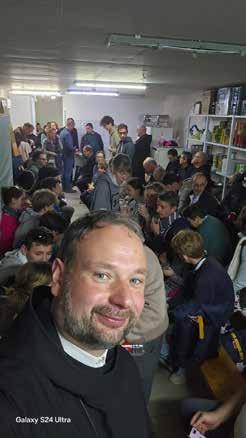
Abbot Nikodemus Schnabel of Dormition Abbey on Mount Zion in the heart of Jerusalem and of Tabgha Priory at the Sea of Galilee is seen in this selfie photograph taken Feb. 28, in the shelter on the premises of the Tabgha Priory, where a group of French pilgrims sheltered with monks, praying and singing for two hours. Their special intention was for those that lack shelter in the time of instability as U.S. and Israeli strikes hit Tehran on Feb. 28, launching immediate retaliation from Iran.
since Feb. 27 for a chapter meeting of his community — told OSV News he was caught off guard by the attacks.
“It was always in the air that maybe something could happen,” he explained. “But it was then a surprise that it really happened today, especially before Wednesday, because Wednesday there were plans for a new round of negotiations.”
He said their international group, which included children and the elderly, had been in the shelter for two hours, describing the time — which video obtained by OSV News showed the pilgrims praying and singing — as unifying amid the attacks.
“It was a good experience. We don’t know each other, but then we sing songs in different languages. We pray together,” he explained.
Father Schnabel added it was also “very interesting,” saying, “I love that it was not — nobody was in fear about his or her life.”
He said the experience was an example of Benedictine hospitality, one of the charisms of the order.
“Very often, I say, ‘I want that our two monasteries are two islands of hope in an ocean of suffering,’” said Father Schnabel. “And this was exactly the feeling. We were also today an island of hope in an ocean of suffering.”
US bishops among supporters of lawsuit against Trump birthright citizenship executive order
WASHINGTON (OSV News) — The U.S. bishops and a Catholic immigration advocacy group were among those who offered their support to a lawsuit challenging President Donald Trump’s executive order limiting birthright citizenship.
Oral argument in the case, Trump
v. Barbara, is scheduled for April 1.
Within hours of returning to the Oval Office in January 2025, Trump signed an executive order seeking to change the longstanding legal interpretation of the 14th Amendment, which states:
“All persons born or naturalized in the United States, and subject to the jurisdiction thereof, are citizens of the United States and of the State
wherein they reside.”
Trump’s order sought to end birthright citizenship for children born in the United States to parents without legal status or temporary visa holders. Lawsuits promptly followed. Previously, the Supreme Court limited the ability of federal judges to issue nationwide injunctions against the order while litigation over it proceeds, but did not
directly address the merits of the order itself.
A series of amicus briefs, sometimes called friend of the court briefs, were filed in either support or opposition to the order. One such brief was filed by the U.S. Conference of Catholic Bishops and the Catholic Legal Immigration Network Inc.
By Junno Arocho Esteves OSV News
TYRE, Lebanon (OSV News) — As the scourge of war spreads across the Middle East, including Lebanon, the ones paying the ultimate price are the innocent men, women and children who want to live in peace, said Melkite Greek Catholic Archbishop Georges Iskandar of Tyre.
In a message to OSV News March 2, Archbishop Iskandar said the region was awakened at midnight “to the sound of intense airstrikes” by Israel in “an abrupt escalation that civilians did not anticipate.”
“What weighs most heavily upon the heart is that those paying the price are simple and peaceful people: families in their homes, children, the sick and the elderly — men and women who have no part in the calculations of greater conflicts and no responsibility for the forces that have brought about this violence,” the Melkite archbishop said.
“In a matter of moments, they found themselves at the center of a storm they did not choose, armed only with fear and prayer,” he added.
Hours after the United States and Israel launched a Feb. 28 attack on Iran, resulting in the death of Iran’s longtime supreme leader, 86-year-old Ayatollah Ali Khamenei, Hezbollah militants fired missiles and drones on an Israeli military outpost in Haifa.
In response, Israel fired missiles on southern Lebanon and issued evacuation notices to dozens of villages in southern and eastern Lebanon, prompting mass displacement. Archbishop Iskandar confirmed to OSV News that the “rapid Israeli warnings” for residents to evacuate came “within a very short timeframe.”
“Within minutes, the roads were overwhelmed with vehicles, and traffic came to a standstill for long hours,” he said. “Families with children and elderly relatives were stranded on the roads, uncertain where to go, carrying only what they could gather in haste, leaving behind homes, memories and livelihoods.”
“It was a painful sight: unarmed civilians fleeing danger — not because they are parties to a conflict, but because the geography in which they live suddenly became a theater of confrontation,” the archbishop lamented.
Lebanese Prime Minister Nawaf Salam condemned Hezbollah’s attack, saying that “launching rockets from southern Lebanon is an irresponsible and suspicious act.”
“It endangers Lebanon’s security and safety and provides Israel with pretexts to continue its aggressions against it,” he posted on X March 2.
The papal foundation Aid to the Church in Need, or ACN, issued a statement March 2, warning that the escalation of violence across the Middle East could have “catastrophic consequences for Christian communities throughout the region.”
“The Christian presence in the Middle East must not die out,” said Regina Lynch, ACN International’s executive president. “A new spiral of violence could push already fragile communities beyond the point of survival.”
Lynch said already precarious situations for Christians in Iraq, Syria, Gaza and the West Bank, as well as Lebanon, have been further exacerbated by the war.
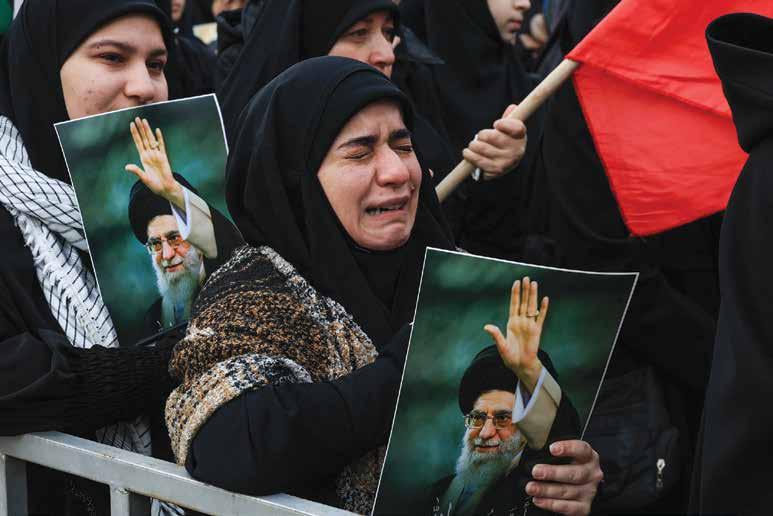
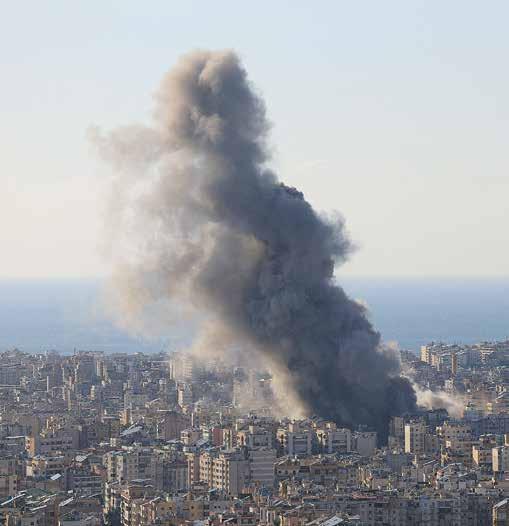
“They want peace and are innocent, yet they repeatedly become victims of conflict,” Lynch said regarding Christians in southern Lebanon. “ACN teams on the ground report growing anxiety as thousands have already been displaced.”
Archbishop Iskandar told OSV News that the Melkite Greek Catholic Archeparchy in Tyre opened its doors to Christian families seeking refuge because the church “is a home open to every suffering person.”
“Priests, volunteers and members of the local community immediately organized whatever space and resources were available, striving to ensure that each arrival would feel welcomed as in
his or her own home, and sustained by the prayer and charity of the ecclesial community,” the archbishop said.
The act of “spontaneous solidarity,” he added, showed the “true face of Lebanon” as “a people who stand beside the innocent who have suddenly found themselves exposed to fear and displacement.”
The Melkite archbishop, without specifically naming Hezbollah, noted the Lebanese government’s position that “the decision of war and peace rests exclusively in the hands of the state” and that any party acting otherwise places itself outside the law and the will of the Lebanese people, “who long for stability and peace.”
IT WAS A PAINFUL SIGHT: UNARMED CIVILIANS FLEEING DANGER — NOT BECAUSE THEY ARE PARTIES TO A CONFLICT, BUT BECAUSE THE GEOGRAPHY IN WHICH THEY LIVE SUDDENLY BECAME A THEATER OF CONFRONTATION.
ARCHBISHOP GEORGES ISKANDAR
Archbishop Iskandar told OSV News that the renewed conflict continues to inflict a heavy “psychological and spiritual burden” on the people of Lebanon who are “exhausted” from war and violence.
“They fear for their children and their future; they yearn for a simple and ordinary life: that a child may go to school without fear, that an elderly person may sleep peacefully in his home, that a father and mother may work for their daily bread in dignity,” he said. “This is a fundamental right of every innocent person, beyond the noise of arms and political calculations.”
Nevertheless, for the Melkite archbishop, his main concern is to remain close to the innocent, “to listen to their suffering, to pray with them, and to remind them that their dignity is safeguarded in the sight of God, and that Christian hope is not built upon balances of power but upon faith in the Lord of history, who wills peace for his people.”
“I thank you again for your concern for the suffering and resilience of our people,” Archbishop Iskandar told OSV News. “And I humbly ask for your prayers, for the protection of the innocent, for the cessation of all violence, and for the gift of a just and lasting peace for our region and for Lebanon as a whole.”
By John Sorce john.sorce@theleaven.org
KANSAS CITY, Kan. — The Niekro name is well known among baseball fans.
Phil Niekro is known for his knuckleball, won over 300 games and is in the Major League Baseball Hall of Fame in Cooperstown, New York. His brother Joe pitched for 22 years and is the Houston Astros alltime wins leader with 144.
But the family also has roots in the Catholic faith.
J.J. Niekro, Joe’s son, played parts of five seasons in professional baseball with the Atlanta Braves organization before retiring last fall.
Since then, he has spoken across the country with Catholic Athletes for Christ and was in town in February as a keynote speaker at Men Under Construction.
“The best part was being with 600 Catholic men trying to grow in their faith,” Niekro said about the event. “I think in today’s culture, we’re seeing a lot of people taking their faith seriously, but now it’s time to go deeper.
“I think if I can share [my experiences] with those guys and they can share theirs with me, we can all grow in the body of Christ together.”
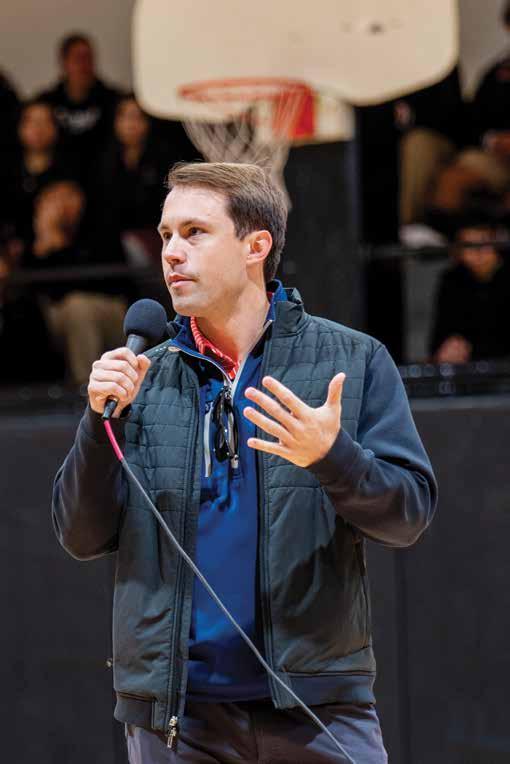
Niekro also stopped at several area schools and parishes while in the area. Among them was Bishop Ward in Kansas City, Kansas, on the morning of Feb. 20 to speak with the student body, as well as the baseball team.
“It was awesome being with the kids,” Niekro said. “They were really energetic and they love sports overall, and it’s great when you have that continued excellence in an athletic culture.
“I just want to contribute to it any way I can, especially in putting our Catholic faith at the focus of that.”
Born and raised in Florida, Niekro was a cradle Catholic and attended Catholic school from elementary school all the way through high school.
But he didn’t have the easiest childhood. His father Joe suddenly died when the younger Niekro was 8 years old from a brain aneurysm.
He then lost his Uncle Phil 30 days later to cancer and his grandfather 40 days later.
All the men in his family were gone in a matter of weeks. But he turned to his faith and kept pressing forward.
“I had to get to professional baseball on my own,” Niekro said. “Whatever you want to be, doing everything on your own is a special gift that the Lord gives you because it makes everything that much more important in the long run.”
The night before his Double-A debut in Jackson, Mississippi, in 2024, Niekro was awakened by what he thought was knocking at his door.
It turns out they were gunshots and the person in the apartment next to him had been murdered.
That experience left a lasting impact on Niekro and his teammates.
But anchored by his Catholic faith, Niekro found himself ministering through this difficult time to his equally shocked teammates.
For some of them, that ministry was life-changing.

“If you really want to get better at a skill, you dedicate one percent of a day to that,” he said.
That was one thing that stood out to junior Sal Contreras, who is also the catcher on the baseball team.
“I liked the one-percent rule to get better at whatever it is,” Contreras said. “Even if it’s not baseball, you can spend 14 minutes and 24 seconds in prayer or in your Bible.
“Taking that time out of every day can really transform you.”
During his time talking with the team, Niekro helped the players come up with goals for the season, one of which was to build better chemistry among them.
A big way that will happen, he said, will be to stay committed to Christ.
“If we can keep our body, mind and soul intimately united to Christ and our Catholic faith,” he said, “then the team chemistry, wins and fun will come.”
That, too, resonated with Contreras.
“It’s important because when I’m struggling or the team is struggling, I can look up to the Lord, put my faith in him and give him all my worries and anxieties.”
With Ash Wednesday just two days prior to his visit, Niekro referred to the phrase recited when the priest distributes the ashes: “You are dust, and to dust you shall return.”
He tied that in to his experience of doing prison ministry in Florida, where he visits death row to pray with the inmates.
Keeping this in mind helps him remember how short life is — the inevitability of death.
“The next day at the field, there were guys making millions crying into my arms because they realized that one day, their life is going to end,” Niekro said. “I had my heart ready to receive them and we started a Bible study.
“A lot of those guys are now out of baseball and don’t have the things they’ve known as their foundation. That Bible study changed a lot of their lives.”
One of his messages to the students was to find something to work at every day for 1% of the day — totaling 14 minutes and 24 seconds.
“When you realize this, we are all living on death row,” he said. “We’re just not in a cell.”
“I encourage you during this Lent,” he told the boys, “to have that same ‘memento mori’ experience and remember your death. That’s something I saw through losing my father, uncle and grandfather.”
When he was on his deathbed, Phil Niekro took his nephew’s hands and whispered to him, “J.J., I would trade my entire career to spend one more hour with my family.”
“That hit me really hard,” J.J. said. “I try to use that quote in everything I do.”