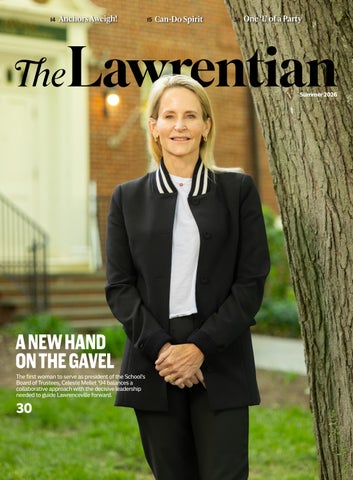
A NEW HAND ON THE GAVEL
The first woman to serve as president of the School’s Board of Trustees, Celeste Mellet ’94 balances a collaborative approach with the decisive leadership needed to guide Lawrenceville forward.
Stephen S. Murray
H’54 ’55 ’63 ’65 ’66 ’16 P’16 ’21
On Progress
When I was a freshman in college, my roommate and I took a drive up into rural Vermont to pay a visit to the old homestead where his father had lived many years earlier. While there, we bumped into Mr. Bloom, a spry farmer well into his 80s, who had been a neighbor and had known my roommate’s father before he died. And he took us on a walk around his small property where he grew his own food and kept himself busy with projects.
The first stop was “the smithy.” Mr. Bloom explained that he had found an old crank bellows in the woods, all seized up with rust. He took it apart, cleaned it, and made it work. He had likewise found an iron sink, again, in the woods, which he had fashioned into a forge. He then showed us how he had cast all of the fittings, hinges, and door fixtures that he needed around the farm, by melting down bits of scrap metal.
A little further on, he showed us his sawmill, set up with a large circular saw blade — that, too, salvaged from a junk pile. With an engine taken from an old abandoned car, he had rigged up a belt drive to power the saw.
Finally, he showed us a cabin he had built entirely by hand without a single nail. Most of the wood was scrap lumber, carefully pegged or fitted with dovetail joints. And the door handles and hinges — all crafted just a few steps away, using the forge.
As an 18-year-old college kid, I was in awe of Mr. Bloom, or more accurately, envied him, with his remarkable Yankee ingenuity and self-sufficiency, and the simplicity of his life. The modern world had passed him by, and I think Mr. Bloom was happier and better for it.
At the same time, as I have reflected on this memory over the years, I have come to think that the allure of this simple life may be more complicated than it first appears. To be clear, such a lifestyle can be a deeply satisfying and meaningful commitment — whole communities like the Amish have sworn off certain technologies and have freed themselves from the frenetic pace of life that so many of us are resigned to, and that indeed is a laudable, principled choice.
woodburning stoves, and tinkering in their barns. Given the world’s population, we need the efficiency of modern cities, where people are housed in relatively small spaces, where water supply, energy, and waste disposal can be managed at scale, and which in turn frees up the space for larger farms to produce the quantities of food needed to even have a shot at feeding the world — an elusive goal at best, but one that, for the first time in human history, may be attainable.
Now, make no mistake: Cities bring their own considerable set of problems with which we must contend. And as for food production, are we necessarily better off with genetically altered strains of wheat that allow for greater quantities of bread?
Is “progress” then, for every “two steps forward,” we take “one step back”? Or at times, is it even, “one step forward, and two steps back”?
My point here is neither to be an apologist nor a skeptic for ever-advancing human technologies. It is simply that I have come to think that what we call “progress” is neither good nor bad — at least not inherently. It’s what we make of it. Wishing things would stay the same, wishing things would stay reassuringly familiar, is unrealistic at best, and can even leave us woefully unprepared to manage the change when it does happen. And inevitably, change will happen, for better or for worse.
Human history, from the dawn of time, is filled with countless, significant challenges that societies have had to confront when faced with progress. The lesson here, and the source of my enduring faith and hope, is neither about blindly embracing progress, nor is it about rejecting innovation because it often has a downside. It is more about the remarkable resourcefulness and resilience that the human spirit has shown over time, helping us, not simply to persist in spite of the challenges, but to thrive.
—Excerpted from the May 2026 Baccalaureate Address, inspired by the complexity of the technological landscape our graduates face and the accelerated pace of change that comes with it.
Sincerely,
by Mike Schwartz
And yet, practically speaking, all humanity cannot flee modernity, dwelling on small subsistence farms, heating their homes with

POP
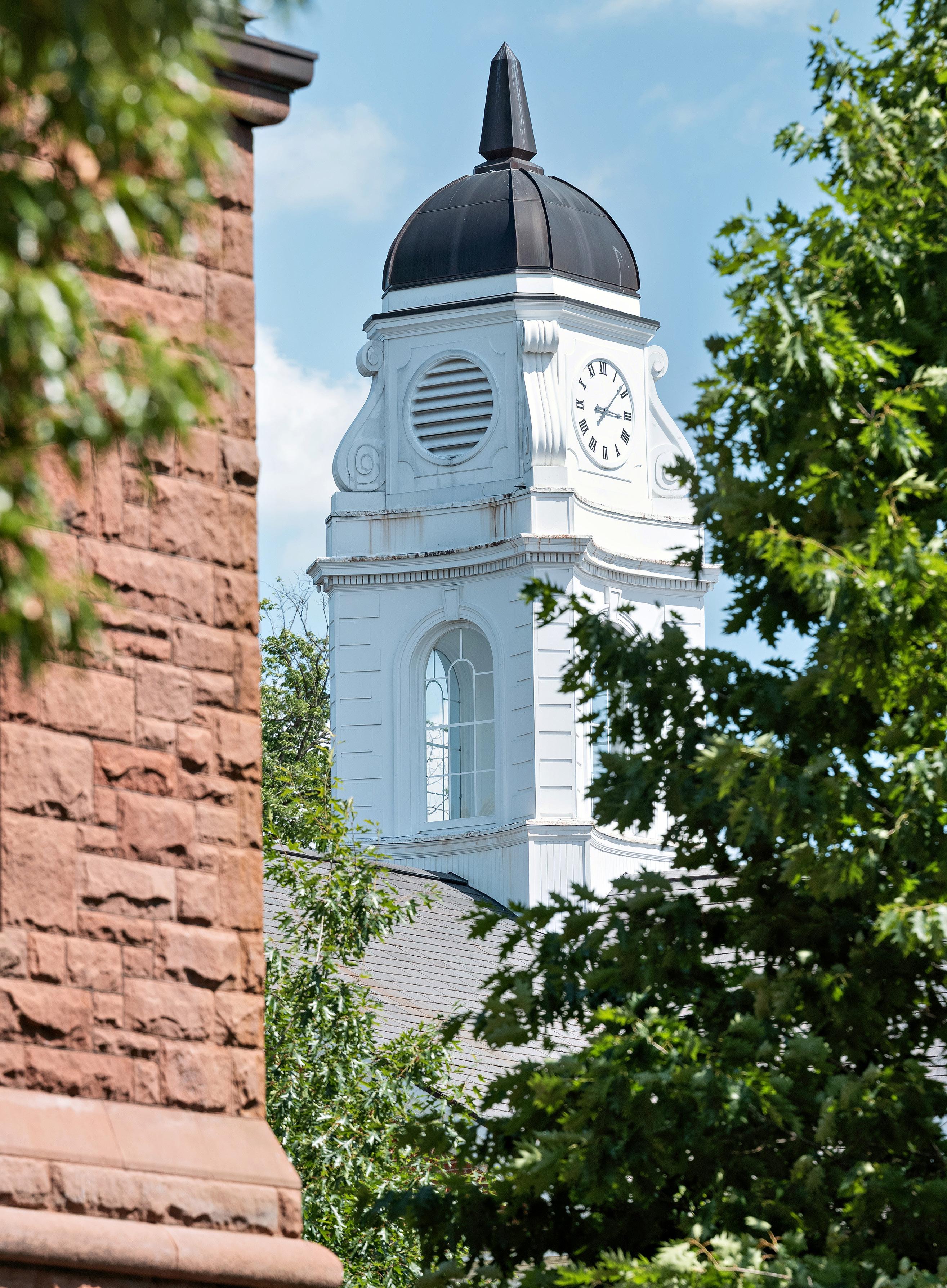
The iconic cupola atop the Fathers Building stood in silent witness, high above the action, while more than 1,500 Lawrentians and their guests reveled down below during Alumni Reunion Weekend.
Photo
The Shelby Cullom Davis Class of 1926 Head of School
Playing from a Place of Joy
After starring at Lawrenceville and Penn, Duke Lacroix ’11 helped lead the Haiti men’s national team to the World Cup for the first time in 52 years.
Catching Lightning in a Can
Clement Pappas ’92 and his company’s Surfside went from a novel idea for canned drinks to the fastest-growing alcohol brand in the world seemingly overnight.
A New Hand on the Gavel
The first woman to serve as president of the School’s Board of Trustees, Celeste Mellet ’94 P’27 ’30 balances a collaborative approach with the decisive leadership needed to guide Lawrenceville forward.
Red, Black, and Back
Record attendance was just one highlight of Alumni Reunion Weekend 2026.

Celeste Mellet ’94 P’27 ’30, the first woman to serve as president of the Lawrenceville Board of Trustees, on the types of leadership she saw in the aftermath of the 2008 financial crisis. (See page 30)
EDITOR
Sean Ramsden H’65
DESIGN
Bruce Hanson / EGADS
Landesberg Design
NEWS EDITOR
Lisa M. Gillard H’17
STAFF PHOTOGRAPHER
Paloma Torres
CONTRIBUTORS
Pete Croatto
Andrea Fereshteh P’28
Adam Grybowski
Jacqueline Haun H’65
Barbara Horn
Leila Khabbaz ’28
Melina Kyriakopoulos ’27
Christopher Pearman ’27
Nicole Stock
PHOTOGRAPHY
Keith Barraclough
Michael Branscom
Colin Lenton
Mike Schwartz
Susy M. Lee
ILLUSTRATION
Joel Kimmel
PROOFREADER
Rob Reinalda ’76
HEAD OF SCHOOL
Stephen S. Murray H’54 ’55 ’63 ’65 ’66 ’16 P’16 ’21
CHIEF ADVANCEMENT OFFICER
Greta Morgan
CHIEF COMMUNICATIONS OFFICER
Jessica Welsh
The Lawrentian is published three times a year by The Lawrenceville School, P.O. Box 6008, Lawrenceville, NJ 08648, for alumni, parents, and friends.
Periodical postage paid at Trenton, NJ, and additional mailing offices.
The Lawrentian welcomes letters from readers. Please send all correspondence to sramsden@lawrenceville.org or to the above address, care of The Lawrentian Editor. Letters may be edited for publication.
POSTMASTER
Please send address corrections to:
The Lawrentian
The Lawrenceville School
P.O. Box 6008
Lawrenceville, NJ 08648
©The Lawrenceville School
Lawrenceville, New Jersey All rights reserved.
I’m fortunate to be writing to you at such an interesting point in history — just days ahead of the semiquincentennial, the 250th anniversary of the signing of the Declaration of Independence. By the time you read this, most of the fireworks will have been spent, but I do think there will be some residual celebrations in many of our communities.
The bicentennial celebration in 1976 was huge, as many of you recall. Tall ships, fireworks, and red, white, and blue everything. In my childhood bedroom, I had red, white, and blue shag carpeting! Can you imagine? Hey, I was 5 years old, so it wasn’t my fault. But to be honest, I think I liked it.
Home décor is a bit more muted these days, but those three colors have nevertheless found their way into our lives this summer. I think it’s buoyed a bit by the continuing success of the U.S. Men’s National Team in the World Cup; as I write this, they remain alive in the “last 16,” and that helps create a focal point of national unity. That feels good.
There are things in this issue of The Lawrentian that also feel good to me. We celebrate Celeste Mellet ’94 P’27 ’30 and Heather Elliott Hoover ’91 P’20 ’23 ’24, the first women in Lawrenceville history to earn the titles of president of the Board of Trustees and winner of the Distinguished Alumni Award, respectively. We celebrate the stunning success of Surfside canned cocktails, which has seen Stateside Brands CEO Clem Pappas ’92 catch lightning in a can, so to speak. And speaking of the World Cup, we celebrate Duke Lacroix ’11, who helped lead the Haiti national team to the world’s biggest sporting event for the first time in 52 years.
And we haven’t forgotten about the semiquincentennial, either. The pivotal year of 1776 predates our School’s founding, but inside, you’ll also learn just how close the site of The Lawrenceville School was to the harrowing revolutionary action.
So, fire up your grill, reflect on this milestone point in history, and be grateful for the ones who make us what we are. At Lawrenceville and beyond, it’s always about the people, and that includes you.
All the best,

Sean Ramsden H’65 Editor sramsden@lawrenceville.org
Setting the Record Straight
Many of you reached out to say how much you enjoyed our pictorial feature, “The Hidden Lawrenceville,” in the Winter/Spring 2026 issue, but it does appear that we erred on page 39. The icehouse was not located in the basement of Haskell House, but rather, beneath the ground on the southern side of the building. The space we portrayed, which later served as an electrical transformer housing, featured an accessway to the subterranean icehouse, but was not itself used for cold storage. The editor was chilled to learn this and apologizes for the error.
Inside the Gates

questions for Marcus Tsai ’27, who settles the question of the best entry in the Star Wars franchise and can’t help yukking it up at your very worst jokes.
Joel Kimmel
What advice do you have for incoming Lawrentians?
Engage with the School community in as many ways as possible. Repeatedly attending different School events has introduced me to so many different aspects of Lawrenceville. Make the best of your four years here — trust me, you won’t regret it.
If you could be part of a Harkness discussion with any three figures from history, who would you choose?
Napoleon, Julius Caesar, and Sun Tzu on the topic of war. I have always loved strategy games, particularly those where you have to manipulate your opponent.
What is your favorite book or movie?
Star Wars: Episode III — Revenge of the Sith. Best George Lucas film of all time, no competition.

House Call
What never fails to make you laugh?
Honestly, the worst jokes that no one should laugh at make me crack up. Whether they are terribly timed or hackneyed dad-jokes, the least funny jokes, objectively, make me laugh the hardest.
What person, living or dead, inspires you?
My friend who is able to look on the bright side of anything. They are always so full of positive energy, inspiring me to live my best life. Whenever I feel down, their enthusiasm and joy really cheer me up.

If you could have kept one physical object from your House — a piece of furniture, a sign or a picture, or even a specific mug — what would it be? And where would it sit in your home today?
Alumni responded to this issue’s question.

Old School
Pranks
On Alumni Day, members of the Fifth Form executed what was generally conceded to be the best senior prank since the Class of ’69 installed a cow in the second floor corridor of
Bruce McClellan, the last of the day’s speakers in the Kirby Arts Center finished his remarks to the assembled alumni, the microphone suddenly went dead, and the 2001: A Space Odyssey emanated from the loudspeakers in the auditorium. Approximately two hundred balloons and much confetti fell on stage from the overhead lighting slots. As the music reached a thundering crescendo, the overhead lights mysteriously blacked out and a single pink spotlight illuminated the curtain, which slowly rose to reveal a huge banner which filled the entire proscenium and which read, “Welcome Alumni — The Class of ’81 Wants Coeducation to Make a Good School Better.” To emphasize the statement, the two O’s in “coeducation” were fashioned to from the male and female genetic symbols.
The alumni responded with laughter and applause. Board President Edward R. Farley , who was one of those present on stage, responded in good humor to the members of the class had carried off the prank with such technical precision, “I don’t agree with what you have to say, but I like the way you say it.”
From the “News Roundup” in the August 1981
As you walked into Dawes House, there was a large portrait of Rufus Dawes [Class of 1909] given by his father, Vice President Charles Dawes, who donated the House. It is gone. I want to find it and replace it in the Dawes House.
George Schulz ’64 DAWES HOUSE
Woodhullians from Gonzo’s [ Joaquin Gonzalez H’12] time as housemaster will remember his (in)famous review of the fridge policy to start each year. So, I would have the fridge in my kitchen, painted black with a golden Phoenix on the main door.
Robert Diggs ’09 WOODHULL HOUSE
Lawrenceville 101
Mystery, Majesty, and
Modernity: The Gilded Age and The Chicago World’s Fair
IN514
When history teacher Marisa Hedges P’27 wanted her students to understand the meaning of the “Gilded Age,” she didn’t start with a lecture. She handed them spray paint.
The exercise, coating worth less objects in a layer of gold, introduced the central idea of her honors elective, “Mystery, Majesty, and Modernity: The Gilded Age and The Chicago World’s Fair” — that the glittering achievements of the late 19 century often concealed deeper social strain beneath the surface.

“I wanted to use a specific, pivotal event like the Chicago World’s Fair of 1893 to investigate the larger tensions of the turn of the century,” Hedges said, “wealth versus poverty, big business versus labor, immigration versus nativism, and social Darwinism versus social reform.”
Paired with a reading of Erik Larson’s The Devil in the White City, this interdisciplinary course enables students to uncover the brilliance and shadows of the World’s Fair, where the marvels of human achievement coexisted with the darker aspects of society — a microcosm of the modern world.
For me, it would be a poster I had of a sailboat racing along the water. My grandma helped me buy it and it would hang in a man cave or vacation house.
Dupre Jones ’93 CLEVE HOUSE
The Crutch that is displayed in the Common Room. It symbolizes the healthy and robust tackle football rivalry between Hamill and Kennedy. The winner of the annual contest had custody of The Crutch until the next year’s game.
Jeffrey Bell ’64 HAMILL HOUSE
One 2 Watch
Clean Flow of Ideas
Aadya Agarwal ’29
The environmentalist’s adage, “Think locally, act globally,” speaks to the way that broad practices typically begin at the community level. Thinking about New Jersey’s poor water quality motivated Aadya to begin research focused on remediating local streams.
“I was exploring a sustainable material called biochar as a remediator for water quality in comparison to current methods,” Aadya says, explaining that biochar — a charcoal-like substance made by heating organic waste such as wood or crop residues — can improve water quality by removing contaminants. Its affordability and availability make it accessible even “to communities that essentially need water remediation the most,” she says, “because we want to make sure that methods are able to be implemented in rural communities and areas that don’t have as many resources.”
Aadya presented her research in May at the 2026 New Jersey Water Environmental Association conference, which featured a mix of professionals and doctoral researchers. There, she also received the Stockholm Junior Water Prize Regional Award, the result of her presentation at the annual Regeneron ISEF Mercer Science and Engineering Fair earlier in the spring.
More recently, after incorporating advanced technology into her research, Aadya was selected as one of five winning entries in the MIT Solve AI for Better World competition. Her innovative biochar water remediation AI-powered IoT project, which proposes using biochar as a buoy-like prototype that can “sense, decide, and act” in water systems by monitoring quality metrics, determining when treatment is needed, and deploying biochar as the remediation method, integrating Edge Machine Learning and coding to drive the device’s decision-making. She will present her research in July during the 2026 America’s Youth AI Festival.
“That’s where I’ve incorporated AI because I’m very interested in coding,” she says. “I love solving puzzles, so doing that sort of ties in with coding and my other STEM interests.”
FAST FACT
In addition to her innovative scientific research, Aadya also advanced to the semifinal round of the School’s Public Speaking Contest in December.

things we learned producing this issue of The Lawrentian:
On January 1, 1777, a mounted Hessian solider pursuing local farmer Elias Hunt was shot to death by a marksman from Gen. George Washington’s Continental Army in the middle of what is now Main Street in front of the Lawrenceville Presbyterian Church.
Retired U.S. Navy Rear Admiral Paul Tobin ’58 attended the Naval Academy with not one, but two Heisman Trophy winners – Joe Bellino (1960) and Roger Staubach (1963).
Retired Presbyterian minister Larry Jones ’67 and his wife have logged more than 50,000 miles in 19 months (and counting) since selling their Vermont home in 2025.
They
Said It
❝The ignorance that characterizes our current response to the harms of digital media parallels similar crises we have had over the health effects of cigarettes. Though research clearly linking smoking to increased rates of lung cancer had existed since the 1950s, a coordinated effort by the tobacco industry to undermine scientific findings successfully delayed legislation on the regulation of tobacco products. Today’s social media companies, in a similar way, have also been reluctant to admit the proven harms of their products, focusing instead on legal defense of the status quo…❞
William Su ’28 in “The Failed Response to Modern Technology,” which appeared in the May 1, 2026, issue of The Lawrence.

What’s Cookin’?
It’s Rind of a Big Deal
Watermelon is a summertime staple, but you aren’t stuck cutting it into wedges. “One of our favorite seasonal dishes on campus over the years is our watermelon salad,” says Gary Giberson H’11 ’18 P’10, the founder and president of Sustainable Fare, who developed the recipe. “It combines the sweetness of perfectly ripe watermelon with the briny flavor of kalamata olives and feta cheese, the tartness of lemon, and the bright flavor of mint. It makes a great summer barbecue side dish or a wonderful lunch topped with grilled shrimp or scallops.”
Summer Watermelon Salad
Yields four to six portions as a side dish
Ingredients
3 cups cubed seedless watermelon
2 cups sliced cucumber, peeled and seeds removed
½ cup thinly sliced red onion wedges (cutting from root end to top end; not rings)
¼ cup loosely packed fresh mint leaves, torn or thinly sliced
Procedure
½ cup crumbled feta cheese
½-cup kalamata olives pitted and split into halves.
For the dressing:
3 tablespoons fresh lemon juice
¼ cup olive oil
¼ teaspoon salt
¼ teaspoon fresh ground black pepper
• Toss the watermelon, cucumber, onion, mint, feta, and olives together in a bowl.
• Season with salt and pepper, add olive oil and lemon juice, and toss. Place in serving dish, and garnish with mint sprigs.
by
Photo
Paloma Torres
The Big Picture
Mixing Bowl
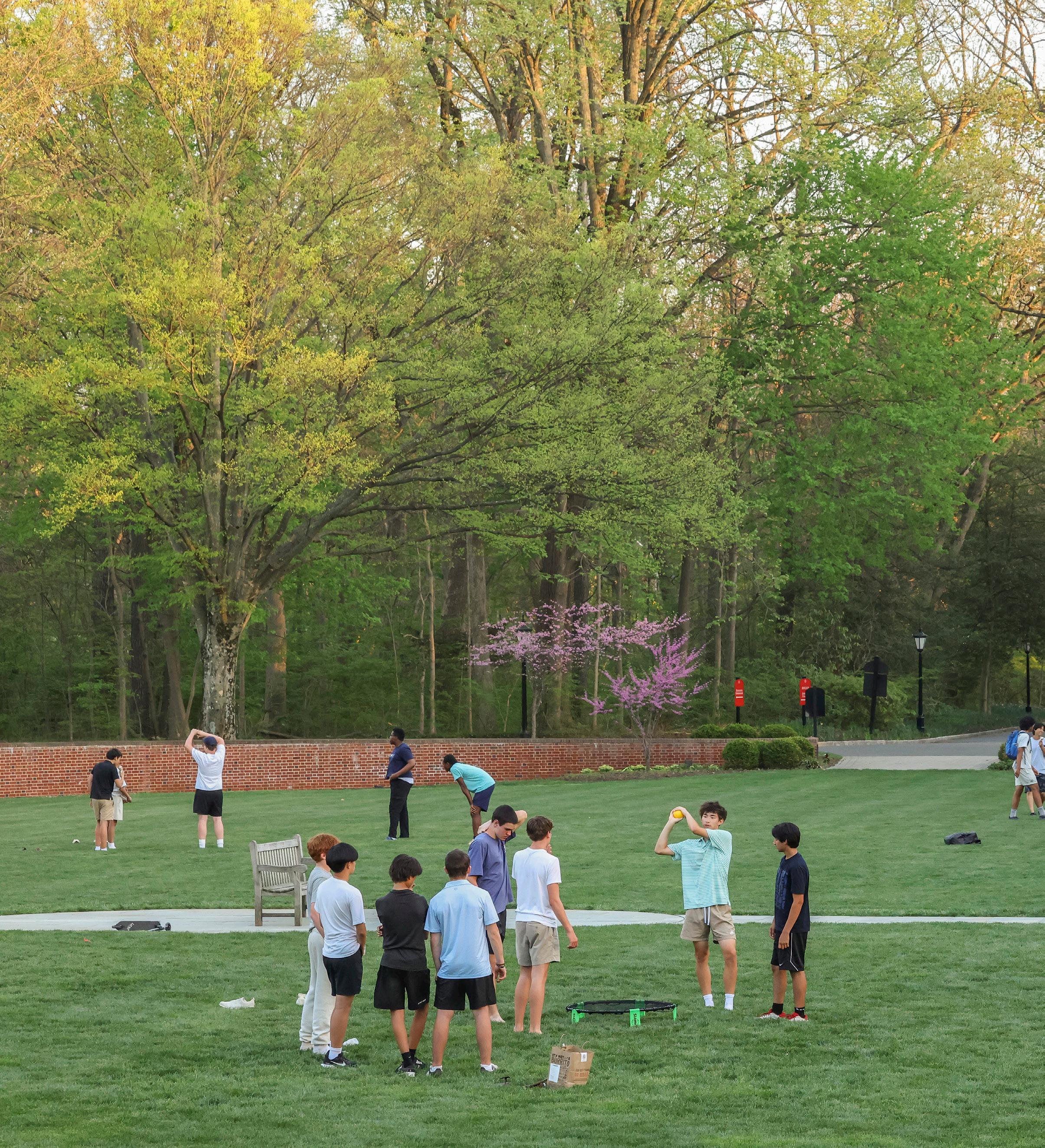
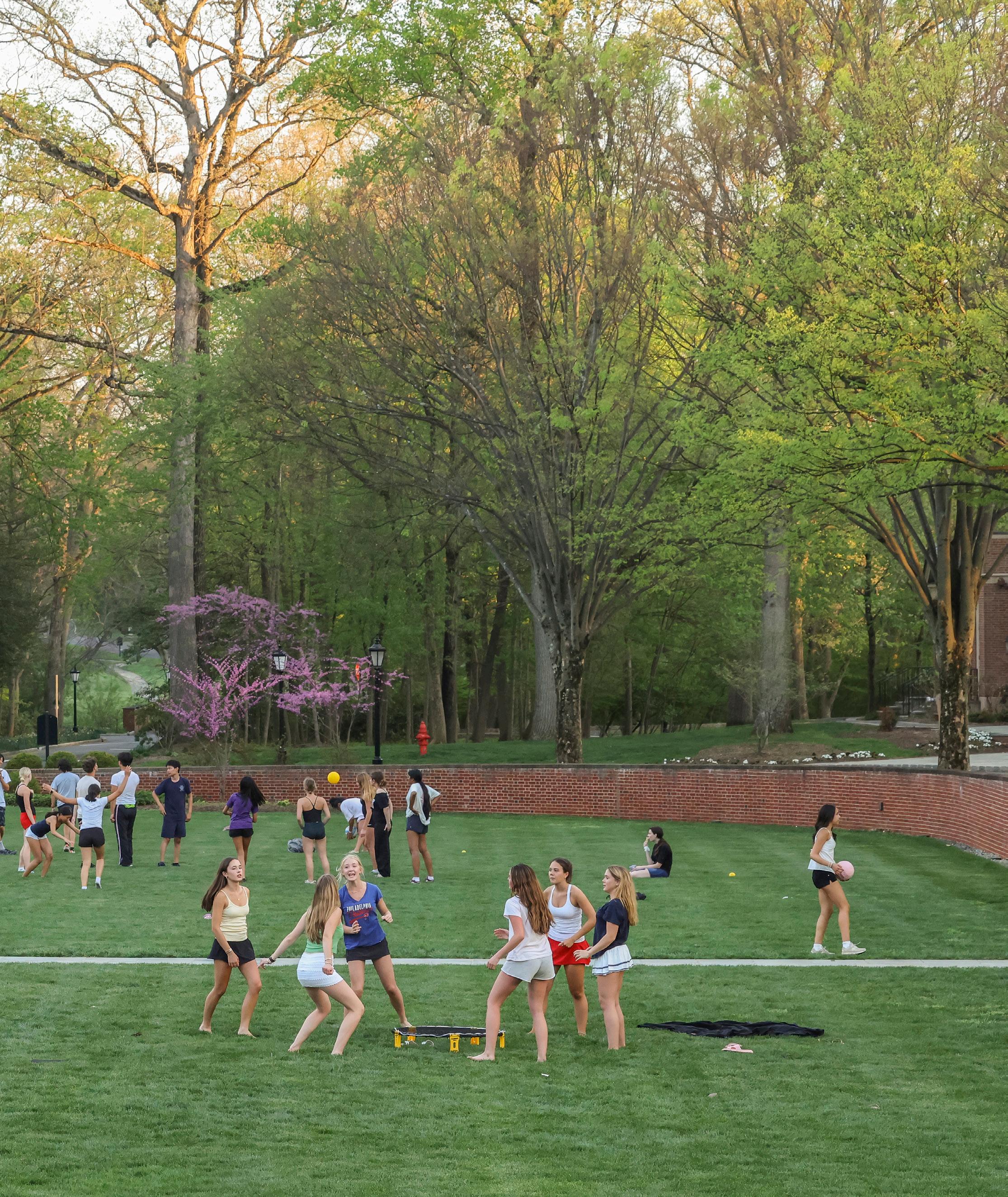
The golden hour on The Bowl in mid-April is a social event for Second Formers, who gather to enjoy each other’s company while the colors of spring begin to emerge around them.
Noteworthy
‘The
Culture Keepers of Our Houses’
Lawrenceville’s Fifth Form prefects provide a steady, relatable hand to younger students in their Houses.
WHEN STUDENTS ARRIVE at Lawrenceville, they immediately step into a House community intentionally designed to support them, surrounded by a circle of adults and peers working together to ensure they feel welcome and steady in a new environment. Among that team are Fifth Form prefects, student leaders selected and trained to help Second through Fourth Form students navigate daily life in their Houses, living alongside them.
Prefects help set the tone for how students treat one another, how disagreements are handled, and how expectations are upheld — “the pulse holders and the culture keepers of our Houses,” said Holli Olson, assistant dean of students.
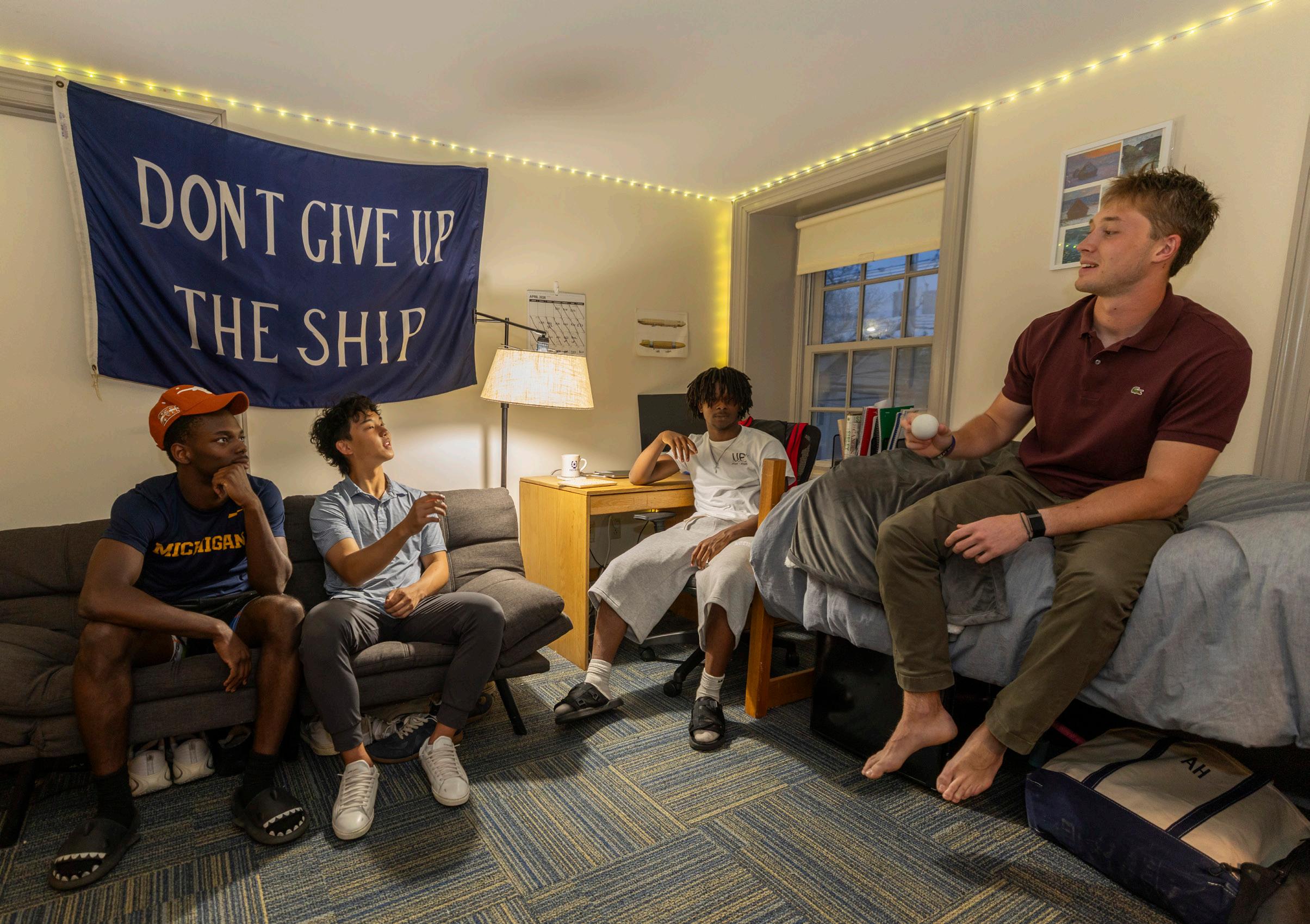
Inside Hamill House, prefect Andrew Hurlock ’26 (right) shares a moment with younger Hamill residents.
Prefects are not disciplinarians, but rather peer leaders trusted to model steadiness and maturity in everyday moments. That trust is reinforced by structure. Preparation begins soon after selection and continues throughout the year, with prefects meeting weekly with Lindsay Mulhern P’25 ’27, the associate dean of students, to discuss challenges, practice scenarios, reinforce boundaries, and support each other. Other campus leaders, including the School’s counseling staff, are often invited to share their expertise.
“We want them to really understand that we’re in this together with them and make sure that they know that the adults are there to support them,” Mulhern said.
Prefects are selected not for popularity, but for steadiness, judgment, and care, and their role is both simple and significant: to help newer students adjust, feel known, and understand how life in that House works.
Heads of House say those qualities are often visible long before a student is chosen. They look for strong and authentic connections, students who are kind, approachable, and genuinely interested in the wellbeing of others. The most successful prefects are often calm presences in busy spaces, able to be fun and relatable without losing their sense of responsibility.
“He’s approachable without being permissive, authoritative without being intimidating,” said John Giannikas, head of Hamill House, about prefect Andrew Hurlock ’26 “Someone who listens first, guides thoughtfully, and leads by example rather than instruction alone.”
Balancing peer relationships with responsibility requires mature judgment. Thomas House prefect Marco Pellegrini ’26 said accessibility and being physically present in the House are priorities.
“The biggest thing is to establish yourself as someone that can be easily approached,” he said. “It’s great to joke around with our prefectees and have fun in the House, but it’s important to be able to rein it in.”
The shift to the role of prefect for students remaining in the House where they lived during their Third and Fourth Form years can be complex.
“They have to come back as a leader because they’re working with people who are their friends,” Mulhern said. “We talk to them about how that shift happens, setting boundaries, how you need to now impose the rules and expectations for the people in your House.”
Dawes House prefect Anne Clifford-Levy ’26 noted that while she never picks sides in an argument, she’s always available to listen and share her own experiences.
“When they know I have gone through a similar situation,” she explained, “it empowers them to know they can get through it as well.”
5.9.26
Lawrenceville’s second annual Career Day brought more than 70 alumni nearly 50 lines of work to campus to share their career advice and insights with students. This was the culmination of a year’s worth of industry-specific career panels co-sponsored by the Alumni Office and Student Council.
4.17.26
Jennifer Parnell P’23, director of innovation and student AI projects, earned the 2026 Association of Technology Leaders in Independent Schools (ATLIS) Aspire Breakthrough Leader Award “for redefining what student-centered AI leadership can look like in an independent school setting.”
4.14.26
Six Lawrentians — Aadya Agarwal ’29, Anvi Anand ’27, Esha Desai ’28, Ayona Kahlon ’29, Colin Ryu ’28, and Brian Suk ’29 — earned top honors at this year’s Mercer Science and Engineering Fair, held in partnership with the IEEE, for their scientific research across a range of disciplines from environmental science to biomedical investigation and genetics.
3.18.26
Bastian Bocklage ’26, Yuna Cho ’26, Yukan Du ’26, Victor Nikolaev ’26, Yuhan Clare Pei ’26, Mira Ponnambalam ’26, Ivan Spodin ’26, Jack Wade ’26, Alice Xie ’26, Su Yang ’26, Annabelle Yao ’26, and Gloria Yu ’26 were named finalists in the 2026 National Merit Scholarship Competition.
lawrenceville.org/news
Weekes Eyes a Great Year
BOOSTED BY A FOCUS on greater student connections beyond their Houses, Grace Weekes ’27 was elected Student Council president for the 2026-27 academic year by her peers in April.
In her opening statement during the finalists’ debate inside the Kirby Arts Center on April 9, Weekes began by asking for a show of hands of how many Lawrentians could name every single person in their Form. The sparse showing of raised hands reaffirmed the issues at the center of Weekes’ platform, which called for schoolwide events in which students can get to know each other despite the physical separation between the Lower, Crescent, Circle, and Upper Houses. For instance, one of her key initiatives is a schoolwide sit-down dinner, which she described as “the drive of her campaign.”
Inspired by similar events at other boarding schools, Weekes wanted to bring dinner traditions to Lawrenceville, where students will have the opportunity to “sit with people that they may not know as well, eat together, and spend a nice night together.”
Weekes anticipates that planning an all-school event twice a term may be her most ambitious initiative. She is excited to work with the rest of the Student Council and the deans to create an event “centered on building community and connecting with each other” and “[making] it happen.”
Weekes is the daughter of Christopher Weekes ’96 P’27 ’29 and Lilly Bunn Weekes ’99 P’27 ’29
— Leila Khabbaz ’28/The Lawrence


Student-Led Exhibit Reveals Holocaust Art
THE LIVED EXPERIENCES of those imprisoned during the Holocaust came to Lawrenceville’s Hutchins Galleries this spring through The Auschwitz Experience in the art of prisoners. The exhibit featured artwork created by prisoners of the notorious Nazi concentration and extermination camp KL Auschwitz. Prepared by the Auschwitz-Birkenau State Museum of Oświęcim, Poland, the traveling exhibition offers a deeply personal window into one of history’s darkest chapters.
Siblings Mia Linert ’27 and Nico Linert ’27 worked last summer at the Auschwitz-Birkenau Museum, where they began thinking about how to share the stories they encountered more widely. School Rabbi Lauren Levy H’96 ’97 ’01 ’12 P’01 ’02 ’09 suggested the exhibit be shown during Yom HaShoah, Holocaust Memorial Day, in May.
“It’s been a really important exhibition for our community here,” Levy said, “teaching our students about a chapter in world history many of them know very little about.”
The exhibit featured 24 panels, reproductions of works held by the museum, pairing visual art with first-person accounts from survivors.
“There’s a lot of misinformation and disinformation online, so I’m hopeful the exhibit will be helpful in correcting that,” said Melina Guarino, director and curator of the Hutchins Galleries.
For Nico, the exhibit helps close the distance people sometimes feel from this history.
“People often feel like, since I’m not Jewish, I don’t have to care about this,” he said. “But fundamentally it was humans killing other humans, and it is an issue that everyone should care about. […] Just because it happened a long time ago doesn’t mean it can’t happen again.”
On the ruins of the camp by Jerzy Potrzebowski, Poland, 1961.
Joel Kimmel
‘We Can Blaze Our Own Trails and Shine’
The Class of 2026 learned that the world is big enough to allow each to make their own mark — ideally in service to society.
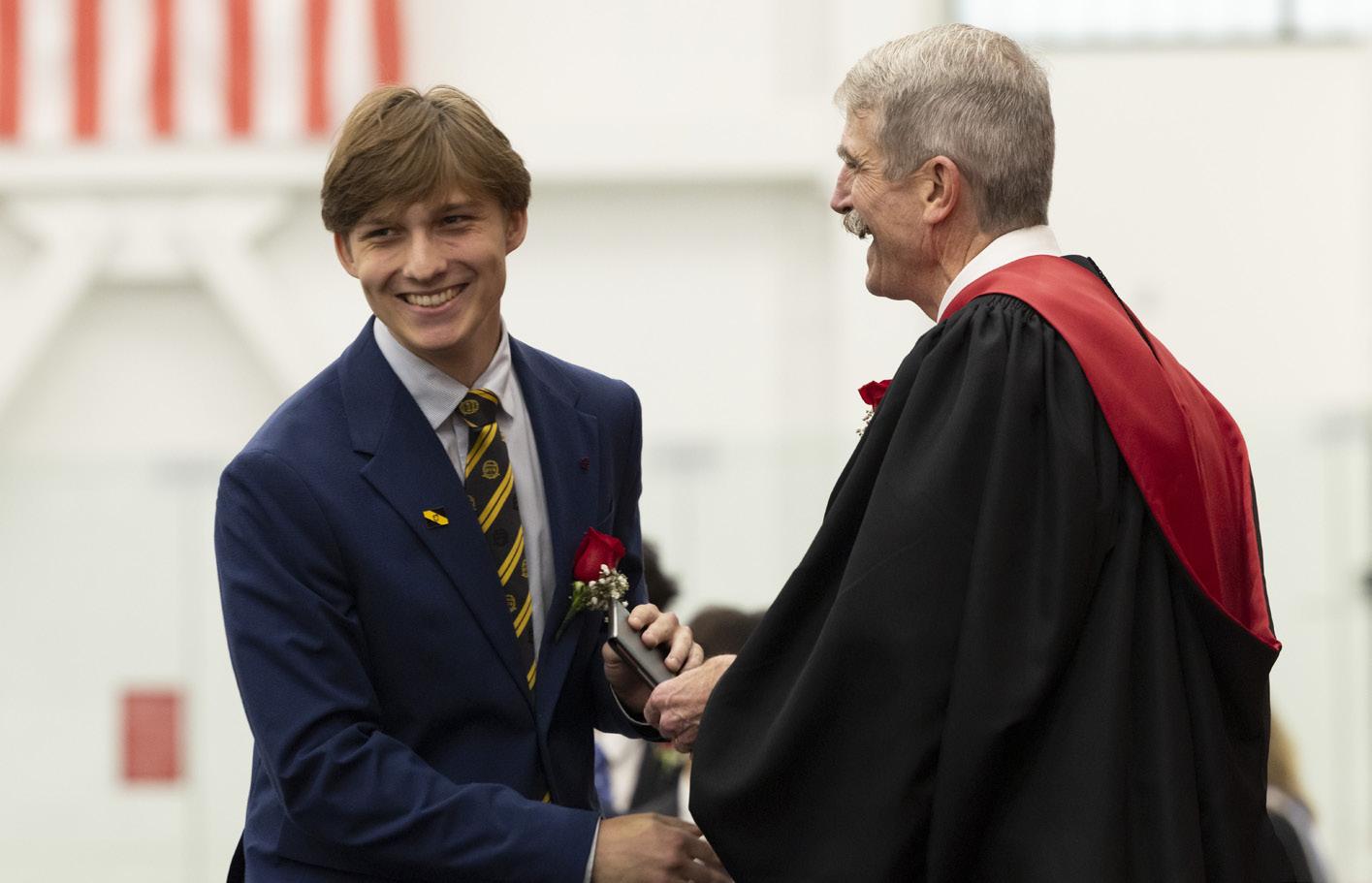
A STEADY RAIN throughout the weekend saw the Class of 2026 spend their last hours together at the ice rink inside Tsai Field House, contemplating the perils of progress, but also imbued with the courage to see the light, at Lawrenceville’s 2026 Commencement. The School’s 228 newest alumni emerged from their time on campus bolstered by the resourcefulness and resilience they developed in on the stages and fields of play, around the Harkness tables, and in their Houses.
“I encouraged you neither to embrace [progress] blindly, nor to fear it — but to expect it: that progress, that change, and all that comes with it, is inevitable,” said Head of School Stephen S. Murray H’54 ’55 ’63 ’65 ’66 ’16 P’16 ’21, expressing his faith in the class while referencing his earlier Baccalaureate address. “My faith comes from the qualities that I see in all of you, qualities that have emerged during your time here, and that are now simply part of who you are and that you bring with you out into the world: your generosity of spirit, your belief in each other, your sense of hope and possibility, and with this, as you make your way, you will,
I am confident, not merely persist, but indeed thrive — and surely, the world will be a better place for it.”
Murray presented the Edward Sutliff Brainard Prize, given annually by the faculty to the Fifth Form student whom it holds in the highest esteem, to Mila Cooper ’26. On behalf of the Board of Trustees, Murray also presented the Trustees’ Cup, recognizing that student who has most influenced the School for good, to Jael Gaines ’26. He also recognized the members of the class who will attend service academies in the fall: Estelle May Chafin ’26 was appointed to the U.S. Naval Academy; Andrew Hurlock ’26 received an appointment to the U.S. Military Academy at West Point; Jabrahlyn Jones ’26 will attend Virginia Military Institute; and Anthony Woo ’26 will attend Bowdoin College and will be enrolling in their Air and Space Force R.O.T.C. program.
In her valedictory address, Gloria Yu ’26 reflected on the values of compassion, curiosity, and community, reminding future classes to “treat those around you with compassion and celebrate each other’s successes, because the world does offer enough sweet pie for everyone to share.”
“In a society where we constantly measure ourselves against each other, where we all hope to find success and to be remembered,” Yu said, “it’s easy to overlook that the world is indeed big enough to hold all of us and to allow each of us to make our own mark.”
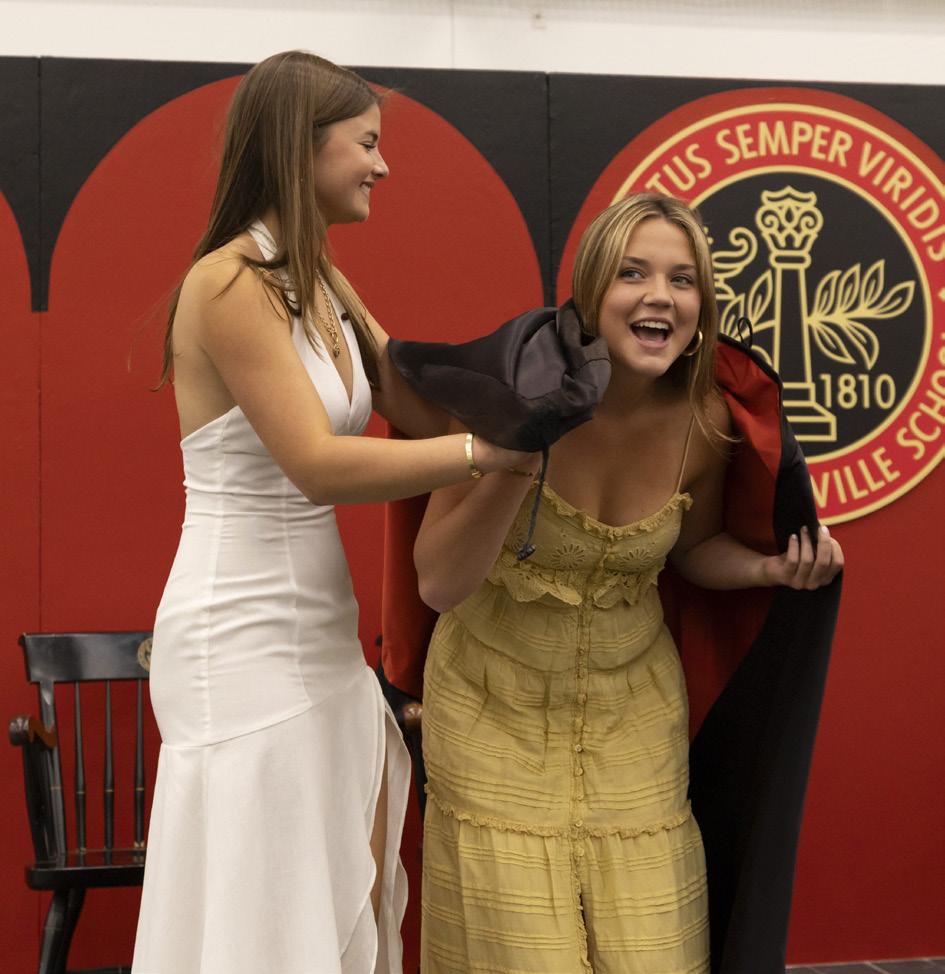
Outgoing School president Sienna Kulynych ’26 drapes the mantle over the shoulders of her successor, Grace Weekes ’27.
‘It’s Been a
Great Ride’
Retired Rear Adm. Paul E. Tobin ’58, recipient of the Aldo Leopold Award, kept Lawrenceville close to his heart throughout a storied 35-year career in the U.S. Navy.
REAR ADM. PAUL E. TOBIN ’58 (U.S. Navy, Ret.), was awarded The Lawrenceville Medal in May. The medal, presented by the Alumni Council and also known as the Aldo Leopold Award, is the highest honor the School may grant, conferred upon an alum who has demonstrated “brilliant, lifelong work in a significant field of endeavor.” The award is dedicated to the memory of Aldo Leopold, Class of 1905, the renowned environmentalist and author.
Tobin, who retired from active duty in 1998, is a highly deco rated military leader with over three decades of distinguished service to the U.S. Navy. He logged nearly two million miles at sea during a career that included executive commands as Director of Navy Information Management and Navy Logistics Group Western Pacific, Oceanographer of the Navy, and sea commands in the Vietnam and Gulf wars.
In recognition of his outstanding service, Tobin earned three Navy Commendations, a Meritorious Service Medal, a Bronze Star, four Legions of Merit, and two Navy Distinguished Service Medals. Following his retirement from active duty, he oversaw the Naval Historical Center as the 11th Director of Naval History.
Earlier in the day, Tobin attended presentations by students in “Case Studies in International Policy and Strategy,” taught by Ash Shah ’93, where one of the topics was, “Is It Time to Reinstate the Military Draft?”
Tobin was later honored at a special award ceremony held during the School’s spring Board of Trustees meetings, where he received the medal and was celebrated by Alumni Association President Greg Melconian ’87 P’25 ’27, Head of School Steve Murray H’54 ’55 ’63 ’65 ’66 ’16 P’16 ’21, the Board of Trustees, Lawrenceville’s senior staff, family members, and Lawrenceville friends.
“Lawrenceville has been a big part of our lives,” Tobin said. “Some of my former teachers and classmates came to San Diego for my commissioning, and friends from Lawrenceville came to my retirement.”
Tobin’s acceptance speech was a trip down memory lane and a deep dive into Lawrenceville lore, as he acknowledged classmates and legendary faculty, and shared anecdotes from the past seven decades. He introduced his wife, Lynne Carter Tobin, as his Fifth Form prom date; reminisced about babysitting for faculty kid Peyton “Punky” Brewster, made famous by former NBC television executive Brandon Tartikoff ’66 in a 1980s sitcom; credited the English and history departments with teaching him to speak, read, and write; and praised the music program for cultivating his lifelong love of opera and classical music.
“All this points to a very interesting career. I can’t thank you enough,” Tobin said. “I’m being honored, my family is being honored, and the Navy is being honored. It’s been a great ride.”
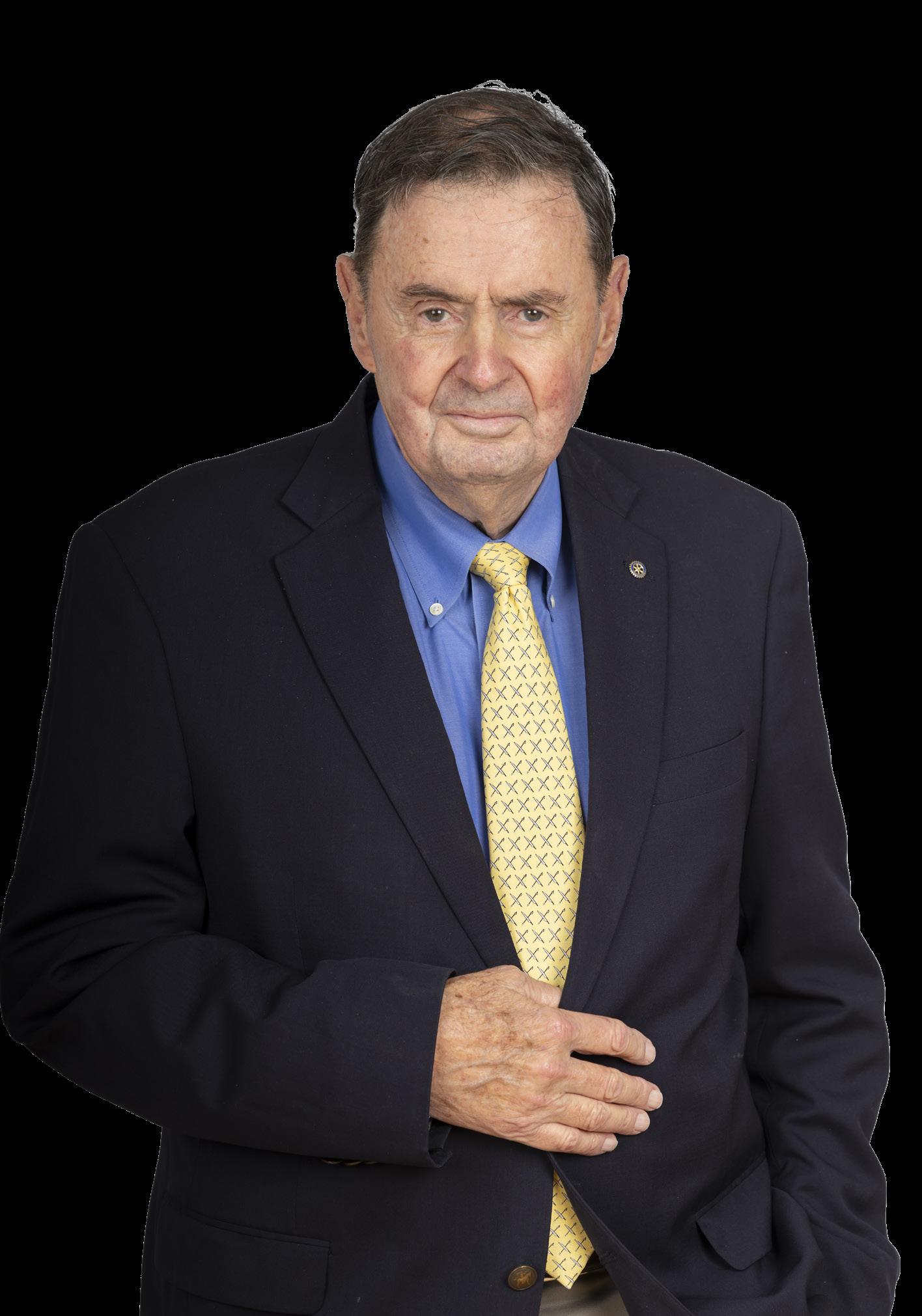
Anchors Aweigh: Among other honors during his long naval career, Rear Adm. Paul Tobin ’58 earned the Distinguished Service Medal, the Legion of Merit, and the Bronze Star.

The Spirit of ’66 — since ’76
FIFTY YEARS AGO this summer, while most of the United States was focused on the Bicentennial, an almost unnoticeable handoff from one Lawrentian class secretary to another was hardly any cause for fireworks. That summer, Ralph Harder ’66 handed the reins of the 1966 class notes column to Doug Hirsh ’66, who later submitted his first entry for the Fall 1976 issue.
A full half-century later, Hirsh is still the name at the top of the column, as he becomes the first 50-year class correspondent in the history of The Lawrentian, which began naming and crediting secretaries in 1962.
“I remember submitting class notes on yellow legal pad paper,” says Hirsh, who has seen technology shape the way class notes have been submitted, from paper to fax machines to the advent of the internet. Email, he figured, would break down the barriers for the more reticent members of the class to share their news.
“I thought, Oh, baby, now it’s really going to roll in, Hirsh recalled. “And then the same thing: Nothing.”
The art of class correspondence is predicated on coaxing news from classmates, and Hirsh’s way of proactively collecting updates has proven to be a consistently winning formula.
“I think in all this time, I’ve missed three columns,” he said, “and one of them, I know I mailed.”
The understated Hirsh has chronicled the Class of ’66 from their days as young men establishing careers and families to today, when many of his classmates have retired and fill their updates with news of their grandchildren. The entire arc of that maturation has passed through his pen — not that they seem much different to Hirsh.
“No, I’ve never really given it a thought,” he said. “They’re still the same guys I went to school with and had in class.”
Paging Through New Works from Lawrentians
Literary Lawrenceville alumni provide a roadmap for dealing with memory loss in loved ones, reveal a recent foreignrelations phenomenon, and reflect on an artistic immersion in Japan more than sixty years ago.

Nathaniel Chin, M.D., with George Spencer ’76
When Memory Fades: What to Expect at Every Stage, from Early Signs to Full Support for Alzheimer’s and Dementia
Though dementia and Alzheimer’s remain unpreventable, the way caregivers respond is critical. Chin, a geriatrician, had his perspective on his specialty changed when his own father was diagnosed with dementia. Writing with Spencer, he provides clear, calm questions to ask and tasks to tackle — as well as what not to worry about — from the first moments of concern, providing a lens to help readers figure out how to think about what’s happening.

Matthew A. Frakes ’09
Rogue States: The Making of America’s Global War on Terror
A historian of U.S. foreign relations at the Ohio State University, Frakes examines how throughout a series of crises from 1981-91, the Reagan and Bush administrations recognized that emerging threats to global security — terrorism, regional aggression, weapons of mass destruction, and narcotics trafficking — converged into a single phenomenon that they eventually called “rogue states,” and how their responses established America’s lasting enforcement role.

Patrick Bernuth ’58 plumes of memory
Bernuth takes readers to Kyoto, Japan, where he experienced an unforgettable introduction to Japanese art and culture in the 1960s. Having recently graduated from Princeton with a degree in English, he was captivated by the elegance and simplicity of haiku. The self-published Plumes of Memory is a collection of poetry that marries Bernuth’s experiences and love of haiku, accented with illustrations drawn by the author.
Joel Kimmel

Chelsea Adams ’07 finds the perfect voices for stories at Audible through a deep pool of sources.
Tuning Into Talent
By Adam Grybowski
CChelsea Adams ’07 knows watching movies with her can be no fun. Unable to lose herself in the industry’s dream factory, Adams instead watches the latest from Hollywood and beyond with zealous purpose, scrutinizing every performer on screen — from leads to bit players to complete unknowns.
“I’m deeply annoying to watch a movie with,” she says, laughing at herself. “I’m always scrolling IMDbPro like, Oh, who is that fourth guest-starring actor that no one else notices? ”
The associate director of casting and talent at Audible, Adams consumes an inordinate amount of entertainment — not just movies but television, TikTok, comedy shows and live theater — in her never-ending quest to identify talent for the narration of audiobooks and original audio content.
“Part of the work in my profession is seeing everything I can get my hands on,” she says, noting that all of that activity has produced an “internal Rolodex that is thousands and thousands of names long.”
That rich archive, supplemented with opinions and advice gleaned from friends, family, colleagues, and trusted industry contacts, serves as a guidepost when new projects land on her desk.
Her eye for talent has paid dividends. Years before Glen Powell’s breakout role in Top Gun: Maverick made him a star, Adams spotted something in his performance in a little-discussed romantic comedy on Netflix called Set It Up. She eventually cast Powell to narrate 10 Days, an Audible Original about an undrafted basketball player’s surprise call-up to the Philadelphia 76ers. The series got a major windfall later that year when Top Gun: Maverick became the year’s highest-grossing film.
“I thought Powell was special and that he was going places,” Adams says, “and when we had a chance to cast him in a low-stakes way, I had a feeling that it would pay off for us.”
Her talent-spotting instincts also inform her casting strategy when working with established stars. When Billy Crystal and Audible collaborated on Crystal’s passion project, Have a Nice Day, Adams relished filling out the supporting cast with Darrell Hammond and Rachel Dratch from Saturday Night Live, Christopher Jackson from Hamilton, and Auliʻi Cravalho from Disney’s Moana.
Her success with Have a Nice Day illustrates how Adams conceptualizes casting as a logic puzzle. Such an approach first crystallized for her as a Lawrenceville student when she produced WinterFest, the School’s student-directed performing arts festival. She had to coordinate 15 one-act plays over a month, with roughly 70 teenagers directing and performing in multiple shows each night.
“This was a complex thing to put together that required a mishmash of different skills,” Adams says. “You had to be organized and balance lots of logistical considerations but also manage relationships. You had to understand artistically if everything was getting where it needed to be. All of these skills are what I would go on to use in my career. It was a huge unlocking moment for me.”
A double major in theater and political science at Northwestern, Adams knew early that performance would be central to her life. She caught the theater bug at age 10. After spotting a classmate onstage in a community theater production, she realized performing was possible for her, too. By the time she enrolled at Lawrenceville, she had performed in dozens of local productions.
At Lawrenceville, she continued to perform while growing aware that acting wasn’t quite right for her.
“By that time, I knew I loved theater, but being on stage front and center was not for me,” she says. “I’m a perfectionist, and I wanted to find a space in entertainment where I could truly excel. I started looking at other options where I might find my place in this industry.”
That search led Adams to McCarter Theatre in Princeton, where she worked as an associate producer, developing the skills that would eventually take her to Audible in 2017. She continues to find deep satisfaction in the craft of casting audio.
“Most people outside the industry don’t even know that this is a job,” Adams says. “But there’s real joy in honing this craft. Every iteration, I get a little better at it. You’re always trucking toward a destination, and when it’s done, you move to the next. It keeps it fresh. There’s always a new logic puzzle to solve and a chance to get better at solving them.”
Adam Grybowski is a freelance writer based in Lawrence Township.
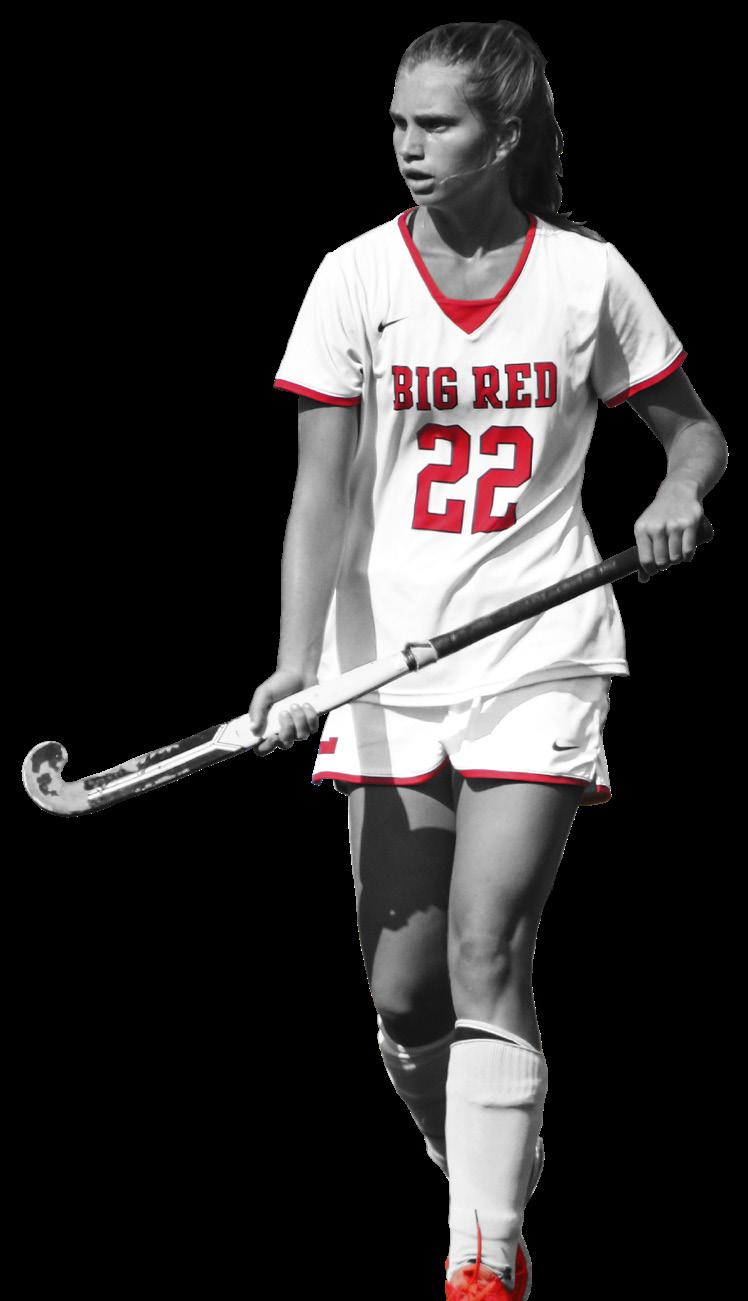
Go Big Red
Hits Close to Home
Onetime softball star Karen Prihoda ’15 returned to Lawrenceville this spring as the team’s head coach.
AFTER CAPTAINING HER Lawrenceville team to the 2015 Prep A state championship finals and later dominating the field at Wagner College, former Big Red softball star Karen Prihoda ’15 returned this spring to her old program as its head coach.
During her time at Lawrenceville, Prihoda made history as the first player to reach 100 hits, as well as the first to pitch a perfect game. She was also was a four-time All-Mid-Atlantic Prep League selection, a four-time All-New Jersey Prep selection, and twice earned the Coaches’ Award. In between softball seasons, the versatile Prihoda excelled in track and field, with an All-Prep recognition in the sprint events.
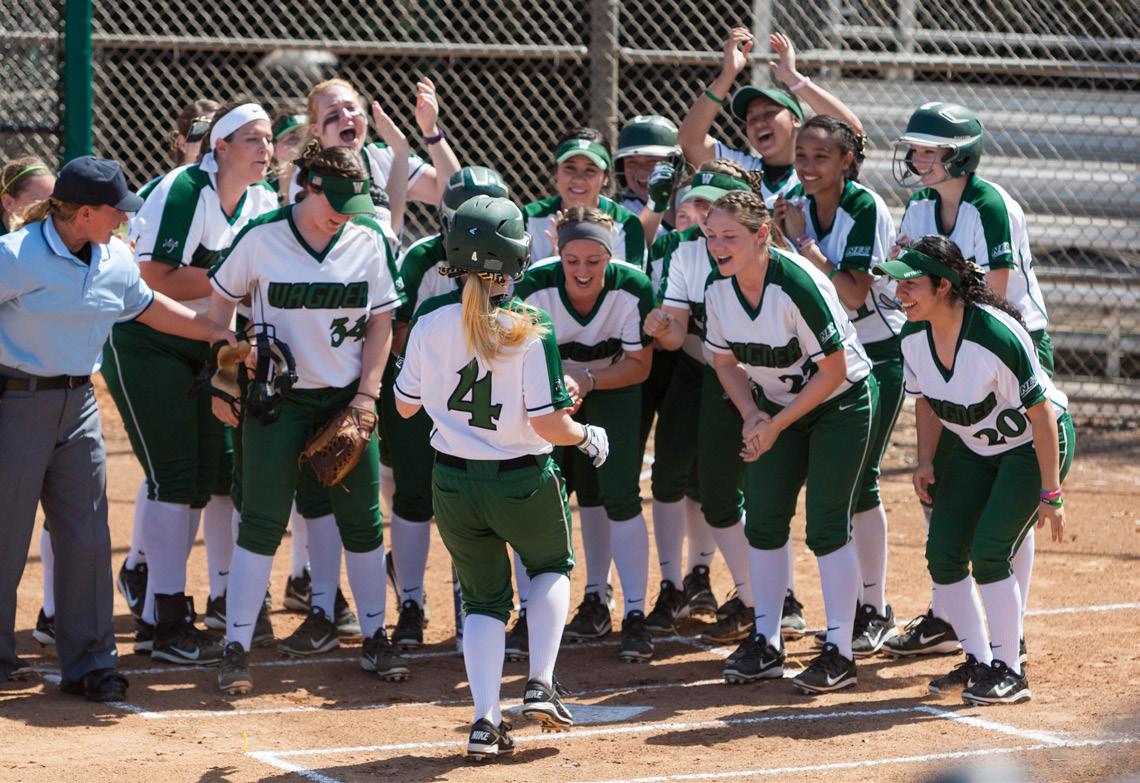
After Lawrenceville, Karen Prihoda ’15 enjoyed a stellar career at Wagner College in New York. Here, she is greeted by her teammates at home plate after slugging a home run as a first-year player.
Boys’ crew captured the Brown Cup and the M.A.P.L. championship; girls’ crew also won the Brown Cup.
Prihoda’s skill and resilience continued to differentiate her as a key player for Wagner College, earning her multiple All-Northeastern Conference selections, two National Fastpitch Coaches Association All-Region accolades, and the title of 2018 New England College batting champion. She led her teams in runs and hits and graduated from Wagner second in program history in stolen bases.
Tracing the growth of the softball program from her Second Form season in 2012, Prihoda says the program grew by her Fifth Form year to become “a little family” that “you can’t find anywhere else.” Together, the close-knit team reached the finals of the New Jersey Prep A championship in 2015.
Now as a head coach, Prihoda hopes to foster this same sense of community among the girls, both on and off the field. She explains that she looks to teach her athletes “where [they] fit in,” their role, and how they “can best help the people [they’re] working with.”
Gerise Kelly ’27 praises Prihoda for building team spirit, noting that her coach is eager to draw the team closer and is “doing a lot more team bonding,” ranging from disposable camera scavenger hunts to assigning “Secret Sisters,” who write letters to each other before every home game.
As head coach, Prihoda trains her players in essential softball skills, develops their mental fortitude, and builds a productive yet interconnected space for growth. Improvement, she insists, is a matter of “being gritty … down to the end.” Prihoda commends her players for their willingness to work quickly, and she credits several wins this past season to swift decision-making during high-pressure moments.
“Against Blair, we were down 5-1,” Prihoda recalled, “but just teaching that fight and grit, we ended up winning 6-5 on a walk from [co-captain] Sienna Kulynych ’26.”
Prihoda also applauded the team for encouraging each other in the dugout after hard plays. “We’ve seen it throughout our lineup, one through nine, and even on the bench, everyone supports each other,” she said.
Boys’ tennis claimed the M.A.P.L. Championship, with Bryan Kim Short ’29, Darshan Chidambaram ’28, and Matthew Fu ’27 named All-M.A.P.L.
Girls’ lacrosse were champions of the M.A.P.L. and the Wooden Stick and Evie Hester ’26, Mira Trappe ’26, Ava Moses ’26, and Dani Caldwell ’27 earned All-M.A.P.L. honors. Caldwell, Maureen Healy ’27, and Avery Merse ’28 were named All-Prep A.
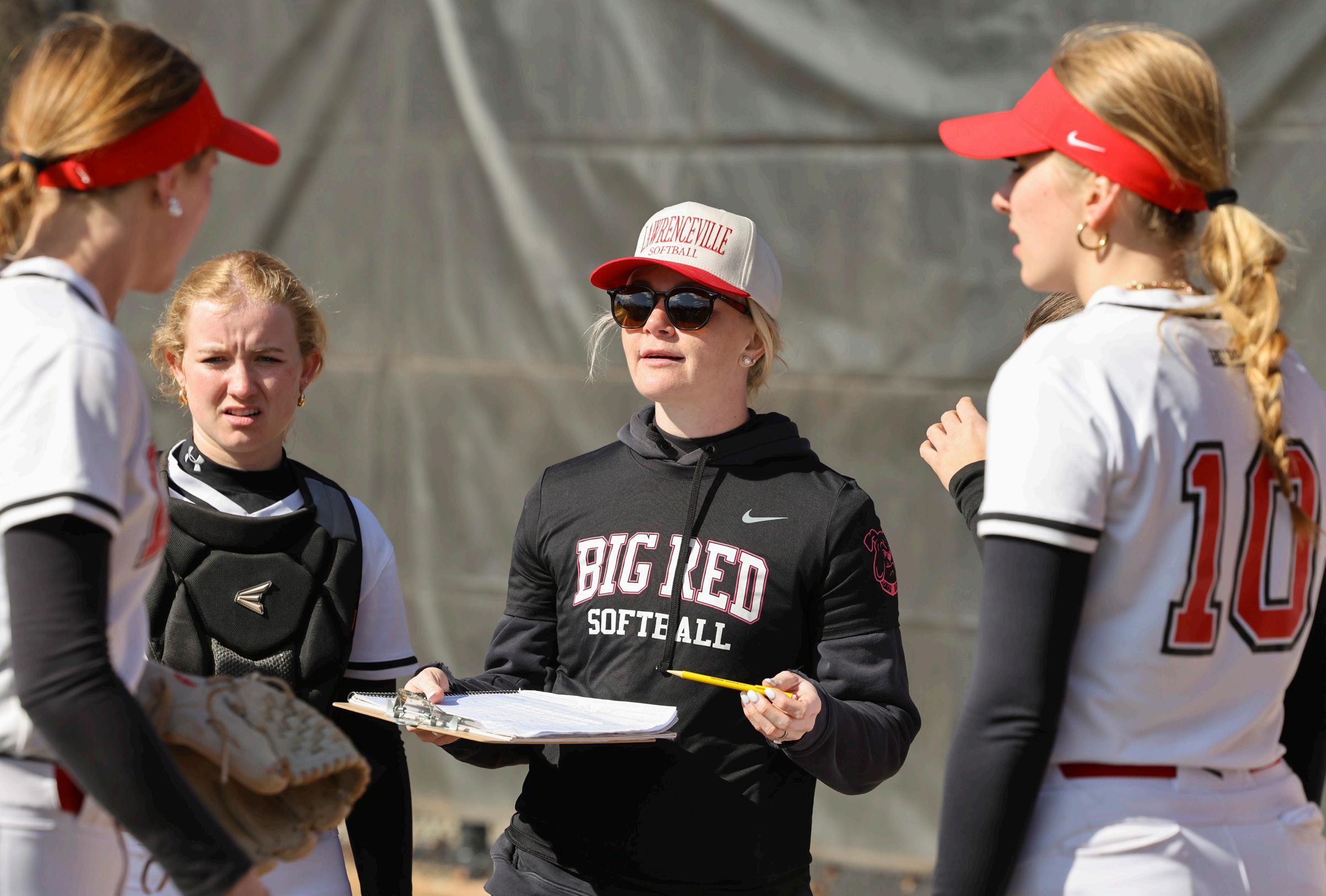
Co-captain Bella Devine ’26 credits Prihoda’s prior involvement in Big Red’s program with the seamless changeover from longtime head coach John Schiel H’78 P’97 ’08 ’10
“Because she knew his coaching methods,” Devine noted, “it allowed our team to have a smoother transition.” Moreover, catcher Phoebe Rayner ’27 explained that Prihoda “has the energy,” “understands the way the program has been run,” and “is exactly what our team needed.”
Returning to campus showed Prihoda that you can go
Michael Zampardi ’26 and Zach Shueh ’29 earned first-team All-Prep A for baseball.
In softball, Bella Devine ’26 was named First-Team All-N.J.I.S.A.A.
home again. At Lawrenceville, she explained, you may “leave for 11 years, but you come [back], and it’s like you never skipped a beat.” Now, she looks to grow Big Red softball and facilitate a team environment where each player — batting superstar or junior varsity underdog — feels at home.
— Melina Kyriakopoulos ’27
Boys’ lacrosse won the M.A.P.L. title, with Jake Burch ’27, Thomas Okupski ’27, Mac Rawson ’27, and Gavin Hamilton ’27 receiving First-Team All-M.A.P.L. nods.
Girls’ track and field won the M.A.P.L. and N.J.I.S.A.A. titles; boys’ track and field were champions of the M.A.P.L.
Boys’ golf claimed the Leibovitz Cup and the Crooked Stick. Aidan Li ’26 secured a spot on the All-M.A.P.L. team. Girls’ golf also won the Crooked Stick, with Ainsley Walters ’27 and Rebecca Chen ’27 named All-M.A.P.L.
Prihoda, who was the first Lawrenceville softball player to record 100 hits and to pitch a perfect game, returned this spring as head coach of the Big Red program.
Embracing the Work
Lacrosse means joy for Allegra Alexander ’27, but she
doesn’t want anyone to think it comes easily.
ASK ALLEGRA ALEXANDER ’27 what it feels like to stay after practice and shoot on her own, and she doesn’t hesitate.
“There’s nothing better than hearing the sound of a ball ping the back of the net,” said Alexander, an offensive player for girls’ lacrosse. “I can just turn my mind off, let go, and do whatever feels right in the moment. It’s freeing.”
Alexander, who has verbally committed to play lacrosse at Brown University, is a very driven person. Beyond her achievements or awards, the way she talks about the game is a defining element. She’ll describe playing out on the field, and you’ll hear in her voice that there’s nowhere else she’d rather be.
Alexander fell in love with lacrosse immediately, not because it came easy to her, but because of the way it made her feel. The friendships, the team, and the sense of working toward something with other people was something she was drawn to.
“The friendships you make through sports — there’s a sisterly bond about it,” she said. “You know each other so well. It’s something really special that I feel like a lot of other things in life just can’t give you.”
Alexander often brings a speaker out to the field to play her favorite songs and shoots until she feels like stopping. Sometimes she’s joined by her teammates; other times, she’s on her own. Either way, she loves it.
Her love of the sport didn’t come without struggle. During the COVID-19 pandemic, Alexander stepped away from lacrosse for a bit, yet felt the absence enough that she asked her dad to put her back in the local rec league. She came to Lawrenceville as
a Third Former who had real moments of self-doubt on the field. Hard games stuck with her longer than they might have. Balancing high-level athletics and academics was a challenge. She talked about all of it openly and still does. That’s something varsity lacrosse coach Aly Dowey noticed early from her: Alexander never pretends that it’s easy, and never lets anyone think that success just happened to her.
“Sports doesn’t have to be a linear path,” Dowey said. “It doesn’t have to be all sunshine and rainbows. That’s kind of the whole point — you have hard moments, and you learn how to navigate them.”
Now, as someone who younger players look up to, Alexander carries that honesty intentionally. She knows what it’s like to watch an older player and feel like the gap is impossible to
close. She doesn’t want that; she wants people to see the work.
Even with everything her player has built — the commitment, the leadership, the hard-won confidence — Dowey keeps seeing joy.
“She’s so excited to be excited,” Dowey said. “She’s just a joyful person, and that’s really infectious.”
Alexander would probably agree. Even on her worst days, she said, the ability to bounce back is what makes the good moments so great. And for her, the good moments — a ball pinging the net, a close game won, a season shared with people she loves — are very, very good.
“Being surrounded by a team, having great wins, learning from losses together,” she said, “you don’t really get that anywhere else. It’s really amazing.”
— Christopher Pearman ’27
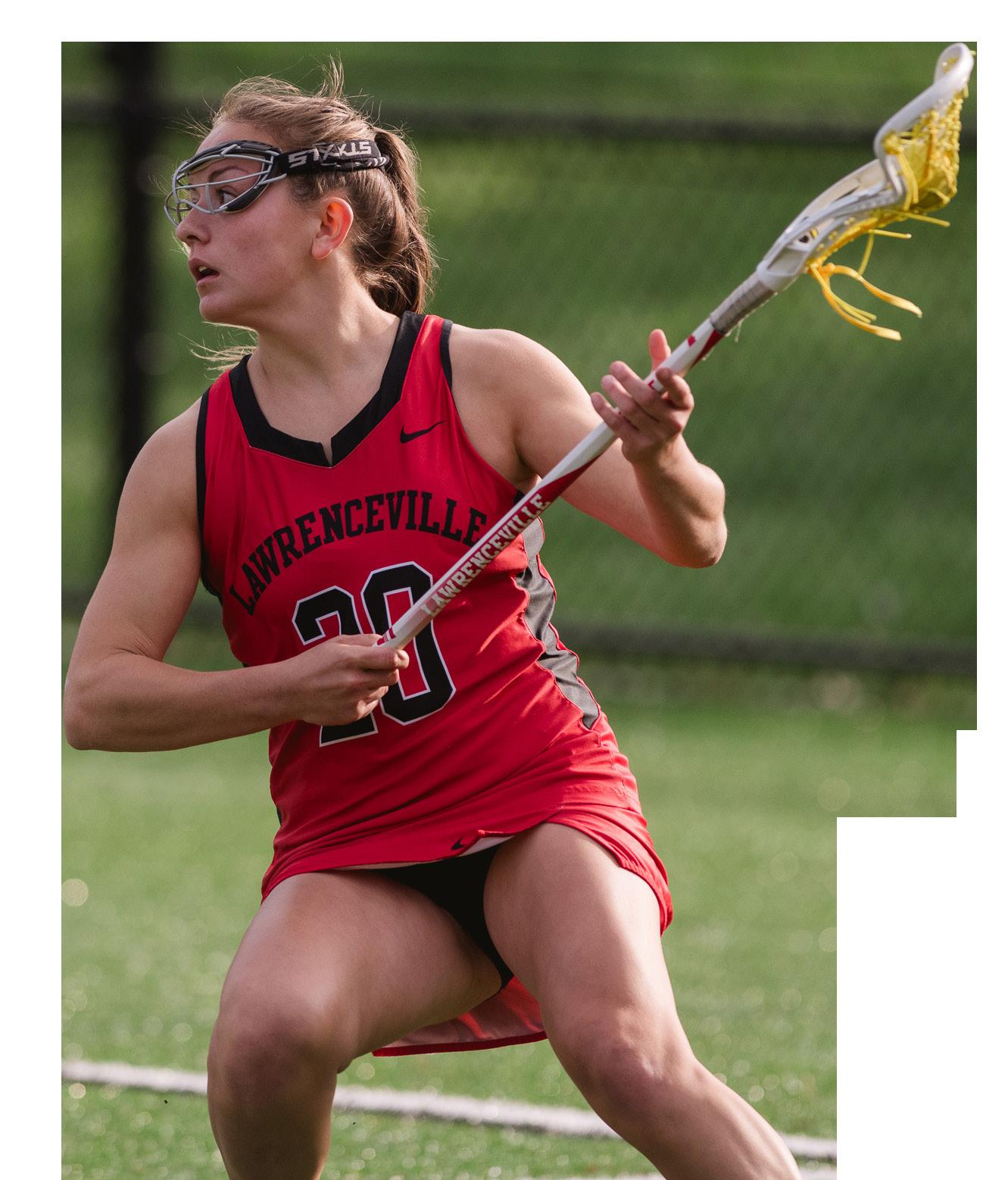
For Allegra Alexander ’27, who has verbally committed to play at Brown, lacrosse is a source of joy — and a ceaseless drive to improve.

Take Control of Your Estate Plan and Craft Your Lawrenceville Legacy
Lawrenceville’s Office of Planned Giving is here to help you take control of your estate plan and protect what matters most. Request your complimentary copy of 7 Strategies to Take Control of Your Estate Plan to help ensure your loved ones are cared for while creating a lasting legacy at Lawrenceville. Contact us using the information below to receive your copy or learn more.
Learn More — Scan here to learn more about making a planned gift and becoming a member of the John Cleve Green Society, or contact Director of Planned Giving Julia Ott at 609-620-6064 or jott@lawrenceville.org.
Join the John Cleve Green Society
When you include Lawrenceville in your estate plans, you make a meaningful investment in our mission — supporting exceptional students and faculty members, preserving our historic campus, and providing vital financial aid and student support for generations of future Lawrentians. By establishing a planned gift at Lawrenceville — bequests, life income vehicles, other deferred gifts — you automatically become a member of the John Cleve Green Society.

Encore

Cultures Come Alive
Seventeen performances revealed the diverse cultural influences experienced by Lawrenceville students, from ancient Chinese arts to the presence of athletics in the lives of Lawrentians, at the 2026 Spring Dance Series in April. Campus staples such as Tour de Force, L-KR3W, Nachale, and the Lawrenceville Dance Team were joined by first-year ensembles Yún Dance Troupe (pictured) and Bold Athletes Moving, the latter of which presented dancers performing in their Big Red team uniforms. Together, the student troupes showcased a range of styles from Bollywood and K-Pop to Afro Fusion and Street Dance.
WHEN DUKE LACROIX ’ 11 RETURNED TO New Jersey last year to see family for the holidays, the talk from his aunties, uncles, and cousins veered toward this summer’s World Cup.
Lacroix would be playing for Haiti, which had last made the tournament in 1974. Haiti was where Lacroix’s parents were born and raised. It was his extended family’s home before they moved to New Jersey. The questions that day had an emotion and energy beyond work-related queries. They talked about what this team had done to qualify for the World Cups as Haitians.
That was when Lacroix realized the significance of what he would do in six months.
Lacroix, who has played soccer professionally since 2015, wasn’t bothered by pressure. He knows what that feels like. Lacroix contemplated retirement after tearing his anterior cruciate ligament early in 2017. Club soccer, he has come to learn, has expectations.
The World Cup, watched by billions worldwide during its five-week run in North America, was more of a celebration for Lacroix, a 32-year-old defender.
Because Haiti was not under heavy pressure to excel like Brazil, France, or even the United States, “every win, every sort of celebration is icing on the cake,” La Croix says. “It’s essentially a free swing. Just getting to the World Cup was the challenging part and honor in and of itself.”
Joy PLAYING FROM A PLACE OF
Lawrenceville, where he led the team in scoring all four seasons.
In other competitive environments, Lacroix says, the pleasure of play gets dimmed. “Some of the other factors, the volume is turned higher,” he explains. “You still enjoy it, but the voice of doubt is higher and there’s more pressure.”
Haiti, whose group included Morocco, Scotland, and five-time cup winner Brazil, didn’t play in the country during its qualifying run. Lacroix was born in New Egypt, N.J., but soccer has allowed him to connect with the teammates and fans despite the language barrier. The support and love were apparent at every stop.
“I’ve been fortunate to play in some really great places, really great clubs and communities, primarily in the U.S.,” he said. “In Europe and other places, there’s a different identity. … The history is a lot longer. You have generations and generations of fans who live the sport. In the U.S., soccer is a bit newer.
“For Haitian supporters, when you support your country, it’s an anchored identity to who you are, who your parents were, your historical lineage. That makes it much more special: You’re playing for your own personal identity.”
As if this weren’t enough, Les Grenadiers’ June 19 match against Brazil was played at Philadelphia’s Lincoln’s Financial Field, easily drivable from New Jersey. And the team practiced at the University of Pennsylvania, where Lacroix starred for the Quakers’ soccer team. He earned All-Ivy honors all four years, graduating in 2014 with the fifth-most points in school history. That followed an honors-laden career at
After Philadelphia was announced as a World Cup site — “I thought someone was pulling my leg,” Lacroix says — his phone was slammed with texts. “That’s where a lot of my family and friend support are,” he says. But Lacroix was unsure he could see everyone. He feared downtime might be scant.
It seemed like there had been nothing but time. Seven months spanned between Haiti’s qualifying for the World Cup and the start of the tournament, with Lacroix feeling “extremely antsy” to play as June 13 drew near.
“You kind of visualize and dream how it will unfold,” he admits with a laugh. “You’re dreaming of glory, so to speak, and what you’re going to do, and what you’re going to execute.”
Lucky for Lacroix, there was plenty to do: A fourth season with the Colorado Springs Switchbacks FC of the United Soccer League, which allowed him to sharpen his skills for the World Cup; serving as the USL’s players association president, helping land a tentative collective bargaining agreement after 18 months of negotiation with the league; and, far less triumphant, recovering from a calf injury.
Ultimately, Haiti was eliminated from the competition during group play in June, but Lacroix was prepared for the experience of a lifetime. After all, it was the World Cup, the beautiful game’s biggest stage. He knew what was required: “I’m getting to play from a place of joy.”
Pete Croatto is a freelance writer based in Ithaca, N.Y.
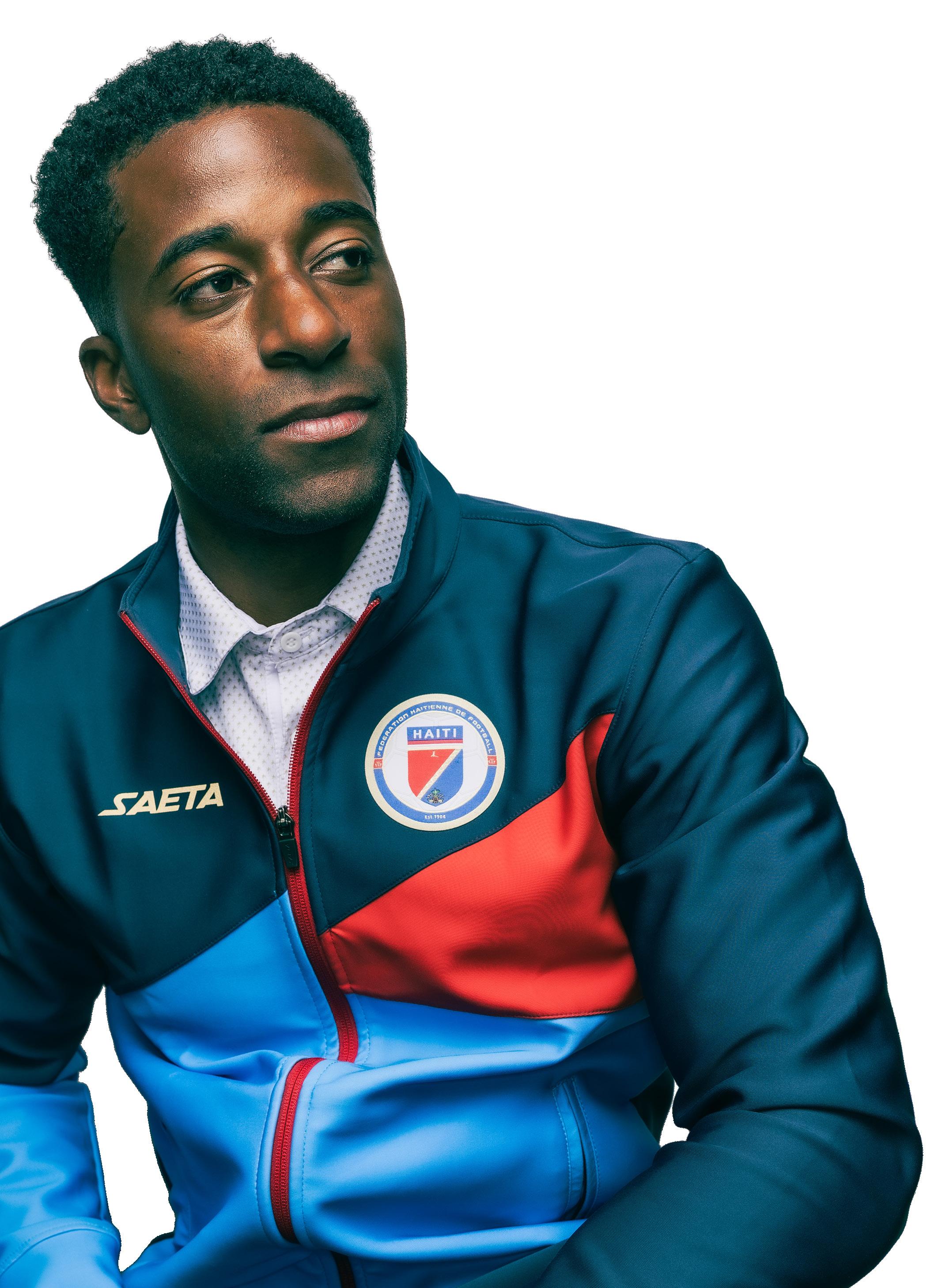
After starring at Lawrenceville and Penn, Markhus “Duke” Lacroix ’11 helped lead the Haiti men’s national team to the World Cup for the first time in 52 years.
By Pete Croatto • Photo by Colin Lenton
CATCHING

IN A CAN
Clement Pappas ’92 and his company’s Surfside went from a novel idea for canned drinks to the fastest-growing alcohol brand in the world seemingly overnight.
By Sean Ramsden H’65 • Photography by Colin Lenton



IIT’S TIME FOR SUMMER, AND ALL THE FUN THAT COMES WITH IT,
whether at the beach or the ballgame. But that sun is strong, and it gets hot out there, building a thirst in you that demands to be quenched. Keep an eye open, and you’ll likely see someone pop the tab on a cold Surfside. You might even be the one doing it. And you wouldn’t be alone.
The ready-to-drink cocktails — with colorful sunset stripes ringing cans filled with refreshing, non-carbonated iced tea-with-vodka and lemonade-with-vodka flavors — seem to be everywhere. Since its launch in 2022, Surfside has become a sensation, driven by explosive case growth that saw sales climb from 200,000 that first year to 4.9 million in 2024, to 11.1 million last year. Surfside’s parent company, Philadelphia-based Stateside Brands, projects sales of a whopping 16 to 17 million cases this year.
It was the No. 1 top growth spirits brand worldwide from 2022-24, according to IMPACT Data Bank, which is just an industry way of saying that Surfside went from a brand-new canned drink to the world’s fastest-growing alcohol brand almost overnight.
It’s all put a giant smile on the face of CEO and co-founder Clement Pappas ’92, who is just a bit bemused at the way Surfside has seemingly captured lightning in a bottle … or at least in a can.
“I mean, listen, we obviously had our reasons [to develop Surfside], and thought it was a good idea,” says Pappas, known to most as “Clem.” “But certainly, the magnitude of the success is definitely not something I would’ve predicted if you had asked me going in.”
Pappas and his co-founders, brother Zach Pappas and another set of brothers, Matt and Bryan Quigley, were not novices to the spirits and beverages game. Clem Pappas came up in the family business that, by the time he became an executive, was producing private-label juice for large
brands such as Apple & Eve and Welch’s. After his father, Peter Pappas P’92 ’97, died in 2010, the family voted to sell the company, a move Clem opposed.
“I was not thrilled about it, because I always loved that business,” he says. “I always thought I would work there. But I was kind of like, OK, what’s next? ”
After a mutual friend planted a copy of the Quigley brothers’ business plan in the powder room at Pappas’ 40th birthday party in 2014, he read it, and days later, met Matt Quigley. Together, they founded Stateside Urbancraft Vodka in 2015, and it quickly became a favorite in Philadelphia taverns. It remains what Pappas calls “really a regional brand,” but the spirit is a recognizable call to bartenders throughout the area.
Pappas says the Stateside brand caught some wind in its sails during the first year of the COVID-19 pandemic, when Pennsylvania Gov. Tom Wolf temporarily closed the state-operated wine and spirits stores. They were deemed “non-essential,” but Pennsylvania permitted in-state distilleries to continue producing and selling their spirits direct to the consumer, particularly though home delivery.
“Almost like a pizza delivery boy, we were allowed to deliver vodka, so, when they closed all the liquor stores, we went bananas,” he says, noting that he and his partners originally anticipated laying off its employees. “We wound up doubling our business overnight, and we woke up from the fog. I mean, it was crazy.”
Not only did Stateside retain every one of its employees, but they all went into overdrive.
“We were distilling around the clock. Matt was distilling at night. We had 23 or 24 people running around in cars delivering vodka,” Pappas recounts. “By the time they reopened the liquor stores and things calmed down with that, we looked and we had a million dollars in the bank account. I was like, Holy shit, we’ve got some real money.”
That bulging balance enabled Stateside to back some new ideas. By 2021, ready-to-drink canned cocktails like White Claw Hard Seltzer and High Noon had become increasingly popular as low-calorie alternatives to light beer. Pappas and Stateside developed Stateside Vodka Soda, which, like High Noon, uses the clear spirit as its base (White Claw is a maltbased hard seltzer). Stateside Vodka Soda quickly became popular in the Philadelphia market, buoyed by the good will it had built with consumers during the pandemic, “but we were late to the party in the rest of the country,” Pappas says. “All the distributors and all the stores, the big chain retailers, just said, ‘Ah, we’ve got enough vodka sodas. We don’t want to carry any more.”
At the same time, however, Stateside continued innovating. Pappas and others around Stateside’s headquarters had been wearing 1970s-style, surf-themed gear, with its iconic stylized sunset stripes. The style, and the mood it stimulated, got them thinking.
“Matt just had this idea, like, ‘Hey, I want to put that on a can,



and it’d be great with iced tea,’” Pappas says. “And then ultimately, we came out with lemonades and other flavors as well. We launched Surfside as … not a pet project, but just something Matt really was passionate about. It just took on a life of its own.”
Surfside immediately became a sensation at Citizens Bank Park, home of Major League Baseball’s Philadelphia Phillies, and at the Jersey Shore. At the ballpark, roaming beer vendors — “hawkers,” in ballpark parlance — began experimenting with Surfside, and soon the drink was outpacing stadium stalwarts Miller Lite and Michelob Ultra.
“Pretty soon, by June or July, every hawker in the stadium started carrying Surfside,” Pappas says, “and we became the No. 1 seller in the whole stadium.”
Tea, which has been on the market for 30 years, is also non-carbonated, but its high sugar content — 30 grams per bottle — and malty heaviness make it a noncomparable in the ready-to-drink market.
“That’s the other thing with ours: It’s clean. It’s 100 calories, it’s zero carbonation, it’s two grams of sugar,” he says. “So, it doesn’t feel heavy. You can drink it, it tastes good. It tastes like iced tea. It doesn’t have a funky malt aftertaste.”
This emerging preference for “lighter” is another wave Pappas hopes to catch with the recent introduction of Super Lyte, a canned vodka-based beverage inspired by sports drinks.
“If you look at the sports drink category, Gatorade and those kinds of brands, they have huge household penetration,” he says. “It’s pushing 90 percent. I mean, almost everybody has Gatorade. It doesn’t demand a lot of you.


By late June, Super Lyte was performing at levels that mimic Surfside’s early days.
“We’re more lined up with our supply chain than we were when Surfside first came out,” Pappas says, “but, I mean, it’s only been out about a hundred days, and we’ve already sold over 500,000 cases.”
For now, though, Surfside remains on full throttle, with Pappas mindful of the big beverage corporations horning in on his business.
“Because we know that once the market sees that there’s something out here working, you’ll get a lot of copycats or fast followers,” Pappas explains. “And then pretty quickly, the big guys will be able to muscle you out if you don’t mark some territory, so we’ve been on an absolute sprint for four or five years now.”
To that end, Surfside’s lead in the category seems strong, and it has enabled Stateside Brands to expand its footprint across the country. Surfside has been the best-selling spirits brand at Citizens Bank Park since 2023, but it is also involved in partnerships with some 70 professional and collegiate teams, including 16 Major League Baseball stadiums.
Closer to home, the parent company last year secured naming rights to the former Xfinity Live!, the wildly popular 10-acre entertainment and sports viewing compound located in the heart of the Philadelphia sports complex on the site of the longgone Spectrum. Now, thirsty Phillies, Eagles, Flyers, and 76ers fans flock to Stateside Live! year-round for a more complete pre- and postgame experience. For an area native and Philly sports fan like Pappas, it’s like a
“I was there a couple weeks ago,” he says. “I was just looking at this, thinking, ‘God bless America, man. This is

Board of Trustees President
days as a Lower School prefect.
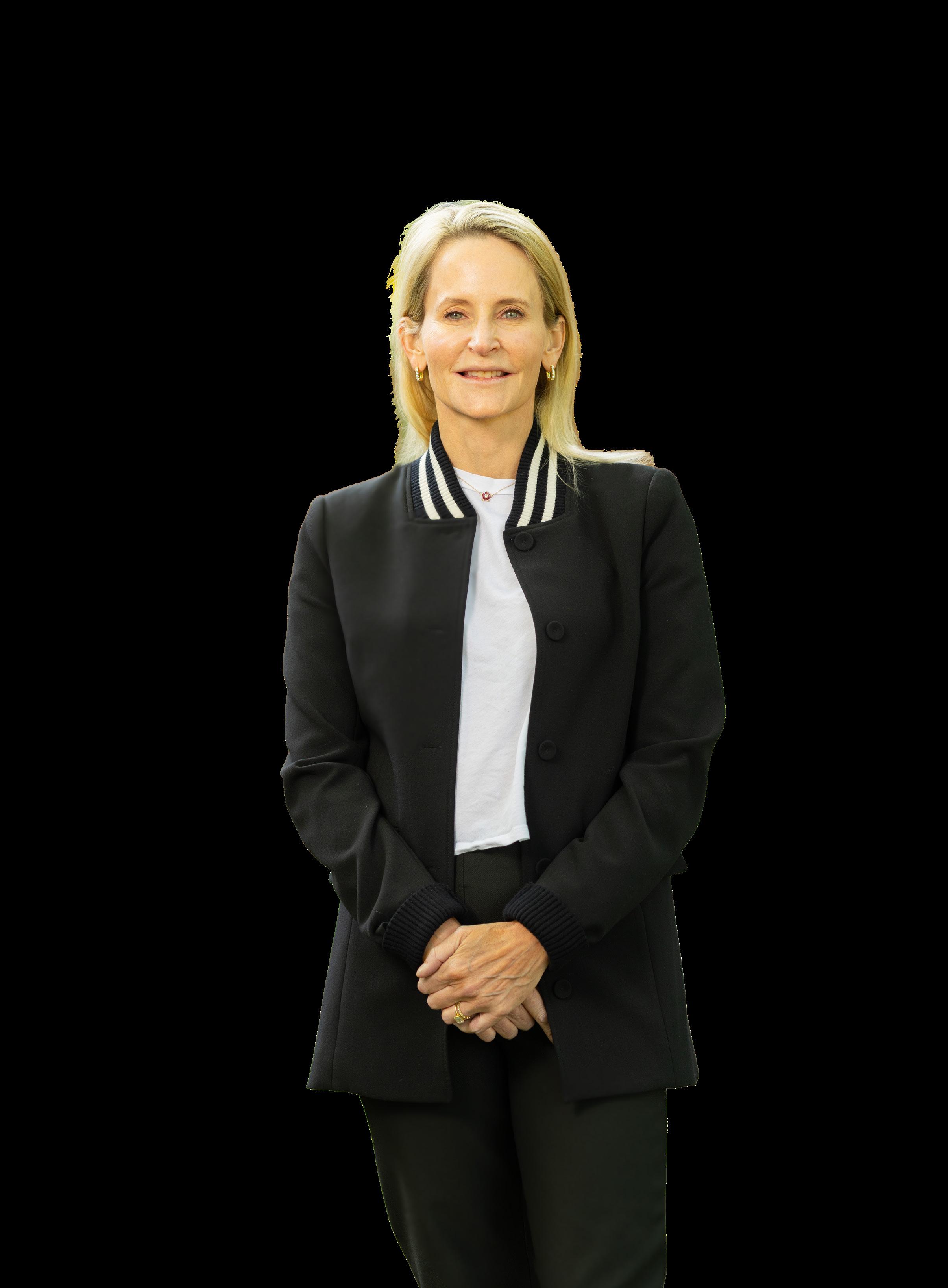
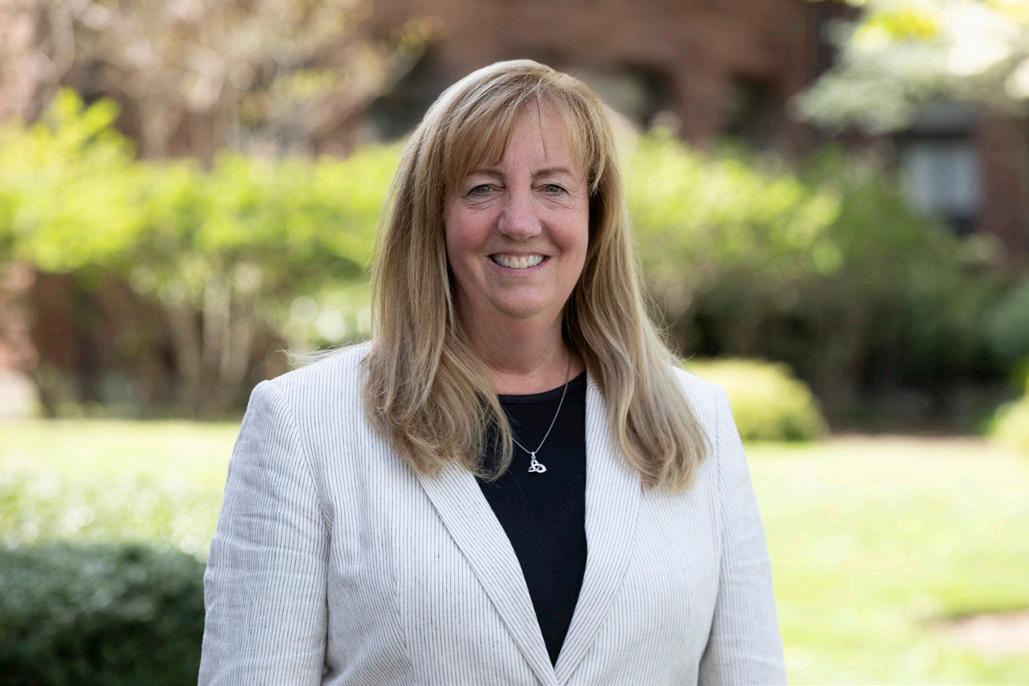
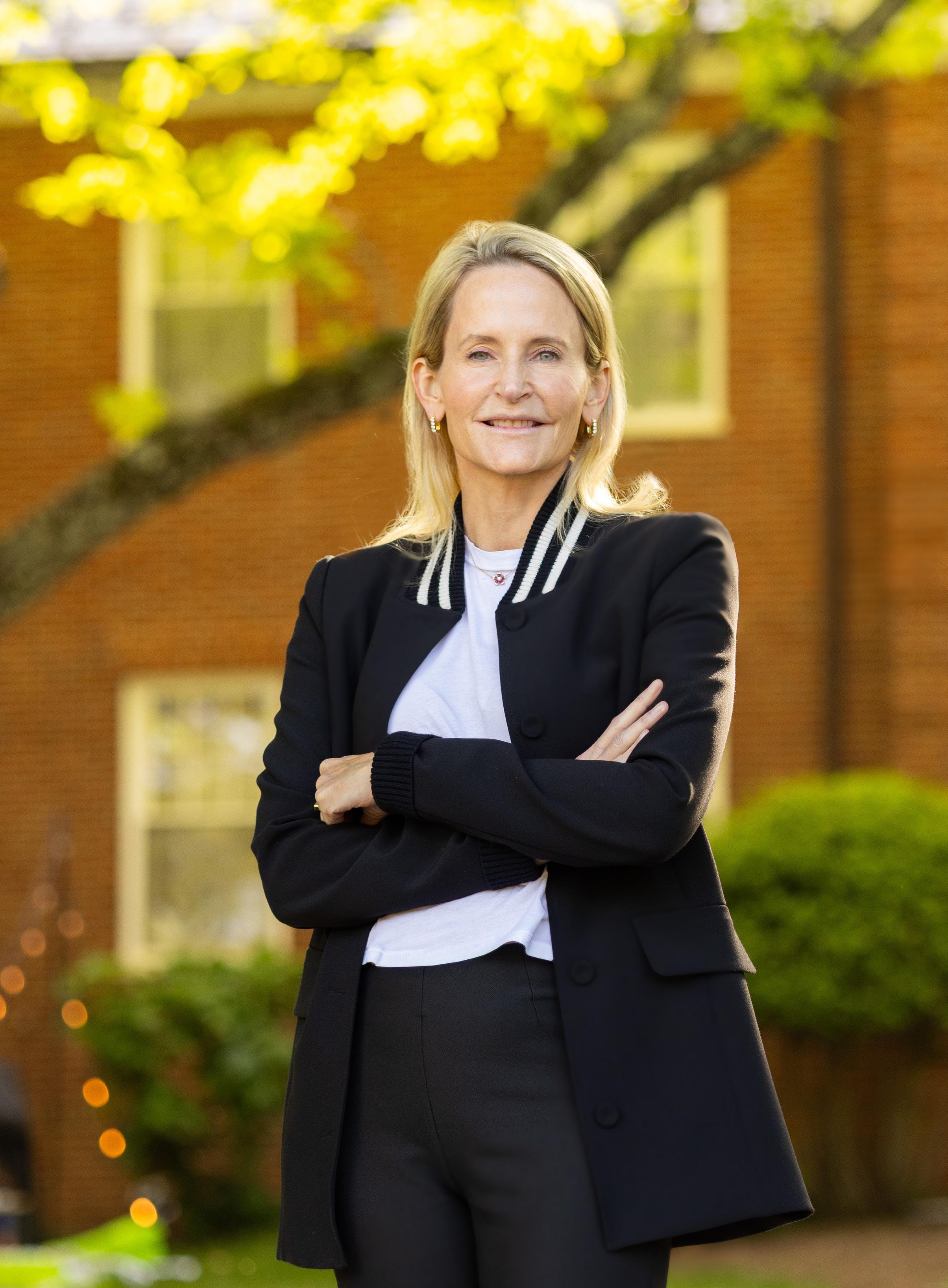
Celeste Mellet ’94 P’27 ’30 has been leading at Lawrenceville since her student
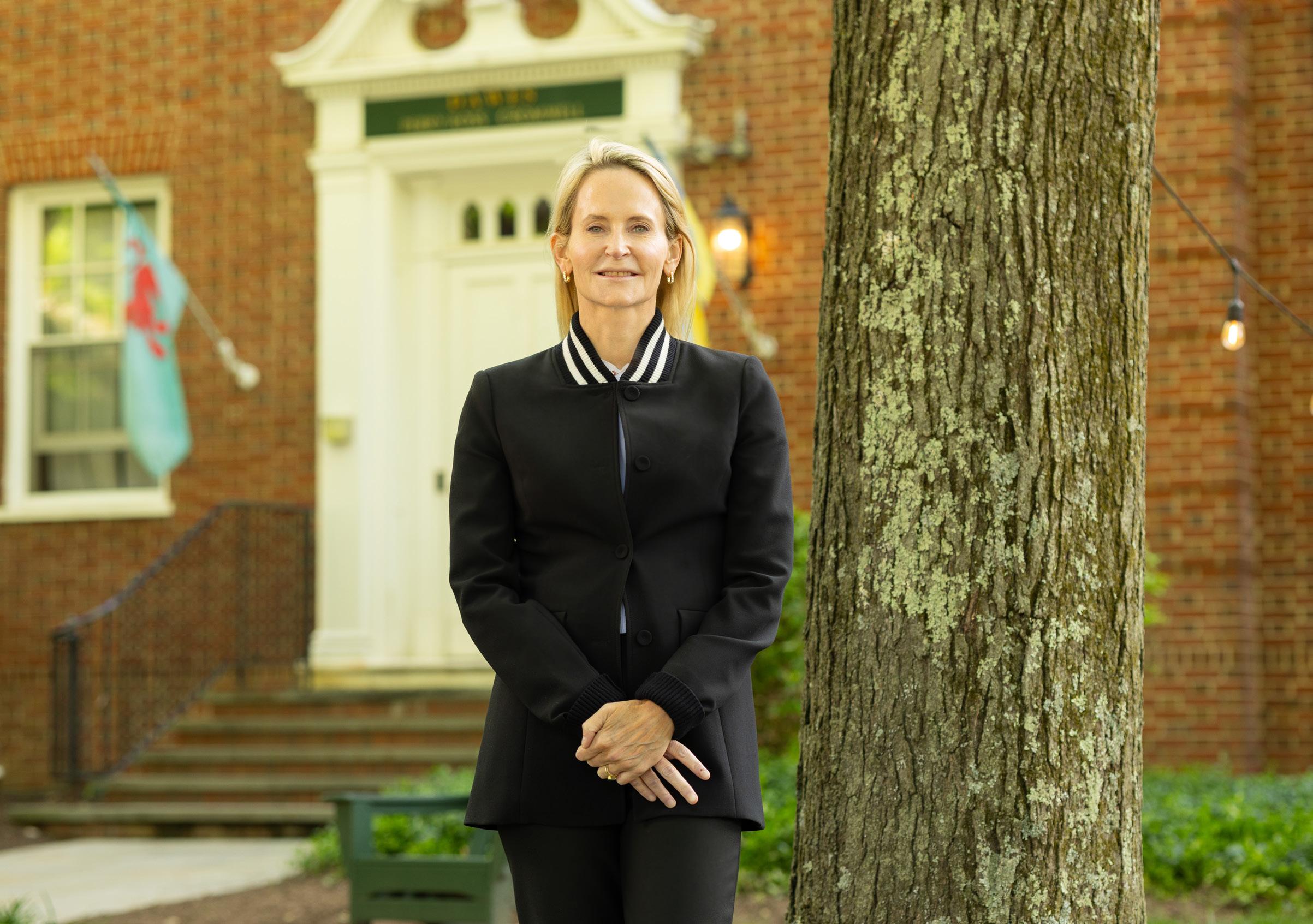
The first woman president of the School’s Board of Trustees, Celeste Mellet ’94 P’27 ’30 balances an inclusive, collaborative approach with the decisive leadership needed to guide Lawrenceville forward.
By Sean Ramsden H’65

A new hand on the gavel
“I KNEW ABOUT BOARDING SCHOOL from books and movies,” recalls Celeste Mellet ’94 P’27 ’30, mentioning 1989’s Dead Poets Society, in which Robin Williams portrays a new teacher who inspires his students through a love of poetry and his unorthodox methods. Although the film appealed to the young middle-schooler, it still was not a clarion call. “I love that movie, but I never really thought about going to boarding school.”
So, the fact that Mellet did enroll at Lawrenceville just a year later is not to be taken for granted. It altered not just her history, but that of the School, too. For Mellet, it became a place to fully realize herself, a launch pad for a natural leader. For Lawrenceville, her choice sparked a relationship that reached its apogee when Mellet become the first woman named president of its Board of Trustees in 2025.
Mellet entered the School as a Second Former with a stubborn determination to show she would take a back seat to no one. “I was very ambitious and determined,” says Mellet, the eldest of seven siblings who were all born in the space of eight and a half years, including five brothers. Her resolve was fueled, at least in part, by her father, Oliver Mellet P’94 ’95, a conventional man who was raised in a large French Catholic family before heading his own.
“To me, he seemed to have a perception that boys were better. He doesn’t believe that, but I had a real chip on my shoulder,” she says. “I was like, I’m smart. I’m as good as my brothers. I’m going to go to Harvard…”
Mellet aspired to law and a spot on the U.S. Supreme Court, but from her family’s part of Northeastern Pennsylvania, the path was unclear. Going away to school seemed unattainable simply because of the cost — at least until a fortuitous conversation with a neighbor whose daughter attended Lawrenceville.
“My parents chatted with her parents and found out that schools like Lawrenceville have financial aid,” she recalls. Mellet was always active in trying to help her parents with their large family — “lots of oldest-daughter stuff” — but bolstered by this fresh information, her parents told her, “You need to go and be your own person.”
Together, they applied to Lawrenceville and to St. Andrew’s School in Delaware — site of the fictional Welton Academy in Dead Poets Society
Photo
“I loved both,” Mellet says. “I didn’t know where to go.”
In the end, Lawrenceville was the more affordable choice. Mellet says that although their resources were limited, “my parents provided for us really well. We were very well-educated. We knew what was out there, and no one told me I couldn’t. And I was like, I’m doing this.”
HOLLY BURKS BECKER H’98 P’06
’09 ’12
came to Lawrenceville in 1985 to help plan for the transition of the School to coeducation in the fall of 1987. Today, Becker is the director of college counseling, where she has been working since her arrival, but at the time, part of the transition planning also had her in Admission to help identify the kind of girls they thought would be able to walk into a challenging situation and thrive.
“We need to look for people who are competitive or probably sporty,” she recalls of the assignment, “but strong women — strong girls — who can handle this because it’s going to be hard.”
In Mellet, who was admitted in just the fourth enrollment cycle to include girls, the School found someone who intended to throw herself into the experience wholly.
“And she totally did,” Becker says. “You could just tell she was always going after every possible opportunity to contribute and grow here.”
The list of co-curriculars attributed to Mellet in the 1994 Olla Podrida (for which she was the clubs and features editor) is astonishingly full, even by the standards of a tenacious Lawrentian: Head Ropes Course Instructor, Lower School prefect, president of the Young Democrats, and earning a Major L in both field hockey and ice hockey are just the headlines. It is a list that paints the picture not only of a versatile and talented student, but one with the chops to lead.
“I think I came in as a leader because I have so many siblings,” Mellet says, “but it was in different environments that I really started to step into that.”
All the while, Mellet was also absorbing everything inside the classroom, Stanley House, and elsewhere, developing a strong sense of self. She admits her confidence initially took a hit among some peers with regard to money — “there were kids who were really nasty about it,” she recalls — but the lessons of her parents were bracing.
“[My father] wanted us to be confident that just because we were there on financial aid, we deserve to be there just as much as anybody,” recalls her brother, Oliver Mellet ’95, who joined Celeste at Lawrenceville after her first year, “and that we shouldn’t feel like we had to defer to people just because they had wealth.”
She was also nurtured through the athletic mentorship she received.
“Holly Becker was my field hockey coach. I was a goalie, and whenever a ball would go by me, I would apologize,” Mellet says. “And it drove her nuts.”
Becker would fire a series of tennis balls at her as quickly as possible, with the directive: Just block the ball. Stop apologizing.
“It’s a common thing with goalies, right?” Becker says. “But Celeste is such a perfectionist and such a driver that she would want to stop every single ball. The only way you improve your skills is to have it be almost untenable, to have so much going by you.”
The foundations of her professional success, Mellet believes, were built around the Harkness table, with its insistence on critical-thinking skills. “Asking questions is the most important skill in all of the jobs I have had,” she says, unequivocally.
Mellet mentions many teachers who helped hone her varied interests, including Kate Mittnacht H’90 ’91 P’03 (“just her energy about literature”), Nancy Thomas H’99 ’01 P’04 ’07 (“I love math anyway, but with her, it’s just so exciting”), and the late Marty Doggett H’76 ’79 ’82 ’86 ’87 ’88 ’92 ’98 P’00, former dean of students who also taught Advanced Placement economics.
“I fell in love what I thought was economics, but it was actually him,” she says of the classroom atmosphere Doggett cultivated. “Then I majored in economics and I thought, Why did I do that? It turns out I was chasing the excitement of economics that I had with him.”
Around her, Mellet was making an impression, too.
“She had the respect of her teachers. She was well liked in her peer group. She just seemed like kind of a natural leader,” her brother Oliver recalls. “People paid attention when she spoke. She wasn’t assertive of leadership, but people respected her and so when she decided that she wanted to say something about a topic, they tended to listen to her.”
Becker, who as her coach helped Mellet grapple with the fact that no goalie is perfect, also wrote her letter of recommendation as a member of the College Counseling staff. She included a harrowing description of the Ropes Course, detailing the maturity and leadership required of its head instructors to psychologically support participants as they dangle and leap from perches and ropes 40 feet above ground, and concluded: “Believe me, those instructors hold the end of a very real ‘lifeline’ and there is no one I’d rather have at the other end of my rope than Celeste.”
“W HEN I STARTED ON THE BOARD,
[Trustee Emeritus] Glenn Hutchins ’73 said to me — and this is literally after the first morning — ‘You will be the first female board president,’” recalls Mellet, who was appointed to Lawrenceville’s Board of Trustees in 2014. “And I thought, all right. But I couldn’t have imagined it at the time, just absorbing all the things that are happening, being able to connect the dots and how do you drive that.”
By the time she joined the board, Mellet had been shaped by the arc of her professional life, absorbing crucial lessons
Forty years after the School’s Board of Trustees voted to adopt coeducation, one of that first wave of girls has become the board’s president.
about the business of business. She never did go to Harvard. She didn’t even apply, actually. Princeton won her over, and that is where she decided her future was on Wall Street.
Mellet has thrived at every stage of her career, propelled by a thirst to keep learning, whether through experience or observation. Amid the 2008 financial crisis, she grew “antsy” even after attaining ranked-analyst status, beset by the feeling that she wasn’t learning anymore.
“All the money that drove the growth in that space dried up,” she says. “It’s not interesting without growth because that drives change.”
At Morgan Stanley, where she headed investor relations, Mellet watched what leaders did as the economy plunged into a deep recession, a time she considers the most consequential point of her career.
“I really was amazed by seeing, in crisis, how people differentiated themselves,” she recalls, “and a lot of it was how they treated those around them.”
Mellet also absorbed another valuable lesson for tough times: “You have to pick the least bad option,” she says. “That is something people don’t really get — that by not deciding, you’re deciding.”
Being named treasurer of Morgan Stanley opened her path to chief financial officer roles, which she has held at Fannie Mae, at investment-banking firm Evercore, and now at Humana, a leading health insurance and healthcare services
company. Not unlike Lawrenceville, it is a mission-driven environment that Mellet embraces fully. Since being appointed to the board, Mellet has seen highs and lows that in some ways mimic those of the financial industry during her career. After serving as vice president under Jonathan G. Weiss ’75, she felt the weight of ascending to the presidency, both in terms of responsibility and history as the first woman to hold the gavel at the School.
“I did feel like one of the reasons I should take it is because I would be the first, and it’s time,” she says. “I needed to do it, because the way I think, you have to move up. Are you ready? When else would there be the first woman?”
Mellet enjoyed the benefit of serving under what she calls Weiss’ “inclusive leadership,” and it’s a trait she shares.
“In the role, I am like Jon — very inclusive. I want a lot of opinions,” she says. “Although at some point, it’s ‘gavel down.’
Ultimately, leadership is leadership, and Mellet knows that the eyes of the School are always on the board president — no matter who it is.
“Because I have spent so much time in male-dominated situations, I don’t think about how I’m the only woman,” she explains of the gravity that comes with the role. “But I do operate differently. I do speak up. I was raised to do that. There have been some amazing board presidents and it is daunting, but I think that should be the case for anyone.”

Red, Black, and Back
More than 1,500 Lawrentians and guests from the past 80 years returned to campus for Alumni Reunion Weekend the final weekend in May to celebrate, reconnect, and forge new bonds. Although many in attendance had not seen each other in years, the time seemed to melt away once the alums hit the dance floors, shared meals, and collapsed into laughter together.
Traditional reunion weekend activities like the Red & Black Soiree, Grand March, the Service of Remembrance, and Class Dinners were augmented by a mix of new events and fresh takes on the standards. Classes from the 6s and 1s, as well as the Class of 1963, turned out to establish a new record for attendance.
The Class of 1976 celebrated its 50th reunion, while twenty-five new new honorary class memberships were conferred. For the first time, the Alumni Association bestowed its
prestigious Distinguished Alumni Award upon an alumna when Heather Elliott Hoover ’91 P’20 ’23 ’24 was honored for her longtime commitment and service to the School. The robust program also saw the Harkness Award presented to longtime history teacher and former Dean of Faculty and Assistant Head of School Emilie Davis Kosoff H’88 ’94 ’95 ’96 ’00 ’16 ’18 ’20 P’19, and the Big Red Award given to Leeann Passaro ’16 and Jeremy Perlman ’06. Lawrenceville also welcomed Hoover as its newest alumni trustee.
Make plans to join us for Alumni Reunion Weekend 2027 on June 4–6. For more information visit: www. lawrenceville.org/alumni/reunion. See many more photographs from this year’s event at Lawrenceville’s alumni Flickr account.
Harkness Award
Emilie Davis Kosoff H’88 ’94 ’95 ’96 ’00 ’16 ’18 ’20 P’19
Assistant Head of School, Dean of Faculty, History Teacher
• A gifted teacher, mentor, and leader, Emilie had two tenures at Lawrenceville — from 1992 to 2003 and again from 2006 until her departure to become the head of school at Lancaster Country Day School in 2025.
• As a member and eventual chair of the History Department, Crescent level director, assistant dean of students, dean of faculty, and interim head of school, she earned the admiration of students, faculty, staff, and families alike through her collaborative spirit, wisdom, and steady leadership.
• Emilie served as head of house in Davidson, McClellan, and Reynolds Houses, advised student leaders, and supported affinity groups such as Women in Leadership at Lawrenceville (WILL).
• In addition to lending her coaching acumen to three sports, her service extended across nearly every dimension of School life, including leadership roles on the Student-Faculty
New Honorary Class Members
The Class of 1963
Sarah Murray P’16 ’21
The Class of 1966
Susie Franklin Conklin
Dren Geer ’52 H’59
Polly Kruse
Stephen S. Murray H’54 ’55 ’63 ’65 ’16 P’16 ’21
Dee Wilson P’99 GP’29
The Class of 1976
Max Maxwell H’72 ’74 ’79 ’80 ’81 ’86 ’88 ’91 ’93 ’00 ’01
The Class of 1986
Timothy Brown H’84 ’04 ’20 P’04 ’08
Max Maxwell H’72 ’74 ’76 ’79 ’80 ’81 ’88 ’91 ’93 ’00 ’01
William Tredway H’81 ’88 ’96 ’10 GP’21 (posthumous)
Harold Wilder H’77 ’89 ’15 P’97
The Class of 1996
Josiah Bunting H’37 ’59 ’88 ’91 ’93 ’94 ’95 P’88 ’97
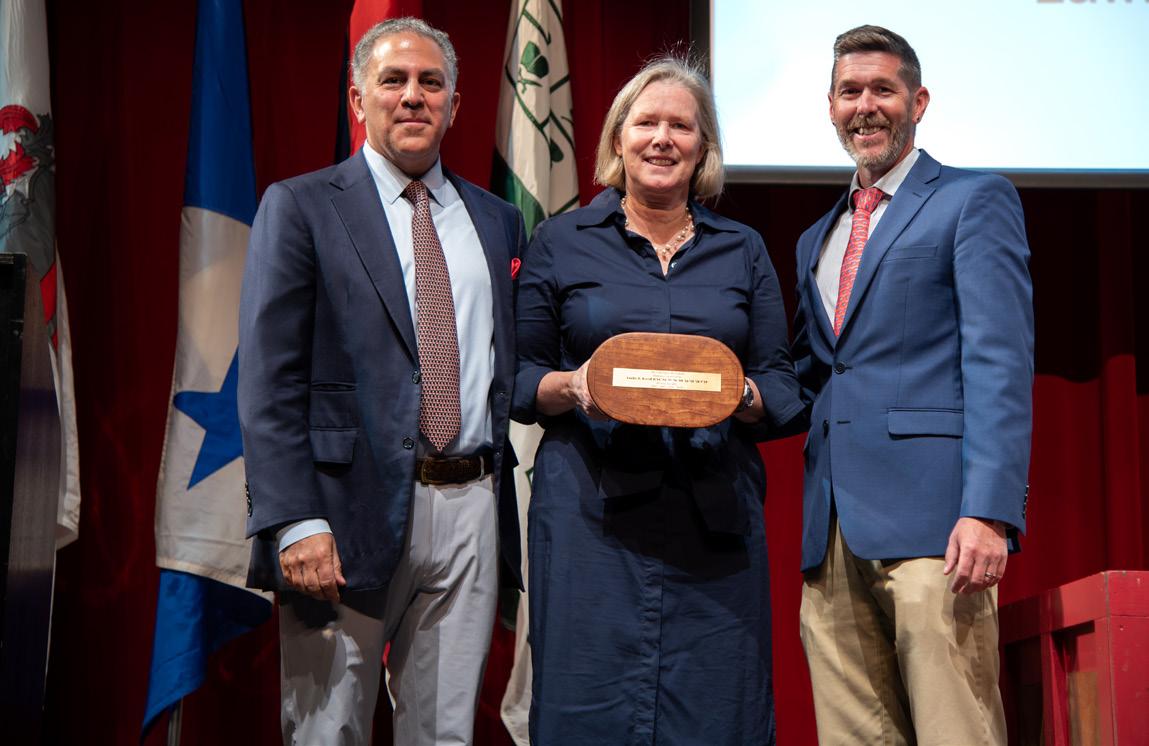
Emilie D. Kosoff H’88 ’94 ’95 ’96 ’00 ’16 ’18 ’20 P’19 accepted the Harkness Award from Alumni Association President Greg Melconian ’87 P’25 ’27 and Blake Eldridge ’96 H’78’12 P’25, assistant head of school for student life and dean of students.
Senate, Head of School Search Advisory Committee, and DEI Council. In 2019, Emilie received the Henry and Janie Woods Meritorious Service Award.
• Together with her husband, Sam Kosoff ’88 H’96 ’00 P’19, and family, Emilie became an enduring and beloved presence at Lawrenceville. Through her extraordinary dedication to students and colleagues alike, she leaves a lasting legacy of humanity, leadership, and care.
Regan Kerney H’49 ’95 ’98 ’99 ’03 ’06 ’11
Lauren Levy H’97 ’01 ’12 P’01 ’02 ’09
Christopher Maxey H’94 ’95 ’97 ’01 P’07 ’09 ’13 ’14
The Class of 2001
Penny Bardel P’93
Thomas Carter ’70 P’01 ’05
Michael Goldenberg H’94 ’96 ’97 P’05 ’10
Martha Gracey H’92 ’93 ’98 ’07 P’18
Christopher Maxey H’94 ’95 ’96 ’97 P’07 ’09 ’13 ’14
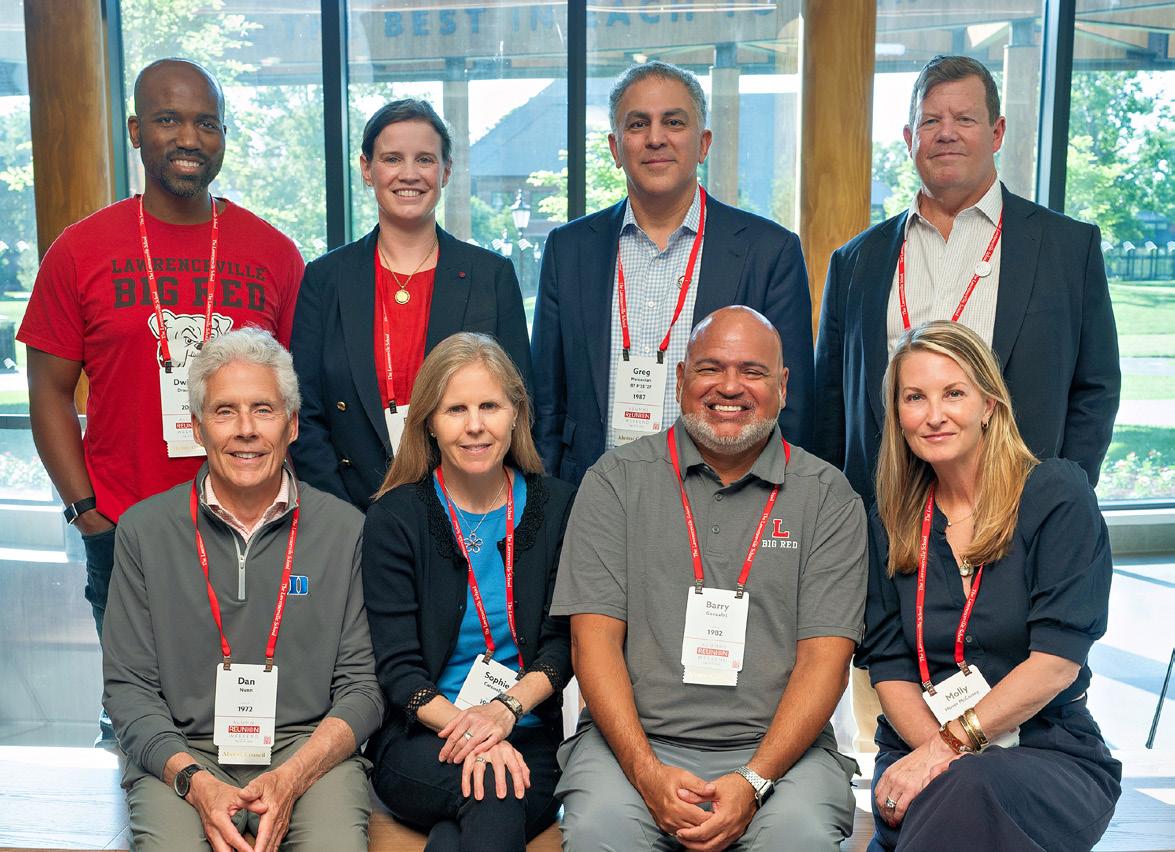
New Alumni Trustee
The Class of 2006
Regan Kerney H’49 ’95 ’96 ’98 ’99 ’03 ’11
Katherine O’Malley H’07 ’11 ’26
The Class of 2011
Katherine O’Malley H’06 ’07 ’26
The Class of 2016
Pier Kooistra H’14 P’20
Emilie D. Kosoff H’88 ’94 ’95 ’96 ’00 ’18 ’20 P’19
The Class of 2026
Katherine O’Malley H’06 ’07 ’11
Heather Elliott Hoover ’91 P’20 ’23 ’24
New Alumni Trustee Selectors
Elizabeth Anathan ’95
Philip “Flip” Romanelli ’88
Big Red Awards
Leeann Passaro ’16
Jeremy Perlman ’06
P’26 ’26
Members of the Alumni Council, front row, from left: Dan Nunn ’72, Sophia Caronello ’92, Barry Gonzalez ’82, Molly Hover McCooey ’91; back row: Dwight Draughon ’04, second vice president; Emily Wilson Elipas ’05, first vice president; Greg Melconian ’87 P’25 ’27, president; Monty Montenecourt ’87
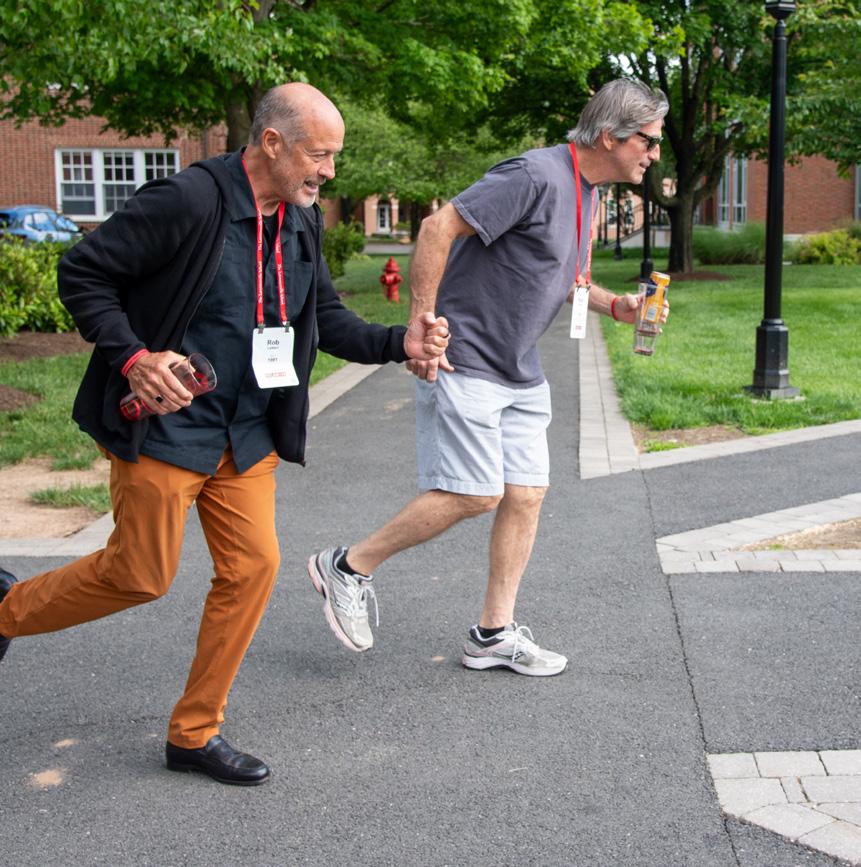

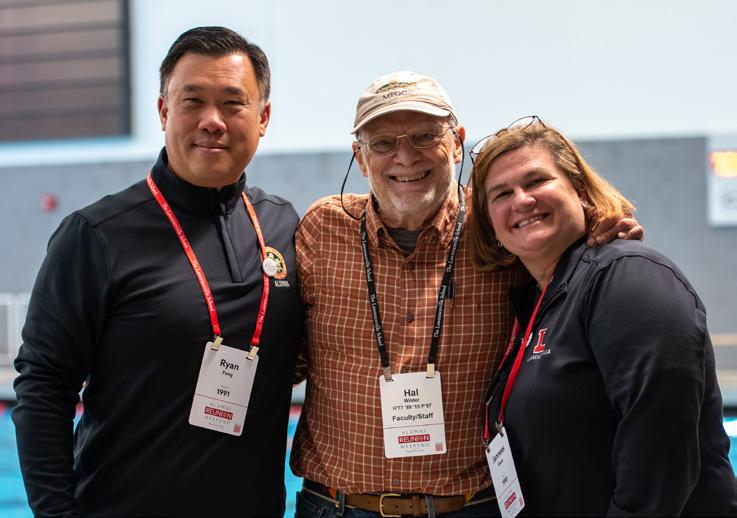
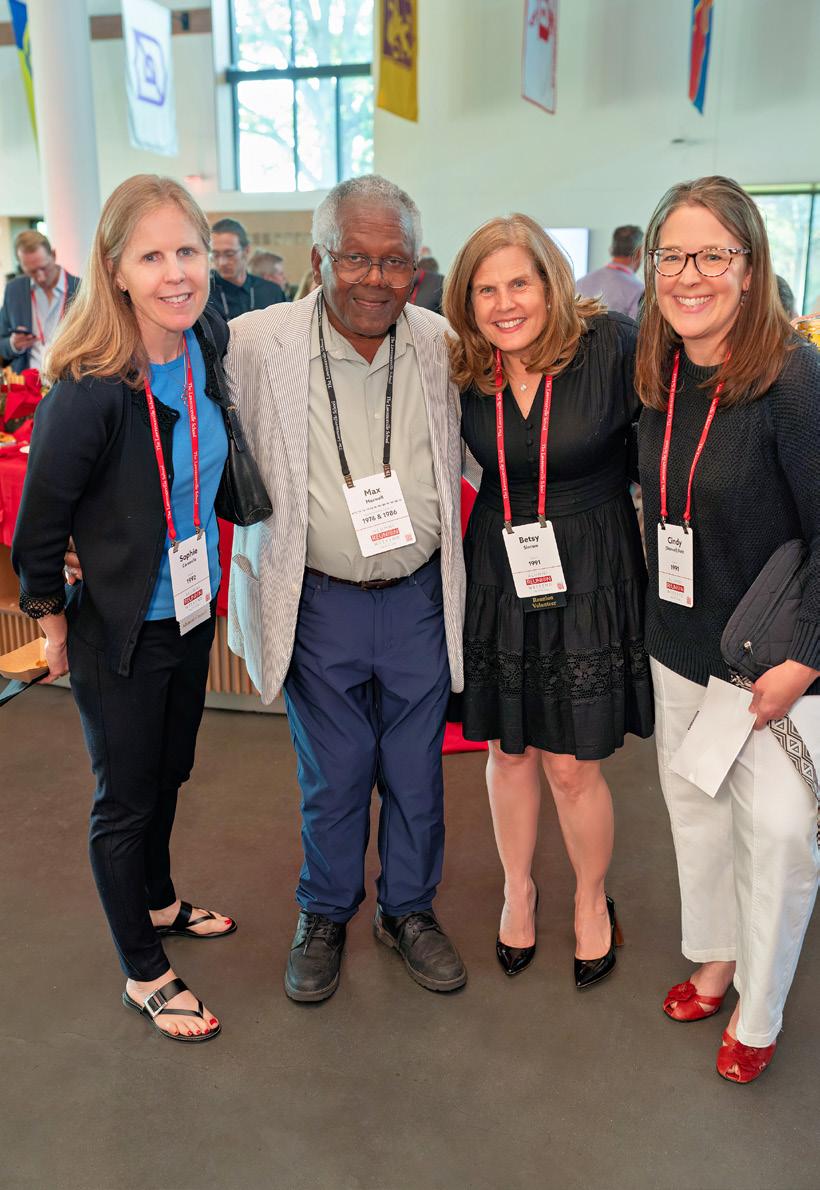

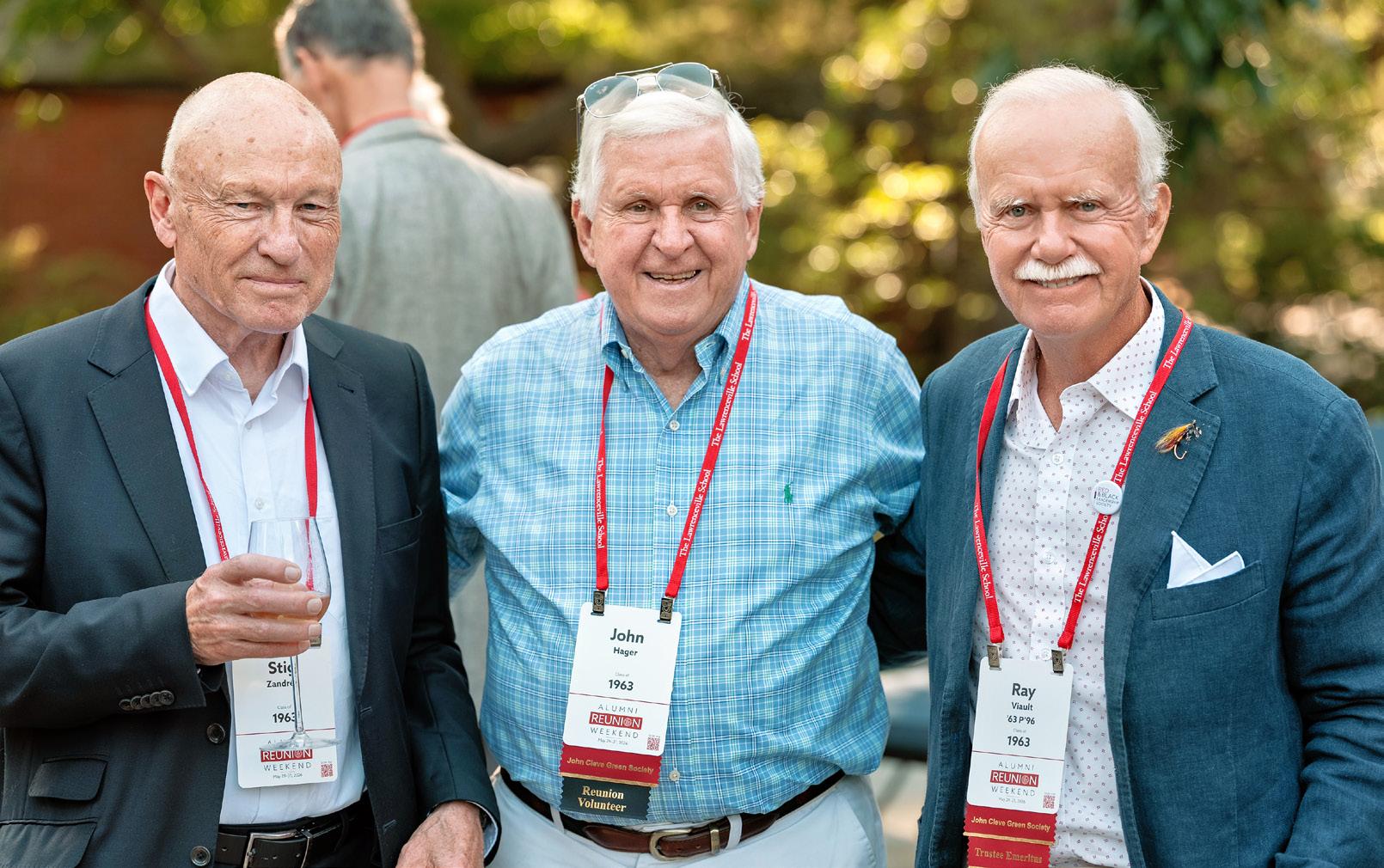

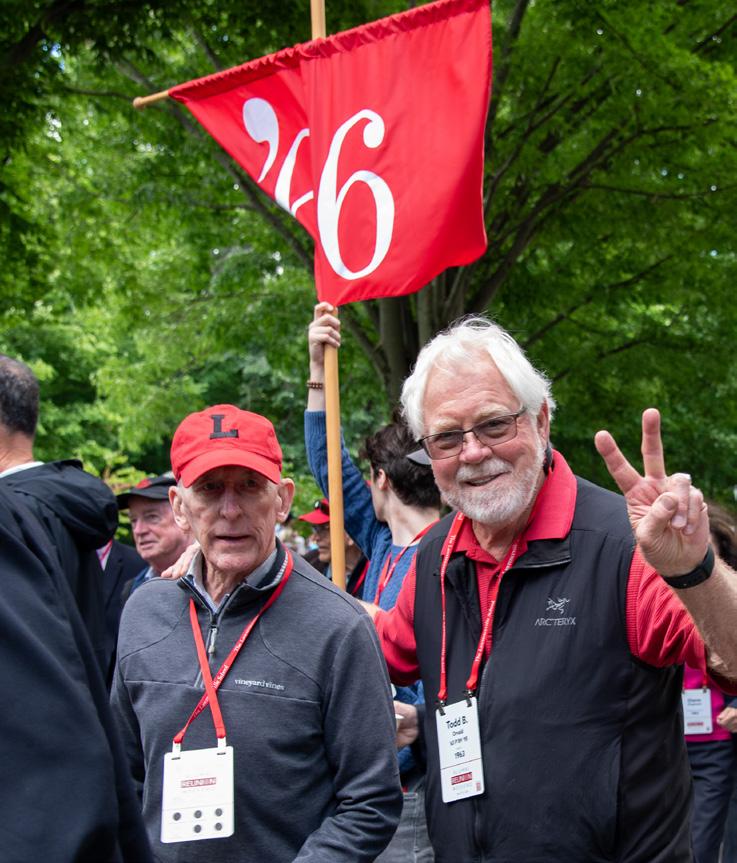





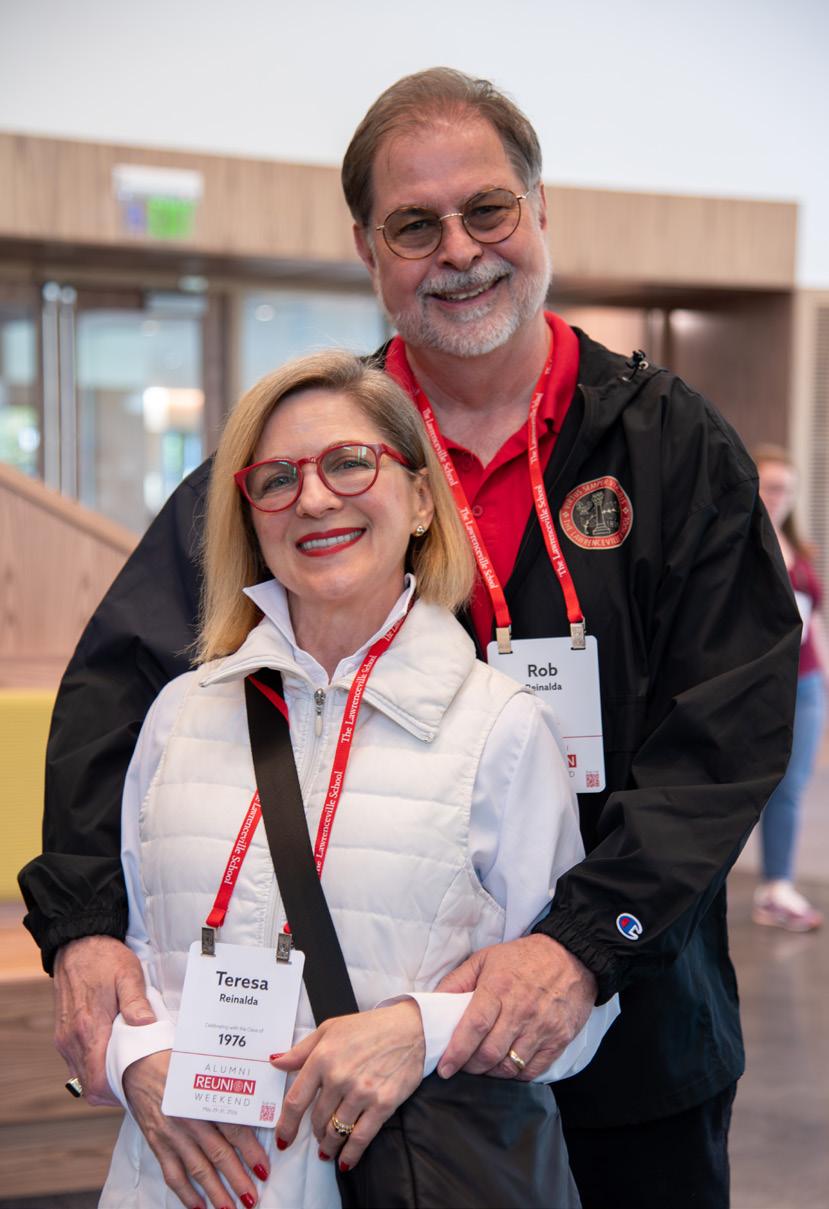

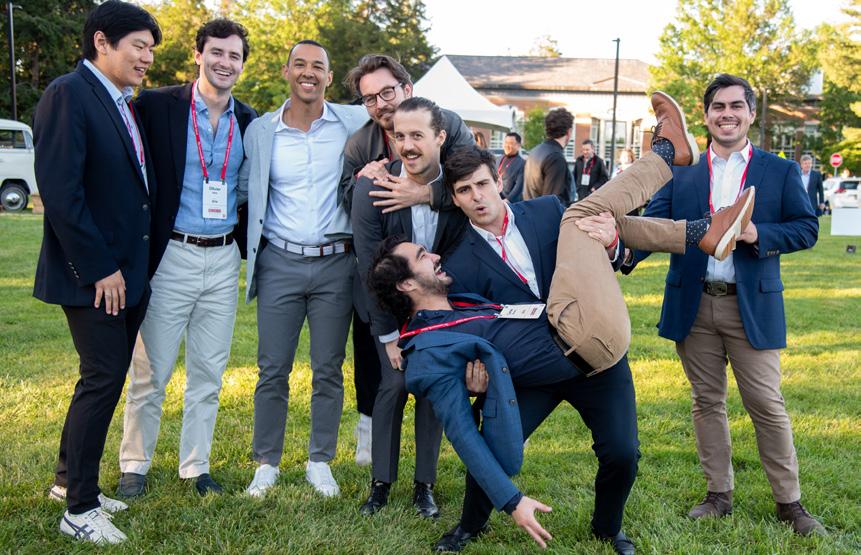
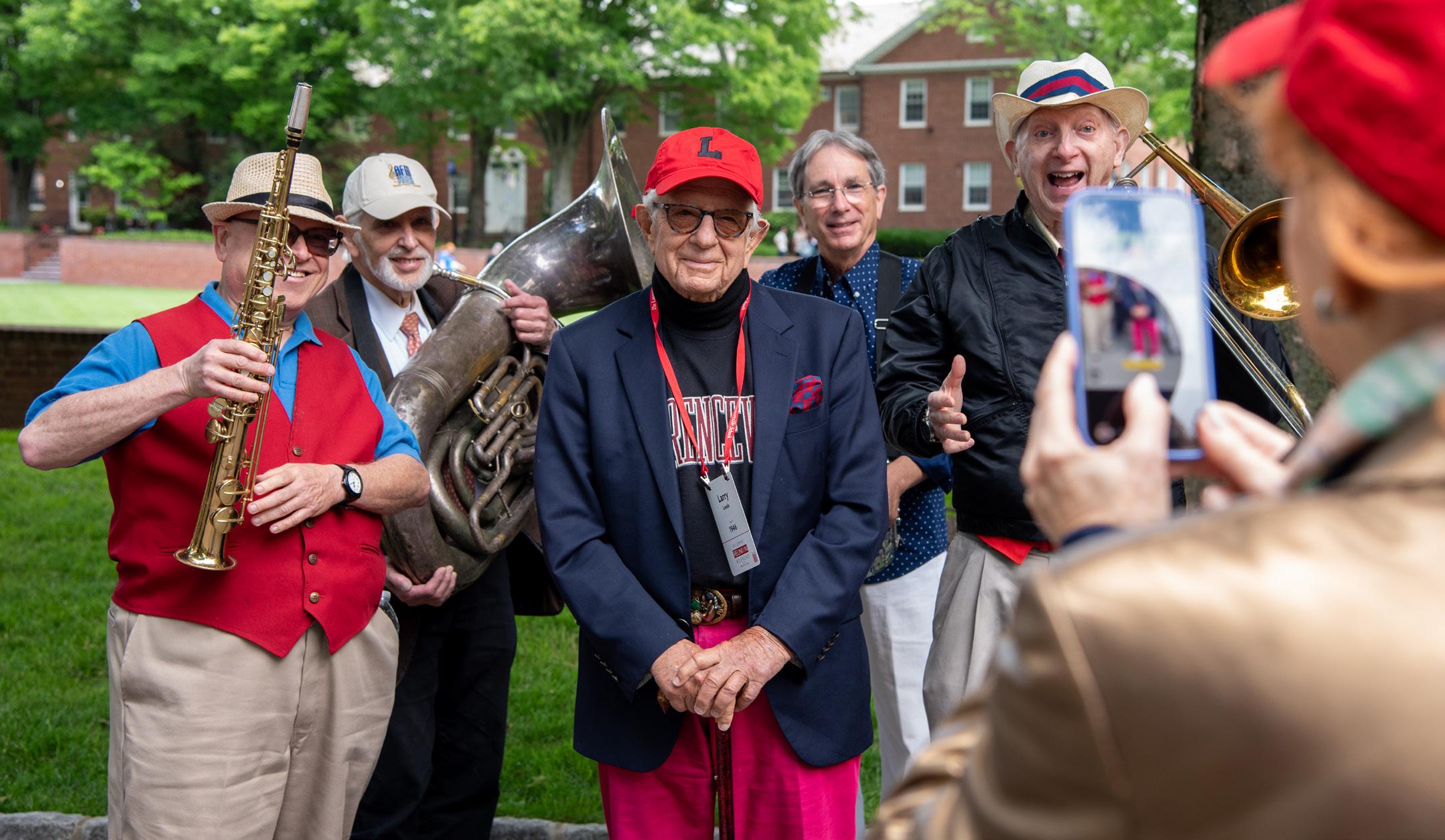
Leading the March
Larry Leeds ’46, who graduated 80 years ago, returned to campus for the first time in 30 years. You’ll understand that he’s been busy.
WHAT’S IT LIKE to be the senior Lawrentian at Alumni Reunion Weekend? For Larry Leeds ’46, it meant leading the Grand March — on foot — accompanied by his wife, Ginger Feuer, addressing the 50th reunion dinner as an honored guest, and entertaining a constant stream of fellow Lawrentians eager to trade stories and simply shake his hand.
It was Leeds’ first time back on campus since his own 50th reunion in 1996, and he liked what he saw.
“I attended Lawrenceville during the whole of World War II,” he said, “and they could barely fill the Forms. The country was still emerging from the Depression, so finances were an issue, and with the demands of wartime, it was difficult to get good teachers.”
Despite the challenges of the time, Leeds made the most of his Lawrenceville years. He played golf and tennis and took the wrestling team to the 1945 Eastern Championship.
He also excelled in math. “My math teacher, Wendell Federici, bet me 25 Jiggers I couldn’t score 100 percent on his final,” recalled Leeds, referencing the ice cream-based
favorite at the old Jigger Shop. “He gave me a 99½ because I left out a single plus or minus sign.
“He chose not to collect,” Leeds added after a moment of reflection.
Leeds penned a column for The Lawrence called “Exchange Corner,” a compendium of news from high schools around the country. The column was typically a mix of the mundane, the amusing, and the gossipy. One notable entry described a “hard-fought soccer game at Pomfret … when suddenly a stray dog dashed on the field and bit the goalie, who fell to the ground as the ball rolled through for the deciding tally.”
After earning his undergraduate degree from Yale and an M.B.A. from Wharton, Leeds served three years in the U.S. Naval Reserve before joining the family business, a growing apparel company established in 1857 as a men’s shirt maker.
Success followed, but the path wasn’t linear. Beginning as a trainee, he turned the
Photo by Susy M. Lee
Even the band wanted to get a picture with Larry Leeds ’46, being photographed here by his wife, Ginger Feuer, on her phone.
family business into Manhattan Industries, the Fortune 500 company that made Perry Ellis a fashion icon. At age 59, a hostile takeover, fueled by junk bond king Michael Milken, forced him out as chairman and CEO. Leeds found a new career on Wall Street as an industry analyst, and six years later, when many of his peers were retiring, he was invited to launch Buckingham RAF Partners, a hedge fund focusing on the retail, apparel, and footwear industries. Leeds grew a $10 million investment into $1.6 billion, with 14-year compounded annual returns of 24 percent. He retired as chairman of Buckingham Capital Management in 2019.
Leeds’ professional success was accompanied by personal tragedy — the losses of his first wife, Dalia, in 2016, and his beloved son, Cary, in 2003. “Cary competed in six U.S. Opens and five Wimbledons,” Leeds says with a father’s pride. “He retired after six years on the circuit as No. 6 in the world.”
Leeds established the Cary Leeds Center for Tennis & Learning as a memorial, calling it “the outstanding achievement of my life thus far.”
The tennis and educational facility in Bronx, N.Y., features 22 courts, 10 bubbles in winter, and a state-of-the-art clubhouse. It also serves as the flagship home of the New York Junior Tennis League (NYJTL), the largest nonprofit youth tennis and education program in the United States., and provides free tennis lessons, academic tutoring, and a range of community programs. The New York Times hailed it as “one of the city’s best new works of public architecture” when it opened in 2015.
Now 97, Leeds still manages his family’s investments and hasn’t stepped back from his philanthropic and other interests. He continues to serve on the boards of the Cary Leeds Center; the Hudson Institute, a public policy think tank; NYJTL; and Prep for Prep, which prepares promising students of color to attend elite private schools. He is a trustee emeritus of NYU Langone Health.
He also remains deeply committed to the Cary Leeds Center, emphasizing its success. “Thousands of kids play at our center,” he said, “and dozens of graduates of our center’s training programs get scholarships at some of the finest universities in America.”
With his legacy secure, one might think Larry Leeds could slow down and take it easy. But we don’t see that happening anytime soon.
— Barbara Horn
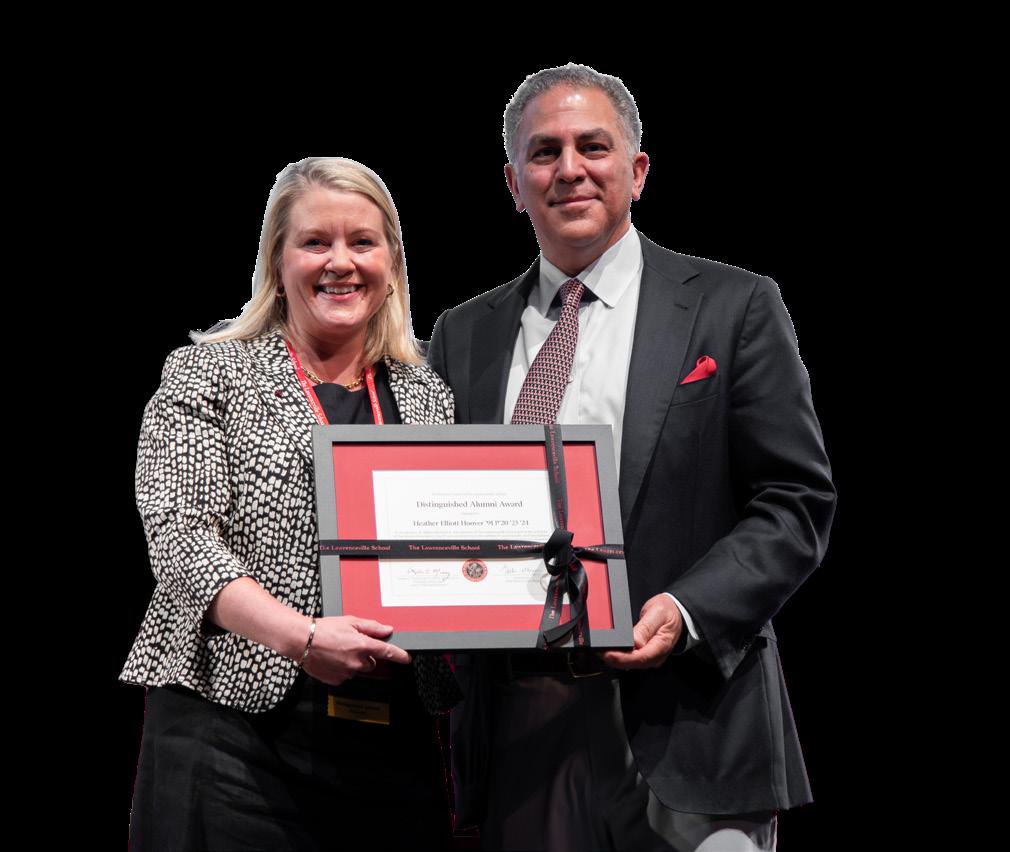

‘And the Rest is History’
Lawrenceville went co-ed just as Heather Elliott Hoover ’91 P’20 ’23 ’24 was ready to enroll. Today, she is the first woman to receive its Distinguished Alumni Award.
FOR HEATHER ELLIOTT HOOVER ’91 P’20 ’23 ’24, you might call it a close call. After her uncle and two brothers attended … well, let’s just say a school in Pottstown, Pa., it seemed to be in her future, too.
“Yes, it’s true. I come from a Hill School family, and I’m eternally grateful to Bert Getz ’55 H’56 P’85 GP’18 ’20, who championed coeducation at just the right time,” Hoover said of Lawrenceville’s historic rival and the longtime trustee who pushed for his alma mater to admit girls. “And the rest is history.”
History, indeed. Hoover made her remarks as she accepted the School’s Distinguished Alumni Award, conferred this year to a woman for the first time. Hoover received the honor at Alumni Reunion Weekend 2026 at a ceremony inside the Kirby Arts Center. The prestigious accolade is conferred annually by the Lawrenceville School Alumni Association to a Lawrentian in recognition of exceptional efforts to promote the best interests of the School.
Hoover’s gifts of time and energy to the School as an alumna are incalculable, but she has been doing right by Lawrenceville since she enrolled as a Third Former in the fall of 1988. A gifted three-sport athlete, Hoover competed in field hockey, squash, and lacrosse at the highest levels, a prep career recognized by her induction into the Lawrenceville Athletics Hall of Fame. Hoover continued to play field hockey and lacrosse at Georgetown.
Hoover joined the Alumni Council in 2018 as the second vice president and advanced to first vice president in 2020 before serving as president from 2023-25.
“In these roles, she provided thoughtful, steady leadership through challenging times,” said Alumni Association president Greg Melconian ’87 P’25 ’27, “helping to strengthen the alumni engagement and deepen the connections across generations.”
Just this spring, Hoover was elected an alumni representative to the Lawrenceville Board of Trustees.
“You may ask why I’m so dedicated to Lawrenceville, and the answer is very easy: Volunteering for Lawrenceville is the least I can do to show my gratitude for such a special place,” Hoover said. “It changed my life for the best. My friends, the faculty, they all showed up for me in little ways and big ways, and that’s why I stay involved — to celebrate them.”
— Sean Ramsden H’65
Heather Elliott Hoover ’91 P’20 ’23 ’24, recipient of the Distinguished Alumni Award, was fêted first by Alumni Association president Greg Melconian ’87 P’25 ’27.
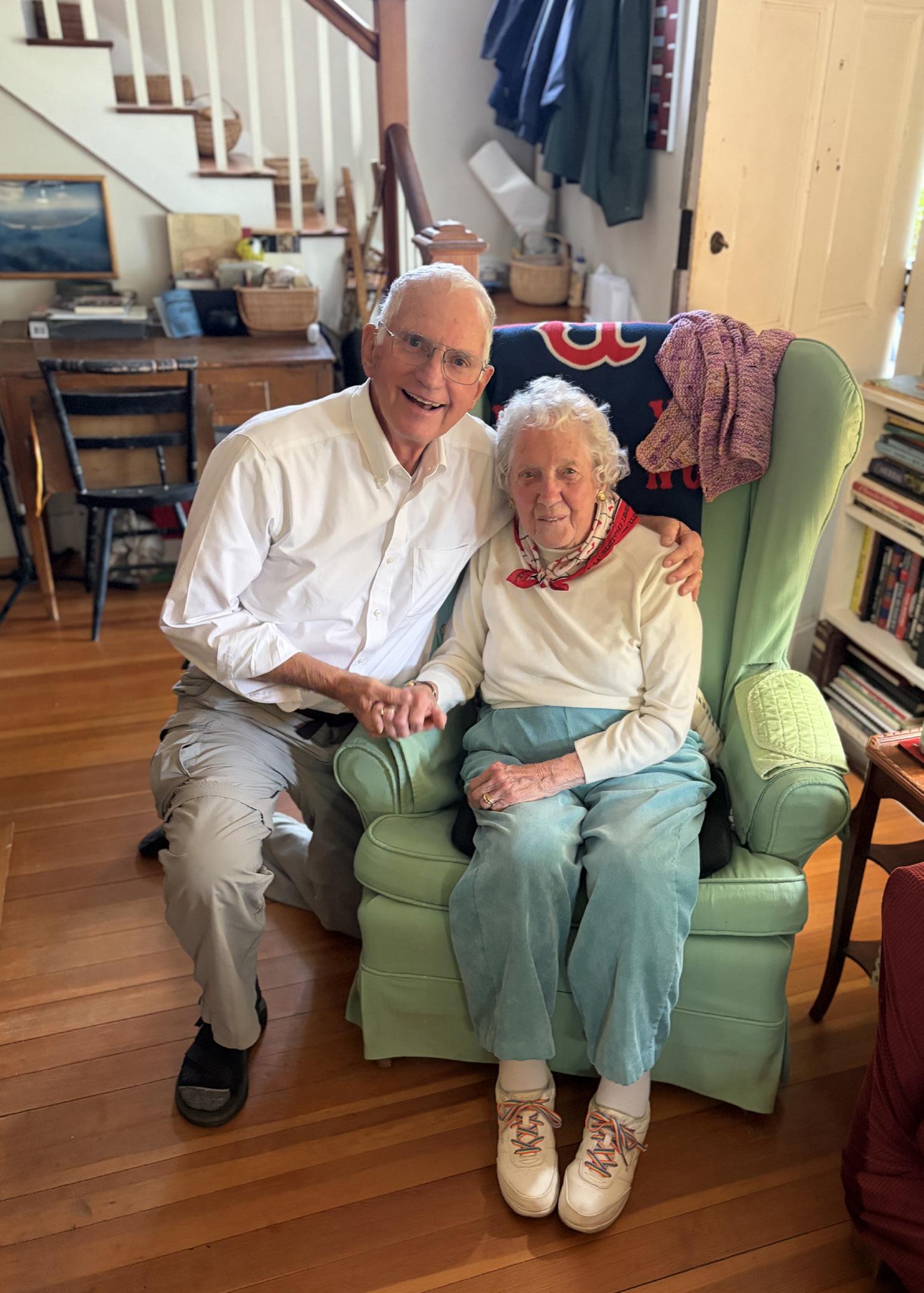
Meet Larry
A retired minister of the Presbyterian Church (U.S.A.), Larry Jones ’67 knows about answering the call. But sometimes, you have to heed the call of the open road, too. Larry and his wife, Cindy, sold their home in Vermont and hit the road in early 2025 in an Airstream travel trailer. “My wife and I have become nomads,” he says of the journey, which has taken them well more than 50,000 miles in 19 months. “A blowout in Nova Scotia, a bald tire in New Mexico, nine inches of snow in Alabama, [and] the untimely death of a good friend in British Columbia,” are just some of the travails they have faced, but it’s all been balanced by reunions with friends and family in every corner of the country, “seeing sites and sights we’d never dreamed of.” One of Larry’s stops was in Nantucket to catch up with 98-year-old Ginnie Chambers H’54 ’58 ’59 ’60 ’61 ’62 ’66 ’67 ’68 ’71 ’73 ’75 ’79 ’80 ’89 P’77, who, he reports, “remains as young as ever, as cheerful and welcoming as ever, and as sharp as ever! I came away feeling better in every respect!”
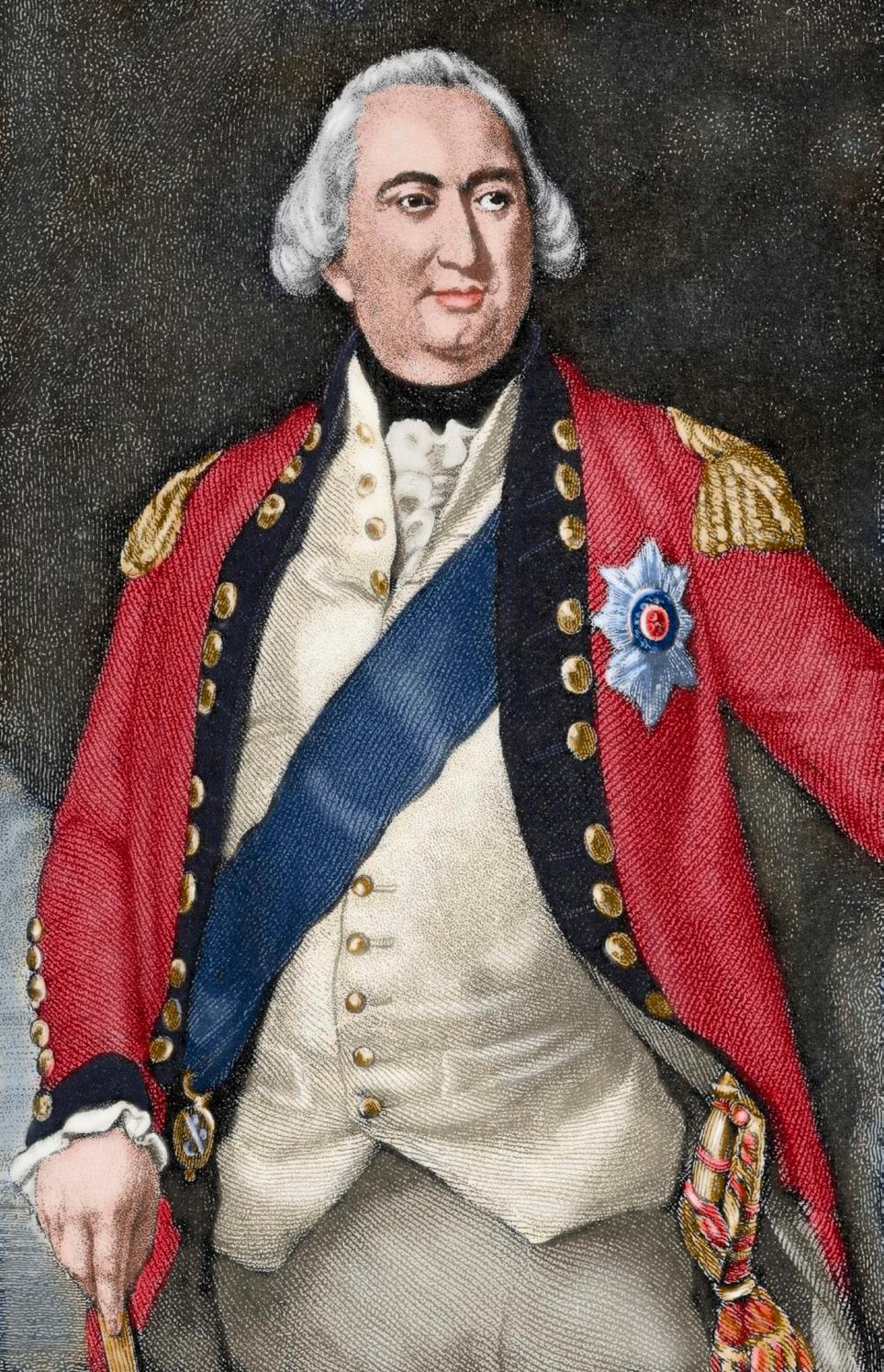
At the Crossroads
As the United States celebrates the semiquincentennial of its independence, we
look back on the role the tiny village of
BY Jacqueline Haun H’65
The Lawrenceville School’s founding date of 1810 precludes any direct involvement in the establishment of American independence, the 250th anniversary of which is being celebrated this year. However, the School is nestled geographically in the very heart of perhaps the most significant series of clashes in the Revolutionary War, between the Battles of Trenton and Princeton, which turned the tide for a nascent America after a year of repeated defeats.
In 1776, the village of Lawrenceville was still known by the name given by the Quakers — Maidenhead Township — after the first settlers arrived around 1680. It was a sleepy little farm village, with nothing much to show outsiders beyond its Presbyterian Church, located then as now, adjacent to the School on today’s Main Street, as well as a handful of taverns, inns, and local farms. Despite its small size and lack of many amenities, Maidenhead was conveniently located on the King’s Highway, a major stagecoach and postal route between Philadelphia and New York. This would ultimately place it in the path of both British and American troops.
The American Revolution had officially begun with the shots fired on April 19, 1775, in Lexington and Concord in Massachusetts. By July 4, 1776, representatives from the thirteen colonies had gathered as the Second Continental Congress in Philadelphia and signed an official Declaration of Independence from the mother country, marking the official start of the United States of America.
However ambitious the start, the fight for American independence was struggling by December 1776. The American Continental Army had suffered many defeats over the previous year and a half of fighting, including the loss of New York to the British. The agreed-upon enlistment periods for many of the American soldiers were also soon expiring that winter, and Gen. George Washington feared that many discouraged soldiers would give up the fight as a lost cause and return home. As winter loomed, Washington and his troops had withdrawn from New Jersey, across the Delaware River into Bucks County, Pa., where they were in desperate need not only of supplies but, imperative for the sake of morale, some sort of inspirational win.
The opportunity came in late December. The British were trying to prevent further American incursions into New Jersey by maintaining control of locations along the King’s Highway as a main north-south supply route. About 1,500 Hessian soldiers from Germany, hired by the British as auxiliary troops, had arrived in mid-December to set up their winter camp in Trenton, then a small but commercially vital town of about 100 households located on a bend of the Delaware River about six miles south of Maidenhead. Washington and his commanders devised a plan to attack the Trenton outpost on December 26 and seize the Hessians’ ammunition and food supplies by using a three-pronged strategy that would strike across the Delaware River from the north and the south.
Although the attack did not go at all as planned — severe
Maidenhead — today’s Lawrenceville — played in the struggle.
British Gen. Charles Cornwallis allegedly remarked that “One day in Maidenhead was enough,” and his frustration with what is now Lawrenceville is understandable. En route from Princeton to Trenton, Cornwallis’ men were confronted with multiple skirmishes along the Maidenhead road, slowing down the advance of the British for many hours. (PHAS/Universal Images Group via Getty Images)
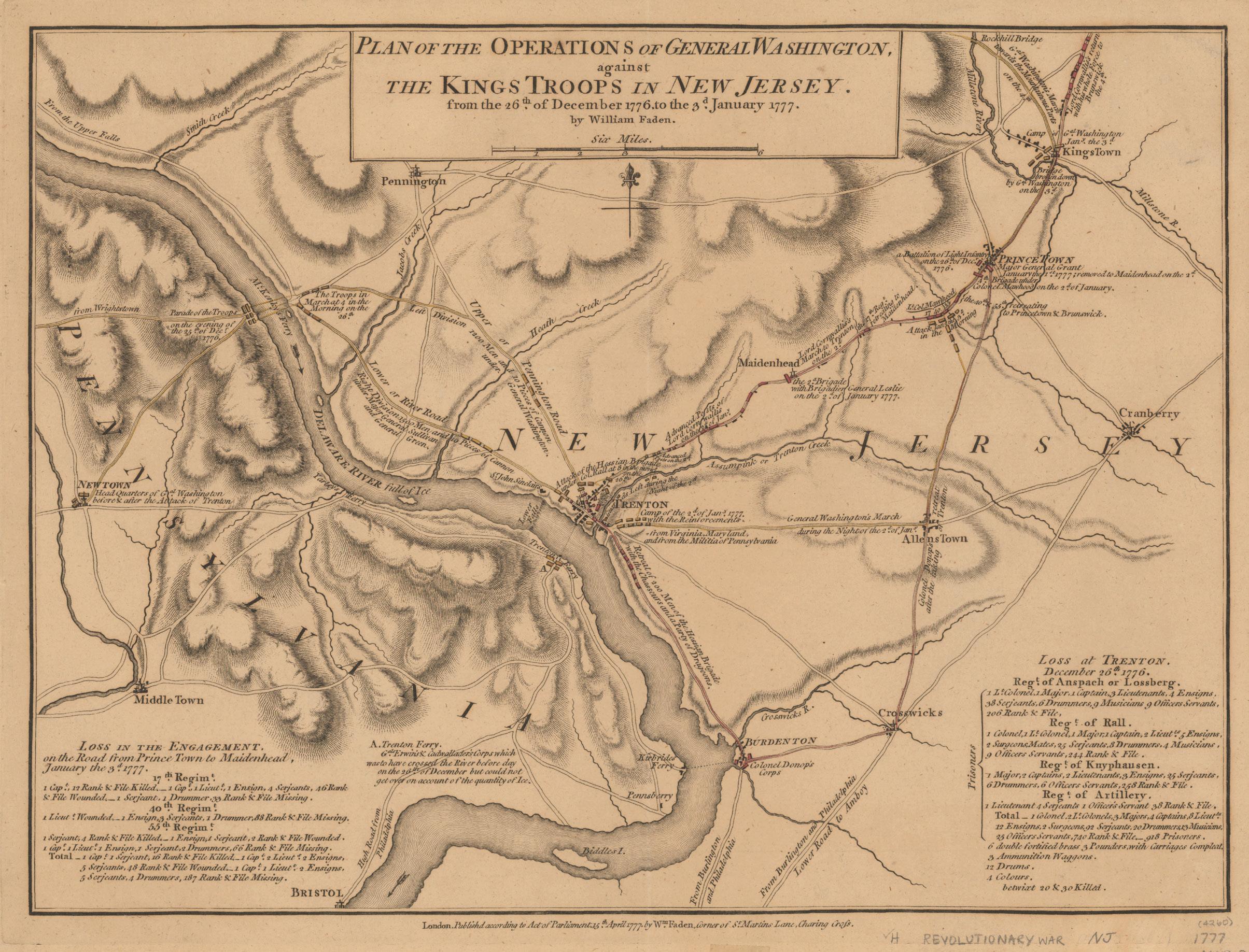
weather slowed down Washington’s midnight crossing of the Delaware and impeded the other two units from mounting their supporting attacks — Washington and his troops succeeded in taking Trenton from the Hessians, who were caught off guard following their Christmas celebrations. Washington seized not only the targeted supplies but also captured approximately two-thirds of the Hessian troops, the rest having fled or been killed.
Following the successful Battle of Trenton, Washington expected that the British would mount a strong counterattack. He decided to place defensive troops outside Trenton along the Assunpink Creek, which made up the southeastern border of Maidenhead before it flowed into Trenton from the north, just east of today’s Brunswick Circle on Business Route 1.
On January 1, 1777, the British took control of Princeton, which was about five miles north of Maidenhead. The next day, Lt. Gen. Charles Cornwallis began to march down the King’s Highway toward Trenton with an additional 9,500 troops, reaching Maidenhead around noon.
As the British troops entered the northern end of the village, they spied a man on horseback, local farmer Elias Hunt, who had just exited the home he and his family were temporarily abandoning to avoid the impending clash. (His home
has been identified as what became the Inn at Glencairn, just north of today’s Carter Road.) Hunt began to flee south toward the location of an American picket — a small unit of soldiers that serves as early warning of and defense against approaching attacks — stationed opposite the Presbyterian Church. He was pursued by a Hessian soldier, also on horseback, who ran far ahead of his British comrades.
As the sword-waving Hessian reached the point between the church and the picket on the other side of the road, an American marksman shot him. The first shot was only a wound, but as the Hessian turned his horse to return to his fellow troops, the marksman fired again, killing both horse and rider. The American soldiers then retreated south ahead of the British to Five Mile Run, where the little Shabakunk Creek crossed the Maidenhead road, at today’s Notre Dame High School. The Hessian soldier was buried in the woods across from the church, on the property of Col. Joseph Phillips.
This was only the first of multiple encounters between
This 1777 map shows the sites of Gen. George Washington’s battles with British troops over the “Ten Crucial Days” from December 26, 1776, and January 3, 1777. Note the key location of “Maidenhead” — today’s Lawrenceville — halfway between Trenton and Princeton.
the British and the Americans in Maidenhead that day, for as Cornwallis attempted to continue the march toward Trenton, he met the troops of Col. Edward Hand, an Irishborn physician and soldier who led the 1st Pennsylvania Regiment of the Continental Army. Hand’s units mounted multiple skirmishes along the Maidenhead road, slowing down the advance of the British for many hours. The British made slow progress until they reached the bridge over the Assunpink into Trenton (at the current-day Mill Hill Park), over which the outnumbered Americans had retreated, but after three failed attempts to cross the bridge and with dusk falling, the British were forced to camp for the night at a nearby mill owned by John Phillips.
While the British slept that night along the Assunpink, Washington and his troops, guided by local Maidenhead men, snuck around the British forces and went by back roads to Princeton to attack the British garrison, which was being led by Charles Mawhood. Despite the element of surprise, the Battle of Princeton on January 3 was not an easy one. Gen. Hugh Mercer’s American troops were overrun, and Mercer was mortally wounded. When the British demanded Mercer surrender — mistaking him for Gen. Washington — Mercer declined and was subsequently killed. With the death of their leader, Mercer’s men began to flee.
Complete disaster for the Americans was averted only when Gen. Washington and additional troops arrived and encouraged the Americans to rally once again and push back against the British. Under Washington’s leadership, the American troops drove the British back until Mawhood gave the order to retreat. While many of the British attempted to flee toward Cornwallis in Trenton, others had taken shelter in Princeton’s Nassau Hall. With the surrender of those troops, the Battle of Princeton was considered at an end and a successful one for the Americans.
While the Battle of Trenton, the Battle of the Assunpink, and the Battle of Princeton might be considered relatively
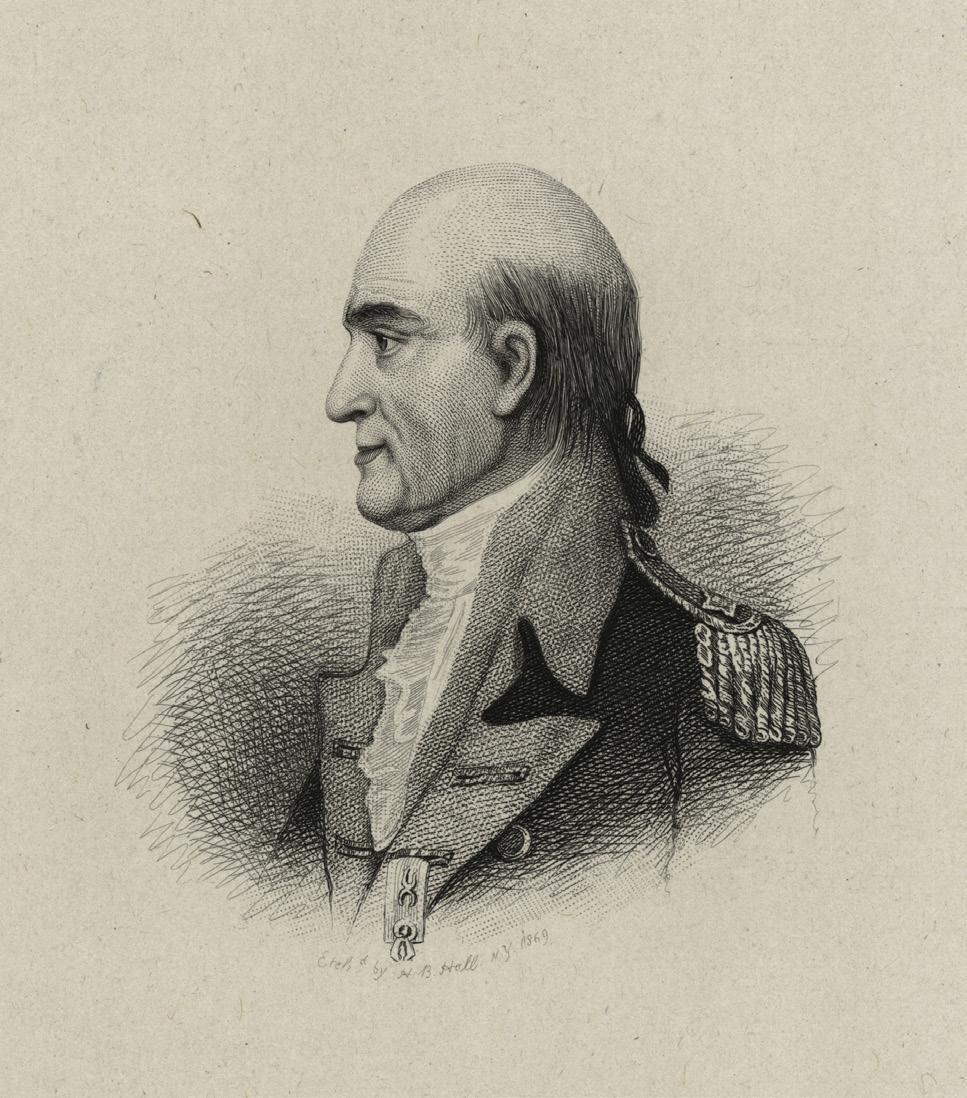
Col. Edward Hand and his 1st Pennsylvania Regiment of the Continental Army mounted multiple skirmishes along the Maidenhead road, slowing down the advance of the British for many hours as they tried to make their way to the Assunpink Creek in Trenton.
small battles, their success significantly turned the tide for the morale of the Americans. The British, having faced three defeats in ten days, evacuated central New Jersey, while Gen. Washington moved his troops north to Morristown for the winter.
Today, Lawrence Township continues to celebrate the successful Revolutionary battles that took place as part of the “Ten Crucial Days” annual re-enactment events in Trenton that trace the footsteps of Washington, the British, and Colonel Hand each December and January.
Jacqueline Haun H’65 is the senior archives librarian in the Stephan Archives in Bunn Library.
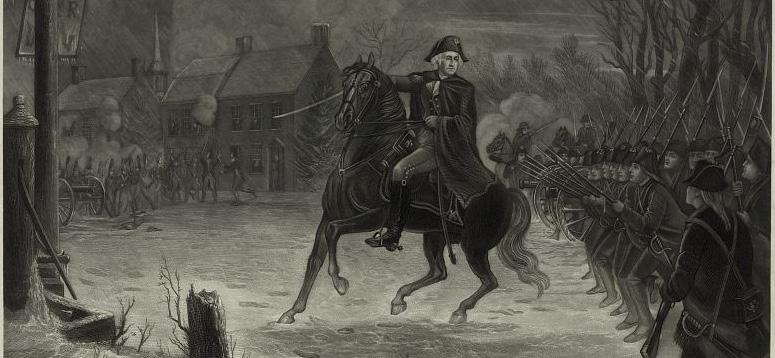
Gen. George Washington led his ragtag band of soldiers against Hessian troops at the Battle of Trenton, which began to turn momentum toward the American side.

Ready for his Closeup
On June 15, in between Haiti’s two Group C matches in the World Cup, Duke Lacroix ’11 made some time for photographer Colin Lenton and his assistant in the team’s Atlantic City, N.J., hotel for this issue of The Lawrentian.
Photo by Colin Lenton
The Lawrenceville School