Page 21: Dakar Classic tales from the European competitors putting their faith in British




Page 21: Dakar Classic tales from the European competitors putting their faith in British
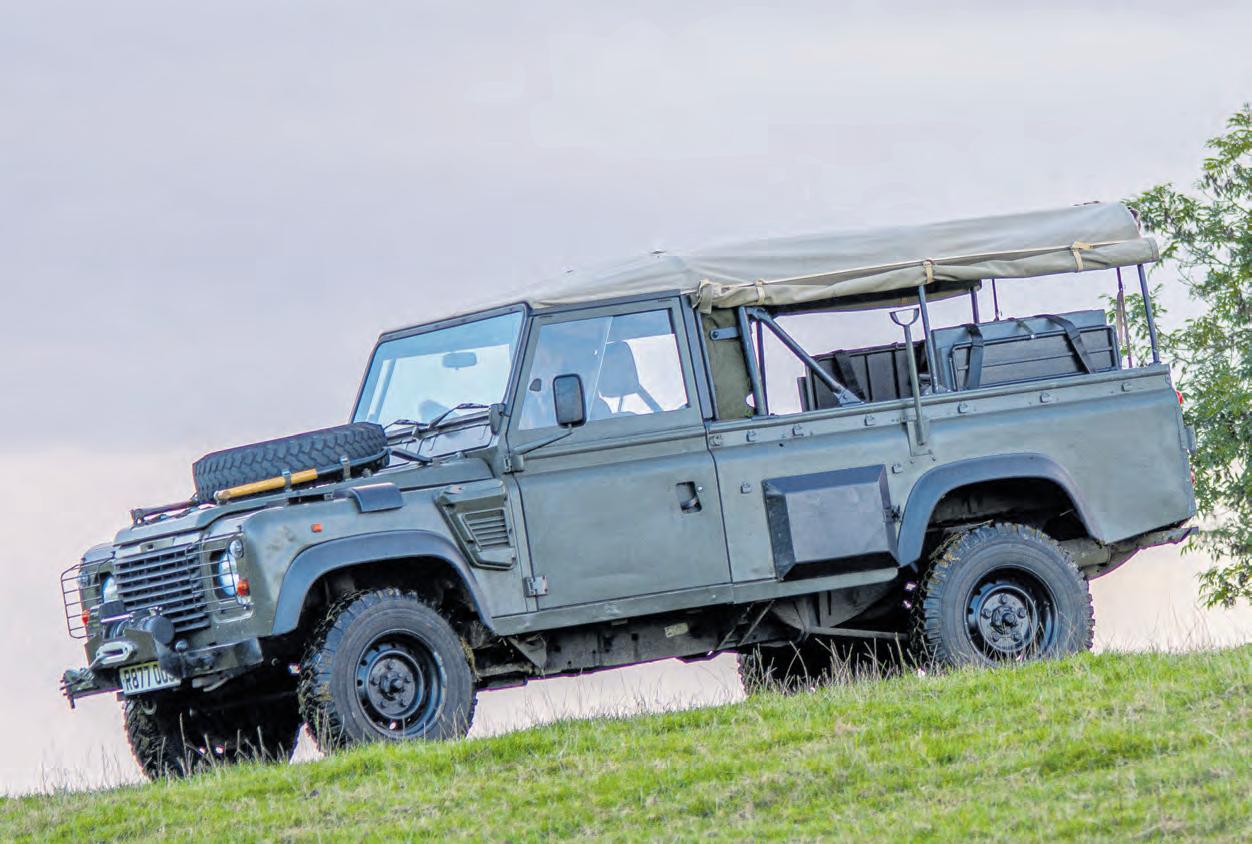
For more than 70 years, the Army has relied on Land Rovers.
But after all that time, the relationship is coming to an end.
Following the MOD’s announcement of a new Light Mobility Vehicle programme, the Army’s remaining 5000 Landies are set to be retired. So if you’ve always promised yourself that you’ll own a Wolf one day, it’s now or never…
Full story: Page 16








To advertise in The Landy, call our team on 01283 742969

We’re on Facebook: www.facebook.com/thelandyuk
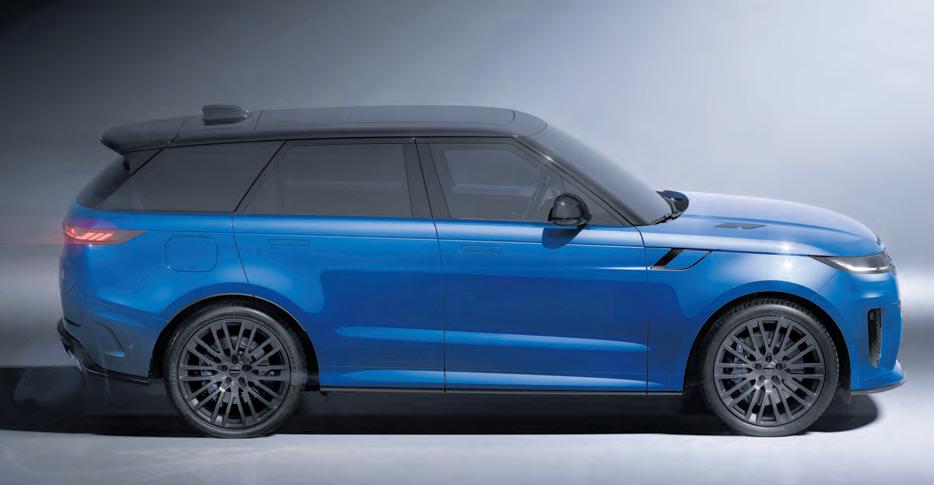
The ultimate in cars is normally only the ultimate until the next ultimate one comes along. So it’s a risky word to use.
But when was Land Rover ever averse to taking risks? I mean, ‘curated’ is a pretty hazardous word to use too and that doesn’t stop them (though on behalf of art galleries everywhere, we wish it would).
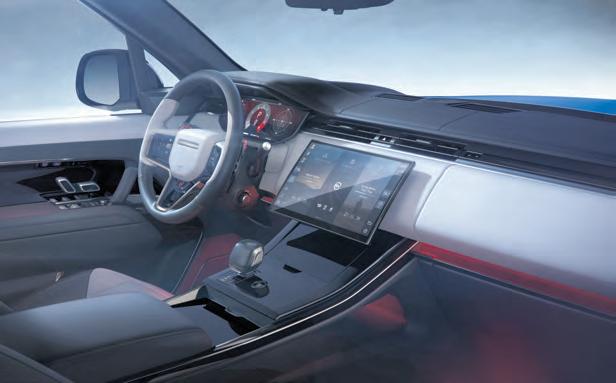
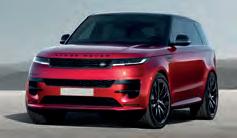
So here we have the Range Rover Sport SV Ultimate Edition. Coming soon to an episode of Real Housewives near you, it’s a ‘highly curated, UK‑ex‑ clusive expression of the most powerful and dynamically advanced Range Rover Sport.’ There’s risky and there’s just downright reckless.
The power comes from the familiar twin turbo V8, a mild hybrid petrol engine whose 635bhp and 553lbf.ft gives the vehicle an estimated 0 62 time of 3.9 seconds. This is aided by a Dynamic Launch Mode in which the hybrid part of the system gets out of bed to increase torque output to an even heftier 590lbf.ft.
And the dynamics? The clue’s in the name, the name being 6D Dynamics. Carried over from the existing version of the Sport SV, this is a hydrauli cally interlinked suspension system designed to ‘virtually eliminate pitch and roll for near‑level cornering and confident braking and acceleration.’ Since we’re on the subject, the anchors are by Brembo and are exclusive to the SV range.
So it’s fast and it handles, just like the non Ultimate Sport SV, which is because that’s what it is. A Sport SV.

And you can’t improve on perfection, right? Top speed is 165mph and quoted fuel consumption is a somewhat coyly expressed ‘up to’ 24mpg.
Which all begs the question, what’s different about it that makes it the ultimate? The Ultimate, sorry. Aha! That’ll be where the curation team, all recruited directly from the Tate Modern, earn their no doubt extravagant living.
Or are they proper starving artists, existing on crusts and shivering in a dimly lit Parisienne garret while creat ing the masterpieces that will one day define the impressionist movement? After all, they could only afford three pots of paint.
Fortunately, these are ‘a tightly defined palette of SV Ultra Metallic finishes.’ The overwhelming focus of attention is sure to be on the return of Velocity Blue Gloss, which was the signature colour for the previous gener‑ ation Range Rover Sport SVR, though while stocks last you can also have it
in Obsidian Black and Ethereal Frost, both satin colours.
Further choices include dark grey and black finishes for the 23” wheels and, up top, a Black Contrast Roof.
Unless you’ve chosen the Obsidian co‑ lour, presumably, in which case it’s just a black roof. Either way, it’s a Sliding Panoramic Roof too, and beneath it the interior is trimmed in Light Cloud/Ebony perforated Windsor leather which ‘sets a calm, modern tone.’
Only 500 of the Ultimate model are going to be made, all of them for the UK market (despite the ones in Land Rover’s pictures all being left hand drive) and available from dealer stock. They’re priced at £145,995 on the road and buying one also scores you an invite to a personal handover at the Range Rover Studio in Solihull, an event which includes an exclusive track experience. Just to be clear, you don’t get to keep the track. Maybe that’ll come with the next ultimate car.







WINTER HAS BECOME A QUIET TIME for green lane users around the country, with so many areas now affect‑ ed by seasonal TROs and a general un‑ derstanding of the need to be cautious when the ground is wet. But the need to look after the lanes never goes away, and it takes many forms.




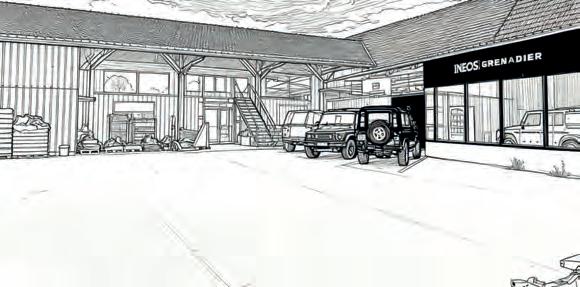



So it was that late in January, local reps from the Green Lane Association attended a meeting in Coniston as part of the Tilberthwaite Partnership Management Group (TPMG). Tilberth‑ waite is a celebrated unsurfaced road in the Langdale area of the South Lakes whose scenery is up there with the best in the country, though for many years it has been a target for anti‑vehicle fanatics whose machinations have seen its natural surface smashed to pieces by heavy machinery and levelled into a gravel track in a bid to spite drivers who enjoyed the challenge of tackling the rocky terrain it offered.
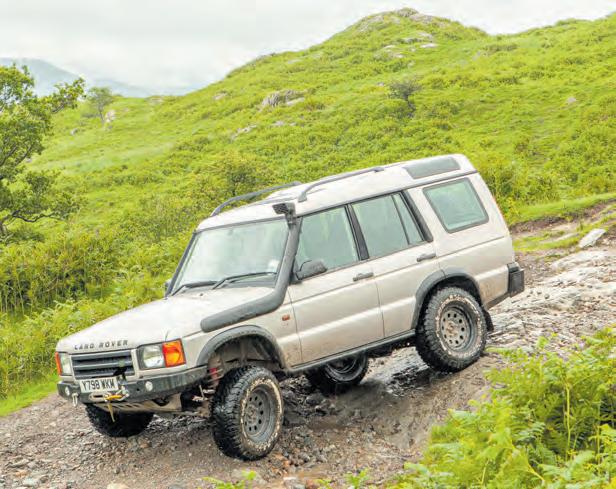
Tilberthwaite’s famously rocky natural terrain was
up a few years ago at the behest of anti-vehicle fanatics. The lane is
gravel track, but it still needs more management than some public bodies appear willing



‘Representatives from all interested parties met to discuss the route and its management,’ reports GLASS rep Peter Apps. ‘Notable absentees were Westmorland and Furness Highways and the National Trust. The lack of co‑ operation with these two bodies forms the main stumbling blocks to getting any real maintenance work done on unclassified lanes.’
It’s not uncommon for larger public bodies to ignore their duties as stakeholders in Britain’s rights of way network. This may or may not be wilful, and of course the reasons will differ from case to case, but the damaging effects are there for all to see.
well orchestrated public noise created by the anti brigades.
‘The antis may have gone quiet in recent times but rest assured, their aim remains a crusade against motorised users on all unsealed lanes.’
• Elsewhere in the South Lakes, late last year a very narrow gate was installed without warning at the southern end of a lane near Skelwith Bridge, a few miles east of Tilberthwaite. ‘This is reportedly only just wide enough for an old style Defender to get through,’ says Peter, ‘so we have questioned it with Westmorland and Furness Highways.’
nature of the problem and photographs showing what the issue is.
‘It is also worth finding out who the local Highways Authority are and using their portal to report the problem yourself. Our Councils are by now fairly used to the Cumbria team reporting problems, so having other people report issues on unsurfaced routes may result in a response and even some actions taken. We live in hope!’

‘Tilberthwaite may not be the lane we once loved,’ continues Peter. ‘But it’s worth remembering that the extensive work done there was designed to coun‑ ter the huge pressure that the National Park Authority was under from a very
Yes, them again.
‘When reporting a problem (to GLASS),’ continues Peter, ‘it is essential to note as many details as possible.
The exact location, either with a grid reference or WhatThreeWords, the full
Peter advises that a number of 4x4s have managed to pass through the gate since it was first reported, so it is usable, however those he’s aware of were all travelling south-north and coming to it straight from the road. Approaching from the north, a steep off-camber section combined with a washout means reversing would be as good as impossible, so you’d be well advised to walk it first.


SHIPPING LAND ROVERS IS A SUBJECT THAT’S VERY RELEVANt to the many owners who use their vehicles for overland travel. Obviously, the whole idea is to drive places, but the clue’s in the title. There’s a reason why it’s not called overwater travel.
But there’s more to shipping than just packing your overland rig in a container then flying out to meet it at some far‑flung docks a few weeks later. Obviously, few things could be more exciting than pulling your Land Rover out of said container, clearing customs and setting out to explore the exciting new continent you’ve just arrived in, but in the workaday world there are vehicles being shifted back and forth all the time.
We’re not just talking about the vast transporter ships that bring cars by the thousand from Japan, Korea, Europe and, increasingly, China, before disgorging them on to horizon‑defying terminals in the docklands of Tyneside, Portbury, Immingham and so on. Every day, small shipments and one‑offs are crossing the ocean en route to new homes – and few vehicles are more attractive to importers and enthusiasts beyond these shores than Land Rovers.
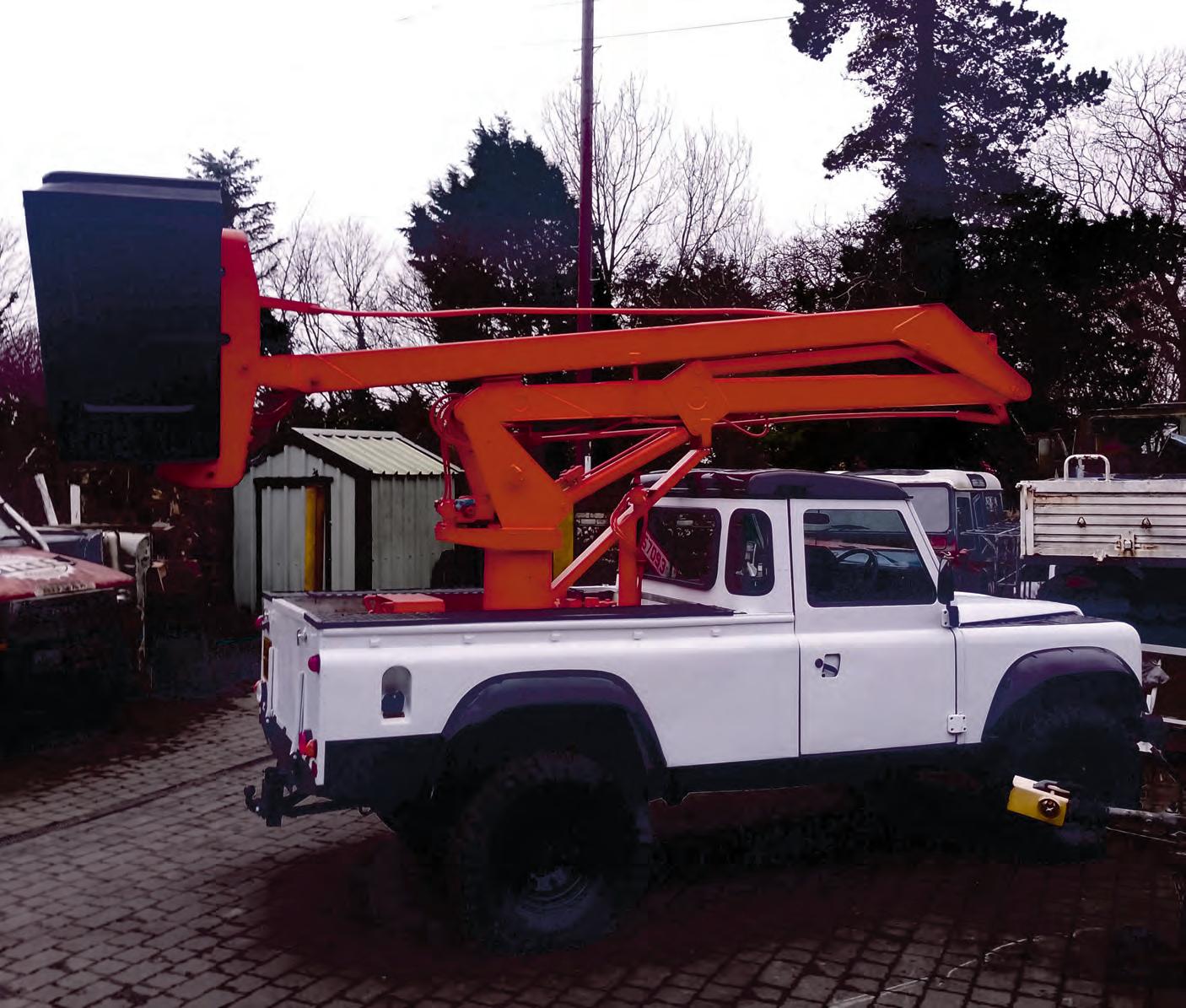
The market for lifestyle Defenders on the far side of the Atlantic is well known. But there’s a demand for working vehicles too – such as the 110 pick‑up you see here. We don’t know anything about the spec of the truck itself, save from that it dates from 1985 and has been converted into a cherry picker. With that load in the bed, there’s clearly going to be some very heavy‑duty suspension on top of the back axle, and given the age of it – and the fact that it’s on its way to the USA and must therefore have its original engine – we’d guess there’s a V8 under the bonnet. Clearly, though, the bodywork has been brought back and refreshed, and the tyres are sitting beneath a set of arches the likes of which had never been imagined back when it was new.
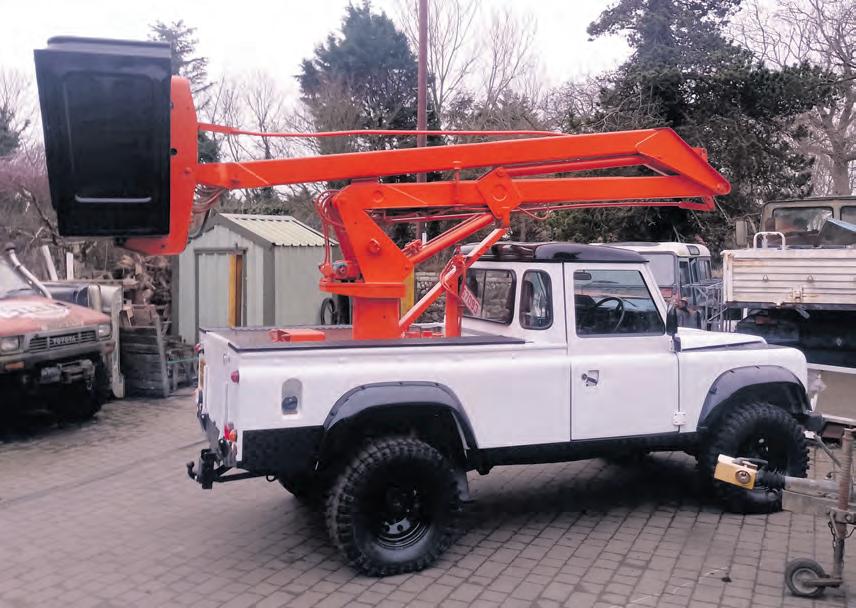
The 110 will be on the high seas as we speak, having departed from Southampton en route to Galveston, Texas. The job of getting it over there was entrusted to Hill Shipping, a Sheerness‑based specialist which regularly sends Land Rovers, and other vehicles, across the Pond from both Southampton and Liverpool to a variety of US ports. It looks after export and customs clearance, marine insurance, the lot – basically, the sort of stuff you’ll spend days and weeks trying to get your head round if you’ve never done it before. Land Rover owners tend to like to do everything for themselves, but if you’re getting ready to set off on an overland expedition you’ll have more than enough on your plate without trying to learn about a subject as complex and arcane as this one. The guys at Hill Shipping have 30 years’ experience in their field – ‘we aim to take the stress and strain from shipping,’ they say, and that’s a whole lot of stress and strain. You’ll find them at www.hillshipping.com.





One of the oldest of the many old chestnuts in the Land Rover scene is the one about people brush painting them. It’s taken to mean that for people who own an old Landy, its appearance doesn’t matter to them..
As we all know, nothing could be further from the truth. Land Rover owners take enormous pride in the way their trucks look – it’s just that for many of us, the rustic appeal of brush painting (or even rollering) is actually pretty well suited to the image we’re after.
Similarly, there’s the old one about painting it whatever colour you happen to have a pot of to hand. No doubt there have been a few farmers who’ve done this in their time – but when you strip the layers of paint from one, what you see is a history of the various colours people wanted it to be throughout its life.
When you come to apply your own choice of shiny new coat, changes are it will either be a classic Land Rover hue or a ‘fun’ colour from another car brand. Bright greens and yellows from the Lamborghini palette have proved popular in the past; these days, the concept of a Defender in metallic paint is no longer worthy of a batted eyelid.
I’m prompted to ruminate on this by the new Range Rover Sport SV Ultimate, which brings back the Velocity Blue that used to be synonymous with the earlier Sport SVR. That’s a colour that’s both classic and fun. And it really does make a difference, turning what is rather a plain looking SUV into an eye catcher whose sporty intent is obvious. Maybe that’s why the RTV world used to be a hotbed of imaginative colours. It was no place for metallic finishes but amid all the scratching and dents, you could always guarantee that there’d be some bright shades of red, yellow, blue, even pink, as well as the occasional zebra or harlequin colour scheme.
Perhaps it’s no surprise that as they got blingy, Defenders would start getting big time paint jobs to match. Sometimes they’re there to hide a shed below, of course – but mainly they’re a sign that as the Range Rover Sport SV shows, the colour of your Land Rover says a great deal about who you are.
Alan Kidd, Group Editor alan.kidd@assignment-media.co.uk
One of the things people love most about Land Rovers is that they’re a blank canvas for whatever you want to do with them.
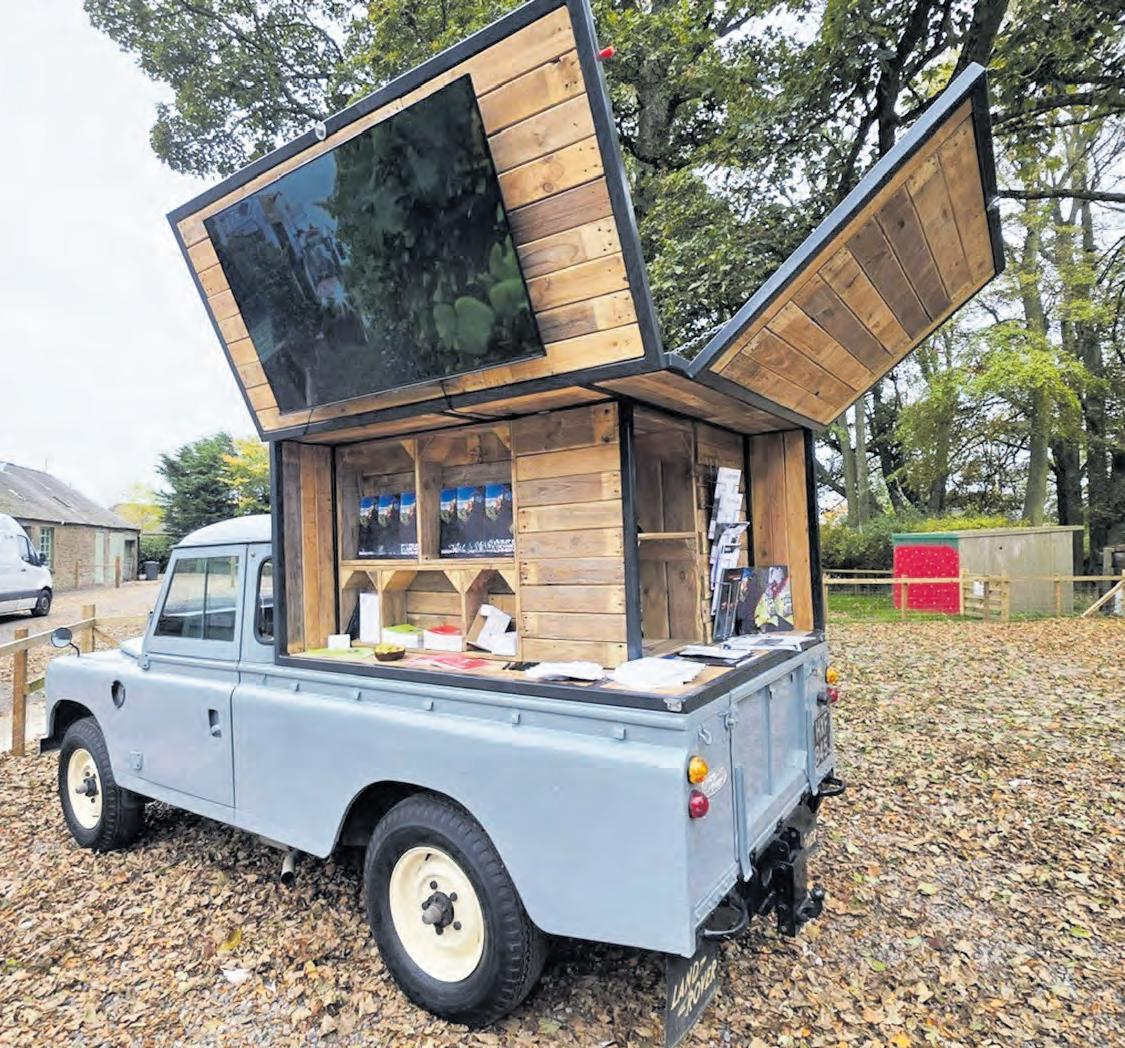
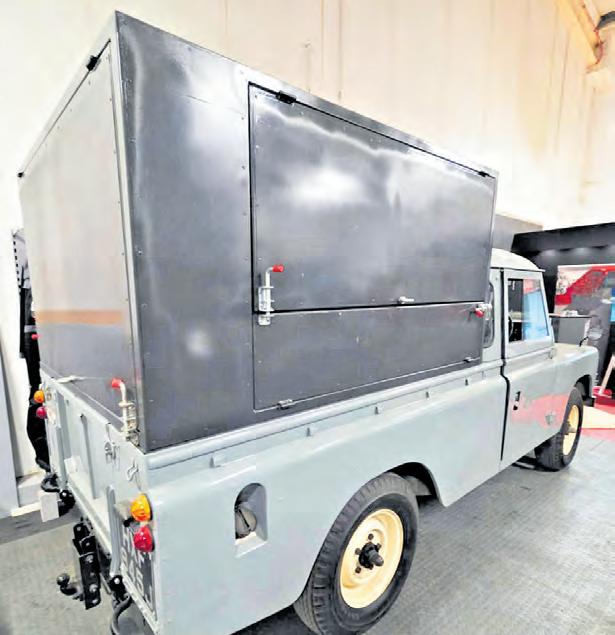
This 109” Series III Truck‑Cab, is a blank canvas with a blank canvas on it.
The pick‑up, which at the time of writing was offered for sale by Kirkland UK, a company specialising in machinery for the fruit growing and viticultural industries. It definitely stands out among the brightly coloured tracked loaders and mini tractors the company sells – though while it’s not necessarily bright, it’s definitely very smart.
As you’d expect from a company that manufactures its own brand of agri‑ cultural equipment, as well as retailing other major makes and maintaining the lot, there’s no shortage of know‑how in the building. Parts Manager Ben Short says that the 109 was refurbished in‑ house – and that it has been profes‑ sionally converted to run a 200Tdi in place of its original engine.
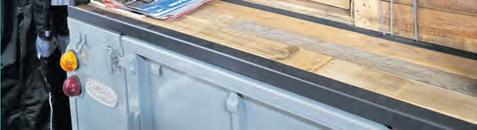
The chassis and bodywork are straight as a die, with the latter re‑ sprayed in Land Rover Mid Grey. That was done professionally, too, hence the aforementioned smartness. Ben says
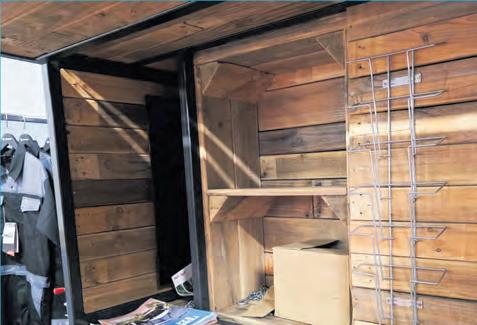
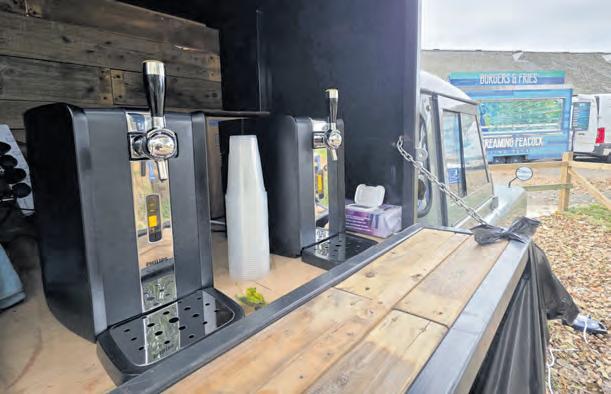
it ‘starts and runs perfectly every time and drives exceptionally well,’ and that it has always been stored inside. No small thing, that. But what make it stand out is defi‑ nitely what’s on the back. Flush‑fitted on the pick‑up bed is a multi‑purpose box that opens up no end of pos‑ sibilities for what you could do with the vehicle. Ben suggests catering, exhibitions and weddings as three potential purposes that come to mind – it’s served for the latter of the trio in its time, albeit without the box (plenty of bunting though) and as you can see in the pictures, it’s currently set up to work as a display unit with shelves and racking for Kirkland’s brochures and so on as well as a screen for video presentations and a couple of drinks dispensers on the opposite side to take care of clients’ hospitality needs.
If you’re looking at this Landy and seeing an opportunity to break out of the 9‑to‑5 and start a business that’ll make you happy, our bet would be that you’re thinking drinks dispensers too. The kind that dispense proper drinks, though. It wouldn’t be the first classic 109 to be turned into a mobile bar,
though with what you’re working on to start with it could certainly end up as the nicest.
You can imagine pitching up on a dif‑ ferent village green every evening, put‑ ting out an array of collapsible tables and chairs, showing The Gods Must Be Crazy on that big screen (other classic movies with Land Rovers in them are available) and pulling drinks for a clientele whose appreciative bibulosity provides a tidy lining for your pock‑ ets. No doubt there are many tedious reasons why this wouldn’t actually work – but in a world without bureaucracy, do‑gooders and crime, it does make for a nice image.
Or maybe you just like the 109 itself. Even without the box, it’s a very nice one. Not an original classic in terms of its spec but a Series III that’s had loads of love and is beautifully presented inside and out. Ben says that Kirkland are willing to consider selling it with or without the box – so whatever your vision is, it’s ready. A blank canvas when it was new – and 55 years on, as ready as ever to do whatever you want of it. You’ll find the truck listed for sale on page 30 of this issue.

WE RECENTLY SHIPPED A 1985 LAND ROVER 110 PICK-UP WITH A CHERRY PICKER CONVERSION TO GALVESTON, TEXAS PICTURED BELOW THE LAND ROVER READY FOR ITS NEW LIFE
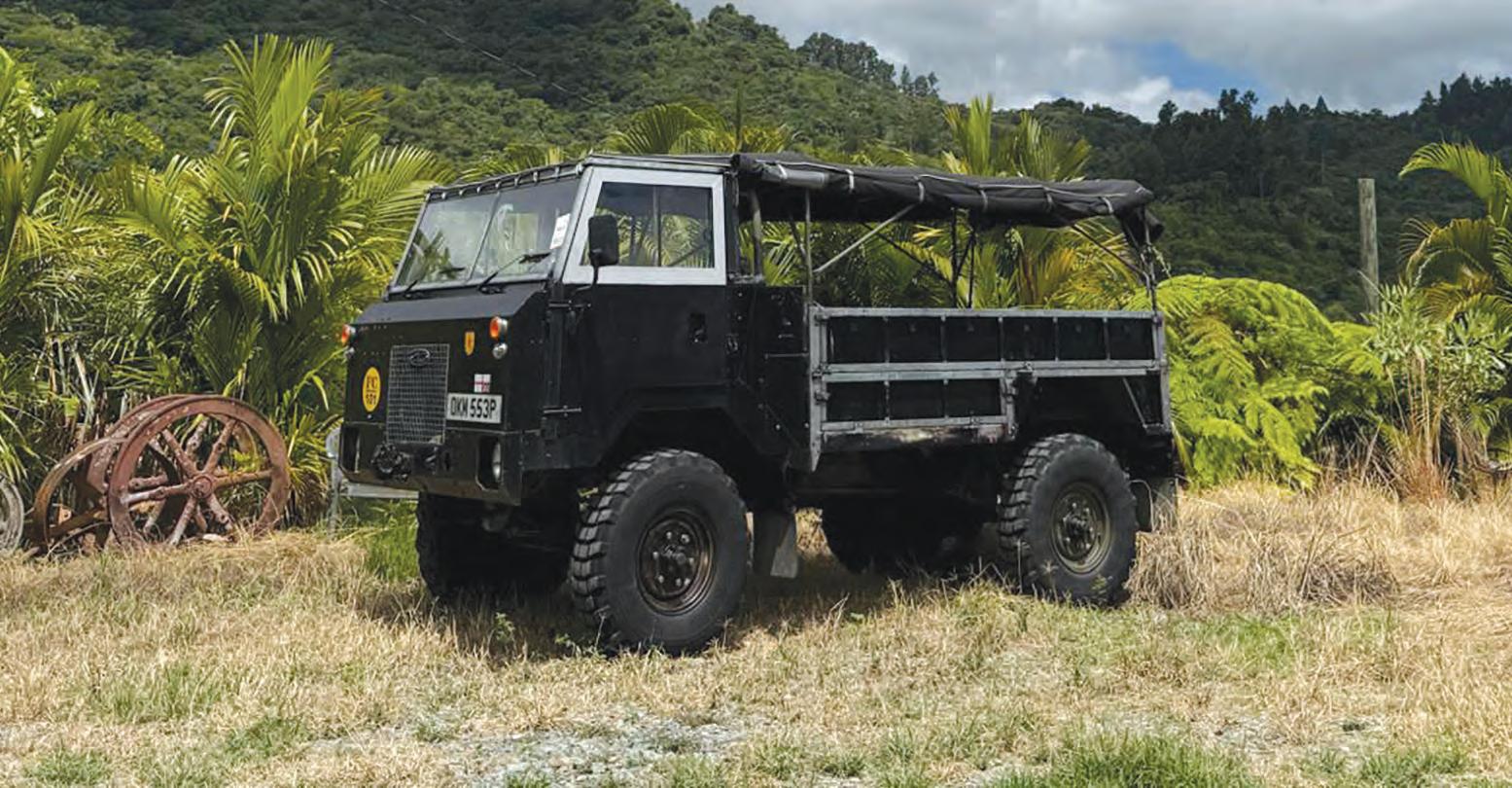
WE RECENTLY SHIPPED A 1999 LAND ROVER FORWARD 100 TO SAN JUAN, PUERTO RICO FOR CLIENT HUGO PICTURES BELOW SHOWING THE BEAUTY OF PUERTO RICO








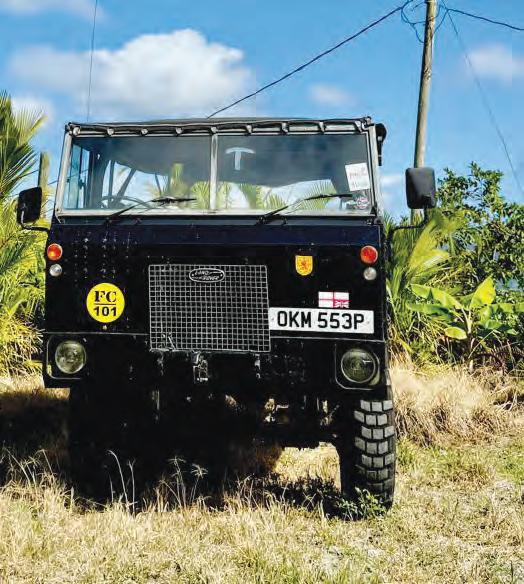
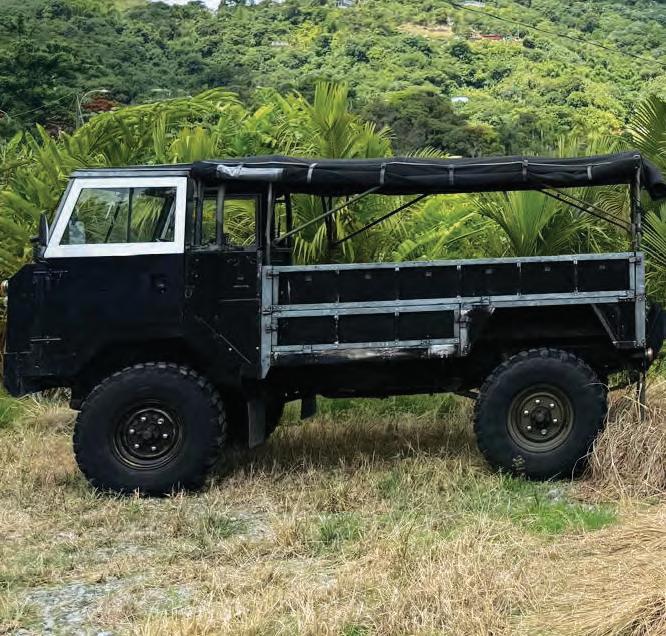


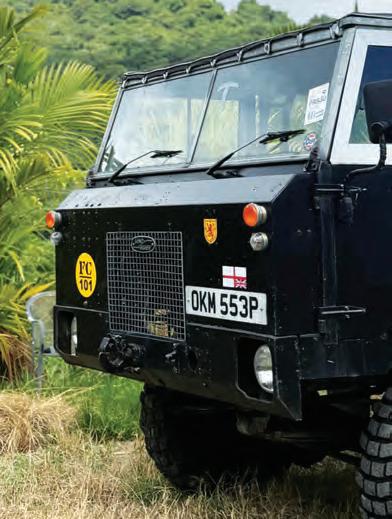












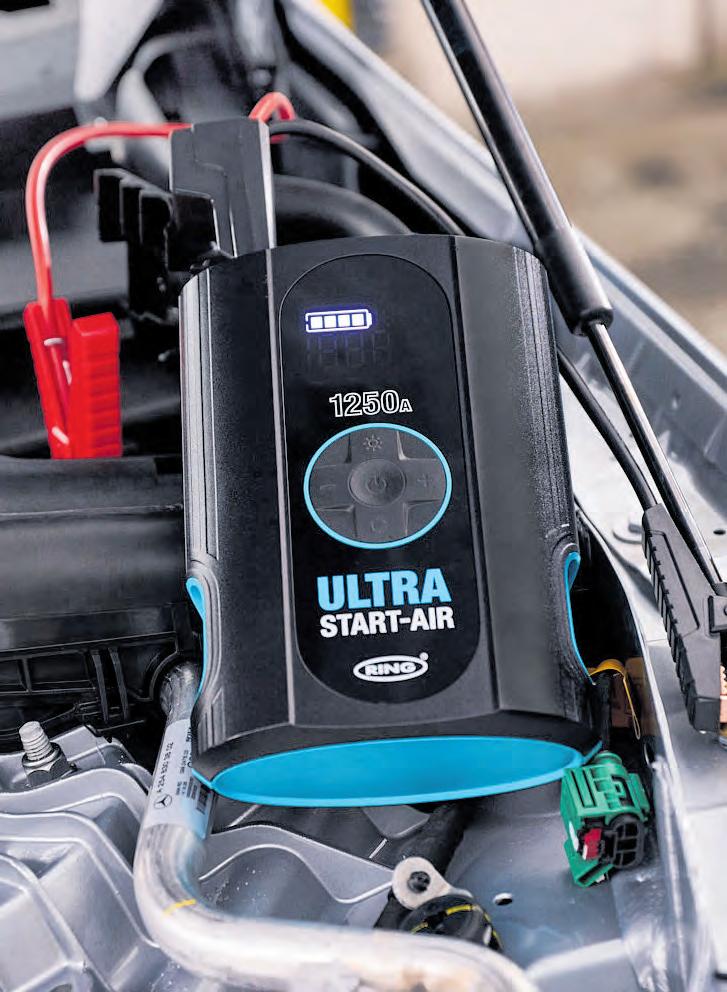
AIRING DOWN IS COMMON PRACTICE WHEN YOU’RE GOING OFF-ROAD – which means that reinflating your tyres when you’re out and about is always going to be something you need to think about. Many of the more hardcore trucks you see carry some sort of fixed on-board compressor, but Ring’s new UltraStart + Air provides an alternative that could be the ideal solution for a family motor that also gets used for playdays or green laning.
Better still, as the name suggests it’s also a solution for something else that’s common practice if you own a certain kind of Land Rover. Which is jump starting it…
In Ring’s words, the UltraStart + Air is ‘a powerful, multifunctional emergency tool combining a jump starter and tyre inflator in one compact unit.’ Actually, it’s even more than that – as well as being a jump starter and tyre inflator, it’s also an LED light and power bank.
Ring has plenty of form for creating multi-function products, so no surprise there. The auto accessory giant is also particularly good at making good things come in small
packages, so also no surprise that the UltraStart + Air can fit in the glove compartment of a typical vehicle.
Talking of typical vehicles, if your inner worthy mud-soldier snob is already sniffing at the idea of a portable jump starter being able to handle your great big engine, Ring says the unit is capable of starting up to a 6.0-litre petrol or 3.0-litre diesel engine. It comes with two clamps for hooking up to the battery terminals and offers reverse polarity protection, as well as a boost function for if you really have drained it to death, and you also get integrated hose storage for the tyre inflator as well as a storage bag for all the accessories it comes with.
‘Having one piece of equipment that can solve a variety of problems is convenient for all, and so very popular, which is why more of the tools we’re introducing to the market are multi functional,’ says Ring’s Marketing boss Henry Bisson. ‘The UltraStart + Air is a very powerful tool and, due to its suitability for many vehicles, we anticipate this being one of our best sellers.’
www.lrparts.net
sales@lrparts.net 0151 486 0066
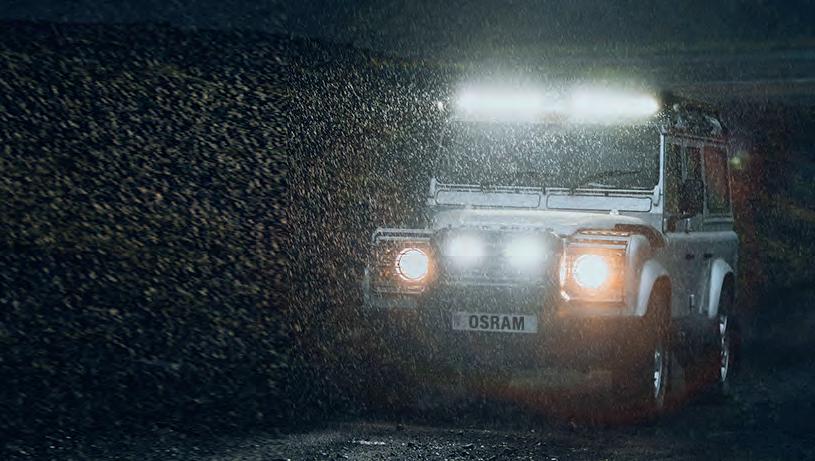
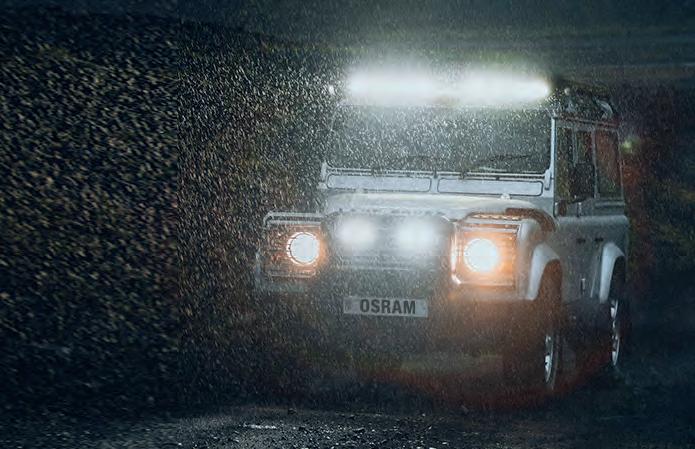
When the terrain gets tough, OSRAM LED Working & Driving Lights are built to go further. Leave the road behind and illuminate every obstacle, every turn, and every moment of your off-road adventure.
Engineered for performance, the LEDriving® range of rugged spotlights, reversing lights, and lightbars deliver powerful near and far-field visibility, helping you drive with confidence even in the harshest conditions. Don’t let the night limit what you can explore.
Choose OSRAM – the number one in automotive lighting.







www.goosefootpanels.co.uk | £300 each (no VAT)
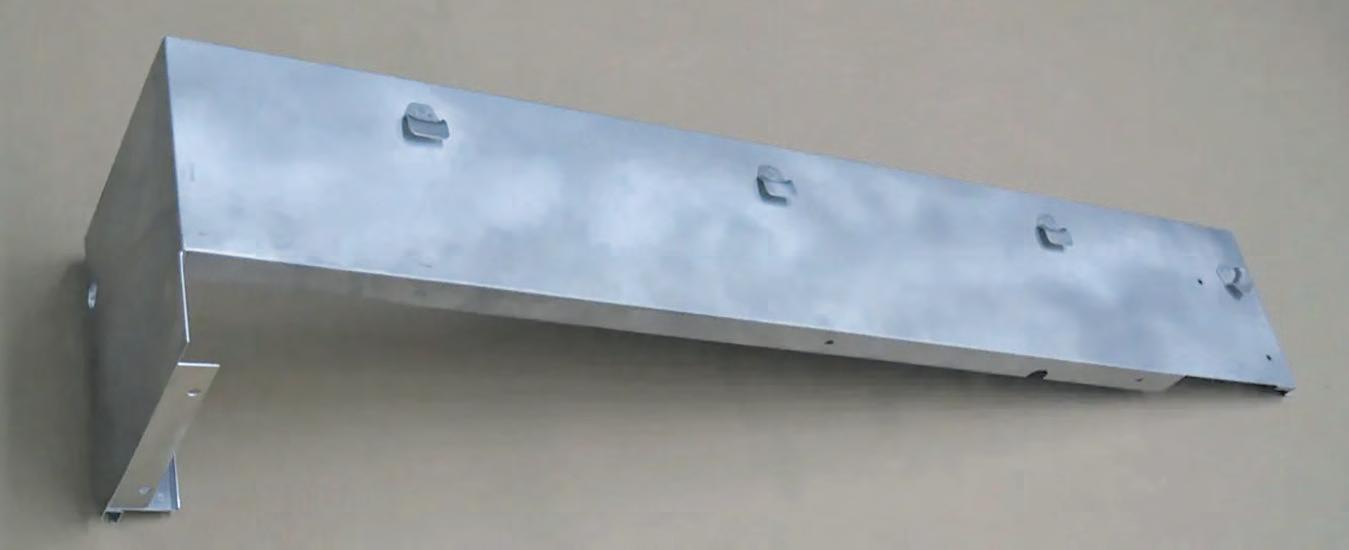
because the ever-growing Goosefoot range now includes exactly these.
During that time, they found themselves getting frustrated by the corrosion resistance (lack of) in some of the aftermarket rear wings they bought back in the day. So they decided to do something about it.
That something was the range of replacement body parts for which the company has become known. These are made in-house, and Goosefoot even manufactures its own tooling – meaning the guys there have complete control over the whole process from beginning to end.
‘Our panels are made from the alloy of aluminium, magnesium and manganese, which is the modern-day equivalent of Birmabright,’ they explain. ‘This grade of aluminium is much harder than the soft aluminium we have encountered in many aftermarket panels and is engineered for improved corrosion resistance.’
Sounds pretty promising, right?.
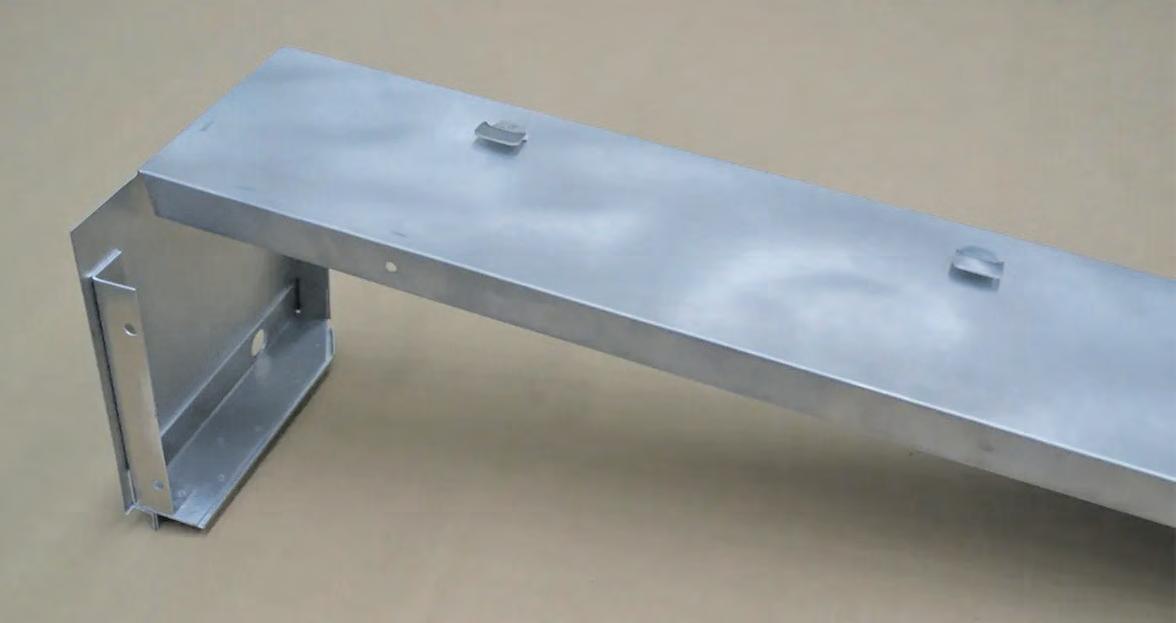
And if you’re looking for reproduction Lightweight upper body side panels, it’s about to get more promising still,
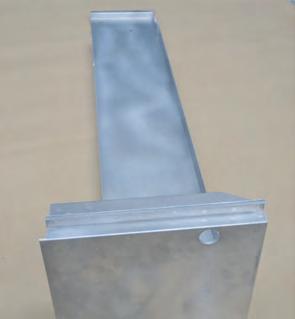
They’re made using spot welds and, says Goosefoot, ‘every detail of the original has been replicated.’
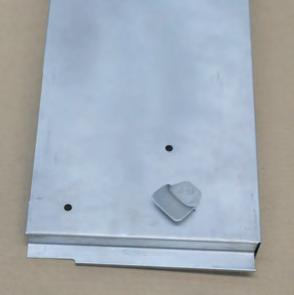
Both left and right-hand side panels are available. The one shown in the pictures is for the right; having ben prepped for fitting to one of Goosefoot’s own complete rear bodies, it has already had two holes drilled at the front end for bolting to the B-pillar and door latch assembly, however they’re normally supplied blank so you can mark and drill the holes for a perfect fit on your vehicle. ‘There can be an ever so slight variation from vehicle to vehicle,’ they explain, in a truly award-winning example of understatement.
These assemblies are supplied in a bare metal finish which is lightly abraded to provide a key for your etch primer.
So, no time wasted stripping old paint away. And best of all, they’re available only for collection, which means you get a nice day out up in Burnley. And meeting the people behind a quality product always puts a shine on it when you’re making a substantial purchase for your Land Rover.






















You know what they say about tyres. It’s the only part of your Land Rover that actually touches the ground, and all that. Which is why they’re so crucial to how it performs.
Well, how many parts of your Land Rover actually touch your body? A few, but none more so than its seats. It helps to have a certain kind of masochism if you’re going to drive an old classic (well, a willingness to eschew creature comforts, at any rate), or indeed anything up to the end of old-shape Defender production, but that doesn’t mean you want to go out of your way to suffer for owning one.
That’s why a lot of Series IIAs that weren’t originally fitted with the Deluxe Seat option have been since. A colossal improvement on the standard seats of the time, these also carried on being used throughout the Series III era and even managed to crop up on a few very early 110s and 90s.
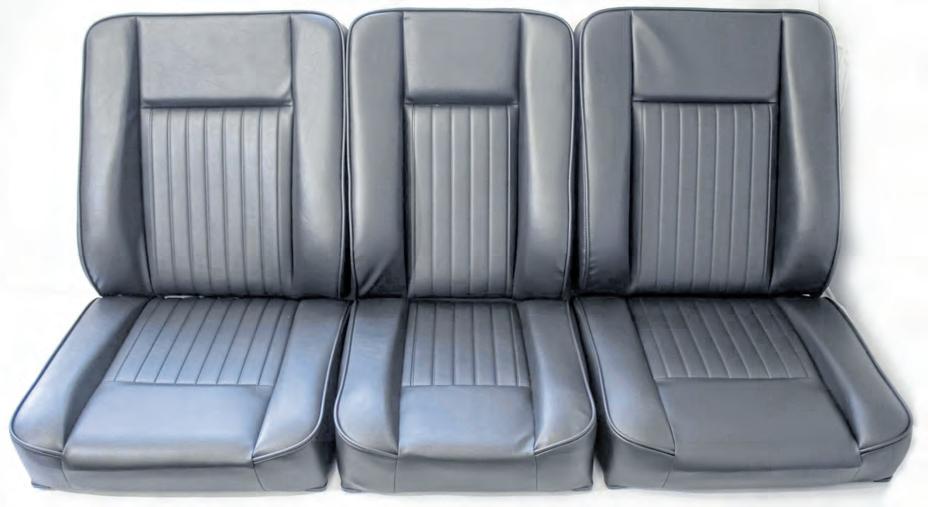
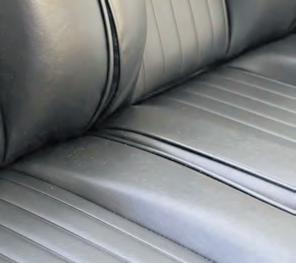
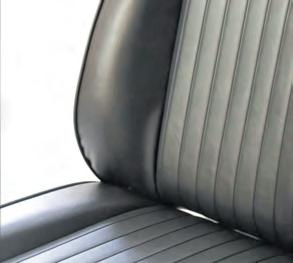
Better doesn’t necessarily mean longer lasting, though. So whether you’re looking for an upgrade or needing to replace a pair from way back when, there’s a very good chance that Heritage 1948’s Deluxe Seat set is the one single thing that could make your Series II or III nicer to drive.
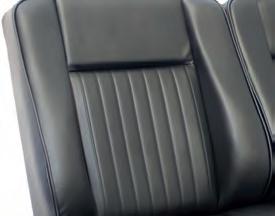
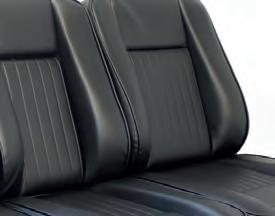
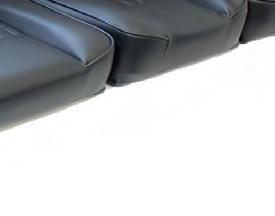
These seats have fluted backs and bases with distinct sculpted sides, promising both increased comfort and support over Solihull’s own standard seats – for which they’re a straight swap. The backs bolt into your vehicle’s existing seat frames using internally mounted threads, with all the necessary brass washers and bolts supplied to let you fit them with ease.
Assuming it’s the full kit you’re going for, this doesn’t include seat frames or runners. However you do get everything you’ll need for these to once again support a set of seats worthy of the name:
• 2 Outer Deluxe Seat Backs
• 2 Outer Deluxe Seat Bases
• 1 Centre Deluxe Seat Back
• 1 Centre Deluxe Seat Base
• 6 Bolts
• 6 Washers
You can have the seats trimmed in any material you want so long as it’s black vinyl. There’s more flexibility in what you actually buy, however, as all of Heritage 1948’s Deluxe seat backs and bases are available separately as individual components. Either way, the company is proud that you’re getting something that was made in Britain –‘allowing us,’ it says, ‘to ensure all of our seats are of the highest quality.’
Price: £1195-£1495 | Available from: tuff-trek.com
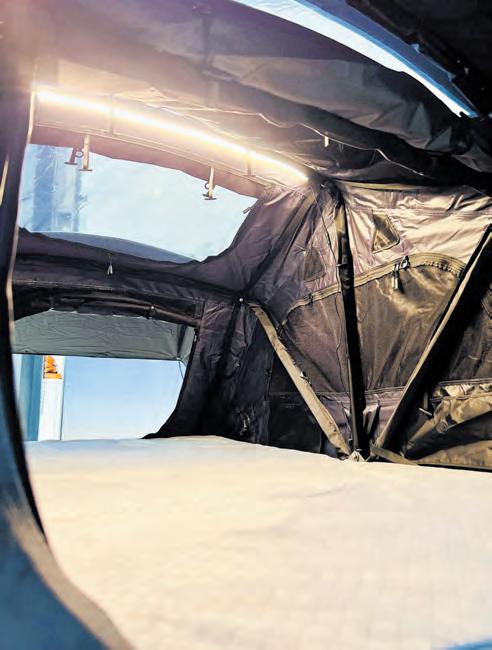
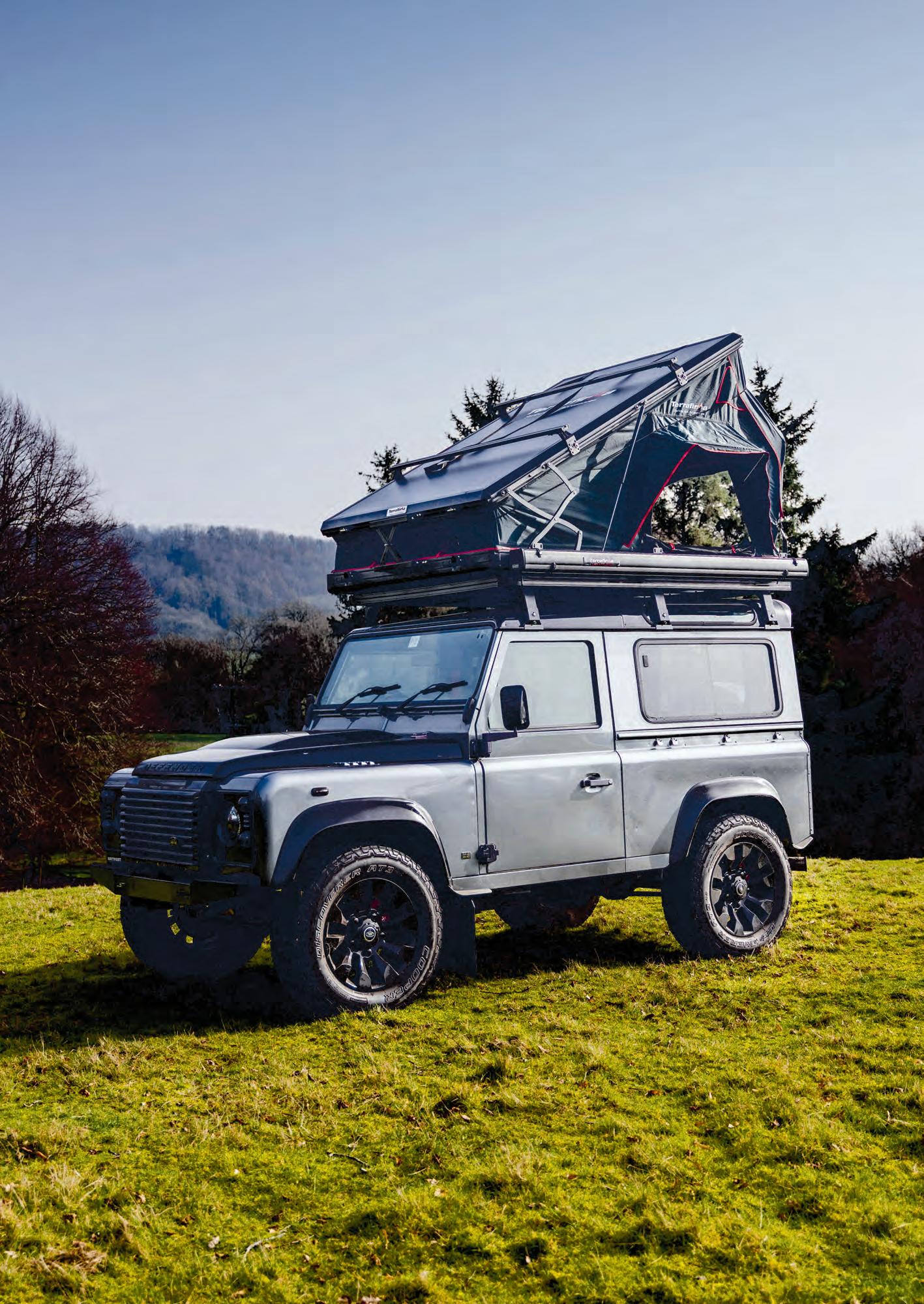
TUFF TREK HAS JUST REPLACED ITS OWNBRAND ULTRALITE ROOF TENT WITH THE NEW ULTRALITE 2. This is lighter, more advanced and more feature-packed than ever, making it ideal for modern Land Rovers with lower rood load ratings than your typical old-shape 110 or Discovery.
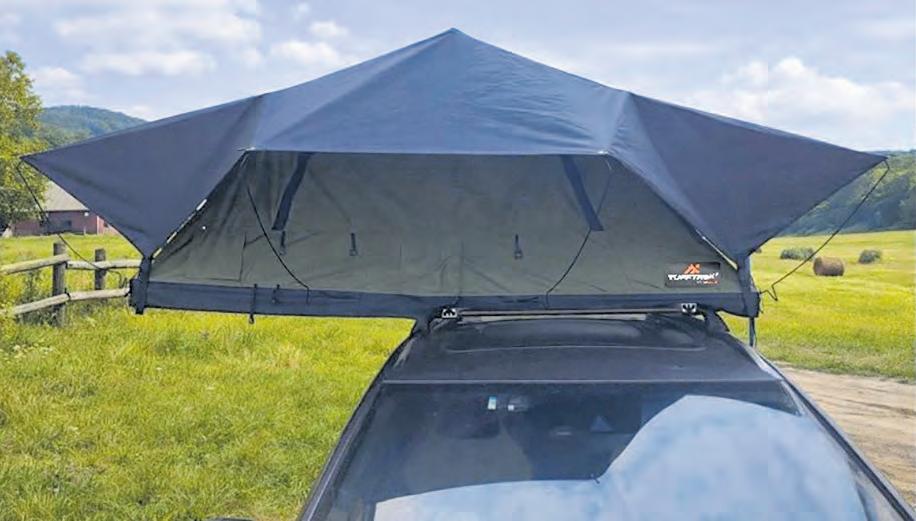
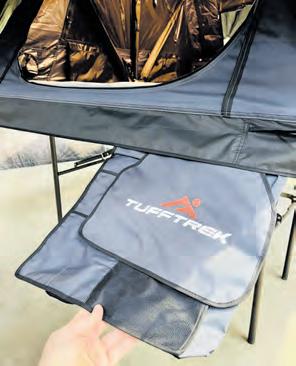
Available in 1.3 and 1.8-metre widths, the UltraLite 2 promises not to compromise on comfort, durability or year-round usability. Its genuine polycotton ripstop canvas outer cover forms into a roof profile that’s curved for improved rain shedding. Inside the tent, you get a plush meory foam mattress, integrated shoe bags, integrated LED lighting and built-in air ducts for use with a diesel heater. It also comes with twin SkyWindows up top so you can feel like you’re sleeping under the stars. Both versions are also available with a height-adjustable annexe room. You can also add custom thermal liners and storm covers to help keep the weather at bay.
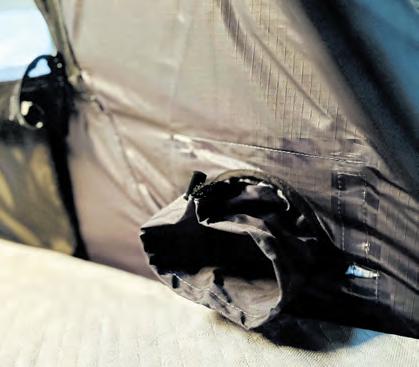
The 1.3m version weighs a mere 47kg, making it ideal for cars, while the 1.8m Ultralite 2 XL is scarcely less waiflike at 63kg, so it’s the one you’ll go for on just about any kind of Land Rover. That just leaves you to choose between Ebony and Sage Green as your main colours – and, of course, to decide on where you’re going to go to christen your new home-from-home.
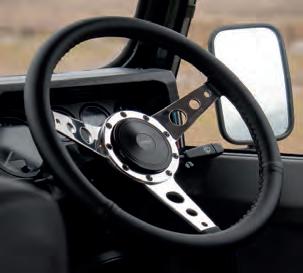
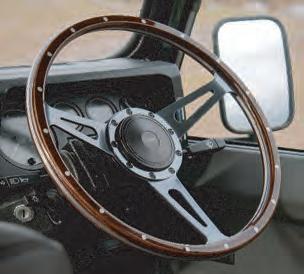
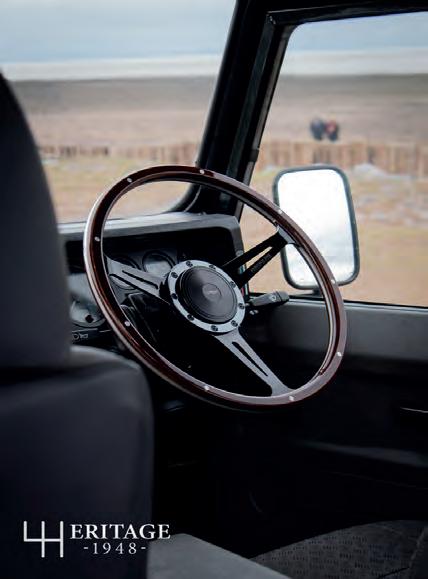
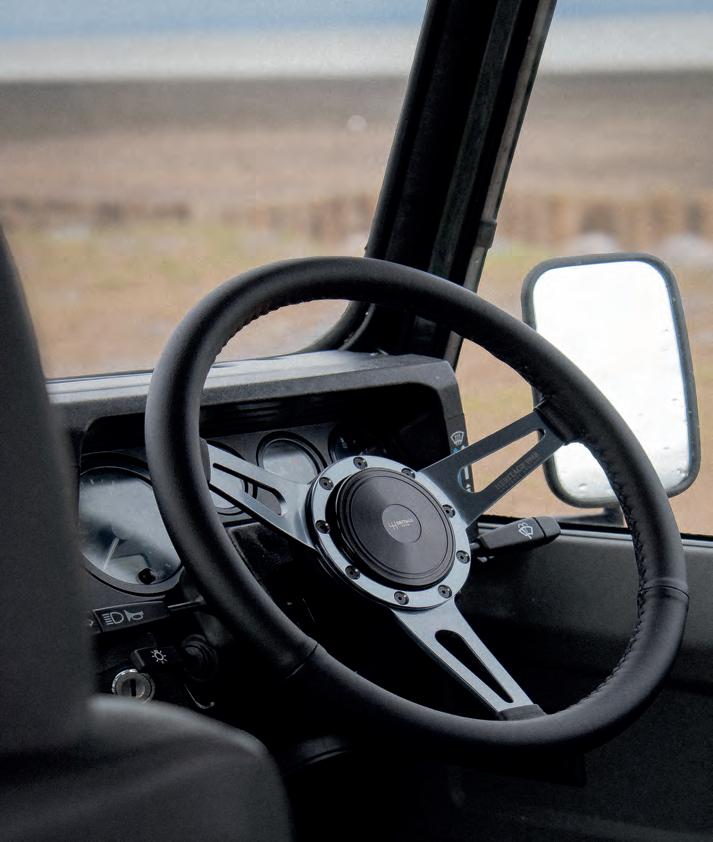








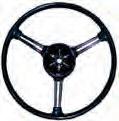
The Culbone Dusk is our rst wheel to feature our exclusive Gun metal grey body. This premium 15 inch Hand stitched leather steering wheel has been designed for the Land Rover Defender and is crafted for durability and comfort, it’s thick robust rim ensures a secure grip in any driving environment, whether your Landys on rugged trails or city streets. Meticulously designed and built with the craftsmanship synonymous with Heritage 1948. The gun metal grey is set o against a classic three-spoke design, enhanced by clean, crisp slots, adding a timeless touch to your Defender’s interior.
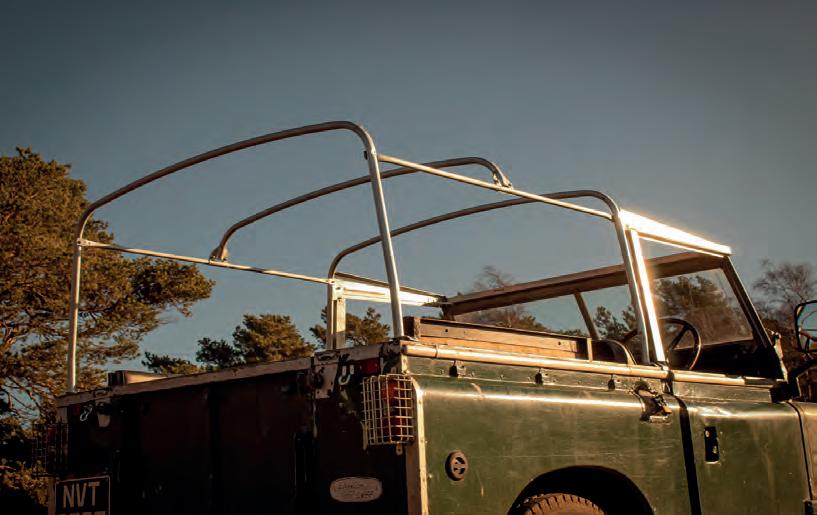
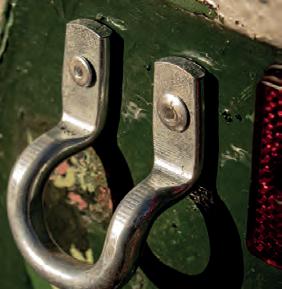
Superior Quality Hood Sticks Made in Somerset Product Code: HER-HS-88-FUL
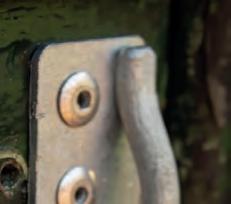



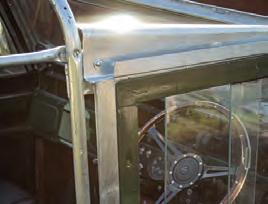



Heritage 1948 supply a Superior Quality Range of British Made Hood Sticks Sets and Component Parts to t many variations of Land Rover Hoods.
88" FULL HOOD STICK KIT, LAND ROVER SERIES 2/3 £565 109" FULL HOOD STICK KIT, LAND ROVER SERIES 2/3 £585
88" 3/4 ' TRUCK CAB' STICK KIT, LAND ROVER SERIES 2/3 £409
109" 3/4 ' TRUCK CAB' STICK KIT, LAND ROVER SERIES 2/3 £449
88"/109" BIKINI HOOD STICK KIT, LAND ROVER SERIES 2/3 £356
88” INTERIM HOOD STICK £56
88“ / 109” REAR HOOD STICK £70
88“ / 109”FRONT HOOD STICK £75
109” CENTRE SUPPORT HOOP, SWB £70
109” 3-4 HORIZONTAL TIE 'SHORT' £32
109" HORIZONTAL TIE BAR ‘LONG’ £38.40












88” HORIZONTAL TIE BAR, FULL HOOD £50
88” HORIZONTAL TIE BAR, 3/4 TILT, £50
88“ / 109” DRAIN CHANNEL BRACKET £9.90
88“ / 109” DRAIN CHANNEL SIDE OF DOOR £33.50
88“ / 109”OVER DOOR DRAIN CHANNEL £75
88“ / 109”FRONT SCREEN / HEADER RAIL £111






















+44 (0) 1948 545132 INFO@HERITAGE1948.CO.UK
Government praises ‘iconic’ vehicles while announcing retirement schedule for remaining 5000 Land Rovers still in military service
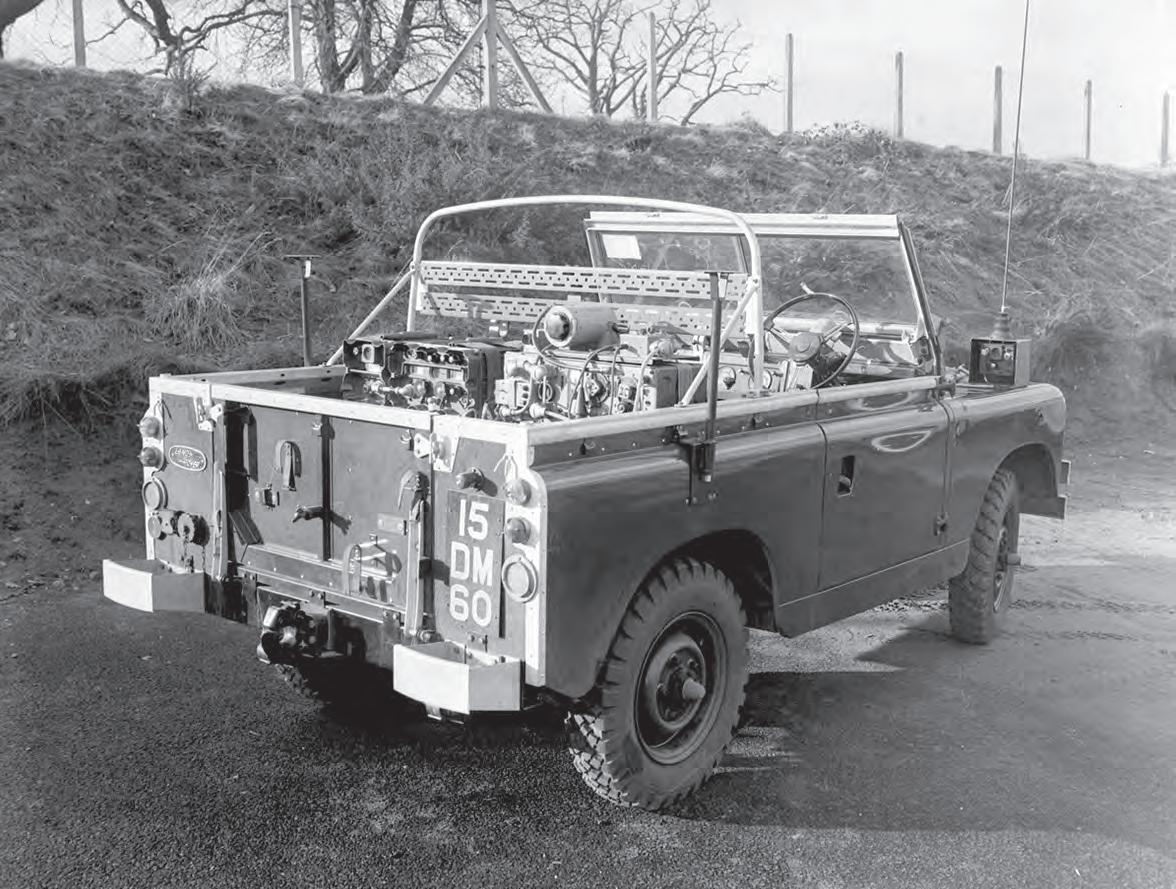
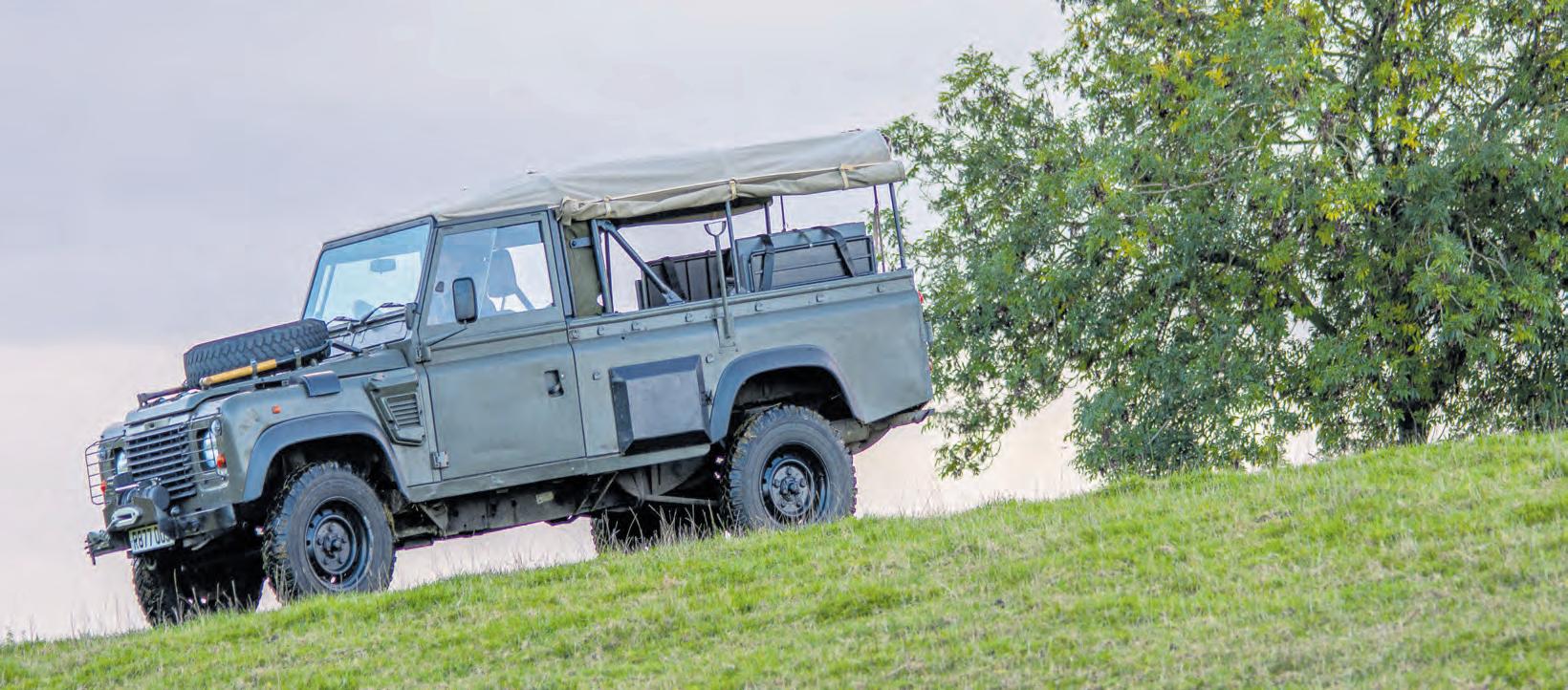
The British Army has begun the process of replacing its final Land Rovers with a new generation of light mobility vehicles. The first of these are expected to become operational during 2030 – by which time the last of the Army’s remaining Landies will have been retired, bringing down the curtain on a relationship which has endured for more than 70 years.
The retirement process began on 19 March when, at a special event hosted by the Armoured Fighting Vehicle School at Bovington, Minister for Defence Readiness and Industry Luke Pollard MP showcased a range of vehicles which could be in the running to replace the Land Rover.
‘The Land Rover and British Army share an incredible history and the image of a Landy in Army livery is truly iconic,’ said Pollard. ‘As we look ahead to the future of light mobility vehicles, it is fitting to pay tribute to this extraordinary fleet that has served our Armed Forces so faithfully.
‘I’m firing the starting gun on the replacement vehicle competition, seeking to put a modern vehicle in the hands of our personnel.’
That new vehicle, whatever it turns out to be, will have big boots to fill.
the War Department in May 1949, Land Rovers have been the do-it-all workhorses of the military fleet. A wide variety of models have carried out almost every imaginable role both on an off the battlefield, while specialised conversions such as Series IIA and Defender 130 Ambulances, Panama ROV and Centaur half-track have been augmented by the military-only Lightweight, 101 and Wolf. It’s the latter that makes up almost the entirety of the Army’s remaining Land Rover fleet, which still stood at more than 5000 units in 2025. For enthusiasts, this will mean a short-term surge in supply as the vehicles are sold out to the public, though disposal agencies will no doubt manage the numbers coming on to the market in a bid to keep prices high. Previously, when huge numbers of Lightweights were released after that model’s retirement, supply outstripped demand – with inevitable consequences for the value of the vehicles.
Announcing the Land Rover’s retirement, the Ministry of Defence comments that it marks a significant milestone in the evolution of the Army’s mobility capabilities. ‘While the Land Rover’s legacy will endure, the


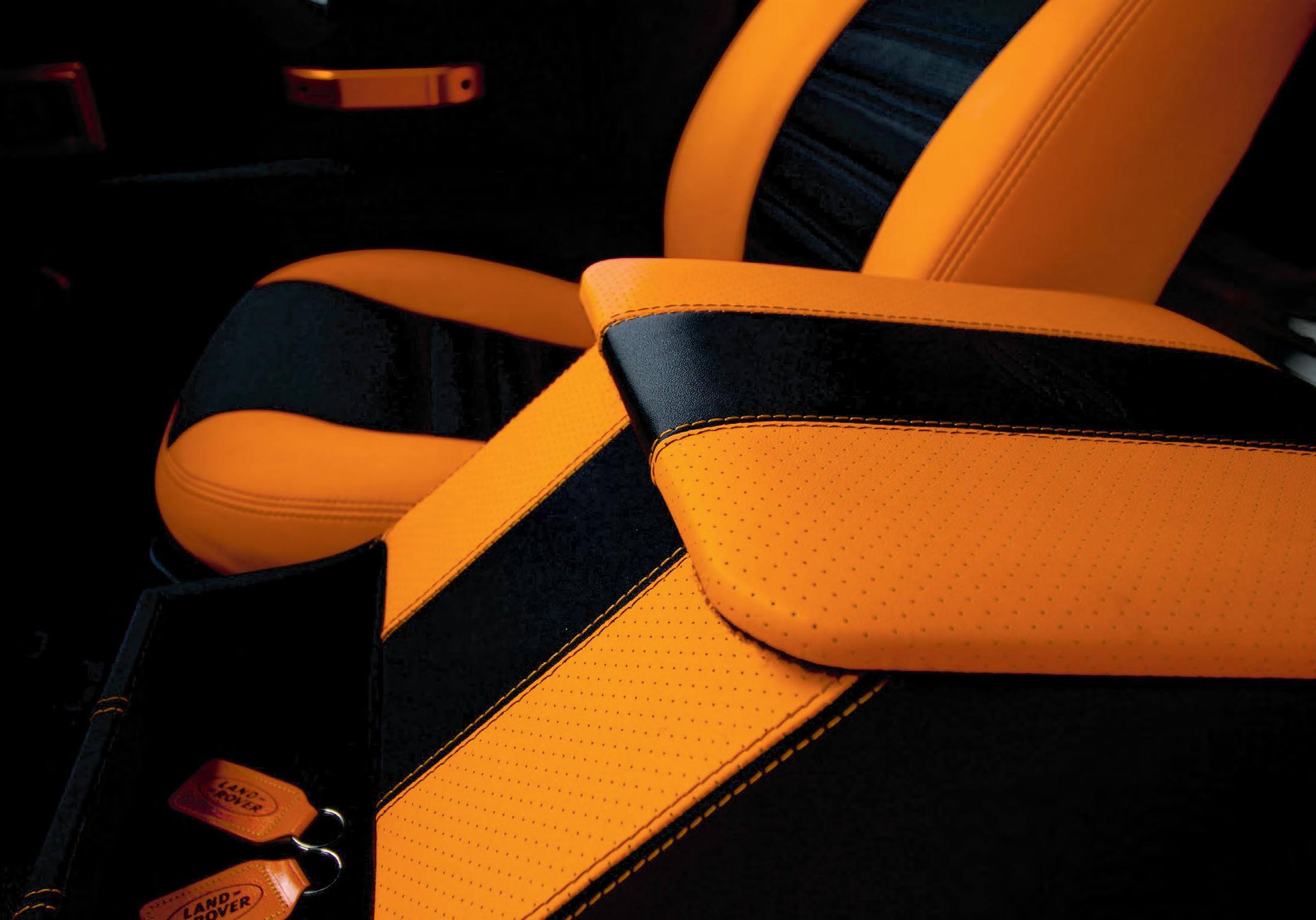


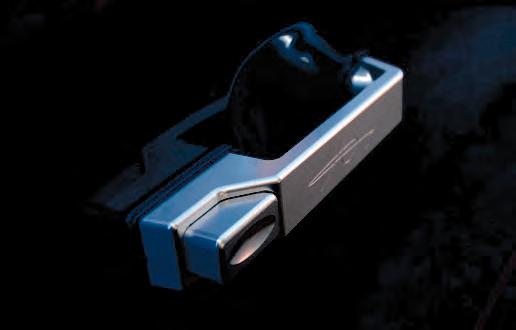
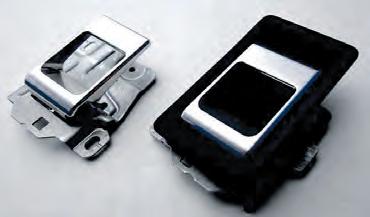
We give form to our components by machining detail into them with chamfered edges and rounded corners, under cuts, engraving and much more. We take time with care and attention to detail to ensure we deliver quality products. Our products have become a feature to many Land Rovers worldwide.
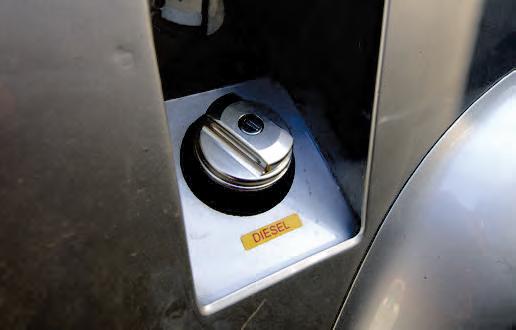
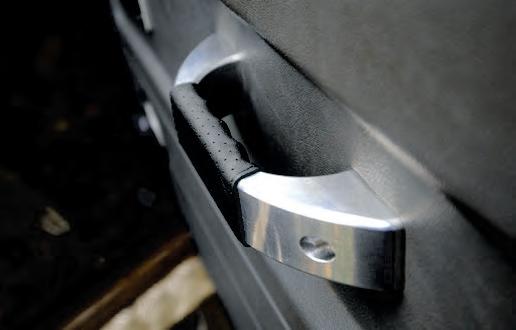
Alongside our aluminium interior and exterior trim range, our Special Order Service offers leather trim which can be designed to your requirements incorporating our colour anodised parts, to give you the ultimate Enhanced by Croytec Defender.


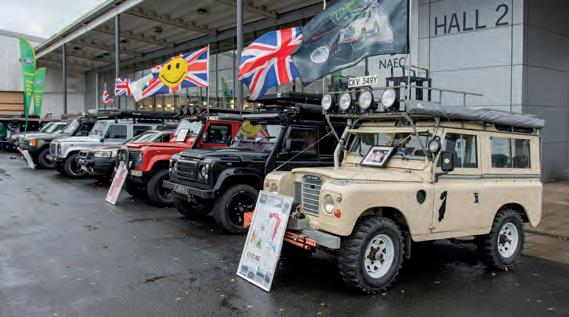

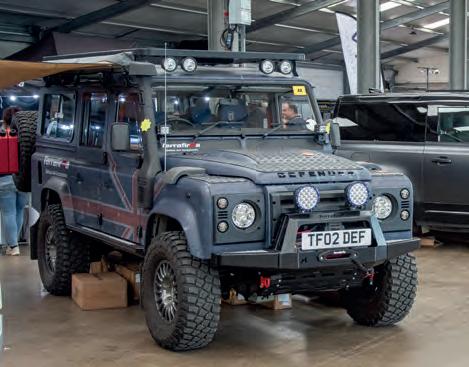
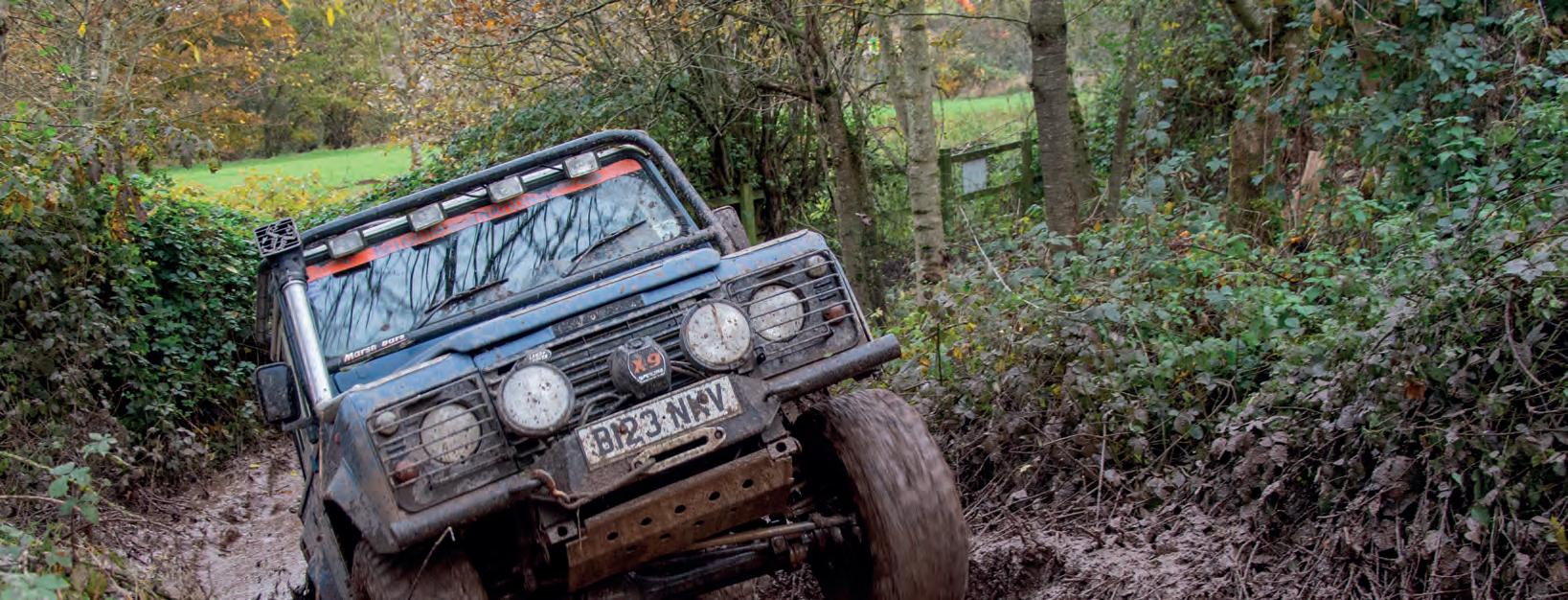
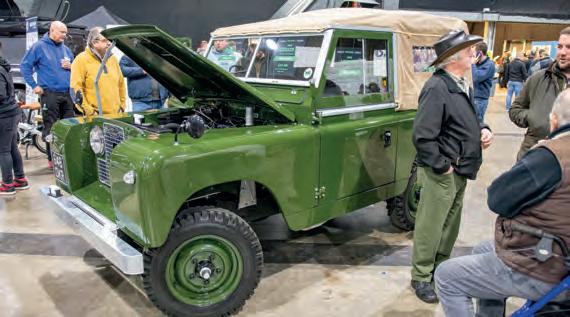
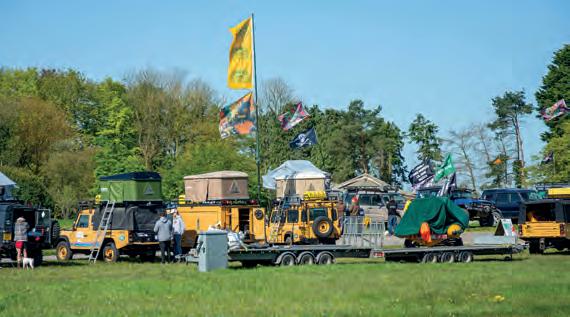









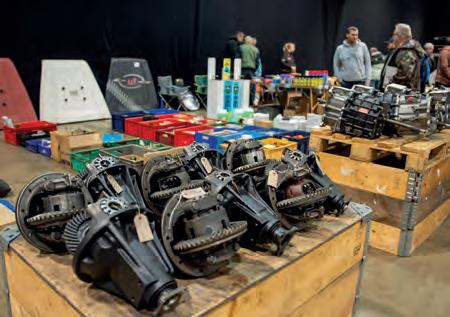
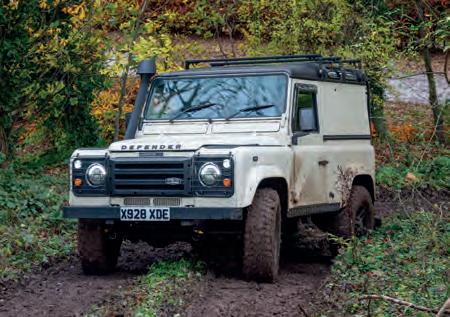
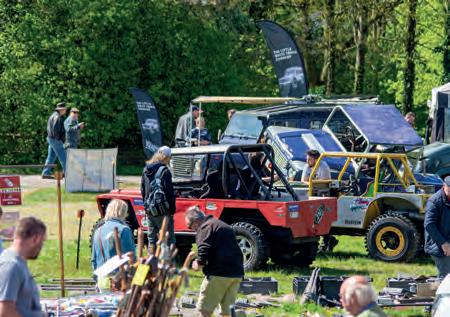
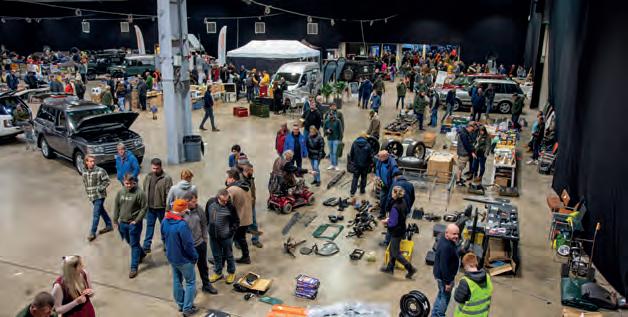
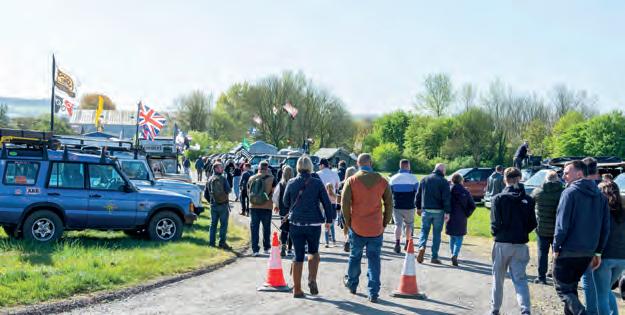
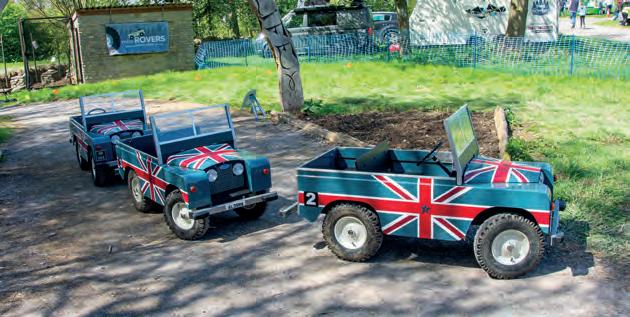
Land Rovers are returning to Bath & West this April for a weekend filled with Land Rovers!
Exhibitors old and new will join us, selling everything from parts & accessories to tyres, clothing and toys Talk to overland adventure specialists about your next trip, discuss modification options with companies with the know-how and other experienced Land Rover owners.




To advertise in The Landy, call our team on 01283 742969
We’re on Facebook: www.facebook.com/thelandyuk
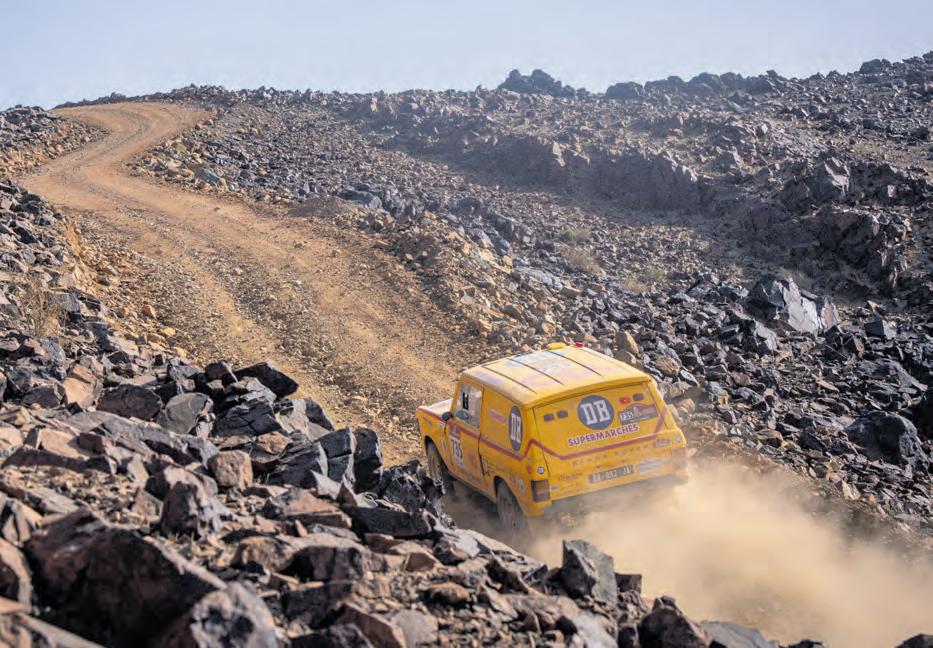
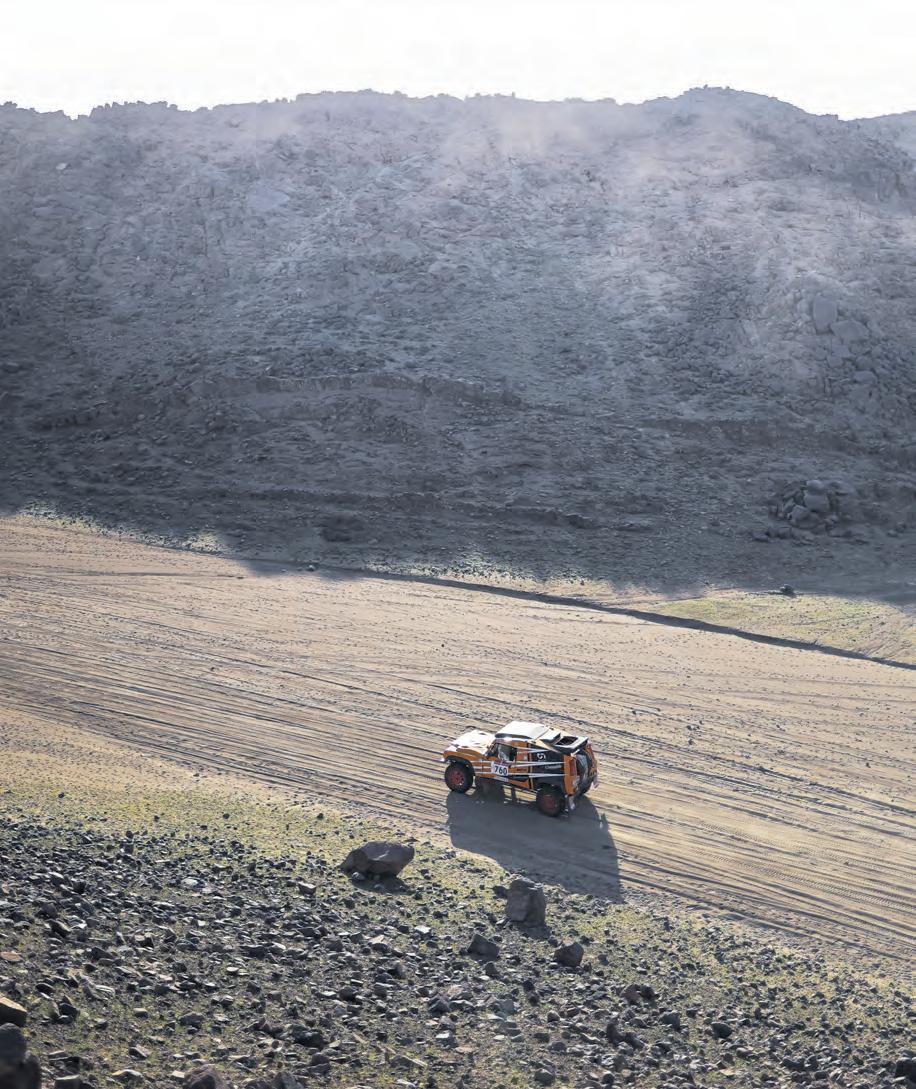
Karolis Raisys got the headlines with his overall victory in the 2026 Dakar Classic aboard a 109” Series III. But further down the field, his fellow Land Rover drivers were doing more than just making up the numbers
In last month’s issue of The Landy, we reported on Karolis Raisys’ victory in the Dakar Classic aboard the 109” Series III Station Wagon he had rebuilt himself from a wreck. But the Lithuanian Land Rover fan wasn’t the only competitor putting their faith in Solihull metal as they sought to conquer the terrain of the Saudi Desert. We also profiled Helen Tait
Wright last month, who flew the flag for Britain alongside her friend Marcella Kirk in their 1988 110; now, we’re going to round up the rest of the Land Rover teams taking part this year.
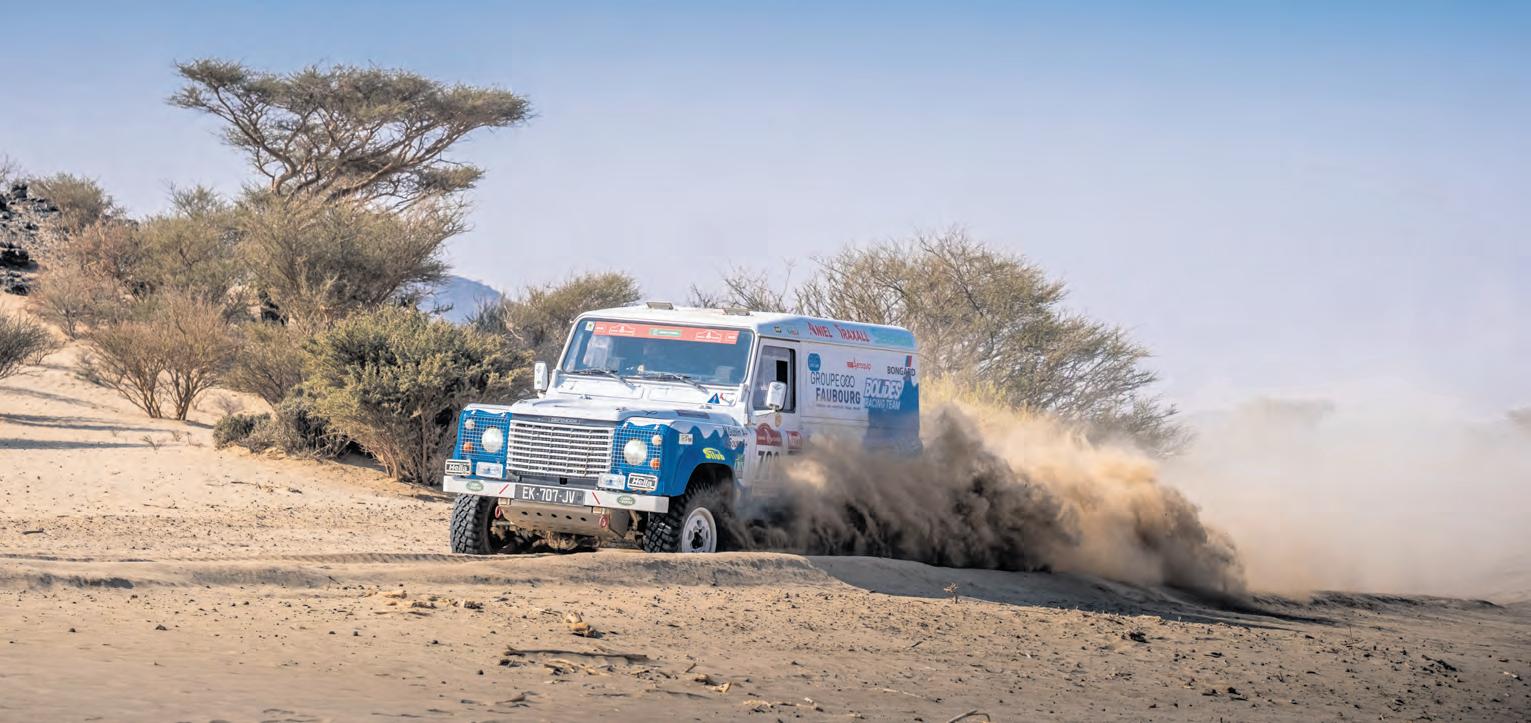
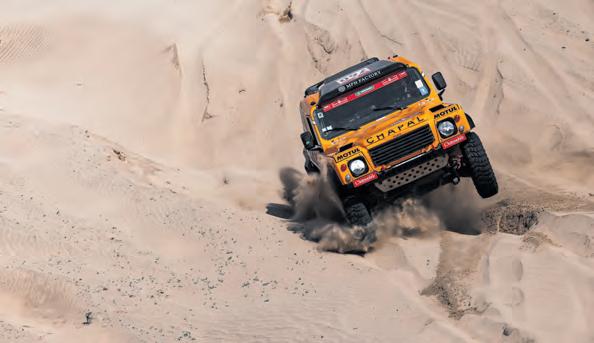
All of these were from France, as is often the way with the Dakar, and most favoured V8-engined Range Rovers. However the most hotly tipped among them was Maxence Gublin in
Driver: Maxence Gublin (France)
Navigator: Anthony Sousa (France)
Vehicle: Land Rover Defender 110 V8
his 110, also packing a Rover V8, and there was also a Bowler Wildcat in the field that started the fortnight-long regularity event. This too was a V8, hardly surprisingly, though being a Wildcat its engine was a later 4.0-litre unit from the P38 and Discovery 2 era. While the original Range Rover and old-shape 110 are certainly classics now, it’s hard to comprehend that the
Wildcat also falls into this category. Until last year, the cut-off point for eligibility was 1999 – the same year Bowler announced the launch of the Wildcat – however as from the 2025 running of the Classic, vehicles up to 2005 have been allowed.
As well as the first half decade of Wildcat manufacture, this also opens up the possibility of Mk1 Freelanders
being seen in the event. Given the number of these having been built for comp safari racing in the UK, you’d have to hope that someone will pick up the baton and run with it on behalf of Land Rover’s first so-called softroader. It would certainly be a fitting way to commemorate one of the first vehicles to show that road-friendly 4x4s didn’t have to be road-only.
PROPERTY DEVELOPER, MOTORSPORT ENTHUSIAST AND HELICOPTER PILOT Maxence Gublin had competed in the 1991, 1992 and 2005 Dakar rallies without ever having managed to finish. The Dakar Classic was his redemption, with fifth place overall in his rookie event making him one of the stars of 2024. The following year saw him running in third place as the field closed in on the finish, only for a gearbox failure to put him out of contention.
While the Classic may be seen as Dakar-Lite, taking part is still a massive undertaking, and the team treated the 2026 rally as a way of promoting their services to other would-be participants. They took a full crew with their own support truck, aiming to operate self-sufficiently – and to offer their backup and management capabilities to fellow competitors in future events. ‘In 2025,’ says co-drover Anthony Sousa, ‘we were fighting for second place and safe from being overtaken by the fourth-placed team when the gearbox failed due to an oil leak. Before that happened, we had said that if we made it to the podium, we would take a break from the Dakar Classic. But since we didn’t want to end on a bad note, we decided to go again.’
Does that mean we’ll see their 110 again next year? Well, Gublin stated that one of his ambitions was to win a stage, and the team did that twice on Stages 9 and 12. They had also led the overall standings for a couple of days during the first week of the rally. However a pair of disastrous results on Stages 7 and 8 meant their hopes of a podium were shattered, and a final placing of 43rd overall was far short of what they had hoped for.
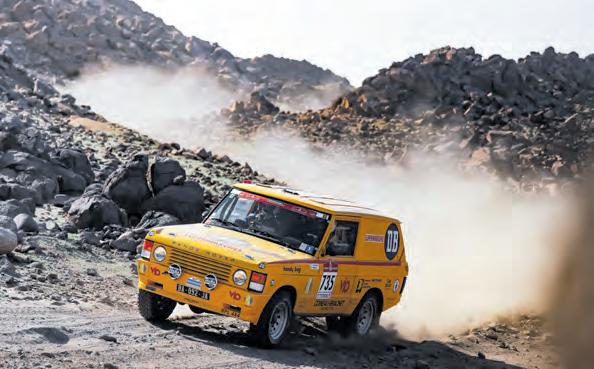
Driver: Gabriel Valentin (France)
Navigator: Brice Laborie-Brondino (France)
Vehicle: Range Rover Classic 3.9 V8
WHEN SOMEONE LISTS THEIR HOBBIES AS ‘CLASSIC CARS, CIGARS AND EMBROIDERY,’ it would seem fair to assume that you’ll never quite know what you’re going to get from them. So it was with Gabriel Valentin, who drove his Range Rover to a wildly inconsistent set of stage results. His best was an outstanding 13th, his worst a rather more distant 86th. It all added up to a 71st placed finish overall.
Driver: Stef Lamarre (France)
Navigator: Alex Laroche (France)
Vehicle: Bowler Wildcat 4.0 V8
SO THE BOWLER WILDCAT IS A CLASSIC CAR NOW. Seems crazy but it was in 1999 that the late Drew Bowler made the move out of kit cars to become a full turn-key manufacturer. Even then, the 4.0-litre example used by Stef Lamarre and Alex Laroche was right on the age limit for eligibility.
Having previously done three Dakars, finishing them all, the Bowler was Stef ’s answer to the failures that cost him on his previous two attempts.
‘In our first Dakar,’ he says, ‘we ripped off a wheel, without making any driving errors. In the second, we broke the clutch on the Sunhill buggy while we were in 8th place overall. This year, I chose to go with a tank. Not that the Bowler is heavy, but it’s incredibly high-performing and reliable; I was looking for maximum reliability.
‘We’re automatically entered in the high-speed category due to the vehicle’s expiration date; it’s the newest one allowed. I wasn’t aware of that. It’s not a good strategy, as this isn’t the right category for a strong performance. But we hope to finish this edition without any problems and, if possible, aim for the podium in our category.’
It didn’t quite work out that way, with trouble appearing to do what trouble does and come in threes. The team finished 80th on Stage 3, lying 57th overall, and retired from the event the next day.
For Alex, however, this year’s Dakar was all about something bigger. ‘My real motivation for returning to the Dakar Classic is my friendship with Mathieu Baumel.’ The four-time Dakar winner was close to death less than a year ago after being hit by a car while helping a broken down vehicle on the Rallye Monte Carlo Historique, and ultimately lost a leg. ‘I absolutely had to be at the bivouac for his comeback. He’s going to achieve something incredible. I wanted to be there when we cheer him on. Being there with him is important.’

www.thelandy.co.uk
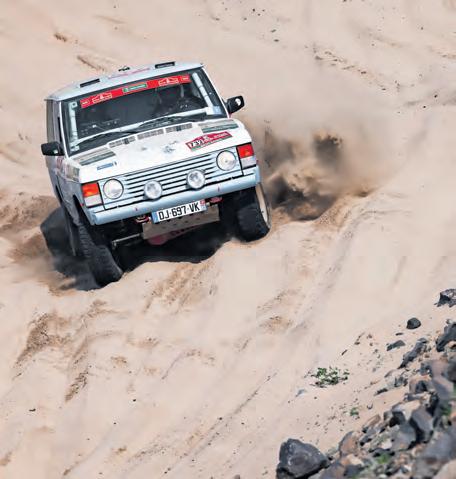
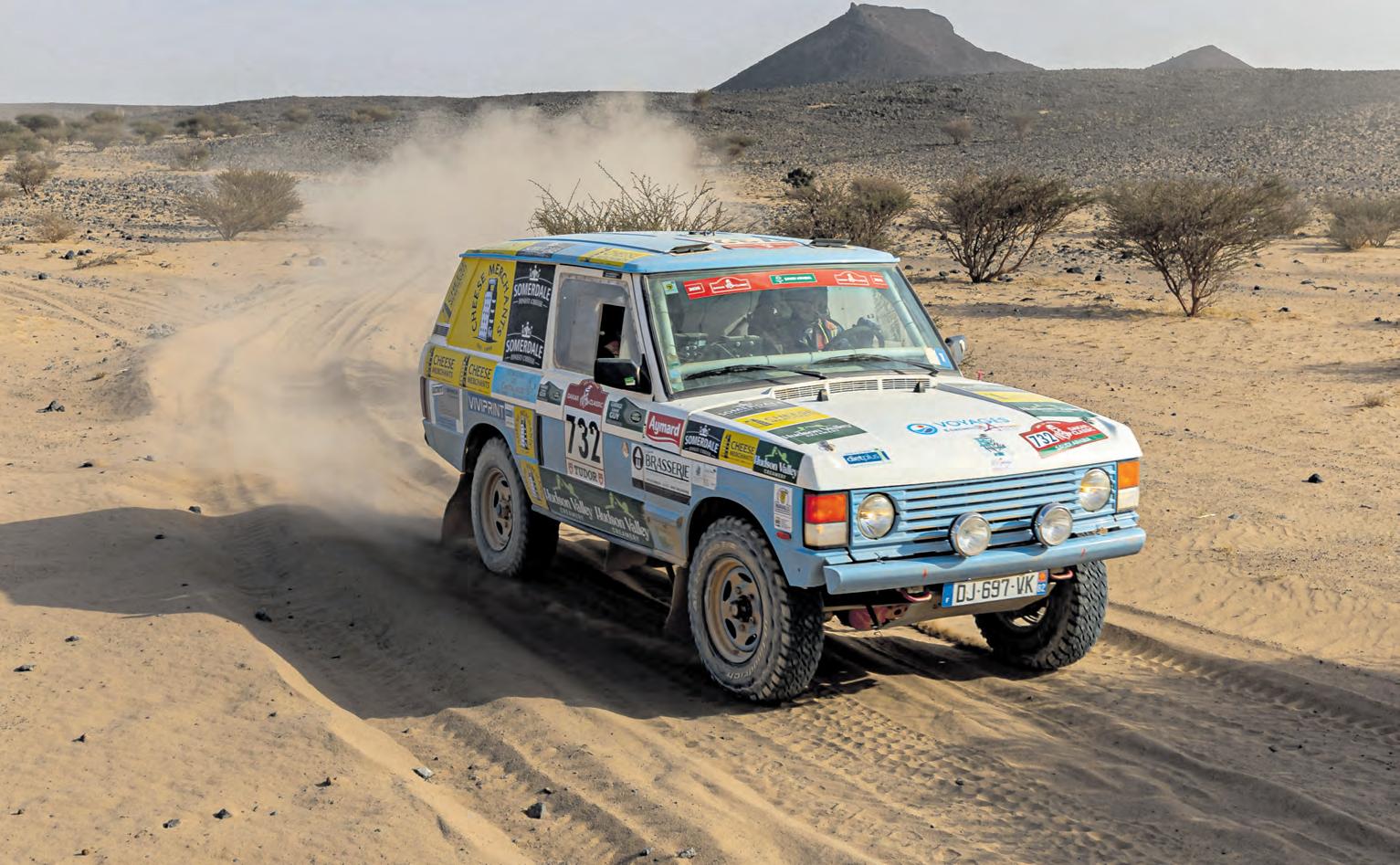
Driver: Hervé Solandt (France)
Navigator: Laurent Milbergue (France)
Vehicle: Range Rover Classic
HERVÉ SOLANDT MAY BE A NATIVE FRENCHMAN WHO BUILT A CAREER IN THE USA, but when it comes to competition cars his heart lies firmly in Solihull. Having become one of the Dakar’s youngest competitors, way back in 1985, when he took part in the Paris-Algiers-Dakar at the tender age of 22, he returned almost 40 years later to do the Classic – and it had to be behind the wheel of a Range Rover.
‘We have a real group of friends who want to get together every year,’ he says. ‘It was really Lionel (Guy) who started all this, because it was watching him do it for the first time that inspired me.
‘We’ve been together for four years now, and it’s this human adventure that matters to me. We all share the same passion for the Range Rover: it’s a car that made us dream when we were young.’
Herve actually sold the 1986 Range Rover he used in 2024 and 2025, knowing that Lionel had a replacement available to prepare for him. His navigator, Laurent Milbergue, became available for this year after the group’s mentor decided to step back from competing and instead provide full-time support for the rest of the group.
‘Since Lionel, with whom I drove last year, is returning as a support driver this year, I was available,’ explains Laurent. ‘Hervé had approached me at the end of the previous Dakar. He saw what our family-like yet professional team spirit brought to the table, both in the car and at the bivouac. That’s really what gave him the confidence to create a fully-fledged team.’
Without posting any stellar stage results, Hervé and Laurent went quietly about their business (well, as quietly as you can in a V8). Consistent scores day after day meant they were never outside the top 40 overall, and a strong finish meant they saved their best position of 30th overall to the end of the rally – of course, the only time when it really matters.
Driver: Gérard Mattiussi (France)
Navigator: Serge Dumas (France)
Vehicle: Range Rover Classic
WE MENTIONED ABOVE THAT HERVÉ SOLANDT HAD SOLD THE RANGE ROVER HE CAMPAIGNED IN 2024 AND 2025, and here’s where it ended up – with his childhood friend Gérard Mattiussi. Having done a number of rallies together, Gérard and another long-time friend, Serge Dumas, came to the Dakar as a pair of sixtysomethings fulfilling a childhood dream, calling it ‘the most ambitious challenge they have ever undertaken together.’
Gérard, who also owns a Defender and a more modern Range Rover and says he has ‘a general affinity for the English,’ was honest about the team’s chances as complete novices on the Dakar. ‘We’ll see after the initial stages how much interest or skill each of us has. But for now, we’re incompetent in every area! The goal is really just to try and finish.’
They didn’t, sadly. But after a slow start, a big improvement on Stage 5 saw them finish 29th on the day and jump to 47th overall. That was as good as it got, with retirement following on Stage 6, however with such a tight-knit group of friends around them you can bet on the Range Rover showing up again in future Dakar Classics. Maybe we’ll get a picture of it next time, too…































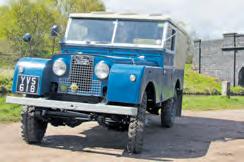
all Land Rovers. Its engineering and design give it real charisma, but parts aren’t readily available. Restoration projects require deep pockets, but see it through and the result will be worth mega bucks.
The Series I, particularly in its 80” guise, is the most sought-after of
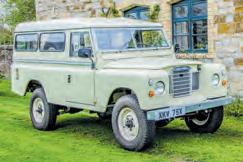
Gone are the days where you could use a Series I as an actual Land Rover. Because with restored examples changing hands
£5000-£85,000
for millionaire money, preservation is the aim of the game.
The earlier the vehicle, the more it will be worth. The sky’s the limit – but can you really put a price on such an icon?
Pros: Heritage, charm, a true classic, the original Land Rover Cons: Availability of parts, price tag on early 80s Series I (1948-1958)
Cons: Not yet as desirable as the earlier Series models Series III (1971-1985)
terms, keeping the same 2.25-litre engines throughout the length of its production run. In 1980, the engines switched to a more durable five-bearing crank rather than the old threebearing setup. The transmission also received syncromesh on all forward gears to make it easier to live with.
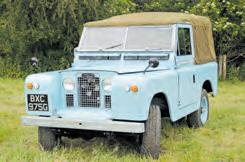
£2500-£35,000
They still carry the simplicity of earlier Land Rovers, but the Series III remains the most affordable way into owning a leafer.
Pros: Most affordable route into Series ownership. Still has the Series pedigree. Parts still widely available
Lightweight (1968-1984) £3500-£22,000
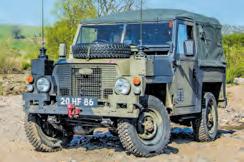
These military vehicles can easily be distinguished from regular
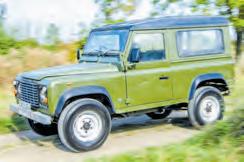
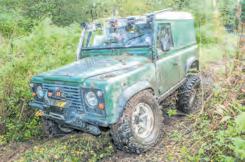
Land Rovers. To mimic the civvy Series machines, the Series III model built from 1972 onwards, also had its headlights switched out to the wings.
Lightweights add an extra dimension to owning a Land Rover. Their military history and details mean you get a truck with more stories to tell – and that stands
Early
These
Rovers
coilsprung suspension, new engines and a world-beating level of rugged off-road capability.
out from the crowd. They’re a rare breed, though – so if you’ve got one, it’s worth keeping hold of.
Pros: Not like all the other Land Rovers out there. Military background. Lovely 2.25 petrol Cons: Appearance isn’t to everyone’s taste. Exclusivity over regular models means they command a price premium
Don’t be fooled by high prices. Values have dropped in the last two years, and only a real rarity in pristine nick is worth the money that used to be commonplace.
Pros: Excellent parts availability. Easy to work on. Unlimited potential for mods and restos
much of that early charm. Prices seem to have peaked now, however they still remain strong for good examples.
A 2.25 petrol 88” would be our pick, as the diesel engines were underpowered and rather noisy.
refinement. While the engines have excellent longevity, they need to have been maintained properly. Be thorough in your checks, both under the bonnet and underneath the body.
refinement, but this is seen by many experts as the best Defender of them all.
The LT77 gearbox in the 200 Tdi is more truck-like than the later R380, and these vehicles didn’t come with bling. Just be sure it’s an original Tdi you’re getting, not an old Discovery conversion.
Pros: The perfect combination of tradition and modernity
Cons: Lots of horrible and/or deceptive ones around
Cons: Bulkheads and chassis rot, springs prone to seizing Series
The Series II/IIA has a wider stance than its predecessor and adds an extra (thin) layer of
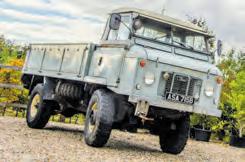
rarity – with all the cachet, pride and immense awkwardness that comes with this status.
By ‘rare’, we’re talking about less than 2500 Series IIA FCs in total. And they tended to have a very hard life, so not many have survived to tell the tale.
Pros: A sound investment to restore – and enjoy
Pros: A Land Rover like no other, if that’s what you want Cons: Especially brutal to drive, and to find parts Series IIA/IIB FC (1962-1971) £2500-£15,000
Forward-Control models differed from everyday Series IIs by
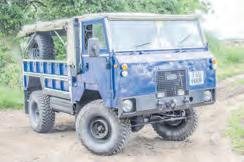
Only ever
the time came for demob. They were flogged off at very low prices and turned into off-road toys –not something you’d do with one today, given the rarity and classic value they’ve taken on.
having heavy-duty ENV axles, but engine-wise they had the familiar 2.25 petrol and diesel lumps. So, don’t expect performance – but do expect to be given an ‘interesting’ time in the workshop…
£7500-£26,000
Compared to the IIA/IIB FC, the 101 is more fun thanks to its V8 engine. It’s still a military tool, though – some still have fixtures and fittings from their Army life, which adds interest. This is a vehicle for enthusiasts, though, with costs that are sky-high even by Land Rover standards. Pros: Master of the road. Lovely V8 soundtrack. Everybody who sees one loves it Cons: Monumental running costs. Expensive to buy, too
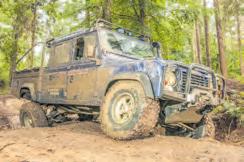
The 127
motor. It’s popular for homebrewed overland conversions, too. Almost all 127s have had an engine conversion by now, too. Lots to be wary of, then – but it’s a hell of a lot for your money. Pros: Enormous size means
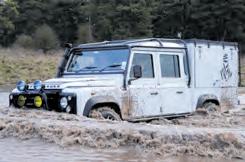
work truck tend to go for a later 130, so the 127 is more of an enthusiast’s
The 300 Tdi engine is very different to the 200 unit it replaced, though
the two are related. It’s much more refined and smoother to drive, though there are more electronics involved so later versions in particular are less of a DIY fix.
The arrival of the 300 Tdi also brought with it the R380 gearbox. This used to have a terrible reputation for relability, but most have been put right by now and they’ve
£3500-£40,000
become sought after for their light clutch and better shift action.
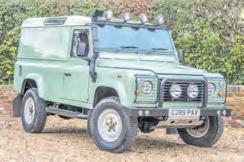
It was during the Tdi era that Defenders started getting things like alloys, too. You might even find one that’s not been off-road… Pros: Strength and simplicity. Perhaps the definitive Defender Cons: Sure to be very different to when it left the factory
TDCi (2007-2016) £6500-£275,000
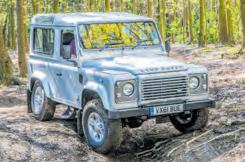
The last Defenders gained modern 2.4 and 2.2 TDCi engines and
smooth six-speed gearboxes, They still had phenomenal off-road ability and were even okay to sit in. Famously, this was the Defender that actually had a dashboard You can find special editions and boutique conversions to TDCi models that cost obscene amounts of money. You will pay a premium for any these late
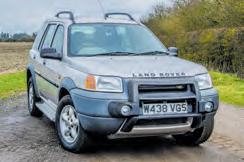
It’s also a notable classic in its own way, as it heralded the start of the company’s modern era. It has its issues, though. The viscous coupling is expensive to replace and can be upset simply by running mismatched tyres.
The 1.8 petrol used to be notorious for head gasket failures. Today’s replacements are much
are people who do just that, preferring to invest new-car money in a restoration than spending it on a current model.
It’s a smart policy, too. An early two-door can cost mega money, but any Classic will appreciate in value if kept in good condition –and sought-after rarities like the CSK and LSE can be a gold mine.
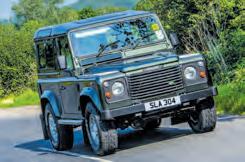
a strong performer. It does lend itself to being tuned though, so watch out for abused ones and knackered examples that have been pushed beyond the limit.
As with all Defenders, you’ll need a rear crossmember sooner or later – or even a new chassis.
still be a DIY machine. Parts are in plentiful supply, as is specialist knowledge – and it’s one of the best Land Rovers ever.
Defenders, however the era of skyrocketing prices seems to be over and TDCis have dropped further in value than the Td5. So a good 2.2. could now be quite a shrewd investment
Pros: Efficiency, creature comforts, off-road prowess
Cons: Price, electronics, TDCi engine is unloved
more robust, but a late diesel is your best bet. Even these can go calamitously wrong, though. This was a more complex car than it needed to be, and buying one for sweeties now doesn’t change that.
Pros: Cheap to buy, no big rust issues, surprisingly able off-road Cons: All sorts of things can go wrong, some very expensively
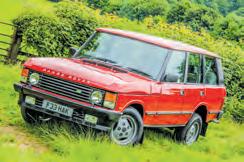
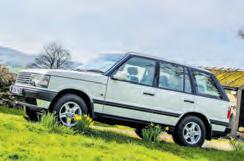
An awful lot of Rangeys have been neglected and/or abused, and you can still buy they cheap. But if you’ve got the skills, and access to parts, restoring one would be the ultimate hobby that pays.
Pros: Most usable classic Land Rover, V8 power, ride quality
Cons: Rust, availability of parts for early models
Range Rover (2002-12) £2200-£24,000
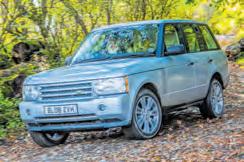
The Mk3 Range Rover hit new
of luxury and was more reliable than the P38. It’ll still cost a lot to run, however, and drivetrain faults and underbody corrosion are not unknown.

The TDV8 engine is sublime, but you’ll pay more to get one –especially the 4.4, though the 3.6 has all the power you need. The V8 petrol, on the other hand, is temptingly cheap. Guess why…
This isn’t a DIY motor, but it certainly is a Range Rover, with brilliant off-road and towing skills. It relies a lot on electronics, but they work wonders – and the deepdown engineering is very robust.
Pros: Great off-road, luxury, image, TDV8 powerplants
Cons: Very complex. Huge running costs
The Td5 engine is arguably Land Rover’s most reliable unit and it’s
Despite having more electronics than the Tdi, a Td5 Defender can
(2020-on)
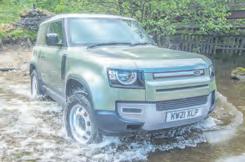
If the subject of the new Defender comes up in enthusiast circles, try
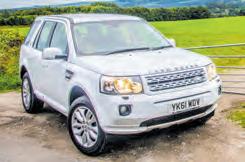
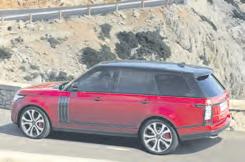
The fourth-gen Range Rover is a majestic 4x4. All the engines in the
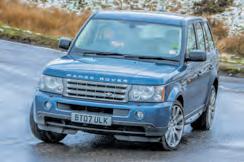
to steer it away on to something safer. Like Brexit, for example.
Much as it may infuriate purists, however, the Defender is actually a very wonderful thing. It’s kind of like an old one, only with space, comfort and equipment.
The big difference is that you can’t work on it yourself. This goes for maintenance and, crucially,
it replaced. It’s a refined and affordable SUV with a strong engine, good equipment and a decent level of practicality.
It’s become one of the most reliable Land Rovers out there, too.
But do be aware of the rear diff and Haldex unit for costly outlays.
The 2.2-litre diesel engine is a strong performer, though for a
own, even today. The problem is that they’re very complex and very, very good at going wrong. Air suspension failure is the norm. Head gaskets can let go. Electronics are laughably flaky. And parts can cost the earth – as will the labour bills. Perhaps worst of all, nowadays it’s very hard to find one you can be sure hasn’t
range supply copious amounts of power, and its road manners are absolutely impeccable.
It’s startlingly capable off-road, too, even if getting one muddy would feel like bad form. Most that leave the tarmac probably do so only when their owners are in the mood to blow some grouse out of the sky.
a supreme off-roader as well as
Pros: Off-road capability, power, overall reliability. Very well suited to being modified
Cons: Rear chassis, premium prices, monstrous road tax on later vehicles Defender Td5 (1998-2007) £3000-£35,000
£45,000-£185,000
making modifications – a market Land Rover wants to take back and have for itself. It won’t hold its value long-term the way an original-shaper does, either. But this is still a superb vehicle.
Pros: Comfort, capability, rugged fitness for purpose
Cons: Not cheap to buy. Lacks the old one’s basic charm
bargain search out one with the unpopular 3.2 petrol unit. Either way, it’s a fine SUV to drive. Prices have fallen since the production ended, too – £15,000 now gets you a late one on tiny miles.
Pros: Reliability, refinement, economy of diesel engine
Cons: Transmissions can wear quickly if used for towing
spent at least part of its life being worked on by idiots Still, you’ll get a classy motor with proper off-road and towing skills. It’s becoming a classic, too, and prices are still tiny considering everything you get.
Pros: Luxury, price, a Land Rover that doesn’t rust Cons: Electrics. Be very afraid
Inside, the Range Rover’s cabin is superb, with sumptuous trim and cutting-edge equipment. Prices are, of course, as immense as the vehicle itself. But if you can afford it, so too is the presence a Rangey will give you.
Pros: Class, luxury, engines, vast all-round capability
Cons: Price
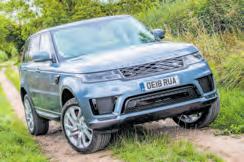
The second-generation Range Rover Sport is 400kg lighter than
the original, meaning it’s almost economical to run. It feels really nimble and agile on the road, too, and it comes with a range of engines giving it a brisk turn of pace.
Some won’t like the flamboyant posture, while others will love it. Either way, inside the cabin it’s very nearly as luxurious as the full-house Range Rover.
£13,500-£65,000
If you can afford the SVR model, you’ve got a super-SUV with rap star image. In every case, though, running costs will be vast. Parts don’t get any cheaper because you bought it second-hand…
Pros: Performance, refinement, handling, glorious interior
Cons: Marmite image. Pricey to buy and run
Range Rover Sport (2022-on)

Hilariously, this is what counts as the affordable way in to owning a
new Range Rover. The Sport is less about being chauffeur driven and more about lording it over other aspirational school runners, but once again it’ll be lovely to drive.
Like the full fat Range Rover (a phrase which has never felt more appropriate), the Sport is available with an old-school V8 engine that gives you racecar performance in
£80,500-£145,000
return for NASA-level emissions. Most UK customers with opt for an altogether healthier plug-in hybrid, but they’ll still get a vehicle that’s brutally fast a well as being able to do the normal Range Rover stuff.
Pros: Smooth, refined, comfy… and game for a laugh, too
Cons: Still hasn’t quite shed its proceeds-of-crime image
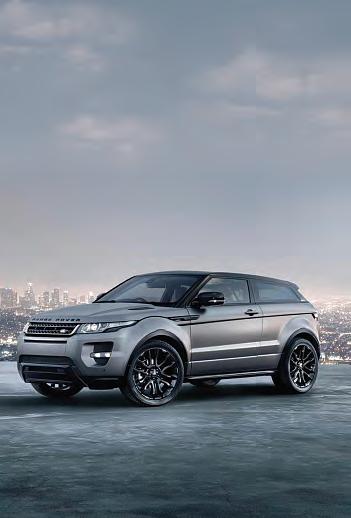
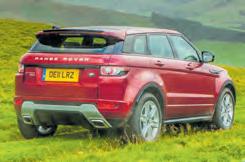
When the Evoque was launched, it signalled JLR’s intent on hitting
and
Evoque (2011-19) £4500-£31,000
the masses. Given that it was the company’s fastest-selling vehicle, they clearly hit the brief, even if it wasn’t for the traditional Land Rover owner.
It’s actually still a capable thing off-tarmac – but it’s definitely more at home on the road. Nevertheless, it is economical by Land Rover standards and
because of its particularly handsome exterior. It’s based upon the same architecture as the Jaguar F-Pace but has greater off-road ability and is available with a wide choice of engines, most of which combine good economy with usable everyday performance.
because there are so many out there, used prices are tempting. There’s a Convertible model, too, as well as three and five-door tin-tops. We say stick to the latter, and be sure to get one with 4WD.
Cons: Cramped rear seats, not as practical as a Disco Sport Range
Pros: Economy, handling, iconic concept-car image

Evoque has adopted a similiar back end to the larger Velar. It’s not just the exterior that mimics the looks of the larger vehicle, however, as the Evoque has gained the latest Touch Pro Duo tech and a hike in quality.
The main highlight of the new Evoque is the fact the majority of the range is made up of mild
hybrids, available with diesel and petrol engines combining to an electric motor. Only the base D150 Evoque escapes the electrification, and we’d avoid it as it doesn’t have four-wheel drive.
Pros: Feels like a proper Range Rover inside
Cons: Petrol engine is poor on fuel economy, even as a hybrid
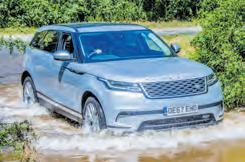
it came out. It was very much designed to be a trend setter. But is there a whiff of style over substance? Well, it’s a very good SUV. But you don’t half pay a premium for those suave looks...
Pros: Stylish design, chic cabin, excellent tech features
Cons: Feels like an indulgence, especially at such a high price Range Rover Velar (2017-on) £22,500-£85,000
The interior was Land Rover’s most advanced cabin yet when
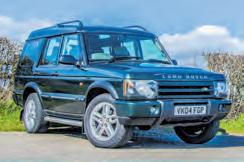
most most reliable units ever. It drives well, too – mated to a manual box it has more guts even than the V8 option, which is surprisingly bland but predictably thirsty. Whereas the Disco 1 was prone to body rust, the D2 is fine here. Instead, its chassis rots like a carrot, especially towards the back end. Also at the back, seven-seat
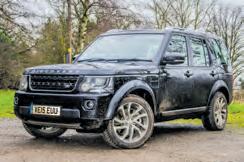
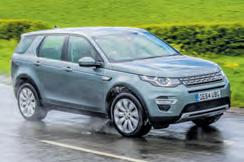
a Discovery in name only.
It’s a more practical proposition than the closely related Evoque, and you won’t need to live with the fear of Posh Spice jokes.
models had air-suspension, with all the horrors that brings.
Mainly, D2 owners will tell you about rogue electronics. And leaky sunroofs. They still love their trucks, though, which says a lot.
Pros: Td5 power and reliability, great all-rounder, lots of choice Cons: Chassis rust, electronics, leaky sunroofs, air suspension
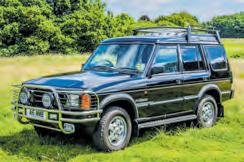
with the same 100” wheelbase and a slick body containing a spacious, flexible cabin. It was well equipped and refined, and it came with the wonderful Tdi engine.
There are some tidy deals to be had on late high-spec examples now – though if you do a
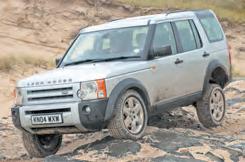
The Disco 3 is an astonishing allround vehicle.
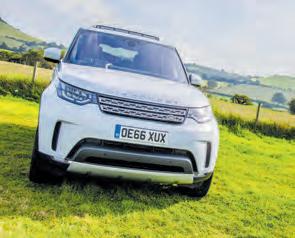
Over time, the Disco’s epic ability meant almost all of them were hammered at playdays. Lower body rust is a big killer, too. So it’s rare to find a good one now,
and capable off-road, genuinely luxurious and a giant of a tow truck, and as well as being able to seat seven adults it can be turned into a van with a totally flat rear load area.
But it was also astonishingly complex, and these days it has a reputation as a money pit. Air suspension and electronic
and when you do they tend to be priced with a lot of optimism. Very early ones in tip-top condition are full-on classics, too. For a sound one to own, we’d look for a tidy 300Tdi.
Pros: Price, practicality, parts availability. Epic off-road ability
Cons: The body rusts like it’s been doused in sea water Discovery (1989-1998) £800-£15,000
handbrakes are big sources of woe, cam belts are a body-off job to change and rust is becoming more of an issue. Get a good one, though, and it’s all the car you’ll ever need.
Pros: Good at everything. Lots of accessories available now
Cons: The phrase ‘money pit’ crops up time after time
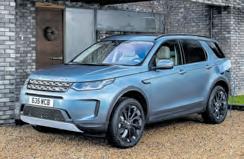
after the first. That’s because once again, it’s related to the Evoque, which was ready for a full new model in 2019.
The Sport is a premium midsized SUV with seven seats and a decent level of off-road ability. It’s a massively popular choice for the school run – and, with the arrival

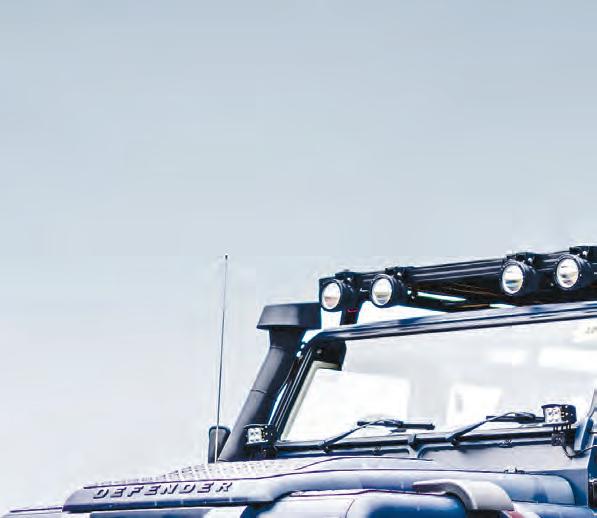
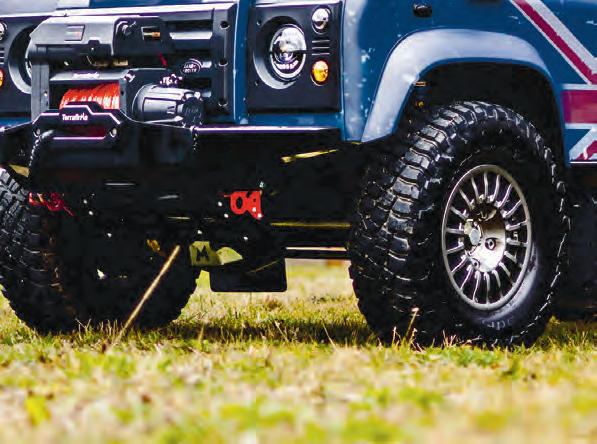
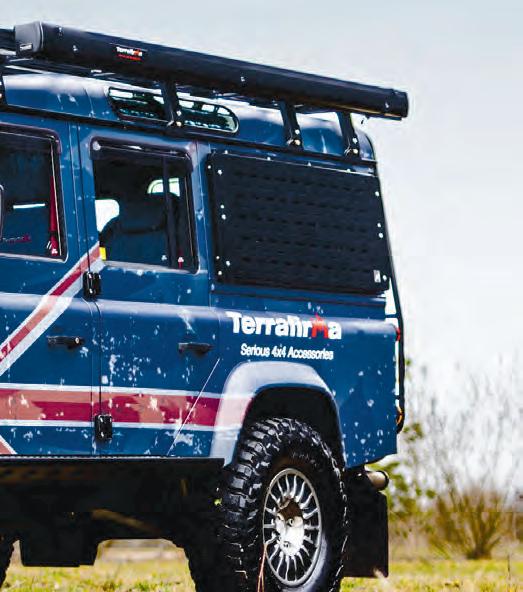
terrafirma4x4.com
An expedition vehicle’s bonnet provides an ideal location for mounting a solar panel when roof space is occupied by racks, tents, and equipment. These vehicle-specific flexible solar panels feature plug-and-play wiring with no drilling required, delivering reliable off-grid 12V power for auxiliary batteries, lighting, chargers, and other onboard electrical systems.
High-efficiency PERC monocrystalline cells with durable ETFE protective film ensure excellent light transmission and resistance to weather, corrosion, and UV exposure.
Part Number: TF1900 [Defender 98-06] / TF1901 [Defender 06-16] / TF1903 [Discovery 3 & 4]
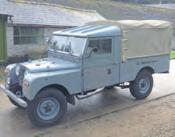
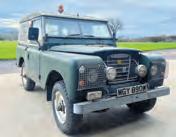
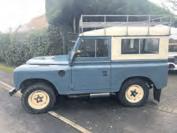
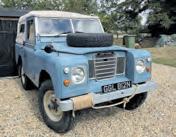
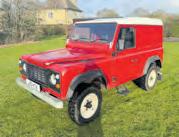
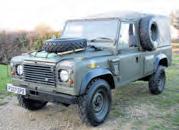
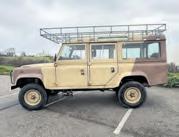
inside. £25,000. Maidstone. 07848 460379 05/26/003
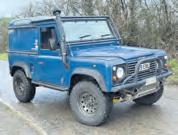
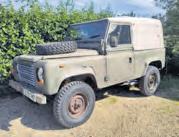
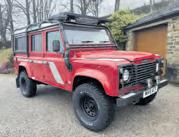
Defender 90 300 Tdi (1994). Galv chassis, amazing bulkhead. Factory sunroof. Coopers, cage, snorkel, rock sliders, suspension lift, HD radius arms, double-cardon props. Just serviced. £12,750. Pontypool. 07564 259781 04/26/002
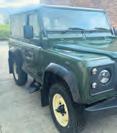

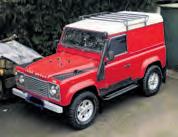
Defender 90 Tdi (1992). 64,000 miles. Very good chassis. HT with tailgate. Tow bar, roof rack, bench seats, side steps, rear spotlight. All work done by LR specialists. MOT Jan 27. £11,495. Ilminster. 07863 554094 04/26/014
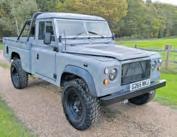
110 HCPU (1989). 125,000 miles. Galv chassis. Td5, LOF HD clutch. New bushes, brake lines, LEDs. Undersealed, axles rebuilt. Bodyoff Nardo grey Raptor respray. MOT Oct. £19,995. Tonbridge. 07778 406408 04/26/008
Defender 110 300 Tdi (1995). 167,000 miles. Galv chassis, cage, recon R380, Polybushes, new BFG ATs. Aux tank, rack, awning, drawers, shelves, water tank, twin batteries. MOT Jan 27. £22,500. Keighley. 07768 006445 04/26/009
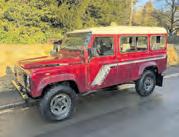
110 (1988). Barn find. Chassis may be salvageable, bulkhead beyond repair. 200Tdi, starts and drives. 77,000 on clock. Rear seats fitted. V5 present. Ideal restoration project. £3950. Melton Mowbray. 07377 091239 03/26/009
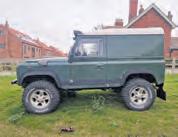
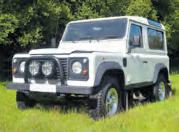
Series III 88” Recovery Truck (1980). 18,542 miles. 2.25 petrol. Untouched for 30+ years. Period items inc winch, Cibies, cassette player, old packets of cigarettes! Runs sweet. £10,595. Kingswinford. 07742 864775 04/26/001 Defender 90 M52 2.8i (1997). 140,000 miles. Factory-built South African spec 90. Alloys, air-con. Roll bar, aux tank, steering guard, 100w spots. Excellent condition. MOT Oct. £39,000. Bordon. 07870 601044 04/26/010
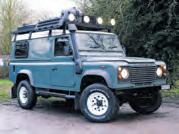
Defender 110 TD5 (2002). 176,800 miles. Tent, awning, 200W solar 42l water tank, diesel heater, cool box, pro built leisure system. OME lift, snorkel, rust protected chassis. £26,995. Nantwich. 07389 185571 03/26/007
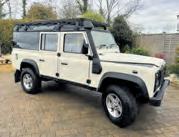
Defender 110 Td5 (1999). SVX alloys, VGS windows, rack, +2” lift, snorkel, LEDs, Raptor console, Pioneer stereo. Huge list of new parts. Full respray. Solid chassis and bulkhead. £19,000. Bristol. 07923 293375 03/26/006
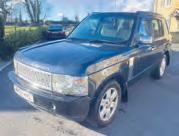
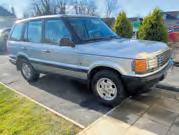
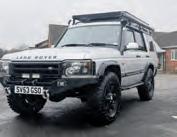
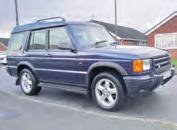
Discovery TD5 Serengeti (2002). 235,000 miles. 7 seats. Recent new parts inc tyres, compressor, side steps, wiper linkage. Owned and maintained by me last 19 years. MOT Dec 2026. £3995. Chesterfield. 07812 708123 03/26/010
Series III 88” ST (1975). 30,000 miles. 2.25 petrol. Galv chassis, parabolics, Webber carb, many recent parts. Patina paint. Drives superbly. Historic vehicle but has MOT to Jan 27. £19,994. Billingshurst. 07973 378047
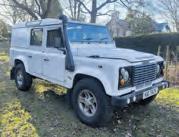
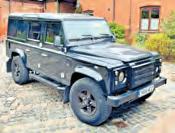
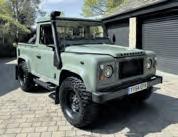
Defender 110 TD5 (2001). 143,000 miles. Stage 1 remap, larger intercooler, GKN overdrive, LOF clutch, snorkel, Boost alloys. Good chassis (Lanoguarded). LEDs. MOT Dec 26. £16,750. Liversedge. 07931 501937 03/26/008















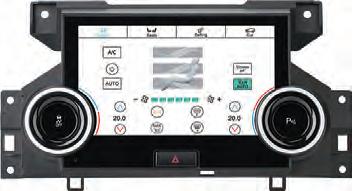
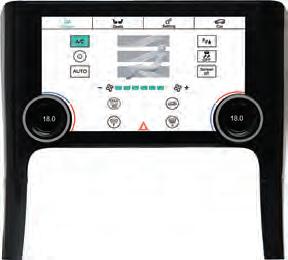
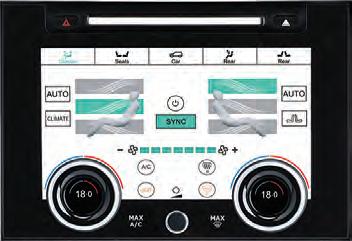
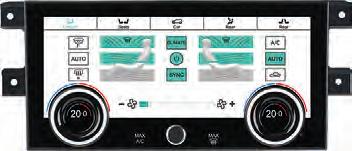
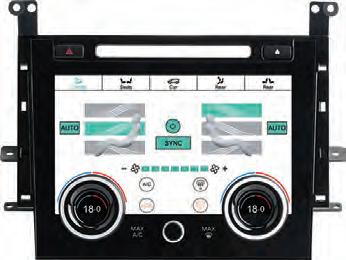
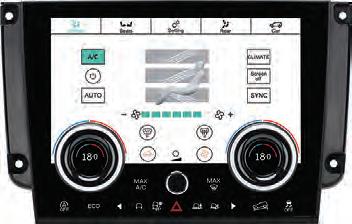
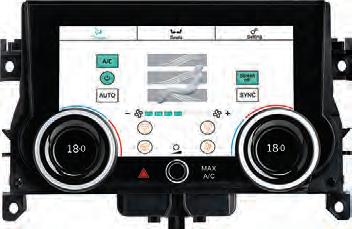
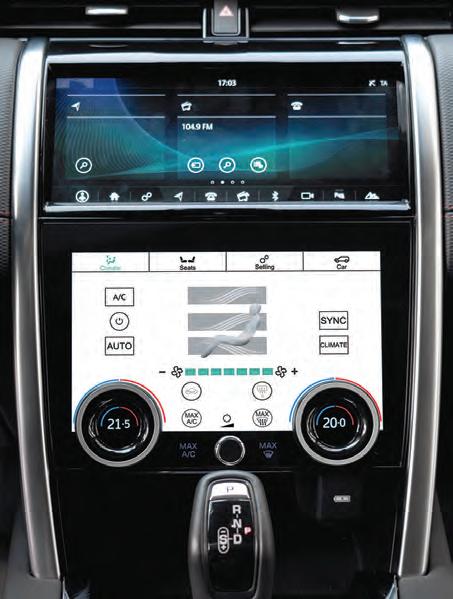
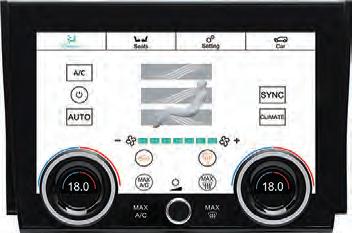
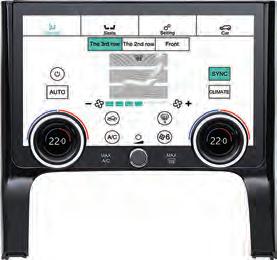
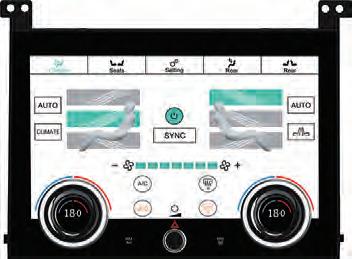
Touchscreen Climate Control Upgrade Panels
Upgrade your Land Rover’s interior with these factory-style touchscreen climate control panels which are designed to bring modern functionality and a premium look. Inspired by newer vehicle designs, these units deliver a sleek visual upgrade while retaining full compatibility with your original climate control system. Suitable for both left and right hand drive vehicles.
Key Features & Benefits
High-Resolution Touchscreen Display - Crisp, sharp visuals with a clean factory-style interface for easy operation.
Touchscreen & Physical Buttons - Enjoy the convenience of full touch control combined with essential physical buttons for reliable, tactile use.
OEM-Style Integration - Retains the original vehicle menu layout and supports existing vehicle functions for a seamless factory appearance.
Complete Climate Control - Full control of both front and rear air conditioning systems directly from the screen.
Driving Mode & System Display - Displays driving modes and allows control of warning light functions where applicable.
Day & Night Display Modes - Adjustable brightness with manual or automatic switching for optimal visibility in all conditions.
Plug & Play Installation - Simple installation with no programming required.


Plug & Play Direct Replacement
Designed for a straightforward installation, these buttons are a direct replacement requiring no vehicle modifications.
Premium Build Quality
Manufactured from high-grade ABS and metal, offering excellent strength, wear resistance, and a smooth finish. The buttons deliver a fast, responsive feel for precise control.