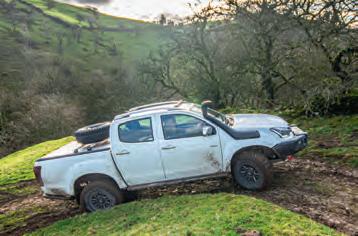
ROADBOOK So who needs the Peak District? We’ve got the Derby Dales!


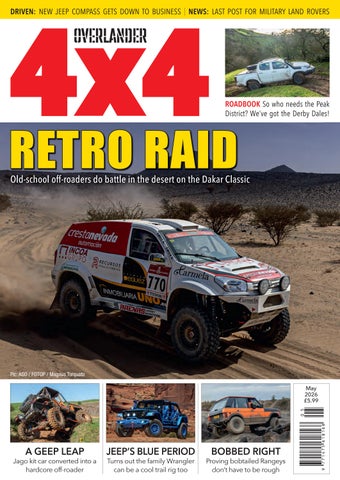
ROADBOOK So who needs the Peak District? We’ve got the Derby Dales!

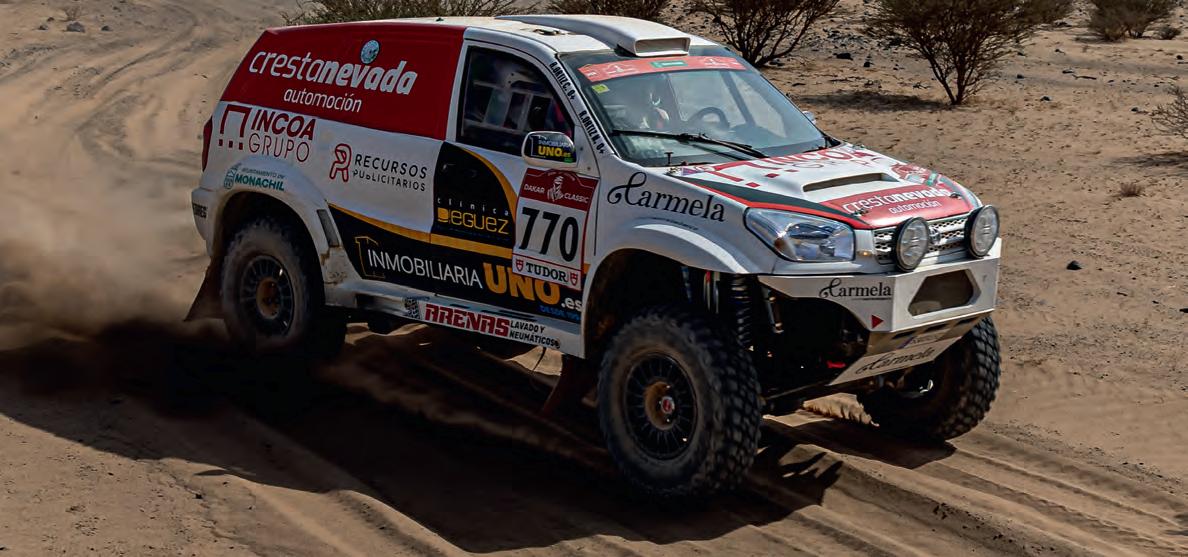
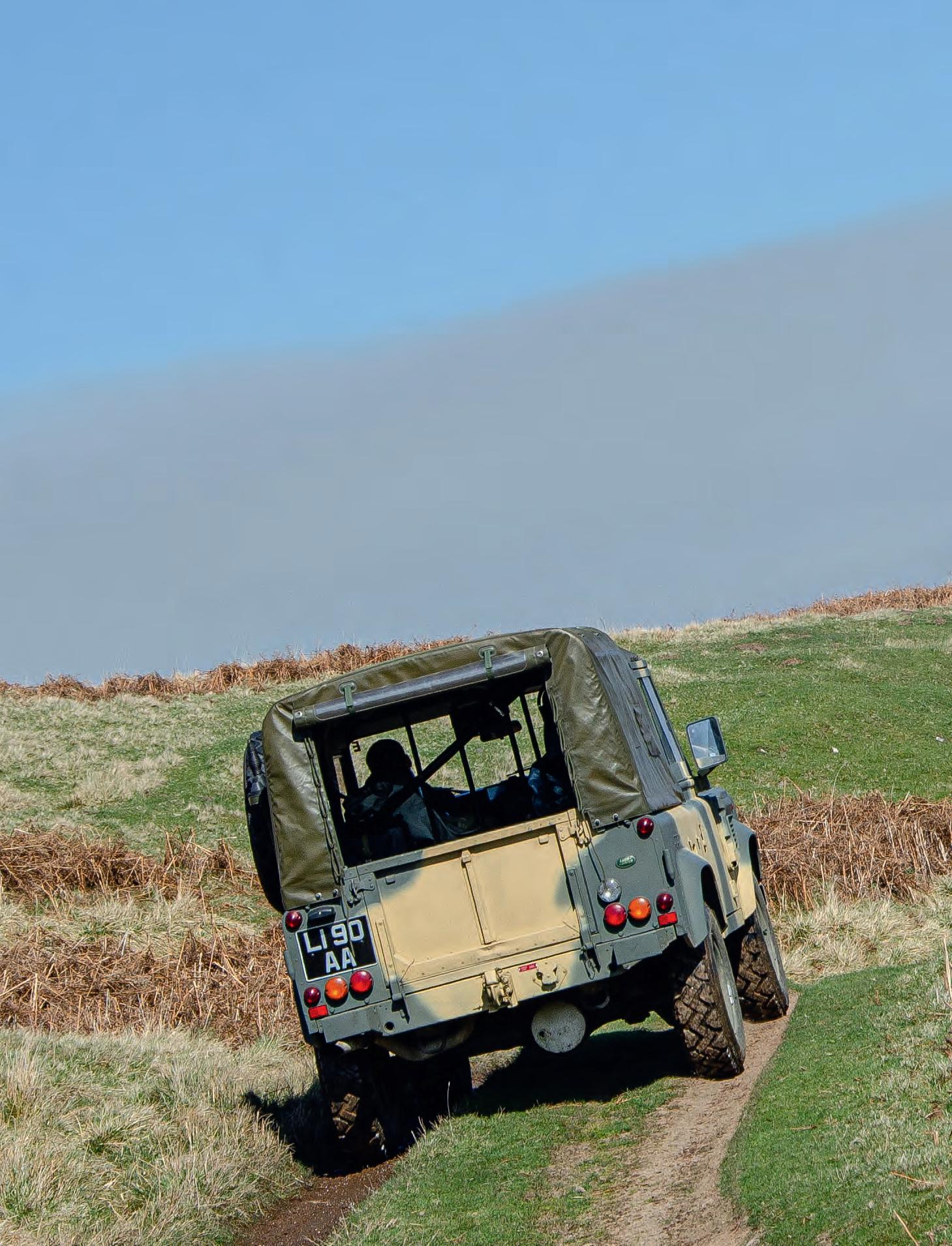
Old-school off-roaders do battle in the desert on the Dakar Classic


Proving bobtailed Rangeys don’t have to be rough JEEP’S

































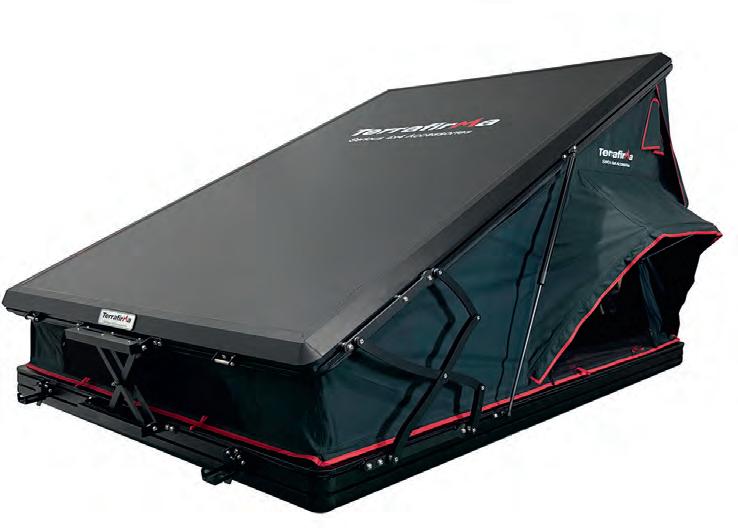
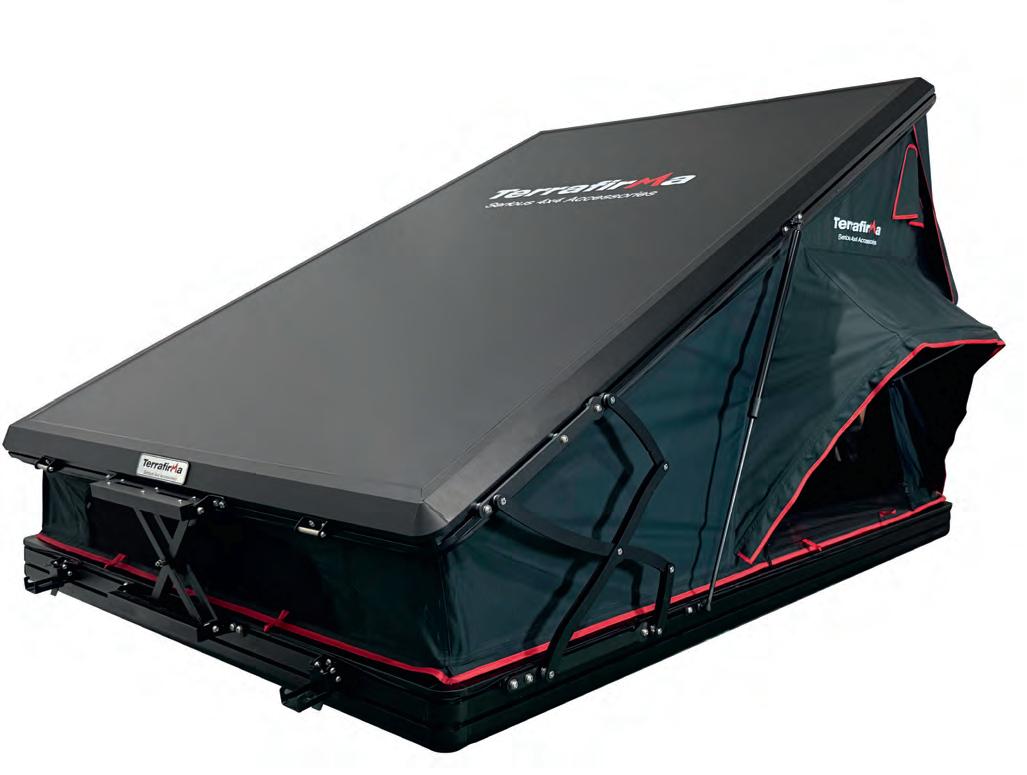
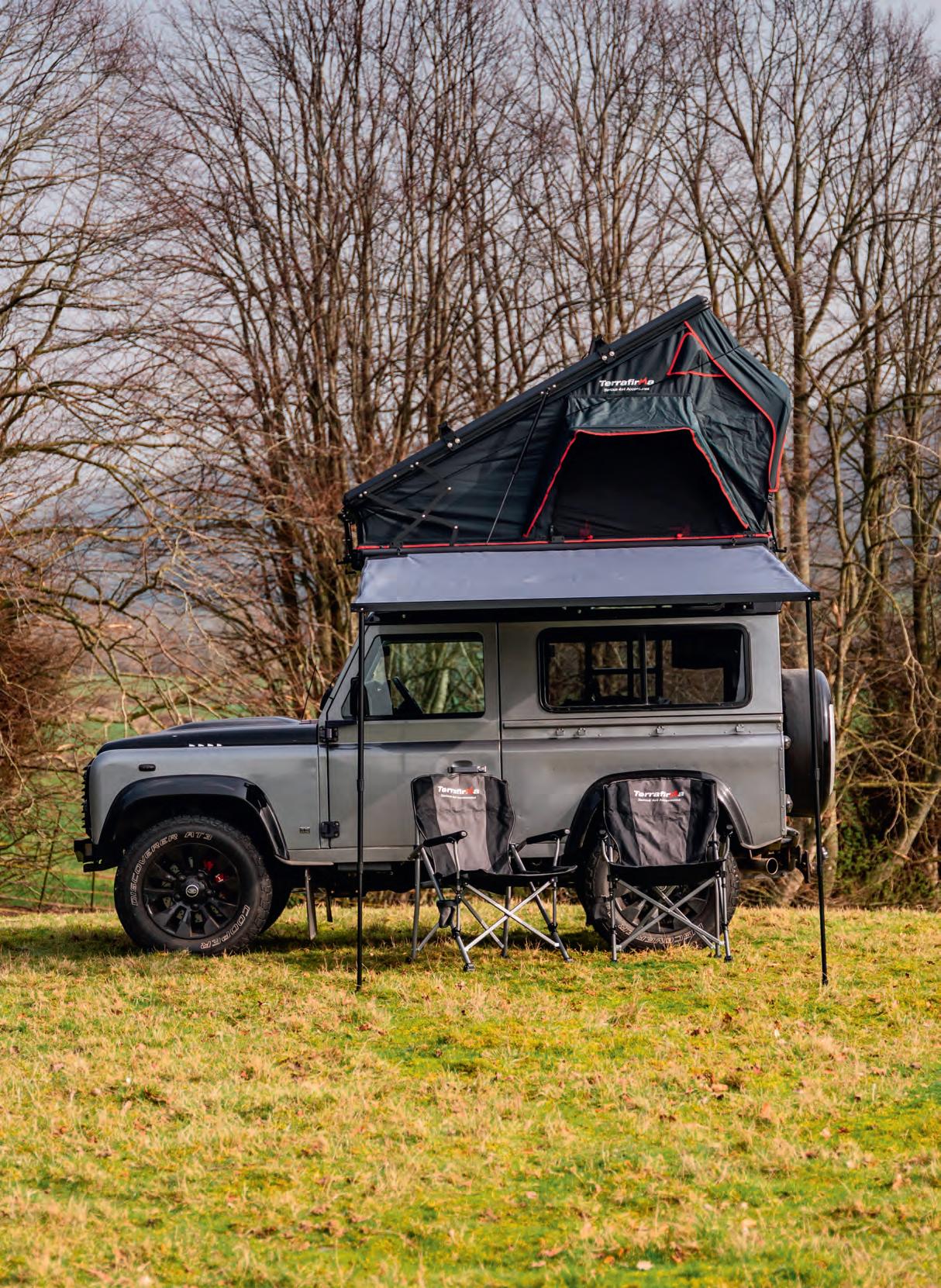
The Terrafirma X-Hinge Roof Tent is a strong, lightweight, and practical roof tent designed for 4x4 and overland vehicles. It combines fast setup, a spacious sleeping area, and a slim, low-profile design that is ideal for everyday driving and long-distance travel.
Perfect for touring, camping, and off-road adventures, this roof tent provides a safe and comfortable place to sleep wherever your journey takes you.
The innovative X-hinge opening system allows the roof tent to open smoothly and evenly, creating excellent internal space while keeping the structure stable and secure.
The hinge position is carefully designed to prevent the tent fabric from becoming trapped when opening or closing, making setup quick and hassle-free even after a long day on the road.
When closed, the roof tent measures just 200mm in height, helping to reduce wind resistance, road noise, and fuel consumption.
The low profile also keeps overall vehicle height to a minimum, making it suitable for daily use as well as long overland journeys.
A large entrance makes getting in and out of the tent easy, while the soft, fabric-covered mattress ensures a comfortable night’s sleep. The generous internal space allows pillows and blankets to remain inside the tent when folded, saving valuable storage space in your vehicle.
A built-in dual-colour LED light and integrated charging station provide added convenience when camping, whether you are reading, relaxing, or charging devices.
Perfect for touring, camping, and off-road adventures, this roof tent provides

Contact the Terrafirma team on enquiries@terrafirma4x4.com for product information or to find your local stockist.
Innovative X-Hinge Opening System
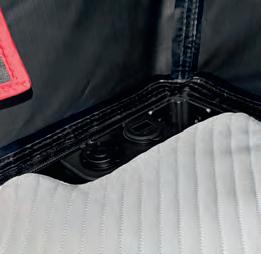
Built-in charging point
>Third rear X-hinge for added stability
>Two large side windows and a skylight
>600D ripstop canvas (280gsm)
>Waterproof rating: PU3000
>Sleeps two adults
>Built-in 70mm “cool feel” mattress with fabric cover
>Built-in dual-colour LED light
>Integrated charging station
>Exterior clip-on boot bag and interior storage pockets
>Pillows and blankets can be left inside when folded, saving vehicle space
>CNC airflow design in the bottom shell to help reduce condensation
>T-slot system channels allow brackets (TF5547) to attach accessories such as awnings
>Compatible with Terrafirma (TF5546) roof bars
Built-in 70mm mattress
system channels
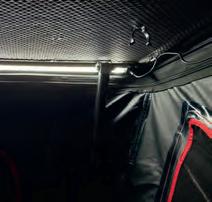
Built-in dual colour LED Light
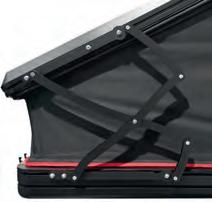
Unique, sturdy X-Hinge system
provides a safe and comfortable place to sleep wherever your journey takes you.


Tel: 01283 742969
Email: admin@pistonpublications.co.uk
Web: www.totaloffroad.co.uk www.4x4i.com
Online Shop: www.toronline.co.uk
Facebook: www.facebook.com/totaloffroad www.facebook.com/4x4Mag
Editor Alan Kidd
Design Ian Denby-Jones
Contributors
Mike Trott, Gary Martin, Olly Sack, Dan Fenn, Gary Noskill, Paul Looe, Mark Fraser, Kenny Tucker, Tom Alderney, Will Crotchley
Photographers
Richard Hair, Vic Peel, Harry Hamm
Advertising Sales








Colin Ashworth Tel: 01283 742969 colin.ashworth@assignment-media.co.uk
Subscriptions Agency
WW Magazines, 151 Station Street, Burton on Trent, DE14 1BG Tel: 01283 742970
Publisher Alan Kidd
Email: editorial@pistonpublications.co.uk
To subscribe to 4x4, or renew a subscription, call 01283 742970. Prices for 12 issues: UK £42 (24 issues £76); Europe Airmail/ROW Surface £54; ROW Airmail £78
Distributed by Marketforce; www.marketforce.co.uk
Every effort is made to ensure the contents of 4x4 are accurate, but Piston Publications accepts no responsibility for errors or omissions nor the consequences of actions made as a result of these. When responding to any advert in 4x4, you should make appropriate enquiries before sending money or entering into a contract. The publishers take reasonable care to ensure advertisers’ probity, but will not be liable for loss or damage incurred from responding to adverts
Where a photo credit includes the note ‘CC BY 2.0’ or similar, the image is made available under that Creative Commons licence: details at www.creativecommons.org
Overlander 4x4 is published by Piston Publications Ltd, PO Box 8830, Burton on Trent DE14 9QW © Piston Publications Ltd, 2026
overlander4x4.co.uk















Pay quarterly by direct debit and you can get Britain’s only all-marques 4x4 magazine delivered to your door – for less than half the price on the front cover!


4 News
KGM launches its electric Musso double-cab, Nissan refreshes the X-Trail, Land Rover introduces the ultimate in Range Rover Sport SVs and the Army prepares to demob its remaining Defenders
12 Products
Failure-proof cam pulleys for Land Rover’s TDV6 engine, AVM snatch blocks at clearance money and a combined air compresssor and jump starter from Ring
Month
40 Subscribe
Get Overlander 4x4 delivered for a fraction of the cover price
64 Next Month
Six of the best from Jeep
14 Jeep Compass
All-new third generation of Jeep’s family SUV has some heavy lifting to do now the Wrangler’s on the way out
20 A Better Bobtail
We’ve all seen the horrors that have emerged from some people’s efforts to shorten a Range Rover. But others are determined to do it properly
28 Long and Cool
Five-door Wranglers are meant to be the sensible ones, while three-doors are cool. Jeep’s Blueprint concept turns that on its head
32 Kit not Kitsch
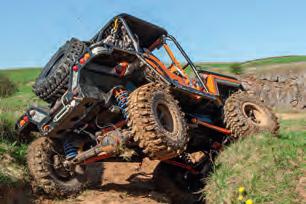
Kit cars can be max cringe, and a thing that looks like a Jeep but off-roads like an Escort sounds kind of ho hum. Take that thing and make it off-road like a Defender, on the other hand…
42 Defender Awards
Land Rover unveils the winning charities for whom off-road adventure means going off the beaten track to make the world a better place
46 Dakar Classic
Brits and British vehicles doing battle in the desert – and coming home triumphant
54 ROADBOOK Derby Dales
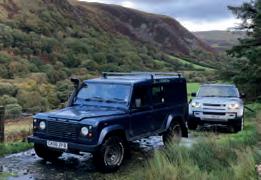
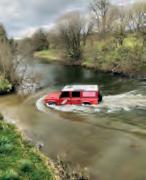
In the shadow of the Peak District but mainly untouched by the war against 4x4s that’s been waged there, the Derby Dales are a landscape of open moorland, peaceful villages and widespread rights of way that are perfect for all












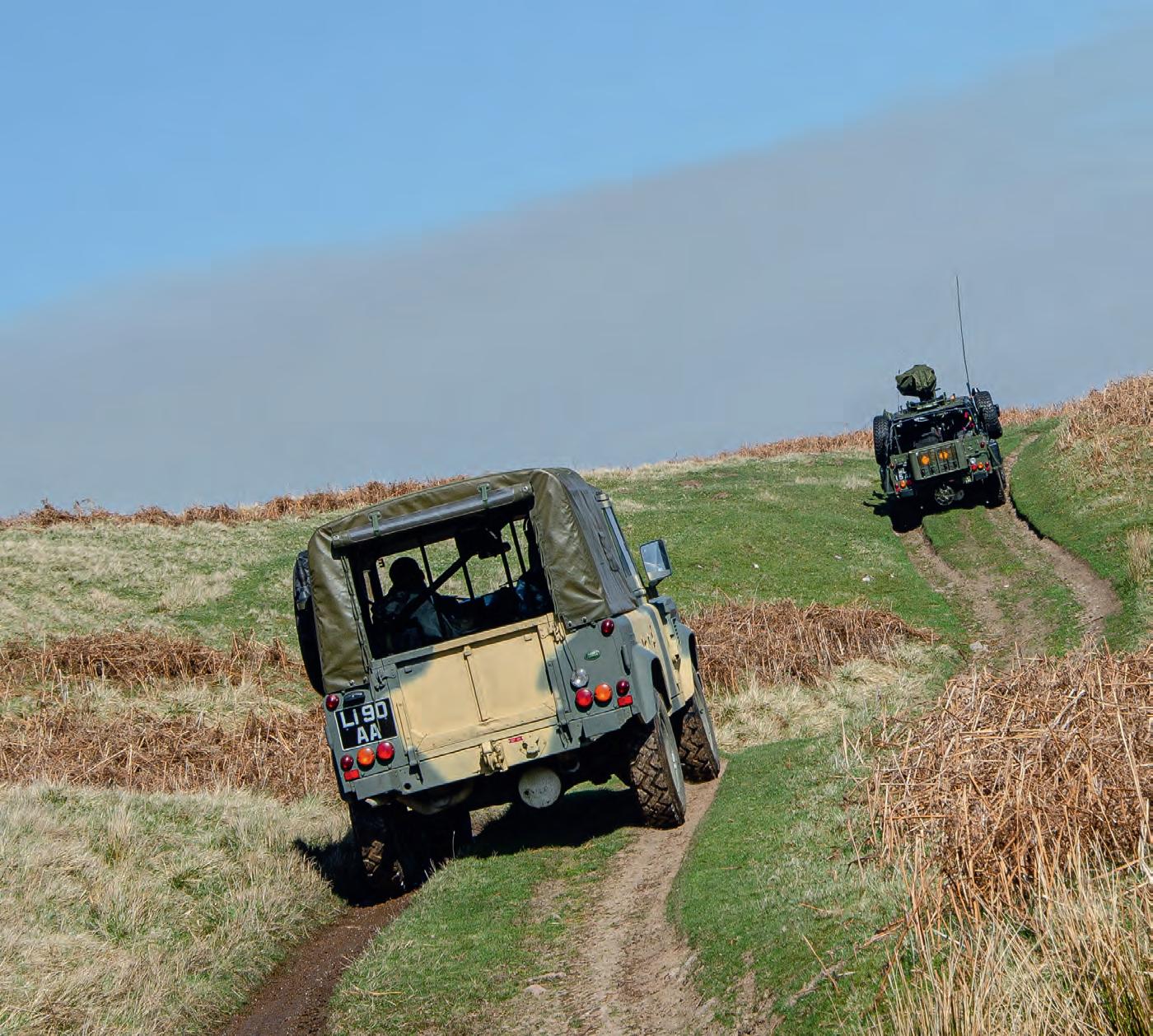
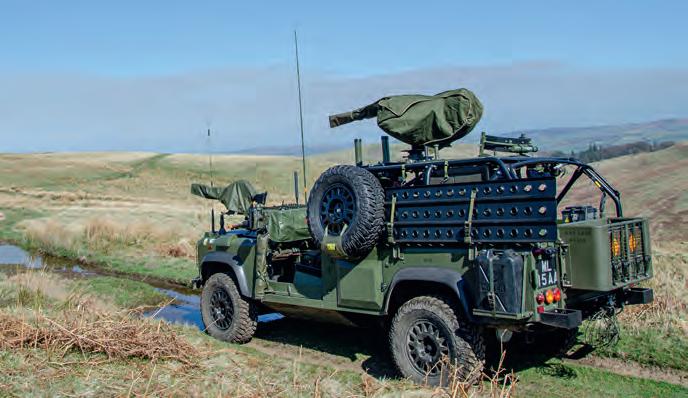
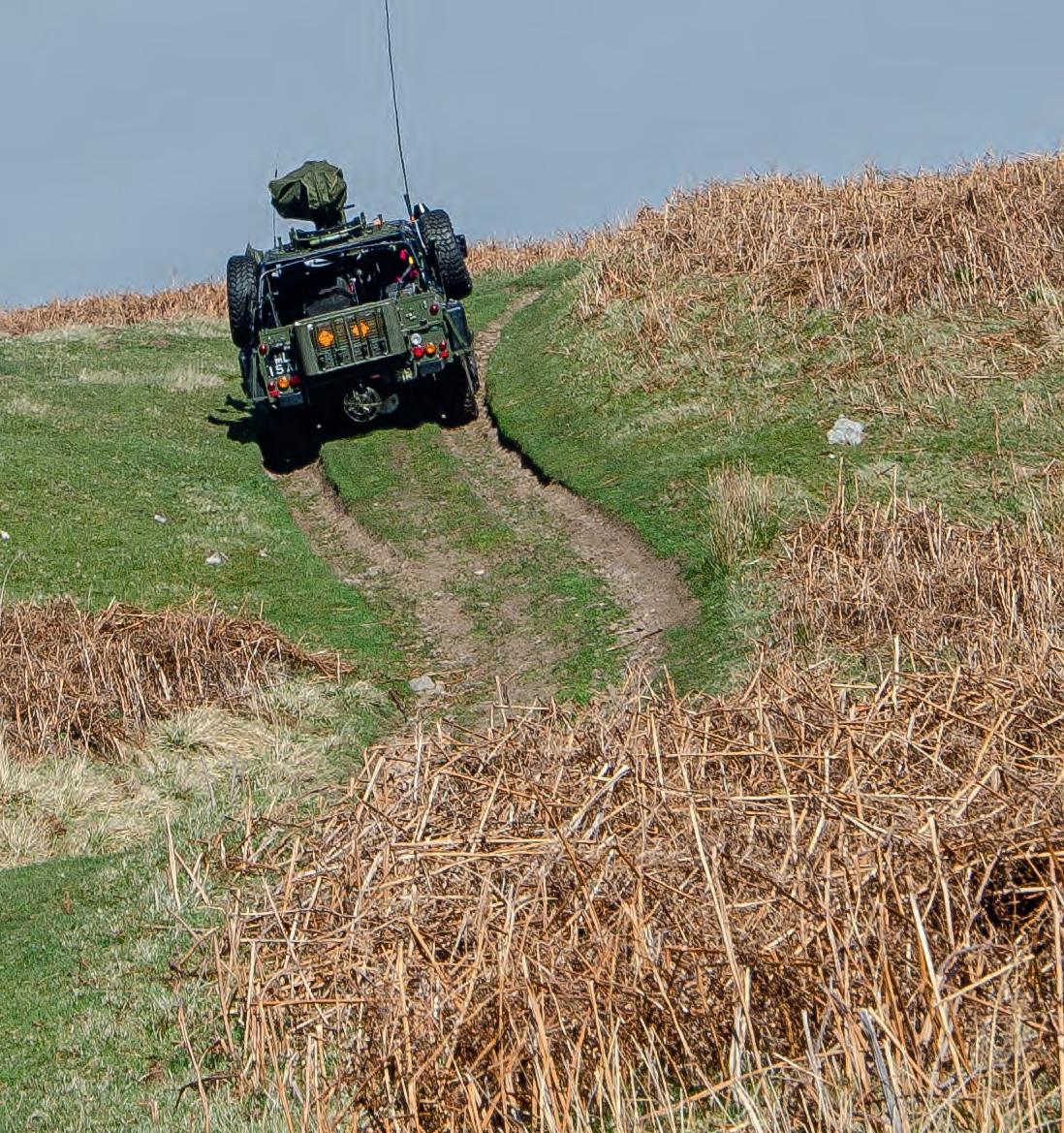
The Army has begun the process of replacing its final Land Rovers with a new generation of light vehicles. The first of these are expected to become operational during 2030 – by which time the last of the Army’s remaining Landies will have been retired, bringing down the curtain on a relationship which has endured for more than 70 years.
The retirement process began on 19 March when, at a special event hosted by the Armoured Fighting Vehicle School at Bovington, Minister for Defence Readiness and Industry Luke Pollard MP showcased a range of vehicles which could be in the running to replace the Land Rover.




‘The Land Rover and British Army share an incredible history and the image of a Landy in Army livery is truly iconic,’ said Pollard. ‘As we look ahead to the future of light mobility vehicles, it is fitting to pay tribute to this extraordinary fleet that has served our Armed Forces so faithfully.
‘I’m firing the starting gun on the replacement vehicle competition, seeking to put a modern vehicle in the hands of our personnel.’
That new vehicle, whatever it turns out to be, will have big boots to fill. During a relationship with the Army that goes back almost to the start of Land Rover’s own history, with the first order having
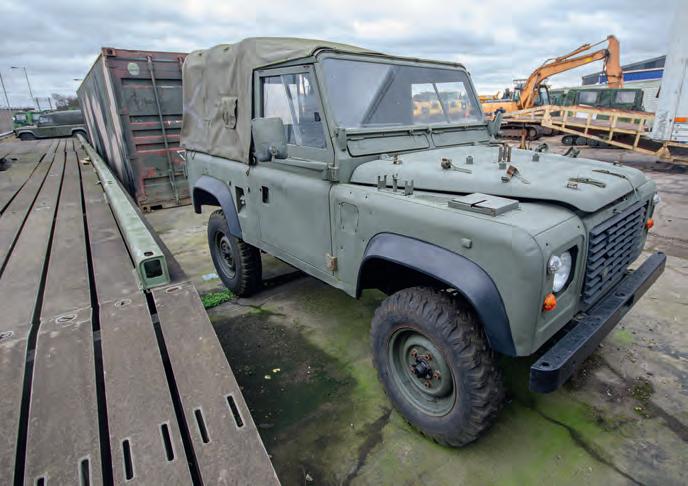
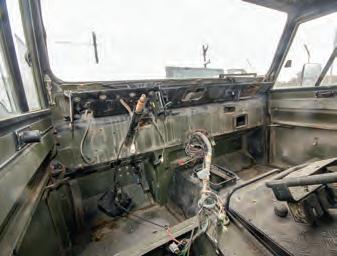
The end of the line for the Army’s fleet will mean a strengthening supply of used 90 and 110 Wolfs coming through the auction sites. What will this mean for the value of these latest military Land Rovers? It’s tempting to assume that the market will get flooded, however the vehicles frequently come out with parts missing – sometimes rather big parts, as with this TUL ragtop which ended up for sale with no engine and precious little of its interior left
been placed by the War Department in May 1949, Land Rovers have been the do-it-all workhorses of the military fleet. A wide variety of models have carried out almost every imaginable role both on an off the battlefield, while specialised conversions such as Series IIA and Defender 130 Ambulances, Panama ROV and Centaur half-track have been augmented by the military-only Lightweight, 101 and Wolf.
It’s the latter that makes up almost the entirety of the Army’s remaining Land Rover fleet, which still stood at more than 5000 units in 2025. For enthusiasts, this will mean a short-term surge in supply as the vehicles are sold out to the public, though disposal agencies will no doubt manage the numbers coming on to the market in a bid to keep prices high. Previously, when huge numbers of Lightweights were released after that model’s retirement, supply outstripped demand – with inevitable consequences for the value of the vehicles.
Announcing the Land Rover’s retirement, the Ministry of Defence comments that it marks a significant milestone in the evolution of the Army’s mobility capabilities. ‘While the Land Rover’s legacy will endure, the Army is now focused on ensuring its personnel are equipped with a modern, technologically advanced fleet to support future operations.’
The Light Mobility Vehicle (LMV) programme, which will be formally launched in due course following Pollard’s initial announcement at Bovington, sets out to identify a suitable successor to the Land Rover which will ensure the Army’s continued operational effectiveness. ‘LMV will offer opportunities to British-based businesses through vehicle support and maintenance, helping make defence an engine for growth.’
The Ministry also comments that the new vehicle needs to be ‘an enduring successor to the Land Rover.’ If it can endure for as long as the vehicles it replaces, it will be doing very well indeed.

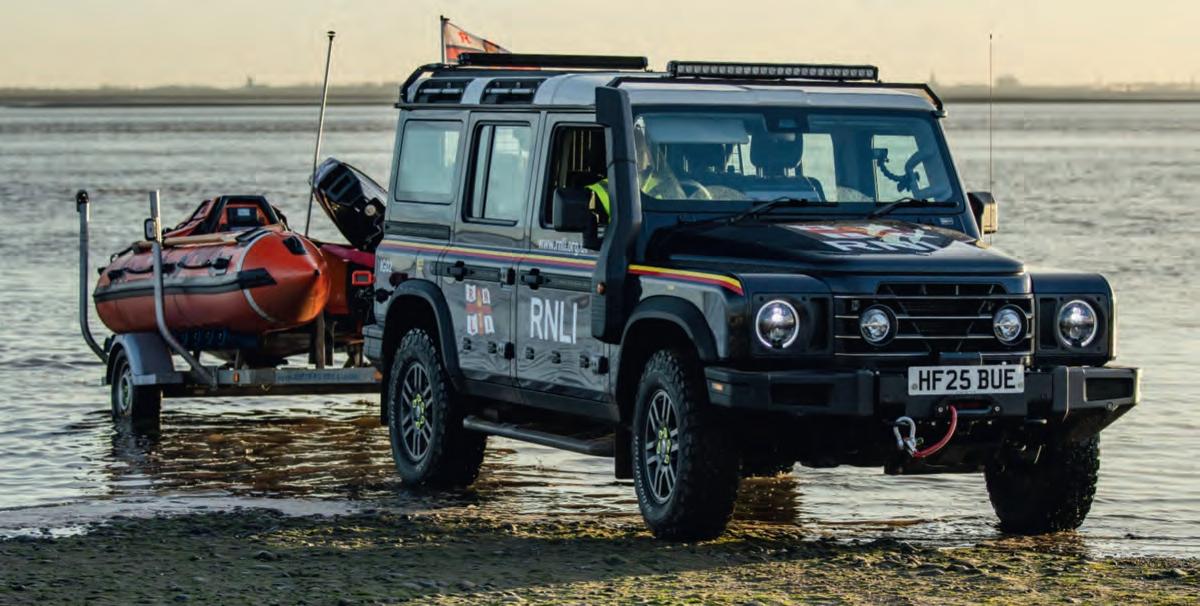
Ineos has delivered the first batch of Grenadiers to the RNLI, under an agreement which will see the 4x4 specialist supply 20 vehicles over the course of five years. The Grenadiers, all station wagon models, will be employed to help the charity’s volunteers position, launch and recover its D-class lifeboats, typically from locations where they are operating from soft, unstable ground and in shallow water.
The first four lifeboat stations with Grenadiers now in operation are Flint, Lytham, Morecambe and Seahouses.
These are 2025 models, however the next batch to enter service will be the 2026 version which we reviewed following a first drive in our March issue. This will, in Ineos’ words, ‘provide more assured and purposeful dynamic handling and enhanced safety equipment,’ though of course what matters is the huge off-road and towing abilities built in to the vehicle’s underlying design.
By August this year, a total of 12 lifeboat stations will have Grenadiers in operation. ‘After an extensive testing and evaluation period, working in conjunction
with the specialist fleet team at Ineos Automotive, it’s clear that the Grenadier has the required robustness and durability to safely withstand the rigours of our lifesaving activities,’ says RNLI engineer Sam Barton. ‘It has proved to be perfect for active service with minor modifications to suit RNLI operations, including installation of marine-standard radios, a larger front winch and roof-mounted light bars for lowlight lifesaving. Our volunteers have loved getting to know the Grenadier and have every confidence that it can be relied upon in their toughest moments.’
It’s a long way from Seahouses, or even just Lytham St Annes, but a fleet of four Grenadier station wagons and one Quartermaster pick-up is now to be found getting ready to go into operation in Antarctica. The vehicles were ordered by White Desert, a luxury expedition company which will use them for guest transport and logistical support between Wolf’s Fang Runway and Echo Base.

This is an area characterised by extreme cold, hidden crevasses and rapidly changing weather. So, not much different to Seahouses after all, then. The vehicles, which are factory standard, were shipped from Cape Town and craned on to the Antarctic ice shelf before traveling overland to Wolf’s Fang.
‘We don’t bring anything into Antarctica unless it earns its place,’ says White Desert boss Patrick Woodhead. ‘The Grenadier has shown it can be trusted in extreme conditions, while still offering the kind of comfort that makes long days on the ice sustainable.’
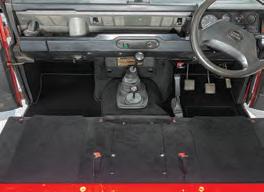
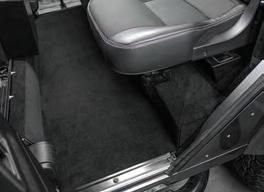
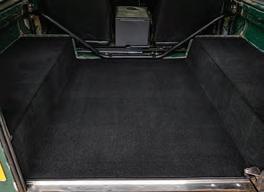
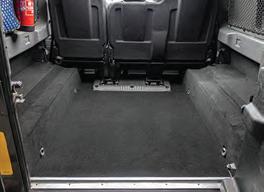
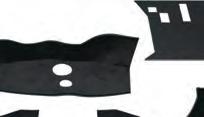
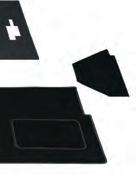
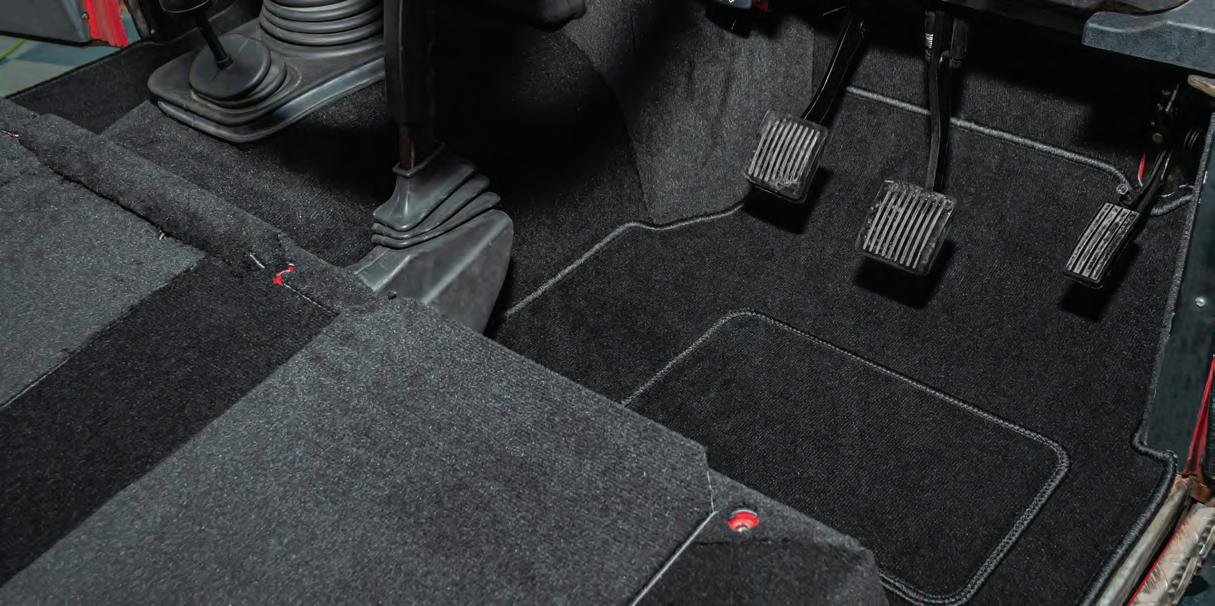
Once installed, these easy to fit, hard wearing carpet kits will transform your Defender’s interior. The black 5mm woven pile carpet is manufactured with a hardback which ensures it holds its shape for years to come. All holes are pre-cut for a precision fit. No glue is required. Fitment is quick and easy with no mess. The carpet also has the added advantage of improving soundproofing within the cabin. When applicable, floor mats have a reinforced edged for a smart, hard wearing finish.
DA4910 Front Carpet Kit - Black
DA4910GREY Front Carpet Kit - Grey
Defender - up to & including 200Tdi. Right hand drive - LT77 gearbox - Excludes V8.
Includes - Bulkhead panel, gear box tunnel, floor mats, under dashboard panels, kick plate panels & seat box panels.
DA4911 Front Carpet Kit - Black
DA4911GREY Front Carpet Kit - Grey
Defender - 300Tdi / Td5 | Right hand drive. R380 gearbox - Excludes V8 & only suitable for vehicles with 260mm wide cubby box lid under driver’s seat. Includes - Bulkhead panel, gear box tunnel, floor mats, under dashboard panels, kick plate panels & seat box panels.
DA4912 Front Carpet Kit - Black
Defender - Puma 2.4 | Right hand drive. Includes - Bulkhead panel, gear box tunnel, floor mats, under dashboard panels, kick plate panels & seat box panels.
DA4921 Front Carpet Kit - Black
Defender - Puma 2.2 | Right hand drive.
Includes - Bulkhead panel, gear box tunnel, floor mats, under dashboard panels, kick plate panels & seat box panels.
DA4916 2nd Row Carpet Kit - Black
Defender 110 - Commercial not Station Wagon. For vehicles with cut-away arches & door retainers. Includes - Floor carpet & forwardfacing rear pieces.
DA4920 2nd Row Carpet Kit - Black
Defender 110 - Station Wagon - 2007 - 2016. For vehicles without mat retainers. IncludesFloor carpet & forward-facing rear pieces.
DA4922 2nd Row Carpet Kit - Black
Defender 110 - Station Wagon - 300Tdi / Td5. For vehicles without mat retainers. IncludesFloor carpet & forward-facing rear pieces.
DA4913 Rear Carpet Kit - Black
Defender 90 - without rear seats. For vehicles with square arches. IncludesWheel arches, floor & filler cap cover.
DA4914 Rear Carpet Kit - Black Defender 90 - Station Wagon - with inwardfacing seats. For vehicles with square arches
Includes - Wheel arches & floor.
DA4915 Rear Carpet Kit - Black
Defender 90 - Station Wagon - with forwardfacing seats. For vehicles with cut-away arches
Includes - Wheel arches & floor.
DA4917 Rear Carpet Kit - Black
Defender 110 - without rear seats. For vehicles with cut-away arches. Includes - Wheel arches & floor.
DA4918 Rear Carpet Kit - Black
Defender 110 - 10-Seat Station Wagon - with inward-facing seats. For vehicles with square arches. Includes - Wheel arches & floor.
DA4919 Rear Carpet Kit - Black
Defender 110 - Station Wagon - with forwardfacing seats. For vehicles with cut-away arches Includes - Wheel arches & floor.








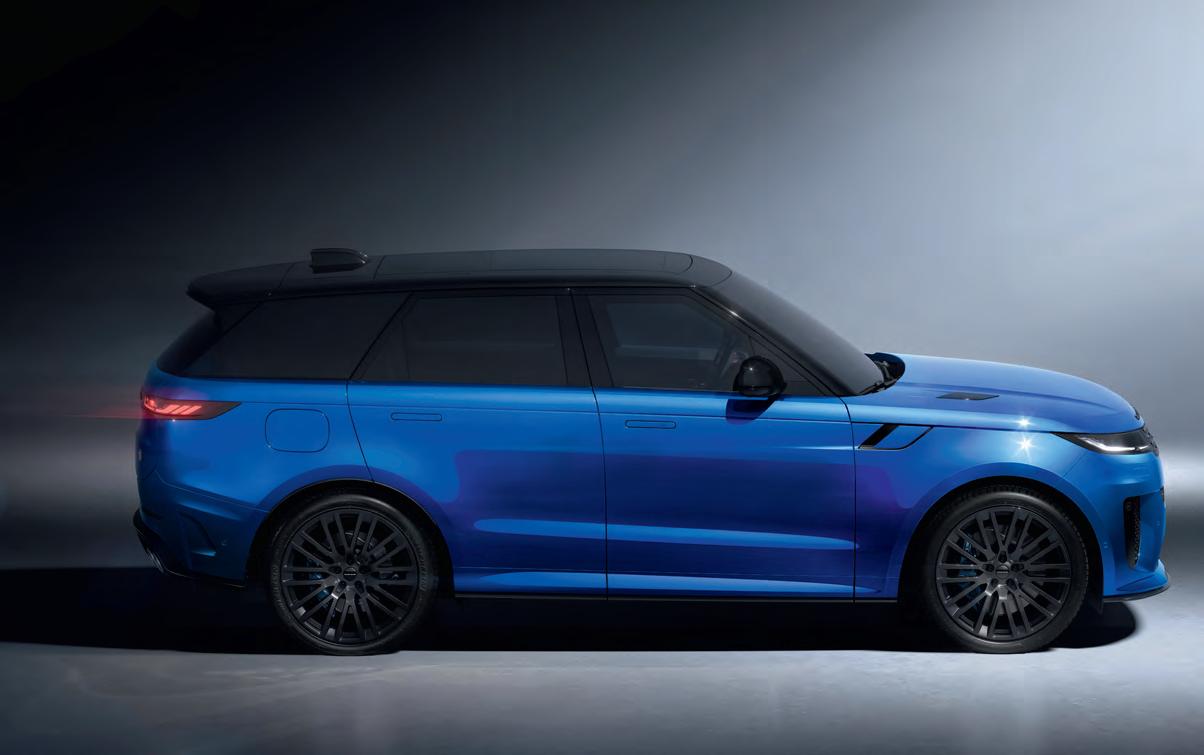
The ultimate in cars is normally only the ultimate until the next ultimate one comes along. So it’s a risky word to use.
But when was Land Rover ever averse to taking risks? I mean, ‘curated’ is a risky word to use too and that doesn’t stop them (though on behalf of art galleries everywhere, we wish it would).
So here we have the Range Rover Sport SV Ultimate Edition. Coming soon to an episode of Real Housewives near you, it’s a ‘highly curated, UK‑exclusive expression of the most powerful and dynamically advanced Range Rover Sport.’ There’s risky and there’s just downright reckless.
The power comes from the familiar twin turbo V8, a mild hybrid petrol engine whose 635bhp and 553lbf.ft gives it an estimated 0 62 time of 3.9 seconds. This is aided by a Dynamic Launch Mode in which the hybrid part of the system gets out of bed to increase torque output to an even heftier 590lbf.ft.
And the dynamics? The clue’s in the name, the name being 6D Dynamics. Carried over from the existing version
of the Sport SV, this is a hydraulically interlinked suspension system designed to ‘virtually eliminate pitch and roll for near‑level cornering and confident braking and acceleration.’ Since we’re on the subject, the anchors are by Brembo and are exclusive to the SV range.
So it’s fast and it handles, just like the non Ultimate Sport SV, which is because that’s what it is. A Sport SV. And you can’t improve on perfection, right? Top speed is 165mph and quoted fuel consumption is a somewhat coyly expressed ‘up to’ 24mpg.
Which all begs the question, what’s different about it that makes it the ultimate? The Ultimate, sorry. Aha! That’ll be where the curation team, all recruited directly from the Tate Modern, earn their no doubt extravagant living.
Or are they proper starving artists, existing on crusts and shivering in a dimly lit Parisienne garret while creating the masterpieces that will one day define the impressionist movement? After all, they could only afford three pots of paint.
Fortunately, these are ‘a tightly defined palette of SV Ultra Metallic finishes.’ The
focus of attention will be on the return of Velocity Blue Gloss, which was the signature colour for the old Range Rover Sport SVR, though while stocks last you can also have it in Obsidian Black and Ethereal Frost, both satin colours.
Further choices include dark grey and black finishes for the 23” and, up top, a Black Contrast Roof. Unless you’ve chosen the Obsidian colour, presumably, in which case it’s just a black roof. Either way, it’s a Sliding Panoramic Roof too, and beneath it the interior is trimmed in Light Cloud/ Ebony perforated Windsor leather which ‘sets a calm, modern tone.’ Just like Real Housewives, then.
Only 500 of the Ultimate are going to be made, all of them for the UK market (despite the ones in Land Rover’s pictures all being left hand drive) and available from dealer stock. They’re priced at £145,995 and buying one also scores you an invite to a personal handover at the Range Rover Studio in Solihull which includes an exclusive track experience. Just to be clear, you don’t get to keep the track. Maybe that’ll come with the next ultimate car.
ONE OF THE THINGS PEOPLE LOVE MOST ABOUT LAND ROVERS is that they’re a blank canvas. This 109” Series III TruckCab is a blank canvas with a blank canvas on it.
The pick-up, which at the time of writing was offered for sale on eBay by Kirkland UK, a company specialising in machinery for the fruit growing and viticultural industries. It definitely stands out among the brightly coloured tracked loaders and mini tractors the company sells – though while it’s not necessarily bright, it’s definitely very smart.
As you’d expect from a company that manufactures its own brand of agricultural equipment, there’s no shortage of knowhow in the building. Parts Manager Ben Short says that the 109 was refurbished in-house – and that it has been professionally converted to run a 200Tdi in place of its original engine.
The chassis and bodywork are straight as a die, with the latter resprayed in Land Rover Mid Grey. That was done professionally, too, hence the aforementioned smartness. Ben says it ‘starts and runs perfectly every time and drives exceptionally well,’ and that it has always been stored inside. No small thing, that.
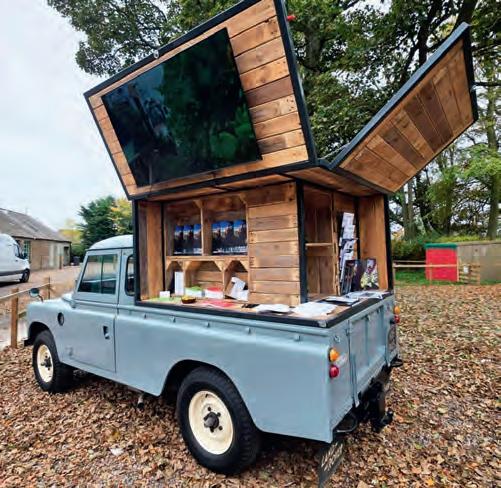
But what make it stand out is definitely what’s on the back. Flush-fitted on the pick-up bed is a multi-purpose box that opens up no end of possibilities for what you could do with the vehicle. Ben suggests catering, exhibitions and weddings as three that come to mind – it’s served for the latter of the trio in its time, and it’s currently set up to work as a display unit with shelves and racking for Kirkland’s brochures and so on as well as a screen for video presentations and a couple of drinks dispensers on the opposite side to take care of clients’ hospitality needs.
If you’re looking at this Landy and seeing an opportunity to break out of the 9-to-5 and start a business that’ll make you happy, our bet would be that you’re thinking drinks dispensers too. The kind that dispense proper drinks, though. It wouldn’t be the first classic 109 to be turned into a mobile bar, though it could certainly end up as the nicest.
Or maybe you just like the truck itself. Even without the box, it’s a very nice one. Not an original classic in terms of its spec but a Series III that’s had loads of love and is beautifully presented inside and out. Ben says that Kirkland are willing to consider selling it with or without the box – so whatever your vision is, it’s ready. A blank canvas when it was new – and 55 years on, as ready as ever to do whatever you want of it.


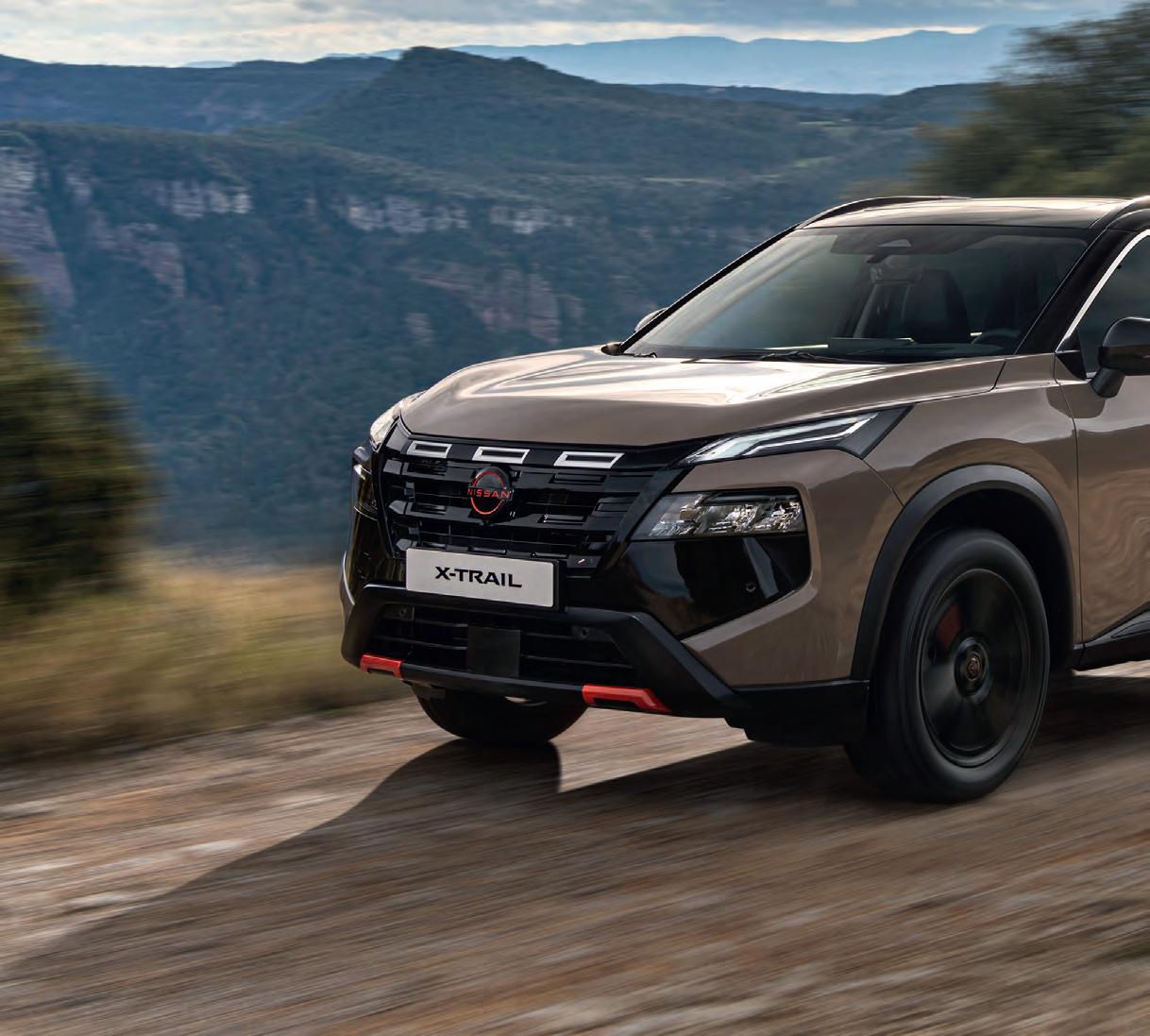
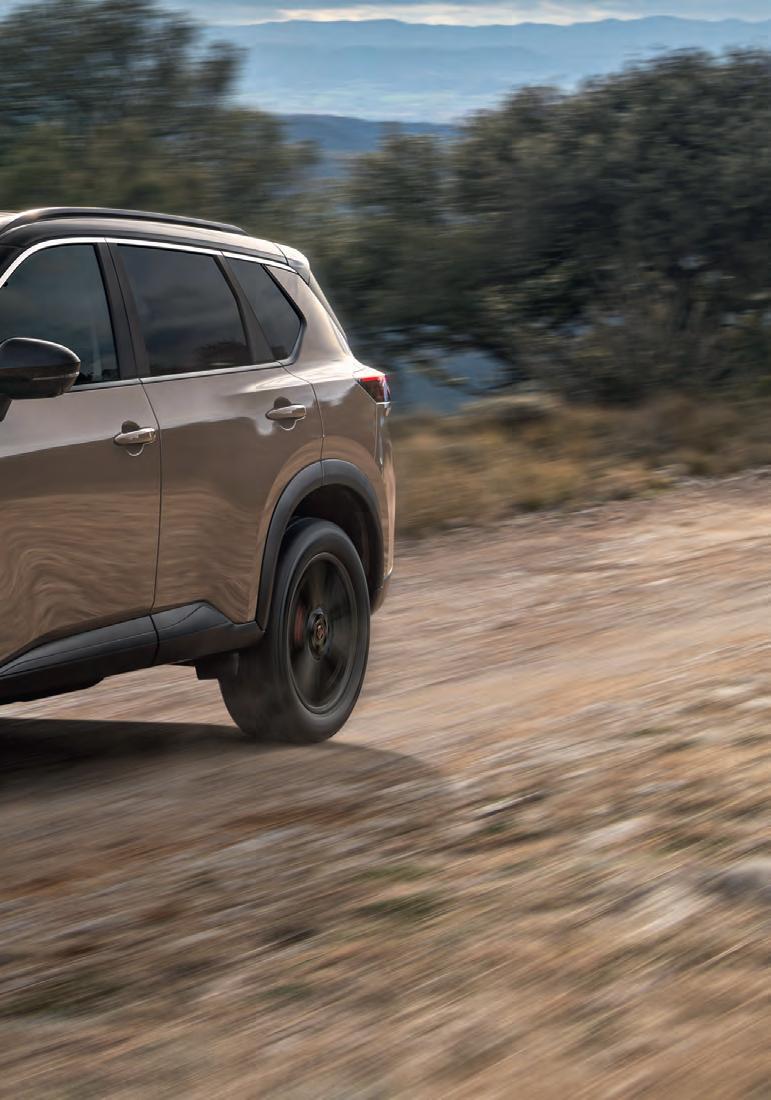
The Nissan X-Trail, which was the overall winner in our 2023 4x4 of the Year awards when it first came out, has been given a moderate mid-life facelift to make it, in Nissan’s words, ‘tougher and more connected’ and ‘to deliver even greater all-terrain confidence.’ Celebrating the vehicle’s 25th anniversary in 2006 (yes, really, a quarter of a century – way to feel old), the current model also gets more aggressive styling, as well as interior upgrades aimed at creating a more comfortable cabin.
In addition, the outdoorsy N-Trek returns after a break, gaining further tweaks to suit families who love nothing more than to get out there in the countryside and come home all wet and muddy.
On the way, they’ll be driving an X-Trail whose wheels are turned by electricity. No, the X-Trail hasn’t become battery-powered overnight, however it has lost the 1.5-litre, 163bhp mild hybrid petrol engine which until now served as the entry-level power train in the range. A shame, because it was a good ‘un, but so too are the remaining alternatives – both of which use petrol
power to generate the charge for their electric motors. Thus the new entry point is e-POWER, with a single motor at the front axle providing 204bhp, 8.0 seconds and 49.6mpg, while e-4ORCE adds a little power and a lot of torque to shave a full second off the 0-62 time and, more importantly, deliver all-wheel drive. We know from driving the pre-facelift model that thus equipped, the X-Trail is capable of doing some pretty startling stuff off-road. To make a point of this, the new-look model gets a wider grille which Nissan describes as being ‘cleaner.’ We’d say the
opposite, but that’s not a bad thing – it’s more visually engaging, if not as simple, and works particularly well in N-Trek form where red and silver elements are added to the standard black to give it a further sense of purpose.
Further upgrades to the vehicle’s appearance include gloss black lower bumpers, wheelarch surrounds, side sills and mirrors, increased body-colour coverage at the rear, new alloys and full-LED tail lights. As is traditional when facelifting a vehicle, there’s a couple more choices in the colour palette, too: Sukomo
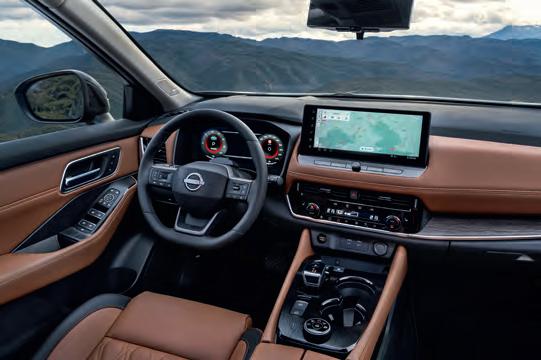
Range-topping Tekna models add a heated screen and 10-speaker Bose audio, which are also optional elsewhere.
As always, too, the level of tech goes up with every new model cycle. So you now get the latest NissanConnect infotainment system, now with Google Assistant built in. The eight-point Around View Monitor system now uses wider-angle cameras to provide an enhanced high-definition 3D view of your surroundings, adding new T-Junction and ‘invisible bonnet’ modes – the latter particularly useful in tight or uneven off-road situations, where it can act as a kind of virtual spotter.
Blue and Coastal Dune, the latter a muted sand colour.
Inside, the focus has been on elevating comfort without compromising the durability that’s always been part of the X-Trail’s character. New materials include chestnut brown premium quilted leather, brown wood-effect console trim, and a synthetic leather option promising the same quality as the real thing. Obviously the kit list gets bigger with the ticket but all models feature heated front and rear seats, a heated steering wheel, three-zone climate and a 12.3” infotainment screen.
Which brings us back to the N-Trek. It might only be designed for getting you into the great outdoors, not across it, but red detailing on the grille, bumper inserts, wheels and tailgate, as well as the steering wheel and seats, add an extra spark of purpose to it. Said wheels are 19” alloys – smaller than the 20s on the Tekna, so you get a bit more sidewall to help you over the ground – and further cool stuff includes LED headlamps, black roof rails, a panoramic roof and toughened lower bumper surfaces.
Best of all, in true X-Trail style the N-Trek has a water-repellant interior. CellCloth seat upholstery shrugs off splashes and wet mud while staying dry to the touch, the carpets are protected by rubber mats and the boot liner is reversible – just like the lift-out panels in the first X-Trail all those 25 years ago.
The new X-Trail continues to be available in a range of four trim levels, with Tekna+ making way for the returning N-Trek. It’s available to order now, with prices starting from £38,220.
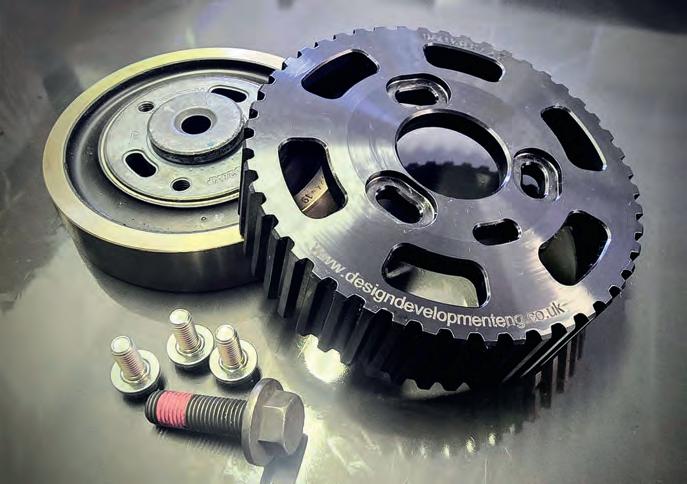
THERE ARE PEOPLE WHO WOULD LOVE TO HAVE A DISCOVERY 3 OR 4 but are put off by the fearsome number of cam pulley failures they’ve read about on the 2.7 and 3.0 TDV6 and SDV6 engines. It’s the left-hand pulley that tends to cause the problems, and Design Development Engineering has been making a replacement for some time – but since you can’t have too much of a good thing, the company is now readying a matching right-hand unit to go on sale early in the new year.
Made from billet steel rather than cast, DDE’s pulleys are designed to remove the ‘failure mode’ in the original part. They’re finished in black oxide for corrosion resistance and also offer increase strength around all fixing points.
The left-hand pulley is supplied only as a full kit with a genuine Land Rover damper and three fitting bolts, all of which must be installed to guarantee the efficacy of the replacement. The new right-hand part, meanwhile, is currently on pre-order.
Price: £36-£78 including VAT | Available from: www.ks-international.com
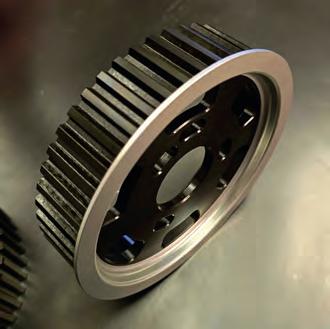
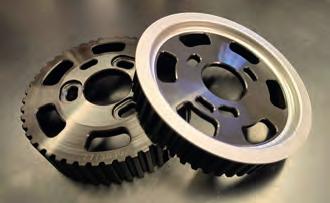
‘You asked so we made it happen,’ says DDE. ‘The first production batch of right-hand TDV6 Camshaft Pulleys have a better design to eliminate failure mode, stronger material and just look miles better than the massproduced spun cast original.’ The full left-hand pulley kit is priced at £306 and the right-hand item at £216, both including VAT. Replacement engines tend to cost a little more…
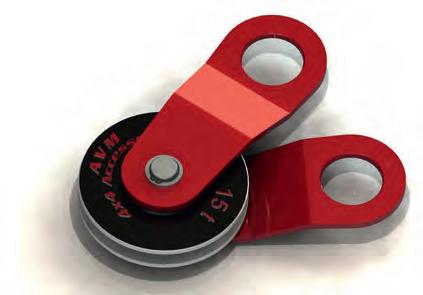
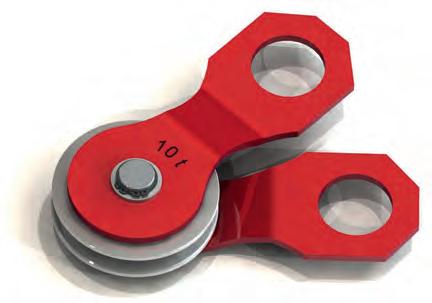
THERE’S NOT A LOT YOU CAN SAW ABOUT SNATCH BLOCKS, REALLY. Unless they fail, in which case there’s no end to what you’re going to be saying quite possibly in either an ambulance or in court. You’d be doing well to get these AVM units to let go, though, rated as they are to 15 tonnes and 10 tonnes. Both come in a dedicated carry bag and both are on clearance from KS International at the time of writing, with big discounts to be had.
RRP £100 | www.ringautomotive.com
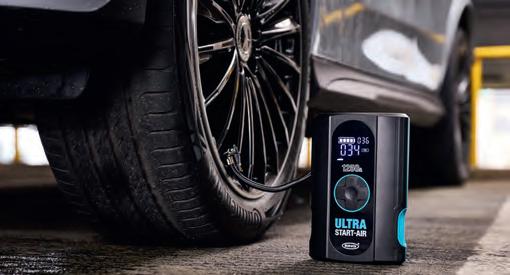
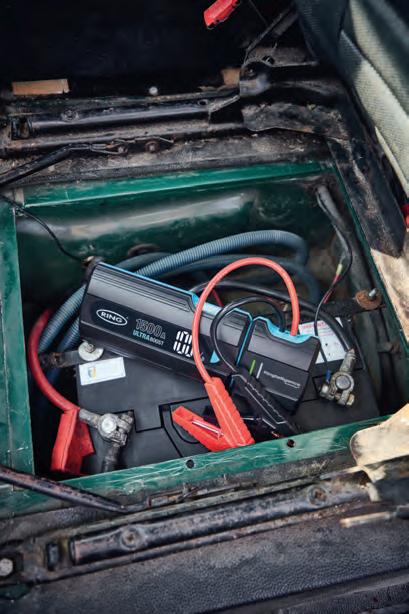
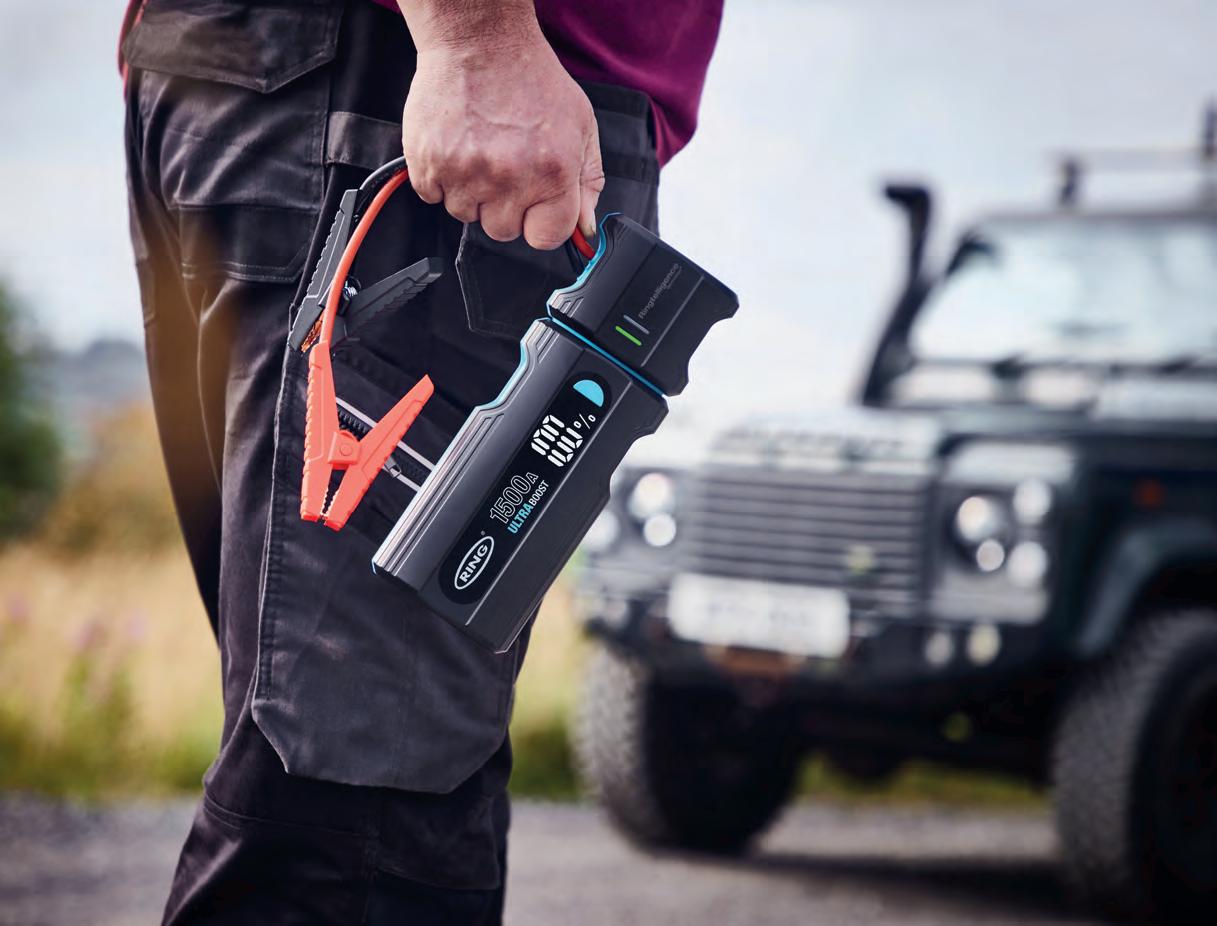
AIRING DOWN IS COMMON PRACTICE when you’re going off-road – which means that reinflating your tyres when you’re out and about is always going to be something you need to think about. Many of the more hardcore trucks you see carry some sort of fixed on-board compressor, but Ring’s new UltraStart + Air provides an alternative that could be the ideal solution for a family motor that also gets used for playdays or green laning.
Better still, as the name suggests it’s also a solution for something else that’s common practice if you own a certain kind of 4x4. Which is jump starting it…
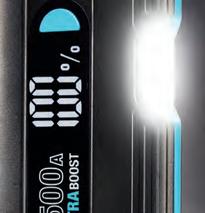
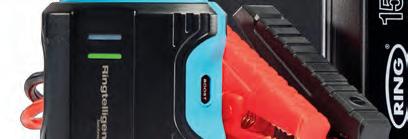
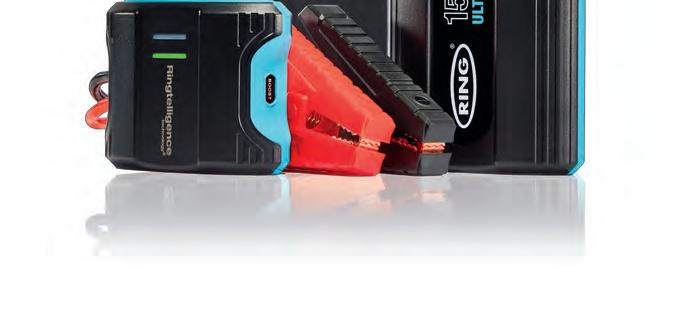
In Ring’s words, the UltraStart + Air is ‘a powerful, multi-functional emergency tool combining a jump starter and tyre inflator in one compact unit.’ Actually, it’s even more than that – as well as being a jump starter and tyre inflator, it’s also an LED light and power bank.
Ring has plenty of previous for creating multi-function products, so no great surprise there. The auto accessory giant is also particularly good at making good things come in small packages, so also no surprise that the UltraStart + Air can fit in the glove compartment of a typical vehicle.
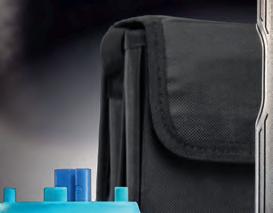
Talking of typical vehicles, if your inner worthy mud-soldier snob is already sniffing at the idea of a portable jump starter being able to handle your great big engine, Ring says the unit is capable of starting up to a 6.0-litre petrol or 3.0-litre diesel. It comes with two clamps for hooking up to the battery terminals and offers reverse polarity protection, as well as a boost function for if you really have drained it to death, and you also get integrated hose storage for the tyre inflator as well as a storage bag for all the accessories it comes with.
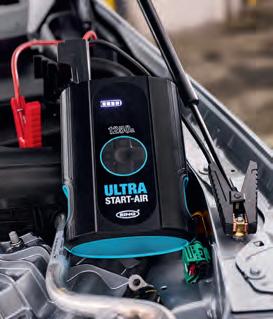
‘Having one piece of equipment that can solve a variety of problems is convenient for all, and so very popular, which is why more of the tools we’re introducing to the market are multi functional,’ says Ring’s Marketing boss Henry Bisson. ‘The UltraStart + Air is a very powerful tool and, due to its suitability for many vehicles, we anticipate this being one of our bestsellers.’






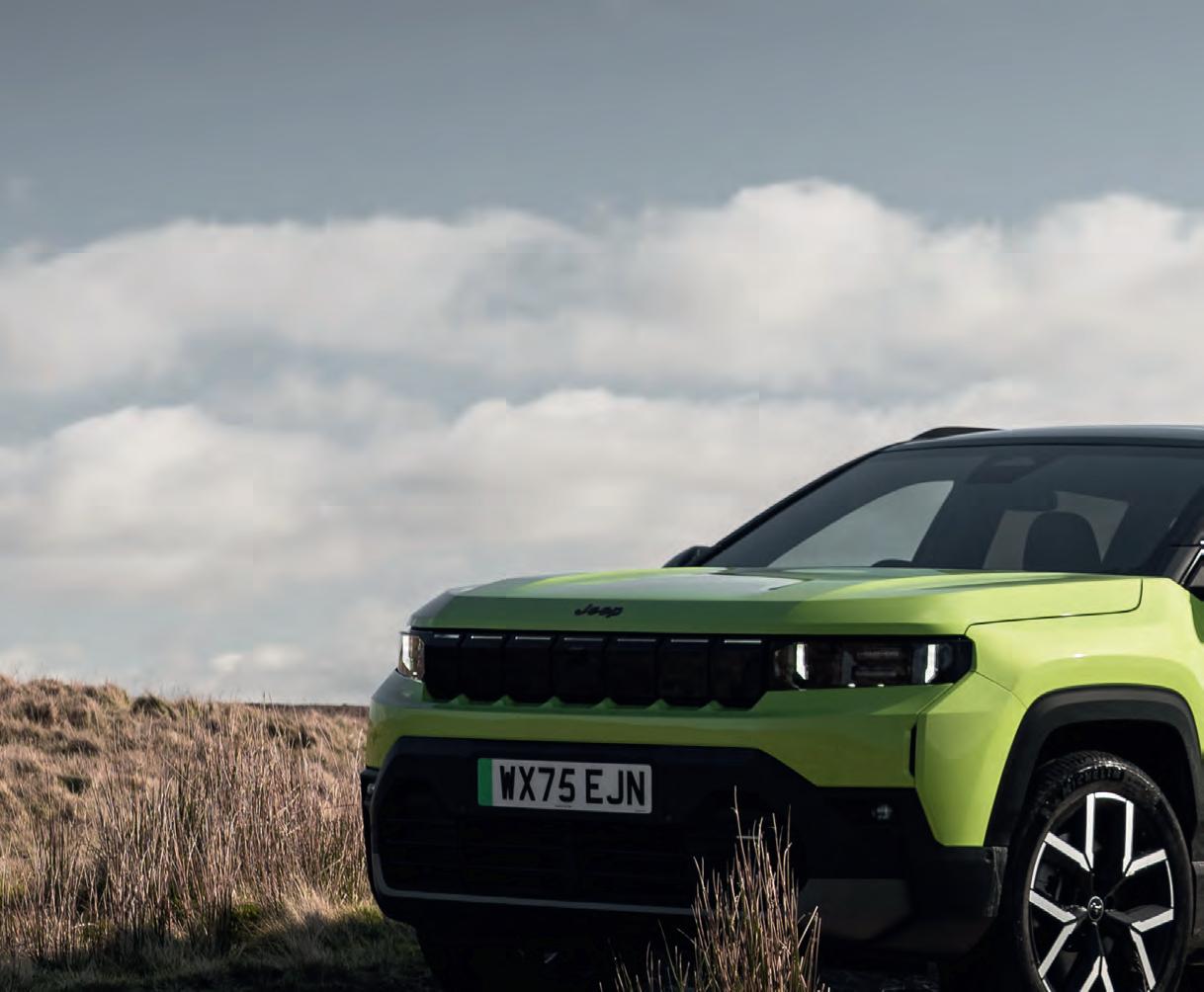

You could say that Jeep is in a tricky position right now. It emerged late last year that no more examples of the current Wrangler will be made for the UK, so it’s running out existing stock of its hero model – during whose life we’ve had a short lived diesel model, a plug-in that never came and a range-topping super-truck that was pretty much the perfect example of how British off-roaders aren’t allowed nice things. The Gladiator double-cab was meant to be on the way for a spell, too, then it wasn’t and now it never will be.

There’s the Grand Cherokee, which is in such short supply that we’ve only ever seen





one on the press launch. The Wagoneer S is meant to be on its way, though all this will do is replace the Grand with something electric, and we might get the Recon, a sort-of small-scale Wrangler which, again, is all-electric. There’s talk of the next Wrangler coming back to the UK, possibly in 2030, depending once again on the electrified options Jeep is able to offer – which, given that its core market is the US, means Europe might be off-limits.

So, to all intents and purposes the word Jeep now refers to a range of small to medium SUVs built using systems and components shared with the likes of Peugeot, Vauxhall, Fiat and Citroën. These
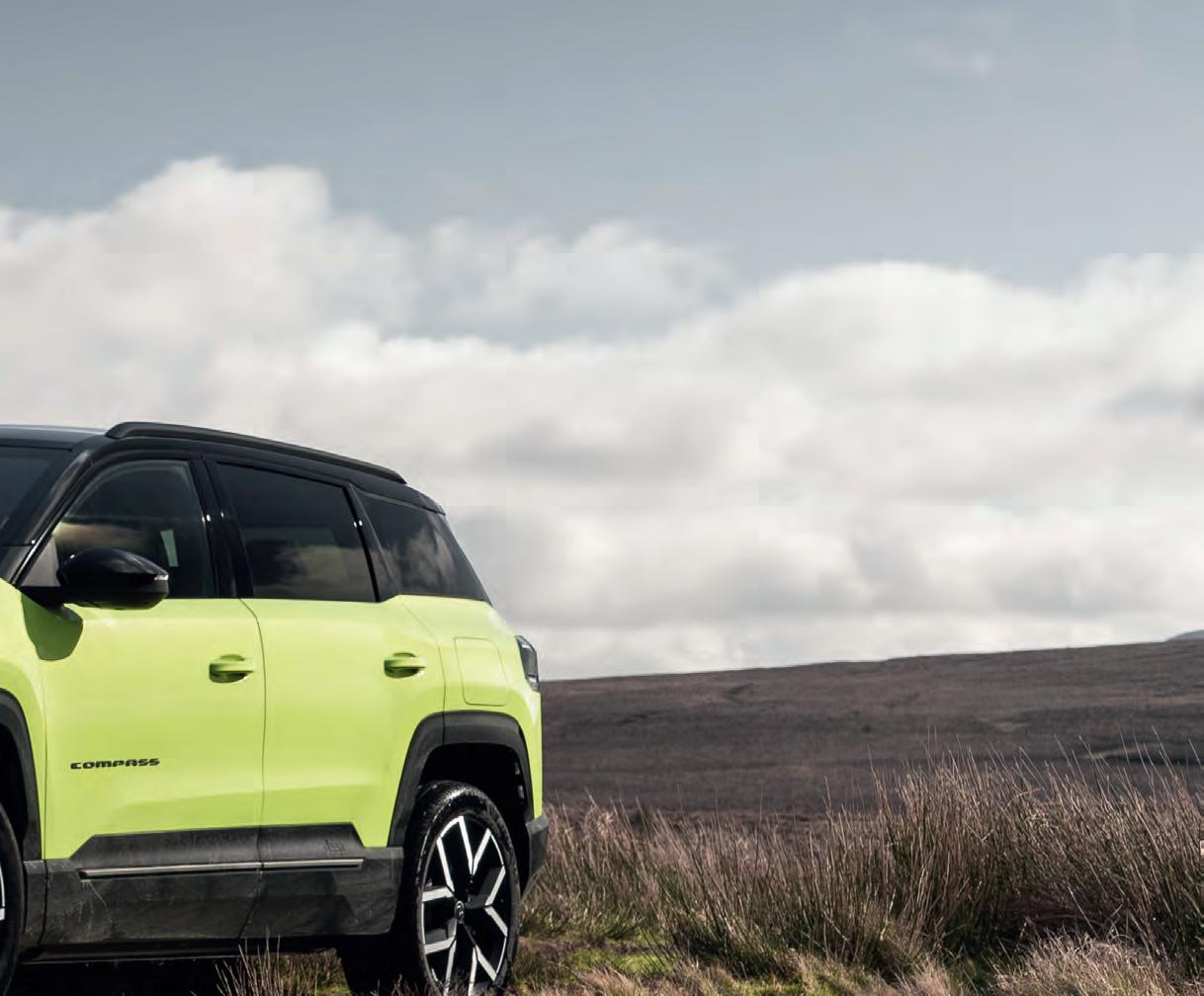
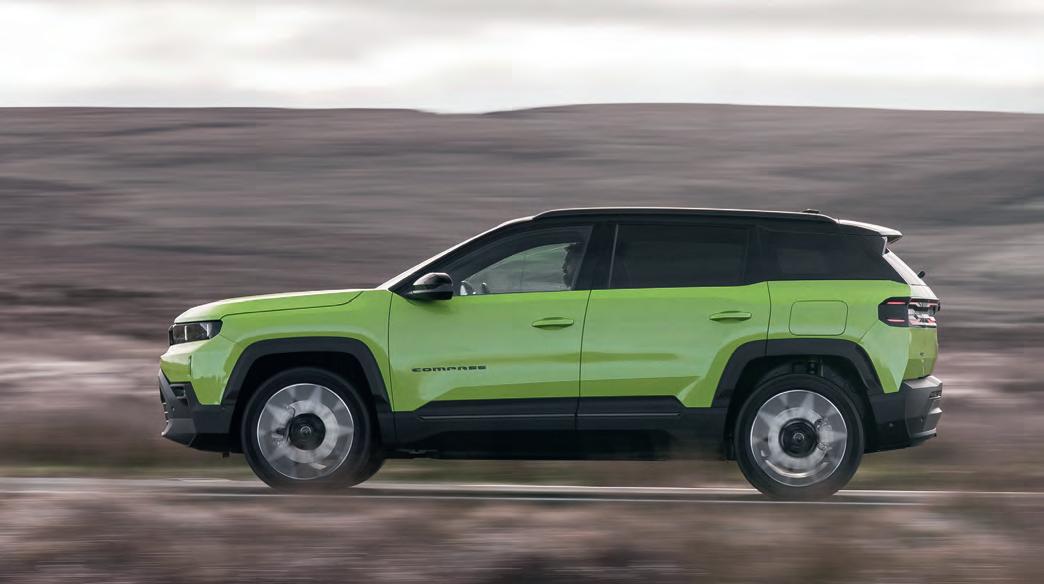
include the new Compass, of which great things are expected sales-wise.
We’re at the start of a phased launch which will see long-range and plug-in options coming as time goes on. However for now the Compass is available with a choice of electric or 48V hybrid powertrains, along with a couple of trim levels.



The electric version mates a 74kWh battery pack to a 213bhp motor, while the hybrid has a 1.2-litre three-pot backed up by a 21kW motor for a total output of 145bhp. The latter promises around 41mpg, while the EV has a range quoted at 310 miles.

In each case, the vehicle itself will compete in the big-selling medium SUV




class which is probably best defined by the Kia Sportage (or the Kia EV5, in the case of electric models). That’s some serious competition, but Kia’s colossal success in this market does at least show how much potential there is there.
Jeep’s proposition is heavy on tech, practicality and a slightly nebulous air of adventure. We’ve all learned by now that 4x2s can do things off-road that would never have been possible 25 years ago, but even so there’s something kind of incongruous about seeing a Selec-Terrain dial on a vehicle that’s not a 4x4.

The practicality side of it is all about oddment stowage. The glovebox and cubby are big but then there’s a huge tray at the front of the floor console and a couple of non-slip shelves in the dashboard. Jeep says it’s a class leader in this respect and we don’t doubt it.



We do doubt whether anyone will fold down the back seats outside Ikea and clap their hands with delight, though. The backs fold down to lie on the squabs, several degrees off flat, and no amount of weight will get them there. The boot space is big enough and easy to access but next to the elegant flat-folding mechanism in the EV5 we drove to the launch, not to mention the


Nissan Qashqai which will most likely also be on your shortlist, it’s a blunt instrument.
The EV5 does a better job of looking after rear-seat passengers, too. Deeply sculpted sea backs allow enough knee room for one six-footer to ride behind another if neither is greedy, though their head will be brushing the roof. It’s a genuine four-seater but not a generous one.




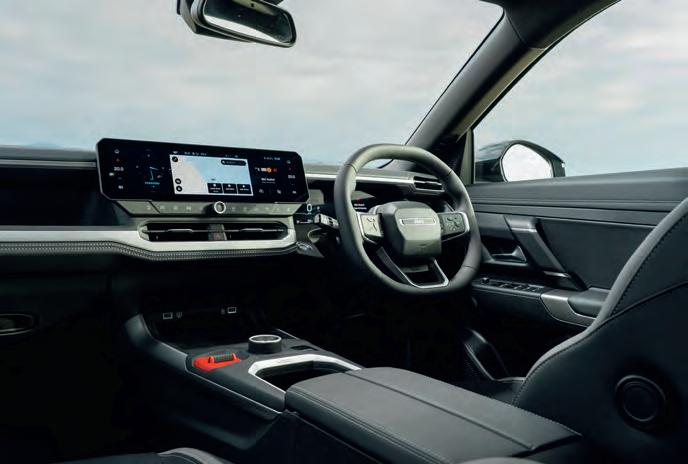
Still, the cabin has a nice enough air to it, with a technical feel that’s enough to convey a sense of purpose without bashing you over the head with its Jeepness. It’s well laid out, nothing fancy, and up front it’s centred around a digital dash and, next to it, a big, wide media screen.





The seating position is fine, with a good view over the bonnet and out to either side that’s not significantly interrupted by the A-posts. The seats themselves are trimmed in what Jeep is honest enough to say is a combination of cloth and vinyl – you’d be surprised how many car makers want to you believe the latter material is leather – and they have six-way manual adjustment. Both front seats have lumbar, too, though this is operated by a horrible clumsy dial next to your shoulder that’s so hard to reach, let alone actually turn, it might as well not be there.
We had a decent session aboard the allelectric Compass, followed by a somewhat shorter one in the hybrid. The latter was on much better, faster roads, whereas we experienced the joy of potholes in the EV –and what a joy it was. If you’re a masochist.
At higher speeds, the extra weight in all those batteries actually helps keep the body composed. On the small, cheerfully rubbish country lanes we spent a lot of time exploring, however, the bumps come thick and fast. It feels unsettled, hard, harsh even:
on one occasion, after crashing through a jagged hole at just a few miles per hour, we actually pulled over to check if we’d lunched the alloy. The launch route didn’t include any hardcore urban driving (Cotswold villages don’t count) but we’d feel apprehensive about using it to take on Britain’s infamously dreadful city roads.
Our brief experience of the e-Hybrid suggested that it’s smoother in general and particularly on slower, poorer roads. It feels lighter – though whereas it won’t hit pot holes like the Titanic hitting the iceberg, it’s more likely to get pattery on corrugations.
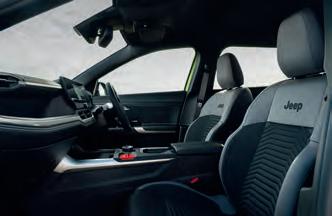
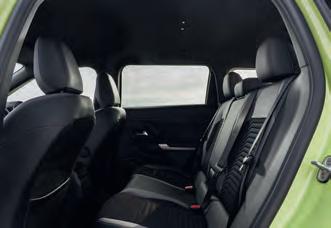
The cabin has a technical air to the way it’s crafted, feeling like it puts fitness for purpose above everything else but without forgetting that first and foremost, it’s a car. The media screen dominates proceedings and it works well. Seats are comfortable enough, with six-way manual adjust, and both fronts have lumber – though when you look at the position of that dial on the side of the seat, you can imagine what a poultice it is to try and use. In the back, there’s just enough headroom for a six-footer and plenty of knee room for one tall adult to sit behind another so long as neither is greedy
Noise levels don’t intrude in either model, on the other hand, with the hybrid’s engine never showing any inclination to rev its brains out even under the hardest acceleration. Talking of acceleration, neither feels slow and the EV is impressively swift away from the line.
Neither model is likely to leave you gasping with joy if you’re the kind of person who wants everything to be a hot hatch, however for normal drivers it steers and handles adequately. You don’t get masses of feel on turn-in but it does what you ask of it and if you find it slopping around in corners, you probably need to stop thinking you’re Colin McRae.
We prefer to think we’re setting off to conquer the Rubicon Trail, but despite Jeep’s attempts to remind you that a Jeep is what it is, the Compass doesn’t really give you those vibes. The 4xe will be a game-changer, particularly if they do what they surely must and create a Trailhawk version of it, but for now it’s a vehicle whose Selec-Terrain dial helps you trim it for max traction on loose
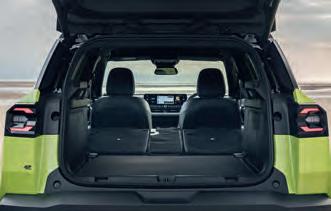
Jeep has made much of the space up front to create a class-leading range of oddment stowage opportunities. It’s strange, then, that when you want to use the full boot, the back seat folds down to leave a hefty slope that’s several degrees away from being the always desirable flat floor. It’s more pronounced than this picture makes it look, and even if you load heavy items on top of them they still don’t sink any lower
tracks that won’t trouble its limited ground clearance (or, in the real world, put scratches in its paint). We’d happily take on something like Rudland Rigg or Tilberthwaite in it, now that both those lanes have had their rocky sections destroyed for the benefit of people who could go anywhere else but want to go the one place where 4x4s are allowed so they can smash up your fun, though in each case we’d constantly be bracing ourselves for impacts coming through the front wheels. That shattering incident with the pot hole doesn’t bode well for the EV model’s ride quality on rough ground.
Our initial reaction to the Compass was that it’s a decent all-rounder but something of a me-too SUV. Perhaps this is inevitable when the Vauxhall Grandland, Peugeot 3008 and 5008 and Citroën C5 Aircross are all basically the same thing under the skin, but we didn’t come away feeling any of the wow factor that’s so crucial to making a Jeep stand out from the everyday crowd. Certainly, getting back in our Kia EV5 for the ride home felt like a significant step up.
Is that an odious comparison? The Compass is priced from £34,520 in e-Hybrid
form and £36,999 for the EV, with the First Edition (the top-speccer in a range of two) giving you some things you’d probably expect anyway for an extra £2200. Various option packs are also available which take the EV up to around £45,000.
You’re getting a great deal of kit for your money, there. But you’re also getting things like those basic folding seats and that crashy suspension which say to us that other vehicles which do better in these areas, have had more money and/or skill invested in developing them. Back to the EV5 there.
We didn’t set off for home feeling that the Compass was a new benchmark in its corner of the market. A longer experience, and some worthwhile green laning, might warm our hearts to it, as might the 4xe when it arrives. But mainly we’re just thinking of how much less fun the world is going to be without the Wrangler.
Jeep has always been a company that builds, not just trades, on its heritage. What is the word going to mean without the vehicle that defines it? We’re not sure if anyone, including Jeep, knows the answer.


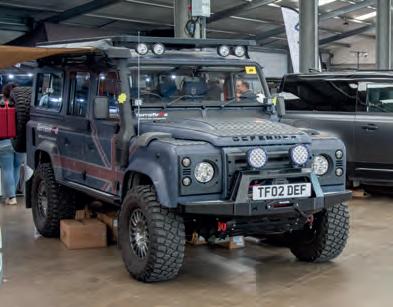









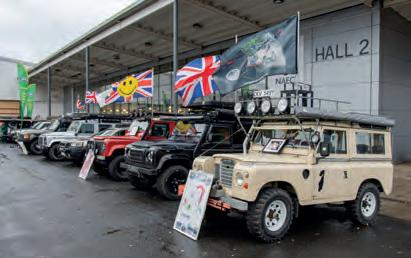
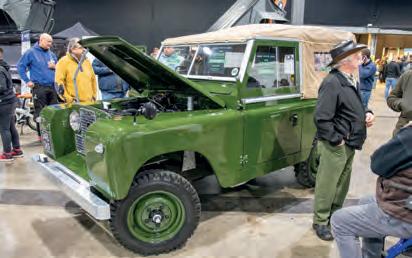
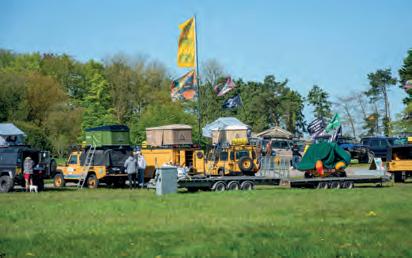
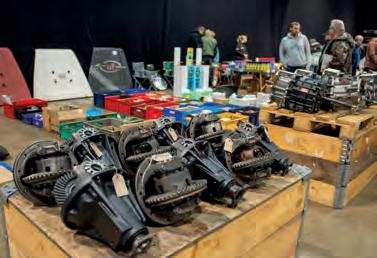
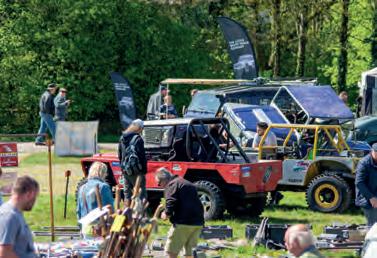
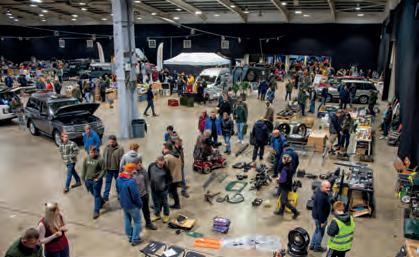
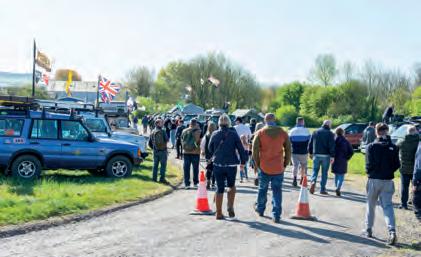
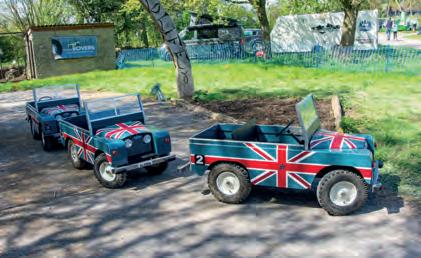
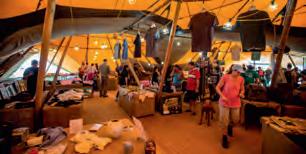
Land Rovers are returning to Bath & West this April for a weekend filled with Land Rovers!
Exhibitors old and new will join us, selling everything from parts & accessories to tyres, clothing and toys Talk to overland adventure specialists about your next trip, discuss modification options with companies with the know-how and other experienced Land Rover owners.

















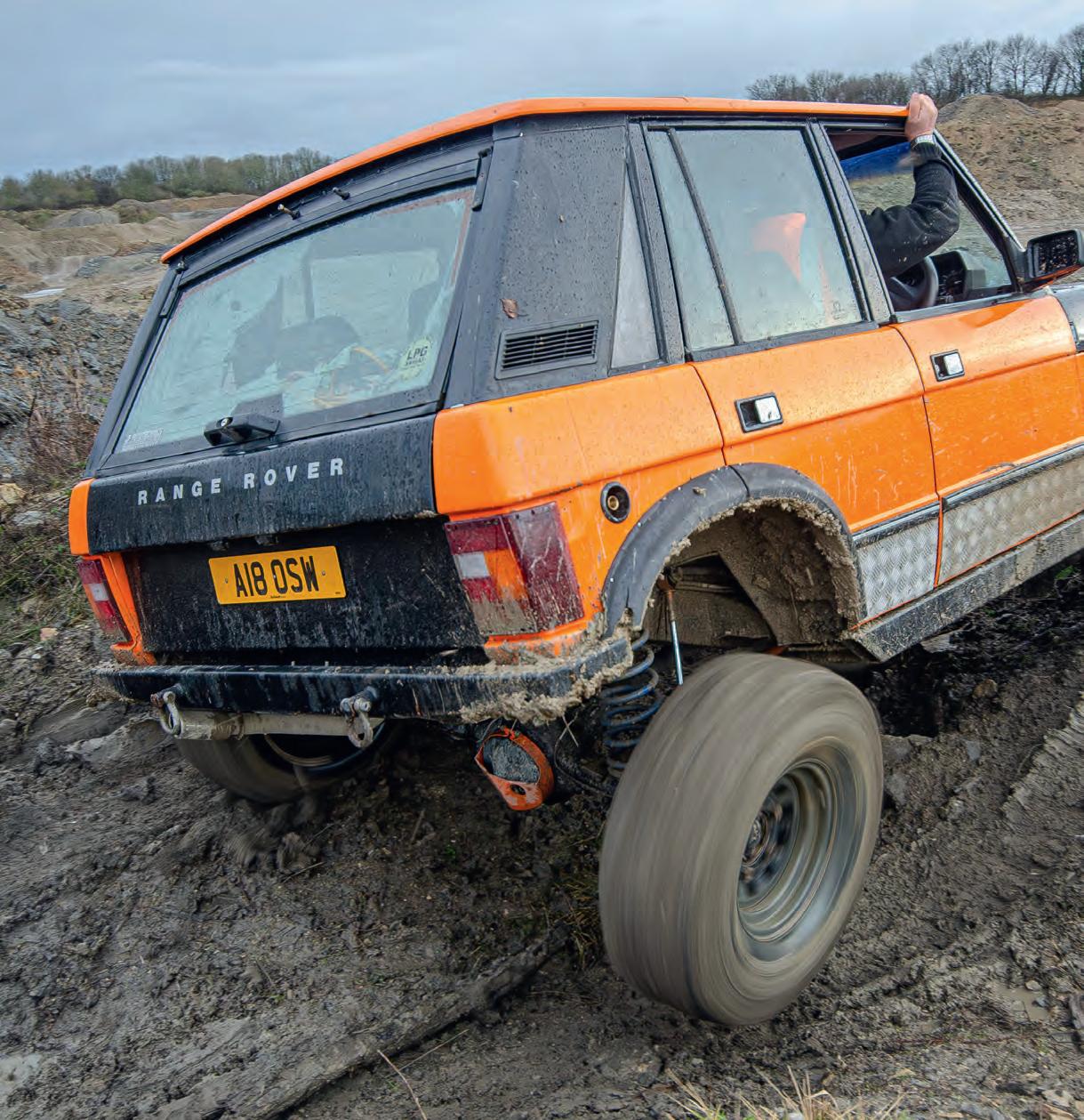



















We’ve run articles on all sorts of different bobtails in the past. Discoverys, 110s, Land Cruisers, Hi-Luxes, L200s, even a P38 – if it’s got four-wheel drive and an over-ample backside, someone somewhere will have nipped it and tucked it.
But of course, the overwhelming grandaddy of the bobbing game is the Mark 1 Range Rover. This is where the idea started, and it’s still the case today that by far the majority of bob-jobs performed in the UK have been on ageworn Rangeys.

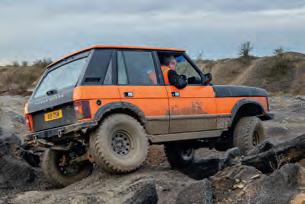
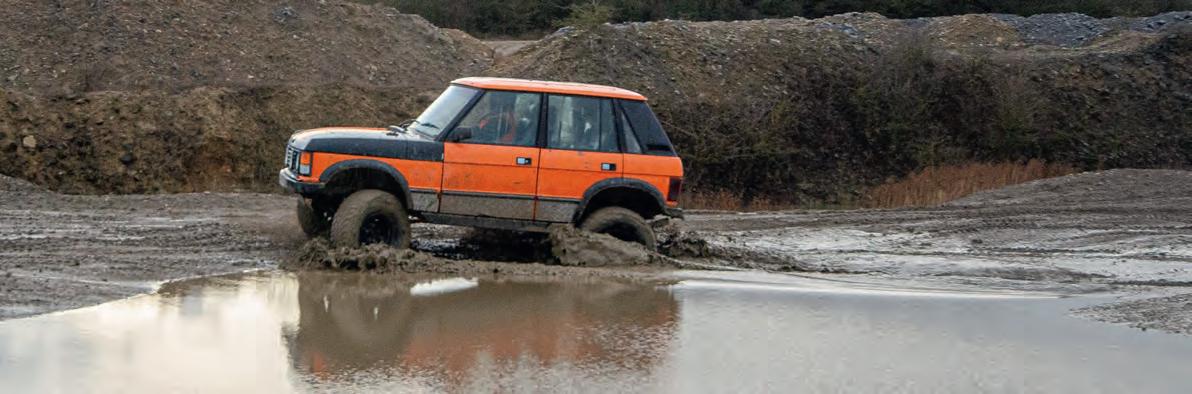
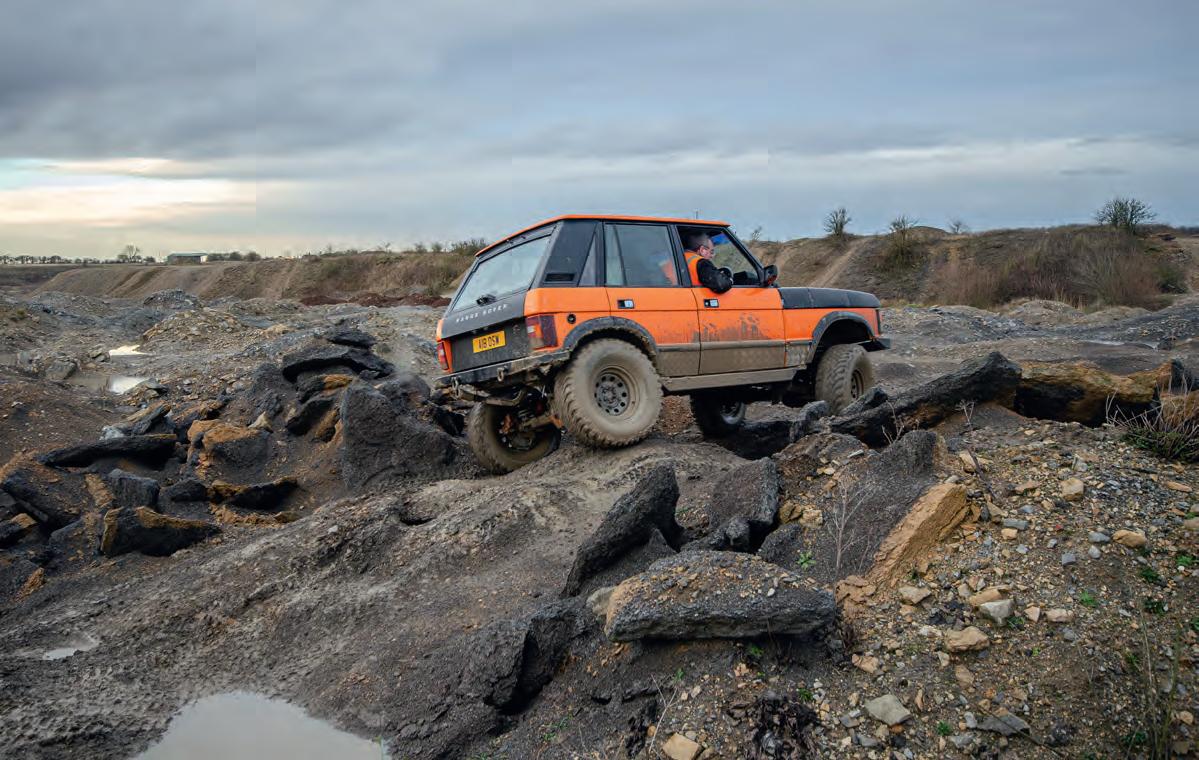
Of the many bobtailed Range Rovers, Sean Robb’s has got to be one of the neatest. Though it could hardly be any worse than the state it was in when it came to him

What that means, of course, is that by far the majority of bad examples have been Rangeys too. From a distance, a bobtail is pretty much a bobtail, but get closer in and you see some pretty horrific finishes to the line where the body has been cut. And that’s before you look at the welding on the chassis.
Words Paul Looe Pictures Harry Hamm







Sean Robb isn’t in the habit of doing anything badly. He’s a mechanical engineer by trade, and what he can’t do to a car ain’t worth doing.
One of his creations, a hybridised Hilux and 60-Series Land Cruiser, will he familiar to you if you’ve spent long enough hanging around in the world of this here magazine. And in addition to the Hi-Lander, as he called it, another example of Sean’s craftsmanship is this properly tidy Range Rover. It doesn’t look much like a write-off, does it?

But that’s how it started. The Range Rover belonged to a friend, who was on his way to Sean’s to get it prepped for its MOT when he pulled out at a junction.


Unfortunately, the Mercedes in front of him hadn’t pulled out. So instead it was pushed out. And mounted. And by the time it arrived at Sean’s, some time behind schedule, the Rangey was fit only for scrap.

Or was it? With a project in mind, Sean took the Rangey off his mate’s hands for £200. ‘I wanted to build a bobtail that looked the way I think they should,’ he says. ‘I’d seen a lot of them, and there was one really nice one – until you got to the bobtailed end itself. I thought why would you spend all that time and money and then make something that looks like it’s been opened up with a can opener?’

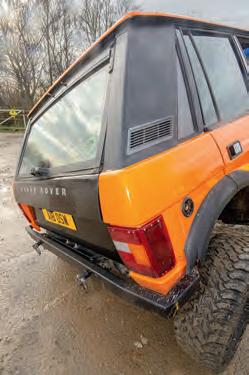
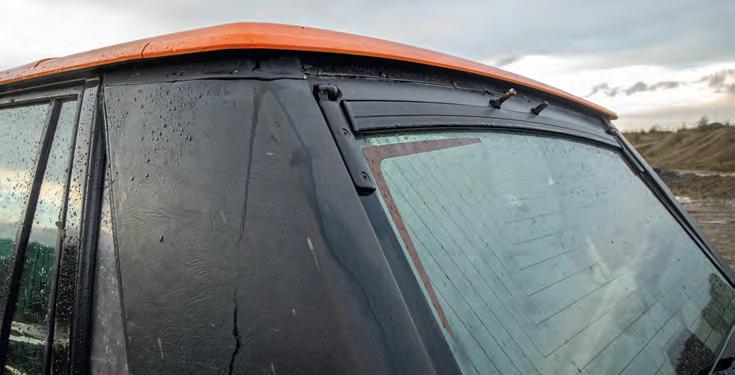
Lots of Range Rovers were bobtailed back in the day, which of course means lots of them were bobtailed badly. But Sean was determined to make the job as neat and tidy as possible. Matching the shorter rear body to the curve on the roof was the trickiest part – though you wouldn’t think it to look at the finish he’s achieved. Both parts of the tailgate open and shut perfectly, and there are people with standard Rangeys who wish they could say that
Being an engineer, Sean is no stranger to design and manufacture. So he built… a workshop. ‘I built a nice, big workshop for it to sit in. And there it sat… for seven years!’ Well, there’s no points doing these things in a hurry.
Finally, one day he found himself at a loose end. So he started sketching out a plan on the rear windows, and next thing he knew he was cutting metal. Using a ruler and white marker pen, he measured the job at 508mm.

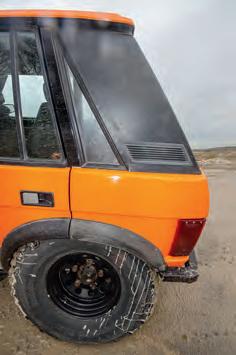
‘I went round it drilling out the factory welds and measuring forward from every point. I found that if you take 508mm out of everything, all the original lines match up – except for the roof, where the curve at the back is 2” lower than the point 508mm



















Cynghordy Llandovery Carmarthenshire, SA20 0NB Tel: 01550 750274 e-mail: info@cambrianway.com











The first thing you’ll notice about the trailing
Above: Tubular towers, raised spring seats and +2” suspension is a classic combination. Put them together with a bit of resculpting to the arches and they allow the Rangey to wear 33” tyres without fouling
further forward. So I had to make a section to fill that in and match it up, but I managed to get it so that the two sections of the tailgate open and shut perfectly.’ That would be an improvement on most Range Rovers that haven’t even been bobtailed, then, let alone piled into the blunt end of a Mercedes.
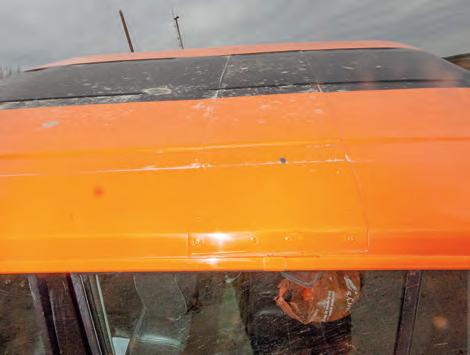
He also left an extra inch of metal when measuring up, which he folded down to make a seam after making the cuts. ‘It’s quite easy,’ he says. ‘Better than trying to weld or pop-rivet it.’
The shortened chassis was finished off with a new crossmember, and in went a small petrol tank; the vehicle had already been LPG converted, so this just needed to hold enough for starting. In went a new floor, inner and outer sills and front inner wings –as well, of course, as the necessary repairs to the crumpled front end Sean’s mate had given it all those years ago.
‘When I started to strip it,’ says Sean, ‘it had previous damage. The front chassis leg on the passenger’s side had filler in it. As I looked into it more and more, I could see the damage here and there.’
Definitely a case for a full rebuild, then. The front slam panel (rems of) were replaced with one from an early four-door and, wherever he could do it, Sean welded it up using stainless steel. On the wing tops, the steel and aluminium originals were remade in 2x2” ally, and stainless fixings were used throughout.
Elsewhere, the axles were rebuilt using 28-spline shafts and diffs built up using ARB Air-Lockers. They’re still attached to the chassis using the same geometry, but Sean
Suspension geometry remains as it was, but the original trailing links have been replaced by cranked heavy-duty units. These have new chassis mounts, which Sean fabricated after bending one of the originals forward by a couple of inches when a back wheel was slowed from 30-0mph by a concrete block. The spring mounts at the back are designed to dislocate but it takes a lot for them to have to do it. Note also what may be the only Boge self-leveller left on any modified Range Rover anywhere
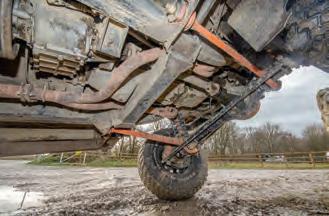
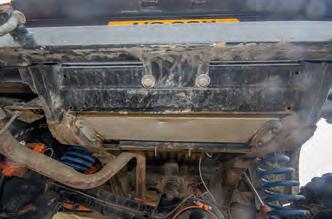
Left, centre: Both axles were rebuilt using 28-spline halfshafts. Behind the diff guards, each also contains an ARB Air-Locker, and the links holding them to the vehicle are polybushed
Right: You tend not to bobtail a vehicle without giving it a stronger rear crossmember, and that’s just what Sean did here. In front of it is a small petrol tank for getting the engine running – mile by mile, it burns LPG
fabricated new mounts for the rear radius arms after bending one of them forward by a couple of inches. How do a person even DO that, you might wonder? ‘Coming backwards down a hill at about 30mph and one wheel hitting a concrete block,’ he explains, which might make your bottom twitch a little.
So too might the somewhat grisly history of what’s gone on beneath the bonnet. The vehicle’s first V8 lasted all of seven minutes, though Sean did manage to get an entire RTV out of it by doing the whole event at 4000rpm. ‘That was just to keep the oil light

from coming on. And it only takes 4psi to make it go out…’
The next engine fared better – well, it managed 6-7 hours. Which was enough for Sean to decide he’d had enough of this. So in went an ABRO-built Army V8, modded with new rocker covers and front pulleys and fitted with the EFi system from engine number two. This is what you see in these pictures, with the LPG keeping it sensible as a road-going vehicle.
Keeping a bobtail as your daily drive is a bit of a mission in most cases, especially if you also want it to be a four-seater, but

this is an example which you feel could carry it off quite comfortably. It’s an incredibly sound example of a modded Classic by any standards, but it’s got something so many bobtails lack – a sense of real workmanship.
Make no mistake, what you’re looking at here is a serious off-road vehicle. But quite unlike all too many of that breed, it’s a very well finished everyday car too. Which is definitely something to aspire to. ‘I like things to be just so,’ concludes Sean. ‘If you’re going to do it, do it right.’ Wise words, whatever you drive.




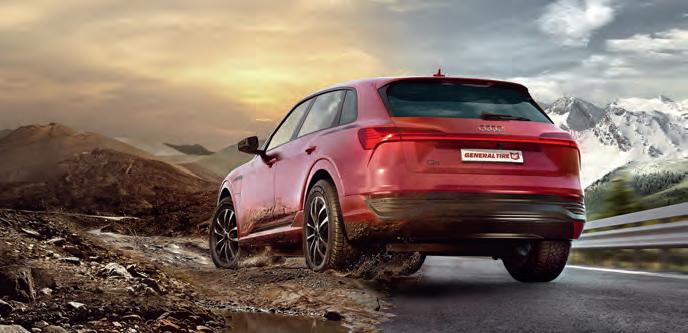


Leading American brand General Tire has launched a new all-season 4x4 tyre that combines safe summer and winter driving with off-road capability boasting the 3PMSF symbol. This tyre is also EV ready, which means it’s suitable for all vehicles whether ICE, electric or hybrid.


The Grabber™ Cross A/S is a robust mild all-terrain 4x4 tyre offering good handling on asphalt, protection against aquaplaning, safe driving in warm and cold seasons, high mileage and good traction off-road. There will be a phased introduction of tyre sizes into the UK market from June this year offering 44 sizes between 16 and 22 inches.
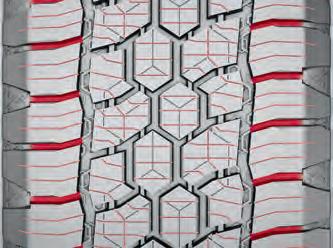
• Excellent grip on wet and snow-covered surfaces
• Good aquaplaning resistance
• Sipe density in tread blocks creates stability on wet and snowy roads
• Open shoulder leads to high ability of water drainage
• New cross over compound developed for snowy conditions
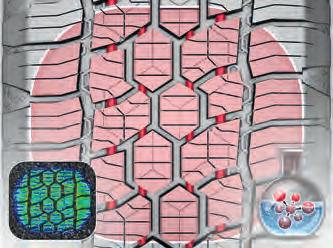
• Excellent cornering performance on-road
• Comfortable and pleasant ride with low noise level and high mileage
• Supporting elements between tread bocks lead to stiffness of the pattern
• Optimised tread pattern providing even pressure distribution
• Optimised cross over compound for low abrasion even in higher-speed use


• Robust off-road performance with good grip on loose surfaces
• Improved tread life in rugged terrain
• Chamfered edges in tread pattern grooves
• Hexagonal tread blocks with gripping edges support traction on loose surfaces
• Cut and chip resistant cross over compound resists damage
For further information and to fi nd your local stockist, please visit www.generaltire-tyres.com/gb/en/suv-4x4/grabber-cross-as/ or scan here
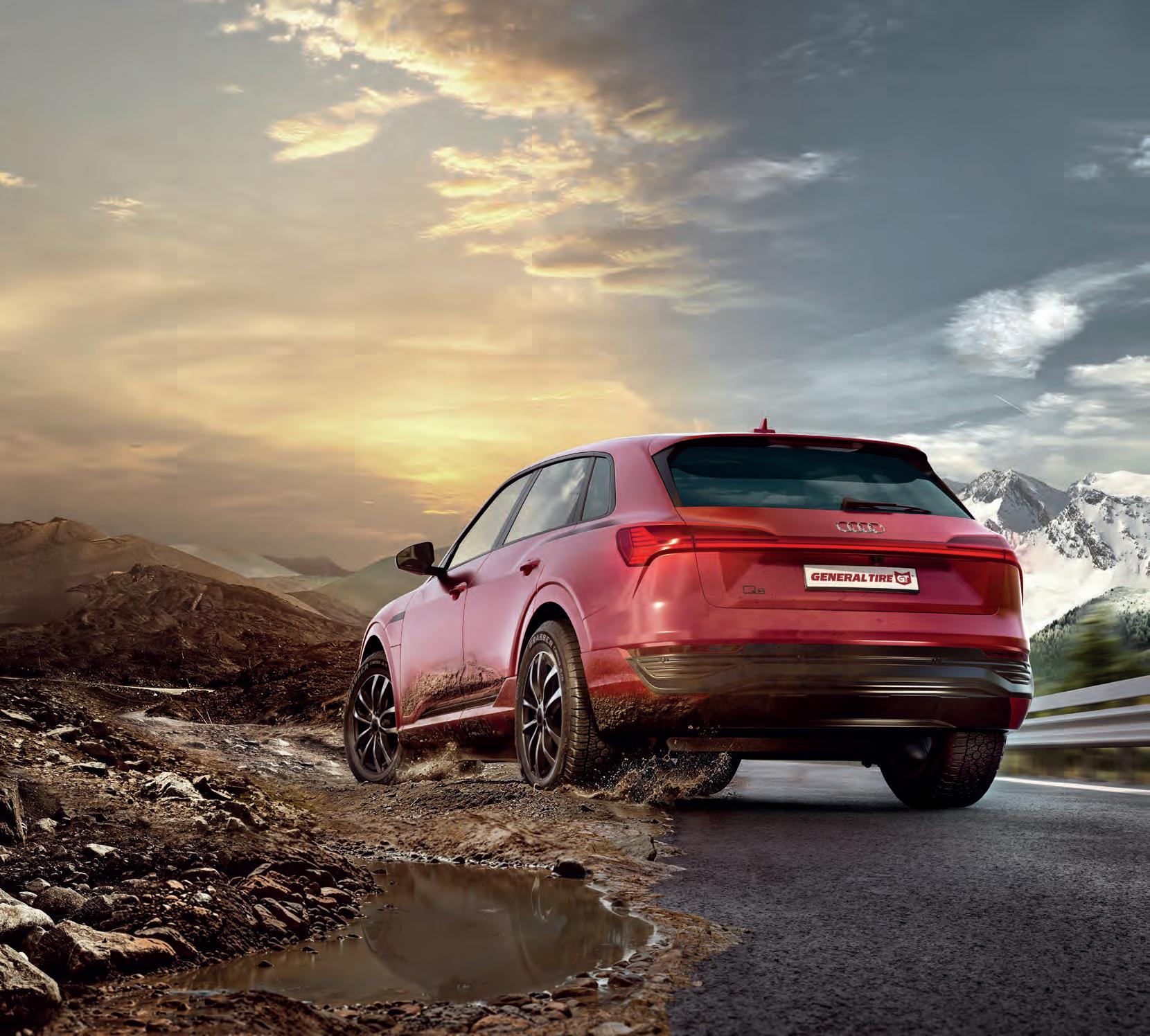


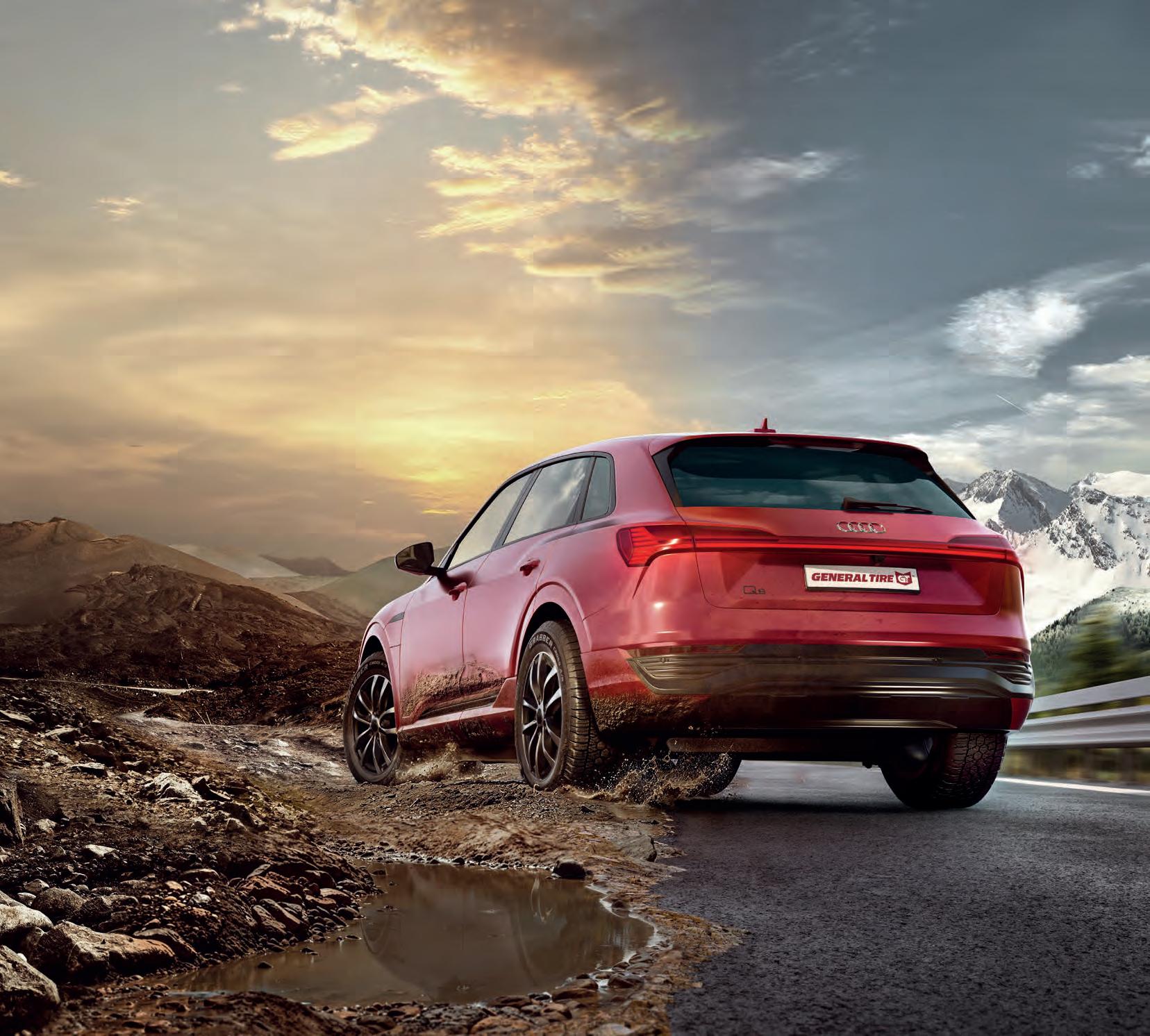




DISCOVER NEW HORIZONS AND BE READY FOR WHATEVER COMES YOUR WAY!
The GRABBER CROSS A/S is the perfect tyre for SUV drivers looking for both exceptional on-road performance and reliable off-road capabilities in every season! Experience a new level of confidence and control as you embrace every journey, no matter if you are driving on smooth highways or conquering tough trails.







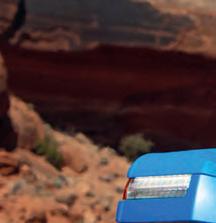












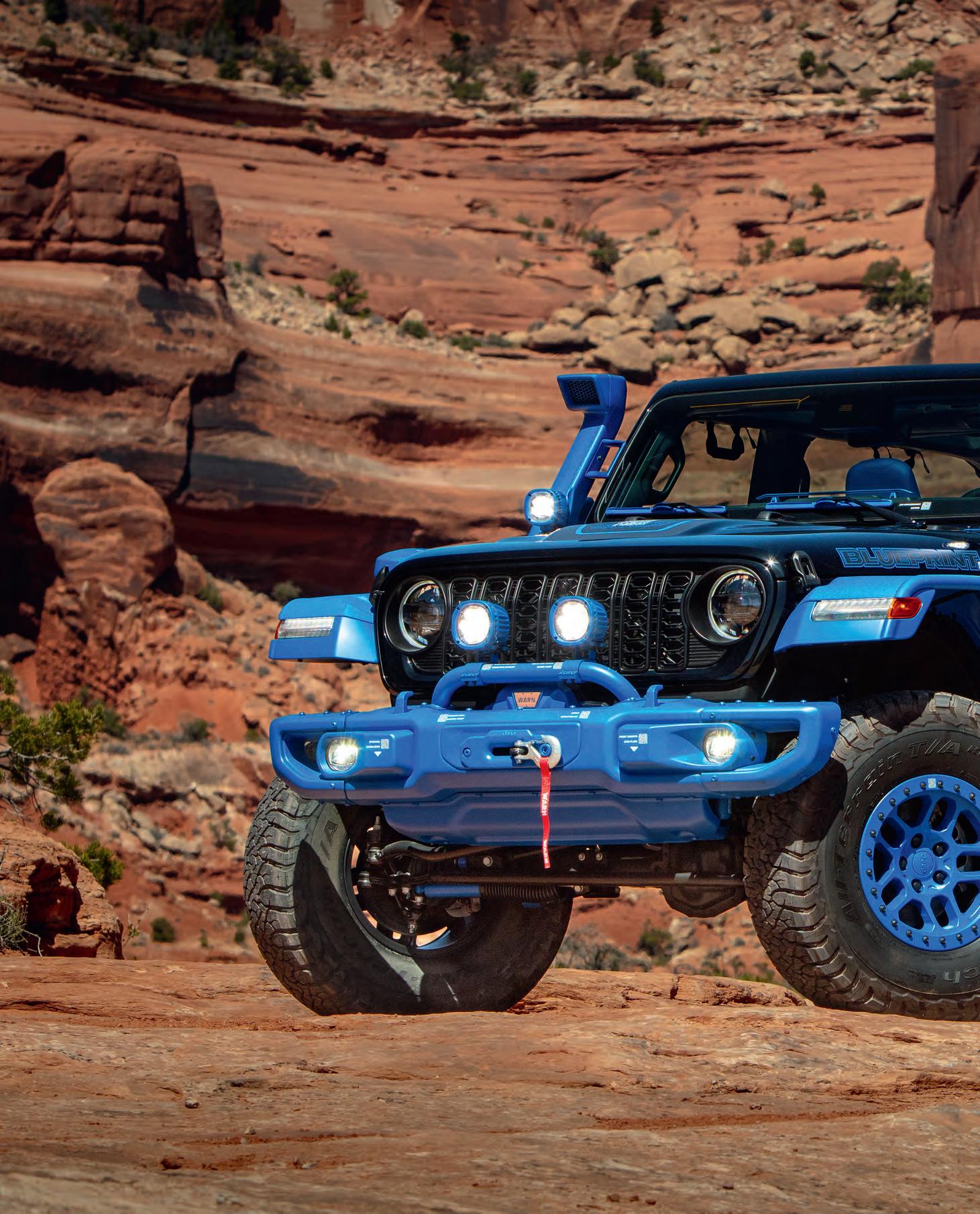

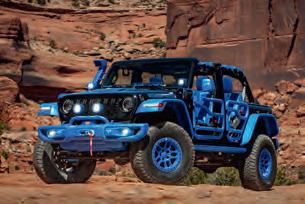
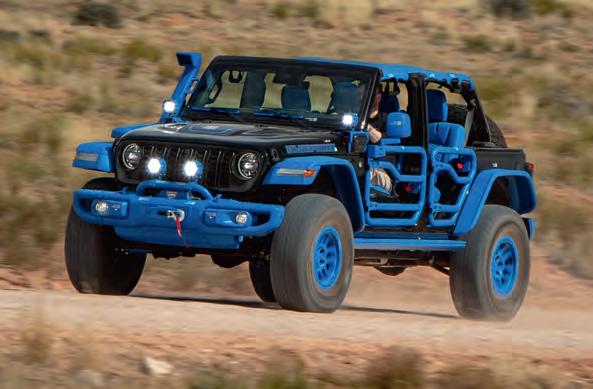
Jeep Wranglers are meant to be at their coolest in shortwheelbase form, but the Blueprint concept is a reminder that a well done four-door can be a show-stopper too. And a topnotch trail rig besides



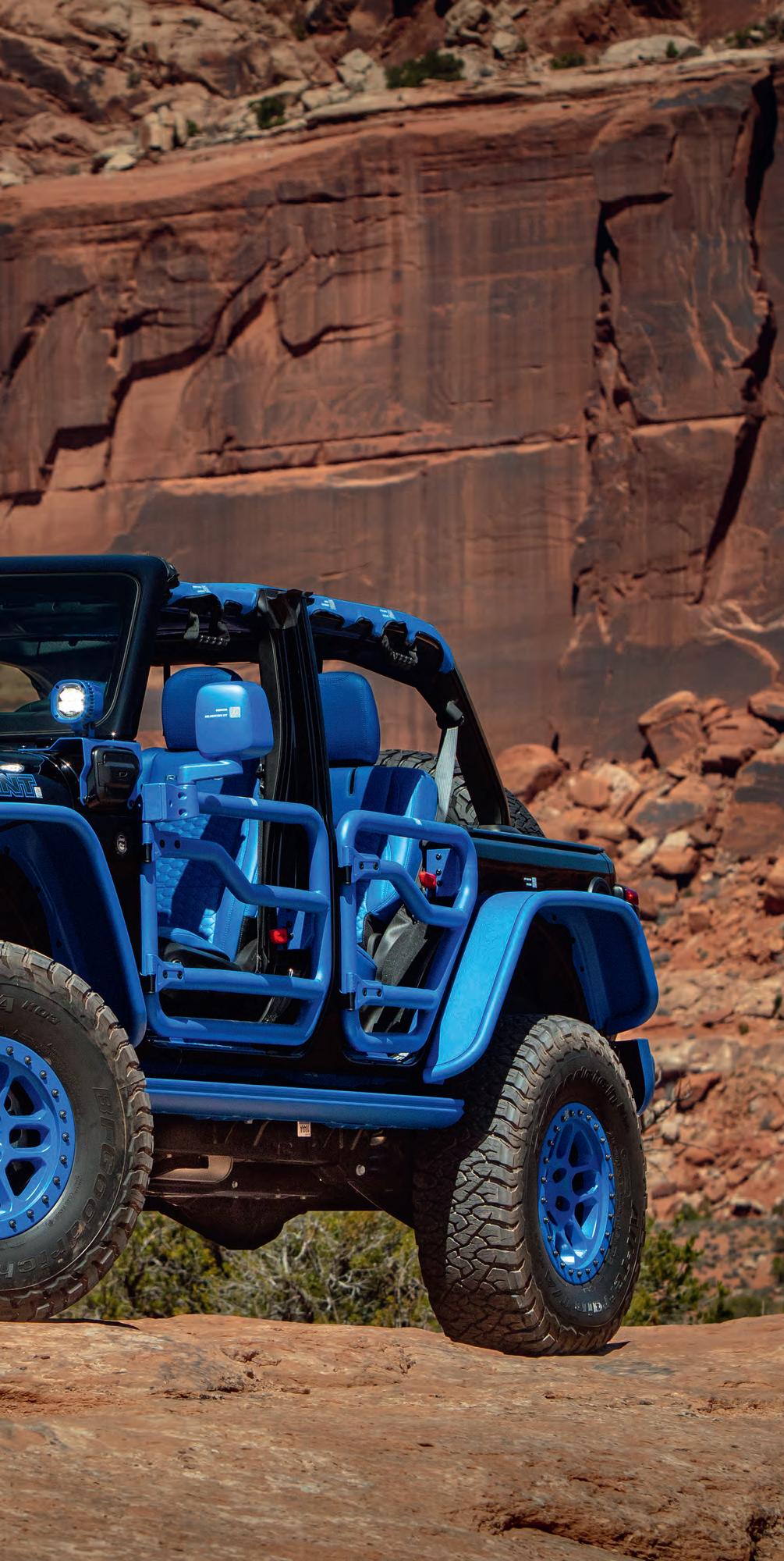
The classic image of a Jeep will always be a two-door. Doesn’t matter if it’s a Willlys, a CJ3 or CJ7, a YJ Wrangler with the square headlights, a JK or even a JL – shortwheelbase is cool. The latter two models my have sold far greater numbers in fivedoor form, because that’s more sensible, but since when was a Jeep sensible? A Wrangler is the ultimate in heart-over-head motoring, a car you buy because it’s cool –and it’s never cooler than when it looks like a Moab trail rig.
Of course, there are those of us to whom a Wrangler is a phenomenally capable off-roader with almost limitless potential for modifying. If that’s you I’m describing, it’s actually a vehicle you can buy with your head as well as your heart. But even then, your head is probably still clutching at your sleeve and pointing at the long-wheelbase one in the corner of the showroom.
The good news, then, is that soon after they had first launched a five-door Wrangler (the old JK Unlimited), Jeep’s people found a way of making that look cool too. You just need to lift it up high and chuck some big old tyres under it, then – and this is the important bit – fetch off the roof and doors. The long-wheelbase Wrangler is a big, bluff, ungainly looking thing with all its bodywork in place, but strip it down and as if by magic it takes on a jaunty air even the three-door struggles to match.
Obviously, this is easier said than done if you live in Britain, where going about in something with no roof will get you wet and going about in something with no doors will very likely get you nicked. But no such dull concerns on the red rocks of Utah, where Jeep unveiled the Blueprint – an eyecatching five-door and ‘a rolling catalogue of factory-tested and factory-backed items from Mopar and Jeep Performance Parts.’
It’s not the first time they’ve done a concept Wrangler along these lines, and indeed it’s not the first time they’ve covered it in QR codes so people admiring it can fire up their phones and learn more about what it is they’re admiring. That’ll be more than 35 QR codes, one for each of the accessories on board.

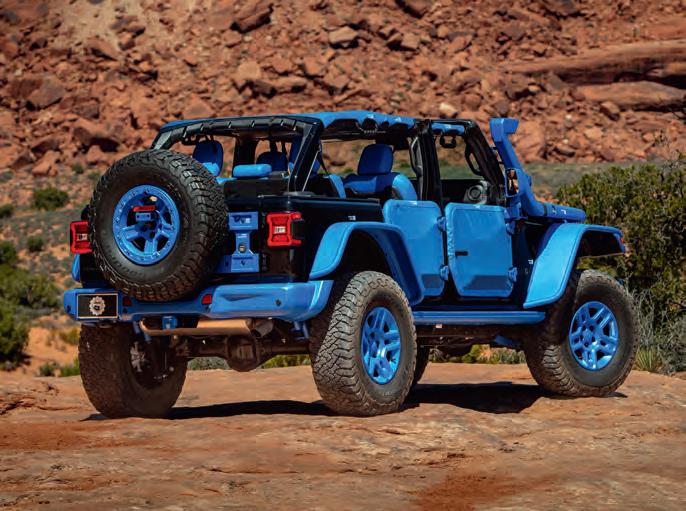
If you’re eagle-eyed, you might have spotted that the vehicle looks a bit different from either side. No, not just because there’s a
mighty great snorkel attached to the A-post on the passenger’s side. It’s subtle but when you see it, you see it. From the left, you have tubular half-doors and 17” beadlocked off-road wheels: more round to the right and the doors are mesh-clad and the wheels are standard. Move round to the back and the spare gets a style of its own, again with a beadlock ring but without the twin-spoke design of those on the driver’s side.
Why are these differences not apparent at first glance? Because mainly it’s all so incredibly blue, that’s why. It may or may not be to your taste (it’s not to ours, if we’re honest– if the black bodywork was white, that would be a different matter, but each to their own) but if you don’t like blue things you definitely won’t like this truck.
We do all like lifted suspension and big tyres though, right? That’s definitely to everybody’s taste. The Blueprint sits on +2” suspension and 37” BFGoodrich K03 All-Terrain tyres, the latter looking good whichever of the three styles of wheel they’re on. You’ve got to say that any vehicle capable of rocking a 37 on just a two-inch lift is worthy of respect, though there’s a virtual lift going on as well with the tubular high-top fenders covering the tyres.
These are as strong as they are cool (and boy they’re cool), which can also be said about the rock rails protecting the sills. Perhaps in this case, it would be more apposite to say that they’re as cool as they are strong. Either way, strength and coolness are very much the theme.
Which brings us to the bumpers, which are Rubicon steel items and are therefore strong and, guess what, cool. The front one
is even cooler as it’s home to a winch from Mr Warn (stop it, there actually WAS a Mr Warn, his name was Arthur and he was very good at inventing things) as well as a pair of 7-inch Tyri LED cubes. There are more of these on the lower A-posts, only five inches in size this time but between them and the vehicle’s own not insubstantial lighting effort you shouldn’t be struggling to see where you’re going.
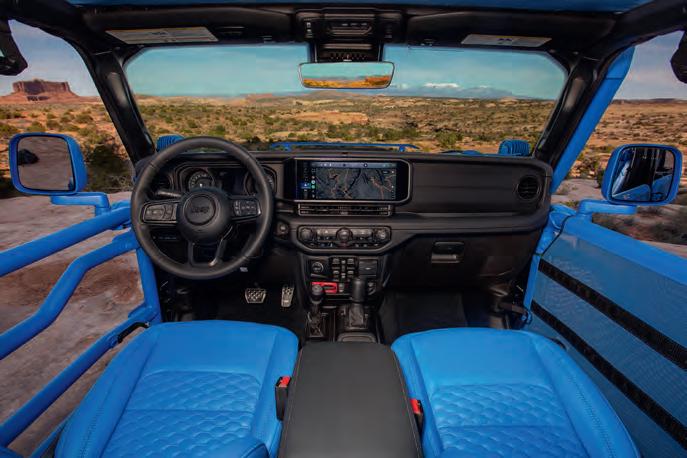
We’re not sure if it’s strictly right to talk about the interior of a vehicle like this, what with it bringing the outside in by not having any doors. But the bit where you sit… well, it brings the outside in too, by being blue. And if you thought the exterior was a hard sell in terms of taste, the matching leather Katzkin seat covers definitely a challenge to the eyeballs. If you love ‘em, you really love ‘em… Whoever decided on all this blueness clearly didn’t reckon with the standard
Wrangler dashboard, which is as black as ever, though they did colour-code the accessory rail mounted on top of it. And the windscreen wipers, we’ve just noticed. You clearly can’t have enough of a good thing after all.
Also inside are abank of auxiliary switches, door sill guards, a bright pedal kit, front and rear grab handles and all-weather floor mats, while the very back end features a tailgate table. Keep those QR codes coming, guys…
In the meantime, what we have here is a long-wheelbase Rubicon that’s been turned into something more besides – and something you could build yourself, too, with nothing more than a smartphone, a supportive credit card the global reserve of blue paint. Actually, you couldn’t built it yourself because it’s a plug-in hybrid 4xe model and they never brought that one to Britain, however the treatment would work equally well on the everyday 2.0-litre version we’re favoured with here.
Of course, this is also Britain where driving a car with no roof or doors will see you hospitalised pretty quickly most of the year, but what the hell. You’ve got to suffer for your art, right?
And what a work of art it is. Picasso wasn’t the only one to have a blue period, clearly. Anyway, forget your reservations about the colour scheme – a four-door Wrangler will always look cool with a lift, big tyres and its body stripped down. And here’s your proof. Yeah, the classic image of a Jeep will always be a two-door, and it’s never cooler than when it looks like a Moab trail rig. But that’s what this one looks like too – and even if it gets a bit chilly in there, it’s a Jeep for people who think with their heads as well as their hearts.






• Escape Gear
• ...and many more!

• Aluminium canopies
• Roof tents and roof racks



• Off-road fridges and 12v gear
• Drawer systems and slides











• Bumpers, side steps and vehicle protection
• Campsite essentials, tables and chairs


































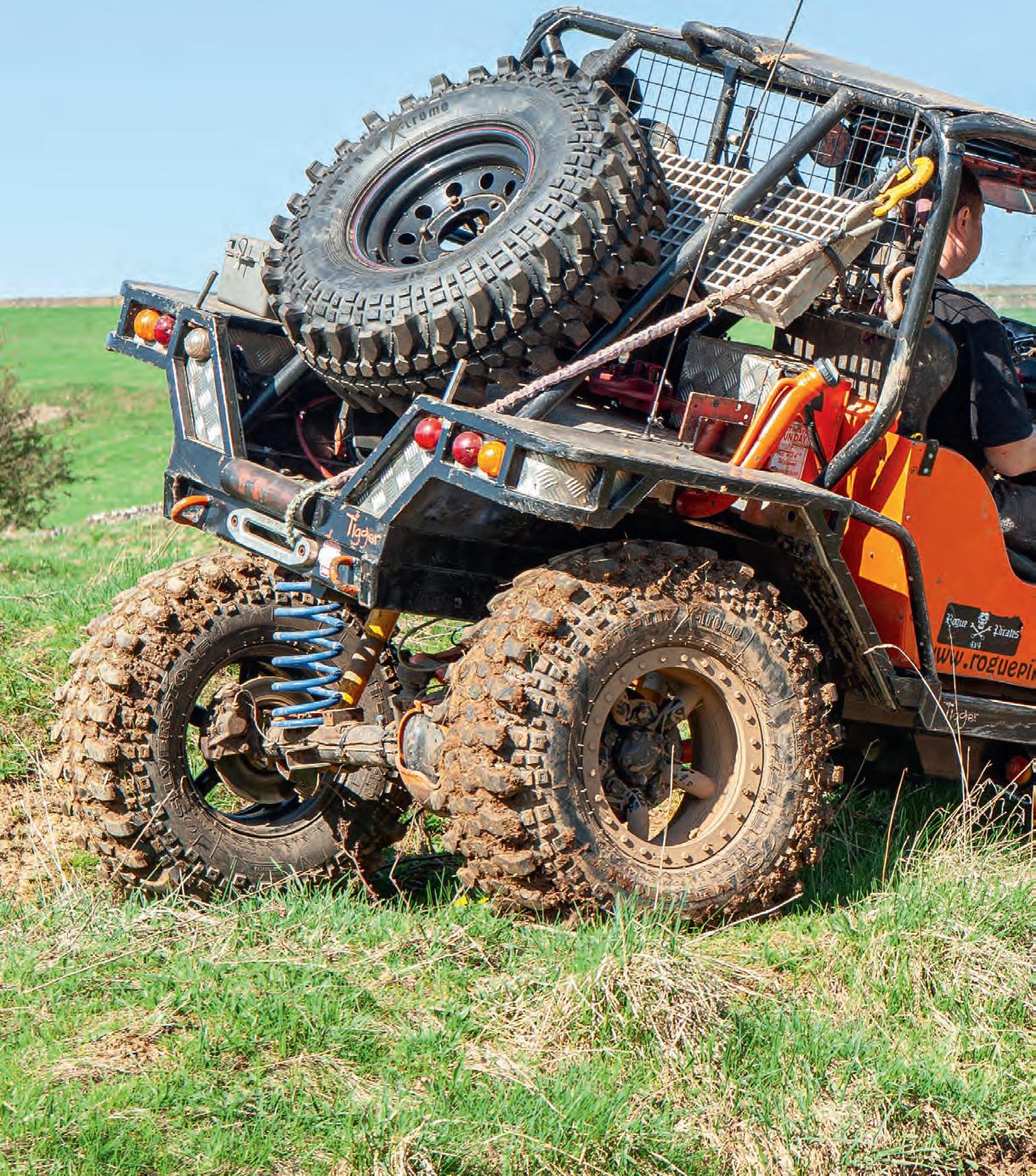














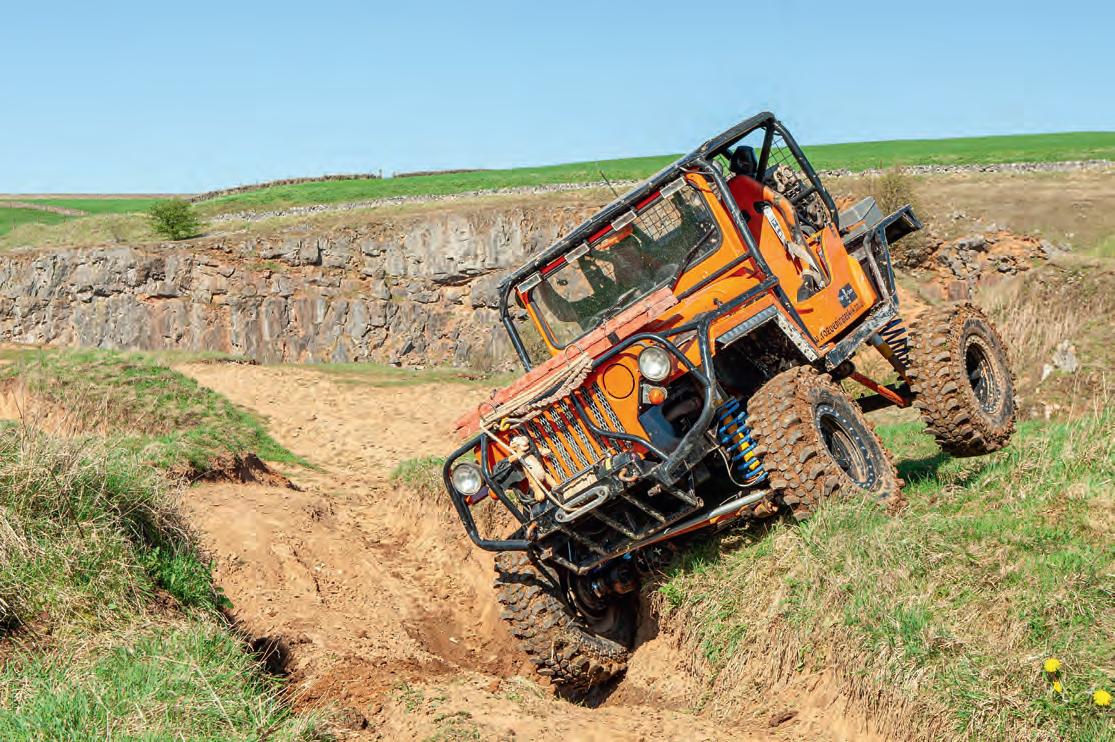
The Jago Geep was designed to look like an off-road legend but, being that it was a kit car, it was as much use away from tarmac as the clapped out Escort it was made from. Ahead of its time, then. But unlike modern day soft-roaders, a bit of ingenuity could turn one into a proper weapon




Words Will Crotchley Pictures Steve Taylor

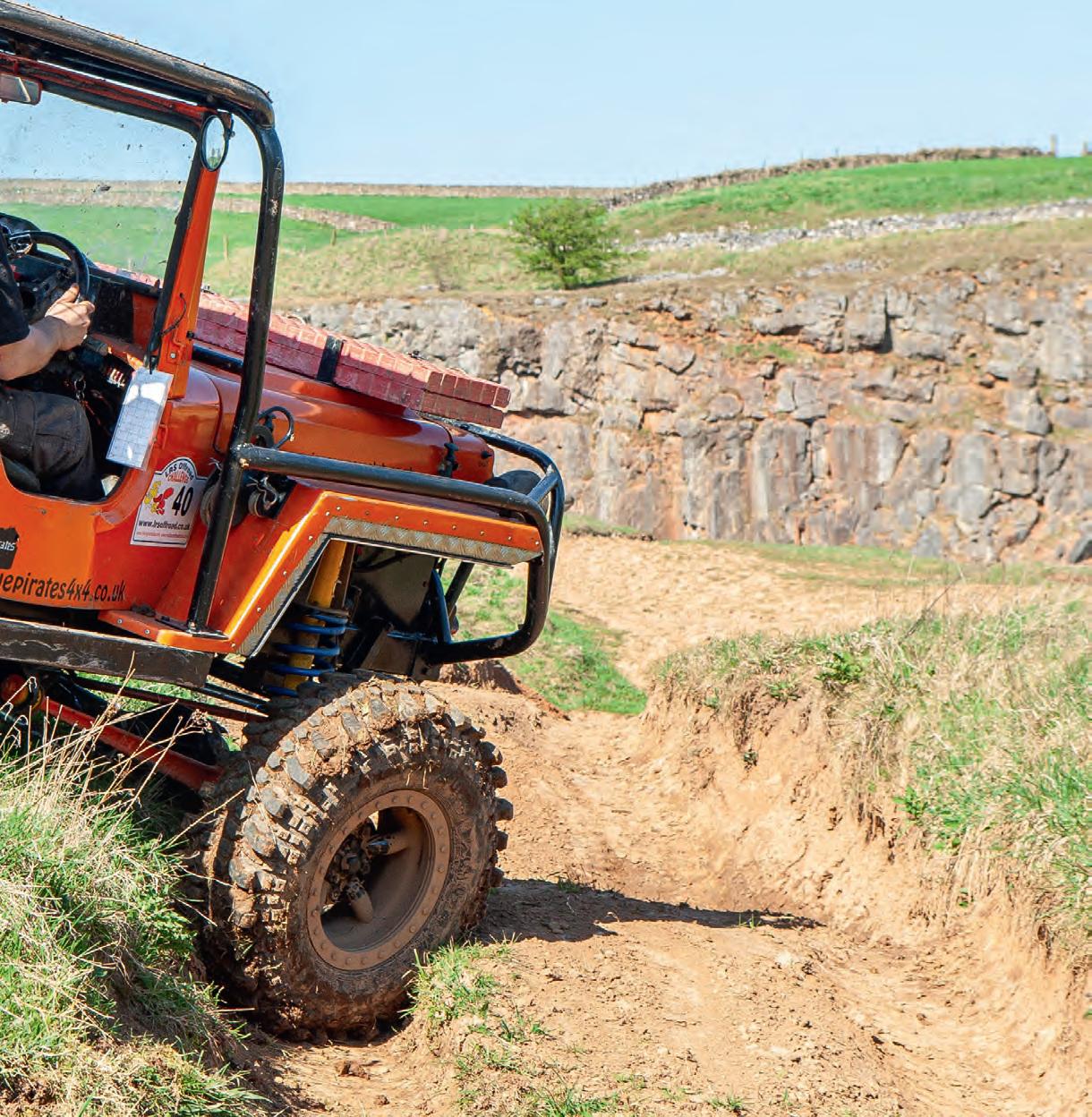
Kit cars aren’t everyone’s idea of a good time. Cracked fibreglass, feeble engines and bodywork that looks as though it was designed by a caravan enthusiast are just some of the turn-offs. Pretty often they’re a bit, well, weedy, too, with little to back up the alleged promise of fun and performance.
You couldn’t say that about this Jago Geep (yes, Geep – spell it with a ‘J’ and some people from America with lots of lots of lawyers will get extremely unamused).
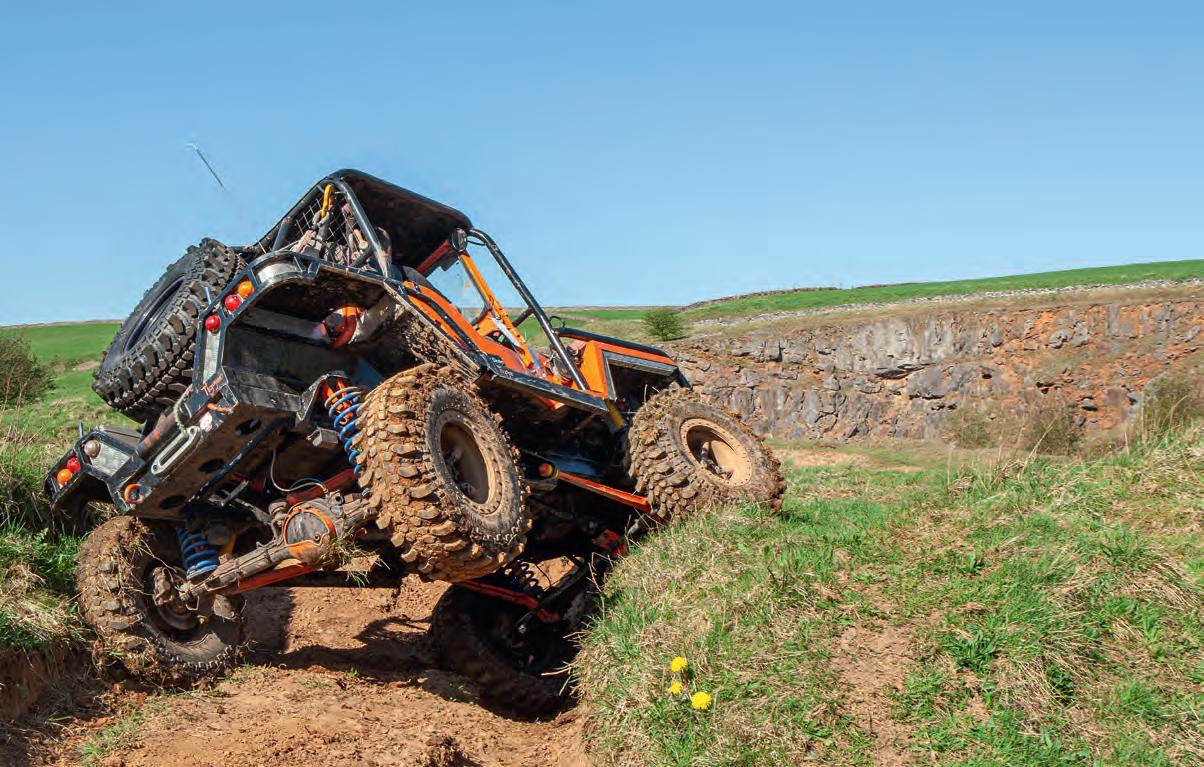
And you particularly wouldn’t say that to Gary Reed. We featured one of his mates’ old trucks a couple of months ago, in the shape of Malcolm Smith’s P38 trayback; both were members of Rogue Pirates 4x4, a club which Gary started after building the Geep so he and his friends could compete together.
It was his first go at a Jago. Before this example, there was another one which had an SJ413 engine and running gear – though before that it was more mainstream stuff like a Toyota Surf, which is what got him into off-roading in the first place.
This very orange contraption was born in 1985, when people used to drink powdered orange juice and thought it was acceptable. It originally had some Land Rover parts but by the time Gary got to it there was nothing left except the chassis and shell. All the Ford running gear had been taken off and so it was a bit of a sorry thing that came Gary’s way via the Jago Owners Club.

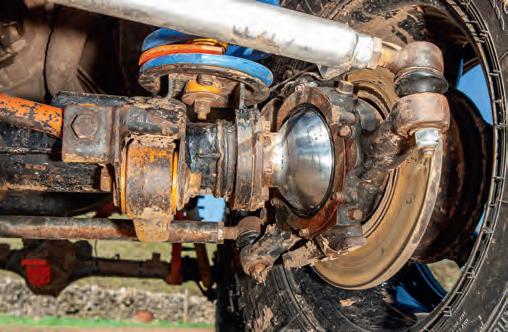
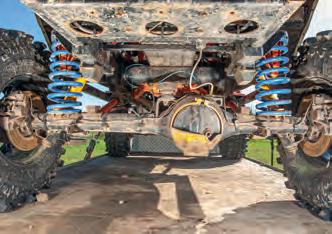
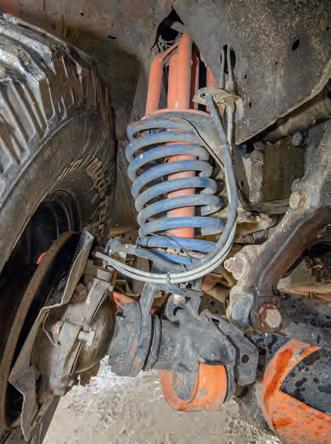
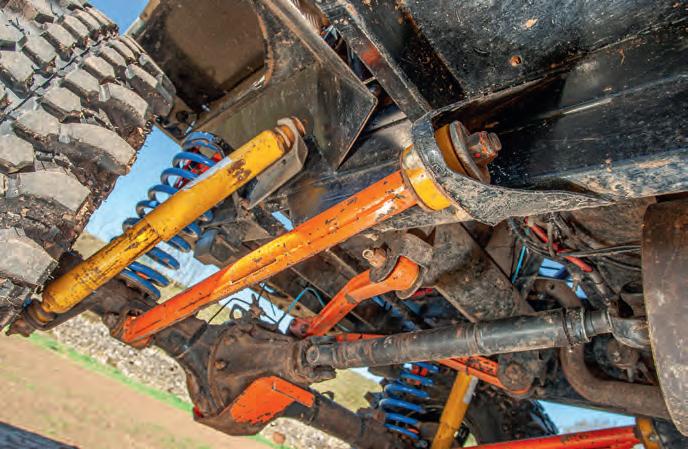
Above: Sitting up to attention on the 300Tdi 24-spline axles, the Bearmach springs are what give the suspension its five inches of lift. Those brakes are standard Land Rover units, though upstream of them is a Toyota servo and in between are Goodridge extended hoses
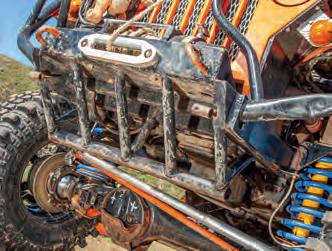
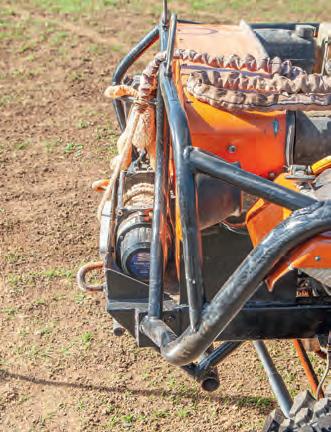
Below: Steering is all standard Land Rover stuff, with a PAS box from a 300Tdi. You can see why Gary’s mates very charmingly pointed out that the front guard resembles a cattle grid. But it certainly works – it keeps cattle out – and is also a solid home for the front winch
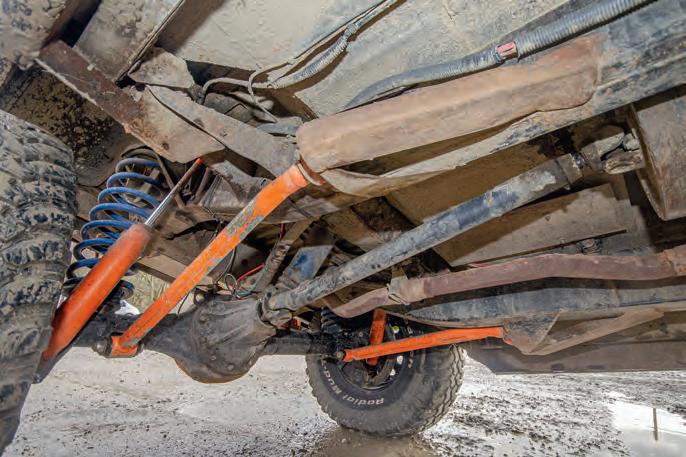
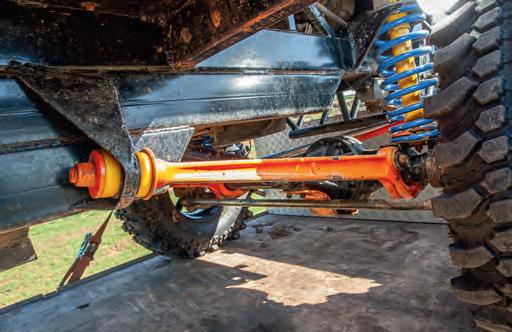
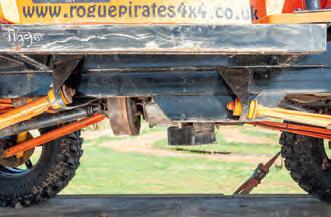
Right: The rear axle is held in place by an A-frame and two trailing links, the latter remade using heavier-duty tube. The diff guard is pretty substantial and wraps around the diff – it looks totally bomb-proof. Those are Terrafirma shocks you’re looking at; their companions on the front axle are Old Man Emu
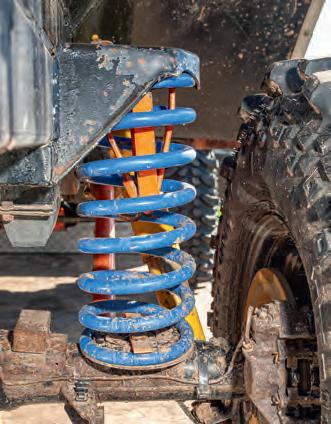
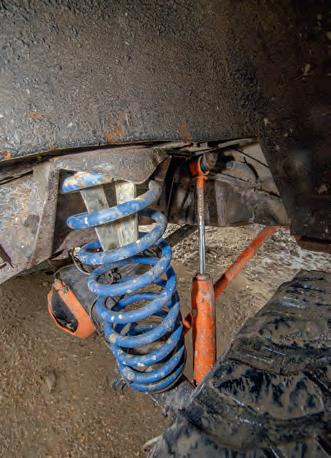
Above left: The rear springs are designed to dislocate once the axle starts twisting. More to the point, they’re designed to relocate again afterwards – that’s what the home-made cones you see here are for
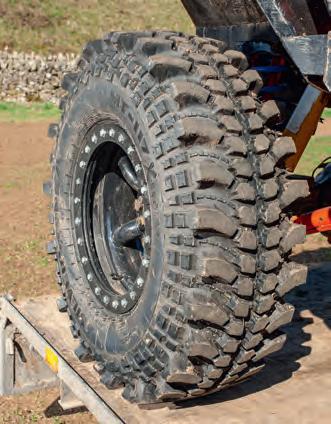
Above right: Mach 5 rims are always cool, especially when they’ve had beadlocks added. Tyres are 35x11.50x16 Silverstone Xtremes, which also look cool and also do exactly what it says on the tin
Since it had been built to take early Escort running gear, the plan to stick Land Rover kit in there was always going to be a challenge. In September, Gary bought a 200Tdi Discovery that had failed its MoT and set about stripping it of its engine, running gear and suspension. By January, he was setting to, trying to make something of an orange tub and a box of bits from a condemned Disco. An interesting way to start the year – heaven knows what his resolutions must have included.
One of them must have been ‘And I promise faithfully to actually finish this project’ because by April it was basically done and on the road. That’s pretty impressive, but then there’s not much to do in the first dark, cold quarter of the year with all those long evenings. Although it’s interesting to note the number of births that occur around November time.
Clearly Gary’s mind was not distracted during that period. By the end of it, the Geep was up and rolling.
It all started with the engine. The 2.5-litre 200Tdi unit is not a small lump and the
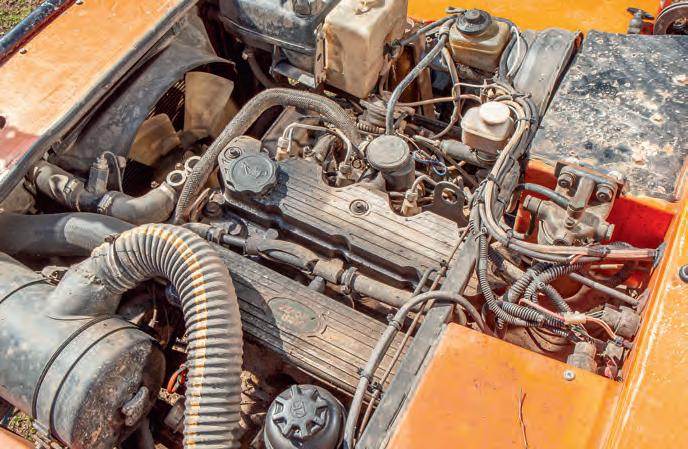
Engine, radiator and fan are all stock Discovery. It’s a tight fit and needed eight inches adding to the engine bay to get it in. The air intake goes to a snorkel which reappears behind the passenger’s seat
front of the body needed extending by eight inches to fit it in, complete with radiator and intercooler – all standard units. The front chassis was also extended to accommodate the winch. Overall, the chassis was strengthened with heavier
box-section and further steel plate to withstand what promised to be rather more vigorous off-roading than it had originally been designed for. Don’t forget, Jago designed it to be built using Escort or Cortina components.
With the more powerful engine in the stronger chassis, it was time to fit the front axle. This was positioned in the same relative position as on a Discovery so that the same front propshaft could be used. The same went for the rear axle, which could also now use a front propshaft –commonality of parts, the need to only carry one spare, you know it makes sense.
The other benefit was that this left it with virtually no overhangs, which is kind of handy. The rest of the stuff underneath went in from the Discovery, things like the spring mounts and so on. The only bits which wouldn’t translate were the pedal
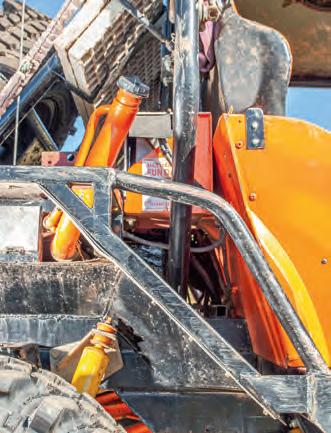
Left: Bent up from 5mm wall steel tube, the six-point roll cage is bolted to the chassis using mounts which were modified to meet MSA standards for competition use
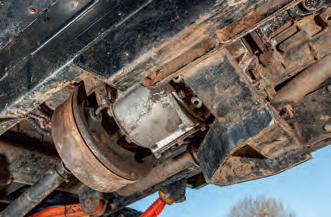
Above left: A lot of the events in Gary’s neck of the woods take place in quarries. Hence the amount of protection from rock strikes – as the reinforcements under the tranny crossmember show, it’s a hard place under there
Above right: Home-made sills are capable of shrugging off direct hits from solid rock
box and the brake servo. These are both from a Toyota Surf, a vehicle which as we’ve already heard Gary knows well. Why these items? ‘Well,’ he says, ‘after all, you do want to have reliable brakes.’ That you do.
Up above, Gary modified the bodywork to a trayback design and fitted a rear winch and six-point rollcage, formed and fitted complete with front wing protection. And that, for a while, was that. Tough, eyecatching, original, this was a pretty good rig, but just six months later it all came apart again. Not in an exciting, slo-mo explosion kind of way, but in a bit by bit, part by part kind of way.
For Gary, this is just part of the process. ‘With any off-roading toy there is always something to mend, adapt or add to create the vehicle for your own needs.’ Quite.
The catalyst for the next series of changes was the desire to take competition more seriously, specifically winch events. Gary got serious. For starters, all the suspension was changed. In went a second-hand +5” suspension kit, along with Bearmach heavyduty blue springs. At the front, the shocks are Old Man Emu and at the rear they’re Terrafirma with Gwyn Lewis shock mounts.
Left: A home-made five-gallon fuel tank sits out of the way behind the driver’s seat, surrounded by steel tubing to keep it intact and avoid any danger of Gary’s bucket suddenly becoming an ejector seat
Centre: Front winch is a TDS with Bowmotor 2 and Dyneema rope. It’s sitting in a home-made cage with tubing coming in from all directions, all cross braced and with flying buttresses to rival Notre Dame. That’s what happens when you have to extend your engine bay, you see
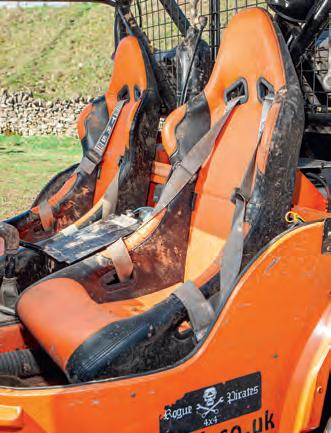
Right: Bucket seats with four-point harnesses keep the crew in place until they want to get out, at which point the Jago body makes it easy for them to do so. It’s probably every bit as accommodating to mud and water, but at least there’s that robust mesh screen to prevent anything more sinister from getting into the cab. This also provides a useful home for the air tank, just visible between the seats, which supplies the rear ARB diff-lock







































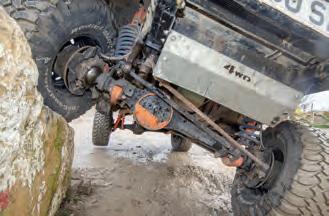
The rear springs dislocate, with home-made cones keeping them in place.
At the bottom of the springs, the axles were replaced with 300Tdi 24-spline examples. The front axle mounts were then removed and repositioned a few degrees further round. The reason for this was that Gary reckons it enabled the springs to sit straight and did away with the need for castor-corrected radius arms. It’s all been Polybushed, as well.
The rear axle was finished off with an ARB Air-Locker. At the ends of the axles, the rims were replaced with four Mach 5 steels with added beadlocks. On these have gone Silverstone Xtreme 35x11.50 tyres, which look rather better for off-roading than for speeding down the motorway. There’s a reason for that.
Getting power to the axles, the front of the two propshafts was replaced with a wide-angle re-welded unit to accommodate the greater articulation. Gary reckons a standard one could do the job if required.
There’s a fair amount of protection down under, with a front diff guard supplemented by welded-on 8mm plate which wraps around under the axle. The rear axle has had the same treatment, and the rear trailing links have been remade with heavier tubing and welded-on rock sliders. With further
home-made rock sliders welded to the sills, Planet Earth is going to have a hard time breaking this rig. There’s even a home-made steering guard, although some of Gary’s mates have unkindly suggested that it looks remarkably like a cattle grid.
Up above all this bristling defence, the body is the Jago fibreglass thing, with a wooden floor. Yes, seriously – it sounds like a little sailing dinghy, not a tough off-roader. But there is 3mm steel underneath the floor and plenty of hardware to mirror the protection underneath. The six-point roll cage with extra roof bars, all made of 5mm steel, is bolted to the chassis. The roll cage mounts were modified to ensure they met MSA approval for competition use, and there’s extra mesh behind the seats.
There’s also a small steel fuel tank behind the seats, replacing the stock one. The rear tray further back was modified to make way for those huge 35” tyres, but it also needed some work to accommodate the rear winches. No, that’s not a misprint. As mentioned, the Geep is set up for winch challenges, so we have not two but three of the things on board.
Both the front and the rear of the vehicle run TDS winches, with Bowmotor
2 motors. The centre unit is a Superwinch EP9, and all three run Dyneema rope. It all came from Super Power Winch, who also recommended the freespool kits on the TDS units. The ropes all run through fairleads designed to avoid any acute angles, and you can safely say that Gary shouldn’t ever get stuck with this lot on his side (or rather, that when he does get stuck he shouldn’t ever be unable to get himself unstuck again).
All the winches are on their own isolators and there’s an engine/diesel cut-off too. On the electric front, he’s also got spotlights above the windscreen, as you can see, but admits he’s used them so seldom he’s not even sure if they work. But they look nice.
That’s probably about the only apparently superfluous bit of kit on this rig. Gary’s been working with vehicles since he was 13 and he clearly knows what he’s doing and is capable of putting it all into action. More than that, he’s willing to do it on a vehicle that stands out from the usual crowd.
If you were going to build a super-tough winch challenge competition vehicle, not many would think to start with a Jago. But that’s the obvious attraction of this Geep –it’s the same, in that it’s formidably capable off-road, but it’s different too. As different as powdered orange juice – but a great deal more appealing.







The inaugural Defender Awards recognise pioneering charities working to defend vulnerable aspect of the planet and those who live on it.This year’s winners include a project to restore the rainforest – right here in Britain




When you think of rainforests, you think of the Amazon. But Britain used to have plenty of them – until, needless to say, our ancestors showed up.
There’s a common misconception that the nation’s trees were all cut down to built the ships that fought the Spanish Armada but in reality, the process of cutting down our native woods started around 5000 years ago, when Neolithic tribes began moving from hunting and gathering to clearing land for agriculture.


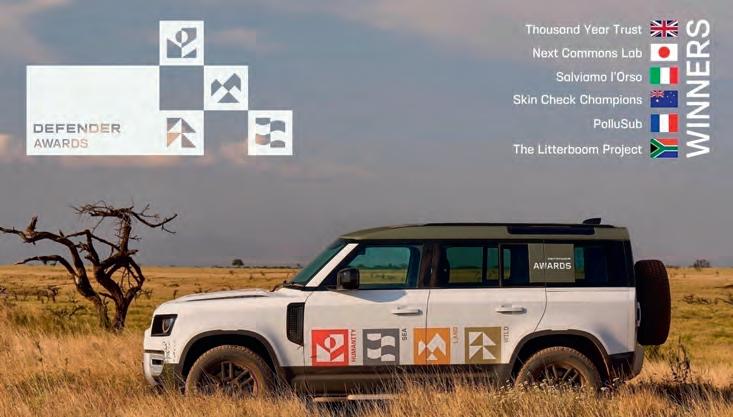



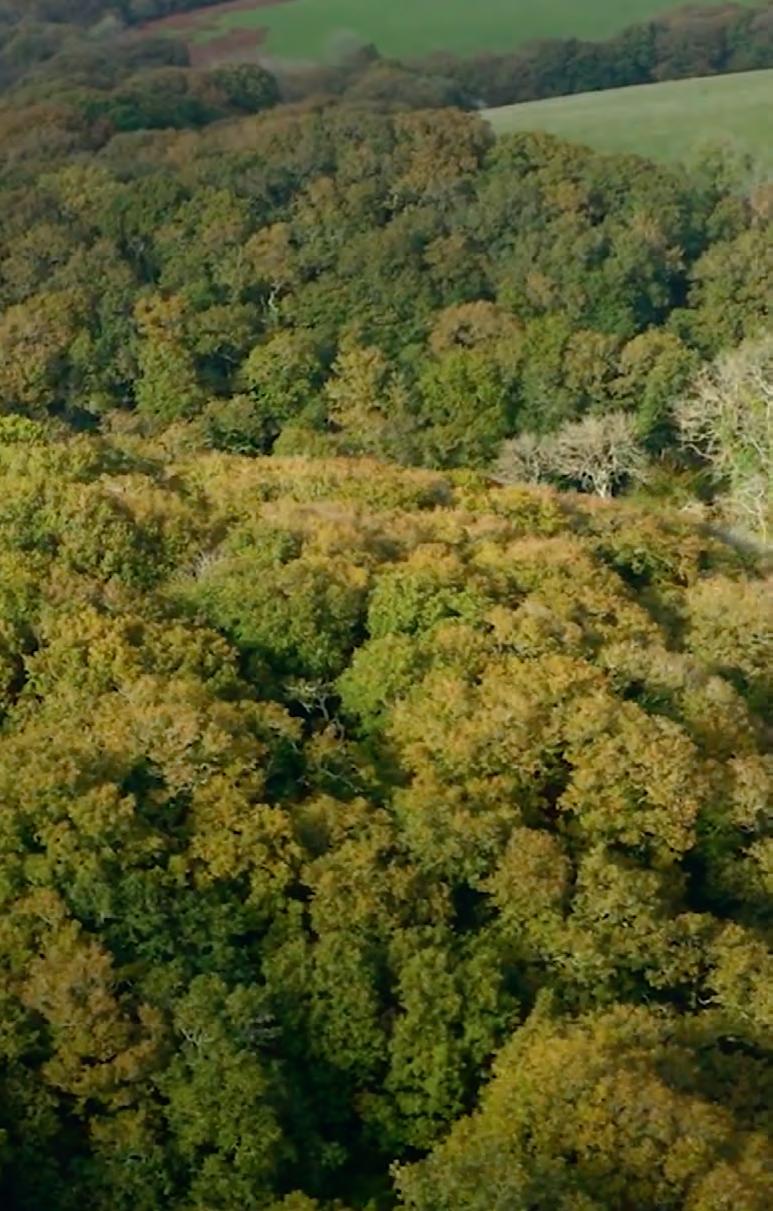
It was of course at around the same time in historythat the earliest Land Rover Defenders started to need their rear crossmembers replacing. So it’s fitting that the Thousand Year Trust, the UK’s only conservation charity dedicated to the restoration of Atlantic temperate rainforests, should be named as an international winner of the inaugural Defender Awards.
Continuing Land Rover’s record of support for conservation and humanitarian charities, the Defender Awards were created ‘to recognise heroes across the globe
in four categories: Land, Wild, Humanity and Sea.’ The company invested a million pounds in the scheme, which offered a £100,000 bursary, plus a Defender for use in their work, to charities around the globe. Entries were evaluated based on how they aligned with the chosen award category, the impact their projects are making, the level of innovation in their operation and how the addition of a Defender would contribute to their success.
Following the creation of a 56-strong shortlist, six winners from across the four
Location France
Category Defenders of the Sea
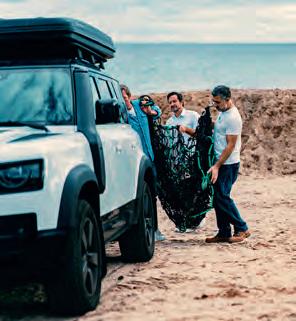
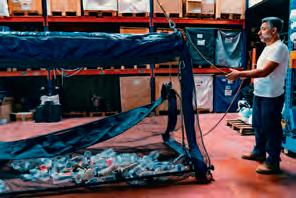
PolluSub’s Blue Odyssey Initiative uses eco-friendly nets to transform port entrances into environmental filters, capturing underwater waste before it settles at the bottom of the ocean. Its Defender will be used to help transport equipment for pilot project installations and operate as a mobile base for team members.
Location Japan
Category Defenders of the Land
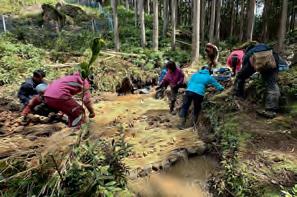
Following a successful pilot scheme, the Watershed Regeneration Project plans a training programme for watershed regeneration which aims to train more than 100 professionals to future-proof its vital work. Its Defender will provide travel between project sites, some of them far fling, as well as operating as a mobile research hub.
Location Australia
Category Defenders of Humanity

Project Check Mate has already carried out 25,000 skin checks for people in remote parts of Australia and identified more than 600 potential melanomas and 1800 other skin cancers. Helping regional clinics detect skin cancers early and providing training for doctors in high-risk communities, the charity will use its Defender to tow its mobile clinic and help give it access to more communities accessible only via tough Outback trails.

categories were chosen by a panel of judges co-chaired by Defender Managing Director Mark Cameron and Dr Moreangels Mbizah, founder of Wildlife Conservation Action in Zimbabwe. The winners work in fields including biodiversity and ecological restoration in the UK and Japan, wildlife conservation in Italy, vital healthcare provision in Australia and marine protection in South Africa and France.
‘Selecting our winners from an incredible shortlist of 56 global projects was tough,’ commented Cameron. ‘But we believe those chosen best reflect the conservation and humanitarian heroes around the world that are embracing the impossible every day. We can’t wait to see the impact that the Defender Awards will have on these inspiring projects in taking them to the next level.’
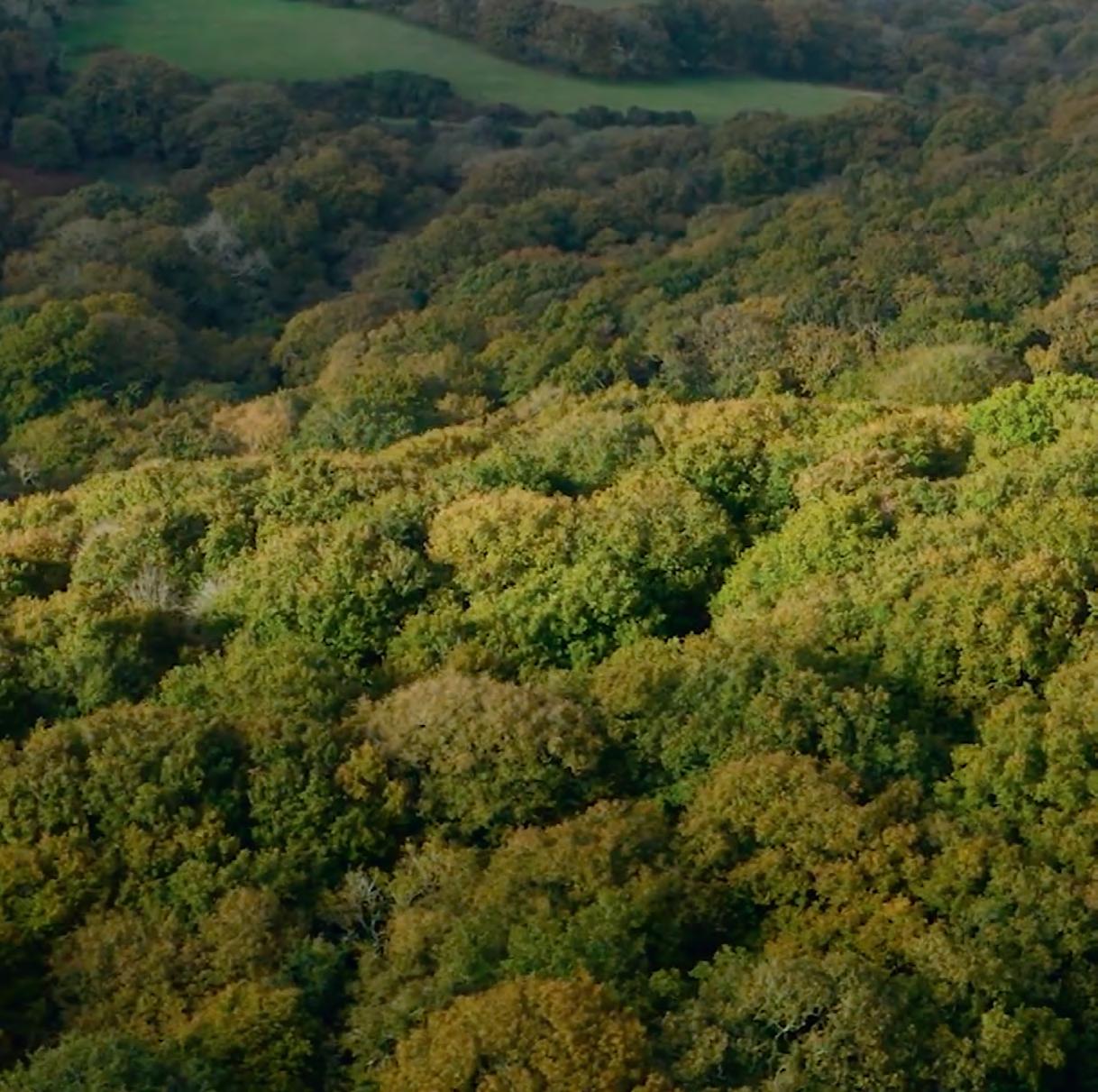
In Britain, the Thousand Year Trust was recognised specifically for its ambitious Cornwall Rainforest Project, which will restore 10,000 acres of Bodmin Moor. The area is naturally rich in biodiversity, including ancient moss-draped trees, carpets of ferns
and the rare and rich wildlife that inhabits the woodlands.
An integral part of the charity is the outreach to upland farmers and landowners across the country to help support them transition to more nature-friendly land management methods.
By planting 1.28 million native trees and capturing 220,000 tonnes of harmful carbon from the atmosphere, the project aims to slow climate change and restore a healthier, more resilient landscape. It will use its Defender as a mobile base for surveys, transport to remote locations and locally for schools engagement, as well as ensuring the charity can take its work to any terrain where it is needed.
‘This support will help us unlock remote corners of Bodmin Moor, reconnect habitats and scale a model that benefits both nature and rural communities,’ said Thousand Year Trust founder Merlin Hanbury-Tenison. ‘It’s about looking beyond quick fixes and committing to the long view – creating living, breathing rainforests that future generations can cherish.’
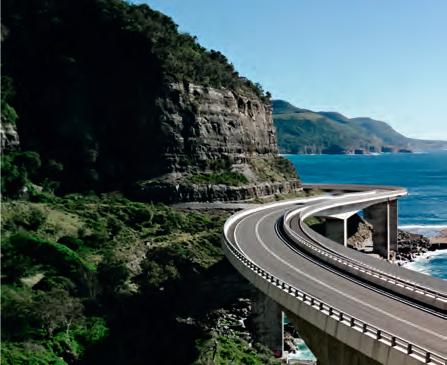
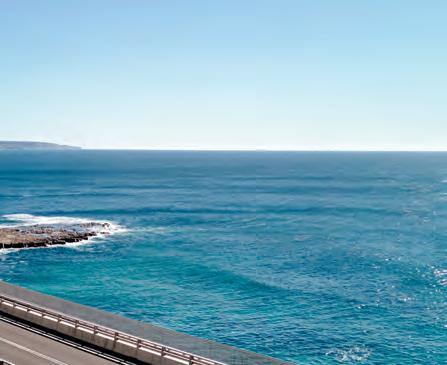
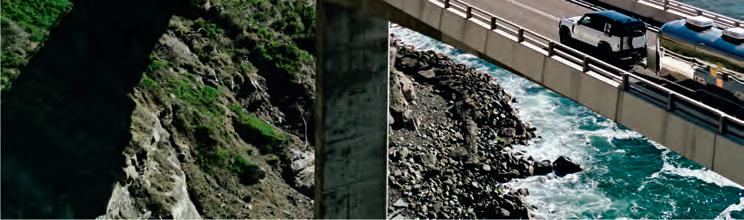
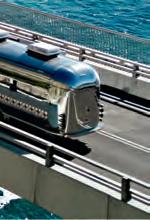
This might look like an idyllic photograph from a holiday brochure, but that’s not an Airstream caravan behind the 110 – it’s Skin Check Champions’ mobile clinic, which the charity has already used to help it identify almost 2500 potential cancers on people who might otherwise not have been diagnosed until it was too late. Smooth coastal road like this might help its teams get from region to region, but many of the communities it needs to reach are accessible only by rough, unpaved tracks – which is where the Defender will come into its own

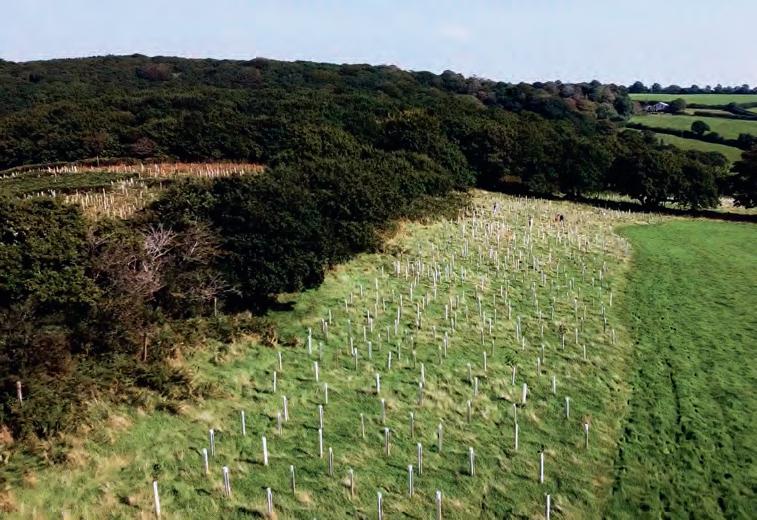
Location United Kingdom
Category Defenders of the Land
The Cornwall Rainforest Project will deliver a 10,000-acre restoration programme on Bodmin Moor, planting 1.28 million native trees to reconnect habitats and support rare species while also sequestering 220,000 tonnes of carbon. The project will use its Defender as a mobile field base and basecamp and for reaching remote planting zones.

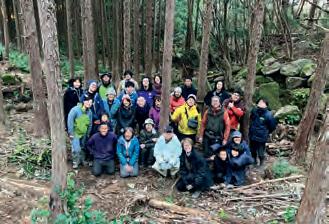

Location Italy
Category Defenders of the Wild
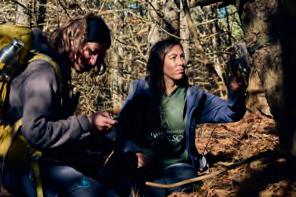
Salviamo l’Orso is dedicated to protecting the Marsican brown bear, a unique sub-species with only 60 individuals remaining across central Italy. Its Bear Smart Landscapes project restores habitats and reduces human-wildlife conflict; its Defender will provide access via dirt roads and mountain trails, while the award’s funding will support a new volunteer centre for bear conservation.
Location South Africa
Category Defenders of the Sea

The Litterboom Project protects ocean and marine life, using plastic barriers to prevent an estimated five tonnes of waste per month from reaching the ocean. Its teams will use the Defender to help them identify new sites by accessing more remote and overlooked river systems.











There was a greater variety of retro off-roaders than ever on this year’s Dakar Classic. But 2026 will forever be remembered as the year when an old leaf-sprung Land Rover showed the rest of them how it’s done…
Words: Gary Martin Pictures: ASO, as credited
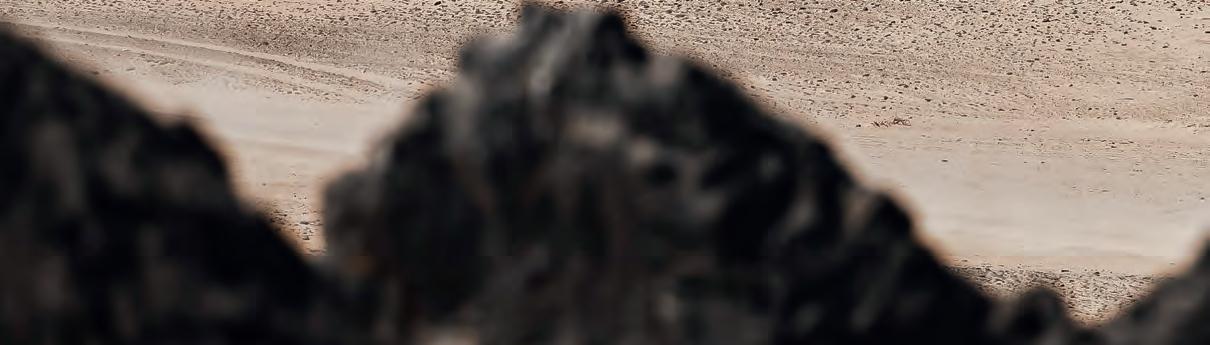

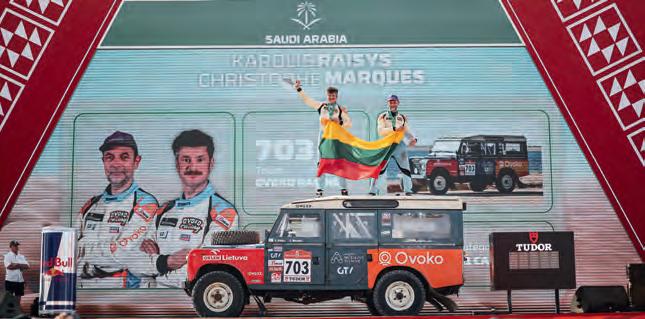




In the run-up to the 2026 Dakar Rally, British attention was focused firmly on Land Rover’s works team and their trio of Defender 110s – which duly did the business as Rokas Baciuška led the way to a dominant victory in the rally’s Stock class. But away from the high-budget corporate world of professional desert racing, a group of older vehicles from around Europe was assembling in Saudi Arabia for the sixth running of the Dakar Classic.


This was introduced in 2021 as a regularity rally for vehicles built before 2000, or replicas to original pre-2000 spec. It quickly gained popularity throughout Europe – though as has




always been the case with the Dakar itself, British entries have been few and far between.


This year, there was a sprinkling of British teams among the many from the rest of Europe. Likewise, there was a sprinkling of British vehicles among the Japanese throngs – and while it was being driven by a man from a thousand miles beyond these shores, the 2026 Dakar Classic was won by a vehicle from Solihull.

Pics: ASO / Aurélien Vialatte
throughout the Baltic nations – and last year he entered the Dakar Classic for the first time, having previously driven media cars for the organisers.

Like Baciuška, Karolis Raisys is from Lithuania – a country where the Dakar is the second most keenly followed sport after professional basketball. He works as a lead instructor for Land Rover

Whereas the top teams put years of preparation into their Dakar campaigns, Raisys entered aboard a barn find. Over the course of a month, he rebuilt his old 109 to make it ready for the dunes – and then, despite having no technical assistance to back him up, he did the impossible and finished on the podium.

For 2026, Raisys had more time to get his Land Rover ready. He had the benefit of a year’s experience and, no small matter, he had a secret weapon sitting next to him. Navigator Christophe Marques is a












seasoned campaigned in regularity rallies, having taken part in his first Rallye Monte Carlo Historique back in 2016, and he also happens to be an IT specialist who, during that time, has been working on developing regularity rally timing systems. This was his first Dakar, but Raisys could hardly have hoped for a better team-mate.

running in second were led by France’s Maxence Gublin – in his Land Rover 110.
Raisys finished the event on 735 penalty points – a huge lead from the secondplaced Mitsubishi of Ondrej Klymciw on 1003, with Josef Unterholzner taking bronze on 1137 in another Mitsubishi.

And so it turned out. In an event that’s about pace rather than speed, Raisys and Marques were a model of consistency. They dominated from the word go, dropping off the lead for a couple of days after a poor finish on Stage 3 but regaining it well before the end of the first week and proving untouchable from then on. And ironically, those two days when Raisys was



A huge victory for the only leaf-sprung Landy in the event, then, but there were other notable entries trusting Solihull vehicles too – including the all-English, all-female team of Helen Tait Wright and Marcella Kirk. Driving a 110 Hard-Top dating from 1988, they kept it steady to finish 83rd overall.
As if to prove that you don’t have to drive a Land Rover even if you are British, there
were two other entries from this country. Both the others trusted Japanese metal, with Phil Pryor and Dave Steer finishing 74th in their superbly presented 70-Series Land Cruiser and Daniel Pycock bringing his Mitsubishi Montero home one place behind Helen and Marcella.


These might not have been high finishes, but at this level a finish is all most competitors hope for. And of course it’s something many a Dakar competitor has failed to achieve after reaching for the stars. Every story on these pages is one of success, to a greater or lesser extent – but none achieved so much as Karolis Raisys and his slow and heavy, but ultimately triumphant, Series III Land Rover.




‘We’re pretty poor drivers and we don’t have much money,’ admitted Thierry Campos ahead of his assault on the Dakar Classic aboard a four-wheel drive Renault 18. Along with his brother Laurent, he approached the rally with no outside assistance – and kept going where several faster vehicles failed, with an 86th place finish his reward. ‘It’s the human adventure that matters,’ he explained before the event. ‘The idea is to prove that it can be done cheaply thanks to mutual support.’ And prove it they did
Pic: ASO / FOTOP / Victoria Kimie
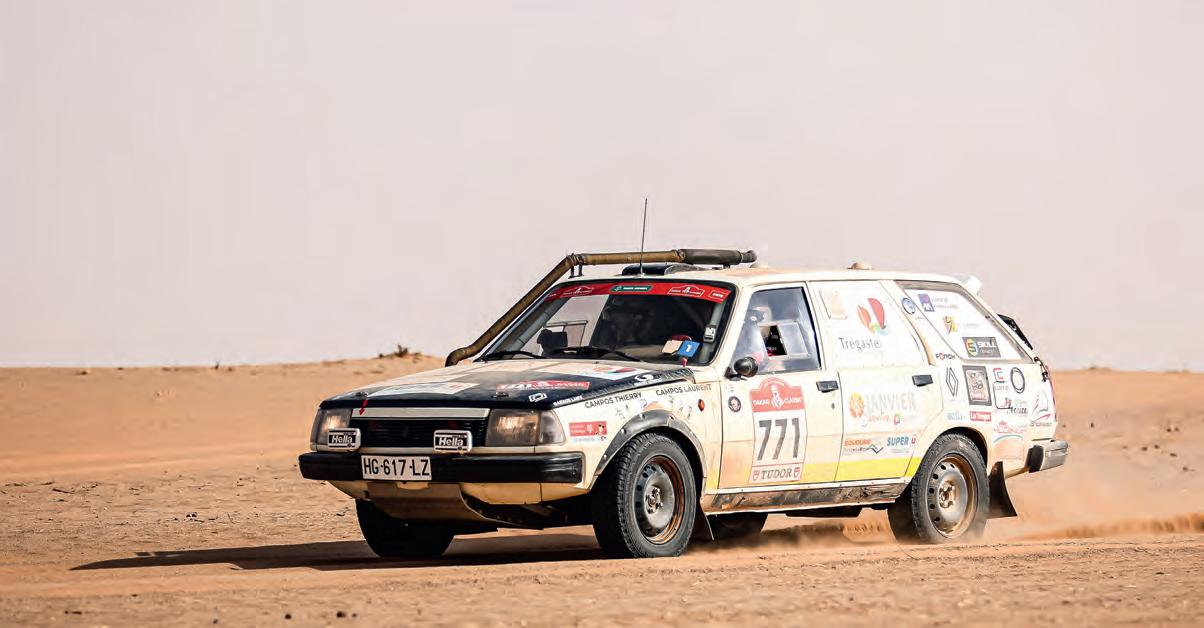
1st Overall
Driver: Karolis Raisys (Lithuania)
Navigator: Christophe Marques (France)
Vehicle: 3.5-litre Series III 109” Station Wagon
BORN IN 1982, Karolis Raisys is a rally driver and Land Rover brand ambassador, acting as the company’s lead instructor in the region. Having driven a media car in 2024, he was inspired to compete and last year made his debut aboard a V8-engined 109” Series III.
‘My first Dakar was something truly special,’ he says. ‘I prepared for it in an unbelievably short amount of time. In just a little over one month, we transformed a barely rolling, forgotten barn-find Land Rover into a race-ready Dakar vehicle.
‘Honestly, that preparation was a bigger challenge than the Dakar itself – it was a true 24/7 project. After that, the rally almost felt like a holiday… almost!’
Given that they were out there on their own, that’s quite a claim. ‘We competed without any technical support, fixing and maintaining the car entirely by ourselves. Watching our progress, from complete rookies to podium finishers, was incredibly rewarding. Finishing third overall in the Dakar Classic with such a never-tested and slow car felt like a miracle. It surprised not only the sceptics of the project, but me as well!’
The result made Karolis famous in Lithuania, where the Dakar enjoys a huge profile – but as he says, ‘it also
raised expectations and added some extra pressure for the results in the coming years.’ With more time to prepare for 2026, he considered using a different vehicle – before deciding to stay true to his original idea. ‘I didn’t make any major changes to the car,’ he says. ’It remains slow and heavy, just as it should be. However, we focused on repairs and improved several technical solutions that significantly slowed us down last year.’
What he did change, however, was his navigator, bringing in Christophe Marques – a classic rally regular over the last
decade and an IT specialist whose specific field is regularity timing systems. ‘I’ve been practising regularity for about a decade,’ he says, ‘starting with the Rallye Monte-Carlo Historique, which I’ve done almost every year since 2016, as well as several Tour de Corse Historique events, including a joint first place in 2023. I also regularly compete at the Monte-Carlo Historique with Bruno Saby, including with his Renault 5 Turbo, the same car he used when he became French Champion in 1981.’ This was his first Dakar – but he was already bringing no end of experience to the table.
ASO
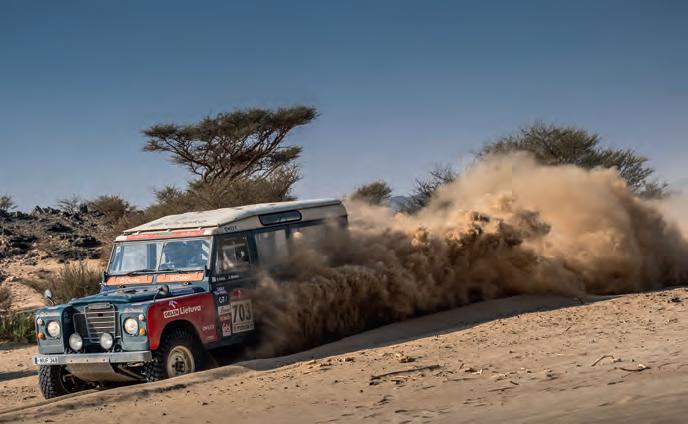
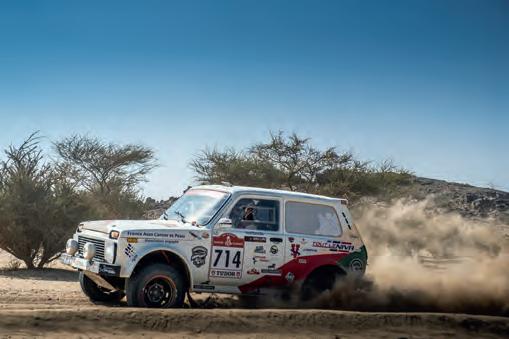
Vehicle prep is essential in events like the Dakar, so Nicolas Fantin equipped his Lada Niva with a portable speaker and Bluetooth streaming so he and his son Lucien could listen to music while competing. ‘We have the same mindset as competitors from the 1980s,’ said Lucien. They made it to the end, so we guess he’s not talking about Mark Thatcher
Pic: ASO / FOTOP / Rodrigo Barreto
Overall Driver: Ondrej Klymciw (Czechia)
Navigator: Dave Steer (Czechia)
Vehicle: Mitsubishi Pajero
ONDREJ KLYMCIW crashed his bike on the 2018 Dakar, suffering multiple fractured vertebrae, and had to learn how to walk all over again. Three years on, he was lining up to take part in the inaugural Dakar Classic aboard a Skoda 130 LR – and over the course of the next four events, he racked up three stage wins and a best final placing of 14th overall.
Grateful for the help he received following his accident, In the 2024 event, he raced to raise funds for a rehabilitation and recovery centre aiding people with spinal cord injuries, and this year his chosen beneficiary was Pink Bubble, a foundation that helps children and young adults whose lives have been impacted by
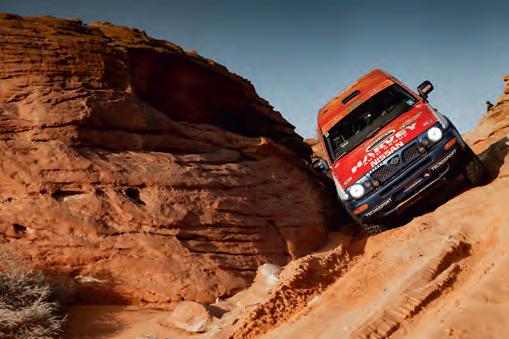
Taz Harvey’s family owns Honda and Mazda dealerships, and here he is competing in the Dakar aboard a Nissan Terrano. ‘Finishing is an accomplishment,’ he said. ‘That’s the primary goal.’ And finish he did, in an excellent 12th place – though with more consistency in his stage results, the American driver would certainly have made the top 10
Pic: ASO / Aurélien Vialatte
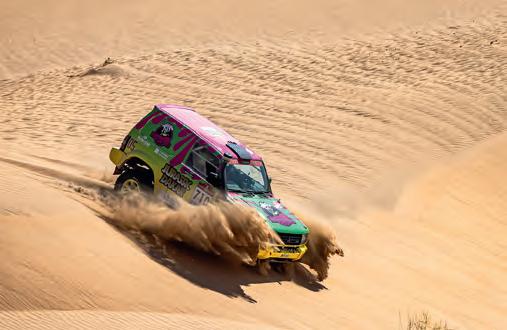
cancer. ‘We can do more than just burn fuel and tyres in the desert,’ he says. ‘I need something more, something different, to help others. It’s also for my kids: I want them to see that you can’t just look away from people in need, you have to act. If you can help, you must do it.’
In 2024, Klymciw and co-driver Josef Broz were leading until they hit technical trouble. Now with their Skoda swapped for a 1994 Pajero, they had their sights set
Driver: Josef Unterholzner (Italy)
Navigator: Franco Gaioni (Italy)
Vehicle: Mitusbishi Pajero
‘THE OBVIOUS GOAL IS THE PODIUM,’ said South Tyrol’s Josef Unterholzner ahead of the rally. A brave goal, given the Dakar’s proven ability to throw spanners in even the best-oiled works, but along with navigator Franco Gaioni he took his 3.2-litre Mitsubishi Pajero to a third place, a solitary bad stage two days before the end costing him the opportunity to go one better.
on a podium finish – and that’s what they got, securing two stage wins on the way to second overall. But for a trio of stages in which they were in the teens, they might have gone one further – but as he said, ‘after five or six Dakars, you know it’s not just about technique; it’s also about luck.’
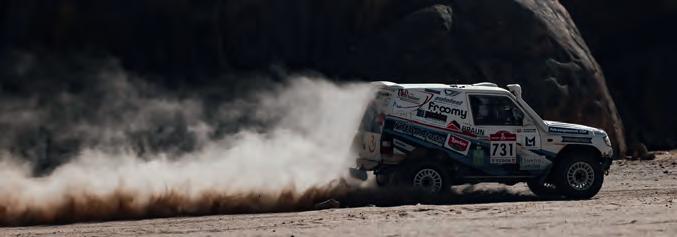

Driver: Phil Pryor (GB)
Navigator: Dave Steer (GB)
Vehicle: Toyota BJ70
IT’S ALWAYS NICE TO SEE BRITS
TAKING PART IN THE DAKAR, and the Classic has provided a new avenue for competitors to get involved without going the whole hog. Phil Pryor is a good example of that: ‘I suppose,’ he says, ‘like for a lot of people that follow it, the Dakar seemed totally out of reach.’
It was none other than Andrew Graham of Allisport that convinced him it would be possible to participate. A well known name among the off-road, comp safari and Land Rover tuning worlds, he had competed in 2024 – and Phil’s first angle was to try and get him to part with his Defender 90. That turned out to be a non-starter, but Andrew was still willing to help… with the result that Phil ended up getting his hands on the Toyota Land Cruiser in which Paolo Bedeschi had finished third on a couple
of previous occasions.
‘The idea was to buy a vehicle with history that wouldn’t need any work,’ explains Phil. ‘But in the end it didn’t quite work out like that!
In addition to doing a lot on the car to suit us based on Andrew’s advice, we decided to create a homage to the 1989/90 Dakar Tamiya ACP Land Cruiser livery, while raising awareness of some small but amazing UK companies.’
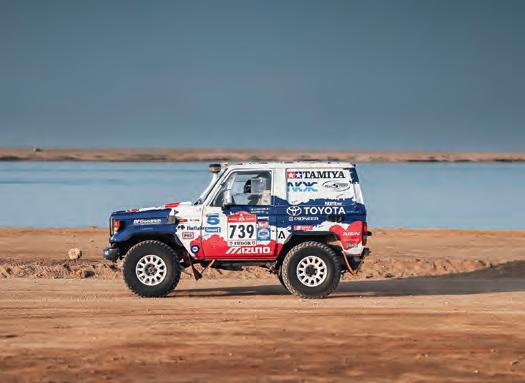
Having never previously taken part in a regularity rally, nor raced off-road, Phil and co-driver Dave Steer were sanguine about
their chances and aimed only to ‘enjoy the experience, meet some amazing and passionate people and get ourselves and the car to the finish line.’ They achieved the third of those ambitions, finishing 74th after at one point lying as high as 61st. As for the former two – well, on the Dakar Classic those are givens.
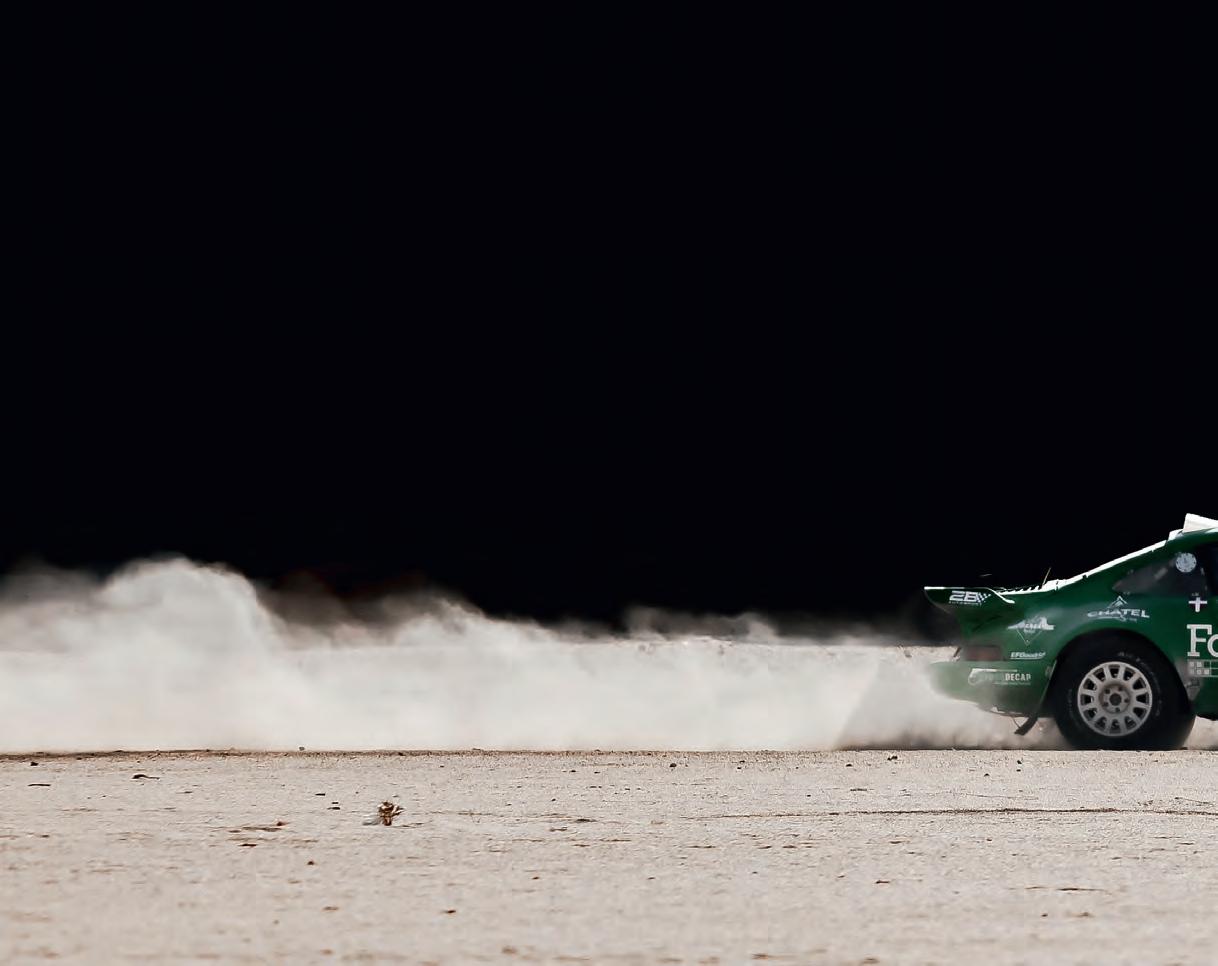
Two decades ago, Jean-Nöel Gaviot found a Porsche Type 964 in Senegal and resolved to use it in the Rallye Transafricaine… which was promptly cancelled. So driving it in the Dakar Classic, at the age of 72, must have felt like a date with destiny. Dating from 1994, when it made its debut in the Dakar proper, the car is one of those all-wheel drive 911s Porsche used as works entries; Gaviot said he was only there to let it prove itself – and a strong finish after two weeks of action suggests it did just that Pic: ASO / Aurélien Vialatte
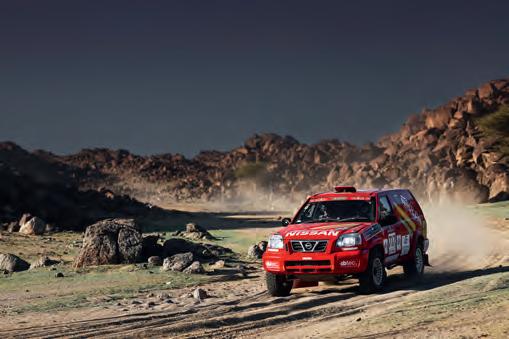
Didn’t think you’d see a Nissan X-Trail doing the Dakar Classic, did you? Well, you haven’t. Mathieu Kurzen and Sébastien Dubois’ competition car is in fact one of two Terranos that were built by Team Nissan Dessoude in 2002, with the 3.5-litre V6 engine from the Skyline and a body resembling that of the company’s thennew soft-roader. The team ran a steady mid-table rally to finish in 33rd place but the real result was a stack of money raised by its sponsors for Zoé4Life, a charity supporting children with cancer in French-speaking Switzerland
Pic: ASO / Aurélien Vialatte
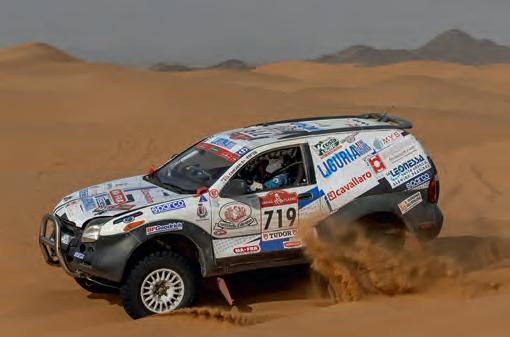
Quarter of a century has passed since the last Isuzu Vehicross left the factory, yet it still looks futuristic now. It was only ever a rarity – and more so in the desert, though the high power-to-weight ratio from its Trooper-derived 3.5-litre V6 engine should make it ideal for keeping your speed up in deep sand. Driver Luciano Carcheri rebuilt his vehicle from the ground up and did all his own maintenance during the event; aided by the navigation of Fabrizia Pons, who’s best known for co-driving former Dakar winner Jutta Kleinschmidt in 2005, he finished a highly creditable 29th
Pic: ASO / FOTOP / Magnus Torquato
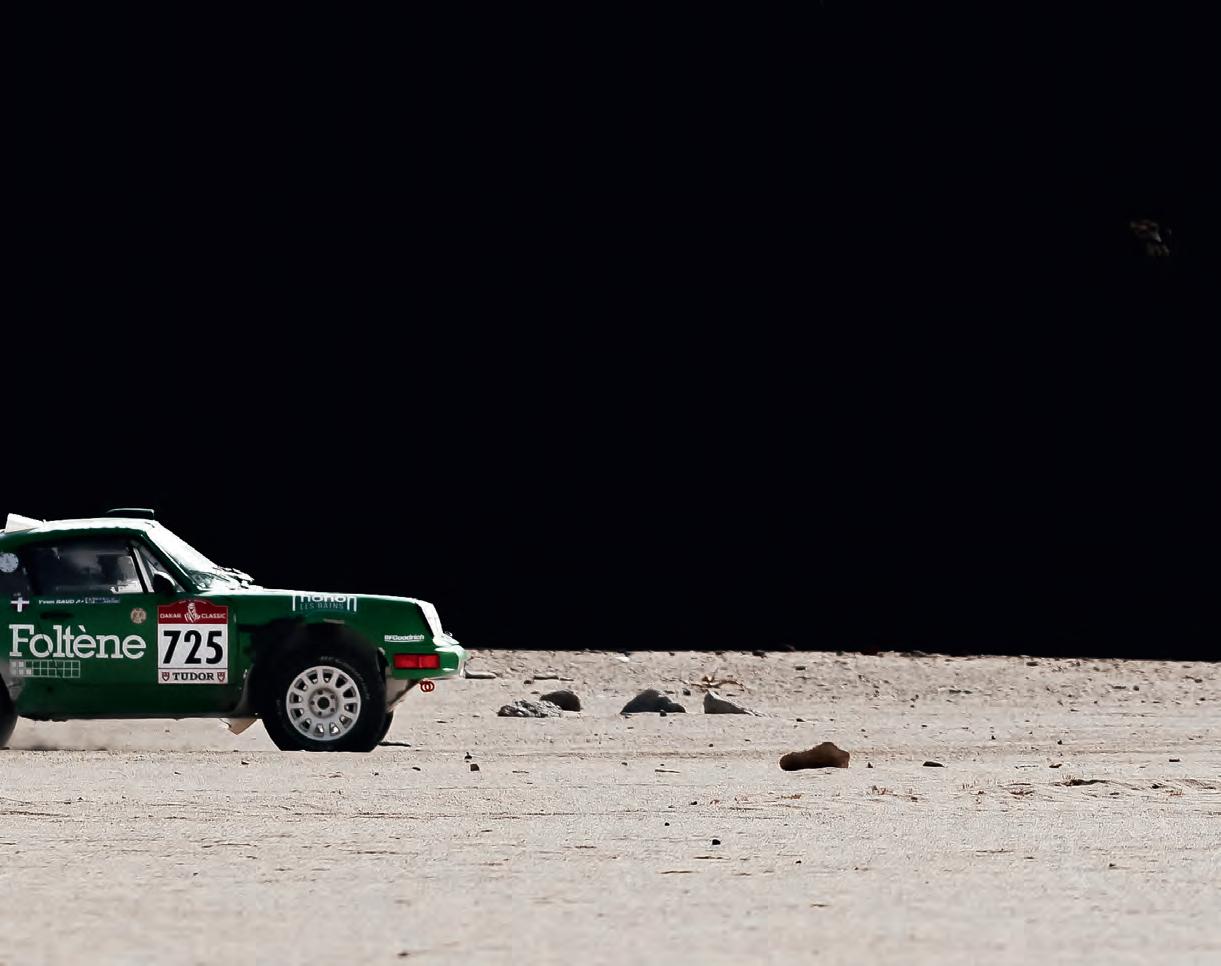
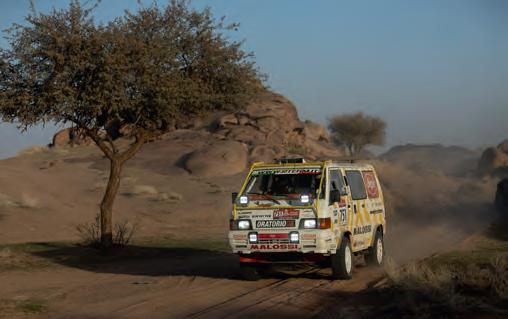
Henry Favre says his hobbies are ‘pasta carbonara, motors, and anything with wheels and a motor.’ We like him already. His first Dakar was actually as a journalist; that was in 2023, and after rebuilding a wreck of a Mitsubishi Pajero for last year he and codriver Alessandro Iacovelli returned aboard the same company’s L300 van. ‘It’s a game and a huge challenge at the same time,’ said Favre. ‘We don’t really care about the rankings. We’re there to have fun, to entertain those who follow us from home and, above all, to play with cars that aren’t fast but brave.’ And that’s exactly what they did, maintaining a slow but steady pace to finish 90th
Pic: ASO / FOTOP / Magnus Torquato
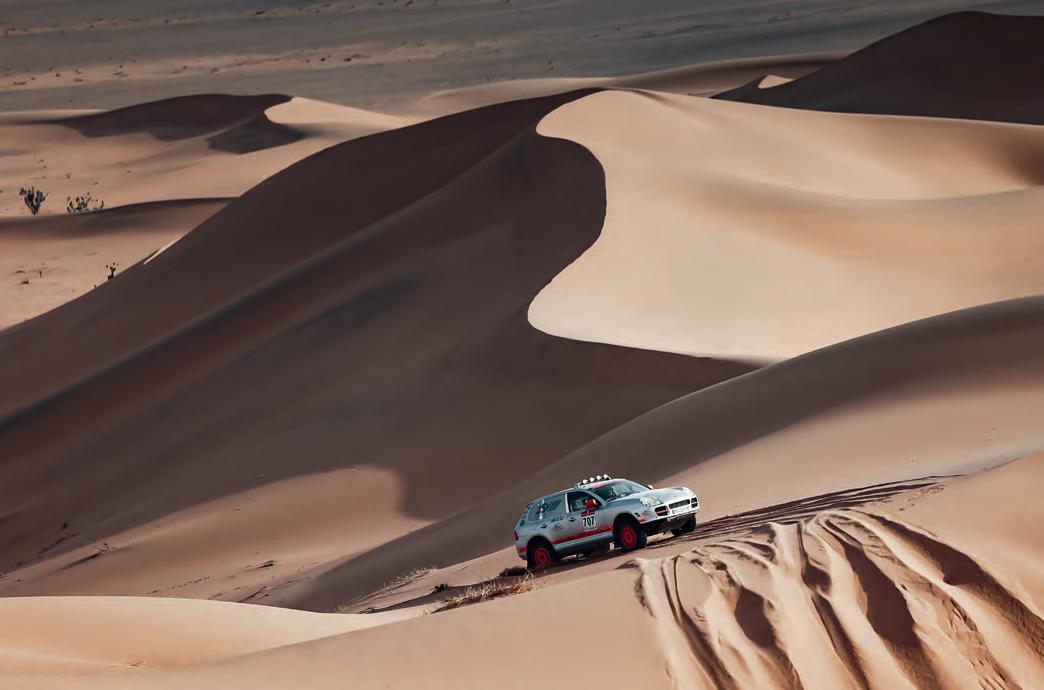
This’ll make you feel old: the Porsche Cayenne is a classic now. The original super-SUV went into production in 2002, meaning early examples have qualified since the ASO widened its eligibility rules on vehicles’ age. Spain’s Jordi Segura became the first person to campaign one in the Dakar Classic, competing alongside his son Enric aboard a Cayenne S which had previously taken part in the TransSiberian Rally
Pic: ASO / Aurélien Vialatte
Driver: Daniel Pycock (GB)
Navigator: Francisco Gomez (Spain)
Vehicle: Mitsubishi Montero
NORWICH-BORN DANIEL PYCOCK counts as another British entry, even though for the last 20 years he’s made his home in Spain – where, along with Francisco Gomez, he’s built a corporate events business. In that time, the two have become ‘closer than family,’ making them ideal team-mates for the Dakar Classic.
Francisco says that ‘the whole thing started off as a bit of fun with an old Seat Panda’ before turning into a running joke about doing the Dakar after the two of them had started getting to know other off-roaders. After that, the joke became serious and before you know it, they were lined up at the start with Daniel saying that
‘not breaking down in the first 24 hours would be nice!’
With vehicle prep having been entrusted to pro outfit Pedrega, that was never likely to happen. Both Daniel and Francisco said that to finish was the dream, and that’s what they did, posting a best stage result of 59th on the way to 84th place overall.
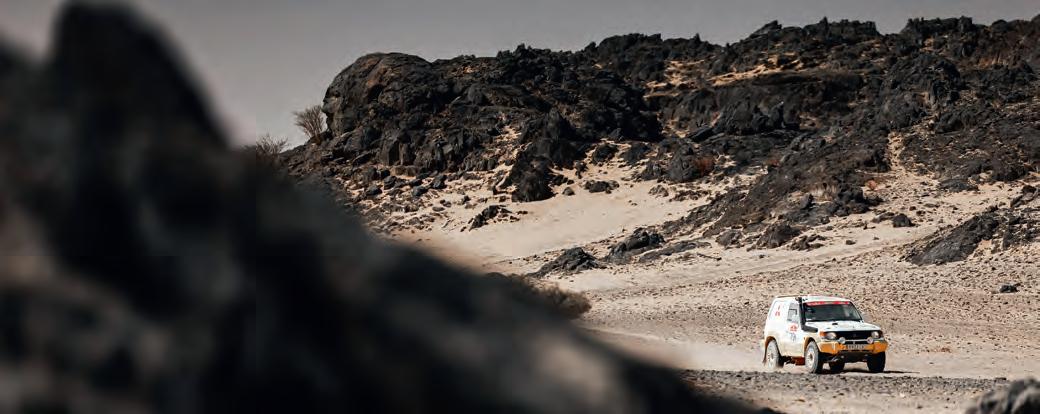
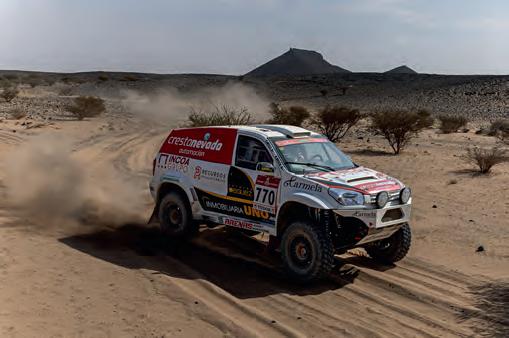
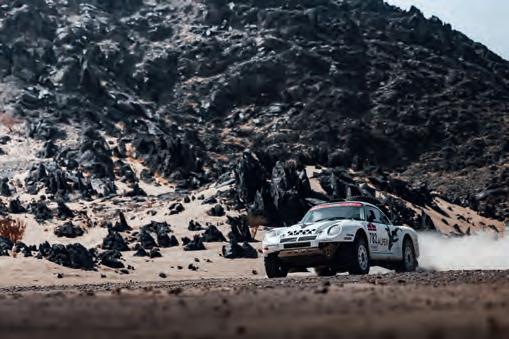
Raul Correa Ortiz was all ready to go to the 2022 Dakar with his son, also called Raul, when the latter was injured in a serious accident on the Rally Andalucía. In the meantime, they won the T8 class in the 2024 Spanish Off-Road Championship and gained a wealth of experience competing in North Africa, so they arrived in Saudi Arabia with high hopes of a strong performance in their 4.2-litre turbo-diesel RAV4 (yes, really). And that’s what they achieved, climbing steadily up the table as the event went on and, aided by a couple of top 10 stage positions, finishing in 20th place
Pic: ASO / Fotop / Magnus Torquato
Driver: Helen Tait Wright (GB)
Navigator: Marcella Kirk (GB)
Vehicle: 1988 Land Rover 110
BRITS HELEN TAIT WRIGHT AND MARCELLA KIRK became friends while both were living in France, having been introduced through the somewhat unusual medium of almost crashing into each other on the road. But while they’re best buddies, and have become a motorsport team together, only Helen is a petrolhead. ‘I’m not interested in how many horses are under the bonnet,’ admits Marcella. ‘I’m interested in the horse I’m sitting on.’
By the time they met, on the other hand, Helen was also an experienced race marshal, a member of several car clubs and a regular at the Le Mans 24h. Actually taking part came later, though.
‘I didn’t start competing until I moved to France and did a couple of Rallye des Gazelles and some other rallies with Marcella,’ she explains. ‘And the desert just got under my skin.
‘I was obviously aware of the Dakar Rally but it was completely out of my reach until they launched the Dakar Classic, which turned it from “impossible” to “vaguely possible.” Then I met Andrew Graham at a Land Rover meet in the UK, and he went on to do the Dakar Classic in 2024. He asked me for some advice about driving in the
desert and while he was on the event, I spoke to him every evening. That was when “vaguely possible” became a burning ambition.’
Forty years after René Metge and Jacky Ickx achieved a Dakar one-two aboard the legendary Porsche 959, Italian businessman Paolo Fellin took on the Classic aboard a 964 Carrera rebuilt into a 959 Evo. Having shaken it down in the 2025 RallyClassics Africa in Morocco alongside navigator Werner Gramm, he was there to learn and to finish – and with stage finishes ranging from as high as 11th to as low as 93rd, all leading to a final placing of 44th, with consistency he could certainly be knocking on the door of the top 10 in future
Pic: ASO / Aurélien Vialatte
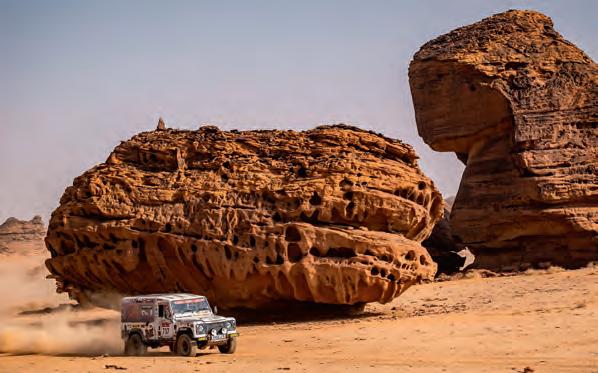
The team’s 110, named Purdey after Diana Rigg’s character in the New Avengers, came to Helen as a wreck. After a false start with a company that was going to do a rally build on it, the family brought home whatever they could salvage and, from October 2024 to April 2025, worked pretty much non-stop to turn it into a vehicle suitable for the Dakar.
Marcella’s story is not so much one of burning ambition as loyal friendship – and an up-for-it attitude. ‘A while ago,’ she explains, ‘I had a bit of a health scare. So with my son Sam, we decided to go to France to an apartment I kept there. Of course, we went to see Helen and her husband Chris and all the good wine came out. By the end of the evening, Helen, Sam and the wine had persuaded me to sign up to do a rally!
‘I did two rallies in Morocco with Helen. The first one went really well but then the second turned into a bit of a nightmare and we nearly went home halfway through. After that, I told Helen my rallying days were over. But then she told me about the Dakar Classic and how she really wanted to do it with me…’
In keeping with the truest spirit of classic rallying, the team decided not to run any computers for the regularity. Instead, they used old fashioned instruments, making them eligible for the Authentic Co-driver award. They entered the desert knowing that a great result would be unrealistic to hope for first time out – but those last three words suggest this is only the beginning of their relationship with the Dakar.
Our roadbooks guide you through the countryside on a mixture of surfaced and unsurfaced roads. The tracks we use are public rights of way, either Byways Open to All Traffic or Unclassified County Roads, all commonly referred to as green lanes.

We’ve deliberately made it as easy as possible to follow the route, using a mixture of instructions, tulip diagrams and grid references. We normally only include junctions at which you have to make a turning or don’t have right of way, so stay on the main road or continue straight ahead unless we tell you otherwise.
Elsewhere, let common sense and courtesy prevail. Keep your speed down, be ready to pull over for others and show the world that we are decent people just like them.
Anti-4x4 bigotry does exist, but it’s less common than you’d think. By and large, it’s limited to organisations which just want to get the countryside all to themselves.

You’ll find a guide to using grid references on the legend of any OS map. Our aim is for you to be able to do the route without maps, whether paper or online, but you should certainly take a set with you.





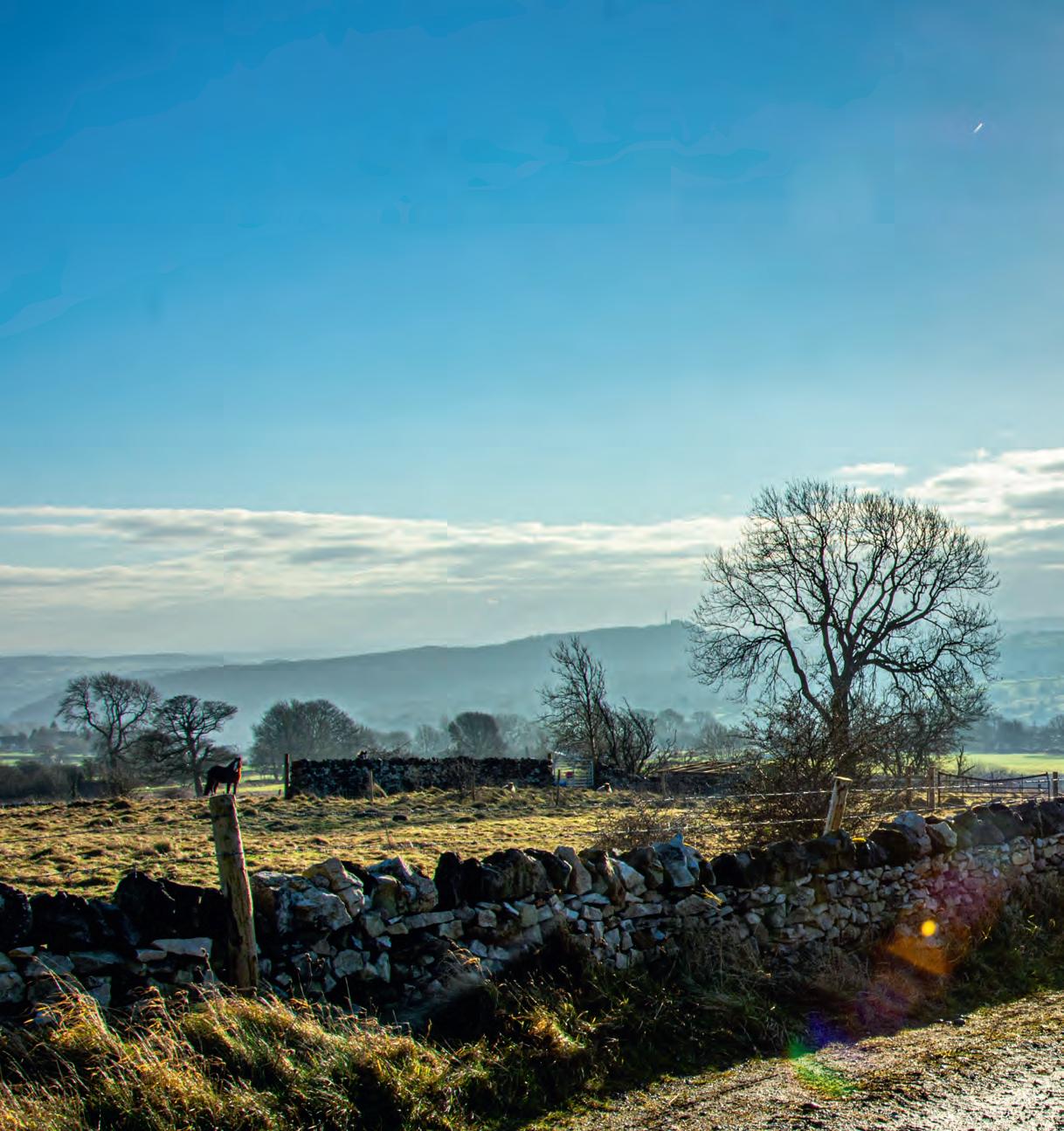
These organisations are beyond being reasoned with, but it’s rare to encounter real hostility even from their rank-and-file members. If you’re friendly towards the people with whom you share the countryside, the vast majority will respond in kind. There are always bad apples, but no more so than anywhere else.

Likewise, most local residents will accept your presence if you’re driving sensibly. What suspicion you do encounter is likely to be from farmers worried that you’re there to steal from them, so be ready to offer a word of reassurance. Once satisfied that you’re not after their quad bikes, their mood will lighten.

The notes on thee pages advise you of how suitable the route is for your vehicle. These are just guidelines, however. We’ll warn you of any hazards or difficult sections, but the nature of any green lane can change quickly. Wet weather can make a huge difference to the conditions underfoot, and what’s wide open in winter can be tightly enclosed and scratchy in summer. The responsibility is yours! Our roadbooks are designed to be safe to drive in a solo vehicle. We do recommend travelling in tandem wherever possible, however. The risk of getting stuck can be greater than it appears – and even the most capable of vehicles can break down miles from anywhere.
• Keep your speed right down
• Pull over to let walkers, bikers and horse riders pass
• Leave gates as you found them
• Scrupulously obey all closure and voluntary restraint notices
• Ensure you have a right to be there. We research the routes on our roadbooks very carefully, but the status of any route can change without notice
Irresponsible driving is a big and serious issue on green lanes. In particular, you must always stay on the right of way. Never drive off it to ‘play’ on the verges or surrounding land, even if you can see that someone else has; doing so is illegal and can be tremendously damaging.

• Be prepared to turn back if the route is blocked, even illegally
• If you find an illegal obstruction, notify the local authority
• Stick scrupulously to the right of way
• Always remember that you are an ambassador for all 4x4 drivers
DON’T…


This kind of illegal off-roading is a key reason why green lanes get closed. If you see others doing this, they are NOT your friends. They’re criminals, and you are their victim. If it’s safe to do so, film them in the act and pass it to the police.
• Go in large convoys: instead, split into smaller groups
• Drop litter. Why not carry a bin bag pick up other people’s instead?
• Go back to drive the fun bits, such as mud or fords, again
• Cause a noise nuisance, particularly after dark
• Get riled up if someone challenges you. Be firm but polite, stay calm and don’t let them turn it into a fight



A little way south from the poor old Peak District, the Derby Dales offers a wide variety of lanes which, if driven with care, are suitable for more or less any 4x4. Sometimes wide open, sometimes hemmed in by classic dry-stone walls, these trails vary in length and character but have a real feeling of history to them. Whether you’re clambering through woodlands or picking your way towards the horizon, this route gives you a flavour of an oft-forgotten and delightfully scenic part of England
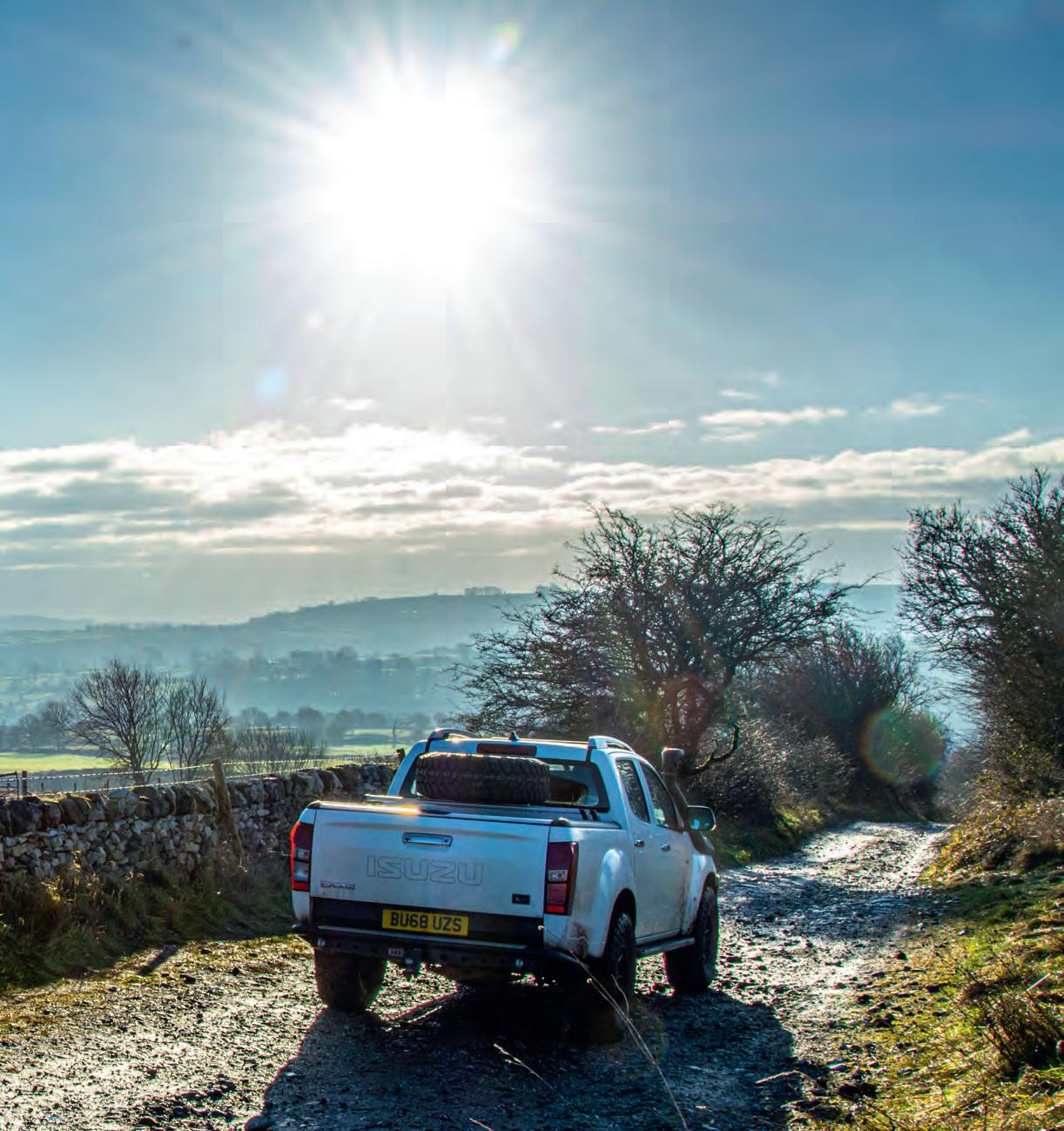

START Hartington (SK 128 604)
FINISH Tissington (Sk 176 522)
HOW LONG? 44.15 miles / 4-5 hours
TERRAIN Rolling farmland; occasional steep hills HAZARDS Other users; farm traffic; possible ruts; scratching; one very narrow gate; some liaison sections on fast roads

OS MAPS Landranger 119 (Buxton & Matlock)


TYRES
Low-profile sizes may struggle in places. All-terrains advisable WEATHER
Best avoided after snow or very wet weather. Scratchier by summer LOW BOX
Highly recommended in places
SOFT-ROADERS May cope if back-up is available SCRATCHING
DRIVING


Significant risk on a few lanes
Precise driving needed in places. Some sections on very fast roads DAMAGE
Drive with care and it shouldn’t happen, but Step 6 is VERY tight!

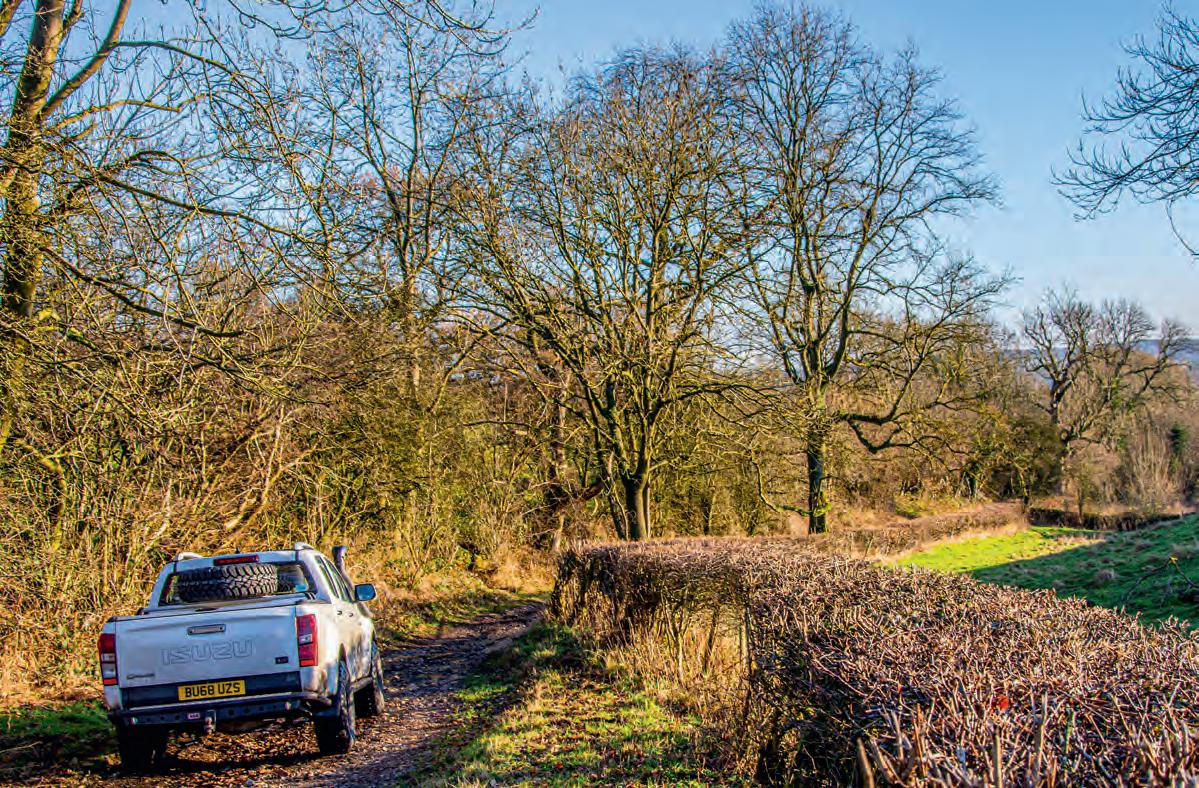
Step

1 0.0
SK 128 604
Start outside the Devonshire Arms, on the B5054 in Hartington. It’s a busy little place, so don’t expect to sit around without getting in the way – just zero your trip with the pub to your left and set off heading more or less south-west

Step
2 0.25 Step

SK 125 600
The track is shortly after the national speed limit and ‘cow’ road signs. The first few yards flood easily and can be quite sloppy, but thereafter your main concern is that it gets quite steep, stony and at times scratchy further ahead
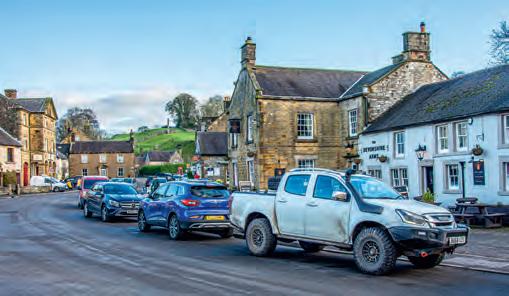

3 0.65 Step 4 0.9


Step 1: Start outside the Devonshire Arms in Hartington, which has got to be one of the busiest villages you’ll ever come across



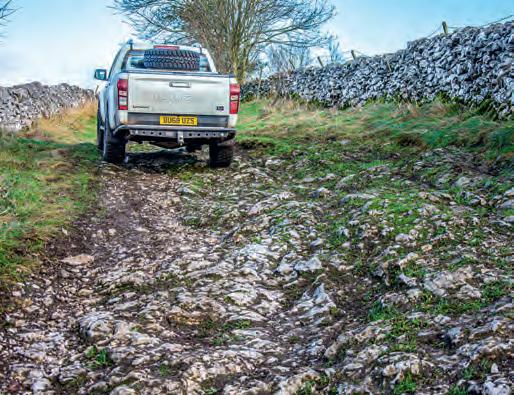
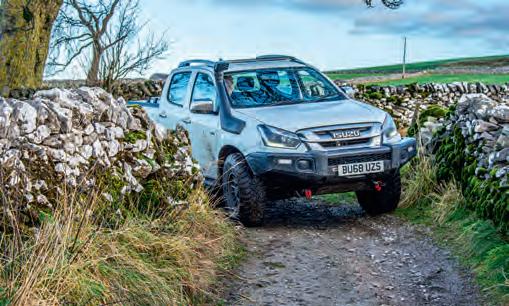





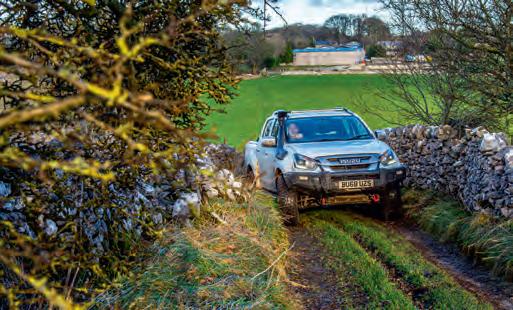


Caution – this is a very tight turning. If you can’t make it in one, the road you’re joining is no place for taking shunts – better to pull ahead and turn round in the junction for the road to the right. Doing so shouldn’t mess with your trip reading to any great degree
5.15 SK 153 614

6.1


The T-junction in Middleton is basically a huge expanse of empty road

Caution as you cross the A515 –it’s a very fast, busy road. This is a long, straight section, too, so watch out for overtaking traffic coming as you from the wrong direction


7.65

8.05
Gratton Elton 114
Caution over a bigger road as you carry on ahead for Winster

Follow ahead for Middleton

2.55
It’s tight back over your shoulder –start slowing and indicating early
SK 239 617
Caution the whole way along this tack. The Green Lane Association has warned its members not to use it in windy conditions, as a number of trees on its verges are close to falling, and they’re just as likely to land on non-members too…
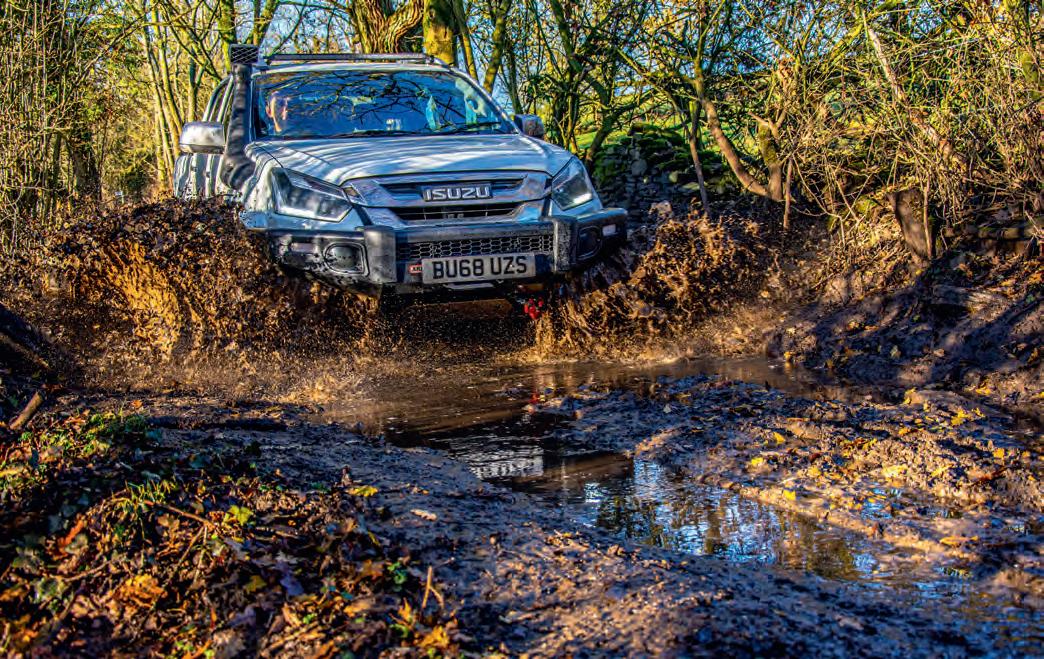
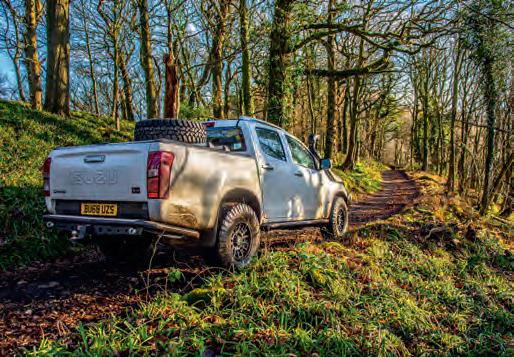

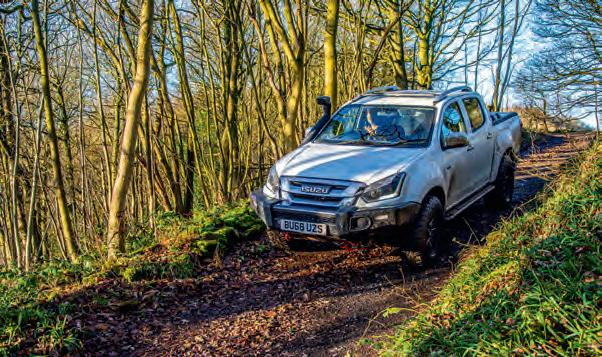


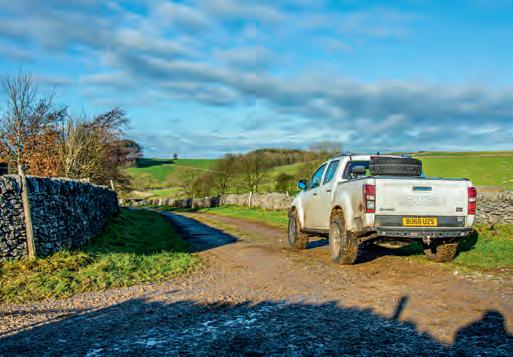

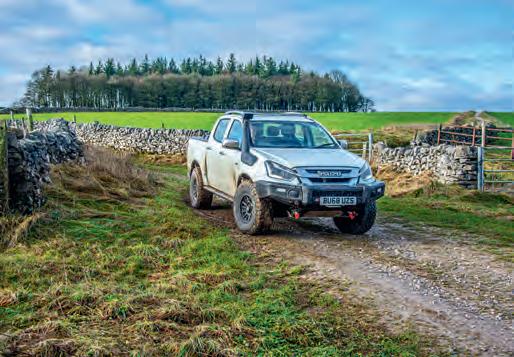


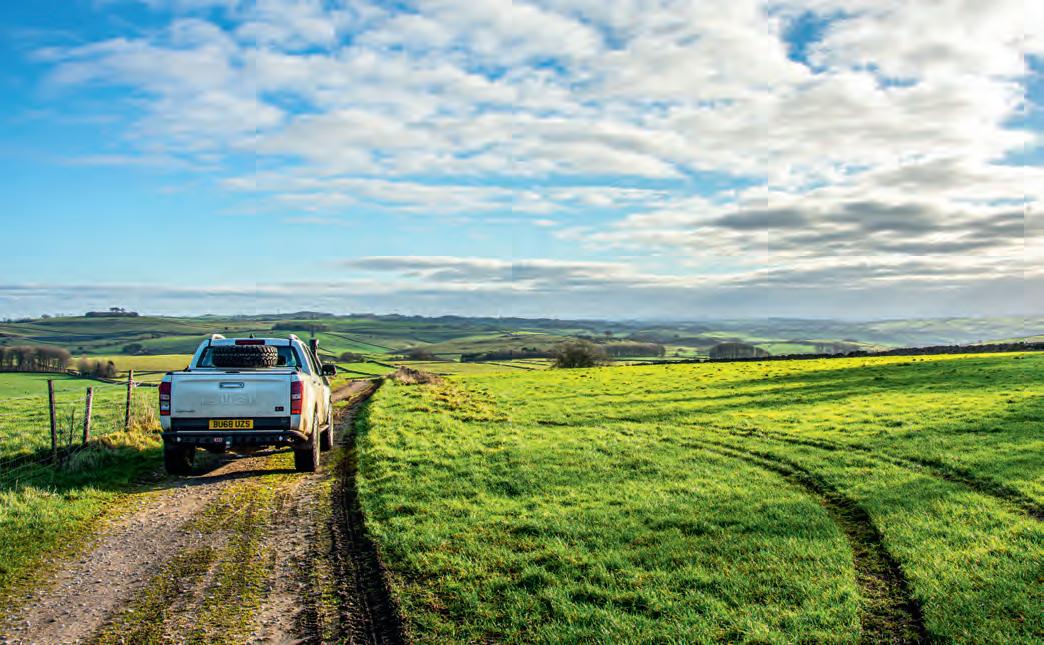
Step








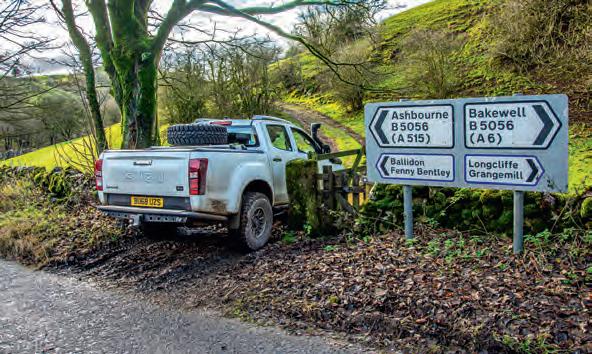




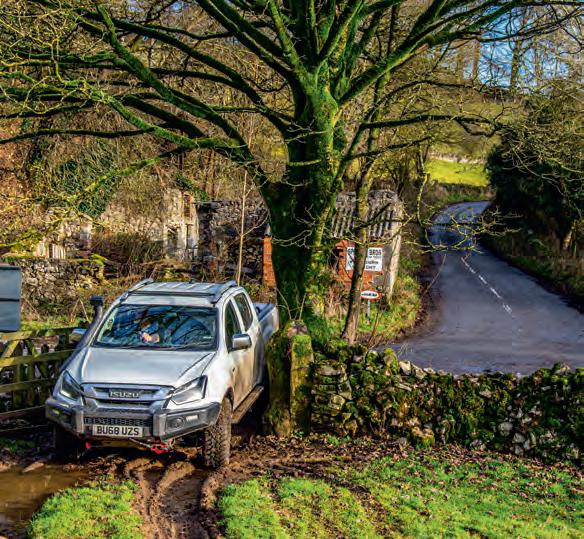


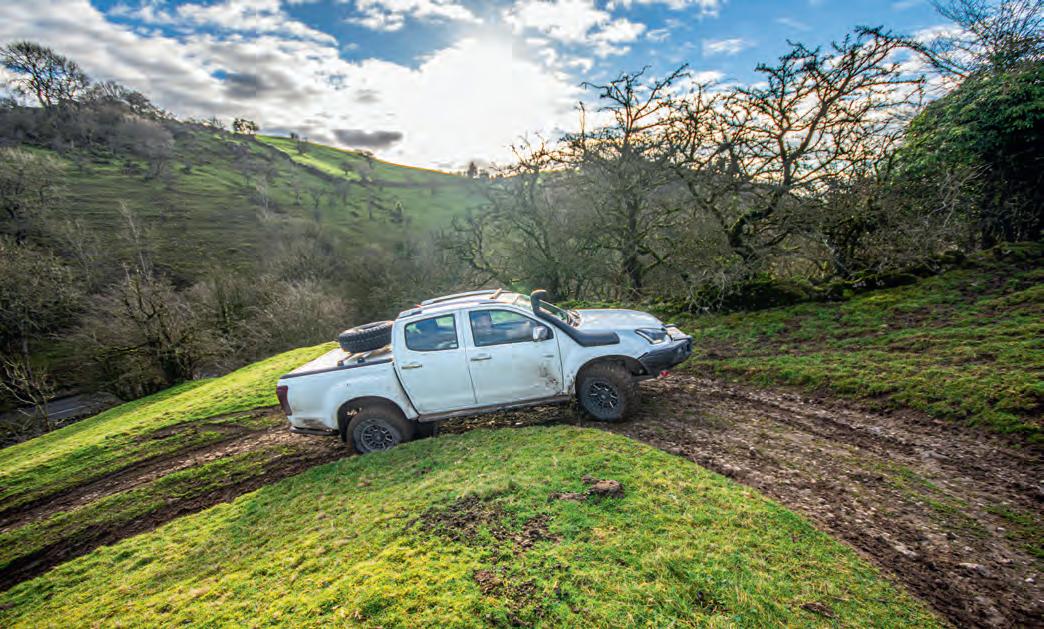


Caution as you turn left – it’s tight, and this is a busy road – then watch for traffic coming over the crest towards you as you bear right towards the ford

After the pond on the left, turn right opposite Tissington Kindergarten
The route ends at Herbert’s Fine Old English Tea Rooms (yes, really) in Tissington. Do park up considerately if you’re going to pay a visit – it’s so damn quaint around here, an abandoned 4x4 will stand out like a sore thumb…
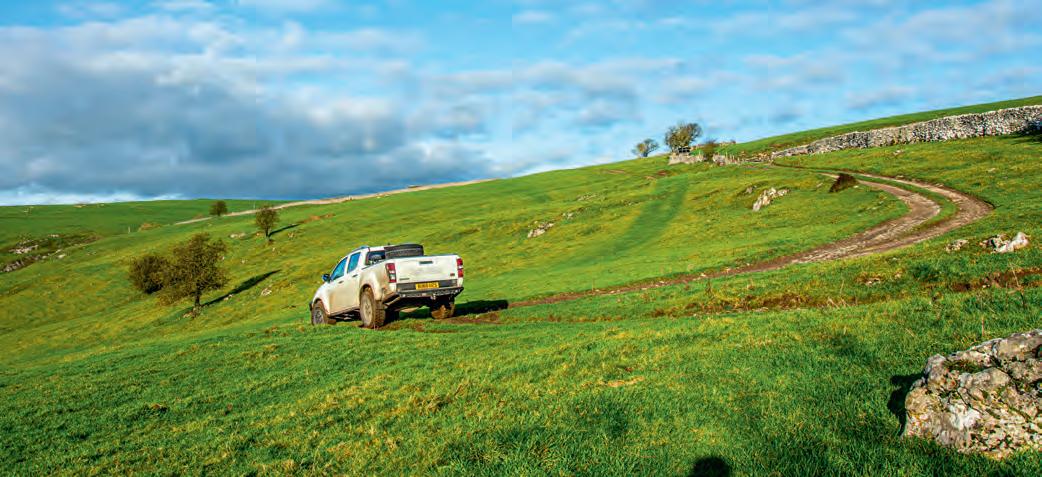





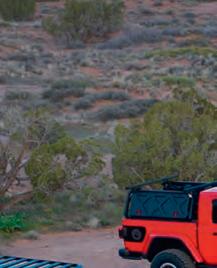
Jeep intoduces this year’s concept builds for the Easter Safari
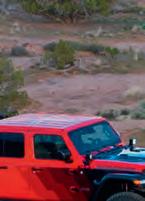
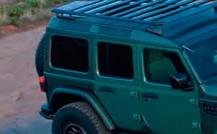




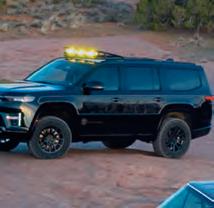
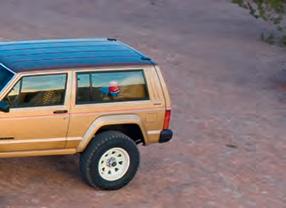

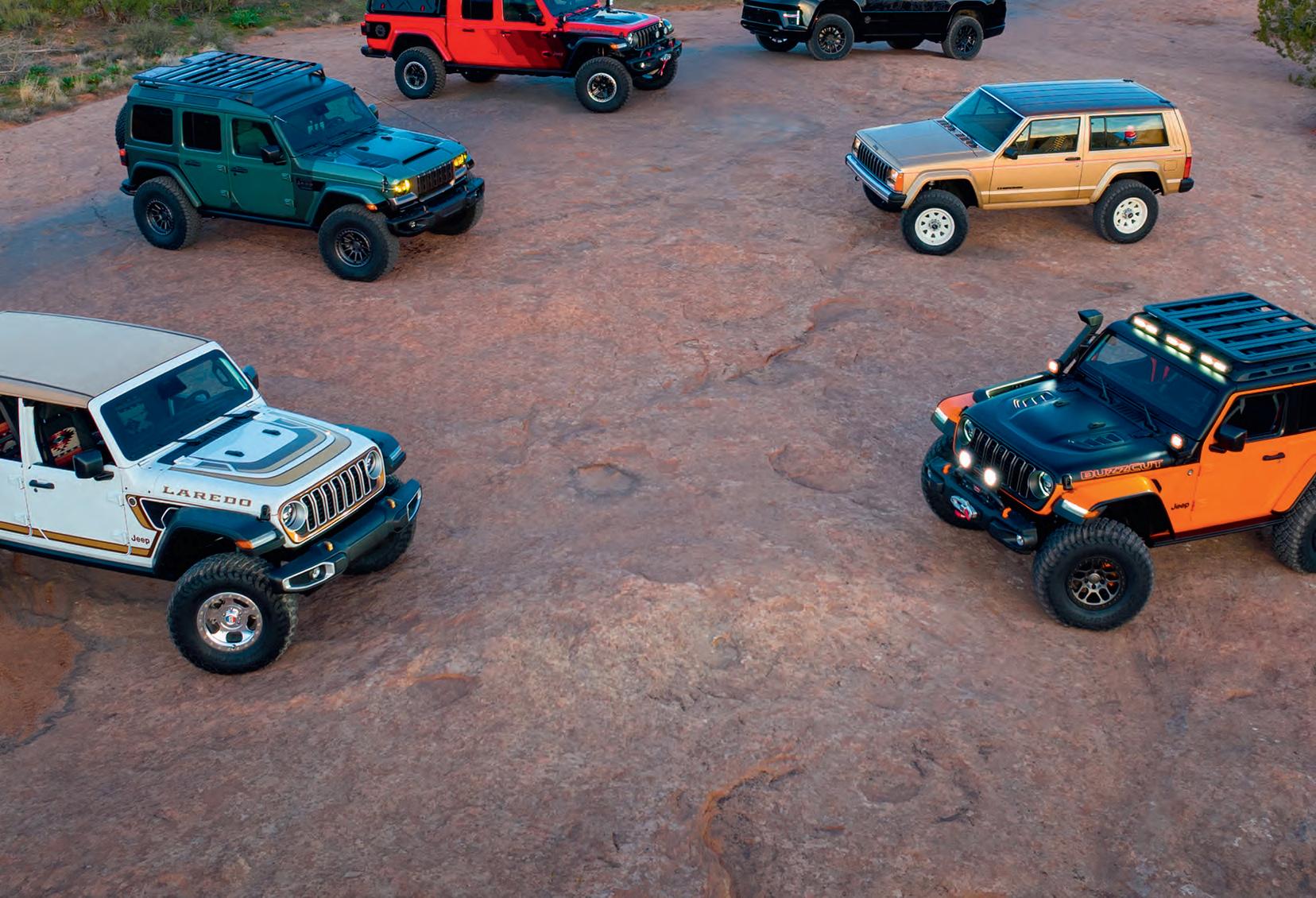
Driven: Kia’s brutally fast EV6 GT
Astonishing top-end Defender 110 rebuild
Hardcore Land Cruiser winch warrior
JUNE 2026 ISSUE: ON SALE 7 MAY