








By Thomas P. Caldwell
There is no shortage of hiking trails in the Lakes Region, from easy walks to challenging climbs. The range of possibilities provides something for everyone, with paths opening up hidden landscapes or leading to overlooks with scenic views of the lakes and mountains.
Among those choices are several properties overseen by the Lakes Region Conservation Trust. From the 5,200-acre Castle in the Clouds Conservation Area in Moultonborough and Tuftonboro to the 332-acre Knights Pond area in Alton, the Trust offers dawn-till-dusk hiking opportunities and plentiful chances to see native wildlife.
Among the LRCT’s protected properties is the 2,239-acre Red Hill Conservation Area in Moultonborough and Sandwich, with its fire tower overlooking a vast expanse of forest and lakes.
Ernest Dane, a resident of Center Harbor, had paid the state to erect a fire tower atop Red Hill to replace the Lakes Region’s original fire tower, situated on Mount Israel in Sandwich. His offer called for the construction of the new tower, a cabin, and a telephone line, as long as the state agreed to maintain it. If the state ceased to use the fire tower, its rights to the land would terminate.
The state dedicated its new 27-foot tower in 1927. Seven years later, in 1934, a well was blasted into the ledges
near the base of the tower to provide water for the resident watchman and his family.
The tower was raised to 45 feet tall in 1939 and an additional 10 feet in 1972. However, the state closed the tower in 1981 and, according to the terms of the lease, the property reverted to the Dane family.
The Town of Moultonborough later leased the tower to ensure fire protection, putting the Lakes Region Mutual Fire Aid Association in charge of the lookout service.
It was not until the turn of the century, in 2000, that the Lakes Region Conservation Trust purchased the land
with its fire tower and the summit of Red Hill. The tower was subsequently listed on the National Historic Lookout Register in 2003.
Today, the Red Hill Fire Tower is a popular Lakes Region attraction.
I had never climbed Red Hill until this year’s summer solstice, when predictions of rain did not appear to be imminent, and the chance of sunshine seemed promising. I arrived at the parking lot off Red Hill Road at mid-morning and, with good hiking boots and trekking poles, I headed up the 1.75mile Red Hill Trail, marked with trees bearing red plastic diamonds.
The trail is classified as moderate be-
cause it is a nearly steady climb with only a few areas where the trail levels out. While there is some scrambling over granite ledge, the trail is mainly a rock-strewn path that, while it climbs relentlessly, is not particularly steep except for a few areas.
It was overcast as I headed out behind a young couple that arrived about the same time, but they soon disappeared on the trail ahead.
After a short distance, the trail dips over Snowmobile Corridor 201, with stone steps leading down before the trail picks up on the opposite side of the snowmobile trail.
While I started out hiking at a healthy clip, the climb soon took its toll, and I found that slowing down to a steady pace would avoid having to stop for breathers. The woods were very quiet, except for the sound of a distant woodpecker, and I soon came to a short bridge crossing over a spring with a small waterfall.
From there, the climb continued until I reached a wooden fence with a gap in the middle, with the path again crossing the snowmobile trail before leading to a kiosk with further information. To the right was the Cabin Trail, which begins as a wide access road but eventually narrows as it climbs. I chose to continue on the Red Hill Trail, on the left, which ascends in a zig-zag manner over rocky ground.
• Red Hill continued on page 4











The Newfound Lake Region Association (NLRA) and NH Audubon invite the public to attend the 2026 Newfound Nature Series, a six-week speaker program featuring scientists, researchers, and conservation professionals. Presentations will be held on Tuesday evenings from 7 to 8:15 pm from July 14 through August 18 at the Grey Rocks Conservation Center, 178 North Shore Road in Hebron.
Formerly known as the Red Barn Speaker Series, the Newfound Nature Series continues a tradition of bringing expert speakers to the community to share research, insights, and stories about the natural world. Topics range from climate change and watershed health to wildlife conservation and emerging environmental issues.
All presentations are free and open to
• Red Hill continued from page 3
Near that trail junction is a cellar hole that is all that remains of the Horne homestead. According to a sign at the site, Eben and Annie Horne had settled there in 1828, remaining there until 1898, pasturing cattle and sheep in what then were cleared fields but today are overgrown with trees. The cellar hole had been used as a root cellar. The sign notes that the Hornes’ son, Charles, “was envied by his friends because he could sled from here to the door of the schoolhouse below on Red Hill Road near the Sibley Farm”. Charles would later operate two gravel pits at a time when the demand for road
the public. No registration is required. This year’s series includes:
July 14: Nature, Climate, and Your Health (Cynthia Nichols, Antioch University) Explore the connections between environmental change and human well-being and learn how climate impacts are affecting public health in New Hampshire and across the region.
July 21: The Power of Place: Why We Care About the Places We Love (Dr. Brian Eisenhauer, Plymouth State University). Discover how emotional connections to landscapes inspire stewardship, conservation, and community action.
July 28: The Return of New Hampshire’s Bald Eagles (Mickayla Johnston and Chris Martin, NH Audubon). Learn the remarkable story of bald ea-
construction was high.
Now, while 1.75 miles is not a long hike, this was a mostly steady climb, so the trail seemed a lot longer. Just when one begins to wonder if the summit will ever appear, the next kiosk appears, with a sign to the left indicating the Eagle Cliff Trail.
Rated easy to moderate, the Eagle Cliff Trail travels 2.6 miles to the ledge, purportedly offering excellent views of Squam Lake and the Squam Range. I opted to skip the side trip and proceed to the right, soon emerging onto the summit clearing. Passing two dilapidated outbuildings, the fire tower comes into view on the left, with a shuttered staff building on the right, and a picnic table further down, along


gle recovery in New Hampshire and the conservation efforts that helped bring this iconic species back from the brink.
August 4: How Climate Change is Reshaping New Hampshire’s Forests (Dr. Matthew Vadeboncoeur, University of New Hampshire). Examine how changing temperatures, shifting weather patterns, and invasive species are transforming the forests that define New Hampshire’s landscape.
August 11: The Health of the Newfound Watershed (Paul Pellissier, Newfound Lake Region Association). Learn how monitoring, research, and stewardship efforts help protect water quality and ecosystem health throughout the Newfound watershed.
August 18: Microplastics in New England Lakes (Dr. Jim Killar-
a level area.
The tower is posted: “Caution: Use at your own risk.” The young hikers ahead of me were climbing to attain the views; I, with my unfounded fear of heights, chose to take a break for water and a snack at the picnic table.
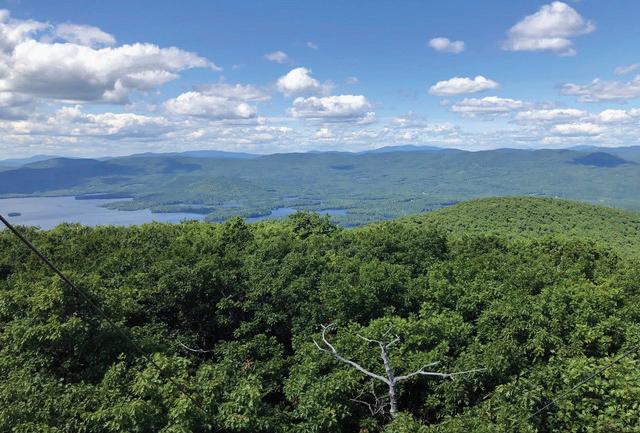
Those reaching the tower deck will find wonderful views in all directions, including the Belknap, Ossipee, Squam, and Sandwich ranges and the extensive bodies of lakes below. Even the pinnacle of Mount Chocorua is visible, as are views of the towns of Sandwich and Center Harbor.
Rather than returning the way I had come, I chose to take the Cabin Trail back down the mountain. It is a shorter route, at 1.3 miles, and has a nice mixture of slopes and near-level trail. It is difficult to say whether it would have been an easier climb than ascending the Red Hill Trail, because descending always is less demanding (except, perhaps, on the knees) due to gravity’s help, but I concluded to try reversing direction next time I hike Red Hill.
The sun appeared overhead while I descended, and the woods came alive with the singing of birds. The cool morning air was soon replaced by warm afternoon breezes.
After less than a mile, one comes to the hunter’s cabin that gives the trail its name. After that, one comes upon the site of the Cook Homestead and Inn, which attracted many visitors over its years of operation, partly because the proprietor, Jonathan Cook Sr., was known as a great conversationalist.
ney, Colby-Sawyer College)
Explore emerging research on microplastic pollution in rural New England lakes, including Newfound Lake, and what these contaminants may mean for freshwater ecosystems, wildlife, and human health.
For complete program details, visit NewfoundLake.org/events.
The Newfound Lake Region Association protects and improves the health of the Newfound Lake Watershed. We support ecosystem resilience and natural resource conservation through focused programs and community engagement.
NH Audubon works to create a future where people and nature thrive together.
Cook was a Revolutionary War veteran, having enlisted three times and fought in six battles. The historical sign says it’s likely that he received the land as a grant. He and his wife, Charlotte Maynard Cook, moved there from Massachusetts. The two-volume “Red Hill Album” that is housed with the Center Harbor Historical Society is a logbook of visitors between 1833 and 1860, and it includes a drawing of the inn by a German visitor in 1851. Guests often mentioned their appreciation of the blueberries and milk that Charlotte served.
The sign also notes the famous people who climbed Red Hill: Yale President Timothy Dwight rode to the summit on horseback in 1817, writing that he found “a prospect worth not only the trouble of the ascent, but of our whole journey”. Before he was president, Franklin Pierce visited Red Hill in 1835. Henry David Thoreau, who climbed Red Hill in 1858, described the view of “Winnipiseogee”, as it often was spelled at the time, along with Squam, Chocorua, and the Sandwich Mountains, as “The boundary of civilization on that side, as indeed they are”. From the Cook Homestead, the Cabin Trail continues to the loop junction, where the return trip continues along the Red Hill Trail to the parking area. To reach the Red Hill parking area, take Bean Road from Route 25 in Center Harbor, then turn right onto Sibley Road. Continue 1.1 miles and turn left onto Red Hill Road. The parking area is on the right in 0.2 mile.










The Winnisquam Watershed Network will hold its Annual Meeting at 10 am Saturday, July 11, at the Leslie Roberts Town Beach in Belmont. The Annual Meeting is a time for those who care about Lake Winnisquam and the surrounding watershed to come together and learn about the work WWN is doing to preserve the watershed, and what you can do to help. Our guest speaker is from the Loon Preservation
Committee and will discuss loon activity on Lake Winnisquam and surrounding lakes.
All are welcome to attend. Join us for coffee and donuts and to reconnect with others who care about the lake. Participants are encouraged to bring their own folding chairs. Rain date will be the same date and time, but will be at Birch Hall at Mallard’s Landing Association, 200 Union Rd, Belmont.
Available at Hundreds of Locations around the Lakes Region!










DRILL THE
RUN THE
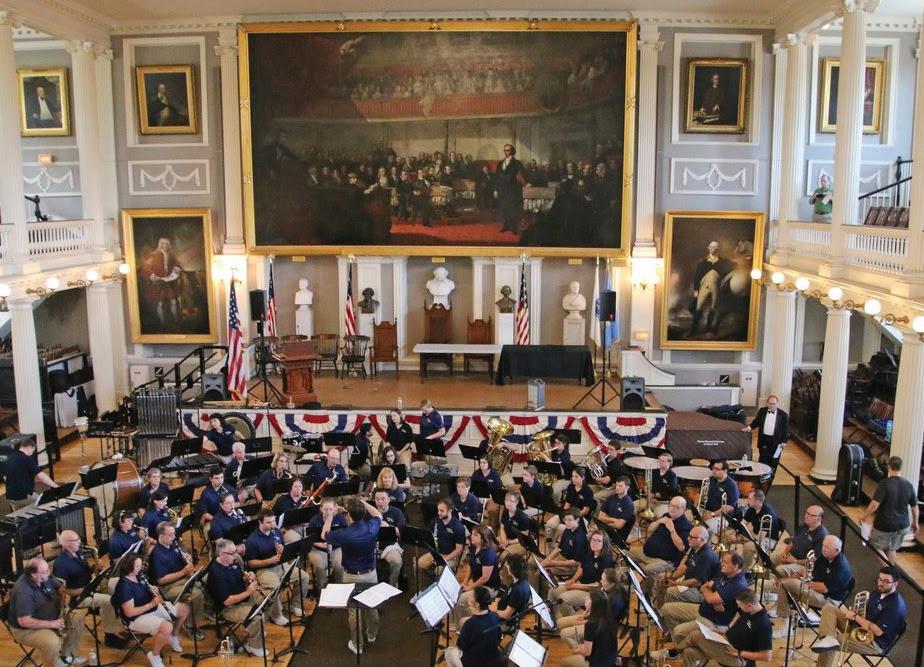
Classic concert band sounds will kick off the Friends of the Wolfeboro Community Bandstand’s summer concert series on Saturday, July 11, at 7 pm in Cate Park.
The Windham Community Bands were established in May 1997. Cofounded by Roanne Copley, Frank Rydstrom, and Bruce Lee, the membership quickly increased from the original eight musicians and now consists of about 80 total members and includes three performing groups: The Windham Concert Band, The Windham Swing Band, and a Saxophone Ensemble. The band is a volunteer, non-profit organization serving musicians and the public from Windham, Derry, Londonderry, Salem, Methuen, Mass., Hudson, Manchester, Nashua, and other area communities. Musicians of all ages are welcome to join.
The band has performed in Hampton Beach, Newburyport, Haverhill, and Lowell, MA, and in summer concert programs throughout southern New Hampshire.
The band is comprised completely of volunteers ranging in age from teens to seniors, and they come from various backgrounds. Many are music teachers, while others are doctors, businesspeople, technical professionals, and retirees. Some are still students. Band members come from towns throughout the area.
The Windham Concert Band director is Spencer Aston, who is currently an Assistant Professor of Music at Bridgewater State University, where he teaches private trumpet lessons and directs the BSU Bear Band. Dr. Aston has frequently guest-conducted and given clinics/masterclasses at schools all across New England. The assistant director is Pam Choinski, who is the band director at Abby Kelley Foster High School in Worcester, MA.
The Friends of the Wolfeboro Community Bandstand is a non-profit group that sponsors free concerts in Cate Park each Saturday throughout July and August. The group is always looking for a wide variety of musical styles to fill the Saturday night series, and the opening week of the series brings the sounds of traditional concert bands.
The concerts run from 7 to 9 pm in Cate Park in downtown Wolfeboro. Though there is no charge for the concert, a pass-the-hat offering is taken at intermission to help support the Friends of the Wolfeboro Community Bandstand’s mission to bring quality acts to Wolfeboro every summer.
The Windham Community Band will play at 7 pm on Saturday, July 11, weather permitting. The concerts are subject to weather conditions. If bad weather is threatening and the concert has to be postponed, there will be a sign posted at the park entrance near the town docks, and it will be posted online at wolfeborobandstand.org and on the group’s Facebook page.

The Windham Community Band plays a repertoire of music that most will find familiar, including Broadway musicals, popular medleys, swing, jazz, marches, and other favorites.









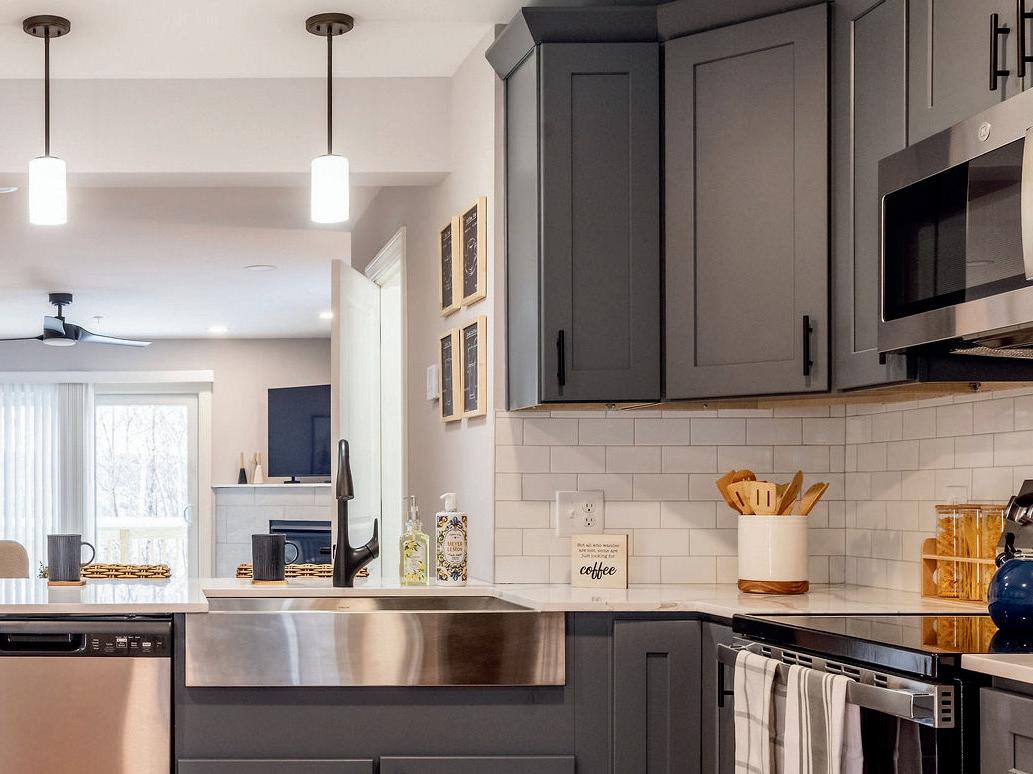



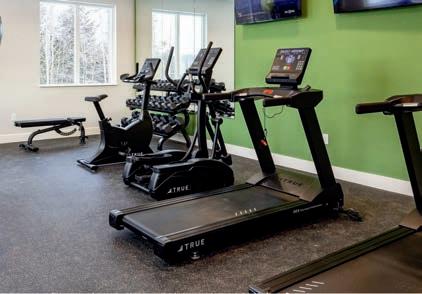


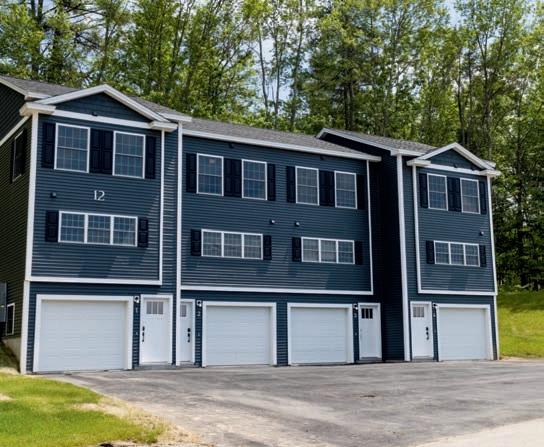
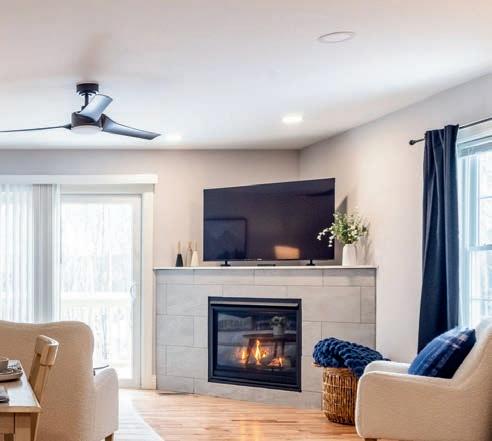
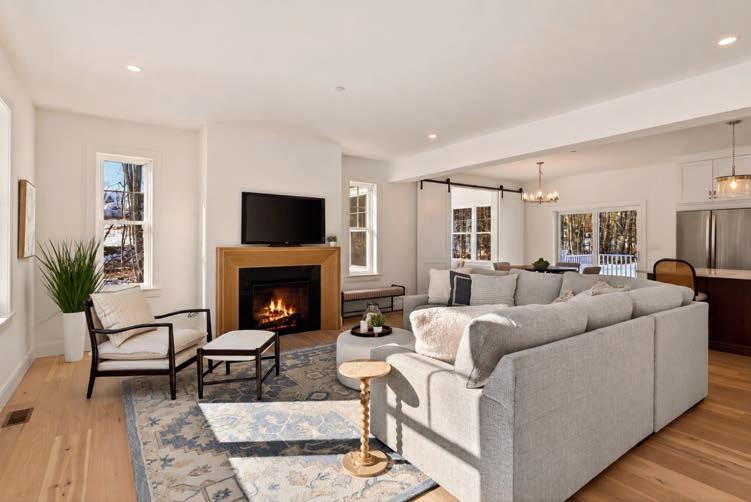
Experience lakeside living at its finest at Langley Cove, a new residential community on Weirs Boulevard in Laconia, New Hampshire. Choose from charming single-family homes at The Cottages at Langley Cove, stylish apartments at The Residence at Langley Cove, or spacious townhomes at The Estates at Langley Cove. Here, you’ll discover a lifestyle centered around comfort, luxury, and community. Enjoy resort-style amenities and a prime location just minutes from Weirs Beach and downtown Laconia.
Property Amenities
Central Air Conditioning
In-Unit Washer/Dryer
Stainless Steel Appliances
Designer Flooring & Finishes
Electronic Thermostat
Fireplace *Select homes
Patio/Balcony *Select homes
Garage *Select homes
Fitness Center
Theatre Room
Community Room
Game Room
, or
Podcast Room
Pickleball Court BBQ & Picnic Area
&

He never smiled on camera, earning him the nickname of “the Great Stone Face.” But Buster Keaton’s comedies rocked Hollywood’s silent era with laughter throughout the 1920s. See for yourself with a screening of ‘Steamboat Bill Jr.’ (1928), one of Keaton’s landmark movies, on Thursday, August 13 at 7 pm at the Flying Monkey Moviehouse and Performance Center, 39 S. Main St., Plymouth, NH.
The screening, the latest in the Flying Monkey’s silent film series, will feature live accompaniment by Jeff Rapsis, a New Hampshire-based composer who specializes in creating music for silent films. General admission is $15 per person. Tickets may be purchased online at www.flyingmonkeynh.com or at the door.
The show is intended to give area movie-goers the opportunity to experience early cinema as it was intended: on the big screen, with live music, and with an audience.
In ‘Steamboat Bill Jr.,’ Buster plays the bumbling son of a gruff riverboat captain. When a rival brings a newer boat to the river, the family is forced to face competition, just as Buster is forced to ride out a cyclone threatening to destroy the community. Can Buster save the day and win the hand of his girlfriend, who happens to be the daughter of his father’s business rival? The film includes the famous shot of an entire building front collapsing on Keaton, who is miraculously spared by a conveniently placed second-story
Thursday, August
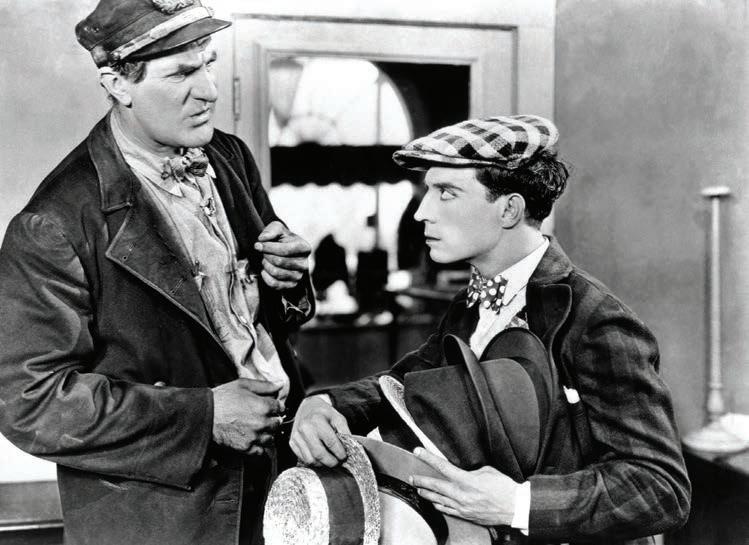
window.
Keaton, who grew up performing with the family vaudeville act, was known for never smiling on camera, an important element of his comic identity. A trained acrobat who learned at an early age how to take falls, Keaton did all his own stunts on camera in the era before post-production special effects. Critics continue to hail Keaton’s timeless comedy as well as his intuitive filmmaking genius. In 2002, Roger Ebert wrote of Keaton that “in an extraordinary period from 1920 to 1929, he worked without interruption on a series of films that make him, arguably, the greatest actor-director in the history of the movies.”
Keaton, who never attended school,




did not think of himself as an artist but as an entertainer using the new medium of motion pictures to tell stories and create laughter.
The screening of ‘Steamboat Bill Jr.’ will feature live accompaniment by Jeff Rapsis, a New Hampshire-based composer who specializes in creating music for silent film presentations.
Rapsis will create the accompani-
ment on the spot, improvising music as the movie unfolds to enhance the action on the screen, as well as respond to audience reactions. He will perform the music on a digital synthesizer capable of producing a wide range of theatre organ and orchestral textures.
“Live music was an integral part of the silent film experience,” Rapsis said. “Because most films at the time weren’t released with sheet music or scores, studios depended on local musicians to come up with an effective score that was different in every theater. At its best, this approach created an energy and a connection that added a great deal to a film’s impact. That’s what I try to recreate,” Rapsis said.
Buster Keaton’s classic comedy
‘Steamboat Bill Jr.’ (1928) will be screened with live music on Thursday, August 13, at 7 pm at the Flying Monkey Moviehouse and Performance Center, 39 S. Main St., Plymouth, NH. General admission is $15 per person. Tickets may be purchased online at www.flyingmonkeynh.com or at the door. For more info, contact the Flying Monkey box office at 603-536-2551. For more about the music, visit www. jeffrapsis.com.
Castle in the Clouds will be partnering with Foxx Run Farm in Ossipee, NH, to host an exciting Petting Zoo Weekend. From 11 am to 3 pm on July 18 and 19, 2026, visitors of all ages will be able to meet, interact with, and learn about the variety of animals brought onsite by Foxx Run Farm.
A returning activity from the Castle’s past, the Petting Zoo Weekend kicks off the 20th-anniversary celebrations of the Castle Preservation Society (CPS). CPS was founded in 2006 to provide ongoing care and restoration of the Lucknow Mansion and Estate as a public attraction and museum. To commemorate this anniversary season, Castle in the Clouds plans to feature several nostalgic highlights from throughout the Estate’s history, including the Petting Zoo Weekend. Castle in the Clouds previously featured a petting zoo on its grounds when the Lucknow Estate was first opened to the public by Richard Robie in 1959.
The Petting Zoo will be located in the Meadows by Shannon Pond at Castle in the Clouds and can be accessed via the Ossipee Park Road entrance. Thanks to the generous support of sponsor Renewal by Anderson, the Petting Zoo Weekend event is a free program. Registration is encouraged but not required. Further details and registration information can be found at castleintheclouds.org.
Foxx Run Farm was established in 2007 as a small hobby farm in Ossipee, NH. Operations have since grown into a working farm dedicated to developing sustainable farming practices, biodiversity and regenerative agriculture with a second location in Hiram, ME. Foxx Run Farm offers lessons, camp days and farm stays to allow visitors to experience a working farm and learn about sustainable farming practices. Find more information about their operations and mission at foxxrunfarm.com.
























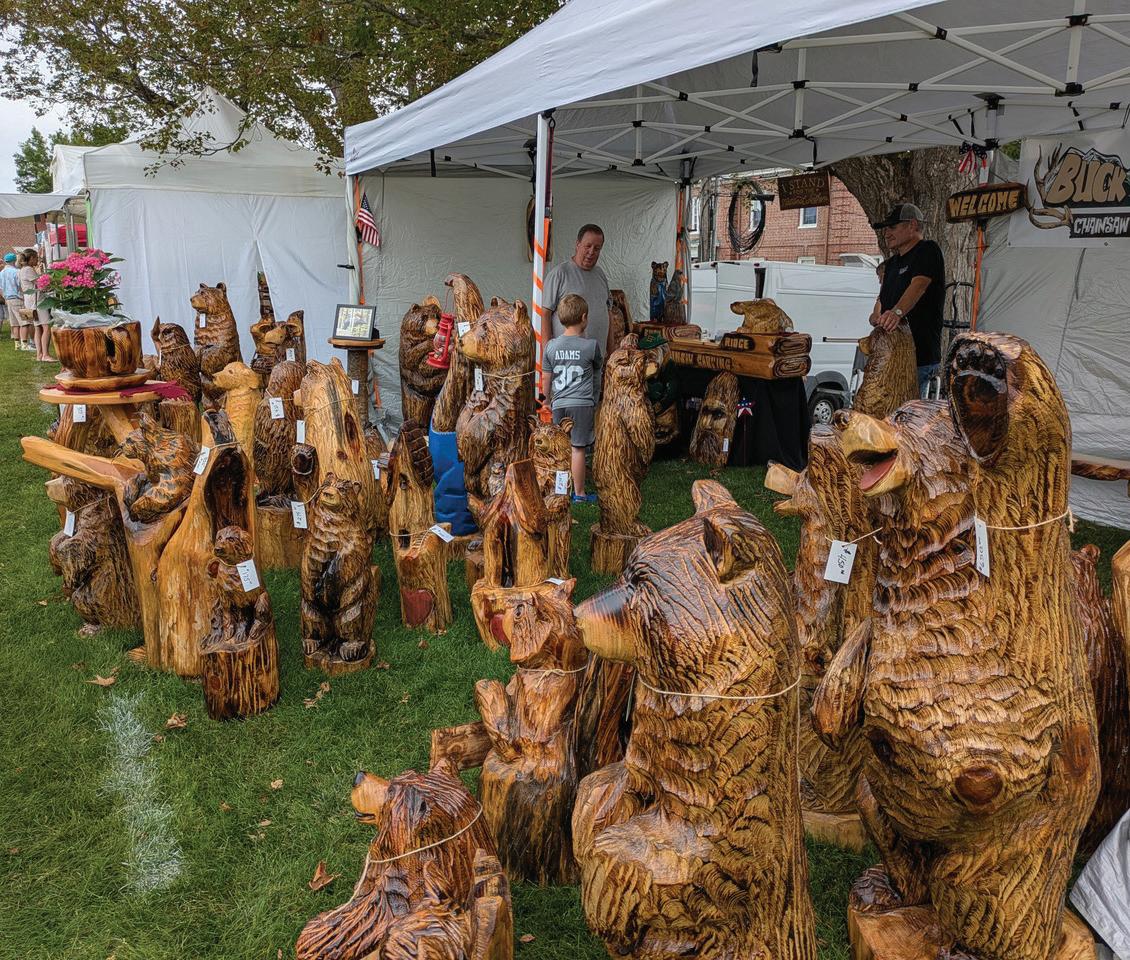
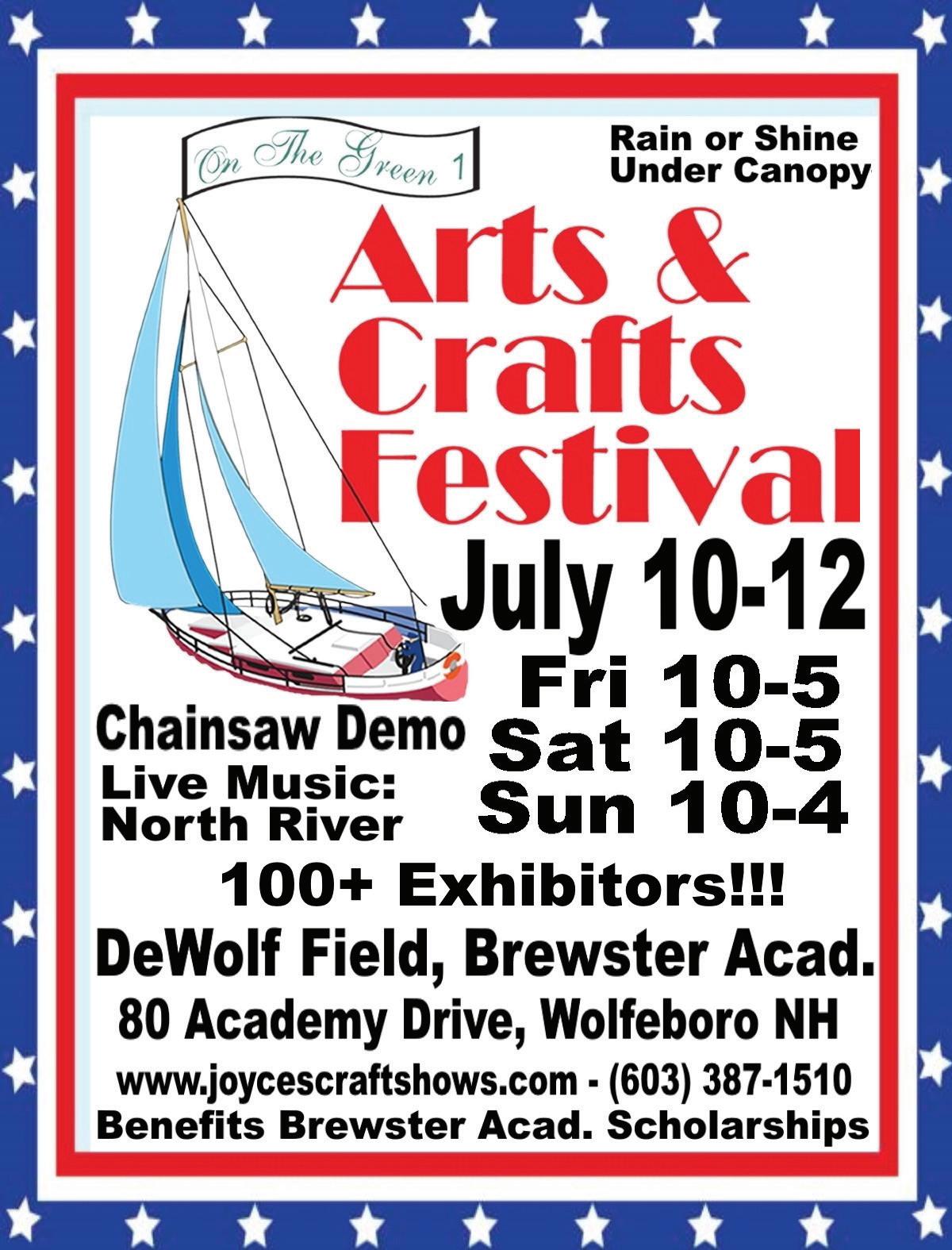
It is time for the annual On The Green Arts & Crafts Festival at Brewster Academy, 80 Academy Drive, Wolfeboro, with over 100 amazing artisans. Friday, July 10, and Saturday, July 11, from 10 am to 5 pm, and Sunday, July 12, from 10 am to 4 pm! Some of the exhibitors will include awesome cedar wood log furniture, various styles of jewelry, charcuterie boards, metal animation, special tablecloths & decor, chainsaw creations and demonstrations with Buck Ridge, functional and dec-




orative pottery, awesome soy candles, chalkboard mats, 3D animation, Lake Winnipesaukee wooden clocks, NH maple syrups, gourmet oils & vinegars, custom leather belts, tole painting, awesome skincare products and lots more! Rain or shine under canopies, and live music with North River Friendly, leashed pets are welcome. Free admission and free parking! For more information, reach out to Joyce at 603-387-1510, presented by Joyce’s craft shows - see you there!
You know it’s summer when the Union Congregational Church Fellowship puts on its traditional New England Hot Dog and Bean supper. This year it will be on Thursday, July 16, from 5:30 to 7 pm in the Hotchkiss Commons-Reunion Grange, 81 Main Street in Union. We’ve planned a great meal of home-made beans, hot dogs, home-baked pies, multiple salads, and drinks. This year we’ve added to the menu home-made brown bread from an old family recipe – you can’t get more
traditional New England than that! Tickets go on sale at 4:30 pm and are on a first-come, first-served basis. The prices are $15 per adult and $5 per child under 10. There will also be togo containers available for the same price once the supper begins.
All proceeds go to the church Fellowship’s outreach program that benefits over ten local, national, and international groups. Give Betty a call at 603-473-2727 for more information and directions.
We celebrate America’s 250th year of independence by showcasing the diverse voices, songs, harmonies, and rhythms of our shared musical heritage. We explore how those voices influenced each other, and how we’ve come to understand the impact and legacy of those voices in the present day. The cornerstone of this program will be a new commission by composer Trevor Weston, demonstrating the link between traditional American hymnody and African American Spirituals. Other repertoire traces the progression of the American choral tradition from Black Gospel quartets
to Shape-Note singing to Barbershop quartets and vocal jazz. The program also includes settings of traditional American Bluegrass tunes and beloved folk songs, like “Calling my Children Home” and “Shenandoah,” as well as arrangements of contemporary American classics, like Queen’s “Somebody to Love” and “Home” from The Wiz.
The concert is at 7:30 pm, Friday, July 24 at the First Congregational Church of Wolfeboro, 115 S Main Street, Wolfeboro. Tickets and information can be found at greatwaters. org.








































































































































































Castle in the Clouds is in full swing now that summer is officially here. This July, there will be programs at the historic estate that range from guided hikes to yoga to a petting zoo!
There are several recurring programs that guests can participate in at the Castle this month, starting with Music Nights, which occur every Monday, Tuesday, and Wednesday. Registration is required for these evening dinner concerts with a view. On Mondays, you can also start the day with a family-centered Story Time & Craft Hour in partnership with the Moultonborough Public Library. These take place at the picnic pavilion from 11 am to 12 pm (there is a rain space for rainy days as well). Later on Mondays, guests can join in on Yoga on the Lawns of Lucknow from 6 - 7 pm. On Sundays, guests can swing by for Solar Gazing from 11 am to 4 pm with the NH Astronomical Society.
Volcanoes & Cellar Holes: the History of Ossipee Park is a walking tour held every other Thursday at 10 am. There are also guided hikes most Thursdays, as well as the Saturday Hikes most Saturday mornings. To see the complete list of hiking times and locations, visit our website.

explicit, systematic instruction that supports all learners. Participants will have the opportunity to hike, tour the Castle, and eat at the Carriage House Restaurant as part of the two-day experience. Registration ends July 18, so be sure to secure a spot before then.
Also on July 23 is Constellations at the Castle, a great opportunity to learn more about and observe the night sky with a scenic view from the meadow and Carriage House. This event takes place in the evening from 8 to 10 pm.
A day later, join Audrey Drake for a Sound Bath from 6 to 7 pm on July 24 and then, on July 26, join Bewitched Acres for a Small-Group Beekeeping class from 11 am to 12:30 pm.
To register for these programs, please visit www.castleintheclouds.org/calendar-of-events/ month/2026-07/. For more information, please contact programs@ castleintheclouds.org or visit www. castleintheclouds.org
Lucknow Garden Tours continue this month, alternating between Friday and Saturday each week. Join this 10:15 am tour to see outside Lucknow Mansion and learn about the gardens directly from the Castle’s head gardener.





Starting July 11, Concerts in the Clouds is back! Great Waters has a great lineup this summer, starting with an Arrival from Sweden – an ABBA music experience. On July 17, guests can see Neil Berg: Peace, Love, and Rock & Roll. The following week will feature Chanticleer – A cappella, on July 24. For tickets and more information, interested parties should visit the Great Waters website: https://greatwaters. org/.
On July 18 and 19, there will be a Petting Zoo in the meadow – a call back to when Castle in the Clouds used to feature their own petting zoo. This is a special Castle Preservation Society 20th Anniversary event, free for guests and their families.
Teachers can attend a two-day professional development workshop on July 22 and 23. Science of Writing will help teachers design
As the premier historical museum in the beautiful Lakes Region of New Hampshire, Castle in the Clouds provides each visitor with a look into the past while providing contemporary comforts to make every visit memorable. Originally called Lucknow, this breathtaking 6,300-acre property was developed in 1913 by Tomas G. Plant, a wealthy shoe manufacturer, to create a luxurious lifestyle with state-of-the-art amenities, beautiful handmade furnishings, and a large staff to run the estate. These days, visitors come from all around the world to tour the mansion and exhibit gallery, dine in the Carriage House Restaurant or Café in the Clouds, explore miles of hiking and walking trails maintained by partner organization the Lakes Region Conservation Trust, or enjoy one of our many programs and events. Operated by the Castle Preservation Society, a 501(c)(3) nonprofit organization, Castle in the Clouds is revered as a cultural and educational resource. The Lucknow Estate was designated a National Historic Landmark in 2024, recognizing its national significance in architecture and landscape architecture. Castle in the Clouds is also available as a fairytale wedding location and versatile private event rental venue. For more information about Castle in the Clouds, visit www.castleintheclouds.org.

.com
Summer is in full swing at Maker’s Mill, 23 Bay Street, Wolfeboro, where July brings a vibrant lineup of handson classes, youth programs, and community gatherings designed to inspire creativity, build skills, and connect people through making.
Throughout the month, young creators can take part in Maker’s Mill’s popular Summer Youth Camp, led by artist and educator Jennifer MacLean. Running weekdays from 10 am to 1:30 pm, the camp offers children and teens an opportunity to explore a variety of artistic techniques, creative projects, and collaborative activities in a welcoming makerspace environment.
Adults looking to learn a new skill or revisit a favorite craft will find a wide range of offerings spanning traditional arts, fine art, fiber arts, jewelry making, and sustainability practices.
Community-minded makers can gather for the monthly Fiber Arts Mingle & Upcycle Club on July 7, a casual evening dedicated to sharing projects, ideas, and sustainable crafting techniques.
Jewelry enthusiasts will have multiple opportunities to expand their skills. On July 11, silversmith Paulette Werger teachesBegin with a Bezel, an immersive workshop introducing participants to stone setting and jewelry fabrication. Later in the month, Courtney Drake returns to teachResin Jewelry, exploring colorful and contemporary design techniques.
Animal lovers and aspiring painters can capture the personality of a beloved
companion during Paint Your Pet, led by Jennifer MacLean on July 11. Those interested in traditional painting methods can dive deeper into fine art with Ann Xavier’s two-part Introduction to Oil Paintingclass on July 13 and 15. Maker’s Mill continues to foster learning beyond the arts through its Sustainability & Homesteading Club, led by Doc Dougherty, on July 14. The gathering provides a forum for discussing practical skills, self-sufficiency, and environmentally conscious living.
Creative home decorators will en-



Techniquesseries beginning July 31.
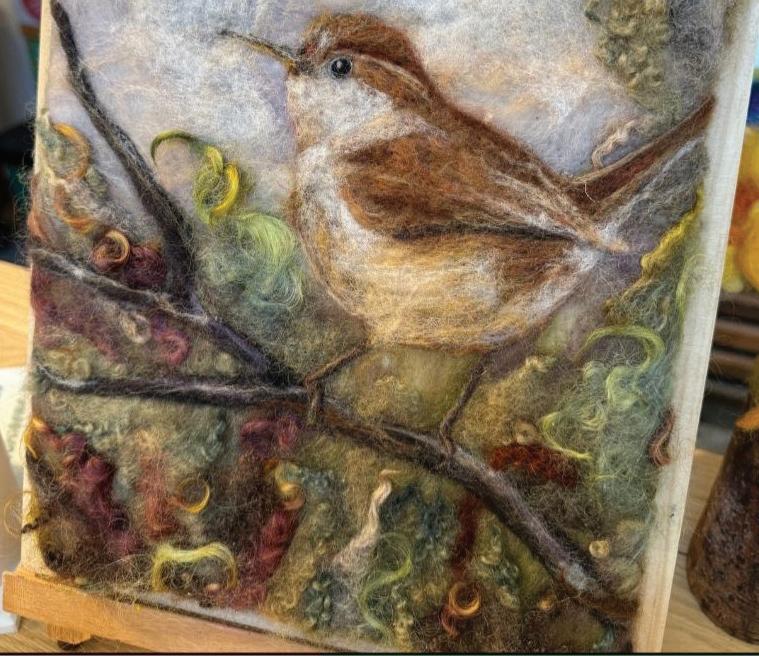
Fiber artists can discover the art of needle felting during Felted Tapestry: Carolina Wren on July 25, creating a colorful textile portrait inspired by one of New England’s favorite songbirds. On that same day, a Resin Jewelry class perfect for beginners and experienced crafters alike will be held with instructor Courtney Drake.
The month concludes with one of Maker’s Mill’s most community-focused events: theRepair Caféon Sunday, July 26. Volunteers help visitors diagnose and repair household items, encouraging sustainability while keeping useful objects out of landfills.
Located in the heart of Wolfeboro, Maker’s Mill serves as a regional hub for creativity, craftsmanship, entrepreneurship, and lifelong learning. Classes welcome participants of varying experience levels, from complete beginners to seasoned makers.
joy Decorative Furniture Painting with Phyllis McDonald on July 18, while artists seeking a deeper exploration of personal expression can enroll in McDonald’s five-sessionJoyful Arts

Registration and complete class details are available at makersmill.org. Early registration is encouraged, as many classes fill quickly during the summer season.
Wood • Aluminum • Vinyl • Ornamental • Chainlink Free Estimates • Timely Service Serving All of New Hampshire 603-327-7111
modernfence-nh.com








Photos courtesy Sim Hart
By Kathi Caldwell-Hopper
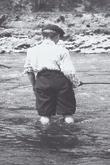
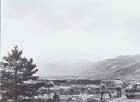
When Russ Hart moved to Meredith, New Hampshire in 1947, he came with his wife, Helen, and their children. It is unlikely that Russ and Helen imagined serving turkey dinners from a beloved restaurant when they arrived. Instead, Russ was thinking about farming.
At the time, Russ had little money and a family to care for. Farming seemed the best way to make ends meet, and Russ’s parents, Mae and Lawrence Hart, already owned land in Meredith and were farming there.
Mae and Lawrence were from New Jersey and vacationed in the Lakes Region in the 1920s. They loved their Meredith property so much that summering there was not enough. They moved to the area permanently in the 1940s.
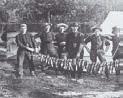
With land available for farming, sons Russ and Larry soon joined their parents in Meredith. With Russ’s wife, Helen, and Larry’s wife, Gerda, helping, the family began farming the land. They worked hard growing apples, vegetables, chickens, eggs, and turkeys, and sold their products from a delivery truck.
By 1953, the family raised turkeys exclusively. This became the family’s
future because farming was not financially feasible. Although they put their energy into the farm, they were not making ends meet. With children to support, Russ and Helen, and Larry and Gerda, turned from farming to the restaurant business.
Sim Willey, the current owner of Hart’s Turkey Farm Restaurant, who is also Russ Hart’s grandson, knows the story of those times. He says Russ’s Navy service helped shape the decision to start the restaurant. Russ had
been a cook on a Navy ship and knew how to prepare meals. Thus, the family opened a restaurant on the property in 1954, with the restaurant’s kitchen in the barn.
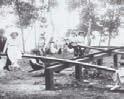
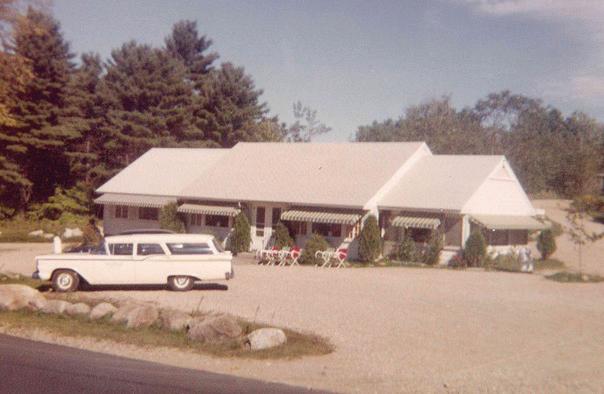
It was a basic start because they did not have the funds to build a kitchen in the same place as the small restaurant. With just 12 seats, the restaurant sat at the front of the property long before Rt. 104 was built. Once someone placed an order, the server radioed it up to the barn where Russ was cooking.
Sim adds, with a laugh, that you could always tell how well the business was doing financially by the construction underway. “If they had a good season, they built onto the original restaurant; if it wasn’t such a successful season, they did not do any building.”
Eventually, the front of the restaurant building on the former farm property was renovated, adding more dining space. For many years, the business was strictly seasonal, but in the 1970s it was open weekly in summer and on weekends year-round. Today, Hart’s Turkey Farm Restaurant is open daily, all year long.
When Larry died in 1960, Russ became the sole owner of the business. In 1965, the family had to decide whether to continue farming or become fulltime restaurateurs. Their choice to focus on the restaurant full-time was a smart one, as Hart’s success today shows. (Growing turkeys phased out in 1965 with the choice to focus on the restaurant.)
Russ eventually learned he could get turkeys from some select farms that met his quality criteria. This gave him more time to spend in the kitchen, us-
• Yesteryear continued on page 13
• Yesteryear continued from page 12
ing his mother’s recipes for dinners and desserts. He also had more time to grow the business and add to the restaurant building, which today seats 500 diners.
Quality and doing things right were always Russ’ way. Sim recalls being a young boy and living near the restaurant. “All the kids I knew had summer jobs mowing lawns, but I did not want to do that. I wanted to work at the restaurant, so one day I approached my grandfather, Russ. I was always a bit in awe of him because he was larger than life to me. But I wanted a job at Hart’s, so I screwed up my courage and asked him for a job in the restaurant.”
Wisely, Russ Hart told his grandson he would hire him, but not as a dishwasher or bussing tables; rather, doing outside weeding of the grounds and picking up litter in the parking lot. “He said I had to start at the bottom and work my way up. He also said if the outside of a business was not kept up, why should a customer bother to come inside?” recalls Sim, the current owner of Hart’s.
It made sense, was good training, and remains something Sim remembers to this day. Eventually, Sim’s mother and her siblings bought out his grandparents, and more changes followed in the 1980s.
By 2019, Sim’s mother, Lynn, his Aunt Dale, and Uncle Russell had all retired, with Sim taking over sole ownership. Sim is currently working with the fourth generation of the family, his son Teddy.
Looking around one of the dining rooms, Sim points out some things that have stayed the same over the years. Those details are the solid foundation of a restaurant that began with a modest kitchen in the barn, a little 12-seat eatery, and turkeys raised on the property.
Hart’s has always been known for
delicious turkey dinners, and it remains a customer favorite to this day. Sim says he continues to use many of his grandmother’s recipes and has no plans to do otherwise. The recipes produce meals customers love and expect at Hart’s; Sim has never stopped using Mae’s recipes, while now and then he adds other popular dishes to the menu.
“Consistency is really important,” Sim says. “Seventy percent of our menu does not change. We make everything on the premises.”
Not wasting food also harkens back to Mae Hart’s cooking style. Sim explains they use all of the turkey, even making turkey stock and soup from its parts.
An interest in farming has never quite left the Hart family, and Sim says he raises a small number of turkeys each year in coops in the back of the property. “Kids and their parents love to stop by and see the turkeys. It is quite a novelty,” Sim adds. (The turkeys are not used in the restaurant’s kitchen but rather are a hobby for Sim.)
Sim nods to the beautiful pine walls and says the wood was cut from trees on the farmland. The vast collection of turkey platters that grace the walls of every dining room at Hart’s started with Mae’s Thanksgiving platter, which she gave to Russ and Helen in the 1960s. It became, as surmised today, the world’s largest turkey plate collection which can be seen on the walls throughout the dining rooms.
It is Sim’s hope that Hart’s, a restaurant built on hard work and doing it the right way, will continue for future generations. Although times and styles change, quality and consistency are equally important at Hart’s.
“If my grandparents were to walk into Hart’s today,” Sim says, “I think they would not really notice a big difference from the restaurant they started so long ago. The important things remain.”
Join artist Patsy Frasier at the League of NH Craftsmen - Meredith Fine Craft Gallery on Saturday, July 11, from 1 to 4 pm for a Felted Fishbowl class.
Learn the art of needle felting and create your own felted fishbowl in this fun one-day workshop! Juried artist Patsy Frasier will guide students through making a creative faux fishbowl that can sit anywhere with none of the maintenance a real fishbowl demands. It can be a simple goldfish or a fish straight from your imagination. This class is made to be fun for all experience levels.
Tuition is $50 per student with an additional materials fee of $20 paid by cash or check to the instructor at the time of the class.
Space is limited, and pre-registration is required. Those who wish to attend MUST sign up by Wednesday, July 8. To register for this workshop, please call the League of NH Craftsmen –Fine Craft Gallery at 603-279-7920 or stop by the gallery located at 279 Daniel Webster Highway in Meredith, NH. For more details, visit our website at http://meredith.nhcrafts.org/classes/ and our Facebook page at http://www. facebook.com/nhcraft/
The League of NH Craftsmen Meredith Fine Craft Gallery is located at 279 DW Hwy, Meredith, and is dedicated to the education and support of NH’s fine craft tradition since 1932.
































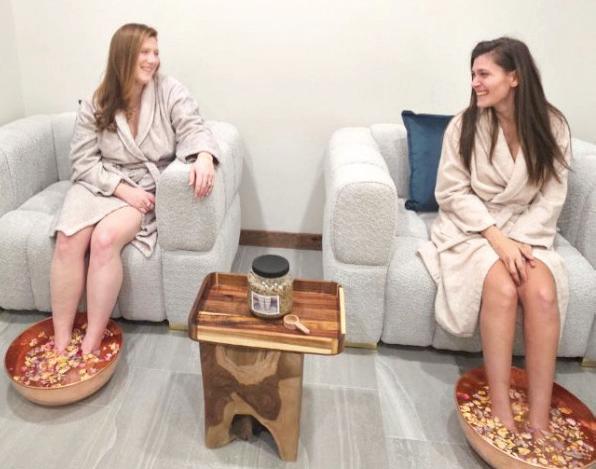
Relax, Reset, & Rejuvenate
11 included amenities: salt cave, infrared sauna, frost locker, PEMF lounger, vibroacoustic therapy with add-ons: like deep soaks, massages and reflexology
By Reservation Only

315 Avery Hill Road, Alton 603-453-4186 lavendersenseretreat.com



Please call ahead for event updates. Information and schedules subject to change.
July & Aug., Yoga in the Woods, 8 am, held on select Sundays, Lost River Gorge & Boulder Caves, 1712 Lost River Rd., Woodstock, 603-745-8031, www.lostrivergorge.com.
Through Oct. 31, From Sails to Atoms: The Portsmouth Naval Shipyard, exhibit about the history and impact of the shipyard,Wright Museum of WWII, 77 Center St., Wolfeboro, 603-569-1212, www.wrightmuseum.org.
July 6, Loon Cruise, 3 – 4:30 pm, observe common loons, on canopied pontoon boats,Squam Lakes Natural Science Center,Rt. 113 Holderness, 603-9687194, advance reservation required: www.nhnature.org.
July 6, Monarch Monitoring Mondays, 9 - 10:30 am, on Mondays, held at Pemi Oxbow Preserve, Holderness, program of Squam Lakes Natural Science Center, 23 Science Center Rd., Holderness, pre-registration: 603-968-7194, www.nhnature.org.
July 6, Music Night, Sweetbloods performing, 5:30 pm, Carriage House Restaurant, Castle in the Clouds, Rte. 171, Moultonborough, reservations encouraged: 603-476-5410, www.castleintheclouds.org





July 6, Story Time and Craft Hour, 11 am – noon, free, Castle in the Clouds (Lucknow), held near Shannon Pond, Rte. 171, Moultonborough, pre-registration: 603-476-5410, www.castleintheclouds.org. (In partnership with Moultonborough Public Library)
July 6, Veterans Count Lakes Region Golf Tournament, 11:30 am – 6 pm, Laconia Country Club, 607 Elm St., Laconia, 603-315-4354.
July 6, Yoga on the Lawns of Lucknow, 6 – 7 pm, Castle in the Clouds (Lucknow), pre-registration required: 603-476-5900, www.castleintheclouds.org.
July 6-10, Model Yacht Building Workshop, 9 am – 3:30 pm, NH Boat Museum, Wolfeboro Campus, 399 Center St., Wolfeboro, sign up: 603-569-4554, www.nhbm.org.
July 6-17, Lion King Kids, 8 am – noon, summer camp program, Kingswood Arts Center, Wolfeboro, 603-832-8250, www.kingswoodtheatre.org.
July 7, Fireflies Light Up the Sky, 8 – 9:30 pm, multigenerational program, Prescott Farm Environmental Education Center, 928 White Oaks Road, Laconia, www.prescottfarm.org. Call ahead for event information and to inquire if program pre-registration is necessary: 603-366-5695.




July 7, Lecture Series: The Freese Brothers Big Band – Honor, Reflect, Remember: The tunes of the War Years, 7:30 – 8:30 p.m., Wright Museum of WWII, 77 Center St., Wolfeboro, admission/reservations: 603-569-1212, www. wrightmuseum.org.
July 7, Let Freedom Ring? / The Times That Try Men’s Souls, talk by local historian Rudy VanVeghten, 7 pm, by Meredith Historical Society, held at Meredith Community Center, 1 Circle Drive, light refreshments at 6:30 pm, 6032607493, www.meredithhistoricalsocietynh.org.
July 7, Model Yachting on Back Bay, 1 pm, with NH Boat Museum, Wolfeboro, 603-569-2200.
July 7, Music Night, Eric Grant performing, 5:30 pm, Carriage House Restaurant, Castle in the Clouds, Rte. 171, Moultonborough, reservations encouraged: 603-476-5410, www.castleintheclouds.org
July 7, On the Water Instruction, 9 a.m. – 3 p.m., Goodhue Boat Company, program of NH Boat Museum, info/pre-register: 603-569-4554, www.nhbm. org
July 7, Spiny Water Flea and NH Lakes, 5 – 6:30 pm, Grey Rocks Conservation Center, 178 North Shore Rd., Hebron, 603-744-8689, www.newfoundlake. org.
July 7, Who was John Stark, 7 – 9 pm, Booster Club, 99 Main St., Ashland, www.ashlandnhhistory.org.
July 8, Coffee Hour with presentation Hiking Through Nepal, 10 – 11 am, Effingham Public Library, 30 Town House Rd., Effingham, 603-539-1537.
July 8, Little Sprouts – Planting a Garden, 10:30 am - noon, for children 4 to 9, must be accompanied by a parent or responsible adult, Moulton Farm, 18 Quarry Rd., off Rt. 25, Meredith, purchase tickets at the farm market or: 603279-3159, www.moultonfarm.com.
July 8, Meet Author & Broadcaster Laura Knoy, 6 pm, book discussion, Meredith Public Library, 91 Main St., Meredith, 603-279-4303, www.meredithlibrary.org.
July 8, Music Night, Jeff Mitchell performing, 5:30 pm, Carriage House Restaurant, Castle in the Clouds, Rte. 171, Moultonborough, reservations encouraged: 603-476-5410, www.castleintheclouds.org
July 8, Polliwogs: Wild Makers - Little Explorers Hike & Nature Creations, 10 – 11:30 am, for pre-K with adult, Prescott Farm Environmental Education Center, 928 White Oaks Rd., Laconia, pre-register: 603-366-5695, www. prescottfarm.org.
July 8, Squam Lakes Butterfly Count, 8:45 am – 3:45 pm, (rain date July 9), Squam Lakes Natural Science Center,23 Science Center Rd., Holderness, pre-registration: 603-968-7194, www.nhnature.org.
July 8, The Wrecks of Winnipesaukee, speaker Hans Hug, 7 pm, summer lecture series, Lake Winnipesaukee Historical Society, limited seating, reservations required: 603-366-5950, 503 Endicott St. north, Weirs Beach, www.lwhs.us.
July 8-12 Always Patsy Cline, Interlakes Theatre, 1 Laker Lane, Meredith, 603-707-6035, www.interlakestheatre.com.
July 9, An Evening with Sandy Martin – Artist Reception, 5:30 - 7 pm, NH Boat Museum, Moultonborough Campus, 130 Whittier Highway, Moultonborough, 603-569-4554, www.nhbm.org.
July 9, Carolyn Ramsay Band, outdoor concert, concessions, free, 19 Mile Beach, Rt. 28, Tuftonboro, 603-569-4539, ext. 125.
July 9, Fused Glass Jewelry with Ann Lambert, 10 am – 3 pm, pre-register: ArtWorks Chocorua Creative Arts Center, 132 Rt. 16, Chocorua, 603-323-8041, www.chocoruaartworks.com.
July 9, Guided Hike, 10 am – noon, Settlement Loop trail, Castle in the Clouds (Lucknow), Rte. 171, Moultonborough, pre-registration: 603-476-5410, www. castleintheclouds.org
July 9, Kids Nature Exploration, 10:30 – 11:30 am, Grey Rocks Conservation Center, 178 North Shore Rd., Hebron, info.: 603-744-8689, www.newfoundlake.org.
July 9, Miles to Memphis, 5 – 6 pm, free, Marceau Park, Central St., downtown Franklin, 603-934-1901, www.franklinoperahouse.org.
July 9, Morgan Nelson, Bristol Summer Concert Series, 6:30 pm, Kelley Park, 41 North Main St., Bristol, free, public welcome, bristolevents@bristolnh. gov.
July 9, Preview: NH Boat Museum Boat Auction, noon – 5 pm, please note the new location:NH Boat Museum, Moultonborough Campus, 130 Whittier Highway, Moultonborough, 603-569-4554, www.nhbm.org.
July 9, Story Hour with the Moultonborough Library, 11 am - noon, NH Boat Museum, Moultonborough Campus, 130 Whittier Highway, Moultonborough, 603-569-4554, www.nhbm.org.
July 10, Band Concert, Center Harbor Town Band, 7 pm, free, downtown Center Harbor, 603-785-2921.
July 10, Center Harbor Flea Market & Craft Fair, 8 am – 2 pm, free, Congregational Church, 52 Main Street, Center Harbor, info: 603-253-7698 or chccsecretary@chccucc.org.
July 10, First Friday at ArtWorks, 5-7 pm. Featuring paintings by Tracy Weitz, apps, conversation and ART. ArtWorks CCAC, 132 Rt. 16, Chocorua, 603-323-8041, www.chocoruaartworks.com.
July 10, Garden to Table Series, Garden Salad & Homemade Salad Dressings, 10 am – noon,ages 6 – 14, Prescott Farm Environmental Education Center, 928 White Oaks Rd., Laconia, pre-register: 603-366-5695, www.prescottfarm. org.
July 10, John Primer & the Real Deal Blues Band, 7:30 pm, Lakeport Opera House, 781 Union Ave., Laconia, 603-519-7506, www.lakeportopera.com.
July 10, Live Animal Presentation, Animal Adaptations, 10:30 am, with Squam Lakes Natural Science Center Naturalist, at Lost River Gorge & Boulder Caves, free with Gorge ticket, 1712 Lost River Rd., Woodstock, 603-745-8031, www.lostrivergorge.com.
July 10, Loon Cruise, 3 – 4:30 pm, observe common loons, on canopied pontoon boats,Squam Lakes Natural Science Center,Rt. 113 Holderness, 603-9687194, advance reservation required: www.nhnature.org.
July 10, Movies on the Hill, Cars, 8:15 pm, Wolfeboro Parks & Recreation, 390 Pine Hill Rd., Wolfeboro, Abenaki Hill in front of lodge, 603-569-5639.







New Hampshire Day Spring 5/9, Fall 11/1
Member Solstice 6/24
Movie Night 7/22
Nature for Everyone Barn Bash 7/16
Animal Birthday Bash 8/12
Annual Meeting & Summer Social 8/6
Raptor Migration Celebration 9/19
Grandparents Day 10/3
Howl O Ween 10/24
New August BioBlitz events weekly!
Science Lecture Series
Live Animal Trail open daily May 1 - November 1
Guided Squam Lake Cruises
Mid-May - Mid-October
Guided Discoveries Camps April Break & Summer





July 10-11, Granite Cup, 11 am, 2025 Pro Waterski Event WWS Granite Cup, Back Bay, Abenaki Ski Club, Wolfeboro, www.worldwaterskiers.com.
July 10-12, On the Green 1 Arts & Crafts Festival, Joyce’s Craft Shows, Fri. & Sat. – 5 pm, Sun. 10 am – 4 m, 10 am, Brewster Academy, 80 Academy Driver, Rt. 28, Wolfeboro, 603-387-1510, www.joycescraftshows.com.
July 11, Antique and Vintage Fair on the Green, 11 am – 3 pm, Clark Museum Complex, Wolfeboro Historical Society, 233 South Main St., Wolfeboro, 603569-4997, www.wolfeborohistoricalsociety.org.
July 11, Aquanett – 80s Rock, 8 pm, Lakeport Opera House, 781 Union Ave., Laconia, 603-519-7506, www.lakeportopera.com.
July 11, ARRIVAL from Sweden – The Music of ABBA, 7:30 – 9 pm, Great Waters Summer Concerts/Music Festival at Castle in the Clouds, 483 Ossipee Rd., Moultonborough, 603-569-7710, www.greatwaters.org.
July 11, Artisan Fair, 10 am - 4 pm, street fair at Town Square, Waterville Valley, 1-800-993-3149.www.waterville.com.
July 11, Author Fest, 9:30 am – 2 p m, Cook Memorial Library, keynote speaker: Julie Carrick Dalton, meet and talk with 12 local authors, free, pre-register: https://www.zeffy.com/en-US/ticketing/tamworth-author-fest--2026, program of Tamworth Arts Council, 603-584-2712.
July 11, Bob Marley Comedian, 8 pm, The Colonial Theatre, 609 Main St., Laconia, 800-657-8774, www.coloniallaconia.com.
July 11, Fairyland Festival, Cate Park, 9 am - noon, by The Children’s Center, Wolfeboro, 603-569-1027, www.thechildrenscenternh.org.
July 11, Granite State Street Rodders, 4 - 7 pm, classic car show, raffles, food, music and more, NH Farm Museum, 1305 White Mt. Highway, Milton, 603-6527840, www.nhfarmmuseum.org.
July 11, Herb Infused Honey, 1 – 3 pm,age 16 - adult,Prescott Farm Environmental Education Center, 928 White Oaks Rd., Laconia, pre-register: 603-3665695, www.prescottfarm.org.
July 11, Jewelry Workshop: Begin with a Bezel, 10 am - 4 pm, Makers Mill, 23 Bay St., Wolfeboro, 603-569-1500,www.makersmill.org
July 11, Lauren Smoken, Barrel Bar & Grille Summer Music Series, 2 – 5 pm, Gunstock, 719 Cherry Valley Rd., Gunstock, info.: 603-293-4341, www.gunstock.com.
July 11, NH Boat Museum Summer Boat Auction, 10 am – 3 pm, please note the new location:NH Boat Museum, Moultonborough Campus, 130 Whittier Highway, Moultonborough, 603-569-4554, www.nhbm.org.
July 11, New Horizons Band concert, Sanbornton Library, during Sanbornton Old Home Day, www.newhorizons-lakesregion.org.
July 11, Paint Your Pet, 2 - 5 pm, Makers Mill, 23 Bay St., Wolfeboro, 603-5691500,www.makersmill.org.
July 11, Shirley’s Toys and Blooms, 1 – 4 pm, Toy Museum, 14 Pleasant St., Ashland, www.ashlandnhhistory.org.


July 11, Summer Concert Series, 7 – 9 pm, Thursday Afternoon Band, classic & modern rock, Alton Bay Bandstand, Alton Bay, 603-875-0109.



July 11, Windham Community Bandstand Concert, 7 – 9 pm, Cate Park, South Main St., Wolfeboro, www.wolfeborobandstand.org.
July 11, Winnisquam Watershed Network Meeting, 10 am, learn about preserving the watershed, Leslie Roberts Town Beach, Winnisquam, 802-449-6035, www.winnisquamwatershed.org.















July 11-19, Boat Building, 8:30 am – 3:30 pm, NH Boat Museum, NH Boat Museum, 603-569-4554, www.nhbm.org.
July 12, Animal Encounters Series: Critter Communities, 10 – 11 am, free, Lower Level of Town Square, Waterville Valley, 1-800-993-3149.www.waterville.com.
July 12, So Good! The Neil Diamond Experience Starring Robert Neary, 7 pm, The Colonial Theatre, 609 Main St., Laconia, 800-657-8774, www.coloniallaconia.com.
July 13, Discovery Walk with a Naturalist, 10 - 11 am, Grey Rocks Conservation Center, 178 North Shore Rd., Hebron, info.: 603-744-8689, www.newfoundlake.org.
July 13, Loon Cruise, 11 am, 1 & 3 pm, learn about loons, on canopied pontoon boats, Squam Lakes Natural Science Center,Rt. 113 Holderness, 603-968-7194, advance reservation required: www.nhnature.org.
July 13, Loon Day, 9:30 am - 5 pm, observe common loons, also Loon Cruise on canopied pontoon boats,Squam Lakes Natural Science Center,Rt. 113 Holderness, 603-968-7194, advance reservations: www.nhnature.org.
July 13, Monarch Monitoring Mondays, 9 - 10:30 am, on Mondays, held at Pemi Oxbow Preserve, Holderness, program of Squam Lakes Natural Science Center, 23 Science Center Rd., Holderness, pre-registration: 603-968-7194, www.nhnature.org.
July 13, Music Night, Jonathan Sarty performing, 5:30 pm, Carriage House Restaurant, Castle in the Clouds, Rte. 171, Moultonborough, reservations encouraged: 603-476-5410, www.castleintheclouds.org
July 13, Story Time and Craft Hour, 11 am – noon, free, Castle in the Clouds (Lucknow), held near Shannon Pond, Rte. 171, Moultonborough, pre-registration: 603-476-5410, www.castleintheclouds.org. (In partnership with Moultonborough Public Library)
July 13, The Traveling Wilburys Revue, 4 pm, Lakeport Opera House, 781 Union Ave., Laconia, 603-519-7506, www.lakeportopera.com.
July 13, Yoga on the Lawns of Lucknow, 6 – 7 pm, Castle in the Clouds (Lucknow), pre-registration required: 603-476-5900, www.castleintheclouds.org.
July 14, Felted Rocks with Robin Cornwell, 10 am – noon, pre-register: ArtWorks Chocorua Creative Arts Center, 132 Rt. 16, Chocorua, 603-323-8041, www.chocoruaartworks.com.
July 14, Lecture Series: Randy Otto as Winston Churchill, 7 – 8 p.m., Wright Museum of WWII, 77 Center St., Wolfeboro, admission/reservations: 603-5691212, www.wrightmuseum.org.
July 14, Music Night, Mitch Alden performing, 5:30 pm, Carriage House Restaurant, Castle in the Clouds, Rte. 171, Moultonborough, reservations encouraged: 603-476-5410, www.castleintheclouds.org
July 14, On the Water Instruction, 9 am – 3 pm, Goodhue Boat Company, program of NH Boat Museum, info/pre-register: 603-569-4554, www.nhbm.org.
Community Connections
Libraries: Effingham.lib.nh.us, gafneylibrary.org (Wakefield,), Moultonboroughlibrary.org, Wolfeboropubliclibrary.org, Ossipeelibrary.org, Meredithlibrary.org, Tuftonborolibrary.org, Tamworthlibrary.org, chocorualibrary.org
Parks and Recreation: Laconia (laconianh.gov), Gilford (gilfordrec.com), Meredith (meredithnh.gov/200/Parks-Recreation), Moultonborough (moultonboroughnh.gov/221/Recreation-Department), Wolfeboro (Wolfeboronh.us), Tuftonboro (tuftonboronh.gov/parks-recreation-commission), Belmont (belmontnh. gov), Center Harbor (centerharbornh.gov/pages/parks-and-recreation), Bristol (ttccrec.org), Plymouth (sites.google.com/pemibaker.org), Tilton (tiltonnh.org), Gilmanton (gilmantonnh.gov), Alton (alton.nh.gov), Ossipee (ossipee.org/ossipee-parks-recreation
Farmer’s Markets – Barnstead (Saturday, 10 am – 1 pm), Gilmanton (Sunday, 11 am – 2 pm), Weirs Beach (Saturday, 10 am – 1 pm), Tamworth (Saturday, 9 am - noon), Conway (Tuesday, 3:30 – 6:30 pm), Wolfeboro (Thursday, 11:302:30) Alton (Wednesdays, 12 – 3 pm)
Historical Societies: Laconia Historical & Museum Society(laconiahistory. com), Lake Winnipesaukee(lwhs.us), Meredith(meredithhistoricalsocietynh. org), Wolfeboro(wolfeborohistoricalsociety.org), Moultonborough(moultonboroughhistory.org), Alton (altonhistoricalsociety.org), Belmont (belmonthistoricalsociety.org), Center Harbor(centerhrabornh.gov), Plymouth(plymouhtnhhistory. org), Tilton (tiltonhistoricalsociety.com), New Hampton(newhamptonhistory. org), Sandwich(sandwhichhistorical.org), Holderness(holdernesshistoricalsociety.org), Ossipee(historicalsocietyofossipee.org), Gilmanton(gilmantonhistoricalsociety.org), Tamworth(tamworthhistorycenter.org).
Museums: American Classic Arcade Museum, Laconia (classicarcademuseum. org), New Hampshire Boat Museum, Moultonborough & Wolfeboro (nhbm.org), Wright Museum of WWII, Wolfeboro (wrightmuseum.org), Belknap Mill Museum, Laconia (belknapmill.org), New Hampshire Farm Museum, Milton (nhfarmmuseum.org), Canterbury Shaker Village, Canterbury (shakers.org), Remick Country Doctor Museum & Farm, Tamworth (remickmuseum.org), Ashland Railroad Station Museum (ashlandnhhistory.org)
Special Interest & Fiber Arts Groups: Bridge Players, Wednesdays at Holderness Library (603-968-7066), Country Village Quilt Guild, monthly in Moultonborough (countryvillagequilters@gmail.com), Fiber Arts Monthly Mingle, Tuesdays at Wolfeboro’s Makers Mill(makersmill.org), Fiber Arts & Spinning Club, Tuesdays at Laconia’s Belknap Mill(belknapmill.org), Ladies of the Lake Quilt Guild, Wednesday in Wolfeboro (llqg.net),





NEIL BERGThe 60’s: Peace, Love, Rock & Roll FRIDAY, JULY 17 • 7:30 PM
BLANK SPACE: Uno cial Taylor Swift Tribute SATURDAY, AUGUST 1 • 7:30 PM
RHINESTONE COWGIRLS: Legendary Ladies of Country Music SATURDAY, AUGUST 15 • 7:30 PM
ONE NIGHT OF QUEEN with Gary Mullen & the Works SATURDAY, AUGUST 29 • 7:30 PM
GONZALEZ: Sings Broadway SATURDAY, AUGUST 8 • 7:30 PM
GENTLEMEN’S QUARTET with guest vocalist Erin Shields THURSDAY, AUGUST 20 • 7:30 PM





Ashland Railroad Museum, 69 Depot St., Rt. 132, Ashland, 603-707-2683, www.ashlandnhhistory.org.
Back Bay Skippers, Glendon St., Wolfeboro, info./schedule: www.backbayskippers.com, www.nhbm.org.
Belknap Mill, 25 Beacon St. East, Laconia, gallery and textile museum, events and programs, 603-524-8813, www.belknapmill.org.
Bingo, doors open at 5 pm, game begins at 6:30 pm, presented by Lion’s Club, held at Moultonborough Function Hall on Tues. evenings, 139 Old Rt. 109, Moultonborough, 603-477-8868.
Breakfast Buffet, 7 - 11 am, Wolfeboro Masonic Lodge, 35 Trotting Track Rd., Wolfeboro. Served the second Sunday of every month, 603-569-4637.
Canterbury Shaker Village, 288 Shaker Rd., Canterbury, tours, programs, 603-783-9511, www.shakers.org.
Castle in the Clouds, Rte. 171, Moultonborough, 603-476-5900, www.castleintheclouds.org.
Discover Squam Cruises, guided 90-minute cruises, Squam Lakes Natural Science Center, Holderness, 603-968-7194, www.nhnature.org.
In the Round, 8:45 am, Sundays, thought-provoking topics related to tolerance, Benz Center, Sandwich, 603-284-7211.
Indoor Pickleball, 5 - 7 pm, Sandwich Elementary School gym, Sandwich, Tues., Thurs. Friday, 603-387-2180, parksandrec@sandwichnh.org.






Lake Winnipesaukee Museum, 503 Endicott St., North, Laconia, 603-3665950, www.lwhs.us.






















Lakes Region Art Association, exhibits and classes, Suite 300, Tanger Outlet, Rte. 3, Tilton, 603-998-0029,www.lraanh.org.
League of NH Craftsmen Meredith Fine Craft Gallery, handmade crafts and art for sale, workshops, 279 Daniel Webster Highway, Meredith, 603-2797920.
Loon Center, walking trails, 183 Lees Mill Rd., Moultonborough, 603-4765666, www.loon.org.
Makers Mill, variety of workshops, arts and crafts classes and more,23 Bay St., Wolfeboro, 603-569-1500, www.makersmill.org.
Millie B., cruise on Millie B., a replica of a 1928 Hacker-Craft, 45-minute tour, info/tours: NH Boat Museum, Wolfeboro, www.nhbm.org, 603-569-4554.
M/S Mount Washington, day and evening cruises, Weirs Beach, 603-366BOAT, www.cruisenh.com.









Newfound Lake Association, programs, classes, discovery walks, exhibits, Eco Tours, lake activities, Grey Rocks Conservation Area, 178 North Shore Rd., Hebron, 603-744-8689, www.newfoundlake.org.














New Hampshire Boat Museum, 130 Whittier Highway, Moultonborough, 603-569-4554. Second location: 399 Center St., Wolfeboro, 603-569-4554, www.nhbm.org.
New Hampshire Farm Museum, 1305 White Mt. Highway, Milton, 603-6527840, www.nhfarmmuseum.org.
Newfound Lake Association, programs, classes, discovery walks, exhibits, Eco Tours, lake activities, Grey Rocks Conservation Area, 178 North Shore Rd., Hebron, 603-744-8689, www.newfoundlake.org.
Prescott Farm Environmental Education Center, programs for adults and children, 928 White Oaks Road, Laconia, www.prescottfarm.org. Call ahead for event information and to inquire if program pre-registration is necessary: 603-366-5695.
Remick Country Doctor Museum & Farm, 58 Cleveland Hill Rd., Tamworth, 603-323-7591, www.remickmuseum.org.
Squam Lakes Association, 534 US Rt. 3, Holderness, 603-968-7336, www. squamlakes.org.
Squam Lakes Natural Science Center, live animal trail & events, Rt. 113 Holderness, 603-968-7194, www.nhnature.org.
Wright Museum of WWII, exhibits and lectures of life on the home front during WWII, 77 Center St., Wolfeboro, 603-569-1212, www.wrightmuseum. org
On Wednesday, July 8, at 7 pm, diver Hans Hug will open the summer lecture series at the Lake Winnipesaukee Museum with his talk on “The Wrecks of Winnipesaukee.” Since seating is limited, reservations are requested by e-mail to lakewinnipesaukeemuseum@gmail.com or by phone to 603366-5950. This program is free for Lake Winnipesaukee Historical Society members; for non-members, there is a $5 fee.
“The Wrecks of Winnipesaukee” will focus on the underwater history of the Big Lake, showing videos and sonar images of shipwrecks seen while diving, as well as artifacts from below the surface of the lake. Hans Hug, Jr. of Exeter has been an avid diver for over thirty years, exploring sites through-

out New England, from Cape Cod and Cape Ann to the Connecticut River. Using high-tech side-scan sonar equipment, he has located more than sev-
On Saturday, July 11, Jonathan Sarty and the New Country Gentlemen appear on the stage at The Inn on Main’s Event Barn to celebrate American Country Music’s Legends.
Audiences will experience a taste of Nashville in the Mountains of New Hampshire, with music from country music greats like Hank Williams, Johnny Cash, Merle Haggard, Kris Kristofferson, Willie Nelson, George Jones, Marty Robbins, Elvis Presley, and others.
Nashville Revue- Jonathan Sarty and the New Country Gentlemen- was formed by Jonathan as a way to share his immense love of Classic American Country Music and his deep respect and admiration for the historic figures who built a lasting legacy.
Tickets are available, and additional information is available at aspectproductionsnewengland.com/.
This event will feature an opening set by the students of North Star Academy, a new charter school in Ossipee. North Star Academy is a locally run
Charter School offering Classical Education to its students in a secure and safe setting. The School is focused on creative ideas and fostering classical culture in rural NH. For more on North Star, visit NSNH.org.
Jonathan Sarty is a New England native, singer-songwriter, performer, and resident of New Hampshire. He’s been rocking the region for decades as a solo artist and with his multiple bands, playing hundreds of shows a year, mixing originals, classic rock, classic crooners, country, and Americana. In addition to being established as a recognized voice musically, he produces and hosts the Cold River Radio Show, a Sunday morning staple on 93.5 FM WMWV, and runs Aspect Productions New England, producing events throughout the White Mountains and Lakes Region. Jonathan is all about keeping the local music scene alive. He is also the founder of The Nashville Revue- Jonathan Sarty and the New Country Gentlemen.

discoveries will be of great interest to those interested in Lake Winnipesaukee history. More information on his Sonar Search & Recovery can be found at www.sonarsar.com.
in Lake Winnipesaukee,
large pieces of the original steamer Mount Washington. His recent
The Lake Winnipesaukee Historical Society was founded in 1985 with the mission to promote and preserve the history and heritage of the Big Lake and its vicinity. Programs focusing on the Lakes Region and New Hampshire history are held on Wednesdays during the summer season. Located at 503 Endicott Street North, next to Funspot in the Weirs, the Lake Winni Museum is open Wednesdays through Saturdays from 10 am to 4 pm through mid-October.


By Alyson Short
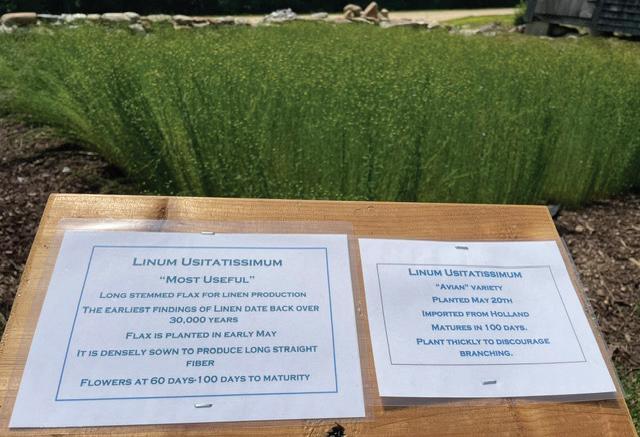
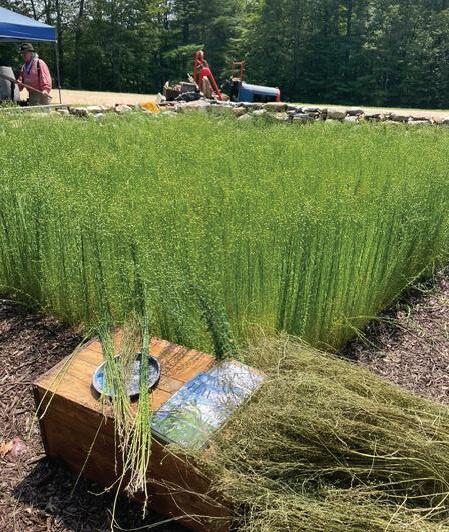
You have likely been talking about flax your whole life without realizing it. Ever called someone a towhead? That’s flax. Ever admired a flaxen-haired beauty? Flax again, right there in the name. Had your ‘hackles raised’? Believe it or not, also flax! Tow is the short, pale, flyaway fiber left behind during a hackling, one step in the process of turning flax into linen. Those wispy strands bear an uncanny resemblance to the hair of a certain kind of small child, which is how the term towhead entered our language. Hackles were the sharp combs used to separate and straighten flax fibers before spinning. Some of us may have known where those words came from; most of us probably didn’t.









Like language itself, many of the everyday processes that once shaped people’s lives have faded from common memory. We know shirts come from factories and factories come from somewhere, here or overseas, but few of us understand the full journey from raw material to finished cloth in the tactile, practical sense of “I could actually do this if I had to.”
Our great-great-grandmothers did not have that problem. They grew the flax, pulled it from the field, retted it, broke it, hackled it, spun it, wove it, and wore it. The entire chain from seed to shirt passed through their own hands and the hands of their neighbors. This July, thanks to the Gilmanton Historical Society, you can watch every link in that chain come to life right here in the Lakes Region, on the very land where it was practiced two centuries ago.
The 5th Annual Farm and Flax Day, and special for this year, a Daughters of Liberty Spinning Bee, takes place Saturday, July 25, 10 am to 3 pm, at the Farm Museum at Tom Howe Conservation Area, 245 Meetinghouse Road, Gilmanton. Rain date isSunday, July 26. It is free, open to all ages, and the kind of event that sounds educational and turns out to actually be fun, which is the best kind.
Members of the Flax and Linen Community will be on hand, demonstrating the full processing sequence as it was practiced here more than two hundred years ago. And “full sequence” is not an exaggeration. Processing flax into linen thread is a multi-stage affair that starts in the field and ends at the spin-
ning wheel, with a remarkable number of steps in between, each one requiring specific tools and hard-won knowledge. The fact that anyone ever figured any of this out — through observation, through trial and error, through generations of hands-on knowledge passed from parent to child — is something worth stopping to appreciate.
Here is the short version, for those of us who have never given much thought to where linen comes from: Flax is a slender, pretty plant; blue flowers, easy to grow, wildly useful, whose stems contain long, strong bast fibers (think of the long strings of a more graceful and elegant celery) that, once separated and spun, become linen thread. The trick is getting those fibers out. They’re bound inside the stalk by a natural pectin, and the time-honored way to dissolve that bond is “retting”: soaking or spreading the harvested stalks so that moisture and natural bacterial action can break down everything that isn’t fiber. Colonial farmers retted flax in ponds and slow-moving streams, or spread it across dewy fields for several weeks, checking and turning the bundles with the practiced eye of someone who knew the difference between “done” and “ruined.” It is impressive. The difference between smelly glob and future fine linen is skilled work that looks, from the outside, a lot like waiting.
After retting comes “breaking”, which is bending the dried stalks through a wooden flax brake to shatter the brittle, woody core. Then “scutching,” beating the broken stalks to knock away the chaff. Then “hackling,” drawing the fibers through beds of iron teeth to comb out the short, tangled tow fibers from the long, silky line flax that was ready for spinning. Each step has its own tools, its own rhythm, its own particular way of separating what’s useful from what isn’t. All of it will be on demonstration at the Farm Day, using actual period tools and actual flax, in the hands of people who have learned these processes the same way colonial farmers did: by doing them, over and over, until they knew.
The site itself earns a moment of reflection. During colonial times, flax was grown and processed at this very • Flax
continued on page 21



location. Gilmanton, incorporated in 1727, was farming country through and through, and the land around Meetinghouse Road has a long memory. Watching these demonstrations happen on the ground where they actually happened — not in a recreation, not in a museum, but in the place, is marvelous. New Englanders know well that history feels more real when you’re standing in it.
This year’s event carries extra meaning, falling as it does in the year of America’s 250th birthday. To mark the occasion, the Gilmanton Historical Society is hosting a Daughters of Liberty Spinning Bee — a tribute to one of the more quietly radical acts of the colonial era. In the late 1760s and early 1770s, colonial women organized public spinning bees as a form of protest against British taxation. By spinning their own thread and producing their own cloth, they were making a political statement with their hands: we don’t need your goods, and we’re not going to buy them. Women who had no formal political voice found one at the spinning wheel. It is a remarkable piece of history, and it deserves to be remembered the way Farm Day remembers it, as a demonstration.
The Spinning Bee is open to registered participants, and yes, there are real cash prizes: $100 for first place, $75 for second, $50 for third, $25 for fourth, awarded to whoever spins the longest thread in twenty minutes. Flax and wool competitions run at noonand 1 pm, with the communal
Bee at 2 pm. Bring your own spindle for the competition, your own wheel for the Bee; fiber is provided on site. Registration is open now at gilmantonhistoricalsociety.org.
Whether you come to watch the flax processing, cheer on the spinners, or simply spend a summer Saturday in a beautiful corner of New Hampshire learning something genuinely worth knowing, the 5th Annual Farm and Flax Day is the kind of local event that reminds you why local events matter.



ourselves.
The least we can do is show up, pay attention, and earn some reverence for all that has come before (and never take a linen napkin for granted again!) Children will love the event as well, as it features child-friendly interactive demos (including nail-making with the blacksmith!), a Ukrainian children’s story, and other family-friendly elements.
The event is free and generously sponsored by ArborTech. For more information and to register for the Spinning Bee, visit gilmantonhistoricalsociety.org. The Farm Museum at Tom Howe Conservation Area is located at 245 Meetinghouse Road, Gilmanton.
For simplicity and extra (and enthusiastic!) encouragement to attend, all event details are here:
5th Annual Farm & Flax Day — Daughters of Liberty Spinning Bee
When: Saturday, July 25, 10 am – 3 pm, Rain date:Sunday, July 26
Where: Farm Museum at Tom Howe Conservation Area, 245 Meetinghouse Road, Gilmanton, NH
Admission: Free and open to the public
Spinning Bee registration: gilmantonhistoricalsociety.org
Sponsored by ArborTech











Prescott Farm is proud to announce its selection as a partner in musician and environmental advocate Jack Johnson’s All At Once initiative. Through this partnership, every donation made to Prescott Farm through October 31, 2026, will be matched dollar-for-dollar by the Johnson Ohana Foundation, up to $2,500. The matching challenge arrives at a perfect time, helping supporters double their contribution while strengthening environmental education programs that connect people of all ages with the natural world.
Nestled on more than 160 acres of farmland, forest, gardens, and trails overlooking Lake Winnipesaukee, Prescott Farm has been helping peo-
ple connect with nature since 1997 through hands-on environmental education, community programs, camps, and nature-based learning experiences. The nonprofit’s mission is simple but impactful: to cultivate connections to the natural world through education and exploration.
As summer unfolds, Prescott Farm invites families, children, and nature enthusiasts to participate in a variety of July programs designed to encourage learning, creativity, and outdoor adventure.
One highlight is the popular Garden-to-Table Series, held every Friday morning from July 10 through August 28, 10 am to noon. Young chefs and






gardeners will harvest vegetables from Prescott Farm’s gardens, learn to identify edible plants, and create delicious seasonal recipes. July sessions include making fresh garden salads, homemade ice cream, herbed butter with tortillas, and homemade pasta. Designed primarily for ages 6-14, the program combines gardening, cooking, and environmental education into a memorable summer experience.
For younger explorers, Polliwogs: Nature Play for Preschoolers offers playful, nature-based learning for children ages 2-6 and their caregivers. Through stories, songs, art projects, and outdoor discovery, participants will enjoy themes such as sensory adventures, nature-inspired creations, wild tea making, and obstacle-course exploration. The program encourages confidence outdoors while helping families build lasting connections with nature and one another.
Beyond educational programs, Prescott Farm is also seeking a volunteer tractor driver to assist with WildQuest Camp tours throughout the summer. Community members with tractor-driving experience are invited to help create memorable experiences for campers as they explore the farm’s fields and gardens.
Looking ahead to fall, local artists and photographers are encouraged to participate in the third annual Nature Inspires Art Exhibit, which will be showcased during Prescott Farm’s
Harvest Festival on September 26. The exhibit celebrates the beauty of the natural world through local creativity and continues to strengthen the connection between art and environmental appreciation.
For those interested in learning more about Prescott Farm’s impact, monthly Discovery Tours offer a behindthe-scenes look at the organization’s programs, facilities, and vision for building a thriving community of environmental stewards. Visitors can also enjoy more than three miles of trails, heritage gardens, and the Natural Playscape, all open to the public year-round from dawn until dusk.
Community members can further support Prescott Farm by becoming members, volunteering, registering for programs, scheduling private group experiences, or making a donation during the All At Once matching campaign.
This summer, every trail walked, every seed planted, every child inspired, and every donation made helps Prescott Farm continue its mission of exploring and preserving the natural world—one adventure at a time.
For more information, program registration, membership opportunities, or to make a donation, visit Prescott Farm’s website at prescottfarm.org or call 603-366-5695.
Prescott Farm inspires curiosity, discovery, stewardship, and appreciation for New Hampshire’s natural heritage.
Since1820,Brewsterhasbeenatthe forefrontofdefiningwhatitmeanstobea boardinghighschoolinNewEngland.Our learningcommunityvalueseachstudentas anindividual,offerstheoptimalbalanceof challengeandsupporttoempowerstudent success,andinspiresgraduatestocraft livesofmeaningandpurpose.








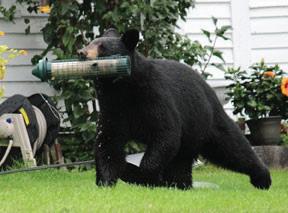
Residents raising backyard poultry or feeding wild birds are being asked to do their part to prevent human–bear conflicts this summer and into the fall. Despite the current abundance of natural foods, these options represent highly tempting food to bears. Black oil sunflower seeds are higher in fat and protein than any other food a bear can find in the wild, and domestic poultry, while easily protected by an investment in electric fencing, is equally as enticing to a hungry bear.
“Overall, human–bear conflict reports have been about average this spring, but there has been an increase in the number of bears being shot by chicken owners, which is unfortunate given the conflict abatement assistance available to the public in New Hampshire,” said Dan Bailey, Bear Project Leader for the New Hampshire Fish and Game Department. “If you raise poultry, invest in electric fencing that protects the birds. Biologists from Fish and Game and the U.S. Department of Agriculture Wildlife Services loan out over 100 electric fences each summer to protect poultry from bear damage. The other purpose of this loan program is to demonstrate the effectiveness of the equipment to help convince poultry owners to make this investment for themselves. Electric fencing is available at a variety of stores that specialize in agricultural needs, and it is not terribly expensive. Shooting bears and other wildlife that are attracted to chickens is a cyclical approach rather
than a long-term solution.”
The presence of bears at birdfeeders is another important issue and has been a topic of conversation on social media in recent weeks. “Some people think that only having feeders out during the day or elevating them out of a bear’s reach is an adequate deterrent, but neither will work,” said Bailey. “Bears will visit feeders during the day, and they will also be attracted to spilled seed under elevated feeders. While we appreciate the public’s desire to attract and view birds, the decision to do so is detrimental to bears. People and bears can successfully live together, it requires increased human responsibility
to eliminate food attractants, especially bird feeders. People might consider natural plantings, a birdbath, or another water source to attract and benefit wild birds in the summer.”
Some steps to take to help coexist with bears and avoid conflicts include:
Stop feeding wild birds by April 1.
If you live south of the White Mountains, consider removing bird feeders by March 15 or at the onset of springlike weather conditions, whichever comes first, since conditions fluctuate throughout the state.
Clean up any spilled birdseed and dispose of it in a secured trash container.
Protect poultry and livestock with electric fencing. Invest in equipment that provides long-term solutions to perennial issues.
Secure all garbage in airtight containers inside a garage or adequate storage area, and put garbage out on the morning of pickup, rather than the night before. If you use a dumpster, inform your dumpster company that you need one with metal locking tops and doors that are inaccessible to bears and other wildlife.
Never put meat scraps in your compost pile.
Don’t leave pet food dishes outside overnight.
Clean and store outdoor grills after each use.
Never deliberately feed bears. You will be encouraging these animals to rely on human-related foods, which will affect their wild behavior and reduce their chance of survival.
Always utilize a food storage container when backcountry camping or hiking.
Secure food in a locked vehicle or outbuilding when front country (i.e., car) camping.
Visit https://bearwise.org/ for helpful information on living responsibly with black bears.
If you have questions regarding bear-related issues, you can get advice by calling the NH Fish and Game Department’s Wildlife Division at 603271-2461.
We can no longer take the safety of our water for granted. When you turn on your faucet, bathe your child, water your lawn, or flush your toilet, you want to know that your water is safe and clean. We will test and explain your water chemistry in a way that is easy to understand and then recommend the most efficient, effective and economical water treatment solution, custom fit to your needs.















In celebration of the 250th anniversary of the American Revolution, Governor Kelly Ayotte and state leaders are inviting Granite Staters to the State House for special displays of significant documents connected to the nation’s founding.
Visitors to the New Hampshire State House Visitor Center will have the opportunity to view New Hampshire’s 1776 Dunlap Broadside of the Declaration of Independence and an 1823 William J. Stone engraving of the Declaration. The Dunlap Broadside is on display through July 8, while the Stone engraving will remain on display through July 10.
“New Hampshire has played a proud role in shaping our nation’s history —
from being the first colony to rebel against British rule with the Pine Tree Riot, to adopting the first state constitution, to our First in the Nation Primary,” said Governor Ayotte. “I’m excited that Granite Staters and people visiting our state during the celebration of America 250 will have the opportunity to view these historic documents and that we will also play a part in the celebration in our nation’s capital. As we honor our nation this Independence Day, I invite everyone to come catch a glimpse of history at the State House.”
Following the Continental Congress’s adoption of the Declaration of Independence on July 4, 1776, Philadelphia printer John Dunlap

produced approximately 200 broadsides—single-sheet printed copies of the document—for distribution throughout the colonies. One of these rare copies arrived in New Hampshire on July 16, 1776, where it was read aloud to citizens and reprinted in local newspapers. The document is believed to have passed through the hands of Meshech Weare, New Hampshire’s first president.
Today, the State of New Hampshire, through the New Hampshire State Archives, shares custody of the Dunlap Broadside with the American Independence Center in Exeter.
New Hampshire’s second Stone Copy of the Declaration of Independence, which is part of the N.H. State Library’s collection will be on display at the U.S. Department of State’s Harry S. Truman Building as part of the National Museum of American Diplomacy’s “Among the Powers of the Earth” exhibition that runs through July 2027.


Also on display is an 1823 engraving created by William J. Stone. Commissioned by Secretary of State John Quincy Adams, the engraving was produced to preserve the text and appearance of the Declaration of Independence for future generations. Stone’s work is widely regarded as the most detailed and accurate facsimile of the original Declaration and has served as the basis for many reproductions since its creation.

“New Hampshire’s revolutionary spirit runs deep and there’s no better way to mark the nation’s semiquincentennial than by exhibiting some of the most precious foundational documents among the millions in the State Archives,” said New Hampshire Secretary of State David Scanlan. “Given New Hampshire’s primary role in the cause for independence, we’re pleased to share them with Granite Staters.”
“New Hampshire’s delegates were among the very first to sign the Declaration of Independence, and our state is home to the first state library in the country, which was established in 1717 – nearly 60 years before the Declaration of Independence itself was issued,” said Adam Crepeau, commissioner of the New Hampshire Department of Natural and Cultural Resources. “The Stone Copy that was distributed to celebrate the United States’ 50th anniversary is one of nearly 500,000 items in the State Library’s collection today and is a breathtaking reminder of our country’s founding. We are honored that it, along with our shared ideals of liberty and self-determination, will be shared with visitors to Washington, D.C. as part of the country’s 250th celebration.”
The New Hampshire State House will be open for tours, including viewing the Stone Copy of the Declaration of Independence and the Dunlap Broadside, on July 4, in celebration of America 250.Visit https://gc.nh.gov/ nh_visitorcenter/ for additional details.
We’ll design a system that’s custom-tailored to you and your pet’s needs; Including both indoor and outdoor solutions to common problems, with guaranteed
backgroundcolors.LogowithoutDogHeadtobeused indigital/webapplications.





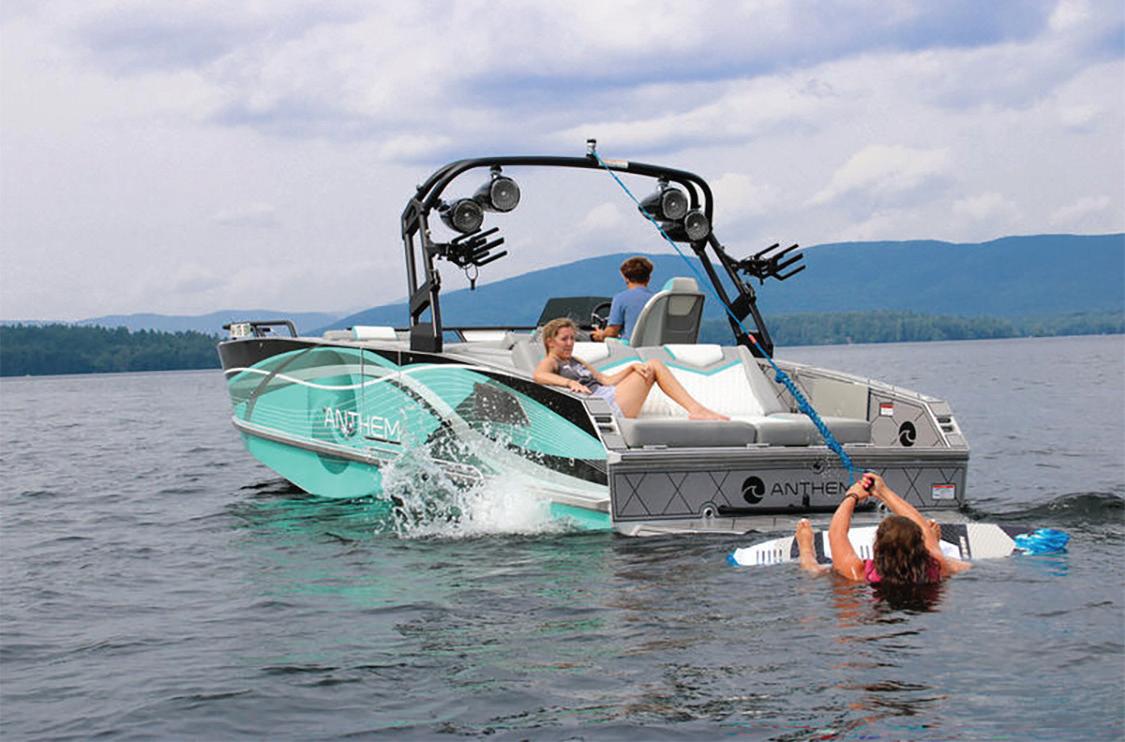


National Park Service has approved New Hampshire’s 10-year historic preservation plan, which will serve as a guide for historic preservation statewide over the coming decade, the N.H. Division of Historical Resources announced today.
According to the NHDHR, which serves as the state’s historic preservation office, “New Hampshire’s 10-Year Preservation Plan” provides a snapshot of the current status of historic preservation in New Hampshire, looks back at what’s been happening statewide, and “looks forward with a vision vital to preserving New Hampshire’s identity.”
To create the plan, the NHDHR collected input from hundreds of respondents via a questionnaire that was distributed to its contact list, at historic preservation events, and at non-preservation-oriented social gatherings.
The plan addresses eight topics at length, including “Who is Doing Preservation in New Hampshire?” “Financial Opportunities for Preservation in New Hampshire” and “Longterm Community Vision and Planning.”
National Park Service noted that New Hampshire’s “plan exceptionally recognizes the challenges of historic preservation in the state,” adding that it “pays special attention to how historic
preservation affects every resident of the state, and the goals integrated into the plan focus on how to continue to better the lives of all residents.”
New Hampshire’s 10-year Preservation Plan identifies four specific goals:
• Increase public awareness and appreciation of historic properties and special places for their influence on the economic vitality, sense of place, and identity at the state and local level.
• Broaden content, availability, and use of training opportunities, while expanding access to existing information and guidance.
• Incorporate and strengthen historic preservation as an element in local, regional, state, and federal decision-making, ensuring its role as a critical part of interdisciplinary planning efforts.
• Expand the use and availability of existing funding and incentives and promote the creation of new funding and incentives for historic and cultural resources.
• “Historic preservation is an integral part of who we are in New Hampshire and how we operate, because it simultaneously stewards the past while securing our future,” said Adam Crepeau, commissioner of the N.H. Department of Natural and Cultural Resources. “Generations of Granite
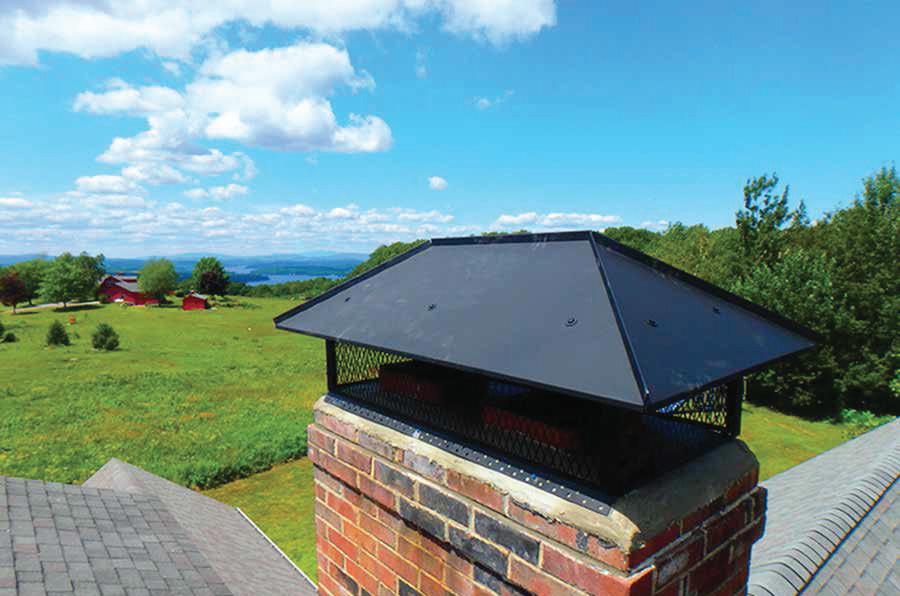



Staters have drawn on our famous Yankee ingenuity – and frugality – to preserve our cultural heritage in ways that also drive economic success.
“With New Hampshire’s ten-year plan now approved by National Park Service, it’s our hope that everyone in the state who supports historic preservation will draw on the four goals listed in the plan to achieve their communities’ desired outcomes.”
Completion of each state’s historic preservation plan is a requirement for state historic preservation offices to receive federal funding from National Park Service, an agency within the Department of Interior.
A PDF of “New Hampshire’s 10-
year Historic Preservation Plan” can be downloaded from the NHDHR website, nhdhr.dncr.nh.gov.
New Hampshire’s Division of Historical Resources, the State Historic Preservation Office, was established in 1974 and is part of the N.H. Department of Natural and Cultural Resources. NHDHR’s mission is to preserve and celebrate New Hampshire’s irreplaceable historic resources through programs and services that provide education, stewardship, and protection. For more information, visit us online at nhdhr.dncr.nh.gov or by calling 603-271-3483.
Laura Knoy, former New Hampshire Public Radio host and author of the novel The Shopkeeper of Alsace, will visit the Meredith Public Library on Wednesday, July 8, at 6 pm. She will discuss her novel, answer questions, and sign copies of the book, which can be purchased ahead of time from Innisfree Bookshop or purchased during the author event.
The novel is based on a true story. It is about a young woman named Sarah who, full of youthful hope and ambition, leaves behind the ruins of Poland in 1920 for France. Jewish immigrants are welcome, and soon, she›s built the Perfect French Life. In the postcard-pretty Alsatian town of Colmar, she runs a thriving clothing store, gaining a reputation as a stylish and savvy businesswoman. She has three adorable children, a gorgeous husband, and a close extended family.
Sarah’s legendary sixth sense for trouble grows through the 1930s, as Germany gathers strength under a frightening, new nationalist party. Everyone around her insists that there won’t be another war, and if there is,


France will win. But Sarah calls upon her lessons learned from World War I and begins to plan for the worst. Still, no instinct can fully prepare her for the next global conflict.
For 25 years, Laura hosted New Hampshire Public Radio’s live, daily news and public affairs call-in show The Exchange. Over the years, she interviewed thousands of inspiring, wonderful people. At both the state and national level, the show was repeatedly cited for its intelligence, depth, and civility, and was often called New Hampshire’s most widely recognized and respected radio program.
Ready for a new adventure, in mid2021, she left the news business to work for herself. She now helps organizations with their public communications, from special interviews and events to podcasting to narrations. In line with her love of reading and her home state, she launched a podcast titled ReadLocalNH. It’s all about celebrating New Hampshire’s authors, independent bookstores, and their loyal readers.






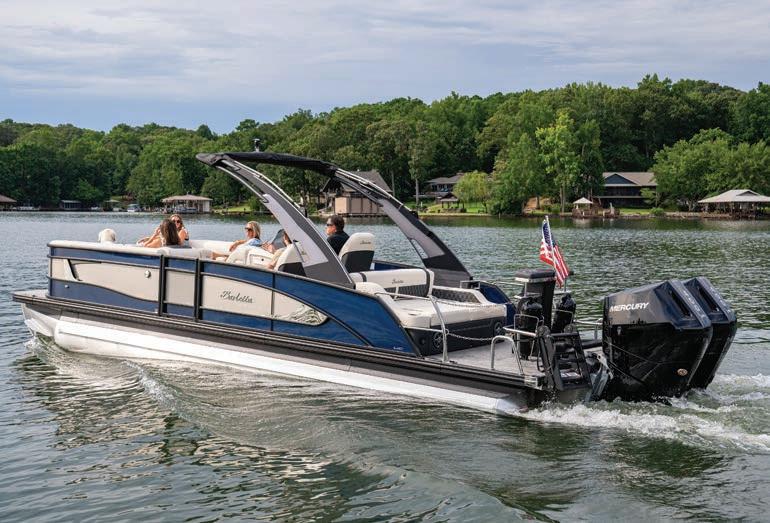




The Squam Lakes Association (SLA) is offering three opportunities for community members of all ages to get outdoors, learn about local aquatic ecosystems, and help protect the Squam watershed. From water quality monitoring to stream ecology and invasive species prevention, these programs provide participants with handson experiences while contributing to the long-term health of the lakes.
The weekend begins on Friday, July 10, from 9 am to 3 pm. with a Volunteer Water Quality Excursion. Participants will join SLA staff on the water to learn how water quality samples are collected at two of the organization’s long-term monitoring sites. Volunteers will gain hands-on experience using scientific equipment aboard the boat before stopping on Moon or Bowman Island for lunch and scenic views.
The Squam Lakes Association has maintained the Northeast’s oldest volunteer-supported water quality data set since 1978. Its dedicated volunteer network plays a vital role in collecting samples and measurements from

deep-water monitoring sites throughout the watershed.
On Saturday, July 11, from 9 to 11 am, SLA will host Who’s That Macroinvertebrate?, an interactive program exploring the fascinating aquatic insects and other organisms that live in local streams. Participants will learn how macroinvertebrates serve as bioindicators of water quality before observing a kick-netting demonstration
and collecting, identifying, and evaluating specimens from Owl Brook.
The program is designed for all ages. Space at the Owl Brook pull-off is limited, and participants are encouraged to meet at SLA headquarters to carpool. Additional details will be provided after registration.
The weekend concludes on Sunday, July 12, from 8:30 to 11:30 am with Volunteer Weed Watchers
Training, where participants will learn to identify aquatic invasive species and become part of the Squam Lakes Association’s volunteer monitoring network. The morning begins with an educational presentation before participants head onto the lake by kayak to practice identifying invasive plants such as variable milfoil.
Variable milfoil was first discovered in Squam Lake in 2000. Through ongoing hand-pulling efforts and the use of a Diver Assisted Suction Harvester, no new infestations have been identified since 2007. Trained Weed Watchers serve as an essential early detection network, helping prevent new invasions before they spread. Certified volunteers are also eligible for free kayak and canoe rentals to conduct lake surveys.
All three events are free, but advance registration is required. Children are welcome at each program when accompanied by an adult.
For more information or to register, visit www.squamlakes.org/events.
The America 250 programs continue at the Meredith Public Library, 91 Main Street in Meredith. On Thursday, July 9, at 6:30 pm, Mary Adams will present Redcoats & Rebels: New Hampshire and the American Revolution.
Mary Adams explains that New Hampshire often gets overlooked in the narrative of the American Revolution, overshadowed by its noisy neighbor to the south. Nowadays, few people know about Paul Revere’s first ride, which was to Portsmouth in December 1774 to warn the patriots that the British were coming to reinforce Fort William and Mary, five months before

the Redcoats marched on Concord and Lexington. Nor do they know that two-thirds of the troops at the Battle of Bunker Hill were from New Hampshire. Most people are also unaware that New Hampshire’s Provincial Congress adopted the first state constitution in January 1776, making no mention of royal authority and essentially declaring independence from Great Britain six months before anyone else. This is just the beginning of New Hampshire’s revolutionary story.
New Hampshire native Mary Adams has always loved surrounding herself with history. Her passion for storytelling led her to become a tour guide at

$55 per person – available online at www.granitevna.org/hometour or with cash/check at Black’s Paper Store & Gift Shop, Wolfeboro.
For more information, scan QR code or call 603-230-5664.
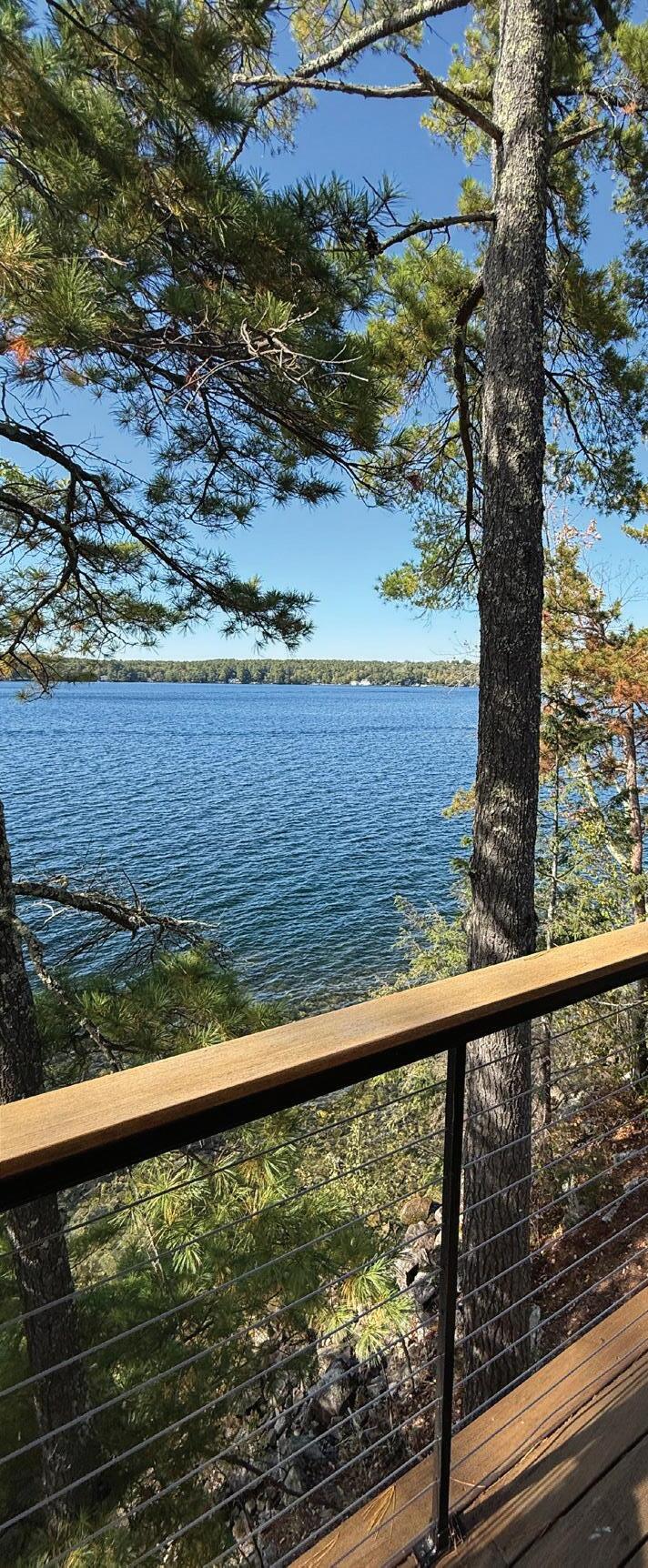
various locations, including San Francisco, Boston, and her favorite, Glacier National Park. Currently, Mary serves as Operations Manager for The Pursuit of History Weekends, where she coordinates specially curated, one-ofa-kind experiences aimed at inspiring

broader public engagement with history. She is also on staff at the New Hampshire Historical Society. This event is being sponsored by the NH Humanities and the Friends of the Meredith Public Library. Light refreshments will be served.




Granite VNA is offering “Transitions: Long-Term Care,” the second part of a Caregiver Conversation Series on Tuesday, July 21, from 10 to 11 am at Wolfeboro Public Library, 259 South Main Street in the Cynthia A. Beaver Room.
Caring for a loved one is meaningful, but it can also feel overwhelming. Join us for conversations intended especially for family caregivers who want practical tools, trusted information, and a supportive community. Each
session focuses on real-life challenges caregivers face and provides strategies you can use right away, led by experienced professionals. Whether you’re new to caregiving or have been supporting a loved one for years, these conversations will help you feel more confident, prepared, and connected. Take time this summer to strengthen your skills, protect your well-being, and connect with others who understand the caregiving journey.
The Wolfeboro Bay Admissions
Team will discuss assessing needs and making choices for in-home care and facility care as health declines.
Registration is required. Register at 603-224-4093, ext. 85664 or granitevna.org. This program is offered at no charge.
About Granite VNA: Granite VNA is a not-for-profit licensed and certified home health and hospice care provider. The agency serves people of all ages in 72 communities across the Greater Capital Region and Central New
Hampshire by providing home care, hospice care, pediatric and maternal child health services, and wellness programming. The agency has offices in Concord, Laconia, and Wolfeboro. Formed through the merger of Concord Regional VNA and Central New Hampshire VNA & Hospice, Granite VNA has served New Hampshire since 1899. For more information about Granite VNA, visit www.granitevna. org.
Batteries charged. Van gassed up. Puppets rebooted. It’s time for Puppeteers for Fears to get the show back on the road.
The Capitol Center for the Arts is over the moon to announce Puppeteers for Fears’ is coming back to the BNH Stage on their newest tour, The Hands Across America Tour (or Brave New Not World Twour.0), with their latest show, the epic cyberpunk fever dream, ROBOPOCALYPSE: The Musical!




This will be their most ambitious tour ever of their most ambitious show ever, and features a cast of six puppeteers performing a bonkers show about rogue artificial intelligence, and singing along to the analog synth-driven original score from their house band. It has something like 1,200 lighting cues, and LASERS!
“In a time when so many of us are giving heavy side-eye to the rapid onset of A.I. into everything from home appliances to the IRS, a puppet show about the bots turning on the same billionaires that made them may be just the salve the soul needs to laugh so we don’t cry.” - Puppeteers for Fears. They’re also pleased as punch to be bringing along one of their favorite musicians, Blunderbusst, as their opening act/house band, and this time, she’s bringing her full band with her in all its jazzmasters-and-delay-pedals glory.




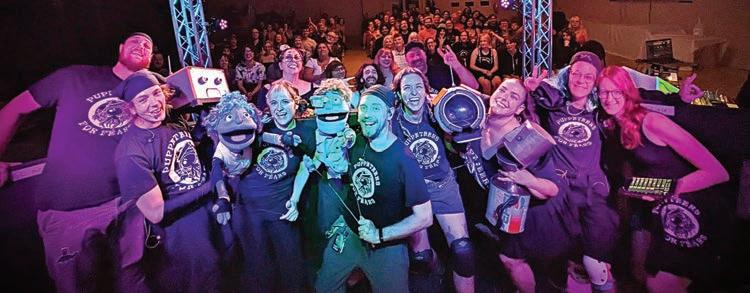
If you saw Blunderbusst perform with them the last time they came in 2024, you know what she can do on her own, but it’s a real treat to see the whole group!
This show is for audience members 18+, tickets are $26 in advance or $31 at Doors. Advance tickets are available at ccanh.com. The Capitol Center for the Arts BNH stage is located at 16 S. Main Street in Concord.










By Joel Bocko
Minifigures, sometimes reduced to tiny yellow heads and torsos awaiting re-assembly, as well as sets made up of dozens, if not hundreds, of the infamous little bricks, are available for play as well as purchase in Wolfeboro’s Bricks at the Lake and Ossipee’s C3Brix. These two stores are part of a much larger phenomenon, of course. Crossing over with some of the biggest names in pop culture while also popping up on small town street corners, LEGO dominates the story of 2020s toy culture - whether rooted in the Lakes Region or a galaxy far, far away. In addition to its extensive, global, multimedia history, LEGO has become very much local and individualized, too. For decades, small businesses have launched themselves as resellers of the beloved toys, often run by collectors drawing from their own stash. Similarly displaying both rare and popular items while inviting customers into the store for group activities, Bricks at the Lake is particularly focused on that instore experience, while C3Brix offers a traveling component using the retail location as an anchor.
Nestled narrowly between the Back Bay and Wolfeboro Bay outlets of Lake Winnipesaukee, Bricks at the

Lake caters to families looking for a fun place to play. For parents, believe it or not, relaxation is an enticement: the store advertises a convenient spot with a quiet lounge corner to sit near the kids, providing games and puzzles as well as the prospect of bringing in a book or drink to enjoy. The hosts like to point out that the Beveridge Tap Room is just down the street. However, if Mom or Dad still wish to roam while the kids engage at the Build Zone, they can drop them off under store supervision for an extra $5 charge.
The Beveridge’s ties to this LEGO store run deep, with Lisa Beveridge initially advising owners Karen and Matt on where to open the business; the taproom is also a soap shop whose products are sold in Bricks at the Lake. Another local business, Nolan’s Pizza, provides pies for little LEGO fanatics’ birthday parties, which can be scheduled in advance on the store’s website (www.bricksatthelake.com). More regular Build Zone sessions are also available; enthusiasts can plunge into tables chock-full of individual pieces and build their own toys, whether for temporary enjoyment or to purchase the finished result.
In Bricks on the Lake’s formulation, LEGO forms a basis for a variety of





other activities and interests, not just libations and lotion from Beveridge (or Nolan’s slices), but also Magic: The Gathering card games; face-painting, fake tattoos, and goodie bags at birthdays; team-building and bachelor/ bachelorette parties for older LEGO enthusiasts; and LEGO-related products ranging from jewelry to chocolate. Like the toys themselves, the LEGO concept provides an adhesive core that can attach to many other interests, drawing the public in.
C3Brix is even more singularly LEGO-focused while, on the other hand, more sprawling in its outreach. The store’s image centers around Cody Wells, who bases his operation in New Hampshire while touring the country every year. A Queens native dubbed the “LEGO Man of NYC”, he built his reputation as a collector and LEGO artist in New York and appeared on The Steve Harvey Show (among other outlets) before relocating to New Hampshire, nine minutes south of Ossipee Lake. He settled in permanently during the pandemic.
Perched across the White Mountain Highway from the Ossipee town forest, C3Brix provides a home base and launching point. Cody’s wife, Katie, often runs the store solo, with the couple offering playful banter on their social media as she provides exclusive sales in his absence. Despite a number of outside events, the store itself remains an attraction for browsing customers as well as those seeking private events like its two-hour “Open Build LEGO Party”. Incorporating a kitchen with popcorn and cotton candy, a TV room playing cartoons and kids’ movies, and a Brick Zone to play in, the store also has a by-appointment-only inventory room for collectors to explore.
Aside from in-store birthday parties and browsing sessions, C3Brix hosts weeklong LEGO camps which mimic

game shows at the location of the host’s choosing, and Wells himself creates custom LEGO art for both individual and corporate commissions, displayed proudly on his website (www.c3brix. com). There are occasionally public events located at the store, watch for after-school and holiday festivities. For the most part, this is a place to explore the shelves or to schedule a gathering or individual deep dive.
Wells’ motto is “Rebuild Your Childhood”, an outlook based not just on nostalgia but self-healing. A child of adoption (a fact discovered only in his twenties) who struggled with depression, he has made his biography a big part of his story, and there’s an explicitly therapeutic as well as entrepreneurial aspect to his personal passion. “LEGO seemed like the only world I could really control and that I enjoyed,” he told New Hampshire Chronicle in an interview last fall. Clearly, in the time since those struggles began, he’s found a way to extend his hermetic interest into much wider engagement, and that world has become a place he invites others into.
For those drawn to the little worlds cultivated by Bricks at the Lake and C3Brix, just thirteen and a half miles apart, there is no reason to choose between them. Both stores’ hours are weekend-oriented, although Bricks at the Lake adds a Wednesday to the Thursday-Sunday schedule shared with C3Brix, and both tend toward late morning and afternoon, with Bricks at the Lake open well into Friday evenings. For LEGO-lovers, who can keep track of both stores’ activities by subscribing to newsletters on their sites (the BATL Club in the case of Bricks at the Lake), these two LEGO stores offer complementary but divergent experiences to savor this summer, and long after that.





By Mark Okrant
If you are under the age of sixty, you will have no direct experience with vacation travel before the construction of the interstates. Vacation and business travel back then was a very different undertaking. Many of you Baby Boomers reading this column had similar experiences back in the days before the Federal-Aid Highway Act of 1956, otherwise known as the Interstate and Defense Highway Act. That 1956 legislation established the US interstate highways. It took a popular former war hero like President Dwight D. Eisenhower to garner political support for the coast-to-coast system. This was accomplished by convincing Congress and the American public that the new federal road system would serve a vital national defense role in the event of an attack by a foreign power.
Previously, most automobile-borne vacationers traveled along what William Least Heat Moon termed the “blue highways”. In those times, the U.S. Highway system—roads such as the Boston Post Road and Route 66— served as avenues for interurban exploration. Vacationing families would pack their belongings into suitcases, then pile them into station wagons or large car trunks or tie them atop auto rooftops. With the aid of cost-free AAA or gasoline station-sponsored road maps, travel routes were plotted. There was no such thing as avoiding small towns or large cities. The principal roads were replete with road construction, traffic, stoplights, and aggressive cops—all hurdles to be conquered.
Absent were the Holiday Inns and other franchised lodgings. However, there was no need to leave the road to find mom-and-pop-owned and operated places to sleep, eat, purchase gasoline, or discover attractions. Most of these services were situated right along the road. A typical day of travel con-




sisted of awakening early, returning the suitcases to the car, then heading out from a motel or motor court in search of a breakfast spot. The period prior to the Interstate system also predated most franchise eateries; therefore, the process of finding a place for breakfast, lunch, or dinner frequently proved to be a voyage into the unknown. Absent were golden arches, pancake chains, and red-roofed pizza palaces. The times demanded that travelers trust strangers to deliver meals that were somewhat familiar and, of course, edible and safe.
One of this writer’s earliest memories of such travel provided an education in the extremes of socio-cultural values that were in place within this nation during the mid-twentieth century. We’d just started our day and had begun the search for a place to eat. Before long, my father spotted a small restaurant along the side of the road, near the Virginia-Maryland border. We pulled into the parking lot and started


to enter an open doorway situated on the right front corner of the building. Our progress was interrupted by an attractive, bronze-skinned woman, who very nicely informed us that we needed to enter through the left-hand door to order our breakfast. It was my introduction to segregation—an experience I will carry with me forever.
Elsewhere, as roadways expanded, automobile-borne travelers made their way past farm and forest lands. This form of travel spawned an entrepreneurial spirit along the new routes. Soon, roadside auto camps and cabins made their appearance, and a simple welcoming sign was all landowners needed to attract overnight guests . . . and their money. With primary economic activities such as farming and forestry slowly declining, this new source of money appeared to be a panacea in the ongoing battle against foreclosure.
As touring travel grew in populari-
ty, a new form of lodging appeared on the landscape. This was the “motel,” a portmanteau (def.: a word blending the sounds and meanings of two other words) combining the words “motor” and” hotel.” The earliest of these was the Milestone Motel, built in San Luis Obispo, California, in 1925. This form of lodging became popular in the states west of the Mississippi River during the years leading up to World War II. However, east of the great river, the motel phenomenon didn’t take hold until that war had ended. For families traveling with young children, the most memorable thing about such overnight stays was the opportunity to make new, albeit temporary friends, in the persons of neighboring guests and their children, as well as the on-site owner/ manager.
During the 1950s, ‘60s, and into the ‘70s, motels became the most popular form of lodging for vacationing families, couples, and businesspersons. Built right alongside byways, motels had a decided locational advantage. Because their customer base was traveling along roadways that passed within yards of their front doors, motel owners simply needed to hang a wooden or lighted (often neon) sign indicating whether or not there were room vacancies for the evening. Back then, no large outlay of marketing dollars was necessary.
By definition, a motel connects individual rooms under a single roof. Those lodgings are generally one or two stories high (in rare cases, 3 or 4 stories). Guests pull their cars up to the building and have direct access from the parking lot to their room, either by walking into the guestroom through an outside door, or by climbing a flight of stairs to an outside terrace or walkway, and • Motels continued on page 33


Summer in New Hampshire means soccer camps, hikes, beach days, bike rides, playgrounds, lake weekends, and backyard games. A sore knee after camp or a stiff ankle after a long day at the beach usually seems normal. But when joint symptoms keep showing up, linger, or don’t match the activity, it may be worth a closer look.
July is Juvenile Arthritis Awareness Month, and it’s a good time to remember that juvenile arthritis is real, it affects children, and it can sometimes be mistaken for a sports injury, “growing pains,” or simple overuse.
What is juvenile arthritis?
Juvenile arthritis, often called juvenile idiopathic arthritis (JIA), is the most common type of arthritis in children under 16. It happens when the immune system becomes overactive and causes inflammation in the joints. Symptoms can range from mild to significant, and some children also develop fever, rash, or eye inflammation.
Summer can hide the early signs. In summer, it’s easy to assume a child is just stiff from yesterday’s tournament, limping because of a minor twist on the playground, tired after camp, or avoiding activity because they “slept wrong.”
The challenge is that juvenile arthritis symptoms can overlap with normal summer soreness, but they tend to follow patterns that you can watch for. 8 signs New Hampshire parents should look for this summer:
1) Morning stiffness that seems out
of proportion: One of the most common early clues is stiffness first thing in the morning or after a nap, long car ride, or quiet downtime. A child may walk stiffly downstairs at the lake house, seem awkward getting out of bed for camp, need time to “loosen up” before moving normally, or resist getting up after resting on the couch after a day outside. With juvenile arthritis, stiffness is often worse after rest and may improve once the child gets moving.
2) A limp that keeps coming back: A limp after a hard soccer game is one thing. A limp that returns repeatedly, especially in the morning or without a clear injury, deserves attention. Parents may notice a child favoring one leg, limping around the house before the day has really started, and moving normally later in the day after “warming up.” Limping is a common early symptom when arthritis affects the knee, ankle, foot, or hip.
3) Joint swelling that doesn’t behave like a typical bump or bruise: Swelling from juvenile arthritis is often in the joint itself (for example, the knee, ankle, wrist, or finger joint) and may not come with a dramatic injury story. It may look like one knee that stays puffy for days, an ankle that looks swollen even though there wasn’t a real sprain, a wrist that stays enlarged, or a finger/ toe that looks persistently swollen. Healthy Children do not experience swelling from arthritis, especially if it tends to persist rather than come and

go over the course of the day and may slowly worsen over time.
4) “Not wanting to play” for reasons that don’t add up: Kids don’t always say “my joints hurt.” Instead, they may show it by changing how they move. Watch for a child who suddenly doesn’t want to run at camp, skips trampoline, tag, swimming, or hiking when they usually love it; asks to be carried more than usual, stops climbing playground equipment, or avoids using one hand for crafts, Legos, or sports. Reduced activity, reluctance to use an arm or leg, and difficulty with fine motor tasks can all be signs.
5) Complaints of pain at the same time each day: Pain in juvenile arthritis is often worse in the morning or after inactivity and may improve with movement. Some children have surprisingly mild pain or don’t complain much at all, so parents may need to notice the pattern rather than wait for a child to describe it clearly. That’s an important distinction during summer sports season: Injury/overuse pain often follows a specific event and may worsen with activity. Inflammatory joint pain/ stiffness often shows up after rest, first thing in the morning, or in a pattern that keeps repeating.
6) Trouble straightening or bending a joint: If your child can’t fully bend or straighten a knee, elbow, wrist, or finger, or seems to guard a joint for more than a few days, it’s worth noticing. Arthritis-related stiffness can limit the range of motion even if the child isn’t

describing major pain.
7) Fevers or rash along with joint symptoms: Some forms of juvenile arthritis can cause recurrent high fevers and a pink or pale rash in addition to joint symptoms. The rash often appears on the trunk, arms, or legs and may come and go with fever spikes. This is not the most common presentation, but it’s one you should know about.
8) One eye problem that doesn’t seem related to a joint problem: This is the sneaky one. Some children with juvenile arthritis can develop silent eye inflammation (uveitis), sometimes without obvious eye complaints at first. The American College of Rheumatology specifically notes the connection between juvenile arthritis and eye inflammation, which is why regular eye screening can matter for some children with JIA.
Parents might mistake an issue for “just summer soreness.” Here are a few examples of when it may be worth pausing and paying attention:
After sports camp: A child says their knee hurts every morning before camp but is “fine later.” If it keeps happening for days or weeks, especially with swelling or limping, that pattern is worth mentioning to a clinician.
After hiking, beach days, or lake weekends: If a child seems stiff after rest, struggles getting out of the car, or • Arthritis continued on page 33










July10:JonNolan&GoodCompany
10: Jon Nolan & Good Compan
July17:DiasporaRadio&LightheadedCollective July24:SneakyMiles&CoyoteSmoke
July31:WheelofAwesome
August7:CaitlinPiper&Foxglove
August14:TheSpeedofSound
July14:SeacoastScienceCenter July21:BrysonLang
July28:WildlifeEncounters August4:BJHickman
Allshowsare FREE andareheldatthe RotaryArtsPavilionin HenryLawParkinDover.TheFridaynightshowsarefrom6:30 to8:30p.m.andtheChildren’sSeriesshowsare at10:30a.m.






On Tuesday, July 14, the Wright Museum will welcome Randy Otto. This is the eighth program of the Wright Museum’s 2026 Education Series.
Renowned Churchill-ian Scholar, Randy Otto has carefully honed his humorous, poignant, and astonishingly relevant tribute to Winston Chur-
• Motels continued from page 31
then directly into the guestroom. The common denominator for this genre of lodging is that all guest rooms are directly accessible from the exterior of the building.
This writer remains an absolute devotee of motels. Sadly, the heyday of mom-and-pop motels passed nearly a half century ago, to be replaced by cookie-cutter chain inns, mega-destination resorts, and condominiums. Here, in New Hampshire, by the time the final link of the Interstate Highway System—the Franconia Notch Park-
• Arthritis continued from page 32
keeps favoring the same joint without a clear injury, don’t assume it’s
fatigue.
During travel: Long car rides to the White Mountains, Maine, or the Cape can highlight arthritis-related stiffness after inactivity. If your child gets markedly stiff every time they’ve been sitting awhile, note it.
During rainy-day downtime: A child who looks fine while active but struggles after naps, movie time, or a quiet afternoon indoors may be showing one of the classic inflammatory patterns. When should a parent call a doctor? You should consider having a child evaluated if they have joint swelling that lasts more than a few days, morn-
chill, who a Price Waterhouse Cooper CEO survey named The Most Admired Leader Ever.
Doors open at 6 pm, the program begins at 7 pm on Tuesday, July 14, at the Wright Museum’s DuQuoin Education Center, 77 Center Street in Wolfeboro. Admission is $12 for members and $16
way—was completed in 1988, many motels had passed into oblivion, with others to follow. For those who wish to experience a motel stay, the northsouth predecessor of I-93, Route 3, still supports numerous vestiges of that lodging type. Sadly, the motel’s heyday, when everyone from vacationing families to traveling salesmen to headliner entertainers such as John Wayne and Johnny Mathis patronized them, is long gone. Back then, many travelers engaged in touring travel—they drove in a circuit from home toward adventure, generally for one week at a time. Along the way, many took the time to stop at places that captured their fancy.
ing stiffness that keeps happening, a recurring limp without a clear injury, joint pain plus swelling, stiffness, or reduced range of motion, fever or rash along with joint symptoms, symptoms that interfere with sports, camp, sleep, play, or normal daily activity.
The Mayo Clinic specifically advises getting children checked early if they have swollen or stiff joints, because delaying care can increase the risk of joint damage and other complications.
A few important reminders for parents: It’s not caused by being “too active”. Juvenile arthritis is not something a child gets because they ran too much, played too hard, or had a bad practice week.
Kids may not explain it clearly. Children often show symptoms through behaviors like wanting to be carried,
for non-members. Reservations are strongly encouraged and can be made online at https://wrightmuseum.org/ lecture-series or by calling 603-5691212.
The region’s leading resource for educators and learners of all ages on World War II, the Wright Museum features more than 14,000 items in its collection that are representative of both the home front and battlefield. For more information about the 2026 Lecture Series or museum, visit wrightmuseum.org.
The end of the day provided time for a quick meal and a soft bed, before starting fresh the next morning.
A contemporary count will show that more than three-quarters of the US motel properties in existence in 1960 are gone. Some were eradicated by wrecking balls; others have been converted into condominiums, storage sheds, and other uses. Today, where one of my favorite old Lakes Region lodging properties, the Blue Bird in Gilford, NH, once stood, there is a Shaw’s supermarket. There is a lesson in all of this: whether we’re talking about travel or other forms of commerce, it is imperative to maintain one’s functionality.
not wanting to use stairs, moving more slowly in the morning, avoiding favorite activities, or seeming “clumsy” after rest.
Not every swollen joint is arthritis. Sports injuries, infections, and other conditions can also cause joint pain and swelling. But when symptoms are persistent, repetitive, or don’t fit the story of a normal injury, it’s worth getting checked.
Summer should be about movement, play, and making memories, not push-
With loss of purpose comes diminished vitality, ultimately leading to demise. For those willing to venture off the interstates, the spirit of the classic American motel still flickers to life in unexpected places, offering a reminder of a more personal, serendipitous way to travel. In rediscovering these remnants, today’s travelers may find not just a place to stay, but a richer connection to the journey itself.
Mark Okrant is the author of No Vacancy: The Rise, Demise, and Reprise of America’s Motels (Plaidswede Publishing, 2013). The book remains available on Kindle.
ing through symptoms that don’t seem right. If your child has persistent joint swelling, morning stiffness, a recurring limp, or pain that keeps coming back, it may be time for an evaluation. At Access Sports Medicine & Orthopedics, our team helps families across New Hampshire assess joint pain, sports injuries, and musculoskeletal concerns so kids can get the right care to get back in the game.











1944 GMC Duck Boat, VIN: 402266079: e Duck (DUKW) boat is a six-wheel drive amphibious modi ed 2 ½ ton truck originally used by the US military in World War ll. Designed in partnership between GMC and Sparkman & Stephens, they were used to transport goods and troops over land and water. ey were intended to only last as long as the demands of combat but have found a popular use in tourism post-war. Formerly bright yellow, the exterior was painted army green by the previous owner. is Duck Boat is a true 1944 WWll survivor that has been given a second life. is “stretch boat” was built in Hawaii, then found its way to Key West before ending up in New England. is Duck Boat is Coast Guard veri ed and had an original public cost of $140,000 in 1944. Power is provided by the 6.2-liter GM Diesel motor that is mated to a Turbo 350 automatic transmission, with a redesigned full cooling system that includes two large custom aluminum radiators.
Work over the past three years has xed the steer-assist which was done by All ings Diesel in Ossipee, replacing the bus style seats with new pontoon boat style seats and cleaning up the bilge. A similar boat recently sold at auction for $71,000. is ne specimen is o ered at $68,000 and was redone in memory of the owner’s uncles. US Marines who were killed in action during WWII and the Korean con ict. FMI Call 603-520-1002.
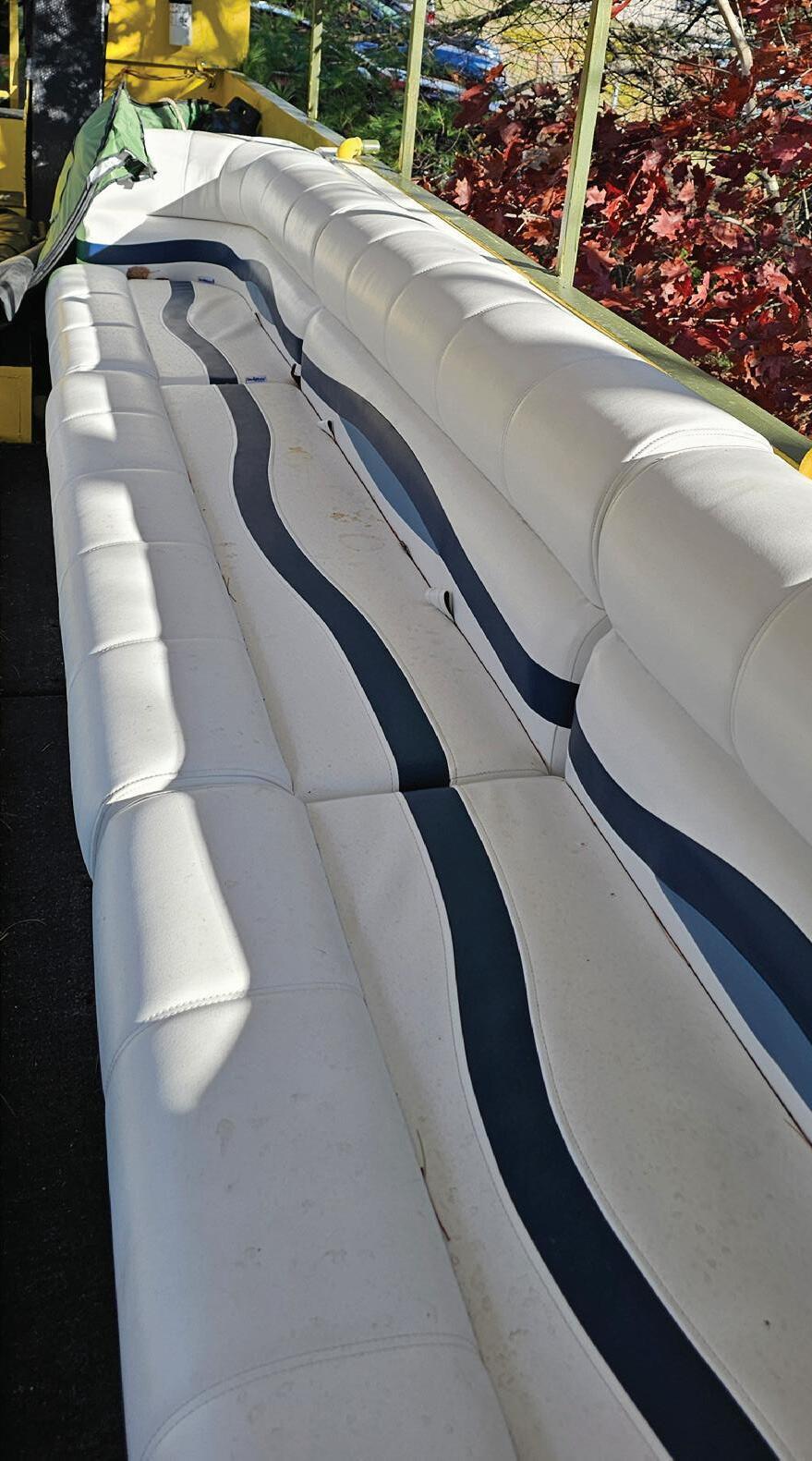

Squam Lakes Natural Science Center is proud to announce that it has been recognized with two top honors in the Laconia Daily Sun’s Best of the Lakes Region 2026 awards, earning Gold for Best Museum and Silver for Best Family Attraction.
Since its founding in 1966, Squam Lakes Natural Science Center has inspired generations through up-close animal encounters, immersive outdoor experiences, and hands-on environmental education. In the first summer season, the Science Center offered lectures in the barn auditorium next to the Holderness Inn and featured two trails on Mt. Fayal. Today, visitors can explore the Live Animal Exhibit Trail, encounter native wildlife including River Otters, Mountain Lions, Fox-
es, Raptors, and Black Bears, enjoy Squam Lake Cruises, and participate in programs that foster a deeper understanding of ecology and conservation.
In addition to its exhibits, the Science Center continues to expand opportunities for lifelong learning and community engagement. This summer, the Science Center is hosting a series of special events and programs, including a BioBlitz that invites participants to document local biodiversity, and the Summer Lecture Series presented in partnership with Hubbard Brook Research Foundation, featuring scientists and experts sharing current environmental research and insights.
“We are deeply grateful to our members, guests, and the entire New Hampshire community for this recognition,”
If you thought you knew everything there was to know about Lake Winnipesaukee, think again! The site of the country’s first college sports rivalry, a religious sect that thought the world was coming to an end, the only airport of its kind in the country, are just some of the eye-opening facts that many of us know nothing about. Glenn Knoblock will let us in on these and other secrets when he speaks on “The Hidden History of Lake Winnipesaukee” at the Gafney Library, 14 High Street in Sanbornville. This program is offered by the Wakefield-Brookfield Historical Society, in partnership with the Gafney Library, on Tuesday,
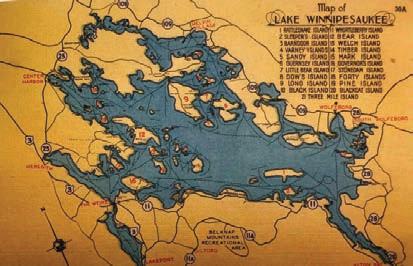
July 14, starting at 7 pm. It will be open to the public with no charge and will be followed by a social time with refreshments. This program is made possible by the New Hampshire Humanities. To learn more about this organization, check out their website at www.nhhumanities. org. Additional information about the Wakefield-Brookfield Historical Society is found at www.wakefieldbrookfieldhistoricalsociety.org. To see all the events offered by the Gafney Library, check out https://gafneylibrary.org. For more information and directions, call Jennifer at 603-522-6713.
said Iain MacLeod, Executive Director of Squam Lakes Natural Science Center. “These honors reflect the dedication of our staff, volunteers, and supporters who make the Science Center a place where families can learn, laugh, and grow together in nature.”
As a nonprofit organization, Squam Lakes Natural Science Center relies on
community support to provide accessible, educational experiences for all. The Best of the Lakes Region awards celebrate the joy, connection, and wonder that visitors experience on the trails, during cruises, and through the Science Center’s educational programs and events.
Available at Hundreds of Locations around the Lakes Region!














By Mark Okrant
Diamond Island is a 47-acre island that lies east of mainland Gilford and west of Rattlesnake Island. James Ames, Jr., purchased the island in 1824, as it was situated just offshore from his mainland farm. In 1861 the Diamond Island House, a summer hotel with a restaurant and a bowling alley, was built. The Lady of the Lake and the Mount Washington both made regular stops at the island as a service to the lodgers. In 1865 the hotel was purchased by the Winnipisseogee Lake Steamboat Company. The Hotel later became known as a house of ill repute, with gambling, rum drinking, and other related behaviors. It was later moved off-site and subsequently burned to the ground.
In 1934, F. Carroll Spooner bought the now deserted island for the sum of $5,000, a large sum of money at the time. The Spooners built a log cabin on the northwest corner of the island, a simple home with a stone fireplace in the center and a commanding view from the front porch. Mr. Spooner
was a M.I.T. graduate, to pay taxes, he leased a portion of the island in 1947 to M.I.T. and the U.S. Navy to conduct experiments for camouflaging submarines. The Navy also conducted underwater laser beam testing and the tracks used in those experiments can still be seen in the water off Diamond Island. The War Department had needed a means to camouflage submarines while they were conducting highly secretive experiments. It was imperative for submarine commanders to determine the depths at which enemy airplanes couldn’t see them. A man named Dr. Quimby Duntley, the head of M.I.T.’s Optics Department, was determined to conduct experiments on Diamond Island in Lake Winnipesaukee as he knew the water was exceptionally clear. Arrangements were made for the Navy to lease the property on which the experiments were conducted. Soon F. Carroll Spooner built a tall observation tower near the island’s yet-to-be-completed “Lagoon,” which was actually a breakwater. Their initial experiments lasted until 1955. Later, a metal “laser track”

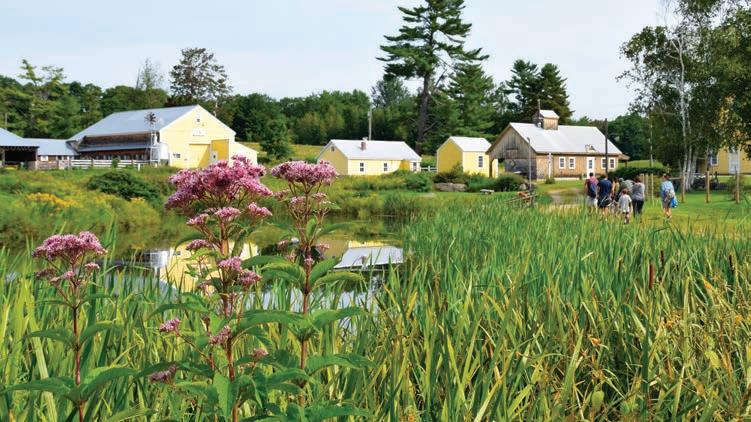

that looked much like a miniature railroad track, or a small horizontal ladder, was constructed on the beach before it was submerged in the lake. They extended a long tube under the water with a cement foundation on the bottom. Winnipesaukee Marine would come and lower the tube into the water every spring and take it out in the fall. There was a window in the observation tower where the team could look out and see the lake. The experiments were always conducted at night, as they aimed the laser beam of light on the track and moved the target back and forth on the track. This program of research on underwater lighting by submerged light sources, including the underwater laser experiments, was made on Diamond Island from 1964 through 1966.
The metal laser track is still visible today, with underwater divers speculating about its purpose. In his “Lake Winnipesaukee Cruising Guide” published in 1984, author David Buckman noted that in Blaisdell’s “Three Centuries on Winnipesaukee” (published in 1936), the work near Diamond Island was recorded as “light diffusion experiments.” He also made note of local barges reportedly hauling some strange-looking devices to the island, sparking much curiosity about the nature of the experiments. Buckman further noted, “Local divers report that a railway lies along the steeply sloping bottom.” Buckman ends his excerpt on Diamond Island with a warning for boaters to heed the “Keep Out” signs posted on the northwestern tip of the island.
When the laser project was completed, the U.S. Navy Underwater Sound Laboratory Center leased the property for experiments conducted in approximately sixty-five feet of water. In 1966, the U.S. Navy acquired the Diamond Island facility, and in 1969 began experiments in underwater optics and acoustics at the site. Many photos of the experiments were professionally done, taken by well-known Record American photographer, Don Robinson.
Beginning in 1956, the Spooner family leased out lots to seasonal guests. Soon afterward, with property taxes steadily mounting, the Spooners gave the lessees the option to purchase the land. Those who spent time on Diamond Island were anxious to return each season. Over the years, some guests recorded their Diamond Island experiences. Ruth and Chet Hathaway,
who stayed from August 21 to the 24th wrote in 1960, “All kinds of weather, but just one kind of true New England hospitality—the special Spooner brand, ala Diamond Island”… The following year, the Hathaways returned to Diamond Island, and Ruth wrote this untitled poem:
Up the hill through woodland trails,
Down to the shore toting pails, On the porch absorbing views, ‘Round the table (dis)cussing news. Eating, sleeping, having fun, What if the old pump doesn’t run?
We’re here on Diamond IsleAnd that’s enough to make us smile.
Another guest, Elizabeth I. Holt, wrote this entry:
“We’ll never find words to tell you both how much this has meant to us all a Golden Wedding Anniversary celebration in the most beautiful spot in The world thanks to the kindness and generosity of the Spooners.”
Also recorded in the Spooner family photo album was much eating, celebrating, enjoyment, and play on Diamond Island through the years. Each Columbus Day weekend, friends of the Spooners would return to the island to help the family close the camp. Not only did they offer help, but some guests of Diamond Island also gave the Spooners gifts of gratitude, including one frequent guest whose uncle happened to be the famous painter of Native American Western Art, DeCosta Smith. That guest gave Carroll and Sarah Spooner an original painting whose value was considerable. Guests also included the actor Lloyd Bridges of television’s Sea Hunt fame. Meanwhile, the revenue provided by the U.S. Navy and others who conducted experiments on Diamond Island until the early 1970s helped to pay the island’s taxes. Just when the Spooners thought there would be no more leasing opportunities, the University of New Hampshire asked to lease the property to conduct UNH soil sample and testing experiments off the island using a miniature submarine.
Carroll and Sarah Spooner spent summers on Diamond Island with their friends and family until 1982. Their son Dave, his wife Joan, and the couple’s children continued to spend summers on the island until 2001. Today, there are 19 private cottages on Diamond Island and, to this day, none of them has electricity.























By Thomas P. Caldwell
As the ultimate fate of the four-story landmark known as the Belmont Mill remains unclear, the history of the building demonstrates its significance to the town and helps to explain why residents want to hold onto it, even as they show reluctance about putting money into its renovation.
The Belmont Mill’s history begins in 1833, when William Badger and associates established the Gilmanton Village Manufacturing Company and built a mill complex the following year. The mill was designed for spinning cotton and weaving cotton sheeting.
Cotton manufacturing is considered the first example of modern manufacturing, important enough that the US House of Representatives passed a resolution in 1832 to collect information on American manufacturers with the aim of adjusting tariff levels. A two-volume report was printed in 1833, the same year that Badger, who would come to serve in both houses of the New Hampshire Legislature and become the state’s 15th governor, embarked on his venture.
Twenty years later, in 1852, a flood caused severe monetary losses for the mill, and Governor Badger died a few months later. Several other owners took charge in the immediately en-
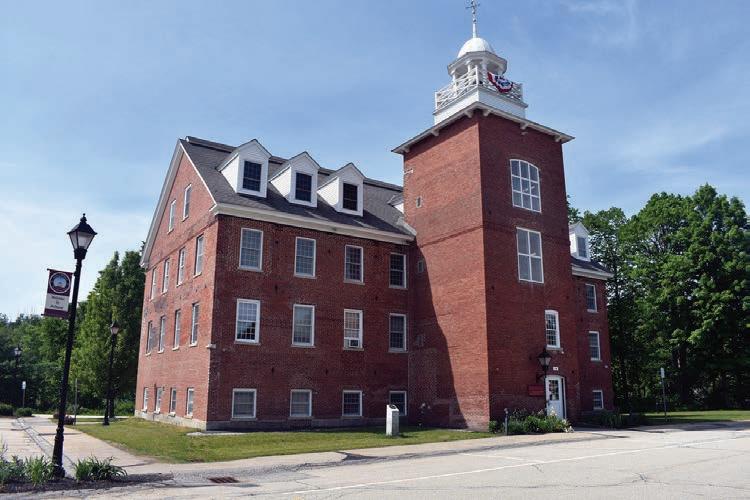
suing years, with Moses Sargent Sr. converting it to a hosiery mill in 1865, likely to supply soldiers fighting in the Civil War.
Amos Lawrence purchased the mill in 1870 and made major renovations during his ownership, including overseeing the construction of a bell tower in 1890.
Ipswich Mills took over the operation in 1909 but, like many similar manufacturers, the business experienced ups and downs, suffering financially. Ipswich Mills eventually sold the Belmont
facility to George and Walter Duffy in 1921. They incorporated as Belmont Hosiery Company, operating the mill until 1955. Although they made significant investments in new machinery after World War II, they closed the plant, and the mill was sold at auction to Fenwick Hosiery Company in 1956.
went ahead with seeking a grant for its rehabilitation. By September, they had concluded that the prohibitive cost of repairing the mill meant that it would be best to demolish the structure.
Not so fast, the voters said. A group of citizens sought to stop the mill’s destruction, suggesting that the town should take more time and come up with a better solution.
A Plan NH Charrette in 1996 brought various parties together to discuss the fate of the Belmont Mill, finding strong public support for adapting the building for public reuse.
Wallace Rhodes, a historian and president of the Belmont Historical Society, was a leader in the effort to save the mill, delving into its history and advocating for its preservation. Enlisting the help of architect Christopher Williams, attorney Carolyn Baldwin, and state planner Jeff Taylor, along with like-minded local residents, Rhodes kept the restoration dreams alive.
Funded by $1 million in Community Development Block Grants, town appropriations, and private contributions, the Belmont Mill underwent a complete rehabilitation, with a community center opening there in 1997. In 1998, the town held a rededication ceremony for the mill.








In 1970, Fenwick Hosiery Mills consolidated its Belmont and Laconia operations and kept operating the mill until a devastating fire on August 14, 1992, closed the plant. That was a major turning point in the history of the Belmont Mill, leading to the town taking ownership of the building and then, for the next 34 years, trying to decide what to do with it.
Belmont selectmen were considering the razing of the building in 1995, but
The renovation efforts led to a doctor’s office moving in, along with the Belmont Senior Center, the Seeds of Promise Child Care Center, and the • Mill continued on page 38






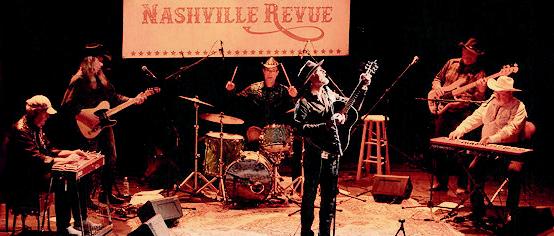






Food for Thought Café, operated by the culinary arts department of the New Hampshire Technical College in Laconia.
Since that rededication, the New Hampshire Preservation Alliance cited the Belmont Mill as one of the state’s most significant and challenging preservation projects of the last quarter century.
Even with all that support, the Belmont Mill kept encountering new challenges. After voters approved a $10,000 maintenance and repair project for the mill in 2007, the bids came in much higher than estimates, ranging from $23,000 to $52,000.
Struggling to keep the mill renovations from dying for lack of funds, supporters continued their advocacy, and in 2010, Rhodes received a lifetime achievement award from the Association of NH Historical Societies, recognizing his efforts on behalf of the restoration efforts.
When the NH Preservation Alliance marked its 25th anniversary in 2011 by unveiling its list of the state’s 25 greatest preservation achievements of the
past 25 years, it recognized the citizens of Belmont for their efforts to prevent the Belmont Mill’s demolition.
Also in 2011, the New England Chapter of the Victorian Society in America presented a preservation award to the Belmont Mill — a remarkable distinction because it was only the fourth New Hampshire endeavor recognized by the national and international non-profit organization. The group cited the mill’s importance and, in accepting the award, Rhodes and revitalization advocate Linda Frawley cited the help they had received from PlanNH, state architectural historian James Garvin, staff members of the state planning office and the Division of Historical Resources, Attorney Carolyn Baldwin, the Belknap County Economic Development Council, and architect Christopher Williams.
The town updated its official logo to feature the mill’s cupola, and began a cupola restoration project, completed with a 2013 matching grant from the Land and Community Heritage Investment Program.
However, a draft evaluation of the entire building that year indicated that the fourth floor needed “some reinforcement, but is likely structurally

sound enough for office space”. The report noted that the fourth floor was not designed to be used as a restaurant and kitchen, as contemplated, because those spaces typically require 100 pounds per square foot of floor strength. Office space requires a strength of 50 pounds per square foot. It went on to say, “The original beams are adequate for office-type loading, but with any degree of decay the beam must be reinforced to support an office-live load,” and noted that a portion of the fourth floor was rotted.
Throughout that period, the town was also considering the fate of Gale School, which was no longer used by the Shaker Regional School District and faced similar questions about renovation or destruction, and was looking at the space needs of the police department and town offices. That would lead to a proposal to renovate the Belmont Mill for use as town offices, priced at $3,357,250. Even mill advocates chafed at the extent of renovations proposed, and voters at the March 2015 town meeting failed to approve the proposal, 164-467.
Castagna Consulting Group subsequently held a listening session to discuss the future of the Belmont Mill, releasing its final report in July 2015.
In the report, Castagna cited structural issues, including the need to replace its heating, ventilation, and air conditioning system; deteriorating floors on the fourth floor; mold throughout the entire building; and the need for exterior brick work.
Countering those who wanted to abandon the mill, the New Hampshire State Register of Historic Places named
the Belmont Mill to its register in 2015. More bad news came in 2016, when selectmen learned that it would cost about $500,000 to do the brick work, seal the exterior, and fix the wall that had burned in the 1992 fire.
To address all of the town’s building needs, it created a 20-year building plan in 2019 that placed moving the town hall to the Belmont Mill as its second priority, the first being to deal with the police department’s space needs. The plan for the Belmont Mill called for bringing all town hall functions together while retaining the mill’s historic character.
By this year’s town meeting, Belmont had invested almost $700,000 into renovations that would allow the town to house town offices at the Belmont Mill, and used federal money through the American Rescue Plan Act to install a new generator and recondition the elevator. Two proposals appeared on the 2026 town meeting warrant: a petitioned article to sell the property, and a town-supported measure that would have raised $300,000 for the “design, construction, engineering, and upfitting” as the final steps necessary to allow its use as a town hall, as well as covering the cost of moving into the building when the work is complete.
Voters rejected both proposals, leaving the building under town ownership but not providing more money to put it to use.
The next chapter in the rocky history of the Belmont Mill has yet to be written.