GARDENER
Independently owned and operated since 1996
PUBLISHER
Michael Cavanaugh
EDITOR
Elizabeth Cavanaugh
CONTRIBUTORS
LeAnne Beaumont
Natalie Carmolli
Markis Hill
Lenora Larson
Sidney Patrick
Anthony Reardon
Anne Wildeboor
Scott Woodbury
DISTRIBUTION
Publishers Delivery Solutions, Inc.
IF YOU WOULD LIKE TO DISTRIBUTE the magazine at your place of business, please contact Mike Cavanaugh at mike@kcgmag.com 913-648-4728
NEED MORE MAGAZINES? mike@kcgmag.com 913-648-4728
CONTACT US P.O. Box 8725 Prairie Village, KS 66208 913-648-4728
ADVERTISING
Mike Cavanaugh at mike@kcgmag.com 913-648-4728
QUESTIONS ABOUT EDITORIAL AND SUBSCRIPTIONS
Elizabeth Cavanaugh elizabeth@kcgmag.com 913-648-4728
HOW TO SUBSCRIBE
See details on page 27.

WEBSITE kcgmag.com

Marching into spring–patiently
Have you marked the first day of spring (March 20) on your calendar? Or how about the date to spring forward (March 8) when daylight savings time begins? Those dates are highlighted in my planner with a marker the color of sweet potato vine. That bold chartreuse screams SPRING!
If you are like me, there is a restlessness that dwells within this time of year. Gardeners are eager to put our hands in the soil, to carry a bucket of compost, to push the wheelbarrow filled with mulch, or welcome new plants to the garden. We are yearning for dirty fingernails and muddy knees.
Now that the time has come, the days are longer and warmer, conditions are ideal. However, we’ve been here before. Intoxicated by clear skies and sunshine, we have been bamboozled, yes duped into thinking that spring had arrived. Then in a flash, the snowflake icon appears on the evening weather forecast. We have suffered the consequences of early season work in the garden. She’s impulsive, Mother Nature.
My friend Bob and I talk gardening, and he too is eager to plant in his garden. He described his visit to a favorite garden center, the items purchased, and the perfect weather.
Of course, I offered my two cents, reminding him of the unpredictable nature of Midwest weather. “It might be too early, Bob.” Bob was unfazed by my comment. He has more gardening years than I. Enough said.
These last days of winter resemble early days of spring. Recent above average temperatures have encouraged spring-blooming bulbs to break ground. My neighbor says her daffodils are up 8 inches already.
That restlessness we feel is our awakening garden spirit. The energy that has been stored and dormant through the winter months is thawing and heaving like the garden. We find ourselves wrestling with planting dates, and planning options. We are excited by the possibilities of new growth, and yet we must be patient. Patience is the key.
Experienced gardeners will wait for the “all clear” before marching into spring. They have the wisdom of time and know how to manage their restless spirit. Seasoned gardeners will do “gardening-like” tasks while waiting for spring’s arrival. They’ll start by blowing the dust off tools, get the mower in the shop for a tune-up and schedule time with a landscape professional. These are just a few suggestions, and I’m sure you’ve already thought of sev-

eral tasks yourself.
This quote from Ruth Stout reveals a common thread among all gardeners. “Working in the garden gives me something beyond the enjoyment of the senses. It gives me a profound feeling of inner peace.” That’s why when the gardening spirit that lies within us starts to stir, we are motivated to get started. We know the satisfaction gardening brings, and we come alive with hope and anticipation of spring’s renewal.
During these final days of winter, give time and thought to your garden. And as the early days of spring offer hope renewed, feel your gardening spirit come alive. Search for the inner peace that lies waiting to fill you. It will nourish your soul and revitalize your spirit.
I’ll see you in the garden!

THE BUCK (no longer) STOPS HERE
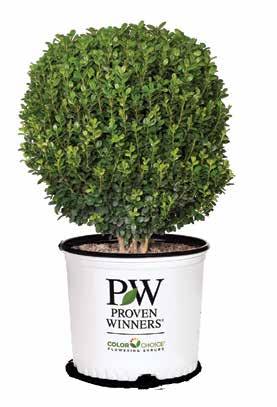
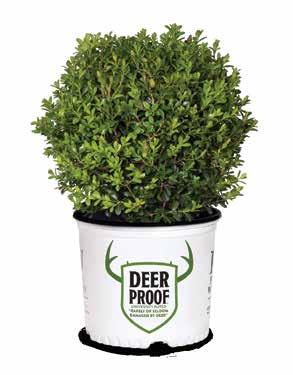
Tired of deer destroying your landscape? Every variety in the Proven Winners® ColorChoice® Deer Proof ™ program has been university tested for deer resistance, so you can have the beautiful garden you deserve. Just look for the Deer Proof logo at a garden center near you. Learn more at ProvenWinnersColorChoice.com

Ask the Experts

Question: I’ve become intrigued lately by gardening methods common in other countries and wondered if you could elaborate on one that caught my attention. Are ollas efficient for garden watering? What are the drawbacks?
Anthony’s Answer: Utilized in many countries where food is actively being grown and water access may be scarce or require travel, an olla is an unglazed clay pot that is buried in a vegetable space with only the top opening exposed. From there, the pot is filled with water, capped, and the moisture is slowly drawn from the porous clay walls into the surrounding thirsty soil. Depending on environmental demand, the water is refilled in the pot as needed. In nondrought seasons, this often equates to waiting several days to a week before needing water again, so for gardeners facing time crunches, they can be especially useful.
With the water also contained, the pots reduce water loss from

evaporation or runoff, rather than directly supplying water to the plants. That said, there are caveats to olla use. Specifically, deep-rooted fruiting crops typically perform best with them, while shallow-rooted leafy crops may struggle to get sufficient moisture. Nevertheless, ollas are an ancient watering method that persists today because they work. Depending on your growing practices, they may fit right in.
WAIT TO FERTILIZE THE LAWN
Question: I didn’t fertilize my lawn in the fall. Is it okay if I fertilize my lawn this spring?
Markis’ Answer: Missing the fall fertilization window isn’t the end of your lawn as you know it.
Spring fertilization of cool-season lawns can be done; however, it is essential not to apply too early. If fertilizer is added to your lawn too early, your grass could push out lots of new growth, exhausting its reserves that it will need for the heat of summer. Also, early fertilization can
help winter annual weeds more than turfgrass, leading to further weed problems. If you plan to put down lawn nutrients in spring, wait until May so you don’t compromise your turf’s quality.
REMEDY VEGETABLES LACK OF PRODUCTION
Question: I’m excited to get my vegetable garden going again this month, but apprehensive because none of my fruiting vegetables really produced for me last year. Any insights here?
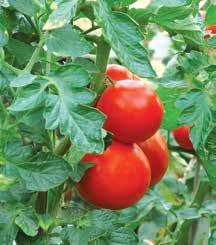
Anthony’s Answer: Often, when considering a lack of production from fruiting vegetables, the answer can be boiled down to two primary explanations: they were either too hot or over-fertilized. Many vegetables, like tomatoes, have specific temperature windows during which they produce fruit, and the plants themselves will pause production until those conditions return, focusing energy on survival. If plants have too much nitrogen, this often results
in lush, shrubby growth, with little energy allocated to fruits. To remedy both factors, sufficient mulching and following soil test recommendations will be your best bet.
SILVER MAPLE SEEDS
Question: I have this large silver maple in my front yard, and every year it drops thousands of helicopter seeds onto my lawn, driveway, and porch. It is even clogging my gutters. What can I do to make it drop fewer seeds?
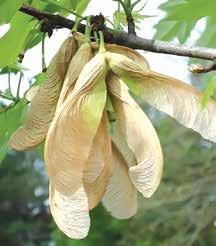
Markis’ Answer: Silver maples (Acer saccharinum) were used a lot as a shade tree in residential gardens because of their tolerance to urban environments and poor growing conditions. That is why they were so commonly planted near houses and driveways. One solution that we recommend is to replace the tree. Silver maples are fast-growing trees, which also means they are weak-wooded and susceptible to wind damage. They aren’t highly recommended nowadays because of the problems associated with them. However, if your tree is very sentimental to you and you just can’t get rid of it, there is another option. There are tree companies that will come spray your tree to reduce the amount of seeds that the tree produces. The active ingredient in these sprays is called “ethephon.” It might be listed under a different trade name. This spray is applied to the tree when it is flowering to stop fruit production. Not just maples, either, any tree that has fruit or seeds that can become a nuisance, like sweet gum seed capsules. The downside of this method is that it can be expensive and must be applied each year.
MARKIS HILL | Horticulture Agents | ANTHONY REARDON
Markis Hill and Anthony Reardon are the horticulture agents for K-State Extension Johnson County, each specializing in ornamentals and edible crops, respectively. For free information fact sheets, visit www.johnson.k-state. edu, or call our Garden Hotline at 913-715-7050.

Ollas are utilized in many countries where food is grown and water access might be scarce.
Many vegetables like tomatoes have specific temperature windows during which to produce fruit.
Helicopter seeds from a silver maple tree can be troublesome.
OLLAS IN THE MIDWEST GARDEN








The Healthy Gardener Understanding Plant-based Protein
Protein is often associated with meat, but it is found in many plant-based foods you can grow right in your own garden. Whether you are vegetarian, trying to eat less meat, or simply want to add more variety to your meals, understanding plant-based protein can help you meet your daily needs while supporting overall health.
Intro to Protein + The Importance
Protein is a key nutrient your body needs at every age. It helps build and repair muscles, supports growth and development, strengthens the immune system, and plays a role in making enzymes and hormones. For children and teenagers, protein is especially important because it supports growth, brain development, and strong bones. Adults rely on protein to maintain muscle mass, support metabolism, and keep the body functioning properly as it ages.
Your protein needs change as you grow. Kids and teens generally need more protein per pound of body weight than adults because their bodies are still developing. As adults get older, protein continues to be important to help prevent muscle loss and maintain strength and mobility. In general, 1-1.2 g per kilogram of weight per day is the goal for intake. This number can fluctuate, though, given your individual goals or health concerns. Consult your doctor or dietician for your specific protein intake requirements.

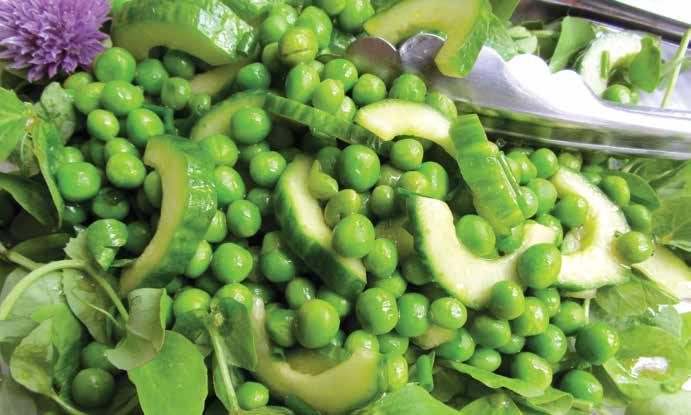
Vegetables and Plants That Contain Protein
Many garden-grown foods contain surprising amounts of protein:
Peas: One of the best garden protein sources. Green peas contain about 4–5 grams of protein per cup and are easy to grow in cooler seasons.
Beans: Green beans, fava beans, and dried beans (like kidney or black beans if you have space) all contribute protein and fiber.
Lentils: While usually grown on a larger scale, lentils are proteinrich and can be grown in some home gardens.
Spinach and Leafy Greens:
SIDNEY PATRICK Field Specialist
Spinach, kale, and Swiss chard contain smaller amounts of protein, but they add up when eaten regularly.
Broccoli and Brussels Sprouts: These vegetables contain more protein than most people expect, along with vitamins and minerals.
Seeds and Nuts: Sunflower seeds, pumpkin seeds, and peanuts (which grow underground) are excellent protein-rich garden options.
How to Use Garden Protein in Meals
Plant-based protein works best when you eat a variety of foods.
Combining vegetables, beans, grains, and seeds helps provide all the amino acids your body needs. Try adding peas or beans to pasta dishes, blending spinach into soups or smoothies, or topping salads with roasted seeds. A bean and vegetable stir-fry, lentil soup, or grain bowl with roasted broccoli and sunflower seeds are simple, protein-packed meals. Growing protein-rich plants in your garden not only supports your health but also encourages balanced eating and sustainability. With thoughtful choices, your garden can play a big role in helping you meet your protein goals—no meat required.
Sidney Patrick is a Field Specialist in Nutrition and Health Education with the University of Missouri Extension. She offers programming related to active aging, healthy eating, and physical activity in the Kansas City area. Email her at spatrick@missouri.edu for more information.







First Butterfly Sightings
About 56 species, including Skippers, appear in my garden every year. In 2025, my last-seen butterflies were three Cabbage Whites fluttering through the yard on December 6, despite a freeze of 22 degrees on November 10th. When will I start seeing butterflies again? I must counsel myself, “Have patience,” especially since September is the best month for butterfly sightings. Most of the 2026 butterflies are already in our gardens through the winter, but they are hidden among the debris, hibernating as eggs, caterpillars, chrysalids or adults. Consequently, if you remove the fallen leaves and standing stems, next year’s potential butterflies as well as moths, fireflies, and native bees may never be seen because you’ve killed them. I never remove dead leaves in my landscape. They act as overwintering mulch and by spring have started to decompose into compost, which will feed the soil microbes that feed the plants.
Migrants, The Exception to Overwintering
Of the almost 60 species of butterflies that I can expect to see, only five species don’t spend the Kansas winter in my garden! Buckeyes and most Sulphur species simply die in the fall freeze and reappear next spring after a northern migration from the Gulf Coast. Cloudless Sulphurs fly back to the Gulf Coast in the fall and their offspring return as generational migrants in August. Painted Ladies migrate to Arizona and New Mexico in fall. Their offspring spend one generation in the Southwest, then return to the Midwest in May. Our Eastern Monarchs

are famously unique among all butterflies because the same adults that fly to Mexico in September, fly back to the United States, primarily Texas, in late February to begin their spring northward migration. When spring weather is favorable between Kansas City and the Gulf of Mexico, I see the second generation of Monarchs in late April laying eggs on Spider Milkweed.
The 2026 Vigil January, as usual, had no sight-
ings, despite my longing. However, species of butterflies that hibernate in our area as adults often brighten February skies on sunny 60-degree days. A bright orange Comma and a Question Mark were the first this year, even before dandelions bloomed. The absence of flowers is not an issue since they prefer fresh scat or sap dripping from tree wounds. Lucky lepidopterists may also spy the beautiful Mourning Cloak in February and March. They too winter as adults, but I have seen
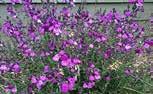
only three in 44 winters, despite having their host trees on my property. In early March, the always dependable Cabbage Whites and Yellow Sulfurs appear. They spent the winter as chrysalids in my garden, so they had to awaken and complete their metamorphosis into adults before nectaring on early blooms like dandelions, bird’s eye speedwell, Nepeta (catmint) and native mustards. The aptly named Spring Azure also emerges in early March but they prefer moist scat to flowers. The Zebra Swallowtail is the first of our six species of Swallowtails to emerge, often by mid-March. Unless the weather is unseasonably cold, early April begins sightings of Black and Pipevine Swallowtails, freshly emerged from their chrysalids and ready for love. By early April, you should also see numerous Silver-spotted Skippers avidly nectaring. Finally, by late-April, Giant and Tiger Swallowtails are cruising their tree-top territories. May brings forth the Great Spangled Fritillaries, which overwintered as caterpillars. Most Skippers wait until June or even July to make an appearance.
Summary
Throughout late winter and spring, butterflies take to the sky after a winter spent hibernating in your garden. The proactive butterfly gardener welcomes them with masses of early-blooming nectar-rich flowers and their caterpillar host plants. The Paola Plant Sale, held April 23, 24, 25, at the Miami County Fairgrounds, will offer indoor shopping and many choices of caterpillar hosts and favorite pollinator plants. Please see our ad on page 5.
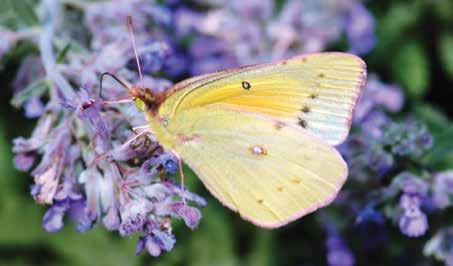
Nepeta (Catmint) is a favorite nectar source for early Sulphurs and Cabbage Whites.
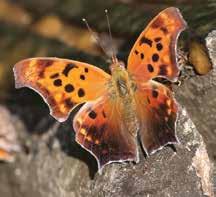
The brilliant Question Mark is a welcome sight on a February day.
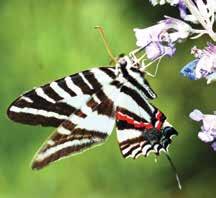
Nepeta also attracts Zebra Swallowtails.
LENORA LARSON Butterfly Maven
Marais des Cygnes Extension Master Gardener, Idalia Butterfly Society and Kansas Native Plant Society member, Lenora Larson gardens and hosts butterflies in the cruel winds and clay soil of Paola, Kansas. She may be contacted at lenora.longlips@gmail.com.
Photos by Lenora Larson.


Time to get your equipment in for a spring tune-up.
Stock up on your Lawn & Garden supplies, Pet supplies and Bird seed.
4807 N. Brighton, KCMO www.mowerpartskc.com 816-452-8393
Mon.-Fri. 9a-6p • Sat. 9a-1p (closed for lunch 12:45-1:30)
Landscape Design, Installation and Maintenance Services
From trees and shrubs to perennials, mulch and stone, expert Landscape Designers are ready to help with your next project!
Call for an At-Home Consultation.


Servicing KC gardeners for over 92 years!
7130 Troost, Kansas City, Mo. www.soilservice.com • 816-444-3403
Planters Seed Co.
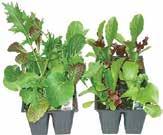



Missouri Wildflowers
Nursery
573-496-3492
www.mowildflowers.net mowldflrs@socket.net 9814 Pleasant Hill Rd Jefferson City MO 65109
Meet us at one of these locations in the KC area. Give us your order at least 5 days before a sale, and we will bring it to the location.
Burr Oak Woods Nature Center; Native Plant Sale & Naturescaping Workship; 1401 NW Park Rd, Blue Springs 64015. March 28, 12:30 - 4:30 p.m. Workshop hours 8:00 a.m. - 12:30 p.m. 816-228-3766
Deep Roots Native Plant Sale at Anita B. Gorman Conservation Discovery Center, 4750 Troost Ave, KC MO 64110. April 11, 10 a.m. to 2 p.m. deeprootskc.org

Rotary Youth Camp Native Plant Sale at Rotary Youth Camp, 22310 NE Colbern Road, Lee’s Summit 64086. Friday, April 17, 4 p.m. to 6 p.m.
Missouri Prairie Foundation Native Plant Sale at Anita B. Gorman Conservation Discovery Center, 4750 Troost Ave, Kansas City MO 64110. April 18 & May 16, 10 a.m. to 2 p.m.
Shawnee Indian Mission Foundation - Native Plant Sale at 3403 W. 53rd St, Fairway KS 66205. April 25, 9 a.m. to 1 p.m. shawneeindianmission.org
Native Plant Sale by Burroughs Audubon at 6212 NW Barry Rd. KC MO 64154. Backyard Bird Center 816746-1113. Saturday, April 25, 10 a.m. to 2 p.m.
Rose Report
how roses survive early spring weather extremes
Ahh! March in Kansas City. The weather starts to warm up. People start doing things outside. It seems like there is this renewed energy or vibe in town. I love it and it makes me appreciate living in a city that actually experiences seasons.
But, at the same time... it’s March. Should I put my blankets away? What about my winter coats? One day you need them... the next day you don’t. It is unpredictable and exhausting. Spring is coming, but not until March 20, 2026.
Now imagine you are a rose bush. You’ve been saving up your energy all winter… getting ready to bust out with some fresh, tender new growth. And then it gets a little bit warm outside. It’s time to let loose some of that energy, right?
The answer is no, no it’s not! The roses have just as hard of a time figuring out what to do in March as humans do. In March and early April when it warms up a bit, some roses come out of dormancy and start growing. Then a freeze comes along and kills the new growth. Now the roses basically lose the energy they already put in to new growth and have to start over. A couple of cycles of warm up/freeze like that could kill them.
In the fall I put mulch around my roses and that acts like insulation. I have had between 30 and 40 rose bushes in my garden for over 10 years now. I very rarely lose any during the winter.
In March, since my roses are protected they should be safe right? Nope. Only if I wait to prune them

LEANNE BEAUMONT
Consulting Rosarian
back. Pruning too early can kill them. Pruning, like warm temperatures, will encourage the roses to grow. April 15th (yes, tax day) is the date in Kansas City when there is less than a 10 percent chance of a freeze. That’s when it is safe to prune in our region.
So, what should you do in March? Continue to water your roses occasionally if there has not been rain or snow. March is a good time to sharpen your pruners, or gather and inspect any other supplies you use each year. Do you have any chemicals that are expired, past their prime or almost out? If you do, most cities have a safe way to dispose of hazardous waste, so consult your city’s website. March is also a great time to get an updated tetanus shot if you have not had one in the last 10 years.
Featured Rose
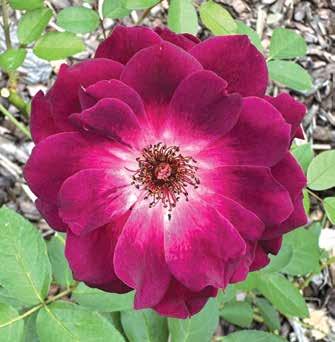
Burgundy Iceberg
Burgundy Iceberg is a striking, dark red/purple floribunda rose. I saw some in a public rose garden several years ago and ordered it for my own garden as soon as I got home. I love that it blooms all summer, even in our worst heat. It is notable because it has dark stamens instead of the typical yellow ones.
Clostridium tetani bacteria lives in the soil and can enter your body from any cut or scratch in your hand, or from eating, or rubbing your eyes with dirty hands.
Finally, March is a good time to transplant any roses you are moving from another spot, preferably before the roses break their dormancy.
Information about mulching in the winter, watering roses, and transplanting roses, along with a TON of other information can be found on the Kansas City Rose Society website: kansascityrosesociety.org, Click on Grow Roses. Also use the website to ask a rose expert a question by clicking under Contact us, then Ask a Rose Expert, or by emailing rosehelp@kcrosesociety.org.
The Kansas City Rose Society is conducting a public seminar series to help anyone interested in growing roses, to do so with ease. The first seminar in the series is:
How to Select Roses and Plant with Ease. Master Consulting Rosarian Laura Dickinson will offer insights on types of roses to consider and how to ensure they have the right spot in your yard. Saturday, March 21 from 9:30 to 11 a.m., at Village Church, 6641 Mission Road, Prairie Village, KS.
Check the Upcoming Events section in The Kansas City Gardener magazine, or click on Events on the Kansas City Rose Society website for a complete list of all the seminars in the series.
LeAnne Beaumont is a Consulting Rosarian who has been growing roses in Kansas City for nearly 15 years. She enjoys taking her roses and photos of roses to rose show competitions. She also can’t resist visiting public rose gardens whenever she travels. LeAnne can be reached at beaumont3@hotmail.com.
Photo credit to LeAnne Beaumont.











Buddleia Monarch ® Cherry Royale
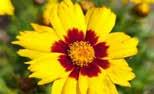
Coreopsis Makeup
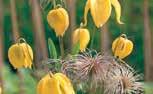
Clematis Yellow
Chrysanthemum Mammoth Dark Bronze Daisy
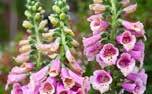
Digitalis Dottie ™ Warm Rose
Dianthus Scent First ® Orange Sparkler
Phlox Candy Cloud ™ Blue
Rose, Miniature Parade Meri
Asparagus Purple Passion
Lewisia Sunset Rosy Pink
Cool Season Edibles and Ornamentals
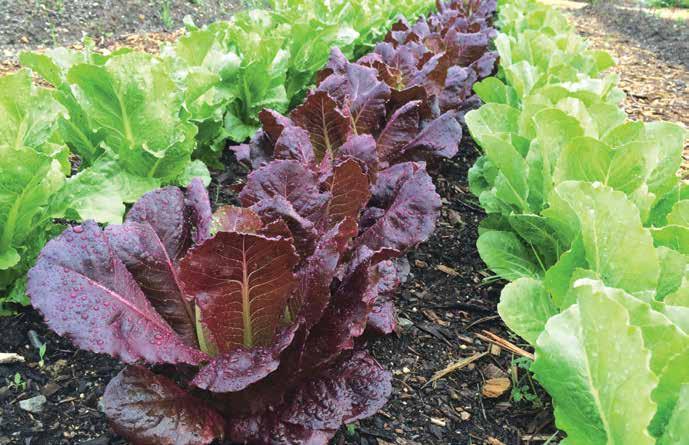
When I was younger, I told my parents I wanted to be a farmer or a lawyer when I grew up. I technically do not grow plants for consumption, but we do grow cool season edible plants. Yes, they are usually found chopped up on a dinner plate, but they are surprisingly beautiful. They also are some of my absolute favorites for spring containers and landscape beds.
Let us begin with my #1 go-to… lettuce! I love lettuce for so many reasons. I love the different leaf shapes, the color, the tight form and shape that shows so well in landscape beds. I adore the lime green, the burgundy, the tan with little red flecks, the classic bright green. Did you know that lettuce can be catego-

rized into different types like Butterhead, Oakleaf, Romaine, Loose Leaf, Bibb and Summer Crisp? All with unique shapes and textures. Oakleaf types of lettuce have leaves that are of similar shape to a white oak leaf. Rouxai is a deep burgundy variety and Panisse is a lime green variety. Both work well in containers or in a large scale planting, they are easy to grow. The leaf of the oakleaf lettuce is more delicate than a tight clustered Bibb or Romaine lettuce. I use those two types often in containers because they stay in a tight cluster and don’t overtake their neighbors. Do make sure you are paying attention to the size of your Romaine, they tend to be taller than other lettuce types. There are
WILDEBOOR Horticulture Supervisor
two Loose leaf varieties that are must-haves each spring, Merlot and Black Seeded Simpson. Merlot is deep, intense burgundy that looks amazing with pink, red, orange, yellow and blue. Black Seeded Simpson is a bright effervescent lime green. It makes everything pop! I love it with red, hot pink, yellow, blues and purple. Lettuce is very easy to start at home; it germinates quickly and is ready to move outside usually in 4-5 weeks of sowing. You can also direct sow when soil temperatures have warmed. We usually wait to plant our lettuce outside until late March or early April. It just depends on the temperatures of each year; spring is never the same!

Kale and Cabbage are hardier, cool season edibles. They also come in a wide variety of colors, sizes and shapes. Height is another important attribute that they bring to the spring garden. Redbor Kale can get 30 inches tall in a season. Its dark purple and deep green coloring is a wonderful backdrop to those bright spring bulbs. As the centerpiece of large containers, it’s a great focal point. Redbor is really an ornamental, you can eat it but there may be other varieties of Kale that have better flavor profiles. Lactino Kales are prized for their flavor. We are growing Mamba this year, which is a Lactino type that has narrow, dark green leaves with a white midrib in its center.
Anne Wildeboor, is long-time horticulturist at the Overland Park Arboretum & Botanical Gardens. She loves sharing her passion for plants with the public and working alongside dedicated staff and volunteers.
ANNE
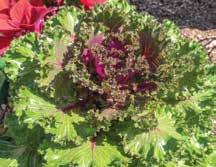
When I’m looking at Cabbage varieties to put in the garden, I’m looking at how many days it takes to form a cabbage head. Spring season can be short depending on the weather. These cool season plants actually want cooler temperatures; hot weather is not their friend. Tiara is my go to for a quick spring season cabbage. It is a kind of muted green that has a waxy, white sheen. It’s on the smaller side, only producing a 1-2 pound head of cabbage. It forms a head of cabbage in about 60 days. My favorite cabbage is Ruby Perfection, which unfortunately, rarely produces a head of cabbage. We are changing out our spring beds to sum-
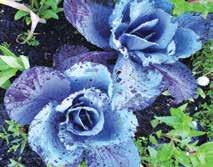
mer before it gets the chance, but the purpley leaves with the waxy sheen are the absolute best. Since my first spring in the garden 25 years ago, I have loved them each and every year.
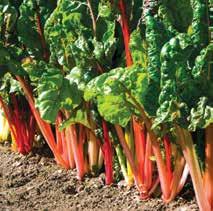
Right out of college I worked with a wonderful gardener that shared her immense knowledge of edible plants. Barb would get excited about Swiss Chard. Because she was so jazzed about it, I couldn’t help but feel the same. I didn’t necessarily want to eat it, but I definitely could see how cool the colors were and how they accentuated the other annual flowers we had planted. They also added much needed height to
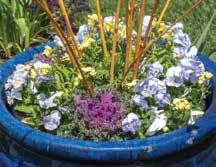
our landscape beds. Brights Lights is a vibrant mix of orange, yellow, pink, red and white. Swiss Chard can handle some warmer temperatures, so it’s a great spring into summer or summer into fall crop. You can direct sow or you can sow indoors then plant out when the conditions are right.
Visitors of the Overland Park Arboretum & Botanical Gardens are always surprised when they see these plants in our garden beds. What is that? Lettuce?! Can you eat it? Well, we spray ours with an organic deer repellent, so no we don’t eat it. But you could! These plants create great lines in your bed that hold their
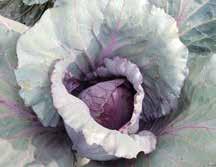
shape throughout the spring season. Summer plants fill and sprawl, sometimes losing that “line” or division of plants you are wanting to create when you set your plants out. The above plants stay neat and tidy. These special plantings are another fun way to show kids what food looks like outside of the grocery store. It’s fun for them to pick a variety to grow and then eat it!
I hope you will do some perusing of garden catalogs, or, at the very least come see our spring display at the Overland Park Arboretum & Botanical Gardens. Check out those cool varieties of plants that are beautiful and edible.



Native Roots, Smarter Shrubs
A Better Way to Garden in Kansas City
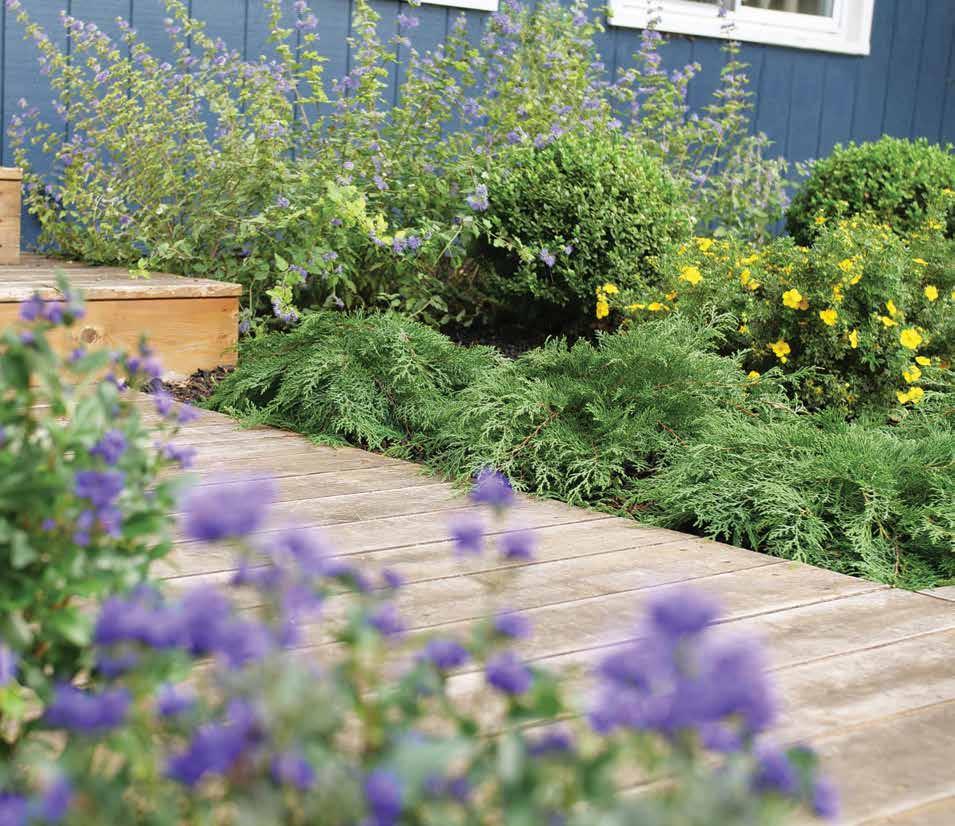
Native shrubs are having a welldeserved moment in home landscapes, and in the Kansas City region, that makes perfect sense. These gardens sit at the crossroads of prairie and woodland ecosystems, where native plants are naturally equipped to thrive. They are adapted to local soils, weather patterns, and wildlife, which makes them reliable, resilient, and rewarding.
But today’s native shrubs are not exactly the same plants your grandparents may remember. Thanks to careful breeding and extensive trialing, modern native cultivars retain all the ecological benefits of their wild counterparts while offering meaningful improvements for home gardeners. Think better flowering, stronger structure, richer foliage color, and a more polished look that fits beautifully into residential landscapes.
When you plant native shrub cultivars, you are doing more than choosing attractive plants. You are supporting pollinators, birds, and beneficial insects that rely on native species for food and shelter. Native cultivars also help stabilize soil, manage erosion, and integrate seamlessly into the surrounding landscape. Best of all, they do this with less fuss once established, which is a major win for gardeners who want beauty without constant maintenance.
Shrubs That Work Hard and Look Good Doing It
One standout native shrub for Kansas City gardens is Kodiak®

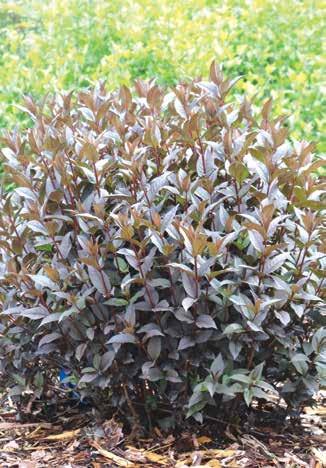
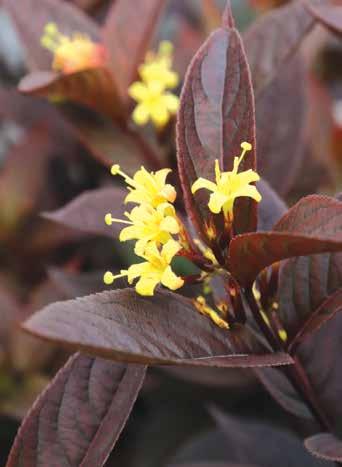
Diervilla, especially the new, dramatic Kodiak® Jet Black. It’s a tough, adaptable shrub native to eastern North America that takes durability to another level. Kodiak Jet Black offers deep, nearly black foliage that holds its color all season, creating striking contrast in the landscape. Bright yellow summer flowers attract pollinators, and the plant’s dense, low habit makes it ideal for slopes, foundations, and mass plantings. It is a perfect example of how native plants can feel bold and modern without losing their roots.
NATALIE CARMOLLI Shrub Expert
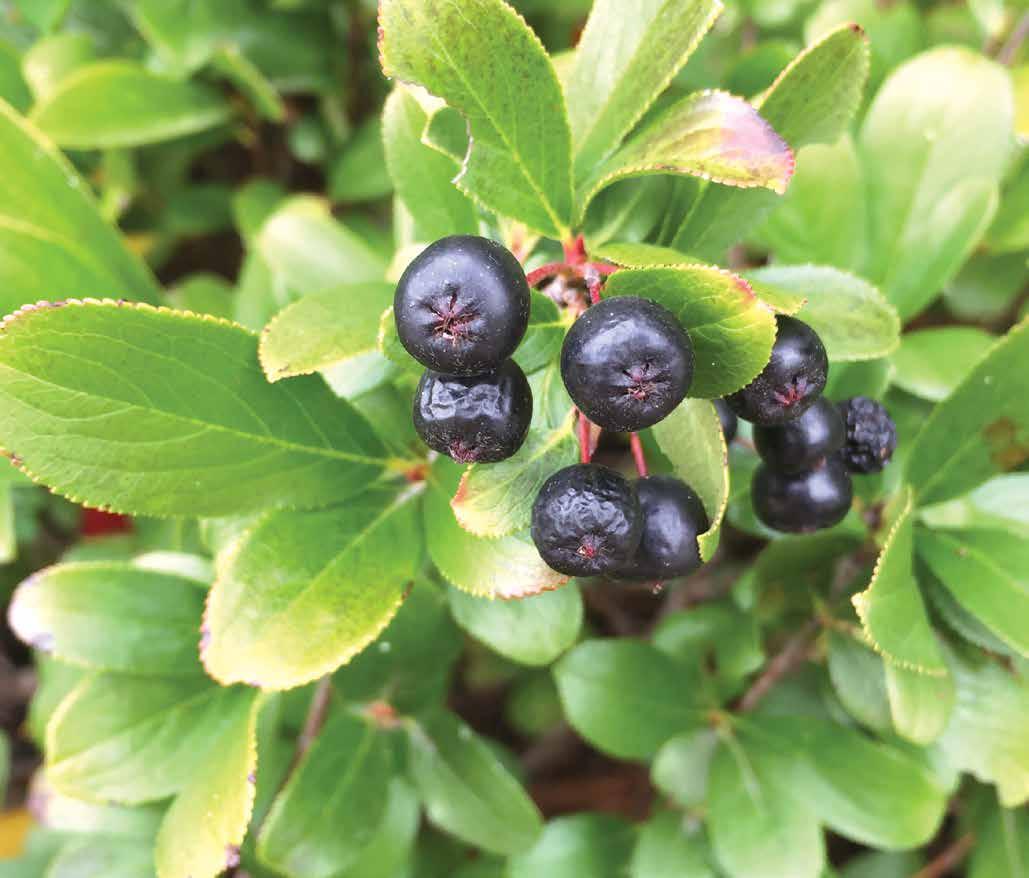
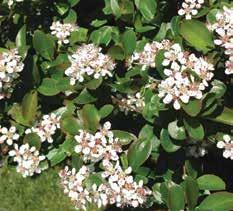
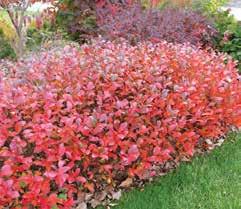
Another group of native shrubs gaining attention is the Low Scape® series of black Aronia, also known as chokeberry. These compact shrubs pack multiple seasons of interest into a tidy, garden-friendly form. In spring, they produce clusters of white flowers that support early pollinators. Summer brings glossy green foliage and abundant berries that persist into fall, providing food for birds. Autumn finishes the show with fiery red foliage. Low Scape® Mound is especially versatile, forming a neat, low mound that works
well along walkways and borders.
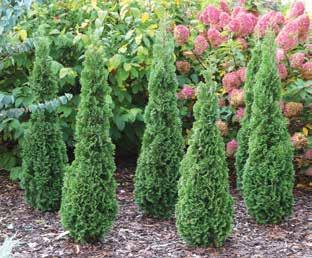
For gardeners looking for evergreen structure, Sting® arborvitae offers an exciting new look. Arborvitae are valued for their year-round presence, and this selection stands out for its dense habit and narrow, upright form. It provides privacy, wind protection, and winter interest while fitting comfortably into smaller landscapes.
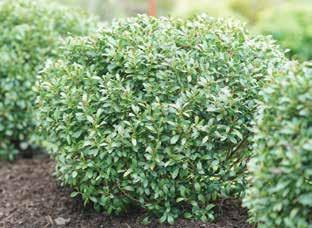
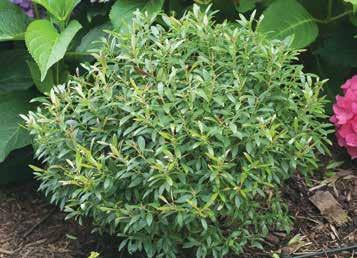
If you love the look of boxwood but want a native alternative, Gem Box® and Strongbox® inkberry holly deserve a spot on your list.
Natalie is rooted in horticulture, having worked in the family floral business until college, where she earned her degree in fine and theatrical arts. Now, an avid gardener, writer, and public speaker for Spring Meadow Nursery, Natalie delights in sharing her expertise and enthusiasm about the art of gardening, using Proven Winners® ColorChoice® Shrubs.
Diervilla Kodiak Jet Black
Kodiak Jet Black summer bloom
Inkberry holly is native to eastern North America and thrives in a wide range of conditions. These improved cultivars maintain a naturally dense, rounded habit without constant pruning. Both deliver the evergreen look gardeners want, with the added benefit of supporting native ecosystems.
Native Hydrangeas That Raise the Bar
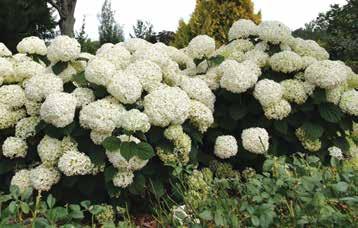
Hydrangeas are garden favorites, and several North American species shine in the Midwest. Incrediball Storm Proof™ smooth hydrangea builds on the reliability of our native smooth hydrangea with thicker, stronger stems that hold massive white blooms upright, even after summer storms. Beyond its visual impact, it is also a standout for pollinators thanks to its high number of fertile florets. This makes it both beautiful and beneficial, a rare combination.
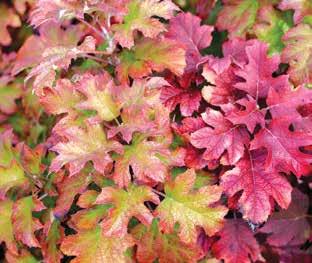
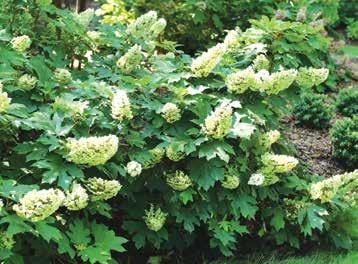
For those who appreciate bold foliage and multi-season interest, Gatsby Glow Ball® oakleaf hydrangea delivers. Oakleaf hydrangeas are native to the southeastern United States and adapt well to Kansas City gardens. This improved selection offers glowing lime-green blooms, a naturally compact habit, and exceptional fall color. The large, oakshaped leaves turn rich shades of red and burgundy in autumn, extending its appeal long after flowering ends.
A Landscape That Gives Back
Native cultivars prove that you do not have to choose between ecological responsibility and great design. These shrubs offer year-round interest, support wildlife, and simplify garden care, all while looking right at home in Kansas City landscapes.
If you are ready to explore more native shrub options and learn how to use them successfully in your garden, visit the Proven Winners® ColorChoice® Native Shrubs Guide at https://www.provenwinnerscolorchoice.com/native-shrubs-guide/.
Your garden can be beautiful, resilient, and deeply connected to the place you call home.
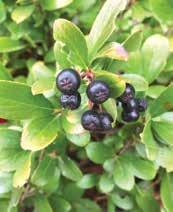
Aronia berries
Aronia Low Scape Mound
Low Scape Mound flowers
Thuja Sting Arborvitae
Gem Box Inkberry Holly
Strongbox Inkberry Holly
Incrediball Storm Proof
Hydrangea quercifolia Gatsby Glow Ball Gatsby Glow Ball
UPCLOSE with Paula McCloskey
PAULA’S PETALS GREENHOUSE AND FLORAL
THERE ARE GREEN INDUSTRY PROFESSIONALS DEDICATED TO THEIR CRAFT, MADE OBVIOUS BY THEIR CAREER CHOICE. WE ARE CURIOUS ABOUT THE INFLUENCES TOWARD THEIR CAREER, AS WELL AS OTHER INTERESTING ASPECTS OF THEIR LIFE.
Company: Paula’s Petals Greenhouse and Floral
Owners: Paula and William McCloskey
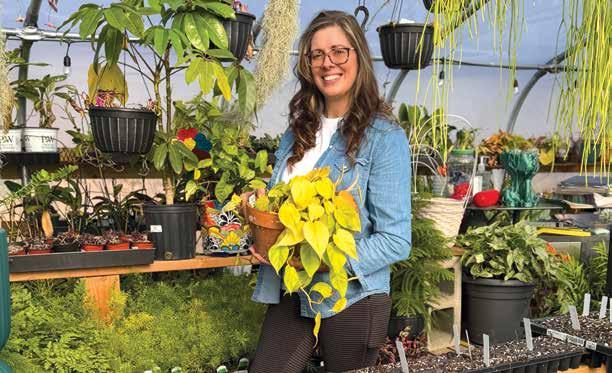
Products/Services: My two favorite worlds collided last year—greenhouse and floral. Cut flowers for floral arrangements are grown on property from March to October. In the off months, flowers are imported from around the world. The arrangements are available for pickup or delivery. In the greenhouse, I’m able to propagate or seed most of the plant material we sell. It helps to keep the price lower. If propagation takes too long, or seeding is unsuccessful, the next option is to order from another trusted grower. I try to use companies in the Midwest familiar with our zone extremes. You will find plenty of healthy plants like fruits and vegetables, perennials, natives, annuals, herbs, trees and shrubs. We carry tropicals like houseplants and orchids too.
Background: Greenhouse and floral adventures began in high school while part of the Future Farmers of America (FFA). My attempt at college life was short-lived. I yearned for hands-on schooling rather than textbooks. Then began my education in a greenhouse classroom—at Longview Gardens, Kansas City, MO. I worked for seven years, under the wings of Wayne and Jan Vinyard (owners) and gained knowledge that I use today. Then came marriage, motherhood and 10 acres, that inspired a houseplant collection, and the creation of our harvest garden, growing every type of vegetable, fruits and herbs to pick and eat. Then came my floral journey, when I enrolled in classes offered by Floret Flowers. I have absolutely loved gaining more knowledge each day on flower harvesting, arranging and growing. When we moved to
this house on 10 acres, my love of natives grew. Walks through the woods would find me identifying flowers in bloom. I then started a native garden for the beehives. I came to realize I have that true Missouri clay soil and natives flourished here.
Home gardening: Gardening is a way to get away from the hustle and bustle of the world and disconnect. I have several gardens around my home and each one was created to their elements. So I have a hillside garden that is mainly natives and Iris to hold in the hillside, a poolside patio garden with Hardy hibiscus and elephant ears to withstand the moisture, a perennial walkway garden with over 27 daylilies and 32 german beared Iris. This garden has all my fun perennials from shade to sun and is my most changing garden. There is something in bloom from March to November. Then I have a harvest garden where you can eat everything planted.
For the community: The overflow from the harvest garden and eggs go onto my honorary stand where people can take what they need or want. Then this stand becomes a Give-Back Stand for the month of November. The stand offers all nonperishable items and hygiene products that are
free for anyone in need. It is open for people to donate items as well.
Favorite outdoor activity: I love the outdoors and everything to do with being outside. Camping, fishing, swimming, snow sledding, bike riding, hiking, exploring caverns, bird watching. We are an outdoor family and love everything to do with nature. My favorite thing to do outside though is sitting near my walkway garden in the early mornings with my cup of coffee or taking my coffee on a walk around the flower gardens.
What every gardener should know: Start small. I have learned the hard way so many times. Grow a tiny bit each year. If you start big the first time things get out of hand and overgrown so fast you can’t keep up. Working in the morning is the best time, and mulching is a must on new gardens. Gardens take at least 3 years to mature so be patient.
Contact information: Paula’s Petals Greenhouse & Floral, 33607 E 199th St, Pleasant Hill, MO 64080 (take the 2nd entrance off the main road), 816-929-0522, www.paulas-petals.com, paulaspetals2022@gmail.com. Come see us. We’d love to show you around.
Bird-Safe Window Workshop: Stop the ‘Splats’
Sat, March 21, 12:00-2:30 p
Anita Gorman Conservation Discovery Center, 4750 Troost Ave, KCMO 64110
Tired of finding dead or injured birds near your windows—especially during spring and fall migration? Come learn simple techniques to make your windows “bird safe.” Following a brief presentation, attendees will create “wind curtains” of parachute cord to help prevent collisions. All materials provided; workshop is FREE. Limited to 30 attendees (17 yrs and up).
To register, please email us at mail@burroughs.org by March 14 (include telephone number and names of ALL attendees). Call/text 816-795-8177 with any questions.
Sponsored by Burroughs Audubon Society of Greater Kansas City and the Osage Trails Chapter of MO Master Naturalists.




Bitter-Sweet Native Roses
Thirty-five years ago, I attended a lecture on rose gardening in Washington, D.C. The speaker, Holly Shimizu, handed out lecture notes, printed on rosescented paper. I don’t remember the lecture, but I clearly remember the rose-geranium scent of her handouts.
A similar thing happened to me at an early 1980s showing of a John Waters movie, Polyester, where the audience followed along with scratch-and-sniff cards. In my mind, I still smell skunk, new car, dirty shoes, flatulence, and of course, roses, though the storyline has long since evaporated. For better or worse, smell has a way of sticking to my brain like glue.
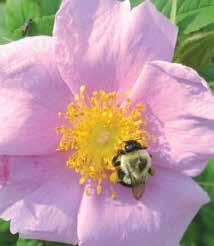
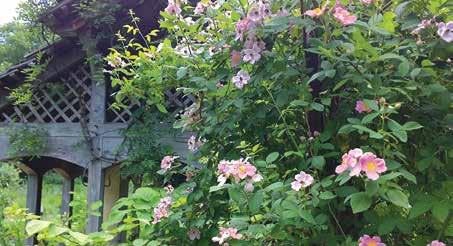
For landscaping, native pasture rose (Rosa carolina) is a useful, lowgrowing (18 inches) native woody plant that gently weaves between other plants in a naturalistic garden. As expected, it has rose-pink petals, bright yellow anthers, and a scent that would please my grandmother. On the surface, it may seem oldfashioned, like floral hand soap and intensive gardening. But in reality, it

possesses traits of a modern working native plant—one that serves nature while minimizing labor in the garden. The sticking point (literally) is that it is thorny, or is perceived to be thorny. But I find it to have gentle prickles, more like a cucumber vine than a barbed rosebush. It has a natural tendency to meander through the garden, with long-spreading rhizomes that pop up in the gaps. In a fully-planted naturalistic garden (in full sun), it plays well with others.
Native species roses are primarily buzz pollinated (also called sonication), a type of pollination unique to bees, especially bumblebees (though not honeybees). The bees’ buzzy din and jerky “dance” are amusing and clunky compared to the refined and delicate rose flower that it dances upon.

being thorn-free. If you buy seedgrown plants, which one you end up with is luck of the draw. However, if you shop at the nursery, you may be able to hunt and find chance seedlings withfew or no thorns. I’ve encountered them in nature and propagated one from cuttings, which exists on a trellis in the Whitmire Wildflower Garden at Shaw Nature Reserve.
Prairie rose is the most vigorous of the native species, with canes that reach 10 to 15 feet long in full sun. They are best trained on a trellis as a vine, because they are clump-forming. Left untrained, the stem tips hit the ground, root in, and hopscotch from place to place, creating an unruly thicket.
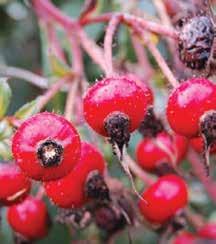
sive trellises can be made from 4 x 4 mesh hog panels stapled to wooden posts set in the ground. Rolling Ridge Nursery in Webster Groves sells premade hog panel trellises. Perhaps the wickedest of plants ever to evolve in the Milky Way is swamp rose (Rosa palustris), with its multitude of needle-like thorns and rhizomes that form dense thickets. It produces gorgeous flowers, rose hips, and red stems in winter. If you are a nesting bird, it’s the perfect place to hide your nestlings. Not even a dumb predator (or trespasser) would attempt to enter a fortress made of swamp rose.
The remainder of native roses have stout, sharp barbs that make them tricky to handle, with one exception. Prairie rose (Rosa setigera) can be thornless. Seed-grown plants vary from plant to plant, with some
I love prairie rose grown as a vine, because they add vertical greenery; showy, fragrant flowers in summer; and bright red rose hips in fall and winter. They can be trained (on trellises) into a tall monolith or an arch. They can cover an ugly fence or unsavory view, especially in narrow spaces. Simple, inexpen-
It seems like a lifetime ago that I tended a rose garden. I was fresh out of college, and pruned antique roses, which is kind of like picking wild blackberries. You need sturdy denim clothing and leather gloves to protect against hooked thorns that seem to grab you out of nowhere, and hold on tight. A long time ago, two paths diverged in a garden, and I picked the one tangled and thorny, and I am happier for it. Wishing you happy gardening!
Scott Woodbury was the horticulturist at Shaw Nature Reserve for 30 years and stepped down from that position in June 2022. He continues to work on contract for Shaw Nature Reserve to carry out native landscaping education and has launched his own business called Cacalia: Native Garden Design and Wilding. Find suppliers of native plants, seeds, and services at the Grow Native! Resource Guide: www.moprairie.org.
SCOTT WOODBURY Horticulturist
Bumblebee on Rosa palustris Rosa palustris fruit Rosa setigera trained on a trellis
Photos by Scott Woodbury.

All-America Selections Winners
Every year, the professional, volunteer judges for All-America Selections select only the top garden performers that become AAS Winners. This year brings a wide variety of annuals, edibles, and perennials to the market, all of which have been “Tested Nationally & Proven Locally.” Presented here are just a few. To see all 2026 AAS Winners, see all-americaselections.org.
Now it’s time to try these newbies in your garden! Each AAS Winner has or will soon have a “Where to Buy” button to aid in your shopping ease. Once you try them, you are welcome to leave your comments and reviews at the bottom of each AAS Winner page. Happy Gardening!
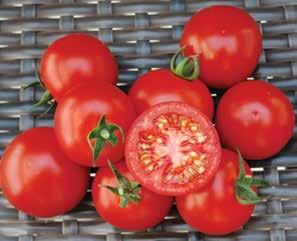
Tomato BadaBing! F1
A new era for home-grown tomatoes is here with Tomato BadaBing! F1, the game-changing, large cherry (almost cocktail-sized) tomato that’s ready to take center stage in your garden! This incredible new variety offers unprecedented protection against Septoria Leaf Spot, Early Blight, and Late Blight, ensuring your plants stay amazingly healthy all season long.
You’ll enjoy early-season tomatoes with outstanding flavor, boasting juicy, crack-resistant 1.5" bright red fruits. Despite being an indeterminate plant, BadaBing! F1 stays a manageable 40 inches tall. Bred for superior garden performance and robust disease resistance, this reliable tomato promises an effortless, predictable, and bountiful harvest.
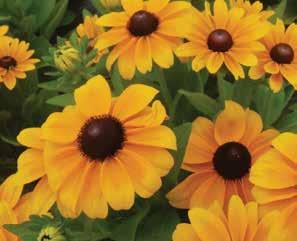
Rudbeckia Claire Orange F1
Introducing Claire™ Orange, the world’s first pollen-free F1 hybrid Rudbeckia! This compact, early-flowering beauty boasts a tidy, uniform habit and an abundance of bright, clear orange blooms that truly stand out. Inspired by its namesake, the central “eye” remains perfectly clean, free from pollen.
Enjoy its exceptional vigor, impressive floriferousness, and remarkable heat and disease tolerance, which ensure a long-lasting, vibrant display even in challenging conditions. Claire™ Orange delivers “clean” beauty and reliable performance, transforming your garden with effortless cheer.
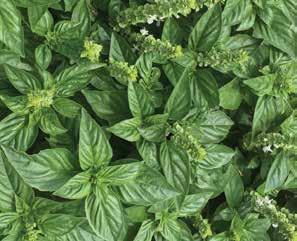
This award-winning basil is an outstanding choice for any kitchen garden, boasting a tight, compact, and highly branched habit perfect for larger containers. Not only does it offer delicious, slightly anise-flavored leaves, but it also stays tender longer—resisting bitterness after harvest and maintaining excellent leaf quality late into the season.
The AAS Judges love its vigor, heat tolerance, and notably slow-to-flower nature. The bright foliage resists oxidation, making this cultivar an ideal, high-performing selection for superior, fresh-tasting pesto all summer long. Deliziosa!

March 21, 2026 9:00am–3:00pm

Basil Treviso
Master Gardeners’ Plant Sale in Paola
Indoor shopping on April 23, 24, and 25
Mark your calendar on April 23, 24, and 25 for the Marais Des Cygnes Extension Master Gardeners annual Plant Sale. Plants and shoppers will again be protected from Mother Nature’s whims at the Miami County Fairgrounds, Building #2, 401 Wallace Drive, Paola, KS 66071. Shoppers will also appreciate the convenience of public restrooms. Cash, checks and credit cards are welcome. The doors open promptly at 9:00 a.m. each morning and close at 6:00 p.m. on Thursday, 5:00 p.m. on Friday and 1:00 p.m. on Saturday.
Exceptional Plant Selections
Since the plants are grown in Kansas, buyers can be confident that their purchases will succeed in our Midwestern clay soil and unpredictable weather conditions. Our local grower uses only organic horticultural methods so no synthetic fertilizers or pesticides have been applied. This means that the plants are safe for humans, pets, butterflies and bees. Based on 2025 sales, there will be even more vegetable seedlings and increased ornamental perennials
for both sun and shade. We will also have a large selection of ornamental and native shrubs, including the award-winning native Hydrangea arborescens ‘Haas Halo’, which the Mt Cuba Center has declared as the best hydrangea for both beauty-focused gardeners and hungry pollinators. If you haven’t yet tried the new Oso Easy Roses, we will have them in multiple colors!
Butterfly host plants will be available for the 60 species of butterflies attracted to gardens in the Kansas City area. Remember, flowers only feed the adults. You must also feed the children, the very hungry caterpillars and each species requires a different host plant. The Monarch’s favorite, Tropical Milkweed, continues to be the number 1 selling plant at our annual sale, followed by members of the carrot family like parsley and fennel for the Black Swallowtails. Butterfly expert Lenora Larson will be present to assist shoppers.
Seventy percent of the food we eat depends on the services of pollinators, primarily bees. Home gardeners are an important source of
food for these pollinators. We will offer a special selection of heirloom open-pollinated flowers for both your garden’s beauty, and to increase your harvest of delectable fruits and vegetables.
Other Offerings
In addition to host and pollinator plants, shoppers will find a large selection of native plants, including straight species and selected varieties. Favorite ornamental perennials like peonies, hostas, geraniums and clematis will also be available. Colorful annuals, tropicals and succulents will be offered to meet the gardeners’ needs for containers, flower beds and houseplants. Are you in a hurry? Gorgeous hanging baskets and patio pots will add instant beauty to your landscape.
Help for your Gardening Questions
Do you need suggestions for challenging sites like dry shade or that wet spot? Do deer and rabbit consider your garden to be their personal buffet? Which varieties of tomatoes or peppers produce best in
our area? Extension Master Gardeners will be on-hand to answer your questions about plant selection and care.
See our advertisement with details on page 5. For more information, please contact the Paola Extension Office at 913-294-4306.
FREE Garden Books!
Are your gardening bookshelves in need of pruning?
Please bring gardening books in reasonable repair to donate to our Free Book table.
Warning: some gentlyused books may follow you home!
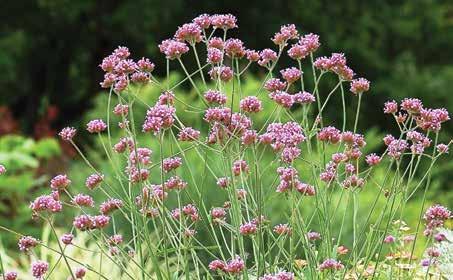
Tall Verbena is an annual sun-loving pollinator magnet, suitable for flower and vegetable beds.
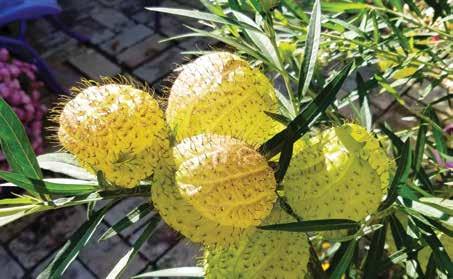
Hairy Balls Milkweed is a favorite with Monarchs, whimsical gardeners, and flower arrangers.




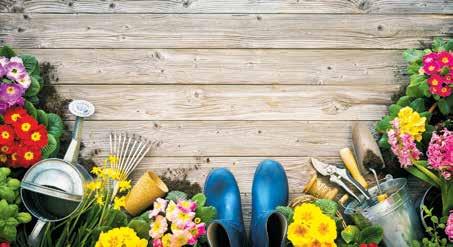




Douglas County Extension Master Gardeners present their Big Ideas Garden Show
Saturday March 21, 9a to 3p
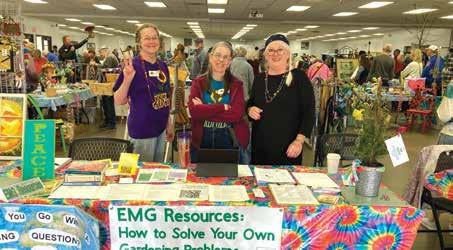
Our 2026 Garden Show celebrates the Spring Equinox by promoting Big Ideas in the world of gardening. This inspirational biennial exhibition features educational booths, guest speakers, garden art, a rain barrel workshop, a garage sale, a raffle, and a kids’ corner, as well as vendors and food trucks. Doors open at 9 a.m. for this free public event.
Seven of our Extension Master Gardener teams will share their experiences and lend their expertise to Educational Booths.
Edible Gardening encourages gathering naturally occurring plants (aka weeds!) to make unique salads and describes intensive vegetable planting in protected soil to maximize yields in small spaces.
Incorporation of Native Plants supports butterfly populations and addresses decreasing populations of vital native insects.
To retain precious water, our Fairgrounds Demonstration Garden has added bioswales topped with native plants.
A new custom-designed drip irrigation system for our High Tun-
nels will conserve water, directing flow to plant roots, with the goal of increasing vegetable yield for donation to the Lawrence community.
Learn how thoughtful Garden Design starts from the soil up— focusing on healthy soil, smart water use, and native plants that support pollinators, while incorporating successive plantings to grow abundant, seasonal food.
Sustainable Gardening practices place focus on growing and preserving your own food (rather than buying produce shipped from long distances) and composting all organic waste.
Finally, our Horticultural Hotline staff will be on hand to answer your gardening questions with researchbased solutions.
Our showcased speakers will be sharing their Big Ideas at Flory Hall.
From 10 to 11:30 a.m., entomologist Betsy Betros presents “Spiders—Fascinating!” hear why spiders are a crucial part of the food chain and see how their webs are amazing feats of engineering.
From 1 to 2 p.m., Neil Bass, US Army Natural Resources Specialist,
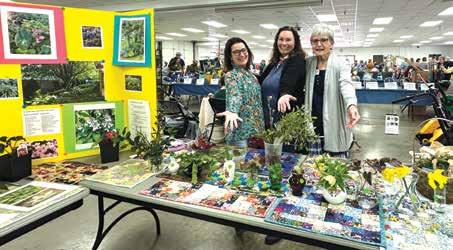
presents “Fort Leavenworth: History and Natural History at the First US Fort in Kansas.” His talk will explore the Fort’s old-growth forests and several species of flora and fauna that few people know about.
Each presentation will be followed by a Q&A session.
What Else?
Enjoy a snack, a drink or lunch in the parking lot with the Soda Wizard, Torched Goodness, or Cousins Maine Lobster.
At noon, participate in a Rain Barrel Workshop in the Dreher Family Building (preregistration required).
Spark your children’s imaginations with art activities in the Kids’ Corner, and a Scavenger Hunt hosted by the Lawrence Downtown Farmers’ Market planned from 11 a.m. to 1 p.m.
Shop our incredibly creative Garden Art selections that recycle common materials into yard decor for your garden, patio, or porch.
Visit our huge Garage Sale for used garden implements of all kinds, magazines, and other surprises.
Find unique items in our popular
Raffle where your purchased ticket will have excellent odds of winning goods and services from our generous donors.
Explore Big Ideas from our ten vendors including, Wild Ivy Herb Farm (owned by EMG Lori Trojan), which grows over 80 varieties of herbs using sustainable and organic methods. Other vendors include Clinton Parkway Nursery, Find Fitness, Forest Keepers Tree Care, Lawrence Tree Service, Low Maintenance Landscape, MycoBloom fungi, Nature’s Image Aquatic Design, Pines Garden Market, and Wild Birds Unlimited.
Community Partners joining us this year include Extension Master Food Volunteers Johnson County Extension Master Gardeners, Kansas Permaculture Institute, and KU Monarch Watch.
For additional details, visit our website https://dgemgks.org/ or https://www.facebook.com/douglascountymastergardeners.
See you Saturday, March 21st at the Douglas County Fairgrounds, 2110 Harper Street, Lawrence, Kansas.











Upcoming Garden Events
The Garden Club of Shawnee Thurs, Mar 5, 7p; at Shawnee Town, 1929 Town Hall, 11600 Johnson Dr, Shawnee, KS. Our program will be on The Japanese Gardening Technique of Kokedama. We will serve drinks and snacks, and great door prizes will be given away. As always, visitors are welcome! You can also learn about us at website gardenclubofshawnee.org and our Facebook page.
Heartland Hosta & Shade Plant Society
Sat, Mar 28, Hospitality 1p, Mtg 1:30-3:30p; at 500 NE Woods Chapel Rd, Lee’s Summit, MO 64064. Speaker: Melissa Anderson, K-State RE Marais des Cygnes District Master Gardener will be “Throwing Shade” discussing Hosta and more. Members, Guests and public welcome. Bring a dessert to share. www.heartlandhosta. club; https://www.facebook.com/HeartlandHostaAndShadePlantSociety
Idalia Butterfly Society
Sat, Mar 14, 5p; at Matt Ross Community Center, 8101 Marty St, Overland Park, KS 66204. Program: “Creating a Monarch Island” by Laura Fish. Laura is a dedicated gardener in KC’s Northland. A large traffic island in her neighborhood was a sad, neglected, barren stretch of dirt—now it’s a thriving paradise for Monarchs and many other pollinators. This beautiful addition to municipal property is enjoyed by hundreds of passing drivers daily. Also, it proves that one dedicated and persistent person really can make a difference for our environment. Come hear the inspiring story of this AMAZING transformation! Doors open at 5p for light refreshments and social time. Program begins PROMPTLY at 5:45p following a brief “business and announcements” session. FREE and open to all. Bring a friend! Questions? Please call/text 816-283-6258, or email us at idaliasociety@yahoo.com. Facebook: Idalia Society of Mid-American Lepidopterists.
Kansas City Cactus and Succulent Society Sun, Mar 15, 1:30-3:30p; at the Trailside Center, 9901 Holmes St, Kansas City, MO. This meeting’s activity is a hands-on session. Hands-On Seed & Propagation Workshop: Several members will demonstrate how to grow cactus from seed, followed by guided practice with other propagation techniques—including taking cuttings, separating offsets, and properly planting pups. This program offers a great opportunity for beginners and seasoned growers alike to get their hands dirty. We invite anyone to attend; refreshments will be served.
Kansas City North Garden Club
Wed, Mar 4, 10:30a-noon; at Kansas City North Community Center, 3930 NE Antioch Rd, KCMO 64117. Join us each Wednesday where we will plant seeds, maintain the raised beds and wildflower gardens, DIY craft projects, and hear from special guests from MU Extension and Platte County Master Gardeners. Each
member will receive a free tote bag! Contact Kendra Beaver, 816-513-7740; kendra.beaver@ kcmo.org
Olathe Garden & Civic Club
Tues, Mar 17, 1-2:30p; at Grace United Methodist Church, 11485 S Ridgeview Rd, Olathe KS 66061. **Free & Open to the Public** Join us for a special meeting featuring a presentation from Lauren English of the Kansas City Rose Society on the history of the Rose Garden in Loose Park and rose care for home gardeners.
Raytown Garden Club
Tues, Mar 3, 10a; at Blue Ridge Presbyterian Church, 6429 Blue Ridge Blvd, Raytown MO 64133. The program will be “Minimize the use of pesticides with Integrated Pest Management”, presented by Sherri Carter, Master Gardeners Speaker Bureau. Guests are always welcome. For more information about our club, check out our Facebook page: www.facebook. com/RaytownGardenClub
Orchid Delirium
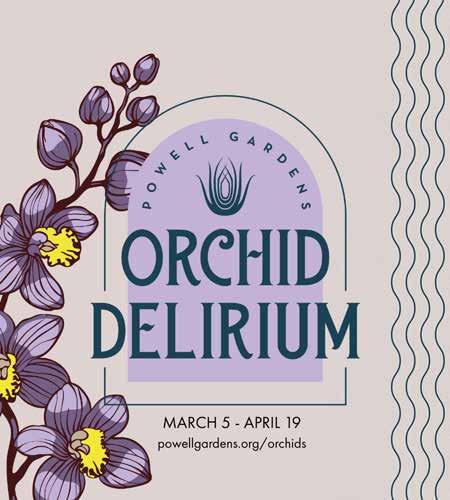
Mar 5 to Apr 19; at Powell Gardens, 1609 NW US Hwy 50, Kingsville, MO 64061. Orchid Delirium returns to Powell Gardens this spring, inviting guests into a world where orchids take center stage. See more details and purchase tickets at powellgardens.org.
MGGKC Spring Fling
Sat, Mar 7, 1-4p; at 501 North Dodgion St, Independence, MO next to ReStore. FREE Family friendly gardening activities for children and adults. Demonstrations. Free research-based information to get your garden started off right. Elevate your gardening—build a raised bed. From strained to Contained—gardening in small spaces. Mulch Magic—the power of mulch. Pollinator Party—native plants in action. Soil Test Sample drop off $20.00. Talk to an EMG. mggkc.org
Spring Open House
Mar 17-21, Hrs Tues-Fri 9a-3p, Sat 9a-5p; at Paula’s Petals, 33607 E 199th St (2nd entrance off the main road), Pleasant Hill, MO 64080. All cool crops will be available along with asparagus, onion starts, potato starts, cool weather flowers, herbs and so much more. www.paulaspetals.com
5th Annual Home & Garden Show
Sat, Mar 21, 9a-3p; at Heritage Event & Arts Center, 109 Delaware St, Leavenworth, KS 66048. Join us for a fun-filled and informative event! Vendors, shopping, presentations, 50/50 raffle, and door prizes throughout event. 913682-2122; www.heritagecenter-leavenworth.com
Kansas City Garden Symposium
Sat, Mar 21; at Rockhurst University. Big Ideas, Smaller Spaces. Knowledgable, professional garden designers with hands-on experience will
share their ideas for creating beautiful, interesting garden spaces. Tickets $99 through Feb 28. Visit gardenersconnect.org/symposium.
Big Idea Garden Show Sat, Mar 21, 9a-3p; at Douglas Co Fairgrounds, 2010 Harper, Lawrence, KS. Presented by Douglas County Extension Master Gardeners. Informative booths, yard and garden vendors, expert speakers, garden garage sale, garden art sale, raffle, food trucks and more. Details at dgemgks.org.
Hop & Shop into Spring Downtown Sat, Mar 21, 10a-4p; Clinton Main Street Shopping Event and Open House in Clinton, MO. New Products, specials and refreshments.
Native Plant Sale & Naturescaping Workshop
Sat, Mar 28, 12:30-4:30p; workshop 8a-12:30p.; at Burr Oak Woods Nature Center, 1401 NW Park Rd, Blue Springs, MO 64015. 816-2283766. Contact Missouri Wildflowers Nursery, www.mowildflowers.net, 573-496-3492, mowldflrs@socket.net, at least 5 days before, and they will bring your purchased plants.
Central Missouri Master Gardener Spring Plant Sale
Sat, Mar 28, 8a-1p; at Master Gardener Greenhouses, 810 Sandstone, Jefferson City, MO. The Central Missouri Master Gardeners are having a spring plant sale. We will be selling cold crops, including lettuces, broccoli, cauliflower, and more. We will also have a selection of early season annuals like pansy, tulip and hyacinth. The sale will be at the Master Gardener Greenhouses in North Jefferson City by the dog park. Service dogs are welcome, but we ask that you leave pets at home or in the dog park.
Tulips with Paula Apr 1-29; at Paula’s Petals, 33607 E 199th St (2nd entrance off the main road), Pleasant Hill, MO 64080. Come and see the beauty of spring! With over 10.5k spring bulbs planted it’s bound to be a beautiful spring. This is a month long Tulip festival. Pre-order spring bulbs as you walk the gardens. Flowers will be pre-picked for purchase. This is also a vendor event with different vendors daily. Vendors contact me to set up. Tues-Fri - 9-3, Sat 9-5; www.paulas-petals.com
Eat Local & Organic Expo
Sat, Apr 4, 9a-1p; at Lenexa Old Town Activity Center, 9301 Pflumm Rd, Lenexa, KS 66215. Kick off farmers market season at the Eat Local & Organic Expo! Shop with more than 30 KC Food Circle farmers who pledge to meet high standards for growing plants and mushrooms, beekeeping and raising animals. Sign up for weekly farm shares, buy transplants for your garden and get the freshest early spring products our region has to offer! Learn more at; https:// thefoodcircle.org/eat-local-organic-expo-2/
Deep Roots Native Plant Sale Sat, Apr 11, 10a-2p; at Anita Gorman Con-
servation Discovery Center, 4750 Troost Ave, KCMO 64110. deeprootskc.org. Contact Missouri Wildflowers Nursery, www.mowildflowers.net, 573-496-3492, mowldflrs@socket.net, at least 5 days before, and they will bring your purchased plants.
Healthy Yards Expo
Sat, Apr 11, 9a-2p; at the Shawnee Civic Centre, Shawnee, KS. Learn simple, eco-friendly lawn and garden practices through educational seminars, expert advice, and interactive activities. Features local vendors, nonprofits, free soil testing for Johnson County residents, kids’ activities, and resources to help protect water, soil, and the environment while creating a healthy yard. FREE family-friendly event.
40th Annual African Violet Show & Sale Sat, Apr 11, 9a-2:30p; at Loose Park Garden Center, 51st St and Wornall Rd, Kansas City, MO 64112. NO ADMISSION FEE. Sho-Me African Violet Club; “Reflections of Violets”
Paola Spring Plant Sale
Apr 23, 24, 25, INDOOR SHOPPING at the Miami County Fairgrounds Bldg #2, 401 Wallace Park Dr, Paola, KS. Thurs 9a-6p, Fri 9a-5p, and Sat 9a-1p. The sale will feature pesticidefree locally grown plants. In addition to the usual selection of butterfly host plants, pollinator flowers and native perennials, there will be ornamental annuals, perennials, herbs, succulents, hanging baskets, and veggies. Extension Master Gardeners, including butterfly expert Lenora Larson, will be on hand to assist shoppers throughout the sale. Credit Cards welcome! More info at www.maraisdescygnes.ksu.edu. Follow us on Facebook at www.facebook.com/ mdcemg or call the office: 913- 294-4306.
Spring Plant Sale
Apr 23-26; at the Overland Park Arboretum Botanical Gardens Plant Sale. Johnson County Extension EMGs will be on hand to assist and answer questions.
Thyme for Kids Plant Sale
Apr 24-25, Cornerstones of Care Ozanam Campus Greenhouse, 421 E 137th St, KCMO 64145
Raytown Cave Springs Plant Sale
Sat, Apr 25, 8a-12p; at 8701 E Gregory, Raytown, MO. Annual plant and Garden Art sale. Annuals, perennials, vegetables, herbs, natives, and garden art. Made by members. Mother’s Day is coming!
Wy Co EMG Annual Plant Sale
May 1, 9a-5p, and May 2, 9a-2p; at the Wildcat Room of the Wy Co Extension Office, 1200 N 79th St, Kansas City, KS. Annual flowers, and vegetables, herbs and perennials grown by the Extension Master Gardeners will be featured.
Heartland Peony Society – Spring Bus Trip
Sat, May 2, 7:30a-7p. Departing/Returning Leawood, KS bus trip to three gardens and two nurseries in Manhattan and Topeka, KS. $75 per
Upcoming Garden Events
person all-inclusive including donuts for breakfast, a box Lunch, Snacks and drinks. Join us for the start of peony season in the heartland! Space is limited; please reach out to Bucky Will at buckywill@gmail.com with questions.
Central Missouri Master Gardener Annual Plant Sale
May 2 and 3, Sat 8a-1p; Sun 12-3p; at Master Gardener Greenhouses, 810 Sandstone, Jefferson City, MO. The Central Missouri Master Gardeners annual Plant Sale is our biggest fundraiser for the organization. We are selling plants, including tomatoes, peppers and hanging baskets, grown in our greenhouses by master gardeners. We also have perennials, including natives, donated by our members for sale. It is a weekend long event at our greenhouses. Prices vary starting from $4. We have three greenhouses full of tomatoes, annuals, vegetables and herbs just waiting for you. The greenhouses are located in North Jefferson City by the dog park. Service dogs are welcome, but we ask that you leave pets at home or in the dog park.
Platte County Master Gardeners Plant Sale
Sat, May 2, 9a-3p and Sun, May 3, noon-3p; at Northland Career Center, 1801 N Branch St, Platte City, MO. Directions at: www.plattecountymastergardeners.org. Proceeds benefit the MU Extension Master Gardeners of Platte County. 1000s of Native, Annual & Perennial Plants, Herbs, Tomatoes and Peppers. E-mail plattemgs@gmail.com; Facebook — Platte Co Master Gardeners
Olathe Garden Club’s Annual Plant Sale Tues, May 5, 4-7p and Wed, May 6, 8a-12; at 18505 W 114th St, Olathe, KS 66061. *Credit and Electronic Payments Accepted in addition to cash/check!* Come get some great new plants for your outdoor and indoor spaces while helping us raise money, this is our annual fundraiser for all of our philanthropic and educational activities throughout the year. You may find perennials, annuals, herbs, vegetables, flowers, pollinator-friendly plants, shade plants, sunloving plants, house plants, and local artisanmade garden decor. Come meet the members of Kansas’ oldest garden club; established in 1929. Plant love and knowledge will be freely shared!
Spring Open House and Plant Fundraiser Sat, May 9, 8a-2p; at Monarch Watch, KU West Campus, Lawrence, KS. Join us for Monarch Watch’s Spring Open House & Plant Fundraiser! Looking for plants for your spring garden? Our Plant Fundraiser will have dozens of species available, including milkweeds, host and nectar plants for native butterflies, and other annuals and perennials. These plants support monarch and pollinator populations as well as add beauty and function to garden spaces. Other activities during our Open House will include garden tours, games, arts and crafts, monarch butterflies and caterpillars, and more. This will primarily be an outdoor event. Online plant ordering will be available in advance in April, and more details will be posted soon on our events
page. Thank you for your interest and support! https://monarchwatch.org/events
Sedgwick County Garden Tour Fri, Jun 5, 9a-5p; Sat, Jun 6, 9a-5p; Sun, Jun 7, 12-4p. Six gardens throughout Sedgwick County will be available for the public to view. Tickets are $10 and are available at the gardens, at Sedgwick County Extension office, 7001 W 21st St, Wichita, KS 67205 or online sedgwick.k-state.edu 316-660-0100
JoCo EMG Garden Tour
Jun 12 and 13. Early Bird Ticket Sales open online on Mar 15. Questions? Contact us at 913715-7050 or garden.help@jocogov.org.
CLASSES
Beekeeping Courses
Starting Mar 4; at Johnson County Community College. If you are curious about the buzzy pollinators of the world, these courses are sure to hit the sweet spot. Questions? 913-469-2323; jccc.edu/wdce
Seed Starting Wed, Mar 4, 10:30a-noon; at KC North Community Center, 3930 NE Antioch Rd, Kansas City, MO 64117. Univ of Missouri Extension presents Dr Todd Higgins. All supplies are provided. $5
Seed Blocking Thurs, Mar 5, 11:30a; at Sunflower Room, Wy Co Extension Office, 1208 N 79th St, Kansas City, KS. Presented by Jane McDonald, Wyandotte County Extension Master Gardener. Soil blocking is a method of starting flower or vegetable seeds in individual soil blocks. Seeds grown with this method tend to be more vigorous and more resilient during transplanting. The increased oxygen between blocks “air prunes” the roots, which prevents them from becoming root-bound and reduces the risk of transplant shock. A demonstration will be given. Pre-registration is not required. A $10 (cash or check) class fee will be collected at the door.
Containers I
Thurs, Mar 5, 6:30-7:30p; at Clinton Parkway Nursery, 4900 Clinton Parkway, Lawrence, KS 66047. Learn how to grow flowers and vegetables in containers. What varieties work best. What soil to use and how to care for them to create a show stopper. FREE but space is limited. RSVP by calling 785-842-3081.
Seed Starting: Peppers, Broccoli, Greens Sat, Mar 7, 11a; at Vinland Valley Nursery, 1606 N 600 Rd, Baldwin City, KS 66006. At this workshop you will learn all about starting 8 week vegetables. VVN staff will show you all the steps to give your seeds the best start possible, along with tips on how to care for them as they grow. Mix and match a tray of 24 pots from the seed selection provided. $30 per person. Base price includes potting supplies and a
dome, plus a variety of seeds to choose from. Additional potting supplies and premium seeds available, priced per piece. 785.594.2966 | vinlandvalleynursery.com.
Raised Beds
Thurs, Mar 12, 6:30-7:30p; at Clinton Parkway Nursery, 4900 Clinton Parkway, Lawrence, KS 66047. Learn about different types of raised beds as well as what media to put in it for maximum results. FREE but space is limited. RSVP by calling 785-842-3081.
Cactus & Succulent Class
Mar 13, 14 & 15, 9-11a; at Paula’s Petals, 33607 E 199th St (2nd entrance off the main road), Pleasant Hill, MO 64080. Learn how to propagate and grow several kinds of cactus and succulents. $8 per person. Indoor/outdoor event dress for the weather. This is a single class so you get to choose which class you would like to attend. You must sign up for this class. Just pick the date. Call Paula 816-929-0522 or paulaspetals2022@gmail.com, www.paulas-petals. com
Beginning Beekeeping Classes
Sat, Mar 14, 8:30a-4:30p; at Wyandotte County Extension Office, 1216 N 79th St, Kansas City, KS. The class will be repeated on Mar 21, at the Johnson County Extension Office, 11811 S Sunset Dr, Olathe, KS 66061. Classes will be given by experienced beekeepers from the Northeastern Kansas Beekeepers Association. Topics will cover everything you need to know to start beekeeping in NE KS. The $50 registration fee includes snacks, beverages, and lunch. Visit http://www.nekba.org for more details and registration.
Soil Sampling
Wed, Mar 18, 10:30a-noon; at KC North Community Center, 3930 NE Antioch Rd, Kansas City, MO 64117. Univ of Missouri Extension presents Dr Todd Higgins. All supplies are provided. $5
Herbs 101—Growing and Storing Herbs Thurs, Mar 19, 6:30-7:30p; at Clinton Parkway Nursery, 4900 Clinton Parkway, Lawrence, KS 66047. Learn the basics of growing an herb garden. From site selection and soil. FREE but space is limited. RSVP by calling 785-8423081.
Bird-Safe Window Workshop: Stop the “Splats” Sat, Mar 21, 12:00-2:30p; at Anita Gorman Conservation Discovery Center, 4750 Troost Ave, KCMO 64110. Tired of finding dead or injured birds near your windows—especially during spring and fall migration? Come learn simple techniques to make your windows “bird safe.” Following a brief presentation, attendees will create ”wind curtains” of parachute cord to help prevent collisions. All materials provided; workshop is FREE. Limited to 30 attendees (17 yrs and up). To register, please email us at mail@burroughs.org by March 14 (include tele-
phone number and names of ALL attendees). Call/text 816-795-8177 with any questions. Sponsored by Burroughs Audubon Society of Greater Kansas City and the Osage Trails Chapter of MO Master Naturalists.
How to Select Roses and Plant with Ease Sat, Mar 21, 9:30-11a; at Village Presbyterian Church, 6641 Mission Rd, Prairie Village. Master Consulting Rosarian Laura Dickinson will offer insights on types of roses to consider and how to ensure they have the right spot in your yard. Check the Kansas City Rose Society website (https://www.kansascityrosesociety. org/) for a complete list of all the seminars in the series.
Vegetable Gardening Warm Crops
Thurs, Mar 26, 6:30-7:30p; at Clinton Parkway Nursery, 4900 Clinton Parkway, Lawrence, KS 66047. How to grow summer vegetables. Four to five different summer vegetables to be discussed (think peppers, eggplants, melons, cucumbers, squash). Which ones depends on a vote from the workshop attendees. FREE but space is limited. RSVP by calling 785-8423081.
Table/Bucket Gardening
Wed, Apr 1, 10:30a-noon; at KC North Community Center, 3930 NE Antioch Rd, Kansas City, MO 64117. Univ of Missouri Extension presents Dr Todd Higgins. All supplies are provided. $5
Utilizing A.I. in the Garden
Thurs, Apr 2, 11:30a; at Sunflower Room, Wy Co Extension Office, 1208 N 79th St, Kansas City, KS. Presented by Dylan Parsley, Wyandotte County Extension Horticulture Agent. Join us for this hands-on workshop that introduces learners to practical ways Artificial Intelligence (A.I.) can support garden and crop planning. Participants will learn how modern A.I. tools can help design efficient garden layouts, evaluate site conditions with basic geospatial tools, and choose ideal planting dates and crop combinations. Whether you are a backyard gardener or a small-acreage grower, this class will show how A.I. can simplify decision-making, reduce guesswork, and improve productivity. Feel free to bring a laptop and follow along! Pre-registration is not required. A $10 (cash or check) class fee will be collected at the door.
Composting
Wed, Apr 15, 10:30a-noon; at KC North Community Center, 3930 NE Antioch Rd, Kansas City, MO 64117. Univ of Missouri Extension presents Dr Todd Higgins. All supplies are provided. $5
List garden events, club meetings, plant sales, and more for FREE!
Send details to: elizabeth@kcgmag.com
Deadline for the April issue is March 10.

GARDEN CALENDAR
March list of what to do in the garden.
VEGETABLES AND FRUITS
• Prepare soil for spring planting by lightly tilling and adding organic matter such as compost to improve the soil structure.
• Fertilize before planting. Use 3 to 4 pounds of fertilizer, such as 27-3-3 or 25-5-5 per 1,000 square feet or 10 pounds of 13-13-13. Only use the 13-13-13 if a soil test indicates the need for phosphorus and potassium.
• Plant potatoes, peas, onions, lettuce, broccoli, cauliflower, cabbage, kale, and spinach through late March.
• Plant perennial vegetables, rhubarb and asparagus.
• Now is an excellent time to plant fruit trees, strawberries, grapes, and blueberries.
• Start seeds inside for tomatoes, peppers, and other warm-season vegetables.
• Apply dormant oil to fruit plantings to reduce scale and mite insects.
• Control peach leaf curl before bud break with a fungicide.
• Finish pruning fruit trees, grapes, raspberries and blackberries.
• Remove mulch from strawberries when growth begins.
• Avoid tilling and working wet soils as this destroys soil structure.
• Keep row cover handy in case of hard freezing temperatures.
FLOWERS
• Plant pansies, snapdragons, kale, Nemesia, Diascia and other coolloving annuals.
• Clean up the perennial bed by cutting back foliage and removing the winter mulch layer.
• Divide and plant perennials in the garden.
• Prepare soil for planting by adding compost or other organic matter.
• As growth begins, fertilize gardens. Only use balanced fertilizers if a soil test indicates the need for additional phosphorus and potassium.
• Start seeds indoors under lights for transplanting to the garden.
• Plant new roses.
• Delay removing winter mulch from roses.
• Prune roses starting in late March.
• Cut ornamental grasses back to within 3 - 5 inches of the ground.
• Fertilize spring-flowering bulbs such as tulips and daffodils as foliage

emerges or before blooming.
• Build energy in bulbs for next year’s bloom by removing seed pods from spent flowers.
• Control iris borers by removing old foliage before new growth begins.
• Unwrap mail-order plants immediately and keep them cool and moist until planting.
LAWNS
• On a non-windy morning, spot spray for dandelions, henbit, and chickweed.
• Apply crabgrass preventer in late March through mid-April for best results.
• Seed thin areas in bluegrass and tall fescue lawns.
• If no fall application of fertilizer was made, wait to fertilize bluegrass and tall fescue until May.
• Mow grass one-half inch lower than fall to remove winter debris. Do not scalp.
TREES AND SHRUBS
• Prune trees, except birch, maple, and walnut, which are best pruned after leafing out.
• Wait to prune spring-flowering shrubs until after they bloom.
• Mulch trees and shrub plantings up to 3 inches deep, keeping mulch away from trunks.
• Fertilize trees and shrubs.
• Plant new trees in the landscape.
• Remove tree wraps from young trees for summer growth.
• Rake and clean groundcover plantings.
MISCELLANEOUS
• Sharpen and repair garden tools.
• Resist the temptation to move houseplants outdoors until the temperatures remain above 60 degrees, even at night.
• Fertilize houseplants for spring growth.
K-State Extension Johnson County recommends environmentally-friendly gardening practices. This starts by identifying and monitoring problems. Cultural practices and controls are the best approach for a healthy garden. If needed, use physical, biological or chemical controls. Always consider the least toxic approach first. Markis Hill and Anthony Reardon are the horticulture agents for K-State Extension Johnson County, each specializing in ornamentals and edible crops, respectively. For free information fact sheets, visit www.johnson.k-state.edu, or call our Garden Hotline at 913-715-7050.




Hotlines for Gardeners
Extension Master Gardeners are ready to answer all your gardening questions.
CASS COUNTY
816-380-8194; Wed, 9am-noon; casscomg@gmail.com
DOUGLAS COUNTY
785-843-7058; dgcogardenhotline@gmail.com; Mon, Wed, Fri, 1-4pm
GREATER KANSAS CITY MISSOURI AREA
816-833-8733 (TREE); Mon-Fri, 9am-noon; mggkc.hotline@gmail.com
JOHNSON COUNTY, KS
913-715-7050; Mon-Fri, 9am-4pm; garden.help@jocogov.org
JOHNSON COUNTY, MO
660-747-3193; Wed, 9am-noon
LEAVENWORTH COUNTY

913-364-5700; Leave a message. A Master Gardener will contact you.
MIAMI COUNTY & LINN COUNTY
913-294-4306; Apr 1 thru Oct 1; Thurs, 8am-noon
WYANDOTTE COUNTY
913-299-9300; Mon-Fri, 9am-4pm
QUESTIONS ABOUT ROSES?
Ask a Rose Expert; rosehelp@kcrosesociety.org; www.kansascityrosesociety.org

SUBSCRIBE TODAY


What will you grow

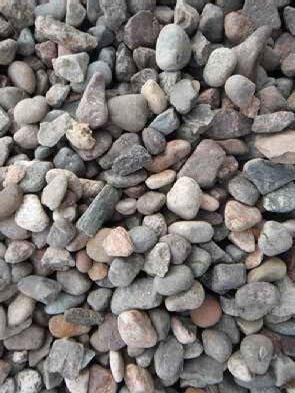
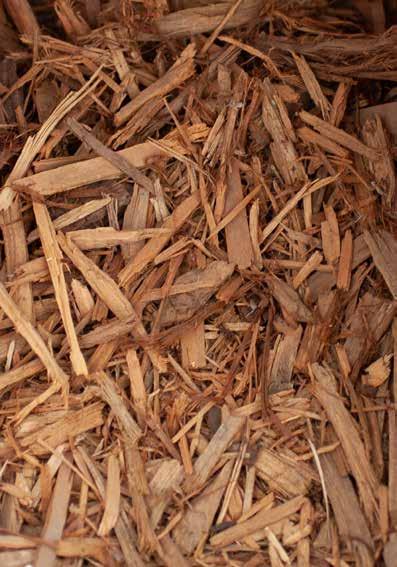
Starting seeds indoors is a great way to get a jump on your vegetable garden or fill flower beds on a budget. Visit any location or shop online and browse all the supplies from seeds, pots, pellets and trays.
Soil, Rock, Mulch & Gravels Bagged or Bulk
From refreshing garden beds to tackling large landscape projects, Suburban makes ordering materials simple and reliable. Pick up in-stores or make reservations online. Find more information at SuburbanLG.com
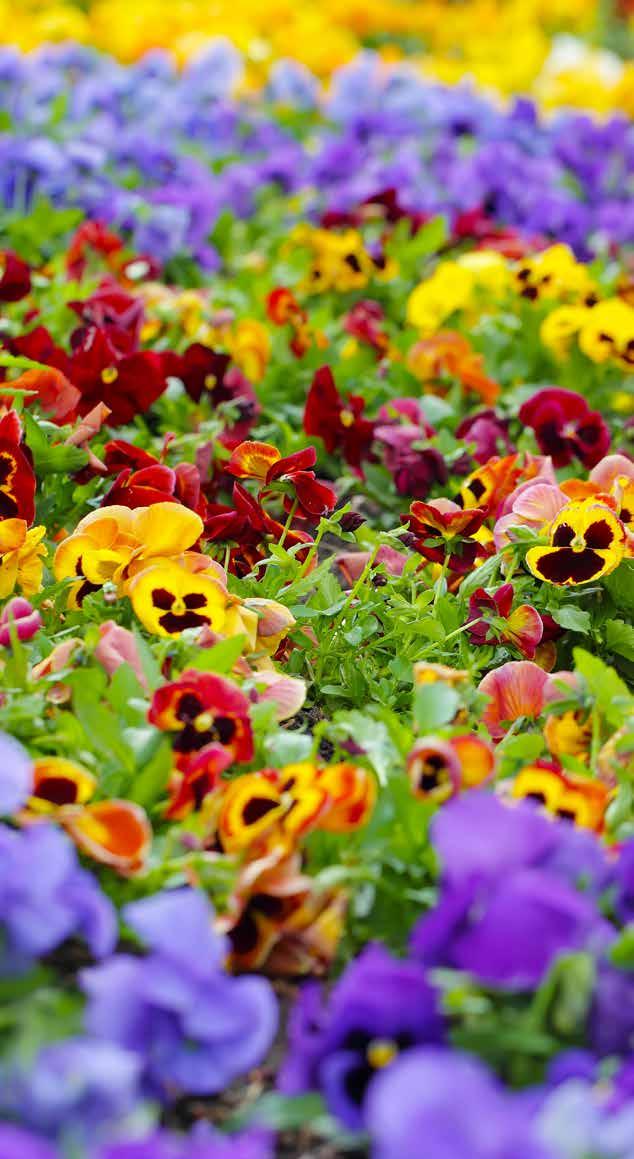
No matter the weather, our greenhouses are in bloom. Visit us in early March and bring color home with cool weather bloomers.
& Roe