




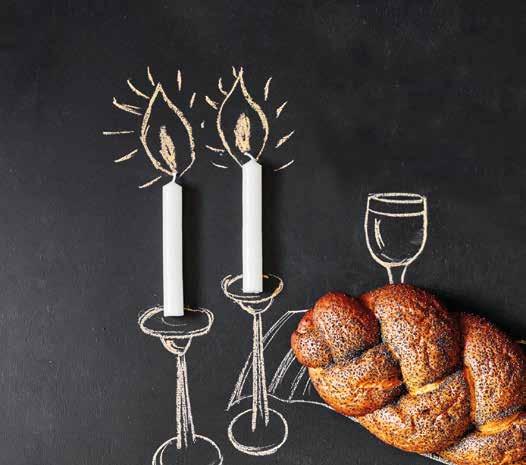
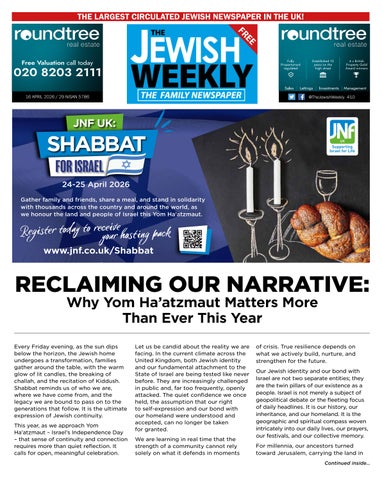
Every Friday evening, as the sun dips below the horizon, the Jewish home undergoes a transformation, families gather around the table, with the warm glow of lit candles, the breaking of challah, and the recitation of Kiddush. Shabbat reminds us of who we are, where we have come from, and the legacy we are bound to pass on to the generations that follow. It is the ultimate expression of Jewish continuity.
This year, as we approach Yom Ha’atzmaut – Israel’s Independence Day – that sense of continuity and connection requires more than quiet reflection. It calls for open, meaningful celebration.
Let us be candid about the reality we are facing. In the current climate across the United Kingdom, both Jewish identity and our fundamental attachment to the State of Israel are being tested like never before. They are increasingly challenged in public and, far too frequently, openly attacked. The quiet confidence we once held, the assumption that our right to self-expression and our bond with our homeland were understood and accepted, can no longer be taken for granted.
We are learning in real time that the strength of a community cannot rely solely on what it defends in moments
of crisis. True resilience depends on what we actively build, nurture, and strengthen for the future.
Our Jewish identity and our bond with Israel are not two separate entities; they are the twin pillars of our existence as a people. Israel is not merely a subject of geopolitical debate or the fleeting focus of daily headlines. It is our history, our inheritance, and our homeland. It is the geographic and spiritual compass woven intricately into our daily lives, our prayers, our festivals, and our collective memory. For millennia, our ancestors turned toward Jerusalem, carrying the land in
their hearts with an unyielding hope of return. Today, we are privileged to live in an era where that ancient, whispered hope can be expressed out loud through our steadfast support, and in the confidence with which we claim Israel as an inextricable part of our own story. If we want our children and grandchildren to stand tall, to navigate their Jewish lives with clarity and confidence, we must reinforce both of these pillars today.
That is why participating in JNF UK’s *Shabbat for Israel* is such a powerful way to mark Yom Ha’atzmaut this year. By bringing the celebration of Israel’s independence to the Shabbat table, we do more than share a meal—we create a moment of connection and joy with those closest to us.
Shabbat for Israel is a chance to celebrate all that Israel has achieved in just 78 years, to honour its spirit and innovation, and to pass that connection and belonging on to the next generation around the table.
For over a century, JNF UK has helped to build and develop the Jewish homeland, while serving as a bridge between Jewish communities in the diaspora and Israel itself.
This Yom Ha’atzmaut, bring Israel to your Shabbat table. Sign up at www.jnf.co.uk/Shabbat and receive a fun pack filled with ideas, games, and activities for the whole family to enjoy.
“This Yom Ha’atzmaut, let us sit down at our tables with a little more purpose. May this Shabbat for Israel bring warmth to your homes, and a renewed, unbreakable pride in the enduring bond between our people, our land, and the generations still to come.”
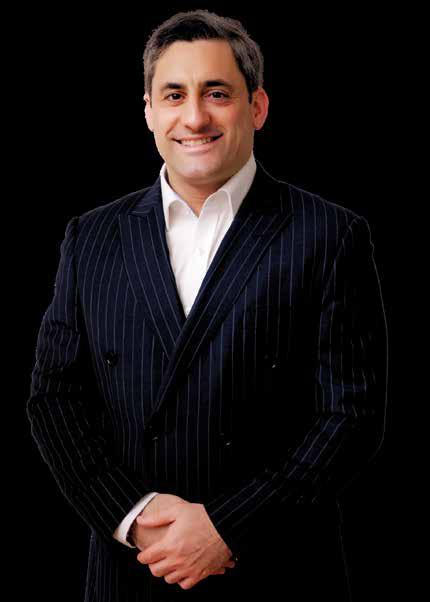
Elan Gorji CEO, JNF UK









PARASHAT TAZRIA-METZORA
SHABBAT: BEGINS ENDS
London 19:46 20:53
Manchester 19:58 21:09
Leeds 19:53 21:12
Liverpool 19:58 21:16
Birmingham 19:52 21:02
Antwerp 20:23 21:38
Bournemouth 19:47 21:01
Gateshead 19:56 21:17
Jerusalem 18:33 19:48
BY DAVID SAFFER
Israel and Lebanon held direct talks for the frst time in over three decades in Washington this week.
At the time of going to press President Donald Trump announced Prime Minister Benjamin Netanyahu and President Joseph Aoun were set to speak to each other directly today.
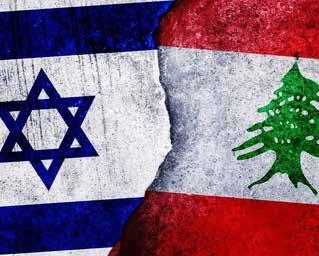
Netanyahu, ahead of the initial landmark, called for the “disarming” of Hezbollah and a “sustainable peace agreement”
as aims of the talks but there would be “no ceasefre” in Lebanon.
“We are continuing to strike Hezbollah with full force and will not stop until we restore
your security,” he told Israelis in a press briefng. Aoun said the talks marked the “beginning of the end of the sufering of the Lebanese people in general, and those in the south in particular”.
US Secretary of State Rubio described two ambassadors meeting as “historic”.
Te last talks between the nations was in 1993.
Continued on page 4








Continued from page 1
Israel’s Ambassador to the US, Yechiel Leiter, said: “Te Lebanese government made it very clear that they will no longer be occupied by Hezbollah. We are both united in liberating Lebanon from an occupation power dominated by Iran called Hezbollah.”
Leiter added that discussions included a “long-term vision” with a “clearly delineated border” between the countries where the only reason to cross would be in ‘business or bathing’ suits.
Leiter commended Aoun and his government for not being “held hostage” to the threats of Hezbollah’s leader.
“Naim Qassem and Hezbollah belong to the past,” he noted. “We are here for the future. I believe that we can, in good faith, accomplish the following interrelated goals, the complete dismantlement of Hezbollah, the freeing of Lebanon from Iran’s terror proxy, and the achievement of a real, lasting and mutually-celebrated peace for the beneft of our peoples.”
event” but hoped for a “framework” towards a “lasting peace” for the people of Israel and Lebanon.
It has been reported that the US hope for a ‘shelf agreement’ once Hezbollah is disarmed.
Despite the historic occasion, Hezbollah continue to target northern Israel communities whilst the IDF targets Hezbollah in southern Lebanon.
Despite Israel’s defence systems in-
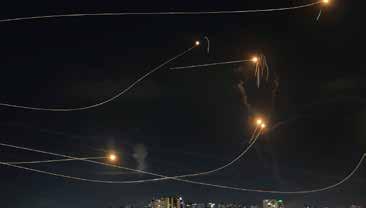
tercepting a number of rockets fred by Hezbollah overnight, one missile landed in an open area near Haifa.
Air raid sirens also sounded in Kiryat Shmona and the Carmiel area this morning.
Rubio welcomed talks that may end Hezbollah’s infuence in Lebanon. He noted: “Te Lebanese people are victims of Iranian aggression. Tis needs to stop.”
Rubio warned of a “process, not an
In related news, the prospect of a second round of talks between and the US and Iran has increased whilst President Donald Trump is expected to leave the US’s naval blockade in place until Iran is serious about a deal.
Spend your retirement doing what you love - not worrying about money


BY DAVID SAFFER
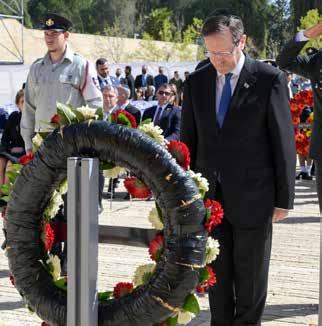
Prime Minister Benjamin Netanyahu and President Isaac Herzog addressed the conficts with Iran and its proxies at Israel’s Yom Hashoah state ceremony at Yad Vashem in Jerusalem on Monday.
Tis year’s theme was ‘Te Jewish Family During the Holocaust’. Due to security, a global audience participated via a pre-recorded broadcast on Israeli TV channels.
Netanyahu linked the lessons of the Holocaust to the ongoing war with the Iranian regime.
“During the Holocaust, we were like an abused animal crying in agony, today, however, we have a state which is stronger than ever, which roars with power,” he declared.
Netanyahu said Operation Rising Lion and Operation Roaring Lion, with the United States, had weakened Tehran’s capabilities.
Praising Israel’s alliance with President Donald Trump’s administration, he noted: “We have destroyed large parts of the industry of death that the Iranian regime had developed over decades... Had we not acted, the names Natanz, Fordow, Isfahan and Parchin might have been remembered eternally in infamy, just like Auschwitz, Treblinka, Majdanek, and Sobibor. But we acted, and how, in an unprecedented historic partnership
with President Trump and the US.”
Netanyahu added: “Year after year, I stand here and pledge ‘we will not allow Iran to develop nuclear weapons’.
As Prime Minister of Israel, I have promised ‘there will not be a second Holocaust’.
Tis year, we turned that promise into reality… We have changed the course of history. Te independent State of Israel, the Israel Defense Forces, Israel’s security organisations, all of these are manifestations of our regaining control over our destiny after centuries of horrible weakness.”
Netanyahu said the establishment of Israel may not have ended antisemitism but, as opposed to the past, people who seek to destroy Israel bring destruction down upon themselves.
“Te State of Israel is at the peak of its power,” he observed.” Who could have imagined 80 years ago that our daring Air Force pilots and American military pilots would defend the Middle East, wing to wing? We are defending Israel, the United States and we are defending Europe.”
Netanyahu criticised Europe who had “forgotten so much since the Holocaust” and could learn from Israel who go to war for the “sake of good, for the sake of life”.
Addressing Holocaust survivors, Netanyahu said no other nation could have brought about a transformation from Holocaust to rebirth.
Herzog shared the heartbreaking story of Master Sgt. (res.) Asaf Cafri, 26, an IDF reservist in the IDF Armored Corps, and
his great-grandmother, Magda Baratz, who survived the Holocaust.
Baratz, 96, was visiting Bergen-Belsen concentration when her great-grandson, fell in the Gaza Strip last year. She died 15 days later.
Herzog praised security forces during ongoing campaigns.
“Te State of Israel has been at war, since that frightful day, October 7 massacre,” he said. “Across the length and breadth of the land, in bomb shelters, at sites destroyed by missile attacks, in hospitals, in command centers, and volunteer hubs, I see the solidarity, the heroism, the devotion, and the mutual responsibility. Tis is the spirit that emerges within us when we fght together for our only national home, for our beloved country. It is the spirit of a people that chooses life and rises, roars and prevails like a lion.”
Calling for unity, Herzog noted: “History has repeatedly taught us the high price of internal fghting and division and, alternatively, the strength of mutual responsibility and fraternity. Based on everything that our people has endured, we must say to ourselves, especially today, we did not rise from the fre of the crematoria only to burn in the fre of quarrel.”
Continued on page 8
TO SCHEDULE A FREE IN-PERSON MEETING WITH DOV OR A MEETING OVER ZOOM PLEASE BE IN TOUCH
Continued from page 6
He added: “Te State of Israel has vigorously fought the Iranian regime, in extraordinary cooperation with the US military and other militaries in the region. Even now, our soldiers are deployed in Lebanon, in Gaza, in Judea and Samaria, and in additional arenas, near and far. Regrettably, this campaign carries heavy costs, including in recent days. Our enemies spare no means to kill us and murder our innocent civilians, including by launching heavy missiles and missiles equipped with cluster munitions at population centers.”
Herzog continued:
together with their fellow soldiers, to ensure the security of Israel.”
Israel’s president called on world leaders to fght antisemitism with “all means and in every place”, before it is too late.
Addressing survivors, Herzog described them as an inspiration to Israel and the world to overcome the “greatest darkness”.
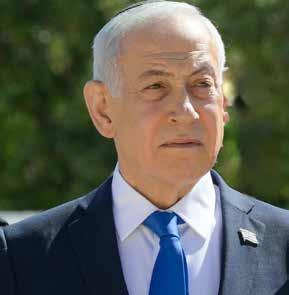
“Eighty-one years after the Holocaust, the striped prisoner’s uniform has been replaced by the IDF uniform, worn by the grandchildren, great-grandchildren and great-great-grandchildren of you, the Holocaust survivors. For them, it is a tremendous privilege to continue your path and,
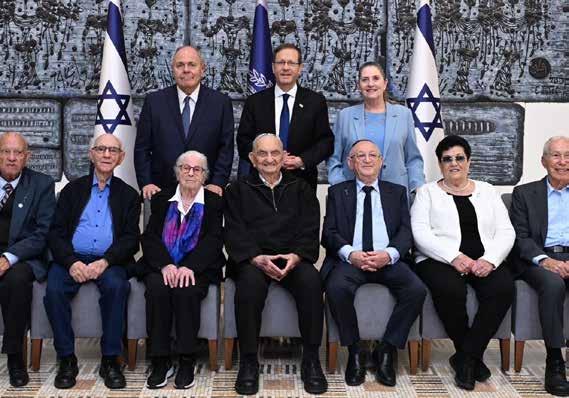
He added: “Tere will come a time, as is the way of the world, when not a single living person who survived the Holocaust will remain on the face of the earth. On behalf of the State of Israel, I vow that we will continue to remember and to remind, to tell your story.”
Te Memorial Torch was lit by Yad Vashem Council chairman and Holocaust survivor Rabbi Israel Meir Lau. Survivors Saadia Bahat, Miriam Bar Lev, Ilana Fallach, Moshe Harari, Avigdor Neumann and Michael Sidko acted as torchlighters.
Te ceremony concluded with prayers
by Israel’s Ashkenazi chief rabbi, Rabbi Kalman Meir Ber, Sephardi chief rabbi Hacham David Yosef and Holocaust survivor Menachem Neeman.
Herzog, First Lady Michal Herzog and Yad Vashem Chairman Dani Dayan heard testimonies from the torchlighers when they hosted them and their family members prior to the event.
Events took place globally. In the UK, Holocaust survivors, community leaders
Seeing each child for who they are and helping shape who they’ll become.
BABY & TODDLER ROOM
9–18 months Our original home setting Small, cosy & nurturing
For more information contact us:

PRESCHOOL ROOM 18+ months
Chazak, 64 Brent Street, NW4 More room to explore & grow
and politicians joined a huge crowd at Parliament.
Chief Rabbi Ephraim Mirvis, Communities Secretary Steve Reed, Holocaust survivor Dr Lydia Tischler, the Union of Jewish Students and school children participated.
Tere are 116,880 Holocaust survivors living in Israel. Just over 13,000 survivors died last year.

MEET & GREET AT CHAZAK
Come and meet the team, explore the space & see if we’re right for your family
SUNDAY 26 APRIL, 2-4 PM
SUNDAY 10 MAY, 2-4 PM
• A warm, caring jewish environment
• Full days 8:45 AM - 3:45 PM
• Lunches & snacks provided
Scan here to Register for a Meet & Greet
form.hendonplaygroup.co.uk
• Registered for the 30 hours free childcare scheme NOW REGISTERING FOR SEPTEMBER 2026

SUNDAY 3rd MAY 2026

9:45
Rav Doron Chitiz Rabbanit Rachelle Fraenkel
Rabbanit Noa Lewis Rav David Milston 10:40
Rabbanit Pesha Fischer Rav Jesse Horn Rav Anthony Manning Rabbanit Shira Melamed 11:30
Rav Doron Perez 12:20
Rav Doron Chitiz Rav Danny Mirvis Rav Jesse Horn Rav Bentzi Mann 13:10
Rav Hershel Schachter
Rabbanit Pesha Fischer Rabbanit Shira Melamed 14:00
Rabbanit Noa Lewis 14:50
Rav Danny Mirvis Rav Reuven Taragin Rabbanit Shani Taragin Rav Binyamin Zimmerman 15:40
Rabbanit Karen Hochhauser Rav Alex Israel Rav Bentzi Mann 16:30 Rav Benjy Levy 17:20
Rabbanit Karen Hochhauser Rav Binyamin Zimmerman Rav Reuven Taragin 18:20
Rabbanit Shani Taragin, Rav Alex Israel, Rav Menachem Leibtag

9:45 Rav Doron Perez 10:40
Rabbanit Karen Hochhauser Rav Alex Israel Rav Benjy Levy Rav Bentzi Mann Rabbanit Shani Taragin 11:30
Rabbanit Rachelle Fraenkel Rav David Milston Rav Menachem Leibtag Rav Reuven Taragin Rav Binyamin Zimmerman 12:20
Rabbanit Shani Taragin 13:10
Rabbanit Karen Hochhauser Rav Benjy Levy Rav Bentzi Mann Rav Reuven Taragin Rav Binyamin Zimmerman 14:00
Rav Doron Chitiz Rav Alex Israel Rav Menachem Leibtag 14:50 Q&A with Rav Hershel Schachter & Rav Yosef Zvi Rimon 15:40
Rabbanit Pesha Fischer Rav Jesse Horn Rabbanit Shira Melamed Rav Yosef Zvi Rimon 16:30
Rav Doron Chitiz Rav Anthony Manning Rav Danny Mirvis Rav Hershel Schachter 17:20
Rabbanit Pesha Fischer Rav Jesse Horn Rabbanit Noa Lewis Rabbanit Shira Melamed Rav Hershel Schachter 18:20
Rabbanit Noa Lewis Rav Anthony Manning Rav Danny Mirvis Rav Yosef Zvi Rimon
BY DAVID SAFFER
Tel Aviv University’s annual antisemitism report ahead of Israel’s Holocaust Remembrance Day illustrates a rise in anti-Jewish hate across three continents in 2025.
Statistics by the Centre for the Study of Contemporary European Jewry and Irwin Cotler Institute showed an astonishing surge since 2022.
Twenty people were killed in antisemitic attacks, the most in over three decades.
Fifteen people were killed at Chabad’s Chanukah event at Sydney’s Bondi Beach, three in Washington DC, Colorado and two in Manchester on Yom Kippur.
Post the Gaza war incidents rose October–December 2025 compared to the 2024 period.
In Britain, fgures hit 3,700 compared to 1,660 in 2022. Post Gaza, British fgures rose from 740 to 1,078. Elsewhere in Europe, France saw 320 incidents compared to 436 three years earlier. Germany had 5,729 attacks against 2,811 in 2022.
In Australia incidents reached 1,750. Tere were 472 attacks in 2022. Post Gaza incidents rose from 492 to 588. Canada saw 6,800 in 2025, treble the 2022 fgure.
Te report had mixed trends in Europe and North America.
Whilst France and Germany saw a decrease in some fgures, Belgium
increased. New York recorded a decline in total incidents but increased post Gaza.
Te report, which included data from smaller Jewish communities including in Mexico, South Africa, Italy, Chile and New Zealand, saw statistics increase in these countries.
Tere was also criticism by report authors to the Israeli government in the global fght against antisemitism as senior politicians had ‘diluted’ its meaning as they expanded the term ‘antisemitism’.
Yonker explained that incidents came from Christian ‘white supremacists’ and anti-Zionist Muslims. “Te attackers represent a wide variety of ages, geographical areas, and ethnic backgrounds,” he noted. “Among them is a high proportion of unemployed people and, more generally, of people to whom life has not smiled.”
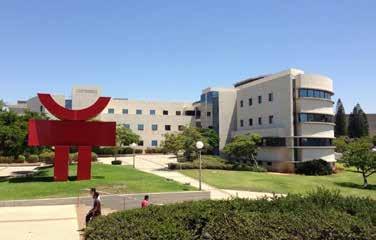
Dr. Carl Yonker, director of research, noted: “Te study makes clear why it is so difcult to prevent antisemitic attacks. An analysis of dozens of indictments and court rulings shows that many of the attackers are ‘lone wolves’ who do not operate within any organisational framework of direction.”
Yonker also noted that “blatant antisemitism, including admiration for Hitler and Holocaust denial” into “mainstream currents of the Republican Party” was a cause for “existential concern”.
“Social media makes the fght against this phenomenon especially difcult, and perhaps impossible,” he said. “Tere is currently in the US a tremendous and dangerous drift against Israel, and antisemitism is fourishing as it has not since the Second World War.”
Prof. Irwin Cotler, former Justice Minister of Canada, observed: “We are witnessing not only an unprecedented global explosion in incidents of antisemitism since audits began in the 1970s, but most disturbingly, an unprecedented explosion of hate crimes targeting Jews.”
Cotler said Canadian Jews represent one percent of the population but 72% reported hate crimes.
“Tey are 25 times more likely to be targeted than any other minority group,” he warned.
Prof. Uriya Shavit, Editor-in-Chief, observed: “Te data raise concern that a high level of antisemitic incidents is becoming a normalised reality… Te peak in the number of incidents was recorded in the immediate aftermath of the October 7 attack, after which we began to see a downward trend, but unfortunately, that trend did not continue in 2025. Te steep increase in the number of cases of severe violence is not surprising. Te rule that applies to all types of crime applies here as well, when law-enforcement authorities are indiferent to small crimes, the result is big crimes.”
Te annual report, published since 2001 and recognised internationally, is based on reports from police, national authorities and Jewish communities. It included data on physical attacks and vandalism to verbal threats and harassment on social media.











BY ADAM MOSES
Two people are in custody following an alleged arson attack at Finchley Reform Synagogue shortly after midnight on Wednesday.
Te incident is being investigated by the Met’s North West Command Unit with Counter Terrorism Policing London as an antisemitic hate crime.
Police confrmed in a statement that the suspects, wearing dark clothing and balaclavas, approached the synagogue and threw two bottles, suspected to contain petrol, and a brick at the building. Neither bottle ignited and no damage was reported.
Detective Chief Superintendent Luke Williams, who leads policing in the area, said: “We are aware of the signifcant
concern that this incident will cause in the community, particularly in the wake of the arson attack in Golders Green last month. We are working with the afected synagogue and continuing to meet with community leaders. I would like to reassure the community that we take incidents of this nature extremely seriously. Residents can expect to see a heightened police presence in the area over the coming days. We have brought in additional ofcers and would urge anyone with concerns to speak to them.”
Te synagogue said in a statement: “We know that the emotional and psychological impact of today’s events is signifcant. We are extremely grateful for the solidarity of our neighbours, local police and politicians. We are so grateful to those who are investing enormous energy in

this moment to care for our physical security, which enables our community to focus on its spiritual and emotional wellbeing.”
A Campaign Against Antisemitism spokesperson said: “Attacks on Jews and community institutions in this country just keep escalating. Tey burned ambulances. Now they are trying to burn down synagogues. It really is past time for the authorities to wake up to the scale of extremism in this country and address root causes rather than simply wait for the next incident.”
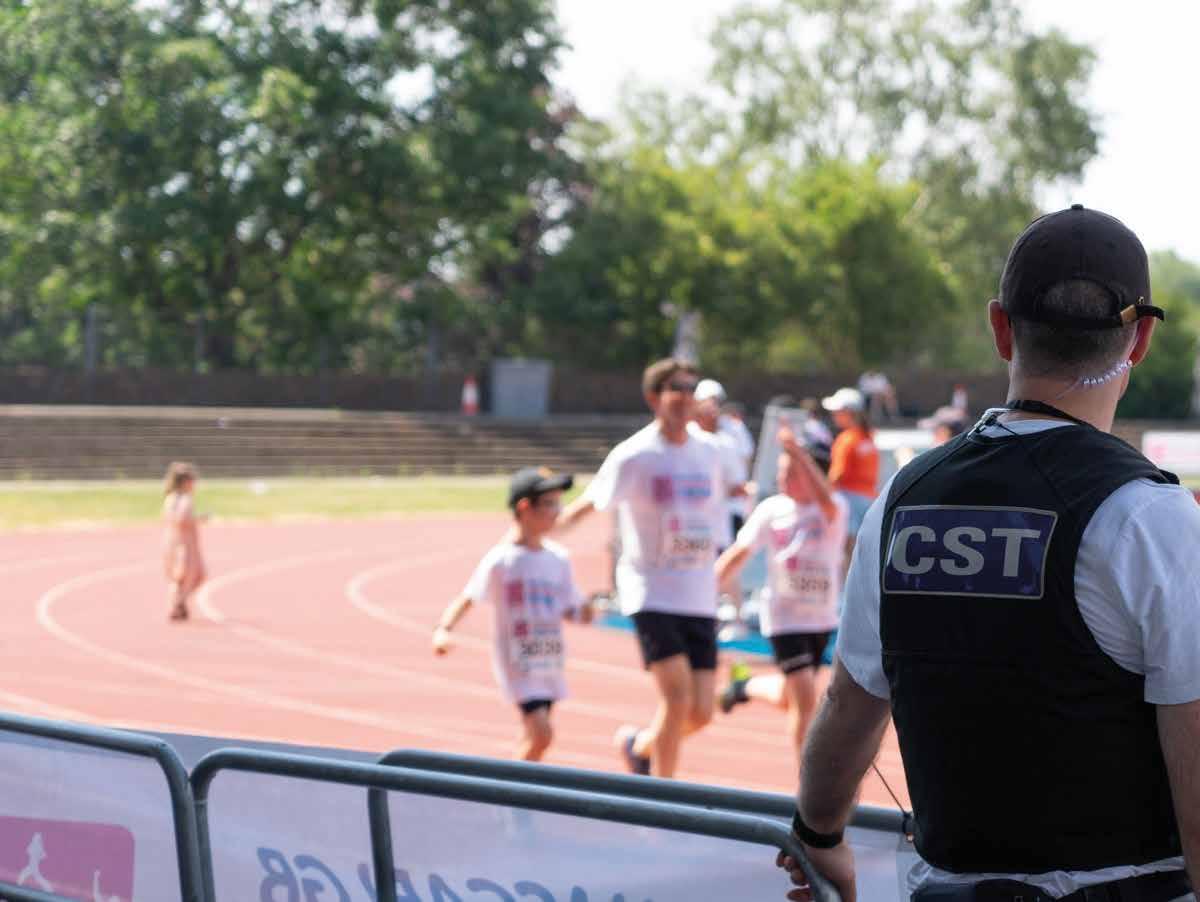
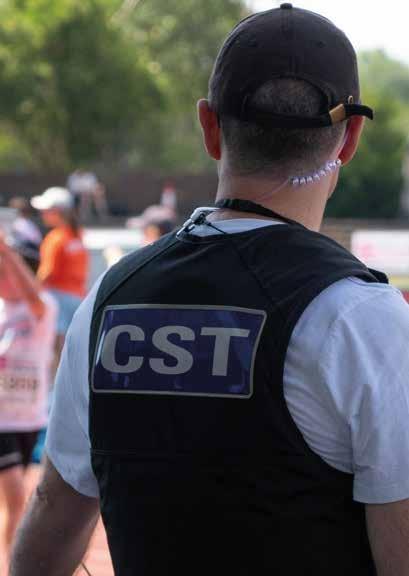
A CST spokesman added: “We are supporting the afected location and are working closely with the police as they investigate and seek to identify those responsible.”
Courts Minister Sarah Sackman, MP for
Finchley and Golders Green, posted: “I have been at the synagogue, supporting local residents and community leaders. As your local MP, and as a member of the community, I refuse to allow this to become the ‘new normal’. British Jews must be free to go about their lives without fear, whether taking their children to nursery or attending synagogue. We do not want to live behind ever higher walls. I will continue to raise the issues of antisemitism and security at the highest levels in Government to protect our community.”
Detectives are appealing for witnesses. Contact the police with reference 1685/15APR or anonymously call Crimestoppers 0800 555111.












“I am so pleased you are here tonight, because when the older generation are no longer here, you will be able to pass
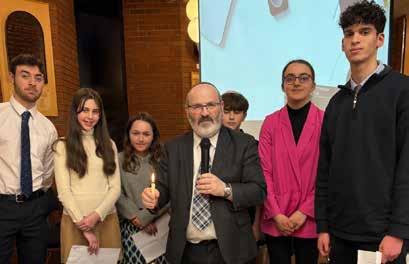
on my story” – so spoke Dutch-born Northwood resident Carrie Sherman, addressing a group of High School students from the Pinner community at this year’s Yom Hashoah ceremony at Pinner Synagogue. Carrie joined pupils and synagogue members, sharing, in the form of an interview with her granddaughter Josie Hart, memories of her family’s perilous escape from
has been formally recognised as
Willesden Jewish Cemetery has been formally recognised as a Signifcant Cemetery by the Association of Significant Cemeteries in Europe (ASCE), marking an important milestone in its development as a leading heritage site of national and international importance. Te cemetery joins a network of over 200 recognised cemeteries across Europe, including Highgate Cemetery, the fnal resting place of numerous notable fgures including Karl Marx, Christina Rosetti, George Elliot and George Michael and Père Lachaise Cemetery in Paris where Oscar Wilde, Jim Morrison, Chopin and Molière.
Established in 1873, Willesden Jewish Cemetery is one of the most important Jewish burial grounds in the United Kingdom refecting and highlighting the rich history of Jewish life, migration and community in London a swell as the fnal resting place for numerous notable fgures, including DNA pioneer Rosalind Franklin, Tesco founder Jack Cohen, flm director Michael Winner and members of the Rothschild family. From religious leaders and philanthropists to artists and everyday community members, the cemetery serves as a living social record of migration, settlement and the enduring contribution of the Jewish community to British life.
Te designation by ASCE places Willesden among a distinguished network of cemeteries across Europe recognised
for their historical, cultural and artistic signifcance, as well as for their role in public engagement and education.
Miriam Marson, Head of Heritage at Willesden Jewish Cemetery, said: “We are delighted that Willesden Jewish Cemetery has been recognised by the Association of Signifcant Cemeteries in Europe. Tis acknowledgement refects not only the historical importance of the site, but also the work we are doing to open it up as a space of learning, refection and community engagement.”
In recent years, Willesden Jewish Cemetery has undergone a transformation through the development of the House of Life Heritage Centre, which ofers exhibitions, guided walks, school programmes and digital interpretation exploring themes of identity, memory and migration.
Te ASCE recognition highlights these eforts to position the cemetery not only as a sacred space, but also as a vital part of London’s multicultural heritage landscape.
As part of the Association, Willesden Jewish Cemetery will contribute to a European network of sites working collaboratively on heritage conservation, interpretation and public engagement. Te cemetery will also participate in international initiatives, including the European Cemeteries Route and the annual ASCE conference.
Nazi-occupied Holland, her parents feeing with Carrie as a small baby on the last ship to sail from Amsterdam to England.
Te students recited poems, some poignantly written by children in the Terezin Concentration Camp, others by survivors, and six memorial candles were lit.
Tere then followed a flm, ‘One Day in Auschwitz’, following survivor Kitty Hart Moxon’s return to the death camp, recounting her experiences to two young girls who were the same age as she was when she entered the camp.
Te ceremony ended with the Memorial Prayer and Kaddish.
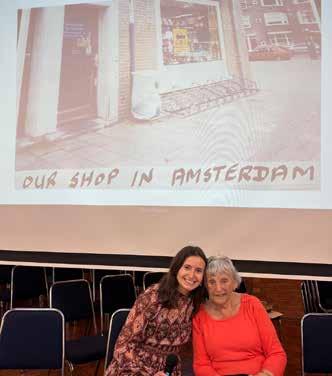
“It was so important for us all to hear Carrie’s story tonight,” commented student Leo Parkus.
Paying tribute to all who took part, Pinner Synagogue Rabbi Jason Kleiman said, “Te memory of those who perished in the Holocaust was truly honoured by
everyone involved,” adding, “I am very proud of the way our community’s youth have so powerfully helped to fulfll the sacred responsibility of bearing witness to these testimonies through the generations.”
Jewish Futures is ofering an exciting 12-month internship for a highly motivated and organised individual to support the development and delivery of two innovative and impactful new exhibitions, alongside a range of wider media and communications projects.
Reporting to the Head of Media and Director of Marketing & Communications, you will be joining at a pivotal moment for this dynamic organisation, contributing to meaningful, values-driven work that reaches and inspires diverse audiences and connects people to Jewish life and the Jewish story.
This is a unique opportunity to gain hands-on experience across the full lifecycle of creative projects, from concept through to launch and beyond, within a dynamic charitable environment.





In a week marked by refection, memory and responsibility, audiences across the UK and beyond gathered for deeply moving screenings of Undeniable, a powerful new Holocaust documentary produced by the media team at JRoots and Jewish Futures to mark Yom HaShoah. Te flm accompanies the Sunday Times bestselling book Miracle, telling the remarkable, untold story of a group of 51 boys who escaped Gas Chamber 5 in Auschwitz. At a time of rising Holocaust denial and distortion, Undeniable ofers something both urgent and essential: testimony, evidence and truth. At its core are frst-hand accounts from six of the surviving boys, interwoven with a two-decade investigation led by Rabbi Naftali Schif, co-author of Miracle, executive producer of the flm, and co-founder of JRoots. Having interviewed more than 2,000 Holocaust survivors, Schif brings both historical rigour and deep personal commitment to the project.
Te documentary is further strengthened by Professor Robert Jan van Pelt, one of the world’s leading experts on Auschwitz architecture and an expert witness in the David Irving v Penguin v Deborah Lipstadt trial in the early 2000s. His analysis moves the flm beyond testimony, meticulously corroborating the boys’ account with forensic evidence. Viewers are given rare access to archival
material from Auschwitz, much of it seldom seen publicly, including Sonderkommando diary entries, hidden sketches, original gas chamber blueprints, and medical records kept by Josef Mengele. Yet beyond the evidence, audiences encountered something equally powerful: the enduring values carried by the survivors themselves. Teir testimony reveals not only what happened, but how they lived through it, and what they chose to carry forward: faith in the face of unimaginable darkness, resilience against all odds, and a remarkable commitment to rebuilding life with positivity. Above all, their stories afrm the sanctity of every human life - lessons that resonate profoundly at a time when moral clarity can feel increasingly eroded.
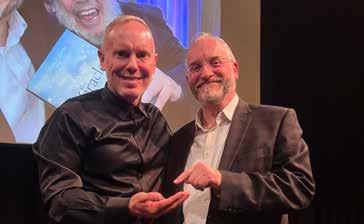
In JW3, a screening and book launch drew a full audience for an evening of remembrance and refection. Te event featured barrister and broadcaster Rob Rinder, who led a compelling post-screening conversation with Rabbi Schif. Rinder described the flm as a “thoughtfully curated documentary,” highlighting not only the power of its narrative but the strength of its corroborating evidence, culminating in an ending “steeped in the neshama of the Jewish people.”
He refected on how the survivors were “grabbing back the pen,” choosing not
only to bear witness, but to live with hope and share that hope with others. During the audience Q&A, he spoke strongly and eloquently about the need to teach the Holocaust not as a self-contained historical episode, but as a vital part of citizenship education, one that instils responsibility, moral clarity and enduring values in the next generation, drawn directly from the example of the survivors themselves.
After a screening in Birmingham, Ruth Jacobs, Chair of the Jewish Representative Council for Birmingham and the West Midlands, refected on the flm’s emotional impact:
“Te powerful message of survival, hope and deliverance through all adversity refected throughout the flm had a profound efect on all those present. We are sincerely grateful to have had the privilege to have seen it.”
Further afeld, the flm reached audiences as far as Ohio in the United States, underscoring both the global relevance of its message and the power of digital and communal platforms to extend Holocaust education to
new audiences.
More than a documentary, Undeniable is now a cornerstone of JRoots’ growing Holocaust education content bank, an essential resource for both Jewish and non-Jewish audiences worldwide. As the number of living survivors rapidly diminishes, such initiatives are becoming ever more critical.
As communities came together this Yom HaShoah to watch, refect and bear witness, Undeniable lived up to its name. It ensures that the truth of Auschwitz, documented, evidenced and testifed, remains not only remembered, but impossible to deny. In doing so, it passes on something just as vital: a moral legacy of faith, resilience and reverence for life that speaks powerfully to our times.


BY RABBI RAPHY GARSON
In March 2026, as part of our itinerary, my group visited Piotrków Trybunalski with Mala Tribich MBE, a Polish-born Holocaust survivor and dedicated educator who survived the Ravensbrück and Bergen-Belsen concentration camps. It was not simply a visit to a place, but a journey into living memory. I write these words in the week of Yom HaShoah, and that experience underscored with piercing clarity that remembrance is not abstract. It is rooted in people, in places, and in the fragile yet enduring transmission of stories that refuse to be silenced.
Mala guided us through the streets of the former ghetto with quiet grace, retracing a childhood torn apart by brutality and loss. Te buildings no longer felt still, they carried echoes of lives once lived under impossible conditions. It is one thing to study ghettos in books; it is another to walk beside someone who remembers. Mala’s clarity was striking. She recalled the smallest details: the fence her brother leapt over to fnd food, the
stairwell where she witnessed a man take his own life. In those moments, memory was immediate, vivid, and undeniably present.
We retraced the fnal journey of her mother and sister to the Raków forest, a place that carries an unbearable weight. Watching Mala stand at the memorial, gazing into the forest where her mother and sister were murdered, is something that will stay with the group forever.
After the main deportations to Treblinka, further roundups took place among those who remained in the ghetto. At that time, she was lying ill in bed. In a moment that defed all logic, the Nazis told her mother she could stay. Her mother insisted she remain. Tat decision, in that feeting moment, saved her life.
Standing among the trees, there was a sense that the ground itself holds memory. No monument could capture the enormity of what occurred there, yet Mala’s quiet strength gave voice to those who could no longer speak.
After the war, survivors returned to the forest, not to forget, but to remember with dignity. Tey gathered the remains and brought them for reburial in the local Jewish cemetery. Even after everything
was taken, there remained a commitment to honour the dead according to Jewish tradition.
At the cemetery, we stood before the graves where Mala’s family now rests. She pointed out the names on the plaques of her loved ones and the locals she once knew. Names restore individuality to those reduced to numbers. Each plaque declares that this person lived, mattered, and is remembered.
Having travelled with Mala to Poland many times, it is striking how she carries memory not as burden, but as a responsibility. Her presence transforms these places into living testimony. She invites us to bear witness and become part of the chain of memory.
Tis message feels especially urgent as Yom HaShoah approaches. We are living in a time when survivors are rapidly diminishing. Soon there will be no one left who can say, I was there. Te responsibility will fall to us to remember accurately, to tell these stories faithfully, and to ensure they are never forgotten.
Tere is no single Hebrew word for history. Instead, we speak of yemot olam, the days of the world, and divrei hayamim, the words of the days. History matters
only when it shapes how we live. Memory is not passive. It demands engagement, challenges indiference, and calls on us to carry the voices of those who were silenced.
We remember out of respect for the victims, our people, our families. Tey were murdered simply for being Jewish. Tey must never become statistics. Each was an Olam Maleh, a whole world, with a name, a face, relationships, dreams, and a life that mattered.
In a fast moving world where the past can feel distant, moments like these ground us. Trough Mala’s testimony, through the places we visited, and through our commitment to remember, we ensure that those who perished are not forgotten and that their legacy continues to shape our conscience, our identity, and our future.
Rabbi Raphy Garson, raised in Gibraltar, served 18 years as Senior Rabbi of Ohr Yisrael Federation in Elstree and now leads the Rabbinic Team at Tiferet Eyal Synagogue in Hendon. A Holocaust educator, he has guided over 6,500 students to Poland and leads Jewish heritage journeys worldwide with JRoots.






A free valuation from our in house gemmologist and gold experts on anything you may wish to sell. If you are thinking of selling, we purchase all Diamonds in any shape, size, clarity or colour. WE PAY MORE than all our competitors. Try us, and you will not be disappointed!
AJEX is proud to announce the launch of AJEX NextGen, its new initiative designed to engage and inspire younger members of the community, from cadets and university students through to young professionals.
AJEX NextGen will bring younger people together with veterans through shared experiences, open discussion and AJEX sponsored events, including working with university organisations to expand its reach to students across the UK. It will provide a space to refect on identity leadership and service while encouraging participants to honour the past and continue AJEX’s work through Remembrance, challenging antisemitism and supporting veteran families.
Fiona Palmer Chief Executive of AJEX said: “From Remembrance to resilience AJEX NextGen represents the next chapter for our charity. We are incredibly fortunate that we can still hear directly from veterans who have lived these experiences, but we know this will not be forever. Tat is why it is so important to
empower the next generation to take on the baton of Remembrance to stand up to hate and to ensure these stories and values are never lost.”
To mark this new chapter, AJEX is hosting an inaugural event From North London to the Front Line: Identity Service and Standing up to Hate.
Tis open and informal conversation will feature a serving Lieutenant Colonel in the British Army speaking in a private capacity. Drawing on over 21 years of service he will refect on his journey from growing up in North London to life in uniform and what it means to serve in today’s complex and uncertain world.
Te discussion will explore themes of identity values and resilience alongside the importance of confronting antisemitism and why standing up to hate matters.
Tis event is for everyone whether or not you wear a uniform. No prior military knowledge is needed. If you are serving personnel, a student, a young professional or simply interested in service and identity this talk is for you.
Te talk will take place on Zoom and joining details will be shared upon registration.
For more information and to register please visit: www.ajex.org.uk/from-north-london-to-the-front-line-identity-service-and-standing-up-to-hate-452
To join the AJEX Young committee please email: ajexremembers@ajex. org.uk
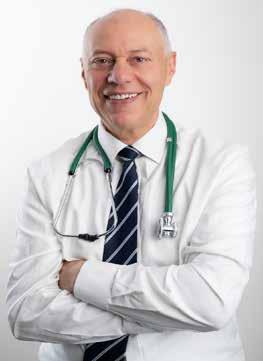
To get the best value from your private medical insurance, you should speak to an expert who is qualified to advise you on the right policy for you, and recommend the providers who offer the most competitive premiums.
This advice covers individual, family and company policies, and is always FREE.
As an independent health insurance expert, I work with the healthcare insurers to provide you with the appropriate and most affordable level of cover. So whether you have an existing policy or not, let’s have a chat.

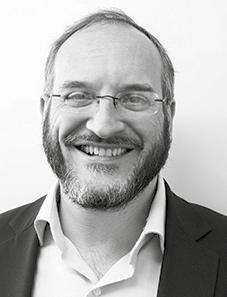
BY RABBI NAFTALI SCHIFF
Red letter days and dates in the Jewish calendar must never simply pass by. Tey always ask something of us. Tey invite refection, but more than that, they demand response.
Tis past week, we marked Yom HaShoah at the same time as we journey through the days of Sefrat HaOmer, a period that, in its essence, should be one of rejoicing the steady climb toward Sinai, toward the giving of the Torah. And yet, as we know, instead it is shadowed by mourning.
Te Talmud tells us that 24,000 students of Rabbi Akiva perished during these very days
. Not because they lacked knowledge, frumkeit or piety, but because something seemingly subtle, almost intangible, was missing in how they related to one another. Tey did not behave respectfully towards one another.
Tis is a striking and deeply unsettling idea.
And it is precisely at this time of year, framed by memory and by aspiration, that I want to share a painful, yet profoundly poignant lesson that I personally heard from an illustrious Auschwitz survivor some twenty years ago, the words and the portent of which I shall never forget. For over two decades, I have had the extraordinary privilege of meeting Holocaust survivors- listening to them, learning from them, and, in some small way, attempting to carry forward their voices. We often approach these encounters expecting to grapple with questions of faith, of sufering, of where Hashem was hidden in those darkest of moments. But sometimes, the most powerful lessons are not the ones we expect.
Tey are the ones that turn the question back on us.
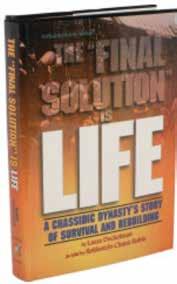
Many years ago, I came across a book with a title that was as jarring as it was unforgettable Te Final Solution – Is Life, written by Rebbetzin Chana Rubin. Even before opening its pages, the title itself feels like a protest, a declaration, almost a defant theological statement.
Te Nazis spoke of a “Final Solution.” Tis Rebbetzen responded- No! Te fnal word is LIFE!
Not death. Not destruction. Not annihilation. But- LIFE!
Tis was the story of the Muzhayer Rebbe, Menachem Mendel Rubin, and his Rebbetzin, Chana. ע״יז
A young couple, married in Romania in 1944. Teir Sheva Brachos were brutally interrupted as they were swept into the
nightmare that engulfed European Jewry. Torn from celebration into chaos. Separated, each believing the other had been lost.
And yet, against all odds, both survivedalong with the She’eris Hapeleta- the bedraggled Survivors of the devastating Holocaust.
Six months after the war, miraculously they found one another again and together they began to rebuild.
LIFE- stubborn, defant, almost incomprehensible life- chiyusemerging from the very depths of destruction.
Even after the worst that humanity can infict, a Jew chooses life, builds life, afrms life.
When later, I sat with the Rebbe himself, I discovered that there was however another lesson no less powerful, and perhaps even more demanding than even the commitment to life.
Rashi. Isn’t that the WHY? Te unfathomable question we must ask?
On the spot Rashi explains that in a place of machlokes, internal strife and division, the Divine response is so harsh that it does not distinguish. Men, women, children are caught in its wake.
And then the Rebbe said something that has stayed with me ever since.
I sought him out in Brooklyn. He had rebuilt, quietly and with dignity, a new world from the ashes of the old that he saw go up in the fames of Auschwitz. When I sat with him in his home on Ocean Parkway in June 2006, I carried with me the question that so many have asked and continue to do so…
WHY?
Rebbe, please explain to me- WHY?
I had many years before decided not to ofer my own meagre understanding or dare even to suggest an opinion. Te ground was too hallowed; the pain was too fresh. How are we to even begin to approach such a question? I resolved to only humbly ask some semblance of response from Survivors, those who at least had some moral authority to pose both the question and profer their own personal answer.
Before the war, as a young man, scion of a vibrant Chassidic family preparing for leadership, he had travelled extensively, visiting numerous communities, shtetlach and Rebbes, many his own relatives, all across Europe. He saw Jewish life from within.
And, with quiet candour, he told me-
“I am a witnessTere was not a single town, not a single village, not a single shtetl that I visited that did not have machlokes…”
He paused, and then pointed again to the words of the Chumash and the Rashi. When there is disunity, the damage does not remain contained. We are supposed to represent the One and be as one. When we are not, the consequences are dire. often tragically devastating and indiscriminate.
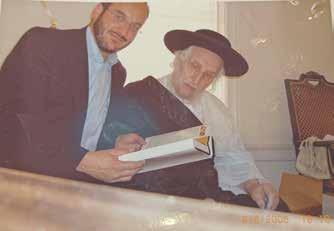
I asked WHY? Tat was his answer.
Not simplistic. Not reducing the incomprehensible to a formula. But a deeply internal, candid, searching, and ultimately unsettling refection.
And here, perhaps, the two lessons I learned that day- the Rebbetzin’s and the Rebbe’s- meet.
On how we treat one another. Because life, in the Jewish sense, is not merely biological survival. It is relational. It is communal. Both Man to God and Man to Man. It is bound up with how we see and honour one another.
A fractured life is not the same as a full life.
It is a message that is not easy to hear. Because it shifts the conversation. It gently but frmly reminds us that Jewish continuity has never only depended on how we face our enemies, but on how we face one another.
We live, in a time of open miracles and extraordinary opportunity, but also of urgent tensions threatening ominous fault lines. Te phenomenon is our lived reality plaguing our communities ancross Israel and the Dispora too. Labels are applied quickly. Lines are drawn all too easily. On one side, “not frum enough.” On the other, “too frum.” Too left wing, too right wing. Too this, too that.
It is, if we are honest, far easier to critique than to understand or ofer solution. It is far easier to notice what is lacking than to appreciate what is present. And yet, perhaps the work demanded of each of us these days of journey from Pesach to Shavuot, is precisely this refnement. Not only of what we outwardly observe, but also the attitude and behaviour of how we relate to and how we see one another.
In the immortal words of the Noam Elimelech- we must beseech the Almigthy-
“May it be Your will… that we see the virtues of our fellow, and not their defciencies.”
Tese are simple words, but they carry a profound and urgent aspiration.
To see the good in another person is not naïve. It is an act of discipline. It is to recognise that every individual carries within them a spark, a dignity, a story that deserves to be honoured.
Because the alternative, the erosion of mutual respect between members of Am Echad is not neutral. It has consequences.
Te students of Rabbi Akiva were giants of Torah. And yet, in the delicate space between them, something in the realm of honour, of mutual respect, despite diference was lacking. And the consequences, as we know, were catastrophic.
Te Muzhayer Rebbe ע״יז did not respond directly.
Instead, he motioned toward a Chumash and asked me to open to that week’s portion- Korach. He asked me to read the verses describing the unnatural death of men, women and children and then the
On the one hand- Te Final Solution is Life. A ferce, unwavering insistence that the Jewish response to destruction is to build, to grow, to continue. Am Yisrael Chai!
On the other hand: a quiet but piercing warning- that the strength of that life depends on something fragile, something often overlooked.
Te Rebbe’s words, I heard so many years ago, continue to echo within me with a certain pained urgency.
Not as a statement about the past. But as a call in the present.
Te historic unity of Sinai is spoken about in grand terms-
as one person with one heart. In truth, it is built in far quieter ways. In how we speak. In how we listen. In how we see others. In how we choose to
interpret another’s actions. In whether we default to suspicion or to generosity.
Machlokes is rarely dramatic at the outset. It begins in small ways. A word. A tone. An assumption. But left unchecked, it can grow, and when it does, its impact extends far beyond the original point of disagreement.
Tat, perhaps, is the Rebbe’s enduring warning.
And it is why these days, bridging the memory of the Shoah and the anticipation of Sinai, are so charged with both meaning and purpose.
Survivors- voices that, with each passing year, become more precious, and more fragile.
We look back, remembering a world that was destroyed, communities that were lost, lives that were cut short. We listen to the voices of
And we look forward, toward the moment when we once stood united, ready to receive the Torah.
Te question is whether we can begin, in our own small ways, to recreate that unity. Perhaps not yet perfectly. But at least with sincere aspiration?
Because if Te Final Solution is Life, then the question becomes: what kind of life will we build?
A life fractured by suspicion, condescension and division?
Or a life strengthened by respect, generosity, and a willingness to listen for and to
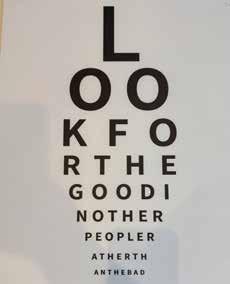
see the good in one another? DIVIDED WE FALL. Be under no post October7/ ceasefre delusion. Tree simple words. But within them lies both a warning and a possibility. If we can take seriously the quiet, persistent work of seeing the good in one another, of honouring one another, of choosing connection over division, then perhaps we will not only remember the past or utter cliches about the present, we will give real meaning to the future that Survivors fought so
hard to rebuild. A future rooted not only in survival. But in a life of shared purpose, of unity of aspiration towards that which we have prayed for 2000 years-
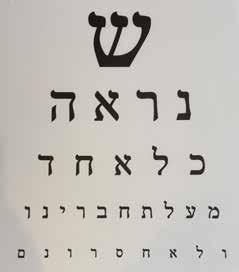
Shabbat Shalom
In this column Rabbi Naftali Schif refects upon 3 key words each week relating to contemporary and relevant issues. All feedback is welcomenschif@jfutures.org.
Rabbi Schif is the Founder & CEO of the Family of Jewish Futures networks of educational organisations.

BY RABBI YONASAN ROODYN
Recent remarks made by Pope Leo XIV, declaring that G-d does not bless any confict, and that military action cannot create the conditions for peace, sound noble. But in the world as it is, especially after October 7, they are dangerously incomplete.
On October 7, innocent civilians were slaughtered in their homes, families were torn apart, and hostages were dragged into captivity. It was not a war between armies. It was the deliberate targeting of those who could not defend themselves and was designed to herald the beginning of the end of the State of Israel and its Jewish citizens.
Any serious moral framework must acknowledge the lived reality rather than some unrealistic and naïve utopian ideal that bears no resemblance to it. When the reality is considered, then the question changes. Te intelligent question we must all ask is no longer: Is war ideal? It is: What is the moral responsibility when evil acts with intent and without restraint?
To claim that those who take up arms are never on the side of peace is to erase that responsibility entirely. It also conveniently chooses to ignore the Church’s own history. For centuries, Christian theology developed the doctrine of Just War, a recognition that while war is tragic, it may at times be necessary to confront aggression and protect the vulnerable.
From Augustine to Aquinas, this was not a concession to weakness but an attempt to engage honestly with a fractured world.
And yet now, that moral realism is replaced with an absolute: military action can never serve peace. Neither history nor contemporary reality support such a claim.
Israel today faces not only the aftermath of October 7, but ongoing and explicit threats from Iran and its proxies such as Hezbollah to the north and the Houthis to the south. Forces that openly declare their aim to destroy Israel. In such a context, to speak of peace without reference to defence is simply detached from the nuanced, complicated and multi-layered world we all inhabit.
Jewish thought has long refused to
accept this detachment. Peace is among the highest ideals, our prayers all end with a call for peace, it is a value that is not only cherished but something we are actively meant to pursue. Not as an abstract ideal, rather with our eyes wide open. Te Talmud states: “If someone comes to kill you, rise early and kill them frst.” Tis is not as much an endorsement of violence, but rather a call to moral responsibility.
Tere is a diference between violence that seeks domination and force that prevents it. Between those who initiate harm and those who stop it. To collapse that distinction is to create a moral equivalence that leaves the innocent exposed and incredibly vulnerable.
Even the doctrine of Just War, for all its historical misuse, understood that not all conficts are the same. Tat there are moments when the failure to act allows greater injustice to fourish.
To abandon that framework entirely, without ofering any serious or workable alternative for confronting those committed to destruction, is not a higher moral vision. Seen charitably, it is a naïve refusal to engage with reality. More worryingly, it constitutes a wilful attempt to
delegitimise our right to defend ourselves. Peace does not emerge simply because it is declared. It emerges when those who threaten it are no longer capable of aggression, and when the conditions for human life to fourish are protected.
Dialogue and coexistence are vital, but they cannot succeed where one side rejects both in principle. At such moments, restraint alone is an abdication of responsibility and a refusal to engage with the world as it is, rather than the world they wish it was.
A call for peace that ignores both history and present danger may sound elevated. But if it cannot account for the defence of life, it risks becoming a form of moral blindness. Peace is served only by ensuring that those who would destroy are stopped, so that peace has a chance to exist at all.
So much for Papal infallibility.
Rabbi Yonasan Roodyn is the Educational Director of Jewish Futures, a tour guide for JRoots as well as serving as Rabbi of Finchley Federation Synagogue and on the Federation Beth Din’s Shailatext service. He has thousands of classes available online at www.torahanytime.com.






Dear Rabbi
I am the daughter of Holocaust survivors, now deceased. Tis week is always an emotional one for me. Both Yom HaShoah, which made my parents weep each year as they lit a candle, and Yom HaZikaron which is personal to me, having emigrated to Israel and two sons who fought in the IDF - one of them with a life-changing injury. I wanted to write to encourage you to say something about this week that is perhaps lost on the new generation.
Leonie
Dear Leonie
First, thank you for sharing something that is so personal to you. You are very much like a bridge between two worlds
- the world your parents lived in, with so much heartache and tears, and the world your sons have defended with incredible courage and sacrifce.
We commemorate both events annually at the Mill Hill Synagogue in a very deep way. Tere are diferent audiences that turn up to each event, usually about 100 plus at the Yom Hashoah evening and closer to 300 for Yom Hazikoron. But what is glaringly absent from both, is the younger generation.
For your parents, Yom HaShoah wasn’t just a chapter in history to be revisited once a year. It was a wound that never fully healed. And for you, that did not remain in the past. It travelled forward with you, took root in the land of Israel, and found expression in the lives of your children - one of whom carries the price of Jewish continuity.
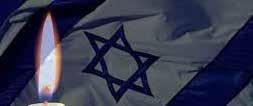
Yom HaShoah and Yom HaZikaron are not two separate commemorations. Tey are two chapters of the same Jewish story. One reminds us of the price we pay for not having a State of our own. Te other reminds us of the price we pay for having one.
And it is here is where the new generation sometimes struggles. Tey inherit the ability to live freely today as Jews without fully grasping the price that was paid to secure it. Tey are told “Never Again,” but they have not always been taught what that truly means.
What worries me is not that the younger generation does not care. It is that they have grown up somewhat detached from the immediacy of it all. Tey did not see parents cry over a candle. Tey did not grow up in a world where a Jewish State was so vulnerable. For them, Israel has always existed as a great holiday destination, and Holocaust memory has always been organised, and, to some degree, contained.
Jewish existence has always come at a cost, and that our response must be one of deeper commitment as proud Jews. We must do more to educate the next generation about their Jewish past and their Jewish future.
And yet, in today’s climate, where antisemitism has resurfaced and Israel is under constant threat, the message becomes not only relevant, but urgent. Tis week is meant to remind us that
Tank you again for writing and sharing. As I wrote, your parents lit candles with tears, your sons stood on the front lines with courage. Our ongoing task is to ensure that neither was in vain.



L E T Y O U R J O U R N E Y
H O M E B E G I N W I T H U S
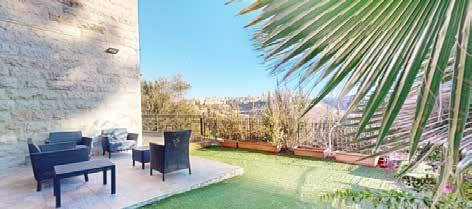
J E R U S A L E M
R a m o t B e t
S e m i - A t t a c h e d V i l l a
2 3 5 S Q M b u i l t
4 0 0 S Q M p l o t
7 b e d r o o m s
4 . 5 b a t h r o o m s
Asking Price: ₪ 9 , 2 5 0 , 0 0 0



N
L
R
B
P
S
Asking Price: ₪ 4 , 8 0 0 , 0 0 0


A
L u x u r y P r o j e c t S t e p s f r o
Asking

n s
B a l c o n y f o r e a c h u n i t
G o r g e o u s v i e w s
P a r k i n g i n c l u d e d
S h o p s , s c h o o l s a




BY RABBI STEWART WEISS
Shalom, dear friends. My name is Yechezkel. I’m quite sure that you have heard of me; I’m a Prophet with my very own book in Tanach. But humility is a virtue, and I try not to show of or brag; believe it or not, my name is only mentioned one time in all of the 48 chapters of my book! I do, however, have some very vivid and dramatic prophecies that have become quite world famous.
Among the most spectacular is the merkava, the original Chariot of Fire. I can’t tell you exactly what it means –that’s a secret and, to be honest, even I am not 100% sure! But it’s clearly not like anything you’ve ever seen before, outside of a science fction movie. And then there is the Valley of the Dry Bones; that’s also pretty downright remarkable, what with all the bodies rising out of their graves, coming back to life and then marching en masse to the Holy Land.
But I want to talk to you about another amazing prophecy that is quite near and
dear to me – and very topical for the here and now. You see, Pesach is behind us and we are now headed towards Shavuot and matan Torah. In classical terms, this is a day-to-day progression from our physical to our spiritual liberation.
But between these two crucial events, there is another stop along the journey, and that is Yom HaAtzmaut, which is the subject of yet another of my proclamations, one that is equally, if not more stunning. In my 36th chapter, I speak of the day when a miracle of epic proportions will occur; when the Jewish people will return to Israel from all the far-fung places of their exile. Tey will re-inhabit the desolate land and rebuild their homes in place of the ruins they fnd there. And, with the greatest of
agricultural skills and creativity, they will make the land bloom again, so much so that people from all over will say, “Tis place, once desolate and sparse, is a veritable Garden of Eden! Its cities are amazingly built, teeming with new life!”
I said that so very long ago, but can you believe it’s now coming true right in front of your very own eyes?!
And so I’m reminded of what my teacher and mentor Yirmiyahu said in his 23rd chapter:
“Te day will come when we will praise G-d not as the G-d who brought us out of Egypt, but rather as the G-d who returned us to our own Land.”
I am in awe of all the Jews who made this happen! Remember that when G-d took the Israelites out of Egypt, He led them in a round-about way, avoiding
the Plishtim, because we weren’t ready for war. But the Jews who came out of the Shoah went straight from the death camps to the battlefeld! Tey faced Pharaoh’s very descendants – this time employing tanks rather than chariots –but they didn’t panic; they jumped right into the fght, like Nachshon’s memorable leap of faith into the Red Sea!
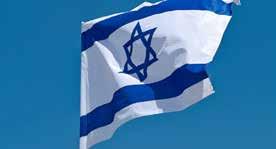
Te merkava, the Dry Bones, the Splitting of the Sea, the Manna – they all were pretty impressive miracles, to be sure. But the return of Am Yisrael to Eretz Yisrael, Israel’s stunning victories in six wars, the fourishing of Medinat Yisrael – these are truly miracles that outshine them all. And that is why I will be proudly waving my blue and white fag on Yom HaAtzmaut; there’s no greater wonder than a prophecy fulflled.
Rabbi Stewart Weiss is the director of the Ra’anana Jewish Outreach Center and a member of Mizrachi’s Speakers Bureau (mizrachi.org/speakers).
BY RABBI SHAUL YONATAN TAWIL
In this week’s Parasha we are taught how to bring upon us the Kevod Hashem – the Glory of Hashem. Moshe tells the people - Zeh Hadavar Asher Tsiva Hashem Taasu, Veyera Alechem Kevod Hashem (9:6). Tis is what Hashem has commanded to do, and the Glory of Hashem will appear on you. How can we bless our house with Hashem’s presence? How are we to consider improving our lives? What should be our approach?
Are you a member of a gym? Research clearly shows how exercise can really help our quality of life so why is it that so many of us are ‘laid back’?
Someone once said that the trouble with jogging is that by the time you realize you are not in shape for it, it is too far to walk back!
Te famous story is told at the fnish line of the London marathon. A frst time runner is hobbling away, having just fnished. A grizzled old marathoner looks at him and says, “You’ll feel a lot worse tomorrow.”
He pauses and then says, “But the REALLY bad news is that in about 3 days, you’re going to think you had fun today!” Being blessed with legs to run isn’t enough. We need to put those legs to work. We need to exercise them in order to maximise potential. What’s the hardest hurdle to overcome? It’s the frst step. Once we make that frst step forward, we go the gym for the frst time, we make that frst jog and then we seem to fnd that the motion is set in play. Yet it still requires constant work. Is it the same with spirituality?
Te Alshich Hakadosh (1508–1593, Tsfat) brings a famous story in the days of King David.
Te wicked Pelishtim waged a tough war against Am Yisrael. Tey gathered their army in Emek Refaim. King David asked Hashem what was the best response. He asked using the Urim ve Tumim. (Tese were the stones in the Kohen Gadol’s breastplate that were engraved with the names of the tribes, and they conveyed messages by lighting up letters.)
King David asked whether he should go up and fght with the Pelishtim. Hashem answered that he should not fght them straight on; rather he should attack them from behind.
Hashem stressed that the attack from behind should not occur until they heard the voice of marching in the tops of the trees. When they would hear this sound it is a sign that Hashem has sent his angels (see Rashi) to help and that would be the time to attack the Pelishtim from behind.
King David listened to the word of Hashem and took his army around the side without the Pelishtim supposedly noticing. Just then the Pelishtim seemed to understand what was happening. Tey started to turn their army around to face the back. King David’s army were eager to start whilst they still had a small element of surprise. Yet King David told them not to attack yet.
He waited for the sign. Te enemy started to advance. Again King David’s men wanted to attack, yet the King didn’t let them. Te enemy took out their swords, (according to the Psikta Rabati 8) they were 200 metres away - again King David told his men to hold back and stand frm. Just then they heard the sound from on top of the trees and at that moment the order was given to attack. Vayach Et Hapelishtim Migiva Ad Boacha Gezer – and they smote the Pelishtim – and Am Yisrael were victorious.
Te Alshich asks why is it that Hashem wanted King David to wait. Why did Am Yisrael have to be put through such pressurising times? He explains that at times of difculty, when merits are needed, Hashem has to test our allegiance to Him. Would the Bnei Yisrael listen, or would they revolt against Hashem’s word in the face of what looked like certain defeat?
Te Bnei Yisrael stood their ground and showed their belief in Hashem, and in that merit they defeated their enemies. Similarly, when the Bnei Yisrael were at the Yam Suf and the Egyptian army (intent on destroying every last soul and capturing back their wealth) was drawing nearer, Am Yisrael looked up to Hashem for salvation. Hashem’s response was, “go. Travel into the sea.” Nachshon Ben Aminadav went until the water came up to his nostril and only then did the sea split. Te show of belief in Hashem enabled the miracle to occur.
Tis, says the Alshich is the meaning of the Pasuk - Zeh Hadavar Asher Tsiva Hashem Taasu, Veyera Alechem Kevod Hashem (9:6) Do you want to know what Hashem commands you – Taasu – he commands that you do. Make the frst step – then – Veyera Alechem - Hashem’s Glory will be upon you.
Life is full of challenges. Sometimes we attack those challenges. At other times, we lift our hands up as to say we give up. When it comes to the gym, there is no
guarantee that if you buy a year pass in the gym that you will end the year ftter. You must make the frst stride, attend the gym, and work hard. Even then there is no guarantee that you will continue.
With spiritual matters Hashem guarantees us that if we open for Him a door the size of a pin-hole, He will open for us the supernal gates. He will come towards us to help us through. We will still need make the efort, but we will have Hashem’s helping hand walking us through. Let us make that frst stride towards Hashem, show our faith in Him, and see the wonders that follow.
Wishing a Big Mazal Tov to our Son Eliyahu Tawil on his upcoming Bar Mitsva this week. May Hashem bless you with continued success in Torah and all your endeavours. Please all join us for a special Kidush at TAL this week! May we always share in Semachot Amen!
Rabbi Tawil is the Founder and Director of ‘Torah Action Life’ (TAL)



Represent International & Local Buyers, Investors & Olim across Israel • Select New Projects, Developments & Communities • Private & Holiday Homes • Investments opportunities • Aliyah Relocation
• On-market & exclusive off-market opportunities
• Trusted legal & mortgage coordination through our professional network, including designers & all property related requirements
• Dedicated project management - from purchase to handover & beyond
• Ongoing property management & rental oversight
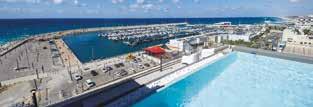
Ashkelon new projects and existing options. Luxury sea facing frst line options & Ir Hayayin New Area entry level options & pricing.
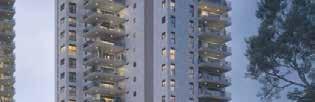
Netanya luxury sea facing projects and options in Ir Yamim & Shirat Hayam. Walk to beach, pool & gym in complex offering beautiful spacious homes. 5 Rooms with attached additional rooms

New projects & existing options in Aleph, Gimel, Hey, M3 Beit Shemesh & surrounding areas. 3,4,5,6 Rooms Garden and Penthouses options

Carmei Gat new projects & existing options. 2,3,4 bed. Garden & Penthouses & Villas in new Anglo areas with limited pre-sale pricing & payment options
&
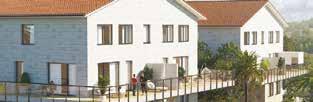
Beautiful villas, houses & apartments. Opportunity to be part of new Yishuv and close to the city with your own home in Dati Leumi community. Various options and sizes to suite all families
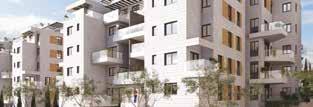

New projects high rise & boutique small building options. In all areas limited pre-sale options in prime locations. 2,3,4 bed options, Garden & Penthouses
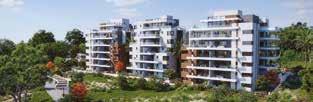
New projects & existing options, prime locations ready soon or in few years. Limited pre-sale options and prices with no index. 3,4,5 Rooms Penthouses and Garden options
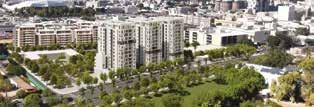
Highrise or boutique building projects & existing options including Old North walk to beach sea views. Pre-sale pricing and payment options on selection of options








As Israel marks its 78th Yom Ha’atzmaut, this year’s anniversary carries a particular weight. It is a moment to celebrate the remarkable story of a nation rebuilt in its ancestral homeland, but also to reflect on all that has been required to sustain it: sacrifice, resilience, courage and an unbreakable commitment to the future. Israel’s independence was never simply declared and secured. It has had to be defended, strengthened and built generation after generation. That remains as true today as ever.
For over 120 years, long before the establishment of the modern State of Israel, JNF UK has played a vital role in helping to build and support the land and its people. From forests and water infrastructure in its earliest years to the dynamic community and social projects of today, that mission has grown alongside Israel itself.
Today, JNF UK’s work is centred on people and communities.
Across the country, it supports projects that strengthen education, create opportunity for young people, and provide practical help to those most in need. In cities including Akko and Kiryat Malachi, House of Excellence centres give children a safe and supportive place after school, where they receive academic support, take part in enrichment activities, and gain the stability and encouragement that so many need.
JNF UK also invests in Israel’s future through leadership and communitybuilding programmes. From neighbourhood initiatives that help residents transform local areas from
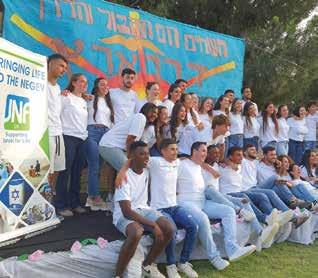
within, to projects encouraging young adults to live and build in remote regions such as the Arava, this is work that helps strengthen Israel for the long term.
Alongside this, JNF UK continues to support vulnerable families and individuals through practical interventions that can be life-changing. That includes helping those living in unsafe or neglected housing conditions to access essential repairs, restoring dignity and security to their homes and daily lives.
Alongside this ongoing work, recent months have also underlined the importance of being able to respond quickly in times of crisis.
During the conflict with Iran, communities across Israel came under sustained attack, with daily life disrupted by sirens, uncertainty and repeated disruption. JNF UK provided practical support to help people cope, mobilising volunteers to assist in afected areas, helping to repair damaged homes, and supporting families as they navigated incredibly difcult circumstances.
Yet while some areas of the country have returned to a degree of routine, the situation in Northern Israel remains far more fragile. Communities there have faced prolonged attacks, deep disruption and the ongoing strain of living under threat for many months. In places such as Shlomi and Kiryat Shmona, families are still coping with damaged homes, interrupted education, economic pressure and the uncertainty of not knowing what comes next. For them, the need has not passed. Support is still required not only to respond to immediate pressures, but to help communities recover and rebuild.
A vital part of this work has been ensuring that communities have access
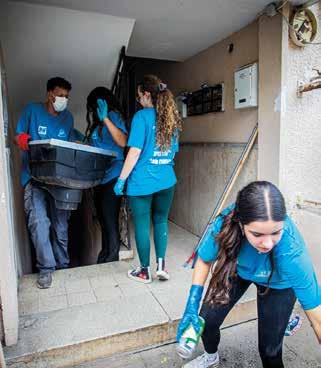
Bomb Shelter Renovation
to safe shelter. Since October 7, more than 23,000 bomb shelters across Israel have been inspected as part of a nationwide efort, with many repaired and restored for use. This is about more than emergency response. It is about giving people the protection and confidence to continue daily life, even under immense pressure.
Because resilience is not built only in wartime. It is built in classrooms, in community centres, in safe homes and in the opportunities given to the next generation.
As Israel celebrates 78 years of independence, there is much to be proud of: a country that has grown, innovated and endured through extraordinary challenge.
JNF UK is proud to have stood with Israel from the beginning, and remains committed to supporting its people and communities for generations to come.
On this Yom Ha’atzmaut, we celebrate not only Israel’s independence, but the strength, resilience and shared purpose that continue to shape its future.
This Yom Ha’atzmaut, stand with Israel. Learn more and get involved at www.jnf.co.uk