








Tis week marks the 9th anniversary of Te Jewish Weekly. When our frst edition was launched nine years ago, the world looked very diferent. Te challenges facing the Jewish community were real, but few could have imagined the reality we now live in — a reality of missile sirens, war headlines, and a growing sense that Jews around the world must increasingly rely on their own voices and institutions.
Yet here we are.
For nine years, Te Jewish Weekly has sought to give a platform to Jewish stories, Jewish concerns and Jewish pride — something that feels more vital today than at any
shadow.
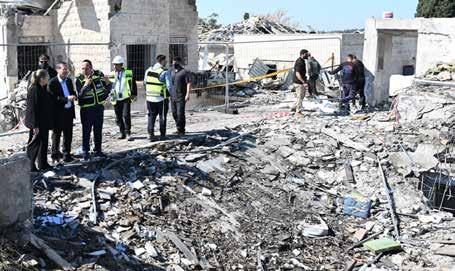
Te past week has been one of the most painful many of us can remember. Here in Beit Shemesh, where I live, tragedy struck when nine people were killed in a missile attack — a devastating and chilling coincidence that this happened during the very week marking our ninth anniversary. Numbers do not normally carry meaning, but this cruel symmetry has weighed heavily on many of us.
It is difcult to describe to readers in the UK what daily life feels like in Israel during moments like these.
on page 4




















Continued from page 1
You can be in the middle of anything, a conversation with family members, work, a shiur, dinner, and without warning your phone blares that horrible noise that informs you a rocket has been launched from Iran and you now have to be near a safe room. We make sure the kids are back in the apartment, as since all schools are closed, half the time they are in neighbours’ houses. Once kids are all back, the next noise comes screaming out of the phone - the actual siren, followed seconds later by the outside sirens. Te piercing sound that cuts through everything, making everything else utterly irrelevant at that point, including things that were very important just moments ago such as making a parnassa, fade into pointlessness. Te goal is to survive.
Once all in the safe room, we begin a mixture of saying Tehillim to save our lives and playing games to keep the kids calm. I was always more of a Tehillim person, but the kids defnitely pick up on the signals of the parents and if we can project calm, they become diferent people. To be honest it’s been a long time since I played ‘I Spy..’ but it does have its moments! However, after learning that 9 people died down the road when hit directly by a missile on their safe room, one cannot help but realize we are totally and utterly in Hashem’s hands. Without G-d’s protection, the interceptors can fail and the missile can hit directly, giving you little chance. Efectively, when those ballistic missiles are in the air, we are all sitting ducks. Te Iron Dome is great and technology is great
but as we found out on October 7th and tragically this Sunday in Beit Shemesh, human inventions are prone to error, and investigations are underway as to why the missile here was not intercepted.
Phones light up with frantic messages: “Are you safe?”
And then we wait for the interceptor booms. I can still hear the boom from Sunday’s tragic missile, the sound will probably stay with me forever. I assumed when we heard that noise, it had been intercepted but alas it meant death. Families ripped apart. Young and old killed, mother and daughter side by side. Te night before on Motze Shabbat, our entire building shook in the middle of the night - I assumed we had been hit by shrapnel. Later that day, I saw a chemist that was closed. Tey told me the owners house had been blown to smithereens and he was now in a hotel with his family. Tis is real. Tis is war.
Living under that reality changes a person. It sharpens priorities. It strips away illusions. Of all the things we constantly pray for throughout the day, when a ballistic missile is on its way, it’s totally diferent.
At the same time, it also reinforces something else: the extraordinary resilience of Israeli society and the profound connection between Jews everywhere and the Jewish state.
Sadly, while Israelis face missiles from Iran and its proxies, Jews abroad face a diferent kind of assault — one of indifference, hostility and abandonment from political leaders who should know better.
In Britain, Prime Minister Keir Starmer has once again shown a stunning lack of

moral clarity when it comes to Israel and the Jewish community. His reluctance to stand frmly with Israel in its hour of need, coupled with his government’s increasingly uncomfortable posture toward Jewish concerns, has left many British Jews feeling isolated. As Trump correctly stated, he is no Winston Churchill.
Macron too has been useless as usual, more preoccupied with his shipping business deals with Hezbollah than trying to stop Iran getting a nuclear bomb.
At a time when synagogues require heightened security, when Jewish students face intimidation on campuses, and when antisemitism has surged to levels unseen in generations, leadership should be unequivocal.
Instead, we see hesitation.
And hesitation in moments like this is not neutrality. It is abandonment.
Tis is precisely why independent Jewish media matters.
Nine years ago, Te Jewish Weekly was created with a simple mission: to tell the Jewish story from a Jewish perspective. Not fltered through hostile lenses. Not diluted for political convenience. But told honestly, proudly and unapologetically.
Over the years we have covered community milestones, celebrated simchas, reported on challenges and provided a platform for debate and discussion.
But the past year in particular has reminded us why this work is so important. When misinformation spreads, Jewish voices must speak louder. When communities feel isolated, they must feel connected. When history is distorted, it must be
corrected.
Jewish newspapers have always played a crucial role in Jewish life — from the earliest Yiddish presses in Europe to modern digital publications today. Tey are not merely news outlets. Tey are community anchors.
Tey document our lives, our struggles and our achievements.
As we mark nine years of Te Jewish Weekly, our commitment remains the same as it was on day one: to serve the Jewish community with honesty, courage and pride.
But anniversaries are not only about refection — they are about the future.
Te challenges facing the Jewish world today are immense. War in Israel. Rising antisemitism abroad. Political uncertainty across Europe and beyond.
In this environment, strong Jewish institutions matter more than ever.
And that includes independent Jewish media.
To our readers, advertisers and supporters who have stood with us over these nine years: thank you. Your support has allowed this paper to grow, to reach thousands of homes each week, and to ensure that Jewish voices continue to be heard.
Te world may have changed dramatically since our frst edition, with Jew-hatred more open than ever before.
But one thing has not.
Te Jewish story continues — resilient, determined and unbroken.
And Te Jewish Weekly will continue to tell it.

Spend your retirement doing what you love - not worrying about money
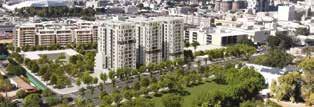
Centrally located with easy access to Jerusalem, Tel Aviv, and Be’er Sheva, Carmay-HaNadiv is a flourishing new neighborhood in Kiryat-Malachi.
Over 200 new apartments are currently being delivered to new Anglo families and Olim, joining more than 900 established families who already benefit from excellent education, rich community activities, and a warm, dynamic community.

We have recently completed the first phase of the central business area including the neighborhood’s main shopping center Rothschild Boulevard with 1,700 sqm of commercial space. An additional four buildings, offering hundreds of high-standard apartments, are also now on the market.






BY DAVID SAFFER
President Donald Trump led criticism of Prime Minister Keir Starmer for not allowing use of British military base Diego Garcia during the initial assault on Iran by the United States and Israel last Saturday.
Starmer’s stance changed within a day, after Iran launched strikes on UK ‘interests and allies’, but UK bases could only be used for “defensive purposes”.
“Tis is not Winston Churchill we’re dealing with,” Trump said during a news conference with German chancellor Friedrich Merz on Tuesday.
Referring to the UK’s Chagos Islands deal, he added: “It’s taken three, four days for us to work out where we can land, it would have been much more convenient landing there as opposed to fying many extra hours.”
Tis was the second snipe in as many days Trump had made about Starmer, following newspaper reports, when he reportedly said: “He (Starmer) has not been helpful. I never thought I’d see that. I never thought I’d see that from the UK… It’s just a much diferent kind of relationship that we’ve had with your country before. It’s very sad to see that the relationship is obviously not what it was.”
Trump went on to praise the military response of France, noting: “Tis was the most solid relationship of all… we
have very strong relationships with other countries in Europe.”
Conservative Party leader Kemi Badenoch condemned Starmer’s “dithering” actions after he explained his ‘defensive’ military decision making in the Commons.
Backing “targeted action” by the US and Israel against Iran would have been an existential threat to the UK, the Tory leader said:
“It took Iranian missiles hitting allies in the gulf before he fnally made a decision.”
Unbelievably, she added, Starmer had not said “whether he backs the strikes or not”.
NATO.
Facing MP’s before a barrage of criticism, Starmer noted: “President Trump has expressed his disagreement with our decision not to get involved in the initial strikes, but it is my duty to judge what is in Britain’s national interest. To be clear, the use of British bases is limited to the agreed defensive purposes; we are not joining the US and Israeli ofensive strikes.

Starmer’s explanation of international law, Badenoch continued, “simply does not hold”.
“You don’t need international law to say whose side you are on,” she added.
Reform UK leader Nigel Farage labelled Starmer’s indecisiveness against Iran “frankly pathetic” as it was threatening the special relationship with the US and
Jewish organisations swiftly criticised Starmer following the joint US-Israel strikes.
Jonathan Metliss, Action Against Discrimination said: “What a gutless, weak and insipid response from the Prime Minister, reminiscent of Neville Chamberlain at his worst. Tis is a faccid response which we have come to expect.
“Te lessons of history have taught us that it is important when we make decisions like this, that we establish there is a lawful basis for what the United Kingdom is doing. Tat is one of the les-
sons from Iraq, and that there’s a viable thought-through plan with an objective that can be achieved or has a viable prospect of being achieved. Tat is the principle that I applied to the decisions that I made over the weekend… Tis government does not believe in regime change from the skies.”
Notwithstanding his u-turn on the use of British bases, he resorts to the word ‘defensive’ rather than unequivocally supporting the US and Israel to topple the Iranian regime.”
He added: “Starmer will not come out strongly behind Israel for fear of alienating and upsetting the Muslim community. He has form when it comes to Israel, he is not a true friend. Starmer has recognised a Palestinian State, restricted arms supply, supported the indictment of Prime Minister Benjamin Netanyahu and former defence minister Yoav Gallant by the International Criminal Court, failed to curtail pro-Palestinian marches in London and curb antisemitism in this country.”
Metliss praised Badenoch and Farage for support of the US-Israel strike.
“Tey have shown him up. Starmer has shown, yet again, he is not a proper leader, with little regard for reality, when it comes to international terrorism, the interests of Israel and UK Jewish community.”
BY DAVID SAFFER
Israel has vowed to target Iran’s new Supreme Leader.
Mojtaba Khamenei, 56, is favourite according to media outlets to replace his father, Ayatollah Ali Khamenei, eliminated with Iranian security leaders and family members during devastating US-Israel air strikes in Tehran last Saturday.
US President Donald Trump described Khamenei as “one of the most evil people in history”.
Defence Minister Israel Katz said the successor would be a ‘certain target for assassination’.
Hegseth said Israel’s military campaign, Operation Roaring Lion, was seven times the strength of last June’s Operation Rising Lion.
“We are accelerating, not decelerating,” he explained. “Iran’s capabilities are evaporating by the hour while US strength grows fercer, smarter, and more dominant.”
of humanity,” he noted. “Our joint action will create the conditions for the courageous Iranian people to take their destiny into their own hands.”
Netanyahu called on Israeli citizens to listen to the instructions of the Home Front Command.
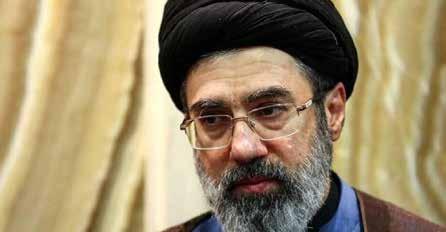
“Any leader selected by the Iranian terror regime to continue leading the plan for Israel’s destruction, threatening the US, the free world and countries in the region, and suppressing the Iranian people, will be a certain target for assassination, no matter his name or where he hides,” he posted.
As Operation Roaring Lion continues apace the Israeli Air Force struck the headquarters of Iranian security organisations in eastern Tehran yesterday.
Over 100 fghter jets participated in the operation. According to the IDF, the compound included the IRGC, Intelligence Directorate, Basij, Quds Force, Internal Security forces and Cyber warfare command centres. Te strike was carried out with intelligence guidance.
US Defense Secretary Pete Hegseth told a Pentagon press conference that US-Israeli forces would soon have total complete control of Iranian airspace.
Targets would be missile sites, military infrastructure and leadership targets.
“It means we will fy all day, all night, fnding, fxing and fnishing the missiles and defense industrial base of the Iranian military,” he said. “It means fying over Tehran, over the Islamic Revolutionary Guard Corps, over Iranian leaders looking up and seeing only us every minute of every day until we decide it’s over.”
Hesgeth said that the US’ Operation Epic Fury was in its early days but results were spectacular.
“Te results have been incredible, historic,” he said. “Only the United States could lead this. When you add the IDF, a devastatingly capable force, the combination is sheer destruction for our radical Islamist Iranian adversaries. We have only just begun to hunt, dismantle, demoralise, destroy and defeat Iran’s capabilities.”
Hegseth confrmed an Iranian warship IRIS Dena 75 was sunk by a US submarine on Monday and the US had foiled an assassination attempt on Trump.
“Te leader of the unit who attempted to assassinate President Trump has been hunted down and killed,” Hegseth noted.
After the IDF launched waves of air strikes against Iran’s military capacity, military and political leadership, Iran targeted Israel alongside US bases and assets in Iraq, Saudi Arabia, the UAE, Bahrain, Kuwait, Oman, Qatar, Jordan and Cyprus.
Trump vowed that Iran “can never have a nuclear weapon” and called on the people of Iran to “take over your government” at the end of the hostilities when the regime falls.

“Tis will be probably your only chance for generations,” he declared. Iranian security forces would be given “immunity” if they laid down their arms, or else “face certain death”.
Netanyahu said the operation would remove the “existential threat” posed by Iran.
“Tis murderous terrorist regime must not be armed with nuclear weapons that would allow it to threaten all
Opposition leader Yair Lapid told Sky News: “Tis is a just war against a horrible regime that is trying to rehabilitate its nuclear and ballistic missiles program. It’s totally justifed and I totally support it. We were forced into this war and we will win it. Te aim is to obliterate the nuclear and ballistic missiles program. Iran is the biggest exporter of terror in the world. If they fall everybody will be better of.”
Lapid said the Geneva talks were a way for the Iranians to deceive.
“Tey were stalling, buying time, to push forward the nuclear programme, getting as far as they can from the riots within their own cities, building more ballistic missiles and launchers,” he explained. “We could not let this go on forever.”
Support for Netanyahu was cross party.
“Tis is beyond Israeli politics,” Lapid said. “We are not going to allow this to
happen anymore. If anyone messes with us this is the price they are going to pay.”
Israel’s Ministry of Tourism is assisting tourists to depart Israel by arranging transportation to land border crossings and is maintaining continuous contact with the Israel Incoming Tour Operators Association.
Last Sunday there were 37,400 tourists in Israel including 1,800 British. Since the beginning of Operation Roaring Lion over 700 tourists have left the country. Shuttles have taken registered tourists to the Taba Border Crossing departing from Jerusalem and Tel Aviv.
Te Ministry is operating a Virtual Tourist Ofce around the clock to provide ofcial information.
Ministry of Tourism Director General Michael Izhakov said: “We are working around the clock, in close coordination with all relevant partners, to ensure a professional, compassionate and effective response. We will continue to provide assistance, guidance and update as needed.”
All information is subject to last-minute changes. It is recommended tourists check updates on the Israel Airports Authority website prior to departing for terminals.


BY DAVID SAFFER
Nine people from fve families were buried this week after the devastating Iranian missile attack on Beit Shemesh.
Siblings Yaakov, Avigail and Sarah Bitton, Sarah Elimelech and her daughter Ronit, father of four Oren Katz, Yosef Cohen and his mother Bruria, and teenager Gavriel Baruch Revach died in the strike.
Dozens were hospitalised and are receiving treatment for various injuries.
A number of homes, a synagogue and bomb shelter were destroyed in the terrifying incident.
Command Chief Maj. Gen. Shai Klepper called on Israelis to still use bomb shelters and safe rooms.
Yitzhak Bitton knew his children were in the shelter and called for unity in Israeli society, stating: “We must stop baseless hatred. It flters down to the youth. Our mission is to increase love.”
Sarah’s daughter Etti said her mother was a powerful woman who held everyone together in difcult times. Ronit’s daughter Orian said her mother was the “bravest, strongest and most inspiring woman”.
Yosef’s wife Penina survived. She told President Isaac Herzog that her son’s barmitzvah was due to take place on the day of his father’s funeral.
Gavriel’s teacher said he was devoted to Torah study, Judaism, his family and friends.

IDF spokesman Lt. Col. Nadav Shoshani accused Iran of targeting civilians.
“Since the beginning of Operation Roaring Lion, the Iranian regime has targeted civilians,” he said. “We know this is their strategy. In their last attack, they killed many civilians in the town of Beit
Te terror regime fres at civilians, we strike the terror regime to defend civilians. Tat is a vast diference. It exposes their barbarity… If this regime of terror obtains nuclear weapons, it will threaten all of humanity.”
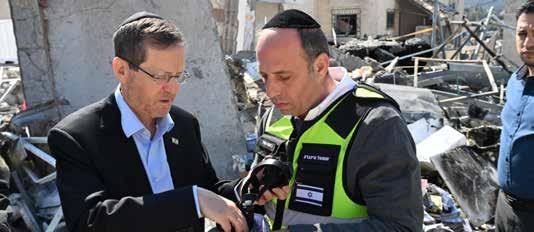
President Isaac Herzog also visited the
Shemesh. Te Iranian regime is a terrorist regime.”
Prime Minister Benjamin Netanyahu visited the scene with Knesset Speaker Amir Ohana.
Netanyahu called on Israelis to follow Home Front Command’s instructions as it saves lives.
Speaking about Operation Roaring Lion, he said: “Each day reveals anew the true face of the terror regime in Tehran.
site where he was briefed by Mayor of Bet Shemesh, Shmuel Greenberg, and emergency services.
“We are here at a scene of havoc and terror,” he said. “Te missile totally annihilated the synagogue and entered into the shelter because it was a direct hit with a half-a-ton missile. Nine innocent souls were lost. We pray for the victims and the families, we hope that they will fnd comfort.”
Herzog added: “We are in the middle of a very important stage in history. Tis stage will determine the direction of the Middle East. Tere is a unique opportunity to change the trajectory. Rather than endless terror and havoc created by the empire of evil from Tehran, there will be change that will ofer hope and peace to a coalition of nations, which has emerged above ground and is fghting against the empire of evil. I recommend to any proxy not to even dare think that they will start another war with us. We will not accept any more, we won’t let them amass their forces on our border.”
He continued: “Tere is an entire coalition of nations, which wants to seek peace and change in the Middle East. I sincerely hope that this operation will move forward so that there will be real change. We call upon the Iranian people. Tis is your opportunity, at the given moment, to rise up and bring change in the region so that we can all live in peace.”
Herzog met patients at the Hadassah Medical Center in Jerusalem.
He said: “Te people of Israel will emerge from this campaign far stronger than when we entered it. I speak about this place all over the world. If you want to know what Israel truly is, go to Hadassah.”
An IDF spokesman said interceptors were fred at the missile but did not bring it down.




Dear Editor,
While saying almost anything about Iran risks being overtaken by events, I thought it may prove helpful to address some of the most common objections raised against the initial US/Israeli strikes this past weekend.
To almost nobody’s surprise, there has been an upswell in the coalition of anti-war, left wing and anti-Israel voices against these acts, such that even in this costumed week of Purim we’ve seen masks slip at unprecedented levels. While it is perfectly legitimate to oppose war or unilateral military action, the increasing dearth of critical faculties among these same voices has led to arguments so vacuous that it has almost become boring to address them, but it is important to do so. Not least in the service of those exceptionally brave Iranians who have taken to the streets, both in their country and the Iranian diaspora (many will have noted the unmistakeable landmarks of Golders Green Road and Ballards Lane as wild
celebrations on those thoroughfares went viral worldwide).
First, there is the undiluted rush to judgment that the US-Israeli strikes simply must have been unlawful under international law - which forbids the use of unprovoked force against other states, save for in legitimate cases of self-defence. Tis is the strongest argument these voices have, and it’s therefore surprising that it has not been prioritised over all the other mouth-foaming objections.
We do not know, indeed we may never fully know, exactly what intelligence was relied on to prompt the strikes. But where the international law arguments lose their value is in their rushed assumption, with almost holy certainty, that Iran posed no imminent threat.
While various intelligence reports have cast doubt on the imminence of a nuclear bomb, others pointed to a strong possibility of stockpiled, highly-enriched uranium that survived last year’s attacks on Iran’s enrichment facilities. Tis intelligence, combined with Iran’s continuing reluctance to commit to zero enrichment
in negotiations, was one possible imminent threat. Te other was US intelligence that Iran would either pre-emptively or simultaneously strike US targets using ballistic missiles – the same missiles over which Iran had refused to negotiate at all.
Even then, the non-stop military force exercised by Iran against the US and Israel through its proxies – backed by decades of death threats chanted with joyous abandon – constitutes an ongoing imminent threat. As has been so cogently put by our Shadow Attorney General, Lord Wolfson of Tredegar KC, it cannot be right that only one analysis of international law, and of self-defence under it, has been put forward here by its proponents, as if it’s the only universally moral conception possible; one which “ties the hands of democracies while forcing them to stand and watch Iranian atrocities”.
Te second point that needs addressing is the deeply unserious claim that “negotiations were ongoing!”. If, as has now become increasingly clear, three rounds of negotiations had not made any material progress towards removing threats, then claiming the strikes were wrong because “negotiations were ongoing!” completely over-relies on a meaningless technicality in place of substance. It is bizarre how heavily this argument has been leaned on, including by those who so desperately called for a ceasefre in Gaza, while simultaneously claiming that negotiations for one could not happen while Hamas was under fre.
Tird, there is the repeated claim that the strikes are simply Trump’s attempt at distraction from the Epstein fles. If, like me, you haven’t been living in a cave recently, you will have noticed that Trump was under just as much pressure on the
Epstein fles at any point within the past few weeks; yet the strikes happened this weekend. Trump had repeatedly given negotiations a chance, to the frustration of Israel and, as we now learn, Saudi Arabia. Further still, none of this explains why Trump has repeatedly given Iran an of-ramp, claiming the war would last “no more than four weeks”. It is deeply unserious to argue that a president under this much pressure would seek a distraction that was not indefnite.
Finally, we turn to Benjamin Netanyahu. Te Israeli PM has been, as he rightly so often is, accused of acting in his own interests. Te problem with this particular accusation, though, is its blind assumption that Netanyahu’s interests are necessarily always detached from the State of Israel’s.
Quite obviously, Netanyahu is acting in his own interests, as he is entitled to do, including in this election year. It is highly disingenuous to suggest that an action is automatically wrong simply because it serves Netanyahu’s aims. You need only peer down every aisle of the Knesset and see the near-unanimous support across Israel’s political spectrum, its citizenry, its military and intelligence community. Te very same Israelis who argued bitterly over the continuation of the Gaza war are now unmistakeable in their certainty that further action against Iran was needed. Te attempts, by highly intelligent people, to trump this reality with a reductive argument that it’s “Netanyahu gone rogue” (when virtually any other credible Israeli PM would have done the same) demonstrates how far the quality of public debate has fallen. Tese malcontents, of all people, really should know better.
Naji Tilley, London NW4






in house gemmologist and gold experts on anything you may wish to sell. If you are thinking of selling, we purchase all Diamonds in any shape, size, clarity or colour. WE PAY MORE than all our competitors. Try us, and you will not be disappointed!





1400 children danced their way through Purim at Jewish Care’s tenth Purim Zumba with seven Jewish primary schools taking part in the sponsored Zumba sessions led by Mouve with Dancing with Louise. Participating were primary schools included Eden Primary School, Independent Jewish Day School, Kerem School, Mathilda Marks-Kennedy Primary School, Naima Jewish Preparatory School, Nancy Reuben Primary School and Sacks Morasha Jewish Primary School. Jewish Care staf also took part in a Zumbathon.
Funds raised will support Dance Terapy sessions for Jewish Care’s centres for
people living with dementia supporting the older members of our community.
Celebrations and parties took place across Jewish Care homes and community centres.
Meanwhile, Jewish Care Families brought warmth and joy to the Maurice and Vivienne Wohl Campus with its Jewish Care Tots Intergenerational celebration.
Te event was flled with music, laughter, and the magic of Purim, bringing generations together in a vibrant celebration of tradition and togetherness.
Te room was alive with warmth as Hayley from Adventures with Kids
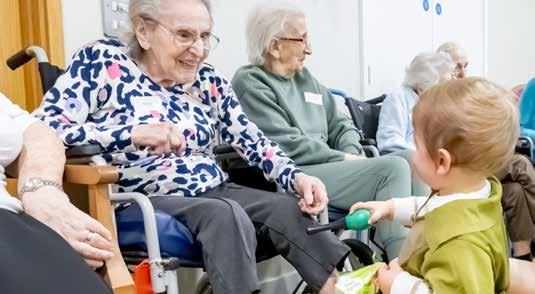
Classics brought the story of Purim to life to —from babies and tots to parents, grandparents, and residents of Jewish Care’s Otto Schif care home.
Nicole Ashton, from Jewish Care’s JC Tots Committee, expressed heartfelt gratitude:
“Today’s intergenerational Purim event was such a moving reminder of the power of community - babies and toddlers united with older care home residents through music and story-telling, sharing smiles and hamantaschen.
“Tank you everyone who came for making it so special. Your generosity helps Jewish Care in its vital work supporting those who need it most in our community. Purim Sameach!”

Ellisa Estrin, Jewish Care’s Director of Fundraising & Marketing, said,
“It is so important to celebrate Purim as a community together at parties flled with joy and community spirit, supported by our dedicated staf and amazing volunteers across Jewish Care and Jami, part of Jewish Care.
“It’s been fantastic to see hundreds of children getting into the Purim spirit
at Jewish Care’s Purim Zumba. I would like to thank them all for taking part and having fun whilst raising funds for dance therapy at our dementia day centres and fulflling the mitzvah of supporting others on Purim.
“I’d also like to thank our wonderful Jewish Care Tots Committee and all of our guests, including our care home residents and relatives, who created this special celebration of Jewish identity and traditions across the generations.”

From murder mysteries to multimedia Megillah readings, campus passports to carving stations, Aish’s Purim programming this year proved that the ancient story of Shushan still has the power to surprise.
Across the UK, hundreds of young professionals, sixth formers and university students stepped into a Purim that was not only joyful, but immersive, creative and deeply thought-provoking.
Shoreditch to Scotland: Campuses Come Alive
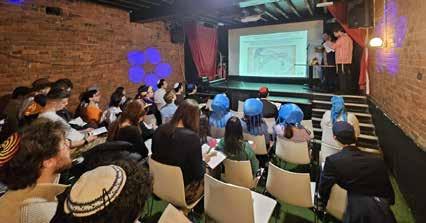
In London, more than 100 students gathered at Shoreditch Balls for a dynamic Aish Campuses celebration. A multi-media Megillah reading, complete with rolling slideshow, lively character voices and creative fancy dress, brought
special prize. Dinner, drinks and music followed, creating an atmosphere of real energy and connection.

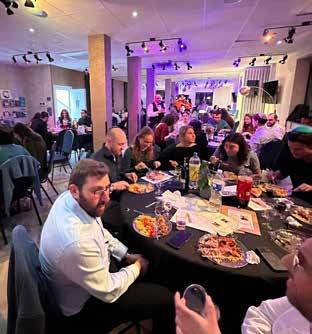
In Nottingham, Purim took on a diferent tone with “A Night of Mystery & Meaning: Purim Murder Mystery.”
Guests arrived to the sound of a mysterious violin in a dimly lit, elegantly arranged dining room. After the Megillah reading, sealed envelopes were opened at each place setting, revealing secret roles and missions. Detectives, reporters, laboratory analysts, and one hidden “murderer,” began circulating as canapés and drinks fowed. Alliances formed, clues were exchanged and suspicions quietly grew.
the story vividly to life.
Students then embarked on an interactive “Aish Passport” experience, moving between educators to ask Purim-themed questions and collect stamps. Completed passports were entered into a rafe for a
Amid the intrigue, Aish campus educator, Yanki Davis drew out the deeper message. Just as the Purim story famously unfolds without explicit mention of Hashem’s name, so too life can appear ordinary on the surface while something greater unfolds behind the scenes.
“We live in a world that looks completely natural,” he explained. “Most days things seem ordinary and predictable. But on Purim we step outside that perspective. Trough the celebration, the wine and the joy, we remember that we are part of something far bigger. Our lives are part of a much larger story, a mystery where everything is being carefully orchestrated.” Te theme of hiddenness echoed throughout the evening’s game. By the time the mystery was solved, guests were left with a powerful reminder that behind apparent randomness lies deeper purpose.
Te night continued with an impressive spread of food, including carving stations serving tender lamb shoulder and rotisserie chicken, alongside a wide array of dishes — combining entertainment with meaningful refection.
Further north, Aish teams delivered pre-Purim experiences for students at Edinburgh and Durham universities.

and Rebbetzin Strom.
Manchester: Bold Innovation in Action
In Manchester, Aish MCR capped an extraordinary lead-up to Purim with a packed programme spanning Shabbat, Purim night and Purim day, reaching young people from Year 11 through to university students.
Te weekend before Purim saw over 100 Years 11–13 students take part in “Te Big Friday Night,” a BOLD initiative conceived and organised by Aish school educators, Chani and Saul Bishop. Te evening began with a lively Kabbalat Shabbat alongside Whitefeld Shul, followed by Kiddush.
Over the weekend, Rabbi Dov Ber also spoke across King David, Yavneh, Whitefeld and Prestwich, reaching the wider community.
As Purim arrived, Year 12 and 13 students gathered at Aish MCR for Megillah reading before the evening transformed into a joyful party. On Purim day, invited by King David School, Aish ran a full programme for the entire Upper School, Years 10 through 13, with over 150 students taking part. Meanwhile, Rabbi Shauly and Rebbetzin Strom read
Megillah and hosted a Purim party at the University of Manchester campus.
Guest speaker Rabbi Dov Ber Cohen, senior lecturer at Aish Jerusalem and a former University of Manchester student, delivered an inspiring and deeply personal talk. Drawing on his journey through Eastern religions and philosophy across Asia before fnding his home in Judaism, he explored the nature of the soul, happiness and identity. Te evening fowed into a Friday night meal and a packed Oneg and Q&A at the home of Rabbi Zvi and Miriam Gefen, joined by a university campus group led by Rabbi
Rabbi Zvi Gefen, Director of Aish Manchester, refected: “Our Aish theme for 2026 is Bold Innovation, and this Purim was a true refection of that. At Aish our mission is to share positive Jewish experiences coupled with inspiring, meaningful and relevant education. Tis Purim, that mission came to life in every sense.”
From London to the North, this year’s celebrations showed that when creativity meets conviction, Purim can be far more than a party. It can be a powerful encounter with joy, identity and purpose.


For the residents of Israel, the haunting, rising wail of sirens and the frantic, heart-pounding dash to the nearest bomb shelter has unfortunately become a common occurrence over the last few years. As of March 2026, the skies over the Jewish state are yet again full of enemy aggression. Following the escalation of the confict with Iran, hundreds of thousands of civilians from the Galilee to the Negev have endured successive waves of missile attacks. In Tel Aviv, Beit Shemesh and Be’er Sheva, the impact is no longer a distant threat; it is a physical reality of shattered glass, scorched earth, and tragedy. We are all praying for the victims and for a speedy recovery for those injured. Te anxiety on the ground remains palpable. Yet, in this moment of acute tension, there is a counter-narrative to the fear. It is a story of a century-old bond that refused to break. As the missiles fall,
JNF UK has not just arrived; it was already there.
For over 125 years, JNF UK has been the quiet architect of the land. We remember the Blue Boxes on our grandparents’ mantels, the coins dropped in to turn the desert green. But today, that mission has evolved from planting trees to protecting the lives that fourish under their shade. History has shown us that when Israel is under fre, her friends around the world stand taller.
Troughout history JNF UK has pivoted in a crisis. Following the atrocities of October 7th, 2023, the organisation rapidly redirected its resources to the Gaza Envelope, supporting traumatised communities like Kibbutz Nir Oz and Nahal Oz. Trough “Operation Ir Miklat” (City of Refuge), JNF UK and its partners have already inspected 23,000 shelters and renovated and reactivated thousands more, ensuring that when the sirens sound today, everyone has a safe place to go.
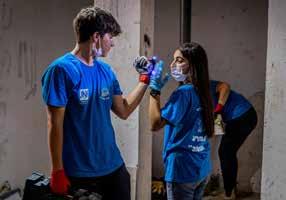
Te current Iranian war has created a new, urgent set of needs. JNF UK’s response is focusing on the immediate physical and psychological
welfare of civilians.
In the cramped confnes of communal bomb shelters, hours can feel like days, especially for children. JNF UK is currently distributing activity and resilience kits to young families. Tese are not merely toys; they are “moments of calm” designed by experts to distract and soothe children during the terrifying noise of interceptions overhead.
For the elderly, many of whom have lived through more wars than any human should, the organisation is deploying “blackout kits.” Tese essential packs contain torches, transistor radios, and medical supplies, ensuring that even if the power fails, no one is left in total darkness or cut of from vital information.
Furthermore, JNF UK’s Disaster Relief Units are on standby. Tese mobile units, equipped with emergency generators and communication gear, are the lifelines that can keep border communities functioning when infrastructure is compromised. From rapid home repairs to assisting with emergency evacuations, the goal is simple: to ensure that no Israeli feels they are facing this existential threat alone.
Elan Gorji, CEO stated “With our team on the ground and the close relationships we have throughout the country, we are always ready to help the people of Israel where most needed at the most desperate time. We can fnd the gaps where support is not provided and make sure we are there to fll them. It is thanks
to the constant support from our donors that enables us to be there for them. JNF UK remains unwavering in its commitment to Israel’s recovery and long-term resilience.”
While the immediate focus is on emergency relief, JNF UK’s vision remains fxed on the “day after.” Tis includes long-term projects around Israel’s border communities to ensure that the periphery of Israel remains a place where families can not only survive but thrive again. Te message from the UK to our extended family in Israel is clear: We have stood with you for over a century. We stood with you during the pioneers’ struggle, we stood with you through the wars of the 20th century, and we stand with you under the shadow of Iranian missiles today.
Te moral strength of a nation is often bolstered by the practical tools provided by its friends. Your support today can translate into a cleared shelter, a child’s smile in a bunker, and a shared community space.
Israel is at a turning point. Let us ensure that when history looks back at this moment, it records that the Jewish community in the UK stood with her.




Camp Simcha marked Purim with vibrant celebrations for families across London and Manchester, bringing joy and connection to children and parents facing serious illness.
In London, more than 300 family members gathered at indoor theme park Babylon Park on Sunday for an afternoon flled with excitement and community. With face-painting, balloon modelling, art and sensory activities in addition to all the venue has to ofer, the event gave families the opportunity to relax and celebrate together - and each went home with Mishloach Manot packed by volunteers from the charity B’nei Mitzvah programme.
In London, spielers and Camp Simcha volunteers and staf (pictured) were also out in force on the streets of Edgware and Golders Green.
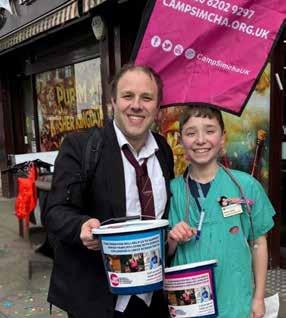

Meanwhile in Manchester, hundreds attended Camp Simcha’s annual Purim rally, now running for over 15 years. Families enjoyed the party atmosphere, together with Simi the Camp Simcha mascot, a juggler, stilt walkers and music from Michael Carroll.










BY YONASAN ROODYN
Tere are moments when the Jewish calendar and the Jewish story seem to collide in a way that feels almost impossible to script.
Across Israel this week, Jews gathered to hear the Megillah not in synagogues and community halls, but in bomb shelters.
Videos immediately circulated of families crowded underground, listening carefully as the ancient story of Mordechai, Esther and Haman was read aloud.
Te setting could hardly be more striking. Te Megillah tells of Jews living under threat in ancient Persia, unsure of how events would unfold. And here we were, thousands of years later, watching Jews hear that same story while sirens sounded and missiles were being intercepted overhead.
Yet if anything, the dominant feeling in those scenes was not fear. It was resilience in real time. Tere was singing and even laughter and Haman’s name was drowned out with enthusiastic noise. In the most unlikely setting, the familiar joy of Purim continued.
Tat stubborn insistence on living Jewish life fully, even when circumstances are difcult is one of the defning features of our people.
But this year there has been another layer to the story.
In the days leading up to Purim, starting with Shabbat Zachor, when we recall the original battle with Amalek, dramatic events were unfolding in the very region where the Purim story originally took place. In recent days Israel and the United States launched a coordinated campaign against Iran, striking key military and strategic targets across the country.
Te operation began with large-scale strikes in Tehran and other cities and quickly escalated into a broader regional confrontation.
For many Jews watching events unfold, it was hard not to notice the historical symmetry. Te Purim story took place in ancient Persia - modern-day Iran. Te threat then was Haman and the regime that empowered him. Te threats today are very diferent in form, but they emerge from the same geography.
Purim is the festival that teaches us to recognise the hidden hand of Hashem in history. Te Megillah famously never mentions the Divine name. Instead, the story unfolds through what appear to be coincidences: a rebellious queen, a failed assassination attempt, a sleepless king and a series of carefully timed banquets.
Yet when the story is complete, the pattern becomes unmistakable. What looked random reveals itself as providential. Tis week, that theme has felt unusually vivid.
At the very week that Jews were retelling the story of how an ancient plot against our people was overturned, events were unfolding in the modern Middle East that dramatically reshaped the regional landscape. Israeli and American forces struck thousands of targets and signifcantly degraded Iran’s military infrastructure
as well as removing key leaders from the equation.
Of course, the days ahead may yet bring new challenges. But moments like this invite us to pause and refect on a deeper perspective that the Megillah teaches how Jewish history is not merely a chain of random events.
Again and again, we fnd ourselves watching developments that, when viewed from a distance, form part of a larger unfolding story.
Perhaps that is why those scenes from Israeli bomb shelters were so powerful. In one sense they captured vulnerability the reality that Jews still live in a dangerous world. But at the same time, they refected something far stronger: an unshakeable confdence in the continuity of Jewish life.
To quote one Israeli academic on his social media account, ‘Tis is a repeat of the Book of Esther, in real time and on the same dates. Jewish history sure puts secular beliefs through some tough tests.’
Rabbi Yonasan Roodyn is the Educational Director of Jewish Futures, a tour guide for JRoots as well as serving as Rabbi of Finchley Federation Synagogue and on the Federation Beth Din’s Shailatext service. He has thousands of classes available online at www.torahanytime.com.



BY RABBI NAFTALI SCHIFF
Today is Tursday, the day after Shushan Purim. I am still in Yerushalayim. It is my father’s yahrzeit, and I feel a deep privilege to be here, perhaps not despite the intermittent sirens and hurried descents to the bomb shelter, but in some strange way because of them. To stand together with the citizens of Israel, moving as one from street to shelter, from routine to refuge, is to feel both the fragility and the ferce dignity of our people.
My father was a proud British Jew. Tough he spent the last seven years of his life in Yerushalayim with my mother, a dream fulflled, he always remained the quintessential English gentleman: measured, dignifed, impeccably courteous. Yet his refnement was not only

cultural; it was moral and spiritual. His integrity was pristine, in Yiddishkeit and in every dimension of life. Tere was no dissonance between who he appeared to be and who he was.
When I think of him, I do not frst recall particular words or deeds. I remember a presence- a sense of calm, ease, and naturalness in his own skin. He lived the prayer we say each morning:
יולגבו “A person should always be G-d-fearing in private and in public.” For him, this was not an aspiration etched on a page; it was a way of living. Te consistency between his inner life and outer conduct was seamless.
He embodied Torah im Derech Eretz not as a slogan but as a state of being. His observance was unpretentious and genuine, never performative. It was simply who he was. At times one looks
around and sees people walking the walk and talking the talk, yet carrying an undercurrent of anxiety, pressure, or rote habit. My father’s Yiddishkeit had none of that strain. It was settled, integrated, and therefore serene.
We were woken several times last night by sirens. Te sound pierces the darkness and the soul alike. On one level it is nerve-racking; the body responds before the mind can process. And yet, this morning, while saying the Shir Shel Yom here in Yerushalayim, four simple words rose from the page with unusual force: ול יל עמוש ימע “If only My people would listen to Me…”
In the siddur bequeathed by Lady Jakobovits, Lady J, to her children, the former queen of Anglo Jewry, had those words heavily underlined. She, too, was a proud Jewish lady who wore her Yiddishkeit with natural confdence. It was not costume; it was character. “If only My people would listen to Me… If Israel would walk in My ways, in an instant I
would subdue their enemies.” Te words do not thunder; they plead. She would too.
From a bomb shelter in Yerushalayim, on my father’s yahrzeit, those words feel less like rebuke and more like invitation. To listen. To live by the words we utter. To ensure that the steps we take are upright, that the clothing we wear matches the character we cultivate, that our outer lives faithfully refect our inner commitments. In their memory, of a father whose integrity was quiet but absolute, and of a Lady whose confdence in her Judaism was regal yet real, may we become the people we are called to be.



ראפתא ךב רשא לארשי — “Israel, in whom I take pride.” May we so soon merit to live those words fully, together, here in Yerushalayim.
Rabbi Schif is the Founder & CEO of the Family of Jewish Futures network of educational organisations.


BY DAVID SAFFER
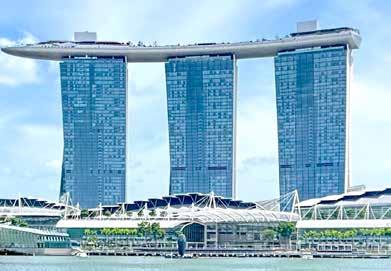
Singapore has a long history including Stamford Rafes establishing it as part of the British Empire in the 1800s, the infamous Japanese occupation before VJ Day then full independence in 1965.
A Jewish community has existed since 1840 with the Maghain Aboth and Chesed El synagogues operating since 1905. Prior to World War 2, the population stood at 5,000 but many sufered during the occupation. Te majority emigrated and by 1960 the community was just 450. Numbers rose after Israel and Singapore signed a trade agreement in 1968. Since May 1969, there has been full diplomatic relations.
Lee Hsien Loong was the frst Singaporean Prime Minister to visit Israel in 2016.
Tere are now 2,500 Jews, including expats from the US, Australia, South Africa, UK and Israel.
Singapore is blessed with iconic landmarks and citizens are expected to live by fve shared values, namely ‘nation before community and society above self’, ‘family as the basic unit of society’, ‘community support and respect for the individual’, ‘consensus, not confict,’ and ‘racial and religious harmony’.
A technology hub for corporate businesses and idyllic climate makes Singapore a popular work and holiday destination. It is also an ideal stopover for travelers on route to Australia and New Zealand.
Te Jewish community is represented by the Jewish Welfare Board. Ameni-
“Te Jewish community is religiously diverse but integrated,” he explained. “Our daily motive is reaching out to as many Jews as possible to fnd a home in our community. Activities are available for locals and visitors, but the priority is education for young children, teens, young professionals, exchange students and community members. It’s not just about Jewish identity, it’s also about a connection to Israel.”
Rabbi Abergel added: “Education is paramount, it makes or breaks a community. When someone is considering a position with a company they ask us about infrastructure and what is available for our kids. Education is the primary challenge. We have a Talmud Torah Sunday School with around 50 children.
“Te community is tight knit, connected and active.”
Supplies for the kosher shop come primarily from Israel in terms of dried goods, meat arrives from Australia, Uruguay and sometimes the United States.
Unlike most of global Jewry, apart from a few isolated incidents after the October 7 terror attack in Israel, antisemitism is low.
“After 10/7 we did what we could for families of the victims, the whole community came together,” recalled Rabbi Abergel. “But 10/7 tested the resilience of the larger Singaporean society and government policies ensured Jews did not experience difcult circumstances. We were shielded to a great extent. Some people did post inappropriate things on social media but the Ministry of Interior immediately acted. People are held accountable for hate speech. Recently, on a Shabbat, someone was apprehended when they shouted “dirty Jew” at a group of kids walking home from shul. Another person shouted “Free Palestine” and was apprehended. We are very grateful.”

ties include a kosher restaurant, shop, mikveh, home for the elderly, Hebrew school, auditorium, library and cemetery.
Chabad-Lubavitch has served Singaporean Jews for decades. Education, social and religious activities are the pillars of its outreach work.
Chief Rabbi of Singapore Rabbi Mordechai Abergel hails from France but grew up in Belgium. He received smicha at the Tomchei Tmimim Rabbinical Seminary in Brooklyn in 1992. Two years later, Rabbi Abergel and his wife Simcha, who hails from Montreal, arrived in Singapore with bright new ideas.
Over the years they have seen a preschool, primary school and now secondary school become a reality.
“Enjoying Jewish traditions in Singapore is becoming more viable for a family,” he said. “Our objective is to make sure people are able to have the best quality Jewish life. It’s very dynamic. We are determined to be here long term and be a leading community in Southeast Asia.”
Londoners Talya and Dean Stone, a Jewish Education teacher at the high school, are among the Jewish residents of Singapore.
Neither had lived outside the UK before moving from Borehamwood to Singapore with their young family in the summer of 2021 during the middle of the Covid-19 pandemic.
“With travel restrictions and regulations constantly changing, the move required far more planning than a typical relocation,” Talya recalled. “We had to rent out our house in the UK, sell our car, leave our jobs, all while navigating uncertainty. What was initially planned as a two-year stay has now turned into four years, which is a refection of how settled and comfortable life here has become.
around the world are widely available,” she noted. “Tere are also two kosher dining options, which makes eating out limited but possible.”
Te Stone’s arrived in Singapore with their three-year-old and one-year-old children, who have settled “remarkably quickly”, according to Talya, at Sir Manasseh Meyer International School (SMMIS).
“It is a unique and inclusive school with
Jewish and non-Jewish students from across the world,” she said. “All pupils receive Jewish education, can choose to study either Hebrew or Mandarin and receive amazing hot kosher lunches. We are grateful for this learning environment which would not be an option in the UK.”
On a lighter side, one Jewish festival stands out above others for Rabbi Abergel.
“Succot by any stretch!” he exclaimed. “It’s the most wonderful festival. Singapore is very strict about buildings but we are able to build a Succah for over 200 people at a time. Te atmosphere is incredible.
“Pesach is also always fantastic. Twenty years ago, we had 500 to 600 people attending a seder. Today, thank G-d, people have learnt how to observe the faith. Tey have made a conscious decision to spend Pesach at home and invite guests. It’s a change for the better but we still get 200 to 300 people.”
Looking forward, Rabbi Abergel is positive about the development of Judaism in Singapore.
“Like most people moving to Singapore, obtaining a work visa was essential. Before arriving, we were aware that there was a Jewish community but we were surprised by just how vibrant, active and welcoming it is. From the outset, there was a strong sense of community, and it didn’t take long to feel settled and included, thanks to the passion of the communal leaders and the amazing events and activities put on.
“Like the majority of expats, we live in a condominium, which often includes shared facilities such as a swimming pool, play area and gym. Tis setup is particularly well suited to family life and is an amazing community for children to grow up in.
“Te Jewish community itself is warm, diverse, and deeply interconnected. It includes Singaporean Jews whose families arrived as far back as the 19th century and who have become an integral part of the country’s history, alongside expatriates who have moved here from all over the world for work. Te community spans a wide range of nationalities, languages, religious backgrounds, and traditions, both Ashkenazi and Sephardi. Despite this diversity, everyone davens together and celebrates Chagim together, with a weekly communal Shabbat lunch regularly attended by over 100 people.”
Talya said that keeping kashrut in Singapore is manageable.
“Tere is a well-stocked kosher shop, and thanks to Singapore’s reliance on imported food, kosher products from
As for their wider Singaporean experience, the Stone family, which now has a new member, is thoroughly enjoying life.
“Tere is a great deal to love about life in Singapore,” noted Talya. “We never take for granted living in one of the safest countries in the world. In addition to the general safety of Singapore, the sense of safety for Jews over the past few years compared to many countries in the world has been especially meaningful for Jewish families. Te consistently warm weather is another major positive, as is Singapore’s location, which makes travelling around Asia far more accessible.
“Te biggest challenge, however, is being so far from family. Watching our children grow up so quickly while living far away from their grandparents is without doubt the hardest part.
“Having a baby in Singapore was a very diferent experience compared to the UK. After having two children on the NHS, navigating healthcare as an expat took some adjustment. Health insurance is costly, and every hospital visit, test, scan, and vaccination come with a price tag, making healthcare a much more conscious fnancial consideration.
“My advice to anyone considering living abroad is to take the opportunity if it works for you as an individual or as a family. Moving countries comes with challenges, but it also brings growth, perspective and new experiences. After all, you only live once.”
BY SHRAGA EVERS, CEO SHIVAT ZION
Over the last two years, I’ve had countless conversations with families across the UK who feel the pull towards Aliyah. Te desire is there, sometimes quietly, sometimes urgently, but it is often accompanied by a long list of very real concerns. Where will we live? How will we manage fnancially? What about schools? Jobs? Community? And perhaps most honestly: will we feel alone?
As someone who made Aliyah myself, I understand that mixture of excitement and apprehension. Aliyah is an inspiring and deeply meaningful goal, but it is also a disruptive, emotional and complex process. It requires courage. And courage is much easier to access when you know you won’t be navigating the journey on your own.
Tat understanding sits at the heart of what we do at Shivat Zion. We are the UK’s only dedicated Aliyah support charity recognised by the Israeli Ministry of Integration and working in partnership with Te Jewish Agency for Israel. But beyond the ofcial status, we are a team of Olim who have lived this experience ourselves. Our advice is not theoretical. It comes from standing in Misrad HaPnim queues, navigating school placements, recalculating budgets, building careers from scratch and ultimately, building our own homes and new lives here in Israel.
are fnancially out of reach and this new neighbourhood made up of newly built homes, opens a realistic door to successful Aliyah.
But afordability alone is not enough. What matters just as much is the human infrastructure. Carmay HaNadiv has become home to a steadily growing Anglo population alongside long-established Israeli families. Tere is already a sense of familiarity in the air; English speaking at the park, shared school WhatsApp groups, neighbours who understand both the British mindset and the Israeli system. New families do not feel like outsiders parachuted into an unfamiliar environment; they join a community that is evolving with them.
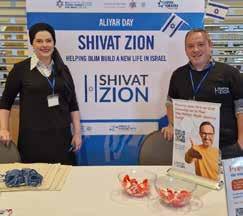
Last year, we launched a pilot programme working together with the community and developer of Carmay HaNadiv, ofering British families the opportunity to make Aliyah in a growing Anglo community. What we found is that when families arrive into a readymade network with a large number of new Olim, the entire Aliyah experience changes. Children form friendships immediately. Parents share information and reassurance. Te sense of isolation that can shadow the early months of Aliyah is dramatically reduced. For that reason, we are now extending the programme to families looking to make Aliyah this summer in 2026.
Carmay HaNadiv is a new, unique and fast-growing community of both olim and Israelis in the city of Kiryat Malachi. It represents something increasingly rare in Israel today: an afordable, central location with genuine community warmth and room to grow. Situated within easy reach of Tel Aviv, Jerusalem and the beach, Kiryat Malachi ofers practical access to employment centres without the prohibitive housing prices of larger cities. For many Anglo families, cities like Ra’anana and Beit Shemesh
details that determine whether the frst year feels chaotic or calm.
Te extension of the Carmay HaNadiv

A central part of the programme is helping families think carefully and strategically about housing. Some will choose to buy an existing afordable home, securing stability and putting down immediate roots. Others may prefer to purchase of-plan, benefting from modern construction and staged payments while investing in the area’s continued growth. For those who want time to settle before committing, Shivat Zion are providing semi-furnished, afordable and beautiful apartments providing fexibility and breathing space during the frst year or two. And there are families who see an opportunity to invest, either as a stepping stone towards future Aliyah or as part of a longer-term fnancial plan. As an independent adviser, our role is not to push one route over another, but to guide each family through the options within Carmay HaNadiv in a structured, informed way that aligns with their budget and long-term vision.
Of course, Aliyah is about far more than the property you live in. From the moment a family begins working with us, we build a personalised Aliyah plan together. We examine professional backgrounds, schooling needs, fnancial frameworks and lifestyle priorities. We design pilot trips that are purposeful and at a pace tailored to each individual family. Our extensive website has many practical tools and guides which get updated regularly, including our Oleh Budget Calculator, which enables families to arrive with a full understanding of how and what to budget for and how much things will cost. And when the family lands, our support does not disappear. We assist with navigating bureaucracy, school enrolments, employment direction, banking, ulpan and the thousand small but signifcant
group programme refects a broader truth: Aliyah succeeds best when it is intentional, supported and communal. Israel today is not the Israel of decades past. It is vibrant, dynamic and full of opportunity, but it is also fast-moving and administratively complex. Families deserve preparation support that matches that reality.
While this structured group ofers a particularly soft landing, it is important for me to emphasise that our commitment is not limited to those who join
this programme. Any family considering Aliyah can turn to Shivat Zion for guidance. Whether you ultimately settle in Carmay HaNadiv or elsewhere in the country, we will walk the journey with you.
On 22nd March, we will be at the Aliyah Fair in London where we will be covering all areas of Aliyah, as well as our project in Carmay HaNadiv. Come and meet us and ask away about the opportunities and challenges of Aliyah.
For many in our community, the question is no longer whether Aliyah is possible, but how to do it in the best way. My belief, shaped both by personal experience and by years of guiding others, is that doing it together makes all the diference. If the idea of arriving in Israel with familiar faces, professional guidance and a ready-waiting community resonates with you, then Carmay HaNadiv could be for you. Aliyah will always require a leap of faith. But it does not have to require doing it alone.
If you would like to fnd out more about the project, or to apply for one of the limited places please visit www.shivat-zion. com/come-home/#apply-form

BY RABBI NAFTALI SCHIFF
Tere’s a line so familiar to us, it’s become a popular song we all know, almost too well. Next month we’ll be singing it with gusto around the Seder table:
every generation they rise up against us to destroy us, and Hakadosh Baruch Hu saves us from their hand.”
It’s familiar. It’s defant. And ironicallyit carries us through the difcult times we repeatedly endure as a people.
But I want to suggest a challenging, albeit perhaps uncomfortable, alternative…
It doesn’t have to be this way!
Tere is a strange comfort in the rhythm of Jewish history. We’ve seen it so many times before.
Persecution. Prayer. Repentance. Salvation. Relief - Repeat.
It’s almost liturgical. We retell it every year at the Seder. We nod knowingly. We survive-Again.
Yet if you read and take note of the pages of Sefer Shoftim, the book of Judges, the pattern is pointed and painful. Te Jewish people stray from their national modus operandi and purpose. Tey grow complacent. Tey absorb the surrounding culture a little too comfortably. An enemy subjugates them. Tings get really tough. Tey cry out to G-d. Tey do teshuva. A Shofet- a leader arises. Te enemy is defeated. Tere is tranquility in the land. Peace lasts for just 40-80 years. Until the spiral begins again.
It’s actually heartbreaking to read. Te predictability and mindlessness of the downward cycle is part of our millennial national tragedy.
And yet, Tanach is never merely a history book. It is a warning. It is a mirror. Te Torah pleads with us to learn the lessons of history, lest we mindlessly repeat them.
It asks- must the good times, the miraculous salvation always be preceded by persecution and sufering? Must we perpetually wait for crisis to remind us who we are?
Can’t we fnally break the cycle?
Te Torah’s vision for the Jewish people was never survival alone. It was never simply to outlast our enemies. From the earliest episodes, we are handed a mission statement- to be a source of blessing and exemplary behaviour for all of humanity- a
, a kingdom of priests and a holy nation. To be an םיוגל
- a light unto the nations. Tat is the recipe, the formula for Jewish life from time immemorial. It is purposeful. It is expansive and visionary.
Tere is an inevitability written into our story.
.” Tere will come a time when we
return to our purpose, to our Divine modus operandi. Te arc bends toward teshuva- returning to self, to our original and elemental raisin d’etre. Our תירב, our covenant is an everlasting one. We are an Eternal People. Jewish destiny is not fragile. Jewish purpose is far from ephemeral. It is as perennial as Nature Itself!
But how we travel that arc of world history, that is very much in our hands.
Our grandparents’ generation experienced the abyss. Six million murdered in the Shoah. European Jewry decimated. Entire worlds erased. From that devastation emerged something no less than miraculous: the rebirth of Jewish sovereignty in the land of our ancestors. Deserts bloomed. Hebrew was revived as a living language. Jerusalem declared the capital of Israel. Academic institutions were established and thrived.
At the same time, in the diaspora Jewish life fourished. We achieved unprecedented levels of stability, infuence and prosperity. Jewish philanthropy transformed communal life. A generation ago and more, schools were built and synagogues expanded. In the UK in particular the focus of the last 20 years has been the strengthening of welfare systems. We took care of our vulnerable. We invested heavily in physical security. We protected what we had built.
And rightly so.
But here is the question we must now confront- have we become too comfortable and complacent everywhere, in yet another period of tranquility?
Have we built walls, homes and domes to protect ourselves and our loved ones whilst delegating and devolving the essence of who we are to the others at best, the street and online infuencers at worst?
British Jews have, for decades, felt at home. Contributing citizens. Integrated. Successful. Te diaspora felt stable. Permanent, even. Tat sense of permanence has been shaken. Rising antisemitism. Polarisation. A public square that feels less hospitable than it once did. Te old assumptions are wobbling. Israel too has focused her energies on economic and physical prosperity and protection, whilst too often ignoring the urgency of principle and purpose.
History whispers- this is the moment when the sleeping lion wakes up. But must it always take hostility to
galvanise us? Must external pressure be the only force that strengthens internal identity?
A vibrant Jewish future will not be secured by better alarms on our buildings and skies alone. It will not be guaranteed solely by political advocacy or security budgets, essential though they are. Te long-term survival and fourishing of British and world Jewry depends on something far more fundamental.
It depends on whether young Jews want to be part of the story and play their role in forming our destiny.
Tat is the crux.
If the next generation sees Judaism as a burden, an embarrassment, a relic, or even a religious obligation alone, no amount of external defence will save us. If Jewish identity is thin, transactional or purely reactive, it will not withstand the pressures of modern Britain or a cosmopolitan world.
But if Jewish life is compelling, intellectually serious, spiritually alive and morally ambitious then we will not merely survive. We will build. We will thrive. Education is not a line item. It is the engine. It is the dream. It is the vision of what a Jew can be; of what an Am Yisrael can achieve for ourselves and all mankind. When I say education, I do not mean only formal schooling, though our Jewish schools all over are extraordinary achievements. I mean pedagogy that works. Experiences that ignite. Teachers who inspire. Youth movements that empower. Israel programmes that deepen connection. Adult education that treats learners as thinkers. Spaces where questions are welcomed and identity is explored with confdence rather than fear.
We have, as a community, disproportionately invested in physical defence and in caring for welfare needs. Again, these are primary obligations. But the balance must now shift. Urgently. Less investment solely in fghting those who seek our demise. More investment in ensuring our children have a reason to stay Jewish. Less reactive. More proactive. Shoftim teaches us what happens when a nation forgets its purpose. Te enemy is rarely the frst problem. Te forgetting is. Breaking the endless cycle of Jewish history means interrupting the pattern at its earliest stage, before subjugation, before crisis, before the desperate cry. It
means strengthening identity in times of comfort and contentment so that crisis does not become the only catalyst for unity.
British Jewry stands at such a crossroads. Jews the world over have had a wake up call. We can continue allocating the majority of our communal imagination to protection. Or we can pivot toward cultivation.
Imagine a generation of young Jews who are literate in their tradition, comfortable in their particularism and confdent in their universal contribution. Who understand not only that they are Jews, but why that matters. Who see themselves as protagonists in a 3,000-year story rather than anxious footnotes in someone else’s narrative.
Imagine if the same urgency we deploy for emergency appeals were channelled into visionary educational endowments. If innovation in Jewish pedagogy were funded with the same seriousness as security infrastructure. If leadership pipelines were strengthened so that our brightest young people saw Jewish communal service as a calling, not a compromise.
Tis is not romantic idealism. It is strategic realism.
Demography is destiny. Identity is choice.
Te Torah promises that we will return. Tat ultimately, we will realign with our mission. Te question is whether that return will be born of inspiration or of pressure.
We can break the cycle.
We can choose not to wait for the next chapter of hostility to remind us who we are. We can build communities so vibrant that belonging is magnetic. So serious about its values that young Jews lean in rather than drift away. So unapologetically purposeful that being a “light unto the nations” feels less like a slogan and more like a lived reality.
Our ancestors survived unimaginable darkness. We have been blessed with sovereignty in Israel, stability in Britain and unprecedented opportunity. To squander that by underinvesting in the Jewish future would be a historic failure of imagination.
Te sleeping lion does not need to be awakened by fear.
It can be awakened by vision. Break the cycle. Build the future. Become who we were always meant to be.
Shabbat Shalom

In this column Rabbi Naftali Schif refects upon 3 key words each week relating to contemporary and relevant issues.
All feedback is welcome- NSchif@ jfutures.org
Rabbi Schif is the Founder & CEO of the Family of Jewish Futures network of educational organisations.

• Trusted legal & mortgage coordination
• Dedicated project management, property management, rental oversight from purchase to handover & beyond
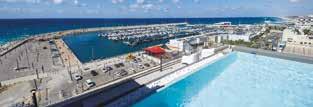



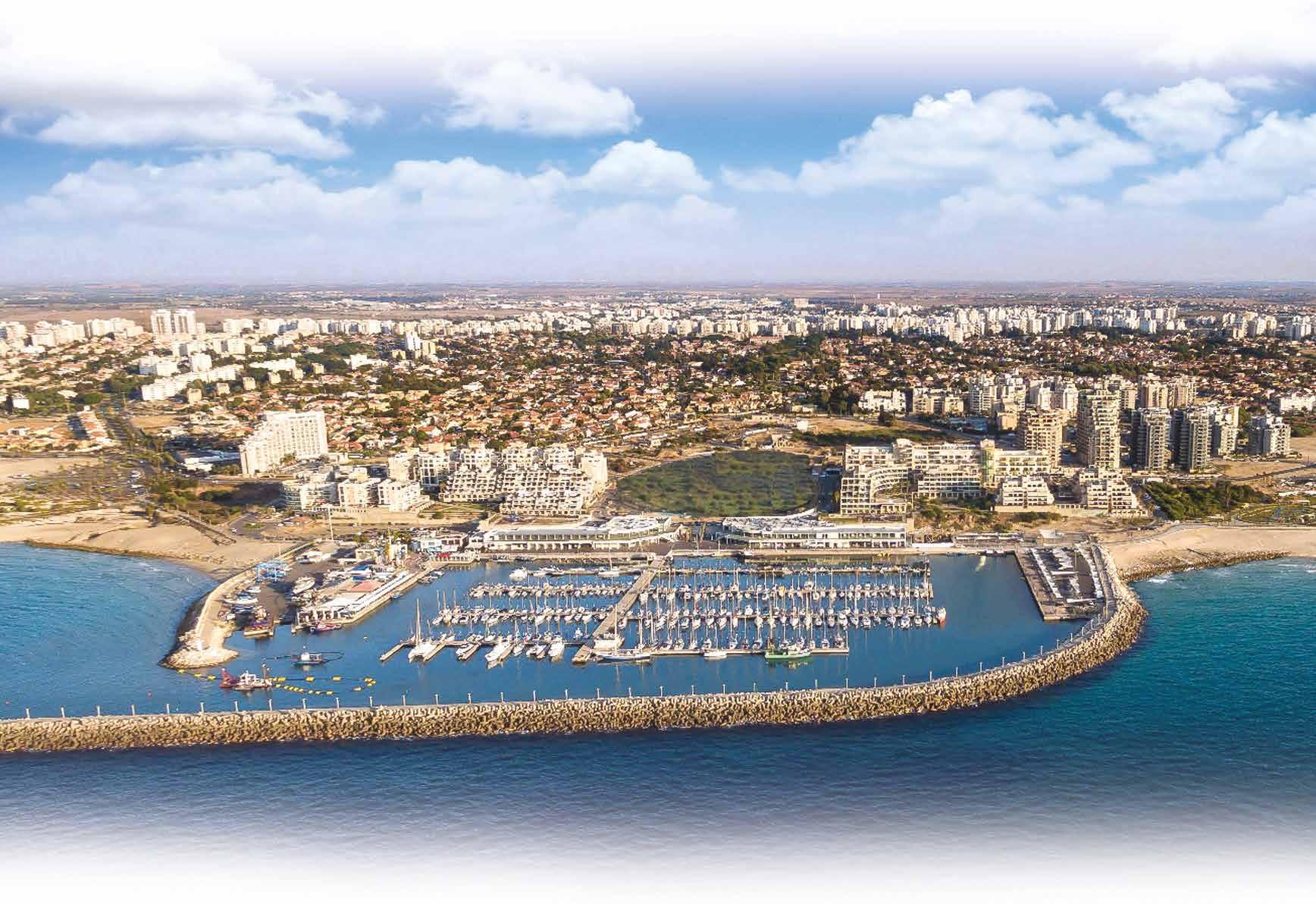
Ashkelon new projects and existing options. Luxury sea facing frst line options & Ir Hayain New Area entry level options & pricing.



luxury sea facing projects and options in Ir Yamim & Shirat Hayam. Walk to beach, pool & gym in complex offering beautiful spacious homes. 5 Rooms with attached additional rooms











BY RABBI MOSHE TARAGIN
Parashat Ki Tisa contains the fourth mention of Shabbat within a span of six parshiyot. No other halachah in the Torah appears with such frequency in so short a stretch.
Te frst mention of Shabbat appears in the desert, as we journey toward Har Sinai-—at the encampment of Marah and again at Alush. Tese two references, taken together, form the Torah’s frst sustained introduction of Shabbat observance. Before we arrive at Har Sinai, Shabbat has already begun to take shape along the journey.
Te parsha of Yitro returns to Shabbat observance, presenting it as the mitzvah of Zachor, later reframed as Shamor on the second Luchot, and placed at the heart of the Aseret HaDibrot.
Subsequently, in Parshat Mishpatim, after an extended presentation of social and civil law, the Torah once again returns to Shabbat, embedding its laws within the fabric of societal obligations. In Parshat Ki Tisa, Shabbat is mentioned for a fourth time.
In the desert encampments, Shabbat ofered the chance to fnally rest. Since leaving Egypt, our lives had been frenetic and unsettled, moving from place to place across an unforgiving landscape. First came the hurried fight from Egypt, then the crossing of the sea, followed by relentless travel. Shabbat allowed a release of tension and the return of calm to a people who had been living at full throttle for weeks on end.
In Yitro, within the Aseret HaDibrot, Shabbat is presented through the lens of family. Te entire household—parents and children, servants and animals— comes to a halt together. Daily labor pauses, and the family regathers. For this reason, the mitzvah of Shabbat follows immediately after the commandment of kibbud av va’eim. Honoring parents strengthens the family structure; Shabbat observance then creates the time and space for that structure to be lived and experienced. It carves out family presence within an otherwise demanding workweek.
Shabbat in the early desert provided rest and serenity. Shabbat at Har Sinai promised renewed connection within the family.
In Mishpatim, a diferent angle of Shabbat emerges. Te laws of Mishpatim provide the blueprint for building an ethical society. Tey lay out the laws of damage, theft, torts, and guardianship, and they describe the judicial system charged with
enforcing them. Tey insist that we attend to the needs of society’s most vulnerable—slaves, widows, orphans, and the impoverished—and they envision moral conduct as the foundation of a strong and enduring society.
However, societies require more than a moral foundation in order to fourish. Tey also need a shared narrative and a common story. For this reason, at the conclusion of Mishpatim, the Torah turns to the chagim, moments that commemorate our collective story of being chosen. Shabbat is included here as well, anchoring that shared narrative in the belief in a single Creator who fashioned the world and rested on the seventh day.
In Mishpatim, Shabbat is embedded within a social framework. It fosters strong communities alongside strong families. Te halachot of Shabbat require that guests remain for the duration of Shabbat, creating space not only for extended family presence but also for hospitality and generosity.
Up to this point, Shabbat has been presented as a day oriented toward human need. It provides a twenty-fourhour pause from labor, time for family bonding, and the space necessary for communal gathering and connection.
Is that all there is to Shabbat?
About ten years ago, an Orthodox woman published an article in the New York Times describing the beauty of an observant Shabbat.
She portrayed a day spent at home with teenage daughters, lingering in sleepwear, unhurried and unpressured. Shabbat created space to catch up on busy lives, to play board games, and—perhaps most appealingly—to unplug for twenty-four hours. It was a warm and lovingly drawn picture of family life and relationship-building.
Shabbat is also a day for Hashem—a day to suspend human mastery and remember Divine creation. It is a day to step back from the comforts and preoccupations of this world and to redirect time and attention toward larger spiritual pursuits. Tat dimension of Shabbat, its orientation toward Heaven rather than merely toward human well-being, was almost entirely absent from the portrait.
Ki Tisa restores this forgotten dimension of Shabbat. Te Torah describes Shabbat as
Rashi comments,

, emphasizing that the day is to be dedicated to Hashem and to His mitzvot.
On this day, tefllah should be more deliberate and focused. Talmud Torah, often neglected during the week, should move to the center. Speech should be guarded more carefully. Shabbat is meant to feel otherworldly, marked by sanctity. To achieve that sense of otherworldliness, we must step back from immersion in this world.
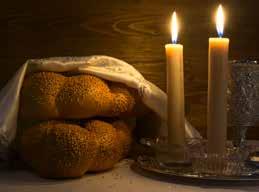
Te article was elegantly written and clearly valuable for its intended audience, most of whom were not Jewish. It argued for the importance of a weekly pause in a society addicted to work and trapped in an endless cycle of pressure. Charlie Kirk makes a similar case in his book Stop, in the Name of G-d, presenting Shabbat as a corrective to modern exhaustion.
Yet reading that New York Times piece, I found myself asking: How did Shabbat lose its sense of transcendence?
Shabbat, however, is not meant to negate the physical. It is a balance. Te mitzvah of oneg requires eating and enjoyment. Unlike Yom Tov, which is defned as a day of simcha, Shabbat is defned as a day of oneg. On Yom Tov, a person who experiences simcha through fasting may do so; on Shabbat, fasting is forbidden. Yet even the physical pleasure of Shabbat must be held in tension with transcendence, not allowed to eclipse it.
Tis is the added feature of Shabbat articulated in Ki Tisa. Shabbat is not only a day of rest, family, and community. It is a day of transcendence ימשל
Has modern Shabbat drifted too far from transcendence? Have we emphasized oneg at the expense of ימשל? Tat concern is not abstract. Modern Shabbat has become remarkably comfortable. Our ancestors experienced Shabbat with limited light and heat.
Much of their food—certainly the daytime meal—was cold. Without eiruvin, movement was restricted to a narrow physical space. Today, mechanization has transformed that experience. Shabbat clocks, heating systems, and air conditioning have rendered Shabbat nearly indistinguishable from the weekday. Te sharp shutdown of human activity has largely faded.
As a result, it has become harder to experience הל תבש’ in the way earlier generations once did. With the rise of self-driving vehicles, new questions will inevitably be raised about their use on Shabbat. If halachic travel on Shabbat ever becomes possible, the fnal barrier separating Shabbat from the weekday will have fallen.
Shabbat has become emulsifed. Ki Tisa urges us to restore some of the balance. To use Shabbat for rest and for unplugging from a frantic, wired, and constantly connected world. To build deep and lasting family experiences, so necessary in an age of pressure, anxiety, and insecurity. To fashion robust communities shaped by shared values and mitzvot. But also to make Shabbat genuinely diferent, by reclaiming it as a more spiritually centered experience.
Many of the decisions we face—or are already in the process of making—about Shabbat will turn on this tension. Particular activities and experiences may be halachically permissible. Yet at what point do they further emulsify Shabbat by layering on additional pleasure and convenience? Can too much oneg shabbat deplete and dilute shabbat of its purpose? Will Shabbat become too enjoyable and too worldly?
What is lost if Shabbat is stripped of its remaining transcendence? Will we lose Shabbat La’Hashem?
Dear Rabbi
I was reading up about an eruv. I have never heard such tosh in all my life. It makes me feel embarrassed to be Jewish. How can being within an area encompassed by a wire make any diference? How can any person of sound mind and intelligence believe this nonsense? Religious rules like this are plain stupid. Te world would be a much happier without religion and its nonsensical rules.
Steve
Dear Steve
So says the guy who is walking around circumcised because that is one of the “nonsensical” rules too. Or are you one of those suing your parents for your foreskin back? Te contradiction in your hysterical email is quite implicit. So, you identify as Jewish. But the rules make you embarrassed to be Jewish. What on earth does being Jewish mean if not being a member of a particular faith religion? And religion means a belief in G-d which de facto means having some directive in how this G-d wants to be served. So rather than me even bothering to explain to you the mechanics of an Eruv I would suggest you go explore the essence of your identity – deal with that chip on your shoulder – abandon the Jew complex that makes guys like you give Jews like me a bad name – and then return with an open mind and a more open heart. Ten we can talk.
Dear Rabbi
I like my tipple and usually have a shot of whiskey before I go to bed. It helps me sleep better. Is there anything available that I can use on Pesach which is acceptable?
Morris
Dear Morris
Well, the frst two nights should take care of themselves. Four cups of wine by midnight and you’ll be saying, dayenu – “that’s enough!” Otherwise, there are the kosher for Passover alcoholic drinks available at any good kosher shop - those that are not made of, or contain, fermented grain. Plum brandy and potato vodka are two that come to mind if you’re brave enough. If all else fails and you cannot sleep at night, be sure you’re in shul in the morning in time for your Rabbi’s sermon – that often does the trick!
Dear Rabbi I started a new job in the City and would like to keep up my kosher standards. Can I use a non-kosher microwave at work if I double wrap everything?
Lisa
Dear Lisa Just ask all those people who struggle through the plastic and foil of their Hermolis meal on their British Airways fight, or the poor chap lying immobile in a hospital bed staring helplessly at the steaming double wrapped soup in front of him, praying that some nurse will make her rounds before it goes cold. (“Sir, why didn’t you use the call bell?” “Heck lady, if I could reach the call bell, I could probably open the soup myself!”). In a word – yes - but be sure it is properly double wrapped. PS: Good for you in ensuring to keep your standards!

















BY RABBI YAKOV SCHONBERG
Menachos 54b cites a Mishnah (Uktzin 2:8) that discusses how to measure the size of an egg in relation to the tumah of foods, but these rules also apply to calculating the size of almost all halachic measures. Te Mishnah provides a rule for meat: Te meat of a calf that swelled when cooked, and the meat of an older animal that shrank when cooked, are measured as they are now, after cooking. Tere is an Amoraic dispute regarding the reading of this Mishnah, which Rabbah explains is limited to the specifc case where the meat initially had the minimum measure, then shrank to less than the minimum measure, and subsequently swelled back to the minimum volume. He explains that the discussion centers on the principle of dichui, rejection, a principle found in various areas of halachah. For example, once an animal becomes disqualifed as a korban, it retains its disqualifed status forever – even if the original reason for disqualifcation ceases. Tis principle may also apply to items used to perform a mitzvah. Rabbah asserts that the machlokes here is whether dichui applies with regard to issurim, prohibitory law, such as tumah. Te Amoraim disagree about whether tamei meat that initially had the minimum volume necessary to convey tumah but subsequently shrank to below that minimum and was at the point of “rejected,” regains its ability to convey tumah after swelling back to the minimum volume. Te Gemara comes to the conclusion that we do not say dichui, and that if the shrunken item swells and the minimum measure is restored, the item regains its original prohibitory status.
Tis concept of rejection/restoration touches on a major halachic controversy regarding the kashrus status of gelatin and is cited by the poskim as supporting their position. Gelatin is derived from collagen in animal bones and hides - it is a fbrous, insoluble protein that makes up a major portion of bone, skin, and connective tissue. Cooking bones and skin releases collagen, yielding the wobbly jelly served with geflte fsh or galareta (meat jelly) made from calf bones. In commercial food processing, this versatile ingredient serves as a gelling agent and an emulsifer, helping distribute fat and add stability to confectionery. In medicines and vitamins, gelatin can be used as a coating to mask bitterness or as a capsule to contain powders. Many of
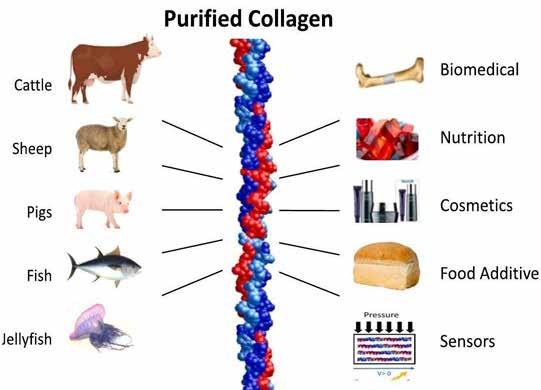
these properties are unique to gelatin, and, since it is an animal-derived ingredient, its kashrus is of major concern to kashrus authorities. Amongst other halachic issues, the status of rejected food plays a role in the halachic debate regarding the kashrus of gelatin produced in the general market, where it will be manufactured through a chemical process from non-kosher animals. Does the chemical change of a forbidden substance create a new item that is entirely dissimilar from the original material, panim chadashos, thereby rejecting its original status and rendering it permissible?
Glycerin (Glycerol) is a thick, sweet liquid with many industrial and medical uses. It is produced by hydrolyzing or distilling fatty acids derived from vegetable oils, animal fats, or synthetic petroleum. Fatty acids are long, chain-like molecules that are one of the main parts of fat. Glycerol is a small molecule that acts like a “backbone” to the fatty acid chains. Glycerin production completely breaks down the original fat molecule by splitting glycerol from the fatty acids, producing a chemically distinct compound. Some poskim consider this a true molecular transformation - panim chadashos, but this concept is subject to halachic dispute and therefore will require kashrus certifcation. It is often treated more leniently than gelatin, especially in non-food products such as cough syrups, where it is not the primary taste. Toothpaste often contains glycerin, but it is not swallowed intentionally, is not food, and may be inedible in its original source. All these factors contribute to those who are lenient and do not require kashrus certifcation, which
would then be necessary only for Pesach use.
Te question of the extent to which chemical changes to a forbidden substance render it permissible is a machlokes Rishonim between the Baal HaMaor and Rabbeinu Yonah, as brought in the Rosh (Berachos 6:35). Te case under discussion concerns the kashrus of a spice called musk (called “mor” in the poskim - the shemen hamor of Esther 2:12), which is extracted from the blood of a boil on the neck of the musk-deer. Rabbeinu Yonah permits this spice for consumption, comparing it to forbidden meat that falls into honey. By osmosis, honey draws moisture from the meat, causing it to harden and disintegrate into the honey. Te Baal HaMaor disagrees and does not allow the converted meat. Te Ran indicates that a change would be permitted only if the substance is rendered inedible during the change and then rebuilt into a new substance. Several later poskim accepted this opinion. Applying this opinion to glycerin, we can conclude that it would not be permitted. When glycerin is manufactured, animal fats are heated under high pressure to split into fatty acids and glycerin. Tere is no intermediate stage. For this reason, many poskim regard glycerin derived from animal sources as forbidden, especially where kosher alternatives are available.
I recall Rav Asher Westheim relating that while he headed the kashrus division of Manchester Beis Din, they certifed a major toothpaste manufacturer by entering into a contractual agreement

under which the manufacturer would purchase only glycerin derived from a non-animal source. One day, Rav Asher received a phone call from a Jewish secretary employed by that manufacturer, who claimed she was just processing paperwork showing the company had purchased animal-derived glycerin because they had been unable to obtain non-animal glycerin. Management believed they would not be discovered if they purchased a batch of animal-derived glycerin from a diferent supplier. He used this as an example of how important it was for a mashgiach to act with vigilance and to check purchase invoices.
Rav Chaim Ozer Grodzenski penned a famous teshuvah (Achiezer 3:33:5) in 1936, permitting gelatin based on three considerations: (1) the bones from which gelatin is produced are not considered meat; (2) gelatin is considered panim chadashos, a new item unrelated to its origins; and (3) gelatin is rendered nifsal me’achilah, inedible, for a period of time during its processing. Tis heter formed the basis for many American Rabbanim and the Rabbanut in Eretz Yisrael to permit the use of regular gelatin produced from non-kosher animals as an ingredient. In 1951, Rav Eliezer Silver sounded the alarm after ascertaining that he had been misled about the true state of afairs in gelatin production. Subsequently, Rav Moshe Feinstein, Rav Aharon Kotler, and Rav Yechzkel Abramsky forbade gelatin derived from non-kosher animals, although their rulings difered on some of the bases. Te argument that hard bones are not considered meat was controversial, but it was considered academic because, even under the lenient approach, the bones would have to be entirely stripped of meat and marrow, which was not the case. Furthermore, it is contended that the majority of gelatin is now produced from soft pigskins, which release collagen more easily than bones. Chullin 122a considers pigskins to be like edible meat. Regarding the second point, Rav Moshe Feinstein holds that panim chadashos applies only to an issur yotzei, an excrement from a forbidden animal, and not to parts of the animal itself (Igros Moshe, Yoreh De’ah 2:23, 2:27, 2:32). In addition, Rav Yechezkel Abramsky argues that gelatin is not even a “new creation,” but merely an edible protein extract that has always been present, and the chemical processing enabled it to be released (teshuvah cited in introduction to Tzitz Eliezer vol. 4). Te gelatin production process removes all non-collagenous matter and recovers collagen, which remains unchanged throughout, and therefore the concept of panim chadashos does not apply. Regarding the
third consideration, the status of non-kosher food that becomes inedible and then returns to an edible state is discussed in the frst paragraph. According to Rav Moshe Feinstein, it is a halachic safek, and one must be strict in its regard, but Rav Aharon Kotler argues forcefully that such a situation is defnitely prohibited, citing additional reasons to prohibit gelatin (Mishnas Rabbi Aharon 1:17). One is that, because gelatin processing is done with the intention of creating an edible product, the rule of inedible foods does not apply at all. Another is that even if the material were still considered inedible, eating it intentionally would remain prohibited because of ach’shavei - upholding its signifcance as a food. Furthermore, he argues that because gelatin is used to improve food into which it is mixed, the fact that it itself may be inedible is of no consequence. (See essay in “Kosher Food Production” by Rav Zushe Blech, pp. 317-322, and historical account in “Food” by Rav Yehudah Spitz, pp. 455-475).
On the other hand, some earlier authorities permitted the use of regular gelatin on the basis of one or more of the arguments above. However, when there is no kosher alternative for medical capsules made from gelatin, some poskim will permit them even for a sick person whose life is not in danger. Tis is because the
gelatin is completely dried out, almost plastic-like, and has therefore lost its status as meat. Capsules are swallowed rather than eaten, but others contend that swallowing is also considered eating, as evidenced by the fact that swallowing matzah complies with the mitzvah. Even when gelatin capsules are permitted in medication, many are unwilling to rely on this leniency for vitamins, which are generally consumed by healthy people. Most vitamins are widely available with reliable kosher certifcation and use kosher gelatin in their capsules, so there is no need to rely on disputed leniencies.
Gelatin is used to clarify cloudy apple cider. Adding a small amount of gelatin binds to impurities, causing them to settle at the bottom. Tis is similar to isinglass, used to clarify wine and addressed by the Noda BiYehudah (Yoreh De’ah I, 26), and remains controversial. It is used in dairy products, providing a silky mouthfeel to yogurts. It is useful in making low-fat dairy products and margarine because it emulsifes fat and water, producing a slippery “fatty” sensation. It is also used as a stabilizer in sour cream, ice cream, and other frozen desserts. Confectionery items like jelly beans, gummy bears, and marshmallows are heavily
dependent on gelatin. Sausage casings are traditionally made from collagen and thus face the same challenges as gelatin. Mehadrin hechsherim will not permit the use of unsupervised gelatin for these purposes, whilst others may wish to rely on some of the disputed leniencies outlined above. Today, methods have been developed to manufacture strictly kosher gelatin from kosher animals or
fsh, and almost all reputable kashrus authorities will not allow the use of regular, unsupervised gelatin in food items.
To contact Rabbi Schonberg, please email, yschonberg@gmail.com
To fnd out more, you can sign up at mercazdafyomi.com and receive a free gemoroh.

Dear Friend,
As we prepare for Passover—a time when we gather with loved ones to remember the journey from oppression to freedom— Israel once again faces a moment of profound fear and uncertainty. The escalating confict involving Iran and Hezbollah has left communities across Israel grieving and frightened. Missile attacks have already claimed innocent lives and injured many more, and the threat of further escalation remains very real. Passover teaches us that even in the darkest moments, we do not turn away. We come together. We act. We protect the vulnerable. Today, that call is louder than ever.
With 7,500 trained volunteers, many of Yad Sarah’s 127 branches remain open under Home Front Command guidelines. Our Emergency Call Centre is operating around the clock. Our Home Hospital system—fully equipped rooms containing all essential hospital equipment and advanced technology for remotely monitoring patients’ vital signs—is stretched to its limits. We urgently need additional units to free up hospital beds for incoming casualties.

Just as our ancestors crossed the sea with courage when every moment mattered, we too must act swiftly. Sustaining this emergency response and preparing for what may come next requires immediate resources. We are asking you—one of our valued supporters—to help once again. Will you make an urgent Passover gift today to support the people of Israel during this critical time? As the situation evolves, we must be ready for anything.
Wishing you and your family a safe and meaningful Passover, Yad Sarah
Contact Michael Marks at michael@yadsarah.org.uk


H E R Z L I Y A
R e n o v a t e d a p a r t m e n t
3 b e d r o o m s
7 m i n u t e s w a l k t o I D C
B a l c o n y
P a r k i n g & s t o r a g e
M o t i v a t e d s e l l e r
Asking Price:
₪ 4 , 7 5 0 , 0 0 0
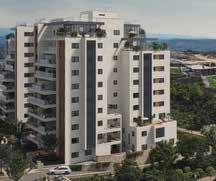
h a m i r
3 , 4 & 5 b e d r o o m
a p a r t m e n t s a v a i l a b l e
L a r g e A n g l o c o m m u n i t y
R e a d y : A u g u s t 2 0 2 8
Starting Price: ₪ 2 , 4 5 0 , 0 0 0


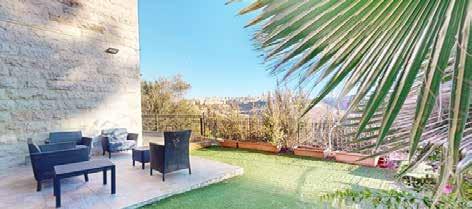
2 3 5 S Q M b u i l t
4 0 0 S Q M p l o t
7 b e d r o o m s 4 5 b a t h r o o m s

C A R M E I G A T
N e w P r o j e c t
n l y a p a r t m e n t s p e r b u i l d i n g
L a r g e b e d r o o m u n i t s
r e a t o p p o r t u n i t y f o r f r i e n d s f a m i l y t o b u y t o g e t h e r
Starting Price: ₪ 3 , 4 5 0 , 0 0 0
Asking Price: ₪ 9 , 2 5 0 , 0 0 0

N E T A N Y A
N e w P r o j e c t
O n l y 2 0 % d o w n ! N o b u i l d i n g i n d e x
G
Starting Price: ₪ 3 , 4 0 0 , 0 0 0 J E R U S A L E M R a m o t B e t S e m i - A t t a c h e d V i l l a



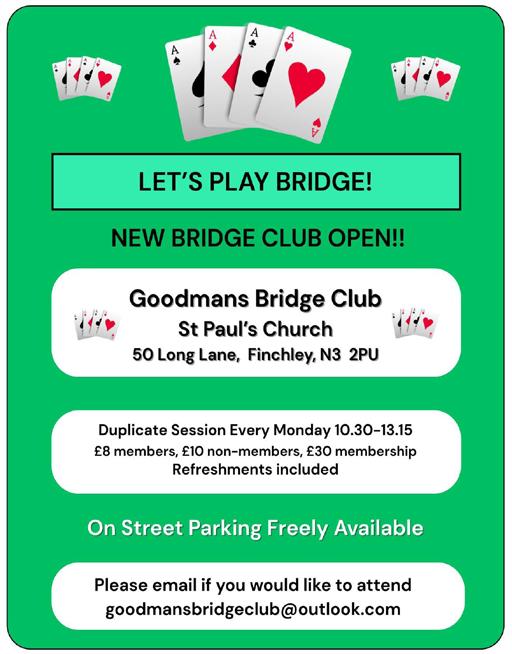

What happens when you hand seventy young professionals a sealed case fle and ask them to re-examine the most dramatic moments in the Megillah?
On Monday night at the Jewish Futures Hub, the palace of Shushan was reopened for investigation. Guests stepped into the roles of detectives examining the motives and decisions of Mordechai, Queen Esther, Achashverosh and Haman.
Te event, Te Shushan Files, was created for Aish Young Professionals by Ta’amim, part of Jewish Futures’ family of organisations. Designed as an immersive ‘true crime’ documentary-style theatrical dinner, it blended storytelling, live performance and interactive investigation to bring the Megillah to life in a fresh and engaging way.
Te evening began with a Megillah reading, grounding the experience in tradition. After a drinks reception and three-course dinner, the atmosphere shifted. A documentary-style narration, delivered by Dan Matalon of Ta’amim, guided guests through the unfolding drama, while Aish educators portrayed the story’s central characters in short performances between courses.
But the real action took place at the tables.
Guests were handed carefully designed case fles containing imagined witness statements, palace records and imperial edicts. Alongside the creative documents were discussion prompts rooted in the text of Megillat Esther, Midrashic commentary and contemporary issues.
Soon, groups of twenty-somethings were deep in conversation, debating leadership, courage and identity, and drawing connections between ancient Persia and modern Jewish life. From public discourse
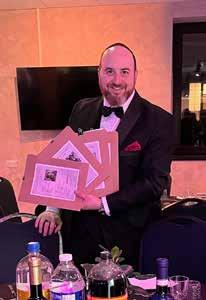
and social media to current events afecting Jewish communities, the Purim story felt strikingly relevant.
Despite the serious themes, the atmosphere remained lively and celebratory. Old friends reconnected. New friendships formed. Laughter mixed easily with thoughtful debate.
For many, evenings like this are about more than entertainment. Tamara Yedlin, who has attended several Ta’amim x Aish YP events, described their wider impact.
“All the events I attended were wonderful,” she said. “In each one, the detailed and meticulous planning was evident, resulting in creative, fun and high-quality experiences. As an international student who moved to London without knowing anyone, having these kinds of events is vital for my social life, for fnding my community and sense of belonging, and for meeting other young Jewish people.”
Te Shushan Files is the latest immersive educational experience created by Ta’amim, and follows a series of creative collaborations between Ta’amim and Aish YPs, including the Chanukah House of Fun and a gamifed singles’ cocktail night. Earlier productions, such as the Bonkers Chocolate Factory, a Willy Wonka–inspired journey through the history of Jews and the chocolate trade, have similarly focused on hands-on participation to make learning engaging and memorable.
Alongside Aish UK, Ta’amim has partnered with organisations including GIFT, Seed, JFS and synagogues from across the religious spectrum.
If you are interested in collaborating with Ta’amim, or would like more information about Purim: Te Shushan Files, email dan@wearetaamim.com
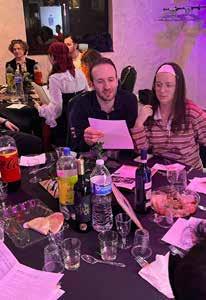
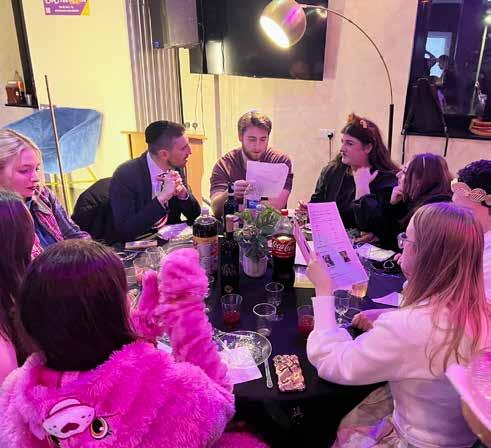
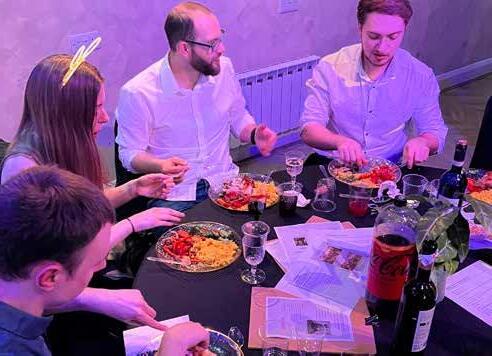

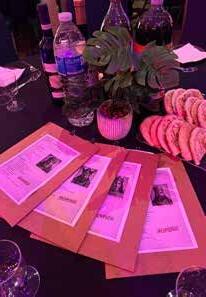

At the Award Winning Elysium Resort & Spa Rhodes, Greek Isles

Luxury Beachfront Resort: Exclusive use for 500 guests, featuring a Spa and wellness centre, lagoon and heated pools, 20 minutes from Rhodes Airport.
Premium Accommodation: 10 or 12-night stay in a stunning, fully kosher, Chag friendly environment.
Elegant & Gourmet Dining: 3 daily meals, table wines, soft drinks, early kids’ dinners, Grand Kiddushim on Shabbat & Chag, plus all day lobby refreshments, snacks & beach bar happy hour.
Pesach Sedarim: Private, family, and communal seder options in a warm Chag atmosphere




Inspiring Program: World-renowned scholars, guest speakers, uplifting tefllot, and engaging learning sessions for English speakers.
Family-Friendly Fun: Exceptional kids’ club, teen chill zone, and tailored entertainment for all ages.
Optional Excursions: Day trips and attractions to explore Rhodes and its surroundings.
Peace of Mind: Professional security team and expert hosting by David & Chana Walles.
Minyanim: Nusach Ashkenaz and HaAri-Zal


Featuring Top Scholars, Guest Speakers & Entertainers: R’ David Lapin, R’ Laibl Wolf, Rivkah Krinsky, R’ Yossi Fachler, Maestro Yossi Shwartz, Mendy Shapiro, Shay Barak, Shlomi Lanyado, Daniel Harel, & more!
Tuesday 31.3 - Sunday 12.4
Pay for 10 nights Stay for 12
Price starts from 3450€ Per Person *double occupancy

David & Chana Walles
Hosts 36 Years
Arik Porat CATERING MANAGER Executive Chef




From March 31st / April 1st to April 10th/12th, 2026

Experience the luxury and exotic charm of an unforgettable Passover in Agadir.
IN AN EXCEPTIONAL SETTING, COMPLETELY REDESIGNED FOR YOUR COMFORT
Intimate atmosphere (220 people max) Large outdoor pool • Children's pool & water games • Spa & wellness • Fitness center • Paddleboarding • Games room • Spacious and refined rooms • Rooftop & lounge bar • Berber lounge • Kids Club & Teens Club • Jungle Park • Guided excursions • Sports & recreational activities • Personal trainer • Shiourim Park Rav Moshe Cohen • DJ sets & Live performances by PURE SHOWBAND • Special appearance by the famous singer and Paytane Pinhas Cohen for a magical Mimouna


From €2490/adult - Child discount available with Family plan



• Suits now from £69
• Overcoats from £49.50
• Knitwear from £10
• Casual Jackets from £29.50
• Sports Jackets and Blazers from £39.50
• Trousers £20 each 2 pair for £30 28-48 inch waist
• Shirts from £10
• Shoes from £15
10 Golders Green Road London, NW11 8LL
Open weekdays untl 6pm & Sundays tl 5pm



This week’s Parshah discusses three major things: the Mishkan, the Golden Calf and the second tablets.
The Mishkan
We’ve already discussed G-d’s instructions to build the Mishkan for two full Parshahiot (Torah portions), and we hear a little more about it here.
Every Jew should give half a shekel towards the building of the Mishkan. These coins will also be used to count the Jews.
A washbasin of copper should be placed at the entrance to the Mishkan, and Aaron and his sons should wash their hands and feet before they perform the services
A recipe of oil with spices is described which Moses is to make and pour on the Mishkan and all its vessels,
anointing them and making them holy for use.
Next is described the secret recipe for the ketoret, the sacrifce of incense that was brought on the Golden Altar.
Two master craftsmen, Bezalel and Oholiab, are put in charge of the building of the Mishkan.
The Jews again receive the commandment to keep the Sabbath.
The Golden Calf
After the Jews heard the Ten Commandments at Mount Sinai, Moses went up the mountain to receive the Two Tablets from G-d. The Jews know he is supposed to come down after forty days, but they miscalculate, and when he doesn’t come down when they expect him to, they get confused as to what has happened to him. They build a golden calf and
make it into an idol, serving, worshipping and bringing to it sacrifces.
When G-d sees this, he is very angry, and wants to destroy the whole Jewish nation, telling Moses that he will start a new nation from him. Moses prays for the Jews, begging G-d to save them. Moses then takes the Tablets down the mountain. When he nears the camp of the Jews and sees the Golden Calf, he throws down the Tablets, shattering them, and destroys the Golden Calf. Moses then gathers all the Levites and they kill all those who were involved in the building of the Golden Calf.
Then Moses goes back to G-d and prays for the Jews. He even tells G-d that if He doesn’t forgive their sin, G-d should take his name out of the entire Torah. G-d
As the sun moves from east to west, Shabbat and Yom Tov occur frst in Israel, and then in America. Which mitzva is observed frst in New York, and then in Jerusalem?
forgives, but the the Jews are punished with a plague, and the effects of the sin are felt for a long time.
G-d tells Moses that He will now send an angel to accompany them, but Moses says that they refuse to go unless G-d Himself comes along. And so G-d agrees that He Himself will accompany the Jews to the Holy Land.
Moses prepares a new set of tablets and goes up again to the mountain so G-d can inscribe the Ten Commandments in them. On the mountain, Moses sees a vision of G-d’s glory, and when he comes down, his face shines so brightly that he must wear a veil. He takes off the veil only to speak to G-d and to teach the Jews the Torah.
Last week’s Answer: What are the names of TWO sets of Grandfather - Grandson mentioned in the weekday Shemoneh Esrei?
The names of the two sets of Grandfathers/Grandsons mentioned in the weekday Shmoneh Esrei are: Avraham and Yaakov-in the 1st bracha, and Adam and Enosh-in the 4th bracha (“Ata Chonen”). While one can easily see the names in the 1st bracha, it is more diffcult in the 4th. This is because the prayer does not actually refer to the people Adam and Enosh - rather these are two synonyms for “human beings.” The Malbim explains that Enosh refers to Man in his basic state and Adam is Man at a higher spitual level.
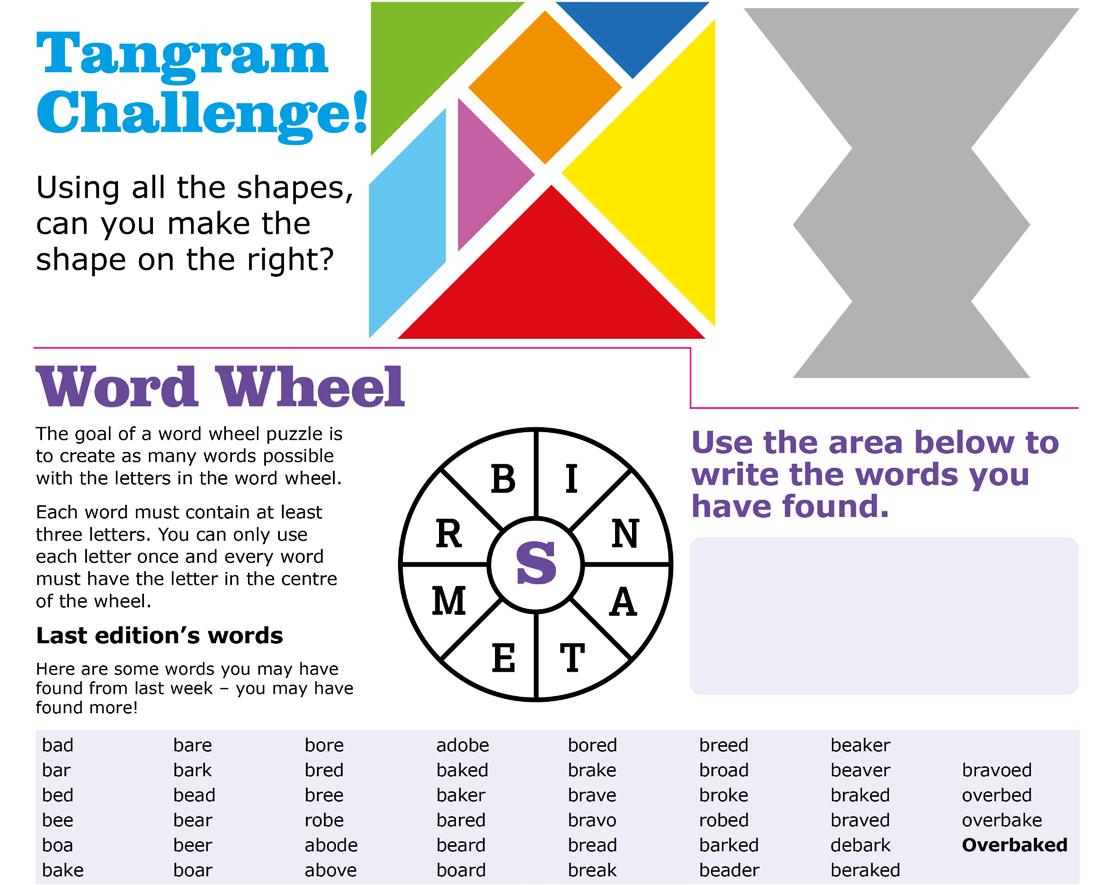
Q: Are any monsters good at maths?
A: No… unless you Count Dracula!
Q: Why is Peter Pan flying all the time?
A: He Neverlands!
Q: Where do polar bears keep their money?
A: In a snow bank!
Q: Why did Mickey Mouse become an astronaut?
A: So he could visit Pluto!
1. How do you make the number one disappear?
2. A girl fell off of a 30-foot ladder, but she didn’t get hurt at all. How is this possible?
3. How many cats can you put in an empty box?
3. One. After that, the box isn’t empty anymore.
Answers 1. Add the letter G and then presto…it’s Gone! 2. She fell off the bottom step!

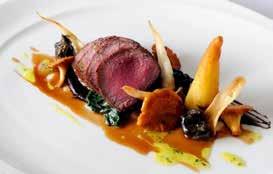
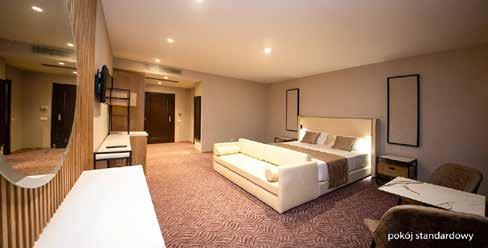


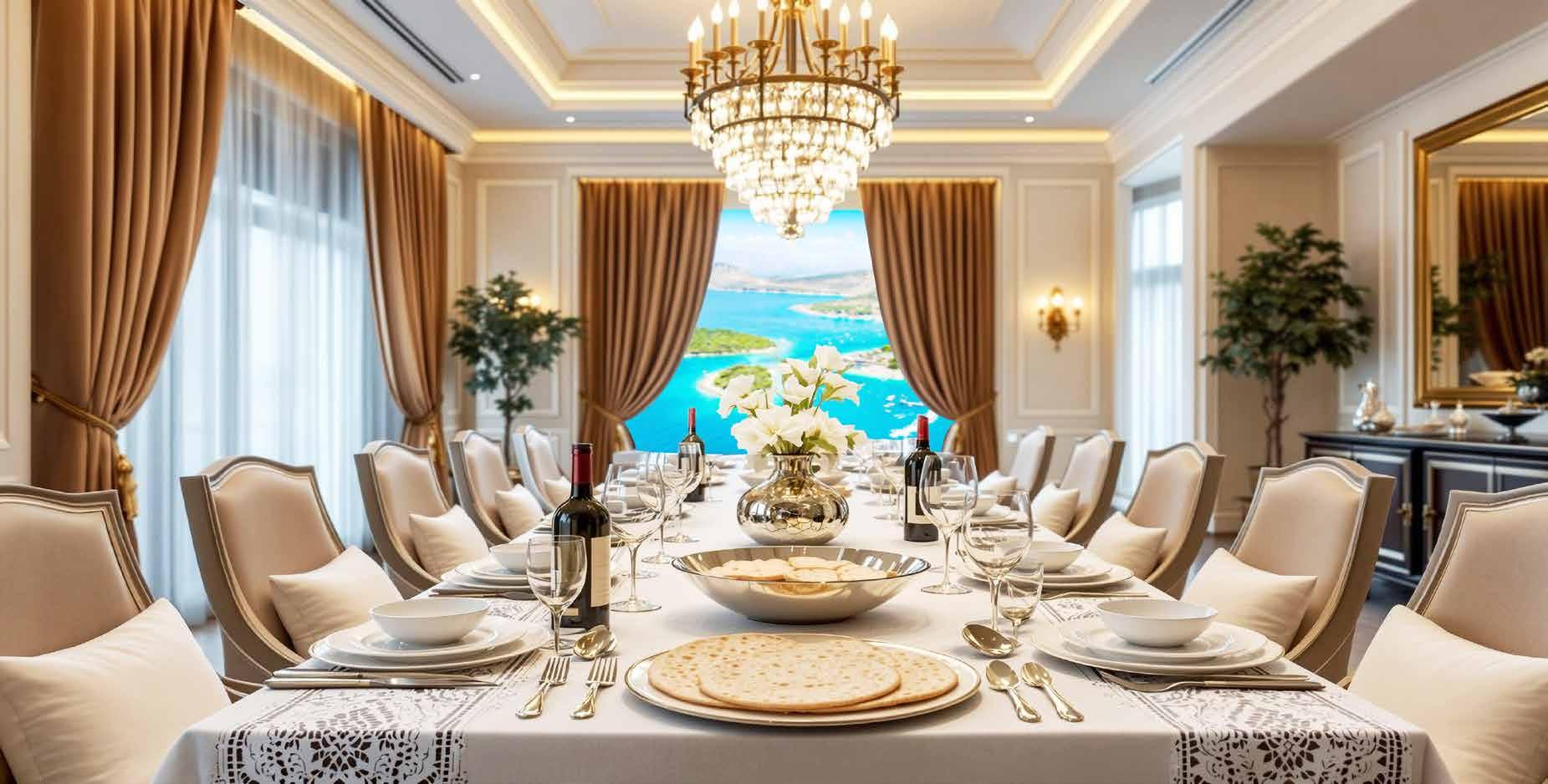

ACTIVITIES
Inspiring lectures, live performances, uplifting Kumzitz evenings, and engaging family experiences.
renowned culinary experts.
An elevated and refned dining experience throughout Pesach.
KASHRUT
Glatt Kosher LaMehadrin
Under the supervision of Rabbi Moshe Nachshoni Shlita No Kitniyot • No Gebrochts
TRIP royal style
Hotel
The entire hotel is exclusively privatized for our Passover program. Elegant lounges, curated children’s activities, modern ftness center, private beach, and a brand-new luxury spa.