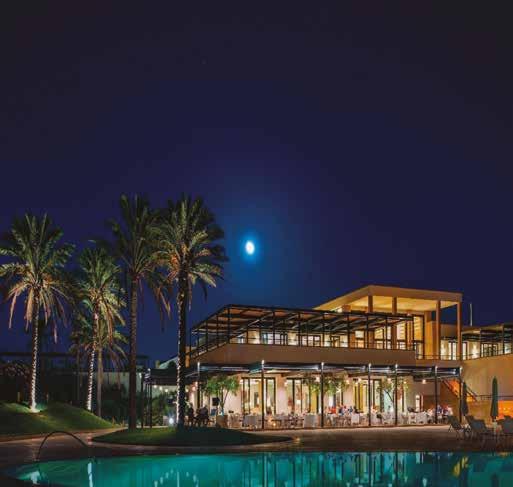
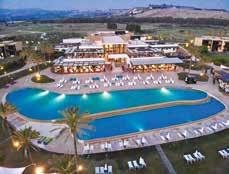
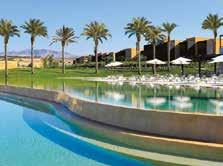
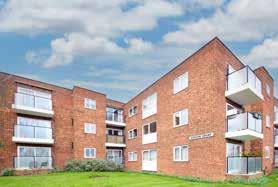
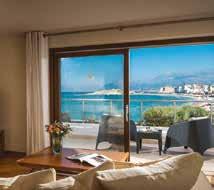
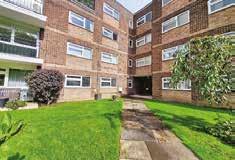
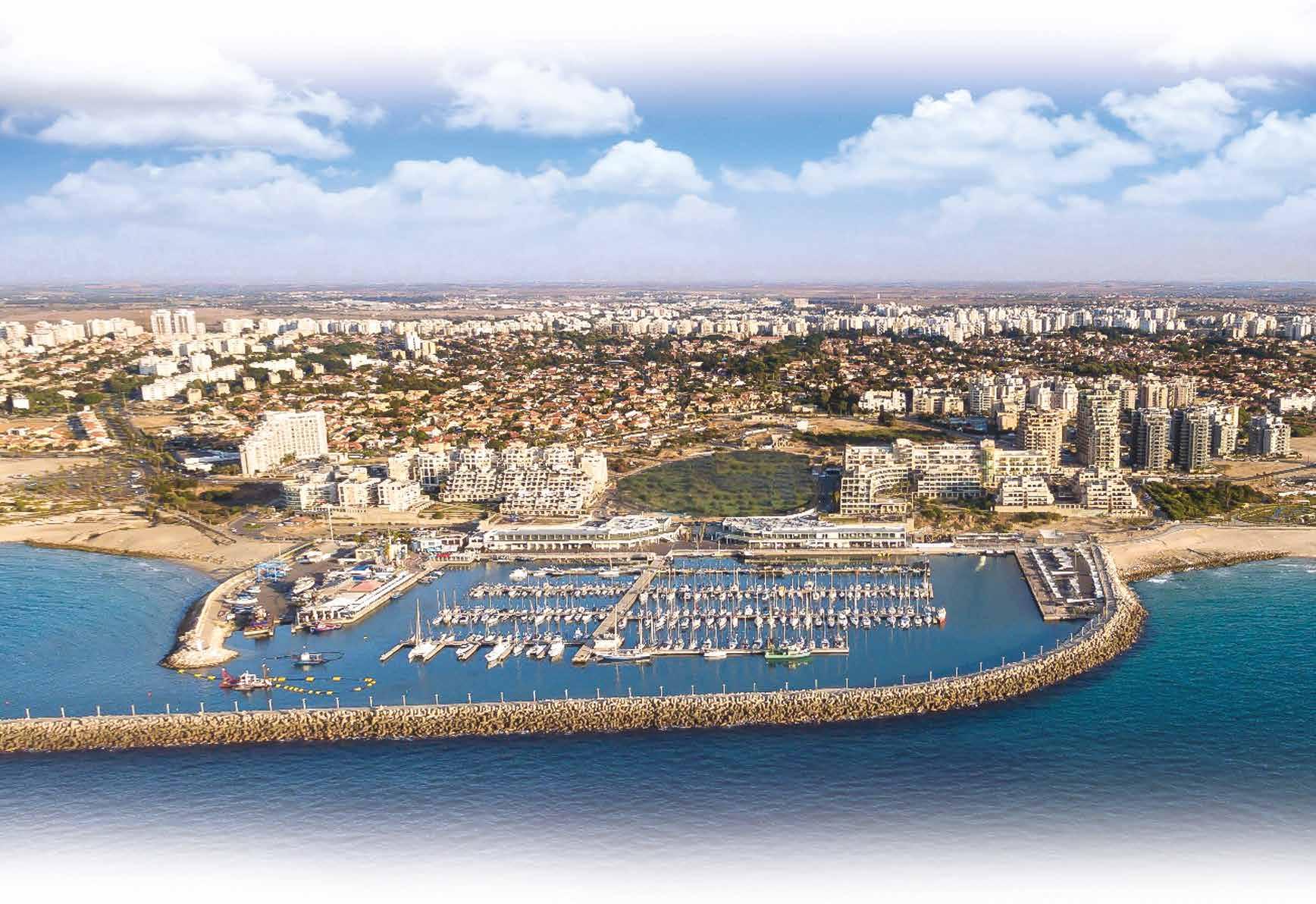
Just as SoHo came to define New York and Shoreditch reshaped London’s creative and cultural landscape, WHITE is shaping the next chapter of Tel Aviv. White comprises 20 buildings, rising between 8 and 13 storeys.
YITRO
SHABBAT: BEGINS ENDS
London 16:44 17:49
Manchester 16:46 17:55
Leeds 16:39 17:56
Liverpool 16:46 18:02
Birmingham 16:45 17:54
Antwerp 17:23 18:36
Bournemouth 16:50 18:02
Gateshead 16:36 17:54
Jerusalem 16:42 17:57
MORE THAN LINES ON A MAP.
Bibi outlines ‘red lines’ ahead of US-Iran talks
BY DAVID SAFFER
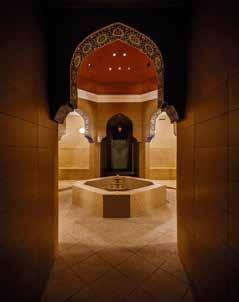
Prime Minister Benjamin Netanyahu has discussed Israel’s ‘red lines’ and military options with US special envoy Steve Witkoff ahead of expected US-Iran nuclear talks in Oman tomorrow.
Despite diplomatic efforts tensions remain high in the region over a potential US strike on the Iranian regime.
Netanyahu, Witkoff, IDF
Chief of Staff Lt. Gen. Eyal Zamir, who held talks with US defense officials on Iran in Washington last weekend, and Mossad chief David Barnea, addressed Israel’s position in anticipation of the US’ negotiations.
Key issues are the Iranian nuclear and ballistic missile programmes and Iran’s
regional proxies.
Witkoff is set to meet Iranian Foreign Minister Abbas Araghchi with Jared Kushner in Oman.
Representatives from Egypt, Qatar, Oman, Pakistan, the United Arab Emirates and Turkey are reportedly expected to attend the talks.
White House press secretary Karoline Leavitt told reporters on Tuesday that President Donald Trump was keeping open the option of military strikes should diplomacy fail.
Iranian President Masoud Pezeshkian said Tuesday that Tehran would pursue negotiations. Trump has warned of sending a US “armada” to the region and ‘bad things’ would happen if a deal is not reached.
Continued on page 2
US Special Envoy Steve Witkoff meets with Prime Minister Benjamin Netanyahu in Jerusalem PHOTO: KOBI GIDEON/GPO
Continued from page 1
“We have a tremendous force going there, just like we did in Venezuela, even bigger, and they’ll be there soon,” he told reporters at the White House on Monday. “I’d like to see a deal negotiated but I don’t know that that’s going to happen. But right now we’re talking to them, we’re talking to Iran, and if we can work something out that would be great, and if we can’t probably bad things will happen.”
According to Bicom, Israel’s approach to a negotiated US-Iran settlement is ‘multilayered scepticism’ over Witkoff’s motives and capabilities, and viability of a
deal even if it is presented as ‘good’.
Israel will insist on zero enrichment and removal of uranium, they have called for a reduction in missiles in terms of range and production capacity, and Iran must stop backing proxy armies.
Netanyahu’s office ahead of the meeting with Witkoff stated that Iran could not be trusted.
“The Prime Minister clarified his position that Iran has repeatedly proven it cannot be trusted to keep its promises”.
The UK has begun the process of proscribing the IRGC a terrorist group. This followed the EU taking the stance after France dropped its opposition against banning the terror regime.
Anti-government protests across Iran have allegenly caused tens of thousands of people to be killed.Iran is believed to have thousands of missiles within range of US troops in the region and Israel.
Iran and the US held indirect nuclear talks in 2025 before Israel’s strike last year followed by the US’ strike, on the regime which ended the negotiating process until potentially this week.
Spend your retirement doing what you love - not worrying about money
US President Donald Trump speaks to reporters in the Oval Office in Washington PHOTO: ANNABELLE GORDON, AFP
Rafah crossing opens as Hamas disarmament talks continue
BY ADAM MOSES
Israel has opened up the controversial Rafah Crossing to limited numbers of people this week.
Following a series of ‘technical tests’ five Palestinians crossed the border in a ‘medical evacuation’ according to reports. The crossing is being operated by Egypt with European Union support.
In a detailed agreement, Egypt is sharing details of those crossing in advance with Israel.
Outgoing Gazans will not undergo Israeli security checks, those entering the
Strip must pass an IDF inspection point that includes facial recognition to verify identities.
It is anticipated up to 150 people will leave Gaza daily, 50 people requiring medical treatment plus two companions.
Fifty Gazans who left during the war will be allowed to return daily.
Tensions remain high in the region amidst a constantly changing series of media reports.
The IAF carried out air strikes against Hamas and Palestinian Islamic Jihad targets last weekend following ceasefire violations including an attempted attack
on IDF soldiers in the Rafah area and along the yellow line.
Targets struck reportedly included a Hamas police station, an outpost in Al-Mawasi, an arms storehouse, arms production site and rocket launching sites.
The IDF also targeted four commanders from Hamas and Palestinian Islamic Jihad.
“The terrorist organisations in the Strip have been systematically violating international law amid the cruel exploitation of civilian institutions and by acting among the (civilian) population in the area,” an army spokesman confirmed.
Bicom noted the airstrikes were the most intense since the ceasefire came into effect and illustrated that Hamas had no intention of giving up weapons so terrorists can attack the IDF.
“Hamas has been using guerrilla tactics in a bid to challenge Israel and to inflict casualties among the IDF troops deployed in the area of the yellow line,” a spokesman noted. “Hamas are in fact rehabilitating their forces and reinforcing their control.”
Bicom also observed there has been criticism in Israel
about government policy reopening the crossing before Hamas’ disarmament and demilitarisation in the Strip.
Prime Minister Benjamin Netanyahu’s government argue the agreement enables Israel to share information with partners resulting in transparency over Hamas violations and Israeli actions that did not occur before all the living hostages and the remains of those murdered were finally released.
Longer term, Israel will insist the Philadelphi Corridor separating Gaza from Sinai will remain in Israeli control even after withdrawals from the yellow line.
This will be seen by government supporters as an important achievement.
In related news, US Ambassador to the United Nations Mike Waltz said this week Hamas would be encouraged to surrender its weapons. Under the plan, participants could receive funds, jobs and amnesty.
Bicom noted that Israel was unlikely to support this approach as it does not solve large arms.
Special Middle East, Steve Witkoff, who arrived in Israel this week to discuss Iran, said the terrorist group would demilitarise “one way or another”.
“They will because they have no choice,” he told reporters. “They’re going to give up their AK-47s.”
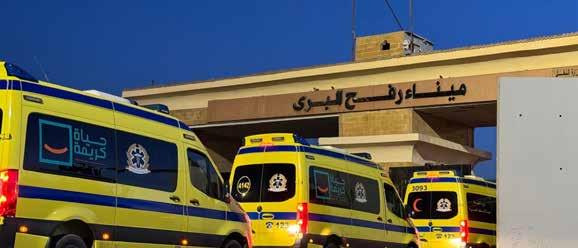
Ambulances wait in line at the Egyptian side of the Rafah border crossing
PHOTO: AFP
1 HOUR AFTER SHABBAT
Herzog embarks on Aussie solidarity tour
BY DAVID SAFFER
President Isaac Herzog departs on an official solidarity visit to Australia this Sunday.
Herzog will visit Jewish communities across the country in the aftermath of the Bondi Beach terror attack in Sydney on the opening night of Chanukah last December.
Herzog will meet bereaved families of victims and families of those injured. He will also meet Australian Prime Minister Anthony Albanese and Governor-General Sam Mostyn alongside leaders across the political divide.
Senior leadership of the Australian Jewish community will discuss with Herzog the rise in antisemitism since the October 7 terror attack. Herzog will also be briefed on activities to combat anti-Jewish hate by the Jewish Agency and World Zionist Organisation to help strengthen Jewish communities.
Accompanying Herzog is a solidarity delegation from Israel’s national institutions including WZO chairman Yaakov Hagoel and Jewish Agency chairman Maj. Gen. (res.) Doron Almog.
Albanese apologised to the Jewish community on a national day of mourning at a recent memorial service at Sydney Opera House.
The Aussie leader said the atrocity “changed everything” in Australia.
“We cherish the promise that this country is a safe harbour, sadly that
promise was broken,” he told mourners.
“You came to celebrate a festival of light and freedom and you were met with the violence of hatred. I am deeply and profoundly sorry that we could not protect your loved ones from this evil.”
Flags were flown at half-mast as Australia remember the 15 innocent people murdered.
Chabad Bondi selected the theme ‘Light will win, a gathering of unity and remembrance’.
The Australian government has called a Royal Commission on Antisemitism and Social Cohesion but have not waited for its findings to combat hatred. Parliament is introducing new laws. Politicians are targeting hate speech and hate preachers to counter radicalisation and extremism under Australian law.
The government is also working with states and territories to establish a National Gun Buyback Scheme and close loopholes in Australia’s gun laws.
Over 2,000 people fled the ChabadLubavitch ‘Chanukah by the Sea’ event as Sajid Akram, neutralised at the scene, and his son Naveed Akram, murdered 15 people aged 10 to 87 years of age in cold blood.
Rabbi Eli Schlanger of Chabad Sydney, Rabbi Yaakov Levitan of Sydney Beth Din and Holocaust survivor Alexander Kleytman were among the first named victims.
Reuven Morrison, Tibor Weitzen, Peter Meagher, Dan Elkayam, Marika Pogany Boris and Sofia Gurman, Edith Brutman,
STRONG COMMUNITIES, STRONGER ISRAEL.
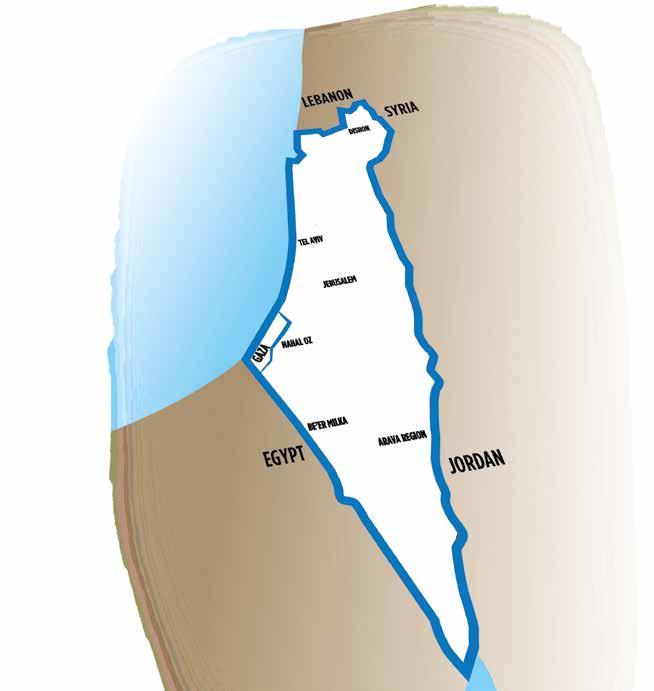
Israel’s borders are more than lines on a map.
They are living, breathing communities - home to families, pioneers and young leaders who choose to build their lives on the frontier. When Israel’s borders are strong, the whole country is stronger.
This Green Sunday, JNF UK is strengthening Israel from the edges inwards – rebuilding shattered communities, restoring daily life and empowering a new generation to protect Israel’s future.
and 10-year-old Matilda were also fatalities.
Ahmed al Ahmed heroically disarmed Naveed Akram, who was arrested with critical injuries.
New South Wales Police charged him by his hospital bed with 15 counts of murder among 59 offences, including a count of committing a terrorist act.
Prime Minister Benjamin Netanyahu and US President Donald Trump praised Ahmed for his actions.
Netanyahu described the atrocity as “cold blooded murder” and accused Albanese of spreading antisemitism after he announced his government would recognise a Palestinian state at September’s UN General Assembly.
Herzog arrives days after nurses Sarah Abu Lebdeh and Ahmad Rashad Nadir at Bankstown Hospital, Sydney, pleaded not guilty to threatening to kill Israeli patients at a court hearing.
The nurses, suspended for two years, told Israeli influencer Maz Veifer last February they had harmed Israeli patients and would continue to in the future. The video, which went viral, received global condemnation by Jewish organisations. The trial begins in August.
Both nurses face charges for using a carriage service to menace, harass and offend. Abu Lebdeh is also charged with threatening violence. Nadir is charged with possessing an illegal drug.
Herzog, meantime, this week received diplomatic credentials of new
Ambassadors to Israel of Fiji and Thailand.
Herzog congratulated the first residential Ambassador of Fiji to Israel, Jesoni Vitusagavulu, on a historic decision to open an embassy in Jerusalem, describing it as a “significant step” in bilateral relations.
“This is a fantastic moment,” he said. “The future of so many important global issues depends on the Pacific region, including in the maritime sphere, climate, and energy.”
Vitusagavulu responded: “We share our prayers for security and peace for Israel, we stand together with Israel.”
Earlier, Herzog met the new Ambassador of Thailand, Boonyarit Vichienpuntu. Herzog praised relations between Israel and Thailand and cited new opportunities for cooperation.
He stated: “Israelis love Thailand. During the war, due to the tragedies that occurred, Thai citizens resident in Israel became a part of our family. There are many opportunities to enhance our bilateral relations in economic ties, science and technology, and tourism.”
SOHO Inside Jerusalem’s
Next Anglo Neighbourhood
For many families, the idea of living in Jerusalem is deeply appealing, but it often comes with a real concern: leaving behind the community life they have built over many years.
The New SOHO of Jerusalem has been planned with exactly that in mind.
Overlooking Katamonim, this new neighbourhood is being created as a place where people do not arrive alone, but into a ready-forming Anglo community. It offers the chance to live in Jerusalem while keeping the kind of community life people value, supported by an English speaking Synagogue and a Rabbi relocating from overseas specifically to build, guide and inspire that community in the heart of the holy city.
Developed by Africa Israel Residences in partnership with Kidmat HaYovel, the New SOHO of Jerusalem is one of the largest new neighbourhoods currently underway in the city.
The project includes five residential buildings, each 34 storeys high, with approximately 220 apartments per building, together they form a full neighbourhood.
Life in SOHO Jerusalem is designed to feel easy and complete. Parks, wide walkways, cafés, leisure and fitness facilities, residents’ spaces and areas
for children are all part of the plan, allowing everyday life to happen close to home. This is a place where families can settle in, meet neighbours, and build real friendships.
Homes range from one to four bedroom apartments, alongside garden apartments and penthouses. The layouts are generous, with large windows and balconies, enjoying open views across Jerusalem. Specifications are high, with underground parking, smart home preparation and Shabbat compliant systems included, reflecting the project’s upscale nature.
The location is another key part of its appeal. Overlooking Katamonim, the neighbourhood sits close to some of Jerusalem’s best known landmarks, including Malha Mall, Teddy Stadium and the Pais Arena, which has been known to add the occasional live match to the evening view. Cultural venues and Jerusalem’s growing hightech scene are also nearby, keeping residents close to the energy of the city while enjoying a calm place to live.
The project is now launching at the presale stage. This means early stage pricing, flexible payment terms and access to the full range of apartments, advantages that will not be available later on. Prices start from NIS 2,400,000, with deposits from as
little as 20% to secure a property. Importantly, prices agreed now, are not linked to the Israeli building index, so buyers know exactly what they are committing to from the start.
The first phase is scheduled for completion in 2029, making this an opportunity for those planning ahead, whether for relocation, future family needs or simply having a meaningful base in Jerusalem.
The New SOHO of Jerusalem is not just about buying an apartment. It’s about joining a community neighbourhood, guided by leadership, rooted in shared values, and built in one of the holiest city in the world.
If Jerusalem is part of your future conversation, now is the time to explore The New SOHO of Jerusalem. This project is launching at presale stage, you can secure your home in Israel with as little as 20% deposit. A short call or Zoom conversation will give you a clear understanding of pricing, options and whether this neighbourhood could be right for you and your family.
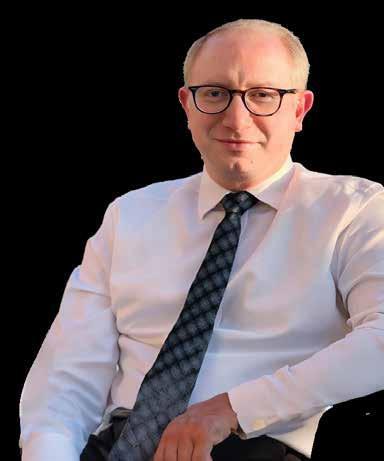
To arrange a private conversation, contact: Lior David +972 58 444 1222 lior.d@africa-israel.com
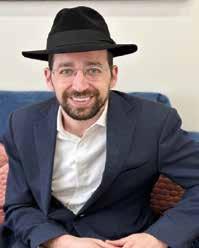
rabbi.burman@bwkollel.org
Please support Jami’s 36-hour crowdfunder this Sunday and Monday.
Right now, people in our community are facing overwhelming mental health challenges. With long statutory wait lists and unaffordable private costs, too many have nowhere to turn.
Jami’s Talking Therapies is a lifeline for young people and adults providing:
• A safe, non judgemental space to talk and be heard.
• Professional support to work through trauma, loss, low self worth, suicidal thoughts, abuse, health anxiety, antisemitism, anxiety and depression
• A place to address difficulties before crisis point.
We cannot allow people to fall through the gaps. By supporting our appeal, you can ensure that we can be there when it matters most.
The future is bright in Israel
Raymond James Golders Green, together with The Jewish Agency, invites you to explore the Aliyah process, including incentives, tax savings and financial opportunities.
Tuesday 24th February 2026 | Zoom Webinar, 4pm GMT
Including special guest speakers:
Avichai Kahana
Director General of the Ministry of Aliyah & Integration
Simon Benarroch
Chartered Wealth Manager & Branch Principal
Visit our website at GoldersGreen.RaymondJames.uk.com or scan the QR code to register. For more information, call 020 8202 1944 or email us at GoldersGreen@RaymondJames.com
With investing, your capital is at risk. Tax treatments are subject to individual circumstances and are subject to change.
Mental Health Training Event – Tu Bishvat
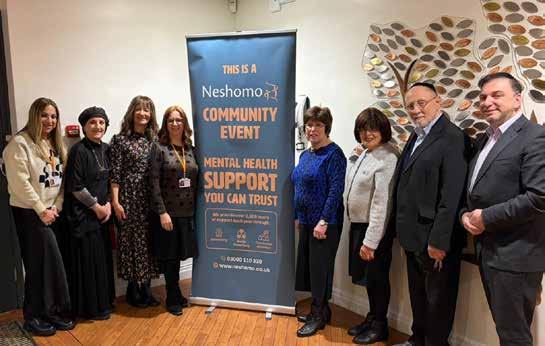
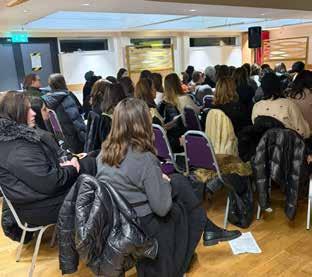
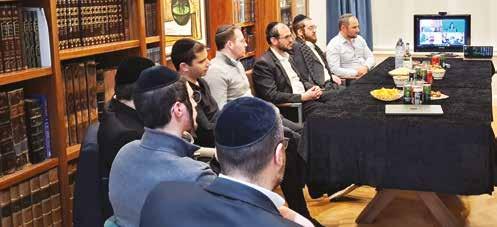
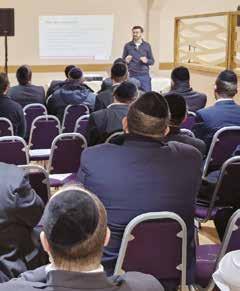
As part of its drive to expand enhanced care services, Neshomo hosted a Mental Health Training Event on Sunday 1st February (Tu Bishvat) at Stenecourt New Hall, Manchester.
The evening was opened by Mr Yitz Strom, Clinical Director of Neshomo, who praised the dedication of Neshomo’s befrienders. He shared a teaching from the Tosefta describing how, at the Yam Suf, no one stepped forward until Nachshon ben Aminadav of Shevet Yehuda took personal responsibility and entered the sea.
Reb Chaim Shmuelevitz zt”l explains that this act of courage merited Malchut for Yehuda — and this, Mr Strom explained, is the defining middah of a Neshomo befriender: seeing someone struggle and
choosing to step in when others hesitate.
The immersive evening included CPD-certified mental health training delivered by Project Lily (London), a live link with Rabbi Jonathan Dove, a mindfulness exercise, Tu Bishvat refreshments, and a raffle, with prizes drawn by Dr David Marshall, Chair of Neshomo.
Over 70 attendees from across the Manchester kehilla participated.
Attendees were deeply moved by a courageous lived-experience account shared
by a Neshomo client, who spoke openly about emerging from a period of profound darkness:
“Even when there feels like there is no hope, there is hope. It’s not my strength — it’s Hashem’s strength. Neshomo didn’t just help me survive; it helped me get up, get out, and simply be. I can never fully express my gratitude.”
A Neshomo befriender also shared their experience:
“I wanted to do something meaningful for the community. The matching process was thoughtful and thorough, and the support ongoing. I’ve built a positive, supportive friendship with my client, while maintaining healthy boundaries. This experience has been incredibly rewarding and highlights the importance of community-based mental health support.”
The event also addressed the wider emotional impact of the ongoing Israel–Hamas war and the recent Manchester Yom Kippur terrorist attack, acknowledging the collective trauma felt within the community.
The evening was generously funded by VSNW, Live Well, and the Inclusion and Wellbeing Partnership Fund.
To join the Manchester Neshomo Befrienders team or to refer a client, visit www.neshomo.com or call 0300 011 0330.
Israel Properties: Your Trusted Partner for Buying Property in Israel
Buying property in Israel is both an exciting opportunity and a complex process—particularly for international buyers navigating distance, language, legal systems, and market nuances.
Israel Properties by Stamelman & Partners was established to bridge that gap, offering clarity, confidence, and full-service support for buyers from around the world.
Israel Properties is a boutique real estate firm specializing in guiding international and Anglo buyers through the Israeli property market. With years of experience and a strong on-the-ground presence, the firm provides far more than property listings—it delivers strategic advice, hands-on project management, and a comprehensive real estate solution under one trusted roof.
From the very first conversation, Israel Properties focuses on understanding each client’s goals—whether purchasing a family home, an investment property, a holiday apartment, or a long-term relocation asset. Clients are guided through location selection, budget planning, property comparisons, and realistic market expectations, ensuring decisions are made with confidence and transparency. What truly sets Israel Properties apart is its end-to-end service model. The firm supports clients through every stage of the journey: sourcing suitable properties, coordinating viewings (in person or remotely), negotiating on the client’s behalf, and working closely with trusted legal, mortgage, and tax professionals. This integrated approach saves time, reduces risk, and eliminates costly mistakes—particularly for overseas buyers who cannot be present at every step. For buyers purchasing new-build or offplan properties, Israel Properties offers a dedicated Project Management Division. This service manages the process from contract signing through handover, including selections, upgrades, inspections,
snag lists, and coordination with developers and suppliers. Clients benefit from having a reliable local representative safeguarding their interests throughout construction and delivery.
Investors and absentee owners are further supported through the firm’s Rental and Property Management services, providing tenant sourcing, ongoing management, and peace of mind once the keys are handed over. Clients know their property is professionally cared for, even when they are thousands of kilometres away.
International buyers trust Israel Properties because of its reputation for integrity, clear communication, and unwavering client advocacy. The firm is known for explaining not only the opportunities, but also the risks—ensuring buyers fully understand the financial, legal, and practical implications of their decisions. There is no pressure, no shortcuts, and no surprises.
With deep market knowledge, strong developer relationships, and an Anglo-focused service culture, Israel Properties has become a go-to partner for buyers from the UK, USA, South Africa, Australia, Europe, and beyond. Clients value the personal attention, responsiveness, and long-term relationship approach that continues well after the purchase is complete.
In a market where trust is essential, Israel Properties stands as a reliable guide—helping international buyers turn a complex process into a clear, well-managed, and successful property journey in Israel.
Contact us today and let us help you on your way home to where you belong . Tel & WhatsApp Israel +972 50-446-9515
Israel Office + 972 02 568 6578 www.israel-properties.com info@israel-properties.com
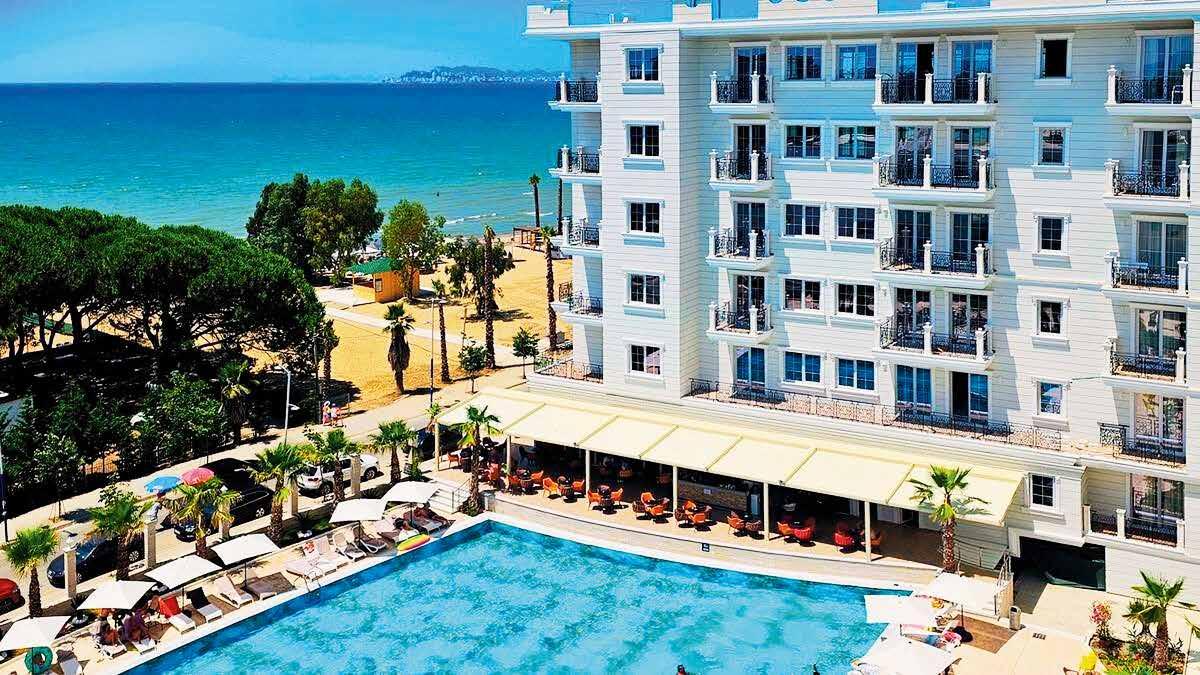
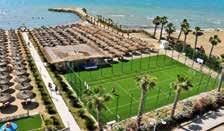
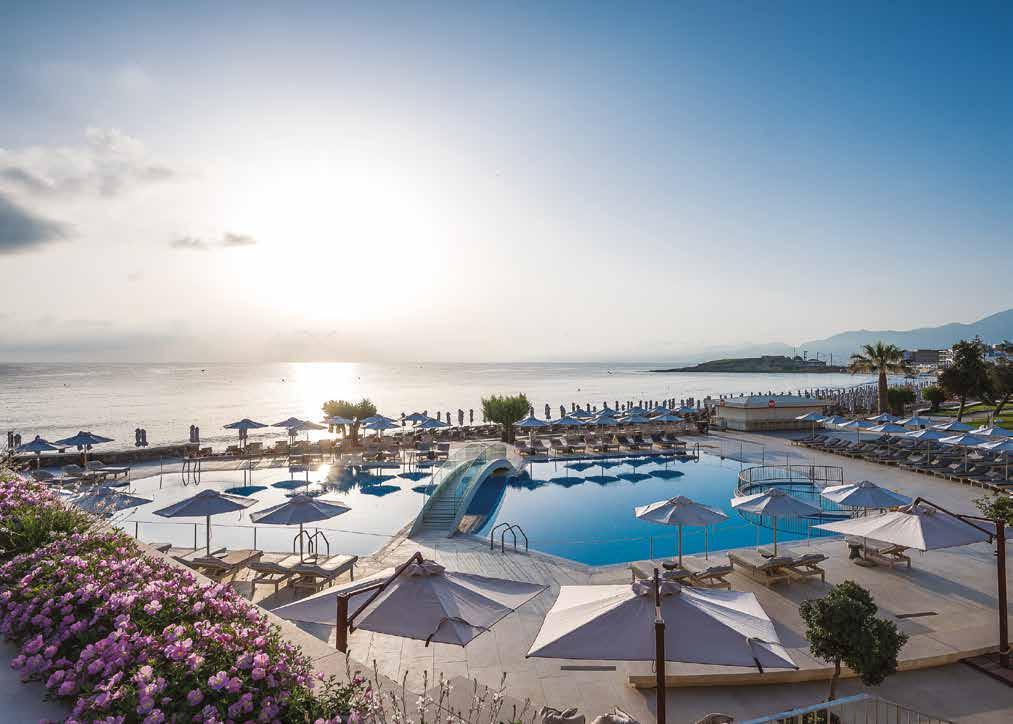
• A Rocco Forte Hotel & Leading Hotels of the World
• Entire Hotel Kosher for Pesach
• Indoor & Outdoor Swimming Pools
• Tennis and Pickleball Courts
• A Private Beach & Garden Areas
• Spa & Fitness Centre with Beauty Salon
• Fabulous Evening Entertainment
• 45 Holes of Championship Golf Courses
• Five-Star Glatt Kosher Cuisine
• Inspiring Scholars-In-Residence & Speakers
• Optional Chol Hamoed Excursions
• Fantastic Daily Day Camp and Baby Care
• A Huge Offering of Water Sports
Chai reacts to UK Government National Cancer Plan this World Cancer Day
As the UK Government publishes its National Cancer Plan, Chai Cancer Carethe UK Jewish community’s leading cancer support organisation - has highlighted the importance of ensuring people affected by a cancer diagnosis can access support wherever they live in the UK. In a paper published around this World Cancer Day (4 February), Wes Streeting, the Health and Social Care Secretary, has said that the government plans to reduce disparities in cancer care, improve early diagnosis and ensure specialist services are available across the country, including beyond major urban centres.
Meanwhile, Chai has expanded the range of services at its 11 centres across the UK, ensuring clients and loved ones affected by a cancer diagnosis, whether as a patient or a family member, can receive in person support regardless of where they are based. Services include counselling, support groups and complementary therapies to support people at any stage of a diagnosis.
To extend its reach further, Chai also offers a wide range of online support services for people living across the country. Described as a lifeline by clients over the Covid pandemic, these services continue to ensure that people who are clinically vulnerable or who need flexible, low contact support, can obtain care - ensuring services are available in a way that works for them.
One client, who wished to remain
anonymous, is supported by Chai’s service in Manchester. She says: “I look forward to the Chai sessions and gear my weekly schedule around these appointments. Entering Chai is like entering into my secret hideaway from the world. At Chai, I only meet people who are in similar situations to myself, which automatically puts me at ease. I don’t feel that I need to act in a certain manner or put on a smile if I don’t feel that way inclined at the time.
Everyone working here is friendly, caring but still maintains professionalism. From the way the appointments are booked and managed to my actual massage treatment, I am always treated with the same care and professionalism as if I was a paying client.”
vulnerable. With established hubs in North and South Manchester, Leeds and Glasgow, we also provide both remote support and home visits for clients in Liverpool and surrounding areas.
“Many of the people we support live outside major urban centres and we work flexibly to ensure they can still access care, whether that means arranging support at home or helping with travel to appointments.”
She adds: “The fact that we don’t need to pay for these services is such a blessing, as we would never be financially able to, as finance is usually an extra stress when dealing with cancer.”
Amanda Newdall, Chai’s Head of Northern Service in Manchester, says: “Our clients often tell us that being supported within their own community gives them a powerful sense of belonging and reassurance at a time when they feel most
She adds: “We help remove practical barriers to access. For clients who are unable to drive or are too unwell to travel independently, we can arrange transport through volunteers or taxis, ensuring no one is excluded from support because of distance, health or mobility. Chai often supports multiple generations within a single family, and every client is treated with sensitivity, dignity and respect wherever they are based.”
Dr Adrian Tookman is Chair of Chai Cancer Care’s Medical Advisory Panel, which brings together medical and nursing experts to oversee and advise on the charity’s cancer support services. Chai Trustee Dr Tookman, a retired palliative medicine physician, says: “Chai has always had processes in place to access
expert medical advice to inform and oversee the charity’s services, ensuring people receive safe, appropriate and holistic support alongside NHS care, wherever they live in the UK.”
Commenting on the National Action Plan, he adds: “We fully agree that the highest quality cancer care and support should be accessed by all, regardless of where someone lives. Clearly, early diagnoses is also key. We also acknowledge that new treatments and interventions may not cure cancer but, for many, cancer can become a long term condition. Living with cancer can be challenging physically and emotionally and a holistic approach to management is key. We believe Chai’s model enhances cancer care for Jewish people and we fully support the National Cancer Plan and the aspiration to have equitable care for everyone.”
Chai Chief Executive Victoria Portnoi says: “Any steps that help ensure people affected by cancer are recognised and supported wherever they live are to be welcomed. For many years, Chai has worked on the understanding that ability to obtain to support should never depend on geography. Through our 11 centres across the UK, from London to Manchester, Leeds and Glasgow, alongside our online services, we support individuals and families nationwide and remain committed to being there for people at every stage of their cancer journey.”
The Inside Story; Reflections of a new Trustee
BY GINA COWAN, NEW AISH TRUSTEE
As a newly appointed trustee of Aish, I was invited to join the Our Inside Story two-day campus roadshow recently, which was an experience that proved to be both eye-opening and deeply moving. The trip began with a Young Professionals networking breakfast and continued with visits to campuses in Nottingham, Manchester, Leeds and Birmingham. Over the course of two days, we were immersed in Aish’s campus programming, meeting students and the remarkable young rabbinic couples who serve as the backbone of Aish’s work on each site. What we witnessed firsthand was the extraordinary impact these couples are having on Jewish students across the UK. Students spoke candidly about their experiences of antisemitism, both on campus and, alarmingly, within lecture halls. These conversations offered an honest and in-depth insight into the challenges facing young Jewish students today.
At the same time, we saw the appreciation and genuine affection students feel toward the Aish couples. I was particularly inspired by the commitment and dedication of these young couples, many of whom have chosen to live far from their own families and communities in
order to support students during these formative years of their lives. They are not simply running programmes; they are creating safe spaces and fostering a true sense of belonging, providing a home away from home for Jewish students.
In Nottingham, we visited a newly upcycled warehouse transformed into a vibrant student hub, a space designed for students to socialise, connect and celebrate their Jewish identity. Hearing students speak about what this spaceand Aish more broadly- means to them was both inspiring and deeply moving.
In Leeds, students stepped into the role of leaders, pitching creative ideas in a Dragon’s Den-style session that showcased their initiative and vision for Jewish life on campus.
In Birmingham, nearly 100 students gathered for a BBQ, which a powerful reminder that sometimes the most meaningful impact comes simply from creating opportunities for connection and community.
This road trip was an invaluable opportunity to see the real-life impact of Aish’s work on campus. It reinforced for me just how vital this organisation is at a time when Jewish students need it more than ever. I do not believe that many parents fully understand the extent of what Aish
is doing for their children. It provides not only programming, but protection, mentorship and a sense of home. Having seen
it firsthand, I can say with confidence that Aish is changing lives, one campus at a time.
NEXT BEGINNERS COURSE!!
MONDAY 11TH MAY
7 WEEK COURSE 13:30 - 15:30 ONLY £110 PER PERSON
PRIVATE LESSONS NOW AVAILABLE IN YOUR OWN HOMETIME TO SUIT
FOR MORE INFORMATION: 0208 905 3877 SCHOGGER@HAROLDSCHOGGER.COM WWW.HAROLDSCHOGGER.COM
HAROLD SCHOGGER’S BRIDGE 18 HIGHVIEW GARDENS, EDGWARE, HA8 9UE
As the Survivors Leave the World Stage, The Responsibility Passes to Us
BY RABBI RAPHY GARSON
My colleague Tzvi Sperber, Director of JRoots, recently shared the latest global data on Holocaust survivors. It should make all of us pause. Figures released this month by the Claims Conference indicate that approximately 196,600 survivors are still alive today. They live across 90 countries, with half residing in Israel.
These numbers mark, painfully, the end of an era. For decades, survivors stood at the very centre of remembrance. They spoke in classrooms and communities, appeared in documentaries, and shared their stories with anyone willing to listen. Now, through the simple passage of time, they are quietly stepping off the world stage.
I vividly recall a striking moment in 1994, when Schindler’s List won the Academy Award for Best Picture. Steven Spielberg used that global platform to issue a plea that feels even more urgent today.
He noted that there were 350,000 Holocaust survivors still alive and urged educators to ensure the Holocaust would never be reduced to a mere footnote in history. He described survivors as experts who simply wanted to be useful in the years that remained to them, asking the world to listen to their words, their echoes, and even to their ghosts. Standing alongside him, was the film’s co producer Branko Lustig a survivor of Auschwitz. His words cut to the core of survivor testimony. “It’s a long way from Auschwitz to this stage. People died in front of me in the camps and begged me to be a witness to their murder and tell the world how they died.” Through the
film, he hoped to fulfil the obligation to the innocent victims of the Holocaust.
That obligation did not end with them. It’s been passed onto us. For over 20 years, JRoots has worked closely with survivors to ensure their voices are preserved and heard. Survivors have not only shared their experiences but helped shape Holocaust education around the world.
Their lessons are timeless. They have taught us the consequences of hatred, the danger of indifference, and the necessity of moral courage. Above all, they have reminded us that history is personal and that names and faces matter. To humanise the Shoah is not a choice. It is an imperative.
JRoots films, often filmed on the very soil where the survivors’ stories unfolded, are more than documentaries. They are living acts of preservation. Alongside our many educational initiatives, and our well renowned trips to Poland, these projects have reached thousands of people around the world, connecting new generations to voices that history cannot afford to lose.
Each documentary is an act of memory. Every story becomes a bridge between lived experience and the historical record. As the number of survivors declines, that bridge grows more fragile with every passing year.
In the words often attributed to the Baal Shem Tov: “Kol ha’olam kulo gesher tzar me’od - the whole world is a very narrow bridge.”
Our task is not to turn away in fear, but to have the courage to cross that bridge, carrying these stories forward and ensuring their voices will be heard for eternity.
This is why the recently published Penguin Sunday Times Bestseller book, ‘Miracle,’ and its accompanying JRoots
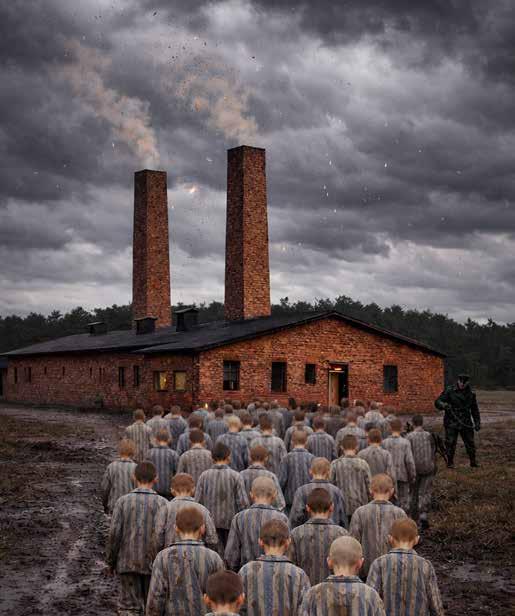
film, ‘Undeniable,’ Executive Produced by Rabbi Naftali Schiff, JRoots co founder, are so significant. The story of 51 Jewish boys who escaped from a gas chamber in Auschwitz in October 1944 is extraordinary, yet it is carefully documented and evidence based.
At a time of growing denial, this matters. The story restores dignity, identity, and truth and reminds us that even the most astonishing accounts must be grounded in rigorous verification.
The work of JRoots is critical and is driven by responsibility. Survivors have not told their stories to be admired. Rather so they would be remembered accurately and taught honestly.
Soon there will be no living witnesses left. When that day comes, the question will not be whether the Holocaust happened, because the evidence is overwhelming. The question will be whether we chose to carry the truth forward.
The survivors have done their part. Now the responsibility is ours.
Rabbi Raphy Garson BSc (Hons) was raised in Gibraltar. After serving for 18 years as Senior Rabbi of Ohr Yisrael Federation in Elstree, he and his wife, Deborah, moved to Hendon to lead the Rabbinic Team at Tiferet Eyal Synagogue. In addition to his communal work, Rabbi Garson has been extensively involved with Holocaust education. While working with the Holocaust Educational Trust’s Lessons from Auschwitz Project, he has led more than 6,500 non-Jewish students on educational visits to Poland in recent years.
Rabbi Garson also serves as a senior educator and guide with JRoots, heading its Sephardic Department and regularly leading Jewish heritage journeys to Poland, Spain, Portugal, and Morocco, taking thousands of participants on transformative experiences.
rabbi burman@bwkollel org
Creating Space to Grow: Why Mentorship Matters for Young Jewish Professionals
BY JADE GREENSPAN, EVENTS COORDINATOR, AISH YOUNG PROFESSIONALS
At a time when young Jewish professionals are navigating key career decisions while also working out how to live confidently and visibly as Jews, spaces for trusted guidance, connection, and mentorship have never been more important. Providing access to experienced professionals helps bridge the gap between ambition and opportunity, offering insight that cannot be gained online and strengthening professional networks within the Jewish community.
leaders for a morning of meaningful connection, career insight, and community building. The event created a space for intentional networking, thoughtful conversation, and practical guidance in a supportive and engaging environment.
It was within this context that, last week, Aish hosted a Young Jewish Professionals Networking Breakfast, bringing together emerging talent and established
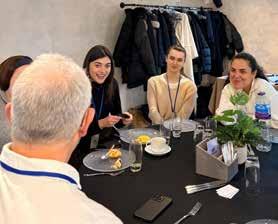
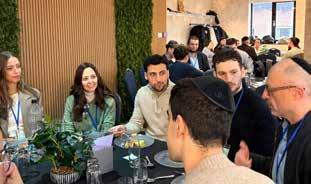
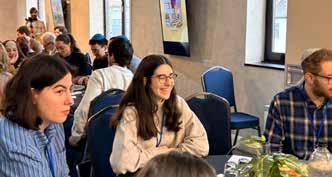
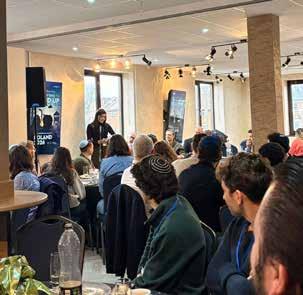
Over 80 Jewish Young Professionals aged 21–32 filled the room, alongside more than 10 senior professionals and industry leaders from across finance, law, tech, consulting, entrepreneurship, and the non-profit sector. The event ran at full capacity, with strong engagement throughout the morning, reflecting a clear appetite for spaces that feel purposeful, welcoming, and relevant. The format was carefully structured to maximise value. Participants were seated at tables while the professionals rotated every 10 minutes, ensuring that everyone had
the opportunity to meet, engage with, and learn from each professional in a dynamic and accessible way. This structure allowed conversations to move beyond surface-level networking and into something more genuine and meaningful. Feedback from attendees was overwhelmingly positive. Many shared that the structure made it easy to have genuine conversations rather than surface-level networking.
Others highlighted how refreshing it was to speak openly with professionals who were generous with their time, advice, and encouragement. Several participants left with clear next steps, new contacts, and a renewed sense of confidence and direction.
“After experienc-
ing the Bondi attacks while on holiday in Sydney, coming back to London and returning to a community that truly understands, supports, and holds you, felt incredibly grounding. Aish provides a safe space where you don’t have to explain yourself, you’re simply supported. The networking breakfast was a perfect example of Jews helping other Jews, and it reminded me how special that is. Aish makes London feel like a home away from home, something I’ll never take for granted.”
Continued on page 23
Continued from page 22
For many young professionals, there is real pressure around how to navigate their Judaism in the workplace - whether that’s responding to antisemitism, requesting time off for Jewish holidays or observing Shabbat. Participants found it deeply inspiring to hear from professionals who have successfully managed these challenges, gaining both practical guidance and reassurance. Hearing these lived experiences helped build confidence and empowered attendees to approach difficult conversations about their Jewish identity at work with clarity and self-assurance.
growth, and opportunity can thrive.
The strong turnout, high engagement, and quality of feedback all reinforce the value and demand for purpose-driven professional programming. This networking breakfast is quickly becoming a cornerstone of our Young Professionals activities, and we look forward to continuing to create spaces where connection,
Our next networking breakfast will be taking place on the 22nd of February. Alongside professional development, the YP department is deeply committed to supporting personal growth through one-on-one learning and our Tuesday night learning programme, which consistently attracts over 40 participants each week for dinner and a meaningful lesson. Last year alone, we engaged 5,997 young professionals, with 1,603 unique engagements and over 940 Shabbat meals. This year, we also have an upcoming Poland trip with over 40 sign-ups already, a Wales trip, a guy’s trip to Gibraltar, and a Purim murder-mystery dinner in collaboration with Ta’amim, another of Jewish Futures’ family of organisations. We hope to launch a run club among other new initiatives, and we will continue to creatively engage the community and provide young professionals with a space to grow, connect, and be proud in their Judaism.
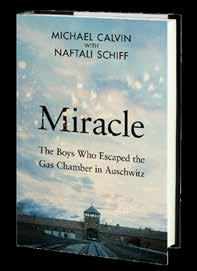
MIRACLE
To get the best value from your private medical insurance, you should speak to an expert who is qualified to advise you on the right policy for you, and recommend the providers who offer the most competitive premiums.
This advice covers individual, family and company policies, and is always FREE.
As an independent health insurance expert, I work with the healthcare insurers to provide you with the appropriate and most affordable level of cover. So whether you have an existing policy or not, let’s have a chat.
Looking for best value for Private Health Insurance? Ask The Expert!
Miracle reveals the story of fifty-one boys who escaped Auschwitz’s gas chamber - the only known group of Holocaust survivors to evade the Nazi killing machine. Based on first-hand testimonies of six survivors, this extraordinary book is an unforgettable tale
'A dramatic, poignant and astonishing untold story of the Holocaust.' SIMON SEBAG MONTEFIORE
Singer Shaindy makes London Debut with a SoldOut, Electrifying Night of Music and Community
London witnessed a standout moment in live music as singer Shaindy Plotzker made her London debut with a sold-out performance that left audiences buzzing. Staged at the iconic Shaftesbury Theatre, Songs of Geulah was far more than a
concert. It was a high energy celebration of music, connection and shared joy, bringing together women and girls from across the UK and beyond. Attendees travelled from Manchester, Gateshead, Leicester and even Germany to be part of
the unforgettable evening.
Produced by Apex Creatives, the event created a vibrant, welcoming space where audiences could come together to sing, dance and connect through music. The atmosphere was uplifting and empowering throughout, with a strong sense of community running through the night.
From the opening number, the theatre was alive with energy. Shaindy’s powerful vocals, magnetic stage presence and dynamic band were met by an audience that matched her enthusiasm at every turn. The crowd sang along, danced in the aisles and generated an infectious sense of excitement that filled the venue. As one attendee put it: “London has never seen anything like this before.”
Adding an extra layer of impact were three community choirs featuring local girls, whose rich harmonies elevated the performance and brought a dramatic, moving dimension to the evening.
The night also held a surprise moment when US vocalist Aliza Loeb made a special guest appearance, sending excitement levels soaring
and turning an already memorable concert into a true once-in-a-lifetime experience.
Beyond the music, Songs of Geulah also highlighted the power of live events to give back. The concert supported by The Jewish Family Centre, Zichron Menachem and Lev Echod - organisations dedicated to supporting families and individuals in need. One particularly moving moment saw a live hair donation on stage in support of Zichron Menachem, underscoring the event’s message of compassion and solidarity.
With its flawless production, exceptional performances and powerful sense of togetherness, Songs of Geulah marked a defining night on London’s live music calendar and a major milestone in Shaindy’s career.
The Jewish Family Centre (JFC) is the Jewish community’s one-stop hub for families, parents and children. They offer a wide range of services for families, parents and children navigating the challenges of everyday life https://jewishfamilycentre.org.uk
Zichron Menachem and Lev Echod support children and young people going through cancer: https://levechod.com https://zichron-intl.org/
We’re Together, property finance experts with common sense.
Whether you’re buying commercial or residential property or investing in your business, our wide range of mortgages and secured loans can support your ambitions at pace.
Heter Iska funding available.
Why Together?
• Speed and flexibility – fast lending available on a variety of property types from industrial to flats, with flexible criteria.
• Relationship lending – our experienced property funding experts can make quick decisions, with a strong appetite to lend.
• Lending since 1974 – trust our 50-year heritage backed by our funding capability.
The Mesila Impact
Before you coached us, money worries sat quietly in the background of our lives.
Not loud enough to be called a crisis, but persistent enough to cause concern.
We are a busy working couple blessed with a large family. We had outgrown our home, but despite earning well, the idea of taking on a larger mortgage felt impossible.
More fundamentally, everything looked fine yet we felt financially stuck. Between school fees, kosher living expenses, and simchos, we assumed this was simply how life was at this stage.
We reached out to Mesila because our finances always felt tight and never made sense.
The early meetings were revealing. Our Mesila coach slowed us down to look clearly at what we earned, what we spent, and how everything interacted. Seeing it laid out so clearly was eye-opening, but at first we struggled to see how things could change.
Our coach showed us how we could feel that money was under control rather than overwhelming.
Mesila opened up possibilities where we had only felt pressure and anxiety.
We learned exactly where our money was going and where we had room to adjust. That clarity allowed us to streamline our spending without compromising our lifestyle, saving hundreds each month. For the first time since starting our family, our finances felt clear and manageable.
Halfway through the process, real change began to happen.
With our coach’s encouragement and practical support, we asked for salary increases that raised our household income by over £10,000 a year. Our coach also helped us plan for the future. We set up proper savings for upcoming simchos, replacing the old habit of hoping we would manage when the time came.
What surprised us most was how much Mesila changed our relationship with money. With our coach’s guidance, tense conversations became calm and practical, and we learned how a financial plan could work in real life, even when the unexpected came up.
WHAT3WORDS/// Why We’re Staying
BY RABBI NAFTALI SCHIFF
A short disclaimer. I’m not writing this as an exercise in either self indulgence or virtue signalling. We have discussed here on occasion, the ten core values that permeate our thinking and modus operandi across the entire Family of Jewish Futures. One is humility anavah alongside another- a deep attempt to live with bitachon, trust in the Almighty. As a close-knit group of rabbis, educators, community professionals and volunteers, we constantly remind one another to speak in terms of “we” rather than “I”; to recognise that any creativity, success or impact we may have is never truly ours. We recognise that success is always a gift from Heaven.
If one lives with an awareness that it’s never about “me”, always about “Him” and about the empowered sense of working together ( another of the core values of JF) as “we”, then aspiration ( and there’s another!) too, has no ceiling. He has no limitations. Miracles, too, are part of His natural order.
At the same time, another of our core values is authenticity, both personal and institutional. And authentic leadership sometimes demands vulnerability. That can look self-indulgent from the outside. My wife keeps me in check on that score!
One of the many insights of the past ten days during which Miracle, published by Penguin and Bantam books, entered the Sunday Times Bestsellers List at #3, alongside the immediate acclaim of the JRoots documentary Undeniable, is the extraordinary potency of authenticity combined with vulnerability.
I had the immense privilege of personally interviewing each of the six heroes at the heart of that remarkable Simchat Torah story in Auschwitz, 1944. My desire to sit with Holocaust survivors over the past two decades has always been driven by precisely this quality. These octogenarians and nonagenarians have nothing to gain by posturing. They speak plainly, honestly, without varnish. In a world of curated identities and augmented realities, they have been and shall forever remain, amongst my greatest teachers, friends and mentors.
From Montreal to Manchester, New York to London, Netanya to Herzelia, teenage Chassidishe cheder kids who became Heiliger zeides. I was struck again and again by their commitment to truth and their irrepressible drive for life
and belief in the indomitable endurance of the Jewish People.
Which brings me to Why We’re Staying.
With young children in tow, we returned to the UK in 1999 for what we planned to be two years of communal service. In 2001 we decided to extend for a third year with Aish, and then another and yet another. Each year that passed, together with others, at Aish we built more infrastructure, more reach, more capacity.
Young Jews across schools, campuses and communities nationwide were clamouring for what we were delivering. Despite the challenges, we saw the glaring need to provide more engaging social and educational solutions for a younger generation of British Jews increasingly at risk of losing their connection to Jewish life altogether.
After several years, I wrote a deeply personal letter to our children explaining why we were still not returning home. We still haven’t, despite the fact that the only home we own is in Jerusalem, literally two minutes from the Kotel.
The past two years have been agonising for Jews everywhere. At times, the
future because they are hated. I pray for the day when the Anglo Jewish press will abandon this self defeating weekly narrative. It doesn’t bode well for ensuring vibrant Jewish future UK.
Young Jews commit because of hope. Because of meaning. Because of joy, purpose, intellectual honesty, warmth, belonging.
That is why over 20,000 young people are drawn in person to Aish, GIFT, FJL, Eilecha, Chazon and JRoots each year. Like the Miracle survivors, we choose optimism, vitality, joie de vivre and the compelling nature of Jewish life and life itself.
A few months ago, I was at a shiur in Jerusalem given by Rav Yitzchak Berkovits.
A Rabbinic student asked perhaps the most searching question of
taught by Lady J some 30 years ago the concept of noblesse oblige, blessing carries responsibility. (another of our core values at JF!) We’re staying because before the Torah was ever given, the mission statement of the Jewish people was already clear- as stated in this weeks portion-
An-
glo-Jewish conversation has slipped into a self-defining narrative of fear, victimhood and wallowing. Some seem determined to allow antisemitism to define who we are and where we belong.
I refuse that.
We will champion our rights as Jews in Britain and stand firm against those who wish us harm. We will defend our people and institutions without hesitation. But no emotionally intelligent young Jew will ever wholeheartedly commit to a Jewish
all: “How do I know my tachlis , my role in the world?”
Rav Berkovits answered with characterist.
First: what are the unique talents with which you’ve been blessed?
Second: what does the world genuinely need right now?
Third: where are you geographically?
All three matter.
So we’re staying in the UK because there are a quarter of a million Jews here to serve. We’re staying because I was
You shall be a kingdom of teachers and a holy nation. (Sforno)
A people supposed to model decency, integrity and menschlichkeit.
My father lived that as a British gentleman in business. Every single Jew can live it, each in their own way, as dictated by their unique personal role and tachlis.
We’re staying because there is critical work yet to be done. To inspire a younger generation of British Jews to experience the joy, depth and privilege of our 3,500-year-old inheritance.
We’re staying because there is no need to run.
And we’re staying because, during Covid, I saw firsthand the decency of a country that supported Jewish institutions and charities alongside all others, without distinction. I am grateful and indeed proud to be a British Jew.
We’ve been renting a home in London for 27 years. Our heart remains in Jerusalem. L’shanah haba’ah b’Yerushalayim is not a slogan for us it’s a commitment.
But our current purpose precedes that dream.
So, thats why- we’re staying.
And the work is far from done. I hope and pray each day that more and more responsible members of British Jewry partner with us in helping to achieve and in facilitating our purpose. It’s why we’re staying and it is our common destiny- to do all we can to ensure vibrant Jewish Futures.
Shabbat Shalom
///What3Words is a geocoding system.
In this column, Rabbi Schiff reflects upon 3 key words each week, relating to issues of the day.
All feedback is welcome. Nschiff@ jfutures.org
Rabbi Schiff is the Founder and CEO of the Family of Jewish Futures educational organisations
PESSAH 2026 GOLEM -ALBANIA
board Glatt Kosher Lamehadrin under the supervision of
FEEL GOOD!
NUTRITION TO SUPPORT YOUR PHYSICAL AND MENTAL WELLBEING
Join Project Lily for a free winter wellbeing webinar with Esther Donoff, registered nutritional therapist, as she explores how the food you eat can help improve your mood, boost your energy, and support your mental wellbeing.
• Wednesday 11th February 2026
• 8:00pm - Online via Zoom – 50 minutes
• Webinar places are limited - booking is required.
ESTHER DONOFF BSC (HONS), MSC, MBANT, CNHC REG
Esther is a registered nutritional therapist and NLP coach. She has helped countless clients improve their health, from managing weight, cholesterol and blood sugar levels, to reducing IBS symptoms and improving mood and energy. She believes in a personalised approach to create nutrition and lifestyle plans that are truly bespoke and complement people’s lifestyles. She is also a lecturer, clinic supervisor and module leader on the MSc in Personalised Nutrition at the Middlesex University accredited Centre for Nutrition Education & Lifestyle Management.
Before the Fire
BY RABBI MOSHE TARAGIN
The events at Har Sinai are among the most dramatic moments in the history of religious life. For the first time since creation, Hashem entered the human world and revealed His will directly.
For thousands of years, human beings struggled to discern the presence of Hashem through nature—reading meaning into the heavens, the land, and the forces that shape life. Often, that effort went astray. The Creator was replaced with fragments of creation, and avodah zarah took the place of belief in the One Hashem who stands beyond the world.
At Har Sinai, that search came to a close. Hashem no longer needed to be inferred or reconstructed. He spoke. Humanity did not struggle upward through speculation; it stood and listened. From that moment on, the course of religious history changed.
A PAUSE BEFORE HAR SINAI
Yet the dramatic events atop that mountain are recorded in the Torah only after two seemingly ordinary episodes. First, Yitro—Moshe’s father-in-law—arrives with Moshe’s family. He is received with warmth and honor, welcomed by Moshe and the leaders, and invited to a festive meal. It is a gentle story of reunion and hospitality, all the more striking given the strain and uncertainty of desert life. Still, it is difficult to see what this scene has to do with the revelation of Torah at Har Sinai.
Immediately afterward, the Torah turns to another understated moment. Yitro observes Moshe judging the people from morning until night, resolving even the smallest disputes. Concerned that the burden will crush his son-in-law, he urges Moshe to delegate and to establish a system of judges. A judicial structure is put in place to support Moshe and sustain the people. This, too, is a valuable lesson in responsibility and leadership— but why does it stand at the threshold of Har Sinai?
Would it not have been more striking to open the section of Yitro with the thunder and fire of revelation itself? More iconic, more symbolic, to move directly into the moment when Hashem speaks? Why does the Torah pause for these accounts of family welcome and legal organization before ascending to Har Sinai?
FIRE AND RESTRAINT
Har Sinai marks the birth of religious commitment. Hearing the voice of Hashem fills human beings with passion, intensity, and awe. Religious energy surges, and zeal runs high after receiving the word of Hashem.
But uncontained passion can drift into extremism. Religious intensity, when left unrestrained, can harden into radicalism. Lofty spiritual aims can tempt people to
dismiss ordinary human conventions— moral restraint, social responsibility, even respect for law. When standing in service of a transcendent Hashem, human systems can begin to feel small or expendable.
To prevent this danger, the Torah establishes two foundations before revelation. Yitro cares for Moshe’s family while Moshe is consumed with the liberation of our people from Egypt. Moshe and the leaders pause, even in the harsh conditions of the desert, to receive Yitro with dignity and hospitality.
We are then shown legal structure. Yitro urges Moshe to create a system of judges, embedding law, procedure, and accountability into the life of the people. Authority is shared, enforced, and made sustainable.
Only once these foundations are in place can Torah be given. The religious intensity of Har Sinai must be framed by moral discipline and respect for law and authority. Without that prior structure, Har Sinai’s fire could ignite passion that overwhelms ethical conduct and erodes the rule of law.
Life often feels clearest at the extremes. Choices appear binary, and the world is reduced to black and white, right and wrong, with an air of absolute confidence. When religion becomes radicalized, that certainty is amplified by the added force of faith. Hashem is on my side. I act as His agent. How could I be wrong? Once framed that way, religious ends can be made to justify almost any means. The conviction of serving a higher purpose can license the erosion of ethical restraint and respect for law.
goals—especially when they believe they are serving Hashem— moral boundaries become fragile. Human conventions, law, and ethical expectations begin to feel secondary, even obstructive, when set against the sweeping agenda they believe they are advancing. Often they see themselves as voicing what others secretly feel but lack the courage to enact. In their own eyes, they are not violating norms; they are carrying the will of the collective further than others dare.
SOVEREIGNTY AND RESPONSIBILITY
OVERRIDING NORMS
A stark illustration appeared in the seventeenth century with the rise of the false messiah Shabbetai Tzvi, who persuaded a vast portion of the Jewish world that redemption had already arrived. Some of his followers embraced practices that openly violated halachah, including the consumption of forbidden foods. If the messianic era had begun, they argued, the old legal framework no longer applied. This phenomenon—antinomianism—marks an extreme rejection of halachah, rooted in the belief that transcendent redemption overrides binding norms. Whenever people are convinced they are acting in the name of higher
We are witnessing forms of this dynamic today, including within religious communities. In several settings, small but vocal extremist factions—often younger members—are acting in ways that disregard law and basic moral restraint in pursuit of deeply held ideological aims. In some cases, this has taken the form of disruptive protests that upend daily life for hundreds of thousands of citizens. At times, these protests have turned violent, with tragic consequences. Such behavior often reflects a broader culture in which legal authority is treated lightly. Regrettably, the actions of a few are casting a shadow over entire communities, breeding alienation and resentment rather than advancing communal values.
In other communities, the aspiration to settle the land—an ideal we all cherish— has been expressed through violence directed at police, soldiers, and non-Jewish residents. Beyond the inherent danger of such acts, they drain precious manpower and attention from security forces at a time of acute national need. Every resource diverted to containing internal violence weakens our ability to protect the country. These actions ultimately undermine the very cause they claim to serve, both practically—by portraying settlement efforts as violent and exclusionary—and spiritually, by betraying the expectation that we inhabit this land with respect for law, dignity, and human life.
In all these cases, religious passion, when severed from moral discipline and respect for law, becomes destructive. A higher ideal is invoked, but ethical conduct and legal authority are trampled in its name.
Our tradition accords deep respect to institutions of law and governance. Chazal teach that we are to pray for the welfare of the authorities, even when they fall short, because the alternative is chaos and anarchy. Alongside this, Torah affirms basic human norms of decency and moral conduct.
Similarly, we are instructed to live with derech eretz. This term does not simply mean morality in the abstract. It refers to the “ways of the land”—the human conventions of conduct, civility, and restraint that allow society to function with dignity. Chazal insist that derech eretz kadma laTorah. Just as the courteous and respectful encounter between Moshe and Yitro appears before the revelation at Har Sinai, the ways of the land must come before full Torah commitment.
Respect for law is even more critical in Israel. We finally live with Jewish symbols of authority and governance. What earlier generations could only dream of—a society shaped by Jewish sovereignty, Jewish courts, Jewish police, and Jewish soldiers—has become reality. To mock, weaken, or attack these institutions is not an abstract failure; it is a betrayal of generations who lived without them and longed for their return.
The writer, a rabbi at Yeshivat Har Etzion, was ordained by Yeshiva University and has an MA in English literature. His books include To Be Holy but Human: Reflections Upon My Rebbe, HaRav Yehuda Amital. mtaraginbooks.com.
Estate & Services Providers
ASHKELON
NP-ASHK02
Options Marina & New Ir Hayayin Areas, 10min to beach, ideal for investment.
Options from 1,950,000NIS for 3 rooms 2 beds, no linkage 20/80. 3, 4, 5 Rooms
NETANYA
Luxury projects, Ir Yamim & Shirat Hayam, sea views and walking distance to the beach. 5 Rooms plus NP-NET09 RAMAT BEIT SHEMESH
NP-RBSA04
Limited pre sale options and terms From only 2,500,000 NIS 15% now and 85% at end. No Linkage. 3, 4, 5, 6 Rooms
High end investment options, to live or rent out. Sea views and all amenities. Various options available. 1 to 3 Rooms NP-TIB05
We help you find your home, your place, where you belong and guide you every step of the way
CARMEI GAT
NOW includes new North Carmei Gat, New projects 4 & 5 rooms, penthouses and villas in new Anglo Central areas, ideal to live & invest 20/80. 2 to 4 Rooms
NP-NET12
Pre sale limited offer, Gali Yam in between Ir Yamim & Nitza, from 3.250,000 NIS, 15% now 85% at end, no linkage. 4 to 5 Room
MISHKAFAYIM
NP-RBSA01
4 rooms, 5 rooms last few options. 20% now 80% at end. Excellent location Mishkafayim Ramat Beit Shemesh 4 to 5 Rooms
BEER
New projects, Excellent location from 2.4 Million NIS. No Madad, limited options, 20% secures. 3 to 5 Rooms
THE REBBE’S ENDURING LEGACY
Dear Rabbi
This week marks 75 years since the Lubavitcher Rebbe assumed his leadership. His impact is undeniable, but what truly set his leadership apart?
Barry
Dear Barry
The Lubavitcher Rebbe stands as one of the most transformative Jewish leaders of the modern era. Seventy-five years after he formally assumed leadership in 1950, his influence continues to shape Jewish life across the world. But what truly set the Rebbe apart was not just his scholarship or charisma - it was his unique approach to leadership, one that combined profound vision with personal attention to every individual.
The Rebbe didn’t just lead from behind a desk; he was deeply engaged with people on an individual level. Whether speaking to world leaders, writing thousands of letters to people seeking guidance, or standing for hours on Sundays giving out dollars and blessings, the Rebbe made everyone feel valued. He saw potential in every Jew and responsibility in every human being. To him, no person was insignificant, no mitzvah too small, and no challenge insurmountable. His leadership wasn’t confined to Brooklyn, New York. Under his guidance, Chabad emissaries (shluchim) spread to every corner of the globe. Today, there are Chabad centres in over 100 countries,
ensuring that no Jew, no matter how far from a Jewish community, is ever truly alone. The Rebbe’s vision of unconditional love, outreach, and Jewish pride continues to shape Jewish communities worldwide.
But perhaps what’s most remarkable, 75 years later, is that his leadership hasn’t faded with time. His teachings, directives, and influence continue to guide and inspire. Thousands of people who never met the Rebbe still feel deeply connected to his wisdom and mission. His message was clear: each of us has the power to bring light into the world, to uplift others, and to transform challenges into opportunities. Seventy-five years on, the Rebbe’s leadership is as alive as ever. His impact is not just a legacy - it’s a living force, shaping Jewish life today and for generations to come.
WHEN ELOQUENCE OVERSHADOWS SUBSTANCE
Dear Rabbi I ventured into a Synagogue in the United States recently, and I sat through a sermon on the Shabbat. Someone told me, “He’s an absolutely mesmerising speaker.” So, I listened and it’s true, his words flow beautifully, his voice rises and falls at just the right moments, and he has this incredible ability to hold the entire congregation spellbound. But here’s the thing – I went back for three weeks running (they have a great kiddush afterwards). Each time I walked away
thinking, “Wow, that was amazing!” and then I realize that I have no idea what he actually said. There’s no real message, nothing to take home, just a lot of impressive rhetoric. It left me thinking why it is that we’re so easily captivated by eloquence, even when there’s no real substance? Why do we sometimes mistake style for depth. Surely, Synagogues should appoint Rabbis that can share words that don’t just sound good but actually mean something.
Gerard
Dear Gerard
All too often we are attracted by aesthetics more so than substance. My son recently sent me a link to a WhatsApp group – “Whisky Deals and Discussion UK.” I clicked on the link. 868 participants. Not long ago, someone posted a picture of three bottles. He wrote that he was going to open one of the bottles on Shabbat and did a poll asking which he should open. Two were known brands and the third not so but definitely an unusual looking bottle. The overwhelming consensus was to open that third bottle. Why? I assure you most hadn’t heard of it. Ochdamour 14.2 edition. Because the bottle looks real cool. That is the allure.
The very look is a marketing tactic and all the more crucial within the highly competitive whisky market today. The look of the bottle will initiate a first purchase, while the quality and taste will initiate a second purchase.
It’s actually the same tactic used in the whole advertising industry! Netflix calls a potential customer: “You want to watch a 10-hour movie?” Customer: “What? No! Absolutely not! Are you insane?!” So, what does Netflix do? They break it up into ten - hour long episodes and everyone’s binge watching all episodes in one
sitting.
The same is true with speakers. There are very eloquent speakers who can wax lyric, be profoundly poetic – they’re such gifted orators that they can turn people’s emotions on and off like a faucet. They have silver tongues and a strong command of the spoken language such that they can deliver their talk brilliantly. But sometimes one walks away from a really eloquent talk: “Wow that was amazing! You should have heard the Rabbi today!” “Really? What did he say? What was his message?” And that will be followed with silence. Stirring and expressive noise but no substance.
To be sure, presentation matters! We must always be aware of our target audience and the best possible way to draw them in. But key in all this remains eminently the message. And the message must be real and consistent. Otherwise, to be frank, whether you are “selling religion” or selling a product, you are little more than a snake-oil salesman.
DAVENING MINCHAH AFTER SHEKIAH MENACHOT 20b
BY RABBI YAKOV SCHONBERG
WHEN DOES THE DAY END?
Menachos 20b notes the halachah that the sprinkling of the blood of an offering must be performed before shekiah (sunset) on the day that the offering is slaughtered, after which it is no longer possible to perform the sprinkling. By contrast, sacrificial limbs may be burned throughout the night following the slaughter of the animal. This rule is derived from the words וֹתּוַֹּצַ
, “on the day He commanded” (Vayikra 7:38), which teaches that all sacrificial service must be performed during the day (Zevachim 98a). If the blood was not sprinkled before shekiah, it cannot be left for the next day. The Gemara in Zevachim (56a) learns that from a pasuk discussing the shelamim offering תֶא
, on the day that he offers his sacrifice, it shall be eaten (Vayikra 7:16). This teaches us that the offering, referring to the zerikah, sprinkling of the blood, must be performed before shekiah on the same day as the animal was slaughtered. Thus, blood that remains overnight becomes invalidated. Tosafos here (s.v. nifsal) asks that once we learn from the latter pasuk that an offering is invalidated after shekiah, why do we need the first-mentioned teaching in Menachos that sprinkling of the blood cannot be done after shekiah, if any offering is anyway invalidated after shekiah? To answer this question, Tosafos brings the famous opinion of Rabbeinu Tam that there are two levels of sunset, and a few words of introduction are appropriate to understand his approach. We shall see that there are different transitional stages of darkness until the full darkness of night is achieved.
DEFINITION OF NIGHTFALL
The halachic day begins with tzais hakochavim, when the stars come out. Although this refers to the appearance of three medium-sized stars, the Rishonim were stringent regarding Torah laws, such as the times for Shabbos to end and the recital of Kerias Shema, and require that one wait for three small stars. This is because not everyone is sufficiently expert to distinguish between large and medium-sized stars (Shulchan Aruch, Orach Chaim 293:2). However, for rabbinical laws, the halachah remains that medium-sized stars are sufficient. In earlier times, the time of night was ascertained by observing the sky to determine when three stars had appeared. In later years, this became impractical, especially when the sky was clouded over. Nowadays, with high levels of street lighting and pollution, the average city resident can no longer see
most stars. Nevertheless, the same result can be obtained by calculating how long it takes, after sunset, for three stars to appear. Sunset occurs when the disc of the sun dips below the horizon, and its timing can also be computed mathematically. There are two apparently contradictory sources in the Gemaros that discuss the length of time between sunset and nightfall, and their reconciliation lies at the heart of all the calculations.
TIME UNTIL NIGHTFALL
The Gemara in Pesachim 94a states that the amount of time between sunset and nightfall is the time it takes an average person to walk four millin. A mil is equal to 2,000 amos, between 0.6 and 0.7 miles depending on the size of the amah. Although a mil is a measure of distance, Pesachim 93b states that an average person walks 40 millin in a day; at 12 hours, that works out to 18 minutes per mil (720 minutes divided by 40). There are other views that the length of a mil is 22.5 or 24 minutes, depending on how one measures the day. The Gemara in Shabbos 34b states that according to Rabbi Yehudah, nighttime begins three-quarters of a mil after sunset. It further states (35a) that according to Rabbi Yosi, night begins slightly later, either the time of an eyeblink after Rabbi Yehudah’s time, or within the time it takes to walk 50 amos (about 30 seconds) afterwards. The Gemara also states that, according to Rabbi Yosi, night begins when three medium-sized stars appear, namely tzais makochavim. This is an apparent contradiction of the Gemara in Pesachim, which gives the measure of four millin (72 minutes).
four millin after sunset, as stated by Pesachim 94a. However, sunset being three-quarters of a mil before nightfall, as stated in Shabbos 34b, refers to a different level of sunset. It does not refer to sunset, where the sun’s disc dips below the horizon, but rather to a later time when the sun has travelled through the “thickness of the heavens” (עיקרִה יבוע). This later sunset occurs at three and a quarter millin (58.5 minutes) after the first sunset. These two sunsets are known as the beginning and end of sunset, or alternatively, as the first and second sunset. The three-quarters of a mil period (13.5 minutes) is known as bein hashamashos, a transitional period in which there is halachic doubt whether it is day or night. According to the Geonim and the Gra, this period of halachic doubt falls immediately after the first sunset, whereas according to Rabbeinu Tam, it falls after the second sunset.
RECONCILING THE DISCREPANCY
Returning to Menachos 20b, Rabbeinu Tam explains that for the purposes of Shabbos and other mitzvos, the day’s end is measured by transition to a high level of darkness; for the purposes of kodshim, the day is measured differently. The superfluous words וֹתּוַֹּצַ
with day and ends with night. This means that the night following the day on which the slaughter took place is part of that day, which in turn means that sprinkling performed on that night fulfils the requirement of being on the same day. We therefore need וֹתּוַֹּצַ
to teach that, nevertheless, the sprinkling may not be performed that night, because of a general prohibition against nighttime service.
The difficulties in understanding Rabbeinu Tam’s approach to nightfall, which is 72 minutes after sunset, have generated a vast literature with many different opinions, but we will focus here on a lesser-known angle, regarding the latest time for davening Minchah.
RABBEINU YONAH’S UNDERSTANDING OF REBBEINU TAM
TWO APPROACHES
There are two approaches to reconciling the contrary indications. The Gaonim and the Gra’s approach is that tzais hakochavim occurs three-quarters of a mil after sunset, as stated by Shabbos 34b. Pesachim 94a, which states that tzais hakochavim occurs four millin after shekiah, is not referring to the coming out of three medium-sized stars, which characterizes the halachic night, but rather to the “coming out of all the stars” (םיבכוכה לכ תאצַ). This occurs when the sky becomes completely dark, and all the stars become visible – a time that has no halachic significance. Rabbeinu Tam’s approach is that tzais hakochavim occurs
teach that validity hinges on daytime, that there must be the full light of day. It follows that although the term shekias hachamah usually refers to a much darker period, the end of shekiah, in the case of offerings, three-quarters of a mil before nightfall, exceptionally refers to the first sunset. The approach of the Geonim, which does not recognize two halachic sunsets, must explain the superfluous words
differently. According to that approach, we can explain that although the words
teach that the slaughter and sprinkling must be performed on the same day, we still need the pasuk of
. For the night that follows the day on which the slaughtering took place is a part of that day, because regarding kodashim, the rule is that the twentyfour-hour cycle of night and day begins
The Gemara in Berachos 26b states that the Minchah prayer recited every afternoon corresponds to the afternoon korban tamid. The Mishnah (26a) states that the Minchah prayer may be recited until the evening, which Rashi explains to mean until it gets dark. However, Rabbeinu Yonah comments that the Mishnah cannot be referring to tzais hakochavim because that would be night proper. Since the korban tamid could not be offered after the first sunset, even according to Rabbeinu Tam, as its blood would become invalidated at that time, Minchah too must be prayed before the first sunset (Berachos, p. 18, according to the Rif’s pagination). The Gemara’s linkage of the Minchah prayer with the korban tamid results in the anomalous situation that davening Minchah even a minute after the first sunset would be forbidden. As explained above, Rabbeinu Tam holds that sunset in relation to offerings must refer to the first sunset, and there is no doubtful period associated with it. According to the Geonim, 13.5 minutes after the first sunset is bein
hashamashos, a period of doubt as to whether it is night or day, which can allow leniencies in certain situations. Much has been written about the various practices for calculating calendar times, and, besides the issues mentioned here, they are affected by several other factors, such as latitude, elevation above sea level, time of year, and the ability to identify stars.
To contact Rabbi Schonberg, please email, yschonberg@gmail.com
To find out more, you can sign up at mercazdafyomi.com and receive a free gemoroh.
• Luxury resort with private beach
•
•
•
• Premium cocktail lounge & elegant dining
• Daily prayers & shiurim
• Exclusive tours to Crete's most spectacular sites
• Spa, fitness center, sports facilities
• Shainfeld managers with you throughout your entire vacation
“This spotlight now stands as a tribute to my late husband, Sam Wirth, who sadly passed away last year” Lynda Wirth
samuel’S story
Samuel Wirth’s z”l volunteering journey highlights how JVN connects people with roles that suit their skills, experience and interests Through a weekly JVN email, Sam discovered an opportunity with The Together Plan, a charity
supporting Jewish communities in Belarus, and was appointed as a Volunteer Caseworker within its Archive Services
Before retiring, Sam spent 50 years running his own language services company in the pharmaceutical sector. Alongside this, he volunteered as a Trustee of Raphael, a mental health charity now part of Jewish Care, recognising the importance of contributing beyond his professional life
“In retirement maintaining physical and mental health are of equal importance. By continuing to work, as a volunteer, for example, significantly helps maintaining mental health.”
After retirement, Sam was keen to remain active and engaged Volunteering allowed him to continue using his professional skills in a meaningful way In his role, Sam acted as a project manager, liaising between international clients researching their family roots in Belarus and archive teams based there.
Sam also valued being involved in wider initiatives, including heritage projects, the revival of Jewish communities across Belarus, and fundraising for the Brest-Litovsk Jewish Cemetery Memorial. His interest in the work was further strengthened by his family roots in Minsk
Sam was clear that “being a volunteer is not restricted to the retired,” and spoke highly of The Together Plan as a dynamic organisation led by a motivated and committed team.
CLOSING DOWN SALE!!!
• Knitwear from £10
• Casual Jackets from £29.50
• Sports Jackets and Blazers from £39.50
• Trousers £20 each 2 pair for £30 28-48 inch waist
• Shirts from £10
• Shoes from £15
Open weekdays until 6pm & Sundays til 5pm
FROM ERETZ YISRAEL
Why Didn’t Moshe Come Up with Yitro’s Solution? Weekly Dvar Torah
BY RABBI SHALOM ROSNER
After Moshe greets his father-in-law, he returns to his routine. Yitro witnesses the long lines of people awaiting a meeting with Moshe and realizes that this situation is doomed to fail. Moshe cannot single handedly teach and judge the people. Yitro suggests setting up a hierarchical system whereby simple issues are dealt with by others and complicated issues are brought to Moshe. Why did we need Yitro to devise this judicial system?
Some view Bnei Yisrael as vagabonds who wandered around in the desert and who never experienced a civilized society. Yet, they lived in Egypt, which was one of the most advanced and civilized nations at the time. There was certainly an established judicial and court system in Egypt to handle disputes and to interpret the law. In fact, Moshe Rabbeinu grew up in the palace and was definitely familiar with the judicial system in Egypt. He also served as the Rav of the people and had to paskin on behalf of everyone. It was impossible for this one-man-show to manage the entire nation. Why didn’t Moshe himself institute a judicial system
in the desert, based on what he witnessed in Egypt? Why did he need Yitro to convince him of its merit?
Rav Adin Steinsaltz a”h, offers an intriguing explanation. Moshe did not focus solely on the practicalities of the matter, but rather he was influenced by his hashkafa. Moshe understood that Yitro’s philosophy was more effective, but Moshe did not want to establish a hierarchy. He believed everyone was created equal. He did not want to have certain individuals perceived as being above others. Moshe consistently viewed all as equal. Below are several examples highlighting this point.
HAR SINAI
When Am Yisrael request that Moshe speak to them rather than hear the commandments directly from Hashem, Moshe hesitates. Moshe believes that everyone should strive to be able to speak with G-d directly and not through an intermediary. Moshe asks for G-d’s permission and only thereafter proceeds to relay the commandments (Devarim 5:24).
ELDAD AND MEIDAD
When Eldad and Meidad are prophesying in the camp, Yehoshua informs Moshe and suggests they be imprisoned. Moshe responds: “Are you zealous for my sake? All of G-d’s people are prophets, for Hashem bestows His spirit upon them!” (Bamidbar 11:29). Moshe responds that just as Eldad and Meidad received their prophecy from G-d, so too all of the people should be granted with prophecy. Moshe does not need to be distinguished from others as a prophet.
WISE NATION
The Torah itself depicts Am Yisrael as being wise – “Only this great nation is a wise and understanding people” (Devarim 4:6). Each individual should strive to be as wise as possible. To reach for the stars and maximize one’s potential. Moshe viewed each individual as being equal. This is actually the claim Korach raised when he stated: “all are holy” (Bamidbar 16:3). Moshe wanted to allow everyone to access him. People should not be restricted or limited to
asking questions to other individuals and only certain people can approach Moshe. Creating a hierarchy would label certain individuals as being smarter or greater than others. That would tilt the balance among the nation. That is why Moshe needed Yitro to convince him that from a practical point of view, to properly manage the nation, there was no choice but to establish a certain judicial system with a chain of command.
However, just because there is a hierarchy, does not mean that a class system needs to be established with first and second class citizens. Those holding public positions need to understand that they are not above others, or above the law. They are there to serve the people. We need to follow Yitro’s advice and establish a workable system, while maintaining Moshe’s hesitation, and ensuring that all are treated as equal.
Rabbi Shalom Rosner is Rosh Beit Midrash of the Machon Lev English speaking program and Rabbi of the Nofei HaShemesh community. He is a member of the Mizrachi Speakers Bureau (www. mizrachi.org/speakers).
Are Foreign Buyers Really Buying in Israel — or Is It All Hype?
BY DEBBIE GOLDFISCHER
According to the Ministry of Finance’s Chief Economist’s Housing Review for November 2025, foreign buyers are active, but they are not driving Israel’s housing market. Their purchases remain limited, highly concentrated in a small number of core cities, and shaped by long-term, deliberate decisions rather than a broad return. In a low-volume market, this activity can appear more significant than it is, while the pace, pricing, and direction of the market continue to be determined primarily by local conditions and local buyers. That said, foreign-buyer behavior can shift quickly in response to geopolitical, economic, and security developments, underscoring the need for caution and adaptability among buyers, sellers, and intermediaries. Everyone seems to be talking about buying a home in Israel. Developers are investing heavily in overseas marketing. Brokers are flying abroad. Webinars, roadshows, WhatsApp groups, and glossy campaigns are all aimed at foreign audiences who, at least on paper, are “on the journey” toward Israel. But the question that matters is much simpler: are they actually buying? Or are they waiting on the sidelines? Are they quietly active while locals step back? Or are we projecting momentum that isn’t really there?
The Ministry of Finance’s Chief Economist housing review for November 2025 offers a useful opportunity to examine these questions in context, not by isolating foreign buyers, but by understanding how they fit into a local housing market that is still struggling to find its footing.
roughly a third compared to the same period in 2024. At the same time, a growing share of new transactions is taking place through government-subsidized programs rather than open-market purchases. This reflects the reality facing many Israeli households today: persistently high property prices, elevated interest rates, tighter financing conditions, and rising living costs.
It is within this constrained local environment that foreign buyers appear in the data. In November 2025, foreign residents purchased 187 apartments, up from 140 in November 2024. The increase is
decisions, not reactive ones.
The contrast between local and foreign buyers at this stage of the market cycle is therefore striking. Local buyers are navigating a complex web of constraints: financing costs, reserve duty, ongoing security concerns, and the psychological weight of prolonged instability. Many are choosing to wait. Foreign buyers, by contrast, are often less reliant on Israeli mortgages and less sensitive to month-to-month price movements. Their decisions tend to be shaped by longer time horizons and by considerations that go beyond economics alone — fu-
low-volume environment, even small shifts stand out more clearly — which can easily distort perception.
Looking ahead to the coming year, foreign buyers will almost certainly remain part of Israel’s housing-market conversation. Activity typically increases in the spring and summer, and purchases will continue, particularly in major cities and established neighborhoods. That said, the overall direction of the market will continue to be shaped primarily by local conditions. Ultimately, it is local buyers who determine the market’s depth, pricing dynamics, and long-term stability.
For developers, this distinction is critical. Isolated stories — whether of a community group purchasing multiple buildings or a successful overseas marketing push — do not automatically translate into a scalable or repeatable strategy. Foreign buyers move slowly, face real constraints, and tend to make decisions over long timeframes. They do not behave as a single, uniform market, and understanding that reality is far more valuable than chasing the idea of a wave that, at least for now, does not exist.
The broader picture is essential. In November 2025, just over 7,300 apartments were purchased nationwide, including government-subsidized housing. Once those subsidized transactions are removed, activity in the free market remains unusually low by historical standards. According to the Ministry of Finance, current transaction levels are comparable only to two periods over the past few decades: the height of the Second Intifada in the early 2000s, and the months immediately following the outbreak of the war in October 2023. While November showed a sharp rebound from October — a month distorted by the High Holidays — the underlying trend has not meaningfully changed. This is still a market defined by hesitation rather than momentum.
That hesitation is most visible among local buyers, particularly in the new-construction segment. Contractor sales in the free market declined sharply compared to last year, continuing a pattern that has persisted throughout 2025. Over the first eleven months of the year, newhome sales by contractors were down by
noticeable but modest in absolute terms and should be viewed proportionately. Foreign buyers are not recorded as a separate category in Israel’s official statistics; they are included within the broader investor segment, which accounted for just 16% of all transactions in November. That share is only marginally higher than last year and far from levels seen during periods of investor-led activity in the past.
What is far more telling than the headline number is where these purchases are taking place. The vast majority of foreign-buyer transactions were concentrated in Jerusalem, Tel Aviv, and Netanya, with Jerusalem alone accounting for roughly half of all foreign purchases nationwide. There is little evidence of foreign demand spreading into secondary cities or peripheral areas, even as overall transaction volumes remain low. This suggests that buyers are not simply looking for “something reasonably priced” in the periphery as a safe haven. The foreign buyers who are purchasing today are generally those with the means to do so — often buying second homes, future homes, or lifestyle properties in locations they know well and feel connected to. In other words, this is not broad, opportunistic buying. We are not seeing foreign buyers entering the market en masse simply to “get a foot in the door.” Many of those purchasing are fortunate enough to buy without immediate pressure to make Aliyah, or they are planning ahead on a long timeline. These are deliberate
ture plans, family connections, rising antisemitism abroad, and questions of security and identity. That does not make them immune to market conditions, but it does mean they respond to uncertainty differently.
At the same time, it is important not to overstate their impact. The shekel remains very strong against the dollar and other foreign currencies, making Israeli real estate feel particularly expensive for overseas buyers. At the time of writing, the exchange rate stands at approximately 3.11 to the dollar, adding further pressure on affordability. While currency movements alone do not drive purchasing decisions, they introduce another layer of complexity in a market that is already cautious. If this trend persists, it will continue to influence timing and decision-making for foreign buyers. In parallel, many of the markets foreign buyers come from — the UK being a clear example — are themselves facing economic strain and housing challenges, limiting how quickly and broadly foreign demand can translate into actual transactions.
Taken together, the data do not support the idea of a foreign-buyer “wave” by any stretch of the imagination. There is no broad-based return and no indication that overseas demand is driving the market as a whole. What it does suggest is a gradual, deliberate re-engagement by a specific subset of foreign buyers, occurring alongside a local market that remains cautious and subdued. In a
Of course, all of this is subject to change. Geopolitical developments — from shifting dynamics in the region to political uncertainty in the U.S. during a limited presidential term to broader instability across the UK and Europe — can quickly alter motivations and timelines. Israel’s housing market has always been sensitive to forces beyond its borders, and foreign-buyer behavior is no exception. But until such shifts materially reshape demand, the data suggests a market still defined by caution, selectivity, and local fundamentals.
Debbie Goldfischer is the founder and CEO of Buyitinisrael and host of the Israel Real Estate Podcast: On The House. A prominent figure in Israeli real estate since 2004, Debbie has spent the past two decades helping foreign buyers successfully navigate the property market in Israel. In 2020, recognizing the lack of reliable English-language resources, she launched Buyitinisrael.com, which has quickly become the leading platform for English speakers looking to buy property in Israel. In addition to leading the platform, Debbie personally assists buyers in finding the right property, whether new or resale, anywhere in Israel.
To get in touch, please email debbie@buyitinisrael.com.
View from a London window: everyday streets, unsettling words
Family Fun Yitro -
Moshe’s father-in-law arrives, together with Moshe’s wife Tzippora and their two sons, Gershom and Eliezer.
Hashem tells the Jewish people to prepare for the greatest thing to happen on earth - ever! The giving of our beloved and precious Torah! For three days, the area is prepared, and the
nation is encouraged by Hashem and shout out, “Na’aseh Venishma”!
On the 6th (some say the 7th) of Sivan, Hashem Himself opens Matan Torah (which was accompanied by thunder and lightning) by saying the first two of the Ten Commandments. Moshe continues with the following eight
E L B M E R T T M F B H
N L N A B E B E J S I N
C K D P R U S N L N H G
K N Z X O M E J C T K T
X C V R W O G K Z M R Y
T M T D U U D W X D T T
N I N R D N U H U X F G
Y Y J K A T J S C G U A
L Z Q Z P A C I I G I J
Z Y E B E I J V X N A E
G E Q E A N D T V D A H
U Z K B T M P W H W A I
JUDGES • MOUNTAIN • SINAI
COMMANDMENTS
Dingbats
commandments and it must have been a most wonderful feeling to be part of the nation chosen by Hashem to receive His Torah! We got such special Mitzvot on that day, all 613 in fact were hinted at, but the ones said specifically included keeping Shabbat, honouring parents, not being jealous of our friends and believing in
Jewish
Hashem. We have held on to the Torah for some 3500 years! Or, to say it correctly, the Torah has supported the Jewish People (and influenced people all over the world)!
We Learn the Torah, We Live the Torah and We Love the Torah!
Riddle
Last week’s answer: Please fill in the missing 5 numbers in the following sequence: 15, 16, 115, 116, 215, 216,___, ___, ___, ___, ___, 315, 316.
The answer is:
270, 272, 275, 304 and 309. Why:
Numbers in Hebrew are written by combining the letters. For example aleph=1, bet=2, yud=10, kuf=100, etc. So, 11 would be yud-aleph. However, some numbers are not written in the normal form. 15 would normally be written yud and hey, but because this spells a name of Hashem, it is customarily written tet-vav (as in Tu B’Shvat). The same is true of tet-zayin, 16, instead of yud and vav. All the given numbers in the question are written in reverse order.
The numbers 270, 272, 275, 304 and 309 are also numbers which are not written in the normal pattern, because the normal pattern would spell a word with negative connotations. 270 and 275 would normally be spelled raysh ayin and raysh ayin hey. These spell ra and ra’ah, both of which mean “bad”. 272 would normally be spelled resh ayin bet which spells ra’av meaning “famine.” 304 would normally be spelled shin dalet which spells shaid meaning “demon.” 309 would normally be spelled shin tet which spells shat meaning “to go astray.” Since the normal way to write these numbers spells words with negative connotations, these numbers are written in reverse order.
Tangram Challenge!
Using all the shapes, can you make the shape on the right?
Word Wheel
The goal of a word wheel puzzle is to create as many words possible with the letters in the word wheel. Each word must contain at least three letters. You can only use each letter once and every word must have the letter in the centre of the wheel.
Last edition’s words
Here are some words you may have found from last week – you may have found more!
L V O S A E N O C
Jokes Riddles
Q: What is a sheep’s favourite chocolate?
A: Mars Baaa!
Q: Who do witches stop for on the highway?
A: Witch-hikers!
Q: What does a stone become when in the water?
A: Wet
Q: Why are opera singers good sailors
A: Because they can handle the high seas!
1. I am as light as a feather, yet no one can hold it for long. What am I?
2. One way I’m loose, one way I’m tight; Out with left, in with right. What am I?
3. I can be short and sometimes hot. When displayed, I rarely impress. What am I?
THE PERFECT PESACH IN PARADISE
SEAFOS RESORT & SPA NAFPLIO, GREECE
31 March - Sunday 12 April
PAY FOR 10 NIGHTS, STAY 12 NIGHTS !!!
Your Relaxed family Pesach Package
Exclusive Resort & Spa: Indoor/outdoor pools, beachfront location, expansive grounds, and spacious public areas.
Boutique Atmosphere: Only 115 rooms Sea View, Mini Suites, Private Pools, program capped at 300 guests, entire hotel exclusively for Kosher Travelers
Culinary Excellence: Elegant dining, gourmet meals, lavish Kiddush, and all day refreshments & snack bar.
Kashrut: Glatt Mehadrin, Non-Gebrochts, No Kitniyot. Private, family, & communal Seder options. Uplifting Davening and Engaging Shiurim
Inspiring Program: Engaging presentations by R’ James & Vicky Kennard and David & Bonny Weinberg
Entertainment & Activities: Live music, entertainment for all ages, kids and teens sports/activities, wellness centre & spa.
Prime Location & Access: Athens or Kalamata airports, free Wi-Fi and parking, local attractions, optional day tours and transfers.
Charming Nafplio: Complimentary transfers 20 min to Greece’s most beautiful and historic city.
SCHOLARS, GUEST SPEAKERS & ENTERTAINERS:
Rabbi James & Vicky Kennard, David & Bonny Weinberg, Chai Parnes, Musical Maestro Yossi Shwartz, Daniel Harel, & more!