



20:46 22:06
21:05 22:38





BY MARTIN KENT
Britain has a new Prime Minister, and with Andy Burnham now holding the keys to Number 10, the country enters yet another political chapter.
After years of instability, revolvingdoor leadership and public frustration, Burnham has promised to unite the nation, restore trust in politics and focus on the issues affecting ordinary families. His first speech was full of optimism, speaking of renewal, fairness and rebuilding Britain.
Yet, as is often the case in politics, it is not only what a Prime Minister says that matters. It is who he appoints, the priorities he sets and the direction in which he steers the country.

his own vision. The clearest signal of all was
persecution in occupied Europe, and his family story is one of survival and refuge. Yet many British Jews have long felt deeply uncomfortable with Ed Miliband’s approach towards Israel. Throughout recent conflicts, he has consistently been among Labour’s strongest voices criticising Israeli military action, calling for increased pressure on Jerusalem and advocating a tougher diplomatic stance.
His critics believe that Miliband has often reserved his strongest criticism for the world’s only Jewish state while appearing comparatively muted towards organisations and regimes
Burnham wasted little time in making his mark. Within hours of taking office, he re







Continued from page 1
Whether fair or not, perception matters in politics.
His appointment is also unlikely to be welcomed in Washington. Donald Trump and Ed Miliband have never enjoyed a warm relationship. Miliband has repeatedly criticised Trump over the years, particularly on climate policy and foreign affairs, while many within Trump’s circle regard him as representing the old internationalist establishment that Trump has spent years campaigning against. Burnham himself will undoubtedly seek to maintain strong ties with the United States. Britain simply cannot afford otherwise. But foreign policy is often shaped by the Foreign Secretary, and Miliband’s worldview is markedly different from that of President Trump, and moving forward, the relationship between London and Washington may not be quite as smooth as Burnham would hope.
Then there is Israel.
Burnham has generally positioned himself as a moderate within Labour. Unlike some on the party’s hard left, he has consistently condemned antisemitism and has worked closely with the Jewish community in Greater Manchester during his time as Mayor. He deserves credit for that. His record on tackling antisemitic incidents and supporting community security has generally been viewed positively.
However, he has also been openly critical of successive Israeli governments, particularly regarding military operations in Gaza. He has frequently called for greater international pressure on Israel and has repeatedly stressed the need for adherence to international law.
The concern for many British Jews is whether his anti Israel criticism keeps becoming more and more disproportionate and whether Britain risks drifting even further away from being viewed as one of Israel’s closest allies then they did under Starmer.

Foreign policy rarely stands still. Tone matters. Language matters. Diplomacy matters. A government that is consistently more critical of Israel can influence international opinion, strengthen efforts to isolate Israel diplomatically and encourage further pressure at the United Nations and other international forums.
Domestically, however, Burnham’s priorities are likely to lie elsewhere.
His premiership is expected to focus heavily on housing, transport, the NHS, social care, regional investment and the cost-of-living crisis. He has built much of his political reputation on arguing that Westminster has neglected communities outside London, and he wants to devolve more powers to local government. That agenda is likely to dominate his first year in office far more than foreign affairs.
Politically, Burnham is also attempting something difficult: holding together Labour’s broad coalition.
His Cabinet appointments suggest he wants to unite different wings of the party rather than govern solely with ideological allies. Whether that succeeds remains to be seen. Labour contains a broad spectrum of people, containing everyone from centrists to democratic socialists, and internal tensions are unlikely to disappear overnight.
For Britain’s Jewish community, the picture is therefore mixed.
There are reasons for cautious optimism. Burnham has demonstrated that he takes antisemitism seriously. He understands the importance of community cohesion and has maintained constructive relationships with Jewish leaders throughout his career.
But there are also legitimate reasons for concern.
The appointment of Ed Miliband sends a clear signal that Britain’s approach towards Israel may become more critical. British
Jews have every right to watch closely how the new government constantly criticises Israeli policy alongside recognition of Israel’s unique security challenges. They will also hope that support for Israel’s right to defend itself remains a central part of British foreign policy.
Ultimately, it is far too early to judge Andy Burnham’s premiership.
First speeches are carefully crafted. Cabinets can change. International events have a habit of reshaping governments far more quickly than manifestos ever anticipate.
What matters now is not rhetoric but action.
Will Burnham prove to be the unifying leader he promises to be? Can he rebuild Britain’s struggling economy while maintaining strong international alliances? Will he preserve Britain’s historic friendship with Israel while pursuing his own foreign policy priorities?
Only time will tell.
For now, Britain’s Jews – like the country as a whole – will be watching closely. The hope will be that this new government succeeds in restoring stability without weakening Britain’s longstanding commitment to democracy, freedom and its closest allies.
Those first decisions matter. And history often judges Prime Ministers not by the words spoken on the steps of Downing Street, but by the choices made once they walk through the famous black door.






BY MARTIN KENT
For decades, the Temple Mount was governed by an unwritten “status quo” under which Jews could visit but were effectively prohibited from praying. Visitors who moved their lips in prayer, bowed too noticeably or carried a siddur often found themselves being stopped by police or escorted from the site.
Today, the reality is dramatically different.
Over the past two years, particularly since Itamar Ben Gvir became National Security Minister, Jewish prayer on the Temple Mount has become increasingly open. While the Israeli government officially maintains that the status quo has not changed, anyone who regularly visits Har HaBayis can see that the atmosphere has been transformed.
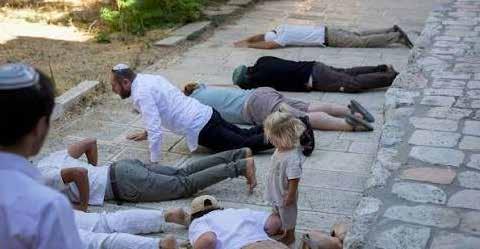
place on the Mount every single day. Jews can go up any time between 6.30am and 3pm Sunday-Thursday.
Shacharis is now held daily at approximately 6:30 a.m. A kollel ascends each morning at around 9:45 a.m., where participants learn Torah and daven together, while Minchah is conducted every afternoon at approximately 1:30 p.m. Far from isolated individuals quietly whispering Tehillim, organised minyanim now take
Even more striking is the diversity of those attending.
The Temple Mount is no longer visited only by Religious Zionists or Breslov Chassidim. Increasingly, one sees Charedim, black-hat yeshivah students, Chassidim, Sephardim, Ashkenazim and Jews from across the religious spectrum ascending together. For many, this represents
If you’re over 55 and own your own home, you can unlock its value with a Lifetime Mortgage. NO monthly payments required
a historic return to Judaism’s holiest site after almost two thousand years.
Another fascinating development is the revival of an ancient Temple-era liturgy.
Based on the Mishnah (Berachos 9:5) and Rambam, certain blessings on the Temple Mount conclude differently from those recited elsewhere. Instead of ending simply with the regular blessing, they conclude:
“Baruch Hashem Elokei Yisrael min ha’olam ve’ad ha’olam”(“Blessed is
Hashem, the G-d of Israel, from eternity to eternity.”) After this insertion, the chazzan finished the bracha as usual.
However, rather than answering “Amen,” those present respond:
“Baruch Shem Kevod Malchuso l’olam va’ed.”
(“Blessed is the Name of His glorious Kingdom forever and ever.”)
For many participants, reviving this ancient tradition, which was uniquely associated with the Beis Hamikdash, is among the most moving aspects of praying on Har HaBayis.
For observant Jews, however, ascending the Temple Mount remains governed first and foremost by halachah.
Those who ascend according to the rulings of the rabbis who permit entry immerse in a kosher mikveh beforehand and carefully remain only within areas identified as the ancient Machaneh Leviyah, while avoiding the much holier Machaneh Shechinah, where entry in a state of ritual impurity remains forbidden. Visitors follow carefully designated routes under rabbinic guidance.
Continued on page 6






Continued from page 4
Ironically, one of the practical difficulties today is not halachic but logistical. The Israel Police generally do not permit Jewish visitors onto the raised platform surrounding the Dome of the Rock. This restriction prevents access to parts of the Mount and confines Jewish visitors to the outer areas.
The issue of ascending Har HaBayis remains one of the most debated questions in the Torah world.
Many gedolim have ruled that Jews should not ascend. Their concerns include the possibility that some people may fail to immerse properly in a mikveh, misunderstand the halachic boundaries or inadvertently enter areas where entry remains forbidden according to halachah.
Others also point to the immense political sensitivity of the Mount and fear that widespread Jewish ascent could inflame tensions and endanger lives.
On the other hand, many rabbinic authorities throughout the generations have maintained that the location of the Kodesh HaKodashim is known with reasonable certainty. Famously, Rebbi Akiva was on Har Habayit, laughing when he saw a fox, whilst his colleagues were crying.
A longstanding tradition places it beneath today’s Dome of the Rock, meaning that substantial areas around the perimeter lie outside the biblical Machaneh Shechinah and may be entered after proper immersion according to those halachic opinions. Among rabbinic authorities who discussed the identifiable location of the Temple include the Rashash (Rabbi Shalom Sharabi), who taught the Ari and Reb Yosef Karo, and more recently Rabbi Ovadia Yosef amongst a growing host of others, although not all reached identical practical conclusions regarding ascent.

Perhaps the most
remarkable change is simply this: Jews are once again bowing before Hashem on Har HaBayit.
For nearly 2,000 years, such a sight seemed unimaginable. Today, daily minyanim, Torah learning, prostration and the revival of ancient Temple customs have become part of the reality on Judaism’s holiest site.
Supporters of the growing Har Habayit movement point to the many mitzvah’s fulfilled by going up, including,
—you shall seek His Presence, and there you shall come,’ a positive commandment and directive that doesn’t apply to the Kotel.
Whether one ascends or follows the rabbinic view not to do so, every Jew continues to pray for the same ultimate goal— that the day will soon come when the Beis Hamikdash is rebuilt, the Divine Presence returns openly to Zion, and Jerusalem once again becomes the spiritual centre of the world.





BY MARTIN KENT
Just weeks after hopes emerged that the conflict between Israel, the United States and Iran might begin to cool, the Middle East once again finds itself on a knife edge.
Although negotiations have continued through international mediators, the fragile ceasefire has come under increasing strain, with fresh military action, renewed threats and rising fears that the region could slide back into a wider war.
President Donald Trump has maintained a hard-line approach towards Tehran, insisting that Iran must never be allowed to rebuild its military capabilities or revive its nuclear ambitions. The White House has repeatedly stated that while America remains willing to negotiate, military pressure will continue until Iran makes meaningful concessions.
carried out further strikes against Iranian military infrastructure following attacks on US personnel and regional allies. Iran has responded with fresh missile and drone attacks aimed at American facilities across the Gulf while continuing to warn that any further escalation will be met with a stronger response. Diplomatic efforts led by Qatar, Oman and other regional mediators continue, but neither side appears willing to compromise significantly.

Israel, meanwhile, remains on high alert.
border, while the Houthis in Yemen continue to threaten maritime shipping and regional stability.
Prime Minister Benjamin Netanyahu has reiterated that Israel will retain complete freedom to act militarily wherever necessary to prevent Iran from developing nuclear weapons or expanding its military presence across the Middle East. Israeli security officials have made clear that they do not believe the Iranian threat has disappeared simply because the pace of fighting has temporarily slowed.
stricter limits on its nuclear and missile programmes.
Iran, however, continues to insist that it will not negotiate under military pressure. Iranian officials have repeatedly declared what they describe as a “victory of resistance” and maintain that their missile programme and regional alliances remain non-negotiable.
In recent days, American forces have
Although the intensity of direct exchanges between Israel and Iran has reduced since the height of the conflict earlier this year, Israeli defence officials continue to warn that Iran is attempting to rebuild damaged military capabilities while increasing support for its regional proxy groups. Hezbollah remains a major concern on Israel’s northern
The Strait of Hormuz also remains a key flashpoint. Although international shipping continues, repeated threats against commercial vessels and concerns over maritime security have kept global energy markets on edge. Oil prices have risen in recent weeks as traders fear that any major disruption to Gulf shipping could significantly affect worldwide supplies.
For President Trump, the conflict presents both military and political challenges. He has sought to project strength while avoiding a prolonged ground war, repeatedly insisting that the United States will defend its interests but has no desire for an open-ended conflict. His administration continues to combine military pressure with diplomatic efforts in the hope that Iran will eventually agree to

For Israel, the coming months are likely to remain uncertain. While many analysts believe neither side currently seeks a full-scale regional war, the danger of miscalculation remains high. A single major attack, assassination or strike on strategic infrastructure could rapidly reignite wider hostilities.
As diplomacy struggles to gain momentum, military preparedness continues to dominate the region. Israel remains vigilant, America continues to increase pressure on Tehran, and Iran shows little sign of abandoning its long-term strategic ambitions.
For now, the ceasefire remains fragile, negotiations continue behind closed doors, and the Middle East waits to see whether diplomacy can prevail—or whether another round of conflict lies ahead.





Whether you choose a cozy one-bedroom just for you, or a sprawling 2,700 sq ft Villa in the sky, your VIDA memories will last forever. Private Shul | Shabbat elevators | Infinity pool | State-of-the-art gym | His/Hers sauna | Community room Business lounge | 24 HR Doorman | Just steps from the sea
















A tragic balcony collapse in Jerusalem’s historic Shaarei Chessed neighbourhood in Rehavia, near the world-famous Midrash Shmuel Yeshiva, has claimed the life
of an 80-year-old man and left several others injured, prompting renewed concerns over the safety of ageing buildings. The incident occurred on Monday


afternoon when a second-floor balcony suddenly detached from a three-storey residential building on Keren Kayemet LeIsrael Street. The balcony crashed onto the outdoor seating area of an Angel Bakery below, trapping several people beneath tonnes of concrete and debris.
Emergency crews from Magen David Adom, Israel Fire and Rescue, United Hatzalah, ZAKA and the Israel Police rushed to the scene. Firefighters spent a prolonged period searching through the rubble and rescuing those trapped.
The victim was identified as Barry Levitt, 80, who made aliyah from South Africa in
2020. He had been enjoying time with his wife and grandchildren when the balcony gave way. Despite determined efforts by rescue teams, he was pronounced dead at the scene after suffering catastrophic injuries. His wife sustained light injuries, while several others, including two teenagers, were treated for minor wounds and shock.
According to initial reports, neighbours had expressed concerns about the balcony’s condition earlier that day. A structural inspection reportedly recommended reinforcement work, but the balcony collapsed before repairs could begin. Authorities are now investigating whether warning signs had been missed and whether sufficient action was taken.
The Jerusalem Municipality has dispatched structural engineers to inspect the damaged building and neighbouring properties to ensure there is no further danger. Police have sealed off the area while investigators determine the exact cause of the collapse.
The tragedy has reignited calls for stricter inspections and maintenance of Israel’s ageing residential buildings to help prevent similar disasters in the future.

Charred beams were uncovered during excavations by the Israel Antiquities Authority and Tel Aviv University in Jerusalem. Researchers believe that the beams were part of a building that had collapsed during the intense fire at the time of the destruction of the First Temple in 586 BCE and that they were likely preserved by plaster that melted from the building’s walls, sealing the burnt wood beneath it. The remarkable discovery was made recently at a dig in the Givati Parking Lot, as part of excavations conducted by the Israel Antiquities Authority and Tel Aviv University in the City of David, within the Jerusalem Walls National Park.
According to Excavation Director Efrat Bocher:
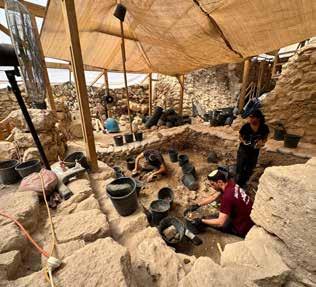
“The beams appear to have served as the roof of an inner courtyard in a building from the First Temple period. During the destruction, they collapsed onto the floor. We believe that the plaster cladding of the building’s walls, melted by the fire, covered the charred wooden beams, and ultimately enabled their exceptional preservation.”
“It is very rare in Israel to find wood with such a large number of growth rings,” says Dr. Johanna Regev of the Israel Antiquities Authority, who is studying the find. “Here,
in the City of David, we found thick beams with many rings, offering significant research potential – with more growth rings enabling higher dating resolution. Until now we could date finds within a range of hundreds of years. Now we can attain much greater precision, narrowing the dating range down to as little as ten years.”
The excavation directors note that when Jerusalem’s residents returned after the destruction of the Temple and began to rebuild the city, they probably made a deliberate decision to preserve the memory of the destruction by leaving behind remains that told the story of the catastrophe.

“The concept of a landscape of memory is familiar from many cultures around the world,” explains Dr. Yiftah Shalev, who directs the excavation on behalf of the Israel Antiquities Authority alongside Prof. Yuval Gadot of Tel Aviv University. According to Dr. Shalev, “Preserving memory is a human need, seeking to preserve what once existed. Here we see it in its clearest
form: a deliberate choice to leave ruins in place as a testament to the destruction and build the new layer over them.”
“We are just before Tisha B’Av,” adds Bocher. “This discovery makes you feel that you are witnessing the very moment of destruction, the moment when it all happened. It’s deeply moving.”






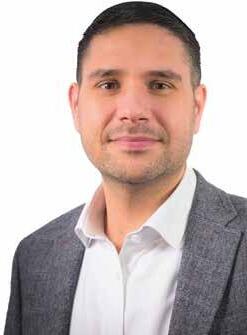
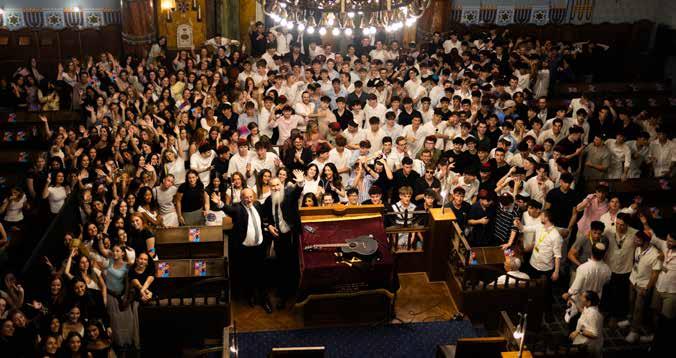
A record 530 young Jewish post-A-level students from across the UK descended on Budapest last weekend for "Off the Rails - One Shabbat of Unity," Aish UK's fourth annual Shabbat of Jewish Connection. In just four years, it has grown from a small trial into a fixture of the post-school interrailing calendar, and this year's turnout, up again on last year's, confirms what has quietly become known among students as an essential stop on the interrailing route.
At Friday night dinner, students weren't seated by school or hometown but by the university each is heading to next, so future course-mates and flatmates met each other for the first time over the table. They also met the Aish educators who'll be their contact for Shabbat meals and Jewish life once term starts, meaning nobody arrives at freshers' week without a Jewish friend already in place.
The event traces back to Rabbi Rafi Stemmer, Head of Aish UK's Schools Department, who noticed thousands of Jewish teenagers passing through Central Europe on their gap-year travels with no Jewish touchpoint built into the trip and set out to change that.
Friday evening began with candles and l'chaims. By Kabbalat Shabbat, students who'd been strangers that morning were singing together, 530 of them, from 25 different schools, spanning every level of observance. The night ran on afterwards into a late session of songs, snacks and more l'chaims lasting well into the early hours.
Shabbat day brought an exploratory workshop, a free-flowing kiddush at the Kazinczy shul, a walking tour of Jewish Budapest, and an afternoon discussion session about relationships, before the day closed with Seudah Shlishit and a specially designed Havdalah. All 530 students then headed back out into their interrailing summers — this time with a Jewish network and meaningful connections to campus Jewish life already waiting for them come September.
it is possible to break through."
To find out more or to put your name down for next year, email: rstemmer@aish.org.uk.
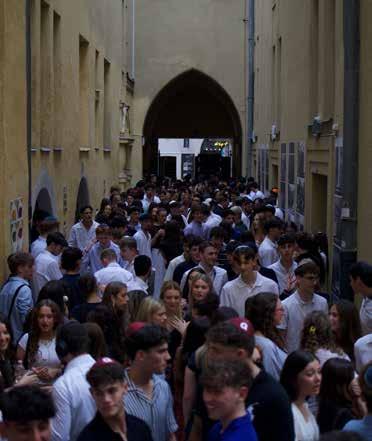
Rabbi Stemmer recalled asking one student how the weekend compared to Ultra, the festival most of them had attended just a week prior. The answer stuck with him: "In Ultra you're there with your group of 4 or 5 mates, enjoying the music but you're not connected to anyone else or anything else going on around you. Here, you've got your arm around the guy next to you, who you've never met before, because you just feel like you're one big family, one people. It just hit much deeper tonight."
For Stemmer, that response captured what the weekend was built to do: "At a time when antisemitism has caused many young Jews to question or hide their Jewish identity, this weekend gave students the strength to live proudly as Jews. It may be more difficult than ever to get through to the younger generation, amidst all the noise and competition that exists in the palm of their — and our — hands. But this weekend proved that
For more on Aish UK's programmes, or to get involved, visit: charityextra.com/aishuk.






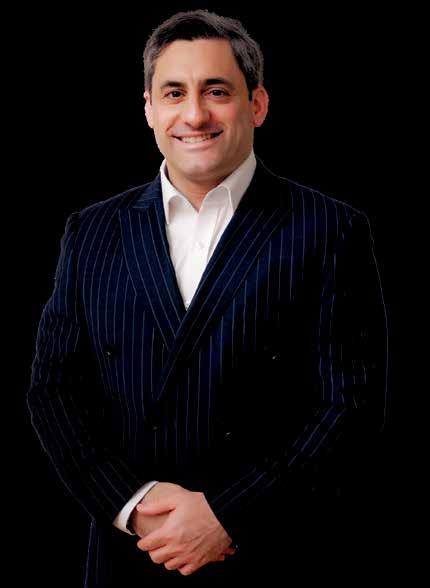
Legal professionals from across the community gathered on Wednesday morning for the inaugural Young Jami Jewish Care (YJJC) Law Breakfast, raising vital funds for Jami, Jewish Care's mental health service.
Guests enjoyed a morning of networking, breakfast and thoughtprovoking discussion as they heard from Adam Rose, Partner at Mishcon de Reya, in conversation with YJJC Law Committee member, Sarah Villani.
Held at Trowers & Hamlins, the event brought together lawyers, trainees and
significant legal and social issues affecting the Jewish community today.
Closing the conversation, Sarah Villani thanked Adam Rose for his dedication, saying: "Thank you for advocating for the British-connected hostages and for all the work you have done, and continue to do, for our community."
Louis Zenios, YJJC Law Committee member and Trainee Solicitor at Trowers & Hamlins, said:
"We were delighted to welcome Adam Rose to the first YJJC Law Breakfast. His honesty, insight and unwavering commitment to supporting the community made for a fascinating and inspiring discussion. Events like this bring young professionals together, create valuable connections and help raise vital funds for Jami's life-changing mental health services."

other professionals from across the legal sector to connect with peers while supporting Jami's essential work helping people whose mental illness, distress or trauma can make everyday life a struggle.
During the discussion, Adam Rose shared reflections on his distinguished legal career, including his work supporting British-connected hostage families and advising individuals and organisations facing antisemitism. He spoke about his longstanding commitment to advocacy and campaigning, offering attendees a unique insight into some of the most
The speakers were introduced by Paul Marco, Senior Partner at Trowers & Hamlins, who welcomed guests to the firm's offices and highlighted the importance of supporting mental health services within the community.
Paul Marco said:
"I was thrilled when Louis approached us about hosting this event, particularly as it was in support of Jami, a charity that is close to my heart. Jami provides invaluable support to members of our community facing mental health challenges."
All proceeds from the event will go to Jami, Jewish Care's mental health service, which works with children, young people and adults, providing
counselling, community programmes, vocational guidance, education and training, as well as Head Room café, its mental health hub on the high street.
The YJJC Law Breakfast forms part of
YJJC's programme of networking and fundraising events, engaging the next generation of supporters while raising awareness and funds for the vital services provided by Jewish Care and Jami.



















Nestled in the hills of Portugal lies the quiet town of Belmonte, known as the birthplace of the explorer Pedro Cabral, discoverer of Brazil.
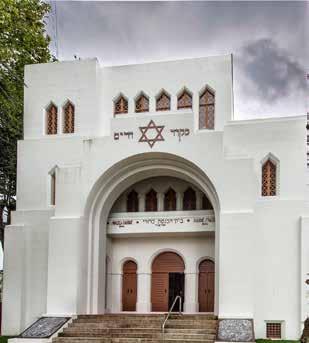
Yet for Jewish history, this small village holds a far deeper significance. It is home to one of the most remarkable stories of Jewish survival: the crypto-Jews of Belmonte
The story begins with the devastating pogroms of 1391, which swept across Spain, Mallorca & the Iberian Peninsula. Tens of thousands of Jews were
Over time, suspicion and hostility toward the Conversos intensified. Laws such as limpieza de sangre (“purity of blood”) discriminated against them based on ancestry rather than faith. The establishment of the Spanish Inquisition in 1478 further institutionalized persecution, targeting those suspected of secretly practicing Judaism.
This culminated in the expulsion of Jews from Spain in 1492. Hundreds of thousands were forced to leave, with many fleeing to Portugal.
Initially, life there offered some stability, but this quickly changed. King Manuel I, under pressure to marry into the Spanish royal family, ordered the forced conversion of Portuguese Jews in 1497. Families were torn apart, and Jewish life was driven underground. Though the Inquisition was delayed for 20 years, this period became one of intense secret observance.
murdered, and many more were forcibly converted to Christianity. By the end of this period, Spanish Jewry had been shattered. Roughly one-third killed, onethird converted, and one-third remaining openly Jewish. Many of the survivors fled to neighbouring Portugal, seeking refuge. These forcibly converted Jews became known as Conversos, Anusim (the coerced), or derogatorily as Marranos. Though outwardly Christian, many secretly clung to Jewish belief and practice. However, under Christian law, once baptized, returning to Judaism was considered heresy and punishable by death. Despite this, rabbinic tradition maintained that “a Jew remains a Jew,” a principle that would sustain these hidden communities.
It was during this time that many Jews settled in remote mountain villages such as Belmonte. Under constant threat of persecution, they developed a hidden form of Judaism that would endure for centuries.
The Jews of Belmonte chose to preserve their heritage at all costs. Living outwardly as Christians, they practiced Judaism in secret, lighting Shabbat candles in concealed spaces, observing holidays on altered dates to avoid detection, and maintaining dietary laws in disguised forms.
Without rabbis, synagogues, or Jewish texts, their practices became simplified and adapted. They maintained belief in one G-d, preserved elements of lifecycle events such as marriage and mourning, and passed down traditions orally, primarily through the women, who played a central role in sustaining Jewish continuity.
For generations, the community lived in isolation, even believing at times that they were the last Jews in the world. This changed in 1917, when Samuel Schwarz, a Jewish engineer, encountered them. Initially suspicious, they only accepted him as a fellow Jew when he recited the
Shema. Even then, fear lingered, and their identity remained largely hidden.
It was not until the fall of Portugal’s dictatorship in 1974 that the community began to openly re-emerge. In 1996, the synagogue Beit Eliahu was inaugurated in Belmonte, symbolically marking 500 years since the expulsion era.
In recent decades, figures such as Rabbi Elisha Salas, working with organizations like Shavei Israel, have helped reconnect the community with global Jewry. Through education, outreach, and guidance, many descendants of these crypto-Jews have strengthened their Jewish identity, with some making aliyah to Israel.
Today, the Belmonte Jewish community is small around 30 members, but its legacy is immense. It represents one of the longest continuous examples of

clandestine Jewish observance in history. The story of Belmonte is one of resilience, courage, and unwavering faith. For over 500 years, without institutions or support, these Jews kept the flame of Judaism alive in secrecy and danger. Their survival stands as a powerful testament to the enduring strength of Jewish identity, proof that even in the darkest of times, the Jewish soul was never extinguished.
Rabbi Raphy Garson, raised in Gibraltar, served 18 years as Senior Rabbi of Ohr Yisrael Federation in Elstree and now leads the Rabbinic Team at Tiferet Eyal Synagogue in Hendon. A Holocaust educator, he has guided over 6,500 students to Poland and leads Jewish heritage journeys worldwide with JRoots.


J E R U S A L E M
M e k o r C h a i m
N e w l u x u r y b u i l d i n g
3 b e d r o o m s
S u k k a h
P o o l & g y m
R e a d y i n 1 y e a r
Asking Price:
₪ 6 , 5 0 0 , 0 0 0

4

0

J E R U S A L E M
D a v i d ' s V i l l a g e
L u x u r y G a r d e n A p a r t m e n t
3 s p a c i o u s b e d r o o m s 2 4 - h o u r s e c u r i t y
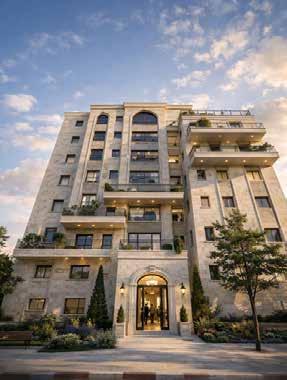
J E R U S A L E M
P r e s a l e s t a g e R a m a t E s h k o l
L u x u r y n e w b u i l d i n g
O n l y 9 a p a r t m e n t s
O n t h e n e w l i g h t r a i l l i n e
R e a d y : 2 0 2 8
R e q u e s t

N E T A N Y A
N a t 6 0 0
3 b e d r o o m s H i g h e n d f i n i s h e s P o o l , d o o r m a n & g y m
S e a v i e w s
C l o s e t o A n g l o s h u l
Asking Price: ₪ 4 , 4 8 0 , 0 0 0
Starting Price: ₪ 3 , 4 3 2 , 0 0 0

Asking Price: ₪ 5 , 3 5 0 , 0 0 0


The London School of Jewish Studies (LSJS) celebrated the achievements of 65 graduates at its annual Graduation Ceremony, attended by around 250 family members, friends and supporters at Hampstead Garden Suburb.
Graduates from LSJS’s BA and MA programmes in Jewish Education, together with its teacher training programmes, were recognised for their academic achievements and their commitment to shaping the future of Jewish education.
Among those attending the ceremony were the Chief Rabbi, Rabbi Dr Raphael Zarum, Clare Harnden, Deputy CEO at South Farnham Educational Trust and advisor to the Department for Education, and Emma Hollis the Head of NASBTT (the National Association of School Based Teacher Trainers), reflecting the growing recognition of LSJS’s contribution to teacher education.
Addressing the graduates, the Chief Rabbi reflected on the biblical instruction, “You have dwelt long enough by this mountain. Turn and set out on your journey,” reminding them that graduation is not an ending but the beginning of the
next stage of their journey. He encouraged them to continue learning, teaching and enriching the Jewish community through the knowledge they have gained.
Rabbi Dr Raphael Zarum reflected on the Jewish pursuit of Emet (truth), encouraging graduates to seek truth with integrity in themselves and in those they teach.
professionals,” she said. “Every week gave us the opportunity to step back from the intensity of school life, reflect on our practice and learn from one another. We sup-

Speaking on behalf of the graduating teacher training cohort, one graduate reflected on the collaborative culture of the programme.
“We’ve become not just teachers, but resilient, reflective and constantly learning
ported each other through difficult days, and we’ll carry those lessons into every classroom.”
Clare Harnden challenged graduates to remain intellectually curious throughout
their careers, saying: “Whatever qualification you’re graduating with today,” she said, “it’s not about the answers you’ve collected, but about developing the habit of asking questions. Stay curious. Be the person who always asks one more question.”
The ceremony celebrated not only academic achievement, but the shared commitment of LSJS graduates to lifelong learning, educational excellence and inspiring the next generation. As noted by Jonathan Atkins, Head of Initial Teacher Training noted, Head of Teacher Training Jonny Atkins distilled the values of great teaching into a simple message for the graduating cohort: “Give the children in your classroom the benefit of the doubt. Build relationships. Be kind. Be consistent. Everything else will fall into place.”
For more information about conferences and professional development at LSJS, please visit www.lsjs.ac.uk or email lsjsadmin@lsjs.ac.uk.




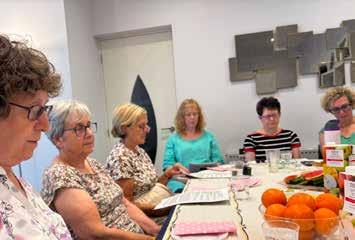
The ‘Three weeks’ – how do we make sense of it? This was the question posed by guest speaker, Educator Shira Jackson to an audience of Pinner ladies. The lead-up to many catastrophic events in Jewish history were, she explained, all connected by one date – Tisha B’Av (9th Av). Whether it was the destruction on or around this date of both the Temples, the devastation to medieval European Jewish communities during the Crusades, the expulsion of Jews from Spain and other countries, and the escalation of the
horrors in both World Wars, particularly the implementation of the ‘Final Solution’, this period over the centuries stands alone.
Using source material from the Book of Kings, Shira explained the significance of the four main Fast days that we observe, commemorating tragic events such as the breaching of the First and Second Temple walls by the Babylonians and then the Romans. Each one triggered more horrific tragedies for the Jewish people: “Thus Judah was exiled from its Land”.

The Jewish community at that time, being as cohesive as it was, kept tightly together. There was at that time no real concept of a ‘Diaspora’ which subsequently evolved over the ages, as the Jewish people spread out over the globe and were the victims of more tragic events, many of them geopolitical, on or

around 9th Av. In Temple times however, she added, no matter how large the communal gathering, there would always have been enough chicken soup to go round!
Shira emphasised that the Three Weeks and the Nine Days leading up to TishaB’Av comprise such a significant continuum, that our past history in fact mirrors what is happening to the Jewish people at the present moment. Using quotations from the book of Eichah (Lamentations), she demonstrated for example that the words, “My maidens and my youths have gone into captivity!” describes the horrors and the aftermath of 7th October.
The evening ended on a positive note, with everyone singing ‘Acheinu’ together, and a general feeling of ‘achdut’ or unity. Pinner Synagogue Rebbetzen Elise Kleiman said that Shira “delivered her talk in a very caring and emotional way,” and Synagogue member Tina Benjamin agreed, adding that the whole message “was at a level that the whole group understood.”
Pinner Synagogue Women’s Officer, one of the organisers of the event, summed it up: “It really was a very thought-provoking evening.”

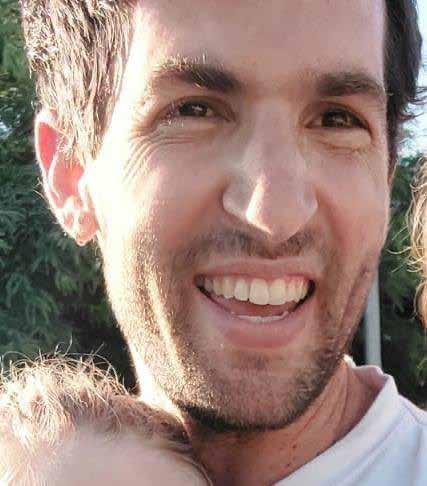
In the darkest subterranean tunnels of Gaza, deprived of sunlight, medical care, and contact with the outside world, former hostage Sagui Dekel-Chen refused to let his spirit be broken. Dragged across the border after defending his home on 7 October 2023, the Israeli-American
kibbutznik spent 498 days in captivity. He composed nine original melodies in his head - songs of hope, endurance, and quiet defiance.
Now, in a remarkable act of reclamation and renewal, Sagui is stepping back onto the lawn of Kibbutz Nir Oz - the very ground from which he was taken - to perform those melodies live for the first time.
On Monday, 10 August 2026, JNF UK will host an exclusive, one-night-only live screening of this historic concert at a venue in North West London. As the only organisation globally broadcasting the milestone event live outside Israel, JNF UK invites the British Jewish community to come together for an unforgettable evening of music, unity, and shared healing.
For the UK community, Sagui’s story resonates especially deeply.
rabbi burman@bwkollel org
A dedicated member of the JNF UK team for nearly a decade, Sagui was directly involved in pioneering regional development projects across southern Israel.
When terrorists attacked Kibbutz Nir Oz on 7 October 2023, Sagui joined the kibbutz’s emergency response team. He was shot in the leg and shoulder during a heroic firefight. Most of his fellow team members were killed. After a few hours of fighting, he returned home to protect his pregnant wife and two young daughters, locking them inside their safe room.
Through 498 gruelling days underground, Sagui held onto his humanity through imagined routines, mental discipline, and music. He imagined bedtime chats with his daughters, unaware that while he was held in the darkness, his wife had safely given birth to their third daughter, Shahar Mazal.
“Music became Sagui’s ultimate sanctuary... melodies born in the subterranean darkness of Gaza will now ring out across Nir Oz and London.”
Broadcast in Hebrew with English subtitles, the concert will feature Sagui alongside a full live band and leading Israeli musical artists. Between performances, Sagui will share deeply personal reflections on his 498 days in captivity, his physical rehabilitation, and the delicate journey of rebuilding his family and community.
• Date: Monday, 10 August 2026
• Time: 6:00 PM – 8:00 PM
• Location: North West London
Venue (provided upon booking)
• Tickets: £25.00 per person
Join Us in North West London
This is more than a screening, it is an opportunity for Anglo-Jewry to stand shoulder to shoulder with the people of the Negev, bear witness to the power of human endurance, and ensure the songs born in darkness are met with a roaring chorus of solidarity from London. Space is strictly limited. Book your tickets today to secure your place at this extraordinary event by visiting: www. jnf.co.uk/sagui


By Chaim Stein
For many Yidden in Britain, owning a home in Eretz Yisrael is more than a financial investment. Whether as a future place to live, a holiday home or a long-term investment, it is often a lifelong aspiration. For those trying to navigate the Israeli property market from overseas, the process can feel overwhelming.
Grinbox UK has been established to bridge that gap. Backed by more than 13 years of experience in Israel, the company has opened its first UK offices, one in Golders Green and the other in Stamford Hill, to provide a complete, personalised service for those looking to buy, invest or prepare for a future in Eretz Yisroel. From finding the right home to managing it long after the sale, Grinbox offers support at every stage of the process.
In this exclusive interview with Hamodia, Grinbox UK partners David Dzimitrovski and Shia Uri explain how the company began, why it has chosen to open in London, and what sets its approach apart from a traditional estate agency.
Hamodia: Tell us about Grinbox. How did the company begin?
David: Grinbox began in Yerushalayim through Mr Yitzchak Greenwald. About 15 years ago, he found that people from overseas kept approaching him with similar requests: to check on a property they owned, to ask whether a particular neighbourhood would suit their family, or simply to find someone trustworthy who could inspect a flat, manage a property or offer advice.
As more people came to him, he realised there was a real need. Jews living abroad wanted someone they could trust on the ground in Israel — someone who would represent their interests as if they were their own.
What exactly does Grinbox UK offer?
Shia: We’re far more than a traditional estate agency. Yes, we help people find properties, but that’s only one part of what we do.
Every customer has different goals. One person may be looking for an investment, another may be planning to settle in Eretz Yisrael in five or ten years’ time, and someone else may simply want a holiday apartment close to family.
We begin by understanding exactly what the customer wants. Which community do they wish to live in? Which schools? Which shuls? What is their long-term plan? From there, we guide them through the whole process, from identifying suitable properties and negotiating purchases to opening Israeli bank accounts, arranging mortgages, working with solicitors, providing tax guidance and, if required, managing the property after completion.
Our aim is that a client feels supported from the first conversation until long after they receive the keys.
What makes Grinbox different from other companies selling Israeli property in the UK?
Shia: Many companies simply introduce you to a property, and that’s where their involvement ends. Our approach is different: we see the whole process through, from opening a bank account in Israel and arranging mortgage advice to working with solicitors on the legal side and, if needed, furnishing or managing the property afterwards. One trusted team coordinates all of it.
Because Grinbox has built strong relationships throughout Israel over many years, we’re also able to introduce
“Jews living abroad wanted someone they could trust on the ground in Israel — someone who would represent their interests as if they were their own.”
clients to opportunities that may not always be available through the open market.
Grinbox has now opened in the UK. Why was that important?
Shia: One of the biggest concerns people have when purchasing overseas is trust. Many companies visit London for a property exhibition over a weekend and then return to Israel, leaving clients to communicate by email or telephone from then on.
We wanted something different. That’s why we’re establishing a permanent presence in London, so customers can walk into our office whenever they wish, ask a question without waiting days for a reply, or simply meet us face to face for an update. That local presence gives people reassurance that we’re here for the long term.
Do you believe now is a good time to buy property in Israel?
David: That’s probably the question I’m asked most often. The truth is, property markets always move up and down, and nobody can promise what will happen tomorrow. But look at the long term, and Israeli property has consistently shown strong growth; plenty of people who held off buying five or ten years ago now wish they had moved sooner.
For many Jewish families today, though, buying in Israel isn’t only about the return on investment. Recent events in the UK have led many people to think seriously about their future, and owning a home in Eretz Yisrael offers something else: the knowledge that, whatever happens, they already have a place prepared
for their family.
Is Grinbox aimed mainly at investors, or at families planning to settle in Eretz Yisrael?
David: Both. Some customers are looking purely for investment opportunities, others already know exactly where they’d like to live one day, and some haven’t yet decided, but know they eventually want a home in Israel.
Every client receives individual advice. We don’t recommend the same development to everybody; we listen first, and only then suggest locations and opportunities that genuinely fit their objectives.
areas of Israel do you cover?
David: Practically everywhere. We have experience across Yerushalayim, Beit Shemesh, Beitar Illit, Tzfas, Teveria, Telstone and many other communities throughout the country.
If someone already knows exactly where they would like to buy, we help them there; if they are still undecided, we advise them based on their family, their budget and their long-term plans. Because we’re not tied to one development or one area, we can recommend what best suits each customer.
Does Grinbox also offer investment opportunities beyond residential homes?
David: Yes. Alongside residential properties, we also work with larger investment opportunities: some clients are interested in
development projects, others in land or commercial opportunities. We work with experienced professionals across many sectors, which allows us to introduce suitable opportunities depending on each investor’s goals. What reassurance can you give buyers who may be nervous about purchasing property overseas?
David: That’s a completely understandable concern. Buying property anywhere is a major decision, and everything we do is designed to make clients feel secure: we handle funds professionally, carry out every transaction with proper legal representation, and work alongside experienced solicitors, mortgage advisers and financial professionals throughout the process.
We’re building long-term relationships based on trust, not chasing quick sales, and our reputation depends on every client receiving honest advice and professional service.
Grinbox has managed hundreds of properties over the years. Does that experience benefit today’s customers?
David: Absolutely. The Grinbox team in Israel manages more than 800 properties with a combined value exceeding ₪2.5 billion, and that experience has helped us build strong relationships with banks, developers and other professionals. It also means we’ve encountered almost every situation that can arise during a property transaction, which lets us anticipate problems before they occur and guide customers through what can otherwise be a complicated process.
David, Tell us a little about yourself.
I’m originally from Israel but have lived in the UK for almost 11 years, and my wife is from Golders Green. Alongside Grinbox, I’ve spent many years working in construction and property development, so I understand both the practical and commercial sides of real estate.
When the opportunity arose to bring Grinbox to Britain, I felt the timing was right. There’s growing demand from people who want trustworthy guidance when buying in Israel, and I believe this
is a service our community has been missing.
Finally, what message would you like to leave with Hamodia readers?
David and Shia: If owning a home in Eretz Yisrael has always been your dream, do not let not knowing where to begin put you off. That is exactly what our London offices is here for.
You do not need a large amount of money to get started. Come in, and we will explain the process, the initial payment and the options that could work for you.
Whether you are planning years ahead, considering an investment or hoping one day to settle in Eretz Yisrael, walk in and talk to us. We will take it from there, with honesty, professionalism and the personal attention every client deserves.



But this year, the questions being asked in Jewish homes across Britain are not the ones printed in the Haggadah. They are sharper. More uncomfortable. And frankly, more damning.
These are not questions about matzah and marror.
These are questions about what it now means to live as a Jew in the United Kingdom.
WHY DO MY MUMMY OR DADDY HAVE TO PUT ON A STAB-PROOF VEST AND STAND OUTSIDE MY SCHOOL AT PICKUP TIMES?
because, right now, it is.
WHY DID MY DADDY USED TO WEAR HIS KIPPAH EVERYWHERE, AND NOW SOMETIMES REPLACES IT WITH A CAP?
Because visibility has become a risk calculation.
Not in theory. In practice.
For years, we told ourselves - and rightly so - that Britain was different. That Jews could live openly, proudly, without fear. That a kippah in the street was unremarkable.
Now, for many, that confidence has been shaken.
Not in the quiet decisions people are making about how visibly Jewish they feel safe to be.
And yet - this is not a story of defeat.
Because the same parents in stab vests still show up.
The same families still fill our schools.
The same fathers still wear their kippot
be quiet about why these questions are being asked. Pesach is the festival of questions. This year, it is also a test of whether anyone is willing to answer them properly.
David Reuben is the Executive Director of Mizrachi UK
Because Jewish life in Britain now requires protection.
BY RABBI YONASAN ROODYN
Let’s not dress it up. Parents are not volunteering for school duty - they are stepping into a security role. The image of a Jewish parent in a stab vest outside a primary school should stop us in our tracks. It should provoke outrage far beyond our community.
In darkened synagogues, Jewish communities sit low to the ground and read Eicha, the Book of Lamentations. It is a text nobody wants to have to read, yet far too important to ignore.
And yet, it has become normal.
When a father replaces his kippah with a cap before travelling, it is not a theological decision. It is not even a cultural one.
It is a safety measure.
conscious that a liberal democracy ought to provide the freedom to walk safely without needing these special measures.
And if that doesn’t concern us - and everyone else - it should.
WHY CAN’T I GO TO ISRAEL ON HOLIDAY FOR PESACH THIS YEAR?
Jerusalem finds itself increasingly isolated in diplomatic forums.
The real question is not why parents are doing this. The real question is: why is this necessary at all?
WHY CAN PEOPLE CALL TO “GLOBALIZE THE INTAFADA” IN THE STREETS OF LONDON?
“My eye, my eye runs with water,” the book says, perhaps an indication that we need to read it with two eyes: one focussed on the past, on the destruction of the two Temples in Jerusalem, and the other on the present. Eicha was canonised in Tan-

Because the Jewish state is at war - and because Jewish normality has been disrupted, again.
The next image is of a widow, ka almana. Rashi, the medieval commentator, explains that she is not truly widowed but resembles a woman whose husband has gone abroad and sent no word, uncertain of where she stands. There is a distinct sense of disorientation when one does not know where they stand and who, if anyone, stands with them.
For a child, this question is simple. Israel is family. It is familiarity. It is where Pesach often feels most alive.
To tell them they cannot go is to introduce them, too early, to the reality
The book refers to bein hametzarim, “between the straits.” This is a term often used to describe the three week period be-
“The roads of Zion mourn,” reads another verse, a line that calls to mind the funerals of terror victims and of soldiers killed in action. It also speaks to a quieter loss, captured in the phrase “none come to the appointed times”: Jews drifting away from communal life.
Elsewhere the text observes that “her adversaries have become her master,” and that groups with little else in common and often with diametrically opposed worldviews can unite over a single cause: vocal and vehement opposition to the world’s
that British Jews may now hear alongside a list of their own: the brutal attack on Yom Kippur at Heaton Park, arson attacks on synagogues, Hatzola ambulances set alight, stabbings in Golders Green. It is a climate serious enough that the government has committed hundreds of millions of pounds to protecting Jewish sites, and serious enough that synagogues increasingly resemble fortresses.
Tisha B’Av is not a day for numbing the pain but rather for feeling it. The tradition ends, as a graveside does, with an acceptance of Divine justice and the words “The L-rd is righteous.”
-
urgy has it, may ultimately be for the good.



al Director of Jewish Futures, a tour guide for JRoots as well as serving as Rabbi of Finchley Federation Synagogue and on the Federation Beth Din’s Shailatext service. He has thousands of classes available online at



BY RABBI NAFTALI SCHIFF
Tisha B’Av is not only about be real with that which is broken. It is also about asking what we are doing to fix and rebuild.
The Beit Hamikdash was not destroyed in a single moment; it was the culmination of generations in which bonds weakened and shared purpose fractured. Years of habitual “orthoprax” instead of authentic connection. Its rebuilding, and our fixing too, will not happen through a single dramatic act. It will be forged through countless moments that strengthen Jewish identity, deepen belonging and draw us closer to both the Almighty and to one another.
If we want to ensure the future of British Jewry, we should certainly look to our schools and our shuls. But we should also pay close attention to the informal experiences that continue to shape young people long after the lessons of the classroom have faded.
fourth year.
The idea is wonderfully simple.
Each summer, thousands of eighteenyear-olds spend several weeks interrailing across Europe before beginning university. Four years ago a few of these students approached Rabbi Rafi Stemmer, Director of Aish Schools to join them! A family man, interrailing wasn’t an option. Instead he simply invited them to interrupt their travels for one unforgettable Shabbat together.
The Budapest Shababton has grown exponentially each year. Students register
Over the past few decades, British Jewry has quietly created an impressive series of educational milestones that have become modern rites of passage.
At sixteen, around a thousand teenagers embark on Israel Tour through an outstanding range of youth movements. At seventeen, a similar number participate in powerful Holocaust education journeys to Poland through collaborations between Jewish schools and organisations including JRoots, Tribe and others. These experiences leave an indelible mark, forging friendships, strengthening Jewish identity and connecting young people to our story, our people and our homeland.
I believe another such rite of passage is now emerging.
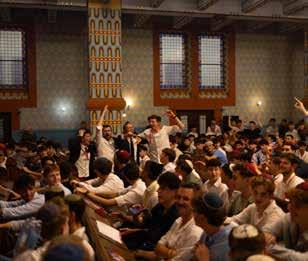
This past weekend, more than 530 British Jewish school leavers gathered in Budapest for Off the Rails – A Shabbat of Unity, an initiative of Aish now in its
before leaving home and, wherever their journey has taken them, converge on Budapest for a weekend that is entirely voluntary, refreshingly light-touch and free from any religious pressure or expectation. It is simply the opportunity to experience an uplifting, memorable Shabbat alongside hundreds of fellow young Jews.
I joined them this past weekend. What unfolds is remarkable.
More than five hundred young adults, representing an extraordinary crosssection of British Jewry, from secular to Modern Orthodox and virtually everything in between, share meals, sing together, meet new friends, explore the city and discover that the Jewish world is far broader, richer and more diverse than the circles in which they were raised.
The high point is on Friday night.
Inside Budapest’s Kazinczy Synagogue,
perhaps the largest gathering of young Jews there since before the Holocaust, hundreds of voices rise spontaneously in a triumphant chorus of Am Yisrael Chai. It is difficult to imagine a more poignant time or setting.
Over the course of the weekend, participants visit the haunting Shoes on the Danube memorial and encounter the story of a city that was once home to one of Europe’s greatest Jewish communities before more than 450,000 Hungarian Jews were deported to Auschwitz and murdered in just seven weeks during the
Having met the Aish campus reps in Budapest, for many, those relationships become the beginning of a Jewish home away from home when they arrive on campus. At a time when Jewish students face unprecedented challenges, those connections matter enormously.
Communal life is rarely transformed by dramatic declarations. More often, it shifts through a succession of meaningful experiences that together shape identity, belonging and commitment.
Israel Tour. Poland. And now, perhaps, Budapest.

Against that backdrop, locking arms with hundreds of fellow young Jews, singing, dancing and celebrating Jewish life becomes far more than an emotional moment. It is a profound declaration that Jewish history did not end on the banks of the Danube. It continues- in confidence, in joy and in unity.
During the very days when we mourn loss and destruction, such moments remind us what rebuilding looks like.
Yet perhaps the weekend’s greatest significance lies in what happens afterwards.
Within weeks these young adults will disperse to universities across Britain, many leaving home for the first time.
Around those Shabbat tables they have already met and formed new friendships with other Jewish students naturally, without recruitment pitches or obligation.
Each marks a different chapter of our collective story. Together they help nurture a generation more deeply connected to its heritage, more connected to one another and better equipped to navigate Jewish life with confidence, resilience and pride.
The challenges of every Jewish generation create the experiences that shape its future.
This Tisha B’Av, as we mourn what previous generations lost, perhaps we should also recognise and invest in the quiet, often unnoticed experiences that ensure the next generation has something enduring to build. For it is through such modern rites of passage that a community slowly but surely rejuvenates itself- one young Jew, one Shabbat and one shared experience at a time.

In this column Rabbi Naftali Schiff reflects upon 3 key words each week relating to contemporary and relevant issues.
All feedback is welcome- nschiff@ jfutures.org.
Rabbi Schiff is the Founder & CEO of the Family of Jewish Futures networks of educational organisations.










IF BASELESS HATRED DESTROYED THE TEMPLE, WHY ARE JEWS STILL SO GOOD AT IT?
Dear Rabbi
Every Tisha B’Av I hear the same sermon. The Second Temple wasn’t destroyed because the Romans were stronger. It wasn’t because of military failure or political miscalculation. No. Apparently it all comes down to sinat chinam -baseless hatred.
Fine. Except I’ve met Jews. We cannot agree on politics, Israel, synagogue policy, seating arrangements, Kashrut standards, the Chief Rabbi, Zionism, anti-Zionism, which hechsher to trust, whose kugel is authentic, whether children should run around during kiddush, or even the correct speed for singing Adon Olam.
If there are two Jews in a room, there are three opinions. If there are four Jews, someone has already stormed out and started another synagogue. Frankly, I’m amazed we’ve managed to remain one people for this long.
What puzzles me is this. We’ve been told for almost two thousand years that baseless hatred destroyed the Temple. If that’s true surely, we’d have learnt the lesson by now. We’ve had centuries to improve. Instead, social media has simply given us faster ways to insult each other.
Sometimes it feels as though Jews reserve their greatest passion for criticising other Jews. Religious versus secular. Left versus right. Ashkenazi versus Sephardi. Chassidim versus Litvaks. Orthodox versus everyone else. We seem remarkably united in our inability to remain united. So here’s my question. If we’ve known the diagnosis for two millennia, why haven’t we found the cure? Or is baseless hatred simply the original Jewish tradition that nobody is willing to abandon?
Peter
Dear Peter
Wow! Why don’t you tell me how you really feel?
In fairness, you raise a meaningful point but there are some things that need to be put in perspective. The first thing to clarify is that sinat chinam does not mean disagreement.
Judaism has always celebrated disagreement. The Talmud is essentially two thousand pages of highly intelligent people arguing with one another. Healthy argument sharpens ideas and refines truth. The problem begins when we stop attacking arguments and start attacking people, or when disagreement becomes contempt and debate descends into humiliation. That is no longer an argument in pursuit of truth and preserving the dignity of difference.
Notice something remarkable about Tisha B’Av. We do not spend the day denouncing Titus. We spend it examining ourselves. Most nations write history by blaming their enemies. Judaism writes history by asking what we ourselves could have done differently.
Have we learnt the lesson? Sometimes yes. Often no. Every act of kindness between Jews repairs a tiny crack. Every unnecessary insult widens one. Every time we dismiss someone because of their politics, background or level of observance, or refuse to listen because we’ve already decided they cannot possibly have anything worth saying, we reinforce the very culture that our
sages warned about. Unity does not require uniformity. The Jewish people have never thought alike. Abraham argued with G-d. Moses argued with G-d. The schools of Hillel and Shammai argued with each other for generations. Yet they still married into one another’s families. They still recognised each other’s integrity. They still understood that belonging to the same covenant mattered more than winning the latest argument.
Perhaps that is the real tragedy today. Not that we disagree. But that we increasingly struggle to disagree without questioning one another’s legitimacy.
The Temple was called the House of G-d. A house cannot stand if everyone inside insists on demolishing a different wall. Tisha B’Av reminds us that Rome’s siege ended long

BY RABBI ZEV LEFF
They sinned doubly, as it says, “Cheit chatah Yerushalayim, Yerushalayim has sinned a sin.” And they were stricken doubly, as it says, “Ki lakta kiflayim, She has received double for her sins.” And she will be comforted doubly, as it says, “Nachamu, nachamu ami, Be comforted, be comforted, my people” (Yalkut Eicha 11:18).
This Midrash can be understood in light of the comments of Ibn Ezra and Sforno on the verses of our parasha. “When your son will ask you in the future – what are the testimonies and statutes and judgments, which Hashem our G-d has commanded you? And you shall tell your son we were slaves unto Pharaoh in Egypt, and Hashem took us out of Egypt with a strong hand... and Hashem commanded us to do all these statutes for our good all the days, to give us life as this day” (Devarim
6:20–24).
Ibn Ezra explains that the son’s question is not what the mitzvot are, but why we were given a yoke differently than all other peoples. The Torah’s answer is that we must have trust that the mitzvot are for our own good because G-d saved us from slavery by taking us out of Egypt. Sforno elaborates that while the benefit of the mitzvot is predominantly in the World to Come, they also bring us life in this world.
The Haggadah attributes the Torah’s question here to the wise son. The answer given to him in the Haggadah is that we do not eat after the korban Pesach so that the taste of the korban Pesach is all that is in our mouths at the moment of redemption. In the end, it is the benefit from mitzvot, such as eating the korban Pesach, that remains with us.
The Torah begins with Hashem’s loving kindness – His clothing Adam and Chava – and ends with His loving kindness
– burying Moshe. The entire foundation of Torah is chesed – G-d’s total giving to those who serve Him. The Torah is, in its entirety, an expression of G-d’s desire to do good for us. It is not an imposition on our life but rather a framework within which to earn eternal reward for our own good.
Delving deeper, the Torah begins with the kindness of covering man’s humiliation, his physical body. It gives us the means to utilize that body in G-d’s service and thereby purify and elevate it. Moshe was the culmination of this process of elevation to being G-d-like. He transformed his physical body into something so holy that only Hashem could bury it and put it away until the resurrection of the dead. That is the very essence of Torah – to remove the shame of pure physicality by elevating the physical to G-dliness.
When one sins, he actually commits a double crime: the first is rebellion against
To get the best value from your private medical insurance, you should speak to an expert who is qualified to advise you on the right policy for you, and recommend the providers who offer the most competitive premiums. This advice covers individual, family and company policies, and is always FREE.
As an independent health insurance expert, I work with the healthcare insurers to provide you with the appropriate and most affordable level of cover. So whether you have an existing policy or not, let’s have a chat.

G-d: the second against himself in his disregard of the benefit from the mitzvah. Hence, the punishment is also double. Not only does Hashem punish him for his rebellion, just as a parent punishes a child to discipline him and guide him back to the right path, he also robs himself of the great benefit Hashem so much desired to bestow upon him.
Consequently, the comfort will also be double. The ultimate benefit will finally be realized, and, in addition, we will understand that the punishment itself was for our own good to prevent us from losing our eternal reward.
The place where the benefit of Torah and mitzvot is most intense is Eretz Yisrael. Hence, that double comfort will be in Eretz Yisrael with the coming of Mashiach soon in our days.
Rabbi Zev Leff is the rabbi of Moshav Matityahu, and a renowned author, lecturer and educator. He is a member of the Mizrachi Speakers Bureau.


BY RABBI MOSHE TARAGIN
Moshe Rabbeinu is about to begin the monumental task of reviewing the entire Torah, a process that gives Sefer Devarim its nickname, Mishneh Torah—the review or repetition of the Torah. Before launching into this review, however, he returns to the defining moment of Jewish history: Matan Torah at Har Sinai. He revisits the mountain where the Torah was given and, in the process, adds one important instruction that had not been explicitly recorded earlier:
This pasuk demands that we act beyond the letter of the law—lifnim mishurat hadin—particularly in the realm of interpersonal ethics. When dealing with other people, we should ask not only, "What am I obligated to do?" but also, "What is the right and moral path to take?" Rashi offers one example: the willingness to reach a settlement or compromise (peshara) rather than insisting on litigating a dispute to the bitter end. Halachah defines our legal obligations, but this pasuk reminds us that our moral responsibilities often extend beyond them.
The demand of Va'asita Hayashar Ve'hatov in the realm of bein adam lachaveiro parallels the demand of Kedoshim Tihyu in the realm of bein adam laMakom. As the Ramban famously explains, Kedoshim Tihyu calls upon us to preserve not only the letter of halachah but also its spirit. In theory, a person can indulge in endless physical pleasures while remaining technically within halachic boundaries. Kedoshim Tihyu demands a life of restraint, moderation, and spiritual purpose, not merely technical halachic compliance.
Likewise, Va'asita Hayashar Ve'hatov teaches that our responsibility to others cannot be measured solely by legal obligation. We are expected to go beyond the letter of the law and act with kindness, fairness, and moral sensitivity.
The concept of yashar ve'hatov is far more than a call to compromise or to follow the spirit of the law. It establishes the principle that not every decision falls within halachic parameters. The Torah does not leave those decisions to chance.
Hashem also endowed us with a moral conscience, and He expects us to use that moral conscience to navigate moral issues even when they are not directly addressed by halachic codes.
Of course, moral conscience can never, chas v'shalom, override halachah. On the rare occasions when the two appear to clash, we submit our moral instincts to halachah. A halachah can never be suspended because it does not appear moral to us. Yet there remains a broad range of questions that halachah does not directly address, and in those areas Hashem expects us to apply the moral conscience that He Himself implanted within the human heart.
This is not an obvious idea. Many would argue that halachah itself is the sole roadmap for moral decisionmaking. Human moral reasoning is too subjective and too limited to grasp the full complexity of every situation. Rather than relying upon our own moral instincts, we should allow halachah and mitzvot alone to shape our moral judgments.
My own mesorah embraced this understanding of Va'asita Hayashar Ve'hatov. Mori V'Rabi, Rav Aharon Lichtenstein, gave it a clear expression. In a landmark essay, Does Jewish Tradition Recognize an Ethic Independent of Halakha?, Rav Aharon wrote: "Traditional halakhic Judaism demands of the Jew... commitment to an ethical moment... The demand for transcending the din is itself part of the halachic corpus."
He rejected the assumption that every moral question can be resolved simply by consulting a halachic code: "Everything can be looked up, every moral dilemma resolved by reference to code or canon... [that] notion is both palpably naïve and patently false."
Va'asita Hayashar Ve'hatov is therefore much more than a narrow obligation to extend ourselves beyond halachic requirements in interpersonal affairs. It establishes an entire religious paradigm: follow your moral conscience as a complement to halachic mandate.
I witnessed Rav Lichtenstein applying this moral conscience on too many occasions to recount. I will suffice with two stories.
Forty years ago, public telephones in Israel (on the rare occasions they actually worked) operated by inserting special coins called asimonim. Each asimon
purchased a fixed amount of calling time, and if the conversation continued, additional asimonim had to be inserted. These coins were sold at local post offices (again, on the rare occasions they were open). At one point, the post office in Alon Shevut ran out of asimonim, effectively shutting down the only reliable means of communication available to us.
The day a new shipment finally arrived, many of the students rushed to the post office and purchased as many asimonim as they could, fearing another shortage. Rav Lichtenstein delivered a stirring moral rebuke. How could we act with such moral insensitivity by hoarding asimonim and preventing others from purchasing them to make the phone calls they needed? We were instructed to return the excess asimonim and keep only a reasonable supply. There is no halachah prohibiting someone from buying too many asimonim. Yet Rav Lichtenstein felt that such behavior was morally inappropriate.
On another occasion, Rav Lichtenstein needed to travel to the United States, but every seat on the flight had already been booked. We all know the anxiety of needing to travel urgently and discovering that no seats are available. Someone suggested using personal connections to secure him a seat. Rav Lichtenstein refused. He reasoned that obtaining a seat through protektzia would inevitably come at the expense of another passenger who already held a valid ticket. Though no halachah prohibited accepting the seat, he felt it would simply be wrong to do so.
The ability to employ strong moral reasoning and make stout moral decisions in areas of life that aren't legislated by halachah is one of the traits I most deeply value in my rebbe.
These ideas shape the way different Torah communities think about contemporary moral questions. Nowhere has that difference become more visible than in the current debate over Charedi military service.
We are living through a moment of profound disagreement, with each side believing that it is expressing the will of the Torah. In many ways, this is the quintessential machloket l'shem Shamayim. Yet the intensity of the debate over the practical question of military service often obscures the more subtle differences in worldview and values that
lie at the heart of each community.
Part of the debate centers on the mitzvah of military service and the question of milchemet mitzvah. Those who believe— as I do—that the current war constitutes a milchemet mitzvah understand military service to be a halachic obligation that, when necessary, even supersedes Torah study. Chazal teach that in a milchemet mitzvah, "afilu chatan me'chedero"— even a groom leaves his wedding chamber to join the battle. Tragically, since October 7, far too many young husbands have been called to duty only days after their weddings.
Many in the Charedi community see this differently. Based on their broader views of the State of Israel, and on a different understanding of what constitutes a milchemet mitzvah, they do not classify the current war as a milchemet mitzvah. Once that is the case, they no longer see a halachic obligation to interrupt full-time Torah study in order to serve.
My purpose here is not to resolve that halachic debate. But alongside the halachic debate about milchemet mitzvah lies a more nuanced question about moral reasoning.
Those who support Charedi conscription experience the issue not only as a halachic obligation but as a profound moral imperative. They ask: How can a person not join in defending the country during an existential war? How can someone morally justify allowing others to bear the burden, endure repeated reserve duty, and shoulder the sacrifice while remaining on the sidelines? Many people find this morally outrageous, and they express that moral outrage openly and passionately. For many of us, basic moral sensitivity and basic moral calculus demands that everyone bear the weight of physically protecting Israel equally.
In response, many within the Charedi community would argue that moral reasoning is itself a function of halachic and Torah-based reasoning. Some
maintain that Da'as Torah is the final and most authoritative moral voice. If a recognized Torah scholar concludes that remaining in the beit midrash to study Torah is the correct course, then that decision becomes not only the halachically correct position but also the morally correct one, even if it appears otherwise to human instinct.
Even without invoking Da'as Torah, many argue that the mitzvah of Talmud Torah is itself the highest moral good. If Torah study protects the Jewish people and fulfills Hashem's will, then remaining in the beit midrash is not merely halachically justified—it is the most moral course of action. The GPS for moral decisionmaking is Torah itself. The signal comes from halachah, the mitzvah of Talmud Torah, and those entrusted to interpret and teach it—not from an independent moral intuition.
Part of this divide turns on this fundamental question: Does the Torah expect us to exercise moral reasoning independent of formal halachic analysis? My mesorah answers that question with a resounding yes. We were taught that Hashem endowed us with a moral conscience and expects us to use it. Beyond asking whether something is halachically permitted or prohibited, we were taught to ask whether it is right, fair,
and moral. In the many areas of life that halachah does not directly address, that moral conscience is not foreign to Torah— it is part of Hashem's will.
It is supremely important not merely to engage in the debate over Charedi nonconscription, which at this point feels largely intractable. We need to identify the value systems that underlie each community and serve as the foundation for their differing positions. Doing so helps us better understand one another and engage the debate with greater respect and dignity.
Even more importantly, identifying the values that define our own community helps us become more conscious of them. Too often, we inherit values almost by instinct. When we stop to identify them and give them a name, we are more likely to think about them, speak about them, and actually live by them. Our goal should not merely be to explain our position, but to become better Jews by living the values that define our community more deeply and more consistently.
The writer is a rabbi and educator at Yeshivat Har Etzion (Gush) in Israel. His latest book, Reclaiming Redemption, Vol. II: Faith, Identity, Peoplehood, and the Storms of War, is available at mtaraginbooks.com.














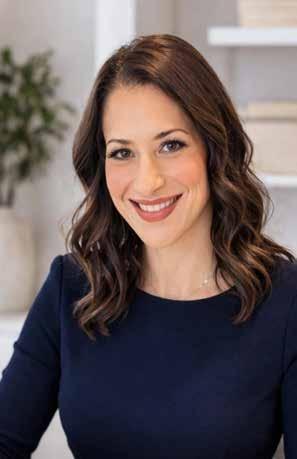
BY HEATHER DANIELS BSC RD
As the summer months arrive, the focus is often on staying hydrated, enjoying the
sunshine, and treating ourselves to the occasional ice cream. However, for the Jewish community, this time of year also brings two significant fasts: the 17th of Tammuz and three weeks later, Tisha B’Av.
Fasting itself has become increasingly common in modern life and for some, a frequent diet choice, as Intermittent fasting (IF) has been one of the biggest diet trends of the past decade. Rather than focusing on what people eat, it focuses on when they eat instead.
There are several different approaches, with one of the most well-known being the 16:8 method, where someone fasts for 16 hours and only eats within an 8-hour window. But is this something we should all be considering as part of a healthy lifestyle?
Supporters claim it promotes weight loss, improves metabolic health, and may even extend lifespan, however the scientific evidence suggests a more nuanced picture.
One of the strongest findings is that intermittent fasting can support weight loss, which is often the main reason so many are drawn to it. By limiting
the hours available for eating, many people naturally consume fewer calories without having to count them.
That said, when studies compare intermittent fasting with traditional caloriecontrolled diets containing the same number of calories, the differences are usually small. In other words, intermittent fasting can work, but it does not appear to be significantly better than other methods of reducing calorie intake.
There is evidence that intermittent fasting may improve markers of metabolic health, improvements in insulin sensitivity, blood pressure, and blood sugar control, particularly in people who are overweight or have insulin resistance.
However, fasting is not suitable for everyone. Some people find that going for long periods without food leaves them extremely hungry and can result in overeating when they do finally eat. For example, someone who loves a good breakfast may find that skipping it simply leads to a much larger lunch. And how many of us can relate to the huge “break the fast” meal after Yom Kippur?
Fasting can also cause headaches, irritability, difficulty concentrating, and lower energy levels. For those with a history of eating disorders, fasting may encourage unhealthy patterns of restriction and
binge-eating. Pregnant or breastfeeding women, children, and people taking certain diabetes medications should always seek medical advice before trying any form of fasting.
Ultimately, whether intermittent fasting is worthwhile depends on the individual. For some, it provides a simple and sustainable structure that helps reduce snacking and maintain a healthy calorie intake. For others, it can feel restrictive and become difficult to maintain over a long period of time.
Personally, I believe that the foundations of good health are making healthy food choices, staying physically active, getting enough sleep, and creating habits that can be maintained consistently over time - regardless of when we choose to eat.
With Tisha B’Av approaching, you may find that simply experiencing a one-day fast gives you the motivation to make positive changes to your health and lifestyle. Whatever your approach, I wish you all an easy and meaningful fast.
Contact Heather Daniels on 07886 419 497 or email heather@theukdiabetesdietitian.com


Smar t investoors have identified Ashkelon as the most promising area to buy proper ty now in Israel
Great sea view properties
• • • • • Slated to become the in Israel ocal University Garden city originally designed and built by South Africans! High speed trains linking the North to the South Golf course in the initial planning stages
Best t beaches in the countr y & lovely Marina 40 minutes to Tel Aviv and 60 minutes to Jerusalem
Growing vibrant Anglo community
Prices less than half of similar properties in Netanya!

• • • • 4th largest city L Contact us now for details! a s h k e l
















































Project Lily is all about improving the Jewish community’s wellbeing. Why? Because wellbeing is inextricably linked to physical and mental health. We’re encouraging people to give their wellbeing a hug with good self-care.





For each day of August, we’ve suggested a self-care idea that’s really quick and simple.
Look out for one of our free Awesome August Hug! booklets in shops and papers.
Can’t find one? Just email us at info@projectlily.org.uk and we’ll send you a free PDF copy.
This August, give your wellbeing a hug - one small act of self-care at a time.

Parashat Va’etchanan continues Moshe’s heartfelt farewell to the Jewish people as he reflects on his unanswered plea to enter the Land of Israel. Although Hashem lovingly refuses his request, Moshe does not dwell on disappointment. Instead, he turns his focus entirely to preparing the nation for the future, teaching them that faith means trusting Hashem’s plan even when it differs from our own.
At the heart of the parashah is the repetition of the Aseret HaDibrot, reminding the new generation of
the covenant forged at Har Sinai. Alongside this, Moshe urges the people never to forget the unique relationship they have with Hashem, emphasising that their strength will come not through military might or political power, but through living a life guided by Torah and mitzvot. The parashah also contains one of the most central declarations in all of Judaism: Shema Yisrael. More than a statement of belief, the Shema is a call to wholehearted commitment—to love Hashem “with all your heart, with all your soul,
The goal of a word wheel puzzle is to create as many words possible with the letters in the word wheel. Each word must contain at least three letters. You can only use each letter once and every word must have the letter in the centre of the wheel.
and with all your might.” It reminds us that Judaism is not confined to the synagogue but should shape our homes, our conversations, and every aspect of daily life, passing our values from one generation to the next.
Appropriately, Parashat Va’etchanan is always read on Shabbat Nachamu, the Shabbat of Comfort, immediately after Tisha B’Av. Having mourned the destruction of the Beit HaMikdash, we now begin the journey of consolation and hope. The message is profound: even after
loss and disappointment, there is always the opportunity to rebuild, reconnect, and move forward. As we read Va’etchanan, we are reminded that while we cannot always choose our circumstances, we can choose how we respond to them. By strengthening our relationship with Hashem, embracing His Torah, and passing those values to the next generation, we take another step towards the comfort, redemption, and brighter future for which we continue to pray
Jacob came home looking very pleased with himself after his maths test. His dad asked, “How did it go?” Jacob replied, “Really well! I only got one question wrong.” His dad smiled. “That’s brilliant! Which question?”
Jacob said, “The one where it asked for my name... ”
This unique twist on the classic Sudoku puzzle uses the Hebrew letters א through ט instead of numbers 1–9. The rules remain exactly the same: each row, each column, and each 3×3 box must contain every letter once — without repetition. החלצהב — and enjoy the puzzle!
Q: Why did the bicycle fall over?
A: Because it was two-tired!
Q: What do you call a fish wearing a bow tie?
A: Sofishticated!
Q: Why did the computer go to the doctor?
A: Because it caught a virus!
Q: What kind of tree fits in your hand?
A: A palm tree!
1. I follow you all day long, but disappear when the sun goes down. I never speak, yet I copy every move you make. What am I?