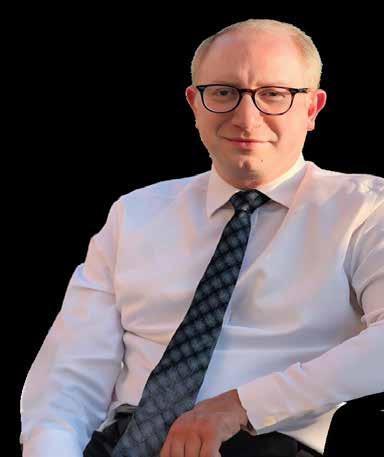









BY MARTIN KENT
Former Iranian president
Mahmoud Ahmadinejad has reportedly been placed under house arrest by the intelligence arm of Iran’s Islamic Revolutionary Guard Corps after authorities uncovered alleged secret contacts between him and Israel.

The extraordinary claims represent a remarkable reversal for the former president, who became internationally notorious for his fierce hostility towards Israel, inflammatory speeches and repeated questioning of the Holocaust during his time in office.
Ahmadinejad served as Iran’s president from 2005 until 2013 and was once regarded as one of the Islamic Republic’s most
uncompromising hardliners. However, his relationship with Iran’s ruling establishment deteriorated after leaving office, with the former president becoming increasingly critical of senior officials and repeatedly being prevented from standing in subsequent presidential elections.
Recent reports claim that Israeli intelligence officials viewed Ahmadinejad’s estrangement from the regime as a possible opportunity. Israel’s Mossad is alleged to
have established contacts with him as part of a wider plan to influence Iran’s future leadership should the country’s clerical government collapse.
on page 2



Continued from page 1
According to accounts attributed to Iranian and Western officials, Ahmadinejad held a series of secret meetings with Israeli representatives outside Iran. One reported encounter involved senior Mossad figures, while other contacts allegedly took place through intermediaries.
The plan was reportedly based on the belief that Ahmadinejad retained a significant following among poorer and more nationalist sections of Iranian society. Despite his history of antiIsrael rhetoric, some officials allegedly considered him a potential transitional figure capable of appealing to Iranians while weakening the authority of the clerical establishment.
Iranian authorities are now said to have discovered substantial details of the contacts. Ahmadinejad is reportedly being held under tight supervision by Revolutionary Guard intelligence, although Tehran has not publicly confirmed his arrest, disclosed his location or announced formal charges.
Ahmadinejad actively agreed to cooperate with Israel or merely participated in discussions while attempting to regain political influence.
Any proven collaboration would be regarded as treason by the Iranian authorities and could carry extremely severe punishment. Iran has executed numerous people accused of spying for Israel, particularly during periods of military confrontation and heightened fears of infiltration.
The revelations are nevertheless deeply embarrassing for Tehran.

Ahmadinejad spent years presenting himself as one of Israel’s greatest enemies and frequently predicted the Jewish state’s disappearance.
His reported transformation from anti-Israel firebrand to alleged participant in an Israeli-backed political operation would mark one of the most astonishing episodes in modern Iranian politics.

The allegations remain difficult to verify independently because of strict censorship inside Iran and the secretive nature of both the Revolutionary Guard and Mossad. It is also unclear whether
For Israel, the affair also demonstrates the extent of its reported efforts to cultivate contacts inside Iran and prepare for possible political change. For Iran’s leaders, it raises new questions about loyalty within the highest levels of the Islamic Republic and the depth of Israeli intelligence penetration.




P R O P E R T Y
M A N A G E M E N T









BY MARTIN KENT
Donald Trump has intensified America’s confrontation with Iran, unleashing a week of blistering attacks on the Islamic Republic while making it abundantly clear that the United States will not tolerate any attempt by Tehran to rebuild its military strength or threaten Israel again.
The US President has repeatedly ridiculed Iran’s leadership, describing the regime as “bullies,” “terror sponsors” and “losers,” insisting they had suffered devastating setbacks. He warned that any renewed attack on Israel or American forces would be met with an “overwhelming response” and declared that Iran’s rulers had been taught “a lesson they won’t forget.”
His uncompromising rhetoric has been accompanied by continued American military pressure and a firm commitment that Iran must never be allowed to develop a nuclear weapon.
For Israel, Trump’s message has provided reassurance that its closest ally remains firmly behind the Jewish state following months of unprecedented conflict across the Middle East.

Yet despite the strong words coming from Washington, few believe the crisis is over.
Israeli defence officials continue to warn that Iran remains the greatest longterm strategic threat facing the country. Although significant damage has reportedly been inflicted on Iranian military infrastructure, missile production and Revolutionary Guard facilities during recent operations, intelligence officials believe Tehran will now focus on rebuilding its capabilities while avoiding direct
confrontation in the immediate future.
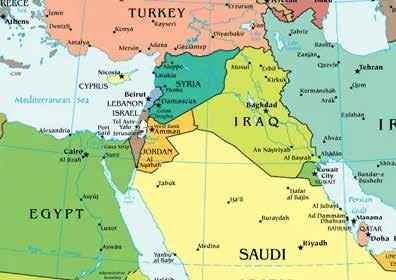
Instead, analysts expect Iran to continue relying heavily on its network of regional proxy groups stretching across Lebanon, Syria, Iraq and Yemen.
That leaves Israel facing a dangerous balancing act.
On the northern border, Hezbollah remains severely weakened compared with its strength before the latest conflict. Hundreds of commanders have reportedly been eliminated, large quantities of missiles destroyed and key
military infrastructure damaged.
However, Israeli military planners stress that Hezbollah still possesses considerable firepower and remains capable of threatening communities throughout northern Israel.
Diplomatic efforts are therefore continuing behind the scenes to prevent another major war with Lebanon.
American mediators are working with both Israeli and Lebanese officials on proposals designed to strengthen implementation of existing ceasefire arrangements. The discussions reportedly focus on expanding the deployment of the Lebanese Armed Forces throughout southern Lebanon while pushing Hezbollah further away from Israel’s border.
Israeli officials have repeatedly made clear that any future withdrawal from disputed positions will depend entirely upon guarantees that Hezbollah cannot simply return and rebuild its military infrastructure within striking distance of Israeli towns.
Continued on page 6
Turn your home into your golden years.
If you’re over 55 and own your own home, you can unlock its value with a Lifetime Mortgage.
monthly payments required


















Hear hostage survivor Sagui Dekel Chen perform the songs he wrote in captivity, live from Kibbutz Nir Oz, alongside renowned Israeli artists and fellow freed hostages.
As the only organisation broadcasting the concert live outside Israel, JNF UK is offering a unique opportunity to stand in solidarity with the hostages and the people of Kibbutz Nir Oz.

Continued from page 4
For thousands of Israelis forced to evacuate northern communities, the hope is that a lasting security arrangement may finally allow families to return home after many months away.
Attention is also increasingly turning towards Syria.
Following dramatic political changes in Damascus over recent months, a new government is attempting to establish control over large parts of the country after years of civil war.
Israel continues monitoring developments extremely closely.
Successive Israeli governments have consistently argued that southern Syria must never again become a launching
pad for Iranian forces or allied militias seeking to attack the Jewish state.
While some international officials believe changing political circumstances could eventually reduce tensions along Israel’s north-eastern frontier, Israeli security leaders remain cautious, warning that extremist organisations and Iranianbacked groups could quickly exploit any security vacuum.
Prime Minister Benjamin Netanyahu has repeatedly stated that Israel will retain complete freedom to act militarily wherever necessary to prevent future threats from emerging.
Inside Iran itself, pressure continues mounting.
The country’s economy remains under severe strain following years of international sanctions, while military expenditure and damage from recent conflict have further increased economic difficulties.
Reports continue to emerge of political disagreements within elements of Iran’s leadership, although the regime publicly insists it remains united and fully committed to its
long-standing policies.
Meanwhile, speculation surrounding former president Mahmoud Ahmadinejad has fuelled further discussion about divisions inside Iran’s political establishment, although many reports remain unverified.
Across Washington, attention remains focused on Trump’s next move.
The President has adopted an unmistakably hard-line approach towards Tehran while simultaneously indicating that diplomacy remains possible if Iran permanently abandons nuclear ambitions
and ceases supporting terrorist organisations across the region.
The White House insists peace remains achievable but only from a position of overwhelming strength.
That approach has been broadly welcomed by Israeli leaders, who argue that previous attempts at engagement failed to prevent Iran from expanding both its missile programme and regional influence.

21:30 Ma'ariv, Eicha and Kinnos R' Amram Landau
22:30
Feeling the loss through song and stories
23:00 End
8:45 Shacharis
9:30 Explanatory Kinnos by the Jewish Futures Rabbinic team

Rabbis Blau, Goldwater, Stemmer, Abadi, Wittler and Landau FILM SCREENING While We Were Celebrating 20:00 Mincha
18:30 FILM SCREENING While We Were Celebrating




20:30 AISH 9TH AV FILM


Tragic Awakening - an inspirational postOctober 7th film rethinking antisemitism’s roots, turning hatred into strength for Jewish identity and western values


BY MARTIN KENT
Jews across Britain have reacted with disappointment and concern after Andy Burnham apologised for Labour’s handling of the Gaza conflict, with many warning that his remarks risk sending the wrong message at a time when Israel continues to face threats from Hamas and other Iranian-backed terrorist groups. Burnham, who will become Labour’s next leader and Britain’s next Prime Minister, said Labour “didn’t get it right” in its early response to the war following the October 7 Hamas massacre. His comments, which included an apology to voters who believed the party should have pushed sooner for a ceasefire, have reignited debate over Labour’s approach to Israel. Many within the Jewish community fear the apology places too much emphasis on criticism of Israel while failing to
recognise the circumstances that led to the war.
Communal figures stressed that October 7 was the worst terrorist attack in Israel’s history, with around 1,200 people murdered and more than 250 taken hostage. They argue that any discussion of Gaza must begin with acknowledging Hamas’ deliberate targeting of civilians and its murdering, kidnapping and torturing of babies, women and men.

One senior community figure said: “Nobody wants to see innocent civilians suffering. Every Jewish person wants peace. But there is frustration that politicians increasingly speak about Israel’s actions without first recognising why Israel went to war in the first place.”
Another communal representative added: “Israel did not choose this conflict. Hamas invaded Israel, murdered entire families and still openly declares its intention to repeat October 7. That context cannot simply disappear
from the conversation.”
Others expressed concern that Burnham’s comments could encourage those who seek to isolate Israel internationally while doing little to increase pressure on Hamas to disarm or free the remaining hostages.
Several Jewish residents in Greater Manchester, where Burnham has served as Mayor since 2017, said they had always regarded him as someone willing to engage positively with the Jewish community and stand firmly against antisemitism. They hope that relationship can continue despite the current disagreement, and his previously similar comments on the same topic.
One Manchester businessman said: “Andy has generally been supportive of our community over many years. That is why these comments are particularly disappointing. We would hope he continues listening to Jewish voices before adopting policies that could have serious consequences for Israel’s security.”
Another community member commented: “There is room for criticism of any Israeli government, just as there is
for any democracy. But criticism must be balanced. Too often Hamas almost disappears from the discussion.”
Political analysts believe Burnham’s remarks form part of a broader attempt to reconnect with sections of Labour’s support that were deeply critical of the party’s original response to the Gaza war. However, many British Jews fear such political positioning risks further straining relations between Labour and a community that has worked hard in recent years to rebuild trust.
Despite the criticism, Jewish leaders and community members stressed they remain committed to constructive dialogue with politicians from all parties. They hope whoever forms the next government will continue supporting Israel’s right to defend its citizens against terror. For many in the community, however, one message remains clear: The Prime Minister must never lose sight of the terrorist atrocities that began the war or the continuing threat posed by Hamas. Only by recognising that reality, they argue, can meaningful and lasting peace ever be achieved.



Whether you choose a cozy one-bedroom just for you, or a sprawling 2,700 sq ft Villa in the sky, your VIDA memories will last forever. Private Shul | Shabbat elevators | Infinity pool | State-of-the-art gym | His/Hers sauna | Community room Business lounge | 24 HR Doorman | Just steps from the sea
In Hebrew, Holit translates to “dune” or “sand.” It is a fitting name for a community whose very existence has been defined by shifting sands, geopolitical movement, profound tragedy, and an unyielding commitment to rebuild. A small kibbutz of just a few hundred members, Holit is nestled in the northwestern Negev, within sight of the Gaza Strip, and has spent decades cultivating life in one of the region’s most challenging landscapes. Today, it stands as a symbol of profound resilience, supported in its darkest hours by JNF UK.
From the Sinai to the Negev: A History of Migration
The story of Holit began not in the Negev, but in the vast expanses of the Sinai Peninsula. Founded in 1977, the community was originally established as a pioneer outpost called Yamit. It was populated by young idealists who sought to build an agricultural community amidst the desert dunes.
However, the geopolitical landscape soon shifted. Following the historic 1979 Egypt-Israel peace treaty, Israel agreed to return the Sinai Peninsula to Egypt. This required the evacuation and dismantling of Israeli settlements in the area. In 1982, Yamit was evacuated. Refusing to let their communal dream
dissolve, the residents chose to transplant their lives. Moving northeast, they officially established Kibbutz Holit in the northwestern Negev. There, they began the arduous process of rebuilding and taming the desert once again.
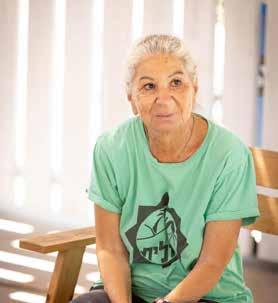
Dina, one of the founding members of the Kibbutz in the Sinai, was involved in rebuilding it a second time in the Negev in 1982. She is now rebuilding Holit for the third time following October 7th. “Yet again we plant fields and build homes. All we wish for is to continue cultivating our quiet, tight-knit community in peace and focus on rebuilding family life.”
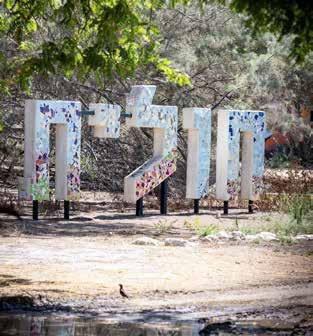
For decades, the residents of Holit maintained their peaceful, agrarian lifestyle, despite their proximity to the volatile Gaza border. That peace was violently shattered on the morning of October 7th, 2023. In a coordinated, devastating assault, Hamas terrorists breached the border and invaded several Israeli communities, including Holit. The quiet paths of the kibbutz became a battlefield. The assault resulted in the tragic loss of 13 lives on the kibbutz, including both long-time residents and vital migrant agricultural workers who kept the community running. Homes were burned, property was ransacked, and the survivors were forced
to endure hours of terror locked in their safe rooms before being rescued. The physical and emotional fabric of Holit was torn apart, and the entire community was immediately evacuated for their safety.
Life in Exile: Holding the Community Together in Revivim
Following the evacuation, many of the displaced residents of Holit found a temporary sanctuary further south in Kibbutz Revivim. While Revivim offered safety and shelter, the sudden uprooting posed a severe threat to Holit’s social cohesion. Scattered, traumatised, and mourning their lost neighbours, the residents faced the very real danger of their community permanently fracturing. Recognising this threat, JNF UK stepped in with critical, rapid-response funding focused on a vital psychological goal; maintaining Holit’s collective identity.
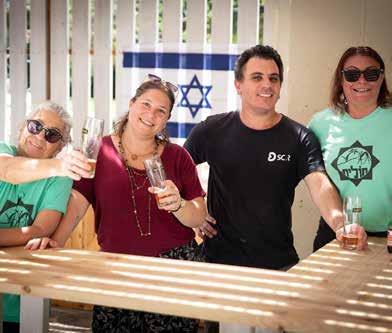
UK has invested heavily in the physical rehabilitation of the damaged kibbutz. These efforts have targeted building and restoring destroyed public infrastructure to ensure the returning residents feel like one big family and have places to share their past memories and build new ones together.
JNF UK funded the establishment of dedicated community hubs within Revivim. This included creating shared spaces for the evacuated children, informal meeting areas for adults, and organising communal meals and cultural events. By providing these physical and social anchors, JNF UK ensured that the people of Holit did not just survive as individuals, but remained bonded as a cohesive kibbutz family. It allowed them to mourn together, support one another, and keep their shared culture alive during months of painful uncertainty.
True resilience is not just about enduring a crisis; it is about looking toward the future. Even in exile, the residents of Holit made it clear that their ultimate goal was to return. Throughout their displacement, JNF UK continued to work hand-inhand with the community, shifting their focus from temporary relief to long-term reconstruction. JNF
This August, the journey comes full circle. Armed with courage and supported by JNF UK, the residents of Kibbutz Holit are preparing to return home to their rebuilt village. The sand from which they took their name remains, but the foundations they have built upon are stronger than ever. Through historic relocation, unimaginable tragedy, and the long road to recovery, the story of Holit is a testament to the fact that a true community cannot be washed away.
Learn how JNF UK supports other border communities in Israel by visiting: jnf.co.uk


Shafiq Rahman, 48, was sentenced this week at Reading Crown Court to sixteen months in prison in relation to an incident in April 2026, in which he called an Orthodox Jewish man a “dirty [...] Jew” and threatened to break his jaw.
The sentence reflects numerous offences which Mr Rahman admitted in court, including racially aggravated common assault, fear or provocation of violence by words and criminal damage.
A spokesperson for Campaign Against Antisemitism said: “This is the sort of deterrence that we need to see against antisemitic criminals. If you engage in unprovoked, aggressive abuse of someone because they are Jewish, you have a speedy trial and you go to prison. That is the only way

A bipartisan proposal to make Daylight Saving Time permanent across the United States has passed the House of Representatives, reopening debate over the impact of year-round later sunsets and winter mornings.
The measure passed by 308 votes to 117 and will now be considered by the Senate. Supporters argue that ending the twice-yearly clock changes would reduce disruption, provide more evening daylight and benefit families, businesses and outdoor activity.
harder for working people to attend Shacharis before beginning their day.

Jewish prayer times are governed by halachah and linked to natural daylight. Certain parts of the morning service cannot be recited before the appropriate time, meaning that permanent Daylight Saving Time could leave many worshippers facing a difficult choice between attending a proper minyan and reaching work on time.
Tuesday 4 August 10am - 4pm
• Discover warm, welcoming retirement living in the heart of Hendon
• Tour our modern apartments and communal spaces
• Meet current residents and learn about life at Wohl Court At Wohl Court, our Jewish retirement living community, enjoy the comfort and privacy of
To book your place email hboston@jcare.org or call 0778 022 4910 by 28 July (spaces are limited) jewishcare.org/wohlcourt
However, opponents warn that permanent Daylight Saving Time would lead to much later winter sunrises, with some areas remaining dark well into the morning.
Agudath Israel of America has expressed particular concern about the proposal’s effect on Orthodox Jewish life. The organisation warned that later winter sunrises could make it considerably


Agudath Israel also raised concerns about children travelling to school in darkness during the winter months, saying the change could create both practical and safety difficulties for families.
The organisation has urged lawmakers to consider the needs of religious communities before approving the measure. The Senate is expected to face pressure from both supporters seeking lighter evenings and opponents concerned about dark winter mornings.



BY MARTIN KENT
The Knesset has approved a new Basic Law recognising Torah study as one of the foundational values of the State of Israel, following a final vote of 63-52 on Monday night.
Although Israel does not have a formal written constitution, its Basic Laws carry constitutional weight and help shape the country’s legal framework.
The legislation, introduced by United Torah Judaism MKs Yaakov Asher and Moshe Gafni, states that “Torah study is a foundational value in the heritage of the Jewish people and the State of Israel.” An earlier version also described long-term Torah study as a “significant service” to the state, but that wording was removed after objections from members of the governing coalition.
Supporters hailed the legislation as an important recognition of the central role Torah learning has played in preserving the Jewish people throughout history and in safeguarding the spiritual foundations of the Jewish state. Many view Torah study as an essential pillar of Israel’s
strength alongside its physical defence.
Critics, however, argued the law could reinforce the legal basis for continued exemptions from military service for many yeshivah students, making it more difficult for the courts to alter the current
legislation dealing with military service for the Haredi community while the war continues. Earlier this year, the Supreme Court instructed the state to strengthen enforcement of existing conscription laws and consider sanctions against those who

arrangements. The issue remains one of the most sensitive and closely watched debates in Israeli society.
The government has delayed broader
fail to report for service.
The debate comes against the backdrop of the ongoing war, with many Israelis calling for broader national participation
in defence, while Haredi leaders continue to stress that Torah study provides vital spiritual protection for the Jewish people. Since the Hamas attacks of October 7, 2023, more than 1,000 Haredim have voluntarily enlisted in the IDF, while a similar number have joined civilian national service, although tens of thousands of eligible Haredi men have yet to enlist.
Proceedings in the Knesset reflected the deep emotions surrounding the issue. As Prime Minister Benjamin Netanyahu entered the chamber ahead of the vote, opposition MKs loudly shouted “Shame!” and “Get out!” Following the heated exchanges and the passage of the legislation, Netanyahu left the chamber, underscoring the continuing divisions over one of Israel’s most complex national issues.













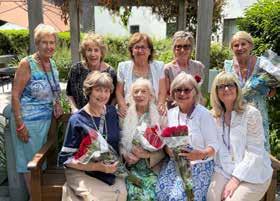
Centenarian Henny Franks celebrated her 103rd birthday together with fellow Holocaust survivors, friends, staff and volunteers. She blew out the candles on her cake at a garden party held by Jewish Care’s Holocaust Survivors Centre to honour the special occasion.
Representatives from AJEX and Chelsea Pensioners joined the celebrations alongside the members of Jewish Care's Holocaust Survivors' Centre, where Henny remains a much-loved and active member.
Adding to the celebrations, AJEX member Paul Bentley surprised Henny with 120 roses. Henny also received a personalised birthday card with original artwork by cartoonist and animator Zoom Rockman and the wider Lemon

Soul team who produced Henny, one of eight new animated films celebrating the extraordinary lives of Holocaust survivors in the UK.
Born in Cologne, Germany on 29 June 1923, Henny was forced to flee Nazi persecution as a teenager. After her family escaped to Belgium following Kristallnacht, Henny and her brother and sister arrived in the UK on the Kindertransport in 1939. Tragically, her father, Jacob Grünbaum, was later deported to Sobibor and murdered. Henny was eventually reunited with her mother in Britain and went on to build a new life in the country that became her home.
Determined to contribute to the war effort, Henny taught herself English and joined the Auxiliary Territorial Service. She served as a driver in a munitions factory in Westcliff-on-Sea and proudly celebrated Victory in Europe Day in uniform amongst the jubilant crowds on Oxford Street. More than eighty years later, her wartime service was recognised nationally when she featured in the Ministry of Defence's VE Day campaign celebrating veterans Second World War veterans, with her image appearing on a billboard in Leicester Square.
warmth, friendship and enduring impact on those around her, adding:
"She loves a good natter, a chat and a tea, the brightest spark in the whole of HSC."
Addressing her friends gathered to celebrate her milestone birthday, Henny paid tribute to the services that mean so much to her, saying:
country with pride and continues to enrich the lives of those around her every day. Henny embodies the spirit of our cherished Holocaust Survivors' Centre community and reminds us all of the importance of friendship, connection and living life with purpose. We are delighted to celebrate her 103rd birthday and wish her every happiness."
Melanie Gotlieb, Centre and Outreach Coordinator at Jewish Care's Holocaust Survivors' Centre, said,
A proud member of AJEX, Henny was reunited with the medals she was entitled to receive for her wartime service on her 100th birthday, thanks to AJEX's medals campaign. She was presented with her Defence Medal, War Medal 1939–45 and HM Armed Forces Veteran Badge, a proud and emotional moment for Henny, whose service had gone unrecognised for decades.
After the war, Henny resumed life in London as a talented dressmaker, a skill she inherited from her father, who had been a tailor. She met her future husband, Maurice, at a tea dance at the Astoria Ballroom on Charing Cross Road. The pair married in 1957, with Henny creating her own wedding dress, and enjoyed 50 happy years of marriage together while raising their family. Henny has two children and three grandchildren.
Henny's love of fashion remains as strong today as ever. Last year she took to the catwalk at GIFT's "Beyond the Label" fashion show, modelling a dress she had made herself and delighting audiences with her confidence, elegance and unmistakable sense of style. Henny was among the standout stars of the show, proving that age is no barrier to living life to the full.
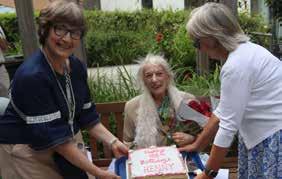
During the birthday celebrations, Francine Libert, Jewish Care’s Holocaust Survivors’ Centre Programme Coordinator, shared a heartfelt poem dedicated to Henny, describing her as:
"Stealing the show, the sharpest fashionista you'll ever know. While others wear slippers and cardigans grey, our Henny is rocking a runway display."
The poem celebrated Henny's
Reflecting on her remarkable longevity with characteristic humour, she added: "I'm 103 years old and I don't look it, but my bones know exactly how old I am! The reason I got old like this is because I belong to the Holocaust Survivors' Centre – while they’re alive, I’m alive."
Daniel Carmel-Brown, Chief Executive of Jewish Care, said:
"Everyone who meets Henny is inspired by her warmth, resilience and positivity. She has overcome unimaginable challenges, served this
"Henny is truly one of a kind. She brings joy, laughter and energy wherever she goes, whether she's sharing memories, enjoying a chat with friends or showing off one of her fabulous outfits. She is loved by everyone at the Centre and her birthday was a wonderful opportunity for us all to celebrate an extraordinary woman who means so much to our community."
AJEX Chief Executive Fiona Palmer, said,
“We wish Henny the most wonderful year ahead. We are in awe of all she does and her determination. Coming to the UK and serving in the HM Armed Forces as a teenager is hard to imagine and an inspiration. Happy birthday Henny!”







Edgwarebury Joint Burial Board is celebrating today after receiving a Green Flag Award for Edgwarebury Cemetery. It comes as the internationally recognised standard for parks and green spaces celebrates its 30th year.
Edgwarebury Cemetery is one of a record breaking 2,391 in the UK to achieve the award this year – a fantastic testament to the hard work, passion and dedication of the team who care for this green space, ensuring it is maintained to a high standard for visitors to enjoy.
Paul Todd MBE, Green Flag Award Manager at Keep Britain Tidy, said: “Parks and cemeteries are essential public spaces that support our wellbeing, our communities and our economy. Yet for millions of people, particularly in the most deprived areas, local parks simply don’t feel safe or welcoming.
“With public services under pressure, investing in parks is not a luxury, it’s a practical, preventative solution and
one of the most visible ways to improve people’s quality of life.
Edgwarebury Cemetery have shown what can be achieved when parks and cemeteries are properly supported and managed. As we celebrate 30 years of the Green Flag Award, we want every community to have access to green spaces like this that are safe, welcoming and maintained to a high standard.
The Green Flag Award scheme, managed by environmental charity Keep Britain Tidy under contract from the Ministry of Housing, Communities & Local Government, recognises and rewards well-managed parks and green spaces, setting the benchmark standard for the management of green spaces across the United Kingdom and around the world.
The cemetery serves thousands of families, providing a peaceful and dignified place of remembrance in Edgware, Middlesex.
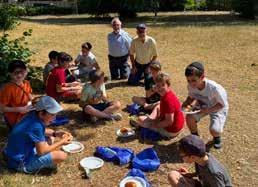
Hendon Park was filled with excitement, energy and community spirit as a large crowd of children and their families came together to take part in the Sponsored Walk.
The children enthusiastically completed the walk after working incredibly hard to raise sponsorship. Thanks to their tremendous efforts and the generosity of family, friends and the wider community, the walk raised in the region of £7,000.
Every child received a backpack filled with drinks and snacks, and after completing the walk, all enjoyed candy floss and a delicious barbecue. The park was buzzing with laughter, creating an amazing atmosphere that was enjoyed by children, parents, volunteers and supporters alike.
Sage would like to extend a huge thank you to all the children and families who took part and worked so hard to raise sponsorship. Their kindness, generosity
and commitment will make a meaningful difference to the lives of the residents at Sage. Special thanks to the CST who went over and above to help keep everyone safe, and to the wonderful volunteers who generously gave their time and worked tirelessly to
help the event run so smoothly. We are always looking for volunteers to make a difference to the lives of our residents, whether it is through school fundraising, visiting, helping with activities or raising funds we welcome all ages and would love to hear from you! You can be in touch with us by emailing reception@ thesagehome.com or by calling 020 82018111












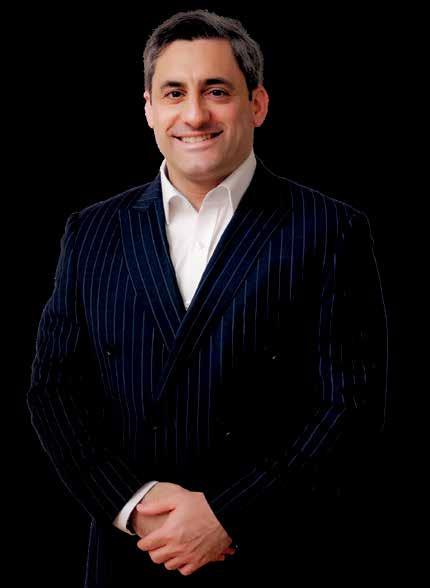
A new room at Ner Yisrael, widely regarded as the largest Modern Orthodox synagogue in Europe, will be dedicated on Sunday in memory of a Jewish refugee whose childhood journey took her from Egypt, through Israel and France, to a new life in Britain.
The Marlene Green Room, part of a newly developed floor at Ner Yisrael, will be dedicated at a ceremony at 11.45 am, with the affixing of a mezuzah.
The room has been dedicated by Marlene’s son, Daniel Green, a trustee of Ner Yisrael, as a tribute to his mother.
deteriorated for Jews there. Their journey took them first to Israel, where they lived in a tent in an immigration camp, then to France, before arriving in Britain in 1951. The three sisters grew up at Norwood in south London.
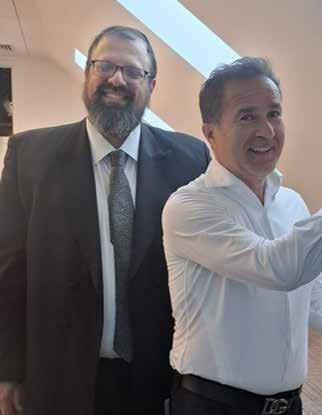
“My mother was born in Egypt in 1943. She left the country as a small child with her father and two sisters, as conditions
Marlene later married Ivan Green, and together they built a family and clothing business in Yorkshire, rooted in a belief that hard work would bring security to the next generation.”
“My mother was quiet, but also incredibly determined,” Daniel said. “She was practical, hardworking and selfless. She never wanted attention or took anything for herself. She simply got on with life, driven by an unceasing work ethic, caring for those around her and quietly making a difference.”

The new room comes as Ner Yisrael expands its facilities in response to growing demand and an increasingly busy programme of learning and communal life. The community combines a strong commitment to Orthodox Jewish practice and Torah learning with an intellectually open, socially engaged outlook. With some 60 new members in the last year alone, the newly dedicated room is part of the Shul’s recent extension and new floor.
For Daniel, the room is a fitting memorial.
“This new space will constantly be used for events, community life learning and prayer and community life, all at the heart of Ner Yisrael. It will have a quiet but very real impact, allowing more people to come in, learn and grow. In that sense, it is exactly like my mother. She was humble and unassuming, but exceptionally hard-working, and the impact she had on her family and those around her was enormous.”
“Ner Yisrael is a thriving shul of working people who are deeply committed to Judaism,” Daniel continued. “There is tremendous
energy here, with events, shiurim and minyanim, and people constantly coming through the doors to learn and take part. For me, being confident in the modern world while remaining a proud, committed Jew, contributing to wider society while building your life around Torah and community is important. That is what I see at Ner Yisrael under Dayan Zobin’s guidance: a happy, confident and growing community. I hope the Marlene Green Room will help even more people become part of it.”
Dayan Eliezer Zobin, Senior Rabbi of Ner Yisrael, remarked:
“Marlene’s life was one of quiet determination and hard work, and it is fitting that her memory will live on in a room devoted to constant learning and community activities. Ner Yisrael is a busy, growing community built on serious commitment to Torah, thoughtful engagement with the wider world and a desire to contribute. This generous gift reflects those values perfectly, and we are immensely grateful to Daniel, Sharon and the Green family for their support and involvement.”







Two long-established Jewish housing associations in the north west have merged in a ‘landmark moment’ to form a single regional provider, with plans to strengthen services, invest in existing homes and explore opportunities for expansion.
Manchester Jewish Housing Association and Liverpool Jewish Housing Association have joined forces to establish the North West Jewish Housing Association.
The new organisation’s portfolio of 310 homes includes sheltered, supported, affordable and general needs accommodation for single people, couples, families and older people, as well as the Hillel House student accommodation in Liverpool.
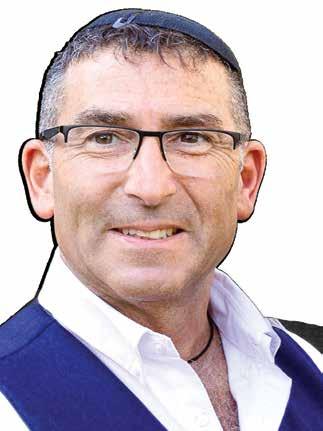
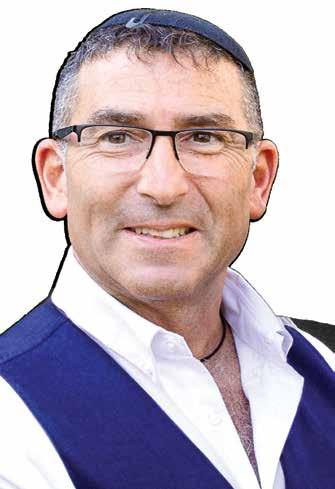
The new organisation will be led by chairman Phil Geller and chief executive David Mintz, who previously held the same roles at the Manchester Jewish Housing Association.
Regulatory approval for the merger, including from the Financial Conduct Authority, was granted last month.
Phil Geller said: “This merger is a landmark moment for Jewish housing in the north west, bringing together decades of experience, shared values and a commitment to community.
“It is one of the most significant developments in Jewish social housing in
the north west for many years. MJHA was founded in 1959 and LJHA in 1975, and both have long histories of serving their communities and providing housing that reflects their needs and values.
“The housing needs of their respective communities have changed significantly over the years, and a merger at this time makes sense. Bringing them together is a natural and positive step.
“Manchester’s Jewish community continues to grow, increasing demand for affordable and supported housing.
While Liverpool’s Jewish population is smaller than it once was, LJHA’s assets, history and contribution remain hugely important.
“By joining forces, we are creating a stronger organisation with the scale, expertise, operational resilience and resources to invest in homes, support residents and meet future housing needs across the region.”
He added: “For residents and stakeholders, the message is clear – the high-quality, personalised service that people have come to expect will remain at the heart of everything we do.
“Existing commitments continue unchanged, and our experienced team remains focused on delivering safe, wellmanaged homes and excellent support.
“For the wider community, the message is that this merger protects an


important communal housing legacy while creating a stronger vehicle for future Jewish housing provision across the north west.
“At the same time, we are looking to the future with ambition. Demand for highquality Jewish housing continues to grow, and we are actively seeking opportunities to expand.
“Landowners, developers, agents, local authorities and community organisations that may be aware of sites, buildings or partnership opportunities could help us deliver much-needed homes and services.
“Whether through redevelopment, acquisition or collaborative ventures, we are committed to investing in the future of Jewish housing and creating vibrant, sustainable communities across the north west.”
Phil said priorities for NWJHA will include investing in existing homes, maintaining safe and comfortable accommodation, strengthening resident engagement and developing social and communal activities where possible.
“In time, we may consider wider north west Jewish housing needs, including opportunities in other communities where demand exists,” he added.
Phil said one potential avenue could be the provision of more student housing.
“We have already started exploratory
work with the Union of Jewish Students and other key stakeholders to better understand the potential role that specialist provision could play in supporting student welfare, community cohesion and security across other areas of the north west.”
David Mintz said: “The creation of NWJHA brings together two organisations with a shared commitment to providing high-quality housing and support for Jewish communities in both cities at a time when affordable, safe and community-sensitive housing remains a pressing need.
“Our immediate focus is on delivering a smooth integration while maintaining the services that residents rely on every day.
“Over time, residents will benefit from a stronger organisation with greater capacity to invest in homes, enhance services and respond to changing housing needs across the region.”
Alan Tinger, former chairman of LJHA, said: “Liverpool Jewish Housing Association has a proud history and an important legacy. This merger ensures that legacy is protected and carried forward within a stronger regional organisation."



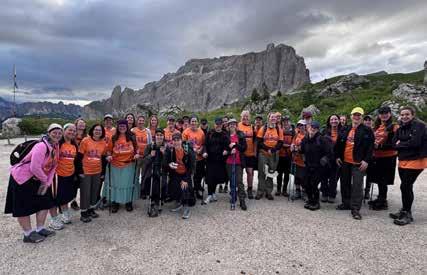
Last week, sixty women set off in two separate groups to trek 21km through the Dolomites over eleven demanding hours, taking on one of the toughest
and building meaningful volunteering opportunities across the community.
The two groups completed the trek on different days, each facing steep ascents and long stretches of exposed terrain. What united them was a shared sense of purpose: raising both funds and awareness for GIFT's work.

physical challenges many of them have ever faced. It was all in support of GIFT, the charity dedicated to inspiring giving
For many participants, the hike was as much about the people as the peaks. "I met the most amazing people from different countries and religious levels, and we all had one goal - to climb," said one participant. "You get to appreciate and see people as they are. All together."
Others reflected on how well the experience had been run, even for those who had done it before. "Second time I've been with GIFT... well organised to the nth degree. They thought of everything, and it was all taken into account and provided for. A huge undertaking and it seemed so seamless."
Dalia Davis, COO of GIFT and one of the trekkerswho did the hike twice - described the deeper impact of the challenge: "We gave everyone not just a beautiful

rabbi.burman@bwkollel.org
experience, but the realisation that we are so capable of achieving things far beyond what we thought possible."
Michelle Barnet, founder of GIFT said: "It was the most beautiful and inspiring experience, everyone pushing themselves and fundraising for GIFT and the important work we do in the community."
Certificates were presented to every participant in recognition of their achievement.
The hike comes at a great moment for GIFT, which continues to inspire giving, educate young people on the value of contribution, and create practical volunteering opportunities for people
“ “
of all ages. In the first half of 2026 alone, 7,726 volunteers, ranging from secondary school students to retirees, gave their time, energy and compassion to some of the most vulnerable people in the community. Between them, they contributed 34,287 volunteer hours across 1,373 volunteering sessions, directly helping 2,713 recipients.
Against that backdrop, the Dolomites trek stands as a striking example of what individuals are willing to take on for a cause they believe in, a day of genuine physical achievement, matched by the ongoing, quieter work GIFT carries out in communities throughout the year.



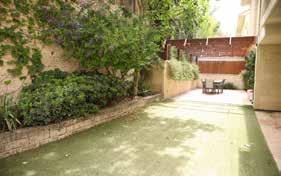




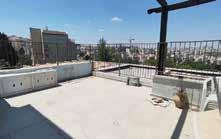
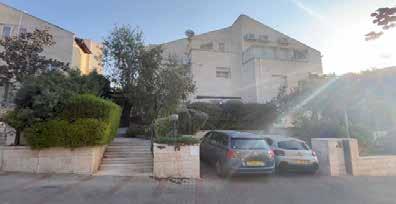
• Huge American style double sized house 10 bedrooms 600m of indoor space with 120m lush garden.
• Extra large salon and huge custom designed wood kitchen with pantry, large bedrooms, superbly designed.
• Located in a quality cul-de-sac modern orthodox neighborhood, a once in a lifetime opportunity.




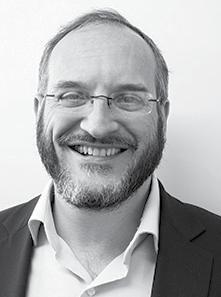
BY RABBI NAFTALI SCHIFF “Tisha B’Av Jew.”
I remember hearing that expression as a child.
It wasn’t meant as a compliment.
A “Tisha B’Av Jew” was the fellow who always looked miserable. Permanently dour faced. No smile. No sparkle. The sort of person who drained the energy from every room. Grey. Heavy. Joyless. Not exactly the kind of Jew a young person aspired to become. If that was a Tisha B’Av Jew, I wanted no part of it.
Then something rather awkward happened.
Every year, as the Three Weeks draw closer, invitations begin arriving asking me to speak before or on Tisha B’Av. If I’m candid- far more than at almost any other time of the year!
One day it struck me.
Oh dear… perhaps I’ve become a Tisha B’Av Jew.
How on earth did that happen?
I think the answer lies in the privilege I had, forty years ago, living millennial dreams coming true in the Old City of Yerushalayim, learning Torah in Yeshivat Hakotel, serving in the IDF and then of spending real time around and in the tutelage of Rav Noach Weinberg ל”צז Rav Noach wasn’t gloomy. He wasn’t negative.
He certainly wasn’t miserable. Ironically, he was probably the most jovial person I ever met- intoxicated with the thrill of life and all it had to offer. However, he simply refused to make peace with reality as it was.
He belonged to the first generation after the Holocaust. He witnessed the astonishing rebirth of the Jewish People: families rebuilt, Torah flourishing, communities revived and the State of Israel emerging against all odds. Yet whilst others simply marvelled at what was being rebuilt, he could not ignore what was still being lost.
Entire generations of Jews quietly disappearing through ignorance, apathy and assimilation. In the main- not because they hated Judaism. Most had simply never been introduced to the breathtaking beauty of their own inheritance. They were, in the language of Chazal, ובשנש תוקונית analogous to blameless babies captured in infancy and brought up in an alien culture. Most people never noticed. Rav Noach couldn’t stop noticing.
For over three decades carrying the names Aish and Jewish Futures, I find it impossible not to notice either. Campus after campus. Community after community. Extraordinary young Jews often distanced or alienated yet always searching somehow for Jewish connection and meaning whilst often never having encountered the depth of their own heritage.
Not because I am an enlightened person.
Rather simply because once your eyes have been opened, they cannot easily be closed again.
Perhaps that is what a Tisha B’Av Jew really is.
Not someone who is perpetually sad.
Someone who refuses to become comfortable with the Churban.
The Gemara teaches that the second Beit HaMikdash was destroyed because of םנח תאנש- hatred of one another (Yoma 9b). The unforgettable story of Kamtza and Bar Kamtza (Gittin 55b-56a) is not simply history; it is an X-ray of the Jewish malaise that perpetuates our ongoing exile.
comfort for purpose, possessions for meaning and success for significance.
This on top of the quiet tragedy that haunted Rav Noach’s life- Jews disappearing from our people not through persecution, but through indifference and apathy.
Assimilation. Sinat Chinam. Materialism.
Three very different expressions of the same reality.
Churban.
Not simply an event that happened two thousand years ago.
A condition that still confronts us today.
Perhaps this is what Chazal meant when they taught:

."התחמשב (Ta’anit 30b)
Whoever mourns for Jerusalem will merit to witness her rejoicing. Mourning is not depression. It is clarity. It is refusing to normalise
what should never become normal.
The first question Hashem asks mankind is “הכָיֶאַּ?”—“Where are you?” (Bereishit 3:9).
Where are you?
Where are your brothers and sisters?
Jews.
Perhaps a Tisha B’Av Jew refuses to make peace with a Jewish culture that prizes wealth above wisdom and comfort above calling?
Most importantly, a real Tisha B’Av Jew refuses merely to mope or mourn. He builds. He teaches. He reaches out. He listens. He inspires. He loves.
As David HaMelech declared:
“For the sake of my brothers and friends I will speak peace within you. For the sake of the House of Hashem our G-d, I will seek your good.”
Perhaps that is the true definition of a Tisha B’Av Jew.
Not someone who walks around with yesterday’s grief.
But someone who carries today’s reality.
Someone who refuses to accept Churban as normal.
Someone who dedicates himself to rebuilding- not only Jerusalem’s stones, but Jerusalem’s people; not only our institutions, but our unity; not only our nation, but the passion and our purpose of being Am Yisrael.
That is not melancholy.
That is hope.
Look honestly around us. Today, in front of our eyes.
The contempt. The labels. The suspicion. The inability to disagree without dehumanising.
The ease with which we dismiss Jews whose observance, politics or outlook differ from our own.
It is painful to admit, but the very disease Chazal identified two thousand years ago remains alive and thriving on today’s Jewish street- everywhere we turn.
The Yerushalmi (Yoma 1:6) adds another unsettling dimension, identifying ןוממה תבהא- an unhealthy attachment to wealth and material comfort—as one of the forces that corroded the spiritual foundations of the nation.
Again, the contemporary familiarity is uncomfortable.
Never have Jews enjoyed greater prosperity.Thats a good thing. The Gemara is highlighting the הבהא, the over obsession and focus upon material wealth and pursuit as the problem.
And never has it been easier to mistake
Where are you whilst another Jew quietly slips away?
Where are we whilst hatred tears at our people?
Where are we whilst the obsession with material success quietly eclipses spiritual aspiration, individual purpose, national mission?
The first question man asks back is “?
”- “Am I my brother’s keeper?” (Bereishit 4:9).
Perhaps the whole Torah is Hashem’s answer.
Yes!
A thousand times yes.
Perhaps today’s Tisha B’Av Jew therefore does not merely cry over stones that once stood in Jerusalem.
Perhaps a Tisha B’Av Jew cries year round because he still sees Churban all around.
Perhaps a Tisha B’Av Jew refuses to make peace with a Jewish world in which Jews drift from their heritage.
Perhaps a Tisha B’Av Jew refuses to make peace with hatred between fellow
And perhaps that is exactly the kind of Tisha B’Av Jew our generation so desperately needs- with a quiet inner cry all year round refusing to settle for churban as accepted reality. And at the time of Tisha B’Av that still small voice within becomes an audible cry to awaken us all to stand up; to be outraged and to apply all our energies to build together a world of goodness, of G-dliness, of unity, of purpose. Chazal tell us that in the future Tisha B’Av shall become a Yom tov. May that future be now- Good Yom Tov!

In this column Rabbi Naftali Schiff reflects upon 3 key words each week relating to contemporary and relevant issues.
All feedback is welcome- nschiff@ jfutures.org.
Rabbi Schiff is the Founder & CEO of the Family of Jewish Futures networks of educational organisations.
Forty-five young professionals traded their weekday routines for the ancient streets of Athens last weekend, joining Aish UK for a Shabbaton designed to combine history, community, and Jewish education against one of the world’s most storied backdrops.
The trip ran from Thursday to Sunday, giving participants a full four days to step away from everyday life. Before Shabbat began, the group toured Athens’ ancient sites, walking through millennia of history together as a prelude to the spiritual heart of the weekend. From there, the group settled into a private villa for relaxation and bonding.
Informed discussion was at the centre of the Shabbaton. Over the course of the weekend, participants were offered fourteen sessions covering a wide range of topics, from relationships and personal purpose to Torah insights. Notably, many of these were optional, yet they drew
strong attendance and visible enthusiasm throughout, a sign, organisers say, of a real hunger among young Jewish professionals for substantive connection to Jewish learning and their heritage.
Rabbi Gideon Goldwater, Managing Director, Aish UK says, “What better place to bring young Jews to explore the meaning of life, than the birthplace of philosophy. In the shadow of the Acropolis, the group engaged in a transformative experience, celebrating shabbat with togetherness and discussions throughout.”

Shabbat itself emerged as the highlight of the trip. Uplifting tefillot, spirited
singing, and open, honest conversation filled the villa with what participants described as a tangible sense of Jewish continuity. There was something particularly resonant about davening and studying Torah in Greece, a country steeped in ancient history but not typically associated with Jewish life. For many, holding such a vibrant Shabbat there added a layer of historical depth to the experience, along with a quiet sense of strength and pride in carrying Jewish tradition into an unexpected setting.
Beyond the formal programming, the weekend was defined by the friendships that formed organically among
participants, which many said they intend to carry forward long after the trip ended. That informal camaraderie was on full display Saturday night, when the group unwound together watching the England football match after performing Havdalah to close out Shabbat, a moment that blended the everyday and the sacred in a way that captured the spirit of the entire weekend.
By the time the group returned to the UK on Sunday, the Shabbaton had delivered on its promise: a powerful blend of meaning, friendship, and inspiration. Participants left not only recharged, but more deeply connected to their Jewish identity and to one another.
Aish UK has continued to expand its offerings for young professionals in recent years, and this Athens trip stands as one of its most ambitious Shabbatonim to date, both in scale and in the depth of programming offered.





J E R U S A L E M
M a m i l l a
G a r d e n
3 b e d r o o m s
T u r n k e y
P a r k i n g & s t o r a g e
H i g h e n d f i n i s h e s
Asking Price:
₪ 1 7 , 0 0 0 , 0 0 0

O
L

J E R U S A L E M
O l d K a t a m o n
S p a c i o u s r o o m s 3 b e d r o o m s
S u k k a h
P a r k i n g & s t o r a g e
G r e a t v i e w s
Asking Price: ₪ 7 , 5 0 0 , 0 0 0


B E I T S H E M E S H
R B S A l e f P e n t h o u s e
9 b e d r o o m s 2 7 0 S Q M
L u x u r y k i t c h e n
L a r g e S u k k a h
Asking Price: ₪ 6 , 9 0 0 , 0 0 0

S t o r a g e
Asking Price: ₪ 2 , 9 9 0 , 0 0 0
Asking Price: ₪ 5 , 8 5 0 , 0 0 0 N E T A N Y A 5 t h f l o o r 1 2 0 S Q M 1 9 S Q M b a l c o n y T w o p a r k i n g s p o t s M a m a d



Dear Rabbi
Every year, like clockwork, we sit on low stools, dim the lights, read Lamentations, avoid meat, music and anything remotely enjoyable, and spend the better part of a day mourning a building that was destroyed nearly two thousand years ago. We say we miss the Temple and we even pray three times a day for its restoration. But if an outsider were watching us, they might reasonably conclude that we have become rather comfortable with the current arrangement. After all, nobody seems to be organising a crowdfunding campaign to rebuild the Temple. There is no annual “Temple Restoration Gala Dinner” with silent auctions and sponsorship opportunities. Even those Jews who insist the Temple is central to Judaism seem perfectly content discussing it in theory while booking their summer holidays in August.
Meanwhile, Judaism appears to function well without it. We have synagogues and community centres instead, which seem to work perfectly well. We can livestream classes, have Torah apps, kosher food delivery, and enough WhatsApp groups to make Sinai itself seem technologically outdated.
To be brutally honest, sometimes Tisha B’Av feels like commemorating the closure of an iconic high street chain. Everyone agrees it was wonderful, everyone remembers it fondly, but deep down we’ve all adapted and life has moved on.
And then there is the political reality. Even if someone announced tomorrow that construction would begin, the world would probably descend into chaos before the first brick was laid. So perhaps all this praying is more symbolic than sincere.
Is it possible that we mourn the Temple mostly because we’re supposed to? Is the longing genuine, or simply inherited nostalgia for something none of us has ever actually experienced? How can I honestly cry over losing something I never knew?
Eric
Dear Eric
Wow! You must have been holding that in for some time. Thank you for your candid question, so thoughtfully expressed. But let’s put things in perspective. A man who loses a leg eventually learns to walk with a prosthetic. He may even run marathons but that does not mean he no longer misses his leg.
The destruction of the Temple forced Judaism to reinvent how it functioned, not what it ultimately aspired to become. Prayer became a substitute for sacrifices, synagogues became miniature sanctuaries and so on. In other words, Judaism survived one of history’s greatest national catastrophes precisely because it was resilient enough to adapt.
But we never pretended the substitute was the original. The Temple was not merely a magnificent building. It was the visible meeting point between Heaven and Earth. It represented a world where G-d’s presence was not simply believed in but palpably experienced. Pilgrims travelled from across the land because they sensed the holiness, which, to be sure, is still felt at that site till present day.
So, we are not mourning the loss of a beautiful edifice, but the unique and indescribable spiritual ambience and clarity that accompanied it. Hence there is no fundraising campaign because the Temple is not just another construction project. Throughout Jewish history, its rebuilding has always been understood as the culmination of national
and spiritual redemption, not simply the result of planning permission and competent contractors. In the meantime, yes, we created Jewish life in exile, but it is not about settling for a new reality; it’s about keeping ourselves anchored in our present condition. Tisha B’Av compels us to ask ourselves an uncomfortable question: have we become so accustomed to exile that we’ve mistaken coping for thriving? Perhaps that is why we struggle to cry.
Granted, we cannot miss what we have never experienced but we can recognise that something essential is missing. Most people today have never known a world without smartphones, yet if someone described uninterrupted family dinners, children playing outdoors until sunset, or conversations without constant notifications, many would instinctively sense that something valuable has been lost.

moral complacency and spiritual indifference - still linger.
The Temple is similar. We may never have seen it, but we continue to live with the consequences of its absence. Our sages teach, “every generation in which the Temple is not rebuilt should view itself as though it contributed to its destruction.” It seems harsh, but so long as it has not been rebuilt, it means that the conditions which destroyed it - division,
Tisha B’Av serves as an annual reminder not to become too comfortable in exile. A worthwhile exercise is to spend a moment each day this week thinking about the present state of affairs in our world – what it is – and what it could become. And what we can do in our own slice of life, to make that dream a reality once again.

BY MRS SHIRA SMILES
The Jewish people do not only celebrate holidays of joy and grandeur. We also devote time to focusing on our communal failures and tragedies. In fact, we remember the time of our greatest loss, the destruction of our Holy Temple, for a full three week period, from the seventeenth of Tammuz to the ninth of Av. Such a long focus on our tragedy would appear to be depressing. However, it all depends on one’s perspective. If we focus on ourselves, on our failings and subsequent suffering, commemorating the tragedy for so long is self-defeating. But if we concentrate on Hakodosh Boruch Hu, understand whatever happens to us is through His Divine guidance and Providence, then we can accept our tribulations with an element of joy, knowing that these, too, are a manifestation of G-d’s love for us. We can understand that
Hashem, our Father, has raised us, but we have rebelled against Him. Nevertheless, although He is forced to reprimand us and punish us, He does so out of love, so that we will correct our ways and grow properly, as any parent raising his child would do. Can we recognize G-d’s love in difficult times, when His mercy seems hidden from us? We must not give up hope during times of trial. Rather, we must pursue Him, beseeching Him to lovingly show us His face.
This is the concept that lies at the heart of Shabbat Chazon, the Shabbat of vision, the last of the three haftarot of tragedy before Tisha B’Av, one for each of the Three Weeks. The designation comes from the first word of this week’s haftarah, “The vision of Isaiah…” The visions of these haftarot seem full of impending doom, for they foretell the quickly approaching hordes that will overrun Israel and destroy the Holy Temple. Nevertheless,
upon closer inspection, one can discern the glimmer of hope even in these foreboding prophecies.
How does Jeremiah, in the first haftarah, envision this prophecy? He sees a rod of an almond tree. Within this image lies the hope that will turn despair into future joy. Right now, this rod is a mere stick, barren of any leaves, buds or fruit. But in twenty-one days, the almond tree will blossom and bear fruit. So, too, in the twenty-one days from the 17th of Tammuz to the ninth of Av, the days that seem darkest and most empty for our nation, the potential for growth and rejuvenation is implanted within us. This desolation was necessary so that new spiritual life would spring forth, much as the gardener prunes the trees to allow the sunlight in so that the new growth will be vibrant and healthy.
The greater vision of this time is to internalize Hashem’s love for us, in good
To get the best value from your private medical insurance, you should speak to an expert who is qualified to advise you on the right policy for you, and recommend the providers who offer the most competitive premiums. This advice covers individual, family and company policies, and is always FREE.
As an independent health insurance expert, I work with the healthcare insurers to provide you with the appropriate and most affordable level of cover. So whether you have an existing policy or not, let’s have a chat.

times and bad, and to open our hearts to His Presence, to know Him each day, and to return Him to our hearts, the seat of our emotions and passions.
At the end of Tisha B’Av, we bless the new moon, the symbol of new hope. It will reach its fullness on the fifteenth of Av, traditionally a day of great joy and dancing.
Hashem supports us, Hashem loves us, in the days of our joy, and especially in the days of our tribulation and exile. We must look beyond the barren rod to its potential. The almond branch will bear fruit, and our term of exile will help perfect us so that we may merit the final redemption speedily, in our days.
Mrs. Shira Smiles, a lecturer, author and curriculum developer, is a member of the Mizrachi Speaker Bureau (www.mizrachi. org/speakers).




BY RABBI MOSHE TARAGIN
We are living through an extraordinarily complex moment in Jewish history. The past three years have brought a mixture of triumph and tragedy, miracles and heartbreak. Nine months ago we celebrated the release of hostages and allowed ourselves a measure of hope. Since then, we have ridden the emotional swings of a war whose end remains frustratingly out of sight.
And now we approach Tisha B'Av and confront its perennial challenge: how do we mourn authentically?
Mourning Tisha B'Av in the era of the State of Israel is deeply complex. Genuine mourning must be internal rather than performative. Reciting kinot and observing the rituals of the day are not enough unless they awaken a deeper sense of loss.
Yet we are living through one of the most remarkable periods in Jewish history. Even amid war, uncertainty, and sacrifice, we have witnessed extraordinary renewal. We have returned to our land, rebuilt Jewish sovereignty, and watched generations of dreams come to life. Even if the road has been difficult and its destination remains uncertain, we recognize that we are living through a chapter of Jewish history.
How, then, do we mourn the Churban while also witnessing the unfolding of Jewish redemption?
This question has surfaced repeatedly over the past several decades in the debate surrounding the liturgy of Tisha B'Av. In the Amidah we recite Nachem, which describes Jerusalem as "desolate, in ruins, bereft of her children, with her head covered in shame."
At first glance, that description hardly reflects Jerusalem today. Her head is no longer covered in shame but crowned by a flourishing skyline. She is no longer bereft of her children. Jerusalem's real estate market reminds us that Jews are returning to the city in remarkable numbers.
For this reason, this question has surfaced repeatedly in discussions surrounding the liturgy of Tisha B'Av. While some authorities have proposed modifying the wording of Nachem, most maintain that the traditional text should remain unchanged. Whatever one's position in that halachic debate, it raises
a broader question: How do we mourn Yerushalayim while witnessing such extraordinary renewal?
One natural response is to allow October 7th and the painful months that have followed to shape our experience of Tisha B'Av. Those horrific hours and the months of war, loss, anxiety, and sacrifice have transformed Jewish life. For many of us, they provide the most immediate gateway into the emotions of Tisha B'Av. Yet to focus solely on October 7th feels too narrow. As devastating as those events have been, they cannot exhaust the meaning of Tisha B'Av. Doing so risks reducing a day that spans thousands of years of Jewish history to the pain of a single generation. Tisha B'Av asks us to mourn not only our latest tragedy but the deeper fractures of Jewish history.
shores. It was never an ideal setting for fulfilling our destiny.
That long exile exacted a terrible price. We endured persecution, discrimination, expulsions, and massacres. We were driven from Christian Europe and humiliated throughout much of the Muslim world. Again and again we built communities, only to watch them collapse in violence and hatred.
It is tempting to view those centuries as nothing more than a painful parenthesis in Jewish history, especially now that we have returned to our homeland. Yet to do so would diminish the generations who lived through that long tunnel of history.
Tisha B'Av asks us to step out of our own moment of Jewish renewal and identify with the struggles, sacrifices, and hopes of those who carried the Jewish story through its darkest chapters.
But Tisha B'Av asks more of us than simply identifying with their suffering.

One answer is to make Tisha B'Av a day to revisit Jewish history. It is a day to retrace its arc, reflect on our mission, and contemplate the price we have paid for representing Hashem in this world. Tisha B'Av asks us not merely to mourn isolated tragedies but to absorb the sweep of Jewish history and the suffering that has accompanied our covenant. It was never meant to unfold this way. History was meant to reach its destination in the year 2448. We were redeemed from Egypt, sustained by open miracles in the desert, and brought to the threshold of Eretz Yisrael. We were meant to enter the land, build a Beit HaMikdash, and create a society that would reveal Hashem's presence to the world. Instead, through failures and betrayals, history was diverted from its intended course. We were exiled from our land and forced to pursue our mission from foreign
the suffering. We must also recognize the extraordinary moment in which we have been privileged to live.
The Talmud describes Rabbi Akiva walking through Jerusalem's ruins after the destruction of the Beit HaMikdash. Jerusalem lay in ruins. His colleagues wept over the devastation. Rabbi Akiva shared their grief, yet he smiled. He understood that Jewish history unfolds differently from the history of every other nation. The disproportionate destruction Rome inflicted upon the Jewish people, compared to the fate of other nations, fulfilled the prophecies of Churban but also convinced him that Jewish history would not follow the normal course of history. If our destruction had been so disproportionate, our redemption would be equally disproportionate. If the first half of the story had unfolded, so too would the second.
Rabbi Akiva is speaking to us and giving us permission to smile, even on Tisha B'Av. That smile does not erase the centuries of suffering or diminish the trail of tears. It should never distract from mourning. Yet, if Tisha B'Av is a day to retrace the odyssey of Jewish history, we must reflect not only on destruction but also upon our astonishing restoration. Honest mourning requires us to remember both.
Rabbi Akiva smiled because he believed redemption would come. We smile because we have begun to witness it.
It asks us to admire the extraordinary courage and quiet defiance with which they endured the impossible conditions of galut. They refused to disappear into the woodwork of history. Against overwhelming odds, they built communities, preserved Torah, and safeguarded our identity. Without their faith and resilience, the Jewish people might not have survived.
We owe those generations one day each year to step into their world. To see Jewish history through their eyes, to appreciate the courage with which they preserved our people, and to recognize that without their resilience we might not be here today. Tisha B'Av is our annual encounter with the generations who carried the Jewish story when it seemed it might come to an end.
Yet if we are honestly retracing the long arc of Jewish history, we cannot stop with
And finally, Tisha B'Av carries a unique resonance precisely because we are living through an era of Jewish renewal. For the first time in two thousand years, we sense that history is once again moving toward its intended destination. We have been privileged not merely to witness the unfolding process of redemption but to participate in it. Yet redemption remains unfinished. Every day we pray that our eyes should behold Hashem's return to Zion. Will we merit to witness that moment in our own lifetime or will it occur after our eyes close? We stand closer than any generation in centuries, yet so much of what we yearn for still lies beyond our reach. Precisely because we have come so far, we feel even more acutely how much is still missing. That, too, is part of the sadness of Tisha B'Av.
The writer is a rabbi and educator at Yeshivat Har Etzion (Gush) in Israel. His latest book, Reclaiming Redemption, Vol. II: Faith, Identity, Peoplehood, and the Storms of War, is available at mtaraginbooks.com






JEWISH DISCOUNT ALERT !!!

With our new Schools discount card get £ off at some of your favourite Jewish shops and support Seed. To pre-order yours & for terms and conditions. Annual cost: £25 (Early bird price £20 if bought before Sept) www.seed.uk.net/discountcard
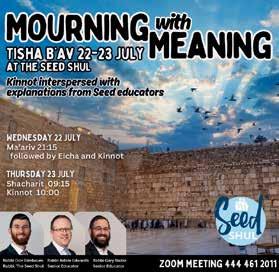
This Tisha B’Av, deepen your understanding of Jewish history, resilience and hope. Discover a programme of engaging talks and learning with exceptional educators.
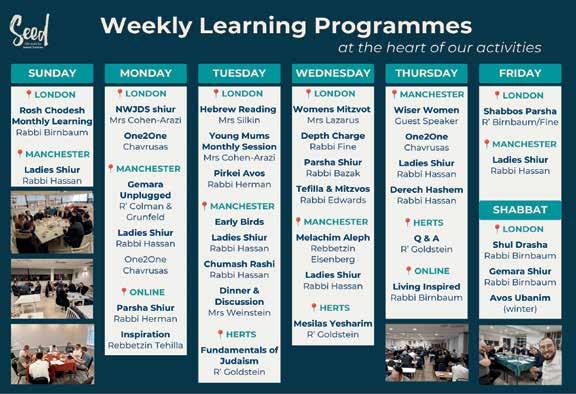
Learn, grow and connect each week with our exceptional educators, delivering inspiring programmes across London, Manchester, Hertfordshire and online. LEARNING. CONNECTING. GROWING TOGETHER.

www.seed.uk.net
Sign up for our community-wide Tisha B’Av Kids Activity Zone on Thursday 23rd July from 11:30 am to 1:00 pm at Seed Herts. Afternoon will include meaningful crafts & activities, kids video screening, optional kiddie lunchboxes & an engaging discussion for parents.
www.seed.uk.net/tba















Smar t investoors have identified Ashkelon as the most promising area to buy proper ty now in Israel
Great sea view properties
• • • • • Slated to become the in Israel ocal University Garden city originally designed and built by South Africans! High speed trains linking the North to the South Golf course in the initial planning stages
Best t beaches in the countr y & lovely Marina 40 minutes to Tel Aviv and 60 minutes to Jerusalem
Growing vibrant Anglo community
Prices less than half of similar properties in Netanya!

• • • • 4th largest city L Contact us now for details! a s h k e l








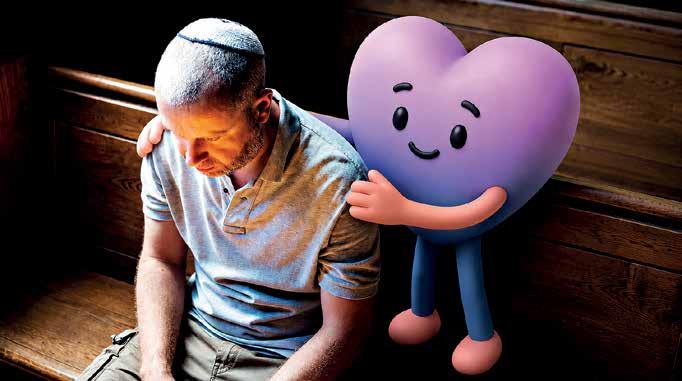
KNOWING HOW TO LOOK AFTER YOURSELF AND OTHERS GIVES YOU THE POWER TO PREVENT A CRISIS. Learn how to manage stress, understand wellbeing and mental health, and reach out to someone who’s struggling - because simple skills can change lives.
WHAT IS MENTAL HEALTH?: The essentials everyone should know
Wednesday 16 SEPT 1.00pm
Tuesday 6 OCT 8.00pm OR
UNDERSTANDING MENTAL HEALTH CONDITIONS: Identifying and responding to common mental health issues
Wednesday 14 OCT 1.00pm
Tuesday 20 OCT 8.00pm OR
SELF-CARE AND STRESS MANAGEMENT: Boost your wellbeing and reduce stress
Wednesday 12 AUG 8.00pm Wednesday 28 OCT 1.00pm Tuesday 3 NOV 8.00pm
PRACTICAL RELAXATION: Master powerful techniques in 50 wonderful minutes
Tuesday 21 JULY 8.00pm Wednesday 19 AUG 8.00pm Wednesday 11 NOV 1.00pm Tuesday 1 SEPT 8.00pm Tuesday 17 NOV 8.00pm
REACHING OUT TO SOMEONE WHO’S STRUGGLING: How best to show concern and o er help
Wednesday 25 NOV 1.00pm Tuesday 1 DEC 8.00pm OR

Parashat Devarim opens the final book of the Torah as Moshe addresses the Jewish people in the last weeks of his life. Standing on the threshold of the Promised Land, he reflects on the journey that has brought them to this moment. Rather than simply recounting history, Moshe revisits key events to teach timeless lessons that will guide the next generation as they prepare to enter Eretz Yisrael without him.
One of the striking features of the parashah is the way Moshe offers
rebuke with remarkable sensitivity. Instead of listing the nation’s failures explicitly, he hints at them through the names of places where they occurred. Chazal explain that this approach preserved the dignity of the people while still encouraging honest reflection and growth. True leadership is not about humiliating others, but about helping them become better.
Appropriately, we always read Parashat Devarim on the Shabbat before Tisha B’Av, known as Shabbat Chazon. As we begin to mourn the
destruction of the Beit HaMikdash, we are reminded that great tragedies rarely occur overnight. They are often the result of small failures that go unaddressed over time. Moshe therefore urges the people to learn from their mistakes before they become lasting consequences.
The message remains deeply relevant today. Personal growth begins with the courage to reflect honestly on our actions, while treating ourselves and others with compassion. Looking back is not
about dwelling on the past—it is about ensuring we build a better future.
As we begin Sefer Devarim, we are invited to see our own lives through Moshe’s eyes: to appreciate how far we have come, to learn from every experience, and to move forward with greater faith, wisdom and purpose. In doing so, we prepare not only for the challenges ahead, but also for the redemption that we continue to pray for. LOL
The goal of a word wheel puzzle is to create as many words possible with the letters in the word wheel. Each word must contain at least three letters. You can only use each letter once and every word must have the letter in the centre of the wheel.
O M N U N D U C R
Last Weeks Big
A teacher asked Daniel, “If I gave you two cats, then two more cats, how many cats would you have?” Daniel replied, “Five.” The teacher frowned. “No, think carefully.” Daniel nodded. “I am... I’ve already got one at home!”
This unique twist on the classic Sudoku puzzle uses the Hebrew letters א through ט instead of numbers 1–9. The rules remain exactly the same: each row, each column, and each 3×3 box must contain every letter once — without repetition. החלצהב — and enjoy the puzzle!

Q: Why did the scarecrow win an award?
A: Because he was outstanding in his field!
Q: What do you call a fake noodle?
A: An impasta!
Q: Why can't a nose be 12 inches long?
A: Because then it would be a foot!
1. I speak without a mouth and hear without ears. I have no body, but i come alive with wind. What am I??