








BY MARTIN KENT
Just as Israel appears to be turning the tide against Iran and its terror proxies, the nation has been reminded that the fight is far from over.
In a dramatic development this week, Israeli security forces revealed they had thwarted a major Hezbollah terror plot originating from Lebanon. According to security officials, a heavily armed terrorist cell was intercepted before it could infiltrate Israel
and carry out what is believed would have been a large-scale massacre against Israeli civilians. The operation serves as a stark reminder that despite Hezbollah’s devastating losses, the organisation remains determined to murder Jews whenever the opportunity presents itself.



Continued from page 1
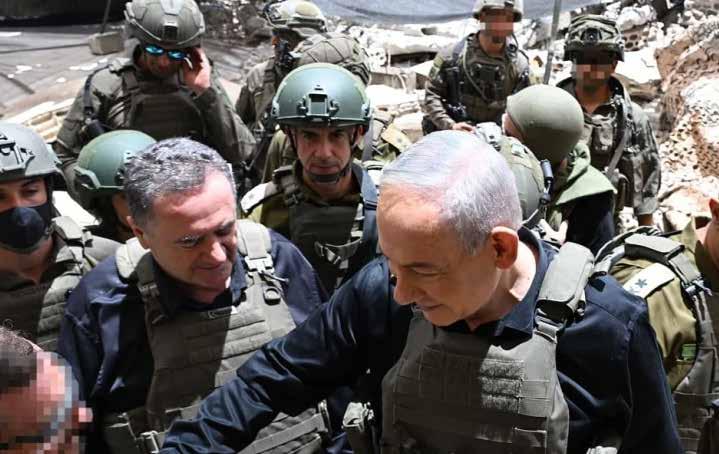
The foiled attack came as Prime Minister Benjamin Netanyahu delivered one of his clearest messages yet from southern Lebanon.
Visiting IDF troops operating inside Lebanese territory, Netanyahu declared that Israel would remain in southern Lebanon for as long as Hezbollah continued to pose any threat to Israeli citizens. It represents a fundamental shift in Israeli strategy.
For decades, wars in Lebanon have ended with ceasefires, United Nations resolutions and international promises that Hezbollah would withdraw from Israel’s northern border. Time after time those promises proved meaningless. Hezbollah simply rebuilt its military machine, smuggled in more advanced weapons from Iran and prepared for the next round of fighting.
This time, Israel says, things will be different.
Standing alongside soldiers, Netanyahu described Hezbollah as the central pillar of Iran’s regional terror network and said the organisation has suffered unprecedented damage. According to Israeli assessments, Hezbollah now possesses only around eight per cent of the estimated 150,000 rockets and missiles it once stockpiled. Thousands of terrorists have reportedly been eliminated, senior commanders killed and vast quantities of weapons, tunnels and command centres destroyed.
For residents of northern Israel who spent years living under constant rocket fire and the threat of cross-border attacks, these developments offer genuine hope that lasting security may finally be within reach.
The weakening of Hezbollah also reflects the broader collapse of Iran’s regional strategy.
For years Tehran invested billions of dollars creating what it proudly called the “Axis of Resistance” – a network of proxy armies surrounding Israel. Hezbollah in Lebanon, Hamas in Gaza, Palestinian Islamic Jihad and numerous militias across the Middle East were all intended to keep Israel under constant pressure while allowing Iran to wage war from a distance.
Today that strategy has suffered enormous setbacks.
Hamas has been crippled in Gaza. Hezbollah has absorbed the heaviest losses in its history. Iranian military infrastructure has been targeted repeatedly, while Tehran’s ability to project power across the region has been significantly weakened.
forces should remain inside Lebanon and what any long-term political settlement might look like.
within the systems responsible for directing and supporting those brave men and women.
Yet despite these successes, Israel’s leaders know the danger has not disappeared.
The foiled Hezbollah infiltration proves that even a weakened terror organisation remains capable of planning mass murder. Iran continues to finance and direct terrorist groups across the region, and intelligence officials warn that both Hezbollah and Tehran will continue searching for opportunities to rebuild.
Meanwhile, President Donald Trump continues attempting to balance strong support for Israel with efforts to prevent the conflict from escalating into a wider regional war.
Although Washington and Jerusalem remain close allies, reports suggest discussions continue over how long Israeli
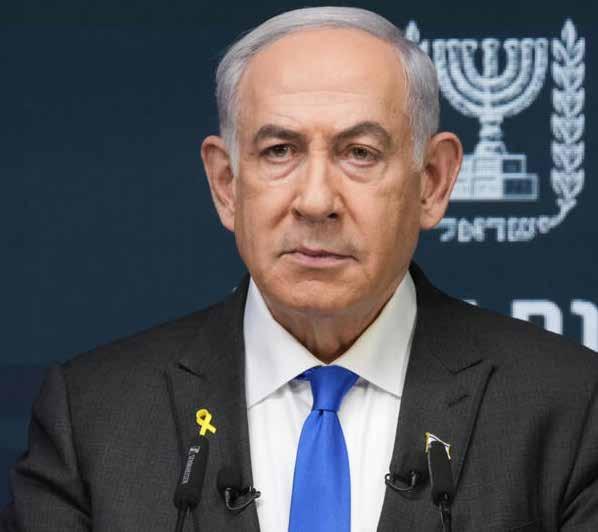
Netanyahu’s position appears uncompromising.
He argues that withdrawing before Hezbollah has been fully neutralised would simply recreate the failed policies of the past. Israel, he insists, will not abandon the security zone until it is convinced the threat to northern communities has genuinely been removed.
But while Israel’s military successes dominate the headlines, another report published this week has cast a long shadow over the nation.
The State Comptroller’s long-awaited investigation into the October 7 massacre paints a deeply disturbing picture of systemic failures during Israel’s darkest day.
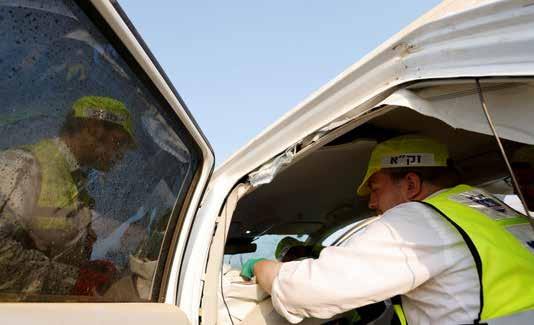
Among its most shocking conclusions is the finding that numerous casualties who survived the initial Hamas assault later bled to death because rescue operations broke down.
According to the report, ambulances struggled to reach victims, communication systems collapsed under the scale of the attack and coordination between emergency services failed at the very moment it was needed most.
Some wounded Israelis waited hours for help that never arrived.
The report describes serious shortcomings in emergency planning, command structures and medical evacuation procedures, raising painful questions about whether lives that were ultimately lost might have been saved.
For bereaved families, the findings are heartbreaking.
The report does not question the extraordinary courage displayed by soldiers, police officers, Magen David Adom crews, ZAKA volunteers and ordinary civilians who risked everything to save others. Many entered active combat zones with little protection, rescuing complete strangers while Hamas terrorists were still murdering innocent people.
Instead, the report highlights failures
Israel has never been afraid to investigate its own mistakes. Throughout its history, painful commissions of inquiry have helped strengthen the country after every major conflict. October 7 must be no exception.
Every intelligence failure, every operational breakdown and every weakness exposed that day must be corrected.
The timing of the report is particularly striking.
At the very moment Israel is demonstrating unprecedented military strength against Iran and Hezbollah, it is simultaneously confronting the painful reality that catastrophic failures within its own institutions contributed to the greatest tragedy in the nation’s history.
These are not contradictory truths.
Israel today is unquestionably stronger militarily than it was before October 7. Iran’s regional terror network has suffered immense damage. Hezbollah has been pushed back. Hamas has been devastated.
Yet military victories alone cannot guarantee security.
Preparedness, intelligence, emergency coordination and decisive leadership remain just as vital as fighter jets, tanks and missiles.
The terror cell intercepted this week on its way from Lebanon demonstrates that Israel’s enemies remain committed to killing Jews whenever they can.
The State Comptroller’s report demonstrates that Israel must be equally committed to ensuring its own systems never fail its people again.
Together, these developments tell the story of Israel in 2026.
A nation growing stronger against its enemies, but one that refuses to ignore the painful lessons of October 7.
That combination of military determination and honest self-examination may ultimately prove to be Israel’s greatest strength of all.


P R O P E R T Y M A N A G E M E N T








BY MARTIN KENT
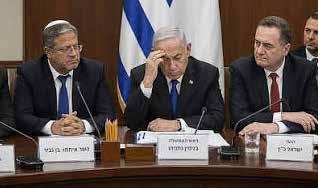
Israel’s political landscape has taken another dramatic turn after the latest opinion poll showed Prime Minister Benjamin Netanyahu strengthening his position, while former IDF Chief of Staff Gadi Eisenkot has emerged as his principal challenger.
The latest Channel 12 poll places Likud on 24 seats, maintaining its position as the largest party in the Knesset. While Netanyahu has regained ground following Israel’s recent military successes against Iran and Hezbollah, the race to form Israel’s next government remains wide open.
The biggest political story, however, is the remarkable rise of Eisenkot.
The former IDF Chief of Staff has now overtaken former Prime Minister Naftali Bennett to become the leading figure in Israel’s opposition. His newly formed Yashar party is projected to win 22 seats, only two behind Likud, making him Netanyahu’s most serious rival as Israelis prepare for an election expected later this year.
Eisenkot’s rapid rise reflects the enormous importance voters continue to place on security.
Having served as IDF Chief of Staff and later as a member of Israel’s War Cabinet following the October 7 massacre, Eisenkot enjoys strong military credentials. His reputation as a calm, experienced commander has attracted support from centrist voters, moderate conservatives and even some traditional Likud supporters who are looking for an alternative without abandoning a strong national security policy.
of uniting much of the anti-Netanyahu camp. However, recent polling suggests that momentum has shifted decisively towards Eisenkot, whose image as a political outsider and respected military leader appears to be resonating more strongly with voters.
For Naftali Bennett, the latest poll represents a significant setback. Only a few months ago Bennett was widely seen as the politician most likely to replace Netanyahu. His alliance with Yair Lapid generated considerable excitement and initially looked capable
Despite the encouraging numbers for Likud, Netanyahu still faces a difficult path to another term as prime minister.
Israel’s electoral system is based on coalition governments, meaning the largest party does not automatically form the next administration. Current polling indicates that neither Netanyahu’s right-wing bloc nor the opposition can comfortably reach the 61-seat majority needed to govern without attracting additional coalition partners. That means smaller parties could once again hold enormous influence after election day, just as they have in previous
Israeli elections.
The recent military campaign against Iran and Hezbollah has undoubtedly strengthened Netanyahu’s standing.
Many Israelis credit his government with overseeing significant military achievements that have weakened Iran’s regional network of terrorist organisations. Hezbollah has suffered major losses in Lebanon, Hamas has been severely weakened in Gaza and Iran itself has seen much of its regional strategy disrupted.
Supporters argue these successes demonstrate the value of experienced leadership during one of the most dangerous periods in Israel’s history.
Critics, however, continue to argue that military victories cannot erase the failures surrounding the October 7 massacre, the continuing divisions within Israeli society and ongoing concerns over the economy, judicial reform and relations between different sectors of the population.
These issues are likely to dominate the election campaign alongside national security.











One of the most fascinating aspects of this election is that all of the leading contenders present themselves as strong on security.
Unlike previous campaigns, where the political debate often centred on whether to adopt a harder or softer approach towards Israel’s enemies, today’s contest is increasingly about who is best equipped to lead Israel through an exceptionally dangerous period.
Netanyahu brings decades of political experience and remains one of Israel’s most skilled campaigners. His supporters argue that no other politician possesses his international standing or ability to navigate complex relationships with world leaders.
Eisenkot counters with his own military record, presenting himself as a fresh face capable of restoring public confidence while maintaining Israel’s tough stance against its enemies.
Meanwhile, Bennett remains a significant political figure despite slipping behind in the latest polls. His experience as both defence minister and prime minister means he cannot be discounted, particu larly if the campaign narrows during the coming months.
With no election date yet formally announced, much could still change.
Developments in Gaza, Lebanon and Iran, the economy, coalition negotiations and public confidence in the government will all influence the final outcome.

What is already becom ing clear, however, is that Israel is heading towards one of the most competi tive elections in recent memory.
Netanyahu may have regained the initiative, but with Eisenkot’s remarkable rise transforming the political landscape and coalition mathematics remaining exceptionally tight, the battle for Israel’s leadership is only just beginning.

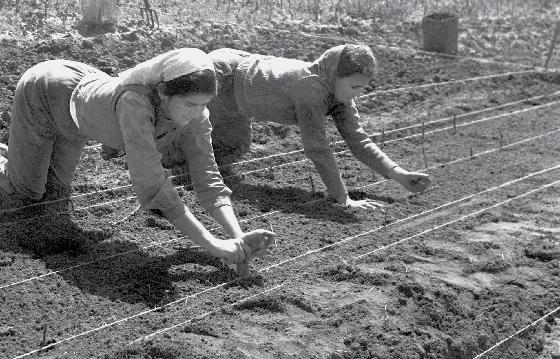
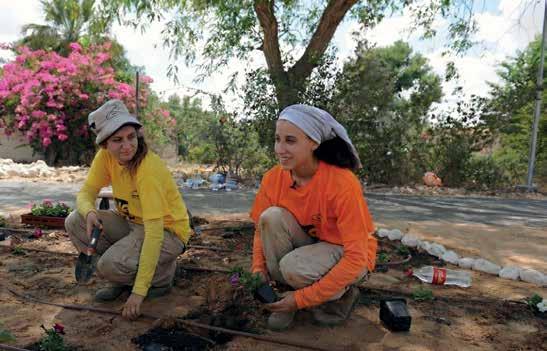
For over 120 years JNF UK has worked tirelessly to develop the Land of Israel.
Much of our work has only been possible thanks to the generosity of our legacy donors.
Leaving a gift in your Will, no matter how small or large, is one of the most valuable ways you can forge an everlasting bond with Israel.
Our expert and caring Legacy Team offer a range of professional services and first-rate pastoral care.








BY MARTIN KENT
A Jewish family in Stamford Hill has been left traumatised after a suspected burglary and arson attack on their home resulted in a newborn baby being taken to hospital for treatment for smoke inhalation.
Emergency services were called after a fire broke out inside the family’s home, filling the property with thick smoke as the family desperately tried to escape. Members of Shomrim, the volunteer neighbourhood security patrol, were among the first on the scene and helped evacuate the family from the burning building.
According to reports, the suspect barricaded himself inside the kitchen after allegedly breaking into the property and starting the fire. Police officers and firefighters quickly surrounded the house before bringing the incident under control.
The newborn baby was taken to hospital as a precaution after being exposed to the smoke, while other members of the family were treated at the scene for the effects of smoke inhalation and shock. Thankfully, no life-threatening injuries
have been reported.
Police have confirmed that a man has been arrested in connection with the incident and remains in custody while detectives continue their investigation. Officers are examining whether the attack was a targeted burglary, an act of arson or whether any other motives may have been involved.
The incident has sent shockwaves through the Stamford Hill Jewish community, where families have praised the swift actions of Shomrim, the emergency services and neighbours who rushed to assist.
Community leaders have expressed relief that the family escaped alive but have also voiced concern over the growing number of incidents affecting Jewish communities across the UK in recent months.
The investigation remains ongoing, with police appealing for anyone who witnessed suspicious activity in the area to come forward as they work to establish the full circumstances surrounding the disturbing attack.





BY MARTIN KENT
Jewish leaders in Greece have expressed outrage after a group describing itself as an “anti-Zionist patrol” marched through the streets of Thessaloniki, raising fears over growing antisemitism in one of Europe’s most historic Jewish communities.
The demonstration has sparked widespread condemnation after activists reportedly patrolled Jewish neighbourhoods while displaying anti-Israel slogans, leaving many local Jews feeling intimidated and unsafe. Community representatives warned that the event
crossed the line from political protest into deliberate intimidation of Jewish residents.
The timing has made the incident even more disturbing.
The march took place exactly 95 years after the notorious Campbell Pogrom, one of Greece’s darkest antisemitic episodes. In June 1931, the Jewish neighbourhood of Campbell in Thessaloniki was attacked by violent mobs who burned homes, businesses and a synagogue, forcing many Jewish families to flee.

For members of today’s Jewish community, the anniversary has revived painful historical memories.
Before the Holocaust, Thessaloniki was known as the “Jerusalem of the Balkans” and was
home to one of the largest and most vibrant Sephardi Jewish communities in the world. During the Second World War, however, around 96 per cent of the city’s Jewish population was murdered after being deported by the Nazis to Auschwitz and other death camps.
Community leaders have warned that demonstrations targeting Jewish neighbourhoods, even when presented as opposition to Israel, risk fuelling hatred against local Jews who have no connection to events in the Middle East.
The incident comes amid a sharp rise in antisemitic incidents across Europe since the outbreak of the Israel-Hamas war. Jewish organisations have repeatedly warned that anti-Israel protests are increasingly spilling over into intimidation of Jewish communities.
Greek Jewish leaders have called on the authorities to ensure that Jewish residents can live openly and safely, free from fear, intimidation and harassment, while urging politicians to confront antisemitism wherever it appears.
EDITORIAL BY YOSSI SAUNDERS
As the school holidays approach, thousands of Jewish children and teenagers from across the UK are preparing to pack their bags for another exciting summer of Jewish camps, with programmes taking place across England, Wales and Europe.
For many young people, summer camp is the highlight of the Jewish calendar, providing an opportunity to make lifelong friendships, strengthen their
Jewish identity and enjoy weeks filled with sports, outdoor adventure, music, learning and unforgettable experiences.
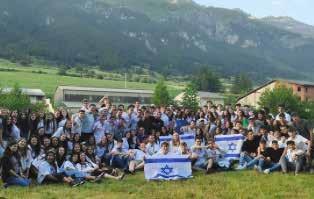
Bnei Akiva UK, the country’s largest Orthodox Jewish youth movement, is once again expecting one of its biggest summers yet. Its camps include programmes across the UK, with younger participants enjoying residential camps while older age groups take part in adventure experiences in Wales and overseas. The movement continues to combine outdoor activities with Torah learning, leadership development and a strong connection to Israel. Tribe, the youth movement of the United Synagogue, will also welcome hundreds of children and teenagers to its popular
summer camps. With programmes designed for different school years, campers can look forward to action-packed schedules featuring team-building, excursions, Shabbat experiences, educational activities and leadership training.
FZY (Federation of Zionist Youth) is preparing another busy summer programme, bringing together young Jews from across the country for camps centred on Zionism, Jewish identity and community, while maintaining the fun atmosphere that has made the movement popular for generations.
JLGB will once again run its longestablished summer camps, offering a mixture of adventure activities, leadership development, sports, volunteering and personal growth.
As Britain’s oldest Jewish youth organisation, JLGB continues to attract hundreds of participants each summer.
Ezra UK will once again head to Wales for its annual summer camp, providing a vibrant atmosphere of Torah, outdoor activities, sports and friendship in a warm religious environment. The camp remains one of the highlights of the Ezra
calendar and attracts participants from communities across the country.
Agudah’s summer camps also continue to play an important role within the Charedi community, providing thousands of children with a safe, structured and enjoyable holiday programme centred around Torah values, recreation and social activities. With the war in Israel and rising antisemitism still weighing heavily on many families, this year’s camps are expected to place an even greater emphasis on Jewish pride, resilience and unity. Alongside the games, hikes, competitions and campfires, organisers hope to give young people the confidence to embrace their Judaism with pride.
For generations of British Jews, summer camp has been where friendships are formed, leaders are developed and memories are made. As another camp season begins, thousands of children are once again preparing for what many will remember as the happiest weeks of their summer.

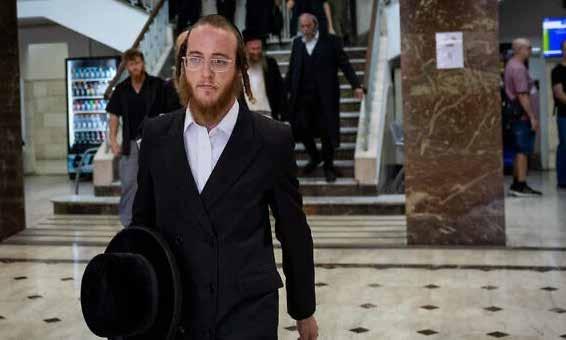
Israeli prosecutors are expected to indict an American Charedi man accused of carrying out intelligence-gathering missions on behalf of Iran, in what authorities describe as another alarming attempt by Tehran to recruit individuals to collect sensitive information inside Israel.
According to investigators, the suspect allegedly photographed strategic and sensitive locations across Israel after being recruited by Iranian operatives.
Officials believe the images were intended to provide valuable intelligence that could assist Iran or its proxy organisations in planning future attacks against Israeli targets.
The case is the latest in a growing series of alleged Iranian espionage plots uncovered by Israeli security agencies over the past year. Since the outbreak of the current regional conflict, Israeli authorities say Iran has significantly increased efforts to recruit
people inside Israel and abroad, often through anonymous online messages, social media platforms and encrypted communication apps.
Security officials have repeatedly warned that Iranian intelligence services frequently begin by offering money for what appear to be harmless tasks, such as taking photographs of public buildings or military sites. These assignments can gradually develop into more serious espionage activities, including surveillance of senior officials, military installations and critical national infrastructure.
intelligence on Israel through unconventional methods and the continuing efforts of Israeli security
If convicted, the suspect could face severe criminal penalties under Israeli law, reflecting the seriousness with which espionage offences are treated, particularly during a time of heightened regional tensions.
The case has once again highlighted Iran’s determination to gather
services to identify and disrupt those operations before they can cause harm. Authorities have urged the public to remain vigilant and to report any suspicious approaches or offers of payment connected to photographing sensitive locations or gathering information on behalf of unknown individuals or organisations.










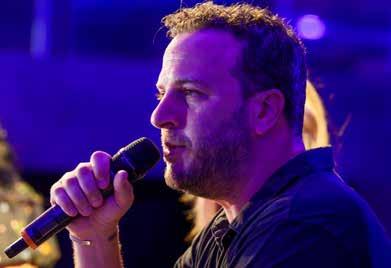
Visitors to the Nova Exhibition currently in London are faced with the devastating reality of October 7th, through personal belongings, damaged vehicles, powerful testimony and immersive displays documenting the attack on the Nova Music Festival. During JNF UK’s exclusive evening at the exhibition, guests heard from Nova survivor and Tribe of Nova Foundation co-founder Ofir Amir, who appeared alongside former hostage Mia Schem. The event
These were our friends, our families.”
Just one week after the massacre, Amir and his fellow Nova organisers transformed a wedding venue in Caesarea into a healing centre for survivors and bereaved families.
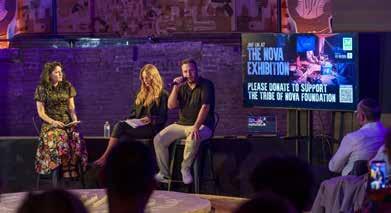
highlighted JNF UK’s partnership with the Tribe of Nova Foundation as part of its wider commitment to supporting Israel’s long-term recovery. Speaking with remarkable honesty, Amir reflected not only on the horror of the massacre itself, but on the long journey of healing that continues for thousands of survivors and bereaved families nearly three years later. He shared how unimaginable tragedy ultimately led him to dedicate his life to supporting the Nova community.
As one of the producers of the Nova Music Festival, Amir helped create an event built around music, freedom and community. On October 7th, that community was shattered when Hamas terrorists attacked the festival, murdering 414 people, kidnapping dozens more and leaving thousands traumatised.
Amir himself was shot in both legs while helping festival-goers escape. Yet as he recovered in hospital, his focus quickly shifted beyond his own survival. “We felt helpless,” he told the audience. “We felt that we were abandoned. We didn’t feel responsible for what happened, but we did feel responsible for our people. We invited them.
“It became a place for survivors and bereaved families to come and feel safe, heal together, cry together and feel normal again,” he explained. What initially began as an emergency response soon became something much greater. Mental health professionals made it clear that the trauma experienced by the Nova community would not disappear within weeks or months. “The professionals told us this trauma isn’t something that will pass after two months,” Amir said. “This is something we will have to deal with all our lives. We have to learn the tools to live alongside it.” That realisation led to the creation of the Tribe of Nova Foundation in December 2023.
One of the Foundation’s first battles was securing official recognition for the Nova community itself. More than 4,000 people attended the festival. Survivors returned to every part of Israel, carrying the same invisible wounds. “We are a community without borders,” Amir said. “From the north to the south of Israel...
psychiatrists were essential, recovery also depended on survivors remaining connected to one another.
It is this longterm commitment to healing that led JNF UK to support the Tribe of Nova Foundation as one of its partner projects in Israel. Recognising that recovery from trauma extends far beyond the immediate aftermath of tragedy, JNF UK is helping the Foundation continue its vital work with around 3,500 survivors and 2,500 bereaved family members. Through mental health services, therapeutic programmes, community activities, financial assistance and long-term recovery initiatives, the Foundation provides a lifeline to those still living with the lasting consequences of 7 October. Yet the work is far from over. “There are still around 300 survivors that don’t leave their homes,” Amir revealed. “Our challenge is first of all to get them out of their homes... and slowly get back to life.”
One story in particular captured the audience. Amir described a survivor whose girlfriend was murdered at Nova. Consumed by grief, he remained inside his home for three months until friends contacted the Foundation.
After discovering he had previously made jewellery, the Foundation commissioned him to create 100 “We Will Dance Again” bracelets. A week later, his friends called back. “They said, ‘We don’t know what you did, but you saved his life,’” Amir recalled.
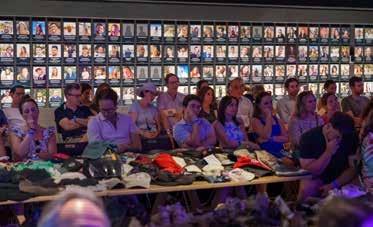
from young people in their twenties to parents with children.”
Mental health professionals emphasised that while psychologists and
“Because of making this jewellery, he went out of his home.”
For Amir, the story demonstrates that healing often begins with a single opportunity to reconnect with purpose.
Despite the unimaginable loss, Amir’s message was ultimately one of hope. He spoke proudly of survivors who have married, started families and rebuilt
their lives. He also shared the joyful news that he and his wife are expecting their second child. “My hope comes from knowing that life can still be beautiful,” he said. “We always have the power to choose light over darkness. The choice is in our hands. We can choose to give up or to continue. I choose to continue.” His words brought an evening of difficult testimony to a close with quiet optimism. The evening highlighted JNF UK’s continuing commitment to supporting Israel’s long-term recovery. While the charity’s initial response focused on meeting urgent needs in the aftermath of 7 October, its work evolved towards projects that promote healing, strengthen communities and support long-term recovery.
Through partnerships with organisations like the Tribe of Nova Foundation, JNF UK is helping ensure survivors and bereaved families continue to receive the emotional, social and practical support they need.
Those wishing to read more about JNF UK’s evening at the Nova Exhibition, view photographs from the event and support the vital work of the Tribe of Nova Foundation can do so by visiting www. jnf.co.uk/nova-exhibition.





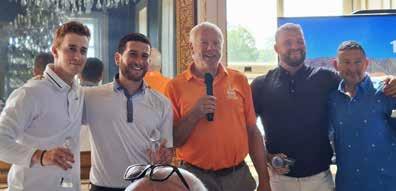
Last week, 72 golfers gathered at the beautiful Moor Park Golf Club to take part in the 4th Malki Foundation UK Golf Day. Despite the extreme hot weather conditions, we enjoyed a full field and a wonderful day of golf, friendship and fundraising.
Players were well looked after throughout the day, with refreshments in abundance by a buggy distributing water and helping our amazing golfers stay hydrated in the challenging conditions.
We are delighted to announce that the event raised an outstanding £20,000 for Malki Foundation UK in support of Keren Malki in Israel.
Malki Foundation is a remarkable charity that
empowers families of severely disabled children by helping them afford essential therapies and specialist support. Through its assistance, parents are able to continue caring for their children within the love, security and comfort of the family home - children who might otherwise require institutional care.
Thank you to our players, sponsors, donors, volunteers and supporters who contributed to making the day such a tremendous success.
Rabbi Danny and Rebbetzen Anna Bergson hosted the annual St Anne's Shul BBQ at their home on Sunday.
Over 75 people attended from St
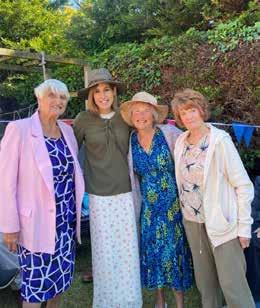
Anne's, the Fylde Coast, Southport, Manchester, Leeds and even Las Vegas! It was a wonderful afternoon with delicious food and a relaxing atmosphere whilst the sun shone!
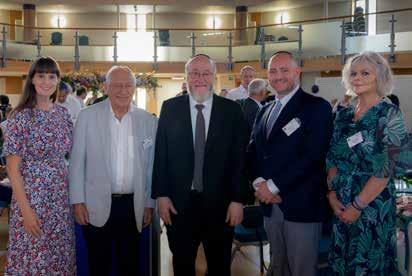
Around 150 people gathered at Mill Hill Synagogue on Thursday 25th June, to celebrate the remarkable achievement of Jewish housing association jLiving’s 60th anniversary.
Guests included the Chief Rabbi, Sir Ephraim Mirvis and Kate Henderson, CEO of the National Housing Federation, (both of whom spoke at the event), as well as members of jLiving’s board, employees and heads of organisations such as Kisharon Langdon, Paperweight charity, team members from Norwood plus many others.
CEO of jLiving, Jane Goodman, and Chair, Adam Gamsu also spoke on the night.
Jane said: “The 60th anniversary provides an important opportunity to reflect on a proud and purposeful history.
For six decades, jLiving has remained one of the largest housing associations in the UK serving primarily the Jewish community, delivering homes that offer security, dignity, and a strong sense of belonging. From its earliest days to the present, jLiving’s mission has been clear: to respond to the housing needs of the community with care, responsibility, and foresight. While much has changed over sixty years, this commitment has remained constant.”
The Chief Rabbi, Sir Ephraim Mirvis, commented: “Ultimately, our future relies on what transpires within our homes.
Unless people have a place of dignity, a place of warmth, a place they can call home with pride
they will not have the confidence to give a contribution of value to their community and to their society.
Thanks to jLiving for helping thousands of people over the past 60 years. This event is not just a celebration for jLiving but a celebration of all UK Jewry. We thank you for all you have done and the good reputation you have given to our community and within British society as a whole. Thank you for 60 marvellous years of support, thank you for being an outstanding example to us all and to all of British society, thank you for making all of us proud.”
Kate Henderson, CEO of the National Housing Federation said: “Your purpose at jLiving speaks to the heart and values of the Housing Association sector and we are proud to have jLiving within our membership. What you do is really important and your unique identity offering homes and support primarily to the Jewish community is a very special thing and we are very grateful to you for it.
Sixty years is also an impressive milestone, we have had huge changes in society, and not only have you survived you have grown and strengthened you are building and innovating and looking to the future.”





This time last year six-year-old Saul attended Camp Simcha’s family retreat straight from his hospital bed.
Just months into an intensive course of chemotherapy, he had been hospitalised suffering from an infection and it was touch and go whether he would be discharged in time to attend.
This year a very different Saul arrived at the three-day retreat in the Oxfordshire countryside.
“Last year we came straight from hospital after a week of intense chemo, a temperature spike and his blood count was on the edge of needing a transfusion – our hospital had pre-warned the hospital near retreat that we might need to come in,” explained Saul’s mum Michaela Abenson, from Prestwich, Manchester.
“We still had an incredible time last year and it gave Saul a huge boost but we were on edge… Saul was much sicker and weaker which made it hard to switch off even with the Camp Simcha doctor on site.”
The contrast this year was clear for all to see.
“Although Saul is still receiving maintenance treatment it’s much less intense – he is doing much better, stronger and has more energy and a better understanding of what he is going through.
“We were still a bit nervous before retreat started because Saul has been having lots of leg pain and stomach
pain over the last few weeks related to his treatment. However, as soon as we arrived, we saw the energy in the atmosphere take over him.
“He ran in so excited – even though he hadn’t run for the last few weeks because it hurt him too much but it was clear the excitement had taken over. We were able to truly switch off and worry less this year.”
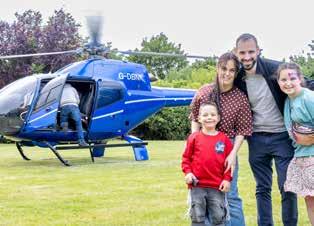
Saul, his parents and sister were among 115 family members attending from London, Essex, Manchester and Surrey for the annual summer retreat.
From the moment families arrived and walked through an archway of singing and dancing volunteers, they were immersed in environment designed to create joy and provide mutual support and respite.
The packed programme included helicopter rides, a Devil Wears Pradathemed dinner and runway talent show, trips to Legoland, Paint Patch and Bicester Village, a petting zoo, a special ‘Dinner for Two’ evening for parents, and a Harry Potter-themed extravaganza on the final day.
“Saul was so pleased to see his Camp Simcha friends, his awesome Big Brother volunteer and the Camp Simcha staff who we all think are just amazing,” said Michaela. “He loved the helicopter ride and the trip to Legoland – and of course the treat room.”
Michaela said she and her husband took the opportunity to spend quality
time together – as well as time with other parents going through medical journeys – knowing their children were busy and happy.
“We don’t get much opportunity for this as Saul’s needs can be very full on. While we have been trying to send him to school part-time, he is off more than he is in. He also doesn’t sleep well and often feels worse in the evenings, leaving us not much time together or me much time to myself so that time at retreat was precious.
“Every so often I would see my kids running round the hotel so happy and excited and it was so heartwarming. My daughter has been especially struggling lately, as this is a long journey and it can be difficult for siblings who don’t get much attention. But it was really emotional to see the confidence she had on retreat as she is not always like that; we could see how comfortable and happy she was to be there. Both kids could just be themselves which showed us how safe they felt. My husband and I both used to be Camp Simcha volunteers so we know how busy it can be and we are so grateful to the volunteers for giving them the best time.
“Living with childhood cancer there is so much to navigate on a daily basis, so often it feels like I cannot catch my breath. However, on retreat
I was reminded what it was like to just be able to breathe again.”
Camp Simcha CEO Daniel Gillis explained: “While the activities are always a huge part of the experience, the true value of retreat goes far beyond the itinerary. It gives families the opportunity to relax, connect with others who understand their journey and enjoy precious moments of fun, normality and togetherness.
“These shared experiences create lasting memories and remind families that they are part of a community that understands the daily challenges of having a seriously ill child and supports them.”
Camp Simcha runs four retreats annually, two for families, one for siblings and one for the ill children. In the past 12 months over 380 family members have attended a retreat.
Immanuel College today announced the appointment of a new senior leadership team as part of a new chapter in the College's growth, positioning the school for continued innovation and educational excellence.
The College has appointed Rabbi Cobi Ebrahimoff as Chief Executive Officer and Christopher Jones as Interim Headteacher, who will join the College at the start of the new academic year in September.
The appointments form a key part of the College's long-term vision to strengthen its educational offering, deepen community engagement and ensure Immanuel remains at the forefront of Jewish education in the UK. Central to that vision is an approach in which Jewish values, identity and a meaningful connection to Israel are woven throughout school life, enriching both academic learning and personal development.
As CEO, Rabbi Ebrahimoff will lead the College's strategic and operational development. He currently serves as UK Director of Education at The Rabbi Sacks
Legacy and brings more than 20 years of leadership experience across Jewish education in the UK and Israel. His previous roles include Headteacher of the Independent Jewish Day School and Rabbi of Tribe at the United Synagogue. Rabbi Ebrahimoff continues to serve as Executive Headteacher of King Solomon School in Israel.
Christopher Jones joins Immanuel College from North Bridge House Senior School in London, where he is currently Headteacher. He succeeds Dan Endlar, whose leadership helped navigate the College through a significant period of transition and reposition it for its future growth. With leadership experience spanning both independent and state education, Christopher has a strong track record of academic leadership, school improvement and curriculum innovation. As Interim Headteacher, his focus will be on educational outcomes, student experience and academic excellence.
Rabbi Cobi Ebrahimoff, Chief Executive Officer, said: "I am honoured to be joining the College at such an exciting
time and look forward to working with colleagues, students, parents, alumni and supporters to build on its many strengths and help shape its future.
“Our ambition is to provide an outstanding education in which academic excellence is complemented by a deep sense of Jewish identity, values and community. We want every student to leave Immanuel with the confidence to succeed in the today’s world and a strong connection to their heritage.”
Christopher Jones, Interim Headteacher, added: “Immanuel College has a long-standing commitment to educational excellence and student development. I am delighted to be joining the College and look forward to working with staff and students to ensure every young person is supported and challenged to achieve their full potential.
“As the College looks to the future, I am excited to help strengthen an environment in which young people are equipped not only to excel academically, but also to become confident leaders and active contributors to society.”
The appointments comes as Immanuel
College unveils a bold programme of educational innovation designed to strengthen its position as one of the UK's leading independent Jewish schools. Among the major developments being introduced are the integration of artificial intelligence across teaching and learning, ensuring students develop the skills, confidence and adaptability required for the future; a dedicated Sixth Form Centre designed to support academic excellence, leadership and university preparation; expanded Project-Based Learning opportunities; and an enhanced IC Pathways programme, an innovative careers and enrichment initiative that will provide every Sixth Form student with a meaningful internship experience. Together with continued investment in bursaries, scholarships and occasional places, these initiatives reflect the College's commitment to widening opportunity and preparing young people for success in an increasingly complex and rapidly changing world.

BY YOSSI SAUNDERS
BY DAVID REUBEN
On Seder night, we teach our children to ask questions. It is one of the foundations of who we are. We don’t silence curiosity - we elevate it.
For many Anglo families dreaming of making aliyah or purchasing a home in Israel, the process can feel overwhelming. Finding the right property, navigating mortgages, dealing with lawyers, choosing kitchens, bathrooms and finishes – all while living thousands of miles away –can seem almost impossible.
That is precisely the challenge that entrepreneur Shia Getter has built his business around solving.
But this year, the questions being asked in Jewish homes across Britain are not the ones printed in the Haggadah. They are sharper. More uncomfortable. And frankly, more damning.
and other occasions.
“I never imagined it would become a business,” he explained. “I was simply helping people.”
nuance. They hear a chant calling for violence and ask the obvious question: why is this allowed?
And the uncomfortable answer is: because, right now, it is.
As more families sought assistance, Shia realised there was a significant need within the Anglo community—not just to rent holiday apartments, but to help people relocate, invest and settle permanently in Israel.
WHY DID MY DADDY USED TO WEAR HIS KIPPAH EVERYWHERE, AND NOW SOMETIMES REPLACES IT WITH A CAP?
That simple act of chessed eventually grew into one of the country’s most respected property brokerage and advocacy firm.
Because visibility has become a risk
stepping into a security role. The image of a Jewish parent in a stab vest outside a primary school should stop us in our tracks. It should provoke outrage far beyond our community.
Not in theory. In practice.
Today, the Getter Group offers far more than simply helping clients find a home.
For years, we told ourselves - and rightly so - that Britain was different. That Jews could live openly, proudly, without fear. That a kippah in the street was unremarkable.
Now, for many, that confidence has been shaken.
From the moment a client decides to purchase, the company manages virtually every aspect of the process.
When a father replaces his kippah with a cap before travelling, it is not a theological decision. It is not even a cultural one.
It is a safety measure.
And if that doesn’t concern us - and everyone else - it should.
different kind of honesty. Not despairbut clarity.
company’s fee structure is equally straightforward. A three per cent management fee covers clients through to the signing of contracts, followed by an annual management fee for those requiring ongoing assistance.
Things are not as they should be.
Not in our schools.
Not in our streets.

for commuters.
Not in the quiet decisions people are making about how visibly Jewish they feel safe to be.
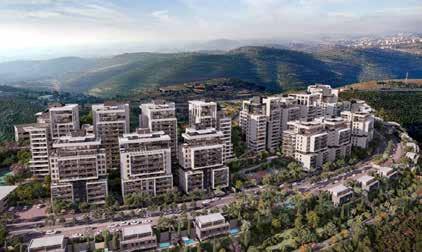
One of the projects currently generating enormous interest is a brand-new development in the Jerusalem Hills, just seven minutes from Jerusalem’s Neve Yaakov.
And yet - this is not a story of defeat.
We are still here. But we should not be quiet about why these questions are being asked.
Pesach is the festival of questions.
This year, it is also a test of whether anyone is willing to answer them properly.
Because the same parents in stab vests still show up.
The same families still fill our schools.
The same fathers still wear their kippot
Shia will be travelling to London on 7 July to present the project alongside Rabbi Wiesenfeld, introducing prospective buyers to what many believe could become one of the capital’s most exciting new Anglo-Charedi communities.
For many families priced out of Jerusalem itself, the Jerusalem Hills represents an opportunity to enjoy larger homes, better value and a growing community while remaining only minutes from the capital.
Legal representation, mortgage assistance, interior design, kitchen planning, bathroom layouts, flooring, tiles, lighting, builders, contractors and finishing touches are all coordinated through one experienced team.
The development aims to create a vibrant Torah community alongside the Jerusalem Hill’s existing residents, offering a range of apartments and houses designed to suit young couples, growing families and investors alike.
WHY CAN’T I GO TO ISRAEL ON HOLIDAY FOR PESACH THIS YEAR?
Accessibility is also improving dramatically.
And yet, it has become normal. The real question is not why parents are doing this. The real question is: why is this necessary at all?
Today, the Getter Group has become one of Israel’s leading property brokerage and advocacy firm and relocation companies for the Anglo market, employing a large team from its impressive headquarters in Jerusalem’s Jerusalem Post building. Following the events of
WHY CAN PEOPLE CALL TO “GLOBALIZE THE INTAFADA” IN THE STREETS OF LONDON?
Because the Jewish state is at war - and because Jewish normality has been disrupted, again.
For a child, this question is simple. Israel is family. It is familiarity. It is where Pesach often feels most alive.
To tell them they cannot go is to introduce them, too early, to the reality
Clients can often make many of the key decisions from the comfort of their own homes overseas, with the Getter Group acting as their eyes and ears in Israel until the day they finally
A new tunnel road currently under construction will bypass the often-congested Hizma Junction, significantly reducing journey times into Jerusalem and making the Jerusalem Hills even more attractive
Shia believes demand will continue to rise.
“The desire to live in Israel has become much stronger,” he said. “After October 7, people want to be here. They want to invest here. They want their children to grow up here.”
For families considering taking that step, the Getter Group hopes to make what can often seem like a daunting jour-







BY HADASSAH BAY
For years, Hadera was often seen as a place people passed on the way to somewhere else. That is beginning to change.
Set on Israel’s Mediterranean coast, roughly between Tel Aviv and Haifa, Hadera is increasingly positioning itself as a city with genuine momentum: a place where beachfront living, commercial growth and family-friendly amenities are starting to converge in a way that feels both practical and aspirational.
A major part of that shift is now visible on the shoreline itself. After more than a decade, the city has reached an agreement to return a substantial stretch of beachfront to public hands. For Hadera, this is a statement about the direction in which the city is heading.
Calling it a “historic moment”, Mayor Nir Ben Haim said the city is now advancing plans for “an accessible, welldeveloped, and high-quality shoreline” and intends to turn the coast into a significant tourism destination.

That wider transformation is already being felt beyond the beach. A new overpass, expected to open this summer, is set to improve the connection between West Hadera, Olga Beach and the city’s malland-train hub, making the coastal side of the city more accessible and better integrated with one of its main commercial centres. At the same time, new residential developments are rising beside the
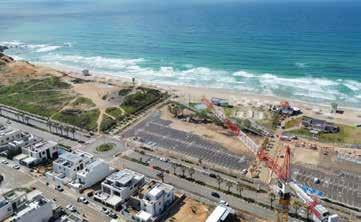
planned promenade, reflecting growing confidence in the area. Yuval Schultz of ASDEN Israel says VIDA Towers is attracting buyers who recognise both the city’s upward trajectory and the appeal of its natural setting. In his words, VIDA is “more than just a beachfront project; it’s part of a broader vision for Hadera’s future.”
Hadera’s appeal is not based on real estate alone. The city is also building the kind of lifestyle infrastructure that makes a place feel vibrant, dynamic, and easy to enjoy. Eco Park and Hadera River Park offer green space, walking paths and family recreation. Mul HaHof Village has added a lively mix of shopping, dining and entertainment, while the UniTowers office complex above it reflects the area’s growing business ambitions. As Idan Turgeman, VP of Business Development and CEO of Mul HaHof Village, put it,
“The region is experiencing significant economic momentum, with thousands of new jobs transforming the employment landscape throughout the Hadera area and its surroundings.”
For British buyers and families considering property in Israel, Hadera increasingly stands out as a city that offers coastline, access, community and room to grow. As the shoreline is opened up and new infrastructure takes shape around it, Hadera is no longer simply a city with potential, but a city with direction.
Most projects begin with drawings. Givat Hashalvah began with a question. When architect Liran Shukrun, Partner and CEO of Primovitz-Bas, first encountered the site nearly four years ago, the plan in front of him did not yet tell the story of what the place could become. On paper, it looked familiar, almost ordinary: another neighborhood near Yerushalayim with buildings arranged across a hillside. But the land itself was saying something very different. The site sat on a ridge, on the high edge of the hill, with rare topography, broad exposure, and open views across the surrounding hills. On clear days, the view can reach as far as the sea. The elevation lines revealed a place with presence, exposure, movement, and a natural sense of direction. For Liran, that changed the work. A good professional can design a building. The harder task is understanding the story of a place. What belongs here, specifically here, and nowhere else?
The answer began to emerge when the team understood who the project was being created for: frum families,
many from the Anglo world, looking for a different kind of life in Eretz Yisroel.
Liran had seen that kind of community life up close in North America, where a synagogue, a shared rhythm, and a sense of belonging could unite people into something more than a collection of neighbors. That became the architectural challenge of Givat Hashalvah: community had to find expression in the plan itself.
One defining move changed everything. Parking, access roads, and technical systems were placed underground, inside the hill, giving the ground level back to people. In place of roads and parking lots came courtyards, walking paths, parks, schools, shuls, mikvaos, kindergartens, and community buildings. The project became a connected neighborhood, organized around the places where life actually happens.
At the center of that thinking is the courtyard. The buildings revolve around it. Families move through it. Community begins there. From east to west, the master plan is stitched together
by an internal axis, a path connecting one courtyard to the next, like walking through an old city. Givat Hashalvah translates that idea into a modern neighborhood: elevated, carefully planned, and still human in scale.
The same thinking appears inside the homes. Large apartments, enormous balconies, panoramic windows, and flexible layouts were planned around the needs of frum family life. Sometimes the table is the center. Sometimes the seforim are the center.
Sometimes a home needs to adapt as a family grows and changes.
That may be the clearest lesson from Liran’s perspective. Givat Hashalvah became
different because the plan was reimagined around a story: a hilltop near Yerushalayim, shaped into a place where frum family life, community, movement, and belonging could take root.
Before the buildings, there was a question. And from that question came the plan.


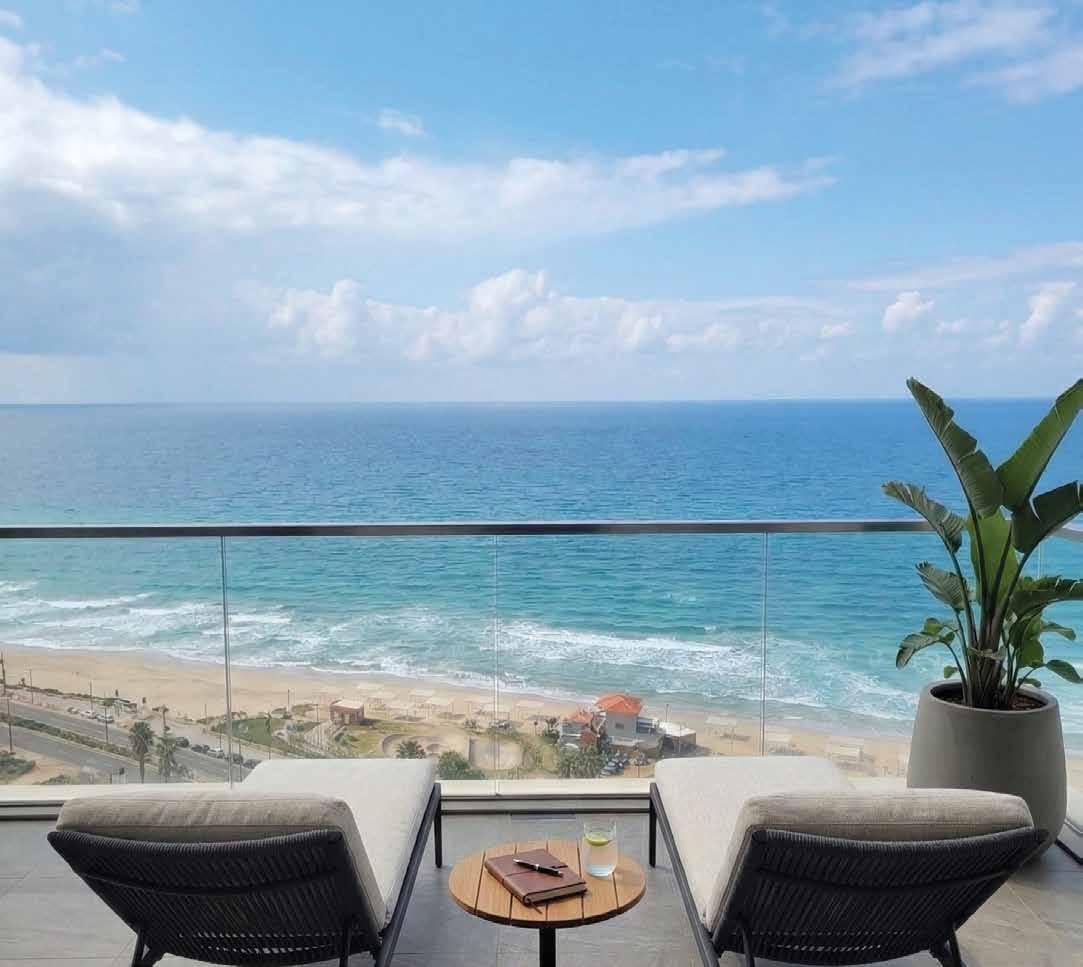
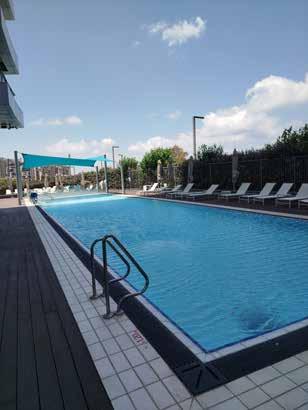
Whether you choose a cozy one-bedroom just for you, or a sprawling 2,700 sq ft Villa in the sky, your VIDA memories will last forever. Private Shul | Shabbat elevators | Infinity pool | State-of-the-art gym | His/Hers sauna | Community room Business lounge | 24 HR Doorman | Just steps from the sea
For the past 30+ years,we have been a one-shop-stop for Olim and Anglos in Israel.This includes home ,car,life and business insurance(and anything in-between!) We also specialize in health insurance for tourists,Sem and Yeshiva students and participants in Birthright and MASA programs.
What are the advantages of an Israeli Medical policy as opposed to a travel policy from the UK?
1)There is no deductible or copayment-no need to pay out and then claim back home.
2)An excellent selection of contracted English-speaking doctors,specialists and medical centers.
3)All Israeli hospitals are directly contracted to the plan,as are all branches of TEREM(emergency medicine clinics)
4)Full support from our office in setting up appointments,consultations ,etc.
5)Policy is through HAREL,Israel’s premium health insurer.
What is the cover in case of war or terror damage?
Any injury to person or damage to property is covered in full by the State of Israel through the departments of Bituach Leumi and Mas Rechush. This includes full medical cover,cover for any resultant disability and travel costs for a parent or relative,
We are considering purchasing an apartment in Israel.What does insurance cover and do we need special cover if the apartment in unoccupied at times?
Basic cover is for fire/water damage,Third Party Liability,storm/ natural disaster damage,earthquake. If you also have contents,you also have cocer for theft or loss.
If the apartment is unoccupied for 60+ days,you need a special extension of cover.
EGERT AND COHEN-WE'RE HERE WHEN YOU NEED US!
See our website www.egertcohen.co.il Office 972-2-6232546
Aderet’s landmark development in Givat Hamatos is giving buyers the chance to secure a brand-new Jerusalem home with one of the most attractive payment plans available today. Purchasers can reserve their apartment with just a 10% deposit, with the remaining balance only payable before receiving the keys, making home ownership in Jerusalem more accessible than ever.
Situated in the heart of South Jerusalem, Givat Hamatos is rapidly becoming one of the capital’s most desirable new neighbourhoods. Ideally located close to the future Jerusalem
Light Rail and major transport routes, residents will enjoy fast, convenient access across the city while benefiting from a peaceful, family-friendly environment.
The boutique development offers spacious apartments, garden homes and luxury penthouses, surrounded by landscaped green spaces, parks, schools and community facilities. Combining premium construction, an outstanding location and exceptional payment terms, Aderet’s Givat Hamatos project presents a rare opportunity to secure your place in one of Jerusalem’s most exciting new communities.
• Comprehensive health policy, backed by Harel, Israel’s premier health insurer • Serviced by our friendly, experienced, English-speaking staff
• Private, contracted physicians and specialists • Full hospitalization, labs, etc.
• No deductible or co-payment For more information, visit: egertcohen.co.il/tourist-health-insurance/ 02-622-7999












BY BEN LEVENE
We are living through an extraordinary moment in time. From October 2023 and now the Iran wars, the Jerusalem real estate market has shown a resilience and momentum that continues to surprise even seasoned professionals. Over the past 3 years, our team has been exceptionally busy assisting clients not only with home sales but also fielding an impressive surge of new inquiries, although recently the drop in the dollar has slowed the existing home market a bit.
Focusing on Jerusalem—our core area of expertise—we’re observing that prices remain strong and steady. Good apartments in sought-after neighborhoods are still selling, often at premium prices. Unlike outer areas or cities outside Jerusalem, where movement can be slower, the central market is dynamic and competitive. Traditionally, geopolitical turbulence—such as previous wars or intifadas—might slow down transactions, even if prices don’t fall. This seems to be occurring now with the current dollar rate. What’s unique about the current period is the global dimension of uncertainty. Political unrest, the strait
of Hormutz, and growing instability in places like the U.S, the UK, and Europe are causing many to reassess their future plans. Protests, rising polarization, and debates over democratic values are prompting a growing number of diaspora Jews to look toward Israel with renewed seriousness. What started as a brief lull in the first weeks after October 7th quickly turned into a wave of interest. Inquiries, calls, and property visits surged—and have stayed high. Prices are stable, but this sustained demand is likely to push prices upward once the situation in the region begins to calm. That makes now an unusual moment of opportunity for serious buyers—where market calm precedes what may become a more competitive and expensive period ahead.
The shekel-dollar exchange rate is a major discussion point. After the dollar being at approximately 3.5 on June 1st 2025 during the Iran war and this in between period, the dollar has dropped to just under 2.8 and today sits at 2.98*. The market may slow but we still see that the emotional and ideological considerations are outweighing the purely financial ones. People are thinking not only about returns but about legacy, belonging, and
long-term commitment to Israel. Historically, challenging periods have been moments of strong investment in Israel. Buyers now seem to be echoing that pattern, seeing property acquisition not just as a financial decision but as a meaningful statement about where they see their lives going.
Another factor still complicating the global investment landscape is the rise of new economic tariffs and trade tensions. With the U.S. imposing fresh duties, and the president regularly suggesting potential even further ones and Europe exploring protectionist economic policies, many investors feel a growing discomfort with the direction of Western markets. In contrast, Israel’s real estate sector—especially in Jerusalem—offers a kind of grounded, tangible stability. While no market is without risk, Israel’s real estate has shown a remarkable ability to flatten rather than crash. There hasn’t been a dramatic drop in prices in over 15 years. What we do see are rare but compelling opportunities—typically when individual sellers are motivated to move quickly. These are moments that savvy buyers can and should consider closely.
Jerusalem’s real estate market continues to stand firm in uncertain times. The confluence of geopolitical shift, the relatively slow second hand market and emotional resonance is creating a unique moment for buyers. Whether you’re planning a visit to explore in person or considering a remote purchase, understanding the nuances of today’s market is essential.
If the right opportunity presents itself, now could be an exceptionally strategic time to buy. In a world full of volatility, investing in Jerusalem offers not just a home, but an anchor.
Ben Levene, CEO of CapitIL Real Estate, brings over 15 years of expertise in the Jerusalem real estate market. For inquiries, reach out to him at ben@ capitil.com.
*Article written June 2026
This article is not data-based but rather based on Ben Levene’s personal market experience and opinions. No decisions should be made without thorough due diligence and professional financial advice.
BY DAVID ZWEBNER, ASHKELON PROPERTIES
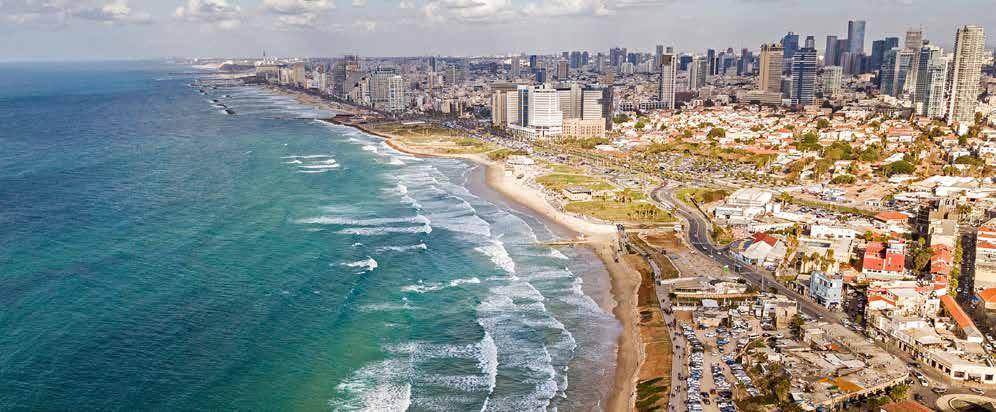
For many years, British Jews considering purchasing property in Israel naturally focused on Jerusalem, Tel Aviv or Netanya. Today, however, increasing attention is being directed towards one of Israel’s most exciting coastal cities—Ashkelon.
Situated on the Mediterranean coast just south of Tel Aviv, Ashkelon combines beautiful beaches, modern infrastructure, a relaxed lifestyle and outstanding value in a way that few other Israeli cities can match. For those seeking a holiday home, a retirement property, a future aliyah destination or a long-term investment, Ashkelon is rapidly becoming one of Israel’s most compelling destinations. Following extensive investment in infrastructure, housing, tourism and public amenities, Ashkelon is experiencing significant growth and renewal. New residential developments, upgraded public spaces and expanding commercial districts are helping to transform the city into one of Israel’s most desirable places to live and invest. One of Ashkelon’s greatest advantages
is its accessibility. Israel Railways operates direct services to Tel Aviv approximately every 30 minutes, with a journey time of just 35 minutes. This excellent transport link enables residents to enjoy a relaxed Mediterranean lifestyle while remaining within easy commuting distance of Israel’s business and cultural centre.
Looking ahead, Ashkelon’s prospects are exceptionally strong. Continued residential development, urban renewal projects and steady population growth have led many planners to expect that Ashkelon will become Israel’s fourthlargest city after Jerusalem, Tel Aviv and Haifa. Investment in education, healthcare, retail, leisure facilities and transport continues to support this ambitious growth.
For members of the Anglo-Jewish community, Ashkelon offers an increasingly attractive lifestyle. A growing English-speaking population, expanding community initiatives and a welcoming atmosphere are making it an appealing destination for families considering a holiday home, retirement or eventual aliyah.
Perhaps Ashkelon’s greatest attraction is its magnificent coastline. The city boasts one of Israel’s longest stretches of sandy Mediterranean beaches, complemented by a modern marina, an attractive promenade, beautiful parks, fascinating archaeological sites and an ever-growing selection of cafés and restaurants. For sports enthusiasts, Ashkelon also offers 24 municipal tennis courts, excellent country club facilities and exciting plans for a championship golf course and leisure resort, further enhancing its reputation as one of Israel’s premier lifestyle destinations.
From a property perspective, Ashkelon remains one of Israel’s best-value coastal markets. Buyers can still find spacious apartments with spectacular, uninterrupted sea views at prices that compare very favourably with comparable properties in Herzliya, Tel Aviv or Netanya. As demand continues to rise and the city expands, many property professionals believe this pricing gap is unlikely to remain for long.
For overseas buyers, expert local guidance can make the purchasing process both straightforward and secure.
Properties, headed by David
Zwebner, is the market leader in Ashkelon’s sea-view property sector, having sold more than 136 sea-view apartments to buyers from the United Kingdom, South Africa, the United States and other English-speaking countries. The company has built its reputation on professional advice, local expertise and personalised service, guiding clients through every stage of the purchasing process—from identifying the ideal property and negotiating the purchase to coordinating legal procedures, arranging mortgages where required and providing comprehensive after-sales support. For British Jews looking beyond Israel’s traditional property hotspots, Ashkelon represents a rare combination of affordability, accessibility, lifestyle and long-term potential. Whether viewed as an investment opportunity, a holiday retreat or a future home for aliyah, the city offers an exceptional opportunity to own a property on one of Israel’s most beautiful coastlines.






BY JONATHAN SHOOTER
There’s a famous phrase, ‘every crime has a motive’, I often tell clients, ‘Your chosen location must have a motive’. People see pretty houses advertised, but don’t understand the location. I’d say about 2% of customers claim they can live anywhere within the RBS area, but the rest want to live where likeminded people live, or close to their children and grandchildren. Local knowledge and understanding are a must. After 15 years in real estate, one thing I haven’t been able to do is transfer a stunning apartment from one area, and move it to the area the customer really wants to be in. Let’s take a look at the different areas of Ramat Beit Shemesh.
also contains smaller buildings, unlike what we will describe later. Within aleph there are the more Yeshivish parts lower down the hill, and the more chutznik parts generally up the hill, the whole Dolev area, as well as Lachish and
Around 10 years old, this was the first new neighbourhood after Aleph. Mostly a strong chareidi presence and a younger crowd. Many Anglos do live there, but the majority is Israeli. It was a natural choice for children of English-speaking parents, who wanted a developing neighbourhood close to Aleph. It is established with its own shops and several popular English speaking Shuls and Rabbanim.
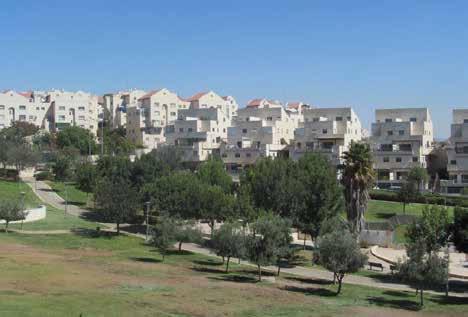
The oldest and original neighbourhood, the buildings are mostly 25 years old---and indeed look it. I’d estimate 90% of apartments sold, people choose/need to do some form of renovation, and this must be factored into the cost. However, the most established has advantages. There are world famous and sought after Kehillos with English speaking Rabbonim, and learning programs such as The Gra, Beis Tefilla, KSY and Aish Kodesh to name a few. RBS A has different shopping areas, one is never far from amenities, transportation and more. Apartments are often expandable; many buildings having undergone a rezoning process to allow legal construction. The area
Revivim. There are dozens of shuls and communities of all stripes, so new olim soon find their feet. Apartments go from 2 bedrooms to cottages, and everything in between.
A newer area which is an extension of Aleph. Small in size but sought after. Mostly a younger YU type of crowd. Whilst being next to Aleph, there is not a single shop, so a car is a necessity (as in many of these areas). It has some developing kehillos. Prices are typically higher as supply is short and the area is considered high demand. Houses also range from apartments, to cottages, often with good views. This area tends to be a harder search due to short supply.
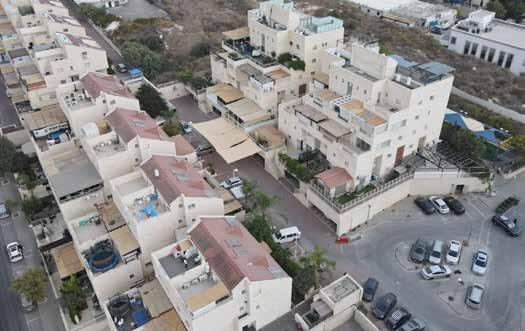
community, but predominantly, it is the aforementioned. Apartments come 3 rooms to 6 room penthouses. Again, the style is taller buildings, Shabbos elevators are generally frowned upon.
An offshoot of Aleph, there are three projects being built, mostly marketed to Anglos. One projected is inhabited, with shops and shuls to follow. It will take time to see how this develops.
A large new neighbourhood with mostly tall buildings, some 10 stories tall. There are some projects under construction which were marketed to Anglos, so in the coming years this should make a difference. Currently the character of the neighbourhood is finding its feet, many apartments were brought by investors or mechir mishtaken (government discounted housing lottery) so it will take time to see how it develops. It now has two shops, with more to come.
As of now it’s a similar crowd to Mishkafayim, with a strong Israeli presence too.
This area is close to Aleph, as is mostly the young yeshivish avreich crowd. The Anglo types aim for the ‘Wolfson buildings’ known for a quality crowd as well as better finishes. Prices there reflect this demand. It contains its own shops and many shuls and is well on the map.
The direction is that the city will keep expanding. Neve Shamir 2 is at the beginning stages, with huge buildings planned, some with 80 inhabitants. The Mir is also opening a branch there so this is another interesting development for the area.
JS Realty Israel is a husband-and-wife team, Jonathan and Shoshana Shooter, with over 15 years of experience in the Ramat Beit Shemesh market. We are a boutique agency that works closely with buyers and sellers, offering a holistic approach tailored to each client’s needs, to make the process smoother, clearer, and more productive. Beyond
real estate services, we provide free consultations on all aspects connected to property in Israel, drawing on our deep understanding of the local market. Thinking of fulfilling the dream? Be in touch and find out how we can help.
Mostly Israeli with strong Chassidish/ Yerushalmi presence. Divided into 4 sections, D2 and D4 both have Anglos, even with an up and coming
Call/WhatsApp: +972-54-451-3847 jsrealtyisrael@gmail.com
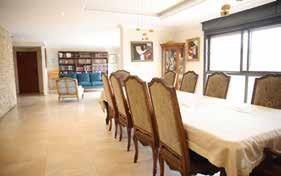
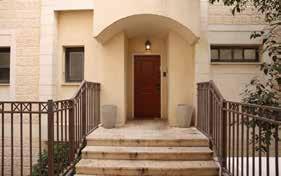

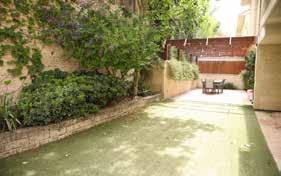
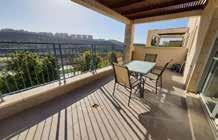



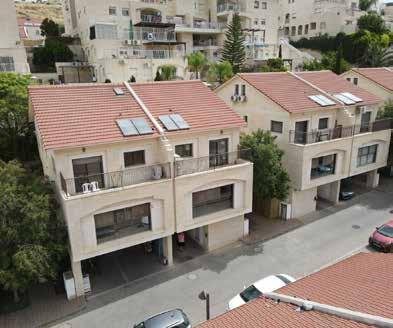
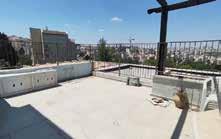
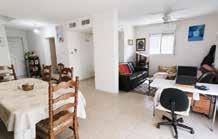
• Huge American style double sized house 10 bedrooms 600m of indoor space with 120m lush garden.
• Extra large salon and huge custom designed wood kitchen with pantry, large bedrooms, superbly designed.
• Located in a quality cul-de-sac modern orthodox neighborhood, a once in a lifetime opportunity.




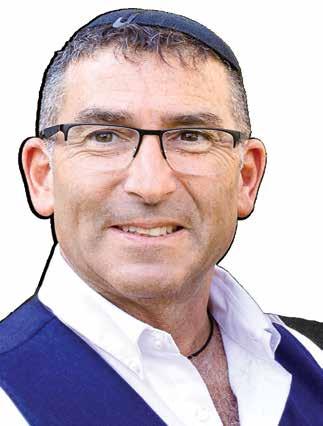
BY KIM BASH, ISRAEL'S PROPERTY & COMMUNITY MATCHMAKER
How to Find Your Community in Israel - Why buying the right home starts with finding the right place to belong.
When people ask me what the most important part of buying a home in Israel is, they often expect me to say location, price or investment potential. My answer is always the same.
The most important decision you will make is choosing your community.
As Israel’s Property & Community Matchmaker, I have spent over 15 years helping Jews from around the world make Israel their home. One thing has become abundantly clear: buying the
bedroom.
But you cannot renovate the feeling of belonging.
You cannot create a community around you after you’ve moved in.
That is why I always encourage my clients to choose the community first and the property second.
Israel is made up of hundreds of unique communities, each with its own character and lifestyle.
Some are vibrant cities filled with cafés, restaurants and cultural life. Others are peaceful neighbourhoods where children still play outside and neighbours know one another by name. Some attract young families, while others are ideal for retirees, professionals or investors. There are communities with large English-speaking populations and others that offer complete Hebrew immersion. There is no such thing as the ‘perfect’ community.
There is only the community that is perfect for you.
When I begin working with a client, I don’t start by showing them properties. I start by asking questions.

right property is important, but finding the right community is life-changing.
COMMUNITY FIRST. PROPERTY SECOND.
A beautiful apartment can always be renovated. You can change the kitchen, replace the floors or even add another

I always encourage clients to spend time in the areas they are considering. Visit during the week. Experience a Shabbat if possible. Walk the streets, meet local residents, visit the parks and cafés, and get a genuine feel for the atmosphere.
property is only one part of the journey. Finding the right community is what truly transforms a house into a home. A house is just a house... but when you find your community, you find your home.
Let Your Journey Home Begin With Us.
• Are you making Aliyah, buying an investment property or looking for a holiday home?
• What type of Jewish life are you looking for?
• Which schools are important to your family?
• Do you want to be close to shuls, the beach, Jerusalem or your workplace?
• Will you need public transport?
• What is your budget?
• What stage of life are you in? The answers to these questions help us identify the communities that best match your lifestyle, values and long-term goals.
I also encourage clients to speak to the people who already live there. Ask them what they love about the community, what drew them there, and what daily life is really like. Visit more than once if you can. A neighbourhood can feel very different on a weekday than it does on Shabbat. Taking the time to experience the community before making such an important decision can give you confidence that you’ve found the right place to build your future.
Israel is an incredibly diverse country. Within a relatively short drive you can experience completely different lifestyles, climates and communities. That diversity is one of Israel’s greatest strengths, but it can also make choosing where to live feel overwhelming. Having someone who understands not only the property market, but also the people, schools, synagogues and future growth of each community can make all the difference.
At Kim Bash Real Estate, we don’t simply help people buy homes - we help them build a future.
Because buying a
For a complimentary consultation please contact Kim - +972 544415704
Kim Bash Israel’s Property & Community Matchmaker


B E I T S H E M E S H
R a m a t S h i l o
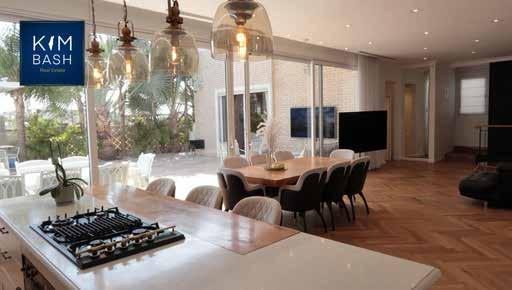
Gorgeous garden apartment
4 b e d r o o m s
B a l c o n y o f f t h e l i v i n g r o o m
O u t d o o r k i t c h e n
C o m p l e t e l y f u r n i s h e d
Asking Price:
₪ 5 , 5 0 0 , 0 0 0

a B e a c h
L u x u r y D u p l e x P e n t h o u s e
5 b e d r o o m s
P r i v a t e p o o l
L a r g e w r a p - a r o u n d b a l c o n y
G o r g e o u s s e a v i e w s
Asking Price:
₪ 6 , 7 0 0 , 0 0 0


H E R Z L I Y A
3 . 5 b e d r o o m s R e n o v a t e d
Close to Reichman University
P r i c e D r o p
Asking Price: ₪ 4 , 0 0 0 , 0 0 0
A S H K E L O N

J E R U S A L E M
N e w P r o j e c t
M e k o r C h a i m
P r e s a l e s t a g e
2 , 3 & 4 b e d r o o m s
a v a i l a b l e
R e a d y : 2 0 2 8
Asking Price:
,

P r i c e o n R e q u e


BY DOV NEWMARK
For many, the dream of making Aliyah is one of the most exciting — and daunting — journeys of their lives. It’s not just about moving to a new country; it’s about starting a whole new chapter filled with opportunity, community, and purpose.
In recent months, the question many UK Jews are quietly asking themselves is whether Aliyah today is a choice or a crisis. Are people moving out of inspiration — or desperation?
The recent terror attack in Manchester, together with the sharp and alarming rise in antisemitism across the UK over the past few years, has left many in our community unsettled. For some, these events have transformed what was once a distant dream into a pressing question of safety and identity. Yet while the concerns are real, I believe passionately that Aliyah should still be a choice — not a reaction.
It should be a decision made from strength, faith, and optimism — a choice that allows you the time to plan properly, explore your options, and make informed decisions. No panic, no pressure — just thoughtful preparation and the confidence that comes from knowing you’re doing what’s right for you and
your family.
A Strong Economy, A Bright Future Israel’s economy continues to show remarkable resilience. Innovation, entrepreneurship, and opportunity define its landscape. From the tech sector to healthcare, education, and beyond, Israel offers a future that’s both secure and full of potential.
For those looking to make a real difference — personally, professionally, and spiritually — this is your moment. You’re not just moving to a country; you’re joining a nation with purpose, passion, and possibility.
Making It Possible — Together
This is where I come in.
With over 15 years of hands-on experience in the world of Aliyah, I’ve already helped thousands of Olim turn their dream into reality. Today, as an Independent Aliyah Consultant, I offer something truly unique: a FREE VIP one-stop shop for anyone planning their move.
Yes, you read that correctly — free. Why work with me? Because I’m the only person who brings together a dedicated team of English-speaking service providers covering every aspect of life in Israel. Together, we remove the stress and uncertainty, giving you clarity, confidence, and full support at every stage.
My team covers everything you’ll need for a successful Aliyah:
• Communities – insider knowledge to help you choose where to live, from vibrant cities to close-knit towns.
• Healthcare – guidance to navigate Israel’s system and get the right coverage from day one.
• Tax & Financial Planning –expert advice to protect your assets, handle pensions, and maximize your benefits.
• Education – insights into schools and frameworks to ensure your children thrive academically and socially.
• And everything in between – from real estate and shipping to employment and integration, we’ve got you covered.
Every Oleh has their own story — their own dreams and motivations. I take the time to understand your needs, connect you with trusted professionals, and create a clear, step-by-step plan to make your move as smooth as possible. Think of me as your personal guide — someone who has walked this road with thousands before you. With me and my team by your side, you’re not just

SCHEDULE
“making Aliyah”; you’re building a new life in Israel, rooted in purpose and peace of mind.
The Future is Bright. The Future is Israel.
Yes, the world feels uncertain. Yes, there are challenges. But Aliyah does not have to be a response to crisis — it can be a bold, empowering choice for your family’s future. With the right guidance, planning, and mindset, you can make the move with confidence and excitement.
Thousands have already done it. So why not you?
Whether you’re six months, two years, or even longer from making the move — now is the time to start planning. After all, us Brits love to plan! The earlier you prepare, the smoother your transition will be.
And best of all — my help costs you nothing. You’ll gain access to my experience, network, and a vast team of English-speaking experts.
Because Aliyah is too important to leave to chance.
The future is bright. The future is Israel.
Dov Newmark — Independent Aliyah Consultant
Contact Dov by email: dov@makealiyaheasy.com or call 020-8150-2245
- 13th, 14th & 15th JULY
Smar t investoors have identified Ashkelon as the most promising area to buy proper ty now in Israel
Great sea view properties
• • • • • Slated to become the in Israel ocal University Garden city originally designed and built by South Africans! High speed trains linking the North to the South Golf course in the initial planning stages
Best t beaches in the countr y & lovely Marina 40 minutes to Tel Aviv and 60 minutes to Jerusalem
Growing vibrant Anglo community
Prices less than half of similar properties in Netanya!

• • • • 4th largest city L Contact us now for details! a s h k e l


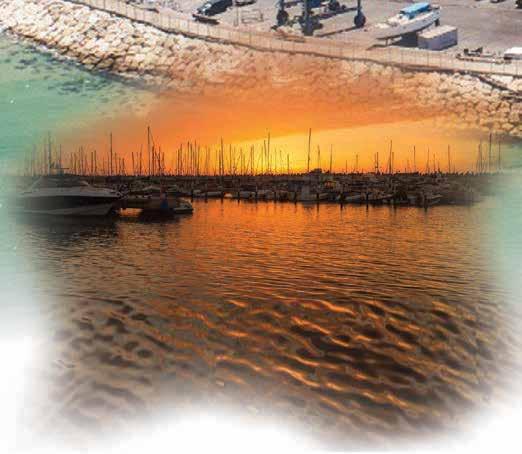




Around 120 veterans, serving personnel, cadets, community leaders and supporters gathered at the National Memorial Arboretum in Staffordshire for a special Service of Commemoration organised by AJEX JMA during National Armed Forces Week. The ceremony marked 20 years since the establishment of the AJEX Jewish Military Memorial in 2006, celebrating two decades as the national focal point for Jewish military remembrance.
Despite exceptionally high temperatures, attendees came together to honour the service and sacrifice of Jewish men and women who have served in His Majesty's Armed Forces, demonstrating the enduring importance of remembrance, community and service.
The ceremony was attended by Vice Admiral Sir Andy Kyte KBE, Chief of Defence Logistics and Support within UK Strategic Command and one of the UK's most senior serving military officers. Sir Kyte, who also serves as the Ministry of Defence's Armed Forces Champion, laid the principal wreath in memory of all those who have served in HM Armed Forces and later delivered reflections during the ceremony.
Holocaust survivor Mala Tribich MBE
gave a reading of a poem written by 101 year old D-Day veteran Mervyn Kersh, one of AJEX's cherished members. There were also poignant readings delivered by Cheryl Pack and Karen Bloom.
Proceedings were led by AJEX National Chair Jon Tyler. A special feature of the service was the participation of Rabbi Walker of Heaton Park Synagogue, who led the Memorial Prayer and Kaddish before being presented with Honorary Lifetime Membership of AJEX in recognition of his bravery and leadership. Rabbi Amir Ellituv, Senior Rabbi of the S&P Sephardi Community, and Rabbi Nir Nadav, Senior Jewish Chaplain to HM Armed Forces, recited prayers during the service.
Wreaths were laid in memory of all those who have served in HM Armed Forces; all Jewish men and women who have served; the 110th anniversary of the Battle of the Somme; the 90th anniversary of the Battle of Cable Street, and to mark 25 years since the start of operations in Afghanistan.
A particularly poignant moment saw Lionel Singer, one of the Birmingham AJEX members who was instrumental in creating the AJEX Memorial, lay the wreath marking 20 years since its establishment alongside a JFS student.
Lionel also attended the memorial's dedication in 2006 with his brother, who has sadly since passed away, creating a moving link between those who helped create the memorial and the next generation who will carry its legacy forward.
Cadets from the JFS and JCoSS Combined Cadet Force played an important role in the ceremony, laying a wreath as well as poppy posies at the memorial and representing the next generation's commitment to remembrance.
A highlight of the afternoon was the presentation of AJEX Lifetime Achievement Awards. Alan Levy was recognised for his decades of service through CST and his unwavering support of AJEX and the Jewish community; Rebecca Roebuck received her award for her outstanding leadership in developing the JFS and JCoSS Combined Cadet Force and inspiring the next generation of cadets; and Mike Colton, founder of the Allied Special Forces Memorial Grove, was honoured for his longstanding contribution to remembrance.
Speaking after the ceremony, Jon Tyler said:
“Twenty years ago, AJEX established this memorial as a permanent place
of remembrance for Jewish men and women who served our country. Two decades later, it remains a powerful symbol of service, sacrifice and community. Seeing veterans, serving personnel, Holocaust survivors, community leaders, cadets and students gathered, together today was a powerful reminder that remembrance continues to connect generations. As we mark 20 years of this memorial, we remain committed to ensuring that Jewish veterans’ stories, service and commitment are never forgotten.”
Fiona Palmer, Chief Executive of AJEX, added:
“Our determination to hold the ceremony despite the high temperatures and the resolve of all those who managed to join us, delivered a very special event. Hearing Vice Admiral Sir Andy Kyte’s words was uplifting highlighting the support our community have from wider society. Then listening to Rabbi Walker speaking about the heroes in his community and their actions in the face of danger and hate also gave hope in the difficult times we are facing.”


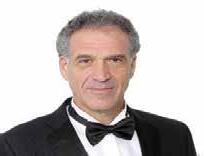
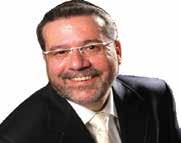


The head teacher looked at her across the table and asked: "Are you a teacher?"
Kate was not. She was a parent, fighting for her daughter.
It started with a moment in the kitchen one day. Almost defeated, her primary school-aged daughter mustered the emotional strength to admit, “The teacher thinks I don’t know anything.”
Taking her daughter to one side, Kate assured her, “There's nothing in this world that should make you feel like this. You are so bright. And sometimes we have our own different way of learning things.”
Kate went into school where she made her case calmly, with detail, asking that her daughter stay in the main classroom rather than be pulled out. But the school couldn’t accommodate that. And then the Teaching Assistant was removed from beside her daughter. “I said, ‘Okay. No more TA. I'll do all the teaching,’” remembers Kate. And she did; at home, in the evenings, she rebuilt her daughter's confidence until she believed in herself again.
The issue eventually reached the head teacher. Kate sat across from her and made her case - and mid-conversation, the head teacher stopped asked the question that would stay with her for a long time.
"Are you a teacher?" she asked. "Are you in teaching?"
Something in the way Kate spoke - the way she understood the classroom, advocated for her child, pushed back with knowledge – had made a professional educator stop and ask the question. Yet Kate went home and did nothing, because she had five children and a demanding job and the idea of going back to study belonged to a different life; but the question stayed with her.
“Learning always interested me, but I never got the chance to pursue it when I was younger and by the time I had five children, it didn’t seem possible.” says Kate.
She didn't know that a different kind of degree existed.
Kate started working as a Teaching Assistant in a Jewish school in London, and she loved it. “When I had just started to work in the school, it was so fascinating to me – I felt that this was the one thing that I was sent to do.”
But she also saw the gaps: children struggling in ways that as a TA she couldn't fully address; how much the Jewish dimension of the school mattered to families, and the unmet potential it had to reach beyond curriculum and really improve children’s lives.
“English, maths, you can get that in any school, but Jewish identity, faith, and outlook – I wanted to be the person who could give them that.”
In response to the 7.2 and 7.5 magnitude earthquakes that struck northern Venezuela on June 24, 2026, World Jewish Relief has launched an urgent emergency appeal to raise funds to support the affected communities. The earthquakes, which have already claimed hundreds of lives and caused widespread destruction, have left countless individuals without shelter, food, or access to medical care. Many buildings have collapsed including across the capital, Caracas, trapping people under the rubble. Rescue efforts are underway, but aftershocks are causing further danger and complications. The true extent of the damage is emerging slowly, but the Venezuelan government has announced a State of Emergency.
Kate believed that getting a degree would mean full-time study, a restructured life, almost certainly giving up work, and that wasn’t remotely a possibility.
Then someone introduced her to LSJS.
The London School of Jewish Studies offers a BA in Jewish Studies built specifically for people like Kate - people already working in Jewish education who want to go deeper, teach better, understand more, but cannot simply disappear from their lives for three years to do it. Classes are one afternoon a week, assessment is essay-based not exambased, and the programme is designed around the reality of adult learners carrying full lives outside the classroom.
"I never imagined there was an option like this," Kate says. "I didn't even have time to research whether part-time existed. I had five children."
What she found when she arrived was not just flexibility, but focus. The subjects mapped directly onto the classroom challenges she was already navigating. The reading material was on point and useful. The small classes meant she was never anonymous, never left behind. And the structure meant she could take what she learned on a Tuesday and try it on a Wednesday.
"The degree taught me to experiment," she says. "To think about what I actually want from a lesson. The deeper
understanding of lesson planning, the different perspectives on how different children learn - and I got to go into school and apply it all immediately."
Partway through her first year, the class teacher left. Kate was there, and stepped up to the role, ready in ways she hadn't quite realised yet.
Now, Jewish values thread through everything Kate teaches. She reaches each child in a way she couldn't have managed before. Not only Kate’s five children, but classes full of children have Kate as their advocate, their mouthpiece, their access point to education.
The head teacher who once asked if she was a teacher has her answer now.
Kate teaches at a Jewish primary school in London. She is midway through her BA. She goes into LSJS one afternoon a week, essays stacked alongside school runs and packed lunches and the ordinary chaos of a large family.
She is not the person she was when she walked in. And the children in her classroom - the ones whose parents chose a Jewish school for a reason - are getting something she couldn't have given them before.
If any of this sounds familiar, LSJS would like to hear from you.
Contact lsjsadmin@lsjs.ac.uk | Visit lsjs. ac.uk/ba | Call 020 8203 6427
World Jewish Relief is working with its local partners in the area and the Jewish community in Caracas, who are reporting a vast scale of destruction and who have identified urgent needs include shelter, food, medicine, clean water and hygiene items.
Paul Anticoni OBE, Chief Executive of World Jewish Relief, said:
“The scenes emerging from Venezuela are shocking, and the humanitarian needs are immense. As the Jewish community’s humanitarian response, we are appealing to our supporters and community to provide a lifeline to those suffering from this crisis.”
The charity invites all who are able to contribute to their Venezuela Earthquake Appeal www.worldjewishrelief.org/ venezuela



















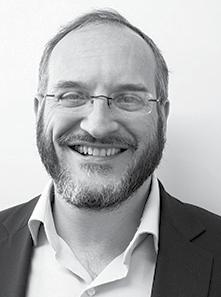
BY RABBI NAFTALI SCHIFF
What3Words: Fire Not Fireworks
Who doesn’t enjoy fireworks?
There is something undeniably exhilarating about a night sky suddenly exploding into colour. Children gasp. Adults look up in wonder. Dopamine hits and for a few brief moments darkness gives way to dazzling light before the colours fade, the smoke drifts away and all that remains is the memory, perhaps…
Fireworks are fun.
But they also remind us of something unsettling about our age- our growing addiction to experiences that are spectacular yet fleeting; brilliant for a moment but leaving little behind. Fire, by contrast, is something altogether different.
As Shabbat departs each week, Judaism asks us not merely to smell spices or sip wine, but to ignite fire and gaze into the flame of our creation. Havdalah ends with fire because, according to the Gemara (Pesachim 54a), it was at the termination of the first Shabbat that Adam discovered how to use his ingenuity to create fire. Having spent Shabbat reconnecting with his G-d-given essence after the tragedy of Eden, humanity’s first creative act was not to consume the world but to illuminate it. Before we begin six days of work, we are reminded that we possess extraordinary creative power.
Fire is one of the Torah’s most inspiring, lofty and enduring symbols. A pillar of fire guided our ancestors through the darkness of the wilderness. The Torah itself was given amidst fire at Sinai. Chazal even describe it as being written with “black fire upon white fire.” Fire represents passion, creativity, transformation and even Divine energy. Yet the very same fire can consume; fire can destroy.
Nadav and Avihu brought
- an alienating passion without discipline. Chazal speak of תקוְלָחמהָ
, the fire of Korach’s conflagration filed by
arrogance and ego - a destructive force which spreads from person to person like wildfire. Most strikingly, the Gemara (Yoma 69b) describes the evil inclination for idolatry emerging from the Holy of Holies -
- like a lion cub of fire. Even our most dangerous impulses possess immense power. The challenge is not to extinguish the fire but to master it and harness it for the good.
Fire itself is morally neutral.
Like Torah itself, the greatness of fire, which is actually often compared with fire, lies solely in the hands that wield it. The same flame that warms a home can burn it to the ground. The same passion that builds a marriage can destroy one. The same ambition that changes the world can become arrogance. Love can become obsession. Conviction can become fanaticism. Desire can become addiction.
It is always safer to remain on the sidelines, watching history unfold from a comfortable distance. Yet Jewish life has never been a spectator sport. The first Jew could have opted out of engaging with a world of false images, but Avraham Avinu sets the tone forever by literally stepping into a furnace of fire- a שאָ֖הָ ןשבְכֶ֛. Life as a Jew has never been a bed of roses, nor a trivial game of tiddlywinks. We are called upon to step into the arena- to enter the fray with courage, conviction, passion and compassion. To harness the fire within to build, to unite, to heal and to leave the world better than we found it. Safety may be comfortable. Passion is unforgettable.
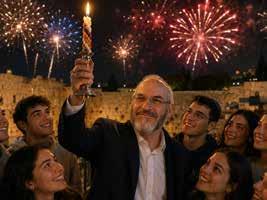
Judaism does not ask us to extinguish passion.
It asks us to harness it; to channel it; to elevate it for the good.
That is why Aish means fire. At Aish we have always believed that Judaism should never be cold, mechanical or lived from the sidelines. It should be animated, courageous and contagious. Not the fire of ego but the fire of purpose. Not the heat of argument but the warmth of connection. A fire that inspires us to dream bigger, aspire higher, share more generously and ignite others without ever diminishing our own or their authentic flame.
We are often warned, “Don’t play with fire.”
Quite right.
But Judaism asks something even greater.
Don’t play with fire. Harness it.
This week, millions will once again look skywards as one of the largest fireworks displays ever marks the 250th anniversary of American independence. It will no doubt be magnificent.
But, for how long?
Someone once quipped that fireworks are simply a most exciting way of burning money. They illuminate the heavens for minutes before disappearing into smoke.
Rabbi Noach Weinberg zl used to make a similar observation about rollercoasters. People emerge exhilarated because, for a fleeting moment, they brush against the intensity that proximity to death brings in its wake. A fleeting glimpse of what real life of meaning and purpose ought to generate every moment. The tragedy is not the thrill itself; it is mistaking the thrill for a life. As a result, the resultant high is short lived.
Too often our culture chases fireworksviral moments, instant gratification, endless scrolling from one emotional high to the next. Brilliant flashes. Little warmth. Scant insight.
Lightning too can illuminate an entire landscape- but only for a second. The question is whether we seize that moment of clarity or simply wait for the next flash.
As we enter the Three Weeks, our
thoughts turn to another fire. The flames that engulfed Jerusalem and consumed the Beit Hamikdash. The Midrash reminds us:
“With fire it was destroyed, and with fire
You will one day rebuild it.”
The fire itself is not the story.
The human choices behind it are.
Every Havdalah we bless G-d -
the One who teaches us to distinguish. Discernment is itself a spiritual and holy act. We are called to recognise the difference between passions that elevate and passions that consume; between conviction and fanaticism; between inspiration and intoxication.
Fire is ultimately the symbol of free choice.
G-d has placed extraordinary power into human hands. The choice is ours whether to forge or to fracture, to warm or to wound, to build or to burn.
So yes- enjoy the fireworks.
Look up. Smile. Be inspired. Then let the moment pass.
And choose instead to live with fire. The fire that lights your soul and can be shared with not diminishing with counless others. The fire that forges character. The fire that builds families, communities and nations. The fire that transforms inspiration into action and spectators into builders.
Jerusalem was built with fire, destroyed with fire and, please G-d, will yet be rebuilt with fire.
May ours be the generation that chooses not the spark that merely dazzles, but the enduring flame that gives warmth, courage, hope and light.

In this column Rabbi Naftali Schiff reflects upon 3 key words each week relating to contemporary and relevant issues.
All feedback is welcome- nschiff@ jfutures.org.
Rabbi Schiff is the Founder & CEO of the Family of Jewish Futures networks of educational organisations.



BY RABBI YONI ABADI
There’s an old principle in Pirkei Avot, Torah im Derech Eretz, Torah together with “the way of the world,” that Torah study and worldly engagement, a trade, a profession, a livelihood, are meant to live hand in hand, each one strengthening the other. Rabbi Samson Raphael Hirsch later built an entire philosophy around the phrase, arguing that full religious commitment and full participation in modern professional life flourish best together. It’s a beautiful idea on paper. I’ve spent the last few months testing what it actually looks like in practice, in 2026, for a young Jewish professional trying to build a career in law, finance, tech, media and more. Once a month, in cool, borrowed spaces, a family office, a law firm, somewhere in Marylebone, around thirty-five young professionals gather for an evening of networking, drinks and a light dinner. It
spreads by word of mouth and showcases how Jewish growth and professional success aren’t separate tracks.
Each evening centres on a guest speaker, always someone at the top of their field, entrepreneurs, marketers, AI specialists, and I lead a roundtable with them. After a few questions about their journey and their industry, I hand the floor to the room. What follows isn’t the usual polite Q&A, but deep, interesting conversation.
There’s one question I find myself asking the group every time: What does success mean to you? I’ve asked it dozens of times now, and not once has anyone answered with wealth or reputation. The answer always circles back to impact, on family, on community, on something beyond themselves.
It reminds me of the way the Mishnah in Pirkei Avot defines wealth itself: Eizehu ashir? Ha’sameach b’chelko - who is wealthy? One who is happy with their portion. We usually read that as advice about contentment. Stop chasing, appreciate what you have. But listening to accomplished business people answer this question month after month, I’ve started hearing it differently. It’s not just
about being satisfied with your portion; it’s about where you’ve decided your portion actually is. The people at that table who strike me as genuinely successful haven’t simply made peace with what they own, they’ve located their “portion” somewhere outside themselves, in family, in community, in the people they’ve helped along the way. Almost every one of them has Jewish community involvement somewhere at their core: a sense of responsibility, a pull toward building something bigger than their own career. One speaker put it more directly than most: real success only comes from doing what you actually want to be doing, thinking clearly about who you want to become, and using your talents not just to climb, but to contribute something meaningful.
Some evenings turn philosophical. With one speaker working in artificial intelligence, the conversation drifted toward ethics and society; if technology eventually handles life’s practical burdens, what’s actually left for the human being? Another evening turned personal, with a speaker talking about the value of knowing and documenting your own story, on social media and beyond, so that career
decisions flow from real self-knowledge rather than guesswork. A number of people have come back to me afterward, wanting to keep talking, trying to work out their own sense of purpose with more clarity.
In a tough job market, I understand why people show up for the networking. But what I keep noticing, evening after evening, is that the real point isn’t just the connections being made in the room. It’s something more profound. The working environment and the Jewish life were never meant to be lived apart. And alongside every career contact made, I hope what people are quietly building is not just their relationship with each other but with their place in the Jewish story too.
Yoni Abadi is Director of Young Professionals programming at Aish UK, where he designs and leads innovative initiatives engaging thousands of young adults in community, identity, and purpose. Through mentoring, networking, and immersive educational experiences, he supports young professionals in their personal growth, relationships, and careers through the lens of Jewish wisdom.





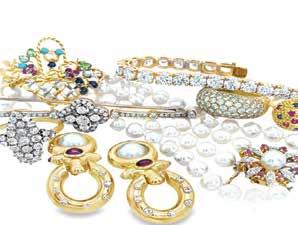

Dear Rabbi
People always say that every marriage goes through difficult periods. But what if the problem isn’t a phase? What if, after years together, I genuinely believe I married the wrong person? We get along well enough, there has been no betrayal or abuse, but the excitement has gone, we have grown into completely different people, and staying together feels more like fulfilling an obligation than sharing a life. Does Judaism really expect someone to spend decades in an unhappy marriage simply because of a decision made years ago?
Shainey
Dear Shainey
Before asking whether you married the wrong person, ask a different question: “Have you become the wrong spouse?” We live in an age that tells us happiness comes from finding someone who meets all our needs. Judaism teaches that happiness comes from learning how to give, not simply how to receive.
That doesn’t mean every marriage should be preserved at all costs. Judaism recognises that there are circumstances - abuse, betrayal, chronic toxicity - where separation may be the healthiest and most appropriate path. But you have described none of those. You describe familiarity and emotional distance.
The Kotzker Rebbe famously observed that people spend so much time looking through the window at everyone else’s life that they forget to look in the mirror. We naturally catalogue our spouse’s shortcomings while becoming blind to our own.
The Talmud teaches that forty days before conception, a Heavenly voice proclaims, “The daughter of so-and-so is destined for so-and-so.” This reminds us
that marriage is not merely an accident of romance, but a sacred partnership entrusted to us. Love is not simply something you fall into rather something you build. Feelings fluctuate but commitment creates the environment in which feelings can return.
Don’t ask whether you married the wrong person until you’ve exhausted every effort to become the right spouse, to communicate honestly, to seek good counselling, and to rediscover why you chose one another in the first place. Sometimes the happiest marriages are not those between the most compatible people, but between two imperfect people who refused to give up on each other.
Dear Rabbi I’ve belonged to the same synagogue for years, but increasingly I dread going. The services feel lifeless, the rabbi’s sermons don’t inspire me, and cliques dominate the social scene. There are other synagogues nearby where I might feel far more uplifted. Some friends say loyalty matters and that I should stay and help improve things instead of walking away. Others say Judaism is about serving G-d, not institutions, and I should go wherever I can grow spiritually. Which is the right approach?
Kalman
Dear Kalman
You are not the first person
to discover that synagogues are full of imperfect people. In fact, if you ever find the perfect synagogue, don’t join it - you’ll probably spoil it.
A synagogue is not merely a spiritual service provider competing for customers. It is a community. Communities, by definition, include personalities we would never have chosen and opinions we may not share. That is precisely what makes them communities rather than clubs. The danger lies in assuming the problem is always “them.”
If every synagogue eventually disappoints us, perhaps the common denominator is not the synagogue.
Over the years I have watched people who attend as a matter of routine. They spend half the service chatting. They are bored, so they keep themselves entertained by talking to whoever is nearby. If they move shuls, all that changes is the audience - they simply find new people to talk to. The problem was never the synagogue; it was that they had forgotten why they came in the first place. Services are not meant to be a spectator sport or a social gathering with occasional interruptions for worship.
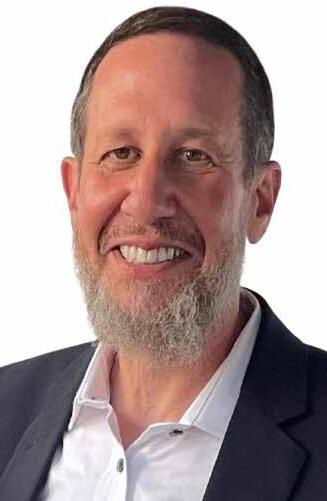
Hillel taught, “Do not separate yourself
from the community.” That does not mean remaining where you are miserable regardless of circumstance. But it does mean, before changing your synagogue, make sure you have first examined yourself. The greatest transformation rarely comes from changing our surroundings; it comes from changing our attitude.

BY RABBI SHALOM ROSNER
Hashem said to Moshe, “Take for yourself Yehoshua bin Nun, a man of spirit, and you shall lay your hand upon him.” (Bamidbar 27:18)
In Parashat Pinchas Moshe asks Hashem to appoint his successor. Hashem informs Moshe that his successor will be Yehoshua. Why did Yehoshua merit to be Moshe’s replacement? The Ramban (Bamidbar 13:4) suggests that when the meraglim are listed they appear in the order of their greatness and Yehoshua is listed fifth (behind Kalev). If there were other individuals who may have been more worthy, why was Yehoshua selected to fulfill this task?
In Sichat Musar, Rav Chaim Shmulevitz suggests that the secret to Yehoshua’s
greatness for which he merited to become the leader of the nation, lies in the description of Yehoshua in the pasuk cited above: “ish asher ruach bo, a man of spirit.” Seforno interprets this phrase to mean: “mi she-muchan lekabel or penei melech chayim, one who is ready to receive the light of the living king.” In other words, one who is not content, but constantly strives to attain more knowledge. That is what distinguished Yehoshua from his contemporaries, his thirst for knowledge. He shadowed Moshe in order to learn as much as he could. When Moshe ascended Har Sinai, Yehoshua remained at the foot of the mountain eagerly waiting for Moshe to descend so he could learn from Moshe as soon as possible (although he knew Moshe would not return for forty days).
In Parashat Ki Tisa, Yehoshua is
referred to as a “na’ar” (a youth or “lad”): “His attendant, Yehoshua bin Nun, a lad, would not depart from the tent” (Shemot 33:11). Yehoshua was in his late fifties. Why is he referred to as “a lad”?! Because of his youthful attitude. He shadowed Moshe and served him so that he could learn and constantly improve. As we have stated on many occasions, life is like going up a downward escalator. If you do not constantly climb, you will drop. There is no “coasting” – one must continually strive to grow.
As people get older, they often retire and are not interested in changing anything in their lives. Judaism does not have that attitude. Regardless of our stage in life, we focus on future growth. We need to constantly seek to accomplish more. (I once heard Rav Asher Weiss state: “You don’t stop having fun when you get old – you get old when you stop having fun.” It’s all in one’s attitude and mindset.) A person can be 110 years old
To get the best value from your private medical insurance, you should speak to an expert who is qualified to advise you on the right policy for you, and recommend the providers who offer the most competitive premiums.
This advice covers individual, family and company policies, and is always FREE.
As an independent health insurance expert, I work with the healthcare insurers to provide you with the appropriate and most affordable level of cover. So whether you have an existing policy or not, let’s have a chat.
can contact me at 020 3146 3444 or 07956 244350 trevor.gee@patienthealth.co.uk
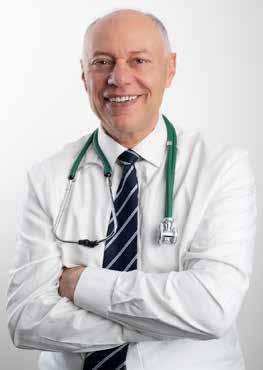
and have the attitude of a na’ar. Age is a number, and it may change annually, but our youthful attitude of constant growth and self-improvement should remain with us throughout life. Similarly, with learning Torah, a knowledgeable person is referred to as a “talmid chacham” (a smart student), who can continue to attain greater knowledge. The pursuit of knowledge never ends.
May we keep this in mind and retain our youthful attitude, constantly striving to enhance our pursuit of Torah and growth in our observance of Torah and mitzvot.
Rabbi Shalom Rosner is Rosh Beit Midrash of the Machon Lev English speaking program and Rabbi of the Nofei HaShemesh community. He is a member of the Mizrachi Speakers Bureau (www. mizrachi.org/speakers).

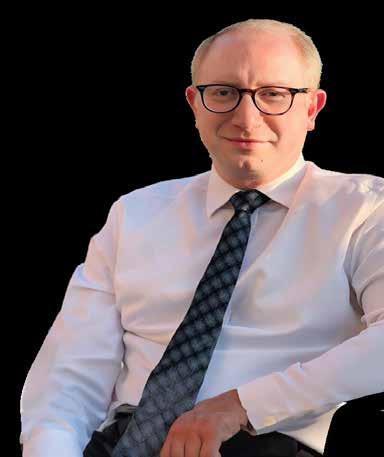

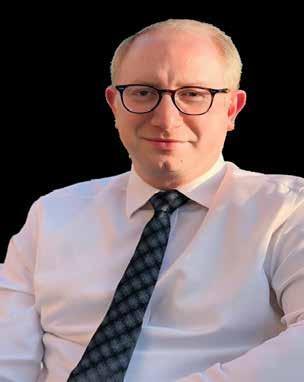

Parashat Pinchas opens with one of the Torah’s most dramatic moments. Pinchas acts decisively to stop a public desecration of G-d’s name, and in return he is rewarded not with honour or power, but with Brit Shalom—a covenant of peace. At first glance, this seems surprising. How can an act of such strength lead to peace? The Torah teaches us that genuine peace is not achieved by ignoring wrongdoing or avoiding
difficult decisions. Rather, lasting peace is built upon a foundation of truth, justice and moral courage. The parashah continues with a census of the Jewish people, the appointment of Yehoshua as Moshe’s successor, and the detailed description of the korbanot offered throughout the year. Although these topics appear unrelated, they all point towards the same idea: ensuring the continuity of the Jewish
The goal of a word wheel puzzle is to create as many words possible with the letters in the word wheel.
Each word must contain at least three letters. You can only use each letter once and every word must have the letter in the centre of the wheel.
people. One generation prepares the next, leadership is carefully passed on, and the rhythm of Jewish life is preserved through the festivals and daily service.
In a world where it can be tempting to remain silent or simply follow the crowd, Pinchas reminds us that each of us has a responsibility to stand up for our values with wisdom and integrity. True leadership is not about seeking recognition; it is about doing what is right, even when it is difficult. As we read Parashat Pinchas, we are reminded that every generation inherits the responsibility to strengthen the Jewish future. By living with conviction, nurturing the next generation, and remaining faithful to our values, we each play a part in building a stronger, more peaceful future for Am Yisrael.
A man settled into his seat on a plane when he noticed the person next to him gripping the armrests with both hands and staring straight ahead. Trying to be friendly, he smiled and said, “Don’t worry, flying is one of the safest ways to travel.”
The passenger looked at him in horror and replied, “I wasn’t worried until you said that... aren’t you the pilot?”
This unique twist on the classic Sudoku puzzle uses the Hebrew letters א through ט instead of numbers 1–9. The rules remain exactly the same: each row, each column, and each 3×3 box must contain every letter once — without repetition.
החלצהב — and enjoy the puzzle!


Q: Why did the watermelon go to shul?
A: It wanted to be one in a melon!
Q: Why did the sunscreen go to camp?
A: To protect the campers!
Q: Why did the ice cube go to shul?
A: It wanted to chill with its friends!
Q: Why did the sun wear a kippah?
A: Because it wanted to shine with pride!