


STANDING WITH ISRAEL NOW AND ALWAYS






EDITORIAL BY YOSSI SAUNDERS
Last Sunday’s Israeli property exhibition in Edgware was never really about real estate.
It became a test of whether the British Jewish community is prepared to stand up for itself when faced with organised pressure, political hostility and the threat of disruption. For weeks, activists campaigned against the event. Politicians weighed in. Public statements were issued. Headlines were generated. Social media erupted. What should have been a straightforward commercial exhibition became a national controversy.

Mayor Sadiq Khan and Green Party deputy leader Zack Polanski all publicly criticised the exhibition and called for action. Whether intentionally or otherwise, their interventions added legitimacy to those seeking to stop the event altogether.
Legal experts repeatedly pointed out that the exhibition was lawful. Whatever one’s views on Israeli politics, there was no legal basis for many of the claims being made. But by then the damage







Continued from page 1
The Jewish Weekly understands that even in the final hours before the exhibition opened, discussions were taking place amid mounting pressure about whether it should proceed. Faced with intense scrutiny and concerns about what might happen, it would have been easy for those involved to fold.
Credit must therefore go to the leadership of the US and its president Saul Taylor, who stood firm and ensured that the event went ahead.
That decision mattered.
Not because of apartments.
Not because of investments.
Not because of property.
It mattered because surrender would have established a precedent.
A very dangerous precedent.
Some voices within the Jewish community argued that the exhibition should never have taken place. Other Jewish media outlets published opinion pieces effectively suggesting that the controversy itself was reason enough to cancel.
This newspaper fundamentally disagrees.
The logic behind those arguments is deeply flawed.
If Jewish organisations begin cancelling lawful Israel-related events because protesters threaten disruption, then protesters learn that disruption works.
If enough pressure can stop a property exhibition, why stop there?
What happens when activists target Israel Independence Day events?
What happens when they target charity dinners?
What happens when they target schools?
What happens when they target synagogues hosting Israeli speakers?
At what point do we draw a line?
The uncomfortable truth is that those who seek to isolate Israel rarely stop after a single victory. Every successful campaign encourages another.
Every cancellation becomes proof that pressure works.
Every retreat encourages further demands.
If the response to every controversy is retreat, then eventually there is nothing left to defend.
British Jews should not have to apologise for attending a lawful exhibition connected to Israel.
They should not have to justify holding a legal event.
And they certainly should not have to seek permission from hostile activists before gathering as a community.

The answer cannot simply be to avoid controversy.
Jewish life itself has become controversial in the eyes of some activists. Supporting Israel has become controversial.
Flying an Israeli flag has become controversial.
Hosting an Israeli speaker has become controversial.

This newspaper believes the second option is the only sustainable one. Because history teaches a simple lesson: communities that continually surrender ground eventually discover they have nowhere left to stand.
Of course, nobody wanted the scenes witnessed last weekend. Nobody wanted police helicopters overhead. Nobody wanted arrests. Nobody wanted confrontation.
But the responsibility for that situation does not rest with people attending a lawful exhibition.
The responsibility lies with those who sought to prevent it from taking place.
The Jewish community faces a choice.
It can decide that every time pressure is applied, it will retreat a little further.
Or it can decide that lawful Jewish and Israel-related events will continue regardless of intimidation.
Last Sunday’s exhibition therefore became about far more than property. It became a statement that British Jews will not be intimidated out of public life. And that is a principle worth defending. What does the alternative look like? Will the pro Hamas mob, emboldened by statements from politicians, and from past success stories, start to target shuls during Shabbat services?
If that happens, and the community keep giving in to the fear factor, then modern Britain is no longer a safe and viable place to raise your children. Many British Jews will simply pack their bags and make Aliyah, to a land where they are free to practice religion without constantly looking over their shoulder each time they leave the house.
Last week, our front-page wrap declared that “resilience begins in the classroom” – and it does. The values, confidence and Jewish pride instilled in our children today will shape the community of tomorrow. But that resilience is strongest when the lessons taught in the classroom are reflected in the actions of the adults around them, creating a community unafraid to stand up for its beliefs and values.















BY MARTIN KENT
Israel’s political tensions continue to rise as the battle over military conscription for yeshiva students threatens both the stability of the government and the future of Prime Minister Benjamin Netanyahu’s coalition.
Over recent weeks, large numbers of Charedim have taken to the streets following the arrest of yeshiva students
accused of avoiding military service. Demonstrators argue that Torah learning is not a private hobby but a national responsibility that has protected the Jewish people throughout history. Many within the Charedi community view attempts to draft full-time yeshiva students as a direct attack on the Torah world and on religious life in Israel.
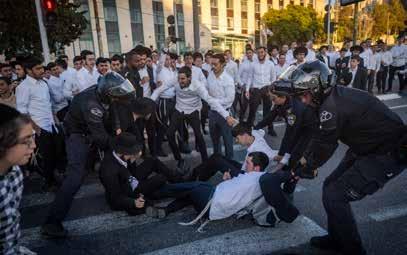
The protests have led to clashes with police, with images circulating of officers dragging young yeshiva students from demonstrations and making arrests. Charedi leaders have strongly criticised what they describe as excessive force, arguing that peaceful protesters are being treated like criminals. Community
representatives have questioned why authorities appear willing to crack down so aggressively on religious demonstrators while showing greater restraint towards other protest groups.
The issue has now moved beyond the streets and into the Knesset itself. Senior figures within both Shas and United Torah Judaism have reportedly warned that if legislation is introduced which fails to adequately protect yeshiva students, they could withdraw support from the coalition. Some rabbinic leaders have gone even further, warning that the government could face collapse and fresh elections if a satisfactory draft law is not passed.
At the same time, political manoeuvring ahead of a possible election is already underway. Former Prime Minister Naftali Bennett is widely expected to mount a serious challenge to Netanyahu should elections be called. Former IDF Chief of Staff Gadi Eisenkot continues to attract support among centrist and security-minded voters, while opposition parties are exploring various alliances aimed at unseating the current
government.
Despite speculation, there is still no clear agreement among opposition leaders, and questions remain over whether personalities such as Bennett, Eisenkot and Yair Lapid would be willing to unite behind a single candidate for prime minister. Netanyahu, meanwhile, remains Israel’s most experienced political campaigner and continues to command significant support among right-wing voters.
For many Charedim, however, the central issue is not who becomes prime minister but whether the Torah world will remain protected. Community leaders insist that any government which seeks to force yeshiva students into military service will face fierce opposition.
With coalition tensions rising, arrests continuing and election rumours growing louder, Israel may soon find itself facing both a constitutional crisis and a major political battle. Whether compromise can be achieved or whether the country heads towards another election remains one of the biggest questions in Israeli politics today.


BY MARTIN KENT
Daryl Berman, 71, has been found guilty of murdering her husband, David Berman, following a retrial at Manchester Crown Court.
David Berman, 84, died in March 2025 after suffering a fatal stab wound at the couple’s home in Prestwich, Greater Manchester. Following his death, Daryl Berman claimed that her husband had
accidentally fallen onto a kitchen knife. However, investigators and forensic experts challenged that explanation, leading to her being charged with murder.
The case first came to trial in 2025, but jurors were unable to reach a verdict and were discharged. Prosecutors subsequently decided to seek a retrial, arguing that the evidence warranted further consideration by a new jury.

During the retrial, the prosecution argued that the fatal injury could not have been caused by an accidental fall. Expert witnesses told the court that the nature of the wound was inconsistent with the account given by the defendant. Jurors also heard evidence suggesting
your home into your golden years.
If you’re over 55 and own your own home, you can unlock its value with a Lifetime Mortgage. NO monthly payments required
David Berman may have suffered injuries while attempting to defend himself.
The defence maintained throughout that David Berman’s death was a tragic accident and insisted that Daryl Berman had loved her husband and had no reason to harm him. Friends and neighbours described the couple as devoted to one another, with no known history of domestic violence or serious marital difficulties.
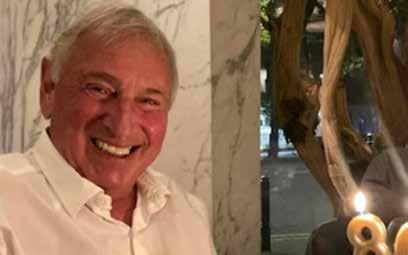
well known. David Berman was remembered as a respected husband, father and grandfather whose death shocked those who knew him.
After considering the evidence, the jury returned a guilty verdict, convicting Daryl Berman of murder.
The case has attracted significant attention within Manchester’s Jewish community, where the Bermans were
Daryl Berman will be sentenced at a later date. Under English law, a conviction for murder carries a mandatory life sentence, with the judge deciding the minimum term that must be served before parole can be considered.







BY MARTIN KENT
Canada’s Jewish community is in mourning after a deadly shooting in Montreal’s heavily Jewish Côte-desNeiges neighbourhood left beloved community member Michael Moshe Mizrahi dead, alongside a murdered police officer and the gunman himself.
The attack took place on Monday in an area surrounded by Jewish homes,
kosher shops, synagogues, schools and community institutions. For Montreal’s Jews, this was not simply another violent incident in a distant city. It happened in the heart of Jewish life. It happened in a place where families walk to shul, where children go to school, where elderly Holocaust survivors and young families alike are meant to feel safe.
Instead, they were told to shelter in place as gunfire rang out.
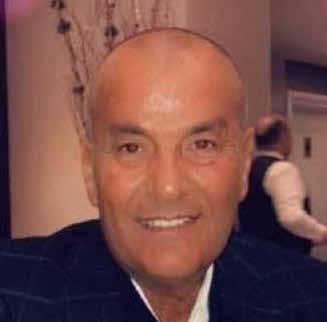
Michael Moshe Mizrahi, described by the Centre for Israel and Jewish Affairs as a beloved member of Montreal’s Jewish community, was critically wounded and later died in hospital. Reports said he was connected to the local Chabad community, and tributes quickly spread across Jewish Montreal and beyond.
The police officer killed was named as Constable Mohamed Lamine Benredouan, 34, who had served with Montreal Police since 2021. A second officer was also injured. The attacker was shot dead at the scene. Police have not yet
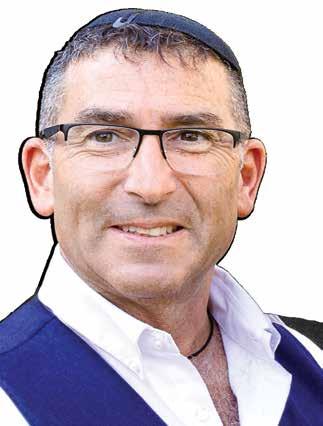

formally declared the shooting an antisemitic terror attack, and investigators are still examining the gunman’s motive. But for Canadian Jews, the fear is obvious. The attack came after months of warnings, after Jewish schools had been shot at, synagogues attacked, businesses targeted, and Jewish families increasingly made to feel unsafe in their own country.

For many, this was the nightmare they had warned was coming. Israel’s Minister for Diaspora Affairs and Combating Antisemitism, Amichai Chikli, said after the shooting that his ministry was closely monitoring the situation and was in contact with community leaders and authorities in Montreal. He
said Israel stood ready to support the community during this painful time. But Chikli and other Israeli officials had warned Canada long before this tragedy. After previous attacks on synagogues and Jewish institutions, Israeli voices repeatedly warned that Canada was allowing antisemitism to spiral dangerously. The message was clear: if governments fail to confront Jew-hatred firmly and immediately, it will not remain as graffiti, slogans or intimidation. It will end in blood.
That warning now feels painfully prophetic.
Continued on page 10
- 13th & 14th JULY

Continued from page 8
The reaction across the Jewish world was one of grief, anger and exhaustion. Canadian Jewish leaders said the community had been pleading for action for months. They pointed out that Jews make up only a tiny fraction of Canada’s population, yet account for a huge proportion of religion-based hate-crime victims.
Prime Minister Mark Carney had himself recently admitted that Canada was failing its Jewish community and that antisemitism had reached levels not seen since the Second World War. He had announced new measures to protect Jewish institutions and fight hate, but many Jewish leaders said words and promises were no longer enough.
After the Montreal shooting, those concerns deepened. Jewish parents asked whether their children were safe at school. Shul-goers asked whether they could walk openly as Jews. Community leaders asked why so many warnings had been ignored until blood was spilled.
Around the world, Jewish organisations expressed solidarity with Montreal. Israeli leaders, diaspora groups and antisemitism monitors all pointed to the same uncomfortable truth: what is happening in Canada is not isolated. Since the Hamas massacre of October 7, 2023, Jewish communities across the West have faced a wave of hatred, intimidation and
violence.
Canada has seen some of the worst of it. Synagogues have been fired upon. Jewish schools have been targeted. Anti-Israel protests have too often spilled into open hatred of Jews. The line between political protest and antisemitic intimidation has been crossed again and again.
The death of Michael Moshe Mizrahi has therefore struck a nerve far beyond Montreal. He was not a politician or public figure. He was a Jewish man living in a Jewish neighbourhood. His death has become a symbol of a community that feels increasingly exposed.
There will now be official statements, investigations, condemnations and promises of security reviews. All of that is necessary. But for Canada’s Jews, the question is much deeper: why did it take another death for the country to understand the danger?
The Jewish community has been sounding the alarm. Israel sounded the alarm. Community leaders sounded the alarm. Survivors and rabbis sounded the alarm. The warning was simple: hate that is tolerated will grow. Hate that is excused will spread. Hate that is not confronted will eventually become violence.
In Montreal, that fear became reality. Now Canada must decide whether it will truly protect its Jewish citizens, or whether the words “never again” will remain just words.























Outside Parliament yesterday, proPalestine antisemites protested the debate on Israeli influence in British politics.
For many British Jews, the fact that such a debate was taking place in Parliament at all is deeply concerning. Many will see this as a sign of how acceptable anti-Jewish conspiracy
theories have become in public discourse. Suggesting that Jews or pro-Israel groups secretly control British politics crosses a line that would never be tolerated if directed at other communities. Just imagine the outrage if similar accusations were being made about other groups.




EDITORIAL BY YOSSI SAUNDERS
Sir Keir Starmer’s resignation marks the end of a turbulent period in British politics. While his supporters will point to electoral success and his efforts to drag Labour back towards the political centre, many British Jews will remember a very different record. For a man who promised to restore trust after the Corbyn years, Starmer often fell short when it mattered most.
To be fair, Starmer inherited a Labour Party poisoned by antisemitism scandals. Under Jeremy Corbyn, many Jewish voters felt abandoned by a party they had supported for generations. Starmer deserves some credit for recognising the problem and taking steps to clean house. Yet for all the headlines and promises, many in the Jewish community never regained confidence that Labour truly understood the scale of the issue.
The test of leadership is not what happens when it is easy. It is what happens when pressure arrives.
Following October 7 and throughout the subsequent war, Britain witnessed some
of the largest anti-Israel demonstrations in its history. Week after week, city centres were filled with protests, some peaceful, others featuring extremist rhetoric, inflammatory slogans and open hostility towards the Jewish state. Jewish communities reported rising levels of fear and intimidation.
Too often, Starmer’s response appeared hesitant. Rather than confronting the growing culture of antiIsrael extremism head-on, he frequently seemed more concerned with balancing competing factions within his party. The result was a sense that Britain’s Jews were once again being treated as a political problem to manage rather than citizens to defend.
During the conflict with Iran, Starmer’s position was incredibly weak. Whilst he broadly stood with Britain’s allies and recognised Israel’s right to defend itself against an openly hostile regime that has spent decades funding terrorism across the Middle East, his support came slowly and reluctantly, accompanied by endless caveats and qualifications. At a time when Israel faced threats from Hamas,
Hezbollah, the Houthis and Iran itself, many expected clearer moral leadership. His resignation now opens a new chapter. One name already being discussed is Andy Burnham. The Mayor of Greater Manchester has cultivated a reputation as a pragmatic and approachable politician. Unlike some figures on Labour’s left, Burnham has generally avoided the inflammatory rhetoric that has alienated many Jewish voters. He is seen by some as capable of reconnecting Labour with communities that have drifted away.
However, Jewish voters should not assume that a change of leader automatically means a change of direction. Labour still contains factions deeply hostile to Israel and unwilling to confront antisemitism when it appears disguised as anti-Zionism. Any future leader will face the same challenge Starmer faced: whether to confront these elements or accommodate them.
The broader lesson is that trust, once lost, is difficult to rebuild. Many British Jews spent years hearing promises that things would improve. Some did.
But words are easier than actions, and actions are easier than consistency. What many in the community wanted was simple: a government willing to stand firmly against antisemitism, support the right of Jews to live openly and safely, and defend democratic allies against those who seek their destruction.
Starmer’s resignation closes one chapter, but the questions remain. Will Labour finally draw a clear line against antisemitism in all its forms? Will it stop treating support for Israel as a political liability? Will it recognise that Britain’s Jewish community deserves more than carefully crafted statements whenever tensions rise?
Whoever comes next inherits not only a party, but a trust deficit. Rebuilding that trust will require courage, clarity and consistency. Many will argue that Starmer started that journey. Others will argue he never went far enough. Either way, his departure offers Labour an opportunity to prove that it has truly learned the lessons of the past decade. Whether it takes that opportunity remains to be seen.













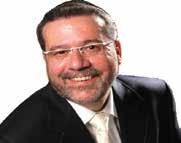







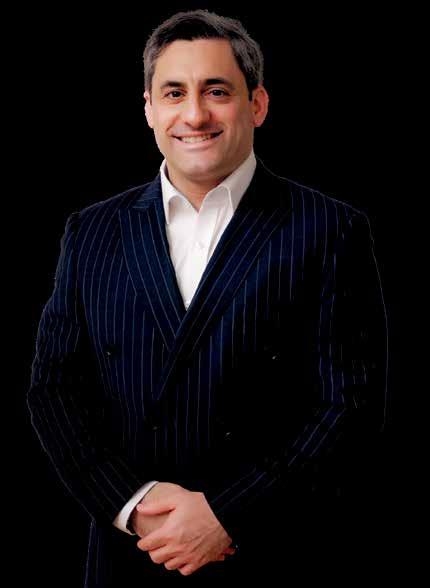

BY DAVID REUBEN
BY ELISHEVA NEWMAN, EDUCATOR & FJL UK CO-DIRECTOR
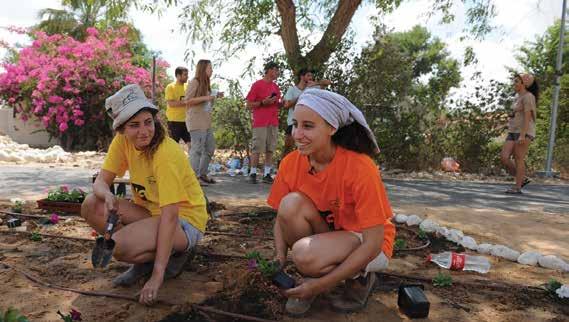
Thirty university students from across the UK have arrived in Israel for the first British FJL (Forum for Jewish Leadership) Summer Leadership Programme in Tel Aviv since 2023, marking a significant return for the organisation’s UK cohort.
Later that day, after a walk along the Mediterranean coast at Hof HaSharon reserve, the group travelled to Ramot, where host families welcomed them into their homes for Shabbat, a highlight on FJL programmes.
On Seder night, we teach our children to ask questions. It is one of the foundations of who we are. We don’t silence curiosity - we elevate it.
nuance. They hear a chant calling for violence and ask the obvious question: why is this allowed?
And the uncomfortable answer is: because, right now, it is.
and resilience, closing Shabbat with heartfelt singing and Havdalah before returning to Tel Aviv energised and inspired.
trip so far. The experience concluded with the group standing in a circle singing Hatikvah and Acheinu, a moment of unity many will remember.
But this year, the questions being asked in Jewish homes across Britain are not the ones printed in the Haggadah. They are sharper. More uncomfortable. And frankly, more damning.
These are not questions about matzah and marror.
These are questions about what it now means to live as a Jew in the United Kingdom.
Only days into the five-week programme, students have already experienced a rich blend of leadership development, Jewish learning, meaningful encounters and an uplifting Shabbat. For many, it has already become far more than a summer internship scheme, proving a transformative journey of growth, identity and connection.
WHY DO MY MUMMY OR DADDY HAVE TO PUT ON A STAB-PROOF VEST AND STAND OUTSIDE MY SCHOOL AT PICKUP TIMES?
Because Jewish life in Britain now requires protection.
Let’s not dress it up. Parents are not volunteering for school duty - they are stepping into a security role. The image of a Jewish parent in a stab vest outside a primary school should stop us in our tracks. It should provoke outrage far beyond our community.
And yet, it has become normal. The real question is not why parents are doing this. The real question is: why is this necessary at all?
From the moment they arrived in Tel Aviv last Thursday, the cohort displayed a sense of energy, gratitude and purpose. Following orientation, a falafel lunch and outdoor team-building activities, students quickly formed friendships and a shared sense of mission. That evening, they attended the programme’s first educational session, led by Rabbi Jonny Newman, educator and FJL UK co-director. His session, ‘Thinking Like a Leader’ explored how the story of Avraham’s journey teaches that true leadership begins with the courage to think independently, clarify one’s values and act with
WHY CAN PEOPLE CALL TO “GLOBALIZE THE INTAFADA” IN THE STREETS OF LONDON?
WHY DID MY DADDY USED TO WEAR HIS KIPPAH EVERYWHERE, AND NOW SOMETIMES REPLACES IT WITH A CAP?
Because visibility has become a risk calculation.
Not in theory. In practice.
For years, we told ourselves - and rightly so - that Britain was different. That Jews could live openly, proudly, without fear. That a kippah in the street was unremarkable.
In classic FJL fashion the pre-Shabbat l’chaims, snacks and joyful singing created an immediate feeling of togetherness, and Kabbalat Shabbat was charged with energy and dancing. Ben Thwaites, educator and CEO of FJL, part of the Jewish Futures’ family of organisations, hosted the group Friday night dinner, where great food, thoughtful conversation and spirited singing carried the atmosphere into the night. On Shabbat morning the group came together for Kiddush and a choice of impact sessions led by FJL educators, before sharing lunch in smaller groups with their host families. The incredible home hospitality, offering a warm and personal Shabbat
Now, for many, that confidence has been shaken.
When a father replaces his kippah with a cap before travelling, it is not a theological decision. It is not even a cultural one. It is a safety measure.
And if that doesn’t concern us - and everyone else - it should.
WHY CAN’T I GO TO ISRAEL ON HOLIDAY FOR PESACH THIS YEAR?
Because the Jewish state is at war - and because Jewish normality has been disrupted, again.
For a child, this question is simple. Israel is family. It is familiarity. It is where Pesach often feels most alive.
different kind of honesty. Not despairbut clarity.
Things are not as they should be.
Not in our schools.
Not in our streets.
Not in the quiet decisions people are making about how visibly Jewish they feel safe to be.
And yet - this is not a story of defeat.
Because the same parents in stab vests still show up.
The same families still fill our schools.
The same fathers still wear their kippot
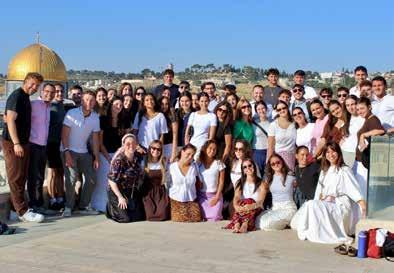
Sunday took the cohort to Jerusalem for a full day that combined history, current affairs and spiritual connection. The morning began with a session from Colonel Richard Kemp, who served for three decades in the British Army, commanding in Iraq, Afghanistan and the Balkans, and later heading the Prime Minister’s Office’s international terrorism intelligence team. Speaking candidly, he shared insights from his work defending and advocating for Israel on the international stage, and encouraged participants to embrace their responsibility as future Jewish leaders who can speak proudly and confidently about their identity and values.
To tell them they cannot go is to introduce them, too early, to the reality
From there, the group entered Jerusalem’s Old City, where they were welcomed by Pamela and Aba Claman, philanthropists and co-founders of Thank Israeli Soldiers, which supports Israeli soldiers during and after their service. Pamela shared her personal story of discovering and deepening her connection to Judaism later in life. Through stories of faith, community and personal growth, she encouraged participants to embrace their own Jewish journeys and recognise the impact that passion, purpose and commitment can have on both individuals and the broader Jewish community.
After free time in the Old City,
- even if more cautiously.
The same children still ask to go to Israel.
We are still here. But we should not be quiet about why these questions are being asked.

Pesach is the festival of questions. This year, it is also a test of whether anyone is willing to answer them properly.
David Reuben is the Executive Director of Mizrachi UK
The evening closed with a barbecue hosted by the Thwaites family, followed by debrief sessions and a talk from FJL alumnus Avital Eusgeld, now an entrepreneur and branding strategist with experience in politics, venture capital and Israel’s start-up ecosystem. Reflecting on her career journey from Washington, to London and eventually Israel, Eusgeld highlighted the importance of taking risks and pursuing opportunities with confidence. She emphasised the value of building strong connections and encouraged participants not to be afraid of trying new things, even when the outcome is uncertain.
Participant feedback has been overwhelmingly positive, with students highlighting the calibre of speakers, depth of conversations and strong sense of community formed within days. This blend of professional opportunity, Jewish learning, personal growth and emotional connection defines the FJL Summer Leadership Programme.
As the cohort begins internships with organisations including Medistat, JCFA, BDO, Deloitte, Save a Child’s Heart, Encounter Capital, Mazars, Mizma and Gideon Fisher & Co, the next four weeks will build on the foundations already laid. Alongside their placements, students will continue with educational programming, leadership sessions, Shabbatons and inspiring speakers.
FJL greatly appreciates the support of its partners, Onward Israel and UJIA, whose backing has helped make this
more than a promising start, creating new




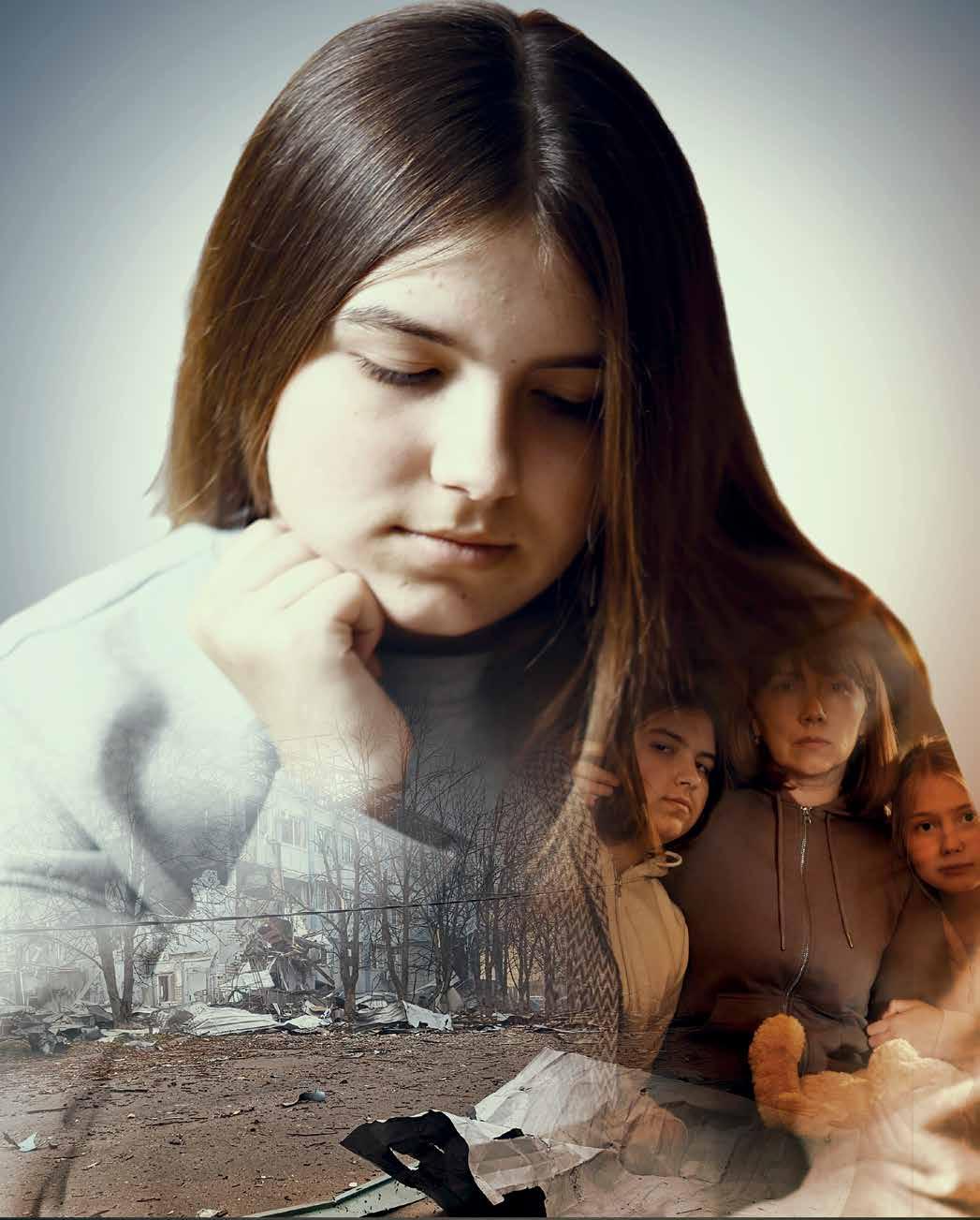
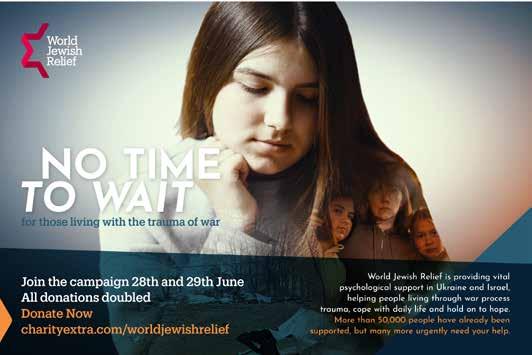
Next Sunday and Monday, World Jewish Relief will launch a 36-hour fundraising campaign to raise £500,000 to support communities in Ukraine and Israel who are experiencing the psychological impact of war.
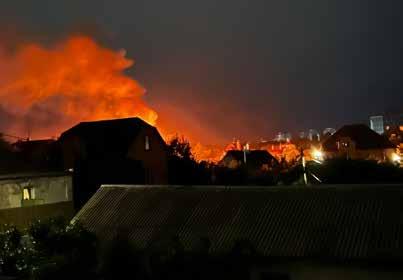
For over four years, the Jewish community and beyond in Ukraine have faced almost daily attacks. May 2026 recorded highest civilian casualty figures in four years since April 2022 (UN HRMMU). The strikes have killed and injured civilians, damaged homes and essential services.
alerts, attacks and rising tension across the Middle East have caused mental health disorders to grow dramatically across Israeli society, including an increase in risk of suicide. In response, World Jewish Relief is launching an
The escalation in civilian casualties is primarily attributed to the increased use of long-range missiles and drones.
A recent webinar hosted by World Jewish Relief, featuring those responding on the ground to recent attacks highlighted that more than 10 million Ukrainians are currently estimated to need humanitarian assistance, and around 1,000 Jewish homes have been badly damaged by attacks.
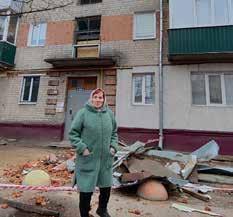
urgent appeal to its supporters to help fund vital psychological support programmes across Ukraine and Israel. This includes training psychologists, providing therapy and trauma care, suicide prevention programmes, alongside home repairs to older people’s homes in Ukraine.
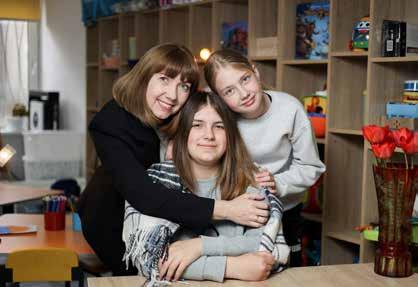
Yulia, 46-years-old, who lives in eastern Ukraine with her two daughters, shared:
“Every air raid alert brings the same fear… will I have time to get my children to safety?”
“I was afraid of losing my daughter emotionally,” Yulia says.
After the family received psychological support from World Jewish Relief, Yulia shared:
“Now we have finally learned to hear each other,” Yulia says. “For me, that is the greatest gift.”
Paul Anticoni OBE, Chief Executive of World Jewish Relief, shared:
“The psychological toll of war is immense for communities in Israel and Ukraine. We are urgently appealing to our community to provide a lifeline to those in desperate need.”
World Jewish Relief has trained over
800 psychologists across both Ukraine and Israel, and reached over 50,000 people with critical trauma support.
To find out more about their 36-hour No Time to Wait fundraising campaign, where every donation is doubled, go here: https://www.charityextra.com/ worldjewishrelief
October 7th, and the constant air raid
Following years of sirens, grief, anxiety and trauma, Yulia’s daughter Mariia had become withdrawn and unable to communicate her emotions.






Hundreds of supporters of Jewish charities took part in this year’s Maccabi GB Community Fun Run, raising tens of thousands of pounds for vital communal causes.
Among the organisations represented were Jewish Care, Jami, Chai Cancer Care and Camp Simcha, with participants of all ages taking on the 1km, 5km and 10km routes at StoneX Stadium.

Jewish Care and Jami were represented by 46 runners, ranging in age from just three years old to 76. The team included families, individuals and young people participating in Jewish Care’s B’nei Mitzvah Programme. Helping launch the event were Jewish Care’s mascot, Chava Heart, and Jami’s mascot, Jamie,
alongside Camp Simcha’s Simi the Monkey and JNF UK’s Phil the Blue Box. Camp Simcha, which supports families facing serious childhood illness, brought 63 runners to the event and raised nearly £12,000. Among them were several children fundraising as part of the charity’s B’nei Mitzvah programme.
Chai Cancer Care also enjoyed
a successful day, with 81 runners raising £11,345 to support its services for people affected by cancer and other life-threatening illnesses. Supporters proudly wore the charity’s new arrow headbands, creating a colourful display of team spirit throughout the event.
Caroline Tunkel, Chai’s Head of Corporate & Community Engagement, said: “There was such a fantastic atmosphere at this year’s Maccabi GB Community Fun Run. It

was wonderful to see so many of our supporters running for Chai and proudly wearing our brand-new Chai arrow

headbands, which added a real splash of colour and team spirit to the day.”
Among those running for Jewish Care was 11-year-old Georgia, who completed the 5km race as part of the charity’s B’nei Mitzvah Programme, while Jonathan and Caroline raised more than £2,500 after completing the 10km event.
The annual Community Fun Run once again highlighted the strength of the Jewish community, bringing together families, volunteers and supporters to raise funds for a wide range of important causes.







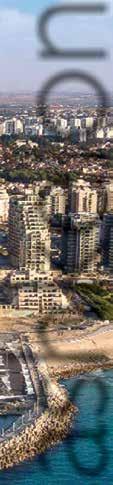





BY RABBI NAFTALI SCHIFF
What3Words:
Leadership can be a lonely business.
One does not need to look far to find examples. Political history is littered with leaders who rose swiftly, commanded impressive majorities, seemed unassailable, wielded power and yet, within a surprisingly short period of time, found themselves weakened, challenged and ultimately discarded by those who once championed them.
The higher one climbs, the thinner the air becomes.
As I reflect on recent events in British politics, I find myself thinking less about personalities and more about the nature of leadership itself.
At its core, leadership is not about status or control. It is about responsibility to both people and purpose.
And responsibility demands humility.
The most inspiring leaders, those who’s legacies endure, are not those who seek power, but those who understand that power is a trust. They do not blame others when things go wrong. They do not make excuses. They take ownership, even when it is uncomfortable, even when it is costly.
They step forward because something important needs to be done, not because they need to be seen.
Yet leadership carries a cost.
The longer one leads, the heavier the burden becomes. Expectations grow.
Criticism intensifies. The margin for error narrows.
Even the strongest leaders feel the strain.
their approach is no longer serving the moment or the people!
And sometimes, humility demands something even harder.
It demands letting go.
There is a temptation in leadership to hold on- too long. To believe that no one else can do the job as well. To stay just a little longer.
But the greatest leaders understand that
To trust others with responsibility. To step back and allow them to grow. And ultimately, yes, to know when your time has passed.
Not hanging on beyond your sell-by date is not a failure. It is an act of courage.
Sometimes the greatest act of leadership is to let go.
To recognise that the organisation, the country, the community, the mission is bigger than you.
And when that strain shows, it is not a failure of leadership. It is a reminder that leaders are human.
But there is a deeper challenge.
Humility is not weakness. It is clarity. It is the ability to recognise that leadership is not about you.
It is about the people and the cause you serve.
Leadership begins not with ambition but with service- with an embracing of “noblesse oblige.”
Perhaps that is why the most compelling leaders are often those who never chased the role in the first place.
Leadership is not static. People change. Circumstances change. What worked yesterday may not work today, or tomorrow.
A leader who cannot adapt will eventually lose connection with those they lead along with the cause they espoused.
And when that happens, frustration grows on both sides.
This is where humility matters most.
Because humility allows a leader to listen. To learn. To recognise when
their role is not to be indispensable.
It is to make themselves unnecessary.
The true test of leadership is not only what you build during your time in charge.
It is what continues after you step aside. Perhaps not in your image, perhaps not even in your space, but the leaders you nurtured, trained and empowered are the ultimate legacy of your time at the helm.
Leaders who cling to power weaken the future.
Leaders who create other leaders strengthen it.
That is the highest calling of leadership. To invest in people. To mentor. To empower.
To leave at the right moment, with dignity, having prepared others to carry the work forward. They will not lead as you. They’ll do it their way- and that’s fine. They may not even continue pursuing exactly the same plan of action. That’s fine too.
In a world increasingly obsessed with visibility and influence, this is a radically different model. Leadership is not about standing above others.
It is about standing among them. Serving them. Believing in them. Building them.
And then, when the time comes, stepping aside so they can lead. Leadership may often feel lonely. But it need not be.
Because when your focus is not on yourself, but on the people and the mission you are lifting, developing and empowering, you are never truly alone.
You are part of something that continues long after you are gone.
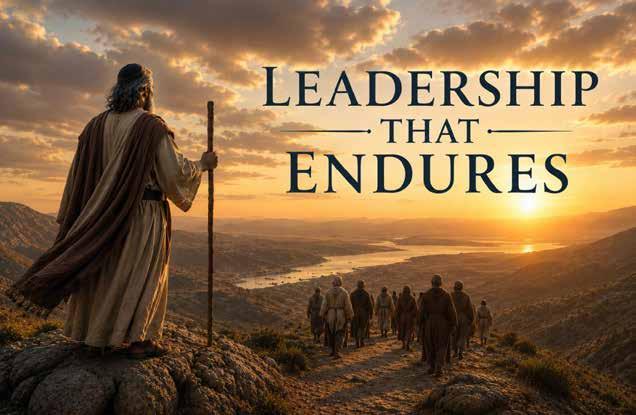
And that is the kind of leadership that endures.

In this column Rabbi Naftali Schiff reflects upon 3 key words each week relating to contemporary and relevant issues.
All feedback is welcome- nschiff@ jfutures.org.
Rabbi Schiff is the Founder & CEO of the Family of Jewish Futures networks of educational organisations.




BY RABBI MOSHE TARAGIN
Modernity has brought great efficiency. The Industrial Revolution mechanized much of human labor, freeing us from many timeconsuming tasks. Yet human experience remained largely sequential. We focused on one task at a time. Those tasks could be completed more quickly, but our attention was still directed toward a single objective before moving on to the next.
We are no longer living in a sequential world. Computers, smartphones, and constant connectivity allow us to perform multiple tasks at once. We can work on documents, answer messages, and consume information simultaneously. This has undoubtedly increased efficiency, but it has also introduced fragmentation and constant interruption. The experience of focusing on a single task for an extended period of time feels increasingly distant from modern life. The laws of the red heifer are intricate and enigmatic. They represent the quintessential chok, a mitzvah whose logic remains beyond our grasp. A person who comes into contact with a corpse becomes ritually impure and is barred from entering the Mikdash. Yet that impurity is removed through a process in which a perfectly red heifer is burned and its ashes are mixed with natural water. That mixture is then applied on two occasions during a seven-day purification process.
The greatest minds, from Moshe Rabbeinu to Shlomo HaMelech, sought to unravel this mystery but were unable to. The parah adumah stands as a reminder that some aspects of G-d's will remain beyond the reach of human intellect. Religious life is built upon a combination of logic and mystery. We strive to understand divine will, but when our understanding falls short, we do not walk away from obedience. Commitment to divine command remains the bedrock of religious life.
Yet certain features of the parah adumah illuminate important aspects of religious and personal life. One distinctive feature of the process concerns the collection of the natural spring water that would later be mixed with the ashes of the parah adumah. The water must be collected with complete focus. If the person drawing the water engages in any unrelated activity, even a minor one, the water is invalidated and the process must begin again. The disqualifying activity need not be
significant. Even small acts, such as filling a second container with water or handing a rope to another person, can invalidate the natural water. The collection must be carried out with undivided attention and without any competing activity.
By insisting that the living water be collected with single-minded focus, the Torah teaches that a meaningful life is built through sustained attention. Deep relationships, serious study, and religious commitment all require the ability to focus on one thing at a time rather than constantly dividing our attention.
Our rapid and hectic world has drifted away from single-minded focus. The pace of modern life leaves little room for sustained attention. Our culture celebrates those who can juggle multiple tasks at once, and our phones have become the tools that make this possible. We convince ourselves that multitasking makes us more efficient because it allows us to accomplish more in less time. But is that really true? Do we actually accomplish more? Sometimes more is less. The deeper question is not whether multitasking makes us more efficient. The deeper question is what it does to our capacity for presence. Some activities require only our labor. Others require our full attention. It is in these areas that multitasking extracts its greatest cost.
and heard. When we sense that we do not have the full attention of the person with whom we are speaking, we feel less important and sometimes even invisible in their eyes. No one wants to feel invisible. When we no longer feel valued by another person, the relationship begins to erode.
I have very few rules in my classroom. Students may come late if they are tired, and they are free to take a break whenever they need one. The only rule I consistently enforce is that they may not use WhatsApp during class. If a message is truly urgent, I am perfectly comfortable with their stepping outside to respond. What I cannot accept is ignoring the person in front of you while carrying on a conversation with someone else. That is disrespectful. Before I teach my students Torah, I want to teach them how to be fully present for another person.

When was the last time you thought about a single topic for more than fifteen minutes? We live in a culture of scrolling and endless information consumption. Yet wisdom requires sustained thought and careful analysis, and our world rarely grants us that luxury.
while simultaneously engaging with music, videos, or other emotionally engaging media almost certainly reduces the depth and quality of our reflection.
Perhaps the experience that suffers most in an age of busyness and multitasking is prayer. Prayer is a direct encounter with the Divine. It is communication and presence. More important than the actual words we recite is the ability to stand before Hashem and maintain an awareness that we are standing before Him.
Even under ideal conditions, this is difficult. The human mind struggles to focus, especially upon a G-d whom we cannot see, describe, or reduce to imagery. For this reason, Moshe fashioned a copper serpent. Those who looked toward it were healed. Of course, the serpent itself possessed no healing power. As the Mishnah explains, it merely directed people's attention heavenward. In the barren desert landscape, the serpent served as a ladder for the imagination, helping people lift their thoughts toward Heaven. In the modern world, this challenge has become even greater. Our minds are crowded with an endless stream of thoughts, images, and distractions. We long for the simplicity of a desert that would allow us the quiet and serenity to think about Heaven.
One practical step is to avoid multitasking during prayer. Keeping our phones visible, and certainly using them during davening, even during the pauses and breaks, makes it far more difficult to sustain that deep awareness of standing before Hashem. Prayer is not merely about saying words. It is about being present.
Perhaps nowhere is this more evident than in relationships and communication, which lie at the heart of all relationships. We all want to feel seen
When we think while multitasking, we dilute our focus, and our thoughts inevitably become less deep, less nuanced, and less insightful. Music has become ubiquitous. We study to it, write to it, and think to it. While it can soothe our nerves and make certain tasks more enjoyable, it unquestionably divides our mental resources and can diminish the depth of our thinking. Thinking while performing routine chores does not necessarily impair analysis. In fact, physical activity sometimes helps the mind process ideas more clearly. However, serious thought
The Torah's insistence that the living waters of the parah adumah be collected with complete focus may appear to be a technical detail but it conveys a broader lesson. Some of the most important experiences in life cannot be divided or multitasked. Relationships require presence. Wisdom requires concentration. Prayer requires standing before G-d with an undistracted heart. In a culture that prizes efficiency, the Torah reminds us of the value of attention.
The writer is a YU-ordained rabbi at Yeshivat Har Etzion (Gush), a hesder yeshiva. His latest book, Reclaiming Redemption, Vol. II: Faith, Identity, Peoplehood, and the Storms of War, is available at mtaraginbooks.com.





BY RABBI JOHNNY SOLOMON
While every Torah insight that we study adds wisdom to our mind and depth to our soul, when we learn the Torah teachings of those whose lives were snatched by our enemies, we do so with a drive and determination not only to keep their spirit alive, but also to keep their Torah alive as well.
And so, when we learn the Torah teachings of Rabbi Kalonymus Kalman Shapira hy”d (1889–1943), or Rabbi Menachem Ziemba hy”d (1883–1943), or Rabbi Elchonon Wasserman hy”d (1875–1941), or Rabbi Yissachar Shlomo Teichtal hy”d (1885–1945), we uphold both the spirit and their memory of these scholars, as well as their Torah.
This then brings me to the horrific attacks of Simchat Torah 5784/7th October 2023, and the subsequent “Swords of Iron” War, because among those who went out to defend our people and our country were Torah scholars who had
previously shared Torah teachings which have since been published posthumously. These include Dr. Zecharia Haber hy”d (1991–2024), Rabbi Avi Goldberg hy”d (1981–2024), and Shai Shamriz hy”d (1997–2023).
In terms of Shai, he grew up in Merkaz Shapira, the second child to Daniella and Shaul. In his youth he was very involved in Bnei Akiva, both as a chanich and a madrich, and after high school he went to study at the “Bnei David” Mechina in Eli, and it was while he was in mechina that he started writing Divrei Torah on the parasha which he would share with family and friends.
Soon after Shai was killed in battle in Tevet 5784/December 2023, these Divrei Torah were collated and supplemented by his beloved teacher Rabbi Eliezer Kashtiel and were then published in a lovely sefer titled “Shai M’HaParasha.”
Given this, I’ve decided to share Shai’s Dvar Torah here on Parashat Balak which beautifully expresses his view of what it
member of the IDF, and a proud citizen of the State of Israel.
Shai begins by explaining that the number three features prominently in the parasha. For example, on three occasions Balak asks Bilam to curse Israel. On three occasions the donkey outwits Bilam. And on three occasions Bilam hits his donkey (which our Sages interpret as symbolizing the three pilgrim festivals).
Shai then chooses to focus on the three incidents involving the donkey, which he interprets as symbolizing the unique qualities of the Jewish people and why Balak wished to curse the Jewish nation.
The first incident is when the donkey turns off the road into a field. According to Shai, this movement toward the field represents a nation that seeks to venture into the broader world and a nation that desires good for all humanity.
The second incident is when the donkey presses itself against the side of the path and crushes Bilam’s foot. According to Shai, the crushing of Bilam’s foot illustrates how the Jewish nation are willing to devote itself to the will of G-d.

And the third incident is when the donkey crouches down and refuses to obey Bilam. This powerfully expresses the Jewish nation, with its own personality, and its own independence.
Reflecting on these three incidents, Shai explains that, “Bilam was unable to harm our nation, whose goals are so holy, so pure and so true. As a result, he sought to curse with his ayin ha-ra, his evil eye… And what happened? Bilam ultimately blessed the people with the words, “Ma tovu ohalecha Ya’akov mishkenotecha Yisrael.” [We learn from here the importance of] focusing on the good and possessing a generous and positive eye toward the world, and no less importantly, toward ourselves.”
Rabbi Solomon is the Chief Learning Officer for WebYeshiva.org. He works as a spiritual coach and halachic consultant- #theVirtualRabbi, and is the host of “Jewish Spiritual Coaching” podcast. Additionally, Rav Johnny delivers classes and courses for many institutions. He is a volunteer Rabbi for Tzohar and serves as a posek for his local shul in Even Shmuel.




















22-30 JUNE 2027
Mehadrin Kosher
Entire Ship Exclusive to Kosher Travelers



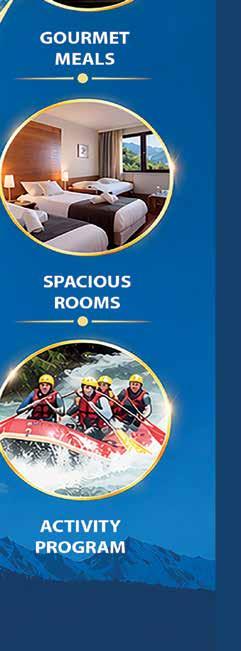
Embark on an unparalleled journey with the world’s only Kosher Travelers Svalbard Expedition.
Explore a remote Arctic wilderness of dramatic fjords, towering icebergs, and breathtaking northern landscapes. Encounter incredible wildlife, including polar bears, walruses, Arctic foxes, seals, whales, and diverse birdlife. All guided by seasoned professionals for a safe and unforgettable experience.




EARLY BIRD DISCOUNT TILL 30 MAY ‘26





* Ideal Cruise Season on the M/V Sea Spirit, Poseidon
* Freshly Prepared Gourmet Cuisine
* Daily Tefilla & Sefer Torah
* Shabbat atmosphere
* Boutique experience for 100 guests
* Personally Hosted by David & Chana





BY MICHAL UNTERSLAK
I love weddings and the stories of how people meet. We all have a fascination with romance, don’t we? Almost every song, book and movie has some element of it in. We know from Bereishis that G-d said, “lo tov ha’adam lihyot levado,” it is not good for Man to be alone. Human beings are wired for connection. We long for someone who sees us, accepts us and loves us for who we are. We want to go back to the state of oneness in the Garden of Eden.
Wouldn’t it be wonderful if when you meet someone, the birds start singing, a spotlight from Heaven appears, and you simply know this is “the one”? The one?! What does that even mean?
I remember during my own dating journey asking, “How will I know?” The answer was always, “You’ll know when you know.” I hated that answer. It was right up there with, “It’ll be your turn soon!”
I never quite knew what to do with that one. Smile? Nod? Maybe say thank you? Or... did they actually have someone in mind for me? Cue the internal panic.
Marriage is wonderful when you find the right person. The process of getting there, however, can be incredibly difficult.
Dating is hard, and for many of the young professionals we meet through Aish, it is even harder. We’ve seen couples date for six or seven years only to break up. We’ve seen people move from one relationship to the next without success. Don’t even get me started on some of the things I hear about dating apps. There is so much loneliness, disappointment and heartache, and over time, my heart and my husband’s have become deeply invested in the plight of singles. Through our work, we have noticed a real lack of education around dating. So much pain could be avoided if people are taught how to choose the right partner. This is one of the most important decisions a person will ever make, yet many go into it with so little knowledge.
This led us to imagine a different kind of dating culture: an ecosystem built on three pillars.
The first pillar is education. To date
differently, you have to think differently. This decision shapes the rest of a person’s life. An 85-year Harvard study found that the quality of our relationships is one of the greatest predictors of long-term happiness and life satisfaction. Yet we spend years studying for careers and very little or no time learning how to build a healthy relationship.
The second pillar is integration. Learning only matters if it leads to lasting change. If you want different results, you have to try different things. That’s where our workshops and coaching come in. We want young people to take ideas from theory into practice and develop healthier habits and make better decisions.
Our third pillar is the creation of valuesaligned spaces. We want to build carefully curated opportunities for young professionals to meet others who go through our Aish programme, people we have personally met and who share a similar outlook and commitment to intentional dating. Eventually, we hope to make introductions ourselves. That’s our vision: to create meaningful change in the wider dating world.
We have just launched our Dating Masterclass and our first course, Date Yourself
First. We chose that title because, before you can date someone else, you need to know yourself: who you are, what matters to you and what kind of life you want to build. Only then can you begin to think about the type of person who would truly be a good fit.
This first workshop series is designed to be transformational. Our goal is to empower young people to date differently, date better and date smarter.
Most of all, we pray that every single person finds their other half soon.
If you would like to learn more about our programme, we would love to hear from you. And if you enjoy making matches and would like to volunteer, we would be delighted to meet and discuss different opportunities. Please email info@aish.org.uk
Michal Unterslak moved to London from Israel and is an educator in the Young Professionals department of Aish UK. She is a mother to three adorable children and has a passion for exploring relationships, connection, and personal growth, with a focus on emotional awareness and meaningful, Jewish values-driven relationships.







BY RABBI SHAUL YONATAN TAWIL
There is a famous joke where someone asks “How many congregants does it take to change a light bulb in a synagogue?”
One of the person in the crowd angrily replied: “CHANGE? You want we should CHANGE the light bulb? My grandmother donated that light bulb!!!
Sometimes peoples just don’t understand the depth of a conversation. At other times we find ourselves performing acts that we do not really know the real meaning too.
In this week’s Parasha we learn about the red heiferPara Aduma.
The commentators note that the Para Aduma is a called a Chok - a rule in which we have no clear understanding. A rule granted to us by Hashem and which we are happy to perform even without us understanding the deep meaning behind.
Rashi in the name of R’ Moshe HaDarshan explains the Para Aduma serves as atonement for the sin of the golden calf. This can be compared to the son of a maidservant who soiled the palace of a king. They said, let the mother come and wipe away the excrement of her child. Similarly let the red cow come and atone for the calf.
So far so good. We can understand why a cow was chosen to be the key to the purification process.
But what perplexes us most is the fact that the sprinkling of the Para Aduma water purifies one who was contaminated (from a dead corpse); yet contaminates the (pure) kohanim who are involved in preparing the Para Aduma water.
How can the same object which brings purification also bring contamination?
Indeed, our Sages tell us that even Shlomo Hamelech, the wisest of all men failed to comprehend the depths of this Mitzvah.
It is thus called Chok which is translated as statute. This word has the connotation of a law that is beyond the comprehension of man.
The Torah introduces the law of Para Aduma with the phrase “This is the statute of the Torah”. Why?
Our Sages teach us that the Para Aduma serves as the prototype for all aspects of the Torah that we do not understand. Para Aduma highlights that our performance of Mitzvot is not dependent on our understanding of the Mitzvot but rather as a fulfilment of the decree of Hashem.
What’s interesting to note is that on the one side we have a pure Kohen, and on the other we have an impure Jew.
The Kohen could easily say, “Why should I get involved. I want to stay pure, let the other guy stay impure, that’s not my problem”.
Yet the Torah commands the Kohen to get involved. He must lower his purity status (momentarily) in order to bring up a fellow Jew.
When Rabbi Shmuel Vosner spoke at the Leviya of Rabbi Yosef Shlomo Kahaneman – the Ponovezher Rav, he mentioned the famous Gemara about Yosef Hakohen whose wife had died and he didn’t want to become impure to deal with the proceedings.
His brothers (Kohanim) forced him to become Tamei. Rabbi Vosner said that similarly, Rabbi Kehanemen although he wished to learn Torah day and night, nevertheless gave of his time to teach, to collect and
build torah institutions. He gave of himself in order to help build others.
The Rambam, in Hilchot Avodat Kochavim (1:13), teaches us that the world spiralled downward from Enosh, until Avraham found Hakadosh Baruch Hu.
The Raavad on this Rambam asks: What about Shem and Ever, who taught Torah long before Avraham's birth? They also lived during Avraham's time and had a great yeshivah where both Yitzchak and Yaakov studied. Why aren't they credited with having saved the world?
The Kesef Mishneh (Rabi Yosef Caro) answers saying that, though Shem and Ever were loyal and lofty servants of Hashem, and taught Torah to those who came to their yeshiva (including Yitzchak and Yaakov), Avraham was the first to be "korei shem Hashem." The difference between their conduct and that of Avraham is that the latter called out in the name of Hashem, travelling and reaching out to teach people about the one G-d, giving tochachah to idol worshippers, showing them the falsehood of their beliefs, and drawing them near to G-d.
Thus it was Avaraham that was known as ‘finding’ Hashem.
Do a kindness for a fellow Jew and G-d will do a kindness for you.
Befriend a fellow Jew and G-d will befriend you. Shabbat Shalom
The Chovot Halevavot says: You should know, my brother, that even if a believer were to attain the utmost limit in the improvement of his own soul in his devotion to G-d; and even if he were to approach the level of the prophets as far as their personal virtues, their praiseworthy conduct, their effort in serving G-d, and their pure love for Him are concerned, his merits would not equal those of one who guides others to the right path and directs the wicked to the service of the Creator. (Shaar Ahavat Hashem, Perek 6)
How important is it for us to help our friends, to share our knowledge.
We must of course be careful not to be affected by placing ourselves in bad environments. We should always seek advice from our Rabbis as to which situations to place ourselves in when helping others. Our spirituality is tantamount to others. But the principle of sharing our wisdom and increasing friendship even if it means giving of our time must be imperative on our agenda.
R. Aizik Homiler, a venerated chassid of the first three Chabad-Lubavitch Rebbes, would relate an oft-repeated adage he had heard from older chassidim:
Have affection for a fellow Jew and G-d will have affection for you.
Rabbi Tawil is the Founder and Director of ‘Torah Action Life’ (TAL)


Dear Rabbi
For years many Jews hailed Donald Trump as Israel’s greatest friend in the White House. Now, after recent comments from American officials suggesting that Israel may be on its own and that America’s interests come first, some people feel betrayed. Were we naïve? Have we been thrown under the bus?
Negative Nancy
Dear Nancy
Your chosen moniker is most appropriate. If there is one lesson Jews should have learned by now, it is this: Never confuse an ally with a saviour. Allies are important and strategic partnerships are essential. But salvation has never arrived wrapped in a foreign flag.
The Mishnah states: “Be careful with the ruling authorities, for they befriend a person only for their own benefit. They appear as friends when it serves their interests, but they do not stand by a person in his hour of need.” Those words were written nearly two thousand years ago yet remain every bit relevant.
The problem is not that politicians put their own country first. That is literally their job. The problem is when Jews convince themselves that a particular politician, president or government is somehow different from every government that came before it.
History is littered with Jewish communities that felt secure because they enjoyed the friendship of governments or royalty. It usually worked well - until it didn’t.
America has been an extraordinary friend to Israel, that remains true. Donald Trump did more for Israel than many of his predecessors. Recognising Jerusalem, recognising the Golan, the Abraham Accords - those achievements are real and
significant.
But we need to acknowledge another truth as well: every nation ultimately acts according to what it perceives as its own interests, without exception. The mistake is not trusting a friend, rather, believing that friendship overrides national interest.
Some Jews have become so emotionally invested in political personalities that they react as though a messiah has failed them. But Jews are not supposed to have political messiahs. We have a long history of disappointment whenever we outsource our security to someone else. Israel’s greatest strength has never been Washington, London or anywhere else. It has been the extraordinary resilience of the Jewish people themselves. So, should we be angry? No. Should we be shocked? Absolutely not. Should we stop whining every time a foreign leader reminds us that he was elected to serve his own country rather than ours? Yes. Because the real lesson here is not about Trump, Vance, Biden, Republicans or Democrats. The real lesson is that Jewish survival has always depended on maintaining strong friends while never forgetting who we are, what we stand for, and ultimately upon Whom we rely.
Dear Rabbi I’ve been reading your various bits of marital advice recently and also watched some of your
videos on social media. My wife keeps telling me that after fifteen years of marriage I still don’t listen to her. Or something like that. I wasn’t really paying attention. What is the secret to a successful marriage?
David
Dear David
A successful marriage is surprisingly simple. Not easy - but simple. Most people think marriage fails because couples stop loving each other. More often, marriage struggles because couples stop noticing each other.
When a husband comes home and asks, “How was your day?” but is already scrolling through his phone before the answer starts, that is not communication.
A husband once complained to a marriage therapist, “My wife and I haven’t spoken in six months.” “Why not?” asked the therapist. He replied, “I didn’t want to interrupt her.”
The Talmud teaches that one should honour one’s spouse “more” than oneself. Note how the emphasis is not on equality, but more. Imagine if every argument began with two people trying to outdo each other in kindness rather than in proving who is right. Half of all marriage counselling would be out of
business by the weekend. The truth is that love is not maintained by grand gestures. It is maintained by a thousand tiny moments of paying attention, showing appreciation, expressing gratitude and being present. Above all else, remember that marriage is not finding the perfect person. It is learning to see an imperfect person perfectly.


As



have a chat.



E Y H O M E B E G I N W I T H U S

G e r m a n C o l o n y
H a r a k e v e t s t r e e t
B r a n d N e w
3 b e d r o o m s & s u k k a h
P a r k i n g & s t o r a g e
P r i m e l o c a t i o n
Asking Price:
₪ 7 , 9 5 0 , 0 0 0

H A D E R A
O l g a B e a c h
L u x u r y D u p l e x P e n t h o u s e
5 b e d r o o m s
L a r g e w r a p - a r o u n d b a l c o n y
G o r g e o u s s e a v i e w s
P r i v a t e p o o l
Asking Price:
₪ 6 , 7 0 0 , 0 0 0


J E R U S A L E M
M a m i l l a
G a r d e n u n i t
O n e l e v e l
3 l a r g e b e d r o o m s
T u r n k e y
B e a u t i f u l l y d e c o r a t e d
P r i c e o n R e q u e s t

B a k a
P e n t h o u s e
W a l k u p
H i g h c e i l i n g s
3 b e d r o o m s
D i r e c t r o o f a c c e s s
Asking Price:
₪ 4 , 3 5 0 , 0 0 0

E D E N H I L L S
2 r e a d y - b u i l t h o m e s
S o l d a s s h e l l i n s i d e
O p t i o n t o c o n n e c t
o r b u y i n d i v i d u a l l y
7 m i n u t e s t o R B S
P r i c e d u n d e r m a r k e t v a l u e !
Asking Price: ₪ 5 , 5 0 0 , 0 0 0 / p e r u n i t









One of the striking themes that connects Parashat Chukat and Parashat Balak is the contrast between what people see and what G-d sees.
In Chukat, the people repeatedly struggle to understand G-d’s plan. Faced with challenges and uncertainty, they focus on their immediate difficulties rather than the bigger picture. Even Moshe, at Mei Merivah, reacts to the situation in a way that has lasting consequences.
In Balak, this theme becomes even more explicit. Balak sees the Jewish people as a threat, while Bilaam is shown visions that reveal their true greatness. Most famously, Bilaam’s donkey sees the angel standing in the road long before Bilaam himself does. The one who is supposedly blind perceives reality more clearly than the prophet. The message is a powerful one. We often judge situations based
The goal of a word wheel puzzle is to create as many words possible with the letters in the word wheel.
Each word must contain at least three letters. You can only use each letter once and every word must have the letter in the centre of the wheel.
on what is immediately visible, but Torah challenges us to look deeper. What appears to be an obstacle may be an opportunity; what seems like a setback may be part of a larger plan. Faith is not simply believing when everything makes sense—it is trusting that there is more to the story than we can currently see. This idea is particularly relevant in a world driven by instant reactions and first impressions. The Torah encourages us to pause before
reaching conclusions, recognising that our perspective is often limited. By cultivating humility and trust, we become more open to seeing the hidden blessings, possibilities and lessons that may lie beneath the surface.
As we navigate the complexities of life, Chukat–Balak reminds us to strive for a perspective that sees beyond the surface and recognises the hand of G-d even when it is not immediately obvious.
A taxi passenger tapped the driver on the shoulder to ask him a question. The driver screamed, lost control of the car, nearly hit a bus, went up on the footpath, and stopped inches from a shop window. For a second, everything was quiet in the cab. Then the driver said, “Look, mate, don’t ever do that again. You scared the living daylights out of me!” The passenger apologized and said, “I didn’t realize that a little tap would scare you so much.” The driver replied, “Sorry, it’s not really your fault. Today is my first day as a cab driver — I’ve been driving a hearse for the last 25 years.”
This unique twist on the classic Sudoku puzzle uses the Hebrew letters א through ט instead of numbers 1–9. The rules remain exactly the same: each row, each column, and each 3×3 box must contain every letter once — without repetition.
החלצהב — and enjoy the puzzle!

Q: Why did the sun go to school?
A: To get a little brighter!
Q: Why was the challah sweating?
A: Because it was in a real hot braid!
Q: Why did the rabbi bring ice cream to the sermon?
A: Because it was a very hot topic!
1. What is hard as a rock, but disappears in your hand??
2. What rises every morning but never gets out of bed?
3. I’m full of holes, but I can still hold water. What am I?What has one eye but cannot see?