




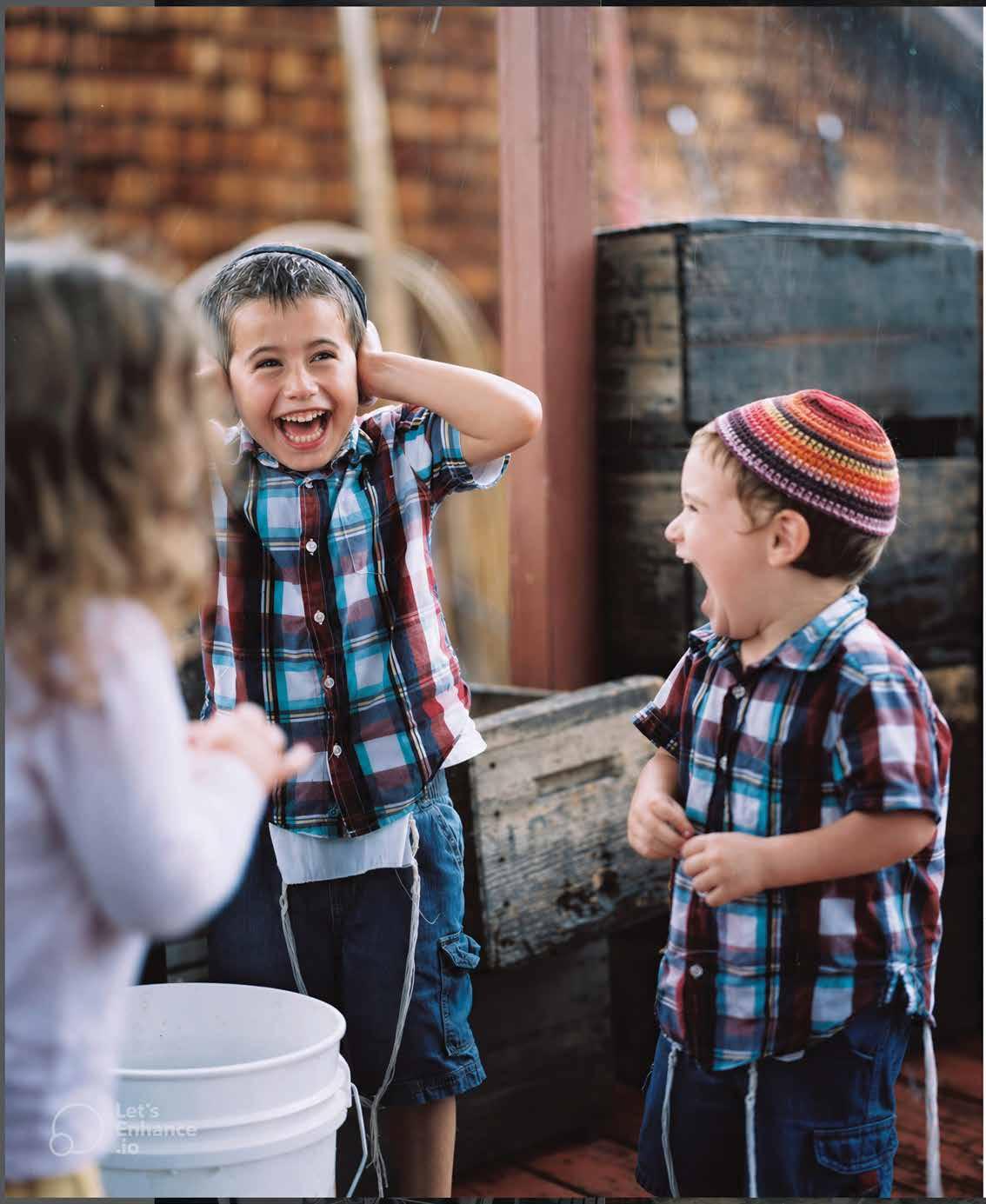
Our BA (Hons) Jewish Education will equip you with the knowledge, strategies, and supportive professional network necessary to create lasting impact in your professional career or lay leadership position. Accessible globally online, this 4 year part-time degree course is the only one of its kind in the UK and Europe.
• Globally respected qualification
• Study while you work
• Gain fresh insight, new skills and a professional network
• Your previous academic study, Jewish learning or teaching experience may be recognised
• Access a student loan
• Small classes with individual attention
The degree is structured part-time over four years, allowing you to balance study with work and other commitments.
You can choose to study:
• On campus in London
• Online from anywhere in the world
Many students combine the degree with paid or volunteer work in schools, allowing them to apply what they learn in real classrooms.
New cohorts begin each September.
Validated by
All our degrees are validated by Middlesex University London. Modules are examined by written assignments and presentations.
LSJS were so supportive of a crazy amount of life events during my degree.
“ Adina Nyman, 3rd Year BA student “


BY SAUL HERSH
What should have been a routine event for British Jews interested in property, investment and aliyah to Israel instead became the scene of ugly confrontation, multiple arrests and growing concerns about the state of public discourse surrounding Israel in Britain.
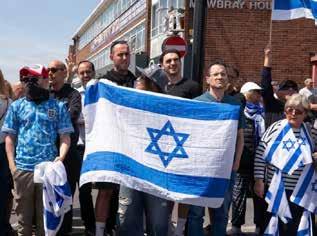
The Great Israeli Real Estate Event, held on Sunday at Edgware United Synagogue, attracted hundreds of attendees interested in learning about housing opportunities in Israel. But outside the venue, large numbers of protesters and counterprotesters gathered, creating an atmosphere of tension that eventually spilled over into disorder.

Avenue opposite Kinloss, but they cancelled it shortly before the show, forcing the organisers IMP to find another venue.
It was initially supposed to be in The
Police were forced to mount a major operation, closing roads and separating Hamas supporters from local Jews as confrontations broke out. Multiple arrests were made for
alleged offences including violent disorder, assault and public-order offences. One guy was seen making a V sign, urging violence against Jews.
Local Jews described heated exchanges, pushing, shouting and several incidents requiring police intervention.
Many within the Jewish community have questioned why an event held inside a synagogue became the target of such a largescale protest in the first place.
Anti- semites claimed that the exhibition was marketing property in disputed territories. They want the Jews out of London, but also not to live in our own country either.


Continued from page 1
Despite being in positions of power that are meant to protect people, members of the Government, politicians and many others including Mayor of London Sadiq Khan intensified their criticism in the days leading up to the event, alongside pro Hamas activists and campaign groups who all publicly demanded that it be cancelled.
Among those adding their voices was self hating Jewish Green Party deputy leader Zack Polanski, who publicly called for action against the event and urged authorities to intervene. More than one hundred MPs and peers also signed letters calling for the exhibition to be stopped, while pressure mounted on government ministers and London authorities.
high.
But without a doubt, the most serious
This antisemitism and rhetoric from the top directly contributed to the atmosphere that developed around Sunday’s event.
Portraying a synagogue-hosted event as something sinister helped attract protesters and increased the likelihood of confrontation.
Critics say politicians should have been more careful with their language, particularly at a time when tensions surrounding Israel and Gaza remain exceptionally
questions surround the role of senior government figures. Some community representatives believe that public pressure from politicians and campaigners created an impression that the event was somehow illegitimate before any investigation of the facts had taken place. The timing was particularly sensitive. Jewish communities across north-west London remain deeply shaken following a rise in antisemitic incidents since the outbreak of the Israel-Hamas war. Against that backdrop, many residents felt that bringing a major political protest into the heart of a heavily Jewish neighbourhood
was bound to create anxiety and fear. While supporters of the demonstration insist they were protesting Israeli government policies rather than targeting Jews, many local residents saw matters differently. For them, hundreds of demonstrators gathering outside a synagogue inevitably felt personal, regardless of the organisers’ stated intentions.
Perhaps most worrying is the increasingly toxic climate that now surrounds almost any public event connected to Israel.
Britain remains a country in fast decline and all Jews should give serious thought to aliyah, no matter how farfetched it once seemed.
The challenge for politicians going forward is to consider whether their
words help calm difficult situations or risk adding fuel to an already combustible atmosphere. Whatever one’s views on Israel, Palestine or the wider Middle East, few would argue that the scenes witnessed outside Edgware United Synagogue are a model for how disagreements should be resolved in a democratic society.
For many British Jews, the most troubling aspect was not simply the protests themselves, but the feeling that a Jewish communal event became a political target. Whether intentionally or otherwise, public figures who amplified calls for the event to be stopped must now reflect on whether they helped lower tensions or contributed to the angry scenes that unfolded outside Edgware Shul on Sunday afternoon.


By leaving a Future Gift to Jewish Care in your Will, you’ll be doing something beyond incredible. Future Giving ensures that vulnerable older people in our community are supported, even beyond your lifetime.

To find out more about Future Giving or our free Will-writing service visit jewishcare.org/futuregiving or scan the QR code
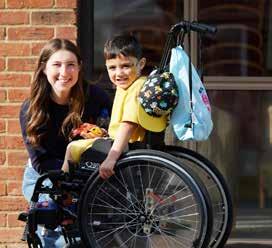
CAMP SIMCHA IS HERE FOR CHILDREN WITH OVER 50 SERIOUS, LIFE-CHANGING OR LIFE-THREATENING MEDICAL CONDITIONS.
These include but are not limited to: degenerative or congenital conditions; cancer; cardiac conditions; chronic illnesses such as Type 1 Diabetes and IBD; premature babies; mental health; serious surgery and acute trauma.
We provide practical, therapeutic and emotional support for the whole family when a child is seriously ill.
L

P R O P E R T Y M A N A G E M E N T








BY MARTIN KENT
By any objective measure, President Donald Trump loves taking credit. Whether it is the economy, the stock market, peace agreements, military victories or international diplomacy, Trump rarely misses an opportunity to place himself at the centre of the story. The latest example came in his comments about Israel and Iran, where he suggested that without him Israel would have been
wiped out by a nuclear bomb by now and that his intervention had certainly saved the Jewish state from catastrophe.
He blamed Bibi for destroying buildings in Lebanon and has constantly called out the IDF for prolonging the war.
Yet beneath the headlines, the bravado and the boasts lies a far more uncomfortable question: what, exactly, has been achieved?
Trump has repeatedly claimed success in dealing with Iran. He speaks as though he has solved the problem, restored stability and prevented disaster.

But when one looks at the facts on the ground, the picture is far less impressive.
Before the recent conflict, Iran was enriching uranium. Today, Iran is still enriching uranium.
Before the conflict, Iran possessed the knowledge, infrastructure and expertise necessary to move towards a nuclear weapon. Today, it still possesses that knowledge.
It still has a frightening arsenal of ballistic missiles and we have seen
the damage they can do when they get through the iron dome.
Before the conflict, Iran’s regime remained committed to the destruction of Israel. Today, that commitment has not changed.
And perhaps most importantly, before the conflict, the world’s leading powers were struggling to find a way to permanently dismantle Iran’s nuclear ambitions. That challenge remains entirely unresolved.
Trump speaks as though he has secured a historic victory. Yet the fundamental threat that existed before the war continues to exist after it, and all he seems to have cared about is the flow of oil, which was flowing anyway before the war.
Supporters point to the ceasefire and argue that a wider regional war has been avoided. That may be true. Nobody should underestimate the horrors of a prolonged Middle Eastern conflict.
Israeli families have spent countless nights running to shelters. Children have been woken by sirens. Businesses have
suffered. Lives have been disrupted. Sirens are scary and the loud noises of nearby thudding of ballistic missiles live long in the memory. But avoiding a war is not the same thing as solving the problem that caused the war.
The central issue was never merely missiles. It was never merely drones. It was never merely rhetoric.
The issue is Iran’s nuclear programme. If Iran remains capable of eventually producing a nuclear weapon, then the world’s most dangerous regime remains on a path towards obtaining the world’s most dangerous weapon, and aiming it straight at Israel. That is not a victory. It is a postponement.
Many Jews remember the promises made during previous administrations. They remember assurances that diplomacy would restrain Iran. They remember declarations that international agreements would bring lasting security. Barack Hussein Obama fed them billions of dollars to help wipe out the Jewish state.
Continued on page 6

Continued from page 4
Instead, it looks like Trump will end up doing the same thing; making the same terrible deal he criticised Obama for.
Paying Iran to continue advancing plans to wipe out Jewish men, women and children.
He had the chance to destroy them completely. He could have taken Kharg Island. He had the military ready. Planes, ships, soldiers ready to go in on the ground, just like they did in Iraq. A huge array of manpower shipped halfway around the world waiting to finish the job.
The best army in the world they say. Instead he chickened out. Trump broke his promise to Israel. He broke his promise to the people of Iran, who were promised regime change, and told to stay indoors until America had removed the people in power who go round killing their own people.
Switching one murderous lunatic terrorist father for his son who follows the same evil path is utterly pointless. Trump is a man who betrays his friends, stabs them in the back. Obviously Hashem decided now is not the right time for world peace forever. We need to pray harder. But from our point
of view, Israel will have to do the dirty work themselves. The sooner we become financially self sufficient and stop having to rely on our fake friends in America who tell is what we can and can’t do, the better.
Until then, Iran will simply rebuild everything and war will start again one day. The only question is how long.
Managing a problem means accepting its continued existence while trying to reduce immediate risks. Solving a problem
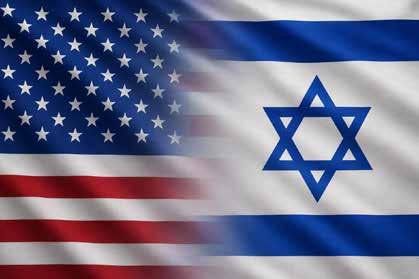
heavily upon the United States for military assistance, diplomatic backing and strategic support. America has been an extraordinary ally and friend. The relationship remains vital.
But friendship and dependence are not the same thing.
Every time an American administration changes, Israel finds itself adjusting to a new set of priorities, personalities and political calculations.
means removing the threat altogether.
For a country the size of Israel, surrounded by hostile actors and lacking strategic depth, that difference is enormous.
For decades Israel has depended
If you’re over 55 and own your own home, you can unlock its value with a Lifetime Mortgage. NO monthly payments required NO income needed
One president urges restraint. Another demands concessions. Another threatens pressure. Another promises support before changing course.
Israeli governments of every political persuasion have repeatedly found themselves constrained by considerations that ultimately have little to do with Israel’s own national interests.
A nation that can stand on its own feet has greater freedom of action.
A nation with a stronger economy, greater energy security, increased technological dominance and reduced dependence on foreign aid can make decisions based primarily on its own security requirements. Israel has already achieved extraordinary things in
this regard. The Jewish state has transformed itself from a poor, struggling country into a global powerhouse in technology, innovation, agriculture, cyber security and medicine.
But there is still work to be done.
Greater economic strength translates into greater political freedom. Greater self-sufficiency translates into greater strategic flexibility. And greater national confidence translates into greater control over Israel’s own destiny.
No foreign leader, regardless of how friendly he may be, will ever care about Israel as much as world Jewry does. No American president sends his children to shelters in Jerusalem. No American administration lives under the threat of rockets from Lebanon, Gaza or Iran. No foreign government bears the direct consequences of mistakes made in the Middle East. Those consequences belong to Israel alone.
That is why Israelis must ultimately rely first and foremost on themselves. Trump may continue claiming credit for peace. He may continue portraying himself as the indispensable figure standing between Israel and disaster. But never forget that the security of the Jewish state must ultimately rest in Jewish hands. That is not anti-American. It is simply the reality of sovereignty.
And in a dangerous neighbourhood, sovereignty matters more than slogans.





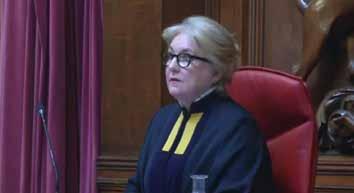
This week, the Court of Appeal has overturned the High Court’s ruling on the Palestine Action ban, which deemed it “disproportionate”. The group will remain proscribed as a terrorist organisation.
A spokesperson for Campaign Against Antisemitism said: “The judiciary has seen sense. The High Court’s ruling was a step backward in the fight against extremism, and we welcome the Court of
Appeal’s correction.
“British Jews’ faith in the justice system has been rapidly waning, so this decision cannot have come sooner. It recognises the violently criminal nature of Palestine Action and the impact of its activities, which terrorise ordinary people and the Jewish community. Judges have finally declared that criminality and terrorism carried out ‘for Palestine’ will have consequences.
“The next step is for prosecutors to act on all of the arrests that the police have made of those involved in or expressing support for this heinous organisation. This country’s overdue campaign against shocking levels of extremism is only just beginning.”
rabbi burman@bwkollel org



























AJEX is delighted to announce that The Marquess of Salisbury has accepted the role of Honorary Patron in a powerful show of support for the Jewish community at a time of rising antisemitism in the UK.
Lord Salisbury joins AJEX in recognition of the immense contribution Jewish servicemen and women have made to Britain’s armed forces and national life. His patronage sends a strong message of solidarity and recognition at an especially important time for the Jewish community.
Speaking on his appointment, Lord Salisbury said: “I am extremely honoured to have been asked to become an Honorary Patron of AJEX, particularly in view of the gallant and distinguished military service to the Crown performed by Jewish members of the British armed forces”.
“I think it is also important to remember that Jews have not only been outstandingly loyal in the UK military but have integrated brilliantly
into our national life. They have made outstanding contributions in virtually every sphere. This country would have been unimaginably poorer without them.”
Reflecting on the challenges currently facing the Jewish community, Lord Salisbury added:
“I am horrified by the recent surge in antisemitism in this country and accepting your kind invitation is one way of demonstrating my support for my Jewish fellow citizens.”
Fiona Palmer, CEO of AJEX, welcomed the appointment, saying: “We are absolutely delighted that Lord Salisbury has agreed to become an Honorary Patron of AJEX. At a time when the Jewish community is facing such a significant rise in antisemitism, his unequivocal support and recognition of our place within the fabric of British life is deeply appreciated. His understanding of the contribution made by Jewish servicemen and women throughout our nation’s history, together with his willingness to

stand alongside our community today, makes his support especially meaningful”.
AJEX exists to ensure that the immense contribution of Jewish veterans who served in His Majesty’s Armed Forces is never forgotten. The charity supports the Armed Forces Jewish Community and works across three pillars: Welfare, Remembrance and Education. All of which play a vital role in combating antisemitism and strengthening community resilience.
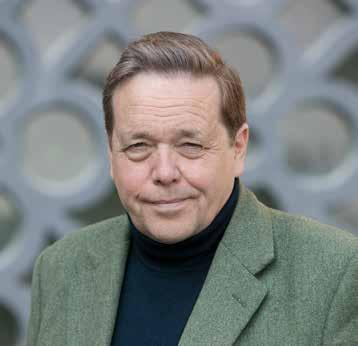
AJEX looks forward to welcoming Lord Salisbury to this year’s AJEX Remembrance Parade in London on
15th November 2026 at The Cenotaph, alongside other commemorative and community events throughout the year.
Teamwork was the name of the ‘beautiful game’ as Pinner Shul’s weekly Chat and Share cafe got into the World Cup spirit this week, despite the damp weather, with an English footballthemed lunch of traditional fish and chips – and of course tea!
The hall was beautifully decorated with England flags and balloons. Members either dressed in England team colours or their home team,
which, including two Scots and even a Dutchman, made for some interesting repartee amongst the participants.
Pinner Synagogue Rabbi Jason Kleiman’s ‘Thought for the Week’ was about the value of teamwork, and the afternoon ended with some rousing football songs such as ‘Three Lions’ and ‘Sweet Caroline’, as well as the patriotic ‘There’ll always be an England’.
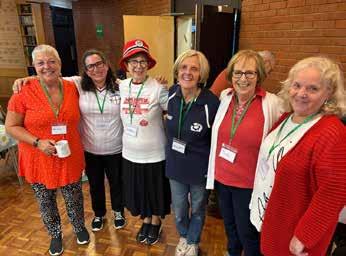
Rabbi Kleiman said, “It was great to see so many members here this afternoon, all enjoying delicious food, delightful company, and wonderful atmosphere, which, on the subject of teams, would not be possible without the continued dedication of our amazing team of volunteers.”
One of the participants added, with a smile, “I almost didn’t come because of the weather –but I’m so glad I did!”

A team of 29 cyclists has successfully completed Norwood’s Tuscany Challenge, cycling 270km through the rolling hills and vineyards of the Chianti region over three and a half days and raising an impressive £120,000 for the charity.
Riding in temperatures of up to 28°C, participants travelled through some of Tuscany’s most iconic landscapes and historic towns, including Montecatini Terme, Vinci –the birthplace of Leonardo da Vinci – San Miniato, San Gimignano and Siena. Among the cyclists was Jonathan Tobin, who rode in tandem with his non-verbal, profoundly autistic son, Jacob. Together they raised more than £22,000 to support Norwood and the Unity short breaks schemes that Jacob enjoys attending.
Reflecting on the experience, Jonathan said: “It was a special experience for both of us, particularly the warmth and love everyone in the group gave Jacob. A huge thank you to the many friends and colleagues in my professional network who supported us by donating.”
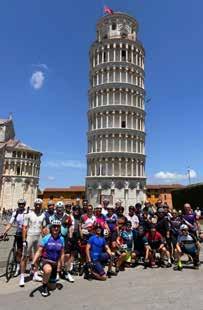
The challenge began in Pisa before the cyclists headed to Montecatini Terme, the UNESCOlisted spa town that served as their first base. Along the route, riders tackled a variety of terrain, culminating in the optional ascent of the famous Santa Caterina climb, part of the renowned Strade Bianche race route.
The event combined physical endurance, breathtaking scenery and a shared commitment to supporting Norwood’s vital services, making it a memorable and highly successful fundraising achievement.







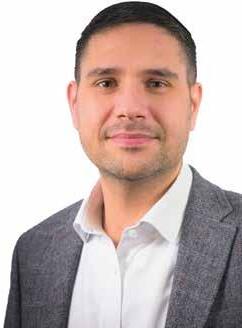







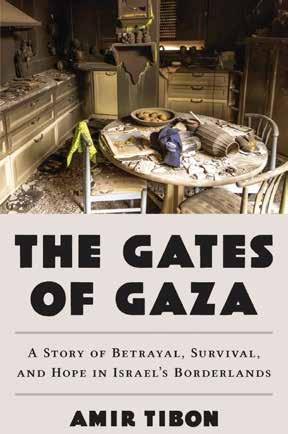
The Sami Rohr Prize for Jewish Literature, in association with the National Library of Israel, is pleased to announce that Amir Tibon, author of The Gates of Gaza: A Story of Betrayal, Survival, and Hope in Israel’s Borderlands (Little, Brown and Company), is the winner of its 2026 award for nonfiction. The $100,000 prize is awarded annually to an emerging author writing in or translated into English.
In The Gates of Gaza, Tibon weaves together personal testimony, historical context and incisive reporting to chronicle the devastating events of October 7 and their impact on Israel’s border communities. Through the story of his family and neighbors in Kibbutz Nahal Oz, he offers a powerful account of tragedy, resilience and survival while illuminating the broader realities of life along the Gaza border.
“It is an incredible honor to receive the Sami Rohr Prize and join the esteemed list of writers who have won this award over the past two decades. The mission of the Rohr Prize has never been more important, as we confront a rising tide of antisemitism around the globe and its unique ripples within the world of books
and literature,” said Amir Tibon. “I’m grateful to the judging panel for choosing to recognize my work at this crucial moment.”
Speaking on behalf of the Rohr family, George Rohr said, “Our father knew what it meant to live through darkness and come out on the other side with his identity and hope intact. That spirit is at the heart of the Prize that bears his name—and it is at the heart of Amir Tibon’s extraordinary book. We warmly congratulate Amir, along with this year’s finalists, Laura Hobson Faure, Shaul Kelner and Jordan Salama, whose books illuminate the richness and diversity of Jewish life and history.”
This year’s finalists were selected from a distinguished shortlist representing the breadth and vitality of contemporary Jewish nonfiction:
Laura Hobson Faure, author of Who Will Rescue Us?: The Story of the Jewish Children who Fled to France and America During the Holocaust (Yale University Press), recounts the efforts of organizations and individuals who helped thousands of Jewish children escape Nazi-occupied Europe and find refuge in France and the United States.
Shaul Kelner, author of A Cold War Exodus: How American Activists Mobilized to Free Soviet Jews (NYU Press), examines the movement that transformed the plight of Soviet Jews into a defining cause of American Jewish activism. Jordan Salama, author of Stranger in the Desert: A Family Story (Catapult), blends memoir and historical investigation to trace his family’s Syrian Jewish roots across South America, exploring questions of identity, migration and belonging.
“As we mark the twentieth anniversary of the Sami Rohr Prize, we are proud that a book like The Gates of Gaza stands at the center of this milestone. There are books that bear witness from a distance, and there are those like this one — written by someone who lived the story himself,” said Debra Goldberg, Director of the Sami Rohr Prize for Jewish Literature. “We are delighted to welcome Amir Tibon and this year’s finalists into the growing community of writers whose work has been recognized by the Prize over the past two decades.”
The authors will be honored at a ceremony at the National Library of Israel in Jerusalem on July 28.



Over the past two weeks, Rabbi Naftali Schiff, CEO of Jewish Futures, has crisscrossed the United States on a mission that is equal parts historical reckoning and urgent moral call to arms.
From a packed opening night at Lincoln Square Synagogue, followed by a screening in Safra Synagogue, New York, through parlour evenings and sold-out events in Monsey, Boro Park, Five Towns, Boca Raton, Denver, Atlanta and Toronto - the response has been the same everywhere: hushed, stunned, and then deeply moved.
The tour marks the official US launch of Miracle, published by HarperCollins Horizon on 9th June. Rabbi Schiff co-authored the book with award-winning journalist Michael Calvin, and together they have crafted a work that is as meticulously researched as it is profoundly human. Alongside it comes Undeniable, the accompanying documentary produced by the JRoots media team, with Rabbi Schiff as Executive Producer and Director. Together they tell one of the most astonishing survival stories in the entire history of the Holocaust. And right now, Rabbi Schiff believes, the world needs to hear it.
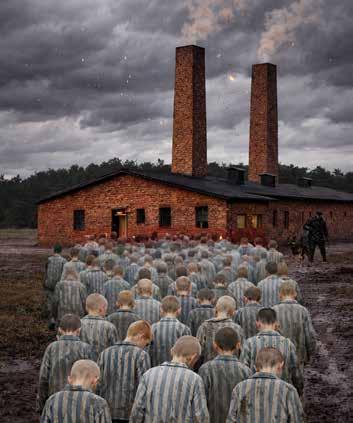
Auschwitz. The night before, under the direct command of Dr Josef Mengele, their identity cards had been stamped with a single word: gestorben. Died. They were stripped naked, herded into the gas chamber, and Zyklon B was inserted. Then something unprecedented happened. Senior SS officers arrived and fifty-one of those boys were pulled back from the brink of death. They are the only known group of people ever to have left an Auschwitz crematorium alive.
The story begins on the evening of 10th October 1944. Eight hundred Jewish boys, aged between thirteen and seventeen, were marched to Crematorium V at
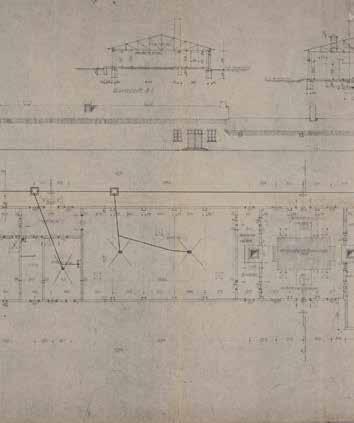
The timing of this tour matters beyond the book launch. Holocaust denial and distortion are no longer fringe phenomena. They are amplified online, absorbed by younger audiences, and normalised through misinformation. Undeniable confronts that head on. Professor Robert Jan Van Pelt, the world’s leading expert on Auschwitz architecture and a pivotal figure in the landmark David Irving versus Penguin and Deborah Lipstadt trial in the early 2000s, plays a critical role in the documentary. Drawing on unique access to Nazi archives and forensic evidence, he corroborates the survivors’ stories with rigour and authority. His involvement transforms Undeniable into something beyond testimony. It is an evidence-based rebuttal to denial itself.
Rabbi Schiff has spent over two decades recording more than 200 survivor testimonies. As founder of ten
organisations including Aish UK, GIFT, JRoots and FJL, he knows better than most what is at stake. The post-screening conversations on this tour have gone well beyond the events of that October night. They have been about giving audiences something solid to hold onto: truth, context, evidence, strong Jewish values and moral clarity.
And yet Miracle and Undeniable are
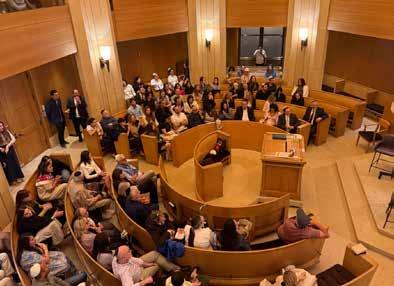
full of hundreds of people in rapt attention, heartbreaking and inspirational at the same time.” In Boca Raton, Rabbi Efram Goldberg reported his family were “fighting over who gets to read Miracle next,” calling Undeniable “an extremely important, timely and informative educational product.”
not only about what these boys endured. Six survivors are interviewed in the film, and what they share is remarkable. Their testimonies speak of resilience, faith, courage and a Jewish positivity that never left them, even in the shadow of the unthinkable. Audiences have been moved not just by what these boys survived, but by how they chose to live afterwards. They went on to build families, raise children and welcome grandchildren and great-grandchildren. Their lives became their answer to those who sought to erase them. It is a message that has stayed with audiences long after the credits run.
The reactions speak for themselves.
Rabbi Shaul Robinson of Lincoln Square Synagogue said the story held “a room
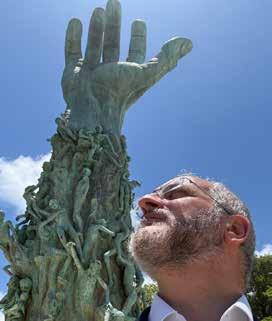
Beyond the screenings, the tour has been a media event in its own right. Rabbi Schiff appeared live on CNN’s The Situation Room, recorded a Fox News podcast, gave numerous press interviews and held meaningful conversations with the Miami Holocaust Museum. The US campaign follows a successful UK launch earlier this year, and Miracle has already been translated into 10 languages. The story, it seems, belongs to the world. And Rabbi Naftali Schiff is making sure the world knows it.
Miracle is co-authored by Rabbi Naftali Schiff and Michael Calvin and is published by HarperCollins Horizon.
Buy Miracle here: amazon.co.uk/Miracle-Boys-Escaped-Chamber-Auschwitz/ dp/0857507893
Coming Soon: Bring This Story to Your Community
Undeniable will be screened across the UK on Tisha B’Av. Communities can also host their own screening. The film will be available for pay per view on the JRoots website. More details coming soon.





Private screenings available for shuls, organisations and youth groups (ages 15+).
Undeniable is a remarkable Holocaust documentary by JRoots, telling the story of the only known group of teenagers to enter a working Auschwitz gas chamber - and walk out alive.
Featuring powerful first-hand testimony from six survivors, their values and life lessons, alongside unseen Nazi archives, forensic evidence and a new section combatting denial.
In a time of increasing Holocaust distortion and moral erosion, this is a must-see film.
Despite growing concerns facing Jewish communities in the UK, thousands of people came together to support vulnerable Israelis through Myisrael's 36-hour Match Fund Campaign, It Starts With You.
The campaign, which took place on 14–15 June, raised more than £1.17 million, demonstrating the enduring bond between the UK Jewish community and Israel.
153 Champions received donations from 3,340 donors and 38 Match Funders doubled every gift. The £1 million target was reached at 4.30pm on Monday, with four-and-a-half hours still remaining, and donations continued to climb.
Funds raised will support children affected by trauma, soldiers living with PTSD, teenagers struggling with mental health challenges and other vulnerable people across Israel. The funding will provide trauma therapy, bereavement support, financial relief and other vital services.
Danni Franks, Founder and CEO of Myisrael, said: 'As antisemitism and fear continue to affect Jewish communities in the UK and around the world, this campaign demonstrates that our bond
with Israel feels more important than ever. I'm completely blown away by what we achieved together. After almost three years of war, the need remains immense, and this support will make a real difference to thousands of vulnerable people across Israel.'
The campaign was supported by community-wide initiatives including the distribution of 10,000 challah stickers to help spread awareness.
Claude Vecht-Wolf, one of the campaign's fundraising Champions, said: 'It was such a wonderful experience, enabling people to do mitzvot in this way.
I love that Myisrael backs under-theradar projects that truly make an impact. Seeing so many people come together was incredibly inspiring. It was a privilege to be involved in this campaign.'
Since 2008, Myisrael has raised more than £18 million for grassroots causes supporting families in crisis, survivors of trauma, teenagers facing mental health challenges and other vulnerable people across Israel.
www.myisraelcharity.org

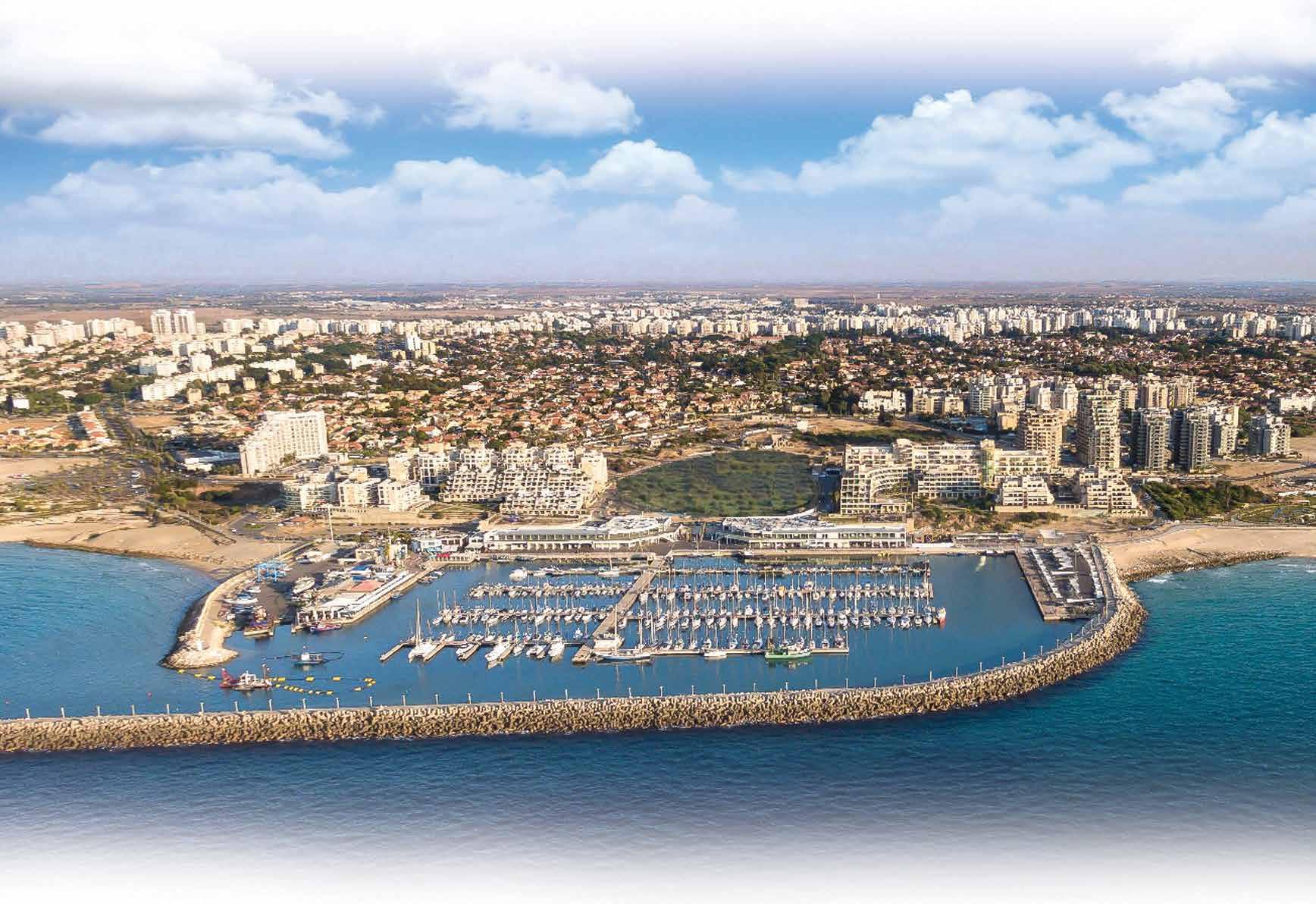
The Southend and Westcliff Hebrew Congregation (SWHC) warmly congratulates Beis Chinuch Lebonos, the strictly Orthodox girls’ primary school serving the area’s Chasidic community, on the outcome of its latest Ofsted inspection. Inspectors found the school met the expected standard across all seven areas examined — a marked step up from its previous inspection two years ago. They described it as a happy place where its 110 pupils learn well, praised teachers’ subject knowledge and phonics teaching, and highlighted a strong programme for pupils’ personal development, including recent first-aid training for older pupils. Inspectors also noted that pupils respect other belief systems and celebrate cultural diversity.
The Chasidic community, which this
year marks ten years in Westcliff-onSea, has become a vibrant part of local Jewish life, and SWHC has been proud to support and welcome it throughout that time. The school’s progress reflects the energy and commitment the community has brought to the area.
“We are delighted to see Beis Chinuch Lebonos recognised in this way,” said Aron Engel, Board Member of SWHC.“SWHC has always supported and helped the Chasidic community here, and we could not be prouder of what they have built. This result is a credit to the headteacher, staff and families, and a wonderful sign of the strength and warmth of the Jewish community in Southend and Westcliff. We wish them continued success.”








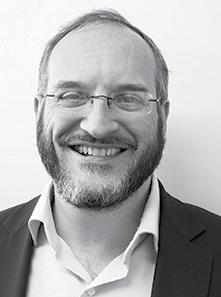
BY RABBI NAFTALI SCHIFF
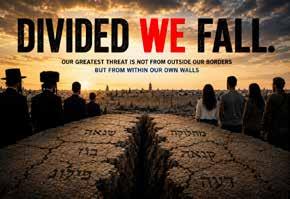
What3Words: Divided we Fall
I am somewhat reticent to write about this again.
The subject is so vast, so elusive and so emotionally charged that part of me would rather leave it alone. Yet it is also so crucial and so pressing that I feel compelled to return to it.
I have just completed a sixteen-day whirlwind tour across the United States and Canada with HarperCollins Horizon, presenting our JRoots documentary Undeniable and our book Miracle. The story itself is extraordinary: the miraculous last-minute reprieve of fifty-one Hungarian teenage boys already inside the gas chambers on Simchat Torah 1944.
But alongside the subject matter, another experience stayed with me.
Over two intense weeks I found myself moving between Jewish worlds that rarely meet one another. From Satmar Monsey to highly assimilated couples in Miami. From outreach communities in Denver to the bastion of Modern Orthodoxy in Woodmere. I met directors of major communal organisations, rabbis, educators, philanthropists and activists. In many ways it was a fascinating crosssection of Jewish America.
And yet one observation lingered.
Despite the sheer size, vitality and diversity of American Jewry, there is surprisingly little meaningful interaction between many of its constituent parts. Different communities often live side by side geographically, yet worlds apart culturally, religiously and socially. Each has its own institutions, leaders, priorities and concerns. There is much admirable activity taking place. But there is often little conversation across the divides.
Perhaps that is inevitable. Perhaps it is simply the consequence of numbers and demographics. Yet I could not help wondering whether we are missing something profoundly important.
Many years ago, a serious person for whom I have enormous respect cautioned
me against becoming too preoccupied with the issue of Jewish unity.
“Achdus,” he warned, “is dangerous territory.”
At first, I found that surprising. Surely unity is among the noblest aspirations of our people.
But over time I came to understand what he meant.
On the one hand, few themes occupy a more central place in Jewish thought.
Chazal repeatedly point to baseless hatred, factionalism and internal division as among the deepest spiritual failings of our national life. We continue to mourn the destruction of the Beis Hamikdash because its causes have never been fully repaired.
On the other hand, the subject is extraordinarily difficult.
The moment one begins speaking about unity, disagreements emerge about what unity actually means. Old grievances resurface. Ideological differences sharpen. Suspicions deepen. It is almost as though there is a powerful force working tirelessly against it.
the devastating consequences of rebellion and division, he pointed me to Rashi’s chilling observation that machlokes carries uniquely destructive consequences, affecting not only those directly involved but entire families and communities.
Then he shared something I have never forgotten.
In the years immediately before the Holocaust, he told me, he had occasion to visit numerous relatives and family members who served as Rebbes in towns and villages across Eastern Europe.
“I bear witness to you today,” he said quietly, “that there was not a place I visited where there was not machlokes.”
There was a long silence.
Then I noticed a single tear rolling down his cheek.
The emotion was overwhelming.
The conversation ended almost as abruptly as it had begun.
I left shaken.
His words have accompanied me ever since.
Borders can be defended.
Enemies can be deterred.
But what happens when the fractures are internal?
What happens when we lose the ability to see one another as members of a single family?
Could it be that machlokes, intolerance, contempt for those who differ from us and the inability to embrace complexity remain among the greatest obstacles standing between us and the geulah for which we have prayed for nearly two thousand years?
I do not pretend to know.
But I do know that the question deserves our attention.
As summer finally arrives and the British skies brighten, most of us are naturally looking forward to holidays, weddings, family celebrations and precious moments of rest.
Yet we are also approaching the Three Weeks, that uncomfortable period in the Jewish calendar that insists we pause and remember the loss of Jewish sovereignty, Jewish unity and the Beis Hamikdash in Jerusalem.
Perhaps this year the message feels more relevant than usual.
Sometimes I wonder whether this is precisely why the issue is so important.
And it is against that backdrop that I find myself recalling a remarkable encounter whose anniversary falls around this time of year.
Some fifteen or twenty years ago, I visited Rabbi Menachem Mendel Rubin, the Muzhai’er Rebbe, in his modest shtiebel on Ocean Parkway in Brooklyn.
The Rebbe was already elderly and physically frail. An Auschwitz survivor and a member of the Satmar dynasty, he carried within him memories from a vanished Jewish world.
We spoke about various theological aspects of the Holocaust. At one point he asked me to pass him a Chumash.
He opened it to this week’s parashah, Korach.
Turning to the verses describing
The Rebbe was certainly not offering simplistic explanations for the Holocaust. No serious person would dare do so.
But he was expressing something else.
A profound fear that internal division had become so normalised, so embedded within Jewish communal life, that many no longer even recognised it as a problem.
I think about that conversation often.
Particularly now.
At a time when Israel faces enemies on multiple fronts. At a time when antisemitism is once again rising across much of the Western world. At a time when political and ideological tensions increasingly threaten the fabric of Israeli society itself.
Indeed, I sometimes find myself wondering whether our greatest threat is not external at all.
Missiles can be intercepted.
The world around us appears increasingly unstable. International tensions continue to grow. Internal divisions challenge the delicate balance of Israeli society. At times, the future itself can feel uncertain.
Maybe before focusing on fixing the world, we should spend a little more time fixing our own house.
The house we all share.
The house we have been trying to rebuild for two thousand years.
The house that can only be rebuilt together.
In this column Rabbi Naftali Schiff reflects upon 3 key words each week relating to contemporary and relevant issues.
All feedback is welcome- nschiff@ jfutures.org.
Rabbi Schiff is the Founder & CEO of the Family of Jewish Futures networks of educational organisations.



BY RABBI MOSHE TARAGIN
We had hit rock bottom. After the sin of the spies, we were sentenced to wander the desert for forty years. Every adult over twenty was condemned to die before entering Eretz Yisrael.
At this point, we spiraled into a full-blown rebellion against Moshe's authority. Korach and his band of insurgents whipped the nation into a frenzy, accusing Moshe of egotism, nepotism, and deception.
The debacle of the spies reflected a lack of faith in Jewish destiny and in Eretz Yisrael. It was a moment of public panic that overwhelmed reason and led the nation to question both the land and Hashem's promise. The rebellion of Korach was different. It was not driven by fear but by anger and resentment. Korach, a gifted demagogue, manipulated the people into joining a campaign rooted in his own personal ambitions.
Ultimately, the rebellion against Moshe led to a complete breakdown of communication. Repeatedly, Moshe attempted to engage the rebels. They refused to listen. They embraced Korach's accusations and never paused to consider Moshe's perspective. Once communication collapsed, the two sides no longer understood each other's intentions. Perhaps some of the rebels' concerns deserved discussion. In the past, when the burden of leadership became too heavy, Hashem appointed seventy elders to assist Moshe. Perhaps there were other ways to broaden leadership responsibilities. But the claim that Moshe was driven by ego, nepotism, or a hunger for power was absurd. Time and again, he had defended the people and saved them from divine punishment. The refusal to listen allowed Korach's camp to completely misread his intentions.
Once communication ceases and intentions are misunderstood, compromise becomes nearly impossible. False narratives take hold, distrust deepens, and every action is viewed through a lens of suspicion. The rebellion of Korach illustrates the destructive consequences of a society trapped within competing narratives.
We are living through a very delicate moment in Israeli society. The issue of Charedi non-conscription is straining
our social fabric and deepening divisions within our society.
Unfortunately, the lack of communication and interaction has created a widening gap in narratives. Charedim are misreading the intentions of the broader public in advocating conscription.
The broader Israeli public has little interest in hollowing out Charedi identity. Many Israelis deeply respect Torah and tradition, even if they do not personally commit to a life centered around Torah study. There is no national or political agenda to destroy Torah study or the Charedi lifestyle.
Most Israelis are simply hurting. As the war drags on and married fathers of large families report for their third round of extended miluim service, they ask themselves: "Don't they understand what we are carrying? Don't they see how this is affecting our families?" Their plea is not to dismantle the Charedi world but to share the burden of this long war more broadly.
Many would argue that military service would significantly affect Charedi identity and lifestyle. That is a legitimate argument, whether one agrees with it or not. Opposition to conscription on those grounds is understandable and coherent. But the call for broader Charedi participation is not rooted in a sinister desire to weaken Torah study or undermine religious commitment.
We are facing a tragedy of miscommunication.
Part of the challenge stems from the inherent nature of Charedi culture. Much of its strength lies in its commitment to continuity. Other segments of Orthodoxy respond to modernity through adaptation; Charedi society responds more cautiously. It places a premium on continuity, cultural insulation, and preserving inherited norms. Change is not rejected, but it is approached slowly.
This instinct has served the Charedi community well. It has helped preserve a robust Torah world through periods of rapid social upheaval. However, it can also create a tendency to view contemporary challenges through the lens of earlier historical struggles. New situations are sometimes interpreted as versions of old battles, even when the circumstances are very different. There is a well-known story about the closing of the famed Volozhin Yeshiva in 1892. The Czarist Russian government, deeply hostile to Jewish life and religion, repeatedly attempted to impose a significant secular studies curriculum
upon the yeshiva. After years of pressure, Rav Naftali Tzvi Yehuda Berlin, the Netziv, chose to close what was arguably the most prominent yeshiva of the nineteenth century rather than submit to those demands. Whether this was the primary reason for the closure remains debated. Nevertheless, the story became part of the Charedi collective memory. As a result, whenever governments seek to introduce a core secular curriculum into yeshivot, the story of Volozhin is often invoked. Yet the comparison is not apt. Governments such as Israel and the United States are not Czarist Russia. They are not motivated by antisemitism or by a desire to uproot Torah study. Rather, they generally view these subjects as necessary tools for economic participation and gainful employment. One may oppose those policies, but the circumstances are fundamentally different from the struggle faced by the Volozhin Yeshiva, which confronted an antisemitic regime intent on restricting religious life and undermining traditional Jewish education.
We are witnessing a similar misreading today. Calling for Charedi military service is not, for most Israelis, an attempt to destroy Torah. It is a sincere plea to share the burden of a long and exhausting war. One can oppose conscription on the grounds that it will diminish Torah study or weaken Charedi identity. Those are legitimate concerns. But the lack of communication has created a complete divergence of narratives, causing many people to hear motives that were never intended.
This misunderstanding is not solely the result of Charedi hyper-preservation. Reactions from the broader public can sometimes become so sharp and sweeping that they reinforce Charedi suspicions. I have heard people respond to Charedi behavior by declaring, "This is not my Judaism." That is deeply
charged language. One may believe that a particular policy or attitude is severely morally or halachically flawed. But no single flaw, however central or painful, renders an entire religious community or lifestyle illegitimate. Every community has shortcomings that require criticism and correction.
To find consensus, we must get on the same page. We must also be careful about the language and rhetoric we use.
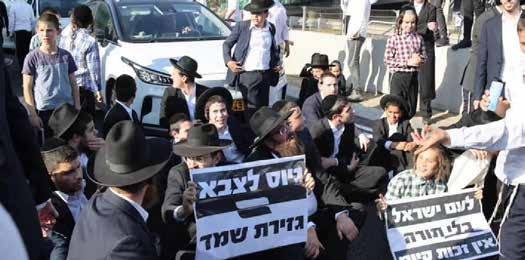
Two weeks ago, a busload of Chasidim attacked the home of my neighbor, a Supreme Court justice whom they viewed as an enemy of Torah study because of his role in rulings surrounding this controversy. I know him personally and can attest that this is a complete misunderstanding of his intentions. One can argue that his rulings will inadvertently harm the Charedi community. But to portray him as someone motivated by hostility to Torah is a profound misreading.
The protest itself turned violent. The protesters shouted at the judge and at our neighbors, repeatedly calling them Nazis. One of my neighbors, a child of Holocaust survivors, was called Hitler. It should be self-evident that any Jew who labels another Jew a Nazi has lost all historical perspective. The grandparents of both groups may well have shared the same ghettos and concentration camps. In a society of divided narratives, in which even the role of the State of Israel is not a matter of consensus, the last shared historical narrative we possess is our recovery from the Holocaust. Sadly, these terms were being shouted by Chasidim whose own communities were disproportionately devastated by Hitler.
To begin to heal our fractures, we must properly read intentions and be careful about the historically toxic language we employ. We must repair communication.
The writer is a YU-ordained rabbi at Yeshivat Har Etzion (Gush), a hesder yeshiva. His latest book, “Reclaiming Redemption, volume II: Faith, Identity, Peoplehood and the Storms of War,” is available at www.mtaraginbooks.com.




BY RABBI DANNY MIRVIS
“And Korach son of Yitzhar son of Kehat son of Levi took (separated himself) with Datan and Aviram, sons of Eliav, and On son of Pelet, the offspring of Reuven. And they arose before Moshe with 250 men from the Children of Israel, leaders of the assembly, those called for meeting, men of renown. And they congregated against Moshe and against Aharon…” (Bamidbar 16:1–3)
At the beginning of this week’s parasha, Korach leads a rebellion against his cousins, Moshe and Aharon. Even when challenged by Moshe and informed that if proved wrong, he and his followers would die in phenomenal fashion, Korach refuses to step down from his revolt and leads his rebellious mob to doom.
The Mishnah in Avot teaches us to ensure that unlike the dispute created by
Korach and his assembly, all our arguments should be for the sake of Heaven:
“Any dispute that is for the sake of Heaven will have a constructive outcome. Any dispute that is not for the sake of Heaven will not have a constructive outcome. What is a dispute for the sake of Heaven? – The dispute of Hillel and Shammai. What is a dispute that is not for the sake of Heaven? – The dispute of Korach and all his assembly.” (Avot 5:20)
The Malbim (Bamidbar 16:1) highlights the asymmetry of this Mishnah. Concerning arguments for the sake of Heaven, we are given both sides involved in the dispute – “Hillel and Shammai.” Maintaining this pattern, we would expect the Mishnah to conclude, “What is a dispute that is not for the sake of Heaven? – The dispute of Korach and Moshe.” Why does the Mishnah only give one side of the argument – “The dispute of Korach and
all his assembly”?
The Malbim answers that Korach’s coalition was an inherently disunited force. Korach was upset that he was overlooked for the positions of Kohen Gadol and leader of the tribe of Levi. Datan, Aviram and On, as descendants of Ya’akov’s firstborn son Reuven, were disgruntled that the priesthood was granted to the tribe of Levi and leadership of the tribes to Yehuda and Yosef. The 250 men of renown were firstborns who saw the priesthood as their natural privilege, so joined Korach’s rebellion against the leadership of the tribe of Levi.
Far from being a united entity, the members of Korach’s mob were motivated by different and conflicting personal interests. The only unifying factor was their hatred of Moshe and Aharon. Reflecting this internal lack of harmony, the Mishnah refers to “The dispute of
Korach and all his assembly” as conflicting sides that would ultimately fight among themselves.
When joining together to build coalitions, communities or forces for good, it is essential that we are not driven by the desire for personal importance or glory, or brought together by a common enemy, but united for the sake of Heaven.
Rabbi Danny Mirvis is CEO of World Mizrachi, and Rabbi of Ohel Moshe Synagogue in Herzliya Pituach. He is a member of the Mizrachi Speakers Bureau (www. mizrachi.org/speakers).
















22-30 JUNE 2027
Mehadrin Kosher
Entire Ship Exclusive to Kosher Travelers



Embark on an unparalleled journey with the world’s only Kosher Travelers Svalbard Expedition.
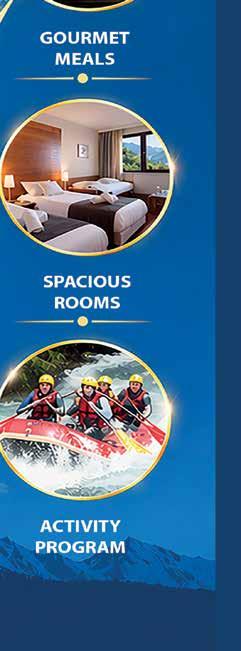
Explore a remote Arctic wilderness of dramatic fjords, towering icebergs, and breathtaking northern landscapes. Encounter incredible wildlife, including polar bears, walruses, Arctic foxes, seals, whales, and diverse birdlife. All guided by seasoned professionals for a safe and unforgettable experience.




EARLY BIRD DISCOUNT TILL 30 MAY ‘26





* Ideal Cruise Season on the M/V Sea Spirit, Poseidon
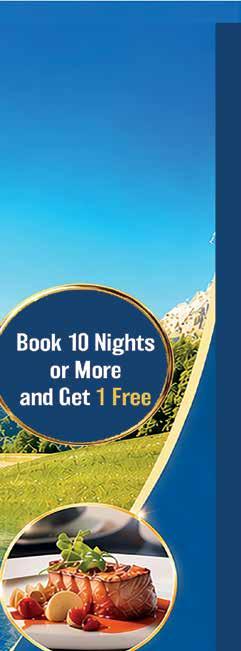
* Freshly Prepared Gourmet Cuisine
* Daily Tefilla & Sefer Torah
* Shabbat atmosphere
* Boutique experience for 100 guests
* Personally Hosted by David & Chana
BY RABBI YAKOV SCHONBERG
Of the eighteen treifos listed in the Mishnah at the start of the third chapter of Chullin, the most common reason for an animal to be declared a treifah is a respiratory lung disease causing perforation. Rashi (Chullin 12a s.v. pesach) explains that because this is a relatively common condition, it is considered a mi’ut ha’matzui, meaning all slaughtered animals' lungs must be checked for any issues that could cause holes. A sign of a punctured lung is fluid leaking outside the lung. During breathing, as the lungs expand and contract, this thick fluid can come into contact with other lobes of the lungs or the chest wall. Over time, the fluid dries into a scab that forms fibrous adhesions, called sirchos by the Gemara, which are bands of collagen fibers. Rashi (Chullin 46b s.v. les lehu bedikusa), referencing earlier Geonim, explains that these sirchos are problematic because they originate from punctures. Such punctures initially cover and seal the wound, but repeated lung movements will eventually loosen the seal, showing they are not reliable seals. Tosafos presents another perspective, viewing sirchos not as puncture results, but as problems likely to cause a hole, since lung movement will eventually detach the sirchah, pulling away a layer of the lung. This issue considerably affects the kosher meat industry, as we will examine. Unlike other kosher items that are labeled as kosher or not kosher, meat in stores also comes in two additional categories: Glatt and Chalak Beis Yosef. What is the relevance of these designations to kosher consumers?
From the above Gemara, it appears that any sirchos, with the lone exception of those that are kesidran (lying next to each other), render the lung treifah. However, determining which adhesions actually qualify as sirchos has been debated for over 1,000 years. The Rosh on this sugya cites a ruling by Mar Yaakov Gaon that if a good shake of the lungs causes a sirchah to fall off, the adhesion is too weak to be classified as a sirchah and is considered a “rir” – a spittle-like discharge. The theory is that if the secretions emanated from the
heart or the chest walls rather than the lungs, they would not adhere strongly to the lungs and would be released with shaking. This concept of adhesions that resemble sirchos but are not, plays an important role in the views of later poskim. Although the Rosh records the shaking method as a test to determine whether an adhesion is, in fact, what the Gemara calls a sirchah, other methods are mentioned by Rishonim and quoted in the Shulchan Aruch (Yoreh De’ah 39:10-13).
In addition to the shaking method of Mar Yakov Gaon, another method was to squeeze and roll (mi’uch u’mishmush) the adhesion between the fingers. If it softens and disintegrates, it is not considered a sirchah, merely a soft excretion, and does not render the animal treifah. If it remains tough, it is a disqualifying sirchah. The Rashba strongly objected to these distinctions and maintained that all these types were classified as sirchos. The Shulchan Aruch (39:10), following the Rashba, rejects these tests and disqualifies sirchos of all sizes and strengths. It is apparent from the Rishonim that these issues were very controversial in their times, and it is recorded that the custom of mishmush was practiced in certain areas of Spain, permitted by the Chachmei Castilia (Rabbanim in Castile), in the face of the Rashbah’s objections. After the Rosh fled from Germany, he lived in Toledo, Spain, and influenced Spanish rulings. Jews had difficulty disposing of their treifos to local non-Jews, so it was treated as an emergency. When Spanish immigrants arrived in Fez, Morocco, after the expulsion from Spain, they brought this practice with them, despite objections that it was contrary to the local custom, which followed the Rashba. This practice continued in several communities in Morocco until modern times. A similar situation existed in Yemen and in Bachara, where the accepted custom was to perform mishmush.
The mishmush method is hardly used in practice nowadays because of a development in Prague around 250 years ago. Finding that the existing test did not permit sufficient animals, thereby creating a meat shortage, a more effective test was sought to identify sirchos that do not emanate from the lung, allowing the animal to be declared kosher. The proposed method involved stretching the membrane outside the
lung and then gently peeling away any sirchos found above it. The lung was then inflated in warm water, and any hole in the lung would produce bubbles in the water. At first, this method was hotly debated, but Rav Ephraim Zalman Margulies published a teshuvah in his Beis Ephraim, citing Maaseh Reinus (story in the Rhine region) as a precedent. This was a story related by the Maharshal concerning an animal whose entire lung appeared to be covered by a smooth outer layer, so that the normal divisions of the lobes were not visible. At first glance, this raised concern that the lung itself had become abnormal and therefore treifah. A bodek carefully peeled away the external covering, and underneath there appeared a normal lung with its ordinary structure intact. The lung was then inflated and checked, and no perforation was found; the animal was ruled kosher (Yam Shel Shlomo, Chullin 47b, siman 35). The implication was that the external layer was not considered the lung itself. By extension, although not a halachic precedent, given the quite different facts, it demonstrated that a smaller, loose external covering that is removable without damage can also be permitted after examination. After the Chasam Sofer endorsed this view, it gained acceptance and replaced the mishmush method. However, the Chasam Sofer concluded that this peeling must be performed by a G-d-fearing expert bodek, but one who safeguards his soul shall keep his distance from such practice (Chasam Sofer, Yoreh De’ah 39). Many Sephardic communities that followed Chachmei Castilia also adopted the peeling test.
A further method mentioned by Shulchan Aruch (39:11) is called hagba’ah, lifting the sirchah by placing a finger under it without lifting the lung itself, thereby minimizing pressure on the sirchah. If the sirchah lifts off without tearing any part of the lung, then it is not a sirchah. The theory behind this is explained in the following siman (39:12), which says that it is good to give the animal to drink before shechitah, and the Shach explains that this makes it easier to skin the animal. He then comments on the strange location of this halachah in the middle of describing the various tests of sirchos and explains that, besides the skin being freed, fresh sirchos just formed will also be released. As the animal would have drunk anyway during the day, and that would have detached the sirchah, any sirchah which comes off easily must
be a new 24-hour-old pseudo sirchah and will not disqualify the animal. Shulchan Aruch (39:13) then cites another alternative test, called hachnasas yad habodek, which involves the bodek penim, the internal inspection of the lung immediately after shechitah. The bodek pokes his hand loosely into the chest cavity around the lung to see whether he encounters any sirchos connecting the lung to the surrounding organs or connecting the lobes of the lung. If the sirchos detach with his slight hand movement and leave no trace when the lung is removed for external inspection, they are not considered sirchah. These leniencies are rejected by the Rema. Some brands advertise compliance with both the Ashkenazic and the Beit Yosef stringencies so that everyone can eat their meat.
Nowadays, the standard procedure is to make two inspections, internal and external. Each animal is assigned a unique number, and any sirchah encountered by the internal bodek is marked on a numbered map for sirchos. These sirchos are then carefully examined after the lung is placed on the table. This requires expert judgment, and the decision of the bodek chutz, the external inspector, is decisive in determining the lung's kashrus. Although the Rema, while personally suggesting that one should be stringent and not rely on rolling and squeezing the sirchah, nevertheless notes that the Ashkenazic custom is to be lenient, that it has authoritative sources, and that it may be allowed (39:13). His reservations encouraged some to seek Shulchan Aruch’s higher standard, and these views gave rise to the practice among Ashkenazic Jews of marketing meat under two labels: kosher and glatt, meaning smooth, or free of any sirchos. Lungs were considered glatt if there were up to three thin adhesions, like sewing thread, that peeled off easily. This still did not meet Shulchan Aruch’s higher standard of absolutely no sirchos, and Rav Ovadia Yosef campaigned that, even though many Sefardic communities had followed the Geonic practice of mishmush for hundreds of years, they should now be faithful to Shulchan Aruch’s ruling rejecting that practice. The strict Shulchan Aruch standard does not allow for any sirchos at all. A grade that shochtim term shayish, smooth as marble, is known as Beis Yosef Chalak. The problem is that it is quite rare, some 5% - 8% of the market. This small quantity is reserved for and purchased by
private groups of Rabbanim and people who are extremely particular, and are never found at the kosher supermarket. The question then arises: how is it that we see supermarket freezers stocked with an abundance of Beis Yosef Chalak meat?
Certain countries, such as Uruguay, have higher percentages, which can also be achieved by slaughtering younger animals, who have a lower incidence of sirchos. However, it boils down to what constitutes a sirchah, and we have seen above that Shulchan Aruch has two leniencies in that definition. Some Rabbanim argue that if the Beis Yosef himself disregarded certain sirchos, then that flexibility can be extended to include somewhat similar tests, such as peeling, which still falls within Beis Yosef Chalak. Some brands have managed to achieve a 45% Chalak Beis Yosef rate by adjusting the criteria as to which adhesions are technically called sirchos. This compares aglatt percentage of 30% - 35%, often achieved by Mehadrin shechitos.
There is a further important point to consider when comparing standards. The sirchos issue is just one of hundreds of halachos in hilchos shechitah, and it revolves around a doubtful treifah,
whereas many of the other issues concern definite treifah. A key issue for any hechsher is the speed of production and the number of kashrus personnel allocated to perform the various checks. Since labor is a major component of production costs, increasing staff will inevitably result in a higher retail price. More careful bedikos will slow production speed, and lower output quantities will bear higher overheads. Retail prices are a very good indication of the level of kashrus supervision. Another factor affecting kashrus is the religious level of the kashrus team, who are often away from home for extended periods, sometimes for months. It is hard to find family men of the religious stature required who are prepared to live such a life, so the kashrus teams often comprise less suitable candidates. Mehadrin hechsherim have therefore moved away from shechitah in South America so that their teams can be closer to home and can return home for Shabbos. Travel to South America does not allow for that, which affects the quality of the shochtim and bodkim employed.
A key issue is who employs and selects
the kashrus team. Quality Mehadrin kashrus authorities typically insist on directly employing and controlling payments to shechitah team members. In contrast, some authorities permit the supplier or importer to organize their own team, including choosing personnel and employment terms. These authorities usually send in an inspector, often during the initial week, to approve the setup and occasionally visit afterward. This arrangement essentially places full control over production in the supplier's hands, granting them significant influence over the kashrus staff. Notably, the bodek chutz is among the highestpaid staff members; his judgment of what is kosher has a critical impact on the supplier’s profits. He sometimes earns substantial bonuses for high numbers of kosher and glatt. Conversely, failure to meet expectations could lead to his dismissal. Often, the supplier also selects candidates for the team and will look to production efficiency rather than the individual’s level of religious observance. There is an additional complication with government-regulated kashrus authorities, which are legally required to accept any qualified applicant with a valid certification. If shortcomings are noted in his work, dismissing him is difficult; the matter must be reviewed
by the ministry’s legal advisor, who will insist on comprehensive evidence enforceable in secular courts before any dismissal. The kashrus teams often spend many months away from Jewish communities, with the slaughterhouse providing on-site accommodation and a Beis HaMedrash for prayer and Torah study, creating an isolated Torah atmosphere. Unfortunately, some teams have no minyan even on Shabbos, reflecting their low level of religious observance (Bein Koslei HaMishchatah, p. 186). Understandably, many would be hesitant to eat Chalak Beis Yosef produced by such a team. The kashrus team’s long-term isolation from family and the community is the main reason why Mehadrin shechitos have stopped going to South America .
To contact Rabbi Schonberg, please email, yschonberg@gmail.com
To find out more, you can sign up at mercazdafyomi.com and receive a free gemoroh.

BY RABBI GIDEON GOLDWATER
I still remember the strange feeling of returning home after my first year studying in Yeshiva in Israel. I had changed, obviously. But so had Edgware. Not dramatically, not all at once, but I drove down the high street and something was different. A few of the old shops were gone, replaced by something new. It was subtle. But it was real. And it struck me: the world doesn’t wait. It just keeps moving.
Communities change. Sometimes slowly, sometimes in ways that catch you completely off guard. A new family moves into the neighbourhood. A shul gets a new rabbi. A building goes up. Change is woven into the fabric of life, and most of us accept that on some level. What we are less good at is noticing the deeper kind of change, the kind that happens beneath the surface, that shifts not the furniture but the floor itself.
This is what Joseph Overton identified when he described what we now call the Overton Window: the invisible boundary that defines what is considered acceptable, normal, and mainstream in any given society at any given time. The window moves slowly, almost always, because societies resist sudden lurches in what
they regard as decent. But it does move. And when it moves, it moves everything with it.
For most of history, the gradual drift of social norms has been just that: gradual. But something different has happened over the past several years. The window has been moving at a pace we have not seen before, and it has been moving in a very specific direction. Language and ideas that would have been, quite simply, beyond the pale only a few years ago are now regularly aired in public without consequence. References to “Epstein class” or “Zio money” once signalled that someone had stepped well outside the boundaries of civilised discourse. Today, those same phrases circulate freely, and the response is often a shrug.
It has not stopped there. It has become not just acceptable but almost fashionable in certain circles to question the historical record of the Holocaust. Not to understand it better. Not to honour its victims. But to pick apart the numbers, the testimony, the documented methods, under the banner of free inquiry. “Shouldn’t we be allowed to question everything?” they ask. You want to respond: when did you last question anything else with this much energy?
And then there are the scenes that would have been unimaginable when I left school. Masked crowds outside Edgware United, shouting support for
organisations whose founding charter is the destruction of the Jewish people. Brazenly, in the open, and with a confidence that suggests they know no serious social cost will follow.
All of this is being widely noted and discussed. And rightly so.
But here is what is not being discussed, and what I think deserves at least as much attention.
The same forces that are making antisemitism more visible are doing something else entirely to Jewish identity. They are burning away the comfortable neutrality that many Jews have lived with for a generation or more. The space in the middle, the space of “I’m Jewish but it doesn’t really define me,” is shrinking. And in its place, something more honest is emerging.
More and more Jewish people are reconnecting with the understanding that there is such a thing as good and evil in the world, and that being Jewish carries with it a responsibility to stand on the right side of that divide. Not because of hatred. Not in reaction to fear. But because that is what Jewish identity, at its deepest level, actually asks of us.
This is a change worth naming. Worth nurturing. Worth celebrating.
Yes, we must resist the normalisation of hatred. That resistance requires effort, courage, and sustained attention. It will not happen by itself.
But our pride as Jews cannot be built on the fuel of someone else’s hatred. That would give our enemies far too much power. Jewish identity, at its best, has always been driven by something internal: by conviction, by love, by a deep and stubborn hope rooted in the knowledge of who we are and what we are here for.
You cannot answer darkness with more darkness. Every good person knows this. Every Jew, I believe, carries it somewhere in their bones.
So yes, some change is alarming. Some change must be resisted with everything we have. But some change is exactly what the world needs. The growing sense among Jews that this moment calls for something more than neutrality, something more than quiet survival, is one of those changes. It is the change that will ensure a vibrant Jewish future for UK and indeed world Jewry.
Let us make sure we are part of it.
Rabbi Goldwater holds a BSc in Psychology and an MA in Jewish Education and spent two years living in Birmingham as the Aish Rabbi on Campus. He went on to direct Aish’s national Campus programme before taking on his current roles as Managing Director of both Aish UK and Jewish Futures. He has overseen the expansion of the teams and programming that are currently impacting over 20,000 young Jews across the UK.





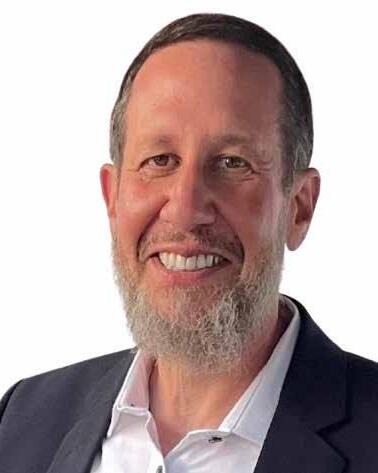
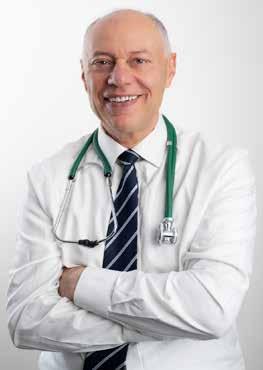
Dear Rabbi
According to Jewish understanding, what was the original sin committed by Adam and Eve? Was it a sin of the flesh, or should it be taken literally as eating from the forbidden tree?
Robin
Dear Robin
TThe very phrase “original sin” is more Christian than Jewish. It suggests that humanity is born stained by Adam and Eve’s mistake. Judaism emphatically rejects that notion. We believe every person enters the world with a pure soul and is judged on their own choices, not those of distant ancestors.
As for the first sin itself, the Torah presents it as eating from the forbidden tree. Whether one understands deeper symbolic layers behind the story is a separate discussion, but the Torah’s message is clear: the first human beings were given a command and chose to disregard it. After creating heaven and earth, G-d created Adam and Eve. And the first thing he said was “don’t!” “Don’t what?” Adam replied. “Don’t eat the forbidden fruit.” “Forbidden fruit? We have forbidden fruit? Hey Eve, we have forbidden fruit” “No Way!” “Yes way” “Do not eat the fruit!” repeated G-d. “Why?” “Because I am your Father and I said so!” G-d replied, wondering why He hadn’t stopped creation after making the elephants. A few minutes later, G-d saw His children having an apple break and boy was He angry. “Didn’t I tell you not to eat the fruit?” Adam pointed to Eve. “She started it!” “Did not!” “Did too!” “Did not!” Having had it with the two of them, G-d’s punishment was that Adam and Eve should have children of their own. Thus, the pattern was set, and it has never changed.
Dear Rabbi
I am puzzled by the diversity of practice among United Synagogue congregations. In one synagogue men and women are kept separate even for post-service discussions, while in another they are encouraged to sit together. In one community women recite some of the public prayers, in others they do not.. Shouldn’t the Chief Rabbi and Beth Din provide uniform standards so one can move comfortably between congregations?
Ze’ev
Dear Ze’ev
You raise an interesting question. There is a common perception that Halachah is entirely black and white. In reality, whilst many areas are crystal clear, there are also numerous areas where legitimate rabbinic discretion exists. It is often within those grey areas that different rabbis arrive at different conclusions while remaining firmly within the boundaries of Orthodox Judaism.
The United Synagogue has always aimed for unity rather than uniformity. That means sharing core beliefs, values and standards whilst allowing individual rabbis a degree of autonomy in matters where Halachah permits differing approaches.
Think of it like a family. Everyone shares the same
surname, but not everyone agrees on the correct way to make chicken soup.
The Chief Rabbi and Beth Din provide guidance and set parameters, but local rabbis are expected to exercise judgement appropriate to their communities. Occasionally that can be frustrating for visitors seeking consistency, but it is also one of the reasons the United Synagogue has been able to accommodate


E Y H O M E B E G I N W I T H U S

H a r a k e v e t s t r e e t
D u p l e x
3 b e d r o o m s
S a f e r o o m ( m a m a d )
2 s u k k a h b a l c o n i e s
F u l l o f l i g h t
Asking Price:
₪ 1 0 , 5 0 0 , 0 0 0

H A D E R A
O l g a B e a c h
L u x u r y D u p l e x P e n t h o u s e
5 b e d r o o m s
L a r g e w r a p - a r o u n d b a l c o n y
G o r g e o u s s e a v i e w s
P r i v a t e p o o l
Asking Price:
₪ 6 , 7 0 0 , 0 0 0


J E R U S A L E M
M a m i l l a
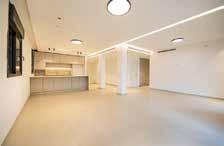
G a r d e n u n i t
O n e l e v e l
3 l a r g e b e d r o o m s
T u r n k e y
B e a u t i f u l l y d e c o r a t e d
P r i c e o n R e q u e s t

B a k a
P e n t h o u s e
W a l k u p
H i g h c e i l i n g s
3 b e d r o o m s
D i r e c t r o o f a c c e s s
Asking Price: ₪ 4 , 3 5 0 , 0 0 0

E D E N H I L L S
2 r e a d y - b u i l t h o m e s
S o l d a s s h e l l i n s i d e
O p t i o n t o c o n n e c t o r b u y i n d i v i d u a l l y
7 m i n u t e s t o R B S P r i c e d u n d e r m a r k e t v a l u e !
Asking Price: ₪ 5 , 5 0 0 , 0 0 0 / p e r u n i t




Baka - Gad

4,600,000
Old Katamon - Hachim

6,780,000
Old Katamon - Ben Gamla

5,390,000
City Center - Haneviim Court*

6,450,000
Caspi Neighborhood - Caspi
5,950,000
Baka - Dan**

Old Katamon - Halamed Hey

Ganei Tzion - Eliezer Hagadol

German Colony - Klein

Kiryat Shmuel - Charlap

This week’s Parshah tells the story of Korach, a man from the tribe of Levi who challenged the leadership of Moshe and Aharon. Korach gathered a group of followers and complained that Moshe and Aharon had taken too much power for themselves. He argued that all the Jewish people were holy and that no one should have special authority over the others.
Moshe was upset by Korach’s accusations and turned to Hashem for guidance. Hashem instructed Korach and his followers to bring
incense offerings to show whom He had chosen. The next day, Korach and his supporters stood with their offerings before the Mishkan. Hashem then performed a great miracle to demonstrate that Moshe and Aharon were His chosen leaders. The ground opened up and swallowed Korach and the main rebels, while a fire consumed those who had brought the incense offerings.
Even after witnessing these events, some of the people continued to complain. As a result, a plague
The goal of a word wheel puzzle is to create as many words possible with the letters in the word wheel.
Each word must contain at least three letters. You can only use each letter once and every word must have the letter in the centre of the wheel.
L N R E L I B E
broke out among the nation. Aharon acted quickly, bringing incense to stop the plague and save many lives.
To remove any remaining doubt about who had been chosen as Kohen Gadol, Hashem commanded the leaders of the tribes to place their staffs in the Mishkan. The next morning, Aharon’s staff had miraculously blossomed and produced almonds, showing clearly that Hashem had chosen him.
The Parshah also teaches important laws about the gifts given to the Kohanim and Leviim. The Jewish
people were commanded to support them because they served in the Mishkan on behalf of the nation. Through these mitzvot, we learn the importance of respecting those who dedicate themselves to serving Hashem.
Korach’s story teaches us a powerful lesson about humility, respect, and the dangers of jealousy. It reminds us to appreciate the talents and roles that Hashem gives each person and to work together in unity as a community.
A Jewish grandmother is walking on the
beach
with her grandson. Suddenly, a huge wave crashes in and sweeps the boy out to sea.
She looks up to Heaven and cries, “Hashem! This is my only grandson! Please save him!”
A few moments later, another wave rolls in and gently places the boy back on the sand, completely unharmed.
The grandmother looks at him, looks up to Heaven, and says: “He had a hat.”
This unique twist on the classic Sudoku puzzle uses the Hebrew letters א through ט instead of numbers 1–9. The rules remain exactly the same: each row, each column, and each 3×3 box must contain every letter once — without repetition.
החלצהב — and enjoy the puzzle!
Q: Why did the matzah go to the doctor?
A: Because it was feeling a little crackered!
Q: What do you call a bagel that can fly?
A: A Plain Bagel!
Q: Why did the Torah cross the road?
A: To get to the other scroll!
Q: Why was the synagogue so cool?
A: Because it had a lot of fans!
What has a face and two hands but no arms or legs?
What has a neck but no head?
What gets wetter the more it dries?
What has one eye but cannot see?



The BA (Hons) Jewish Education at LSJS prepares a new generation of educators and leaders who can inspire our future.
This unique part-time degree combines academic study with real experience in Jewish educational settings, giving you the knowledge, skills and confidence to teach, lead and make a meaningful impact in Jewish schools and communities. Whether you already work in education, volunteer in a youth or community setting, or are considering a career in teaching, this degree offers a pathway to turn your passion into a profession.
Great Jewish education changes lives. It sparks curiosity, builds identity & shapes the future of our communities. It completely upgraded my teaching, guiding me with new perspectives and techniques. “ “ Kate, 2nd Year BA student
The degree covers both general educational principles and Jewish educational foundations and perspectives.
It is suitable for Jewish and general studies teachers, community educators and volunteers.
You will learn the theoretical framework of education and apply it to your specific context.
• Reflections on Professional Practice
• How Children Learn
• What is Jewish Pedagogy?
• Principles of Teaching and Learning
• The Jewish Studies Curriculum
• How to Manage a (JS) Classroom
• Inclusive Educational Principals & Practices
• Ethos and Social-Emotional Aspects of Learning
In your final year, you will complete an independent research project, allowing you to explore an area of Jewish education that matters to you.
• Primary (Schools Direct)
• Secondary (Schools Direct)
• Jewish Studies (Teach to Lead)
• Assessment Only route
• Rabbi
• Community Leader
• Informal educator
• MA Jewish Education
• PhD Jewish Education
*Further postgraduate study outside of LSJS
• Educational Psychologist
• Social Worker
• Lawyer
• Accountant
We welcome applicants from a wide range of backgrounds and experiences.
Typical qualifications include:
• Three A Levels (or equivalent)
• International Baccalaureate
• European Baccalaureate
• SQA Highers or Advanced Highers
• BTEC or Higher National qualifications
If your qualifications do not match these exactly, we are often still able to consider your application.
All applicants will be invited to an interview as part of the admissions process.