

SHABBAT: BEGINS ENDS
20:58 22:18
21:17 22:49
21:13 22:56
21:16 22:57
20:00 22:38 Antwerp 21:34 23:06
Bournemouth 20:57 22:26
Gateshead 21:20 23:10 Jerusalem 19:06 20:25
SHABBAT: BEGINS ENDS
20:58 22:18
21:17 22:49
21:13 22:56
21:16 22:57
20:00 22:38 Antwerp 21:34 23:06
Bournemouth 20:57 22:26
Gateshead 21:20 23:10 Jerusalem 19:06 20:25




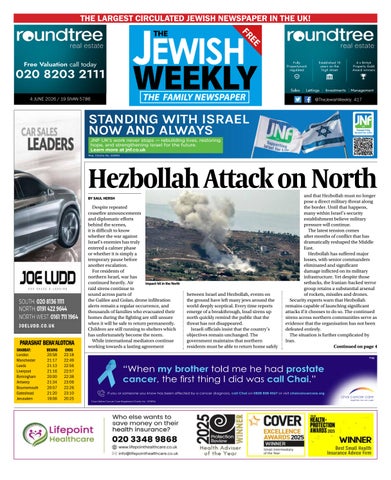
BY SAUL HERSH
Despite repeated ceasefire announcements and diplomatic efforts behind the scenes, it is difficult to know whether the war against Israel's enemies has truly entered a calmer phase or whether it is simply a temporary pause before another escalation.
For residents of northern Israel, war has continued heavily. Air raid sirens continue to sound across parts of the Galilee and Golan, drone infiltration alerts remain a regular occurrence, and thousands of families who evacuated their homes during the fighting are still unsure when it will be safe to return permanently. Children are still running to shelters which has unfortunately become the norm.
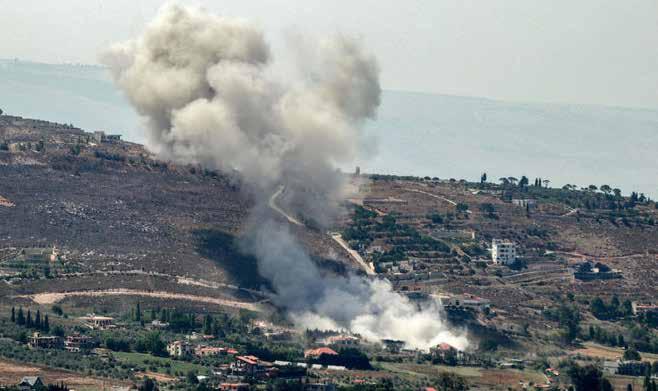
between Israel and Hezbollah, events on the ground have left many jews around the world deeply sceptical. Every time reports emerge of a breakthrough, loud sirens up north quickly remind the public that the threat has not disappeared.
While international mediators continue working towards a lasting agreement
“When
Israeli officials insist that the country’s objectives remain unchanged. The government maintains that northern residents must be able to return home safely
and that Hezbollah must no longer pose a direct military threat along the border. Until that happens, many within Israel’s security establishment believe military pressure will continue.
The latest tension comes after months of conflict that has dramatically reshaped the Middle East.
Hezbollah has suffered major losses, with senior commanders eliminated and significant damage inflicted on its military infrastructure. Yet despite those setbacks, the Iranian-backed terror group retains a substantial arsenal of rockets, missiles and drones.
Security experts warn that Hezbollah remains capable of launching significant attacks if it chooses to do so. The continued sirens across northern communities serve as evidence that the organisation has not been defeated entirely.
The situation is further complicated by Iran.
on page 4



Upsizing?
Downsizing?
Making Aliya?
Recently married?
Re-locating for work?
Growing family?
Empty nest?



Continued from page 1
Although direct exchanges between Israel and Iran have vastly reduced compared with the height of the confrontation from Purim until Pesach, the wider conflict remains unresolved. Iranian leaders as usual continue to accuse Israel of destabilising the region, whilst the IDF battle with the fact that Tehran keep investing huge amounts of time and money tomaintain attacks by Hezbollah, Hamas and other regional proxies against Jewish men, women and children.
Israeli intelligence assessments suggest Iran has already started to rebuild many aspects of its regional network following heavy blows suffered over recent months. All world jewey know that any ceasefire forced on Israel by Washington involving Hezbollah will merely provide time for reorganisation and rearmament, whilst stopping Israel properly finishing them off once and for all.
The country has witnessed numerous ceasefires over the past two decades that always collaps. As a result, announcements from international diplomats are often greeted with caution amd annoyance rather than celebration. Residents of northern Israel, in particular, need proper safety not empty promises. The ongoing security uncertainty is
also beginning to shape Israel’s political future.
With national elections drawing closer, security issues are once again dominating public debate. Questions surrounding Iran, Hezbollah, the northern border and Israel’s long-term military strategy are expected to become central campaign issues.
Prime Minister Benjamin Netanyahu and his supporters argue that the government has successfully confronted unprecedented threats while protecting Israel’s security interests. They point to major military achievements against both Hezbollah and Iranian-linked forces and argue that sustained pressure has significantly weakened Israel’s enemies.
Opposition parties, however, are expected to focus on the continued instability in the north. Critics argue that despite military successes, the reality remains that Israeli citizens are still hearing sirens, communities remain partially evacuated and long-term security has not yet been achieved.
Recent polling suggests voters remain deeply divided. While many Israelis support a tough military response against Hezbollah and Iran, there is also growing public frustration over the length of the conflict and uncertainty surrounding its eventual outcome.
The election campaign is therefore
likely to become, in many ways, a referendum on the government’s handling of the war.
Businesses across northern Israel have suffered huge disruption. Tourism remains well below normal levels in many areas, agricultural communities have faced repeated interruptions and local economies continue struggling to recover. Many business owners say they need not only security but certainty before they can rebuild properly.
At the same time, continued instability across the Middle East has contributed to volatility in global energy markets. Investors remain concerned that any renewed escalation involving Iran could impact oil supplies and international shipping routes for many months, affecting consumers across the world.
Schools have gradually reopened in many affected areas. Community organisations have worked tirelessly to support displaced families. Local councils are investing in rebuilding efforts, while soldiers remain deployed along the northern border to deter further attacks.
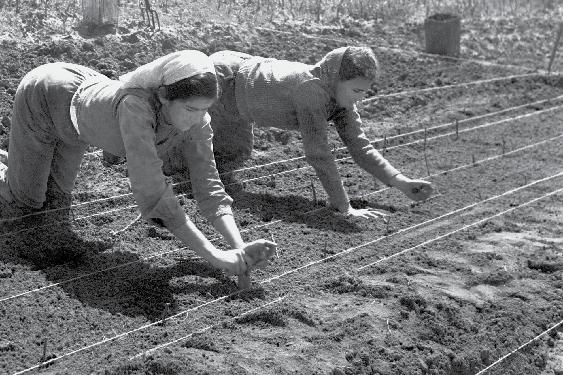
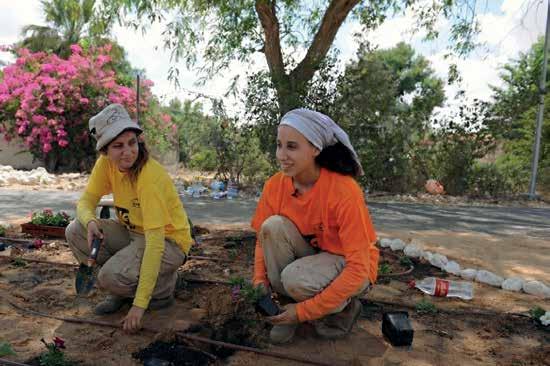
For many residents, daily life has become a balancing act between caution and determination. Families continue going to work, sending children to school and rebuilding communities even while remaining alert to the possibility of fresh attacks.
Military officials stress that the IDF remains prepared for any scenario. Whether the current ceasefire efforts succeed or fail, Israel’s armed forces continue maintaining a high level of readiness along multiple fronts. That readiness reflects the reality facing the country today.
The war may no longer dominate headlines in the same way it did during its most intense phases, but the threat has not disappeared. Hezbollah remains armed. Iran remains hostile. Sirens continue sounding in northern communities. And the political battle over how best to confront those challenges is only just beginning.
As Israel moves towards elections, voters will face difficult questions about security, diplomacy and the future direction of the country. The decisions made in the coming months could shape not only the next government but also Israel’s strategy towards Iran and Hezbollah for years to come.
While ceasefire negotiations continue and politicians prepare for election campaigns, families across northern Israel are still running to shelters when sirens sound. Until that changes, many Israelis will remain unconvinced that the war is truly over.

BY MICHELLE BALEM
Residents of Gush Etzion were once again confronted with the reality of life under constant terrorist threat this week after a Palestinian attacker carried out a car-ramming attack at the busy Gush Etzion Junction, injuring two Israeli teenage girls before being shot dead by security forces.
The attack took place at one of the busiest intersections in Judea and Samaria, used daily by thousands of Israelis travelling between Jerusalem, Efrat, Alon Shvut and the surrounding communities. According to reports, the terrorist accelerated his vehicle towards a bus stop where young people were waiting, deliberately targeting civilians.
A 17-year-old girl suffered serious injuries while a 15-year-old girl was moderately wounded. Magen David Adom paramedics arrived within minutes and provided emergency treatment before evacuating both victims to hospital in Jerusalem.
Witnesses described scenes of panic as soldiers, civilians and emergency personnel rushed to help the injured teenagers. The terrorist was quickly neutralised by an IDF soldier stationed nearby, preventing what could have
been a far more devastating attack.
Military officials later praised the soldier for his swift response, noting that after eliminating the threat he immediately began treating the wounded girls until medical teams arrived.
The attack has shocked communities across Israel and once again highlighted the dangers faced by Israelis living and travelling throughout Judea and Samaria. Vehicle-ramming attacks have become a common tactic used by terrorists because they require little preparation and can be carried out without sophisticated weapons.
For residents of Gush Etzion, the latest attack reopened painful memories of previous acts of terrorism in the area. The region has endured numerous shootings, stabbings and ramming attacks over the years, while the Gush Etzion Junction itself has frequently been targeted because of the large number of civilians who pass through it each day.
Community leaders praised the actions of the security forces and emergency responders, saying their rapid intervention undoubtedly saved lives. They also stressed that terrorism will not weaken the determination of residents to continue building and strengthening Jewish communities in the area.
The attack comes during a period of heightened tension for Israel. While much of the nation’s attention has been focused on the continuing threats from Iran, Hezbollah and Hamas, security officials have repeatedly warned that Palestinian terrorism remains a significant danger. Incitement on social media, glorification of terrorists and ongoing extremist activity continue to encourage attacks against Israeli civilians.
Many residents expressed frustration that despite repeated attacks, terrorists continue to find opportunities to strike. Calls have once again been made for stronger security measures at vulnerable junctions and bus stops throughout Judea and Samaria.
Across Israel, prayers were offered this week for the complete recovery of the injured girls. Messages of support poured in from communities around the country, while schools and youth groups held special prayer gatherings on their behalf.
The attack serves as another painful reminder that for many Israelis, particularly those living in Judea and Samaria, terrorism is not a distant headline but a daily reality. Parents send their children
to school not knowing what dangers may arise on the roads. Teenagers waiting for a bus can suddenly find themselves targeted simply because they are Jewish. Yet despite the fear and uncertainty, the response from Gush Etzion has been one of resilience rather than surrender. Residents vowed that terrorism would not drive them from their homes or weaken their connection to the land.
As the injured girls continue their recovery, the people of Gush Etzion remain united in grief, prayer and determination. Once again, a community has been forced to confront terror. Once again, it has responded with courage. And once again, Israelis have demonstrated that while terrorists may inflict pain, they will not break the spirit of the Jewish people.
income needed Turn your home into your golden years.
If you’re over 55 and own your own home, you can unlock its value with a Lifetime Mortgage.
monthly payments required







BY MARTIN KENT
Travellers between Britain and Israel continue to face uncertainty this summer, with some major airlines extending suspensions while others are finally preparing to resume services after months of disruption caused by the regional conflict.
The biggest positive development is the planned return of the Lufthansa Group. Lufthansa, SWISS, Austrian Airlines and Eurowings have all announced plans to gradually restore flights to Tel Aviv. Austrian Airlines has already resumed operations, while Lufthansa and SWISS are expected to return during July. Their decision is being viewed as an important sign of confidence in Israel’s aviation market after a lengthy period during which many foreign carriers stayed away.
Before the conflict, Lufthansa Group was one of the largest European airline operators serving Israel, carrying thousands of passengers each week through its hubs in Frankfurt, Munich, Zurich and Vienna. The return of these services should provide British travellers with far more connection options to and from Israel.
However, not every airline is following suit.
British Airways has once again postponed its return to Tel Aviv. The airline had hoped to resume flights during the summer but has now pushed back its restart date until at least August.
The continued absence of British Airways means UK passengers remain heavily dependent on El Al for direct flights between London and Israel.
The delays have also kept fares relatively high compared with prewar levels, particularly during peak holiday periods and around the summer school break.
Israel services before 2027, highlighting the ongoing concerns among some international operators about regional stability.
Meanwhile, Wizz Air has resumed flights to Israel and is once again offering a range of European connections.
The low-cost carrier’s return has been welcomed by travellers looking for more affordable alternatives, although schedules remain more limited than before the conflict.

Several other carriers remain cautious. Brussels Airlines has extended its suspension until the autumn, while Iberia has also delayed a return.
American Airlines has indicated that it does not currently expect to resume
For many months, Israel’s aviation network has relied heavily on Israeli carriers including El Al, Arkia and Israir. El Al in particular has continued operating flights throughout much of the crisis, becoming the primary option for many British Jews travelling for family events, business, holidays and communal programmes.
Industry experts say airlines are carefully monitoring security
developments before committing to full schedules. While the situation has improved significantly compared with the height of the conflict, carriers remain wary of sudden escalations that could force further cancellations.
Ben Gurion Airport continues to operate normally, but passenger numbers remain below levels originally forecast for the summer season. Tourism officials are hopeful that the return of Lufthansa and other European carriers will encourage additional airlines to follow.
For now, travellers are being advised to check airline updates regularly and ensure they understand cancellation and rebooking policies before travelling. While confidence is gradually returning, the route network between the UK and Israel remains far from fully restored. The return of Lufthansa marks the strongest sign yet that international aviation is beginning to regain confidence in Israel. Nevertheless, with British Airways still absent and several major carriers continuing to delay services, passengers should expect a degree of uncertainty to remain throughout the summer months.

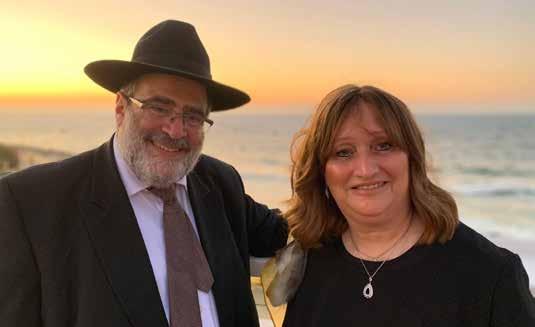
After more than 27 years of dedicated service to the Hendon United Synagogue community, Rabbi Mordechai and Rebbetzen Judy Ginsbury have announced that they will be retiring as the community’s Senior Rabbinic couple in May 2027.
Rabbi and Rebbetzen Ginsbury began their roles in Hendon after having spent 14 years in Manchester. During their time in Hendon they have made a real impact on the community, launching programmes like Hendon CARES, the Kashrut Assurance Programme, the Minyanim Forum, and creating initiatives for Bar Mitzvah and Bat Mitzvah children.
They have also made an incalculable impact on the wider Jewish community through Rebbetzen Ginsbury’s support for singles and Rabbi Ginsbury’s efforts in Rabbinic development, most recently as the Associate Director for the United Synagogue’s Centre for Rabbinic Excellence.
Rabbi Ginsbury said: “It has been our absolute honour and privilege to have served the Shul in our roles over the past
27+ years. We feel that now is the right time for us to make this move. We cannot deny the march of time and feel that it is better to retire from such prestigious positions whilst still blessed to be able to serve the community fully.”
Alan Berkley, Chair of Hendon United Synagogue, said: “Rabbi and Rebbetzen Ginsbury have been the driving forces behind the Hendon United Synagogue community for over a quarter of a century. Their dedication and care will be hugely missed on both a communal and personal level.
“This is also an exciting time for them as they plan their next phase and for our community as we begin the process of appointing only our fourth Senior Rabbi in 80 years.”
Saul Taylor, President of the United Synagogue, said: “Rabbi and Rebbetzen Ginsbury have devoted themselves to the Hendon community with outstanding distinction and commitment. Over many years, their leadership, wisdom and personal warmth have inspired generations of families and helped shape the
character of this important community. Their unwavering dedication has left a lasting legacy that will be felt for years to come. Beyond Hendon, their influence across the United Synagogue has been considerable, serving as a source of inspiration and guidance to a new
generation of rabbinic couples who have looked to them as a model of excellence in Rabbinic leadership.”
Hendon United Synagogue will soon begin planning for the process of appointing Rabbi and Rebbetzen Ginsbury’s successors.








Stop
Since
Dozens of Projects Across Israel!
Vacation homes in dreamy locations
Vacation homes in dreamy locations
Prime investment opportunities
Prime investment opportunities
Properties in Anglo communities
Expert guidance from A to Z










BY RAFI SMITH PREGNANCY LOSS
Pregnancy loss, whether through miscarriage, stillbirth, or neonatal loss is one of the most painful, yet least understood forms of grief. Within the Jewish community, where family, children, and hopes for future generations hold such deep meaning, this loss can be even more difficult. Yet many couples find themselves carrying their pain quietly, often feeling isolated, unseen, unsupported and misunderstood.
Part of the difficulty lies in the nature of the loss itself. Pregnancy loss is an ambiguous grief, where the loss remains undefined and misjudged. Others may unintentionally minimize it, seeing it as the loss of “what might have been” rather than the loss of a baby who was already loved and woven into a family’s hopes and dreams. Parents may already have imagined names, milestones, family roles, and futures. The grief is not only
for a life lost, but for a relationship and future interrupted.
The Jewish religion offers powerful frameworks for mourning for many different loss; shivah with a communal presence, memorial rituals, and clear language for grief. Pregnancy loss falls painfully outside of these structures. There is no formal mourning period, no communal gathering, and no clear way to commemorate or publicly acknowledge the loss. This absence can leave couples feeling isolated and uncertain about how to grieve.
For a woman, the loss is frequently both emotional and physical. Her body carried and invested into the pregnancy, underwent change because of it, and may continue to bear signs of it after the loss. She may have felt movement, attended appointments, and experienced the baby as a living reality within her.
A man’s experience may be different. While many fathers feel pain and grieve deeply, their connection to the pregnancy may have been more
conceptual or anticipatory. They may not have experienced the physical reality of pregnancy in the same way. These differences do not have to reflect the depth of love or pain, but it can shape how grief is experienced and expressed by both the man and woman. These differences often can create strain within a marriage. A wife may need to speak about the loss, hold onto memories, or remain closely connected to the pain. Moving away from the pain too quickly may may feel unnatural or even disloyal, as though healing means forgetting or betraying the baby she carried. A husband, meanwhile, may find his way to cope by returning to routine, work, or practical responsibilities. This is often not avoidance or indifference, but an attempt to regain some stability and emotional footing.
Couples may grieve differently, on different timelines, and with different needs. Without understanding each other’s experience, spouses can misread one another’s coping styles as seeing distance where there is grief, or silence where there is love. Studies indicate that pregnancy loss can place significant stress on the relationship, not because of the loss itself, but because grief, when carried alone or misunderstood, can create emotional distance between the couple. Pregnancy loss is not only a grief challenge, but also a relationship challenge.

For some couples, pregnancy loss raises painful spiritual questions. There may be struggles with faith, feelings of confusion, anger, guilt, or questions of “Why did this happen?” and “Where is Hashem in this experience?”
Others may find comfort in faith and community. There is no single “correct” religious response. Spiritual struggles and spiritual comfort can coexist, and both deserve space and compassion.
In addition, the loss rarely ends with the pregnancy itself. Many couples carry anxiety into future pregnancies, fear of recurrence, and a shaken sense of trust in their bodies, plans, or expectations. Even joyful news can become intertwined with fear.
For friends, family, and community members, support matters deeply. Most people cannot take away the pain,
but they can help lessen the loneliness. Simple acknowledgment: “I’m so sorry,” or “I’m here with you” is often more healing than explanations or attempts to reassure. Couples do not need solutions; they need space for their grief to be recognized and respected.
No couple should have to navigate this experience alone. Organizations familiar with pregnancy loss can both offer support and help the couple better understand their own grief and one another’s. Therapy does not erase pain, nor does it rush mourning. Rather, it can create space for communication, validation, and shared healing, helping couples face the loss together rather than alone.
Pregnancy loss deserves recognition, compassion, and community. When grief is acknowledged and supported, couples are better able not only to mourn what was lost, but also to protect and strengthen the relationship that must carry that grief forward.
Rafi Smith is an Individual & Couple’s Therapist experienced in providing therapy for navigating Pregnancy Loss. He is also a case manager in the organizations Knafayim & Nechama Comfort who offer support for Pregnancy Loss.


Headteacher: Mrs E Pearlman Menahel: Rabbi Y Levenson
Menorah High is a high-achieving voluntary aided secondary girls’ school in north-west London. The girls are full of enthusiasm and keen to learn.
We are looking to fill the following vacancy:
You will have the opportunity to work within a close and caring school community. We offer a high level of professional support and mentoring. If you are not already a qualified teacher, we can provide access to a range of routes to achieving that goal.
If you are an enthusiastic and highly motivated individual with excellent communication skills, please contact the school on 020 8208 0500 or email admin@menorahhigh.com for further details.
Menorah High School for Girls is committed to safeguarding and promoting the welfare of children, young people and vulnerable adults and expects all staff and volunteers to share this commitment. An enhanced DBS check is required for successful applicants.


Property, pensions, tax exemptions, offshore structuring, healthcare, inheritance tax, your aliyah benefits
Whether your plans are imminent or many years away, join this essential webinar on Aliyah, covering both practical and financial opportunities.
Tuesday 9 June 2026 | Zoom Webinar, 4pm GMT
Featuring: Our specialist Chartered Financial Advisers together with Dov Newmark, Aliyah adviser
For more information, call 020 8202 1944 or email us at GoldersGreen@RaymondJames.com Visit our website at GoldersGreen.RaymondJames.uk.com or scan the QR code to register.
With investing, your capital is at risk. Tax treatments are subject to individual circumstances and are subject to change.






Almost 80 leading organisations working to end violence against women and girls have backed a call to action against antisemitism led by Jewish Women’s Aid (JWA), the UK Jewish community’s sole support service for women and children affected by domestic abuse and sexual violence.
Major national organisations, faith based and minority groups from across the sector were among 79 signatories to the letter (published in full below) – as well as London’s Victims’ Commissioner Andrea Simon.
Major bodies include: Women’s Aid, Refuge, Rape Crisis England & Wales, SafeLives and the End Violence Against Women Coalition. They are joined by a broad coalition of faith and minority community organisations, including: Muslim Women’s Network UK, Sikh Women’s Aid, Christian domestic abuse charity Restored, Kaur Lab UK CIC, Ashiana Network, Shakti Women’s Aid, Panahghar, Roshni and the Church of Scotland's Integrity Task Group on Gender Based Violence.
children experiencing domestic abuse, these harms can be especially acute.
Survivors who are already living with abuse and trauma should never have to navigate fear because of their Jewish identity as well.”
The signed letter continues: “We commit to actively challenging antisemitism wherever it appears, to ensuring our spaces are safe and inclusive for Jewish women and families, and to standing in solidarity with the Jewish community now and in the future.
“At a time of fear and uncertainty, we stand with Jewish Women’s Aid and send a clear message to the Jewish community: you are not alone.”
JWA CEO Sam Clifford, who initiated the letter in a call for the sector to openly stand with the Jewish community, said:
specialist Rape Crisis centres, said: "Rape Crisis England & Wales stand in solidarity with Jewish Women's Aid and the wider Jewish community at this painful and frightening time. Our organisations share a vision for a world in which women can live their lives free from violence, and survivors can access support and recovery services when the time is right. This vision will never be realised in a society which treats some communities as less worthy or in need of support than others, or in which dedicated and amazing women who provide those services are themselves unable to go about their daily lives, or work. Rape Crisis knows that women's individual freedom relies on our collective freedom. That's why we're committed to challenging all forms of racism and discrimination, and to supporting this letter."
crime targeting people from different religious and racialised backgrounds is alarming and unacceptable. The rise in antisemitic attacks on our Jewish siblings and community has not gone unnoticed. One of the oldest forms of racism and hatred in Europe cannot be normalised, nor left to be weaponised by racist and regressive forces in our society. The Faith and VAWG Coalition is proud to have created a space where individuals and organisations from different faiths, and those with none, can come together to work for justice, and to support women and families impacted by domestic abuse and gender-based violence. We stand in solidarity with all who fight the scourge of racism, of which antisemitism is one of its defining features."
The letter, which is published today, reads: “As organisations and leaders committed to ending violence against women and girls (VAWG), and to building a society rooted in safety, dignity and justice, we stand in solidarity with the Jewish community at a time of deeply concerning increases in antisemitism.
“Following the terror attacks in Heaton Park Synagogue and Golders Green, alongside the spate of arson attacks targeting Jewish spaces, we recognise that the Jewish community is experiencing heightened fear in their schools, synagogues, workplaces and public spaces. Antisemitism is not an abstract issue; it has profound emotional, psychological and physical consequences for those targeted by it.”
The letter, the first of its kind, goes on to recognise the double-impact of antisemitism on Jewish victims of domestic abuse and sexual violence. It reads: “As leaders in the VAWG sector, we recognise that for women and
“At a time when many Jewish people are feeling frightened, vulnerable and increasingly isolated, this extraordinary show of solidarity means more than words can express.
“The recent attacks on Jewish spaces have left many questioning their safety and sense of belonging in this country. What this campaign has shown is that there are allies across every faith, background and community who are prepared to stand up and be counted. Almost 80 organisations answered our call, sending a clear message that antisemitism has no place in our society and that the Jewish community is not alone."
Susie McDonald MBE, CEO of Tender Education & Arts, which uses drama and the arts to help prevent domestic abuse and sexual violence, said: “Tender stands against antisemitism and in allyship with Jewish Women’s Aid. We do not tolerate abuse or violence of any kind, and we condemn the attacks on Jewish people
Ghadah Alnasseri, Executive Director of Imkaan, a UK-based Black and minoritised feminist organisation, said: “Our solidarity goes out to Jewish communities who feel unsafe and fearful, where communities have endured a frightening escalation of antisemitic attacks. We also extend that solidarity to Muslim communities, migrant communities and all those who fear collective punishment for the actions of one individual.

and communities. There is no place for antisemitism, or any form of racism, in the UK."
Ciara Bergman, CEO of Rape Crisis England & Wales, a charity working to end sexual violence and abuse and support survivors through its network of
Huda Jawad, of the Faith and VAWG coalition, the UK’s independent authority on faith-literacy in VAWG, said: "Our country is experiencing a turbulent and challenging time. The rise in hate
"These attacks do not exist in isolation. They emerge from a landscape of interconnected harm: rising antisemitism, Islamophobia, anti-migrant rhetoric, and farright ethno-nationalism. Violence is enabled by systemic failures that consistently betray the most marginalised communities.
"We know from our work with Black and minoritised women and girls subjected to domestic abuse, sexual violence and wider forms of violence against women and girls (VAWG) that they are repeatedly failed by systems that are not designed to address root causes. Ending violence in all its forms means tackling racism, misogyny and structural inequality together. Anything less risks leaving the most vulnerable behind."






BY RABBI RAPHY GARSON
Pre WW2, Ukraine was home to a huge Jewish population.
Around 2.5 million Jews lived across the country, thriving in cities, towns, and shtetls that had existed for centuries. Historians estimate that at least 1.5 million Jews were murdered in territories that today form part of Ukraine.
In June 1941, Nazi Germany invaded the Soviet Union.
As Soviet forces retreated eastwards, many Jews tried to flee with them. However, countless others, especially the elderly, the sick, and families with young children were left behind.
detonated explosives they had planted before retreating, destroying the German military headquarters. Although the Jews of Kyiv had nothing to do with the attack, the Nazis immediately blamed them. The explosions became the pretext for one of the largest massacres of the Holocaust.
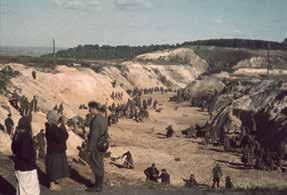
Nazi propaganda deliberately conflated Jews with Bolshevism, portraying Jews as responsible for Soviet communism and oppression. This fusion became a central justification for the mass murder of Jews across Eastern Europe.
The Germans captured Kyiv in September 1941. Days later, Soviet NKVD agents
On 28 September 1941, notices appeared across Kyiv ordering Jews to gather the next morning with their belongings, warm clothes and valuables as they were to be deported. Tragically on 29 and 30 September, they were marched to a ravine called Babi Yar outside Kiev. There, Nazis and local collaborators, systematically murdered them. Victims were forced to hand over their possessions, strip naked, and walk to the edge of the ravine. Families were separated amid screams, confusion, and terror. Then they were shot in groups, their bodies falling into the gorge below. Over the course of just two days, 33,771 Jews were murdered according to the official German report. It remains the second largest mass shooting of the Holocaust.
For years, Babi Yar was just a number a statistic of 33,771 buried within the unimaginable scale of the Shoah. Yet a few years ago, while preparing a social action trip, I visited Babi Yar myself. Standing at the site, I was overcome with emotion and wept! For the first time, I truly understood the importance of humanising the Holocaust.
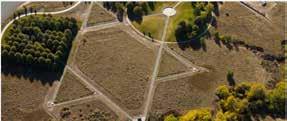
I grew up in Gibraltar and attended a non-Jewish school where I knew almost everybody in my year and many people across the community. Gibraltar’s population today is around 34,000 people, almost identical to the number murdered at Babi Yar in just two days. The figure was no longer abstract. I imagined my entire hometown wiped off the map. Every teacher, friend, neighbour, child, and family member gone within forty-eight hours.
That realisation transformed the way I understand the Shoah. The Holocaust is often discussed through statistics: six million Jews murdered, millions more persecuted. Yet every number represents an individual human being, someone with dreams, fears, relationships, and a future that was stolen.
At Babi Yar, I realised that the tragedy
lies not only in the scale of the killings, but in the destruction of entire worlds. The massacre also reveals how propaganda, prejudice, and conspiracy theories can rapidly lead to catastrophe when human beings stop seeing others as individuals. The antisemitic lies spread by the Nazis in 1941 may seem distant, yet the resurgence of Jew-hatred across the world today reminds us how dangerous such rhetoric can become when left unchallenged.
Today, Babi Yar stands not only as a memorial, but as a warning. Remembering it means more than recalling a number. It means recognising the humanity of the victims, standing against antisemitism in all its forms, and ensuring that hatred and dehumanisation are never allowed to flourish again.
Rabbi Raphy Garson, raised in Gibraltar, served 18 years as Senior Rabbi of Ohr Yisrael Federation in Elstree and now leads the Rabbinic Team at Tiferet Eyal Synagogue in Hendon. A Holocaust educator, he has guided over 6,500 students to Poland and leads Jewish heritage journeys worldwide with JRoots.

























22-30 JUNE 2027
Mehadrin Kosher
Entire Ship Exclusive to Kosher Travelers



Embark on an unparalleled journey with the world’s only Kosher Travelers Svalbard Expedition.
Explore a remote Arctic wilderness of dramatic fjords, towering icebergs, and breathtaking northern landscapes. Encounter incredible wildlife, including polar bears, walruses, Arctic foxes, seals, whales, and diverse birdlife. All guided by seasoned professionals for a safe and unforgettable experience.




EARLY BIRD DISCOUNT TILL 30 MAY ‘26





* Ideal Cruise Season on the M/V Sea Spirit, Poseidon
* Freshly Prepared Gourmet Cuisine
* Daily Tefilla & Sefer Torah
* Shabbat atmosphere
* Boutique experience for 100 guests
* Personally Hosted by David & Chana

BY RABBI MENACHEM LEIBTAG
Why was Aharon depressed?
The first Rashi in this week’s parasha deals with this question as he explains the juxtaposition between the first topic in Parashat Beha’alotecha – for Aharon to light the menorah (8:1–5), and the last topic in Parashat Naso – the twelve-day dedication ceremony of the mizbayach (7:1–88): “Why is the parasha of the menorah juxtaposed to ‘chanukat hanessi’im’ (the special offering brought by the princes of each tribe)? When Aharon saw the daily dedication offering by the ‘nessi’im’, he became DEPRESSED, because neither he, nor his shevet, took part in this ceremony. G-d assured Aharon, saying: Do not worry, YOUR PORTION IS GREATER than theirs, for you are to light and attend the MENORAH every morning and evening.”
Considering that Aharon is indeed at the center of attention and very
busy during each day of the dedication ceremony, why should he have become depressed?
To understand Aharon’s reaction (according to the Midrash) we must consider the political realities of his predicament. Bnei Yisrael are about to leave Har Sinai and begin their journey to conquer and inherit the Land of Israel.
Although Aharon is indeed a very key figure during Bnei Yisrael’s short stay in the desert, he is apprehensive about what will most probably take place once Bnei Yisrael leave Har Sinai. The focus of national attention will shift to the excitement of military initiatives and political enterprise. Har Sinai, and maybe even the Mishkan, will soon be ‘long forgotten’.
Once the conquest of Eretz Canaan begins, it will be the twelve “nessi’im” (the tribal leaders) who will hold the highest positions of national leadership. They will establish economic policy; they will make treaties with foreign dignitaries; they will
make speeches at national gatherings; they will lead the nation in war.
Thus, it is quite understandable why Aharon becomes depressed. When he sees the attention that the twelve “nessi’im” receive, he realizes the insignificance of his position within the emerging national leadership. What ministry post will he receive? In his own eyes, he may have begun to view his job as merely the “shamash” (a beadle/attendant) taking care of the Mishkan. Indeed, a very technical job at best.
What is the significance of G-d’s consolation – that he will light the menorah?
Although the Midrash is well aware of Aharon’s numerous responsibilities in the Mishkan, it chooses specifically the menorah to symbolize an additional aspect of his national duties, i.e. teaching G-d’s laws to the people.
Once Bnei Yisrael entered the land, teaching the laws of the Torah will become the PRIMARY duty of the Kohanim
and Levi’im. Since their work is divided into 24-week shifts, the average Kohen or Levi would find himself working in the Mishkan only two weeks a year. Therefore, most of their time would be spent teaching and judging the people. It was for this reason that their cities are scattered throughout the twelve tribes of Israel.
Thus, the menorah may symbolize specifically this duty of the Kohanim –“chinuch”, teaching. If the purpose of the menorah is to spread light, then the purpose of the Kohanim is to spread Torah to the entire nation. This understanding can explain why Aharon is consoled when told that it is his job to light the menorah.
To read the full shiur, please go to tanach.org/bamidbar/bhal/shiur2.htm.
Rabbi Menachem Leibtag is an internationally acclaimed Tanach scholar and online Jewish education pioneer. He is a member of the Miz¬rachi Speakers Bureau (www.mizrachi.org/speakers).



BY RABBI YAKOV SCHONBERG AN EMBRYO'S CLAIM
In discussing the Noachide law of eiver min hachai (taking a limb from a living animal), Chullin 33a notes a general halachic principle: Can there be any act that is permitted to a Jew and at the same time forbidden to a gentile? This rule has its roots in a statement in Sanhedrin 59a: “Any commandment that was given to the Noachides and repeated at Sinai was intended for both groups.” Noachides are thus not absolved of that obligation. Murder is such an example, as it was repeated at Sinai.
Tosafos in both Chullin and Sanhedrin raises the anomaly that although a non-Jew is liable to capital punishment for terminating a pregnancy, as it is considered killing the unborn child, a Jew would not be liable for this. It is well established that the mode of punishment for a gentile is very different from that of a Jew, as non-Jewish capital cases can be judged by a single judge, with one witness, and without warning, and therefore the outcome is likely to be stricter. A Jew is governed by different rules regarding punishment, and he cannot be prosecuted unless he was given due warning not to commit the crime. However, in the case of an unborn child, there is uncertainty about whether the child will be born alive, so any warning cannot be given with certainty, thereby invalidating it. Tosafos notes that although a Jew is exempt from the death penalty, he is not permitted to perform an abortion, but Tosafos does not specify the nature of the prohibition. It is important to establish the parameters of the prohibition to assess whether it might be permitted in extenuating circumstances.
Before examining the halachic sources, it is important to mention that kabbalistic sources attach major significance to this prohibition, writing that such action drives the Shechinah from the world, making it impossible for HaShem to fix His abode in the universe and causing prayer to be unanswered, for it destroys the stratagem of HaShem (Zohar, Shemos 3b). Rav Akiva Tatz cites kabbalistic sources stating that many pregnancies are naturally lost as we approach the Messianic Age. This is because many
souls need to come into bodies even for a short time, so that the child will merit to come back in the World to Come. This is a great consolation for mothers who experience natural miscarriages, but it also demonstrates that the fetus has a significant level of life.
The basic halachic approach to abortion is found in the Mishnah (Oholos 7:6), which teaches that if a woman is having a difficult labor and her life is in danger, we may cut up the fetus while it is still inside her and remove it limb by limb. In the time of the Mishnah, it was generally not possible to remove the baby by cesarean section without killing the mother. Rashi explains that as long as the child has not emerged from the mother, it is not a nefesh, a being; it is only partial life (Sanhedrin 2b s.v. yatza rosho). The Rambam rules accordingly (Hilchos Rotzeach 1:9), and so does the Shulchan Aruch (Choshen Mishpat 425:2). The halachic reasoning underlying this prohibition can be gleaned from the Mishnah’s concluding clause, which explains why it is permitted to terminate the pregnancy: “for her life (the mother’s) comes before the life of the fetus.” The Mishnah then stipulates that once most of the fetus has emerged from the mother’s body, we may not touch it, because we may not push aside the life of one person to save the life of another. We can therefore infer from this statement that destroying the fetus in situations not involving a danger to the mother’s life would be prohibited (Teshuvos Chavos Yair 31). Rav Chaim Ozer Grodzinski shows that Tosafos’s remarks indicate the prohibition is Torah-level rather than a rabbinical edict. The Noachide prohibition is derived by Rabbi Yishmael
Whoever sheds man’s blood, by man (i.e., through a human court) shall his blood be shed. Expounding the verse by moving the comma after the word blood, Rabbi Yishmael queries: “Who is a man within a man? … A fetus within the womb of the mother” (Sanhedrin 57b). Thus, Rabbi Yishmael maintains that a Noachide who aborts a fetus has the legal status of a murderer, and the Rambam codifies the law in accordance with Rabbi Yishmael (Hilchos Melachim 9:4). Most poskim hold that abortion is biblically proscribed, but the question remains what the parameters of this prohibition are. There is considerable literature on this subject, which we will briefly .summarize as three main approaches
THREE VIEWS

In practice, every case warrants separate consideration because each individual's personal circumstances will vary. However, there are three main views among the poskim: 1. Abortion is murder. Rav Moshe Feinstein adopts the strictest approach, holding that abortion is cold-blooded murder, as it is for non-Jews, except that there is no capital punishment for Jews. He permits abortion only when the mother’s life is in definite danger, on the basis that the fetus has the status of a rodef, a pursuer (Igros Moshe, Yoreh De’ah 2:60:2). Others argue that it does not have the full law of rodef because the fetus is not acting intentionally, but HaShem is responsible for the current predicament. Rav Shlomo Zalman Auerbach permitted abortions even when doctors establish that there is a possibility of pregnancy posing a risk to the mother. He quoted the Chazon Ish, saying that the allowance is because the woman’s life takes precedence over the partial life of her unborn fetus, but not because of rodef. Alternatively, the fetus is regarded as an organic part of the woman’s body rather than a completely separate being (Toras Hayoledes 60:3). Rav Shmuel Wosner wrote that the allowance applies even if the fetus will pose a danger later in the pregnancy because the fetus was not a full nefesh (Shevet HaLevi 5:193). Rav Elyashev used that reasoning to permit a mother to receive cancer treatment even if it will kill the fetus (Shiurei Torah LeRofim, vol. 4, siman 230).
2. Unlawful wounding. Rav Yosef Trani seeks to show that although abortion is certainly forbidden, it cannot be considered murder (Teshuvos Maharit 97 and 99). The Mishnah in Arachin 7a rules that a pregnant woman sentenced to death must be executed without delay. The Gemara states that the mother be struck in the abdomen against the womb to cause the fetus's prior death. This is done to avoid the indignity she would suffer if the fetus attempted to emerge after her death. An act of murder would not be permitted simply to prevent dishonor to a corpse. Rav Trani advances an alternative approach; abortion is unlawful wounding or damage to the body.
3. Destruction of potential life. Other authorities do not consider the destruction of a fetus to be the taking of human life, yet they nevertheless forbid it on unrelated grounds. Many poskim hold that the fetus represents potential life, and its termination is akin to hashchasas zera levatalah, the improper emission of seed, an act the Talmud views as tantamount to the shedding of blood (Niddah 13a). Although this does
not constitute actual murder, it would be similar to the concept of avizraihu, actions ancillary to a specific sin, which bear many of the sin's stringencies (Teshuvos Chavos Yair 31).
The different approaches to the nature of the prohibition must be considered alongside another issue, the different stages of pregnancy. Yevamos 69b describes the fetus within the first forty days of gestation as maya be’alma, mere liquid. Rav Shlomo Zalman tended to be more lenient when the mother may be harmed as a result of the pregnancy, particularly in this early stage, when the fetus is not considered to be alive. This is reflected in the halachic status of the firstborn, where a miscarriage during the first forty days is disregarded. However, those who view the fetus as potential life would not differentiate between the different stages, and the concept of destruction of seed would apply from day one. The same would apply with regard to a woman taking the morning-after pill, which temporarily delays ovulation and fertilization within the first three to five days, so it prevents a pregnancy rather than terminating it. A competent Rav must always be consulted, who will take all these factors into account.
Pregnancies involving twins, triplets, and more are a common byproduct of infertility treatment. Such pregnancies increase the risks for both the mother and the fetuses, and the standard procedure is to reduce the number of fetuses to two to help the remaining fetuses have a better chance of healthy survival. Multiple pregnancies carry many risks, and even after fetal reduction, there may still be a chance that the woman will lose the entire pregnancy. The halachic perspective has an interesting twist. What is the halachah when two fetuses are threatening each other? According to the approach that rodef is the permitting factor for an abortion, is this considered a case of rodef? Rav Shlomo Zalman and others maintain that, due to the overcrowded uterus, there is a very real risk that all the fetuses will die, and one may perform a fetal reduction. However, if there is no reason to believe that a real danger is posed to all the fetuses, then it would not be permitted to terminate one or some of them just to increase the general well-being of the remaining fetuses (Medical Decisions in Halachah, p.232).
To contact Rabbi Schonberg, please email, yschonberg@gmail.com
To find out more, you can sign up at mercazdafyomi.com and receive a free gemoroh.




BY RABBI SHAUL YONATAN TAWIL
After designating Aharon as the one who lights the menorah, Hashem told Moshe how to build it. Rashi notes that the words "this is the form of the Menorah" (Bamidbar 8:4) teach us that Moshe had difficulty in building the Menorah so Hashem showed Moshe exactly what the Menorah should look like. Thus, the Torah stresses "this" meaning (as if) Hashem pointed out to Moshe with His finger the exact form of the Menorah.
Rabbi Nissan Alpert brings a great analogy to describe what Hashem did. Once, two people were given the materials to build a house. Neither had any experience in carpentry or building. The first one went to a master builder to learn the skills that were required. After he learned everything he needed to know, he built his house. The second one began on-the-job training, meaning, he took his own materials and started building, making mistakes along the way, cutting the wood too short or too long and learning the skill by trial and error. By the end he also became a master builder. The only problem was that he used up all his building materials in order to learn. Now that he was skilled, he had nothing to build with.
This is the way it is with life. We have a limited number of years on this earth, and we have a lot of work to do with our years. We just don't have enough years to learn the right way of life through trial and error. By the time one learns the way of life it is already time to leave. Therefore, Hashem gave us the Torah, the manual of life. Hashem says, this is the way. Don't use up your years in trial and error. The Menorah, which gives light, represents the light and knowledge of Torah. Moshe was having difficulty envisioning clearly the way to go. Hashem pointed with His "finger," to show him the way to build the Menorah, the way of life, saying to Moshe, "This is the way to go."
We have an obligation to learn the entire Torah and to master it. In certain sections of the Torah, however, we find an additional commandment to study and remember those passages. An example of this is the incident involving Miriam at the end of our Parsha: "beware of a Tzoraat affliction ... Remember what Hashem, your G-d, did to Miriam on the way, when you were leaving Egypt" (Devarim 24:8-9). The Rishonim debate whether remembering this incident constitutes a Mitzvat Asei (positive commandment). The Rambam does not include this in his list of positive commandments. It seems that Rashi too does not regard this remembrance as a Mitzvat Asei - "if you wish to take care that you not be stricken with Tzoraat do not speak Lashon Hara, remember what was done to Miriam who spoke against her brother Moshe and was stricken with afflictions of Tzoraat" (Rashi's commentary to Devarim 24:9). Rashi seems to imply that the Torah is offering us sound advice on how to protect ourselves from speaking Lashon Hara. The Ramban, however, counts this in his list of the Torah's positive commandments: "we are commanded to verbally
remember to take to heart what Hashem did to Miriam when she spoke of her brother, despite her being a prophetess, as a means of distancing ourselves from speaking Lashon Hara" (Ramban's appendix to the Rambam's Sefer HaMitzvotMitzvah 7). Either way we see that there is a great importance on not speaking Lashon Hara. The Rambam writes that one who achieves honour by putting down others has no share in the World to Come (Perush HaMishnyaot Sanhedrin P.10, Mishna 1).
The story is told of two Gedolim who used to learn together as children. A man approached one of them and asked him "which of you is better". The child responded: "how can I answer such a question? Saying that I am better would make me into a Baal Gaava, yet saying that he is better would be a lie!" The man responded: "you are both a Baal Gaava and a liar." Among the Baalei Mussar there are those who feel that this prohibition applies not only to one who says he is better than another, but even to one who thinks that he is better than another. A person must always be aware of his strong and weak points but not by comparing himself to others. Such comparisons can also be considered a form of Lashon Hara.
The Chovot HaLevavot relates the story of a pious individual who overheard someone speaking Lashon Hara about him. He gave him a present saying "you have given me a great present of your mitzvoth, for if one speaks Lashon Hara his mitzvoth are transferred to the one he has spoken about. Because you have given me such a gift, I will give you one in return." We must be very careful not to speak Lashon Hara. We are told that one who speaks Lashon Hara has no share in the Next World, he is tantamount to being guilty of the cardinal sins of idolatry, adultery, and murder. The best way to avoid speaking Lashon Hara is to speak only Divrei Torah. The Pasuk says "a soothing tongue is a tree of life" (Mishle 15:4) – the best thing for the tongue is to be involved in Torah which is the "Tree of Life" (Mishle 3:18). In this
manner instead of bringing the









BY RABBI RAFI STEMMER
The goal of every parent, therapist, teacher and rabbi should be to make themselves redundant.
Sounds a bit ridiculous, doesn’t it? Perhaps one of the deepest lessons in education is knowing that if people always need you, then something may be wrong.
This week’s Parshah, Parshat Behaalotcha contains a detail so small it’s easy to miss. Based on an interesting choice of word in the verse, the Gemara in Shabbat (21a) notes that when lighting the Menorah in the Beit HaMikdash, the Kohen had to hold the flame against the wick until it caught fire and burned on its own.
Rabbi Samson Raphael Hirsch (18081888) comments that this is the job of a parent and educator. The goal is to make oneself superfluous.
The often-quoted verse in Mishlei (22:6) says something similar. “Chanoch la’naar al pi darko - gam ki yazkin lo yasur mimenah.” Educate someone according to their own path, so even when they grow old, they won’t stray from it.
The test of education isn’t what happens when a child is sitting in our classroom, at our Shabbos table, or under our supervision. It’s about what happens years later when nobody is watching. That requires more than information. Yet much of Jewish education nowadays is information transfer. Dates. Laws. Hebrew vocabulary. And of course, there’s a place for that. But information alone doesn’t build a Jew who burns on his own. What does? Tools. How to think. How to ask questions. How to navigate challenges. How to build healthy relationships.
How to make decisions. How to deal with setbacks. How to continue growing when life doesn’t go according to plan. When I’ve discussed this in the classroom or around a firepit, suddenly students’ eyes light up.
But there’s one more thing. We need to give them the why behind the what. A felt sense that Judaism is not a system to be endured but a relationship to be lived. Somewhere along the way, many youngsters absorbed the message that keeping Judaism is a lifelong slog. Do this. Don’t do that. Eat this. Don’t eat that. It’s hard now but rewarding in the next world. Grit your teeth and get through it. The World to Come will make it all worthwhile. If that’s what Judaism is, then eventually people begin asking a fair question: “Why bother?”
But that’s not what Judaism is. As someone once put it to me: Judaism is not a religion, it’s a relationship. It’s realising that every person has a unique mission that nobody else can fulfil. That Hashem doesn’t merely tolerate us; He loves us, believes in us, and wants a relationship with us. It’s understanding that we as the Jewish people have a crucial job to do; a job that the rest of the world is desperate for (albeit subconsciously).
The mitzvot are opportunities to deepen our connection with Hashem, with other people and with our own deepest selves. That’s the goal.
The emphasis in Jewish education should be on Hashem’s love for every person and on the purpose and meaning behind our service. Because if people don’t understand the purpose, eventually everything feels heavy.
The famed Maggid of Dubno (17411804) gives a beautiful parable.
A wealthy gemstone merchant noticed his assistant struggling to carry his box of merchandise.
“That can’t be my box,” the merchant said.
“How do you know?” asked the assistant.
“Because my box is full of precious gems. Gems are not heavy.”
The message is powerful. If Judaism feels like a burden, perhaps the problem isn’t Judaism itself. Perhaps we’ve lost sight of what we’re carrying.
Think of somebody working out in the gym. An alien watching from another planet would assume the poor fellow was being tortured. He’s sweating, straining and breathing heavily.
The difference between torture and this guy in the gym is that he understands why he’s doing it. Purpose changes everything. Meaning transforms effort from burden into growth.
As parents and educators, our job is to guide our children and students towards the beauty behind of Judaism. To help them see that it’s not just laws to obey, but a relationship to build.
If we can do that, then we’ve given them something far greater than information.
We’ve given them a flame that can continue burning long after we’ve stepped away.
Rabbi Rafi Stemmer learned in the Mir Yeshiva and received semicha from Rabbi Yitzchak Berkowitz at the Jerusalem Kollel. He holds an MBA and heads the High Schools Department at Aish UK, where he works to inspire the next generation of British Jews. He is also a sought-after educator and performer, sharing his love of Judaism through song and guitar internationally.

BY RABBI MOSHE TARAGIN
How did it all come apart so quickly? Everything had been prepared for the great journey to Eretz Yisrael. The camp had been carefully arranged. The Mishkan had been constructed, and the Kohanim and Leviim had received their roles. The debacle of the Eigel had been forgiven and receded into the rearview mirror.
We stood only a few weeks' journey from the deserts of Sinai to the hills of Yerushalayim. Poised on the threshold of destiny, we were ready to enter Eretz Yisrael. How did that dream unravel so quickly? How did we fall so quickly from the threshold of destiny and become a generation condemned to wander the sands of Sinai for forty more years?
Parshat Beha'alotecha provides an answer. We witness a series of seemingly small infractions that steadily accumulate: gluttony for meat, challenges to Moshe's authority, and slander directed against him. Together, they snowball into the rebellion of the meraglim and the decree of forty years in the desert.
But what ignited this chain of failures? The answer is painfully simple and deeply human: they were afraid of change. Until now, Eretz Yisrael had been a distant vision. The promise of a land flowing with milk and honey had inspired us during Yetziat Mitzrayim. But now the dream was within reach. Eretz Yisrael was no longer an aspiration. It was about to become reality. Dreams are perfect. Reality is not. Reality demands sacrifice, perseverance, and the courage to confront uncertainty. The closer they came to entering Eretz Yisrael, the more daunting the prospect became.
Their fear led them to false nostalgia. Fear has a way of repainting the past in brighter colors than it ever possessed. We became so frightened of moving forward that we began to romanticize our past in Mitzrayim. We longed for the fish and vegetables we had eaten in Mitzrayim. Who, in their right mind, would long for slavery and persecution? The fish and vegetables we remembered were meager rations given to slaves. We had lived lives of hardship and subjugation. Yet a familiar past, however painful, felt more attractive than an uncertain future.
The fear ran so deep that it even affected family life. Normally, family serves as an anchor of optimism. Every child embodies a belief that tomorrow
can be better than today. Having children is itself an act of faith. We build families because we believe in the future.
Even in Mitzrayim, under unimaginably harsh conditions, we built large families. This is precisely what infuriated the Egyptians. They sought to limit the Jewish population, viewing it as a strategic threat. Yet the more they persecuted us, the more we multiplied. We were confident in a future, perhaps one still decades or even centuries away, and were willing to build families in anticipation of that future.
At this stage in the desert, however, fear began to overwhelm confidence. The anxieties voiced in public gatherings gradually seeped into family life. Instead of renewing hope, the tents became places of frustration and despair. The uncertainty that filled the public squares followed the people home. Tents that should have been filled with hope now echoed with complaints and tears.
Surprisingly, this atmosphere even affected Moshe Rabbeinu, who remained a human being. In a dramatic moment of despair, he throws up his hands and asks Hashem to take his life. Hashem responds by instructing him to appoint a council of seventy elders to help shoulder the immense emotional and administrative burden he has been carrying alone.
Even after receiving these instructions, Moshe responds to a divine promise in a strikingly unusual fashion. When Hashem promises to provide meat for the people, Moshe asks whether enough animals can be slaughtered to satisfy such a vast and demanding crowd. It is difficult to read this verse literally. A man who had stood at Har Sinai and received Hashem's revelation would not plausibly doubt Hashem's ability to feed a nation. However the verse is interpreted, Moshe's response is unusual for someone of his prophetic stature. It reflects how deeply the nation's discouragement had penetrated. The disillusionment that began among the rank and file had spread upward, reaching even its greatest leader.
with fear of the unknown. Fear bred insecurity, which surfaced in a series of failures. Those failures gradually snowballed into the catastrophe of the meraglim. Confidence about the future is an indispensable component of faith. Faith does not whitewash the future or promise a life free of struggle and disappointment. It does, however, assure us that history is moving toward a destination that Hashem has already determined. That assurance does not tell us how long the journey will take or how difficult the road may be. But it provides a foundation for confidence and hope. Faith should not distract us from present challenges, nor should it become a form of escapism. It should, though, strengthen us with the optimism and resilience needed to confront an uncertain future without being paralyzed by fear.
We are all living through a period of profound uncertainty, both globally and within the Jewish world. On a global level, it often feels as if we are living in the calm before a storm. Over the next decade, artificial intelligence is likely to

transform economies, education, and many aspects of daily life. No one can fully predict its impact. What does seem certain is that the world of 2036 may look dramatically different from the world of 2026.
At the same time, large-scale migration and rapid demographic change have left many people in the West feeling unsettled. Institutions, norms, and assumptions that once seemed permanent now appear fragile or in flux. Whenever people feel that the world around them is changing too quickly, anxiety grows.
and social anxiety have often fueled antisemitism. Jews become convenient scapegoats for pressures that have far deeper causes. Blaming a visible minority creates the illusion of certainty in a confusing world. If Jews can be cast as the source of society's problems, then a complex reality suddenly seems easier to explain. People imagine that there is a clear enemy to blame and that defeating that enemy will restore a lost sense of order.
Of course, this is a destructive fantasy. Assigning responsibility for vast social, economic, and cultural changes to a tiny minority and a small country is not a serious explanation of the challenges facing the West. It merely diverts attention from the far more complicated realities that societies must confront. In Eretz Yisrael, we are also confronting uncertainty. There will likely be no dramatic or definitive ending to this three-year war. We are exhausted from carrying its burden for so long. Iran will probably remain under its current regime, and the threats along our northern border may not disappear entirely. At home, many fundamental questions remain unresolved, and elections are unlikely to produce lasting solutions. Policies enacted by one government can easily be reversed by the next.
It is natural to flinch in the face of uncertainty. This is precisely where faith enters the picture. Faith does not blind us to genuine concerns, nor does it deny the challenges before us. It should, however, shape the way we view those challenges and the way we respond to them. Fear narrows our vision and tempts us toward despair. Faith steadies us, enabling us to face an uncertain future without being overwhelmed by it.
At its root, the great collapse began
Historically, periods of instability
The writer is a YU-ordained rabbi at Yeshivat Har Etzion (Gush), a hesder yeshiva. His latest book, “Reclaiming Redemption, volume II: Faith, Identity, Peoplehood and the Storms of War,” is available at www.mtaraginbooks.com.
@sabenyuk

















BY RABBI NAFTALI SCHIFF
What3Words:
I hope I do not offend anyone by writing this.
In fact, before I begin, let me offer an apology to avid football supporters everywhere, personally I’ll even add- particularly those of a red-and-white persuasion. I know football matters deeply to many. I have played football (it’s been a while!), watched football and even attended the odd Emerates based match! A great game can be exhilarating. The skill, the atmosphere, the drama, the shared experience and the occasional moment of brilliance make it one of the great spectator sports. Yes, and I am well familiar with Rabbi Sacks renowned Arsenal v Man U divinely inspired humour.
But reading an article last week in another reputable Jewish newspaper, I found myself wondering whether the obsession with football has become rather more than a game, for some.
The language, tonality and devotion throughout were strikingly religious. Faith.Tradition.Pilgrimage.Tribe. Custodians.Inheritance.Hope.Waiting. LRedemption.
I exaggerate only slightly when I say that for a moment I thought I was reading about the Jewish people waiting for Mashiach rather than Arsenal waiting for a win on penalties, although I guess it does sometimes feel like we’re way into injury time on our turf too.
Again, I mean no disrespect. The article was thoughtful and affectionate. Yet it prompted a question that I suspect extends far beyond football itself. Why is it that so many people are
history. They know the heroes. They know the disappointments. They know where they belong.
And they are determined to pass that belonging to the next generation.
Part of me admires it. Part of me perhaps envies or at least marvels at it.
Imagine if every Jewish parent spoke about Jewish identity with the same enthusiasm with which some British football supporters speak about their club.
Imagine if every child inherited Jewish belonging as naturally as they inherit a football scarf.
Imagine if Jewish history, Jewish destiny and Jewish purpose were spoken about with the same passion as league tables and transfer rumours.
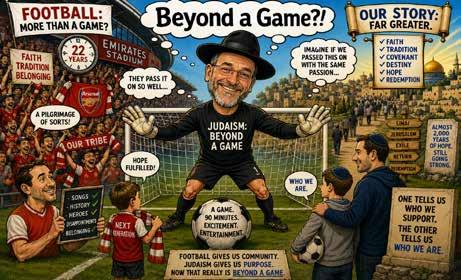
The article was well written, heartfelt and sincere. The author described waiting twenty-two years for his beloved Arsenal to win the Premier League. He reflected on marriage, children and the passing of decades through the lens of Arsenal's fortunes. He spoke of handing his allegiance down to his children. He wrote of "faith, tradition and belonging." He described an impromptu drive to the Emirates Stadium as "a pilgrimage of sorts." He referred to Arsenal supporters as a tribe and spoke movingly about hope fulfilled after years of disappointment.
I found myself smiling as I read it. And then I found myself wondering whether perhaps the author had perhaps unintentionally stumbled upon something much bigger than football.
willing to invest such enormous emotional energy, loyalty, identity and devotion into a football club, whilst at the very same time parents, teachers, rabbis and community leaders increasingly struggle to pass on that same sense of unwavering belonging, passion and devotion to being Jewish?
Our modern world is experiencing a crisis of identity.
Many young Jews struggle to explain why Judaism matters.
Many find it difficult to articulate what being Jewish means beyond family history, culture or occasional communal participation.
Yet somehow millions of people can instantly explain why they support Arsenal, Liverpool, Manchester United, Tottenham or Chelsea.
They know the songs. They know the
Imagine the sound in shul if some sang with similar gusto.
The article's central point was that football is not really about football at all. It is about belonging. Community.
Shared experience.
Hope.
I think the author is absolutely right.
The challenge is that these are profoundly human and profoundly spiritual needs.
We all long to belong to something bigger than ourselves.
We all seek meaning.
We all seek purpose.
We all seek connection to a story that began before and will continue after us.
Judaism understood this long before football clubs were ever invented.
For nearly two thousand years Jews prayed facing Jerusalem.
Generation after generation passed on a dream they themselves would never see fulfilled.
Parents taught children.
Children taught grandchildren. Across continents, persecutions, expulsions and unimaginable suffering, Jews maintained faith in a future redemption.
That is a remarkable inheritance. Compared to that, even a
twenty-two-year wait for a league title begins to look rather modest.
Football can certainly teach us something important. It reminds us of the power of belonging, loyalty and shared identity. These are not trivial things. They matter deeply.
But perhaps we should also ask whether we have become better at transmitting loyalty to a football club than loyalty to our people, our heritage and our mission.
A football club may offer excitement, community and entertainment.
Judaism must surely offer all of that and infinitely more. If it doesn’t, let’s fix our Jewish club support as a matter of critical urgency whilst we’re still on a winning streak, not wait till we’re relegated yet again.
One provides ninety minutes.
The other provides a civilisation.
One tells us who we support.
The other tells us who we are.
So by all means enjoy football.
Sing.
Cheer.
Celebrate.
Suffer through extra time and penalty shootouts.
But let us remember that, magnificent though it may be, football remains a game.
Our ancestors spent two thousand years yearning for something rather greater than a technical victory on penalties or an over-inflated leather ball coming to rest at the back of a net.
Their hopes were invested in the return to Zion, the rebuilding of Jerusalem, the flourishing of the Jewish people and the ultimate redemption of humanity itself.

Now that really is Beyond A Game.
In this column Rabbi Naftali Schiff reflects upon 3 key words each week relating to contemporary and relevant issues.
All feedback is welcome- nschiff@ jfutures.org.
Rabbi Schiff is the Founder & CEO of the Family of Jewish Futures networks of educational organisations.








Dear Rabbi
I attended the recent rally against antisemitism. The turnout was OK, and it felt good being there. I do find myself wondering however, after the fact, whether there is any practical purpose to it? I welcome your thoughts.
Derek
Dear Derek
Let’s talk about rallies. There’s been lots of them recently. A few weeks ago, there was this big rally against Antisemitism in front of Downing Street. According to estimates, it brought together between 10,000 to 20,000 people. It provided a platform for people to make moving speeches, and it brought together strands from different walks of life – Jew and nonJew alike. The sense of unity would have been compelling, and seeing others not of our faith, showing us support, would have been very encouraging.
I have only one question: Now what? I remember how 300,000 assembled in Washington only a few months after October 7th. It was a “Wow!” moment. Then what? Antisemitic rhetoric, hate marches, Jews being threatened, nothing changed. I was so impressed at the pictures of more than fifty-thousand Jews joining the “Walk for Israel” rally in Toronto back in
2024 - so proud of my hometown. Two years later, Jewish schools are still being shot at. Swastikas are still being daubed on Synagogue walls. So, I ask myself, what is the point of these rallies?
The media of course turn up, and they report on the event, thus bringing attention to our plight. But do you think for a minute that the BBC reporting on Jews marching to stop antisemitism is going to, in any way, change their biased reporting?
I maintain that while rallies certainly have practical and psychological benefits – often - and I say this with sensitivity - they are little more than performative therapy sessions. Lots of slogans, emotional speeches, hashtags, selfies, celebrities, and then everyone goes home while nothing materially changes. Here today gone tomorrow.
The biggest rally in Jewish history, happened when more than two-million Jews stood at Sinai, to receive the Torah. The irony is that it was precisely that rally which triggered all future antisemitic events. As Maimonides notes, citing from the Talmud, “why was Sinai so called? Because it is related to the word, “sinah,” which means hatred, and it was at the moment that hatred against the Jews came into the world.”
At that all-defining moment, we were imbued with a great moral
Ambassadorship. The world could tolerate Jews as an ethnicity, perhaps even admire Jews as successful or resilient, but what it has always struggled with is Jews as a people carrying a message. A people insisting that morality is not negotiable. That power answers to a Higher Power. That human beings are created in the image of G-d. That there are absolutes beyond politics, trends and appetite. Some will admire this - as President John Adams put it: “I will insist the Hebrews have done more to civilise man than any other nation.” For others, it triggers an instinctive resentment – a deeply ingrained hostility that defies logic, evidence, or explanation.
But here is where we have to turn the conversation on its head. If Sinai generated the hatred, then Sinai must also become the answer. Because the Jewish response to antisemitism was never merely about rallies and public protest. It is about covenant and commitment. At Sinai, the very first declaration of the Jewish people was not “Am Yisrael Chai,” nor was it a social media hashtag. It wasn’t even an affirmation of identity. It
was two simple words: Naaseh Venishma – “we will do and we will hear.” At Sinai, the Jewish people did not merely declare solidarity with Judaism. They obligated themselves to Judaism.
And perhaps that is the difference between a rally and a covenant. A rally asks: “How do we show the world we are Jewish?” Sinai asks: “How do we live as Jews once the world stops watching?”
To be sure, we should never allow the hatred of others to define our identity.



You have to love your Judaism more than they hate you for it. But for that, you first have to know what there is to love about Judaism. It is not enough to simply say, “I’m a Jew and I’m proud.” Proud of what exactly? Judaism is not sustained by slogans. It is sustained by Jewish values, by Torah study, by Shabbat tables, by moral discipline, by prayer, by kindness, by purpose. By Jews who know not only what they stand against, but what they stand for.
Have you ever wondered why G-d chose to give the Ten Commandments on stone? The standard answer given is that unlike everything else, stone doesn’t tarnish or decay and the Torah being given on stone symbolises its endurance in perpetuity.
But there is another, fascinating insight offered. When Moses fights Amalek in the wilderness, the Torah tells us he sits on a stone while his hands are raised in faith. It was from this very stone, according to one tradition, that the Ten Commandments were carved.
Consider the powerful symbolism. Amalek represents every vile Jew-hater throughout history. Every empire, every ideology, every movement that sought to erase us. And yes, sometimes a physical response is absolutely necessary against that which poses an existential threat to Jewish life. Judaism does not preach passivity in the face of evil.
But - the bigger answer to antisemitism is – taking the stone used in battle against Amalek and using it for the Ten Commandments. The very foundation upon which Jews survive Amalek is Torah itself. Not slogans or hashtags or celebrity endorsements. But Sinai and all it represents. Because Jews do not survive simply by fighting those who hate us. We survive by knowing what we are prepared to live for.
Please do not misunderstand me. I am not diminishing those who showed up for the rally. I admire deeply Jews who stand publicly as Jews. I simply worry when we confuse a moment of solidarity with a strategy for continuity. Which means I would rather fill a Synagogue than a protest square. I would rather strengthen Jewish schools than hold another candlelight vigil. I would rather produce purposeful Jews than persuasive slogans. The question we need to ask ourselves is not merely whether Jews will stand together. The question is whether we still stand for something. Because the Jewish future will not be secured by rallies alone. It will be secured when Jews once again echo the words Naaseh Venishma – we will do and we will listen - not just as ancient history, but as a living mission. That is how Am Yisrael Chai stops being a slogan and becomes a living reality.

To get the best value from your private medical insurance, you should speak to an expert who is qualified to advise you on the right policy for you, and recommend the providers who offer the most competitive premiums.
This advice covers individual, family and company policies, and is always FREE.
As an independent health insurance expert, I work with the healthcare insurers to provide you with the appropriate and most affordable level of cover. So whether you have an existing policy or not, let’s have a chat.






r o m K i n n e r e t
G a r d e n w i t h P o o l
M o v e i n r e a d y
M o t i v a t e d s e l l e r
Asking Price:
5 , 6 5 0 , 0 0 0

J E R U S A L E M
B a k a b o r d e r
P e n t h o u s e
W a l k u p
H i g h c e i l i n g s
3 b e d r o o m s
D i r e c t r o o f a c c e s s
Asking Price: ₪ 4 , 3 5 0 , 0 0 0

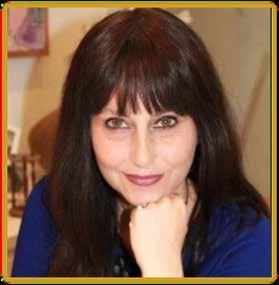

Asking

G O L A N
N e w P r o j e c t V i l l a s P r i v a t e p








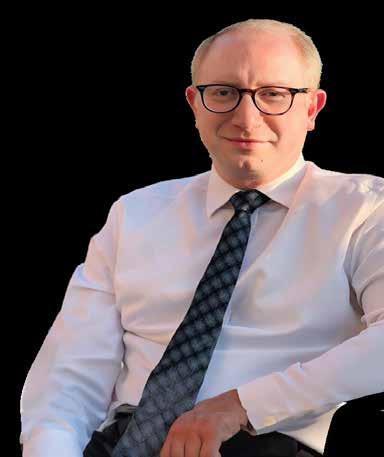

This week’s Parshah begins with a special mitzvah for Aharon the Kohen. He is told to light the Menorah in the Mishkan, the portable Sanctuary that travelled with the Jewish people in the desert. The Menorah had seven branches and was made from one solid piece of gold, exactly as Hashem showed Moshe.
Next, the Levi’im are chosen to help with the work of the Mishkan. They assist the Kohanim and take care of many important jobs. Men from the tribe of Levi served between the ages of 20 and 50.
As the first anniversary of Yetziat Mitzrayim (the Exodus from Egypt) approaches, the Jewish people prepare to celebrate Pesach. A very important part of Pesach was bringing the Korban Pesach, a special sacrifice. However, some people could not bring it because they were tamei (ritually impure). Instead of giving up, they asked Moshe, “Why should we miss out?”
Hashem answered by creating Pesach Sheini, a second chance one month later for anyone who could not bring the sacrifice on time. This teaches us an important lesson: it is
The goal of a word wheel puzzle is to create as many words possible with the letters in the word wheel.
Each word must contain at least three letters. You can only use each letter once and every word must have the letter in the centre of the wheel.
never too late to do the right thing. The Jewish people travelled through the desert following Hashem’s instructions. A special Cloud of Glory rested above the Mishkan. When the cloud stayed still, the people camped. When it moved, they packed up and travelled. Hashem also told Moshe to make two silver trumpets, which were used to gather the people and signal when it was time to travel.
Every day, the people ate manna, the miraculous food that fell from Heaven. After a while, some people complained that they wanted meat
Ainstead. Hashem sent large flocks of quail, giving them plenty to eat. Moshe had a huge responsibility leading the nation, so Hashem told him to appoint seventy elders to help him. These wise leaders shared the task of guiding the people. Finally, Miriam spoke negatively about Moshe. As a result, she was given tzara’at and had to stay outside the camp for seven days. The entire nation waited for her and did not continue travelling until she had recovered.
rabbi had been giving the same annual pre-Yom Kippur drashah for years.
One year, after the speech, a congregant came over and said, “Rabbi, that was exactly the same drashah you gave last year.”
The rabbi replied, “You’re right.”
“And the year before that.”
“Also true.”
“And the year before that!”
The rabbi sighed.
“Well, when you start listening to it, I’ll start changing it.”
This unique twist on the classic Sudoku puzzle uses the Hebrew letters א through ט instead of numbers 1–9. The rules remain exactly the same: each row, each column, and each 3×3 box must contain every letter once — without repetition.
החלצהב — and enjoy the puzzle!

Q: Why does Wally wear stripes? A: He doesn’t want to be spotted!
Q: Did you hear about the two guys that stole a calendar? A: They both got six months!
Q: Why do you never see elephants hiding in trees? A: Because they are really good at it!
Q: What kind of lights did Noah have on the Ark? A: Floodlights!
1. What starts with P and ends in E and has thousands of letters?
2. What occurs once in a minute, twice in a moment and never in a thousand years?
3. Why is an island like the letter T?
Because it is in the middle of water