


SHABBAT: BEGINS ENDS London 20:51 22:09 Manchester 21:09 22:38 Leeds 21:04 22:44
21:08 22:46
20:00 22:22 Antwerp 21:27 22:56 Bournemouth 20:50 22:17
21:11 22:57
19:02 20:21
SHABBAT: BEGINS ENDS London 20:51 22:09 Manchester 21:09 22:38 Leeds 21:04 22:44
21:08 22:46
20:00 22:22 Antwerp 21:27 22:56 Bournemouth 20:50 22:17
21:11 22:57
19:02 20:21
JNF UK’s work never stops — rebuilding lives, restoring




BY SAUL HERSH
As Israel continues fighting Hezbollah in Lebanon, and prepares for potential Iran escalation amid ceasefire uncertainty, British Jews are once again increasingly feeling the consequences on the streets of London and beyond.
Over Shavuot, another shocking antisemitic attack rocked the Jewish community in northwest London when two Jewish men were assaulted outside Beit Gavriel synagogue in Hendon.
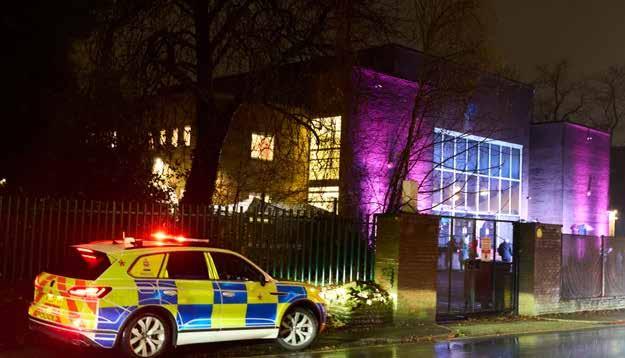
A 25-year-old man, Daniel Nikzamir has been charged and now faces multiple racially aggravated assault and criminal damage charges following the incident on Sunningfields Road last Thursday evening.
“When
The disturbing incident has sent fresh waves of fear through Britain’s largest Jewish community and comes amid an unprecedented surge in antisemitic violence linked to the ongoing Israel-Iran war.
Community and political leaders say British Jews increasingly feel they are being targeted simply for visibly Jewish appearance,
speaking Hebrew, attending synagogue or openly supporting Israel.
Many within the Jewish community now openly question whether the British government truly understands the scale of the threat developing on UK streets. United Synagogue President Saul Taylor rightly called out Starmer at the recent rally.
Former Prime Minister Tony Blair this week launched a sharp new attack on Sir Keir Starmer’s government, blaming what he called the “intellectual wasteland” of the Jeremy Corbyn years for Labour’s lack of clear strategic thinking on global affairs.
In a lengthy essay published by the Tony Blair Institute for Global Change, Blair criticised Starmer’s handling of relations with Donald Trump during the Iran crisis and urged Britain to strengthen ties with Gulf states.
Continued on page 4






We make them stand out . stand
Continued from page 1
Speaking later to the BBC, Blair also defended the controversial Gaza peace initiative linked to Trump, insisting: “We put together a plan that ended the war.”
While police patrols around shuls and schools have increased, critics argue that years of anti-Israel incitement, extremist rhetoric and weak responses to antisemitism have created a climate where attacks against Jews are becoming normalised.
The Hendon assault, along with recent stabbings, physical abuse, firebombed shuls and arson attacks follow on the heel of the two Jews who were tragically killed in Heaton Park Synagogue in Manchester last Yom Kippur. A 49-year-old man was this week arrested in connection with the incident that claimed the lives of Melvin Cravitz and Adrian Daulby.
itself remains under immense pressure despite major military successes against Iran, Hezbollah and Hamas.
Bibi this week vowed that Israel would continue defending itself against threats from every front, including Hezbollah in Lebanon, despite growing international pressure for wider ceasefire arrangements. Israeli officials insist Hezbollah has repeatedly violated previous understandings through drone infiltrations, missile launches and attempts to rebuild terror infrastructure close to Israel’s northern border.
Residents in northern Israel continue to face sirens, drone alerts and constant tension months after many hoped the fighting would ease.
At the same time, Iran remains at the centre of the regional crisis.
wider regional war while still guaranteeing Israel’s security and reopening vital global shipping routes through the Straits of Hormuz.
However, tensions reportedly remain between Washington and Jerusalem over how far Israel should continue military operations.
Netanyahu has made clear that Israel will not outsource its security decisions to any foreign government. Israeli officials insist the lessons of October 7, Hezbollah aggression and years of Iranian terror sponsorship mean Israel cannot afford half-measures or temporary solutions.
Within Israel, there remains widespread support for continuing pressure on Iran’s terror network, even as the country endures ongoing missile threats and security alerts.
Many are asking why anti-Israel demonstrations are still routinely permitted outside Jewish neighbourhoods despite repeated incidents of intimidation and violence. Others fear politicians and media organisations have failed to understand how anti-Zionist rhetoric can quickly spill into hatred against ordinary Jews.
Parents across the community report children are frightened to wear school blazers, kippot or Magen David necklaces in public.
Yet despite the fear, Jewish communities across Britain remain defiant.
Shuls were packed over Shavuot. Community events continued. Israeli flags still flew proudly outside homes and institutions.

For British Jews watching events unfold in Israel, the connection is painfully obvious, as antisemitic incidents worldwide have surged dramatically. Researchers monitoring global antisemitism reported major increases in online hate, threats and physical attacks following Israel’s operations against Iran and its regional terror network. Meanwhile, Israel
Israeli and American intelligence officials believe Tehran continues attempting to rebuild parts of its military infrastructure and proxy networks despite heavy damage inflicted during the war. Israeli leaders argue that Iran’s regime remains fully committed to the destruction of the Jewish state and that any pause in pressure would simply allow Tehran time to regroup and rearm.
Against this backdrop, US President Donald Trump has intensified efforts to broker wider ceasefire understandings across the region while simultaneously warning Iran against restarting nuclear escalation.
Trump has spoken repeatedly in recent days about wanting a deal that avoids a
Since the war began earlier this year, Iranian missile and drone attacks have repeatedly targeted Israeli cities and civilian infrastructure. Homes have been destroyed, civilians killed and thousands injured despite Israel’s advanced missile defence systems.
Israeli military officials also warn that Hamas continues trying to rebuild parts of its terror infrastructure inside Gaza while Hezbollah remains heavily armed in Lebanon.
For many Israelis, the conflict is not viewed as a temporary flare-up but as part of a much larger battle for the survival and security of the Jewish state.
Back in Britain, Jewish communities say they increasingly feel abandoned.
For many British Jews, the events of recent months have only strengthened their belief in the importance of Israel as the ultimate refuge and protector of Jewish life worldwide.
As Trump pushes for ceasefire negotiations and international diplomats attempt to calm the region, many Israelis and diaspora Jews remain deeply sceptical.
Because after decades of Iranian terror sponsorship, Hezbollah rockets, Hamas massacres and rising antisemitism across Europe, many now believe the Jewish people can no longer afford illusions about the threats they face.
And on the streets of Hendon, Golders Green and beyond, that reality is now being felt more sharply than ever before.


BY MICHELLE BALEM
A major fire in the heart of Golders Green has left the local Jewish community reeling after flames tore through part of the Kosher Kingdom complex and badly affected neighbouring businesses, including the popular Amor’s restaurant.
Emergency services rushed to the scene on Tuesday evening after reports of smoke and flames emerging from the rear section of the building. Witnesses described dramatic scenes as thick black smoke filled the sky above Golders Green Road, with firefighters battling for hours to contain the blaze and stop it spreading further into nearby premises.
Kosher Kingdom later confirmed that the fire appears to have been caused by a fridge unit. The blaze is understood to have started in the refrigeration area before rapidly spreading through sections of the store and adjoining areas.
The damage is believed to be extensive, with large parts of the supermarket suffering serious destruction from both the fire itself and the massive quantities of water used by firefighters to bring the situation under control. Images circulating on social media showed shattered windows, smoke damage and firefighters
working deep into the night inside the premises.
Neighbouring businesses were also impacted, including Amor’s, one of the area’s best-known kosher dairy restaurants and cafes. Early indications suggest
families across North West London. The store supplies kosher food, challahs, meats, groceries and essentials to much of the local community, particularly ahead of Shabbat and Yom Tov periods.
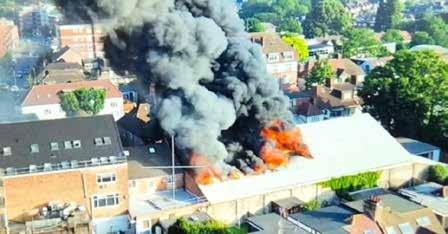
smoke and structural damage may force businesses to remain closed for some time while inspections and repairs are carried out.
For many local residents, the fire struck at the heart of the community. Kosher Kingdom is not simply a supermarket but a central hub for thousands of Jewish
Residents gathered behind police cordons watching firefighters tackle the inferno, with many expressing shock at seeing one of the area’s landmark Jewish businesses engulfed in smoke.
London Fire Brigade crews
reportedly acted quickly to prevent the blaze spreading further along the parade, something locals say could have turned into an even larger disaster given the density of shops and flats in the area. Community members also praised volunteers and emergency responders who helped evacuate nearby buildings and
keep crowds away from dangerous sections of the road while firefighters worked inside extremely difficult conditions. The incident comes during an already tense period for Britain’s Jewish community, with Golders Green remaining one of the country’s most recognisable Jewish neighbourhoods and communal centres. Over recent months the area has faced heightened security concerns, protests, and several antisemitic incidents, making the sight of emergency vehicles and road closures particularly unsettling for many residents.
Investigations into the full cause and extent of the fire are continuing, although Kosher Kingdom’s confirmation regarding the fridge unit is expected to form a central part of the inquiry.
As cleanup operations begin, local residents and customers have already begun discussing ways to support affected staff and businesses. Many expressed hope that both Kosher Kingdom and Amor’s will rebuild quickly and return to serving the community that relies so heavily upon them.
For now, however, one of the most recognisable corners of Golders Green stands blackened and damaged following a fire that has shaken the entire local Jewish community.
BY MARTIN KENT
Jewish leaders across Europe have accused Belgian authorities of effectively criminalising Jewish life after prosecutors in Antwerp moved to charge several mohalim involved in performing brit milah ceremonies. The growing diplomatic row has sparked outrage from Jewish organisations, Israeli officials and even the United States ambassador to Belgium, who warned the case risks branding Belgium as hostile to Jews.
The controversy centres on plans by Antwerp prosecutors to bring criminal charges against Jewish ritual circumcisers accused of carrying out circumcisions without medical licences. Under Belgian law, circumcisions must be performed by qualified medical professionals. Prosecutors are reportedly seeking charges including assault against minors and the illegal practice of medicine.
For Jewish communities across Europe, however, the issue goes far beyond medical regulation. Brit milah has been a cornerstone of Jewish religious life for thousands of years and is regarded as one of Judaism’s most sacred commandments. Critics of the Belgian move say
prosecuting mohalim crosses a dangerous line from health oversight into direct interference with religious freedom.
An open letter signed by dozens of Jewish communal and religious leaders condemned the prosecutions in unusually strong language.
Led by Rabbi Menachem Margolin of the European Jewish Association, the signatories accused Belgian authorities of “effectively criminalising the act of circumcision” and described the prosecutions as antisemitic in nature. They warned the case sends a message that observant Jews are no longer fully welcome in Belgium.
joining a “short and shameful list” of nations targeting Jews for practising Judaism.
Meanwhile, U.S. Ambassador to Belgium Bill White publicly blasted the investigation as “ridiculous and antise-

The row has rapidly escalated into an international diplomatic confrontation. Israeli Foreign Minister Gideon Sa’ar condemned the Belgian action, calling it “a mark of shame upon Belgium” and warning the country was
mitic,” demanding the prosecutions be dropped immediately. His intervention caused such political uproar that Belgian authorities formally summoned the ambassador following his comments.
Belgian officials have strongly rejected accusations of antisemitism. Belgian Foreign Minister Maxime Prévot insisted the case was purely a judicial and medical matter rather than an attack on Jews or Judaism. Authorities argue that ritual circumcision itself remains legal in Belgium, provided it is carried out under medical supervision and in line with existing health regulations.
Yet many Jews in Belgium say the timing of the case has heightened fears inside an already anxious community. Belgium has experienced rising antisemitic tensions in recent years, including attacks on synagogues and incidents targeting Jewish neighbourhoods. Some Jewish organisations say the prosecutions are creating what they describe as a “chilling effect” on Jewish communal life.
For many in Europe’s Jewish communities, the Antwerp case is therefore being viewed not as an isolated legal dispute, but as part of a much wider battle over whether traditional Jewish religious life can continue freely on the continent. As pressure mounts ahead of expected court proceedings, Jewish leaders are warning that the outcome could have implications far beyond Belgium itself.


BY RABBI CHANAN UNTERSLAK
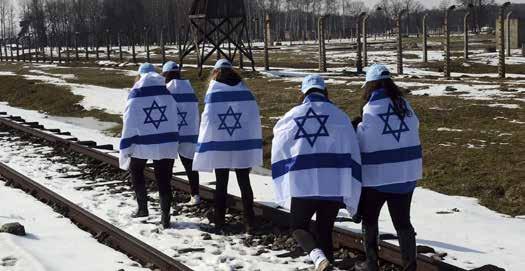
A few weeks ago, I stood in Auschwitz with forty young Jewish professionals from London.
We had spent days in Poland, letting the full weight of our people’s story settle over us. And then, before boarding the buses back to the airport, I shared a final thought.
I said: “As a people, we survived.” We survived the destruction of the
First and Second Temples. We survived the Crusaders when they came to our communities with the sword. We survived the Inquisition, when Jews were burned at the stake. We survived expulsions, blood libels, and pogroms. We survived the forests of Majdanek and the gas chambers of Belzec. We survived the crematoriums of Auschwitz. We survived a War of Independence, and a Yom Kippur War. We survived a first Lebanon War and a second Lebanon War. We survived a first intifada and a second intifada. We survived October 7th. And more recently, we’ve survived the Heaton Park and

Golders Green attacks.
Again and again, the Jewish people have stood at the edge of annihilation. And somehow, we are still here.
We have survived because generation after generation, Jews have handed something on to their children. A torch. And the belief that being Jewish comes with both privilege and responsibility.
The responsibility to rebuild. To heal. To continue to bring light into dark places. And to pass that torch forward.
When I came home from Poland, the first thing I did was to run upstairs and hug my children. My two daughters go to a Jewish school that teaches them who they are and where they come from. And my two-year-old son picks up a siddur, upside down, and rocks back and forth, trying to daven like his father.
The same prayers whispered in exile. The same prayers recited in ghettos. The same prayers Jews clung to even in the darkest corners of history.
People often ask how the Jewish people have survived for so long against such impossible odds. Empires that sought to destroy us have crumbled to dust. Ideologies that tried to erase us are footnotes in history books. Yet here we are, lighting Shabbos candles, celebrating bar mitzvahs, building schools, raising children.
Maybe the answer has been in front of us all along.
We have survived because we refuse to let the flame go out. Not in the good times, and not in the worst times either. Every parent who sat down with their child and told them they were Jewish and that being Jewish meant something, has kept the flame alive. Every community that rebuilt after destruction, every family that chose to bring Jewish life into the next generation, every young person who stood in Auschwitz and flew home more committed than when they left, they have all carried the torch a little further.
We are not merely survivors in the passive sense. We are a people who have chosen, in every generation, to continue. To answer hatred with memory. To answer darkness with light. To answer the question “will the Jews survive?” with a child rocking back and forth over a siddur.
That is our response. That is our answer. That is who we are.
Rabbi Chanan Unterslak is from the Young Professional Department, Aish UK



The neighborhood combines low-rise
The project creates a community residential atmosphere.
Only 10% upon signing with exemption from index linkage








Edgware United Synagogue’s Rabbi David Lister will soon be launching his book titled ‘Shul 101’, to help people get more out of their shul experience. The book explains more about shul, the service, and Judaism itself, and has been endorsed by the United Synagogue and the Chief Rabbi.
Rabbi Lister’s inspiration for writing this book came from his difficulty in following shul services during his childhood. He said: “My parents’ Jewish education was sparse because of the Second World War, so there was not much Jewish knowledge or Jewish practice at home when I was growing up.
I see that some people who come to shul nowadays are not familiar with the shul service and they are not comfortable with opening the siddur. This book will hopefully help them to engage better with the service and have a more meaningful shul experience, which in turn will enhance the atmosphere in shul.”
The book also has something to offer for regular shul attendees too, including deep insights into Jewish prayer and Judaism, which are simply conveyed and
with lots of illustrations to make the book an easy read.
Rabbi Lister is aiming to raise enough money to be able to distribute the book across United Synagogue communities free of charge, and has already raised a third of the money necessary to attain this goal. Readers can support the project here: https://www.justgiving.com/page/ david-lister-4?utm_medium=FR&utm_ source=CL
Donors can submit a dedication in honour or in memory of a loved one, and dedications will be included in the book.
The Chief Rabbi said: “With characteristic sensitivity and clarity, Rabbi David Lister has produced this wonderful guide, full of insight and inspiration for anyone who chooses to make use of it. In doing so, he has illuminated the limitless potential of tefilla to transform lives, families and communities for the better.”
Rabbi Lister said: “Writing ‘Shul 101’ has been a privilege. I was able to discover new things about Jewish prayer and I am inspired by the idea that readers will join me on this journey.”

Stop chasing copies — join the original event in Los Angeles!
Stop chasing copies — join the original event in Los Angeles! Since 1998, this event has helped thousands of buyers and investors discover the most valuable, exclusive, and up-to-date projects in Israel — all under one roof.
Since 1998, this event has helped thousands of buyers and investors discover the most valuable, exclusive, and up-to-date projects in Israel — all under one roof.
Please register at www.israelevent2025.com or scan to QR code above Participation is free.
Please register at or scan to QR code above Participation is free.
*For security reasons, the location will be emailed to you after registration.
Since 1998, this event has helped thousands of buyers and investors discover the most valuable, exclusive, and up-to-date projects in Israel — all under one roof. Please register at or scan to QR code above.
after registration.










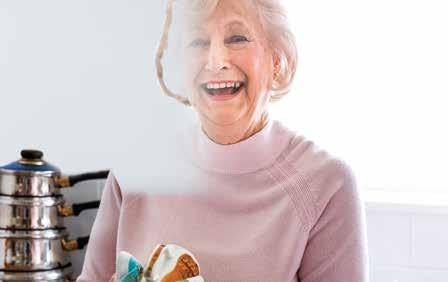
In Jewish tradition, l’dor v’dor, from generation to generation, is more than a phrase. It is a responsibility and commitment to ensure that what we value, nurture and build today will endure long after we are gone. It reminds us that our lives are part of a continuum, and that the choices we make can shape the world our children and grandchildren inherit. Few stories embody this principle more powerfully than that of Sheila and John Ottensooser, whose lives and legacy continue to shape Israel’s future in meaningful and lasting ways.
Sheila and John dedicated their lives to strengthening communities and creating opportunity, guided by a profound belief in Israel and its people. Sheila, originally from England, and John, a German émigré who arrived in Eretz Yisrael before the Second World War, shared a deep connection to the land and an unwavering sense of
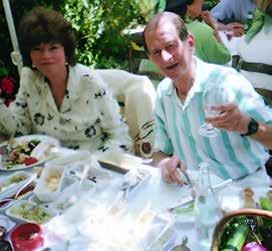
purpose. Together, they became active and respected members of Israel’s English-speaking community, contributing their time, energy and expertise to initiatives that would transform lives. Their commitment was never abstract or symbolic. It was practical, compassionate and forward-thinking, rooted in the belief that strong communities are built through education, opportunity and care for the most vulnerable. They understood that investing in people, particularly young people, was one of the most powerful ways to secure Israel’s future.
Even later in life, when Sheila and John moved to France, their connection to Israel never wavered. Distance did not diminish their commitment and their vision for Israel’s future, one rooted in social responsibility, education and community resilience, remained constant. They recognised that lasting change does not always happen
in the present moment; sometimes it unfolds gradually, shaped by thoughtful planning and longterm support.
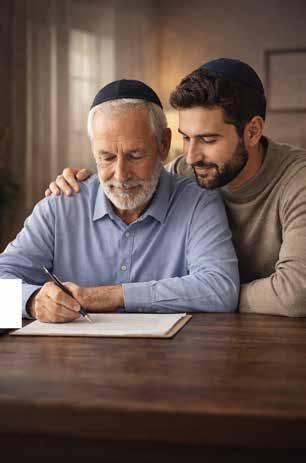
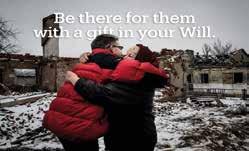
That understanding lies at the heart of legacy giving. A legacy gift is a deeply personal decision, reflecting a lifetime of values, beliefs and priorities. It is not about what we part with, but about what we choose to pass on. Through legacy giving, individuals can ensure that the causes closest to their hearts continue to flourish, even after they are no longer here to see the results.
Their legacy is a powerful reminder of what can be achieved when foresight meets generosity. A legacy gift is not simply a donation but a statement of belief in the future. It enables charities like JNF UK to plan and develop long-term projects and respond to the evolving needs of Israel’s underdeveloped regions.
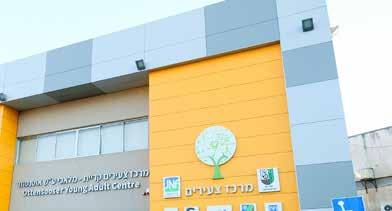
Today, Sheila and John’s vision lives on through the Ottensooser Young Adult Centre in Kiryat Malachi, a project created by JNF UK. Located in a region that has historically faced economic and social challenges, the centre provides young adults with education, guidance, mentoring and a vital sense of belonging. It is a place where potential is recognised, confidence is built and futures are shaped.

For the young people who pass through its doors, the Ottensooser Centre is far more than a building. It is a lifeline that offers stability in uncertain circumstances, resilience in the face of adversity and leadership opportunities where few existed before. It provides reassurance that someone believes in them and is invested in their success. Sheila and John may no longer be here to witness these outcomes, but their values are present in every life changed, every aspiration realised and every success story that emerges.
For members of the UK Jewish community, the idea of legacy is deeply familiar. It is woven into our history, our traditions and our collective responsibility to Israel. By considering a legacy gift to JNF UK, supporters can help develop communities, strengthen education and create opportunities where they are needed most.
Stories like Sheila and John’s show us that one couple, one decision and one enduring commitment can change countless lives. Their legacy invites us to reflect not only on what we give today, but on what we want to leave behind tomorrow and how our values can continue to shape Israel’s future for generations to come.
To find out more about the potential impact of leaving a gift in your Will to JNF UK, please contact our expert Legacy Team:020 8732 6101
legacies@jnf.co.uk www.jnf.co.uk/legacy

BY SHIRA JOSEPHS
When Evyatar David walked onto the stage, the room rose to its feet. For 738 days he had been held captive in Gaza after being taken from the Nova music festival on 7 October 2023, and the audience needed no introduction. The standing ovation said everything.
GIFT, the charity dedicated to inspiring and enabling lifelong giving, brought Evyatar and his mother Galia to the UK for a series of three events attended by a combined 700 people. The connection began in a quieter moment: last year, GIFT hosted a spa afternoon for mothers of hostages, and Galia was among those who received treatments. From that act of
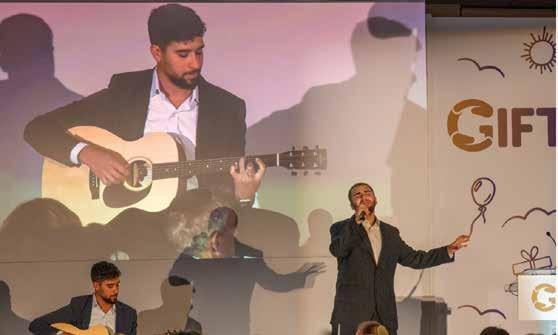
care, a relationship was born. Evyatar was interviewed across the evenings by Nivi Feldman of the Hostage and Missing Family Forum UK. Her skilled and empathetic approach created the space for Evyatar to share not just the harrowing reality of captivity, but something more unexpected: the humanity that sustained it. He spoke about how he and his fellow hostages looked after one another, and how that mutual care, that instinct to give even in the darkest of circumstances, was what carried them through. For an organisation whose entire mission is built around the transformative power of giving, his words could not have resonated more deeply.
The community showed up in kind. Supporters rallied together to give Evyatar and Galia an unforgettable trip, including a helicopter ride over London, a hotel stay and high-end meals. The generosity in the room extended beyond the stories shared, with the evenings raising meaningful funds to support GIFT’s ongoing work with young people.
Following the emotional interview, Evyatar was presented with
Property, pensions, tax exemptions, offshore structuring, healthcare, inheritance tax, your aliyah benefits
Whether your plans are imminent or many years away, join this essential webinar on Aliyah, covering both practical and financial opportunities.
Tuesday 9 June 2026 | Zoom Webinar, 4pm GMT
Featuring: Our specialist Chartered Financial Advisers together with Dov Newmark, Aliyah adviser
For more information, call 020 8202 1944 or email us at GoldersGreen@RaymondJames.com Visit our website at GoldersGreen.RaymondJames.uk.com or scan the QR code to register.
With investing, your capital is at risk. Tax treatments are subject to individual circumstances and are subject to change.
a book containing 738 acts of kindness, one for every day he was held captive. Each of the 738 pledges had been made by a student from primary and secondary schools that GIFT works with, a deliberate and moving response to hatred: counter every act of darkness with an act of light.
The emotional climax of the evenings came from Yoni Shine, currently studying in yeshiva and son of Michelle Barnett MBE, GIFT’s founding director. Yoni returned specially to perform a set of moving songs about Israel and the events of 7 October. Then, in a moment nobody saw coming, Evyatar joined him on stage to accompany him on the guitar. Together they performed ‘Tirkadi’ by Osher Cohen, a song about the Nova Festival. Followed by the whole room singing ‘Od Yavo Shalom Aleinu’ a prayer for a better future ahead. There was not a dry eye in the room.
The dinner was titled ‘Imagine the Possibilities’, and after an evening like this, it was hard not to. A world where people focus on giving and care for one another. That is the world GIFT is working to build, one act of kindness at a time.
By Shira Joseph, Programme Director













The Rabbi Sacks Legacy is delighted to announce the fourth cohort of Sacks Scholars, a global programme dedicated to exploring the enduring wisdom of Rabbi Lord Jonathan Sacks zt”l and empowering leaders to bring his values and vision to life in communities around the world.
Following the success of the first three cohorts, the programme continues to bring together outstanding educators, academics, communal leaders, and professionals who are deeply engaged in Jewish thought, education, leadership, and public life. Participants are carefully selected through a rigorous nomination and interview process.
This year’s Scholars, representing the US, UK, Israel, Australia, Poland, and South Africa, will form a dynamic and diverse learning community. Through online sessions and a week-long immersive retreat in Jerusalem in November 2026, the groups will benefit from direct engagement with leading thinkers, educators, and public figures. They will grapple with some of the most pressing challenges facing Jewish communities today, including education, leadership, antisemitism, and the evolving relationship between Israel and the Diaspora, all through the lens of Rabbi Sacks’ thought. Each Scholar will also create and implement a project that brings Rabbi Sacks’ ideas to life in new and meaningful ways within their own communities and fields of influence.
Rabbi Jeremy Bruce, Director of Programming at the Rabbi Sacks Legacy, said: “Rabbi Sacks’ teachings continue to speak powerfully to the challenges of our time. The Sacks Scholars programme is about equipping outstanding leaders to
engage deeply with his ideas and translate them into action, ensuring that his legacy continues to inspire, challenge, and guide communities around the world.”
We are delighted to welcome the members of the fourth cohort of Sacks Scholars:
Dr. Adam Baruch, Assistant Professor, University of Michigan Medical School, USA
Rabbi Leron Bernstein, Director of Innovations, Koren Jerusalem, Israel
Rabbi Dr. Jay Goldmintz, Educator, Ma’ayanot Yeshiva High School, USA
Audi Hecht, Senior Director of Education and Innovation, Civic Spirit, USA
Dr. Ayelet Hoffmann Libson, Associate Professor, Bar-Ilan University, Israel
Zak Jeffay, Director of Education, JRoots, Israel
Rabbi Matti Laufer, Executive Director, Yeshivat Siach Yitzchak, Israel
Rabbi Andrew Markowitz, Rabbi, Congregation Shomrei Torah, USA
Rabbi David Mason, Executive Director, HIAS+JCORE, UK
Quentin Miller, Director, Intrinsic Partners, Australia
Rebbetzin Sara-Tal Rehovi, Community Leader, Jewish Community of Krakow, Poland
Dr. Alon Shalev, Research Fellow, Shalom Hartman Institute, Israel
Michelle Shelemay Dvir, Educator and Lay Leader, Israel
Dr. Lindsay Simmonds, Research Fellow and Educator, UK
Rabbi Sam Thurgood, Head of Jewish Life and Learning, United Herzlia Schools, South Africa
Dr. Rebekah Tokatlilar, Managing Director, JLIC Israel, Israel
Persha Valman, CFO and Educator, Israel
Yoetzet Tova Warburg Sinensky, Educator and Yoetzet Halacha, USA
Dr. Rebecca Winter, Judaic Studies
Principal, Atlanta Jewish Academy, USA
More details at https://rabbisacks. org/sacks-scholars/cohort-four/
More than 50 people came together on Sunday 24 May for a heartwarming family day out at Aldenham Country Park, as JDA Family Services hosted a special Winnie the Pooh-themed walk through the Hundred Acre Wood. In glorious 28-degree sunshine, families followed the trail to discover the much-loved characters’ houses and favourite places from the classic stories - including a stop at Winnie the Pooh’s ‘North Pole’ - creating a day full of fun, laughter and community spirit. The event formed part of JDA’s 75th anniversary celebrations and marked the first official challenge event of the anniversary year. The walk was about far more than fundraising. Families from different parts of the country who do not usually get the chance to spend time together were able to connect, friendships were formed and new relationships blossomed throughout the day. Among those attending were two nine-month-old deaf baby girls and their families, who
were able to meet for the very first timea powerful reminder of the importance of community and shared experiences. At the end of the walk, participants were presented with certificates to celebrate their achievement before enjoying refreshments and a bagel lunch together.
The event has already raised £9,000, with fundraising still ongoing, helping JDA continue its vital work supporting deaf and hard of hearing people across the UK. Supporters are also taking part in their own personal fundraising challenges throughout JDA’s 75th anniversary year.




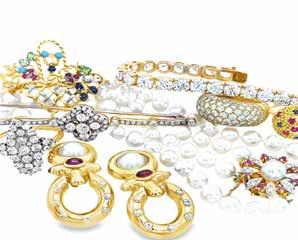
A free valuation from our in house gemmologist and gold experts on anything you may wish to sell. If you are thinking of selling, we purchase all Diamonds in any shape,












BY ELISHEVA NEWMAN
One of the highlights of my week this year has been learning Rabbi Sacks’ Life-Changing Ideas essays on the weekly parasha. I learn this together with keen and thoughtful FJL alumni which is even more special. We all love discovering the timeless relevance and wisdom Rabbi Sacks draws from the parasha, and the way his essays bring Torah ideas so meaningfully into everyday life.
This week’s parasha, Naso, contains one of Rabbi Sacks’ most powerful reflections on human dignity and the value of the individual. He begins by exploring the unusual wording used in the Torah when instructing Moshe to take a census of the people. Rather than simply saying “count,” the Torah uses the phrase “lift the head.” Rabbi Sacks asks why the Torah chooses such an unusual expression when Hebrew contains several ordinary verbs meaning “to count.”
His answer is striking. Judaism, he

explains, rejects the idea that people are merely statistics or part of a faceless crowd. Instead, every individual possesses infinite worth because each person is created in the image of G-d. Rabbi Sacks writes: “At the very moment when one might be maximally tempted to see people as ‘just numbers’ - namely, when taking a census, as here – the Israelites were commanded to ‘lift people’s heads,’ to raise their spirits, to make them feel they counted as individuals, not numbers in a mass, ciphers in a crowd.”
This message feels particularly relevant today. We live in a world driven by data, social media metrics, rankings, and numbers. It is easy for people to feel unnoticed or unimportant. Rabbi Sacks reminds us that the Torah’s vision is radically different. Every human being matters individually. Every person has an important role to play.
One idea that especially resonated with us this week was Rabbi Sacks’ balance between dignity and humility. Quoting Rabbi Simcha Bunim of Peshischa, he describes how each person should carry two notes in their pockets: one reading,
Manchester Beis Din Jubilee School | Bury Old Rd | M7 4QY www.mbd.org.uk | 0161 740 9711
May 2026
The Manchester Beth Din hereby announces that , with effect from 1 June 2026, all Meat products manufactured and distributed by Gilbert ’s Kosher Foods will no longer be under the supervision or certification of the Manchester Beth Din.
This includes products from the following brands: Gilberts, Blooms, Chicago Finest , Chicago Best , and Eden Gourmet (Meat rolls, sausages, pressed beef, and turkey products),
Products manufactured before 1 June 2026 will remain under our supervision, and this will be clearly indicated on the packaging. Products manufactured after this date will be certified by another kosher agency
All parev products will remain supervised and certified by the Manchester Beth Din.
“For my sake was the world created,” and the other, “I am but dust and ashes.”
Judaism teaches us to recognise both our significance and our humility simultaneously. We are each unique and valuable, yet our greatness ultimately comes from something beyond ourselves.
Rabbi Sacks also reminds us that Judaism places enormous emphasis not only on how we see ourselves, but on how we treat others. The challenge of “lifting heads” means ensuring that the people around us feel valued and acknowledged. He writes that the world is “not short of self-important people,” but rather short of people who make others feel important. Perhaps the most practical and moving part of the essay comes at the end, when Rabbi Sacks explains what it truly means to “lift people’s heads.” It is not achieved through grand gestures, but through everyday acts of kindness and acknowledgement. He urges us to notice those whom others may overlook: “Make eye contact. Smile. Let them know you do not take them for granted.”
Rabbi Sacks’ final line beautifully captures both the essence of the counting
in Parashat Naso and the challenge it presents to each of us: “We are as important as we make other people feel.” In a world where people can so easily feel overlooked or invisible, the Torah reminds us of the extraordinary power of a simple act of kindness, recognition, or encouragement. To truly “lift someone’s head” is to help them feel seen, valued, and significant - and perhaps that is one of the holiest and most life-changing things we can do for another person.
Elisheva holds a BSc in Mathematics and has a QTS teaching qualification. She was an inspiring and much-loved teacher at Mathilda Marks Kennedy Primary School for nine years. Passionate about people and Judaism, Elisheva has held various educational and social director roles including spending two years in Bristol with Aish on Campus opening her home to Jewish students. Elisheva, together with her husband, are the UK FJL Educators. Her role includes learning with and maintaining strong connections with Alumni – the leaders of tomorrow!
is pleased to inform the public that all meat and poultry products produced by
are licensed under the London Board for Shechita as of Monday 1st June 2026
This includes products under the following brands: Blooms Chicago’s Best Chicago's Finest Eden Gourmet
Products under these brands manufactured from 1st June onwards will bear the LBS certification mark and only items produced on or after this date fall under the new licence Product from prior to this date remains with the hechsher of the previous licensing authority.
All LBS products are under the supervision of the LBS Rabbinic Authority: Dayan Gelley shlita; Rosh Beis Din, London Beis Din and Dayan David shlita; Rosh Beis Din, Spanish & Portuguese Jews’ CongregaEon For more informa+on, please visit our website www.shechita.org




BY RABBI NAFTALI SCHIFF
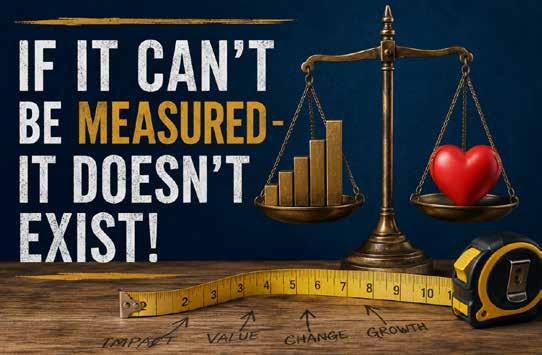
What3Words: Counting What Counts
There is something deeply Jewish about caring.
The Gemara describes the Jewish people as rachmanim bnei rachmanim, a nation of compassionate people, descendants of compassionate people. Compassion, kindness and concern for others are not simply virtues that we admire from afar; they are woven into the very fabric of who we are. Perhaps that helps explain why Jewish communities always establish a disproportionately large number of charitable, educational and philanthropic initiatives everywhere we go, throughout our history. Whether building schools, supporting welfare organisations, caring for the vulnerable, funding hospitals, sustaining synagogues or creating programmes that strengthen Jewish identity, our way has always been to contribute, to build and to make a positive difference.
Yet wanting to help and actually helping are not always the same thing.
I remember some twenty-five years ago when one of our most generous supporters asked what seemed, at the time, a rather uncomfortable question.
“How do you measure success?”
I confess that I was somewhat taken aback.
Measure success?
We knew that we were educating, inspiring and succeeding in building Jewish identity. We were constantly and consistently creating ever more opportunities for young people to engage more deeply with their heritage, values and community. Surely these things were self-evidently worthwhile. Surely they existed above the cold world of spreadsheets, balance sheets and performance indicators.
A few years later another supporter introduced me to the language of “metrics”. Then came another who spoke enthusiastically about “KPIs”, Key Performance Indicators. To be honest, I disliked the entire conversation.
There was something about it that felt almost offensive.
How could you reduce people to
numbers? How could you quantify idealism? How could you possibly measure a changed perspective, a strengthened Jewish identity, a renewed sense of purpose or a deeper connection to one’s heritage and faith?
Businesses worked with numbers. Accountants worked with numbers. Surely education, inspiration and human growth belonged to an altogether different realm.
There was perhaps another, more subconscious discomfort as well. The twentieth century taught the Jewish people the terrible consequences of reducing human beings to statistics. We know better than most that every individual possesses infinite value. Every person is an entire world. The very notion of measuring people felt instinctively wrong.
the world, should we not care whether the world is actually shining brighter as a result of our efforts?
Far from undermining idealism, responsible measurement honours it.
The Torah itself places enormous emphasis on accountability and measurement. Bamidbar opens with a census and throughout the Torah the Jewish people are counted repeatedly and values placed upon people and their worldly endeavours. Rashi famously explains Hashem’s counting of us as an expression of loving care.
Counting, therefore, does not necessarily diminish value. Sometimes counting reflects value.
Teachers count their pupils because they are responsible for them. They assign grades and test their ability in a bid to nurture measurable growth. A shepherd
Yet over time I began to appreciate something important.
Measurement is not the opposite of caring. In many ways, measurement can itself be an expression of the responsibility of caring.
After all, if someone entrusts us with charitable funds, should they not reasonably expect us to know for sure to what extent those resources are making a difference? If we devote years of our lives to educating young people, should we not want to understand whether we are succeeding? If our mission is to improve
counts his flock because every sheep matters.
We count what counts.
Yet there is another Torah idea that has become increasingly meaningful to me over the years. In Sefer Bamidbar we encounter the enigmatic phrase: Al kein yomru hamoshlim, bo’u cheshbon “Therefore the wise say: Come, let us make an accounting.”
The Gemara famously interprets these words not as a financial calculation but as a life of accounting. Bo’u cheshbon; come and assess the true value of things. Step
back from the noise and activity. Examine what is really being achieved. Evaluate the cost and benefit of our actions. The wise do not simply act; they periodically pause to determine whether their actions are producing the results they seek.
That principle applies to organisations no less than individuals.
The challenge, of course, lies in determining what should actually be measured.
In the non-profit world there is a temptation to focus exclusively on what is easiest to count. Attendance figures, programme numbers, social media impressions, events delivered, funds raised and newsletters opened all provide useful information. They do tell part of the story.
But only part.
Educational organisations face a particularly complex challenge because the outcomes that matter most are often the hardest to quantify. How does one measure a young person discovering a sense of purpose? How does one calculate the value of someone taking greater responsibility for Jewish life? How do you quantify a rekindled relationship with Judaism, a stronger sense of identity or the confidence to stand proudly as a Jew in an increasingly hostile environment?
Some of the most important outcomes may not become visible for years.
The teenager who attends a programme today may become tomorrow’s educator, volunteer, communal leader or philanthropist. The student who discovers pride in their Jewish identity at eighteen may be raising a committed Jewish family twenty years later. The impact is real, profound and transformative, yet it rarely arrives neatly packaged in a spreadsheet.
That does not mean we abandon measurement. Quite the opposite. It means we become more sophisticated in how we measure.
The question is not whether we count. The question is whether we are counting the right things.
Over the years I have come to appreciate that educational organisations require both quantitative and qualitative measures. We need outputs and outcomes. We need numbers and narratives. We need data that tells us how many people we reached and stories that help us understand how deeply we

touched their lives.
Neither is sufficient on its own.
An organisation that possesses wonderful anecdotes but cannot demonstrate meaningful scale may struggle to justify significant investment. Equally, an organisation that boasts impressive statistics but cannot point to genuine transformation risks confusing activity with impact.
The goal is not simply to be busy. The goal is to make a difference.
There is another reason measurement matters.
It keeps us honest.
Most people working in the charitable sector are motivated by noble intentions, but noble intentions alone are not a measure of success. The question is not how hard we worked. The question is whether lives were improved, whether people grew, whether communities became stronger and whether the future became brighter as a result of what we did.
Perhaps that is why I view KPIs rather differently today than I did twenty-five years ago.
Not as a corporate intrusion into sacred work, nor as an attempt to reduce people to statistics, but rather as an expression of responsibility, stewardship and accountability. Properly understood, they represent a contemporary application of the Torah’s call of bo’u cheshbon- to pause periodically, to evaluate honestly and to ensure that vision and aspirations are being matched by results.
Because whilst some things are
undoubtedly too important to be reduced merely to numbers, they are often far too important not to be measured at all.
The challenge is not counting people. The challenge is ensuring that the people we count truly count.
And that, surely, is what counts most of all.
This year we commissioned an independent study to measure the impact of our work in ensuring vibrant Jewish Futures. We felt we owed this level of research and measurement to both ourselves and to the community. The interim results show conclusively that the enormous efforts we have invested into the 16-30 year old demographic of British Jews truly count.
When the full report is published, we shall share its exciting results with the community.
We have a responsibility as a community to maximise investment in our future where it truly counts.
In this column Rabbi Naftali Schiff reflects upon 3 key words each week relating to contemporary and relevant issues.
All feedback is welcome- nschiff@ jfutures.org.
Rabbi Schiff is the Founder & CEO of the Family of Jewish Futures networks of educational organisations.


BY RABBI MOSHE TARAGIN
Parshat Naso presents the enigmatic figure of the Nazir. On the surface, the Nazir appears to be a holy person who voluntarily distances himself from influences that may lead him astray. By banning wine, he protects himself from the dangerous pull of intoxication and addiction. By refusing to shave or cut his hair, he avoids the narcissistic trap of self-infatuation and obsessive concern with appearance. By avoiding contact with the dead, he distances himself from cultures and rituals which revolve around death and morbidity.
Additionally, the Nazir lives in a constant state of readiness to enter the Mikdash. Even if he never actually enters, preserving that condition of purity profoundly shapes his spiritual consciousness and mindset. For this reason, the Torah refers to him as “kadosh.”
There are ample examples in Tanach of towering personalities who either adopted or were designated for Nezirut from birth. According to Chazal, Joseph embraced aspects of Nezirut as protection against self-infatuation and moral collapse in Egypt. Samuel was designated a Nazir from birth in order to lead a desperately needed national and spiritual regeneration.
Yet the Nazir also brings a korban chatat and is referred to as a sinner. Some claim that this label applies only to a Nazir who failed to complete his period of Nezirut. However, according to one opinion in the Gemara, even a Nazir who successfully completed his Nezirut is still called a sinner.
Adopting this position, the Moses ben Maimon argues that even a successful Nazir has erred by disturbing the delicate balance which the Torah demands of religious life. We are placed into this world for spiritual pursuits, yet we are also bound to a physical body with physical needs. Those needs are not merely met in a cold or mechanical fashion, but through experiences which are physically pleasurable and emotionally enriching. Does Hashem desire that we sever ourselves entirely from the physical world, surviving on as little pleasure and comfort as possible? According to the Rambam, the answer is no. The Torah demands calibration rather than withdrawal. We are meant to avoid overindulgence in the pleasures of this world, but we are not meant to live lives of harsh self-denial and deprivation. By instituting Shabbat, the Torah ensures that we do not fast indefinitely. By commanding marriage, the Torah affirms the legitimacy and sanctity of physical intimacy.
The Nazir sins precisely because he disrupts this delicate equilibrium. By swearing off wine, he moves too far in the direction of deprivation and withdrawal from ordinary human experience. He has
not committed a conventional sin, but he has endangered the carefully balanced religious system of halacha, which seeks neither indulgence nor rejection of the physical world, but the sanctification of it.
This balance is not merely practical or psychological. It reflects a deeper theological vision about the nature of reality itself. Judaism strongly opposes dualism, the notion that separate forces govern separate realms. Hashem created everything, and His presence fills the entirety of existence. Evil is not generated by some independent force, God forbid. There are no dark powers embedded within nature, predetermined to produce suffering or violence.
There is one God, one world, and one undivided reality.
This vision also shapes the Torah’s view of the human body. Tzelem Elokim applies not only to the immortal soul, but also to the temporary and ultimately decomposing body. The Midrash describes Hashem consulting the heavenly court before fashioning each limb of the human body. The body itself possesses divine dignity, and for that reason it is treated with reverence and respect even after the soul has departed.
The physical world is morally dangerous, but it is not metaphysically evil. For this reason, the Torah counsels engagement with the physical world rather than withdrawal from it. The challenge is not to escape physical existence, but to navigate it properly and responsibly. Physical desire can degrade a person, yet within the framework of marriage it becomes part of kedushah. The physical world is therefore neither ignored nor rejected, but disciplined and elevated through the structure of halacha.
Different Jewish communities translated this balance into practice in very different ways.
Throughout our history, different Jewish communities have tilted toward different approaches, while generally remaining within the broader Torah balance between disengagement and indulgence. Some gravitated toward the ethic of “pat b’melach tochal u’mayim b’mesurah tishteh,” viewing self-denial and simplicity as religious ideals. Others leaned more heavily upon the famous statement of the Jerusalem Talmud in Kiddushin, which asserts that a person will ultimately be held accountable for permissible pleasures of this world that he refused to partake of.
Often, ideological inclination determined whether communities tilted toward or away from the pleasures of this world. Just as often, however, it was economic circumstance that shaped communal attitudes. Poverty naturally encouraged simplicity and restraint,
while prosperity encouraged a more confident embrace of the physical world. One thing is clear: regardless of differing ideological attitudes toward the material world, modern life is wealthier, more comfortable, and far more immersive than the worlds inhabited by earlier generations. The physical realm exerts a far stronger gravitational pull than it once did. At the very least, this reality forces us to rethink the language we use, since older categories do not always cleanly describe modern religious experience.
I wonder whether today the classic division between gashmiyut and ruchniyut still fully captures religious experience. Do we truly toggle between separate modes of existence?
Perhaps this language made greater sense in earlier eras, when the world of gashmiyut was less overwhelming and less psychologically consuming. In those settings, compartmentalizing life into distinct categories of ruchniyut and gashmiyut felt more natural. Today, however, religious life often feels far more holistic. We strive to breathe religious meaning into every realm of human experience: the Beit Midrash and the Beit Knesset, but also our homes, family life, friendships, and professions.
We aspire to a life of “Shiviti Hashem
l’negdi tamid,” to experience life as one continuous moment of standing before Hashem. There are certainly differences in tone between Torah study, tefillah, professional life, and ordinary daily activity. But ideally, each unfolds within the same overarching awareness of Hashem’s presence.
At least in the modern context, the language of gashmiyut and ruchniyut can sometimes create compartmentalization rather than continuity, fragmenting religious consciousness rather than sustaining a continuous awareness of Hashem.
The writer, a rabbi at Yeshivat Har Etzion, was ordained by Yeshiva University. His latest book, Reclaiming Redemption, Vol. II: Faith, Identity, Peoplehood, and the Storms of War, is available at mtaraginbooks.com.
Chana














22-30 JUNE 2027
Mehadrin Kosher
Entire Ship Exclusive to Kosher Travelers



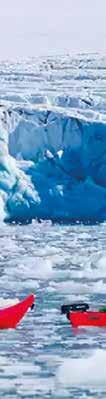
Embark on an unparalleled journey with the world’s only Kosher Travelers Svalbard Expedition.
Explore a remote Arctic wilderness of dramatic fjords, towering icebergs, and breathtaking northern landscapes.
Encounter incredible wildlife, including polar bears, walruses, Arctic foxes, seals, whales, and diverse birdlife. All guided by seasoned professionals for a safe and unforgettable experience.




EARLY BIRD DISCOUNT TILL 30 MAY ‘26




* Ideal Cruise Season on the M/V Sea Spirit, Poseidon
* Freshly Prepared Gourmet Cuisine
* Daily Tefilla & Sefer Torah
* Shabbat atmosphere
* Boutique experience for 100 guests
* Personally Hosted by David & Chana



Dear Rabbi
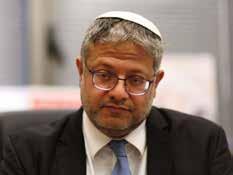
How can you go on defending Israel when a politician filmed himself taunting innocent activists in a most brutal manner. Surely even you have enough sense to call a spade a spade.
Amasin
Dear Amasin
“Innocent activists” is certainly one way of describing people who knowingly sailed alongside Hamas sympathisers, ignored repeated warnings, attempted to breach an Israeli naval blockade during wartime and then acted shocked when Israel stopped them. One suspects if a flotilla attempted to break into British waters during an active military conflict, the Royal Navy would not greet them with herbal tea and a Spotify playlist.
Be that as it may, Ben Gvir filmed a really stupid video of those flotilla “activists,” who had been detained in Israel, mocking and taunting them. It was childish, inflammatory and utterly unnecessary. Virtually every serious Israeli politician, including the Prime Minister himself, criticised it because it handed Israel’s enemies precisely the propaganda victory they were hoping for.
Soon thereafter, when headed home, Spanish police officers were filmed physically assaulting some of those same
activists in a far more aggressive and violent manner.
Now here is the interesting question: which incident triggered international outrage, diplomatic condemnations, threats of sanctions and countries summoning Israeli ambassadors? Was it the politician making a foolish video, or the police officers using physical force?
We all know the answer.
And without using the word antisemitism, one has to ask why one country is held to standards so uniquely obsessive that a foolish social media stunt by one minister becomes an international crisis, while genuinely violent conduct elsewhere barely registers.
restrained and dignified. It loses when its politicians behave like angry social media trolls.
So yes, call a spade a spade. The reaction to Israel was wildly disproportionate. But Ben Gvir’s conduct was still reckless, embarrassing and damaging to the country he claims to defend.
Dear Rabbi
That double standard is real. Pretending otherwise convinces nobody.
To be sure, acknowledging hypocrisy does not require us to defend stupidity. Quite the opposite. Israel should aspire to be morally better not because our enemies deserve it, but because we do. And strategically, Ben Gvir’s behaviour was catastrophic. These activists came hoping to provoke footage that would damage Israel internationally. He could have denied them that satisfaction entirely. Instead, he practically edited the clip for them. Israel wins when it looks confident,
My husband and I have stopped having proper arguments. We now just sigh heavily, shut cupboards aggressively and say “fine” in a tone that clearly means the opposite. Is this normal?
Shainey
Dear Shainey
Every marriage develops its own language. A wife says, “Do whatever you want,” and somehow the husband instinctively knows this is one of the few times in life when he absolutely must not
do whatever he wants.
Judaism never believed a healthy marriage means never disagreeing. The goal is not the absence of tension. The goal is learning how not to turn every irritation into a United Nations emergency session and how to conduct the disagreement with dignity.
Silence in marriage is dangerous. The occasional passive-aggressive cupboard closing is merely tradition.
















BY RABBI SHAUL YONATAN TAWIL
BY DAVID REUBEN
This week, we read the longest Parsha in the Torah containing 176 verses. (It is interesting to note that the longest tractate in Talmud Bava Basra also has 176 pages and the longest chapter in Tanach being Tehilim (Psalms) 119 also has 176 verses.)
On Seder night, we teach our children to ask questions. It is one of the foundations of who we are. We don’t silence curiosity - we elevate it.
Long as it may be, there seems to be a great deal of repetition involved. We read about the
But this year, the questions being asked in Jewish homes across Britain are not the ones printed in the Haggadah. They are sharper. More uncomfortable. And frankly, more damning.
Nesiim - princes and their offerings at the inauguration of the Mishkan. Each prince brought his offering on a separate day, yet each one brought the same as the other.
These are not questions about matzah and marror.
tribe to make an offering, and he had it easy. He could offer whatever he desired.
The second NasiNetanel ben Tzuar of the Tribe of Yissachar, however, was faced with a dilemma of what to bring?
escalating sacrifices, escalating costs, until day 12.
These are questions about what it now means to live as a Jew in the United Kingdom.
WHY DO MY MUMMY OR DADDY HAVE TO PUT ON A STAB-PROOF VEST AND STAND OUTSIDE MY SCHOOL AT PICKUP TIMES?
Because Jewish life in Britain now requires protection.
“The one who brought his offering on the first day was Nachshon son of Aminadav, of the tribe of Yehuda” (7:12) Nachshon is the only leader who is listed without his title of “Nasi. The Chizkuni explains that since Nachshon was the first to bring his sacrifices, the Torah does not mention him with his title so that he should not feel haughty because of his precedence. Another explanation is that Nachshon’s greatness was in his great act of sacrifice by the Yam Suf when he jumped into the raging waters of the sea. He did not need a special title to be a great person. This is an important lesson.
Let’s not dress it up. Parents are not volunteering for school duty - they are stepping into a security role. The image of a Jewish parent in a stab vest outside a primary school should stop us in our tracks. It should provoke outrage far beyond our community.
And yet, it has become normal. The real question is not why parents are doing this. The real question is: why is this necessary at all?
WHY CAN PEOPLE CALL TO “GLO BALIZE THE INTAFADA” IN THE STREETS OF LONDON?
Many people are special people even if they do not hold a special position or have a special title. Their greatness is in their character, not their position. The
Imagine there are to be 12 Bar Mitzvahs in synagogue, one week after the other.
nuance. They hear a chant calling for violence and ask the obvious question: why is this allowed?
And the uncomfortable answer is: because, right now, it is.
The first Bar Mitzvah serves a tasty main course of roasted chicken, potatoes and carrots and a fantastic cake for dessert.
WHY DID MY DADDY USED TO WEAR HIS KIPPAH EVERYWHERE, AND NOW SOMETIMES REPLACES IT WITH A CAP?
Because visibility has become a risk calculation.
Not in theory. In practice.
The next week there is another Bar Mitzvah, Week 2. What does he serve? Should he serve the same dish? Roast chicken, special cake for dessert? Definitely not! They do not want to look like they copied the first one, especially when they have an image to keep up as ‘original’ people. They decide to offer a delicious roast beef together with ice delicacies for dessert.
For years, we told ourselves - and rightly so - that Britain was different. That Jews could live openly, proudly, without fear. That a kippah in the street was unremarkable.
The third guy has to improve upon the previous two and offer lamb. Imagine how hard it will be for the 12th to outperform all his predecessors.
Now, for many, that confidence has been shaken.
When a father replaces his kippah with a cap before travelling, it is not a theological decision. It is not even a cultural one.
It is a safety measure.
The Midrash says that this is what went through the mind of Netanel ben Tzuar: If I try to do different than the Tribe of Yehudah, if I try to ‘one up’ Nachshon ben Aminadav, then the Nasi after me and the Nasi after him will face a spiral of
And if that doesn’t concern us - and everyone else - it should.
different kind of honesty. Not despairbut clarity.
Not in our schools.
Not in our streets.
Imagine what the Nasi will have to bring by then! Netanel ben Tzuar reasoned as follows: We know our own nature. Everyone will argue that his offering was better. This will lead to Lashon Hara, hatred, and jealousy. So, Netanel ben Tzuar did a tremendous thing. He brought exactly the same offering.
Things are not as they should be.
Not in the quiet decisions people are making about how visibly Jewish they feel safe to be.
He set the tone that everyone is the same.
And yet - this is not a story of defeat. Because the same parents in stab vests still show up.
What was G-d’s response?
The same families still fill our schools.
- even if more cautiously. The same children still ask to go to Israel.
We are still here. But we should not be quiet about why these questions are being asked.
Pesach is the festival of questions. This year, it is also a test of whether anyone is willing to answer them properly.
The same fathers still wear their kippot

The Midrash says an unbelievable thing... There is a rule that a public offering can override Shabbat prohibitions, but a private offering cannot. No individual offering is ever brought on the Sabbath. If that is true, the sequence of offerings of the Princes should have been suspended on Shabbat, since they were private offerings. In this case, however, G-d allowed the offering to be brought even on Shabbat because it was like a public offering. Since all of the offerings were brought exactly like one another to maintain the sense of community (Tzibur), peace, and unity this was a Korban Yachid (private offering) that was infused with the spirit of a Korban Tzibur (public offering). It was a Korban Yachid that was brought to keep the Tzibur intact. G-d said, as it were, “For Me, this is considered a Com-
masses in a most distinguished fashion and who merits many wonderful things for himself as well.
“Take a census of the sons of Gershon, as well, according to their fathers’ household, according to their families” (4:22) Why did Hashem stress that Moshe should also count the families of Gershon? Why would he not count Gershon if he was counting Kehat? R’ Moshe Feinstein answers that people have a tendency not to bother with something if they cannot be the best at it. The people of Gershon may have felt unimportant because they were not assigned the most important task of carrying the vessels of the Mishkan. Therefore, it was especially important to count Gershon, more so than Kehat, in order so that they would understand that their role was just as essential as that of Kehat. When someone is counted, it shows them that they are valuable. Their job was an important task too, even if it was not the most important. Every person has their role and their task in life. Every person possesses








f r o m R B S
2 a d j o i n i n g u n i t s a v a i l a b l e
O p t i o n t o c o m b i n e
S o l d a s a s h e l l
D e s i g n y o u r d r e a m h o m e
Asking Price:
₪ 5 , 5 0 0 , 0 0 0 p e r u n i t

J E R U S A L E M
P r e s a l e
O n l y 1 5 % d o w n
C l o s e t o B a k a
P o o l , G y m & S y n a g o g u e
R i g h t b y n e w l i g h t r a i l
G r e a t o p p o r t u n i t y
P r i c e o n R e q u e s t



H E R Z L I Y A
3 . 5 b e d r o o m s
R e n o v a t e d
B a l c o n y
P a r k i n g & s t o r a g e
C l o s e t o R e i c h m a n U n i v e r s i t y
Asking Price: ₪ 4 , 5 0 0 , 0 0 0

G O L A N
N e w P r o j e c t V i l l a s P r i v a t e p o o l s
I n c r e d i b l e o p p o r t u n i t y t o i n v e s t i n t h e b e a u t i f u l
N o r t h o f I s r a e l
Starting Price: ₪ 3 , 0 5 0 , 0 0 0





Gershon, Kehos and Merari, each has their own stuff to move and Ahron’s son Isamer is the man in charge. We speak about that and then how the Leviim have sooo much more to do.
Not pure? You can’t be in the three camps (Klal Yisrael, Leviim and the Mishkan) you had to go outside till you were pure again. This is a holy people.
Stole something? You can’t replace it, you must return it. Sold it to the Chinese mafia? Have fun but get it back. He sold it to the Russians and now suspiciously no one knows what you’re talking about and oops, this thing has too many bullet holes in it, and that was one bullet too many, it’s dust? Pay for it
with a 20% interest.
If a married lady’s husband thinks she has done some naughty stuff, she is given a chance to admit, if not she has to drink a special mix of water from the kiyor and earth form the mizbeach and verses of Hashem’s name. If she’s guilty she’ll explode, if not she will have many healthy children after that.
A person can take on a special promise to stay away from all wine, vinegar, grape juice and grape products. He should stay away from parties and even from vineyards so he won’t accidentally consume grape products. He can’t cut his hair either. He shouldn’t care about how he looks and try to just have a good time. He spends a month
T Q S X P Z X G E X W U D K J L W U N F L Z B Q
J U E G N I R E
thinking ony holy thoughts and not caring about this world. It’s a very special thing but at the end he brings a few korbonot. One is a sin offering,because whilst it’s special to be a Nazir, G-d wants us to live in this world with all that that means and still be holy. He has his own malachim, angels.
If you went to shul on Shavuot, you heard the priestly blessing, birchas kohanim. This is where it comes from. Hashem reveals the words that Aharon and his sons should use to bless Bnei Yisroel:
Yivorech’cha Hashem V’Yishm’recha
“May Hashem Bless and Guard You!”
AB S K N A Z I R F F Z S
Y Y G E B A W F X J N O
F Q D C O Y T K H P M G
X O L C G B J E S X L F
D F B G K F V Y V V Q S
BLESSING • CENSUS • NASSO • NAZIR • OFFERING • PURITY • SOTAH • WINE
Ya’er Hashem Panav Elecha V’yechunecha
“May Hashem shine His face on you and may He let you find favor!” Yisa Hashem Panav Elecha V’Yasem L’cha Shalom
“May Hashem lift up His face to you and give you peace!”
The Kohanim lift their hands so that the two middle fingers are separated and the thumbs are spread, touching each other. We don’t look because the Shechinah in the times of the temple was openly revealed, it isn’t openly revealed now but we still don’t look.
Rabbi and his wife were cleaning up the house. The Rabbi came across a box he didn’t recognize. His wife told him to leave it alone, it was personal.
One day she was out and his curiosity got the best of him. He opened the box, and inside he found three eggs and £2000. When his wife came home, he admitted that he opened the box, and he asked her to explain the contents to him. She told him that every time he had a bad sermon, she would put an egg in the box... He interrupted, “In 20 years, only three bad sermons? That’s not bad.”
His wife continued... “and every time I got a dozen eggs, I would sell them for £1.”
This unique twist on the classic Sudoku puzzle uses the Hebrew letters א through ט instead of numbers 1–9. The rules remain exactly the same: each row, each column, and each 3×3 box must contain every letter once — without repetition.
The goal of a word wheel puzzle is to create as many words possible with the letters in the word wheel. Each word must contain at least three letters. You can only use each letter once and every word must have the letter in the centre of the wheel.
U O R G N I C N J
Q: What Why did the banana go to the doctor?
A: Because it wasn’t peeling well!
Q: What do you call a fish with no eyes?
A: Fsh!
Q: Why can’t a bicycle stand up by itself?
A: Because it’s two-tired!
Q: What did one wall say to the other wall?
A: I’ll meet you at the corner!
1. I can run but never walk. I have a mouth but never talk. What am I?
2. The more you take away from me, the bigger I become. What am I?
3. I’m always in front of you, but you can never see me. What am I?