





BY SAUL HERSH
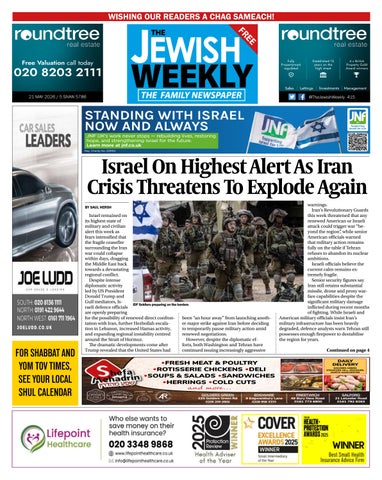
Israel remained on its highest state of military and civilian alert this week as fears intensified that the fragile ceasefire surrounding the Iran war could collapse within days, dragging the Middle East back towards a devastating regional conflict. Despite intense diplomatic activity led by US President Donald Trump and Gulf mediators, Israeli defence officials are openly preparing for the possibility of renewed direct confron tation with Iran, further Hezbollah escala
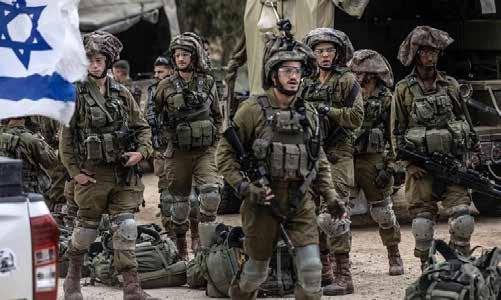
warnings.
Iran’s Revolutionary Guards this week threatened that any renewed American or Israeli attack could trigger war “beyond the region”, while senior American officials warned that military action remains fully on the table if Tehran refuses to abandon its nuclear ambitions.
Israeli officials believe the current calm remains extremely fragile.
Senior security figures say Iran still retains substantial missile, drone and proxy warfare capabilities despite the significant military damage










We make them stand out . stand
Continued from page 1
For Israelis living near the northern border, the threat remains constant. Despite ceasefire arrangements involving Lebanon earlier this spring, northern communities continue experiencing regular sirens, drone infiltration fears, and intermittent rocket threats linked to Hezbollah and other Iranian-backed terror groups operating in southern Lebanon.
Thousands of reservists remain deployed across northern Israel, while IDF commanders are said to be deeply concerned that Hezbollah could quickly exploit any collapse in US-Iran diplomacy. Israeli military operations in Gaza are also continuing at high intensity amid growing concerns that Hamas is attempting to regroup and rebuild sections of its
terror infrastructure.
At the same time, the IDF has significantly increased patrols, arrests and counter-terror operations across Yehuda and Shomron following intelligence warnings that Iranian-backed cells may attempt to ignite wider unrest inside Israel itself.
Security officials privately admit one of Israel’s greatest concerns is not simply Iran’s direct military threat, but Tehran’s long-term strategy of rebuilding and financing proxy terror armies across the region.
That concern has now become central to American policy as well.
This week Washington announced further sanctions targeting Iran’s financial systems, oil exports and so-called “shadow fleet” used to move oil and bypass international restrictions. American officials say the measures are specifically designed to weaken Iran’s ability to finance Hezbollah, Hamas and other terror organisations operating throughout the Middle East.

Much of the international focus meanwhile remains fixed on the Strait of Hormuz, one of the world’s most critical shipping lanes and the route through which a huge percentage of
global oil supplies pass every day.
The ongoing crisis has already caused major disruption to shipping routes, insurance markets and energy prices across the globe.
Iran has repeatedly warned that vessels entering the Strait of Hormuz must cooperate with Iranian naval authorities, while American naval forces have continued operations designed to keep the waterway open.
Oil prices have swung sharply over recent weeks amid fears that any renewed military escalation could trigger a major global energy shock.
Markets briefly eased this week after Trump claimed the war could end “very quickly”, but traders remain deeply nervous as tensions continue escalating behind the scenes.
International airlines and shipping firms are continuing to operate under emergency contingency plans, while Gulf Arab states including Saudi Arabia, Qatar and the UAE are understood to be heavily pressuring both Washington and Tehran to avoid another regional explosion.
Behind closed doors, many Arab governments fear that a full-scale collapse of diplomacy could devastate the Gulf economically while destabilising the entire Middle East for years.
Inside Israel however, there remains overwhelming public support for preventing Iran from obtaining nuclear weapons capability under any circumstances.
Many Israelis believe the current conflict has already demonstrated the
dangers of allowing Tehran to continue strengthening its regional terror network unchecked.
At the same time, growing numbers of Israelis also recognise that the conflict has entered an unpredictable and deeply dangerous phase where diplomacy, deterrence and military escalation are now unfolding simultaneously.
Trump’s shifting messaging has only added to the uncertainty.
In recent days the American president has alternated between threatening Iran with another “big hit” and insisting that negotiations remain close to success.
Iran meanwhile continues publicly insisting it will not surrender to American or Israeli pressure, while state media has intensified anti-Israel rhetoric and threats against Western interests throughout the region.
Israeli defence officials say the coming days could prove decisive.
For now, the uneasy calm continues.
But with Iran refusing to fully back down, Hezbollah remaining active along Israel’s northern border, Hamas attempting to rebuild in Gaza, and the United States openly warning that military options remain firmly on the table, many in Israel fear the region may still be only one major incident away from sliding back into full-scale war.
Correction: Last week’s front cover image should have been credited to Elliott Franks.







BY MICHELLE BALEM
Fresh fears over rising antisemitism have gripped Britain’s Jewish community this week after a series of deeply disturbing attacks in both London and Manchester left many Jews warning that hatred and intimidation are becoming increasingly brazen on Britain’s streets.
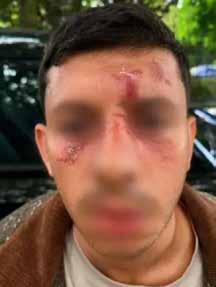
The latest incidents come amid continuing tensions surrounding Israel and the Middle East, with Jewish leaders warning that anti-Israel anger is once again spilling directly into antisemitic abuse and violence targeting ordinary British Jews. In one particularly shocking incident, an Israeli man was reportedly brutally assaulted in Golders Green after being overheard speaking Hebrew.
According to reports from the local community, the victim had stepped outside his apartment late at night on Golders Green Road in order not to disturb his roommates while speaking on the phone.
It is understood that a group of Muslim youths heard him speaking Ivrit before allegedly turning on him in what members of the Jewish community are describing as a clearly antisemitic attack.
The victim was reportedly punched and
beaten during the incident, leaving local residents deeply shaken and intensifying fears about openly displaying Jewish or Israeli identity in public.
The latest assault comes just weeks after the shocking Golders Green stabbing incidents which already left the local Jewish community deeply on edge.
Residents say the atmosphere across the area has changed dramatically in recent months, with many visibly Jewish people reporting increased abuse, intimidation and fear.
inflammatory rhetoric, extremist chanting and repeated failures to clamp down on antisemitic incitement are helping create an increasingly dangerous atmosphere for British Jews.
The attack has also reignited anger following recent footage circulating online allegedly showing a Muslim extremist openly threatening to “behead Jews” during an anti-Israel demonstration in Britain.
Community leaders warned that
If you’re over 55 and own your own home, you can unlock its value with a Lifetime Mortgage. NO monthly payments required NO income needed
Many residents in Golders Green say they no longer feel as secure as they once did in what has historically been viewed as one of Europe’s safest and strongest Jewish neighbourhoods.
Local Jewish residents described growing anxiety, particularly among visibly Orthodox Jews and Israelis, with some admitting they now think twice before speaking Hebrew publicly or walking alone late at night.
The incident sparked widespread outrage across communal organisations and social media, with many demanding tougher police action against antisemitic violence and stronger political leadership against rising hatred.
Meanwhile, in Manchester, police are investigating another deeply alarming
incident after reports that a car deliberately attempted to run over a Jewish pedestrian.
Witnesses claimed the vehicle accelerated aggressively towards the victim before fleeing the scene, triggering widespread concern within Manchester’s large Orthodox Jewish community.
Local residents said the incident has intensified fears that anti-Jewish hostility is escalating beyond verbal abuse and online hatred into potentially deadly violence.
Community patrol organisations in both London and Manchester have reportedly increased visibility in recent days, while Jewish schools, synagogues and communal buildings continue operating under heightened security.
Many British Jews say the atmosphere across the country has changed dramatically since the October 7 Hamas atrocities and the subsequent war in Gaza.
Incidents involving abuse, intimidation, vandalism and threats against Jews have surged repeatedly over the past eighteen months, with many families admitting they increasingly avoid displaying visible Jewish symbols in public.
Continued on page 8



Continued from page 6
Parents within the community say children have faced growing hostility at universities, schools and even workplaces, while synagogue leaders continue warning of an atmosphere of fear unprecedented in modern British Jewish life.
Jewish security organisations have repeatedly stressed that while Britain remains home to one of the world’s strongest Jewish communities, antisemitic incidents are becoming more aggressive, more public and more normalised.
There is also growing anger over the way anti-Israel demonstrations have unfolded in many British cities.
Many within the Jewish community believe police and politicians have too often failed to recognise when anti-Zionist rhetoric crosses directly into antisemitism and incitement.
The latest attacks have reignited criticism of social media platforms as well, with campaigners warning that antisemitic conspiracy theories, Holocaust comparisons and anti-Jewish hatred continue spreading online at extraordinary speed.
Senior communal figures warned this week that Britain faces a critical moment.
“There is a real fear developing that Jews are once again becoming targets simply for existing openly as Jews in Britain,” one community activist said.
“There has always been antisemitism, but what frightens people now is how bold and public it has become.”
Political leaders from across the spectrum condemned the latest incidents,
while police investigations remain ongoing.
However, many British Jews say statements alone are no longer enough.
Calls are growing for tougher sentencing, stronger hate crime enforcement, increased protection around Jewish institutions and a far more aggressive approach towards extremist rhetoric both online and on the streets.
The attacks also come at a time of already heightened anxiety within the Jewish community following a series of recent terror-linked arrests, synagogue threats and antisemitic incidents across Europe.
Security experts have repeatedly warned that global tensions involving Israel and Iran could further inflame anti-Jewish hatred internationally, particularly through online radicalisation and extremist propaganda.
For many British Jews, the concern is no longer theoretical.
It is becoming personal, visible and frighteningly close to home.
As investigations continue into this week’s incidents, Jewish communities across Britain are once again being forced to confront difficult questions about safety, visibility and the future of Jewish life in the United Kingdom.
And for many, the most painful question of all is how attacks once considered almost unimaginable in modern Britain are now becoming disturbingly familiar.
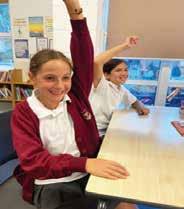
Contact the school t book a guided tour o our wonderful schoo where you will get to meet our Head Teacher and see the school in action! Looking forward to welcoming you.
Last few spaces for Nursery and Reception!
Places available for September 2026. Limited places across the school available.
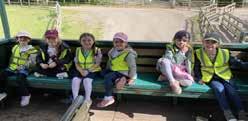
We are one form entry, warm, Orthodox Jewish primary school that combines our tradition and distinguished history with a modern, vibrant outlook.
To register please email: admin@hasmonean-pri.barnet.sch.uk or call the office on: 0208 202 7704

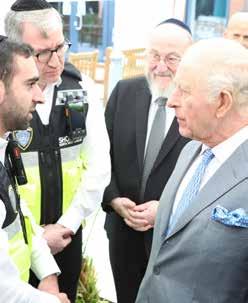
Jewish Care was honoured to welcome His Majesty The King to the Maurice and Vivienne Wohl Campus in Golders Green. The visit came at a particularly sensitive time for the Jewish community, following a series of antisemitic attacks and attempted attacks in the area. His Majesty’s presence was a powerful and timely gesture of solidarity, recognising the challenges being faced and affirming the importance of safety, care and community.
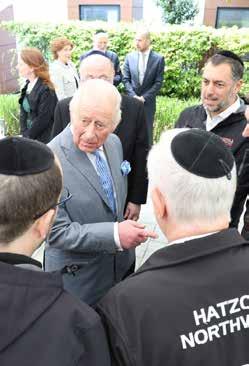
During his visit, The King met Jewish Care’s Life President, Lord Levy; President, Steven Lewis MBE; Chair, Marcus Sperber; and Chief Executive, Daniel Carmel-Brown. He was also joined by Chief Rabbi Mirvis and representatives from across the Jewish community and communal organisations, including CST, UJS, the Jewish Leadership Council, the Board of Deputies, Hatzola North West and Shomrim.
His visit was a meaningful moment of support and reassurance, underlining the strength and resilience of the community Jewish Care is proud to serve.
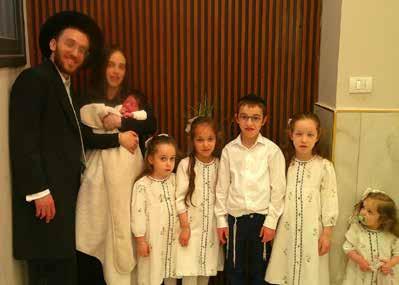
Following a devastating car accident on Friday, on the highway to Jerusalem, a one-month-old baby, Avinoam Meir z”l was pronounced dead hours later in hospital whilst his mother Ayala z”l tragically succumbed to her injuries in hospital yesterday.
Her husband, Shloimi, remains critically injured and continues to fight for his life in intensive care. Doctors are still battling to save him as family and friends wait anxiously for any sign of improvement.
At home, five young children remain — frightened, confused, and now orphaned of their mother, crying for the parents who have not returned home.
Beyond the unimaginable emotional pain, the family now faces overwhelming financial hardship. Medical treatments, rehabilitation, ongoing care, funeral expenses, and the basic needs of the children have created a crushing burden at the very moment they are least able

to carry it.
This is not someone else’s tragedy. This is our moment to act as one people with one heart.
Please daven with all your heart for a complete refuah for:
Shlomo Zalman ben Galia Aiga
And please keep the neshamos of Ayala bat Shulamit Roza and Avinoam Meir in your tefillot.
May Hashem send Shloimi a speedy and complete recovery, comfort the grieving family among the mourners of Zion and Jerusalem, and protect the children from any further pain.



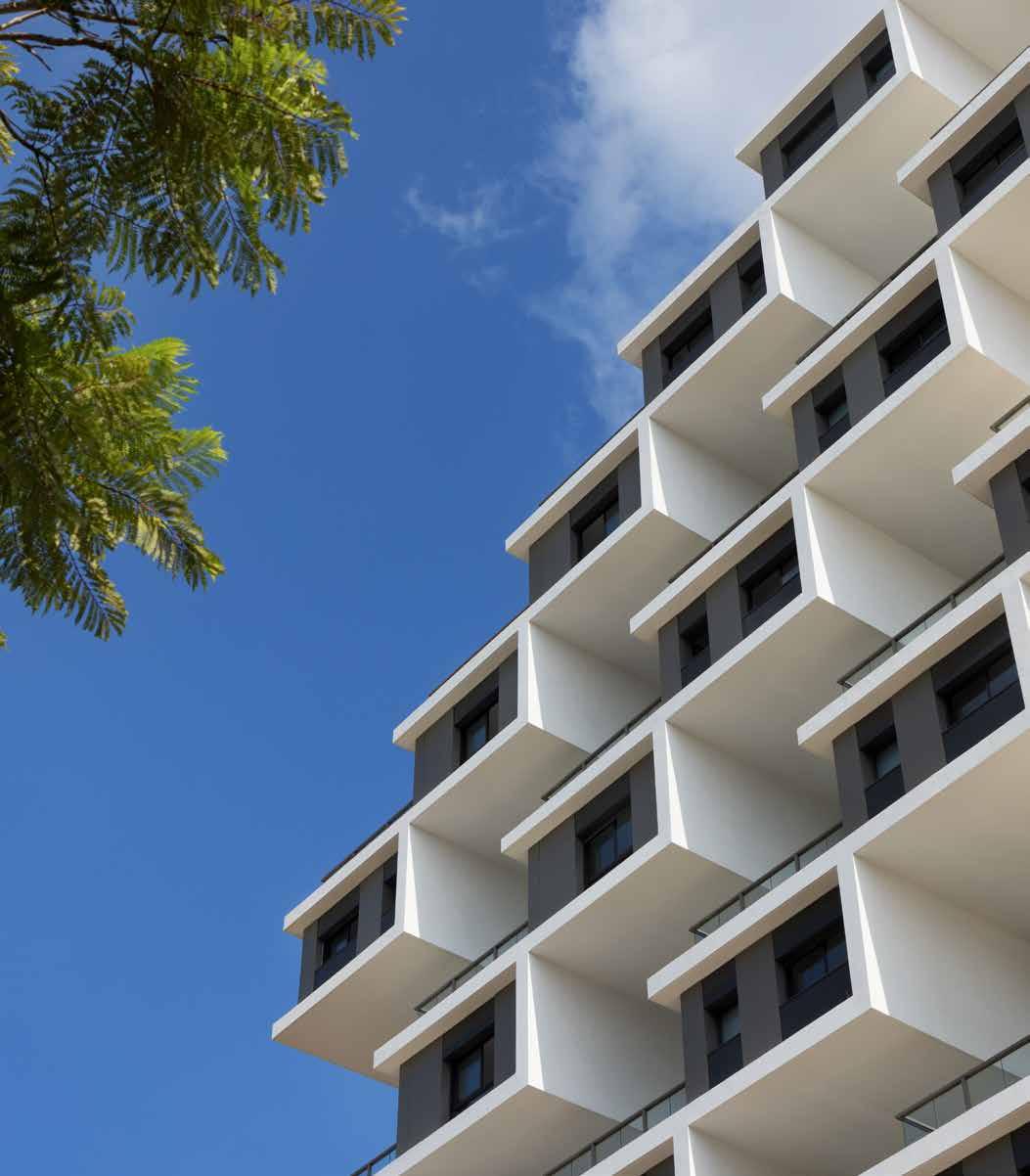
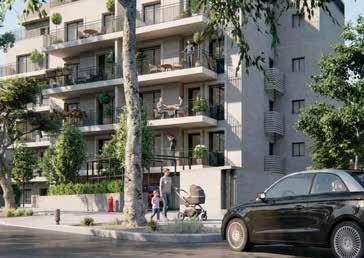
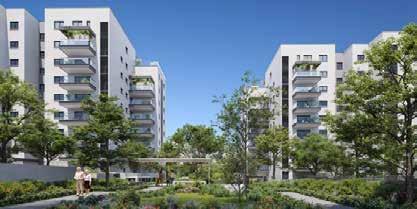
The neighborhood combines low-rise
The project creates a community residential atmosphere.
Only 10% upon signing with exemption from index linkage






For nearly four decades, Sova Foods has remained a trusted name in kosher households, and this year’s KTrade Exhibition in London once again demonstrated why the brand continues to lead the market with innovation, quality, and reliability.
Established in 1986 as a family-run company, Sova Foods impressed retailers, consumers, and industry professionals alike with an outstanding exhibition showcasing exciting new product launches, upgraded packaging, and an ever-expanding premium product range designed for today’s modern kosher kitchen.
Unlike many standard breaded fish products made from minced fish, Sova’s premium range is produced using thick, whole fillets that are skinless, boneless, lightly coated, and
packed in sealed freshness bags, alongside quality sesame and poppy seeds, oil sprays, vanilla sugar and more.

The biggest attraction at the exhibition was undoubtedly the official launch of Sova Foods’ new Premium Coated Tilapia Fillets & Nuggets under Badatz EH Kashrus. Product inventor Chanoch travelled especially from Israel to attend the exhibition, where live tastings attracted continuous crowds throughout the event.
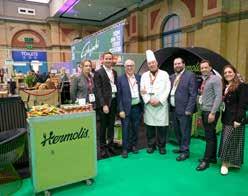
quick frozen to preserve freshness and flavour. Visitors praised the product for its exceptional taste, premium quality, and outstanding value for families seeking convenient, nutritious quick meal solutions. Sova Foods also generated strong interest with its expanding range of baking and grocery essentials, including ready-sifted Spelt Flour and Strong Flour
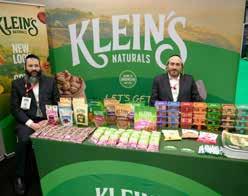
Another standout success was the growing popularity of the “Taste of Thai” sauce collection, from soy sauce to teriyaki to sweet chilli and all in-between, the authentic Asian-inspired range offers kosher consumers exciting global flavours with greater accessibility than ever before.
Visitors were equally excited by the latest additions to the Reisman’s Cookies range, including brand-new flavours presented in convenient individually wrapped cookies in the famous “Family Value” Boxes — perfectly timed ahead of the busy summer holiday season. Sova is offering exciting summer promotions on these beloved treats, which will be hitting store shelves very soon to keep the kids happy all summer long.
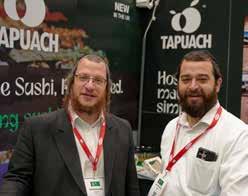
Meanwhile, the Sushi Maven display demonstrated how simple and affordable it can be to create restaurant-style sushi at home using “Sushi Maven” premium sushi ingredients and accessories.

Speaking after the exhibition, Heshi Goldberg, founder of Sova Foods hinted that even more exciting product launches are expected later this summer as the company continues expanding its innovative range while maintaining the trusted standards customers have relied upon for almost 40 years.
“Look out this summer for even more exciting new products arriving toward the end of the season. Sova Foods is constantly evolving to bring the highest quality products to your kitchen,” said Heshi.
Consumers are encouraged to sign up to the company newsletter to receive weekly recipes, product sneak peeks, and special promotional deals and exclusive offers!







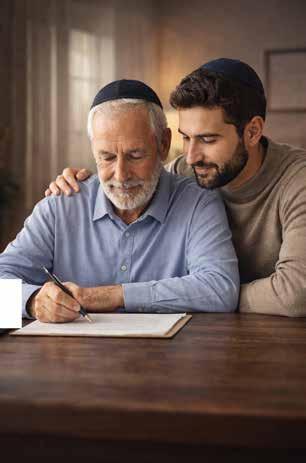
A Lasting Power of Attorney (LPA) is one of those things most people know they should probably sort out, but somehow it ends up sitting on the “I’ll get round to it one day” list. Right up there with clearing out the loft or finding out what all those mystery cables in the kitchen drawer actually belong to.
The truth is, though, an LPA is one of the most important legal documents you can have in place.
Martin Lewis has repeatedly warned people not to ignore LPAs, saying: “A will protects your family when you die. A power of attorney protects you when you live.”
An LPA allows you to appoint people you trust to make decisions on your behalf if you ever lose the ability to do so yourself. There are two types: one for Property & Financial Affairs and another for Health & Welfare.
A lot of people think LPAs are only relevant for elderly parents or retirees, but life doesn’t always send a warning text before things go wrong. Having an LPA in place gives both you and your family peace of mind and avoids a huge amount of stress later on, no matter your age or stage of life.
Without one, loved ones may need to apply through the Court of Protection to deal with your finances or make decisions on your behalf. That process can take months, cost thousands, and create unnecessary stress at an already difficult time.
And while the forms are available online, doing it yourself is not always as straightforward as people think.
According to figures from the Office of the Public Guardian, more than 50,000 LPA applications were rejected during the 2023–24 financial year because of errors in the paperwork, with some reports suggesting rejection numbers exceeded 130,000 applications in 2024.
The mistakes are often simple things: signing in the wrong order, missing information, spelling errors, or witnessing issues. Even small mistakes can mean delays, rejected applications, and starting the whole process again.
Trying to do an LPA yourself can sometimes feel a bit like flat-pack furniture. It looks manageable at first, until you realise you’ve somehow got three screws left over and nothing lines up properly.
That’s why many people choose The LPA Company. Everything is handled by a qualified solicitor, so clients know their documents are being prepared properly

from the outset. We also offer certification services to help confirm mental capacity where needed, helping avoid problems further down the line.
We guide clients through the process in plain English, without baffling legal jargon or unnecessary complications, and we also offer home visits throughout London for elderly relatives or anyone who finds travelling difficult.
At the end of the day, putting an LPA in place isn’t about expecting the worst. It’s

about protecting your family and making life easier if something unexpected does happen. Or, as every practical parent has said at some point: better to have it and not need it than need it and not have it.
To find out more, visit www.thelpacompany.com, email us at info@thelpacompany.com, or call or WhatsApp us on 0330 133 4433 for your free initial consultation and friendly, professional advice.


Almost 1,100 children and families from across the community and beyond attended Norwood’s most inclusive and accessible Carnival ever on Sunday, as part of Norwood’s mission to support neurodivergent children and their families and people with learning disabilities. The community charity made true inclusivity its mission for the day, developing a range of easy-read accessible materials, including social stories, to help parents prepare their children for the busy Carnival atmosphere. At the event, neurodivergent and neuro-typical attendees alike were able to experience Norwood’s specially-adapted Sensory Experience Pod. An interactive and educational experience, the pod is designed to allow users to focus on our senses, taking people through a series of short, guided activities led by a Norwood expert, offering valuable insight into how
neurodivergent people may experience the world.
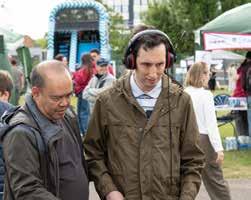
More than 100 Norwood volunteers, and volunteers from organisations including Tzofim (Israeli Scouts) Europe, Radlett Reform Synagogue and Project Impact and staff supported the delivery of the event, which was held at Edgware Primary School, and was designed to accommodate the needs and communication preferences of the diverse attendees, ensuring all members of the family could have an enjoyable day out. The event was kindly supported by the Shoresh Charitable Trust.
Participants enjoyed a wealth of attractions for all ages, including Bungee
Jump, Tea Cups, Crafts, Archery, glitter tattoos, inflatables and bouncy castles, a Beat the Goalie challenge supported by Skill7, a tech coding experience provided by Code Ninjas, and a Carnival Crafts area. Away from the Carnival buzz, there were a range of signposted indoor and outdoor quiet zones & sensory spaces, offering safe, calming areas.
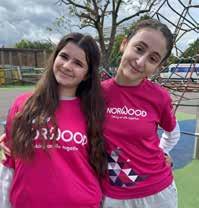
The event also featured a concert stage, with performances provided from across the community including musical acts from schools Hertsmere Jewish Primary School (HJPS), Kisharon Noe School Choir and Alma Primary and Showstoppers academy, as well as dance act Vanessa School of Dance and icandance, a creative therapeutic community

which empowers disabled children and young people to shared their lived experience through dance and performance. Speaking following the successful day, Emma Gray, Director of Children and Family Services at Norwood said: “The Norwood Carnival was an enormous achievement and something we all feel incredibly proud of.
“Not only because of the scale of the event, but because of what it represented. The Carnival is such an important part of our mission as an organisation, particularly through our work towards building an inclusive community. For many of the families attending, events like this are about far more than entertainment. They are about participation, visibility, belonging and feeling that our community has a place for them.”
Property, pensions, tax exemptions, offshore structuring, healthcare, inheritance tax, your aliyah benefits
Whether your plans are imminent or many years away, join this essential webinar on Aliyah, covering both practical and financial opportunities.
Tuesday 9 June 2026 | Zoom Webinar, 4pm GMT
Featuring: Our specialist Chartered Financial Advisers together with Dov Newmark, Aliyah adviser
With investing, your capital is at
Tax treatments are subject to individual circumstances and are subject to change.
For more information, call 020 8202 1944 or email us at GoldersGreen@RaymondJames.com Visit our website at GoldersGreen.RaymondJames.uk.com or scan the QR code to register. Raymond




BY SHRAGA EVERS, CEO SHIVAT ZION
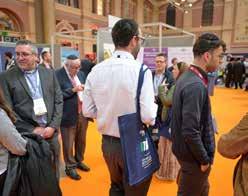
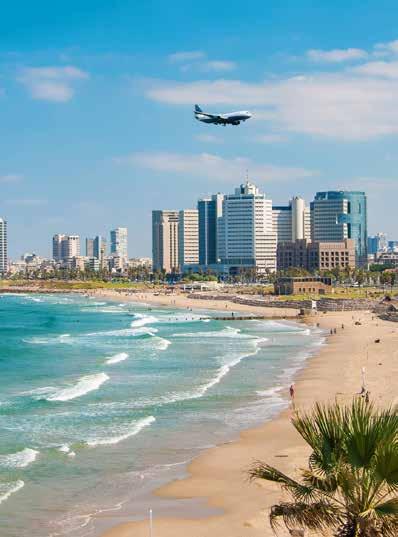
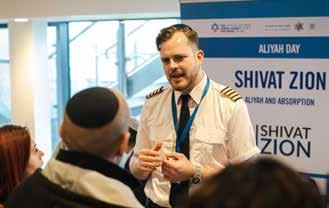
Last week, we came to London to meet more than 1,000 people at the 2026 London Aliyah Day organised by Ofek and The Jewish Agency. For many British Jews exploring Aliyah, the fair is a chance to ask practical questions, understand the process and get a clearer sense of what life in Israel could actually look like. At Shivat Zion, our team was there throughout the day offering the same free support we always do: helping families navigate every stage of the Aliyah journey.
People make Aliyah for a range of different reasons. Some have always felt drawn to return home. Others are thinking more seriously about the future of Jewish life in the UK. Some are looking to capitalise on growing economic opportunity and a new range of tax breaks. And some, quite simply, are ready to swap the rain for sunshine. But whatever brings people to the conversation, some fundamental questions remain the same. We spoke about schools, jobs, communities, ulpan programmes and the dreaded bureaucracy. But one concern came up more than any other, and far more openly than in previous years: can we actually afford this?
The interest in Aliyah is still incredibly strong. Since October 2023, we have continued to see high numbers of people opening Aliyah files. What has changed is the financial calculation.
The strengthening shekel, combined with rising housing costs in cities like Tel Aviv, Ra’anana and Jerusalem, has
made many families rethink what kind of life they can realistically build in Israel. Savings, pensions and overseas salaries simply do not stretch as far as they once did.
At the same time, Aliyah still comes with major financial advantages for those planning carefully. Olim arriving in 2026 are expected to benefit from significant tax incentives, including exemptions on certain Israeli income and up to ten years of exemptions on qualifying foreign income and assets. For many families, those benefits will make a huge difference.
But Israel is still expensive. Housing, childcare, food shopping and day-to-day living costs add up quickly, especially during the first years of settling in. The conversation around Aliyah is no longer just emotional or ideological. Increasingly, families are asking whether the life they want in Israel will feel sustainable.
That is exactly why more people are starting to look beyond the traditional Anglo destinations and towards growing ones, like Carmay-HaNadiv.
Located in Kiryat Malachi, within easy reach of Tel Aviv, Jerusalem, Ashdod and Ashkelon, Carmay-HaNadiv offers something that feels increasingly rare in Israel today: a strong family community that is still financially attainable.
More than 900 families already live there, and what people describe is remarkably consistent: warm neighbours, children playing outsid, and a genuine sense of community being built together in real time.
Housing is a major part of the appeal. Through the Shivat Zion Aliyah Summer Programme, families can access semi-furnished three-bedroom apartments in Carmay-HaNadiv for around 5,000 shekels per month. In today’s housing market, that makes an enormous difference.
Lower rent is not just about saving money. It gives families breathing room during the most difficult stage of Aliyah. Instead of constantly worrying about housing costs, they can focus on settling their children, improving their Hebrew, finding work and building stability.
where integration happens naturally.
That is often the hidden challenge of Aliyah. People talk a lot about the emotional leap, but less about the financial pressure families feel during that first year in Israel. When housing feels manageable, the entire experience of settling in changes.
The Shivat Zion programme is designed around creating that softer landing. Families receive support not just in the run up before Aliyah, but guidance after arrival and practical help throughout their first year, from schools and paperwork to navigating everyday Israeli systems.
What also makes Carmay-HaNadiv stand out is that, despite its growing Anglo population, it still feels unmistakably Israeli. Families are not moving into an isolated expat bubble. They are becoming part of a mixed, evolving community
For many families considering Aliyah today, that balance matters. Affordable does not have to mean remote. Community does not have to mean insular. And building a life in Israel should not require sacrificing quality of life or financial stability from day one.
There is a growing sense that communities like Carmay-HaNadiv will not stay under the radar for long. As more families search for realistic, long-term ways to make Aliyah work, places offering genuine value and strong community life are becoming harder to find.
For now, though, there is still an opportunity to be part of the story while the community is still growing. And for many families, that may be exactly the right moment to begin.
To find out more please visit www. shivat-zion.com
Shraga Evers, CEO Shivat Zion.





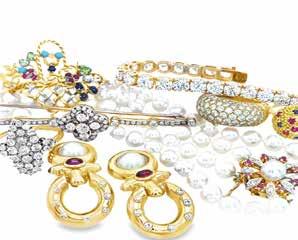
A free valuation from our in house gemmologist and gold experts on anything you may wish to sell. If you are thinking of selling, we purchase all Diamonds in any shape, size, clarity or colour. WE PAY MORE than all our competitors. Try us, and you will not be disappointed!
Start your new life in Israel in a thriving neighborhood in Kiryat Malachi, where you’ll feel at home from day one.
Join a warm, welcoming community of 1,100+ Israeli and Anglo families, with excellent schools, shops, and parks
Prime location: 15 minutes from the beach, with easy access to Jerusalem & Tel Aviv.



Shivat Zion is a charity that assists olim from the UK and Western Europe
Recognized by the Ministry of Aliyah & Integration, Shivat Zion offers a Soft Landing program with full support before, during, and after Aliyah—from paperwork and school placement to settling in with confidence.
Rent First with Full Support: Move into a part-furnished apartment in Summer 2026 (~£1,200/month) and receive full Soft Landing support.
Buy & Move In: Purchase your home for Summer 2026 and receive full Soft Landing support.
Invest / Off-Plan: Buy an apartment to rent to other olim, or secure an off-plan home (~3.5 years)




BY JONATHAN SHOOTER
Twenty-five years ago, Israeli government policy was to give small grants, as well as favourable mortgages, to olim who bought in Ramat Beit Shemesh, to encourage its being built and populated, it was a bunch of uninhabited hills (sadly these are long gone). Fast forward 25 years, and RBS has become one of the top destinations for Anglos considering aliya (not to mention the fivefold or more increases in property prices) Wherever one goes around the world, when you talk to frum people thinking of making aliya, or wanting to invest in Israel, more often than not it’s RBS that they are considering. Israel has many great places to live, what gives RBS it’s appeal?
First and foremost, people want a soft landing. After years of thinking it through, of watching the world situation, you want to come to a place with like-minded people who share your vision. RBS contains some world renowned Rabbanim and famous shuls and communities specifically
for ‘chutznikim’ with learning and other activities and opportunities, making the move that much easier. Socially one will find plenty of Anglos at different stages of life and hashkafos, and blending in is all that much easier.
Let’s just say making aliya 20 years ago looked very different, but nowadays one is walking into a full social infrastructure.
In addition, there are schools catering for the new olim and endeavour to make the transition easier. It’s fair to say one can get by in RBS with limited Hebrew (don’t get me wrong, it’s a good idea to learn it).
expensive. With people from around the world looking to move or invest, as well as high local demand, the prices are no longer that cheap. However, that doesn’t
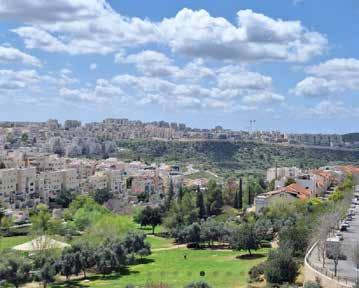
The next factor is housing. Cheaper than Jerusalem and Modiin, RBS offers a wide array of types of apartments, or cottages, depending on one’s budget. With the success and establishment of RBS over the years, housing has become more
mean there aren’t good opportunities to be had. Currently there has been a price correction and its more of a buyer’s market making it a great buying opportunity, many are taking advantage. New olim often want the more established RBS
‘Aleph’. But the newer neighbourhoods like Neve Shamir, Mishkafayim, Gimmel and Daled have become viable alternative for many. The rapid expansion of RBS means that hundreds of brand-new homes are becoming available. Some are available by putting down only 20% now and the rest on completion in several years time, ideal if one is planning aliya only a few years down the line.
Regarding work opportunities, RBS is in proximity both to Jerusalem and Tel Aviv where the bigger companies are typically located. Buses and trains (with 3 organised Shacharis minyanim) take people with greater ease to their workplace. Over the years there has been much investment in making more work opportunities available locally, for many thus avoiding that commute.
Additionally the RBS area now has malls, many supermarkets, numerous restaurants, something we only dreamt of 20 years ago.
Thinking of fulfilling the dream? Be in touch and find out how we can help you.
Jonathan Shooter is contactable by phone or WhatsApp +972544513847 or jsrealtyisrael@gmail.com


BY REBBETZEN ANNA BERGSON
My husband and I have had the pleasure of leading the St Anne’s Hebrew Congregation for close to almost eight years now!
Whenever I meet people and tell them I’m the Rebbezten of St Anne’s I am met with perplexed and surprised facesthey can’t believe there is still a sizable community here (which there is Baruch Hashem) and how a frum family could find it so fulfilling tending to such a far out and remote kehilla.
I always say I’m going to write a book about it one day because not only are our ‘regulars’ the most special and inspiring neshamas but we seem to attract the most curious strangers who seem to invariably wash up on the shore!
Take for example last night - my husband received an email from a Chabad House in Canada.
A Canadian couple have reached the finals of an International Ballroom Dancing Competition - they are Shomer Shabbos/yomtov and the event is this coming Sunday, in Blackpool (a 10 minute drive from St Anne’s).
They googled the nearest shul, found us and hence the email - please can they join us for Yomtov?!
Just last month, an American couple disillusioned with Trump and co decided they wanted to retire in a quiet English
seaside resort. Again, thanks to the Internet, they found our community and paid us a visit. To say this couple were fascinating is an understatement. They had build a hands-on space exhibition for schools with which they had toured schools across the USA and were going to bring it over upon the move. Not only that, they were both magicians in the Magic Circle, friendly with Penn and Teller (apparently they are very famous magicians!) and more than happy to perform for us on Purim!
Sadly, we just heard that the UK is imposing impossible rules and regulations on foreigners purchasing property here and so the move is being re-directed to Scotland - our loss and their gain.
Aside from the people and white sand beaches, what I love most about St Anne’s is our shul.
Impossibly high ceilings and old wooden pews, built in the 1950’s it has that classic traditional feel which helps me so much feel connected to generations of the past.
In Parshat Bamidbar we learn that each of the tribes had a different flag, displaying their various personalities, strengths and talents.
Even though the Jewish people come from the same source, likened to the white light in a prism, each of us branch off into different colours so to speak, showcasing our unique flair.
At Shavuos, we are taught that the Jewish People were ‘Ish Ehad, b’lev ehad’ - as one man with one heart.
And so, if you do pay us a Shabbos visit, I can guarantee you will see ‘different colours’ but the beauty is that - we are all one and the same big Jewish family.
And the healthiest of families prides itself on providing a safe space where
everybody is warmly welcomed with empathy, unconditional love, and zero judgment.
A lesson for us all, wherever we reside!
Chag Sameach!
For more information please visit our website www.shulbythesea.co.uk


50 incredible women from across the Jewish community came together on Wednesday for Chana’s “Every Step Counts” walk, a 29km challenge dedicated to supporting couples navigating the overwhelming and gruelling journeys of infertility, miscarriage, and baby loss. Guided by the expert team from Be Fearsome, the group trekked through the scenic but demanding terrain of the South Downs. The walk saw participants complete 40,000 steps in a single day, starting at Selmeston and navigating the rolling hills toward Beddingham and Falmer before reaching the final, iconic peak of Ditchling Beacon. While the initial fundraising goal was set at £29,000 to match the kilometres
walked and support four specific couples, the overwhelming communal response
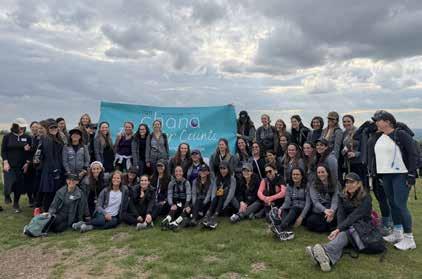
saw the target raised to £58,000!
As the UK’s leading Jewish fertility support organisation, Chana serves as a critical lifeline, providing a full package of care including specialist medical support, Halachic guidance, and professional therapy. This walk represents the various stages of a couple’s experience, from

the first steps into uncharted territory, through a challenging stretch of investigations and treatment that for many can be prolonged and gruelling, to the final stretch that demands resilience, strength, determination and hope. Unlike the walk, fertility patients won’t know which stretch is the final one, and have to treat each stage with the same immense energy, effort and hope, sadly often finding that the goal posts get moved again and again. Chana is here for these couples every step of the way.
The urgency of Chana’s mission is underscored by the reality that one in four couples face fertility challenges, while one in six pregnancies ends in loss. In the last year alone, 148 new couples sought support from Chana, and the organisation provided over 3,000 hours of professional therapy to those in need. Since its founding in 1993, Chana has celebrated the birth of over 1,000 babies, including 64 born with the organisation’s support in the past year alone.
Helping couples take these medical and emotional steps comes at a significant cost. Donations raised through the walk directly fund essential services,
ranging from £1,000 for 10 sessions of emotional support to £40,000 for the total cost of supporting a couple through their three-year fertility journey. These funds ensure that Chana can continue providing tailored support for every individual struggle, whether dealing with primary infertility, miscarriage, or fertility preservation after a cancer diagnosis.
A huge thank you to the amazing committee who meticulously planned every detail of this event and ensured its success: Lissie Morris, Naomi Nevies, Marilyn Rosenberg, Michal Rubinstein, Debra Schusheim and Rina Stimler, joined by Veronique Berman and Laura Ellis from Chana. The event was also made possible through the generous support of incredible sponsors, including Casually Modest, First Forte, Travelink, B7active, Odellia’s Kitchen and Portoberry. Their partnership ensures that we can continue creating lives together.
To learn more about Chana’s life-changing work or if you would like to help support the 4 couples on their journey donate here: https://www.charityextra.com/hub/chana/group/step2026

Chana, the UK’s largest Jewish fertility charity, has just returned from its most successful car rally to date. The 2026 Arieli Chana Rally, held on the 11th-13th May at the stunning Fairmont La Hacienda on Spain’s Costa del Sol, broke records on every front: in attendance, in the number of supercars on the road, and in the energy and enthusiasm of the group.
Moshe Morris, Founder of the rally said, “120 men attended from across the globe and from across the Jewish community, ranging in age from their twenties to their eighties. Despite coming from so many different backgrounds, they gelled together seamlessly as one
group, united by one cause: supporting Jewish couples through the challenges of infertility.”
The group stayed at the Fairmont La Hacienda, a luxury hotel set between the Andalusian mountains and the Mediterranean Sea. The driving, through magnificent scenic routes across the Spanish hills, was spectacular, with a lunch stop halfway in the mountain town of Ubrique. This year also introduced a new addition to the programme: an optional three-day golf experience at the worldclass La Hacienda Links Golf Resort next door, which was a first for the rally, and a popular one.
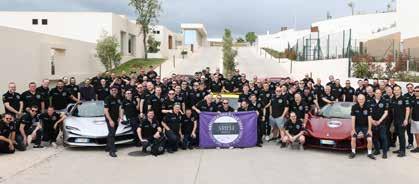
The catering throughout the three days was outstanding, and entertainment including close-up magic during meals meant there was never a dull moment from
start to finish.
Tuesday evening began with a wine tasting reception before guests sat down to the Gala Dinner. A record additional 25 people came just for the dinner, which made for an incredible atmosphere.
Guest speaker Rabbi Moshe Levy, with his deep understanding and sensitivity towards couples struggling with infertility, delivered a speech that managed to be funny, thought-provoking, spiritual and uplifting all at once. However, the evening’s most powerful moment undoubtedly came from a Chana client who bravely stood up to share his and his wife’s long and painful journey to starting their family. He shared valuable personal insights into the challenges they faced and the tremendous difference that Chana’s support made throughout their experience. At the end of his speech, when a photo of his son appeared on the screens, there was an audible gasp and the emotion rippling through the room was palpable.
Chair of Trustees Benny Groszman shared: “This year’s rally exceeded every expectation. What made it truly special was not only the scale of the event, but
the extraordinary sense of unity and purpose felt throughout the three days. Seeing people from across the Jewish world come together so passionately in support of couples facing infertility was incredibly moving.”
Chana is deeply grateful to the rally committee for their tireless work in making this event the success it is every year: Simcha Brenig, Uri Goldberg, Benny Groszman, Avi Gurwits, Aryeh Melinek, Moshe Morris, and Danny Sanger.
A huge thanks also goes to the generous sponsors without whom none of this would be possible: Arieli Group, the headline sponsor, alongside the associate sponsors: Avidan Group, BBS Law, Bokka, Cardonet, Howden, and The Grapevine. Since 1993, Chana has supported over 1,650 couples and more than 1,000 Chana babies have been born. Last year alone, 64 babies were born and 3,093 hours of therapy were provided. Chana provides a unique combination of medical, emotional, financial, halachic, and patient advocacy support for Jewish couples who need it.
For more information about Chana and its work, visit www.chana.org.uk

BY YONASAN ROODYN
Shavuos is not simply the anniversary of the giving of the Torah. It is the annual opportunity to renew our relationship with Torah itself, not just as a body of knowledge, but as a living force that speaks into every part of life and shapes us as Jews.
On Shavuos we celebrate the fact that the Torah was not given to angels removed from the realities of the world. It was given to human beings living complex lives, carrying responsibilities, weaknesses, pressures and aspirations. It was given to parents trying to build homes, to leaders carrying the weight of a nation, and to ordinary people navigating uncertainty and struggle.
Perhaps that is why the Torah was given specifically in the desert. A desert is not a place of stability or comfort. It is a place of movement, vulnerability and uncertainty. The Jewish people received the Torah not
after arriving safely in the Land of Israel, but while journeying through an unpredictable wilderness with no clear sense of what the next day would bring. Torah is not only for settled moments when life feels calm and ordered. Torah travels with us through the wilderness itself. It gives direction when the landscape around us feels confusing, grounding when the world feels unstable, and clarity when so much around us pulls in the opposite direction.
That idea feels especially relevant in our generation. We live in a world overflowing with information, yet increasingly lacking wisdom; more connected than ever before, yet often profoundly disconnected from ourselves, from each other and from Hashem. There is constant noise competing for our attention and shaping our imagination, leaving many people with the uneasy feeling that despite all the stimulation and distraction, something essential is missing. Into that noise comes the voice of Torah once again, not merely as information to consume, but as a way
to live.
Toras Chaim, a living Torah, means that Torah does not remain confined to the school, shul or Beis Hamedrash, nor does it exist only in moments of formal study. Torah is meant to shape how we speak to people, how we respond under pressure, how we use our time, how we carry responsibility and how we build relationships. Torah is not an escape from life. It is the framework that elevates life itself.
One of the great challenges, however, is that Torah can sometimes remain intellectual without becoming personal. A person can understand Torah deeply, explain it beautifully and even inspire others with it, yet still struggle to allow it to penetrate the heart and transform the inner world of character and priorities. Shavuos is therefore not only about learning more Torah. It is about allowing Torah to settle more deeply within us.
Perhaps this is also why there is such a powerful custom to remain awake throughout Shavuos night learning Torah. It reflects anticipation, because when
people are truly waiting for something meaningful, sleep becomes difficult. Shavuos is the renewal of a relationship, and relationships cannot survive on memory alone.
Every Jew stands again at Sinai on Shavuos. Not only the great scholar, but also the person who still feels distant, conflicted or searching. Amidst all the distractions and pressures of modern life, Hashem still speaks through His Torah, patiently inviting us to hear once again the voice that first echoed through the wilderness and continues to guide the journey of the Jewish people until today.
Rabbi Yonasan Roodyn is the Educational Director of Jewish Futures, a tour guide for JRoots as well as serving as Rabbi of Finchley Federation Synagogue and on the Federation Beth Din’s Shailatext service. He has thousands of classes available online at www.torahanytime.com.

BY RABBI NAFTALI SCHIFF
What3Words: We all know!
We have all experienced the sensation of déjà vu at some point. That subtle awareness that this moment, this insight, somehow feels familiar. That we have heard these words before. That we have stood in this place already.
Psychologists explain déjà vu as a quirk of memory, a crossing of mental wires. Perhaps there is some truth to that. But perhaps spiritually, déjà vu touches something much deeper. Perhaps there are moments in life when we encounter truths that feel familiar because, deep down, the neshama , the soul already knows them.
I found myself thinking about this whilst accompanying another group of forty young Jewish professionals with Aish UK and JRoots through Krakow, other former centres of pre-war Jewish life and the concentration camps this week. Bright, thoughtful young men and women, many of whom are far from Judaism, yet nevertheless searching, questioning and trying to understand what being Jewish actually means in a world increasingly confused about identity, purpose and truth itself.
This past Shabbat morning in Krakow, I found myself speaking with one participant, a thirty-year-old man working in tech. Intelligent, perceptive, thoughtful and sincere. He reflected on the ideas he had heard from the Aish leaders throughout the trip, the stories and information shared by the JRoots guides and the experience of standing together in places saturated both with the vitality of Jewish life and with unimaginable loss. Then he paused and said something striking.
“So much of this feels strangely familiar. Education to me isn’t about passing on information, rather it’s about rediscovering home truths.”
This was not a young man who had grown up immersed in religious life. Later, I asked him what Chanukah had looked like in his childhood home. He smiled and replied that the Chanukah candles had stood alongside the Xmas tree. Yet throughout the trip he kept returning
with observations about morality, Jewish identity and the meaning of life itself.
I shared with him that education in Hebrew is referred to as chinuch, sharing the same root as Chanukah, which actually means dedication, as opposed to merely passing on facts or knowledge.
Whilst waiting in line to enter Auschwitz, he casually offered another profound thought.
“Knowledge,” he said, “isn’t really learned. It’s accessed.”
In many ways, that insight touches one of the deepest truths about Torah and chinuch itself.
We live in a world gorged with information. Education today is often understood merely as the transfer of knowledge from teacher to student. However, traditional chinuch has always meant something far deeper.
reality is often “right under your nose!”
The Zohar makes a seemingly outlandish statement:
.
Boruch Hu looked into the Torah and created the world. Torah is not merely guidance for life. It is the blueprint of reality itself. To connect to Torah is therefore not to escape reality, but to rediscover and encounter reality at its deepest level.
Over the last twenty-five years, through the work of JRoots, I have had the privilege of interviewing hundreds of Holocaust survivors. Again and again, when I asked where their emunah and bitachon came from after everything they endured, I heard the same answer.

A true mechanech does not simply place facts into the mind of a student. Rather, he reveals something already alive within the neshama.
As we celebrate Shavuot this week it is worth recalling the Gemara that teaches that before a child enters this world, an angel teaches him the entire Torah and then, at birth, touches him above the upper lip causing him to forget it. On the surface, the Gemara seems difficult to understand. If the Torah is forgotten, what exactly was gained?
But perhaps the answer is precisely this. Torah is not foreign to the Jewish soul. It is native to it. Deep down, every Jew knows.
Perhaps that is why genuine encounters with Torah often feel less like discovering something new and more like rediscovering something profoundly familiar. A kind of spiritual déjà vu.
Rav Noach Weinberg zt”l would often quip about the philtrum, the indentation above the upper lip where, according to tradition, the malach touched us before birth. Why there specifically?
He would smile and say perhaps it is to remind us to place a finger to our lips and say, “Shhh… listen.” Listen to the inner
the still small voice within. And perhaps too because instead of necessitating a search far and wide,
Simple faith
Not sophisticated philosophy. Something deeper and more elemental than that.
“This is who I am. This is who my parents and grandparents were.”
Even when observance had been submerged during the darkest periods of history, more often than not, something essential within remained alive.
Survivor Pearl Benisch, the last student of the famous Sarah Schenirer, once shared with me a beautiful mashal. The neshama, she said, is like a kerosene lamp. Over time soot gathers on the glass until the flame can barely be seen. But the flame itself remains alive and burning within.
Our task in chinuch is not to create the flame.
It is to remove the soot.
Perhaps this is one of the defining challenges of our generation. We live in a world of artificial intelligence, virtual reality and carefully curated online identities. Never before has humanity possessed so much information whilst simultaneously becoming so detached from reality itself.
And yet beneath all the noise, the neshama still longs for truth.
We witness this constantly throughout the Jewish Futures family of organisations.
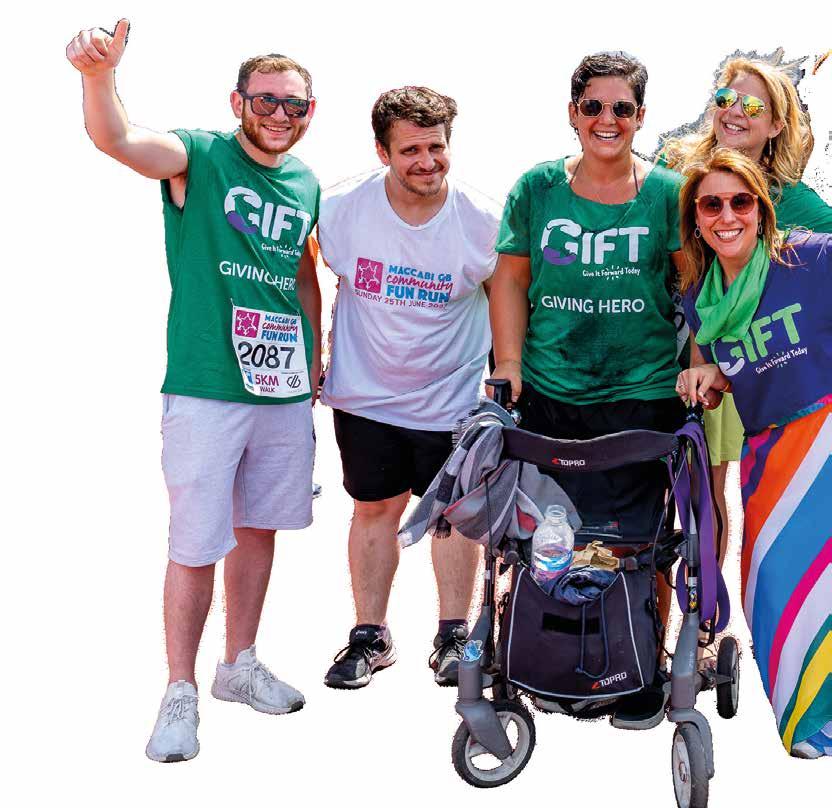
Through GIFT, we encounter the extraordinary primal instinct for giving embedded within Jews from every background. Deep down, people want to
care. They want to help. They want to give. Through Aish, we witness thousands of young Jews rediscovering the “Pintele Yid” within themselves. A Friday night meal, a late-night conversation, a visit to Poland or Israel, and suddenly something primary, elemental and deeply familiar begins stirring once again.
And through FJL, the Forum for Jewish Leadership, we repeatedly witness another profound truth emerging from within young Jews across the spectrum of our community. Beneath the uncertainty and distraction of modern life, there remains a deep subconscious pull toward leadership, responsibility, idealism and greatness of aspiration. Again and again, young people discover within themselves a yearning to shoulder responsibility for the Jewish People and for the world around them. Perhaps this too is part of what was embedded within the Jewish soul at Sinai itself: תכלממ
And deep down we also know another truth.
. We are all one family. The pain of another Jew can never truly be somebody else’s problem. If there are problems, challenges and brokenness to fix, it is my responsibility to do so.
Shavuos is therefore not merely the anniversary of the giving of the Torah. It is the annual return to Sinai itself, the profound reawakening of truths already embedded within the Jewish soul. Over time layers accumulate. Cynicism, distraction, materialism, ego, noise. The soot thickens.
And so the avodah, the effort demanded of each of us on Shavuot is not merely to “accept” Torah again.
It is to uncover what, deep down, we already all know. The flame is still there. It always was. It always will be. We all know it. Now, we just need to live it, to become it, to do it!

In this column Rabbi Naftali Schiff reflects upon 3 key words each week relating to contemporary and relevant issues.
All feedback is welcome- nschiff@ jfutures.org.
Rabbi Schiff is the Founder & CEO of the Family of Jewish Futures networks of educational organisations.


BY RABBI YAAKOV KLEIN
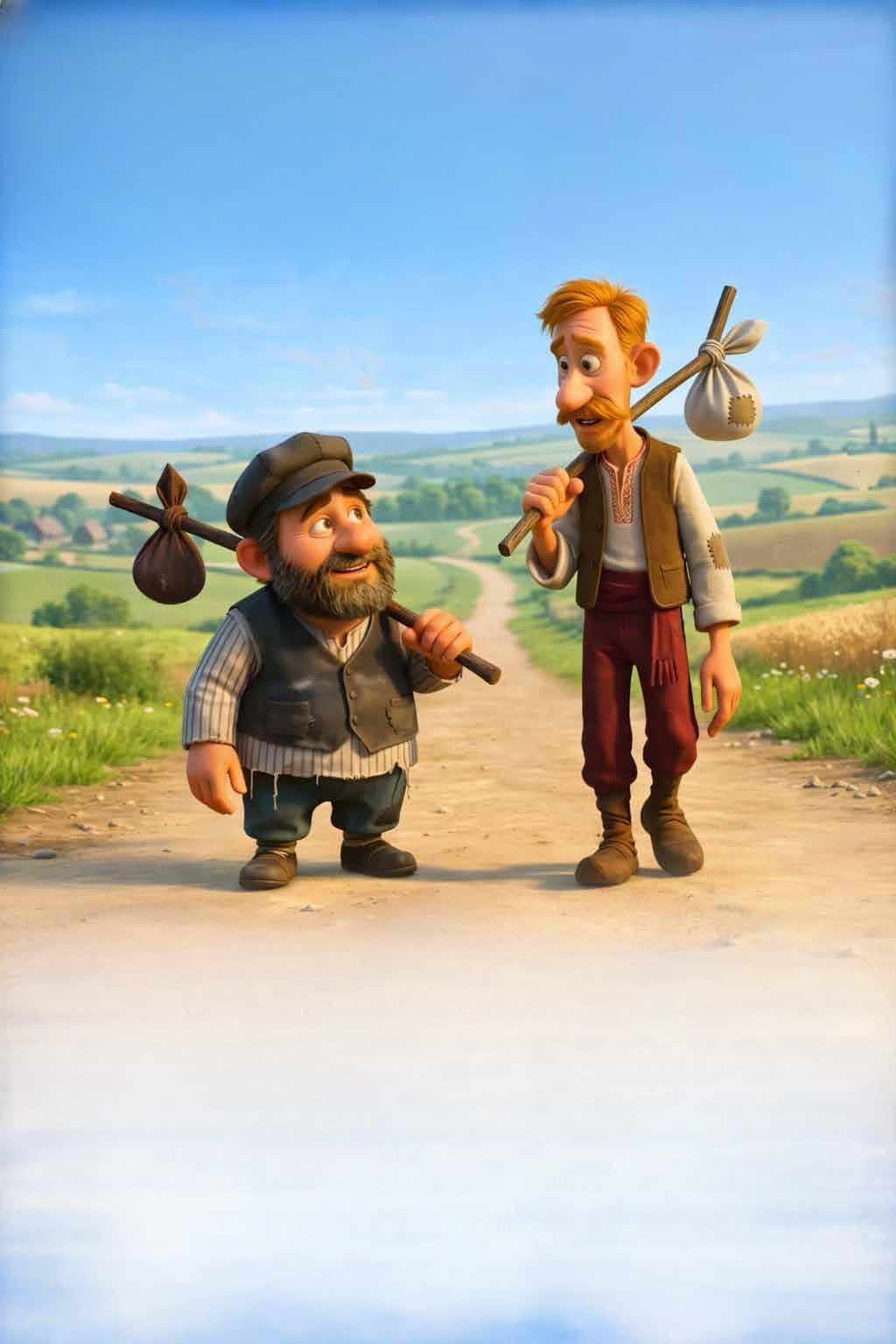
While saturated with minhagim such as decorating the shul with flowers, eating dairy, reading Megillas Rus, and staying up the whole night to learn, Shavuos seems to have no mitzvah unique to itself.
While the other two of the Shalosh Regalim are bursting with unique mitzvos – Arba Minim and Succah on Succos, Matzah and Maror on Pesach etc. – one thinks of the third regel and wonders, what is the mitzvas hayom of Shavuos? Is there an action which might serve as a vessel for the tremendous spiritual lights that descend on this glorious day?
In sefer Kedushas Levi, Rav Levi Yitzchok of Berditchov zy”a beckons his readers to return to the very first Shavuos at the foot of Har Sinai for the answer. He reminds us that before they gathered in preparation to receive the Torah, the Jewish nation was indeed given a single commandment, not to breach the boundary that was erected around the mountain.
The Chiddushei HaRim taught that just as the nations of the world were tested with a commandment contrary to their nature when offered the Torah, the Jewish nation received this commandment which ran so contrary to their deepest desire for deveikus and yearning for their Source, to test their ability to control the urge to run up the mountain and leap into an ego-annihilation sense of spiritual ecstasy by remaining behind the bound ary. The Kedushas Levi explains that this was the mitzvas hayom of the very first Shavuos, and this is the mitzvas hayom of every Shavuos subsequent: “Atzeres”, to allow oneself to be held back, to reign in the
ultimately destructive desire to experience every possible spiritual level at once and proceed in one’s Jewish journey slowly, carefully, and in a calculated manner.

But there is a deeper level as well.
The Meor Einayim (Emor) writes that much like the seven days of Niddah serve to revitalise the physical relationship of a couple, the seven weeks of Sefirah represent a calculated waiting period in order for us to experience the sweetness of Kabbalas HaTorah in the most intense possible way.
The idea that less (in a quantitative sense) is more (in a qualitative sense) is a foundational concept of the Torah which

enables us to understand many of the seeming “restrictions” detailed within, and the general ebb and flow of a religious experience replete with rising and falling, with running and returning. So foundational is this mature understanding that the primary name of this chag, “Shavuos,” refers to the weeks spent waiting for it amidst desperate yearning. The fact that the mitzvas hayom of Shavuos involves respecting a boundary and the understanding that “not having” lends qualitative value to the eventual experience of “having” points to the essentiality of this important concept to all of Torah. May we merit a Shavuos of tremendous spiritual light – but also of carefully constructed vessels, to receive the Torah with the understanding that spiritual enlightenment is a process that ought to be cherished, one blessed step at a time, amidst great joy, gratitude, and peace of mind.
Rabbi Yaakov Klein is the Founding Director of Eilecha











22-30 JUNE 2027
Mehadrin Kosher
Entire Ship Exclusive to Kosher Travelers



Embark on an unparalleled journey with the world’s only Kosher Travelers Svalbard Expedition.
Explore a remote Arctic wilderness of dramatic fjords, towering icebergs, and breathtaking northern landscapes.
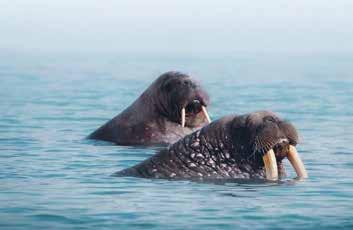
Encounter incredible wildlife, including polar bears, walruses, Arctic foxes, seals, whales, and diverse birdlife. All guided by seasoned professionals for a safe and unforgettable experience.




EARLY BIRD DISCOUNT TILL 30 MAY ‘26




* Ideal Cruise Season on the M/V Sea Spirit, Poseidon
* Freshly Prepared Gourmet Cuisine
* Daily Tefilla & Sefer Torah
* Shabbat atmosphere
* Boutique experience for 100 guests
* Personally Hosted by David & Chana



Dear Rabbi
Why do men have to suffer so much? Shlomo
Dear Shlomo
You would have to define what you mean by suffering. If you mean persecution and genuine hardship, then sadly that is part of the human condition shared by men and women alike.
If, however, you are making cynical reference to marriage, then frankly many women could ask the very same question.
a man for me?”
I said, “Absolutely.” She said, “Really? There are such men?” I said, “Yes.” She said, “Where?” I said: “In prison.”
You know what a perfect marriage really is? It’s an imperfect husband and an imperfect wife who absolutely refuse to give up on one another.

A woman once approached me and asked whether I could find the perfect husband for her. I said to her, “I could help you, but first you need to define your idea of a perfect husband.” She said to me, “For me, the perfect husband is someone who wakes at 6 every morning, does his own laundry, exercises ninety minutes every day, spends only half an hour on the internet, reads often, and is completely predictable, consistent and reliable so that I always know where he is. He cleans his own room, never drinks, and at 10pm every single night he’s in bed. That’s the perfect husband. Do you think you can find such
Meanwhile, you take two flawed human beings, each carrying different habits, expectations, insecurities, moods and backgrounds, place them in one home, add finances, children and exhaustion, and then expect them never to annoy one another. That is a wholly unrealistic fantasy.
Marriage was never designed to make you comfortable all the time. It was designed to make you less selfish. The deepest relationships are built through patience, forgiveness, humour and compromise - which, dare I say, for some men may indeed feel like suffering.
Dear Rabbi
Half the people I know haven’t touched dairy since Chanukah, yet for forty-eight
hours over Shavuot they transform into lactose-powered religious extremists. They eat it like it’s the eleventh commandment. Is there a basis for this?
Rachel
Dear Rachel
There are many beautiful explanations for eating dairy on Shavuot. The Torah is compared to milk and honey. Also, after receiving the Torah, the Jews needed time to prepare kosher meat and so stuck with dairy in the interim. In addition, the new laws of kosher would have required their vessels to be koshered. There’s also the fact that the Hebrew for milk – chalav – has the numerical value of forty – corresponding to the forty days Moses spent on Mount Sinai.
But let’s be honest. None of that explains why otherwise respectable adults consume enough cheesecake on Shavuot to tranquilise a horse.
Shavuot is unique because there is no matzah to eat, no sukkah to build, no shofar to blow, no lulav to shake. Which means the festival places unusual emphasis on enjoyment, food and physical celebration.
In fact, the Talmud specifically states that on Shavuot there is universal agreement that one must celebrate physically
as well, because it is the day the Torah was given. Judaism does not believe holiness means escaping the physical world. The whole purpose of Torah is to elevate ordinary physical life. We eat, drink and celebrate not despite spirituality, but as part of it.
Though admittedly some people seem to have interpreted that to mean that the fifth slice of cheesecake is yet another mitzvah.












BY DAVID REUBEN
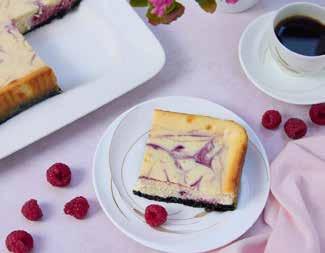
Like most cheesecake recipes, this one is in 3 parts:-
1. Raspberry sauce
2. Oreo cookie base
3. White chocolate cheesecake filling
The combination of raspberry with white chocolate is luxuriously creamy and rich, which contrasts so well with the dark Oreo base.
On Seder night, we teach our children to ask questions. It is one of the foundations of who we are. We don’t silence curiosity - we elevate it.
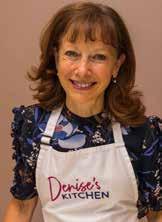
Another delicious recipe from Denise Phillips
nuance. They hear a chant calling for violence and ask the obvious question: why is this allowed?
Preparation Time: 45 minutes
different kind of honesty. Not despairbut clarity.
Things are not as they should be.
- even if more cautiously.
The same children still ask to go to Israel.
Cooking Time: 35 minutes (plus 3:45 cooling)
And the uncomfortable answer is: because, right now, it is.
Makes: Approx. 16 Squares
But this year, the questions being asked in Jewish homes across Britain are not the ones printed in the Haggadah. They are sharper. More uncomfortable. And frankly, more damning.
For more recipes and inspiration visit my website: www.jewishcookery.com insta: denises_kitchen
Ingredients
WHY DID MY DADDY USED TO WEAR HIS KIPPAH EVERYWHERE, AND NOW SOMETIMES REPLACES IT WITH A CAP?
Raspberry sauce
2 teaspoons room-temperature water (divided)
These are not questions about matzah and marror.
Details about forthcoming events, email: denise@jewishcookery.com
Not in our schools.
Not in our streets.
Not in the quiet decisions people are making about how visibly Jewish they feel safe to be.
And yet - this is not a story of defeat.
Because visibility has become a risk calculation.
1 teaspoon corn flour
These are questions about what it now means to live as a Jew in the United Kingdom.
Base
We are still here. But we should not be quiet about why these questions are being asked.
Pesach is the festival of questions. This year, it is also a test of whether anyone is willing to answer them properly.
Not in theory. In practice.
200g fresh or frozen raspberries (do not thaw)
25g caster sugar
WHY DO MY MUMMY OR DADDY HAVE TO PUT ON A STAB-PROOF VEST AND STAND OUTSIDE MY SCHOOL AT PICKUP TIMES?
For years, we told ourselves - and rightly so - that Britain was different. That Jews could live openly, proudly, without fear. That a kippah in the street was unremarkable.
28 regular Oreo biscuits – 2 packets 120g unsalted butter – melted
Method
Because Jewish life in Britain now requires protection.
Raspberry sauce
Now, for many, that confidence has been shaken.
When a father replaces his kippah with a cap before travelling, it is not a theological decision. It is not even a cultural one.
It is a safety measure.
And if that doesn’t concern us - and everyone else - it should.
1. Mix 1 teaspoon water with 1 teaspoon corn flour in a very small bowl. Set aside.
Let’s not dress it up. Parents are not volunteering for school duty - they are stepping into a security role. The image of a Jewish parent in a stab vest outside a primary school should stop us in our tracks. It should provoke outrage far beyond our community.
WHY CAN’T I GO TO ISRAEL ON HOLIDAY FOR PESACH THIS YEAR?
2. Combine raspberries, sugar, and remaining 1 teaspoon of water together in a small saucepan over medium heat. Stir the mixture, breaking up some of the raspberries as you stir. Once simmering, add the corn flour mixture. Stir well and simmer for 3 minutes. Remove from the heat and press through a fine mesh strainer to remove the seeds.
And yet, it has become normal. The real question is not why parents are doing this. The real question is: why is this necessary at all?
Because the Jewish state is at war - and because Jewish normality has been disrupted, again.
3. Cool completely before using. Cover and store for up to 1 week in the refrigerator.
For a child, this question is simple. Israel is family. It is familiarity. It is where Pesach often feels most alive.
Oreo base
WHY CAN PEOPLE CALL TO “GLOBALIZE THE INTAFADA” IN THE STREETS OF LONDON?
To tell them they cannot go is to introduce them, too early, to the reality
170g white chocolate, finely chopped
Because the same parents in stab vests still show up.
The same families still fill our schools.
450g full-fat cream cheese, softened to room temperature
The same fathers still wear their kippot
50g caster sugar
1 tablespoon plain flour
1 teaspoon lemon juice
1 teaspoon pure vanilla extract
Pinch salt
2 large eggs, at room temperature
8. Melt the chopped white chocolate in a double boiler. Let the warm chocolate cool as you work on the other cheesecake filling ingredients.
9. Using an electric mixer, whisk the cream cheese and sugar together for about 2 minutes, until the mixture is smooth and creamy. Add the flour, lemon juice, vanilla extract, salt and eggs. Whisk again until the mixture is completely smooth. Pour in the cooled (but still liquid) white chocolate until combined.
10. Pour half of the cheesecake filling onto the crust. It’s ok if the base is still slightly warm. Drizzle half of the raspberry sauce all over the top. Spread remaining cheesecake filling on top.



BY RABBI MOSHE TARAGIN
Har Sinai and Matan Torah stand at the seminal moment of Jewish faith. In a singular moment in history, Hashem spoke directly to three million people. Our faith is not built upon the prophecy of a lone mystic, a private dream, or the vision of a single individual. It rests upon a staggering moment in which an entire nation stood together and heard the revealed voice of Hashem.
Yet even within this moment of absolute truth, not everyone heard the same broadcast. The Midrash claims that Hashem delivered the Torah to each person according to his or her strength and capacity to absorb the word of Hashem. Additionally, Torah was perceived not merely in different quantities, but in different ways. The divine word is so eternal and transcendent that no human being can ever fully encompass it. Different perspectives within Torah are built into the system itself. This is not a flaw. It is part of the design of Torah.
Machloket is not merely the product of a once-unified tradition deteriorating across generations. The Midrash describes Hashem presenting Moshe with multiple pathways through which a particular item could be viewed as tamei; Moshe was then presented with multiple pathways through which that same item could be viewed as tahor. Halacha demands a single course of action. An item cannot be both impure and pure in practice. Yet each position still reflects part of a broader divine truth which transcends the binary limits of human reasoning. That is precisely why we study every opinion in Shas, and not merely those adopted as normative halachic practice. Disagreement within halacha is part of the system itself.
Just as disagreement is woven into the halachic process, it is also built into the way Torah and mitzvot are applied within a particular historical and cultural context, what we often call hashkafah. Torah and mitzvot are eternal, applying equally in every generation. Hashkafah is the manner in which eternal Torah encounters the changing conditions of history and society. Hashem created people with different temperaments and dispositions, and different hashkafic frameworks may speak more deeply to different individuals.
Over the past two years, perhaps no issue has more sharply divided different communities than the question of Haredi non-conscription to the IDF. The debate always existed, but in times of relative calm it simmered beneath the surface.
During the past two and a half years of war, especially amid a severe shortage of manpower, the issue has erupted into a painful and divisive argument. It has moved from theory to lived reality.
Chazal teach that a machloket which is l’shem Shamayim, sincere and rooted in noble values, will endure. Part of their message is that ideological debates do not disappear easily. Arguments driven by petty interests or political maneuvering quickly dissolve once the emptiness beneath them becomes exposed. But debates about Torah study, religious culture, and service in a Jewish army touch upon profound values. These are not shallow disagreements, and they will likely take generations to resolve.
Shavuot is not the moment to stake out already voiced positions. There is too much pain and too much strife surrounding this issue. Additionally, most people’s positions are already hardened. My own views can easily be traced to where I teach and the community in which I live. Instead, Shavuot is a time to clarify the common and larger Torah values which stand at the center of this debate. The first and most important of those shared values is the supremacy of Torah study. We must ensure that these common values, shared by all, do not become blurred by the intensity of the argument itself.
the defense of our people and our land.
Debates about deferring Torah study for other pursuits have occupied great Jewish thinkers throughout the generations: Rebbi Yishmael validated engaging in agriculture even at the cost of reduced Torah study, while Rebbi Shimon Bar Yochai envisioned an ideal life fully devoted to Torah, supported by others. These discussions have unfolded throughout the centuries. However, the question of whether Torah study exempts military service, especially when there is no broad consensus about who qualifies for such an exemption, does not clearly surface in our mesorah. Whatever sources exist are fragmentary and inconclusive. The broader debate is longstanding, though the modern question of military service does not emerge with comparable clarity in earlier sources.
the Holocaust, the Torah world lay in ruins. The destruction swept through the Jewish world, and Torah students and their teachers were not spared. Modern Charedi society viewed itself as carrying the responsibility of rebuilding that shattered world of Torah greatness.
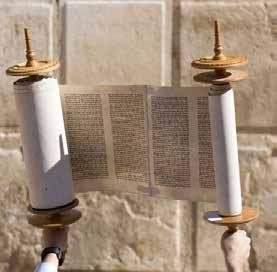
Everyone, both those who serve and those who do not, agrees to the larger value of Talmud Torah. It is a supreme value, equated with the entirety of Torah itself. Studying the will of Hashem in order to draw closer to Him is a transcendent experience, difficult to compare to any other human pursuit.
Torah study and Torah commitment are not merely personal religious experiences. They also protect our land and shape our national destiny. Without pointing to any single miracle, it is clear that our presence in the land of Hashem is supernatural. The degree to which we infuse this society with Torah and mitzvah observance shapes our security and our survival.
The current ideological debate is not about the centrality of Torah, but whether commitment to Torah study exempts someone from participating in
It is supremely important for those who combine Torah study with army service to reaffirm how central Torah study remains. History advances on two stages: the hidden metaphysical stage and the visible historical stage. Every page of Torah studied advances our nation and protects our land on that hidden stage. Those who serve believe that Hashem asks us to operate on both stages, strengthening the spiritual foundations of our people while also physically defending our country.
There is a danger that those who serve and who feel deep pain toward those who invoke Torah study as an exemption, may gradually become less attached to Torah study itself. In their forceful defense of integrating Torah study with military service, they may slowly weaken their own emotional connection to the supreme value of Talmud Torah.
On Shavuot we recenter Torah study as our supreme value, even as we divert some of its precious human resources toward protecting our people and defending our land.
Preserving the centrality of Torah also requires intellectual honesty about the achievements of the Charedi world. This divisive moment should not blur the extraordinary accomplishments of the post–World War II Charedi world. After
In many ways, the explosion of Torah study over the past decades has been driven by the Charedi world. The broader Torah community has benefited immensely from the intensity, discipline, and publication of Torah which this culture generated. Regardless of how one views the current Charedi stance, ignoring these accomplishments would be intellectually dishonest and deeply unfair.
This painful moment cannot reshape our core values. Clarifying the difference between the values we share, such as the supremacy of Torah, and the areas in which we genuinely disagree can help ensure the amplification of those common values rather than their erosion through conflict and resentment.
There is another reason why clarifying terms is so important. Ideological struggles can create deep confusion and leave lasting scars. There is concern that this debate can lead to broader religious alienation. Charedim are highly visible representatives of Torah study and religious commitment, and for those who strongly oppose their current stance, frustration with this issue can gradually become frustration with religion itself. This danger is especially acute for younger people still forming their religious identity. Our messaging must remain clear and unmistakable. This is not a debate about whether we value Torah study or how deeply we cherish it. It is a debate about how Torah study is balanced with what many see as the great mitzvah of protecting our people and defending our land. Clarifying this may help prevent that confusion and possible alienation.
The writer is a YU-ordained rabbi at Yeshivat Har Etzion (Gush), a hesder yeshiva. His latest book, “Reclaiming Redemption, volume II: Faith, Identity, Peoplehood and the Storms of War,” is available at www.mtaraginbooks.com.
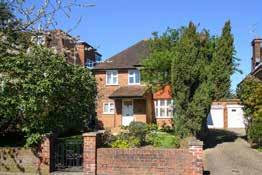
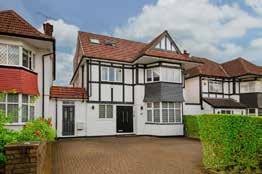
C H A G S A M E A C H
J
B
H
3
Asking Price:

I
L
4
P
S
G
Asking Price:






Shavuot is one of the happiest and most exciting festivals in the Jewish calendar. It celebrates the day that Hashem gave the Torah to the Jewish people at Har Sinai. After leaving Egypt and travelling through the desert, Bnei Yisrael arrived at the mountain and prepared themselves for this very special moment. On Shavuot, we remember how important the Torah is and how lucky we are to have it.
Before the Torah was given, the Jewish people camped together at the bottom of Har Sinai. The Torah tells us that they stood there “as one person with one heart.” Everyone was united and ready to listen to Hashem. There was thunder, lightning, smoke, and the sound of the shofar. It must have been an incredible sight!
Then Hashem gave the Aseret HaDibrot, the Ten
Commandments, to the Jewish people.
One special custom on Shavuot is staying awake late at night to learn Torah. Many adults and older children take part in this tradition because we want to show Hashem how excited we are to receive the Torah again each year. Even learning one small thing about Torah on Shavuot is very meaningful.
Another famous custom is eating dairy foods. People enjoy cheesecake, ice cream, blintzes, and cheese pastries. There are many explanations for this custom. One reason is that after the Torah was given, Bnei Yisrael learned about the laws of kashrut and could not prepare meat straight away, so they ate dairy foods instead.
We also decorate our homes and shuls with
flowers and greenery. Har Sinai is believed to have become covered in plants and flowers when the Torah was given. The colourful decorations help make the chag feel joyful and beautiful.
Shavuot is also connected to the story of Ruth. On Shavuot we read Megillat Ruth, which tells the story of Ruth, a kind and loyal woman who chose to join the Jewish people. Ruth cared for her mother-in-law Naomi and showed great faith in Hashem. She later became the greatgrandmother of King David. Her story teaches us about kindness, loyalty, and commitment to Torah values.
For children, Shavuot is a wonderful opportunity to think about what Torah means in our daily lives. Torah is not only something we learn in school or shul. It helps guide the way
we behave, speak, and treat other people. Every mitzvah we do is part of the Torah that Hashem gave us.
Many communities have special Shavuot programmes for children, including games, quizzes, learning activities, and ice cream parties. Some children stay up a little later than usual to hear stories or learn Torah with their family.
Shavuot reminds us that the Torah belongs to every Jew, young and old. Every year, when we celebrate Shavuot, it is like receiving the Torah all over again. That is why Shavuot is such a special and meaningful chag for children and adults alike.
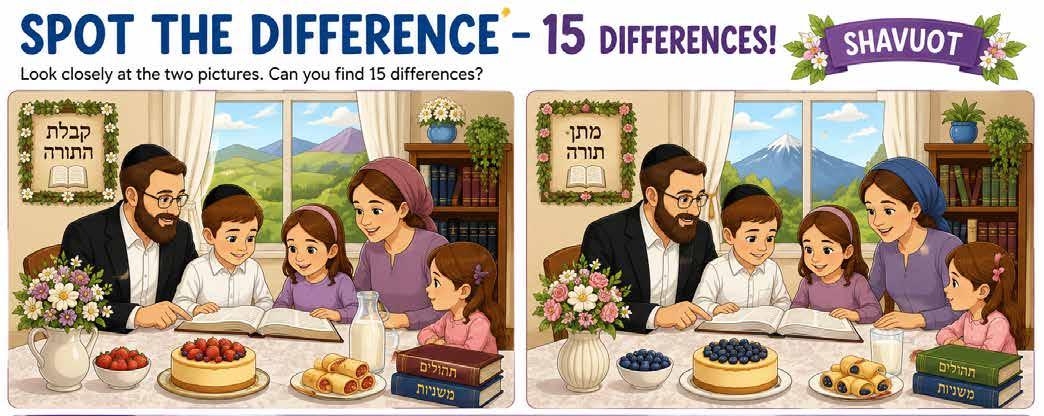
Using all the shapes, can you make the shape on the right?
The goal of a word wheel puzzle is to create as many words possible with the letters in the word wheel. Each word must contain at least three letters. You can only use each letter once and every word must have the letter in the centre of the wheel.
Q: What side of a chicken has the most feathers?
A: The outside of course!
Q: Where do kings keep their armies?
A: In their sleevies!
Q: Where do baby cows eat?
A: In the calf-ateria!
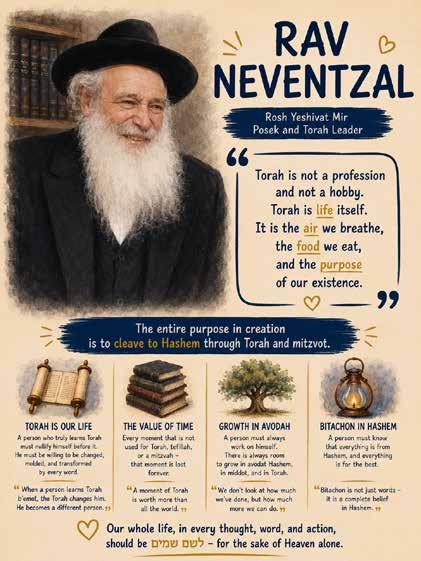
1. I can be cracked, I can be played. I can be told, I can be made. What am I?
2. If you lose me you cause people around me to lose me too. What am I?
3. I am so fragile, saying my name will break me. What am I? I T E G T D R A U
Q: Why do bicycles fall over?
A: Because they are two-tired!