








So many of you like what we do at Campaign Against Antisemitism and believe it’s the right approach. We know because you’ve told us. We know because you turn to us. We know because you value the results we deliver.
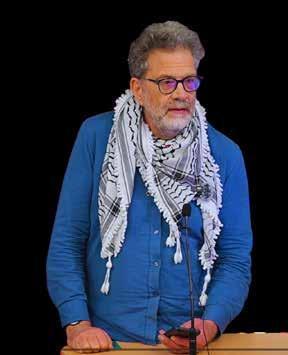
We pushed for restrictions on the hate marches The police pushed back. When our pressure intensified, they finally imposed conditions on the marches. Leaders of the PSC and Stop the War, so used to doing whatever they wanted, breached those conditions. They have now been convicted in court.
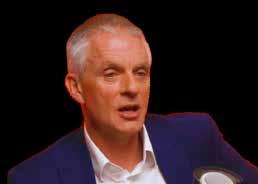
The BBC has not wavered in its bias against Israel We kept the pressure up, putting antisemitism at the BBC on the national agenda. First, Gary Lineker went. Then it was the turn of Director General Tim Davie and the CEO of BBC News. With a new Director General in position, we are maintaining the pressure to expose and counter the BBC’s spouting of inflammatory propaganda.
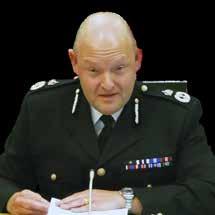
The ban on Israeli football fans by West Midlands Police was a national disgrace. We maintained the pressure alongside politicians like Nick Timothy MP and Lord Ian Austin until Chief Constable Craig Guildford was forced out. The episode showed the extent to which radical Islamism is able to warp British law enforcement, and exposed the appeasers to the full glare of the British public.
The fight for a Jewish future in this country is the fight for Britain’s very soul.
Campaign Against Antisemitism needs you to Fund the Fight — for our community and for our country.
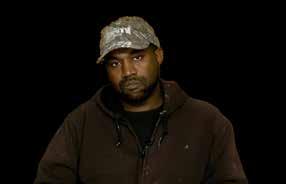
Just months ago, Kanye West released a song called “Heil Hitler” and profited off swastika merchandise. He has apologised in the past before releasing a new album, only to return to hate. When he wanted to perform in the UK, we piled on the pressure and led the media backlash. The Home Office barred him from entry and the music festival was cancelled.


Your donations are doubled until 15th May antisemitism.org/ fundthefight




PARASHAT BAMIDBAR
SHABBAT: BEGINS ENDS
London 20:32 21:46
Manchester 20:48 22:10
Leeds 20:43 22:15
Liverpool 20:47 22:18
Birmingham 20:39 22:06
Antwerp 21:08 22:32
Bournemouth 20:31 21:54
Gateshead 20:49 22:25
Jerusalem 18:53 20:10

BY SAUL HERSH
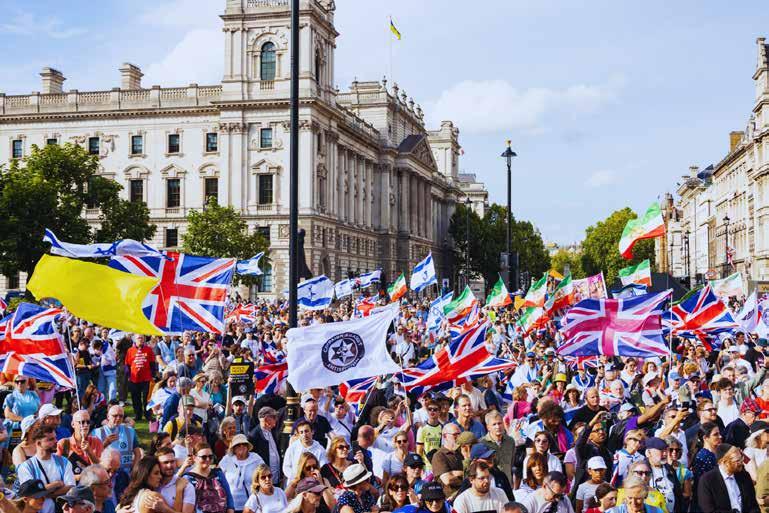
Thousands of British Jews and their allies descended on Whitehall on Sunday in one of the largest Jewish community rallies seen in Britain in recent years, marching directly to the gates of Downing Street amid growing anger, fear and frustration over what leaders described as an “epidemic of antisemitism” sweeping the country.
The “Standing Strong, Extinguish Antisemitism” rally came after months of escalating violence targeting Jewish communities across Britain — including synagogue arson
attacks, the torching of Hatzola ambulances, terror-linked incidents in north London and the arrest of Iranian suspects accused of surveillance against Jewish institutions. But it was the speech delivered by United Synagogue president Saul Taylor that
electrified the crowd of an estimated 20,000 people gathered opposite Number 10.
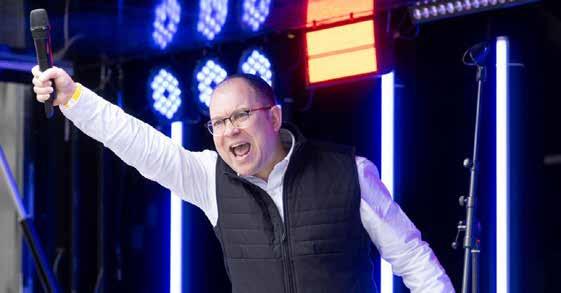
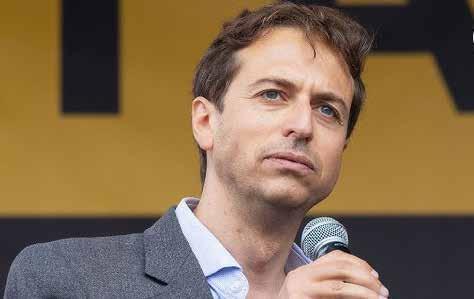
“Arson attacks, stabbings, murders. Jews openly intimidated on the streets of Britain, just because they are Jews,” Taylor declared from the stage. “If this was any other community, this would be a national outrage.”
His words drew huge applause from a crowd carrying Israeli flags, Union Jacks and banners demanding stronger action against antisemitic extremism.
Taylor accused successive governments of failing British Jews and said the country had reached a dangerous turning point.
on page 2


Continued from page 1
“I call on the government to call this out for what it blatantly is: this is an epidemic of anti-Jewish hate,” he said.
He reserved particular anger for what he described as the silence of parts of Britain’s anti-racist movement.
“Where are the Jewish Lives Matter marches?” he asked. “Where is the socalled anti-racist movement? As we know only too well, Jews don’t count.”
The rally, jointly organised by more than a dozen Jewish organisations including the Board of Deputies of British Jews, the Jewish Leadership Council, the Campaign Against Antisemitism, Stop The Hate UK and the Office of the Chief Rabbi, represented an unprecedented show of communal unity.
The message was blunt: Britain must act before more Jews are attacked.
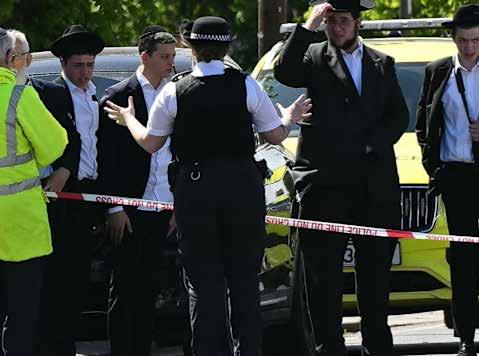
Taylor’s speech focused heavily on the grim reality now facing Jewish communities across the UK. He referenced the targeted arson attack on Hatzola ambulances in Golders Green, synagogue firebombings in Kenton and Finchley, and the terror stabbing attack in Golders Green last month in which two Jewish men were injured.
In one of the most powerful moments of the afternoon, Taylor revealed the staggering financial burden now being carried by the Jewish community simply to remain safe.
“This amounts to a tax on being Jewish in Britain,” he said, explaining that the
United Synagogue now spends more than £1 million annually on security, while one synagogue alone pays £20,000 every month for protection.
Taylor recounted meeting Prime Minister Keir Starmer after the Kenton synagogue arson attack and telling him those figures.
The United Synagogue president also spoke of his frustration after Starmer allegedly promised him that those responsible for the Kenton attack would “feel the full force of the law.”
Taylor then contrasted that pledge with the reality that followed: a 17-year-old who pleaded guilty to the synagogue arson was released on bail with the condition that he simply not enter a synagogue.
“PM, is that feeling the full force of the law?” Taylor asked the crowd. “He gasped again. Has there been tangible action? No.”
His criticism extended beyond Labour. Taylor accused “successive British governments” of failing to confront Islamist extremism and antisemitic incitement forcefully enough.
“Hate preachers not banned. Hate marches not banned. The Iranian Revolutionary Guard Corps still not proscribed,” he said.
The recent wave of attacks has sent shockwaves through Britain’s Jewish community. In March, four Hatzola ambulances were deliberately torched in a coordinated overnight attack in north-west London. Iranian-linked Islamist group HAYI later claimed
responsibility for several attacks targeting Jewish institutions.
Counter Terrorism Policing has confirmed multiple incidents are being treated as terrorism-related offences, while arrests of Iranian nationals accused of surveillance operations against Jewish buildings have heightened fears that Britain’s Jews are facing an organised campaign rather than isolated hate crimes.
Chief Rabbi Sir Ephraim Mirvis opened the rally with a warning that antisemitism had become normalised across British public life.
He said poisonous hatred could now be seen “in politics, universities, schools, the arts, the NHS and on the streets.”
The political response reflected growing cross-party concern. Conservative leader Kemi Badenoch, Reform UK’s Richard Tice and Liberal Democrat leader Ed Davey all appeared at the rally.
Badenoch described the attacks as a “national emergency,” while Davey said he “could not believe” the Iranian Revolutionary Guard Corps had still not been formally proscribed.
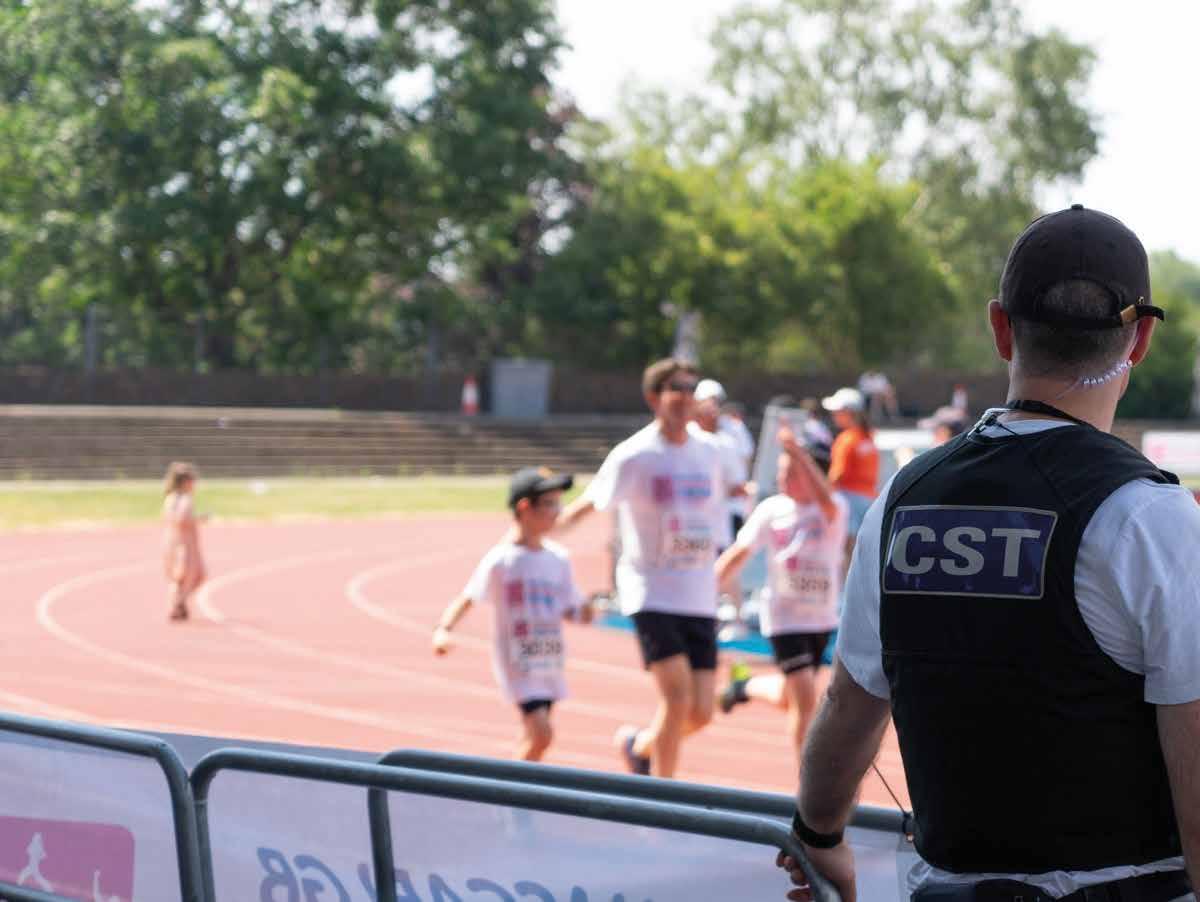
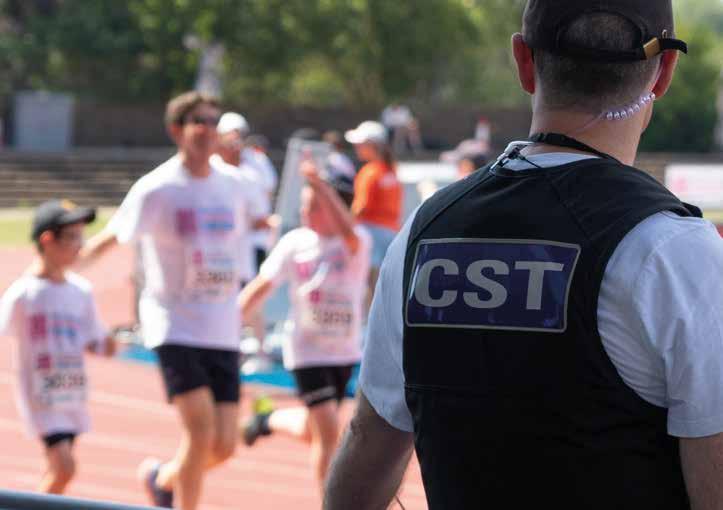
Taylor also paid tribute to the volunteers who have increasingly become the frontline defenders of British Jewish life — the Community Security Trust, Shomrim patrol groups and Hatzola emergency responders.
“At the Kenton arson, the CST coordinated the response.
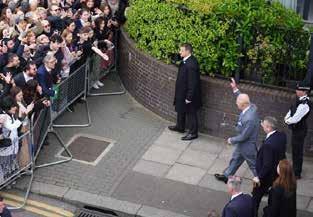
KING
In Golders Green it was Shomrim who detained the terrorist until police arrived,” he said. “Thank G-d we have organisations like CST, Shomrim and Hatzola.”
In the speech’s conclusion, Taylor invoked the memory of his late grandfather, Lieutenant Colonel Mordaunt Cohen MBE, who housed Kindertransport refugees during the Second World War before volunteering to fight Nazi Germany.
“Eighty-six years later it might look very different,” Taylor told the crowd, “but the time has come again. This is the fight of our lives.”
He ended with a declaration that brought Whitehall to its feet.
“Jews have been here for 370 years and we are not going anywhere. We are, and always have been, proud British Jews. We will not be beaten.”




















BY MICHELLE BALEM
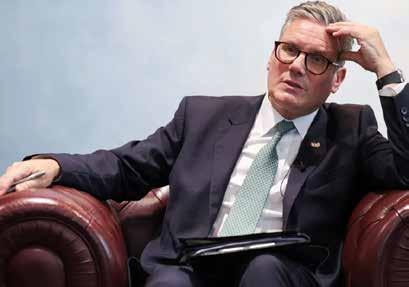
Sir Keir Starmer is facing the gravest political crisis of his premiership after devastating local election results saw Labour punished across England, Wales and parts of Scotland, while Nigel Farage’s Reform UK surged into former Labour heartlands and the Green Party continued making gains in major urban areas.
The elections exposed growing public anger over the cost of living, immigration,
failing public services and dissatisfaction with Labour’s performance less than two years after entering Downing Street. Reform UK swept through dozens of councils, humiliating Labour in traditional strongholds and leaving many Labour MPs openly questioning Starmer’s leadership and direction.
For Britain’s Jewish community, however, the elections carried another major concern: the continuing rise of anti-Israel and antisemitic rhetoric inside parts of the hard Left and the Green Party. The Greens enjoyed major gains nationally, including dramatic breakthroughs in Manchester, where they surged from a fringe presence to a major political force on the council. Yet the party’s success has been overshadowed by growing controversy surrounding

antisemitism allegations involving several Green activists and candidates.
During the campaign, criticism mounted over inflammatory anti-Israel comments, extremist rhetoric and concerns that some within the party have failed to draw clear lines against antisemitism. Many Jewish voters fear parts of the Greens are increasingly becoming a political home for activists who previously gravitated toward Jeremy Corbyn-era Labour.
Jewish communities in north London, Greater Manchester and other heavily Jewish areas have watched developments with increasing alarm following nearly two years of soaring antisemitism across Britain since October 7.
In Manchester’s Jewish districts, several closely watched contests drew intense communal interest. Independent councillor Andrew Walters remained a highly visible figure around Kersal and Broughton Park, home to one of Britain’s largest Orthodox Jewish populations. Walters has built strong local support through direct engagement with the community and vocal opposition to rising antisemitism.
Meanwhile in Southport, one of the night’s standout victories came as a pro-Israel candidate secured an
important win amid growing voter frustration with both Labour and Conservative leadership nationally. The result reflected wider national trends as many voters abandoned traditional loyalties and backed candidates seen as stronger on security, extremism and social cohesion.
The Conservatives also endured a bruising night. In several northern councils they were virtually wiped out as Reform UK absorbed large sections of the right-wing vote. Across towns and suburbs throughout Greater Manchester and the north-west, Reform emerged as a major force while the Conservatives collapsed dramatically.
Attention also focused on former Tory figures including Barnet, whose defeat symbolised the wider collapse of Conservative authority in many areas that once appeared politically secure. Across parts of the north-west, Jewish voters who had previously turned toward the Conservatives during Labour’s antisemitism crisis now appear increasingly divided, with some shifting toward Reform UK, others remaining loyal to the Conservatives, and many expressing frustration with the entire political establishment.
Continued on page 6

Spend your retirement doing what you love - not worrying about money

Continued from page 4
The elections also highlighted how deeply fragmented British politics has become. Labour lost support to Reform on the Right and to the Greens on the Left, while the Liberal Democrats quietly continued making gains in wealthier southern areas.
For Starmer personally, the pressure is now intensifying rapidly. Critics inside Labour accuse him of lacking vision, failing to connect with working-class voters and struggling to control divisions
inside his own party. The Prime Minister now faces mounting calls to toughen policies on immigration, law and order and extremism as Reform UK continues building momentum nationally.
For Britain’s Jewish community, the message from these elections was unmistakable. Concerns over antisemitism, security, extremism and social cohesion are no longer side issues — they are becoming central political battlegrounds. And many Jewish voters increasingly believe that Westminster still does not fully understand the scale of those fears.
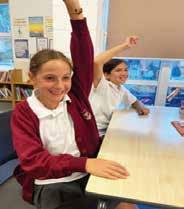
Contact the school t book a guided tour o our wonderful schoo where you will get to meet our Head Teacher and see the school in action! Looking forward to welcoming you.
To register please email:
Last few spaces for Nursery and Reception!
Places available for September 2026. Limited places across the school available.
INDEPENDENT ALIYAH CONSULTANT
TO SCHEDULE A FREE IN-PERSON MEETING WITH DOV OR A MEETING OVER ZOOM PLEASE BE IN TOUCH
BY MARTIN KENT
US President Donald Trump arrived in Beijing this week for a high-stakes summit with Chinese leader Xi Jinping as the deepening Iran conflict, continuing Hezbollah aggression and growing instability across the Middle East threaten to push the region closer to a far wider war. The summit comes at a critical moment for Israel. While Washington continues publicly backing Israel’s right to defend
itself against Iran and its terror proxies, President Trump is simultaneously attempting to broker a fragile ceasefire aimed at preventing a direct regional confrontation involving multiple fronts.
Speaking before landing in China, Trump admitted ceasefire efforts were “on life support” but insisted diplomacy remained possible. American officials hope Beijing may pressure Tehran into reducing tensions and easing fears of escalation around the Strait of Hormuz, where global shipping and energy markets remain under growing strain.

For Israel, however, the reality on the ground remains deeply dangerous. Despite repeated diplomatic efforts, Hezbollah

attacks from Lebanon continue to terrorise northern Israeli communities. Sirens have continued sounding across the Galilee and northern border towns, while waves of drones launched toward Israel have kept both civilians and the IDF on constant alert.
Over recent weeks, Israeli soldiers operating on the northern front have continued to be killed and injured amid ongoing clashes and cross-border attacks. Security officials warn that Hezbollah still possesses enormous military reach, including precision missiles, explosive drones and long-range rocket capabilities capable of targeting much of Israel.
Israeli officials remain deeply sceptical of any ceasefire arrangement that leaves Hezbollah armed and entrenched along the northern border. Many in Jerusalem argue that years of international agreements and temporary truces have simply allowed terror groups to regroup, rearm and prepare for future attacks against the Jewish state.
At the same time, growing concern is emerging over Hamas rebuilding efforts inside Gaza. Israeli security sources have warned that despite months of intense fighting, Hamas continues attempting to restore sections of its command
structure, tunnel network and recruitment operations.
Senior Israeli military officials believe Hamas is increasingly trying to exploit humanitarian pauses and international pressure campaigns to strengthen itself once again. There are also growing fears that terror cells connected to Hamas and Islamic Jihad are attempting to intensify activity inside Yehuda and Shomron.
The IDF’s Chief of Staff has reportedly pushed for expanded patrols, intelligence operations and increased troop presence across Yehuda and Shomron amid fears of rising terror threats. Israeli security forces remain concerned that Iranbacked groups may seek to ignite further violence in the area while Israel remains heavily focused on Gaza and the northern border.
Meanwhile, the Iran crisis itself continues to dominate international attention. Tehran has vowed “no retreat” and warned it is prepared for further confrontation if attacked again by either Israel or the United States. Iranian military exercises this week were presented by the regime as proof that it remains ready for escalation at any moment.
Continued on page 10


Continued from page 8
Global markets are also watching the Strait of Hormuz closely as tensions threaten one of the world’s most important shipping routes. Iran has repeatedly threatened disruption in the waterway, through which a significant percentage of the world’s oil supply normally passes.
Commercial shipping companies remain increasingly nervous about the risk of escalation involving Iranian forces, Western naval patrols and regional militias. Oil prices have fluctuated sharply amid fears of a prolonged crisis in the Gulf.
Trump has attempted to project confidence throughout the crisis, insisting America remains fully committed to
Israel’s security while also trying to avoid a catastrophic regional war. Analysts believe the Beijing summit reflects growing recognition inside the White House that China’s influence over Tehran could become critical in preventing further escalation.
Yet in Israel, many remain unconvinced that diplomacy alone can stop the threats building across multiple fronts.
With Hezbollah continuing attacks from the north, Hamas attempting to rebuild in Gaza, terror concerns rising in Yehuda and Shomron and Iran refusing to back down, Israelis are increasingly preparing for the possibility that the current conflict may still have a long and dangerous road ahead.
This week, the “spirit and sunshine of Israel” swept through several UK Jewish schools as four expert shlichim (educators) from the JNF education team in Israel completed a high-energy tour of Jewish schools across London and Manchester. The initiative, a special partnership between JNF UK and its Israeli counterparts, reached over 800 pupils, delivering a range of interactive educational experiences designed to celebrate and deepen the connection between the next generation and the Jewish homeland.
The visiting team led sessions at JFS, Kerem, Independent Jewish Day School, and Matilda Marks Kennedy in London, and King David Primary School in Manchester. Far removed from traditional classroom lessons, the programme focused on high-energy informal education. Students participated in interactive
games that brought Israel to life, listened to storytelling about pioneers living in remote regions in the Negev and Galilee, and engaged in hands-on activities aimed at strengthening their knowledge, identity, and heritage.
As Britain’s oldest Israel charity, JNF UK has spent over 120 years building the Jewish homeland. While much of their work is focused on physical infrastructure and social projects in Israel’s periphery, the organisation sees education and connection within the UK Jewish community as equally important.
“While we spend our time strengthening remote regions like the Negev and the Galilee, we believe it’s just as important to build connections right here at home,” Elan Gorji, JNF UK CEO, noted. The goal

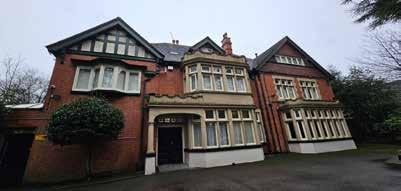
available for September 2026
Kosher self-catering accommodation for all Jewish students in Birmingham offering:
Ensuite and non ensuite rooms each with kitchen facilities
Total capacity - 38 single rooms
On site secure car parking
JSoc events/ Friday Night Dinners for all Jewish students
10-15 minute walk to UoB campus
Good transport links to all other Birmingham Universities
High speed wifi at no extra charge
Free laundry facilities SkyTV
Comfortable lounge with library, shul, meeting rooms
More information/photos at https://birminghamhillel.com/ Enquiries and Application forms: contact@birminghamhillel.com
was simple yet profound - to ensure that children came home with a smile on their faces, with a new fact, or two, about Israel. By bringing educators directly from Israel into UK schools, the programme aimed to create authentic and personal encounters that help transform Israel from something distant into something relatable, engaging and real for young people.
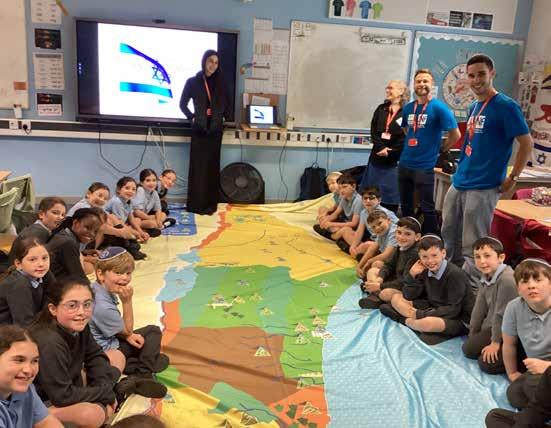
In today’s global climate, providing positive, accurate, and engaging educational experiences about Israel has never been more critical. For many young students, the narrative they encounter online and in the wider media can be complex and often devoid of the rich, vibrant reality of the land itself. By bringing educators directly from Israel, JNF UK offers pupils an authentic perspective on Israel’s incredible geography, its ancient history, and its world-leading innovation. Through this programme, students don’t just learn about the geography of the country, they learn about the resilience of the people who are shaping its future. These sessions provide a safe and inspiring space for students to explore their heritage. They explore the diversity of Israel’s landscape and innovative spirit that has turned a desert into a thriving
hub of technology and agriculture. These positive touchpoints are essential in fostering a deep, personal connection to a shared heritage that transcends headlines and builds lasting communal confidence.
The visit is part of a broader, year-round commitment by JNF UK to support the educational journey of Jewish youth in Britain. This includes JNF UK’s proud sponsorship of the Etgar Israel Programme - the UK’s largest Jewish primary school quiz. Additionally, the charity’s own Fellowship Programme for year 12 students continues to cultivate the leaders of tomorrow, providing creative tools, access to important advocates, and specialised resources.
The shlichim’s visit may have ended, but the “roots” planted this week are intended to grow into lifelong “branches.” By nurturing curiosity and pride in Israel’s achievements, JNF UK is helping to ensure that the next generation of British Jews feels a profound and lasting bond with the land of Israel.
For parents and schools looking to stay connected, JNF UK offers ongoing resources, including regular kids’ magazines and festival-themed competitions. For more information or to book a visit for your school, cheder, or youth group call 020 8732 6100 or email education@ jnf.co.uk.

Seed, the UK-based Jewish family education charity, is delighted to announce the outstanding success of its It’s Coming Home 2026 Matchfund Campaign, which raised an impressive £1.2 million towards its annual budget.
Seed’s work is vital. With assimilation posing a significant challenge, many young families have limited exposure to Jewish knowledge, culture and practice.
Seed runs programmes in 20 Jewish primary schools, with a strong focus on parental education. It also operates three centres — in Edgware, Borehamwood and Manchester — which host weekly activities ranging from sessions for young parents to advanced Jewish learning.
Many families also attend Seed’s signature weekend retreats, where they experience traditional Jewish life and community for the first time. Over the years, many young people who began their journey with Seed have continued on to Jewish study programmes in the UK and abroad.
At a time when Jewish families are facing rising antisemitism, online pressures and increasing challenges to Jewish identity, the success of this campaign could not be more timely. The funds raised will allow Seed to expand its essential work, giving families the guidance, confidence and educational tools they need to build strong Jewish homes.
The campaign’s success reflects the generosity and commitment of Seed’s supporters — many of whom have personally benefitted from its wide-ranging programmes.
Seed also extends its appreciation to its corporate sponsors, whose partnership was crucial to the campaign’s achievements. Special thanks go to Gold Sketch Studio, Little Bicks and Marc Lewis Adult Tennis & Wellbeing Classes for their significant support. Seed also acknowledges Phoods and We Are Events for their valued contribution and dedication to Jewish education and continuity.
Rabbi Malcolm Herman, CEO of Seed, expressed his gratitude and reflected on
the broader importance of the campaign:
“Now more than ever, Jewish families need support, direction and inspiration to help their children grow up proud, knowledgeable and connected to their Jewish identity. We are deeply grateful for the overwhelming support shown to Seed by the community. This funding will allow us to reach many more families across the UK and strengthen their connection to Jewish life.”
Seed looks forward to building on this momentum, continuing to strengthen Jewish learning and ensuring that families across the UK feel supported, confident and connected in the face of today’s challenges.






Sheffield Children’s Hospital is an NHS Trust dedicated to integrated healthcare for children and young people. As a national centre of excellence and a leader in specialist children’s healthcare, it delivers world-class care for some of the most complex and rare conditions in the country. Over the years, there have been numerous Jewish families who have been referred to the hospital due to their excellent Paediatric Gastroenterology and Orthopaedic departments, near Manchester, Gateshead and Leeds. Recently, due to the frequency of visits
by certain families, the Hospitals’ Head of Nursing and Patient Experience Lead were approached to provide facilities for Jewish Patients and their parents to have a similar Shabbos Room setup in the hospital, like other hospitals in Manchester, Newcastle and London. They were explained the need for somewhere for Parents, to have somewhere private to Daven, eat and relax, during a hospital stay. This is even more necessary, as there are no public kosher facilities as such in Sheffield.

The Hospital was extremely helpful from the outset, and provided a room, the full funding, design and fitting of the room. Nothing was too much for them, and they were more than happy to accommodate all the requests. The room is now functional. Initially, there is a kitchenette, hot and cold drinks, some Siddurim, Chumoshim etc.
To make use of this facility and to find out more information, please call or text 07855 759492 or 07870 730319
Rabbi and Rebbetzin Golomb of Sheffield have provided help for Families using all Sheffield Hospitals for many years, for people needing meals and other facilities. Rebbetzin Golomb can be contacted on 07976 845482.

Headteacher: Mrs E Pearlman Menahel: Rabbi Y Levenson

Menorah High is a high-achieving voluntary aided secondary girls’ school in north-west London. The girls are full of enthusiasm and keen to learn.
We are looking to fill the following part-time teaching vacancies for September 2026:
You will have the opportunity to work within a close and caring school community. We offer a high level of professional support and mentoring.
If you are an enthusiastic and highly motivated individual with excellent communication skills, please contact the school on 020 8208 0500 or email admin@menorahhigh.com for further details.
SCA registered childminders on site
Menorah High School for Girls is committed to safeguarding and promoting the welfare of children, young people and vulnerable adults and expects all staff and volunteers to share this commitment. An enhanced DBS check is required for successful applicants.






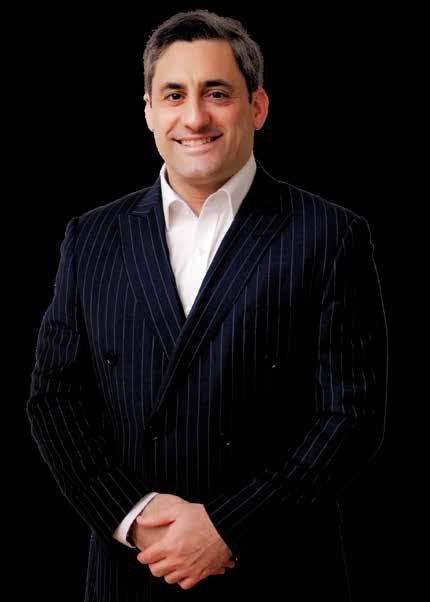
BY GIDEON FALTER, CEO OF CAA
I recently returned from a brief trip to Israel and I can happily report that the Jewish state is thriving.
For all the hate marches, the boycotts, the disruption of campus life and cultural events – none of the hatred here has had the slightest impact over there. But everywhere I went, when they heard that I’m from Britain, they looked at me with worry.
That’s because they have lived through intifadas. And they know that those who called to “globalise the intifada” have succeeded. Britain is now in the grip of its own localised intifada. We are in the early days of the ‘Britifada’.
The Britifada looks like Jews stabbed in Golders Green, murder on Yom Kippur in Heaton Park, synagogues ablaze across London, Hatzola ambulances pelted with rocks in Edgware and torched in Golders Green, Jewish children in Hendon nearly mown down in a car ramming.
The attacks are coming thick and fast, and that’s because Britain has become radicalised.
So much so that the UAE has stopped sending students here lest they become radicalised in Britain by the Muslim Brotherhood. Moderate Arab states are trying to suppress and expel Islamism and radical extremism, and now we have it over here.
Extrapolating from national polling commissioned by Campaign Against Antisemitism (CAA), 4.7 million people in this country think 7th October was justified.
One in five British students refuse to share accommodation with a Jew.
Almost half of young people think Israelis are the new Nazis.
The extremists have radicalised Britain. Now, we need to de-radicalise it.
The campaign of extremism that we are seeing has only been possible because it was met with appeasement by the authorities.
Already two years ago, police stopped me in Parliament Square with CAA’s digital billboard vans because we dared to show the faces of children taken hostage by Hamas. No hire company would rent us their vans again after that. So we bought our own. We will not be silenced.
A few months later, I was stopped by police and told I looked “quite openly Jewish” near a hate march and threatened with arrest unless I departed. It’s down to us to deradicalise Britain and demand an end to appeasement. The way to do that is to hold the antisemites and the authorities to account.
At CAA, that is exactly what we do. We pushed for restrictions on the hate marches. The police pushed back. When our pressure intensified, they finally imposed conditions on the marches. Leaders of the Palestine Solidarity Campaign and Stop the War Coalition, so used to doing whatever they wanted, breached those conditions. They have now been convicted in court.
The BBC has not wavered in its bias against Israel, but we have kept the pressure up, putting antisemitism at the BBC on the national agenda. First, Gary Lineker went. Then it was the turn of Director General Tim Davie and the CEO of BBC News. With a new Director General in position, we are maintaining the pressure to expose and counter the BBC’s spouting of inflammatory propaganda.
The ban on Israeli football fans by West Midlands Police was a national disgrace. We maintained the pressure alongside politicians like Nick Timothy MP and Lord Ian Austin until Chief Constable Craig Guildford was forced out. The episode showed the extent to which radical Islamism is able to warp British law enforcement, and exposed the appeasers to the full glare of the British public.
and we get results. Nobody else does what we do. That’s why so many of you back us, and why we are proud to have your support.
Just months ago, Kanye West released a song called “Heil Hitler” and profited off swastika merchandise. He has apologised in the past before releasing a new album, only to return to hate. When he wanted to perform in the UK he apologised anew, but we piled on the pressure and led the media backlash. The Home Office barred him from entry and the music festival was cancelled.
Following the Golders Green stabbings, we led the communal reaction to the attack in the national media. Police only began revealing details about the suspect’s past after we announced that we had uncovered them. The Prime Minister only made his Downing Street statement after we called our rally outside his home. The Government’s independent reviewer of terrorism legislation echoed our assessment that this is a national emergency and our calls for an end to the hate marches.
Our recent emergency rally was featured on all major news channels and broadcasters and made the front pages of national newspapers. The Met Commissioner only announced new measures following the rally and the extensive news coverage that we delivered. After we called on Sir Keir Starmer to present a plan, the Prime Minister adopted our terminology, including describing his (insufficient) new proposals as “my plan”.
Having set the agenda throughout the week, senior politicians, including opposition party leaders, then appeared at the Jewish community rally on Sunday, which CAA was proud to support. This is only the beginning.
CAA has impact, we set the agenda
funding campaign to ensure we have the resources to keep at it – and fight harder than ever at this critical juncture. Your donations at antisemitism.org/






BY RABBI NAFTALI SCHIFF
What3Words: Answer the Door!
“The voice of my Beloved knocks.” (Song of Songs 5). Few phrases capture the drama of Jewish history and the tragedy of lost opportunity more powerfully than these words. Chosen by Rav Joseph B. Soloveitchik as the title of his landmark essay ‘Kol Dodi Dofeik’ in 1956, he described moments in history when the Divine knocks upon the door of the Jewish people through the unfolding events of the age itself, summoning us to rise, to respond and to act.
The wake up call of divinely ordained events are never viewed as coincidental or mere background noise. They are intentional and deliberate calls that demand response.
Seventy years later, that knocking at the door of the Jewish People has become louder still.
The events of the past two and a half years have shaken the Jewish world in ways few could have imagined. October 7th and everything that followed. Civilian hostages. Unspeakable images. Unimaginable heartbreak and loss. War on multiple fronts. Barrages of sophisticated missiles. Yet, interwoven with the pain have also been moments of extraordinary courage, resilience and what can only honestly be described as manifest miracles. Barrages deflected. Threats neutralised. Outcomes transformed, against every rational expectation.
At the very same time, Jews across the globe have experienced something extraordinary still. An unanticipated shake up. An awakening of sorts. Something painful, something thought provoking , something deeply unsettling, but unmistakable nonetheless. The illusion that Jewish life can continue indefinitely on autopilot, disconnected from national destiny, detached from peoplehood and comfortably absolved from true responsibility, has been profoundly challenged.
Something has shifted.
I found myself thinking recently about the oft repeated announcement we
became familiar with in Israel during the Gulf War:
“A real alarm has sounded throughout the State of Israel. All citizens are requested to enter into the sealed room, to don gas masks etc…”
The national directive then was to retreat to a safely insulated place of refuge, to take shelter from danger, to batten down the hatches and wait for the storm to pass.
I can’t help but think that the worldwide alarm of today is demanding precisely the opposite response from each one of us.
This siren is not calling upon Jews to hermetically seal themselves in. It is calling upon us to emerge with courage and conviction; to embrace more deeply the Jewish identity that is being challenged, to rise to the call of Jewish responsibility and Jewish purpose. Not to shrink as Jews, but to stand taller as Jews. Not to retreat into passivity, but to become conscious and courageous actors upon the stage of history.
moment right now.
As Yom Yerushalayim arrives, followed swiftly by the final ascent toward Shavuot and the giving of the Torah, it is impossible not to sense that something immense is taking place within Jewish history and Jewish consciousness alike. The calendar itself seems to be speaking to us.
Nothing has stayed the same since Yom Yerushalayim 1967.
Nothing can remain the same after witnessing the events we have experienced these recent years. Could anyone have imagined the unfolding events with Israel repeatedly defying
Just this week, I found myself in Munich as part of my position on the Standing Committee of the Conference of European Rabbis. Netzach, the professional leadership training course of Jewish Futures was invited again to upskill twenty young rabbinic trainees participating in the CERs accreditation programme now entering its fifth cohort of training emerging rabbis from across Europe. For me, the symbolism was overwhelming.
Munich. The birthplace of Nazism. The city where the movement dedicated to the annihilation of the Jewish people first gathered force and legitimacy. Yet today, with the support of the Bavarian government itself, rabbis are being trained there openly and proudly to strengthen Jewish life across Europe.
every prediction of vulnerability and disappearance?
We are being called to pay attention; to recognise the magnitude of the hour; to understand that history itself is demanding something bigger of us all.
There is a verse in Ha’azinu that reverberates across the centuries with startling immediacy-
- “Remember the days of old; understand the years of generation after generation.”
It is not merely an instruction to recall the past. It is a summons to contextualise and comprehend the present. To read the pages of history. To discern the patterns, the rhythms and the signs through which the A-lmighty speaks to us, across generations.
And we are surely living through such a
And yet alongside those extraordinary blessings has come another knock upon the door. A painful one. The resurgence of antisemitism across online platforms, campuses, streets and public discourse worldwide. Jewish students isolated. Ancient hatreds repackaged and mainstreamed with astonishing speed. The growing realisation that a generation highly adept at physically defending Israel is often far less certain how to articulate what being Jewish itself truly means and why it and Israel both matter so much to us all.
This too is perhaps part of the knock on the door.
History rarely announces itself explicitly. It arrives in patterns and signals that only those paying attention are perhaps somewhat able to recognise. And we must be paying attention now.
To sit in Munich with twenty young European rabbis discussing how to inspire Jewish identity, continuity and leadership is not merely an educational initiative. It is a thunderclap of a Divinely ordained history. As the verse in Isaiah 40 describes the unfolding story of world civilisation-
“Who has wrought and accomplished this, calling the generations from the beginning? I am the L-rd, the First, and with the last ones as well I am He.” The A-lmighty- not only the G-d of creation, but He who also summons and guides the generations from the very beginning of time toward their ultimate purpose.
Educating and empowering the next generation of Rabbis at a conference in Europe is also the Jewish people declaring quietly but unmistakably that we are still here. We are not cowering or retreating. We are not disappearing. We are ratherbuilding forward.
We are listening carefully to the knockthe Kol Dodi Dofeik. We are paying attention. We are actively responding to the ever audible summons of History. And back today in the UK, I feel compelled to ask a probing and perhaps uncomfortable question.
Are we, as a community, truly investing adequately in producing Jews capable of answering the call?
Proud, articulate, deeply rooted Jewish

identity does not emerge accidentally. It must be cultivated deliberately through transformative education and meaningful experiences that forge identity, belonging and purpose. The painful reality exposed over recent years is that too many young Jews arrived at this moment unprepared. Not because they lacked intelligence or goodwill, but because communal priorities too often failed to place deep Jewish identity formation at the centre of our agenda with the urgency and professionalism it deserves.
We have funded many important things as a community. Buildings dedicated to welfare, religious service, formal infrastructure and instruction. We have invested in security and community. All worthy and all necessary.
But the current moment is reminding us that the deepest battleground is the Jewish spirit, being and essence itself.
No amount of physical security alone can sustain a Jewish future lacking in meaning, pride and belonging. Walls may protect Jewish bodies, but only compelling Jewish education, experiences and authentic connection can strengthen the Jewish soul and spirit.
And therefore the call of this historic hour must also become a call to communal leadership, lay and rabbinic alike; to invest far more boldly in the educators, the school and campus initiatives, the immersive experiences and leadership programmes that are proven to produce proud, connected and resilient young Jews ready to stand up and be counted.
As we count toward Shavuot, perhaps this is precisely the wake up call of our generation. At Sinai, the Jewish people did not remain passive spectators to history.
עמשנו השענ. As one they proclaimed“we shall do and we shall seek to understand.”
They acted! They stepped up and into it.
The call is becoming louder. קפוד ידוד לוק.
Hashem is knocking once again upon the door of Jewish history, calling upon us not merely to survive history, but to help shape it. Not merely to inherit the Jewish story, but to continue writing it with courage, clarity, faith and responsibility.
And perhaps one day future generations will ask not only what happened during these historic times, but who among us truly heard the call… and WHO ANSWERED THE DOOR?

In this column Rabbi Naftali Schiff reflects upon 3 key words each week relating to contemporary and relevant issues.
All feedback is welcome- nschiff@ jfutures.org.
Rabbi Schiff is the Founder & CEO of the Family of Jewish Futures networks of educational organisations.
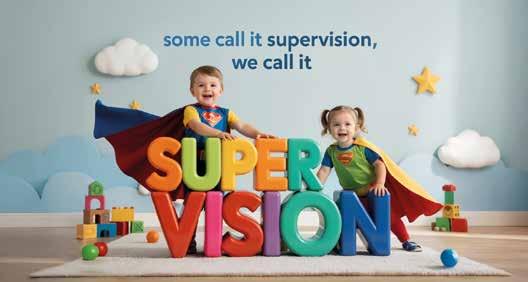

• A warm, caring jewish environment • Full days 8:45 AM - 3:45 PM • Lunches & snacks provided • Registered for the 30 hours free childcare scheme











BY RABBI YONASAN ROODYN
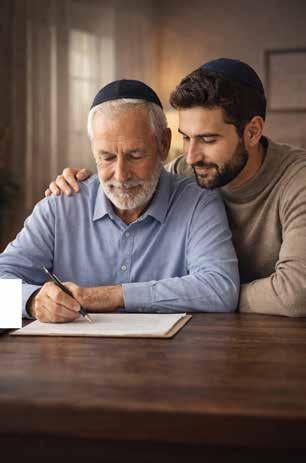
Rabbinic leaders from across Europe gathered this week in Munich for a dynamic and energising leadership seminar delivered by Jewish Futures’ CEO Rabbi Naftali Schiff and myself, as part of the programme of the Conference of European Rabbis.
The seminar formed part of an ongoing leadership training initiative which we have developed for five cohorts of European rabbis, helping cultivate a new generation of visionary rabbinic leaders across the continent.
At the heart of the session was the remarkable Talmudic narrative of Rabbi Chiya (who by his own admission preserved Jewish continuity) not simply as a teacher of Torah, but as a builder of people, systems and future leaders.
The seminar explored how Rabbi Chiya understood that the future of Jewish
education depended not only on transmitting knowledge, but on empowering others to carry responsibility themselves.
Using the story as a framework, participants were challenged to rethink the very nature of leadership. Great rabbinic leadership is not about creating followers, it is about creating builders. Rabbi Chiya did not wait for others to solve problems. He planted seeds, developed talent, trained students and created structures that could sustain Torah for generations to come.
The atmosphere throughout the seminar was highly interactive, upbeat and collaborative. Rabbis from communities across Europe took part in leadership labs, practical workshops, strategy sessions and real-life case studies focused on some of the greatest opportunities and challenges facing Jewish communities today.
Sessions explored themes including resilience, responsibility, innovation in outreach, inspiring disengaged Jews, relationship-building and creating communities filled with warmth, growth and
purpose. Participants were encouraged not only to learn new skills, but to see themselves as catalysts for the future of Jewish life in Europe.
Rabbi Schiff spoke about the urgent need for rabbis who can inspire confidence and growth in others. “Rabbi Chiya understood that leadership is measured not by how much you personally achieve, but by how many others you empower to achieve,” he said. “The strongest communities are built when people are trusted, developed and inspired to lead.”
I emphasised the importance of courage and vision in modern Jewish education as I believe that too often people feel overwhelmed by the scale of the challenges facing Jewish life. The lessons of Rabbi Chiya were actually put into practice by ‘The Alter’ of Novardok at the start of the 20th century, in doing so he taught us that lasting change happens when leaders are prepared to invest patiently in people, believe in their potential and build for the long term.
Participants described the seminar as inspiring, practical and deeply relevant,
praising its combination of Torah vision, strategic thinking and hands-on leadership development. Many highlighted the energy in the room and the opportunity to collaborate with fellow rabbis facing similar communal realities across Europe.
The wider programme has already trained five cohorts of rabbis and continues to play an important role in strengthening rabbinic leadership throughout Europe. At a time when Jewish communities face both enormous challenges and unprecedented opportunities, the seminar in Munich delivered a powerful message: the future of Jewish life will be shaped by leaders who do not merely maintain communities, but who build people capable of leading the next generation forward.
Rabbi Yonasan Roodyn is the Educational Director of Jewish Futures and the Rabbi of Finchley Federation Synagogue




BY RABBI AVROHOM ZEIDMAN
There is a question many parents quietly carry but rarely say out loud.
“My teenager volunteers constantly. Everyone tells me how thoughtful, generous, and helpful he is. Yet at home, getting him to help feels impossible. How can someone care so much about strangers but ignore the people he lives with?”
If this sounds familiar, you are not alone. And more importantly, it does not necessarily mean something is wrong with your child.
In many ways, this behaviour makes perfect sense. And I think many parents quietly experience exactly what you’re describing.
It does not mean something is wrong with your child. In many ways, this is perfectly normal.
Here’s why. Helping outside the home is often much easier than helping inside
it. Outside, a teenager feels admired. At home, nobody usually makes a fuss because someone emptied the dishwasher.
Your teenager’s kindness is not fake. It just means your teenager is still developing his ‘giving muscles’.
Rav Dessler explains that there are three stages to developing our character traits.
Stage one is public giving. This type of giving is mixed with the enjoyment of being seen. They like the recognition and the praise. This is where growth starts. At this stage, if nobody is watching, the giving often stops. That is why your child volunteers outside but does not help at home. Outside gives him honour. Home gives him nothing.
Stage two is harder. This is when giving moves inward. The person cares and helps even when nobody is watching. At this stage, the giving becomes real because it is no longer about recognition. It is about the act itself.
Stage three comes later. This is when giving moves outward once again, but this time, not for the honour. By now, the person has already learned to give privately
and quietly. The love has become internal. Now it starts to overflow naturally. They want to help more people, not because they will be seen, but because the care has become part of who they are. Public giving returns, but now it is clean. No ego. Just giving.
Reb Chaim Vital famously said that a person’s entire character towards others can be measured by how he treats his wife in private. Out of the spotlight is where one can test the true worth of a person.
Based on the three-stage process, Rav Dessler explains that creating a Kiddush Hashem in private is in fact holier than doing it in public. (When the Rambam says ‘public is better’ – that is only once a person has achieved stage two.)
So, here is a suggestion for your child who is still in stage one.
Do not use fairness to motivate him. Do not say “It’s your turn” or “Everyone has to help.”
Use empathy. Make him feel like a hero. Make his small jobs around the house feel big.
Say things like “I am exhausted. You are
honestly saving me right now.” Or “Thank you. That helped me so much.” Stroke that ego. Let him feel like a hero. After all, is it not great that his idea of a hero is someone who is kind?
We should also admit that adults are not so different. I have no problem jumping up to clear plates - when guests are present. Somehow, when it is just family, the same act feels harder. When people are watching, we naturally want to show our better side.
So do not see this as hypocrisy. See it as a stage. Public giving can be a stepping stone towards quieter and more genuine kindness.
For now, build up their help at home as much as possible. Let them feel how much they matter. Over time, the giving itself can become the reward.
Rabbi Zeidman is an experienced educator of young people, young professionals and parents and is the Senior Educator at GIFT UK.







Dear Rabbi
I read your column every week and, while I often respect your perspective even when I disagree with it, on Israel I simply cannot stay silent anymore. As a progressive Jew, I feel increasingly alienated by what is being done in our name. I watch the images coming out of Gaza and I cannot reconcile them with my Jewish values.
People keep dismissing boycott movements as naïve or antisemitic, but what else are ordinary people supposed to do when they feel powerless? Public statements and moral outrage change nothing. Economic pressure at least feels like action. Frankly, I think more Jews should have the courage to say publicly: “Not in my name.”
So, I suppose my question is simply, why shouldn’t Jews support boycotting Israel if they genuinely believe it is the only remaining way to pressure the country into changing course?
Daniela
Dear Daniela
You ask what ordinary people are supposed to do when they feel powerless. But I would ask in return: why is the one Jewish state on earth so uniquely singled out for moral excommunication? Why is the instinct not “help improve Israel,” but
rather: isolate, boycott and delegitimise?
The BDS movement was never fundamentally about pressuring Israel. If Israel vanished tomorrow and became Sweden in the Middle East, many of these same activists would not suddenly embrace Zionism. The issue for large parts of the movement is not Israeli policy, it’s Israel’s existence as a Jewish state.
You say, “not in my name.” But Israel is not acting in your name. It is acting in defence of nearly ten million citizens, surrounded by enemies, after the largest massacre of Jews since the Holocaust. A country whose civilians were butchered, raped, kidnapped and burned alive on October 7th was not afforded the luxury of theoretical morality seminars in university cafés. It had to respond to a reality most Western Jews thankfully never have to experience.
Now of course the Israeli government can be criticised, and its military actions can be scrutinised. Israelis themselves do this all the time – the only people in the Middle East able to do so without fear of reprisal. It’s called democracy.
But boycotting says: this nation alone deserves isolation. And here is the real irony. The same people who call Israel a pariah somehow continue happily using Waze guiding them through traffic every day; Israeli cybersecurity protecting their bank accounts; Israeli medical advances helping save lives; Israeli chip technology inside their phones and computers and
countless other Israeli innovations.
This exposes something deeply dishonest about the modern obsession with boycotting Israel specifically. Because nobody talks this way about China while using TikTok. Nobody demands total cultural and economic isolation from countries with horrendous human rights records. Somehow the threshold for boycotting the Jewish state becomes uniquely absolute.
And Jews, of all people, should be very cautious before lending a voice to movements whose practical effect is not peacebuilding but Jewish isolation. You say boycott feels like action. Well, sometimes actions that feel righteous merely harden divisions and inflame hatred. Real moral courage is not screaming “not in my name” from a safe distance. It is holding complexity without surrendering your own people in the process.
Because if your instinct after October 7th was not first and foremost horror for Jewish victims, terrorised families and kidnapped children, but primarily outrage at the Jewish state for responding to it, then something has gone deeply wrong. Somewhere along the way, too many people - Jews included, especially so-called progressive ones - have
forgotten what Jewish values are: compassion, yes - but also Jewish survival, Jewish dignity, and the refusal to apologise for the right to existence in our own homeland. Which is precisely why boycotting the world’s only Jewish state is not some courageous moral stand, but too often another way of isolating Jews for insisting on the same rights every other people on earth takes for granted: the right to live, defend themselves and survive.




BY RABBANIT SHANI TARAGIN
Parashat Bamidbar opens not with drama, but with design. Around the Mishkan, the shevatim are counted, ordered, and positioned – “each by his degel, under the banners of their ancestral house” (2:2). At first glance, the arrangement appears administrative, even technical. Yet beneath the geography of the Israelite encampment in the wilderness lies a profound spiritual architecture: the camp of the nation below mirrors the celestial camp above.
Chazal (Bamidbar Rabbah 2:9) interpret the four primary divisions of the tribes as corresponding to the four groups of angels surrounding the Kisei HaKavod, the Divine Throne. The Midrash associates the banners of the leading tribes of Yehudah, Reuven, Ephraim, and Dan with the four faces seen in Yechezkel’s vision of the merkavah (celestial chariot) i.e. the lion, man, ox, and griffon vulture. The encampment in the desert was therefore not merely a nation in transit; it was a terrestrial reflection of the heavenly
chariot itself.
This symbolism becomes even more striking as we recall that Bnei Yisrael experienced Divine revelation at Har Sinai wherein they saw the Kisei HaKavod surrounded by angels with these four faces (Shemot 24:10). The Midrash teaches (Bamidbar Rabbah 2:3) that when Bnei Yisrael learned that the angels encamp in ordered formations around the Divine Presence, they longed to imitate them. Hashem responded by commanding the precise arrangement of the tribes in Parashat Bamidbar. Heaven’s structure would now find expression on earth. After the overwhelming theophany of Har Sinai, one might have imagined that spiritual greatness lies in transcendent experiences alone – in visions, ecstasy, and moments of revelation. Bamidbar teaches otherwise. The purpose of experiencing the Divine is ultimately to embody the Divine – imitatio Dei. Judaism does not ask us merely to witness the chariot of Hashem; it asks us to become it. The heavenly merkavah carries the revelation of Hashem through the cosmos, but the
earthly camp is entrusted with carrying that revelation through history – from the wilderness to the Land of Israel, to exile with Yechezkel through Shivat Tzion.
This transforms Parashat Bamidbar into a profound prelude to Shavuot. Shavuot commemorates the thunder and lightning of Sinai, the unparalleled moment when heaven touched earth. But Bamidbar reminds us that revelation is not an end in itself. The true goal of Matan Torah is to create a society in which the Divine Presence continues to dwell – in our homes, our communities, our institutions, and our relationships. The fiery revelation of Har Sinai and the celestial chariot of Yechezkel’s prophecy both read on Shavuot, must ultimately be translated into the quiet choreography of the everyday holiness of the “midbar.”
To be Hashem’s “angels on earth” does not mean escaping the human condition. Angels serve instinctively; human beings must choose to do so by living lives ordered by purpose, sanctity, and the enduring awareness that Hashem dwells among us. We are challenged and
To get the best value from your private medical insurance, you should speak to an expert who is qualified to advise you on the right policy for you, and recommend the providers who offer the most competitive premiums. This advice covers individual, family and company policies, and is always FREE.
As an independent health insurance expert, I work with the healthcare insurers to provide you with the appropriate and most affordable level of cover. So whether you have an existing policy or not, let’s have a chat.

charged to accompany Hashem’s presence, aligning our individual “banners” with a transcendent mission. When families build homes of Torah and chesed, when communities organize themselves around tefillah, talmud Torah, and responsibility for one another, they transform ordinary space into a dwelling place for the Shechinah.
As we stand between Bamidbar and Shavuot, the question is not whether we have glimpsed the heavenly chariot. The question is whether we are prepared to carry it forward.
Shabbat Shalom and Chag Sameach!
Rabbanit Shani Taragin is Educational Director of Mizrachi, Mizrachi Lapidot and Matan Eshkolot Programs for Educators, and the Rosh Beit Midrash of Mizrachi-Tzemach David Women’s Learning Hub, Mizrachi Lapidot, and Yeshiva University in Israel Women’s Torah Studies Program. She is a member of the Mizrachi Speakers Bureau (mizrachi.org/ speakers).










22-30 JUNE 2027
Mehadrin Kosher
Entire Ship Exclusive to Kosher Travelers



Embark on an unparalleled journey with the world’s only Kosher Travelers Svalbard Expedition.
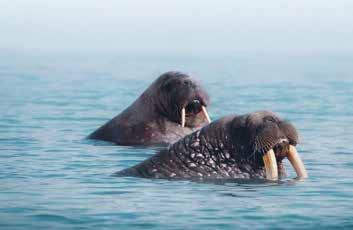
Explore a remote Arctic wilderness of dramatic fjords, towering icebergs, and breathtaking northern landscapes.
Encounter incredible wildlife, including polar bears, walruses, Arctic foxes, seals, whales, and diverse birdlife.
All guided by seasoned professionals for a safe and unforgettable experience.




EARLY BIRD DISCOUNT TILL 30 MAY ‘26




* Ideal Cruise Season on the M/V Sea Spirit, Poseidon
* Freshly Prepared Gourmet Cuisine
* Daily Tefilla & Sefer Torah
* Shabbat atmosphere
* Boutique experience for 100 guests
* Personally Hosted by David & Chana
BY DAN MATALON, TA’AMIM
Every year, as Shavuot approaches, Jewish cooks get busy whipping cheese into clouds. Blintzes are folded, bourekas are filled, sambousek are pinched and egg-washed. Cheesecakes are chilled, sliced, decorated, photographed. The festival arrives pale and sweet, full of milk, honey, pastry and flowers, and somewhere along the way, Shavuot became the Jewish season of dairy, as if the whole mystery of Matan Torah could be contained in a slice of cheesecake.
Milk is by no means the whole story of Shavuot. It may, however, be where the story begins.
One tradition explains that, having just received the Torah on Shabbat, the Jewish people could not immediately slaughter animals, prepare meat, or transform their cooking vessels for their new life of mitzvot, so they turned instead to milk for sustenance.
There is poetry and poignancy in this. Milk is the first food; nourishment in our smallest, most vulnerable infancy, when we cannot yet lift our heads and are cradled in the arms of our mothers. In that sense, the dairy foods of Shavuot offer a tender image of the Jewish people at Sinai: a newly born nation, fragile and inexperienced, standing at the foot of the mountain, learning how to receive. This, in itself, offers a beautiful insight into the Omer. For seven weeks, we count, day after day, week after week, as we move from Pesach towards Shavuot, from leaving Egypt towards receiving Torah. Counting suggests progress. It suggests discipline, refinement and effort. We are not wandering aimlessly through time; we are climbing. Each day matters. Each step prepares us. The Omer feels like a journey into spiritual
adulthood.
And then we arrive at Sinai and eat milk. The first food.
After forty-nine days of counting upwards, Shavuot invites us to become small again. Not childish, nor passive or helpless in the ordinary sense, but receptive, softened and hungry. Open enough to be nourished by something we did not create ourselves, and ready to grow.
The Omer is not about making ourselves impressive enough to receive Torah, but humble enough to receive it. Before we can become people who live Torah, teach Torah, question Torah and carry Torah into the world, we have to let it feed us.
And yet Shavuot is not a festival of remaining small. It is a festival for immersing ourselves in Torah study, and biblically speaking, it is also Chag HaKatzir, the harvest festival, and Yom HaBikkurim, the day of first fruits. Alongside milk, there is wheat and ripening fruit. Alongside the childlike openness of Sinai, there is the adult work of bringing our first and best back to God. Milk may be where we begin, but the offerings of the Beit Hamikdash are where we are heading. We stand at Sinai like children, but we are not expected to remain there forever. On Shavuot we receive the gift of Torah and we use that to transform ourselves into something better. We are nourished by the words of Torah, we become fruitful in our deeds, and then we offer our thanks to Hashem.
Maybe this is why Shavuot’s table feels so abundant: milk and honey, bread and fruit, sweetness and substance. It is more than a menu. It is a map of the soul.
Milk teaches us to receive, first fruits teach us to grow, and the wheat of harvest urges us to give back.
Wishing you a meaningful, uplifting and growth-filled Shavuot. Chag Sameach.
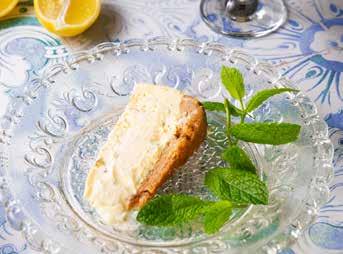

Something a little different from cheesecake, this delicate millefeuille is rich in symbolism and sweetness. The dessert brings together dairy, summer fruits and wheat in one flaky, delectible mouthful, offering an opportunity to speak about the many Shavuot food customs.
Flaky layers of puff pastry are filled with silky crème pâtissière and a jammy cherry compôte. The layers of pastry evoke the structured spiritual worlds through which Divine truth descends, while the cream evokes the hidden, sweet essence of Hashem’s voice - briefly revealed and tasted in that singular moment at Sinai.
While the thought of making a millefeuille may seem daunting, this iteration uses shop bought pastry, and although the crème pâtissière does require your full attention, if you want a speedier version, we suggest whipping up dairy cream, and using that as an easy alternative.
The cherry compôte is really simple, but can be substituted for a suitable fruit of your choice, or even a jar of your favourite conserve.
The full recipe can be found by scanning the QR code or visiting wearetaamim.com/cherry-millefeuille.



• On-market &
Aliyah Relocation
• Trusted legal & mortgage coordination through our professional network, including designers & all property related requirements
• Dedicated project management - from purchase to handover & beyond
• Ongoing property management & rental oversight
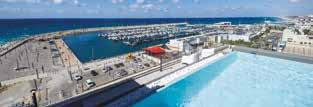
Ashkelon new projects and existing options. Luxury sea facing first line options & Ir Hayayin New Area entry level options & pricing. NETANYA

Netanya luxury sea facing projects and options in Ir Yamim & Shirat Hayam. Walk to beach, pool & gym in complex offering beautiful spacious homes. 5 Rooms with attached additional rooms

New projects & existing options in Aleph, Gimel, Hey, M3 Beit Shemesh & surrounding areas. 3,4,5,6 Rooms Garden and Penthouses options

Carmei Gat new projects & existing options. 2,3,4 bed. Garden & Penthouses & Villas in new Anglo areas with limited pre-sale pricing & payment options
& HASHMONIIM

villas, houses & apartments. Opportunity to be part of new Yishuv and close to the city with your own home in Dati Leumi community. Various options and sizes to suite all families


New projects high rise & boutique small building options. In all areas limited pre-sale options in prime locations. 2,3,4 bed options, Garden & Penthouses

New projects & existing options, prime locations ready soon or in few years. Limited pre-sale options and prices with no index. 3,4,5 Rooms Penthouses and Garden options
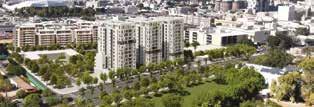
Highrise or boutique building projects & existing options including Old North walk to beach sea views. Pre-sale pricing and payment options on selection of options

BY RABBI MOSHE TARAGIN
In the Moreh Nevuchim (3:45), the Rambam addresses the striking absence of Yerushalayim from the Torah. Though Tanach later overflows with references to the city, the Torah itself never names it explicitly, even when describing visits to it. The Rambam explains that this omission is deliberate. Had the Torah clearly identified the site of the Mikdash and the resting place of the Shechinah, it would have drawn the attention and hostility of surrounding nations, who might have seized or desecrated it. The city would have been engulfed in violence.
Evidently, not every element of this plan, as described by the Rambam, has unfolded as envisioned. From as early as 500 BCE, Yerushalayim has stood at the center of relentless struggle, fought over, claimed, and reclaimed across generations. That struggle has not faded. To this day, we continue to grapple with asserting a fully recognized and internationally accepted Jewish sovereignty over our city.
Though the name Yerushalayim does not appear explicitly in the Torah, each of our Avot encountered this mountain. Avraham’s journey to the Akeidah already traces the future path and trajectory of our city.
In truth, Avraham had already visited Yerushalayim long before the Akeidah. After defeating the four tyrants who had imposed a reign of terror across the region, Avraham arrives at the city then known as Shalem. There he encounters a mysterious religious figure, Malki Tzedek, a priest-king who presides over the city. Something about this place stands apart. Unlike Sedom, already marked by corruption, unlike the culture of Egypt which seizes women from their husbands, and unlike the empires of the four kings who ruled with brute force, this city carries a different tone. They offer bread and wine to a war-weary Avraham and extend hospitality and shelter as he recovers.
This behavior is not incidental. The city is called Shalem, suggesting a human striving toward moral wholeness, guided by a religiously attuned leader who seeks to shape a city worthy of that name. It is also not incidental that the first moral city in Sefer Bereishit emerges on this mountain of Hashem. There is an instinctive recognition of a divine moral presence, and an attempt to shape human life in that image. Chazal identify this figure as Shem, the son of Noach, who had already grasped a form of monotheism even before Avraham’s discovery.
This encounter between Avraham and
Malki Tzedek shows what had already been achieved. It also shows what still remained beyond reach and begins to point toward what Avraham himself would later introduce. They had built a moral city and were striving for ethical refinement. Yet their vision of shleimut was limited. They could not grasp that full religious perfection cannot be achieved on human terms, through human logic or moral intuition alone.
Religious perfection requires transcendence, an encounter with the Ribbono Shel Olam, a presence that does not conform to human categories. That encounter arrives in Parashat Vayeira, when Avraham is summoned up the mountain to meet Hashem on His terms, beyond human comprehension and beyond moral instinct, to perform a command that defies understanding.
This is why the Torah spotlights the bread and wine. Rashi comments that this gesture foreshadows the korbanot that Avraham’s descendants will one day bring upon this mountain, particularly the menachot, composed of flour and wine. There is a quiet contrast embedded in this moment. Malki Tzedek does not offer these items as sacrifice. The bread and wine remain gestures of hospitality and expressions of human courtesy. They are noble gestures, but they remain within the human sphere. One day, Avraham and his children will take these same materials and place them upon a mizbe’ach, redirecting them toward a Higher Being and transforming them into a korban. The same bread and wine will be lifted from the human sphere of courtesy into the divine realm of avodat Hashem. From morality to divine encounter.
The meeting between Avraham and Malki Tzedek becomes a quiet transfer, a passing of the baton. Malki Tzedek and his community introduced moral aspiration into a violent and fractured world. But transcendence had not yet entered the picture. Avraham, by returning to this mountain for the Akeidah, acknowledges and absorbs what they achieved, yet recognizes that something deeper still lies beyond it.
At the Akeidah, Avraham hears the mountain named as the site where Hashem “sees,” or behar Hashem yera’eh. It is not a place where human beings come to see or comprehend Hashem. That remains beyond reach. Hashem cannot be grasped, and His commands, as the Akeidah so sharply illustrates, do not submit to the limits of the human mind. This is not a mountain we ascend to see Hashem, but to be seen by Him. Eventually, the city carries both original names, preserving the achievement of
Malki Tzedek alongside Avraham’s breakthrough. It is formed from the joining of Shalem and Yir’eh, becoming Yerushalayim. For generations, we retraced Avraham’s steps, ascending to Yerushalayim three times a year, not to behold Hashem but to stand before Him. Shalosh pe’amim yera’eh kol zechurecha et pnei Hashem Elokecha. We came without expecting to understand, without expecting to see, but ready to stand there before Hashem.
In 1967, we returned to this city in a manner that echoes the Akeidah, beyond calculation and beyond logic. In the weeks and months leading up to the war, fear dominated. The prospect of returning to Yerushalayim did not enter the imagination. It was a war for survival. A dark joke captured the mood: “the last one out should turn off the lights at Ben Gurion Airport.”
What followed defied expectation. In a sudden and astonishing turn, Hashem restored us to His city. The victory unfolded with a swiftness and scope unlike anything familiar in military history. Just as the natural world was formed in six days, so too, after thousands of years, the world of geulah took shape in six days. Not through the steady logic of history, but in a moment that stood beyond comprehension.
The story of Malki Tzedek reveals a second dimension of Yerushalayim. Even without direct divine instruction or an explicit compass, humanity is drawn to the mountain upon which human history was launched. Hashem formed man from the earth of Har HaMoriah, and something within the human spirit recognizes that origin. People gravitate to this mountain and attempt to build upon it.
There is something subliminal about this site. Humanity senses it, even without the language to explain it. That was true then, and it has remained true across history. There is an intuition that this is where history begins and where it will ultimately find its resolution. And for that reason, whenever Jews return to this place, it stirs the world. They recognize that when we return to Yerushalayim, history moves forward.
As we crossed the Yam Suf, far from Yerushalayim, there was already an awareness that our arrival there would unsettle the world. During the song of Az Yashir, we gave voice to that awareness: “The nations will hear and tremble; the inhabitants of the surrounding lands will be seized by fear; the leaders of Edom and Moav will panic; the residents of
Canaan will melt away. And then we will be brought and planted upon the mountain of Hashem’s inheritance, the place He established as His dwelling, the sanctuary fashioned by His hands.”
When the people of Hashem return to Yerushalayim, the world reacts. History does not stand still. It begins to move forward in a visible way, and that movement unsettles. It stirred then, and it stirred again in 1967.
In 1948, the world did not respond in the same way. A fractured parcel of land was granted. In part, this reflected a world still burdened by the memory of the Holocaust and confronted by a Jewish refugee crisis. It was a necessary act, even a moral gesture, but it did not yet carry the weight of history shifting course. 1967 was different. The response was sharper and more charged. Some embraced it, and many religious non-Jews continue to support our presence with conviction. Others recoiled. This return signaled more than survival. It suggested that history itself was advancing, that Hashem’s presence was reentering the world in a more visible way.
In Shir HaShirim, the nations of the world are described as the daughters of Yerushalayim. The Midrash teaches that in the future, every nation will stand in relation to Yerushalayim, as branches extending from a central city that reclaims its place at the heart of human experience, under the gaze of Hashem.
People sense, even if they cannot explain it, that Yerushalayim will one day stand at the center of history. That is why events in and around the city draw the attention of the entire world. Not everyone can articulate it. Malki Tzedek himself could not fully give it language. But the intuition remains.
The writer, a rabbi at the Hesder Yeshivat Har Etzion (Gush), was ordained by Yeshiva University. His latest book, Reclaiming Redemption, Vol. II: Faith, Identity, Peoplehood, and the Storms of War, is available at mtaraginbooks.com


J E R U S A L E M
H a r a k e v e t s t r e e t
D u p l e x
3 b e d r o o m s
S a f e r o o m ( m a m a d )
2 s u k k a h b a l c o n i e s
F u l l o f l i g h t
Asking Price: ₪ 1 0 , 5 0 0 , 0 0 0


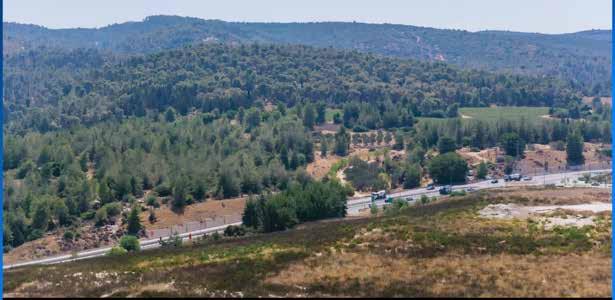

A D A M - G E V A B I N Y A M I N
O n l y 2 5 m i n t o J L M c e n t e r
2 0 h o m e s l e f t
S e m i - d e t a c h e d & f r e e s t a n d i n g h o m e s
A F F O R D A B L E !
P e r f e c t f o r n e w f a m i l i e s
Starting Price: ₪ 3 , 1 0 0 , 0 0 0







Welcome back, we’re up to a new sefer, a new book. This one is called Bamidbar. A) Because the first parsha is Bamidbar B) It’s all about, bamidbar, what happened in the desert.
Most of Vayikra is Hashem telling Moshe stuff, our story hasn’t moved on. Now we’re ready to leave Mount Sinai and rock and roll to Israel!!
First, we get counted, a lot of people died after the whole golden calf, eigel, thing. Plus, you have a card collection or money? Ever count them? Go through them? Why? Because you love them so much! That’s what G-d does with us, He really, really loves us and He shows it with all the counting.
Levi don’t get counted with everyone else, they’re different.
Now, we get given flags. The flags are made of silk and match the color of the gem stone that represents that tribe on the Kohain Gadol’s Chosen -breastplate. Reuven - He’s got a red flag. His symbol is a mandrake, a kind of plant that grows in the wild. Reuven chose these flowers for his mother because he wanted to make sure they did not anyone elses property. His tribe was very careful not to steal. The flag of Shimon is green with an embroidery of a city, representing Shechem which was the first city we ever conquered. Levi -The flag of Levi is white, black and red. White because it’s pure, black because they don’t have a lot of stuff and nonsense, and red for the blood of the korbonot. Upon it is embroidered the Chosenbreastplate that the
Kohain Gadol wears. Yehuda’s flag is the color of t’cheilet, the blue dye that was used for tzitzit. On the flag is embroidered a lion, the symbol of royalty. From the line of Yehuda comes King David and all the other kings and Moshiach. Yissachar’s flag is black, again he doesn’t own a lot of things in this world. On it is a sun and moon because the tribe were great astronomers which is very important for lots of things in Judaism. Zevulun is white because he has the best reasons for his business; supporting the tribe of Yissochar so they can learn. On it is a ship because they were sea merchants. Dan has an opal-colored flag and the serpent embroidered on it, both hint to Shimshon, the mighty warrior who later fought off the Philishtim. The flag of Gad is woven
from black and white threads. A troop of soldiers is embroidered on the silk cloth. Gad were the soilders of Klal Yisrael. Naftoli’s flag is the colour of diluted wine because they listened to the Sanhedrin and Torah is compared to wine. On it is a deer because Naftoli is known for being swift. Asher’s flag is a pearl color silk. Upon it an olive tree is embroidered. Asher’s portion in the land of Eretz Yisroel is filled with olive trees. Then we discuss who travels where and how to take down and set up the Mishkan. The Levim do that, and carry it and Elazar, Ahron’s son is in charge. So off into the sunset we march, where to next? Find out next week!
Number of Verses - 159
Number of Words - 1,823
Number of Letters - 7,393
Last week’s Answer: As the sun moves from east to west, Shabbat and Yom Tov occur first in Israel, and then in USA. Which mitzva is observed first in New York, and then in Jerusalem?
Reading Megillat Esther!
In New York (as in most places inside Israel and out) Purim is celebrated on Adar 14. But in Jerusalem, as in any city which had a wall around it in the days of Moses and Joshua, Purim is celebrated on Adar 15. This distinction commemorates the special miracles experienced in Persia’s capital, the walled city of Shushan.
Using all the shapes, can you make the shape on the right?
The goal of a word wheel puzzle is to create as many words possible with the letters in the word wheel. Each word must contain at least three letters. You can only use each letter once and every word must have the letter in the centre of the wheel.
O N R R E T B A H
Q: What dinosaur had the best vocabulary?
A: The thesaurus!
Q: Why did the man put his money in the freezer?
A: Because he wanted cold hard cash!
Q: What is orange and sounds like a parrot?
A: A Carrot!
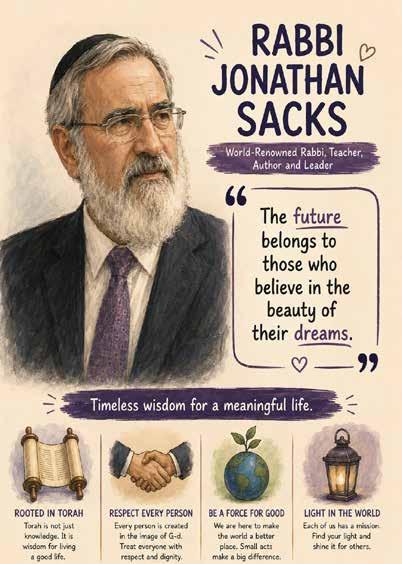
1. How far will a blind dog walk into a forest?
2. What happens when you throw a yellow rock into a purple steam?
3. What starts with a T, ends with a T, and has T in it? Answers 1. Halfway. After he gets halfway, he’s walking out of the forest 2. It makes a splash
3. A Teapot











The fight for a Jewish future in this country is the fight for Britain’s very soul.
Campaign Against Antisemitism needs you to Fund the Fight — for our community and for our country.


Your donations are doubled until 15th May antisemitism.org/ fundthefight
Powered by