


With rising antisemitism, terror attacks and the challenges of social media.
Now more than ever.
Seed’s work is crucial. Empowering parents to raise Jewish children with inspiration and knowledge.
Proud of their homes, proud in the streets.






JNF UK’s work never stops — rebuilding lives, restoring hope, and strengthening Israel for the future. Learn more at jnf.co.uk

PARASHAT BEHAR-BECHUKOTAI
SHABBAT: BEGINS ENDS
London 20:21 21:33
Manchester 20:36 21:55
Leeds 20:31 21:59
Liverpool 20:35 22:02
Birmingham 20:00 21:44
Antwerp 20:57 22:19
Bournemouth 20:21 21:41
Gateshead 20:36 22:08
Jerusalem 18:48 20:05



BY SAUL HERSH
Sir Mark Rowley has this week warned that British Jews face threats from every single major extremist movement, as counter-terrorism detectives probe possible Iranian links to London arson attacks.

The Met Police Commissioner did not hold back as he warned that British Jews now face what he called ‘the greatest threat to their
presence focused on protecting Jewish communities across London.’
Rowley hailed the extra officers as “an important step in strengthening our response to the sustained threats Jewish communities are facing,” adding







Continued from page 1
The 100-officer figure is, however, a third of what Rowley himself said was needed. Last week he told ministers a 300-strong team was required, including specialist armed officers, describing what he termed a “pandemic” of antisemitism. What has been delivered is a meaningful start, but well below the Commissioner’s own benchmark.
As the Met made its announcement, police confirmed another disturbing recent incident.
A 35-year-old man was arrested on Shabbat after rocks were thrown at a Hatzola ambulance, in Edgware.
This follows the arson attack in late March in Golders Green that destroyed four Hatzola ambulances parked outside a synagogue. The organisation that exists to save lives, is now having it’s vehicles targeted by fire, and by rocks.
The Hatzola ambulance attack is one incident in a sustained campaign of violence against London’s Jewish community that began in late March. Since then, bottles suspected of containing petrol have been thrown at two synagogues. Counter-terrorism police are investigating a suspected arson at a former synagogue in Nelson Street, Whitechapel, which took place in the early hours of Tuesday morning.
Last week saw the most serious recent attack when Shloime Rand, 34, and Moshe Shine, 76, were stabbed in Golders Green in broad daylight. The attacker,
45-year-old Essa Suleiman, a Somalia-born British citizen, has since been charged with two counts of attempted murder. The attack was declared an act of terrorism. Both victims were taken to hospital in serious condition. Rand has since been discharged while Shine remains hospitalised in a stable condition.
Suleiman appeared at Westminster Magistrates’ Court on Friday and is next due at the Old Bailey on 15 May. Police confirmed he had been referred to the government’s counter-radicalisation Prevent programme in 2020, but his case was closed within six weeks.
Last week’s London stabbings occurred only several months after two Jews were killed in Manchester on Yom Kippur.
The Met’s own language this week was stark. A spokesperson stated that British Jews now appear on the hate lists of every major extremist movement, including extreme right-wing groups, Islamist terrorists, elements of the extreme left and hostile state actors. “It is a deeply concerning convergence, and Jewish communities are living with the consequences of that risk daily,” the spokesperson added.
No other community in Britain is named by every active extremist movement simultaneously. For UK Jews, this is not rhetoric. It is the backdrop to a school run, a Shabbat walk, a call to Hatzola. Over 80 people have been arrested in the past four weeks in connection with antisemitic hate crimes and the arson attacks. Eight individuals have been charged.
Prime Minister Sir Keir Starmer stated
directly on Tuesday that a foreign state may be behind some of the attacks. “One of the lines of inquiry is whether a foreign state has been behind some of these incidents,” he said. “We are clear that these actions will have consequences if that proves to be the case.”
His message to Iran was explicit. “Our message to Iran or to any other country that might seek to foment violence, hatred or division in society is that it will not be tolerated.” The recently emerged group Harakat Ashab al-Yamin al-Islamiya, believed to have links to Iran, has claimed responsibility for some of the recent attacks in the UK and elsewhere in Europe. Starmer confirmed the government is fast-tracking legislation to tackle what he described as the malign threat posed by states like Iran.
The Home Office is providing 18 million pounds to fund the new Met Police Jewish community protection team. A further 4 million pounds is being made available through the Jewish Community Protective Security Grant to support community-led and charity security work, including organisations such as the Community Security Trust, and Shomrim.
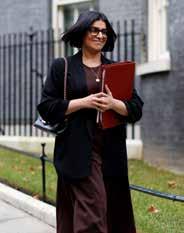
Home Secretary Shabana Mahmood said: “We will do everything in our power to rid
society of the evil of antisemitism.”
Director of Public Prosecutions Stephen Parkinson has issued new guidance to fast-track antisemitic hate crime cases through the courts. “It seems there is a pattern of copycat antisemitism taking place,” he told the Press Association, adding he hoped to “put a line in the sand” and halt the escalation. New guidance allows prosecutors to charge on the evidence threshold already met, with supporting material gathered subsequently.
On Tuesday, Sir Keir Starmer hosted a roundtable of senior figures from policing, the arts, higher education, trade unions and business. Universities will be expected to demonstrate action against antisemitism under a zero-tolerance policy on campuses. The Arts Council will be required to withdraw and claw back funding from any organisation found to promote antisemitism.
The national terrorism threat level has been raised to its second-highest level following the Golders Green stabbing, meaning another attack in the next six months is considered highly likely.
The Community Security Trust recorded 3,700 antisemitic incidents across the UK in 2025, up from 1,662 in 2022. The number has more than doubled in three years, primarily since October 7th.












BY MICHELLE BALEM
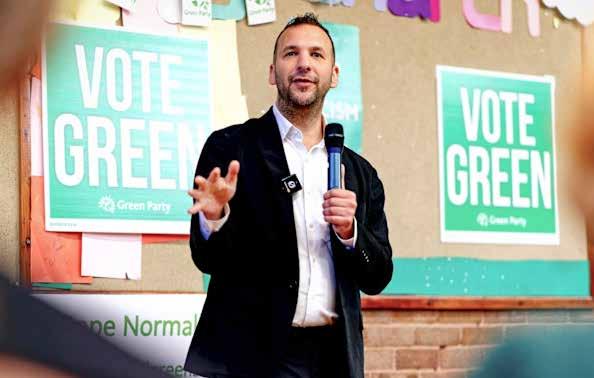
Zack Polanski’s Green Party is heading into Thursday’s local elections engulfed in a shocking Green Party antisemitism crisis, with at least 25 candidates exposed for sharing extremist, anti-Jewish content online. Polanski himself stands accused of dismissing the concerns of the UK Jewish community at the very moment they needed a clear, firm response.
A dossier circulated by the Labour Party ahead of Thursday’s elections named 25 Green Party candidates with histories of antisemitism and extremism. At least ten of those candidates had justified or downplayed violence against the Jewish community, while five described documented attacks on Jewish targets as “false flag” operations carried out by Israel itself.
Labour released a video featuring a Jewish woman of nearly 60 years’ residence in the UK reading the statements directly. The quotes included “Ramming a synagogue isn’t antisemitism, it’s revenge,” “Jewish cockroaches,” “the money-grabbing thieves have built mountains of money over centuries,” and “The London ambulance attack? Of course, it was a false flag.”
The woman in the video stated plainly, “None of these statements are criticisms of Israel. They are all stereotypes, demonizations, or conspiracy theories of Jews at large. They are antisemitic. They are
racism towards Jews.”
Environment Secretary Steve Reed told GB News the following day, “These people are spreading antisemitic hatred. You cannot put them up for election. You cannot back them, and you cannot
constituencies throughout England. Tina Ion, running in Hackney, posted from a Threads account under the handle “thereal.anne.frank” – a profile picture of Anne Frank wearing a keffiyeh – that “every single Zionist” should be killed.
shut your eyes and pretend this problem doesn’t exist.”
The scale of the Green Party antisemitism problem is not limited to anonymous posts. Multiple named candidates have been identified across

She described Zionists as “vermin” and “rats” and shared an image of an industrial shredding machine captioned a “Zionist juicer.”
Candidate Aziz Rahman Hakimi claimed the Hatzola Jewish ambulance
arson attack in Golders Green was a “false flag” operation by Israel. He was suspended by the party on Tuesday, just days before polling opened.
Mark Bittlestone, also a secondary school history teacher, reposted material claiming October 7 was itself a “false flag” and shared posts describing Israel as a “colony of inbreds, rapists, and thieves.” Candidate Joe Belcher claimed Israel may have paid Hamas to carry out the October 7 attacks, stating he believed Hamas commanders acted “for money” provided by the Israeli government.
In Peterborough, candidate Shahzad Choudhary posted on Facebook as recently as Tuesday urging voters to back him to “stop the Zionist.” In Lambeth, candidates Saiqa Ali and Sabine Mairey were arrested by the Metropolitan Police on Thursday on suspicion of stirring up racial hatred online. Ali had shared posts blaming Israel for the September 11 attacks.
When confronted with the scale of the problem, Polanski described the Labour video and accompanying coverage as “relentless attacks on the Greens across the media,” adding, “They’re trying everything in their power to stop us.” His deputy Mothin Ali called Labour’s actions “shameful tactics.”
Continued on page 6

Spend your retirement doing what you love - not worrying about money

Continued from page 4
This response dismayed UK Jewish community observers. Earlier, in an interview with the Haaretz daily, Polanski had suggested there was “a conversation to be had about whether it’s a perception of unsafety or whether it’s actual unsafety” – a framing that rang hollow given the documented surge in antisemitic incidents across the country.
That framing drew a direct rebuttal from Metropolitan Police Commissioner Mark Rowley, who stated British Jews are facing their “greatest ever threat,” with social media fuelling an “epidemic” of antisemitism. He called for 300 armed officers to be deployed to protect the Jewish community of north London.
Polanski’s credibility with the Jewish community suffered a further blow following last weeks terror stabbing in Golders Green, in which two Jewish men, Shloime Rand and Moshe Shine, were seriously wounded. Counter Terrorism Policing formally declared the attack a terrorist incident.
After footage of police subduing the suspect went viral online, Polanski retweeted a post claiming officers were “repeatedly and violently kicking a mentally ill man in the head,” as reported by BBC News. He later apologised, saying “I apologise for sharing a tweet in haste.” The apology came only after significant public pressure.
The reaction from Israel’s government was direct and unambiguous. Deputy
Foreign Minister Sharren Haskel, speaking on GB News, called Polanski an “extremist” who “legitimizes violence against Jews,”
“Polanski and his party are continuing this path of conspiracy theories and hatred towards Jews and toward the Jewish community and toward British Jewish citizens,” she said. “When you choose to legitimize violence against Jews, you don’t just make a mistake – you cross a moral line that should never be crossed. It normalizes hatred, emboldens others, and corrodes the standards that hold a society together.”
Haskel added, “Sometimes an apology is too little, too late, especially when it comes to Polanski.” Former Green Party leader Natalie Bennett also said the antisemitic statements from candidates are “totally unacceptable and require immediate action.”
For the UK Jewish community, this crisis is not an abstract political debate. It is unfolding in the streets where they live. Green Party candidates are standing for election in areas including Hackney, Lambeth, Golders Green and Newcastle –areas with significant Jewish populations – while holding views that most UK Jews would rightly regard as openly hostile to their safety and dignity.
The Green Party antisemitism Polanski controversy also raises urgent questions about the party’s fitness to govern in areas where Jewish residents depend on elected councillors to represent their interests without prejudice. These are not fringe
cases. They are candidates chosen, vetted, and in most instances still backed by the party on polling day. A Jewish Weekly survey found 75% of UK Jews believe the Green Party tolerates antisemitism.
The stabbing of two Jewish men in Golders Green last week, claimed by an Iran-linked terror group, gave this crisis an especially sharp edge. With an attacker now charged with attempted murder and a terrorism threat level raised nationwide, the conduct and judgment of every political leader in the country is under scrutiny. Polanski has been found wanting at every test.
The Green Party is still forecast to make significant electoral gains, with more than 30 candidates under investigation for antisemitism while the party fields approximately 4,500 candidates across England.
The Jewish community will be watching not only Thursday’s results, but what Polanski and the Greens choose
to do with any power they gain. Under a leader who questions whether Jewish fear is “real,” who retweeted material smearing police responding to a Jewish terror attack, and who leads a party unable or unwilling to remove candidates who call for the killing of Zionists before polling day, UK Jews have every right to demand full accountability – and to remember exactly what Green Party antisemitism Polanski looked like when it mattered most.

INDEPENDENT ALIYAH CONSULTANT

BY MARTIN KENT
The Middle East stands once again on the edge of a dangerous escalation as President Donald Trump issued some of his strongest warnings yet to Iran, while insisting that a path to peace may still remain open if Tehran backs down from its aggression and nuclear ambitions.
Speaking this week, Trump warned that Iran faces devastating consequences should it continue threatening Israel, destabilising the region and refusing to accept a new international framework aimed at curbing its military and nuclear activities. While the US president spoke of possible negotiations, he also made clear that America and its allies would not tolerate continued Iranian aggression.
For Israel, the threat from Iran is not theoretical. Over the past year, the Jewish state has faced missile attacks, drone strikes and growing pressure on multiple fronts from Iranian-backed terror organisations determined to surround and weaken Israel.
The northern border remains among the most volatile flashpoints. Despite international efforts to calm tensions between Israel and Lebanon, Hezbollah terrorists continue to threaten Israeli

communities and maintain a massive arsenal of rockets aimed at civilians across the Galilee and beyond.
The conflict has come at a painful cost. Brave IDF soldiers operating in southern Lebanon have paid the ultimate sacrifice defending the people of Israel from Hezbollah’s terror infrastructure.
Families across the country continue mourning sons, husbands and fathers who fell while protecting northern communities from infiltration attempts, missile fire and terror attacks planned by the Iranian-backed organisation.
group has embedded weapons inside civilian villages, schools and residential areas, once again using the Lebanese population as human shields while preparing for future conflict with Israel.

Israeli officials have repeatedly warned that Hezbollah’s military build-up in southern Lebanon — carried out in direct violation of international agreements — cannot continue indefinitely. The terror
At the same time, Iran continues attempting to expand its regional influence through proxies stretching from Lebanon and Syria to Gaza, Iraq and Yemen. Israeli security officials believe Tehran remains committed to a long-term strategy aimed at surrounding Israel with hostile armed groups capable of launching attacks from multiple directions simultaneously.
Despite increasing international calls for restraint, many Israelis believe the current situation cannot continue forever. Residents in northern Israel have endured months of uncertainty, sirens and evacuations, while thousands
remain displaced from their homes due to the ongoing security threat posed by Hezbollah.
The Trump administration has reportedly intensified discussions with both Israeli and regional officials in an effort to prevent a full-scale regional war. However, Washington has also signalled that military options remain firmly on the table should Iran refuse to step back from confrontation.
Across Israel, there remains a mixture of exhaustion, resilience and determination. While many pray for peace, few Israelis hold illusions about the intentions of Iran or its terror proxies. The memory of October 7 and the continuing threats from Hezbollah and Hamas have reinforced a widespread belief that Israel must remain militarily strong and prepared for every scenario.
As diplomatic efforts continue behind closed doors, the coming weeks may prove critical. Whether the region moves towards a fragile calm or another dangerous escalation may depend largely on decisions made in Tehran — and on Israel’s unwavering determination to defend itself against those who openly seek its destruction.

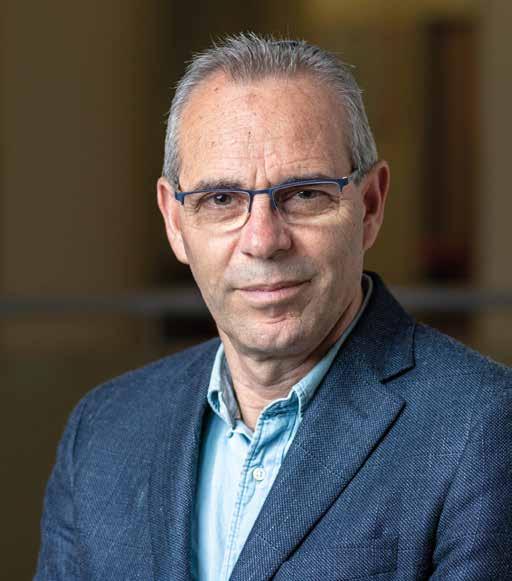

Mizrachi UK’s Weekend of Inspiration brought together a distinguished delegation of 20 world-renowned educators from Israel and the United States, reaching an estimated 8,000 community members.
The itinerary began on Thursday as educators visited primary and secondary schools in London, engaging students in the classroom before launching a series of evening events in different communities. On Friday morning, the delegation joined Chief Rabbi Sir Ephraim Mirvis, President of Mizrachi UK, for a special launch event together with communal leaders. Speeches from the Chief Rabbi,
Rav Doron Perez and the new Co Executive Director of Mizrachi UK, David Reuben set the tone for the days to come. David Reuben said, “Mizrachi is not only about our connection to Eretz Yisrael it is about strengthening Jewish identity, resilience, and unity wherever we are. It is about ensuring that when moments of fear arise, they are met with faith; when there is uncertainty, we respond with clarity of purpose; and when there are challenges, we stand stronger—together.”
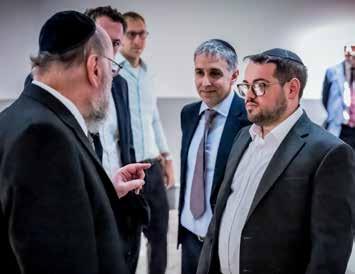
The delegation featured giants of the Jewish world, including; Rav Hershel Schachter, Rav Doron Perez and Rabbanit Shani Taragin.
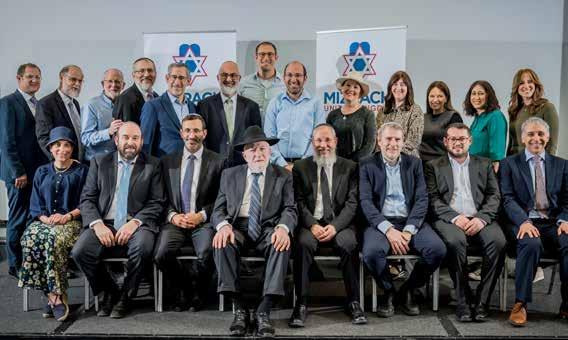
These educators spent Shabbat embedded within local communities, delivering shiurim and leading discussions that brought the authentic Torah of Eretz Yisrael directly to over 30 communities in London and Manchester.
The weekend culminated on Sunday with the “Day of Inspiration.”
Learning hubs in Edgware and Hendon remained buzzing all day as hundreds gathered to engage and learn.
“Seeing 8,000 people from across our community; young and old, come together over the weekend to learn Torah was incredibly moving and a privilege for our organisation to put on for our community,” said Aryeh Richman, Co-Executive Director of Mizrachi UK. “The Weekend of Inspiration captured exactly what Mizrachi UK strives to do: be the
driving force for the learning and living of Religious Zionism in the UK. Bringing 20 outstanding Torah educators into our synagogues, schools, and communities created moments of genuine inspiration, connection, and meaningful engagement with Torat Yisrael.”
The success of the 2026 weekend reinforces Mizrachi UK’s position as a central pillar of communal life, ensuring the “heartbeat” of Religious Zionism remains a primary force in the UK.
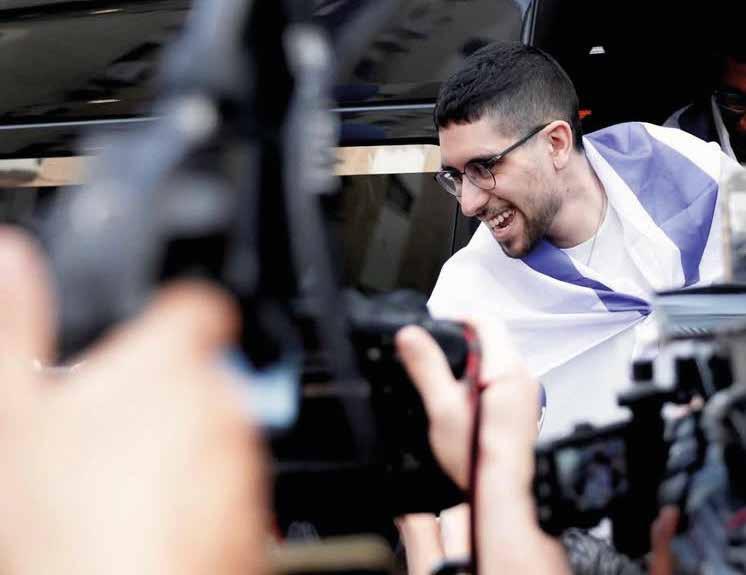


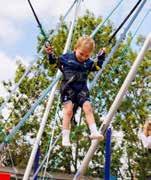





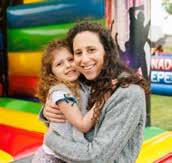
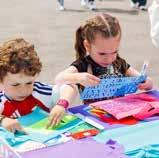
More than 300 guests gathered at the London Marriott Hotel in Grosvenor Square on Sunday night, to mark the 81st anniversary of the liberation of a group of 732 former child Holocaust survivors brought to Britain in 1945-46, who became known as ‘The Boys’, although around 200 were girls.
Hosted by the ’45 Aid Society, the evening paid tribute to the extraordinary journey of those children who, having survived ghettos, concentration camps and death marches, came to the UK to rebuild their lives. In 1963, a group of them, led by the late Sir Ben Helfgott, founded the Society, not only to support fellow
survivors, but to give back to the country that had welcomed them.
The evening began with five survivors, joined by their children and grandchildren, lighting memorial candles in a moving tribute to those they had lost.
The sixth candle was lit by two second generation members, who had flown over from the US for the occasion.
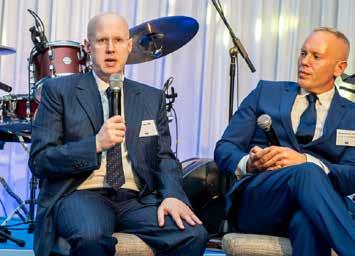
In conversation, Matt Lucas and Rob Rinder, the latter a grandson of one of the ‘Boys’, Moshe Malenicky, spoke about Jewish identity, family history and the importance of Holocaust education.
A poignant moment came when Aryan Jai, a 17- year-old student from Trinity Catholic School in Leamington Spa, presented a piece of his own artwork, inspired by survivor Sam Dresner (who was himself an artist), to Sam’s family, reflecting the Society’s vital education work with the UCL Centre for Holocaust Education, which is now delivered in more than 400 schools across the UK. Aryan is pictured right, presenting the painting to John and Johanna Dresner, Sam’s son and daughter.
The Lorraine Kingsley
Award was presented to Professor Nicola Wetherall, in recognition of her outstanding work and contribution to Holocaust education and remembrance.
The evening also saw the launch of a new ’45 Aid Society website, announced by third generation member, Natalie Meltzer, which will be used as a global resource and to preserve survivor stories.
Guests were deeply moved by a special exhibition of photographs of ‘The Boys’, the brainchild of Julia Burton, which captured their journey from child survivors arriving in Britain to the lives and families they went on to build.
Chair Angela Cohen MBE, spoke emotionally about the importance of remembrance at a time of rising antisemitism,
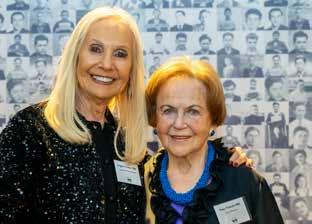
The evening moved from reflection to joy and togetherness, as guests danced, sang and honoured ‘The Boys’ –their courage, resilience and the extraordinary lives they created after surviving unimaginable horrors. Music, laughter and warmth filled the room, creating a powerful tribute to survival, continuity and the triumph of hope over hatred.
Guests included Ranvir Singh who presents on ‘Good Morning Britain’ and the evening ended with a profound sense of unity, remembrance and hope, honouring not only the survivors themselves, but the incredible legacy they created for future generations.
while also reflecting on the strength and unity of the ’45 Aid Society family and the joy that filled the evening in honour of ‘The Boys’. She said: “With all the challenges facing Jews today, we are still here, together, and that is why this evening matters so much. This is not only a legacy that we inherit, it is one we must protect. In a world where hatred is rising again, we carry their voices with us and we will not let them be silenced. The ’45 Aid Society will ensure that the legacy of ‘The Boys’ lives on for generations to come.”




SWIFT PROPERTY AUCTIONS


FIRST TIME EVER:
A new experience at JTrade JTrade brings together the people shaping the construction industry.
Developers, investors, planners, and operators all in one place, focused on what’s next and what works.

This year, something new is being introduced.
Meet Swift Property Auction.
A boutique auction house built on well-structured deals and a more personal approach, earning a strong reputation for trust, clarity, and consistent results.
At JTrade, they’re bringing that approach to the floor.
At 1pm, visitors will be able to
watch a property auction livestream with live commentary from the auctioneer on site.
This is a chance for investors and buyers to see how deals come together in real time.
REGISTRATION IS NOW OPEN.
Think of selling?
Reach out for a free evaluation
Hand in Hand, a charity that mobilises young volunteers to support Jewish community members in London and Manchester, has been awarded a scroll of recognition at Barnet Council’s Civic Awards, crediting its “outstanding service to the community”.
Receiving the award, Head of Services Yitzi Posen commented: “At a time that has felt particularly difficult for our community, this recognition is especially meaningful. It reflects the compassion
and commitment shown every day by our volunteers towards the families they support.”
Barnet council’s recognition follows a major recent fundraising campaign, in which Hand in Hand raised over £296,000 through more than 7,000 individual donations, delivered via 413 teams, over half of whom were young people.
Eliezer Gilbert, CEO of Hand in Hand said: “We are incredibly proud to receive Barnet’s recognition for our service to the community. The certificate really belongs to our volunteers, who show up week after week with care and dedication. The incredible response to our recent campaign reflects our community’s belief in what we do, with thousands coming together to champion the efforts of our volunteers and support the vulnerable children and families who rely on our support.”
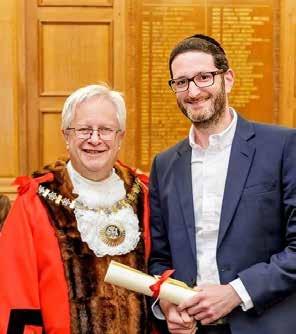
Barnet Council’s Civic Awards celebrate the commitment and hard work of those who make a positive difference to the lives of others in the local community. Hand in Hand’s recognition reflects the growing impact of its work across Barnet, and the vital role of volunteer-led support in strengthening community resilience.
Jewish Futures is offering an exciting 12-month internship for a highly motivated and organised individual to support the development and delivery of two innovative and impactful new exhibitions, alongside a range of wider media and communications projects.
Reporting to the Head of Media and Director of Marketing & Communications, you will be joining at a pivotal moment for this dynamic organisation, contributing to meaningful, values-driven work that reaches and inspires diverse audiences and connects people to Jewish life and the Jewish story. This is a unique opportunity to gain hands-on experience across the full lifecycle of creative projects, from concept through to launch and beyond, within a dynamic charitable environment.






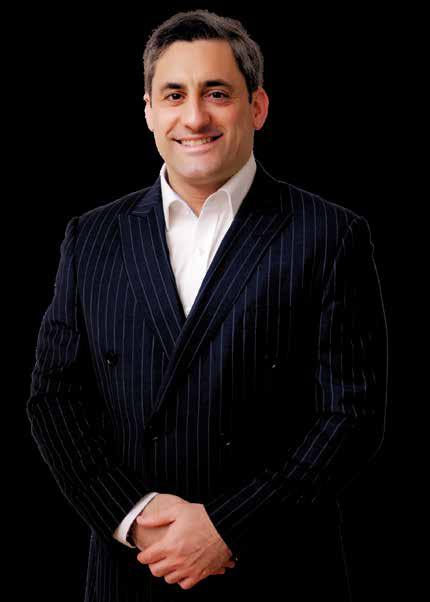


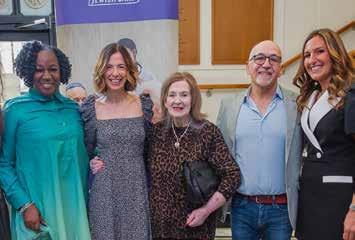
This week, almost 200 women gathered to mark the 40th anniversary of the Woman of Distinction Awards, raising over £85,000 for Jewish Care’s Sidney Corob House specialist residential care home for Jewish adults with moderate to severe mental health needs.
Since its inception, the Woman of Distinction Committee has raised an incredible £2.5 million over 40 years. Co-chairs Danielle Hess and Danielle Lipton welcomed guests to the lunch at St John’s Wood United Synagogue. The guest speaker was designer and humanitarian India Hicks, who gave a captivating account of her mother, Lady Pamela Hicks’ (née Mountbatten) fascinating life. The Woman of Distinction Committee recognised Baroness Hilary Cass OBE, FRCP, FRCPCH as the winner of this year’s Woman of Distinction Award.
Three founder members of the Woman of Distinction Committee – Hannah Lewis, Lynn Lindsay and Jenifer Rosenberg – were honoured at the 40th-anniversary lunch. At its inception in 1987, Lynn and Hannah aimed to bring professional women together to engage and inspire them, celebrate those who excel in the arts, science and philanthropy, and make a meaningful impact through fundraising. They reached out to Jenifer Rosenberg after she was named Businesswoman of the Year. Jenifer joined the very first WOD lunch, and committee member Philippa Mintz became involved just four years later.
Committee member Natalie Cesman presented the Woman of Distinction Award 2026 to Baroness Hilary Cass on behalf of the Committee. She was appointed by NHS England and NHS Improvement to chair the Independent Review into Gender Identity Services for Children and Young People, and the Cass Review was published in April 2024 with advice for a holistic, multi-disciplinary model of care.
The life peer spoke about growing up with modest beginnings and her journey from medical school to the House of Lords, always following her areas of interest. As former President of the Royal College of Paediatrics and Child Health from 2012–2015, Baroness Cass established a group to address the challenges for families and professionals in supporting the rising numbers of children with complex medical conditions and disability. Baroness Cass was awarded an OBE for services to child health in 2015, and a peerage in July 2024.
Baroness Cass visited Sidney Corob House care home recently and met with staff and residents prior to the lunch. Speaking about her visit warmly at the lunch, Baroness Cass, said: “I want to thank Jewish Care for this honour and for inviting me to this amazing lunch. The team at Sidney Corob House care home and Jewish Care are extraordinary.”
Anne Conway, daughter of 60s star Glenda Collins who is a resident at Jewish Care’s Sidney Corob House care home, made an appeal and shared a moving
account of the difference the home’s care has made to their lives.
Glenda Collins was signed to Decca Records when she was just 16. She worked with the producer Joe Meek—famous for Telstar by The Tornados—and recorded Lollipop, amongst many other songs, which was a great success. She appeared on Juke Box Jury, where Brian Epstein and Cilla Black predicted her record would be a hit. Later on, Glenda married the late Reverend Maurice Kibel, who served in several communities, including the Swansea Jewish Community, where Anne was born and where they lived for around 20 years.
Anne explains: “I didn’t realise until my late 20s that my mother had a serious mental health illness. We didn’t talk about mental health in the way we do now. Mum had moved away, and there were periods of time when we weren’t in touch. After my children were born, I knew I wanted them to know their grandmother, and I wanted Mum to know her grandchildren. There were challenges along the way, but we persevered.
“Mum was living alone in a small flat, was becoming increasingly isolated, and often not taking her medication. Her mental health deteriorated significantly during the pandemic. It forced me to find somewhere that could truly help her—somewhere that could give her life back. I started researching and discovered that Jewish Care had a home called Sidney Corob, specifically for people over 50 living with mental health challenges. I couldn’t believe it. It was beshet. Until that moment, I had no idea it existed.”
“Since moving to Sidney Corob House, Mum has thrived, taking part in the activities and travelling into London in a pink limousine to celebrate the launch of her re-issued album. She is cared for with such warmth, kindness and dignity by Sandra, Michael, Tomas, and all the wonderful staff. She is surrounded by a compassionate, welcoming and loving Jewish environment. She has made friends. She is no longer isolated. She has a community. And, perhaps most importantly of all, despite some physical health issues, she feels she has her life back.
“And I feel that, finally, after all these years, she can just be my mum. Today is a celebration of Women of Distinction, women like my mum. Not because life was easy for her – it wasn’t. And not because she was perfect – none of us are. But because she kept going. Through illness, loneliness and struggle, there was always something in her that survived.
“I think of all the women who have helped my mum along the way – the carers, the staff, the friends, the daughters, the mothers. Women who quietly hold families together, who show up when things are difficult, who keep loving even when it’s complicated.
“If there is anything inspiring in our story, I think it is this: that it is never too late for someone to be seen, to be cared for, to find community, and to get a part of themselves back. For that, to everyone
at Sidney Corob, thank you – sincerely, from the bottom of my heart.”
Guests were also captivated by author, designer and humanitarian India Hicks’ account of the life of her mother, Lady Pamela Hicks (née Mountbatten). During the event, India signed copies of her new book, Lady Pamela: My Mother’s Extraordinary Years as Daughter to the Viceroy of India, Lady-in-Waiting to the Queen, and Wife of David Hicks. and later as a lady-in-waiting to the late Queen Elizabeth II, her third cousin. India is goddaughter to His Majesty King Charles III and her grandfather was Lord Mountbatten, formerly Prince Louis of Battenberg.
Co-chairs of the Woman of Distinction Lunch, said: “We would like to congrat ulate Baroness Cass and thank her and India Hicks for so engagingly sharing their experiences and giving their time today to support Jewish Care, and we thank all our guests for their generos ity. We were pleased to honour Jenifer Rosenberg OBE, Hannah Lewis MBE and







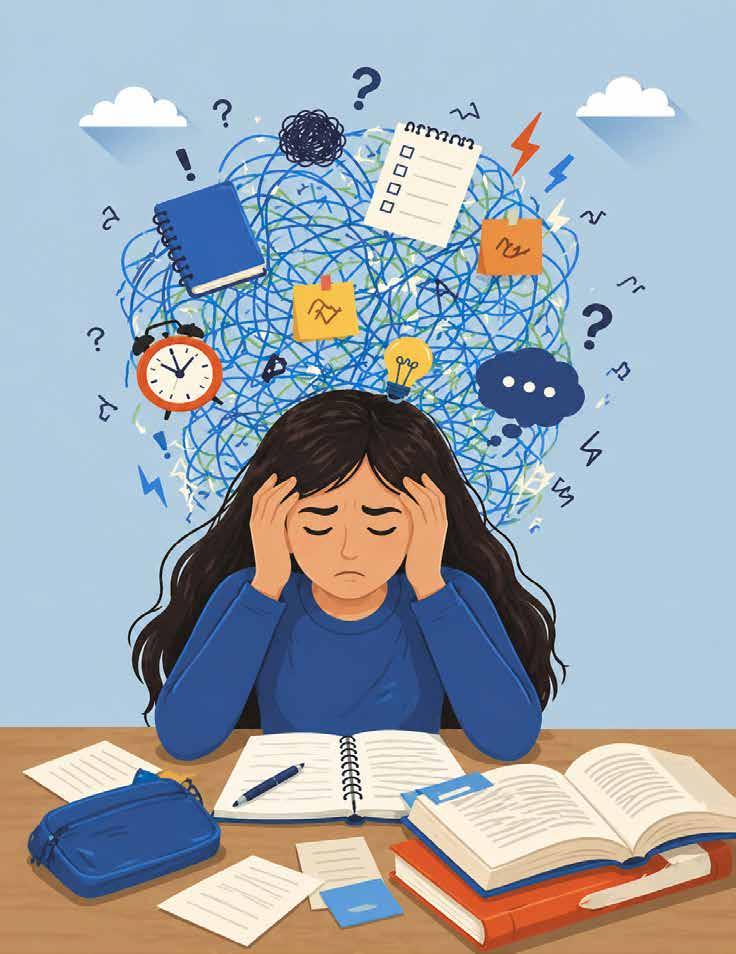
PROMOTING WELLBEING IN THE FACE OF ANTISEMITISM & STRESS

8.OOpm Mon 11th May on Zoom (5Omins)
The rise of antisemitism powerfully affects the whole community. The recent attack in Golders Green, yet again adds to the stress that we all feel.
Learn about the crucial impact that stress has on wellbeing and explore a range of simple and effective stress-management self-care techniques that can help you and those around you.
• Relaxation tools
• Sleep Hygiene
• Positive Distraction
• Mindfulness
• and many more...
Because small skills can have a big impact.
Book your free place today - plus explore our full programme of 50-minute sessions: www.projectlily.org.uk/calendar


Why the Jews?
BY RABBI NAFTALI SCHIFF
What3Words: Why The Jews?
There are moments in Jewish history when an uncomfortable question refuses to go away.
Why has this tiny people, scattered across continents and making up a fraction of a percent of humanity, occupied such disproportionate space in the imagination of the world for thousands of years? Why have empires risen and fallen whilst somehow continuing to define themselves in relation to us? Why does antisemitism mutate so effortlessly across ideologies and generations? Right wing. Left wing. Religious. Secular. Medieval. Modern. On campus. Online. In the streets. The accusations change. The obsession remains.
And perhaps most importantly for this moment- how should Jews respond? With fear? With embarrassment? With concealment? With quieter Judaism, higher gates and lower profiles? With a hope that if we simply blend in enough, the storm will somehow pass over us? Or with something else entirely?
These are not new questions. Decades ago, Dennis Prager and Joseph Telushkin wrote their seminal book Why the Jews? exploring what they argued was the deeper root of antisemitism. Their central thesis was both simple and deeply confronting- antisemitism cannot ultimately be explained merely through economics, race or politics. The hatred directed toward Jews across history stems, at least in part, from what the Jewish people represent morally and spiritually in the world.
More recently, Rabbi Raphael Shore developed this theme further through his influential “Why the Jews?” seminars, his powerful contemporary documentary Tragic Awakening and his latest book Who’s Afraid of the Big Bad Jew? The argument is not that Jews are perfect, superior or immune from criticism. Far from it. Rather, that the Jewish story carries an outsized moral and spiritual weight in human civilisation and that this has always provoked both admiration and hostility.
If we analyse it a little more deeply,
there is something highly unusual about Jewish history.
The Torah itself already foretold that Jewish existence would never be ordinary.
We are described as ןוכשי דדבל םע - “a people that dwells apart.” A double sided accolade. Not apart in the sense of superiority or isolation, but distinctiveness. A people called upon to live by a different moral and spiritual rhythm- Simultaneously revered and reviled.
At Sinai, we did not merely receive rituals. We received responsibility.
The pivotal moment of the receiving of the Torah at Sinai is preceded by the introduction of the very raison d’etre of the Jewish people as יוגו םינהכ תכלממ שודק “a kingdom of priests and a holy nation.” Cohanim, priests, teachers and leaders are not simply recipients of privilege. They are custodians of responsibility. Representatives of values. People tasked with serving something larger than themselves. At Sinai this became the timeless call reaching out to each and every Jew throughout our history. We all responded in unison
in a world often resistant to moral accountability. Even if only on a deeply submerged and subconscious level, Judaism and by extension Jews stand for a moral conscience in the world that the forces of evil from Pharoah and Hitler, through to Mordechai and Stalin sought to quash allowing their own self worship to wantonly reign free.
Judaism introduced into civilisation revolutionary and demanding ideasthat every human being is created in the image of G-d, that morality is real, that power is not absolute, that kings themselves answer to a Higher Authority, that history has purpose and that human life possesses sanctity.

That question echoes throughout Jewish history.
And perhaps it cries out to each one of us now too.
At moments like this there is a temptation, especially amongst young Jews, to become smaller versions of themselves. To hide necklaces. To avoid conversations. To step back from visible Jewish identity. To whisper where once they would have spoken proudly.
But the answer to antisemitism cannot merely be hiding better.
The greatest guard against antisemitism has never simply been higher walls, stronger gates or more security guards, necessary though those things sadly are.
עמשנו השענ - “we shall do and we shall understand”
And perhaps this sheds light on one of the most startling comments in the Talmud. The Gemara Shabbat 89 asks why the mountain upon which the Torah was given is called יניס Sinai. The answer given is extraordinary-
“Because from Sinai descended האנשhatred to the nations of the world.”
Rashi explains that the hatred emerged because the Jewish people accepted the Torah, its obligations and responsibilities. This is not a triumphalist statement, Heaven forbid. Nor does it imply that antisemitism is justified in any way. Hatred of Jews is evil. Always. Violent antisemitism must be confronted robustly and unapologetically wherever it appears. However, the rabbis are perhaps identifying a deeper reality. The existence of a people carrying a Divine moral mission inevitably creates tension

Those ideas transformed the world. But they also challenged it, and continue to do so. Light does not merely illuminate. It exposes. And dark forces have always rebelled against such enlightened ideas. The mistake we sometimes make as Jews is to internalise the hatred itself and begin seeing ourselves through the eyes of those who despise us. We begin imagining that perhaps safety lies in shrinking our Jewishness, muting our distinctiveness or retreating from our identity.
Yet history suggests otherwise. Jews tried disappearing into Europe. Into assimilation. Into modernity. Into universalism detached from Jewish particularism. Yet somehow the world continued reminding Jews that they were Jews.
Because Jewish identity is not merely ethnicity. It is תירב- covenant, mission and responsibility.
And there is something profoundly revealing in the Torah’s very first response to mankind’s original flight from fear. Adam sins and immediately hides. And then comes the thundering Divine question:
? “Where are you?”
Not geographically, rather- existentially. Where are you hiding? What happened to your sense of purpose? Where has retreat taken you?
The strongest defence has always been proud, knowledgeable, inspired Jews who understand who they are and why they matter.
A young Jew who sees Judaism merely as inherited burden will struggle to carry it. A young Jew who understands Judaism as mission, contribution, joy, belonging, wisdom and moral calling can withstand even greater challenge.
That is why this moment demands not less Jewish education but more. Not retreat from Jewish identity but deeper engagement with it. Not embarrassment but dignity. Not arrogance, Heaven forbid, but pride.
Being Jewish is not something to apologise for.
It is a privilege to belong to a people that brought the world the sanctity of life, ethical monotheism, Shabbat, human dignity, social responsibility and the belief that history itself can be transformed. Yes, ours is a difficult story. But it is also an extraordinary one.
The challenge of antisemitism is not only whether the world will understand the Jews.
It is whether Jews will understand themselves.
Shabbat Shalom

In this column Rabbi Naftali Schiff reflects upon 3 key words each week relating to contemporary and relevant issues.
All feedback is welcome- nschiff@ jfutures.org.
Rabbi Schiff is the Founder & CEO of the Family of Jewish Futures networks of educational organisations.



•


•














REGISTER TO VISIT: Ktrade.show
Wednesday 13th May 2026 | Alexandra Palace, London






REGISTER TO VISIT: Ktrade.show
Wednesday 13th May 2026 | Alexandra Palace, London
BY RABBI YONI ABADI
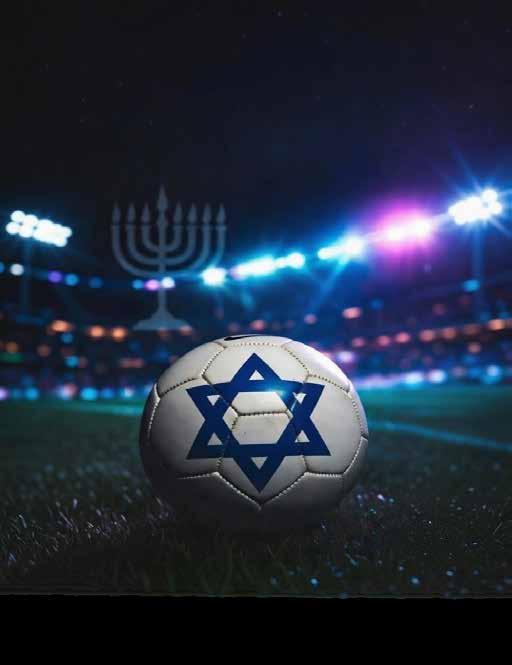
There are many pathways into Judaism. For some, it’s through learning. For others, it’s Shabbat, travel, or food. And for a few, it starts on a football pitch.
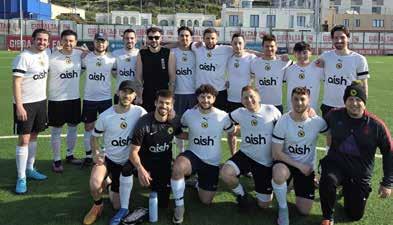
Over the past year, we’ve been building something quite unique through our partnership between Aish Young Professionals and Beitar Bushey. On paper, it’s simple. We sponsor the team and run
monthly events. In reality it’s become something much bigger. Every few weeks, we bring the boys together off the pitch. Sometimes it’s a pub quiz, other times a Shabbat meal, occasionally just a post-match hangout. It offers a space for the team to connect with each other and their Jewish identity, but what we didn’t anticipate was how much it would grow. It’s no longer just the players showing up - it’s their girlfriends, wives, and friends who come along too. Slowly, almost without trying, a wider Jewish social circle has formed around the team.
That’s the real story here. Not just engagement but belonging. Our recent trip to Gibraltar felt like a natural culmination of all of this.
We took our squad to Gibraltar for a four-day trip. Officially we went to play Maccabi Gibraltar. And yes, there was a game - we lost
5–3 to a strong side, though we gave a good account of ourselves. In a moment that didn’t go unnoticed by the lads, I came off the bench and managed to score, which is not bad for someone who spends most of his time organising rather than playing! That alone gave everyone a laugh.
But the truth is, the football was almost secondary. The trip was about Shabbat. Experiencing Shabbat as a team in a completely different setting was something really special. We had meals together, sang together and slowed down as a group. There’s something about taking guys out of their usual environment and placing them into a Shabbat experience that just lands differently.
We also connected with the local Jewish young professional community in Gibraltar, sharing Friday night with them and meeting people who welcomed us in so warmly. One of the highlights was Shabbat afternoon, when Josh Wine, a graduate of the Aish Fellowship Programme thirty years ago and now an Aish Trustee, opened his home to us. He spoke honestly, not just about business, but about life, growth, and Jewish identity.
And then came the final night.
At the closing dinner, a few of the guys
2026 is quickly becoming the best year yet to make Aliyah and we’re going to tell you why:
1. Enhanced Tax Benefits and Financial Incentives
New tax changes have made Aliyah more financially attractive than ever before. New olim are entitled to a tenyear exemption on overseas earnings, investments and certain pensions. In addition, those making Aliyah in 2026 will benefit from further relief on Israeli earned income, with tax exemptions applying through the 2026 to 2030 tax years. There are also rent subsidies available for new olim and in communities such as Carmay HaNadiv, where subsidised part furnished apartments are available, the overall cost of Aliyah can be far lower than many expect.
In practical terms, this creates a rare and valuable window. Families can relocate without the immediate pressure of restructuring their global finances, allowing time to settle and plan properly. Taken together, these incentives represent one of the most attractive tax environments Israel has ever offered new Olim. It is a clear and deliberate signal that Israel is not only encouraging Aliyah in principle, but also making it genuinely viable in practice.
2. Majority Rules!
For many, one of the most profound changes when making Aliyah is the shift in identity – joining a country that not only accepts, but caters for, your Jewish identity. In Israel, Jewish life is the default setting. The national calendar follows Jewish rhythms; public spaces reflect Jewish culture and there is a shared
understanding that removes the need to explain or justify who you are. That sense of ease is transformative, particularly in the current climate outside of Israel.
3. Security
It might feel counterintuitive to say, however Israel is one of the safest places to live as Jew. The country has invested heavily in sophisticated security systems, emergency response infrastructure and community level preparedness. This increased level of security creates an environment where daily life continues with the kind of resilience found nowhere else, even in the most challenging of times.
4. The Food
for your child and how religious that school is. This environment, creates a strong, confident identity that is difficult to replicate elsewhere.
6. One of the Happiest Places in the World

Nowhere does food like Israel. Israel has become one of the most exciting culinary destinations in the world. With so many kosher options, new restaurants, chefs and concepts are constantly emerging, offering everything from high end dining to exceptional street food found in shuks and coffee carts all over the country.
5. Raising Children in a Jewish Environment
Children in Israel grow up immersed in Jewish life. Jewish history is felt in the streets that you walk on and Jewish festivals are experienced as part of the national culture. All the schools have a Jewish ethos and with so many options you can choose where is the right school
got up to speak. One of them said something that kind of summed up the whole trip, and really, the whole team experience. He said he doesn’t come from a strong Jewish background and has never really felt connected. But through this football team and the events, something has shifted. This has become his entry point to connect with Jewish life.
Not everyone walks through the same door, and if we’re serious about engaging Jews today, we have to be open to that, and at Aish UK we are.
This partnership with Beitar Bushey has shown that when you meet people where they are with consistency, authenticity, and without pressure, meaningful connection can happen.
Daniel Gold, Founder and President of Beitar Bushey says, “The partnership with Aish has totally transformed the team. We’ve always put an emphasis on our culture being one of respect and unity, and Aish has stepped in and taken us to the next level, helping us to feel more aligned with our Judaism. We are so pleased to be a part of this collaboration.”
Rabbi Yoni Abadi is the Director of Young Professionals programming at Aish UK.
Israel consistently ranks among the happiest countries in the world. A rapid acceleration in first world development over the past decade (in services, infrastructure, healthcare, transport and further education), alongside a positive, can-do attitude, allows Israelis to overcome all challenges. A strong sense of community, close family structures and an optimistic national mindset all contribute to a quality of life that many find deeply fulfilling.
7. The Weather!
With long, warm summers and mild winters, life in Israel naturally shifts outdoors. Whether it is walking to school, spending weekends at the beach, in your local park, on a nature walk or enjoying evenings in open air cafés, the climate contributes to a healthier and more social way of living.
8. Startup Nation – Israel ranked 3rd globally in startup ecosystems
Known as the Startup Nation and for good reason, Israel holds the world’s highest concentration of startups per capita and is ranked high globally for innovation. Israel leads particularly in
fields such as technology, medicine and cybersecurity. The pace of innovation is constant and the ecosystem supports both new ventures and established industries. And if you have an existing degree or professional license in another field, the Ministry for Aliyah and Integration is implementing huge changes to remove barriers and get these professions recognised, without the need to requalify. For those looking to build a career, invest or grow professionally, the opportunities are significant in every field.
9. Growing Property Opportunities and New Communities
As demand increases, so does development. New neighbourhoods and communities are being built to accommodate incoming families. Areas such as Carmay HaNadiv are drawing attention for their thoughtful planning, strong community focus and long-term investment potential. Buying property in Israel today is as much about future vision as it is about present need.
10. A Unique Moment to Be Part of Something Bigger
With increasing numbers of families making Aliyah and stronger support systems in place than ever before, now is the time to make Aliyah. New communities are forming, networks are expanding and there is a shared sense of purpose among those taking this step.
At Shivat Zion and Zifha, we believe now is the perfect opportunity to make Aliyah. To find out more come meet Shivat Zion at the Aliyah Fair on Sunday 10th May.
Start your new life in Israel in a thriving neighborhood in Kiryat Malachi, where you’ll feel at home from day one.
Join a warm, welcoming community of 1,100+ Israeli and Anglo families, with excellent schools, shops, and parks
Prime location: 15 minutes from the beach, with easy access to Jerusalem & Tel Aviv.



Shivat Zion is a charity that assists olim from the UK and Western Europe
Recognized by the Ministry of Aliyah & Integration, Shivat Zion offers a Soft Landing program with full support before, during, and after Aliyah—from paperwork and school placement to settling in with confidence.
Rent First with Full Support: Move into a part-furnished apartment in Summer 2026 (~£1,200/month) and receive full Soft Landing support.
Buy & Move In: Purchase your home for Summer 2026 and receive full Soft Landing support.
Invest / Off-Plan: Buy an apartment to rent to other olim, or secure an off-plan home (~3.5 years)





BY RABBI GIDEON GOLDWATER
We’ve all heard it. We’ve probably all said it. “Words aren’t enough.” “We need action.” And yet, somewhere along the way, the demand for action became its own ritual of inaction. The complaints about empty words have themselves become empty words, recycled at every vigil, every communal meeting, every WhatsApp group, every headline and every so called “representative statement” for the Jewish community. So let me say something that I suspect needs saying out loud: shouting at our own Jewish leadership about the need for action is, itself, not enough.
But that raises an uncomfortable question. What can we actually do? What action can we take that doesn’t involve demanding it from somebody else whether it be the government, the police, the universities, our communal bodies?
To answer that, we have to go back to the roots of the world’s oldest hatred. At the heart of antisemitism has always sat a deep mistake, one that we make as much
as our enemies do. We assume the hatred stems from where the haters say it stems from. They tell us they don’t hate “Jews,” they hate moneylenders. They hate capitalists. They hate communists. They hate stateless nomads. They hate occupiers. They hate Zionists. The labels change with the century. The target doesn’t.
The truth, and it is a hard truth, is that the hatred is against Jews because we are Jews. It cannot be fought with fences, with policing, with extra security at our shul doors, or even by quietly reshaping ourselves into the more palatable kind of Jew that the haters claim they would tolerate. The anti-Israel Jew who thinks his progressive credentials will save him is mistaken. The “as a Jew” Polanksi kind of Jew. They were never going to save him. They never have and they never will.
We know what’s not working. So what can we do?
If the strongest answer to terrorism is to continue life as normal, refusing to live in fear, then the strongest answer to extreme antisemitism must be extreme pro-Semitism. The response to those who want us to stop being Jews is to be more
Jewish. Not less. Not quieter. More. And here is the beautiful part. This doesn’t rely on anybody else. Not on the government. Not on ministers. Not on Chief Rabbis or communal bodies or umbrella organisations. It relies on us. On you. On me. On every one of us deciding to be a little more Jewish tomorrow than we were today. It’s what Jocko Willink called “Extreme Ownership”. It’s not somebody else’s job to fix. There has never been such a thing as “I’m comfortable with where I am” kind of Jew. Not now. Not ever. Not in the face of what we are seeing. The only kind of Jew worth being right now is the striving-tobe-better kind of Jew. Take one step more. Just one.
And that one step doesn’t look the same for everyone. That is the whole point. For one person it might be an extra hour volunteering. For another, lighting Shabbat candles for the first time in years, or for the first time ever (even Donald thinks it a good idea!) For someone else, putting on tefillin in the morning. An extra pound in the “pushke”. A Torah class once a week. Calling the elderly relative who would love to hear from you.
Pick yours. Then pick the next one. Words are cheap. Actions speak louder, and because precious few people seem to be doing very much, we can finally and truthfully say enough is enough. No more platitudes. No more carefully worded statements of solidarity that will be forgotten by next week.
Let’s take this into our own hands. Let’s start by adding a little more Jewish light to a world that seems determined to put it out.
Rabbi Goldwater holds a BSc in Psychology and an MA in Jewish Education and spent two years living in Birmingham as the Aish Rabbi on Campus. He went on to direct Aish’s national Campus programme before taking on his current roles as Managing Director of both Aish UK and Jewish Futures. He has overseen the expansion of the teams and programming that are currently impacting over 20,000 young Jews across the UK.






Dear Rabbi
With the explosion of podcasts, WhatsApp classes and online Torah content, I find myself “learning” all the time, even while driving, walking, and half-listening while doing other things. It feels productive and I find it inspiring.
But someone recently told me that this isn’t really learning which requires proper focus and effort, not passive listening in the background.
So, am I considered learning Torah, or maybe I am just spiritually multitasking and fooling myself?
Avi
Dear Avi

Half the Jewish world today is walking around with one AirPod in, listening to something spiritual.
Let me begin with a simple truth: listening to Torah is never “nothing.” On the contrary, hearing words of Torah, however passively, has unquestionable value. At Sinai the Jews said, “we will do and we will listen.” There is value in just listening, even if not studying in-depth.
Even “learning” in that style shapes consciousness because a distracted mind absorbs more than you think. That said, there is still an obvious difference between “hearing” Torah and actually “learning” Torah, and deep down I think you already know which one you are doing when you are also checking traffic, replying to messages, and deciding whether to overtake the car in front of you.
Real Torah study is immersive.
The Talmud describes Torah as something that must be acquired, which implies exertion and effort.
Think of it this way. Listening to a shiur while driving is like walking past a gym with the door open. You’ll hear the sounds, maybe even feel inspired. But you haven’t actually worked out. So, does it “count”? Yes. Halachically, you are certainly engaging in Torah learning. It has value and it may even motivate you to do more. But it is ultimately not enough, because the core mitzvah is thorough comprehension and internalisation. So, try to take time out, however often you can, where the world stops, without headphones, telephones and any background noise. Just you and some Torah text. Because ultimately Torah is not meant to fit into your life, but for
you to fit your life around it.
Dear Rabbi My wife and I have been married for several years. I love her dearly, but I’ve noticed a pattern. Every time I make a point, I’m wrong. If I argue, I’m wrong. If I agree, I’m patronising. Is there a halachic position on this, or am I simply destined to be wrong, in a bad marriage, forever?
Daniel
Dear Daniel First the good news. Mazal Tov! You are not in a bad marriage. You’re in a normal one. There is indeed a halachic position brought in code of common sense which states: “Your wife is always right.”
In all seriousness, marriage is not about winning arguments but about being heard. When you argue, she hears opposition. When you suddenly agree, she hears patronising. The issue is not
whether you’re in fact right, but whether you’re actually listening. So next time, try neither arguing nor agreeing - just listen. Above all else, remember the golden rule: You can be right, or you can be happily married. Choose wisely.








J E R U S A L E M
H a r a k e v e t s t r e e t
D u p l e x
3 b e d r o o m s
S a f e r o o m ( m a m a d )
2 s u k k a h b a l c o n i e s
F u l l o f l i g h t



Asking Price: ₪ 1 0 , 5 0 0 , 0 0 0 A D A M - G E V A B I N Y A M I N


O n l y 2 5 m i n t o J L M c e n t e r
2 0 h o m e s l e f t
S e m i - d e t a c h e d & f r e e s t a n d i n g h o m e s
A F F O R D A B L E !
P e r f e c t f o r n e w f a m i l i e s
Starting Price: ₪ 3 , 1 0 0 , 0 0 0




BY RABBI ZEV LEFF
“Walking” in Hashem’s statutes, say Chazal, refers to toiling in Torah. Upon that toil, Hashem’s blessing is contingent. And so, too, do the curses follow from the failure to strive in the study of Torah.
Chazal (Nedarim 81a) tell us that Eretz Yisrael was lost and the Jewish people were exiled because they failed to make the proper blessing prior to learning. Ran, quoting Rabbeinu Yonah, explains that the blessing is on the toil and effort that one must put into Torah, and when that is lacking, churban (destruction) results.
The first question that arises is: How is effort in Torah learning hinted to in “walk(ing) in My statutes?” Since when does “walking” imply toil and effort?
Chazal tell us that the Torah is an elixir of life to those who approach it as “rightists,” and a poison to those who approach it as “leftists.” Rashi defines “rightists” as one who uses his strong right arm to delve into the Torah and discover its
secrets (Shabbos 88b). One must delve deeply into the Torah to uncover its true meaning, to discover Hashem, Who is the neshama of the Torah. Without effort and toil, one gains at best a superficial understanding of Torah, which, in turn, leads to a superficial and shallow observance of its mitzvos. On the other hand, one who exerts all his efforts gains the fear of Heaven that is the very essence of Torah.
We are exhorted to literally walk after G-d, to walk in His footsteps. Toiling in Torah is discovering the footsteps of G-d, the immutable laws of spiritual nature that contain the essence of G-d’s attributes. By subjugating his mind to the demands of the Torah, and rejecting all that is superficial and simplistic, the student of Torah finds Hashem in the Torah and is able to emulate Him.
The prophetic warning concerning our future failings contains the following sequence of events. G-d will send an enemy to invade Eretz Yisrael, and the Jews will gather within the protective walls of
Jerusalem. The encircled Jews will fall prey to a plaque from which many will die. Since it is prohibited to leave a corpse in Jerusalem, the bodies will have to be taken out of the city, and in this manner the people will be delivered into the hands of the enemy (see Rashi to Vayikra 26:25).
This sequence is astounding at first glance. The prohibition of leaving a corpse in Jerusalem is rabbinic. Even had it been a Torah law, the danger to life involved in burying outside the walls would have taken precedence over the rule that burial is forbidden in Jerusalem. Another problem: the generation the Torah is describing is one in which murder, idolatry and immorality were rampant. Would people steeped in such crimes risk their lives to fulfill a rabbinic law?
A superficial view of Torah can lead to a disproportionate emphasis on even those things which are in fact of the greatest importance in the Torah’s view, such as the holiness of Jerusalem. That holiness,
To get the best value from your private medical insurance, you should speak to an expert who is qualified to advise you on the right policy for you, and recommend the providers who offer the most competitive premiums.
This advice covers individual, family and company policies, and is always FREE.
As an independent health insurance expert, I work with the healthcare insurers to provide you with the appropriate and most affordable level of cover. So whether you have an existing policy or not, let’s have a chat.

however, not only does not mandate that one give up his life to avoid any corpses remaining in Jerusalem; it expressly forbids it, for the value of life takes precedence. Such distortions are inevitable without an overarching view of the unity of Torah.
The reward for toiling in Torah is harmony in the natural world culminating in the blessing of shalom, peace. Torah scholars, say Chazal, increase peace in the world by harmonizing the physical and spiritual worlds through their understanding of the Torah’s secret foundation. Conversely, the punishment of not toiling in Torah is a natural world gone haywire, where nothing goes right.
Rabbi Zev Leff is the rabbi of Moshav Matityahu, and a renowned author, lecturer and educator. He is a member of the Mizrachi Speakers Bureau (www. mizrachi.org/speakers).



BY RABBI SHAUL YONATAN TAWIL
There are mitzvot we understand, and there are mitzvot that challenge the very foundation of who we are. Shemita is one of those mitzvot. At first glance, it appears to be some form of agricultural system—six years you work the land, and the seventh you allow it to rest. Almost like crop rotation. But nothing could be further from the truth. There is clear evidence that such a system does not meaningfully improve the land, and yet the Torah attaches severe consequences to its neglect. The seventy years of the Babylonian exile corresponded to seventy missed Shemita years (Shemita calculation; Chazal). This is not about farming. This is about faith.
The Torah introduces Shemita at Har Sinai, prompting the famous question: what is the connection between Shemita and Mount Sinai? (Rashi, Vayikra 25:1). The answer reveals everything. Before receiving the Torah, the Jewish people declared “Naaseh Venishma”—we will do and we will understand. It was an expression of complete trust in Hashem. Shemita is the living continuation of that declaration. For six years a farmer works relentlessly—ploughing, planting, harvesting—investing his strength and identity into the land. And then suddenly, he is commanded to stop completely. To step away from his livelihood, his sense of security, and trust that Hashem will provide. This is not an agricultural pause;
it is an act of pure Emunah. It forces a person to confront a powerful question: how much do I really believe?
This idea is reinforced by the Torah’s promise: “I will give your rains in their proper time” (Vayikra 26:4). Rashi explains that this refers to Friday night (Rashi ad loc.). At first, this seems like a convenience—rain falls when people are safely indoors. But the deeper message is profound. The farmer works tirelessly for six days, yet the one thing he needs most—rain—comes at the exact moment when he can do absolutely nothing. On Shabbat, he cannot work, cannot influence, cannot control. And yet, that is when the blessing arrives. This teaches that ultimately, a person’s success does not come from his efforts alone, but from Hashem (Beis Av on Vayikra 26:4). Shemita expands this lesson from a single day to an entire year.
Why, then, would someone violate Shemita? Because of a subtle but powerful belief: the more I work, the more I will earn; the more I earn, the more secure I become; the more I produce, the more I define myself. In today’s world, this mindset is everywhere. Ask someone, “What are you?” and the answer is usually their profession. But this is a fundamental mistake. What we do is not who we are.
Shemita comes to uproot this illusion. It reminds us that our identity and our sustenance are not self-created—they are gifts from Hashem.
When this message is ignored, the
consequence is exile. Exile strips a person of everything he thought defined him—his land, his routine, his stability. It forces him into a state of dependence and uncertainty, where he must rediscover that his life is not in his control but in Hashem’s hands. This is why exile is a measure-for-measure response to the violation of Shemita. It is not a punishment of land neglect; it is a correction of a distorted worldview (Shemita-exile correspondence; Chazal).
And yet, alongside this powerful message of faith comes a surprising and seemingly contradictory teaching. The Brisker Rav explains: “When your friend needs a favour, that is when you should be a ‘kofer’” (Brisker Rav). When it comes to your own life, you must believe that Hashem will take care of you. But when it comes to someone else, you must not sit back and say, “Hashem will help him.” At that moment, you must act as if everything depends on you. If someone needs a job, you do not rely on faith—you make calls, you use connections, you open doors. In today’s reality, where opportunities so often depend on who you know, this responsibility becomes even more critical. When it comes to your livelihood, be a believer. When it comes to someone else’s livelihood, be an activist.
Shemita, then, teaches a dual lesson. On the one hand, it demands deep, unwavering trust in Hashem—that our success, our sustenance, and our identity come from Him. On the other hand, it demands that we take responsibility for others, becoming the agents through whom Hashem’s blessings are delivered. Before receiving the Torah, the Jewish people declared “Naaseh Venishma.” They showed they were ready to trust. Shemita asks each of us that same question: how much do we truly believe, and how ready are we to live that belief?
Rabbi Tawil is the Founder and Director of ‘Torah Action Life’ (TAL)





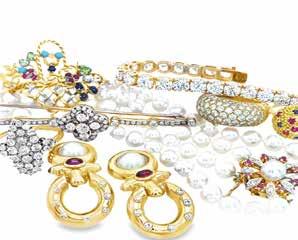
A free valuation from our in house gemmologist and gold experts on anything you may wish to sell. If you are thinking of selling, we purchase all Diamonds in any shape, size, clarity or colour. WE PAY MORE than all our competitors. Try us, and you will not be disappointed!

• On-market &
Aliyah Relocation
• Trusted legal & mortgage coordination through our professional network, including designers & all property related requirements
• Dedicated project management - from purchase to handover & beyond
• Ongoing property management & rental oversight

Ashkelon new projects and existing options. Luxury sea facing first line options & Ir Hayayin New Area entry level options & pricing. NETANYA

Netanya luxury sea facing projects and options in Ir Yamim & Shirat Hayam. Walk to beach, pool & gym in complex offering beautiful spacious homes. 5 Rooms with attached additional rooms

New projects & existing options in Aleph, Gimel, Hey, M3 Beit Shemesh & surrounding areas. 3,4,5,6 Rooms Garden and Penthouses options

Carmei Gat new projects & existing options. 2,3,4 bed. Garden & Penthouses & Villas in new Anglo areas with limited pre-sale pricing & payment options
& HASHMONIIM

villas, houses & apartments. Opportunity to be part of new Yishuv and close to the city with your own home in Dati Leumi community. Various options and sizes to suite all families


New projects high rise & boutique small building options. In all areas limited pre-sale options in prime locations. 2,3,4 bed options, Garden & Penthouses

New projects & existing options, prime locations ready soon or in few years. Limited pre-sale options and prices with no index. 3,4,5 Rooms Penthouses and Garden options
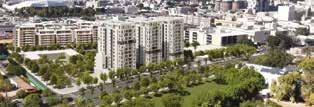
Highrise or boutique building projects & existing options including Old North walk to beach sea views. Pre-sale pricing and payment options on selection of options










22-30 JUNE 2027
Mehadrin Kosher
Entire Ship Exclusive to Kosher Travelers



Embark on an unparalleled journey with the world’s only Kosher Travelers Svalbard Expedition.
Explore a remote Arctic wilderness of dramatic fjords, towering icebergs, and breathtaking northern landscapes.
Encounter incredible wildlife, including polar bears, walruses, Arctic foxes, seals, whales, and diverse birdlife.
All guided by seasoned professionals for a safe and unforgettable experience.




EARLY BIRD DISCOUNT TILL 30 MAY ‘26





* Ideal Cruise Season on the M/V Sea Spirit, Poseidon
* Freshly Prepared Gourmet Cuisine
* Daily Tefilla & Sefer Torah
* Shabbat atmosphere
* Boutique experience for 100 guests
* Personally Hosted by David & Chana


BY RABBI YAKOV SCHONBERG
Chullin 8a cites a Baraisa that teaches that different types of skin discoloration have distinct waiting periods before tzaraas tumah is confirmed. If a light discoloration develops within a wound caused by inflammation or a burn, without any white hairs, he is quarantined for a week, after which the Kohen reexamines the symptoms. If the discoloration has spread, the Kohen confirms it as tzaraas. If there is no change, the condition is not tzaraas. The Gemara then distinguishes between an inflammation and a burn, citing a Mishnah (Negaim 9:1). If someone was hit with wood, with olive pomace, with water from the hot springs of Tiveria, or with anything whose heat does not derive from fire, that is an inflammation. If someone was burned by a coal, by hot ashes, by boiling lime or gypsum, or by anything whose heat derives from fire, this is classified as a burn. This classification of a burn as deriving its heat from fire is significant in the debate over the halachic status of cooking in a microwave oven, whose heating mode does not involve fire. It is similar to the hot springs of Tiveria, which are heated by geothermal energy from deep within the Earth’s crust. Tosafos (s.v. bechamei) notes that even according to the opinion in Shabbos 39a, which holds that these springs absorb heat from the gates of Gehinom, that heat is from a heavenly rather than an earthly fire.
A second opinion holds that rocks deep in the earth, heated by the sun, are the source of heat for the hot springs.
The primary Talmudic source on the halachic status of heating without fire is Shabbos 39a, which establishes that cooking in the sun itself involves no Shabbos transgression, and that according to the Rabbis, there is a rabbinical decree against cooking using derivatives of the sun’s heat. The example given for cooking with heat derived from the sun is breaking an egg open and frying it on hot scarves that had been baked in the sun. This is called tolados (literally, offspring), hachamah, meaning a subcategory of the sun, and there is concern that these scarves may be confused with others heated by fire. The Shulchan Aruch (Orach Chaim 318:3) rules accordingly that cooking in the sun itself is permitted, but not with heat derived from the sun. Rashi states that the allowance of the sun’s heat is because it is not the normal method of cooking, which is using the heat of fire. Rashi’s reference to the sun not being the normal way to cook stands at the center of the discussion of cooking
in a microwave oven, which also uses a non-fire heat source.
There is a fundamental principle of Shabbos laws called meleches machsheves, which holds that melachos on Shabbos are forbidden only when performed in the intended manner, in the way melachah was carried out during the construction of the Mishkan. If it were carried out abnormally, such as using the left hand or walking backward, there would be no Torah transgression. A melachah must be performed in the normal fashion to be liable. Is that what Rashi meant when he explained the dispensation for cooking in the sun, because that is not the normal way of cooking? The act the person performs is identical regardless of which cooking implement he uses, so why should cooking in the sun invalidate his act?
would be considered the normal way of cooking. That prediction did not materialize, even though microwaves are commonly used for reheating, because the quality of microwaved food cannot match that of conventionally cooked food.

The Eglei Tal (Meleches HaOfeh 19:44) explains that we not only look at the person’s act but also consider the end product of that act. An egg cooked in the sun will not look or taste like one cooked by fire, and Rashi meant that the result of the act is abnormal. However, Rav Moshe Feinstein does not understand Rashi in this way (Igros Moshe, Orach Chaim 3:52). He asserts that one might have thought that cooking in the sun should constitute a subsidiary category of cooking with fire and therefore be forbidden, since it is a similar process. Rashi therefore explains that since that is not the way people normally cook, it cannot be considered similar. Rav Moshe then argues that cooking in microwave ovens, which cook as well, or even more efficiently, than conventional ovens, should be considered the normal way of cooking and would be similar to the cooking of the Mishkan. Writing in 1971, when microwave ovens were becoming affordable, he asserted that, in the fullness of time, they would replace conventional cooking because they were much more efficient. He therefore ruled that cooking in a microwave would constitute a Torah prohibition, since it
Rav Asher Weiss (Oraisa 18, 5757) points out that there are two other halachic situations, besides Hilchos Shabbos, in which we find a dispensation for cooking without fire. Pesachim 41a teaches that a korban Pesach cooked in hot Tiveria spring water would not transgress the prohibition against cooking rather than roasting it. Furthermore, the Rambam rules that if one cooks meat and milk together in hot Tiveria spring water, he would not receive malkus (Hilchos Maachalos Asuros 9:6). In these two situations, the actions have no connection to the way the act was performed in the Mishkan, so there must be another understanding of Rashi’s comment that it is not the normal way of cooking. There is a broad principle that an act forbidden by the Torah is transgressed only if done in the normal fashion. A person eating forbidden foods is culpable only if the eating is done in the normal manner (Pesachim 24b). If

one cuts a plant from a pot with a hole, there is no Shabbos transgression (Shabbos 81b). Rashi explains that this is not the usual way of planting. Why would the act of cutting be governed by how the plant was planted? The issue must be that the article at the center of the action is unusual, since a potted plant is not the usual way to plant. In cooking, using an irregular heat source, such as the sun or hot spring water, would not be the usual way.
Microwave cooking is a further step away from regular cooking, which has an external heat source. Microwave heating works by electromagnetic waves that induce molecular motion in the fluid organic matter in food. Water molecules are polar, meaning they have a positive end (hydrogen) and a negative end (oxygen), much like a tiny magnet. When microwaves pass through water, the electromagnetic wave’s electric field causes the polar water molecules to rotate and try to align with the changing electric field. This rotation is not smooth—it causes friction between molecules, generating heat. Fats and oils also have some polar characteristics, so microwaves can interact with them too, though typically less efficiently than with water. The faster the molecules rotate, the more energy they dissipate as heat. This is what heats the water or the food that contains water. In reality, microwaves are similar to the sun’s rays. Both are part of the electromagnetic spectrum, which includes waves ordered by frequency or wavelength, from radio waves to gamma rays. While both are forms of electromagnetic radiation, microwaves and sunlight differ in their wavelengths and energies. Microwaves range from 1 millimeter to 30 centimeters in wavelength, with frequencies from 1 GHz to 300 GHz (gigahertz).

In contrast, visible light from the sun spans wavelengths of 400 nm to 700 nm (nanometers). Infrared rays (below red), which produce heat, have longer wavelengths than visible light, usually between 700 nm and 1 mm. Unlike the sun, microwaves are an internal heat source, quite distinct from the external heat source in regular cooking. Do we have a precedent in the poskim for cooking with an internal heat source?
Rav Asher Weiss cites a conversation between the Chazon Ish and Rav Shlomo Zalman Auerbach regarding the heating of water electrically (Minchas Shlomo 12). Rav Shlomo Zalman suggested to the Chazon Ish that an alternative method of
heating water used in industry might not violate any Torah prohibition, since it does not use fire as a heat source. Pure water doesn’t conduct electricity well, but tap water and saltwater contain ions that do conduct.
If you place two electrodes in the water and apply a voltage, current flows through the water. Because the water has electrical resistance, it converts electrical energy into heat, warming the water directly. Although no actual electric current flows through the material, this is similar to microwave heating in that it is an internal heat source. The Chazon Ish offered an amazing chiddush that it may be bishul deoraisa. Just as fire can have a toladah (offspring), it can also have an ibbur (potential offspring). Electricity can produce fire, so heating with electrodes
may be considered potential fire. Rav Asher agreed with Rav Shlomo Zalman that this was a truly original concept, difficult to accept. This would certainly not be considered derech bishul, the normal manner of cooking.
Rav Asher Weiss also discusses the status of microwave cooking in connection with bishul akum (Minchas Asher, Devarim 6). The elderly and sick are often cared for by a non-Jewish carer who would not be able to cook for them. Buying ready-cooked food or hiring a Jewish cook would impose a financial burden on the family. In this needy situation, Rav Asher suggests a number of leniencies that might be combined to
validate the non-Jew’s microwave cooking. In addition to the fact that this usually involves a person who would be categorized as sick, and the Rema rules that a maid’s cooking in a Jewish home may not be considered bishul akum, one can add the issue discussed here, that there is no external fire source in a microwave oven, and perhaps that would not be considered proper cooking. (Of course, ask your LOR, as personal circumstances vary.)
To contact Rabbi Schonberg, please email, yschonberg@gmail.com
To find out more, you can sign up at mercazdafyomi.com and receive a free gemoroh.








BY RABBI MOSHE TARAGIN
Rabbi Meir Simcha of Dvinsk was a leading rabbinic figure of the late nineteenth and early twentieth centuries. He served as the rabbi of Dvinsk, and among his major works are Ohr Sameach, a halachic commentary on the Rambam, and Meshech Chochmah, his commentary on the Torah.
Beyond incisive halachic analysis and careful readings of the Torah’s narratives, Meshech Chochmah contains broader reflections on human history, redemption, and hashgachah. He was among the more expansive and integrative rabbinic thinkers of his generation. Though he did not formally advocate for aliyah, he was acutely sensitive to the fragility of Jewish life in exile.
By far his most well-known comments about life in exile appear in the Meshech Chochmah on Bechukotai, where he sharply critiques those who imagine that “Berlin can become a new Jerusalem” and warns that storms will inevitably arrive to overturn Jewish life. That ominous passage has become widely known, almost prophetic in tone.
Beyond the famous warning, the essay is more layered. He looks more broadly at the experience of exile, setting it against the fullness of life in a sovereign Jewish setting, and tracing the tensions that shape Jewish existence outside its natural home.
His primary concern is Jews growing too comfortable in foreign lands. Exile can feel stable, even successful, but it is neither ideal nor enduring. Yaakov Avinu, the first to descend into exile, already recognized this risk and guarded against it by establishing patterns that would preserve Jewish distinctiveness. First, he ensured that his family remained set apart, settling in Goshen, maintaining their own forms of dress and language, and resisting full integration into Egyptian society. By cultivating that separation, he protected them from dissolving into the broader culture. His plan worked…at least in Egypt. Chazal note that by the time of Yetziat Mitzrayim, we had lost much of the theological legacy of the Avot and had slipped into the pagan world of Egypt. In Sefer Shemot the Torah omits this decline, but other sources, most notably Yechezkel chapter 20, reveal just how deeply we fell. And yet, despite that religious erosion, certain markers held. We retained our language, our dress, and our names. That shared identity endured, and it became the platform upon which Hashem restored religious consciousness at Sinai.
Yaakov’s second strategy was to anchor
us to a different land. Even as we lived in Egypt, he wanted to ensure that we never mistook it for home. That is why he insisted on being buried in Eretz Yisrael. Surrounded by the memory that their roots lay elsewhere, with parents and grandparents resting in another land, Bnei Yisrael would never grow fully comfortable in Egypt. The sense of belonging to somewhere else remained alive, quietly resisting the pull of exile.
Yaakov’s plan has met with uneven success across the generations. At times we held tightly to our identity, preserving our language, our dress, and a quiet awareness that even as we lived and prospered across the world, we ultimately belonged elsewhere. Alongside that cultural distinctiveness, we remained anchored to a different land and sustained by Torah, which gave us a clear inner identity and protected us from being absorbed into our surroundings.
At other moments, however, we grew too comfortable. We loosened that cultural boundary and even began to detach ourselves from Eretz Yisrael as our true home. At those points, history intervened. Periods of ease gave way to upheaval, and complacency was shaken by forces that pushed us into new exiles. Our lives became less stable, but we became more conscious of who we are. The pattern is familiar: from Western Europe in the wake of the Black Death, to Spain before the expulsion, to Poland after the Chmielnicki massacres, to the Pale of Settlement in nineteenth-century Russia. Each time, settled life was overturned, persecution followed, and we were pushed into a new exile.
It is within this pattern that he issues his warning about his own time. Western European Jewry had begun to feel at home. Emancipation opened doors, granted rights, and encouraged integration. Many set aside the markers that had once set them apart and, more deeply, began to loosen their bond to Yerushalayim. There is a difference between living with a degree of comfort in exile and redefining exile as home. To mistake any city for Yerushalayim is not just an error; it distorts our place in history.
The phrase “Berlin is Yerushalayim” is not only a geographical mistake. It reflects the belief that Jewish destiny can unfold along the boulevards and promenades of Europe. Yet Jewish destiny cannot be completed there. It belongs in Eretz Yisrael, centered upon Yerushalayim. This is not merely replacing one city with another. It is stepping away from the direction of Jewish history.
Ominously, he warns that, as in earlier periods, a storm would come to unsettle that sense of security. Tragically, that storm arrived in the form of the Holocaust, overturning what had seemed so
But there is a second, more nuanced layer. He traces how Torah itself is shaped by these alternating periods of serenity and persecution in exile. Too much comfort does not only dull historical awareness; it begins to affect the transmission and texture of Torah, until disruption arrives and forces a reset.
He describes a three-stage process. The first stage is that of immigrants, those uprooted from their homes. Their masorah has been shaken by exile. Torah is most naturally transmitted through stable families and intact communities, and when homes are broken and communities scattered, that continuity becomes harder to sustain. Added to this are pressures of rebuilding life, the strain of relocation, the need to secure livelihood. Under those conditions, it is difficult for that stage to reach high levels of Torah achievement, as the pressures of rebuilding and adjusting to a new reality take hold.
In the second phase, communities begin to rebuild and Torah study is reestablished. Torah and religious life slowly regain their footing and begin to grow. He does not explain explicitly why this happens, but the progression is clear. Torah is not bound to any one place. It is the word of Hashem, given in a desert beyond time and geography, and it can take root wherever people open their minds and hearts to it. After a period of adjustment, often a generation or two, Torah begins to flourish in its new setting.
He does not need to provide examples of this renewal. It has repeated itself across Jewish history. Once the initial pressures ease, once life stabilizes and communities regain their footing, people are able to turn their energy back toward Torah, and a new period of growth begins.
At this point, however, in the third phase, a different danger begins to emerge. Every person, and every era, carries a drive to create. Creativity is part of the human condition. When we create, we reflect our Creator. That impulse is not marginal; it rises from a deep place within the human spirit.
Under ideal conditions in Eretz Yisrael, that creativity is channeled into Torah. We possess the mechanisms that allow Torah to grow and respond to changing realities. A beit din can, in certain circumstances, revisit earlier rulings. Nevuah once guided and steadied that creative process, giving it direction. Even in the absence of prophecy, during the period of the second Mikdash, there remained a form of divine inspiration, and through the interpretive tools of Torah sheba’al peh, Torah continued to develop. The great expansion of Torah sheba’al peh emerged in that period, not through prophecy, but through divinely guided human effort. In that setting, human creativity and the word of Hashem worked together, allowing Torah to advance in a healthy and grounded way.
In exile, that process meets its limits. The structures that enable forward movement are no longer fully in place, and the presence of that guiding spirit is diminished. Yet the human need to create does not disappear. When it cannot find expression within Torah, it begins to seek other outlets. At times, that creative energy is directed toward pursuits that do not align with Torah, and the result is not growth but distortion. This becomes a fragile moment. Creativity remains, but it lacks a proper channel.
When that pressure builds, exile returns, necessary to prevent further distortion. The settled framework gives way, and the cycle begins again: masorah is disrupted, Torah is slowly rebuilt, it flourishes, and over time the same pressure begins to build. In this sense, exile does more than preserve Jewish identity from assimilation. It also protects Torah itself, preventing it from being altered by human creativity in a setting that can no longer support its healthy development. This second profile maps closely onto
the condition of Europe in the centuries before the Holocaust. Jewish communities were firmly established, and Torah life had regained strength. There was stability, structure, and serious learning. Yet for many, that inner drive to create could not find full expression within Torah, and it began to flow elsewhere.
To be honest (and Rav Meir Simcha doesn’t address this) much of that redirected creativity contributed to the broader development of Western civilization. Jewish talent shaped fields such as science, medicine, psychology, and commerce. But alongside that contribution, there was a quieter cost. For some, the inability to channel creativity within Torah led to distortions in how Torah was understood and applied, and in many cases, to a gradual move away from a Torah life.
It is striking that the Meshech Chochmah does not point to earlier examples of this pattern of potential Torah distortion. We can identify earlier moments of cultural assimilation, but this particular combination, strong Torah frameworks alongside a growing pull to express creativity beyond them, appears less developed in earlier periods. It raises the question whether this dynamic is part of a recurring cycle or a more singular condition emerging toward the later stages of our history.
Will this pattern emerge in our own context? We have built strong Torah communities, and religious life within the Orthodox world is flourishing in ways few could have imagined. Will it eventually encounter the limits he describes in exile?
We hope not. Yet his words remain a quiet caution.
Even more intriguing, in light of this, is his distinction between Torah study in exile and Torah study in Eretz Yisrael, especially when viewed against current trends. Life in Israel has sparked a noticeable shift in Torah learning. There has been a return to intensive Tanach study, while areas once seen as more esoteric, such as Chassidut and Kabbalah, have entered the broader conversation, shaped in part by figures like Rav Kook and Rav Steinsaltz. It is not only the range of topics that has expanded, but also the way traditional texts are being approached and reconsidered.
For those raised in exile, these developments can sometimes feel unfamiliar, even unsettling. Is there something about life in Israel, even without a Mikdash and without explicit divine inspiration, that allows for this kind of growth? Having returned to Israel, even without a Mikdash, a Beit Din, or that earlier clarity of divine spirit, are we experiencing a creative surge in Torah that can break the cycle he describes in galut, where stagnation leads to distortion?
The writer, a rabbi at the Hesder Yeshivat Har Etzion (Gush), was ordained by Yeshiva University. His latest book, Reclaiming Redemption, Vol. II: Faith, Identity, Peoplehood, and the Storms of War, is available at mtaraginbooks.com
• Suits now from £69
• Overcoats from £49.50
• Knitwear from £10
• Casual Jackets from £29.50
• Sports Jackets and Blazers from £39.50
• Trousers £20 each 2 pair for £30 28-48 inch waist
• Shirts from £10
• Shoes from £15
Open weekdays until 6pm & Sundays til 5pm



The name of the Parshah, “Behar,” means “on Mount [Sinai]” and it is found in Leviticus 25:1. The name of the Parshah, “Bechukotai,” means “in My statutes” and it is found in Leviticus 26:3. On the mountain of Sinai, G‑d communicates to Moses the laws of the Sabbatical year: every seventh year, all work on the land should cease, and its produce becomes free for the taking for
all, man and beast.
Seven Sabbatical cycles are followed by a fiftieth year—the Jubilee year, on which work on the land ceases, all indentured servants are set free, and all ancestral estates in the Holy Land that have been sold revert to their original owners. Additional laws governing the sale of lands, and the prohibitions against fraud and usury, are also given.
G‑d promises that if the people of Israel will keep His commandments, they will enjoy material prosperity and dwell securely in their homeland. But He also delivers a harsh “rebuke,” warning of the exile, persecution and other evils that will befall them if they abandon their covenant with Him. Nevertheless, “Even when they are in the land of their enemies, I will not cast them away; nor
will I ever abhor them, to destroy them and to break My covenant with them; for I am the L‑rd their G‑d.”
The Parshah concludes with the rules on how to calculate the values of different types of pledges made to G‑d, and the mitzvah of tithing produce and livestock.
Number of Verses - 135
Number of Words - 1,750
Number of Letters - 6,809
As the sun moves from east to west, Shabbat and Yom Tov occur first in Israel, and then in USA. Which mitzva is observed first in New York, and then in Jerusalem?
Last week’s Answer: Triplets and their cousin are born within a 2 hour period, yet the brit milah for each of the four takes place on four consecutive days.
They are all healthy - i.e., no jaundice or other health problems. How can this be?
One baby is born before sunset. His brit is 8 days later, which happens to be the day before Yom Tov. His brother is born after dark - halachically a new day. His brit is a full day later, the day of Yom Tov itself. A brit performed on the 8th day supersedes Yom Tov.
The third triplet was born between the other two. He was born in the halachic ‘grey area’ after sunset but before dark. It is unclear if this is considered night or day. He can’t have his brit the day before Yom Tov because that might be the 7th day, which is too early. He can’t have his brit on Yom Tov, because that might be the 9th day, and only a brit done on the 8th day supersedes Yom Tov. Therefore, his brit is the day after Yom Tov.
So much for the triplets who, by the way, were born in Israel. Their cousin outside of Israel was born at the same time as the baby in paragraph #3. His brit, however, is postponed yet another day, due to the extra day of Yom Tov observed outside of Israel!
Using all the shapes, can you make the shape on the right?
The goal of a word wheel puzzle is to create as many words possible with the letters in the word wheel. Each word must contain at least three letters. You can only use each letter once and every word must have the letter in the centre of the wheel.
C Y E R T R A S
Q: What dinosaur had the best vocabulary?
A: The thesaurus!
Q: Why did the man put his money in the freezer?
A: Because he wanted cold hard cash!
Q: What is orange and sounds like a parrot?
A: A Carrot! Dingbat Answers
How far will a blind dog walk into a forest?
What happens when you throw a yellow rock into a purple steam? 3. What starts with a T, ends with a T, and has T in it?
Halfway. After he gets halfway, he’s walking out of the forest
It makes a splash


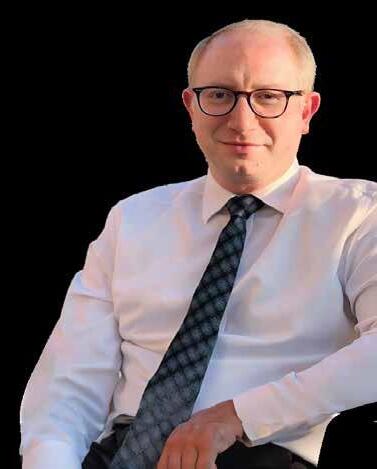

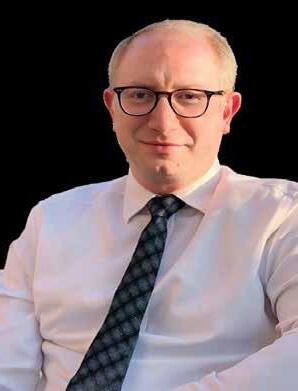
20
"Amazing quality time with the family, wonderful experience and some very useful strategies to use with our children" "Thank you thank you for enabling me to start learning. My teacher has encouraged me to start saying the morning blessings and to wash my hands. I look forward each week…”