


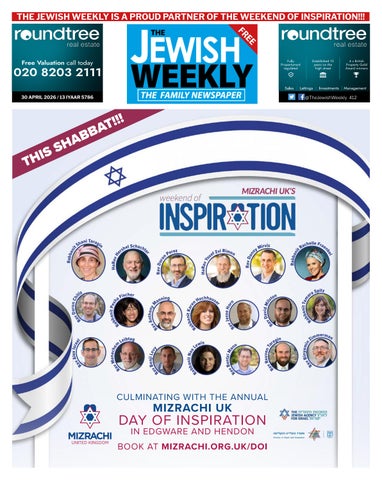




















9:45
10:40
11:30
12:20
13:10
14:00
14:50
15:40
16:30
17:20
18:10
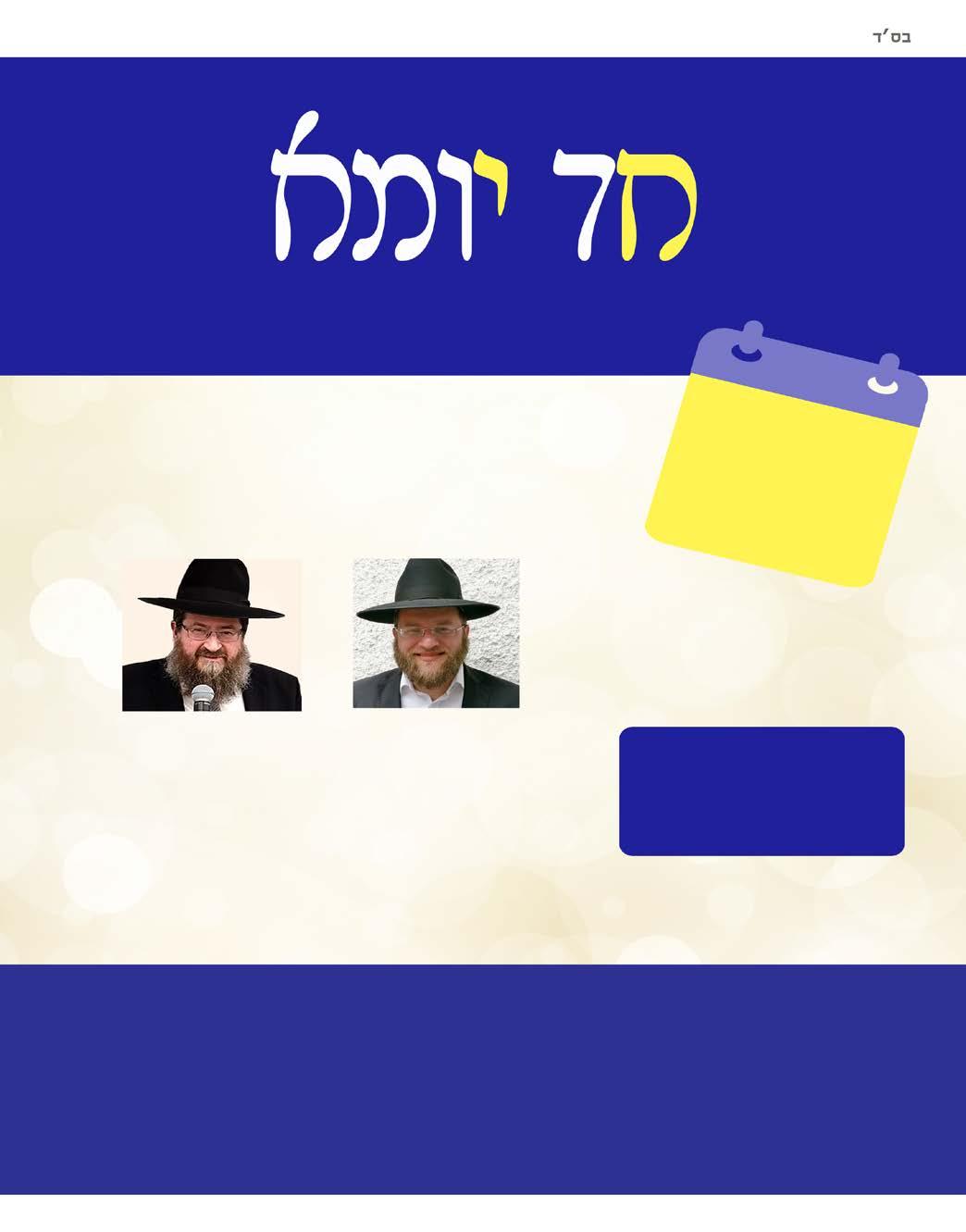
Rav Doron Chitiz
Zemirot Shabbat and Geula
- “It can’t be that in Gaza we sang more zemirot than here”
Rabbanit Pesha Fischer
Love of the Land: To Dwell and to Serve
Rabbanit Rachelle Fraenkel
Torah Rooted in the Land: Harvesting Insights from Israel’s Soil
Rav Jesse Horn
Why I Am a Religious Zionist
Rabbanit Noa Lewis
How abundant is the good that You have in store for those who fear you
Rav Anthony Manning Who Made the Rabbis Boss? Torah thoughts on Rabbinic Law
Rav Danny Mirvis
Rav David Milston “Light in the harshest winter” 3 inspiring messages from the Aish Kodesh
Rabbanit Tamara Spitz
When a Child Isn’t on the Same Path: Lessons from Avraham and Yishmael
From “Operation Rising Lion” to “Operation Lion’s Roar”. Are Jews Supposed to be like Lions”
Rav Doron Chitiz
How Jewish is the State of Israel? - Israel’s National Symbols
HaRav Hershel Schachter Halachos of Tzitzis
Rav Danny Mirvis
What Have the Romans Ever Done For Us? The Story Behind Lag BaOmer”
Rav Danny Mirvis
Who was Left out of Pirkei Avot, and Why
Rav Jesse Horn
Pshat Isn’t Always Simple: Rediscovering Yitzchak and Rivka
Rabbanit Pesha Fischer Singing an Old New Song
Rabbanit Noa Lewis True Chessed, Really?
Rav Reuven Taragin
How to live a life worth living
Rabbanit Karen Hochhauser
To Halt the Unravelling of our Oneness as a People Strengthening our faith in Hashem, Ourselves and Each Other
Rabbanit Karen Hochhauser
Product vs. Process Pesach Sheini and Sfirat Ha’Omer

Rav Anthony Manning
Reclaiming Lost Love - 10 Practical Tips to Build Ahavat Hashem
Rabbanit Tamara Spitz Jerusalem: Majesty and Sanctity
Rabbanit Shani Taragin
Leaders, Letters & Crowns of Commitment
Rav Alex Israel
Hostages, Faith and Religion in Popular Culture. What do we make of the fact that hostages found faith in captivity?
Rav Benji Levy
The Journey of my Daughter’s Liver Transplant
Rav Binyamin Zimmerman
Remembering the Har Sinai Experience Daily, Reliving it Weekly, and Reexperiencing It Throughout the Year
Rav Binyamin Zimmerman
Shabbat Lifts, Wheelchairs and Technology for Medical & Security needs on Shabbat
Rav Bentzi Mann
Have We Come Home for Good? Geula, Galut and the Future of the Jewish People
Rav Reuven Taragin
How To Live A Good and Desirable Life
Rabbanit Shani Taragin, Rav Alex Israel & Rav Menachem Leibtag
What would you take on the desert island


EDITORIAL BY YOSSI SAUNDERS
Jews are now too petrified to leave their homes.
People are looking nervously over their shoulder every time they step outside their front door. Listening to and reading the testimonies of Jewish Londoners across the media yesterday only reinforced the stark reality of life in modern Britain as a Jew.
Let’s not sugar-coat it — this is fear. A level of fear not felt for generations.
The scenes in Golders Green yesterday must be a turning point. The vicious stabbing attack, which left two members of our community seriously injured, has shaken families across London and beyond. We pray for the speedy recovery of Moshe Shine — Nachman
Moshe ben Chaya Sarah — and Shlomie Rand — Shlomo ben Bayla.
Make no mistake: this could have been far worse.
Watching the footage of the
terrorist Essa Suleiman running through Highfield Avenue, and Golders Green Road, it is nothing short of a miracle that more lives were not lost. There could easily have been multiple fatalities, as we have seen in Sydney.
Women from within our community described cowering inside shops, clutching their babies, as the attacker roamed the streets outside
looking to kill.

But we must not view this in isolation.
This comes on top of a deeply troubling pattern of escalating violence. Just weeks ago, Hatzalah ambulances were attacked and destroyed just yards away in Golders Green. In Hendon, the former Jewish Futures building was targeted in an arson attack, as was Kento Shul.




Suspicious material was sent to the Israeli Embassy. Buildings connected to the Jewish National Fund have been daubed with red paint. Just last week, a Jew was attacked in Slough.
And we have already seen how deadly this can become.
In Manchester, on Yom Kippur, Adrian Daulby and Melvin Cravitz were murdered in what was the first deadly terror attack on British Jews in centuries. A chilling foiled plot later revealed plans to obtain hundreds of rounds of ammunition and weapons to target the Jewish community — an attack that could have killed hundreds.
This is not random.
This is targeted.
It is being fuelled by extremist ideology and, increasingly, by hostile state backing. Intelligence warnings have pointed clearly to the involvement of Iran, whose money has long funded groups such as Hezbollah, Hamas, and now this group Harakat Ashab al-Yamin al-Islamia, who are openly encouraging and enabling attacks on Jews in Britain itself.
Don’t forget this country has chosen not to help Bibi and Trump stop Iran funding
terror, and building a nuclear bomb to wipe Israel off the map.
Let that sink in.
Do you still wish to live in a country that stands idly by watching Trump and Bibi trying to stop Iran whilst actively not participating?
Do you want your children growing up in an environment where groups are actively calling for Jews to be killed on British streets?
Do you see the future for your grandchildren to be as rosy in England as it was a few decades ago?
The scale of what we are facing is unprecedented. Anti-Semitism has reached record levels — around 3,700 incidents in the past year alone, within a community of just 300,000 Jews. That is an extraordinary rate per capita. This is not just abuse or slogans — it includes threats of death and over 170 physical assaults, including fatal attacks.
We are not being alarmist.
We are describing reality.
And yet, too many still downplay it. Perhaps they are scared of change.
But look around.
Our shuls now resemble fortresses. Security guards, barriers, locked gates — this is not normal. And while security is
necessary, it does not address the underlying problem. You cannot fence your way out of a societal shift of this magnitude.
The sheer numbers of anti-semites openly roaming the streets are against us
History teaches us where this leads. From Spain to Germany, Jewish communities have too often ignored the warning signs until it was too late.
It never starts with the worst moment. It starts with denial.
There is a well-known analogy: put a frog into boiling water and it jumps out. Put it in cold water and slowly raise the temperature, and it stays — until it is too late.
That is exactly how this feels.
For those who grew up in the United Kingdom, this is hard to accept. There was a time when wearing a kippah in public was normal. When Jewish life felt secure. That country is changing.
And we must be honest — including about leadership. Communal leaders understandably try to project strength and calm: “we are resilient,” “we will not be defeated.” There is value in that message. But preaching strength without realism can become dangerous. In previous generations, that attitude may have led some people to stay in Germany just a little bit too long in the 1930s.
BY DAVID SAFFER
Prime Minister Keir Starmer was heckled this afternoon in Golders Green by angry Jews who blame his poor leadership as the reason Jews are now scared to walk the street of London.
Chief Rabbi Ephraim Mirvis has led communal calls for “meaningful” action not “words” from Prime Minister Keir Starmer after two Jewish men were stabbed in Golders Green yesterday.
Shlome Rand, 34, and Moshe Shine, 76, are in stable condition after a terrifying terror attack.
Both were stabbed by Essa Suleiman 45-year-old British national born Somalian man, who is in police custody. This is the latest in a string of attacks against Jewish communities.
Campaign Against Antisemitism are heading up a ‘National Emergency’ rally tonight (7pm) outside Downing Street calling for a plan from Prime Minister Keir Starmer.
The government has announced £25m extra funding for increased police patrols and security in Jewish communities for synagogues, schools and community centres.
The chief rabbi told BBC News that visibly looking Jews are no longer safe and called for British voices across the country to condemn the attacks.
CAA chief executive Gideon Falter raged: “Jew hatred in Britain is out of control. Our young people are being radicalised, Iran is orchestrating terrorism and our politicians and police are appeasing extremists. This is a national emergency, we have yet to see evidence the Prime Minister has a plan.”
Home Secretary Shabana Mahmood said the government would “strain every sinew” to keep the Jewish community safe.
Justice Minister Sarah Sackman, who represents Finchley and Golders Green, was heckled at a press conference with Metropolitan Police Chief Mark Rowley at the scene.
“The threats to Jewish people in this country are very real” she told BBC Newsnight.
Rowley paid tribute to officers whose actions “undoubtedly” saved lives, adding, “Too many Jewish people in this country feel they have to make choices that no other Briton ever has to make. They have to choose what they dress, where they go or how visibly they live their lives. That is completely unacceptable and has gone on for far too long.”
London Mayor Sadiq Khan called on Londoners to show solidarity with Jewish people and for an “increased visibility” from police to deter terrorists.
Conservative leader Kemi Badenoch visited Golders Green and said there is an “epidemic of violence” against Jewish people which was now a “national emergency”.
The government’s independent terrorism advisor, Jonathan Hall KC, told the BBC’s The World Tonight that attacks on Jewish people was the “biggest national security emergency” since 2017.
Prime Minister Benjamin Netanyahu and President Isaac Herzog expressed support from Israel.
Netanyahu called on Starmer do more to “protect the Jews of England”.
“Words are not enough to confront this scourge,” he said.
Herzog added: “In one of the great
capital cities of the West, it has become dangerous to openly walk the streets as a Jew. The British government and authorities must take immediate action before the next antisemitic attack. Israel will not stay silent as our Jewish sisters and brothers are threatened and attacked around the world.”
Bicom reported that Israel’s Ministry of Diaspora Affairs and Combating Antisemitism connected the attack to Iranian terrorist group Harakat Ashab al-Yamin al-Islamia after they claimed responsibility and were behind recent arson attacks targeting Jewish sites.
Minister Amichai Chikli said: “The handwriting is on the wall, written in blood. We have warned in recent weeks that this is an emerging organisation with characteristics of decentralised terrorism. The British government must wake up and ensure the security of the Jewish communities.”
According to the ministry, between 27 April 2025 and 27 April 2026, approximately 6.37 million antisemitic posts related to the UK were published on X.
Buckingham Palace said King Charles was deeply concerned about the impact on the Jewish community. Kensington Palace added that the Prince and Princess of Wales were concerned about the attacks and innocent victims were in their thoughts.
Communal organisations condemned the incident.
The We Believe Alliance said the attack was a “predictable outcome” as a pattern was escalating.
“Openly antisemitic rhetoric are permitted to dominate our streets, normalising and emboldening hatred,” they noted.
Yes, there is also a natural instinct to preserve institutions and avoid panic — but that can risk lulling people into a false sense of security.
When senior communal figures warn that it is no longer safe to be visibly Jewish on the streets of this country, that should be a moment of clarity for everyone.
People must hear it.
Because ultimately, this is about safeguarding our future.
For many, that means seriously considering aliyah to Israel. Record numbers already are. In Israel, Jews are not a vulnerable minority. There is a state. There is an army. There is protection. Children grow up surrounded by identity and pride — not fear.
This is not about panic.
It is about reality.
It’s not going to get better.
The warning signs are no longer subtle. They are louder each week.
The question is no longer whether change is coming.
The question is whether we act — while we still have the choice.
“Worse still, toxic anti-Israel discourse and, at times, outright antisemitic rhetoric have seeped into mainstream politics. That legitimisation from political spaces only deepens the problem. The consequences of inaction are now being measured in blood.”
Jonathan Metliss, Action Against Discrimination, added: “Pious statements from politicians are spineless. Starmer and his colleagues must wake up to what is happening to the Jewish community. And community leaders have to be far more demanding of relevant authorities.”
The Board of Deputies and Jewish Leadership Council said the government must deliver on commitments to tackle antisemitic extremism.
Police, armed officers, Shomrim, Hatzola and London Ambulance Service attended the incident in Highfield Avenue. The suspect ran along Golders Green Road and attempted to stab officers before being Tasered then arrested. No officers were injured.
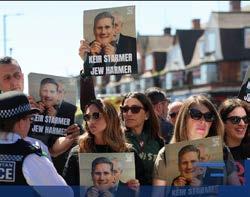



We make them stand out .
BY DAVID SAFFER
Israel’s relationship with the United States is ahead of the United Kingdom’s.
The Israel-US alliance has been lauded by Prime Minister Benjamin Netanyahu, President Isaac Herzog and President Donald Trump, most recently during the war with Iran, but tensions have been fraught between Trump and Prime Minister Keir Starmer since the conflict started.
Now UK’s Ambassador to the US, Christian Turner, appears to have ratified the situation within hours of King Charles III arriving in Washington this week to meet Trump and aid UK’s standing.
The King’s address in Congress has been well received and Trump has echoed the historical significance of the UK but Turner’s remarks to UK sixth-form students
visiting the US in an audio recording shortly after replacing disgraced envoy Lord Peter Mandelson were reported by the Financial Times and made global news.
Turner stated: “‘Special relationship’ is a phrase I try not to utter because it’s quite nostalgic, it’s quite backwards-looking, and it has a lot of sort of baggage about it. I think there is probably one country that has a special relationship with the United States, and that is probably Israel.”
Regarding Starmer, Turner said he had been “on the ropes” and his future was “touch and go” over Mandelson.
Turner also noted that if local elections in May go badly for Starmer, as currently polls predict, his time as PM may be numbered. “I have to serve whomever is there,” he said.
The UK Foreign Office responded in an attempt to minimise the ambassador’s comments.
The FCDO noted: “These were private, informal comments made to a group of UK sixth-form students visiting the US in early February. They are certainly not any reflection of the UK government’s position.”
Turner did state that the US and UK had a “deep history and affinity” on security and defence but the diplomatic damage was done.
Former Foreign Secretary Jack Straw told BBC Radio 4’s The World Tonight programme that Turner was correct to state Israel had a special relationship with the US due to the military spending but former British Ambassador Lord Darroch told BBC Newsnight the leak was a
BY DAVID SAFFER
Immanuel College has secured its longterm future.
A financial agreement, subject to due diligence and regulatory checks, is a pivotal moment for the institution and wider community. All funds raised meet UK charity source-of-funds requirements and appropriate due diligence on the incoming Chair and governance team.
The deal follows an intensive period of work and collaboration across the community.
Aaron Etingen, Chief Executive of Global University Systems, will lead Immanuel’s journey as incoming Chair of Trustees.
He said: “This is more than an investment in a school, it is an investment in the future of Jewish education and community life in London and across the UK. Immanuel has a strong foundation and

enormous potential, and I am committed to working with the team to build something enduring, ambitious and exceptional for generations to come.”
A statement from the College noted: “Immanuel is not only protected in the immediacy but positioned to thrive for years to come. Aside from strengthening the College’s balance sheet, the incoming team has committed to invest sustainably in the school and its community for the
“betrayal”.
Turner also spoke about NATO and disgraced financier Jeffrey Epstein.
Downing Street has not yet commented on Turner’s remarks.
On Turner’s appointment, Starmer said he was an outstanding diplomat to support a “uniquely close bond”. Turner was previously ambassador to the UN and a political director at the Foreign Office.
Starmer, meantime, survived a vote in Parliament this week that he should be referred to a parliamentary committee for investigation into his statements about Mandelson’s appointment.
Jewish leadersin the UK, meanwhile, have been scathing about Starmer over antisemitism and Labour’s delay in prescribing the IRGC.
long-term.
Daniel Levy, Chair of Governors, said: “What has been achieved is the result of extraordinary determination, belief and collective effort from so many who care deeply about this school and its future. We are immensely grateful to everyone who played a part in securing this outcome, and confident that Immanuel will now go from strength to strength in the years ahead.”

Spend your retirement doing what you love - not worrying about money





BY DAVID SAFFER
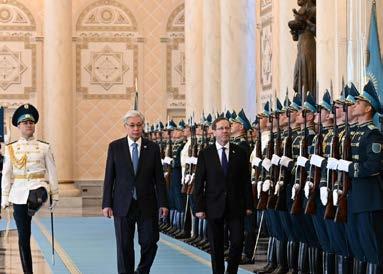
President Isaac Herzog has commended Kazakhstan President Kassym-Jomart Tokayev for his leadership in joining the Abraham Accords during an official state visit.
Israel’s president has invited Tokayev to visit Israel.
“We stand at a critical crossroads not just for Israel but for the entire region,” Herzog told Tokayev. “The war with Iran has helped to isolate the extremist, oppressive Iranian-led axis, which has sought to sow chaos and terror for decades. Our activity has been strengthened by an alliance of moderates, a coalition of nations driven by a desire to cultivate cooperation and offer an alternative to the family of nations, all through the channels of the Abraham Accords.
“This new and emerging coalition holds great promise. It can draw on the best of our creativity and goodwill to
dramatically shift the trajectory of the Middle East and of the Eurasian region at large. It can reach far across spheres and sectors, trade and innovation, energy and environment, medicine and science, food and water security, cyber and AI. It encompasses everything.”
Herzog went on to meet Jewish communities across Kazakhstan and Central Asia at the Beit Rachel Synagogue in Astana.
Chief Rabbi of Kazakhstan, Rabbi Yeshaya Cohen, and the Rabbi of Astana, Rabbi Shmuel Karnauch attended a special gathering
Herzog heard about communal activities and discussed challenges faced, efforts to preserve Jewish identity and the connection with Israel.
“The Jewish story of Kazakhstan spans hundreds of years,” he said. “It is my great hope that this visit will bring momentum to relations between Israel and the nations of Central Asia. The fact that I am here, certainly at this time, is not to be taken for granted, and instils in me the hope that we will develop these ties for the benefit of the region.“”
Herzog addressed an event celebrating Israel’s 78th Independence Day hosted by Israel’s Ambassador to Kazakhstan, Yoav Bistritsky, during the official visit to Kazakhstan.
Chairman of the Senate of Kazakhstan, Maulen Ashimbayev, ministers, ambassadors and members of the diplomatic
corps attended.
Herzog was received by Tokayev at a state ceremony at the Presidential Palace in Astana.
The two presidents held a private meeting before an expanded bilateral meeting attended by senior Kazakh government officials.
The leaders discussed advancing strategic cooperation between the two countries.
Herzog commended Tokayev’s decision to join the Abraham Accords and membership of the Board of Peace led by US President Donald Trump.
“Joining the Abraham Accords was warmly welcomed in Israel, around the world, and in the White House,” noted Herzog. “I also was happy to witness your presence at the declaration of the Board of Peace. This is a move that sends a clear message to the world. It is possible to choose the path of partnership, responsibility and peace.”
Herzog called for efforts to treble trade between the nations.
“We are close to approving direct flights, I think this can have a huge impact on business and trade, especially as part of the Abraham Accords family,” he noted.
Tokayev responded: “We believe that the Accords have fundamentally reconfigured the Middle East’s geopolitical architecture, creating a strategic framework for regional stability, shared prosperity, and collaborative efforts to address common challenges.
“With pride, we emphasise that there is no antisemitism in Kazakhstan, Judaism is one of four official major religions alongside Sunni Islam, Orthodox Christianity, Catholicism.”

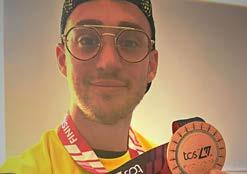
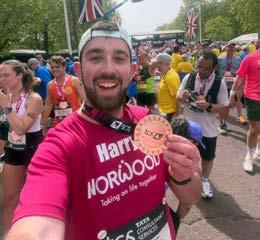
The TCS London Marathon 2026 once again brought out the very best of the Jewish community, as dozens of runners took on the 26.2-mile challenge not only to test their physical limits, but to raise vital funds and awareness for a wide range of charities supporting vulnerable children, families, and individuals both in the UK and Israel.
From seasoned marathoners to firsttime runners, the common thread was clear: every mile carried meaning. Among those travelling the furthest were four runners from South Africa — Ricky Kruger, Talia Dadon, Talya Chemel and Josh Kaplan — who flew in to run on behalf of the Malki Foundation UK. Their efforts, which have already raised over £8,000, will go towards supporting families of children with severe disabilities, helping parents care for their children at home while accessing essential therapies. Running for Emunah, Sammy Maimon, Max Compton, Paul Leon and Jake Sanders were driven by both personal connections and the urgent needs following the October 7 attacks in Israel. Together raising more than £14,000, their stories reflected a powerful mix of remembrance and responsibility.
Maimon completed the race in 4 hours 20 minutes in memory of his close friend Aryeh Zeiring z”l, while Compton spoke of a lifelong connection to the charity through his family. Leon highlighted how having relatives in Israel brought Emunah’s work “close to home”, while Sanders described the marathon as his way of giving back to a cause that “makes a real difference”.


an emotional journey as a physical one. Gabriella Wilton ran in memory of her grandmother, while Solly Sperber — who also designed the team’s running shirts — spoke about the impact even small acts of volunteering can have on residents in care.
Norwood’s large team of runners further highlighted the breadth of community commitment. Josh Greibach, who once “hated running”, completed the marathon in just over five hours, describing the transformation as both mental and physical. Samuel Gidman ran in honour of his younger brother, whose autism and ADHD shaped family life and inspired his fundraising. Others, including Caleb Ford and husband-andwife duo David and Esther Schloss, spoke of stepping far beyond their comfort zones to support a charity that provides life-changing services to children and families.
At the elite end, 21-year-old Naftali Levene completed his fourth marathon in an impressive sub-three-hour time, underlining both dedication and discipline.
Camp Simcha’s runners also delivered a remarkable effort, raising over £16,500 between them. Yossi Shebson, running his third marathon, embodied the spirit of the day when he stopped in the final stretch to help a struggling runner cross the finish line. Having been a long-time volunteer, he said supporting others “just felt natural”. Fellow runners Dan Nachshon and Elliot Cowan, both first-timers, described an unforgettable experience fuelled by community spirit,


Elsewhere, runners supporting Jewish Care and Jami shared deeply personal motivations rooted in family experiences. First-time marathoner Andrew Casher described how Jewish Care supported both his grandparents through later life, from dementia care to daily living assistance. Tova Liebert, inspired by her own mental health journey, ran in appreciation of the care her aunt received, while mental health nurse Debby used the challenge to combine her professional passion with fundraising for those struggling. For many, the marathon was as much
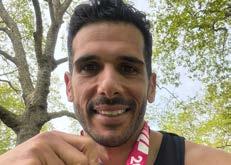
personal challenge, and the knowledge that their efforts were helping families facing serious illness.
Across all the teams and charities, one message stood out: the marathon was about far more than finishing times. It was about resilience, unity, and a shared commitment to support those in need.
Collectively, Jewish community runners have raised tens of thousands of pounds — and counting — ensuring that essential services, from disability care and mental health support to children’s homes and family assistance, can continue at a time when demand has never been greater.
As one runner put it simply: every mile mattered — and every step made a difference. Crowd Favourite Flora Frank told this newspaper that she couldn’t run the marathon this year as she is in Israel, but she still managed to raise seven thousand pounds for various charities!





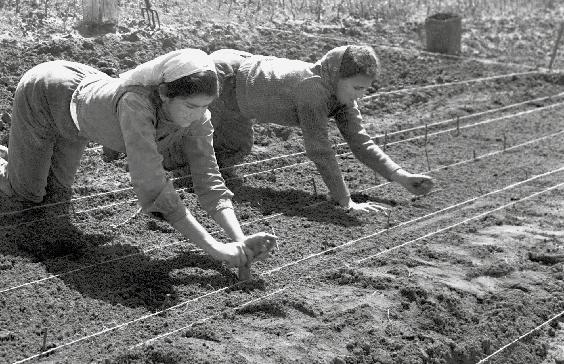
It is with deep love and profound respect that we remember Stanley Fisher BEM, a man of extraordinary courage, quiet strength, and unwavering faith, who lived to the remarkable age of 101.
A proud D-Day veteran, Stanley marched across Europe during the Second World War, fighting at Arnhem and continuing through to Bergen-Belsen. As the only Jewish soldier in his unit, he carried both the burden of war and a deeply personal connection to what he witnessed. For many years, he kept these experiences to himself.
Later in life, through the curiosity of his grandson, Ben, Stanley began to share his story. With humility and courage, he dedicated himself to educating younger generations— visiting schools, teaching about Judaism, and bringing his message to life, even blowing the shofar. In doing so, he transformed pain into purpose.
Stanley was a lifelong pillar of the Jewish community—a founder of the Solihull Orthodox Synagogue and a devoted member of the Birmingham Singers Hill Congregation. Even in his later years, he inspired many, including reading the Haftorah on both his 100th and 101st birthdays.
He was awarded the British Empire Medal by the Lord Lieutenant of the West Midlands, Derrick Anderson CBE, and also received France’s Legion d’Honneur—honours he accepted with characteristic modesty. Warm, humble, and with a gentle sense of humour, Stanley found great joy in family
life. He loved leading the Seder surrounded by his grandchildren and was also a keen crown green bowls player. In his later years at Blossomfield Grange Nursing Home, he was deeply loved by all, and fittingly was given a guard of honour—something he would no doubt have played down.
Stanley shared 73 devoted years with his beloved wife Evelyn. Together they raised three children—Helena, Hilary, and Alan—and built a family that includes five grandchildren and thirteen great-grandchildren. He was the much-loved brother of the late Doreen Freedman and is survived by his dear sister, Bette Goldsmith of Radlett United Synagogue. His family was his greatest pride and legacy.

Stanley’s life was defined not by the honours he received, but by his humility, kindness, and quiet determination to do good. He will be deeply missed, forever remembered, and always cherished.
AJEX have been honoured to consider Stanley Fisher a key part of their AJEX story. Seeing him together with Mervyn Kersh and many members of his family at the National Memorial Arboretum in 2024 was very special. They are also so glad he got to go to the Not Forgotten Garden Party at Buckingham Palace, Number 10 and more.
His legacy will live on through AJEX and family members. May his memory be a blessing.
A MESSAGE FROM RABBI SCHIFF, CEO OF JEWISH FUTURES FOLLOWING THE GOLDERS GREEN KNIFE ATTACK
Terror has a very clear strategy and modus operandi. To instil fear, to spread trepidation, to unsettle ordinary people going about their lives.
This is second time in a matter of weeks I am writing about attacks so close to home, in our community.
As Jews, we are no strangers to this kind of intimidation. But we are also no strangers to something far stronger.
We are a people of faith, of purpose, and of deep moral clarity. Our response is not retreat, and not to be gripped by paralysis. We continue to live with dignity, to act with conviction, to contribute to society and to build lives rooted in decency, responsibility, and optimism.
The worst response to terror is to succumb to it. That is precisely what its perpetrators seek.
We wish the two victims of the knife attack in Golders Green a refuah shleima and we are grateful to the police and the authorities for their swift response and for the increase measures being taken to protect our community and all minorities across
this country.
To our own students and community, I say- be safe, be vigilant, act responsibly at all times, but do not be cowed by cowards.
At a moment of impending threat, over two thousand years ago, one man stood tall. As it says,אלו
- Mordechai would not bow, and would not bend. And he alone, in all of Tanach, is called
To be a Jew is not to bow. Not to fear. Not to yield our identity to those who seek to intimidate us.
Our greatest strength- our most powerful answer to hatred is clarityknowing who we are, what we stand for, and ensuring that the next generation knows it well too.
We will stand tall. We will stand together. And we will continue to build - with confidence, with courage, and with pride.To be a Jew is not to bow. Not to fear. Not to yield our identity to those who seek to intimidate us.
Our greatest strength- our most powerful answer to hatred is clarityknowing who we are, what we stand for, and ensuring that the next generation knows it well too.
We will stand tall. We will stand together. And we will continue to build - with confidence, with courage, and with pride. For
Much of our work has only been possible thanks to the generosity of our legacy donors like Sheila and John, who had a deep commitment to how the country had shaped their


BY ADAM MOSES
Jewish advocacy groups have welcomed the Green Party suspending its candidate for Crystal Palace and Upper Norwood, Mark Adderley.
The move follows complaints against Adderley reportedly promoting antisemitic tropes and conspiracy theories on his YouTube channel. They include comments on Mossad ‘false flag’ attacks and comparisons between Israel and Nazi Germany.
Aside from Jewish leaders, Communities Minister Steve Reed congratulated party leader Zack Polanski on taking a “first step” in ridding the party of antisemitism.
“He knows there is more to be done, including other Green Party candidates still standing in Lambeth, but getting racism out of politics should transcend party point scoring,” Reed noted.
Campaign Against Antisemitism called on the Party to open an investigation and if proved Adderley should have “no place” in the party.
The We Believe Alliance want a more detailed reaction from the party. They commented: “It is deeply ironic that this comes as elements within the party have been entertaining motions
such as ‘Zionism is racism’, while indulging in rhetoric that many in the Jewish community recognise as antisemitic. But taking action against one individual counts for little when the party’s own discourse and policy positions continue to create an environment in which such views are not only tolerated, but emboldened. These are not aberrations, they are the predictable outcome of a political culture that has lost its bearings on this issue.”
The Alliance added: “The reality is that trust with much of the Jewish community has already been eroded. If the Green Party is serious about addressing antisemitism, it must do more than issue suspensions, it must confront the tone, direction, and consequences of its own politics.”












Marking Deaf Awareness Week, JDA calls on communal organisations to sign up for its free accessibility training
One in three UK Jews may be unable to fully access vital community services including health, social care, education and emergency support, warns Jewish Deaf Association (JDA) - the community’s sole support service for people who are deaf or living with hearing loss.
Marking Deaf Awareness Week (4-10 May), the charity has issued an urgent call for community organisations to do more and announced the nationwide expansion of its Deaf & Hearing Loss Awareness Training programme - to support 33 per cent of UK Jews who are deaf, have hearing loss or tinnitus, in line with national statistics. Today, hearing loss affects more than half of people aged 55 and nearly 80 per cent of those over 70, with around three quarters of those who could benefit from hearing aids not using them.
The charity says that a lack of awareness and basic adjustments in some organisations continues to create barriers for thousands of people across the community. Simple issues such as relying on phone only contact are leaving people unable to engage with the support they need.
JDA is offering free support to Jewish community organisations across the UK including: training lasting up to 2 hours (available in person or online), an accessibility audit, policies and procedure guidance, website accessibility guidance and practical steps to improve access. It comes as the Board of Deputies launched a new Commission on Disability Inclusion in the Jewish Community, a step welcomed by JDA.
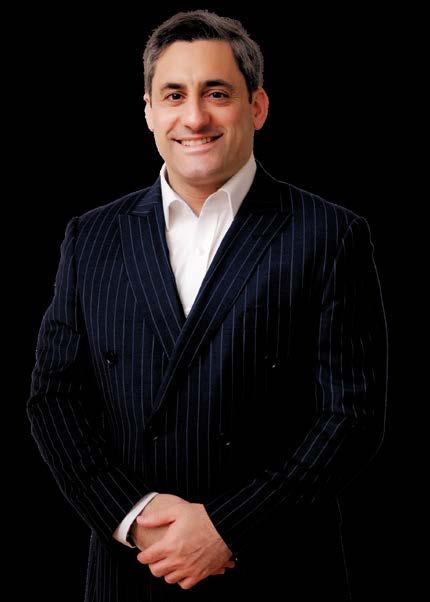
Padraic Garrett, Head of Engage at JDA, says: “Often organisations believe they are accessible to people with hearing loss, but the reality experienced by individuals is very different.
The UK Jewish community is fortunate to have a strong network of organisations across health, emergency services, social support and
care, but accessibility for people who are deaf or have hearing loss cannot be assumed. Hearing loss is an invisible barrier, and if it is not actively considered, it is missed, leaving people excluded. When communication is not clear or inclusive, people begin to withdraw, stepping back from services, volunteering and community life altogether.”
Calling on organisations to sign-up for training to make their services more accessible, he adds: “JDA’s work is about partnering with the community’s existing organisations to help them recognise where those gaps exist and make practical changes so that everyone who needs their services is able to access them fully and with dignity. That often begins with working with leadership teams and carrying out an audit, looking at service, care planning and the physical environment, including lighting and acoustics. From there, we provide clear, tailored recommendations and support teams to embed meaningful change. It is about building awareness, confidence and consistent practice so that people with hearing loss are properly supported across all organisations.”
To date, JDA has trained more than 300 staff and volunteers across almost 20 organisations, including Chai Cancer Care, The Paperweight Trust, Jewish Blind and Disabled, Hatzola North West Ambulance Services, Reach by Nightingale Hammerson, Jewish Care, the United Synagogue, Finchley Reform Synagogue, Jewish Volunteer Network, the Association for Jewish Refugees and World Jewish Relief.
Chai Cancer Care staff were recently trained by JDA to ensure that people with hearing loss can access their services.
Victoria Portnoi, Chief Executive of Chai Cancer Care, says: “Chai is proud to work in partnership with JDA. Through their outreach programme, our staff has received specialist training to better support people with hearing loss. This is important as certain cancer drugs and treatment can cause hearing loss, either temporarily or permanently. Working with JDA helps ensure we have the right awareness, equipment and protocols in place so that everyone who turns to Chai can fully access the support and care they need.”
Shuli Greenstein, Jewish Care’s Helpline and Intake Manager, says: “My team attended a JDA training session to support our busy helpline, and it has been invaluable. We explored how hearing loss affects phone communication and the equipment available to support it. The session has
significantly increased our awareness of the barriers people face and how this can impact our ability to provide meaningful support. It was a powerful training that has given us practical changes to implement. I would strongly recommend it to anyone working with the public.”
To date, more than 80 per cent of Nightingale Hammerson’s clinical teams have been trained by JDA - “and we will soon reach 100 per cent,” says Nuno Santos Lopez, Director of Research, Innovation and Community Engagement at Reach by Nightingale Hammerson. He says: “When we first began working with JDA, I wasn’t sure what impact it would have, but it has been transformative. From improving the quality of life of our residents through better hearing and communication, to creating online resources that have reached thousands globally, the outcomes have been significant. It has been a pleasure to work with the team.”
Nikki Arden is the Director of Operations and Safeguarding Lead at The Paperweight Trust, which provides free fi nancial, legal and practical support. Refl ecting on the training, she says:

“It gave us practical knowledge, greater awareness, and a deeper sense of confidence in how we can communicate more clearly and more respectfully with clients who are deaf or hard of hearing. The experience encouraged honest reflection across our team, and it helped us to understand where small changes can make a large difference. As a result of this partnership, we have introduced a self-referral form to make it simpler for individuals to reach us without needing to rely on communication methods that may be challenging.”
She adds: “Working with JDA has been a rewarding and eye-opening experience, and we look forward to a continued and
excellent working relationship as we build on this positive foundation to better serve our community.”
Rachelle Lazarus, Charity Engagement and Volunteer Manager at Jewish Volunteer Network, said: “When JDA approached us about supporting volunteers with hearing loss, we believed we already had a good understanding. It quickly became clear how much more there was to learn. The session was insightful and engaging, and it has made us more thoughtful and proactive in how we work. We are now excited to share these learnings with the volunteer managers we support.”
Michal Mocton, Volunteer and Outreach Co-Ordinator, Association of Jewish Refugees (AJR), said: “The deaf awareness training was excellent. The trainers were engaging and made the content clear, practical and relevant. Our staff and volunteers now feel more confident communicating inclusively with deaf and hard of hearing people. The training has had a very positive impact on awareness, attitudes and everyday interactions across our organisation.”
Sue Cipin OBE, Chief Executive of JDA, says: “Many people with hearing loss across the community are still unable to access the services they need, because awareness and accessibility are not where they should be. Our aim is to give organisations the tools to support people with hearing loss properly, so no one is excluded from the community.”
She adds: “We are urging organisations across the community to take this opportunity to sign up to JDA’s Deaf & Hearing Loss Awareness Training programme. It offers practical, straightforward steps to remove barriers and ensure people with hearing loss can access support fully and with dignity. We want to work in partnership with more organisations to make that a reality.”
If you work within a Jewish community organisation or synagogue and want to improve accessibility for people with hearing loss, contact JDA at www.jdeaf.org.uk





Travel, parking and loss of income leave patients struggling to access vital support
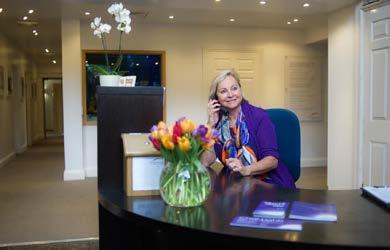
Cancer patients are increasingly relying on Chai Cancer Care’s volunteer drivers to access the organisation’s vital support services, as the hidden costs of a diagnosis leave many unable to afford travel to treatment and care. Transport is now a major issue, particularly for older and unwell clients, with the charity reporting that without its drivers, support would be out of reach for many.
drop in income at the same time as costs rise. There are the visible costs, including getting to hospital appointments, buying specific foods, making healthier choices
The impact on Chai’s clients reflects a growing national trend, with the cost of getting to treatment placing increasing financial pressure on cancer patients and their loved ones. Travel is now a key barrier to accessing care.
Today, 30 per cent (47) of Chai’s 159 volunteers are drivers, as rising costs leave more clients dependent on support to get to treatment and care. All volunteer drivers are trained in confidentiality and have personal experience of cancer, either themselves or through a loved one.
For Chai’s clients, the impact is immediate. While the charity provides more than 70 services free of charge, some say they would not be able to attend without the support of its volunteer drivers. Chai operates across 11 locations in the UK, including its flagship centre in Hendon and centres in Manchester and beyond, with a dedicated team of drivers helping remove what has become one of the biggest barriers to accessing support.
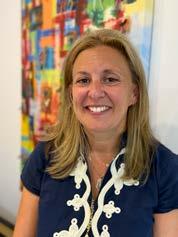
Louise Crystal, Chai’s Client Services Manager, says: “Chai’s volunteer drivers are invaluable. Many of our clients are unable to drive due to active cancer treatment or age, and without them, they simply wouldn’t be able to access our services.”
She adds: “But transport is just one part of a much wider financial strain. A cancer diagnosis often brings an immediate
He clearly remembers his first journey, collecting a client from their home in Edgware and driving them to the Hendon centre. “I was nervous and arrived 15 minutes early as I didn’t want to be late. I sat in the car until the right time before ringing the doorbell,” he says. “Even on that short drive, it was clear how much it meant to them to have someone take them to Chai.”
fears about whether private healthcare will continue to cover their treatment. What is clear is how much the support matters. Every client I have driven is deeply thankful, not just for the transport, but for everything Chai provides.” “The time spent in the car is often very special,” she continues.
– but often the biggest impact is financial instability caused by loss of earnings. Many families are just about managing in this current climate, and then a cancer diagnosis changes everything. A patient may have to stop working, while a partner cuts back or takes time off to care for them or attend appointments. Very quickly, household finances come under real pressure.”
She continues: “There are also hidden costs people don’t anticipate. Many people are unsure what they are entitled to, whether through sick pay or the benefits system – which can make an already difficult situation even harder. Chai is also here to offer support and advice on the benefits a client might be entitled to, whether it’s financial support or, if appropriate, a blue badge.”
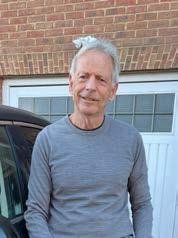
Ken Ornstein has volunteered at Chai for more than 12 years. He first visited the charity’s flagship centre in Hendon after his mother died following a cancer diagnosis. He recalls: “I was blown away the moment I stepped inside Chai and heard about the services they provide for people with cancer and their families. As I was retiring from my business, I contacted Chai to see if I could volunteer in any capacity. Within a few weeks, I was attending training to become a volunteer driver.”
Now, having driven hundreds of clients to appointments, Ken has seen first hand the difference the service makes. “I don’t think people outside the cancer community realise the hardship and cost of getting to and from appointments,” he says. “For some, if Chai didn’t provide transport, they simply wouldn’t be able to benefit from the organisation’s services.”
He adds: “Many clients are no longer able to drive, and public transport can be difficult. The fact that Chai offers this service free of charge removes a huge burden. It means people do not have to rely on family or friends, and it takes away a lot of stress at an already difficult time.”
Over the years, the journeys have become more than just transport. “People share both good and difficult news,” he says. “Clients come from all over the world and have incredible stories. Sometimes they want to talk, sometimes they just want quiet after a massage or a gym session. You learn to read that.”
Reflecting on his time volunteering, he adds: “I get a tremendous amount of satisfaction from being a driver. I have met wonderful people, both clients and staff. I admire how they cope with what they are going through, and I see every day how much Chai helps.”
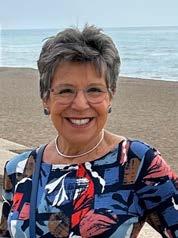
Valerie Chalfen has volunteered with Chai for almost 20 years. She says: “When I was having treatment for cancer, I was incredibly fortunate to have the support of friends and family around me. Volunteering at Chai feels like a way of giving that support back to others who need it.”
Reflecting on her time with clients, he adds: “Some share real worries, including
“Many clients want to talk in that quiet, one to one space, and that trust is incredibly meaningful. Others prefer silence, and that is just as important.”
She adds: “There are moments that stay with me. Sometimes I leave a client and feel emotional, and need a moment to reflect and count my blessings. But overwhelmingly, the experience is uplifting. I meet people from all walks of life, and it is a privilege to be part of their journey.”
Chai’s Volunteer and HR Co-Ordinator Debbie Woolfson, who has worked closely with the charity’s volunteers over the past 20 years, says: “Cancer brings immediate financial pressure at the point people are most vulnerable. We provide more than 70 services free of charge across the UK, supporting people through every stage of their cancer journey, but without our volunteer drivers, many clients would not be able to access them. They are essential to keeping people connected to care at the moment they need it most.”
She adds: “The commitment of our volunteers makes a huge difference to our clients’ lives. All are trained in confidentiality, ensuring support remains completely private and respectful. All have personal experience of cancer, either directly or through a close family member, and at least 18 months must have passed since the impact of a diagnosis before they begin volunteering, ensuring they are in a position to fully support others with understanding.”
She continues: “Demand for Chai’s services is now at record levels, with more clients than ever relying on support just to reach treatment and care. Chai is calling for more support from the community and is stepping up its outreach to recruit volunteer drivers, particularly those working from home who may be able to spare just an hour a week. For some clients, without that support, access to treatment and care would simply not be possible.”




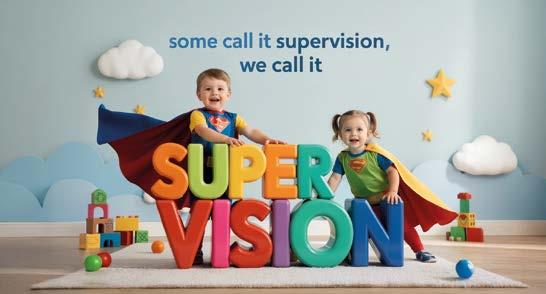
Seeing each child for who they are and helping shape who they’ll become.
BABY & TODDLER ROOM
9–18 months
Our original home setting Small, cosy & nurturing PRESCHOOL ROOM
18+ months

Chazak, 64 Brent Street, NW4 More room to explore & grow

MEET & GREET AT CHAZAK
Come and meet the team, explore the space & see if we’re right for your family
SUNDAY 10 MAY 2 - 2:45 PM OR 3 - 3:45 PM
WHAT WE OFFER
• A warm, caring jewish environment
• Full days 8:45 AM -3:45 PM
• Lunches & snacks provided
SUNDAY 31 MAY 2 - 2:45 PM OR 3 - 3:45 PM NEW!
• Registered for the 30 hours free childcare scheme NOW REGISTERING FOR SEPTEMBER 2026
form.hendonplaygroup.co.uk Scan here to Register for a Meet & Greet
BY ANNIE CLARK AND AMELIE PATER
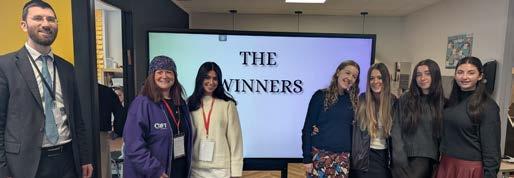
In September, we joined GIFT’s Project Incubator programme, and it quickly became one of the most fun and rewarding parts of our year! Out of the different Kodesh lesson options we could choose from at our school, Hasmomean, we are so grateful we chose this one, because it gave us an opportunity to create a meaningful event for our community.
The project challenged us to come up with a charity project that we felt passionate about and pitch it to sponsors.
We presented our ideas in a presentation in front of the sponsors, teachers and the rest of our year group. Despite our nerves, it was an amazing experience, and we were so grateful that our group was chosen to receive the funding!
When we started planning our event, we knew that we wanted to do something different from a typical fundraiser, something that wouldn’t just focus on making money, but would also make a genuine impact and bring our community together.
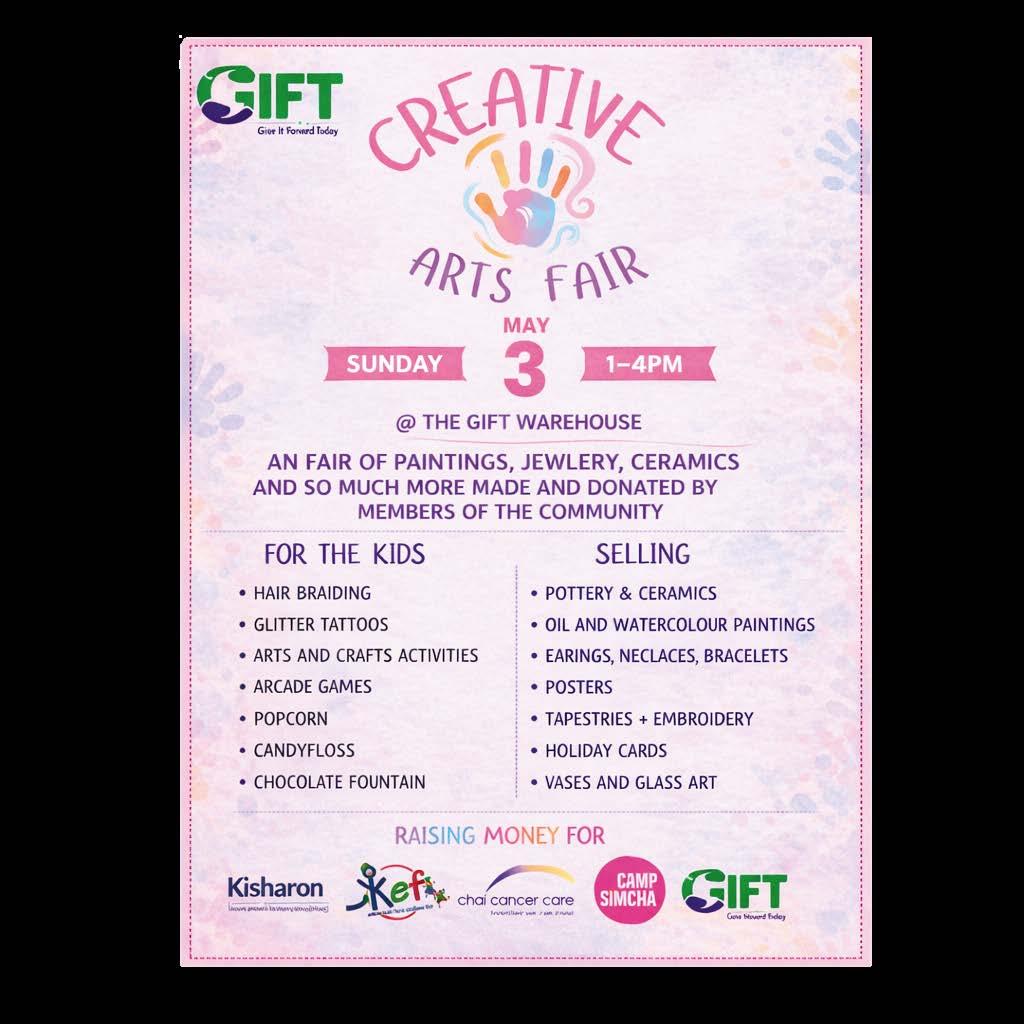
After months of work, we created the idea of a Creative Arts Fair, where teenagers and others could showcase and sell their artwork while raising money for a selection of charities.
We wanted it to be more than just an event. Our aim was to build confidence in young people by giving them the chance to share their creativity and feel proud of their talents. We all felt passionate about building confidence in teenagers and felt that this was a cause we wanted to dedicate the event to.
That’s why our event doesn’t only support charities that help young people, but some of the beautiful artwork we are selling has been created by students themselves.
All forms of artwork can feel very personal and displaying it to the public takes courage. We wanted to create a space where that courage could be celebrated. Throughout this process, we have met so many incredible people. One woman shared paintings that had been in her family for over 200 years, passed down through generations, each with its own story. We have also had people sending pieces from places around the world like Portugal and America, making our project bigger than we could ever have imagined!
There are so many charities that support Jewish teenagers, but the ones that we are fundraising for at our event are ones that we personally feel passionate about. Amelie felt strongly about
Chai Cancer Care, Annie was passionate about Camp Simcha and the rest of the GIFT team, Shirelle Drey and Keira Fine supported Kef and Kisharon. Each of these charities play a vital role in supporting our community and each means something personal to us. We are so grateful to have been given this opportunity to give back to the organisations that do such incredible things for our community. That is why 100% of the funds we raise at the event will be going to the Camp Simcha, Chai Cancer Care, Kisharon, Kef and GIFT organisations so that they can continue their vital work.
Every piece of artwork has been donated with the option for the contributor to choose which charity their profits go towards, meaning the profit from different items will support different causes.
Supporting GIFT itself has also remained incredibly important to us, especially after seeing how much they


do for families in our community, and how much it has done for us through this programme!
This Sunday, our Creative Arts Fair will take place in the GIFT Warehouse from 1pm to 4pm. Alongside artwork, there will be textiles, ceramics, jewellery and more, much of which has been created or donated by members of our community.
There will also be food, drinks, and activities for the whole family, including arts and crafts for children, making it a fun afternoon for everyone.
What started as a school project has grown into something we are so proud of, and we cannot wait to see it come to life and share this meaningful fun event with everyone.
Please contact creativeartsfair@gmail. com with any questions.







BY ELAN GORJI, CEO JNF UK
When Iranian missiles struck towns and cities across Israel, the damage was immediate. Homes shattered, windows blown out, belongings buried under debris, and families left standing outside the places where their lives had changed in an instant.
But what struck me most, in speaking with those on the ground, was what happened next.
Within minutes, volunteers from Lev Echad were already on their way, not only to respond to the damage, but to bring a sense of calm and reassurance in moments of fear.
JNF UK is a proud partner of Lev Echad (One Heart), one of Israel’s leading civil emergency response organisations working across the country.
In a recent conversation with its CEO, Tomer Dror, he described their mission simply, “to be wherever we are needed, whenever we are needed.”
That mission has been put into action repeatedly in recent months.
Volunteers arrive at missile impact sites within 15 to 45 minutes, working alongside local authorities and the Home Front Command. Their role is not to replace emergency services, but to stand alongside them, providing immediate, practical support to residents in shock.
In the aftermath of an attack, Lev Echad supports two distinct groups.
Firstly, those whose homes are
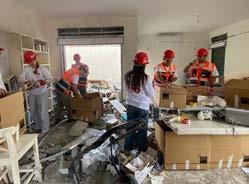
damaged, but who are not evacuated. If water, electricity and gas are still functioning, residents are often required to remain, even when their homes are partially destroyed. They are left to deal with broken glass, structural damage and the emotional impact of what has just happened.
Here, Lev Echad volunteers step in. They knock on doors, check on residents, clear debris and help people begin to regain a sense of control.
At the same time, Lev Echad supports those who are evacuated as their homes have been destroyed or are considered unsafe. Families relocated to hotels or temporary accommodation face a different kind of disruption. Volunteers focus on emotional and practical support, particularly for children, providing activities and moments of normality in an otherwise uncertain environment.
Tomer shared one story that stayed with me. A woman stood outside the remains of her home in Tel Aviv, unable to enter for safety reasons and desperate to find her
glasses. Without them, she could barely see. Trained Lev Echad volunteers went into the damaged building, searched through the debris, and returned with them.
“She cleaned the dust from the glasses, put them back on her face and smiled despite losing her home and said, ‘All of a sudden, I can see’”.
It is a small moment, but one that captures something much larger. As Tomer explained, Lev Echad’s role is not only to respond to what has been lost, but to help “bring the smile back” in places where it has disappeared. That can be through something as simple as retrieving a personal belonging, sitting with a child in a shelter, or helping a family take their first steps forward after shock.
Alongside this, Lev Echad has supported families of first responders, many of whom are carrying the weight of daily life while loved ones are out helping those in need. Before Pesach, volunteers helped 1,400 families prepare their homes for the festival, easing pressure at an already challenging time.
In the North, where communities continue to live under threat, volunteers are creating what Lev Echad calls “breathing spaces”, spending time with children in shelters, giving them a break from the intensity of daily life, and offering parents a few hours of respite.
Much of this work is powered by young people. Lev Echad’s core volunteers are aged 16 to 20, with thousands stepping
To get the best value from your private medical insurance, you should speak to an expert who is qualified to advise you on the right policy for you, and recommend the providers who offer the most competitive premiums.
This advice covers individual, family and company policies, and is always FREE.
As an independent health insurance expert, I work with the healthcare insurers to provide you with the appropriate and most affordable level of cover. So whether you have an existing policy or not, let’s have a chat.
forward during the recent escalation.

JNF UK’s support helps ensure that organisations like Lev Echad can respond quickly, reach those in need, and continue their work as circumstances evolve.
Because in the moments after impact, when everything feels uncertain, it is often the presence of someone knocking on your door and asking “how can I help?” that begins to restore more than just what was damaged.
For 125 years, since its establishment in 1901, JNF has stood with Israel through every chapter and every challenge. Today, in moments of crisis and recovery, that mission continues: standing with Israel’s people not only in the emergency, but on the long road of recovery, helping to restore strength, dignity and hope long after the sirens fall silent. To learn more about JNF UK’s response to the war with Iran, including its support for partners like Lev Echad and the ongoing work to help communities recover, please visit www.jnf.co.uk/iran26.




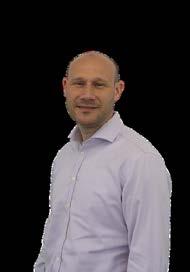






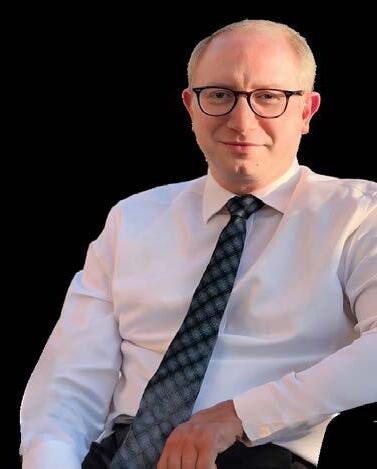

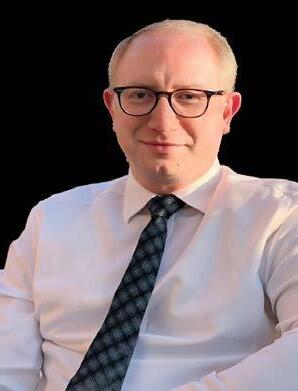
1. What was the vision behind Carmay HaNadiv, and what gap did you feel existing developments were not addressing?
The vision behind Carmay HaNadiv was—and remains—to make the Zionist dream into something tangible: creating a place where people can build their lives while contributing positively to Israeli society and the wider community. We felt that many developments were focused primarily on housing units, with less attention given to building a genuine sense of community. Our aim was to bridge that gap by placing equal emphasis on community life, shared values and strong local connections alongside quality housing.
2. Why did you choose this specific location for the project, rather than established Anglo areas or developing regions in the north or south?
Carmay HaNadiv has several advantages that surpass other locations:
A. Location – It is centrally located, at roughly equal distance from Tel Aviv, Jerusalem, and Be’er Sheva, about 30–40 minutes’ drive.
B. Excellent transportation – Easy access to major highways such as Route 6, Route 3, and Route 7 so commuting to work is very straightforward.
C. Affordability - Housing prices are significantly lower than in places like Tel Aviv and Jerusalem.
D. Warm absorption of Olim families – the community if well known for it’s ongoing care and close relationships, including Shabbat meal invitations and more.
E. Comprehensive quality of life – Residents consider price, social life, education and employment opportunities—all of which are available here in abundance and at a high standard.
F. Advantage of a large-scale project –Communities rarely immigrate all at once due to individual family constraints. In a large project like Carmay HaNadiv, even if some families arrive earlier and others later, they can still form one cohesive community—perhaps not on the same street, but nearby. In smaller projects, the entire community must move at once, which is rare and often impractical.
3. How do you think real estate development in Israel has changed in recent years, particularly with growing interest from diaspora communities?
With increasing Aliyah and natural population growth, the country is expanding in a different way; vertically through high-rise buildings. It is more and more difficult to find houses or the space to build them, so diaspora communities tend to seek more spacious apartments instead and planning must adapt accordingly. For example, wider doorways are needed to accommodate large appliances and there is value in building modern playgrounds nearby.
4. From your perspective, what are the main barriers preventing people from making Aliyah, and how does Carmay HaNadiv address these challenges?
In the past, Olim had few expectations, they knew they were coming to a barren land and would need to develop it, or they came out of necessity. Today, Aliyah is largely voluntary and often from affluent countries, so expectations are naturally much higher.
Before addressing barriers, the warm welcome and willingness of the community to support newcomers is essential.
Carmay HaNadiv excels in this, both through personal connections between older residents and Olim and through strong community involvement.
The main barriers today are bureaucratic. To address this, Carmay HaNadiv provides close guidance and support, along with cooperation from “Shivat Zion”, a non profit organization which specializes in assisting with these needs and has strong ties with government institutions, including the Ministry of Aliyah and Integration. Shivat Zion is also running a programme this summer, offering semi-furnished rental apartments and we offer subsidized rates to those joining the programme, for a one-year acclimation period before families decide whether to purchase a home.
5. Many developers focus only on building housing units, but Carmay HaNadiv emphasizes community and infrastructure. Why was it important for you to go beyond just building homes?
This approach stems from a human-centred perspective, recognizing both the importance of Aliyah and the natural challenges families face. At the same time, this approach also proves beneficial: a family that feels good in the community often brings others to join.
Community infrastructure includes social activities such as Lag BaOmer events, support for new mothers, assistance to families during reserve duty, numerous Torah classes in Hebrew and English, transportation links and more. From our perspective, these are just as important as physical infrastructure like sewage systems, drainage and public gardens, all developed to a high professional standard.
6. Why is Carmay HaNadiv attractive both as an investment and for Aliyah?
From an investment perspective: location, location, location. Carmay HaNadiv continues to improve in terms of population quality, infrastructure and reputation. Neighbourhoods that focus on community and family life, tend to see rising property values, as seen in places like Beit Shemesh. There is still strong potential for further growth.
From an Aliyah perspective, there is nothing better than joining a successful community that understands Olim absorption—one made up of both Olim and Israeli families united by a sense of shared purpose and joy.
7. How do you approach building a community that genuinely integrates Israeli residents and Anglo Olim, rather than creating parallel social circles?
The answer really lies in the kind of families who have chosen to join Carmay HaNadiv. These are families with strong values—of community, kindness and supporting one another, who see Aliyah as something deeply meaningful. That shared outlook naturally creates an environment where Israeli residents and Anglo olim connect and build relationships together, rather than forming separate circles
8. When people hear “affordable housing,” they sometimes assume compromises—what did you refuse to compromise on in this project?
We did not and do not compromise on construction quality, or infrastructure quality. We fully understand that purchasing a home is often the most significant transaction in a person’s life—not just financially, but also in terms of education, employment and proximity to family—and we treat each home accordingly.
9. Established communities like Ra’anana and Modi’in remain popular among UK Olim—what makes Carmay HaNadiv an attractive alternative?
Carmay HaNadiv is a young, vibrant community where housing prices are significantly more affordable than in Ra’anana or Modi’in. The value for money you get in Carmay HaNadiv is far higher
than elsewhere, which enables families to invest in other aspects of living in Israel. In addition, there is a very strong emphasis on community success, educational institutions and mutual support, setting a standard for community-focused living in the surrounding area.
Moreover, just a three-minute drive away is a stunning forested area—Azrikam—spanning almost 250 acres, in addition to the well-developed parks within Carmay HaNadiv itself.
10. What is the next step for Carmay HaNadiv?
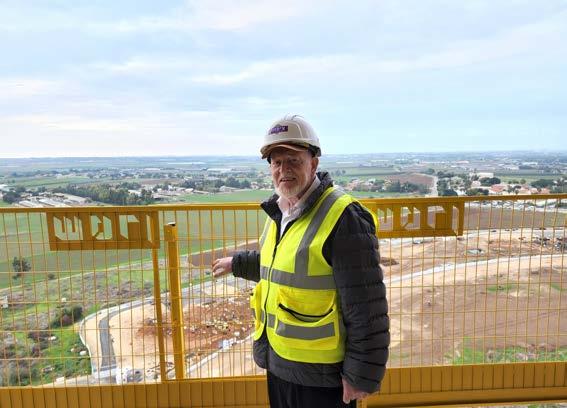
We are continuing to realize, on a large scale, the dream of Baron Edmond de Rothschild, who began working on this land about 140 years ago. The area, once destroyed during a period of unrest, is now thriving. There is still much work ahead, including the development of over 1,000 additional housing units welcoming families from Israel and abroad to flourish here.
11. Looking ahead, what will make you feel that Carmay HaNadiv is truly a success?
For me, success will be seeing Carmay HaNadiv develop into a strong, well-integrated community where families feel settled, connected to the land they live on and each other, whilst alsoo happy in their day-to-day lives. When both newcomers and long-time residents feel a genuine sense of belonging, that’s when we know we’ve got it right.
Interview of Shalom Wassertail, Chairman of Zifha International

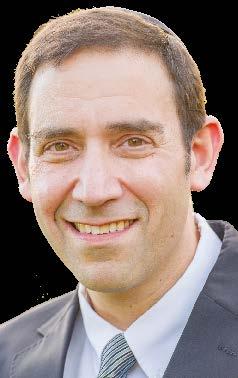
BY RABBI MOSHE TARAGIN
Sometimes heated ideological debates become battles over language. We get drawn into arguments about terminology and gradually lose sight of the issue itself.
Few modern terms carry as much weight and controversy as the word “geula,” or redemption. Redemption is the terminus of history. History begins with Creation and ends with redemption, a future stage in which God’s presence, now hidden, becomes openly felt and recognized. In that reality, the Jewish people lives in Israel with a clear awareness of God guiding its history.
Has that process begun? Are we already living in the early stages of redemption? Can the establishment of the largely secular State of Israel be seen as the first step in that unfolding?
For many, the answer is yes. The Chief Rabbinate gave voice to this assumption when, in 1949, the phrase “reishit tzemihat geulatenu” – the first flowering of our redemption – was incorporated into the prayer for the State of Israel by Chief Rabbi Isaac Halevi Herzog. Some attribute the phrase even earlier to Rabbi Abraham Isaac Kook.
Since then, it has become the language through which many express their hopes for the state, but also a source of tension and debate. Can something be called redemptive if it is not yet fully religious? As the state developed, the questions only deepened. In the aftermath of the Oslo Accords and the Disengagement from the Gaza Strip, new doubts were raised. If redemption promises Jewish sovereignty in Eretz Yisrael, can the relinquishing of parts of that land be seen as the flowering of redemption?
And the questions do not end there. Can it be called redemptive when we continue to pay such a heavy price for our presence? Can it be redemptive when the country still struggles with so many internal flaws? These questions return almost every year around Independence Day, as we reflect on the religious and historical meaning of the State of Israel.
It may be better to ease away from the debate over the word “redemption,” or even the phrase “reishit tzemihat geulatenu.” The language itself may be carrying more weight than it can comfortably hold. Is there a different metaphor, one that is more universal and more broadly resonant? A way to describe this process that allows for setbacks and does not require us, at every moment, to define the precise role of the divine?
Perhaps a shift in language can make the experience itself clearer and more universally embraced, helping us better understand what we are living through together.
Perhaps we should be describing an era, instead of speculating about the process. Perhaps it is better to speak in terms
of rooms we inhabit than processes we are trying to define. Why not refer to our era as the fourth room of Jewish history?
First room: Pre-Sinai
Jewish history can be divided into four chapters, or four rooms. The first chapter was a 2,400-year pre-Sinai era, in which God had not yet directly revealed Himself, His will, and His Torah to a human audience.
Sadly, most of humanity was adrift in theological confusion and moral chaos. Unable to grasp that from One came many, they imagined a world dominated by multiple warring gods who toyed with their weaker human subjects. Without accountability to a single moral God, moral behavior was neither expected nor sustained.
Finally, roughly two thousand years after Creation, a single man uncovered God from behind the veil of nature. He began to teach his world about a single, moral God, while building a family shaped by that vision. Slowly, the idea of one God, beyond human form and grounded in moral purpose, began to take hold. The march of monotheism had begun, though it would take generations to work its way into human consciousness.
Mount Sinai marked the beginning of a 1,400-year era in which Jewish history unfolded with sovereignty and open divine presence. We lived in our land, revolving around the Sanctuary and Jerusalem, with access to prophecy and a life shaped by prophecy. Though prophecy and the holy spirit waned during the Second Temple period, the presence of God in Jerusalem remained tangible. Yet we turned against one another. Internal strife fractured the nation and unraveled what had been built. The failures that had already surfaced at the end of the First Temple returned with force, and this time they carried us into collapse. That unraveling led us into the third room of Jewish history, the darkest of them all.

Second room: Redemption and revelation
Liberated from Egypt, we stood beneath Mount Sinai and experienced a once-in-history event. No religion has ever staked such a claim: an entire nation, three million strong, stood shoulder to shoulder and listened together to the direct voice of God, not as vision or imagination but as shared encounter.
Third room: The dark room Scattered among the peoples of this earth, we spent two thousand years wrestling with history. Stripped of almost every public expression of Jewish life, we clung to the Word and will of God and proved more resilient than history and more faithful than our enemies presumed. We defended our beliefs and preserved our cultural identity in a world often marked by violence and instability. Not only did we survive this long passage; we endured with purpose. Over time, the ancient world of paganism and superstition gave way to a different order, shaped by monotheism, moral awareness, and intellectual growth. In ways both visible and unseen, we played a role in that transformation. As the world emerged from the long shadow of the Dark Ages, it began to rediscover science, morality, and a deeper respect for human dignity. The culmination of that process brought history to the threshold of its final stage, as we entered the fourth room.
Fourth room: The exit room In 1948 we turned a door handle and
entered the final room of history. The Holocaust marked a terrible climax to the third chapter of Jewish history. As its horrific conclusion, it also marked a transition into the next chapter and the next room.
Living through the past 80 years of Jewish history, from the Holocaust to the founding of the State of Israel, through its military victories, the ingathering of millions of Jews, its remarkable growth across so many areas, and the disorienting challenges of the past two-and-a-half years, one fact stands out. We are not in the same place. History has moved, and we are now living inside a different room, the fourth and final stage of that journey. We have entered that final room, the one through which we move toward what we call redemption. But it is still a room. How long it will take to pass through it remains unclear. There may be delays, detours, even moments that feel like retreat.
Is this a divinely guided process? I believe it is. But even for those who do not frame it that way, something has shifted. We are no longer where we once were. History has moved, and we now find ourselves in a different place, the fourth room.
The writer is a YU-ordained rabbi at Yeshivat Har Etzion (Gush), a hesder yeshiva. His latest book, Reclaiming Redemption, Vol. II: Faith, Identity, Peoplehood, and the Storms of War, is available at mtaraginbooks.com

BY RABBI NAFTALI SCHIFF
Don’t just do!
There is a subtle danger lurking at the very heart of even the most committed Jewish life individually and collectively- that we can be doing so much, even everything… and yet miss what it is all meant to make of us.
The book of Vayikra is relentless in its detail. Mitzvah after mitzvah. Some feel lofty, almost beyond reach- korbanot, purity, holy matters that belong to another level of reality. Others are strikingly grounded- honesty, sensitivity, how we speak, how we treat one another. It is a choreography of action, precise and demanding.
And yet, threading its way through it all, there is a refrain that refuses to be ignored:
ויהת
— You shall be holy (Vayikra 19:2).
Not once, but repeatedly.
םישודק
— You shall sanctify yourselves and become holy (11:44).
— You shall be holy to Me… I have set you apart from the nations to be Mine (20:26).
It is crucial to pay attention- the Torah is not merely instructing behaviour. It is describing a process of becoming. But what is kedusha?
We translate it as “holiness,” but that word often floats somewhere abstract and ethereal. However, in the language of Torah, kadosh means something far more grounded- set aside, designated, devoted-wholly given over to a purpose.
Which is why, strikingly, the same root can describe a morally degraded person, a kedeisha, because such a person is set aside in a total, defining way. Kedusha is not about actions alone. It is about becoming the type of person defined as kaddosh
A Jew is called to be set aside for something higher.
We are defined as an שודק םע a holy nation (Devarim 7:6).
A people whose very existence is aligned with something beyond the self alone.
That is why, at Sinai, the Jewish people
are given their mission statement:
םתאו You shall be to Me a kingdom of priests and a holy nation (Exodus 19:6).
Not just a people who do certain things. A people who are something.
And that is where the tension lies.
Because it is entirely possible to perform acts of holiness without becoming holy, kaddosh. To make Kiddush, and yet not enter into a different state of being. To recite שודק
שודק in our prayers, and yet remain unchanged.
To keep mitzvot with care and consistency, but without allowing them to shape who we are.
The Torah anticipates this. That is why it does not suffice with “be holy.” It insists on a process:
םתשדקתהו you shall actively sanctify yourselves
םישודק םתייהו and you shall become holy
be doing much, and becoming too little.
Shabbat offers a weekly corrective reset. Shabbat Kodesh- שדוק תבש a day set aside and devoted.Not Friday extended, not Sunday anticipated. Something different in essence שדוק תבש. We usher it in with Kiddush- not simply a blessing over wine, but a declaration, a focus by which to launch a this time designated and set apart, and therefore we must be different within it and continued from it.
If Shabbat does not change us, our pace, our tone, our presence, our sense of being, then we have honoured the form, but missed the state of being.
Kedusha is not escape from life. It is elevation within life.
And when that elevation is real, it becomes manifest and palpable to all.
The Gemara Yoma 86a offers a crucial and foundational insight into the meaning of the familiar words of the Shma prayer- תא

There is effort. There is aspiration to become. And there is outcome of being.
The Sefer HaChinuch captures this with disarming clarity. On numerous occasions it reminds us of the quality of a mitzva that works in order that our external actions shape our inner world; that our attitudes of being are impacted by the actions we perform-
What we do, done with awareness and intention, begins to mould what we feel, what we value, and ultimately who we are.
But only if we remember and are consistently mindful that this is the goal.
If mitzvot become reduced to habitwell-practised, even beautifully performed, but mechanical, then they risk remaining external. They pass through us, but they do not transform who we are.
And the tragedy is sometimes not that we are doing too little. It is that we may
- “and you shall love the Lord your God”. It describes a person who learns Torah and lives it in such a way that their interactions are marked by integrity, warmth, and dignity. People look at such a person and say:
“See this person- how beautiful his ways are, how refined his actions.”
And about such a person, Hashem says:
This is My people, through whom I am glorified.
That is Kiddush Hashem.
Not a mere slogan. Not a fleeting moment. Rather, a life replete with exemplary purpose.
A human being, a mensch whose conduct quietly, consistently elevates the perception of what it means to act and live as a Jew.
And perhaps this is why the Torah anchors kedusha not in ritual alone, but in relationship, in interactions and in personification of Godliness. In honesty, in speech, in decency, in responsibility. Because the ultimate test of what we are becoming is not what happens in holy
spaces alone, but how that holiness, that devotion travels with us into the everyday. We live in a moment where it is easy to default to the language of obligation. What must I do? What must I keep? What must I avoid?
All important questions. But not sufficient ones.
The deeper question is- what is all of this making of me?
Am I becoming more present, more refined, more aligned with something higher?
Am I becoming someone in whose presence others feel elevated?
Am I becoming a walking personification of Kiddush Hashem?
Because that is the raison d’etre, the aspiration of the Jew.
!ויהת
Not simply perform acts of holiness. Rather, to become people who are set aside for purpose, devoted to goodness, at one with godliness. About whom, at the end of 120 we proclaim the Kaddish prayer.
The Torah does not want more rote activity from us. It wants more deep transformation.
And when that shift happens, when mitzvot are no longer just things we do, but forces that shape who we are, we begin to understand what it means to be an שודק
A people through whom something higher becomes manifest and palpably visible in the world.
Not just because of what, as individuals or communities we say or do.
But because of what each of us has grown to become.
Shabbat Shalom

In this column Rabbi Naftali Schiff reflects upon 3 key words each week relating to contemporary and relevant issues.
All feedback is welcomenschiff@jfutures.org.
Rabbi Schiff is the Founder & CEO of the Family of Jewish Futures networks of educational organisations.
On a cold London evening last week, more than 200 young professionals gathered on the rooftop at Jewish Futures’ The Hub for an Aish experience that captured something deeply Jewish, deeply human, and profoundly relevant: the inseparable link between loss and celebration, memory and meaning, grief and gratitude.
The evening was intentionally structured to mirror one of the most powerful transitions in the Jewish calendar, the shift from Yom Hazikaron to Yom Ha’atzmaut. It began not with music or celebration, but with a moment of reflection, with a Yom Hazikaron ceremony.
Together, we acknowledged a truth that is often difficult to sit with but impossible to ignore: the reality that what we have today comes at a cost. The State of Israel, the sense of safety it provides, and the idea that there is a place in the world that has the Jewish people’s back, these are not abstract gifts. They exist because of the courage and sacrifice of soldiers who risk, and in many cases give, their lives.
A prayer was recited for the soldiers. A candle was lit. And
in that moment, on a rooftop in London, there was a collective recognition that appreciation begins with acknowledgment. You cannot truly celebrate what you have if you are unwilling to confront what it took to build it.
And then, just as it does in Israel, the shift happened.
The heaviness gave way not by forgetting, but by transforming. There was falafel, Israeli music by DJ Avi Zimmer, laughter, and a kind of energy that only
emerges when people feel both connected and purposeful.
This transition from remembrance to joy reflects a deeper Jewish rhythm: the ability to hold complexity, to carry pain without being defined by it, and to build forward with strength.
One of the most powerful moments of the night came as voices joined together to sing Hatikvah. Often translated as “The Hope,” its message is commonly understood as one of longing. But there was
a subtle shift in how it was framed that evening.
A deep, almost unshakeable knowing that the future of the Jewish people is not just something we dream about, it is something we are actively building. Every gathering, every connection, every moment of unity contributes to that reality.
What stood out most was not just the content of the evening, but who was there. Over 200 young professionals choosing to show up, to engage, to connect to their identity and their people. There is a growing movement of young Jews who are not content with passive association. They want meaning, depth and they want to understand their place in the story.
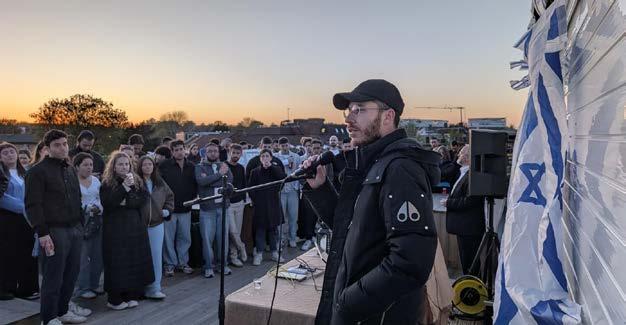
And nights like this matter because they offer exactly that.
They remind us that being part of the Jewish people is not just about history it’s about responsibility.
We don’t just remember the past. We build the future. Not with hope alone, but with certainty.


BY ELISHEVA NEWMAN
There is a certain electricity in the air at this time of year.
University libraries are full from early morning until late at night, every seat taken, every desk covered in books and notes. The students we interact with are deep in crunch time, firmly in exam mode. There is a shift that happens almost overnight: a sudden, sharp realisation that time matters. Each hour becomes precious, each moment accounted for, and a clear realisation takes root: how can I use every moment I have in order to do my best?
It is the pressure of exams that brings this awareness into focus. Deadlines loom, expectations rise, and time - so often taken for granted - suddenly feels finite and urgent. Yet the truth is that this is not a temporary reality reserved for exam season. This is the reality of our lives. Time is our most precious resource, and how we choose to use it shapes not only our immediate outcomes, but our
long-term direction. When we use our time well, when we invest it in what truly matters, we reap the benefits for eternity.
This week’s parasha of Emor addresses this idea. It introduces us to the Jewish calendar, setting out a rhythm of weekly, monthly, and yearly sacred times. The Torah uses the word moed to mean “time,” but it also means “meeting.” Shabbat and Chagim are not simply dates on a calendar; they are appointed encounters. They are the moments when the Jewish people meet Hashem. Time itself becomes sanctified, elevated, purposeful.
I shared one of Rabbi Sacks’ essays on this week’s parasha with a number of students this week. He captures this idea beautifully, “The Torah forces us to remember what contemporary culture regularly forgets: our lives must have dedicated times when we focus on the things that give life meaning.” In a world that constantly pulls us toward distraction, the Torah insists that we carve out time - not as an afterthought, but as a priority - for connection, reflection, and purpose.
Just last week, we experienced this in a very real way, when we shared a beautiful

Shabbat with Jewish students in Bristol. Friday night dinner with over 60 students was filled with singing, meaningful conversation, and a sense of presence and connection. After dinner, we walked home through the bustling, noisy streets of a university city on a Friday night. The contrast was striking.
Without needing to say a word, my husband and I looked at each other and shared the same thought. How happy and grateful we are to have our lives guided by the Torah. How fortunate we are to have sacred times like Shabbat and Yom Tov woven into the fabric of our lives. These are not interruptions; they are anchors. They give our lives, and our children’s lives, depth, meaning, and direction.
Rabbi Sacks zt’l goes through the cycle of the Jewish calendar and explains how each one presents a unique opportunity to reconnect with our story, to realign ourselves with our values, and to remember what truly matters. In a world that often measures success in fleeting terms, these moments remind us to think more deeply, to live more intentionally, and to make the most of the time we have.
Exam season may sharpen our awareness of time, but the Torah teaches us how to live with that awareness all year round. The question is not only how we spend our time under pressure, but how we choose to sanctify it every day. Ultimately, it is not just about managing time, it is about making time meaningful.
Elisheva holds a BSc in Mathematics and has a QTS teaching qualification. She was an inspiring and much-loved teacher at Mathilda Marks Kennedy Primary School for nine years. Passionate about people and Judaism, Elisheva has held various educational and social director roles including spending two years in Bristol with Aish on Campus opening her home to Jewish students. Elisheva, together with her husband, are the UK FJL Educators. Her role includes learning with and maintaining strong connections with Alumni – the leaders of tomorrow!





Dear Rabbi
I have a penchant for nuts and often bring pistachios or almonds into work. An Indian colleague of mine - Darshan - has kindly ved his mother to prepare an Indian delicacy of fried Cashew nuts. He assures me that they are strict vegetarians, have used only vegetable oil to fry the nuts, and have never used the pot or utensils for any kind of animal product. I am concerned that refraining to eat the cashews may harm our working relationship, or insult a dear friend, yet I am concerned about potential problems of idolatry (they are Hindu) and kashrut. Am I allowed to eat my colleagues nuts or not?
Gideon
Dear Gideon
Let’s address the idolatry concern. Unless Darshan’s mother is conducting a full temple ceremony over the frying pan with bells ringing, incense billowing and invoking deities between batches of cashews, you can relax. Food prepared in a Hindu home is not automatically assumed to be anything but food. You are not inadvertently participating in a religious ritual every time you crack open a nut.
Kashrut, however, is a different story. Even if every ingredient is technically
kosher (cashews, vegetable oil, spices), the issue is the utensils. However sincere your colleague may be, and I have no doubt he is entirely genuine, kashrut is simply not part of his halachic universe. That means there is no built-in awareness of cross-contamination, prior use, or the status of cookware. A pot that is “vegetarian” in the general sense may still have absorbed non-kosher residue from previous use or been cleaned in ways that don’t meet halachic standards. This is not about mistrusting Darshan it’s about different dietary standards and requirements.
To be sure, you do not need to insult or alienate your colleague. A simple, warm, and confident explanation usually does the job: “I keep strictly kosher, so I can’t eat home- prepared food, but I really appreciate the gesture.” If anything, the respect you show for your own standards often earns respect in return. People are generally far more understanding than we give them credit for, especially when they themselves come from a culture that takes religious practice seriously.
If you want to go the extra mile, bring in a box of kosher-certified snacks to share. Nothing builds workplace harmony quite like food everyone can eat, and no one has to worry about what was lurking in the frying pan beforehand.
Dear Rabbi Random question. Could you please tell me in what way are we made in G-d’s image? Last time I looked in the mirror I looked pretty human.
Ken
Dear Ken
I could spend ten pages here citing the great anthropomorphism debate, to analyse the precise meaning of that famous Biblical passage. More than anything it means you possess a soul that is an extension of the Divine. G-d placed a part of His spiritual essence into you. Which means you are given the capacity to choose how you speak, act, react, forgive, lose your temper, show kindness, etc. You are also given the conscious awareness of what is right and what is not. So, by all means live your life, but do it with the awareness that wherever you go, G-d goes with you. Which is both the greatest reassurance, and also the greatest responsibility you will ever have.
reflection but what happens behind the face staring back at you.
So, the next time you look in the mirror just remember, it’s not about your
So, perhaps he should spend less time posing and more time perspiring. But you might consider spending less time observing and more time exercising. At the very least, one of you might leave the gym having achieved something tangible.







BY DEBBIE GOLDFISCHER
Many overseas buyers today feel a strong pull toward owning a home in Israel, but they are also facing a new set of financial and practical uncertainties. From exchange-rate shifts and construction index increases to delivery delays, developer risk, and challenges selling property abroad, the landscape has become more complex than it was just a few years ago. This article explains the six most common concerns buyers are navigating right now and offers practical guidance on how to approach them with clarity, preparation, and confidence.
increasingly familiar in ways many of us hoped we would never experience again.
As the founder of Buyitinisrael, I want to help make that step possible. But I also feel a responsibility to be honest about the challenges people are facing. This week alone, I was personally informed by seven different developers and real estate attorneys about purchase transactions that collapsed, not because buyers changed their minds, but because of the financial realities overseas buyers are dealing with right now. These are real people with real plans, caught off guard by factors they had not fully anticipated.
This article is for anyone who is thinking

We have just passed through the most emotional stretch of the Jewish calendar: Yom HaShoah, Yom Hazikaron, and then Yom Ha’Atzmaut. The transition from mourning to celebration is always a difficult one, but it is also a necessary one. To celebrate our beautiful, beloved, remarkable, and unique homeland, we must first remember the price paid to build and defend it.
We carry our bereaved families, the parents, spouses, and children growing up without those they love. We carry our wounded soldiers, thousands of them, many still healing in ways that are not always visible. We carry the emotional toll on a generation of young men and women who have fought, and are still fighting, to defend our country and our people. We carry the memory of every soldier who has fallen defending the State of Israel, and every victim of terror whose life was tragically cut short.
And yet, we celebrate with our hands on our hearts. This year, more than ever, we felt the full weight of the price that has been paid, with so many fresh graves and so many newly bereaved families among us.
Speaking honestly about today’s realities
Buying a home in Israel has become, for many people, an expression of identity, belonging, and security in a world that is changing in unsettling ways. Jewish families are responding to the rise of antisemitism around the globe, a reality that feels
apartment priced at 5,000,000 NIS would at the time have been looking at a purchase cost of roughly $1.3 million. After paying a 20 percent deposit of about $260,000, the buyer may have expected to complete the remaining 4,000,000 NIS balance later under similar exchange conditions.
At today’s exchange rate, however, that same 4,000,000 NIS balance costs approximately $1.32 million. In practical terms, this means paying roughly $280,000 more than originally expected on the balance alone for the same apartment, even before taxes, legal fees, or construction index adjustments are taken into account. For many families, this is not a marginal difference but a change that can significantly affect whether completing the purchase still feels comfortable or even possible.
For buyers who are planning a purchase now, the most cautious approach is to assume that the shekel could strengthen even further before final payments are due. Exchange rates may improve, but they may not, and a transaction should always be structured so that it works at today’s rate rather than depending on more favorable conditions in the future.
Buyers are strongly encouraged to speak with a foreign exchange specialist who may be able to offer forward contracts that lock in today’s rate for future payments and, in certain cases, options that protect if the shekel strengthens further.
and limited land supply in the areas where most people want to live. In addition, a very large portion of the country’s housing stock was built before current security and earthquake-resistance standards. Many older buildings do not include protected rooms, and there is a significant longterm demand for newer construction that meets today’s expectations for safety and quality of life.
It is also worth remembering that interest in purchasing homes in Israel from overseas buyers is higher than ever. In the neighborhoods and cities that tend to attract Anglo and international buyers, demand remains steady even during periods when the broader market slows.
Israel’s housing market has repeatedly defied predictions of decline
No one can predict how prices will move in the future. But it is reasonable to recognize that today’s slowdown reflects uncertainty more than a fundamental change in long-term demand. As stability returns, activity in the market is likely to return with it, and with that, prices are expected to rise. For buyers who are thinking about Israel as part of their future, the question is often less about timing the lowest possible price and more about deciding when the purchase makes sense within their own plans.
seriously about buying a home in Israel today. I want to walk through the six most common concerns I am hearing right now, explain what is actually happening in the market, and, where possible, offer some practical ways to think about navigating them.
1. The Strength of the Shekel — What the Exchange Rate Is Really Costing You
The single biggest financial shock for overseas buyers right now is the exchange rate. Many people still carry a mental image of the shekel as the weaker partner against the dollar or the pound, but that assumption is no longer accurate, and it is costing buyers serious money.
In September 2023, just weeks before October 7th, one US dollar bought roughly 3.85 shekels. In the immediate aftermath of the attack, with war declared and uncertainty rising, the shekel weakened further and briefly touched 4.08. Many overseas buyers who signed contracts during that period understandably assumed the shekel would remain weak, yet what followed instead was a sustained strengthening of the Israeli currency.
By late 2025, the rate had dropped to around 3.17, and as of April 2026, it is approximately 2.97 shekels to the dollar. This represents a move of more than 25 percent in the shekel’s favour in less than three years. The economic reasons behind this shift are complex, but for buyers, the practical implications are very simple. So, for example, a buyer who signed a contract in October 2023 on a new-build
2. Concerns About Whether Prices May Fall — It May Be Worth Waiting
Another question that comes up frequently today is whether it makes sense to wait for prices to come down before buying. There is no question that housing in Israel is expensive. For overseas buyers in particular, the combination of high prices, a strong shekel, rising construction costs, and higher interest rates has made purchasing more challenging than it was several years ago. These pressures are real, and it is reasonable for buyers to wonder whether waiting might create a better opportunity later.
Since the war began, the local housing market has clearly slowed. Transaction volumes have dropped significantly, and in some areas, prices have softened. Developers are selling far fewer apartments than usual, and many buyers, both in Israel and abroad, have chosen to pause decisions until there is greater stability.
At the same time, it is important to distinguish between a market that is weakening and a market that is waiting. Israel has been operating under extraordinary conditions. Large numbers of reservists have been called up for extended periods. Families have been disrupted. Interest rates remain high. And uncertainty affects nearly every major financial decision people are making right now. In this environment, it is not surprising that many buyers are sitting on the sidelines. That does not mean demand has disappeared.
Israel continues to experience strong population growth, ongoing immigration,
3. The Home You’re Planning to Sell — And Why That Plan Needs a Rethink This is the concern that keeps me up at night when I think about our community of buyers. The classic model for the overseas Jewish buyer has long been straightforward: buy in Israel now, continue living abroad for a few more years, and when the time comes (whether that means making Aliyah, a major payment milestone, or completion), sell the family home and use that equity to fund the purchase. It is a logical, sensible strategy. And for many years, in a world of rising property markets and high liquidity, it worked really well. That world has changed. Property markets in many of the cities where our buyers live — London, Manchester, New York, Los Angeles, Toronto, and Paris — have cooled in recent years. Higher interest rates have reduced buyer demand across much of Europe and North America, and in some markets, prices have softened in real terms. In others, particularly in neighbourhoods with large Jewish communities, there is an additional layer of complexity. Families are making decisions driven not only by economics, but also by personal security, education, and a growing sense that the timeline for leaving may be moving closer.
In these areas, demand has traditionally been supported by buyers who specifically wanted to live within established Jewish community “bubbles,” often sustaining price levels above surrounding neighbourhoods. Today, as more families consider relocation at the same time, that balance has shifted. Non-Jewish buyers are often less willing to pay the same premium for those locations, which can reduce
liquidity in the market. The result in some communities is that more people are looking to sell than buyers are stepping forward, fewer housing upgrades are taking place, and properties are simply taking longer to move.
This does not mean selling is impossible. It means timing has become less predictable than it once was — and in a purchase structure where your Israeli payment schedule has fixed deadlines, unpredictable timing on your overseas sale is a serious risk.
Let me be direct about what this looks like in practice. Say your Israel contract requires a significant payment, perhaps 30% or 40% of the purchase price, at a specific construction milestone. You planned to fund that payment from the sale of your home in London or New Jersey. If that sale takes six months longer than expected, or comes in at 10–15% below what you projected, your entire financing structure can unravel. We are not talking about a theoretical risk. I am seeing this happen right now.
So what can you do? Start the conversation about selling earlier than feels comfortable. Many buyers instinctively want to wait, hoping for a better price, trying to avoid disruption, or simply wanting to remain in familiar surroundings for as long as possible. That is completely understandable. But if your purchase in Israel depends on the proceeds of a sale abroad, then that sale is part of your purchase plan and needs to be treated with the same level of urgency and attention as everything else in the transaction.
Understanding what your property is realistically worth in today’s market, not the market of two years ago, is essential before committing to a payment schedule. In some cases, it may make sense to begin the sale process earlier than planned and rent temporarily until you are ready to make aliyah.
It is also wise to build a financial buffer into your plan and allow more time than you think you will need. At the same time, explore what interim financing options may be available if the overseas sale takes longer than expected. Israeli banks and some international lenders do offer bridging solutions, and your mortgage advisor should be helping you map these out from the beginning.
The goal is not to discourage you from moving forward. The goal is to make sure your purchase does not depend entirely on a timeline or sale price that you cannot control. The families who navigate this successfully are usually the ones who planned for the realistic scenario, not the optimistic one.
Another concern buyers are paying much closer attention to today is the madad, specifically the Construction Cost Index, to which a portion of a new apartment’s purchase price is usually linked. In most new-build contracts in Israel, payments are made in stages according to construction progress rather than being paid in full up front. Fifty percent of the remaining balance is typically linked to the Construction Cost Index, which means that as construction costs rise, the amount
still owed increases as well. As a result, the final price at completion can be meaningfully higher than the price written in the contract.
This mechanism has existed for decades and, for many years, attracted little attention because inflation was relatively stable. What has changed is the environment. COVID disrupted supply chains, the war in Ukraine increased the cost of metals and materials, and October 7th created an immediate shortage in Israel’s construction labour force. More recently, the Iran conflict has added pressure through higher fuel costs, freight disruptions, and rising shipping prices. A clause that once felt technical and predictable has become a real financial factor in purchase decisions.
According to Israel’s Central Bureau of Statistics, the residential Construction Cost Index rose 6.1 percent in the year to March 2025, driven largely by a 10 percent increase in labour costs. In the following year, to March 2026, it rose another 2.1 percent, again led primarily by labour costs, with additional pressure from higher transport and materials prices. Buyers who signed contracts since October 2023 have seen total increases of 8 to 10 percent on 50% of the unpaid portion of their purchase price due to madad adjustments alone.
On a 5,000,000 NIS apartment with 4,000,000 NIS still outstanding, this represents an additional 160,000 NIS to 200,000 NIS, or roughly $53,000 to $66,000 at today’s exchange rate. When combined with currency fluctuations, these increases can significantly affect the overall cost of a purchase.
The madad is something to plan for and negotiate around, not something that should prevent a purchase. The key is to understand its impact clearly before signing so that there are no surprises later. Your lawyer should explain clearly what portion of the purchase price is index-linked and how the payment schedule affects your risk. In some cases, index linkage can be negotiated. Developers operating in a slower sales environment are sometimes willing to offer a fixed price instead of index linkage in exchange for a slightly higher base price. For many buyers, that certainty is worth the adjustment.
Another option is to accelerate payments where possible, since reducing the outstanding balance earlier limits exposure to future increases. Some buyers with sufficient liquidity choose to pay a larger portion upfront, or even the full amount, provided appropriate bank guarantees are in place to protect them.
5. Concerns About Developers Deferring Projects as They Become Less Economically Feasible
Here is something that surprises many overseas buyers when they first encounter it. The fact that a developer has been promoting a project for years, signing residents, obtaining planning approvals, and generating interest does not necessarily mean the project will actually move forward. In today’s market, some projects simply do not reach construction.
Across Israel, and especially in urban renewal projects, more developers are stepping back from schemes they have been advancing for years. The economics
that once made these projects viable have changed. Construction costs have risen sharply, labour has become more expensive and harder to secure, and financing conditions are tighter than they were just a few years ago. In some cases, the numbers no longer work, and developers make a business decision not to proceed.
For overseas buyers, this has several important implications. First, it reduces choice. Projects that were expected to come to market are being postponed or shelved, which means fewer opportunities for buyers and less competition between developers. Supply was already limited in many areas of Israel, and this makes the situation more challenging.
Second, it makes the identity and strength of the developer far more important than many buyers initially realise. Not all developers operate with the same financial stability or experience. Some are well capitalised and able to absorb market changes, while others depend heavily on continuous sales to keep projects moving. In a market under pressure, that difference becomes significant.
For this reason, it is essential to understand exactly who you are buying from before signing a contract. Take the time to review the developer’s track record and existing commitments, and make sure your lawyer examines the structure of the project’s financing and banking support. A developer who cannot answer these questions clearly is not someone you want to be tied to for several years.
It is equally important to confirm that your legal protections are properly in place. Israeli law provides bank guarantees for payments made on new construction purchases, but the strength and structure of those guarantees vary and should always be reviewed carefully with a lawyer who specialises in this field before any funds are transferred.
6. Delivery Delays and Less Predictable Construction Timelines
Another concern buyers are raising more often today has to do with timing. Labor shortages, security conditions, supply-chain disruptions, and rising material costs have all affected how quickly projects move forward. Most new developments are continuing to progress, but fewer buyers today assume that delivery will happen exactly on the original schedule.
This is not only relevant for new construction. Buyers purchasing second-hand apartments with plans to renovate are often encountering similar challenges. Contractors are harder to schedule, materials can take longer to arrive, and costs may change during the process. Renovations that once followed a relatively clear timeline now require more flexibility than before.
At the same time, something else has changed over the past year. Many buyers who originally expected to move to Israel in five or even ten years are now finding that their timeline is moving forward more quickly than they anticipated. Sometimes their children decide to make Aliyah earlier. Sometimes work becomes more flexible. Sometimes the atmosphere abroad changes in ways that make being closer to Israel feel more urgent. When that happens, the question is
no longer whether the apartment will be ready eventually. The question becomes whether it will be ready soon enough. There are several ways buyers can prepare for this possibility. Some choose to purchase in areas where rental options are strong if they need a temporary solution. Others keep flexibility in their housing plans for the first year after arrival. In some cases, buyers explore whether a smaller interim property or rental period makes sense before moving into their long-term home.
The important thing is to recognize that both construction timelines and personal timelines can shift. Planning for that possibility early makes it much easier to adapt if circumstances change later.
So Should You Still Buy?
The concerns outlined above are real. They are not reasons to step away from the decision. They are reasons to approach it with the seriousness it deserves. Yes, you should buy, but it should be done with clear expectations, a solid structure, and the right professional guidance in place. And if that means adjusting expectations, buying something smaller, or choosing a location that was not your first choice, then so be it. The goal is to take a step forward. In time, there are often opportunities to improve and upgrade, but the families who begin the journey are the ones who place themselves in the strongest position for the future.
At Buyitinisrael, we are here to help you move forward with clarity and confidence. Debbie Goldfischer is the founder and CEO of Buyitinisrael and host of the Israel Real Estate Podcast: On The House. A prominent figure in Israeli real estate since 2004, Debbie has spent the past two decades helping foreign buyers successfully navigate the property market in Israel. In 2020, recognizing the lack of reliable English-language resources, she launched Buyitinisrael.com, which has quickly become the leading platform for English speakers looking to buy property in Israel. In addition to leading the platform, Debbie personally assists buyers in finding the right property, whether new or resale, anywhere in Israel.
L E T Y O U R J O U R N E Y
H O M E B E G I N W I T H U S

J E R U S A L E M
H a r a v K o o k
R e n o v a t e d
2 b e d r o o m s , 2 b a t h r o o m s
L o w f l o o r & S u k k a h
G r e e n v i e w s
P a r k i n g
Asking Price:
₪ 5 , 2 0 0 , 0 0 0
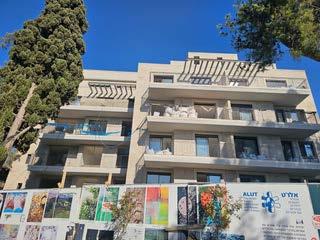


N o r t h
N
G
3
O
O
Asking



Asking




By Mrs. Shira Smiles
“Emor el haKohanim bnei Aharon ve’amarta aleihem le’nefesh lo yitama be’amav – Speak the following to Aron’s descendants, the kohanim: Let no [kohen] defile himself [by contact with] the dead among his people” (Vayikra 21:1).
Our parasha begins by presenting a set of lawsexclusive to kohanim, opening with the prohibition for a kohen to come in contact with a corpse.
The added word ‘be’amav’ indicates that the prohibition excludes a case in which a corpse is found where there is no one to attend to the burial, then, even a Kohen Gadol must become ritually impure to engage in this important mitzvah. The commentators learn several profound lessons from this verse, employing remez and derash, exegetical means of analysis.
Rav Elya Lopian zt”l in Lev Eliyahu sees a message here for every individual, focusing on an appreciation for the soulbody relationship. Every person possesses a chelek Elokah me’ma’al, a neshama of Divine origin that infuses the body
with kedusha, Divine holiness. Thus, one who has passed away is worthy of being tended to with respect, how much more so when one is alive!
Let us appreciate the profound power we each possess to generate kedusha in the world with each mitzvah and good deed that we do. The Tosher Rebbe zt”l in Avodat Avodah interprets this verse by way of ‘derush.’ Each person has an innate spark of holiness enabling him to perform mitzvot. One who is careful to direct his thoughts, words, and actions toward living with purity can harness this exalted energy to serve Hashem with passion and excitement.
service of Hashem to nearly extinguished coals, lacking passion and connection.

“Ve’nefesh lo yitama,” a soul should not ‘impurify’ itself, if it does, “be’amav” it will become dim, related to the word ‘im-um.’ The Torah is warning us against serving Hashem from a place of coldness and distance.
Rashi thus notes the double expression of “Emor… ve’amartem,” teaching us that the elders should instruct the younger ones in a way that will stimulate their natural inner fervor, ensuring that it will remain vibrant as they mature and grow.
Hashem with warmth and spirit, stoking our inner passion to connect with our Source.
As we count Sefirat HaOmer each evening, we can pause and allow ourselves to feel the anticipation and excitement leading us to matan Torah, the ultimate experience of connecting to Hashem..
Mrs. Shira Smiles, a lecturer, author and curriculum developer, is a member of the Mizrachi Speaker Bureau (www.mizrachi. org/speakers).
However, one who subverts his heart, mind, and speech for his own personal benefit will diminish his Divine spark.
The Tosher Rebbe compares this dull
The parasha continues with a discussion of Shabbat and the festivals, both G-d given opportunities and beautiful mediums with which we can serve

BY RABBI SHAUL YONATAN TAWIL
Time is of the essence!
The crowd had gathered for a popular wedding. All eyes were now on the Chatan and Kalla. The Chatan prepared the ring for his new bride. He was shivering, and in his fear dropped the ring. The crowds’ eyes lit up as they focussed on this poor mishap. The Chatan knelt down, picked up the ring and tried a second time. Alas again, fear struck, and the ring fell. Sighs rang out from amongst the crowd. The Chatan determined to see it through, tried a third time. The ring barely entered the finger only to fall yet again. This had never happened before in the towns history and murmurings were rampant from amongst the crowd. The rabbi managed to finally calm the Chatan and eventually he managed to place the ring on his brides finger – Mekudeshet!
The couple continued the process and settled down to a wonderful marriage. The crowd were curious and approached the rabbi. Rabbi did you see that – three times, surely that’s a sign from above that perhaps this zivug isn’t meant to be. The rabbi smiled the comment off. My dear friends you just didn’t understand the situation. Every event has its right time – the time for the marriage wasn’t yet ripe, and so it was ‘delayed’ until the right time. Every time has its Mazal and there is a correct time for everything!
Time is essential in our daily lives, but diverse people view it differently. An old fulfilled man, sits on his death bed, with his family nearby, reliving the many happy years of his life. “Oh what I would give for an extra few minutes in this world.” He exclaims as his soul is returned to his creator. Some people say, “Time is valuable.” Others “Time is money.” An American poet Carl Sandburg once awesomely explained “Time is the coin of your life. It is the only coin you have, and only you can determine how it will be spent. Be careful lest you let other people spend it for you.”
This weeks Parasha focuses on time. The Parasha has a complete description of the festivals, from Succoth, Pesach and Shavuot, to Rosh Hashanah and Yom Kippur. It is interesting to note that when describing the festivals the Torah uses a seemingly unusual word: Moed (Moadey Hashem (Vayikra 23:2))
The Hebrew word “Moed” stems from the root “Vav. Ayin.Dale” - to meet. Hence a committee in Hebrew is a “Vaad” and a conference is a “Ve’iydah. Why does the Torah relate to festivals with the word ‘meet’? Our Sages explain that the Jewish holidays are called Moadim, for their primary purpose is that we set aside special times during the year to meet G- d. We need to arrange our timetable in order that we are able to ‘meet’ and connect with Hashem through the special spirituality created on the festivals.
Time is of the essence and we must treat it well. We must also be aware of it. Time enables us to place things into perspective and prepare ourselves for a higher spiritual experience. A further Mitsva relating to time is
mentioned in this week’s Parasha –the Sefirat Haomer. “You shall count starting after the holiday (of Pesach)… seven complete weeks (until Shavuot)” (23:15).
The days between Pesach and Shavuot are special. The Torah commands that we count these days as we lead up to the giving of the Torah. We are excited and we need to prepare ourselves for this special day. The counting shows that we are not content with the day in itself, we must always aim to build higher and higher, counting the days towards Matan Torah.
Rabbi Moshe Feinstein ztsl points out that when it comes to all of the Jewish holidays the Torah states the exact date upon which they are to be celebrated. Pesach is the fifteenth of Nissan; Rosh Hashanah is the first day of Tishrei, etc. There seems to be one exception – Shavuot. The Torah does not specify the date for Shavuot, the sixth of Sivan, rather, we must figure it out based on the verses informing us that it occurs fifty days after Pesach, why is this holiday different? He explains how this Yom Tov differs from the others. This day is not an anniversary that commemorates a past event. Pesach is celebrated to remember the day which we were brought out of Egypt by Hashem; Succot remembers the Clouds of Glory by which Hashem sheltered the Jews in the desert. However, the giving of the Torah took place at Sinai but it continues to be offered to us everyday and every moment! Torah is not an old instruction book from antiquity; rather it is as vibrant and relevant as ever! Torah is above time!
in wealth. Yossi had less money then Shlomo, but was more of a cunning person. One day he went over to Shlomo and said, let’s settle this once and for all. We will both take all our wealth and go on a ship and throw coin by coin into the ocean. Whoever finishes first has less wealth. They both agreed that the contest would start the next morning.
Yossi cunningly went over to the copper smith. He asked him to mould fake coins and plenty of them! The next day the two met, went on the boat and set out. After a while they stopped in the middle of the ocean and started their competition.
Yossi commenced and threw one coin into the sea. Shlomo followed. The game continued for hours, but as each hour went by, Yossi’s face began to gleam. He seemed happy that he was throwing his wealth into the ocean (he was of course happy as they weren’t really worth anything). Shlomo on the other hand was distraught at each throw. Each time, he felt he was throwing away hard earned coins.
We must know that Hashem teaches us constantly, His voice is eternal; R Moshe adds two more hints to this idea. The Aron in the Mishkan, which contained the Torah inside of it, took up no physical space. Our Sages explain that this is to signify that Torah is not earthbound or limited to a certain place! The Torah applies everywhere!
Secondly, we do not know in which limb our Neshamah, soul, is contained, rather the entire body is imbued with its holiness. Man must bring Hashem into every time and place that he finds himself. Thus Torah is eternal and always prevalent and available! Time is precious and throughout history the great sages have valued every second of life, they have cherished and utilised it to the maximum.
The Ben Ish Chai contrasts the way of the world in that some people tend to want to ‘kill time’, whereas others especially the righteous value ever moment. He explains this contrast with a Mashal. There were once two rich people who always competed with each other
Finally the time came and Shlomo was out of coins. Yossi leapt for joy at his achievement, he had finally shown that he was wealthier then Shlomo.
The Ben Ish Chai explains that in life there are people that are happy to throw away time. For them time is cheap, they behave as they will live forever, they have plenty of time on their hands to ‘waist/kill’.
There are others who value every second, for them to throw time away hurts, they realise the intrinsic value of every moment.
That is the difference; we must realise that each moment brings with it its own Mazal. Each moment is special and can lead to a fulfilled life. Time is precious let us seize the moment!
Shabbat Shalom
Rabbi Jonathan Tawil

The name of the Parshah, “Emor,” means “speak” and it is found in Leviticus 21:1.
The Torah section of Emor (“Speak”) begins with the special laws pertaining to the kohanim (“priests”), the kohen gadol (“high priest”), and the Temple service: A kohen may not become ritually impure through contact with a dead body, save on the occasion of the death of a close relative. A kohen may not marry a divorcee, or a woman with a promiscuous past; a kohen gadol can marry
only a virgin. A kohen with a physical deformity cannot serve in the Holy Temple, nor can a deformed animal be brought as an offering.
A newborn calf, lamb or kid must be left with its mother for seven days before being eligible for an offering; one may not slaughter an animal and its offspring on the same day.
The second part of Emor lists the annual Callings of Holiness—the festivals of the Jewish calendar: the weekly Shabbat; the bringing
of the Passover offering on 14 Nissan; the seven-day Passover festival beginning on 15 Nissan; the bringing of the Omer offering from the first barley harvest on the second day of Passover, and the commencement, on that day, of the 49-day Counting of the Omer, culminating in the festival of Shavuot on the fiftieth day; a “remembrance of shofar blowing” on 1 Tishrei; a solemn fast day on 10 Tishrei; the Sukkot festival—during which we are to dwell in huts for seven days and take the “Four Kinds”—beginning on 15 Tishrei;
and the immediately following holiday of the “eighth day” of Sukkot (Shemini Atzeret).
Next the Torah discusses the lighting of the menorah in the Temple, and the showbread; (lechem hapanim) placed weekly on the table there.
Emor concludes with the incident of a man executed for blasphemy, and the penalties for murder (death) and for injuring one’s fellow or destroying his property (monetary compensation).


•
•
•
•
•




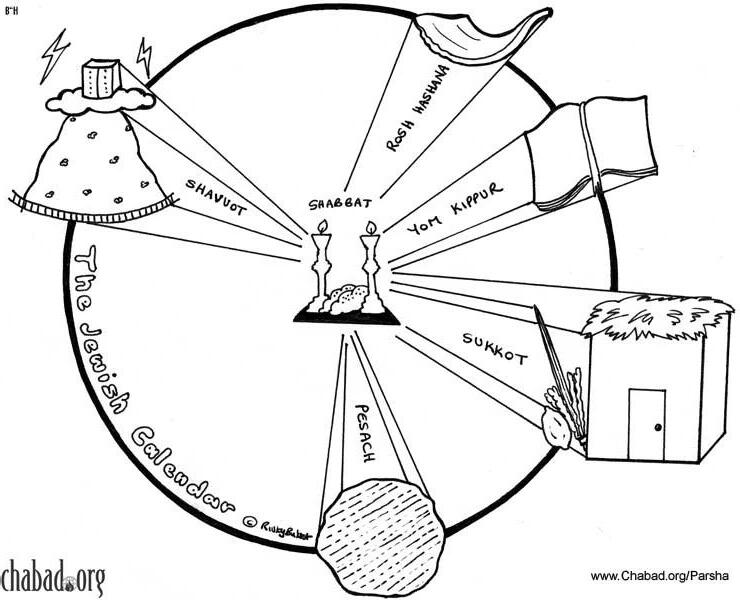
1. I come once a week, you rest and don’t roam,
No work is allowed—you stay close to home. What am I?
Shabbat!
2. We’re counted each night, one by one, From Egypt’s freedom until Torah is won. What are we?
The Omer days
Q: Why did the kohen bring a ladder to shul?
A: Because he wanted to go to a higher level of holiness!
Q: Why couldn’t the menorah tell secrets?
A: Because it always spilled the light!
Using all the shapes, can you make the shape on the right?

3. We are special days when work takes a break,
Pesach, Sukkot—celebrate for Hashem’s sake! What are we called?
Yom tov
4. I shine in the Beit HaMikdash day and night, Filled with oil, giving light. What am I?
The Menorah
Q: What’s a cow’s favorite part of Parshat Emor?
A: The part about mooo-adim (mo’adim / holidays)!
Q: Why did everyone love counting the Omer?
A: Because it counted as fun!
Q: Why did the holidays feel so relaxed?
A: Because they always got a “day off”!


9:45
10:40
11:30
Rabbanit Karen Hochhauser
To Halt the Unravelling of our Oneness as a People Strengthening our faith in Hashem, Ourselves and Each Other
Rabbanit Rachelle Fraenkel
“And He will gather you from all the nations”
Celebrating the miracle of returning traditions to one homeland.
12:20
Rav Bentzi Mann
The Makings of a Holy Army: Halacha, War and Mental Health
Rav Doron Perez
Standing Up to Antisemitism Today
Rav Alex Israel
War Ethics in the Torah
Rav Menachem Leibtag
When & Why we say “Yaaleh v’Yavoh” and how it relates to the Land of Israel
Rav Bentzi Mann
Have We Come Home for Good? Geula, Galut and the Future of the Jewish People
Rav David Milston Light in the harshest winter” Three inspiring messages from the Aish Kodesh from the year 1940-Warsaw
Rav Benji Levy
The Most Important Part of a Journey
Rav Reuven Taragin
How to live a life worth living
Rabbanit Shani Taragin
Women Warriors of Water & Song
Rav Binyamin
Zimmerman
Shabbat Lifts, Shabbat Wheelchairs and MoreModifying Technology for Medical & Security needs on Shabbat
Rabbanit Shani Taragin
“Choni & Charuv: To Dream the Im/Possible Dream
Rav Benji Levy Radical Moderation
13:10
14:00
14:50
15:40
16:30
Rav Doron Chitiz
A Bereaved Family’s Comfort through Halachik Organ Donation
Rabbanit Tamara Spitz
Who is the real King David? Monarch or Musician?
Rav Danny Mirvis
Rav Binyamin
Zimmerman
No One Left Behind: The IDF’s Commitment to the Fallen Shapes
How We Live as Jews An Audio-Visual Presentation
Rav Menachem Leibtag
Rav Reuven Taragin
How To Live A Good and Desirable Life
Are we ‘employees’ or ‘consumers’? A Biblical theme from Abraham to Joshua
Rabbanit Karen Hochhauser
Product vs. Process Pesach Sheini and Sfirat Ha’Omer
Rav Alex Israel Does Religion Zionism alter Religion
HaRav Hershel Schachter & HaRav Yosef Zvi Rimon Q&A
Rav Jesse Horn
Sharing the Happiness of Torah with Our Children
What Have the Romans Ever Done For Us? The Story Behind Lag BaOmer”
Rabbanit Noa Lewis
17:20
How abundant is the good that You have in store for those who fear you
18:10
HaRav Hershel Schachter
Rabbanit Pesha Fischer
Love of the Land: To Dwell and to Serve
Rav Anthony Manning
Before the Dawn: The Hidden Messiah and the Jewish State Built in His Shadow
Rabbanit Tamara Spitz
Laws of Yom Tov Tefillot
HaRav Yosef Zvi Rimon
Never Again? Confronting Antisemitism Today
The responsibility of the individual and the community in Judaism
Rav Anthony Manning
Who Set The Table? The Shulchan Aruch and The Fight Over Jewish Law
HaRav Yosef Zvi Rimon
From Tanach to Today: Seeing Hashem’s Hand in the Iron Swords War
Rav Doron Chitiz
If You’re Reading these Words”- Last Letters from Heroes of the October 7th War
Rav Jesse Horn
Miss a Day—What Did You Lose? A Deep Brisker Analysis to Shitas
Rabbanit Noa Lewis
True Chessed, Really?
Rabbanit Pesha Fischer
Singing an Old New Song
Rav Danny Mirvis
From “Operation Rising Lion” to “Operation Lion’s Roar”. Are Jews Supposed to be like Lions”

EDGWARE ADATH | NER YISRAEL | HAMPSTEAD | BUSHEY | MAGEN AVOT | SOUTH HAMPSTEAD | GOLDERS GREEN
UNITED | ALEI TZION | KINLOSS | SHOMREI
ADATH | RALEIGH CLOSE | EDGWARE
UNITED | BOREHAMWOOD UNITED | STENECOURT | PINNER | EDGWARE
YESHURUN | MILL HILL EAST | STANMORE
| SEED | YAM | THE BAYIT | WHITEFIELD | YAVNEH | TORAS CHAIM | BRONDESBURY
PARK | NISHMAS YISRAEL | HAMPSTEAD GARDEN SUBURB
CULMINATING WITH THE ANNUAL MIZRACHI UK
DAY OF INSPIRATION IN EDGWARE AND HENDON