














BY DAVID SAFFER Counter Terrorism
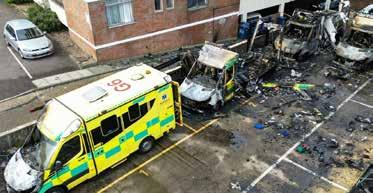
detectives have arrested two men in connection with an antisemitic arson attack on four Hatzola UK ambulances in Golders Green during the early hours of Monday.
Te men, aged 47 and 45, were apprehended on suspicion of arson with intent to endanger life at addresses in north west London and central London. Tey remain in police custody.
Commander Helen Flanagan, Head of Counter Terrorism Policing London, leading the investigation, said: “We have been working around the clock since this appalling attack took place. Tis appears to be an important breakthrough in the investigation, but we’re also mindful that CCTV footage of the incident suggests there
were at least three people involved. We fully recognise the local community will still be concerned and our investigation very much remains active.”
Detective Chief Superintendent Luke Williams, who leads policing in North West London said: “Community concerns remain heightened. I want to reassure the community that an enhanced, bespoke policing plan and activity, which is particularly focused around vulnerable areas right across London, will continue over coming days and weeks. Tis includes specialist ofcers and capability being deployed
alongside local ofcers to help protect certain locations and will also involve highly visible armed police patrols to serve as a deterrent to anyone seeking to cause our communities harm. Tese are precautionary and not in response to any specifc threat.”
Police began a manhunt after three arsonists were caught on CCTV setting alight the Hatzola ambulances at base. Te Met has deployed 260 ofcers to protect London’s Jewish community.
Williams confrmed the alleged suspects could be seen “pouring accelerant onto vehicles before igniting it”.
Te Met has created an online portal for the public to share video footage before, during or after the incident.
Te Met has CCTV footage and statements from witnesses.
Continued on page 4


In gratitude and solidarity with Hatzola’s volunteers and the community they serve every day



Continued from page 1
Four replacement ambulances arrived yesterday after Health Secretary Wes Streeting vowed that the government would cover the cost, initially on loan, until permanent replacements are delivered. Police are attempting to establish claims Islamist group Harakat Ashab al-Yamin al-Islamia are responsible.
Met Police chief Sir Mark Rowley, speaking at the Community Security Trust annual dinner on Monday night, praised the “extraordinary speed and professionalism” of local volunteers, CST teams, synagogue security, Hatzola staf and Met ofcers.
He noted: “An attack on Hatzola is not only an attack on the Jewish community but an attack on all of us. Tere is no us and them. Tere is only an attack on a British community.”
London Fire Brigade took 56 calls reporting a fre on Highfeld Road. Oxygen cannisters exploded due to heat. Te fre was extinguished by 3.06am. No injuries have been reported.
Te brigade’s community engagement service visited a rest centre to support 34 residents evacuated.
Prime Minister Keir Starmer met Jewish community leaders in Downing Street expressing his disgust at a horrifc antisemitic attack and impact it had on the Jews across the country.
Home Secretary Shabana Mahmood told the House of Commons the perpetrators would be pursued and face the consequences of a wicked crime.
“My message to our Jewish community is clear, we stand with you, we will do everything in our power to protect you and we will fght relentlessly to rid our society of antisemitism,” she said.
Shadow Home Secretary Chris Philp called on Mahmood to ensure all antisemites and extremists who are not British citizens are deported.
Streeting said there was “no doubt” the attack was intended to “strike fear into heart” of Jewish communities and the attackers wanted people to lead “less Jewish lives” but the community would not be cowed by a “despicable act of evil”.
Ofering support, he observed: “Tose responsible for this attack must know that the Jewish community will not face up to this hatred alone. Te whole country will stand with them.”
Conservative leader Kemi Badenoch posted: “Just last week in Golders Green, members of the Jewish community told me how they live in fear of constant attacks. A hatred of Jews is growing in our country and all of us need to make it clear in our words and actions that Britain will not tolerate antisemitism.”
Reform UK leader Nigel Farage called the incident part of a “rising tide of hate against Jewish communities in Britain and the UK was now an “open door to potential enemies”.
In Israel, President Isaac Herzog spoke with Hatzola and Community Security Trust leaders.
“Britain’s Jewish community must be able to live, pray and thrive in safety and
security,” he said. “We will continue to stand together shoulder-to-shoulder with you in the critical fght against antisemitism.”
Chief Rabbi Ephraim Mirvis led reaction from the Jewish community. Speaking at the scene, he said the “sickening” attack was the latest in antisemitic crime incidents around the globe.
“Tis is going to cause a lot of concern to the Jewish community but it shouldn’t only be a matter for Jews,” commented Mark Gardner, CST chief executive, adding it was “almost inevitable” the attacks followed a series of attacks that the Netherlands and Belgium have witnessed.
Gideon Falter, Campaign Against Antisemitism, raged: “Burning the ambulances is a truly repulsive act of antisemitic hatred in a Britain where Jews now have to keep everything from schools to synagogues under constant guard. Our society has become infested with the sickness of antisemitism. Politicians must accept that by tolerating everything from hate marches to hate preachers, they have created this sickening mess. Te law must change, fast, but so must society. Te people spewing obsessive conspiracy theories about Jews, Zionists and Israelis are not social justice warriors, they are hateful bigots feeding this madness and must be told as much by ordinary decent people.”
Te We Believe Alliance (A partnership of NJA and WBII) welcomed Streeting’s comments about dealing with hatred “at its source” and new ambulance ofer, but added: “Replacing vehicles does nothing

to address the conditions that allowed this attack to happen, nor does it confront the rise in antisemitism, the tolerance of extremist rhetoric on Britain’s streets, or the ideologies and networks that continue to fuel hatred. What cannot be so easily restored is a sense of safety… Words about tackling hatred at its source carry weight only if they are followed by a clear and serious strategy to confront it. Tis was not simply an attack on property. It was an attack on a community and on those who dedicate themselves to saving lives. If the government is serious about standing with the Jewish community, it must now act on its own stated position. It will be judged not on gestures, but on whether it is prepared to confront antisemitism at its source and take the decisive steps to stop it.”
Jonathan Metliss, Action Against Discrimination, commented: “Anti-Israel behaviour and criticism is a cloak for antisemitism. Te government must have a regime of zero tolerance against this level of antisemitic behaviour. Pro-Palestinian marches should be banned and Muslim community leaders should be condemning this atrocity. Sadly, this attack is unlikely to be the last incident of this nature.”
Information: Met Police 101 (reference 415 of 23 March) or Crimestoppers 0800 555 111.

Spend your retirement doing what you love - not worrying about money
BY ADAM MOSES
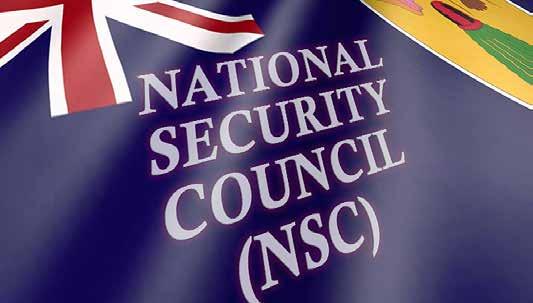
Jews around the world have been warned of an increased threat of terrorism ahead of Pesach by Israel’s National Security Council.
According to the NSC yesterday, the Iranian regime is set to act “with greater intensity” against Israeli and Jewish sites. Israelis abroad should adopt ‘heightened precautions’ at destinations worldwide.
Te NSC recommends travel only through Ben-Gurion Airport. Tourists should avoid, as much as possible, connecting fights through Level 4 threat countries.
Israelis abroad have been advised to avoid visiting Jewish or Israeli-afliated sites not secured or in open venues, sharing real-time location, accommodation details or travel plans on social media.
Pay attention also at Chabad houses, shuls and kosher restaurants.
NSC’ advice came 24 hours after US President Donald Trump announced a possible deferment of planned attacks on Iran’s energy infrastructure.
Te US has passed to Iran, through Pakistan, a 15-point plan for ending the war.
No details have been released but according to media reports, it includes
the Iranian nuclear and ballistic missile programme and support for regional proxies.
Te Strait of Hormuz would be reopened whilst sanctions related to Iran’s nuclear programme would be lifted but those connected to human rights abuses would stay in place.
Tere have also been unconfrmed reports of a month-long ceasefre while discussions take place.
Trump told reporters in the Oval Ofce yesterday that the US was “talking to the right people” and there had been an important Iranian concession.
“We’re talking to the right people and they want to make a deal so badly,” he claimed.
“Tey gave us a present, and the present arrived today,” Trump added. “I’m not going to tell you what that present is, but it was a very signifcant prize.”
Trump noted after further questions that it was “oil- and gas-related”.
It has also been reported that Iran was considering opening the Hormuz passage to non-belligerent countries which would aid the threat to global energy markets.
Israel’s Prime Minister Benjamin Netanyahu has been in dialogue with Trump, and whilst under immense pressure politically, confrmed that Trump believed there was a “chance to leverage the massive achievements of
the IDF and the US military” to achieve the war goals through an agreement that “protects our vital interests”.
Netanyahu added that Israel was “continuing to strike” Iran and Lebanon.
“We are crushing the missile program and the nuclear program, and continuing to strike Hezbollah hard,” Netanyahu said. “Only days ago, we eliminated two more nuclear scientists, and our arm is still outstretched.”
He added, “We will safeguard our vital interests under all circumstances.”
Israel’s Economy Minister Nir Barkat, in a constantly changing dymanic, reportedly told the BBC it was unlikely Iran would agree to the US plan as the regime would not change.
Birkat said Israel’s objectives are for Iran to have “no nukes, no missiles and no proxies”.
“I trust that President Trump and Prime Minister Netanyahu are aligned on these goals and we will accomplish them one way or the other,” he said. “Maybe Trump is opening up discussions, but he’s also bringing troops to the region, and he’s basically saying to the Iranian people that we mean business.”
Birkat, who did not confrm if Israel was involved in the proposals, added: “I believe at the end of this round, we will accomplish the goals, with or without a deal.”






BY DAVID SAFFER
Iranian cluster missiles have struck cities in central Israel in recent days.
Tere were no serious injuries in Tel Aviv nor Haifa. But strikes in Arad and Dimona last Saturday resulted in dozens of casualties, a number seriously, evacuated to Clalit’s Soroka Medical Center.
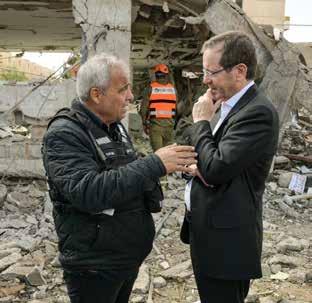
President Isaac Herzog assessed damage accompanied by Mayor Ron Huldai in Tel Aviv on Tuesday.
He defantly told the media assembled: “Tel Aviv is a city that doesn’t stop, a city under barrage from Tehran with its proxies. You see here the resilience of the
Israeli people.”
Herzog welcomed the Lebanese government expelling the Iranian Ambassador.
“Tis is a major watershed step that must be understood in the context of major changes in the region, which can be reached if the empire of evil from Tehran and its proxies, especially Hezbollah, are wiped out so that peace can be brought to this region,” he said.
Earlier in the day, IDF spokesman Brig. Gen. Efe Defrin confrmed IDF forces had eliminated an Iranian missile cell behind the terror attack on Arad.
“We continue to hunt and eliminate the soldiers and commanders of the missile array,” he said. “We eliminated the cell responsible for the fre toward Arad. We will continue to hunt them down, the launchers and the cells.”
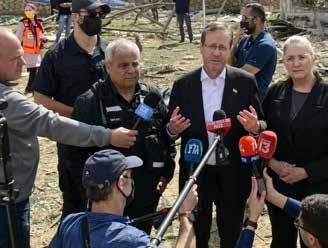
“Tis clearly is a site that shows the havoc from a half-ton missile from Iran,” Herzog told a media corp in Arad. “Te Iranians do not diferentiate between Muslims, Jews and Christians or between the elderly and the young. All civilians are there to be killed and destroyed, but we are here to show something else, we are ever resilient.
“It’s no secret to all of you that Iran is now deploying all
of its capabilities. Remember that they denied they have missiles all the way to the United States. Well, you’ve seen it in the launch at Diego Garcia, over 4,000km away. Tey will employ and deploy all their capabilities in order to scare all of us. But this doesn’t work. On the contrary, it shows us what a cruel regime it is and what kind of danger it is, which is what we’ve been saying to the world for way over a generation.
“Tis head of the snake, this evil empire, must be stopped. Tat’s why we’re in this war. I trust the resilience of Israelis and the people of Arad. Tis place will be fully rebuilt.”
In Dimona, Herzog expressed his solidarity to residents.
“When you look around you see institutions meant to help people… a kindergarten, a hostel for people with special needs, and of course, an incredible neighbourhood, which was demolished, luckily nobody lost their life,” he said.
We have always shown strong resilience. We know that your leadership is in havoc and disarray, we are absolutely adamantly sure that not only shall we overcome, but you will fall fat on your face.
“Tis (Iranian) empire of evil has no limitations, that is why this war is so vital
and crucial for the future of the world. We are from here, protecting Europe and the free world.”
“To our enemies out there in Iran, you keep on carrying out crimes against humanity by sending missiles to kill human beings, not diferentiating between anything, age and gender, religion, or even the disabilities that they may have.
Te strike in Arad saw 115 injured people evacuated to Soroka, nine in serious condition. Tirty one of the injured were admitted to hospital including 18 children. In Dimona, 60 people were evacuated, including a 12-year-old boy in serious condition. Five of the injured were hospitalised.


Te Malki Foundation UK supports Keren Malki (Malki Foundation) in Israel, empowering families of children with severe disabilities to choose home-based care. Trough fnancial subsidies, inhome paramedical therapies in underserved areas, and long-term equipment loans, the Foundation removes many of the barriers that make home care challenging. By easing both physical and fnancial strain, it helps children develop essential life skills, strengthening families and enabling them to thrive together at home.
Te Malki Foundation delivers two key programmes:
Terapies at Home provides subsidies for a range of treatments, including physiotherapy, occupational therapy, speech therapy, hydrotherapy, and therapeutic horse riding. While some therapies may be available through school frameworks, these are
often limited in scope and not tailored to each child’s individual needs.
Terapies on Wheels supports children who are housebound or living in Israel’s peripheral communities, where access to therapy services is limited. Qualifed therapists travel directly to the child’s home to provide physiotherapy, occupational therapy, or speech therapy, with all therapy and travel costs fully covered by the Foundation.

In addition, the Malki Foundation ofers longterm lending of essential mobility and therapy equipment at minimal or no cost. Access to assistive equipment is often critical to ensuring that a child’s treatment and rehabilitation following medical interventions can be successfully continued within the home environment. For further information please visit, www. malkifoundation.org.uk.













BY RACHEL SEGAL, HATZOLA NW
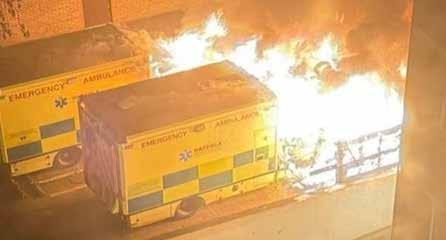
Early Monday morning, the NW London community woke up to sirens, smoke, and shock.
Te Hatzola ambulance base on Highfeld Avenue had been attacked, and all four ambulances on site were left scorched. Police remain on the scene, and the suspects are still at large. An Islamist group has claimed responsibility online — a claim the Metropolitan Police are actively investigating, along with other lines of inquiry. Te investigation is ongoing.
Tis was not an attack on a pro-Israel event or organisation. As tensions in the diaspora soar in the shadow of the Iran-Israel war, three cowardly individuals targeted a vital, life-saving service — one that operates entirely free of charge, funded solely by community donations. No hidden agendas. No discrimination. And yet these criminals attempted to turn of our light. To silence the 24/7 chessed that our community depends on.
Despite the dramatic scenes of Monday night, Hatzola NW is deeply grateful to every individual and organisation who stepped up in the aftermath. We’re humbled by the outpouring of national and international support. Since the news spread, we’ve been inundated with calls of support and donations from every corner of the country – and around the world, across diferent sectors and religions, and from every ambulance group in the UK. Every caller has ofered nothing but support, donations, and love. Our campaign page features teams and comments from a diverse spectrum, all in support of Hatzola, and against hate.
THIS SHINES A LIGHT ON OUR MISSION - TO SAVE LIVES APOLITICALLY WITH NO AGENDA OR DISCRIMINATION.
We’re immensely grateful to the following individuals and organisations:
Te Fire Brigade
Tank you for arriving within minutes and bringing the blaze under control. Your swift response prevented additional damage and casualties.
Te London Ambulance Service
Tank you for your help sourcing replacement ambulances and for your continued partnership. We look forward to many more years of working side by side.
PAI House, local shops, and community businesses
Tank you for dropping everything to support Hatzola and all those afected. Your hospitality and warmth were a bright light in a very dark night.
Te politicians, public fgures, and community leaders who visited the scene stood with us publicly and backed our campaign
Your solidarity means more than words can say.
And to our Hatzola volunteers and team who helped evacuate nearby buildings in the dead of night, kept our services running through the chaos, and have not stopped since — your selfessness epitomises our mission. Tank you for inspiring us all.
Despite this shocking incident, our mission has not changed. We will continue to save lives.
With replacement ambulances, emergency funding, and a team more mobilised than ever, we will stand strong and continue serving those who need us most.

But we cannot ignore the reality this attack has laid bare. Security is no longer a far-of aspiration or a luxury — it is an immediate necessity.
Serving the community since 1989, Hatzola NW handles over 7000 calls annually, responding within minutes to anyone — Jewish or secular — facing a medical emergency. Entirely free of charge and funded solely by community donations, we have built strong ties with local authorities, the NHS, and the London Ambulance Service over many years. Tis is what is at stake. We need a dedicated, secure base where our ambulances can be housed safely, and where our volunteers can dispatch and respond
without fear of vandalism — or worse. We are coming together now to make this a reality.
We urgently need to raise £5 million to
secure our premises and, b’siyata d’shmaya, move forward from this attack with strength and commitment.
Every community member has a role to play. Help us secure Hatzola NW so we can continue serving every single person in their time of crisis.
Will you stand against hate — and stand with our life-saving mission?





We’re Together, property finance experts with common sense.
Whether you’re buying commercial or residential property or investing in your business, our wide range of mortgages and secured loans can support your ambitions at pace.
Heter Iska funding available.
• Speed and flexibility – fast lending available on a variety of property types from industrial to flats, with flexible criteria.
• Relationship lending – our experienced property funding experts can make quick decisions, with a strong appetite to lend.
• Lending since 1974 – trust our 50-year heritage backed by our funding capability.






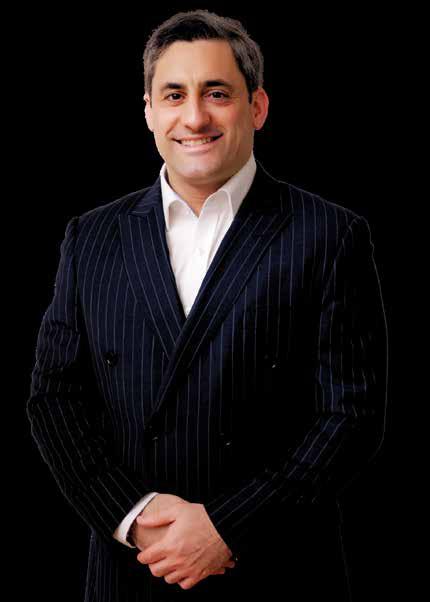
Mizrachi UK today announced that Rabbi Andrew Shaw will be stepping down as Chief Executive Ofcer after a ten-year tenure that has signifcantly impacted the Jewish community in the United Kingdom.
Under his leadership, Mizrachi UK has become a mainstay force in Jewish education and communal engagement. His
legacy includes developing a new generation of Religious Zionist Rabbanim and Rabbinic Shlichim working in shuls and schools, as well as the establishment of the Weekend of Inspiration, now a staple of the community calendar.
Rabbi Shaw also created many inspiring educational programmes, flms and community wide projects, including large scale initiatives such as Yehudi, a leadership programme training the next generation of leaders, and the Simchat Torah Project, which brought together more than 500 shuls worldwide to dedicate Torah covers in memory of the victims of the October 7th attacks.
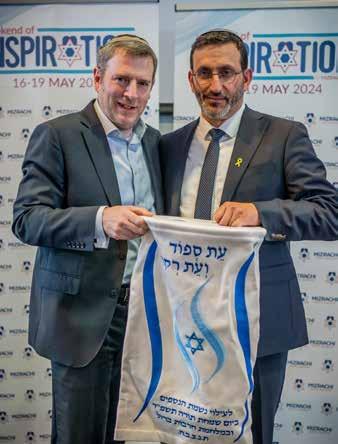
After stepping down, Rabbi Shaw will continue in a part time role as Educational Advisor to the charity, allowing him to focus on new initiatives in the UK and internationally. Tese include eforts to help counter the rise in antisemitism through education, as well as projects helping strengthen Western values.
Following his departure, Mizrachi UK will move forward under the leadership of David Reuben and Aryeh Richman, both experienced
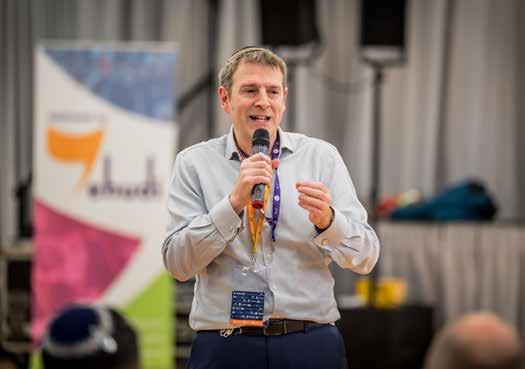
senior members of the organisation. Tey will build on its strong foundations while promoting a clear and ambitious vision for the future - expanding its educational impact, inspiring the community, developing future leaders, and nurturing a deep and enduring relationship with Israel.
Rabbi Shaw said “It has been an honour and a privilege to lead Mizrachi UK over the last decade. I am stepping down with many of our transformational programmes frmly embedded as indispensable parts of UK Jewry. I look forward to
supporting the charity in a new capacity and wish much hatzlacha to David and Aryeh as they continue the vital work of Mizrachi UK.”
Steven Blumgart, Chair of Mizrachi UK, said “Rabbi Shaw has been a remarkable and creative leader, guiding Mizrachi through a decade of growth as well as challenging times for both the UK and Israel. We are deeply grateful for his many years of service, and we look forward to the incredible things he will no doubt achieve in the years ahead”.







Te Community Security Trust (CST) hosted its main fundraising event of the year, the CST Annual Dinner 2026 in central London with keynote speaker Te Home Secretary Shabana Mahmood MP. Lord Daniel Finkelstein OBE delivered the evening’s opening address and announced that this morning, His Majesty King Charles III had accepted CST’s invitation to become a Patron of CST, highlighting His Majesty’s longstanding support for the UK’s Jewish community and the wider fght against antisemitism. His Majesty’s longstanding commitment to promoting tolerance, inclusion and interfaith understanding aligns closely with CST’s mission to protect British Jews and CST is honoured by this recognition and looks forward to working under His Majesty’s patronage to further its vital work across the country.
Over 1,200 guests attended the event, among them donors, politicians from all major parties, Members of Parliament, police ofcers, communal partners and other supporters of CST’s work. Te event took place hours after the shocking antisemitic arson attack in Golders Green, in which four Hatzola ambulances were destroyed next to a local synagogue, an incident which is now being investigated by Counter Terrorism Policing, and just
a few months after two congregants were killed in a terror attack at Heaton Park Synagogue in Manchester.
In addition to Te Home Secretary, CST welcomed politicians from across Westminster, including Shadow Home SecretaryChris Philp MP, Secretary of State for Health & Social Care Wes Streeting MP, Shadow Communities Minister SirJames Cleverly MP, and others. CST was also delighted to host Metropolitan Police Commissioner Sir Mark Rowley QPM, Sir Steven Watson, Chief Constable of GMP, Chief Rabbi Sir Ephraim Mirvis and other Jewish community leaders, and supporters from across society.
CST’s Deputy Chairman Sir Lloyd Dorfman CVO CBE introduced theHome Secretary. Sir Lloyd Dorfman CVO CBE commented, “Te partnership we have with Government is at the very heart of CST’s fght against antisemitism and this fght has become harder, and more important, than ever... Te scale of the anti-Jewish hate, on our streets and online, is something we should never accept or get used to. Te levels of antisemitism
Te Home Secretary opened her speech by condemning the abhorrent antisemitic arson attack that took place overnight. She acknowledged the heightened concern felt across the Jewish community and emphasised the seriousness with which the incident is being treated. Concluding her address, she praised the long-standing work of CST and the courage of the volunteers who serve the community every day, “Te truth is we meet at a profoundly diHicult time for our Jewish community. I know that sense of distress and anxiety will only have been heightened by the appalling scenes from Golders Green this morning to target Hatzola, an institution devoted to saving lives and serving the public in North London. It is so warped it defes words. Tis was more than an attack on four ambulances; it was more than an attack on one organisation or on one community. It was an attack on this country and on us all…. Tere is no question that people across this country are safer because of the work of the people in this room and many outside of it too. I hope that, in the years ahead, the work of the Community Security Trust will grow less necessary, less urgent. But that is the world as I want it to be, not the world as it is. And in this
moment, your work has never been more important. I am proud of the work we do together, and I am forever in awe of your dedication and duty. So may I end by thanking you once more, for the vital service you provide and for giving me the honour of speaking this evening.”
CST Chief Executive Mark Gardner MBE thanked CST’s volunteers, staf and trustees before the screening of a short flm highlighting the challenges the Jewish community has continued to face over the past year.
“Despite it all, actually because of it all, CST has never been stronger or more determined than we are right now.”
Sir Gerald Ronson CBE concluded the evening, expressing gratitude to the government and police for their continued support of CST’s work in the fght against antisemitism.
“Tis is one of the most important charity dinners in the history of the Jewish community. Because if you do not have security, you do not have a community. Tat is why I have fought against antisemitism for the last 63 years of my life. CST gives our community strength… Te next few years will be absolutely critical in deciding the future of British Jews and our wider society.

Dear Editor
What has happened to the UK? I have always been proud to be British until now.
Tis country is the laughing stock of the world. We have a prime minister who is a coward. Keir Starmer whose labour party had a landslide victory in the last General Election has shown that he is not ft to be the leader of this country. He reminds me of Neville Chamberlain prior to the second world war who waved a piece of paper saying he had a meeting with Mr. Hitler and peace in our times, and thereafter the murder of 6 million Jews in the Holocaust.
Starmer spoke of talks he had with the Iranians who were coming closer to agreement to stop enriching uranium.
Te United States and the UK have been allies for many many years, and this government has ruined it.
We know that Donald Trump is not the usual kind of statesman, but no other US president over the years would have helped Israel in the way that he has.
Hashem has sent Trump to help us whether you agree or not.
Starmer should have supported USA and Israel , but the labour party is after the muslim vote. He knows full well that the country will not support him in the May local elections.
He has allowed boatloads of illegal immigrants to cross the channel and come into the UK. Tey are given housing, money and access to the NHS which is denied to many people in this country who pay their taxes. Many of these immigrants are criminals who are wanted in their own country. Tey throw their passports into the channel before arriving in Dover so they appear as stateless. I am a grandchild of polish immigrants who escaped from the pogroms. Tey were happy to come to a country where they felt safe and they worked hard without any benefts which are handed out today to people who are too lazy to work.
Today we hear on the news that 4 Hatzola ambulances were set on fre in Golders Green and the Iranian Military Guard have accepted responsibility for this. Our community there is now left without its wonderful service which we as Jewish people treasure. Hatzola is a wonderful organisation which has saved so many lives and works together with the London Ambulance Service who admire them.
We now have to understand that we are
all living in a dangerous time in history. Tere should be a tightening of security for our community. Tere should be guards who carry a gun as they do in some countries in Europe.
Keir Starmer has to realise that his time is up as prime minister who has done more U turns than people taking driving lessons. His henchmen like Lammy and Cooper are not any better. Tey do not support the Jewish community, but just show up at times in our calendar when they need to be seen.
Not to end on a sad note the Jewish community in the UK is strong and will overcome these attacks. Te Hatzola ambulances will be replaced with help from us, and we will always be grateful to these wonderful young men who volunteer their services.
Hashem will protect us and our brothers and sisters in Israel who face danger every day. We should increase the amount of tehillim we say, and may our tefllos reach the kisay hakovod.
Frances Jay
Dear Editor
AAD unequivocally condemns this awful, deliberate and malicious arson attack in Golders Green — the latest in a series of abhorrent and deeply troubling antisemitic incidents in the heart of the Jewish community.
Tis follows recent events including the Maccabi Tel Aviv and Aston Villa episode, the attack on the Heaton Park synagogue in Manchester, pro-Palestinian marches, last week’s Al Quds Day demonstration, and numerous other incidents of antise mitic behaviour and hate crime, includ ing surveillance of Jewish institutions, as reported by the Community Security Trust.
Fortunately, and remarkably, the Jewish Sage Care Home, located adjacent to the Hatzolah ambulances, was not damaged by the fre.
approaching the ambulances on video, must be swiftly identifed, arrested and brought to justice without delay. Any organisation linked to such acts should be subject to full investigation and appropriate legal consequences.
As AAD has consistently emphasised, certain forms of anti-Israel rhetoric and activity risk fuelling hostility and, in some cases, may contribute to antisemitic behaviour. Tis is a matter that requires urgent and careful attention from the Government.
Enough is enough. Tere must be a policy of zero tolerance towards antisemitism and hate crime of this nature, which is wholly unacceptable.
It is deeply disappointing that there has not yet been clear and unequivocal condemnation of this atrocity from across all communities and their leaders.
Te irony is stark: the Hatzolah ambulances targeted in this attack serve not only the Jewish community but many others as well. Te speed and professionalism of their service is widely respected. Tis makes the attack all the more senseless and tragic.
Tere is a growing fear that the current trajectory is deeply concerning. Tis trend must not be ignored and must be confronted decisively.
Jonathan Metliss, Chairman of Action Against Discrimination

Tere is a strong and growing sense of concern regarding antisemitism in this country. Te Jewish community must remain vigilant and supported fully by all relevant authorities, including the Government, the police, the Crown Prosecution Service, the judiciary and the Mayor of London. Community leaders must speak out clearly and robustly.
Tose responsible for this appall ing crime, who were reportedly seen
Jewish Medical Association UK is devastated to learn of the senseless, vicious destruction of emergency ambulances in north London overnight.
Tis act will deprive local people of life-saving emergency facilities. Hatzola UK is a respected part of the healthcare system in London and other British cities and provides, to people of all backgrounds, emergency services that complement and help take pressure of those provided by the NHS.
It is run by volunteers, of whom not all are Jewish and some of whom are our members. We salute them for the wonderful work they do in addition to their NHS and other healthcare roles.
Tankfully no-one has been harmed as a result of this hateful attack. We hope the perpetrators will be brought to justice.
We are relieved to hear that the Secretary of State for Health and Social Care has today ofered to provide replacement ambulances, which will help Hatzola to continue to save lives.
As part of the Jewish community and the wider health community in the UK we condemn this incident and thank other organisations outside the community for their support at this time in calling out this unacceptable act of vandalism targeting a Jewish healthcare provider.
JMA UK

















BY RABBI RAPHY GARSON
Nestled in the hills of Portugal lies the quiet town of Belmonte, known as the birthplace of the explorer Pedro Cabral, discoverer of Brazil. Yet for Jewish history, this small village holds a far deeper signifcance. It is home to one of the most remarkable stories of Jewish survival: the crypto-Jews of Belmonte.
Te story begins with the devastating pogroms of 1391, which swept across Spain, Mallorca & the Iberian Peninsula. Tens of thousands of Jews were murdered, and many more were forcibly converted to Christianity. By the end of this period, Spanish Jewry had been shattered. Roughly one-third killed, onethird converted, and one-third remaining openly Jewish. Many of the survivors fed to neighbouring Portugal, seeking refuge. Tese forcibly converted Jews became known as Conversos, Anusim (the coerced), or derogatorily as Marranos. Tough outwardly Christian, many secretly clung to Jewish belief and practice. However, under Christian law, once baptized, returning to Judaism was considered heresy and punishable by death. Despite this, rabbinic tradition
maintained that “a Jew remains a Jew,” a principle that would sustain these hidden communities.
Over time, suspicion and hostility toward the Conversos intensifed. Laws such as limpieza de sangre (“purity of blood”) discriminated against them based on ancestry rather than faith. Te establishment of the Spanish Inquisition in 1478 further institutionalised persecution, targeting those suspected of secretly practicing Judaism.
Tis culminated in the expulsion of Jews from Spain in 1492. Hundreds of thousands were forced to leave, with many feeing to Portugal.
Initially, life there ofered some stability, but this quickly changed. King Manuel I, under pressure to marry into the Spanish royal family, ordered the forced conversion of Portuguese Jews in 1497. Families were torn apart, and Jewish life was driven underground. Tough the Inquisition was delayed for 20 years, this period became one of intense secret observance.
It was during this time that many Jews settled in remote mountain villages such as Belmonte. Under constant threat of persecution, they developed a hidden form of Judaism that would endure for centuries.
Te Jews of Belmonte chose to preserve

their heritage at all costs. Living outwardly as Christians, they practiced Judaism in secret, lighting Shabbat candles in concealed spaces, observing holidays on altered dates to avoid detection, and maintaining dietary laws in disguised forms.
Without rabbis, synagogues, or Jewish texts, their practices became simplifed and adapted. Tey maintained belief in one God, preserved elements of lifecycle events such as marriage and mourning, and passed down traditions orally, primarily through the women, who played a central role in sustaining Jewish continuity.
For generations, the community lived in isolation, even believing at times that they were the last Jews in the world. Tis changed in 1917, when Samuel Schwarz, a Jewish engineer, encountered them. Initially suspicious, they only accepted him as a fellow Jew when he recited the Shema. Even then, fear lingered, and their identity remained largely hidden.
It was not until the fall of Portugal’s dictatorship in 1974 that the community began to openly re-emerge. In 1996, the synagogue Beit Eliahu was inaugurated in Belmonte, symbolically marking 500 years since the expulsion era.
In recent decades, fgures such as Rabbi Elisha Salas, working with organizations
like Shavei Israel, have helped reconnect the community with global Jewry. Trough education, outreach, and guidance, many descendants of these crypto-Jews have strengthened their Jewish identity, with some making aliyah to Israel.
Today, the Belmonte Jewish community is small around 30 members, but its legacy is immense. It represents one of the longest continuous examples of clandestine Jewish observance in history. Te story of Belmonte is one of resilience, courage, and unwavering faith. For over 500 years, without institutions or support, these Jews kept the fame of Judaism alive in secrecy and danger. Teir survival stands as a powerful testament to the enduring strength of Jewish identity, proof that even in the darkest of times, the Jewish soul was never extinguished.
Rabbi Raphy Garson, raised in Gibraltar, served 18 years as Senior Rabbi of Ohr Yisrael Federation in Elstree and now leads the Rabbinic Team at Tiferet Eyal Synagogue in Hendon. A Holocaust educator, he has guided over 6,500 students to Poland and leads Jewish heritage journeys worldwide with JRoots.


AtTellthestoryofslavery cuptheconclusiondrinkthesecond ofwinewhileleaningtothelefWHATTHESTORYTEACHESopentheconversation, drawingusintothelivedexperienceofslavery.,theRabbisshowusthatthestoryholds suchdepthwecouldspendtheentirenightexploringit. ,wearetaughttoeducateeachWechildaccordingtotheiruniquepersonality. beginbyconfrontingourhumbleorigins



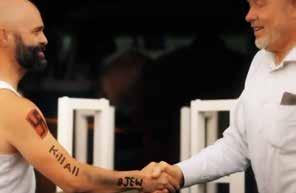
Daniel Kravitz, the owner of a secondhand furniture shop in Denver, was taken aback by the customer who entered his store. Te young man was dressed like a hoodlum, with a shaved head and bare arms covered with tattoos including the venomous message, “Kill Jews!” It was clear that he was a neoNazi.
Daniel was relieved that his kippah was concealed beneath a cap.
He spent the next hour assisting his customer. He took the man on a tour of the shop, helped him select a decent array of furniture, granted him a generous discount, and then helped the young neo-Nazi load his purchases into a pickup truck.
Daniel paused, then asked, “What do you have against the Jews?”
“Tey are thieves and liars!” Te customer launched into a tirade, spewing out every imaginable anti-Semitic stereotype.
Daniel patiently listened until the man fnished speaking. Ten he removed his cap to reveal his kippah and said, “Are you aware that you have just spent an hour with a Jew? Haven’t I been honest, kind, and generous this whole time?”
After looking the man over carefully to make sure he wasn’t carrying any weapons, Daniel cautiously said, “Tell me, do you really feel what all those tattoos say?”
“You bet I do,” the man replied.
“Have you ever hurt anyone?” Daniel pressed.
“Yep!”
Te neo-Nazi gaped in disbelief.
“No way! You can’t be a Jew, man!”
Daniel motioned to the mezuzah on the door and then showed him a siddur on his desk. “You can see very clearly that I am Jewish, and I’m not at all like the image you have of Jews. You have been brainwashed. I can’t believe that your parents raised you with this kind of hate. You must be estranged from them,” Daniel surmised.
Te neo-Nazi grimly confrmed his suspicions; he hadn’t spoken to his parents in ten years. Just then another customer came in and Daniel wished the neo-Nazi a good day and turned to assist the other customer.
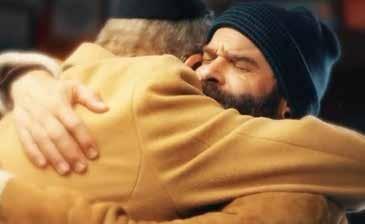
Six months later, the man returned to the store, this time with a full head of hair, decent clothes and long sleeves to conceal his tattoos. To Daniel’s surprise, the man embraced him warmly.
“I need to apologize to you and thank you,” he said tearfully. “You made me reassess everything I had believed. Tanks to you, I now know what a Jew is, and I’ve decided to turn my life around. I’ve even reconnected with my parents.”
Some feel that antisemitism is inevitable—that no matter what we do, the world will hate us. Eisav sonei l’Yaakov. But the truth is that the Jewish mission is to be a light unto the nations.
Torah life is meant to attract; it naturally elevates and inspires. Our responsibility is to shine the light of Hashem into the world. Trough our actions, we can make His name beloved everywhere.
are possible. We can make a diference. By refecting Hashem’s midos—honesty, respect, compassion, and holiness—we can change the tide. Never underestimate the light we are capable of bringing into the world.
Tis story was shared by Daniel Kravitz and reenacted in a beautiful video.
“Eisav sonei l’Yaakov” is not a decree of inevitability. As the Netziv (Sefer Sheair Yisroel) explains, when we fail to represent Hashem properly, hatred can serve as a wake-up call. But when we live as true representatives, love and admiration
Rabbi Shraga Freedman is the Director of Te Living Kiddush Hashem Foundation and author of several books, including Living Kiddush Hashem. Email LivingKiddushHashem@gmail. com to receive the video link and a free 30day booklet flled with inspiring stories. Visit LivingKiddushHashem.org for additional resources and school curricula.



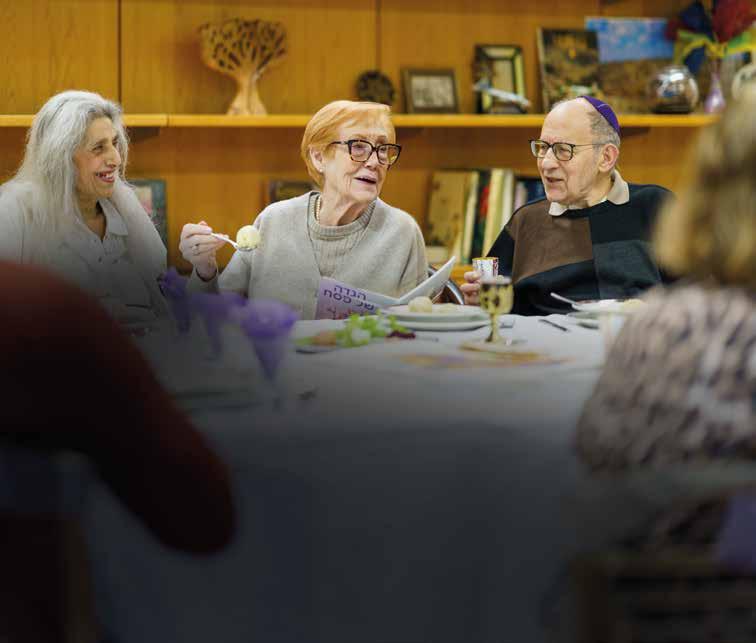
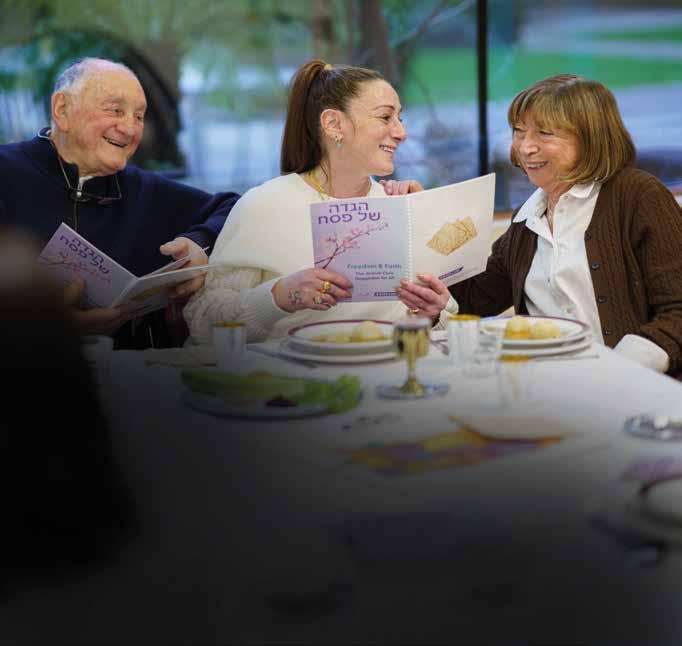
Te Seder is often experienced as a series of rituals to complete. But what if, instead, we approached it as something far more dynamic - a journey to freedom?
Tis year, Jewish Futures is inviting people to do just that. Trough a newly
We are often described as a wandering people, and for good reason. Over more than 3,500 years, there is almost no corner of the world where Jews have not lived. We have travelled across continents and cultures, through exile and return.
becomes so powerful. A passport does not simply enable travel; it afrms identity and belonging. In the same way, Pesach is not only about leaving Egypt. It is about becoming a people and taking our place within a shared story that
simply observe it.
A journey is defned not only by where it begins, but by where it is heading. By reconnecting with where we come from, we gain a clearer sense of where we are going. Understanding our past helps us



BY RABBI NAFTALI SCHIFF
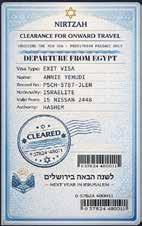
Te run-up to Pesach always brings a furry of activity at Jewish Futures HQ. As the name PE-SACH indicates, this is the time to talk, to engage, and to pass on our most important values. Seder Night is arguably the most concentrated pedagogical opportunity in our calendar. Since our purpose is to Ensure Vibrant Jewish Futures, we continually explore creative ideas to assist families in this sacred task—be it Pesach @ Home Boxes, Seder Night Q&A cue cards, the Our Story Interactive Haggadah, Family of Jewish Futures Seder deck of cards, or Our Story Cubes. For fresh inspiration, Sedernight.org ofers many of our innovative Seder ideas, alongside new this year- Rabbi Roodyn’s Pesach Passport and Rabbi Zeidman’s 7 Weeks–7 Traits.
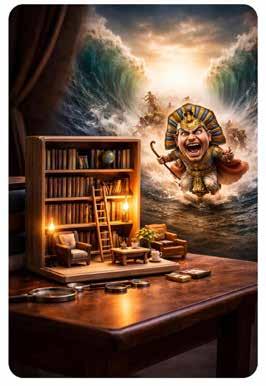
Last month, in the midst of this creative energy, one of our educators suddenly introduced a curious new product: a “miniature anxiety bookcase.” At frst glance, it seemed like another feeting trend- a tiny bookshelf arranged with miniature books, claiming to soothe anxiety, stimulate engagement, and provide calm. It sounded bizarre. Online, it appeared legitimate. However, more we discussed the idea, the more intriguing it became, not for what it was, but for what it revealed. Te concept is simple- a contained world of books, every volume in its place, scaled down, orderly, ofering visual and tactile comfort. My mother was a bibliophile, and I grew up in a home overfowing with books spanning every subject. Te books were never tidy, and I often felt ignorant of their contents. Yet I’ve always loved miniatures; tiny books have long fascinated me. Something about their smallness, their perfect order, feels almost magical. Children are naturally drawn to miniature worlds- dollhouses, toy villages, train sets. In these small, self-contained environments, stories unfold and outcomes can be determined. A child who cannot control the wider world of parents and adults can decide everything within the miniature world. Who lives where, what they wear, who wins, when they go to bed, what happens next. Te tiny world is structured, comprehensible, manageable.
It ofers comfort in an otherwise unpredictable world.
Adulthood is not so diferent. We no longer sit on the foor with dolls, but the impulse remains. We curate our homes, structure our careers, shape our identities, and increasingly immerse ourselves in digital spaces where virtual avatars bend to our will. Te miniature anxiety bookshelf may be new in form, but it is ancient in spirit. Tese small worlds refect our longing for control, an assertion of ego against the chaos of reality. In miniature, we create order, structure, and clarity, even if make believe.
Te Gemara depicts Pharaoh, the ultimate tyrant, as physically miniature. Te Gemara (Moed Katan 18a) describes him as only an amah tall, perhaps to show that his godlike self-image was an illusion. Just as we adults are drawn to tiny worlds to feel in control, Pharaoh’s ego masked a diminished spiritual and moral reality. Te metaphor is striking- mortal power may appear vast, but under scrutiny, even the most imposing fgure is small, vulnerable, and ultimately bound by Reality.
Pesach shifts our conversation. It commemorates the moment the Jewish people were released from Egyptian slavery, liberated from a system that denied autonomy, dignity, and choice. Yet soon after, the same people describe themselves as servants once again, not to Pharaoh, but to God. At frst, this seems contradictory- freedom exchanged for another form of servitude? If freedom means autonomy, how can entering a binding relationship with the Divine be liberation?
Perhaps the answer lies in rethinking freedom. We often equate it with controlthe ability to shape our environment, determine outcomes, act without restriction.
Pesach challenges this assumption. A slave is defned not merely by hardship, but by absence of choice. Freedom is not about controlling; it is about the ability to choose. Te Exodus is not merely a movement away from Egypt, but a movement toward something far greater- the beginning of the ultimate relationship, one chosen by man and God. Pesach invites participation, engagement, and commitment rather than control. True relationships arise from choice; anything else is coercion. Te Jewish people are freed not into randomness, chaos, or slavery, but into a calling- the opportunity to choose a role within a narrative that transcends individual ego. Tis contrasts sharply with miniature worlds, where we are sole authors. We decide the storyline, structure, and outcome. Everything bends to our will. Pesach asks something radically diferent. It invites us not to control the narrative, but to choose to enter it. Each year at the Seder, we do not merely recount history; we relive it. We place ourselves within the story, shifting from observers to participants, from controllers of a small virtual world to characters in a vast unfolding one. Te miniature bookshelf ofers a moment of calm, a small pocket of illusory order in a complex world. But Pesach ofers something far more demandingthe invitation to relinquish control and, in doing so, to discover what it truly means to be free. It teaches us that freedom is not the absence of constraint, but the presence of choice. To step into Pesach is to acknowledge that life cannot be fully managed, but it can be embraced. To choose participation in the story is to claim agency, not over others, but over our own response, our own role, our own engagement.
Perhaps this is why storytelling is so central to Seder Night. VEHIGADETA l’vincha, the command to “relate [our story] to your children”, is not just about recounting facts. It is about inviting the next generation into the story, showing them that freedom is not control, but conscious participation. Te same impulse that draws us to miniature worlds, to shape, order, and arrange, fnds its higher expression in Pesach- guiding our children, and ourselves, to inhabit a narrative that extends far beyond what we can dictate, yet is enriched by our willing and chosen commitment to connect. Pesach is not merely a historical commemoration; it is a pedagogical, spiritual engagement. It reminds us that true empowerment comes not from mastery over circumstance, but from choosing to engage in something larger than ourselves. Te miniature bookshelf ofers illusionary control; Pesach ofers real freedom. One is quiet, comforting, and contained; the other is expansive, challenging, and truly liberating. Yet both invite refection on our human desire to order the world, and on the transformative potential of choosing instead of controlling.
Tis Pesach, as we prepare for the Seder and refect on our role within Our Story, we might pause to consider- Are we seeking to shrink the world into something we can command, or are we ready to step into the vulnerable relationship with Reality that calls us beyond ourselves?
Te miniature bookshelf may ofer a moment of calm, a small pocket of order, but Pesach ofers something far richer- the courage to relinquish control, to choose our place within a living story, and to discover the meaning of true freedom.
Contd next week.
Shabbat Shalom

In this column Rabbi Naftali Schif refects upon 3 key words each week relating to contemporary and relevant issues.
All feedback is welcome- NSchif@ jfutures.org
Rabbi Schif is the Founder & CEO of the Family of Jewish Futures network of educational organisations.


BY SHIRA JOSEPH
I was meant to be in Israel for three days, but the trip turned into over two weeks, and what began as a high-energy, fun experience became something far more complex yet meaningful.
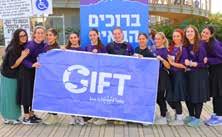
I had travelled out to oversee GIFT’s runners in the Tel Aviv Marathon, helping organise the pre-run gathering and hotel logistics for 50 gap year students. Te night before the race, we hosted a pasta party flled with anticipation, laughter and a shared sense of purpose. Tese students were not just there to run. Tey had committed to fundraising, pushing themselves physically and being part of something bigger than themselves.
By 5:15am the next morning, our frst group had set out to begin the half marathon. As the races unfolded, Tel Aviv came alive. Music played along the route, DJs created a real atmosphere, and crowds gathered to cheer the runners on. Tere was a sense of celebration throughout the city, and by the end of the day, the group had raised over £21,000 for GIFT.
Te day after the Marathon the mood shifted as sirens sounded across the country. Te few days I had expected to spend supporting runners quickly became something very diferent, as I found myself navigating life in a country at war, with my family back in London.
Te experience was surreal, but also deeply moving. I was struck by how quickly people turned towards one another. Messages were sent during those moments in shelters, checking in and ofering reassurance. Doors were opened without hesitation, and even in the smallest spaces there was a strong sense that if there is room in the heart, there is room in the home. In the days that followed, giving did not pause. If anything, it became more intentional.
experiencing homelessness. Routes were carefully planned around public shelters and underground car parks, but the work carried on.
Te response from those receiving the food was something I will not forget. People expressed genuine surprise that volunteers were out delivering meals during a war. It was a simple act, but one that clearly meant a great deal. A fresh meal, a short interaction, and a reminder that they had not been forgotten.
who need it.
What stayed with me most from those two weeks is that giving does not depend on perfect conditions. We often associate it with having time, stability or space, but some of the most meaningful acts of giving happen when it would be easiest not to show up at all. From pasta parties to bomb shelters, the opportunity to give was always there, and people chose to take it.
burman@bwkollel
Te following Friday, I joined GIFT’s Osim Tov B’Rechov programme in south Tel Aviv. A group of young professionals, many originally from the UK, continued delivering Shabbat food to people
Te day I returned to London, 30 of our gap year student volunteers travelled to Beit Shemesh to run a carnival for families afected by recent missile impacts. Trough music, games and shared moments, they created a sense of joy and normality for children who had experienced signifcant disruption. Tis week, the students will continue their volunteering by visiting patients in Shaarei Zedek hospital, bringing toys, time and comfort to children and families
Returning home, I felt relief at being reunited with my family, alongside a quiet awareness that I was leaving something signifcant behind. A reminder that even in the most uncertain moments, we still have the ability to show up for one another, and that sometimes, those are the moments when giving matters most.
Shira is extremely passionate about Jewish Education and has previously held roles in Hasmonean High School and St Johns Wood Synagogue. Shira has been working for GIFT Charity for 11 years in various positions and is currently the programme director responsible for overseeing a lot of the projects and activities in order to engage the community in acts of giving.










Dear Rabbi
If we’re really winning this war against Iran, as we tell ourselves, how is it that missiles are still getting through, people are still being injured, and millions of Israelis are living in fear? Should we have started something we cannot fnish? And where is G-d in all this?
Roberto
Dear Roberto
It’s an honest and equally painful question. Tere is no version of war that is clean or free of sufering. Alas, homes have been destroyed, innocent people have been injured, some have lost their lives and so many are traumatised. Nothing can or should diminish that reality, especially for those directly afected.
But at the same time, we need to understand what “winning” actually means. Winning a war doesn’t mean that the enemy never fres a shot. It doesn’t mean that every missile is intercepted or that no harm ever occurs. No defence system in the world, no matter how sophisticated, is perfect. Even intercepting 90% of incoming missiles is a miracle, but it still means that some will get through. And when they do, the results can be devastating.
Iran is a vast country, and its military infrastructure is deeply embedded within civilian areas. Launchers are hidden in
places we cannot always strike pre-emptively without unacceptable consequences. What we can do - and are doing - is systematically dismantling that capability: destroying launchers after they fre, targeting stockpiles, and eliminating production facilities so they cannot replenish what they lose.
In other words, they are still shooting, but far less efectively, and with diminishing resources.
When a massive ballistic missile lands in a residential area, the expected outcome, based on every military and historical precedent, should be catastrophic: dozens, if not hundreds, of fatalities.
Te fact that, in recent incidents, the number of casualties, while tragic, has been signifcantly lower than what such weapons are designed to cause, is not a coincidence. It refects layers of protection: early warning systems, shelters, rapid emergency response, and above all else, Divine intervention.
To be sure, this doesn’t lessen the pain of a single injured person or grieving family. But it does help us understand the broader reality: the diference between tragedy and far greater catastrophe.
Tere is also a moral distinction that mustn’t be ignored. Israel targets military infrastructure and leadership. Our enemies deliberately target civilians. Tat tells you everything about what we are fghting against.
Regimes like this do not measure
victory the way we do. Even if they had one missile left, they would fre it and declare success. We have seen this before. Israel may win wars on the battlefeld, but its enemies rarely concede defeat.
Regardless of where one stands on the political spectrum, this is a morally justifed war, as Iran poses an existential threat, not just to Israel, but the world. Te sufering and loss endured is deeply painful and tragic. But it does not determine whether a war is just; it refects the price of confronting evil.
in liberation.
Most importantly, we stand on the threshold of Pesach, a time when we are commanded not just to recall a historical event of the past but to relive it by refecting on every story that happens to us; one that begins in darkness and ends
Te missiles are real; the pain is real; the loss is real. But so is the ending. Tis is a time for compelling Jewish unity, where we must hold onto one another and we must hold onto this one truth about us Jewish people: We’ve been here before, we know how this ends. Victory is on the horizon - Am Yisrael Chai!






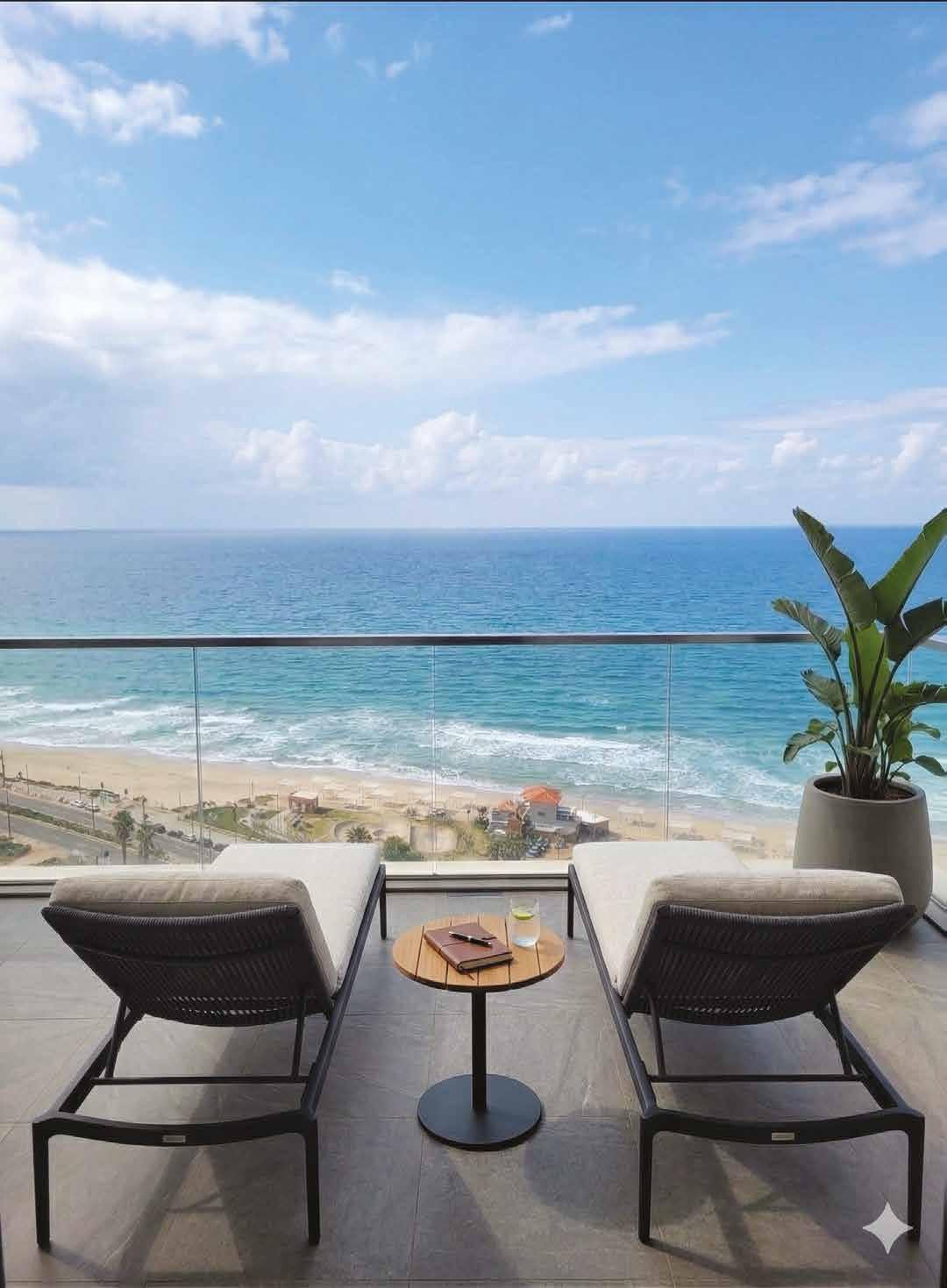
N E T A N Y A
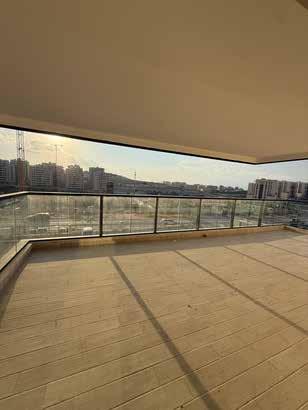
L u x u r y P r o j e c t
S t e p s f r o m t h e b e a c h
2 - 4 l a r g e b e d r o o m o p t i o n s
U n d e r g r o u n d p a r k i n g
A d j a c e n t t o a N a t i o n a l P a r k
G y m & r e s i d e n t s ' l o u n g e
Starting Price:
₪ 4 , 2 6 7 , 0 0 0

J E R U S A L E M
L u x u r y A p a r t m e n t
4 b e d r o o m s + d e n
3 0 0 S Q M
F u l l y f u r n i s h e d
2 0 0 S Q M t e r r a c e
P r i v a t e p o o l
P r i c e U p o n R e q u e s t


I T S H
S
D
E S
e x P e n t h o u s e
7 b e d r o o m s
8 0 s q m s u k k a h b a l c o n y
U p g r a d e d a p a r t m e n t
P a r k i n g & s t o r a g e
Asking Price: ₪ 5 , 0 0 0 , 0 0 0

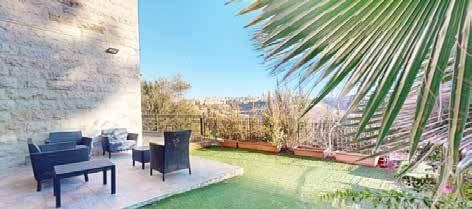
J E R U S A L E M
R a m o t B e t
S e m i - A t t a c h e d V i l l a
2 3 5 S Q M b u i l t
4 0 0 S Q M p l o t
7 b e d r o o m s
4 5 b a t h r o o m s
Asking Price: ₪ 9 , 2 5 0 , 0 0 0






BY RABBI MOSHE TARAGIN
We are a nation of memory. We hold tightly to our past, marking the great turning points of our history. Tat past is not a relic of culture. It lives within us
No night is more saturated with memory than Pesach. We do not merely recall events. We relive them. Te Seder gathers memories across generations and weaves them into identity. “In every generation, a person must see himself as if he left Mitzrayim.” Freedom, faith, and human dignity, frst formed when we left Mitzrayim, are not abstract ideas; they are re-experienced each year and settle back into our shared consciousness.
When Rambam cites this halachah, he adds a striking word: a person must see himself leaving Mitzrayim now. We revisit the past and translate it into the present. Te story of Yetziat Mitzrayim is not sealed in the past. It reaches into the reality we are living through.
Tis year, that demand feels immediate. Te Seder becomes a lens through which we can better understand the history that is unfolding before us.
Here are six moments within the Seder that carry deep resonance and shape the fow of the night. Tis year, they invite a more immediate reading, grounded in the struggle we currently face.
have once again risen to annihilate us. On this night of faith, we are certain that these criminals will meet the fate of those who rose against us in the past. Many already have, and others will follow.
We recall the frst who rose in hatred, Lavan, the father-in-law of Yaakov. His assault may not have been the most violent, but it revealed something enduring about antisemitism. Hatred is always corrosive, but antisemitism defes logic. It is psychopathic and it drives people toward self-destructive behavior. Lavan was prepared to destroy Yaakov and his entire family, including his own daughters and grandchildren. He was not thinking; his hatred consumed him and led him toward the unthinkable.
History has seen this pattern before. Even as Germany faltered in war, trains carried Jews to their deaths instead of soldiers to the front. Hatred of Jews overrode national survival.
We see it again today. Our enemies invest in tunnels and terror while abandoning their own people and their own future. Teir hatred distorts judgment and ultimately turns inward. Tese cul-
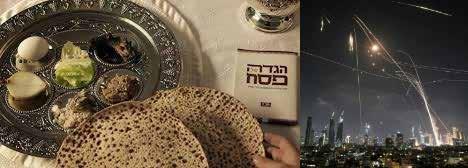
tures of hate will all self-implode.
Te list of four sons reminds us that there are many ways to enter this story. Not every child, not every Jew, relates to identity in the same way, and the Seder must hold space for diferent voices and diferent questions. Te four sons refect the scene at our Seder table, families of varied temperaments and perspectives gathered around a shared memory.
Tis year, there is also a ffth son. Te one who is not here to ask at all.
Across Israel, there will be empty chairs. Some belong to those who fell and will not return to the Seder table. Others belong to husbands, sons, and fathers still serving, still defending our people, absent from their families on this night of gathering.
As we speak about the four sons, we should also think about the ffth, the one whose chair is empty, whose voice we miss, but who remains part of our Seder.
Tis is an obvious moment to connect to our condition, as we face enemies who
Lavan also introduced another pattern, false accusation. Despite Yaakov’s integrity, Lavan projected his own corruption onto him. Tat pattern endures. Modern antisemitism uses updated language and categories, but the accusations themselves are familiar. Once again, our enemies project their own moral failures and insecurities onto the Jews.
When we receive repeated divine kindness, we often take it for granted. We feel gratitude, but it becomes general and unfocused. Dayeinu forces us to pause and name each kindness, allowing gratitude to deepen and faith to increase.
As we recite the ffteen stanzas of Dayeinu, tracing the miracles of Yetziat Mitzrayim, we might also think of the Dayeinu we would ofer for the past two and a half years. Without softening the pain or ignoring the strain, we can still give thanks for Hashem’s care and protection.
As I write these lines, a week and a half before Pesach, we have just endured a difcult night. Two direct Iranian missile
strikes caused more than 150 injuries. Someone asked me whether this war is still worth it. I answered simply: those missiles were coming regardless. Without intervention, without Hashem granting us the wisdom and strength to defend ourselves, it would have been dozens or hundreds at a time. Te number of injuries would have been far more severe. Gratitude is not reserved for easier moments. It must be found even when deliverance arrives alongside hardship.
Chizkiyahu Hamelech did not fully give thanks after the Assyrian siege of Yerushalayim was miraculously lifted. Te moment was too heavy. Te northern kingdom had already fallen, and deliverance came mixed with loss. We are still struggling. But Dayeinu teaches us to mark each stage. Redemption unfolds step by step, and each stage calls for recognition.
remains partly concealed.
We have a general awareness that history has shifted. Tese past two years have not been local geopolitical conficts, but events with broader historical weight. Yet the arc of history remains tzafun, hidden. We may sense general direction, but the details are still hidden.
Matzah carries a double meaning. It is lechem oni, the bread of poverty, which we break in half to place ourselves back into the cramped, dirty conditions of Mitzrayim, squalid spaces without dignity or freedom. We have lived through similar conditions more than once in our history.
Matzah is also the bread that did not have time to rise, a reminder of how quickly we were taken out of Mitzrayim. When we eat matzah, we hold both meanings together. Jewish history asks us to carry diferent emotions at once, to remember hardship while also recognizing redemption.
Tis is a night to feel the bitterness, of Mitzrayim, of our long history, and of these past two and a half years. But that bitterness does not cancel the other side. Alongside it stands the reality of redemption, the endurance of our people, and the strength of the State of Israel.
As you eat the matzah, make room for both emotions in your heart and on your tongue.
Te fnal and ultimate matzah, the afkoman, is deferred until the end of the meal. Tat moment is called Tzafun, hidden. Hiding the afkoman reminds us that as much as we try to decipher history, it
We know we are moving somewhere, but the timing and the unfolding remain beyond us.
Late in the night, as the Seder draws to a close, we gather to sing the story of a small goat purchased by a father. Tat goat is struck, and each act of violence gives way to another. Te song traces the arc of Jewish history, cycles of harm followed by more violence.
Until the end, A Heavenly Father brings that chain to a halt, dismantling each force, even the angel of death.
We are living through the fnal stanza of the song. Our Father has returned. We are no longer a small defenseless goat. We stand with the strength of a roaring lion, able to protect and respond. Our Avinu Shebashamyim stands behind that strength and guides it.
On this night of Jewish history, remember that we are not only telling the Haggadah. We are living it. Let its story meet our moment.
Te writer, a rabbi at the Hesder Yeshivat Har Etzion (Gush), was ordained by Yeshiva University. His latest book, Reclaiming Redemption, Vol. II: Faith, Identity, Peoplehood, and the Storms of War, is available at mtaraginbooks.com



• Dedicated project management, property management, rental oversight from purchase to handover & beyond
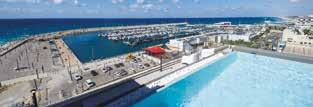



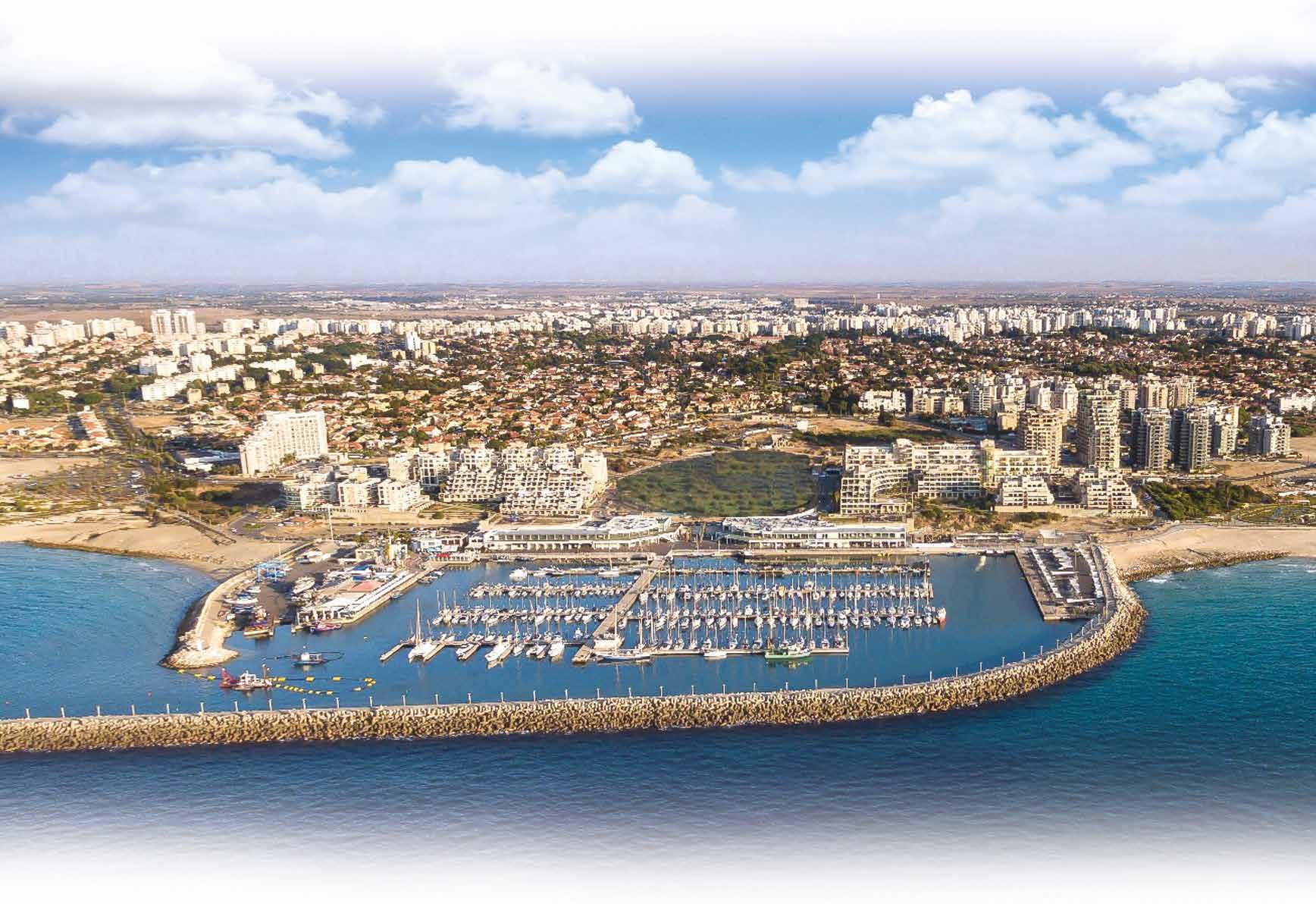
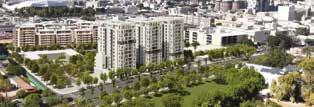
Ashkelon new projects and existing options. Luxury sea facing frst line options & Ir Hayain New Area entry level options & pricing.



luxury sea facing projects and options in Ir Yamim & Shirat Hayam. Walk to beach, pool & gym in complex offering beautiful spacious homes. 5 Rooms with attached additional rooms


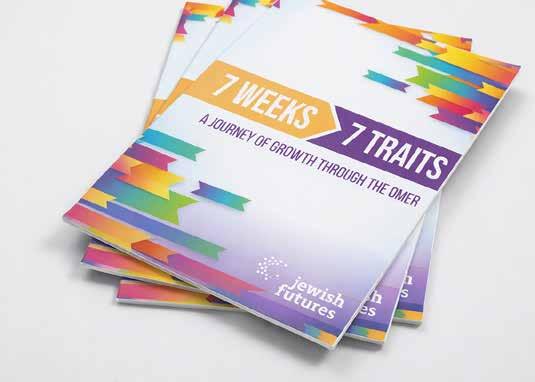
Self-improvement is a booming industry. From 75 Hard to extreme ftness regimens and personal development courses, people everywhere are looking for ways to push themselves. But most of these challenges focus on self—becoming stronger, more resilient, more disciplined for your own sake. But what if there was a challenge that wasn’t just about you—but about making you into a person who lifts up others? For thousands of years, Judaism has had such a system: a 49day structured challenge designed for deep character refnement. It’s called Sefrat HaOmer—the Counting of the Omer—and it’s not just about personal growth. It’s about becoming the kind of person who can give, who can lead, who can build a better world.
just about force - it’s about control. It’s the ability to set boundaries, to say no when necessary, and to hold ourselves accountable. Without Gevurah, kindness can become indulgent and direction-
less. Tis week focuses on developing discipline, structure, and a strong moral compass.
3. Tiferet – Balance & Truth
49 Days. 7 Core Traits. A Complete Personal Overhaul.
Tis isn’t just another self-help programme. It’s an ancient Kabbalistic roadmap for inner Transformationtested for over 3,000 years.
Te 7 Core Traits of the Challenge
Each of the seven weeks of the Omer is dedicated to one major trait, with each day refning a deeper aspect of it. Since each trait exists within all the others, we work on them in a 7×7 structure - 49 combinations in total. Tis means we don’t just develop Chesed (kindness), but we refne Chesed within Gevurah (kindness with discipline), Chesed within Tiferet (balanced kindness), and so on. Each day is a step in a structured journey toward becoming a more refned and giving person.
1. Chesed – Kindness & Giving Chesed is about expanding beyond ourselves, recognising that giving to others is at the core of what it means to be human. It’s not just kindness - it’s boundless kindness, a generosity that overfows and uplifts. Tis week challenges us to see where we can give more, love more, and break out of self-centredness.
2. Gevurah – Discipline & Strength
Gevurah teaches that real strength isn’t
Tiferet is the perfect balance between Chesed and Gevurah. Too much Chesed leads to uncontrolled giving, while too much Gevurah leads to rigidity and withholding. Tiferet ensures that kindness is not reckless and that discipline is not harsh. But this balance isn’t just about moderation - it’s about truth. Tiferet is the ability to see things as they really are and to respond in a way that is fair, just, and aligned with reality.
4. Netzach – Assertive Giving
Netzach is about imposing my will onto another - not in arrogance, but with purpose. It is about infuencing, pushing, and driving others toward what is right, even when they resist. Tis is the force of a parent guiding a child, a teacher disciplining a student, or a leader inspiring action. Netzach doesn’t accept passivity. It fghts for what matters and is relentless in ensuring the right outcome.
5. Hod – Empathetic Giving
Hod is the opposite of Netzach. Where Netzach drives forward, Hod steps back. It is about restraint in relationships— about not imposing my will, but listening to others and respecting their needs. Hod is the ability to submit to others’ needs - not out of weakness, but out of deep emotional wisdom.
6. Yesod – Connection & Relationships
Yesod is the ability to create meaningful relationships, to build trust, and to connect on a deep level. It is the foundation upon which all healthy relationships stand. Tis week challenges us to refect on our connectionsare they genuine? Are they built on integrity? Are we people others can rely on?
7. Malchut – Te Power of Receiving Malchut has no energy of its own. It is the ultimate receptacle, receiving everything that came before it. It is the ability to empty oneself of ego completely, to take in, absorb, and internalise. But Malchut is not passive - true receiving is preparation for future giving. It is about developing the humility to accept, so that when the time comes, we can pass it forward and uplift others.
Unlike most self-improvement challenges, the 49 Tough Challenge isn’t about proving how great you can be. It’s about becoming the kind of person who can give more, lead more, and make an impact.
Tis is a journey of self-mastery - not for self-glorifcation, but for self-transformation.
Scan the QR code below to join the 49Day Personal Growth Challenge.

Or pick up a copy of the 49 day challenge in a Kosher shop near you.







Last week’s Answer:
The word is “ha.” It is one letter, and appears in the book of Devarim 32:6. In most texts of the Chumash the masoretic note in the margin reads “Hey rabasi, v’hee teiva l’atzma” - “large hey, and it is a word unto itself.”
In what situation will two people in the same place be obligated to make Kiddush on different nights? That is, the night the frst one is obligated, the second one is not, and the night the second one is obligated, the frst one is not.
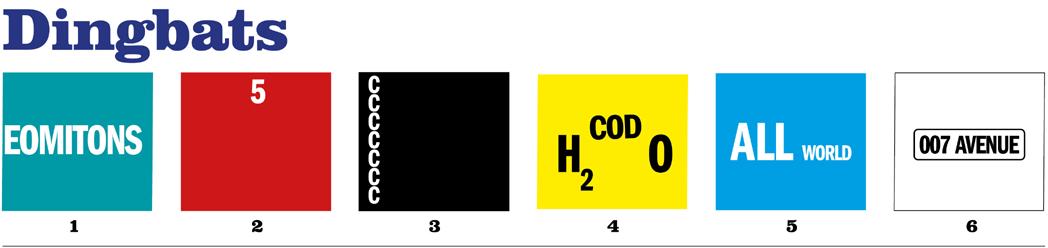

The goal of a word wheel puzzle is to create as many words possible with the letters in the word wheel. Each word must contain at least three letters. You can only use each letter once and every word must have the letter in the centre of the wheel.
E O R N I T R C C
Use the area below to write the words you have found.
Meaning: Book
Pronunciation: Sefer
How to remember it: This book is so sentimental, i’m worried I will lose it. I’m going to keep it in a Sefer place!
Fun fact: The same root is connected to “ריפס” (sapir) — a sapphire, something that shines — hinting that words and stories are meant to illuminate.


• Comprehensive health policy, backed by Harel, Israel’s premier health insurer
• Serviced by our friendly, experienced, English-speaking staff
• Private, contracted physicians and specialists • Full hospitalization, labs, etc.
• No deductible or co-payment
For more information, visit: egertcohen.co.il/tourist-health-insurance/ 02-622-7999 • www.egertcohen.co.il • info@egertcohen.co.il
• Suits now from £69
• Overcoats from £49.50
• Knitwear from £10
• Casual Jackets from £29.50
• Sports Jackets and Blazers from £39.50
• Trousers £20 each 2 pair for £30 28-48 inch waist
• Shirts from £10
• Shoes from £15
10 Golders Green Road London, NW11 8LL
Open weekdays untl 6pm & Sundays tl 5pm