JNF UK’s work never stops — rebuilding lives, restoring hope, and strengthening Israel for the future. Learn more at jnf.co.uk
Israel Strikes Gas Fields
BY DAVID SAFFER
As Te Jewish Weekly went to press, it was reported that Iran hit the Israeli oil refnery in Haifa. Tis followed President Donald Trump’s warning to Iran that the United States will strike its strategic South Pars gas feld if the regime strikes Qatar’s Ras Lafan energy complex again.
Trump’s move came after an Israeli attack on Iran’s South Pars last night. Oil prices have risen sharply.
“Israel, out of anger for what has taken place in the Middle East, has violently lashed out at a major facility,” Trump posted on Truth Social overnight.
He added that there would be “no more attacks” by Israel unless Iran “unwisely decides to attack” Qatar. Should this happen the US “with or without the help or consent of Israel” would “massively blow up” the South Pars facility.
Trump claimed the US “knew nothing” of
Israel’s strike, a claim Israeli ofcials reportedly denied in media outlets.
Qatar said the brazen missile attack was a direct threat to its national security and would take all necessary measures to protect its sovereignty, security and safety of citizens.
In a constantly changing situation Israeli forces began striking strategic targets in northern Iran this morning.
Israel-US targets include ballistic missile and UAV storage and launch sites, air defense systems and weapon production facilities.
In recent days, the IDF eliminated Iran’s Supreme National Security Council Secretary Ali Larijani, head of Basij, Gholam Reza Soleimani, and Intelligence Minister, Esmaeil Khatib. Te IDF also eliminated Hassan Ali Marwan, a coordinator between Hezbollah and the Quds Force, Ali Maslam Tabajeh and Hamas commander Yahya Abu Labda.
Defense Minister Israel Katz said: “Te intensity of the strikes in Iran is increasing… Israel’s policy is clear and unequivocal, no one in Iran has immunity, and everyone is a target.”
President Isaac Herzog visited Ramat Gan after an elderly couple were killed in an Iranian missile attack.
He said: “Te more things that happen in Iran through our attacks, we will see change also with the people of Iran.”
IDF spokesman Brig. Gen. Efe Defrin accused the Iranian regime of targeting civilians and called on Israelis to continue following Home Command instructions against missile and drone attacks.
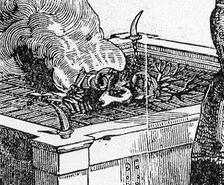
The gas field that the IDF destroyed
Gloucester Gardens, Golders Green NW11
Raleigh Close, Hendon NW4
Sinclair Grove, Golders Green NW11
Sherwood Road, Hendon NW4
Al Quds rally condemned by lay leaders
BY ADAM MOSES
Police are investigating ‘death to the IDF’ hate chants at an Al Quds static protest at the River Tames in London last Sunday.
Vile anti-Israel and anti-US slogans also included ‘Boom Boom Tel Aviv’ and “From the river to the sea”.
Twelve people were arrested by police for ofences including support for a proscribed organisation, afray and threatening or abusive behaviour. Scotland Yard is reviewing footage.
Demonstrators waved Palestinian fags and held up pictures of former Ayatollah Ali Khamenei.
A Stop Te Hate counter-demonstration took place on the opposite side of the Tames. Tey waved Israeli and US fags. Up to 1,000 ofcers attended the rally.
Rapper Bob Vylan (also known as Pascal Robinson-Foster) repeated his controversial Glastonbury ‘death to the IDF’ chant that was investigated by Avon and Somerset Police. Addressing a crowd estimated in the hundreds, far lower than anticipated, Vylan chanted: “… death, death, death to the IDF”.
A Met Police spokesperson said: “We are aware of chanting made by a speaker at the Al Quds protest and will be investigating. We recognise the concern footage and
chanting like this causes, particularly with London’s Jewish communities… When this language had been used previously we sought advice from the CPS who determined that there would be insufcient evidence to take a case forward.”
Jewish groups were appalled at despicable chants.
A We Believe Alliance (a partnership of NJA and WBII) spokesperson said: “Te scenes surrounding this weekend’s Al Quds Day gathering were a disgrace to London and Britain. While Police say they are investigating chants led by Bob Vylan calling for the death of the IDF, the fact such rhetoric was allowed to echo through our streets makes a mockery of the force’s pledge, made after the Bondi Beach shooting, to clamp down on extremist slogans.
“Calling for the death of the IDF is calling for the death of Israel’s sons and daughters, most of them Jewish Israelis and only eighteen when they are conscripted.”
We Believe welcomed police stopping a march but added that allowing a static protest ignored a precedent of antisemitic hatred surrounding the event organised by the Islamic Human Rights Commission.
“Te result was predictable,” they explained. “Tere were genocidal chants about Israeli teenagers while the same crowd said nothing about the regime in
Tehran slaughtering more than 30,000 of its own people. Tat hypocrisy speaks volumes. We hope the Met will now show the resolve required to hold those responsible fully accountable under the law.”
Jonathan Metliss, Action Against Discrimination, said: “Te event turned into a pro-Palestinian, anti-Israel gathering and hate-fest against Israel. Te chants are incitement to racial hatred, encouraging antisemitic behaviour and hatred of Jews. We unequivocally condemn this language and behaviour. Te chanting implores the police to take appropriate action and arrest all the perpetrators, certainly more than the 12 arrested. Tat should include the antisemitic and racist Bobby Vylan.
AAD welcomes the Stop the Hate and anti-Iranian regime rally for their outspokenness and bravery.”
Met Assistant Commissioner Ade Adelekan, public order, said the policing plan worked with both groups kept apart and no attempts to breach conditions by marching.
“Both sets dispersed as planned, we saw signifcantly fewer people attend than we had anticipated,” he noted.
Adeleken added: Te restrictions and conditions meant many people chose to stay away and not to attend the protest or counter-protest… Our decision to apply for the ban was the right one. A static protest
meant it was easier for ofcers to keep the two groups apart and prevent serious public disorder.
Home Secretary Shabana Mahmood banned the march due to the possibility of “serious public disorder”.
Mahmood backed a Metropolitan Police request under section 13 of the Public Order Act 1986.
A one-month ban, the frst since 2012, applies to the Al Quds and associated counter-protest marches.
Past Al Quds marches have seen arrests for support of terror groups and antisemitic hate crimes.
“Hopefully, Mahmood will in the future seek to ban infammatory pro-Palestinian and anti-Israel gatherings, let alone marches, notwithstanding legal hitches, in the opinion of AAD,” said Metliss.
“Anti-Israel, anti-Zionist and pro-Palestinian rhetoric and behaviour is a cloak for antisemitic behaviour.”
Metliss called on the government, Met Police, Crown Prosecution Service and judiciary to take the event seriously in addition to a number of Jewish community leaders who “regrettably remain silent”.
Spend your retirement doing what you love - not worrying about money
Synagogue atacks in Diaspora condemned
BY DAVID SAFFER
Jewish communities on both sides of the Atlantic have experienced attempted attacks on synagogues this month.
Shuls in Toronto, Liege, Rotterdam, Amsterdam and Trondheim in Norway saw terrifying incidents. And a synagogue and Jewish pre-school near Detroit, Michigan was attacked.
Ayman Mohamad Ghazali, a 41-yearold Lebanese-born US citizen, allegedly rammed a vehicle into the Temple Israel Synagogue. Some 140 pupils and staf were evacuated.
Gideon Falter, Campaign Against Antisemitism chief executive, spoke about the posture of the West relating to Iran and Islamist extremism on GB News this week.
He told the presenter: “Last summer the Intelligence and Security Committee of Parliament was warning that Iranian agents are active in Britain. Tey are recruiting criminal gangs and Islamists to go and attack synagogues, Jewish institutions and Jewish individuals. We have now had arrests of alleged Iranian spies in Britain who were preparing that kind of activity, we have also got arrests of alleged Hezbollah agents in Britain.”
Regarding Michigan, Falter said the attack was noting the attacks on Diaspora communities.
“One can either say that Islamists all
over the world have decided to acquire weapons and bombs and fnd local Jews to kill, or something more coordinated that our intelligence services have been warning about,” he explained. “When it comes back to the posture of the UK we have not been doing anything near enough.”
Falter explained that luxury properties owned by the new Supreme Leader of Iran, Ayatollah Mojtaba Khamenei, are deemed a security threat as they overlook the Israeli Embassy.
He added:
“Te British government still refuses to proscribe Iran’s Islamic Revolutionary Guard Corps (IRGC) and is dragging its feet even as European Union has proscribed them. It is no wonder that we are so vulnerable to these attacks. Te West has failed collectively and the UK is one of the worst ofenders at standing up to Islamists and
Iran.”
President Isaac Herzog held calls with Dutch leaders following explosions in Rotterdam and Jewish school in Amsterdam.
Herzog spoke to Chanan Hertzberger, Centraal Joods Overleg chairman,
Zvi Aviner Vapni participated.
Herzog expressed dismay and conveyed a message of support, strength, and solidarity from Israel.
“It is totally unacceptable that the historic Jewish community of the Netherlands, which was devastated during the Holocaust and today is a thriving centre of Jewish life, continues to be threatened by violent antisemitism,” he said. “I call on the Dutch authorities to intensify their eforts to combat antisemitism, incitement, and terror against the Jewish community.
Chris den Hoedt, Jewish Community of Rotterdam chairman, Rabbi Yehuda Vorst of Rotterdam Synagogue and Professor Chaim Loonstein of the Board of Cheider in Amsterdam.
Israel’s Ambassador to the Netherlands,
“Te rise in antisemitic violence across Europe, including the attack on a synagogue in Belgium is deeply concerning and demands a strong and unequivocal response. We stand together with you in the fght against this despicable Jew-hatred.”
Herzog also spoke with Jewish leaders in Detroit following the Temple Israel attack.
“Tis is a grave and serious incident that follows a series of attacks on Jewish institutions around the world,” he said.
Continued on page 7
- 13th - 16th
UK born, Rabbi Sam Taylor, the Rabbi of the Shaarei Shomayim community, Canada, offering prayers following the shooting towards his shul in Toronto
Continued from page 6
Conversations also took place with Yves Oschinsky, Coordinating Committee of Jewish Organisations in Belgium and Rabbi Yehoshua Nezman of the Jewish community.
“Tis is a community with a deep, but also painful history, with one-third of the Liege Jewish community deported and murdered during the Holocaust,” he noted. “Any attack on a synagogue or Jewish community institution in Belgium,
Europe, or anywhere around the world must be unequivocally condemned. I call on the Belgian leadership to work closely with the local Jewish community in the fght against the scourge of antisemitism.”
Over 15,700 people have signed a CAA petition for the Government to fulfl a pre-election pledge to proscribe Iran’s IRGC under the Terrorism Act 2000. CAA has set a target of 25,600 names.
A spokesman said: “Te IRGC is not just a threat to Britain’s Jews, but to Britain itself. We pride ourselves on being a nation of decency and tolerance. If we continue to allow the IRGC to operate freely in the UK, then we are failing our nation. We need action now. Until the Home Secretary proscribes the IRGC, as has been promised, police and the security services cannot move on IRGC agents until they are actually in the process of actively preparing an act of terrorism.
“Te Home Secretary must give law enforcement the powers they need to keep us safe. We cannot wait another day. Te Government must proscribe the IRGC.”
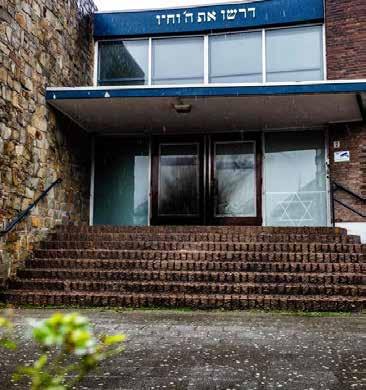
A synagogue on ABN Davidsplein in Rotterdam, western Netherlands on March 13, 2026, after a fire started
PLAN SMART- LAND STRONG
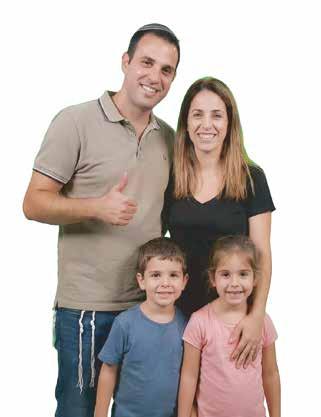
Why Carmay-HaNadiv?
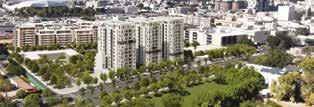
Carmay HaNadiv is a flourishing new neighborhood in Kiryat Malachi.
Over 200 new apartments are currently being delivered to new Anglo families and Olim, joining more than 900 established families who already benefit from excellent schools, shops, playgrounds, and a vibrant, welcoming community.
Central location: 15 min from the beach
Easy commute to Jerusalem & Tel Aviv
Why Shivat Zion?
A charity recognized by the Ministry of Aliyah & Integration and working in partnership with JAFI, supporting olim from Western Europe and the UK from planning Aliyah to settling confidently in Israel.
Soft Landing Program
Full Aliyah support before, during and after landing.
Aliyah documents and paperwork.
Choosing schools, applications and registration
First steps in Israel and more
Housing Options
Purchase an apartment as an investment and rent it to other olim
Rent a semi-furnished apartment for approximately £1,200 per month through Shivat Zion’s Aliyah Program and move in by Summer 2026
Purchase an apartment off-plan with an estimated completion date of approximately 3.5 years
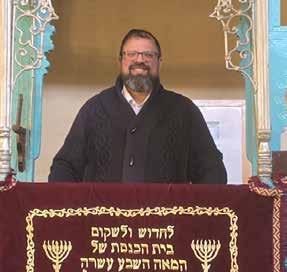
Dayan Zobin leads Ner Yisrael trip exploring Morocco’s Jewish Heritage
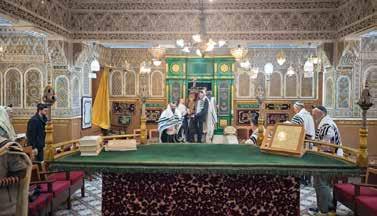
Some 35 members and friends of the Ner Yisrael community in Hendon, northwest London, travelled to Morocco this week for a three-day heritage trip led by Dayan Eliezer Zobin and Rebbetzin Aviva Zobin, exploring the history of one of the oldest and prominent Jewish communities in the Diaspora.
Te trip began in Rabat, Morocco’s current imperial capital. Te group toured the historic Jewish quarter, known as the Mellah, including the synagogue of Rabbi Shalom Zaoui, revered locally by both Jews and Muslims. Dayan Zobin spoke about the origins of the Moroccan mellahs and the structure of Jewish communal life in the country.
Dayan Zobin also presented an overview of the general history and vortex of cultural and religious trends that has shaped the country over centuries, thereby placing its Jewish history into a broader context. Te group visited the Kasbah, citadel, of the Oudayas, built in part by the Almohads in the twelfth century, whose religious zealotry spread to persecuting Jews from
Morocco to the Iberian peninsula. Te group also visited the Mausoleum of Mohammed V.
On the second day, the group travelled to Meknes, once home to a sizeable Jewish population and an important centre of rabbinic life. Participants visited the old Talmud Torah school and synagogue, at one time led jointly by both an Ashkenazic and Sephardic rabbi.
Dayan Zobin spoke of the dynamics of the Sephardic responses to modernity, its challenges of acculturation and assimilation, the Moroccan embrace of mysticism, and the tension between diferent streams within Jewish thought. Te visit continued into the Middle Atlas Mountains, including Ifrane, the oldest Jewish community in the country, originating almost three millennia ago. Participants heard the account of the eighteenth-century martyrdom of ffty Jews who refused to convert following a rabble roused by a supposed sorcerer. Te group commemorated this tragic massacre with a moving prayer for the departed. Te day concluded with visits
to Berber hillside villages, surrounded by sheep and sheepdogs and the famous Barbary monkeys. Te group conversed with locals and learnt about their unique history and culture.
Te fnal day was spent in Fez, long regarded as one of the great centres of Jewish learning, now home to only twenty Jewish residents. Te group explored the Mellah and visited two historic synagogues, including the Ibn Danan Synagogue associated with the Sephardic communities who arrived after the various expulsions from Spain. Drawing on his weekly Sunday morning talks on Jewish philosophy and intellectual history at Ner Yisrael, Dayan Zobin discussed the enduring infuence of Maimonides’ philosophical works and their lasting impact on Jewish thought to this day, as well as the controversies surrounding his ideas. Maimonides’ house still stands today in the old city. Te group also visited the city’s famous tannery, known for the pungent smell created by the use of pigeon droppings in the traditional tanning process.
largest Modern Orthodox Jewish community in Europe.
Dayan Eliezer Zobin refected:
“Morocco preserves a remarkable record of Jewish life stretching back centuries. Today, when the Jewish world once again faces the pressures of geopolitics and war, it is striking to encounter a community that endured many changing and often difcult circumstances, yet always remained deeply engaged with its faith.
Te three-day trip brought together members of all ages from the Ner Yisrael community, widely regarded as the
It was a pleasure for my wife and I to travel and learn together with members and friends of Ner Yisrael. Jewish learning does happens not through textual study, but also by encountering the places and communities that produced them. Viewing that history in its original setting, and sharing it with our north-west London community, was a rare privilege.”
Ávila: A Hidden Gem of Jewish Spain
BY RABBI RAPHY GARSON
Within the region of Castile and León, northwest of Madrid, lies the remarkable medieval city of Ávila.
Surrounded by one of the best-preserved sets of fortifed walls in Europe, built mainly in the late 11th century after the Christian reconquest from Muslim rule, the city is famous for its dramatic ramparts and monasteries. Yet beyond these landmarks lies another, lesser-known story, one deeply connected to the history of the Jews of Spain.
One of the most fascinating aspects of Ávila’s Jewish past lies in its archives. Remarkably, the city preserves what is believed to be possibly the only surviving original document announcing the expulsion of the Jews from Spain, sent to cities after the decree of Ferdinand and Isabella in March 1492.
Te edict ordered that all Jews who refused conversion leave Spain by the end of July 1492 or face death and the confscation of their property. Seeing the physical document frst-hand, a fragile
link to that moment, makes clear that the events of 1492 were not abstract decisions in textbooks but real orders that reached Jewish communities across Spain and changed the lives of thousands of families overnight.
In 2022, I visited Ávila with a large group of students and had the opportunity to see this remarkable archive. Standing in the place where the document has been preserved for centuries was moving. Our visit also drew media attention, and the Spanish news station Telemadrid came to flm the group as we became the frst Jewish group to enter the archives and view the document. Surrounded by these records of the past, it felt as though history had come full circle.
Walking through the city today, it is difcult not to imagine what Jewish life must have looked like before that fateful year. Like many Spanish towns, Ávila once had a vibrant Jewish quarter, and Jews played an important role in the city’s economic and intellectual life.
One particularly poignant site lies behind the Convent of the Encarnación, where excavations in 2012 uncovered around one hundred graves from the medieval Jewish cemetery that served
the community between the 12th and 15th centuries. In 2013, the remains were respectfully re-buried and the area transformed into a memorial to the lost community.
Standing there with our group, where Jewish families once laid their loved ones to rest, was moving, a reminder that although the community disappeared more than fve centuries ago, the memory of Jewish life in Ávila has never entirely vanished.
Sadly, Ávila’s history contains darker chapters. Te city was closely connected with the early Spanish Inquisition and with Tomás de Torquemada, the Dominican friar who became the frst Grand Inquisitor of Spain in 1483.
From the Dominican monastery of Santo Tomás, activity was directed against conversos suspected of secretly practising Judaism. One of the earliest auto-da-fé ceremonies associated with the Inquisition took place here, intended to intimidate those suspected of continuing Jewish practices after conversion.
Te ancient walls and narrow streets have changed little in fve hundred years. As Jews walking these streets once again, it is impossible not to think of the Jewish
families who once lived here before the tragedies of the late ffteenth century. Yet there is also a sense of history coming full circle. In the ffteenth century, Jews and conversos lived here under growing pressure and fear. To return today openly and proudly as Jews, studying the archives and remembering the lost community, is a quiet but meaningful reversal. Te story did not end with expulsion; Jews return not as victims of history, but as bearers of memory.
Ávila may be known for its walls, but for those who look deeper it reveals the enduring story of a Jewish community that once lived within them, a story slowly being remembered.
JRoots will be running a cross-community journey to Madrid and the surrounding areas, including sites such as Ávila. Bookings close at the end of March.
Rabbi Raphy Garson, raised in Gibraltar, served 18 years as Senior Rabbi of Ohr Yisrael Federation in Elstree and now leads the Rabbinic Team at Tiferet Eyal Synagogue in Hendon. A Holocaust educator, he has guided over 6,500 students to Poland and leads Jewish heritage journeys worldwide with JRoots.
Finchley Chabad get creative
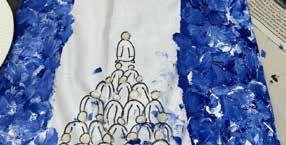
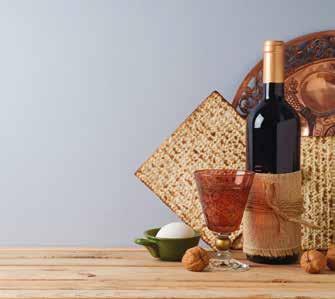
Chabad of Finchley Cheder pupils have been busy preparing for Pesach with a range of creative and educational activities. Te children crafted beautiful artwork to decorate their Seder tables, including colourful table runners and a unique hydro-dipped Cup of Elijah. Tey also created a “Magical Seder Kit” to help them follow each step of the Seder and proudly practiced singing the Mah Nishtanah, bringing the Pesach story
to life as they prepare to celebrate with their families.
SEFIRAS HAOMER AND THE DATELINE MENACHOT 65b
BY RABBI YAKOV SCHONBERG
A PERSONAL OR LOCALITY-BASED COUNT?
Menachos 66a cites an Amoraic teaching of Abaye regarding Sefras HaOmer, that it is a mitzvah to count days and it is a mitzvah to count weeks. Ameimar disagreed and counted only the days, not the weeks. He explained that originally, the counting of the omer was connected to the omer ofering, but since the destruction of the Beis HaMikdash, the counting of the omer ceased to be a Torah obligation. Rashi explains that the Rabbis instituted the practice of counting as a remembrance of the Temple, and since the practice serves merely as a commemoration, it sufces to count the days. Rav Ashi instituted Abaye’s ruling as general practice, and the Rishonim note diferent procedures to fulfl Abaye’s directive.
HOW TO COUNT DAYS AND WEEKS
Te Baal HaMaor’s view (Pesachim 28a) is that the weeks are only mentioned at the end of each week. Terefore, one counts the individual days until the end of the frst week, when one says: “Seven days which are one week.” Ten, one continues with “Eight days,” “nine days,” until the fourteenth day, when one says: “Fourteen days, which are two weeks,” and so on. Other Rishonim say that the count should focus on the day number within each week. Tus, from the eighth day onward, one counts, “One week and one day,” “one week and two days,” etc. At the end of each week, the total number of days is mentioned: “Fourteen days, which are two weeks.” Ten, on the ffteenth day, a new count starts: “Two weeks and one day,” “Two weeks and two days.” (Ran, Pesachim 28a). Our custom is to combine both practices—counting the total days, the number of weeks, and the day in the current week each day. Abaye taught that it is a mitzvah to count days and a mitzvah to count weeks, and his repetition of the word “mitzvah” implies that there are two distinct mitzvos: one to count the days and the other to count the weeks. Tis is the opinion of Rabbeinu Yerucham (Nesiv 5:4, p. 44), who says that the day and week count each warrant their separate berachah, and that was the case in the time of the Beis HaMikdash. As it is only a remembrance nowadays, we make a single berachah for both days and weeks. Te Rambam, however, rules that days and weeks are two parts of a single commandment. Tis is evident because we count weeks every night; if counting weeks were a separate mitzvah, we should not mention weeks until the end of the week, and we should recite a separate berachah for the counting of weeks (Sefer HaMitzvos, Mitzvos Asei no.
161). Rashi learns that Abaye and Rav Ashi accept that the omer count nowadays is a Rabbinical institution, and the debate with Ameimar concerns whether weeks should be counted as well. However, the Rambam rules that the obligation to count remained Biblical even after the destruction of the Beis HaMikdash (Hilchos Temidin U’Mussafm 7:22, 24).
TEMIMOS - COMPLETE
Tosafos (Menachos 66a, s.v. zecher) cites the view of the Baal Halachos Gedolos (Bahag) that if one missed counting a single day, he cannot continue counting with a berachah because Torah commands that the sefrah count of seven weeks should be temimos, complete, and his count is incomplete. Tosafos comments on this ruling, calling it astonishing and incorrect, without clarifying his argument. A simple understanding of the disagreement is as explained by the Chinuch. Menachos 66a interprets the word temimos as referring to each individual unit being counted, which must be whole, meaning that we are to count as early as possible in the night, so that the count will be of a complete day. Nevertheless, the mefarshim explain that if one forgot and did not count at night, he can still complete his count throughout the day. However, some Rishonim say that if he forgot one day, he can no longer count at all that year, because the sequence of days is one mitzvah, and his sequence is broken. Te Rambam disagrees with this understanding and ruled that one who forgot a single day should complete the count by saying, “yesterday was such,” without a berachah, and then continue counting in line with the rest of the community (Chinuch, Mitzvah 306). Tis machlokes Geonim and Rishonim regarding exactly what must be complete, the days or the weeks, and whether each night is a mitzvah in its own right, is resolved with a compromise. Shulchan Aruch rules to accommodate the various views above, that if he forgot to count on one day, he counts the other days, on the basis that each day is a separate mitzvah. However, no berachah is recited, having regard to the opinions that hold that temimos relates to the seven-week sequence, and his count is incomplete.
CROSSING THE DATELINE
Te International Dateline presents a problem regarding sefras haomer. We will not try to explore the well-known dispute over the location of the halachic dateline here. Sufce it to say that the two main views are: that the Chazon Ish held it to be six hourly time zones east of Yerushalayim (35.2 +90° = 125.2°E), and Rav Tukatzinski held it to be 12 hourly time zones east (or west) of Yerushalayim (35.2-180 = 144.8°W). Te Chazon Ish based his view on the Baal HaMaor’s
ingenious Talmudic proof of when hourly time-zone regression stops as one circles the globe, because one enters a new day. Rosh HaShanah 20b defnes that the latest time for fxing Rosh Chodesh in Yerushalayim is at noon, on the basis that there must be one point in the world which will experience a full twenty-four-hour Rosh Chodesh. Noon-time is eighteen hours into the day, so at that point it will be the beginning of the day if one calculates eighteen time zones earlier. Te gemara is telling you, in efect, that the date change at the opposite side of the world takes place when there are just six hours left to the day in Yerushalayim. Te full twenty-four-hour day must therefore start eighteen hours earlier (24-6). However, the Chazon Ish could not countenance a situation where someone stands on the dateline, with one foot in Shabbos and the other in Sunday. He therefore adopted the principle of gereirah (dragging), whereby any landmass can have only one time zone, and the adjacent area is dragged to the same side. Rav Tukatzinski based his view on the concept that Yerushalayim is considered by Chazal to be the centre of the universe, and it follows that the day must end at the opposite centre line, 12 hourly time zones away. Tere are other opinions as well, and the majority of poskim do not rule like the Chazon Ish, but, as it is an important viewpoint, poskim will rule to act strictly in accordance with the Chazon Ish whenever it afects Torah law rather than rabbinical injunctions.
MISSING OR GAINING A DAY
When one crosses the dateline eastward, the night of sefrah that he counted before he departed recurs in the place of his destination. Is he obligated to count that night again, and if yes, should he also recite a berachah? How would his case compare to that of one who skips a night of sefrah? On the one hand, he will ultimately count all forty-nine days. On the other hand, a night will pass without counting, and is that considered an incomplete count? Rav Yisroel Taplin cites the opinions of Rav David Shapira (Bnei Tzion 1:14:23), Bezel Hachochmah (5:96), and Mishneh Halachos (10:121), who require that someone who crosses the dateline eastward repeat his count of the night before on the night following his arrival without a berachah. Tey view the Bahag’s requirement of complete counting as referring to the act of counting, that one must count during the course of every single day. Other poskim hold that this traveller need not repeat his previous night’s count, as they view the temimos requirement as relating to the number count, that every number must
be counted, and there is no concern if a day passes without a count if that number has already been counted.
When one crosses westward, he jumps forward one day and ends up missing one night. Is this the same as if he forgot to count one day? Another question that arises is whether one must synchronize his sefrah count with that of the locals at his destination or should he continue to declare the day of the omer by his original count? Although Menachos 65b states that sefras haomer is a personal obligation on every man, does that mean that each person maintains a personal count? Such a notion would result in Shavuos, which must be celebrated on the day following the forty-ninth day of his count, being celebrated on a diferent day from that of the local community, depending on how many times he crossed the dateline. Te last Lubavitcher Rebbe zt”l in a sichah discourse, presents as halachah that both the sefrah count and Shavuos depend on one’s personal count. However, he instructed his followers to avoid crossing the dateline by travelling in the opposite direction. It is the Lubavitch practice to maintain an independent personal count if they cross the dateline, and at “770,” there are minyanim that accommodate a third day of Shavuos for shaluchim who came from afar for Yom Tov.
Tere are many other halachic implications of crossing the dateline, beyond Shabbos and Yom Tov laws. Tese include the number of Chanukah lights to be lit and ascertaining dates to perform mitzvos such as bris milah, pidyan haben, Bar Mitzvah, shivah neki’im, and vestos. As always, these shaalos must be posed to your LOR, but you can beneft from reading a summary of Sefer Taarich Yisrael by Rav Yisroel Taplin, which can be downloaded from this link: https:// datelineinhalacha.com/wp-content/ uploads/2020/07/Kitzur-Taarich-Yisroel-6-30-99.pdf
To contact Rabbi Schonberg, please email, yschonberg@gmail.com
To fnd out more, you can sign up at mercazdafyomi.com and receive a free gemoroh.
Jewish Care’s ambitious new 5-year plan: Altogether Stronger
“Over the next fve years Jewish Care will double the number of people supported through our community services. We will strengthen existing services and deliver new services where the community most needs them,” says Jewish Care Life President, Lord Levy.
“We will lead in three critical areas dementia care, mental health support, and end-of-life care and reach as many as one in fve in the Jewish community through families and carers. We will also ensure long-term sustainability through innovation, technology, strong estates and engaging supporters across generations. To do all this we need to raise £100 million in voluntary donations.”
Jewish Care’s CEO, Daniel CarmelBrown, explains, “Tis expanding of our community services is in response to our aging Jewish community who have more complex needs – by 2031, one in fve people in Britain will be over 65 and many more people are choosing to live independently in their own home for as long as possible.
“We are seeing a rising number of people living with dementia and 26% of our community now experience mental health challenges, facing loneliness and isolation. Younger people are asking for earlier mental health support. Families are balancing care, work and fnancial pressures. At the same time, Jewish identity is more diverse and expressed in many diferent ways. Growing
antisemitism means that our Jewish community services are even more important to help people feel supported and connected to their personal identity and community.”
Te new strategy is the result of hundreds of conversations across the Jewish community and across the organisation, the largest health and social care charity for the Jewish community in London and the South East.
“Delivering the many vital person-centred services on which so many people in our community rely, remains core to Jewish Care’s work,” continues Daniel Carmel-Brown. “From our care homes and community centres to our Helpline, social work teams and the Holocaust Survivors’ Centre - we are adapting to meet the needs of people in our community today and tomorrow.”
Expanding on the charity’s mission for 2026-2030, Jewish Care Chair, Marcus Sperber, says: “Te need for care, connection and community has never been greater. Tat is the driving force behind this new strategy. Altogether Stronger sets out how we will reach more people in the Jewish community so they can live with dignity, purpose and connection – and receive the care and support they need at every stage of life.
“We lead with Jewish values of compassion and dignity so that ageing, illness or hardship can be faced with dignity and purpose and people feel supported to
take control of their circumstances, make informed choices, manage their mental and physical health, and feel connected and valued.”
What the community say:
Sheila, a member of Te Sam Beckman Centre for people living with dementia, says, “I love it. Te staf and volunteers are kind, welcoming and motivated to give us a good time. I feel very special when I am here and that’s because of them all.”
Sean, a member of Te Zalman and Ruchi Noé Centre at Jewish Care’s Sandringham care campus, adds, “I think if the place wasn’t here, it would be a lot of people missing friendship, which I think to a lot of older people, like myself, is very important.”
Carole, whose husband attends Te Dennis Centre for people living with dementia, “Without the Centre, life would be very much more difcult and duller. It really is the most wonderful place. He loves going there, enjoys all the activities and he comes back a diferent man. He’s vibrant, and happy.”
a comfort to me. But, most of all, it has given me hope for life, hope for the future and hope to my family that I’ll be around for many more years to come.”
Talking about the end-of-life care for their family at Jewish Care homes, relatives said, “We couldn’t have wanted a better, more caring end for our dad,” whilst another commented “these have been very challenging weeks and months for mum and our family. We are so grateful to you and your wonderful colleagues for your support and guidance.”
As well as care and community services for older people in the Jewish community the charity provides mental health support through Jami’s services, now part of Jewish Care, for those from the age of 11 through to adults, as well as supporting family members. Touching the lives of 12,000 people every week the organisation has 1,300 dedicated staf made up of over 54 diferent nationalities and many diferent faiths.
John, a Jami client, refects on the impact of mental health support: “If it wasn’t for Jami, I probably wouldn’t be alive today. Jami’s peer support workers have listened to me, helped me, and been
You can read the new strategy by scanning the QR code or visiting jewishcare. org/strategy2030.
To fnd out more about Jewish Care’s services, to volunteer or donate, contact us on 020 8922 2222 or info@jewishcare. org
SmartGiving: The Smarter Way to Give in 2026
For thousands of Jewish households across the UK, charitable giving isn’t just a nice gesture, it’s part of everyday life. Whether it’s supporting your synagogue, making voluntary contributions to your children’s school, or giving to your favourite charities, the urge to give is rarely in question. Te real question is, are you giving as efectively as you could?
Tat’s where SmartGiving comes in. Tis HMRC approved charity has proudly been changing the way people donate, making giving easier, smarter, and more impactful.
WHAT IS SMARTGIVING?
SmartGiving is a registered charity (No. 1105998) with a simple but powerful approach. Members top up a SmartGiving account and the government automatically adds Gift Aid for UK taxpayers, 25p for every £1 donated. From there, you can direct your donations to any UK registered charity of your choice, either on an ad hoc basis or as a recurring donation. You
can also donate to charities in Israel*.
At just 3.5%, the lowest fees in the market, SmartGiving maximises your generosity for the causes you care about.
Over the past year alone, SmartGiving members donated more than £11m to over 10,000 charities, generating a net £1.5m in Gift Aid, enough to touch the lives of tens of thousands of people, all at no extra cost to donors.
INSTANT TAX RELIEF WITH PAYROLL GIVING
For higher-rate taxpayers, Payroll Giving is a game-changer. Instead of donating from take-home pay and reclaiming relief through Self-Assessment, donations are taken directly from your gross salary. Tis gives immediate tax relief. For a 40% taxpayer, a £100 donation costs just £60, not next April but right now with every payslip.
SmartGiving has made Payroll Giving simple for both employees and employers, and many employers match staf donations, doubling the impact of your generosity.
GIVING MADE EASY
For those of you who don’t wish to use your online account, SmartGiving’s charity vouchers let you donate to the charities you care about. Tey are an easy, fexible way to support causes that matter to you or your community, making giving straightforward, convenient, and hassle-free. Vouchers can be used by anyone, at any time, allowing you to give regularly or whenever inspiration strikes. With more people choosing this option, vouchers are now a core part of how SmartGiving helps people give smarter.
Everything you donate through SmartGiving is kept in one place, giving you an easy-to-read statement of your giving whenever you need it. Managing your donations and planning your charitable giving becomes efortless.
Any funds remaining in a SmartGiving account fall outside your estate for UK inheritance tax purposes. Completing a Letter of Wishes allows members to specify the charities they would like to support after their passing.
KNOW SOMEONE WHO SHOULD BE GIVING SMARTER?
If you introduce a friend or family member to SmartGiving and they top up their new account with £500
or more, we will add £25 to their account and £25 to yours as a thank you. A little reward for spreading the word, and a great welcome for them.
Refer a friend by calling 020 8732 6145 or emailing referafriend@smartgiving. org.uk.
ACT BY 5TH APRIL
Due to the Passover and Easter holidays, if you wish to top up your account by phone or bank transfer, please do so before lunchtime on Wednesday 1st April. You can top up via your online portal until 11:59pm on Sunday 5th April. Any top ups made before then qualify for this year’s Gift Aid. Signing up takes just a few minutes, and once your account is set up, giving becomes seamless. For those not yet members, there has never been an easier or more rewarding way to give. For more information, call 020 8732 6145, email info@smartgiving.org.uk or visit www.smartgiving.org.uk.
Don’t just give, Smart Give.
*Terms and conditions apply to international donations.
Menorah High School for Girls
Menorah High is a high-achieving voluntary aided secondary girls’ school in north-west London. The girls are full of enthusiasm and keen to learn. We are looking to fll the following part-time teaching vacancies:
Physics A Level
From September 2026 and
Food Technology
Teacher KS3
To start as soon as possible
You will have the opportunity to work within a close and caring school community. We ofer a high level of professional support and mentoring.
If you are an enthusiastic and highly motivated individual with excellent communication skills, please contact the school on 020 8208 0500 or email admin@menorahhigh.com for further details.
Menorah High School for Girls is committed to safeguarding and promoting the welfare of children, young people and vulnerable adults and expects all staf and volunteers to share this commitment. An enhanced DBS check is required for successful applicants.
Headteacher: Mrs E Pearlman Menahel: Rabbi Y Levenson
Tony Page Marylebone Open for Seder. 26 Paddington Street Marylebone W1U 5QY Tel: 020 7139 8500 tonypagerestaurant@icloud. com www.tonypagerestaurant.com
Yofi Restaurant & Deli 29-31 New Church Road Hove BN3 4AD Tel: 01273 750334 www.bnjc.co.uk/yof
leveyuson@gmail.com
There
BABY
KLBD PESACH LISTING
LIPSTICK
Since lipstick comes into contact with the mouth, it is preferable to check that it does not contain chametz derived ingredients.
For
For
SWEETENERS
For
COFFEE
See
DAIRY ALLERGIES
For
org.uk/pesach/pesach-faqs.
EGG ALLERGIES
We are not aware of any egg replacers on the market which are suitable for Pesach. For suggestions of suitable alternatives see kosher.org.uk/pesach/ pesach-faqs.
FRESH PRECUT
FRUIT & VEGETABLES
Precut fresh fruit and vegetables are not approved as citric acid (potentially of chametz origin) is commonly used to prevent discolouration. There is no problem with precut fresh herbs or herbs grown in pots. Chopped herbs should be avoided as they cannot easily be checked for infestation.
FRESH & FROZEN FISH
It is preferable to buy fsh from a kosher licensed fshmonger. If this is not possible, one may buy fresh or frozen fsh from a non-supervised source, provided some skin (bearing easily detachable scales) is still attached. It is advisable to
the f
thoroughly before use. To check which fsh are kosher, see isitkosher.uk.
FROZEN
FRUIT
Unsupervised frozen fruit should not be used because factories may use ascorbic or citric acid as a processing aid, which is often derived from chametz sources.
FROZEN VEGETABLES
Unsupervised frozen vegetables should not be used. This is because many factories use starch or citric acid during processing, and some process chametz products on the same lines. GLUTEN
FREE MATZO
For a list of KLBD certifed cleaning products see passover.isitkosher.uk.
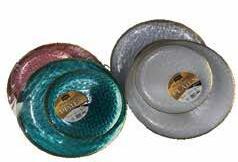
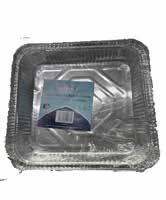
DISPOSABLES
There is no problem with
from kosher shops.
For approved biodegradable disposables see passover.isitkosher.uk.
HOB COVERS
Sheets of silica-bonded mica, recommended for
COSMETICS
See passover.isitkosher.uk for approved products which have been researched and found to be free from chametz derivatives. Products not included in the list may be used provided they do not contain any of the aforementioned ingredients.
PERFUME
1. Most perfumes contain alcohol, which could be chametz if derived from wheat.
2. Perfumes declared to be alcohol free can be used without concern.
3. The majority of commercial brands of perfume use denatured alcohol, which is not ft for consumption and therefore such perfumes can be used without concern.
4. Artisan and organic perfumes may use alcohol which has not been denatured. This could potentially be wheat derived and should not be used unless the source of the alcohol has been confrmed.
5. Perfumes which have been checked and approved for Pesach are listed on passover.isitkosher.uk. Other brands would be permitted, provided denatured alcohol is specifed in the ingredients declaration.
MEDICINES
This summary has been compiled by Rabbi A Adler BPharm MRPharmS, a retired pharmacist, in consultation with the food technologists of the KLBD. A full list of medicines for Pesach can be downloaded from our website at kosher.org.uk/pesach/productlists or alternatively check our online search passover. isitkosher.uk
General points regarding medication for Pesach:
· In general essential prescribed medications in tablet or capsule form are in order for Pesach.
· Wherever possible, tablets or capsules should be used in preference to liquid or chewable preparations, as these may contain ingredients such as sorbitol and glucose, which could be derived from wheat. In cases of need, the liquid and chewable preparations listed below as approved may be used.
· Ointments and creams are permissible, except for those specifying chametz ingredients on the packaging (eg Aveeno cream, based on oats), which should be avoided.
· Prescribed medication should not be altered without consulting a doctor.
Special Note About Medication for Children:
Most liquid medications for children cannot be guaranteed free of chametz derived ingredients. It is permissible to give a child liquid medication, for example Paracetamol or Ibuprofen, even if there is no danger to life. All such medication should be included in the sale of chametz. The Rabbi arranging the sale should be notifed, so that he can arrange with the non-Jewish purchaser to allow such use. It may then be taken from the chametz location, used as necessary, and returned.
ANTIBIOTICS, ANTIFUNGALS & ANTIVIRALS
All tablets and capsules are permitted.
Note about Antibiotic Liquids:
Sugar free antibiotic liquids should be avoided, if possible, as they usually contain sorbitol which could be chametz. If prescribed for a child, it is preferable to request one sweetened with sucrose. If it contains sorbitol, a pharmacist should be able to advise whether there is a suitable alternative. Please note antibiotic liquids sweetened with sucrose may still contain other problematic ingredients such as xanthan gum and ethanol and therefore all antibiotic liquids should, if possible, be included in the sale of chametz.
ASTHMA & RESPIRATORY
All inhalers may be used. Please note that many powder inhalers contain lactose and should not be used after a meaty meal, except in cases of emergency.
P Montelukast Tablets (not chewable)
CONSTIPATION
P Bisacodyl Tablets
P Boots Senna 12 Years Plus Tablets
P Boots Senna Adult
P Corsodyl Dental
COUGHS & COLDS
P Beechams Flu Plus Caplets
P Benylin Day & Night Tablets
P Sudafed Decongestant Tablets
CYSTITIS
P Cysticare Tablets
P Hiprex Tablets
P Waterfall D Mannose Original Tablets
DIARRHOEA
P Enterosgel Sachets P Enterosgel Tube
Imodium Classic Capsules
Imodium Dual Action Relief Tablets
Imodium Original Capsules
Imodium Instant Melts
Imodium Instants
HAYFEVER & ALLERGIES
P Cetirizine Tablets Includes Hydrochloride and Dihydrochloride.
P Clarityn Allergy Tablets
P Loratadine Tablets
P Phenergan Tablets
P Piriton Allergy Tablets
P Piriton Allergy Children’s Syrup
INDIGESTION & ULCERS
P Bisodol Indigestion Relief Peppermint Tablets
Gaviscon Liquid
Guardium Tablets
TOOTHPASTE
VITAMINS
The People Bringing Legacies to Life
At KKL, the legacy arm of JNF UK, our work is driven by the families we support, and the dedicated staf who choose to build their careers around making a lasting diference. For many of our team, working for this charity is not just a job, it is a calling rooted in purpose, compassion, and the belief that what we do genuinely improves lives.
Te legacy team are privileged to work alongside members of the community who wish to shape Israel’s future by leaving a gift in their Will. For over 75 years, KKL have combined professional expertise in Wills and estate administration with something far deeper - humanity, care, and respect. Many choose to work here because of the opportunity to form meaningful relationships, which in turn benefts the State of Israel for generations to come.
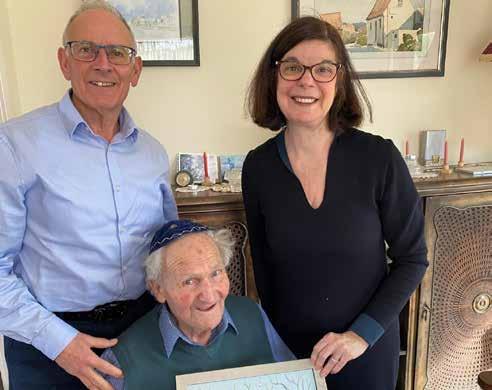
One such story is Robert’s that
continues to inspire our team and reminds us why this work matters so profoundly. Robert was born in Berlin in 1924 and grew up in a traditional Jewish home. His early life was shaped by upheaval and displacement, escaping Nazi persecution and eventually settling in the UK. Although his Jewish practice became distant over time, his commitment to
Israel never wavered. He spent time teaching in a school in the Golan Heights in the 1970s, where his love for the country deepened.
Supporting Robert was far more than an administrative responsibility. Trough regular visits and shared moments, genuine relationships were formed. Staf often speak about how meaningful it is to be invited into people’s lives at such signifcant moments, celebrating milestones, ofering comfort, and ensuring that wishes are respected with dignity.
where they sang Maoz Tzur together. Robert passed away just days later. Carolyn worked tirelessly under challenging circumstances to honour Robert’s fnal wish to be buried in the Land of Israel. Trough determination and care he was laid to rest in Israel on the fnal day of Chanukah, with family members and JNF UK colleagues present to say farewell and recite Kaddish. It was a profound moment of closure, respect, and fulflment, not just for Robert’s loved ones, but for the staf who had walked this journey with him.
Trough engagement with KKL, particularly Carolyn Addleman, Director of Legacies and David Goodman, Director of Community Relations, Robert gradually reconnected with his Jewish roots. Towards the end of his life, Robert wrote a letter expressing his wish to be buried in Israel.
Carolyn and David had the joy of celebrating Robert’s 100th birthday with him and before Chanukah, they visited him in hospital,
Stories like Robert’s refect the successes our team is proudest of - lives honoured and legacies that continue to build and nurture the Jewish homeland. Trough projects created in Robert’s name, his love for Israel will live on, improving lives for future generations.
To fnd out more about the potential impact of leaving a gift in your Will to JNF UK, please contact our expert Legacy Team: 020 8732 6101 legacies@jnf.co.uk www.jnf.co.uk/legacy
KKL Executor and Trustee Company Ltd (a Company registered in England No. 453042) is a subsidiary of JNF Charitable Trust (Charity No.225910) and a registered Trust Corporation (authorised capital £250,000)
United Hatzalah of Israel
“United Hatzalah is one of the frst emergency and rescue organisations to arrive on the scene. We have seen the enormous volume of calls coming into the command center the moment launches occur. Volunteers rush out to save people who are injured while running to shelters, and of course they save lives during tragic disaster events as well, which unfortunately we have also experienced.” President Isaac Herzog, March 2026
When sirens sound Israelis know what to do. Tey head for protected spaces. Tey head for safety.
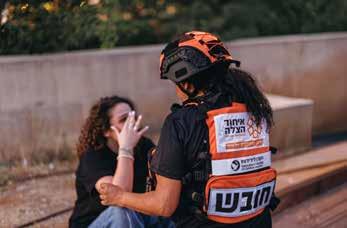
United Hatzalah of Israel’s volunteer medics do the opposite. Tey head into danger. Tey keep themselves safe as best they can but often, their priority is the lives of others.
Aviya Yahav is one of them.
A teacher in her everyday life, Aviya has left her home multiple times in recent weeks following sirens. On one occasion, she left her family in the shelter when she heard reports of an impact site nearby.
“Te streets were completely empty. Everyone was still inside their homes or shelters, hoping the missile would fall somewhere else.”
Aviya was one of the frst emergency responders on the scene. Police had already closed of the area and fames from burning vehicles lit up the sky. She worked with her colleagues to fnd
anyone who had been hurt and ofer appropriate treatment.
But not every war-related emergency involves a missile. Another evening, Aviya responded to an emergency within a shelter. A young girl had fainted as she rushed to get to safety.
“Te girl was frightened and disoriented. Fortunately, once I arrived we were able to assess her condition and she recovered quickly. She did not need to go to hospital.” Tis knowledge made a huge diference to the girl’s family.
United Hatzalah is Israel’s volunteer-led, medical frst response organisation. Its mission is to respond to medical emergencies at speed, initiating treatment in the critical frst four minutes
before permanent damage takes hold. Te organisation’s 8,100 medics come from all backgrounds, refecting Israeli society, and it’s services are available to anyone in medical need. With an average response time of just three minutes, its volunteers can literally be the diference between life and death.
Tis is never truer than at times of war. Direct and indirect war-related injuries, higher anxiety triggering medical emergencies and ‘everyday’ medical needs result in signifcant demand for volunteer medic support.
Since the war began, United Hatzalah’s volunteer medics have responded to over 42,000 calls and in addition, over half of all volunteer medics have attended to missile attacks. More impressive still, has all been done with a reduced pool of available medics. With schools closed and more parents called back into national service, many medics simply cannot leave their children.
Te response of United Hatzalah’s volunteer medics during Operation Roaring Lion shows their dedication to lifesaving, even in the face of their own challenges. To support them and also ensure United Hatzalah can always respond at speed, the organisation is now working to double its medic numbers and meet an ambitious goal of 16,000 certifed volunteer medics by 2030.
United Hatzalah’s work from volunteer training to medical equipment is entirely funded by donations and gifts in wills. Partnering with us to build our volunteer medic network will ensure that when sirens sound, United Hatzalah is always ready to save lives in Israel. To donate, visit: www.israelrescue.org/uk or call 020 3823 4650.
British Friends of United Hatzalah Israel (Charity number: 1101329)
PHOTO: ARIK MARMOUR
A Century of JNF UK Standing with Israel in Times of Crisis
Across Israel today, the familiar wail of air-raid sirens signals another dash to safety. With the Iran War ongoing, hundreds of thousands of civilians, from northern towns in the Galilee to communities in the Negev, have endured successive waves of missile attacks. In cities such as Tel Aviv, Beit Shemesh, Be’er Sheva and Eilat, the consequences are immediate and tangible: damaged homes, shattered glass and daily life repeatedly interrupted by the need to seek shelter.
But alongside the fear is a powerful reminder of the enduring partnership between Israel and its supporters around the world. For more than a century, JNF UK has stood alongside the people of Israel, working quietly on the ground long before the headlines arrive.
A Legacy of “Being Tere”
Many of us remember the Blue Boxes on our grandparents’ mantels, with coins dropped in to help turn the desert green. Today, that mission has evolved from planting trees to protecting the lives that fourish under their shade. History has shown that when Israel is under fre, her friends around the world stand taller.
Following the atrocities of October 7th, 2023, JNF UK rapidly redirected its resources to the Gaza Envelope, supporting traumatised communities like Kibbutz Nir Oz and Nahal Oz. At the same time,
JNF UK and its partner Osim Shchuna, launched “Operation Ir Miklat” (City of Refuge) to assess and restore Israel’s network of public bomb shelters.
Te programme is now being expanded in response to the current Iranian threat.
Trough Ir Miklat, more than 23,000 shelters across Israel have already been inspected, with thousands subsequently renovated and reactivated after being found unusable or in disrepair, ensuring that when the sirens sound today, every citizen has a safe, habitable place to go.
Tese are not merely toys; they are “moments of calm” designed by experts to help soothe children during the terrifying noise of interceptions overhead.
Te Frontline of Practical Compassion
Te current Iranian war has created a new, urgent set of needs, and JNF UK’s response is focused on the immediate physical and psychological welfare of civilians.
In the cramped confnes of communal bomb shelters, hours can feel like days, especially for children. To help alleviate this strain, JNF UK is distributing activity and resilience kits to young families.
For the elderly and those with limited mobility, accessing shelters can be a serious challenge. JNF UK is working with partners to improve accessibility by installing handrails on staircases, helping elderly and disabled residents descend safely to protected spaces when sirens sound.
JNF UK volunteers are also deploying “blackout kits” containing torches, transistor radios, and medical supplies. Tese kits ensure that even if power outages occur, residents are not left in total darkness or cut of from vital information. Mattresses are being supplied to communal shelters in the north of Israel providing a more comfortable place to rest during nights marked by repeated waves of missile fre.
Meanwhile, JNF UK’s Disaster Relief Units remain on standby, equipped with emergency generators and communication gear to keep border communities functioning when infrastructure is
compromised.
Building the “Ring of Resilience”
While the immediate focus is on emergency relief, JNF UK’s vision remains fxed on the “day after”. Trough longterm projects in Israel’s border regions, the organisation is helping ensure that regions like the Negev remain places where families can not only survive but thrive.
Elan Gorji, CEO of JNF UK, stated: “With our team on the ground and the close relationships we have throughout the country, we are always ready to help the people of Israel where needed most... It is thanks to the constant support from our donors that enables us to be there for them”.
Te message from the UK to our extended family in Israel is clear: We have stood with you for over a century, and we stand with you today. Your support can translate into a cleared shelter, a child’s smile in a bunker, and the restoration of the communal spaces that hold communities together.
Let us ensure that when history looks back at this moment, it records that the Jewish community in the UK stood frmly with Israel.
Tose wishing to support JNF UK’s work helping communities across Israel can learn more at jnf.co.uk.
Holding Onto Jewish Identity in a Distracting World
BY YONI ABADI
Spend a little time with Jewish young adults today and one thing becomes clear: belief itself is rarely the main challenge. Look around at the world we’re living in. Te story of the Jewish people unfolding on the global stage, the resilience of Israel, and the strange way Jewish history continues to defy the odds. Many young Jews sense that there is something deeper going on, something about the Jewish story that cannot simply be explained away. Te real challenge is not belief or inspiration. It’s translating that into daily life. We live in an age of constant distraction. Careers are demanding, social lives are busy, and our phones ensure that our attention is pulled in a hundred directions every day. Even when someone feels connected to their Jewish identity, it is easy for that feeling to fade into the background of everyday life.
At Aish Young Professionals in London, we began asking a simple question: how can we help young adults stay engaged with their Jewish identity in a consistent
and meaningful way?
Te result was a new initiative - a 15week learning series designed specifcally for young professionals who want to explore their Jewish identity on a deeper level.
Every Tuesday evening, around 40 to 50 young professionals gather at Te Aish Hub in Hendon for a night that combines learning, conversation and community.
Te evening begins with a relaxed social and dinner, giving people the chance to connect with friends and meet others who are on a similar journey. After that, we begin with a short ten-minute “power talk” an idea which sets the tone for the night.
From there, participants break into smaller learning sessions exploring a range of topics that speak directly to the questions young adults are asking today. Some sessions focus on the deeper meaning of Shabbat - not only as a religious observance, but as a powerful antidote to burnout and the nonstop pace of modern life. Others explore how Jewish wisdom approaches relationships, ethical dilemmas in the workplace, the meaning behind mitzvot, or the foundations of
Jewish belief.
Te goal is not simply information. It is conversation. Questions are encouraged, perspectives are shared, and the atmosphere is open and curious.
Each evening concludes with a short Q&A session with Rabbi Jonny Roodyn, allowing participants to raise the bigger questions that naturally arise when exploring Jewish ideas in a modern context.
Perhaps the most powerful part of the programme, however, comes at the end.
After ffteen weeks of learning together, the group will travel for a weekend Shabbaton in Wales over the weekend of 20 March, stepping away from the noise of the city to experience a full Shabbat together. For many participants, this immersive experience becomes a highlight of the entire journey, a chance to slow down, refect, and experience Jewish life in a deeper way.
What makes the programme special is not just the content, but the community that forms around it. Week by week, a group of young professionals from diferent backgrounds and levels of observance come together around a shared desire to grow.
Tis learning series is just one part of the broader work we do with young professionals. Alongside weekly social events, educational programmes and trips throughout the year, it ofers a space for those looking to engage more deeply with their Jewish identity.
As new cycles begin and new participants join, the question remains the same and increasingly relevant.
Not whether young people care about their identity, but how they can explore their place in the Jewish story and hold onto it in such a distracting world.
Yoni Abadi is Director of Young Professionals programming at Aish UK, where he designs and leads innovative initiatives engaging thousands of young adults in community, identity, and purpose. Trough mentoring, networking, and immersive educational experiences, he supports young professionals in their personal growth, relationships, and careers through the lens of Jewish wisdom.
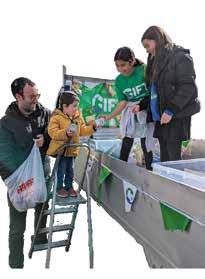
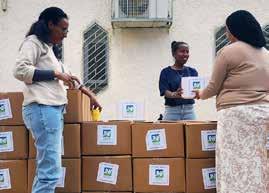
Volunteers Distributing Emergency Kits
Lord Mendelsohn honoured as ‘Champion of Jewish Women’ at JWA Illuminate dinner
At the 230-person fundraiser, the Labour peer spoke about Get-refusal, communal responsibility and raising the next generation.
Lord Jon Mendelsohn was honoured as a ‘Champion of Jewish Women’ at Jewish Women’s Aid’s Illuminate fundraiser on Monday evening. Te Labour peer received the award in recognition of his support for women afected by Get-refusal, his advocacy in addressing violence against women and girls, as well as his eforts to ensure that men and boys are part of the solution to domestic abuse.
At the event 230 guests - including Victims’ Commissioner Claire Waxman OBE, Baroness Ruth Deech and Lord Stuart Polak - attended the event at the London Marriott Hotel Regents Park, which focused on illuminating the realities of domestic abuse and the experiences of Jewish women and children afected by it.
Sitting in conversation with JWA Trustee and journalist Deborah Joseph, Lord Mendelsohn refected on his work in Parliament addressing the refusal of the Get (Jewish divorce), and the ways in which it can be used as a form of coercive control. He emphasised the importance of cross-party collaboration in advancing protections for women, acknowledging fellow peers including Baroness Deech, Lord Polak, Lord Palmer of Childs Hill and Baroness Altmann.
Discussing the issue of Get refusal, the Labour peer said: “It is not inherent that the Get process itself is abusive, but when there is a refusal to grant a Get you must be very careful that it does not move into forms of abuse. Te refusal to grant a Jewish divorce can trap women in isolation and prevent them from moving on with their lives.
In many cases it is used as leverage to alter fnancial settlements, child access arrangements or other conditions that have already been established. In the worst cases women are efectively trapped for decades and at that point you begin to move into territory that resembles forced marriage.”
Explaining how he, with other peers, pushed Parliament to recognise Get abuse within the Domestic Abuse Act, he said: “Te Domestic Abuse Act allowed the circumstances around a Jewish divorce to be recognised within statutory guidance so that courts could understand them in the context of coercive control and domestic abuse. Tat made it easier for courts to intervene.”
He added: “But our job is not fnished. We have not yet fully protected the position of women. One of the things we are continuing to pursue is the separation of the Get process from attempts to gain leverage over fnancial settlements or child access.”
Alongside these ongoing eforts, Lord Mendelsohn has today announced that the All Party Parliamentary Group on Get Refusal will shortly publish a new practical guide on Get refusal. Te guide is intended to ensure that anyone who
may encounter victims of Get refusal is able to recognise the issue and direct women to appropriate support. Te guide will clearly explain the problem of Get refusal and the ways in which women can be made vulnerable in such situations, including where it intersects with coercive control and domestic abuse. It will include illustrative examples and set out why such conduct is wrong in principle and contrary to the law.
need for strong leadership within the community in confronting domestic abuse. He said: “When I began speaking about this issue publicly, I was shocked by the number of people I knew personally who came forward to share their stories. Some were people from my own synagogue community who had never mentioned their experiences before, and the levels of sufering people had experienced were deeply disturbing.”
demand for specialist support for Jewish women experiencing abuse. Speaking at the event, she said: “At JWA we support women who have been sexually assaulted, women who lie awake at night terrifed of what might happen if they fall asleep, mothers who worry about the safety of their children when they are forced to send them for contact with an abusive father and women who are not safe in their own homes. For many of them JWA is the only place they feel safe enough to turn.”
She added: “Demand for our services continues to grow. Every single week 15 Jewish women reach out to JWA for help. Real change will only happen when our whole community refuses to tolerate abuse, control and fear.”
It will also identify the wide range of individuals and organisations who may come into contact with victims, including lawyers, police ofcers, legal aid staf, doctors, religious authorities, community leaders, and human rights advocates, and who may be in a position to assist. Te guide will highlight key factors to consider, including that Get refusal is often accompanied by other forms of coercive or controlling behaviour, and that in some cases there may be criminal implications. In addition, it will outline practical considerations for those supporting women, including engagement with the Beth Din and examples of approaches that have been efective in the past, as well as signposting routes to specialist advice and support. Rather than prescribing fxed solutions, which will vary depending on individual circumstances, the guide aims to equip those in a position to help with the knowledge needed to identify, assist, and appropriately progress cases of Get refusal.
Refecting on the importance of raising the next generation with values of respect and equality, Lord Mendelsohn, who has three sons and one daughter, added: “We need to raise a generation of young people who understand equality and respect. Te world has changed signifcantly over recent decades and that transformation needs to be properly recognised. Parents and communities have a responsibility to raise resilient young people who respect others and fulfl their aspirations.”
Refecting on JWA’s work, he added: “I have been deeply impressed by the organisation. It is an extraordinary organisation that supports people through incredibly difcult circumstances. It is going from strength to strength, and the community should be proud of it. We should all support it.”
At the event, guests heard stories of Jewish women
Joanne Black, who has sat as Chair of Jewish Women’s Aid for more than a year, said: “Abuse takes many forms. What has shocked me most has been the scale and the complexity of the issues, the many diferent forms coercive control can take, the psychological manipulation, the fnancial abuse, the isolation, the quiet erosion of confdence and independence that can happen behind perfectly respectable front doors. Domestic abuse is not only a woman’s issue. It afects families, communities and society as a whole. It afects children, it afects workplaces, it afects our collective future.” Speaking about Lord Mendelsohn, she added: “Tat is why partnership matters. Tat is why community matters, and that is why I am so proud that my dear friend, Lord Jon Mendelsohn, is being honoured here tonight for his steadfast support and leadership. As a Jewish community we know we have a responsibility to protect our own. Specialist culturally competent services are not a luxury, they are essential, they save lives.”
In a video message played at the event, former Facebook boss Sheryl Sandberg hailed the charity’s work, saying: “ Jewish Women’s Aid does extraordinary work every day. You are leading the efort to help end domestic abuse and sexual violence in the Jewish community in the UK, and for survivors whose sense of safety has been shattered, you are there with life saving support when they need it most.”
Lord Mendelsohn said: “Too often, situations of Get refusal are not recognised for what they are. Tis guide is about ensuring that wherever these cases arise, people understand the issue and can help women access the support they need.”
At the JWA fundraiser, Lord Mendelsohn, the former Chairman of Finchley United Synagogue, also spoke about the
supported by JWA, including Rachel*, a doctor whose husband controlled the household fnances, forced her to ask permission to spend money and repeatedly sexually assaulted her; and Emma*, a highly educated mother of three whose husband stopped her working, isolated her from family and friends and used the courts to continue exerting control even after she left the relationship, including refusing to grant her a Get.
Sam Cliford, Chief Executive of Jewish Women’s Aid, spoke about the growing
As the executive producer of Screams Before Silence, a documentary on the sexual violence committed by Hamas terrorists on October 7 , she thanked Lord Mendelsohn for facilitating a screening of the flm at Parliament. She said: “I am thrilled he is being honoured today for his leadership in confronting domestic violence and for his deep commitment to making sure violence against women is never ignored.”
Troughout, JWA emphasised the “Illuminate so that we can Empower, Educate, End Abuse” theme, highlighting that abuse exists behind closed doors, hidden by silence and stigma. Funds raised from the event will go towards JWA’s £1 .6m annual budget.
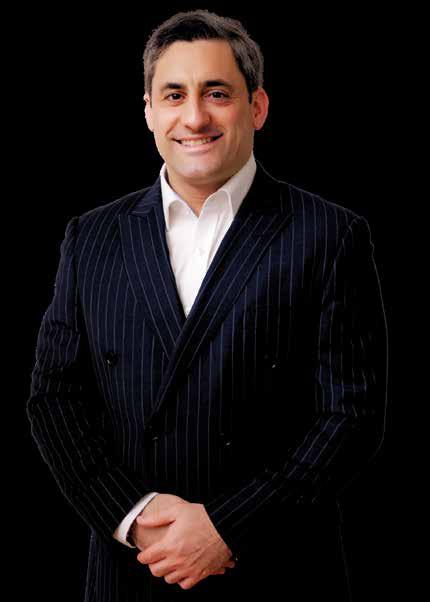
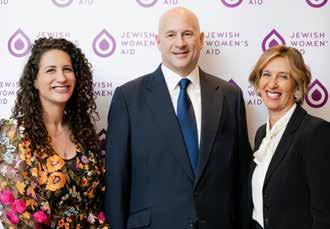
JWA CEO Sam Clifford, Lord Mendelsohn, JWA Chair Joanne Black PHOTO: LIZ ISLES PHOTOGRAPHY
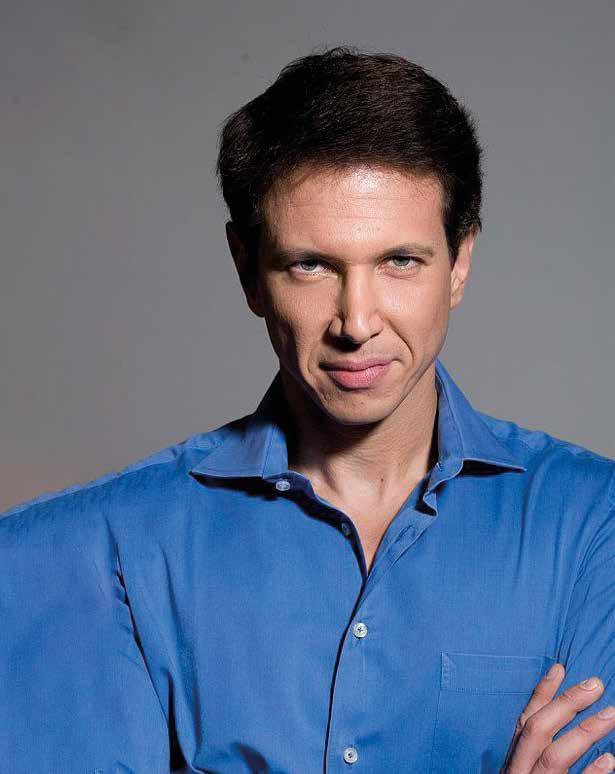
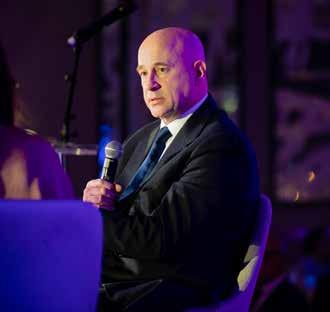
Lord Jon Mendelsohn
PHOTO: LIZ ISLES PHOTOGRAPHY
ASK THE RABBI
PESACH IN A NUTSHELL
Dear Rabbi
I am hosting my frst ever Seder. Many non-Jews, including several professors will be attending, and I want to be able to explain to them why we celebrate such an ancient event and the signifcance of all the rituals at the table, namely the matza, bitter herbs etc. Can you sum it up for me so I can make an eloquent presentation? I know it’s a big ask but you’re the Rabbi and I am asking the Rabbi.
Tommie
Dear Tommie
On seder night we do something no other people in the world do: we commemorate some of the darkest and most unfattering moments of our past. We relive two hundred years of slavery in Egypt. We speak of our ancestors who were idol-worshipers.
Non-Jewish festivals are celebrated with turkey, stufng, and sweet potato pie. Guy Fawks is commemorated with freworks. But for Pesach, we celebrate with bitter herbs, the bread of afiction, and salt water. We bring the skeletons out of the Jewish closet.
True, the story has a happy ending. Our ancestors ultimately escaped slavery and found G-d. But the larger question is still worth considering: What sort of people put their most unpleasant and shameful of days at the heart of their identity?
Here’s an answer that emerges from recent research: Marshall Duke, a psychologist at Emory University, was asked to help explore the secret ingredient to holding a family together. What makes some families strong, resilient, and happy? Dr. Duke spent several years investigating that question, meeting with families, scholars, leaders and entrepreneurs. A surprising theme emerged: one of the most important things you can do for your family is to tell them about your family history. Te most successful families embrace and celebrate their history – not just their triumphs, but also, and perhaps even especially, their setbacks.
Dr. Duke gave 400 children a simple test about their family’s past: Do you know where your grandparents were born? Do you know where your parents went to high school? Do you know an aunt or other relative who had an illness they overcame?
Te children who knew more about their family’s history had higher self-esteem, a stronger sense that they had control over their lives, and a deeper belief that their family functions well. Te “Do You Know?” scale, as the researchers dubbed it, turned out to be the best single predictor of children’s emotional health and happiness. “We were blown away,” Dr. Duke said. Psychologists have found that every family has a unifying narrative, and they tend to take one of three shapes.
First, the ascending family narrative:
“Son, when we came to this country, we had nothing. Our family worked. We opened a store. Your grandfather went to high school. Your father went to college. And now we have a lot.”
Second is the descending family narrative: “Sweetheart, we used to have it all. Ten there was a recession, a war, persecution; we lost everything.”
“Te most powerful narrative,” Dr. Duke said, “is the third one. It’s called the oscillating family narrative: ‘Dear, let me tell you, we’ve had ups and downs in our family. We built a family business. Your grandfather was a pillar of the community. Your mother was on the board of the hospital. But we also had setbacks. You had an uncle who was an alcoholic and he was arrested. We had a house burn down. Your father lost a job. But no matter what happened, we always stuck together as a family.’”
Dr. Duke discovered that the children who have the most self-confdence are those with a strong “intergenerational self.” Tey know they belong to something bigger than themselves. So too, on Passover, the customs and storytelling of the Seder provide a chance for our families to strengthen themselves by connecting with the larger narrative of Jewish history. We hear about our triumphs as a people, but also the setbacks we overcame to reach them.
In telling the story of the exodus, what preceded it and what followed, we are lifted out of our own isolated moment in time and situated in a long line of ancestors who have wrestled with issues like those we wrestle with today. In hearing the example of our ancestors, we realise that we are not struggling alone. We fnd in their survival a template for our own
survival and successes. As G-d stood with our ancestors, so He is present now.
Te story of the Jewish People is not just one of how we’ve survived against all odds, but of how we’ve thrived in the aftermath of persecution. In spite of all of our pain and sorrow, 90% of Jews make a point of attending a Passover Seder every year to retell the story, to raise four cups of redemption and to eat bread of afiction and bitter herbs. And at the end of it, they walk away saying, “Wow! Tat was great!”
Why is that? It’s because the Seder enables us to put our stories into perspective. We see our personal challenges and successes pouring into the fow of a larger, longer narrative with a signifcance beyond our own lives.
Te fact that sufering forms a core part of the story that we tell, as Dr. Duke has found, is actually a gift to our children. It teaches them that when they encounter adversity, they too can persevere, just as their ancestors have before them.
In celebrating the Seder, it is true that we might encounter darkness. But by acknowledging it and sharing the story of how we overcame it, we are reminded that when we persist, G-d will bless our eforts and that this too, we shall overcome.
J E R U S A L E M
C i t y C e n t e r
H a r a k K o o k S t .
2 b e d r o o m s , 2 b a t h r o o m s
S u k k a h b a l c o n y
G r e e n v i e w s
P a r k i n g & D o o r m a n
Asking Price:
₪ 5 , 2 0 0 , 0 0 0
J E R U S A L E M
O l d C i t y
J e w i s h Q u a r t e r F r o n t l i n e t o t h e K o t e l 3 b e d r o o m s 2 l a r g e s u k k a h b a l c o n i e s R a r e l o c a t i o n
P r i c e o n r e q u e s t
B E I T S H E M E S H
G r e a t o p p o r t u n i t y i n R B S A
L u x u r y A p a r t m e n t
P e r f e c t f o r h o s t i n g
C h e f ’ s d r e a m k i t c h e n
5 L a r g e b e d r o o m s
O v e r 2 5 0 S Q M , a l l o n e l e v e l
Asking Price: ₪ 1 2 , 5 0 0 , 0 0 0
Asking Price: ₪ 4 , 8 0 0 , 0 0 0 A S H K E L O N
6 0 0 S Q M l o t 3 7 0 S Q M b u i l t
6 s p a c i o u s b e d r o o m s
P r i v a t e s w i m m i n g p o o l
O u t d o o r k i t c h e n
2 r e n t a l u n i t s
Asking Price: ₪ 9 , 9 0 0 , 0 0 0
Answering the Call Wekly Dvar Torah FROM ERETZ YISRAEL
BY RABBANIT SALLY MAYER
A korban manual. Tat’s what’s in the frst seven chapters of Sefer Vayikra. To the modern ear, animal sacrifce sounds outdated. Bring a male sheep for this, a female one for that. Burn it completely on the mizbe’ach (altar), or sometimes you also eat some of it. How are we meant to understand this system?
Rambam famously writes that animal sacrifce was what the Jews were used to at the time of the giving of the Torah, so Hashem commands us to use that same system to worship Him, even though from His perspective, it is not the highest level of service. Te Ramban, however, attaches deep symbolism to the sacrifces, an idea we can apply today, even in modern times.
Te Ramban points out that there are times when we want to give of ourselves to G-d – to say we are sorry, to say thank you, or even just to give a gift to show our love and devotion. We want to give of ourselves. How do we do this? Te Ramban suggests that the animals we are ofering are representative of ourselves,
which is why we lean on the animal before ofering it (smichat korbanot), as if to put ourselves into this sacrifce.
Sometimes it’s an olah, a full gift, all to Hashem, just to show Him our love and devotion.
Sometimes it’s a chatat, to say sorry for doing something wrong. When we sin, we have chipped away at our relationship with Hashem; we want to repair that relationship and rededicate ourselves to serving Him as we should.
Sometimes it’s a shlamim, where we want to celebrate with Hashem and say thank you, and we join the party as well by eating part of it. Te Korban Pesach is an example of this – we celebrate with G-d,
thanking Him for taking us out of Egypt and choosing us as His special nation. Sometimes in our lives today we are called upon to sacrifce, and each person sacrifces in his or her way. During the current war with our worst enemies, intent upon our destruction, examples abound. Some leave their families to risk their lives on the front lines to save Am Yisrael, including into Gaza to rescue hostages and remove the threat of future attacks; some fy sorties over Tehran to remove the threat of missiles from the homes of their fellow citizens; others are deep in Lebanon to root out Hezbollah. Some go deep underground to process
intelligence, others operate the Iron Dome, under great stress to intercept rockets and save innocent lives. Some cook and bake for families in need, or babysit for children whose parents are essential workers. Some donate money to help the efort, others listen to the fears and challenges of running to a shelter.
Parshat Vayikra begins literally with “calling” – calling to Moshe to teach Am Yisrael about the diferent ways to ofer a sacrifce to Hashem. We stand in awe of the sacrifces of our neighbors, our friends, and our children. May Hashem see these sacrifces and to grant us success and safety for Am Yisrael, in Israel and around the world, and may we merit to bring a Korban Toda (thanksgiving sacrifce) to thank Hashem for His miracles.
Rabbanit Sally Mayer serves as Rosh Midrasha at Ohr Torah Stone’s Midreshet Lindenbaum in Jerusalem. She is a member of the Mizrachi Speakers Bureau (www.mizrachi.org/speakers).
Kelal Yisrael or Am Yisrael?
BY RABBI MOSHE TARAGIN
Pesach marks our liberation from two centuries of slavery and persecution. It was the frst time we faced an attempt to annihilate the Jewish people, and Hashem delivered us. It was the frst, but not the last.
Beyond our liberation, Pesach marks the moment we were born as a nation. In our earliest beginnings, as described in Sefer Bereishit, we saw ourselves as a family, at most a clan of seventy souls. During the years of slavery our numbers grew dramatically, yet without freedom we possessed no national identity. Scattered as slaves, we could hardly imagine ourselves as a single cohesive people.
Te night of Pesach inaugurated us into nationhood. Tat night launched one of the most remarkable phenomena in human history: a nation that has endured ever since, despite repeated attempts to eliminate it and despite conditions that make sustaining national identity almost impossible. As we gather around Seder tables across the world, we celebrate Jewish peoplehood and our nation’s enduring ability to preserve its identity through the trials of history.
DEFINING A NATION
Te Torah began shaping Jewish national identity by defning the Jewish people as a collective. In commanding the Korban Pesach, the Torah speaks of the participation of the entire kahal and eidah of Israel. Tese terms formed the vocabulary through which Jewish identity was defned.
Rabbi Soloveitchik noted that these two terms refect two diferent dimensions of Jewish peoplehood. An eidah describes a community of fate, people bound together by shared history and circumstance. A kahal refers to a community united by common vision, ideals, and covenant. On the night of our exodus we were reminded that Jewish identity rests on both foundations: shared historical destiny and chosen mission. Tese were among the earliest terms used to describe Jewish peoplehood, though they would certainly not be the last.
THE HOUSE OF ISRAEL
Eventually we settled the land of Israel and built Jewish sovereignty around the Temple in Jerusalem. However, after repeated betrayals we were expelled from Jerusalem. It became far more difcult to imagine Jewish destiny once we were driven from the land that embodied that destiny.
Two prophets who spoke to the experience of exile, Yirmiyahu and Yechezkel, began describing the Jewish people as a house, using the term Beit Yisrael
to defne our collective identity. Te image of a house carried several layers of meaning. It reminded us that we once possessed an actual structure that stood at the center of Jewish life, the Mikdash, and that one day we would return to rebuild that divine house. Te term Beit Yisrael also evoked the house of Dovid and recalled our lost sovereignty.
More broadly, the language of a “house” reminded exiled Jews that our story had begun as a family in Sefer Bereishit. Family identity, unlike political sovereignty or physical territory, can travel across lands and generations. For Jews confronting the trauma and uncertainty of exile, the phrase Beit Yisrael carried deep resonance. It reminded us that even far from our land we remained members of a single enduring house.
KNESSET YISRAEL
A few centuries later, after we were expelled from Jerusalem a second time, Jewish life entered a very diferent historical reality. Many Jews had never lived in the land of Israel or experienced life around the Mikdash. Te earlier expression Beit Yisrael was therefore less resonant for a population that had never known Jewish life centered around the Temple or within a sovereign state.
In this context a new term began to appear in the writings of Chazal: Knesset Yisrael. Te phrase captured a diferent form of Jewish existence. Even after exile we continued to gather, now in smaller communities that sustained Jewish continuity. We assembled physically in the Beit Knesset for prayer, and we lived within self-contained Jewish communities that preserved our customs, culture, and family lineage.
On a deeper level, the phrase also refected a spiritual idea. Even when individual Jews no longer experienced direct dialogue with Hashem, the collective Jewish people still stood before Him. Te Midrash is flled with conversations between Hashem and Knesset Yisrael. In this sense, Knesset Yisrael became the national soul of the Jewish people, a collective personality that continued our covenantal conversation with God. Additionally, the word knesset, gathering, also carried a quiet hope that one day the scattered gatherings of exile would give way to a full national reunion in our homeland.
Tough scattered across lands, we still gathered as one people.
KELAL YISRAEL
As history continued to unfold, another term emerged to describe broader Jewish peoplehood: Kelal Yisrael. Tis expression begins to appear in the medieval period. By then the Jewish people were
far more scattered than they had been in the centuries immediately following the destruction of Jerusalem by the Romans. In that earlier period Jews were largely dispersed around the Mediterranean basin and the broader Levant. By the Middle Ages Jewish communities had spread across Europe as well as throughout the Islamic world.
In such circumstances the image of Knesset, a gathering, became harder to sustain. Jews were no longer assembled in one region or even within a single cultural sphere. Te more abstract term Kelal Yisrael, referring to the “total body” of the Jewish people wherever they might reside, became increasingly meaningful.
All of these terms captured the remarkable miracle of Jewish peoplehood. Without the normal trappings of national identity such as land, fag, currency, or sovereignty, we still maintained a powerful awareness that we were one people. Tat identity stretched across generations and continents. Each Pesach renews that awareness and celebrates the enduring bond that continues to unite the Jewish people.
A LIVING NATION
Tis question of how we describe Jewish peoplehood reminded me of a devar Torah I heard a few weeks ago in which the speaker repeatedly referred to Jewish collectivism using the terms Knesset Yisrael and Kelal Yisrael. It struck me that at this stage of history the terminology itself may need to shift. We have returned to our homeland, and there now exists an actual people that embodies Jewish peoplehood. For the frst time since the era of the First Temple, most Jews live in the land of Israel.
Events in this land increasingly represent the Jewish people as a whole. Te surge in antisemitism tied to events in Israel is projected onto Jews across the world, whether they live in Israel or whether they attribute religious or
historical signifcance to renewed Jewish sovereignty. At the same time, millions of Jews who do not live in Israel shape their Jewish identity through their connection to this land. Te land and the people who live for it have become the living center of our people.
We once again have a nation in its land. We now have Am Yisrael. We have a real community of people who have committed their lives to strengthening our collective experience and our shared future. Every Jew, regardless of ideology or level of religious observance, is part of this collective project. Continuing to rely on abstract terms such as Knesset Yisrael or Kelal Yisrael can lift Jewish peoplehood out of lived reality and recast it in theoretical terms.
Terminology matters because it shapes how we understand our reality. If we continue to speak only in the language of Knesset Yisrael or Kelal Yisrael, we overlook the unfolding reality of Am Yisrael, a living nation gathered in its homeland, carrying the hopes of Jews across the world while struggling to secure its sovereignty and future.
Am Yisrael Chai.
Te writer, a rabbi at the Hesder Yeshivat Har Etzion (Gush), was ordained by Yeshiva University and holds an MA in English literature. His latest book, Reclaiming Redemption, Vol. II: Faith, Identity, Peoplehood, and the Storms of War, is available at mtaraginbooks.com.
“Rebbe Nachman said that his books
one’s property and possessions.”
(Tzaddik 355)
• Dedicated project management, property management, rental oversight from purchase to handover & beyond
Ashkelon new projects and existing options. Luxury sea facing frst line options & Ir Hayain New Area entry level options & pricing.
NEVE SHAMIR
luxury sea facing projects and options in Ir Yamim & Shirat Hayam. Walk to beach, pool & gym in complex offering beautiful spacious homes. 5 Rooms with attached additional rooms
ASHKELON
CARMEI
Dip twice, and dress to impress this Pesach (with homemade condiments and dressings from Ta’amim)
BY DAN MATALON, TA’AMIM
Pesach has a way of making us look again at the familiar. All year we move on instinct—reaching automatically for ketchup, mayonnaise, barbecue sauce, without a second thought. But when Pesach arrives, everything slows down. Ingredients are reconsidered, routines are interrupted, and even the most ordinary staples invite a second look.
Tat’s the spirit of the Seder. Mah nishtanah – why is this diferent? We dip twice, we pause, we notice every detail. Te smallest changes are there to wake us up, to shift us from autopilot into awareness.
Tese homemade condiments refect that same mindset. Instead of outsourcing even our most basic foods, we step back into the process. With a few simple ingredients and a few minutes in the kitchen, something familiar is recreated with intention – often fresher, tastier and far more afordable than store-bought Pesach versions.
But it’s not just about taste or cost (although there is a defnite plus to shaving a few pennies of the Pesach shopping bill!). Tere’s something quietly powerful in choosing not to do things automatically. A pause before reaching. A question where there was once assumption. A moment of presence where there was once routine. Even something as simple as what we dip our food into can become part of the story.
Tis year, alongside these recipes, you’ll fnd our Kosher l’Pesach condiment recipe cards for mayonnaise, barbecue sauce, and ketchup available in stores. We’re also sharing some of our favourite salad dressings and salsas to bring freshness and brightness to salads, meats, and more.
Pick up a card today in Kosher Deli, Hadar, or Kosher Kingdom, or visit wearetaamim.com for these and more recipes to enhance your Pesach.
KOSHER FOR PASSOVER SALAD DRESSINGS
If vinegar or mustard feature in your go-to salad dressings, then Pesach might pose a challenge for you! Although some wine and cider vinegars are available at Passover, they can be costly, and if you don’t live near a Kosher superstore, they may be hard to procure. But don’t panic – we’ve got you covered. Fresh citrus can provide much-needed acidity, vibrancy and even sweetness at a fraction of the cost. Below are some of our favourite KfP salad dressings.
Seder Plate Salad Dressing
Originally featured in our Seder Plate Salad, as part of our ‘Mah Nishtana Menu’ – featuring Passover Fried Chicken (P.F.C.), Kosher for Passover BBQ Dipping Sauce and Marror Mashed Potatoes – this zingy and sweet dressing features lemon juice and date syrup, both of which are Pesach staples in many homes. Chopped dates or date syrup (Haleg/Silan) is mixed with walnuts or almonds for Charosset at Sephardi and Mizrahi Seders, and this is a great use for any left over.
Ingredients:
• Juice of half a large Lemon
• 1 tbsp Extra Virgin Olive Oil
• 1.5 tbsp Date Syrup
• Salt & Pepper to taste
Method:
Toroughly mix together all the dressing ingredients, or shake up in a small jar.
Herb & Citrus Everything Dressing
As the name suggests, this fresh and favourful dressing works with everything. Almost. You may not want it in your tea, but it can add vibrancy to meat, fsh, vegetables, salads and even – if you’re feeling bold – fruit (as a sweet and tangy salsa or a melon starter)!
Ingredients:
• Handful Parsley, roughly chopped
• 3 sprigs Tarragon, fnely chopped
• 10 leaves fresh Mint, fnely chopped
• 1/2 tbsp Extra Virgin Olive Oil
• Zest of 1 Lemon
• 1 tsp Lemon Juice
Method:
1. Mix together the lemon juice and olive oil.
2. Mix together the chopped leaves and lemon zest with the liquid and serve.
Mango, Lime & Chilli Salsa
Delicious favours of Mexico shine through in this quick, easy and incredibly versatile mango, lime and chilli salsa which is perfect on grilled fsh, chicken, pulled beef or our loaded matzah nachos.
Ingredients:
• 1 Mango, fnely diced
• 1/2 Red Onion, fnely diced
• 1/4 Red Chilli
• Handful Coriander, roughly chopped
• Pinch of Salt
• Juice of 1 Lime
Method:
1. Salt the onions.
2. Mix all ingredients together in a bowl.
3. Leave to stand for 5 minutes, to allow favours to infuse.
Photo credit: Sophy Weiss Photography
WHAT3WORDS/// “ …But No Krechtzing!”
BY RABBI NAFTALI SCHIFF
Earlier this week I was discussing the Pesach story with a friend who comes from an extremely assimilated and totally unlearned Jewish background. As we spoke about the challenges of being Jewish he suddenly blurted out, “Shver tzu zein a Yid!”. I was struck by the fact that, despite his lack of Jewish knowledge and certainly not being a Yiddish speaker, this phrase had somehow clearly entered his consciousness with his mother’s (or perhaps grandmother’s) milk!
Every athlete knows the slogan- “no pain, no gain”. In sport it’s so obvious that nobody argues with it. If you want stronger muscles, you must work them hard. If you want endurance, you must push beyond comfort. Achievement demands efort.
Yet strangely, when it comes to life itself, especially Jewish life, be it personal or national, we seem to forget this home truth.
I often heard Rabbi Noach Weinberg ask a group of students a deceptively simple question- “What’s the opposite of pleasure?” Te class would answer instinctively: “Pain.”
Rabbi Weinberg shook his head. “Tat can’t be right,” he replied. “What is the greatest pleasure your parents have?”
“Us!” the students answered.
“And what causes them their greatest pain?”
Again, the answer was automatic- “Also… us.”
Rabbi Weinberg smiled. “Exactly. Pain isn’t the opposite of pleasure. In fact, often the greater the pleasure, the greater the price of pain you’ll pay for it!”
Anyone who has raised children understands this instinctively. Parenting is flled with sleepless nights, worry, sacrifce and endless efort. Yet no decent parent would exchange that “pain” for a “painless” life without their children. Te efort itself is so often part of what makes real joy so meaningful.
Pesach is not simply a celebration of freedom. It is a retelling of the process that made freedom possible and ultimately meaningful. We recount the bitterness before the redemption, the slavery before the Song at the Sea. We taste the maror. We dip into saltwater. We lean like royalty only after we have palpably described and leaned into the pain and degradation our ancestors endured.
It is a remarkable educational model for learning about the reality of Jewish life itself.
Imagine designing a Yom Tov meant to inspire children. You might be tempted to emphasise the miracles, the triumph, the drama of redemption. But the Haggadah insists on something deeper- the journey through hardship that made that geulah possible. Tis is Toras Chayim, relevant, living “instructions for living” at its fnest.
In fact, the Torah commands us: “תדגהו אוהה םויב ךנבל”- “You shall tell your child on that day.” Te entire structure of the Seder revolves around transmitting a message to the next generation.
And perhaps one of the most important messages is this- meaningful freedom, purposeful living is never born nor truly perpetuated solely sitting within the comfort zone. Rabbi Weinberg would refer to
hard to be a Jew.
Of course, they weren’t wrong. Jewish life does involve commitment, discipline and sacrifce. Observing Shabbat in a secular workplace can require courage. Maintaining kashrut whilst others are lax, takes efort. Living by Jewish values when the surrounding culture pulls in other directions is not always easy.
But I’m convinced that Rav Moshe was pointing out that it wasn’t only the words that mattered, it was the krechtz, the deep seated sigh that accompanied them. Judaism was presented not merely as challenging, but as burdensome.
A child hearing that message repeatedly, against the backdrop of an ever more hedonistic Western world might understandably conclude- if Judaism is primarily hardship, perhaps it’s something to avoid.
Te truth, however, is far more inspiring.
Challenge does not equal misery. Often it is precisely what gives life its meaning. Our very name as a people hints at this. Te name Yisrael is given to Yaakov after he wrestles through the night and prevails: “
that as the alluring decadence of Western society- the obsessive avoidance of any form of pain or discomfort.
Tis idea runs deep in Judaism- both in our ongoing story and in our practical, personal Jewish way of living too.
Te Jewish people themselves were forged through struggle. Te Torah describes Egypt as לזרבה רוכ- an “iron furnace.” Just as raw metal must pass through intense heat to become something strong and refned, so the Jewish nation was formed in the crucible of slavery before marching towards freedom and emerging at Sinai.
Our national story begins not with comfort but with challenge.
And every year, on the night of the Seder, we relive those telling moments.
Te Mishnah captures the principle succinctly: ארגא ארעצ םופל- “according to the efort is the reward.” Te deeper the investment, the greater the return.
Tis perspective also sheds light on a famous observation attributed to Rav Moshe Feinstein.
He was once asked why he thought so many Jews in post-war America drifted away from religious observance. Rav Moshe suggested that a subtle cultural message may have played a role. Many immigrant parents, who had endured hardship to maintain their Judaism, would perhaps understandably respond to their children’s questions with a familiar phrase- “Shver tzu zein a Yid.” - It’s
Jewish experience in exile.
From Spain to Eastern Europe, from North Africa to the Soviet Union, Jewish communities navigated extraordinary challenges while preserving Judaism, Torah, tradition and identity.
We do not romanticise sufering. Judaism never glorifes pain for its own sake, but we always understood that difculty endured with purpose, can refne and elevate.
And that is precisely the lesson we try to pass on at the Seder table.
Our children sit alongside us, surrounded by symbols imbued with meaning-bitter herbs, matzah, saltwater, questions and stories. Trough it all we are quietly teaching them a profound truth- the road to redemption, the journey to the Promised Land, runs through challenge. Freedom, purpose and growth that cost nothing, rarely lasts.
Freedom, identity and meaning earned through struggle, become part of who you are.
Today our task is not to seek hardship. But neither should we recoil from it.
Being Yisrael means engaging with struggle and emerging stronger.
Tis only works if we share this understanding with our children. No pain, no gain! Embrace the challenge! And they all lived happily ever after? Sometimes. Not always. Even then- only with a lot of grit, resilience, persistence and exertion along the journey. And if not, that’s ok too because exertion, efort, “doing battle” is actually the elixir of life- it’s what we’re actually here to engage with. Victory is not the absence of struggle.
It is the culmination of struggle.
Tink about any meaningful accomplishment. A qualifcation earned after years of study. A friendship that has weathered ups and downs. A business built through risk and perseverance. A marriage strengthened through navigating difcult moments. Te value of these achievements lies precisely in the efort invested.
Muscles grow through resistance. Character does too.
For much of the past century, Jews in parts of the Western world have enjoyed unprecedented comfort and security. Tis is a blessing our ancestors could scarcely imagine. Yet comfort carries a subtle danger. We begin to assume that ease is the natural and most desired state of being. We begin to attribute value by the leisure and relaxation experienced. We slide into a perpetual state of avoidance of the exertion it necessarily takes to overcome adversity.
Historically, that has never been the
More importantly, we must teach the next generation how to understand and at times embrace it. Obstacles are not signs that something has gone wrong; they are often the terrain through which growth happens. When challenge appears- in study, in relationships, in Jewish identity, in Peoplehood, it should not feel like a signal to retreat.
It is part of our epic journey.
Judaism is not a path of passive comfort. It is a path of purposeful striving. Intentional Jewish living asks something of us- discipline, mindfulness, commitment and often grit too. But in return they give something immeasurably deeperidentity, meaning and connection to our story, thousands of years old.
Tat is not a burden.
It is a privilege.
So when our children ask at the Seder table what it means to be a Jew, perhaps the answer is simple.
Yes- at times - shver tzu zein a Yid. But say it without the krechtz Say it with a smile; share it mit a schmeichel!
Because the night of Pesach teaches us something profound- the furnace did not break us, it made us.
And if that is the price of belonging to our story, it is one worth payin
Shabbat Shalom
In this column Rabbi Naftali Schif refects upon 3 key words each week relating to contemporary and relevant issues.
All feedback is welcome- NSchif@ jfutures.org
Rabbi Schif is the Founder & CEO of the Family of Jewish Futures network of educational organisations.
Last week’s Answer:
During a certain period of the year, there is something we do three times a day, almost every day. We do it twice with one part of the body and once with another part of the body (according to Ashkenazic custom). What is it?
Neflat apaim (tachanun) during selichot. It is performed twice with the left arm and once with the right, as follows:
Starting several days before Rosh Hashanah and continuing until Yom Kippur, we say penitential selichot prayers, part of which includes neflat apaim, the putting down of the head. Neflat apaim is performed by putting one’s head down upon one’s sleeve and saying a prayer. It is customarily performed by putting one’s head down upon one’s weaker arm (for most people, the left arm.)
Neflat apaim is repeated two more times as part of the normal daily prayers, once during the morning prayers (shacharit) and once during the afternoon prayers (mincha). During mincha, it is also performed as mentioned above, by putting the head on the left arm. During shacharit however, in deference to the tefllin which one wears on one’s left arm, one performs neflat apaim upon one’s right arm. WELL DONE Rev Michael Binstock MBE
Jewish Riddle
This week’s Question:
What is the shortest word in the Torah?
Tangram Challenge!
Using all the shapes, can you make the shape on the right?
Word Wheel
The goal of a word wheel puzzle is to create as many words possible with the letters in the word wheel. Each word must contain at least three letters. You can only use each letter once and every word must have the letter in the centre of the wheel.
HEBREW WORD OF THE WEEK...
A O R S B D K C W
Use the area below to write the words you have found.
Meaning: House
Pronunciation: Buy-It
How to remember it: I love that house, it is beautiful. I must save all my money so I can buy it.
Fun fact: The frst letter of the word is a Bet which originally represented a house in ancient pictographic scripts.