





Just as SoHo came to de f ne New York and Shoreditch reshaped London’s creative and cultural landscape, WHITE is shaping the next chapter of Tel Aviv. White comprises 20 buildings, rising between 8 and 13 storeys.









Just as SoHo came to de f ne New York and Shoreditch reshaped London’s creative and cultural landscape, WHITE is shaping the next chapter of Tel Aviv. White comprises 20 buildings, rising between 8 and 13 storeys.
As rumours continue to swirl about impending war this Shabbat, US President Donald Trump has said he will never allow Iran to have a nuclear weapon.
Trump delivered his stark warning during a record-breaking address at a joint session of Congress on Tuesday night when he overviewed his successes in foreign, economic and domestic policies since taking ofce.

Regarding Iran, Trump was succinct in his comments about the regime if a diplomatic solution is not achieved.
Referencing last year’s US strike, he noted:
“After Midnight Hammer, they (Iran) were warned to make no future attempts to rebuild
their weapons program, yet they continue, and are at this moment again pursuing their sinister nuclear ambitions. We are in negotiations with them and they want to make a deal but we haven’t heard those secret words… ‘We will never have a nuclear weapon’. My preference is to solve this problem through diplomacy, but one thing is certain. I will never allow the world’s number one sponsor of terror, which they are by far, to have a nuclear weapon.”
US envoys Jared Kushner and Steve Witkof are set to meet Iranian Foreign Minister Abbas Araghchi in Geneva today. Te meeting has been reportedly billed as a last chance to prevent a US strike.
on page 4
































































Continued from page 1
Trump described Iran’s leaders as “terrible people” and claimed the regime had killed over 30,000 protesters in recent demonstrations.
Earlier this week he dismissed reports the US is against a long campaign against Iran.
It appeared that Trump’s senior military adviser Gen. Dan Caine, Chairman of the Joint Chiefs of Staf, did not rule out military action but had reportedly warned Trump against a drawn-out war due to American casualties and an escalation across the Middle East.
not doing Iran, or even the fake limited strikes that I have been reading about, he only knows one thing, how to WIN and, if he is told to do so, he will be leading the pack. Everything that has been written about a potential War with Iran has been written incorrectly, and purposefully so. I am the one that makes the decision, I would rather have a Deal than not but, if we don’t make a Deal, it will be a very bad day for that Country and, very sadly, its people, because they are great and wonderful, and something like this should never have happened to them.’
Tere was surprise in Israeli political circles of more indirect talks with Iran as previous rounds have not gleaned results.

In a lengthy post on Truth Social, Trump rejected a narrative that Caine opposes military action.
He posted: ‘General Caine, like all of us, would like not to see War but, if a decision is made on going against Iran at a Military level, it is his opinion that it will be something easily won… He has not spoken of
Opposition leader Yair Lapid has been a ferce critic of Netanyahu over the October 7 terror attack but is unifed with Israel’s leader on Iran.
“If that campaign comes, and it should, we will all put everything aside,” Lapid said. “All disagreements will be frozen. As in the past, I will mobilise. I will go anywhere necessary, to CNN, to the British Parliament, and tell everyone, you know I am the opposition leader, Netanyahu and I are rivals, but on this he is right. Iran must be struck with full force.”
Lapid added: “Israel must not hesitate,
even at the price of a cautious confrontation with the Americans. Strike the oil felds and energy plants. Tat is what will bring down the ayatollahs.”
US fghter jets have now joined refuelling aircraft in Israel.
Bicom observed that in Israel there is concern about the gap between major concerns for Israel and those of the US. Any agreement must include an end to Iran’s nuclear and ballistic missile programme and proxy terror groups. A limited operation would be a bad deal for Israel.
Prime Minister Benjamin Netanyahu backs action against Iran and the security cabinet continues to discuss preparations on multiple fronts if the US strikes Iran.
Netanyahu addressed the Knesset about the possibility on Monday.
“Tese are very challenging and complex days,” he said. “Te public understands that. No one knows what tomorrow will bring. We are vigilant and prepared for any scenario. In these days, the nation must stand shoulder to shoulder. I trust in our strength, in our commanders and in our male and female soldiers, and in the citizens of Israel.”

Spend your retirement doing what you love - not worrying about money




We’re Together, property finance experts with common sense.
Whether you’re buying commercial or residential property or investing in your business, our wide range of mortgages and secured loans can support your ambitions at pace.
Heter Iska funding available.

• Speed and flexibility – fast lending available on a variety of property types from industrial to flats, with flexible criteria.
• Relationship lending – our experienced property funding experts can make quick decisions, with a strong appetite to lend.
• Lending since 1974 – trust our 50-year heritage backed by our funding capability.
Speak to our dedicated team: 0161 568 0403 or email lendingpartner@togethermoney.com
BY DAVID SAFFER
Jewish leaders have condemned plans by Pro-Palestine activists to protest at the annual commemoration of the liberation of the Buchenwald concentration camp in April.
Federal Commissioner for Combating Antisemitism Felix Klein described the protest as a “new low” whilst Campaign Against Antisemitism labelled it “deranged” and “stomach-churning”.
Kufyas in Buchenwald announced they will demonstrate due to a court ban of pro-Palestinian symbols including the kefyeh scarf.
Participants include Germany’s Left Party youth wing, the German Communist Party and Jewish Voice for a Just Peace in the Middle East.
A Buchenwald memorial spokesperson has confrmed ofcials are concerned about “attempts to misuse the memorial site”.
A CAA spokesman commented: “Tese planned actions are utterly deranged.
A site where Jewish men, women and children were systematically subjected to the most inhumane conditions imagi-
and events in Gaza are perverse in and of themselves and constitute a breach of the International Defnition of Antisemitism, but protesting the site of a concentration camp in this way is simply
formerly National Jewish Assembly and We Believe In Israel, blasted the action as a “moral obscenity, not ‘solidarity’”.
“It is the latest example of a movement that cynically appropriates Jewish victimhood and history to launder its politics, desecrating remembrance and exposing how antisemitic contempt now masquerades as activism,” he said.

“Te protest is a new low in the reversal of victim and perpetrator roles,” raged Klein. “I strongly condemn this frontal attack on the dignity of the memory of the victims of the Holocaust.”
nable is not the stage for this disgusting so-called ‘activism’. It is a place for people to mourn, remember and learn. Comparisons between the Holocaust

stomach-churning. Te authorities must ensure that visitors attending the Buchenwald Memorial can do so in peace.” Steve Winston, We Believe Alliance,
Jonathan Metliss, Action Against Discrimination, summed up the prospect as an “absolute disgrace and scandal” that mirrored activists waving Palestinian fags at Auschwitz-Birkenau death camp in 2024.
“Tis is despicable behaviour,” he noted. “Tis proposed demonstration has created anger in Germany and must be actively opposed. Tis could be an own goal for the pro-Palestinian movement as no sensible person could concur with this type of protest, the nature of which is pure evil.”
A 2025 court ruling upheld the memorial’s right to deny entry to visitors wearing the kefyeh.
Continued on page 8

Continued from page 6
Te Nazis deported 280,000 people from across Europe, including 10,000 Jews after Kristallnacht in 1938, to Buchenwald between 1937 and 1945.
Te death camp was located in a wooded area of Ettersberg, a hill north Weimar.
Te main camp was surrounded by
German-occupied countries and foreign forced laborers were sent in the camp’s later stages.
From 1941, scientists carried out medical experiments including efcacy of vaccines and treatments against contagious diseases such as typhus, typhoid, cholera and diphtheria on prisoners at Buchenwald. Tese experiments resulted in hundreds of deaths.
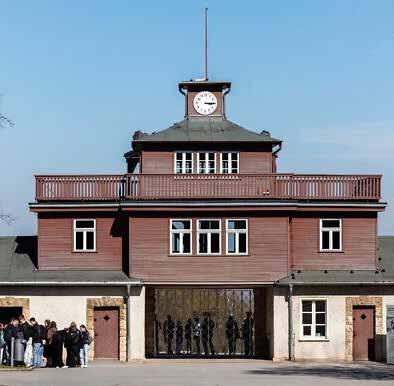
electrifed barbed-wire fence and watchtowers. Inside the camp was a notorious punishment block, known as the Bunker were prisoners were tortured to death.
Historians estimate 56,000, including 11,000 Jews, Roma and Sinti, political opponents, homosexuals and Soviet prisoners of war were murdered at Buchenwald and its 139 subcamps.
Prisoners-of-war, resistance fghters, former government ofcials of
In subcamps, the Nazi regime used Buchenwald for forced labour.
When Soviet forces entered Nazi-occupied Poland in January 1945 thousands of prisoners, mostly Jews, were forced on death marches from Auschwitz to Buchenwald.
An underground resistance organisation in Buchenwald, whose members held administrative posts in the camp, saved many lives.
Tey obstructed Nazi orders and
delayed evacuations.
On April 11 1945, prisoners stormed the watchtowers and took control of the camp. Tat afternoon, US forces entered Buchenwald, liberating 21,000 people in the camp.
Commander of the Allied Forces, Dwight D. Eisenhower, wrote at the time, “Nothing has ever shocked me as much as
Mementos including photographs and documents from survivors and relatives of those murdered are on display. Tere are also interviews with survivors alongside exhibits.
Aside from exhibitions at the death camp the gatehouse, detention cells, watchtowers, crematorium, railway station, SS quarters, quarry, graveyards and jLiving is the largest provider of sheltered housing to the Jewish community in the UK For more information, please visit our website or call our office 020 8381 4901 | jliving.org.uk | #peaceofmind #jliving


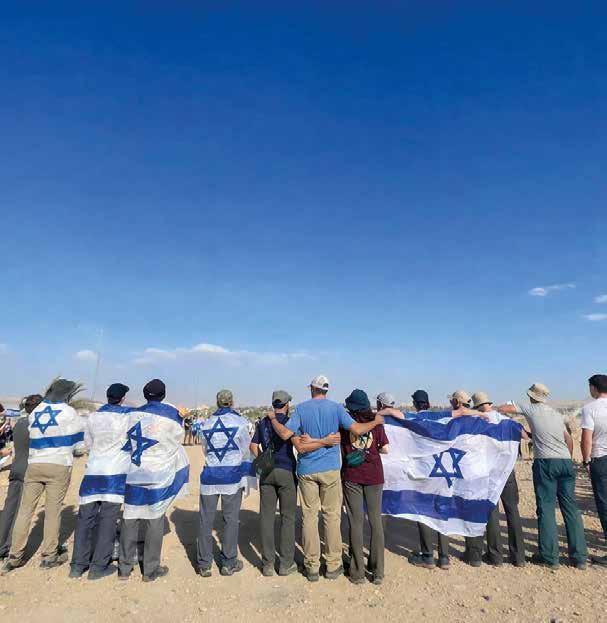
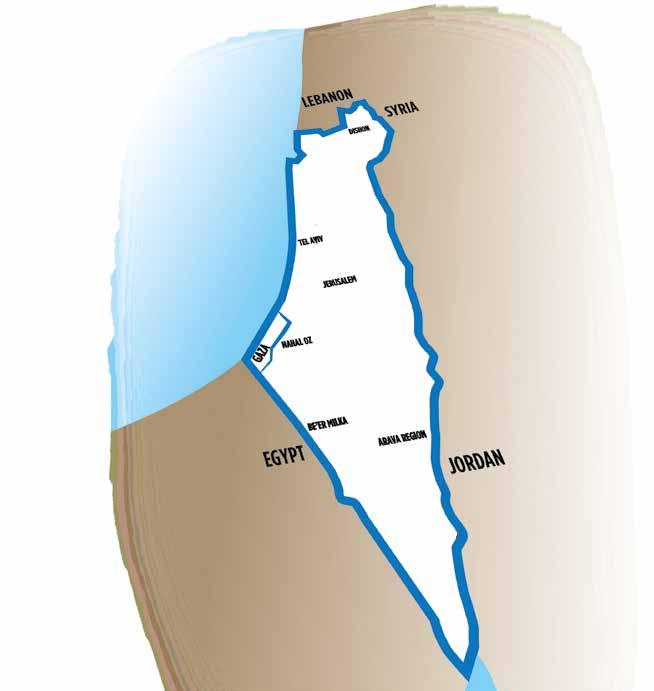
Israel’s borders are more than lines on a map. They are living, breathing communities - home to families, pioneers and young leaders who choose to build their lives on the frontier. When Israel’s border communities are strong, the whole country is stronger.
This Green Sunday, JNF UK is strengthening Israel from the edges inwards – rebuilding shattered communities, restoring daily life and empowering a new generation to shape Israel’s future.



BY DAVID SAFFER
West Midlands Police were overly reliant on unverifed information according to a House of Commons Home Afairs Committee report into the banning of Maccabi Tel Aviv fans from a European football match against Aston Villa last year.
Jewish groups challenge the notion there was no evidence the police response was motivated by antisemitism.
In a wide-ranging review, the Safety Advisory Group’s decision may have been infuenced by political pressure and councillors had a disproportionate opportunity to exert infuence, the report noted.
Campaign Against Antisemitism rued a “missed opportunity” to address “growing sectarianism” in the UK and recognising Islamist radicals.
A spokesman said Acting Chief Constable Scott Green understood the scale of mistrust the scandal leaves behind.
CAA highlighted disappointment in two key respects.
“Te decision to ban Maccabi Tel Aviv fans was not a series of administrative blunders; it was a police force buckling to the demands of local Islamist extremists who threatened lawless riot and violence if Israeli Jews were permitted to visit their city,” explained a spokesman. “Tere is not a single reference to Islamist radicals in the report, even though it was clearly at their behest that ofcers at the highest levels of the force ftted up the Israeli

fans as the most dangerous in international football, fabricating evidence and framing them to justify the outcome demanded by an extremist mob. It was intentional appeasement in response to extremist incitement, and senior police lied to parliament to cover it up. Some of the senior ofcers responsible are still in their posts, and that needs to change.
“Secondly, the report deals very lightly with those who were there to oversee the police and hold them accountable, in particular the Police and Crime Commissioner, Simon Foster, who failed to hold the Chief Constable to account and then permitted him to retire on a handsome pension. Looking at the Committee’s overall assessment, it is clear that the Police and Crime Commissioner failed in his duties and must now consider his position.”
CAA added: “At a time when the Jewish community’s trust in police is already at a record low, this debacle has plumbed new depths. Today’s report shows how urgently police forces must be cleansed of appeasers in senior positions who undermine the work of brave frontline ofcers by appeasing Islamist extremists. Britain was once known for its frm but fair rule of law, and the Home Secretary must now lead the charge in hastening the return of those days.”
Keith Rowe, National Jewish Assembly Vice Chairman, said the report confrmed “disgraceful facts” about the case.
“Te police fabricated evidence and gave in to the wish of politically
motivated Islamists in keeping Jews away from Birmingham,” he seethed. “Tey consulted Muslim communities but not the Jewish community and the police lied to the public and to the House of Commons that they even used AI at all. Te police leadership has been weak and the Police & Crime Commissioner absent from any of the important decision making. Surely this is a case for disciplinary action, resignations, or sackings but we have not seen this at this point. Most right-thinking members of society as well as everyone in the Jewish community should be appalled at this lack of professionalism in our police force and want to see major changes taking place.”
Jonathan Metliss, Action Against Discrimination, observed: “Te denial of an antisemitic motive is not true. It is clear that the police were pressurised into the ban by local Birmingham Islamists, anti-Israel and antisemitic factions. All those involved should be removed from respective ofces. Tere is no place for this behaviour in society and unconditional apologies should be made to the Israeli Football Association, Maccabi Tel Aviv and Jewish community.”
Dame Karen Bradley, Home Afairs Committee said it was an “extraordinary measure” to ban Maccabi fans “particularly in the cultural and political climate” it occurred.
Bradley criticised the decision making process and information underpinning it.
“Tere appears to have been a ‘that’ll do’ attitude,” she explained. “Information
that showed the Maccabi fans to be a high risk was trusted without proper scrutiny. Shockingly, this included unverifed information generated by AI. While Maccabi Tel Aviv fans were falsely characterised as unusually violent, the threat posed by local communities was downplayed and too little care was given to the impact on the Jewish community in Birmingham.”
Bradley added: “Government intervention was clumsy and came too late, we reject the Government’s argument that it could only intervene once the decision was taken. Te profle of this fxture should have been obvious, and it seems that No.10, the Home Ofce and DCMS were indeed aware. But their intervention when it came did little more than infame tensions. It is vital that trust is rebuilt. West Midlands Police must repair the damage that has been done by working hard to reach out to local communities, particularly Jewish communities. Tey must also ensure that there is a cultural shift around decision making where assumptions are tested and evidence fully checked. We also want to see the Government develop a more efective mechanism to support decision making around football safety. It should also refect carefully on its own role and how it can best reduce tensions, rather than exacerbate them, in future.”
West Midlands Police Acting Chief Constable Green is leading Operation Strive to restore trust.





4:45
Making the Move: Smart, Stable, Strategic
5:45 Future-Ready: The Israel Campus Experience
6:15 The Financial ‘Fine Print’ of Aliyah
6:45 Mind the Gap: From the London Underground to the Jerusalem Light Railway, Experience Life in Jerusalem
7:15 Moving Your Money, the Right Way
8:15 Making the Move: Smart, Stable, Strategic

ARTICIPATION IS FREE WITH ADVANCE REGISTRATION O RESERVE YOUR SPOT: ISRAELEVENT2025.COM

Dov Newmark of Make Aliyah Easy
Neta Moallem
Simon Benarroch, Chartered Wealth Manager & Branch Principal Raymond James
Israel Cohen, Director of Absorption and Aliyah at the Jerusalem Municipality
Dan Eisenberg, Chief Commercial Officer at IsraTransfer


Dov Newmark of Make Aliyah Easy
*For security reasons ,the exac t location of the event will be provided after registration.








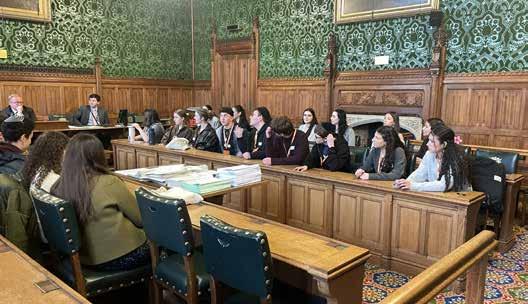
Participants of the JNF UK Fellowship Programme have continued their learning to become future Jewish leaders with two high-level educational visits in London, one focused on sharpening advocacy skills, the other ofering frst-hand insight into political leadership.
Held at the London School of Jewish Studies and the Houses of Parliament, these elements of the year-long programme were designed to strengthen Fellows’ communication skills, deepen their understanding of Israel advocacy and explore what principled leadership looks like in practice.
Advocacy Begins with Communication
At the London School of Jewish Studies, guest speaker Ross Waterman led interactive workshops on leadership, communication, and advocacy skills, challenging participants to move beyond reactive argument and instead develop clarity, composure and confdence in delivering key messages.
Refecting on the day, he said: “It was a pleasure to help the current Fellows build confdence in public speaking and how to make their frst impressions count. Tey were engaged, proactive and stood out as future leaders of the community.”
JNF UK CEO Elan Gorji then placed advocacy within a broader historical context, outlining JNF UK’s evolution over the decades, from its early nation-building work to its current focus on strengthening communities in Israel’s periphery.
Fellows were also given insight into JNF UK’s project selection process, learning how impact, sustainability and strategic priorities guide funding decisions.
Among them was Amitai Jesner, who refected:
“I feel empowered to thoughtfully and impactfully articulate my Zionist convictions in a democracy that deeply values my voice.”
Leadership in the Political Sphere
Learning moved from theory to practice during a visit to Parliament, where Fellows were hosted by Labour MP Luke Akehurst and his Parliamentary Assistant, Jimmy Sergi.
Te discussion focused on what it means to advocate for Israel as an elected representative, and the concept of self-leadership when it comes to prioritisation. Following the session, Akehurst commented: “It was a pleasure to meet such a bright and engaged group of young people. Tey are a credit to the community.”
For Fellows, the visit ofered rare access to the realities of political advocacy at Westminster and an opportunity to ask candid questions about public life.
Participant Rafaela Paley, found the two days transformative:
“Tese past two days have been inspiring, educational and meaningful. I thoroughly enjoyed hearing from guest speakers and then going on our insightful visit to the Houses of Parliament
where we met with MP Luke Akehurst. I have left feeling confdent within my public speaking and communication skills, and motivated and excited to see how my role within JNF UK will continue to grow and how I can further engage with the initiatives we learnt about. I am very grateful to the JNF UK team, speakers and Mr Akehurst for providing us with such an engaging programme this weekend!”
Investing in the Next Generation
Te two visits form part of JNF UK’s broader strategy of equipping young Jewish leaders with knowledge, confdence and practical skills.
By combining rigorous learning with exposure to real-world leadership, the Fellowship Programme aims to cultivate informed and responsible advocates capable of navigating today’s complex conversations around Israel.
Trough initiatives like these, JNF UK continues to ensure that its investment in young leaders translates into informed, confdent and responsible ambassadors for Israel and the Jewish community.
Applications for the 2026/27 cohort of JNF UK’s Fellowship Programme open on 24th March 2026. You can fnd out more by visiting www.jnf.co.uk/fellows




It’s a scary thought, isn’t it? Putting your life in the hands of a teenager. But, you know what’s more scary? You, a family member or someone in the community, having a cardiac arrest and no-one knowing what to do.
Which is why, at Hatzola Northwest, we’re launching our Hatzola Heart Starters initiative. We want to give Year 8 students the practical ability to save someone in cardiac arrest. They will, literally, get hands-on training in effectively giving CPR and using a defibrillator, delivered by our team of experienced paramedics and Hatzola Responders.
Why are we doing this? Because we know that ‘bystander CPR’ doubles the chances of survival of someone in cardiac arrest. And every minute without CPR and defibrillation reduces those chances by up to 10%.
So, if you’re a parent or teacher (or both) please let your school know about Hatzola Heart Starters. And, if you’re in business, we’d welcome your sponsorship to help us fund this free initiative. Just scan the QR code below to find out more.




To get the best value from your private medical insurance, you should speak to an expert who is qualified to advise you on the right policy for you, and recommend the providers who offer the most competitive premiums. This advice covers individual, family and company policies, and is always FREE.
As an independent health insurance expert, I work with the healthcare insurers to provide you with the appropriate and most affordable level of cover. So whether you have an existing policy or not, let’s have a chat.
You can contact me at 020 3146 3444 or 07956 244350 trevor.gee@patienthealth.co.uk www.hatzolanw.org info@hatzolanw.org

www.patienthealth.co.uk
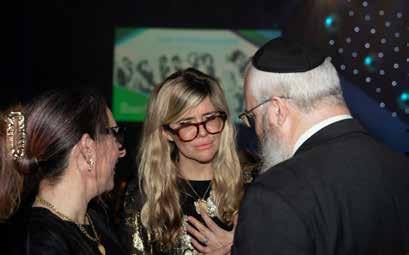
On Tuesday night, leading members of Britain’s Jewish community gathered at the Roundhouse in London to raise vital funds for the work of World Jewish Relief. Te charity, which last year worked in 19 countries and supported almost 180,000 people, provides essential support to vulnerable people sufering the consequences of confict, disaster and climate change.
Te evening was hosted by award-winning British broadcaster, journalist, author and podcaster Emma Barnett. Barnett shared her personal connection to World Jewish Relief, recounting how her grandmother fed Nazi-occupied Austria in 1939. She revealed that she recently discovered information about her grandmother in the charity’s extensive archives, detailing her escape to safety just three days before the outbreak of war. “A week later, and she may not have made it to safety. So, when I say, I am in a great part here this evening because of World Jewish Relief, I mean it.”
Maurice Helfgott, Chair of World Jewish Relief, spoke about the vital support offered by His Majesty the King, the organisation’s Patron, during these challenging times, including his attendance at a recent jobs fair for refugees organised by the charity at St James’s Palace. Helfgott also spoke about the rise of antisemitism
in the UK and across the world:
“Here at home – and around the world – antisemitism is resurgent – in all its nasty forms, old and new... So, our response is to turn up the volume on the “J” in World Jewish Relief – to reach even more vulnerable Jews around the world and, publicly and proudly, to help more people beyond the Jewish community.”
Troughout the evening, guests experienced performances from Olivier Award-nominated musician Raphael Papo, the esteemed Fiddler from the London production of Fiddler on the Roof, and pianist, Ljubica Stojanovi. Barnett captured the mood of the room, saying: “Te Fiddler trying to keep alive the ritual and rhythm of everyday life, even while the world around him changes. I can feel that struggle, the resilience, the Jewishness of it in my bones.”
Hosted on the evening before the fouryear anniversary of the war in Ukraine, the plight of Ukrainians and those forced to take refuge abroad was high on the agenda. World Jewish Relief has assisted over 384,000 people in Ukraine across 389 towns and cities.
Paul Anticoni OBE, Chief Executive of World Jewish Relief, shared:
“I can say sadly - but with certaintythat the situation in the world right now is one of the most perilous I have seen in
my 20 years at World Jewish Relief. Te need for our support has not subsided but has grown exponentially. I fnd it intolerable – unbearable – that right now I can only repair a fraction of Jewish homes destroyed by missiles in Ukraine.”
Barnett also shared how the charity has supported over 14,000 Ukrainian refugees in the UK to learn English and fnd work through its award-winning Specialist Training and Employment Programme (STEP).
Amongst over 600 guests were Sir Ephraim Mirvis, Chief Rabbi of the United Hebrew Congregations of the Commonwealth and Lady Valerie Mirvis, alongside Rabbi Josh Levy and Charley Baginsky, Co-Leads of Progressive Judaism, Rabbi Jonathan Wittenberg, Rabbi Daniel Walker of Heaton Park Hebrew Congregation, and His Majesty Te King’s special envoy Sir
In recent years, the dinner, held annually, has raised millions of pounds to fund critical humanitarian work across the world. While antisemitism continues to put immense strain on Jews across the world, the evening highlighted the determination of World Jewish Relief and its supporters to continue building bridges across communities and providing critical support within and beyond the Jewish community.





Te United Synagogue has become the frst major faith-based organisation in the UK to achieve certifcation under the British Standards Institution (BSI) PAS 5222: Safeguarding Children in Out-ofSchool Settings.
PAS 5222 is a British Standard Specifcation that sets clear, evidence-based safeguarding requirements for organisations working with children or who come into contact with children. To be accredited, an organisation must demonstrate strong governance, robust safeguarding policies, thorough staf checks, reliable reporting and record-keeping procedures, and clear accountability for child protection. Achieving this standard shows that the organisation has been independently assessed and meets nationally recognised safeguarding expectations.
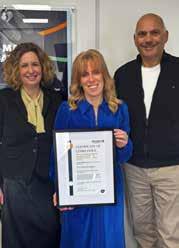
Tis accreditation recognises the United Synagogue’s un-
wavering commitment to the safety and wellbeing of children and young people across its communities. Te PAS 5222 framework, developed by leading safeguarding specialists including Mark Bramah of Bramah Safeguarding, provides a robust and independently verifed standard for safeguarding excellence.
Claudia Kitsberg, the United Synagogue’s Director of Safeguarding and Welfare, said:
“We are proud to have achieved PAS 5222 certifcation, which refects the tireless dedication of our staf and volunteers. Safeguarding sits at the very heart of the United Synagogue, and this accreditation confrms that our policies and practices meet the highest standards. Te safety of our community remains our absolute priority.”
Mark Bramah, Director of Safeguarding & People Operations at Bramah HR, commented:
“Te United Synagogue’s certifcation represents a landmark achievement in faith-sector safeguarding. Teir commitment to continuous improvement and accountability demonstrates outstanding leadership in protecting children and young people.”
Bramah Safeguarding is the ofcial auditing body for PAS 5222 certifcation, providing independent assurance that organisations meet the stringent criteria of this national safeguarding framework.
Last Wednesday, the Borehamwood Kollel celebrated the completion of the Mishnah’s Tractate of Brochos together with its community Mishnayos Group. Each week for the last 9 months, community members have joined members of the Kollel during their Wednesday evening seder to learn and complete the Tractate.
Yoel Strous is a local community member who has been attending the programme for over 2 years: “Last night’s celebration was a culmination for me of months of learning,” Yoel noted. “Every week I look forward to the vibrant Wednesday night learning as part of my weekly opportunity to learn at the Kollel.
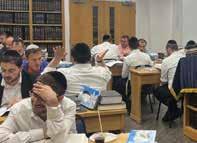
Te Kollel provide us with easy-to-access learning materials; direction in my study; a welcoming environment; good, healthy banter and are always really supportive.
Te Kollel and guest speakers give inspiring shiurim at the end of each week and I fnd the Chabura as a great way to focus myself and be reminded that there’s more to life than work!”
Refecting on the recent achievement, Director of Community Engagement,
Rabbi Chaim Burman told the Jewish Weekly: “It is inspiring to see how interested people become when they experience the pleasure of study of accesible Torah in-depth. Te Kollel ofers meaningful learning experiences for the local community at a level and pace that is tailored to the interests, age and stage of our local community participants. Te recent milestone achieved by our Wednesday evening group attests to the consistent dedication of our Kollel members and interest from our local community friends.We look forward to seeing the Chabura achieve many more learning milestones.”
Te meaty Siyum was addressed by guest speaker, Rabbi Alan Garber, who explored the connection between Purim and Brachos and delivered an informal oral test of the group. Continuing to enhance local Jewish learning experiences outside the full-day learning schedule of the Kollel, this Siyum follows shortly after the completion of the Kollel’s Dor L’Dor Motzei Shabbos Programme where community fathers and children joined the Kollel for interactive and exciting learning programmes.



New topics starting after Pesach: Hilchot Ta’arovot & Hilchot Niddah.

The Montefore Kollel, established by Sir Moses Montefore in 1862, is inviting new applicants to join the Semicha Programme ahead of the next term for the beginning of Hilchot Taarovot and Hilchot Niddah.
The Semicha Programme is a part‑time evening course designed for aspiring community rabbis, teachers, and lay leaders, structured to run alongside work or other studies. No fees are charged.
Students are prepared for Semicha Yoreh Yoreh, awarded jointly by Montefore College and Eretz Hemdah Institute of Advanced Jewish Studies, Jerusalem.
The Semicha course goes beyond Issur v’Heter to include Shabbat, Niddah and other areas of practical Halacha. It also teaches the essential practical skills necessary to enable future rabbis to respond to the halachic challenges of fast‑changing contemporary life. The Semicha is recognised by the Rabbinical Council of America and will be signed by a group of distinguished rabbis.


BY SHIRA JOSEPH
Last year I wrote about Purim excess.
I described the beautiful, elaborate Mishloach Manot exchanged between close friends, only to reappear a few days later at GIFT, still sealed in cellophane. I wondered whether somewhere between the themed labels and the colour coordinated ribbon we had drifted slightly from the original intention.
I did not expect the reaction. People called me, texted me and even stopped me in the street. One person said, “You wrote what we were all thinking.” Many told me they were going to do things diferently and they would simplify and prioritise Matanot L’evyonim. Tey would focus on meaning over presentation. And then some were very honest. When Purim arrived, they got swept up again. Te WhatsApp groups were buzzing. Te children had strong opinions about themes. It is surprisingly hard to opt out
when everyone else seems fully committed to themed aesthetic.
If I am honest, I feel it too. In recent years, a few of my closest friends and I have made a pact before Purim. We say, “Let’s not send to each other this year.” We still love each other and we are so relieved to have one less person to worry about.
Rav Soloveitchik explains that Mishloach Manot is not fundamentally about the food. It is about building connection. Te sending and reaching out is the mitzvah.
A few years ago, we ran a session in a secular secondary school on this idea. Students made a simple Mishloach Manot and wrote a message inside. I challenged them not to give it to a friend, but to someone they wanted to build a friendship with. I knew some would just eat the items themselves, but it was an important message and exercise we felt was needed at the time.
Recently I hosted a group of university students for Shabbat. Two girls, now housemates and best friends, were so excited to tell me that one of those Mishloach Manot had been the spark that
ignited their friendship. It broke down a barrier between two people who weren’t friends but appreciated each other. Tat is Mishloach Manot.
So, look at your list this year. Is it made up entirely of people who will send back? People already frmly inside your circle? It is comfortable. But it is not the only option. Take a moment to add one person who isn’t on that list and who you might feel slightly uncomfortable or vulnerable giving to.
For the past few years at GIFT we have run Simchat Purim, delivering over 200 Mishloach Manot to residents in care homes on Purim day. Volunteers dress up, visit and chat. It is simple, but it spreads real cheer and, more importantly, builds relationships. In the midst of the craziness of the day, it’s such a special way to spend 30 minutes.
I am reminded of a group of students from Edgware Adath Shul who joined a similar Purim initiative in 2019. Tey connected with residents at a nearby care home and kept going back. When COVID hit and those residents became isolated, those same students became a lifeline
for the residents. Tey arranged regular visits through the window. Tey even drew enormous chalk murals outside the care home to lift spirits. What began as a Purim delivery became an ongoing friendship that carried people through one of the loneliest periods.
Purim is the festival of ve’nahafoch hu, when things are turned upside down. Perhaps this year the real reversal is not in our costumes, but in our approach.
Last year many of us agreed that something needed to shift. Tis year, we don’t even need to change everything. Just add one name. You never know what might begin.
Shira is extremely passionate about Jewish Education and has previously held roles in Hasmonean High School and St Johns Wood Synagogue. Shira has been working for GIFT Charity for 11 years in various positions and is currently the programme director responsible for overseeing a lot of the projects and activities in order to engage the community in acts of giving.


Real Estate & Services Providers

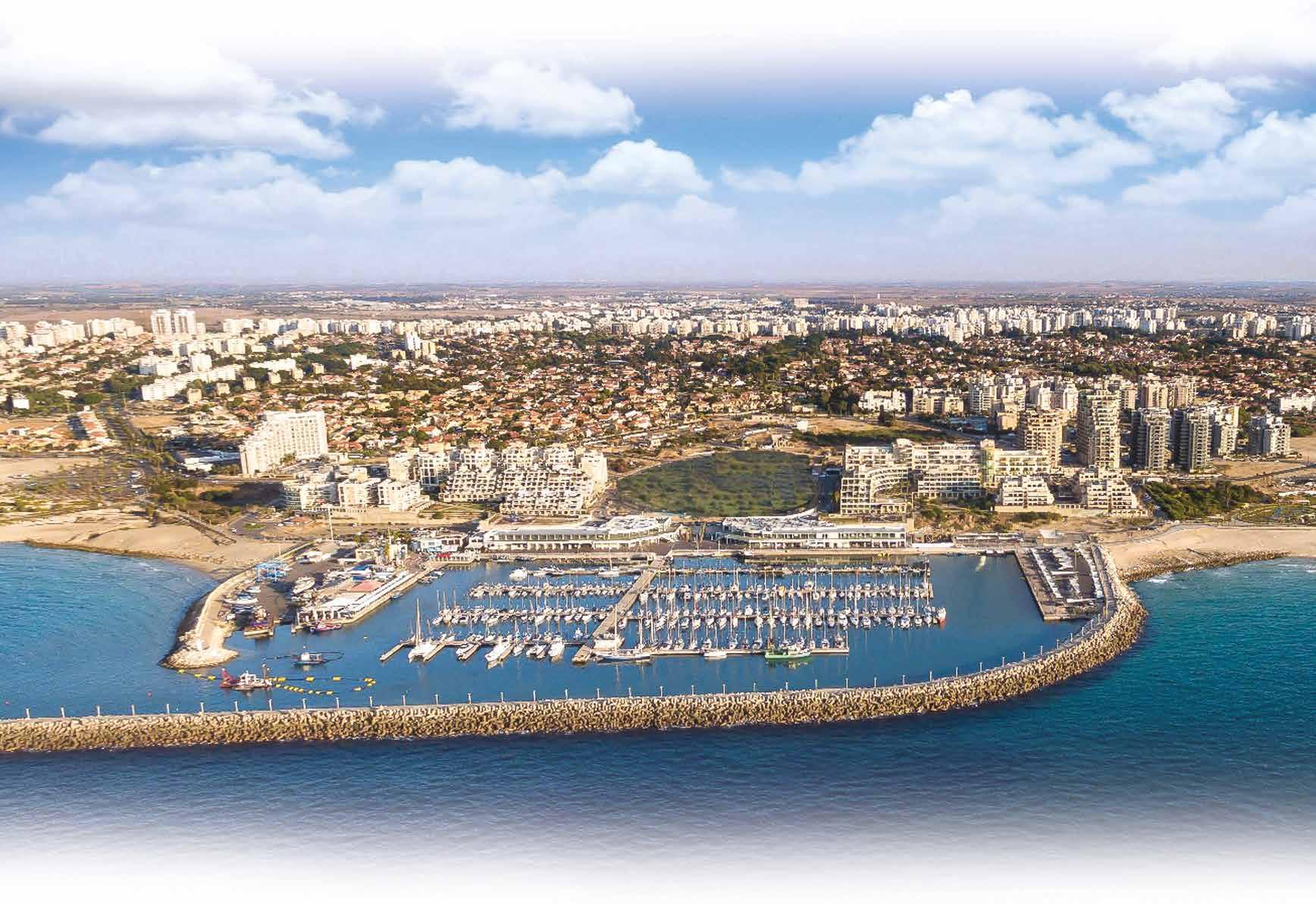
Ashkelon new projects and existing options. Luxury sea facing frst line options & Ir Hayain New Area entry level options & pricing.

Netanya luxury sea facing projects and options in Ir Yamim & Shirat Hayam. Walk to beach, pool & gym in complex offering beautiful spacious homes. 5 Rooms with attached additional rooms

New projects & existing options in Aleph, Gimel, Hey, M3 Beit Shemesh & surrounding areas. 3,4,5,6 Rooms Garden and Penthouses options

High end investment options, to live or rent out. Sea views and all amenities. 3 rooms option from 1 790.000 NIS. 1 to 3 Rooms
Find your perfect property, home, place where you belong. We help and guide you every step of the way.


Carmei Gat new projects & existing options. 2,3,4 bed. Garden & Penthouses & Villas in new Anglo areas with limited pre-sale pricing & payment options

Beautiful villas, houses & apartments Opportunity to be part of new Yishuv and close to the city with your own home in Dati Leumi community. Various options and sizes to suite all families

Last few options. 20% now 80% at end. Excellent location Mishkafayim Ramat Beit Shemesh. 4 rooms option from 2 650.000 NIS. 4 to 5 Rooms

New projects in prime locations with sea views, ideal investment in leading city. Options from 1.650

New projects & existing options, prime locations ready soon or in few years. Limited pre-sale options and prices with no index. 3,4,5 Rooms Penthouses and Garden options

Highrise or boutique building projects & existing options including Old North walk to beach sea views. Pre-sale pricing and payment options on selection of options

Location: Adjacent to key access roads, 10min walk from sea. Asset: 5 dunams (5,000sqm) with approved space for 120 apartments. Ownership: Private land with full registration in your name (TABU).


















Four years after Russia launched its full-scale invasion of Ukraine, Tikva UK is marking the anniversary by refecting on the lasting humanitarian impact of the war and the continued needs of displaced communities.
In the early days of the invasion, Tikva evacuated the majority of Tikva children, plus families and elderly members of the Odesa community to Romania, establishing emergency care, education and welfare support.
Four years on, much of that emergency response has become long-term provision.
In Romania, Tikva is providing assistance to 1,047 people (children, elderly and alumni refugees) including 231 children in its orphanage.
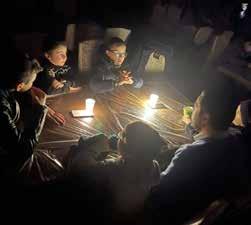
Today, In Odesa, Tikva continues to care for 1,250 elderly individuals and 216 children.
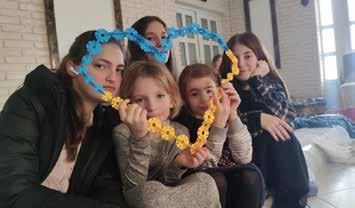
Te efects of the war on people’s lives remain severe and ongoing. In Odesa, the children in Tikva’s care continue to attend lessons in bomb shelters, often in freezing conditions, living with the constant disruption of air raid sirens. Elderly community members rely on Tikva for hot meals and care packages. At the same time, Tikva’s search and rescue work has continued under the most extreme circumstances, helping bring 55 children to safety since the beginning of the war. In Romania, refugees, many still living in temporary accommodation, are supported with education, housing and structured daily routines, helping restore a sense of normality amid ongoing uncertainty.
Te anniversary is also a moment of remembrance. Two Tikva alumni, Vitaly Matzvetz and Anton Bogatyrchuk, were killed while
defending Ukraine.
“As the war enters its ffth year, the needs of vulnerable children and families remain urgent,” said Karen Bodenstein, CEO of Tikva UK. “Our responsibility did
not end when the headlines faded.” Tikva UK continues to support children, alumni and elderly refugees across Ukraine, Romania and Israel, focusing on safety, stability and long-term recovery.








A free valuation from our in house gemmologist and gold experts on anything you may wish to sell. If you are thinking of selling, we purchase all Diamonds in any shape, size, clarity or colour. WE PAY MORE than all our competitors. Try us, and you will not be disappointed!












Over 350 Young Jami Jewish Care (YJJC) supporters gathered at Te Londoner Hotel last Tursday for Jewish Care’s annual Young Professionals Dinner, raising £40,000 for the mental health services provided by Jami, part of Jewish Care, for people living with mental illness and distress from the age of 11 upwards through to adults.
Guests enjoyed a lively atmosphere with dinner and music from a DJ, but at the heart of the event were powerful reminders of the real lives changed through Jami services.
determined to support others facing similar struggles.

Clark Norton, newly appointed Chair of YJJC and Committee member opened the evening by highlighting the importance of Jami’s work:
“Jami is here for every single one of us, ensuring that there is frst class provision for those who are struggling with their mental health in the Jewish community. Jami provides one to one care, therapy sessions, advice, support for families and much, much more. Jami receives no government funding, meaning the money raised tonight is vital. Without it we would lose services like the incredible social enterprise café Head Room, and many other vital services.
“I am so proud that Jami is part of Jewish Care. We know it is not just our generation that struggle, and it is not just mental health, parents, grandparents and great grandparents struggle too. If you are Jewish and you are in need, Jewish Care and Jami are here for you.”
Mental health challenges in the community are rising, especially for younger people, and the need for support continues to grow. 26% of people are living with mental health illnesses, and that number increases to 55% for those under 25 years old with younger people asking for earlier mental health support.
Emilia Isaacs, Vice Chair of YJJC, introduced an appeal flm that brought these statistics to life through deeply personal stories. One young woman shared how Jami supported her as she navigated anxiety throughout her teenage years. With the tools and coping strategies she gained, she rebuilt her confdence and resilience and was inspired to train as a mental health practitioner herself,
Te flm also featured the mother of a young person diagnosed with anorexia, who spoke movingly about the fear and crisis her family experienced. She described the profound diference Jami made by being there for both her and her daughter during an incredibly frightening time. Te emotional and practical support they received helped them feel less alone, better informed, and more able to cope.
Emilia spoke movingly about Jami’s services,
“I’ve seen frsthand the impact Jami can make - creating real change for real people.
“Jami provides hope through its life-changing services and reaches 3,000 young people and adults every year. Tis support aids mental health recovery, providing transformative help for families looking after somebody living with mental illness, and educates community leaders on how best to support and accommodate those who are struggling.”
Emilia talked about Jami’s Dangoor Children and Young Person’s Service, and Jami’s Talking Terapies service.
Jami’s Dangoor Children and Young Person’s Service is one of Jami’s vital and much-needed services. It currently operates in JCoSS, JFS, Yavneh College and within the community, supporting those aged 11 to 25 who may be struggling with anxiety and depression, lacking in self-esteem, or simply not coping in their daily lives.
Trough weekly one-to-one support sessions with a Jami mental health practitioner, young people can beneft from a safe space to talk about their friendships and family dynamic, develop coping strategies to overcome barriers, establish
routine and structure in their lives, and receive help to improve their confdence. Tey can also get emotional and practical support to help them through exam periods, as well as the day-to-day hurdles that school, university and working life bring.
Emilia also shared that Jami has recently extended its Talking Terapies service to young people aged 11–18,
in addition to the adults it has already been supporting. Tis service provides
secondary-school-age children with a safe, non-judgemental space to explore their worries, make meaningful choices and move forwards with confdence.
“Yet as vital as both these services are, the lack of government funding and reliance on the help of the community puts a strain on their ability to help everyone.”
Speaking after the dinner, Jewish Care’s Director of Fundraising and Marketing, Ellisa Estrin, said,
“Tanks to the amazing hard work of our YJJC Committee led by Clark Norton, and with the generosity of our guests and supporters, we were delighted that the dinner was a huge success, raising £40,000.
“As Jami, part of Jewish Care, faces increased pressures in the new fnancial year, this support from the Young Professionals Dinner is even more crucial to help ensure that Jami continues to provide essential mental health services to those who need them most in our community.”
To donate to Jami and for more information, please visit jamiuk.org/donate/ or call 020 8458 2223.



BY RABBI NAFTALI SCHIFF
It’s a deceptively simple question. How long should we wait before taking action on something that’s important?
Before tackling a communal problem?
Before responding to a crisis?
Before stepping into the role that perhaps only we can fll?
Tis week I was speaking with a friend in the wake of this week’s Bold InnovAISHon fundraising campaign run by Aish. I asked him whether he had made progress introducing our work to a certain successful individual.
He replied, quite calmly, that he didn’t think the person was particularly interested and that he didn’t really have a plan of how to proceed. He was willing to bide his time and wait for a natural opportunity to arise.
“And that,” he told me, “is the diference between you and I.”
He is prepared to wait for opportunity. I believe that the critical nature of our work demands in precipitating opportunity.
Tat conversation took me back to when we were formulating the mission and vision of Aish; a foundational question that, as a group of driven and idealistic individuals, we revisit often. Tere was and continues to be lively debate around a single word: URGENCY.
Should urgency form part of our philosophy and modus operandi?
Some felt that building urgency into the DNA of an organisation would create panic, inefciency and chaos. Urgency sounds like stress. It sounds reactive. It feels combustible. (AISH is “fre” after all!)
Others argued that the state of Jewry demands that those working for change be imbued with urgency, not panic, but a profound awareness that time matters, that moments matter, that delay carries a cost. Tat cost is lost Jews. And for us, Jews lost to apathy, assimilation, and even just the soft attrition of anti semitism - matter greatly.
Perhaps the Purim story sheds light on this debate.
When we open the Megila of Esther, we enter a world on the brink. Haman issues an edict permitting the annihilation of the Jewish people on the 13th of Adar. Te date is set nearly a year in advance. A year.
Plenty of time.
Mordechai does not see it that way. He tears his garments, dons sackcloth, and cries out publicly and bitterly. His response is immediate, visible, visceral. Queen Esther sends him a message: Why the public display? Change your clothing. Regain your composure. What will this achieve? Your excess is embarrassing the Jewish establishment!
Mordechai replies with words that echo across the generations: Do not imagine that you will escape in the luxury of
palace. Relief and deliverance may arise from elsewhere- but you and your father’s house will perish. And who knows? Perhaps it is precisely for this moment that you attained royalty.
Esther hesitates. Tere is protocol. Tere is risk. She has not been summoned to the king, Achashveirosh for thirty days. To approach him uninvited is punishable by death.
And besides - what is the rush? Te decree is a year away.
Mordechai’s response is the heartbeat of Purim- history does not wait for comfort. Destiny does not pause for convenience. If you are positioned to act, that positioning itself may be Divine choreography. Read the map! Listen for the whisper! At timeswake up to the call!
Tis is your moment.
Seize it.
Esther does. She calls for a three-day fast. She cancels Pesach! She steps into the throne room unsummoned. She risks everything. Her composure is not panic, it is bitachontrust and formidable courage under pressure. Her urgency is not hysteria it is clarity. Now that’s Bold InnovAISHon at its best!
And because she does not lose the moment, her actions become eternal! Her story becomes our story, one that informs our modus operandi forever.
Tis was often his directive when others would falter. His perspective was simpleJewish destiny cannot wait for perfect conditions. Act now!
After the Holocaust, the great Dayan Yechezkel Abramsky urged families to take survivor children into their homes. However, post war conditions were not simple. When a potential benefactor hesitated, the Dayan phoned the wavering gentleman himself on Shabbat- an act that in itself underscored the gravity and urgency of the hour.
When Jewish lives are at stake, we do not wait.
But urgency does not mean frenzy. Doctors in emergency wards are trained to operate with clarity and make decisions amidst the chaos. Commanders on battlefelds are drilled to act calm under fre.

Te gemara crystallises this ethic in powerful language. לא ךדיל האבה הוצמ הנצימחת when a mitzvah comes to your hand, do not let it become chametz; do not allow it to ferment.
Te Mishna calls upon us to be cognisant- “If not now, when?” ,ושכע אל םא ״?יתמיא אל אמש הנשא הנפאשכל
לא הנפת
“do not say -When I have time to learn I will do so- because perhaps you will never have free time….”
Busy people make time for important things. People tuned into the circumstances of Am Yisrael make things happen. Tey don’t wait. Tey harness situations and pray to the A-lmighty that their well intentioned actions shall have impact.
Te Gemara teaches that we do not delay a mitzvah. Opportunity carries a time signature. Miss the beat and the music moves on.
How much more so when we are speaking not merely about personal mitzvot, but communal destiny.
Tere is a story recorded of the Lubavich Rebbe urging that matzah be supplied to Jews in a compromising situation in apartheid South Africa, despite prevailing formidable logistical barriers at that time.
Tere is a crucial place for strategy. Tere is a place for patience. Not every seed sprouts overnight.
But there are moments and perhaps generations that simply demand more.
Mordechai could have reasoned that the decree was a year away. Esther could have waited for a more convenient invitation. Tey could have commissioned a feasibility study.
Instead, they fasted. Tey prayed. Tey acted.
Carpe diem is a Latin phrase. Mordechai’s version is holier: Carpe D-eum - seize the moment to bring G-d consciousness to an increasingly anarchical world.
Tey do not meander; they do not panic; neither do they procrastinate. Tey think on their feet, weigh up the situation. Tey decide. Ten they act, boldly. Tat is healthy urgency.
A cool head.
A burning heart. Decisive action. We live in a perilous world. Jewish blood has been spilled. Hostages have been held. Antisemitism mutates and metastasises. But physical threats are not our only danger.
Assimilation continues its quiet erosion. Apathy spreads more subtly than hatred. Disenchantment seeps into young hearts , even in ostensibly observant homes. Disunity corrodes us from within.
Chilul Hashem is not a minor irritant to be addressed leisurely over strategic cycles. It is intolerable. Te erosion of Jewish identity is not a sociological curiosity. It is a national emergency.
We were not taken from Egypt, nor did we stand at Sinai, in order to curate a comfortable subculture. We were given marching orders.
Te building of the Mishkan was not a quaint national construction project. It was the boldest mission statement in history- to bring G-dliness into the world. To publicise goodness, decency and moral clarity. To be a kingdom of priests and a holy nation.
Tat is not a side show. It is the show.
And when we internalise that, urgency is no longer stressful. It becomes a privilege.
Te opposite of urgency is not calmness. It is complacency.
Tere is a seductive voice that whispers: “Tings have always been difcult. Jews have always struggled. Launch a programme here, a campaign there. Incremental progress. Gentle evolution.”
Healthy urgency means recognising that if you are aware of a problem, you are implicated in its solution. If you see alienation, you are being summoned to connection. If you witness ignorance, you are being invited to teach. If you detect disunity, you are being called to bridge. And if you are positioned- by talent, by network, by infuence, by proximity, by resource- then perhaps you are here for this very moment.
Tis is not about reckless activism. It is about refusing to hide behind the illusion of endless tomorrows.
Te Jewish people have never survived through lethargy. We have survived because, at critical junctures, individuals stood up and said: Now.
Now I will speak.
Now I will give.
Now I will build.
Now I will lead.
Purim is a story of hidden miracles. G-d’s Name does not appear explicitly in the Megillah. But His timing pulses through every chapter.
Perhaps that is the deepest lesson. History is a narrow bridge between moments. Each of us is handed windows of infuence that will not remain open indefnitely. We can wait for the perfect invitation or we can, like Esther, step forward unsummoned.
Who knows whether it is for this moment that we have been placed exactly where we are?
Te question is not whether the Jewish future matters.
Te question is whether we will treat it as urgent.
Shabbat Shalom

///What3Words is a geocoding system.
In this column, Rabbi Schif refects upon 3 key words each week, relating to issues of the day.
All feedback is welcome. Nschif@ jfutures.org
Rabbi Schif is the Founder and CEO of the Family of Jewish Futures educational organisations













Centrally located with easy access to Jerusalem, Tel Aviv, and Be’er Sheva, Carmay-HaNadiv is a flourishing new neighborhood in Kiryat-Malachi.
Over 200 new apartments are currently being delivered to new Anglo families and Olim, joining more than 900 established families who already benefit from excellent education, rich community activities, and a warm, dynamic community.

We have recently completed the first phase of the central business area including the neighborhood’s main shopping center Rothschild Boulevard with 1,700 sqm of commercial space. An additional four buildings, offering hundreds of high-standard apartments, are also now on the market.






Dear Rabbi
I saw you at the Kedem wine event last week. You were continuously with a glass of wine in your hand and that made me wonder: what is it about Rabbis and drinking? Is it part of your job description? Every Rabbi I know seems to enjoy his alcohol, which feels somewhat incongruous with the spiritual role.
Shawn
Dear Shawn
Firstly, can a rabbi not go out for a civilised evening without someone conducting a halachic surveillance operation from across the tasting hall?
Secondly, how do you know it wasn’t the same glass all night? Unless you were following me from stall to stall with a clipboard, stopwatch and breathalyser. (For the record, I believe there were close to forty stalls. As a man of thorough scholarship, I felt it only responsible to sample broadly. One must never rule on a wine without adequate research.)
Now to your broader theological concern: is drinking part of the Rabbinic job description? Only in the same way that eating is part of being human.
Judaism has never viewed wine as incongruous with spirituality. On the contrary, wine accompanies our most sacred moments. We sanctify Shabbat with it. We begin festivals with it. We celebrate weddings with it. King David himself writes that wine gladdens the
heart of man. Te issue is not drinking. Te issue is excess. Tere is a vast diference between appreciation and escapism or between saying l’chaim and the loss of control.
As for the rumour that Rabbis drink because the job drives them to it - I can neither confrm nor deny that some board meetings pair exceptionally well with cask strength single-malt.
Bottom line, the Kedem event was fabulous. A real celebration of Jewish viticulture, community, conversation and a reminder that joy and Judaism are not strangers. If spirituality cannot exist in a room flled with good people and good wine, then you have misunderstood spirituality.
And Shawn, I do hope to see you again next year. If you’re planning to continue your feld research, I’ll make it easy for you. I’ll be the bearded guy at the Shilo wine stall, number 34. L’chaim.
Dear Rabbi
Every year around Purim I fnd myself asking the same question: why on earth do we eat hamentaschen? Tey are dry, triangular and frankly overrated. Is it really essential custom?
Danielle
Dear Danielle
Yes, some hamentaschen are dry. Some are crumbly. Some appear to have been flled with jam in 1987 and only brought
back out of the freezer again next week.
Te classic understanding is that the Hebrew name - oznei Haman - means “Haman’s ears.” Apparently in ancient times, when someone was humiliated, their ears were symbolically cut or twisted. So, we are eating the villain as it were – or his ears - to demonstrate our victory. But there is a deeper layer. On the outside the hamentash is plain pastry. On the inside it is flled with something sweet and hidden. Which, if you think about it, is the entire message of Purim. Te miracle of Purim was concealed within natural events. What looked like a string of ordinary coincidences on the outside contained something far richer and more Divine within. Purim is about discovering sweetness where you least expect it. And if your particular hamentash lacks




















H E R Z L I Y A
R e n o v a t e d a p a r t m e n t
3 b e d r o o m s
7 m i n u t e s w a l k t o I D C
B a l c o n y
P a r k i n g & s t o r a g e
M o t i v a t e d s e l l e r
Asking Price:
₪ 4 , 7 5 0 , 0 0 0

h a m i r
3 , 4 & 5 b e d r o o m
a p a r t m e n t s a v a i l a b l e
L a r g e A n g l o c o m m u n i t y
R e a d y : A u g u s t 2 0 2 8
Starting Price: ₪ 2 , 4 5 0 , 0 0 0



J E R U S A L E M
R a m o t B e t S e m i - A t t a c h e d V i l l a
2 3 5 S Q M b u i l t
4 0 0 S Q M p l o t
7 b e d r o o m s 4 5 b a t h r o o m s
Asking Price: ₪ 9 , 2 5 0 , 0 0 0

C A R M E I G A T
N e w P r o j e c t
O n l y 6 a p a r t m e n t s p e r
b u i l d i n g
L a r g e 5 b e d r o o m u n i t s
G r e a t o p p o r t u n i t y f o r f r i e n d s & f a m i l y t o b u y t o g e t h e r
Starting Price: ₪ 3 , 4 5 0 , 0 0 0

N E T A N Y A
N e w P r o j e c t
O n l y 2 0 % d o w n ! N o b u i l d i n g i
Starting Price: ₪ 3 , 4 0 0 , 0 0 0





Division of the London Beth Din
KLBD (Kashrut Division of the London Beth Din) is the leading UK authority on Jewish Dietary Laws It operates under the aegis of the Court of the Chief Rabbi of the United Hebrew Congregations of the Commonwealth
We are recruiting an Ingredients Coordinator to support our Rabbinic Coordinators (RCs) and manage data for their assigned companies
YOUR JOB WILL INCLUDE THE SUCCESSFUL APPLICANT MUST
Possess strong office-based skills, including proficiency with Microsoft Word, Excel, Outlook, and databases, fluency in English, and excellent interpersonal and written communication skills
Be self-motivated and able to manage time efficiently for a heavy workload
Liaising with companies and factories around the globe assisting with annual renewals and new products
Presenting information to our Factory Auditors and Rabbinic Coordinators CLOSING
Updating and managing lists of ingredients used in factories

Planning itineraries for our Mashgichim Booking travel and accommodation THE SUCCESSFUL APPLICANT MUST
Possess strong office-based skills, including proficiency with Microsoft Word, Excel, Outlook and databases fluency in English and excellent interpersonal and written communication skills
Have previous experience organising complex business multi-country travel itineraries
Liaising
BY RABBI MOSHE TARAGIN
In the fnal chapter of Megillat Esther, the book itself is described as an iggeret, a letter. Tis is an unusual term for a work that ultimately became part of Tanach. Rather than being presented as a formal sefer or scroll, the Megillah is cast in the form of correspondence.
Because Megillat Esther is framed as an iggeret, halachah treats it with greater fexibility. Te requirements governing how it is written and how it is read aloud are less rigid than those that apply to other books of Tanach. Tese leniencies refect its origins as a letter sent to a dispersed nation to establish the observance of Purim and give it lasting form. Having begun as a letter, it is preserved in Jewish law as one.
Te status of the Megillah as a letter carries deep symbolism.
Roughly fve hundred years before the Purim story, history entered a new phase. For the frst time, large multi-regional empires emerged. In the late tenth and ninth centuries BCE, Assyria rose to power and gradually conquered the Levant and much of the Near East. In the late seventh century BCE, Assyria collapsed and was replaced by the Neo-Babylonian Empire, which ruled the region for several decades. In the mid-sixth century BCE, Babylonia itself fell to Persia. Te Persian Empire then established a vast realm of “127 provinces”, stretching across much of the ancient world. Governing such an empire required systems of communication that could project authority across great distances.
Previously, empires such as Egypt were largely confned to a single region. In that setting, a monarch could dispatch messengers who personally carried decrees, conveying instructions along with the authority of the throne.
In multi-regional empires, that model no longer worked. Communication could not travel person to person across vast distances. Authority had to be transmitted through letters, documents capable of moving from province to province and from hand to hand.
Because letter-based communication became so central to imperial rule, letter writing emerged as a prestigious craft. Composers of royal correspondence were trained in language, form, and ofcial convention so that the king’s will would be expressed with clarity. Because of their vital role in projecting political power, letter carriers likewise occupied elevated roles, entrusted with delivering that authority to distant regions. Many of these positions were hereditary, as the Megillah itself suggests. Writing letters became part of the imperial atmosphere,
a practical instrument through which power was extended across the empire. For this reason, toward the end of the story, when Esther and Mordechai ask Achashverosh to rescind his letter, he refuses. Canceling a royal decree would undermine the authority of all royal correspondence. A monarch had to protect the integrity of his letters so that, when they were read aloud in the public square of a distant province, they would command obedience. Achashverosh was willing to issue a second letter, but to repeal an earlier one would have weakened the integrity of the system on which his rule depended.
As empires expanded beyond the reach of personal rule, authority could no longer travel by voice or presence. Letters, and those who wrote and carried them, became instruments of power and a shaping cultural force.
Tere is a second drama unfolding in the background of the miracle of Esther. About seventy years earlier, we had been exiled from Yerushalayim. With the loss of the Mikdash came the loss of Jewish sovereignty, and with it a deep rupture in Jewish identity. It was disorienting to wake up the day after the apocalypse and realize how much of Jewish life had been stripped away, how exposed and uncertain Jewish identity had become. With no clear future and no visible return on the horizon, that identity began, slowly and quietly, to erode.
Central to this erosion was the decline of language. Language sits at the heart of identity, shaping how a people understands itself. As Jewish identity weakened, Hebrew itself came under threat. Tis tension is refected in the books that chronicle the frst exile. Daniel and Ezra are written partly in Aramaic. Te sections that describe exile and imperial life appear in Aramaic, while the passages that trace return and rebuilding revert to Hebrew. Language became a marker of loss and recovery, a mirror of the struggle to preserve Jewish identity in exile.
of the return and the suspension of construction in Yerushalayim, Jewish identity and the language that sustained it were further weakened.
Te names of the heroes of the Purim story refect this struggle over Jewish identity and language at a moment when the Jewish future felt uncertain. Mordechai, whose Hebrew name was Petachyah, and Esther, known in Hebrew as Hadassah, are identifed throughout the Megillah by their Persian names rather than their Hebrew ones. Mordechai’s name echoes the Persian deity Marduk, while Esther’s recalls Ishtar, a Persian star-goddess. Te Megillah’s choice of names places its heroes within the linguistic world of Persia, highlighting the tension between Jewish identity and the culture in which they lived.
returned because the people it spoke for had returned. Te future no longer felt sealed shut, and Jewish identity was no longer fading.
Te story of Esther unfolds roughly seventy years after the exile from Yerushalayim. A few years earlier, we had returned to Yerushalayim with the authorization of Cyrus and laid the foundations of the Mikdash. Tose eforts, however, were quickly obstructed. Opponents of renewed Jewish settlement lodged complaints with the Persian court, and the rebuilding was halted. With the stalling
Tese are the two backdrops to the story of Purim. Letters had become a cultural force, projecting infuence and shaping norms across the empire. At the same time, Jewish identity was weakening, and with it the hold of Jewish language was beginning to fade.
Te frst two letters in the Purim story are translated into every language and every script—except Hebrew. No one imagined translating royal decrees into Hebrew, a language already viewed as fading along with Jewish identity itself.
Imagine the terror of Jews in distant provinces receiving word of an impending war to be fought in the coming month of Adar. Unable to read the decree in their own language, they were forced to turn to a non-Jewish neighbor to interpret it for them. In that moment of dependence, they discovered that the letter being read aloud was their own death sentence, translated for them by their future executioners.
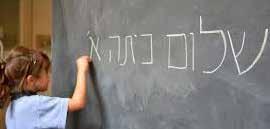
But as the Purim story turned and redemption began to stir, the fnal letter changed everything. Te decree granting Jews the right to defend themselves was translated into every language, and this time, into Hebrew as well. Hebrew
We were still here. Our path forward was visible again. Within a few short years, the return to Yerushalayim would resume and the Second Mikdash would begin to be built. In the Megillah, the rise and fall of letters and language track the shifting fortunes of the Jewish future. For this reason the book of Esther is canonized a as a letter.
Jewish identity forms the foundation of Jewish religious life. Te deeper we experience our lives as Jews, the more organic and meaningful our avodat Hashem becomes.
Our community has excelled in building rich religious experiences, expanding Torah study, and strengthening halachic observance. Jewish religious life and Torah learning are at historic highs, baruch Hashem.
But have we invested with equal seriousness in building strong Jewish identity?
For the frst time in centuries, there are deeply religious people, fully committed to lives of Torah and halachah, who do not speak a Jewish language. Without language, our access to Torah texts is often secondhand, fltered through translation. Without a Jewish language, we limit our ability to connect with Jews across the world beyond our immediate cultural setting. More importantly, without language, Jewish identity itself cannot reach the depth or resilience we seek.
Have we, in some measure, compromised aspects of Jewish identity-building in our focus on Torah and mitzvot? Perhaps this was a necessary price to pay, but is there a way to advance both at the same time?
At the Award Winning Elysium Resort & Spa Rhodes, Greek Isles

Luxury Beachfront Resort: Exclusive use for 500 guests, featuring a Spa and wellness centre, lagoon and heated pools, 20 minutes from Rhodes Airport.
Premium Accommodation: 10 or 12-night stay in a stunning, fully kosher, Chag friendly environment.
Elegant & Gourmet Dining: 3 daily meals, table wines, soft drinks, early kids’ dinners, Grand Kiddushim on Shabbat & Chag, plus all day lobby refreshments, snacks & beach bar happy hour.
Pesach Sedarim: Private, family, and communal seder options in a warm Chag atmosphere




Inspiring Program: World-renowned scholars, guest speakers, uplifting tefllot, and engaging learning sessions for English speakers.
Family-Friendly Fun: Exceptional kids’ club, teen chill zone, and tailored entertainment for all ages.
Optional Excursions: Day trips and attractions to explore Rhodes and its surroundings.
Peace of Mind: Professional security team and expert hosting by David & Chana Walles.
Minyanim: Nusach Ashkenaz and HaAri-Zal



Featuring Top Scholars, Guest Speakers & Entertainers: R’ David Lapin, R’ Laibl Wolf, Rivkah Krinsky, R’ Yossi Fachler, Maestro Yossi Shwartz, Mendy Shapiro, Shay Barak, Shlomi Lanyado, Daniel Harel, & more!
Tuesday 31.3 - Sunday 12.4
Pay for 10 nights Stay for 12
Price starts from 3450€ Per Person *double occupancy

David & Chana Walles
Hosts 36 Years

Arik Porat CATERING MANAGER Executive Chef


BY DAN MATALON, TA’AMIM
“Tey tried to kill us, we survived, let’s eat!” Or perhaps in the case of Purim it would be more appropriate to say “Tey exiled us, they ate, they threatened to kill us, they ate some more… then they tried to kill us. We survived, let’s eat!”
If you trace the Megillah carefully, many of the decisive turns in the story happen around tables. Te Purim story is peppered with banquets. It is an insight into the epicurean nature of Achashverosh and his Empire that feasts play such a role in the Megillah.
Te story opens with excess. Achashverosh’s feast lasts 180 days, a display of wealth, power, and control. Our Sages note that he uses the vessels of the Beit HaMikdash, sending a calculated message that the Jewish story is over, that exile is permanent, that Persia has replaced Jerusalem. Te atmosphere is indulgent and triumphant. It is a world that looks settled in its certainty. And then, at the tail end of that feast, Vashti refuses the king’s command. At this pivotal moment the fate of the Jewish people is about to change forever as Achashverosh begins his search for a new queen.
Esther’s ascent is also marked by a feast. She is taken to the palace, chosen, crowned - and then Achashverosh calls another banquet for all his courtiers and ofcials. Tis would be “Te Banquet of Esther.” And yet, she remains silent about who she is. Her Jewish identity stays
concealed. Esther enters the palace the way redemption will ultimately enter this story: hidden.
When Haman rises to power and the decree of annihilation is signed, the text tells us that “the king and Haman sat down to drink.” It is one of the most jarring lines in the Megillah. A genocidal order has just been dispatched across the empire. Shushan is bewildered. And the two men responsible are drinking together.
Te most fascinating banquets, however, are Esther’s. After three days of fasting, she approaches the king uninvited, risking her life. Te moment is charged. Tis is her opportunity to plead for her people. Instead of presenting her case immediately, she invites Achashverosh and Haman to a private feast. It is an unexpected pause. Our sages ofer multiple explanations for her decision: to isolate Haman, to provoke suspicion, to pray for mercy, to buy time. On a human level, it refects extraordinary restraint. She had access. Te king was receptive. And she delays. Knowing when to speak is one kind of bravery. Knowing when to wait can be even harder.
At the end of the frst feast, Esther invites them back for another the next day. Tat single day of delay introduces what may be the quietest yet most decisive turning point in the Megilla: “On that night, the king could not sleep.” Tere is no thunder, no overt miracle. Just insomnia. A request for the royal chronicles. A forgotten act of Mordechai recorded years earlier. Haman entering at
precisely the wrong moment. Tis was the moment in which Haman’s arrogance became his downfall, and marks the start of a change of fortunes for the Jewish people.
At the second banquet, Esther fnally speaks. She does not lash out. She frames the decree carefully: “We have been sold, I and my people.” She reveals her identity at the exact moment when it will land with maximum impact. Haman is suddenly exposed. Te setting of indulgence and privilege becomes the stage for his undoing. Te same environment that once projected his power now reveals his vulnerability, and triggers his downfall.
“V’nahafoch hu - And it was reversed.” What began as banquets of arrogance end as meals of resilience. Te Megillah closes, fttingly, with feasting again, but now it is ours. Purim Seudot are not displays of ego or domination. Tey are our celebration of survival, expressions of gratitude to the King of Kings.
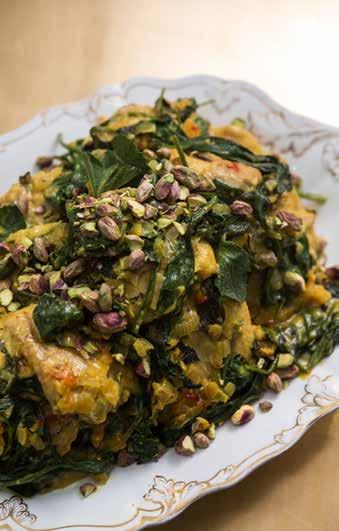
Te Jewish people thrived in Persia for the next two millennia, crafting exquisite cuisine from the bountiful ingredients of the region. Tis Persian Chicken with Safron and Pistachios would be worthy of any royal banquet, a perfect dish for Purim.
You can fnd this and many more delicious Purim dishes to feast upon at wearetaamim.com
Wishing you all a Chag Purim Sameach.
• 1½ kg skinless, boneless chicken thighs
• 2 tablespoons olive oil
• 3 medium onions, peeled, cut in half, and thinly sliced
• 1 tsp turmeric
• Freshly ground black pepper
• 1½ cups dry white wine
• 1½ cups chicken stock
• Salt
• A very good pinch of safron threads
• 400 g fresh baby spinach, stems removed, torn if large
• 20 g fresh mint leaves, torn
• 20 g fresh dill, roughly chopped
• 75 g raw pistachios, roughly chopped
METHOD:
1. Cut the thighs in half. Heat the oil in a large sauté pan and fry the chicken until golden but not cooked through, turning once. You may have to do this in batches depending on the size of your pan. When chicken is golden, remove to a dish and set aside.
2. Add the onions to the now-empty pan, and fry until they become soft and golden. Add the turmeric, mixing well so that all the onions are coated. Season with pepper, add the wine and stock and bring to a boil.
3. Reduce heat and return the chicken and any juices from the bottom of the dish to the pan. Simmer covered for 15 minutes. Remove the lid and continue simmering for another 10 minutes. Season with salt and add the safron, stirring to dissolve the strands.
4. Gradually add the spinach, which will wilt quickly and allow you to add much more than you think will ft into the pan. Stir in mint and dill, and check additional salt and pepper. Just before serving, top with pistachios.



From March 31st / April 1st to April 10th/12th, 2026

Experience the luxury and exotic charm of an unforgettable Passover in Agadir.
IN AN EXCEPTIONAL SETTING, COMPLETELY REDESIGNED FOR YOUR COMFORT
Intimate atmosphere (220 people max) Large outdoor pool • Children's pool & water games • Spa & wellness • Fitness center • Paddleboarding • Games room • Spacious and refined rooms • Rooftop & lounge bar • Berber lounge • Kids Club & Teens Club • Jungle Park • Guided excursions • Sports & recreational activities • Personal trainer • Shiourim Park Rav Moshe Cohen • DJ sets & Live performances by PURE SHOWBAND • Special appearance by the famous singer and Paytane Pinhas Cohen for a magical Mimouna


From €2490/adult - Child discount available with Family plan



• Suits now from £69
• Overcoats from £49.50
• Knitwear from £10
• Casual Jackets from £29.50
• Sports Jackets and Blazers from £39.50
• Trousers £20 each 2 pair for £30 28-48 inch waist
• Shirts from £10
• Shoes from £15
10 Golders Green Road London, NW11 8LL
Open weekdays untl 6pm & Sundays tl 5pm












ACTIVITIES
Inspiring lectures, live performances, uplifting Kumzitz evenings, and engaging family experiences.

renowned culinary experts.
An elevated and refned dining experience throughout Pesach.
KASHRUT
Glatt Kosher LaMehadrin
Under the supervision of Rabbi Moshe Nachshoni Shlita No Kitniyot • No Gebrochts
TRIP royal style
Hotel
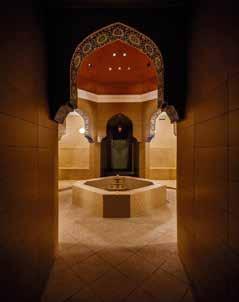
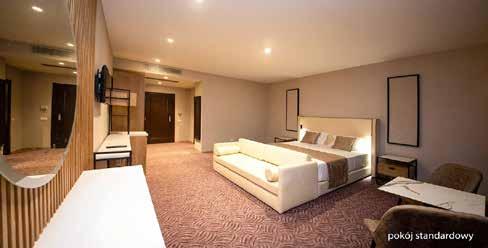
The entire hotel is exclusively privatized for our Passover program. Elegant lounges, curated children’s activities, modern ftness center, private beach, and a brand-new luxury spa.