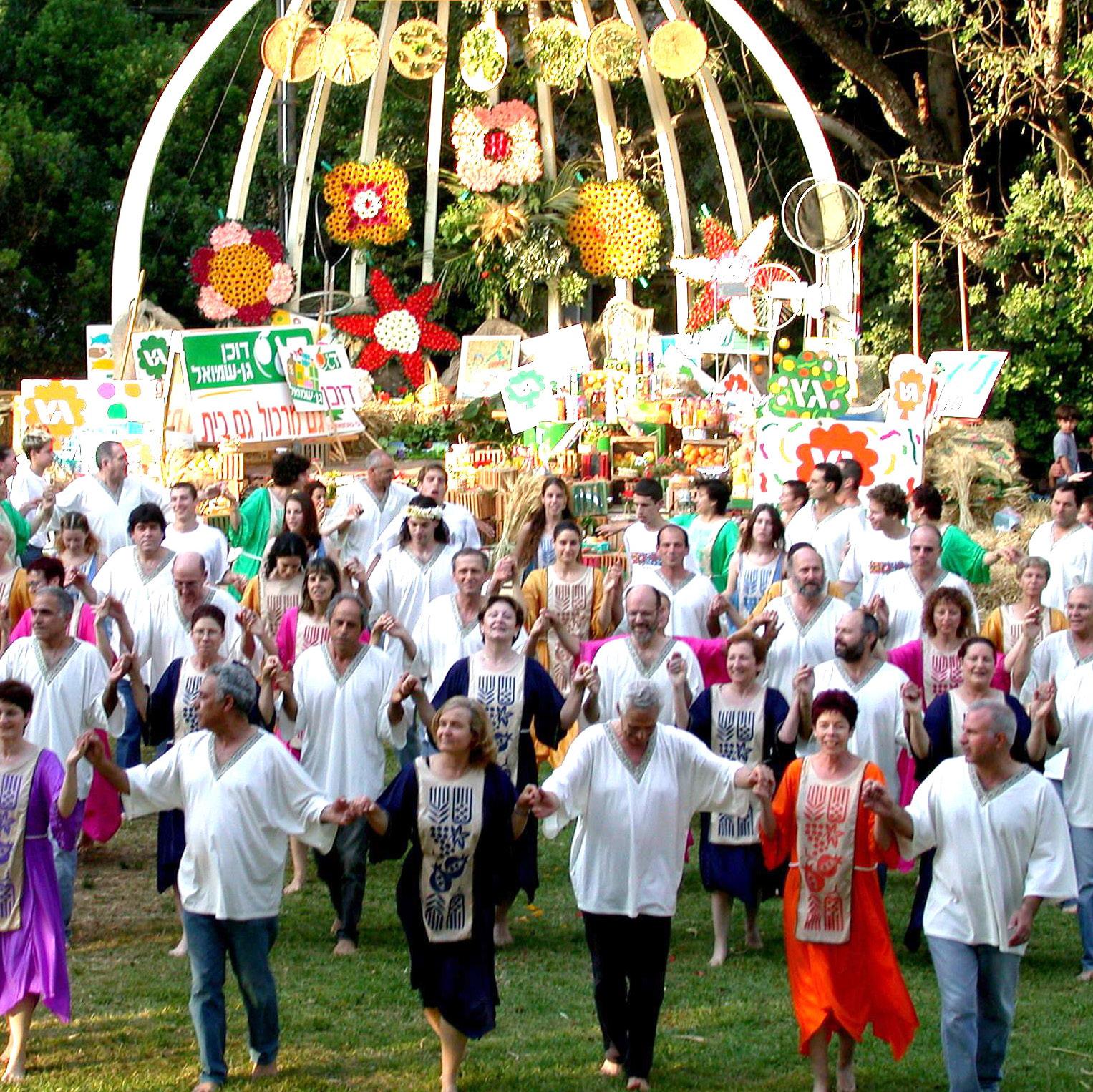

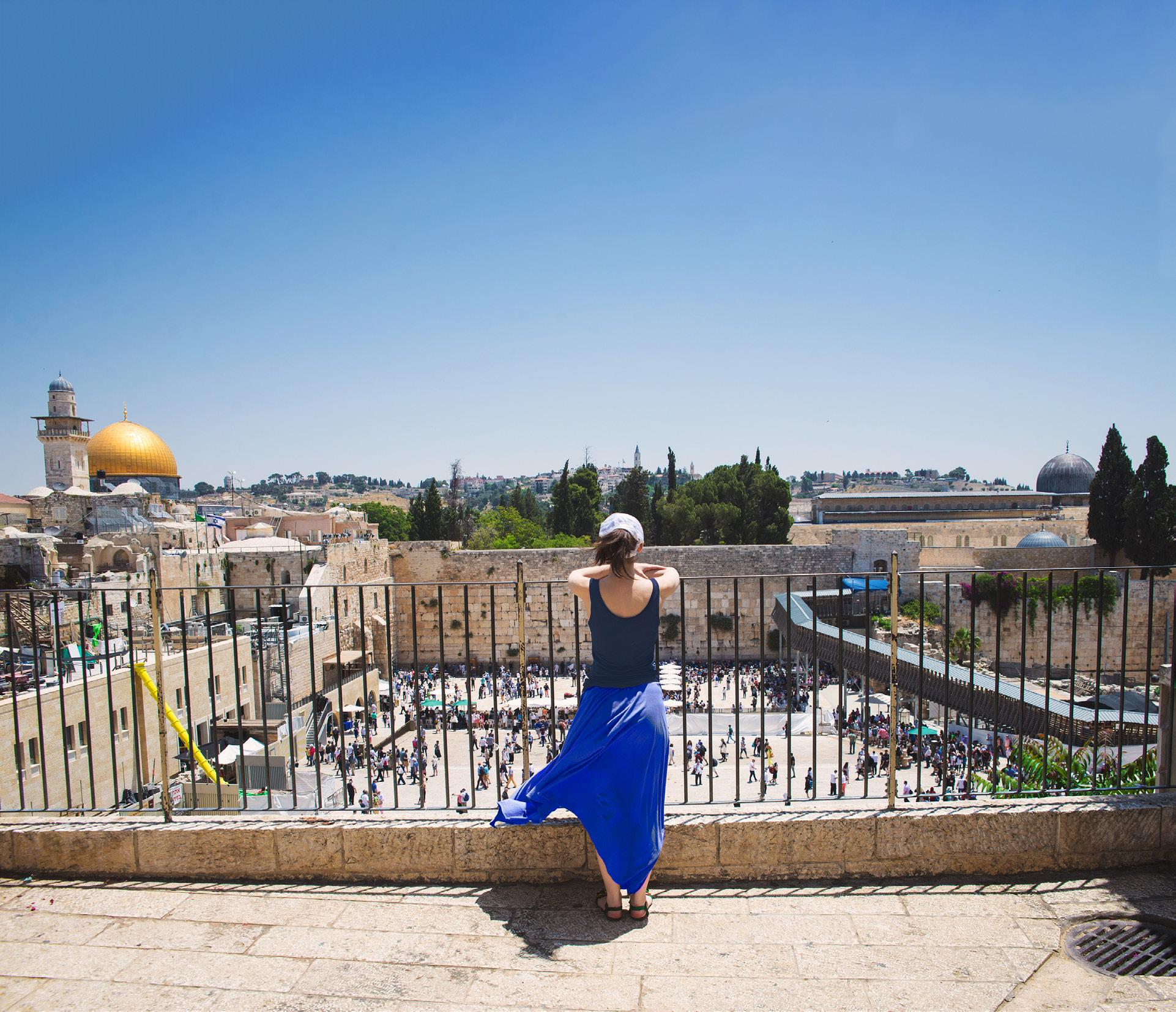
A throwback to Shavuot celebrations in Israel in 2003 (photo courtesy Wikimedia Commons)
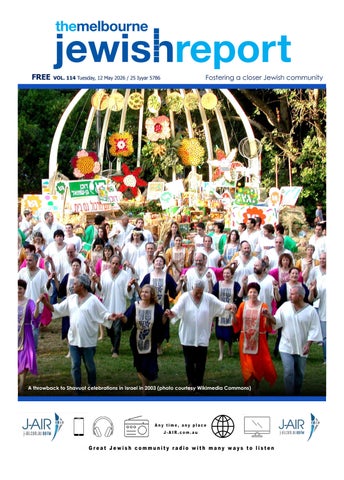
After October 7, 2023, entire communities across Israel were forced from their homes, lives were devastated and essential systems stopped functioning.
The recently released JNF Impact Report for 2025 is not just a report of activity. It is a record of what it takes to restore the conditions for daily life to return and of responsibility met.
JNF Australia exists to secure a safe and prosperous future for the land and people of Israel. That mission has taken on renewed clarity.
Since October 7, JNF donors have done more than just respond to the crisis. They have helped rebuild Israel’s frontline communities stronger, more stable and more secure than before. With their support, a remarkable 104 projects have been delivered across more than 90 frontline communities, supporting over 50,000 families. More than $31 million has been directed to projects on the ground.
In the immediate aftermath of the tragedy, JNF donors enabled rapid, targeted action. In the months that followed, they helped communities return, rebuild and restore daily life.
Infrastructure continues to be rebuilt. Essential services are operating. Families are returning. Displaced communities are slowly beginning to function again.
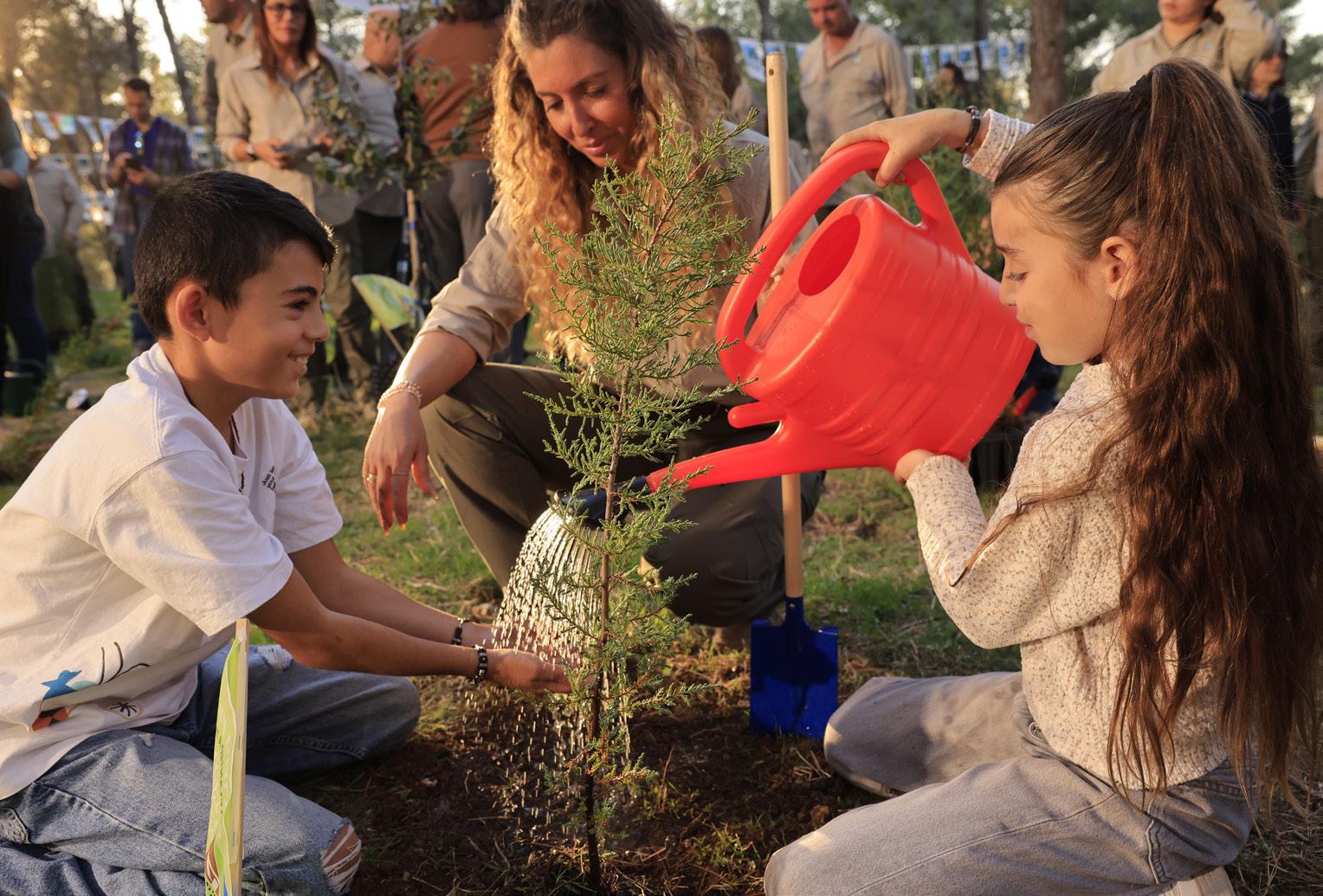
Stabilising communities is only the first phase. Ensuring they remain viable is what follows.
Today, that work continues with a clear focus: not only to rebuild what was lost, but to strengthen these regions for the long term. Every project has been identified and delivered with trusted partners on the ground, ensuring
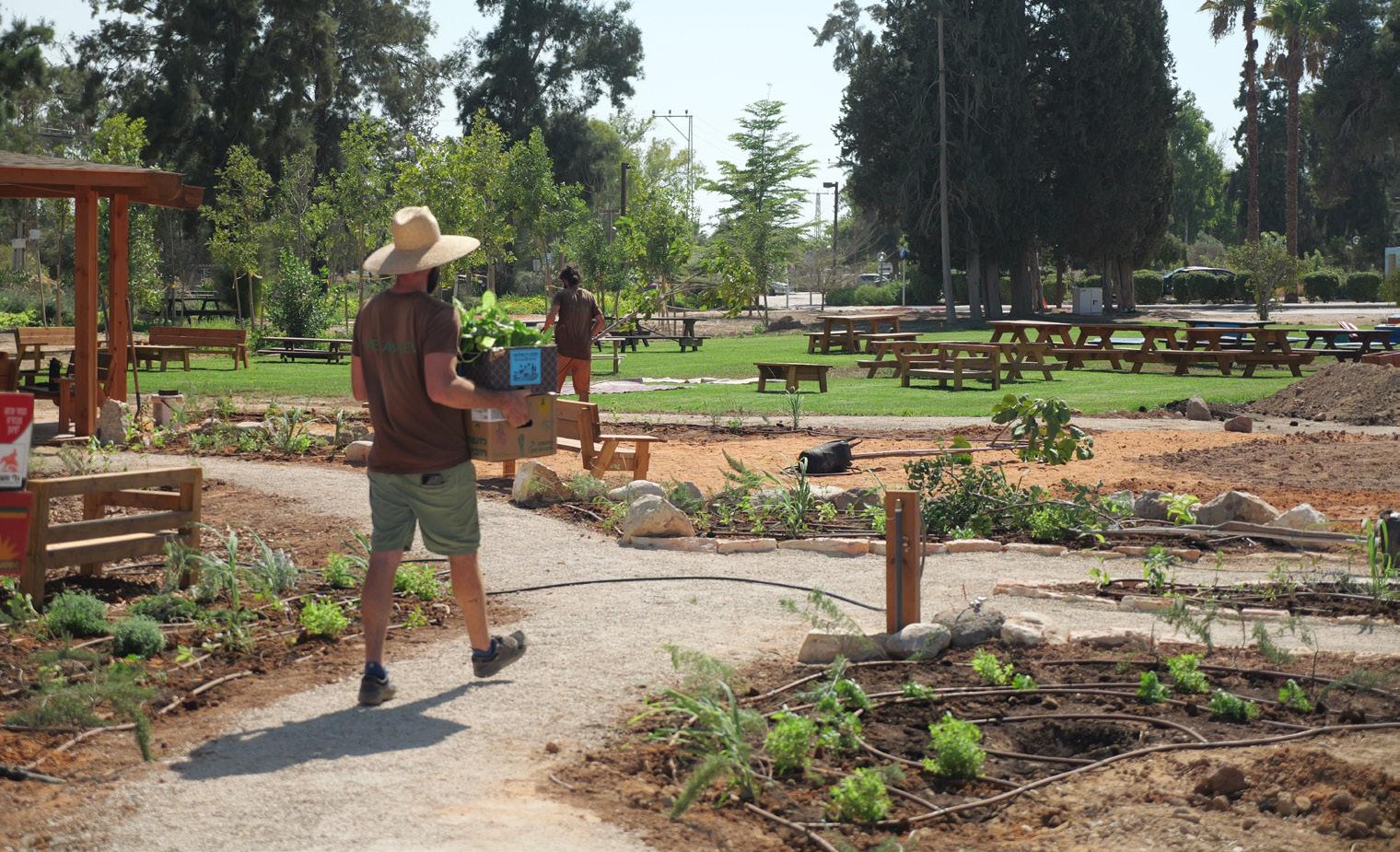

funding is directed to areas of greatest need. As always, all funds distributed by JNF in Israel are allocated in full to specific projects. JNF representatives in Israel verify each project, ensuring full accountability from donation through to delivery.
The CEO of JNF Australia, Doron Lazarus, said the response required
clarity, discipline and a willingness to act without delay. “When entire communities are displaced, the response cannot be symbolic. It has to be immediate, precise and sustained. This work is about restoring the conditions for people to come home and rebuild their lives. Many communities are beginning to function again. That is what our donors have made possible,” Mr Lazarus said.
In partnership with KKL-JNF, JNF Australia has expanded its impact through the establishment of innovation centres across Israel. This heralds an exciting new phase of JNF's impact, advancing Israel’s next stages of growth and capability.
This investment will fund research, innovation and start-ups, pioneering world-class solutions in agriculture, water, environment, climate and medicine. JNF understands that Israel’s future strength and next phase of growth will be driven by ideas, technology and international collaboration.
The full JNF Australia 2025 Impact Report is available at: https://jnf.org.au/ impactreport2025/
To continue to support this vital work, go to www.jnf.org.au
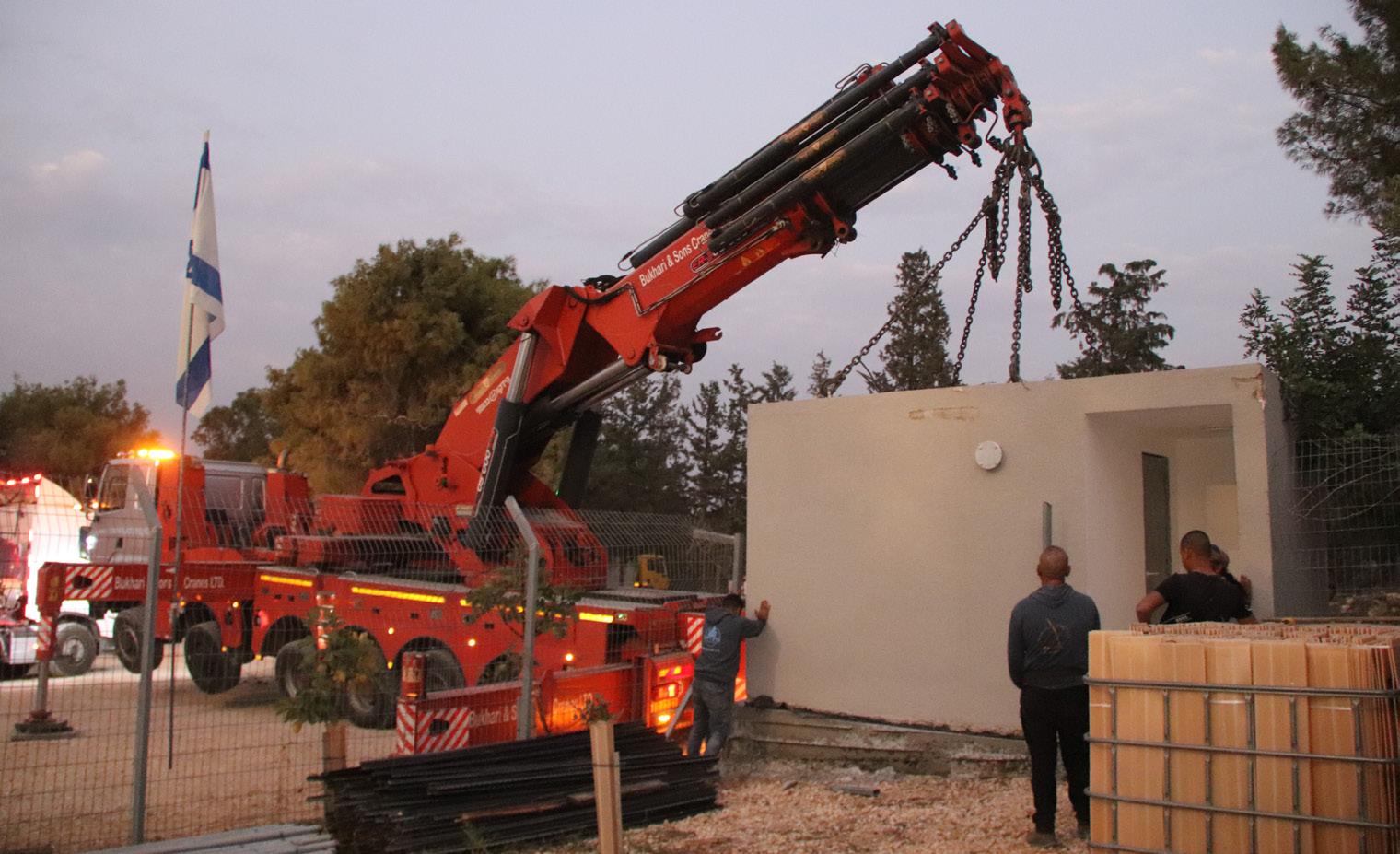
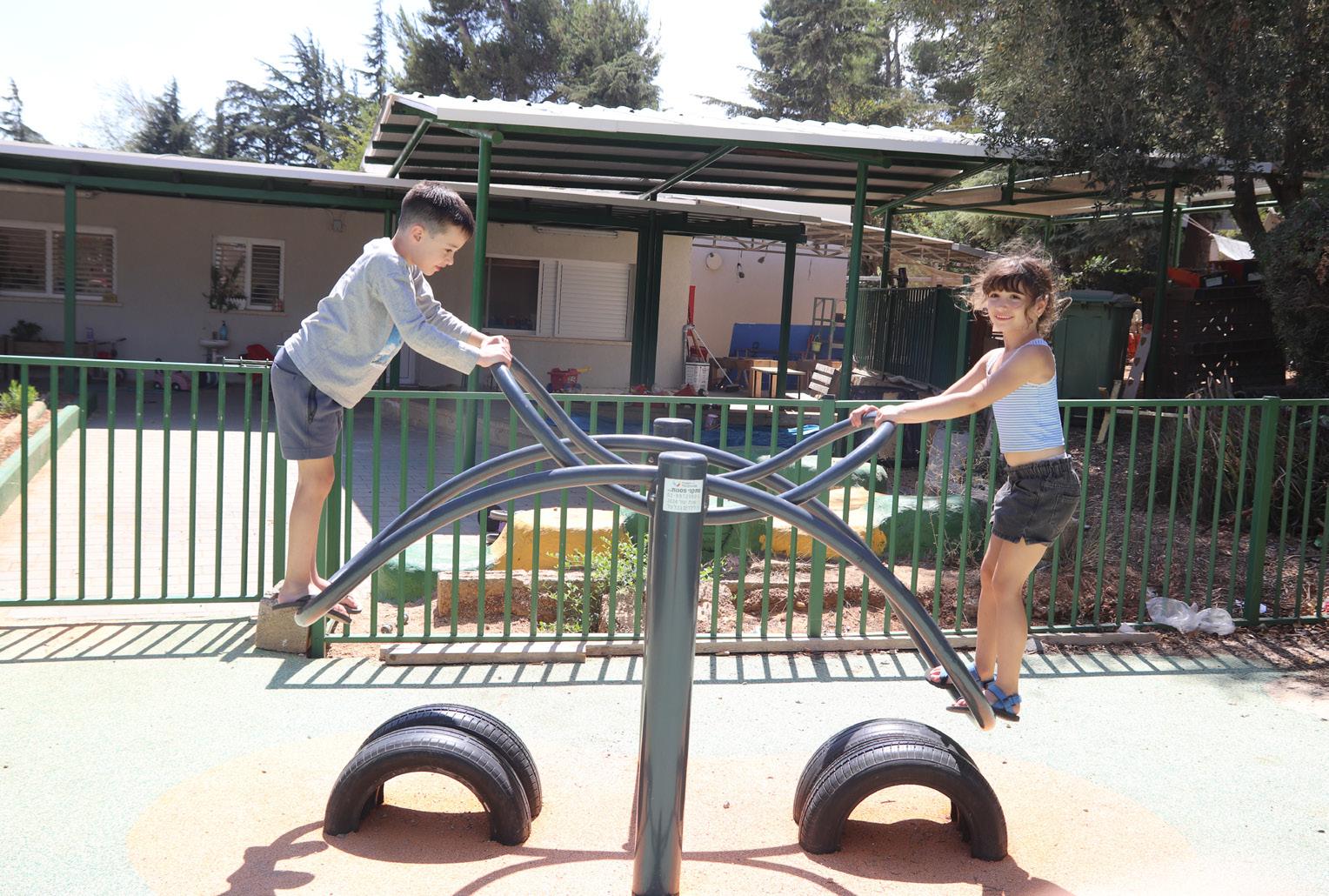
Thanks to your generosity, communities are rebuilding, families are returning home and essential services are being restored across Israel’s frontline regions. Together, we are helping Israel heal, rebuild, renew and grow.

DR DVIR ABRAMOVICH
I was at home when the news broke, in the kind of forgettable moment that defines a country that still believes it is safe. There was nothing in the air that suggested horror was about to intrude, nothing to prepare you for the way a single message can fracture your sense of reality.
The phone lit up, a name appeared, and at first the words meant very little. Bondi. An incident. Shots. You read them once, then again, and then your body reacts before your mind catches up, because somewhere deep inside you already understand that something terrible has begun to unfold. The messages come faster now, sharper, heavier, harder to dismiss, and you feel the room change around you as if the walls themselves are listening. People are running. There are casualties. It’s bad.
That was the night. Sleep, when it came, late and shallow. A few days later, the country had a number.
Fifteen people. Fifteen lives ended in the space of a night, at a Jewish festival that was supposed to be about light, about resilience, about continuity, about the stubborn refusal of a people to disappear. Fifteen stories that will never be finished. Fifteen empty places at tables where laughter should have returned the next day.
That is where this story begins. Not in the language of a report. Not in a list of recommendations. Not in the tidy architecture of systems and processes. But in the raw, human moment when ordinary life is shattered and replaced with something permanent and irreversible.
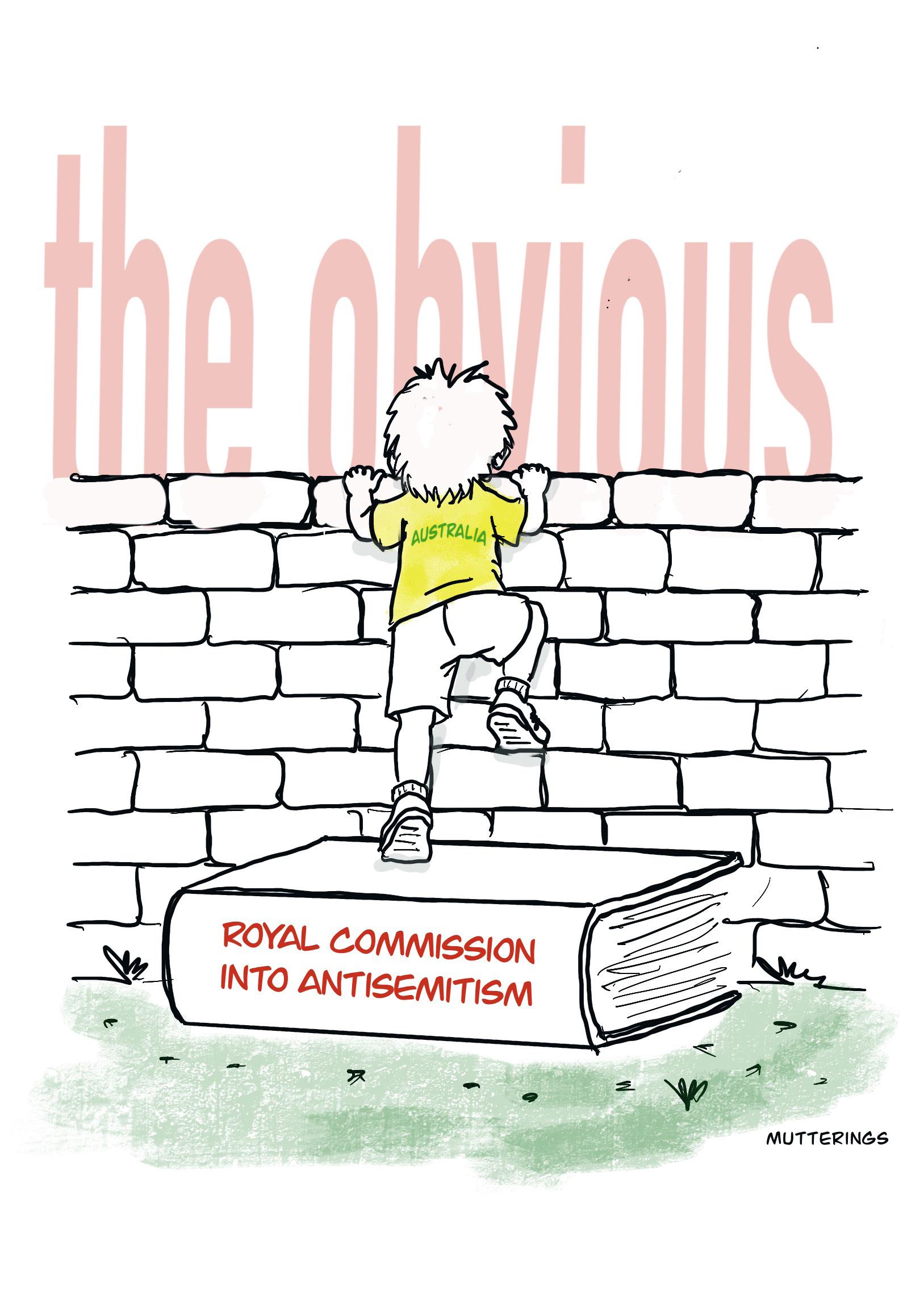
It is from that place that I have read the Interim Report of the Royal Commission into Antisemitism and Social Cohesion. I have read it once. I have read it twice. I have read it three times. By the third reading, I was no longer taking notes. I was angry.
I was angry because I had been waiting, like every Jewish Australian who picked up that document, for the page on which the unforeseen would reveal itself. The page on which a country would be told, in its own official words, that what happened at Bondi was a horror that no one could have prevented.
That page does not exist. This report does not shock with revelation. It wounds with confirmation. And confirmation, in this case, is worse than revelation, because confirmation strips away the one comfort that nations cling to in the days after the terror, the belief that no one could have known.
People knew.
Picture a Sunday afternoon at Archer Park, in Bondi Beach. Volunteers are setting up. There is a petting zoo for the children. There is a rock-climbing wall. Food stalls are preparing donuts, deepfried in oil, because that is what you eat at the festival of light. The event is scheduled to begin at five. At seven, there will be speeches, and the lighting of a giant menorah, and dancing. Up
is on every page of

Dr Dvir Abramovich
to a thousand people are expected. The location, on the event flier, reads: Bondi Beach Park, near the Children’s Playground.
That is what was happening at Bondi Beach on the afternoon of 14th December 2025.
Now move backwards. Six days. The eighth of December. An email is sent from the Community Security Group of New South Wales to officers of the New South Wales Police.
The email is not buried in jargon. The email speaks in the plainest possible English, and the words that matter are written, in capital letters, in the original.
The current Security Level Alert for the NSW Jewish community is HIGH. A terrorist attack against the NSW Jewish Community is likely and there is a high level of antisemitic vilification.
Read it again. A terrorist attack. Against the NSW Jewish Community. Is likely.
This warning was sent to NSW Police. The email asked, in writing, for the deployment of police resources for the entirety of the event. Three days later, on 11th December, an internal NSW Police email was sent. From a NSW police inspector to the two inspectors who would be on duty at the festival on the night.
Seven words. “No need to stay the entire duration.” I have read those seven words a hundred times. I have read them aloud to myself to hear how they sound in a human voice. I cannot understand how anyone, in possession of the email of 8th December, could read those words and put them in writing. But they were written.
They are now in a Royal Commission report, in the permanent record of this country. And on the night of 14th December 2025, three general duties officers and one supervisor were allocated to a Jewish festival that the community itself had begged, in writing,
six days earlier, to be protected as a likely terrorist target. That night, two gunmen opened fire on the crowd.
Three officers. One supervisor. Four police, for a thousand people, at an event the country had been warned was in the bullseye.
But it would be a mistake to read this as the failure of one command on one night. The Royal Commission tells a far harder story. It tells us that for years before the attack, the country’s national security apparatus had been stepping back from counterterrorism. By ASIO’s 2022–23 reporting year, the federal intelligence agency had two branches working on counterterrorism, and five working on espionage and foreign interference.
The threat level was raised back to probable in August 2024. The DirectorGeneral of Security warned, in his own words, of a “disturbing escalation” in the targeting of Jewish interests. The community kept telling, kept writing, kept warning.
And the report makes one further finding so devastating it deserves its own line. There were no missing laws. There was no absent power. There was no legal obstacle preventing protective action. The system, as it existed in this country, had everything it needed to do what it was supposed to do. It simply did not do it.
The Prime Minister has now stood at a news conference and said that all of the report’s recommendations relevant to the Commonwealth will be implemented in full. I want to believe those words.
But promises do not stop bullets. News conferences do not protect children at a menorah lighting.
Acknowledgements do not return one of the fifteen people who were murdered at Bondi Beach. What matters is whether anything visible, anything urgent, anything a Jewish parent can feel in their gut actually changes before
the next Chanukah. The next Passover. The next Yom Kippur. The next time a thousand of us gather in a public park, lit by the candles of a festival that is, at its heart, a refusal to disappear.
And it is not just the Commonwealth’s commitment that matters. The most consequential recommendations of this report, the ones that touch firearms, that touch policing, that touch the security of every public Jewish event in this country, will require the states and territories to act. Their commitment, too, will be measured against what we now know.
I am writing this for every non-Jewish Australian who has picked up this newspaper and is thinking that this is, somehow, someone else’s story. It is not someone else’s story. It is yours.
What happened at Bondi Beach happened in your country. The warnings that were ignored were ignored in your country. The 8th December email was sent in your country. The seven words – no need to stay the entire duration – were written, in your country, by an officer of your police force, in the week before fifteen of your fellow citizens were slaughtered.
The country that prides itself on safety, on fairness, on the fair go failed fifteen of its own. This is what the Royal Commission report says.
Antisemitism in this country is not a problem at the edges. It is not an academic debate. It is not a matter of perspective, or of nuance, or of being balanced.
It is a fire that has been burning, in clear public view, for more than two and a half years, while the institutions that promised to protect us looked at it and decided that it could be managed. It cannot be managed. It can only be confronted. There is no more time. The fifteen we lost at Bondi are how we know.
No one in this country gets to stand up tomorrow, or any day after, and say that what happened at Bondi was a tragedy no one could have foreseen.
The Bell interim report gives us an opportunity to act. To close the gap between warning and response. To ensure that when a threat is identified, it is met with the full weight of the system, without delay, without dilution, without the comfort of believing it will not go further. Because it does go further. It always does.
And now we know what the warning signs look like. We know the cost. Which means the next time those signs appear, the next time a community says it is at risk, the next time the threat level rises, every choice will carry a moral weight that cannot be ignored.
What happens next will define what kind of country this is. And whether Bondi was a turning point or a warning we will one day realise we failed to heed.
Dr Dvir Abramovich is chair of the AntiDefamation Commission and the author of eight books.
NEWMAN
Since the brutal Hamas attack on Israel on October 7th, 2023, Israel has faced war on multiple fronts. Now is a transitional period, which entails decreasing the threats facing Israel and reshaping the entire Middle East. Israel will not tolerate threats, derived mainly from the Islamic regime in Iran and its proxies, but will act to lower and eliminate them. The objectives should be attained either through diplomatic efforts or military options.
Since March 2nd, Hezbollah has launched about 10,000 rockets, missiles and drones at Israel, endangering the citizens in the north. Many of these attacks were launched near UNIFIL positions, systematically taking advantage of UNIFIL’s presence for its hostile actions.
The objective of Israel’s military operations in Southern Lebanon has been the protection of the people of Israel, attained by creating a buffer zone to prevent ground invasions by Hezbollah and distance the threat of rockets.
Israel has always aspired to peace with Lebanon. Due to Israel’s weakening of Hezbollah, Lebanese president Joseph Aoun was voted in and direct talks between Israel and

aspirations and continues to threaten and, even, attack international maritime shipping in the Strait of Hormuz. As a result, the USA has declared a blockade on Iran’s blockade, stating clearly that there should be freedom of navigation for all, equally.
With the continued Iranian aggression, time is running out on diplomatic efforts. The policy is clear – we must attain, without compromise, the objectives of removing the existential threats –primarily the nuclear and ballistic missiles programs – posed by Iran.
The Global Sumud Flotilla: provocative PR stunt
Dozens of vessels embarked on a provocative journey, known as the “Global Sumud Flotilla”. In coordination with the Greek government, the Israeli navy intercepted the craft and transferred the protestors to an Israeli ship, before they disembarked on a Greek beach.
Lebanon in Washington have become a reality. Yet, Hezbollah continues to engage in violations of the ceasefire and international law, acting against Lebanon’s interests and undermining its stability.
The Lebanese government bears the responsibility and must act decisively against Hezbollah and its terrorists. The Lebanese president came out publicly against Hezbollah, stating: “Treason is taking your country to war for external
interests”. Hezbollah poses a shared challenge for both Israel and Lebanon. It threatens Israel’s security, while undermining Lebanon’s sovereignty.
Updates on the ceasefire with Iran
In an attempt to resolve matters diplomatically, a ceasefire has been enacted. The USA and Israel have always supported diplomatic efforts, in good faith. However, Iran has revealed an uncompromising stance on its nuclear

Anyone genuinely interested in providing humanitarian aid to Gaza can do so via the Civil-Military Coordination Center (CMCC) mechanism. The CMCC has flooded Gaza with enormous quantities of humanitarian aid since October 2025.
The so called “flotilla” had nothing to do with aid, but all to do with public relations and self promotion. Hardly any aid has been found on the vessels, but condoms and drugs have been discovered.


DAVID SCHULBERG
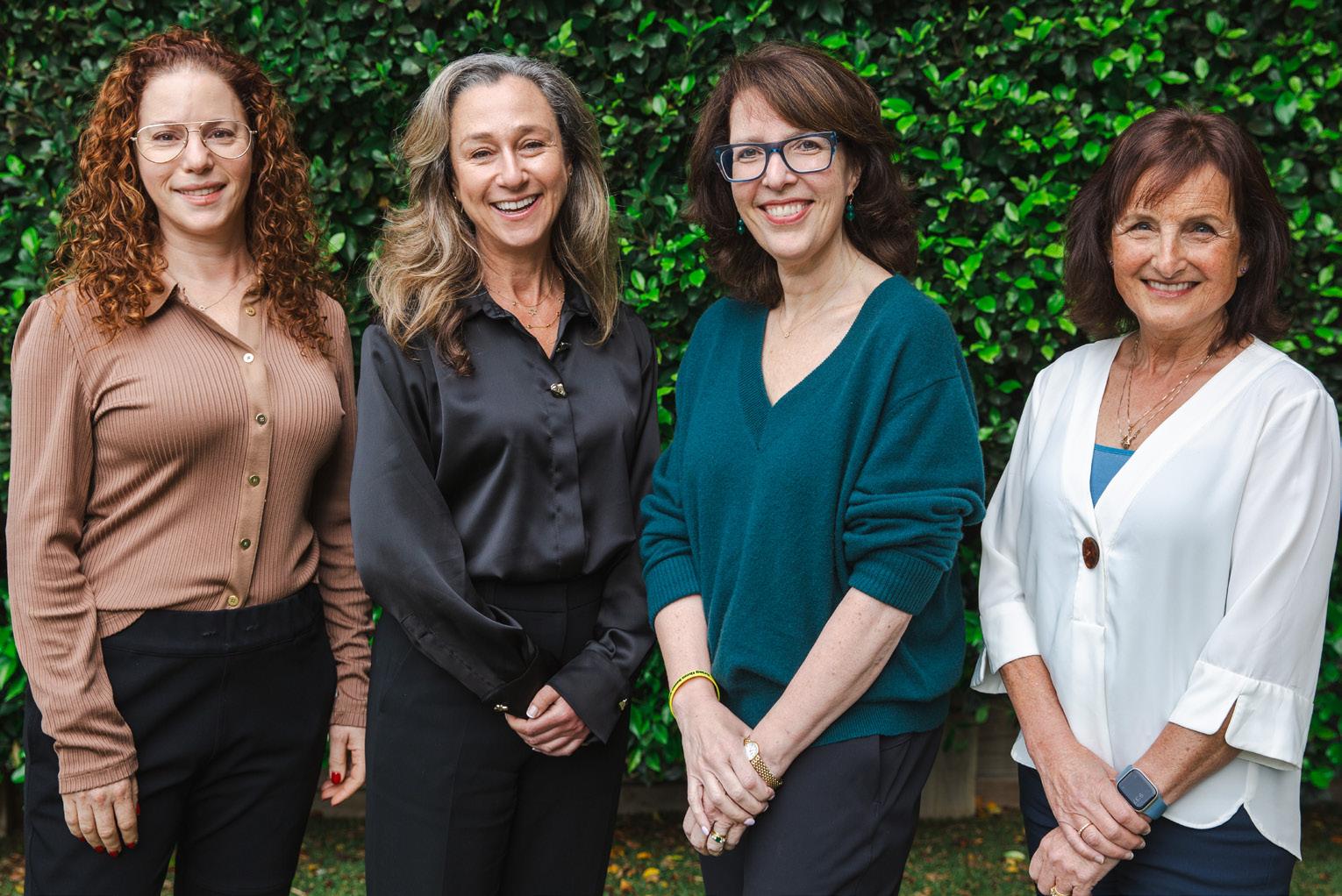
David Schulberg spoke with Liora Miller, who is one of four women that lead the Project A.
Its mission is to combat antisemitism, anti-Israel bias and misinformation, through advocacy and education.
It seeks to strengthen Jewish identity and empower our allies to stand with our community.
Liora is also vice-president of the National Council of Jewish Women Australia (NCJWA).
David
With the deadline looming for making submissions to the Royal Commission, being the end of May, Project A is running Royal Commission writing workshops. As you say, every story matters, whether you're Jewish or an ally. You say we need every ally and Jewish experience of antisemitism since October the 7th to be put on the record, so it can't be ignored, minimised, or rewritten. What do these workshops entail?
Liora
It's incumbent upon all of us who've been exposed in different ways to antisemitism to write that down and tell their story in their own words. Project A, in collaboration with the National Council of Jewish Women, are running workshops around the country.
We've got organisations reaching out to us saying that they feel that their staff or their congregations would be well served by having these workshops. We know people are telling very personal stories.
They might have legal questions around confidentiality, anonymity and defamation. We've got the Jewish Centre for Law and Justice attending our workshops, who can provide legal advice. Also, the Royal Commission is making funded legal aid available.
We're providing emotional support. For many people writing down their experiences is more traumatisation. It's terrible what's happened to many people.
Hence, we're providing counselling support at these workshops. We know that what is wonderful about our community is this sense of coming together. We have people together in a room writing for an hour or two and we support each other in this process.
David Are these workshops face-to-face, rather than online?
Liora
There've been a number of information events on Zoom, which have been fantastic, because, obviously, some people aren't able to get to a location or the date doesn't suit them, but this is the kind of thing now where it’s important to be in person. That's why we're offering a range of dates across the country. People have very personal questions to ask. They don't want it necessarily to be on a Zoom call, and we can give that one-on-one assistance by being in a room together.
David
Can you give us some dates and how people can register to get involved in some of these workshops?
Liora
The best way is to go to the NCJWA website and there you'll see a tab for workshops with the dates that are offered and where you can register.
People say to me sometimes, look, I don't really think anything dramatic has happened to me. It doesn't need to be dramatic. It doesn't need to be something that changed the way you live your life. It can be the little things that we've normalised as a Jewish community.
If you've had kids going to Jewish schools, we all know there are armed guards there. That's not something that general Australia has to experience. If you've ever gone to a Jewish event, you’d know that the community security group (CSG) and police are in attendance. Moreover, you won't find out where the event is going to be held until about 24 hours before. These are experiences that have become part of our daily life, but it's not the daily life of ordinary Australians and it shouldn't be our daily life.
These are things that people need to express and communicate to the Royal Commission. They can also email us directly at projectainoz@gmail.com and we can let them know when the next workshops will be.
David
You're calling for people to join these workshops and you're collaborating with other Jewish community organisations, providing guidance and support in a safe structured setting. This cuts across the entire community where you're combining your efforts with these other major Jewish bodies. You are a grassroots organisation, and this seems to reflect a different way in which our community bodies are working, where formerly there had been a tendency for them to be very protective of their own turf. Are we coming together more because of what happened on October 7th? Is it bringing the community closer together?
Liora
The six main peak representative organisations of the community are submitting a joint submission, assisted by Arnold Block Leibler (ABL), which is
providing countless hours of pro-bono advice to the community. They reckon that a joint submission is the strongest submission, rather than each of the peak organisations writing one themselves. That said, each of the board members of these organisations and its constituents are strongly encouraged to submit personal submissions.
Project A has always been of the view that collaboration is a better way of operating than singularly, which is why one of our workshops has been in collaboration with many of the shules across Victoria coming together under the one banner.
David
We've been seeing bodies like the Jewish Council of Australia causing fractures in this Jewish community. Are they a serious danger to our community?
Liora
They are not a serious danger in that the vast majority of Jewish members of our community support the right of Israel as the nation-state of the Jewish people and are living Jewish lives. These others, and there are not that many of them, have an outsized, disproportionate voice compared to their numbers. They only established themselves in February 2024.
They call themselves by a name that appears to be representative of the community, which is absolutely and utterly misleading, because they are not. The media were cajoled. If we want to give them the benefit of the doubt they presumed them to be representative because of their name. Slowly, though, they're being educated that they don't represent the mainstream community.
David
Our community leaders tried to ignore them when they first formed, but they gained more and more prominence. This effort to not give them oxygen was an abject failure.
Liora
By being on panels with them and giving them a platform to some extent that has given them a certain credence that they shouldn't have. Talking about advocacy, I had a plumber come out today, a Jewish plumber it was. I asked
him about whether he has made a submission? He had this Magen David tattoo on his arm and he said he'd experienced terrible antisemitism going into people's homes. I said, "Well, have you submitted?" He looked at me quizzically and I said, "I'll send you the link; You're submitting."
I think we all have the opportunity where it presents itself to make noises and to provide that encouragement. To that end we have our advocacy missions to Israel. We were meant to be on our Israel mission right now, but of course we had to pull it because of the war. We have set new dates – the 13th to the 18th of December. For any who might be interested, please reach out to us via email. We would strongly encourage everyone as members of the Jewish community and beyond, even to encourage your non-Jewish friends and colleagues to come, because, at the end of the day, nothing is quite like being in Israel and seeing it for yourself.
David
For those people who may have trepidations about putting in submissions, there is a website: shareyourstory.org,au, where people can see what others are saying, to get some idea of some of the submissions being made.
Liora
That's certainly an opportunity. I do want to reiterate though that there's no template, there's no particular way that you ought to set out your submission. In fact, I would argue against that. There isn’t a cookie cutter approach. It just needs to be in your own words. No legal language. Maybe start by saying what you know, why you're here in Australia, what your background is, and then lead into what it is that you want to convey to the Commission.
When you go on to the submission site, if you're concerned about exposing your identity, you can remain anonymous or you can be confidential, which means that the Commission will know who you are, but your identity will not be made public.
David
People should be aware that we don't have all the time in the world, that there are deadlines looming and submissions need to be in by the end of May to be accepted.
Liora
I would encourage people to do it sooner. Hearings have started at the beginning of May and if you've got a particularly egregious story, or a particular perspective that the Commission might be really interested in hearing with oral testimony, leaving it to the end of May will be too late. I would strongly encourage people to get them in as soon as possible.
This is an edited extract from an extensive interview with Liora Miller, who was interviewed by David Schulberg on ‘The Israel Connexion’ program on J-AIR community radio. The full interview is available as a podcast on the J-AIR website. David’s program can be heard weekly on J-AIR in Melbourne and 2TripleO in Sydney.
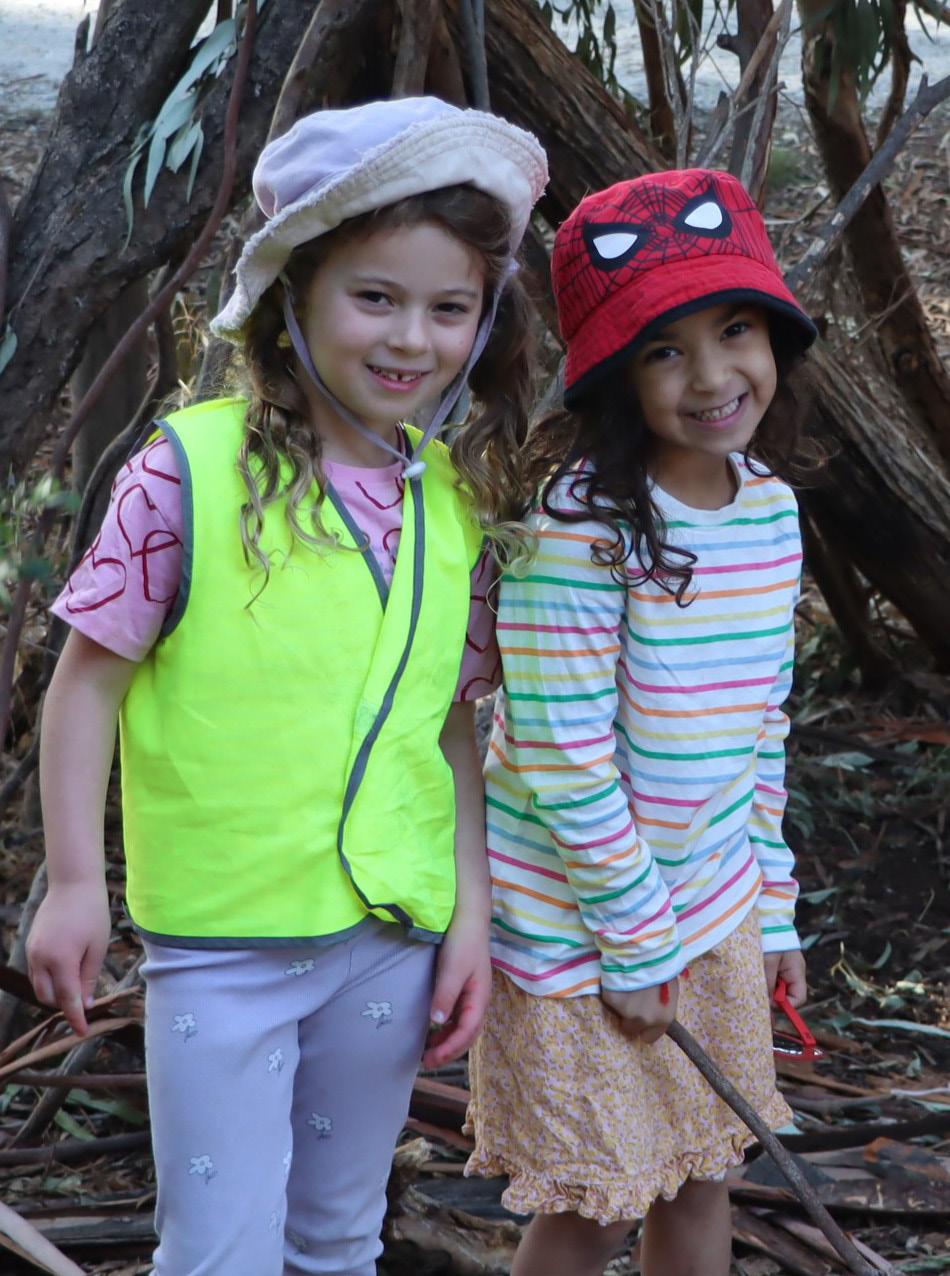
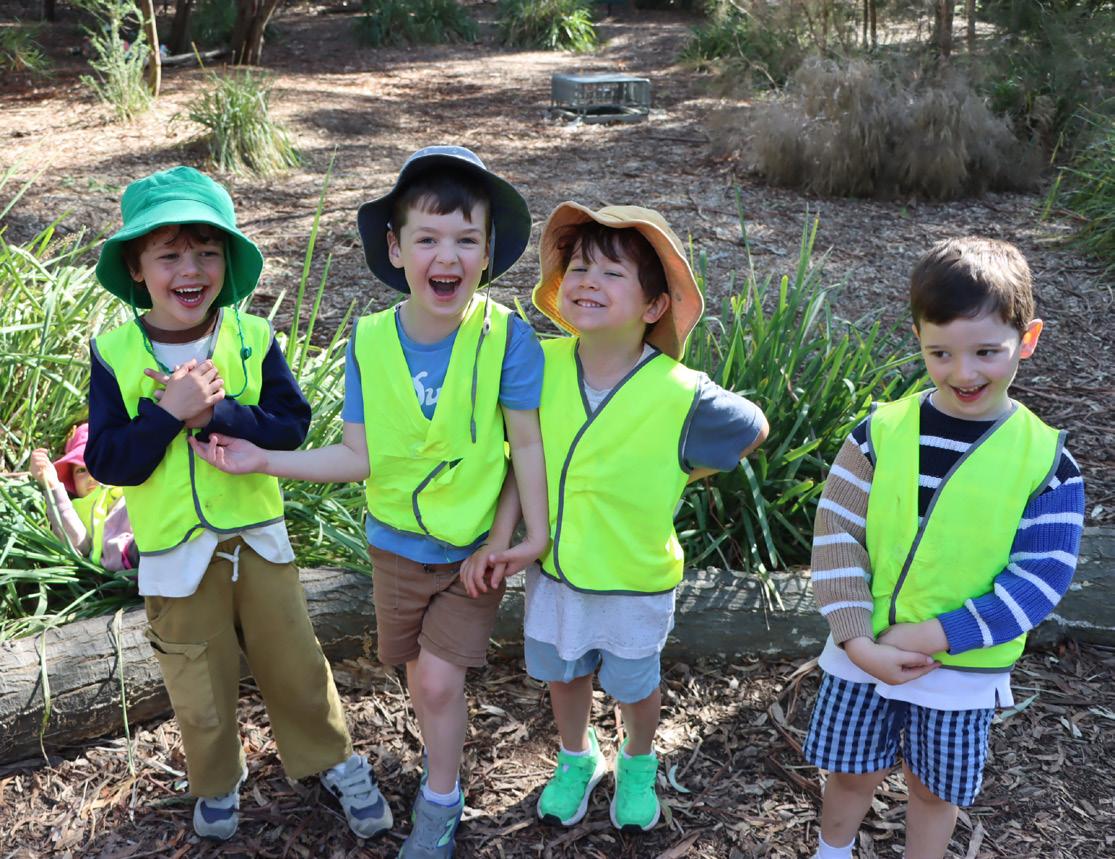
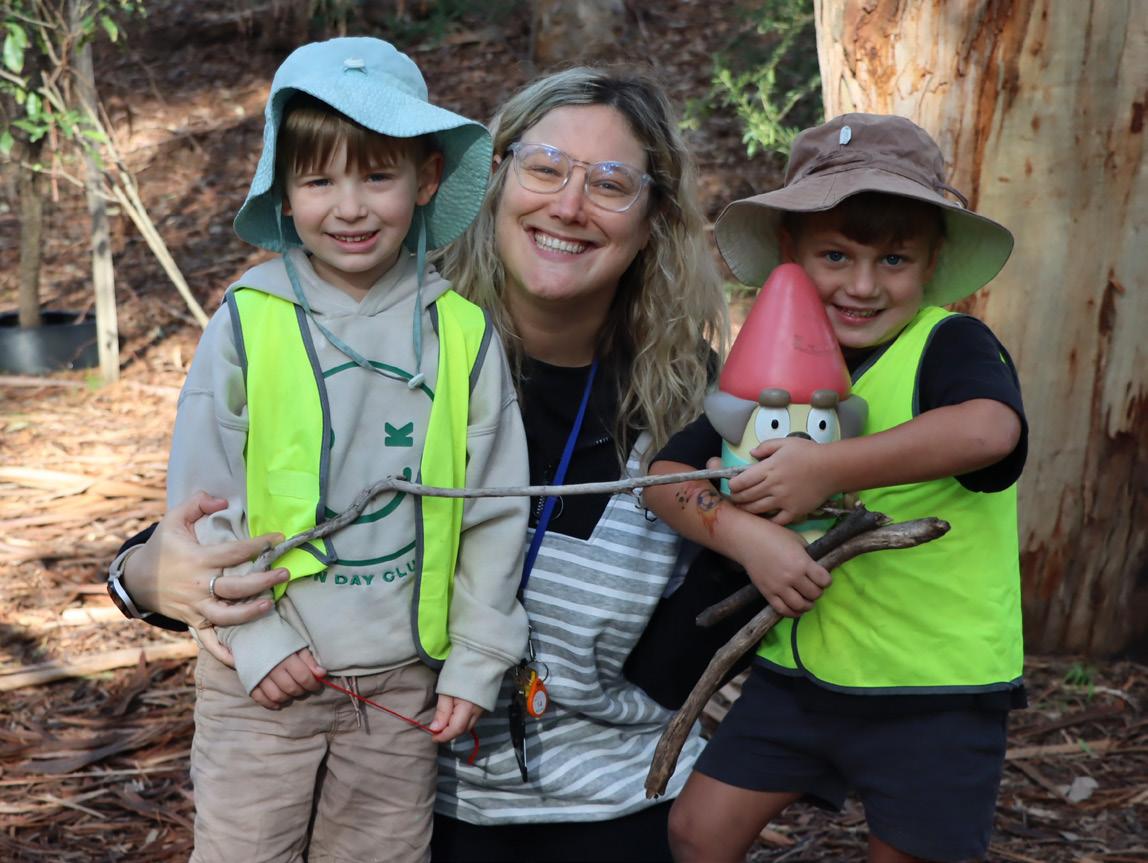
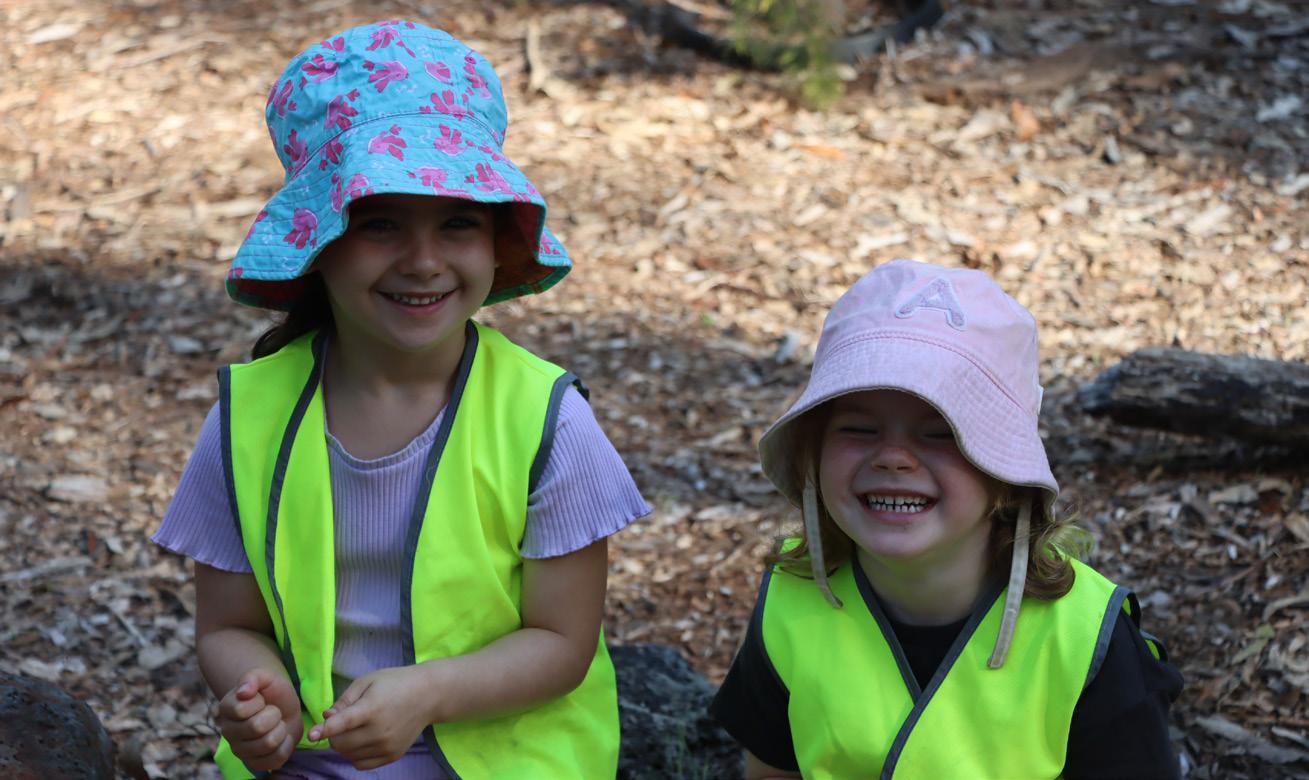
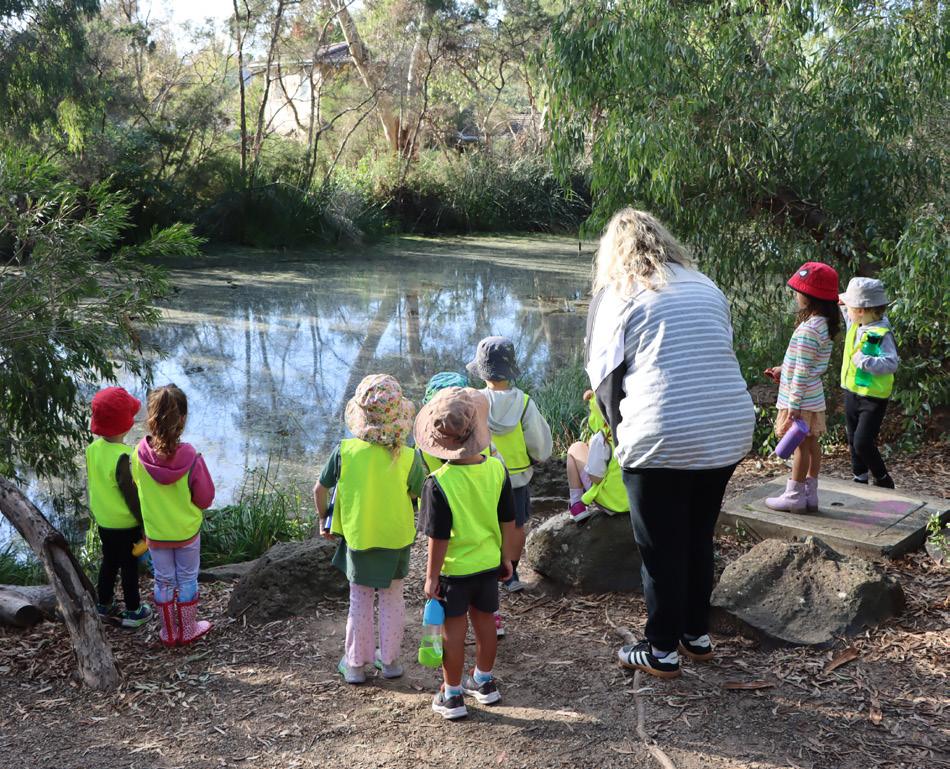
The King David School Early Learning Centre’s regular Bush Kinder program is an immersive experience designed to foster resilience, independence and confidence.
In preparation for Lag B’Omer, a festival the children had been learning about in class, they made a bonfire using sticks and kindling.
The program also serves to cultivate a respect for the environment and a sense of belonging in the natural world.

NOMI KALTMANN COURTESY: THE JEWISH INDEPENDENT CONSIDERED
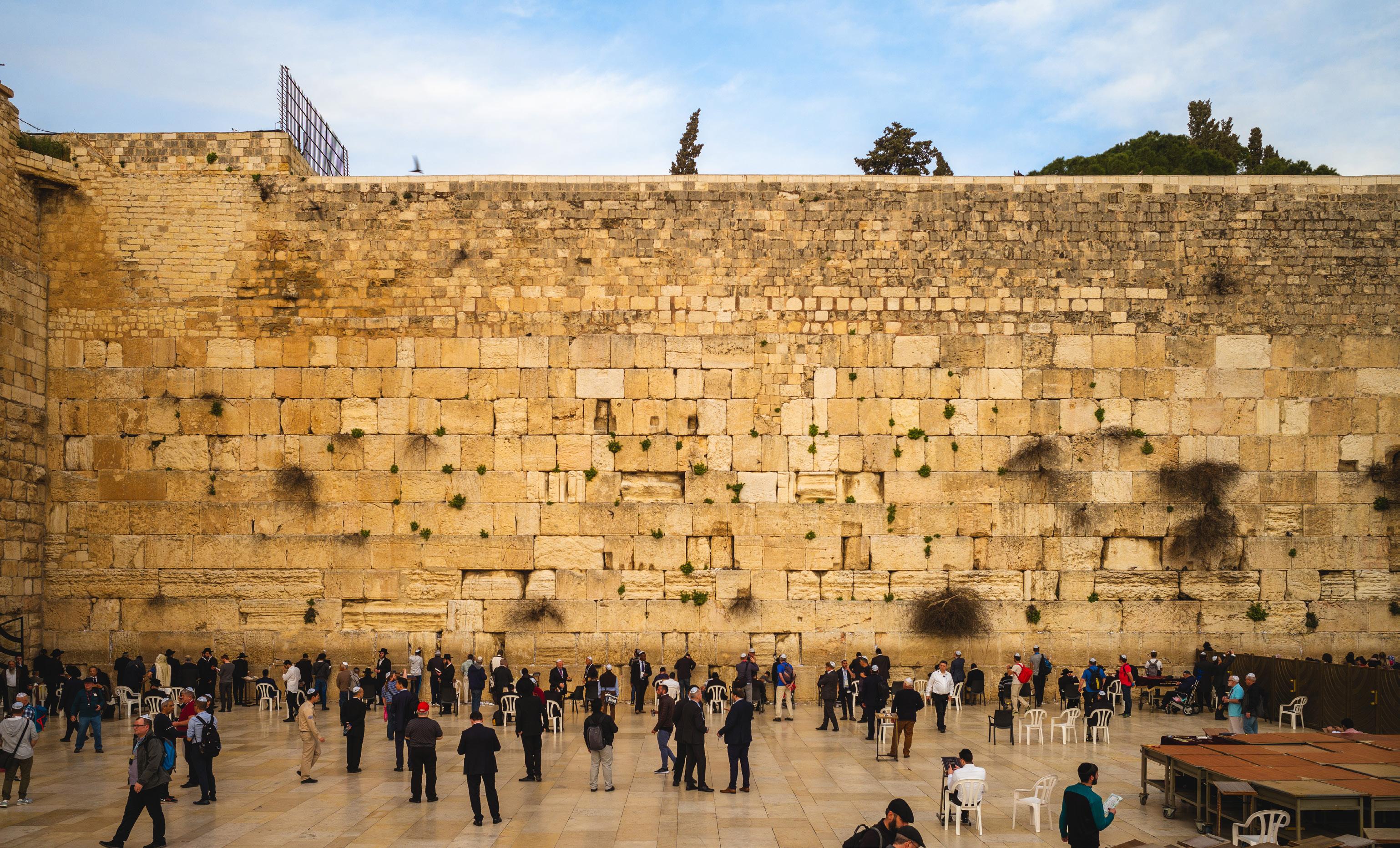
My first trip to Israel was when I was eleven years old. My pre-Bat Mitzvah gift was a trip to a country that I already loved, despite never having visited. More than 20 years later, I can still remember the texture of that visit: my first view of the Western Wall bathed in the soft late-afternoon light, vending machines stocked with kosher food, climbing Masada and thinking about the people who had held out there under Roman siege and eating falafel that tasted fresher than anything I had ever eaten in Melbourne.
I fell in love with that version of Israel. Or, more honestly, I fell in love with the way I experienced Israel at that age –uncomplicated, immersive and entirely certain of its meaning.
I have been back to Israel many times since, usually for something significant, like my sister’s wedding or accompanying an Australian parliamentary delegation as a staffer. I am not Israeli; I am an Australian born Jew with a deep family history here. My family has been in Australia since the 1860s and my mother’s ancestors are buried in the Jewish section of the Ballarat cemetery. And yet, when I arrive in Israel, there is a relief at not having to explain the basic contours of my Judaism. For once, I am not the ‘interesting Jew’, as I am to so many of my non-Jewish friends and colleagues at home. I love being in a place that my religious practices require no translation, where kosher food can be assumed and where Shabbat is built into the structure of the week. For a long
time, I have found it easy to sit inside my dual identities. I am Australian, but I have a deep love of Israel. I speak Hebrew, I follow Israeli news and I understand, at least in part, the national sensitivities that shape Israeli public life. Yet, despite this love, I do not want to move to Israel and I feel culturally very Australian.
Yet, since October 7, my relationship to Israel has changed and I’m still trying to unpack exactly how I feel.
I have never expected conversations about Israel to be easy, but since October 7, criticism of Israel has become something I don’t really even know how to engage with anymore. People whose thinking I respect, whose analysis I rely on in other contexts, now speak about Israel in language that leaves almost no room for nuance, describing it as a genocidal state, as a uniquely illegitimate political project.
In the circles I move in, particularly among writers, journalists and lawyers, there is a working assumption that Israel represents a kind of moral failure, something to be condemned rather than wrestled with. I find myself increasingly unsure how to enter these conversations. Anything I say feels either inadequate or misread, too critical or not critical enough, too emotional or not sufficiently detached.
To be clear, I am not talking here about the more ignorant or antisemitic commentary that has become so prevalent in recent years, nor the kinds of claims that reduce Israel to something it is clearly not. What I am struggling with
are the more nuanced critiques, coming from people who are informed and thoughtful, who are engaging with what is actually happening on the ground in Israel.
My difficulty is compounded by my own unease about the direction of Israeli politics. Figures like Itamar Ben-Gvir and Bezalel Smotrich represent a version of Israel that feels more extreme than the one I grew up feeling connected to, one that sits against my values of equality and democracy that I was always taught were central to the Israel’s identity. The violence against Palestinians in the West Bank, particularly by “hilltop youth”, is so often met with limited or inconsistent consequences from police, a force now overseen by Ben-Gvir, which seems to signal a worrying direction for Israel. What troubles me most is the way violence has settled into Israeli political life and is no longer seen as aberrant.
I also abhor Israel’s recently passed death penalty. These laws specifically target Palestinians and exempt Jews, and risks entrenching a legal framework where the law is not applied equally.
To me, this signals where things may be heading, a move towards a country that has a legal system that distinguishes on race rather than on a shared and consistent legal standard for all people. Is this law part of a broader Israeli shift – one that raises serious and, at times, confronting questions about the strength of Israel’s democratic institutions? I think so. And yet, my connection to Israel is not objective. It is emotional, tangled up in
the specific and the personal. My siblings live there and many of my closest friends from Australia have built their lives there. When I think about Israel, I am not only thinking about a state or a set of policies. I am thinking about people whose lives are directly shaped by what happens. I cannot emotionally detach and I do not think I should have to, because for me Israel is bound up with Jewish history, with my identity as a Jewish woman, and with a sense of our people’s vulnerability.
Yom Ha’atzmaut this year arrived for me at a time when I no longer know how to talk about a country I fell in love with. I think about myself as an 11-yearold, standing at the Western Wall in the late afternoon light, certain of what she was seeing and what it meant. Yet, I feel that the Israel I fell in love with and celebrated feels vastly different from the one I am watching today.
I do not know if there is a way to fully reconcile my deep love for the country with my deep worry and concern about its direction.
In the end, when I think about Israel, I think about its people: my siblings, my friends and so many people I know and care about who live there.
Whatever I feel about the direction of the country, I still love and care about Israel, and all the people who have to live with what it becomes.
United Israel Appeal is continuing its partnership with Safewill, one of Australia’s leading online Will-writing platforms, helping supporters create a legacy that protects their loved ones and strengthens the future of the People of Israel.
As part of Charity Wills Week, which runs from 11th to 25th May 2026, UIA supporters will be able to draft a legally binding Will at no cost. In doing so, they can put their values into action, gaining peace of mind for their families, while also creating the opportunity to leave a lasting gift to Israel through UIA.
A Will is one of the clearest ways to ensure that your wishes are honoured and your loved ones are cared for. It is also a powerful way to express what matters most to you beyond your lifetime.
For many in our community, that includes helping safeguard the future of Israel and the wellbeing of its people from generation to generation – L'dor v’dor.
Every gift in a Will, even as little as one per cent of an estate, can help support Israel’s national priorities through UIA’s wide-reaching programs. These include youth, caring for the elderly, supporting victims of terror, helping families in crisis and strengthening long-term post-war recovery through initiatives such as the Rebuilding Israel Fund.
Launched as UIA’s long-term national recovery initiative, the Rebuilding rehabilitate families and communities, and restore resilience where it has been most deeply shaken.


It reflects the scale of the challenges Israel now faces and the need to think not only about immediate relief, but about the future that must be secured from here.
UIA Australia CEO Yair Miller OAM said: “Leaving a gift in your Will is one of the most meaningful ways to turn your belief in Israel’s future into lasting action. At a time when the needs of the People of Israel continue to grow, legacy giving helps ensure that the support we provide today will still be there for generations to come.”
UIA Victoria CEO Peter Horovitz said: “A gift in your Will is a powerful statement of continuity. It says that after taking care of those closest to you, you also want to help safeguard the strength, resilience and future of the People of Israel.
That is what I call an ‘Am Yisrael Chai’ legacy.”
In return for every gift left in a Will, UIA makes a simple promise: to use it with care, integrity and deep respect for the intention behind it. By including UIA in your Will, you are not only protecting your loved ones.
You are helping protect the continuity of our shared story and the future of the Jewish people.
To find out more, visit https:// uiaaustralia.org.au/gifts-in-wills/
DR HILLEL NEWMAN AMBASSADOR OF ISRAEL TO AUSTRALIA CONSIDERED
For Israel, like Australia, ANZAC carries a profound and personal meaning that reflects a shared history and enduring partnership between our two nations.
Each year on Anzac Day, Australians pause to honour the courage, sacrifice and spirit of those who served. It is a day deeply embedded in the national identity of this country.
Like in Australia and New Zealand, so too in Israel.
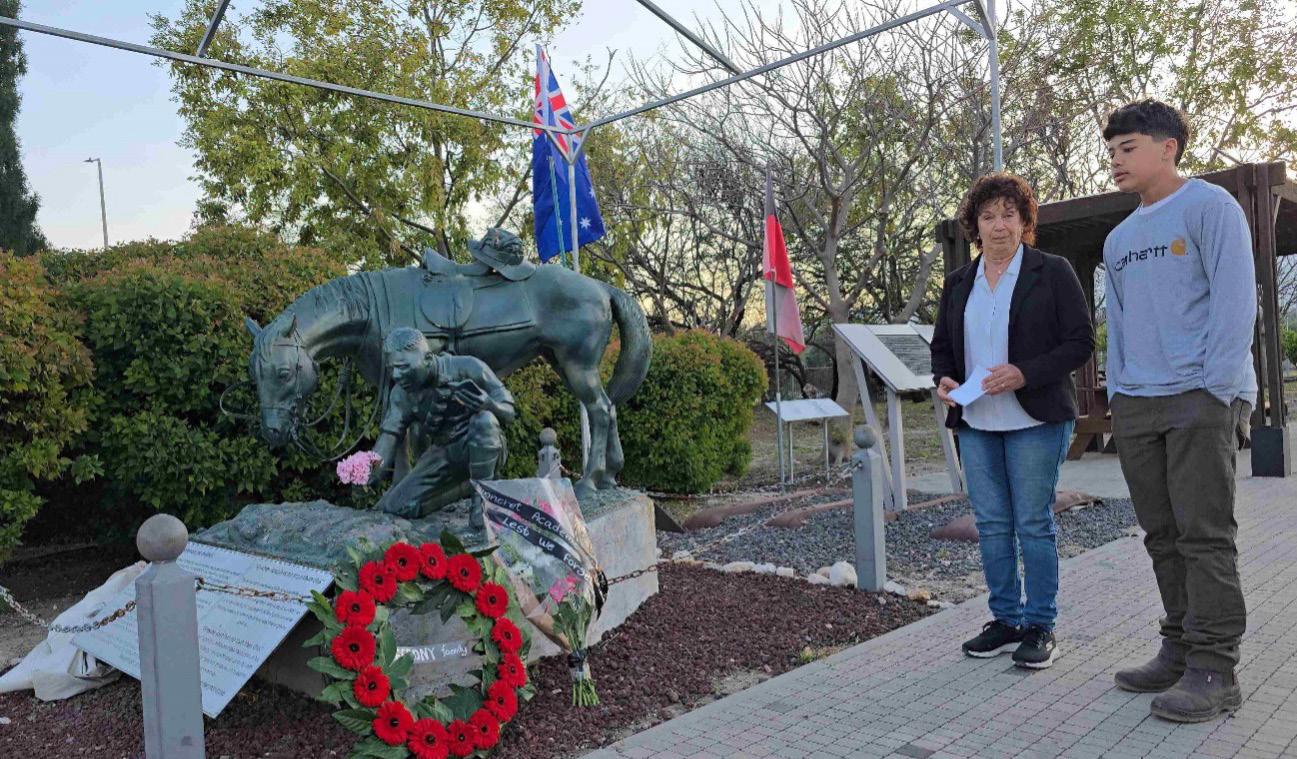
The Anzac bravery is commemorated annually in Israel, with several events. At the Tzemach ANZAC Memorial, located at a restored Ottoman-era train station, Israelis and Australians gather every year at dawn to honour the fallen. A lifesize bronze statue stands as a powerful reminder of the bravery of Indigenous Australian soldiers who fought alongside Jewish soldiers.
More than a century ago, Australian soldiers of the Australian Light Horse rode across the deserts of the Middle East as part of the Allied campaign during World War I. Their bravery helped bring an end to centuries of Ottoman rule in the region. In doing so, they helped create the conditions that would ultimately enable the re-establishment of the Jewish homeland.
Two battles in particular remain etched into our shared story. The charge at the Battle of Beersheba, one of the last great cavalry charges in military history, which was instrumental in opening the way for Allied advances. Less widely known, but equally significant, is the Battle of Semakh, fought near the southern shores
of the Sea of Galilee. There, ANZAC troops, including Aboriginal soldiers, displayed extraordinary courage in fierce combat.
Ceremonies at Be’er Sheva bring together representatives from both nations in tribute to the soldiers who fought in these battles. These commemorations are not merely acts of remembrance; they are living expressions of a friendship forged in shared sacrifice.
Before I began my mission in Australia, I participated in the Semakh battle commemoration, which took place in September 2025.
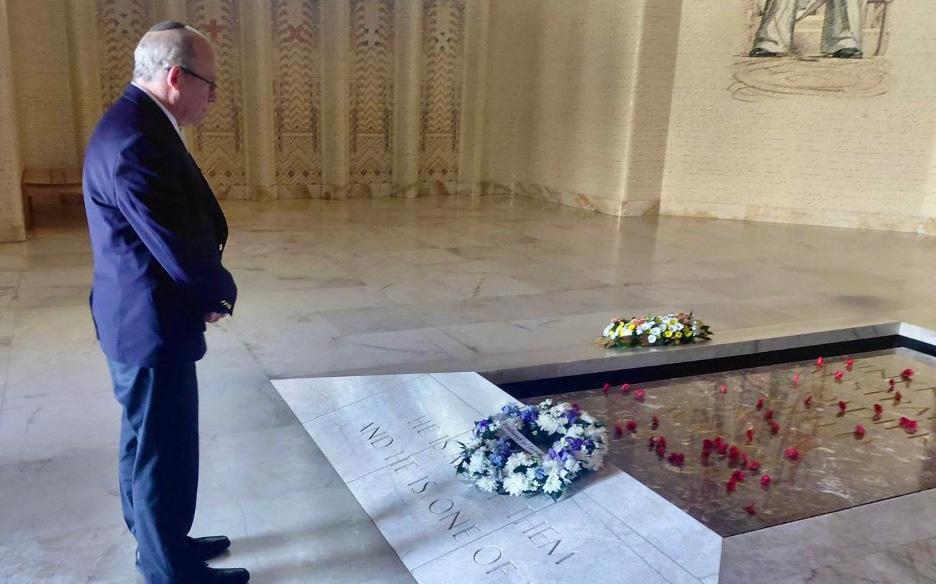
Following the start of my mission in Australia, I laid a wreath at the Tomb of the Unknown Soldier ahead of Anzac Day. I went specially on the eve of Anzac Day, as I could not attend the
official ceremonies, which fell on the Sabbath. Our participation reflects Israel’s profound respect for those who gave their lives in defence of freedom.
The story of ANZAC is not only about the past. It carries enduring lessons for the present – lessons that resonate strongly with Israel today. It reminds us of the necessity of standing firm in the face of threats.
Just as the ANZAC forces confronted the challenges of their time, from the Ottoman Empire to later global conflicts, the world today continues to face threats from forces that seek to destabilise regions and undermine peace.
Chief among these is Iran’s ongoing effort to expand its Islamic revolution through a network of proxies across the Middle East and beyond. Iran and its
proxies execute terrorism, undermine states and disrupt global shipping and economy. History teaches us that vigilance and resolve are essential.
ANZAC underscores the importance of international cooperation. The achievements of the Allied forces in World War I were not the result of one nation alone, but of a coalition united by its shared purpose. Today, the USA and Israel act jointly in confronting global challenges. Regional aggression, terrorism and emerging security threats require that same spirit of partnership and resolve.
ANZAC reminds us that Australians and Jews, and today Australians and Israelis, historically stood side by side in pursuit of freedom and security. That partnership did not end on the battlefields of the early 20th century. It continues in our strong diplomatic ties, our cooperation in innovation and defence, and our shared democratic values.
The bond between Israel and Australia is built not only on shared history, but also on shared principles.
These include resilience in the face of adversity, a commitment to protecting our shared values and a determination to defend freedom against those who seek to threaten it.
As we reflect on the legacy of ANZAC, we are reminded that history lives on in the choices we make today. The courage of those young soldiers more than a century ago continues to inspire us to stand together in current times, working collectively toward a more secure and peaceful world.
Lest we forget.
KATHY KAPLAN OAM DIRECTOR BET-OLAM AROUND
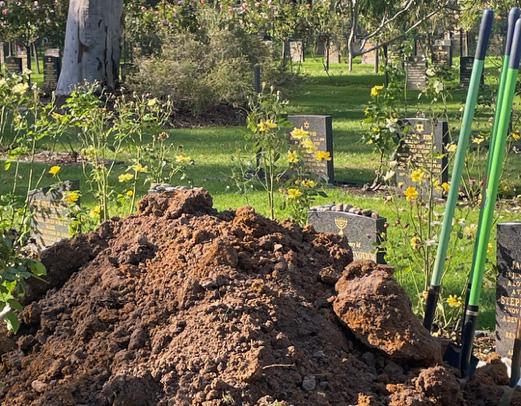
The second mitzvah of chesed shel emet takes place in full view at the grave site.
Anyone present can participate. We each step forward and take hold of the



SHARONNE TIDHAR CONSIDERED OPINION
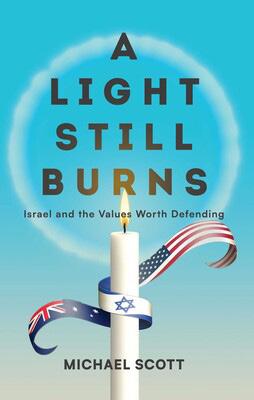
Michael Scott’s new book, A Light Still Burns: Israel and the Values Worth Defending, opens with a premise that feels increasingly hard to ignore: The world has changed. Antisemitism is no longer whispered, and too many people are choosing silence.
Scott is not Jewish. In fact, he laughs and describes himself as a “goy”. But that is precisely what gives his voice a certain weight.
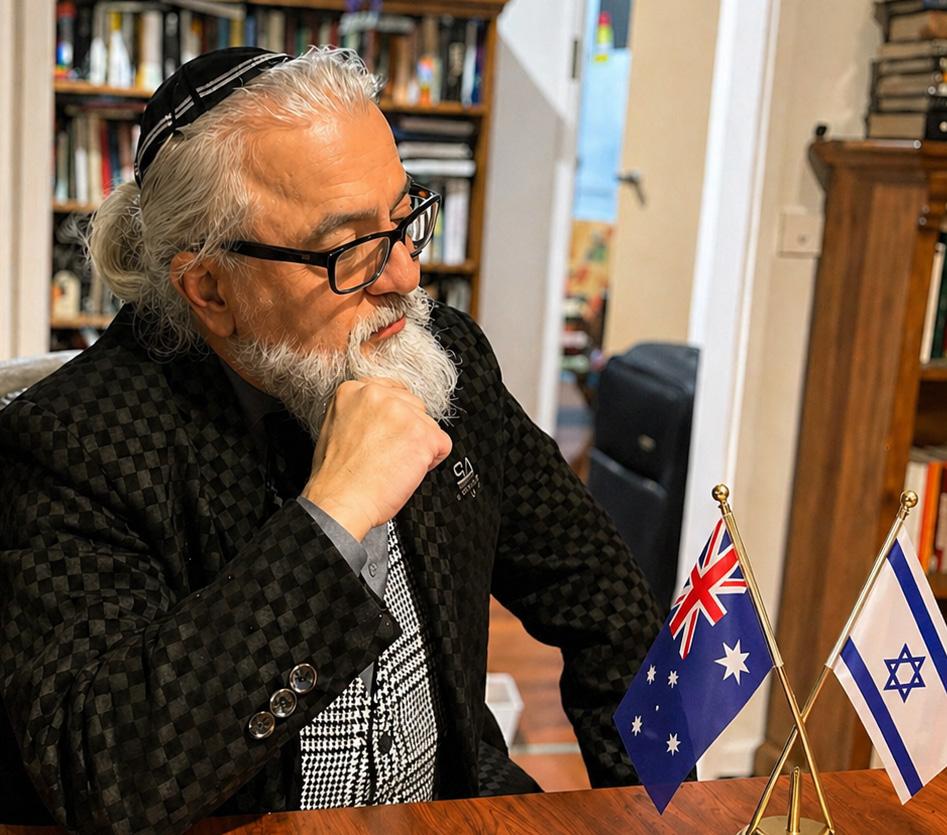
A highly decorated Australian Army officer who served for more than 35 years, Scott is not speaking from ideology alone, but from experience – and from a sense that something fundamental is at stake.
His journey into the Middle East did not begin with activism. It began, as he tells it, with a simple instruction from a senior officer: read.
That reading took him deep into the history of Israel – the wars, the politics, the fragile and, often, failed peace attempts – and into the lives of leaders like Golda Meir and Moshe Dayan.
vehicles. It was, he says, a turning point in understanding the complexity of the conflict and the challenges faced by the Israel Defense Forces. His conclusion is blunt: “The way they minimise civilian casualties — no one does it better.”
Years later, in 2018, Scott took up a United Nations role in Jerusalem – an unarmed military posting supported by Australia.
He lived in Israel for more than two years, deepening both his professional understanding and his personal connection to the country. He speaks often of his “Jewish brothers” – a phrase that reflects not identity, but solidarity.
Then came October 7.
Scott is now building Foundation 2023, an Australian-based initiative aimed at combating antisemitism not through slogans, but through lived experience.
The idea draws inspiration from the Colombo Plan – the mid-20th century program that brought students from across Asia to Australia, building longterm relationships and understanding that still resonate today.
What followed was not a passing interest, but a sustained engagement that would shape his worldview. In 2004, Scott was invited to Gaza. What he saw there stayed with him.
Briefed in Rafah, he observed the scale of the tunnel networks –infrastructure large enough to move weapons through it and, in some cases,
Like many, Scott was shaken by the Hamas attacks. But what followed in Australia affected him just as deeply. Seeing antisemitic slogans projected onto the Sydney Opera House was, for him, a moment of clarity. “I’ve cried more since October 7 than I ever have in my life,” he says.
His response has been to act.
Foundation 2023 aims to do something similar in reverse: bringing non-Jews to Israel to see the country firsthand. Through industry placements, scholarships and cultural exchanges, participants are exposed to Israel’s diversity – its technology, its democracy, its social complexity. One of the program’s pillars even includes participation in Tel Aviv’s Pride March, challenging assumptions about the region. A Light Still Burns is, at its core, a call to courage. It is not written from the margins, but from someone who has spent a lifetime in service and who now believes that silence is no longer an option.
Both Anzac Day and Israel’s Independence Day turn military history into national identity. One draws its strength from a crushing defeat, the other from a hard-won victory, yet both nations use rituals and symbols to bind citizens to the same idea: who we are is who we fought to become.
Anzac Day begins in darkness, when thousands gather for the Dawn Service. The ritual is deliberate; a lone bugle plays the Last Post, followed by silence, then the Ode of Remembrance. Veterans and schoolchildren march while families lay red poppies at cenotaphs. The tone is sombre, without fireworks or street parties. The message is endurance: Gallipoli’s failure revealed the character Australians claim – mateship and quiet courage.
Israel’s Yom Ha’atzmaut follows Yom Hazikaron, when a nationwide siren honours fallen soldiers and terror victims. Then grief turns to celebration: flags rise, people sing and barbecue, and fireworks mark the living state. Survival itself becomes part of memory.
The soldier at the centre of each story is different, yet serves the same purpose. The ANZAC digger is remembered for courage in a doomed campaign. He is the reluctant citizen-soldier who fought
far from home and embodied the “Aussie battler”, who never gives up, even when the cause is lost. That image is the template for Australian masculinity and citizenship – concise, loyal and capable in a crisis.
The Israeli soldier of 1948 is remembered as the citizen who had no choice but to fight. Holocaust survivors, refugees from
Arab countries and local youth took up arms to defend a state declared hours earlier. They fought with one rifle for every three soldiers and defeated five well-equipped Arab armies, trained and equipped by the British Empire. Their victory became proof that a scattered people could become a nation. The soldier-citizen is both
defender and founder; the gun and the plough are two sides of the same identity.
Despite their differences, both rituals do the same national work: they turn military history into shared memory. Through services, wreaths, school ceremonies and family stories, the soldier becomes the ideal citizen, whether fallen at Gallipoli or victorious in 1948.
In both countries, the past becomes a sphere of belonging and blood becomes the inheritance through which defeat and triumph are remembered.
On Gallipoli’s shore, where silence destroys the sun’s wound, and in the siren’s cry that splits Israel’s sky like prophecy, the Earth remembers. These days do not recount battles; they open veins. Blood, whether spilled in defeat or triumph, won’t die; it flows still through the nation’s body. We are its unfinished transformation. We carry an endless pulse through two fires: one on a broken shore, the other beneath a sky split by remembrance.
Between them, the dead do not sleep. They become the red script by which the living learn that identity is never received whole, but forged in sacrifice.
Perhaps this is all a nation can do before its dead: bow its head, touch the wound, and whisper, again and again, we are still here.


From grain to glass (see inside feature)
YANKEL WAJSBORT GENERAL MANAGER KOSHER AUSTRALIA
In Australia’s vibrant Jewish community, kosher consumers play an influential role in expanding the variety and availability of kosher food. Every purchase decision made by a kosher observant shopper has the potential to shape the food market, encouraging manufacturers, importers and retailers to invest in kosher certification and expand the range of available products.
Kosher certification is not automatic. For food producers, it involves supervision, ingredient verification and ongoing compliance – steps that carry both cost and administrative effort. Companies will usually only take on this process if they see clear consumer demand. This is where kosher consumers become essential. When they actively seek out, purchase and support kosher certified products, they send a powerful message that kosher certification is commercially worthwhile.
In Australia, where the Jewish population is concentrated mainly in Melbourne and Sydney, the kosher market is relatively limited compared to larger communities overseas. As a result, businesses often see kosher production as a niche risk unless demand is visibly strong. When kosher consumers consistently choose certified products –especially local brands – it strengthens

the case for continued and expanded certification. This can lead not only to more kosher options, but also to better availability, competitive pricing and long term stability.
Another important factor is communication. Kosher consumers who contact companies to enquire about certification, ingredients or supervision levels often influence decision making more than they realise. A handful of serious, well informed enquiries can prompt a manufacturer to explore kosher options, particularly when exporting opportunities to Israel, the United States or Europe are involved.
Kosher consumers also benefit the broader market. Many non Jewish shoppers seek kosher products due to perceptions of quality, allergen transparency, vegetarian suitability or ethical oversight. In this way, kosher certification can expand a product’s customer base well beyond the Jewish community. Australian companies that become kosher certified often discover new market opportunities, reinforcing the value of maintaining certification. Supporting kosher retailers, local kosher product lines and certified Australian manufacturers is, therefore, not merely a matter of convenience – it
YANKEL WAJSBORT GENERAL MANAGER KOSHER AUSTRALIA
If someone were to ask what the greatest breakthrough in technology is at the moment, they would likely say AI – artificial intelligence websites where users can ask questions, request tasks be done, create applications and edit graphics, just to name a few possibilities. The temptation is to rely solely on AI for your information.
Recently, a restaurateur asked if a certain ingredient required formal kosher certification for the venue to use it.
Being familiar with the kosher requirements for many ingredients (you pick up things after 23 years checking products), I responded on the WhatsApp chat that we shared that the ingredient in question was acceptable from all sources.
A couple of minutes later, one the rabbis on the chat questioned my information. He had checked with AI, which recommended that the ingredient should have kosher certification.
I directed the rabbi to the ingredient database maintained by the Chicago Rabbinical Council, which agreed with my answer that there was no complexity in the production of the ingredients that was a concern.

The rabbi wondered: “Why didn’t AI give the correct answer?”
Some experts refer to the phenomenon as ‘AI hallucinating’. AI infers an answer, effectively guessing, without having solid information.
So, is AI essentially useless?
Well “yes”, and “no”. AI cannot replace a rabbi who, when provided with all the information and the individual circumstances of a case, can advise. The rabbi will use his general experience, halachic knowledge, information about the specific person asking and other intangibles in the decision-making
process. But AI is really good at collating information and providing sources (even though, on occasions, the sources don’t exist). Think of Wikipedia with a better interface.
For example, we may ask AI who makes a certain product or whether a medication contains gluten (an indicator for Pesach purposes), or how an ingredient is fabricated. It is a piece in the puzzle of our kosher investigations, but not necessarily the solution.
This is what AI said when I asked it whether I could rely on AI for information about kosher: “AI is not a kosher authority.
is an investment in the future of kosher life in Australia.
Every product purchased helps maintain supervision infrastructure, supports local rabbinical authorities and encourages innovation in kosher food production.
Ultimately, kosher availability does not grow in a vacuum. It grows when consumers understand their collective impact. By shopping thoughtfully and advocating respectfully, kosher consumers help ensure that Australia’s kosher landscape continues to develop, benefiting current families and future generations alike.
Its responses are based on patterns in data, not on halachic decision making or real time supervision.
Kashrut frequently depends on nuanced details: the exact source of an ingredient, how equipment is used, changes in suppliers or local standards of certification. An AI system may give an answer that sounds confident, but is incomplete, outdated or inappropriate for a specific situation.
“This limitation is particularly important because kosher status can change. Ingredients are reformulated, factories alter production lines and certifications are withdrawn or added.
Only official supervision agencies and on site kosher supervisors can confirm current kosher status. AI can help users understand what to check, but not replace who to check with.
“Responsible use is therefore key. AI should be treated as a support tool, not a final authority. It can prepare consumers to read labels more intelligently, understand why certain products need certification and recognise when a question must be referred to a competent rabbinic source.
“AI may be fast and convenient, but in kosher matters, accuracy and responsibility will always matter more.”
YANKEL WAJSBORT GENERAL MANAGER KOSHER AUSTRALIA
Beer is among humanity’s oldest crafted beverages, yet its production remains a blend of science, tradition and patience. For a Kosher audience, the journey from grain to glass carries an additional layer of halachic consideration.
At its core, beer is made from four ingredients: water, grain (most commonly barley), hops and yeast. The process begins with malting, in which barley is soaked, allowed to germinate and then dried. This activates enzymes that later convert the grain’s starches into fermentable sugars. The malted barley is then crushed and mixed with hot water in a step called mashing, producing a sweet liquid known as wort.
The wort is separated from the spent grains and boiled, during which hops are added. Hops provide bitterness to balance the sweetness of the malt and contribute aroma and preservative qualities. After boiling, the wort is cooled and transferred to a fermentation vessel, where yeast is introduced. Over days or weeks, the yeast consumes sugars and produces alcohol and carbon dioxide –the heart of beer’s transformation.
From a kosher perspective, beer raises interesting halachic questions.
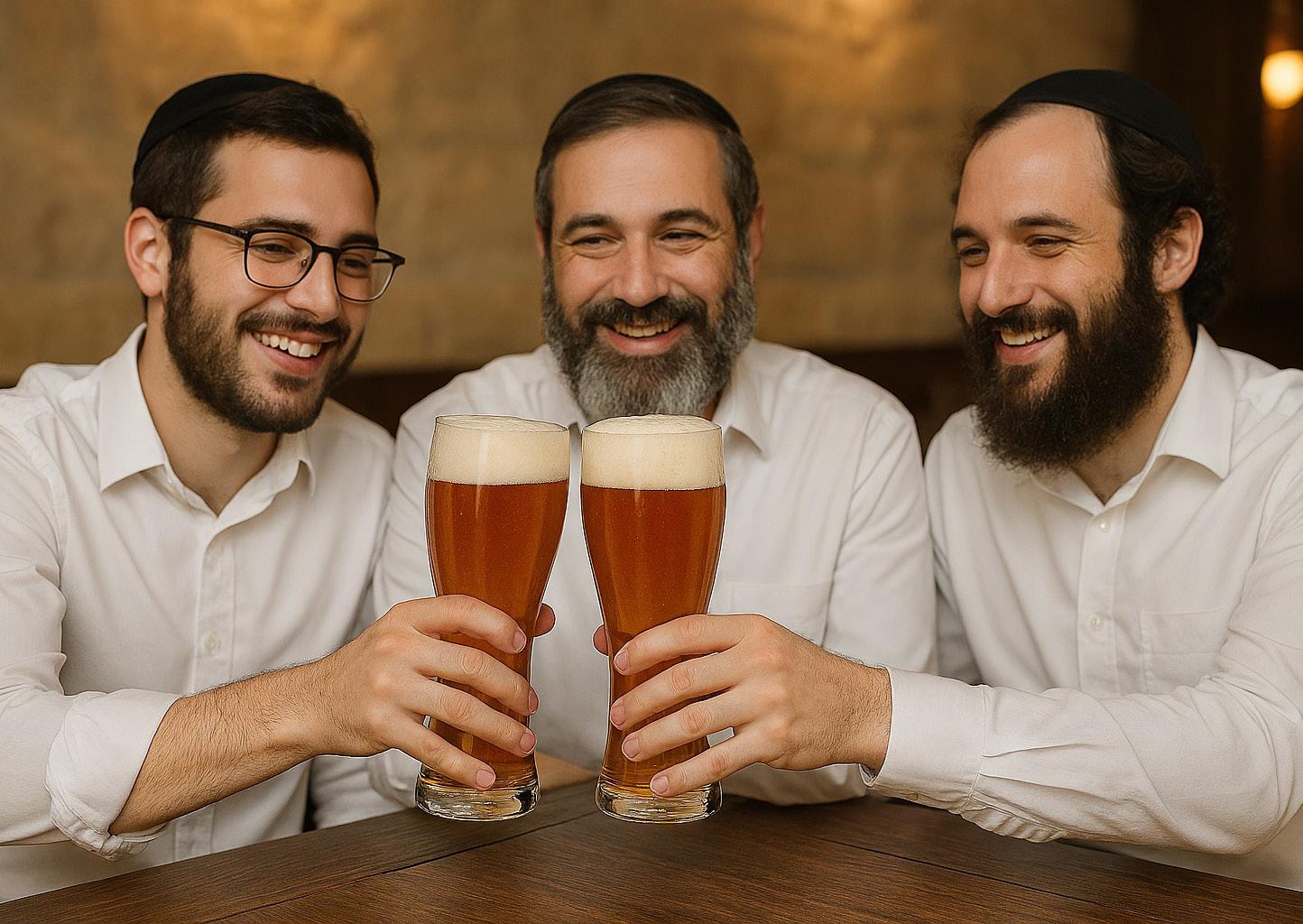
Because it is made from grain, most beer is considered chametz and is therefore prohibited at Pesach. Kashrut observance also comes into play year round. While the basic ingredients of beer are kosher, supervision may be required to ensure that no non-kosher enzymes, clarifying agents or flavour additives are used. Gelatine, derived from non-kosher animals or isinglass, extracted from non-
tropical fish were, until recently, used to remove the haze. While the use of gelatine and isinglass was ultimately permitted, more modern methods, such as using mechanical clarification, have removed those kosher concerns. Historically, beer was often safer than water, making it a staple beverage in medieval Europe, including in Jewish communities. Halachic literature
occasionally discusses beer production, commerce and ownership.
Beer even finds a subtle place in Jewish ritual life. While wine is the preferred beverage for kiddush and Havdalah, beer (or other alcoholic drinks) has, at times, served as a valid substitute when wine was unavailable, reinforcing beer’s longstanding presence in daily Jewish life.
Given that the vast majority of beer produced in Australia is under kosher supervision, Kosher Australia – in line with major kosher authorities in USA –now only permits the serving of kosher certified beers at kosher catered events and in licensed establishments.
Common kosher certified brands include CUB, Fosters, Coopers, Lion, Toohey’s, Heineken, James Squire, Cascade, Hahn, Vic Bitter, XXXX, Great Northern, West End, Two Bays and Urban Alley.
From ancient grains to modern kettles, the production of beer reminds us that even everyday pleasures can be approached with thoughtfulness, responsibility and gratitude.
In lifting a glass, we can reflect not only on the skill of the brewer, but on the deeper traditions that shape how – and why – we drink.
YANKEL WAJSBORT GENERAL MANAGER KOSHER AUSTRALIA
The rise of Airbnb and other short-term rentals has transformed the way people travel. For Kosher travellers, however, staying in a private home presents challenges quite different from those encountered in hotels. While an Airbnb may offer comfort, space and a kitchen, those very conveniences raise important kosher considerations that require forethought and care.
The primary issue is shared cookware, utensils and appliances. In most Airbnbs, pots, pans, cutlery and dishes are used year round by guests of all backgrounds. From a halachic perspective, these items are assumed to have absorbed non kosher tastes and often a mixture of meat and dairy, through regular use.
Here are some observations from Rabbi Zvi Goldberg of the Star-K (one of the larger US kosher authorities):
Oven – Food placed in the oven should be double-wrapped or the oven should be kashered. A clean oven may be kashered by turning on high (at least 260C) for 40 minutes. This will kasher the racks as well. If dirty, the self-clean cycle will both clean and kasher.
Stovetop – Depends on the type of appliance:

Gas stovetop with grates – clean the grates. Insert into the oven on high for 40 minutes.
Electric coil stovetop – turn on until the coils glow red. This usually takes a few minutes.
Glass stove top – clean and turn on until coils glow red. This will only kasher the area above the coils. The area outside the coils will not be kashered. To use a pot that extends outside this area, keep the glass top clean and dry. Wipe up any spills quickly. A simple solution is to bring a portable electric or induction stovetop for use.
Grill – Kashering a grill is not practical due to the difficulty of cleaning it and the high kashering temperatures that can cause damage. It’s best to bring a portable grill.
Microwave – Food that is heated in a microwave should be enclosed in two leakproof wrappings.
Dishwasher – Do not use.
Refrigerator – There is no issue with storing food in a clean refrigerator.
Instant Hot Water Tap – May be used to prepare hot drinks and foods.
Sink Taps – May be used to fill vessels for drinking and cooking.
Sink – Kashering is not recommended as it is messy and involves a risk to counters and cabinets in case of spills. Instead, first ensure the sink is clean. Then, either use the sink only with cold or lukewarm water or use a basin to hold dishes and place a sink rack underneath (with separate basins and racks for meat and dairy).
Countertops – Cold vessels may be placed directly on clean surfaces. For hot cookware, lay a towel or kosher trivet beneath the vessel.
Utensils available at Airbnbs – Dishes, mugs and certain utensils found in the home are permitted for cold use on a temporary basis, in case of need; they are not permitted to be used with pungent foods such as onions, garlic, ginger and lemon. Before using, utensils should be carefully inspected to make sure they are perfectly clean. When checking forks, pay special attention to the area between the tines. Knives are
difficult to clean properly for kosher use and should not be used.
Many kosher-observant travellers bring disposable utensils, foil containers, paper plates and a small cutting board, or travel with a dedicated “kosher kitchen kit”. Alternatively, some choose not to cook at all, relying on sealed kosher food or eating out at kosher certified establishments, where available.
Communication with the host can be helpful, though expectations should be realistic. Some hosts are accommodating and may allow removal or covering of certain items; others may not understand the requirements. Clear, polite explanations go a long way.
Ultimately, staying kosher in an Airbnb is possible, but it requires planning and halachic awareness. With preparation – and sometimes creative solutions –kosher travellers can enjoy the flexibility of modern travel while staying true to timeless dietary laws.
Postscript – with the development of the local kosher food industry, Kosher travellers can readily find almost any kosher food in the regular aisles of the local supermarket by consulting the Kosher Australia food app. Gone are the days that travelling to a country retreat required stocking the boot of the car with enough food for the entire trip.






























































































































































































































RABBI SHAUL ROSENBLATT COURTESY: AISH.COM CONSIDERED OPINION
Antisemitism is rising in Britain and many Jews are quietly leaving. Here's why one London rabbi is staying – and what he believes Jews must never forget.
As a rabbi in London, I hear that question more and more frequently. And I see some quietly voting with their feet as well. But for me, the answer remains a resounding “No”. Or perhaps more accurately: “Not yet”.
I grew up in Liverpool 50 years ago, and antisemitism then was, in many ways, worse than it is today. I remember arriving at my new school at around nine years old and being welcomed by a boy calling me a “dirty Yid”, before placing chewing gum in my hair for good measure. Later, while attending Jewish secondary school, there were intermittent physical attacks as well.
Perhaps naïvely, I believed Britain had changed for the better in the 21st century – that antisemitism belonged largely to the past. But after October 7th, something shifted. We have seen violent rhetoric on our streets, attacks against Jews, and a level of hostility many believed unimaginable in modern Britain.
So naturally people ask: where does this end?
The truthful answer is that none of us knows. We find ourselves on a slippery slope with no visible bottom. Jews have always slept with one eye open and, in recent years, it has been opening wider.
Yet despite my concerns, I do not believe Britain today resembles
Germany in the 1930s, as I hear some suggesting. It’s not even close. I say this not out of naïveté, but because I have spent decades studying the rise of Nazism and leading educational trips to Poland’s death camps.
The comparison, while emotionally understandable, is historically unsound.
Britain’s liberal democratic culture evolved gradually over centuries –from the Magna Carta through the Glorious Revolution and onward through the Great Reform Act and beyond. Germany’s democracy, by contrast, was young, fragile and lacked deep liberal roots. Antisemitism there was not merely tolerated; it had long intellectual, political and cultural foundations that became increasingly embedded within the state itself.
At the time of Hitler’s Beer Hall Putsch, Germany had been democratic for less than 10 years.
Most importantly, the British state today remains fundamentally and vociferously opposed to antisemitism and antisemitic violence. That distinction matters enormously.
Recently, a colleague of mine took a group of Jewish children camping. He casually mentioned the trip to the Community Security Trust (a charity that protects the Jewish community). Unexpectedly, local police proactively contacted him in advance to say they were aware of the visit and had assigned officers to help protect the group.
In 1930s Germany, the police were not protecting Jews. Increasingly, they themselves were the perpetrators. And the government stood behind them. Britain today is still very different, thank
God. That does not mean things cannot worsen. They can. We are clearly living through a period of growing extremism, polarisation and increasing anger. Jewish institutions require significant security. Many Jews feel uneasy in public in ways they did not only a few years ago. Those are realities and must not be minimised. But panic is not a wise guide for decision-making.
I like to make decisions based on the reality before me, not hypothesised futures. And the present reality is this: Britain is a country governed by law, with institutions that, imperfect as they are, seek to vigorously protect Jewish life.
Above all, though, I believe Jews must not lose sight of our deeper mission.
More than 3,000 years ago, we were charged with the task of becoming “a light unto the nations” – to build lives rooted in holiness, justice, compassion and responsibility.
Judaism brought into the world revolutionary ideas: love your neighbour, the sanctity of human life, moral responsibility, universal education, peace as an abstract ideal and the dogged belief that humanity will ultimately find its way.
At our best, Jews remind societies that human beings are capable of something more elevated than the pursuit of power, violence and self-interest. And so, my response to antisemitism has always been this: become better. Hatred that leads to hatred leaves only more hatred in its wake. Yes, Jews must defend themselves, vigilantly and vigorously. Yes, Israel must remain strong. And yes, Jews living anywhere in the world must avoid naïveté.
If we have learnt anything from history, surely it is this.
But ultimately, the great Jewish weapon has never been the sword. It has only ever been the book, the idea, the moral vision and the stubborn refusal to give up hope for a better world.
Antisemitism reminds us that our work is not yet finished. So no, I do not believe it is yet time for Jews to leave the UK. That day could come. Jewish history teaches us never to dismiss such possibilities. But we are not there yet.
For now, I believe my task is to remain, to contribute, to help build a stronger culture of morality, responsibility and decency. Israel is my homeland and my future, and I support it with every fibre of my being. But at present, I feel that my responsibility is to Britain and to its Jewish community. I remain hopeful and optimistic. And, like Jews throughout history, I sleep with one eye open.
Rabbi Shaul Rosenblatt is Director of the Rabbinical Training Academy, an innovative program that mentors newly qualified rabbis through the first eighteen months of their first jobs. He is also the author of Why Bad Things DON'T Happen to Good People, a semi autobiographical book about understanding and facing challenging times. His recent book, Mean What You Pray, is a practical guide to connecting to God in prayer. Both are available on Amazon and in Jewish bookshops. He does a weekly podcast, with his wife Chana, called Thoughts About Life, available on all platforms.

ANNE-MARIE ELIAS
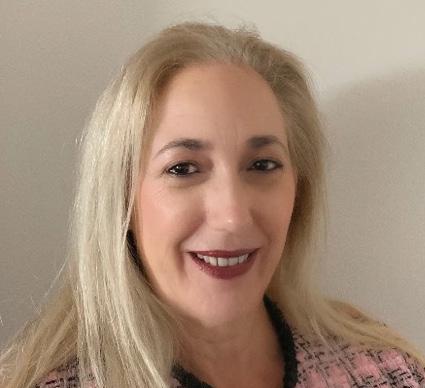
Let’s talk about red flags (warning signs that indicate unhealthy or manipulative behaviour) in our relationships – marriage, work and friendships.
These signal potential danger to your emotional, psychological, or physical well-being.
When you are interacting with another person, be it a partner, friend, boss or colleague, consider how you feel.
Are you feeling stressed or anxious? Are you expecting a form of harassment or bullying? Do you feel emotionally and/ or physically unsafe? If you answered “yes” to any of these questions, then this relationship is dangerous for you. The longer you stay in the company of that person, the higher the level of stress you will experience, which will result in a decline in your wellbeing.
If the relationship is filled with negatives, it will result in more worrying than connecting. Any shared goals will not be met. There will be a lack of motivation to continue the relationship and a desire to escape it.
In a marriage this may well result in a person seeking divorce; at work it will

lead to resignation and, with a friend, it will mean severing the friendship. In any of these relationships it will mean quitting in order to escape an unhealthy environment that will result in toxicity the longer you remain.
Clear red flags include:
They only reach out when they need something
There are times in life when leaning on another person in times of need is a natural part of any close relationship. We have all heard of or had a ‘fair weather friend’: that person who only contacts you when they need help but rarely, if ever, checks in on you. This onesided help is transactional. A green flag is about give and take.
They flood you with their feelings, but never ask about yours
If you feel like you’re always the one taking in your friend’s emotional pain, listening to their problems and comforting them through every crisis, but they rarely or never ask how you’re doing, you may be caught in a onesided friendship.
Over time, this type of relationship can leave you feeling exhausted. A good friendship is about feeling seen, heard and cared for in return.
Constant disrespect or dismissive behaviour
Respect is the cornerstone of a healthy relationship. When one person consistently disrespects the other,
NHL game setting
Hired gun, for short
Haza with the 1984 album "Yemenite Songs" 17. Illuminating dough? 20. .mpeg alternative 21. Former Giant's great Umenyiora 22. Free, with of
Having a meal? 30. Antismoking org.
Brubaker and Burns 32. Disney ape 33. Where to find Bhutan
Animal with one sign of kashrut
Blue hue in a printer
Brown and a tribe
Tefillin needs?
Chaplain who plays the villain in "Avatar: Fire and Ash" 44. Blood letters 45. Burrell and Cobb 46. What Aussies call college 47. Separating the flames? 53. Ice sculpting or ice dancing
54. The "t" in Crete? 55. Pursuer of Frodo and Sam
Welcoming seasonal bread?
whether through belittling, abuse, ignoring boundaries or mocking, it creates an unsafe emotional environment.
Disrespect erodes trust and selfesteem. Look for people who respect you, your boundaries and value you as a person.
Control and manipulation
Signs of control and manipulation include:
• Isolating you or excluding you from seeing or speaking to others, be it family, friends or colleagues.
• Making you feel guilty for having your own opinions and needs. Pressuring you into making decisions based on their wants.
• Over-monitoring your behaviour and micromanagement. Checking or tracking your whereabouts and demanding constant updates on what you're doing.
Healthy interactions include selfawareness, clear communication and boundaries. So, surround yourself with people who genuinely care for you and you for them.
Anne-Marie Elias is a psychologist in clinical practice for 25 years.
13. "Di-dah" preceder
18. African nut tree
19. Prepares to fire
24. Crime scene finds, perhaps
25. Apple on one's desk, perhaps?
26. Alternatives to wraps
27. Letter worth 7
28. President that deported the most illegal immigrants
29. She's probably not Jewish
33. Ethiopia's Addis
34. A ___ omission
35. Strict
36. 20s provider, for short
37. Begun is known for one
39. Elusive needle locale
40. Ice cream choice
41. Not nyet
45. Mountain lake
46. E Pluribus ___
48. She hid the spies at Jericho
49. Big game name, formerly
50. Slangy potato
51. Moved like slime
52. A pro team might make one
56. Oscar/Emmy/Grammy winner
57. Her match?
58. B'nai B'rith advocacy org.
59. Title for Larry Ellison
60. Yam of note
61. Dip on 8 Av
62. American rival, once
BY YOASH DVIR CEO TECHNION AUSTRALIA
One of the hardest moments in cancer treatment comes after surgery, when doctors and patients must decide whether chemotherapy is necessary. For many women diagnosed with earlystage breast cancer, chemotherapy can significantly reduce the risk of the disease returning. Yet for others, it offers little benefit, while bringing serious physical and emotional side effects.
The challenge has always been the same: how can doctors tell which patients truly need chemotherapy and which do not?
Researchers at the Technion – Israel Institute of Technology may now be much closer to an answer. Together with leading hospitals and medical centres in the United States and Europe, Technion scientists have developed an artificial intelligence system that can predict both the likelihood of cancer returning and whether chemotherapy is likely to help a patient.
What makes this breakthrough particularly remarkable is its simplicity.
Today, many hospitals rely on specialised genetic tests to help guide chemotherapy decisions. These tests can cost thousands of dollars, take weeks to process and remain inaccessible in large parts of the world. Even then, they are not always accurate.
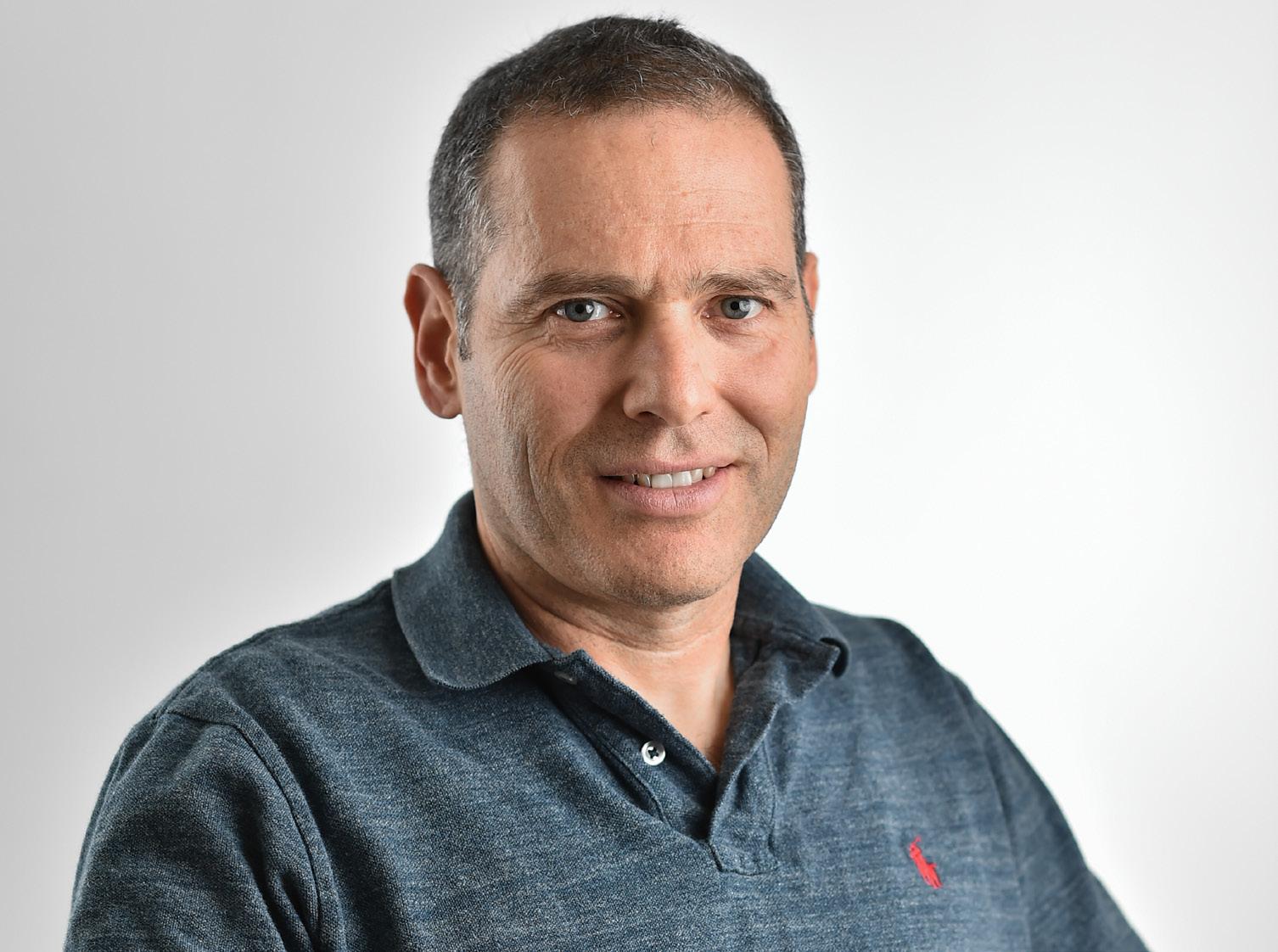
Ron Kimmel
The Technion’s new system approaches the problem differently.
Instead of analysing genes, AI examines ordinary pathology slides – the same tissue samples already taken during diagnosis and routinely reviewed under a microscope. The tissue is digitally scanned and within minutes the system produces a score estimating both recurrence risk and the likely benefit of chemotherapy. In practical terms, this could spare many patients from unnecessary treatment
while ensuring that those who genuinely need chemotherapy receive it quickly and confidently.
The science behind the model is highly advanced, but the concept itself is surprisingly intuitive. Professor Ron Kimmel of the Technion’s Henry and Marilyn Taub Faculty of Computer Science explained it using a simple comparison.
Just as you can identify eye colour by looking at a person’s eyes rather than studying their DNA, the system learns to
recognise visual patterns in cancer tissue that reveal how aggressive the disease may be.
The AI searches for details invisible to the human eye – tiny structural patterns in cells, signs of immune-system activity and clues about how a tumour may respond to treatment.
Perhaps most importantly, the model was tested using data from one of the world’s largest breast cancer clinical trials, involving more than 10,000 patients. Researchers then validated the system across hospitals in Israel, the United States and Australia, demonstrating that it worked consistently across different populations and healthcare systems.
This matters because breast cancer remains one of the most common cancers worldwide, affecting approximately 2.3 million people every year. In many countries, especially developing nations, advanced genomic testing is simply unavailable. A fast, affordable AI-based alternative could dramatically expand access to personalised cancer care.
The Technion has long been associated with breakthroughs in engineering, computing and medicine. This latest development demonstrates something equally important: the growing ability of artificial intelligence to support deeply human decisions. Not by replacing doctors, but by helping them see more clearly.
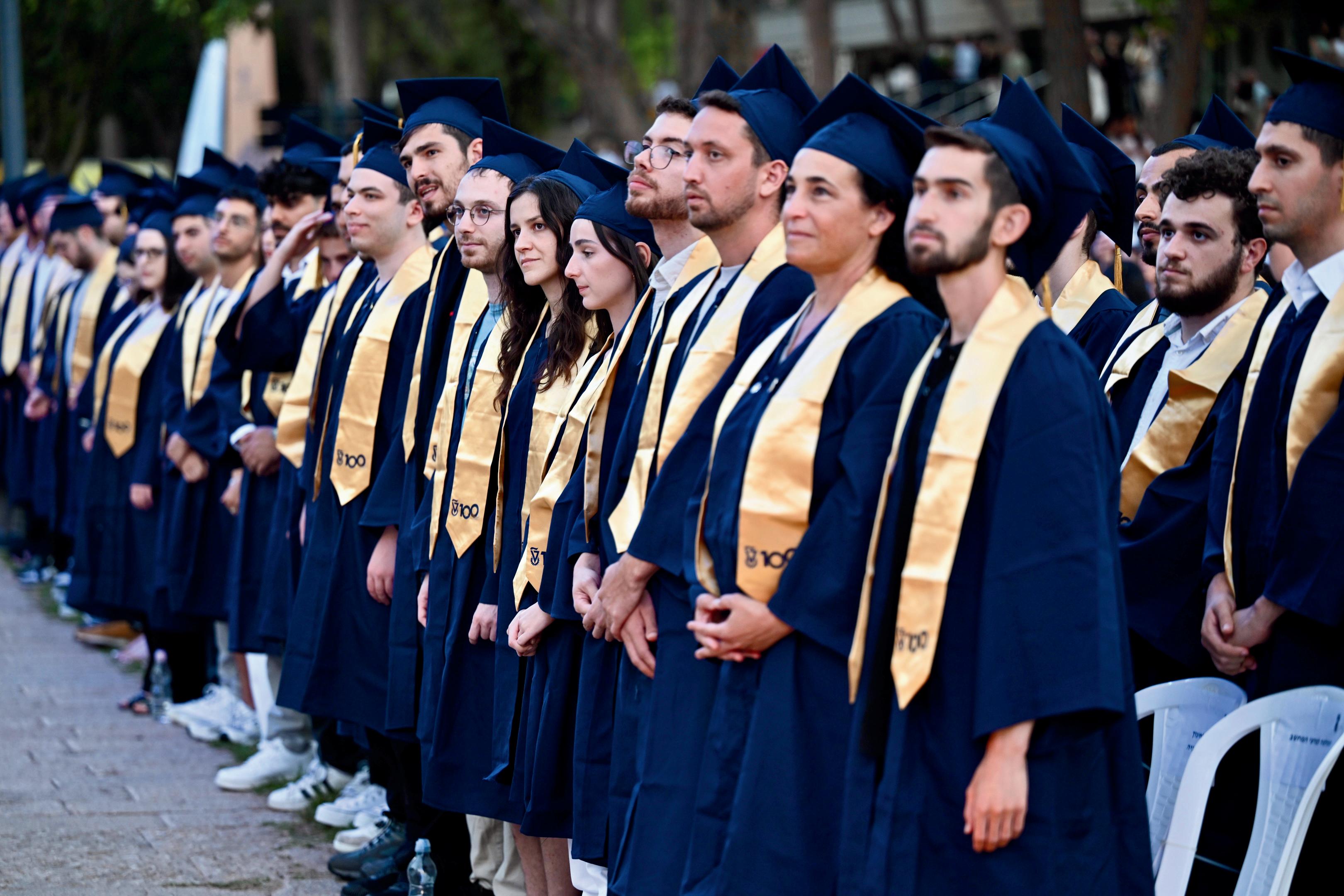

Some of the most popular fashion brands today were founded by proud, committed Jews.
Everyone knows fashion designers Ralph Lauren, Calvin Klein and Donna Karan are Jewish. But some of today's most soughtafter brands were also founded by Jews you might not know about.
Here are the innovators behind a few of the most popular high-end labels.
Chloé
This iconic French brand was founded by Gabrielle Hanoka Aghion, an Egyptian Jew who moved to Paris in 1940 and democratised fashion by inventing "ready to wear" (pret a porter) clothes, designing and selling to middle-class women who didn't have the time or money for custom couture.
Born in 1921 in Alexandria, Gabrielle grew up loving fashion. Her father managed a cigarette factory; her mother was fascinated by clothes and encouraged Gabrielle to design and sew her own.
"There are these really beautiful images of her playing at the beach in these really lovely light dresses," said Kristina Parsons, a curator at the Jewish Museum in New York, which ran an exhibit on Gabrielle. "I think that outdoorsy, very casual, easy approach to living was something that she carried into her designs."
Gabrielle met her husband, the Jewish Egyptian artist Raymond Aghion, when they were children in school; they married at 19. Together they engaged in Resistance activity during World War II, then moved to Paris in 1945, socialising with artists including Picasso and other intellectuals. Raymond opened an art gallery. Gabrielle began sewing dresses and in 1952 founded Chloé, borrowing the name from a friend because she thought it sounded more French and appealing to customers.
"All I've ever wanted was for Chloé to have a happy spirit, to make people happy," she said.
In the 1960s, Chloé gave a young unknown designer his break, hiring Karl Lagerfeld as house chief designer, after Gabrielle stepped away. She sold the brand in 1985 and passed away in 2014 at 93.
Maje and Sandro
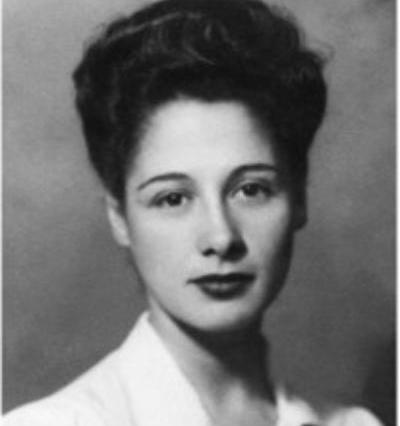
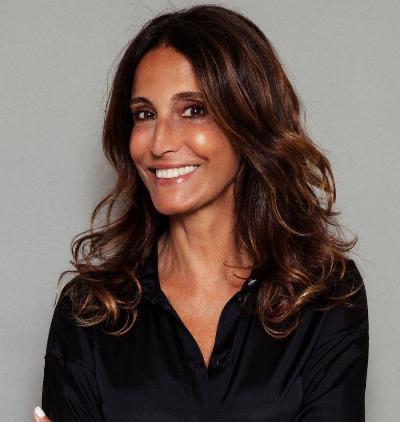
Sandro and Maje are both French brands, both fashion-forward, and both founded by sisters: Evelyne Chetrite launched Sandro in 1984 and Judith Milgom launched Maje 14 years later.
The sisters grew up in the tight-knit Jewish community of Rabat, Morocco. Their family moved to Paris when Evelyne was 15 and Judith was 10. Evelyne learned the fashion business from her husband Didier, a fellow Jew who worked in Paris' tailoring Sentier district, and launched Sandro to fill a gap in the market: high-fashion, classic French style at accessible prices.
Judith worked for her sister and brotherin-law during teenage summers, then launched Maje in 1998, with a younger, more girlish aesthetic. The name is an acronym for their family: Moyal (Judith's maiden name), Alain (her brother), Judith and Evelyne. In 2009, the sisters jointly acquired the brand Claudie Pierlot.
Both Judith and Evelyne, along with their large families, make a point of sharing Shabbat dinner every week. They start planning Friday night's meal on Tuesday. In a 2012 interview, Judith described her commitment to not working on Shabbat: "About 20 years ago, I started to observe
the Jewish Sabbath really seriously. From dusk on Friday until dusk on Saturday, I don't do any work, don't shop or look at my email or phone. It's unbelievably therapeutic."
The Kooples
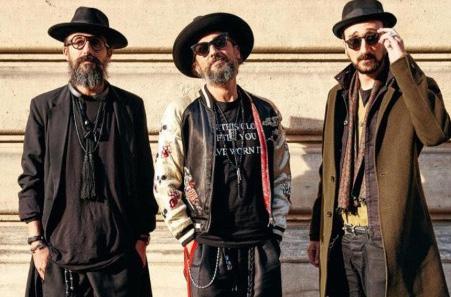
This prestigious label was founded in 2008 by three Orthodox Jewish French brothers: Alexandre, Laurent, and Rafael Elicha. "The Kooples" is the French pronunciation of the English word "couples"; ads feature reallife couples wearing the brand. Alexandre has said that "love is really the essence, the philosophy of the brand" and credits his wife Charlotte, whom he met in Israel, as his muse.
The brothers grew up with front-row seats to the French fashion world. Their parents, Tony and Georgette Elicha, founded the brand Comptoir des Cotonniers in the 1990s. "Our parents were amazing teachers and through them we got great experience and contacts," the brothers have said. But their parents also gave them something more enduring: a love of Judaism and a sense of responsibility to lead the French Jewish community, even when it's hard.
Tony led the Jewish community in Toulouse for years and served as vice pPresident of the Consistoire de Paris, an umbrella group for French Jewish organisations. In 2013, Alexandre became administrator of the Consistoire, running France's large Jewish community while also running The Kooples. His brothers helped shoulder the business. The three families celebrate Shabbat and Jewish holidays together and even vacation together.
In 2012, Alexandre became president of the Ohr Hatorah school in Toulouse, after it became the site of one of the worst terror attacks on French soil. On March 19, 2012, an Islamist terrorist ambushed children and staff entering the Orthodox Jewish school and opened fire.
He murdered Rabbi Jonathan Sandler, who was trying to shield his two young sons, then killed them: Arie, age five, and Gabriel, age three. He then shot eightyear-old Myriam Monsonego, the school principal's daughter, in the head. He also shot and severely wounded Bryan Bijaoui, a 17-year-old student. Alexandre remains close friends with the principal, Rabbi Yaacov Monsonego, and is devoted to strengthening Jewish education in Toulouse and beyond.
Shabbat, Alexandre has said, is the cornerstone of his week. "Life is so magic ... Shabbat is a good way to take time and think about what you're doing in this world."
Reiss
David Reiss grew up in a traditional Jewish family in London and attended an Orthodox school. In 1965, he took over his father Joshua's tailoring business in the East End, once a deeply Jewish neighbourhood. "I had this entrepreneurial spirit and I suppose retail was in my blood," he has said.
He opened the first Reiss store in 1971, aiming to fill the gap between expensive designer menswear and cheap, poorquality clothes. The brand offered elegant tailoring at accessible prices, took off quickly, and expanded into womenswear and stores worldwide.
This beloved brand started in 1957 when Samuel Tick, a poor Polish Jewish immigrant to Toronto, was working as a fabric cutter and decided to try making high-quality winter coats. He called the company Metro Sportswear and supplied parkas to better-known retailers, who put their own labels on the garments.
In time, Samuel began selling directly to consumers under the name Snow Goose. The parkas quickly earned a loyal following: Canada's Arctic Rangers, scientists at McMurdo Station in Antarctica, Ontario police officers, and Laurie Skreslet, the first Canadian to summit Mount Everest, who wore one on his climb. They all valued the coats' extraordinary resistance to cold.
Samuel's son-in-law David Reiss eventually took over, followed by his son Dani Reiss, who became CEO in 2001 at 27, fresh out of the University of Toronto where he'd studied literature and philosophy. He had no plans to run the family business long-term and knew he was young and inexperienced. He proved to have a sharp instinct for business anyway. He renamed the company Canada Goose and began marketing the coats not just to outdoor workers, but to city dwellers. The brand became a global phenomenon worn by celebrities worldwide.
Avec Les Filles
Avec Les Filles, French for "With the Girls", is focused on dressing Millennial women. It's the creation of Joyce Azria, an Orthodox Jewish designer and entrepreneur based in Florida.
Joyce learned fashion from her father, legendary designer Max Azria, who founded BCBG. After running BCBG, she stepped back to focus on her family. She and her husband Ilan Trojanowski have seven children. She launched Avec Les Filles in 2017, with the goal of bringing French-inspired style to a wider audience.
"I love Sandro, I love Maje," she said at the time, "but they are so high-end that I thought, 'I want a brand that brings me in at 18 bucks and is a little easier to digest’. What I strive to do with Avec les Filles is allow customers to indulge in an experience that's designer-led and authentic, but still feels playful."
Growing up, Shabbat dinner was a central family ritual for Joyce. She made sure it remained the cornerstone of her own family's week too. Despite running an international business, she insists what truly brings her joy is family and spirituality. "On Shabbat, I leave behind the business world and focus on my family and my relationship with God. I am fortunate that I'm not a slave to my work."
Teri Jon
This upscale American brand has an international origin: its founder and chief designer, Rickie Freeman-Platt, was born in Israel and draws inspiration from the real lives of her customers, guided by the belief that "every woman should have the opportunity to look great, no matter what size or body shape she has."
Rickie moved to New York at 17 and worked for Jewish fashion designers Evan Picone and Elie Tahari before founding Teri Jon, a high-fashion brand specialiszing in special occasion dresses, in 1978, An intensely private person, Rickie rarely gives interviews. Her philanthropy speaks for her. A board member of Stern College for Women, she opens her home and business to Jewish charities and actively campaigns for Jewish and Zionist causes.
RAMONA FREEDMAN
ALIYAH
Once upon a time, the ancient Israelites boasted royal families and dynasties spanning generations. Think of the House of David for one. Nowadays, there is no official, regal monarch per se but, if we could, we would place a crown upon the metaphorical head of … uncertainty.
You feel it everywhere and in everything. Are we in a state of war? Are we not? Will we be tomorrow? There always seems to be activity on multiple fronts. Sometimes heartbreaking and sometimes heroic. Sometimes both. Almost always, it is dramatic. And so, Israelis, with no assurance of open skies and/or quiet nights, intuitively focus on the here and now.
This Jewish nation should be awarded a united PhD-equivalent in this. Their ongoing commitment to this way of being is impressive. This brings me to my Pilates Reformer class, which here is called a Pilates Machine class. It is a marvellous melting pot of Israelis, new and old and it is incredibly popular.
Lying on the Pilates reformer/machine bed … again, I was trying to translate what the Hebrew-speaking instructor was saying in real-time. Always trying. To aid this endeavour, I was watching the fit and fabulous female to my left. I confess I was a little distracted by her tattoos. Now, tattoos are definitely not a Jewish custom, but many seem to have them here. On a sunny day – in fact, on any day – the famous beaches of Tel Aviv can attest to that.
I was trying to decipher the small, Hebrew letters on her upper arm and simultaneously follow her Pilates moves. I soon gave up on both and realised I has missed the most prominent of her tattoos in English. It was three simple words: ‘Live the Moment’.
With this, she had encapsulated the Israeli zeitgeist perfectly. Indelibly. Indefinitely.
And yet, as I read and absorbed it, all present in that class were doing just that. That morning was as ‘regular’ as Israeli society gets. School kids were going to school (not a given, appreciating they just had a giant, forced summerequivalent break because of the war).
Parents were headed to work, savtas (Israeli grandmothers) were questioning the freshness of the roasted garinim (sunflower seeds) at the local nut shop, sampling more than their fair share with an earnestness that had to be admired. Live the moment.
There is undoubtedly sweetness here in the everyday. Be warned, often you must forget about occupational health and safety concerns. Following is a case-inpoint: at the local fruit market there is an ancient looking chopping board with a giant machete-like blade resting on top of it. A crowd was congregating around a huge crate of watermelons, which are now just in season. Discussions ensued about which melon was the sweetest and before you know it, someone (customer? employee?) had sliced one jaggedly in half. Everyone grabbed for a piece to give their perspective on how flavourful it actually was.

So much here is communal in the best, boisterous way. And everybody is an expert, about seasonal fruit, about war fronts, about it all.
The other day, a worker asked me something in Hebrew. I hesitated and said, “Oh, I am a bit shy when it comes to speaking Ivrit”. The reply was: “Ramona, haven’t you realised yet, no one in this holy land of milk and honey is inhibited.” They weren’t wrong.
We are blessed to have a garden here in Israel. I have these pioneering plans to plant fruit trees. My vision is to plant a pomelo tree and others. The thing is … if you visited our place right now, you would be unimpressed. The whole garden is an utter mess. You see, our gardener, Boaz, is loyally serving in the miluim. He is an army reservist who has been called up for what must be hundreds of days so far. He is in and out of fighting in Lebanon.
Now, his is a family business, and I just don’t have the heart to hassle his anxious mother by demanding to know when my garden will be given attention. Boaz is giving to the Jewish world. Ramona’s Ra’anana citrus dreams will have to wait for now, weeds and all.
Suddenly, I find myself praying for our gardener’s safety, and for his mum to stay sane (a big ask). One day, only when and if they can, they will hopefully help us out. Perspective here is everything. With this we can (and must) often be so forgiving. After all, it is all about community. It is all about ‘us’, not ‘me’.
Therefore, I have found that, honestly, Israelis are not spoilt. They make do. If a construction job is completed and threequarters of what was requested has been given attention, it is considered a good job. So many have sacrificed for so much. It feels impossible to explain the full extent of this. And so, when they can, if they can, locals stop to schmooze over watermelon, and everyone has an opinion about … you name it. For the record, Israeli watermelon is wonderful.
There is obviously something special within this spiritual soil.
Right now, there is genuine interest from many Jewish Australians about making Aliyah. Ever since I moved almost two years ago, many have reached out and asked me about this … given all that has transpired in our Great Southern Land. So heavy. So much. I can truly appreciate that.
Well, there is an organisation with its HQ in Ra’anana called Telfed. In partnership with the Zionist Federation of Australia, it provides free, personalised guidance to help Australians and South Africans prepare, connect and build their lives in Israel. Telfed helps with successful integration and quality of life.
The Ramona news du jour is that I have now joined the Telfed team and will be assisting Aussies and South Africans with any pre-and-post Aliyah questions in any way that I can.
It is official. And I am delighted and excited to be present in this ongoing way. For now, for next year, for the next decade. For whoever, whenever. I have walked the walk and now, ‘yes’, talk the talk for anyone who has queries or questions.
Many of you know I have been doing this in an unofficial capacity since I made Aliyah mid-2024, and now it is with the support of this tireless team. Please tell your nearest and dearest. I am here whenever needed.
I must say I felt like a true Israeli recently on Yom Hazikaron, the national Day of Remembrance … a day of depth so special to the entire Jewish world. And, of course, to all Israelis. Radio announcers describe it as a day of holiness. You feel that on a visceral level.
There I was, proud of myself for driving on an Israeli highway, when 11 o’clock suddenly ticked over and sirens began to blare across the whole nation for two minutes. I mirrored the actions of the cars ahead, pulled over and got out of my car. I instantly recognised that this siren was a different pitch and tone
to the run-to-the-bomb-shelter sirens I had been hearing of late. There I was, on a highway, who-knows-where, and I powerfully channelled the phenomenal fallen. I cried thanking them. In those moments, the heaviness almost crushes you, and then you rise, get back in your car and get on your way.
With our old friend/foe ‘uncertainty’, at the moment we can’t really rely on internet orders to arrive in a timely manner. So that day, I dropped real money, I am talking some serious shekels, into good, old fashioned Israeli businesses. Into the hands and pockets of owners on the ground. Present. Here and now. Is this the very best value? Politely, I would answer that this is probably not the wisest question to ask. Does it feel good to support Israel? Always.
With Shavuot almost here, cheesecakes are suddenly on every menu. Yes, Israeli dairy delights have their annual moment in the Middle Eastern springtime. In truth, all here love their cheeses, yoghurts and the rest on daily. If you are here on holiday and ever get a chance, treat yourself and indulge in one of the fivestar hotel fancy, dairy buffet breakfasts. Think Waldorf-Astoria or the King David hotel in Jerusalem; think The David Kempinski in Tel Aviv. Enjoy the boutique goats’ cheese shakshuka and artisanal cheese boards featuring kosher hard and soft cheeses such as Camembert, Brie, Aged Gouda and Emmental. The list is long.
Shavuot is a time when we commemorate the divine revelation of the Torah over 3,000 years ago at Mount Sinai. Cheesecake and blintzes aside, I feel, in fact I know, that there are divine revelations and miracles happening here daily. There truly are.
For now, it is over and out from Ramona in Ra’anana.
To contact Ramona directly, please email: ramona@keshercommunications. com.au.
Friday, Nov 22, 2024
8:00 PM
Shabbat ends, Nov 23, 2024 9:04 PM
RABBI GABI KALTMANN
Friday, Nov 29, 2024 8:07 PM
This week I did something that I urge everyone in our community to do: I delivered my submission to the Royal Commission into Antisemitism and Social Cohesion. Sitting down and writing about the difficult experiences our community has faced over the past few years – and particularly since October 7 – was not easy. But I believe it was deeply important.
Shabbat ends, Nov 30, 2024 9:12 PM
Friday, Dec 6, 2024 8:13 PM
Shabbat ends, Dec 7, 2024 9:19 PM
Friday, Dec 13, 2024 8:19 PM
Shabbat ends, Dec 14, 2024 9:25 PM
Friday, Dec 20, 2024 8:23 PM
Before writing my submission, I asked myself a few simple but painful questions.
Shabbat ends, Dec 21, 2024 9:29 PM
Have you, at any point in your life, or particularly over the past two years, ever been scared to let people know that you were Jewish? Have you recently felt unsafe because you were Jewish? Do you believe antisemitism has risen in Australia?
Melbourne Jewish Report Disclaimer:
For many Australian Jews, the answer to these questions is sadly “yes”. That reality alone should concern every Australian.
This Royal Commission is examining the causes of antisemitism and reviewing the responses from government, police, universities, media, arts organisations and broader society. I encourage everyone in our community to make a submission. It is critical that the Commission hears from people across all walks of life within our vibrant and diverse Jewish community.
Except where expressly stated otherwise, content in The Melbourne Jewish Report is provided as general informations only. The articles in this paper have been contributed by a third party. The opinions, facts and any media content here are presented solely by the author, and The Jewish Report assumes no responsibility for them. It is not intended as advice and must not be relied upon as such. You should make your own inquiries and take independent advice tailored to your specific circumstances prior to making any decisions. We do not make any representation or warranty that any material in the papers will be reliable, accurate or complete, nor do we accept any responsibility arising in any way from errors or omissions. We will not be liable for loss resulting from any action or decision by you in reliance on the material in the papers. By reading the papers, you acknowledge that we are not responsible for, and accept no liability in relation to, any reader’s use of, access to or conduct in connection with the papers in any circumstance. Photographs submitted by individuals or organisations are assumed to be their property and are therefore not otherwise credited. All articles in this paper have received the expressed consent of the author to publish in this paper.
The Jewish Report; ISSN 2204-4639
For those who mean the world to you, only the finest will do.
trauma and vulnerability that the Jewish community has faced in recent months.
Our community currently feels exposed in ways many Australian Jews never imagined possible in this country. The Royal Commission is dedicating significant time and resources to understanding how this happened in a nation that historically prided itself on tolerance, multiculturalism and relative harmony between communities.

Publisher: The Jewish Report Pty Ltd (ACN 167302981)
Distributor: TJR Distribution Pty Ltd ACN 165158029
My submission focused on my experiences as a rabbi, organising public Jewish events that increasingly require police protection. Writing this was difficult because, generally speaking, my
Comments or suggestions to: editor@thejewishreport.com.au
Article submissions to: www.thejewishreport.com.au/article-submission-guidelines
Advertising: editor@thejewishreport.com.au
Website: www.thejewishreport.com.au
Printer: Spotpress Pty Ltd
relationship with Victoria Police has been positive and respectful. However, in the period leading up to Bondi, there were times when it genuinely felt that authorities did not fully grasp the seriousness of the threat facing our community. I shared that on the first night of Chanukah, despite assurances of a strong police presence, only two police officers attended Pillars of Light at Federation Square. Looking



Ian Sharp Jewellery Craftsmanship iansharpjewellery

back after Bondi, that reality is deeply confronting. The thought that a major public Jewish celebration could feel so exposed is extremely distressing.
I also attended the funeral of Reuven Morrison, who was murdered at Bondi. Standing there with mourners, witnessing the anguish and heartbreak, reinforced to me that no community in Australia should ever have to experience the fear,
I do not write these words to create fear. I write them because silence helps nobody. The Commission needs to hear the full breadth of Jewish experiences in Australia – from students, parents, teachers, business owners, community leaders and everyday Australians who simply want to live openly and safely as Jews. We welcome the establishment of this Royal Commission and thank the Prime Minister and government for taking these recommendations seriously and indicating it will fully adopt the recommendations in the Interim Report. I hope the Commission continues to make practical and productive recommendations that will not only protect Jewish Australians, but help make all Australians safer.
65 Toorak Road, South Yarra, VIC 3141 P: 03 9866 4983 e: sales@iansharp.com.au www.iansharp.com.au
Submissions remain open until the end of May. Your voice matters. Your experiences matter. What is written now may help shape the future safety, confidence and flourishing of Australian Jewry for generations to come.
How many common words of five or more letters can you spell using the letters in the hive? Every answer must use the centre letter at least once. Letters may be reused in a word. At least one word will use all seven letters and be a location with a direct Jewish connection.
Proper names, other than the Jewish location, and hyphenated words are not allowed.
Score one point for each answer and three points for the Jewish location that uses all seven letters.
Rating: 10 = Good; 13 = Excellent; 17 = Genius
Yoni Glatt has published more than 1,000 crossword puzzles worldwide, from the LA Times and Boston Globe to The Jerusalem Post. He has also published two Jewish puzzle books: "Kosher Crosswords" and the sequel "More Kosher Crosswords and Word Games".
ANSWERS PAGE 26
RABBI DANIEL RABIN
One of the truly special moments in Jewish life is naming a baby – whether it is at a bris for a boy, or at the Torah, when announcing the name of a girl.
As a rabbi, I have the privilege of often sharing these moments with families. My wife and I have recently gone through the process ourselves, with the naming of our youngest daughter, Nava Malka.
Over the years, I have come to appreciate how differently families approach naming. According to Ashkenazi tradition, some choose names connected to loved ones who have passed away. Naming after deceased relatives keeps memories and values alive through a new generation.
Sephardi families often honour loved ones who are still living. Others choose names connected to the parsha of the week, a Jewish festival or a particular quality they hope their child will embody.
There are five practical things I find myself discussing most often with parents.
First, choose a name with meaning. In Judaism, names are connected to identity and character. When Sarah and I chose the name Nava, from Shir
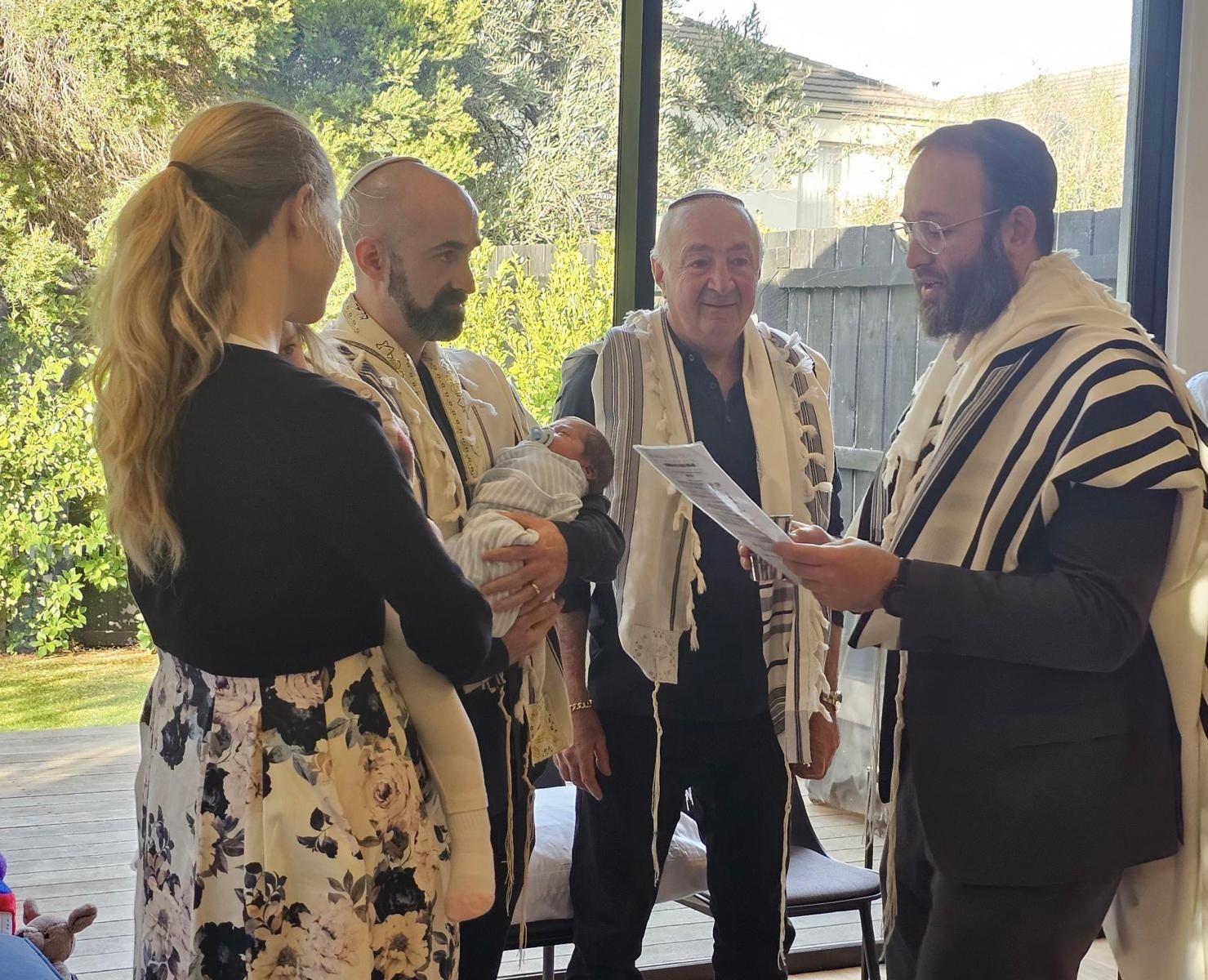
we were drawn to the idea of beauty not merely as appearance, but as warmth, dignity, kindness and inner character.
Her second name, Malka, meaning queen, also connected perfectly to her, being born in the month of Adar and with the legacy of Queen Esther. Second, think about connection. A
Attending this year’s Anzac Day commemoration, hosted by the Victorian Association of Jewish ExServicemen and Women (VAJEX), was a deeply moving and profoundly meaningful experience.
Given the high number of St Kilda Shule members who served, representing the synagogue at such as significant gathering carried with it a great sense of responsibility. It helped me appreciate the true weight of service, sacrifice and memory.
The ceremony was conducted with dignity and precision. It ran seamlessly, reflecting the care and commitment of the organisers, and capturing the essence of Anzac Day.
There was a palpable sense that this was not merely a ritual, but a living tribute to those who gave of themselves in defence of our nation and its values.
The large crowd in attendance was itself a powerful statement. I was told it was the biggest gathering since VAJEX began hosting these annual commemorations.
At a time when questions of identity, belonging and national values are at the forefront of our minds, it was reassuring to see so many people come together, unified, respectful and with a shared purpose.
name can link a child to grandparents, family history or important people who shaped your life. Third, choose a name your child will actually use.
There is something powerful about proudly carrying a Jewish name in everyday life.
Jewish tradition teaches that one of the merits through which the Jewish
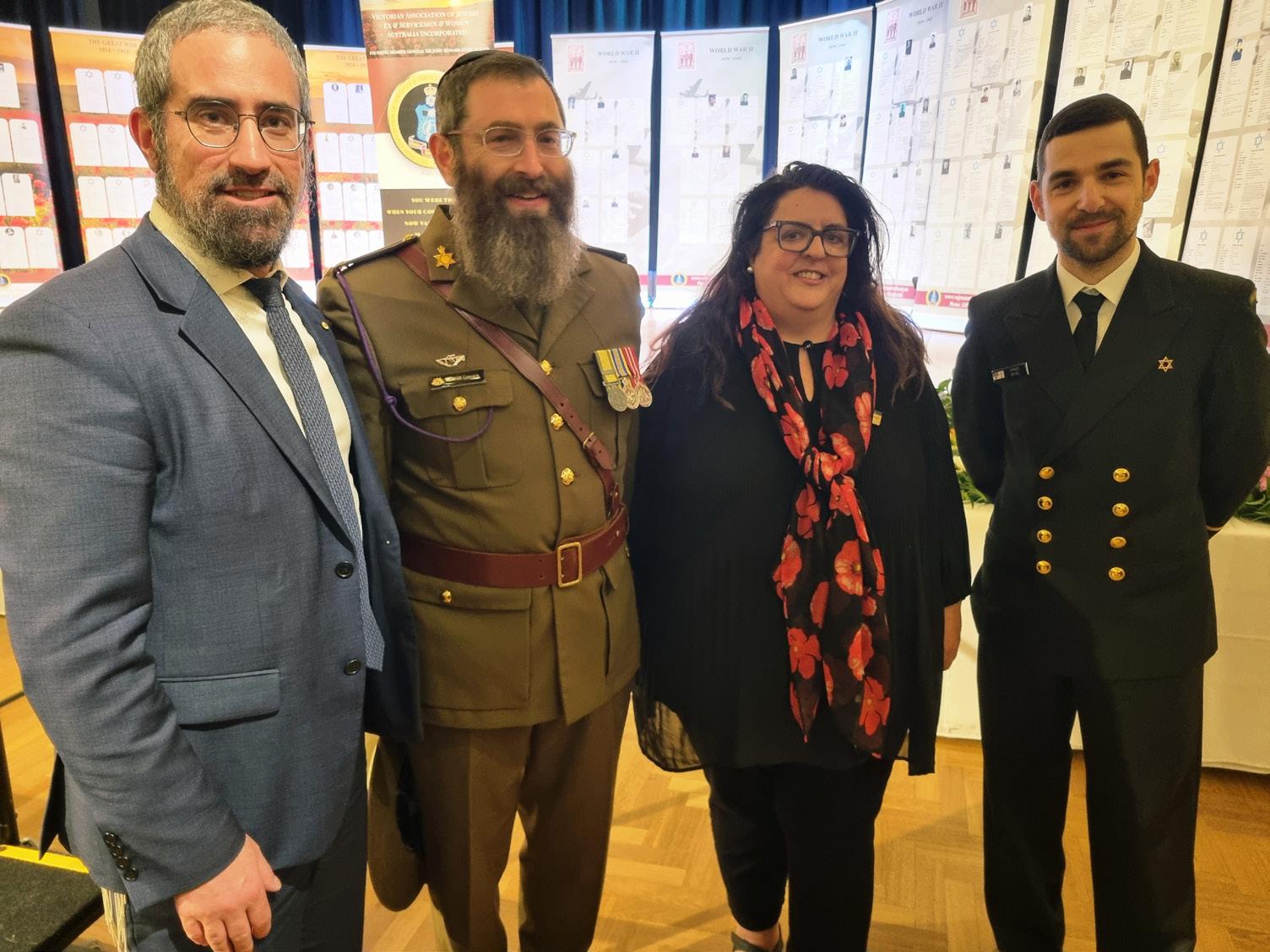
A highlight of the ceremony was an address by a leading scholar on Sir John Monash, Professor Roland Perry. His reflections offered a historical insight and a sense of personal connection to a figure that embodied Jewish identity and outstanding national service.
Monash’s life stands as a reminder that one can be deeply committed to their faith and heritage while also contributing at the highest level to broader society.
people were redeemed from Egypt was that they held onto their Jewish names.
Fourth, people often ask whether names can be shared with living relatives. Customs differ.
Ashkenazi Jews customarily avoid naming after close living relatives, while Sephardi Jews often specifically do so as a sign of honour.
And finally, despite all the advice, trust your instincts. Jewish tradition teaches that parents are given a touch of divine inspiration when choosing a name. Sometimes the right name simply feels right.
There is a beautiful verse in Tehillim that says about the stars: “He counts the number of the stars, to each of them He gives a name” (Tehillim 147:4). Judaism compares the Jewish people to the stars. Each soul unique, carrying its own light.
Perhaps that is why baby namings remain some of the most uplifting moments I experience.
In a world that can often feel noisy and uncertain, a Jewish family stands surrounded by loved ones and tradition, and a new Jewish soul receives something eternal.
Equally stirring were the musical contributions from Isaac and Alex Itescu from the St Kilda Shule choir. Their voices carried reverence and emotion that words alone could not convey. Music has a unique ability to reach the soul.
The presence of serving army chaplains, alongside family members of veterans and ANZACs, added another layer of depth. When our shule president stepped forward to lay
a wreath, it was a moment of pride, symbolising our community’s enduring commitment to honour those who have served.
Particularly meaningful were the prayers and blessings recited in both Hebrew and English. In Jewish tradition, we place immense importance on remembrance.
The concept of “zachor” is not passive; it calls upon us to actively remember and to ensure that the sacrifices of the past inform the values of the present. To stand there, hearing ancient Hebrew words interwoven with the language of our nation, was a potent expression of our dual identity as proud Jews and Australians.
Judaism places great emphasis on responsibility, on stepping forward when duty calls, and on valuing human life and dignity, above all.
The men and women we honoured on Anzac Day exemplified these ideals. They served not for glory, but for the protection of others, for the preservation of freedom and for the safeguarding of a society built on justice and compassion.
Leaving the ceremony, I felt grateful: grateful for those who served and grateful for the community that remembers.
It serves as a reminder that remembrance is not only about the past, but also about the kind of future we are committed to building.
Lest we forget.
It is strange, when you think about it. The festival on which we celebrate the giving of the Torah at Mount Sinai, the most dramatic moment in our history, is commemorated by eating cheesecake. Why?
There is no commandment in the Torah requiring us to eat dairy on Shavuot. The custom comes first and the explanations come later. One of the most striking is also the most practical. When the Jewish people received the Torah at Sinai, they also received the laws of how to eat. In a single moment, their pots, their meat and their entire way of preparing food no longer fit the new framework. With no time to adjust, they ate the only thing they could. Dairy.
The implication is profound. Before the people had absorbed the philosophy of Sinai, before they had unpacked any of the theology, they had to confront the cutlery. Revelation did not stay on the mountain. It came home with them, into the tent, into the cooking pot. Torah was not given to remain an abstraction. It was meant to live in the most ordinary spaces of life. The pantry. The kitchen. The small daily decisions that no one ever sees.
There is something quietly radical about this. Most religions and philosophies are interested in the dramatic moments of life, the peaks of meaning, the experiences of transcendence. Judaism,
Question:
I hate my birthday. Every time it rolls around, I just feel down ... and older. On the outside, it’s all balloons and cake, but inside, I’m miserable. It’s coming up again next week and I am genuinely dreading it, almost wishing it would just pass unnoticed. Is there something wrong with me?
Answer:
There is absolutely nothing wrong with you. In fact, you are suffering from a very healthy case of spiritual indigestion. The reason you feel empty on your birthday is because you’re being fed the wrong thing. We’ve been told that birthdays are for receiving – gifts, attention, the first slice of cake. But the soul doesn’t crave getting. It craves meaning.
If your birthday is just a celebration of you existing for another 365 days, it’s depressing. It’s just a countdown. And no one feels inspired by a clock quietly ticking down. But that’s not what it is. And deep down, you know that. That quiet discomfort you feel isn’t negativity; it’s a refusal to settle for something shallow. Your soul is pushing back against a version of the day that doesn’t match its purpose.
If you have a birthday, it means you were born. And that is huge. Birth is G-d’s way of saying the world can no longer move forward without you. Think about it: billions of people lived before you
almost uniquely, is just as interested in what is on your plate. It takes eating, the most instinctive act a human being performs, and asks us to bring awareness to it. To pause. To notice. To make a decision, rather than act on impulse.
This is the deepest invitation of Shavuot. Not to eat any particular food, but to eat consciously. To recognise that what we put into our bodies is never neutral, that every meal is an opportunity to bring meaning into the most ordinary moments of life.
It is no coincidence that on Shavuot we also read the Book of Ruth. Ruth is the great convert of our tradition, accepting the Jewish people and their values before she could have known what that life would look like. And where do we first see her live out that commitment? Not in a study hall or a synagogue, but in a field, gathering food. Like our ancestors at Sinai, Ruth's transformation finds its first expression in the most ordinary corners of life.
Rabbi Sacks once defined faith as 'the defeat of probability by possibility'. At Sinai, the Jewish people accepted that an entire way of life could begin again, one meal at a time. They had no idea how it would unfold. They said yes anyway. This Shavuot, what we eat is not incidental to the festival. It is a memory of the moment our ancestors brought meaning home. Sinai is not somewhere we go. It is something we build, meal after meal, in the most ordinary room in the house.
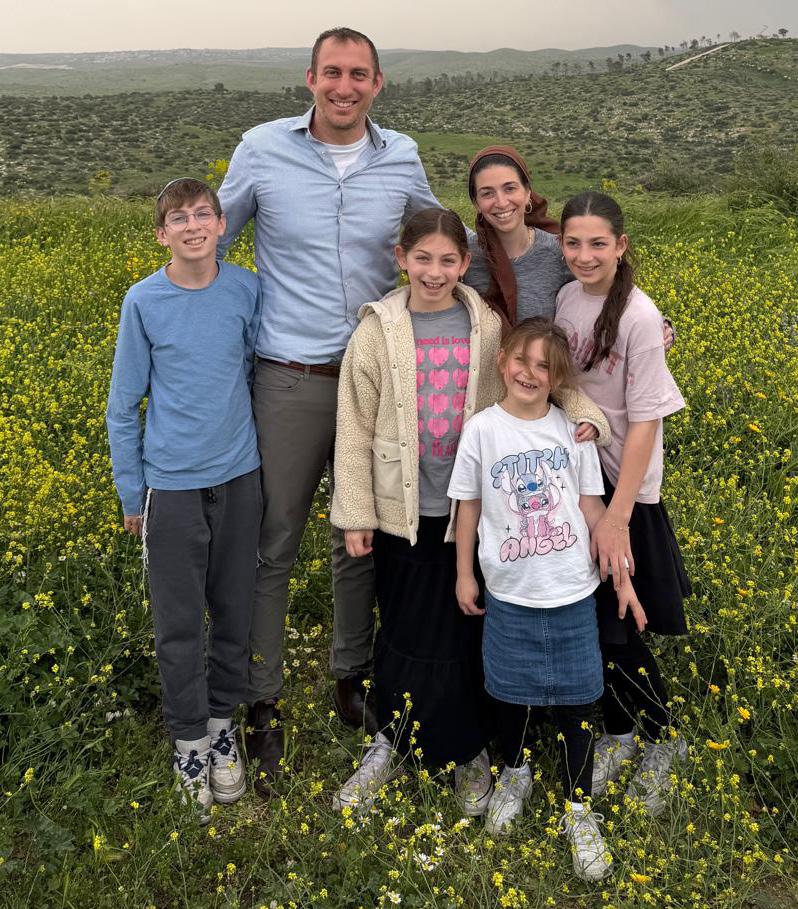

arrived. Clearly, they weren’t enough. There was a specific gap in the universe that only your soul could plug. Your birthday isn't just an anniversary of your arrival. It’s a renewal of your mission. It’s a reminder that your presence here is not accidental, and that your role is still unfolding, whether you feel it or not.
The reason you feel down is that your soul is sitting there amidst the wrapping paper thinking: "Is this it? Is this why I was sent here? To eat sponge cake and be the centre of attention?" Your misery is a
sign of your greatness. Your soul wants to get to work. It’s not rejecting the celebration; it’s rejecting the emptiness of it when it stands alone.
If birth means you are needed, a birthday means you aren’t done yet. So, this year, don't just have a birthday. Use it. Make it all about gifts, cake and a party, but with a twist.
The gifts: Stop wondering what people will get you. Ask: What gift can I give the world that only I possess? Your specific temperament, your unique struggles,
your sense of humour – those are your tools. Use them to make a better world.
The party: A party is a gathering of people. Look at the people in your life and ask: Who am I uniquely positioned to uplift? What do I bring to the party?
The cake: Cake is sweet, but shortlived. Find one sweet act of kindness, a phone call to someone lonely, an anonymous favour, that creates a lasting impact. Make it less “happy birthday to me” and more “why was I invited?”
Shavuot begins at sundown on Thursday, 21st May and ends at nightfall on Saturday 23 May – three days in which the Jewish world eats dairy and lots of it. The kind of dairy that suggests purity, simplicity and higher purpose. For me, the kind that comes in a perfectly set cheesecake with a glossy top and not a crack in sight.
Every year, I decide that this will be the year I make a cheesecake. Not just any cheesecake, but one of those elegant, whisper-soft, faintly trembling ones that suggests I am a woman who has her life together.
A woman whose cakes rise, set and behave themselves in public. A woman who doesn’t Google “why is my cheesecake weeping?”
Truth be told though, that woman is not me. What emerges from my oven usually slumps in the middle, puffs at the edges and vaguely resembles a deflated ball. And that’s ok, I am learning to make peace with this, except to say there is, I’ve noticed, a particular kind of woman who will say, very casually, “Oh, I just whipped this up”, and present a cheesecake so perfect it could be used in a museum display titled Domestic Competence Through the Ages. It will have a base that holds. A middle that sets. And a top that does not resemble a drought-affected landscape.
I, too, have a base. It is usually either too thick (cement-like) or too thin, and a slice implodes on the plate. Yes, it’s a true and sad fact. Careers come and go. Relationships evolve. But a perfectly set cheesecake? That’s forever out of reach.
And then, of course, there are trends. At the moment, we appear to be living through what seems to be the Biscoff Era. Everyone is making Biscoff cheesecake –there are Biscoff swirls, Biscoff drizzles and Biscoff bases.
I, too, bought a jar of Biscoff. The recipe began with “crush the biscuits”, but emotionally I was already crushed.
The jar, I regret to say, never made it into the cake. It barely made it past the spoon, but I can just blame that on the primitive little sugar-gremlin that runs my brain.
Then there’s the yoghurt cheesecake. This is for the woman who wants to honour tradition, while also suggesting she has made a series of excellent life choices. It is light. It is virtuous.
It is, unfortunately, faintly reminiscent of eating yoghurt. It’s the kind of dessert that makes you feel both smug and slightly betrayed.
Meanwhile, my children could not care less. They do not distinguish
between a hand-crafted, baked cheesecake and something that comes in a plastic container with a peel-back lid. Their expectations are refreshingly low. Sugar is sugar. Texture is negotiable. Presentation is irrelevant. My greatest achievement, in their eyes, is opening a packet without scissors.
And yet, every year, I persist. Because cheesecake, I’ve come to realise, is not really about cheesecake. It’s about the quiet belief that this time – this time, I will get it right.
Judaism teaches resilience. I express mine by returning to cheesecake every year with a kind of baseless optimism (excuse the pun). Friends have hinted politely and family has tried more directly, but I still refuse to accept that my gifts lie elsewhere. So, this year, I will try again. Yes, I am ready … stoic … apron on.
I will read the recipe slowly, get the right ingredients, measure actual amounts instead of “that looks about right”, and even set the timer on purpose. I will pretend I understand oven temperatures beyond “moderate”. I will believe, briefly, in the possibility of a smooth, uncracked surface. I can visualise it now.
And if, once again, it collapses into something structurally ambiguous and emotionally revealing, I will do what any reasonable person would do. I will go to Coles or Woolworths, or Aviv, or Glick’s, smile politely at the perfect cheesecakes and take one home as if I’d made it myself.
Basque cheesecake is all about simplicity. No biscuit base. No water bath. No stress. Just a deeply caramelised crust and a soft, rich centre. It’s meant to be imperfect, and that’s part of the charm. This chocolate version still gives you that signature dark top and creamy texture, but with the added decadence of dark chocolate. Serve it on its own, or with a scoop of vanilla ice cream.
What to serve with your cheesecake: Fruit coulis or compotes – a tart berry coulis, like raspberry, blackberry or mixed berries adds brightness and cuts through the richness.
Fresh fruit – berries, sliced figs, pomegranate, persimmon or plums add freshness and visual appeal.
Poached fruit – Figs or plums poached in wine or spiced syrup would be a delicious addition. Good-quality vanilla ice cream. I have also made this recipe with white chocolate.
Ingredients:
150 grams good-quality dark chocolate 70% cocoa solids or higher. This really makes a difference. You can substitute the dark chocolate with white chocolate.
250 ml (1 cup) heavy cream
150 grams (¾ cup) sugar
40 grams (⅓ cup) corn starch
½ tsp salt

2 tsp vanilla extract
500 grams Tempo Quarg
3 large free-range eggs
Instructions:
Step 1: Prep Your loaf tin
Preheat your oven to 180°C
Line a standard loaf tin with a crumpled sheet of baking paper, allowing it to overhang the sides. That gives it that signature rustic look and makes removing the cake easier.
Step 2: Melt the chocolate
Melt the chocolate using a double boiler (or heatproof bowl) over a pot of simmering water. Once melted, stir in the cream until smooth and glossy. Set aside to cool slightly.
Step 3: Mix the dry ingredients
In a food processor, pulse together the sugar, corn starch, salt, and vanilla. Add the cream cheese and blend until completely smooth.
Scrape down the sides of the bowl, as needed.
Step 4: Add the eggs
Add the eggs one at a time, pulsing until each is fully incorporated. Don’t rush this step. Make sure the batter stays smooth throughout.
Step 5: Combine
Pour the cooled chocolate and cream mixture into the batter and pulse again until well combined. Scrape down the bowl one last time.
Step 6: Bake
Pour the mixture into the prepared loaf tin and smooth the top with a spatula. Tap it gently on the counter to remove air bubbles.
Bake for 40–45 minutes. After 20–25 minutes, loosely cover with foil if it’s browning too quickly.
It should have a slight jiggle in the centre when done.
Allow to cool fully in the tin. Chill in the fridge if making ahead of time, covered in cling wrap.
Storage instructions:
Store the cheesecake in the fridge, well-wrapped or in an airtight container, for up to five days.
Bring to room temperature before serving.
Servings: 8
Chabad Brisbane and Chabad of RARA has launched a newly designed and renovated Queensland mitzvah tank and mobile library.
The motorhome will spend several months each year on the road, visiting Jews in rural and regional Queensland and Northern NSW.
The intent is to offer them support and encouragement, the opportunity to connect with their Yiddishkeit, and to borrow or purchase Jewish books.
Mitzvah tank aptly describes the power of mitzvot to combat evil and negativity, and to spread light and goodness, leading to the eradication of darkness.
The vehicle was donated by Yakov Sharrock, in memory of his late mother Shirley Haltowsky OBM.
The library and study area are dedicated to the memory of Eleise and Julian Tamir OBM, who deeply valued Jewish education, knowledge and communal service.

The new mitzvah tank
Friday, May 15, 2026 5:01 pm
Shabbat ends, May 16, 2026 6:00 pm
Friday, May 22, 2026 4:56 pm
Shabbat ends, May 23, 2026 5:56 pm
Friday, May 29, 2026 4:53 pm
Shabbat ends, May 30, 2026 5:53 pm
Friday, Jun 5, 2026 4:50 pm
Shabbat ends, Jun 6, 2026 5:51 pm
Melbourne Jewish Report Disclaimer:
Except where expressly stated otherwise, content in The Melbourne Jewish Report is provided as general informations only. The articles in this paper have been contributed by a third party. The opinions, facts and any media content here are presented solely by the author, and The Jewish Report assumes no responsibility for them. It is not intended as advice and must not be relied upon as such. You should make your own inquiries and take independent advice tailored to your specific circumstances prior to making any decisions. We do not make any representation or warranty that any material in the papers will be reliable, accurate or complete, nor do we accept any responsibility arising in any way from errors or omissions. We will not be liable for loss resulting from any action or decision by you in reliance on the material in the papers. By reading the papers, you acknowledge that we are not responsible for, and accept no liability in relation to, any reader’s use of, access to or conduct in connection with the papers in any circumstance. Photographs submitted by individuals or organisations are assumed to be their property and are therefore not otherwise credited. All articles in this paper have received the expressed consent of the author to publish in this paper.
The Jewish Report; ISSN 2204-4639
Publisher: The Jewish Report Pty Ltd (ACN 167302981)
Distributor: TJR Distribution Pty Ltd ACN 165158029
Comments or suggestions to: editor@thejewishreport.com.au
Article submissions to: www.thejewishreport.com.au/article-submission-guidelines
Advertising: editor@thejewishreport.com.au
Website: www.thejewishreport.com.au
Printer: Spotpress Pty Ltd
Jewish answer: BIRCHAT. Here is a list of some common words (“yes”, we know there are more words in the dictionary that can work, but these words are common to today’s vernacular): ARCHAIC, ARTHRITIC, ATTACH, BATCH, BIRCH, BIRTH, BRACHA, CATCH, CATHARTIC, CHAIR, CHART, CHITCHAT, HABIT, HABITAT, HATCH, HIBACHI, HITCH, RABBAH, THATCH and TIRCHA.
Questions/comments/compliments: email Yoni at koshercrosswords@gmail.com
The desire to break free of an abusive relationship is at the heart of Waitress, which is based on a 2007 independent film of that name, which starred Kerri Russell.
Jenna Hunterson works as a waitress and prolific baker at Joe's Pie Diner in a small town in America’s South.
She is trapped in an unhappy marriage to Earl, who treats her shamefully and expects her to hand over all her earnings, when she falls pregnant to him.
Jenna goes to the doctor, anticipating she will see the obstetrician who gave birth to her, only to find that she has retired.
In her place is a new medico, Dr. James "Jim" Pomatter, who moved to town from Connecticut only a fortnight ago.
There is an immediate spark between the pair and, in quick time, they start a hot and heavy affair.
A regular diner, old timer Joe, who is outwardly irascible, but cares for Jenna, is not afraid to present her with a few home truths.
Meanwhile, Jenna learns about a local pie-baking contest that carries a $20,000 prize purse.
She determines that winning it would provide her with the means to leave Earl.
In fact, Joe’s Pie Diner is a hotbed of discontent. It is not only Jenna who dreams of a better life, but fellow waitresses Becky, who is also married,

and perennially single Dawn.
The anxious Dawn takes a step off the deep end by entering her profile on a dating platform.
There, she connects with the dorky Ogie, only to discover they have much in common.
As for Becky, she is accustomed to receiving grief from their boss, Cal, but has a secret up her sleeve.
So, it is that Waitress is about dealing with the cards that Jenna et al have been dealt.
Although the musical involves some heavy themes, it is also humorous and upbeat.
With strong autobiographical elements, this classic American play, which premiered in Chicago in 1944, is a piece of memory theatre.
We are in St Louis in 1937 and Tom Wingfield (Tim Draxl) is both narrator and a central character.
He is giving us his own nostalgic, emotional and subjective recollections of what went down.
Inspired by Tennessee Williams’ turbulent life, this portrait of a shattered family announced Williams as a major literary figure.
More than 80 years later, The Glass Menagerie retains its bite.
With her husband long since gone to explore greener pastures, Amanda Wingfield (Alison Whyte) lives in an apartment with her adult children.
At 23, Laura (Millie Donaldson), who is painfully shy and crippled due to a childhood illness, is two years older than Tom, who works in a shoe warehouse.
Amanda was originally from a genteel Southern family.
She once attracted scores of suitors, but those glory days are but a distant memory and she is struggling to make ends meet.
She wants the best for her children, but is constantly riding them. It is talk, talk, talk from her.
Tom, who likes writing poetry, has had a gut full.
So, you have that mix of cold and hot, which is played up in the book by Jessie Nelson and the music and lyrics by Sara Bareilles.
The latter includes several, melodic, whimsical, ear-catching numbers, performed by a six-piece band that appears stage right, under musical director Geoffrey Castles.
Natalie Bassingthwaighte makes Jenna her own in a splendid display of acting and vocalisation.
Put simply, she figuratively soars in the lead role.
Rob Mills’ vocal strength, too, is on display as the heart-on-sleeve doctor.
He longs to break free from the verbal assaults that regularly confront him at home and from the dead-end job he really doesn’t care for.
For her part, Laura, who maintains a menagerie of small glass animals, and plays old records on her gramophone, tries to keep the peace. Amanda fears Laura being left with no one to care for her and so prevails upon Tom to bring a male colleague home for dinner.
He accedes and that is where Laura’s former popular classmate Jim O’Connor (Harry McGee), on whom she had a
crush at school, comes to the fore. Jim, who has nicknamed Tom Shakespeare, works with him in the shoe factory. Tom regards Jim as his only work friend, but hasn’t told Jim that he has a sister.
Amanda makes a big fuss, but Laura –who is painfully shy and has an inferiority complex – at first struggles to even make eye contact with Jim.
Still, with patience and resolve, Jim successfully navigates that divide, before The Glass Menagerie reaches a devastating conclusion. With a black and white framed photograph of
Feistiness and pragmatism are the calling cards for Gabriyel Thomas as no nonsense Becky.
There is a delightful ditziness about Mackenzie Dunn as the awkward Dawn.
John Xintavelonis’ bark is worse than his bite as diner manager Cal.
Keanu Gonzalez brings contemptuous disregard to his depiction of the selfabsorbed Earl.
As Joe, John Waters presents as a wiseold head who sees all.
In a noteworthy turn, Gareth Isaac is a scene stealer and comic revelation as Ogie.
Backed by a strong ensemble, Waitress, which is well choreographed by Lorin Latarro, resonates.
Sets, representing the behind-thescenes bakery, the diner, the doctor’s office and Jenna and Earl’s home, are readily wheeled in and out. The scenic design is by Scott Pask.
Suttirat Anne Larlarb has some fun with the costuming, while there is also strength in the lighting design by Ken Billington and sound design by Jonathan Deans.
Commendably, director Diane Paulus breathes life into the distress and joy inherent in the bittersweet script.
Waitress is a most enjoyable, if at times uncomfortable (as is its want), watch.
Two and a half hours, including interval, it is on at Her Majesty’s Theatre in Melbourne until 9th July, 2026.
Amanda Wingfield’s long departed husband featuring prominently, MTC’s production is intense and unrelenting.
Highlighted by imposing characterisations, it is a most impressive, well-constructed and shattering work about crushed hopes and dreams.
Tim Draxl commands our gaze with his sharp portrayal of the narrator and Tom – the latter a bundle of pent-up energy.
Alison Whyte raises the temperature from the get go in conveying Amanda as smothering and insufferable.
Millie Donaldson adeptly channels awkwardness and discomfort, along with a transparent fragility (like glass).
As Jim, Harry McGee is convivial and engaging.
In keeping with the narrative, set designer Kat Chan has given the apartment a deliberately claustrophobic feel.
Costume designer Matilda Woodroofe moves from drab to dramatic, with one layered gown impossible to unsee.
Paul Lim’s noteworthy lighting cues and incisive sound design from Marco Cher transport us to the heart of the action. Director Mark Wilson has worked hard to ensure a vivid picture of struggle and torment is emblazoned in our minds.
Two hours, 20 minutes, including interval, The Glass Menagerie stands tall at Southbank Theatre, The Sumner until 5th June, 2026.
For more of Alex First’s reviews, go to https://www.itellyouwhatithink.com
DAVID SOLOMON, CEO AUSTRALIAN FRIENDS OF TEL AVIV UNIVERSITY
In a world that rarely switches off, artificial light – from streetlights outside bedroom windows to the glow of screens late into the night – has become a constant companion. But new research from Tel Aviv University (TAU) suggests this modern convenience may come with a hidden biological cost. Even low levels of artificial light at night, equivalent to standard street lighting, could significantly disrupt the body’s immune system and increase the risk of death.
The study, conducted at TAU's Zoological Garden by researchers from the Faculty of Life Sciences and the New Environmental School, found that exposure to artificial light at night led to a striking 2.35-fold increase in mortality among small mammals. While the research focused on wild rodents, the implications extend far beyond the animals studied, as the biological mechanisms involved are shared across mammals, including humans. The research was supported by the Israel Science Foundation and published in Environmental Pollution.
At the heart of the findings is the body’s internal biological clock – a 24-hour system that regulates everything from sleep patterns to hormone production and immune function. This clock relies on the natural cycle of light and darkness to
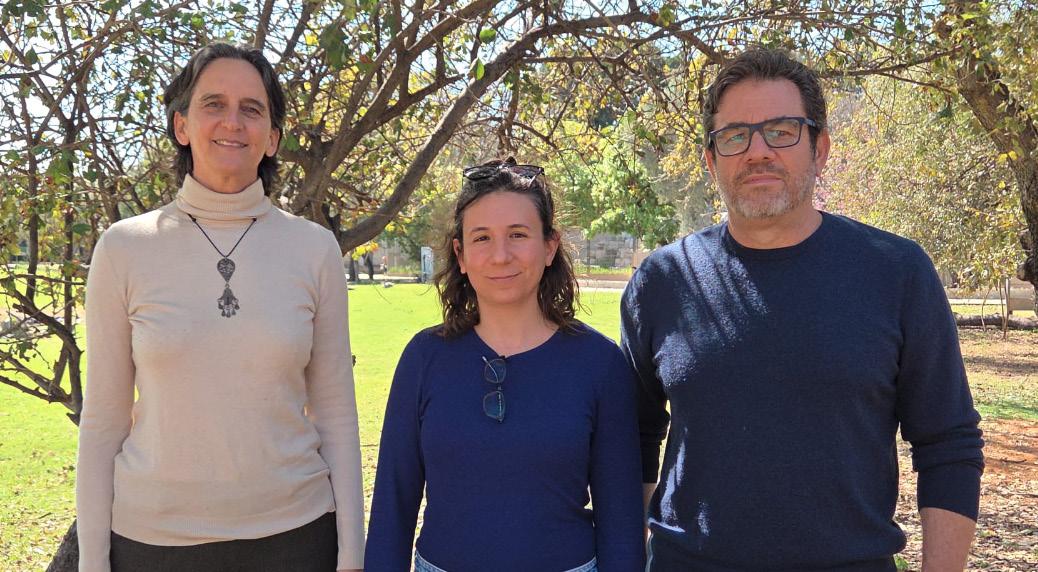
stay in sync. When that cycle is disrupted, the consequences ripple across multiple systems in the body.
Under normal conditions, immune activity rises and falls throughout the day, preparing the body to respond optimally to threats. Precise timing is critical. But when the body is exposed to artificial light at night, these rhythms begin to break down.
As doctoral researcher Hagar VardiNaim explains, “Light pollution disrupts
the body’s internal clock, so the immune system loses its natural timing and, consequently, its response to infections, environmental stress or vaccination might be less than optimal, possibly increasing vulnerability over time.”
The implications extend beyond individual health. Weakened immune systems in wildlife could make animals more susceptible to disease, with potential knock-on effects for ecosystems and, even human, populations. As

aftau.asn.au
Discover how your values can live on.
For a confidential conversation, please call David Solomon on 0418 465 556 or davidsolomon@aftau.org.au

environmental and human health become more closely intertwined, such disruptions may carry broader risks than previously understood.
Perhaps most concerning is the study’s link between disrupted biological rhythms and increased mortality. Although the exact cause of death in the animals could not be pinpointed, the strong association suggests that interference with the body’s internal timing systems may have serious, longterm consequences.
The findings challenge the way artificial light is typically viewed – not merely as a feature of modern life, but as an active environmental factor with measurable biological effects. Researchers at TAU argue that light pollution should be treated as a public health issue, requiring greater attention in urban planning and environmental policy.
As human activity continues to reshape the natural environment, studies like this highlight the importance of understanding those changes in realworld conditions.
The rhythms of life have evolved over millions of years, in sync with the rising and setting of the sun. Altering that balance, even subtly, may have consequences we are only beginning to grasp.