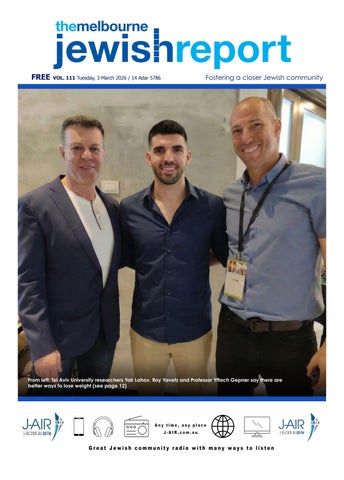
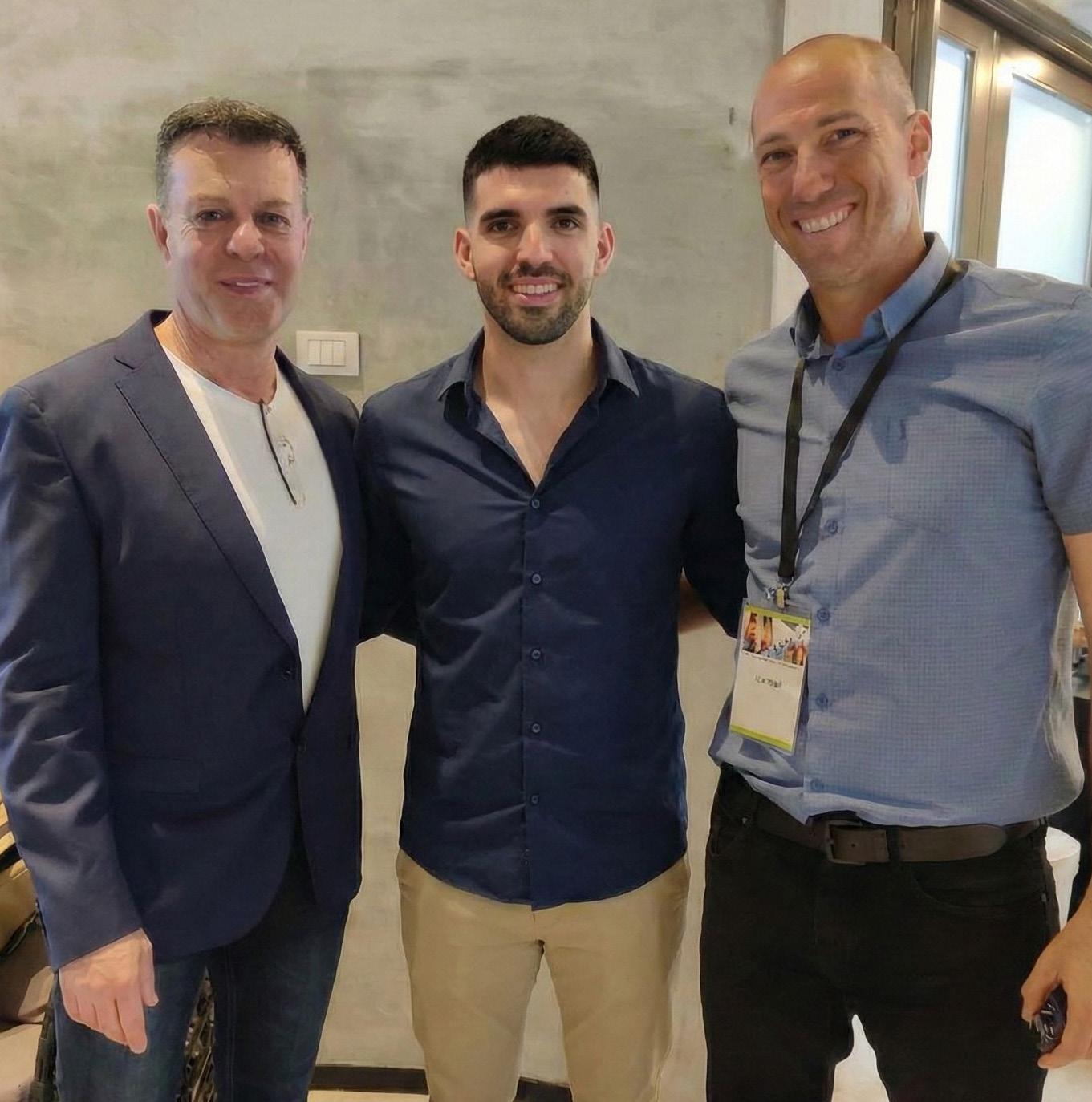
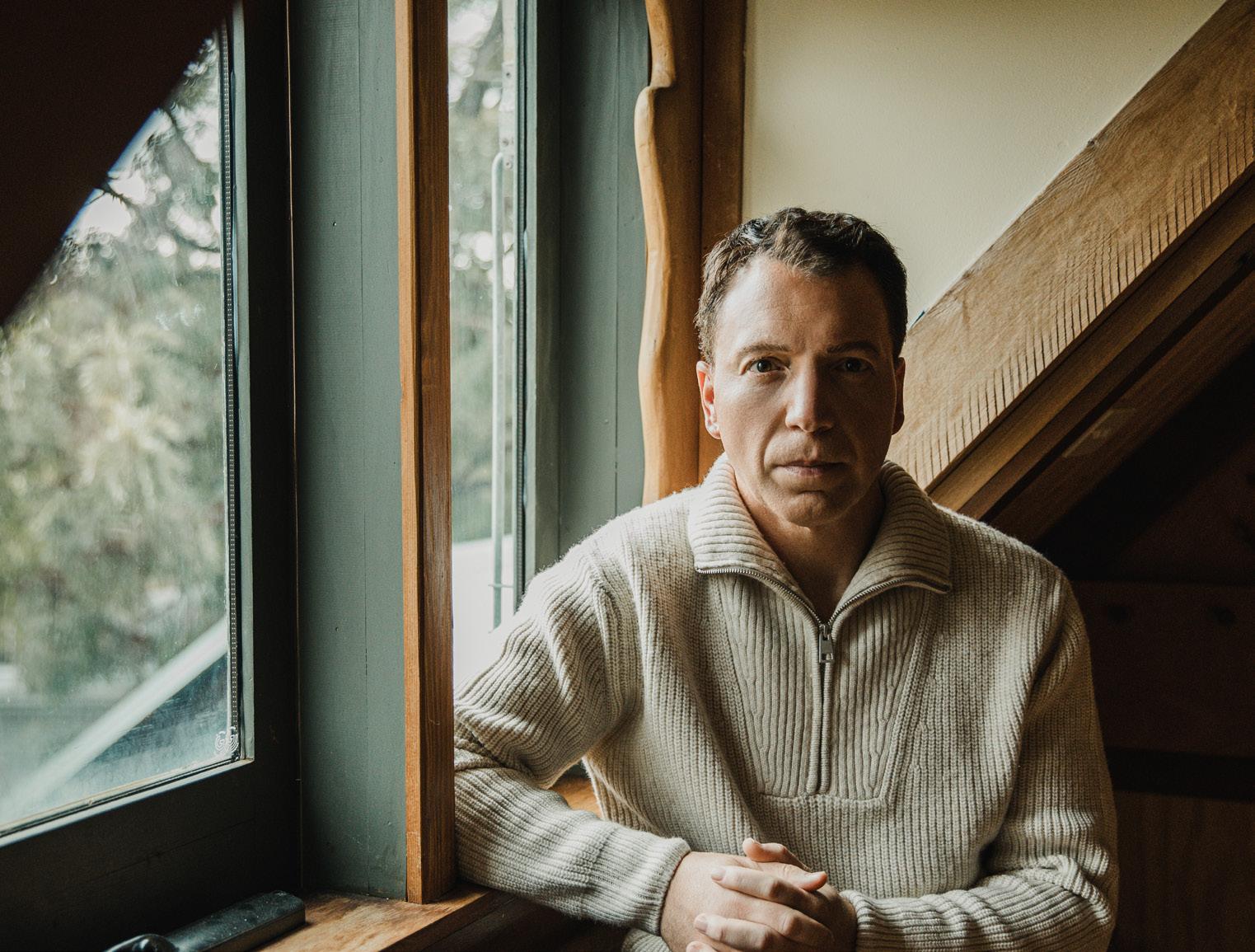
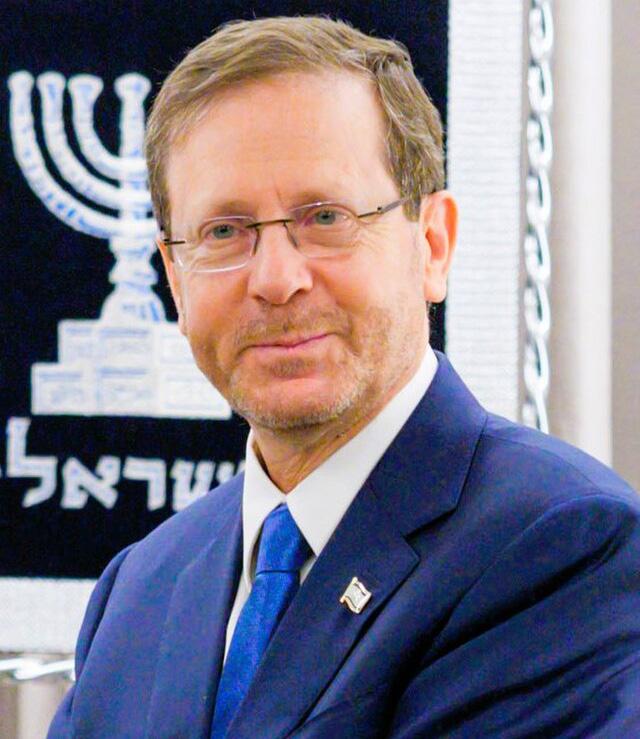
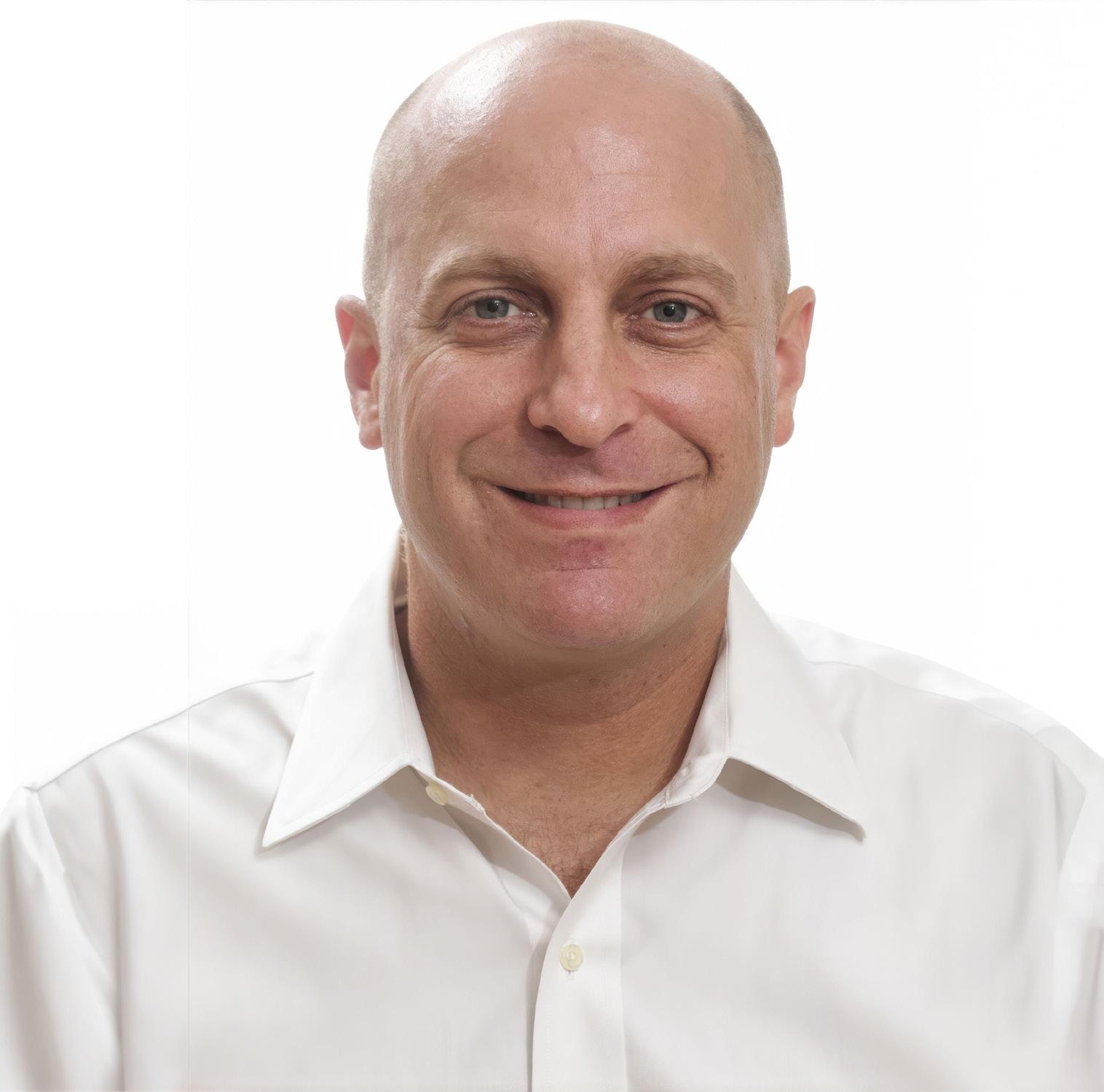
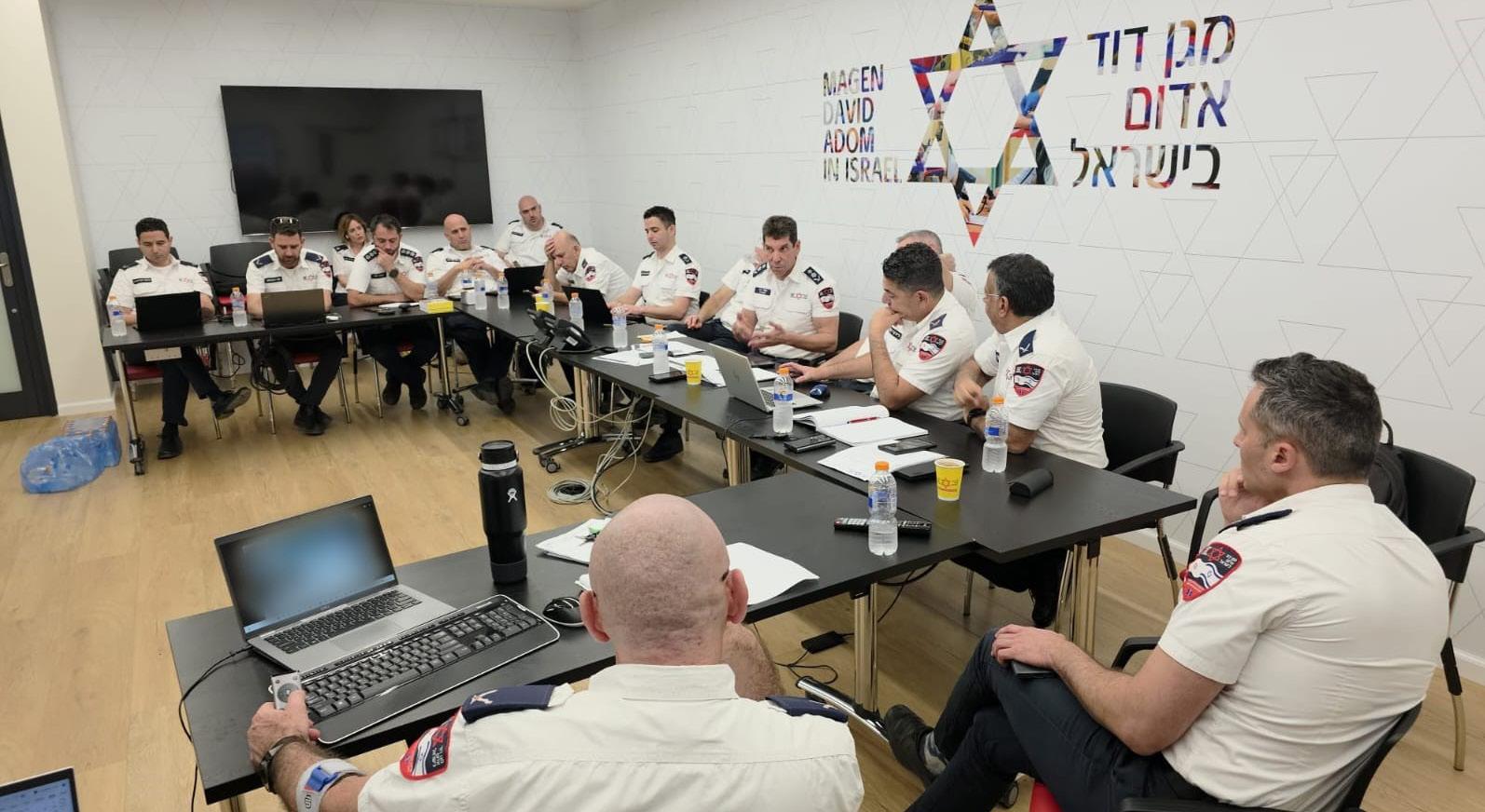
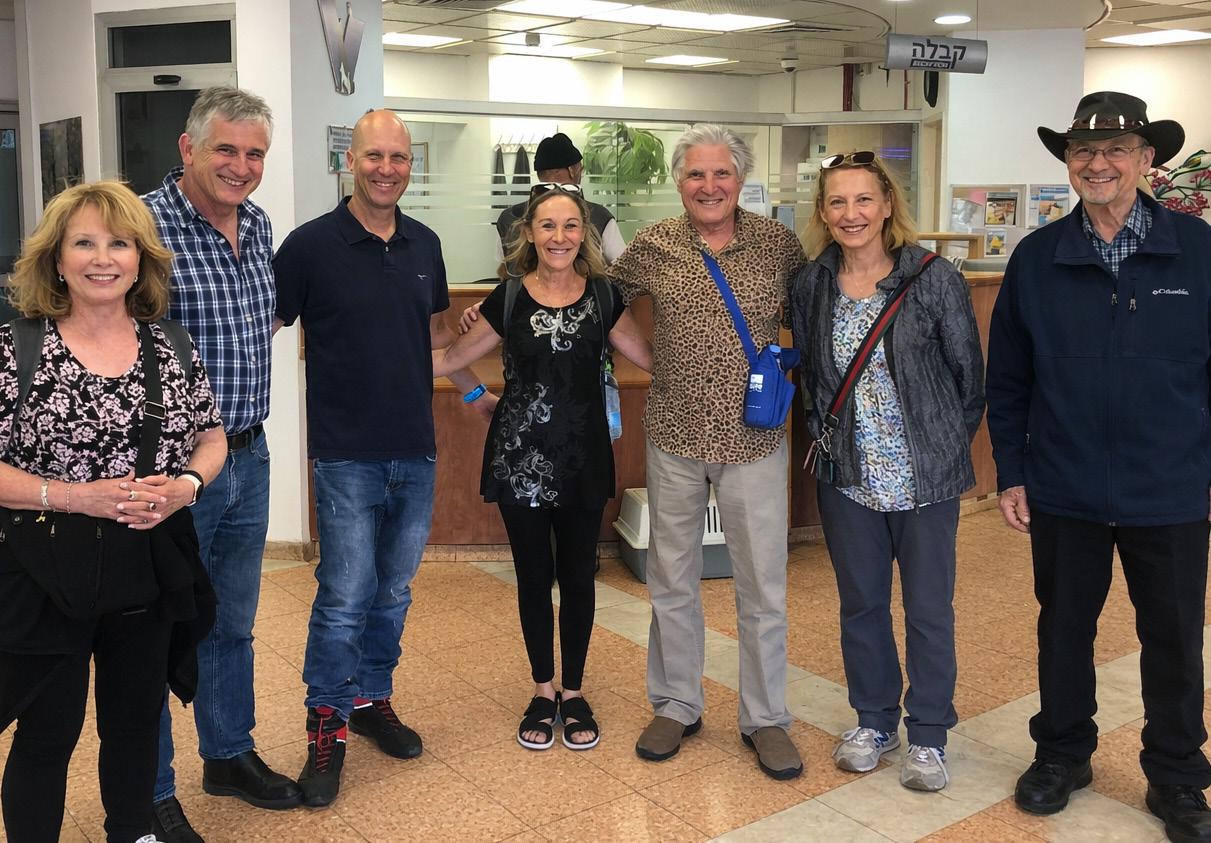
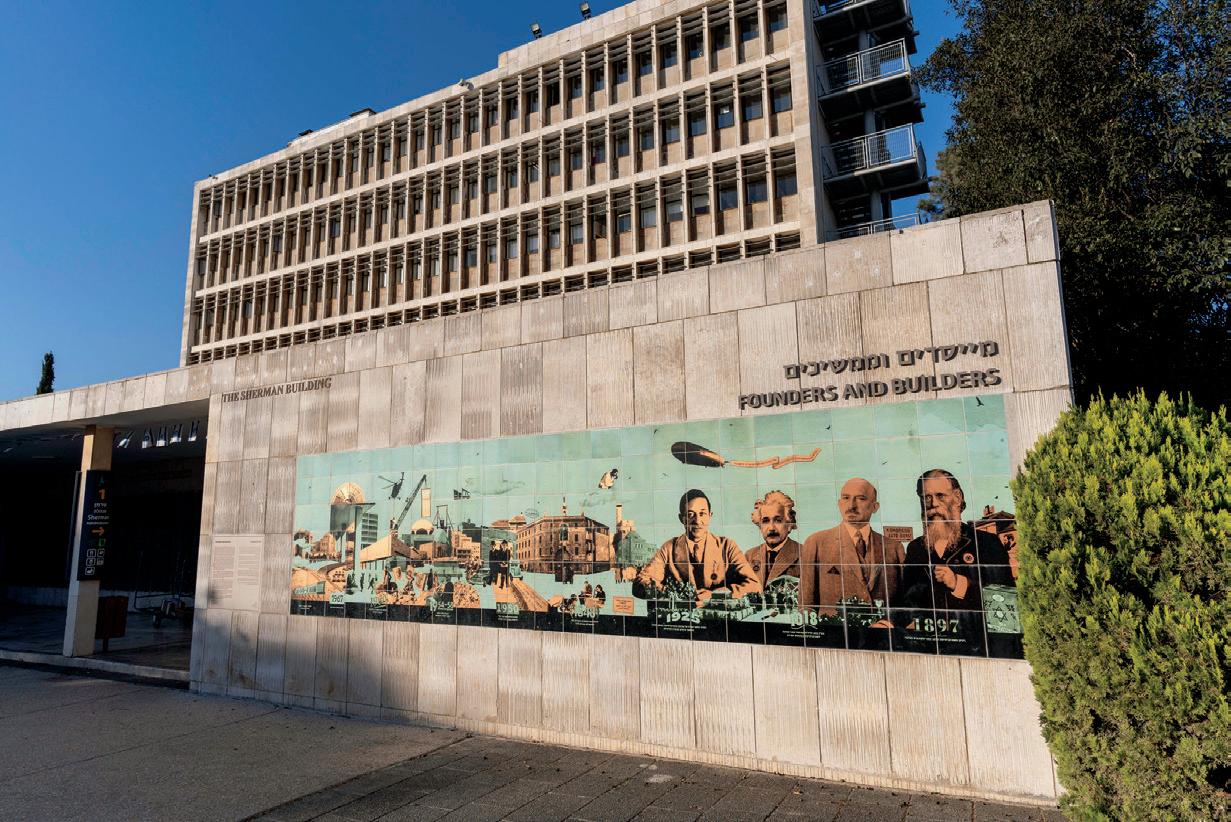
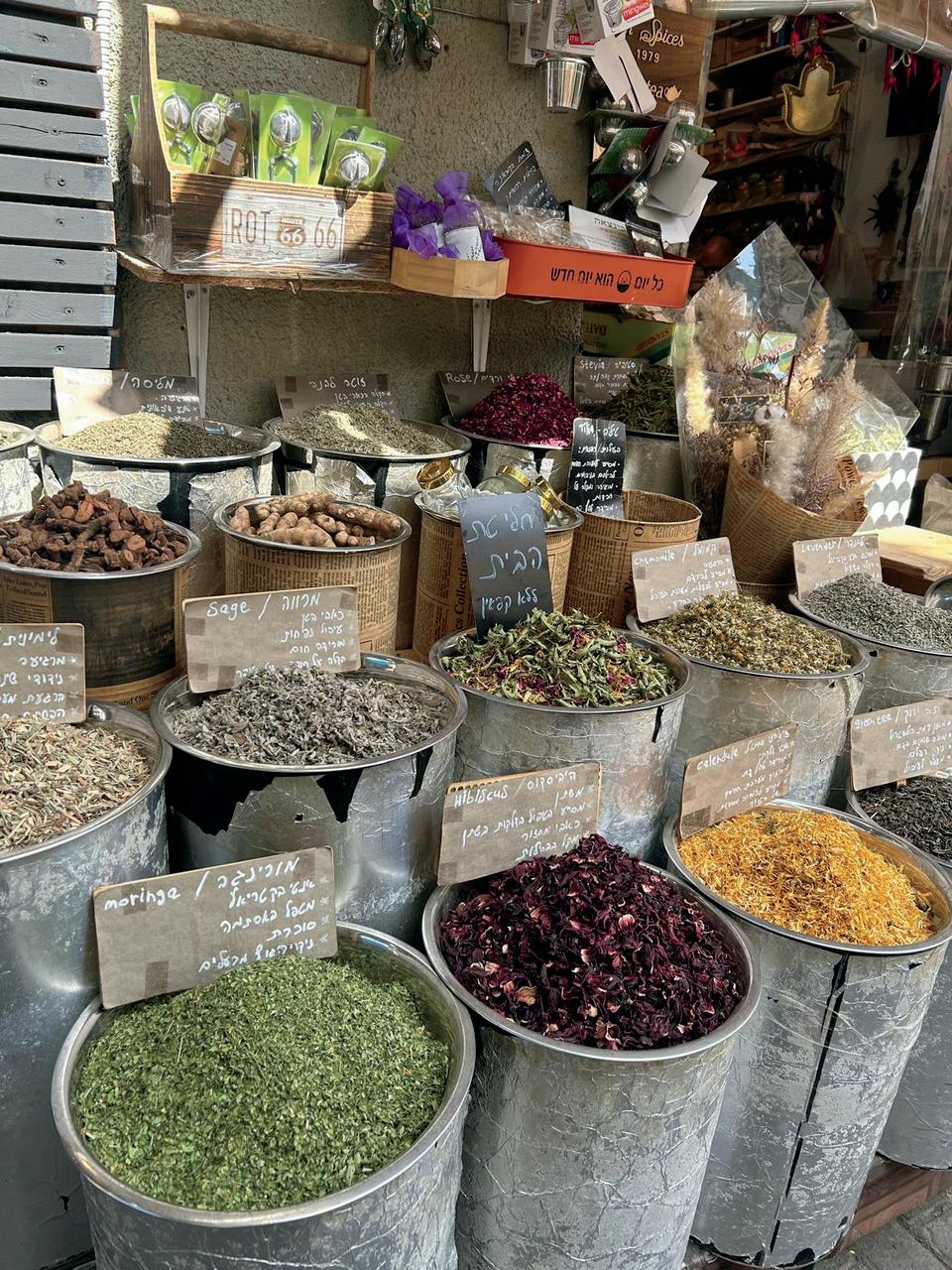
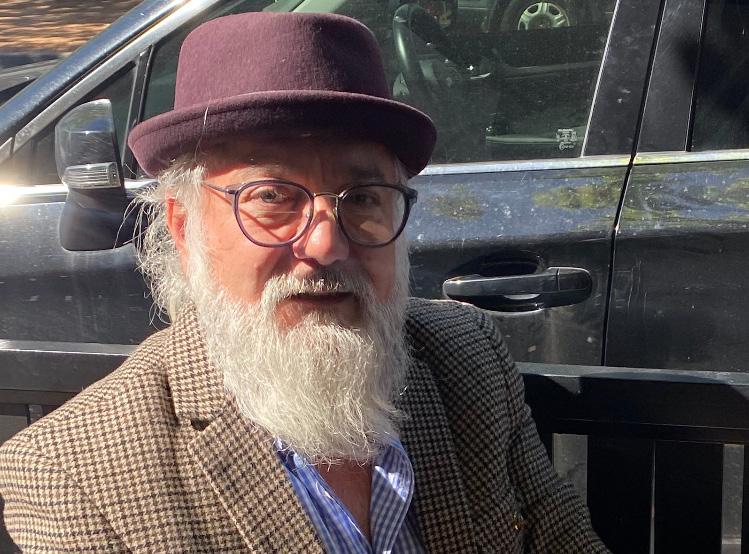
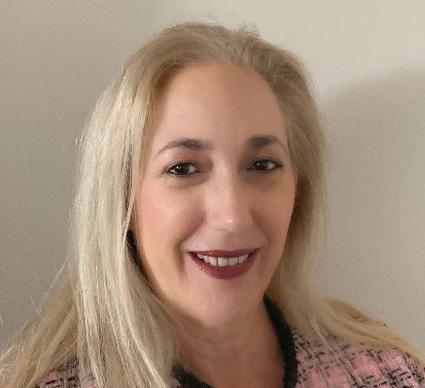
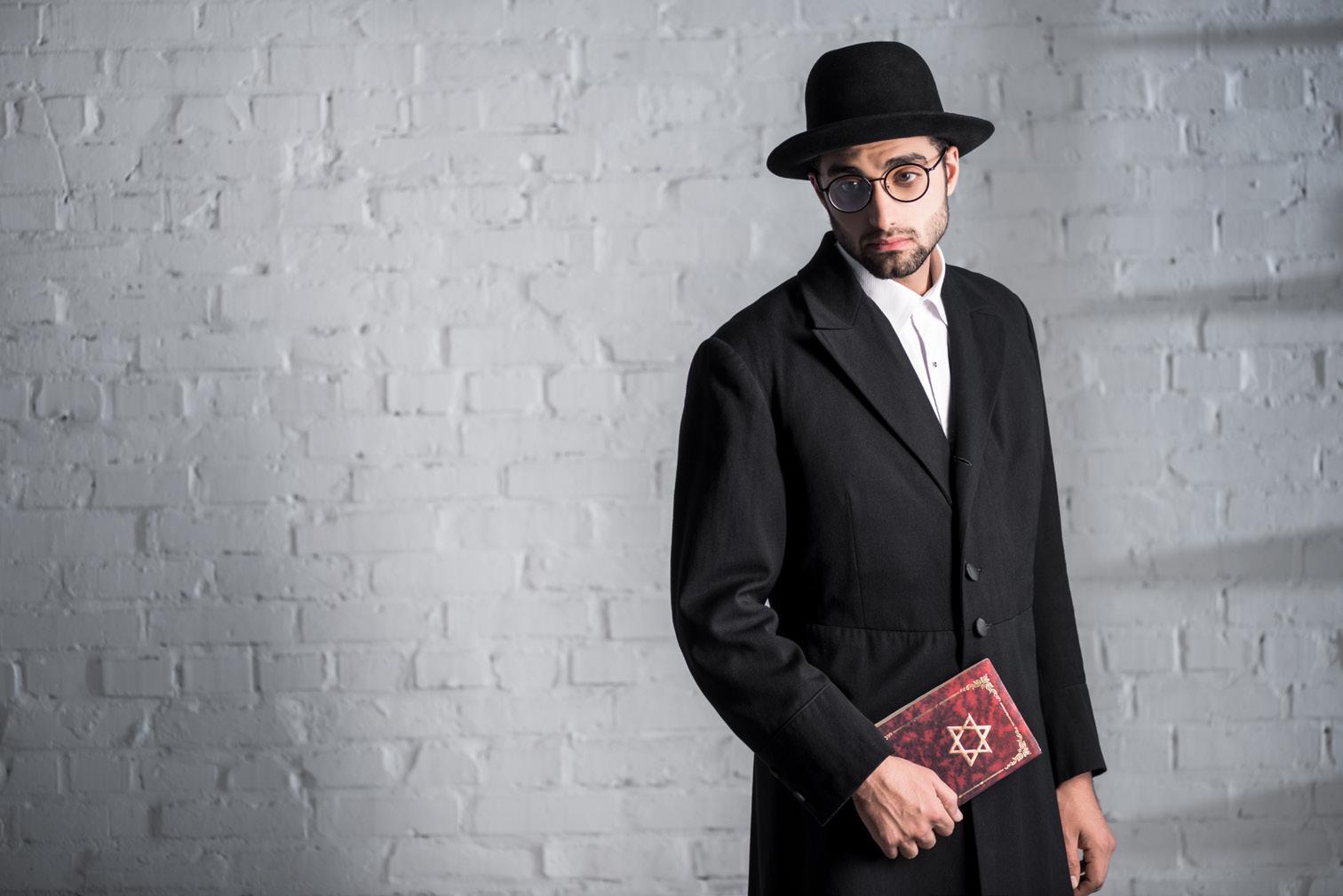
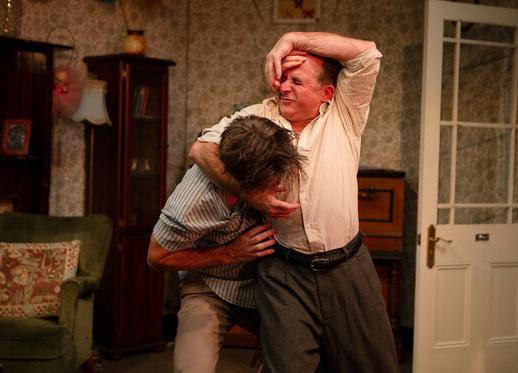
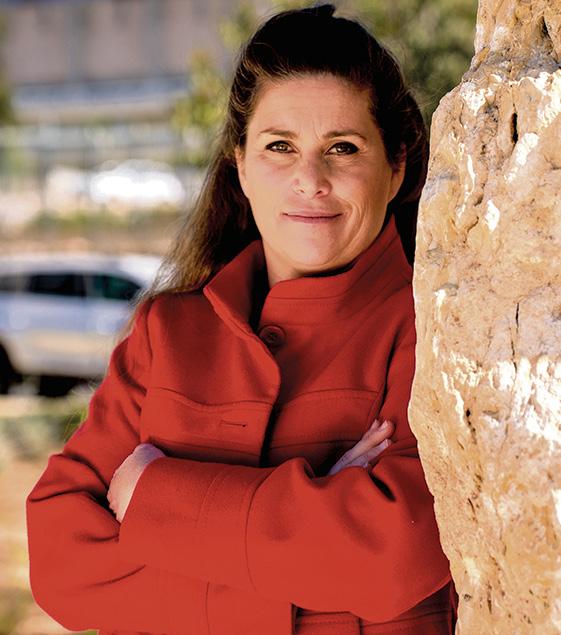
From left: Tel Aviv University researchers Yair Lahav, Roy Yavetz and Professor Yftach Gepner say there are better ways to lose weight (see page 12)
X AND TRUTH SOCIAL WORLD
The joint Israel/U.S. strikes on Iran were happening as The Jewish Report was being prepared for print.
Here are the direct messages posted by Israeli prime minister Benjamin Netanyahu on X and U.S. president Donald Trump on Truth Social.
Israeli prime minister Benjamin Netanyahu @IsraelPM
This morning, Israel and the United States launched a combined operation to remove the existential threat posed to Israel by the regime of the Ayatollahs in Iran.
This fateful operation will continue as long as necessary, and it requires patience.
For 47 years, the Ayatollah regime has chanted ‘Death to Israel’ and ‘Death to America’. It has spilled our blood, murdered many Americans, and slaughtered its own people.
Today, everyone understands that this murderous terrorist regime must never be allowed to arm itself with nuclear weapons that would enable it to threaten our existence and the peace of all humanity.
We have gone to battle to change this situation, to put an end to the threat. On the second day of the War of Redemption, I promised you: ‘We will change the face of the Middle East.’ We did so in Operation Rising Lion, and
CROSSWORD
Israel/U.S. action on Iran
we are doing so now with even greater force in Operation Roaring Lion.
This morning, in a powerful surprise attack we destroyed the compound of the tyrant Khamenei in the heart of Tehran. For three and a half decades, this cruel tyrant has exported terror around the world, made his people miserable and worked tirelessly on the plan to destroy Israel. That plan is no more.
And there are many signs that the tyrant himself is no more. This morning, we neutralised senior officials in the
Purim
Mordechai got one for foiling an assassination
Earlier in time
regime of the Ayatollahs, commanders of the Revolutionary Guards, and top figures in the nuclear program. We will continue; in the coming days, we will strike thousands of targets belonging to the terrorist regime.
We will create the conditions for the brave Iranian people to liberate themselves from the chains of tyranny.
United States president Donald J. Trump @realDonaldTrump Khamenei, one of the most evil people in History, is dead. This is not only Justice
for the people of Iran, but for all Great Americans, and those people from many Countries throughout the World, that have been killed or mutilated by Khamenei and his gang of bloodthirsty THUGS.bHe was unable to avoid our Intelligence and Highly Sophisticated Tracking Systems and, working closely with Israel, there was not a thing he, or the other leaders that have been killed along with him, could do. This is the single greatest chance for the Iranian people to take back their Country.
We are hearing that many of their IRGC, Military, and other Security and Police Forces, no longer want to fight, and are looking for Immunity from us.
As I said last night, “Now they can have Immunity, later they only get Death!”
Hopefully, the IRGC and Police will peacefully merge with the Iranian Patriots, and work together as a unit to bring back the Country to the Greatness it deserves.
That process should soon be starting in that, not only the death of Khamenei but the Country has been, in only one day, very much destroyed and, even, obliterated.
The heavy and pinpoint bombing, however, will continue, uninterrupted throughout the week or, as long as necessary to achieve our objective of PEACE THROUGHOUT THE MIDDLE EAST AND, INDEED, THE WORLD!
9. Gems from the deep
10. PC's panic button
11. "Night at the Museum" star
12. Bedroom furniture
13. Alternative to a split or ranch
18. Flushing mascot
22. "___ Sha'alti"
23. Sukkah pest
24. Total
26. Absolute monarch in a European city-state
30. Black and Rooibos, e.g.
32. Make like a Manning
34. What to do when an ark is opened
35. Like Ricky Martin's "Vida"
36. Stoning, in Tanach
37. Funny Alex
38. "It's not the years, honey. It's the ___" (Indiana Jones)
39. 1820 English novel with a Jewish heroine
40. Exercise system
41. "Proceed"
42. Skubal, for the Pirates
43. 27-Across, e.g.
45. Big maker of gummy bears
46. Bits of color
47. Jaxson Dart, in 2025
54. Writes
56. "Southern" relig.
57. 1,000-year Eur. realm
58. Boo Boo, in Barcelona?
59. Kyiv's land: Abbr.
Boss, briefly
Mode preceder
Raw fish option
Aegean capital
Scientist Yanai
Whirlpool
Trust, with "in"
Pete Alonso, now
YONI GLATT KOSHER
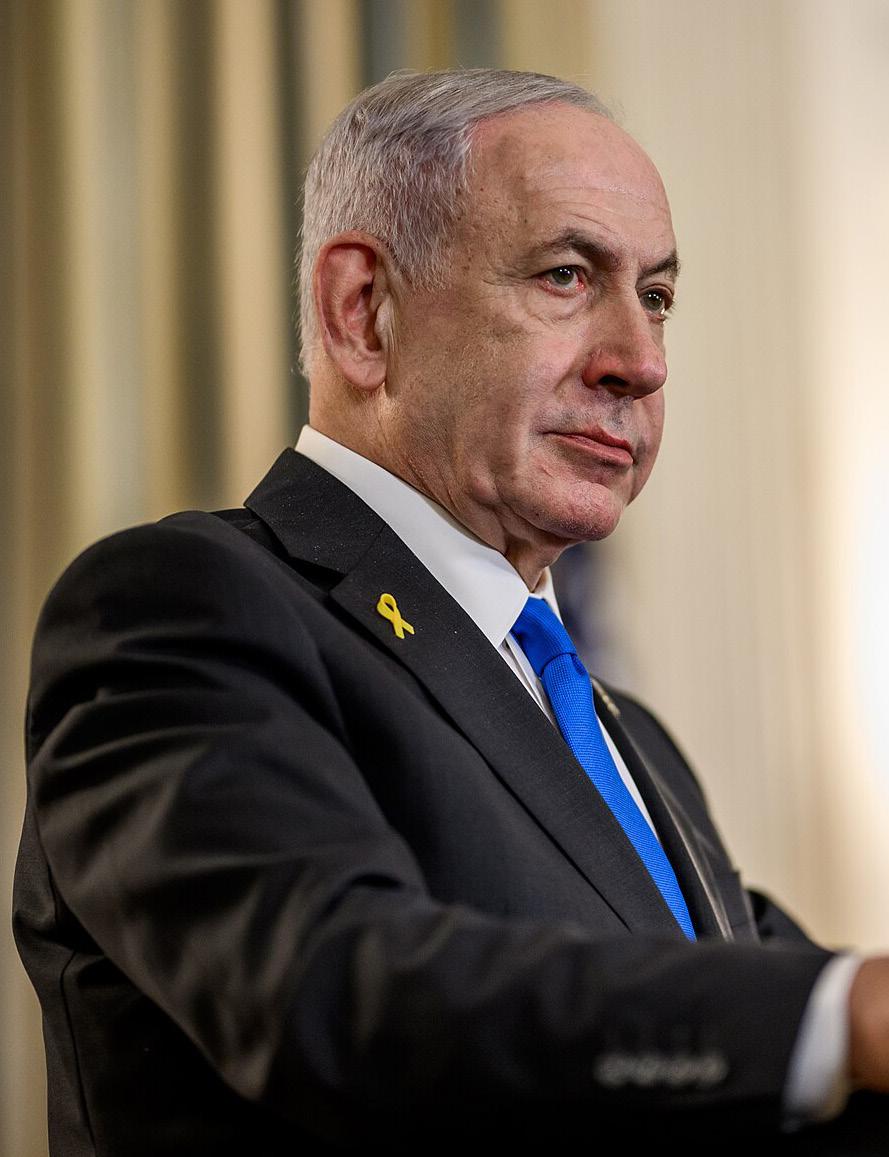
Israeli prime minister Benjamin Netanyahu (official White House photo by Daniel Torok – 29th September, 2025)
US president Donald Trump (official White House photo by Joyce N. Boghosian –29th September, 2025)
CONSIDERED OPINION
DR DVIR ABRAMOVICH
I have learned to listen for the word that comes just before the bullet. It used to be “Jew". Now it is “Zionist”.
Antisemitism in our time rarely introduces itself honestly. Like a second skin, it has learned to dress itself in the vocabulary of justice.
And that disguise is working. We are living through the most significant transformation of antisemitism since the Second World War because it has grown more acceptable, more at home in respectable company.
It now arrives wrapped in phrases about human rights, liberation and decolonisation. It does not say “Jews are the enemy”. It says “Zionists are the enemy”.
“Zionist” has become one of those “contaminated, dirty” words. Not the way Jewish people use it, as a vital part of identity and history. I mean the new version of the word, the one shouted through megaphones, sprayed on walls, posted online, used as a label to explain who deserves contempt. It is spoken now the way older hatreds used to speak the word “Jew”.
One of the strangest features of this moment is how many people insist they cannot be antisemitic if they do not say “Jew”. They have found a kind of moral loophole, an escape clause in their conscience. They will tell you, with great confidence, that they don't hate Jews. They only hate Zionists. They will say this while aiming their anger at Jewish schools, Jewish businesses, Jewish families, Jewish students, Jewish staff and Jewish colleagues.
They will say it while demanding that Jews denounce Zionism as the price of being allowed into “safe” progressive spaces. This is what it means to launder an old prejudice through new phrasing. The clothing changes. The body underneath does not.
Now, if you want to be fair, start with the obvious: criticism of Israel is not automatically antisemitic. Israel is a country. Countries have governments. Governments make decisions. Decisions can be wrong. People can protest these. They can oppose them fiercely. There is heated criticism inside Israel, inside the Jewish community and inside Jewish families at dinner tables. If you have ever been to one of those dinners, you know Jews do not require a permit to argue. So, if criticising Israel is not the line, where is it?
The line is crossed when anti-Zionism becomes the most efficient mask and cover story for antisemitism in our time. It is the easiest, cleanest way to say the oldest things in the newest accents and modern tones. It allows people to revive the ancient portrait of Jews as uniquely malevolent, uniquely powerful and uniquely guilty, and wrap that portrait in the moral silk and language of human rights.
Zionism, at its plainest, is the idea that Jews are a people, not only a religion and that they have the right, like other peoples, to self-determination in the land where their history began.
You can argue about borders, governments and policies. You can argue about the best way to make peace.
But the core idea is not exotic: Jews should not have to live forever due to someone else's permission and mercy.
Hate has a new name
And if you don’t believe me, study the Holocaust.
Anti-Zionism is the denial of that right. That is why the argument becomes so raw. When anti-Zionists say “I oppose the idea of a Jewish state”, they are saying that the Jewish people, alone among the peoples of this earth, do not deserve a national home.
If you believe Palestinians deserve a state and Ukrainians deserve sovereignty, and the French deserve France, but Jews should not have a homeland, you are engaged in discrimination.
That is why the International Holocaust Remembrance Alliance drew the boundary so carefully. It said antisemitism includes denying the Jewish people the right to self-determination, demonising Israel as the world’s supreme villain and applying double standards not required of any other democratic nation.
Strip away the academic phrasing and it becomes simple. If you turn Jews into monsters, that is antisemitism. If you say Jews alone don't deserve a state, that is antisemitism. If you obsess over the Jewish state while ignoring regimes that jail dissidents, murder minorities or crush women's rights, that is antisemitism.
And once a society starts treating “Zionist” as a synonym for “evil person”, a “war criminal”, the next step is predictable. People begin treating Jews as guilty by default. Because most Jews, in one way or another, have a relationship – emotional, familial, historical, religious or spiritual – with Israel's existence.
That does not mean they blindly approve of every action of every government. It means Israel is not an abstraction to them. It is a fact of life in their family story.
So, when a movement declares Zionism to be a moral crime, it criminalises belonging. It criminalises every Jew who believes in Israel’s right to exist as a Jewish state.
Anti-Zionism has become the perfect delivery system. It is the packaging that allows people to carry antisemitic ideas into mainstream, polite spaces, without feeling like antisemites. They say “Zionist” and keep a straight face. They say Zionists are “genocidal baby killers” and they feel righteous. They say Zionists are “Nazis” and they feel virtuous.. They share grotesque images online and believe they are on the side of justice. This is not new in history. It is new in its
This is not a conspiracy theory or speculation. It is algorithmic evidence and data.
When Silicon Valley moderators see the pattern clearly enough to change policy, no one should pretend it does not exist and look away.
Because once “Zionist” becomes a code word, hatred becomes portable. It can travel into mainstream spaces. It can enter universities, trade unions and arts’ festivals. It can sit at the table and insist it is virtuous. And then it can radicalise.
The word that comes before the chant often comes before the bullet.
On May 21, 2025, Yaron Lischinsky and Sarah Milgrim were shot dead outside the Capital Jewish Museum in Washington DC. Upon arrest, the assailant reportedly shouted, "There is only one solution –intifada revolution."
convenience and how socially safe it has become.
In older eras, antisemitism wore religious language: the Jew as enemy of the faith, the Christ-killer. Later, it wore racial language: the Jew as biological contaminant. Today, it wears the language of human rights: the Jew as the world's great oppressor, the Jewish state as the world's great oppressor and violator. The justification is different. The mechanics are familiar. The target is the same. Instead of “Jewish conspiracy”, you say "Zionist control". Instead of “blood libel”, you say, “Zionist child murderers.” Instead of “the Jew among nations”, you say “The apartheid state”. It feels new. It is not.
The most dangerous quality of this new antisemitism is its veneer of legitimacy. It lives in places that consider themselves enlightened. It is spoken by people who would never tolerate racism against any other minority. It is precisely that selfimage that makes it powerful. Because when antisemitism is explicit, society recoils. When antisemitism is disguised as anti-Zionism, society hesitates. It says: “It's complicated.” It is not complicated.
Nasser Mashni, President of the Australian Palestine Advocacy Network, has called Zionism “a genocidal, white supremacist, racist movement” and reportedly described President Isaac Herzog as "the disgusting human, the head of a state of a country guilty of genocide.” This is not the language of policy disagreement.
You can support Palestinians without demonising Jews. You can grieve for civilians without excusing terror. You can argue fiercely about a war without treating Zionist identity as a stain.
The trouble is that society has allowed a vocabulary to spread that collapses these distinctions. You hear it in the way “Zionist” is used as a slur. You see it in the way violence against Jews is explained away as "a response", rather than recognised as what it is: antisemitism.
Even Meta has seen the pattern clearly and knows something is wrong. The company expanded its hate-speech enforcement because the term “Zionist” is frequently used as a stand-in for Jews or Israelis and paired with antisemitic stereotypes or threats. A global technology platform publicly acknowledged that “Zionist” is functioning as coded ethnic or religious targeting language.
On June 1, 2025, in Boulder, Colorado, Mohamed Soliman attacked a rally for Israeli hostages with Molotov cocktails and what authorities described as a makeshift flamethrower. Fifteen were injured. One died. Investigators state he said he "wanted to kill all Zionist people". Zionist people. Not policy. People. In Pennsylvania, the home of Governor Josh Shapiro was set alight during Passover after the attacker cited grievances linked to Israel and Zionism. In Amsterdam, Israeli soccer fans were hunted in the streets. Attackers demanded that victims say "Free Palestine", before beating them. In Dagestan, mobs stormed an airport searching for passengers from Tel Aviv. In the UAE, Rabbi Zvi Kogan was murdered. In Egypt, Israeli Canadian businessman Ziv Kipper was assassinated.
In each case, the rhetoric was political. The targets were Jewish.
And then Bondi. Police documents state that months before the attack, one of the accused recorded a video. In that video, he and his father are described as seated before an Islamic State flag with firearms and IED components present. They “condemn the acts of Zionists” while presenting what appears to be their ideological justification.
The word they used was not “Jew”. Most of the bodies were Jewish.
And the pattern does not end with mass murder.
Last week in Victoria, an 18-year-old Jewish man was repeatedly punched in the face at a Scout camp for wearing a yarmulke and draping an Israeli flag over his shoulders. Police are treating the incident as targeted and antisemitic. No geopolitics. No cabinet votes. Just a Jewish teenager wearing a symbol of Zionism.
The match never calls itself fire. It calls itself justice. The chant never calls itself hatred. It calls itself liberation.
If we do not remove the mask now, we should not be surprised when the echo of bloodshed returns sooner than we expect, with an ambulance carrying the bodies of more dead Jews.
Dr Dvir Abramovich is chair of the AntiDefamation Commission and the author of eight books.
Dr Dvir Abramovich
JUDAISM VICTORIA AROUND THE COMMUNITY
There has been so much written about the Australian visit of the president of Israel –some critical and antagonistic, but much that was very supportive and positive. There is no doubting that for a vast majority of Australian Jews, president Isaac Herzog’s visit with his wife Michal was more than welcome. In fact, very much needed.
One could only be saddened by the staged, hate filled demonstrations that greeted the presidential couple as they met with the families of the bereaved Bondi victims and, later, with the Sydney Jewish community.
After warm and lavish visits with the prime minister and later with the governor general in Canberra, the president’s entourage made their way Melbourne.
The Melbourne Jewish community responded enthusiastically to the invitation to greet the president. Seats rapidly booked out. Ignoring the security threat, most delegates boarded buses that took us to the ‘secret venue’. As we approached the location, the street cordoned off from demonstrators, I was taken aback by just how many police were on duty. As we were led to our seats, the expectation grew as I – along with others – waited for president Herzog to arrive. When he did, he received a rousing welcome. It was left to Zionist Federation
An
of Australia president Jeremy Leibler to formally introduce president Herzog after explaining just how devastated Jews in Australia were by the Bondi massacre.
President Herzog spoke about how he and Jews in Israel felt Australia’s pain on December 14, as we in Australia had felt Israel’s pain on October 7. His address underlined how in times of crisis we are one big Jewish family.
He called upon us to remain resolute and proud of our Jewish heritage. His message to the demonstrators was to be out there supporting the people of Iran, where thousands were being slaughtered and maimed. He told us that he had accompanied his father, president Chaim Herzog, to Melbourne four decades earlier. Then, they visited Melbourne Jewish day school students, greeting several hundred of them. Met with a standing ovation, it was speech of strength, resilience and hope. The Victorian premier Jacinta Allen followed, admitting that the government had gotten it wrong, despite many warnings from Jewish leadership.
The most emotional address came from the young mother of a small baby, who was at Bondi for the Chanukah celebrations. She protected the bub with her body as bullets flew over her head, deeply conscious that she could easily have smothered her son.
After a rousing rendition of Hatikvah, we made our way back to the buses, feeling stronger and more supported than we had been for a long time.
President of Israel, Isaac Herzog
CONSIDERED OPINION
DAVID SCHULBERG
Gidi Grinstein is the founder and president of the Reut Institute, a nonpartisan, non-profit policy group, based in Tel Aviv. From 1999-2001 Gidi served as the Secretary of the Israeli delegation to the peace negotiations with the PLO under prime minister Ehud Barak.
David
Prominent Israeli military expert Lieutenant Colonel Jonathan Conricus says it's very likely that Israel will need to go back into Gaza militarily. Do you agree?
Gidi
I doubt that. I just don't see it right now, given the diplomatic alignment in the region led by the United States, with Qatar and Turkey and Egypt. It's hard to imagine going back to the fighting we saw until October 9, 2025 in Gaza. I may be wrong, but it just doesn't seem that it's heading in that direction. I think that Hamas, Qatar and Turkey will always do just enough to move to the next phase.
David
The disarming of Hamas seems to be a serious obstacle. Hamas is refusing to disarm, saying that it never agreed to disarm when the Trump deal was put on the table. This is the same situation with Hezbollah in Lebanon, where Hezbollah has been called to disarm in Lebanon by the Lebanese government, but are refusing to do so. What's going to happen if Israel's opponents remain armed and threaten to carry out further terrorist actions against Israel?
Gidi
For the foreseeable future across the Middle East there will be people in the Islamic and Arab worlds that reject Israel's right to exist and they will fight Israel. The notion that we will be at some point in a situation where we have no enemies, no adversaries, nobody that picks up a weapon and wants to throw it at us is unrealistic.
The second thing we need to acknowledge is that Hezbollah and Hamas, and Iran and other groups have been severely beaten back over the past two years. Their capabilities are much lower. Israel's national security approach has also changed. In the past, until October 7, we used to look at intentions and capabilities. For something to become a credible threat, both had to exist. The capability is a very quantifiable element. You can watch and see how many weapons, how many people, how they are training etc.
The intentions are harder to assess. As we know, Israel totally failed in assessing the intentions of Hamas in Gaza. Now the national security approach emphasises looking much more at capabilities and basically dismantling capabilities before they become threatening. That has been the policy in Lebanon, in Syria, also with regard to Iran and in other places. A lot of things have changed, and I would be very careful in drawing direct comparisons between what happened
Where to for Gaza?
Gidi Grinstein
on October 7 and the challenges that we will face in 2026. The response to them is going to be different as well.
David
You still believe that Hamas is going to eventually be disarmed. How is that going to be brought about?
Gidi
All parties – Turkey, Qatar, Egypt, the United States and Israel included – are looking at the 20-point plan of Trump, to which everybody agreed, but this plan is full of what we call constructive ambiguity, meaning these are statements where every party can read into the statement what they want. The characteristics of an agreement that is based on constructive ambiguity is that just after the moment of agreement, when everybody signs the deal, the gaps in interpretation emerge, which is where we are right now. Hamas, Qatar and Turkey are challenging the whole notion of what it means to decommission. What does it mean to demilitarise Gaza? What I think is likely, and again I'm very hesitant in making a prediction here, after a lot of pressure, I expect that there will be a departure of some of the senior military leaders of Hamas to Doha or to Turkey, a dismantling of the heavier weapons of Hamas, and an understanding that the tunnel system would be dismantled as part of the reconstruction of Gaza. All of that is basically inevitable just in the process of reconstruction. But will Hamas ground forces be allowed to become part of the Palestinian government in Gaza? Remember that Hamas is much more than a military wing. Hamas is a political movement. Hamas is a social movement. Thousands of people will become part of government. What is very, very dangerous is if Hamas is allowed to be a part of the Palestinian political system in
that were explicit. One of them was to derail the normalisation with Saudi Arabia. That train has left the station – there's no normalisation with Saudi Arabia anytime soon. The second goal of Hamas was to put the Palestinian issue back on the international agenda. For sure, they have been able to do that as well. Of course, the price paid has been high on the Palestinian side, with the incredible destruction of Gaza. At the same time, it was the ideological position of the Israeli government that prevented the diplomatic victory in the war. That is very, very sad, because, from the beginning, it was clear that if we don't offer an alternative to Hamas, Hamas would remain.
Guess what? Now Hamas is in power in Gaza. Is anybody surprised?
David
Israel has been attempting to find an alternative with these other Palestinian tribal gangs.
Gidi
the future. That is something they have desired for a very long time. They were denied until October 7. And I think that would be an ironic and a tragic outcome of the war if they are ultimately allowed to be part of the Palestine PLO and other political entities on the Palestinian side. Let me just say that the Oslo Accords explicitly deny that possibility.
But the Netanyahu government of Israel will not endorse the Oslo Accords, so it cannot cling to a provision that exists in the Oslo Accords. The government of Israel is refusing to endorse the Palestinian Authority as the future governing body of Gaza and refusing to look at the Oslo Accords as the diplomatic reference point for the future of Gaza.
In these two refusals, they're opening the way for Hamas to march into the PLO and take over the PLO sometime in the future. Then Hamas would control the entity that is representative of the entire Palestinian people. That would be an absolute tragedy. But sadly, I think that this is where we're heading, given the current position of the Israeli government.
David
When I've interviewed you in the past, you've expressed the view that the Palestinian Authority should play a primary role in the resurrection of Gaza. But Netanyahu is vehemently opposed to any role for the PA in Gaza, although he did concede that PA representatives could be part of the operational mechanism at the Rafa border crossing between Gaza and Egypt.
Gidi
Honestly, I see no alternative to Hamas except the Palestinian Authority. Israel won the war militarily, but diplomatically we are seeing a massive setback, a borderline historic defeat. Because Hamas went to the war with objectives
David, this is a joke and it's a tragedy. The whole notion of bubbles and clans that they are called ... was just a nonsense. What is tragic is that once the October 9 agreement … the Trump plan was signed, we abandoned most of them.
David
I hear that on the Rafah border, some of these clans are involved in checking the people who are trying to come in and out of Gaza.
Gidi
Yes, but this is on the edges of Gaza. This is not controlling Gaza. We know that these clans cannot control Gaza. We know because six times in the past this idea was attempted and failed. Why? Because these clans are hostile to each other. They're in competition with each other on security issues, on economic issues. And we find ourselves in positions of arbitration between them.
At the end of the day, they're all Palestinians. They all want some sort of self-determination. Who do you talk to?
Are you talking to the Hebron clan? Are you talking to the Nablus clan? Are you talking to the Rafah clan? Are you talking to the Gaza clan? Who exactly are you talking to? And, on top of that, there are many areas in the West Bank and Gaza that don't lend themselves to a clear association with one clan or another. This was one of the most empty ideas that was introduced during the war and it collapsed like a house of cards on October 9. I think it was clear that that would be the outcome. Everybody that understands the Palestinian system said that. And the outcome for the Palestinians who partnered with us is tragic.
This is a slightly modified extract from an extensive interview with Gidi Grinstein, who was interviewed by David Schulberg on ‘The Israel Connexion’ program on J-AIR community radio. The full interview is available as a podcast on the J-AIR website. David can be heard weekly on J-AIR in Melbourne and 2TripleO in Sydney.
COMMUNITY
MDA has conducted a large-scale exercise to prepare for a worst-case scenario.
The Israeli national rescue organisation initiated a war-game scenario, where it transitioned from routine operations to emergency status.
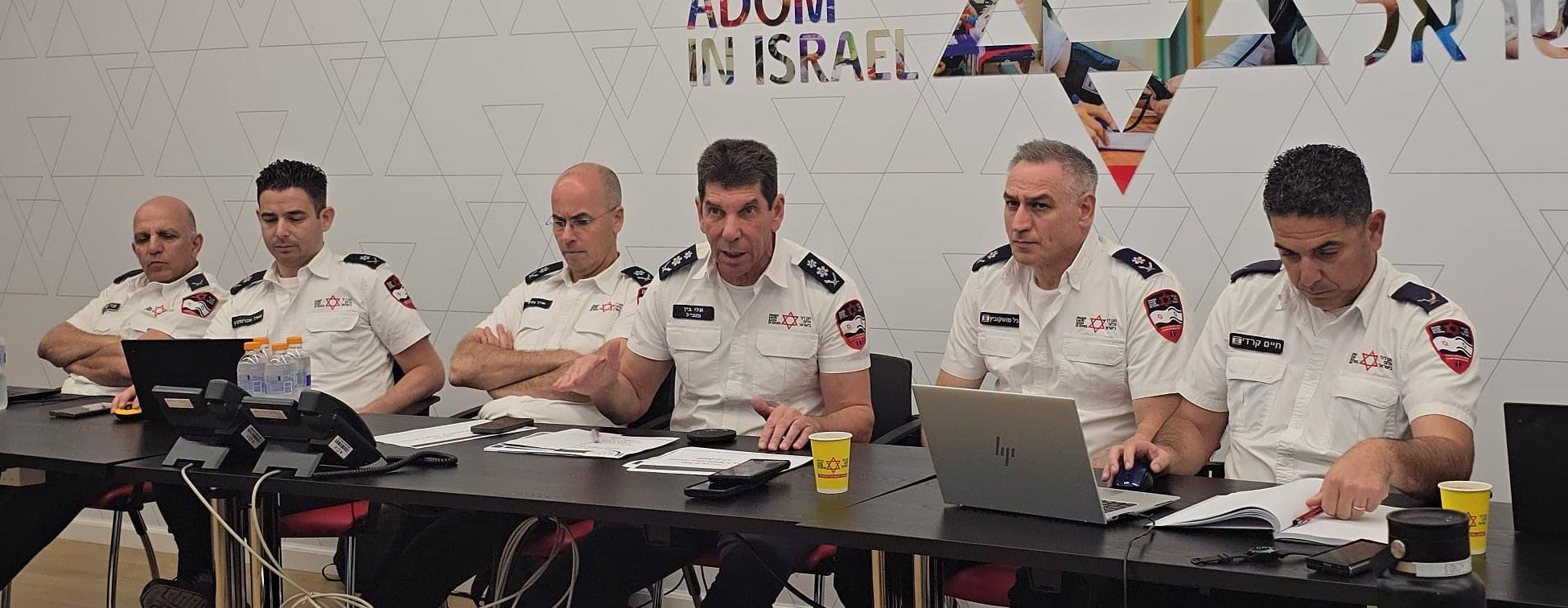
It was led by MDA director general Eli Bin and involved the participation of management and front-line units.
The exercise incorporated MDA’s operational division, all organisational departments, stations nationwide, situation rooms, command and control centres and operational response units.
The drill also included MDA’s blood services, immediate response units, the helicopter unit and the logistics division.
During the exercise, MDA personnel practiced a series of operational scenarios.
These included missile impact in open and urban areas, damage to infrastructure and the activation of nationwide reinforcement systems.
MDA has 38,000 volunteers and employees, 1,800 ambulances, 800 emergency motorcycles, 300 immediate response vehicles, five helicopters,
Emergency preparedness
intensive care buses and off road Unimog vehicles for difficult terrain.
It conducts exercises throughout the year, including surprise drills for MDA regions, dispatch centres, field teams and regional management.
In so doing, the organisation continues to assess readiness levels, improves operational competence and strengthens the ability to provide fast, professional and coordinated medical responses. That is done in close cooperation with the IDF, Israel Police, fire and rescue services, local authorities and other emergency agencies.
MAGEN DAVID ADOM AROUND THE
Magen David Adom emergency preparedness exercise
CONSIDERED OPINION
SLOVIE JUNGREIS-WOLFF COURTESY: AISH.COM
Under the Miami sun, my four-year-old grandson was building sandcastles until strangers spat on him. In that instant, I was reminded: the only answer to hate is deeper Jewish pride.
In Miami during winter break with my children, I was happy to have quality time with family. One morning I took two of my grandchildren down to the beach. My granddaughter and I combed the shoreline for shells, while my four-yearold grandson claimed a patch of sand as his kingdom.
Kippah perched on his head and tzitzit fluttering against his small frame, he settled in with buckets and shovels, building castles, digging moats, and letting his imagination soar. I stood there, quietly absorbing the sweetness of it all.
As my granddaughter and I sifted through the sand, I kept my grandson in the corner of my eye. A group of teenagers strolled by. I noticed that they were standing around my grandson and he looked up at them with his usual bright smile. A few seconds passed. They were laughing. I told myself they were probably saying something kind, like, “Hey, little guy, having fun? We used to build sandcastles too!”
By the time I reached them, they had drifted toward the boardwalk. I turned back to my grandson. His eyes were brimming with tears.
“What happened?”
“Bubby,” he said, his voice breaking, “they spit at me”.
I could not comprehend. They spat at my sweet, innocent child who cannot hurt a fly, who loves puppies and ice cream cones.
“And then they threw this at me, Bubby.”
He pointed to a hard piece of red sticky plastic lying in the sand. It had been filled with ice in their drink.
“Why did they do that to me? It hurt and it’s disgusting!”
His face mirrored my shattered heart.
I wiped away the tears, washed off my grandson’s face from the spit and the stickiness and hugged him tightly. But the ache remained.
I remembered my uncle telling me how he would walk to school in Hungary when he was five years old. Every day he would be spit upon and called “Dirty Jew”, “Yiddishe Shvine.” But my grandson is not a child growing up in Szeged. We are standing under the Miami sun, surrounded by hotels and the glittering ocean. Did this just really happen? This is the world that our children are growing up in. We may hear about the huge stories of Jewish hatred, the massacre at Bondi Beach, the murders at the Manchester Synagogue, the killings at the Capital Jewish Museum, the graffiti swastikas, and the violence on campus. But the small incidents, like spitting at a four-year-old Jewish boy playing in the sand on the beach, those go untold.
In that moment I told myself that I will not put my energy into trying to understand the hate. I have stood in the
Antisemites spit on my grandson at Miami Beach
gas chambers of Auschwitz where my bubby, after whom I was named, took her very last breaths. I have walked the killing fields of Majdanek. I have tried to find my voice in the silent bunkers of Birkenau. I have stared at the chimneys of the crematoria as they bear witness to the suffering of our people.
The Tucker CarIsons, Candace Owens and Nick Fuentes of the world are not new. They simply have an easier way to spread their rabid animosity. Like a malignant cancer that multiplies and spreads, they go unchecked. I will not waste time explaining away thousands of years of vicious antisemitism to my child.
No. It is time for us to put our life-force into the spirit of our nation. We will not change the haters. This is a fight for our life.
A battle between good and evil, light and darkness, truth and falsehood. I will tell my children, my grandchildren, and all our children the story of our people. I will give voice to our courage, our grit and the faith of a nation that refuses to die.
I will share how my mother stood at roll call each day in Bergen Belsen, starving, covered with lice and sores. But as she looked at the Nazis in their high boots, holding their rifles, she emboldened herself and stood proudly.
She said to herself, Thank God I am not one of them. I am the daughter of prophets and kings, a daughter of the Jewish people.
The greatest response we can have right now is to build strong Jewish homes, bring the light of Shabbat into the world, have the courage to stand up for our people, teach our children the power of faith and the depth of Jewish wisdom, and plug into the resilience of our nation. You can spit at us, spread your blood libels about us, bang your drums and march against us, but we defy you. Just as we have risen from the ashes of Holocaust and returned home after 2,000 years, we will continue to rise, to build, to believe and to live proudly as Jews – rooted in our faith, united in our purpose and unbreakable in our destiny.
let
and purpose.
people
Slovie Jungreis Wolff is a noted teacher, author, relationships and parenting lecturer. She is the leader of Hineni Couples and daughter of Rebbetzen
Esther Jungreis. Slovie is the author of the parenting handbook, Raising A Child With Soul. She gives weekly classes and has lectured throughout the U.S., Canada, Mexico, Panama and South Africa. You can reach Slovie at sloviehineni@gmail. com Slovie's most recent book is The Soul of Parenting, published by Mosaica Press.
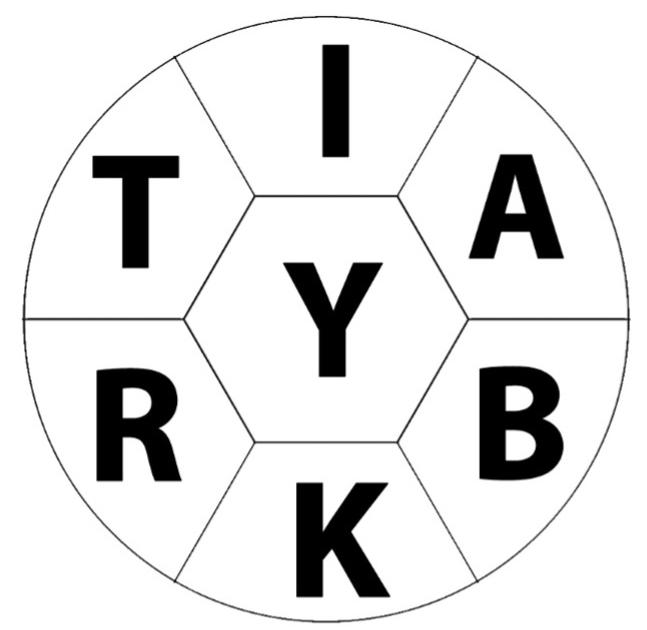
How many common words of five or more letters can you spell using the letters in the hive? Every answer must use the centre letter at least once. Letters may be reused in a word. At least one word will use all seven letters and be a location with a direct Jewish connection.
Proper names, other than the Jewish location, and hyphenated words are not allowed.
Score one point for each answer and three points for the Jewish location that uses all seven letters.
Rating: 7 = Good; 10 = Excellent; 13 = Genius
Yoni Glatt has published more than 1,000 crossword puzzles worldwide, from the LA Times and Boston Globe to The Jerusalem Post. He has also published two Jewish puzzle books: "Kosher Crosswords" and the sequel "More Kosher Crosswords and Word Games".
ANSWERS PAGE 17
Don’t
their hatred define you. Stand tall in the miracle of our
and choose to live as a Jew with pride, passion
Am Yisrael Chai.
CONSIDERED OPINION
NOMI KALTMANN COURTESY: THE JEWISH INDEPENDENT
I have never met Sarah Schwartz from the Jewish Council of Australia. I suspect that if we sat down together, we would disagree on most things relating to the Israeli Palestinian conflict. But like all Jews, she is part of my people.
That is why I was horrified when Lillian Klein debated her on ABC and accused her of being an “anti-Jew” because of her political views.
“Sarah might be a Jew, but she is an anti-Jew whose views are not reflective or representative of the mainstream Jewish community here in Australia.” – Lillian Kline, speaking of Jewish Council of Australia CEO Sarah Schwartz on ABC Radio.
I want to be clear. I am an Orthodox Jew and a Zionist, and my politics are not Sarah’s. But I would never, ever hurl that accusation at a fellow Jew, and, trust me, it’s not because I am too polite or too conflict averse. But rather, because Judaism itself does not allow it.
At the core of Jewish life sits a principle that is both deceptively simple and brutally demanding: Ahavat Yisrael. Love for a fellow Jew.
In Jewish tradition, every Jew, religious or secular, Zionist or antiZionist, left wing or right wing, lactose tolerant or deeply lactose intolerant, possesses a Neshama, a soul. A literal spark of the Divine.
Rabbi Schneur Zalman of Liadi, the founder of the Chabad movement, teaches that every Jew has a nefesh Elokit, a Godly soul, that is one and indivisible at its source. Because all Jewish souls share this single Divine root, we are commanded to love other Jews based on their essence, not their behaviour or temperament or politics. Love is not contingent on how palatable someone is to us and it is certainly not earned by ideological alignment. Rather, it is demanded precisely when those things are absent.
This is where Ahavat Yisrael becomes uncomfortable. It is easy to love Jews who look like us, think like us, vote like us and make us feel morally affirmed. It is much harder to love Jews who unsettle us, embarrass us, anger us or articulate positions we believe are deeply wrong. But the mitzvah does not ask us only to love our fellow Jews when it feels easy.
I do not always find Ahavat Yisrael easy. I am human. I have certainly had my share of arguments and over the years I have fallen out with people. I have been hurt and I have hurt others. But beneath all of that, I try to hold onto a deeper discipline. To remember that beneath the very real disagreements, that between all Jews there is a shared essence that does not disappear simply because I am uncomfortable. In the immediate aftermath of October 7, I found myself in multiple WhatsApp chats where
There is no such thing as an ‘anti-Jew’ Jew
emotions were raw and lines were being drawn quickly and aggressively. In one of those chats, someone suggested that anti-Zionist Jews were “not part of the Jewish people”. I physically shuddered when I read that. In my 33 years on this earth, I cannot recall encountering a statement so bone-chillingly inaccurate according to Jewish tradition.
This is not how Judaism has ever worked. You are Jewish because you are born Jewish or because you convert sincerely according to Jewish law. And that’s where the litmus testing stops. There are no ideological entrance exams to being a Jew and no political loyalty oaths.
Once you are Jewish, you are Jewish. We do not believe you can opt out. We do not believe you can revoke your membership. Even Jews who convert to another religion are still regarded, painfully and paradoxically, as Jews. That has been the position of Jewish law for thousands of years.
The attempt to redraw the boundaries of Jewish belonging according to political positions is profoundly un-Jewish.
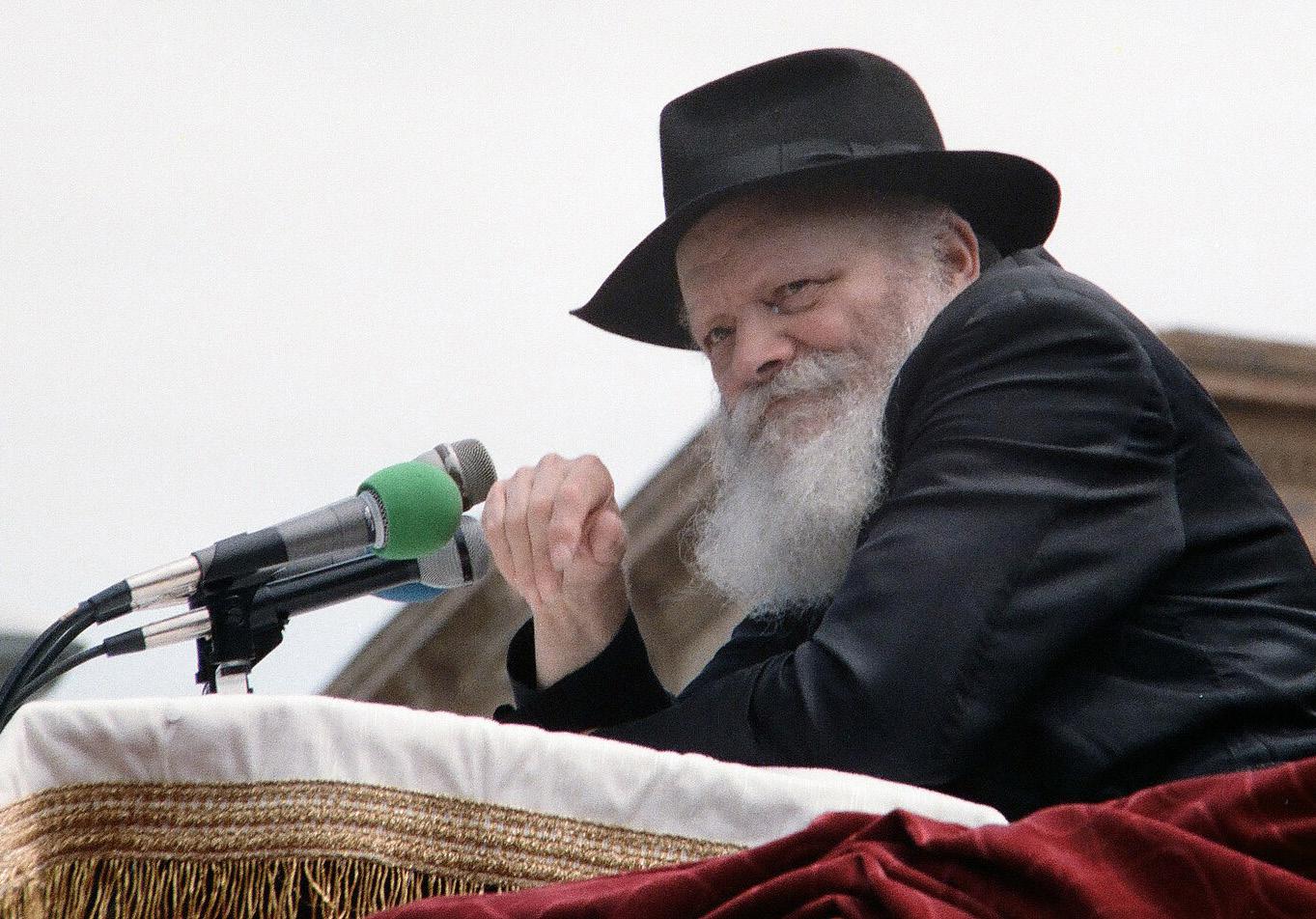
The Lubavitcher Rebbe, Menachem Mendel Schneerson, one of the most influential Jewish leaders of the 20th century, understood this deeply. In 1976, he launched a campaign identifying Ahavat Yisrael as one of the core mitzvot that should shape Jewish daily life. He emphasised that this love must extend across every divide: age, observance, affiliation and ideology. It was not solely reserved for those Jews that were likeable. The Rebbe emphasised that Ahavat Yisrael was a spiritual obligation precisely because it ran against human instinct.
I take the Rebbe’s teachings seriously. That is why I can say, without hesitation, that accusing a fellow Jew of being “an anti-Jew” because of their political views crosses a line. You
can argue and you can criticise their positions. Judaism has never been afraid of disagreement, heck, we wrote the Talmud, which is basically hundreds of pages of arguments. We have built an entire civilisation on argument.
This is not a claim that only other Jews deserve respect. Absolutely not. Judaism insists on the dignity of all human beings, insisting that all humans are created b’tzelem Elokim, in the image of God. People do not need to be Jewish to deserve respect. Ahavat Yisrael is not about superiority; it is about obligation. Precisely because Jews are bound to one another by a shared covenant and, in mystical language, a shared neshama, the ethical demand is heavier, not lighter.
As Jews, we are exceptionally good at fighting each other. History suggests this is not a new skill. But when our internal battles begin to fracture our most basic commitments to one another, something essential is lost. The point of Ahavat Yisrael is not to flatten difference, it is to insist that difference does not dissolve belonging.
Sarah Schwartz is a Jew. I am a Jew. We do not need to agree on our politics for that to remain true. We are part of the same people, the same stubborn, fractious, enduring tribe. And if we cannot hold that line, especially now, then we have misunderstood something fundamental about who we as the Jewish people are.
Are you currently in Year 5? Join us for our Twilight Connect
We invite Year 5 families to discover why King David’s Middle School is such a special place. Meet our passionate educators and experience our welcoming, vibrant community.
Tuesday 28 April, 5.30pm - 7.15pm Optional school tours at 5.00pm Scan the QR code to register or Contact 9527 0102 for
The Lubavitcher Rebbe, Rabbi Menachem Mendel Schneerson, of righteous memory (1902-1994)
CONSIDERED OPINION
DR YVETTE ALT MILLER COURTESY: AISH.COM
The popular US podcaster is spreading malicious lies about the Jewish State and Jews worldwide.
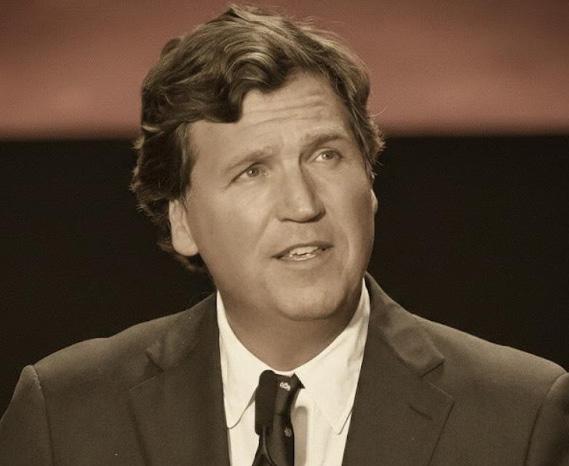
Tucker Carlson made headlines again after falsely claiming that he was detained at Israel's Ben Gurion International Airport on Wednesday, February 18, 2026. As his story unravelled in the world's press, Carlson doubled down on his lies, smearing Israel as intolerant and dangerous.
Carlson's fabrications about being detained in Israel are only the latest false accusations he has levelled at the Jewish state and at Jews around the world. Here are four lies that Carlson has spread about Jews in recent months, and advice on how we can stand up to his duplicity.
No, Tucker Carlson wasn't detained in Israel.
On Wednesday, February 18, 2026, Tucker Carlson and several staff members flew to Ben Gurion International Airport on a private plane. Carlson and his business partner Neil Patel stepped outside long enough to pose for a photo, which Carlson posted on X with the caption "Greetings from Israel", before the entire entourage went back inside. They were there solely to record an interview with U.S. Ambassador Mike Huckabee – which Carlson insisted on conducting inside the terminal. Critics noted the irony: a man who spends so much time attacking Israel couldn't be bothered to actually see it. As criticism mounted, Carlson told Britain's Daily Mail that he and his staff "were detained" after the interview. "Men who identified themselves as airport security took our passports, hauled our executive producer into a side room and then demanded to know what we spoke to Ambassador Huckabee about," he claimed.
The story was quickly shown to be a fabrication. Israeli officials confirmed Carlson was never detained and the room his producer was allegedly "hauled" to was a VIP lounge. The U.S. Embassy in Jerusalem concurred: Carlson's group "received the same passport control questions that countless visitors to Israel, including Ambassador Huckabee and other diplomats, receive as part of normal entry and exit procedures." Despite being debunked, the accusations continue to circulate online, lending false credence to Carlson's portrayal of Israel as malevolent.
No, Christians are not mistreated in Israel.
On February 4, 2026, Carlson broadcast an incendiary interview with Hosam Naoum, the Anglican Archbishop of Jerusalem and a known Hamas apologist. Filmed in Jordan, not Israel, Carlson titled the episode "The Shocking Reality of the Treatment of Christians in the Holy Land by US-Funded Israel." It is filled with innuendo and outright falsehoods, painting an inaccurate
Tucker Carlson's lies about Jews and Israel
picture of both Jewish and Christian belief. Researcher Dr David Orenstein noted that "Tucker Carlson and his guest served up a hefty dose of inaccuracies and misrepresentations."
Carlson allowed Naoum's anti-Jewish statements to go unchallenged and at times seemed to encourage him toward ever more inflammatory claims about Israeli Jews. Together they falsely asserted that Jews – not radical Islamists – are responsible for the declining Christian presence in the region and have made life less welcoming for Christians in Israel. Carlson inaccurately portrayed Israel's Christians as persecuted and impoverished. In fact, Israel's small Christian population is wellestablished and among the country's most educated and economically successful communities.
Carlson also falsely claimed that Israel bombed Al-Ahli Hospital in Gaza in 2023. In reality, a misfired rocket launched by the terror group Islamic Jihad struck the hospital. He alleged that Israeli Jews set fire to Taybeh Church near Ramallah; the fire was set by local Arab Muslims. Throughout, Carlson depicts Jews as sadistic racists, American Christian Zionists as credulous dupes manipulated by sinister Jewish interests, and consistently glosses over Arab terrorism and violence.
After Carlson criticised Ambassador Huckabee on air for allegedly failing to protect Christians in Israel, Huckabee responded on X: "Hey @TuckerCarlson instead of talking ABOUT me, why don't you come talk TO me? You seem to be generating a lot of heat about the Middle East. Why be afraid of the light?" That challenge prompted Carlson's trip to Israel on February 18 and his subsequent lies about what took place there.
No, Jews don't control the United States. In a December 2025 interview with The American Conservative, Carlson
returned to a recurring obsession: the claim that Jews impose their will on nonJews.
When a poll showed that many conservative Americans consider radical Islam the greatest threat facing the country, Carlson dismissed it, falsely claiming no one in the U.S. has been killed by radical Islam in 24 years. He then argued that persuading White Americans to fear radical Islam is "an op" – and that "we all know which foreign government it's actually coming from", meaning Israel.
He called American Jewish Zionists Israel's "informal employees in the United States" and has suggested that supporters of Jews and Israel have a "brain virus".
Meanwhile, Carlson dismisses very real threats against Jews. 2025 FBI data show that American Jews are the largest target of religiously motivated hate crimes in the country and the second most targeted group overall, after Black Americans. Yet Carlson claims, without basis: "white people are the main victims of discrimination in the United States –not Jews".
Carlson routinely ignores Arab terrorism and the ongoing threats of war against the Jewish state, depicting Israel as the sole aggressor in the Middle East. The result is a distorted picture in which Jews and Israel face no genuine threats and any sympathy for them is simply evidence of manipulation.
No, platforming Holocaust revisionists, neo-Nazis and other extremists isn’t merely "asking questions".
Carlson frequently defends hosting extremist figures by claiming he is simply "asking questions". But providing a platform for hate, often directed at Jews and Israel, is provocation, not legitimate inquiry.
In 2025, Carlson hosted avowed neo-Nazi Nick Fuentes who used the
appearance to claim that Hitler and Stalin were great leaders, that American Jews run the country, and that "organised Jewry" manipulates non-Jews.
In 2024, he hosted revisionist historian Daryl Cooper, who argued that Churchill – not Hitler – was the chief villain of World War II and that the Nazis did not intend to kill Jews. Carlson praised Cooper as "the best and most honest popular historian in America". In 2025, he hosted American nun and radical Islam apologist Mother Agapia Stephanopoulos and did not challenge her false claim that Israel planned to "blow up" the al-Aqsa Mosque and the Dome of the Rock. By giving extremists a massive platform and mainstreaming their conspiracy theories, Carlson is making antisemitic ideas respectable again.
Fighting back
While Tucker Carlson seems determined to stir up as much antisemitism and hatred of Israel as he can, there are ways to push back.
Stay informed. Carlson's provocations are dangerous because some of his followers accept them as fact. Read about Israel, Judaism, the Holocaust and related issues in reputable sources. A well-informed person is far harder to deceive. Educate others. Blog. Write letters to the editor. Talk with friends, relatives and colleagues. Encouraging others to become informed is the most effective way to defang a demagogue like Carlson. Report hate speech. Don't let inaccurate or hateful content go unanswered. File reports with social media platforms, news site editors or local authorities. Report antisemitic and other hate crimes.
Reach out to allies. Carlson's worldview demonises many communities. Identify and cultivate local allies willing to stand with the Jewish community against hate.
Live Jewishly. When faced with antiJewish hatred, the most powerful response – and the one that has sustained our people through centuries of persecution – is to celebrate Jewish life proudly and without apology.
For another view on Tucker Carlson, see Mutterings on the back page of the paper.
Dr Yvette Alt Miller holds a PhD in International Relations from the London School of Economics and has taught at Northwestern University, London Business School and lectured around the world. She is the author of Angels at the Table: A Practical Guide to Celebrating Shabbat, which had been praised as "life changing" and compared to having a friend guide the reader through a typical Shabbat, and of Portraits of Valor: Heroic Jewish Women You Should Know, which describes the lives of 40 remarkable women who inhabited different eras and lands, giving readers a sense of the vast diversity of Jewish history and experience.
Tucker Carlson
RAMONA FREEDMAN
ALIYAH ADVENTURES
With the festival of Purim upon us, the stores here in Israel are loaded with cool costume options. In this country, dressing up is serious business whatever your age. Fun for all.
Anytime I drive, I endeavour to listen to Ivrit, or Hebrew, in the car to help with (let’s wishfully call it) auditory osmosis. This is a process whereby Hebrew words will be carried along sound waves, then delicately deposited straight into my Australian-born, English-speaking head. The jury is still out on the effectiveness of this practice.
I catch words, half-sentences, phrases, but never all of it. One dialogue between a radio announcer and caller caught my attention. I got the gist of what was going on. Purim is a playful time and the radio announcer called a random Israeli man named Ido. He told him in a serious tone that he was overdue to pay a certain bill. He thought the Purim prank was hilarious.
I thought our cultural appreciation of humour was oh-so-different.
Ido was instantly irate. He launched into all the reasons why he shouldn’t have to pay the bill. There was a lot of huffing and puffing and a lot of ‘Ma Pitom’s’, which loosely translates as ‘What is actually going on?’
He explained that he had been serving the State of Israel as a miluimnik, a military reservist, for more than 100 consecutive days. He had a wife and three young children.
I was on Team Ido from the get-go.
The radio announcer doubled down. Ido was clearly annoyed. Then, Ido became apoplectic. In my car, as the radio diatribe was progressing, I was periodically interrupted by my satellite navigation system. It kept barking at me in Hebrew to follow directions to my destination. Side bar: Waze is an impressive Israeli invention.
Back to the current conversation. Finally, after several minutes the radio announcer said to infuriated Ido: “Here is another question for you: what month is it?”
He replied “Adar”.
“And what festival is in Adar?”
After a painfully pregnant pause the (Purim) penny dropped and Ido realised it was all a hoax. He suddenly spurted out the Talmudic saying, Mishenichnas Adar marbim b'simcha (‘When Adar arrives, we increase our joy’).
The conversation ended in laughter and giggles from everyone, I imagine, except me. My eyes widened under my sunglasses and I thought it was unnecessarily taunting and teasing, but what do I know?
Israelis are so extraordinary with their innate ability to flick a metaphorical, emotional switch. I parked my car and felt exhausted just from concentrating so hard on the Hebrew during those minutes, let alone the content!
When you make Aliyah and arrive in a new community, you are the new kid on the block. In most cases when you make friends, it is with people whom you don’t share a long history. So, when you are included in something social, it is such a lovely feeling. It is so appreciated. This is
The Purim penny dropped
how I felt when I received an invitation to join a Purim Seudah, a festive meal, with about two dozen others.
Appreciating that Israelis love WhatsApp groups as much as Jews all over the world, quick as a flash there was a group created to divvy up the cooking and baking. Kibbutz socialist vibes. All make, all bring, all eat. Fress with friends.
As I was thinking about what to bring, I received another ping on my phone. It was from a caterer in Ra’anana who had also emigrated to the holy land over a decade earlier. He was offering a new food for the first time.
Are you ready for it? Asado-filled hamantaschen. What, pray tell, is that? Well, Asado is traditionally South American slow-cooked meat. Intriguingly, all over Israel you see the word ‘Asado’. On menus and more. My gut feeling is that the meat on offer is neither South American, nor cooked in that unique, open-fire barbeque, but hey these are mere details.
Embracing the Israeli entrepreneurial spirit, this guy was simply attempting to capitalise on the kef, or fun. So what if the Jewish world equates hamantaschen with sweet fillings. To him I say: kol hakavod, good on you. Respectfully though, I’ll stick with the sweet-filled options for the time being, at least.
Another relatively new friend asked if I would like to join her to see a concert held by the Chamber Philharmonia Beer Sheva. It was billed as Rock & Barock (yes, if this spelling looks jarring, it does because it is, as they twisted the correct ‘baroque’).
It was a high energy ‘crossover’ performance that reimagined classical masterpieces via modern rock and jazz arrangements.
We were marvelling at the talent of the performers. At the outset, when introduced by their first names, we were presented with Igor, Tatiana, Sergey, Olga, Yevgeny, Vadim, Ekaterina and others. Indeed, they were all of Russian descent. I reflected on the fact that Israel is so culturally rich with olim, immigrants from so many countries.
We smiled when we realised that all narration from the stage was in two languages only: Russian and Hebrew. This was not mentioned on the promotional flyer. Details, details.
We tried to understand why everyone around us was smiling and nodding. We were attempting to use our pedestrian Hebrew that we had valiantly tried to improve at ulpan classes.
Although we didn’t understand any of the Russian commentary or much of the Hebrew in between pieces, we didn’t care because a love of the music transcends language, time and space.
After all the hype about the Tami Arba Shabbat (see last month’s article), that hot and cold water machine that automatically transforms into a Shabbat urn-of-sorts, my fancy new friend stopped working. No problem. We called a company technician.
I tried to communicate in Hebrew. He didn’t speak a word of English. I was attempting to understand what the problem was. I knew enough to know
he didn’t know either. He then passed his phone over to me and his supervisor explained it in plain English. “A software bug has been found in every single Tami Arba Shabbat in Israel. We will have to replace a small computer part in each machine. It will take time; we don’t know when we can get to you. It will mostly work, but sometimes it won’t.”
What in the name of Israeli innovation was going on?
The supervisor then explained it to the technician in front of me who looked me in the eye and earnestly said, “I had no idea, I have never heard about this.”
To say that I looked at him incredulously is an understatement.
So, a well-known company sent a repair guy to fix a machine that is, at present, unfixable. Said repair guy was not updated nor informed about what the overarching problem was or when it could be addressed.
He didn’t seem at all upset that he was so out of the loop. He simply packed up his toolkit and was on his way.
Israel. World class in so many high-tech endeavours and simultaneously Middle Eastern in the most unapologetic way. Crazy. But it is our crazy. What a blessing. Today the water machine works. Tomorrow, who knows? We must live in the present here, when it comes to war and even water. For now, it is over and out from Ramona in Ra’anana.
To contact Ramona, please email: ramona@keshercommunications.com.au.
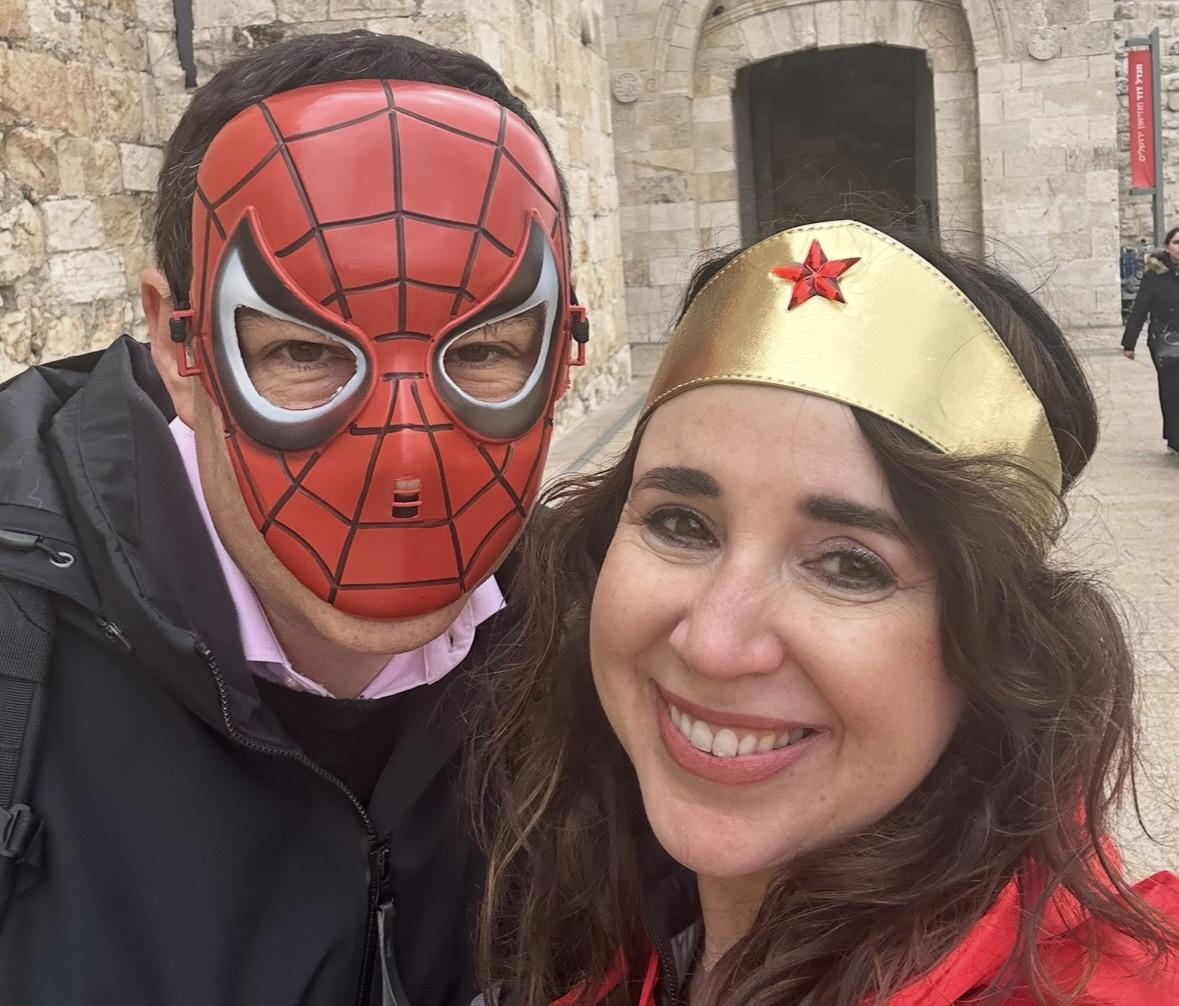
Ramona and her husband Oliver Freedman outside the Jaffa Gate in Jerusalem's Old City
AROUND THE COMMUNITY
DAVID SOLOMON AUSTRALIAN FRIENDS OF TEL AVIV UNIVERSITY
For many Australians, weight loss is measured in kilograms. But new research from Tel Aviv University shows that what we lose may matter far more than how much we lose.
A major study from TAU’s Gray Faculty of Medical and Health Sciences and the Sylvan Adams Sports Science Institute has found that strength (resistance) training is the most effective strategy for achieving “high-quality” weight loss –reducing body fat while preserving, and even increasing, muscle mass.
Same kilos. Very different outcomes.
Led by Professor Yftach Gepner with Yair Lahav and Roi Yavetz, and published in Frontiers in Endocrinology, the study analysed hundreds of women and men aged 20 to 75 in a structured weight-loss program.
All followed a low-calorie diet with a controlled energy deficit. They were divided into three groups: no exercise, aerobic exercise or resistance training.
Total weight loss was similar across all groups. The difference lay in what was lost.Participants who performed strength training lost more fat than the other groups and were the only ones to preserve – and sometimes even increase – muscle mass. Those who did not exercise or relied solely on aerobic
Not all weight loss Is equal
activity lost a substantial amount of muscle as part of their weight loss.
Why this matters for Australia
Muscle accounts for roughly 40 per cent of body weight and drives much of our daily energy expenditure – even at rest. When muscle declines, metabolism slows, weight regain becomes more
aftau.asn.au
likely and long-term health risks increase.
For Australia, where obesity and cardiometabolic disease place enormous strain on families and the healthcare system, this distinction is critical.
A weight-loss strategy that preserves muscle is not cosmetic – it is preventative
Discover how your values can live on.
For a confidential conversation, please call David Solomon on 0418 465 556 or davidsolomon@aftau.org.au
medicine. Maintaining muscle supports mobility, balance and independence, and reduces the risks associated with ageing, injury and chronic disease.
The TAU study also found that resistance training produced the greatest reductions in waist circumference –a key marker of abdominal obesity and cardiometabolic risk. The drop in waist size was strongly linked to fat loss, highlighting the broader heart and metabolic benefits of this approach.
Professor Gepner said: “Our study shows that weight loss should not be measured only by how many kilograms we lose, but by the quality of that loss. When appropriate nutrition is combined with strength training, it is possible to reduce fat effectively while preserving and even improving muscle mass.”
A shift in thinking for everyone
In typical Tel Aviv University fashion, this is research with immediate realworld relevance. It reframes the public conversation from chasing lighter bodies to building stronger ones.
For Australians serious about long-term health and a healthcare system strained by obesity-related disease, the message from TAU is clear: not all weight loss is equal.
If we want outcomes that last, we must stop obsessing over the scale and start prioritising strength.
AUSTRALIAN FRIENDS OF THE HEBREW UNIVERSITY AROUND THE COMMUNITY
For many in our community, the desire to give back is closely tied to a wish to feel deeply connected – to people, to purpose and to legacy. As we reflect on the values that have shaped our lives, there is often a growing appreciation for the importance of ensuring those values continue into the future.
The Hebrew University Legacy Mission offers a rare opportunity to experience that continuity firsthand through an allexpenses-paid journey to Israel that combines inspiration, learning and meaningful personal connection.
Taking place in early November 2026, this special mission is designed for supporters who make a legacy commitment to the Hebrew University of Jerusalem. It is far more than a tour; it is an immersive experience that brings participants into the heart of Israel’s foremost institution of higher learning and research.
Mission participants enjoy exclusive access to the university’s worldrenowned campuses. Behind-thescenes briefings with leading academics and researchers offer insight into
A legacy journey for life’s next chapter
from medicine and science to law, agriculture, public policy and Jewish studies. Guests visit cutting-edge laboratories, meet inspiring students and hear directly how philanthropic support helps nurture innovation and educates the next generation of Israeli and global leaders.
The itinerary is thoughtfully curated and carefully paced, with comfort and
in high-quality accommodation, dine at some of Jerusalem’s finest venues and explore key cultural and historical sites that bring Israel’s past and present vividly to life. Every detail is taken care of, allowing travellers to relax and fully immerse themselves in the experience.
This year’s mission will be especially enriching, as participants from Australia will travel alongside a cohort from the
Sharing the journey with like-minded supporters from another part of the Jewish world adds a unique international dimension, fostering new friendships and strengthening global connections within the Hebrew University family.
For those who have taken part in previous Legacy Missions, the most powerful aspect has been the sense of belonging it creates.
Conversations with researchers and students illuminate the tangible impact of legacy giving, while time spent together as a group builds camaraderie and shared purpose. Seeing how one’s commitment can help shape the future of Israel and the Jewish people is affirming and deeply moving.
More than a visit, the Legacy Mission is an opportunity to witness legacy in action, to see how foresight and generosity today will sustain excellence in education and research for generations to come. It is an enriching and uplifting experience that resonates long after participants return home.
If you are interested in this opportunity, please contact Rob Schneider, CEO of the Australian Friends of the Hebrew University, on 02 9389 2825 or email ceo@austfhu.org.au The web site is www.
Join us in early November on an all- expenses-paid Legacy Mission to Israel generously funded by an anonymous donor who wants to thank and honour suppor ters who choose to leave a bequest to the Hebrew University of Jerusalem
Experience Israel like never before:
• Special access to Hebrew University campuses and researchers
• Guided tours (including a tour to the South), cultural highlights, and unique events
• Return air fares, accommodation, meals, and all tours included (excl. travel insurance)
Your legacy shapes the future of discovery, innovation, and contribution at Israel’s leading institution of higher education, The Hebrew University of Jerusalem – The University of the Jewish People.
This unforgettable journey celebrates you and the impac t you will make benefitting generations to come
To qualif y you must be over 60 and commit to a minimum legacy to The Hebrew University of Jerusalem.
Legacy Mission participants visiting the Hebrew University veterinary faculty
CONSIDERED OPINION
AB BOSKANY
At a bar in Asia, I met two young men from Jerusalem. We started as tourists do, by greeting one another. Then the inevitable question: “Where are you from?” “Australia”. They looked doubtful. My accent didn’t match their perception. I then added that I was originally from Kurdistan. “A Kurd. And you?” “From Jerusalem.” One interjected, “Ah, Iraq”. “Yes, Kurdistan.” He said he had relatives in Baghdad. “Jewish relatives in Baghdad?”, I asked. The other dodged the answer. They seemed to want to avoid revealing that they were Israeli Arabs.
I didn’t argue. Hiding kept them from being seen as Muslim Arabs in a world quick to label. Then one spoke in Arabic, loudly telling the other to move to another bar. “Don’t waste the night next to an old fool.” I answered in Arabic. “Habib, were you talking to me?” He denied it in English and turned to Hebrew.
The attempt to erase Kurdistan still bothered me, so I asked in Arabic: “Have you read Mahmoud Darwish?” I spoke of his poem ‘Identity Card’ and recited the ending: “But if I become hungry/I will eat the flesh of my usurper/Beware of my hunger, of my anger!”
Jerusalem men and tabbouleh politics
story about breakfast with a Palestinian, where he asked why eat tabbouleh in the morning. The answer was, “Palestine. What is Palestine without tabbouleh?” He saw this as a form of identity presence, tying small things to his unique identity. It felt like naivety polished by academic rubbish.
I wondered why most Palestinians don’t accept what is best for them as individuals.
Then deeper thoughts came, though I wasn’t that drunk: how many Palestinian Arabs wear a tabbouleh identity to fit the crowd? What if Israel held a referendum in East Jerusalem, giving the people there a clear choice: stay as part of Israel or join the Palestinian Authority? Would they swap their rights of citizenship in democratic Israel for the corruption and chaos of Ramallah?
Nice poem, if it was not for that ending. What is wrong with it? Eating the flesh of your enemy? It sounds barbaric. “Yes, we eat the flesh of our enemy.” After, one said, “I told you those f...ing Kurds are Zionists,” I asked him to look at me. Is it not better to take pride in Israeli IDs and let go of the hatred?
An Israeli passport brings respect everywhere. You can still be Arabs. They left silently.
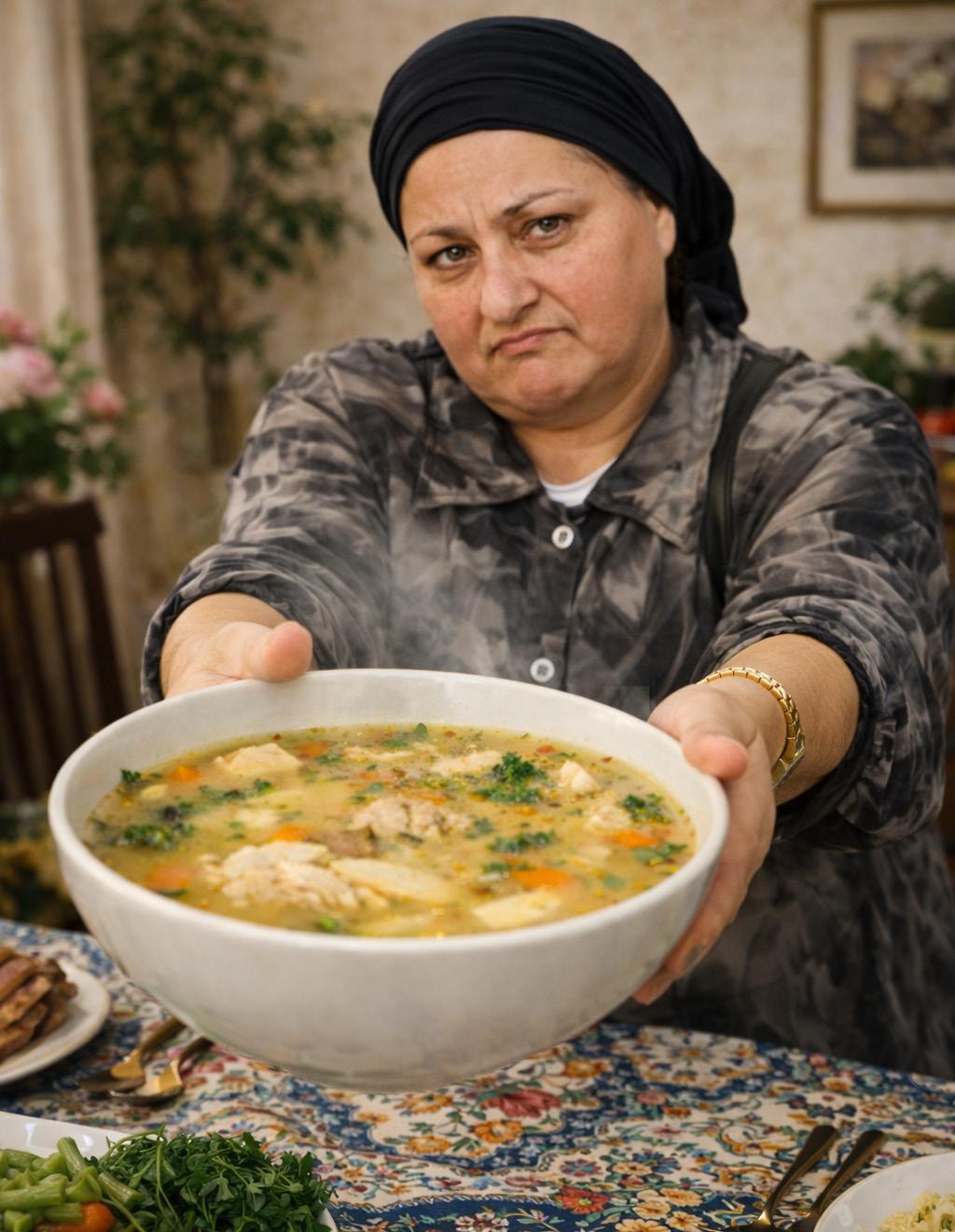
The Jewish mama
There comes a point in every Jewish adult’s life when they realise something deeply unsettling: they can run a meeting, negotiate a contract, raise children of their own … and yet their mother is still hassling them about not eating enough vegetables.
This is not a failure to move on.
This is the Jewish mother doing her job.
The Jewish mother is often described as a stereotype, but that’s not quite right now, is it? I mean a stereotype gives the feel of exaggeration.
The Jewish mother is more of a system – one that runs quietly (admittedly, sometimes loudly) in the background of one’s Jewish life, ensuring that no one gets too comfortable, too hungry, or too unaware of potential risks.
And in Israel (if you have been there you will know this already) it’s a system that operates at full capacity.
The Israeli mother (“Ima”) is not a gentle presence, hovering politely in the wings.
She is front and centre, phone in hand, multitasking between WhatsApp voice notes, grocery lists and sorting out “crises”.
This model does not wait for permission and will never trust that someone else has handled it. Oh no. She’ll check. And check again.
You hear her everywhere. In Tel Aviv cafés, where a fully grown man is being reminded to drink enough water. On buses, where soldiers are being instructed about laundry frequency. In supermarkets, where yoghurt choices are being interrogated with the seriousness
of a security briefing. Food, naturally, is central. Chicken soup is not a recipe; it is a worldview. Hungry? Eat. Tired? Eat. Sick? Eat. Not sick? Eat anyway, because you never know.
What makes the Jewish mother particularly powerful is the combination of worry and expectation. She is anxious, yes. But she also assumes competence. You will manage. You will figure it out. You may panic, but you will function. Complaining is allowed. Collapse – not really an option.
This produces people who worry out loud, complain freely, call four people for advice and follow none of it, but somehow land on their feet anyway. And no, this isn’t just a personality trait – in Israel, it’s a national skill. The Jewish mother also has little patience for abstraction. She is not impressed by theory when there are details to be addressed.
Who’s in charge? Did anyone check? What happens if this goes wrong? These questions have a way of slicing through nonsense faster than any consultant ever could. Is she always right? No. Is she subtle? Hardly. Does she overstep? Constantly. But when things go wrong – when systems stall, when answers are vague, when no one seems to be calling anyone back – she is often the one still standing, still phoning.
That’s why the Jewish mother endures. She is irritating, comforting, demanding and oddly effective. She is not trying to be inspirational.
She is trying to make sure everyone survives – preferably fed, and preferably wearing a jacket.
And if, after all that, you’re still hungry? She told you so.
That interaction stayed with me: hiding one identity, wearing another, then slipping into old resistance talk. This back and forth made me see how much pressure from outside traditions and ideas forces Palestinian Arabs to shape themselves for acceptance. As they went, I thought of a writer who told a
I ordered two tequila shots, raised them to their shadows, downed them, and said, “Next year in Jerusalem.” Uncertain hope stayed. If I go to Jerusalem next year, I might accidentally see the young men as they really are. Not hidden behind tabbouleh slogans or to please false traditions.
Sometimes, cultural pressure makes it impossible to drop the masks people wear. Often, they stay in place longer than we would hope.
SHARONNE TIDHAR
Ab Boskany
RABBINIC THOUGHT
RABBI GABI KALTMANN
The most wonderful and joyous time of the year. Today, the 13th of Adar, is the eve of Purim, known as Ta’anit Esther, the Fast of Esther. In just a few hours, we’ll really be in the midst of the celebrations – with children in costumes, tables filled with delicious food for the Seudah, and the sounds of joy and laughter filling the air.
Though the story of Purim took place more than 2,000 years ago, its powerful lessons and timeless messages continue to inspire and guide us today.
The Megillah opens with King Achashverosh’s lavish parties, but what was he celebrating? He was rejoicing in what he believed was the end of the Jewish people’s hopes and dreams – the fact that although 70 years had passed since the destruction of the First Temple, the Jewish people had not been redeemed to return to their land. At his party, he shamelessly used the sacred vessels from the Beit HaMikdash. Tragically, many Jews took part, joining in this dishonour to their own heritage. Even though Achashverosh had miscalculated the timeline, the fact that Jews were present at such a party was a spiritual low point.
When Haman was given the king's royal ring and sent out proclamations calling for the destruction of every
Ah, Purim!
Jewish man, woman and child, it struck terror in the hearts of the Jewish people. Although the decree was set to take place months later, the Jewish response was swift – to unite, to pray and to return to G-d.
And here is something remarkable and often overlooked in the story: Even when Esther bravely approached the
king, risking her life to beg for her people, Achashverosh never revoked Haman's decree. Even when Mordechai was elevated to a position of great power in the kingdom, the decree still stood! The only thing that changed was that the king allowed a new decree to be sent out, giving the Jews permission to defend themselves on the 14th of Adar
(nowadays known as Purim) against those who would attack them.
This is where the Fast of Esther takes on a deeper meaning. Many people think this fast commemorates when the Jewish people fasted as Esther prepared to approach the king to annul Haman's decree. In truth, Ta’anit Esther marks a different moment. It recalls the fast that took place on the very day the Jews were forced to defend themselves. While Jews across the kingdom fought for their lives, Esther remained in the palace, fasting and praying for their success and safety. That’s why this day is called the Fast of Esther, because even as her people fought a physical battle, she led the spiritual one.
Even now, in 5786 (2026), when the Jewish people face challenges, fear and antisemitism, we turn to the same tools: prayer, unity and connection to Hashem. Over recent months, as we cried out for the hostages still in captivity and for Jews facing danger around the world, our people gathered together in unity to pray and ask Hashem to bring salvation.
Sadly, antisemitism is not new, but here is where Purim delivers its most powerful message: We are still here!
We have endured through every exile, every threat, every decree. Hashem has never abandoned us.
Being besimcha – it’s all in the mind
There is a very famous song, the words of which are Mi shenichnas Adar, Marbim B’simcha, which means “he who enters the month of Adar with joy has his joy increased.” Thus, we try to ensure this month contains happiness, and Purim gives Adar its distinctive flavour.
Although it’s like all the other holidays when they picked on us, we were helpless, Hashem intervened, we won, they lost and so we eat, Purim is my favourite festival. Not because of all the symbolism, metaphors and deep lessons, but because we can drive to shule and get a tad tipsy.
But on a more serious note, there is a strange halacha that applies only on Purim: the mitzvah of drinking until one does not know the difference between the wickedness of Haman and the blessedness of Mordechai. Just as entering the Holy of Holies was reserved only for the Kohen Gadol, it is forbidden for anyone under 18 to consume alcohol. Furthermore, Rabbi Moshe Isserles, the Rema, whose rulings are generally accepted by Ashkenazic Jews, explains that for adults this means drinking slightly more than usual and then going to sleep. That is hardly getting drunk.
Since the Torah certainly does not encourage endangering one’s health, how can we understand this halacha?
Perhaps the explanation is that, in truth, there is no difference between the wickedness of Haman and the righteousness of Mordechai. What does this mean? In reality, it is not Haman who threatens us, nor Mordechai who saves us. Rather, it is God who controls
all. In fact, Hashem’s name is never mentioned in the entire Megillah, which our sages teach emphasises that Hashem works in the background, creating the “coincidences” that form the strange chain of events, often mistaken for fate. Recognising this brings a higher happiness than any substance can achieve.
The word besimcha, in joy, shares its letters with machshava, perspective. Embedded in Hebrew is the wisdom that just as one can rearrange the letters of machshava into besimcha, so too one can shift one’s perspective towards happiness. To put life into perspective is to realise that each moment is another piece in the puzzle of our intricate universe, ultimately part of a Divine plan.
My mother tells me the happiest day of her life was giving birth to me. I often wondered how something as painful as childbirth could be the happiest day of her life. Perspective helped me understand. She may have cried out from labour pains, but this was softened by the knowledge that she was bringing her first child into the world. When we recognise that God’s guiding hand underlies history, and that the difference between wicked and righteous is only what we see on the surface, we can experience joy in every situation.
Have a great Purim and don’t forget, the Purim story begins with tragedy but ends with happiness, whereas getting drunk begins with happiness and the next morning feels tragic. In a world where pseudo happiness is always within reach, make sure this Purim begins with something deeper. Being besimcha means focusing on the magic, not the tragic. Purim reminds us that genuine joy isn’t at the bottom of a bottle, it’s all in the mind.
Rabbi Gabi with his mates dressed up for Purim
RABBI DR BENJI LEVY
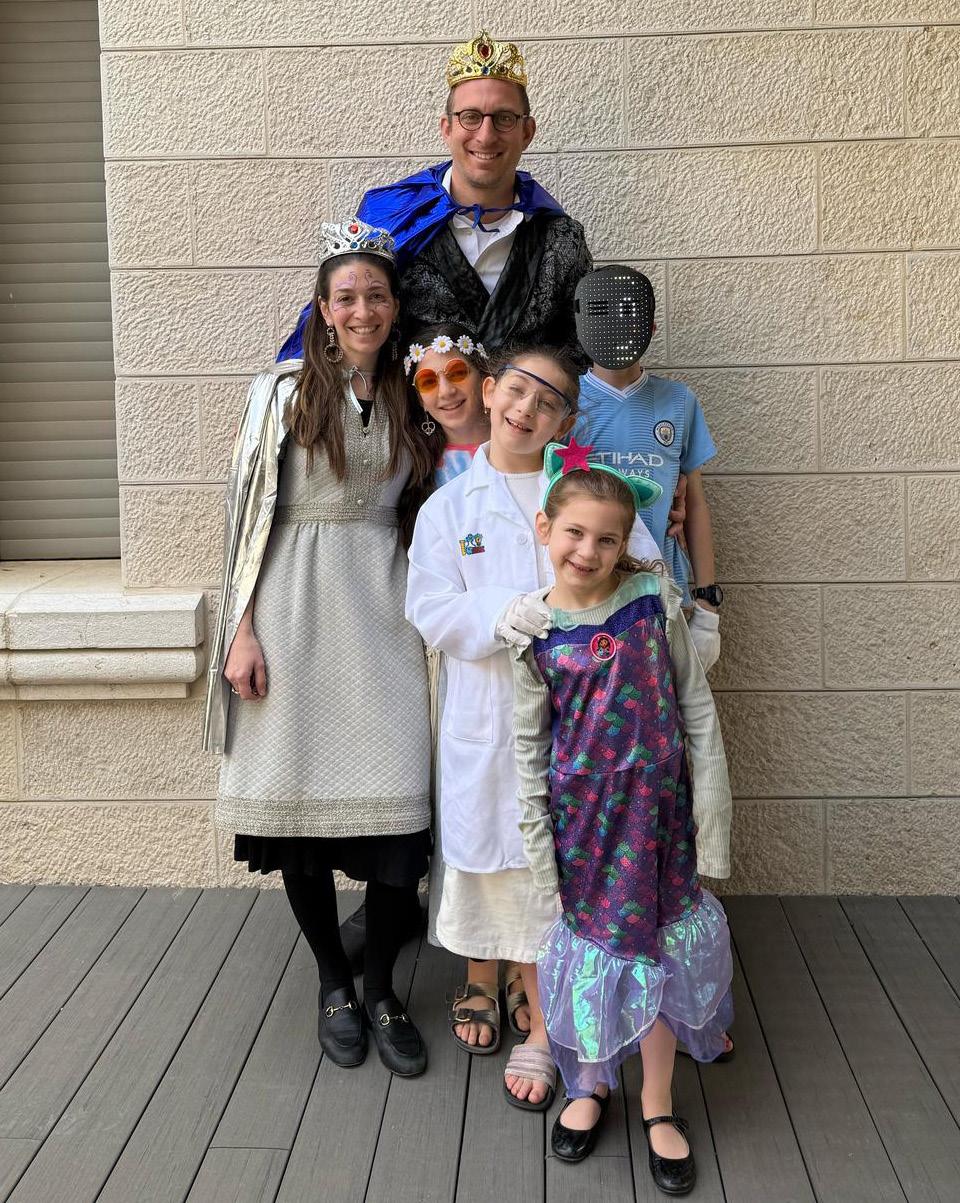
Rabbi Benji with his wife Renana and four children celebrating Purim last year
RABBINIC THOUGHT
RABBI YAAKOV GLASMAN
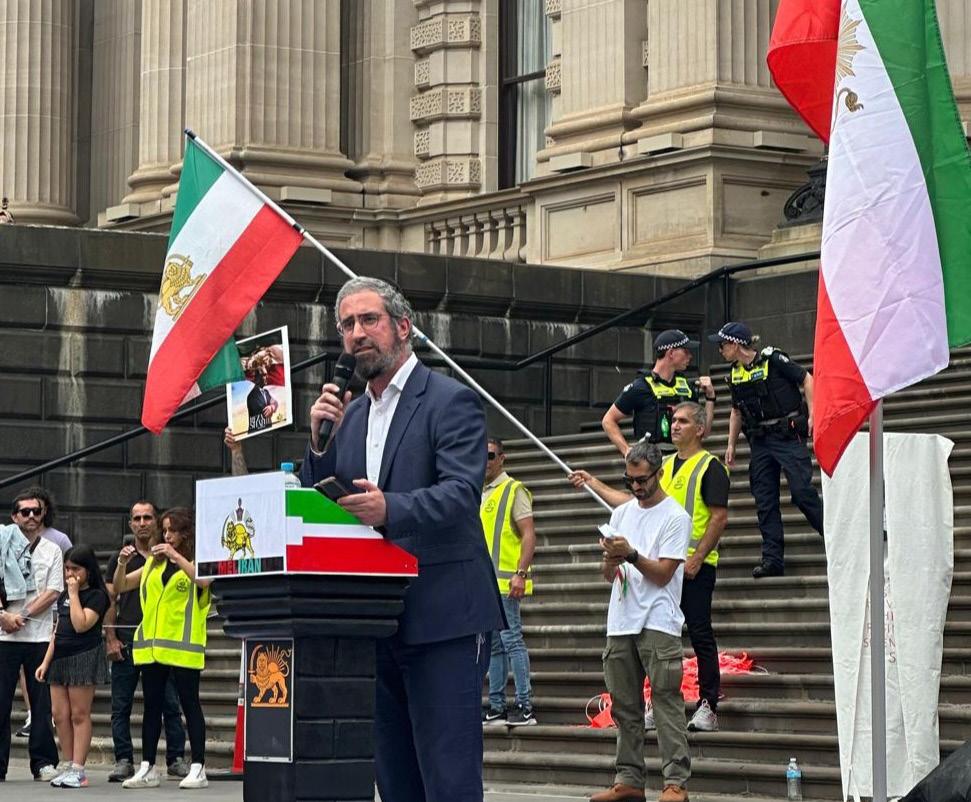
A few thousand Iranian Australians and their supporters gathered in front of Parliament House in Melbourne recently in a powerful and deeply moving display of solidarity with the people of Iran and their struggle for freedom, dignity and human rights.
I was proud to stand among them and address the rally, not as an outsider, but as a fellow human being and as a Jewish Australian who understands the moral obligation to speak when others are denied their voice.
I began my remarks with the story of one woman. Shabnam Ferdowsi was an artist and a dollmaker. Her hands brought joy and comfort to children. Her aspirations were simple and profoundly human. She wanted dignity.
She wanted freedom. She wanted a future. A month ago, she left her home seeking to make a difference, but she never came home. She was murdered by the brutal Iranian regime because she dared to wish for a better life. As heartbreaking as her story is, it represents one of thousands. Each life lost is not just a statistic.
It is an entire world of memories, relationships, dreams, laughter and love that has been destroyed.
Standing as one against the oppressed
can silence a voice. You can imprison a body. You can even take a life. But you cannot extinguish the longing to live freely and with dignity. The courage of those who have stood up and the memory of those like Shabnam continue to inspire others to rise.
One of the most striking and meaningful sights at the rally was the presence of many Israeli flags held proudly by Iranian Australians. Their presence conveyed a truth that is often lost in political rhetoric.
Israel’s enemy has never been the people of Iran. The enemy is the extremist government that oppresses its own people and threatens others.
Seeing Israeli flags waving at a rally for Iranian freedom was a powerful reminder that ordinary people share far more in common with one another than the regimes that divide them.
Standing there, I felt a profound sense of shared humanity. I expressed that their pain is our pain and their hope is our hope.
At a recent Holocaust Remembrance gathering at Emmy Monash, I stood beside Milan Bierenkrant for a photograph. What struck me was not only who he is, but what he represents. Not memory in the abstract, not history preserved at a distance, but a living reminder that the Jewish story does not end when it is threatened. It continues in the choices people make afterwards, in the lives they rebuild, and in the determination to keep moving forward, even when the world feels uncertain. That moment has stayed with me as we reach Purim. On the surface, Purim is often framed as the most light-hearted day in the Jewish calendar, filled with costumes, celebration and laughter. Yet, its message is anything but light. At its heart, the story is about vulnerability, about how quickly a society can turn and about what happens when a people realise their existence is not as secure as they believed. The danger in the Megillah begins not with violence, but with rhetoric, with the normalisation of hatred, and with the quiet comfort of those who choose not to get involved. It is uncomfortable how familiar that feels. Across the world, and at times in our own streets, Jewish life again sits within a climate where hostility can surface with confidence. The language
Our Jewish tradition teaches us that when a single life is destroyed, it is as though an entire world has been destroyed. This teaching reminds us that human dignity is not granted by governments. It is inherent. Every person is created in the image of G-d. Freedom is not a privilege bestowed upon the deserving. It is the birthright of every human being.
Despite the cruelty inflicted by the Iranian regime, I emphasised that there is something no regime can ever extinguish. The human spirit endures. You
The Jewish story is eternal
directed at Jews and at Israel often carries an edge that feels older than politics, deeper than disagreement. Many sense it instinctively. The ground feels less certain than it once did.
Purim is not simply a story about being saved. It is a story about how Jews respond when the ground shifts. Mordechai does not remain silent when silence would be safer. Esther does not remain hidden when anonymity would
be easier. Their courage emerges alongside something else that sits quietly throughout the Megillah, a deep and enduring faith that Hashem is present even when His name is not mentioned, guiding events beneath the surface of history.
Standing beside a survivor sharpens that lesson. Milan does not only represent what was lost. He represents what came next. A decision to rebuild, to form a
I prayed that a day will soon come when artists like Shabnam will be able to create freely, when children will grow up without fear and when gatherings like this will no longer be protests against injustice, but celebrations of freedom, dignity and life.
family, to contribute to community and to carry memory forward without allowing it to define every moment. That is not survival alone. It is resilience anchored in purpose and in a trust that our story is held within something greater than ourselves.
Perhaps that is what Purim asks of us now. Not only to remember past threats or celebrate ancient victories, but to take responsibility for how Jewish life continues in the present. To show up for one another. To invest in our communities. To live with pride, rather than hesitation. To draw strength from faith, from connection and from the knowledge that the Jewish future depends on what we build today.
The Jewish story has never been sustained by certainty. It has been sustained by people who refused to disappear and by a quiet but unwavering belief that even in the most hidden moments, Hashem’s presence continues to shape our path.
Standing beside Milan, I realised that the real lesson is not only that Jews have survived. It is that survival alone has never been the goal. The goal has always been to keep living, keep building and keep shaping a future that feels recognisably and unapologetically Jewish. Purim reminds us each year that continuity is not automatic. It is something we create, through courage, through community and through faith.
RABBI DANIEL RABIN
Holocaust survivor Milan Bierenkrant with Rabbi Daniel Rabin
Rabbi Yaakov Glasman at a rally outside Parliament in Melbourne
RABBINIC THOUGHT
RABBI ARON MOSS
Question:
It feels like everyone is against us. Nothing we do seems to change it. I recently read a beautiful post online about Jewish volunteering and kindness. It brought out the best in our community, but the comments underneath were vile. One hateful message after another. It left me feeling sick. Why is the world so rotten?
Answer:
You’re looking at the wrong world. If your measure of humanity is the comment section on social media, then yes, the world looks ugly. But that is not the real world. That is a distorted echo chamber, not a reliable barometer of society.
Judging humanity by social media comments is like judging a city’s culture by the graffiti in its public bathrooms. Think about it. Who writes graffiti in public toilets? Thoughtful, balanced, productive members of society? Hardly. It’s faceless people using anonymity to express what they would never say in real life. They don’t represent the population. They represent a pathology.
The same is true online. The loudest, nastiest voices are not the majority. They are the ones most motivated to shout. Many of the comments aren’t even written by real people, but bots programmed to provoke, inflame and amplify hatred.
Stop reading the comments
Algorithms reward outrage. Decency doesn’t trend.
So, if you stare at negativity long enough, of course you’ll think the world is rotten.
Here’s a simple experiment. Close the app. Walk outside. Interact with actual humans. Smile at a stranger. Speak to your neighbours. You’ll find that most people are polite. Many are kind. And the overwhelming majority are decent people just trying to live their lives, not attacking ours. That’s the real world.
The Kabbalah teaches that reality has layers. The outermost layer is the "husk", the superficial shell. This is where evil flourishes, bad makes the most noise, and viruses go viral. But it’s only the surface. Dig deeper and you find that the foundation of our world is good. Evil exists, but it is the graffiti on the wall, not the structure of the building.
Social media flips that upside down. It magnifies the fringe and hides the decent majority. It trains your eyes to look at the worst and call it representative. Don’t be fooled.
If you must use social media, use it wisely. Treat it like a public restroom. It stinks, so don’t hang around for too long. Do what you need to do and get out of there quickly. Don’t stop to read the scrawlings on the walls. It’s not worth your time.
We live in a good world. Go deeper, and you’ll see it. As for evil? The writing is on the wall.
CANDLE LIGHTING TIMES
Friday, Mar 6, 2026 7:35 pm
Shabbat ends, Mar 7, 2026 8:31 pm
Friday, Mar 13, 2026 7:25 pm
Shabbat ends, Mar 14, 2026 8:20 pm
Friday, Mar 20, 2026 7:14 pm
Shabbat ends, Mar 21, 2026 8:09 pm
Friday, Mar 27, 2026 7:03 pm
Shabbat ends, Mar 28, 2026 7:59 pm
Melbourne Jewish Report Disclaimer:
Except where expressly stated otherwise, content in The Melbourne Jewish Report is provided as general informations only. The articles in this paper have been contributed by a third party. The opinions, facts and any media content here are presented solely by the author, and The Jewish Report assumes no responsibility for them. It is not intended as advice and must not be relied upon as such. You should make your own inquiries and take independent advice tailored to your specific circumstances prior to making any decisions. We do not make any representation or warranty that any material in the papers will be reliable, accurate or complete, nor do we accept any responsibility arising in any way from errors or omissions. We will not be liable for loss resulting from any action or decision by you in reliance on the material in the papers. By reading the papers, you acknowledge that we are not responsible for, and accept no liability in relation to, any reader’s use of, access to or conduct in connection with the papers in any circumstance. Photographs submitted by individuals or organisations are assumed to be their property and are therefore not otherwise credited. All articles in this paper have received the expressed consent of the author to publish in this paper.
The Jewish Report; ISSN 2204-4639
Publisher: The Jewish Report Pty Ltd (ACN 167302981)
Distributor: TJR Distribution Pty Ltd ACN 165158029
Comments or suggestions to: editor@thejewishreport.com.au
Article submissions to: www.thejewishreport.com.au/article-submission-guidelines
Advertising: editor@thejewishreport.com.au
Website: www.thejewishreport.com.au
Printer: Spotpress Pty Ltd
Spelling bee answers
Jewish location: KIRYAT ARBA. Here is a list of some common words (“yes”, we know there are more words in the dictionary that can work, but these words are common to today’s vernacular): ARBITRARY, ARRAY, BARBARITY, BATTY, BITTY, BRATTY, KAYAK, KITTY, KRIYA, KRIYAT, RABBITY, RARITY, RATTY, TABBY and YIRAT.
Questions/comments/compliments: email Yoni at koshercrosswords@gmail.com
Crossword answers
ELIAS CONSIDERED OPINION
CANDLE LIGHTING TIMES
Glass half full or empty?
Friday, Nov 22, 2024 8:00 PM
Shabbat ends, Nov 23, 2024
ANNE-MARIE
Friday, Nov 29, 2024
Shabbat ends, Nov 30, 2024
Friday, Dec 6, 2024
Shabbat ends, Dec 7, 2024
Friday, Dec 13, 2024
Are you a glass half full or glass half empty kind of person? The former positions you as an optimist and the latter a pessimist.
Neuroscientists have noted that there is an element of truth in the first line of Russian author Leo Tolstoy’s novel Anna Karenina: “All happy families are alike; each unhappy family is unhappy in its own way.” And this has application to individuals as well as families.
Shabbat ends, Dec 14, 2024
Friday, Dec 20, 2024
Shabbat ends, Dec 21, 2024
When imagining future events, research has found that optimists share similar patterns of activity in a key region of the brain, while each pessimist’s brain patterns is unique.
Melbourne Jewish Report Disclaimer:
Let’s consider the eternal optimist, namely someone who believes that whatever he/she/they do will succeed. Using specialised imaging, science has uncovered that the optimist’s brain has a deep-seated cognitive process that shapes their decisions, resilience and future.
This phenomenon is rooted in the intricate dance between our emotional and reasoning brain centres. Recent discoveries point to a specific neural circuit that selectively processes information to maintain a positive outlook, essentially filtering the world through a lens of self-serving optimism. Literally, rose coloured glasses.
Except where expressly stated otherwise, content in The Melbourne Jewish Report is provided as general informations only. The articles in this paper have been contributed by a third party. The opinions, facts and any media content here are presented solely by the author, and The Jewish Report assumes no responsibility for them. It is not intended as advice and must not be relied upon as such. You should make your own inquiries and take independent advice tailored to your specific circumstances prior to making any decisions. We do not make any representation or warranty that any material in the papers will be reliable, accurate or complete, nor do we accept any responsibility arising in any way from errors or omissions. We will not be liable for loss resulting from any action or decision by you in reliance on the material in the papers. By reading the papers, you acknowledge that we are not responsible for, and accept no liability in relation to, any reader’s use of, access to or conduct in connection with the papers in any circumstance. Photographs submitted by individuals or organisations are assumed to be their property and are therefore not otherwise credited. All articles in this paper have received the expressed consent of the author to publish in this paper.
The Jewish Report; ISSN 2204-4639
The key players in this neural drama are three interconnected brain regions that work together to shape an optimistic outlook.
First, there is the amygdala, which is our brain's alarm system, responsible for processing fear and emotional memories. It plays a key role in how we respond to threatening information about our future.
Publisher: The Jewish Report Pty Ltd (ACN 167302981)
Distributor: TJR Distribution Pty Ltd ACN 165158029
Comments or suggestions to: editor@thejewishreport.com.au
Article submissions to: www.thejewishreport.com.au/article-submission-guidelines
Advertising: editor@thejewishreport.com.au
Website: www.thejewishreport.com.au
Printer: Spotpress Pty Ltd
Next is the anterior cingulate cortex, which is a conflict-detector that monitors for errors and discrepancies between expectation and reality. It flags when our optimistic predictions don't match incoming information.
Finally, is the prefrontal cortex, otherwise known as the CEO of the brain, which is responsible for rational planning, decision-making and updating beliefs based on the availability of new information.
If you identify as neither an optimist, nor a pessimist and place yourself somewhere in the middle, you have a realistically functioning brain, which means that the brain CEO would impartially weigh up all evidence.
Optimism and brain wiring has its origins in our evolution and it is a powerful attribute. It reduces stress, fosters resilience and motivates us to pursue goals
we might otherwise abandon. It allowed our ancestors to plant crops for a future harvest and explore unknown lands.
Ian Sharp Jewellery Craftsmanship iansharpjewellery 65 Toorak Road, South Yarra, VIC 3141 P: 03 9866 4983 e: sales@iansharp.com.au www.iansharp.com.au For those who mean the world to you, only the finest will do.
In the present day, this same bias has a dark side. Examples of this could be a failure to have adequate savings for retirement, not attending to one’s health or making life changing decisions without due diligence.
We can learn to harness our optimistic brain by understanding how we think so that risks can be mitigated. If our brains are biologically primed for hope, we can consciously choose to seek out objective data, plan for contingencies and make decisions not just with our positive feelings, but with rational and logical thought.
In a study, psychologist Kuniaki Yanagisawa from Kobe University found that optimists are all alike, but the story is a different for pessimists, who demonstrated more idiosyncrasies and brain pattern diversity.
Both optimists and pessimists need a sounding board or coach to ensure that they make sound decisions … that their lens on life will produce helpful outcomes.
So it is that Khalil Gibran said: “The optimist sees the rose and not its thorns; the pessimist stares at the thorns, oblivious to the rose.”
Anne-Marie Elias is a psychologist in clinical practice for 25 years.
What an experience!
I speak of a searing, at times humorous trilogy covering 16 years and lasting seven hours, in which, on several occasions, the characters eviscerate one another.
And “yes”, I approached it with fear, simply because even for an unashamed theatre enthusiast like me 420 minutes in a small, black box theatre seemed like a huge ask.
I should add that there are breaks within and between each play, which extend the day from midday to just past 11pm.
Fortunately, my trepidation was readily put to rest by a sensational, powerhouse start that had me primed to discover more … as soon as possible. No ifs or buts about it.
The strength is in the writing and the execution, that includes stellar performances from a richly talented cast, which had me emotionally invested.
Ray Lawler AO OBE’s classic plays are Kid Stakes, Other Times and Summer of the Seventeenth Doll.
The action takes place in the living room of a home in Carlton between 1937 and 1953.
Kid Stakes sets the tone for the characters’ interactions that follow.
In the Depression era, stern widow Emma (Caroline Lee) runs a small boarding house.
Emma’s daughter Olive (Ngaire Dawn Fair) and Olive’s ebullient friend and border Nancy (Emily Goddard) work as milliners.
During a visit to the aquarium, they meet a couple of cane cutters, best mates Roo (Ben Prendergast) and Barney (John Leary).
They are down from Queensland, enjoying a five-month layoff.
The four begin seeing each other, when, unbeknown to the hardnosed Emma, the girls orchestrate getting the boys into her home as borders.
As a loudmouthed prankster, Barney seems a good match for Nancy, although Emma doesn’t warm to him. Indeed, he has a couple of skeletons in
Phenomenal, dramatic, emotional theatre
the closet.
Olive is besotted by Roo and he with her, but Emma has other ideas, concerned about the motives of these commitment phobic, fly in, fly out workers.
She would rather see Olive with her daughter’s strait-laced, gentlemanly coworker Dickie (Khisraw Jones-Shukoor), who sees his future in advertising.
Still, the girls leave their jobs to become barmaids and see more and more of Roo and Barney.
Kid Stakes is a boisterous start to the trilogy.
The tone changes appreciably in Other Times, which moves from the late ‘30s to 1945 … the end of WWII, and significantly darker times for the players.
Roo and Barney have been enlisted men for five years, before they are given their discharge papers.
The war has taken its toll on Roo in particular, while Nancy is no longer as invested in Barney and is drinking more.
Her head has been turned by a kind Jewish migrant, Josef (Khisraw JonesShukoor), who met her at the bar where she works. Racism has reared its ugly head.
Emma’s next door neighbour Bubba (Lucinda Smith), who doesn’t appear in the first play, but is referenced frequently, is now 14.
She enjoys spending time with Emma, Olive, Nancy and the boys.
While continuing to live in her home, Emma gives it up as a boarding house and invests in a scheme that promises her riches.
Summer of the Seventeenth Doll moves the narrative to 16 summers after Roo and Barney first met Olive and Nancy.
For those who may not be aware, the 17 dolls referenced in the title speak to the kewpie dolls that Roo gifts Olive on each, annual, five-monthly visit.
This will be a time of reckoning. Nancy is no longer on the scene.
Instead, we are introduced to Olive’s barmaid friend Pearl (Emily Goddard), a widowed mother with an 18-year-old daughter.
She doesn’t condone the free and easy lifestyle of Olive, who has maintained her relationship with Roo all these years.
Pearl is also wary of meeting womaniser Barney, as it turns out with good reason, even though he initially sweet talks her.
Roo has hit hard times, replaced as a ganger (the foreman in charge of fellow workers on the sugar cane plantation where the boys work).
Barney orchestrates an awkward catch up in Melbourne between Roo and the young man with whom he fell out and who took his role, Johnnie (Khisraw Jones-Shukoor),
Johnnie also catches the eye of 22-year-old Bubba. There are dreams and then there is reality, without room
for sentimentality, as life gets in the way.
Such is the truth exposed in this awardwinning trilogy finale.
What a mighty effort by the cast, several of whom do so much metaphorical heavy lifting and don’t falter.
The acerbic tongue of Emma is magnificently realised in a no nonsense showing by Caroline Lee.
Ngaire Dawn Fair brings optimism and enthusiasm to good natured Olive.
There is an eyes wide open pragmatism about Nancy and Pearl, as delightfully captured by Emily Goddard.
Ben Prendergast brings a decent, steadfast quality to Roo, whose heart is in the right place.
John Leary shines as the big talking, larger than life Barney, who has an answer for every misstep he takes.
Khisraw Jones-Shukoor transitions extremely effectively from character to character between the three works.
And Lucinda Smith channels girlish gaiety as Bubba, who is privy to some of the highest of highs and lowest of lows in The Doll Trilogy.
Authenticity is the key to the period dressing by set and costume designers Jacob Batista and Sophie Woodward.
Also noteworthy is the moody lighting design by Rachel Burke and evocative sound design by Daniel Dixon.
With The Doll Trilogy, director Ella Caldwell has masterfully crafted a work of rare quality and excellence.
It serves to highlight that Red Stitch is among Australia’s finest exponents of compelling theatre.
But I warn you that you need to get in mighty quickly to secure your tickets because many shows are already sold out in a season that has been extended to 19th April.
If you can’t or don’t want to see the trio in one day, you can do so in three separate sittings.
Either way, I would urge you to do so.
For your full range of options, go to https://www.redstitch.net
For more of Alex First’s reviews, go to https://www.itellyouwhatithink.com
ALEX FIRST THEATRE REVIEW
The Doll Trilogy is a roller coaster ride of personal relationships from the Depression to post WWII (photos by Chris Parker)
AROUND
THE COMMUNITY
CANDLE LIGHTING TIMES
UIA Women’s Division presents: A New HERizon
Friday, Nov 22, 2024 8:00 PM
Shabbat ends, Nov 23, 2024 9:04 PM
Friday, Nov 29, 2024 8:07 PM
Jewish women across Australia will gather for the 2026 UIA Women’s Division gala events as the community steps into a new era of strength, leadership and rebuilding. This year’s theme, A New HERizon, speaks to what Jewish women do best – looking forward with courage, shining a light on those in need, lifting others with them and leading with instinct, conviction and heart.
of Iron Award and the Jerusalem Unity “Awakening” Prize. She was named one of Israel’s 30 leading women by Lady Globes.
Shabbat ends, Nov 30, 2024 9:12 PM
Friday, Dec 6, 2024 8:13 PM
Shabbat ends, Dec 7, 2024 9:19 PM
Friday, Dec 13, 2024 8:19 PM
Shabbat ends, Dec 14, 2024 9:25 PM Friday, Dec 20, 2024 8:23 PM
Shabbat ends, Dec 21, 2024 9:29 PM
Events will be held on 15th March in Sydney, 17th March in Melbourne and 19th March in Perth.
The headline speaker will be Michal Barkai-Brody. Michal is an Israeli serial entrepreneur and one of the country’s most compelling voices for women’s leadership, Zionism and community. She is the founder of the Alma PreArmy Leadership Academy for Women, the Sisterhood Network and multiple social-impact ventures dedicated to strengthening women’s courage, identity and influence. A former commander and officer, Michal was also a leading public advocate for the wives and families of reservists during the war, bringing their reality into Israel’s national conversation with clarity and power. Her work has been recognised with major national awards, including the Moskowitz Prize for Zionism, the Women
Melbourne Jewish Report Disclaimer:
Except where expressly stated otherwise, content in The Melbourne Jewish Report is provided as general informations only. The articles in this paper have been contributed by a third party. The opinions, facts and any media content here are presented solely by the author, and The Jewish Report assumes no responsibility for them. It is not intended as advice and must not be relied upon as such. You should make your own inquiries and take independent advice tailored to your specific circumstances prior to making any decisions. We do not make any representation or warranty that any material in the papers will be reliable, accurate or complete, nor do we accept any responsibility arising in any way from errors or omissions. We will not be liable for loss resulting from any action or decision by you in reliance on the material in the papers. By reading the papers, you acknowledge that we are not responsible for, and accept no liability in relation to, any reader’s use of, access to or conduct in connection with the papers in any circumstance. Photographs submitted by individuals or organisations are assumed to be their property and are therefore not otherwise credited. All articles in this paper have received the expressed consent of the author to publish in this paper.
The Jewish Report; ISSN 2204-4639
The gala events will also shine a light on the life-changing impact of the Heartbeats program, the cornerstone initiative supported by UIA Women’s Division. Heartbeats stands with vulnerable mothers and young families in the first thousand days of a child’s life, providing intensive mentoring, psychological support, practical guidance and a community of care. In a year where so many families have carried trauma, displacement and uncertainty, Heartbeats has become a lifeline, strengthening women so they can strengthen their children and rebuild the foundations of family life. While the power of women supporting women is not new, it is more necessary than ever. For UIA’s Women’s Division, this is intuitive philanthropy in action –purposeful, personal, and enduring.
Publisher: The Jewish Report Pty Ltd (ACN 167302981)
Distributor: TJR Distribution Pty Ltd ACN 165158029
Comments or suggestions to: editor@thejewishreport.com.au
Article submissions to: www.thejewishreport.com.au/article-submission-guidelines
Advertising: editor@thejewishreport.com.au
Website: www.thejewishreport.com.au
Printer: Spotpress Pty Ltd
UIA anticipates these events will sell out. To book, visit uiaaustralia.org.au or contact your local UIA office: NSW: (02) 9361 4273, uiawomensdiv@ uiansw.org.au VIC: (03) 9272 5533, info@uiavic.org.au WA: (08) 9275 1186, info@uiawa.org.au