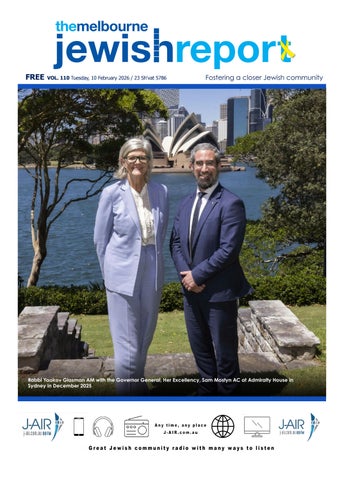
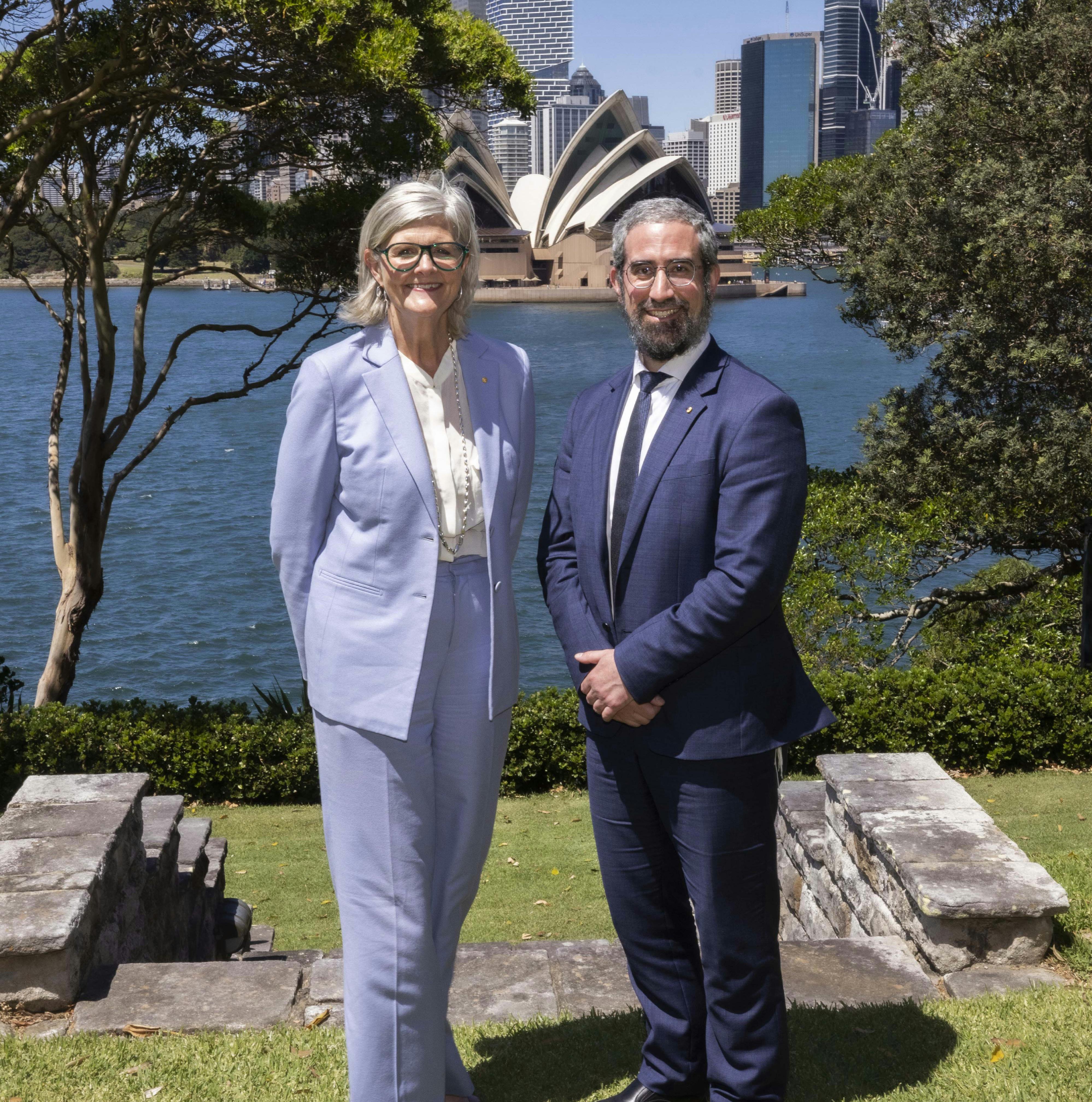
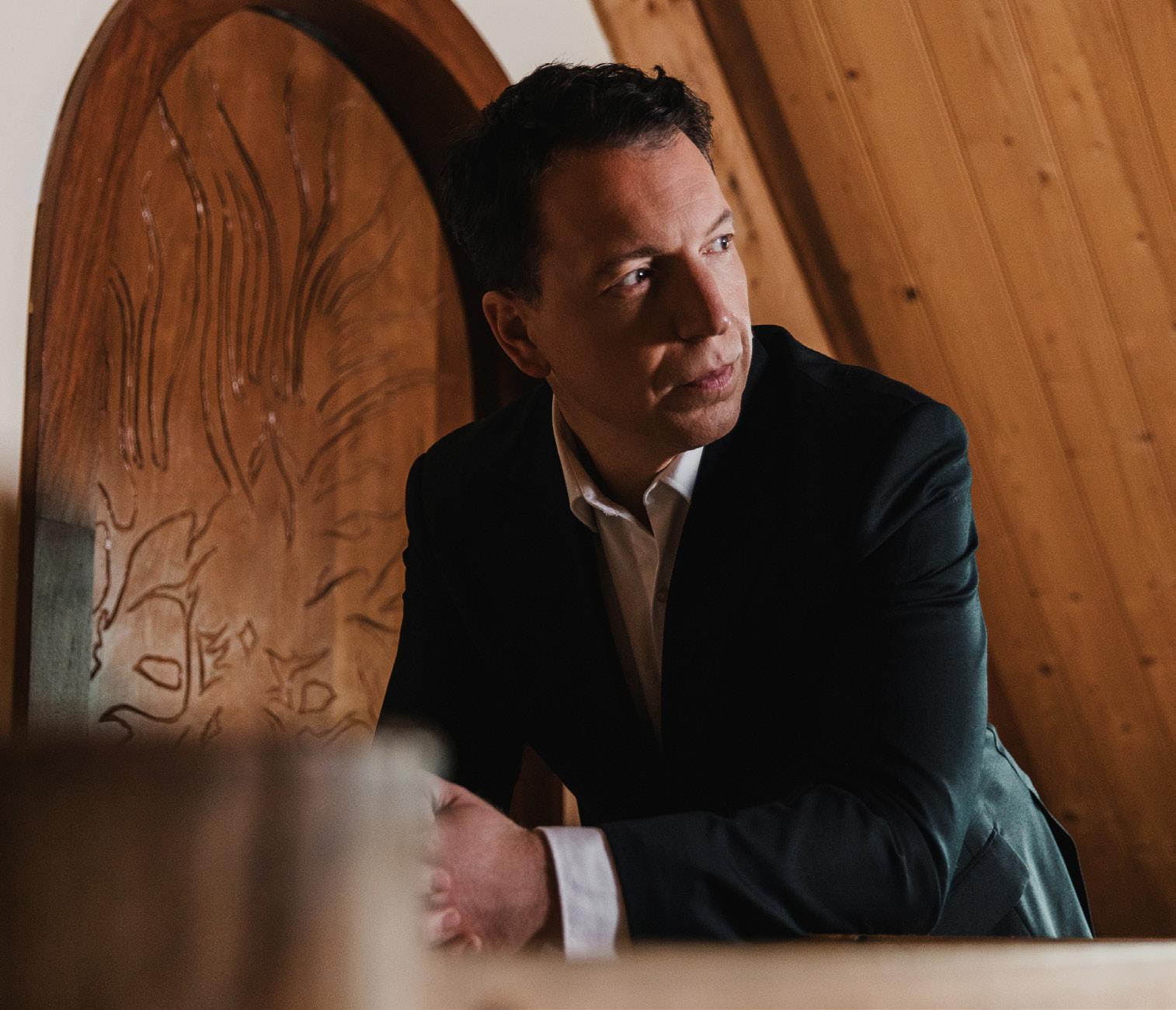
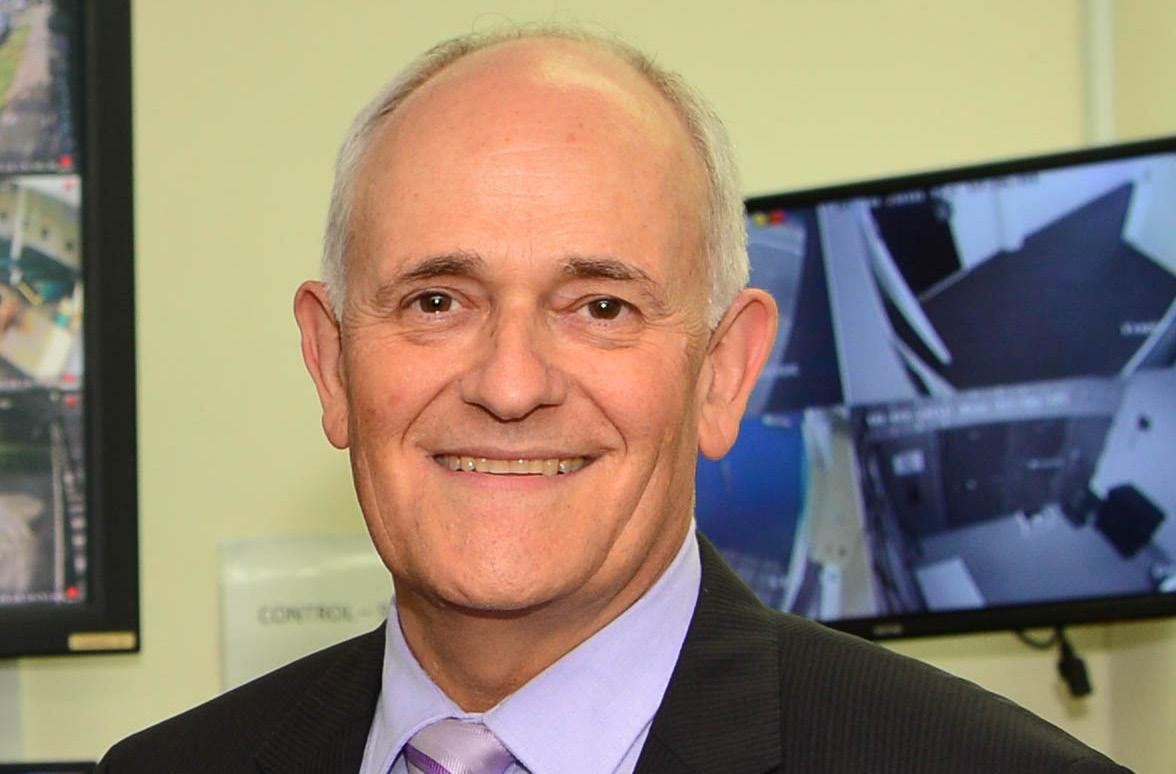
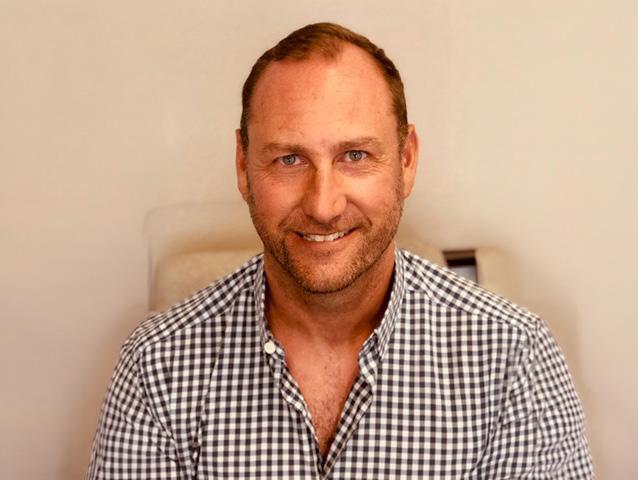
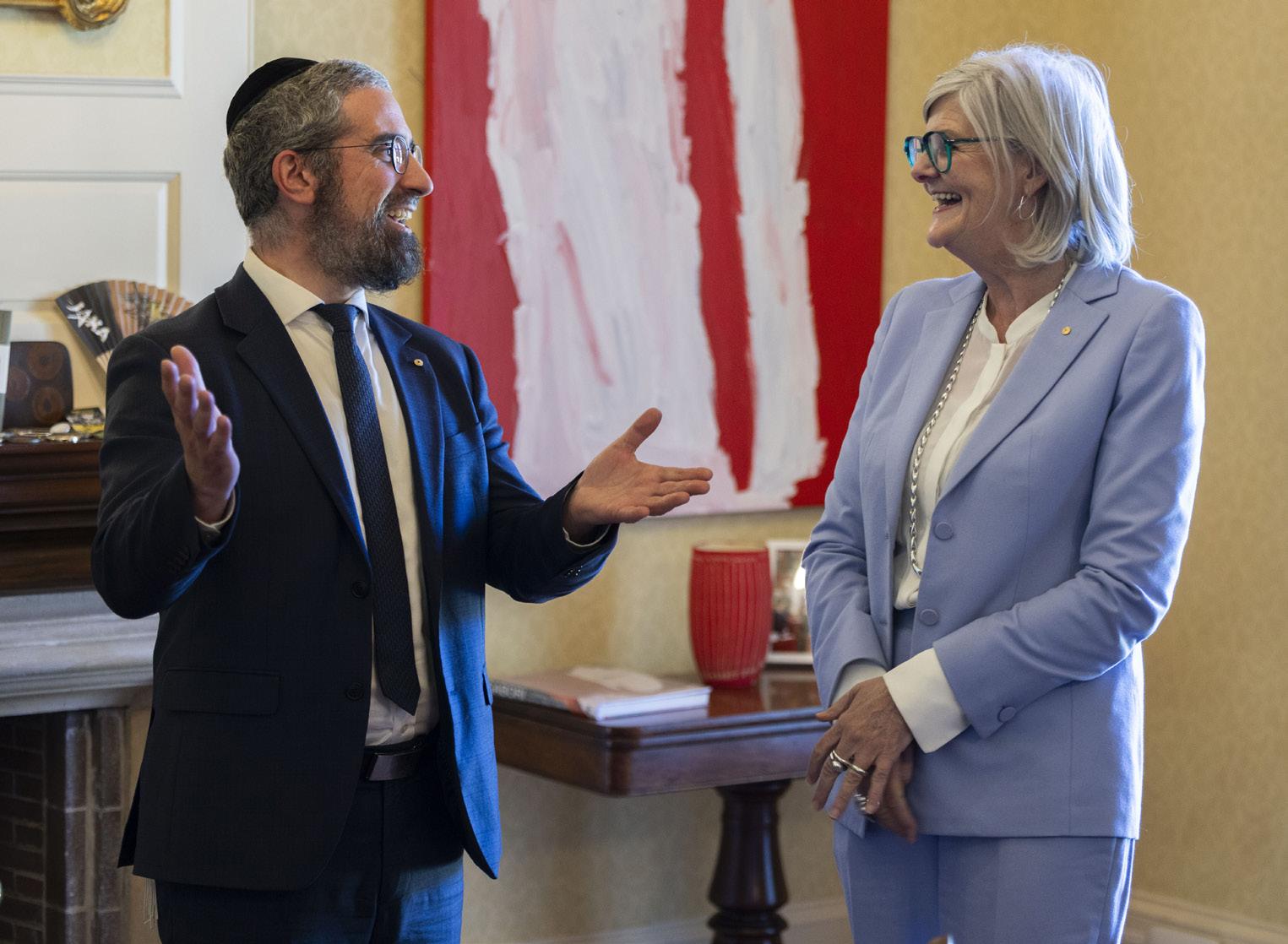
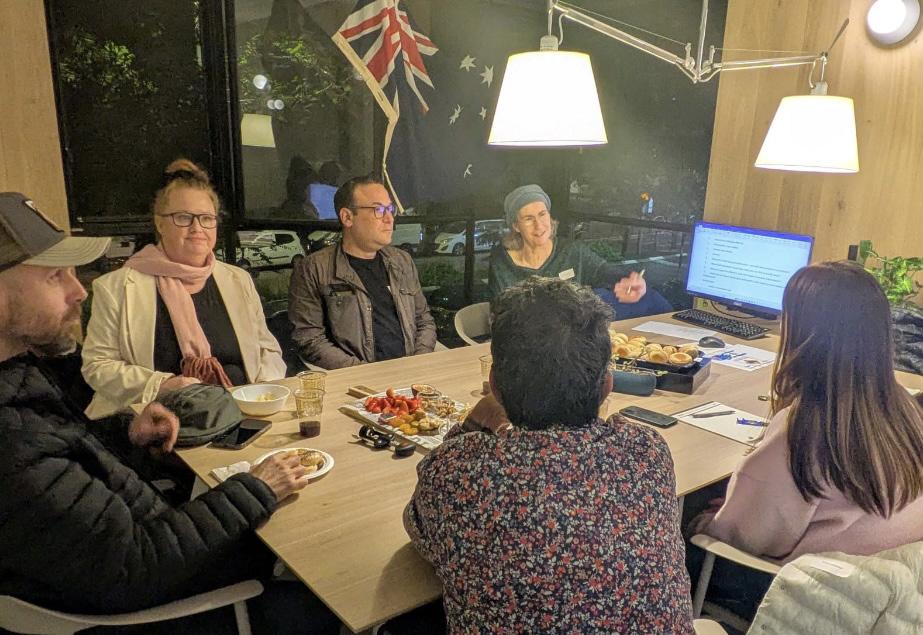
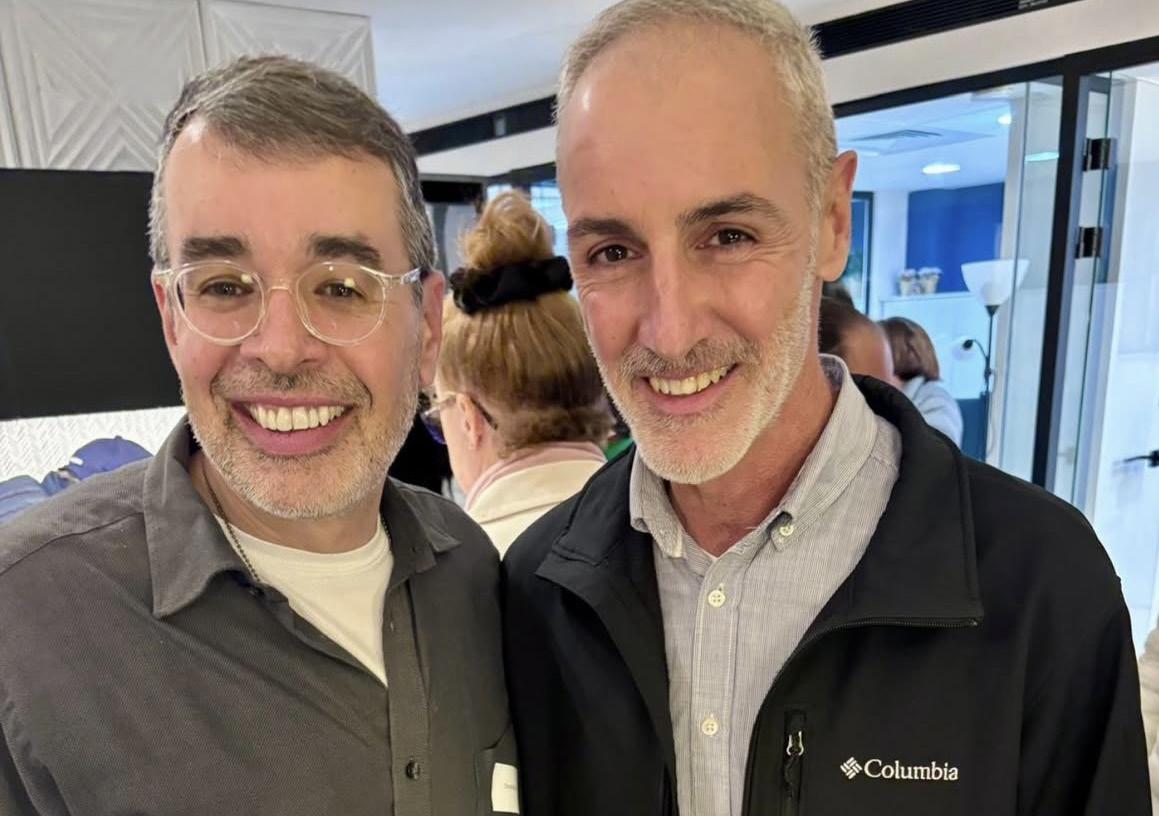
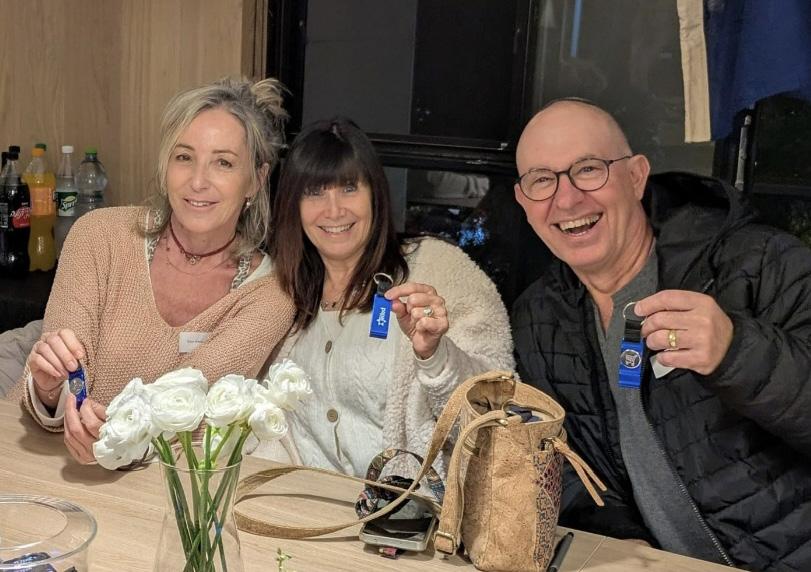
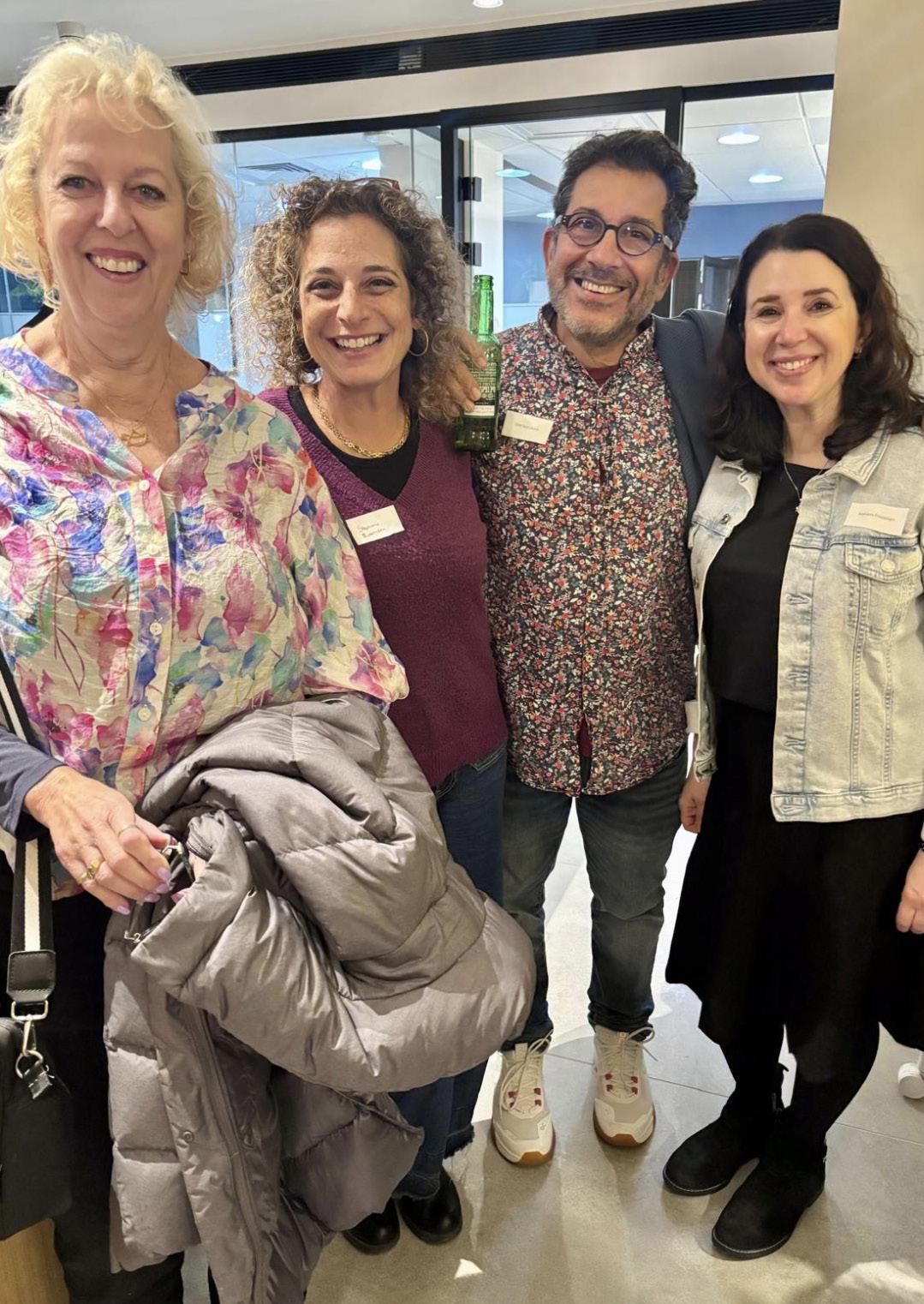
Rabbi Yaakov Glasman AM with the Governor General, Her Excellency, Sam Mostyn AC at Admiralty House in Sydney in December 2025
ANNE-MARIE ELIAS CONSIDERED OPINION
Following the Bondi massacre the foundation of feeling safe in Australia was shattered.
Notwithstanding the drastic rise of antisemitism since October 7, it was the tragic events at Bondi that shook Australia to its core.
Jewish American psychologist Abraham Maslow highlighted the importance of safety when he developed the hierarchy of needs in 1943. He spoke about “the need for security and protection from physical and emotional harm”.
The Macquarie Dictionary defines safety as: “the state of being protected from danger, harm or risk, encompassing physical well-being, security and freedom from hazards.”
Psychological safety encompasses various phases and components that contribute to a safe and supportive environment.
Let’s explore some of the different types of safety that are vital to our well-being in general and our mental health in particular.
We need to feel safe physically. We need to ensure that any environment we enter is safe. What this entails is the assurance that we are protected from physical harm from other people, per-
CROSSWORD
The need to feel safe
sonal actions and accidents. Awareness and planning are key element of physical safety.
It is why, for example, we lock our doors at home, are aware of our surroundings and who is in our immediate vicinity.
We need to consider how our body responds in the environments we enter as this is our inherent warning sign of danger. While one person may feel safe in a particular environment another may not. Therefore, listen to your fight/flight response and act accordingly.
We need to emotional safety. This is a basic human need and an essential building block for all healthy relation-
Magicians
ships. Emotional safety is the visceral feeling of being accepted and embraced for who you are and what you feel and need.
If you are chronically feeling emotionally unsafe, this results in intense psychological distress, increased isolation and greater difficulty reaching out and connecting with those that could provide an emotional safe haven.
When you feel emotionally safe with someone, your heart rate goes down and can even synchronise with the other person’s. Perspiration, a sign of stress, is also reduced. The muscles in your body
relax. You are also more likely to express your thoughts and feelings, both positive and negative.
Financial safety is another imperative. What strategies protect us from unexpected hardships and ensure stability and security in our financial lives? Consider what safeguards you have in place or need to put in place to maintain your safety.
So, when it comes to safety, the most difficult considerations are:
1. Trusting one’s own instinct when you are feeling unsafe. If your body is showing signs of anxiety and stress, then listen to those early warning signs. If the signs are ignored and/or acted upon later (rather than sooner), you may have placed yourself in unnecessary danger.
2. Asking for help. People often mistakenly believe they need to be completely self-reliant and find it hard to seek assistance. In truth, reach out the earlier the better to facilitate a positive outcome.
Dutch American psychiatrist Bessel Van Der Kolk, who wrote The Body Keeps Score, advises that “being able to feel safe with people is probably the single most important aspect of mental health.” He goes onto say that “safe connections are fundamental to meaningful and satisfying lives”.
Anne-Marie Elias is a psychologist in clinical practice for 25 years.
20. Who renamed Judea Syria Palaestina?
21. "Monsters" follower
22. He built a notable 33-Down
23. Sleeveless knit garment
27. Like the mentalists in this puzzle, but not the magicians
29. Org. the living men in this puzzle might perform for
30. Double ___ (Oreo product)
33. See 22-Down
34. Some bread
36. Anti-hate org.
38. Charlemagne's realm, for short
39. "...like ___ not!"
42. Simon Wiesenthal and Simone Weil?
43. "Finished!"
44. Prepared, as some tuna
46. "Black-ish" star Ellis Ross
49. Untainted environments
51. New Zealanders
52. Lechem ___
55. NBA player Anthony Davis's nickname, with the"
56. Chaim
57. Kosher animals native to North America
60. [Bzzt!]
61. Call ___ night (end the Seder)
62. Onyx or opal
Popeye's 'pea, and others
Treif email?
Fiery creature slain by Gandalf
"___ Island" (2008 Jodie Foster film)
Amalek are his descendants
YONI GLATT KOSHER
AROUND THE COMMUNITY VCE excellence
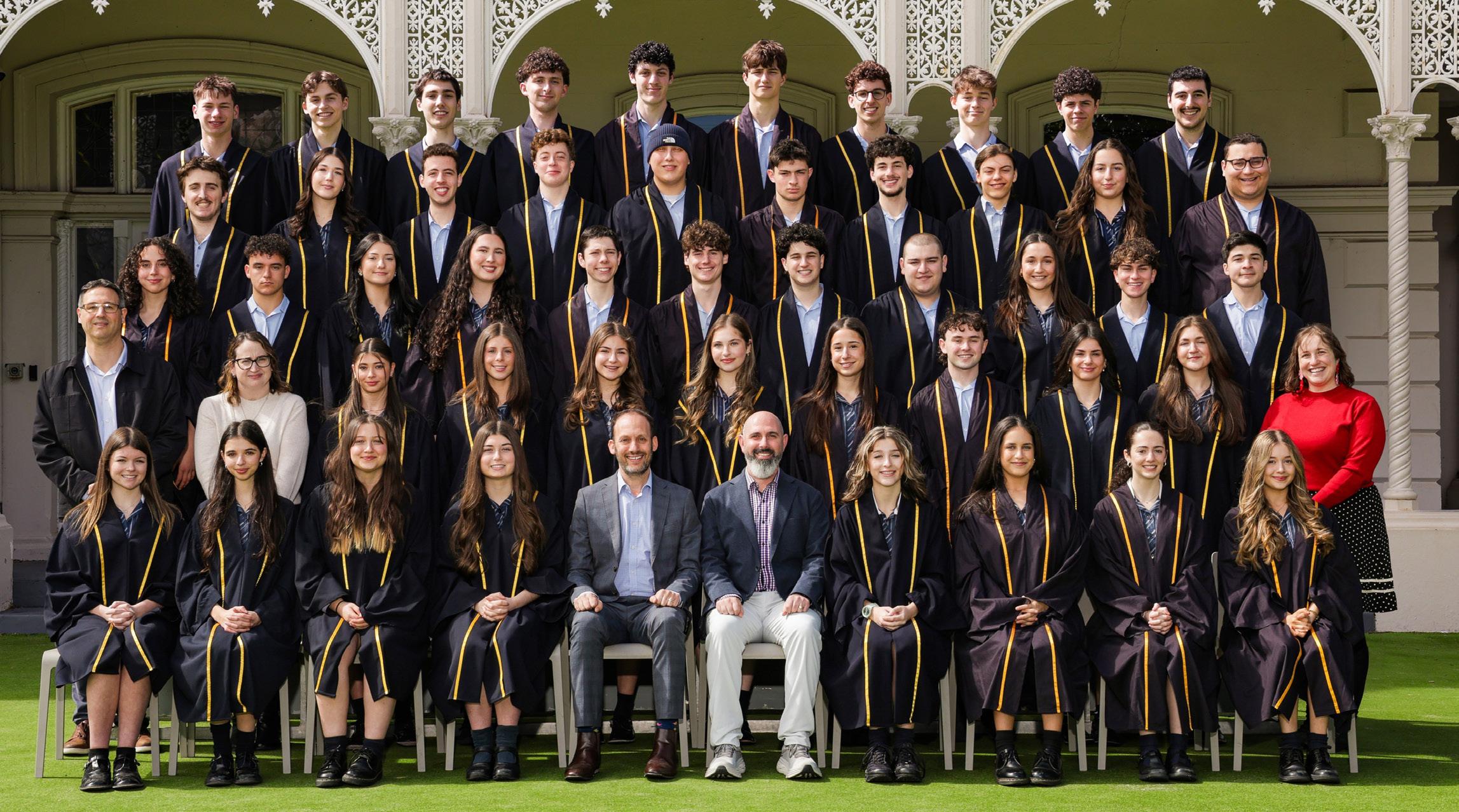
THE KING DAVID SCHOOL
The King David School begins the 2026 school year on an extraordinary high, proudly celebrating the outstanding VCE achievements of its Class of 2025. The school’s results reflect not only academic excellence, but resilience, curiosity and a genuine love of learning.
King David has again been recognised among Victoria’s leading schools, ranked 15th in State. The dux was Kiera Edelstein, who achieved an ATAR of 99.6 and a perfect study score of 50 in history revolutions.
Across the cohort, results were consistently strong. The median study score was 36, highlighting depth of achievement across subjects. Nine per cent of students achieved an ATAR of 98 or above, placing them in the top two per cent of the state. Twenty-eight per cent earned an ATAR of 95 or higher, ranking in the top five per cent, while 48 per cent achieved an ATAR of 90 or above, positioning them in the top 10 per cent statewide.
These outcomes reflect the dedication of King David students and the unwavering commitment of the school’s teachers, who supported and guided them.
The students’ success has translated into their post-school pathways.
Pathways advisor Liana Kiriati confirmed that 100 per cent of students received a first-round offer, with 96 per cent securing places within their top three preferences. Offers span disciplines
from design, fashion, psychology and commerce to engineering, science, software engineering and public health.
Principal Marc Light said, “Our founders chose the symbol of David’s harp resting on a bed of golden wattle to represent
the school’s dual commitment to Jewish identity and our Australian story. Our graduates carry both proudly.”
The Class of 2025 leaves a legacy of excellence, purpose and promise, and the school could not be prouder of all they have achieved.
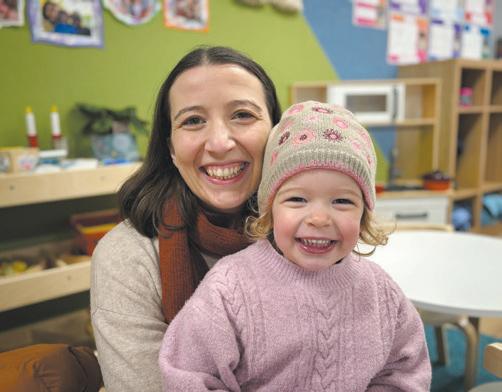
KDS Playgroup
Come along to our free ELC playgroup for 0-3 years Kef Kan (Fun Here) When: Every Friday Time: 9:00am - 10:00am
Cost: Free Register your interest
The King David School class of 2025 graduation
CONSIDERED OPINION
DR DVIR ABRAMOVICH
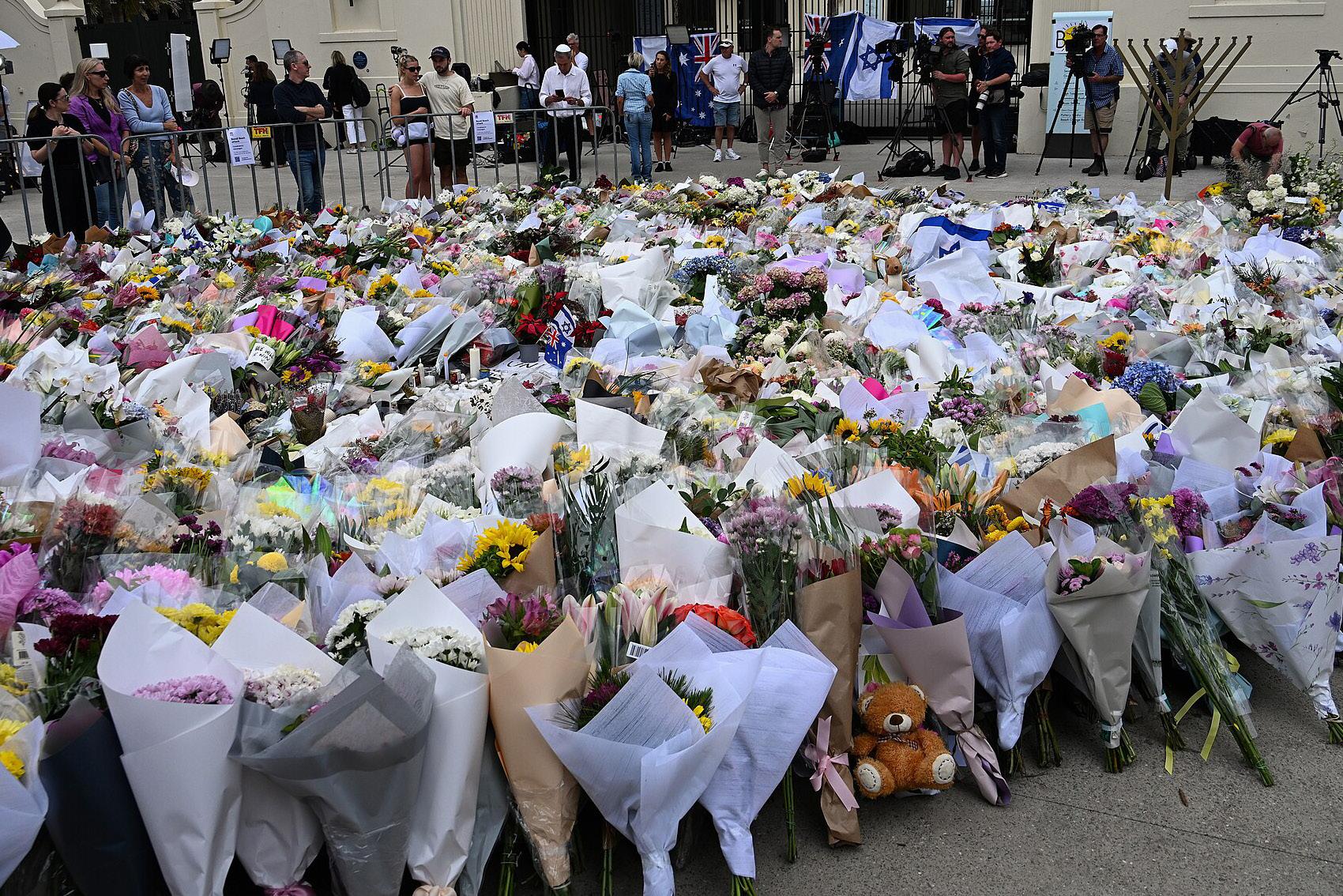
Nearly two months have passed and the pain still clings like a shadow that refuses to lift, a sorrow that coils tighter in the chest with every breath. When they gathered on Bondi that warm summer evening, they were not distant figures in a tragedy yet to unfold.
They came for a celebration, for connection, for the simple miracle of being together under an Australian sky. They were simply people – pulses quick with joy, souls open to the night, trusting in the gentle rhythm of Australian life. That trust is what was murdered first.
Fifteen people were slaughtered at Bondi on December 14 while celebrating Chanukah. Not killed. Slaughtered. I am done with polite language. Polite language is how we bury the dead twice, once in the ground and once in euphemism.
One of them was 10-year-old Matilda. Ten. An age meant for scraped knees and unfinished sentences. A child who should have outgrown her shoes, not her life.
Picture her standing on that beach as the sun dipped low and the candles flickered against the evening breeze. The simple, precious wonder of being a child, free, unguarded, wrapped in the promise that this country would always keep her safe.
The killers looked at her, a radiant, living miracle and saw a target.
They looked at a gathering of love and light and brought death to it. They looked at Holocaust survivors, rabbis, parents, grandparents, sons and daughters, and in that cold, merciless instant, they sentenced them to oblivion. Every victim who bled on that beach carried a world that vanished instantly: a voice that will never interrupt dinner again, a chair that will stay empty long after the flowers wither, a tomorrow erased so quickly we barely had time to say its name.
Australia now feels like a house many of us have lived in all our lives, where the walls are still standing, the windows still open, but certain rooms have changed shape while we were asleep. You can still walk through it. You just do it differently now. More carefully. More hesitantly
That shift has hardened into a question Jewish Australians never wanted to ask out loud: Do we still belong here? Not as visitors. Not as tolerated guests on good days. But as full, equal citizens, able to stand in public as proud Jews without calculation.
I used to believe the answer was obvious. I believed Australia had learned something permanent from history. That cruel vilification, incitement to violence, dehumanisation and vicious bigotry must be met head-on, early, firmly, before it leads to carnage. Bondi shattered that faith.
British novelist and screenwriter Ian McEwan wrote something after September 11 that has never left me. He described the phone calls from the towers, of husbands calling wives, parents calling children, and strangers calling anyone who would answer. In
The Bondi massacre: the day our idea of Australia died
those final moments, with death seconds away, what did they say?
Only love. That is what the victims carried in their last moments. Not ideology. Not politics. Love. For the people they would never see again. For the lives they would never finish living. For the ordinary future that was about to be obliterated.
The father and son could not acknowledge or imagine this. That is their monstrosity. Their evil made them incapable of understanding that every person they murdered was the centre of someone’s universe. That is what antisemitism does.
But Australians can imagine it. They must imagine it. Because if they refuse, if they let the slain become statistics, abstractions, last year’s news, they become accomplices to the forgetting.
Two months out, the cameras have moved on. The nation has returned to its regular business, as nations do, because horror is exhausting and normalcy is seductive.
This is how it always goes. The vigils. The speeches. The flowers piled high. And then, slowly, the dead sink into memory. It makes me want to scream until my throat burns raw.
What terrorism does, that bullets alone cannot do, is that it defiles places. Before December 14, Bondi was a beach built for ease. For bare feet. For salt on skin. A stretch of sand where people gathered without fear. Where couples came to swim, picnic and watch the dusk settle. Where life unfolded in the open, unremarkable and free.
Now Bondi is a crime scene. Now it carries an oppressive weight that will never fully lift. Jews know this violation intimately. We know what it is to return to a place that was once secure and find it transformed. To walk streets we have walked a thousand times and feel our skin prickle. This is not paranoia. This is the
tax that terror imposes on the living. I am Jewish. I am Australian. And I am angrier than I have ever been in my life. Not just at the killers. Killers are easy to revile. I am angry at the years of tolerance that preceded them. The rallies where “From the River to Sea” and “Globalise the Intifada” were chanted and the police watched. The universities where students were threatened and intimidated. The society that treated antisemitism as an awkward topic, rather than as a sickness that must be named and fought.
I am angry at politicians who knew what was growing and did nothing. At the institutions that enabled this societal disease to spiral out of control. At everyone who saw the building on fire and decided it was someone else’s problem.
This stain should keep our elected leaders awake at night. It should make them ashamed of every moment of complacency, every shrug, every time they decided that antisemitism, antiZionism, anti-Israelism should be given a pass, a cover.
A Royal Commission has been announced. Hate laws have been passed. Politicians have spoken with appropriate gravity. The machinery of response is grinding forward.
Fine. Necessary. Not enough.
Royal Commissions are what countries do when they have been asking the wrong questions for too long. They are an admission that the system failed. Not dramatically, not with alarms and warnings, but through neglect and moral blindness.
Bondi was not an aberration.
It was a warning about what happens when moral clarity is avoided or postponed for the sake of comfort or political gain. Australia did not open its eyes to antisemitism and Islamic extremism on that fateful December 14. It had been living beside it for
years. The cries of alarm rose again and again – sharp, desperate, impossible to ignore. They were noted. They were managed.
Managed. There’s a word that should be scrapped from the language. Managed means nobody took responsibility. Managed means the file got passed from desk to desk until it disappeared. Managed means 15 people are dead because a real confrontation with the disease of radicalisation felt like too much trouble.
This inquiry must tear open the full record of what was indulged, minimised and waved through while danger thickened. It must drag hidden failures into daylight and trace the path of how antisemitism was normalised until it became permissible in the mind of some to pull a trigger. This cannot be a report that sits on a shelf. Findings without force are paperwork, not justice.
And yet, if history teaches us anything, it is that the Jewish people have survived empires that ground nations to dust. We emerged from Nazi death camps designed to end us and built new lives. We have said Kaddish more times than history should require. Yet, we are still here, still praying, raising children, welcoming Shabbat as we always have. We will not cower. We will not disappear. We will not make ourselves small to make anyone comfortable. We will speak. We will demand. We will stand in public, visibly, unapologetically, for as long as it takes and speak truths that sting.
Australia now stands at a crossroads. The headlines have turned away, chasing new storms while this one fades from view. What remains is the question of whether we will ever truly feel safe again in the place we still call home.
And I ask myself whether the blood spilled at Bondi will actually change anything in this country, or whether it will be absorbed into history the way every other Jewish massacre has been absorbed – mourned briefly, explained away, forgotten. I don’t know the answer, but the signs so far are frightening.
The machinery that fed this venom and that makes the next act of violence possible has not shut down. Jews, Zionists and anyone who dares express connection to Israel is still being branded a genocidal baby killer and a war criminal. Bondi did not interrupt that language. And when words like these are allowed to circulate without consequence, they do not remain words. They become the spark that ignites the next horror, the poison that seeps into the soul until firing a shot at a Jewish person feels like justice.
But I know this. The measure of Australia is not what it says at memorial services. It’s what it is willing to do before the next Jewish names are spoken over coffins.
Dr Dvir Abramovich is chair of the AntiDefamation Commission and the author of eight books.
Dr Dvir Abramovich
KATHY KAPLAN OAM DIRECTOR BET-OLAM
Modern life moves quickly. We schedule, multitask and optimise. We rush meals, conversations, even grief. Death can feel like an interruption to be managed rather than a moment to be held.
Jewish tradition insists on something different.
At Bet-Olam, what we see time and again is that at the moment of loss Jewish tradition understands something essential about human vulnerability: when everything feels unreal, structure and presence matter.
The focus of Jewish practice is not on spectacle or ceremony, but on dignity. Care for the deceased begins immediately, quietly and respectfully. There is no rush to perform, but there is an urgency to care. That balance of unhurried yet attentive care is something modern life rarely models well.
Jewish death care also values simplicity. It strips away excess, hierarchy, embellishment and competition. In death, everyone is equal. In a world accustomed to curated experiences and personalised branding, that can feel confronting. It’s also deeply relieving.
Jewish practice assumes grief is disorienting. People forget things. They repeat themselves. They don’t know
What Jews gets right about death that modern life often gets wrong
what they need. Rather than expecting mourners to manage, Jewish tradition wraps them in a framework that holds steady when they can’t. Our rituals are there to make space for grief, not to rush it.
Bet-Olam sees this play out across the different choices families make. Some families select burial, others – for a range of personal or practical reasons –cremation. Some choose a rabbi, some
a civil celebrant, while others again don’t want an officiant at all. Some want a traditional religious service, some would like a more contemporary Jewish service, while others want little to no religious reference. Some request poetry or music, some don’t. Some want several minyanim in a shule or at home, some would like just one, while others don’t want any. What matters is not uniformity, but care. Respect.
Listening. Guidance. Relevance to who the deceased was. Relevance to those left to mourn. A sense that they’re not walking this moment alone.
Much of what happens after a death is quiet, practical and unseen. Phone calls are made. Arrangements are coordinated. Tahara is performed. Family and friends bring food and their time. These acts don’t remove pain. They prevent isolation. That distinction matters.
In a culture that often treats death as taboo or spectacle, Jewish tradition offers something different, something steadier and more humane. It doesn’t pretend loss can be fixed. Instead, it says: Slow down.
Pay attention. Care for one another. Honour the person who has died. Honour those who are left.
At Bet-Olam, we see how these values ease families through their most painful days, not by making grief smaller, but by making it held.
In a world that often moves too fast even for sorrow, that is something Jewish tradition gets profoundly right.
To contact Bet-Olam, please call 98836237 or email info@jewishfunerals.org.au.
DAVID SCHULBERG CONSIDERED OPINION
Peter Wertheim AM has been involved with the Executive Council of Australian Jewry (ECAJ) for nearly 30 years and is currently its co-CEO.
David
While the Parliament was shaping up to consider new anti-hate legislation, you exhorted the Liberal Party leader Sussan Ley not to allow the perfect to be the enemy of the good on the draft laws, saying the bill would offer urgent new protections, including new powers that are being introduced for the legal designation of hate groups. How do you feel about the outcome of the parliamentary measures, given that key legislation to tackle hate speech was put aside?
Peter
Yes, that statement about the perfect not being allowed to be the enemy of the good was directed at the proposed new offence of intentional promotion of hatred of people on the basis of their race.
The way that offence had been drafted had a big gap in it. There was a big hole for religious exemptions for quoting or referring to religious texts.
We had openly criticised that loophole. Nonetheless, we thought that having an offence there – even with that loophole – would be better than having no offence at all along those lines.
Because it still would have captured egregious antisemitic speech that didn’t fall within that loophole. And there would have been quite a lot of that. So, we said don’t let perfect be the enemy of the good. And on that basis, we sought to urge the Coalition to support that offence. They didn’t in the end.
We haven’t legislated the offence of the intentional promotion of racial hatred. That was disappointing, but not as grievous a loss as it might have been, because with that exemption in it, it wasn’t perfect by any means. What we’ve lost is something but not perhaps as great as it might have been.
That’s the negative part of the whole package. The positive part is the other 75 per cent that got through, including the new listing regime for prohibited hate organisations. And that definitely is an innovation, which we have been recommending and urging on government for a long time. I traced it back to 2021, when we first did a written submission to a parliamentary inquiry and made that recommendation.
It’s good to see it was taken up eventually, even though, sadly, too late to save the 15 innocent lives of Bondi and all the other tsuris that our community has been going through for the last two years. It’s sad that it’s taken such serious events as that to achieve some progress.
It was on our agenda. There’s a record of it. It goes back quite some years, as with many other things that the ECAJ has recommended for a long time and which eventually become government policy or are enacted into legislation.
Anti-hate legislation
It’s better late than never, although it would have been nice to see it earlier.
David
There were other limitations, though, in this legislation. You mentioned the one about the religious text. I’ve also heard that there were exemptions for the public sector that were included in the provisions that were up for consideration; anybody who was a teacher was potentially going to be exempt from any of the legal provisions.
Peter
Look, I don’t think it’s as black and white as that. Whatever the situation would have been, a prosecutor would have had to prove an intention to promote hatred of other people on the basis of their skin colour, nationality or ethnic origin. The Jewish people are covered.
Within that general rubric, there’s a lot of case law that establishes that the Jewish community and the Jewish people have a common ethnic origin and we’re not just a faith community. That’s a very important concept for people to understand.
Proving an intention – to promote hatred on that basis – is a very high bar, because it’s not just something you can infer from circumstances or even the words used necessarily.
The intention has to be proven beyond reasonable doubt, or would have had to be proved beyond reasonable doubt if the offence had been enacted, and that is the highest evidence standard known to the law. It is a very high bar to cross. It would have been a difficult thing to establish, even in the best of circumstances, so that people who were arguing that this was going to be a constraint on free speech and so on were ignoring the record of prosecutorial reluctance in the whole range of cases.
In the public sector, I think it would have been especially difficult to prove it because the presumption would have been that somebody acting in that space would not have been acting with an intention to promote racial hatred. It would have taken a very high evidentiary standard to get over that hurdle.
David
The other ream of arguments came from people like the Australian Human Rights Commission. Their president, Hugh de Kretser, said that only allowing three days to examine the bill was insufficient because the issues were so complex. If they were rushed, the risk was that you would get unintended consequences or the law would not be as effective as it should be in achieving the aim of promoting safety and addressing hate speech. Gemma Caffarelli from Liberty Victoria also said there had not been enough time to consult with and inform the wider public. There was a strong possibility with this rush to get legislation through that there were going to be potential consequences that could lead to a very messy situation down the line. Although the Prime Minister wants to park this while he’s in office, I think there is still some feeling or wish to revisit these laws and do it properly.
Peter
What they didn’t tell you is that it’s not a new issue of public policy or a new area of the law. It has been debated in one form or another for quite a number of years. The current federal government actually made a commitment at the beginning of 2024 to introduce such laws and there’s been a debate about what they would look like and even a parliamentary inquiry that looked at the new hate law provisions that were introduced in 2024 and the absence of a racial vilification offence in the
package that came forward in 2024. It’s not as though the Australian public and stakeholders were hit with this issue out of the blue, all of a sudden, never having even thought about it before. This has been something that people have been thinking about for a long time. Exposure drafts have been put forward from time to time to various stakeholders. They say it was brought on too quickly. How much extra time did they need? Some people were talking in terms of an extra year. What happens if G-d forbid there’s another shocking incident in that time? Is the government going to just sit on its hands while all that’s pending? The government did act with urgency; it was right to act with urgency. Whether it should have allowed maybe an extra week or two, that’s debatable. It had to be dealt with quickly. It was not a new area of the law. And the most important thing also is that there is now a provision in the legislation and it will be reviewed automatically within the next two years. We can then look back, instead of just speculating about what the effect of the legislation will be. We’ll be able to look back in two years’ time and see what the actual record is. Has it really been a fetter on free speech or freedom of religion? Has it really resulted in a flood of prosecutions? The answer to all those questions will be no. If anything, there’ll be underperformance. That’s based on the record of hate speech legislation in the past and the absence of prosecutions. That’s the better way to deal with it.
This is a slightly modified extract from an extensive interview with Peter Wertheim AO, who was interviewed by David Schulberg on ‘The Israel Connexion’ program on J-AIR community radio. The full interview is available as a podcast on the J-AIR website. David can be heard weekly on J-AIR in Melbourne and on 2TripleO in Sydney.
Peter Wertheim AM
Ron Dermer, the former Minister of Strategic Affairs of Israel, and one of the most influential figures in shaping Israel/ U.S. relations, will headline the 2026 UIA Gala events in Sydney, Melbourne and Perth.
Over the past two decades, Dermer has served the State of Israel in various professional capacities. After October 7, he was tasked with formulating a “Day After” plan for Gaza. In February 2025, Dermer was charged with heading Israel’s hostage negotiating team.
Widely regarded as a trusted conduit between the Israeli Government and multiple U.S. administrations, Dermer has been at the centre of some of the most consequential strategic decisions in recent years. He was in the room with President Donald Trump during critical post-war planning discussions and played a pivotal role in advancing the Abraham Accords, reshaping Israel’s diplomatic landscape and deepening regional alliances.
The 2026 UIA Campaign focuses on a significant mission: rebuilding our homeland. The needs facing Israel today extend far beyond physical reconstruction. Rebuilding means national rehabilitation, supporting Israelis at every stage of life, from newborns to the elderly, and strengthening mental-
Major drawcard named for 2026 UIA Gala events
health services, community resilience, welfare support, rehabilitation programs, and absorption services across the country, from north to south.
In 1920, Keren Hayesod-UIA helped build a nation that did not yet exist; in 1973 and 2023, it helped Israel endure her darkest moments. In 2026, when Israel again needs help, Keren HayesodUIA remains fully committed. Dermer’s deep experience in strategy, diplomacy
and global Jewish affairs brings with it unprecedented insights. His participation in UIA Gala events underscores the significance of this moment, a period that demands clarity, courage and unwavering commitment to the People of Israel.
Joining Dermer will be Michal Uziyahu, Mayor of the Eshkol Regional Council. Michal is no stranger to UIA. UIA Australia provided urgent support for her
devastated communities post October 7, enabling critical rehabilitation and community resilience programs on the ground. Michal returns to share firsthand how Australian support helped her region start to heal and why the rest of Israel now needs that same unwavering commitment, as the nation enters its long-term rebuilding phase.
UIA Australia president Andrew Boyarsky said, “For 105 years, our community has stood by Israel in moments of hope and heartbreak. Today, as Israel enters a long and difficult period of rebuilding, our responsibility is clear. We must come together in action – united, unwavering and committed –to help rebuild her future. UIA was there at the beginning and we will be there now. For life.”
The emergency needs of Israel might be over, but the long-term work of rebuilding our homeland has just begun. These Gala events will raise much needed and urgent funds to start the rebuild. Your financial support is vital to Israel’s future.
Bookings are open. Visit uiaaustralia. org.au to secure your ticket. Please be aware that these events will sell out, so act now.
NSW – Sunday 22 February
VIC – Wednesday 25 February
WA – Thursday 26 February
Follow UIA on Facebook and Instagram (@uiaaus) to stay up to date on 2026 Campaign events.
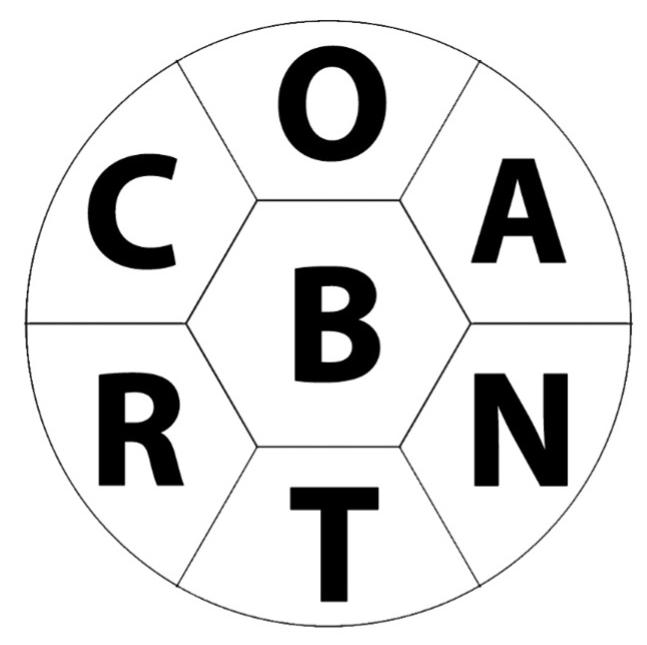
JEWISH GEOGRAPHY SPELLING BEE
How many common words of five or more letters can you spell using the letters in the hive? Every answer must use the centre letter at least once. Letters may be reused in a word. At least one word will use all seven letters and be a location with a direct Jewish connection.
Proper names, other than the Jewish location, and hyphenated words are not allowed.
Score one point for each answer and three points for the Jewish location that uses all seven letters.
Rating: 12 = Good; 16 = Excellent; 20 = Genius
Yoni Glatt has published more than 1,000 crossword puzzles
ANSWERS PAGE 15
UIA Australia president Andrew Boyarsky
CONSIDERED OPINION
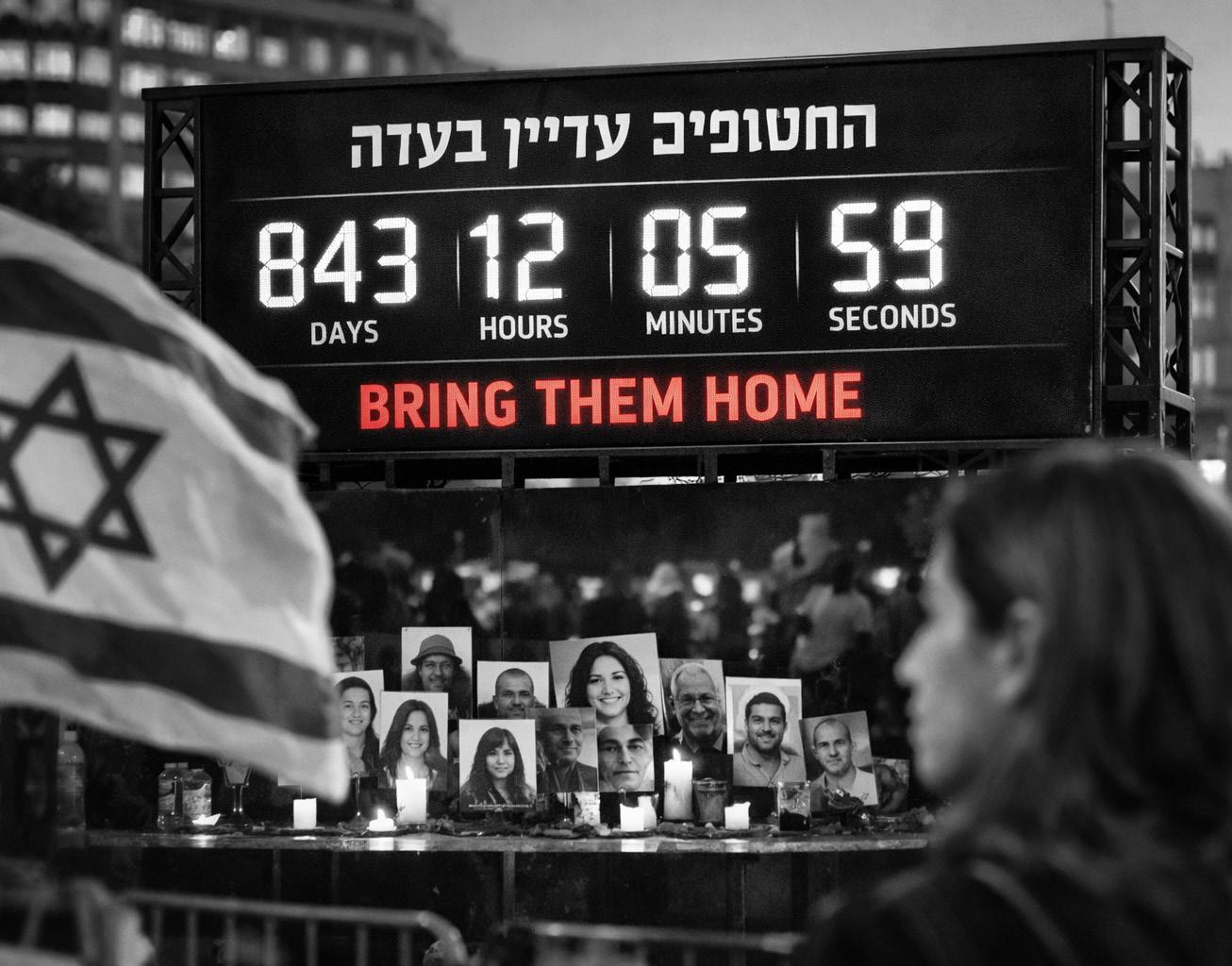
For 843 days, 12 hours, five minutes and 59 seconds, a digital clock in Tel Aviv’s Hostages Square counted how long Israeli hostages were held in Gaza. It ticked relentlessly, marking every stolen second. When it finally stopped on 27th January 2026, it left behind a simple fact: more than two years in which Israelis –and Jews around the world – lived with the knowledge that members of their extended family were missing.
Humans are not good at noticing time while we are inside it. We stretch it, compress it, kill it. We distract ourselves from it. The hostage clock would not allow that. It stripped time of metaphor and forced it into view as something intimate and finite. Every additional day was another unit taken from men, women and children who could not spend it themselves.
There is a well-worn Buddhist line – “the trouble is, you think you have time” – that usually lands as a gentle prompt. In Hostages Square it landed as a rebuke. For the captives, time was not squandered; it was stolen. For everyone watching, the clock posed an unspoken parallel question: what were we doing with the same stretch of days?
One striking feature of this period, often hard to explain to non-Jews,
We counted the moments
was the way Israelis spoke about the hostages as “ours”. Not as a cause or a campaign, but as family. “Our children.”
“Our elderly.” “Our brothers and sisters.”
This was not rhetorical flourish. It reflected an ingrained Jewish ethic that collapses distance between strangers and insists on shared responsibility.
In Israel, with its small population and overlapping social circles, this closeness is almost literal.
If you did not know a hostage personally, you likely knew someone who did.
What surprised many was how closely this sense of kinship was echoed in the diaspora, including right here in Australia. Australian Jews followed the hostage clock from Melbourne, Sydney and further afield.
We are a culture that prefers understatement and emotional tidiness.
From Abu Gosh to Abu Dhabi
Every time I go to Israel, I end up in Abu Gosh, an Arab village just outside Jerusalem, famous for its hummus and for drawing Jewish diners from across the country. I never plan it. I just somehow find myself back there, sitting in one of those big, noisy restaurants where the tables are packed, the Arab waiters move at an almost impossible speed and the hummus arrives warm in wide, shallow plates.
There’s the glossy swirl of olive oil, a small mound of chickpeas in the middle, and pita that’s still warm from the oven. It’s not fancy or curated.
It’s just easy. This is what I’ve driven all the way from Tel Aviv for and it’s the same every time.
What I always notice, though, is how unremarkable it feels and I mean that in the best possible way. Arabic drifts out from the kitchen, Hebrew from the tables. No one behaves as if they’re making a statement.
People are just eating. As a Jewish woman sitting comfortably in an Arab village, I don’t feel like a guest in enemy territory; I feel like a regular. There’s a quiet confidence to the place: we know who we are, you know who you are and there’s room at the table for everyone –and for another bowl of hummus.
One afternoon, dipping warm pita into hummus that genuinely deserved its reputation, it hit me: Abu Gosh is proof – very ordinary, physical proof –that Jewish comfort and Arab space can coexist without drama. Nothing symbolic. Nothing forced. Just lunch. Once I saw it that way, a bigger question followed me home: if a village can manage this over a meal, can a country do something similar on a much bigger stage? That question kept pulling my thoughts back to the United Arab Emirates. On a hot night in Dubai now, you really can see Israeli families
Yet for 843 days, many Australian Jews checked updates compulsively, learned names and found themselves emotionally attached to people they had never met. Photos appeared on synagogue walls and kitchen fridges. Special prayers were added. Office conversations became strained, then unavoidable.
This closeness was not merely sentimental. Israelis filled Hostages Square week after week, demanding action.
In Australia, people wrote to MPs, attended vigils, donated, explained and re-explained why the faces on posters outside cafés mattered. The old line –wherever we live, we are one people –shifted from slogan to lived experience.
The number on the clock mattered. It measured endurance without collapse.
Each day held birthdays, festivals and funerals – all lived with an empty chair.
Jewish tradition treats time as moral substance: each moment singular, unrecoverable.
What was stolen in Gaza was not only freedom, but unrepeatable moments that will never be returned.
Now the clock has stopped, but that does not mean the work has.
Remembering names, supporting survivors, resisting indifference when attention drifts – these are not optional extras and never have been.
wandering through shopping centres the way they wander down Dizengoff Street: kids in shorts, parents in sandals, Hebrew blending into the background noise of English and Arabic. It’s not a peace conference – it’s just people deciding where to eat or which shop to try next.
None of this fell out of the sky. In 2020, the UAE and Israel signed the Abraham Accords, a United Statesbrokered agreement that normalised relations and opened the door to embassies, direct flights, tourism and trade. I don’t think the UAE suddenly fell in love with
Israel and I don’t think Israel discovered some deep cultural bond with the Gulf. It looks more pragmatic than that. Israel brings technology, security expertise, water and agtech, medical innovation; the UAE brings capital, logistics and a global business platform. Both value stability. Both worry about some of the same neighbours.
Still, the effect on everyday Jewish life there is real. Jewish prayer in Dubai used to happen quietly, behind closed doors, in private spaces. Now there are synagogues people talk about, kosher restaurants and caterers you can find online and Jewish holidays that appear in Emirati social media feeds, as part of the country’s public face.
None of this is pure or simple. Old conflicts don’t vanish because a new flight route opens. The Palestinian issue hasn’t evaporated. Tensions and contradictions sit side by side. But when I think about that hummus table in Abu Gosh and compare it with the sight of a kippah in a Dubai hotel lobby or a kosher sign in a Dubai mall, I see the same stubborn idea at work: you can be visibly Jewish in an Arab place and not immediately brace for impact.
That’s why this AbuGoshtoAbuDhabi arc makes me quietly hopeful. Neither place is utopia. Neither solves the conflict. But both show that normal, repeatable interactions between Jews and Arabs are possible – and can even become boring.
And boring, in this context, is exactly what we might dare to wish for.
How a bowl of hummus quietly rewired my Middle East map
SHARONNE TIDHAR
SHARONNE TIDHAR
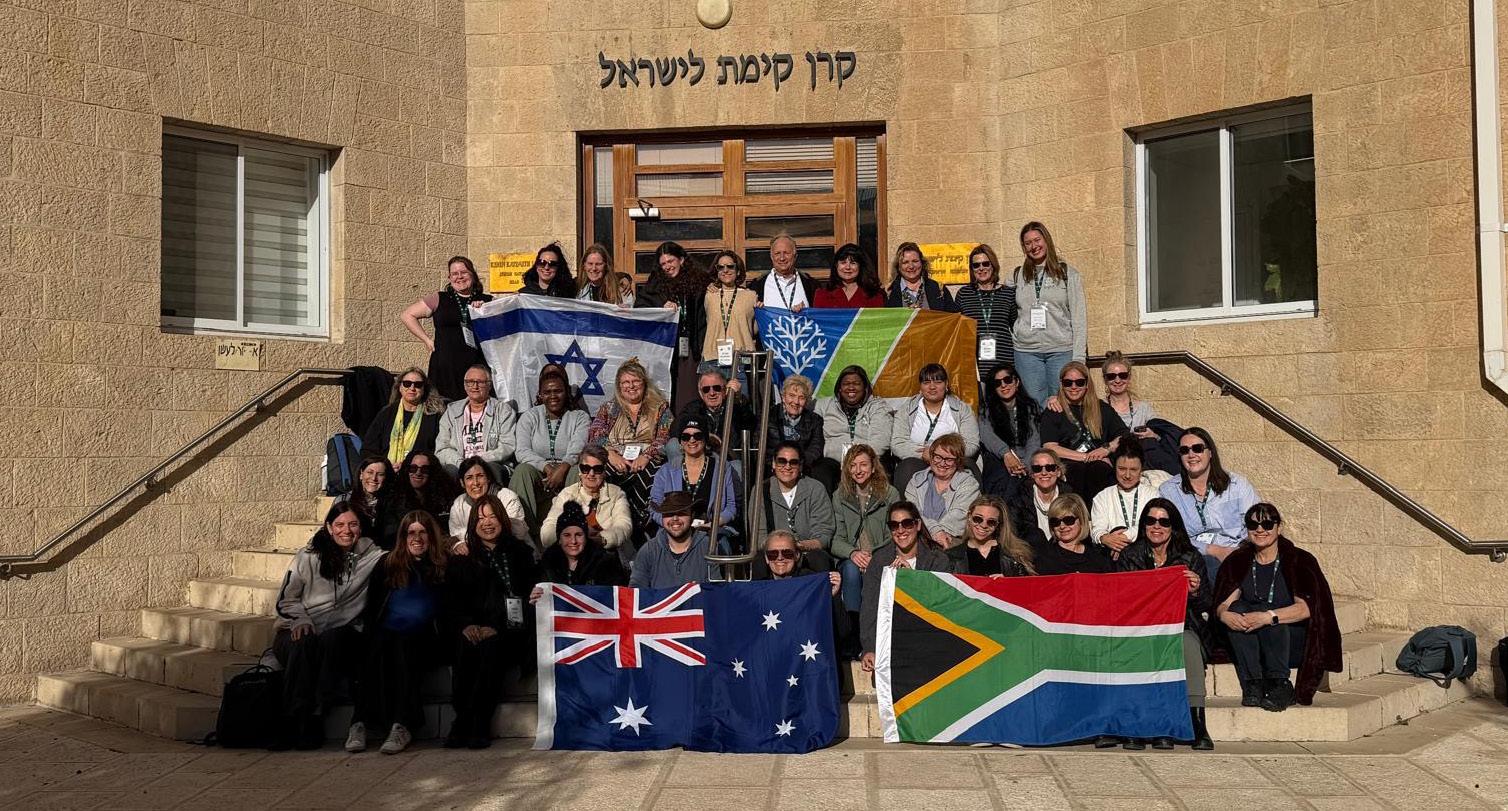
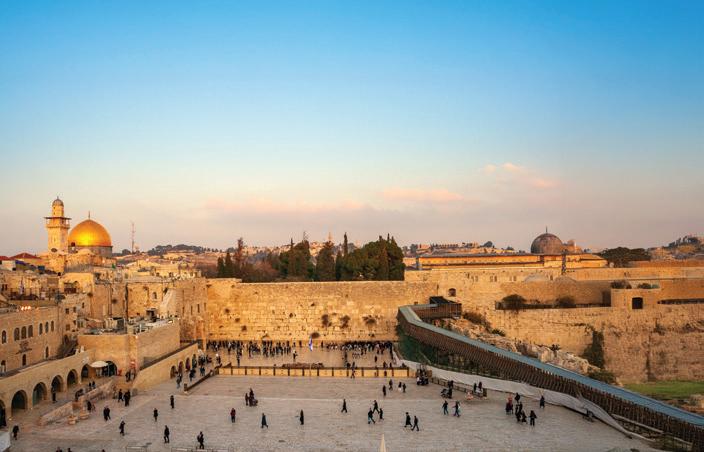
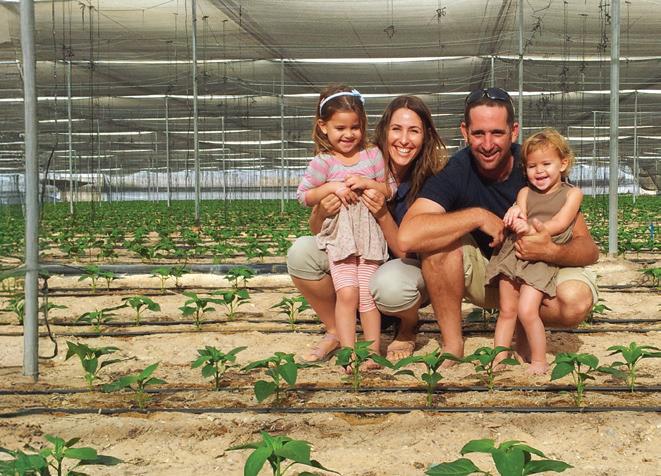
A delegation of more than 40 educators from Australia and South Africa recently returned from Israel after participating in a ten-day KKLJNF Educators’ Tour. It was immersive experience designed to enhance educational leadership and deepen connections to Israel.
Organized by KKL-JNF’s Education and Community division, the seminar brought together Jewish and non-Jewish educators, including primary and secondary teachers, school leaders and lifelong learners. The program combined professional development with direct engagement, exploring Israel’s social, historical, environmental and security realities through an educational lens. Israel became a living classroom. The itinerary included site visits, education sessions and volunteer activities across the country.
Participants visited kibbutzim, cooked for IDF soldiers, explored historical and archaeological sites, and engaged with JNF-supported projects shaping Israel’s future.
Planting roots for the future
CANDLE LIGHTING TIMES
Friday, Nov 22, 2024 8:00 PM
A significant focus of the tour centred on the events of October 7.
Educators travelled to Sderot and Kibbutz Kfar Aza, and visited the Nova Festival memorial near Re’im. These deeply moving encounters brought participants face-to-face with
Shabbat ends, Nov 23, 2024 9:04 PM Friday, Nov 29, 2024 8:07 PM
Shabbat ends, Nov 30, 2024 9:12 PM
Friday, Dec 6, 2024 8:13 PM
Shabbat ends, Dec 7, 2024 9:19 PM
Friday, Dec 13, 2024 8:19 PM
Shabbat ends, Dec 14, 2024 9:25 PM
Friday, Dec 20, 2024 8:23 PM
Shabbat ends, Dec 21, 2024 9:29 PM
informations only. The articles in this paper have been contributed by a third party. The opinions, facts and any media content here are presented solely by the author, and The Jewish Report assumes no responsibility for them. It is not intended as advice and must not be relied upon as such. You should make your
resulting from any action or decision by you in reliance on the material in the papers. By reading the papers, you acknowledge that we are not responsible for, and accept no liability in relation to, any reader’s use of, access to or conduct in connection with the papers in any circumstance. Photographs submitted by individuals or organisations are assumed to be their property and are therefore not otherwise credited. All articles in this paper have received the expressed consent of the author to publish in this paper.
affected communities, highlighting powerful stories of resilience, recovery and rebuilding.
The Jewish Report; ISSN 2204-4639
Publisher: The Jewish Report Pty Ltd (ACN 167302981)
learning, connections and renewed sense of purpose they carried home will ripple through classrooms and communities.
Distributor: TJR Distribution Pty Ltd ACN 165158029
The true legacy of this seminar goes beyond the journey itself. Collectively, the educators involved reach tens of thousands of students each year. The
Comments or suggestions to: editor@thejewishreport.com.au
Article submissions to: www.thejewishreport.com.au/article-submission-guidelines
Advertising: editor@thejewishreport.com.au
Website: www.thejewishreport.com.au
Printer: Spotpress Pty Ltd
To learn more about JNF Australia Tours, visit https://jnf.org.au/tours/ or call 1300 563 563.
Educators outside of Keren Kayemeth LeIsrael in Jerusalem
Jewish Report Disclaimer:
THE COMMUNITY
MAUREEN BARTEN PRESIDENT PROGRESSIVE JUDAISM VICTORIA AROUND
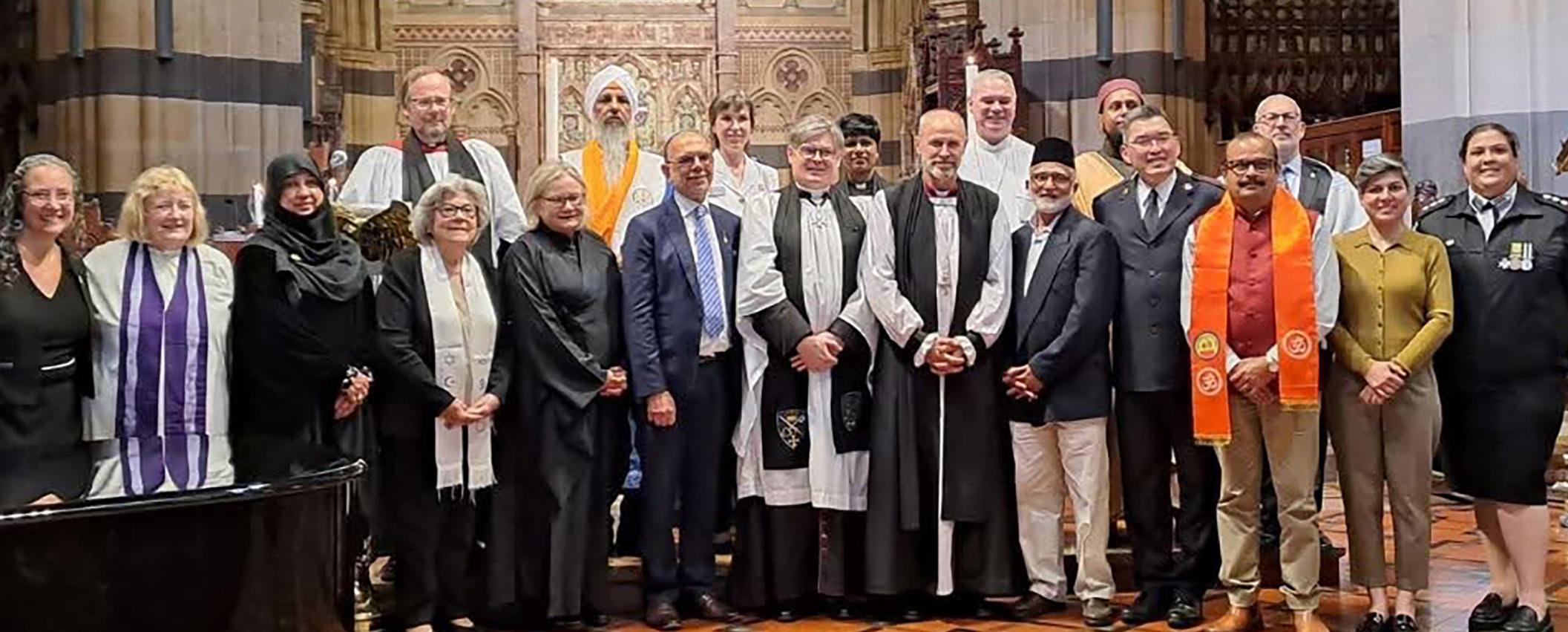
On Thursday 22 January, St Paul’s Cathedral opened its doors to host Light will Win, a service marking the National Day of Mourning following the Bondi Beach terrorist attack, in which 15 people were murdered.
The cathedral quickly filled with people of many faiths, including members of our various shuls, gathered not as strangers, but as companions in grief. It was a space of welcome, care and shared humanity – one that held sorrow with grace and compassion.
Watching Rabbi Allison Conyer and cantor Michel Laloum, together with Rabbi Ralph Genendi take their places in the procession of clergy entering the cathedral was a profoundly beautiful moment. My tearful eyes were smiling with gratitude that the broader, nonJewish community showed up to mourn with us, to stand beside us and to offer comfort in a moment of collective pain. And my heart filled with pride to be represented by these leaders in a beautiful, sacred space that was not our own.
In his opening remarks, The Very Revd Dr Andreas Loewe, Dean of Melbourne said: “… we come together to give voice to our distress and sorrow, to mourn those murdered, and to support the wounded, bereaved and traumatised. We stand side by side with members of the Jewish community here in Melbourne and
Light will win
throughout Australia, and with countless people the world over, who, like us, condemn antisemitism, hate crime, persecution and violence.”
In attendance, among others, were the Victorian governor, premier, deputy Opposition leader and representatives from the Shia, Islamic, Hindu, Buddhist and Sikh communities, the Victorian Council of Churches and first responders. Music played a central role in the service.
An instrumental rendition of Max Bruch’s Kol Nidrei was as sobering as it was beautiful, playing in the background while groups of political and community
leaders lit candles on behalf of all Victorians. I was honoured to be invited to do so, alongside Philip Bliss OAM for PJV. We were joined by Mark Walsh from the Council of Christians and Jews.
Cantor Laloum sang El Maleh Rahamim – his voice rising into the vast vaulted ceiling of the cathedral. Each breath seemed to fill the space carrying the heavy weight of grief and prayers for the lives lost.
The TBI choir sang Enosh Kechatzir Yamav and Oseh Shalom – their voices amplified magnificently by the cathedral’s architecture, holding us in the solemnity of the moment.
Sitting in St Paul’s Cathedral that Thursday morning, I felt wrapped in the most caring, loving embrace, the kind of hug a parent or grandparent gives when words are not enough. It was a profound experience to be a guest in another faith’s place of worship and to feel entirely welcomed, fully seen, deeply cared for and genuinely understood.
In moments such as this, when lines blur and our purposes are shared, understanding and dialogue grow.
My prayer is that we come together again soon – across faiths, across communities – but under different circumstances. Light wins when we shine – brightly and together.
The Holocaust’s burden of forgiveness
AB BOSKANY
The hardest part is not remembering, but being asked to tidy up what others did. Remembering the tragedy brings Jews back to the bitter question after each injustice. It stings because it is posed as a simple request for forgiveness, then padded with phrases: “Terrible events took place.” “It was all complicated.” “Everyone endured hardship.” The language blurs agency and asks the victims to supply the ending: “We forgive”, to make others comfortable. How do you live when history keeps leaning over your shoulder? For Jews, this burden becomes vigilance, shaping life and travelling through family tales kept as guarded truths. It shows up in the reading of a crowd or a slogan, deciding whether it is ignorance or something darker.
This is daily existence: a lesson that slides past horrors, a joke rooted in prejudice. The past becomes the atmosphere to live in, essential and precise. It reaches into choices: which suburbs feel safe, how friendships become cautious and what children learn about past betrayals, such as expulsions and pogroms.
This is a survival strategy sharpened by centuries of danger, as antisemitism evolves into new forms, from private slurs to loud signalling. When forgiveness is pressed, it rarely states its demands; rather, it seeks closure and the smoothing away of unease. It doesn’t admit to shifting blame, but that’s exactly what
happens. The load moves from those who must confront their actions to those left dealing with the consequences. The dead can’t sign off on it and the living are supposed to inherit a forced consensus. This tactic minimises the scale of what was done, as if a brief gesture could cover it.
The pressure isn’t rough; it comes wrapped in moral language and sympathy, shown as the sign of wisdom, while holding back is treated as being stuck in the past. The one asked to forgive gets cast in a noble role: prove that we’ve “moved on and are cool”,
and make the conversation comfortable again. To refuse is to be labelled the obstacle to unity, the professional moaner. Rewards flow to those who ease the tension for everyone else. This setup exposes a stark unfairness: the forgiver is glorified for grace, yet the instigators are allowed to walk away, owing nothing.
Yet this wound spans generations: in archives, in missing families, in communities reduced to photographs. It shows where memorials stop short and names vanish, making remembrance a defence. And yet, after the 7 October massacre and what followed, we still find
ourselves having to explain the reality of the Holocaust and being pushed to “prove” the number was six million. Now? Why? Does bargaining over the count of the murdered makes the crime any less cruel?
So, “Can you forgive?” is loaded from the start and implies that the vulnerable should stand down, the narrative be tidied up, the demands of truth softened. And those on the receiving end soon realise that the forgiveness most eagerly sought is the kind that costs the one pressing for it nothing.
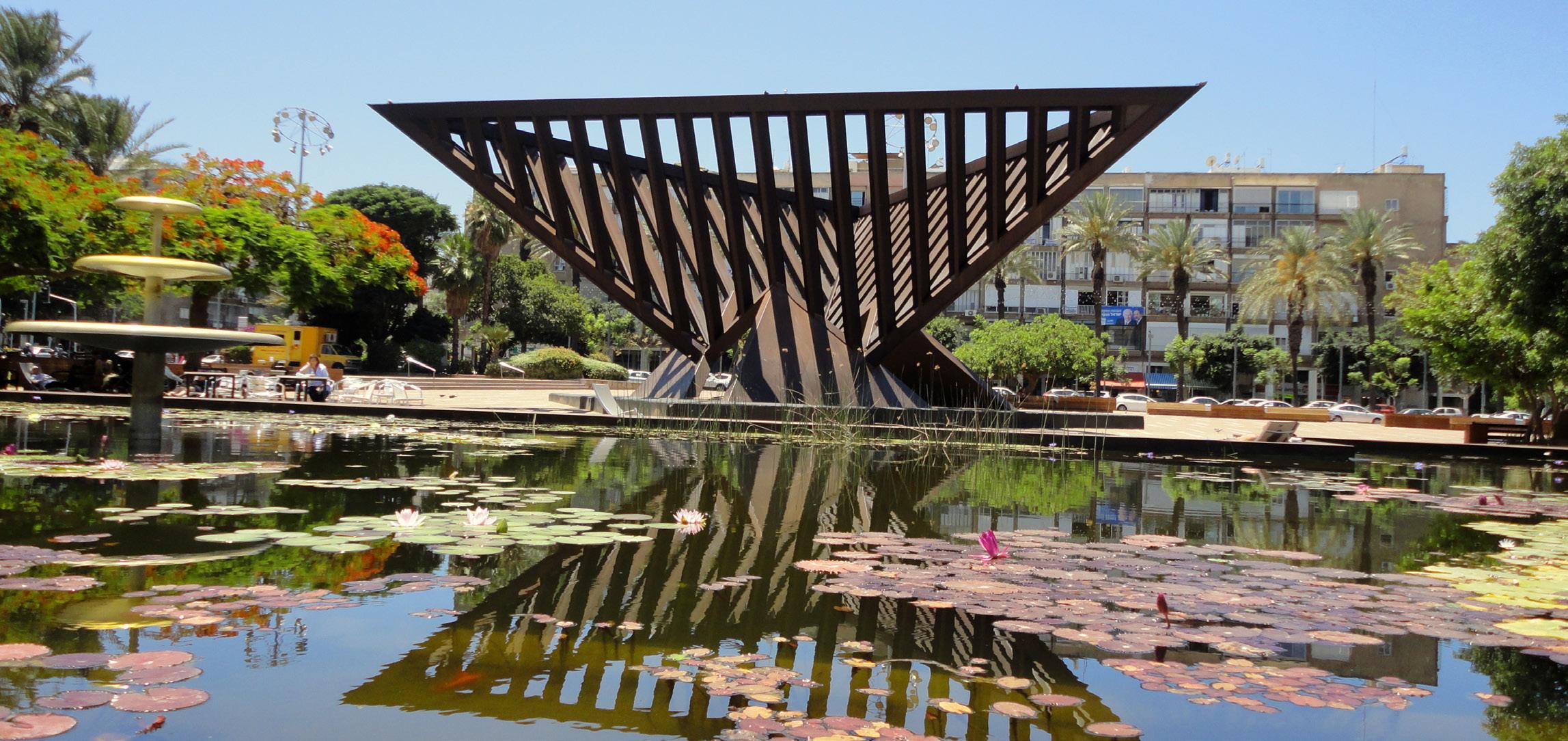
Monument in Rabin Square in Tel Aviv by Igael Tumarkin (photo by Lishay Shechter) PikiWiki Israel 32072 via Wikimedia Commons
Community leaders standing in unison at St Paul’s Cathedral
CONSIDERED OPINION
RAMONA FREEDMAN
ALIYAH ADVENTURES
Each month since I made Aliyah over oneand-a-half years ago, I have been recounting Ramona stories about life as a new Olah, a new immigrant, here in Ra’anana. The words come easily with so many funny and fascinating cultural insights in my new homeland, “yes”, our eternal homeland.
Yet over this Australian summer, the metaphorical lens flipped and all of Israel, in fact, all of the Jewish world and beyond were looking directly at YOU: the Jewish community of Australia. Shockwaves reverberated around the world in light of the devastating massacre during the Chanukah festival at our beloved Bondi Beach.
The impact was instant.
While on brief breaks, experienced combat soldiers of the Israeli Defense Forces were shaking their heads while reviewing the footage taken, all-thewhile still in dangerous and hazardous circumstances themselves.
While they were on duty protecting the State of Israel, they openly wished they had been on site, closer to you all, to help in the moment. Strangers on the streets were stopping each other to talk about the distressing ‘matzav’, or situation, for Jews in Australia.
Local synagogues with Australian members here rallied, including my shul, Kehillat Lev Ra’anana. I was so grateful for that support.
Those from the ‘Lucky Country’ didn’t feel lucky at all.
You became Israel’s top news story – for good reason. And believe me, there is so much happening here competing for that top spot. On a personal front, I was openly devastated, as besides knowing many who were injured and affected, the young man from France who was murdered, Dan Elkayam, had been to my Australian Shabbat and Yom tov table countless times.
A few days later, with sunglasses on, I found myself in Ashdod, attending his funeral. The world’s media was present. My tears fell unchecked. As we drove back to Ra’anana afterwards, in contemplative silence, my mind sifted through all the interactions I had had with Israeli society since December 14.
The one overarching message from Israelis to Aussie Jews (if summarised) was clear: “We support you. We are with you. We are waiting for you. It is time to come home.”
Home. What an emotive word that is. I reflected on the new world I have been creating. Speaking of my new home, a handful of days prior to the brutality at Bondi, there was an Aussie artwork put up on a large wall here, on Yehuda HaLevi Street. It is a gigantic framed image of Bondi Beach. I kid you not.
I know it has been a southern hemisphere summer like no other for Australian Jewry. Despite the tragedy, the artwork stays. And I stay here in Israel too.
I’ve lost count of the number of Aussies who have reached out to me personally to chat about life in Ra’anana, property
Tami Arba
in Ra’anana and more. Has there been an ‘uptick’ post December 14? Yes, there has.
And yet, in classic Israeli style, despite daily drama on the world Jewish stage, Israel, with all its idiosyncrasies, makes you smile. Like watching the wild weaving of crazy cars on the freeways, overhearing arguments that end in men slapping each other’s backs and then hugging it out and noticing how everyday people are so willing and ready to help anyone in need.
We also recently witnessed the country’s collective joy and relief when the final hostage, Ran Gvili, was finally returned home. Minutes later, there were thousands of ceremonial cuttings of yellow ribbons across this tiny but terrific land.
Everyone in Israel seems to wear many hats daily. I think this stems from such a large part of the population being called back into the army on reserve duty. Fruit shop owner one day, tank commander the next. My fumigator came one morning and revealed that the week before he was on duty as a paratrooper in an active unit. It genuinely seems that everyone here is a jack-of-all-trades and (despite often not having many official credentials) a master of many.
One hat I happily wear here is as a parttime English tutor. I walk into a couple of schools each week and have a front row seat to what school life is like.
Suffice to say that the checks and balances to keep children safe that we have in Australia may not be front and centre here. School pick up and drop off is a scary scene. Kids riding scooters or bikes (no helmets, usually in tandem with a smiling friend tagging on), cars reversing in
the most haphazard and heart-stopping ways. In Ra’anana, there is a marvellous mixture of mostly three languages – a melting pot of Hebrew, French and English. And the French have opened the most outstanding patisseries. Just for fun I have tapped into my high school French several times since I have been here while ordering my croissants and baguettes. Oui, I really have.
And with school finishing very early daily – we are talking at approximately 1pm –Israeli kids go to ‘chuggim’, after-school activities, that vary widely. And some are just out roaming the streets. And yet, it all somehow works.
Recently we had a ‘Tami Arba’ delivered to our home. This is a hot topic at Shabbat tables around town. The Tami Arba is known officially as an inhouse ‘water bar’, but effectively it is an automatic, rectangular water machine that is given pride of place in most Israeli kitchens. The latest iteration offers on-tap cold water, boiling water and also has a Shabbat mode. This means that those observing Shabbat who usually fill a heavy urn each Friday afternoon, no longer have to do so. This is considered remarkable and revolutionary in Israeli circles and there is a waiting list to get one installed. Apparently there is a computer within that has calculated the next two decades of Shabbat and Yom Tov times and dates. It automatically switches to this mode approximately a couple of hours prior to Shabbat commencing. The Tami Arba technician arrived at my home and we started chatting as he was installing our new Israeli bestie. He was French and had made Aliyah (very bravely) as a young
man straight after high school. He served as a lone soldier. As soon as he heard I was Australian, we began speaking about Bondi Beach. He saw my wall-sized image. He heard my accent. I heard his and before we knew it, we were speaking about dear Dan Elkayam. He hoarsely told me that he was inconsolable as he had been one of Dan’s classmates in school. I shared that Dan had been one of many young people who had spent many meals at my Aussie table. We stopped talking about the efficiency of the new Tami Arba and, instead, exchanged phone numbers so when either of us heard an update about Dan’s funeral, we could tell each other. One people. One heart.
Somehow, Israel transcends time and space. Israel unites like nowhere else. He had tears in his eyes. So did I. For Dan, for Diaspora Jews. For it all. He was a new dad but had already served over 300 days as a reservist in the IDF. What a hero.
In Ra’anana, I live in an attached house – one of a half-dozen in a semicircular shape. The night after we had our Tami Arba delivered, one of our sweet neighbours invited us all for a ‘Soulful Soup Night’. They had three pots on the boil; we schmoozed and slurped the contents down in good spirits.
I told them about my Tami Arba technician. About Dan. About my broken Australian heart. In six houses we have people hailing from Italy, Brazil, Canada, South Africa and more. I felt us sharing soup and stories that evening was a microcosm of the Jewish world. A snapshot of support that was helpful and healing.
For now, it is over and out from Ramona in Ra’anana.
Dan Elkayam, z”l, who loved Shabbat and joined Ramona’s table for many festive meals
OPINION
DR YVETTE ALT MILLER COURTESY: AISH.COM CONSIDERED
From “innocent” phrases to emojis and numbers, antisemitic hate is increasingly coded online. Learn how to spot these signals and how to respond effectively.
A range of innocent-sounding comments are being re-imagined as anti-Jewish memes, serving as antisemitic dog-whistles, evading sensors and spreading anti-Jewish slurs online.
Here’s a list of some seemingly benign comments that actually signify Jewhatred and a list of recommendations of what to do when you encounter them.
“The Great noticing”
Some online haters disguise their antiJewish slurs as statements that they “notice” things.
What these users allegedly “notice” is that shadowy Jews supposedly control the world. Variations of this slur include saying something is "impossible not to notice” or that “the noticing will continue.” Some users label their antisemitic comments “#TheNoticing.”
At times, “noticer” is misspelled “Nooticer” in order to evade detection online.
Antisemitic mentions of “noticing things” increased sharply over 2025. The phrase “noticing will continue” rose by 36 per cent. The phrase “the noticing” rose by 92 per cent. And use of the coded phrase "impossible not to notice” rose by a whopping 2,261 per cent in 2025 over the last eight months of 2024.
“Every single time”
This is another phrase that’s often weaponised against Jews (and at times against other ethnic groups too). It’s deployed in comments to indicate that it’s supposedly always Jews who are behind every negative story or happening that’s discussed online.
Related comments that convey a similar meaning include “well, well, well” or “what do you say three times?” This last comment allows online antisemites to provide a winking reference to “well, well, well” without alerting algorithms that are looking for hate speech.
Problematic emojis
Another way antisemitic commentators get around regulators is by substituting pictures for words that might get their comments flagged by moderators.
Emojis of juice boxes are sometimes used to indicate Jews. More sinister emojis used to refer to Jews online include snakes, pigs, rats, and octopuses, allowing commenters to evade sensors.
Emojis of the “ok” hand sign can increasingly be used to denote white power, an antisemitic neo-Nazi ideology.
Images of the popular cartoon character Pepe the Frog have been adopted by neo-Nazis as a symbol of their anti-Jewish and racist ideology.
Laughing emojis can have an antiJewish meaning, used as code for the more overtly antisemitic image of a “laughing Jew.” Images of Orthodox
How antisemitism hides online: identifying coded Jew hatred
Jewish men with large noses laughing have been used since the Middle Ages as a way to smear all Jews and imply that unscrupulous Jews somehow laugh at other people’s misfortunes. With online sensors clamping down on overt expressions of antisemitism, posting a laughing emoji can be a subtle way of referring to this odious stereotype.
Palestinian flag emojis and watermelon emojis are sometimes used as comments underneath Jewish-themed stories. The subtext seems to be that Israel and Jews have no right to exist and ought to be replaced by a Palestinian state instead.
“Totally joyful day”
While it might sound innocuous, wishing someone a “totally joyful day” is an increasingly popular way to express raw hatred and to signal to others a dangerous obsession with Jews. To the initiated, its initials TJD stand for “total Jew death”. A variation is “totally kind day”, which means “total Kike death”. Other variations can stand in for different ethnic groups, as well. Immediately after Hamas’ deadly October 7, 2023 attack on Israel, use of the phrase “totally joyful day” online spiked by 400 per cent.
“Our greatest ally”
Another way online users signal their opposition to Jews and Jewish causes is by posting the phrase “our greatest ally” in a sarcastic way. While this phrase can be used sincerely, it has emerged as an anti-Jewish comment, particularly on X.
Numbers
Online, numbers often stand in for offensive anti-Jewish phrases, allowing posters to evade online sensors and signal their hatred to fellow users.
Fourteen is sometimes used as a dogwhistle to fellow neo-Nazis: it stands for the fourteen words in the popular white supremacist slogan “we must secure the existence of our people and a future for white children”.
Eighty-eight can refer to “Heil Hitler,” as H is the eighth letter in the alphabet.
(It is often combined with the above as “1488.”) Eighteen is at times used
as a coded reference to Adolf Hitler, corresponding to the place of his initials in the alphabet.
Sometimes antisemites seek to discredit the fact that six million Jews were murdered in the Holocaust. “Six gorillas” and “six cookies” are comments used to make fun of or undermine this fact. Another common meme and/ or comment is “217k”, referring to inaccurate claims that only 217,000 Jews perished in the Holocaust, not six million.
“Deadly exchange”
Amidst protests against US Immigration and Customs Enforcement (ICE) agents, some activists are directing their ire against Jews, using phrases such as “deadly exchange” to mean that any instances of joint US-Israeli law enforcement training mean that Israel is controlling American policing behaviour.
Signs and graffiti have featured slogans echoing this claim, including “Free Palestine”, “Israel trains ICE” and “From (insert the name of any locale where protests are taking place) to Gaza, globalise the Intifada”. Conflating local protests with Israel spreads hatred of Jews to new audiences, radicalising them to view Israel and Jews as the root of all conflicts.
“Early life check”
This is a coded way to draw attention to someone’s Jewish identity and is increasingly used as an antisemitic or racist dog whistle. It refers to Wikipedia entries, which often describe people’s ethnicities in their “Early Life” section of biographies. Writing “early life check” is often a precursor to harassing people online for their Jewishness or other characteristics.
Use of parentheses
Some antisemites signal their hatred of Jews by placing the names of Jews in two or three sets of parentheses. This slur has its origins in a decade-old antisemitic podcast which said the names of Jews it wanted to mock in a creepy voice that echoed. Now, some online users suggest a cartoonish echo around Jewish names
by using parentheses every time they refer to a Jew.
Once identified in this way, Jewish social media users can find themselves targeted for abuse by online trolls.
Misquoting Voltaire
A popular quote shared online seeks to slander Jews who speak out against anti-Israel marches and online activity. Many antisemites share the quote: “If you want to know who controls you, look at who (sic) you are not allowed to criticise,” and attribute it to the French Enlightenment philosopher Voltaire. It is frequently employed in anti-Jewish contexts, suggesting that a shadowy group of powerful Jews is quashing legitimate criticism of them.
In reality, this quote was coined by an American neo-Nazi seeking to spread anti-Jewish hate.
In a bizarre example of the horseshoe theory of government – which holds that both far-right and far-left wing political extremists begin to resemble each other. This quote has been embraced by farleft anti-Israel activists.
Seeking Solutions: What can we do in the face of online antisemitism?
These sorts of cryptic antisemitic signals can be hard for online algorithms and content moderators to detect. Yet it’s important that we call them to account whenever we see them.
1. Don’t engage with these users.
Online users who employ the types of coded language described above aren’t going to argue with you in good faith. Engaging with them could be dangerous. Resist the temptation to jump into political conversations with extremists online.
2. Screenshot the offending posts.
Screenshot posts that use this type of antisemitic language, so that you have proof of what you saw.
3. Report offensive language to social media platforms.
Social media platforms have broad policies against hate on their sites. Reporting offensive material can aid them in taking it down and even blocking offensive users.4. Report antisemitic posts to local organisations.
Send your screenshots to organisations that document and fight antisemitism online, such as the Anti-Defamation League in the USA and the FBI, in Britain to the Community Security Trust, or to local law enforcement.
5. Discuss online slurs with your social network.
You are the best advocate for fighting antisemitism in your own social network. Speak up about offensive content with your friends and colleagues.
Let other people know why coded antisemitic slurs are problematic and teach those around you to identify them too.
CONSIDERED OPINION
NOMI KALTMANN
This has been the most difficult period of my life … and of the lives of almost every Jewish person I know in Australia. Some mornings I wake up and have to remind myself that 15 people were really murdered while celebrating Chanukah on Bondi Beach, and that this is not some awful dream that will fade once I’ve had coffee and checked my phone. It still feels surreal to go about my day in a country my grandfather, Joseph Kaltmann, a Holocaust survivor, chose because of its safety, and to realise that Australian Jews will now carry the trauma of being the victims of Australia’s worst ever terror attack.
Since the atrocity in Bondi, what has settled over the community is a persistent sadness. There is a lot of checking in, but not much reassurance to offer. I now have a knot in my stomach that does not quite loosen. Is going to synagogue each week to celebrate Sabbath a risk to my life and the lives of my family and friends? No one can guarantee our safety anymore and having known several people killed and injured in the Bondi attack, the trauma will be lifelong.
To me, the last eight weeks has not just been about one horrific act of violence. It is also about the climate in which it occurred. Since the events of 7 October 2023, antisemitism in Australia has risen sharply and the Australian government has fumbled the response. Instead of being proactive, it was reactive. Meanwhile, Jewish institutions have been targeted, Jewish students have been harassed, synagogues were firebombed and Jews were assaulted.
Despite not being the victim of any of these attacks, the knowledge that it could happen to me is terrifying. In a close-knit Australian Jewish community where it feels like everyone knows everyone, that fear changes how you move through the world. It makes you think twice about what you wear, where you go, what you say and whether you want to be identified in public as Jewish.
There is also a strange loneliness to it. Other Australians do not live the way we do, with bodyguards at our children’s school, with air locking doors at our synagogues and high security for all our cultural events. As Australian Jews, so many of us are the children and grandchildren of Holocaust survivors. For my family and for so many others, the trauma of Bondi is both personal and historical. My grandfather survived and built a life here on the assumption that this was a place where Jews could finally
Australia’s disturbing changed face
stop scanning the horizon for danger and start thinking about futures.
My grandfather chose Australia because it was far from Europe. After his mother, father, brother and sister were murdered in concentration camps, he did not want his family ever to endure the same fear and persecution he experienced. And yet, here we are.
I do not believe Australia is uniquely hostile to Jews, and I am wary of collapsing complex realities into simple narratives of decline. In many ways, what is happening here mirrors what Jewish communities in the United States and Europe are also grappling with: a rise in open hostility, a sense
that old assumptions about liberal democracies as natural refuges for minorities are no longer as reliable as we once believed. But that does not make it easier to accept. If anything, it is harder, because it suggests that there are fewer places left to imagine as unquestionably safe.
Which is why the UN’s International Day of Commemoration in memory of the victims of the Holocaust, on 27 January, felt different this year. It is always a day of mourning and reflection, but it is also meant to be a day where we reflect on the moral frameworks that societies have built to make ensure that a Holocaust can never happen again.
This year, the uncertainty about my future in Australia felt uncomfortably close.
I do not want my children to inherit a version of Jewish life that is defined by caution and concealment. I do not want the story of my grandfather’s choice to be one of temporary reprieve, rather than lasting refuge. I want to believe that the country he chose, and countries like it, can still be places where Jews can be safe, but unfortunately, I am no longer sure that this will be the case.
This article originally appeared in the Herald Sun.
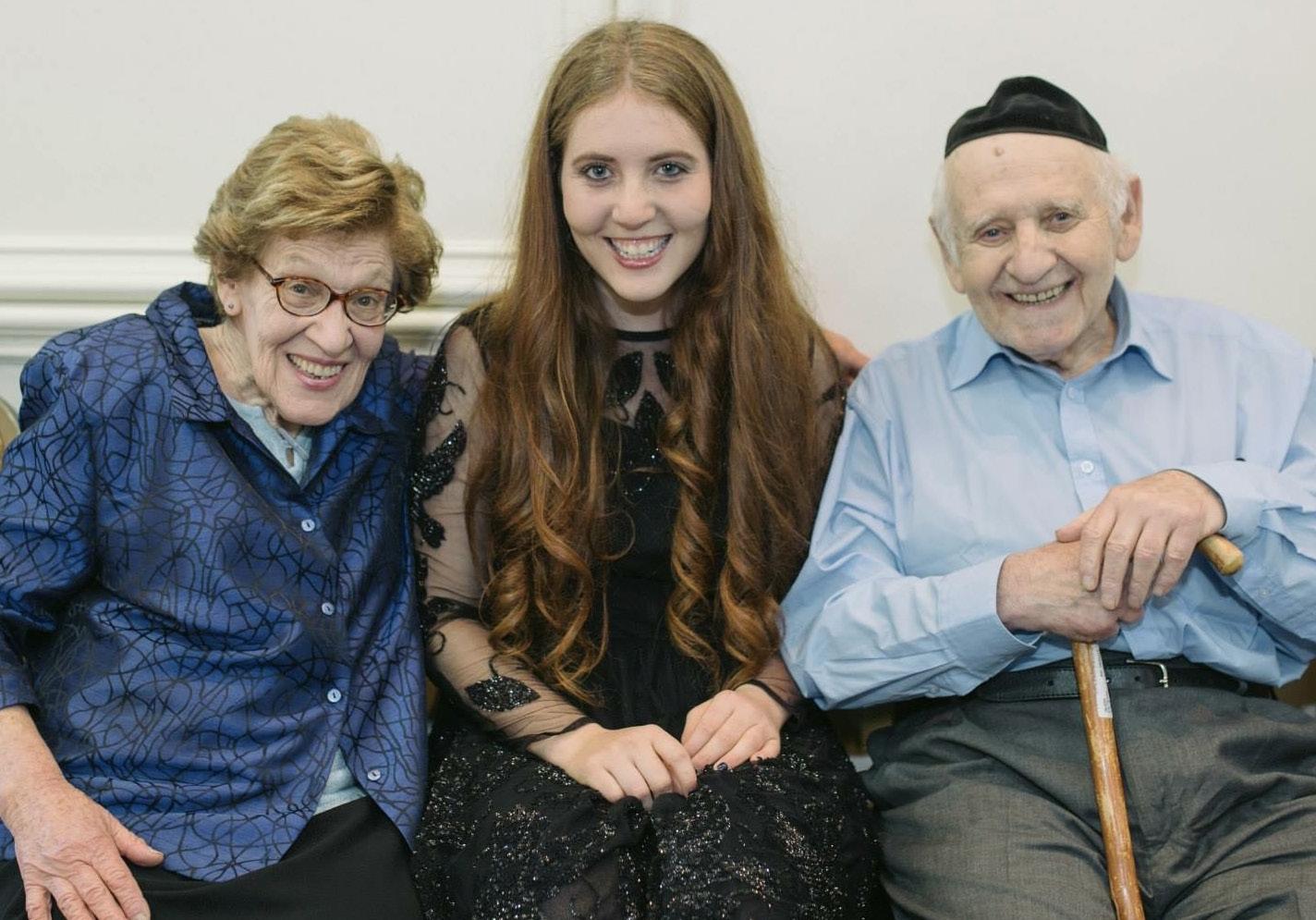
Nomi Kaltmann with her grandmother, Shulamit and grandfather, Joseph, z”l (this photo was taken in 2015)
THOUGHT
In the months after 7 October 2023, many Jewish Australians have carried a quiet sense of exposure. We have watched public language harden, seen social media turn toxic and felt how quickly ancient prejudice can find new permission. In that climate, leadership matters. Symbols matter. Presence matters.
That is why my encounters with Her Excellency, Sam Mostyn AC, Governor General of Australia, have stayed with me. In December 2024, she visited St Kilda Shule to express support for the Jewish community and to listen. The visit carried the weight of her office and the gentleness of her manner. The tour of the synagogue and the moment the Torah scroll was unrolled were particularly meaningful. We then sat for a roundtable discussion with Jewish communal leaders and spoke plainly about antisemitism and the practical work of strengthening social cohesion.
What moved me was the combination of dignity and ease. This is the nation’s highest constitutional office, yet she came across as strikingly approachable and down to earth. That impression deepened when, this year, she reciprocated my invitation by inviting me to meet her privately at Admiralty
The Governor General genuinely cares
House in Sydney. We spoke openly, productively and with a sense of shared purpose. She even took selfies with my phone, smiling with the Sydney Opera House across the water behind us.
It was a small human moment that revealed something larger: a leader who understands that reassurance is not only delivered through statements, but through closeness.
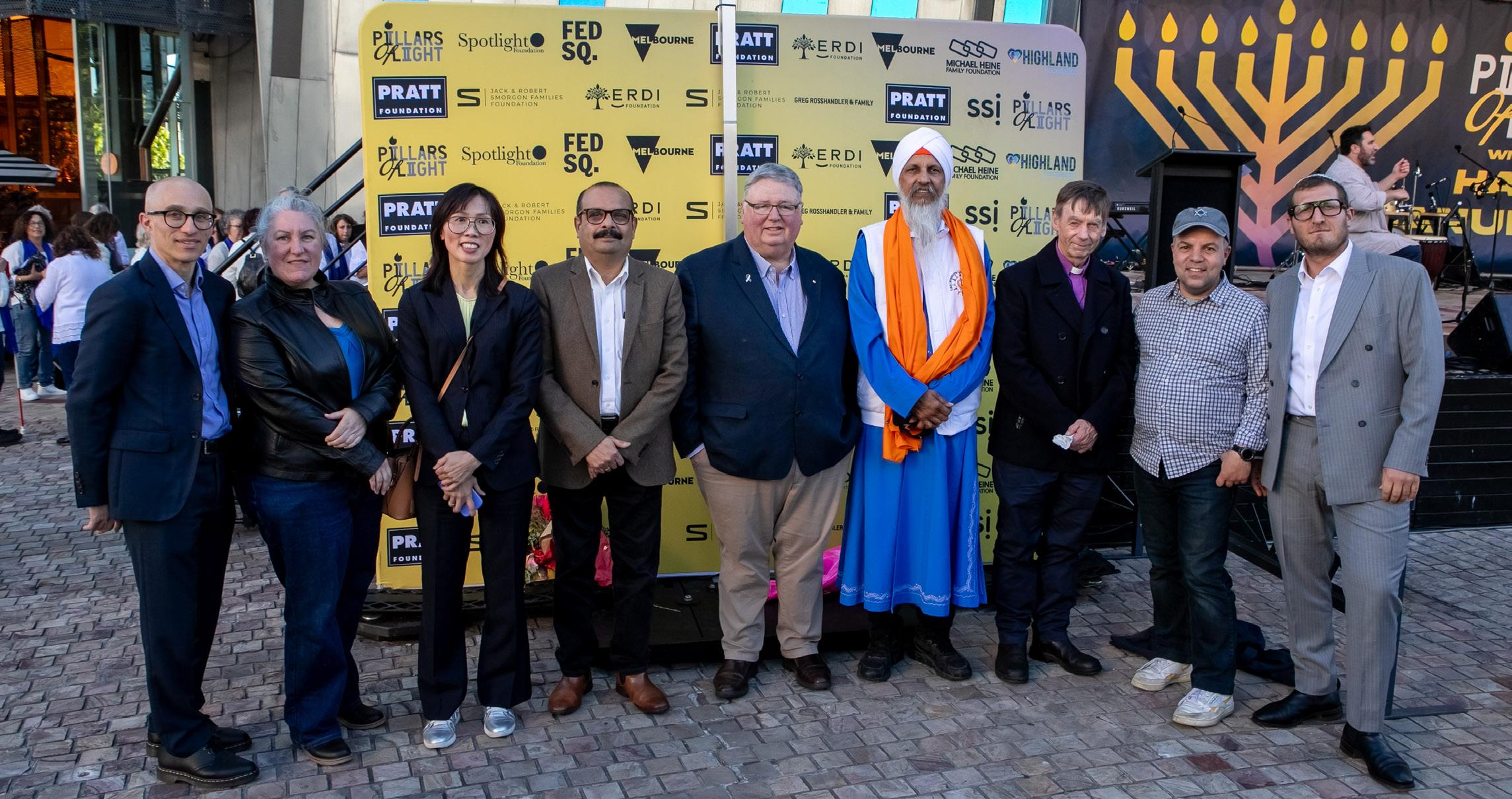
Pillars of Light
Over the past few weeks, many of us have been holding the Bondi memorial in our hearts. As you know, ARK Centre runs an annual Chanukah festival called Pillars of Light. When I chose that name it was about celebrating creativity, visibility and Jewish joy in public spaces. So, when I saw that the organisers of the Bondi commemoration had also chosen the name Pillars of Light, it struck a deep chord within me.
Light does not erase darkness, but it does interrupt it. And a pillar suggests something steady, something that can hold weight, something that stands even when other things feel like they might collapse. It felt like an honest metaphor for what our community has been doing: not pretending that the pain is over, not rushing toward easy closure, but standing, remembering and insisting that grief and dignity can exist side by side.
There are moments in life when people find themselves suspended between what has been left behind and what has not yet become clear.
The past is no longer possible, but the future is still uncertain. In those moments, the instinct to wait for clarity or reassurance is strong, but often clarity only comes after someone is willing to step forward.
Publicly, her pattern of engagement has been consistent. On the Governor General’s official website, she spoke of welcoming Holocaust survivors to Admiralty House and hearing directly how antisemitism corrodes a society.
In the wake of the heinous Bondi antisemitic terror attack of 14 December 2025, her presence and words were again noted in multiple engagements
with the Jewish community as she participated in national moments of mourning and remembrance.
She has also continued to engage with Jewish communal life in ways that feel respectful, not tokenistic, including events and messages connected with Chanukah and communal unity.
For me as a rabbi, there is a particular gratitude in seeing the office she symbolises used to steady the national heart.
The Governor General cannot legislate. She cannot police streets. She cannot prosecute hatred. Yet she can do something that is rarer than it should be: she can model decency. She can dignify a minority community without turning it into a political football.
She can meet people where they are, take their fears seriously and still speak in the language of a shared Australia.
Kindness from a neighbour is precious. Kindness from the highest office holder in the country is something else entirely. It signals to every Jewish person sitting in a synagogue pew that they belong. It tells every Australian watching that antisemitism is not a Jewish problem, it’s an Australian problem.
And it reminds all of us that national leadership, at its best, can be made to feel deeply personal.
Real courage is not always dramatic. Sometimes it is simply the decision not to stay frozen. To move, even without guarantees. To take responsibility when the path ahead is not yet fully visible. Leadership, in those moments, is not about certainty or speeches. It is about presence. About choosing to act with integrity, even when the outcome is unclear. That feeling is very close to home right now. We are not standing
in a neat or resolved moment. We are in the middle of things – holding grief, carrying anxiety, living in a world that feels less predictable and less safe than we would like it to be.
This is what pillars of light truly are. Not a denial of darkness, but a refusal to be defined by it.
A commitment to stand steady, to remain visible and to hold space for others, even when we ourselves are
unsure of what comes next. So, the invitation is a gentle one: be a pillar for someone else. Check in. Show up. Speak with care.
Create moments of light where you can – at home, in your workplace, in the wider community. None of us can carry everything, but each of us can help hold something. And sometimes, that quiet, steady presence is what allows others to keep moving forward.
RABBI GABI KALTMANN
Members of multicultural and multifaith groups at Pillars of Light
RABBI YAAKOV GLASMAN RABBINIC
Rabbi Yaakov Glasman AM with the Governor General, Her Excellency, Sam Mostyn AC
THOUGHT
RABBI DANIEL RABIN RABBINIC
In the days after the Bondi attack, I felt compelled to fly to Sydney and visit some of the shiva houses and those recovering in hospital. Not to say anything, not in any official capacity. I simply felt that being there mattered. That presence itself was a response.
What I encountered was a mix of devastation and extraordinary humanity. Stories of courage. Of people running toward danger. Of strangers protecting one another instinctively. These are the stories we naturally gravitate towards after trauma and rightly so. They remind us that even in the darkest moments, the human spirit is capable of remarkable strength.
But standing there, listening and observing, it became clear to me that these are not the only stories that deserve space.
There is another reality of trauma that rarely makes headlines and doesn’t lend itself to inspiration. For many people, trauma does not look heroic. It looks like waking up exhausted after a full night’s sleep. Like moving through the day on autopilot. Like grief that paralyses rather than propels. Like a smile that simply isn’t available now, no matter how much one wishes it were. We often celebrate those who turn pain into purpose quickly,
Dealing with trauma
visibly, decisively. We admire resilience that speaks loudly and stands tall. And those stories matter. They lift us. They give shape to hope. But when resilience becomes the only acceptable response,
it can quietly turn into a burden for those who are still struggling just to breathe. Judaism understands this deeply. Our tradition does not demand immediate strength. It allows for brokenness. It
The origin of experiential education
RABBI DR BENJI LEVY
I am often asked what it feels like to keep Shabbat and live a religious life. In response, I ask people to describe Coca-Cola to someone who has never drunk liquid before. They try: “It’s fizzy … sweet … refreshing … dark.” Then I ask, “But what does it taste like?” I follow with another question: “What does love feel like?” At some point it becomes clear that some experiences cannot be captured fully in words. They must be lived.
At the moment of revelation at Mount Sinai, the Jewish people declared, “We will do and we will hear.” The order is striking. Action comes before understanding.
At first glance, it might seem like blind faith: how can one commit before knowing all the details? Judaism places enormous value on learning, even equating Torah study with all the commandments. Yet Judaism is far more than a system of ideas. It is a life to be entered with the whole self.
Consider a child learning to walk. An infant does not begin by studying the mechanics of movement.
The child stands, falls and tries again. Only later does understanding emerge. Knowledge grows out of experience; the act itself comes first. So too at Sinai. The people undergo a spiritual rebirth, likened to that of a newborn. Like infants, they begin with action. By saying “we will do”
before “we will hear”, they affirm that covenantal life is not an abstract philosophy, but something to be lived in body and time, in the rhythms of daily life.
This does not diminish study. The Talmud teaches that “study is great, for
makes space for silence. We sit shiva not to be productive, but to be present. We do not rush mourners toward closure. We walk with them, at their pace – for as long as it takes. Not everyone is meant to become a symbol of recovery. Some people are doing the hardest work there is simply by continuing to exist. By getting out of bed. By showing up in whatever limited way they can manage that day. That is not failure. It is not weakness. It is not something to be ashamed of.
Healing is not a performance. Pain does not come with a timetable. And inspiration should never be something we place on the shoulders of those who are already carrying too much. As a community, we need to be careful not to romanticise resilience in ways that leave people feeling unseen. We need the voices that rise, yes. But we must also honour the hearts that are still trying to stand. The quiet strength. The unfinished strength. The strength that looks like honesty, rather than heroism.
If all you can do right now is get through the day, that is enough. If all you can offer is truth about how hard this is, that is enough. And if your strength is hidden, fragile or still forming, it is still strength.
Sometimes the most compassionate thing we can do is make room for pain without demanding it become anything else.
it leads to action” and Hillel famously summarised the Torah with a moral imperative: “What is hateful to you, do not do to your fellow.
The rest is commentary, go and study it.” Study refines practice, elevates understanding and deepens
insight. But it does not replace lived experience. As Rabbi Joseph B. Soloveitchik explains, true “knowing” in Judaism is not merely conceptual; it is intimate and impassioned, where intellect and experience merge.
This is why describing Shabbat, love or faith can only go so far. No explanation, however precise, can substitute for the feeling of lighting candles, sharing a meal, resting with intention, or sensing sacred time. Cerebral understanding cannot replicate the texture and depth of lived reality.
The Torah itself is described not as a “tree of knowledge”, but as a “tree of life”. Life is something to enter, not merely analyse.
Its roots are in the earth, its branches reaching upward. It must be grasped, not only studied from a distance.
The declaration “we will do and we will hear” captures this truth. Only by doing, by stepping fully into the rhythm of mitzvot and sacred living, can one begin to understand.
Experience is not the enemy of thought; it is its foundation. Through action, the words of Torah become not just ideas, but life itself. It is only in living them that their eternal lessons unfold.
Rabbi Benji speaking at a memorial service in Ra'anana to honour the victims of the Bondi massacre
From left: Chazzan Dov Farkas, Rabbi Daniel Rabin and Rabbi Yossi Friedman at the Bondi memorial site
RABBI ARON MOSS RABBINIC THOUGHT
Question:
With everything happening lately, is it time for Australian Jews to pack up and leave Australia? Maybe G-d is telling us that the time has come to go to Israel. After all, we left Egypt in such haste that the bread didn’t have time to rise. Perhaps we should be rushing out of Australia right now.
Answer:
Yes, it is time for all of us to make Aliyah. Aliyah means to rise, to elevate, to step up.
For some, moving to Israel is a step up in their spiritual journey. Others need to make Aliyah right where they are. Either way, it should be well thought out.
We do not let terrorists decide where Jews live. And we can’t allow panic to direct us. Unlike Egypt, we need to do this calmly.
When we left Egypt, it happened in a rush. We were unworthy. We were helpless. We were still spiritually enslaved. We had to run so fast that there was no time for the dough to rise. We didn’t know where we were going. We didn’t care. We just needed out. But this time is different.
The prophet Isaiah says about the future redemption, “You shall not leave
Is it time to make Aliyah?
in haste, nor shall you go in flight” (Isaiah 52:12). When Moshiach comes, we will leave calmly, deliberately and with strength.
We will not be running away from something bad, but moving towards something good.
The final redemption will not be forced by fear.
It will be earned through our choices, our growth and 2,000 years of good deeds. Every mitzvah brings us closer. Every positive action makes us more ready. When the time comes, we will go because we want to go, not because we have no option.
That is why now is not the time to make dramatic moves out of panic. Terror is meant to shake us, to unsettle us, to make us feel unsafe. We must not reward it with rash decisions.
If you were already planning to make Aliyah, then now might be the time. If Aliyah was not on the cards for you until now, you still need to make Aliyah, in the spiritual sense. Not to run, but to rise. Rise in Jewish pride. Rise in unity. Rise in commitment to Jewish living, to Torah and mitzvos.
One day, we will all return to the Promised Land. When that day comes, it will not look like Egypt. There will be no rushed exits and half-baked plans. Back then, the bread didn’t have time to rise. Now, it will.
CANDLE LIGHTING TIMES
Friday, Feb 6, 2026 8:11 pm
Shabbat ends, Feb 7, 2026
Friday, Feb 13, 2026
Shabbat ends, Feb 14, 2026
Friday, Feb 20, 2026
Shabbat ends, Feb 21, 2026
Friday, Feb 27, 2026 7:45 pm
Shabbat ends, Feb 28, 2026 8:42 pm
Melbourne Jewish Report Disclaimer:
Except where expressly stated otherwise, content in The Melbourne Jewish Report is provided as general informations only. The articles in this paper have been contributed by a third party. The opinions, facts and any media content here are presented solely by the author, and The Jewish Report assumes no responsibility for them. It is not intended as advice and must not be relied upon as such. You should make your own inquiries and take independent advice tailored to your specific circumstances prior to making any decisions. We do not make any representation or warranty that any material in the papers will be reliable, accurate or complete, nor do we accept any responsibility arising in any way from errors or omissions. We will not be liable for loss resulting from any action or decision by you in reliance on the material in the papers. By reading the papers, you acknowledge that we are not responsible for, and accept no liability in relation to, any reader’s use of, access to or conduct in connection with the papers in any circumstance. Photographs submitted by individuals or organisations are assumed to be their property and are therefore not otherwise credited. All articles in this paper have received the expressed consent of the author to publish in this paper.
The Jewish Report; ISSN 2204-4639
Publisher: The Jewish Report Pty Ltd (ACN 167302981)
Distributor: TJR Distribution Pty Ltd ACN 165158029
Comments or suggestions to: editor@thejewishreport.com.au
Article submissions to: www.thejewishreport.com.au/article-submission-guidelines
Advertising: editor@thejewishreport.com.au
Website: www.thejewishreport.com.au
Printer: Spotpress Pty Ltd
Spelling bee answers
Jewish Location: BOCA RATON. Here is a list of some common words (“yes”, we know there are more words in the dictionary that can work, but these words are common to today’s vernacular): ABBOT, ABORT, ACROBAT, ARBOR, BACON, BAOBAB, BABOON, BACCARAT, BANANA, BARON, BATON, BOBCAT, BOOBOO, BORON, BRONCO, CARBON, CAROB, COBRA, ROBOT, TABOO and TOBACCO.
Questions/comments/compliments: email Yoni at koshercrosswords@gmail.com
Crossword answers
SARAH PACHTER COURTESY: AISH.COM CONSIDERED OPINION
Most men struggle in marriage because they’re operating with faulty assumptions. Through years of coaching and teaching, Rabbi Aryeh Nivin has identified recurring beliefs that quietly undermine marriages. Here are ten of the most common false beliefs and the truths that challenge them.
1. Myth: Life will be easier once I’m married.
Fact: Some aspects of life will be easier, but many aspects of companionship may be difficult and challenging.
Bringing two different people together forever is no easy task. Varying personalities, backgrounds, schedules and parenting styles all make marriage the wonderful yet challenging journey that it is.
Marriage is the most meaningful and joyful relationship you’ll ever have. Easy? No. Rewarding? Absolutely.
2. Myth: When my wife complains, I have to fix it.
Fact: Your wife doesn’t need you to find a solution. She needs empathy and a hug.
Many men assume that when their wife is upset and talking to them, she wants them to jump into problem-solving mode. This is a false assumption.
Men may also hear emotion as accusation and respond by shutting down or becoming defensive, when what is actually needed is attentive listening without fixing. She may be processing life – not accusing you.
When a woman is venting, she is essentially saying, “I trust you enough to share these personal feelings with you.” She wants you to sit, listen and support her while she figures things out. Listening makes her feel understood and helps her process.
3. Myth: My wife knows I love her. I don’t need to say it often.
Fact: Few beliefs are more mistaken than this one. Love and respect must be expressed frequently and in a way a wife can actually receive it. For most women, that means verbal, intentional, high-quality expressions of love.
Love that remains unspoken loses its power. A husband cannot rely on what he feels alone – he must actively communicate it.
4. Myth: When a woman is in a bad mood, it’s probably because of hormones.
Fact: Reducing a woman’s emotions to biology dismisses her inner world. When a woman is in a bad mood with her husband, it’s usually because she feels unloved.
An attack might mean, “Please show me that you really care.” Assume she doesn’t feel loved and work on point #3.
5. Myth: Conflict means trouble. Fact: All marriages experience conflict. Avoiding it is often more dangerous than engaging in respectful disagreement.
Ten false beliefs men have about marriage
A wife’s resistance frequently signals engagement, not withdrawal. Silence is not peace; it’s often suppressed resentment.
When conflict is expressed in a healthy way, it is normal and does not mean something is fundamentally wrong. On the contrary, it can become the catalyst for deeper understanding, workable solutions and a much stronger relationship.
6. Myth: If I use logic and explain myself clearly, it should resolve any issue.
Fact: Men and women often operate according to different systems of logic.
Sometimes a couple has a fight and they don’t understand each other. He thinks he explained it clearly. She feels unheard. This is because men’s logic can be linear and intellectual. Women’s logic can be circular and connected to the emotional realm.
To women, logic without emotional attunement feels dismissive and she may not accept his argument. Continuing to try to win her over with logic won’t work because it ignores women’s emotional default. This logical dissonance can end up making her feel unloved.
7. Myth: Once my wife has expressed her position, I can assume that is her actual viewpoint.
Fact: Women often process their thoughts and feelings out loud. What she says in one moment may not be her final stance. This does not mean that women are indecisive, but rather women’s opinions can be more flexible and open ended.
Keeping this dynamic in mind will prevent confusion and frustration if and when she changes her mind.
8. Myth: Even if my tone is not respectful, it is okay, since deep down I respect my wife.
Fact: Respect is not a private inner feeling. It is expressed through behaviour, tone and attentiveness. In Jewish law, a man must respect his wife even more than he loves her. While everyone gets irritated at times, overly frustrated expression often signals a lack of respect. A man may truly care about and respect his wife, yet become irritated and express that frustration.
When his wife says, “You can’t talk to me that way,” he may respond, “What are you talking about? I deeply respect you.” But respect cannot live only in intention. Men cannot continually express frustration and claim respect at the same time. External behaviour and internal feelings need to match. Loss of self-control or expressions of anger make a wife feel fearful and withdrawn. Women experience words and tone more deeply than many men realise. Respect is the foundation of a relationship and must be expressed both internally and externally.
9. Myth: I am not responsible for my wife’s happiness.
Fact: A man is responsible for creating a home environment where his wife can feel happy, loved and secure (assuming there isn’t any mental health issue, or serious character flaw at play). If his wife is not happy, the husband needs to take responsibility – within reason –and address it.
10. Myth: Since I work hard, it’s okay to be too exhausted and too tired to connect.
Fact: Providing for your wife includes fulfilling her emotional needs and being
emotionally available. Although a man may be working hard to adequately provide for his wife and feel exhausted, this does not absolve him of his responsibility.
He must learn the skill of compartmentalising his work and being present and emotionally available at home, even though this is a demanding task.
While everyone has a bad day or experiences low energy from time to time, part of a husband’s job is to greet his wife and express his love physically, emotionally and spiritually.
Stay tuned for the false beliefs women have about marriage …
Sarah Pachter is an award-winning, sought-after speaker and author who commands large audiences and draws a vibrant following with her dynamic and personal approach. She has lectured internationally for the past 18 years and is a keynote speaker for several Passover Programs around the world. She has authored two books: Is it Ever Enough? & Small Choices Big Changes. Her newest book Just Say Yes! is available for preorder now. She has been featured on podcasts, radio and has multiple standing columns. Her articles are featured in numerous publications including The Los Angeles Times. Many of her articles have reached record breaking numbers of readers and have been translated into several languages. Sarah Pachter is also the host of Starstruck with Sarah Pachter, a new Aish podcast, and a premier speaker for Torah Anytime. She lives in Los Angeles with her husband and five children. Sarah’s website is sarahpachter.com.
AROUND THE COMMUNITY School days
THE KING DAVID SCHOOL
The first day of school is always momentous and so it is at The King David School.
Here are some of the images of the Preppies from that fateful day just last week.
FOODIE CORNER
This is my first recipe after Chanukah and I really had to create something with honey in it, in memory of Matilda, the youngest victim of the appalling Bondi massacre.
This recipe is wheat and gluten free, and is nondairy.
In the first instance, I mixed the cream and fruit together and that worked out well.
Then, on my second attempt, I layered mango and cream and that worked out even better.
Ingredients:
3 fresh ripe mangoes pureed (keep a little for garnish)
1 litre Kara coconut cream well chilled (thick part only)
Good quality honey to taste
Juice and zest of 1 lemon to taste
Optional vanilla essence or cardamom
To garnish:
It is best to serve as individual portions placed in glasses.
Add lightly toasted shredded coconut, diced mango and mint.
Method:
1: Peel the mangoes and either finely chop or puree the flesh, but remember to keep some firm flesh to garnish
Mango honey parfait
Lightly beat the coconut cream until it is airy 3: Fold in the puree and balance the flavours with the honey and lemon, vanilla essence and cardamom
Place into individual glasses and chill well
make it more adult. If there is pareve cream for Pesach, this will make a stunning dessert. The addition of mint, passionfruit or, even, pomegranate rubies also work a treat.
Noa
From left: Poppy and Lila
Jett
Matias
From left: Mark and Raphael
ALAN BENDER SOUL GOURMET
REVIEW
BALLOON STORY AT MCEC ALEX FIRST ENTERTAINMENT
So joyful. So creative. So colourful. Simply astounding. I felt like a little kid, full of awe and wonder.
Yes, these are my words. This is unquestionably one of the must-see exhibitions of your life for there is nothing else like it.
Forget balloons stretched, twisted and folded into a sausage dog. That is so passé.
Think instead of the Einstein of ballooning (who, by the way, is captured in balloon form in this extraordinary showcase).
Half a million coloured balloons have been transported across the globe and made their way into the Melbourne Convention and Exhibition Centre.
Then, they have been blown up into decorative art forms in a series of galleries, a process that took 10 days.
I am not just talking any balloons, but ones made of plant-based latex, specially coated so they don’t deflate quickly and given extra shine like Armor All on a car.
Importantly, once the exhibition finishes, all will be recycled.
As you enter, you can take selfies alongside exhibits such as a hot air balloon, traffic lights or a drum kit.
Flights of fancy
Then you enter a jungle setting where a lion opens and closes its jaws and where a zebra, a monkey, a giraffe, a rhino and a tiger prowl.
A toucan and flamingos, too, make quite an impression.
In the middle of that room is the best, biggest, most interactive ball pit you are ever likely to see.
It is quite deep, so you need to keep a close eye on the littlies, but it is well worth taking the plunge, especially if you – like me – remain a child at heart.
From the jungle you move under the sea,
where you are greeted by a veritable cornucopia of ocean delights.
Think fish, a crab, a turtle, a giant octopus, a diver and even an anchor and hidden treasure chest.
At the centre of the exhibition is an area set aside for youngsters to have heaps of fun throwing and playing with massive balloons.
The arctic beckons, with fairy penguins, a reindeer, a walrus in all its glory and polar bears, including one that looks particularly ferocious. Of course, there is a snowman, an igloo and Santa with a
reindeer. The wonder that is Balloon Story continues with the space exhibit.
A huge rocket, space buggy and astronauts sit comfortably alongside aliens and phosphorescent plants. A maze of light green and pink balloons leads you past well-known figures –from Elvis, Michael Jackson and Freddie Mercury to Marilyn Monroe and Frida Kahlo.
The piece de resistance comes with the monuments’ space.
That is where the Eiffel Tower takes pride of place, alongside the Sphinx, Statue of Liberty, a New York cab, a stunning Chinese dragon and so much more.
Balloon Story was borne of global balloon artists and designers who came up with the show’s concept. Before Melbourne and Sydney, it was seen in New York City.
At this stage, tickets for the experience at Melbourne Convention and Exhibition Centre are available until 22nd March.
Fifty people were involved in creating the scenes and sculptures for both cities. They have done a mighty job.
There is something very special about this experience, chock full of whimsy, so please be sure to catch it before it finishes.
Allow 60 to 90 minutes.
Go to https://balloonstory.com
Aspirations for an adventurous life
In one of the greatest performances seen on the Australian stage, Kala Gare is a delightful, dynamic, dominant and defiant powerhouse.
In short, she – like her character, Sybylla Melvyn – is a force to be reckoned with. Sybylla is often argumentative, cheeky and cheery.
Set at a time when women were subjugated and “bred” to be marriage material, a teenage Sybylla didn’t and wouldn’t run with the pack.
She was all about affirmative action before it was fashionable to be an avowed feminist.
Gare, though, is far from alone in impressing an enthusiastic audience.
The 10-strong cast, many of whom are assigned multiple roles, excel throughout, switching gears, acting, singing and playing musical instruments with distinction.
They have an unmistakable chemistry, which is apparent from the get go.
My Brilliant Career is very much the complete show – an experience to savour and cherish.
It is the late 19th century and 15-yearold Sybylla lives on a dairy farm in Possum Gully with her parents and younger siblings, Horace and Gertie.
It is a thankless existence. Drought has seen the place implode.
There is work and sleep and nothing else.
Sybylla is irascible, not at all in sync with her mother and father.
She longs for more – for art, books and music.
While she doesn’t know exactly what she wants out of life, it is certainly not what confronts her daily.She is not willing to simply settle.
In short, she is trying to find herself and thinks big.
As the musical evolves, she turns 17 and then 19.
A series of colourful adventures await.
The task of adapting the lauded Miles Franklin novel fell to Sheridan Harbridge (book) and Dean Bryant (book and lyrics), with music by Matthew Frank.
What emerges is pure gold.
Bryant’s reason for turning the classic prose into a musical was that he felt the story would be enlarged by doing so. Indeed, that is the case.
We have pop, rock, folk and music of the day, an appealing combination.
Much of the original cast returns. MTC’s My Brilliant Career first played in November 2024 and is touring.
Gare is a bundle of pent-up energy as the incomparable, self-serving Sybylla, who refuses to be tamed. Her wild spirit endures.
She bounds about the stage with reckless abandon. Her broad grin has a most alluring authenticity about it.
Her vocals soar. Her stagecraft is exemplary – potent and invigorating – as she transforms into a teenager cum young woman, navigating a circuitous path.
We see her effortlessly channelling a range of emotions, from anger to frustration, playfulness to poignancy.
Raj Labade plays Sybylla’s love-struck suitor Harry, who has never met anyone like Sybylla.
Harry recognises that he will have to have the patience of Job to ride the inevitable highs and lows, but his heart tells him it is a risk worth taking.
Labade shifts from arrogant to intrigued to doting.
There is much to look out for, including a brilliant, scene stealing turn by Cameron Bajraktarevic-Hayward as the effeminate British jackaroo Frank.
I also loved the transitions of sweet-voiced Christina O’Neill from mother to aunt and more, and the versatile Drew Livingston from dour father to upbeat uncle and more.
So, too, the super talented and adaptable Melanie Bird, who is another standout.
Lincoln Elliott says little as a recalcitrant youngster who gives his governess grief, but leaves an indelible impression.
The humour inherent in the part is indicative of so much that is great about this production.
Marg Horwell’s set and costume design sparkle. A neat, centred rural setting, replete with performers on their musical instruments, gives way to several enticing surprises.
Choreography, lighting and sound elevate the spectacle.
Director Anne-Louise Sarks’ production of Mr Brilliant Career is triumphant and intoxicating – dramatic, amusing and sentimental, and, above all, entertaining.
Two hours 30 minutes, including interval, it is on at Southbank Theatre, The Sumner until 28th February, 2026.
For more of Alex First’s reviews, go to https://www.itellyouwhatithink.com
MY BRILLIANT CAREER
(MTC) AT SOUTHBANK THEATRE ALEX FIRST
Kala Gare in My Brilliant Career (photo by Pia Johnson) THEATRE REVIEW
With Aliyah and absorption on the agenda, Aussies in Israel gathered recently at Telfed headquarters in Ra’anana on Australia Day.
Telfed is an organisation dedicated to helping new Olim (Jewish immigrants from Australia & South Africa).
Recognising the challenging and changing reality for Australia’s Jewish population post October 7, 2023, Telfed is ready to play an ongoing, supportive role.
Walls were draped with the Australian flag and Telfed doors opened to a lively crowd, replete with an authentic Aussie playlist as background music.
Aiming to help the next generation of Australian Olim thrive, the event, labelled a community ‘Hackathon,’ was insightful and informative, promoting two-way dialogue.
Within the forum, Aliyah stories were listened to, validated and learnt from. A Melburnian recalled his journey from the Great Southern Land to the Holy Land nearly half a century earlier. The most recent arrival was only a few weeks ago.
The Aussie spirit of mateship was alive and well. All were invested to make it easier for future Australians considering Aliyah. That included those that are
Telfed hosts Australia Day
‘Hackathon’ in Israel
new Israeli citizens and others currently planning to move to Israel permanently.
When new Olim arrive, it can be overwhelming. Telfed is determined to ensure all Jewish Australians making Aliyah experience a ‘soft landing’. In other words, simply making the whole bureaucratic process, integration and beyond as easy as possible.
There is rising interest from Jews around Australia to move to Israel.
Telfed CEO Rabbi Dorron Kline said “Telfed has been working in partnership with the Zionist Federation of Australia for 15 years. In 2025, we saw the biggest jump in new Olim and we wanted to better understand why Australians weren’t reaching out to us. The first interaction is as they arrive, but we know they are losing out on crucial advice during the months before making Aliyah.”
Telfed’s raison d’etre is to promote the successful integration and quality of life for Australians and South Africans in Israel. The number of Australians making Aliyah over the past year has increased by more than twenty per cent and this is expected to continue to grow exponentially.
Aussie attendees were told of the plethora of pathways via which Telfed
can and does help. From counselling, seminars and mentoring for future employment, to social welfare and assistance, Telfed has even subsidised rental apartments in Tel Aviv and Ra’anana. Five hundred plus scholarships are also on offer.
Chairman Maish Isaacson spoke about the importance of community and support. With young Olim making up approximately 40 per cent of new arrivals, it’s no coincidence that Telfed has initiated new projects to provide additional financial and emotional assistance. “All new Australian lone soldiers are invited to meet Telfed staff and collect a ‘gear up gift’,” Maish said.
“These backpacks contain supplies donated by our community. When they collect these, our new young Olim meet Telfed representatives and learn about the free services and resources – from social workers to social events – available to them. It is a privilege to take care of them as they head out to protect us.”
Telfed is an anchor for integration. It has been in existence since 1948. With the birth of the State of Israel, 804 South Africans arrived as volunteers in the War of Independence. Then, a decade and a half ago, Telfed began helping Jewish
Australians. One overarching goal is to ensure Aussies are aware, and have access to, all of the services offered.
Hosting in excess of 100 events each year, the Telfed team ensures that attention is given to each age demographic. The result is a feeling of connection and cohesion to the Telfed family.
A sweet treat on the Australia Day celebrations was kosher Tim Tams, which never age.
Personifying the Aussie spirit of volunteerism, many expressed their wish to contribute and give back. As a direct result, a Telfed Aussie Action Group was formed. Looking to the future, this bond between Israel and Australia will only get stronger.
Telfed works in cooperation with the Zionist Federation of Australia and the Jewish Agency for Israel. For information about the Aliyah process, contact the Aliyah Centre at aliyahaustralia@jafi.org.
To prepare for your integration in Israel, please contact Sarah at aliyahprep@ telfed.org.il to schedule a one-on-one meeting with Telfed’s Klita team.