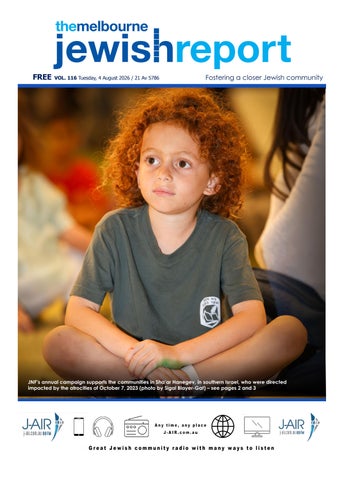
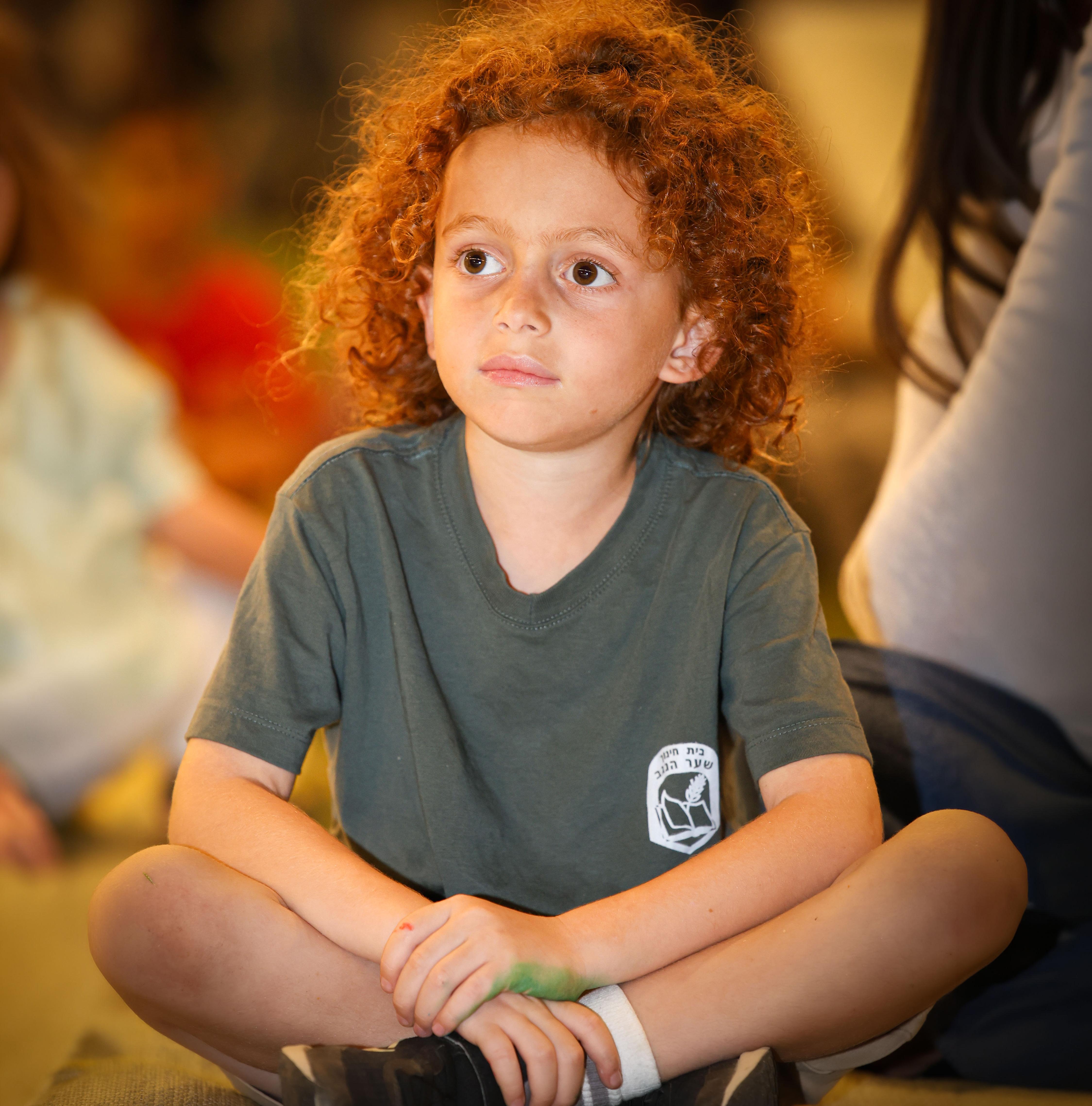
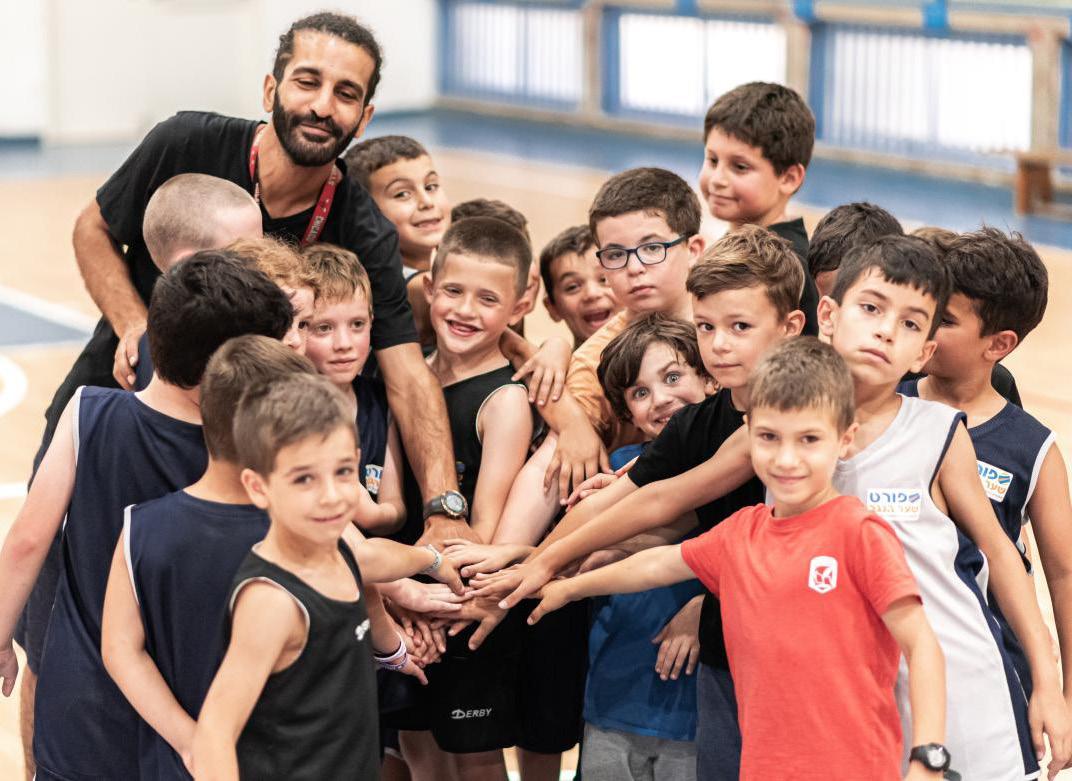
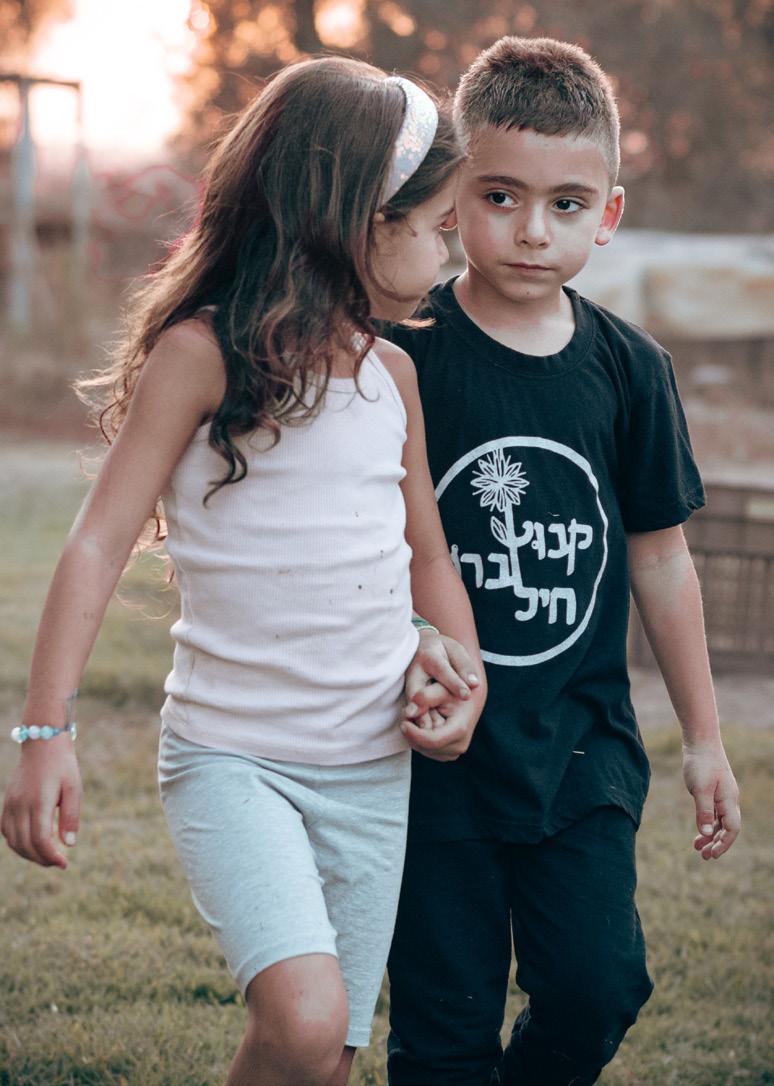
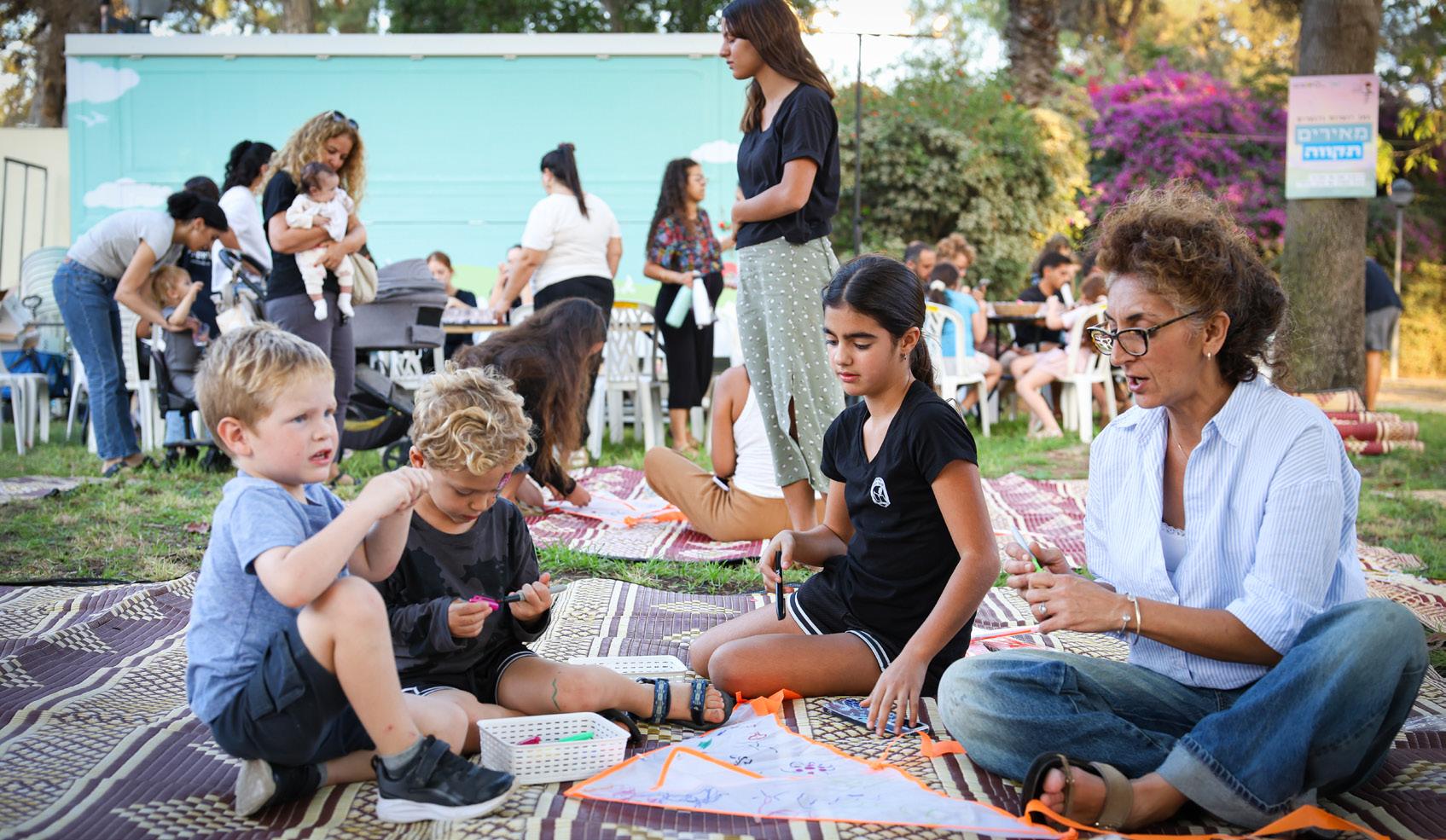
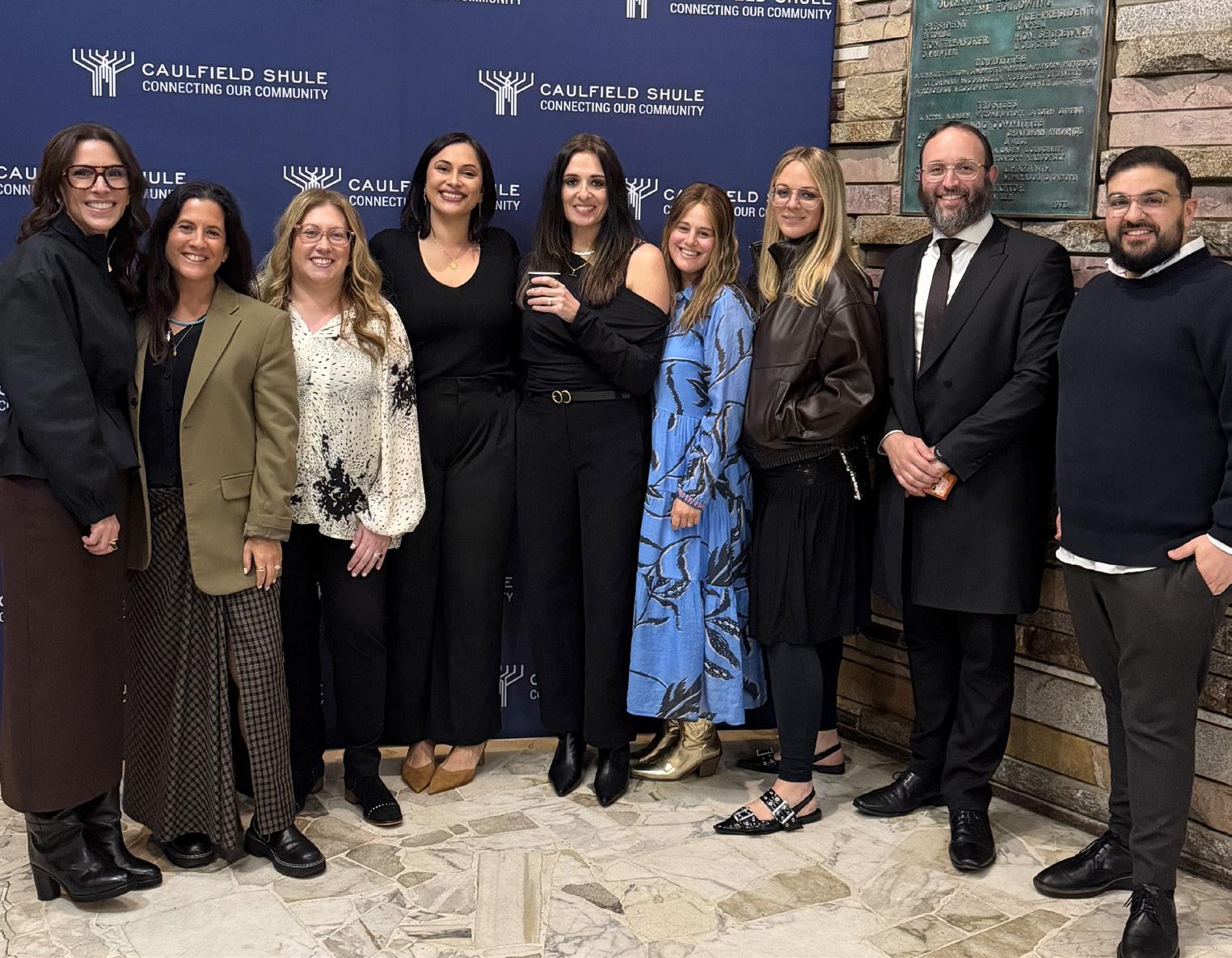
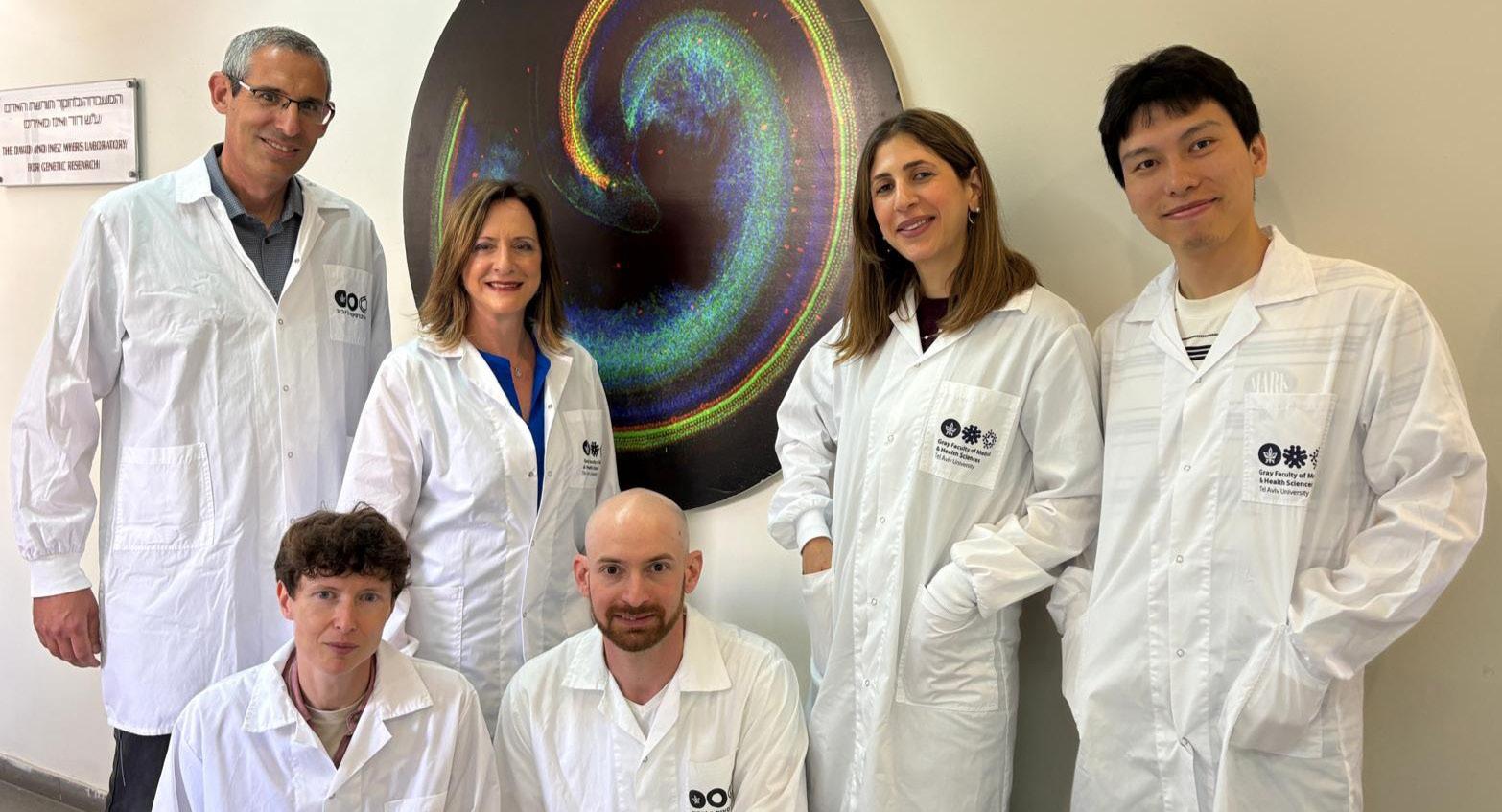
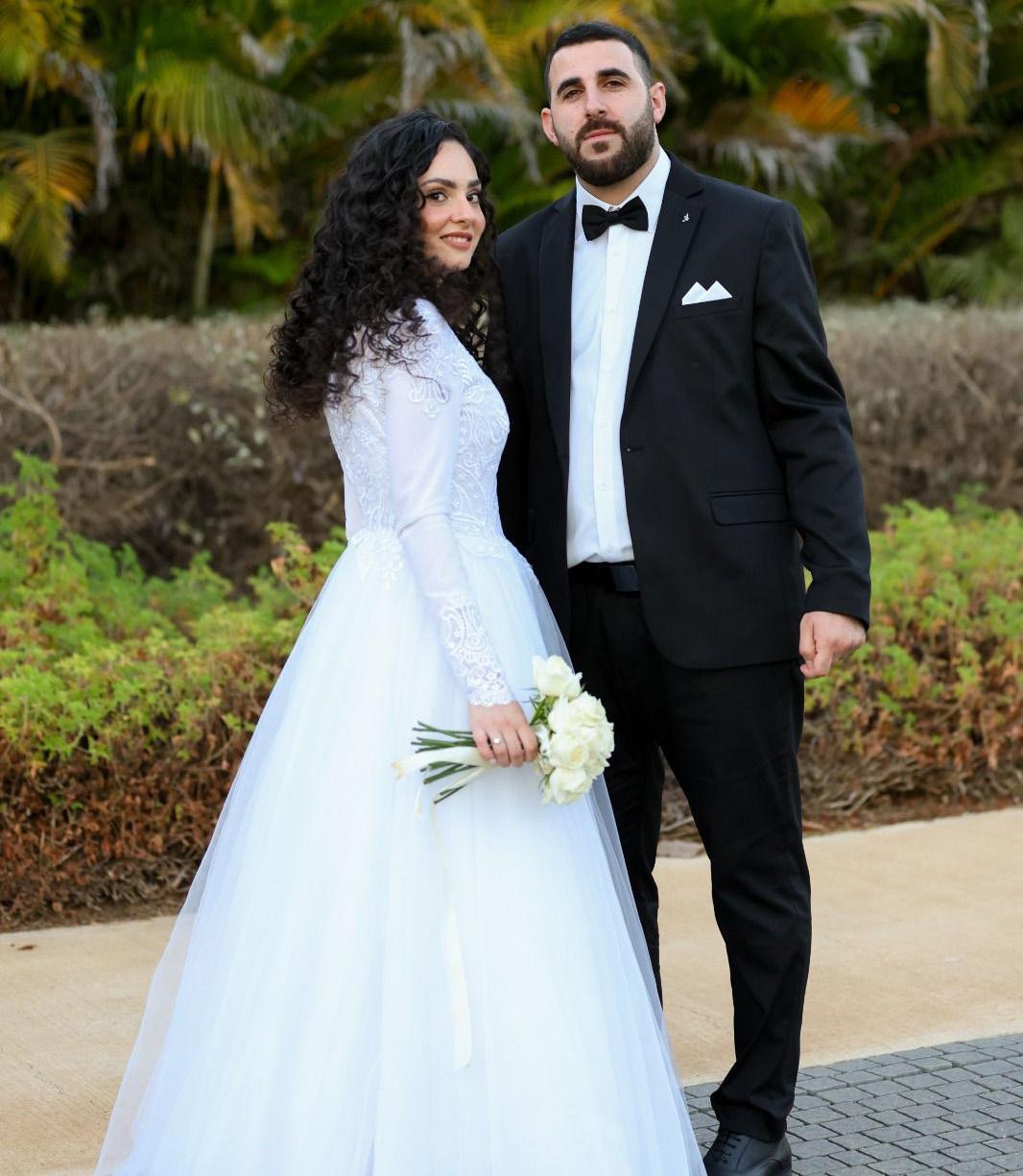
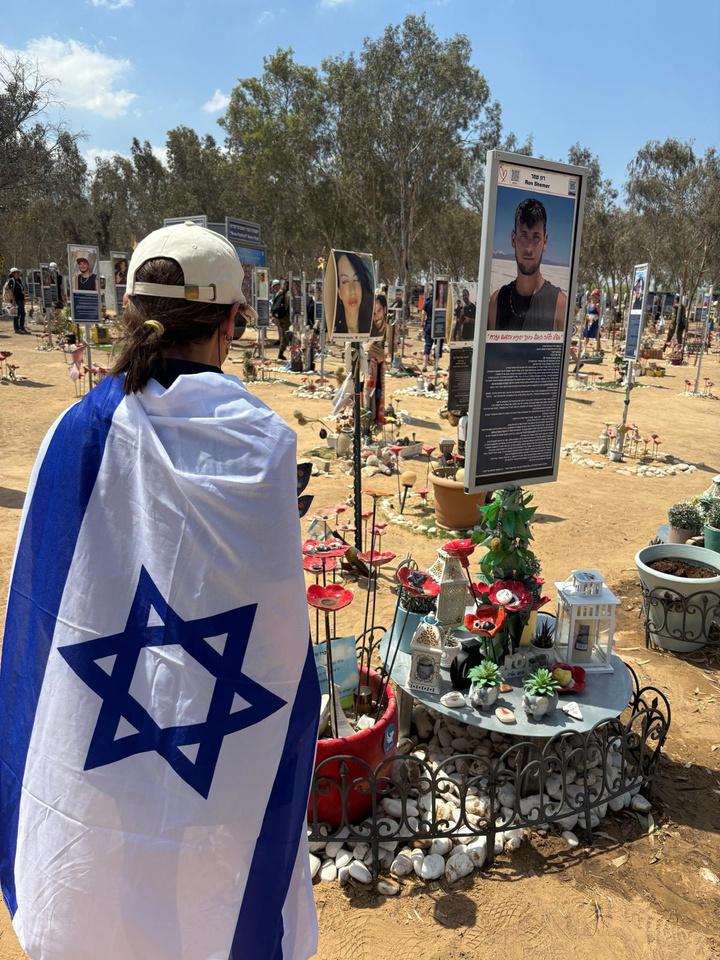
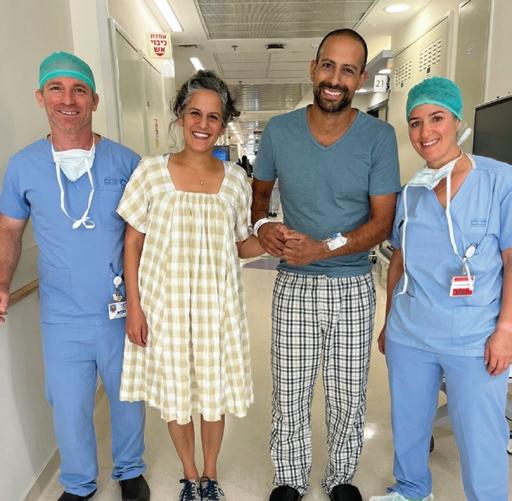
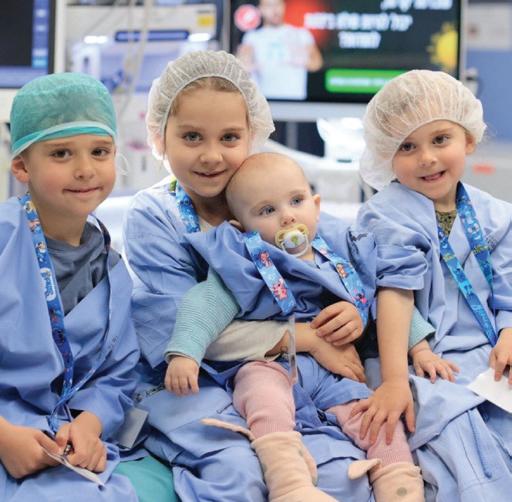
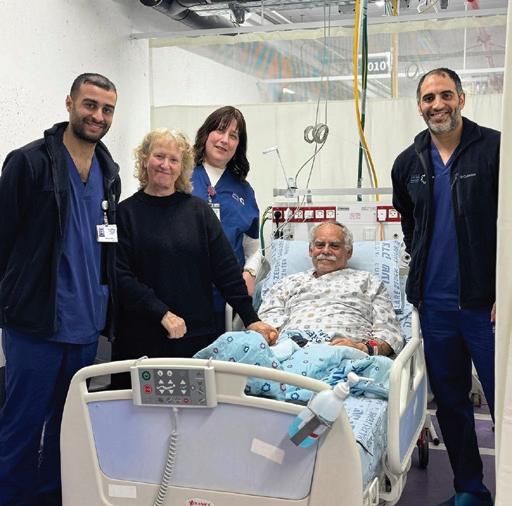
JNF’s annual campaign supports the communities in Sha’ar Hanegev, in southern Israel, who were directed impacted by the atrocities of October 7, 2023 (photo by Sigal Blayer-Gat) – see pages 2 and 3
AROUND
JNF Australia is launching its 2026 annual campaign with a clear focus on the future – supporting one of the country's ambitious regional recovery initiatives while welcoming internationally acclaimed human rights lawyer Natasha Hausdorff as keynote speaker.
Hausdorff, one of the world's leading legal advocates for Israel, will speak in Sydney, Melbourne and Perth this September. A London-based barrister, she is renowned for bringing clarity and legal expertise to the international conversation on Israel, regularly appearing on various media outlets, podcasts and political debates, addressing governments, parliaments and the United Nations. Her visit comes at a pivotal time as JNF Australia celebrates its 125th anniversary under the campaign theme "For a Stronger Israel. Yesterday. Today. Tomorrow."
"Natasha brings a voice of truth, courage and integrity to the global conversation," said JNF Australia CEO Doron Lazarus. "As we celebrate 125 years of building Israel, we are also looking ahead. Our mission has always
125 years of building Israel's future
been to invest in Israel's future, and this year's campaign reflects that commitment."
Founded in 1901 following the vision of Theodor Herzl and the World Zionist Organization, KKL-JNF has played a central role in shaping modern Israel. From transforming barren landscapes and developing vital water infrastructure to establishing forests, parks and communities, its work has always focused on long-term nation-building.
For generations, Australian supporters have been part of that story. Today, JNF Australia is investing in what it believes will become one of Israel's most significant long-term recovery projects: the Sha'ar HaNegev Community Village.
A groundbreaking regional recovery initiative, it was established in the aftermath of the October 7 attacks to meet the unprecedented physical, emotional and social needs of communities across Israel's Gaza border region.
Located in the Ibim, just minutes from many of the communities most affected, the village will become the permanent home for the resilience and therapeutic services already supporting the region. Rather than operating as a collection of separate programs, it will bring them together on a purpose-built campus, enabling coordinated, long-term care under one roof.
Spanning approximately six hectares, the village forms part of what is set to become the world's first centre dedicated to continuous trauma recovery – a place where treatment, community wellbeing, professional education and research work side by side.
The vision is not simply to help communities recover from October 7, but to establish an international model for responding to trauma, strengthening resilience and rebuilding communities following crisis.
The village is expected to support more than 20,000 people each year and serve as the regional hub for over 30 communities across the Western Negev.
Its integrated approach is built around three pillars – Treatment, Community and Training.
The Treatment Centre will provide trauma and mental health services, family and bereavement support, social services, crisis intervention and complementary body-mind therapies. Community spaces will host cultural activities, educational programs and social initiatives designed to rebuild connection, belonging and resilience. A dedicated Training and Research Centre will equip professionals with leading expertise in trauma recovery, while developing new models that can benefit communities in Israel and around
the world. "In traumatic situations, all the pieces fall apart – individuals, families and communities," said Nadav Peretz, CEO of the Sha'ar HaNegev Community Centre. "People need support, connection, belonging and safety.
The community village will allow us to provide all of these in one place and accompany people through every stage of recovery." By providing permanent infrastructure for these services, the village will ensure that families have access to continuous care close to home, while strengthening the region's capacity to respond to future challenges.
Lazarus said the project embodies the philosophy that has guided JNF for 125 years.
"Our role has never been simply to respond to immediate needs," he said. "It has always been to create the foundations for a stronger future. The Sha'ar HaNegev Community Village is an investment in Israel's long-term resilience, ensuring the people of the western Negev have the support, infrastructure and opportunities they need to rebuild stronger than before."
To book your place at JNF Australia’s annual campaign launch, go to https:// jnf.org.au/events/
To learn more and support the project: https://jnf.org.au/ac2026/
Natasha Hausdorff to headline JNF Australia's annual campaign
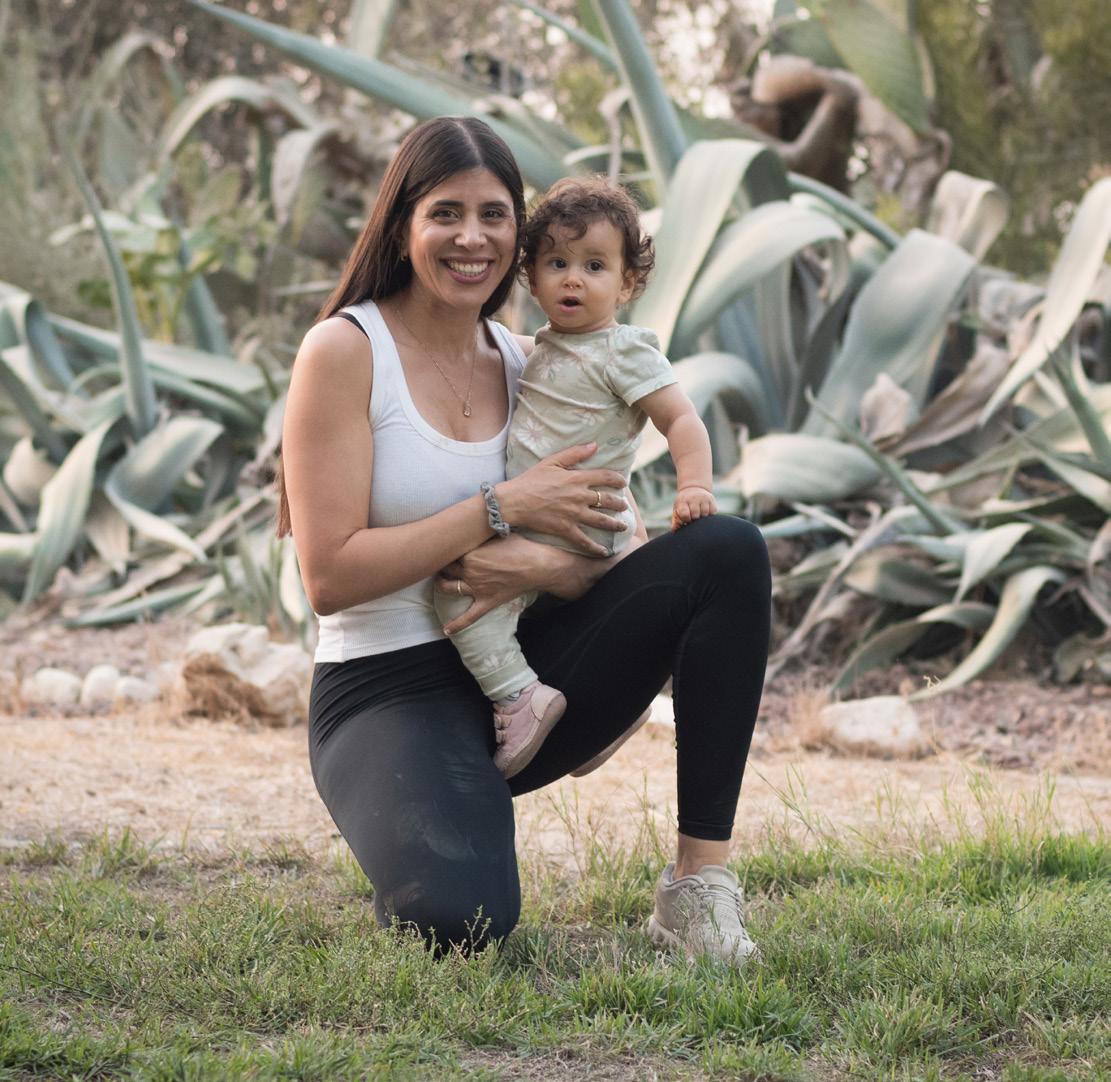
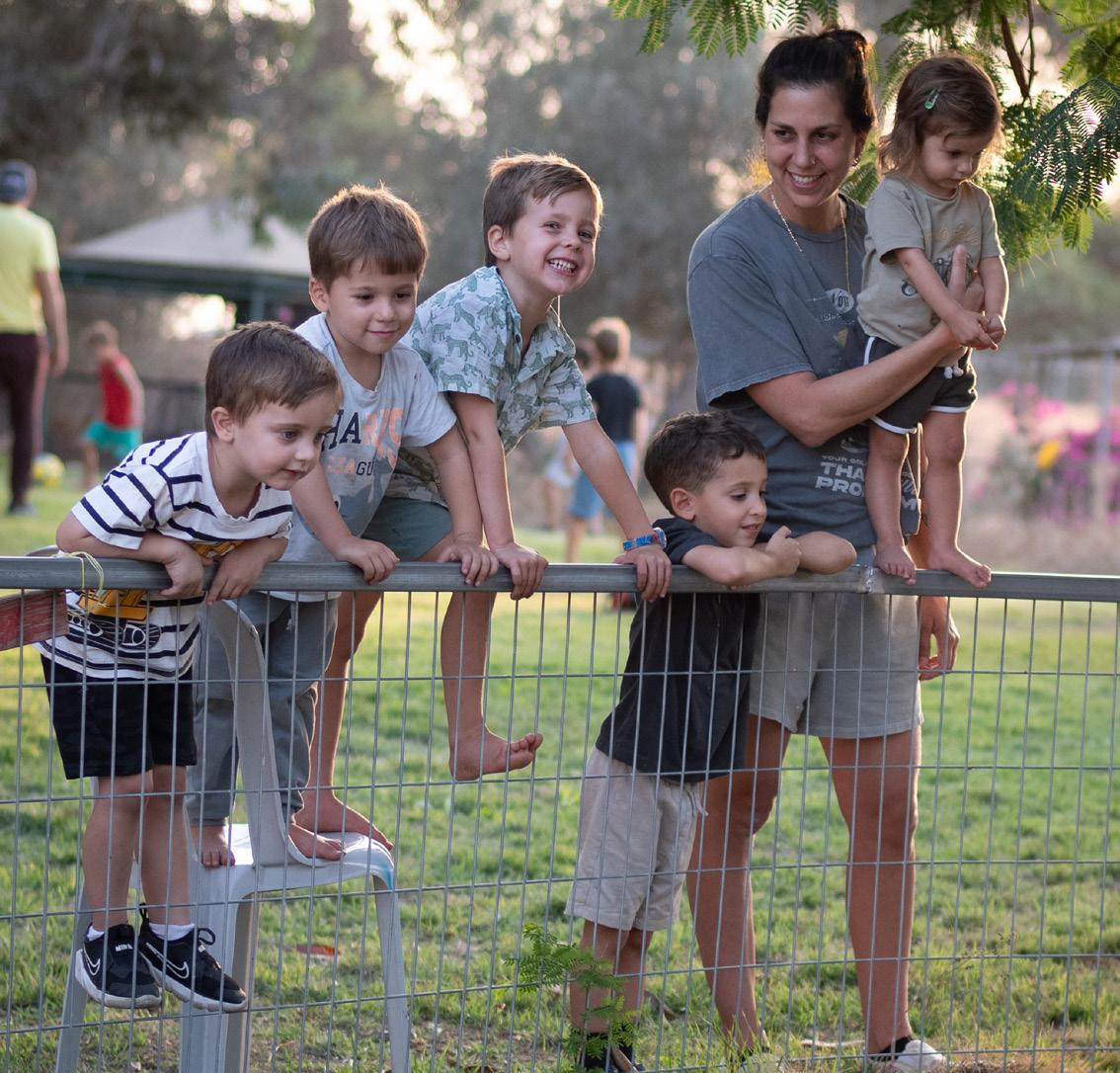
Images of Sha’ar Hanegev communities (photos by Yakir Assido)
KEYNOTE
DR DVIR ABRAMOVICH CONSIDERED OPINION
There is a sickness loose in the digital bloodstream, and it has a name: Jewhatred. I have seen what lives in the sewer of social media, and I am telling you now that the stench is no longer staying underground. It is pouring through TikTok, crawling through Instagram, nesting inside Facebook and collecting ad revenue on YouTube, driven by an algorithm hungry enough to feed it to millions.
Social media did not invent Jewhatred. It put it in every pocket, fed it to children, wrapped it in music, sold ads beside it and called the whole thing engagement.
October 7 was not only a massacre. It was a trapdoor. While Jewish families were still screaming, while bodies were still being identified, while the raped, burned, murdered and kidnapped were still being counted, the internet was already doing what it always does to Jews. It doubted them. It mocked them. It blamed them. It asked if the dead were real, if the blood was staged, if the victims were actors, if the whole thing was another “false flag”
That is the underworld I am talking about. A place where Jewish pain has to prove itself before it is believed. A place where Jewish death is treated as content. A place where the Jew is never allowed to bleed without someone online accusing him of holding the knife.
After October 7, YouTube’s comments did not get worse. They blew open. In the first three days after the slaughter, anti-Jewish replies on conflict videos jumped by almost 5,000 per cent. More than 15,000 antisemitic comments were identified after the attack. The hostages were still in Gaza, and the threads were already vomiting the same buried slanders.
Scroll through that pit and you will find the whole museum of Jewish hatred, every exhibit polished for the digital age. The Rothschild fantasy. The Khazar lie. The “fake Jews” fraud. The “Synagogue of Satan” sickness. Holocaust denial. Holocaust distortion. Blood libels. “Zionist” control myths. October 7 denial. Jewish money. Jewish power. Jewish evil. Nothing is new. That is the horror of it. The ancient delusions did not die. They were resized for a phone screen.
TikTok is where the gutter learned to dance. It is where Jew-hatred gets music. It is where invective arrives with stickers, sounds, coded hashtags, slang and jokes children can understand before they understand history. The platform can look like make-up clips, recipes and dance videos, and then, with a few clicks, the floor opens and you are falling into “fake Jews”, “Ashkenazi witchcraft”, satanic ancestry, Khazars, secret banking families and “Zionist schemes”.
This is how the trap works. You do not need to search for the darkness. The darkness is suggested. The darkness is recommended. The darkness slides into the feed between everyday things, as if Jewish devil-worship belongs beside a video about scrambled eggs.
One antisemitic TikTok slideshow, set to “Hava Nagila” drew more than 187,000 likes and 7,000 comments. A Jewish song
The dark world you do not want to know exists
became background music for antiJewish filth. The crowd did not stumble on it. It applauded it.
At Australia’s Royal Commission, TikTok heard about a case where its own AI reportedly flagged antisemitic content, only for human moderators to let it back on the platform after appeal. It was reviewed again. Still no violation. Only after further escalation was it removed, with TikTok later saying it “absolutely” breached its rules. Sometimes the machine sees the venom before the humans do.
Instagram makes Jew-hatred look harmless. That is its danger. A Pesach greeting goes up, and the replies become a toilet. A Jewish creator posts about cooking, singing, prayer or family, and suddenly the thread is full of slurs, Nazi vitriol, “Zionist” bile and trolls spitting on Jewish grief. The hate does not need a hood anymore. It has a profile picture. Then came the fake rabbis, a new kind of depravity, digital bodysnatching. AI-generated Jewish faces. Synthetic beards. Counterfeit holy men that never breathed, never prayed, never learned, never lived, suddenly speaking as if they were Jewish authorities. On TikTok, a documented network of 49 bogus AI “rabbi” accounts had more than 950,000 followers and more than 10 million likes. On Instagram, similar phoney rabbis were used to push the same moneyand-power conspiracies.
Facebook is the cellar where yesterday’s hatred is stored. Less glamorous. Less fashionable. Still lethal. It is where conspiracies ferment, where groups pass poison around like family recipes, where “Jew World Order”, “Jews control the media”, “Jews did 9/11”, “subhuman”, “Synagogue of Satan” and Holocaust denial can sit, spread and harden.
Do not be fooled because Facebook feels old. Old pipes still carry dirty water. In
one investigation, antisemitic Facebook group administrators did not just fail to clean up hate. Some had posted antiJewish filth themselves. When hateful posts were flagged, the reporters could be punished while the savagery stayed up. Like handing the keys of the fire station to the arsonist.
YouTube is the paymaster. Jew-hatred as a revenue stream. It does not merely host the rot; it sells ads beside the bottle. In one review of 302 English-language antisemitic YouTube uploads, almost a quarter carried ads. The clips drew nearly eight million views. Fewer than 11 per cent were removed after being reported.
And somehow the machines can detect a stolen track in seconds. But when the Jew is the target, everyone becomes confused. If you want the local taste of this decay, look at the Bondi massacre.
The Royal Commission heard that Arsen Ostrovsky, a victim of the Bondi attack, reported a YouTube video that described him as an “intelligence asset” with a “degree in theatre”. The clip referred to a selfie showing his head covered in blood, while one person in the footage claimed he was wearing makeup. It was flagged multiple times. YouTube’s policy manager told the Royal Commission it had been reviewed at a high level and remained on the platform.
X belongs in this story too. But this plague is bigger than one app, one owner, one logo. This is an ecosystem. TikTok accelerates it. Instagram dresses it up. Facebook keeps it alive. YouTube cashes in. X inflames it. Together they have built the most efficient Jew-hatred engine humanity has ever known.
More than one in five of American Jews who experienced antisemitism online in 2025 said it made them feel physically threatened. Most did not report it. Why?
Because they did not believe anything would be done. That is not Jewish weakness. That is corporate failure. That is what happens when users press report, wait, watch the hate remain, and learn the truth. The buttons exist. The policies exist. The safety teams exist. The public statements exist. But when the hatred comes for Jews, the system grows blind. The price is theft. These platforms steal time from Jewish parents who now have to check what their kids are seeing. They steal peace from Holocaust survivors who open an app and find trolls mocking the dead. They steal safety from creators who need security because they dared to be Jewish in public. They steal grief from families by forcing them to prove that Jewish pain is real.
Jewish users are still teaching, posting, singing, cooking, arguing, mourning, praying, explaining, defending and refusing to be erased. But no community should have to fight through sludge just to exist online. No Holocaust survivor should have to leave a platform because anonymous accounts call him a baby-killer.
This is not a free-speech problem. This is a moral emergency. I am not asking for debate to be shut down. I am asking why the world’s most powerful tech companies can build systems that predict what shoes you want to buy, what song you want to hear and what video will keep you awake until 2am, but become helpless when Jews are called demons, fakes, child-killers, parasites, Nazis, puppet-masters and liars.
Governments must stop accepting bedtime stories from tech executives. Regulators must stop being dazzled by safety reports written in boardroom fog. Advertisers must stop funding the muck and then pretending they cannot smell it. Platforms must enforce their own rules, close the loopholes, demonetise hate, open their systems to serious scrutiny, protect minors and stop pretending the algorithm is an act of God.
It is not a god. It is a machine. Humans built it. Humans profit from it. Humans can shut the pipes.
That is the truly sinister part. The machine does not need to order anyone to hate Jews. It only has to make the hatred feel normal. Familiar. Funny. Brave. True.
Bondi has already told us the screen is not a cage.
The hate gets out. It learns names. It studies faces. It marks doors. No one knows what this monster will eat next: a threat, a fire, a beating, a terrorist attack, a murder. No one knows which clip will turn into footsteps, which lie will choose its prey, which ignored report will become the moment before sirens. The beast is being fed in public, every day, every scroll, every dollar. When it opens its mouth again, do not call it a surprise.
Dr Dvir Abramovich is Chair of the AntiDefamation Commission and the author of nine books. His new book is The Heart of Amos Oz:, Love, War & Grief.
Dr Dvir Abramovich
Recently, the issue of false reports about Israel received attention at the Royal Commission on Anti-Semitism and Social Cohesion. Appearing before the Royal Commission, ABC editorial director Gavin Fang acknowledged it was “a bad mistake” to repeat the untrue claims of the UN humanitarian chief Tom Fletcher, when he proclaimed that 14,000 babies in Gaza would die within 48 hours. This was proven false, but not before it was repeated worldwide, including by the ABC. The ABC deserves credit for later correcting its mistake, but the lie already travelled further than the truth.
This is not merely an error of journalism. It has dangerous, real-world consequences.
Since October 7, 2023, misinformation has significantly shaped public perceptions. Once sensational anti-Israel allegations are published and spread, corrections rarely undo the damage.
This dynamic is not new. Medieval blood libels falsely accused Jews of immoral acts, fueling centuries of persecution. The language may have changed, but the mechanism remains familiar. False accusations portraying Israel as evil create moral justification for antisemitic hatred. When people believe a group is deliberately killing innocent civilians, hatred is reframed as a righteous act. Hamas understands
Falsehoods that fuel antisemitic hatred
this dynamic. It knows that falsehoods, including inflated casualty figures, generate international pressure on Israel to halt defensive operations. This also incentivises Hamas to use tactics that place civilians at risk. That includes using their own population as human shields.
The genocide accusation is another example. Witnesses before the Royal Commission testified to being labelled genocide supporters, demonstrating the hateful impact of this false claim. The numbers of Gazans have grown, hardly
in line with allegations of genocide. Genocide requires intent to destroy a national, ethnic, racial or religious group.
Yet, Israel has taken unprecedented steps to prevent harm to uninvolved Gazans.
These have included issuing evacuation orders, distributing leaflets, making calls and sending texts warning civilians before military operations.
Urban warfare expert John Spencer has estimated the combatant-to-civilian casualty ratio in Gaza at approximately
1 to 1.0-1.5, historically low for modern urban warfare.
So, too, with the false accusation of intentional starvation of the population in Gaza. Humanitarian aid flows into Gaza. In one of the largest humanitarian projects, more than two million tonnes of aid have entered Gaza. Between October 2025 and June 2026, that amount of food exceeded by more than three the UN nutritional requirements. These facts generate far less coverage than ill-founded allegations.
The same pattern appears in reporting on “settler violence”. Every act of violence deserves condemnation, yet this phenomenon is marginal. The government and the leadership of the settler movement condemn such violence and act against it. According to the Regavim report, the UN reporting relies on inaccurate and false data, including counting Palestinians killed or injured while attacking Israelis.
These examples reveal a pattern in which false allegations are amplified while truth receives scant attention. Media organisations have a responsibility to verify claims and avoid amplifying terrorist propaganda.
History has shown that incorrect accusations against Jews have tragic consequences. Distorted reports fuel antisemitism. After the Holocaust, societies generally understood the consequences of such propaganda and confronted it. Modern lies against Jews and Israel deserve the same scrutiny and must be stamped out.
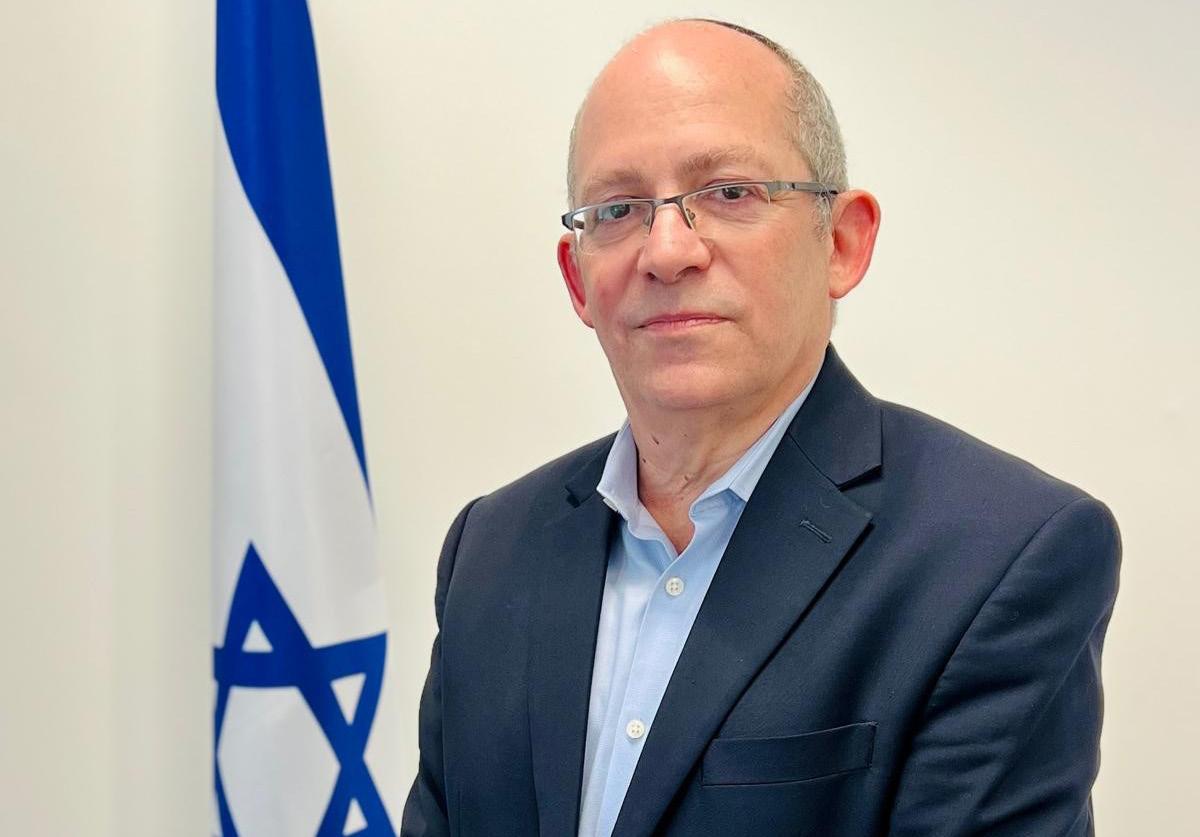
Dr Hillel Newman, Ambassador of Israel to Australia
DAVID SCHULBERG CONSIDERED OPINION
Major humanitarian and human rights organisations with Australian links have been accused of failing Jewish staff, mishandling antisemitism complaints and allowing contested claims on Israel and Gaza to influence Australian media, education, parliament and public debate, according to Danielle Haas, one of EiGHT’s lead organisers.
A 63-page report by EiGHT, a privately funded group founded by current and former NGO professionals, multilateral institutions and the human rights and humanitarian sector, says major international NGOs have minimised, reframed or dismissed antisemitism complaints, despite presenting themselves as defenders of human rights, equality and accountability.
David spoke with Danielle Haas.
David
You've published a detailed report alleging that NGOs exploited Gaza suffering to raise funds while dismissing claims of antisemitism. Interestingly, I note that your report has been submitted to our Royal Commission on antisemitism and social cohesion. Why have you chosen there to lodge it?
Danielle
Partly timing. Partly that this was a platform that was credible and worthy of the gravity of some of the material. It was suggested, and we wanted to contribute this incredibly important part of the narrative about human rights organisations.
These organisations also function in Australia. One of the critical elements of the NGO sector is its sheer reach and power. Human rights organisations are the architects of so much of how we think about the world today. From these organisations has come the concept of apartheid, now Israeli apartheid, genocide and so on. They are, of course, embedded in our court systems and our academic systems. Their employees teach in these facilities. They're interwoven in everything that we do in all our main institutions. It seemed like a good platform to target and because some of the egregious examples have come out of Australia.
David You've done a survey of current and former staffers at several humanitarian organisations that raises accusations of bias and efforts to shape an anti-Israel, pro-Palestinian narrative around the Gaza war.
What themes emerge from your report? As you elaborate the main themes, perhaps you can identify some examples that illustrate what these themes are about.
Danielle I wouldn't personally phrase this as you did in terms of, we've alleged or we're raising accusations. This is a report done in the same style, with exactly the same methodology, as human rights reports. We are giving voice to victims or to witness accounts. We are presenting it as evidence. We are triangulating that with other sources of information. What we are saying is that there appears to be a systemic issue here, based on the consistency of the accounts across
NGOs lacking accountability
people who did not know each other, across geographies, across roles, across organisations, and that is exactly what human rights organisations themselves do. We're speaking within an ecosystem, in the language of the ecosystem. We know for a fact that the people who speak out within these organisations are at risk of retaliation. In terms of the main themes, this report was phrased in terms of antisemitism and social cohesion because that is the mandate of the Commission.
It could equally be termed simply a report about institutional drift and a sector that no longer upholds its own standards of practices. One of those manifestations is, you could call it antisemitism, you could call it simply bias against a minority group or unacceptable behaviour. When it comes to bias, another way to talk about it is ideology and politics now beginning to affect the work itself.
A few main themes would be the institutional tones of these organisations and behaviour now that has led to the silencing of people who don't have the same monolithic view. You have selfcensorship, you have reports of overt and more subtle retaliation by being removed from conversations where you should theoretically be involved, being sidelined, up until people's jobs being eliminated, out of the blue, people who have raised concerns about antisemitism, not only not getting those concerns addressed, but being compelled to sign non-disclosure agreements that are arguably beyond the pale, to the point where someone has been told to essentially sign away their complaint and any wrongdoing. Not only that, but also not to share anything with anybody, including their own family. That's one whole world of what's going on. Very concerning, I think, on a larger level is compromised methodology. You have inadequate, patchy, ad hoc editing processes, corrections’ policies. You have incorrect information, knowingly being left online because it could be construed as pro-Israel to fix it.
For example, Amnesty International took two years to release a report on October 7th. When it did so, the press release under which it was released didn't give any indication that it was about October 7th. You had to scroll way down paragraphs, something like 15 to 20 paragraphs, before you even got to the content related to October 7th. It was also released in the deadest media week of the year, which is in
December. From internal emails released in the free press, we know that there was a deliberate attempt to bury it because staff had raised concerns it might conjure sympathy for Israel. On the other hand, we have Amnesty coming out with a genocide report one year after October 7th. Concerningly, we have accounts of staff saying that as it wound its way through the system, it was already being labelled the ‘genocide’ report, which means that they had already reached their determination as to what it was going to be about, while theoretically in the process of open and honest research. When Amnesty Israel raised concerns about the legal determination of this, not some of the other conclusions, including notably ethnic cleansing, it was summarily disbanded by central Amnesty and suspended for two years, and various claims made about it.
These are people who have given their entire lives to human rights, including within the Israeli ecosystem, where they have not been embraced, where they took enormous personal and professional risks. That's another category. We have concerning proximity or lack of concern, it seems, with these organisations in relation to militants themselves. Human Rights Watch (HRW) had on the board a former jailed member of the Popular Front for the Liberation of Palestine or someone who had very close connection with them. That was dismissed as history by Ken Roth who was the leader at the time.
What are these organisations doing and is ideology and politics now becoming the substitute for the principles that used to guide the movement, which are theoretically ‘universalism’ and ‘equality’ and ‘indivisibility’ and things like that?
David
I want to refer to the fact that you came to this as a senior editor at HRW after 14 years, and you left after the start of the Gaza war and have become a critic of this NGO sector ever since. Can you tell us perhaps about some of the experiences that you personally had at HRW that led you to your current position?
Danielle
I wouldn't say I'm a critic now and I wasn't a critic then; that's too black and white. When I was at HRW, like many people in these organisations I'm subsequently finding, though there were issues that came up along the way, as they do in 14 years, and not always related to Israel stuff by any means, what do you do you raise them with the correct people through the correct channels in a professional way.
I will say I never raised any issues about policies that were taken. They could talk about whether they wanted to adopt a policy on apartheid – that was their organisational prerogative to do. What I did was, where relevant, raise issues about behaviour, conduct, or about methodology or about work that was being compromised, that was no longer rigorous, and that was unacceptable according to their own standards. There are many good things that happen in these organisations, and that should be noted. Which is also why people stay for so long.
There's also a sense that you can hopefully do things from the inside. These organisations, repeatedly we hear and I experienced myself, have changed enormously and I think it over the past decade at least and I think that it also
takes time to catch up with things that are changing and understand it yourself, so what I experienced was definitely a change in culture in which an old guard was really being taken over by a very different generation, much more strident, much more activist, much more versed in certain ideologies, settler colonialism, and all these kind of narratives. And it doesn't take a lot for organisations to start drifting.
One of the prime ways that happens is when good people and people in positions of authority start saying nothing. What I began to observe, and I know because I have many conversations with my managers, was that they stayed quiet because they didn't want to deal with issues. They were afraid for their own jobs. Eventually, they were older. They wanted to retire. They were beneficiaries of Me Too or of Black Lives Matter or of any of the diversity, equity and inclusion initiatives coming in. That's what happened, a more aggressive, arguably non-human rights-focused approach began to creep in, and some very key people began to dominate the shaping of the output.
David The irony here is that a lot of these organisations were founded by wellmeaning Jews who would have been supportive of Israel and against antisemitism, but they've been hijacked.
Danielle I prefer not to talk in terms of being proIsrael or anti-Israel. I find it irrelevant. Other people should too. These are obviously the examples that we brought forth because they're illustrative now of a deeper rot going on. But it really doesn't matter what your views are. You should be affronted by the idea that organisations that are tax exempt, or that have public trust, are not beholden to any standards. There are some accountability mechanisms, many to do with finances. When we talk about lack of accountability or scrutiny, we're talking about how they operate.
You've got to be able to start understanding how they speak. What happens is when you challenge them, they will cite and quote at you their own policies. They'll say that we have a policy, we are rigorous. What never happens is the journalistic follow-up. How can you prove these policies are enacted? Where is the evidence to support that? It is a shocking reality that when you think about what we know about human rights organisations, we know what they tell us. I challenge you to think of any media article, TV expose, anything that has ever looked at the sector, and explored beneath the hood.
It hasn't ever happened in the media, and it hasn't even happened in academia, because when you look at the academic work on NGOs ... even when they look at these organisations, they quote these organisations in terms of their own narration. What is really required is that people now begin to demand that these organisations no longer quote their policies but begin to prove that they do what they say.
This is an edited extract from an interview with Danielle Haas that was aired on ‘The Israel Connexion’ program on J-AIR community radio. The full conversation is available as a podcast on the J-AIR website, on OmnyStudio and other podcast platforms. David’s program can be heard weekly on J-AIR in Melbourne and 2TripleO in Sydney.
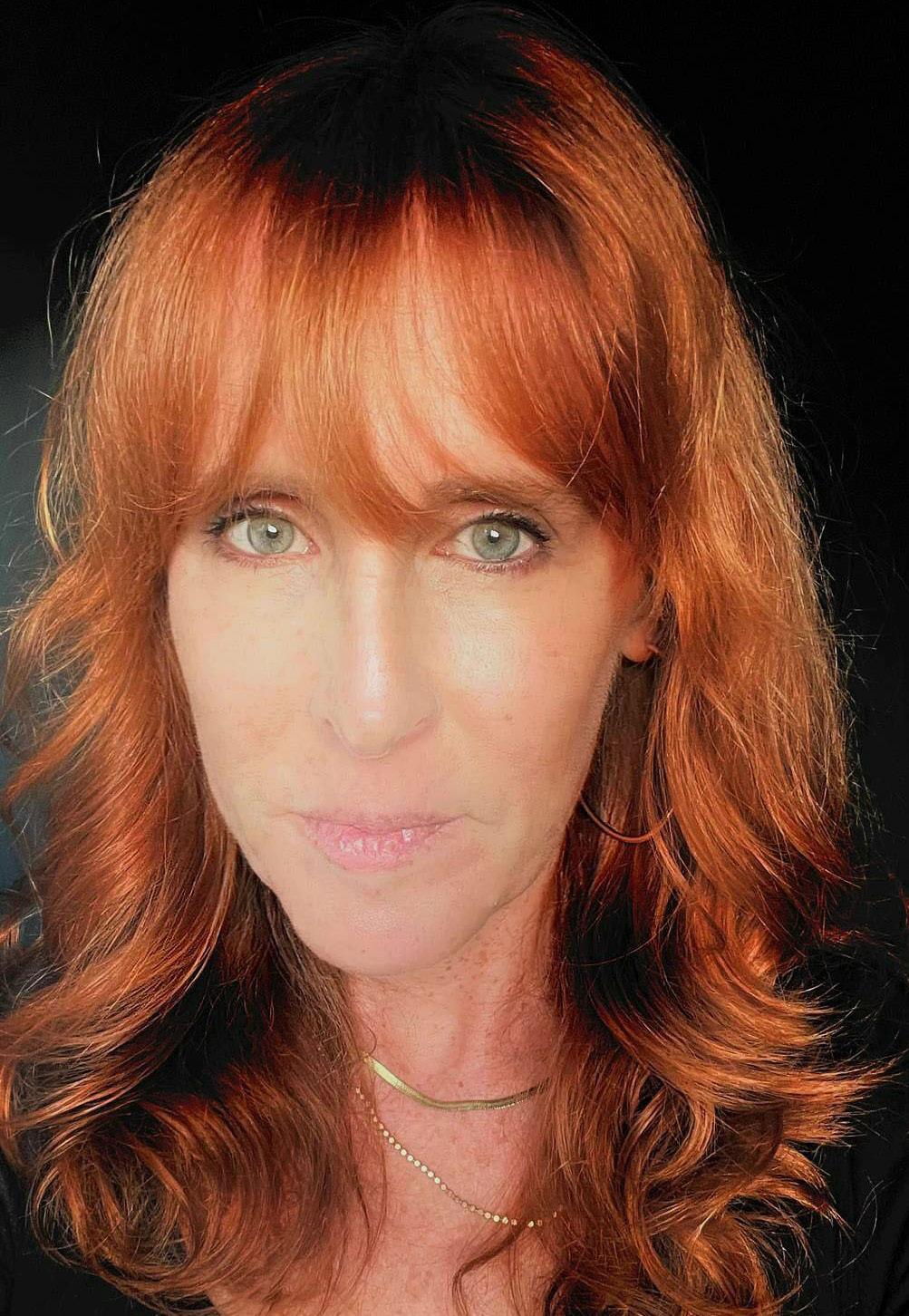
Danielle Haas
AROUND THE COMMUNITY
THE KING DAVID SCHOOL
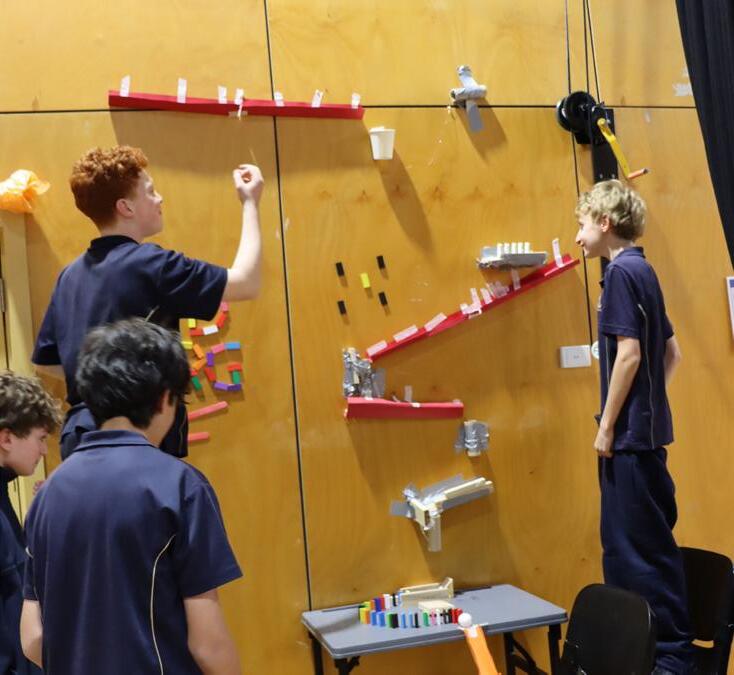
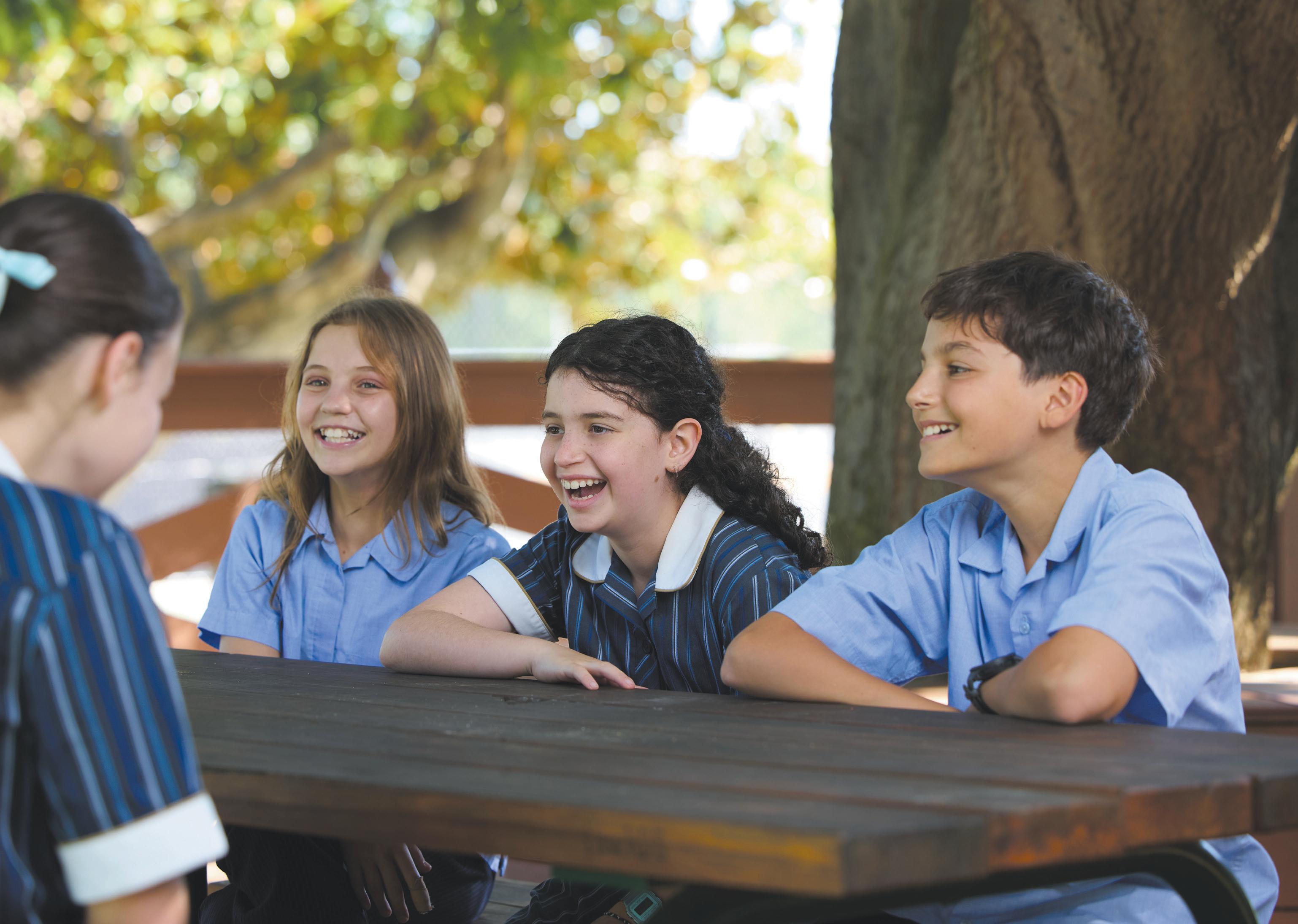
At the start of Term 3, the Year 7 cohort wasted no time deep diving into creative problem-solving.
Project Slingshot, a project based learning experience, is designed to ignite entrepreneurial thinking, challenging students to step out of their comfort zones and tackle realworld problems.
By blending critical thinking and communication with pure imagination, the program proved again that KDS students are ready to become future innovators.
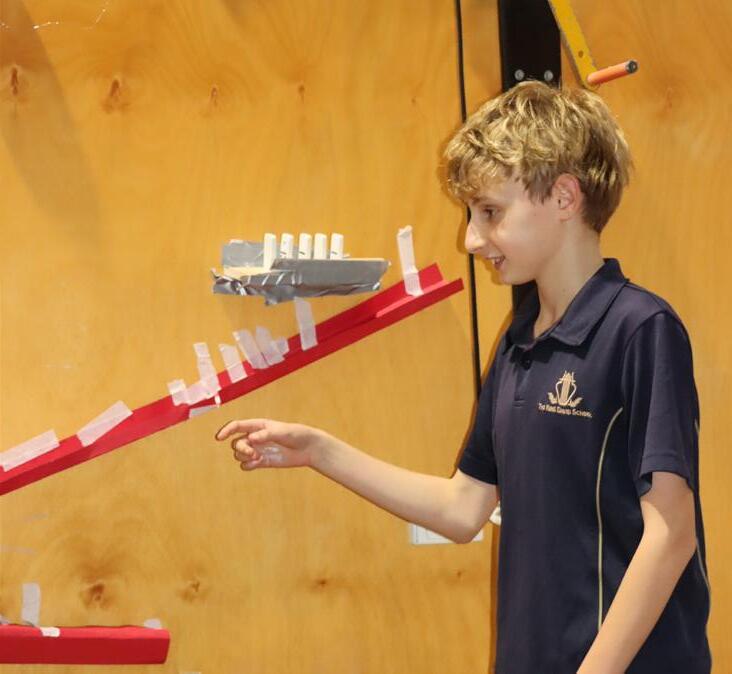
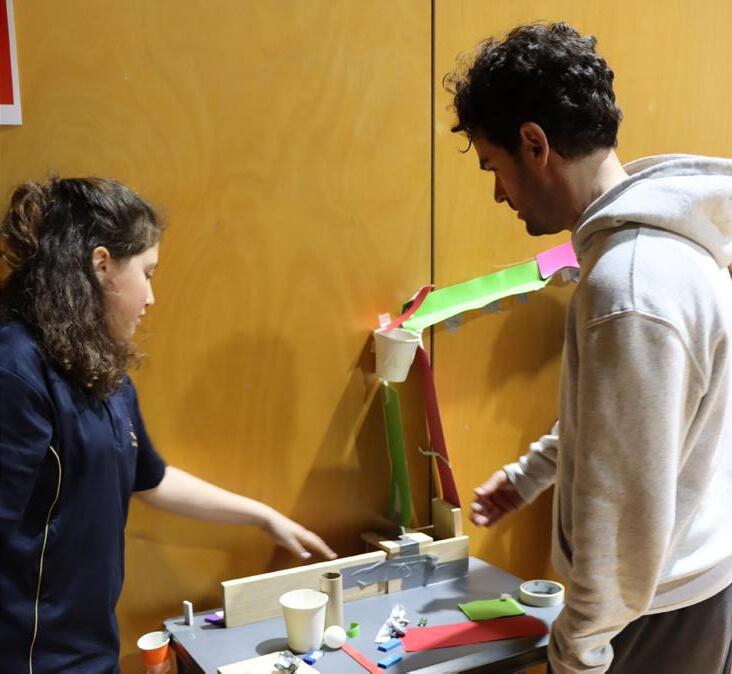
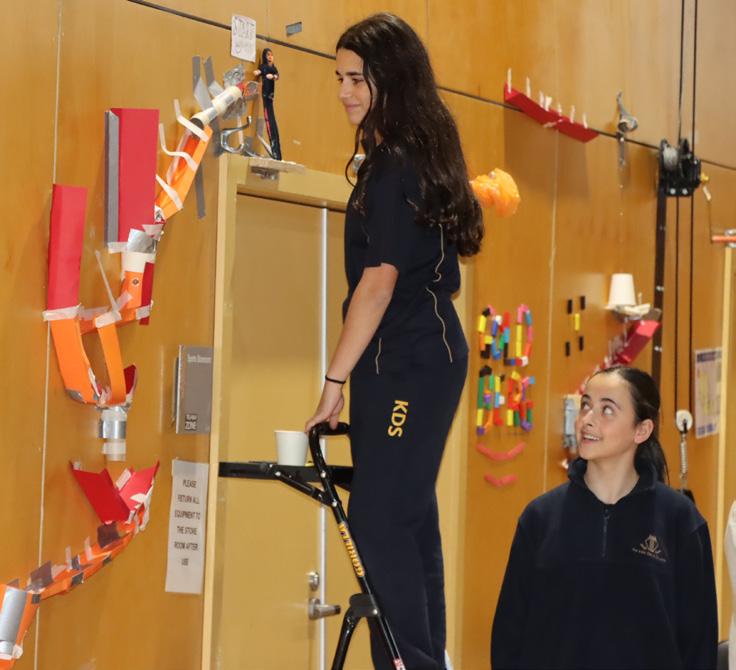
Working in collaborative teams, students were tasked with brainstorming, prototyping and testing a variety of complex designs in the Rube Goldberg Challenge.
It pushed them to try to solve problems while under pressure and the results showed that they were equal to the task.
Students were also involved in a Design an App Challenge, crafting a Shark Tank-style pitch for an app they created.
Over two days, they learnt that innovation requires taking risks, learning from one’s mistakes and working in sync with others.
Innovation in action: Year 7s spark creativity with Project Slingshot
Ava A-R. explaining her Rube Goldberg design to Adi Zayon, creativity and innovation coordinator
One of the competing Year 7 teams Alexander K.
From left: Amelie J. and Chloe S.
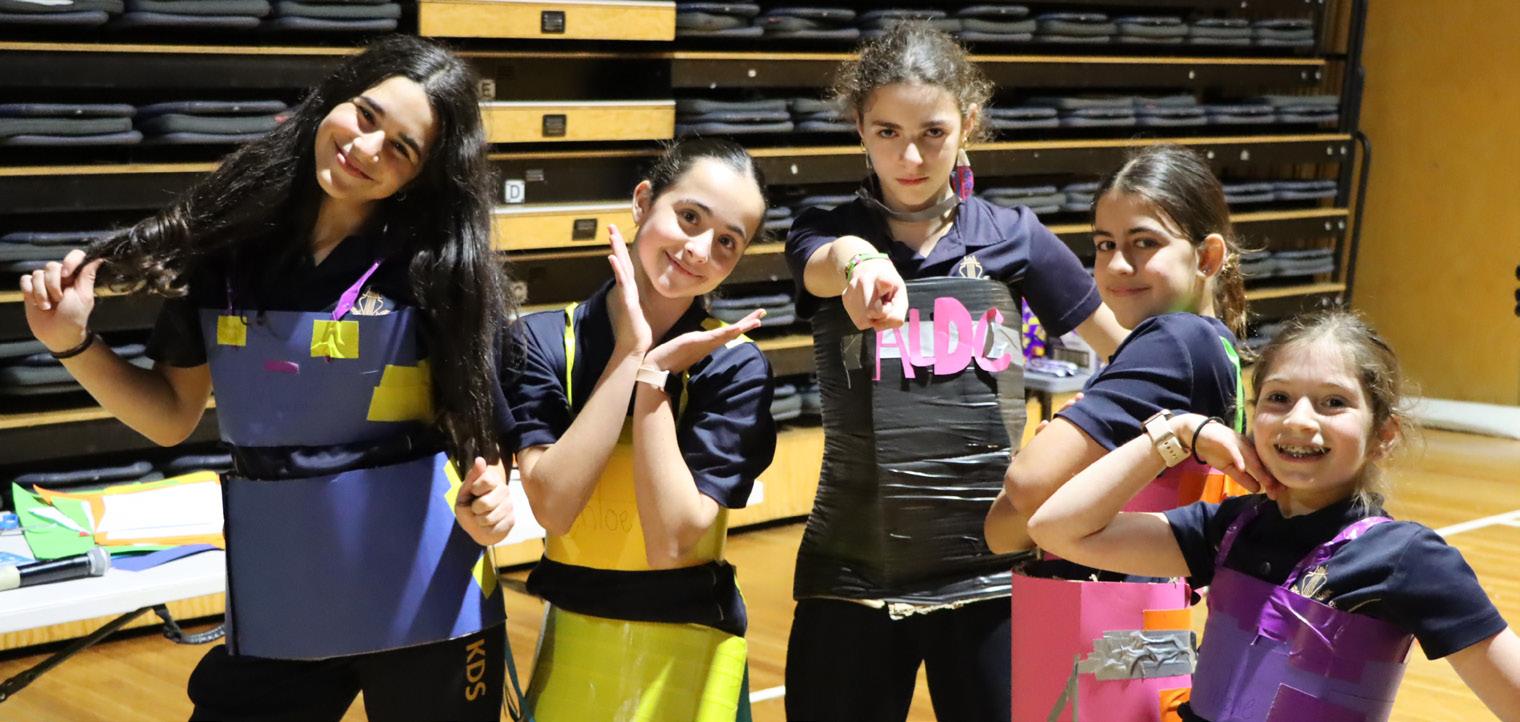
From left: Amelie J., Chloe S., Juliette B-S., Sofia C. and Lexi F. during the fashion parade component of the two-day challenge
RABBI BENJAMIN BLECH COURTESY: AISH.COM CONSIDERED OPINION
The surprising findings of a new Israeli study
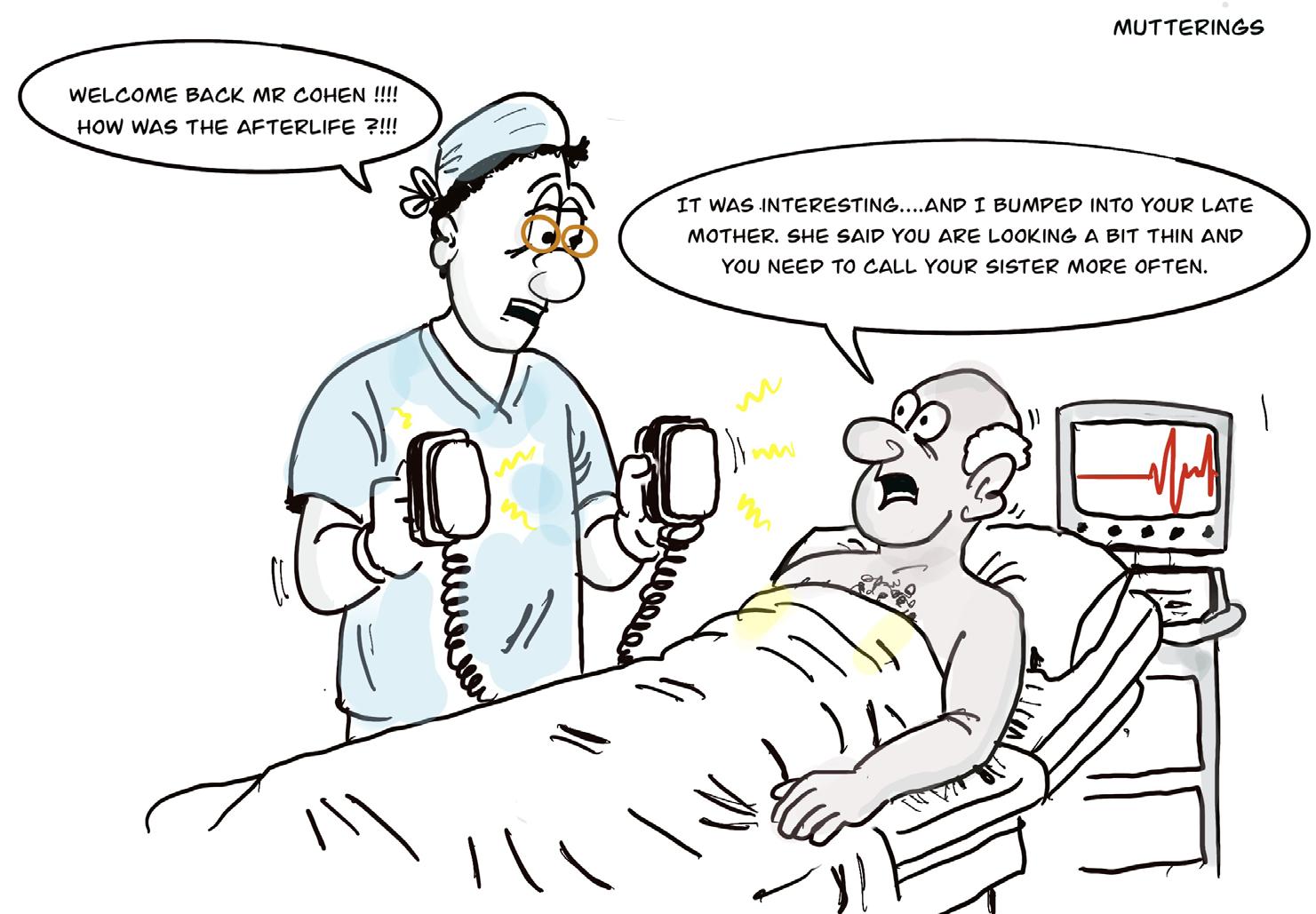
What happens to us when we die? Is death the end or a new beginning? In the 21st century, we still can only rely on faith rather than scientific findings to give us insight into the final end of our journey here on earth.
But a fascinating new Israeli study may reveal part of the puzzle. Conducted by researchers from Jerusalem’s Hadassah University and published in the journal Consciousness and Cognition, the study mirrors details that we have received by way of Jewish mystical tradition.
Elizabeth Kubler Ross, who dedicated her life to studying death and the dying, wrote that in her many years of being present at the moment when life slipped away what most moved her was the sight of the sudden serenity and peacefulness that invariably accompanied the passage from one state to another. She has chosen to describe death as "breaking out of a cocoon and emerging as a butterfly". Our bodies during life represent physical limitations. Without them, we are for the first time able to soar to heights previously unattainable.
While kabbalah (Jewish mysticism) filled in some of the gaps in our knowledge with esoteric descriptions of death and the afterlife, mankind struggled with the mystery of death without the benefit of personal testimony from any of its victims. No matter how much we wanted to pierce the veil of secrecy that blocks our view of the beyond, we recognised our human limitations. Death is a one-way trip that doesn't allow for a return visit to Earth to reveal its secrets to the living. Even if we accept the idea of survival in another form after our bodies cease to function, we've been stymied by the lack of any real evidence, simply because the dead cannot speak.
But in the last half a century something dramatically new has been added to the equation. While there are many who still dismiss it as unverifiable, life after life is slowly gaining ground, even among those who've never identified themselves as particularly religious or spiritual. There have been countless
Before you die, your life's movie
cases of testimony from people who have died and been brought back to talk about it, thanks to breakthroughs in increasingly sophisticated resuscitation techniques.
Professionals who have done groundbreaking work in the field, such as Elizabeth Kubler Ross and Raymond Moody, have come up with the name NDE – "near death experience" – to describe the phenomenon.
We may argue – and many have –that anyone now alive by definition really didn't die. But what allows us to think of those who have gone through this experience as having been closer to "the other side" than to what we call life is the fact that they were clinically dead. Their brains didn't show even a flicker of activity. Their hearts had stopped beating.
There was no way for sensations to register, for sights to be recorded and for sounds to be heard. And yet these people were able to "recall" what happened in the rooms in which their bodies rested, to describe who came and went after they heard themselves pronounced dead and even to repeat conversations that took place in the
chronology. As one participant put it: ‘‘There is not a linear progression, there is lack of time limits … It was like being there for centuries. I was not in time/space, so this question also feels impossible to answer. A moment, and a thousand years … both and neither. It all happened at once, or some experiences within my near-death experience were going on at the same time as others, though my human mind separates them into different events.”
Profound empathy for people with whom they shared significant moments during their lives was also recorded by almost all the participants in the LRE research.
A common element of LREs was the inclusion of deeply emotional experiences from the perspective of others close to them. Here’s what one had to say: ‘‘I could individually go into each person and I could feel the pain that they had in their life … I was allowed to see that part of them and feel for myself what they felt.”
presence of their "dead" bodies in minute and accurate detail.
With which part of their nonfunctioning brains did they remember and how could they possibly see and hear? Their physical bodies were no longer capable of performing these tasks. Small wonder that almost everyone who went through an NDE experience, whether they initially were believers, diehard sceptics, agnostics or atheists, came to an unshakable belief in the existence of a nonphysical soul that survives the death of the body.
Rabbi Hayim David HaLevi, prominent Sephardic former chief Rabbi of Tel Aviv, in his classic masterwork Assey L’cha Rav, wrote a lengthy comparison between traditional Jewish belief as found in Talmud, midrash, and kabbalistic works to the more recent reports of NDE experiences. In his eyes, there’s profound significance to the secular world’s awakening to a most powerful spiritual truth – the existence of the soul whose continued existence cannot be negated with the passing of its corporeal body.
And now another part of the story is being uncovered. Jewish mysticism also taught that death is accompanied by an all-important life review.
As we approach a non-terrestrial existence, we are permitted a flashback, which finally allows us to gain a full perspective on both our sins, as well as our achievements, our failings as well as our accomplishments.
Before we leave this Earth, we are given the opportunity to reflect upon the meaning of our past lives and the legacy we pass on to those we leave behind.
Interestingly, the new study by Hadassah hospital, led by Dr Judith Katz, a neurologist at Hadassah University in Jerusalem, found that life review experiences (LRE) accompanying the dying process were frequent and shared numerous common elements.
People saw their past lives as if watching a movie, but the order of events they recalled did not follow
Another: “I was seeing, feeling these things about him [my father] and he was sharing with me the things of his early childhood and how things were difficult for him.”
Perhaps the most significant conclusion was that “all interviewees in the study said after their LRE they had experienced a major change in perspective regarding significant people in their lives or important life events.”
The researchers who reported their findings chose not to assess them from a spiritual perspective, nor to link them to age-old rabbinic insights into the soul, as well as the religious explanations for our final journey.
Scientists hesitate to make science subservient to traditional belief. Instead, they tried to offer other explanations for their findings – how the prefrontal, medial temporal or parietal cortices, all “happen to be particularly vulnerable to hypoxia and blood loss resulting from traumatic near-death experiences.”
Of course that is possible. Far more probable to my mind though is what the wisdom of our tradition understood for thousands of years. Death, as the rabbi of Kotzk put it, is “nothing more than moving from one room to another, from a comparative hovel to a magnificent domicile in heaven”.
And as a final courtesy, before we leave for that trip, God allows us a look back, to see the movie of our lifetime.
We may then be filled either with regret or with joy. To know that in advance is perhaps the greatest inspiration to lead a life filled with meaning and purpose.
Rabbi Benjamin Blech, a frequent contributor to Aish, is a Professor of Talmud at Yeshiva University and an internationally recognised educator, religious leader and lecturer. He is the author of 19 highly acclaimed books. His website is https://www. rabbibenjaminblech.com
echo Jewish mysticism
COMMUNITY
DR PHILIP BLISS OAM PROGRESSIVE JUDAISM VICTORIA AROUND THE
For anyone watching the daily broadcasts of the Royal Commission into Antisemitism and Social Cohesion, you would be under no illusion that the shocking revelations give little comfort to the wider Jewish community.
Day after day we hear of the hateful events directed at school children and Jewish students at universities, along with the vile actions on the streets, in shops and at workplaces.
If we were not aware of such events before, we could not fail to be fully cognisant of the level of Jew hate now.
Jews are supposed to be a nation of hope and most of us were probably blissfully ignorant of the extent of the hatred simmering just beneath the surface.
One of the saddest statements made at one of the hearings was that of the previous president of the NSW Jewish Board of Deputies who, after October 7, after he had already completed his term in office, found a huge Swastika and hate message daubed on the wall of his house. With children at home, he felt compelled to vastly increase the security in and around his house.
On the night of December 14th 2025, while driving back from a lunch with friends, he and his wife were shocked to see police cars racing along the road to Bondi Beach. His two teenage children
Where are we left after the Royal Commission?
were at home and with social media buzzing about the ongoing shootings, became understandably fearful. As he related the events of that evening, emotion overcame him as he recalled the feeling that because he had taken on a lead volunteer role within the Jewish community, that had that put him and, especially his family, in danger.
This shocking realisation that at this time no Jew is safe recalls fears from the late 1930s. Jews in Australia and abroad have been targeted by vocal groups that wrongly hold them responsible for Israel’s war against Hamas in Gaza.
The number of witnesses who had been accused of child killing and supporting genocide, apartheid and colonialism is beyond belief, but once Israel had been accused of all these things, then accusing “Zionists” of the same thing was inevitable.
Rabbi Allison Conyer, senior rabbi at Temple Beth Israel, said in evidence that it had become a sad fact that many people could only empathise with either one side or the other, not both.
We pray that that loss of humanity may return soon – very soon. We want to return to the Australia of old, where we could feel safe and could reach out to our brothers and sisters of all faiths and backgrounds.
Tomorrow
Rabbi Allison Conyer, Senior Rabbi at Temple Beth Israel and Chair of the Assembly of Rabbis and Cantors
ANNE-MARIE ELIAS
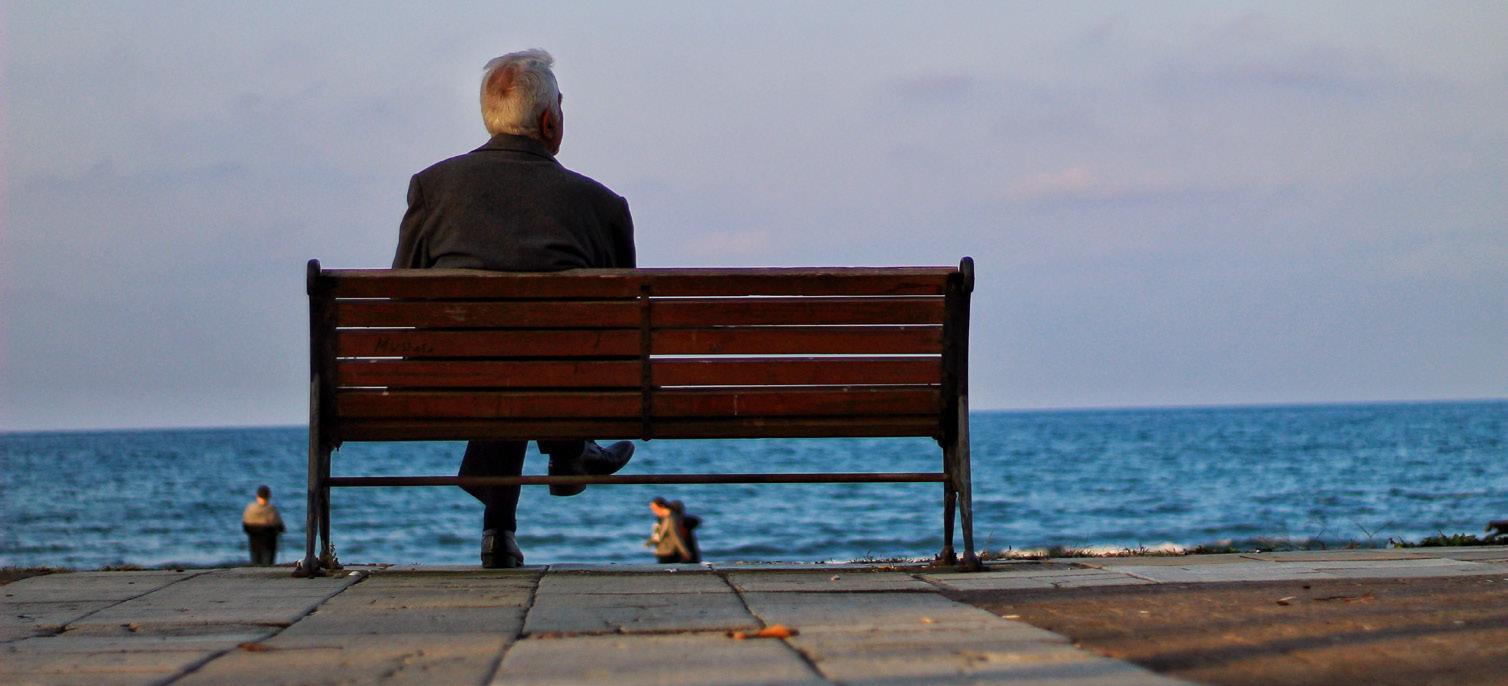
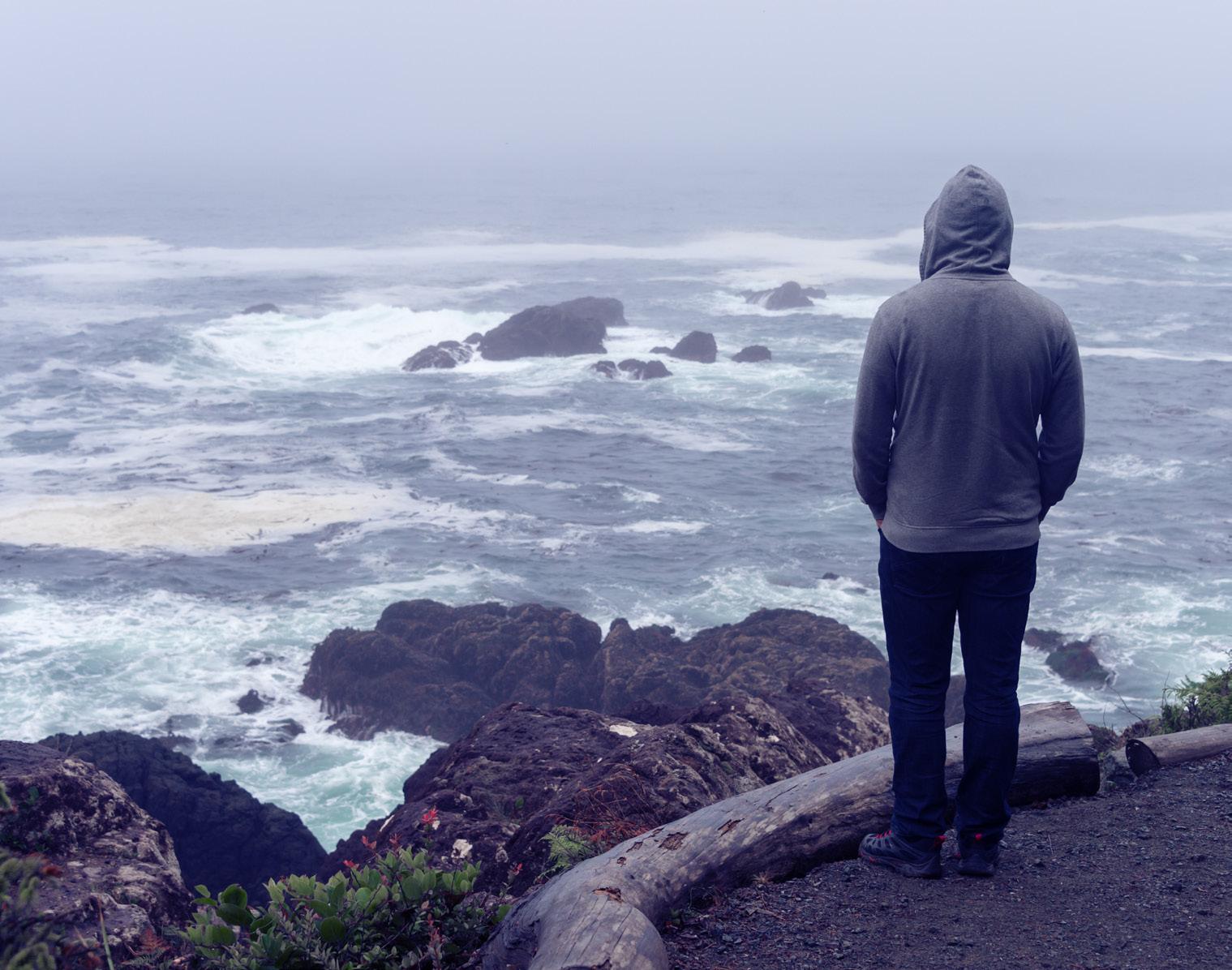
Lonely Man Syndrome is a term that describes a growing trend among men who find themselves socially isolated, emotionally disconnected, and unsure how to rebuild meaningful relationships.
Whilst loneliness affects people of all genders and is also one of our seven primary emotions, many men experience it differently due to cultural expectations around masculinity, independence and emotional restraint.
In these turbulent times, we have given a name and voice to a quiet crisis of men who appear outwardly fine, yet feel profoundly alone.
Loneliness is not about being alone. Many people enjoy solitude and their own company and are content. Lonely Man Syndrome is about the lack of social connection, which is one of our pillars of wellness. It also focuses on a lack of emotional support or a sense of belonging.
Psychological research and practice have consistently shown that chronic loneliness increases the risk of depression, anxiety, cardiovascular disease and reduced life expectancy. In all communities it is important to recognise the signs and to find pathways forward.
CROSSWORD
Lonely Man Syndrome: understanding the issue and finding a way forward
Men have said that they feel pressure to be self reliant and avoid vulnerability. Some lose social networks due to work demands, relationship breakdowns or relocation. Many rely heavily on a partner for emotional support, and when that relationship changes or ends, they find themselves without a broader support system. Over time, isolation becomes a habit, rather than a choice.
Yet loneliness is not permanent. With awareness and some practical strategies, it is possible to rebuild connection and rediscover a sense of community. Whilst the steps listed below can apply to anyone, women often find them easier to implement.
Light switch
• Take small social steps – Connection doesn’t require dramatic changes. Simple actions like greeting neighbours, attending local events, or joining a casual meetup can gradually rebuild confidence. Consistency matters more than intensity.
• Shared activities – Men often bond through doing, rather than talking. Community sports, volunteer groups, men’s sheds, or hobby clubs provide low pressure environments where relationships form naturally.
• Strengthening existing relationships –Many men have acquaintances who, with a little effort, could become close friends. Initiating a catch up, sending
a message, or suggesting a shared activity can deepen these bonds.
• Professional support – Talking with a psychologist or counsellor provides a safe space to explore underlying causes of loneliness and develop personalised strategies. It is a sign of strength to seek support when needed.
• Community involvement – Local organisations, cultural groups and neighbourhood initiatives offer opportunities to contribute and connect. Feeling useful and valued is a powerful remedy for isolation.
Lonely Man Syndrome is not a personal failing. It is a social challenge that communities can help solve by encouraging connection, reducing stigma and creating spaces where men feel welcome and supported. When men engage with others, share experiences and allow themselves to be part of something larger, loneliness begins to loosen its grip.
Consider taking one small step today. Connection grows from action and every action counts.
Anne-Marie Elias is a psychologist in clinical practice for 25 years.
13. Pursue, as game
18. Emanuel who might be running for President
22. Dashboard prefix
24. Like some scores after four quarters
25. Capital of Georgia
26. Joel or Jonah, e.g.
27. Popped in
30. "Gettin' things done," initially
31. Best, as a bond
32. Contents of some lockers
33. Witness' words
34. Tribe of the Beta Israel, perhaps
35. Collectors' org.
37. Word repeated in a 1995 Miami Boys Choir hit
38. Impediment for many a leader
40. Yom Shishi, e.g.
41. PBS science program
46. Baseball legend Mel
47. Blockchain art works, for short
48. Amaze
49. "Beis HaShem" singer Katz
50. #18 on the periodic table
51. "Freaky Friday" co-star
52. "It's ___ here!" (Gary Cohen quote)
53. Make a bow again
54. Pleasurably amusing
58. Women
60. Mental health service provider's deg.
61. Spanish female suffix
62. NYSE newspaper
63. Something often covered by 62Down.
"Tom and Jerry" bulldog
Some clinic workers, for short
"Would ya like to?"
Some young Australians
Works on Broadway, perhaps
Job that requires a steady hand
Mahalath, to 1-Across
Like a part of Jerusalem
Eavesdropping org.
Shin neighbor
Person who challenges
Meter measurement
Merry month in Paris
Word with "night" or "right"
Stellar Nolan hit?
YONI GLATT KOSHER
CONSIDERED OPINION
SHARONNE TIDHAR
The Israeli initiative helping people rebuild – one piece of wood at a time
Israel is a country that knows something about resilience.
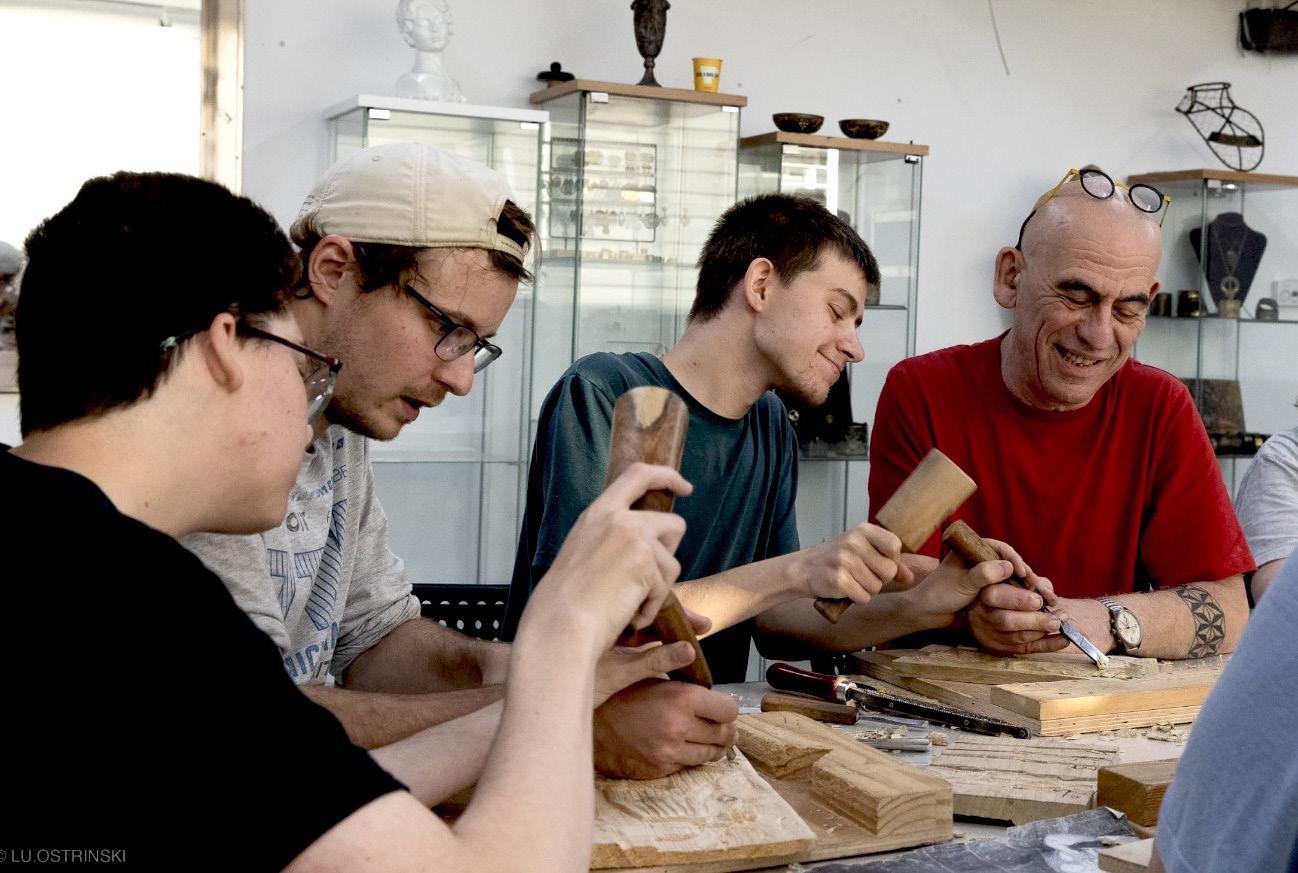
Since October 7, we've become used to hearing about emergency responses, resilience centres and communities pulling together in extraordinary ways. But sometimes the most powerful acts of healing don't happen through grand gestures. They begin with something much simpler: in this case, a block of wood, a carving knife and someone willing to create. That is the idea behind Baobab, one of Israel's quieter success stories.
Named after the remarkable tree capable of surviving some of the harshest conditions on Earth, Baobab brings mobile woodworking workshops directly to people who need them most. Rather than expecting participants to come to a studio, the studio goes to them – with benches, carving tools and timber.
Behind the idea is sculptor and writer Sasha Galitsky. After teaching briefly at Bezalel Academy of Arts and Design in Jerusalem, Sasha spent years working with older people. Their stories inspired his writing but also raised deeper questions
Carving out hope
CANDLE LIGHTING TIMES
Friday, Nov 22, 2024 8:00 PM
Photo by Lu Ostrinsky
about dignity, identity and how people continue to find purpose as they grow older.
Eventually he wanted to do more than write about those questions. An invitation to run a woodworking workshop at a nursing home became the turning point. He admits he wasn't convinced it would work. Sharp carving tools and elderly residents seemed an unlikely combination.
At first, nobody moved. Then, one person picked up a tool. Soon, another
JEWISH SONG SPELLING BEE
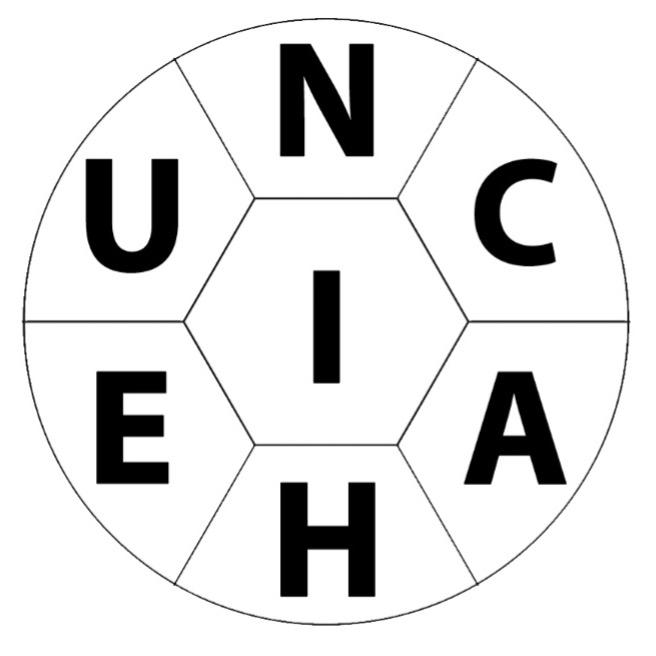
How many common words of five or more letters can you spell using the letters in the hive? Every answer must use the centre letter at least once. Letters may be reused in a word. Find the name of a well-known Jewish song using each letter at least once.
Proper names, other than the Jewish location, and hyphenated words are not allowed.
Score one point for each answer and three points for the Jewish song that uses all 7 letters.
Rating: 7 = Good; 10 = Excellent; 12 = Genius
"Kosher Crosswords" and the sequel "More Kosher Crosswords and Word Games".
PAGE 19
Shabbat ends, Nov 23, 2024 9:04 PM
Friday, Nov 29, 2024 8:07 PM
Shabbat ends, Nov 30, 2024 9:12 PM
Baobab adapted once again. The workshops began appearing in resilience centres, evacuation hotels and community spaces, offering something many people desperately needed: a sense of purpose, routine and calm.
Friday, Dec 6, 2024 8:13 PM
Shabbat ends, Dec 7, 2024 9:19 PM
Friday, Dec 13, 2024 8:19 PM
Today, Baobab operates more than 40 weekly workshops across Israel, including in Arab towns, Druze villages and mixed communities, alongside its permanent centres in Ramat Gan and Holon.
Shabbat ends, Dec 14, 2024 9:25 PM
Friday, Dec 20, 2024 8:23 PM
Shabbat ends, Dec 21, 2024 9:29 PM
The process itself is beautifully simple. Participants select a block of wood, trace a design, carve it, file it and sand it smooth.
Research suggests the benefits extend well beyond the finished piece. A 12week pilot study involving older adults found improvements in wellbeing, lower anxiety and better moods after each workshop.
followed. The room gradually fell quiet as residents became completely absorbed in carving, sanding and shaping timber into something uniquely their own.
That first workshop revealed something important: when creativity comes to people, barriers disappear. From there, the workshops travelled across Israel's nursing homes and assisted living facilities.
Except where expressly stated otherwise, content in The Melbourne Jewish Report is provided as general informations only. The articles in this paper have been contributed by a third party. The opinions, facts and any media content here are presented solely by the author, and The Jewish Report assumes no responsibility for them. It is not intended as advice and must not be relied upon as such. You should make your own inquiries and take independent advice tailored to your specific circumstances prior to making any decisions. We do not make any representation or warranty that any material in the papers will be reliable, accurate or complete, nor do we accept any responsibility arising in any way from errors or omissions. We will not be liable for loss resulting from any action or decision by you in reliance on the material in the papers. By reading the papers, you acknowledge that we are not responsible for, and accept no liability in relation to, any reader’s use of, access to or conduct in connection with the papers in any circumstance. Photographs submitted by individuals or organisations are assumed to be their property and are therefore not otherwise credited. All articles in this paper have received the expressed consent of the author to publish in this paper.
The Jewish Report; ISSN 2204-4639
It is a simple idea, but its impact has been enormous.
Publisher: The Jewish Report Pty Ltd (ACN 167302981)
Distributor: TJR Distribution Pty Ltd ACN 165158029
For English speakers looking to become more deeply involved in Israeli life, organisations such as Baobab are also a reminder that volunteering and community building come in many forms. Sometimes making a difference begins not with having all the answers, but simply by showing up.
Comments or suggestions to: editor@thejewishreport.com.au
Article submissions to: www.thejewishreport.com.au/article-submission-guidelines
Advertising: editor@thejewishreport.com.au
Then came October 7. As thousands of Israelis found themselves displaced into hotels and temporary accommodation,
Website: www.thejewishreport.com.au
Printer: Spotpress Pty Ltd
To learn more about Baobab, or to explore opportunities to support or help expand its work, visit www. baobabstudios.org.
Yoni Glatt has published more than 1,000 crossword puzzles worldwide, from the LA Times and Boston Globe to The Jerusalem Post. He has also published two Jewish puzzle books:
Melbourne Jewish Report Disclaimer:
CONSIDERED OPINION
DR YVETTE ALT MILLER COURTESY: AISH.COM
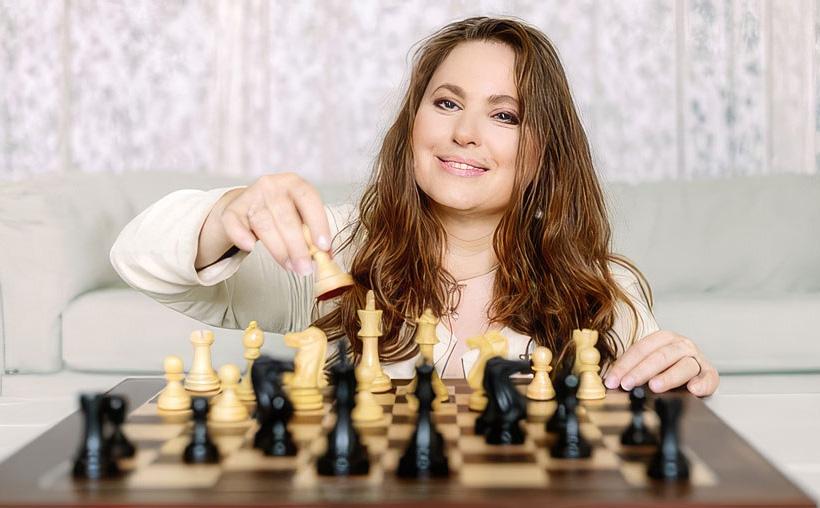
Judit Polgar faced down antisemitism to become Hungary's most beloved citizen. Hungary’s volatile political scene is in the midst of turmoil. Prime Minister Peter Magyar came to office less than three months ago after a bitterly fought election, and recently has been trying to appoint a new president to serve in this largely ceremonial, highly visible role. “Our country needs unity, peace and a president that all Hungarians can be proud of,” he explained.
His solution? To recruit one of the most popular figures in Hungary to serve as his president: the proudly Jewish and Zionist chess champion, Judit Polgar. “Judit Polgar’s name has been synonymous with talent and perseverance for decades”, Magyar declared.
Polgar declined the offer, saying, “I do not feel enough strength within me to take on the historic responsibility of uniting a divided nation.” Her consideration for the post of president has put a spotlight on the unique role Polgar holds in Hungary. Although she has been attacked and ostracised for being Jewish, she has become one of the most revered public figures in Hungary today. Her rise from reviled object of antisemitism to Hungarian heroine is remarkable.
Legacy of trauma in the Holocaust
Laszlo Polgar, Judit’s father, was born in 1946, a year after the Holocaust ended. His father Armin was traumatised: Armin’s parents, his first wife and his six children were all murdered by the Nazis. After the war, Armin married a fellow Holocaust survivor, had Laszlo, and raised him in a household marked by loss.
His daughter Susan wrote in her autobiography that her mother’s parents survived the Holocaust and that their “fighting spirit … is running through my veins …. My grandparents were the ‘lucky ones’, with the numbers tattooed on their arms and nightmares for the rest of their lives”, yet who still found the strength to go on and live fulfilling, dignified lives.
Laszlo and his wife Klara were determined to ensure that their children achieved greatness. They had three girls – Judit, Susan, and Sophia – and decided to turn all three girls into chess protegees. Laszlo credits his family’s Jewish lifestyle for this: “To get results, you have to work hard. The Talmud stays the same,” he noted in an Israeli documentary in 2017. “My grandfather started studying Torah for several hours a day when he was just four,” he told The Jerusalem Report magazine. “It’s always been common practice among Jews to begin teaching children intensively from an early age. We’ve been so successful as a people not because we’re superior genetically but because we’ve always valued learning so highly.”
Teaching chess
Laszlo worked as a child psychiatrist; he and his wife Klara decided to embark on a radical experiment. They believed that
The chess champion Hungary wanted as president
one could ensure that one’s children became geniuses through intense, innovative education. “In chess, your progress can be measured empirically,” he reasoned. “You either win or lose, and you can compete against players who are ranked based on their achievements.” The girls’ progress would be easy to measure and impossible to discount.
Judit, Susan, Sofia and László
Judit, Susan, and Sophia were all home schooled, a move that was virtually unheard of in Communist Hungary. They spent three hours playing sports in the morning, then had lessons and practised chess until 10pm each day. Their parents created cardboard catalogues analysing 200,000 different chess games and had the girls study them. Even though the family was virtually destitute, they hired chess tutors to drill their daughters.
When they were old enough, the sisters earned extra money by winning local chess tournaments. They were so poor they spent their winnings on fruit and other foods.
Enduring antisemitism
Laszlo remembered being bullied and attacked by antisemites when he was a child. These experiences made him more determined than ever to become successful. “I find it hard to tolerate antisemitism. Being a Jew gave me extra motivation to succeed.”
The Polgar sisters
Growing up, Judit and her sisters experienced antisemitism, even in the intense, cloistered home atmosphere in which they lived. Susan remembers her father coming home from work to find
a letter posted with no return address: “Inside was a photo of him with his eyes cut out … There was also a one-page handwritten letter, which he refused to let me read. He only said that it was dripping with antisemitic remarks and violent threats.” They were made to feel that they weren’t “real” Hungarians.
Chess success and leaving Hungary
In 1988, Judit, Susan, and Sophia made up three quarters of Hungary’s female chess team that competed in the 1988 Chess Olympiad in Thessaloniki, Greece. (The fourth player was Ildiko Madl.) Susan was 19, Sophia was 14 and Judit was 12. They beat the longreigning Soviet champions and became overnight sensations in Hungary and in the wider chess world.
Judit began to distinguish herself as a truly revolutionary player, known for her incredible aggressiveness on the board. At age 15, she became the world’s youngest grandmaster. In 1994, when she was 17, she played Garry Kasparov, at that time the World Chess Champion. She lost that game and would eventually defeat Kasparov in 2001.
Judit was the top female player in the world for 25 years, until she retired from the game in 2014. She is the only female player ever to have been rated the level of super grandmaster in chess.
Susan and Sophia eventually left Hungary: Susan moving to the United States in 1994 and Sophia to Israel in 1999. Their parents soon followed, settling near Tel Aviv. Today, only Judit remains in Hungary, where she lives with her husband and two children.
Jewish pride
Today, Judit holds a special place in the hearts of Hungarians, while proudly
identifying with Jewish and Israeli causes. She holds both Hungarian and Israeli citizenship, and visits Israel regularly to see her family.
When the Maccabi Games were held in Budapest in 2019, Judit proudly lit the opening flame. In 2024, Judit, along with her sister Sophia, participated in a massive chess event inside Berlin’s Parliament to raise awareness of the Israeli hostages being held by Hamas. Together, Judit and Sophia faced 40 different players, handily beating them in simultaneous games.
Judit Polgar’s place as a beloved symbol of Hungary is an inspirational example of a public figure proudly holding on to her Jewish identity.
Even though she will not become Hungary’s next president, Judit Polgar’s remarkable achievements continue to inspire pride among her fellow citizens inside Hungary, and among Jews the world over.
Dr Yvette Alt Miller holds a PhD in International Relations from the London School of Economics and has taught at Northwestern University, London Business School and lectured around the world. She is the author of Angels at the Table: A Practical Guide to Celebrating Shabbat, which had been praised as "life changing" and compared to having a friend guide the reader through a typical Shabbat, and of Portraits of Valor: Heroic Jewish Women You Should Know, which describes the lives of 40 remarkable women who inhabited different eras and lands, giving readers a sense of the vast diversity of Jewish history and experience.
Judit Polgar
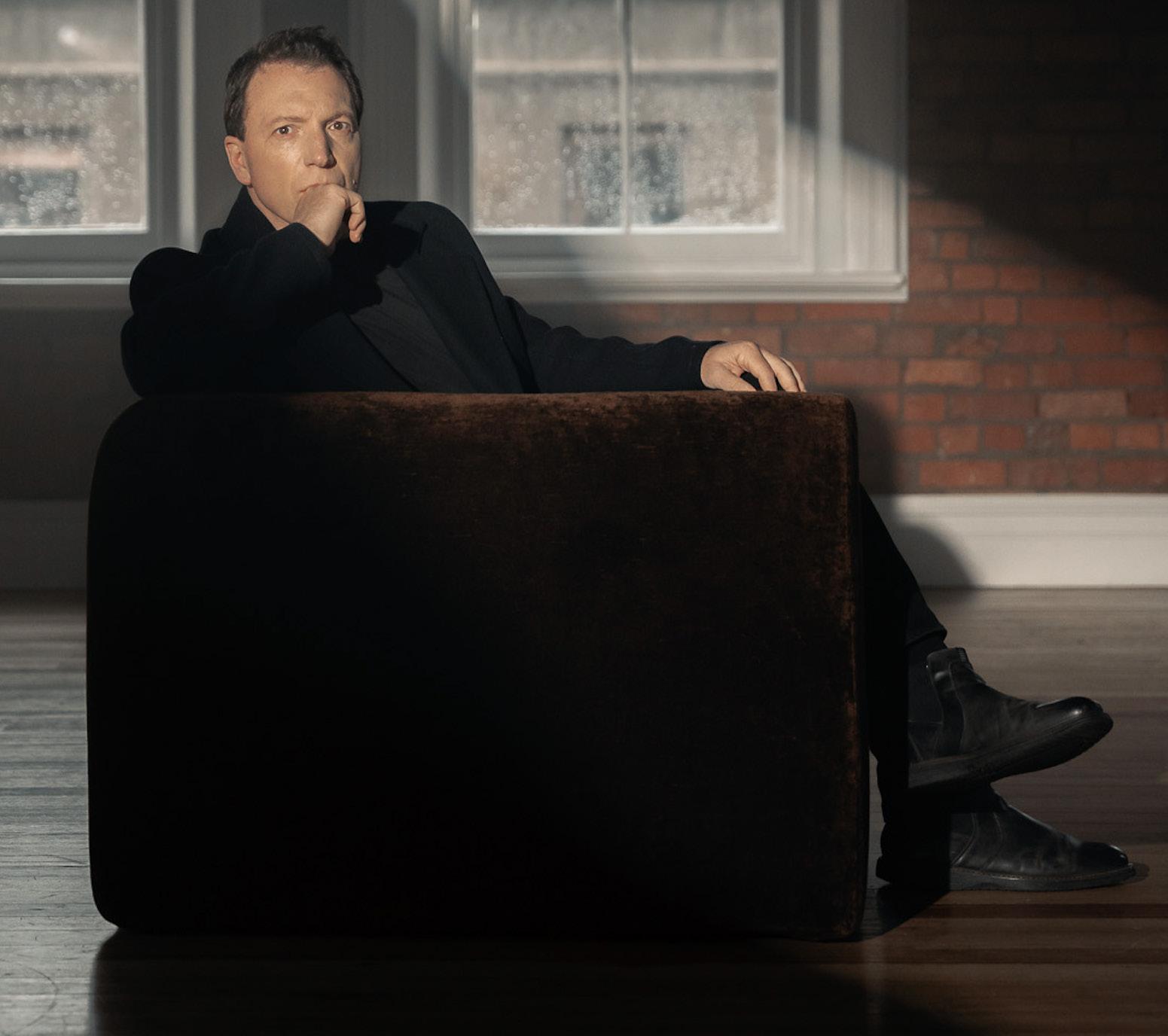
CONSIDERED
AB BOSKANY
What remains of my private identity when strangers convert a face, an accent or a surname into a verdict before I have spoken? How freely can I enter the public world when systems, fashions and rumours have assembled an unauthorised biography for me, complete with assigned loyalties?
I have learned that the harmless question “Where are you from?”, seldom remains within geography, because the answer is made to carry more weight than it can bear. A place is promoted into ancestry, ancestry conscripted into politics, and politics entered as evidence of temperament.
To answer “the Middle East” is hardly to end the enquiry, for the phrase opens another chamber of assumptions, furnished before I enter it. The questioning continues until birthplace becomes confession and origin is made to explain allegiance. What disturbs me is not merely the mistake, but the speed with which interpretation hardens into counterfeit familiarity.
The burden of being read
A name suggests religion and nationality; these are made to imply politics and politics is recruited to pronounce upon moral character. By the time I speak, I am entering an argument whose conclusion has been
arranged in my absence. Across the institutions of modern life, identity is admitted only after being trimmed to fit the machinery of recognition; whatever exceeds the box is dismissed as interference.
The Jew becomes a category before becoming a person; Jewishness is made to carry politics and Israel is summoned as evidence before a sentence has been spoken. Systems reward the recognisable, while rumour hardens into fact.
The processed identity travels fast; correction limps behind, already suspect.
When I resist an assigned identity, resistance itself is interpreted as confirmation, since denial can be called embarrassment or concealment.
Nor does partial acceptance provide an exit, because to acknowledge one inheritance is to risk surrendering the whole life to it. The argument is selfsealing, converting contradiction into corroboration.
What makes this burden difficult is that identity is neither wholly imposed nor entirely chosen, but formed through the slow accretion
of inheritance, memory, accident, affection and refusal. I do not invent myself from nothing, nor do I consent to being reduced to the administrative convenience of a label.
After more than 30 years of hearing the same question, I know its unspoken sequel: you come from elsewhere; you are not truly from here; you are not quite one of us.
The migrant, the Jew, the Kurd, the exile, the native, the survivor: each term may contain truth, but each becomes false when made sovereign, illuminating one corner of a life while presuming to explain its architecture.
After repeatedly correcting the interpretations placed upon me, I find that the labour of correction threatens to become a permanent occupation. I ask only for the mercy of being allowed to speak before the world wounds me with its categories, for the right to enter my own story before others close it, and for identity to be met not as a verdict, but as a living history, unfinished, returning again and again to pass beyond the meaning assigned to it and become unknown again.
Help shape the future of early learning. Tell us what matters most when choosing an Early Learning Centre (ELC) for your child.
your say Scan here for the survey Take this quick survey and you could win 1 of 5 $100 VISA cards
Ab Boskany
NOMI KALTMANN COURTESY: THE JEWISH INDEPENDENT CONSIDERED OPINION
For many years, I spent hundreds of hours of my life volunteering as part of interfaith dialogue. I was driven by the belief that bringing people of different faiths together made Australia a better place for everyone, because we would all be able to support one another in times of crisis. I spent years as a board member of the Faith Communities Council of Victoria (FCCV), I attended a multifaith camp run by the Anti-Defamation Commission in my first year of university and I was invited to countless forums to speak about Judaism to non-Jewish audiences.
I have not stopped believing in friendships across faiths. We need allies and some of the most meaningful support our community has received since October 7, 2023, has come from individual people of faith who have chosen to show solidarity with Australia’s Jewish community. What I have stopped believing in is the idea that formal interfaith institutions, with all their committees and endless dialogue, are an effective vehicle for building those relationships or responding when one community is under attack.
So, when I saw that the Jewish Community Council of Victoria (JCCV) had been involved in consulting with the Victorian Government about the new multicultural body, which is due to replace the Victorian Multicultural Commission and establish a new entity, Multicultural Victoria, I couldn’t help but roll my eyes.
Do you know why the Victorian Multicultural Commission is being replaced? The Victorian government conducted an extensive review and included the following asinine observation about why it was being replaced noting, “questions were raised about whether the Victorian Multicultural Commission remained fit for purpose, given increased social cohesion challenges from local and overseas events, as well as the evolving needs of multicultural communities.”
In my mind, that’s a fancy way of saying that many of the Victorian multicultural commissioners completely failed the Jewish community at a moment when we needed them most: in the immediate aftermath of October 7 and the ensuing tide of rising antisemitism that targeted Australia’s Jewish community.
The Victorian Multicultural Commission’s Chair, Viv Nguyen, was photographed outside the Victorian Parliament next to “sitintifada” signage. She also deleted a Facebook post made on October 8 after it attracted criticism for how bland it was in showing solidarity to Israeli victims.
Meanwhile, longstanding Commissioner Mohamed Mohideen shared several inflammatory social media posts, including amplifying material describing Zionism as “evil” and reposted material alleging Jews had established “terrorism cells” in Europe, as well as imagery of Jewish lawyer Alan Dershowitz with devil horns. Jewish organisations repeatedly raised concerns about his conduct, and Viv Nguyen’s behaviour, yet both remained in their paid Commissioner jobs, even after Mohideen was investigated. With leadership like
I have lost faith in our multicultural institutions
this, who needs any formal Victorian government multicultural body?
Since October 7, I have largely walked away from organised interfaith work. I don’t know whether I believe in it anymore, at least not in its formal, institutional form.
I have previously written about how, in the immediate aftermath of October 7, the FCCV, where I had spent months attending meetings and volunteering my time, was unable to issue a single statement expressing sympathy for the 1,200 murdered Israelis and the 250 Israelis taken hostage.
The Executive Director of the FCCV wrote to me when I asked him why no statement had been issued. His explanation was that other multifaith member organisations could not reach an agreement on a statement, so they were unable to issue one.
Think about that for a moment. A body established for dialogue between faith communities could not agree that the largest massacre of Jews since the Holocaust deserved a statement of condolence.
The reason I became involved in interfaith work was because I believed relationships were important. I believed that if we spent years building trust, learning about one another and celebrating each other’s cultures and festivals, when tragedy struck there would be enough goodwill to pick up the phone, issue a statement and stand together.
Instead, October 7 exposed just how fragile many of those relationships really were. So “yes”, I understand why the JCCV is engaging in good faith with the new Victorian body, but I have very little hope that this new body will change anything for our community.
If you look back over the years, multicultural and multifaith organisations
have managed to release statements after earthquakes, terrorist attacks, natural disasters and humanitarian crises across the world. Yet, Israel and terror against Israelis consistently seems to be the issue that paralyses them. Suddenly, there is endless nuance, endless process, endless disagreement and endless silence.
I understand that many people dislike the Israeli Government, and I understand that people hold strong views about Israeli policy and about the conflict in Gaza. But, October 7 was not a debate about settlements or judicial reform or Israeli government policy. It was the single deadliest day for Jews since the Holocaust. Civilians were butchered in their homes, families were burned alive, women were raped, children were murdered and hundreds of people were kidnapped.
Recognising that this was an atrocity should never have been controversial.
There is absolutely no contradiction between supporting Palestinian selfdetermination and recognising that the murder and kidnapping of Israeli civilians was morally abhorrent. One does not diminish the other.
Yet, many Australian multicultural organisations have behaved as though expressing basic empathy for murdered Israelis required some impossible political balancing act. That is why I find the Victorian Government’s solution, and our community’s support for it, so underwhelming.
If the culture of the members of this new body remains unchanged, then replacing the Victorian Multicultural Commission with a new name, Multicultural Victoria, is little more than administrative rebranding. The problem has never been the logo on the letterhead. The problem has always been the unwillingness to hold commissioners
to consistent standards and the inability of multicultural institutions to respond with any moral clarity when Israelis are the victims.
I still participate in some interfaith activities, but I have become far more selective.
I no longer feel any desire to spend hours sitting in committee meetings with representatives from dozens of faith groups if, when push comes to shove, those same organisations cannot issue a simple statement condemning the massacre of Jews or are unwilling to address antisemitism within their own ranks.
Instead, I invest my time somewhere I can actually see results. I regularly speak at non-Jewish schools across Australia, in person and on Zoom, teaching students in Victoria, New South Wales and Queensland about Judaism. Sometimes I speak to Year 12 classes about Jewish ethics, at other times I teach about the Holocaust, antisemitism or even Orthodox Jewish approaches to feminism.
Many of the students I teach have never met a Jewish person before. They ask thoughtful, challenging questions and they listen carefully. They are curious and they are interested in understanding with an open and respectful mind. Ironically, I have found it far more meaningful to teach a group of Year 10 students in far North Queensland or regional New South Wales than I have in almost any formal interfaith committee. So no, I am not particularly optimistic about Multicultural Victoria nor the JCCV’s engagement with them. For many Jews, these institutions had a chance. They failed, and now many of us are no longer interested.
RAMONA FREEDMAN
ALIYAH ADVENTURES
It is mid-summer in Israel. It is interesting that for a country of such a small land size – we are talking one-third the size of Tasmania – the temperature varies a huge amount, depending on where you are located.
Ra’anana is loved by so many, but its meteorological Achilles heel has to be the summer heat. You feel a warmth that reminds you of a dry, heavy blanket draped around your body, one that you would rather shake off and kick off the bed, if you could.
Unlike Australia’s east coast, there are no ‘southerly busters’ at the end of a long day. No dramatic (and divine) drop in temperature, no moments you can inhale deeply, reset your body temperature, recalibrate and begin anew, as the next day dawns.
Not so in this neighbourhood. The weather report is, frankly, boringly consistent. We haven’t seen rain for months. Now, we are in the midst of the stunningly long summer school break. To us, it feels like approximately double what Aussies in Israel grew up on back in “Straya”.
Everyone here has air conditioning in some form. You can imagine the recent drama caused when a Hebrew sign was unceremoniously slapped on a metal pole on our street announcing an electricity cut for eight hours the following day.
South African neighbours felt like wise old souls in this regard. They come from a country that commonly has power cuts. But the rest of us were, as the kids say, ‘low-key’ horrified! Forget the dryer, forget the oven, power equals air conditioning. And an absence of that means the day is reprioritised to ensure no one is anywhere near home.
No one from the local council explained to us why this was happening; it just was. So Israeli. Nor didn’t wait to find out.
When I say ‘we’, it sounds like all residents are home at this time of year. The fact is not everyone is here in the Holy Land right now. Why? Because it is August. Mid-summer. The streets are quiet and many are away. Out of Israel. And I can’t begin to describe how much anxiety potential war has caused to travel plans.
After all, let’s get our priorities in order, people. Israelis love a break and, honestly, with the drama that unfolds month in and month out, they need one. People debate political theories over Shabbat meals. Well, if Trump said this, maybe he really means that. Well, if Bibi is out of Israel, then surely that means he is too busy to poke the proverbial bear – right?
Long story short: an Israeli can book flights and arrange accommodation. An Israeli can then coordinate with friends and/or family. Yet, until that aeroplane officially clears national airspace, no one, and I repeat, no one – young and not-so-young – believes the vacation will happen.
Summer sensations
Once in the serene sky, one would think you could kick back, order a beverage of your choice and marvel at the magnitude of the achievement of simply clearing Israeli airspace.
At some point mid-flight passengers will have been tossed a hot, soggy sandwich wrapped in foil. Dinner has been served. All aboard the flight are too elated because they are actually on their way to really care. And Jewish people typically have a stash of snacks in their pockets and bags to tide them over. Whether the flight takes off or not, we are not going to go hungry as well.
Where is everyone going? I have not conducted an official poll on the subject, but, if I had to hazard a guess, I would say many are heading to Montenegro.
Now, I consider my Australian education quite broad. I studied geography. Yes, like every Australian kid, I could boast that our Great Southern Land was extra special as it was an island, country and continent.
Yet, I confess, I didn’t immediately know where Montenegro was on the map, but I knew a large number of Israelis were heading there. War permitting, of course.
Not so long ago, before the summer began sizzling, there were a couple of days when Israelis were advised to lay low and stay close to home. Sirens were expected. We needed to be close to shelters. Nothing was confirmed; nothing was really explained. Theories abounded.
Many did the usual supermarket dash for extra shelf stable snacks to keep in the bomb shelter room of one’s house or apartment building.
Hold that thought. Now, given the periodic desert winds sweeping through this beating heart of the Jewish world, cars are often left with a film of dust. Some drivers have no patience for it
and get to a car wash instantly. Some are so weathered themselves that they are quite immune and can go days or weeks without addressing this reality. I fall somewhere in between.
So, there I was half-understanding the Israeli radio station espousing thoughts about the potentially daunting and dangerous days ahead. All in Hebrew. The internal dialogue in my mind was fixated on whether I should purchase more chocolate bars to tide me over. Just in case I was stuck inside for longer than I planned.
And yet the opposite happened. I found myself on an entirely different tangent. Sensible Ramona sought to grab what she needed and head home immediately.
Yet, savvy, street smart Ramona ruled the day and thought, if all and sundry have been advised to be home near a bomb shelter, that means no one is in a queue at the carwash.
One would presume that there are measures in place for the workers there, should sirens blare in real time. One would presume it would still be open, given the Israeli war-won’t-stop-us work ethic. At least not on Day One of war if that is, indeed, what history would, in time, be calling it.
And so, with my steering wheel on the left side of my car, I purposefully drove to the car wash. Was it open? Yes. Was it operational? Yes. Were there any cars in line to have grimy dust and debris removed? No. Not one.
The idle workers stared at me. I smiled back. How brilliant.
Now um, war, if you could just hold off another half hour or so, until this is done and I am back home, that would be ideal. So appreciated. I took a gamble. I am not naïve. I did envisage piling into some unsatisfactory bomb shelter with unknowns.
Yet, that day went my way. My car was cleaned spotlessly inside and out. Hey, the workers took more time than usual with their one and only (crazy?) customer. I pushed my luck further. On the way home I saw a parking spot outside a local supermarket. I jumped out of my shiny car and grabbed a selection of basic necessities. You know, sugary snacks and the like.
I made it home. Safe. And the next day ‘it’ was declared over and it was back to mayhem on the streets. Back to long queues at the car wash. I realised that that day, I had been more Israeli than the Israelis. I felt proud in a naughty schoolgirl kind of way.
Don’t misunderstand me. Since the day I arrived in Israel over two years ago and for far longer, ‘war’ has been top of mind. Nowadays, some Israelis refuse to listen to the news. Fair enough.
Despite the daily drama though, here in the Middle East, in my little world, nothing could dampen the joy of seeing my dear daughter married last month. The venue was a stunning winery. It was gorgeous. Is it true that in that area, to visit the closest supermarket, most would opt to have a gun. Why yes. Ah, details, details.
Standing under the chuppah, with so many singing and dancing, and celebrating, my heart was overflowing in ways I could not have imagined. So many who read this column reached out with beautiful ‘mazal tov’ messages and I thank each of you from my heart. So many summer sensations. So many simchahs celebrated daily. Amen to that.
For now, it is over and out from Ramona in Ra’anana.
To contact Ramona as a Telfed pre-Aliyah advisor, please email: aliyahprep@telfed.org.il.
Ramona Freedman with her daughter, Samara, on her wedding day in Israel
RABBINIC THOUGHT
RABBI YAAKOV GLASMAN AM
Recently, I hosted Her Excellency, the Honourable Sam Mostyn AC, GovernorGeneral of Australia, for a Shabbatthemed dinner at the private home of members of our community.
The dinner was attended by a small group of communal representatives and community members, including Daniel Aghion, President of the Executive Council of Australian Jewry, and Philip Zajac and Naomi Levin from the Jewish Community Council of Victoria.
On the previous occasions I had met with the Governor-General, much of our discussion had focused on antisemitism and the challenges facing the Australian Jewish community. Those conversations were important, particularly given the serious increase in hostility, intimidation and concern within our community.
At the same time, I felt it was equally important that our relationship with the highest levels of public office should not be based only on moments of crisis, grief or fear.
The Jewish community must continue to raise concerns when necessary. We must also create opportunities for national leaders to experience Jewish life in a positive and meaningful way. Judaism should not be presented only through the lens of antisemitism. It is a living faith,
Engagement with national leaders
The Governor-General expressed her appreciation for the opportunity to share a meal in the home of members of the community. She said that she had listened carefully to those around the table and had learned more about Jewish tradition, Jewish identity and the importance of faith and community.
She also spoke about the value of Australians who are not Jewish taking the time to listen, reflect and learn directly from Jewish people. She believed that these conversations should take place more widely across the country and that they can help strengthen understanding between communities.
For me, this was the main purpose of the evening.
It is right that our national leaders stand with the Jewish community during difficult periods. However, our engagement with them should not be limited to responding to antisemitism or attending commemorations after tragedy.
built around family, community, learning, tradition, responsibility and celebration.
With that in mind, I invited Her Excellency to join us for a Shabbatthemed meal. Although the dinner did not take place on Shabbat itself, the purpose was to provide an experience of the atmosphere and traditions of a Shabbat table.
During the evening, we sang traditional songs, discussed Jewish faith and practice, spoke about family and community life, and shared traditional Shabbat foods, including chicken soup. There was also some lively discussion about AFL (of course), which added to the informal and relaxed nature of the evening.
Time for self-improvement
been. Through this refinement process, we cleave closer to the Torah and get ourselves ready for the new year.
The year is flying by. Already, we are on the cusp of the Jewish new year. The month of Elul ushers in a time when we are in frantic preparation, refining ourselves and our behaviour for the year ahead, pushing ourselves to engage in teshuvah (repentance), tefilla (prayer) and tzedakah (charity) before Rosh Hashanah. During the month of Elul, we sound the shofar each day. The cry of the horn focuses us and compels us to hear the call to better ourselves.
Life is precious. As the daily grind goes on, it can sometimes feel like the months all meld into each other and then, suddenly, you are on the verge of again celebrating a new year. How are we here again so quickly? It can feel alarming. And yet, there is an inherent beauty in the ritual of shofar blowing in Elul. It’s a change from the mundane. It is something different. It rouses us from our slumber and the habitual and asks us to wake up from our core.
During Elul we focus on three main areas. Teshuvah takes two forms. We work on ourselves, apologising to those that we have hurt. It can be challenging to admit that our behaviour has not been perfect, but Elul presents the opportunity for just that. More than that, we work on individual repentance, that is areas in our lives where we may have slipped and not been as careful as we could have
The next area is tefillah. We increase our prayers. We ask G-d to bless us with a new year and we increase our devotion. We begin selichot (forgiveness) and with this we prepare ourselves anew for a successful year. There is nothing insignificant about prayer.
Each word connects us with a Higher Source and allows us to understand that we can have impact in the world around us.
The last thing we focus on is tzedakah. Perhaps the easiest of the three, it involves giving charity. Being kind with money, especially during a cost of living crisis, is easy to understand.
It helps people materially. However, tzedakah does not just enrich the beneficiary; it also enriches the giver. Why? Because through this selfless act, you submit yourself to understanding that parnassah (wealth) comes from G-d and that no matter how hard we work, the amount of money we will earn is preordained. Through selfless giving, especially to those less fortunate, we give thanks to G-d for what we have and feel good about supporting those less fortunate.
So, as we enter this upcoming period, get yourself ready. We are obligated to continue to improve ourselves. The hard work begins now.
We should also invite them to experience the positive side of Jewish life: our traditions, our homes, our values and our sense of community.
The evening was an important opportunity to strengthen that understanding and to ensure that the Jewish community is known not only through the challenges we face, but also through the values and traditions we contribute to Australian life.
From left: Her Excellency, the Honourable Sam Mostyn AC, Governor-General of Australia, Rabbi Yaakov Glasman AM and Royal Australian Navy Aide-deCamp, Lieutenant Karsen Gilroy
RABBI GABI KALTMANN
Rabbi Gabi Kaltman
THOUGHT
RABBI DR BENJI LEVY RABBINIC
Every time I walk into a shiva house, I feel the same tension. Whether the mourner is a close friend, a family member, a student or someone from the community, the atmosphere changes the moment I step inside. The air feels heavier. Jewish law teaches us not to greet mourners in the usual way. Instead, we sit quietly with them until they choose to speak.
As someone who appreciates the natural rhythm of conversation, I have often found that silence uncomfortable. My instinct is to offer reassurance, to search for the right words or the right solution. But a shiva visit reminds me that comfort is not always found in answers. Sometimes the greatest act of compassion is simply to be present.
Now that Tisha B'Av has passed, we are left with the opportunity to reflect on the lessons of this powerful day. Like sitting with someone in their grief, Tisha B'Av asked us to resist the instinct to immediately move forward. It reminded us that there are moments when we are not meant to fix, explain or escape pain. We were simply meant to acknowledge it.
The prophet Jeremiah writes in Lamentations, "Let him sit alone and be silent." Those few words capture something profound about the Jewish
After Tisha B’Av: permission to grieve
approach to grief. The mourner sits on a low chair, remains in one place and steps back from ordinary conversation and distraction. Judaism does not ask us to suppress sadness or rush past it. It gives us permission to experience it.
In a culture that often encourages us to move on as quickly as possible, this felt deeply countercultural. Psychologists have described our tendency to avoid difficult emotions as "toxic positivity",
the pressure to remain optimistic at all costs. Viktor Frankl offered a different approach. He spoke of "tragic optimism", the ability to find meaning not by denying suffering, but by choosing how we respond to it.
This is one of the deepest lessons we carry with us now that Tisha B'Av has ended.
Through the destruction of the Temples and the many tragedies throughout
True Jewish empowerment
Alongside The Empowered Jew and J-United, we recently hosted an “Empowered Jew” weekend at Caulfield Shule. Across Shabbat and Sunday, hundreds came together to listen, learn, debate and think about what it means to live proudly as a Jew today.
But the weekend left me with a question that has stayed with me. What actually makes a Jew empowered? Is it speaking out against antisemitism? Defending Israel? Wearing a Magen David proudly? Knowing how to respond when someone repeats a lie about Jews or Zionism?
All of those things matter. But I increasingly think Jewish empowerment has to begin somewhere deeper. Because, if our Jewish identity is primarily shaped by those who hate us, then, in a strange way, we have allowed them to define our Judaism.
One of the challenges of this moment is how much Jewish energy is necessarily being spent responding. Responding to antisemitism. Responding to misinformation. Responding to protests, politicians, social media and the latest outrageous accusation against Israel. I do plenty of that myself. But I have been asking myself whether we sometimes need to stop measuring Jewish strength by how effectively we respond to others and start doing so by how deeply we know ourselves.
Jewish history that we remember, this Tisha B'Av invited us to sit with collective loss.
Through the reading of Eichah and the recitation of Kinot, we did not search for easy explanations or comforting slogans. We allowed ourselves to encounter the weight of what has been lost.
I have often struggled with that. My natural inclination is to fix what is broken. Yet Tisha B'Av reminded me that healing does not begin by escaping pain. It begins by acknowledging it.
The remarkable thing is that Judaism never asks us to remain in grief forever. Tisha B'Av has one place on the calendar, but its lessons accompany us throughout the year. It teaches us empathy, resilience and the importance of confronting suffering with honesty and faith.
The prophet Zechariah envisions a future when these days of mourning "shall become times of joy and gladness, and cheerful feasts". As we move forward from this Tisha B'Av, perhaps the message we carry with us is that giving ourselves permission to grieve is not a sign of weakness. It is an act of faith.
Only when we are willing to sit honestly with our pain can we truly embrace healing, hope and the possibility of redemption.
An empowered Jew should know what they are defending. Why does Shabbat matter? Why have Jews prayed towards Jerusalem for thousands of years?
Why is Israel not simply a political cause, but woven into Jewish memory, prayer and identity?
Why did our ancestors preserve Judaism under circumstances far more difficult than ours?
Jewish empowerment is not simply having the perfect answer to an antiIsrael argument. It is having a Jewish identity strong enough that the argument does not determine who you are.
There is a beautiful Mishnah in Pirkei Avot that asks: “Who is strong?” The answer is surprising: “One who conquers their inclination.” Jewish strength is not about power over others. It begins with
mastery over ourselves. Knowing our values. Knowing where we come from. Refusing to surrender our identity to fear, fashion or the approval of others.
That feels particularly important right now. We absolutely must confront antisemitism and the antizionist hate movement. We must challenge lies and stand up for Israel. Silence is not a strategy.
But we also need to make sure we are building something, not only fighting something.
Study more Torah. Learn some Hebrew. Visit Israel. Invite people for Shabbat. Join a Jewish organisation. Ask your grandparents their story. Take your children to shule. Learn why we do what we do.
Put another Jewish book on your shelf and actually open it. Perhaps that is the real challenge of Jewish empowerment. Not simply to ask, “How do I respond to those who oppose us? But to ask a much more important question: What kind of Jew am I choosing to become?
After our Empowered Jew weekend, that is the question I have been thinking about most.
Our enemies should never get to write the next chapter of the Jewish story. That privilege belongs to us.
RABBI DANIEL RABIN
Some of the panellists and organisers of the Jewish empowerment weekend. From left: Marnie Perlstein, Keren Zelwer, Simonne Whine, Courtney Cohen, Zara Cooper, Chavi Israel, Sarah Rabin, Rabbi Rabin and Ezry Israel
DAVID SOLOMON, CEO AUSTRALIAN FRIENDS OF TEL AVIV UNIVERSITY AROUND THE COMMUNITY
Tel Aviv University researchers have uncovered a rare group of cells in the inner ear that may one day help scientists develop treatments to restore hearing, rather than simply compensate for its loss.
For millions of people, hearing loss is permanent. The problem often begins with damage to sensory hair cells in the cochlea, the spiral-shaped structure in the inner ear that converts sound into electrical signals for the brain. In humans and other mammals, once these delicate cells are destroyed, they do not naturally grow back.
Current treatments, including hearing aids and cochlear implants, can greatly improve quality of life, but they do not repair the damaged tissue itself. That is why a new study from Tel Aviv University’s Gray Faculty of Medical and Health Sciences is attracting attention.
A rare regenerative response
The research team, led by Professor Karen Avraham, Dean of the Faculty, investigated the supporting cells that sit beside the cochlea’s sensory hair cells. These cells are normally considered unable to transform into replacements. By blocking a cell-communication system known as the Notch signalling pathway, the researchers discovered
How hearing loss may no longer be permanent
that a small and previously unrecognised group responded differently from the rest. These cells entered a transitional state and began changing into hair cells. The team named them transdifferentiating Deiters’ cells, or tDCs.
The finding does not mean that damaged human hearing can now be restored.
The work was conducted in neonatal mouse inner-ear tissue, not in patients, and only a rare subset of cells displayed this regenerative potential. However, it
challenges the long-held belief that the mammalian inner ear has no capacity for regeneration at all. Published in Science Advances, the study also identified genetic and epigenetic features that appeared to make these cells more responsive to stimulation.
From compensation to repair Future treatments could potentially use genetic, molecular or epigenetic methods to encourage supporting cells to replace damaged hair cells. The next challenge is to understand how
this limited ability might be activated in many more cells. Professor Avraham said the discovery revealed a “hidden regenerative capacity” in tissue long considered incapable of repair.
“If we succeed in expanding and activating this ability in additional cells, we may lay the foundation for biological treatments that restore hearing, rather than merely compensate for its loss,” she said.
The research brought together scientists from Tel Aviv University’s medical and life-sciences faculties with collaborators in the United States. It was supported by the Israel Science Foundation and Tel Aviv University’s Sagol Center for Regenerative Medicine.
The discovery represents an early but important step. It gives researchers a new target and a new question: if a small number of inner-ear cells retain the ability to change, can science learn how to awaken that potential more broadly? For people living with irreversible hearing loss that possibility offers something current devices cannot provide – the prospect that future medicine may one day repair the source of the problem itself.
CORNER
ALAN BENDER SOUL GOURMET FOODIE
Don’t let filo pastry intimidate you. It doesn’t need to be perfect. In fact, the scrunching and ruffling is part of the charm. If a sheet tears, just keep going. It all comes together beautifully in the oven.
This pie is a South African twist on the Greek Galatioto
Preparation time: 20 minutes
Cooking time: 35 minutes
Ingredients:
7–8 sheets of filo pastry
100 grams salted butter
3 large free-range eggs
¾ cup white sugar
1 cup milk
½ cup cream
2 tsp vanilla extract
2 tsp cinnamon (plus more for dusting) Icing sugar for dusting
Instructions:
Preheat the oven to 180°C. Grease or line a 22–23 centimetre round pie or baking dish. Lining with baking paper is optional, but it helps if you plan to lift the pie out to serve it.
Place the filo sheets between two damp tea towels to stop them drying out while you work. Take one sheet, brush it lightly with melted butter and scrunch it lengthwise into a loose concertina. Coil it into a spiral and place it in the centre of the dish.
Ruffled filo pie
Repeat with the remaining sheets, coiling or arranging each one around the centre, until the dish is filled. You can also form individual rosettes and nestle them together.
Brush any remaining butter over the top and bake for 15 minutes or until the pastry is golden brown. Add a few extra minutes if needed.
Meanwhile, whisk together the eggs and sugar in a large jug or bowl. Add the milk, cream, vanilla and cinnamon. Whisk until smooth.
Remove the dish from the oven and gently pour the custard over the hot pastry. Cover loosely with foil to prevent over-browning.
Bake for 20 minutes or until the custard is just set. If it looks too wobbly or wet, give it a few more minutes.
Allow the pie to cool slightly, then dust generously with icing sugar and extra cinnamon.
Slice and serve at room temperature.
Tips:
Make sure some filo edges stick up above the custard to retain crunch.
This dessert is best served the same day, but can be stored in the fridge and gently warmed when needed.
To make pareve, do a straight switch of the milk ingredients to pareve replacements.
Serve with berries or a dollop of whipped cream, if you’d like to elevate it further.
The research team. From left: Professor David Sprinzak, Professor Karen Avraham, Rotem Domb, Shahar Kasirer, Buwei Shao and Lama Khalaily
Christopher Nolan’s The Odyssey is an epic retelling of one of the oldest surviving works of ancient Greek literature.
Homer composed the poem Odyssey in the 8th or 7th centuries BCE.
It concerns the exploits of the king of Ithaca, Odysseus (Matt Damon), as he attempts to make his way home many years after the Trojan War.
The war itself lasted a decade, and then another decade passed, during which time he and his crew encountered many otherworldly and natural obstacles.
Due to his long absence, Odysseus was presumed dead by almost all.
Mind you, that didn’t include his wife, Penelope (Anne Hathaway), nor their son, Telemachus (who was a newborn when Odysseus left).
They were forced to contend with unruly suitors looking for Penelope’s hand in marriage, including the persistent Antinous (Robert Pattinson).
Much to Penelope and Telemachus’ chagrin, these suitors took up residence in their home, displaying unruly behaviour.
Penelope used delaying tactics to try to keep them at bay, while, against his mother’s wishes, Telemachus (Tom Holland) set out in search of his father.
Also staying loyal to Odysseus was blind courtier Eumaeus (John Leguizamo), Telemachus’ mentor, who is readily dismissed by the suitors.
A grand piece of storytelling
The Odyssey is a dark and dour tale, thrillingly told by a masterful filmmaker, totally in control of his craft.
With spectacular visuals, evocative costuming and an arresting soundtrack, The Odyssey is undoubtedly one of the films of the year.
Damon brings his fine acting chops to bear in a defining performance as Odysseus.
The latter is a figure desperate to make good after a series of questionable choices.
Hathaway is earnest as his longsuffering wife Penelope.
CANDLE LIGHTING TIMES
Friday, Aug 7, 2026 5:20 pm
Shabbat ends, Aug 8, 2026
Aug 14, 2026
Shabbat ends, Aug 15, 2026
Aug 21, 2026
Shabbat ends, Aug 22, 2026
Friday, Aug 28, 2026 5:37 pm
Shabbat ends, Aug 29, 2026 6:35 pm
Melbourne Jewish Report Disclaimer:
Except where expressly stated otherwise, content in The Melbourne Jewish Report is provided as general informations only. The articles in this paper have been contributed by a third party. The opinions, facts and any media content here are presented solely by the author, and The Jewish Report assumes no responsibility for them. It is not intended as advice and must not be relied upon as such. You should make your own inquiries and take independent advice tailored to your specific circumstances prior to making any decisions. We do not make any representation or warranty that any material in the papers will be reliable, accurate or complete, nor do we accept any responsibility arising in any way from errors or omissions. We will not be liable for loss resulting from any action or decision by you in reliance on the material in the papers. By reading the papers, you acknowledge that we are not responsible for, and accept no liability in relation to, any reader’s use of, access to or conduct in connection with the papers in any circumstance. Photographs submitted by individuals or organisations are assumed to be their property and are therefore not otherwise credited. All articles in this paper have received the expressed consent of the author to publish in this paper.
The Jewish Report; ISSN 2204-4639
Publisher: The Jewish Report Pty Ltd (ACN 167302981)
Distributor: TJR Distribution Pty Ltd ACN 165158029
Comments or suggestions to: editor@thejewishreport.com.au
Article submissions to: www.thejewishreport.com.au/article-submission-guidelines
Advertising: editor@thejewishreport.com.au
Website: www.thejewishreport.com.au
Printer: Spotpress Pty Ltd
who hosts Telemachus, who travels there in search of news about his father.
Central to Nolan’s three-hour tale are two interconnected themes.
One is known as the law of Zeus, which requires extending generous hospitality to strangers. The second is homecoming, which is a voyage of return, necessitating trials that test character (a spiritual rebirth, if you will).
The filmmakers scoured the globe looking for appropriate settings to shoot the picture.
They included Italy, Malta, Morocco, Iceland, Greece and Scotland.
It is indicative of the effort that went into the realism creating atmospheric backdrops that characterise what is a mighty fine production.
Also noteworthy is the most impressive giant Trojan horse that forms the centrepiece of the siege of Troy.
Holland plays Telemachus as wet behind the ears, who grows in stature.
Pattinson makes a compelling, manipulative villain, Antinous. There is a judgmental quality about Zendaya as the god Athena. Charlize Theron plays an important role as the sea nymph Calypso, who rescues Odysseus and then falls for him.
Also prominent is Samantha Morton as dangerous sorceress Circe.
Among others cast is Lupita Nyong’o, who plays Helen of Troy and her half-sister Clytemnestra. Jon Bernthal is Helen’s husband Menelaus, the king of Sparta,
Spelling bee answers
While The Odyssey requires concentration to follow all the threads (the interconnected parts and the characters thereof), it is well worth the effort.
It is another bold undertaking by Christopher Nolan (Oppenheimer), who keeps delivering the goods.
To maximise the experience, see it on the biggest screen you can, with the best sound available.
Rated M, it scores a 9 out of 10.
For more of Alex First’s reviews, go to https://www.itellyouwhatithink.com
Jewish Song: ACHEINU (kumzits standard). Here is a list of some common words (“yes”, we know there are more words in the dictionary that can work, but these words are common to today’s vernacular): ACACIA, CANINE, CHAIN, CHIHUAHUA, CHINA, CHINUCH, CINCH, ENCHAIN, INANE, NIACIN, NICHE, NIECE and UNCHAIN.
Questions/comments/compliments: email Yoni at koshercrosswords@gmail.com
Crossword answers
The Trojan Horse is but a starting point for The Odyssey
A wedding is one of life’s most meaningful milestones. It is a day of love, family, tradition and hope for the future. It is also a powerful opportunity to turn personal joy into shared purpose.
Through UIA’s Simcha Giving program, couples can ask guests to donate to UIA in lieu of gifts, transforming their wedding celebration into support for the People of Israel. Couples can create a dedicated ‘simcha page’ through UIA’s website and share the weblink with their guests, making it simple to honour the occasion with a meaningful contribution.
UIA supports Israelis across every stage of life, including new immigrants (olim), youth at risk, elderly and Holocaust survivors, in addition to global Jewry and victims of terror. These are people building new lives, recovering from trauma, finding community and being supported in moments of deep vulnerability.
One of those people is Or, a 24-yearold bride from Netivot. Just weeks before her wedding, Or was seriously injured in a car accident, leaving her unable to walk. After arriving at the Keren Hayesod-UIAsupported ADI Rehabilitation Medical Centre in a wheelchair, she held onto one goal: to walk down the aisle on her
own two feet. With determination and the support of Keren Hayesod-UIA and ADI’s rehabilitation team, Or managed just that.
Two months after the accident, with an orthopaedic boot hidden beneath her wedding dress, she walked unassisted to circle her husband Orel under the chuppah.
Jewish tradition teaches that a couple does not stand only for themselves. Their prayers have special power in that sacred moment, giving them the opportunity to carry others with their joy and ask for healing and blessing on their behalf. When couples choose Simcha Giving, they are not just celebrating their own new beginning. They are helping the People of Israel, like Or, reach theirs.
So, as you walk down the aisle, you can carry others with you. As you stand beneath the chuppah, your joy can help another family stand with hope, dignity and strength.
At a Jewish wedding, giving is not an addition to the celebration. It is part of its true meaning.
You can create a UIA simcha page for your wedding or special occasion at uiaaustralia. org.au/simcha-and-celebration-giving/
Or and Orel celebrating their wedding thanks to UIA’s Simcha Giving program