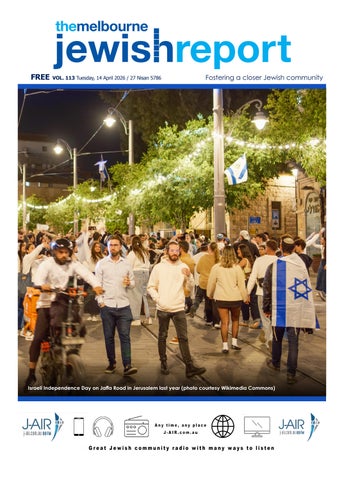
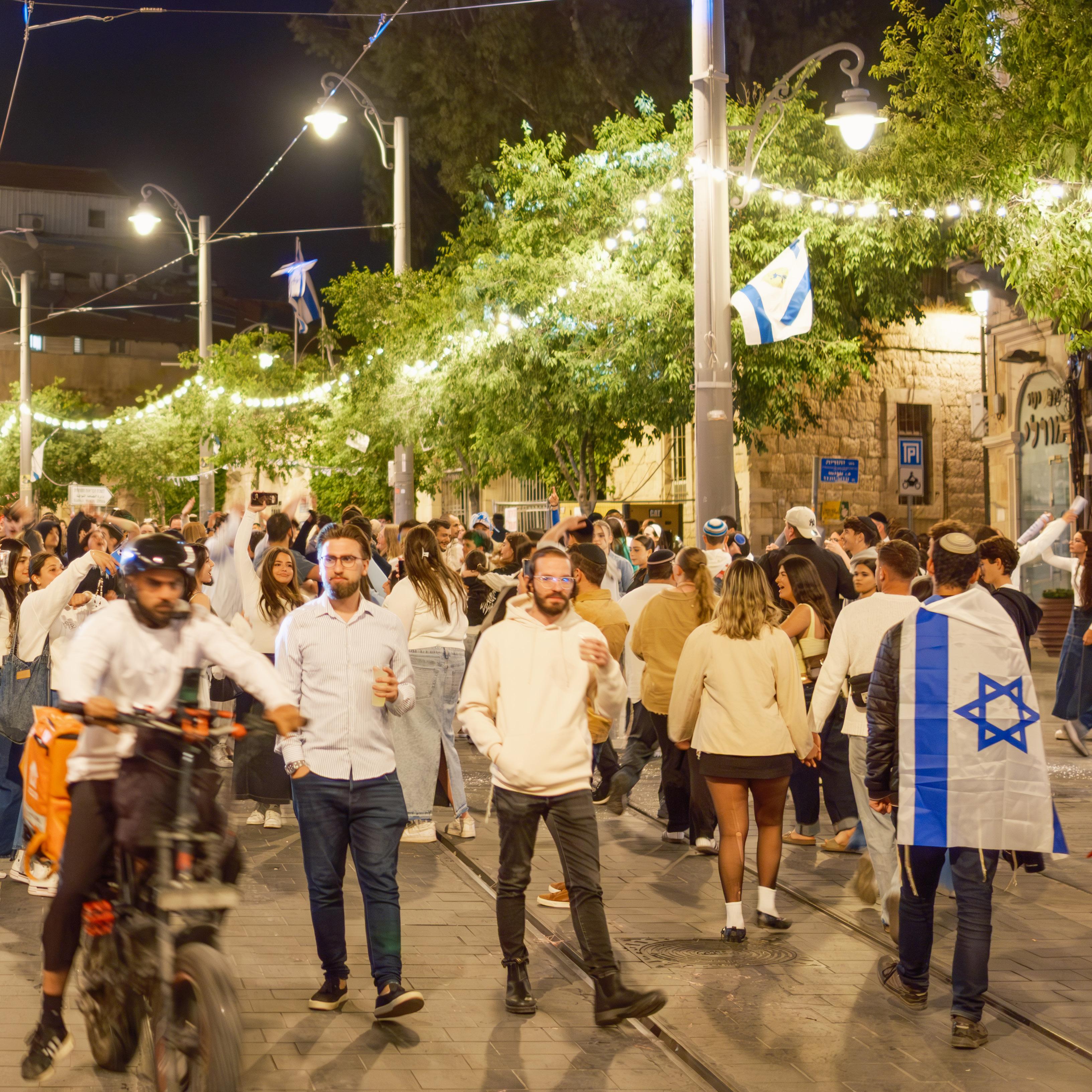
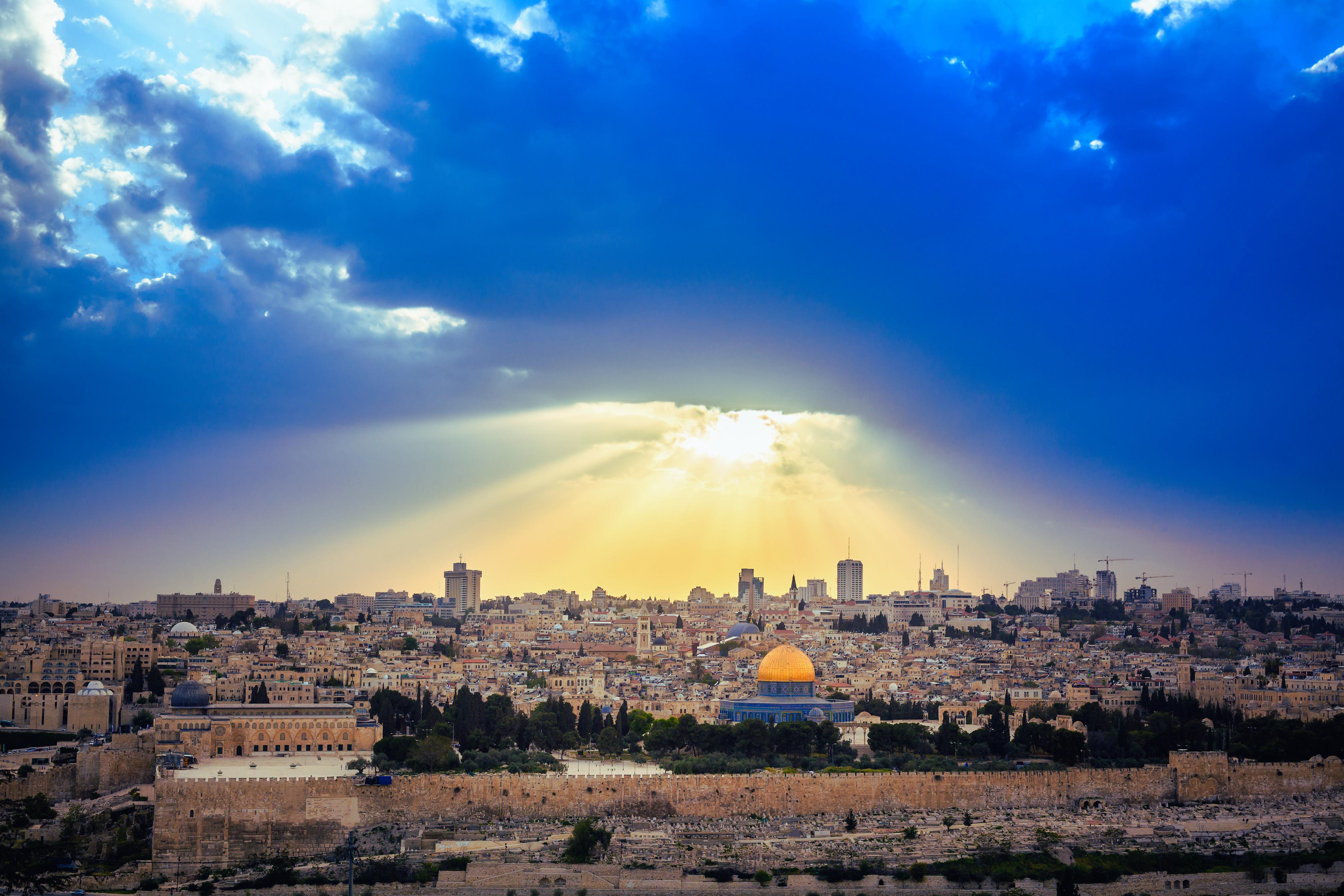
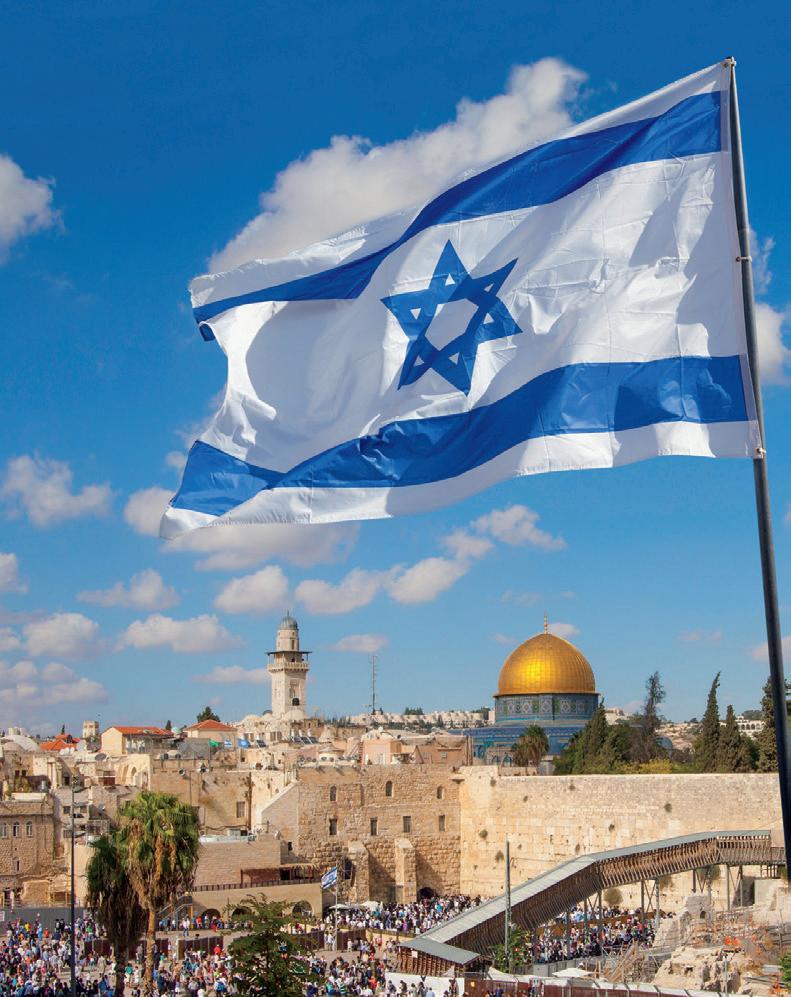
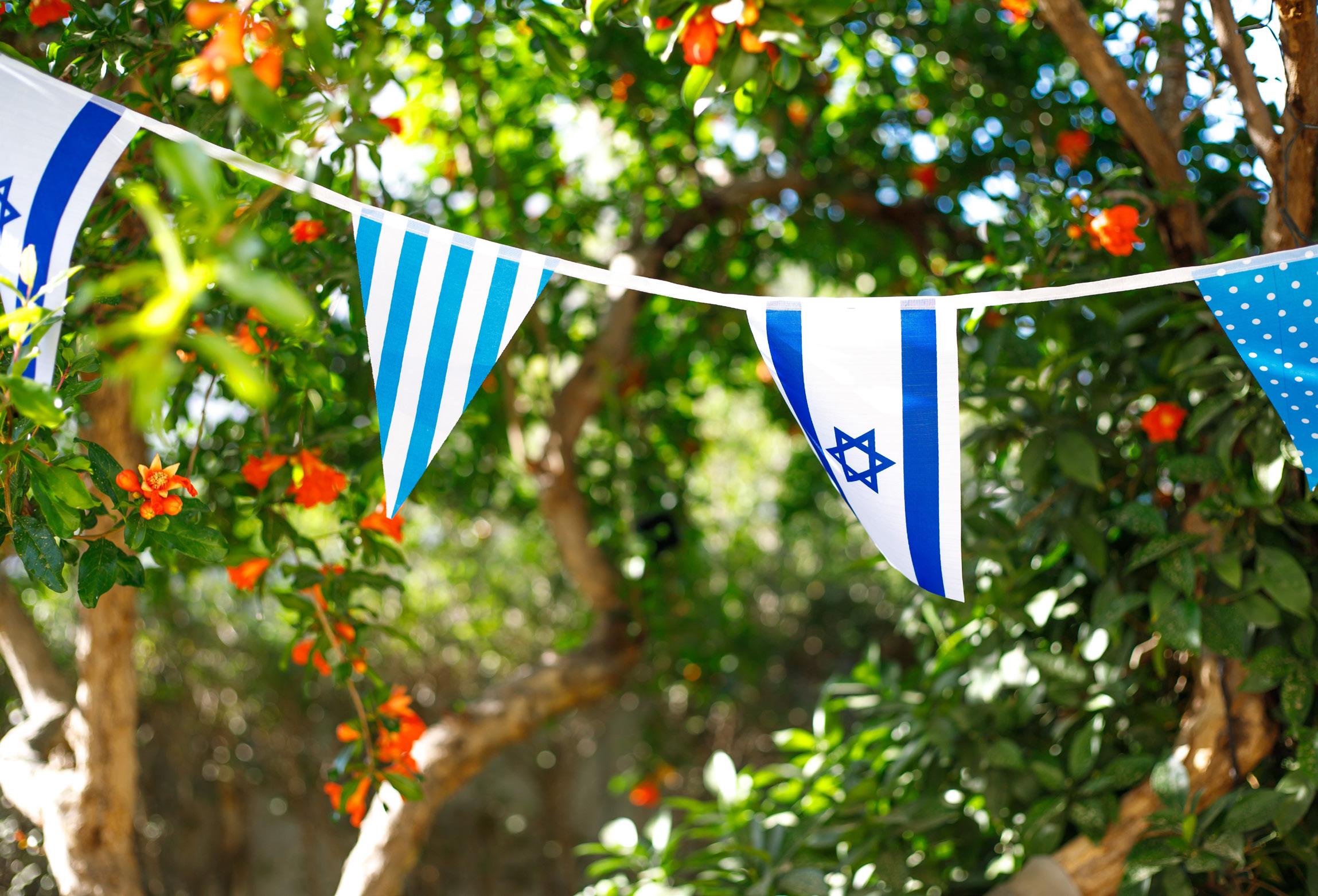
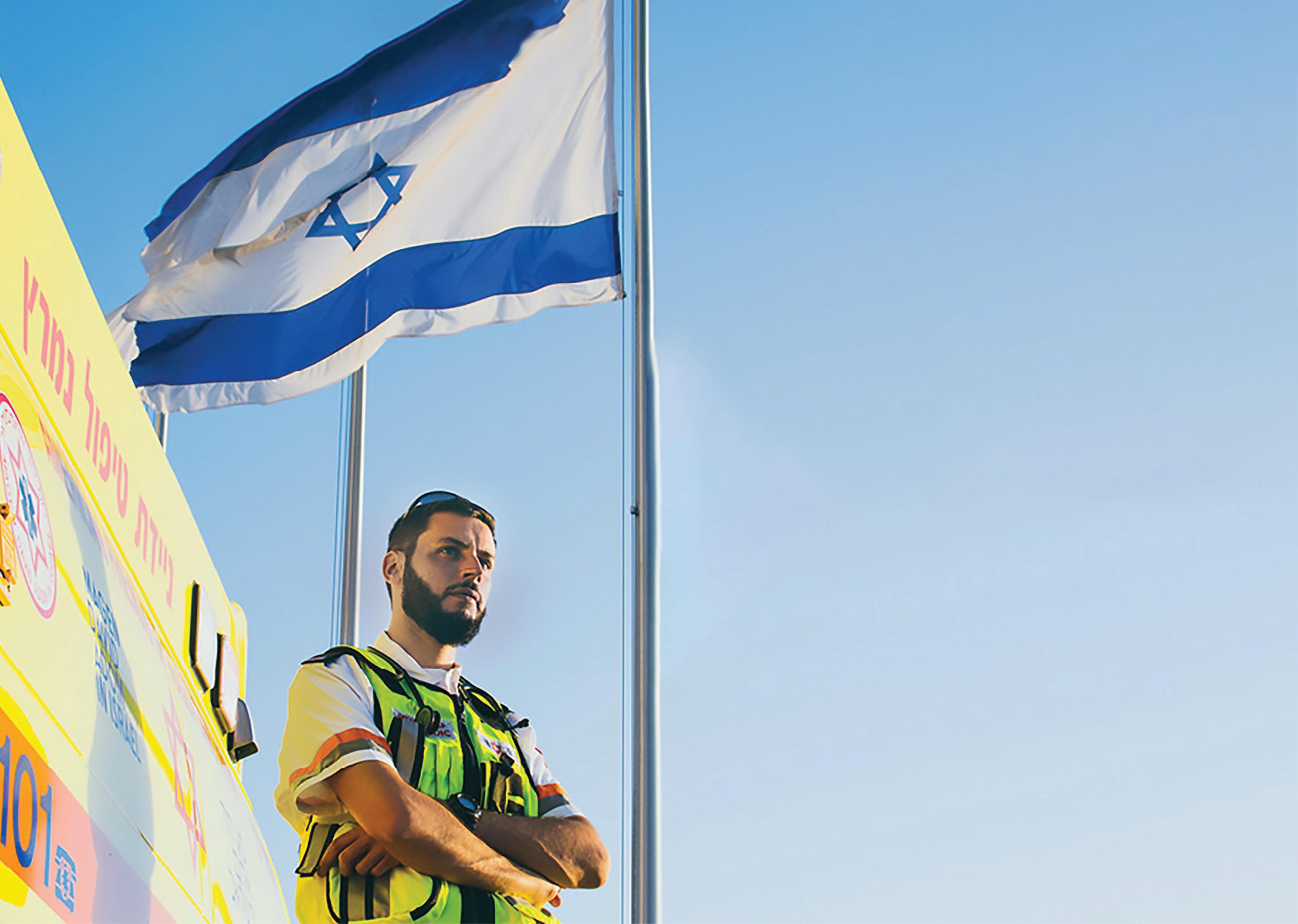
Israeli Independence Day on Jaffa Road in Jerusalem last year (photo courtesy Wikimedia Commons)
CONSIDERED OPINION
ANNE-MARIE ELIAS
It has been six years since the world was thrown into turmoil, seemingly overnight, by the COVID-19 virus and its consequent lockdowns.
Forward to April 2026 and the world is again facing challenges with the war in the Middle East. Adding to the rise in antisemitism, we are encountering a massive escalation in fuel prices, along with fuel shortages, along with cost-ofliving increases.
As a result, we are experiencing high levels of stress, anxiety and depression. Many are living in fear. Our resilience is being eroded. Whilst desperately hoping for a return to ‘normal’, there appears no immediate end in sight.
Again, we are being forced to rapidly adapt to change.
To function well in our daily lives, we need to a balance of mind, body, spirit and social activities.
Mindfulness is about having helpful thought processes that result in positive outcomes, namely feelings and behaviours.
For instance, meditation can relax the mind.
CROSSWORD
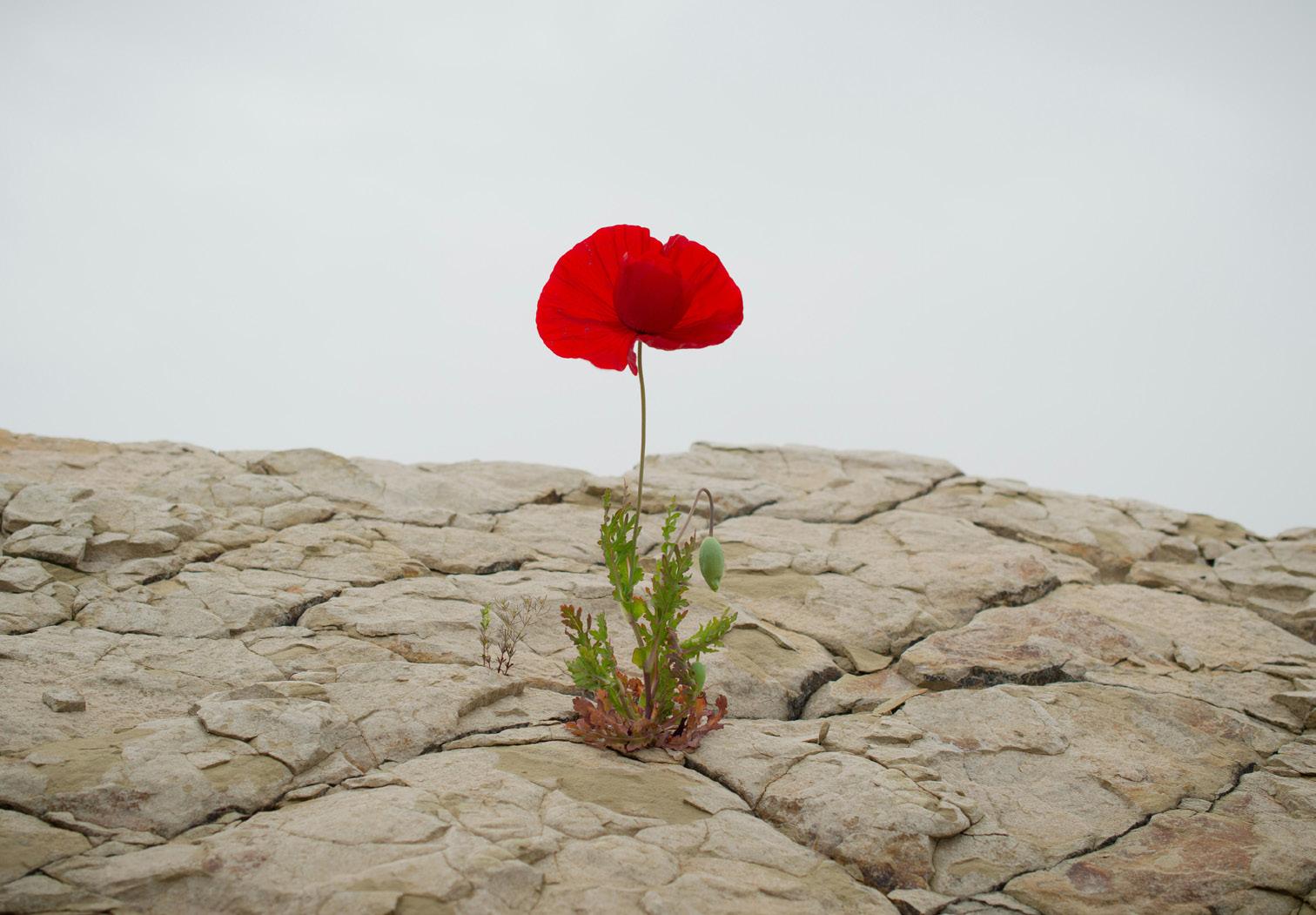
Building resilience in troubled times
The three “E’s” engage the body. That is eating well, exercising and re-energising (which is about sleep and relaxation).
Finding spirituality – religious or otherwise – that works for you addresses your soul. Humans need to be connected, so social contact with family and friends helps us cope with the vicissitudes of life.
Resilience is typically defined as the capacity to recover from difficult life events. It is the ability to withstand adversity, bounce back and grow, despite life’s downturns.
We are a resilient lot. If we weren’t, we would not have survived as a species. To be resilient, one needs to plan. Here are some ideas:
• Keep a diary, so that your personal resilience building activities are not overlooked. It is vital that they become ‘important appointments’ that you adhere to or reschedule if, for whatever reason, you cannot engage in them.
• Maintain self-esteem by staving off feelings of helplessness, when
confronted by adversity. Remember, you don’t have to do it alone – this is where connection and help come in.
• Dig deep for those coping skills and/ or seek psychological support.
• Sustain a daily routine and set goals, no matter how small.
• Do things just for the fun of it – fun, being the operative word.
• Try meditation, if you haven’t before. Meditation decreases the production of adrenaline and cortisol, which are unhealthy stress hormones. Conversely, it increases the feel-good health hormones, including endorphins, dopamine and serotonin.
• Find comfort in a pet. It is therapeutic and will make you feel good and smile.
Ryder Carroll is an author and digital product designer. He is also the creator of the Bullet Journal Method. This quote is attributed to him and fits our circumstances perfectly: “No matter how bleak or menacing a situation may appear, it does not entirely own us. It can’t take away our freedom to respond, our power to take action”.
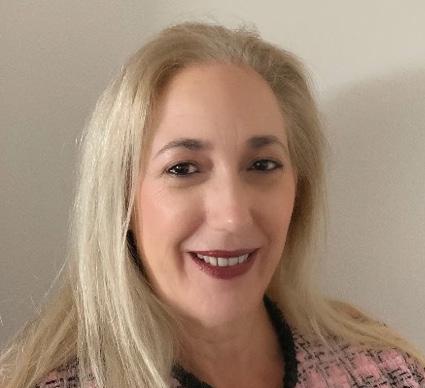
Anne-Marie Elias is a psychologist in clinical practice for 25 years.
Jewish crossword Havdalah
12. Honor, on a diploma
17. Prankster on "The Office"
21. Many miles away
22. Jerry Seinfeld, e.g.
23. Perfect
24. Former beloved Met Brandon
25. Chanukah liquids
29. Computer introduced in 1998
30. 11 Wall Street letters
32. "Ignore that edit"
33. Home of twigs
35. Heart pulsation
36. Adspeak or journalese
37. Newark's county
40. Moses might have spoken with one
43. Avoid a pothole, perhaps
47. Israeli seaport city
48. Deadly
49. Tired
50. Homeric epic, with "The"
51. "Frasier" brother
53. Destination after the ER, for some
54. ___ Rica
56. Allow
57. DVR pioneer
61. It's in our cells
62. Show that often utilized 61-Down samples
63. Native American people of Utah
64. Farm enclosure
69-Across, e.g.
Buenos Aires's land, briefly
Jewish sch.
YONI GLATT KOSHER
CITIZEN DEFENDERS
In the aftermath of the October 7 attacks, one lesson became undeniable: when terror strikes, it is often armed citizens who make the difference between life and death.
In community after community, survival depended on those who were ready. In Ein Habesor, trained residents with licensed weapons confronted attackers and prevented a massacre. In other locations, where such preparedness did not exist, the consequences were catastrophic. The difference was not luck – it was readiness.
For Jewish communities in Australia, recent events have hit painfully close to home. The devastating attack at Bondi Beach reminded us that terror can strike anywhere – even where we feel safe – and that preparedness is not just a distant concern.
Now, as Israel faces multiple fronts, a deeply concerning report has highlighted a potentially existential threat within its own borders. According to investigative findings, the Palestinian Authority Security Forces (PASF), numbering approximately 65,000 personnel, are increasingly trained in unconventional warfare, including urban combat, rapid motorcycle assaults, heavy weaponry and militarygrade explosives. This force is positioned
Now, more than ever: citizen defenders
dangerously close to Israeli population centers. Under certain conditions, it could overwhelm multiple towns and cities simultaneously, while the IDF is heavily engaged Iran and Lebanon. At a moment when Israel’s strategic focus is directed outward, the danger of overlooking this internal front is real –and potentially catastrophic.
The solution is clear and urgent: every neighborhood in Israel must have a team of armed responders ready to defend within minutes. This is why the Citizen Defenders’ initiative has become
Israel’s fastest-growing grassroots security program. Founded on October 8, 2023, by Yonatan Lahav and Colonel Yonatan Zagdanski (USA, retired), the initiative is built on a simple premise: the first line of defence must be local, immediate and ready.
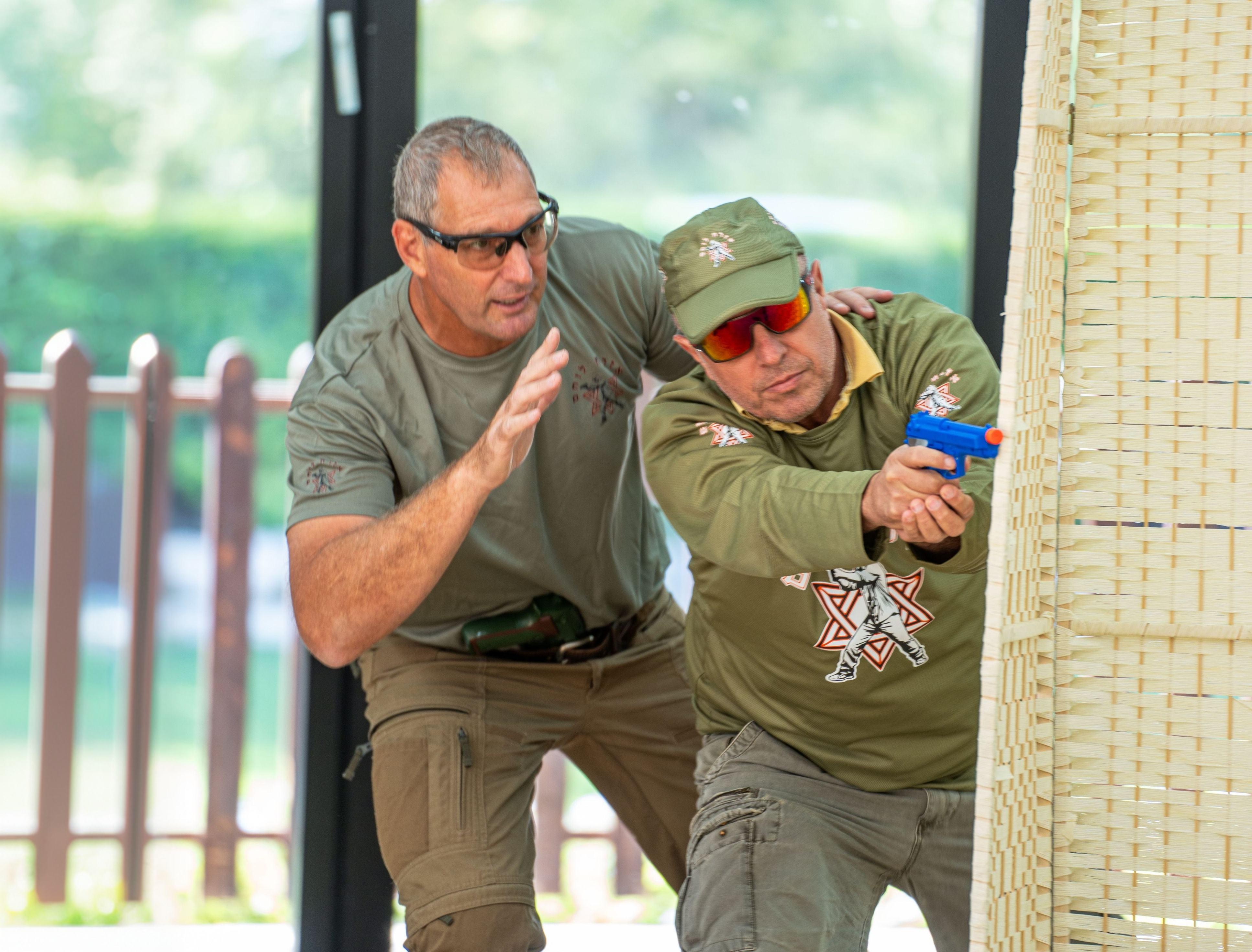
Citizen Defenders trains licensed civilians to operate as disciplined, neighborhoodbased response teams. They can deploy within seconds, neutralise attacks and stabilise situations in the critical moments before professional security forces arrive. This model builds on proven Israeli principles.
Just as organisations like United Hatzalah save lives by acting in the minutes before ambulances arrive, Citizen Defenders applies the same logic to security. The initiative is already active in cities including Afula, Beit She’an, Beitar and Jerusalem, with plans for nationwide expansion. Coordinating with municipalities and police, it ensures structure, accountability and clarity, and strengthens community resilience. Citizen Defenders represents a necessary shift from passivity to proactivity.
But time is precious and threats are evolving faster than government bureaucracy can respond. That is why this life-saving initiative depends entirely on private support. Every contribution directly enables the training, equipment and readiness of volunteers who stand prepared to act when it matters most. While the immediate mission is to protect Israel, the founders envision the model spreading abroad. “Every synagogue or Jewish school will need Citizen Defenders,” Zagdanski said, likening them to air marshals – trained and discreet. “This initiative is about saving lives. Every dollar goes to training people that will stop the next attack.”
For more information, to join and donate, go to https://citizen-defenders. org/en/home/
Read the full report at https://www. regavim.org/position_papers/thewriting-on-the-wall-of-jericho/ Source: Regavim Movement
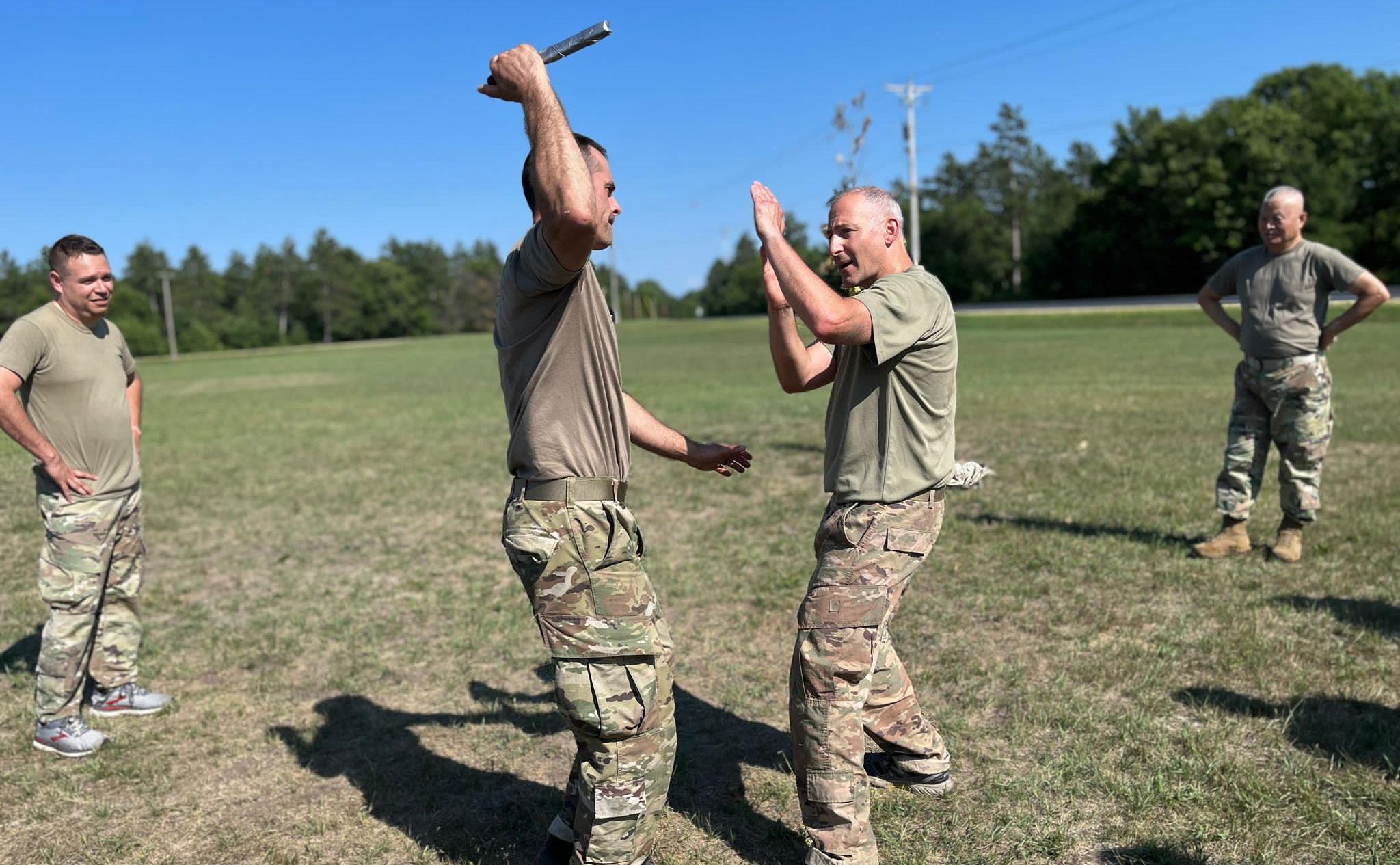
Colonel Yonatan Zagdanski (in the centre of the photo, with his arms up) from Citizen Defenders teaching hand-to-hand combat
CONSIDERED OPINION
DR DVIR ABRAMOVICH
I remember the heat as if it were a language pressing against the skin, telling me that something mattered long before I understood why.
The streets of Be’er Sheva were not just full. They were overflowing, alive with something electric, something urgent, something larger than the commotion and spectacle.
Flags hanging from balconies and streaming from car windows snapped in the wind like defiant fists raised to the sky. A sea of families poured into the boulevards to watch the sky light up and listen to the local bands belt out tunes in parks and community centres, in parties that would last all night.
Someone lifted me onto their shoulders. Suddenly, I could see it all –the movement, the colour, the sheer force of a people gathered not just to celebrate, but to insist on their existence.
I didn’t know what I was celebrating, but I knew that it could not be ignored.
Still today, my bond with Israel is as much a part of me as anything else. I cry when she cries and I cheer when she is victorious. And Martin Peretz’s beautiful statement that Zionism was “the God that did not fail” often booms in my heart.
This year is not a normal anniversary. Not after October 7. Not in the middle of a war. Not while Iran and Hezbollah are sending missiles and rockets into Israeli cities.
These are not ordinary conditions for any nation to mark its birthday.
And yet, the flags will still be raised. The songs will still be sung.
In an age that keeps demanding Jews justify their joy, celebrating Israel’s Day of Independence is itself a form of moral courage.
Because Israel was never supposed to exist. It was not supposed to rise from the ashes of a people scattered across vast distances and centuries. It was not supposed to gather the broken and the hopeful and ask them to build something together. It was not supposed to revive a language that had lived for 2,000 years in prayer and turn it into the language of bus stops, kitchen table quarrels, lullabies and jokes.
And yet, it did.
And it began in a room.
Not a palace. Not a grand hall. A modest room in Tel Aviv, crowded and urgent. In 1948, in just 32 minutes, a declaration was read. Outside, armies were already moving. Inside, a people stepped out of exile and into history. No certainty. No guarantees. Only will.
What began in that room did not end that day. It unfolded over decades, as waves of Jews returned home, one generation after another.
Ships arrived carrying Holocaust survivors who had seen the worst of humanity and were now asked to build a future. Jews driven out of Arab lands, carrying memory and loss, planted roots in soil that did not ask where they had come from. Soviet Jews who had been told to forget who they were stepped into a place where forgetting was no longer required. Ethiopian Jews crossed deserts
We are not apologising for celebrating Israel
Dr Dvir Abramovich
and skies to reach a promised sanctuary they had only known in scriptures. It was families from every corner choosing a country because it offered something no other place could: belonging and safety without condition.
And then came a moment that told the world exactly what this country was. In 1976, when Jewish lives were held hostage thousands of kilometres away in Entebbe, Israel did not hesitate. It did not calculate. It did not ask for approval. It came to save the hostages. After the raid, the French pilot Michel Bacos was asked if he had ever believed Israel would fly across continents to rescue its people. He answered with two words that still echo across history: “Who else?”
In contrast to the stinginess of spirit of most wealthy nations, in 1950, the Israeli parliament enacted the Law of Return, the first universal immigration law in history, granting citizenship to every Jew who needs and wants it.
A country that has a tremendous amount to celebrate, but constantly worries about its neighbours gatecrashing with bombs, Israel is endlessly interesting and attractive.
A multi-ethnic, multicultural land of astonishing promises, memories and visions, Israel has developed in every way imaginable – a flourishing oasis in a desert that now produces wines sold in Australia.
Picture a scientist working in a lab in Haifa solving problems that extend far beyond the borders of a small state. Like medical devices that travel to hospitals across continents and technologies that quietly underpin systems people rely on without ever knowing where they came from.
Israel is a place of contribution to the world, where the mind becomes the most valuable resource and ideas become infrastructure.
This sits alongside the arguments, the tension, the noise. Israeli people
have never claimed perfection. In a free and open society, mistakes are inevitablr. It is for this reason that the nation is never silent. It is not afraid of disagreement. In recent years, it has fought loudly and publicly over its own direction, over judicial reform, over the balance between power and restraint, over religion and secular life, over what kind of democracy it must be. The streets filled. The voices rose. The arguments did not end neatly.
Good. That is what a living democracy sounds like. There are countries where dissent disappears into prisons, where protest is crushed into silence, where unity is enforced by fear. Israel is not one of them. It is contested because it is real and belongs to its people. It is strong enough to withstand dissent without collapsing into it. And, while we are here, let us kill another lie: Israel’s Arab citizens vote, serve in parliament and sit in the highest court in the land. Like Justice Khaled Kabub, who has served on the Supreme Court since 2022.
Despite all the divisions, it is more cohesive than its founders dared hope. What the clueless keyboard warriors simply don’t get is that Israelis long for unity, not uniformity.
October 7, 2023, reminded us, again, that conflict and death are part of the lived reality of a country that has never had the luxury of forgetting what it means to be surrounded by evil forces who wish to destroy it.
Iran has spoken the loudest, in the language of elimination that has echoed and grown with each passing decade, pursuing nuclear weapons with the stated aim of wiping Israel off the map.
And Israel, again, does what it has always done. It responds.
Not because it seeks conflict, but because it cannot afford not to.
Since late February, sirens across the country tore through the night. Families
ran. Doors slammed shut behind them, as Israelis huddled together in bomb shelters, holding children, holding their breath, waiting.
And still, morning after morning, they emerge. Not shattered. Not defeated. Standing tall.
You can drive a nation underground, but you can’t break its spirit and grit.
Today, there is a new demand in the world, a demand that Jews must explain their pride. That Zionism must be treated as a moral stain.
We hear it everywhere now. The word “Zionist” spat out as an accusation, stripped of meaning and loaded with blame. Jews who stand with Israel are smeared as criminals, simply for loving the only Jewish state on Earth.
The chorus is deafening: apartheid, illegitimate, existence itself put on trial. This is a movement of contempt, one that singles out the Jewish people alone and denies them a right every other nation enjoys, demanding they apologise for their homeland, renounce their history and hide who they are.
We reject that demand.
We will not apologise for creating a Jewish homeland where Jews do not have to ask permission to live.
We will not apologise for celebrating it. Because the presence of Israel is not a crime to be explained. It is a fact to be accepted.
After 2,000 years of exile, after generations of vulnerability, after a century that showed the world what happens when Jews are left without protection, Israel is home to nearly half of the Jewish people worldwide.
Every Jew carries this kind of insurance in their bones: if it ever comes to a point that antisemitism starts killing, there is one place that will have you unconditionally. It is the one door that never closes.
And somewhere tonight, in Israel, a child is asleep. Not because the world is quiet, but because it isn’t. That child sleeps not in the absence of danger, but sustained by something stronger: a country that refuses to disappear and that will protect them.
I think back to that boy, lifted above the crowd, holding a flag he did not yet understand and I think about what I would tell him now. I would tell him that there are voices telling him to lower that flag, to explain it, to apologise for it. And I would tell him not to.
Because the story he is standing inside is not something to be negotiated or apologised for. It is something to be lived.
Seventy-eight is a heartbeat in the long sweep of Jewish civilisation, but it is a heartbeat that would make Kings Saul, David and Solomon look down and recognise something unmistakable – a people unbowed and unyielding.
And if they could see it now, they would not ask how it happened. They would smile. And we are not apologising for it.
Dr Dvir Abramovich is chair of the AntiDefamation Commission and the author of eight books.
DORRON KLINE CEO TELFED ISRAELI NEWS
Israel is turning 78 and it is time to celebrate.
The milestone will be marked across the Jewish world on Yom Ha’atzmaut, Israel’s Independence Day. In Ra’anana, the Telfed offices are proudly draped in blue and white, a quiet but powerful reminder of what this country represents and what it continues to endure.
Before the State of Israel takes a deep breath and blows out the candles on its proverbial blue and white cake, it is important to pause and reflect.
The past year has been sobering, complex and, in many ways, extraordinary. Since October 7th, Israeli
A time to reflect and rejoice
financial planning workshops, social gatherings and a range of lectures and initiatives. There has also been a notable expansion in volunteering opportunities and in applications for Telfed’s PRAS community service scholarships.
We have lived through a year that, at times, felt almost unimaginable. The return of hostages from Gaza –something many feared we might never see – reminded us of both the fragility and the strength of our reality. We faced major escalations with Iran and the threat of ballistic missiles capable of devastating impact.
While each loss and injury is deeply felt, we are acutely aware of what could have been. There have been moments that can only be described as miraculous.
Above all, we have witnessed extraordinary resilience. People are tired, but they have not given up. There is
Aliyah
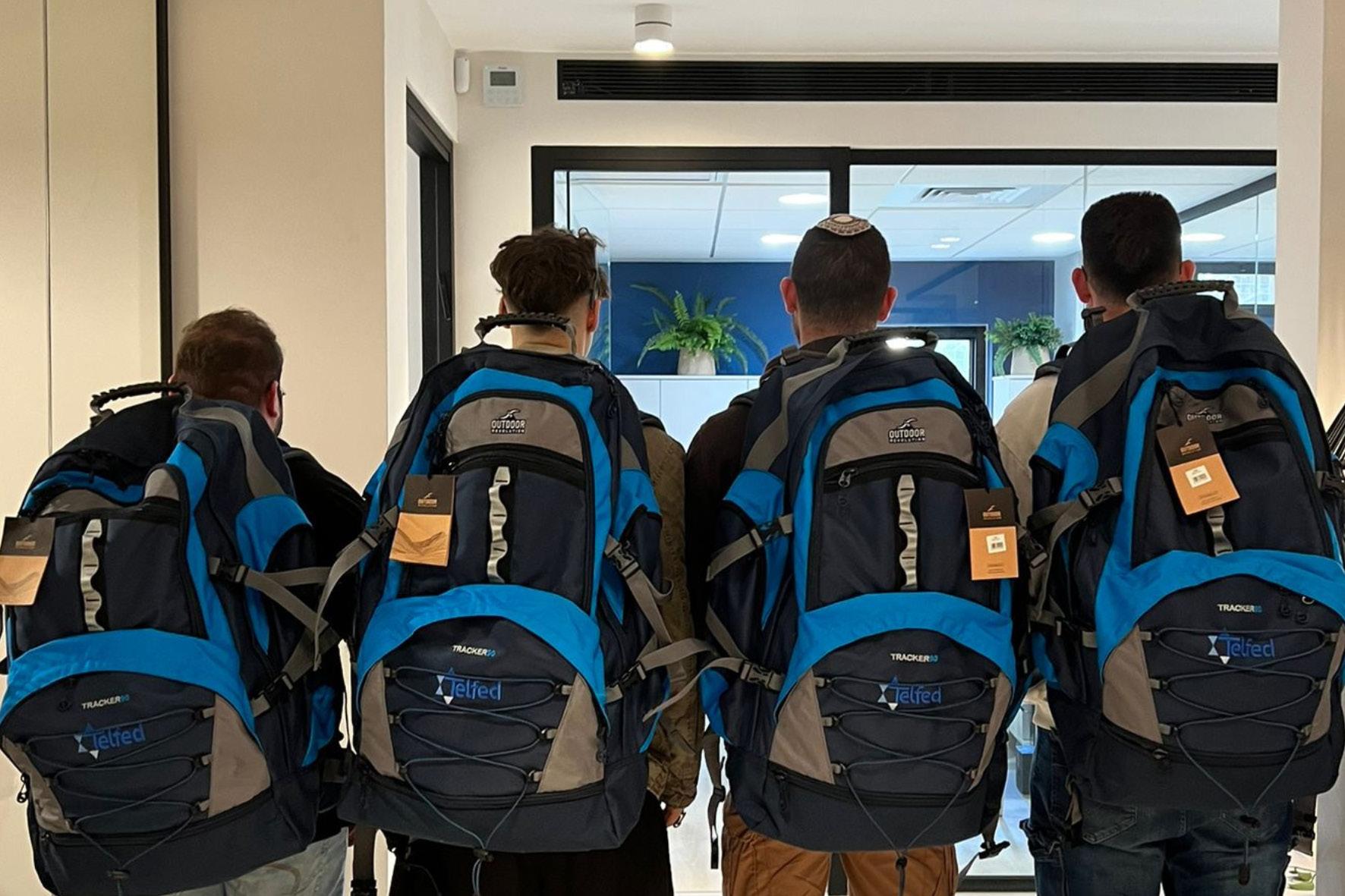
Australian lone soldiers receive essential gear for their army service
DAVID SCHULBERG CONSIDERED OPINION
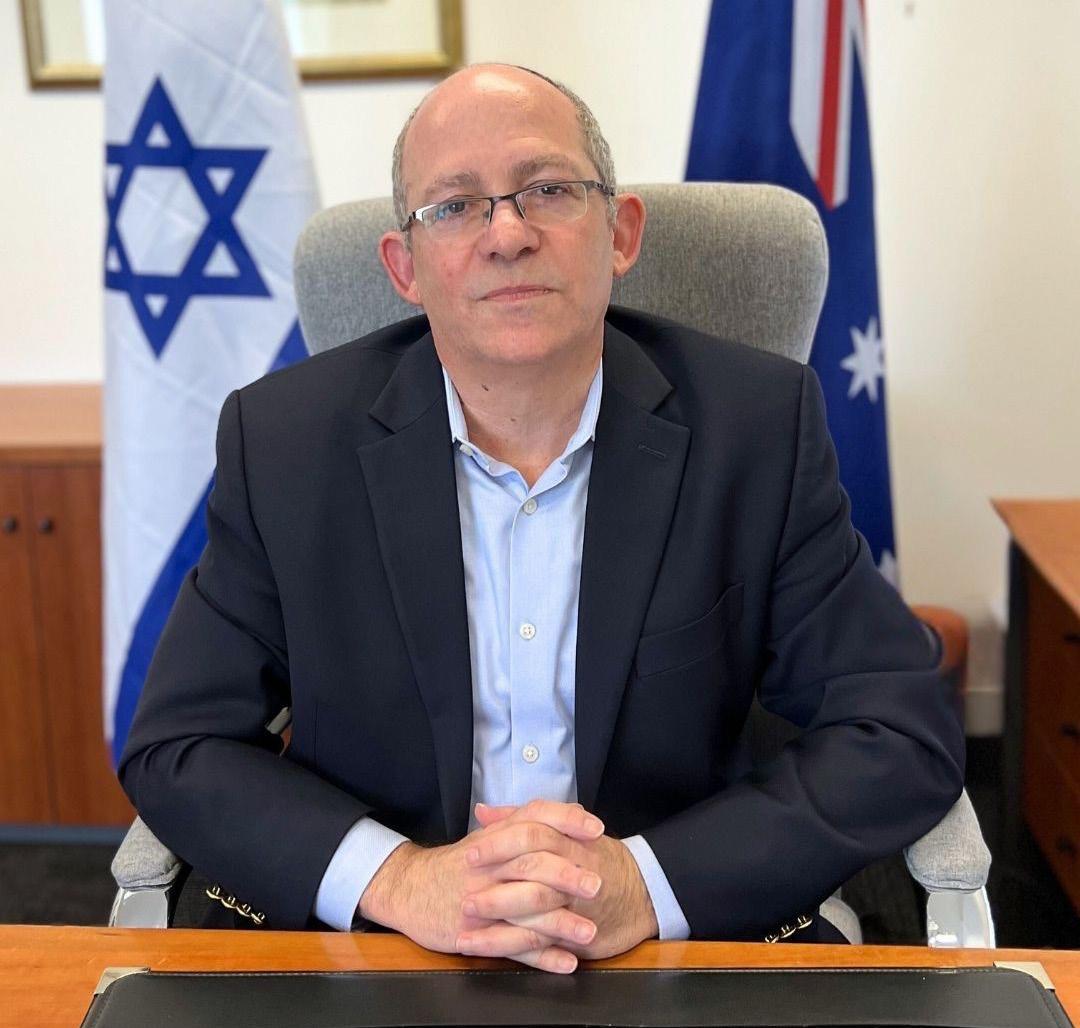
Israel's new ambassador to Australia, Dr Hillel Newman, has hit the ground running and appears determined to give the Australia/Israel relationship a fillip. David Schulberg spoke with him the day after he addressed the National Press Club.
David
You've been promoted as bringing with you an extensive diplomatic experience and have said you are committed to strengthening engagement, deepening understanding and maintaining open and productive dialogue with partners and stakeholders across Australia. What would you say is the particular experience you have that makes you especially suitable for what is certainly a difficult posting?
Hillel
There are a few things in my career that have prepared me for this moment. First of all, I served in Los Angeles, which has a wide range of viewpoints from far Left to far Right and everything in the middle. I encountered a lot of the kind of criticism you find in Australia. I am South African-born and I know that there are many South Africans here in Australia, so l’ll connect there as well. I have also served in Muslim countries, giving me a special understanding of moderate Muslim thinking and the politicised Islam, which people are not always aware of in Western countries and in Australia. Mainly, I come with goodwill and 26 years’ experience in the diplomatic field to try and make a change for the good in our relations and bring back the fundamental relationship based on common values between Israel and Australia. Over the past two years or so many people have lost a view of the big picture. Israel and Australia are natural allies because of the values we share and because of our common interests and threats. We should reset that fundamental relationship.
David
You were ambassador to Muslimmajority countries Uzbekistan and Tajikistan. You've said that you're willing to engage with the Muslim communities if they're prepared to recognise us and work with us in peace. Our Jewish organisations have severed their relationship with Muslim organisations here because of their negative attitudes towards Israel and their ambivalence toward Zionism, which many of us believe is fundamentally tied to antisemitism. We've heard from Labor backbencher Ed Husic, who has accused our government of failing to deliver protection for Australian Muslims. He wants the Royal Commission to embrace a focus on Islamophobia. If the Australian Jewish community is distanced from the Muslim community, how are you going to be able to break through to improve
A fresh start
that relationship, which is very important because of the large Muslim population living here?
Hillel
Look, we make a clear distinction between moderate Muslims who are prepared to live in peace and radical Muslims or politicised Muslims. We've had rallies in front of the embassy here of Muslim Iranians supporting Israel. They've come with chocolates and flowers and they’ve stood with flags of Israel supporting us in the fight against Iran. We shouldn't think that every Muslim person thinks the same way.
The world is complex; it's not that simple. Even within Islam, there are many nations that support Israel and are friendly with Israel. We signed normalised relations with four Arab states, UAE, Bahrain, Morocco, Sudan, which are majority Muslim and we have wonderful relations with them. They support Israel in the conflict against Iran. The world of Islam is complex. I am sure that there are many people of the Muslim faith here in Australia that do agree with Israel and are prepared to live in harmony and peace with Israel.
We must make these distinctions and work with whom we can and not with those that negate our existence or are antisemitic. Of course, anyone who is an adherent of radical Islam or against Israel's existence, that's not a sector of the population that we're going to target. I'll be glad to work in coordination with the Jewish community and with other communities here. I'm sure there are Muslim communities here that we can work with.
David
You've said that your appointment as Israel's ambassador to Australia presents an opportunity to reset these bilateral
not only because Australia took a side against Israel's policy, but it was also in the midst of the war, when it was seen and is still seen as a prize for terrorism to Hamas after the October 7 attack. But also, because the Palestinian Authority hasn’t gone through necessary reforms. The Palestinian Authority still incites against Israel.
It still continues with its pay for slay policy, paying terrorists and their families, indirectly encouraging terrorism against Israel.
They glorify terrorists and in their educational systems they do not preach coexistence, harmony and peace. All these things have to be addressed. Our recommendation is not to recognise a Palestinian state while they have not shown a preparedness to reform.
I encourage the Australian government to revisit the issue of conditioning a future state of Palestine on reforms, because these reforms are necessary for harmony and peace.
relations that have been tested since October 7, and you've been given a clear mandate by the Israeli government to rebuild the relationship. The previous ambassador may have struggled in this regard, but you're hoping for a major reset. How are you intending to remedy what is a rather battered relationship these days between our two countries?
Hillel
There are a lot of positive signs. The visit of Israeli President Isaac Herzog was an important step in resetting relations and increasing understanding. I've also come with a lot of goodwill on behalf of the State of Israel to bring about a change in the character of the relationship and I've also received positive responses from the Australian government.
Within a week, I submitted my credentials and started working and within a week I had a meeting with Foreign Minister Penny Wong and Home Affairs Minister Tony Burke. We have engagements at the highest level and we can talk candidly and openly about all the issues that are of concern. Among the positive signs, there were some visas that were delayed and have now been opened up. What I'm saying is that we have to build, create bridges and reestablish trust.
David
One of the things that Australia did that has not been viewed favorably by our Jewish community is the government's recognition of a state of Palestine. Do you feel that we need to revisit this? Of course, Australia made it conditional on reform of the Palestinian Authority.
Hillel
The recognition of a Palestinian state by Australia was taken badly in Israel. It was a big disappointment to Israel,
If the Palestinian Authority continues to glorify terrorists and pay for slay and incite in their educational systems, this is not a formula for peace. So, we're just creating a failed entity or a terrorist entity again. My call to the government of Australia is to carefully consider this issue and condition future recognition of a state on the necessary reforms.
David
Would you also see it as a good thing to put pressure on the government to stop funding the United Nations Relief and Works Agency, which Israel has banned?
Hillel
Yes, we do call upon all governments not to channel aid through UNRWA. We're not against aid to Gaza. In fact, Israel itself is involved in aid to Gaza. We've opened the Kerem Shalom crossing, which is channeling aid to Gaza. There's no blockade of any kind in the transferring of aid to Gaza. But we oppose doing it through UNRWA, as many of its employees have been involved in terrorism. We've seen videos, we have documented information of how employees of UNRWA were actively involved in the October 7 attack.
Not only that, but UNRWA is not part of the solution – it's part of the problem. UNRWA perpetuates the refugee status of Palestinians, instead of rehabilitating them, perpetuating them as political pawns against Israel.
Their educational material incites against Israel. There are many reasons why UNRWA should not be a vehicle for this kind of assistance. The assistance and aid to Gaza should be channeled through legitimate and constructive organisations.
This is a slightly modified extract from an extensive interview with Dr Hillel Newman, who was interviewed by David Schulberg on ‘The Israel Connexion’ program on J-AIR community radio. The full interview is available as a podcast on the J-AIR website. David can be heard weekly on J-AIR in Melbourne and 2TripleO in Sydney.
Israel's ambassador to Australia, Dr Hillel Newman
CONSIDERED OPINION
MAUREEN BARTEN PRESIDENT PROGRESSIVE JUDAISM VICTORIA
There are moments in the year when being part of a people feels simple. And then there are moments like this. A month where the calendar asks more of us. Where days are marked not just by dates, but by emotion – layered, confronting, impossible to ignore. Where what is happening in the world is not distant. It is close. It is heavy. It is felt.
We are not simply remembering. We are living with the weight of our history, that sits with us now. In our conversations. In our thoughts. In the way we move through the world.
There is anguish in recognising patterns we wish we did not see. In feeling the echo of what has been before and wondering what it asks of us now.
This is not something we can set aside. We don’t put it down; we carry it. And within that weight sits something else. A responsibility. Quiet, but constant.
To continue. To remain connected. To ensure that what has been, and what is unfolding, is not lost between generations.
Across this month, we are drawn into a sequence that does not allow us to stay in one place. Freedom. Memory. Loss. Renewal. Not as ideas, but as lived experiences that sit side by side.
One month. One story. One responsibility.
This is not neat. It is not comfortable. And it is not meant to be. Because being part of a people, our people, has never been about choosing the easy parts of the story.
It is about holding all of it. Holding what came before us. Holding what is unfolding now. Holding what we do not yet understand.
This tension is not new. It is written into our beginnings. In the story of Jacob. He wrestles through the night with
Together Building Tomorrow
BELONGING BEGINS WHEN WE BUILD TOGETHER
an unnamed presence, one he later understands to be God. He refuses to let go until he is blessed. He emerges changed, carrying both a blessing and a wound, and is given the name Israel.
He is not given answers. He is given a name. A name that defines him, and us, not by certainty, but by the willingness to wrestle.
To stay engaged. To remain in relationship with what is difficult and unresolved.
Our identity is not built on certainty; it is built on engagement.
At Passover, we don’t just retell the story, we take our place in it. L’dor V’dor is the understanding that the story moves forward through us.
What we inherit is not meant to be preserved unchanged. It is meant to be lived, shaped and carried forward.
Our story does not belong to one voice or one perspective. It is not dependent on agreement. It continues because we choose to remain part of it.
Each, in our own way. With our own questions. With our own understanding of what this moment means.
And still, together, with all our different expressions of Judaism – yet one people. All Jews.
This is our responsibility. Not to resolve everything. Not to land on the same conclusions. But to remain connected. Because the strength of our people has never come from uniformity. It comes from continuity.
From the willingness, generation after generation, to stay in the story, even when it is exhausting.
This time does not ask us to choose one answer over another. It asks us to remember who we are as one people, even when divided in thought, respecting each other’s differences and moving forward together.
My non-Jewish friends often ask me the same question: “Is it true Israelis spend ten hours a day in bomb shelters?”
I laugh and say: “No. It’s more like ten minutes – about three hit songs.”
That gap – between what people think war in Israel looks like and what it actually feels like – is where the real story lives. On the news, it’s all smoke and sirens. In real life, it’s the abrupt, almost absurd pivot from stirring your coffee to sitting on a plastic chair underground.
I feel safest in Israel when I’m underground. Not exactly tourism-poster material, but there it is.
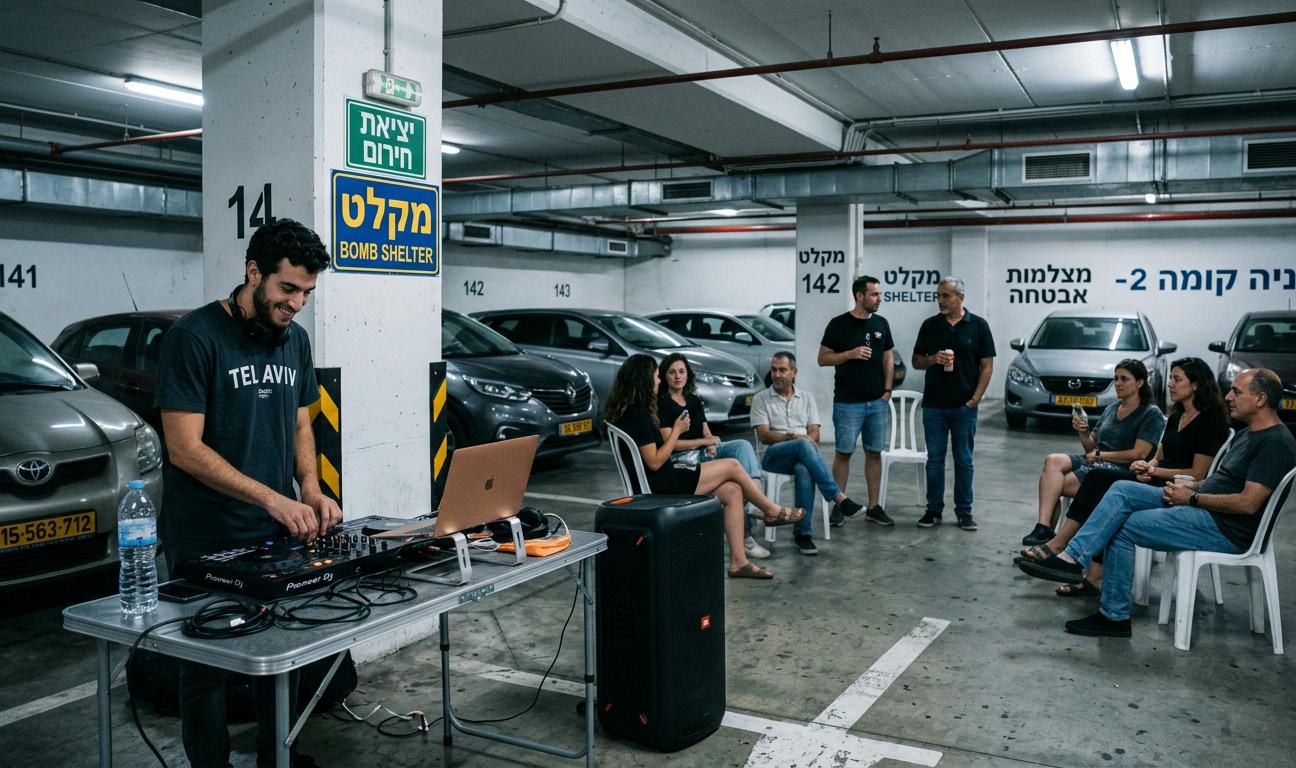
When the siren sounds, you don’t descend into a Hollywood war scene. You’re more likely to step into a cement room with a wobbly plastic chair or a crowded shopping centre car park.
That’s one of the oddest parts of life between sirens: where you end up depends entirely on where you are when the alert goes off.
At home, it might be a tiny mamad (reinforced security room) with a couple of chairs and a stack of old board games. In an older building, it’s often a shared basement, half storage, half social club, where the neighbours you normally nod to in the lift suddenly become your shelter companions. In a shopping centre, the shelter might
The truth about bomb shelters
be the underground car park – rows of cars, fluorescent lights and, sometimes, if you’re lucky, even a DJ. Teenagers turn those spaces into temporary dance floors, as if the concrete pillars were part of the décor all along.
And yes, in case you were wondering, there are “five-star” shelters.
People talk about them like hotel reviews: the “Hilton” of shelters, with padded chairs, decent air-conditioning, strong Wi-Fi and, maybe, even a piano. Others are strictly one-star – standing room only, bad ventilation. BYO patience.
From Australia, people imagine hours of terror in a dark room. What they don’t see is the little girl quietly drawing hearts on scrap paper, or the way someone always ends up making a joke about the siren’s pitch. They don’t see the older man pouring cups of mint tea from a battered thermos, as if hospitality might somehow hold up the ceiling.
But as the war grinds on, Israelis have found ways to adapt, sometimes in unexpected ways.
For example, there are reports of what people have started calling “bombshelter dating”.
An app called Hooked, originally designed for parties and large events, has reportedly been used in shelters. A QR code goes up on a concrete wall; once everyone is inside, singles can scan it and see who else is available. Ten anxious minutes becomes an opportunity for conversation. One founder described it bluntly: people are terrified of rejection and the app lowers the stakes by showing, in advance, who is open to meeting.
It has been praised as a creative coping mechanism and criticised as inappropriate, which, in its own way, feels very Israeli.
As one person put it: “Of course someone here invented an app where you can scan a code and see who’s single in the shelter.”
Only in Israel would someone think: if we’re stuck together under missile fire, we might as well try to meet someone nice.
And it’s not just dating.
A content creator from a kibbutz turned up with a tray of pancakes, maple syrup and berries, serving breakfast in his local shelter the moment
a siren went off. Others have moved Purim parties underground, read the Megillah between concrete pillars, and – my personal favourite – held weddings in shelters.
Not the Tel Aviv rooftop kind, but four storeys underground, in concrete corridors, beneath places like Dizengoff Centre. Fluorescent lights, exposed pipes, a chuppah wedged between pillars, followed by a full simcha in a space built for emergencies.
What makes these moments powerful isn’t how they look, but how they sound. When the groom stamps on the glass, the roar that comes back is mostly not family, but strangers who just happened to be in the shelter when the siren went off.
People who were on their way to buy shoes or coffee find themselves clapping, whistling and calling out “Mazal tov!” like lifelong friends.
For a few minutes, the car park or basement stops being a bomb shelter.
Naturally, those clips go viral and prompt the same quiet question from overseas: “How can you celebrate anything right now?”
The answer is simple and a little defiant: because people are not willing to postpone their lives until the world is safe. If the safest place tonight is here, then this is where life will happen.
None of this cancels out the danger. People are killed. Lives are shattered. The fear is real.
But what struck me most is not the improvisation – it is the insistence. The refusal to reduce life to waiting between sirens.
People still show up for each other. They still celebrate. They still make space, even underground, for something that looks like normal life.
From far away, that can look strange, even reckless. Up close, it looks like something else entirely: a quiet, stubborn form of resilience.
A decision that if life must be interrupted, it will not be postponed.
SHARONNE TIDHAR
AI-generated photo
AROUND THE COMMUNITY
UIA has launched the Rebuilding Israel Fund (RIF), as part of its 2026 Campaign.
The RIF is a long-term national recovery initiative focused on rebuilding people, rehabilitating families and communities and restoring resilience. More than two million Israelis are suffering from PTSD and related trauma. Many are deeply affected. Hundreds of thousands of children need stability and care. The cost of treating PTSD alone is estimated at nearly nearly 60 billion shekels annually over the next five years. This is not a short-term crisis. It is a generational responsibility and the RIF has been created to provide sustained, strategic support for that recovery.
When launching the Fund at UIA’s 2026 Gala, Ayelet Nahmias-Verbin, chairperson of the Victims of Terror Fund for The Jewish Agency for Israel, reminded the Australian Jewish community that it has already proven itself to be a powerful partner and supporter of the People of Israel. Now, she asked us to “rally again – to recommit and partner in the longterm rebuilding of our homeland.”
“Tonight we enter a new era. Not only of instinctive response, but of meticulous rebuilding. Because rebuilding a homeland is never finished. We have done this before.
UIA 2026 Campaign –rebuilding our homeland
We will do it again,” Nahmias-Verbin said. Since launching the RIF, the challenge has only deepened. The Operation Lion’s Roar war with Iran has made an already devastating reality even more complex and severe, placing further strain on families, communities, essential services and Israel’s broader recovery effort. When needs are
escalating across multiple fronts, the importance of a coordinated national response has become even clearer.
Rather than funding needs in isolation, the Fund directs support to the outcomes Israel urgently requires now:
• Mental health and PTSD recovery;
• Rehabilitation of communities in the north and south;
• Youth empowerment and national resilience programs;
• Support for vulnerable populations across Israel;
• Olim absorption and integration, where growth is most needed; and
• Strengthening social services and community infrastructure.
This is central to UIA’s approach. As the only organisation with a holistic overview of priority needs across the country, the organisation is uniquely placed to identify where support is most urgently required and to respond accordingly.
Through its national reach and longstanding partnership infrastructure, UIA is also distinctly positioned to help deliver large-scale global solutions to many of Israel’s most pressing challenges. UIA’s focus is to restore security, rebuild strength and stand with Israel during its most difficult period of recovery since the October 7 massacre.
Together we can and will rebuild the human fabric of the nation.
To find out more about the Rebuilding Israel Fund, visit https://uiaaustralia.org. au/rebuilding-israel-fund/
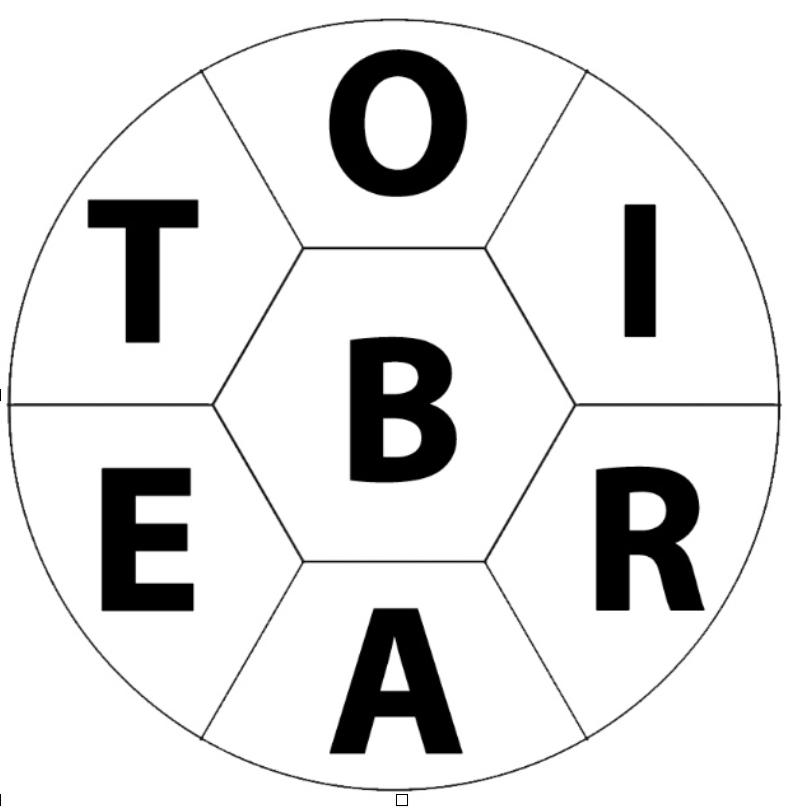
How many common words of five or more letters can you spell using the letters in the hive? Every answer must use the centre letter at least once. Letters may be reused in a word. At least one word will use all seven letters and have a direct Jewish connection.
Proper names and hyphenated words are not allowed. Score one point for each answer and three points for a Jewish related word that uses all seven letters.
Rating: 27 = Good; 33 = Excellent; 38 = Genius
Glatt has published more than 1,000 crossword puzzles worldwide, from the LA Times and Boston Globe to The Jerusalem Post. He has also published two Jewish puzzle books: "Kosher Crosswords" and the sequel "More Kosher Crosswords and Word Games".
18
Yoni
Rebuilding resilience in the Eshkol region
CANDLE LIGHTING TIMES
CANDLE LIGHTING TIMES
The trade we
Friday, Nov 22, 2024 8:00 PM
Friday, Nov 22, 2024 8:00 PM
Shabbat ends, Nov 23, 2024 9:04 PM
AB BOSKANY
Shabbat ends, Nov 23, 2024 9:04 PM
without warning, returns as a residue we must live with later.
Friday, Nov 29, 2024 8:07 PM
Friday, Nov 29, 2024 8:07 PM
Every defence strike carries a double edge, because the act itself is never enough and proof must follow if the wider argument is not to be lost. We must show footage of missiles finding their mark and of threats erased because without that proof the narrative turns. Iran or its proxies flood the airwaves with claims of endurance, missed targets and unbroken resolve, and those claims work quickly. Public opinion sways, allies grow hesitant and support erodes. Amid AI deepfakes and clips, muteness is surrender. For Israel and the United States, the choice is simple: either we show the result, or we risk losing the war of perception. The war does not end where the smoke rises because it continues through phones, in studios and in diplomatic rooms.
Shabbat ends, Nov 30, 2024 9:12 PM
Shabbat ends, Nov 30, 2024 9:12 PM
Friday, Dec 6, 2024 8:13 PM
Friday, Dec 6, 2024 8:13 PM
Shabbat ends, Dec 7, 2024 9:19 PM
Shabbat ends, Dec 7, 2024 9:19 PM
Friday, Dec 13, 2024 8:19 PM
Friday, Dec 13, 2024 8:19 PM
Shabbat ends, Dec 14, 2024 9:25 PM
Shabbat ends, Dec 14, 2024 9:25 PM
Friday, Dec 20, 2024 8:23 PM
Friday, Dec 20, 2024 8:23 PM
Shabbat ends, Dec 21, 2024 9:29 PM
Shabbat ends, Dec 21, 2024 9:29 PM
Creation isn't abstract; it's human. Concrete mixed, steel welded, wages earned, lives planned around it. A bunker, a ship, a lab: someone built that. We erase it for survival and the act leaves a mark, though not a dramatic one – just like a scar you forget until it itches. The paradox: we must prove the strike, rally the world, hold the line. But every time we watch, we pay in solitude. Glee's invoice is cheap, instant, then lingering. There is no clean moral distance in these moments. Survival justifies the act, but it does not sanctify every feeling that follows from watching it.
Melbourne Jewish Report Disclaimer:
Melbourne Jewish Report Disclaimer:
Except where expressly stated otherwise, content in The Melbourne Jewish Report is provided as general informations only. The articles in this paper have been contributed by a third party.
Except where expressly stated otherwise, content in The Melbourne Jewish Report is provided as general informations only. The articles in this paper have been contributed by a third party.
Psychologically, the brain wires us for it: a quick dopamine hit, relief, threat minimised. Studies on media violence show the pattern: short euphoria, then a quiet drop. Malicious pleasure creeps in and for a moment we feel safe. Then a subtle unease. Not horror, just a nagging sense that something is off. The high fades and what is left is the echo: destruction was necessary, but the thrill was not. I cannot avoid thinking about how many hospitals, schools or gardens could have been built with the cost of everything exploding. The mind does not leave the scene. It stores the image and,
What is the real risk of not showing? Iran claims victory; public opinion turns against us. We have seen it: withheld footage in past conflicts, narratives spun by Tehran and elsewhere. The cost is real here because public doubt weakens resolve. But the cost of showing? A personal toll. We cheer the blast, then something shifts in us, not just loss of souls, rather the reality of the knowledge that victory is never pure. It comes mixed with ash.
The opinions, facts and any media content here are presented solely by the author, and The Jewish Report assumes no responsibility for them. It is not intended as advice and must not be relied upon as such. You should make your own inquiries and take independent advice tailored to your specific circumstances prior to making any decisions. We do not make any representation or warranty that any material in the papers will be reliable, accurate or complete, nor do we accept any responsibility arising in any way from errors or omissions. We will not be liable for loss resulting from any action or decision by you in reliance on the material in the papers. By reading the papers, you acknowledge that we are not responsible for, and accept no liability in relation to, any reader’s use of, access to or conduct in connection with the papers in any circumstance. Photographs submitted by individuals or organisations are assumed to be their property and are therefore not otherwise credited. All articles in this paper have received the expressed consent of the author to publish in this paper.
The opinions, facts and any media content here are presented solely by the author, and The Jewish Report assumes no responsibility for them. It is not intended as advice and must not be relied upon as such. You should make your own inquiries and take independent advice tailored to your specific circumstances prior to making any decisions. We do not make any representation or warranty that any material in the papers will be reliable, accurate or complete, nor do we accept any responsibility arising in any way from errors or omissions. We will not be liable for loss resulting from any action or decision by you in reliance on the material in the papers. By reading the papers, you acknowledge that we are not responsible for, and accept no liability in relation to, any reader’s use of, access to or conduct in connection with the papers in any circumstance. Photographs submitted by individuals or organisations are assumed to be their property and are therefore not otherwise credited. All articles in this paper have received the expressed consent of the author to publish in this paper.
The Jewish Report; ISSN 2204-4639
The Jewish Report; ISSN 2204-4639
Publisher: The Jewish Report Pty Ltd (ACN 167302981)
Publisher: The Jewish Report Pty Ltd (ACN 167302981)
Distributor: TJR Distribution Pty Ltd ACN 165158029
Distributor: TJR Distribution Pty Ltd ACN 165158029
Comments or suggestions to: editor@thejewishreport.com.au
Comments or suggestions to: editor@thejewishreport.com.au
Article submissions to: www.thejewishreport.com.au/article-submission-guidelines
Article submissions to: www.thejewishreport.com.au/article-submission-guidelines
Advertising: editor@thejewishreport.com.au
Advertising: editor@thejewishreport.com.au
Website: www.thejewishreport.com.au
Website: www.thejewishreport.com.au
Printer: Spotpress Pty Ltd
Printer: Spotpress Pty Ltd
So we do it and show the facts, mute the slow motion and skip the fireworks. We defend our existence because it is urgent. The trade is inevitable: proof for safety, unease for the price. We act because we must and still the destruction lays its cold hand somewhere within. Not as some sort of defeat. No. It is just what survival looks like.
Ab Boskany
AROUND THE COMMUNITY
THE KING DAVID SCHOOL
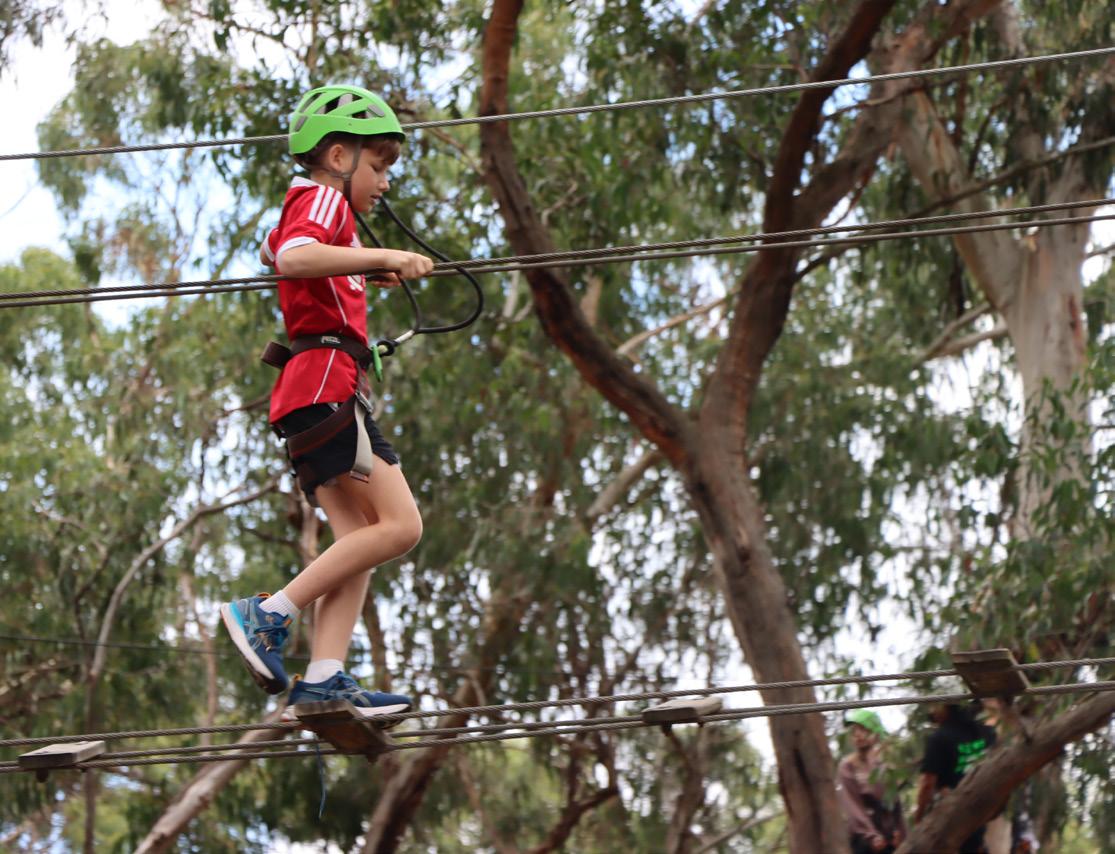
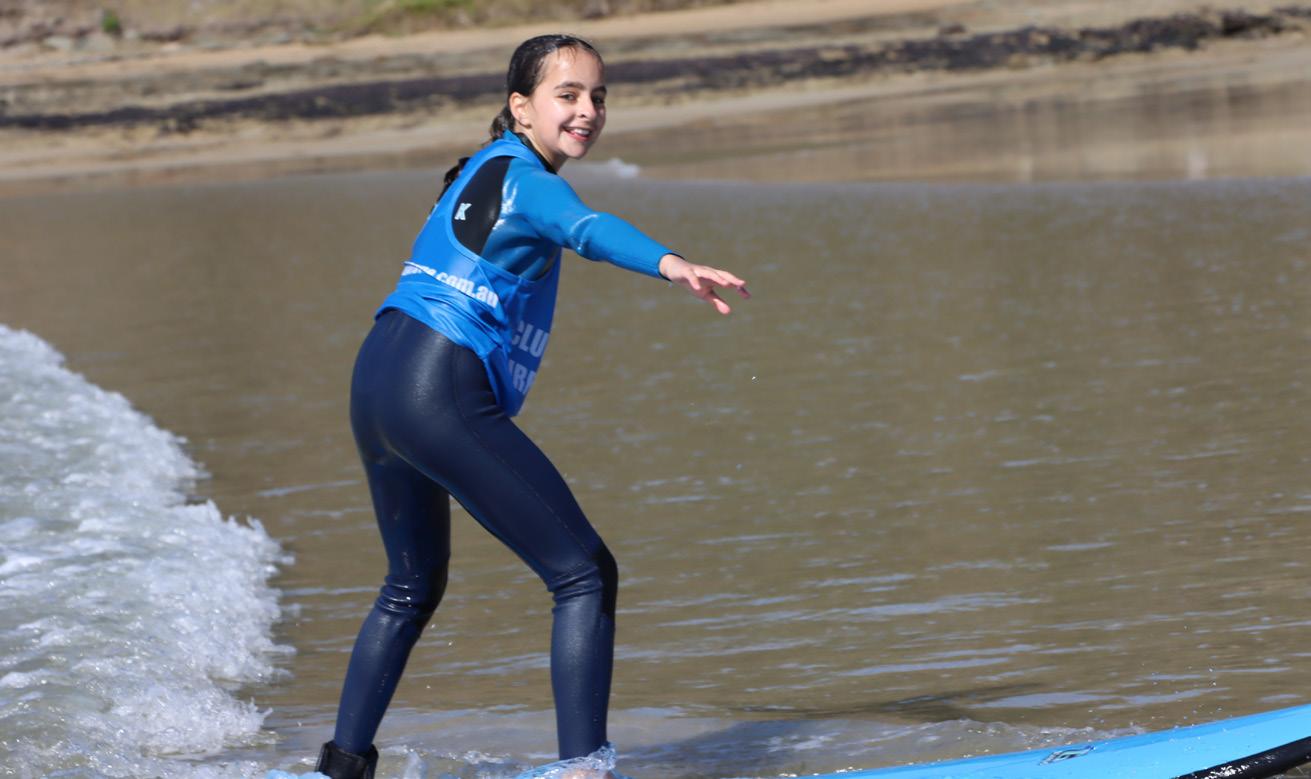
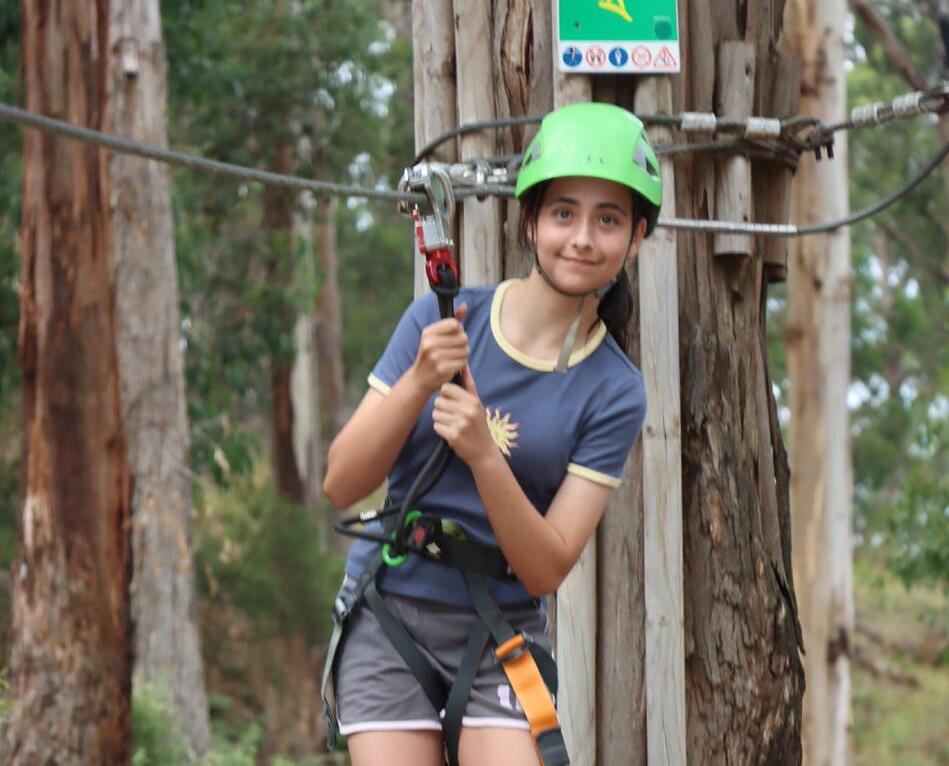
An adventure camp saw Year 7s step outside their comfort zone while still having lots of fun.
The full and varied outdoor education program included morning yoga, walks along the beach, surfing, bodyboarding, lifesaving, rope climbing and games.
The best part was seeing everyone step up, support one another and find out just how brave they really are.
Finding out just how “brave” they are Picture book helps with childhood anxiety
RAINBOW ROY & RAINBOW ROSIE
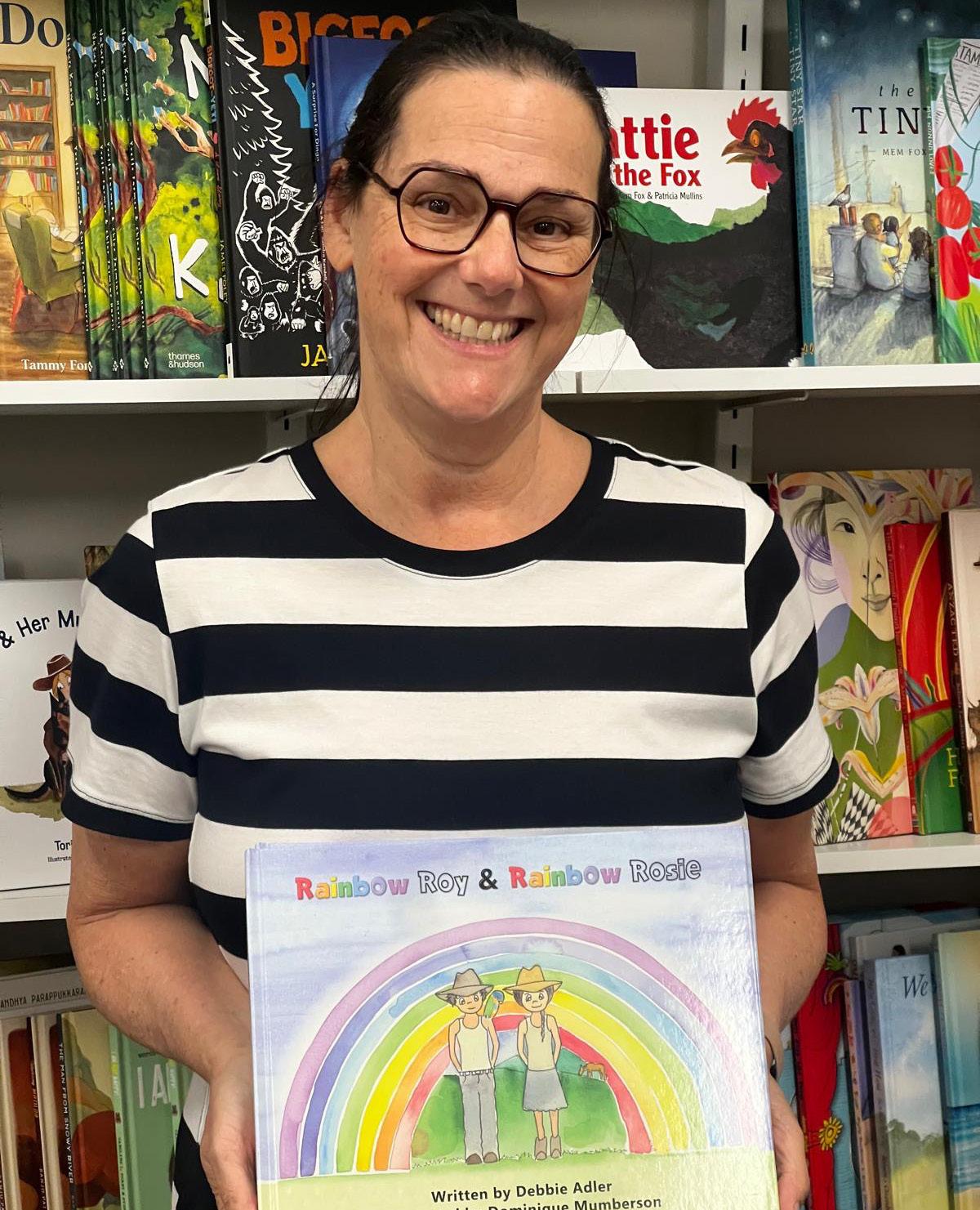
Join Jewish occupational therapist, mother and grandmother Debbie Adler on an adventure across the Australian countryside in her new children’s book “Rainbow Roy and Rainbow Rosie”. The story, set in the bush, is illustrated by Dominique Mumberson, a talented artist from Murrumbateman, in country NSW.
When Rainbow Rosie heads out for a morning ride on her horse Colours she comes across her friend Rainbow Roy and can tell that something is wrong. He is anxious and his thought cloud, ‘Cloudy’, is hovering over him, filled with dark thoughts.
Rainbow Roy tells Rainbow Rosie that he has found a lost lorikeet. They set off on a journey to help the lorikeet, discovering how to deal with anxiety along the way. Each page encourages them to calm themselves, using breathing techniques and visual mindfulness, while seeking support from each other.
As they calm their thoughts, the thought cloud lightens and fills with colour, as do their clothes. The techniques Rainbow Roy uses in the book are proven techniques that children and adults can use to support and reduce anxiety by lowering their heart rate and calming their mind in the moment.
Rainbow Roy and Rainbow Rosie was written for primary school students, however it has broader appeal. The aim of the picture book is to help children understand and manage anxiety through a relatable story and visual cues using the colours of the rainbow to gently guide them. As the narrative progresses, those reading it can see how effective
these calming techniques are for the key characters. This allows them to learn and practice the techniques for themselves.
The imagery throughout the book helps children to understand and visualise how anxiety feels to them, using language that makes their feelings more tangible.
Reading books about emotions they may be experiencing helps youngsters to regard their feelings as normal. Children and adults can begin to use the colours of the rainbow to express their emotions and feelings in their daily lives.
The book, which is particularly relevant given the societal upheaval we are living through, is endorsed by psychologist and teacher Hazel McKenzie. She called it “a beautifully crafted story that explores the full spectrum of emotions, while gently teaching children practical self-regulation skills. Rainbow Roy and Rainbow Rosie is rich in visual symbolism, inviting meaningful conversations about friendship, life challenges and the development of resilience.”
Of great appeal is the vibrant imagery drawn from the Australian countryside with each colour of the rainbow represented through Australian flora and fauna.
Those interested in purchasing the book, which retails for $29.95 plus $9.95 postage, can do so by emailing Debbie directly at hellodebbieadler@gmail.com or by going to her website: www.debbieadler.com.au.
Rainbow Roy and Rainbow Rosie will also be available soon from bookshops throughout Australia.
You can also reach out to Debbie via Instagram: authordebbieadler
Bailey
From left: Zara and Maddy
Chloe
Ely Ori
Author Debbie Adler with her newly released children’s book
COMMUNITY
AUSTRALIAN FRIENDS OF THE HEBREW UNIVERSITY
For many people, making a legacy commitment is a deeply meaningful decision. It is a way of ensuring that the values which have shaped one’s life will continue to benefit future generations. However, it is rare that one has the opportunity to actually see that legacy taking shape. The Hebrew University Legacy Mission offers exactly that: the chance to witness firsthand the extraordinary work that legacy support helps make possible.
Taking place in early November 2026, the Legacy Mission invites a small group of supporters to experience the Hebrew University of Jerusalem from the inside. This all-expenses-paid journey is designed for those who have chosen to include the university in their estate planning and who wish to see how their commitment contributes to the future of Israel and the Jewish people.
During the mission, participants gain special access to one of the world’s leading centres of research and innovation. They meet the academics and researchers whose work is tackling some of the most pressing challenges facing humanity: from medical breakthroughs and agricultural innovation to advances in technology, law and public policy.
Yet often it is the personal encounters that leave the deepest impression. Participants meet students whose
Seeing your legacy in action
lives are being transformed through education at the Hebrew University. They hear about the ambitions and aspirations of young people who will become the next generation of leaders, scientists, educators and entrepreneurs. These conversations bring to life the real impact of philanthropic support and demonstrate how a legacy gift can open doors for decades to come.
Visitors also have the exceptional opportunity to step inside laboratories and research centres that are usually closed to the public. Here they can see the cutting-edge work being undertaken by Hebrew University scholars, research that not only strengthens Israel but also contributes solutions to global challenges in health, sustainability and
technology. The mission itself is designed to be both enriching and enjoyable. Participants stay in high-quality accommodation, enjoy excellent cuisine and explore some of Jerusalem’s most significant cultural and historical sites. The program is carefully paced, ensuring time for learning, reflection and shared experiences.
This year’s mission will also include a cohort travelling from the British Friends of the Hebrew University, creating a unique opportunity for participants from Australia and the United Kingdom to share the journey.
The experience often leads to lasting friendships and a strong sense of connection within the global Hebrew University community.
For many who have taken part in previous Legacy Missions, the experience has been both inspiring and deeply moving. Seeing the university’s work up close provides a powerful reminder that legacy giving is not simply about the future. It is about making a difference that begins today.
If you are interested in learning more about the Legacy Mission in early November 2026, please contact Rob Schneider, CEO of the Australian Friends of the Hebrew University, on (02) 9389 2825 or ceo@austfhu.org.au.
To learn more about the Australian Friends of the Hebrew University, go to www.austfhu.org.au
Join us in early November on an all- expenses-paid Legacy Mission to Israel generously funded by an anonymous donor who wants to thank and honour suppor ters who choose to leave a bequest to the Hebrew University of Jerusalem
Experience Israel like never before:
• Special access to Hebrew University campuses and researchers
• Guided tours (including a tour to the South), cultural highlights, and unique events
• Return air fares, accommodation, meals, and all tours included (excl travel insurance)
Your legacy shapes the future of discovery, innovation, and contribution at Israel’s leading institution of higher education, The Hebrew University of Jerusalem – The University of the Jewish People.
This unforgettable journey celebrates you and the impac t you will make benefitting generations to come
To qualif y you must be over 60 and commit to a minimum legacy to The Hebrew University of Jerusalem.
THE COMMUNITY
DAVID SOLOMON AUSTRALIAN FRIENDS OF TEL AVIV UNIVERSITY AROUND
New Tel Aviv University research uncovers a surprising brain–immune link
For decades, the relationship between the brain and the body’s immune system has been discussed more as theory than measurable science. But what if specific patterns of brain activity could directly influence how the body responds to disease?
Researchers at Tel Aviv University, in collaboration with Tel Aviv Medical Center (Ichilov) and the Technion, have now provided compelling evidence that the brain is not merely observing the body’s health, it may actively help shape it.
The power of anticipation
At the centre of the discovery is the brain’s reward system, particularly a region known as the Ventral Tegmental Area (VTA), which plays a key role in motivation, expectation and dopamine release.
The researchers found that when individuals activated this system –especially through feelings of positive anticipation, such as excitement or expectation of a good outcome – their bodies mounted a stronger immune response.
Crucially, this is not about optimism in the abstract. It is a clearly defined
Thinking your way to better immunity
neurological state – one that can be measured, trained and linked to biological changes in the body.
Training the brain
To explore this connection, the research team conducted an experiment involving 85 healthy volunteers. Participants underwent functional magnetic resonance imaging (fMRI) neurofeedback training, a method that allows individuals to monitor and regulate their own brain activity in real time. Using mental strategies, such as recalling positive experiences or imagining rewarding scenarios, they
aftau.asn.au
The gift of a lifetime
learned to increase activity in the VTA.
Researchers then measured how this trained brain activity translated into changes in the body’s immune response.
A measurable biological effect
The results were striking. Participants who successfully increased activity in the brain’s reward system showed a significantly enhanced immune response. Importantly, the effect was highly specific. It was linked to activity in the VTA and to sustained states of positive anticipation, rather than to general emotional uplift or other brain regions.
promise today for Israel’s tomorrow
Discover how your values can live on.
For a confidential conversation, please call David Solomon on 0418 465 556 or davidsolomon@aftau.org.au
One of the research heads, Professor Asya Rolls said: “We show that mental states have a clear brain signature and that this signature can directly influence physiological systems, such as the immune system.”
When the mind meets the immune system – a new medical frontier
While the findings do not replace conventional treatments, they point to an important new direction in medicine, one that integrates neuroscience, psychology and immunology.
Scientists have long observed the placebo effect, where belief or expectation can produce real physiological changes in the body. This research goes a step further by identifying a specific brain mechanism behind that phenomenon, showing how measurable patterns of neural activity can influence immune function.
This is not abstract mind–body theory, but biology in action. It also points to the potential use of non-invasive tools to help patients deliberately activate these brain mechanisms to support immune function and enhance medical treatments.
The implications are both scientific and practical. The mind–body connection is no longer just observed. Increasingly, it is understood, measurable and potentially harnessed to improve human health.
Two of the four researchers. From left, Dr Tamar Koren and Professor Asya Rolls
CONSIDERED OPINION
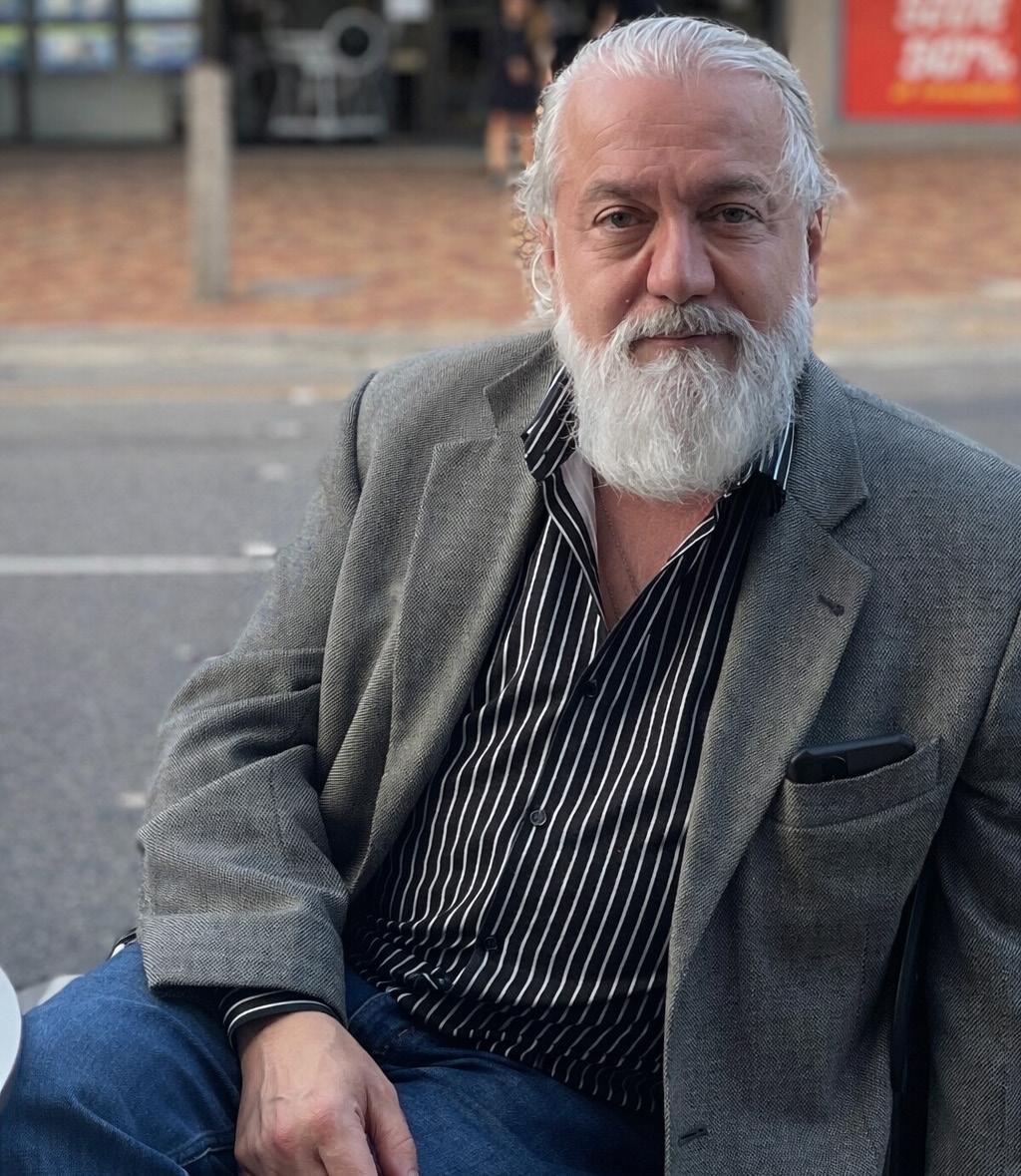
NOMI KALTMANN
You are a religious Jew, a wife, mother, lawyer and activist. What drives you? How do you fit everything into your life and stay sane?
Since I was young, I’ve always been drawn to learning and understanding how things work. At school, my friends used to call me “the investigator” because, if something interested me, I always asked a lot of questions. When I meet someone, I want to understand them properly and I’ll always spend time trying to understand who they are, what they think, a little bit about their background and key influences that shape their opinions. When I come across something interesting, I’ll look it up and spend time reading about its history and context. I’ve always been curious about people and stories, and I’ve become quite good at asking the right questions to always have interesting conversations.
My instinct for hearing, understanding and telling stories has shaped who I am. It is not surprising to anyone who knew me as a child that I have become a writer who thinks deeply and tries to make sense of the world. For me, writing is the thing that keeps me grounded. When I have time to write, I feel happiest and most like me. When I don’t have as much time to write, I notice that my happiness dips a little bit.
As for fitting everything in, I think there is some truth to the cliché that if you want something done well, you give it to a busy mother. When your time is limited, you become efficient. There is no room for procrastination or indulgence. If you have half an hour, you use your half an hour, otherwise you won’t be getting any more time that day. You learn to prioritise, to work quickly, and to accept that not everything will be perfect. That discipline, more than anything else, is what makes my writing possible.
What feels comfortable and right about your Jewishness?
Being born Jewish is one of the great blessings of my life. For me, there is something very comforting about belonging to an ancient tradition that has resisted trends and refused to bend simply for the sake of fitting in.
I sometimes joke that Jews were the original uncool kids. In a world of many gods, we insisted on one. In a world without limitations on what we can eat, how we should pray, what our week should look like, we, as the Jewish people, embraced rules. I love being part of a tradition that insists on structure and meaning, and that seeks to infuse the ordinary with holiness.
To me, Judaism is a framework for a really meaningful way of living. It reminds me, constantly, of my obligations to others. Whether it is giving a portion of my income to charity, visiting the sick, or helping those that are less fortunate. Jewish values push me to be better and to think beyond myself. There is also a steadiness to Judaism
Jewish values
that I find attractive. Judaism does not chase trends or reinvent itself to remain popular. It holds onto its principles, even when that may be unpopular or difficult, demonstrating time and again that consistency of faith is a gift.
How important is the Diaspora in supporting a Jewish state?
Being a Diaspora Jew in Australia is a slightly unusual experience. Many Australians assume that being Jewish means being Israeli and are often surprised to learn that my family has been in Australia since the 1860s, arriving during the Ballarat Gold Rush. In that sense, my roots here run very deep.
Australia does not play a major role in shaping global policy on Israel, but I do think the relationship between Israel and the Diaspora operates on a more human level. Over the past few years, Israelis have appreciated the support and solidarity from Jewish communities abroad. At the same time, that relationship goes both ways. After the Bondi attack, Israeli trauma teams came to Sydney to support the local community and reinforced the sense that, despite geographic distance, there is a shared responsibility and a shared fate between all Jews. The relationship between the Diaspora and Israel is in many ways, symbiotic.
Tell me about your reaction to the increased antisemitism in Australia and around the world since October 7.
I was genuinely shocked by the rise in antisemitism after October 7. Perhaps that sounds naive, but it reflects my lived experience. I was born in Australia, as were my parents, and none of us had encountered antisemitism in any meaningful way before October 7.
What has occurred in Australia over the past two and a half years has been deeply troubling. The scale of antisemitism has been confronting, but so too has the response to it. I have been disappointed by what I see as a lack of urgency and clarity from Australia’s government. There has been a hesitancy to act decisively, and I feel strongly that this wishy-washy response has led to some of the devastating consequences that we have seen here,
a sense in Israel that the justification is self-evident and that engaging in explanation is both exhausting and futile. I understand that instinct, but I think it is misguided. Israel’s public communication, particularly in English, is often ineffective.
There is no single, clear voice that consistently articulates its position, and the bureaucratic response to misinformation is often slow. I wish Israel could use its brilliant innovation to properly fix this.
At the same time, there is much that Israel gets right. Israeli society produces young people who are remarkably resilient, capable and community minded. There is a strong sense of responsibility and contribution that is deeply embedded in all areas of Israeli life, and I believe that is something many Western societies could learn from.
How do you see the future of Australian Jewry?
including arson attacks on synagogues and the massacre at Bondi.
I felt particularly frustrated watching the delayed implementation of the antisemitism envoy’s report. Prime Minister Anthony Albanese has shown poor leadership in supporting our community and it seems that he has always been reactive to antisemitism instead of proactive. When he got up after Bondi and said that he would implement the antisemitism envoy’s report, after shelving it for six months, I was really angry. It took dead Jews on the beach for him to implement the recommendations that he commissioned.
When leadership on antisemitism is slow or ambiguous, it creates space for harmful attitudes to take hold and for antisemitism to escalate. At the same time, I still consider Australia home. I am not ready to give up on it, and I hold onto the belief that things can improve, even if that belief feels more fragile than it once did.
Any thoughts about how to combat antisemitism and anti-Zionism?
It is a difficult question, in part because antisemitism is not always rational. You cannot always reason someone out of a position they did not reason themselves into. In my experience, most Australians I know are not antisemitic. They do not harbour hatred towards Jews. What is less clear is whether the rise in antisemitism we are seeing now is something new, or something that has always existed beneath the surface and has only recently become visible. That’s a hard question to answer.
As for anti-Zionism, some of the most thoughtful people in the Jewish world are grappling with how to respond to it, and there is still no clear or universally accepted strategy. That, in itself, says something about the complexity of the issue.
In your opinion, what is Israel doing right and what could it be doing better?
The Israeli public intellectual Haviv Rettig Gur has spoken about a prevailing attitude within Israel that the country does not feel the need to explain itself and its actions to the world. There is
I would like to say that the future for Jews in this country is straightforward and secure, and that Australia will continue to be a place where Jews can thrive as they have for generations. Until recently, that felt like a reasonable assumption. Now, after Bondi, I am less certain. The events of the past few years have introduced a level of unease that did not previously exist.
Part of me remains optimistic, but I would be dishonest if I said that my optimism was unqualified. There is a tension now between hope and realism, and I suspect many people in our community are feeling it.
And what about Israel? Can you see it continuing to grow and prosper as a proud Jewish state?
Israel’s achievements since its establishment are extraordinary. Each time I visit, I am struck by the pace of development, the innovation and the sense of possibility.
At the same time, I have concerns about its current direction. I think there is a need for renewal and for space to imagine different leadership possibilities. Figures like Benjamin Netanyahu, alongside politicians such as Bezalel Smotrich and Itamar Ben-Gvir, represent a trajectory that I find worrying.
There are also structural issues embedded into Israeli society that remain complicated.
The ongoing exemption of Haredi men from military service, even as reservists face significant strain, raises serious questions about fairness and shared responsibility. Similarly, new laws and policies that appear to treat different groups unequally under Israeli law risk undermining the democratic foundations of the country.
In my mind, the story of the Jewish people and the story of Israel has always been complex.
That complexity is part of what makes it so compelling, but it also means that course correction is necessary from time to time.
I still believe in Israel’s future. I just think it requires careful stewardship to ensure that it remains aligned with the values that have sustained it for so long.
The Jewish Report spoke with regular contributor Nomi Kaltmann, a prolific writer and deep thinker, to get her take on Jewish values.
Nomi Kaltmann
ADVENTURES CONSIDERED OPINION
RAMONA FREEDMAN
ALIYAH
Recently, a friend asked how I was faring with the ongoing war.
Fatigue is a funny thing. You can only prop your eyelids open with proverbial toothpicks for so long. I replied candidly: “Honestly, I am exhausted. Beyond exhausted. I feel like I have a very needy newborn consuming my attention several times throughout the night. Every night!”
Except, it isn’t a beloved baby who has me in sight. It is an evil enemy that wakes me up nightly at approximately 3am, propelling a 500-kilogram ballistic missile my way. A missile that sometimes splits into dozens of others in the guise of an illegal cluster warhead. It is an evil enemy that desperately wants to eradicate me (and every Jewish person on the planet).
Many here are encouraging optimism and resilience. They are urging citizens to transform sour, unexpected hardships into positive opportunities and/or meaningful outcomes. (Rocket casing lands near a building. It is deemed safe. It is then decorated by local residents.)
And the rest? It is not the Israeli way to wax lyrical about the ‘what ifs?’ They get busy with the reality on the ground. The reality of the here and now. This is made up of a multitude of small wins.
At this time of year in Israel, we have a few ‘khamsins’ that blow through. This word begins at the back of your throat, in the most guttural Middle Eastern way. These are hot, dry and dusty winds. They blow with a force and bring a fine mist of reddish sand that leaves its mark on absolutely everything.
So, we wake up and see our car covered in its entirety. We know a professional service is needed to reveal the shiny body of our car again. I take on the challenge. I shall drive my car with its left-side steering wheel. I shall emerge triumphant. I found the local car wash, I prepaid. Small win number one. Unfortunately, the guy in charge spoke no English. I told him it is my first time in a ‘drive-through’ in Israel. Then he started the waterworks while simultaneously screaming at me. And all with a chewed cigarette hanging out of his mouth.
I later found out he was shouting: “Put your car in neutral. Don’t put your foot on the brake. Why is your window down a fraction?” (Hello. Perhaps to hear you?)
Suffice to say it was a comedy of errors and customers behind me were getting frustrated. So was the self-anointed car wash king, but I was there with a mission. That day, did I know the Hebrew words for brake, neutral, reverse and the rest? Why, no, I did not. And yet, on the fifth attempt it did work. The car was restored and I felt like a champion. A small win on a national scale. A major win in Ramona Land.
I love my neighbours here in Ra’anana. Recently, one held an engagement party on a Saturday night. This family also goes to our shul, Kehillat Lev Ra’anana. They had bought a large number of
Small wins
helium balloons for the occasion. Israelis love any opportunity to buy a bunch of balloons for a simcha. The bigger the better.
I stood there listening to the young groom give a talk in Hebrew. I understood about a quarter of his heartfelt content. While my mind inevitably wandered, it wasn’t to the usual thoughts one might have: What is in my diary for tomorrow? Do I have enough food in the fridge?
Oh no. Instead, I was having a conversation with G-d, praying that no phones would wail with extreme alerts for the next few minutes, delivering the urgent news that we all needed to immediately get to a bomb shelter
Dear Lord, let this sweet young man finish his speech to his bride and guests. Let the two religious mothers jointly smash a special plate together. By the way, this religious ritual represents the seriousness of the commitment and that the engagement bond is as irreversible as a shattered plate.
Let the guests schmooze and enjoy without the drama of the bombs and sirens. Please. Okay, pretty please. Wish granted. They didn’t need to roll out their Plan B of rushing all en masse to a large shelter. Small win on my street.
I visited a new fruit shop recently. As I parked, I noticed that next door was a giant indoor trampoline park, full of jumping kids. That didn’t feel war-like. Cue sirens. Cue parents escorting their charges past the fruit shop to the nearest bomb shelter.
Once that danger was over, it was back to the fruit shop. Now, I may not know the names of every fruit and vegetable in Hebrew off by heart, but I am doing better each day. I love the giant citrus fruit called a pomelo. Pomelos are still in season. Just. Small win.
As I approached the counter to pay, I noticed that the employee was busy eating as she was calculating prices. Not unusual here. After all, why prioritise
a paying customer? What left my mouth open (in an unladylike fashion) was when I registered what she was eating. It was red and capsicum-like. This was no salad staple. She was munching on a whole red, hot chilli. Seeds and all. I kid you not.
I thought my mind was playing tricks on me. I couldn’t help but mention it.
Israelis don’t have patience for long conversations, so I kept it simple by uttering one word to her: charif? This again employs the guttural back-of-thethroat sound. It translates as a blend of ‘is that sharp/hot/spicy?’
With no eye contact and mid-chew she replied, Not so much. Obviously, she has spent a lifetime refining what would be a great Diaspora party trick. I made it home before another siren went off. Fridge full. Small win.
Recently, we all sat down for Seder. That day was berserk. We had to go into our bomb shelters well over a dozen times. Still, despite all beginning each Seder with understandable trepidation, we had a few hours off from overt war drama. At 1:30am, as we were singing the last stanza of the last song in the Haggadah, yes, sirens again.
The night ended on bean bags in our friends’ bomb shelter. Yet the fact that we enjoyed a whole Seder uninterrupted felt like a succession of small wins all around Ra’anana and beyond.
This is a nation of giving. Each is a small win. Along the way, I have volunteered for a group of barbequing gurus called Grills of Hope. Its mission is to feed, honour and lift the spirits of our brave soldiers all around the State of Israel.
It just celebrated barbeque number 613. This number is significant in the Jewish world because it represents the number of mitzvot, or commandments, in the Torah. Grills of Hope has now officially fed more than 100,000 soldiers. Yet, you didn’t see this news on the major networks. There are so many
organisations like this – all heroic, contributing their modest, ‘small’ wins. Yet you know and I know that each is the opposite: big, brave and bountiful.
I went to visit a friend last Shabbat afternoon. Her house does not have its own bomb shelter, but shares one with her adjoining neighbour. Cup of tea in hand, I was settled on her couch when the alerts blared again. Thirty seconds later about a dozen of us ended up in their bomb shelter.
We were there for only ten minutes that day. I couldn’t help but marvel at one conversation. From what I gathered, the father next door worked in a lab as some sort of scientist. My friend had a young woman staying who had just made Aliyah. She was studying science at university and was eager to get some work experience in a lab. Long story short: he kindly offered to liaise with colleagues on her behalf and they were going to continue the conversation after Shabbat. Small win? Maybe to some, yet it was possibly life changing for the student. Not so small after all.
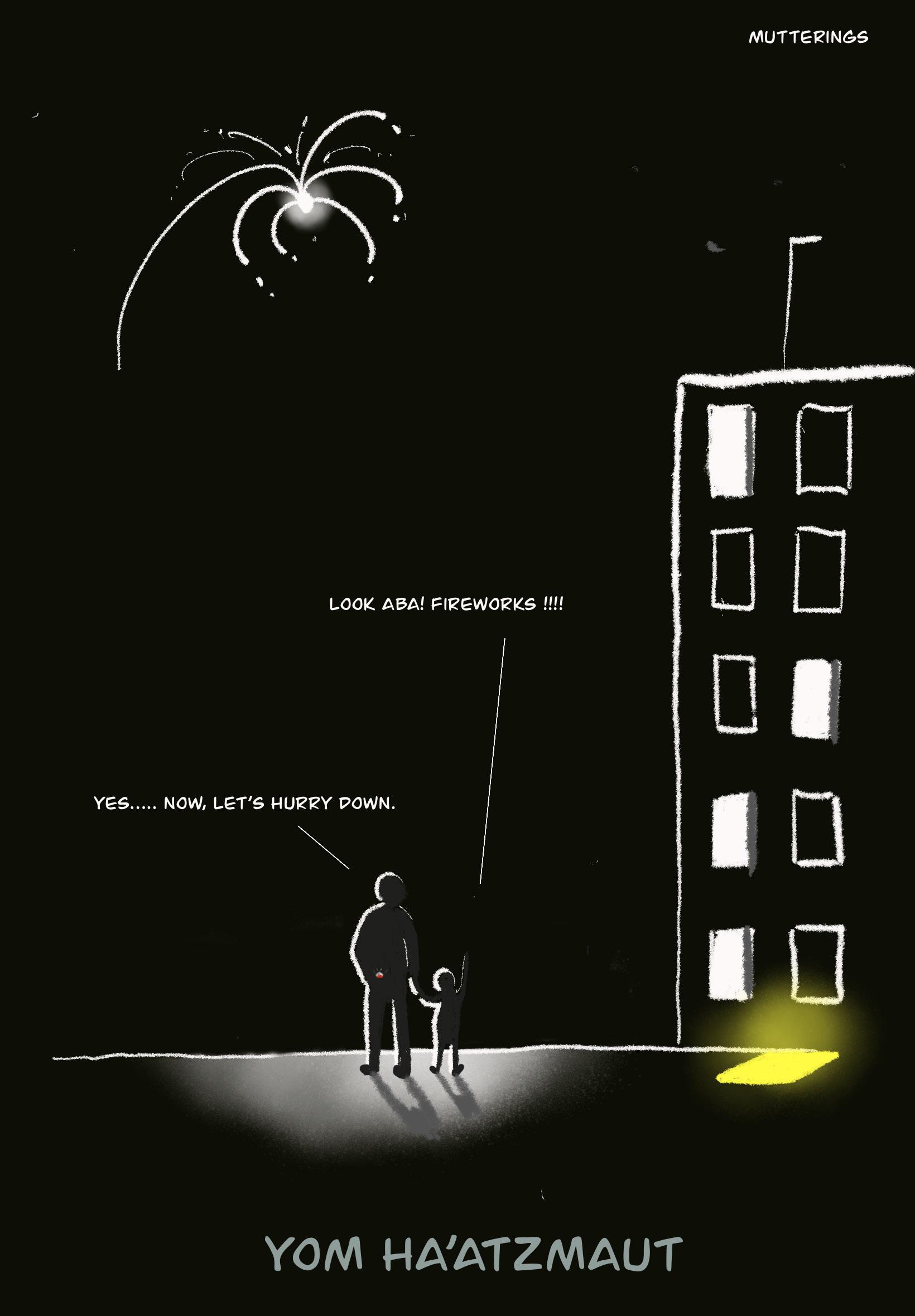
It will soon be Yom Ha’atzmaut, Israel Independence Day. Here in Ra’anana, the local council offered free flags one day and asked all to drape them around our neighbourhood. Israelis love a good blue and white display.
Only problem was that there were a few sirens sounding at the exact time of pick-up. Granted, I didn’t collect that day. No matter. Every Israeli seems to have flags at home, somehow available just at arm’s length when needed. Even me. The next day there was blue and white tinsel draped around many Ra’anana roundabouts. Resilient lot these Israelis. Small wins indeed.
For now, it is over and out from Ramona in Ra’anana.
To contact Ramona, please email: ramona@keshercommunications.com. au.
RABBI GABI KALTMANN RABBINIC THOUGHT
78 years!
This week, I found myself unable to stop reflecting on and celebrating the enormous milestone in Jewish history – 78 years since the establishment of a Jewish homeland.
It’s remarkable to think that there are still people alive today who remember a world in which the Jewish people did not yet have a country of their own. Israel feels so deeply embedded in our collective psyche that it almost seems as though it has always been there. But for those who know our history, that feeling is, in truth, a profound privilege.
I love that my children are growing up with the simple, unquestioned knowledge that Israel exists – that there is a thriving, vibrant country for the Jewish people.
For more than 2,000 years, Jews could only dream of returning to Zion. The idea of a sovereign Jewish state, alongside a revived Hebrew language tailored to the needs of a people shaped by millennia of history, would have seemed almost unimaginable.
And yet today, anyone can board a plane and visit the holiest sites of our tradition.
Yes, it may still be a long journey, even an expensive one, but the possibility
Israel, glorious Israel
itself is extraordinary. What a moment in history to be born into.
In the aftermath of October 7, and amid ongoing conflict in the region, we are reminded that the story of the Jewish people – and of Israel – is still being written. The pain is real. The fear is real. But so too is the resilience.
And yet, even as we celebrate, we cannot ignore the hard reality: Israel remains a work in progress. There are deep internal divisions among our people. The country stands at complex crossroads, grappling with difficult political and societal questions. And beyond its borders, it continues to face immense challenges.
As parents, rabbis and educators, the responsibility rests on us to ensure that this miracle is never taken for granted.
I love Israel. My heart aches to return. It has been too long.
I pray, first and foremost, for my brothers and sisters living there: that they be safe, healthy and protected. I pray for the leaders of the country – for wisdom, compassion and clarity – that they may act in the best interests of the people and the future of the nation.
And above all, I pray for peace.
Israel will always hold a piece of my heart and I long for the day when all who live there can experience true safety, security and serenity.
The seal of truth
Question:
It is all very nice that people are getting closer to Judaism after the Bondi attack. The same thing happened after October 7 and the same thing happens after every tragedy. But how real is it? If a Jew is suddenly very Jewish when things are bad, what does that say about their Judaism?
Answer:
Your question was answered by a beached seal.
Last week, my brother was going for a morning run in an urban park, and he saw the strangest sight. There, lying by the side of a river, was a seal. Not your usual visitor in the middle of the city.
This encounter reminded me of a Talmudic discussion about seals. The rabbis debated whether the seal was a water creature or a land creature?
The Hebrew word for seal is Kelev Yam – sea dog. They spend most of their lives in the water. So, does that define them as marine life? Do we go by where they spend the majority of their time?
No. That doesn’t define a seal. We may call it a sea dog, but it is not a sea creature. Why? Because if you want to define a creature, you have to ask one question: where does it go when it’s in danger? Where is its refuge?
For a seal, the answer is: it moves to dry land.
Under threat, your instincts lead you to where you really belong. Your refuge is your true home. No matter how much time you spend in the sea, if you flee to dry land when your life is endangered, that shows who you really are. You are a land creature.
This is not just a biological fun fact. It’s a spiritual truth. Our soul has a homing signal that brings us back to where we truly belong. That’s why when Jews are in danger, we run to Judaism. Because that’s who we are.
A Jew can spend his whole life distant from his Jewish roots. He can adopt other identities and blend into the surrounding culture. But that is just where he happens to be swimming. A little shake up and the inner self is revealed. He comes back to where he belongs. A Jew’s home is in Judaism.
We have seen this throughout our history. Wherever we have been in the world, Jews have tried to assimilate. Just as they think they are welcome in a host society, antisemitism rises and poses a mortal threat to Jewish life. This leads to a massive return to Judaism. We pray. We fast. We refuse to bow to our enemies. And that leads to victory. The threat doesn't create our Judaism. It reveals it. What my brother saw in the park was a creature finding safety in its true habitat. And what we are seeing today is the same. Torah is our natural home. Jewish life is our life. And if a formerly estranged Jew feels the pull to return to Judaism, he should be welcomed back home. He needs no one’s seal of approval.
Rabbi Gabi Kaltmann (right) with his friend Abe White, alongside the Big Mezuzah, at the entrance to passport control in Terminal 3 at Tel Aviv’s Ben Gurion Airport (photo taken on 1st January, 2024)
RABBI ARON MOSS
Photo courtesy Anthony Moss
RABBINIC THOUGHT
RABBI DANIEL RABIN
There’s a particular kind of pride that comes from standing next to a great man.
Not just in title, but in presence. Recently, I had the privilege of meeting with Rabbi Sir Ephraim Mirvis KBE, Chief Rabbi of the United Hebrew Congregations of the Commonwealth. What struck me most was not only his warmth, but his clarity. A deep sense of what it means to be a Jew today. Not only in Israel, but wherever we find ourselves.
And that feels especially relevant as Israel marks its 78th birthday.
Because this year, like the past few, is not simple. Israel celebrates independence while facing enormous challenges. War. Security threats. Global scrutiny. A battle not only on the ground, but for moral legitimacy in the court of public opinion.
So where does that leave us in the diaspora?
It is easy to define our role narrowly. To support. To donate. To advocate. To attend rallies. All of which are important and all of which matter deeply.
But perhaps our role is broader. And more personal.
We are not merely supporters of Israel. We are extensions of it.
Every Jewish community around the world is, in a sense, an embassy of the Jewish people. And if Israel is the heart, then diaspora communities are the hands and voice. Visible. Active. Representing something far greater than ourselves.
That means our shules are not just places of prayer.
Diaspora Jewry has a vital role to play
They are spaces of identity. Of pride. Of continuity. When someone walks into a shule in Melbourne, they should feel something strong. A sense that Judaism is alive, meaningful and worth holding onto. That being Jewish is not something we apologise for, but something we carry with confidence and dignity.
Because in a world where Israel is so often misunderstood, the most powerful response is not always argument. It is example.
Living proudly as Jews. Even when it is uncomfortable.
Strengthening our own Jewish knowledge and commitment. Even when life is busy.
Creating communities that are warm, vibrant and connected. Especially when people feel uncertain or isolated.
This is not separate from Israel’s story. It is part of it.
The strength of Israel is not measured only in military achievements or political outcomes. It is also measured in the strength of Jewish life around the world. In classrooms. Around Shabbat tables. In the next generation choosing to stay connected.
Am Yisrael Chai is not just a slogan. It is a responsibility.
So, as we celebrate 78 years of the State of Israel, we do so with pride. But, also, with purpose.
Not only asking how we can support Israel. But how we can represent it.
How we can ensure that from Melbourne to Jerusalem, Jewish life is strong, proud, and full of meaning. Because the story of Israel is still being written. And every one of us holds a pen.
Inspirational leadership
(building) and how buildings and edifices are only meaningful because of the people who enter them.
Recently, I had the privilege of spending three consecutive days in the company of Rabbi Sir Ephraim Mirvis KBE, Chief Rabbi of the United Hebrew Congregations of the Commonwealth. In times such as these, when Jewish communities around the world are navigating uncertainty and challenge, the opportunity to learn from his leadership, warmth and clarity of vision was deeply meaningful.
On the first of those days, I joined a group of rabbinic colleagues for an intimate dinner with the Chief Rabbi. He spoke with remarkable candour about the importance of hope in moments of darkness. His message was neither naïve nor detached from reality. Rather, it was grounded in a profound understanding of Jewish history and continuity. He reminded us that hope is not simply an emotion. It is a responsibility. It is a choice that leaders must model for their communities, even when circumstances feel overwhelming.
The following night, St Kilda Shule, together with Emmy Monash, co-hosted the Chief Rabbi at our monthly preShabbat choral and musical service. Chazzan Brett Kaye, with the choir, had the packed shule mesmerised. The music lifted spirits and created a powerful sense of unity. Rabbi Mirvis delivered an inspiring address, emphasising that Jewish strength lies in togetherness, dignity and moral courage.
Then, on the subsequent day, I joined the Chief Rabbi for a gathering at the East Melbourne Shule, celebrating the launch of its major building project. There, he spoke about the centrality of the “minyan” (people) inside the “binyan”
What struck me most in my numerous conversations with the Chief Rabbi was his tireless work in the United Kingdom in confronting the rising tide of antisemitism. He carries the immense responsibility of representing Jewish concerns at the highest levels of public life, while simultaneously providing pastoral leadership on the ground. Recent incidents, including the shocking burning of Jewish community ambulances, have deeply shaken British Jewry. Yet, Rabbi Mirvis has responded fiercely to ensure that such acts of hatred are met with firm condemnation.
His close relationship with His Majesty the King and the Royal Family has been especially significant in this regard. Through dignified engagement and respectful advocacy, he has helped garner meaningful public solidarity for Israel and for Jewish communities facing hostility.
This has sent an important message that the Jewish people are not alone and that their safety and wellbeing matter.
Personally, spending time with Rabbi Mirvis reminded me that leadership is not just about delivering public speeches or occupying institutional roles. It is about presence.
It is about listening. It is about strengthening others, so that they too can become leaders. As our community continues to face challenges locally and globally, I was left uplifted and inspired.
The Chief Rabbi’s example reinforced my belief that even in dark moments, Jewish life can flourish when guided by faith, unity and an unwavering commitment to our Jewish values.
From left: Rabbi Sir Ephraim Mirvis KBE with Rabbi Daniel Rabin
RABBI YAAKOV GLASMAN AM
From left: Rabbi Yaakov Glasman AM with Rabbi Sir Ephraim Mirvis KBE
THOUGHT
RABBI DR BENJI LEVY RABBINIC
For the modern observant Jew, the "anatomy" of practice is well-known: keep the laws, study the texts and pay community dues. But where is the passion? After years in education wondering how to ignite a fire in my students' hearts, I found the spark through Rabbi Moshe Weinberger, a teacher who moves beyond the text and into its living soul.
The black and white fire Torah is more than ink on parchment; it is a mystical interplay between text and subtext. The Jerusalem Talmud describes the letters as “black fire”, defined and clear, and the white space around them as “white fire”, the infinite light of hidden meanings.
For Rabbi Weinberger, this realisation came from a transformative moment of silence. As a 14-year-old “American kid” more interested in the Yankees than the secrets of the universe, he attended a tish (chassidic gathering). Though the Rebbe didn't speak, his presence was overwhelming.
“I realised there was something much bigger going on than just the written words,” he recalls. “It ignited a fire in me to find that ‘white fire’ that surrounds the letters.”
The white fire between the letters
Peering behind the curtain
“Everything in the world has a body and a soul,” Rabbi Weinberger explains. While the “body” of tradition focuses on the Ma (what), the laws and history, the soul focuses on the Mi (who): the One behind the curtain. He notes that this trajectory is built into our calendar. We begin Seder with Ma Nishtana (“What makes this night different?”), but we end with Echad Mi Yodea (“Who knows One?”). We move from technical
CANDLE LIGHTING TIMES
Friday, Apr 10, 2026 5:43 pm
Shabbat ends, Apr 11, 2026 6:38 pm
Friday, Apr 17, 2026 5:33 pm
Shabbat ends, Apr 18, 2026 6:29 pm
Friday, Apr 24, 2026 5:24 pm
Shabbat ends, Apr 25, 2026 6:20 pm
Friday, May 1, 2026 5:15 pm
Shabbat ends, May 2, 2026 6:13 pm
Friday, May 8, 2026 5:08 pm
Shabbat ends, May 9, 2026 6:06 pm
Melbourne Jewish Report Disclaimer:
Except where expressly stated otherwise, content in The Melbourne Jewish Report is provided as general informations only. The articles in this paper have been contributed by a third party. The opinions, facts and any media content here are presented solely by the author, and The Jewish Report assumes no responsibility for them. It is not intended as advice and must not be relied upon as such. You should make your own inquiries and take independent advice tailored to your specific circumstances prior to making any decisions. We do not make any representation or warranty that any material in the papers will be reliable, accurate or complete, nor do we accept any responsibility arising in any way from errors or omissions. We will not be liable for loss resulting from any action or decision by you in reliance on the material in the papers. By reading the papers, you acknowledge that we are not responsible for, and accept no liability in relation to, any reader’s use of, access to or conduct in connection with the papers in any circumstance. Photographs submitted by individuals or organisations are assumed to be their property and are therefore not otherwise credited. All articles in this paper have received the expressed consent of the author to publish in this paper.
The Jewish Report; ISSN 2204-4639
Publisher: The Jewish Report Pty Ltd (ACN 167302981)
Distributor: TJR Distribution Pty Ltd ACN 165158029
Comments or suggestions to: editor@thejewishreport.com.au
Article submissions to: www.thejewishreport.com.au/article-submission-guidelines
Advertising: editor@thejewishreport.com.au
Website: www.thejewishreport.com.au
Printer: Spotpress Pty Ltd
from the infinite skies and puts it into his father’s arms. It is not about making God physical, but about finding a human vessel for nearness.
Practical spirituality
This "inner dimension" isn't reserved for the study hall; it's found in the mundane. Rabbi Weinberger points to the story of Rabbi Levi Yitzchak of Berditchev, who saw a man oiling his wagon wheels while wearing his tallis and tefillin. While others saw a lack of respect, the rabbi saw a soul who refused to separate himself from God, even during manual labor.
“Calling your grandmother when she’s lonely is a deeply spiritual act,” Rabbi Weinberger says. “Looking at your children and seeing their inner soul even when they are acting out – that is the work of the inner Torah.”
The ultimate song
details to a curiosity about the Author of redemption.
Visualisation as a tool
To bridge the gap between the infinite and the personal, Rabbi Weinberger uses visualisation in prayer. Theologically, he thinks of Ayin (nothingness), a vast, infinite expanse. "But then I bring that vastness into my father’s face," he explains. He brings the kindness and love he has experienced in this world down
Spelling bee answers
We cannot reach the "Song of Songs", the love of God, until we step outside our own narrow world. A small person sings only of themselves, but as we grow, our song expands to include family, community and all of creation. If we remain stuck in "scrolling and selfies", we lose the ability to compose the music of the soul.
To learn more, visit RabbiBenji.com or follow @RabbiBenji on social media.
Jewish answer: RABBOTEI. Here is a list of some common words (“yes”, we know there are more words in the dictionary that can work, but these words are common to today’s vernacular): ABATE, ABATOR, ABBOT, ABORT, ARBITRATE, ARBOR, AIRBOAT, BAOBAB, BARBER, BARRIER, BARTER, BATTER, BATTIER, BEARER, BEATER, BERET, BETTER, BETTOR, BIDDER, BITTER, BOOBOO, BOOTIE, BORER, BRIAR, BRATTIER, ARBITRATOR, ORBIT, ORBITER, RABBI, RABBIT, REBATE, REBBE, REBOOT, RIBBIT, ROBBER, ROBOT, TABOO, TIBIA, TITBIT and TRIBE.
Questions/comments/compliments: email Yoni at koshercrosswords@gmail.com
Crossword
answers
Rabbi Dr Benji Levy (pictured right) in conversation with Rabbi Moshe Weinberger in Jerusalem for a recent episode of the 40 Mystics podcast
THE DRAMA (MA) ALEX FIRST MOVIE REVIEW
What is the worst thing you have ever done?
The answer to that pointed question, on the cusp of a wedding, changes everything.
British museum director Charlie Thompson (Robert Pattinson) is with his fiancé, bookstore clerk Emma Harwood (Zendaya).
They are enjoying the company of his best mate Mike (Mamoudou Athie) and Mike’s wife, Rachel (Alana Haim), when Rachel prevails upon Mike to reveal his story.
He reluctantly agrees to do so only if the other three also come clean about the worst thing they have done.
It is Emma’s truth that shocks everyone.
She was 15 at the time and, so as not to spoil the surprise, all I will say is that it involved her father’s gun.
The impact is immediate and Charlie begins to spiral.
Try as Emma does to put her revelation behind them, Charlie and Rachel simply can’t let go and it adversely affects wedding preparations.
No longer are Charlie and Emma the happy, playful couple they were before the incident.
The weight on their shoulders is obvious. Awkwardness prevails.
CORNER
This recipe comes from a trained chef, food stylist, recipe developer and writer based in Cape Town, South Africa. Here name is Samantha Linsell. You can find more about her here: https:// drizzleanddip.com/about/
We are friends, dating back to hotel school in Johannesburg and I am inspired by her huge recipe collection.
Ingredients:
1 small red onion, finely chopped
2 tablespoons olive oil
2 large red or yellow capsicum, diced into 0.5cm cubes
2 cups mushrooms, finely sliced
4 cloves garlic, crushed
2 – 4 tablespoons of Harissa paste, depending upon how hot you would like the dish
1 tablespoon tomato paste
1½ teaspoons ground cumin
½ teaspoon dried chilli flakes (optional)
5 large ripe tomatoes 800g, or 2 x 400g tins of crushed tomatoes
3 cups baby spinach leaves salt and pepper
4 – 6 free range eggs
1 small handful coriander, roughly chopped
Method:
Heat the olive oil in a frying pan and cook the onion until it has softened. Allow 4 – 5 minutes.
Moral dilemma
There is even doubt about the nuptials proceeding.
Suffice to say, the admission spawns bad and inappropriate behaviour.
What was meant to be the best day of their lives becomes nothing short of hellish.
I felt like a tightly wound spring watching The Drama, which is true to its name.Tension begats tension and then more tension.
That is a nod to the cleverness in the scripting and execution by writer and director Kristoffer Borgli (Dream Scenario).
I found myself heavily invested.
Much of that is also due to the excellent performances of Robert Pattinson and Zendaya.
It is not only what they say in character, but it is in the looks on their faces and the way in which they carry themselves,
leading up to and after the disclosure. Their “heaviness” is on show for all to see.
Alana Haim plays the maid of honour, Rachel, as intense and unforgiving.
In contrast, as Mike, Mamoudou Athie is singularly unsuccessful in trying to rein in Rachel. He, too, wears his unease like a blanket.
The Drama’s production values are strong. I speak of the sets and settings, both domestic and public, and the outstanding cinematography by Arseni Khachaturan.
The latter well captures the distress and chaos that form the lion’s share of proceedings.
So, it is a movie I commend and highly recommend.
I leave you with this, which you will only be able to address if you see the film.
Given what goes down, is the ending appropriate? I can envisage a very different one.
Truth be told, the answer lies in whether you are a half full or half empty kind of person.
Rated MA, The Drama is a film of substance and scores an 8 out of 10.
For more of Alex First’s reviews, go to https://www.itellyouwhatithink.com
A delicious and easy Shakshuka
Add the capsicum and cook for a further few minutes until they are soft. Add the mushrooms and cook for another minute or two.
Add the tomato paste, Harissa, cumin, chilli, salt, pepper and garlic and cook for five more minutes. If it dries out or becomes too thick, add a splash of water.
Add the tomatoes (I used tinned ones) and the spinach and cook for 10 minutes, until the sauce is thick. Make little wells in the sauce and break the eggs into these. Then simmer for 8 – 10 minutes until cooked. Swirl the egg whites with the sauce and try not to break the yolks. If you cover the pan it will speed up the process.
The eggs are ready when the whites are firm and cooked, and the egg yolks are soft. Spoon out the eggs with the sauce and serve.
Note: This dish is best eaten on the day it is made. Any leftover sauce can be stored in the fridge and used again.
ALAN BENDER SOUL GOURMET FOODIE
Photo by Samantha Linsell
THE COMMUNITY
GABRIEL COLODRO COURTESY: THEMEDIALINE MAGEN DAVID ADOM AROUND
“I shielded the baby with my body.” That is how Magen David Adom paramedic Elad Pas describes the moment an ambulance birth on a highway in southern Israel coincided with a missile alert.
The newborn had just begun crying when the warning arrived on the team’s phones. A missile had been launched toward the region.
Moments earlier, Pas and his team had been transporting a 23-year-old woman whose contractions were getting closer. The hospital was still some distance away. It became obvious the baby would not wait that long.
“There was a very high probability the birth would happen immediately,” Pas said. The delivery took place inside the ambulance.
“We were notified that there was a woman with contractions that were becoming urgent,” Pas told The Media Line. “We understood there was a very high probability that the birth was about to happen.” By the time the team reached her, another ambulance had already arrived and begun assisting the patient. It immediately became clear
Paramedic protects newborn during Iran missile alert
that there was no time to reach the hospital before the baby arrived.
“We saw that she was really at the beginning of delivery,” Pas said. “So, we delivered the baby right there, in the ambulance.” The newborn emerged safely and began crying as the team quickly cleaned and checked him while stabilising the mother.
Only seconds later, the situation shifted dramatically.
“Immediately after the baby came out, after we cleaned him a little and made sure everything was okay, the sirens started,” Pas said. A missile alert had just been issued for southern Israel. Within moments, the medical team received the warning on their phones that a missile had been launched from Iran and was heading their way.
Give the gift of hope
Emergency crews in Israel operate under clear safety procedures during rocket and missile alerts, but the presence of both a newborn and a mother who had just given birth created a particularly complicated situation inside the ambulance.
“In general, there are instructions for what to do when there are sirens,” Pas explained. “But here the situation was more complex.”
Moving the patient outside the vehicle was simply not possible, given her condition immediately after the birth.
The team pulled the ambulance over to what they judged to be the safest available position.
Helmets and protective vests were put on quickly as they secured the mother
ISRAEL ON ALERT
and the person travelling with her. Pas then lifted the newborn and shielded him with his body while the alert continued.
“I held the baby and covered him,” Pas said. “You instinctively protect him.”
The situation carried a powerful contrast: a moment that normally represents joy and celebration was unfolding under the threat of incoming missiles.
Much of Pas’ work typically involves arriving at scenes where people are critically ill or injured and fighting for their lives.
“A lot of our work is dealing with people in very difficult situations,” he said. “When there is a birth, it’s something optimistic. It makes you smile.”
This time, however, the joy of the moment was mixed with the reality of war. Magen David Adom urgently needs funding to assist it to continue its lifesaving operations.
To donate, go to https:// magendavidadom.com.au/donatenow/
Or, you can go to the MDA website: https://magendavidadom.com.au
The dramatic moment involving a birth in the midst of an Iranian missile alert (photo courtesy MADA)