Primary candidates weigh in on crime, growth, transparency
By Delayna Earley
The Island News
Ahead of the June 9 primary election, The Island News sent detailed candidate questionnaires to those running in several contested local and state races impacting Beaufort County voters.
Questionnaires were sent to candidates in the Beaufort County Sheriff Republican primary, Beaufort County Council District 4 and District 5 Republican primaries, and the South Carolina House District 121 Democratic primary. Each questionnaire included a general
candidate information section, along with 10 issue-focused questions tailored specifically to the office being sought.
Questions focused on topics currently impacting Beaufort County and the Lowcountry, including public safety, gang activity, growth and infrastructure, affordable housing, transparency in government, Pine Island and the Cultural Protection Overlay, property insurance costs, education, environmental concerns and the relationship between local and state government.
Candidates were also invited to submit guest opinion columns as part of the publication’s election coverage.
All candidates contacted by The Island News participated in the questionnaire process and submitted responses.
Due to print space limitations, only portions of candidate responses appear in print. To read each candidate’s responses in their entirety, visit the online version of this story at yourislandnews.com.
Redistricting, ‘Pinky-gate’ rumors occupy state, county conversations
With the June 9 primaries rapidly approaching, the focus on political candidates builds just like the summer heat.
But the future of those primary elections, especially for the state’s seven U.S. Congressional seats, seems unclear.
For the past week, members of the South Carolina legislature have been conferring in Columbia working on a redistricting plan that may erase the blue hue of the state’s only Democratic district and African American Congressman, Rep. Jim Clyburn.
You might remember the state legislative session officially ended May 14, but Gov. Henry McMaster, reportedly at the urging of the President, called the 170 elected officials, and their staff, back to work on a new district plan which would diminish Clyburn’s chances for re-election to an 18th term representing the Sixth Congressional District.
The House, with the support of Beaufort County’s five Republican members followed party lines and quickly adopted a plan. The county’s only Democratic representative, Michael Rivers of District 121, likewise followed party lines and voted with the minority against the plan.
IBeaufort’s Kelly Glanzmann and 3-year-old Charlotte place flags at gravesites during in honor of Memorial Day during Flags In at Beaufort National Cemetery on Friday, May 22, 2026. Amber Hewitt/The Island News
Honoring their sacrifice
Beaufort community comes together over Memorial Day weekend to pay respects to America’s heroes
Staff reports Beaufort residents and visitors alike turned out Monday, May 25, 2026, to honor those who made the ultimate sacrifice for their country on Memorial Day.
The Memorial Day weekend, which culminated Monday with the annual parade the ceremony that follows at the Beaufort National Cemetery, got underway on Friday.
At the annual Flags In event, beginning at 6 p.m., on Friday, May 22 at the main flagpole in Beaufort National Cemetery, gravesite
SEE HEROES PAGE A6
Delaying the inevitable?
SCOTT GRABER
t is Saturday and this morning I have my coffee, my laptop, and a front-row seat on the on-going redistricting debate in the South Carolina Senate. It started on Tuesday, May 19, 2026 On Tuesday I watched these internet-broadcasted proceedings — first in the S.C. House of Representatives — with Lolita Huckaby. We sat on bar stools in my small, linoleum-tiled, 50s-era kitchen. Lolita came of age in Rowland,
N.C., within sight and shadow of the huge sombrero at South of the Border. She grew up in the segregated South that came with Black servants.
I was an “Army brat” but I spent every summer with my maternal grandparents who lived 30 miles south of Rowland, N.C., in Florence, S.C. They, too, had house servants.
I did not know Lolita in those early, innocent days but I do know
her childhood included what we both believed was a warm and loving relationship with the Black ladies who made our beds, ironed the sheets and boiled our early morning grits.
But then, of course, came the discovery that these women lived different lives. In my case that happened when I went (with my grandmother) to the ramshackle
SEE GRABER PAGE A10
LOLITA HUCKABY
Doug Seifert, Republican candidate for Beaufort County Sheriff candidate, greets visitors Friday, May 22, 2026, at Lowcountry Produce on St. Helena Island while campaigning ahead of the upcoming June 9 primary election June 9, 2026. Photo by Asa Aarons Smith/The Island News
LOWCOUNTRY LIFE & NEWS
Habersham’s Andrea Ogiony snapped this photo of an Anhinga in April. To submit a Lowcountry Life photo, you must be the photographer or have permission to submit the photo to be published in The Island News. Please submit high-resolution photos and include a description and/or names of the people in the picture and the name of the photographer. Email your photos to theislandnews@gmail.com.
VETERAN OF THE WEEK MELVIN HEYWARD
American Legion Beaufort Post 207 brings you Melvin Heyward, 75, who was drafted into the U.S. Army after graduating from St. Helena High School in 1968
Melvin Heyward
In 1970 he separated and re-
He attended Basic Training at Fort Gordon, Ga., and Advanced Infantry Training at Fort Dix, N.J. He was then assigned to duty in Wildflecken, Bavaria, Germany. Dubbed "The Top of the Rock" by American troops, the small post was among the most feared and disliked of all training areas due to its high altitude and extreme weather conditions, sometimes getting to 40 degrees below zero.
RobeRt o’Quinn
Feb. 22, 1939 – May 21, 2026
Beaufort
Robert Duncan "Bobby"
O’Quinn Jr passed away peacefully at his home on Lady’s Island on Thursday May 21, 2026, surrounded by those that loved him dearly.
Bobby was born on Feb. 22 1939, in Walterboro, S.C. He lived his entire life in Beaufort S.C., enjoying everything the Lowcountry has to offer. He graduated from Beaufort High School in 1957 and joined the United States Navy in 1958, serving 4 years. When you listened to all his stories you would have thought he had served 20 years.
After serving the U.S. Navy, he returned home to Beaufort where he met the love of his life Glen Bellamy and they were married in September 1962. Bobby and Glen both knew and loved the Lord Jesus, and when they married knew that they wanted to grow their family following God’s word and that they did.
Robert O’Quinn
delivery truck and a Sunbeam bread truck covering all of Beaufort County. His love for people went with him everywhere he went, and he never met a stranger. Our Dad had the gift of gab and always had a Story to tell.
He started his civil service job on the Air Station working at the boiler plant. He had learned this job in the Navy. He was well respected in his job there and worked there until 1991. During his time working at the boiler plant which was a shift work job, he and my grandfather bought a shrimp boat, the “Miss Angeline,” and worked for number of years until one day he said fuel was more per gallon than what we are being paid for a pound of shrimp. They sold the boat in 1969, and that was when he founded O’Quinn Marine Construction Inc. He got to see the fruits of his hard work.
turned to Beaufort where he trained at Beaufort Tech (now TCL) in auto mechanics.
He worked for 15 years in the auto service bay at Kmart, then at Walmart on
and cooking were his passions. Family camping trips started with all of us in a tent at Hunting Island and went all the way to the mountains of Oconee State Park. When he got his first camper, he got to the big times. His cooking was always for church events or down the river with a group of fishing buddies or in his garage for his best friends and their wives. At Bobby and Glen’s there was always something happening.
Bobby's love for family was his biggest accomplishment, showing his two children what it meant to love one another. He displayed this with his grandchildren and great grandchildren. One of his greatest joys was taking Bohunk and Spuds to the camp with him. Teaching them the rivers and all that God had created. He will always be remembered as an outdoorsman.
Bobby's best friend and wife left him less than four weeks ago, and now he is with his Lord, his wife again, and his Great Granddaughter Quinn Barrett.
Hilton Head Island. In 2015 he retired to St. Helena Island where he still does some auto mechanic work on the side.
– Compiled by John Chubb, American Legion Post 207 For Veteran Of The Week nominations, contact jechubb1@gmail.com.
OBITUARIES
The Island News publishes obituaries, including a photo, free of charge. Please contact theislandnews@gmail.com for more information.
and six grandchildren. He never called them by their given names — Nila "Sweatpea" Barrett [Casey], Robbie "BoHunk" O’Quinn IV [LeAnna], Renne "Punkin" Horne [Artrell], Joseph "Spuds" Vido [Shelby], Sarah "Beanie" Tanis, and Andrew "Sparkplug" Tanis. There were 12 great grandchildren — Carter, Bellamy, Keegan, Paisley, Margaret, London, Russell, Jeremiah, Hunter, Robert V, and Sunny Ann.
The family will receive friends on Thursday, May 28, 2026 at 10 a.m., at Community Bible Church with the funeral to follow at 11 a.m., in church with burial in Beaufort Memorial Gardens. In lieu of flowers, please make a donation to a hospice of your choice or First Scotts Presbyterian Church.
Bobby worked at a few jobs when first returning home. He drove a dump truck, drove a gas
For more details about Robert's Services, visit https:// my.gather.app/remember/roberto-quinn-2026 OBITUARY
Bobby was a hard worker but always made the time for his family his church and being down the river. Camping, fishing
THIS WEEK IN HISTORY
May 28
1896: The U.S. Supreme Court, in Plessy v. Ferguson, upholds “separate but equal” segregation.
May 29
2004: The USS Pinckney, a U.S. Navy guided-missle destroyer, is commissioned. It was named for Beaufort native and Petty Officer 1st Class William Pinckney, one of only four African Americans to earn the Navy Cross in World War II.
2020: Capt. Raymond Batz takes over command of Naval Hospital Beaufort from Capt. Rob Jackson.
June 1
2019: Dick Fetters dies at age 98 in Indianapolis, Ind. Beginning in 1992, Fetters led the Parris Island Masters swim team to 14 consecutive South Carolina state championships. In 2004, he led the team to a third-place finish nationally. And in 2014, he was inducted into the American Swim Coaches Hall of Fame. He lived in Beaufort 22 years.
Bobby leaves behind two children R. Duncan O’Quinn III [Carol], Tarra Herring [Jay],
June 2
1863: As an advisor to Col. James Montgomery, Harriet Tubman helps lead an armed assault on a number of plantations on the Combahee River. The Combahee River Raid, as it came to be known, was successful, destroying infrastructure, taking thousands of dollars worth of food and supplies and freeing more than 750 slaves.
1868: Over two days, voters, including freedmen, participate in the first election under the S.C. Constitution of 1868
June 3
2019: Beaufort’s C.J. Cummings becomes the first weightlifter from any nation to win the overall title in his weight class for four consecutive years at the IWF Junior World Championships. Cummings, then 18, won two golds and a silver at the event in Suva, Fiji. Before his first junior world title in 2016, no American lifter had won a world title in any level since 2000
– Compiled by Mike McCombs
Revamped Washington Street Park, historic marker unveiled
City of Beaufort
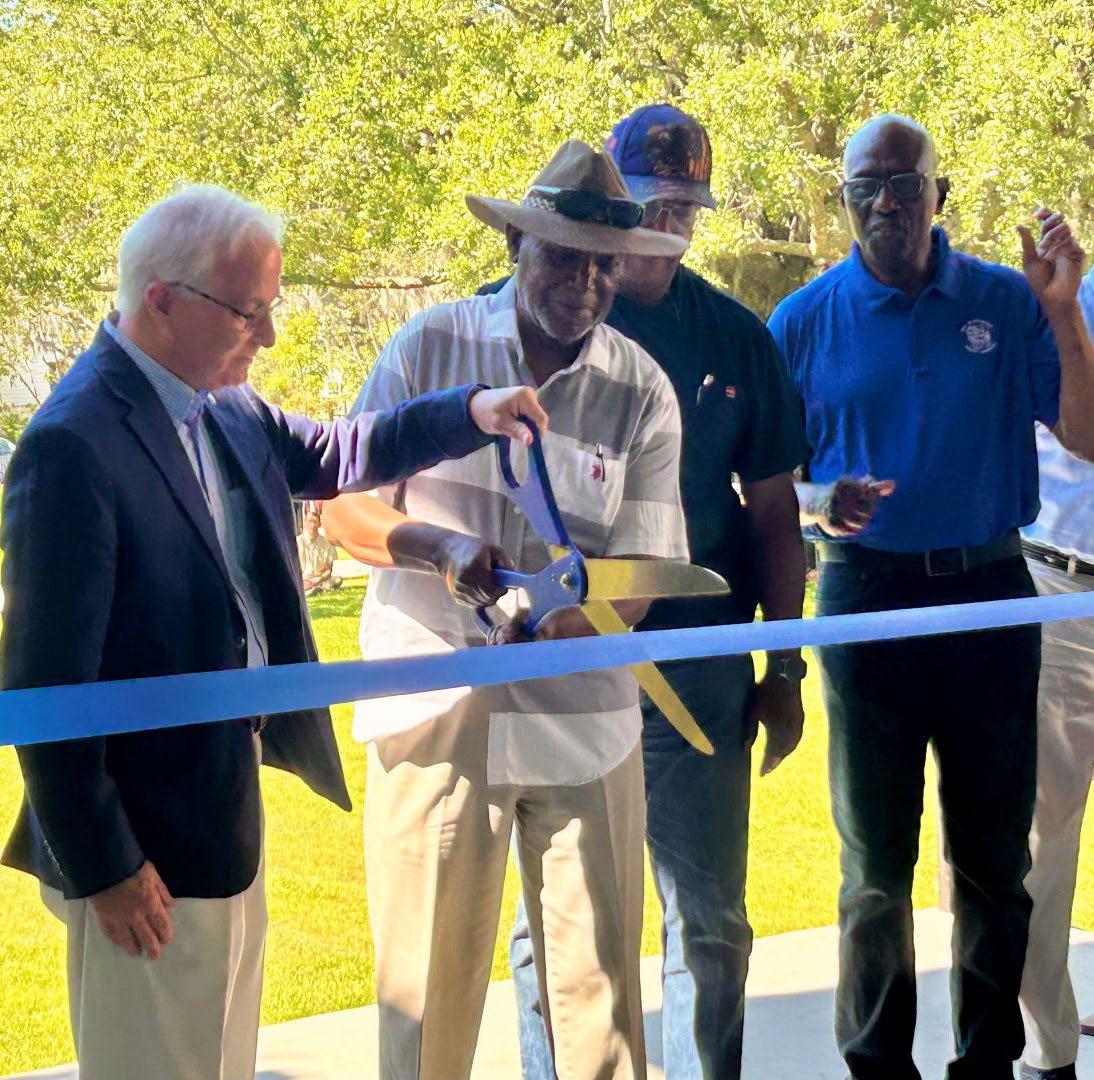
Members of Beaufort City Council, city staff and community members gathered Wednesday morning for a ribbon-cutting and historic marker unveiling at Washington Street Park, which has been renovated with significant upgrades.
The park is equipped with a performance pavilion, a basketball halfcourt, a tennis practice court, a rain garden, new landscaping, benches, two murals, and a historic marker. The City has also installed restrooms and a new playground.
The historic park in the Northwest Quadrant neighborhood is operated through a lease agreement by the City of Beaufort and owned by the nonprofit, Beaufort County Community Center.
The park’s history goes back to the 1940s when African American residents donated land for the development of the Beaufort County Negro Recreational Center. It was the only park in the City at the time for black families and children. The installed marker memorializes the cultural and historical significance of this
public space, available for enjoyment by all.
“For years, we kept talking about wanting a historic marker so that our children would know something about the area,” said Edward Allen, a mem-
ber of the Washington Street Park Committee who played in the park as a child. “It also brings back stories that we can tell our kids, why we have some of the value systems that we have and how it ties back
into the community.”
The park committee was created in 2023 to help in the development of the master plan. Descendants of the original families who founded the park, Fred Washing-
ton, Jr., and the late Mary Thompson served on the committee alongside City Councilman Mitch Mitchell, City of Beaufort staff, and several neighborhood residents. Downtown Operations Director Linda Roper oversaw the project.
The focal point from the beginning was the new performance pavilion, which has a very simple and natural design, with wooden columns that hide electronics. Pavilion architect James Steverson said his mandate was to design a pavilion that would both “fit into this neighborhood” and accommodate performances.
Fred Washington added that they wanted a natural look.
“We’re trying to incorporate some of the history that we brought to the Historic District,” he said.
The Washington Street Park Project was Budgeted at a total cost of $1,275 00. It was funded by an $80 000 Parks and Recreation Development (PARD) Grant, a $250 000 Community Development Block Grant (CDBG) and the remainder from Parks and Tourism Revenue Bond Proceeds.
Beaufort Digital Corridor names
Jackson new Executive Director
The Island News
The Beaufort Digital Corridor has announced that Arthur “AJ” Jackson III will be its new Executive Director, effective May 11, 2026
Jackson is a UNC Chapel Hill graduate, a former tech startup co-founder, and an enterprise technology sales professional who brings an entrepreneurial, builder-focused mindset to advancing BDC's impact across the Lowcountry.
"Beaufort is a community with real momentum and so much potential," Jackson in a news release. "I believe the BDC is at the center of that story. I've seen firsthand what it takes to build something from the ground up, and I'm excited to bring that perspective to this role.
“BASEcamp is an incredible resource, the programs BDC runs make a tangible difference, and I can't wait to get to work with the team and the community to take it to the next level."
Jackson takes the position of former Beaufort Digital Corridor Executive Director Jess O’Brien, who joined Beaufort Memorial Hospital as the Director of Marketing and Communications in April.
The Most Advanced Spine and Joint Care Options in The Lowcountry
A
t Beaufort Memorial, our nationally recognized team of orthopedic and spine care specialists is dedicated to helping you live life to the fullest—free from pain.
At Beaufort Memorial you’ll also find:
• Joint preservation therapies
• Numerous non-surgical treatment options
Our board-certified, fellowship-trained surgeons bring exceptional skill and experience to your care. Using the latest technologies and diagnostics—including Mako SmartRobotics™ and VELYS™ robotic-assisted joint replacement—as well as a personalized recovery plan, we’re with you every step to get you moving like yourself again.
Visit BeaufortMemorial.org/Ortho and get back to enjoying each of life’s moments.
• A personalized approach to restoring mobility and joint function
• Pre-operative education classes that engage patients and caregivers in the healing process
• An Optimization Program that follows you through the process to ensure the best outcomes
• Outpatient and in-home rehab services to get you back to doing what you love faster
Arthur “AJ” Jackson III
Mayor Phil Cromer and Fred Washington Jr. cut the ceremonial ribbon Wednesday, May 20 to recognize the city's $1 million redevelopment of Washington Street Park, once the city's only public park for African American families, which opened in 1942 as a recreational feature in the Northwest Quadrant. Lolita Huckaby/The Island News
Beaufort County Sheriff
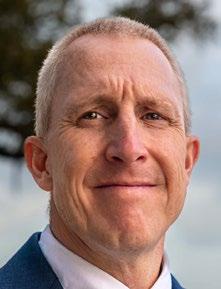
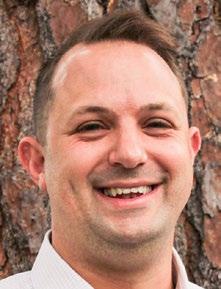
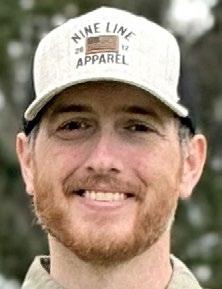
Doug Seifert and Joey “JoJo” Woodward Jr. offered sharply different views on the current direction of the Beaufort County Sheriff’s Office, with both candidates emphasizing public safety, transparency and support for deputies while differing on priorities, leadership style and the agency’s current performance.
COMPLETE RESPONSES
Questionnaires were sent to candidates facing opposition June 9 in the Beaufort County Sheriff Republican primary, Beaufort County Council District 4 and District 5 Republican primaries, and the South Carolina House District 121 Democratic primary. Each questionnaire included a general candidate information section, along with 10 issue-focused questions tailored specifically to the office being sought. Each candidate’s responses to those 10 questions are available in their entirety at yourislandnews.com.
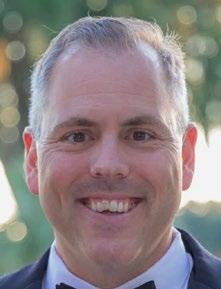
ki both centered their County Council District 4 campaigns on growth, infrastructure and protecting Beaufort County’s character, though the two candidates often approached those issues from different perspectives.
heavily on large apartment complexes and instead encourage more “missing middle” housing such as duplexes, townhomes and cottage developments that create opportunities for homeownership while placing less strain on infrastructure.
“The Lowcountry is not a placeholder. It is worth protecting,” Hower wrote.
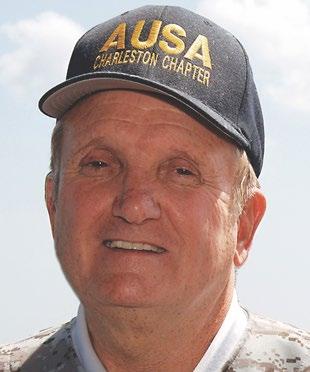
Seifert is originally from Cincinnati, Ohio, and has lived in Beaufort County for 20 years. A former Beaufort County Sheriff’s Office lieutenant, Seifert said he is running to continue moving the agency forward while supporting deputies and strengthening public trust. He lives on Hilton Head Island with his wife, Shelly, and their family.
moving forward.
The candidates also addressed public trust and transparency during major investigations and controversial incidents involving law enforcement.
Seifert repeatedly stressed the importance of balancing transparency with protecting active investigations, saying the sheriff’s office must communicate with the public while ensuring cases are not jeopardized.
“The reality is that not all information regarding an active investigation or pending criminal matter can immediately be shared with the public,” Seifert wrote.
Andersen, an accountant who lives in Mossy Oaks, moved to Beaufort County full time in 2020 after growing up in a military family. He currently serves on the City of Beaufort’s Parks and Trees Advisory Committee and said he is running because residents increasingly feel “growth is happening around them instead of for them.”
Grygowski said affordable housing solutions should vary depending on the community and emphasized collaboration between residents, municipalities, employers and county leaders while encouraging long-term housing stability and ownership opportunities.
Pine Island and the Cultural Protection Overlay also emerged as a significant topic within the questionnaires.
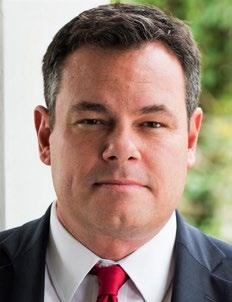
Woodward, a Bluffton native, has lived in Beaufort County for nearly 40 years. He previously served 26 years with the Beaufort County Sheriff’s Office before later working with the 14th Circuit Solicitor’s Office and Jasper County Sheriff’s Office. Woodward said he is running to improve accountability, transparency and crime-solving efforts within the agency. He and his wife, Tracy, have four children and 10 grandchildren.
When asked what they believe is Beaufort County’s biggest public safety issue, the two candidates pointed to very different concerns.
Seifert identified infrastructure and traffic congestion as the county’s top public safety challenge, arguing that rapid growth has strained emergency response and roadway safety throughout Beaufort County.
“The lack of infrastructure is creating the biggest public safety issue in Beaufort County,” Seifert wrote, pointing to traffic accidents, aggressive driving and increasing call volume for deputies. He said he would dedicate additional road deputies specifically to traffic enforcement and roadway incidents while continuing to advocate for slowing growth until infrastructure improves.
Woodward instead focused on crime clearance rates, arguing too many crimes in Beaufort County go unsolved.
“The collapse of our crime clearance rate” is the county’s biggest issue, Woodward wrote, stating that “7 out of 10 crimes in this county go unsolved.”
Both candidates agreed with Sheriff P.J. Tanner’s assessment that gang activity and illegally modified firearms are growing concerns in Beaufort County, particularly following the 2025 St. Helena Island mass shooting.
Seifert emphasized expanding youth outreach and prevention programs alongside stronger enforcement and partnerships with prosecutors and federal agencies. He advocated for additional recreational programs, mentorship opportunities and greater community engagement from deputies.
Woodward focused more heavily on enforcement and federal coordination, pledging to strengthen relationships with agencies including the DEA, ATF, U.S. Marshals Service and ICE.
“I know how to use them,” Woodward wrote regarding his federal law enforcement relationships.
When asked about lessons learned following the St. Helena mass shooting investigation, Seifert said county government, residents and law enforcement all share responsibility in addressing crime and nuisance locations, while emphasizing the importance of anonymous tip reporting and coordination between prosecutors and law enforcement.
Woodward similarly argued for transparency, but said law enforcement agencies should avoid using ongoing investigations as an excuse to avoid accountability.
“Silence is not strategy — it destroys trust,” Woodward wrote.
Both candidates also addressed standards for deputies while off duty following several recent high-profile incidents involving law enforcement personnel in the Lowcountry.
Seifert emphasized that deputies remain subject to departmental policies and internal investigations both on and off duty, while also noting that incidents involving potential criminal conduct should continue to be independently investigated by SLED.
Woodward similarly argued that “a badge does not clock out,” writing that deputies should be held to professional standards at all times and that use-of-force decisions while off duty must be grounded in judgment and restraint.
On deputy recruitment and retention, both candidates acknowledged ongoing staffing and morale issues facing law enforcement agencies statewide.
Seifert emphasized continued investment in competitive pay, technology, training and equipment, saying deputies need to feel valued and supported by leadership.
Woodward proposed increasing starting deputy pay to $64,000 and giving all sheriff’s office employees a $3,000 raise. He also argued deputies need a clearer path for advancement within the agency.
Both candidates voiced support for Beaufort County’s participation in ICE’s 287(g) program, which allows specially trained deputies to assist with certain federal immigration enforcement efforts.
Seifert described the program as an important partnership while emphasizing that all agreements involving the sheriff’s office should continue to be reviewed to ensure they serve Beaufort County appropriately.
Woodward took a more aggressive stance, saying he would expand and strengthen the program as part of broader cooperation with federal law enforcement agencies.
“287(g) closes those gaps,”
Woodward wrote regarding criminal networks operating across jurisdictions.
When asked what distinguishes them from their opponent, Seifert emphasized his 20 years working within the Beaufort County Sheriff’s Office and argued his continued involvement with the agency gives him firsthand knowledge of its current operations and needs.
Woodward highlighted his nearly 40 years in law enforcement, federal partnerships and leadership experience, while also criticizing what he described as declining crime-solving performance within the current administration.
Grygowski, a retired Marine Corps officer and current USC Beaufort student, has lived in Beaufort County for 16 years non-consecutively due to military service and currently lives in Spanish Point with his wife, Ericka, a Navy veteran, and their two daughters. Grygowski said he is focused on “common sense” growth, infrastructure and limiting tax impacts on residents.
When asked about the most pressing issue facing Beaufort County residents, both candidates pointed toward growth-related concerns.
Andersen identified infrastructure as the county’s top issue, arguing development has continued without roads, drainage, schools and public services keeping pace.
“Infrastructure should be planned ahead of growth, not treated as an afterthought once problems already exist,” Andersen wrote.
Grygowski instead pointed to cost of living and uncertainty surrounding taxes and referendums as the county’s most immediate concern.
Both candidates agreed current development regulations are insufficient to manage Beaufort County’s continued growth.
Andersen argued the county must strengthen impact standards and conduct more realistic evaluations of how major projects affect roads, schools, drainage, emergency services and overall quality of life before approvals are granted. He also voiced support for proposed state concurrency legislation tying development approvals to available infrastructure capacity.
Grygowski similarly described current regulations as outdated and said the county should inventory previously approved projects while better coordinating infrastructure planning with future development.
Infrastructure priorities were another major area of agreement between the candidates.
Andersen specifically highlighted traffic congestion along Highway 170, the McTeer Bridge, Savannah Highway Spur and the Parris Island Gateway corridor, calling for intersection upgrades, stormwater improvements and stronger coordination between Beaufort County, municipalities and the South Carolina Department of Transportation.
Grygowski emphasized schools, public safety infrastructure and improving roads to keep pace with growth, saying Beaufort County must ensure emergency services and public employees can continue responding effectively as the population increases.
Both candidates also supported changes to state law surrounding affordable housing tax exemptions, which county leaders have warned could significantly impact local government revenues.
Andersen said he supports a “full repeal and rewrite” of the current law, arguing the exemptions could eventually cost affected Beaufort County jurisdictions millions in lost revenue while still placing demands on roads, schools and emergency services.
Andersen strongly supported maintaining and defending the CPO, arguing communities such as St. Helena Island should retain the ability to preserve their cultural identity and protect themselves from unchecked development.
“Once places like St. Helena lose their character and cultural identity, they do not get it back,” Andersen wrote.
Grygowski also expressed support for the county defending the ordinance in court, saying property owners assume the risks associated with existing ordinances when purchasing land and arguing development decisions affect the broader community, not just individual property owners.
On rebuilding public trust following the Eric Greenway administration controversy, Andersen proposed creating an independent internal audit office focused on financial controls, spending oversight and operational accountability. He also pointed to his experience working in both local and federal government oversight roles.
Grygowski did not provide a response to the questionnaire’s question regarding restoring public trust and transparency in county government.
When asked why voters should choose them, Andersen highlighted his background in accounting, government oversight and opposition to accepting “dark money” or large development-related political contributions.
Grygowski emphasized his military leadership background, describing himself as an independent-minded candidate focused on collaboration and protecting Beaufort County’s future character and quality of life.
The winner of the Republican primary will advance to the November general election.
Beaufort County Council District 5
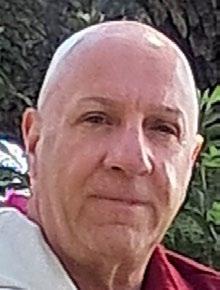
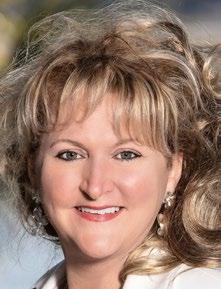
Republican candidates Joshua Hower, Mary Jeans Otto and Joe Maiorano all centered their campaigns on concerns about rapid growth and preserving the Lowcountry’s character, though each candidate offered different ideas for managing development, infrastructure and government oversight.
Maiorano, originally from New York, has lived in Beaufort County for 22 years and is currently building what he described as a “mini farm” in Okatie.
A retired NYPD officer and former owner of a commercial environmental cleaning company, Maiorano said he is running because he does not want the Lowcountry to become “just another built up town.”
impact his hometown shaped his concerns about growth in Beaufort County.
When asked about the biggest issue facing Beaufort County residents, all three candidates focused heavily on growth and infrastructure pressures.
Maiorano identified traffic and road safety as the district’s biggest concern.
Otto described “rapid, uncontrolled growth” as the county’s top issue, arguing roads, water, sewer systems and natural resources are already under strain while high-density developments continue changing the character of local communities.
Hower similarly described growth as Beaufort County’s most pressing challenge, warning that already-approved developments will continue shaping roads, infrastructure and quality of life for decades if growth is not managed more effectively.
All three candidates also criticized current development regulations, though with varying levels of detail.
Maiorano questioned whether additional development is worth the environmental impact on the Lowcountry and said he personally does not want to see additional building continue at its current pace.
Otto argued the county’s Planning and Zoning Department has become too influenced by developers and said wetlands protections and public notification requirements need stronger oversight. Hower focused on what he described as weaknesses in the county’s master planning process, particularly involving rezoning requests and environmental protections. He advocated for stronger canopy buffers, additional green space protections and reduced impervious surfaces in rural areas. Infrastructure and growth management also emerged as major themes throughout the candidates’ responses.
Otto said she supports a temporary pause or moratorium on new development until infrastructure catches up with current demand. She also proposed limiting new water and sewer hookups and restricting Planned Unit Developments, or PUDs, that allow large-scale clear-cutting and high-density neighborhoods.
Hower emphasized updating traffic impact studies, modernizing stormwater systems and improving coordination with SCDOT. He also highlighted the need for a funding strategy for the county’s proposed consolidated law enforcement center.
Maiorano did not provide a detailed response regarding specific infrastructure priorities.
All three candidates also supported changes to state law tied to affordable housing tax exemptions, an issue county leaders have warned could significantly reduce local government revenues.
Maiorano argued tax exemptions granted in one area ultimately shift costs onto taxpayers elsewhere in Beaufort County.
Whoever wins the Republican primary will advance to face Democrat Alphonso Small Jr. in the November general election.
Grygowski similarly criticized what he described as loopholes benefiting large corporations while placing additional strain on small communities and taxpayers.
“I came here because I loved the Lowcountry aesthetics and the feeling that you get here and don’t want it to change,” Maiorano wrote. Otto, a real estate agent and 16year District 5 resident, said she has spent years advocating against high-density developments and protecting rural areas within the district. She pointed to her involvement opposing projects including a proposed garbage dump, campground development and increased density proposals along Callawassie Drive.
Otto sharply criticized what she described as abuse of nonprofit affordable housing partnerships and argued current exemptions divert tax revenue away from schools and public services while benefiting developers.
Hower supported closing the loophole while also calling for broader reviews of tax exemption laws to ensure incentives are producing their intended results and not shifting additional burdens onto residents.
The Pine Island controversy and Cultural Protection Overlay were also major points of discussion among the candidates.
Maiorano said Pine Island should “be left alone and kept the way it is.”
Otto strongly defended both the Cultural Protection Overlay and the county’s legal defense of it, arguing the overlay protections were already in place when Pine Island was purchased and warning weakening the ordinance Primary from page A1
Woodward declined to second-guess investigators in an active case but said major incidents should always be followed by honest “after-action reviews” examining what worked, what failed and what improvements are needed
Beaufort County Council District 4
Republican candidates Michael Andersen and Thomas Grygows-
The candidates also addressed workforce housing and development pressures throughout the county.
Andersen said Beaufort County should shift away from relying so
Hower, a veteran and digital product owner who lives in Oldfield, moved to Beaufort County four years ago after growing up in Delaware. Hower said watching unchecked development negatively
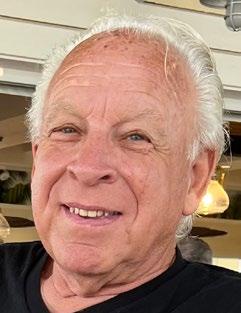
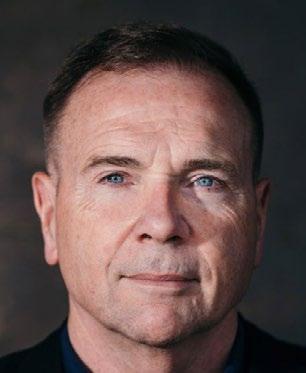
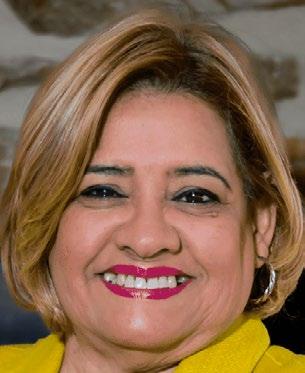
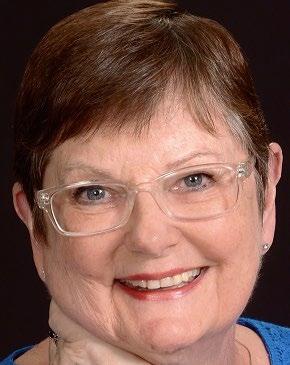
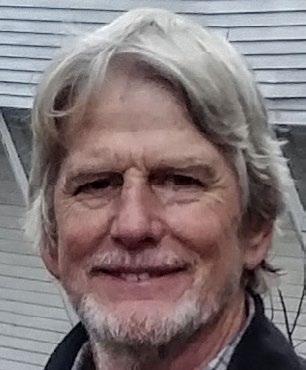
Doug Seifert
Joey “JoJo” Woodward Jr.
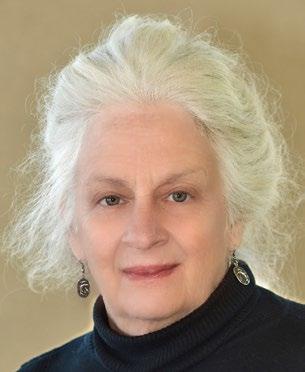
Michael Andersen
Thomas Grygowski
Joe Maiorano
Mary Jeans Otto
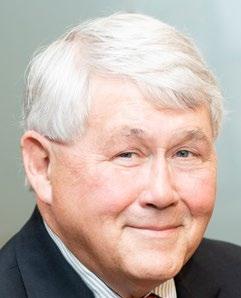
Joshua Hower
could threaten preservation efforts countywide.
Hower also supported defending the CPO while acknowledging the emotional and legal complexity surrounding the issue. He argued the ordinance should continue being applied consistently unless St. Helena residents themselves seek changes through a public process.
The candidates also addressed transparency and public trust following the Eric Greenway administration controversy.
Maiorano said County Council has already made progress improving transparency and accountability following the controversy.
Otto proposed stronger hiring standards, expanded open bidding practices and additional safeguards against nepotism and conflicts of interest.
Hower emphasized improving public access to county information, stronger audits and more consistent communication with residents regarding projects and county operations.
When asked why voters should choose them, Maiorano pointed to his life experience, law enforcement background and decades running a business.
Otto emphasized her long-term involvement in district issues and her professional background in real estate, accounting and tax analysis.
Hower highlighted his background in regulatory compliance, technology and government systems while emphasizing what he described as a practical and solutions-focused approach to county government.
The winner of the Republican primary will advance to face Democrat Lynn Gerson in the November general election.
South Carolina House
District 121
fordability, infrastructure and protecting historic Gullah-Geechee communities in their responses, while offering different perspectives shaped by their professional and political backgrounds.
fecting working families, seniors and young residents throughout Beaufort and Colleton counties.
dents in planning decisions affecting their communities.
Both candidates expressed support for greater local control over development and zoning decisions.
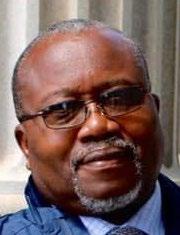
Rivers, the incumbent representative for District 121, is a St. Helena Island native who has lived in Beaufort County for roughly 60 years. A retired U.S. Air Force veteran, minister and former Beaufort County Board of Education member, Rivers said he is seeking another term to continue “providing proven leadership for the Lowcountry.”
He and his wife, Lisa, have seven children.
Both candidates also supported reforming state law surrounding affordable housing tax exemptions, an issue that has recently drawn concern from Beaufort County leaders who warned the law could significantly reduce local government revenues.
Rivers said affordable housing remains important but argued any tax exemptions must remain fair to local governments and taxpayers while still being truly affordable and accessible.
Rivers emphasized the importance of “Home Rule” and argued local governments should maintain influence over growth and development decisions affecting their communities, particularly as demographic changes continue impacting historic Gullah communities.
DeLoach similarly said local governments are often best positioned to understand the needs of their communities and should have greater flexibility when balancing development, infrastructure, environmental protection and quality of life concerns.
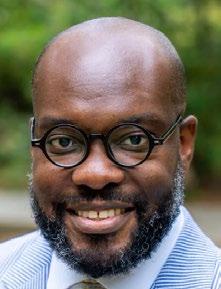
DeLoach, a Burton native who has lived in Beaufort County most of his life, is a pastor, former law enforcement officer, funeral director and small business owner. He currently serves as pastor of Mt. Sinai Baptist Church and owns Serenity Mortuary.
DeLoach said he is running because communities in Beaufort and Colleton counties deserve “strong, accessible and accountable leadership.”
When asked what they believe is the biggest issue facing District 121 residents, both candidates focused heavily on affordability and growth pressures affecting longtime residents.
Rivers pointed specifically to balancing growth while protecting Gullah communities from displacement and ensuring infrastructure keeps pace with development. He also stressed the need to preserve historic communities as demographics continue changing across the Lowcountry.
DeLoach similarly supported reforming the law, saying affordable housing incentives must remain financially sustainable for counties, municipalities, schools and emergency services that rely heavily on property tax revenues.
Property insurance costs along the South Carolina coast also emerged as a major issue in both candidates’ responses.
Rivers called simply for “insurance reform,” while DeLoach outlined a broader series of proposals, including increasing market competition among insurers, strengthening oversight from the South Carolina Department of Insurance and exploring relief programs or tax credits for seniors and low- to moderate-income homeowners struggling with rising premiums.
The candidates also addressed Beaufort County’s rapid growth and ongoing infrastructure challenges.
Rivers pointed to his current work on the South Carolina House Department of Transportation Modernization Committee, saying continued coordination between state lawmakers and local governments will be necessary as growth continues throughout Beaufort County.
The Pine Island controversy and Cultural Protection Overlay also featured prominently in the candidates’ responses.
Rivers defended the Cultural Protection Overlay, noting he was involved in helping formulate the ordinance and emphasizing the importance of preserving historic Gullah communities.
“The CPO is law,” Rivers wrote.
DeLoach also voiced support for the goals behind the overlay, arguing Beaufort County has a responsibility to preserve environmentally sensitive areas and protect Gullah-Geechee communities from being erased by unchecked development.
The candidates additionally addressed the current debate over potentially reopening congressional redistricting ahead of the next census.
Rivers strongly opposed reopening the process, arguing redistricting traditionally occurs every 10 years following the census and warning that new efforts would threaten minority representation and potentially invalidate votes already cast by military members.
lawmakers should instead focus on issues directly affecting residents, including affordability, healthcare and infrastructure.
Education and teacher shortages were another major topic in the candidates’ responses.
Rivers said the state should allow “real teachers” the freedom to teach while supporting educators who have demonstrated their ability to connect with and inspire students.
DeLoach argued teacher retention requires more than salary increases, calling for reduced bureaucracy, improved classroom support, affordable workforce housing initiatives, childcare assistance and student loan support for educators.
Both candidates also emphasized balancing economic growth with preserving the Lowcountry’s environment and cultural identity.
Rivers argued growth should not displace the communities that helped create and preserve the region’s character, particularly historic Gullah communities.
DeLoach similarly supported “smart growth” policies balancing development with environmental protection, infrastructure planning and preservation of historic neighborhoods and cultural heritage.
When asked why voters should choose them, Rivers pointed to his experience and record in office, describing himself as the “responsible choice” for District 121
DeLoach emphasized his background in ministry, law enforcement and small business ownership while arguing the district needs “fresh leadership” focused on affordability, accountability and practical solutions for working families.
Democratic candidates Michael Rivers Sr. and Shannon Nehemiah DeLoach both emphasized af-
DeLoach described affordability as the district’s most pressing issue, pointing to rising housing costs, groceries, insurance, utilities and healthcare expenses af-
DeLoach argued the state must become a stronger partner with local governments by increasing funding for roads, drainage, bridges and other infrastructure before communities reach a crisis point. He also stressed the importance of including local officials and resi-
Tips for Daily Prayer
DeLoach also opposed reopening redistricting at this time, describing it as political “gamesmanship” rather than an effort focused on fair representation. He argued
The winner of the Democratic primary will advance to face Republican Shelley Gay Yuhas in the November general election.
Delayna Earley, who joined The Island News in 2022, formerly worked as a photojournalist for The Island Packet/The Beaufort Gazette, as well as newspapers in Indiana and Virginia. She can be reached at delayna.theislandnews@gmail.com. Primary from page A4
“God, Are You Listening?” Persevering
when prayers seem unanswered
Sometimes it feels like God isn’t answering our prayers. It is exciting when we ask God for something and he immediately grants our request. But what about when we keep praying for a particular person or need, and nothing seems to happen? We can feel discouraged or start to doubt God. We might start to wonder, “Is God not listening? Or does he not care?”
God is a loving Father who wants what is best for us. When parents care about their child, they don’t say yes to every request he makes. This is not because they are not listening or don’t care, but because they love him and want what is best for him. In the same way, God loves us and knows what is best for us. He wants to help us grow into the saint that he is calling us to be.
As a loving Father, sometimes God says “no.”
We might ask the Lord for a particular job, for example, and not get hired. It could be that he knows that this is not actually what we need, and he has something better planned for us. Looking back on the things we have asked God for over the years, we can probably recognize many situations where we are now grateful that God told us no!
Sometimes God says, “not yet.”
Prayer often takes time. We might be praying for years for a friend to believe in God, for example, and feel like nothing is happening. But we keep at it, and one day, the friend suddenly comes to faith! Prayer has been compared to an axe cutting away at a tree: the tree will come down, but not in one stroke. One might cut at the tree hundreds of times with seemingly no results, but then all of a sudden the tree comes crashing down!
Prayer brings us closer to God, even in hardships.
Being a follower of Jesus does not mean that we won’t experience grief, pain, or hardships. After all, the Lord experienced all of these things, and we shouldn’t expect any less. (John 15:20) In our daily prayer time, we experience Jesus walking with us, and he helps us carry our burdens. In prayer, we receive strength to keep trusting in God during difficult times.
Persevere in prayer!
Jesus gave the example of a man who keeps knocking at his neighbor’s door, not giving up until the neighbor opens the door and helps. (Luke 11:5-10) That’s how we should be in prayer. Keep knocking, and don’t give up! But remember that prayer isn’t just about asking God for things. Give him thanks for your blessings, praise him for his goodness, and enjoy being with him!
Tips for Daily Prayer Message 7 of 8
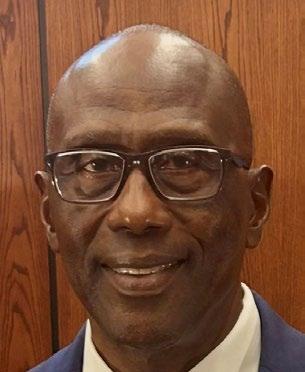
Michael Rivers Sr.
Shannon Nehemiah DeLoach
County Council holds nearly three-hour executive session during special called meeting
Cunningham, Reitz voice frustration after council takes no action following closed-door discussion
By Delayna Earley
The Island News
Beaufort County Council members spent nearly three hours behind closed doors during a special called meeting held May 19 at the Beaufort County Government Robert Smalls Complex, ultimately taking no action once they returned to open session.
Heroes
from page A1
The meeting, which began at 4 p.m. and lasted approximately 2 hours and 49 minutes according to the county’s livestream archive, included only a brief public portion before council entered executive session. The agenda listed one item for the closed-door discussion — receiving legal advice covered by attorney-client privilege and discussing “issues related to the employment of a person regulated by council.”
County Council Chair Alice Howard called the meeting to order before council approved the agenda and unanimously voted to enter
flags were distributed to volunteers to be placed on all 24 000 gravesites.
The Gullah Traveling Theater performed “Decoration Day” as a part of the 41st Annual Original Gullah Festival on Thursday, May 21, and Saturday, May 23, at the USCB Center for the Arts in Beaufort. The play explored themes of freedom, resilience, and community, offering audiences a deeply immersive and inspiring experience that commemorates an important chapter in Gullah and American history.
On Sunday, May 24, there was a 3 p.m. church service at Tabernacle Baptist Church sponsored by the Daughters of the Union Veterans of the Civil War and the Women’s Relief Corps. After the service, the congregation made its way down to Henry C. Chambers Waterfront Park and threw
Then the state Senate went to work and managed to draw out debate for three days, with opposition to the plan led by none other than Beaufort County’s two state senators, Tom Davis of District 46 and Chip Campsen, District 43. The county’s third senator, Margie Bright
executive session.
The meeting agenda cited South Carolina Code Sections 30-4-70(A)(2) and 30-4-70(A)(1), exemptions under the state’s Freedom of Information Act that allow governing bodies to privately discuss legal matters protected by attorney-client privilege and certain personnel issues.
After spending the majority of the nearly three-hour meeting in executive session, council members returned to chambers shortly before adjournment. During the brief return to open session, council members confirmed no action would be
taken following the closeddoor discussion.
As the meeting was wrapping up, Councilman Logan Cunningham asked to speak. Vice Chair Anna Maria Tabernik responded “No,” but Cunningham continued, saying he was speaking as a point of personal privilege before voicing frustration with the lack of public action or statement following the lengthy executive session.
“I just want to put it on the record that I disagree with us not making a decision today and coming out with any statement,” Cunningham said. “This should
flowers into the Beaufort River in honor of the nation’s dead at sea.
Beginning at 10 a.m., on Monday, May 25, people lined the streets of the annual parade route, from Boundary Street to Carteret Street to Bay Street.
Grand Marshals for this year’s
Matthews, District 45 and a Democrat, of course was opposed to the plan but it was Davis — with 17 years of seniority — who kept the map from passing and becoming law, for now.
(Hopefully Davis won’t have to spend his birthday, May 31, in Columbia with his peers but his recent marriage engagement was officially recognized by the Senate during last week’s debates.)
parade were two U.S. Army World War II veterans, both more than 100 years old – Master Sgt. Danile N. Mack and Pfc. Paul Logan.
When the parade had come to an end, the annual Memorial Day ceremony was held at the Beaufort National Cemetery.
How the redistricting plan will emerge from the Senate and end up on McMaster’s desk for signing, possibly sometime this week, is uncertain, but it is expected to pass. Davis and other opponents have laid out the framework for a legal challenge of the document, arguing the rapid schedule did not adequately allow for public input.
And how this new plan will impact the primaries,
not be ending with no action taken after this meeting.”
Councilman Thomas Reitz then added, “I agree with that as well.”
Chairwoman Alice Howard then opened the floor to the remaining council members, asking if anyone else wished to comment before the meeting adjourned. No additional comments were made publicly.
The special called meeting came one week after Beaufort County confirmed Chief Financial Officer Pinky Harriott’s employment with the county had ended on May 12. County officials have not publicly discussed details surrounding her departure.
Delayna Earley, who joined The Island
The agenda referenced discussion of “issues related to the employment of a person regulated by council.” Under Beaufort County’s council-administrator form of government, County Council directly employs only the county administrator, a position currently held by Michael Moore.
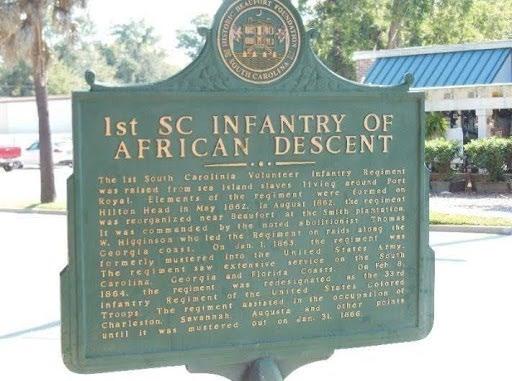
After the ceremony, there was a brief gathering near 2248 Boundary Street, where the City of Beaufort welcomed community members to commemorate the relocation of the 1st South Carolina Volunteers of African Descent historic marker to its new
where early voting has already begun, is also to be seen and leaves those watching this political game of Twister less than amused.
Speaking of watching and wondering, citizens who watch Beaufort County politics have been doing the same.
With the sudden departure two weeks of Chief Financial Officer Pinky Harriott, rumors swirling
permanent home from its former location adjacent to the Beaufort National Cemetery on Boundary Street.
The new site is the future site of the 1st South Carolina Volunteers of African Descent Memorial Park.
around the “Pinky-gate” issue have been met with very few answers being provided by county sources, official or unofficial.
Word initially went out that Harriot had been fired May 12, the day after County Council met for over an hour in executive session to discuss “issues related to the employment of a person regulated by council.”
The official word from the county’s public information office only confirmed that Harriot, after 18 months, was no longer with the county.
Council had another special meeting on the 19th to discuss the same issue, “employment of a person regulated by council.” There was no action taken after that executive session, but Councilman Logan Cunningham did state he disagree with the rest of council “to take no action following this meeting.” Hmmm.
With five of the 11 council members facing opposition in the upcoming primaries, you would think the issue of “transparency” which has been tossed around frequently in the council chamber, would be a primary question asked by the voters. We’ll see.
Cross Creek gets new owners; Could a movie theater be next?
BEAUFORT — News last week that the Cross Creek Shopping Center on Robert
Smalls Parkway has been sold to a Baltimore-based realty corporation probably means “new life” and more traffic to that side of Beaufort.
Sale of the center, which opened in 1990, follows the opening in 2024 of the Beaufort Station right across the busy street. At least two of the Cross Creek businesses — T.J. Maxx and PetSmart — jumped across the street to Beaufort Station but Belk’s and the northern Beaufort County’s first Walmart stayed in place, along with Planet Fitness, Big Lots and Academy Sports.
It will be interesting to see what changes come to the former forest property with the new owners. The area is especially “ripe” for retail development with new apartment complexes sprouting up all around it. Many are hopeful the future will include at least a bowling alley and movie theater, since the growing city has neither.
Lolita Huckaby Watson is a community volunteer and newspaper columnist. In her former role as a reporter with The Beaufort Gazette, The Savannah Morning News, Bluffton Today and Beaufort Today, she prided herself in trying to stay neutral and unbiased. As a columnist, these are her opinions. The Rowland, N.C. native’s goal is to be factual but opinionated, based on her own observations. Feel free
News in 2022, formerly worked as a photojournalist for The Island Packet/The Beaufort Gazette, as well as newspapers in Indiana and Virginia. She can be reached at delayna.theislandnews@gmail.com.
Kehlani Malia Cummings of Lady’s Island Middle School reads the Gettysburg Address during the Memorial Day Ceremony at Beaufort National Cemetery on Monday, May 25, 2026. Amber Hewitt/The Island News
People gathered along the planned route on Monday, May 25, 2025, as the annual Beaufort Memorial Day Parade made its way down Boundary Street, Carteret Street and then Bay Street. Amber Hewitt/The Island News
By Delayna Earley
The Island News
Port Royal looks to revive MCIP funding for port redevelopment
Officials say proposal would fund public waterfront projects; School board members question impact on district revenues
Officials with the Town of Port Royal say they are attempting to revive a long-planned funding mechanism tied to the redevelopment of the former State Ports Authority property, but the proposal is now facing pushback from members of the Beaufort County Board of Education who argue the move could divert millions of dollars away from public schools.
The discussion centers around a proposed multi-county industrial park agreement, commonly referred to as an MCIP, connected to the ongoing redevelopment of the Port of Port Royal property now owned by Safe Harbor Marinas.
Town leaders have long described the former port property as one of the largest remaining waterfront redevelopment opportunities in northern Beaufort County.
Town leaders presented the proposal during the Beaufort County Finance, Administration and Economic Development Committee meeting on May 18, describing it as a continuation of redevelopment agreements and financing structures that date back more than a decade.
“This is not discussing standing up something new,” Port Royal Mayor Kevin Phillips told county leaders during the meeting. “We’re literally just talking about turning on the funding mechanism that, again, has been in place since 2009.”
At this point, however, no formal action has been taken by Beaufort County Council. The May 18 agenda item before the finance committee was always intended as a presentation and discussion only, with no vote or action requested from council members at this stage.
Committee Chairman Mark Lawson also moved the item ahead of public comment so attendees could first hear the presentation and receive “factual information” about the proposal before speaking publicly on it.
TIF expiration leads town back to original MCIP structure
According to documents presented to County Council members, the original MCIP associated with the former port property was approved in 2009, while a tax increment financing district, or TIF, was later established in 2012 to help fund public infrastructure tied to the redevelopment project.
According to the town’s presentation, the original TIF district included participation from both Beaufort County and the Beaufort County School District, with the school district agreeing to contribute up to $300 000 annually toward debt service connected to redevelopment infrastructure projects.
That TIF arrangement, however, effectively expired after no bonds were issued within the statutory time frame required under South Carolina law. During the finance committee presentation, bond attorney Lawrence Flynn explained that because the project experienced years of delays and ownership changes, the original TIF structure was never fully utilized.
The property remained under state ownership until 2017 before eventually being sold to Grey Ghost Properties and later to Safe Harbor Marinas in 2021
What’s the difference between a TIF and an MCIP?
Town officials say the current proposal only exists because the original TIF funding mechanism connected to the redevelopment
project expired before it could fully be used.
Under the original TIF arrangement approved in 2012, increases in property tax revenues generated by the redevelopment area would have been reinvested back into public infrastructure projects tied to the port property.
Flynn explained during the finance committee presentation that the TIF structure eventually became unusable because state law requires bonds connected to the district to be issued within a specific time frame. Because the redevelopment stalled for years while the property changed ownership, those bonds were never issued.
The proposed MCIP structure works differently.
Under South Carolina law, property inside a multi-county industrial park is converted from traditional property taxes into feein-lieu-of-tax payments, commonly referred to as FILOT revenues. Those revenues can then be redistributed differently than standard tax dollars and used to support economic development or public infrastructure projects.
Flynn said Safe Harbor is not seeking a tax abatement and would continue paying the full amount owed, though under the MCIP structure those payments would legally be treated as fees instead of traditional property taxes.
Because state law requires at least two counties to participate in an MCIP agreement, Jasper County is included as a partner county in the arrangement even though the actual redevelopment property is located entirely within Beaufort County.
Phillips described Jasper County’s role as largely procedural under state law.
“Every MCIP that’s in Beaufort County, all of them have Jasper County tied into them at some proportion,” Phillips said. “That’s just the legislation.”
Board member Richard Geier, the board’s former chair, said he views the proposed MCIP structure differently than the previous TIF arrangement because, in his opinion, the MCIP gives county government broader authority to redirect revenues that would otherwise flow to public schools.
“The county has to approve it. And the school district has no vote, has no say,” Geier said in an interview with The Island News. “It’s entirely up to the County Council.”
Geier said one of his primary concerns is that MCIP revenues are no longer treated as traditional property taxes once converted into fee-in-lieu-of-tax payments, allowing counties greater discretion in how the money is distributed.
Port Royal officials, however, argue the MCIP is simply replacing the expired TIF mechanism and continuing redevelopment commitments that previous governing bodies had already agreed to support.
“We’re not trying to stand up an MCIP,” Phillips said. “One’s already in place. Now the discussion is let’s turn it on, let’s start raising some capital, and let’s get to work.”
Shrimp dock among first projects town hopes to fund
Under the proposed MCIP structure, revenues generated through fee-in-lieu-of-tax payments could be used to help fund public infrastructure projects tied to the redevelopment area, including parks, promenades, shoreline improvements, trails, stormwater systems, marina-related infrastructure, public parking and a planned shrimp dock.
Right now, town leaders say one of the primary projects they are hoping to move forward with is the construction of a new public shrimp dock on the former port property.
Phillips said the shrimp dock project is already designed and waiting on permitting approvals from both the U.S. Army Corps of Engineers and the South Carolina Department of Environmental Services.
“That’s probably priority one,” Phillips said. “We’ve already got that designed. We’ve taken ownership of Lot G, the publicly owned parcel between Fishcamp and Shellring Ale Works. We’re just waiting on our permit from the Corps of Engineers and the Department of Environmental Services.”
Phillips said town officials are also evaluating which additional infrastructure projects should move forward first, including waterfront promenades, parks and other public access improvements tied to the redevelopment area.
Town officials say the projects are intended to preserve and expand public access to the waterfront.
“When we got the port property, one of the things that we heard through the charrette process with our own citizens and with Gov. Sanford is that this cannot be a privately held property, that it needs to be accessible to the public,” Port Royal Town Manager Van Willis said. “We need to have a certain amount of open space, and we really want to re-knit this property with the town.”
Willis said the public project list has existed in some form since the original redevelopment discussions and was designed specifically to ensure portions of the waterfront remain publicly accessible regardless of who owns the surrounding property.
Willis also noted during discussions that residential development is excluded from the MCIP structure, meaning residential properties within the redevelopment would continue paying standard school taxes.
The town is seeking approval for up to $10 million in redevelopment-related funding over a period lasting up to 20 years, with annual disbursements capped at $1 million. Based on current millage allocations, approximately 55 25% of that funding would otherwise be associated with school district tax revenues.
School board members raise concerns over precedent and transparency
That potential impact on school funding quickly became the central issue for several Board of Education members.
The debate also comes as both Beaufort County and the Beaufort County School District continue dealing with budget pressures tied in part to reduced tax revenues connected to The Preserve at Port Royal apartment complex, which received a controversial affordable housing tax exemption that significantly lowered the property’s taxable value. Both county and school district officials have repeatedly referenced the issue during recent budget discussions.
Phillips also attended part of the Beaufort County Board of Education’s executive session discussion regarding the proposal before board members later voted publicly to state their non-support of the MCIP.
During a Beaufort County Board of Education meeting held May 19, board members voted to formally state their “non-support” of the
proposed MCIP following the executive session discussion.
Geier said his concerns center on both financial precedent and transparency.
“My concern, and I stated to the County Council, is this sets a precedent,” Geier said. “Port Royal followed it. And if it passes, I can see the City of Beaufort coming to us to say, well, we need an MCIP to help fund the Waterfront Park project … and the Town of Hilton Head Island will come to us because they want us to help develop the area around the airport.”
Geier also argued the arrangement effectively functions as a “stealth tax” because school district millage could be redirected toward non-education projects without appearing separately on taxpayers’ bills.
“It says school district, which to the taxpayer says that’s for students,” Geier said. “This isn’t for students.”
Geier also argued the amount of revenue potentially redirected through the MCIP could instead fund classroom positions and other educational needs at a time when both the county and school district are facing financial pressure.
Port Royal officials dispute that characterization and argue the proposal simply redirects revenues previously committed to redevelopment infrastructure projects.
Geier additionally pointed to concerns raised by the South Carolina School Boards Association regarding similar MCIP arrangements elsewhere in the state, saying many school districts ultimately lost revenue instead of benefiting from the developments.
Debate emerges over how waterfront projects should be funded
Geier also questioned why public school tax revenues should be used for projects tied to a waterfront redevelopment that he believes could potentially be funded through other mechanisms.
Geier said private entities associated with the project could pursue alternative funding options instead of relying on MCIP revenue tied to school district taxes, including installment purchase loans, bonds or referendum-backed funding.
Similar concerns were raised during the May 18 finance committee meeting by Board of Education Chairman Carlton Dallas, who suggested some of the amenities connected to the redevelopment could potentially operate under user-supported or membership-based models rather than public funding mechanisms tied to school tax revenues.
Despite the Beaufort County Board of Education’s vote of non-support, the board itself does not have formal authority to approve or block the proposed MCIP agreement. Under South Carolina law, the agreement would ultimately require approval from Beaufort County Council, Jasper County and the Town of Port Royal.
Phillips acknowledged the Town of Port Royal had hoped to move forward with support from all parties involved, but said town officials still intend to continue discussions with county leaders.
“It doesn’t affect us,” Phillips said when asked how the school board’s opposition changes the project moving forward. “I mean, I’m sure the county council probably in a perfect world would have liked everybody to be kumbaya and on the same page and everything.”
“But again, the county council can still move forward and do the right thing and honor the decisions that were made,” Phillips added.
Phillips disputed Geier’s argument that the money could be better spent elsewhere, arguing the redevelopment itself is expected to generate long-term revenue that would not otherwise exist without continued investment in the project area.
“If this project never happened, none of that money exists anyway,” Phillips said.
Phillips also argued the public infrastructure projects tied to the redevelopment are intended to improve overall quality of life for Beaufort County residents by creating publicly accessible waterfront spaces and amenities.
“These are quality-of-life projects,” Phillips said, arguing the investments are designed to benefit people who live, work and raise families in the area.
Phillips pushed back strongly on both the transparency concerns and the argument that the proposal would create a new precedent.
“The county voted with the town of Port Royal to put this property into an MCIP in 2009,” Phillips said. “And then in 2012, the county and the school board and the town of Port Royal did a TIF district for the same property.”
Phillips said town leaders view the current proposal not as the creation of a new funding concept, but as a continuation of redevelopment commitments that previous governing bodies had already supported.
“We have got to be able to trust each other as governing bodies that when promises are made and commitments are made, that that’s going to be there through different councils,” Phillips said. “If not, how can we really do any longterm planning if every two years when new people are elected, they could just go, ‘Well, I didn’t vote for that’?”
Phillips also rejected the idea that public access amenities should operate as private or membership-only spaces.
“When you hear people say leadership at the Beaufort County Board of Education suggesting that we sell memberships, what he did is very concerning,” Phillips said. “The thought is out there that public places should only be accessible to people who can afford memberships, and that’s not what this project was ever supposed to be.”
“The entire idea behind this project ever since it was sold from the state into private hands … was to open this back up to the public and to integrate it back into the town,” Phillips added. “And so if things are going to be public, it makes sense that public dollars are used for it.”
Proposal still requires additional approvals
According to the town’s presentation, the redevelopment area currently generates more than $400 000 annually in tax revenues based on the property’s present assessed value.
The proposal would still require future approvals from Beaufort County Council, Jasper County and the Town of Port Royal before any final agreements could move forward.
Delayna Earley, who joined The Island News in 2022, formerly worked as a photojournalist for The Island Packet/The Beaufort Gazette, as well as newspapers in Indiana and Virginia. She can be reached at delayna.theislandnews@gmail.com.
From a historical marker to a 6-acre park
In 2002, Gen. George Crist (USMC Retired) collaborated with the Historic Beaufort Foundation
to commemorate the First South Carolina Volunteer Infantry (African Descent) by installing the depicted historical marker on the U.S. Naval Hospital grounds. In the heightened security aftermath of 9/11, few visitors could access the marker.
About 2009, the marker was moved outside of Beaufort National Cemetery, where many of the regiment's soldiers are interred.
Recognition of the 1st South Carolina Volunteer Infantry (African Descent) was championed early on by veteran and local poet Walter Dennis, an avid researcher of African American History. Dennis encouraged that the marker be relocated to the site in front of the National Cemetery to ensure that a broader audience would be exposed to this important aspect of Beaufort’s history.
On Memorial Day 2026 this marker was moved again, this time to its new 6-acre home at the gateway to the city of Beaufort on Boundary Street at what will be the 1st South Carolina Volunteers of African Descent Memorial Park.
The existing marker
By Joshua Hower
Awas good at the time, but research on this relatively obscure regiment has since been enriched by the National Park Service, the University of South Carolina Beaufort’s Institute for the Study of the Reconstruction Era, Carnegie Mellon University, and the University of Georgia, among others. Beaufort District's pre-war Sea Islands demography reflected 90% enslaved blacks. On Nov. 7, 1861, the largest American fleet yet assembled sailed into Port Royal Sound causing the collapse of Confederate defenses, precipitating the evacuation of the entire white population to the mainland, and leaving 8 000 enslaved blacks under American military responsibility.
Over the next few months, the number of “contrabands,” a legal characterization for humans neither free nor enslaved, grew as the Union perimeter expanded along
coastal South Carolina, Georgia, and Florida. Thousands became contraband simply by staying in place under the American military presence, but many enslaved within the Confederate interior acted upon their impulse toward liberty to "self- emancipate" into enclaves flying the flag of the United States.
Color Sgt. Prince Rivers' 136-mile escape from Confederate Edgefield to the Union Port Royal enclave, Sgt. Robert Sutton's 40mile escape along the Saint Mary's River to Union-occupied Amelia Island, and Suzie Baker's (Suzie King-Taylor) epic escape onto the American Navy's gunboats off Saint Catherine's Island are illustrative. In 1861, President Lincoln's Administration had not considered a policy on enslaved blacks. The Fugitive Slave Act of 1850 still obligated Federal Officers by law to return escaped slaves
to their owners.
By early 1862, the growing contraband numbers forced the issue onto the Lincoln agenda. "If given the chance to serve under arms, would these contrabands fight to retain their freedom? Would they fight to attain the freedom of others like themselves?”
The Lincoln Administration had the questions. From April 1862, on Beaufort's Sea Islands, men of color answered.
The First South Carolina Volunteer Infantry (African Descent) was the Union's first formed black regiment. On May 8 1862, there were no acknowledged men of
color serving in the United States Army. On the morning of May 9, 1862, St. Helena Island's William Bronson stepped forward to enlist.
On Aug. 25, 1862, Lincoln’s Secretary of War unambiguously endorsed what was already being done within the Port Royal enclave. Pointing to the solid combat record established by the First South (and two others), the Union established the Bureau of United States Colored Troops (USCT) in May of 1863 By the Civil War's end, more than 179 000 men of color bore arms in "USCT" regiments. From William Bronson's enlistment until present, there has not been a
We're building tomorrow with yesterday's roads
few years ago, a neighbor of mine was T-boned trying to make a left turn out of our neighborhood onto Highway 170. It wasn't the first time, and it wasn't the last. Anyone who lives off S.C. 170 between Bluffton and the 278 interchange knows that moment, the white-knuckle wait for a gap in traffic that never quite comes. What made it worse was learning what was being discussed behind closed doors about that same intersection. During a nearby rezoning hearing, the developer's plan called for eliminating our left-turn signal access entirely, replacing it with a rightturn-only exit and a u-turn further down the road. And the county, at the time, was moving in that direction: an urban-style u-turn model for every community along 170, where making a left means
driving past your road, flipping around, and coming back. A solution borrowed from city engineers and dropped onto a corridor that was never built for it.
That's when it clicked for me.
The roads weren't falling behind because of bad luck. They were falling behind because we kept approving new development as if the infrastructure to support it would somehow appear on its own. It doesn't. It never has.
Here's what I've learned after years of watching this play out in planning meetings, in rezoning hearings, and in conversations with neighbors across District 5: Beaufort County does not have a growth problem. We have a sequencing problem. We keep saying yes to new rooftops before we've answered a much simpler question, can our roads, our water systems, and our emergency services actually handle this?
There is a name for the policy that answers that question before a permit gets issued, not after. It's called infrastructure concurrency. The concept is straightforward: new development gets approved only when the public infrastructure needed to serve it either already exists or will be fully funded and scheduled before the first family moves in. No infrastructure plan, no permit. Or more precisely, show us your binding commitment to close the gap, and we'll work with you. Just don't expect the community to absorb the cost of growth you're profiting from.
This is not a radical idea. Florida passed statewide concurrency requirements four decades ago after watching its communities get overwhelmed by exactly the kind of uncoordinated growth we're experiencing now. Here in South Carolina, State Sen. Tom Davis, who represents this region,
Recently a person I respect said he spent a small fortune taking his kids to traveling sports.
I’ve heard this repeatedly by moms and dads all over Beaufort County. As grandparents, we travel to watch our grandchildren compete. Why can’t our children compete in travel league sports here? Why can’t our children compete at home without having to travel?
It’s because we don’t have attractive facilities that are available for travel sports. Based on my research, we can have these facilities.
day that Americans of color have not served in the ranks of the United States Army. The "First South" story has a potent martial component. More importantly, the regiment's story also contains an untold chapter of America's continuing march towards a more perfect union. A march through the aspiration of equality in both individual rights from the nation and collective obligations to the nation. These dedicated six acres that will comprise the grounds of the 1st South Carolina Volunteers of African Descent Memorial Park are intended to commemorate the courage and dedication of the men and women who pioneered service as American soldiers.
Ben Hodges is a retired Lieutenant General in the United States Army who previously served as Commanding General of U.S. Army Europe. He is widely recognized for his expertise in transatlantic security, NATO affairs, and strategic defense policy.
Harold “Mitch” Mitchell is a retired Major General in the United States Air Force Reserve and currently serves on Beaufort City Council. He is a longtime public servant and community leader with experience in military operations, municipal governance, and civic engagement.
ahead of us.
is currently carrying legislation that would give counties like ours explicit authority to do the same. Beaufort County doesn't need to wait for Columbia. The tools are already in our hands: our Comprehensive Plan, our zoning ordinance, our Development Agreement authority. What's been missing is the political will to use them as a system rather than fighting the same battle case by case, meeting by meeting, year after year.
I want to be clear about what this is not. It is not a wall against growth. It is not a mechanism to keep people out of the Lowcountry. Developers who come to the table with real infrastructure commitments, roads widened, capacity confirmed, construction timelines funded and binding, get their projects approved. Concurrency is a standard, not a ban. It simply says: grow with us, not
Family, quality of life and economic prosperity
State funds are available for shovel ready projects, private dollars are available for facility construction, and other sources are also available.
These funds are available because travel sports produce positive economic im-
pact. Many local hotels have vacant rooms on weekends that would welcome visiting families. Studies show families spend money in local restaurants and shops. I know families being able to stay here and compete will experience a better quality of life.
I also have a personal memory about athletics that some of you may share. I’d like our families to have similar memories.
When I was at Beaufort High in 1967, our school was dominant in track and field. We welcomed teams from across the state to
compete in Beaufort. The entire community was excited.
Let’s host competitions in basketball, baseball, softball, soccer, track and field, and other sports. Let’s get kids off screens and out to play and compete. Let’s see parents, grandparents, and children watching family members. Let’s celebrate women athletes in ways we could not when I was in school.
I have a challenge for you to consider. We have in our midst, a hero. A man who has spent decades coaching and teaching young people
The safety of our residents, their families, and our guests in the Lowcountry depends on being able to move through our communities without risking our lives at an intersection. Our local businesses need workers who can actually get to work. Our nurses, teachers, and first responders need to be able to live in the communities they serve. None of that works if we keep layering density onto corridors that are already past their limit.
We can grow, and we can grow well. But we have to stop treating a development approval as the end of the conversation. For the people sitting at intersections on S.C. 170 every single morning, it's only the beginning.
Joshua Hower is a U.S. Army veteran and candidate for Beaufort County Council, District 5. He lives in the Okatie area.
how to compete in athletics and in life. His name is Herbert Glaze. Let’s support competitions named for this good man and recognize his commitment to our community. Let’s support efforts to get these facilities built and busy.
Recently, an elected official justified voting for a new tax because he “didn’t know where the money would come from” except for the new tax. Now we have great news!! Other communities such as Statesboro, Fort Mill, and many more have increased their tax collec-
tions and business license revenues by encouraging sports tourism. It’s a terrific way to generate revenue for municipal projects and to improve the quality of life in our community. Certainly, a better alternative than another new tax that just keeps increasing.
BEN HODGES MITCH MITCHELL
The existing marker recognizing the First South Carolina Volunteer Infantry (African Descent). Submitted photo
DICK STEWART
VOICES
In the Lowcountry we take care of each other
It’s time our health care system did too
In the Lowcountry, we believe in something simple: you do not leave your neighbors behind.
When storms come, we check on the folks down the road. When someone is sick, we bring food. When a family hits hard times, we show up, pitch in, and help them get back on their feet.
That is who we are in Beaufort, Bluffton, Hilton Head, Charleston, Moncks Corner, Walterboro, Edisto, and everywhere in between.
But our health care system does not work that way.
Too often, it feels like a maze of paperwork, surprise bills, shrinking provider networks, and costs that families cannot predict until it is too late.
I know this not as a politician talking policy, but as a mother.
I am the mother of a nonverbal autistic son, and navigating health care with a child who needs specialized support is exhausting, complicated, and often frightening. It means therapy appointments, evaluations, specialists, long waits, endless forms, and constant battles for services that should never require a fight.
And it comes with the fear many families know all too well: What happens if insurance denies what he needs? What happens if a provider is out of network? What happens if coverage changes, costs rise again, or a job loss means losing health care altogether?
For families like mine, health care is not a talking point. It is the
Sdifference between stability and crisis.
That is why I support Medicare for All: because no family should have to live one illness, one denial letter, or one lost job away from collapse.
The Affordable Care Act was built on a basic promise: in a country as wealthy as ours, people should not lose their health or their home because they got sick.
The ACA made meaningful progress. It expanded coverage, protected people with preexisting conditions, and gave millions of families a lifeline.
But Republicans spent years trying to weaken it through repeal efforts, lawsuits, cuts to outreach and enrollment, and policies designed to chip away at the protections families rely on.
The result is a system that remains too expensive, too complicated, and too fragile for millions of Americans. We see the consequences here in South Carolina every day.
People delay care because they cannot afford the deductible. Workers stay trapped in jobs they
want to leave because they cannot risk losing coverage. Parents ration medications. Medical debt swallows family budgets already stretched thin.
The truth is, the ACA was an important step forward, but it never fully became what it was intended to be: a path toward universal coverage.
The frustrating part is that we already know a better model can work.
Our seniors have relied on Medicare for nearly 70 years. It is trusted, familiar, and has provided security to millions of Americans.
After decades of private insurance companies denying claims, raising premiums, narrowing provider networks, and burying families in bureaucracy, it is time to ask a simple question:
If Medicare works for retirees, why should affordable, reliable health care be out of reach for everyone else?
For the waitress in downtown Charleston. The teacher in Beaufort County. The hotel worker on Hilton Head. The small business owner in Bluffton. The caregiver, the dockworker, the fisherman, the single parent working two jobs.
Everybody.
And contrary to what critics claim, Medicare for All is not some fringe idea sitting on the sidelines of American politics. More than 100 members of Congress currently support Medicare for All legislation because Americans are increasingly frustrated by paying
more and getting less from our health care system.
We also cannot talk honestly about affordability in South Carolina without talking about health care.
Families are not struggling because of one expense alone. It is everything at once: wages that do not keep up, rising rents and housing costs, expensive child care, higher grocery bills, and medical costs that can wipe out a household after a single emergency room visit.
Health care is part of the broader affordability crisis affecting working families across the Lowcountry.
If we want communities where people can afford to raise children, build businesses, remain in the places they love, and retire with dignity, then we need a health care system that makes life easier, not harder.
Whenever Medicare for All comes up, people ask the same question: How do we pay for it?
Here is the honest answer: we already pay for health care — just in the most expensive and inefficient way possible.
Families pay through premiums, deductibles, copays, surprise bills, employer costs, and medical debt. We spend enormous sums while allowing insurance middlemen to profit from complexity and denial.
Medicare for All would replace that fragmented system with a simpler public guarantee: health care is covered, and nobody goes
bankrupt because they got sick.
Imagine what that could mean here in the Lowcountry.
Families getting preventive care before problems become emergencies. People changing jobs or starting businesses without risking their health insurance. Less medical debt crushing households. Parents of children with disabilities spending less time fighting bureaucracy and more time caring for their children.
And perhaps most importantly, people living with less fear.
Because down here, we do not tell our neighbors, “Good luck — hope you can afford it.”
We take care of each other.
The Affordable Care Act was meant to move us toward universal coverage, but years of attacks weakened that progress. Now it is time to build something stronger and more permanent.
As a mother, I am not asking for special treatment.
I am asking for a country where every family has the dignity, security, and health care they deserve. Because in the Lowcountry, we believe nobody should be left behind.
Now it is time our health care system reflected that value too.
Mayra Rivera Vazquez has lived in Bluffton, S.C., with her family for the past 14 years. A community organizer, nonprofit leader, former immigration law professional, and former Chair of the Beaufort County Democratic Party, she is running for Congress in South Carolina’s 1st Congressional District.
Thus spoke Clarence Thomas
everal weeks ago, I began thinking about the word “progressive.” I always thought being progressive was a good thing. To me the word, meaning “developing or happening gradually,” had a more positive connotation than a negative one. I was, however, confused because many politicians and government leaders with whom I disagree are progressive.
For Memorial Day weekend, I read United States Supreme Court Associate Justice Clarence Thomas’s speech given at the University of Texas Austin on April 15 2026. Entitled “Remarks on the 250th Anniversary of the Declaration of Independence,” Justice Thomas praised the principles in the Declaration. He then stated that it is unclear as to whether the principles that all humans are created equal with inalienable rights to life, liberty, and the pursuit of happiness will endure because expanding progressivism “… is opposed to those principles, (and) it is not possible for the two to coexist forever.”
Justice Thomas gave a brief summary of the progressive movement’s early years. Democrat
President Woodrow Wilson and his colleagues brought progressivism from Europe, primarily from Germany, where, Wilson admiringly proclaimed, the people were “docile and acquiescent.” Those are the same sheep-like folks who were disastrously led into two world wars and the genocide of their neighbors. According to Justice Thomas, President Wilson thought inalienable rights were nonsense. The Declaration of Independence asserts that “governments are instituted by men, deriving their just powers from the consent of the governed.” To the progressives, liberty and natural rights did not come before the government but were to be enjoyed at the grace of the government.
In other words, the Declaration affirmed that government exists only to assure that the human rights that precede it are protected
and flourish. Progressivism holds that human rights and dignity come not from God, as the Declaration asserts, but from the government.
Suddenly, a missing puzzle piece from 2009 fell into place for me. In those days, I wrote grants for Carteret Community College, and I read many federal requests for proposals. After progressive Barack Obama was elected President, a mysterious change occurred. Every RFP included a criterion of how the proposed project would benefit the government. Before 2009, the only benefits that a proposal needed to enumerate were those for the local college and/or the community.
Criticism of Justice Thomas’s speech has centered on one paragraph in which he stated the progressive European system led to governments that “…caused the most awful century that the world has ever seen.” He linked progressives with Hitler, Mussolini, and Mao Tse-Tung, all of whom were responsible for the murder of tens of millions of people.
Justice Thomas explained, “Wilson’s claim that natural rights must give way to historical progress could justify the greatest mistakes in our history.” He high-
lighted “separate but equal” segregation, which the 1896 Supreme Court deemed “reasonable in the light of established usages, customs, and traditions” of the Jim Crow South. He also noted that progressives found eugenics and Darwinism important tools to prove the “’inherent superiority and inferiority’” of the races. Justice Thomas observed that President Wilson resegregated the federal workforce. Those who might say that today’s progressives are not like those of the early 20th century should ponder abortion statistics. Sold by progressive leaders as “women’s healthcare,” a disproportionate number of Black women choose to terminate their pregnancies. Statistics vary for a variety of reasons, but most sources claim 29 to 39 percent of abortions over the last 20 years were performed on Black women. Those percents are at least double the percent of the total Black American population which is 15 2 percent.
Underneath calls for “reproductive rights,” some of the progressive ideas of “inherent inferiority” may still lurk.
Justice Thomas further noted that progressives
such as John Dewey, viewed by many as the architect of American public education, “attacked the Framers (of the Declaration) for believing ‘that their ideas were immutable truth good at all times and places,’ when instead they were ‘historically conditioned, and relevant only to their own time.’” Now, elected legislators such as Anastasia Ocasio-Cortez and the real leader of the Democrat party, former President Obama, call for fundamentally changing the United States and the way we are governed as if the Constitution and Declaration had passed their expiration date.
Justice Thomas also argued that progressives had contempt for the American people. Before his election to the national presidency, Wilson described the people as “selfish, ignorant, timid, stubborn.” Take out the “timid,” and you have descriptors current progressives hurl at Trump supporters. Not too long ago, a candidate for the presidency described people who opposed her as a “basket of deplorables.”
Citing the million-plus Americans who died fighting in wars for the ideals of the Declaration, Justice
Thomas calls us to follow in their footsteps and have courage and devotion to that marvelous document that launched the United States into freedom. Having the courage of the 56 signers of the Declaration, almost all of whom sacrificed home, families, and fortunes, may seem beyond us. Justice Thomas implores us to live up to the ideals of the Declaration even if we are mocked, fought, unfriended, disparaged, or ostracized. He entreats us to face down racism, call out lies, stand up for our religion, and run for local offices such as the school board or town councils.
On the last day of the Constitutional Convention in 1787 which created our system of government, a lady asked Benjamin Franklin whether we have a monarchy or a republic. Frankin famously replied, “A republic, if you can keep it.” Read the speech Justice Thomas delivered in April. It will inspire you to help keep the Republic.
Louise Mathews retired from a career in community colleges and before that, theater. A 13-year come-here in Beaufort, she has been a dingbatter in North Carolina and an upstater from New York.
MAYRA RIVERA-VÁZQUEZ
LOUISE MATHEWS
Gather stories to get through emotional times
As the Tahoe pulled around the cloverleaf from Interstate 26 to Interstate 20 last Saturday, a dazzling dawn broke with feathers of pink and orange sifting through a dark sky turning blue.
It made me sad. I realized then that my father, longtime Georgia newspaperman Elliott Brack, would never see the beauty of another dawn. He died suddenly and peacefully at home the evening before. At 90, he lived a good, full life, packing in enough joy, success and engagement with people to fill two regular lives.
Still, he was gone, a largerthan-life presence whose energy comforted and inspired many. The dawn made me feel the absence. No more stories. No more infectious laughter, discussions about business, politics, people and the everyday neat stuff that a father tells a son or vice versa.
Within moments, a text arrived from a friend checking on me and encouraging me to stay strong for family as I sped toward
IAtlanta to be with my mother and sister. I lamented about the sunrise, only to be told, “He will be the sunrise.”
That really helped. And from now on, the soft light of the breaking day will remind me of my father and a life lived large and well.
Elliott Earl Brack was born on Halloween in 1935 on a small tenant farm outside of Allentown, Ga., about 30 miles south of Macon. His father grew cotton and later milled corn, before moving to Macon around 1940 to take a job driving a bus, which he did for more than 30 years. His mother split her time between
keeping house and working at a Macon department store.
Dad got into newspapers early, delivering early morning routes for the Macon Telegraph to have pocket money and the creamfilled pastries that he loved. He attended Macon schools and college at the city’s hometown university, Mercer. After marrying his college sweetheart, he worked as a reporter briefly before serving three years in Germany in the U.S. Army as a Quartermaster Corps officer. One day in Germany, a soldier named Elvis Presley showed up in his commissary.
After earning a graduate degree in journalism from the University of Iowa, dad bought half of a weekly newspaper in Jesup, Ga., thanks to help from his widowed mother-in-law. After 12 years and lots of state and national awards, he taught at the University of Georgia, only to be lured to run a suburban daily in Gwinnett County in the mid1970s. Later he ran the Gwin-
nett operation for the Atlanta Journal-Constitution, retiring in 2000 as associate publisher. Then in a tip of the hat to the Internet age, we worked to start an online publication, GwinnettForum.com, that kept him busy until a couple of weeks ago.
Through the years, he told stories, writing thousands of columns and editorials. Over 62 years, he published at least 4 5 million words of stories, history, political observations, community insights and more.
Dad, in fact, once told me everyone had a story — until he pulled up beside a guy on a road in the 1980s and started talking with him, only to find the guy was pretty dull. I remember him complaining a bit — I think at a family supper — until he realized with some prompting that the guy’s story was that he didn't really have much of a story.
Stories connect us in ways that provide comfort and meaning. We learn from them. We understand people better through
them. When a younger sister died two years ago, stories from dozens of friends about her vivacious life provided an unexpected catharsis.
The same is happening now that my father has passed. Tributes are pouring in from friends and colleagues who recount how he served as a mentor, an inspiration, a leader at the right time, an advisor.
We’ll miss Dad’s energy. He’s leaving a void in our family and his beloved Gwinnett County. But we’ve got lots of stories for which we’re thankful.
Some unsolicited advice: Reach out today to someone special in your life and find out stories that will continue to keep you going when they’re gone. You’ll be happy that you did. Elliott E. Brack, 1935-2026 Rest in peace.
Andy Brack is editor and publisher of the Charleston City Paper and Statehouse Report. Have a comment?
Send it to feedback@statehousereport.com.
What we call women matters
recently watched an interview with Dr. Annie Andrews that stopped me cold for a reason many might dismiss as minor. The interviewer looked at her and asked, “Can we call you Annie?” Would anyone sit down with Dr. Oz and ask, “Can we call you Mehmet?” Would a male surgeon, professor, or political candidate who spent years earning a medical degree be asked to set aside the title he worked for before the conversation even
SHAUNA BISHOP
began? Likely not. This is exactly the point. Women in leadership are still expected to make themselves smaller and more approachable in ways
from page A1
house where her servant lived.
To this day I can remember walking into a dark, over-heated, baby-packed room smelling of bacon grease. I remember seeing a pan of congealed grits on a pot bellied stove and also recall that I could see the ground through the floor boards.
Lolita remembers a similar experience when she went with her mother to the shack where Jettie lived, in a mobile home, that included various relatives, free-ranging chickens and a yard filled with piglets.
These visits were infrequent but left us both with the feeling that “This isn’t right.”
Right after graduation from UNC Chapel Hill, Lolita covered the North Carolina Legislature where white men presided in that rule-making arena. Once here in the Lowcountry, she was a reporter at the Beaufort Gazette and I, for 10 years, wrote a Sunday column in that same newspaper. Both of us remember issues in those long gone days — the Republican-led attacks on the Beaufort County School Board; the efforts to remove the Confederate flag from the State House; and the deal between the Black Democrats and the White Republicans that insured that S.C. Blacks had a vote — a single vote — in the US House of Representatives.
We both remember another deal involving the S.C. House District map — where Black Democrats got four (or five) additional seats in the House. In return for those seats they ceded complete control of the S.C. House to the White Republicans.
Some may condemn these deal-making Black Democrats,
men are not. We see it in boardrooms, courtrooms, and increasingly in politics. Men are introduced by their credentials; women are often introduced by their personalities. Titles communicate authority, expertise, and earned respect. When we preserve those titles for men but casually strip them from women, we reveal something uncomfortable about our culture: we still struggle to fully accept women as authority figures.
but after 100 years of disenfranchisement, those leaders were desperate for some kind of voice in the U.S. House, so they settled for a single Black seat in Washington.
Wednesday, May 20, 2026
By Wednesday, that singular voice, and Jim Clyburn’s influence, were in jeopardy. We knew that Donald Trump had called our Governor, Henry McMaster, telling him he wanted that single seat in Republican hands. And by Wednesday the Republican led effort to eliminate this single Black seat was now in the Senate Judiciary Committee where the public was finally given an opportunity to speak.
During these deliberations, one man got up and said “Look, this is just partisan politics. We won and now we’re ‘spiking the football’ — we’re going 7 and 0.”
But a woman from Charleston responded, “No, what you’re doing is re-drawing the map based on fear of Donald Trump,” making the point that the Executive was telling the Legislative what to do, and this was eviscerating the separation of powers concept based on your “fear of the President.”
“Are you calling us cowards?” a Republican committee member said to the one of the speakers, who happened to be a high school student.
Friday, May 22, 2026
By Friday the map-changing legislation was on the floor of the S.C. Senate, where it became clear to everyone that it was going to be difficult to get a new map approved before Tuesday, May 26, when early-voting (using the old map) would begin throughout the State.
During Friday’s debate the Democratic Senators with help from five Republican Senators
Women learn this lesson early. We are told to be ambitious, but not intimidating; confident, but not “difficult.” We are expected to prove our qualifications repeatedly while remaining endlessly likable. Men are often granted credibility at the outset, while women must earn it over and over again. This double standard is especially visible in politics. Female candidates are judged on tone and warmth, while their male counterparts are evaluated
decided to have lengthy — on the record “discussions” that detailed the rushed and allegedly flawed effort by their Republican kindred to redraw the map and remove Rep. Clyburn.
One of these on-the-record discussions talked about what went into the last redistricting effort; that question-and-answer colloquy between the Senator from Horry County, Luke Rankin, and our own Tom Davis from Beaufort County.
The Senators talked about the 2021, two-years-long effort with community input, multiple map revisions, multiple committee meetings and lengthy debate in the House and Senate. They talked about the fact that there were meaningful amendments made by the Senate and the House before passage of the last redistricting bill. They talked about the fact that this map had been found constitutionally sound by the United States Supreme Court.
These two men also talked about the lack of accurate census numbers; the fact that the current map-maker is a Republican-leaning vendor; the fact that the new map has had little public input; and Davis gave a long discourse on separation of powers, both “vertical” and “horizontal,” saying the founders of this country never believed a state legislature would willingly delegate its redistricting power to a sitting President.
All of which signaled to those of us watching that these might be important issues when the South Carolina Supreme Court examined this new map in connection with the appeal that was coming — maybe as soon as next week.
Later on Friday, there was another, on-the-record colloquy between Senator Brad Hutto from Orangeburg and our own Tom Davis.
on competence. This is not about demanding formality for its own sake; it is about recognizing accomplishment equally. Dr. Andrews is a physician. She earned that title through years of education and service. Calling her “Doctor” is not political correctness — it is accuracy. Every time a woman’s expertise is minimized, we reinforce the message that her authority is conditional. If we want more women in medicine, business, and
Senator Davis asked about the appeals process in the event the new map is adopted — there seemed to be no question that an appeal would immediately follow passage of the bill.
Hutto said that the appeals (one in the State Supreme Court and the other in the U.S. District Court) would probably involve injunctions to stop use of the new map, or to enjoin the June primary.
One got the impression that the primary effort would be to stop the use of the new map — showing that it was rushed, used old census data, and discouraged amendments and meaningful involvement by the public.
The two Senators talked about a timeline that anticipated a final vote on Monday, May 25; the appeals filed on Tuesday; legal briefs due 24 hours after that; a reply brief due 24 hours later; and, finally, a hearing before the Supreme Court as early as Saturday, May 30 2026
Saturday, May 23, 2026
One is struck by the elaborate courtesy that is part and parcel of of the Senate proceedings,
“And for what reason does the Senator from Horry rise?” the Speaker would ask.
“And would the Senator from Horry entertain questions from the Senator from Orangeburg?”
And so began the deliberations on Saturday morning. What we didn’t see and didn’t hear were the conversations happening between certain Senators taking place off the floor — discussions that may have been less congenial and more candid than what appeared to be happening in the “well.”
On Saturday afternoon, Majority Leader Sen. Shane Massey rose, was recognized and made a motion for adjournment —
public office, we must treat their accomplishments with the same seriousness afforded to men. Sometimes, that starts with using the title a woman has earned. When Dr. Andrews wins in November, all women win.
Shauna Bishop and her husband, Huett, have lived in Beaufort County since 2014. They share their home with a German Shepherd named
and two cats, Forrest and Jenny. She is a candidate for the South Carolina House of Representatives, District 124, on the Democratic ticket.
preserving the presentation of all amendments that had been scheduled — with resumption of deliberations on Tuesday morning at 11 a.m.
Massey’s motion passed and the fighting, for the moment, was over.
Massey’s motion was a “thunderclap” that mentioned a possible cloture vote on Tuesday which then would lead to a third and final reading. I would later learn that cloture would require a two-thirds majority of the Senate. I would also learn that if cloture happens the amendments still have to be heard — each of the opposing senators having the right to talk for an hour.
All of which meant that the third and final reading would (probably) not happen until Wednesday, May 27, 2026
But by Wednesday, early voting in the primary election would be underway and it seemed unlikely any court — State or Federal — would stop this June primary election — an election using the old map — and thus invalidate the votes of thousands of South Carolinians.
Disclaimer
This article was submitted for publication on Monday, May 25 2026, prior to the legislative actions on the Senate floor on May 26 2026. This writer could not divine what may happen when the Senate reconvenes on Tuesday and he apologizes for any inconsistent assumptions that may be contained in this article.
This writer also acknowledges the invaluable assistance of Lolita Huckaby in the writing and editing of this article.
Scott Graber is a lawyer, novelist, veteran columnist and longtime resident of Port Royal. He can be reached at cscottgraber@gmail.com.
ANDY BRACK
Ranger
Graber
S.C. deserves better than partisan redistricting games
one who holds public office.
There are moments in public life when the noise of partisan politics drowns out something that every voter understands and respects: that a democracy only works when the people’s voice is protected.
What is unfolding right now in South Carolina and other states across the country with the effort to redraw congressional district lines is one of those noisy moments. And the people of this state deserve to hear plainly that this is not acceptable.
Leaders come and go, but the process by which they are selected is sacred in our democracy and should never be exploited for short-term political gain. The current fight in the legislature cannot be about U.S. Rep. Jim Clyburn or President Donald Trump but respecting the peoples' voice.
Reapportionment is not a new concept in American democracy. It has a long history, a defined process and clear standards that exist for good reasons. Communities must be respected. Geographic integrity must be maintained. And above all, the voting rights of citizens must be
Wprotected. That process has served this country well when it has been followed faithfully. When it has been twisted into a tool of partisan advantage, it has damaged public trust and left communities without the representation they are owed.
What is being proposed in our state is not reapportionment done in good faith. It is designed to game the system – to engineer an outcome that serves those in power rather than the citizens who put them there. That distinction matters enormously. The question is simple: are these lines being drawn to serve the people or to entrench the powerful? The answer, in this case, is not hard to see.
Congressman Jim Clyburn has spent his career in public service fighting for the people of South Carolina who have too often
hen you’re open minded you are never too old to learn something new. That happened to me the other day, I learned a new word.
I love language; words and definitions. I had never heard or read the word Weltschmerz before. I still can’t pronounce it, I think that’s an individual’s pursuit and, personally, I’ll probably never use it again in any of my writings or conversation.
It was the definition that got to me: “NOUN: 1) Mental depression or apathy caused by comparison of the actual state of the world with an ideal state. 2) A mood of sentimental sadness.”
The word is derived from the German: (German nouns are capitalized -- first fact). To experience Weltschmerz is to experience a feeling of melancholy or world-weariness. I’m 76 how could I possibly not know the single word that sums up 95% of my adult life?!?
been left behind - working families, rural communities and Black South Carolinians whose political representation was denied for far too long in this state. He is one of the most consequential figures this state has produced, respected on both sides of the aisle.
Jim Clyburn doesn’t own that House seat but deserves a fair chance to make his case to the people for re-election without a predetermined, gerrymandered electorate.
South Carolina has faced these crossroads before. When I called for the Confederate battle flag to come down from the Statehouse dome, it was not a popular decision. The political costs were real. But ultimately the people of South Carolina and their elected representatives recognized that some decisions are bigger than the next election. Equal dignity and equal representation are not partisan issues. They are foundational ones, endowed by our Creator, and they are worth losing office over. I can say that from firsthand experience. The South Carolinians who rallied behind the decision to bring our communities together, Black and White
“The question is simple: are these lines being drawn to serve the people or to entrench the
alike, made our State better.
The same test is now before South Carolina's leaders. The question is not whether taking the right stand will be costly. It very well may be. The question is whether they are willing to do what is right for the people or what is politically expedient for their party.
The people of South Carolina are not sitting around waiting for their elected officials to draw the perfect district map. They are worried about paying their bills, about whether their children’s schools are preparing them for a changing economy, about access to health care and about the security of jobs in their communities. Those are the fights worth having. Those are the issues that should consume the attention and energy of any-
A protracted partisan battle over redistricting is a failure of the most basic responsibility of governance.
This is not a South Carolina problem alone. It is already spreading across the country. State after state has watched partisan leaders redraw maps not to reflect their communities, but to entrench their own power. What is happening here is part of that pattern, and every time it goes unchallenged, it becomes easier to justify the next time. The communities most at risk are always the same ones whose political voice was hardest won and remains most vulnerable.
The damage to democratic representation does not stay contained to one state or one election cycle. It compounds, and it normalizes, until the exception becomes the rule.
South Carolina has come too far through too much shared struggle and too much hard-won progress to allow itself to become a model for disenfranchisement. The voters of this state, and the voters of this country, deserve leaders who are focused on solving real problems rather than manip-
Weltschmerz … again
Through my 30s and 40s, my depressions were sometimes difficult to snap out of. Ol’ Dr. Roempke helped me out with a shot of whiskey and a small, pinkish pill. The pill helped but it affected my libido, so I refused to maintain the medication. It turned out the best cure for my depressions was joining the Master’s Swim Team and working my ass off to try and earn the respect of Coach Fetters by winning as many points as I possibly could toward the coveted team’s trophies. What I’ve learned from life is that hard physical work and exercise will help keep my depres-
sions at bay.
I’ve been very happy within my retirement, which I contribute to my still preforming (parttime) physical work with almost constant physical therapy and exercise. I like to say that’s why one retires, so we can go to the doctor and get stuck in physical therapy as a result.
Lately I’ve been curious as to why I’ve started to sense the old “depression” feeling creeping in. As in: “My therapist said what I was describing wasn’t really anxiety, but rather weltschmerz.”
Bingo! My new word … “My present frustrations with overdevelopment in both Beaufort (and now Jasper) County, as well as the disgusting state of affairs within our government have me living in a constant state of weltschmerz!”
Did I say that correctly Mike?
I’ve written quite a lot over the years about the threats to not only our beautiful, fragile county, but also about the present threats to our wonderful American de-
CancerSupport
mocracy. I realize now, having given much thought to it, that the “apathy” part from the definition of weltschmerz is just what our developers and our present federal administrators want us to feel.
They endorse this sense (being heaped upon us) that all the guardrails that the common public thought existed protecting our democracy as well as any and all land overdevelopment and/ or resource extraction, can and are being bought and sold as we speak; no matter the hundreds (if not thousands) of lawsuits that try to contain and regulate this greed and power grabbing.
The saddest thing is that the guardrails do exist or could exist, they’re just being ignored or perverted just for the sake of power and wealth. It’s really that simple.
BTW, the Pine Island guardrail is, again, being challenged … they want you to believe all guardrails are unconstitutional.
AI tells me hope is widely considered an integral part of
CANCER
Fourth Wednesday of the Month | 1 – 2pm* Beaufort Memorial Medical and Administrative Center 990 Ribaut Road, Beaufort • Room 317, 3rd Floor
To RSVP for a free Support Group, scan our code or visit: BeaufortMemorial.org/CancerSupportGroup *Meeting schedule subject to change and may be impacted by holidays.
ulating maps. They deserve a process that protects representation rather than undermining it. Like most people in South Carolina and America, I am not first a person of a party, but a citizen of my state and country I love dearly. We are children of God who are asked to love neighbors as our equal and this proposed action violates that commandment and divides our state after so much hardfought progress has been made.
I want to say something to my brothers and sisters in the South Carolina House and Senate. I have so much respect for the difficult tasks that you face from day to day but this is not the fight that advances our state and country. The right path forward is not the easy one. It rarely is. It is time for the leaders of this state to make the right decision in the lasting interest of its citizens. Leaders do come and go but the electoral process endures. South Carolina, let’s not set bad precedents, that will damage our democracy for decades to come. If we do, we are all losers.
David Beasley of Society Hill is a former governor
human nature. Thank God! And I certainly hope AI continues to think that way. God help us. So if, like me, you feel the (‘veltshmerts) gaining ground within your person, take a brisk walk, read or watch something that will make you laugh or bring you joy; see if you can turn off your cell phone for a few hours, take a long beach walk at Hunting Island. I know this always makes me feel better and renewed, ready to take on the “Man” again, whether standing in a protest line or ranting and raving through our “I.N.Voices.” One thing, however, I will never allow: Giving up my privilege to vote due to apathy.
Tim and Kristy Wood moved to Beaufort in 1974. He worked as a carpenter in both restoration and new home construction, as well as operating a shop specializing in custom woodwork, Wood on Wood Specs. He is semiretired, involved with fine woodworking and formerly sat on the City of Beaufort Zoning Board of Appeals.
of South Carolina.
DAVID BEASLEY
TIM WOOD
SCHOOLS&EDUCATION
in
Ground broken for school projects
District launches middle school and career training expansions
By Delayna Earley The Island News
Groundbreaking ceremonies held Friday, May 22, marked the official start of two major con struction projects for Beaufort County School District, including a replacement campus for Lady’s Island Middle School and a new career and technical education building at Beaufort High School. District officials, school board members, faculty, students and community members gathered at both campuses Friday morning to celebrate the projects, which are funded through the district’s 2023 bond referendum. The larger of the two projects is the new 84 000-square-foot Lady’s Island Middle School facility, which will replace the current school on the same site at 30 Cougar Drive. According to the district, the new school is expected to open in January 2028
Robert Oetting, chief operations officer for the school district, said the project has been years in the making and is intended to create a more modern, secure and collaborative learning environment for students.
The current school was built in
1984 and features an open-concept design that Oetting said no longer works well for modern school operations or safety standards.
The new campus will feature a two-story building with a three-story academic wing, large windows
SEE PROJECTS PAGE B2
By Delayna Earley
Dudas selected as USCB Provost
Staff reports Kim Dudas, Ph.D., has been selected as the University of South Carolina Beaufort's Executive Vice Chancellor for Academic Affairs and Provost.
Dudas has two decades of experience in higher education, including nine years at USCB. She currently serves as Interim Executive Vice Chancellor for Academic Affairs and Provost, a role she assumed in July 2025, following her service as Assistant Vice Chancellor for Academic Affairs.
"I am confident that Dr. Dudas will provide strong, steady leadership for Academic Affairs and will continue to build on the progress we have made in support of our students, faculty, and staff," Chancellor Al M. Panu said in a media release.
Dudas' academic background is in nursing and the health sciences, and her career has included teaching, research, and leadership. She has taught courses in nursing and in the University 101 first-year experience program and was named USCB Professor of the Year in 2021. Her research and scholarly publications have focused on nursing education and learning within health sciences programs.
Dudas has been instrumental in securing external funding for academic and student success initiatives at USCB, including a $3 8 million federal HRSA grant that supports Nursing workforce development and student success.
Throughout her career, she has strengthened academic programs, supported accreditation, and used data-informed strategies to improve student retention and faculty success. At USCB, she has collaborated across the university to enhance academic quality, streamline processes, emphasize experiential learning and align programs with regional workforce needs.
Prior to coming to USCB, Dudas served as Associate Dean (Interim) of the College of Professional Studies and Chair of the Nursing Department at New Jersey City University. She earned a Doctorate in Nursing from Nova Southeastern University, a Master's in Nursing from Rutgers University and Bachelor's in Nursing from East Stroudsburg University.
By Delayna Earley
Beaufort Academy Class of 2026 pose for their class photo just before the graduation ceremony on Friday, May 22, 2026. Amber Hewitt/The Island News
Officials with Beaufort County School District, contractors and community leaders participate in a ceremonial groundbreaking Friday, May 22, for the new Lady’s Island Middle School campus. The new $54 million replacement school is expected to open
January 2028. Photo Courtesy of Beaufort County School District/The Island News
A rendering of the new Lady’s Island Middle School, which is scheduled to open in January 2028. Courtesy of Beaufort County School District
BCSD’s summer food program returns for summer 2026
Free weekly meal kits available for children across Beaufort County
By Delayna Earley
The Island News
Beginning June 11, Beaufort
County families will once again be able to pick up free weekly meal kits for children through the Beaufort County School District’s Summer Food Service Program.
The district’s “Groceries-to-Go” program will run through July 31 and is open to all children ages 18 and younger, regardless of income or whether they attend a Beaufort County school. The program provides families with a week’s worth of breakfast and lunch items while school cafeterias are closed for the summer.
The program continues BCSD’s grab-and-go grocery model, allowing families to pick up meal kits once per week instead of attending daily meal service sites.
The district has continued expanding the grocery-kit format in recent years as a way to provide more flexible access for families
during the summer months.
District officials said the kits will include items such as fresh produce, canned goods, milk, juice and frozen foods, along with simple recipe and preparation instructions.
formation also highlighted partnerships aimed at incorporating more fresh and locally sourced produce into the program.
ton Head Island. Northern Beaufort County locations include the Beaufort County School District office at 2900 Mink Point Blvd., St. Helena Elementary School at 1025 Sea Island Parkway and Whale Branch Middle School at 100 Battery Creek Road in Seabrook. Southern Beaufort County pickup sites include May River High School, Okatie Elementary School, St. Gregory the Great Catholic Church and a Hilton Head Island location at 35 Fording Island Road Extension.
Meal kits will be available for pickup from 4 to 6 p.m., Thursdays and from noon to 2 p.m., Fridays.
According to the district, pickup dates falling during the weeks of June 19 and July 4 will instead move to the Wednesday prior because of the holidays.
Some minimal microwave cooking may be required. Recent district in-
Pickup locations will operate throughout Beaufort County, including sites in Beaufort, St. Helena Island, Seabrook, Bluffton and Hil-
Parents or guardians must register online each week in advance to reserve meal kits for their children.
Rotary Scholarship
high school students, from left — Margaret Brown (Beaufort High), Savannah Libby (Beaufort Academy), Olivia Loveless (Beaufort Academy), Katherine Plumhoff (Beaufort Academy), Lily Sargent (Beaufort High), Carson Crosby (Beaufort High), Audrey Johnson (Whale Branch Early College High School) and Kierstyn Wildy (not pictured, Whale Branch Early College High School) — received the 2026 Lt. Gen. George I. Forsythe Rotary Scholarships during the Rotary Club of Beaufort’s meeting on Wednesday, May 20, 2026. Amber Hewitt/The Island News
Trinity from page B1
Bullock said the Class of 2026 “beautifully personifies the classical pursuit of excellence in body, mind and soul.”
“To our teachers and faculty; thank you for being stewards of our curiosity,” Mayo said. “You held us to a standard higher than we held ourselves and that is what allowed us to flourish. Thank you for not simply
“They are artists and mathematicians, philosophers and musicians, actors and writers and cybersecurity experts,” Bullock said. “What joy to launch these articulate ambassadors into a world that needs joyful, virtuous wise citizens. Our alumni are equipped to bring the Gospel of Christ and His love into whatever sphere they find themselves. To God alone be the Glory — Soli Deo Gloria!” In her valedictory address, graduate Nora Jane Mayo thanked the school’s faculty and staff for challenging students to grow both academically and personally.
Academy from page B1
legiate level, all 21 seniors participated in at least one sport during their high school careers. School officials also noted that each of Beaufort Academy’s 10 student clubs and organizations included senior representation this year.
Head of School Carol Ann Richards encouraged graduates to embrace future challenges with confidence.
“Remember that every challenge is an opportunity to grow, and with hard work and confidence, you can achieve great things,” Richards said.
Members of the graduating class also reflected on the transition into the next stage of life.
“In our next chapter of life we must remember, nothing is promised to us, we
handing us information but guiding us in wisdom and prudence to be able to seek truth ourselves. We are here, because you did not allow us to settle for a lesser version of ourselves.”
The school’s mascot is the Lion, and the Class of 2026 selected “Soli Deo Gloria!” — “Glory to God Alone” — as its class theme.
Delayna Earley, who joined The Island News in 2022, formerly worked as a photojournalist for The Island Packet/The Beaufort Gazette, as well as newspapers in Indiana and Virginia. She can be reached at delayna.theislandnews@gmail.com.
must stay motivated,” said salutatorian Colton Stinger.
Classmate Jace Paulk offered graduates a simple piece of advice: “Do anything and everything with a passion.”
Oliva Loveless encouraged fellow graduates to appreciate the moment while continuing to pursue their goals.
“Don’t take any second for granted, always stay humble, and aim high,” Loveless said.
The ceremony recognized the academic, athletic and extracurricular accomplishments of the Class of 2026 as graduates prepared to continue their education, enter the workforce and begin military service.
Delayna Earley, who joined The Island News in 2022, formerly worked as a photojournalist for The Island Packet/The Beaufort Gazette, as well as newspapers in Indiana and Virginia. She can be reached at delayna.theislandnews@gmail.com.
Families will receive a QR code by email after registering, which must be presented along with identification at pickup. The district’s online registration and QR-code system is designed to help streamline weekly distributions and reduce wait times at pickup locations. The district noted that children already participating in summer programs that provide meals through Beaufort County School District, including some camps and recreation programs, are not eligible to receive grocery kits during the time they are enrolled in those programs. Additional information and registration details are available through the Beaufort County School District’s Summer Food Service Program webpage.
Delayna Earley, who joined The Island News in 2022, formerly worked as a photojournalist for The Island Packet/The Beaufort Gazette, as well as newspapers in Indiana and Virginia. She can be reached at delayna.theislandnews@gmail.com.
Rotary Reading
designed to maximize natural light and views of the surrounding marsh, larger classrooms and expanded collaboration spaces.
Renderings released by the district show a modern brick-and-glass design with open common areas, a redesigned media center, updated cafeteria spaces and extended learning corridors.
“One of the focal points on there is just how beautiful the site is,” Oetting said. “It’s got such a gorgeous view and trees and everything.”
Oetting said the district expects students to begin transitioning into the new building in January 2028 with the full project completed later that year.
The project’s construction cost is expected
to total just more than $54 million.
Later Friday morning, May 22, district officials broke ground on Beaufort High School’s new Career and Technical Education building, a 10,875-squarefoot addition expected to open in August 2027
The building will house construction trades and public safety/firefighter training programs, giving students expanded access to hands-on workforce training opportunities tied to local industries and emergency services.
The facility will feature large “high bay” industrial-style classroom and lab spaces designed specifically for construction and firefighting instruction.
Renderings released by the district show the new Advanced Technical Center attached to Beaufort High School’s campus along Sea Island Parkway.
Representatives from the Lady’s Island-St. Hel-
ena Fire District attended Friday’s groundbreaking ceremony and discussed plans to work alongside the district as the program develops. Oetting said local fire departments are expected to recruit directly from the program after students graduate.
The Beaufort High project is expected to cost approximately $6 million.
Oetting said both projects represent the district’s continued effort to modernize facilities and expand career-focused educational opportunities throughout Beaufort County.
“We couldn’t do it without the support of the citizens of Beaufort County,” Oetting said.
Delayna Earley, who joined The Island News in 2022, formerly worked as a photojournalist for The Island Packet/The Beaufort Gazette, as well as newspapers in Indiana and Virginia. She can be reached at delayna.theislandnews@gmail.com.
Eight
In April, members of the Rotary Club of the Lowcountry read “Josh the Baby Otter” to students at Coosa, St. Helena, and Lady’s Island elementary schools. The book promotes the importance of water safety for children. After the Rotary members read and discussed the book, each student received a free book, a coloring book, and stickers. Photos courtesy of Rotary Club of the Lowcountry
HEALTH
Working as one
Beaufort Memorial security leader Sgt. Sarah Pellot receives regional honor
Special to The Island News
or 20 years, Beaufort
FMemorial Sgt. Sarah Pellot has offered strength, leadership and a passion for safety to the organization’s security department.
In early 2026, she was recognized for her compassion and commitment to teamwork, earning the honor of Security Officer of the Year in the Lowcountry.
Growing as a team
Starting as an entry-level security officer, Pellot has grown through the ranks at Beaufort Memorial. Currently a sergeant, she has also worked in dispatch, taken on floor assignments and is also a preceptor tasked with training others entering the department.
Security Director Doug Rhodin recognized Pellot’s potential early, embracing her abilities and enabling her to have assisted translation on the more complex and technical language of her assessment in 2006, which helped open the door for her career at Beaufort Memorial.
Working in hospital security requires humility, flexibility and strong communication.
“I love everything that I
colleagues as they work together and across all departments to ensure a safe environment for everyone on the hospital campus.
“My team, we all work as one,” she added. “Whatever happens on the night shift carries over to the day shift, and vice versa. We have each other, and we communicate a lot. We support each other.”
Leading behind the scenes
In Pellot’s role — and for all security officers — communication is key. These officers often work with clinical staff, maintenance teams and other departments to keep patient, visitor and staff safety front and center.
Much of that hard work happens behind the scenes, Pellot said.
ing the pressures associated with working in the challenging — but necessary — role of security officer.
“It can be dangerous,”
Pellot admitted. “We make it look like everything is OK, but when we are dealing with aggressive or combative individuals, that’s where teamwork and communication really matter.”
Pellot’s fellow security officers aren’t just her colleagues and teammates — they’re comrades and friends.
nominated,” she laughed, recalling the awards reception in February 2026. “I didn’t realize I’d won until I got there!”
What made the honor even more special was the fact that Pellot was able to share the celebration with her daughter, Shaira, and her grandson Jexavier.
“My daughter was so proud of me, and that made me feel amazing,” she said. “It made me feel like I had really accomplished something good.
do,” Pellot said. “But to do something good, you need a good team.”
The department’s strength is in its teamwork and camaraderie, she added. Each team member has a different skill set, and combining their strengths is what drives the Beaufort Memorial mission of hospital safety. For example, Pellot’s favorite element of her job is de-escalation during a
mental health crisis — an area where she has a gift, Rhodin said.
“Sarah is known for her compassion and great de-escalation skills,” he said. “Whenever a situation arises, she’s always first to arrive and her ability to talk down a situation is amazing. Even I, as a crisis prevention instructor, defer to her in these situations.”
Pellot’s passion for patients is mirrored by her
Security is involved with many responsibilities that you wouldn’t expect, from checking critical systems like boiler operations to ensuring proper conditions in sensitive areas such as the hospital morgue.
Healthcare environments are high traffic, emotionally intense settings where vulnerable patients receive care. Violence in healthcare facilities has increased nationwide, further expand-
“My favorite part is when we’re all together, like at the shift change, when we are all laughing and just being together as a team,” she said. “We all have different personalities, and there are so many different characters, but we all get along and support each other.”
A well-deserved honor Pellot’s commitment to collaboration and promoting safety at Beaufort Memorial earned her the honor of Security Officer of the Year, awarded by the Security Directors of the Lowcountry.
She was surprised when she found out that she had won.
“I thought I was just
The strength of family As a Beaufort Memorial security leader, Pellot is focused on strengthening collaboration and communication hospital-wide, building connections with other hospital departments to continue providing a safe environment for high-quality care.
Whether Pellot is responding to high-risk situations, mentoring new security officers or supporting hospital infrastructure behind the scenes, she comes to work every shift with heart — not just for Beaufort Memorial patients, but for her team.
“It’s really like a family here,” she said. “I can’t be anybody without them.”
Hantavirus: Low risk of widespread infection, but limit your exposure
By Dr. Kurt Gambla Beaufort Memorial Chief Medical Officer
Hantaviruses have recently made headlines due to several cases that occurred aboard a Dutch cruise ship earlier this month.
Dr. Kurt Gambla
With the COVID-19 pandemic far from ancient history, there are lots of questions about the hantavirus family, how the viruses are contracted and how worried we should be.
The CDC reports that the cruise ship, which departed from Argentina on April 1, carried 147 people (86 passengers and 61 crew) from 23 different countries, including the United States.
These American passengers have had their exposure risk monitored and have been transported from the ship to the Nebraska Quarantine Unit at the University
of Nebraska Medical Center for a 42-day assessment period.
The risk for hantavirus infection spreading to the U.S. public is very, very low.
With that being said, here are a few fast facts to give you an overview of the virus and what you can do to minimize your risk of getting sick from it.
What is hantavirus?
Hantaviruses are a group of more than 20 viruses that can cause diseases like hantavirus pulmonary syndrome (HPS) and hemorrhagic fever with renal syndrome (HFRS).
The Andes virus is the only type of hantavirus known to spread through person-to-person contact.
Should I be concerned about it?
No, you should not.
While hantavirus infections can be pretty serious — and even life-threatening — your individual risk of catching this virus or becoming ill from it is low in this region.
How do people contract a hantavirus infection?
Most people are exposed to the virus by contact with and inhalation of wild rodent droppings, urine, saliva or nesting materials (rats and mice, mainly).
This contact usually happens in enclosed areas like sheds, barns, storage buildings, garages or unoccupied homes or cabins.
One type of hantavirus in particular, the Andes virus (responsible for the outbreak of HPS on the cruise ship), can spread through close person-to-person contact, including direct physical contact, prolonged time spent in close or enclosed spaces or exposure to the sick individual’s bodily fluids.
This person-to-person transmission of the hantavirus is extremely rare, however, so there is little risk of infections becoming widespread, as you might see with flu or COVID-19 outbreaks, for instance.
What are the symptoms?
Hantavirus symptoms are very
similar to flu symptoms.
Early on, you may experience a fever and chills, headache, muscle aches, fatigue and nausea.
These symptoms can progress to coughing, chest pain and shortness of breath, which can lead to kidney failure and death.
What should I do if I think I’ve been infected by hantavirus?
If you believe you have symptoms of hantavirus and think that you could have been exposed (or had a history of exposure), seek advice from your primary care provider immediately.
Is there a vaccine or cure for the hantavirus?
No, there is no preventive vaccine or specific cure for hantavirus infections.
How is it treated?
Treatment for those infected generally includes supportive care and symptom management, as well as recommendations for
rest and hydration. “Supportive” treatment helps the body buy time while the immune system fights off the virus. This can include hospitalization for close monitoring, oxygen to assist breathing and intravenous (IV) fluids.
How can I lower my exposure risk?
Firstly, avoid areas that may have seen rodent activity, and limit rodent access by sealing any potential entrance points and securing pet food.
If you can’t avoid spending time in these areas: Ventilate the area first. Use gloves, a mask and disinfectant.
Avoid rigorous sweeping, vacuuming or any activities that could kick up a dust cloud.
Kurt Gambla, D.O., is the vice-president and Chief Medical
Officer at Beaufort Memorial. Prior to assuming the CMO post in 2014, Dr. Gambla was an internist at Beaufort Memorial Primary Care for 24 years.
Sgt. Sarah Pellot (center) receives her award for Security Officer of the Year in the Lowcountry alongside Security Directors of the Lowcountry Chairman Chief Jim Albano (left) and Beaufort Memorial Director of Security Doug Rhodin.
Photo courtesy of Beaufort Memorial
Beaufort High’s Rosencrantz wins Ann Head Literary Prize
Staff reports
“Except It’s Not,” by Lauren Rosencrantz, a Beaufort High School senior, has been selected as winner of the 2025 Ann Head Literary Prize for Short Story Fiction. As creators and sponsors of the annual Ann Head Literary Prize, the family of Ann Head announced the winner of the seventh annual award in a media release earlier this month.
“Except It's Not,” brings Rosencrantz’s “memaw” to life for the reader by reflecting on their summers together and the many ways in which she impacted Rosencrantz’s childhood. Anecdotal, Rosencrantz’s story is personal, relatable, heartwarming, and emotionally gripping, showcasing Lauren’s skill in description and reflection.
Rosencrantz receives a cash prize of $500 and her name engraved on a plaque displayed at Beaufort High School. She will be honored at the Pat Conroy Literary Festival this fall, where she will have the opportunity to read from her story.
Rosencrantz will attend Hollins University in Virginia beginning this Fall. She will study English and Creative Writing, with plans to become a professional writer. This is Rosencrantz’s third year participating in the competition.
Lauren Rosencrantz, center, winner of the 2025 Ann Head Literary Prize for Short Story Fiction, poses with Nancy Thode, left, daughter of Ann Head, and Beaufort High Creative Writing teacher Michael Gautier. Submitted photo
Jameya Habersham, a Beaufort High School sophomore, was named second-place finalist for her narrative poem, “Dear, Leland.” Habersham writes with originality, style, and honesty of her relationship with her best friend, Leland, who had moved away.
According to the judges, the poem is compelling in its natural shifts in narrative structure and serves as a beacon of hope for what's to come for two lost friends and others like them. She will be honored at the Pat Conroy Literary
EXCERPT FROM “EXCEPT IT’S NOT” BY LAUREN
ROSENCRANTZ:
“Six years later, warm weather would come, now earlier than most years, and commemorate the arrival of summer. I would see the bees come out, hovering by my window. Girls at my school would have tans, and beach plans were on everyone's weekend itinerary. Summer started for them, but summer would arrive for me. This year, it wouldn’t be summer. It wouldn’t be summer because Memaw wasn’t coming. All my summers with her
Jameya Habersham, center, secondplace finalist of the 2025 Ann Head Literary Prize for Short Story Fiction, poses with Nancy Thode, left, daughter of Ann Head, and Beaufort High Creative Writing teacher Michael Gautier. Submitted photo
Festival this fall, as well, where she will have the opportunity to read from her story.
These winning stories were chosen from submissions written by students at Beaufort High School. The family of Ann Head is grateful for the enthusiastic support of the English Department and its Creative Writing teacher, Michael Gautier, as well as for the support and partnership of the Pat Conroy Literary Center.
Writer Ann Head, the pen name of Anne Wales Christensen Head Morse (1915–1968), was the grand-
What does SCISA want to be moving forward?
By Ian Leslie
South Carolina has evolved. It’s time for SCISA to evolve, too.
For those unfamiliar with its history, the South Carolina Independent School Association (SCISA) was founded in 1965 with seven member schools in direct response to desegregation. In simple terms, the organization was created to support many of the state’s segregation academies during one of the most difficult chapters in South Carolina’s history.
To be clear, I am not suggesting SCISA exists for that purpose today. The state has changed, its schools have changed, and many of the families, coaches, and athletes involved in SCISA athletics simply want strong academics, competition, and community.
But while South Carolina has moved forward, too much of SCISA’s athletic structure still feels stuck in 1965. Today, SCISA represents more than 100 member schools in a state that consistently produces some of the best athletes in the country. That growth should come with modern leadership, transparent communication, and consistent competitive standards. Instead, coaches and athletic directors across the state are often left confused about classifications, playoff structures, and regional alignment.
Most recently, during my final season coaching varsity boys soccer at Beaufort Academy, SCISA combined 1A and 2A schools into a single playoff bracket that also included schools com-
peting at the 3A level in other sports. Coaches were left trying to explain to players and parents why classifications suddenly seemed meaningless.
Unfortunately, this is not an isolated issue.
Across SCISA, coaches and athletic directors frequently have little clarity about which schools belong in which classifications or regions. In many conversations around the state, the response has simply become: “Well, SCISA is going to SCISA.” That phrase alone should concern the organization’s leadership. When confusion and inconsistency become expected, credibility begins to disappear.
The inconsistency extends into playoff qualification itself. Some years, teams with zero wins are allowed into postseason play. Other times, teams just below .500 are excluded entirely. Standards appear to shift depending on the sport, the season, or the situation, with little communication explaining the reasoning behind those decisions.
That lack of transparency creates frustration not just for coaches, but for student-athletes who invest countless hours into representing their schools.
The issue here is not whether every decision will make everyone happy. No athletic association can accomplish that. The issue is whether decisions are being made with consistency, accountability, and clear communication. Right now, too often, they are not.
SCISA has an opportunity to become something much better than a linger-
ing institutional holdover from a painful era in South Carolina’s history. It can become a modern, respected athletic organization built around fairness, competitive integrity, and service to its member schools.
That starts with: Clearly defined classifications and playoff standards; Transparent communication with coaches and athletic directors;
• Consistent competitive policies across sports; Greater accountability from leadership; and ... A willingness to modernize instead of relying on “the way things have always been done.”
Most importantly, the students competing in SCISA today deserve an organization focused not on surviving from one season to the next, but on building a credible and sustainable future for independent school athletics in this state.
SCISA cannot change why it was founded. But it absolutely can decide what kind of organization it wants to be moving forward.
Ian Leslie has coached middle school and varsity soccer at Beaufort Academy for the past six years. He and his wife have lived in Beaufort for almost 25 years and have three children. Ian works in marketing but spent several years in the mid2000s as a reporter and editor for The Beaufort Gazette. Ian and his wife are active in Beaufort YoungLife and enjoy quiet time at home on Lady's Island playing Rummikub and Skip-Bo.
EXCERPT FROM “DEAR,
BY JAMEYA HABERSHAM:
daughter of Abbie Holmes Christensen, who came to Beaufort during the Civil War to educate the recently freed enslaved populations of the Sea Islands.
Moving back and forth between Boston and Beaufort, Head carried on the family tradition of bucking traditions and creating new literary forms. She was Pat Conroy’s first creative writing teacher at Beaufort High School and became Conroy’s mentor, confidante, and friend.
Head published dozens of short
stories and serials in the major national magazines of her day, with many of her stories set in a small town just like Beaufort. She wrote of divorce, snobbery, affairs both emotional and sexual, prejudice, death, and out-of-wedlock childbirth, championing the non-typical heroines of the magazines that eagerly accepted her work. In addition, she authored four novels which were published internationally, most notably “Mr. and Mrs. Bo Jo Jones,” a compelling story of teen pregnancy, which was on school reading lists for 50 years and is credited with helping create the Young Adult novel genre. Head died in 1968 at the age of 52 cutting short a vibrant life and promising literary career. The life of Ann Head is chronicled by her daughter, Nancy Thode, in the widely available biography “Ahead of Her Time: The Trailblazing Life and Literary Legacy of Ann Head.”
USCB golfer Laurent 1st Sand
Shark to win national championship
USCB Sports Information
USC Beaufort golfer Octavio Laurent closed out his freshman season by winning the NCAA Division II Championship in Boulder City, Nev. Laurent also claimed the 2026 NCAA Division II Phil Mickelson Outstanding Freshman Award. “Octavio has been nothing but phenomenal since he stepped foot on campus in August. I could not be more thrilled for all of his hard work to pay off in such a rewarding way. To end the year by not only winning the NCAA Championship, but to do so by breaking several NCAA records is spectacular,” said head coach Cory Cottrell. “This was a special week for Octavio, but also the whole USCB golf community. There are so many people who have poured so much time and dedication into USCB golf, that this success is shared with them as well”.
Laurent, who is from Bordeaux, France, finished the NCAA Division II Championship with a tournament-high 22 birdies. He added 27 pars to total 49 pars or better in 54 holes in the tournament. He went 18 straight holes at par or better and played 35 of 36 holes at par or better during the final two rounds.
Laurent's championship run began on May 18 as he kept pace with the field, finishing tied for 19th place after carding a two-under-par first round. It only got better from there. In round two at Boulder Creek Golf Club, he finished the afternoon at six-under-par, jumping 17 spots on the leaderboard and moving into a tie for second place.
On May 20, Laurent closed out the final 18 holes at nine-under-par after an impressive round that included nine birdies, nine pars, and a score of 63. He finished the three-round tournament with a total score of 199 and 17-under-par, both of which set program records for a tournament.
Laurent’s third round made history, not only securing the championship but also making him the first Sand Shark athlete to win a national title in the NCAA Division II era.
Octavio Laurent
USC Beaufort golf coach Cory Cottrell and national champion Octavio Laurent at the NCAA Division II Championship in Boulder City, Nev. Photo courtesy of USCB Sports Information
LOCAL MILITARY
MCAS Iwakumi Pistol Qualification
TU.S. Marine Corps Staff Sgt. Ryan Cerrillo, an explosive ordnance disposal technician with Headquarters and Headquarters Squadron (HHS), Marine Corps Air Station Iwakuni, and a native of Beaufort, S.C., poses in front of his target Wednesday, May 13, 2026, after achieving the max score during a pistol qualification at MCAS Iwakuni, Japan. Pistol qualification enables Marines to enhance their shooting skills and maintain proficiency with the M18 service pistol. Lance Cpl. Isaac De Leon/USMC
U.S. Marine Corps Staff Sgt. Ryan Cerrillo, an explosive ordnance disposal technician with Headquarters and Headquarters Squadron (HHS), Marine Corps Air Station Iwakuni, and a native of Beaufort, S.C., draws an M18 service pistol Wednesday, May 13, 2026, during a pistol qualification at MCAS Iwakuni, Japan. Pistol qualification enables Marines to enhance their shooting skills and maintain proficiency with the M18 service pistol. Lance Cpl. Isaac De Leon/USMC
VA Dental Care (Part 3 of 3)
his is the final article in a three-part series on VA Dental Healthcare.
This third article explains that veterans may be able to purchase dental insurance at a reduced cost and describes the Ralph H. Johnson VA Health Care System (RHJVAHCS) Dental Health Program.
The first two articles in this series:
Reminded veterans that if they qualify for VA dental care benefits, they may be able to get some or all of their dental care through the VA.
Began the explanation of eligibility for VA dental care and the classes of VA dental care.
Explained how to get VA dental care, and how to buy dental insurance if you are not eligible for VA dental care.
Described what VA dental care covers.
Explained that the decision to cover dental implants is made on a case-by-case basis by VA dental professionals, who assess the clinical appropriateness and necessity.
Stated that cosmetic procedures such as teeth whitening and veneers, as well as orthodontic treatment, implants, and dentures, are not normally covered by VA dental care.
Emphasized that Dental Care
Eligibility depends on several factors, including military service history and the veteran’s current health and living situation. Provided a continuing explanation of VA dental care eligibility.
Included statements describing a veteran’s VA Benefits Class and the dental benefits the veteran may qualify for.
Explained that veterans must apply for VA health care before going to a VA dental clinic; and
Explained “How to apply for VA Healthcare” using a VA-accredited Veterans Ser-
vice Officer (VSO), online, in person, by phone, and by Mail.
VA Dental Insurance
Veterans may be able to buy dental insurance at a reduced cost through the VA Dental Insurance Program (VADIP) if they meet at least one of these requirements.
The veteran has signed up for VA health care; or
The veteran has signed up for the VA Civilian Health and Medical Program (CHAMPVA), health insurance for veterans’ dependents.
Veterans and current or surviving spouse, or dependent child of a veteran or servicemember, may be eligible for VADIP if they meet one of these requirements.
They are a veteran who is enrolled in VA health care; or
They are the current or surviving spouse or dependent child of a veteran or service member, and they are enrolled in the VA’s Civilian Health and Medical Program (CHAMPVA).
Learn more about VADIP at “VA Dental Insurance Program (VADIP)” at https://www.va.gov/ health-care/about-va-health-benefits/dental-care/dental-insurance/, and at the following webpages and phone numbers:
• Enroll in Delta Dental –https://www1.deltadentalins. com/federal/vadip.html,
• Enroll in MetLife – https:// www1.deltadentalins.com/fed-
eral/vadip.html.
Delta Dental – 855-370-3303, MetLife 888-310-1681
The Ralph H. Johnson VA Dental Health Clinic Veterans in the Lowcountry Counties of South Carolina, Georgia, and southeast North Carolina are fortunate to be living in the five-star Ralph H. Johnson VA Health Care System’s area of care. The ultra-modern RHJVAHCS Dental Clinic is located on the first floor of the North Charleston Community-Based Outpatient Clinic (CBOC), at 6450 Rivers Avenue, North Charleston, S.C. 29406. The North Charleston Dental Clinic phone number is 843-818-5103. The best number for veterans to call to make a Dental Clinic appointment is the Ralph H. Johnson VA Health Care System Call Center at 843-577-5011
Capacity and staff
The North Charleston dental clinic has 19 dental chairs and, when fully staffed, includes 15 dentists, 1 Endodontist (Root canal specialist), 17 dental assistants, and 5 dental hygienists. The clinic does not currently have a staff oral surgeon. When veterans present with acute dental concerns, the facility refers them to community oral surgeons.
Modern Equipment
The North Charleston Dental Clinic uses modern dental technology, including digital imaging and digital scanning capabilities for night guards, dentures, crowns, implants, and bridgework. These tools help improve accuracy, safety, and the overall patient experience while supporting more efficient treatment timelines. The Dental Clinic also works closely with the Charleston 3D Innovation Center, which supports digital printing for
items such as night guards and dentures for Ralph H. Johnson VA patients and other VA facilities.
Types of work done
The North Charleston Dental Clinic performs dental cleanings, complex periodontal care, fluoride treatments, fillings, bite adjustments, crowns, bridgework, dentures, gum and bone surgery, and implant therapy. The one thing the clinic does not do, because it is not authorized by law, is orthodontics unless it is well documented as needed for a service-connected disability.
Average wait time
The current average wait time for established patients’ routine visits is one day. The North Charleston VA Dental Team works closely with the Medical University of S.C. (MUSC) to continuously improve access to the care veterans need
Normal working hours
The normal working hours of the North Charleston Dental Clinic are from 7 a.m. to 3:30 p.m., Monday through Friday. Emergency dental care is provided at night, weekends, and holidays through the RHJVAMC&HCS Medical Center Emergency Room or the private sector, after a referral from the Community Care Office.
Appointment cancellations
Appointment cancellations are rare, and when they do occur, the Dental Clinic makes every effort to reschedule veterans promptly.
Dental follow-ups
Dental follow-ups are based on each veteran's clinical needs. Patients may be seen as often as every three months or as infrequently as once per year, depending on their oral health status and treatment plan.
Future dental clinic in the RHJVAMC&HCS
The Ralph H. Johnson VA Med-
ical Center & Healthcare System offers dental care at the North Charleston Dental Clinic. The goal is to provide eligible veterans across our catchment area with access to high-quality dental care while continuing to seek opportunities to expand services where possible. The Ralph Johnson VA health care system is also expanding dental capacity through a collaboration with MUSC that will add four dental chairs.
Summary VA Charleston is expanding dental care access through the Medical University of South Carolina by adding four additional dental chairs, increasing clinical capacity, and improving access to care for Veterans. The expansion is expected to begin in August 2026 and will provide a convenient downtown option for veterans, particularly given MUSC’s close proximity to other downtown care locations. For information regarding North Charleston Dental Clinic, call 843-577-5011. For information about VA dental care, ask your VA-accredited VSO and visit https://www.va.gov/healthcare/about-va-health-benefits/ dental-care/. The RHJVA&HCS Medical Center is at 109 Bee Street, Charleston, S.C. 29401. The Ralph Johnson Medical Center phone numbers are 843-577-5011 and 888-878-6884
Larry Dandridge is a Vietnam War wounded warrior, disabled veteran, ex-Enlisted Infantryman, ex-Warrant Officer Pilot, and retired Lt. Colonel. He is a past VA-accredited VSO, a Patient Adviser at Charleston and Durham VA Hospitals, a Fisher House Charleston/Friends of
38 Professional Village West, Lady's Island monica@beauforthearing.com www.beauforthearing.com | 843-521-3007
Hear the Beauty that Surrounds You
The Beaufort Sound Hearing and Balance Center
Dr. Larry Bridge, AU.D./CCC-A 206 Sea Island Parkway, Suite 31, Beaufort thebeaufortsound@gmail.com www.thebeaufortsound.com | 843-522-0655
CHIMNEY SERVICES
Seen, Be Chosen!
CLASSIFIEDS & GAMES
ANNOUNCEMENTS
Portable Oxygen Concentrator May Be Covered by Medicare! Reclaim independence and mobility with the compact design and long-lasting battery of Inogen One. Free information kit! Call 833-230-8692
We Buy Houses for Cash AS IS! No repairs. No fuss. Any condition. Easy three step process: Call, get cash offer and get paid. Get your fair cash offer today by calling Liz Buys Houses: 1-855-704-3381
DENTAL INSURANCE from Physicians Mutual Insurance Company. Coverage for 400 plus procedures. Real dental insurance – NOT just a discount plan. Do not wait! Call now! Get your FREE Dental Information Kit with all the details! 1-855-397-7030 www.dental50plus. com/60 #6258
AUCTIONS
ADVERTISE YOUR AUCTION in 80 S.C. newspapers for only $375. Your 25-word classified ad will reach more than 1 5 million readers. Call Randall Savely at the S.C. Newspaper Network, 803-750-9561
HELP WANTED – DRIVERS
ADVERTISE YOUR DRIVER JOBS in 80 S.C. newspapers for only $375 Your 25-word classified ad will reach more than 1 5 million readers. Call Randall Savely at the S.C. Newspaper Network, 803-750-9561
MISCELLANEOUS FOR SALE
Audien Hearing. The world’s first hearing aid with touchscreen controls. No tiny buttons, apps or prescriptions. 45day risk free trial. Free shipping. Lifetime support. More than 1 5 million
loop
*Polished off candy, e.g.
High IQ society
Lady's pocketbook
Narcotics agents
Light on one's feet 27. Relating to Scandinavia 28. Village V.I.P. 29. Catches one's breath 32. Ages and ages
*Pfefferminz, for short
the Rainbow" candies 38. Broadway's news boy
Decompose
Ardors
Bee's favorite drink
Like a Druid
Without illumination
happy customers. Call Audien 1-855620-9614
Prepare for power outages today with a Generac Home Standby Generator. Act now to receive a FREE 5-Year warranty with qualifying purchase. Call 1-844-775-0366 today to schedule a free quote. It’s not just a generator. It’s a power move.
TELEVISION & INTERNET SERVICES
DIRECTV OVER INTERNET – Get your favorite live TV, sports and local channels. 99% signal reliability! CHOICE Package, $84 99/mo for 12 months. HBO Max and Premium Channels included for 3 mos (w/ CHOICE Package or higher.) No annual contract, no hidden fees! Some restrictions apply. Call IVS 1-855-2379741
DIRECTV- All your entertainment. Nothing on your roof! Sign up for Directv and get your first three months of Max, Paramount+, Showtime, Starz, MGM+ and Cinemax included. Choice package $84 99/mo. Some restrictions apply. Call DIRECTV 1-844624-1107
Get DISH Satellite TV + Internet! Free Install, Free HD-DVR Upgrade, 80,000 On-Demand Movies, Plus Limited Time Up To $600 In Gift Cards. Call Today! 1-877-542-0759
VACATION RENTALS
ADVERTISE YOUR VACATION
PROPERTY FOR RENT OR SALE to more than 1 5 million S.C. newspaper readers. Your 25-word classified ad will appear in 80 S.C. newspapers for only $375. Call Randall Savely at the South Carolina Newspaper Network, 803750-9561
YOUR AD HERE
Looking to advertise your business, announce a yard sale, or share other classifieds? Contact Amanda Hanna (amanda@lcweekly.com) or Sasha Horne Hirshout (sasha.theislandnews@gmail. com). It’s an easy and affordable way to reach thousands of local readers right here in the Lowcountry.