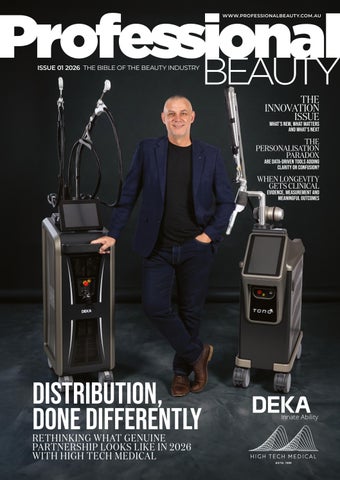
DISTRIBUTION, DONE DIFFERENTLY
RETHINKING WHAT GENUINE PARTNERSHIP LOOKS LIKE IN 2026 WITH HIGH TECH MEDICAL

WHAT’S NEW, WHAT MATTERS AND WHAT’S NEXT
PARADOX ARE DATA-DRIVEN TOOLS ADDING CLARITY OR CONFUSION? WHEN LONGEVITY


![]()
RETHINKING WHAT GENUINE PARTNERSHIP LOOKS LIKE IN 2026 WITH HIGH TECH MEDICAL

WHAT’S NEW, WHAT MATTERS AND WHAT’S NEXT
PARADOX ARE DATA-DRIVEN TOOLS ADDING CLARITY OR CONFUSION? WHEN LONGEVITY


BOOST THE BARRIER

A boutique and unique brand. We do monogamy very well. Closed relationships matter to us - especially in rural regions.


Because real results don’t come from fighting nature — they come from understanding it


10 Editor’s letter 12 Beauty bites
24 Cover story: High Tech Medical 28-32 Events
FORECAST
18 Driven by design: Inside the new clinic blueprint
22 The creator-clinician era
EDUCATION
36 Keeping pace
38 Specialisation is the new innovation
BUSINESS
42 The new clinic model
45 A wellness wake-up call
47 Agentic AI
50 The future of touch
54 Innovation icons
58 The modern male
62 The personalisation paradox
65 Skipping the scalp?
67 Nails: Dripping in diamonds
68 Tanning: Beyond the booth
70 Hair removal: At-home vs in-clinic
71 Brows by numbers
WELLNESS
74 A systems game
78 Wellness real estate
80 Librisa Spa, Cape Town
PUBLISHER
BHA MEDIA
MANAGING DIRECTOR
Simon Grover
ACTING EDITOR IN CHIEF
Erin Berryman eberryman@intermedia.com.au
NATIONAL
ADVERTISING MANAGER
Julie Davidson
jdavidson@intermedia.com.au
ART DIRECTOR
Ryan Vizcarra
ryanv@intermedia.com.au
PRODUCTION MANAGER
Jacqui Cooper
SUBSCRIPTIONS subscriptions@intermedia.com.au
Professional Beauty magazine is published by
BHA MEDIA
ABN 23142047943
41 Bridge Road, Glebe NSW 2037
Ph: 02 9660 2113 Fax: 02 9660 4419 www.intermedia.com.au
AUSTRALIAN
SUBSCRIPTION RATES
This publication is published by BHA MEDIA, a division of The Intermedia Group Pty Ltd (the “Publisher”). Materials in this publication have been created by a variety of different entities and, to the extent permitted by law, the Publisher accepts no liability for materials created by others. All materials should be considered protected by Australian and international intellectual property laws. Unless you are authorised by law or the copyright owner to do so, you may not copy any of the materials. The mention of a product or service, person or company in this publication does not indicate the Publisher’s endorsement. The views expressed in this publication do not necessarily represent the opinion of the Publisher, its agents, company officers or employees. Any use of the information contained in this publication is at the sole risk of the person using that information. The user should make independent enquiries as to the accuracy of the information before relying on that information. All express or implied terms, conditions, warranties, statements, assurances and representations in relation to the Publisher, its publications and its services are expressly excluded save for those conditions and warranties which must be implied under the laws of any State of Australia or the provisions of Division 2 of Part V of the Trade Practices Act 1974 and any statutory modification or re-enactment thereof. To the extent permitted by law, the Publisher will not be liable for any damages including special, exemplary, punitive or consequential damages (including but not limited to economic loss or loss of profit or revenue or loss of opportunity) or indirect loss or damage of any kind arising in contract, tort or otherwise, even if advised of the possibility of such loss of profits or damages. While we use our best endeavours to ensure accuracy of the materials we create, to the extent permitted by law, the Publisher excludes all liability for loss resulting from any inaccuracies or false or misleading statements that may appear in this publication.


Innovation has always been part of beauty’s DNA. But it’s no longer evolving quietly. It’s accelerating across every corner of the industry, all at once.
Welcome to The Innovation Issue. Inside, we explore how new ingredients, virtual education platforms, business models and shifting client expectations are redefining what it takes to stay relevant and competitive in 2026 and beyond.
In this issue, innovation isn’t just about what’s new. That question sits at the heart of our cover story. In a market obsessed with what’s next, High Tech Medical founder Matt Moncrieff challenges us to consider a more enduring measure of innovation beyond hype.
To kickstart the year ahead, our business section examines innovative ways of thinking, including hyper-specialisation and the businesses winning by doing less (page 38), the new clinic model of 2026 (page 42), and how agentic AI is beginning to support smarter decision-making across marketing, operations and client experience (page 47).
In beauty, we unpack a growing countertrend that runs parallel to technological acceleration. As automation increases, demand

EDITOR’S PICKS
is returning to touch-led therapies and hands-on expertise (page 50). We also take a deep dive into what we’re calling the ‘personalisation paradox’ (page 62). As AI diagnostics and datadriven tools promise ultra-tailored results, are they delivering greater clarity or adding to client confusion?
Wellness also comes into sharper focus this issue, as the lines between beauty and wellbeing continue to blur. From the expanding conversation around longevity—what it really means and what it doesn’t—to Australia’s booming wellness real estate market, we explore how wellbeing is being redefined beyond treatments alone.
I hope this issue challenges your thinking, sparks new ideas and offers practical inspiration you can take straight into the year ahead.
Here’s to a year of innovation with intention!
Erin Berryman Acting Editor


1SKIN by
O COSMEDICS
Blur Finishing Powder

This has been a needs-must final step over summer, especially on muggy days. It gives that filter-like finish without feeling cakey or tacky. INSKIN COSMEDICS 02 9712 8188.
After Glow Daily Face Sunscreen
The latest sensitiveskin-friendly SPF to earn a permanent place in my routine.

This Australian mineral sunscreen is packed with skincare-level actives like hyaluronic acid, niacinimide, kakadu plum and coq10. www.afterglow.store
Juliette Armand PDRN
Rejuvenation
Serum
I’ve noticed a genuine shift in my complexion since adding it to my daily routine. Fresher, glowier skin (and even a few compliments), which I put down to this!
G & F Distributors 1300 522 690


A refined, lightweight mineral SPF featuring zinc oxide.
Elevated with niacinamide, hyaluronic acid, Kakadu plum and CoQ10, formulated at skincare-level concentrations.
PB’s eye to the ground on the Australian beauty industry.

2.
Ultraceuticals’ Ultra C+ Rejuvenating Chebula Serum levels up vitamin C beyond brightness. Pairing 15 per cent L-ascorbic acid with Chebula extract — a powerful anti-glycation antioxidant — the formula works to promote, protect and preserve collagen while defending against sugar-induced ageing. The result? Visibly brighter, firmer skin through a smarter, multi-pathway approach to skin longevity. To learn more, visit www.ultraceuticals.com.au

3.
As the “no foundation skin” movement continues to reshape routines, Embryolisse builds on the legacy of its cult, makeup-artist favourite Lait-Crème Concentré with the launch of CC Crème+. Silicone-free and breathable, the skincare-infused formula hydrates, protects and perfects with SPF20 while allowing natural skin to shine through. Developed with makeup artist Olivier Tissot, it’s artistry meets treatment. To learn more, visit www.frenchbeautyco.com.au

1.
SIMKA unveils two bio-cellulose facial masks focused on precision treatment. The Skin Clarity Mask targets congestion and uneven texture with salicylic and mandelic acids, vitamin A and niacinamide, while the Vitamin Infusion Mask shifts focus to brightening and regeneration, pairing antioxidant vitamins A, C and E with EGCGglucoside and panthenol to restore radiance, hydration and barrier resilience. To learn more, visit www.simka.com

4.
LED knows no bounds with O Flex by O COSMEDICS. Designed to complement professional treatments, it brings clinicgrade photobiomodulation into a flexible, body-conforming format. Featuring four preset modes enhanced by near-infrared light, it supports clarity, calm and skin vitality for the face and beyond. To learn more, visit www.ocosmedics.com


5.
Medik8’s Niacinamide
Peptides Serum takes aim at pores, congestion and shine without compromising barrier health. Powered by a 10 per cent niacinamide complex and peptides, the lightweight formula refines texture while calming redness. It’s the next evolution of clarity care — high-performance actives, minus the irritation. To learn more, visit www.advancedcosmeceuticals.com.au

6.

Derma Energy marks a decade in the industry with a refined new identity that positions the brand firmly in “cool cosmeceutical” territory. Fans need not fret though - behind the refresh sits the same streamlined focus on energy, hydration and barrier balance, rooted in longterm skin health. To learn more, visit www.dermaenergy.com.au

7.

Murad’s Lipid-Enriched Double Cleansing Balm reframes cleansing as barrier care. The velvety, balm-to-oil-to-milk formula removes over 99 per cent of long-wear makeup, sunscreen and waterproof mascara in a single step, without residue. Fermented camellia oil dissolves impurities while barrier-building lipids replenish ceramides, delivering a deep cleanse that strengthens rather than strips. To learn more, visit www.murad.com.au
8.
Making waves globally, the XERF™ system has arrived in Australia, introducing the world’s first multifrequency monopolar RF skin tightening technology. By combining 6.78 MHz and 2 MHz, XERF™ delivers controlled energy across the skin’s superficial, mid and structural layers, enabling deeper, more precise heating where collagen remodelling occurs. Clients can expect smoother, firmer and visibly rejuvenated skin sans the downtime. To learn more, visit www.cynosurelutronicanz.com


Strengthens skin’s barrier against oxidative stress + blue light emissions Provides optimal antioxidant protection


Locks in moisture for long lasting hydration


Increases photo protection to reduce the effects of sun damage Immediately brightens, evens skin tone, and boosts luminosity
Interested in becoming a stockist?
Scan the QR code to find out more

Aveda’s Advanced Botanical Kinetics™ collection blends phytotechnology with sustainability, using vertically farmed, plant-derived vegan collagen to visibly plump and hydrate. The line-up delivers measurable performance while aligning with conscious formulation values — a growing priority as biotech botanicals take centre stage. Along with the launch there will also be a new spa treatment to showcase the range. To learn more, visit www.aveda.com.au


The Skincare Company InnerGlow Elixir approaches skin health from the inside out, combining prebiotics, postbiotics, amino acids and antioxidants to support the gut–skin axis. The first-to-market liquid serum format complements in-clinic treatments, reflecting growing interest in ingestible skincare as part of long-term barrier repair and inflammation management. To learn more, visit www.theskincarecompany.com.au

1SKIN by O COSMEDICS’ BLUR Finishing Powder provides softfocus perfection without dulling radiance. Weightless and velvety on contact, it smooths pores and texture while maintaining a natural glow. Suitable for both professional kits and everyday wear, it reflects the shift towards complexion products that enhance — not erase — real skin. To learn more, visit www.ocosmedics.com
The Beauty Hub, a new category-defining hub by The Foundry, aims to simplify the business of beauty. Built by clinic operators who’ve scaled real practices, the all-in-one platform offers strategic support, practical education and peer connection, tackling the operational, financial and leadership challenges that come with growth. Less theory, more lived experience, designed for owners ready to scale with confidence. To learn more, visit www.the-foundry.com.au


The treatment spaces of tomorrow embrace deeply immersive, multisensory-led design. Kristie Lau-Adams explores the strategic allure of a flawless fit out.
AUSTRALIAN BUSINESS owners are accustomed to the power of picture-perfect marketing. For more than a decade, a quick scroll through a pristine Instagram carousel has had the ability to hook fresh clientele. In more recent years, however, customers have begun craving more.
According to a 2024 trend report released by Fresha, the salon software company headquartered in the United Kingdom, research found that “consumers ultimately visit salons… to boost holistic wellbeing by receiving a positive experience”. It found that 75 per cent of women and 70 per cent of men were more likely to revisit a business if it offered “complimentary add-ons” such as beverages and snacks. It begs the question: how do business owners facilitate holistic, experiential fulfilment while still ensuring exemplary treatment? The answer, evidently, is strategic design.
Marylou Sobel of Sydney’s Marylou Sobel Interior Design says the work she crafted for Contour Clinics, located across Sydney and Brisbane, was meticulously shaped to generate transformational experiences. “Beauty and wellness design has shifted from transactional service delivery,” Marylou explains. “Clients seek complete departure from ordinary life: experiences that engage their minds and spirits. We’ve seen significant adoption of biophilic design principles, maximising natural light, incorporating living walls, using natural materials and creating views to outdoor landscapes.”
The award-winning designer believes the most crucial objective in creating intelligent spaces is disassociating them from clinical functionality. “Every design element, from curved walls to textured paint, reinforces the promise of transformation and care,” she says, adding that her work for Contour prioritised

client comfort and privacy. “We strategically planned layouts with dedicated waiting areas, ensuring confidentiality during sensitive procedures. For Contour’s long, narrow tenancy, we created a spine with treatment rooms on either side and positioned a lounge midway to break up the corridor. Modern clients seek sanctuaries rather than medical facilities.”
Marylou pinpoints lighting as another crucial component in beauty and wellness fit outs, noting that the mood of a space is beholden to luminosity and each zone should be uniquely considered. “Intelligent lighting that mimics natural daylight reduces stress,” she advises. “Different areas require different approaches. A reception needs warmth, while consultation rooms need accurate colour rendering, for example.”
“CLIENTS SEEK COMPLETE DEPARTURE FROM ORDINARY LIFE: EXPERIENCES THAT ENGAGE THEIR MINDS AND SPIRITS.”
The brains behind one of Australia’s most acclaimed wellness operations, Nature’s Energy in Sydney, echoes the importance of catering to the senses. Andrew Bovill, managing director


of the bathhouse brand that has been crowned Australia’s Best Day Spa at the World Spa Awards for four consecutive years, says considered, sensoryled design is paramount to successful business performance. “For us, design is not an afterthought – it is the treatment, before any therapist lays a hand on you,” Andrew says.
He identifies the brand’s Balmain location, which reopened in September 2025 after significant renovations, as a truly immersive catalyst for client restoration. “At Balmain, every decision is anchored in our belief that we’re here to put back in what life takes out,” he explains. “The architecture and interiors are deliberately designed to regulate the nervous system – the way the light softens as you move deeper into the space, the warmth underfoot from the underfloor heating, the quiet fall of the tiles so floors stay dry even in a bathhouse. It’s a silent choreography that moves people from busy and overstimulated to grounded and present.”

“My husband, co-founder Cameron D’Arcy, and I are focused on our mission to develop connections between our guests — this isn’t a silent retreat,” Tasch says. “Escape Bathhouse is made for being with people, soaking with your partner, sitting with friends and chatting at our Placebo Bar. We believe restoration happens in community, not just in isolation.”
Tasch, a trained beauty therapist, notes that the best experiential-led design also allows for adaptability within a space. She knows that when a client prefers solitude to social interaction, Escape must cater to that demand. “We have Quiet Hours in place from 7am to 10am between Tuesday and Friday,” she says. “A space should flex to what your customer needs.”
Scent and sound are also key design ingredients that encourage full-body immersion, with modern businesses moving past traditional florals and instrumental background tunes. Increasingly, signature self-blended scents and intelligent audio tracks are being introduced to evoke client emotion. “Intentional scents start at Escape’s door with our grounding incense cones,” Tasch explains. “The earthiness immediately signals you’ve left the outside world. In our massages, we use a signature blend of lavender, rose, vanilla, patchouli and mandarin. It smells distinctly like Escape and helps to build that sensememory.”
“WET, STEAMY CHAOS DOESN’T FEEL LUXURIOUS. EFFORTLESS COMFORT DOES. ALL THE LITTLE THINGS MAKE A BIG IMPACT.”
As client satisfaction is cemented as a top priority for Australian business owners, unexpected influences are beginning to make waves across beauty and wellness spaces. Extending beyond the post-treatment nibbles and herbal teas clients have come to expect, proximity food and beverage offerings are gaining momentum. For Tasch D’Arcy, cofounder and designer at Escape Bathhouse in Sydney, enjoying a meal in a shared space often leads to increased engagement — and not just between a business owner and their client.

Andrew adds that the Nature’s Energy team obsess over intricate design details, even those classified as ‘unsexy’ operational necessities. Yes, Nature’s Energy in Balmain flows with dazzling visual appeal, courtesy of a terracotta and sandstone palette layered with forest greens and soft neutrals, but it’s the hidden design considerations that make a real difference to client experience.
“The fall of the floor so water disappears and walkways stay dry, the large extractor fans, dehumidifiers and climate-controlled air conditioning that keep the air fresh and the temperature exact,” Andrew details. “Wet, steamy chaos doesn’t feel luxurious. Effortless comfort does. All the little things make a big impact.”
Above all, exceptional experiential design should seamlessly clear the way for business owners and their teams to focus on what they do best — delivering highquality treatments and services. As Andrew says, “When your team isn’t constantly fighting the building, they can be fully present with clients. Guests can feel that.” ■


A shift is underway in the professional beauty industry, with personal brand fast becoming a new business model, writes Rachel Medlock.
FOR DECADES, career pathways in beauty followed a familiar arc. You trained, you treated, you climbed. Perhaps you became a manager, opened a clinic or moved into education or brand representation. The ladder was narrow, but clear. Now, a different model is emerging that expands the scope of where clinical excellence can lead.
Today, clinicians are content creators, educators and micro-brands. In the process, personal brand is shifting from a marketing add-on to a business strategy.
According to Tamara Reid, founder of Inside Industry and B2B brand-marketing consultant, the shift reflects professional maturity rather than social media trends.
“Clinicians are realising their knowledge holds value beyond the treatment room, and the industry is finally giving them space to express it.”
Clinic marketing can build trust at scale. Personal brand narrows it, personalises it and anchors it to a human – often before a booking is made.
“For owners, this turns the team into genuine advocates for the business,” Tamara says. “These aren’t influencers you hire; they’re the people clients already listen to.”
This shift also opens new revenue pathways. Beyond likes and reach, clinics are monetising clinician expertise through co-branded downloads, consultation toolkits, ebooks, subscriber channels and online education.
“When a clinician builds authority, their knowledge becomes something the clinic can package and scale,” Tamara notes. “Not just something delivered one client at a time.”

“THESE AREN’T INFLUENCERS YOU HIRE; THEY’RE THE PEOPLE CLIENTS ALREADY LISTEN TO.”
Building a Parallel Brand
For Amy Wright, founder of Eltham Cosmetic Clinic, investing in a personal brand wasn’t about attracting more clients to her diary – in fact, quite the opposite.
While strategy and revenue matter, the success of a personal brand often hinges on how well it reflects the actual person behind it. Visual identity influences who feels drawn in, who opts out and how the experience is pre-framed.
Keira Maloney, The Salon Photographer, sees this play out daily.
“The strongest personal brands come from people who have sat with the important questions,” she says. “Who am I in the room? How do I speak? What do I value?”
When visuals reflect that reality, clients arrive already aligned. “Consults feel easier. Boundaries are clearer. There’s less emotional labour,” Keira explains.
In a saturated market, this alignment matters. “Visual identity isn’t about appealing to everyone,” she adds. “It’s about being specific enough to quietly repel the wrong people.”
Despite the momentum behind the creator–clinician movement, it isn’t a universal requirement.
“I don’t believe every clinician has to build a personal brand,” Tamara says. “It strengthens expertise and opens doors, but it requires time and energy.”
For those who pursue it, she advises clinicians to identify three areas they want to be known for and speak about those consistently. “It doesn’t have to be polished,” she says. “It just needs to sound like you.”
For many clinicians, the barrier isn’t strategy, it’s discomfort. Visibility can feel exposing in an industry that has long valued professionalism and restraint.
“Ask whether the discomfort is about visibility or misalignment,” Keira says. “Often it’s not about being seen, but about being seen as the wrong version of yourself.”
Amy agrees. After years of stepping back from social media, re-entering the spotlight felt daunting. “Sometimes we think stepping back is humility,” she says. “But part of it can also be avoiding being seen.”
Reframing visibility as service helped. “Something that feels ordinary to you might be genuinely helpful to someone else,” she says.

“I was stepping back from being on the tools,” Amy says. “I wanted my team to take the stage.” As her role shifted into mentorship, training and business coaching, her work became industry-facing.
“I realised I could be a parallel brand,” she explains. “Something I could grow alongside the clinic, that belonged to me personally.”
That shift invited opportunities, including speaking engagements, educational work and industry contributions. It also had a direct flow-on effect to the clinic itself.
“The more I position myself as an authority, the greater the credibility of the clinic I own,” Amy says. That visibility has strengthened the clinic’s profile, reinforcing trust with clients and attracting clinicians seeking clear leadership and direction.
Keira encourages clinicians to start small. “High-quality imagery matters, but personal brand lives in presence,” she says. “Talk about who you are, what you do and who you help. Your energy and delivery communicate more than a perfectly styled image.”
The creator–clinician era marks a structural shift in professional beauty.
As expertise extends beyond the treatment room into education, leadership and visibility, personal brand becomes the infrastructure supporting new revenue pathways, trust-building and career progression.
After all, in today’s industry, expertise doesn’t just treat, it scales. ■


“BE KIND. TREAT YOUR CUSTOMERS AS FRIENDS. UNDERSTAND THAT IT’S A LONG GAME.”
In a market louder, faster and more competitive than ever, High Tech Medical has built its reputation by doing the opposite.
In the professional beauty and aesthetics industry, speed is often mistaken for success. New devices launch faster than clinics can properly evaluate them. Treatments trend before protocols are established. Visibility increasingly outpaces viability. As the industry grows louder, the cost of getting it wrong has never been higher. It is in this space that High Tech Medical’s approach feels more relevant than ever.

This fast-paced climate has made restraint a key differentiator, one that founder and managing director Matt Moncrieff understands instinctively. Having navigated multiple eras of aesthetic technology, from early CO2 lasers to today’s multimodality environment, he has seen the cycle repeat often enough to recognise that focus, rather than scale, is where success lies.
Founded in 1999, High Tech Medical began as a distributor of dental lasers before transitioning into aesthetic medicine in 2005. The company’s reputation has long been shaped by its ability to recognise not just what is new, but what will last.
Over more than two decades, the company has introduced and distributed some of the most influential technologies to the Australian and New Zealand market. Among them, Australia’s first fractional CO2 laser, DEKA SmartXide DOT, alongside categorydefining platforms such as Sofwave, CoolSculpting, Hydrafacial, MonaLisa Touch, Ulthera, Nordlys and InMode Morpheus 8. Each represented a genuine shift in clinical outcomes, not incremental upgrades.
That instinct is reinforced through long-standing global partnerships with world-leading manufacturers including DEKA, EndyMed, iS Clinical and EmCyte.
What distinguishes High Tech Medical’s approach, however, is not the breadth of its offering, but the discipline behind it. The portfolio is deliberately selective, streamlined to minimise overlap and designed so

technologies complement one another clinically and commercially. It reflects how clinics actually operate: layering treatments thoughtfully, building patient journeys and scaling without excess.
Another defining focus is minimally invasive innovation. This is reflected in technologies such as near no-downtime fractional CO2 resurfacing with Tetra PRO’s CoolPeel treatment, Onda PRO, a microwave-based, non-surgical face and body contouring platform, Again PRO, a high-speed hair-removal laser, and Toro, a multiwavelength nano and pico laser system designed for versatility.
That philosophy extends to the recent launch of Glacial® fx, a CryoAesthetics® platform designed to target inflammation-driven skin ageing. Featuring two treatment modes, Gloss and Glide, the technology uses precision cooling to calm skin, accelerate recovery and enhance treatment outcomes with little to no downtime.
What sets Matt apart is his ability to view the industry through the lens of today’s clinic owner.
sophisticated patients, and the belief that more equipment equates to greater credibility.
After decades working alongside clinics at every stage of growth, he has seen where early decisions compound, and where they unravel. Asked how he would approach opening a clinic today, Matt’s thinking is measured. As with his own business, breadth can wait. What matters first is clarity: selecting technologies with proven demand, choosing partners aligned with long-term success, and resisting the urge to chase novelty before fundamentals are in place.
It is a mindset shaped not by caution, but by empathy, an understanding that in today’s market, restraint is often the most commercially sound decision a clinic can make.
The most resilient clinics, Matt observes, begin with a multipurpose energy-based platform capable of delivering a wide range of treatments, and one that leaves clients walking out feeling good, not hesitant to return.
From there, he believes branded treatments with established market equity play a critical role. Platforms such as Hydrafacial remove friction at the front end: widely recognised, broadly suitable and capable of delivering immediate, visible improvement. Used and marketed well, they become a powerful marketing asset and a valuable retention tool, attracting new patients and encouraging repeat visits rather than oneoff transactions.

Alongside technology, a strong skincare offering is nonnegotiable. “It’s a core pillar of long-term results, education and ongoing client engagement,” he says. “Then, once those foundations are in place, and only if budget permits, introduce a more specialised device.” While these are narrower in appeal, they can become a commercial differentiator.

When he speaks about growth, it is not through the lens of hindsight or legacy, but through the realities clinics are navigating now: the temptation to build a fully realised business from day one, the pressure to invest quickly to meet the evolving demands of increasingly
One of the most consistent risks Matt sees is not a lack of ambition, but a lack of pause.
Social media, he notes, has compressed decision-making to the point where clinics are often reacting rather than evaluating. Treatments gain traction quickly online, driven by visibility and client demand, prompting knee-jerk investment decisions.
“They’re buying a device, thinking they’re going to have a quick hit of revenue, without understanding the treatment, assessing the quality of the device, comparing competitors and understating whether or not it is a good long-term investment.”
Equally problematic is relying too heavily on a single source of advice. In an industry crowded with competing claims, Matt encourages clinics to do their own homework, to speak with multiple suppliers, seek out peers and understand how a technology performs not just at launch, but six or twelve months later.
It’s not the advice clinics typically hear from a distributor, another signal of High Tech Medical’s values.
For Matt, the distinction between a supplier and a true partner comes down to mutual investment.

Creating real value for clinics, he believes, means making decisions that support both sides over time. “It’s about having people on hand who can guide decisions based on what’s right for your business long term, not just for the next three months.”
Across much of Australia’s device market, distribution models are tied to overseas parent companies, where recommendations are shaped by immediacy. High Tech Medical takes a different view. “If you expect to still be working with a clinic in 10 years’ time, you make very different recommendations.”
Even if that means counterintuitive advice occasionally, like directing clinics towards an alternative solution that sits outside
High Tech Medical’s own portfolio. “Sometimes the right decision is to say no,” he explains. “If a clinic succeeds because we helped them avoid a mistake, that relationship becomes far more valuable than a short-term sale.”
That long-term philosophy is reflected in the relationships High Tech Medical has built over many years. Among its long-standing partners is industry veteran Gay Wardle, founder and director of Gay Wardle Skin Institute and Skin Energy.

“I have worked in this industry for many decades and, in that time, have dealt with countless suppliers, educators, service teams and company owners. Very few stand the test of time. Fewer still earn unwavering trust. High Tech Medical is one of those rare companies, and Matt Moncrieff is one of those rare leaders,” she says.
“What truly sets the company apart is not just what it sells, it is how it supports the professionals who invest in its technology. The education team is exceptional, deeply knowledgeable and genuinely invested in outcomes, and the service team is second to none.”
Internally, that ‘anti-corporate’ mindset is reinforced in small but telling ways. Corporate jargon is discouraged, quite literally. Matt shows me a bell in his office, rung whenever corporate clichés or buzzwords creep into conversation. “It’s about being a relatable, real person that people can connect with and trust.”
That approach has shaped the nature of High Tech Medical’s relationships. “Many of our clients are now friends,” Matt adds. “We’re in front of them regularly, they’re at our Christmas party, and that comes from being genuine.”
What sits beneath Matt’s long-term thinking is something simpler than strategy.
“If you push someone into a decision that ultimately isn’t right for them, you might make more money in the short term,” he says. “But you potentially burn the relationship. And once that trust is gone, there’s nothing left to build on.”
For Matt, longevity is not just a business objective, but a way of orienting every decision. Advice is given with the expectation that the relationship will still matter years from now, that today’s recommendations will stand up to time.
At the core of that mindset is a principle he returns to often: kindness.
“If your first approach to everything is to be kind and thoughtful, it shapes how you think about decisions,” he says. “It forces you to consider the other person first.”
That philosophy runs through High Tech Medical, not as a value statement, but as a way of operating. From the guidance given to clinics to relationships maintained over decades, the emphasis is on care.
What ultimately distinguishes High Tech Medical is not a portfolio or a process, but the human lens through which decisions are made. ■
“THEY ARE NOT JUST A SUPPLIER; THEY ARE A LONGTERM PARTNER. MATT LEADS WITH INTEGRITY, GENEROSITY AND KNOWLEDGE. I CONSIDER BOTH HIM AND THE HIGH TECH MEDICAL TEAM TO BE AMONG THE VERY BEST IN THE BUSINESS.”
– GAY WARDLE
• Tetra PRO by DEKA is a world-leading fractional CO₂ laser offering near no-downtime resurfacing through CoolPeel. Suitable for all skin types, it delivers visible results with minimal disruption - a combination that resonates strongly with clinics.
• Onda PRO by DEKA is a microwave-based platform for nonsurgical face and body contouring. Simultaneously targets fat, cellulite and skin laxity in treatments as short as 10 minutes, with no downtime and high patient comfort.
• TORO by DEKA is a multi-wavelength laser combining nano- and picosecond technology. Delivers versatile solutions for pigmentation, tattoo removal, acne scarring and skin rejuvenation.
• EndyMed is a modular, all-in-one radio frequency solution including RF microneedling, and powered by clinically validated 3DEEP® technology. Designed for skin tightening, wrinkle reduction and body contouring with minimal downtime and low running costs.

• iS Clinical is a pharmaceutical-grade skincare range backed by independent clinical testing. Globally recognised for results-driven formulations designed to support long-term
• Hydrafacial is a globally recognised, multi-step treatment platform delivering immediate skin health and visible results.
Universally suitable, Hydrafacial has become a cornerstone treatment for clinics focused on retention, accessibility and consistent outcomes.

High Tech Medical Partner Testimonial
WITH CRYSTAL PATEL, MANAGING DIRECTOR OF CLINICA LASE SKIN &
LASER CLINIC IN CARLTON AND BALLARAT, VICTORIA

What initially drew you to High Tech Medical and the brands they represent?
Their focus on clinically proven technologies and long-term outcomes rather than trends. As a clinic, we’re very selective about the devices we introduce. They need to align with evidence-based practice, safety and realistic results for our clients. The brands High Tech Medical represents reflect that same philosophy, which made the partnership feel like a natural fit rather than a sales decision.
How would you describe your experience of partnering with High Tech Medical?
Genuinely collaborative. From the outset, the relationship has felt more like a partnership than a supplier arrangement. There has been strong support not just during the purchasing phase, but well beyond that, including training, troubleshooting and honest conversations about where a device fits, or doesn’t fit, within our treatment offerings.
What are the strengths of High Tech Medical that you appreciate most?
Their depth of knowledge and integrity. They understand the clinical environment and respect that every clinic operates differently. I’ve also appreciated their transparency. There is no pressure to oversell or overpromise, which is something I value highly, both as a business owner and a clinician.
How has working with High Tech Medical helped or changed your business?
Working with High Tech Medical has allowed us to expand our treatment capabilities in a way that feels intentional and aligned with our brand. The technologies we’ve introduced have supported more customised treatment plans and helped us address a broader range of skin concerns without compromising our standards. It has strengthened our ability to deliver consistent, high-quality outcomes rather than simply increasing volume.
How have your High Tech Medical products contributed to your ROI?
From an ROI perspective, the contribution has been steady and sustainable rather than short term. The devices we use integrate seamlessly into existing treatment plans, which supports rebooking, combination treatments and long-term client relationships. Importantly, they have helped build trust and, in our experience, trust is one of the biggest drivers of repeat business and longterm growth.
Any other comments about High Tech Medical?
High Tech Medical has proven to be a partner that understands both the clinical and commercial realities of running a modern aesthetic clinic. Their approach aligns with how we choose to grow, thoughtfully, ethically and with the client’s best interests at the centre of every decision.
High Tech Medical Partner Testimonial WITH DR SARAS SUNDRUM, FOUNDER AND DIRECTOR OF DR SARAS & CO CLINICS, BASED ACROSS FOUR LOCATIONS IN NSW

What initially drew you to High Tech Medical and the brands they represent?
As a new cosmetic physician almost 25 years ago, I quickly realised how easy and approachable the team at High Tech Medical were, and that they were always available. I purchased one of my first devices from Matt Moncrieff, who was already well respected and highly knowledgeable. This device was a CoolSculpting machine, and I still appreciate his honesty and integrity in advising me on this purchase, and more broadly.
How would you describe your experience of partnering with High Tech Medical?
I’ve been grateful for the advice and consistent honesty in our discussions. This has led to the acquisition of many other devices from High Tech Medical, all of which have been very successful in my clinics.
What are the strengths of High Tech Medical that you appreciate most?
High Tech Medical remains at the top of cosmetic medical companies for a number of reasons. They understand the market in Australia and New Zealand, and continually search globally for the best devices to introduce locally. This is backed by comprehensive education and ongoing support for doctors. The team, whether sales, training, accounts or marketing, are easy to reach and straightforward to deal with, which makes my life that much easier.
How has working with High Tech Medical helped or changed your business?
Working closely with High Tech Medical over the past 25 years has been instrumental in the growth and success of my practice. I’ve purchased many devices and products from the company, including CoolSculpting, Hydrafacial, Onda Coolwaves, iS Clinical skincare and the DEKA CoolPeel laser. All have been very successful and, as a result, we’ve come to rely on Matt and his team to help guide our future investment decisions as we continue to grow.
How have your High Tech Medical products contributed to your ROI?
Matt Moncrieff and his team are highly selective about the technologies they introduce under the High Tech Medical banner. As a result, partnering with them has been very successful in delivering treatments that our patients genuinely want. In running a cosmetic medical practice in Australia, we also greatly value the efficiency and reliability of their training, accounts and marketing teams. Overall, it’s been a highly successful partnership and vital to the ongoing growth of my business.
Any other comments about High Tech Medical?
High Tech Medical has proven to be a partner that understands both the clinical and commercial realities of running a modern aesthetic clinic. Their approach aligns with how we choose to grow, thoughtfully, ethically and with the client’s best interests at the centre of every decision.

I ARRIVED at Cosmoprof Asia 2025 expecting scale and spectacle. What I got was both, dialled all the way up.
The 28th edition welcomed 64,761 visitors (75% from outside Hong Kong) through its doors from 140 countries and regions. There were 2,688 exhibitors spread across eight halls and 16 country pavilions, including Australia, each bringing its own distinct energy.
But the biggest shift? The way everything now overlaps. Categories that once sat in neat silos –beauty, wellness, medical-adjacent, professional, consumer – felt more intertwined than ever. It underscored how quickly the lines are blurring and how fast the industry is evolving into one interconnected ecosystem.
The Trends
PDRN. Everywhere
And not quietly. Brands weren’t just dropping it into serums; they were building entire ranges around repair, regeneration and “needle-free recovery”. Plant-based PDRN alternatives were also out in force. It’s rare to see an ingredient trend backed by both K-beauty giants and pro-clinic brands, but PDRN had that energy. According to BEAUTYSTREAMS’ CosmoTrends Report, the
Erin Berryman roams the halls of Asia’s leading B2B beauty trade show to uncover the innovations shaping 2026.
projected growth of the global PDRN skincare market is from US$321.2 million in 2025 to approximately US$811.4 million by 2035. In the pro-beauty context, this signals strong demand for innovation in salon-grade skin-repair treatments and premium product ranges.
Post-Procedure Skincare
With cosmetic treatments booming globally, post-procedure skincare is officially mainstream. BEAUTYSTREAMS notes that nearly 1.2 million foreign patients visited South Korea for dermatologic and cosmetic procedures by the end of 2024. Products on display leaned into soothing, barrier-supporting actives such as EGF, succinic acid, PDRN and squalane. For clinics and salons, this represents both a clear service gap and a major commercial opportunity.
The exosome affect – which we unpacked in our latest issue – was reinforced at every turn. It’s no surprise: Cosmoprof has become the discovery lab for many of the exosome-powered innovations we’re now seeing on shelves, and being on the ground this year brought that pipeline to life. No longer an insider conversation, exosomes have now moved firmly into the mainstream, fuelled by early clinical promise and strong consumer appetite for regenerative results.
Spicules – once a niche, slightly polarising exfoliation method – were everywhere. But this time, the positioning has shifted. Brands reframed spicules as micro-delivery structures that nudge the skin into renewal while enhancing penetration of actives. It’s “needle-free needling”, and the rise reflects two big shifts: people want visible results without downtime, and brands are hunting for non-acid exfoliation alternatives.


A patch I didn’t expect to see? UV shields. With sunscreen scrutiny at an alltime high, these were intriguing. Think sheet-mask-style physical barriers engineered to block UV without chemical filters or skin irritants. They’re early, but they signal that sun protection is set to diversify far beyond lotion. One to watch.
Delivery-system-led skincare was one of the biggest themes. Ampoules and vials were everywhere – single-dose, multi-dose and booster formats – all built around potency, freshness and treatment-style routines. Consumers clearly resonate with the precision and customisation they offer.
In the last edition of Professional Beauty, The Body Issue, we unpacked all the latest tech and treatments targeting below the neck, which could not have been timelier. Body tech dominated the floor here too – and not the usual sculpting devices, but full-scale robotic therapy systems. Live demos of TheraFlex Pro R3 and the Rocozyer robotic arm stopped passers-by in their tracks. They blur beauty, physio and wellness, bringing precision and repeatable protocols that human hands can’t replicate. It marks a new era of automated, data-led body treatments with outcomes that straddle spa comfort and clinical performance.
Patches, Patches and More Patches
Everywhere I turned, there were variations of patches: blemish patches with fine needles, undereye firming patches, brightening patches and targeted wrinkle “spot treatments”. The common thread was delivery. Instead of relying on surfacelevel absorption, brands are leaning into dissolvable microneedles and occlusion technologies to push ingredients deeper and more precisely. The sheer volume of exhibitors suggests patches are moving from novelty to clinically oriented offerings and are poised to become a retail category in the professional space.
Skin diagnostics were another standout category, signalling a wider shift toward precision beauty. Tools ranged from AI-powered imaging devices to scanners that map microtexture, pigmentation, hydration and barrier function. The demand for personalised solutions is driving this surge – consumers want products built around their data, not generic skin types. Within clinics, diagnostics are quickly becoming the backbone of consultation and prescription.
Wellbeing quietly touched every part of the show. Sleep masks infused with NMN and phyto-melatonin, scent-driven body oils, and textures designed to calm the senses all featured strongly. One of the most telling Cosmoprof Asia Awards winners was Meno-Free Comfort Body Night Lotion, a body cream using wild yam extract, Neurophroline™ and Tephrosia purpurea to ease stressrelated discomfort and redness in menopause and perimenopause. It mirrors the rapidly growing menopause-care category already emerging in Australia with brands such as Emepelle.
Make-up formulations have never been more intentional. Cushions, BB creams and tinted creams integrated actives such as exosomes, prebiotics, squalane and marine biopolymers. A standout was the award-winning EUFOREAL Tinted Repair Cream – sheer coverage, barrier support, post-procedure-safe and packed with actives. This is where make-up is heading: performance without compromise, with skincare credentials front and centre.
As I left the convention centre – 20,000 steps deep, with a chaotic camera roll – one thing was clear: the beauty consumer of 2026 is smarter, more skinliterate, more wellness-minded and far more technologically sophisticated.
Mark your calendars: Cosmoprof Asia will return to Hong Kong from 10–13 November 2026.
For more information, visit cosmoprof-asia.com.

From clinical congresses and business intensives to trade shows and awards nights, the 2026 calendar is stacking up. Whether you’re sharpening your clinical edge, scaling your clinic or scouting what’s next, these are the events to mark in your calendar.
Osmosis Australia Conference
March 2–3
The Glasshouse, Melbourne
The program features exclusive education led by Dr Ben Johnson, founder and formulator of Osmosis Skincare, alongside Renee Freeman, director of education (USA). Together, they will deliver advanced clinical insights and practical business guidance to help elevate results and strengthen your practice. www.osmosisskincare.com.au
Cosmedicon
March 5–7
InterContinental Double Bay, Sydney
A premium, education-led event focused on cosmetic medicine, injectables and procedural best practice, with a strong emphasis on safety, outcomes and peer learning. www.cosmedicon.com.au
Australian Society of Cosmetic and Procedural Dermatologists
Symposium
March 20–22
Crown Conference Centre, Melbourne
Australia’s leading dermatology symposium, bringing together procedural dermatologists for evidence-based education, clinical innovation and advanced treatment discussions. www.ascpd.org.au
Cutera University Clinical Forum
May 1–3
The Langham, Queensland
An education-intensive forum exploring Cutera technologies, treatment protocols and real-world clinical outcomes across face and body indications. www.cucf.com.au
Professional Beauty Solutions
Skin Summit
May 2–3
Swissôtel & Ivy Ballroom, Sydney
Celebrating 20 years of Professional Beauty Solutions, Skin Summit 2026 encompasses education, device innovation and business strategy across two immersive days. Designed for clinic owners and teams, with a strong focus on real-world outcomes and ROI.
www.probeautysolutions.com.au
Aesthetic Business Masters
May 4
Jones Bay Wharf, Sydney
A one-day business immersion for clinic owners and leaders focused on growth, profitability, leadership and futureproofing your aesthetic business.
www.aestheticbusinessmasters.com.au
Australian Aesthetics Symposium
May 15–16
Perth
A multidisciplinary program blending clinical education with business insight, tailored to the evolving aesthetics landscape. www.aas-2026.squarespace.com
Power Up
May 16
Taronga Centre, Sydney
A full-day educational event hosted by Cynosure Lutronic, bringing together leading practitioners, advanced aesthetic technologies and real-world clinical insights. Designed to elevate patient outcomes and keep clinics at the forefront of innovation. www.cryomed.com.au

NZ Hair & Beauty Expo
June 13–14
New Zealand
A major trade event across hair, beauty and aesthetics. Included for its strong Australian attendance and brand presence.
www.nzhairandbeauty.nz
Aesthetic Business Masters and Awards
May 17–18
The Langham, Melbourne Education meets celebration, with business-focused content followed by an awards evening recognising excellence across the aesthetics industry. www.aestheticbusinessmasters.com.au
The Lash Summit Australia
May 30
Mantra on View Hotel, Queensland
A one-day, power-packed experience where lash artists and beauty entrepreneurs come together to learn from Australia’s top educators and industry leaders. www.thelashsummit.com.au
Non-Surgical Symposium
June 5–7
ICC Sydney
One of the region’s largest non-surgical aesthetic events, covering injectables, devices, dermatology, business and regulation. www.nonsurgical.org.au
Clinical Aesthetics Symposium
June 9
New Zealand
Included due to strong Australian delegate attendance, this symposium offers clinically driven education with a trans-Tasman perspective. www.clinicalaestheticsnz.com
Cosmetic Collective by Juv’ae
June 21–23
The Langham, Gold Coast
An immersive education experience blending injectables, devices and business strategy in a luxury, retreat-style setting.
www.cosmeticcollectiveconference. com.au
Beauty Expo Australia
August 15–16
ICC Sydney
Australia’s largest beauty trade event, spanning professional skincare, devices, education, nails, aesthetics and business tools.
www.beautyexpoaustralia.com.au
ABIA ANZ Beauty Industry Awards
August 16
The Star, Sydney
A celebration of excellence across the ANZ beauty industry, recognising brands, clinics, educators and professionals. www.mochagroup.com.au
Derma Aesthetics Conference
August 17
W Sydney
A boutique, clinically focused event centred on advanced skin treatments, dermatological science and emerging technologies.
www.dermaviduals.com.au
Aesthetic Business Masters and Awards
August 31
W Brisbane
The Queensland edition of the popular business-intensive program, tailored for clinic owners and leaders in the region.
www.aestheticbusinessmasters. com.au
International Lash Masters
September 19
Pullman on the Park, Melbourne
The biggest lash and brow event in Australia returns with live seminars, industry panels and the second edition of the ILM Lash and Brow Awards.
www.internationallashmasters.com
Aesthetic Business Masters
September 21
Perth
The WA edition of the popular businessintensive program, tailored for clinic owners and leaders in the region.
www.aestheticbusinessmasters.com.au
The Wellness Summit
October 25–28
Margaret River, WA
A destination-style summit exploring wellness, longevity, leadership and personal development in one of Australia’s most iconic regions. www.wellnesssummit.com.au
Australian Permanent Makeup Artist Conference (APMAC) 2026
October 26–27
Cloudland, Queensland
Live and interactive demonstrations from national and international artists and educators, covering all areas of cosmetic and paramedical tattooing across both days.
www.apmac.com.au
All information subject to change.


WHEN EDUCATION is designed by the industry for the industry, it shows. That ethos sits at the heart of the inaugural Science & Soirée Series from iS Clinical, a multi-city program blending advanced clinical science, hands-on learning and high-end networking experiences.
At a time when clinics are demanding deeper evidence, better protocols and smarter integration of topicals into procedural work, the series delivers timely, practical education led by an international expert panel.
Travelling to Australia and New Zealand for the series are three senior leaders from iS Clinical’s global team:
• Dr Charlene DeHaven, Clinical Director
• Traci Imperio, Aesthetic Training Manager
• Mark Perez-Nelson, Associate Vice President of International Business
Together, they bring a rare mix of clinical depth, training expertise and commercial insight, ensuring education that translates directly into treatment rooms and business strategy.
The program kicks off with two expert-led presentations at Cosmedicon, presented by Dr DeHaven.
On Friday 6 March at 4pm, attendees will explore Extremolytes & Extremozymes in Topicals, followed by Saturday’s 10am session, Optimising Procedural Results with Topicals.
Beyond Cosmedicon, the series expands into immersive training and networking formats designed to elevate both skill and connection.

From Science to Soirée
Luxury evening soirées in Sydney and Melbourne provide a refined setting for peer connection, brand immersion and open discussion, reinforcing the idea that education doesn’t stop when the presentation ends.
Advanced training days across Sydney, Melbourne and Auckland offer deeper dives into protocols, consultation strategies and treatment optimisation, with practical insights clinicians can implement immediately.
Program at a Glance
6–7 March: Cosmedicon presentations with Dr Charlene DeHaven
8 March: Luxury Evening Soirée, Sydney
9 March: Advanced Training Day, Sydney
10 March: Luxury Evening Soirée, Melbourne
11 March: Advanced Training Day, Melbourne
13 March: Advanced Training Day, Auckland
For clinics looking to refine protocols, strengthen procedural results and align science with strategy, this series delivers where it counts – in practice, not just on paper.


Clients are more informed and sceptical than ever. Trust now determines who converts, who retains and who gets recommended.
From clinically backed formulations and rigorous testing to education-led leadership, compliance and safer, smarter practice, The Trust & Transformation Issue spotlights the brands and experts elevating industry standards.
Timed with autumn’s peak corrective skin season, this issue speaks directly to what clinics are prioritising right now: protocols, risk management and treatment integrity during one of the industry’s busiest periods.
• Cosmeceutical brands with clinically proven formulations, active-led ranges and evidence to stand behind their claims
• Devices and advanced treatment providers focused on safety, efficacy, compliance and measurable outcomes in-clinic
• Education platforms, trainers and industry experts shaping best practice, professional standards and practitioner confidence
• Businesses committed to raising standards, building long-term trust and leading with credibility rather than hype
For brands grounded in credibility and committed to raising the bar, this is the issue to be in.


Discover how digital tools are transforming the teaching and learning experience.
IN AN industry where products, devices and best practices continually evolve, education is crucial for beauty practitioners at every stage of their careers. It builds foundational knowledge for those new to the industry and provides opportunities for experienced practitioners to advance in their field. With more technology options available than ever before, beauty businesses of all sizes now have the chance to integrate enterprise-level tools into their education programs.
“Technology presents significant opportunities for beauty education, particularly in reach, accessibility and consistency,” says Kirsty Sinclair, director of Apoyo and a brand strategist and marketing specialist who helps beauty businesses build and scale sustainably. “While not every trend needs to be adopted, there is value in understanding what technology can streamline, automate and enhance.”
She recommends that education providers and clinics utilise digital-first learning management systems that allow for scalability, engagement monitoring and refined content delivery. Many of these platforms now include inbuilt features such as artificial intelligence (AI) enhancements and chat functionality.
Businesses of all sizes also have unprecedented access to corporate technology that is already widely adopted in other industries. For example, Kirsty says digital
platforms such as Notion or Loom can be useful for developing clear and consistent standard operating procedures.
Looking at how technology is shaping one of the largest providers of professional beauty education, Dennille Ludenau, digital training and content manager for Dermalogica Australia, shares how it is reshaping the learning and teaching experience at Dermalogica and its International Dermal Institute.
“Technology is central to how we design and deliver education,” she says. “Advances in artificial intelligence and digital learning platforms allow us to deliver more personalised education, tailoring content to each learner’s skill level, goals and pace. AI-driven simulations and case studies can immerse learners in real-world client scenarios, helping them develop both technical skills and critical thinking before stepping into a treatment room.”
Dennille notes that one of the advantages of virtual educators, on-demand content, video tutorials and interactive tools is their ability to support ongoing learning for busy practitioners. They can also help make education more accessible for individuals who might not be able to attend inperson training.
Kirsty adds that the role of beauty educators has expanded significantly. As well as teaching clinical and communication skills, educators also coach learners on business and marketing essentials.
“Beauty has traditionally been a people-first, service-driven industry, with technology playing a secondary role,” she says. “However, today’s businesses rely on digital systems and online marketing. With more practitioners becoming self-employed, education must extend beyond treatments to include how technology supports the wider business ecosystem.”
Due to the ever-changing nature of beauty education, Dennille believes opportunities created by technology also come with challenges unique to the industry.
“Our industry will always be defined by human touch,” she says. “While virtual learning can effectively teach theory and technique, it cannot fully replicate the tactile, intuitive experience of handson training.” She adds that educators also need to be mindful of digital literacy and resistance to change, as not everyone feels comfortable navigating new technologies.
When considering the effects of technology on beauty education, Kirsty encourages educators and practitioners to remain curious rather than resistant. It is also not necessary to learn, implement and adopt multiple tools or platforms at once. Instead, she suggests starting with one or two areas where technology can make a positive impact on learning outcomes.
“Internal education has shifted from one-off, ad hoc and in-person training to ongoing, structured and trackable learning,” she explains. “Clinics and brands are using digital platforms, recorded modules and


“WHILE VIRTUAL LEARNING CAN EFFECTIVELY TEACH THEORY AND TECHNIQUE, IT CANNOT FULLY REPLICATE THE TACTILE, INTUITIVE EXPERIENCE OF HANDS-ON TRAINING.”
standard operating procedure libraries to onboard staff, maintain consistency and support continuous upskilling.”
Dennille expects today’s beauty practitioners will benefit from new technology in beauty education by “blending high-touch expertise with hightech innovation”.
“Practical skills remain essential: confident consultation, advanced skin analysis, in-depth product knowledge and refined treatment techniques are the foundation of professional success,” she says. “Alongside this, technological capability is now critical. Practitioners should be comfortable using digital booking systems, leveraging social media for marketing and client engagement, and operating advanced treatment devices.”
Ultimately, Kirsty believes “technology should support and enhance, not replace, human connection. When used intentionally, technology enhances efficiency while allowing practitioners to focus more on what matters most: people.”

How hyper-specific beauty offerings are meeting the modern client’s needs.
BEAUTY INNOVATION was long defined by more: more actives, more steps, more categories. In clinics, that made sense. Broad ranges offer flexibility, familiarity and a strong foundation, and they still do. What has changed is the client. They are more informed, more influenced and far more invested in feeling seen. Today, treatment plans are not just about what works; they are about connection. This is where hyper-specific beauty earns its place. Sitting alongside multi-category brands, specialist solutions add clarity where nuance matters. They give clinicians sharper language, clearer pathways and products designed for specific needs.
Menopausal skin is one of the clearest examples of why hyper-specific thinking matters. According to Kadu Skin founder Rebecca Roberts, much of the industry’s traditional anti-ageing approach works against the skin during this stage of life.


“There is a lot of anti-ageing rhetoric aimed at women over forty, telling us that we must exfoliate and traumatise the skin to stimulate collagen,” she says. “At this stage of life, the last thing our skin needs is trauma.”
Rather than framing menopause as accelerated ageing, Kadu positions it as a distinct physiological shift driven by hormonal change. “Menopausal skin differs from normal ageing due to hormonal changes, not just time,” Rebecca explains, pointing to changes in collagen synthesis, lipid production and barrier function.
By respecting menopausal skin as a living organ under pressure, Kadu challenges clinics to move away from stimulation-led protocols and towards longevity-focused care.
As Rebecca notes, when clients feel understood rather than corrected, trust follows, and trust drives adherence.
Skincare Before Social Media Gets There First
Tween skincare highlights a different innovation pressure point: timing. Petite Skin Co. was born when founder Jacqui Millbank could not find age-appropriate options for her own children, despite seeing skin concerns emerge earlier than expected.
“Faced with breakouts, blackheads and congestion at ages as young as seven, I realised how few gentle yet effective options existed,” she shared in a recent blog.
Instead of scaling down adult formulations, Petite Skin Co. removes actives entirely, prioritising habit-building, transparency and safety.
For clinics, the innovation lies in positioning. In the age of TikTok, where tweens are increasingly exposed to corrective routines, age-specific skincare allows clinicians to step in early, guiding families towards barrier-protecting routines and building trust long before treatment is required.
For businesses offering teen facials, education events or school holiday programs, this approach future-proofs relationships by meeting families at the right moment, not after damage is done.
The Scalp Is Skin Too BLD BRO did not emerge from trend forecasting; it grew out of frustration. CEO and co-founder Tariq Kazemi founded the brand with Ben Saunders and Richard Boazman after experiencing firsthand how the industry framed baldness as something to “fix”.
“We launched to tackle the stigma around hair loss,” the founders explain. “Men were tired of being told they needed to fix their hair.”
BLD BRO reframed the scalp as exposed skin, vulnerable to sun damage, dehydration and irritation, yet largely ignored by the industry. “Bald scalps need hydration, sun protection and recovery, just like the face,” they say. “But most products ignore that.”


For BLD BRO, specification is not just an opportunity; it is recognition. “It shows people you are thinking about everyone, including bald men, who are so often overlooked. It sends a message that there is not just one standard of beauty.”
Their hero SPF moisturiser, designed for the face, neck and scalp, reflects a broader lesson in innovation: simplification can be strategic. For clinics offering head spa services or scalp treatments, this creates a more inclusive, relevant treatment experience.

Bawdy Beauty founder Sylwia Wiesenberg did not see butt skincare as a novelty; she saw neglected skin.
“Mainstream brands do not want to touch butt skincare,” she says. “They find it taboo or not serious enough. We take it seriously.”
By applying facial-grade formulation thinking to concerns such as acne, friction, loss of elasticity and pigmentation, Bawdy expanded how skin health is defined beyond the face.
“A butt mask sounds playful,” Sylwia admits, “but our formulas deliver real results.”
For clinics specialising in body treatments, this creates a natural extension of care, aligning takehome products with results-driven body work and validating concerns clients already have.
That clarity of focus is what builds trust. As Wiesenberg notes, when a brand commits deeply to one category, it gives both clinicians and clients confidence in what it is there to do.
These perspectives reveal where innovation is really happening. Not in fixing, correcting or predicting what comes next, but in supporting people in that exact moment in time.
When care feels relevant in the present, the pathway makes sense, the recommendation feels personal, and the connection between clinician, client and care becomes the true differentiator. ■


Jade Spehr takes us in inside the lean, high-skill clinic model shaping beauty’s next era.
THE AUSTRALIAN beauty sector is entering a new era, one defined not by bigger teams or heavier discounting, but by leaner, more skilled and more strategically structured clinic workforces. As competition intensifies, client expectations rise and DIY beauty alternatives continue to expand, the clinics best prepared for 2026 and beyond will be those that streamline operations, elevate skill depth and deliver consistently trustworthy client experiences.
IBISWorld’s 2025 Hairdressing and Beauty Services industry report highlights a sector under pressure from multiple directions. Revenue fell 7.5% from 2020 to 2025, landing at $7.5 billion, as price-based competition and DIY beauty trends pulled clients away from traditional services. Profit margins sit at 10.7% but are tightening as more businesses enter the market and drive down service prices. With only four employees per business on average, the industry is structurally built on small teams, even as service sophistication increases.

Adding more staff is not the path to growth. Clinics that are shifting towards lean, high-skill operational models are able to deliver more value with the team they already have.
Lean does not mean under-resourced; it means intentionally designed and optimised. In a labour-heavy industry where wages consume 59.2% of revenue, yet should ideally sit closer to 30%, efficiency is no longer optional.

IBISWorld reports that revenue per employee has dropped to $68,299 and is forecast to remain stagnant. Without increasing output per headcount, clinics face mounting debt, burnout and potential collapse.
Lean clinics typically focus on:
• Clear protocols that reduce variability and minimise rework
• Multi-skilled clinicians who deliver broader treatment ranges and guide clients through structured consultation pathways
• Optimised scheduling that reduces downtime and smooths revenue flow
• Digital tools that reduce administrative load and improve client communication
With more than 26,600 businesses operating in 2025 and further growth expected, the industry remains highly fragmented. This gives small, nimble operators a strategic edge. When lean and well structured, they outperform larger teams with lower overheads and greater agility.
Client expectations are rising, even as the market remains flat. Growing demand is coming from personalised, wellness-focused and higher value services, along with advanced technologies and AI-informed consultations.


As services evolve, clinics must invest not only in technology, but in the competency of the practitioners delivering it.
The IBISWorld report forecasts increased competition for highly skilled staff as salons seek practitioners with formal qualifications and broader treatment capabilities. A skilled team produces exponential returns, including:
• Higher quality outcomes that strengthen client retention
• A broader service mix per clinician that increases appointment value without extra headcount
• Reduced complications and rework, protecting profit margins
• Stronger differentiation against DIY alternatives, which continue to erode lowvalue categories such as waxing, nail care and basic skincare
The market is moving towards treatments that clients cannot replicate at home. Only skilled teams can deliver them safely, consistently and profitably.
Why Trust Is Emerging as the Ultimate Competitive Advantage
In an oversaturated market where clients have endless choice, trust has become the defining currency of clinic success. There are several drivers shaping trust.
1. Consistency is now a key decision maker
With salons competing heavily on price, clients rely on professionalism, safety and predictability. A repeatable, high-quality client journey is now a critical competitive advantage.
2. Reputation determines resilience
In a service built on touch, connection and clinical care, reputation matters. People buy from people, so reputation, built through consistency and reliability, is essential for stable demand and resilience during downturns.
3. Compliance expectations are increasing
How Clinics Can Transition to the 2026 Model
Here are practical steps for adopting a profitable, lean model in 2026.
1. Streamline your service offering. Focus on high-value services that outperform DIY alternatives, such as advanced skin treatments and personalised treatment programs. A cluttered service menu belongs in 2025.
2. Invest in workforce capability. In our consulting programs, clinics that apply structured leadership and team development regularly achieve up to 45% revenue uplift without increasing headcount and optimise wages at 30% or less of income.
3. Standardise client pathways. Scripted consultations, structured plans, consistent aftercare and digital follow-up create predictable outcomes and build trust.
4. Improve operational efficiency. Use digital tools for bookings, reminders, inventory and communication to reduce labour load and improve profitability.
5. Build a reputation-driven brand. Leverage Google reviews, partnerships, collaborations and consistent, compliant marketing. In a competitive environment, trust and visibility strongly influence client choice.
The industry is navigating intensified competition, rising costs and increasingly discerning clients. However, clinics that innovate with lean structures, highly skilled teams and trust-centric operations are positioned not only to survive, but to grow.

Workplace Health and Safety requirements and TGA-aligned guidelines are shaping client expectations of professionalism. Demonstrating compliance is no longer a box-ticking exercise; it is a brand positioning strategy that signals safety and competence.
4. Loyalty is essential in a volatile market
With revenue heavily influenced by client confidence, clinics that nurture loyalty outperform those relying on once-off bookings. Across our client base, the strongest rebooking percentages, average client value and utilisation rates come from clinics with structured team management, consistent client pathways and clear retention strategies.
Reference: Gonzales, K. (2025). Hairdressing and Beauty Services in Australia (Industry Report S9511). IBISWorld.
Written by Jade Spehr, coowner of JadeStart Consulting, an international coaching, consulting and marketing agency dedicated to helping beauty and aesthetic clinics grow and market profitably. ■


Beauty operators need to start thinking like wellness hubs, says beauty business consultant Emelly Simons.
RECOVERY STUDIOS, saunas, breathwork spaces and wellness clubs are popping up on what feels like every second corner, and there is a very good reason for it.
We are in the middle of a major shift away from instant results and towards long-term health. And yes, that includes skin. Clients are living longer, becoming more educated and far more conscious of how they want to feel as they age. Nervous system burnout, chronic stress and a growing awareness of sustainability (extending not just to the planet, but to our bodies) are driving real behavioural change.
Now, before you roll your eyes and think, “I’m not into all that woo woo, I’m a professional”, hear me out.
According to the McKinsey Future of Wellness report 2025, wellness is no longer an occasional indulgence for Gen Z and Millennials. It is a daily, personalised priority. While younger generations make up around 36 per cent of the adult population, they account for more than 41 per cent of total wellness spending.
Put simply: They may not be the largest generation, but they are spending like they are. And these are the clients who will soon be funding the bulk of our industry.

So, what does a wellness hub actually mean in the skin space? It does not mean crystals in the corner, quitting deodorant or giving up your injectables. A wellness hub moves beyond isolated, one-off treatments and instead supports long-term skin health through planning, education and intention.
We are talking about:
• Skin journeys, not single appointments
• Six to 12-month treatment maps
• Seasonal adjustments based on skin function and lifestyle
“IT IS NO LONGER, “WHAT TREATMENT DO YOU WANT TODAY?” IT BECOMES, “HOW DO WE SUPPORT YOUR SKIN OVER THE NEXT SIX TO 12 MONTHS?”

It is no longer, “What treatment do you want today?” It becomes, “How do we support your skin over the next six to 12 months?”
Treatments, ingredients and devices are chosen for their ability to preserve skin function, support recovery and reduce chronic inflammation, not just deliver an immediate visual change.
Many businesses are already doing this through programs and packages. The problem is that consultations and follow-up are often lacklustre, and the entire offering is positioned from a financial angle rather than a health one. It is no surprise many clinics say they are “doing wellness” but are not seeing long-term results.
From an ingredient perspective, this means prioritising barrier-supporting lipids such as ceramides and cholesterol, inflammationmodulating actives including niacinamide, centella and beta-glucan, and antioxidants selected for long-term cellular protection rather than aggressive stimulation.
From a device perspective, it often means using what clinics already own, just more strategically. Think LED light therapy for cellular repair and recovery, radiofrequency delivered conservatively as part of a maintenance plan, microcurrent for circulation and tissue tone, and lymphatic technologies that support detoxification and immune health. None of these need to be dramatic to be effective. The focus should be on intention, consistency and long-term thinking.
When clinics tell me they want to move into the wellness or longevity space, the first thing I look at is not what to add, but what they should stop leading with.
“WELLNESS-LED SKIN BUSINESSES ARE NOT DEFINED BY HOW MANY TREATMENTS OR DEVICES THEY OFFER. THEY ARE DEFINED BY HOW INTENTIONALLY THEY GUIDE THEIR CLIENTS OVER TIME?”
Avoid overly aggressive protocols for young or resilient skin.
Not every client needs a disruptive treatment. Pushing high-trauma, long-recovery protocols too early can compromise the barrier, increase inflammation and create sensitivity that did not exist before. From a longevity perspective, preservation comes first, correction later.
Be cautious of the “more is better” device mentality.
Most clinics already own excellent devices, yet many sit unused. Stacking multiple devices in one session often overstimulates the skin, reduces recovery capacity and confuses clients about what is actually driving results. Each device should play a clear role within a long-term plan.
Move away from fear-based anti-ageing language.
Messaging focused on “preventing sagging” or “fixing ageing before it is too late” may convert in the short term, but it does not build trust. Longevity-focused clients respond far better to conversations around skin resilience, barrier integrity and collagen preservation over time.
Think twice before chasing every new trend.
If you cannot clearly explain how a treatment, device or ingredient supports skin health over the next five to ten years, it likely does not belong in a longevityled offering.
Wellness-led skin businesses are not defined by how many treatments or devices they offer. They are defined by how intentionally they guide their clients over time. In an industry that is becoming more crowded, competitive and informed by the day, that level of intention will set the leaders apart in 2026 and beyond.
Emelly Simons is a consultant, educator and workshop facilitator with 20 years’ experience in skin therapy and sales leadership. She specialises in strategy and simplified systems, helping clinics cut through the noise, grow smarter and enjoy the process along the way ■
It will reshape professional beauty more than any trend we’ve seen before, predicts Tamara Reid.
THE PROFESSIONAL beauty industry has always evolved quickly, but the next decade will introduce a shift far bigger than new devices, new ingredients or new education trends. We’re entering the era of agentic AI — artificial intelligence that doesn’t just recommend what to do next, but acts on your behalf. And while most of the noise around AI has (understandably) centred on therapists being “replaced”, the real transformation isn’t happening in the treatment room. It’s happening in the backbone of our clinics, brands and distributors.
If assistive AI is the technology we’ve been getting comfortable with (chatbots, skin analysis, iPad consultations, automated reminders), then agentic AI is the next evolution. It works like a digital business manager: understanding business goals, pulling data from multiple systems, predicting needs and taking action without waiting for a human to tell it to do so.
And here’s the important part:
Agentic AI won’t replace therapists.
It will replace the mental load.
Imagine setting rules for your salon like: “Never drop below three units of vitamin C on the shelves”, “Keep enough post-peel packs for four to six weeks of treatments”, or “Prioritise skincare Brand A, then Brand B”. An AI agent connected to the POS, booking system and stocktake can monitor real-time usage, predict demand, calculate optimal quantities, build the wholesale order and place it automatically within a defined budget. Insert lower cortisol levels here.
For busy salon owners, this changes everything. Manual stocktakes turn into predictive, real-time replenishment. Opening orders are built using real sell-through data, not guesswork. Cash flow can be eased by recommending smarter ordering cycles. Device consumables, treatment patterns and seasonal fluctuations are woven into one continuous decision-making loop.
And at a distribution level?
AI agents can identify churn risk before a human notices. They can surface underperforming salons, build BDM call lists, prepare account review packs and map national sell-through patterns. They can even highlight “high-value clinics” ready for device upgrades or education support.
But for this future to work, one industry behaviour must change — and it’s a big one.
Professional beauty has always been a relationship-gated industry.
Wholesale pricing, MOQs, opening orders, education requirements and backbar ratios traditionally sit behind a BDM conversation. Brands often choose opacity, believing it protects their positioning or forces the salon owner into a human sales pathway.
Agentic AI breaks that model completely.
AI agents can’t “call a rep”, download a PDF or read through a vague “enquire now” page. They rely on structured, machine-readable data. If a brand does not publicly surface the information an agent needs (opening orders, MOQs, training commitments, treatment costs, retail margins, etc), then the AI cannot shortlist

“FOR BUSY SALON OWNERS, THIS CHANGES EVERYTHING. MANUAL STOCKTAKES TURN INTO PREDICTIVE, REAL-TIME REPLENISHMENT.”

“INSTEAD OF BEING GATEKEEPERS OF PRICING AND OPENING ORDERS, THEY BECOME LAUNCH PARTNERS, EDUCATORS, COMMUNICATION SPECIALISTS AND COMMUNITY BUILDERS.”
them. The brand simply won’t appear in a salon’s consideration set.
In other words:
Opaque brands won’t look exclusive. They’ll be invisible.
And yet, even in a world where AI agents shortlist the “best” options, humans still make the final call. Because AI is good at logic — it can rank margin, payback period, training intensity, utilisation and cash flow impact — but it’s terrible at industry context. It can’t know which BDM is dropping the ball, which educator makes teams feel empowered, which founder leads with heart, or which brand is constantly out of stock (even though no one says so publicly).

That lived experience lives in Facebook groups, WhatsApp chats, voice notes and post-event conversations — and that’s not something any model can scrape or interpret.
So the future of brand selection in professional beauty looks like this: AI builds the shortlist.
Humans pick the winner.
And that changes the competitive landscape dramatically.
If every brand is searchable and sortable by the same data (margin, payback, training load, protocol complexity), then competitive advantage shifts towards the qualities AI can’t quantify: personal brand, founder visibility, community reputation, educational excellence and the quality of human relationships.
BDMs don’t disappear; their roles evolve. Instead of being gatekeepers of pricing and opening orders, they become launch partners, educators, communication specialists and community builders. Brand stories and values matter more. Reputation matters more. Leadership matters more.
And the businesses that succeed in this new era won’t be the ones with the fanciest portals or biggest marketing budgets — they’ll be the ones that embrace both sides of the future: the operational efficiency agentic AI can bring, and the human intelligence only our industry can offer.
Because while agentic AI will change the way professional beauty operates, it’s still people — not algorithms — who will shape what our industry becomes. ■


As technology accelerates, touch-led therapy is re-emerging as an interesting countertrend in modern facial expertise, writes Amy Hadley.
TECHNOLOGY IS at the forefront of most future-oriented conversations, from the latest device breakthroughs to the incomprehensible possibilities of AI. Alongside this discourse, and perhaps because of it, a human-centred countertrend is emerging in the facial services industry. Touch-led therapy focuses on the power of human-to-human touch, delivering effects no high-tech device (currently) can.
“Touch-led therapy places human connection at the heart of the experience,” says advanced facialist Joni Hodson-Ilias, also known as The Facelift Facialist. “Touch can be personalised, responsive and rooted in understanding and support that nurtures both the person and their nervous system. No machine can do that.”
Practitioners typically perform touch-led therapy treatments using ritualistic techniques such as facial massage, buccal massage, lymphatic drainage, fascia release, acupressure, breathwork, or a combination of these. Compared to traditional facials or technology-based clinical treatments, the potential benefits are considered more holistic. These can include nervous system regulation, enhanced circulation and oxygenation, reduced inflammation, and physical or emotional tension release.
“Clients are increasingly seeking treatments that are results-driven but also restorative,” notes Helen Tudehope, Director of Marketing for Cutera Australia and New Zealand. “As aesthetic technology becomes more advanced, there is a parallel desire for treatments that feel grounding and personalised. Rather than competing, touch and technology now sit side by side in a holistic treatment framework.”

Helen explains that fascia release and sculpting massage modalities, when paired with tightening and collagen remodelling treatments, are examples of how human connection and clinical technology can combine to create enhanced outcomes. Lymphatic drainage complements vascular and rejuvenation treatments, and buccal massage may help to “ease muscular load and enhance circulation in areas treated with energy-based devices”.
For dermal professionals inspired to integrate touch-led therapies into their practice, Joni recommends approaching the client journey from an ‘internal recalibration’ perspective.
“Nervous system support sits at the centre of everything I do, because when clients feel regulated, their whole system responds,” she says. “I focus on the entire experience rather than just the facial itself, with every detail intentionally considered. My aim is to create a space where people can genuinely switch off, feel supported, and receive a results-driven experience that nourishes both their skin and overall wellbeing.”

When designing touch-led treatment protocols, Helen suggests performing manual work before using energy-based devices. Doing so helps mobilise tissue, enhance superficial circulation, support lymphatic flow and improve client comfort. Gentle massage techniques can also be used post-device to help reduce stagnation and support recovery. She adds, “Touch enhances readiness; technology delivers measurable, lasting clinical outcomes.”
Devices are backed by clinical evidence and, in the hands of a skilled practitioner, can produce reliable and replicable results for clients. Comparatively, the success of a touch-led treatment relates more closely to the client’s emotional state and sense of wellbeing. However, this is not to say the benefits cannot be impactful.
“Touch-led therapies bring a therapeutic dimension that supports both aesthetic and wellbeing outcomes,” Helen says. “Clients often experience immediate softening and a more harmonious facial tone due to the manual regulation of tension and inflammation.”
A small clinical study conducted in 2022 saw five volunteers perform a self-massage routine on their face twice daily for two weeks, resulting in measurable lifting and tightening effects. A 2023 literature review also suggested that manual lymphatic drainage massage may be beneficial in reducing post-procedure swelling.
There is also growing interest in psychodermatology, the intersection of psychiatry and dermatology. Pleasant touch experiences, such as touch-led therapy treatments, may form part of a broader healthcare plan, particularly for those with chronic skin conditions. Joni ultimately believes, “People are seeking treatments that offer both visible results and a genuine sense of wellness relief. Touch-led therapies provide the grounding, presence and emotional nourishment that machines simply can’t replicate.” ■
“TOUCH-LED THERAPIES BRING A THERAPEUTIC DIMENSION THAT SUPPORTS BOTH AESTHETIC AND WELLBEING OUTCOMES.”

The forces shaping the next frontier of skin health.
THE CONVERSATION has moved beyond surface beauty toward something far more enduring: skin health. Hydrafacial’s latest Skintuition Report captures this inflection point, drawing on decades of clinical innovation and global data to identify the forces reshaping modern skin health.
The Medicalisation of Aesthetics
Science, safety and measurable outcomes now sit at the centre of how aesthetic treatments are evaluated, marketed and trusted. As dermatologists and advanced aestheticians exert growing influence in the treatment room, luxury is being redefined around evidence rather than excess.


say their focus has shifted from adding volume or undergoing corrective treatments to improving overall skin quality.
Advances in peptides, exosomes, and microbiome science are shifting attention from surface-level stimulation toward supporting the skin’s natural renewal processes.
Hydrafacial’s hydrating exfoliation technology aligns with this approach, working deep within the epidermal layer. Repeated treatments support cellular turnover without compromising barrier integrity, reinforcing a longer-term view of skin health that prioritises function, resilience and longevity.
Developed within a research-led framework and supported by peerreviewed clinical studies, Hydrafacial operates squarely within this space. Its relevance has been sustained through consistency, not constant reinvention.
If the previous era favoured visible intervention, today’s ideal is far quieter. Skinminimalism, “notox,” and undetectable enhancement reflect a broader cultural reorientation toward subtle optimisation.
With no needles, no downtime and no alteration of facial architecture, Hydrafacial improves skin quality without leaving a visual footprint. Often layered into broader treatment plans, it is used to prepare the skin, extend outcomes, and maintain skin integrity between injectables and device-based treatments, supporting results that are difficult to identify, yet unmistakable in effect.

Skin health is no longer confined to the face. Growing attention is being paid to body skin quality too. Through Hydrabody protocols, Hydrafacial treatments extend to areas such as the back, arms and décolleté, delivering consistent results across the body and supporting a more holistic definition of skin health.
Perhaps the most commercially significant development is the recognition that results are built, not delivered. The most effective aesthetic strategies now favour consistency over intensity, with real transformation occurring in the cadence between appointments rather than in single sessions.
Hydrafacial’s strength lies in this cumulative model. Immediate visible results are paired with measurable improvements over time, reinforcing its role as a cornerstone treatment.
At the centre of these trends sits a familiar constant: Hydrafacial as the foundation of the modern skin health journey. ■
To learn more, visit www.hydrafacial.com.au
Source: Skintuition Report, Volume 3, The Beauty Health Company (Hydrafacial’s global parent company)


ESTABLISHED ICONS THAT HAVE EARNED THEIR PLACE IN THE INNOVATION HALL OF FAME AND THE NEW RELEASES POISED TO FOLLOW.
Aspect Boost Cryo-Energising Mask Advanced Skin Technology 1800 648 851 Augustinus Bader The Elixir Augustinus Bader www.augustinusbader.com/au
Bio-Therapeutic bt-sculpt GEN2 Professional Beauty Solutions 1800 625 387 Guinot Anti-Dark Spot Concentrate GUINOT Australia 1300 811 024 O COSMEDICS Immortal Cream INSKIN COSMEDICS 02 9712 8188 skinbetter science Even Intensive Skin Tone Correcting Serum L’Oréal Groupe 1300 101 411
HIGH-PERFORMANCE, LONGEVITY-LED POWERHOUSES STAND ALONGSIDE THE CLASSICS WE REACH FOR DAILY.

Organic Spa Hyaluronic Hydra+ Sheet Mask Organic Spa info@organicspa.com.au
ZO Skin Health Peptide Facial Refining Concentrate ZO Skin Health customerservice.au@zoskinhealth.com
HydroPeptide Collagen Reactivate PM Professional Beauty Solutions 1800 625 387 dermaviduals DMS Base Cream Derma Aesthetics 1300 420 223 MUKTI 2in1 Resurfacing Exfoliant MUKTI Organics www.muktiorganics.com
PAYOT Neo-Serum Rejuvenating Concentrate PAYOT AUSTRALIA 02 9874 1166
Dermalogica Daily Microfoliant Dermalogica 02 8437 9600 MYŚAA Radiance Elixir Mysaa info@mysaasecrets.com intraceuticals Retinol+6 Booster intraceuticals sales.au@intraceuticals.com
EACH ICON IS DEFINED BY A DISTINCT POINT OF DIFFERENCE, UNITED BY PROVEN PERFORMANCE, NOT HYPE.

Lycogel Breathable Camouflage Monesthetica team@monesthetica.com.au
Ultraceuticals Ultra UV Protective Daily Moisturing SPF 30 Mineral Ultraceuticals 1800 355 638 Vanessa Megan Nocturne Magnesium & Lavender Night-Time Body Cream Vanessa Megan Skincare hello@vanessamegan.com AMY JEAN Lash and Brow Keratin Essence Amy Jean stockists@amyjean.com.au people4ocean SPF30 Mineral Bioactive Shield People4ocean 1300 952 502 BIO SCULPTURE Colour Builder Gel Bio Beauty Concepts 02 8218 4500 Biotyspa Firming Body Oil Biotyspa sales@biotyspa.com Youngblood Beyond Blur Skin Perfecting Foundation Professional Beauty Solutions 1800 625 387 Smashbox x BECCA Shimmering Skin Perfector Estée Lauder Companies www.elcompanies.com HD Brows OneStep Lamination Bio Beauty Concepts 02 8218 4500 MODELROCK Lash Play Pro Blonde Cluster Lash Sealer MODELROCK info@modelrocklashes.com jane iredale ColorLuxe Liquid Blush Margifox Distributors 1300 850 008
Once a relatively unassuming market, it’s now one of the fastest growing in beauty.

GONE ARE the days when skin clinics and spas were informally viewed as women’s-only spaces. Changing views towards self-care and wellness have seen men participating in professional skincare treatments and building at-home routines more than ever. Findings by Roy Morgan in 2025 found a growing number of Australian men claim to have a skincare routine, increasing by 20.7% over five years. Similarly, a 2025 report by Barclays found almost one in five men in the United Kingdom say they care more about beauty now than they did 10 years ago. Of these, 12% had acted on it, spending money on a cosmetic procedure in the last decade.
“There has been a clear shift in how men view self-care,” says Dr Phoebe Jones, cosmetic physician at Beauty By Doctor in Bondi, Sydney, where about 20% of her clientele are men. “This trend is very evident in our clinic, where men often start with small, non-surgical treatments and then realise that good skincare forms the foundation of any aesthetic or preventative approach.”
Tatiana Tobon, senior dermal therapist at Face of Man in Sydney’s CBD, agrees and adds that education through social media and the


convenience of online shopping have contributed to ‘normalising’ the need to maintain a skincare routine.
“Men’s skincare is growing fast because attitudes towards masculinity have shifted, making self-care more acceptable,” she believes. “Skincare is increasingly viewed as part of overall health and wellness, with brands offering better, more targeted products for men. This is something we’ve seen at Face of Man: men from their early twenties are starting to look after their skin.”
Compared to women’s skin, men’s is thicker, oilier and less impacted by hormonal fluctuations. One benefit is that they may notice signs of ageing later in life if they take preventative steps to maintain their skin health long term. However, men have historically taken less care of their skin, resulting in accelerated pigmentation, sun damage and premature ageing over time. For this reason, skincare practitioners need to design treatment plans that take lifestyle, skincare habits and goals into account.
“Male facial anatomy and aesthetic goals are distinct, and it is essential to preserve masculine features rather than unintentionally feminising the face,” says Dr Phoebe with regards to injectables. “Beyond injectables, men frequently benefit from treatments addressing sun damage, skin health and conditions such as rosacea. These concerns often prompt men to seek professional advice for the first time.”
While both sexes can experience all kinds of skin concerns, the potential causes behind them may differ. For example, Tatiana explains that men often present with oiliness and enlarged pores due to having more active sebaceous glands than women. Men may also experience inflamed hair follicles or sensitivity in areas where they shave.
When designing treatment plans for male clients, treatment frequency and aftercare are also important considerations. Dr Phoebe notes that “male patients usually prefer longer-lasting treatments and less frequent visits, typically attending the clinic around three times per year. In terms of recovery, the thicker dermis often seen in male skin means healing after laser and skin-tightening treatments can be faster than in female patients, with recovery times generally around a third shorter.”
“FROM A HEALTH PERSPECTIVE, INCREASED ENGAGEMENT IN SKINCARE IS POSITIVE, AS IT SUPPORTS EARLY DETECTION AND PREVENTION OF SKIN CANCER, AS WELL AS OVERALL SKIN HEALTH.”
Dr Phoebe and Tatiana agree that post-treatment compliance is most successful when the aftercare routine is straightforward. Tatiana suggests that “aftercare for male clients should focus on reducing irritation, managing oil production and protecting the skin. Key considerations include delaying shaving, using calming and lightweight products, avoiding heat and excessive sweating, maintaining good beard care and emphasising daily sun protection.”
The rise of men’s skincare presents an opportunity for skincare businesses to expand their treatment menu and client base. As male clients become more engaged with professional treatments, practitioners can also provide skin health education and support outcomes that benefit clients holistically.
“From a health perspective, increased engagement in skincare is positive, as it supports early detection and prevention of skin cancer, as well as overall skin health,” says Dr Phoebe. “From a clinical and industry standpoint, it opens up a growing patient demographic. Importantly, self-image is an important pillar of health, and increased confidence improves all aspects of a person’s life. Encouraging men to engage in skincare can have benefits that extend well beyond appearance alone.” ■
Experience

Precision Performance
Use less product and skip the tweezers for a flawless finish.
Short-Hair Specialist
Powerfully effective on 1mm growth while remaining kind to the skin.
Maximum Protection
Advanced formula allows 5–6 reapplications without redness or stress.
Aromatherapy Science
Comforting low-temperature wax enriched with Lavender and Chamomile.


Lydia Jordane, the Doyenne of Depilatory Wax, expands her legacy beyond hair removal with the launch of LYCON Skin.

WITH FIVE decades at the forefront of professional waxing, Lydia Jordane has helped define global benchmarks for professional results. Now, building on her legacy at the treatment table, she introduces LYCON Skin - a compact, bioceutical skincare range for all skin types that combines 50 years of expertise with next-generation biotechnology.
The Hero Active: Yeast Beta-Glucan
In an industry searching for the next “retinollevel” breakthrough, Lydia brings you the super Intelligent Active. Derived from nature and amplified by science, Yeast Beta-Glucan is a multi-potent skin tonic and the cornerstone of the LYCON Skin collection.
•The age-defier: A biological response modifier that delays aging in youthful skin and reverses the signs of developed aging in mature skin.
•The gentle powerhouse: A non-irritating alternative that enhances the skin’s own self-protective capacity for all skin types, and ideal for sensitive, stressed, or pollutantoverloaded skin.
•Visible transformation: Significant results in as little as 3 weeks, with skin looking younger, plumper, smoother and healthier.
The Revitalising Hyaluronic + B5 Booster
Serum is one of the hero products in the LYCON Skin range, designed to deliver fast-acting hydration, barrier support and a visible reduction in the signs of ageing.
What’s inside?
Yeast Beta-Glucan
Supports skin repair, soothes sensitivity, and enhances the skin’s natural protective functions.
Dual-Action Hyaluronic Acid
Provides immediate surface hydration while helping to maintain hydration throughout the epidermis.
In addition, it improves skin elasticity, reduces the appearance of lines and wrinkles, and beautifies the skin texture by reducing surface roughness.
Pro-Vitamin B5 (Panthenol)
A proven skin conditioner that delivers longlasting hydration, calms irritation, and supports dermal regeneration.
Together, these ingredients work synergistically to improve skin texture, comfort, and radiance, with visible results often observed within weeks of daily use.
With regular application, skin appears:
•More hydrated and refreshed
•Smoother and firmer in texture
•Less visibly lined
•Brighter, with a healthy, dewy glow
The formula is suitable for all skin types and is particularly effective for calming stressed or sensitised skin.
“At the heart of LYCON Skin is Bioceutical Adaptive Science,” explains Lydia. “It’s a system designed to communicate with the skin and respond to its evolving needs. By bridging the gap between nature and science, LYCON Skin provides a compact, inclusive and intuitive range that truly defines the future of beauty.”
Designed for the Modern Clinic

LYCON Skin has been developed with professional workflows in mind, offering a streamlined range that is easy for therapists to recommend and simple for clients to maintain and further improve the results in a few easy steps. LYCON Skin provides transformative, visible results for all skin types!
Why professionals choose LYCON Skin:
•Noticeable improvements in skin condition over a short period
•A simplified “for all skin types” approach that supports retail conversion
•Backed by 50 years of professional skin knowledge and trusted brand heritage
Scan the QR code for further information or contact
LYCON Cosmetics E: info@lycon.com.au T: 07 30046200.
LYCON Skin product samples are available upon request. ■


As clients arrive armed with more choice than ever, clinicians’ real power may lie in knowing when to hold back, discovers Jo Casamento.
PERSONALISATION HAS become the beauty industry’s favourite buzzword. It appears in marketing campaigns, consultation language and tech-led diagnostics, promising routines that are bespoke, targeted and uniquely tailored to the individual.
Savvy clients now arrive armed with TikToktrending treatments (think salmon sperm facials, glass skin facials, skin needling, liquid facelifts and HydraFacials), alongside a newfound ingredient literacy – collagen, hyaluronic acid, peptides, retinol, you name it – fed by endless scrolling. That’s not to mention algorithm-driven product recommendations.
But as demand for personalised skincare accelerates, clinics are facing an unexpected tension: while consumers arrive more confident than ever, many still don’t fully understand what their skin actually needs.
For clinicians, educators and clinic owners, this confidence can create friction. The challenge is no longer simply educating clients; it’s unravelling misinformation and translating complex science into care that is both effective and sustainable.
The stakes are high for professionals working at the coalface. Over-treatment, barrier damage and chronic sensitisation are increasingly common, often driven by well-intentioned DIY routines and trend-led advice.
At the same time, emerging technologies, from AI skin analysis to genetic testing, offer new ways to personalise care, raising questions around interpretation, ethics and trust.
So how do clinics, brands and educators bridge this gap? And what does meaningful personalisation look like in practice – not as a buzzword, but as a framework clients can understand and adhere to?
The Confident but Confused Client Front-facing clinicians say the shift has been unmistakable. Lisa Sullivan Smith, co-founder and director at The Clinic in Bondi, observes that confidence now walks through the door before assessment even begins.
“People definitely think they know more now,” Lisa says. “They come in saying, ‘I’ll just have this’ or ‘this is what I need’, or they’ll snapshot photos of someone on TikTok and say, ‘they’ve done this, should I do this?’ And it’s great for awareness. It’s great for education. But you have to remember a lot of these people who are talking are being paid and aren’t experts.”
While greater engagement with skincare is a positive development, it has created new challenges inside the consult room. Lisa says “about 25 per cent of people” believe they already know their skin type or condition before they’ve been assessed.
“Algorithms are feeding people completely different information, so everyone walks in with a different idea of what’s ‘right’. There’s so much information out there, so much distraction, that people are getting the wrong messages.”
Educators are seeing the same pattern across clinics. Lisa Paone, head of education at Derma Aesthetics, distributor of dermaviduals, says it’s something clinics are navigating daily.


“Clients are arriving better informed, but not always accurately informed,” Lisa explains. “Confusion rarely comes from a lack of good intent; it usually comes from an overload of information without enough context.”
For Lisa (Derma Aesthetics), the biggest disconnect is between ingredient awareness and skin understanding.
“Clients may know what niacinamide, retinol or hydroxy acids are, but not how their skin barrier functions, how inflammation presents before it’s visible, or how easily the skin can be destabilised by overuse or incorrect combinations,” she says.
“Many clients overestimate their understanding because the information they’re consuming is trend-driven and rarely individualised to their skin physiology.”

One of the most pronounced shifts has been the rise of social-media-driven self-diagnosis.
“It’s now increasingly common for clients to arrive with a self-diagnosis shaped by TikTok or social media,” Lisa says. “Their understanding isn’t entirely wrong, but it’s usually incomplete. It simplifies complex skin conditions into bitesized explanations.
“The biggest issue lies with symptoms being named, but the why behind them is often misunderstood.”
Lisa Sullivan Smith (The Clinic) agrees. “These trends are not necessarily wrong. They’re starting a conversation. They can be a platform for education, which is why choosing qualified professionals is so important, not listening to some random person on Instagram.”
For clinicians, this creates a delicate balancing act: validating a client’s engagement while gently reframing their understanding towards long-term skin health rather than trend-led fixes.

“The role of the skincare professional becomes even more valuable,” reiterates Lisa Paone (Derma Aesthetics). “These moments aren’t about correcting or dismissing the client, but about reframing the conversation.”
As personalisation has entered the mainstream, its meaning has become diluted.
“The biggest misconception we’re seeing right now is the belief that more is better,” Lisa Paone says. “More products, more actives, higher percentages and faster results.”
In practice, that thinking often leads to the opposite outcome.
“Ingredients like hydroxy acids or retinoids are powerful tools, but they’re frequently overused or combined in ways the skin simply can’t sustain.
Re-educating clients to understand that healthy skin isn’t achieved through excess is key.”
Clinicians are increasingly forced to intervene.
“Sometimes we just say, ‘No, we’re not going to do a treatment,’” Lisa Sullivan Smith says. “That’s where experience comes in.”
Both educators and clinicians report a noticeable increase in compromised skin linked to home experimentation.
“We’re seeing a noticeable increase in barrier damage directly linked to DIY routines,” Lisa Paone says. “Some of these approaches are aggressive enough to risk long-term harm.
“True personalisation isn’t about chasing trends or mixing actives on demand. It’s about respecting the skin’s structure and function.”
“THE BIGGEST ISSUE LIES WITH SYMPTOMS BEING NAMED, BUT THE WHY BEHIND THEM IS OFTEN MISUNDERSTOOD.”
At Perth-based clinic Skin Collective, chief cosmetic nurse Sara Lavis says traditional assessments have limitations, relying heavily on what can be seen on the surface at a single point in time.
“While these observations are essential,” Sara explains, “they do not always explain why a client’s skin behaves the way it does.”
This gap has driven interest in data-led tools such as DNA testing, a diagnostic service launched by Skin Collective that uses a cheek swab to analyse genetic markers linked to collagen production, elasticity, pigmentation, oxidative stress and inflammation. Combined with clinical assessment and consultation, these insights are designed to inform long-term skin health planning.

“The Skin DNA Report allowed us to move beyond trial and error,” Sara says. “It does not replace clinic assessment, but it adds a deeper layer of context that makes treatment planning more precise and predictable.”
Crucially, she emphasises that data must never dictate care.
“DNA is one data point, not a directive,” Sara says. “We always integrate genetic insights with in-clinic assessment, treatment history, lifestyle factors and client goals. Where it can’t replace humans is in interpretation, prioritisation and emotional intelligence.”
Ironically, some of the most advanced forms of personalisation are leading clinics back to simplicity.
“Many clients ultimately use fewer products and undergo fewer treatments, but with better outcomes,” Sara says. “Personalisation done well should reduce noise, not add to it.”
Lisa Sullivan Smith echoes that approach. “Start with the basics: cleanser, moisturiser and sunscreen. Then, as we get to know the skin, we add in steps.”
Lisa Paone agrees, saying “true personalisation, from a corneotherapeutic perspective, is about understanding what the skin actually needs – and sometimes knowing when less is more”.
“WHEN CLINICS LEAD WITH EDUCATION AND NOT TRENDS, CLIENTS FEEL SUPPORTED RATHER THAN OVERWHELMED. DIAGNOSTICS SUPPORT SKIN THERAPIST EXPERTISE; THEY DON’T REPLACE IT.”
Despite rapid advances in technology, diagnostics and AI, there is strong alignment across the industry on one point: expertise cannot be replaced.
“Education is our superpower,” Lisa Paone says. “When clinics lead with education and not trends, clients feel supported rather than overwhelmed. Diagnostics support skin therapist expertise; they don’t replace it.”
Lisa Sullivan Smith agrees. “People want knowledge. People want experience. The client wants to feel comfortable with the person they’re seeing.”
Looking ahead, Sara believes data-led tools will continue to shape the industry, moving from reactive treatments to preventative, long-term skin health – but only if used responsibly.
“DNA testing should never feel like a quick online transaction or profit-driven add-on,” she says. “Technology should support clinical judgement, not replace it.”
As the industry continues to evolve, the challenge is clear. Personalisation is no longer about offering more, but about offering better interpretation, clearer communication and stronger trust.
In an era of infinite choice, meaningful personalisation may ultimately be defined by restraint. ■

HAIR REGENERATION isn’t new, but its clinical application has matured. Scalp health is no longer treated as a cosmetic add-on or last-ditch fix, but approached with the same clinical intent and long-term planning as advanced skin correction.
For Melanie Corlis, founder of The Skin Code, introducing EXO-GROW came down to three non-negotiables: evidence, outcomes and trust. While exosomes have become a buzzword across aesthetics, she was looking for science, not marketing.
EXO-GROW’s role isn’t to force hair growth, but to restore the follicle environment by reducing inflammation, improving circulation and supporting healthier signalling.
This approach has proven particularly effective for early-stage thinning, stressrelated shedding, postpartum loss and recovery following illness. Melanie is clear about boundaries: while the treatment isn’t suited to advanced baldness, it can deliver meaningful improvement where follicles remain active.
Just as significant is the emotional shift in consultations. By slowing the process and explaining the biology, scepticism often gives way to cautious optimism and renewed confidence as results appear.
“BY SLOWING THE PROCESS AND EXPLAINING THE BIOLOGY, SCEPTICISM OFTEN GIVES WAY TO CAUTIOUS OPTIMISM AND RENEWED CONFIDENCE AS RESULTS APPEAR.”
Skin health doesn’t stop at the hairline. Rachel Medlock explores how clinics are meeting hair regeneration needs with science.
From a business perspective, exosome-based scalp treatments have enabled The Skin Code to build integrated scalp-to-skin pathways, expanding care beyond the face and attracting new demographics, including men and women seeking preventative support during hormonal transition.
At The FAB Clinic, founder Amanda Debrincat selected CALECIM as a regenerative solution that sits between cosmetic and medical hair restoration. With a background in nursing and dermal therapy, she prioritised cellular change over short-term cosmetic improvement.
CALECIM’s PTT-6® technology delivers a concentrated profile of signalling proteins designed to support follicle repair and create a healthier scalp environment. For Amanda, its appeal lies


“RATHER THAN ASKING WHAT TO TRY NEXT, CLIENTS ARE INCREASINGLY FOCUSED ON HOW TO MAINTAIN RESULTS IN THE LONG TERM.”
in supporting clients who may not be ready for pharmaceutical intervention, or who want less invasive approaches.
Education underpins every consultation. By reframing the scalp as specialised skin with its own microbiome, vascular supply and ageing patterns, this skin-first language helps normalise hair restoration as part of broader dermal care rather than a separate or last-resort category.
Emotionally, CALECIM consultations often involve clients exhausted by failed solutions. Amanda prioritises honesty, partnership and realistic timelines. In cases of postpartum shedding, stress-related loss, early-stage thinning and medical recovery, she has observed consistent improvements in shedding control and regrowth, with confidence returning alongside visible results.
Integrating CALECIM has also reshaped the clinic’s care model, with skin and scalp diagnostics now sitting side by side and many facial clients progressing naturally into scalp health.
KeraLase prioritises access over injury. Sydney Dermal Lounge founder Savannah Lee explains that, instead of damaging the scalp to force repair, precise microchannels allow bioactive growth factors to reach the follicular environment, where growth is regulated.
SDL’s consultation language is deliberately simple: the laser opens the door, the growth factors deliver the message.
This clarity is critical for clients who arrive sceptical or defeated. Savannah notes that reframing hair restoration as a regenerative process, rather than a series of failed attempts, helps build trust early in the journey.
Clinically, KeraLase has shown strong outcomes in early or active stages of hair loss, including postpartum shedding, stress-related loss, early-stage male thinning and recovery following illness or hormonal disruption. Timing, rather than age or gender, remains the defining factor.
From a clinic perspective, laser-assisted delivery has added a longevity-focused layer to SDL’s treatment pathways. Rather than asking what to try next, clients are increasingly focused on how to maintain results in the long term.
At Illuminate Skin and Body, Fotona HAIRestart® supports hair regeneration through non-invasive thermal stimulation that improves circulation and follicle activity.
Founder Rima Tenian describes HAIRestart® as a treatment that fits real life. Delivered every two to three weeks, it requires no downtime or invasive delivery, making it accessible for time-poor clients.
Rather than relying on micro-injury, controlled laser energy gently warms the scalp, encouraging dormant follicles to re-enter the growth phase. Clients are educated visually about scalp ageing and follicle miniaturisation, with early wins such as reduced shedding and improved hair quality celebrated.
Rima notes strong responses among postpartum clients, early-stage male thinning, stress-related shedding, post-illness recovery and those unsuitable for microneedling or radiofrequency. The treatment has also encouraged earlier intervention, with clients seeking support before loss becomes advanced.

By integrating hair regeneration into existing dermal pathways, Illuminate Skin and Body has evolved into a broader dermal health destination, reinforcing that scalp health sits squarely within modern skin practice.
What unites these four clinics isn’t a device, but a deliberate shift in thinking. By treating the scalp as an extension of the skin, they’ve applied a protocol-led, emotionally intelligent approach to hair regeneration built on education, expectation setting and longterm care.
Hair regeneration may be having a moment. This, however, is a recalibration. ■
There’s luxury… and then there’s genuine diamond-encrusted manicures.
IN A crystals-and-rhinestones economy, Michi Mochizuki, Tokyo-based CEO and founder of 1carat Diamond Nails Academy, is boldly betting on diamonds. He created the world’s first and only diamond application nail artistry course in 2003 and has recently expanded to our shores, allowing Australian nail artists to master the premium technique.
“Looking back over my 22 years in this business […] there’s always a crisis, always uncertainty, always a reason to wait,” Michi says. “But waiting for perfect conditions means waiting forever. Australia has a sophisticated beauty market, professionals who appreciate craftsmanship, and consumers who understand that true luxury isn’t about timing the economy. It’s about investing in meaningful experiences regardless of circumstances.”


“MASTER SOMETHING RARE; BECOME KNOWN FOR ONE THING THAT NOBODY ELSE IN YOUR AREA CAN DO.”
As part of the 1carat Diamond Nail training and certification program (priced at $1530), nail artists receive a cache of 10 natural, certified conflict-free diamonds, ranging in size from 0.003ct to 0.05ct. Michi explains that, even with conservative pricing, this investment typically pays for itself after five clients. As clients will need to return for removal, the diamonds are infinitely reusable and offer a wastefree alternative to other nail art decorations.
Additionally, Australia’s favourable exchange rate with Japan means nail artists can access diamonds from Japan, where selection and quality standards are among the world’s highest, at a more accessible price point.


While the maths needs to add up, Michi believes part of the business case lies in rarity. Few nail artists specialise in diamond manicures, creating an opportunity for professionals to position themselves as luxury service providers.
“Master something rare; become known for one thing that nobody else in your area can do,” he recommends. “When you’re the only option, price becomes irrelevant. I spent years developing a technique that no one else had. That’s what commands premium prices.”
Ultimately, the question is whether clients will pay for it. While it’s unlikely to be a regular expense for the average client, it is well suited to weddings, birthdays and other special events. Michi’s advice? Sell the meaning, not the manicure.
“Why does your client want beautiful nails?” he asks. “What are they celebrating? What do they want to feel when they look at their hands? When you understand and deliver on that, you’re no longer competing with other nail salons. You’re in a category of one.” ■

How next-generation tanning formulas can offer year-round retail opportunities.
DEEPER, DARKER, faster. It wasn’t too long ago that these were the three most sought-after traits of a self-tanner. However, as skincare literacy rises and clients demand greater control, the real evolution in tanning is no longer about shade –it’s about format.
The self-tan category is aligning with modern skincare principles: intelligent delivery, skin compatibility and predictable results. For clinics, this shift is opening new retail opportunities and repositioning tanning as a year-round, skin-first service rather than a seasonal add-on.
Streaking, patchiness, transfer and unpredictable fade remain the biggest barriers to tanning adoption. New formats are designed to solve these problems at the delivery level. Rather than committing to a single, high-impact application, consumers are opting for formats that feel intuitive, flexible and forgiving. In many ways, tanning is following the same trajectory as foundation and active skincare, moving away from one-size-fits-all solutions toward formats that adapt to different skin behaviours, lifestyles and climates.
Clear waters and sprays eliminate two of the most common friction points in tanning: mess and transfer. As a result, they have fast become the preferred entry point for modern tanners, particularly in warmer climates and post-treatment contexts.


They absorb quickly, feel weightless on the skin and are particularly well suited to the face, chest and back. Advances in mist technology and dualphase formulations have improved evenness and reduced the risk of missed patches, while express development options allow results to appear within one to two hours.


Facial tanning is one of the most innovation-driven segments of the category. Self-tan drops mixed into moisturiser allow for dosage customisation and easy integration into existing skincare routines, while serums behave more like skincare with bonus bronzing benefits. Many formulas incorporate rednessneutralising undertones and skin-calming ingredients to suit sensitive or post-treatment skin. Slow oxidation processes allow colour to develop subtly overnight, reducing the risk of overdevelopment or uneven tone. For clinics, facial tanning formats offer a low-risk, high-margin retail addition that aligns seamlessly with existing facial protocols.

Gradual tanning has long been perceived as an entry-level, diluted option, but that perception is rapidly shifting. Micro-dosed tanning ingredients are now paired with barrier-repair actives such as ceramides, fatty acids and humectants to support more consistent uptake, particularly on dry or compromised skin. For clinics, these formats are proving commercially attractive. They are easier for clients to use correctly, generate fewer complaints and encourage repeat purchase. Better yet, many gradual tanning solutions are also designed to prolong the life of a professional spray tan, using low-level tanning agents that subtly build or extend colour while helping prevent patchy fades. ■


Laser hair removal pros can lead, even as the at-home device market grows.
OVER THE last decade, at-home intense pulsed light (IPL) or laser devices have become speedier, sleeker and smarter, advertising improved results through advanced features such as in-built cooling, area-specific attachments and app integration. If all consumers have to do is set a reminder instead of an appointment, where does this leave hair removal clinics?
Practitioners know professional hair removal treatments create more consistent results with fewer risks from misuse, including hyperpigmentation, skin irritation, burns or eye injury. The challenge lies in communicating this value to clients tempted by promises of visible hair reduction in 12 weeks, compared with a structured series of in-clinic sessions delivered over six to 12 months.
“Convenience, affordability, and the appeal of do-it-yourself solutions drive interest in at-home hair removal devices,” explains Alana Van Der Schouw, Head of Education at Clear Skincare, Australian Skin Clinics and SILK Laser Clinics. “People want hair removal on their own schedule without visiting a clinic.”
Many at-home devices promote visible results, not total clearance, after an initial 12-week series, following a schedule that coincides with a person’s hair growth cycle. In-clinic treatments may take longer to produce visible results, but they tend to synchronise more effectively with the anagen phase of the hair growth cycle, creating optimal long-term outcomes.
As the at-home device market expands, laser hair removal practitioners should prioritise education to demonstrate the clear limitations of athome options.
“At-home devices are less powerful than professional lasers and work slower,” says Alana. “They cannot guarantee permanent results or treat all skin types safely.” However, it is important to address these points with curious clients without sounding defensive, dismissive or denigrating.
Stick to the facts. At-home devices are convenient, but they lack the power, energy output, personalisation and efficiency that clinical devices possess. This can result in delayed progress, faster regrowth, inconsistent hair reduction and increased ongoing maintenance.
DIY users also sacrifice professional treatment planning, aftercare and risk minimisation. Since laser practitioners undergo training and work within a regulated industry, they play a crucial role in managing contraindications, adverse reactions and treatment expectations.

“AT-HOME DEVICES ARE CONVENIENT, BUT THEY LACK THE POWER, ENERGY OUTPUT, PERSONALISATION AND EFFICIENCY THAT CLINICAL DEVICES POSSESS.”
Then there is the cost. At-home devices range from around $100 to nearly $1000 but are limited in what they can achieve. Without clinical treatment planning, it is almost impossible to determine whether even the most expensive device will work effectively on a person’s skin and hair type.
Clinics remain essential within the broader hair removal market. Alongside growing interest in at-home devices, the role of practitioners remains valuable in guiding clients through their options and delivering results that at-home counterparts cannot compete with. ■
BY NUMBERS
Could AI master the skill of brow mapping?

FIRST, THERE was a marker and string. Then came filters and virtual try-ons. If predictions about what’s next in beauty technology prove correct, artificial intelligence (AI)-powered mapping could be the next tool shaping brow artistry. However, experienced brow artists are wary that it may prevent students and early-career professionals from honing their craft.
Detect facial landmarks and proportions
Display reference points for mapping
Create visuals during consultations
Human touch and artistic skill
Knowledge of individual preferences
Critical thinking and artist intuition
“Brow artistry requires years of training your eye to understand facial proportions, the client’s individual sense of style, bone structure, hair patterns, and how different shapes complement individual features,” explains Amy Jean, founder and creative director of Amy Jean brow salons. “This skill goes far beyond simply measuring the face. AI mapping removes this learning entirely, which might seem efficient, but actually produces artists who lack fundamental artistic ability.”
Facial beauty prediction (FBP) models are emerging in AI, with potential applications across the beauty industry. The branch of AI commonly used to train FBP models is known as deep learning. Put extremely simply, this method trains the model with datasets containing hundreds of thousands, or even millions, of ‘inputs’. Examples of inputs could include images of human faces paired with ratings of perceived beauty or other attractiveness-related data. Over time, the model learns statistical patterns, allowing it to produce predictions or other ‘outputs’ when given a prompt.
different brow shapes and styles, validate their work before commencing a treatment and “reduce human error while they have the roller-skates on”.
While AI brow mapping tools are something of a novelty and not yet widely adopted, brow artists could look to the rise of AI-powered skin analysis devices or virtual makeup try-on tools to imagine the potential. However, as with all developing technologies, there are limitations consider.

In the context of brow artistry, an FBP model may be tasked with analysing a client’s facial features, proportions and symmetry. The model’s output could detect ‘landmarks’ (the front, arch and tail of a brow), suggest brow shapes or recommend optimal measurements, perhaps with a visual preview. Future applications could go even further, generating a custom map for artists to follow in brow shaping services.
Conversely, Amy argues that relying on AI brow mapping could negatively impact how a brow artist develops their skills, artistry and innate understanding of what will suit their client.
“Learning brow artistry means developing your eye through repetition, studying countless faces, and understanding why certain approaches work and others don't,” she believes. “When students use AI tools from the beginning, they never build that intuition. They become dependent on technology to make decisions that should come from artistic judgment.”
Amy adds that some applications of AI could be useful in supporting learning for those new to the industry. It may help less experienced brow artists learn about

“The reason I am wary is that it represents a shift away from true craftsmanship, which is what our salons are built on,” Amy notes. “What made the beauty industry special is that it required genuine artistic talent by hand. AI threatens to standardise what should be personalised, and to replace skilled artists with ‘just anyone’ following computergenerated templates.”
AI models are not currently capable of producing subjective outputs; they cannot perceive beauty as humans can. They can also generate biased results, often stemming from a lack of diversity at the input stage. If the dataset used to train the model is biased towards certain groups, the model is likely to be too. Additionally, deep learning methods are incredibly complex ‘black boxes’, making it practically impossible to interpret how a model reaches its conclusions.
“LEARNING BROW ARTISTRY MEANS DEVELOPING YOUR EYE THROUGH REPETITION, STUDYING COUNTLESS FACES, AND UNDERSTANDING WHY CERTAIN APPROACHES WORK AND OTHERS DON'T.”
Finally, service providers should be upfront with clients about privacy and data usage when using AI-powered tools. Within some AI products, the data collected may be processed to expand their library or train and refine the model. It is considerate to provide a written explanation of how a client’s data is being used, who can access it, how long it is stored for and to allow clients to opt out if they wish.
Even as AI gradually transforms aspects of the beauty industry, it is far from superseding human judgment, artistry and understanding of client preferences. A brow artist’s processes and techniques may be optimised alongside AI, but their knowledge and hands-on skills remain irreplaceable. ■


Berryman
LONGEVITY — the buzzword of 2025 — shows no signs of slowing. But this year, the conversation is shifting out of the wellness fringe and into the clinical mainstream, with a sharper focus on evidence, measurement and meaningful outcomes.
Cultural movements, unregulated biohacks and documentaries showcasing extreme attempts to outsmart ageing have blurred the true meaning of longevity.
Today, there are about 830 million people aged 65 and older worldwide, and United Nations population projections suggest this figure will approach roughly 1.7 billion by the mid-2050s, highlighting the scale of global demographic ageing. This reality is forcing health systems, clinics and wellness providers to rethink what ageing well actually means.


For much of modern beauty history, ageing was treated as a surface-level concern. Wrinkles, laxity and pigmentation were addressed in isolation. That framing no longer holds.
In a report by Science examining ageing-related disease and multimorbidity, researchers note that the World Health Organisation has called for a comprehensive public-health response to population ageing, recognising ageing as the primary risk factor for most chronic diseases. Longevity, particularly through a clinical lens, is not about increasing lifespan - it’s about maximising the years lived in good health.
One of the most persistent misconceptions around longevity is the belief that ageing can be slowed in a literal sense.
“We’re not really slowing ageing in a literal sense, we’re mostly reducing the risk of disease and disability and improving health span,” says medical doctor Dr Zac Turner. “We’re helping people function better for longer, not turning back the clock.”
Ageing is not a single process, nor can it be meaningfully addressed through one intervention. It is the cumulative result of multiple biological systems ageing at different rates — metabolic, vascular, immune, musculoskeletal and neurological — influenced by mental health, gut function, muscle integrity and lifestyle behaviours over time.
In other words, ageing well is a systems game.
Growing awareness has fuelled interest in clinics making longevity measurable. At Clinique La Prairie, programs extend well beyond the traditional spa model. With prices ranging
from roughly A$39,000 for Detox to about A$91,000 for its Legendary Premium Revitalisation Program, offerings include biological age testing, genetic profiling and epigenetic analysis, followed by personalised protocols focused on preventive health, cellular renewal and long-term function.
But most people aren’t jetting off to the Alps in pursuit of longevity. That’s where the role of clinics and spas becomes central - moving beyond aesthetic correction and into a more complex, integrated model of care.
Ageing unfolds across systems simultaneously. Improving one while neglecting others is common - and often ineffective. Clients may invest heavily in longevity supplements while sleeping poorly, under-fuelling, avoiding resistance training or ignoring basic health markers that actually drive long-term outcomes.
“The biggest movers are unglamorous but powerful: sleep, resistance training, cardiorespiratory fitness, adequate protein, blood pressure, cholesterol, blood sugar, smoking and alcohol habits, stress and social connection,” says Dr Zac.
This systems-based understanding reframes aesthetics as a by-product rather than the primary goal. When internal health improves, people may not look younger but they consistently look healthier.
While muscle and metabolic health are increasingly recognised as longevity pillars, mental health is still too often treated as a parallel conversation rather than a biological driver of ageing.
Registered psychologist, gut-microbiome expert & KAILO Wellness Ambassador, Georgia Ray sees this disconnect daily.
“Mental health isn’t just a side note; it fundamentally drives how we age,” she says. “Recent studies show that emotional resilience, stress management and cognitive flexibility influence stress hormones, inflammation, immune function and even cellular repair, which are all key mechanisms of biological ageing.”
Chronic stress, in particular, plays a quiet but powerful role. Longitudinal research links persistent stress to elevated cortisol, increased inflammatory markers and shortened telomeres - the protective caps on chromosomes associated with cellular ageing and disease risk.
“It’s the cumulative effect of small, unresolved daily stressors that erodes resilience over time,” Georgia says. “Managing stress is one of the most effective ways to protect long-term health.”
Sleep is another non-negotiable. Without it, emotional regulation, cognition and physiological repair all suffer. Poor sleep is associated with increased inflammation, impaired glymphatic clearance in the brain, disrupted gut–brain signalling and a higher risk of cognitive decline.
From a longevity perspective, the nervous system sets the conditions under which every other system operates.

The gut has emerged as one of the most important interfaces in longevity science, linking psychological wellbeing, immune function, metabolic health and physical resilience.
“The gut–brain axis is a two-way signalling system,” Georgia explains.
“When our microbiome is thriving, we feel better, think more clearly and are more driven to achieve our goals. Disruptions in gut health, however, can lead to brain fog, reduced resilience and even severe mental health disorders.”

This is where internal health strategies begin to overlap with clinical longevity care.
At KAILO Wellness Medispa, this connection has reshaped the business model. Kristy Morris, CEO and cofounder of KAILO Wellness Medispa and co-founder of KAILO Nutrition, describes nutrition as the logical next step in supporting long-term outcomes, recognising that external therapies can only go so far without strong internal foundations.
That philosophy extends into supplementation.
KAILO Nutrition’s latest launch, KN+12 Live Well, is a daily longevity and performance formula designed to support mitochondrial function, cognitive clarity and physical resilience. Developed in partnership with nutritionists and naturopaths, it reflects a broader shift away from single-ingredient solutions and towards multi-system support, targeting energy production, muscle strength and mental focus as part of a preventative, long-term approach to ageing well.
Gut health sits at the centre of that philosophy. A healthy gut supports nutrient absorption, reduces systemic inflammation and improves metabolic signalling - all of which influence how effectively muscle is maintained, how the brain functions and how resilient the body remains with age.
If there is one longevity marker gaining overdue attention, it is muscle.
“Muscle quietly does a lot of the heavy lifting when it comes to ageing well,” says Dr Zac. “It
supports metabolic health, blood sugar control, balance, stability and independence.”
Protein matters, but it’s not a magic bullet. The real benefits emerge when adequate protein intake is paired with resistance training. Together, they preserve muscle mass, improve insulin sensitivity and maintain functional capacity.
For women, this conversation matters earlier than many realise. Through perimenopause and menopause, muscle becomes easier to lose and metabolic changes accelerate.
Declining muscle and bone strength increase fall and fracture risk, with hip fractures in older adults carrying a significant mortality risk within the following year.
Importantly, muscle health links back to gut function. Resistance training lowers inflammation and strengthens the gut barrier, while a healthy gut improves protein digestion and nutrient absorption. Each system reinforces the other.
As longevity enters the mainstream, pressure to optimise everything is rising. Track every metric. Control every variable. Follow rigid routines in pursuit of perfect health.
Psychologically, this often backfires.
“Rigid routines and excessive tracking overload the nervous system,” Georgia says. “They increase anxiety and reduce resilience, undermining the very outcomes people are chasing.”
The most successful longevity strategies are flexible, sustainable and predictable without being controlling. Consistent routines around sleep, meals, movement and recovery stabilise the nervous system and support long-term adherence.
From a clinical perspective, Dr Zac echoes the need for restraint.
“Longevity medicine deals in probability, not certainty,” he says. “Improving a marker doesn’t guarantee better outcomes. The bigger the claim, the stronger the evidence should be.”
Taken together, these insights point to a clear evolution in professional beauty and wellness.
Clinics are no longer just places for external correction. They are becoming hubs that integrate mental health awareness, nutritional support, movement education and evidence-based clinical care.
“I see clinics evolving into true longevity centres,” Kristy says. “That means combining advanced aesthetics with internal health strategies, nutrition, supplementation, stress management and movement.”
Longevity, in this model, isn’t about chasing youth or promising reversal. It’s about preserving function, independence and quality of life for as long as possible.
Ageing well doesn’t live in a single treatment, supplement or metric. It lives in the space between systems — where mind, gut and clinic work together over time.
And that’s where the future of longevity care is heading. ■
Products designed to extend wellbeing beyond the treatment room.
Beauty salons and clinics are increasingly curating retail that supports gut health, muscle function, cognitive resilience, nervous system regulation and daily rituals that compound over time. These products reflect that shift, blending internal health, performance, recovery and wellbeing.

A plant-based omega-3 supplement derived from microalgae, providing DHA and EPA without fish oils. Supports skin barrier health, joints, brain function and cardiovascular wellbeing.

A water-free, cold-air diffuser designed to elevate the sensory experience of spa and clinic spaces. Delivers consistent, hypoallergenic scenting to enhance atmosphere, calm the nervous system and create a more immersive, considered environment for clients.
Also known as an ‘energy brush’, this advanced dry-brushing tool is designed to support lymphatic flow, circulation and connective tissue health. Used as a daily ritual to assist detoxification pathways and maintain tissue resilience over time.


Creatine supports ATP production, the primary energy source for muscle and brain tissue. As natural creatine stores decline with age, supplementation can help support strength, cognitive performance and overall physical resilience.
KAILO

A daily gut-support formula combining magnesium glycinate, L-glutamine, digestive enzymes and probiotics to support digestion, gut integrity and skin vitality. Designed to address the foundations linked to healthy ageing such as digestive discomfort and internal inflammation.

A ready-to-drink marine collagen formula delivering 5 g of collagen peptides, enhanced with CoQ10, red ginseng and green tea extract. Designed to support skin firmness, texture and sustained daily energy.

A dermatologist-developed marine collagen powder formulated with active ingredients that work synergistically to support cellular integrity and slow accelerated cell ageing.

A comprehensive daily skin health system delivered in one pod, combining five targeted supplements. Supports skin structure, barrier function, antioxidant protection and overall wellbeing from within.

From private clubs to lifestyle hubs, is wellness real estate the next big thing?
IF YOU want to be minting money in five years, findings from the Global Wellness Institute suggest investing in the wellness real estate sector. In 2024, the non-profit researcher released a report valuing Australia’s wellness real estate market at $35 billion (US$30.86 billion). Globally, the sector is projected to experience 15.2 per cent annual growth by 2029, bringing its worldwide value to $1,658 billion (US$1,114.0 billion). If Australia’s ongoing obsession with property and growing interest in wellness experiences are anything to go by, it is a promising opportunity.
Alongside these impressive figures comes a batch of futuristic-sounding buzzwords. Neuroarchitecture. Circadian lighting. UV-C sterilisation. EMF-conscious design. These considerations are already popular among longevity enthusiasts with lives to biohack and money to spare. However, beyond the industry jargon, wellness real estate is actively contributing to a new era of ‘third spaces’ across the country.
The first space is home. The second is the workplace. In Australia, third spaces are typically community-oriented locations such as beaches, pools, parks, sporting clubs, shopping precincts and
pubs. Now, as people become increasingly invested in their health and wellbeing, they are spending more time, and money, in wellness-oriented third spaces. These include bathhouses, thermal pools, boutique gyms, recovery facilities and members-only beauty and wellness services.
“Wellness has become a lifestyle, not just an activity that happens a few times a week,” explains Sarah Parry-Okeden, director of Wild Orchid Spaces (WOS). She specialises in developing high-end residential properties with a focus on holistic, lifestyle-oriented design.
“Wellness destinations are shifting beauty and wellbeing towards immersive, place-based experiences where people learn health and wellness tools that can be carried into everyday life,” she says. Sarah sees this shift creating indepth experiences that “allow the guest to absorb the craft over a few days or even a week and implement what is learnt into their daily routines once they return home”.
One of the most notable examples of wellness real estate development in Australia is GURNER Group’s private wellness clubs, including SAINT HAVEN and SAINT. Access is exclusive, with a considerable waitlist and a reported interview process, before members pay tens of thousands of dollars in fees.
Similarly, upcoming luxury developments such as Sydney’s One Sydney Harbour and Brisbane’s Teneriffe Banks are combining wellness amenities with residential and commercial offerings, positioning themselves as lifestyle destinations for residents and guests. With features more commonly associated with five-star resorts, including rooftop pools, private treatment rooms, fitness centres and recovery zones, residents are willing to pay a premium for wellness experiences on their doorstep, or within their building.


Sarah attributes the rise of wellness real estate to “buyers looking for homes designed to support and integrate a healthy lifestyle into their everyday life”. She explains that clients investing in wellness-oriented homes seek “wellbeing embedded in the design and encouraged through biophilic principles, natural materiality, clean spatial flow and a deep connection to landscape. Investors want mindful inclusions that support a healthy way of living, such as saunas or considered gym equipment incorporated into their homes to maintain health each day.”
So, what can small business owners in the beauty and wellness industry learn from multi-million-dollar developments? For one, Sarah believes practitioners “will need to become specialists in their fields and often be flexible with their schedules”. Despite the growth of luxury wellness facilities, she says top-tier clients may seek calmer lifestyles and less time spent away from home. In response, service providers may offer private home visits for high-value clients.
Wellness businesses can also play a strategic role in commercial centres by acting as anchor tenants. High visitation frequency and repeat customer behaviour make wellness operators attractive long-term tenants. When combined with medical or allied health services, they contribute to the perception of a carefocused, local lifestyle hub.
For business owners in a position to invest in wellness real estate, Sarah offers practical insight into the development process. “Wellness-led developments take time and careful planning,” she says. “A conscious understanding of your clients’ wellness patterns and lifestyle is required, along with a thorough assessment of the area and surrounding landscape. These are critical steps in creating a strong foundation for a client’s long-term approach to health and flow within their spaces.” ■


Privy to her fair share of treatments, describing one as the ‘best’ isn’t a call made lightly but Erin Berryman doesn’t hesitate here.

Imay have visited Librisa Spa for the business of beauty, but it would be impossible to do my experience here justice without first setting the scene. That scene is Mount Nelson, a Belmond Hotel, affectionately known as ‘The Nellie’.
Set in the historic heart of Cape Town between the slopes of Table Mountain and the Company’s Garden, the hotel feels a world away from its city surrounds. Partly due to its sprawling seven-acre grounds, partly thanks to its respect for design. A grand palm-lined driveway framed by fountains. Immaculately manicured gardens, constantly tended to. Scalloped umbrellas shading deck chairs dressed in peach-and-cream striped towels. And, of course, the iconic powder-pink façade. So distinctive, in fact, that its hue is officially registered with Pantone as ‘Mount Nelson Pink’. Think Wes Anderson maximalism meets Barbiecore, softened by old-world country club glamour.
The Nellie’s guest list reads like a Hollywood roll call, from Leonardo DiCaprio and Ed Sheeran to John Lennon and Charlize Theron. Yet alongside the celebrity cachet is a steady stream of global high-end travellers seeking restoration. You’ll spot them throughout the day, wrapped in robes, drifting between gardens, the pool and the spa.
My husband and I were invited to experience the Wellness Package at Librisa Spa, which is set across three beautifully restored Victorian homes overlooking the pool. From the outside, the spa is unassuming: reception, a comfortable waiting lounge and the familiar markers of a refined day spa. But this is very much a slow reveal.
Guided by spa manager Amorrette, we were shown through our separate his-and-hers facilities, complete with a steam room, Finnish sauna and cold plunge pool, each thoughtfully stocked with every amenity you could possibly need post-treatment.
From there, a hallway infused with essential oils and the soothing sound of a waterfall led us to the conservatory. Framed by floor-to-ceiling windows with just the right amount of sunlight peeking through the palms, the space serves as a serene pre- and post-treatment lounge, stocked with herbal teas and nourishing snacks, including dried fruit, nuts and bliss balls.
My suite was equally zen, grand in size but intimate in vibe, with its own private claw-foot bathtub.
The Wellness Package itself is a considered collaboration between Librisa Spa and the hotel’s Oasis restaurant, designed to restore body, mind and energy levels.
I’ll admit, a wellness treatment built around gentle stretching wouldn’t usually be my first pick. I tend to favour firm pressure, the kind of massage where you feel like something has actually shifted. But after non-stop exploring and a few days enjoying the fruits of the Stellenbosch and Franschhoek wine regions, it was as though they knew exactly what my body was crying out for.
That sense of the spa meeting you precisely where you are carries through the entire experience.
The journey begins with the African Wood Experience, inspired by the rhythmic movements of traditional African dance. Gentle stretching is paired with the use of specially designed wooden tools across both the body and face.
No word of a lie: I have never experienced a massage so deeply relaxing in my life. I am not exaggerating. From the soles of my feet to the delicate muscles of my face my therapist, Rojeanne, coaxed every inch of my body into a deep, hypnotic-like state.
The 60-minute treatment was followed by a nourishing two-course lunch at Oasis, one of the hotel’s restaurants, specially designed by the chef to support energy levels, as Amorrette explained.


After lunch, we were guided back to our suites for a personalised 60-minute facial using ESSE, the cult South African skincare brand known for its focus on skin microbiome health.
While I’ve experienced more facials than I can count, this was entirely new territory for my husband. Unsure how relaxing it could be to have someone work on your face, he went in sceptical and emerged converted. Thanks entirely to the instinctive touch of his therapist, Alice. As for me, I’ll admit I failed in my duty as a beauty editor. Slipping in and out of a dream-like state, I couldn’t recite the exact steps of the protocol. What stayed with me was the emphasis on touch, sculpting and the release of tension in areas I hadn’t realised I was holding.
When we returned to the conservatory afterwards, the shift was immediate. You’d never heard us so quiet. We were both genuinely lost for words. I put it down to the intuitive nature of the therapists’ touch. They seemed to know exactly what we needed, and when we needed it. Leaving Librisa Spa, I felt completely weightless. I only wished I could return and cocoon myself in that calm all over again.
When travelling long distances, carving time out of an itinerary for a spa can feel wasteful. Yet pausing to reset between days of sightseeing is something I’ll never underestimate again.
This year, if you have your sights set South Africa, Librisa Spa is more than deserving of a place on your itinerary. ■


➤ Aesthetic Brand of The year
➤ Mutli-Award Winning Brand
➤ In Over 40 Countries World Wide
➤ 30 Years of Scientific Research
➤ Patented Delivery Systems
➤ The CHRONOS 4D and EFFECTOX technology from Juliette Armand is enhanced with the most advanced COSMETIC DRONES


NEW
PDRN Medical-Grade Mesotherapy – advanced skin regeneration, repair and post-treatment recovery.

Looking for a new brand for your salon or skin clinic? Register for a wholesale login: www.juliettearmand.com.au/professional-registration Take advantage of our exclusive loyalty program benefits.
For enquiries and more information contact our team at Juliette Armand Australia www.juliettearmand.com.au Phone: 1300522690 | Email: hello@juliettearmand.com.au
Meticulously engineered and crafted in Florence, Italy, Onda PRO and TORO represent DEKA’s 30-year commitment to innovation, revolutionary technology and advanced clinical applications.


• DEKA’s multi-wavelength laser powerhouse combining nano- and picosecond technology


• Delivers versatile solutions for pigmentation, tattoo removal, acne scarring and skin rejuvenation


• DEKA’s microwave-based platform for non-surgical face and body contouring


• Simultaneously targets fat, cellulite and skin laxity in treatments as short as 10 minutes, with no downtime and high patient comfort


For more information, call 1300 309 233 or email info@hightechmedical.com.au www.hightechmedical.com.au
