AUSTRALIA’S


on for an EASY DRINKING TASTE perfectly complementing






to range orion beer in your venue




on for an EASY DRINKING TASTE perfectly complementing
to range orion beer in your venue
Welcome to the April-May issue of National Liquor News.
In this issue, our cover story highlights how Rekorderlig is leaning into flavourled innovation to reconnect with a younger, experience-driven cider drinker, with the launch of Peach-Raspberry marking the start of a broader reset for the brand in Australia. It’s a timely move in a category that, as we explore in this issue, is navigating both decline and opportunity. Cider may be under pressure, but premiumisation, format shifts and smarter merchandising are creating a pathway forward for retailers willing to rethink its role.
That same theme of adaptation runs throughout the issue. In our RTD Retail Guide, it’s clear the category has moved beyond novelty to become a core growth engine, but success now hinges on clarity – of occasion, value and execution at shelf. Meanwhile, our Scotch and Irish Whisk(e)y Buyer’s Guide reinforces the enduring power of provenance and storytelling, particularly as consumers continue to trade up and seek authenticity.
At store level, relevance is playing out in more tangible ways. From Fisherman’s Fine Wines, where experiential retail is being built around pairing and place, to Bill Owen’s Super Cellars Penrith, where community engagement and data-led ranging are driving performance, the message is consistent: understanding your customer is non-negotiable. And in our International Women’s Day feature, we see how leadership across the industry is evolving, with collaboration, trust and opportunity shaping not just careers, but the future of liquor retail itself.
Across every category and conversation, one thing stands out – the retailers who will win in 2026 are those who stay curious, stay connected, and continue to evolve.
We hope you enjoy this issue!
Cheers, Deb
Deb Jackson, Managing Editor 02 8586 6156 djackson@intermedia.com.au

2037 Tel: 02 9660 2113 Fax: 02 9660 4419
Publisher: Paul Wootton pwootton@intermedia.com.au
Managing Editor: Deb Jackson djackson@intermedia.com.au
Senior Journalist: Molly Nicholas mnicholas@intermedia.com.au
Journalist: Sienna Martyn smartyn@intermedia.com.au
General Manager Sales –Liquor & Hospitality Group: Shane T. Williams stwilliams@intermedia.com.au
Group Art Director –Liquor and Hospitality: Kea Webb-Smith kea@intermedia.com.au
Prepress: Tony Willson tony@intermedia.com.au
Production Manager: Jacqui Cooper jacqui@intermedia.com.au
Subscription Rates
1yr (11 issues) for $70.00 (inc GST) 2yrs (22 issues)for $112.00 (inc GST) – Saving 20% 3yrs (33 issues) for $147.00 (inc GST) – Saving 30%
To subscribe and to view other overseas rates visit www.intermedia.com.au or Call: 1800 651 422 (Mon – Fri 8:30-5pm AEST) Email: subscriptions@intermedia.com.au FOOD & BEVERAGE






















April-May 2026
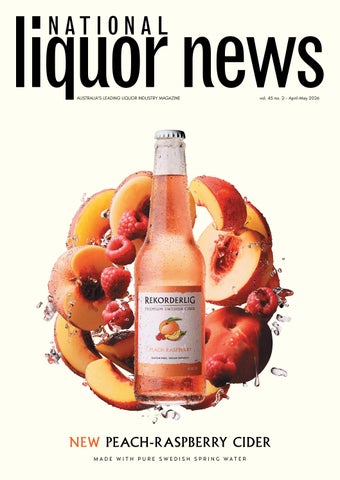
Cover story: Rekorderlig

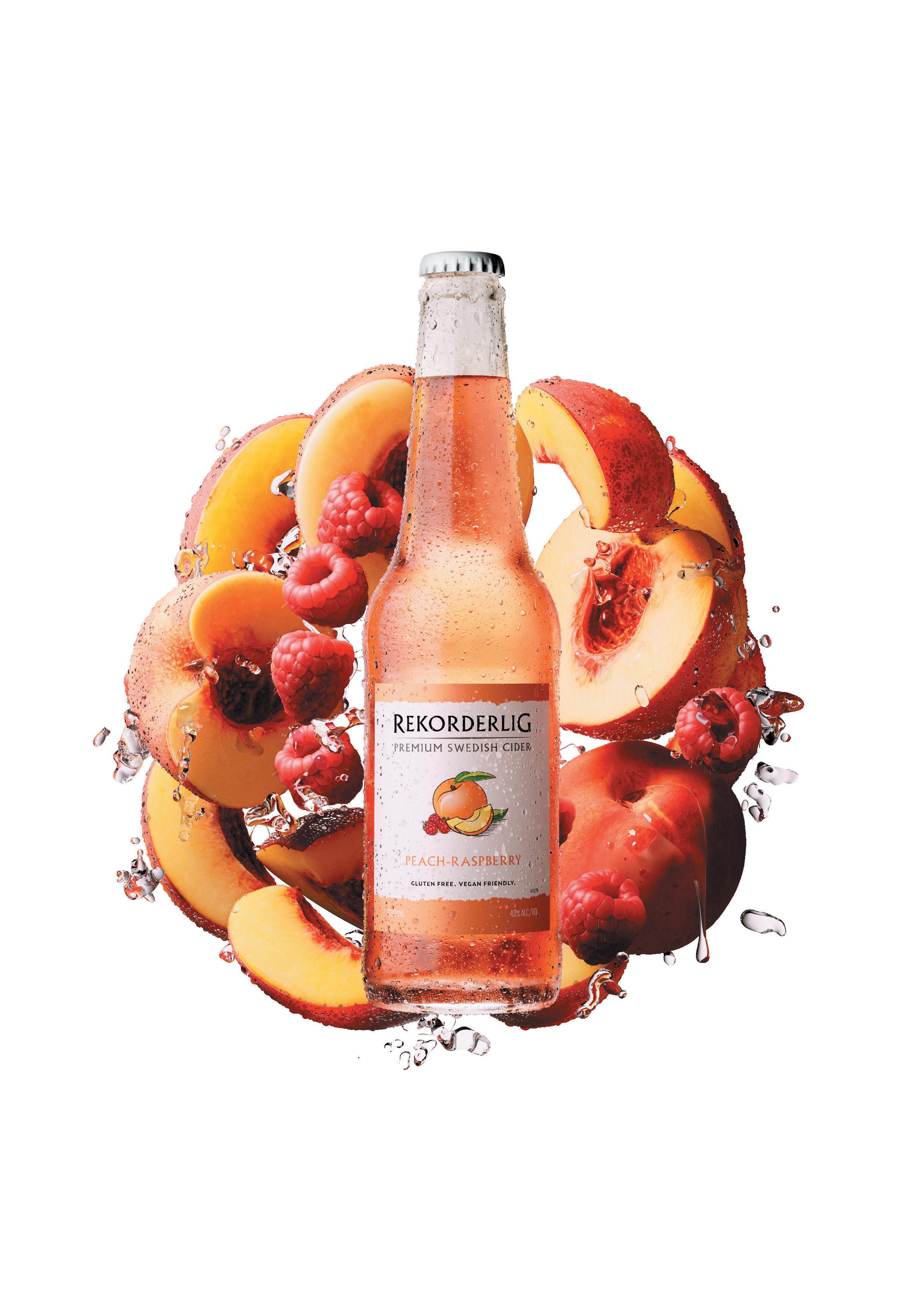
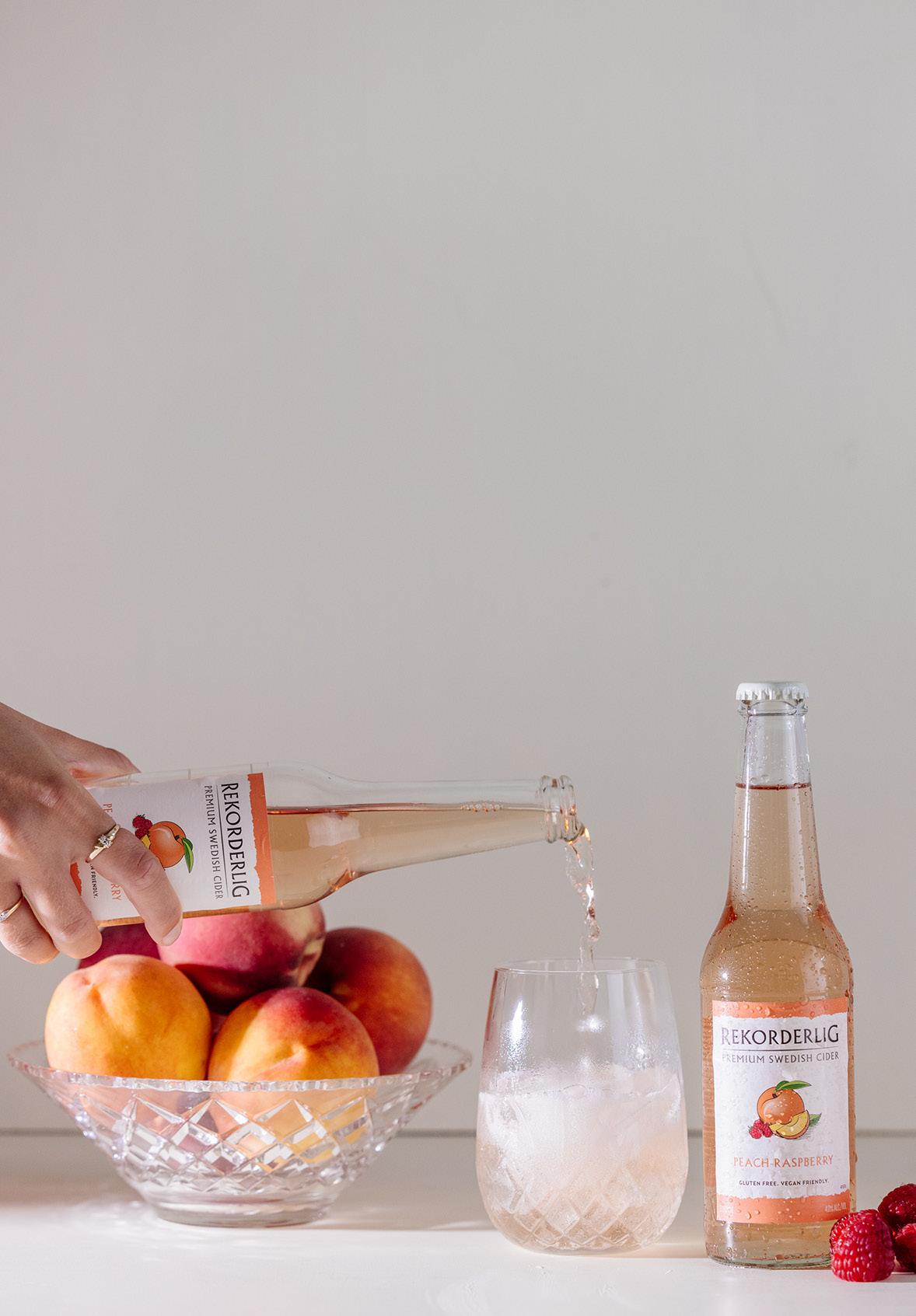
Good Drinks Australia has launched Rekorderlig Peach-Raspberry to help reignite interest in premium flavoured cider.
Rekorderlig is entering a new phase in the Australian market, with distributor Good Drinks Australia aiming to reinvigorate interest in premium flavoured cider through exciting innovation aimed towards younger legal aged drinkers..
Since beginning its partnership with the Swedish cider brand in October 2024, Good Drinks has focused on resetting the foundations for growth to re-establish Rekorderlig as a leading force in the cider category.
The next step in that strategy comes with the launch of Rekorderlig Peach-Raspberry Cider, a new addition to the brand’s four per cent ABV, 330ml flavoured cider range. The launch marks the first step in a broader innovation pipeline for the brand in Australia and signals a renewed emphasis on flavour-led innovation designed to bring energy back to the category by engaging and exciting younger cider drinkers.
“We’re seeing the cider drinker continuing to skew younger, and that’s where we see the opportunity – to deliver exciting innovation that will allow us to recruit and trade-up these shoppers,” said Mimi Crompton, Rekorderlig Brand Manager.
The new Peach-Raspberry variant combines juicy peach with refreshing raspberry, delivering a vibrant, fruit-forward flavour profile that aligns strongly with the preferences of younger flavoured cider drinkers. Made with pure Swedish spring water, the cider balances acidity and sweetness and offers a slightly drier taste than other products within the range.
Peach-Raspberry joins Rekorderlig’s existing four per cent range alongside Strawberry-Lime, Wild Berries and Strawberry-Lime Low Sugar, further expanding the brand’s portfolio of fruit-forward options for retailers.
The new flavour looks to unlock the 80 per cent of flavoured cider drinkers now aged 18-39, who are chasing new and exciting
“We’re seeing the cider drinker continuing to skew younger, and that’s where we see the opportunity.”
Mimi Crompton, Rekorderlig Brand Manager
flavour choices, specifically with peach and berry high on their list.
Not only is the flavour aligned with consumer insights, but Peach-Raspberry has already demonstrated strong international performance, launching in the UK in 2024 to become Rekorderlig’s most successful flavour innovation, delivering 76 per cent incremental volume to the existing range. Australian consumer testing then validated strong purchase intent, reinforcing confidence that the flavour will resonate with local drinkers.
“Peach-Raspberry is a proven performer. We’ve seen its success in delivering strong incremental growth to the range in the UK, and validated with the consumer testing here in Australia, we’re confident this flavour will resonate and help bring excitement (and value growth) back into the category,” Crompton says.
Rekorderlig Peach-Raspberry Cider is now available nationally through Dan Murphy’s and through independent retailers across Western Australia, Queensland and Victoria.
To learn more or place an order, contact your local Good Drinks Australia representative or the Good Drinks CXC on 1800 233 728. ■





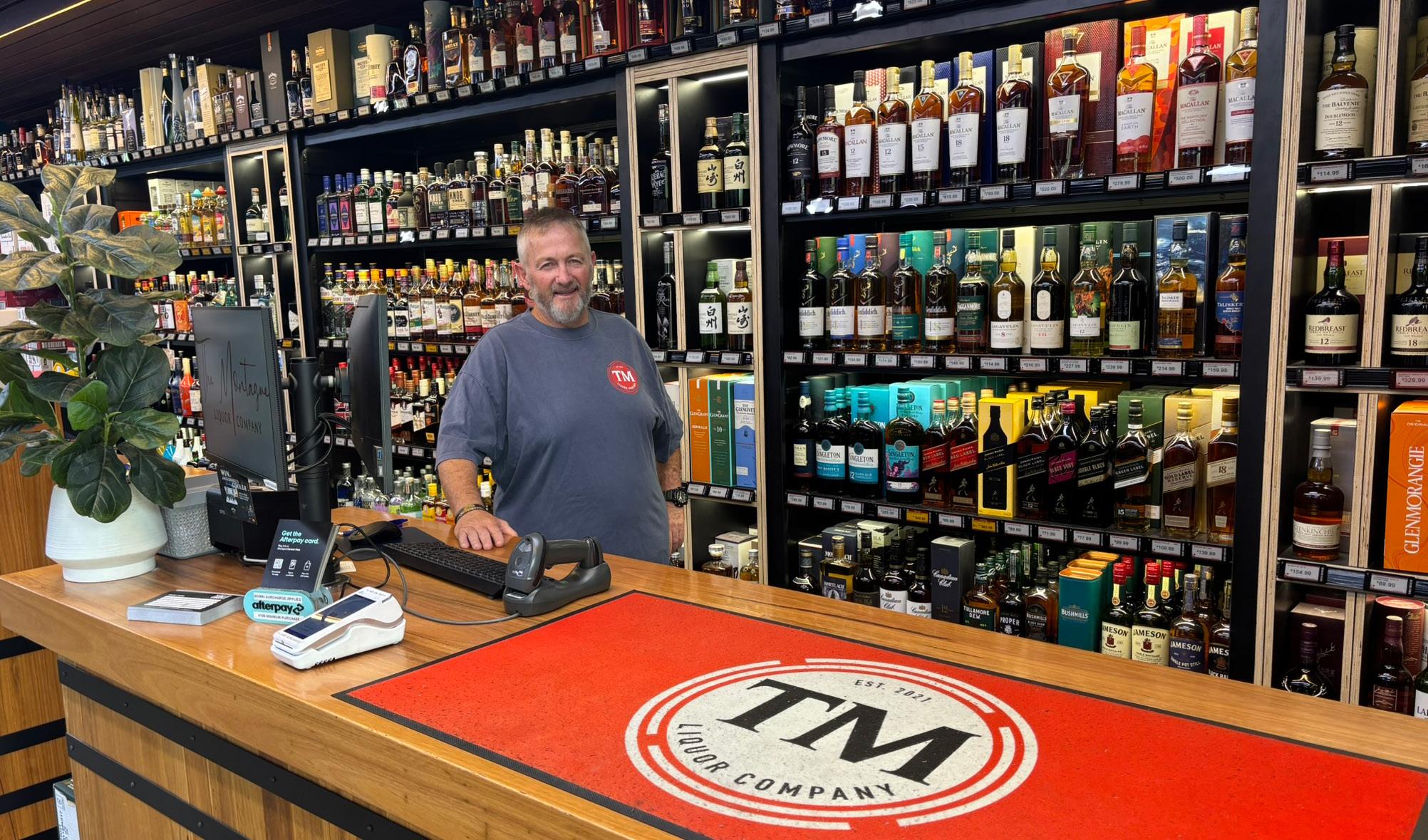
The owner of Super Cellars Penrith has turned untapped potential into a destination bottle shop, built on community, customer insight and retail fundamentals, writes Molly Nicholas.
Retail unfiltered dives behind the counter to uncover the real people of Australia’s liquor retail industry. This issue we get to know Bill Owen, owner of Super Cellars Penrith, New South Wales.
In 2021, amid the uncertainty of Covid, Owen was exploring a change of direction when Super Cellars Penrith came onto the market. It was, by his account, the “worst house on the best street”, but he and his family immediately saw the potential. After securing the leasehold, they set about transforming the site into a destination venue designed to serve the entire community.
When the family first joined the Penrith community, the Penrith Panthers were Grand Final winners, and up until the 2025 season they had only known the community via Grand Final success. This has massively shaped the last 12 months in-store, with Owen explaining just how paramount community engagement was in ensuring there was life after the Grand Final success.
“We are a product of our community and without a supportive community, we would cease to exist, so
engagement and dialogue with all our customers is a high-level priority, as well as continued review of sales data driven over days, weeks, months and years, and seasonal adjustments over winter/summer, and sports and entertainment moments on local, state and national levels,” he told National Liquor News
“We are constantly looking to evolve and be at the cutting edge in the retail space within western Sydney. That in itself is a constant challenge that requires respect and engagement with every member of our community that supports us.”
Since taking over Super Cellars Penrith, Owen has quickly demonstrated a hands-on understanding of what makes a liquor retail business thrive. That philosophy is evident in the carefully curated product selection, which balances unique, high-quality products with evolving customer favourites.
“The cornerstone of independent liquor retail is about being innovative in product delivery to the consumer and the flexibility to provide non-
mainstream products to suit your customer base, in that we can organise small-batch quantities of product to be purchased from non-mainstream suppliers with a view to provide alternate products that are unique and sought after outside of big-box-format retail,” Owen explains.
“We have built a niche market around premium spirits – both light and dark and have seen a significant upturn – as well as our wine sales, with premium reds and whites gaining steady traction, with a view to take a strategic long-term stance.
“The RTD market has seen a major shift into high ABV, blended with vodka bases, low sugar and winebased canned drinks. They all may have a life span, but genuinely the major global brands tend to invest in long-term sustainable product growth.”
Feedback from the local community is also central to Owen’s process for curating a great range in-store, ensuring that Super Cellars Penrith isn’t just a place to buy liquor, but a hub where customers feel heard, valued, and play a role in shaping the range on the shelves.
“Customer feedback is paramount because highcost individual items do not always resonate with a return customer in that the cost may not match the experience, and often, experience is subjective based upon the human component of one’s life and background. Seeking feedback provides a valuable understanding of why they chose it, what drove them to pick that particular item, and why they liked it above others they have sampled or tried in the past,” he stated.
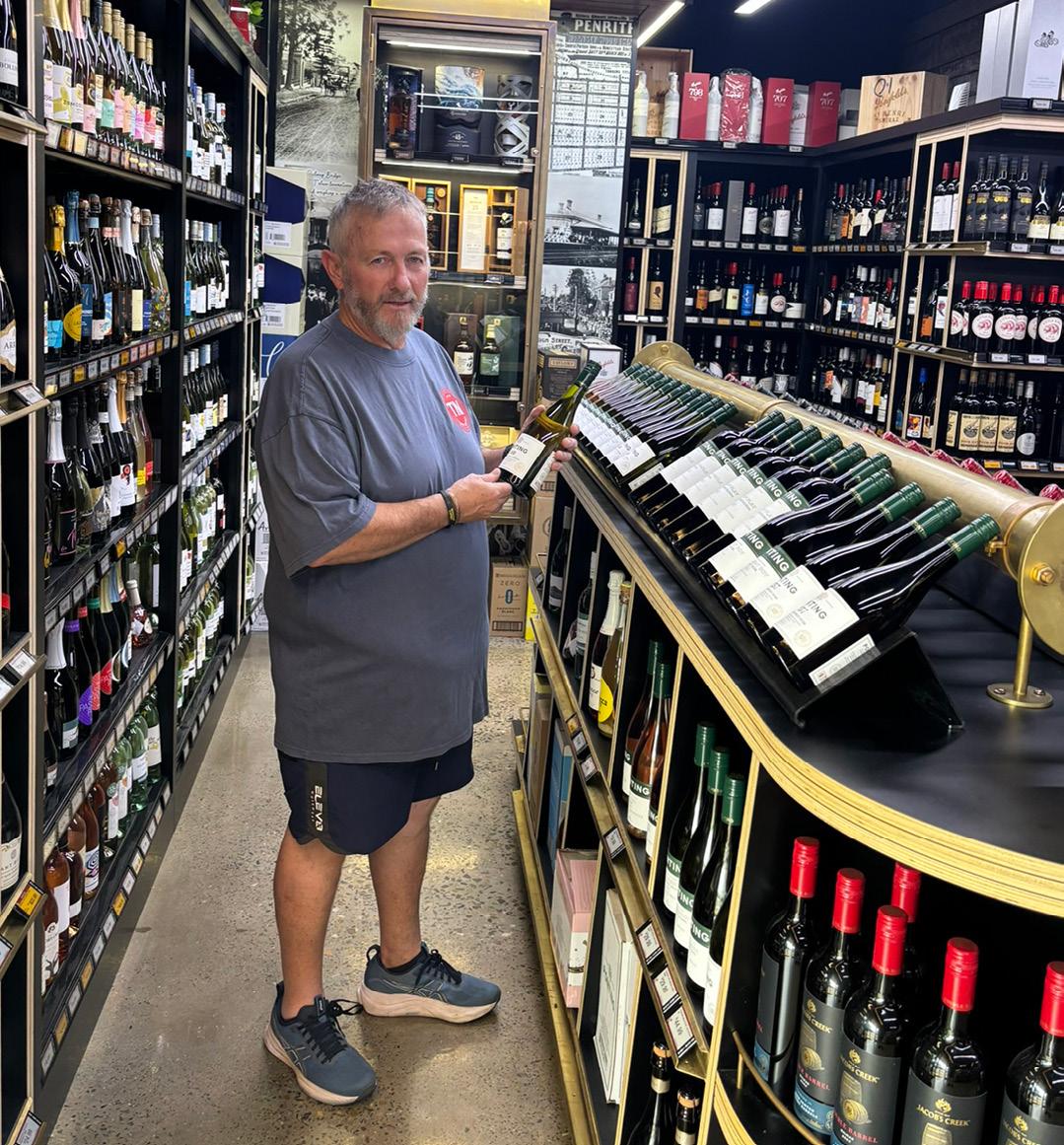
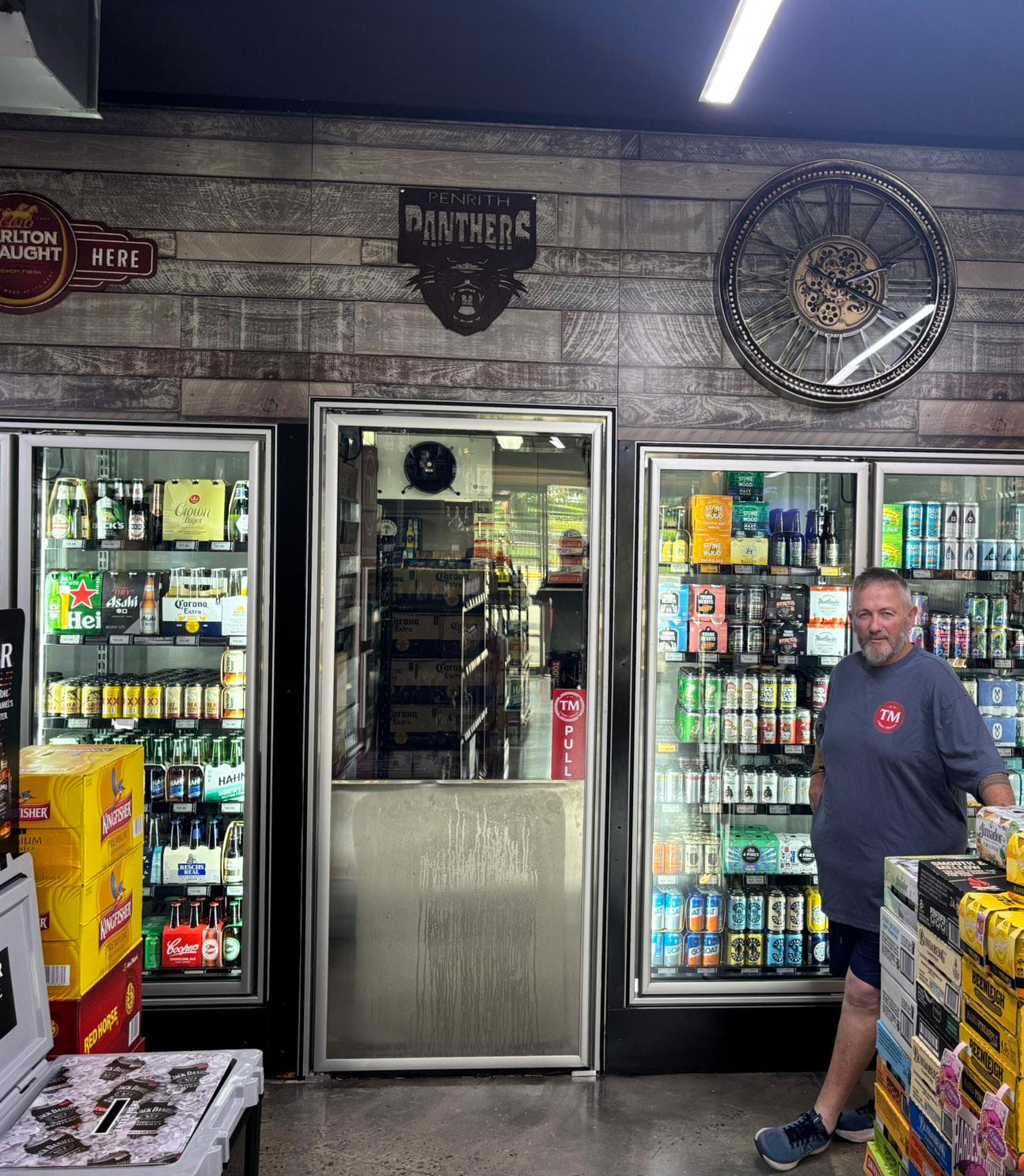
Stepping into liquor retail came naturally for Owen, underpinned by a genuine respect for the traditions of the trade and a clear focus on customers – reflected in a business that continues to grow in both reputation and performance.
“We are a product of our community and without a supportive community, we would cease to exist.”
Bill Owen
Describing what he has loved most about his move into liquor retail, Owen says: “Every day you have the opportunity to meet new people, while exploring and pushing boundaries around an age-old tradition from the beginning of time in the transformation and delivery of liquor in its many forms, and the constant evolution of producing and distributing premium liquor to the wider community at a sustainable level.”
Building on that momentum, over the next 12 months the in-store focus for Owen’s family will be driven by their passion for customers.
“We are looking to ensure our members have the best in-store experience possible, and we do this by providing both vertically and horizontally matched moments while in-store, from layout and product display to staff engagement and knowledge around products within our retail space, which allows our members to make wonderful, informed choices with touch, view and engagement on each and every interaction,” he concluded. ■
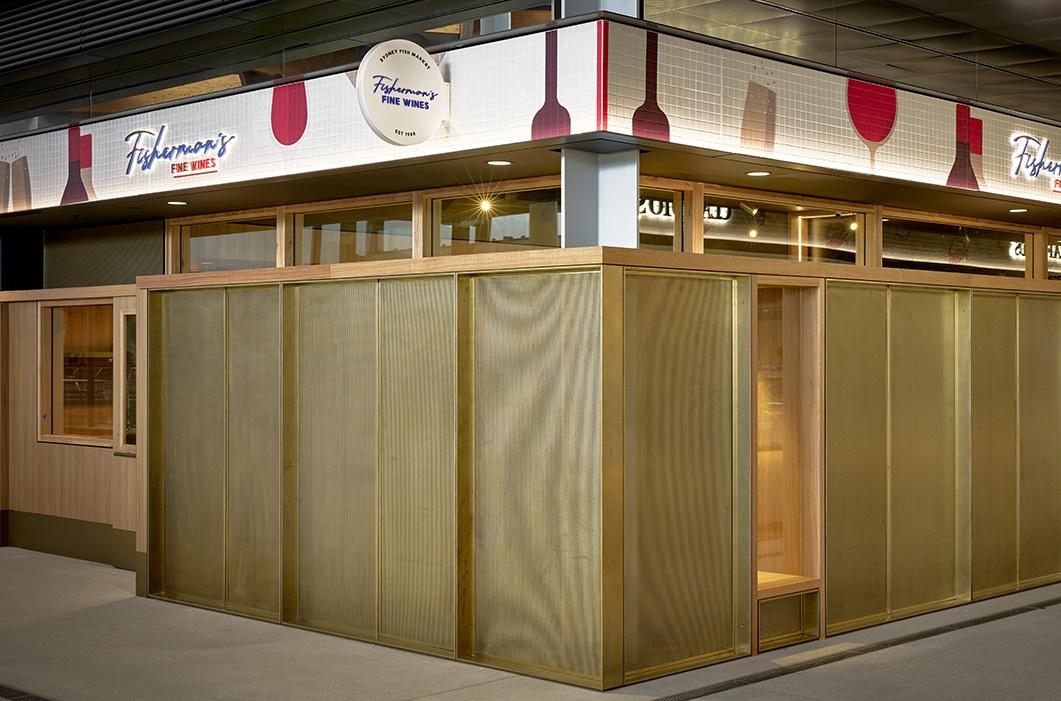
Located in the heart of the brand-new Sydney Fish Market, the store is dedicated to experiential retailing through the celebration of produce and place, writes Sienna Martyn.
Since opening in January, Fisherman’s Fine Wines has established itself as a core part of the retail experience at the new Sydney Fish Market through its focus on pairing and premium products.
Expected to attract six million visitors each year, Louis Liu, Finance Director at Fisherman’s Fine Wines, described the market as one of the country’s most exciting new tourist destinations, with the store well positioned to elevate the overall visitor experience.
“We see our store as a destination within the destination. Whether visitors are enjoying fresh oysters, takeaway seafood, or dining at one of the restaurants, we provide the perfect pairing, a memorable gift, or a special bottle to take home as part of their Sydney experience.
“Our retailing style is premium yet approachable. We are not just selling bottles; we are curating a lifestyle. Our focus is on storytelling, education, and creating moments of discovery for customers, whether they are seasoned collectors or first-time visitors to the Fish Market,” he told National Liquor News
Liu’s family has deep roots in Sydney’s seafood and hospitality scene, operating a number of premium seafood businesses, which he says has given the team at Fisherman’s Fine Wines a strong understanding of the connections between quality, provenance and pairing.
With the revitalised Sydney Fish Market only recently complete, the team’s immediate focus has been on delivering a seamless, highend customer experience tailored to the tourism hub.
“From product presentation and storytelling to staff training and service excellence. We have also been refining our merchandising strategy to ensure both wine and beer are presented in a way that feels cohesive, premium, and aligned with the Fisherman’s Fine Wines brand,” said Liu.
Designed with its location and customers in mind, Liu said the Fisherman’s Fine Wines space strongly supports browsing, discovery and interaction with the store’s premium products.
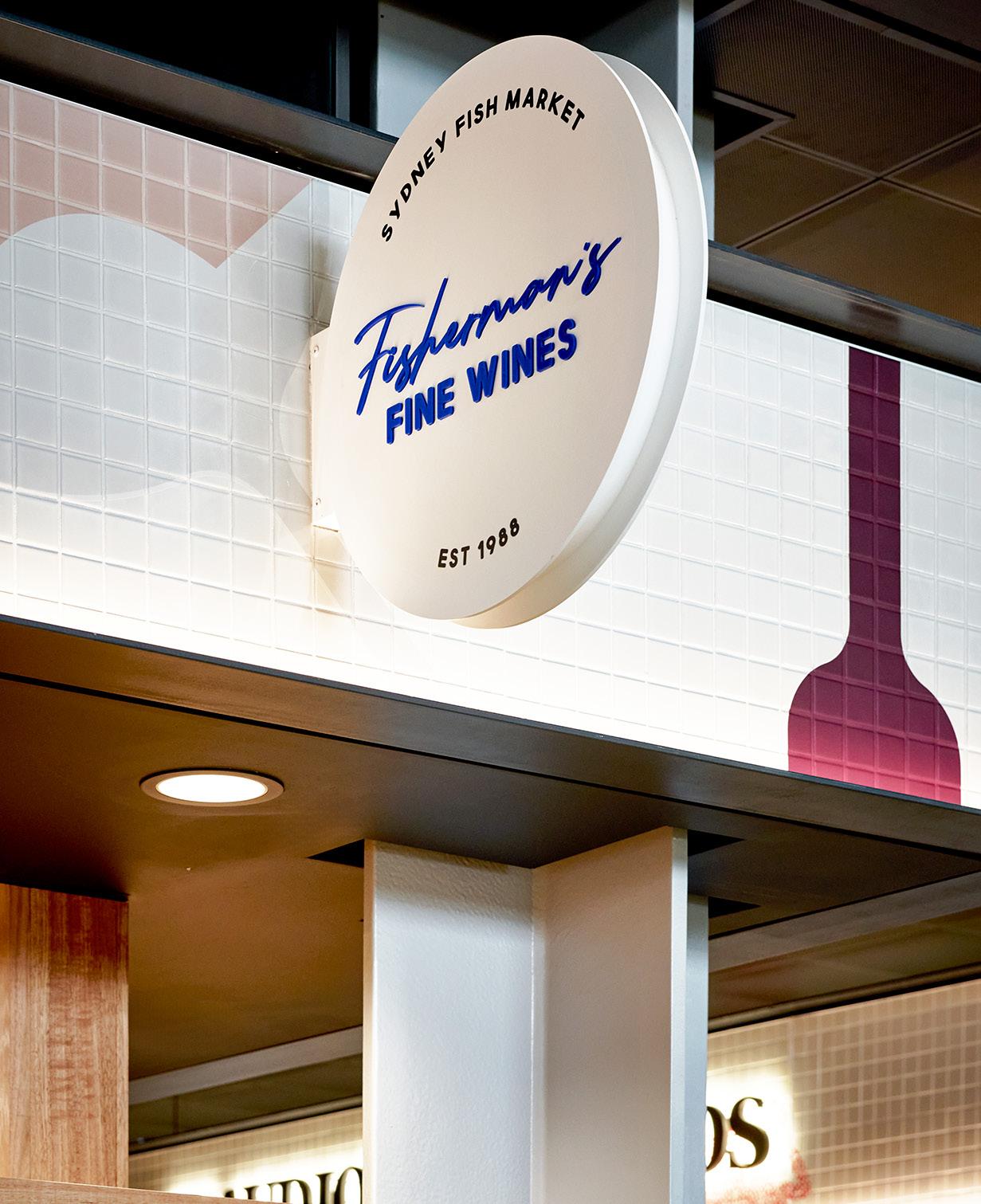
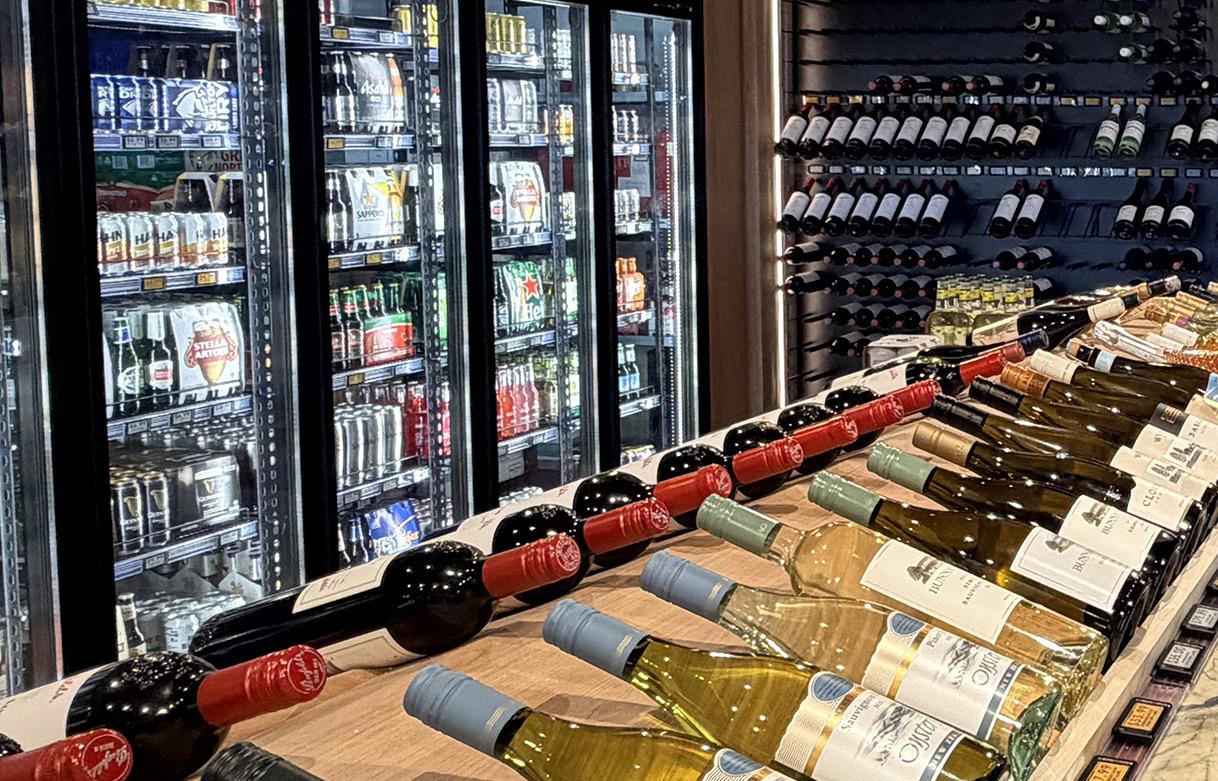
“The store blends modern sophistication with a maritime influence that reflects its location by the water. The store is bright, open, and highly visual, encouraging exploration rather than rushed shopping.
“Products are curated by style, occasion, and pairing, making it easy for customers to discover wines and beers that complement seafood. Signature display zones highlight premium wines, local producers, and limited-edition releases, while our beer selection is presented in a clean, contemporary way that positions craft and premium beer alongside fine wine.”
He added that the store’s range of Australian and international wines, and local craft beer has been curated to mirror the vibrancy and diversity that the fish market has to offer.
“Many visitors ask our team for recommendations based on what they are eating at the market, reinforcing our role as the go-to pairing expert within the precinct.
“Our customers are currently gravitating towards premium Australian Chardonnay, Hunter Valley Semillon, Riesling, and cool-climate Pinot Noir as well as boutique small-batch wines. Premium lagers, particularly those that pair well with seafood are also popular,” continued Liu.
Producer partnerships are also central to the offering at Fisherman’s Fine Wines with plans for ongoing in-store activations, events and collaborations.
“Fisherman’s Fine Wines is designed to be an experiential retail space, not just a transactional one. We are planning tastings, seafood pairing masterclasses, producer showcases featuring winemakers and craft brewers and collaborations with neighbouring restaurants and seafood retailers. These activations will help bring the store to life and create memorable experiences that extend beyond a simple purchase.
“We are also actively looking to collaborate with both wine and beer producers to highlight special releases, limited editions, and their products that pair exceptionally with seafood. Our goal is to position Fisherman’s Fine Wines as a platform for storytelling, celebrating craftsmanship, terroir, and innovation,” he explained.
With the volume of visitors passing through the fish market daily, Liu said the challenge for the store is balancing high foot traffic with delivering a personal, premium retail experience.
“At Fisherman’s Fine Wines, we believe relationships are built through knowledge, warmth, and personal connection. Our team engages customers with tailored recommendations, memorable conversations, and genuine passion for wine and beer.
“Ongoing refinements to staffing, store layout and customer flow are key to ensuring every customer feels engaged and not rushed. This process has been strongly supported by Business Manager, Joe Felice and the team at Independent Liquor Retailers, whose practical guidance and operational support have been instrumental in helping the store perform at a high level within such a dynamic precinct.”
Looking ahead, Liu said the team will work to evolve the store offering through a loyalty program with member tastings, early access to limited-edition products and curated recommendations for repeat customers.
“We see Fisherman’s Fine Wines evolving into a flagship wine and beer destination – not only within the Sydney Fish Market but across Sydney’s broader food and beverage scene – supported by curated tastings, collaborations and a stronger digital presence.”
Liu concluded: “We’re proud to be part of this iconic precinct and excited to continue growing as a destination that defines how Sydneysiders and visitors discover, enjoy and share great wine and beer.” ■
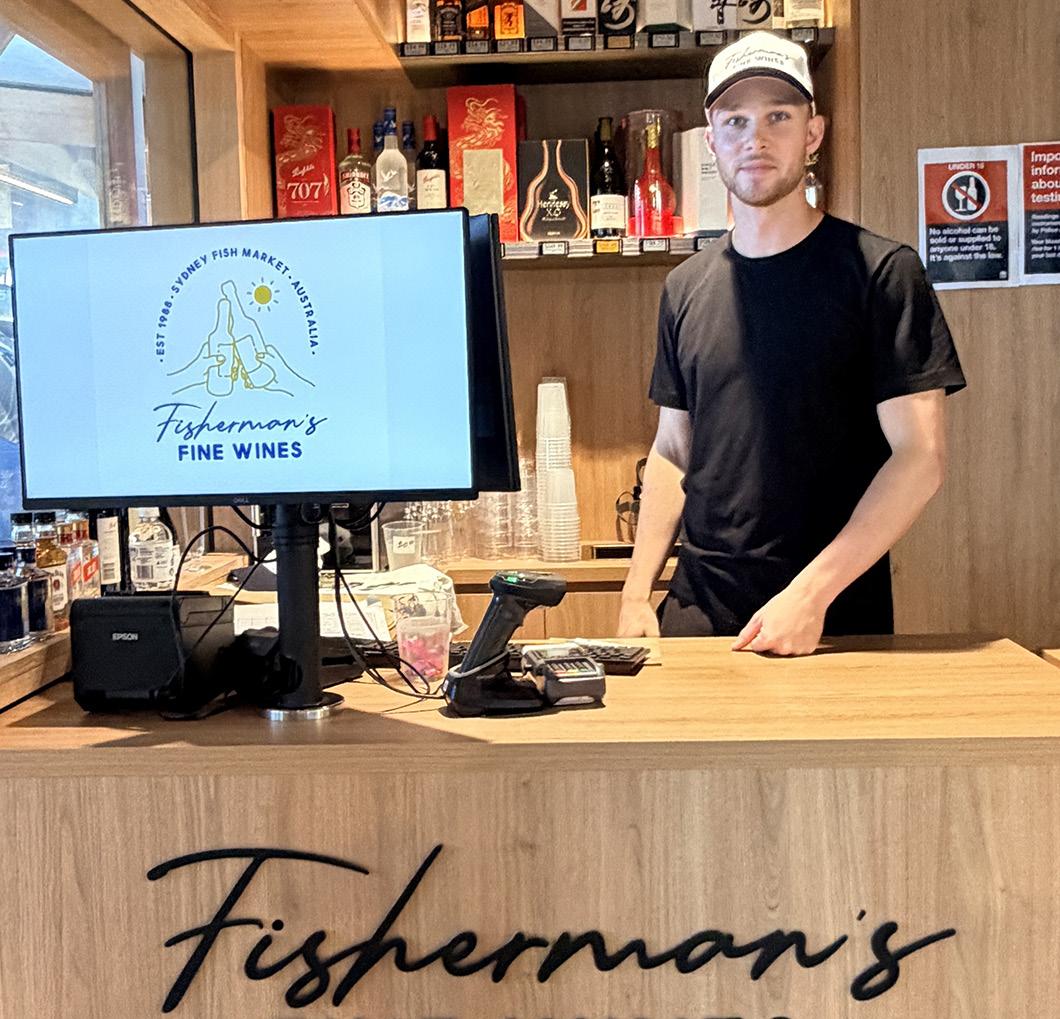
“Our retailing style is premium yet approachable. We are not just selling bottles; we are curating a lifestyle.”
Louis Liu


The new $35m Swanbank facility boosts efficiency, capacity and long-term growth for ILG members nationwide, writes Deb Jackson.

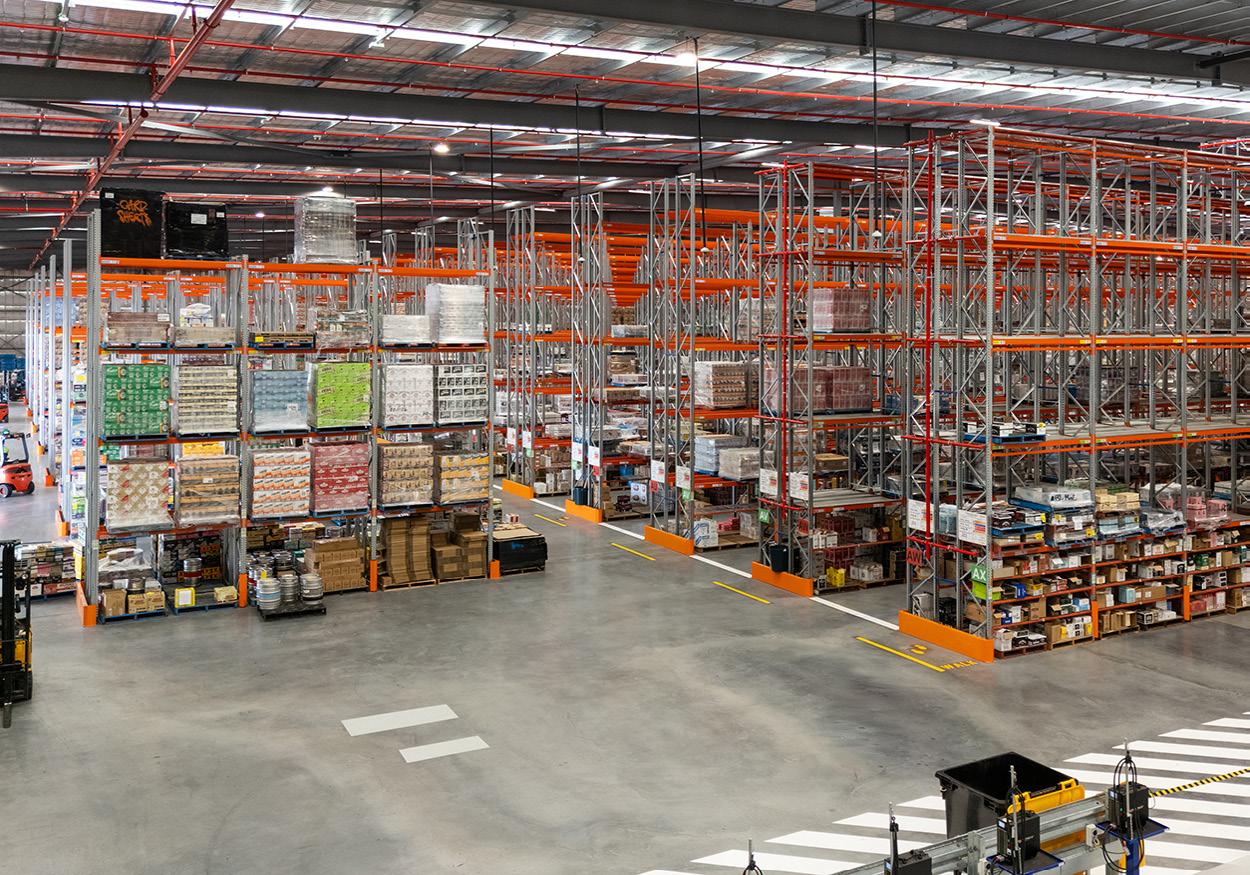
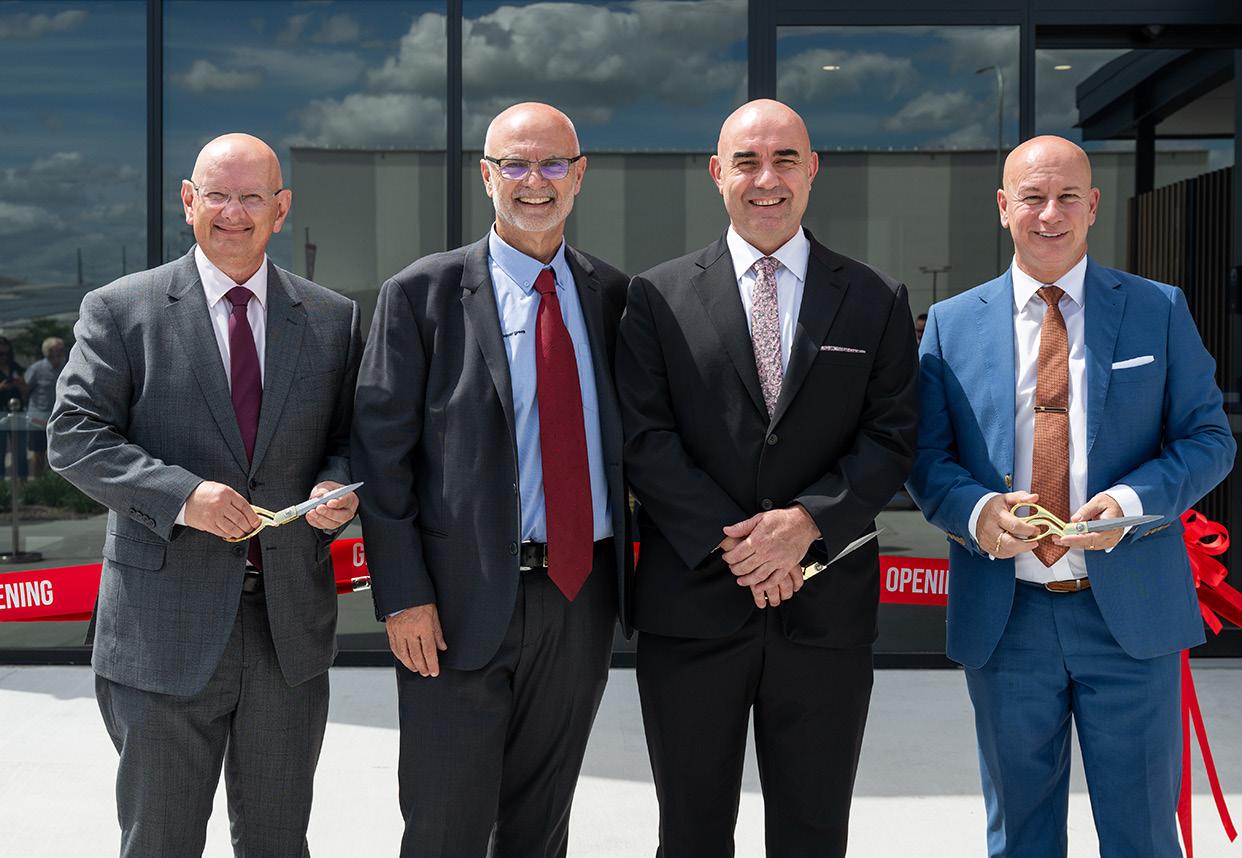
Independent Liquor Group (ILG) has officially opened its new Swanbank distribution centre in Queensland, marking a major investment in the future and a significant step forward in the group’s national growth strategy.
The purpose-built facility replaces ILG’s former site at Richlands, which had become increasingly constrained by growth, and delivers a modern, scalable solution designed to improve efficiency, expand ranging and strengthen service levels across South East Queensland and northern New South Wales.
ILG CEO Paul Esposito said the new warehouse provides the group with a long-term operational foundation.
“Our previous site had reached its limits and was becoming inefficient and costly to operate. This facility gives us a dedicated home and, importantly, future-proofs the business for continued growth,” he told National Liquor News
He said the investment was driven by the need to support expansion and deliver greater value to members.
“We’re growing, and we need the right infrastructure to support that. This site allows us to improve efficiency and ultimately pass those benefits back to our members.”
At the core of the Swanbank facility is a step change in operational capability, with improved inventory management, increased capacity and more streamlined logistics.
“We can range more products, manage inventory more effectively and take a much more structured approach to operations, which will translate into higher service levels for our members,” Esposito said.
The improved efficiency is expected to strengthen ILG’s competitive position, particularly in a market where margins remain under pressure.
For ILG, the Swanbank warehouse represents more than an operational upgrade – it is a strategic investment in the sustainability and competitiveness of independent retailers.
ILG Chairman Damien Bottero described the facility as a milestone moment for the cooperative and its members.
Speaking at the grand opening, which was attended by National Liquor News, Bottero said: “This building is more than just infrastructure – it’s an investment in the future of independent retail and a reflection of what can be achieved through the cooperative model.”
He emphasised that ILG’s member-owned structure allows it to prioritise long-term outcomes over short-term returns.
“We make decisions based on what will support our members not just today, but for the next 50 years,” he said.
The $35 million investment underscores ILG’s confidence in its model and its commitment to strengthening the independent sector.
The Swanbank facility also plays a critical role in ILG’s broader expansion plans, providing the infrastructure needed to support future geographic growth.
Esposito confirmed the group’s next strategic priority is to expand into Victoria, building on its existing footprint across New South Wales and Queensland.
He said: “This facility gives us a strong foundation for the next phase of growth. It puts us in a position to continue expanding and supporting members well into the future.”
Beyond its operational benefits, the new distribution centre is expected to deliver significant economic value to the Ipswich region, including job creation and increased local investment.
Federal Member for Blair Shayne Neumann welcomed the development, saying: “This facility will create jobs and support local businesses, while also strengthening the broader community.”
Queensland Minister for Small and Family Business Steven Minnikin also pointed to the importance of ILG’s distribution capabilities, particularly for regional and remote areas.
He said: “Reliable supply chains are critical, especially for regional communities, and facilities like this play an important role in ensuring consistent access to products.”
The opening of the Swanbank warehouse marks a significant milestone in ILG’s evolution, reflecting both its growth trajectory and its long-term commitment to independent retailers.
Esposito said: “This is more than just a new facility – it represents the next step for ILG and reinforces our commitment to supporting our members into the future.”
With enhanced capability, increased scale and a clear strategic direction, ILG’s latest investment positions the group – and its members – to compete more effectively in an increasingly challenging retail landscape. ■





Female liquor retailers and leaders share how trust, collaboration and opportunity are driving careers and industry progress.


Across Australia’s liquor retail sector, a growing cohort of women is reshaping what leadership looks like – from major chain boardrooms to independent stores embedded in local communities. While the industry has traditionally been thought of as male dominated, these retailers are forging their own paths, underpinned by collaboration, resilience and a willingness to create opportunity not just for themselves, but for others.
For many, this year’s International Women’s Day theme, Give to Gain, reflects both personal experience and a broader shift in how success is built within the industry. It is not defined by individual achievement alone, but by the collective impact of mentorship, trust and shared knowledge.
At the corporate level, leaders such as Coles Liquor CEO Claire Lauber and BWS Managing Director Jeanette Fenske point to the growing presence of women in senior roles as a catalyst for more diverse thinking and stronger decision-making. Their experiences highlight how intentional collaboration, inclusive cultures and active sponsorship of talent are creating pathways that did not always exist.
On the shop floor, that same philosophy plays out in practical, everyday ways. From store managers stepping into leadership after being given early responsibility, to business owners fostering supportive team environments, the act of backing people remains central to growth. For independent retailers in particular, success is often built on relationships – with staff, suppliers and customers alike – reinforcing the idea that giving support ultimately strengthens the entire business.
What connects these stories is a shared understanding that opportunity rarely happens in isolation. Whether it is a mentor opening a door, an employer recognising potential, or a team working together to solve challenges, progress is driven by people investing in one another.
As these women continue to build careers, businesses and communities, they are also helping redefine the future of liquor retail – one where leadership is measured not just by results, but by the opportunities created along the way.
Claire Lauber driving collaborative leadership
Claire Lauber, CEO of Coles Liquor, believes the increasing presence of women in senior leadership is helping reshape the industry, bringing broader perspectives and stronger decisionmaking to a traditionally male-dominated sector.
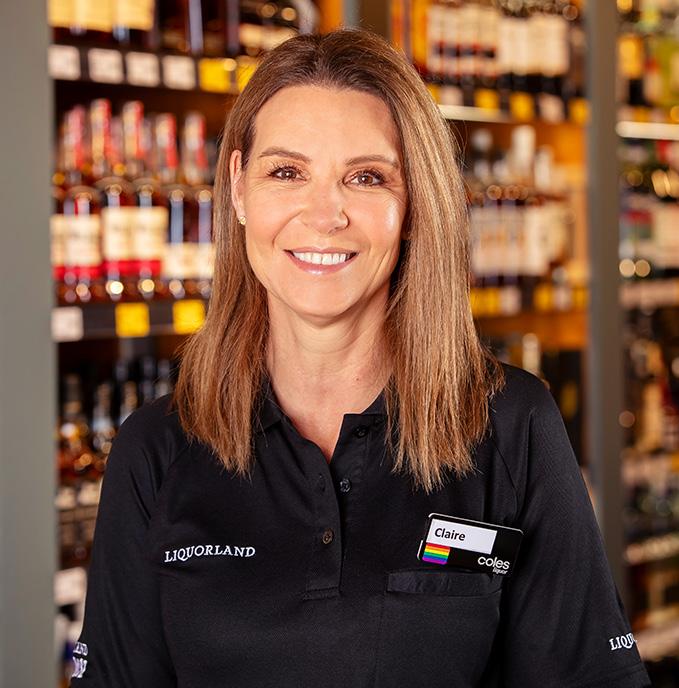
“Since returning to the liquor industry… I’m genuinely encouraged to see so many female CEOs leading,” she says.

For Lauber, that progress is more than symbolic. It reflects a shift towards more inclusive leadership, where diversity of thought leads to better outcomes for both customers and communities.
“That progress really matters because more diverse leadership brings fresh thinking and better decision making.”
Central to this evolution is collaboration. Lauber says creating space for open dialogue – internally and with supplier partners – is critical to building both culture and commercial success.
“At Coles Liquor, collaboration shows up in the way we partner with our suppliers… building a culture where everyone feels welcome at our table.”
She points to initiatives like the Libertas wine range as an example of how purpose-driven partnerships can deliver meaningful impact. Developed in partnership with female charity Fitted for Work, the range reflects both commercial opportunity and social contribution.
Reflecting on her own career, Lauber highlights the importance of trust in leadership. Her appointment by Coles Group CEO Leah Weckert stands out as a defining moment.
“Leah’s trust and support have given me the confidence I need to lead a team of more than 6,000 team members.”
For Lauber, leadership is not just about direction, but about creating environments where people feel supported, included and empowered to contribute.


For Jeanette Fenske, Managing Director of BWS, leadership is grounded in trust, generosity and a responsibility to create opportunities for others.

The International Women’s Day theme Give to Gain closely reflects the philosophy that has shaped her career, influenced early in life by her mother’s advice.
“My mum taught me early on that you cannot receive with a closed hand.”
That mindset has carried through her professional journey, where support from others helped accelerate her development and build confidence at pivotal moments.
“I have benefitted from women and men who went before me, who opened doors… and backed me at moments when the path was not obvious.”
For Fenske, those experiences now inform how she leads. She sees investing in others not as optional, but essential to building stronger teams and organisations.
“I see giving support as a responsibility I carry forward.”
Today, her focus is on mentoring, coaching and actively sponsoring talent, ensuring others have access to the same opportunities that helped shape her own career.
“Others invested in me… so it’s only right I do the same.”
At its core, Fenske says Give to Gain is about unlocking potential through trust and support.
“When you trust people, invest in their development… they gain confidence, momentum, and choice.”
For Fenske, that approach delivers benefits far beyond individual growth, strengthening team performance and contributing to a more resilient and inclusive industry.
Julianne Hickey shaped by experience and support
Julianne Hickey’s career in liquor retail has been built on experience, family influence and a willingness to embrace opportunity.
As Manager of Red Bottle Pitt Street – the group’s largest store –Hickey oversees a high-volume CBD operation alongside the nearby Town Hall location, while also taking on HR responsibilities across the business. Her journey with Red Bottle spans nearly a decade, progressing through multiple stores before stepping into her current leadership role. Her pathway into the industry, however, began much earlier.
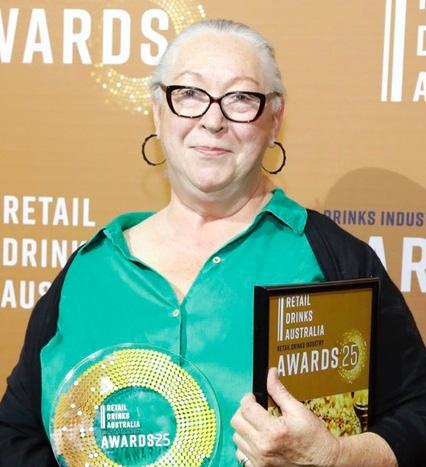
“My parents were publicans, so I grew up in hotels, learning the trade from an early age.”
After 15 years working in hotels, Hickey transitioned into retail when her brother purchased several bottle shops, marking the start of a long-term career in the sector.
Reflecting on the influences that shaped her approach, she credits her parents with laying the foundation.
“The biggest support for me was my parents… they gave me the confidence to work in an industry that was in my blood.”
That early grounding has been reinforced by strong mentorship and a supportive network throughout her career.
“I have been very fortunate to have had some amazing female mentors… who have given me the tools to tackle opportunities with confidence.”
Hickey also highlights the role of broader industry collaboration, from supplier partnerships to organisations such as Retail Drinks Australia and banner group ILR, in supporting retailers to stay informed and competitive.
For the next generation, she says: “If you want to be a part of this industry, move forward with an open mind to the possibilities and opportunities available, and just grab them.”
When Jaala Heberley was a 25-year-old casual at Summerland Cellars, she expected a new manager to be appointed. Instead, she was handed the opportunity herself.
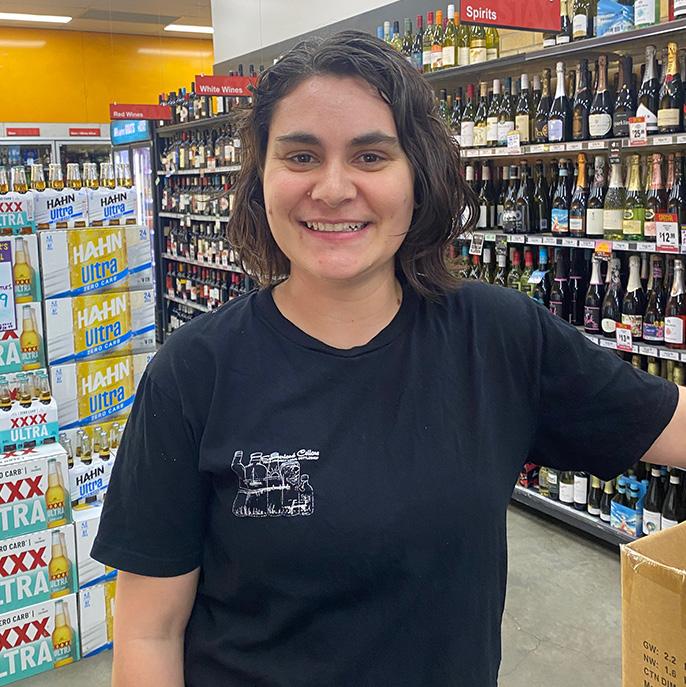
“I’ll give you the shop,” owner Peter Creevey told her.
That early act of trust is exactly what this year’s International Women’s Day theme, Give to Gain, looks like in practice.
“The confidence he gave me pushed me to do the best I could,” she says. “I wanted to prove I was always the right fit.”
Now Store Manager for seven years, Heberley’s path into liquor retail began unexpectedly. After starting her career in menswear, she was approached for a casual role at Summerland Cellars. With her RSA still current and the timing right, she stepped in – and nearly a decade later, says the industry is firmly “my jam”.
That early encouragement continues to shape how she leads today, particularly when it comes to trusting her instincts.
“If it’s going to benefit the shop in the long run, just go for it,” she says.
Over time, Heberley learned to back her decisions, think long term and lead with confidence. In 2024, that approach was reinforced when she achieved a 90-plus mystery shop score at the Retail Drinks Awards and was named a top eight finalist for Store Manager of the Year.
Working in a women-led business, Heberley has seen the industry evolve, but says resilience remains essential.
“You need to have a backbone – physically and mentally,” she says.
Her advice to the next generation is simple: back yourself, trust your judgement and lead with conviction.
For Anne Creevey, owner of Summerland Cellars, strong retail leadership starts with culture.
Rather than relying on big gestures, she believes a positive and stable team environment is built through consistent, everyday actions that prioritise people.
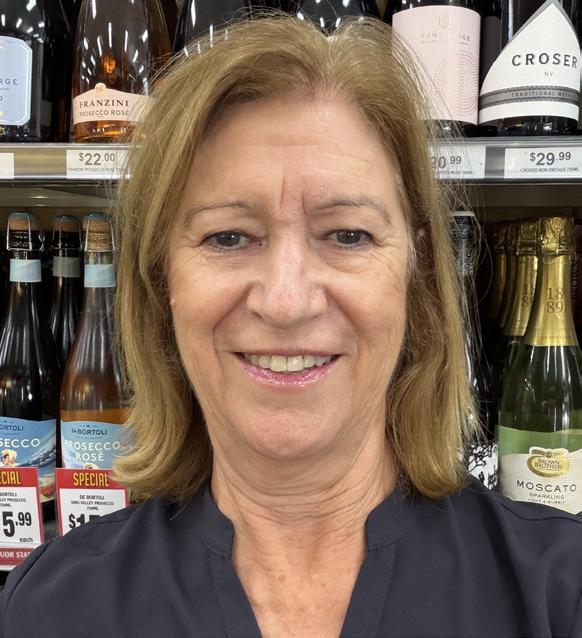
“A happy team emanates from the little things like trying to ensure staff are happy with their roster… letting staff know they will be supported.”
That focus on support extends beyond day-to-day operations and into leadership development. Creevey places importance on listening, backing her team and giving them the confidence to step into responsibility.
“I support leaders within my business by listening to and respecting their opinions and views, believing in their ability and experience.”
This approach closely aligns with the International Women’s Day theme, Give to Gain, which Creevey sees as a practical philosophy rather than an abstract idea.
“When you give confidence, incentive and support you gain immeasurably,” she says.
For Creevey, confidence is not built in isolation. She believes access to a strong, supportive network is critical, particularly for women stepping into leadership or ownership roles.
Younger retailers benefit from “the knowledge and availability of a caring network of contacts who are willing to provide guidance and support,” she says.
That same thinking extends to the broader community. As an independent retailer, Creevey sees local connection as essential to long-term success.
“Support the community and they will support you.”
For more than two decades, Jeanette Stevenson has been at the heart of her community as owner of Liquor Legends Basin View on the NSW South Coast.
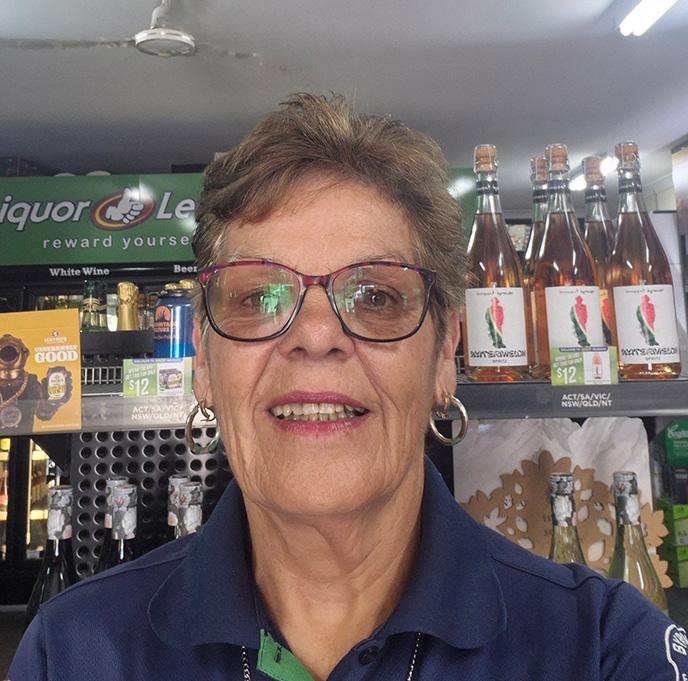
What began as a leap of faith after careers in insurance and real estate has grown into a thriving independent business built on loyalty, knowledge and genuine connection.
A defining moment came when the store joined Liquor Legends and implemented its rewards program, which Stevenson credits with transforming the business.
“Our loyalty program has been a game changer,” she says. “It’s grown our business by around 40 per cent. Customers feel rewarded and recognised, and that keeps them coming back.”
But for Stevenson, the real value lies beyond the numbers and in the relationships built over time.
“There’s nothing better than when customers walk in and you can say, ‘Hi Bill’ or ‘Hi John’. They feel special,” she says. “We’re now serving the kids of customers we first looked after more than 20 years ago.”
Stevenson says investing in customers, staying informed and engaging with industry bodies has been critical to sustaining growth.
Her advice to the next generation of women in liquor retail is simple: be knowledgeable, be confident and make it personal.
“Every single customer who walks through your door is special, because without them you don’t have a business. Keep up-to-date, learn your products and make people feel comfortable. That’s how you build loyalty – and that’s how you grow.”
Rebecca Foster strengthened by mentorship and collaboration
Rebecca Foster, manager at The Bay Boozatorium in Tweed Heads, has built her career in liquor retail on strong mentorship, collaboration and a willingness to embrace opportunity.
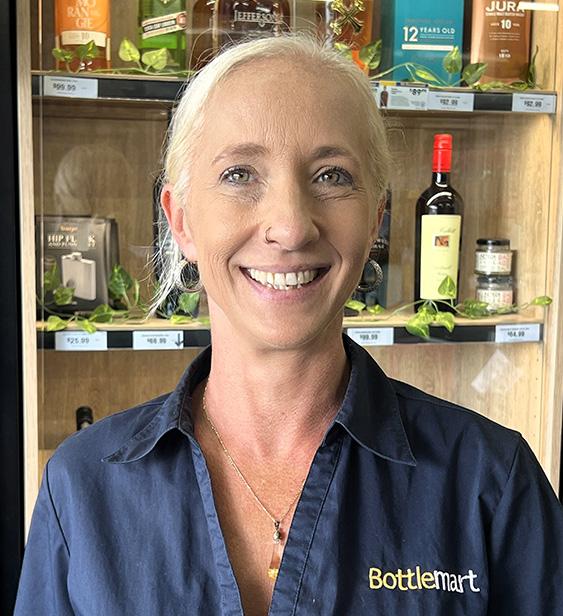
Foster first entered the industry at a young age, initially viewing hospitality as a pathway that would allow her to work and travel. After several years in northern Queensland, she returned to her hometown of Murwillumbah and took a casual role at The Riverview Hotel – a decision that evolved into a 15-year career.
Along the way, she says key mentors helped shape both her leadership style and approach to business.
“The first being John and Laurie Bortoli… The second being Tony Foran. He taught me that integrity and trustworthiness is everything.”
Those early influences continue to guide her today, particularly in how she approaches relationships across the industry.
“In our industry support and collaboration are so important. The relationship between wholesalers, retailers and reps is the most valuable asset you could gain.”
A defining moment came when she was offered the opportunity to run the Tweed Heads store.
“Rhys and Andy from North Coast Liquor approached me to run the Tweed Heads store… Since then, I have never looked back.”
Foster also credits Liquor Marketing Group (LMG) Business Development Manager David Kook for his ongoing encouragement.
“He encouraged me at every turn… He also had more faith in me than I had in myself.”
For Foster, growth comes from backing yourself and learning through experience.
“When things get hard dust yourself off and carry on.”
Serena Monk driven by passion and progress
Serena Monk, manager at The Cellar, Barangaroo, has built a career shaped by passion, mentorship and a commitment to lifting others in the liquor industry.
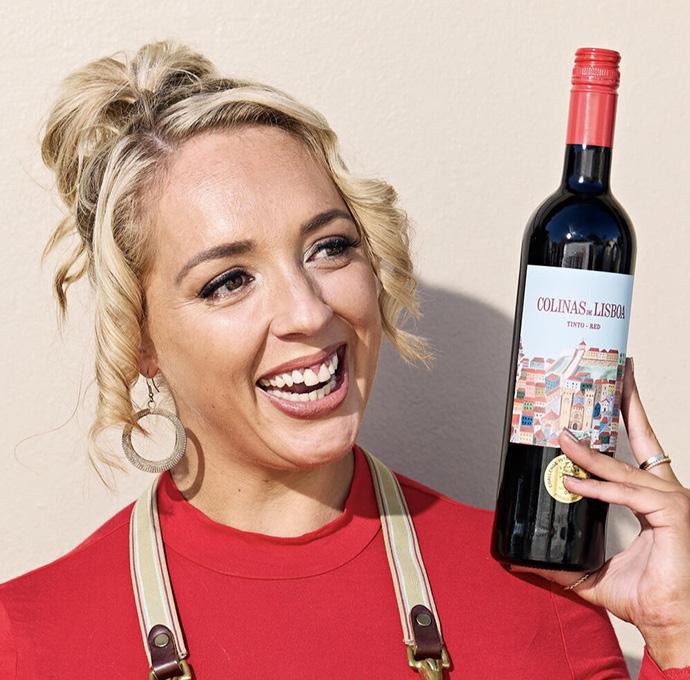
For Summer Randall, licensee and manager of Bellingen Cellars, the liquor industry has never been just a job – it’s been a way of life.
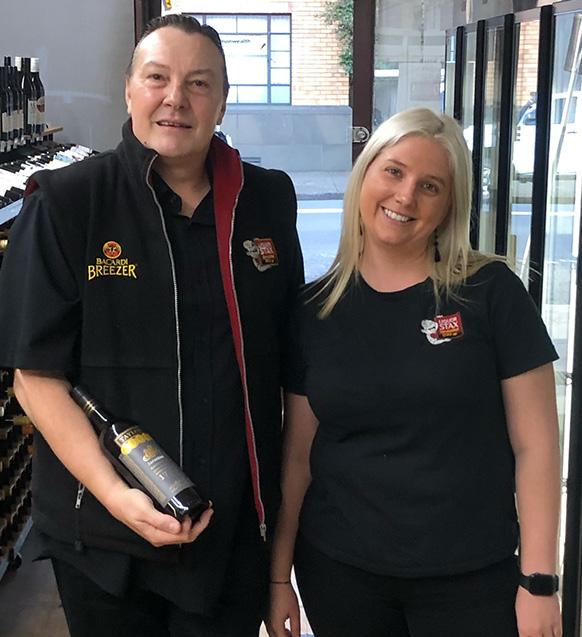
“My trajectory changed indefinitely at age 19 when I was first introduced to premium wine. It was a 2009 Central Otago Pinot Noir, and I fell head over heels in love with wine,” she said.
That early experience led Monk into WSET and sommelier training, followed by roles in New Zealand and Australia, where she worked under Masters of Wine and became a head sommelier in five-star hotels. Transitioning into retail with Endeavour Group has since allowed her to engage a broader audience.
Monk credits several influential women for shaping her career, including Natalie Ng, Samantha Belt, Krystal Hart and Louella Matthews.
“These natural trailblazers have nurtured multiple generations of women in the industry and provided endless support,” she said.
Reflecting on this year’s International Women’s Day theme, ‘Give to Gain’, Monk highlighted the importance of inclusion and community. She recalls how Matthews supported her transition into retail, opening doors to industry networks and opportunities.
“This act of inclusion meant the world to me,” she said.
For Monk, supporting the next generation starts with fostering openness and connection.
“Create a safe space to speak up,” she said.
Her advice to emerging women in the industry is simple but powerful: “Don’t let anyone dim your light.”
Raised in a family deeply embedded in pubs and bottle shops, Randall quite literally grew up in the industry. She began working in her parents’ bottle shop at 18 before building experience across bars, pubs, accommodation venues and restaurants throughout Queensland and New South Wales. Eight years ago, when her parents were ready to retire, she and her husband returned home to take over the family business.
This year’s International Women’s Day theme, Give to Gain, reflects a pivotal moment early in Randall’s career. Freshly 18 and studying a Bachelor of Business, she applied for an assistant manager role at a hotel where she was working. Despite hesitation from head office about her age and experience, her licensee backed her.
“That was a really big moment for me, being freshly 18, and still being given that opportunity to be in a leadership position.”
The opportunity reshaped her path and today, Randall applies the same philosophy when hiring, often taking on staff with no prior retail or liquor experience.
“You can’t just expect everyone to already have the experience.”
While she acknowledges liquor retail can sometimes feel male dominated, her advice to women entering the industry is direct.
“Go for it. Just do it. It shouldn’t be a male dominated job. You can do it as well.”
For Randall, growth comes from backing potential – in yourself and in others.
For Joann Burke, strong retail leadership comes down to consistency, respect and showing up for your team.
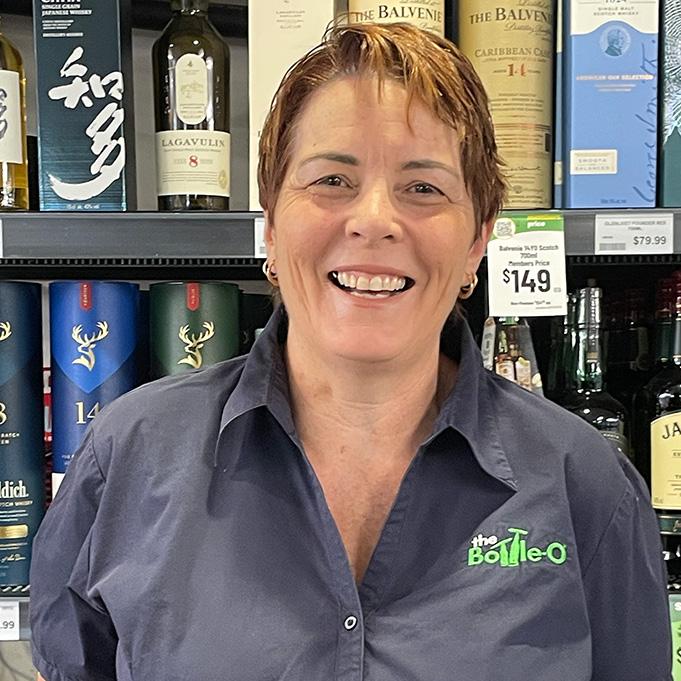
As store manager at The Bottle-O Taree West and Friendly Grocer, Burke brings more than 35 years of experience across hospitality and liquor retail, including owning and operating country hotels before moving into the retail liquor sector a decade ago.
“Working closely with customers, suppliers, and stock naturally led me into the retail liquor industry,” she said.
Two key influences have shaped her approach to leadership.
“My mum set the foundations early – she taught me the value of hard work, resilience, and treating people with respect,” she said.
“My current employer, Retail Liquor Specialists Group (RLSG) has continued that influence, giving me the opportunities to grow… and refine my leadership style.”
In practice, Burke focuses on creating a supportive team environment, particularly during busy periods where communication and trust are critical to delivering for customers.
“Hospitality and retail are built on collaboration, when we give… we all gain through better teamwork, better customer service and a more positive workplace,” she said.
She believes small, consistent actions make the biggest difference.
“When we create an environment where women feel heard, valued and backed by their team, confidence grows and opportunities follow.”
Her advice is simple: “Stay curious, keep learning, and don’t be afraid to step into new responsibilities.”
Maria Caccamo, owner of CM Liquor/Powerhouse Wine Wholesalers, has built a thriving business grounded in resilience, collaboration and continuous learning.

Since 2009, she has led both the wholesale wine business and retail operation, stepping into the role earlier than expected following her husband’s sudden passing.
“At the time, I was not a wine consumer; however, direct immersion in the business quickly led to a practical and commercial understanding of the category,” she said.
What began as necessity quickly evolved into both expertise and passion, with Caccamo now overseeing imports, wholesaling, retail execution and long-term supplier and customer relationships.
Central to that growth has been the strength of her team and the relationships built across the industry.
“We would not have experienced growth without the support of my amazing team,” she said.
Caccamo believes collaboration is fundamental to success, both within individual businesses and across the broader trade.
“In our industry, support and collaboration are vital,” she said.
“Giving support to others ultimately helps the whole industry and your own business to thrive.”
Alongside running the business, she has prioritised mentoring others, sharing knowledge and supporting community initiatives, reinforcing her belief that long-term success is built collectively.
For Caccamo, supporting women in the industry comes down to practical, consistent action.
“Small, consistent support can have a lasting impact on their careers,” she said.
“Stay curious, ask questions, and be confident in learning from every experience.”
For Caitlain Siega, assistant manager at Bottlemart Lower Plenty, a role in liquor retail wasn’t part of a long-term plan, but it quickly became one.

“My journey into the liquor industry began unexpectedly… what initially started as a practical step… quickly evolved into a meaningful and rewarding career path,” she said.
In her role, she plays a key part in keeping store operations running smoothly, supporting her team and ensuring a strong customer experience on the shop floor.
Siega credits her parents as her biggest influence, shaping both her mindset and approach to work.
“Their work ethic and dedication to their responsibilities have set a powerful example,” she said.
That foundation is reflected in how she approaches teamwork, with a strong focus on collaboration, support and sharing knowledge across the store.
“In my experience, support and collaboration are essential in retail, whether it’s mentoring new team members, sharing product knowledge, or working together to solve day-to-day challenges.”
A defining moment came early in her career, when she was given the opportunity to step into greater responsibility before she felt fully ready.
“Someone saw potential in me and trusted me to step up,” she said.
That experience continues to shape how she supports others today, reinforcing the importance of recognising potential and creating opportunities for growth.
Her advice to others is simple: “Back yourself and take up space.”
For Grace Goodwin, what began as a few Friday afternoon tasting shifts has evolved into a role defined by trust, creativity and opportunity.
Now a senior team member at Liquor Legends Hawker, Goodwin has been with the store for five years. Initially brought on to host tastings and promote products, she gradually took on more shifts and stepped into broader responsibilities including staff supervision and social media.
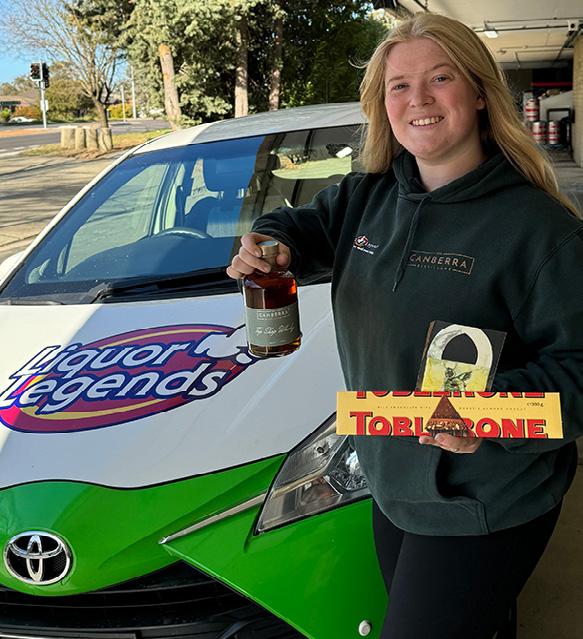
“I think sometimes people see it as just selling alcohol in a bottle shop,” she says. “But that’s just not it.”
Through her work, Goodwin has discovered the breadth of opportunity within liquor retail, from merchandising and supplier relationships to digital marketing. Her interest in photography, first explored at school, was reignited when store owner John Wilson encouraged her to take the lead on social media, ultimately inspiring her to launch her own photography business.
“He’s one of the first bosses who’s really believed in me,” she explains. “The fact that he trusts me to bring ideas to the table and run with them makes me want to work harder.”
When she first joined the store, she was one of only two female team members. Today, women outnumber the men at Liquor Legends Hawker – a change she describes as encouraging and reflective of broader progress across the industry.
Her advice to other women considering a career in liquor retail is simply to just back yourself.
“You can always ask – the worst someone can say is no. But just give it a go. You never know what’s going to come your way.”
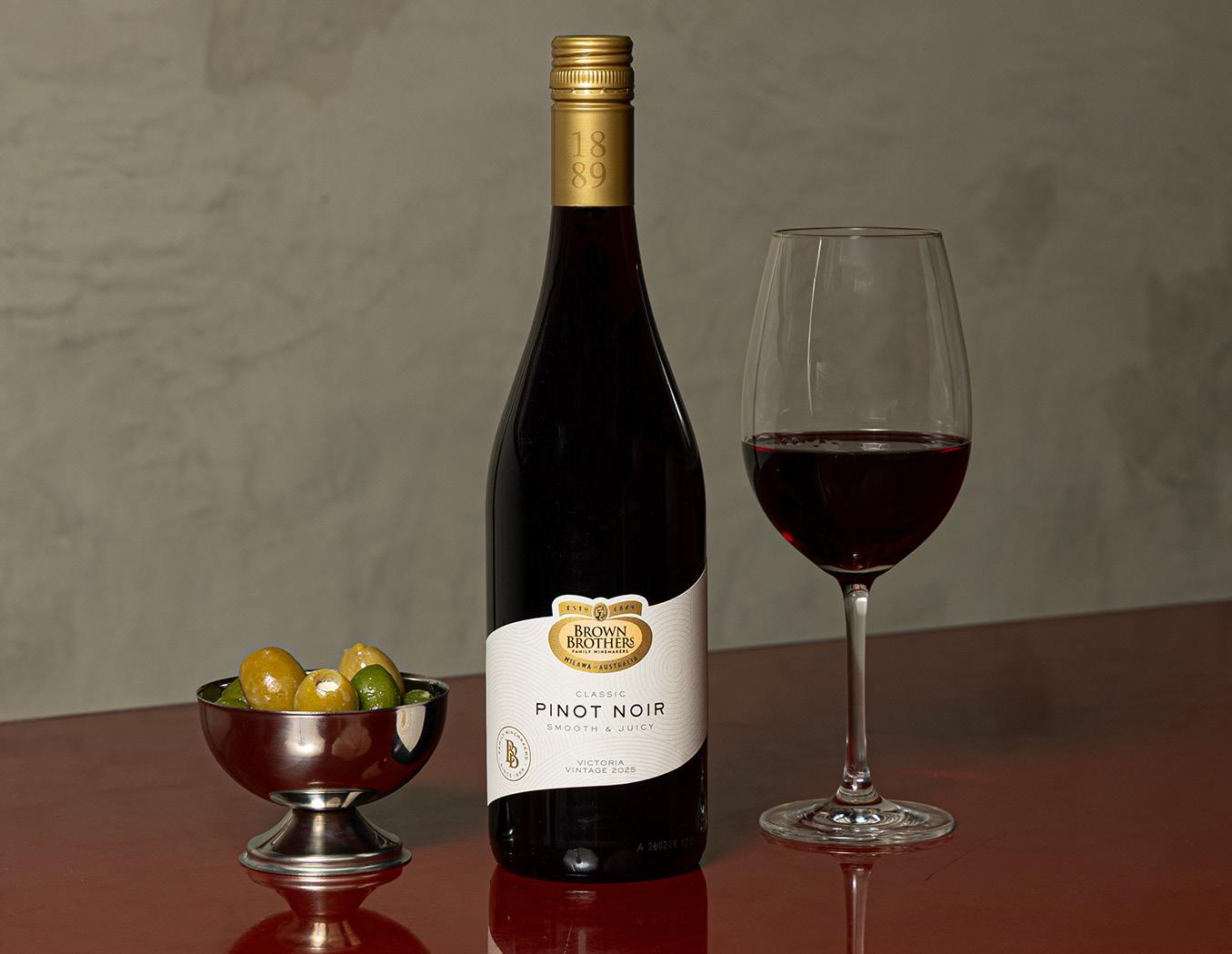
with Classic Pinot Noir launch
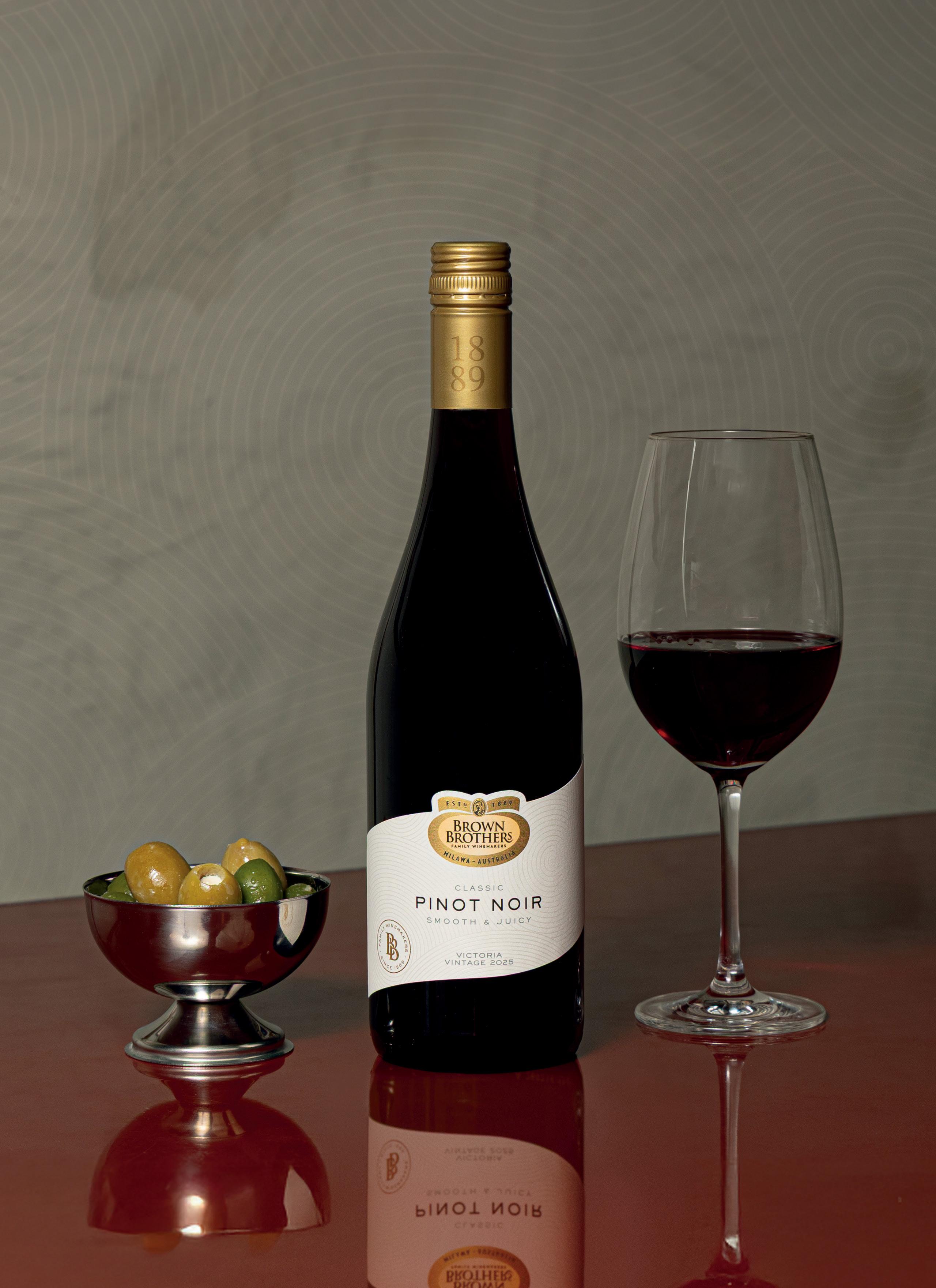
Brown Brothers has expanded its Classic range with the launch of Brown Brothers Classic Pinot Noir, strengthening the brand refresh, which is now rolling out nationally. Targeting one of Australia’s fastest-growing red wine segments, the release marks the first time in decades the 137-year-old family winery has introduced a Pinot Noir at scale.
Aligned with modern consumer preferences for lighter-bodied, fresher and more versatile wines, Classic Pinot Noir offers a sweet-fruit middle palate with soft, ripe tannins and fresh acidity on the finish – described as a juicy and easy-drinking style.
The launch forms part of one of the most significant brand refreshes in Brown Brothers’ history, with updated packaging rolling out across more than 40 wines. Combining the heritage of the iconic gold ribbon with a cleaner, more contemporary design, the new label was designed to deliver stronger visibility across both physical retail and digital platforms.
The contemporary, unified label system enhances shelf standout, simplifies navigation and strengthens master brand block presence in-store, with refreshed SKUs continuing to land throughout 2026.
Distributor: Brown Family Wine Group
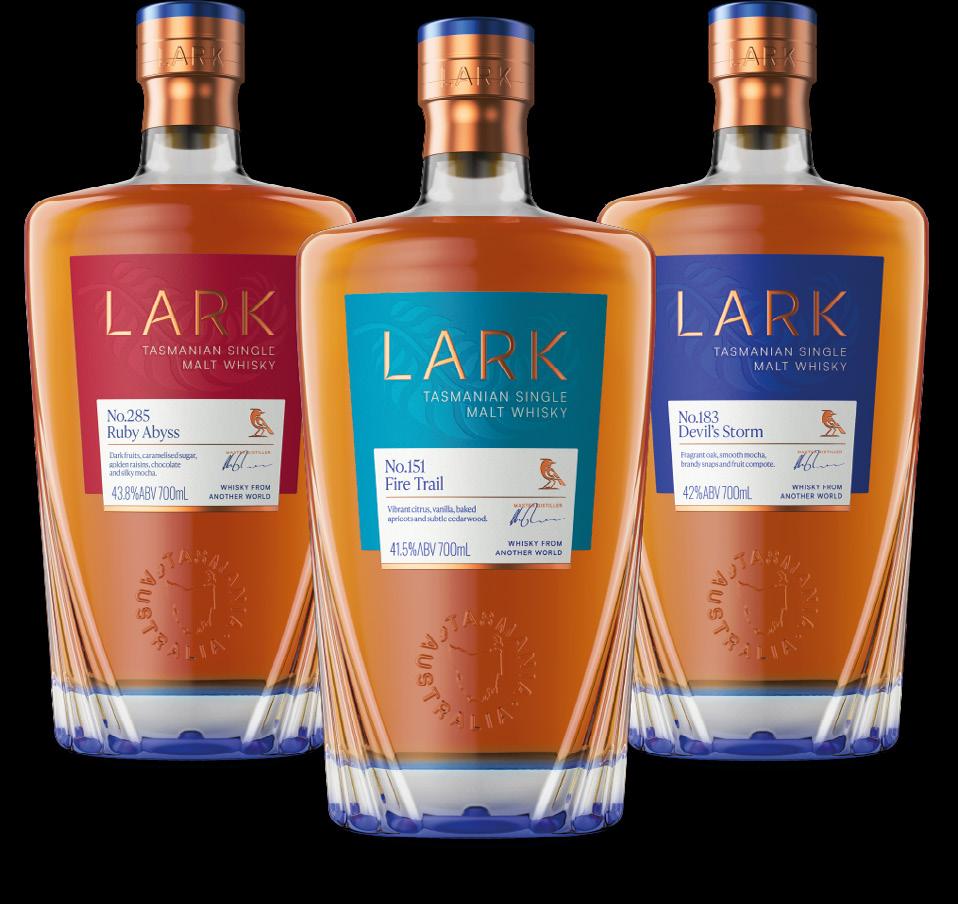
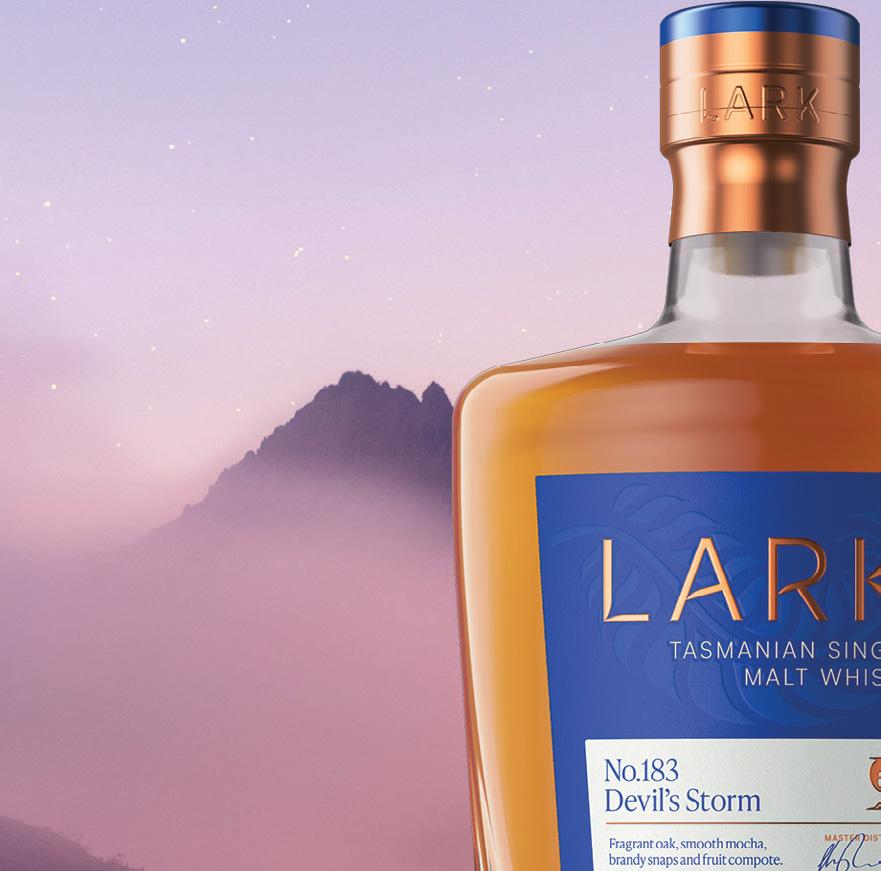
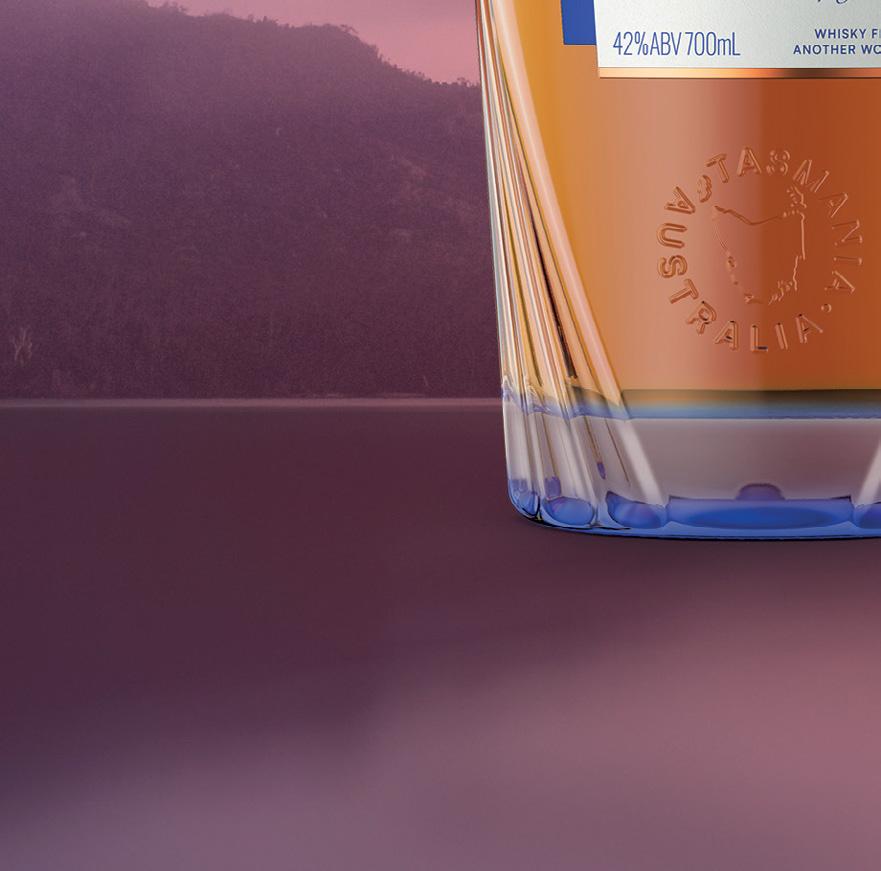
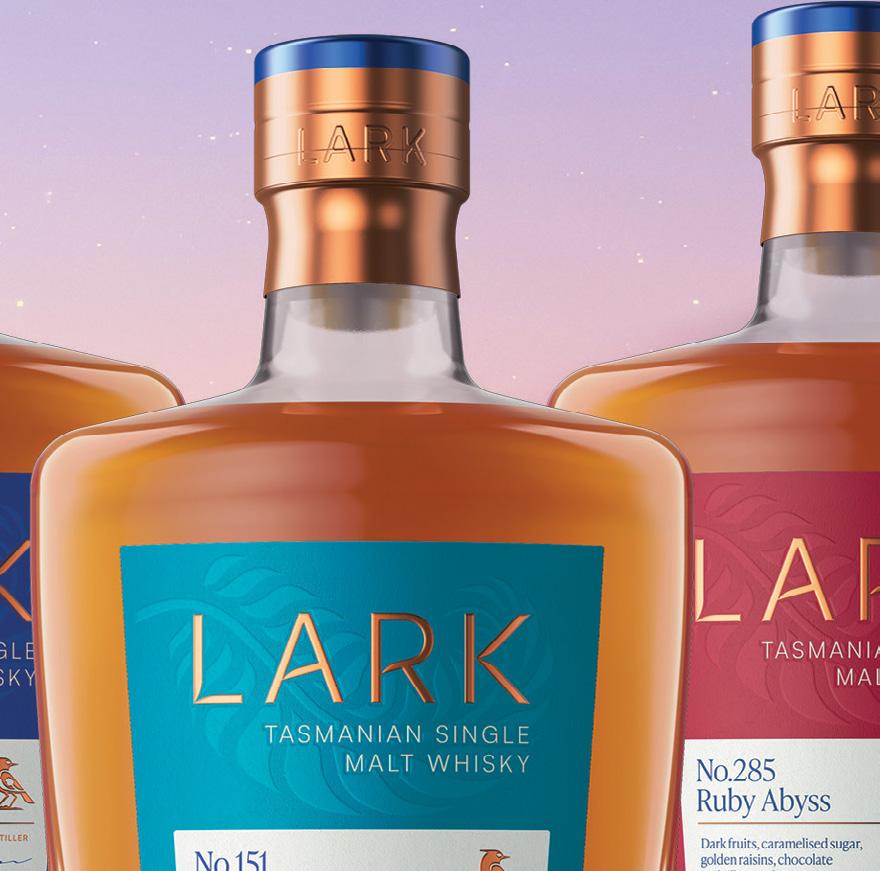
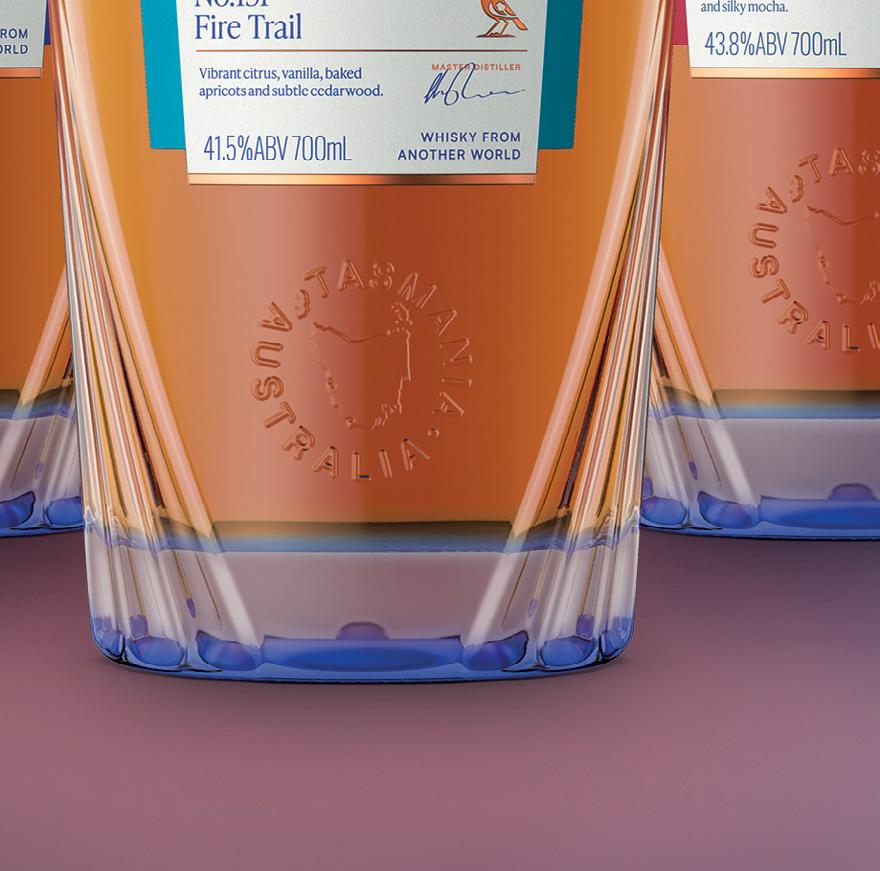
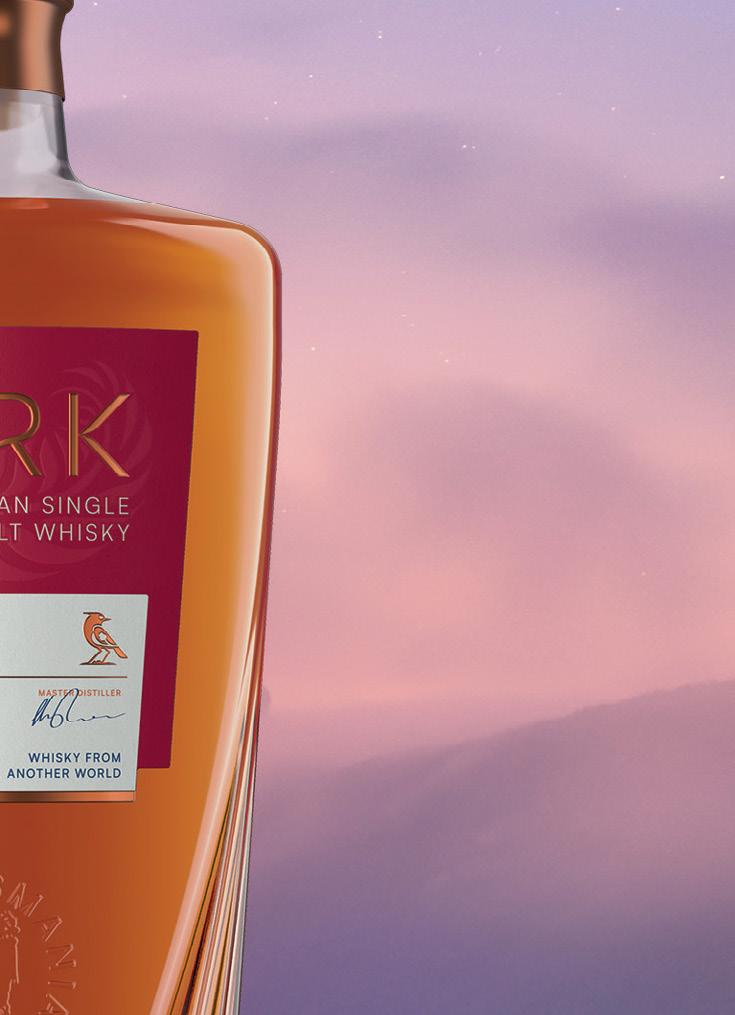
LARK Distilling Co. has launched a new luxury Single Malt portfolio from Tasmania, marking the brand’s most significant release to date. Born at the edge of the world and matured in one of the planet’s most dynamic climates, the collection elevates the fortified richness, flavour intensity and silky complexity for which LARK has earned global acclaim. Presented in a vibrant new livery and housed in a redesigned 700ml bottle.
Three expressions are available from launch. Fire Trail (RRP $170) is an unpeated Single Malt drawing on Port and Sherry casks with notes of citrus, baked fruit and applewood smoked water. Devil’s Storm (RRP $200) is a lightly peated expression aged in firstfill Port and Sherry casks from Seppeltsfield Wines, finished in American Oak with notes of scorched red fruit, almond fudge and dark chocolate. Ruby Abyss (RRP $400) leads the new Super Luxury tier, aged entirely in first-fill vintage Seppeltsfield Port and Sherry casks –some holding more than a century of fortified wine – with dark fruit, silky mocha and delicate peat smoke.
Contact your Spirits Platform sales representative to stock the new range.
Distributor: Spirits Platform
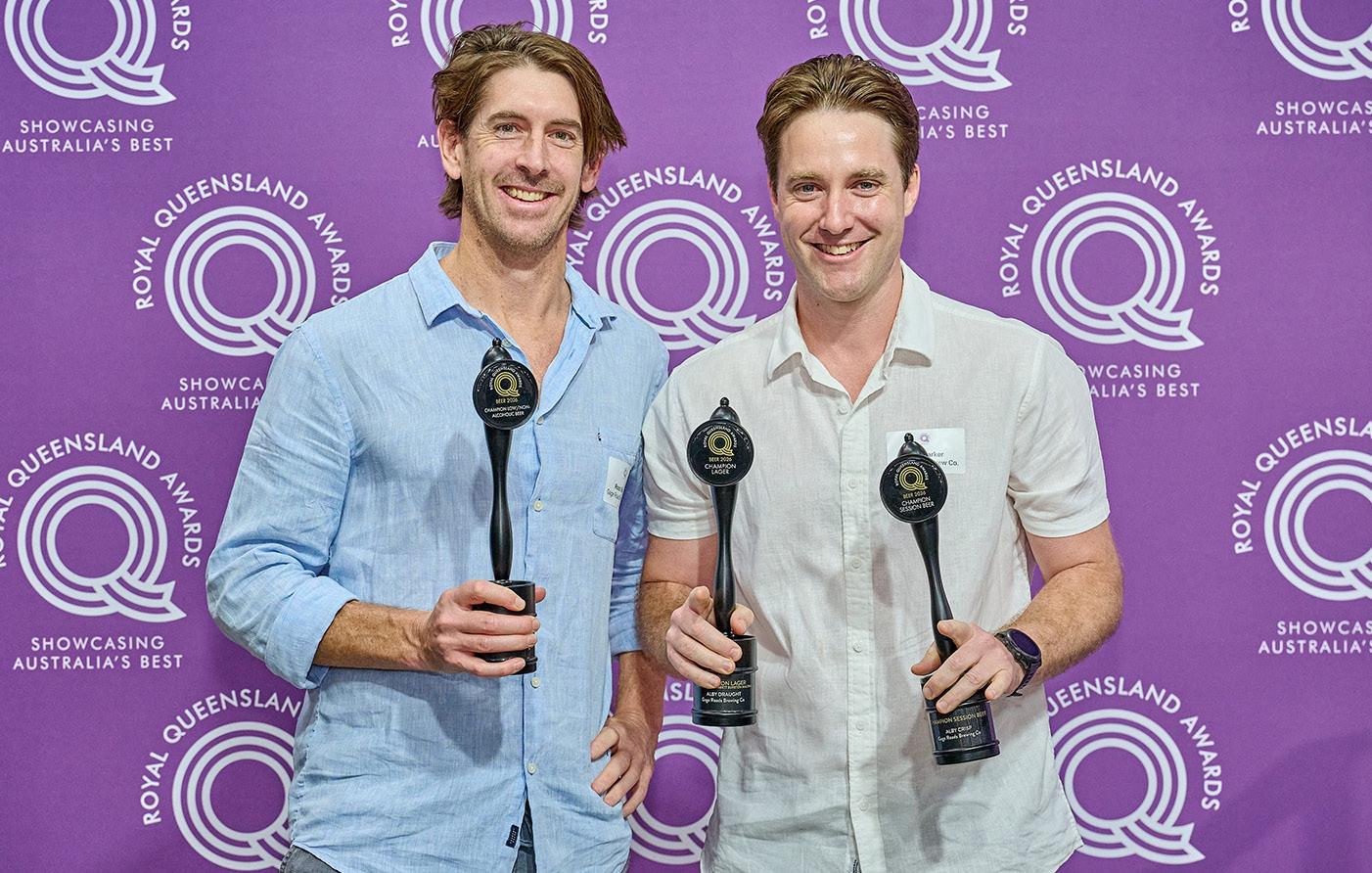
Gage Roads Brewing Co was named Champion Large Brewery at the 2026 Royal Queensland Beer Awards, capping off a milestone year for the Western Australian brewer.
Production Manager and Head Brewer Ross Brown said the recognition is a testament to the team’s consistency and craftsmanship across a diverse portfolio.
“We were already stoked with the results we achieved at this year’s Royal Queensland Beer Awards, so to be recognised as the Champion Large Brewery in such esteemed company is a bit of extra froth on top,” he says.
The win follows strong results across multiple categories, with core beers including Huey Coastal Lager, Air-Time Low Carb Lager and the Alby range all securing gold medals. Brown says success in lager styles is particularly significant.
“Making great lager is such a strong barometer of a brewery’s processes and quality control,” he explains.
Beyond its core range, Gage Roads also impressed with its A-Shed limited releases, while its non-alcoholic offering Yeah Buoy claimed a Champion trophy, highlighting the brewery’s capability across both traditional and emerging segments.
Brown attributes the brewery’s performance to a clear focus on approachability and scale.
“Our focus is always on brewing beer that is highly sessionable, well balanced and approachable with a broad appeal,” he says.
The award adds to a strong 12 months for Gage Roads, which celebrated its 20th anniversary, launched Huey Coastal Lager and brewed more than 10 million litres of beer. The business also secured a podium finish in the GABS Hottest 100, with Single Fin placing third nationally.
Looking ahead, innovation remains firmly on the agenda, with new pack formats planned for Huey Coastal Lager and a limited re-release of Little Dove to mark 10 years since its Champion Beer win at the Australian International Beer Awards.
Distributor: Good Drinks Australia
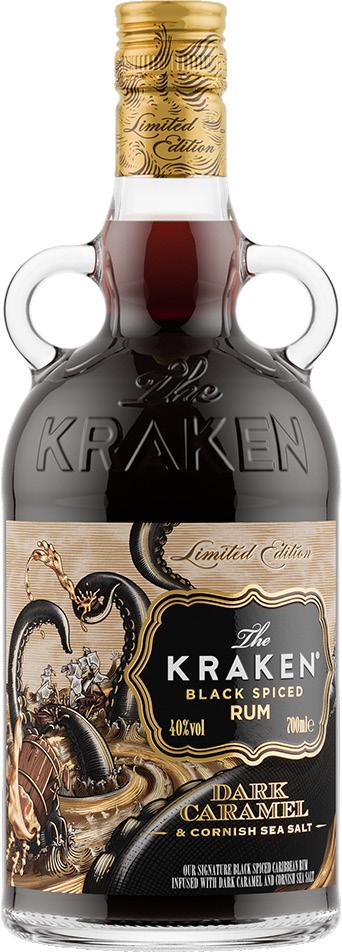
The Kraken Black Spiced Rum has launched a beastly new limited-edition flavour in Australia, unveiling Dark Caramel & Cornish Sea Salt at 40 per cent ABV in a 700ml format.
Positioned as a bold seasonal indulgence for cooler weather occasions, the expression delivers notes of buttery vanilla and toffee, layered with a savoury lift of Cornish sea salt. Best enjoyed on the rocks, as a Caramel Espresso Martini, or added to a hot chocolate, it taps into ongoing demand for indulgent, dessert-inspired dark spirits and cocktail serves.
The new variant joins Roast Coffee and Black Cherry & Madagascan Vanilla as flavour extensions to the core Kraken Black Spiced Rum and premix range, providing more occasions and ways for consumers to try rum and spiced rum alike.
Kraken Black Spiced Rum remains the fastest growing Dark Spirit over the past five years among the top 25 brands (IWSR five years to 2024).
Marketed as the world’s first Black Spiced Rum, it is aged for more than two years in the Caribbean and blended with over 11 spices.
Dark Caramel & Cornish Sea Salt will be ranged in selected independent and Dan Murphy’s stores from late April, with Liquorland launching the product in the lead up to Father’s Day.
Distributor: Proximo Spirits
•
Sea
•
•
Method:
1.
2.
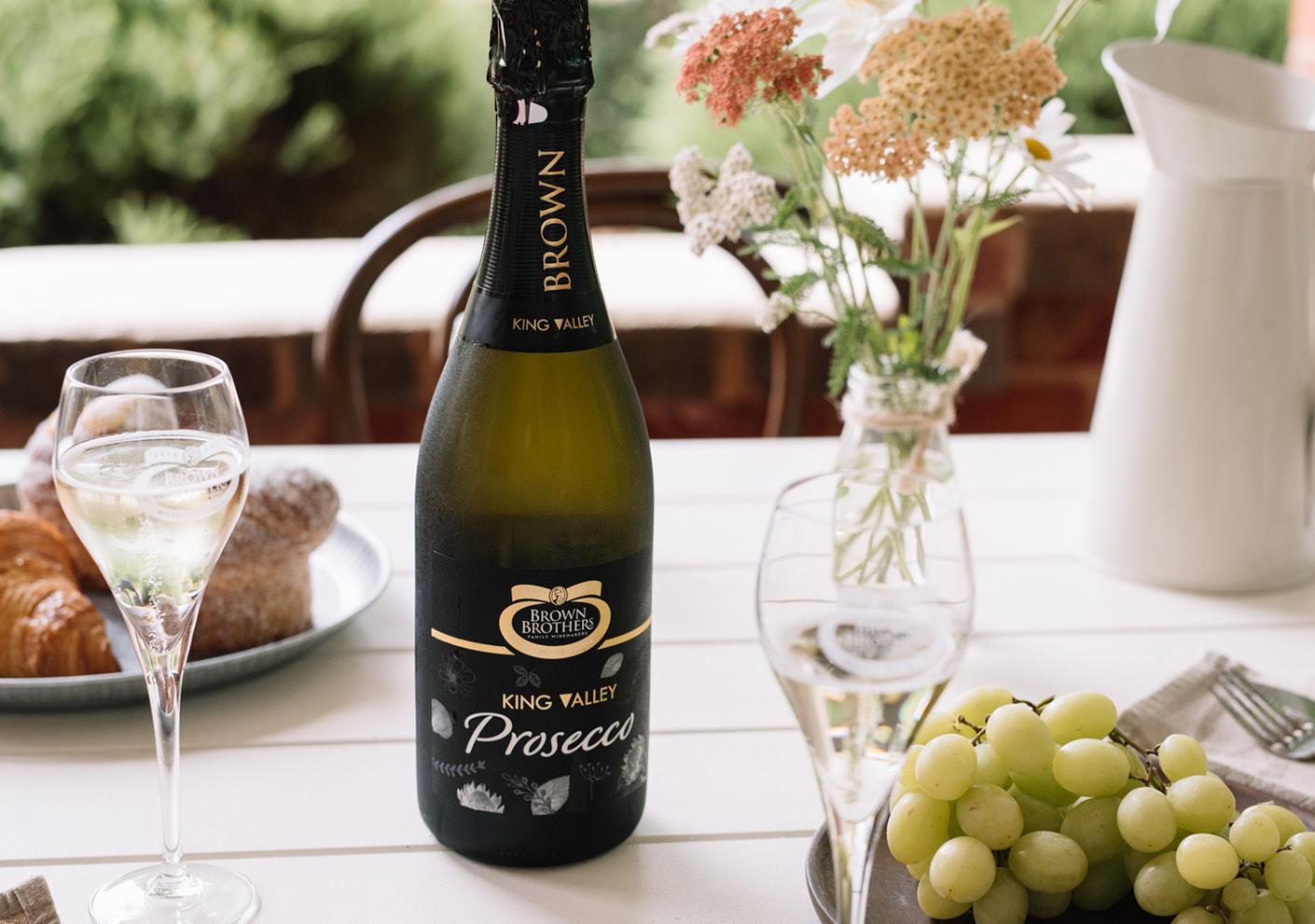
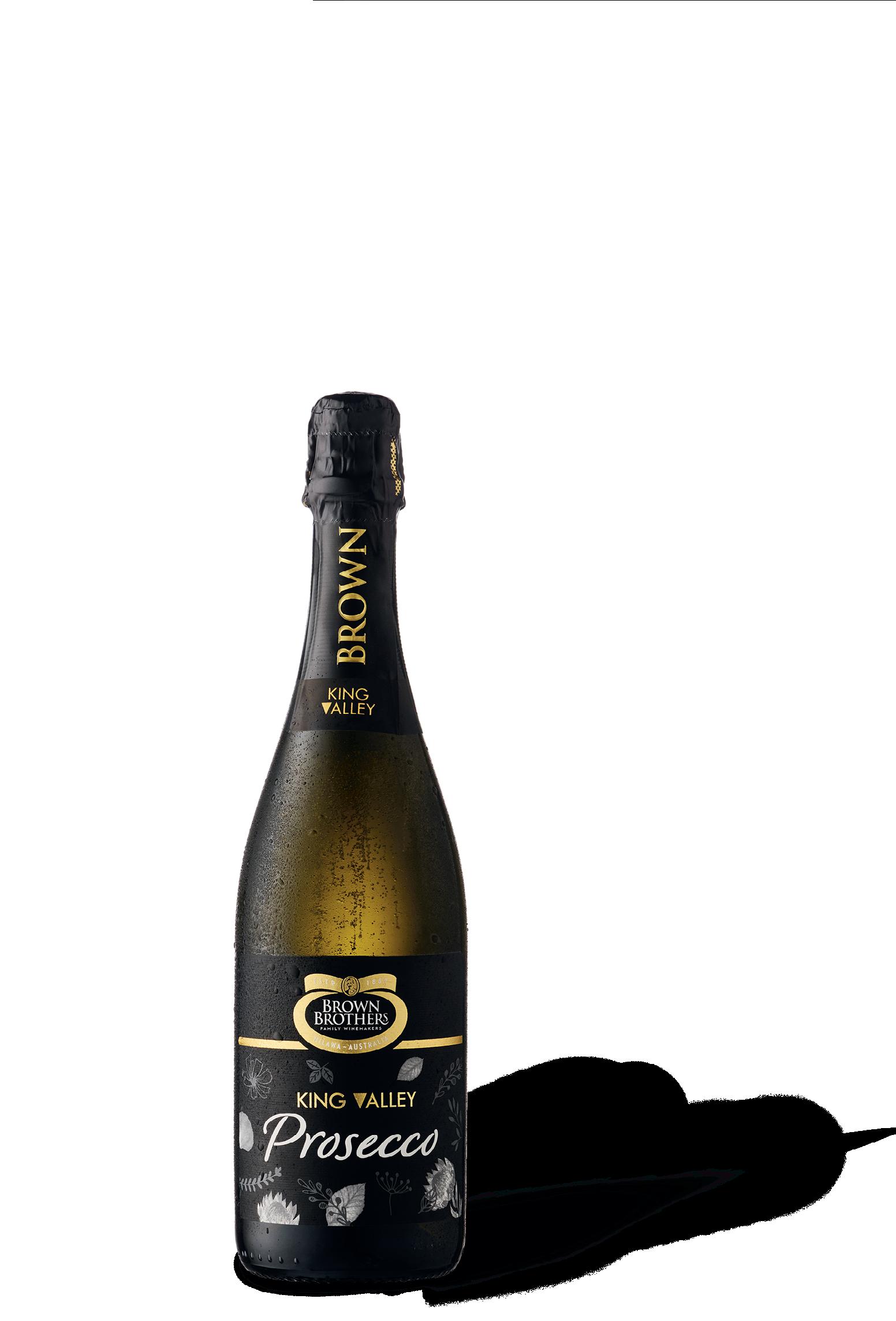
Brown Brothers is celebrating a major milestone for Australian wine, with confirmation the name ‘Prosecco’ will continue to be used domestically, securing the future of a high-growth category for trade.
Now worth approximately $200 million, with 95 per cent consumed locally, Prosecco continues to deliver strong retail performance, driven by its approachable, easy-drinking style and relevance across everyday occasions.
At the centre of this growth is Brown Brothers Prosecco NV 750ml, the brand’s core SKU, delivering five per cent MAT growth and reinforcing its position as a reliable, high-performing fixture for retailers.
As Australia’s number one Prosecco brand, Brown Brothers, part of Brown Family Wine Group, leads the category from Victoria’s King Valley, which produces around 65 per cent of the nation’s most premium Prosecco. The brand has played a key role in making Prosecco an accessible, everyday sparkling option for Australian consumers.
With strong consumer demand, proven velocity and broad appeal, Brown Brothers Prosecco NV remains a key driver of category growth and a dependable performer for trade.
Distributor: Brown Family Wine Group
Orion Breweries builds on demand for Japanese beer with flagship release
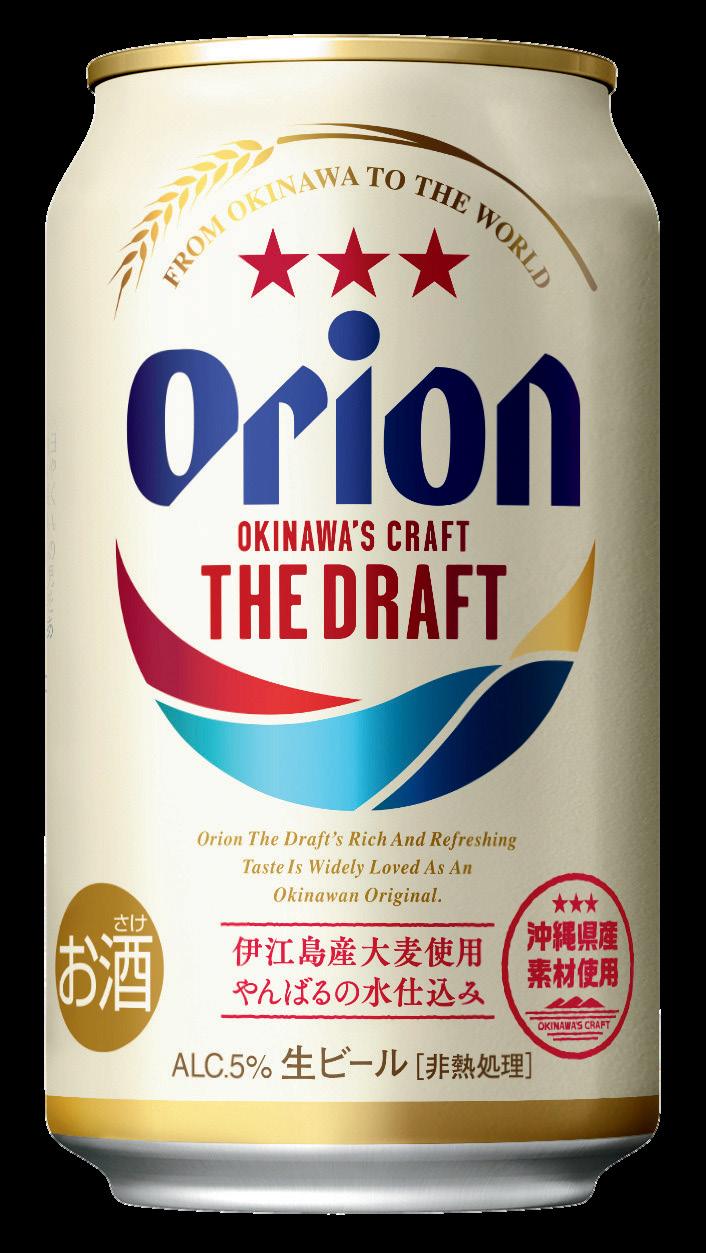
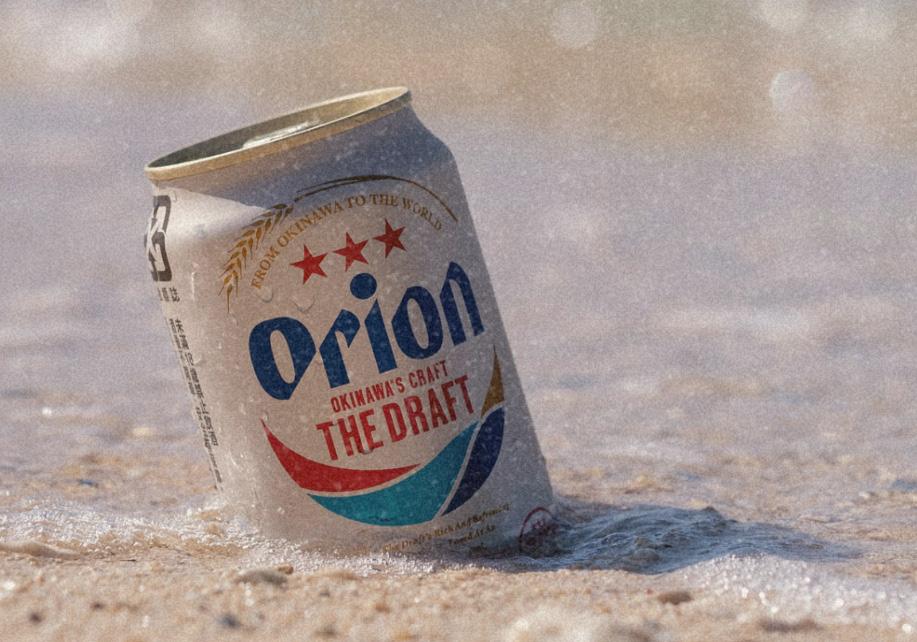
Japan’s fifth-largest beer producer, Orion Breweries, will expand its presence in Australia and New Zealand from 2026, establishing its first on-the-ground regional operation and using its flagship beer Orion The Draft to build on growing awareness of Japanese beer in Australia.
Brewed exclusively on the tropical island of Okinawa and imported, The Draft uses a malt-forward recipe with rice and corn used as secondary ingredients – giving it a richer flavour profile than typical Japanese lagers. The beer is crafted using water that is ethically sourced near the UNESCO-protected Yanbaru, and characterised by a crisp, refreshing taste and mild palate. Less fruity in style, the emphasis is on smoothness.
As interest in Japanese beer continues to grow, Orion hopes to bridge the gap between international lager drinkers and craft beer fans looking beyond established brands.
Distributor: Nippon Foods or contact Brett Freeman via brett-freeman@orionbeer.co.jp
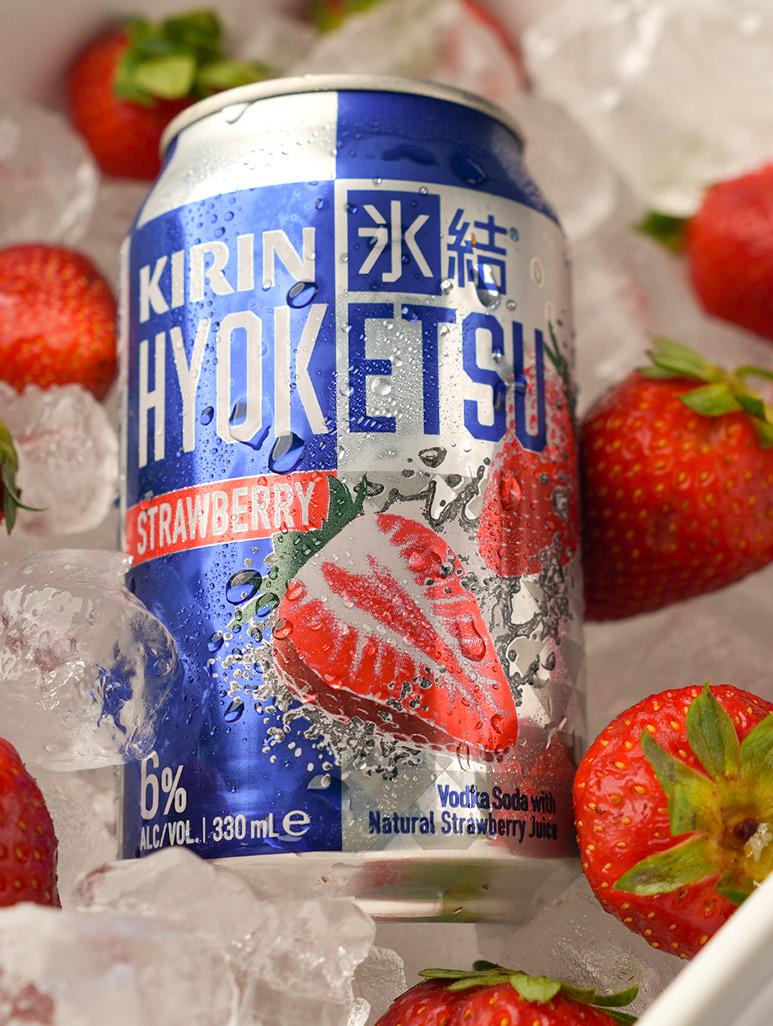
Since arriving in Australia less than three years ago, Kirin Hyoketsu has shaken up the RTD category with a growing range of deliciously crisp and refreshing flavours including lemon, peach, pineapple, and green apple, as well as innovative limited-edition releases too. The brand is building on this momentum with the launch of Kirin Hyoketsu Strawberry, now available Australia-wide.
Alongside growing demand for the wider range of flavours, Kirin Hyoketsu Strawberry is set to take the market by storm, with 55 per cent of RTD drinkers reporting they’d like a strawberry option. Made with vodka, soda and natural strawberry juice, Kirin Hyoketsu Strawberry offers something new and fresh for these consumers who are searching for quality, flavourful drinks for all occasions.
Kirin Hyoketsu is crafted using Hyoten Toketsu technology, which locks in the freshness and intensity of the natural fruit flavours for a smooth, refreshing finish. With juicy, sunripened strawberry flavour, six per cent ABV, less than one gram of sugar, and 117 calories per can, Kirin Hyoketsu is big on explosive flavour and incredibly tasty.
Distributor: Lion

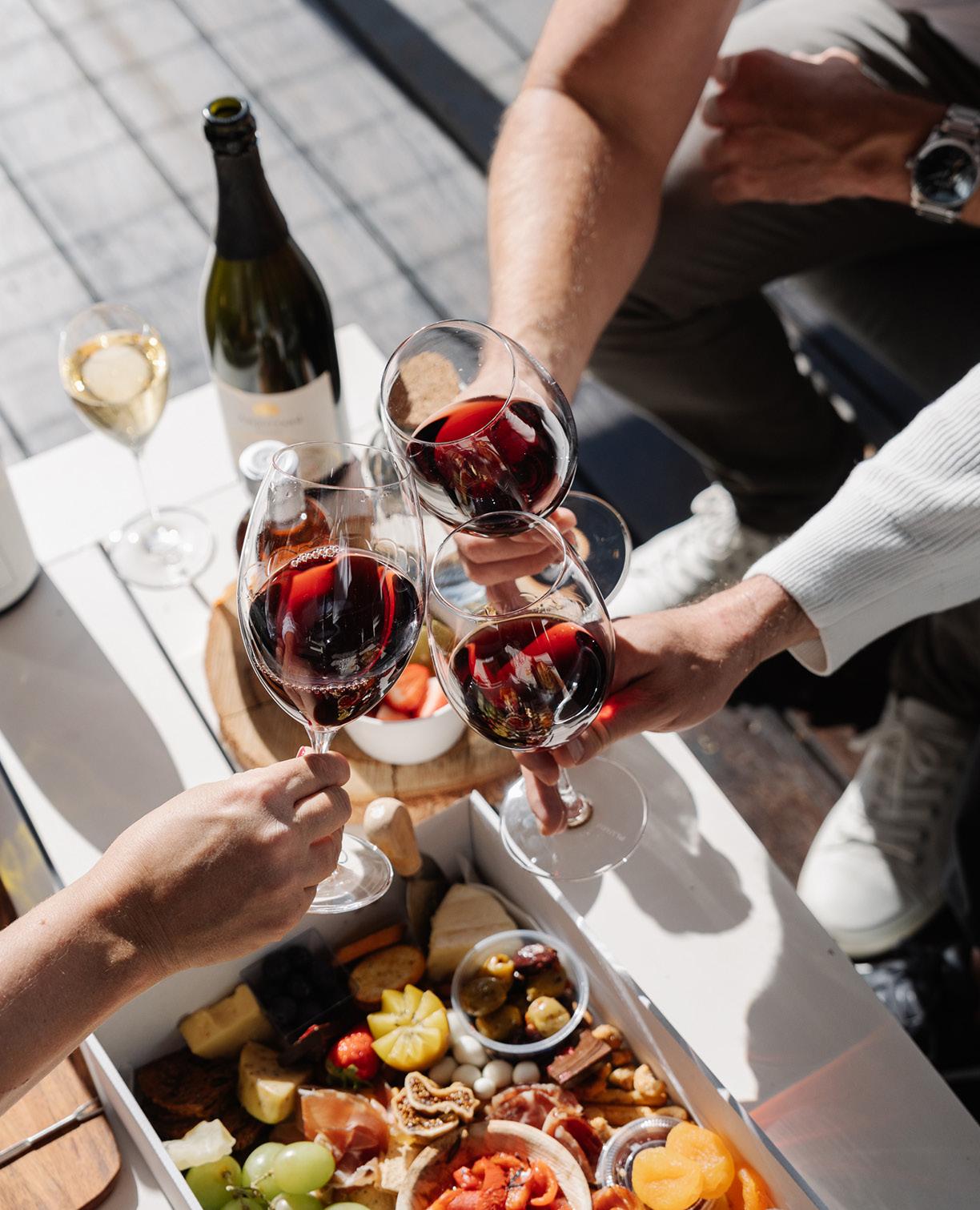
West Australian winery Ampersand Estates will debut on the East Coast through a new distribution partnership with Young & Rashleigh, targeting independent retailers and on-premise venues aligned with inclusivity.
Located in Pemberton, Ampersand Estates was founded in 2020 by Corrie Scheepers and Melissa Bell, who restored one of the region’s oldest vineyard sites. The winery is 100 per cent LGBTQIA+ owned and operated, with these values reflected in its distribution strategy.
The exclusive partnership will bring the portfolio to New South Wales and the ACT, including its award-winning Pinot Noir, alongside Syrah, rosé, Sauvignon Blanc, Riesling and Chardonnay, made with winemaker Rob Mann.
Scheepers said: “Bringing Ampersand Estates to the East Coast has always been part of our vision… finding the right partner was essential… We aren’t just looking for shelf space; we’re looking to build a community in NSW and the ACT that mirrors the vibrant, diverse spirit of our home in the Pemberton Wine Region.”
Distributor: Young & Rashleigh
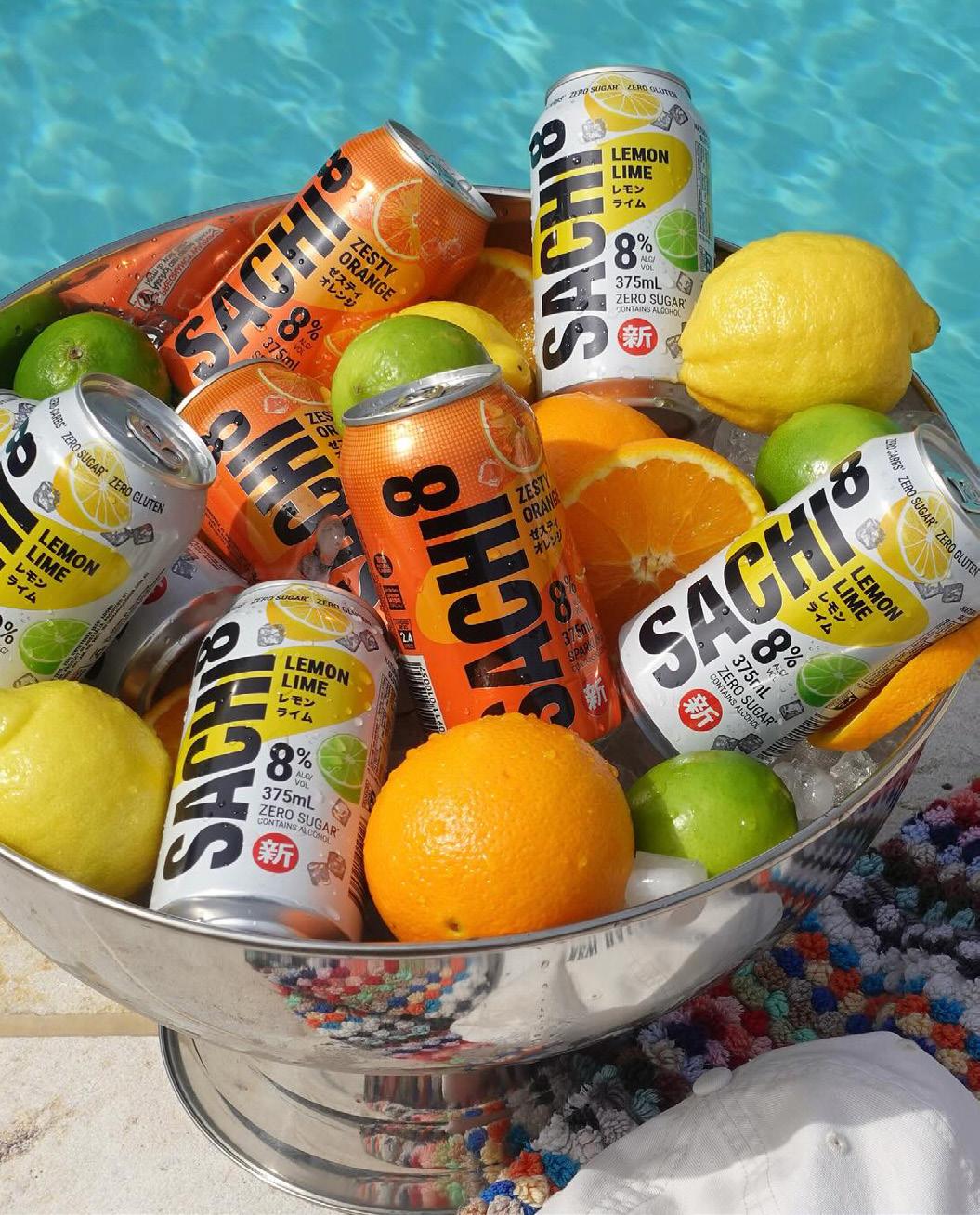
Sachi8 has rapidly emerged as one of Australia’s fastest growing light RTD brands, already surpassing 750,000 litres annually and now sitting within the top 10 light RTD brands nationally. The brand continues to gain momentum with 67 per cent growth, driven by a compelling combination of bold flavour, higher strength and outstanding shopper value.
At eight per cent ABV, a 375ml can delivers 2.4 standard drinks, creating a strong value proposition that resonates with consumers in the current cost-of-living environment. Importantly, this value is delivered without compromise on taste.
Sachi8’s clean, crisp flavour profile is enabled through advanced wine clarification technology, creating a neutral wine base that delivers exceptional drinkability while supporting competitive pricing and strong retailer margins.
The range currently includes five SKUs, with three zero sugar variants – Lemon Lime, Pineapple Lime and White Peach – alongside original flavours Crisp Yuzu and Zesty Orange, with zero sugar versions of both launching soon. The Pineapple Lime Zero Sugar SKU leads the portfolio, accounting for 26.9 per cent of sales, while the mixed 10pack continues to perform strongly, delivering over 18 per cent of total brand sales.
Now available in more than 3,800 stockists nationally, Sachi8 continues to expand distribution as retailers respond to its strong velocity, standout flavour and clear shopper value.
Distributor: Divas Beverages

https://theshout.com.au/national-liquor-news/subscribe
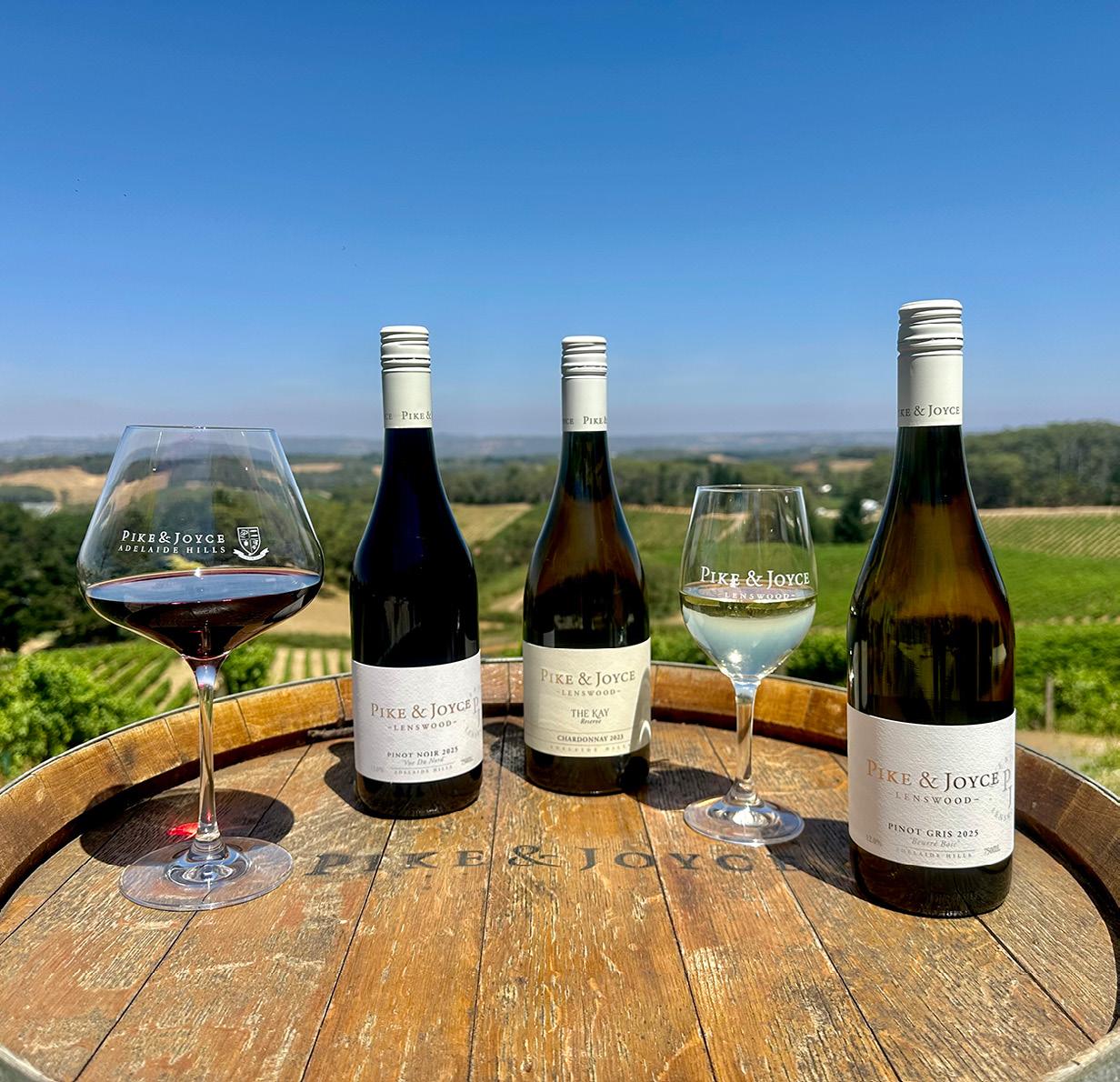
Oatley Fine Wine Merchants has been appointed national distribution partner for Pike & Joyce Wines by Pikes Wines, strengthening an almost decade-long relationship.
Pikes Wines has partnered with Oatley since 2017, and adding Pike & Joyce Wines creates a single national point of contact, improved alignment across states and greater continuity.
The rollout began in Queensland, New South Wales, ACT, Victoria and Western Australia from 1 March, with South Australia following from 1 April. A seamless transition is expected due to the established relationship between the two businesses.
Speaking on behalf of the Pike & Joyce families, Director Jamie Pike said: “As a family business, relationships matter to us. We’ve worked with Oatley Fine Wine Merchants for many years through Pikes, and we trust the way their team looks after customers and represents our wines. This longstanding relationship is why we’re confident this is the right move for Pike & Joyce.”
Anthony Roberts, Chief Executive Officer of Oatley Fine Wine Merchants, added: “This addition further cements our partnership with the Pike family as we welcome the Joyce family to the team as well. Family businesses bring their own special romance to the business of wine – our owner, Andrew (Sandy) Oatley, is delighted to have Pike & Joyce in the family fold.”
Distributor: Oatley Fine Wine Merchants
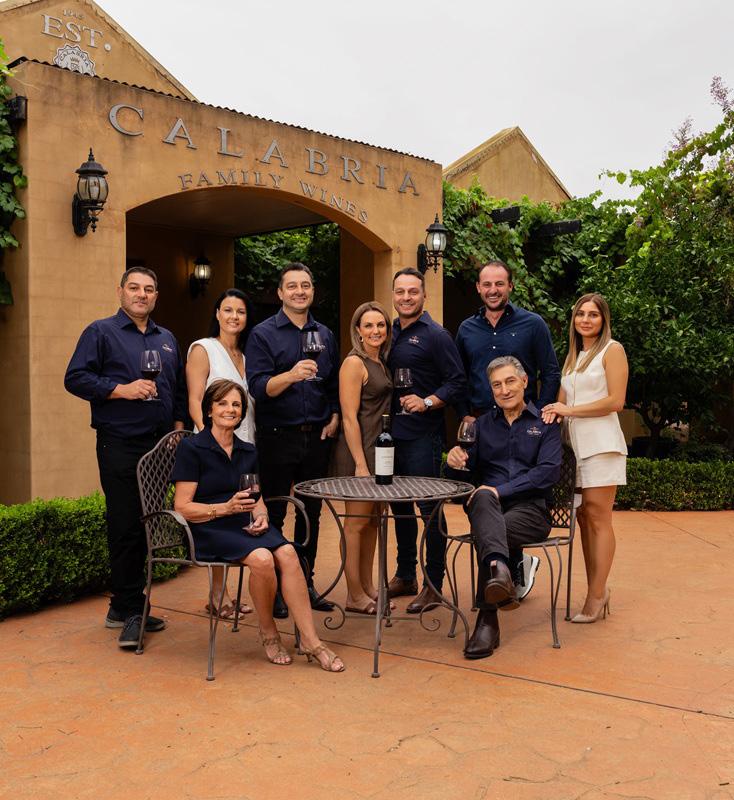
Calabria Family Wine Group has announced dual distribution acquisitions, welcoming House of Fine Wine and The Wine Company into the family’s distribution business.
The deal sees Calabria take over the Australian distribution of iconic global and local wines including Group Bollinger, Villa Maria and Tahbilk, marking significant additions to Calabria’s on-premise and independent retail distribution models.
Andrew Calabria, Sales & Marketing Director and thirdgeneration family member, said: “This milestone brings together three likeminded businesses that share our values and longterm view of the industry.
“Welcoming House of Fine Wine and The Wine Company into the Calabria family significantly strengthens our national distribution with some of the world’s most respected wine brands and positions us to deliver even greater value across the Australian market.
“We are passionate about representing worldclass wines, and both portfolios reflect that same dedication. We look forward to championing the ongoing success of these iconic brands, including Groupe Bollinger, Villa Maria and Tahbilk.”
Calabria Family Wine Group said it has already integrated key personnel from both the House of Fine Wine and The Wine Company into its sales, customer service and marketing teams.
Distributor: Calabria Family Wine Group



Retailers can capitalise on trade-up opportunities for Mother’s Day by leaning into the nature of the occasion rather than just selling a SKU, writes Norrelle Goldring.
Mother’s Day remains one of Australia’s most commercially important seasonal retail moments.
In 2025, Australians were expected to spend around $1 billion on the occasion, with food and beverages among the leading gift choices and the average spend on Mother’s Day $141, up from $102 the year prior.1
The celebration is also broadening, because who is considered a ‘mum’ is widening. Beyond biological mothers, the definition of ‘mum’ is expanding to include stepmothers, grandmothers, foster mothers, and even single fathers who fulfill maternal roles.
At the same time, gift-giving shoppers are increasingly mixing tangible gifts with experiences and shared moments, rather than buying a single standalone present. In the off-premise that matters, because Mother’s Day is less about stock up or pure gift-giving shopping and more about ‘gifting plus immediate social consumption’. Namely, Mother’s Day lunch, whether out for lunch or in/at home.
ANZ transaction data points to a distinctly last-minute pattern – 57 per cent of Mother’s Day weekend spend happens on Saturday
(the day prior), 77 per cent occurs between 9am and 6pm, and unsurprisingly 28 per cent lands in the lunch daypart window of 12pm–2pm. ANZ also specifically calls out wineries and bottle shops among the businesses expected to benefit from the occasion.2
In practice, that makes convenience, availability and gift readiness just as important as the liquid itself. Category wise, wine is the natural hero, particularly white, sparkling and rosé – and interestingly rosé and Prosecco are two of the few wine categories in growth, along with Moscato 3 . Retail merchandising positions Mother’s Day around chilled rosé, Prosecco, Champagne, pink gin, curated gift packs, premium selections and lighter pre-mix options. Spritzers are also a growing opportunity, and low-and no-alcohol wine and sparkling options deserve a place; ‘something for every mum’. Winning Mother’s Day occasions are celebratory, feminine leaning without being clichéd, and suitable either for gifting on arrival or for opening immediately at brunch, lunch or an afternoon gathering. The clearest bundling opportunity is not

just gifting ‘drink plus drink’, or even ‘one for her and one for me’ (although that is perfectly valid), but ‘drink for the occasion’. This extends beyond the liquids themselves to adjacent categories. E.g. sparkling wine with flutes, rosé with a grazing or dessert pairing, pink gin with premium mixer and garnish, or a bottle bundled with flowers, chocolates and a premium card sleeve. Retailers can merchandise Mother’s Day with attractive special bays featuring these occasion-based bundles.
So, retailers can ‘win’ Mother’s Day by merchandising the emotion and the occasion, not just the SKU. Build clear goodbetter-best ladders and gifting options, lead with sparkling and rosé, create ready-to-go category-adjacent bundled gifting solutions, and make the path to purchase frictionless for last-minute shoppers.
In this way, Mother’s Day is a premium trade-up opportunity when done well. ■
Sources:
1 https://www.roymorgan.com/findings/9888-ara-roy-morgan-mediarelease-mothers-day-2025
2 https://www.anz.com.au/newsroom/media/2025/may/anz-customersmothers-day-spending-2025/
3 https://www.wineaustralia.com/getmedia/464497fe-db24-47de-b2174e2d20c89a21/Australia-market-insights-report-2024_v2.pdf
New wine and spirits releases offer Mother’s Day appeal, premium cues and strong retail opportunities this season.
G.H. Mumm celebrates Central Otago
Pinot Noir with Blanc de Noirs release
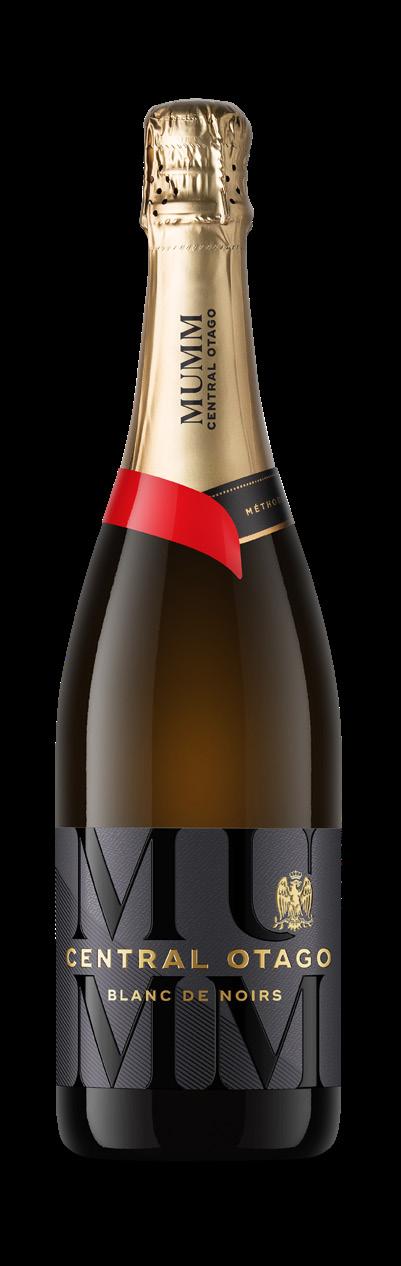
Champagne house G.H. Mumm has released the second blend of its Mumm Central Otago range, Blanc de Noirs NV, celebrating one of the world’s most prestigious Pinot Noir growing regions.
Crafted from 100 per cent Pinot Noir grapes, this particular release uses grapes hand-harvested entirely from sub-regions like Tarras, Alexandra and Gibbston Valley. Under Smith’s stewardship, the wine is produced using the same labour-intensive ‘méthode traditionnelle’ process used by Maison Mumm, resulting in a wine with a generous palate of rich, red fruit, balanced with chalky acid and well-defined tannins.
Chief Winemaker, Trina Smith said: “The intense sunlight that Central Otago enjoys allows for concentrated flavour development and natural phenolic ripeness, while cool nights preserve vibrant acidity. This outstanding combination allows grapes to achieve generous fruit expression whilst still maintaining freshness – ideal for producing finely balanced, and precise sparkling wines.”
Distributor: Pernod Ricard
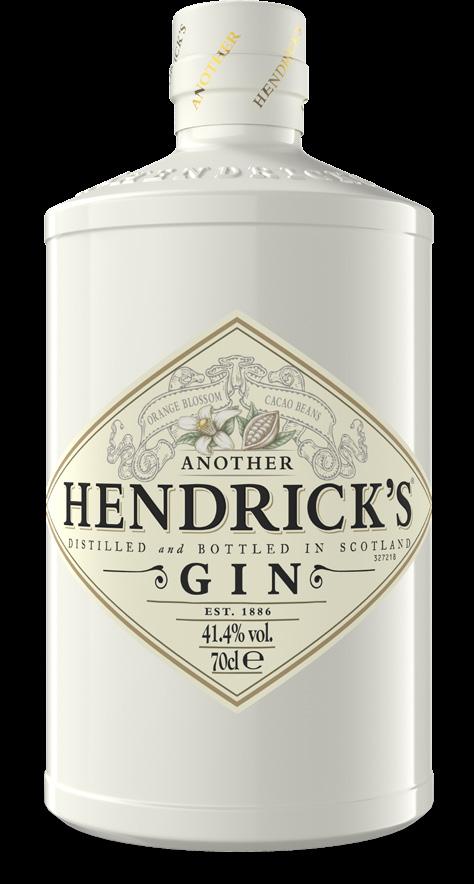
Another Hendrick’s

Hendrick’s Gin has released a new, permanent expression, Another Hendrick’s – designed to celebrate a different side of the brand’s personality, and the only innovation in the brand’s history to be launched globally across all markets.
Inspired by Master Distiller Lesley Gracie’s love of chcolate and flowers, Another Hendrick’s enhances the characteristic Hendrick’s flavour with notes of cacao and bright citrus elements.
“Another Hendrick’s is the complete opposite of what we’ve been doing for the past 25 years, and the delectable combination of orange blossom and cacao beans is really rather unusual,” says Gracie.
Though the branding closely mirrors the OG Hendrick’s Gin, unlike its classic black bottle, Another Hendrick’s is packaged in a striking all-white bottle.
“Hendrick’s has always been a brand driven by bold creativity and a willingness to defy category conventions. We’re thrilled to be bringing renewed momentum into the Australian gin category with the launch of Another Hendrick’s, engaging the next generation of drinkers, and strengthening our position to lead the next era of premium spirits growth,” said Jonathan Sully, Marketing Director ANZ.
Distributor: William Grant & Sons
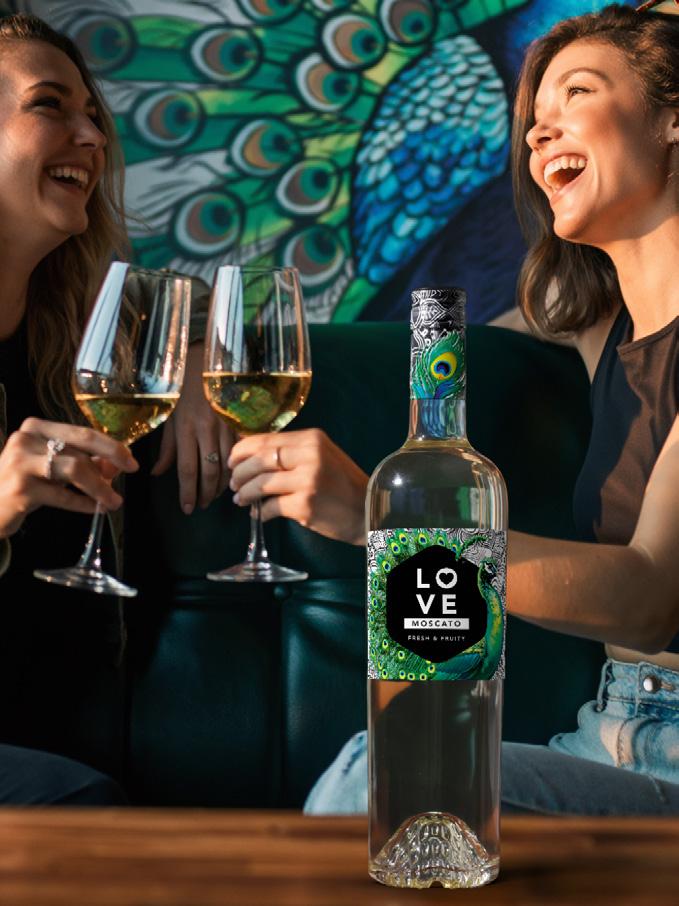
De Bortoli Wines has introduced LOVE Moscato, a bright, fruit-driven addition to its portfolio designed to strengthen appeal within the approachable, lighter-style wine segment.
Made from aromatic Muscat grapes, Moscato continues to serve as an important gateway into wine, known for its expressive fruit profile, gentle florals and refreshing finish.
LOVE Moscato sits alongside Rosé Rosé, Blue Gris and PINOT Pinot Noir, bringing a vibrant, easy-drinking style that broadens the offering and creates additional trading opportunities for retailers.
“In the glass, LOVE Moscato shows a pale straw colour with a hint of green,” says Head Winemaker John Coughlan. “The aroma is fresh and lifted, with notes of citrus and subtle florals, leading into a light, crisp palate with flavours of ripe peach and mandarin. It finishes clean and lively, making it easy to return to the glass.”
Positioned as versatile and foodfriendly, the release aligns with demand for lighter, expressive wines suited to relaxed, social occasions.
Distributor: De Bortoli Wines

Michael Waters Chief Executive Officer

Michael Waters, CEO of Retail Drinks Australia, highlights the latest updates to the Online Code, addressing unattended deliveries and dry zones.
Retail Drinks Australia (RDA) has recently completed its latest biannual review of the Online Alcohol Sale & Delivery Code of Conduct (Online Code), further enhancing and strengthening the industry framework that governs the responsible online sale and delivery of alcohol in Australia.
The Online Code was first launched nearly seven years ago in July 2019 – at a time when there was a void of any government regulation nationwide. Direct and indirect Signatories now cover around 90 per cent of the $2 billion online alcohol sale and delivery market in Australia.
Since launching, the Online Code has undergone three major reviews, each time enhancing the framework and principles to ensure it keeps pace with changes in technology, consumer behaviour and the evolving regulatory landscape. The latest review commenced in July 2025 and has now concluded following consultation with the Code Administration Committee, the RDA Board of Directors, Signatories and other industry and government stakeholders.
The updates reinforce the strong responsible supply principles that already
exist within the sector, while providing clearer guidance to retailers and delivery partners operating in an increasingly complex environment. One key change addresses the issue of an unattended delivery that effectively becomes an attended delivery. Another provides enhanced clarity around dry zones. Both changes ensure the Online Code more clearly reflects real-world delivery scenarios and reinforces responsible supply obligations for drivers and retailers.
References have also been added to RDA’s new bespoke industry training, the Responsible Supply & Delivery of Alcohol training, and the Respond to Suspected Domestic & Family Violence short course. These new training courses are designed to help those involved with the supply and delivery of alcohol better understand their obligations around age verification, refusal of supply and safe delivery practices.
This latest Online Code enhancement comes at a time when governments across the country are reviewing their regulatory frameworks. Legislation has been introduced in the ACT, drafted in SA, is currently under review in TAS, WA and
NSW, while preliminary discussions have commenced in VIC, QLD and the NT. Ensuring our Online Code and corresponding compliance regime is forward thinking, best practice, and robust is critical in demonstrating industry’s commitment to responsible retailing and proactive self-regulation.
Since launching the Online Code, Signatories have been subject to over 40,000 independent mystery shop compliance audits, assessing 25 unique data points –everything from age verification at the point of sale through to a review of intoxication at the point of delivery. This is one of, if not the largest self-funded compliance operation across the country, dwarfing anything any government has undertaken. It’s also pleasing that same day compliance has been averaging 95 per cent for the past few years.
The revised Online Code is available now via code.retaildrinks.org.au, and I encourage any business involved in online alcohol sale and delivery to not only familiarise themselves with the resources but become a Signatory – it’s in your (and the industry’s) best interests. ■
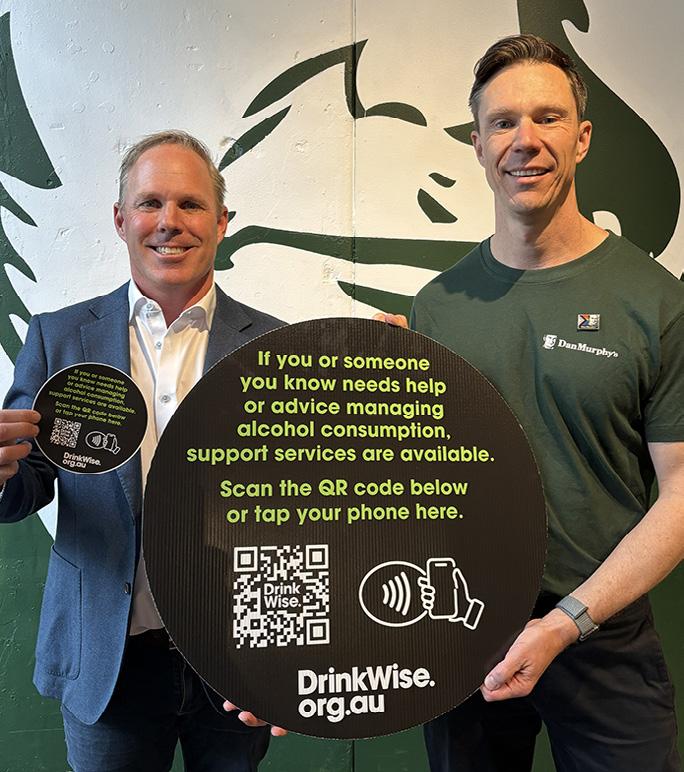
DrinkWise has expanded its retail support service stickers program, directing customers who may have difficulties managing their alcohol consumption to its support services page.
In promoting moderation for those Australians choosing to consume alcohol, DrinkWise is also conscious that some Australians may be experiencing difficulties managing their consumption and require immediate and direct support. That is why DrinkWise has expanded its retail support service stickers program across 1,087 BWS and Dan Murphy’s stores nationwide.
Through the incorporation of Near-Field Communication technology as well as a QR code, the stickers allow customers to tap or scan with their phone, which will take them straight to the support services page on the DrinkWise website, where they can access information, advice and details of a range of available support services. BWS and Dan Murphy’s involvement significantly expands the DrinkWise initiative, which is about making support visible at the point of purchase and giving consumers a simple, discrete and accessible pathway to seek help if they need it.
DrinkWise Chief Executive Officer
Simon Strahan said the expansion of the retail support service sticker program shows how practical, consumer-facing initiatives can help encourage moderation and make support easier to access if needed.
“DrinkWise exists to encourage healthier and safer drinking choices, and this proactive sticker initiative is helping Australians know that support is available if they need it,” Strahan said.
“Having these stickers on the front window of retail stores is important because
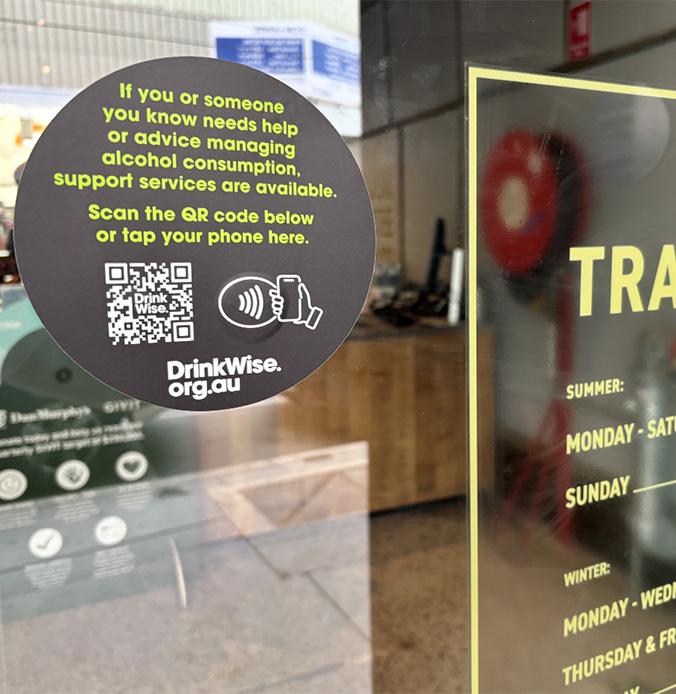
it allows consumers to access the details of support services 24/7, whether the store is open or closed. Proactive approaches such as this are critical to ensuring that if someone is finding it difficult to manage their drinking or is concerned about the drinking of someone close to them, there are services available and reaching out for help is a positive step.”
Dan Holland, Chief Corporate Affairs and Sustainability Officer, Endeavour
Group, said the sticker rollout is one of several ways Endeavour Group supports DrinkWise’s work to promote responsible alcohol consumption.
“Endeavour Group is proud to support the important work DrinkWise does to promote moderation and responsible alcohol consumption,” Holland said.
“Our partnership spans a range of initiatives, from moderation messaging across in-store digital screens, at our cellar doors, as well as team member training.
“These retail touchpoints are another practical way we can support DrinkWise’s work and help ensure customers are reminded that support, information and advice are available if they need it.”
The national rollout across BWS and Dan Murphy’s stores builds on strong momentum for the initiative, with more than 5,500 DrinkWise support stickers already installed across Coles Liquor, Queensland Hotels Association member venues, Clubs Queensland, ClubsNSW, Retail Drinks Australia member stores and MGA Independent Businesses Australia.
The support services listed on the DrinkWise website includes details of specialist services such as the National Alcohol and Other Drug Hotline, Lifeline, Beyond Blue, Alcoholics Anonymous, 1800RESPECT, Men’s Referral Service, 13YARN and ReachOut.
We encourage more industry retail partners to join this effort. Please get in touch via info@drinkwise.org.au ■
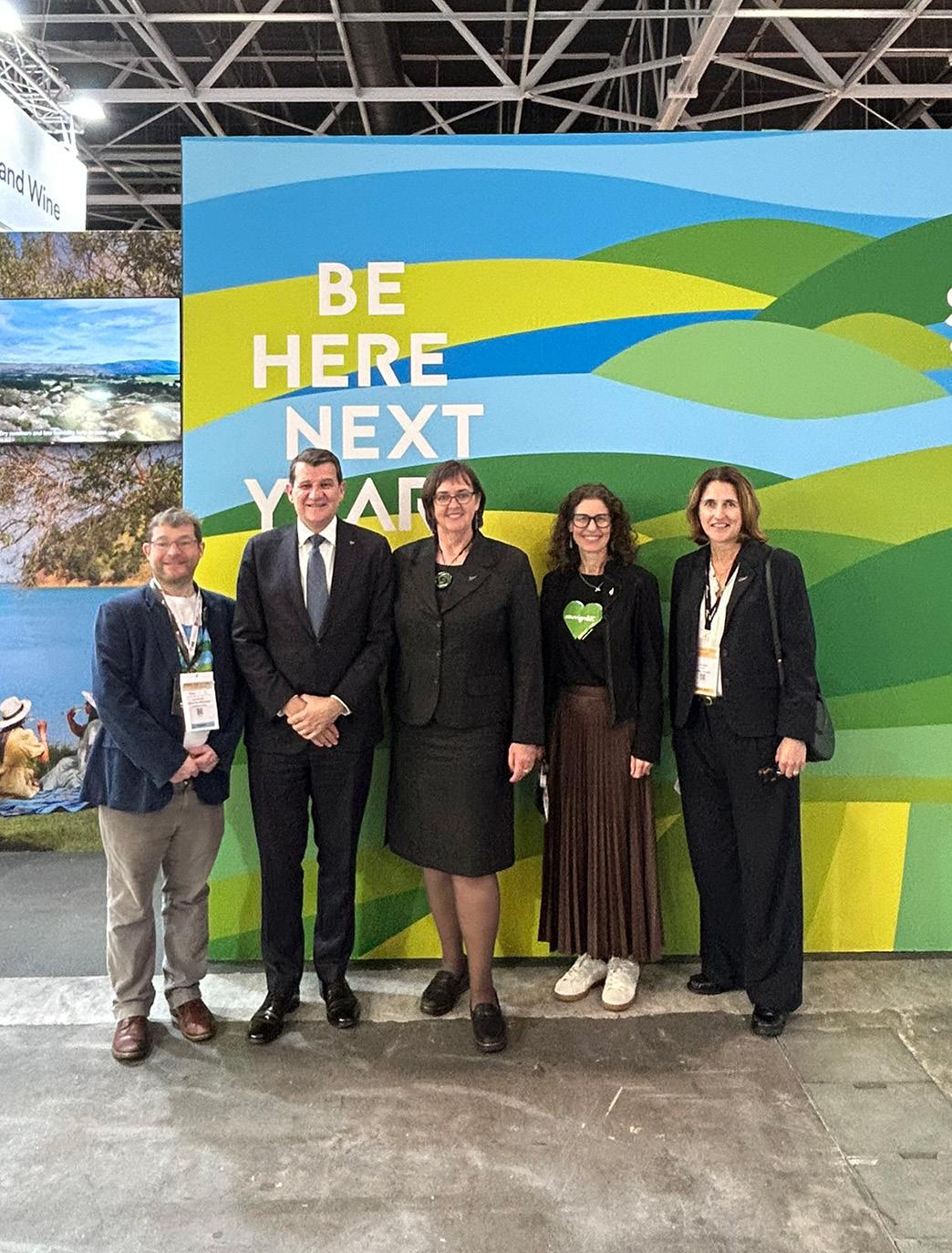
Now less than a year away, Sauvignon Blanc New Zealand 2027 will bring the global wine community together to celebrate New Zealand’s most recognisable wine style.
With less than one year to go, Sauvignon Blanc New Zealand 2027 (SBNZ27) has officially moved from concept to calendar – and it’s shaping up to be one of the most important global moments for the category in the decade ahead.
Taking place 2–4 February 2027 in Wairau (Marlborough), SBNZ27 marks the return of a highly anticipated international gathering dedicated to New Zealand’s most recognisable wine style. Set at the height of summer and on the eve of harvest, the event brings the global wine community together to celebrate not only what New Zealand Sauvignon Blanc is known for, but how it’s evolving.
At its core, SBNZ27 is about depth, diversity and momentum. Participating wineries from across the country will present three of their finest Sauvignon Blancs, offering a rare opportunity to explore the full breadth of regional expression –from classic styles that helped build New Zealand’s global reputation, to innovative and unexpected interpretations shaping the future of the category.
Curated tastings will be paired with progressive conversations, standout culinary experiences and immersive moments designed to place Sauvignon Blanc firmly

in a modern, future-focused context. This is not a retrospective event. It’s a statement of intent about where New Zealand Sauvignon Blanc is heading next.
For New Zealand Winegrowers (NZW), SBNZ27 also plays a broader strategic role. In an increasingly crowded and competitive global wine environment, the event is being deliberately leveraged as a high-impact anchor moment – a focal point to attract the world’s most influential wine voices at a single point in time.
International media, trade leaders, sommeliers, and content creators are being invited to “be here next year” for a reason. SBNZ27 acts as a powerful hook for attention and engagement, creating the conditions for meaningful storytelling, connection and cut-through in key export markets, including Australia.
But importantly, the strategy doesn’t end when the tastings close in Marlborough. Following the event, NZW will host international guests on curated, multiregion itineraries across the country. By extending visits beyond Marlborough, guests are immersed in New Zealand’s wider wine landscape, experiencing diverse regions, landscapes, people and communities that together shape the country’s wine identity.
This approach allows for deeper senseof-place storytelling and a far more nuanced understanding of New Zealand wine. Rather than a single varietal or region, guests leave with first-hand insight into the country’s regional diversity, sustainability credentials and the people driving innovation on the ground.
In today’s media and trade environment, this matters. Influence is no longer built through one-off tastings or surface-level visits, but built through time spent in region, authentic experiences and genuine connection with producers and place. By pairing a flagship global event with extended regional hosting, NZW is ensuring the impact of SBNZ27 resonates long after February 2027.
For the Australian market, the significance is clear. Australia remains one of New Zealand’s closest and most sophisticated wine markets, and the evolution of New Zealand Sauvignon Blanc – in style, positioning and ambition – is highly relevant to buyers, retailers and the on–trade alike.
What SBNZ27 will showcase is a category that continues to innovate and diversify, while retaining the vibrancy, quality and sense of place that made New Zealand Sauvignon Blanc famous in the first place.
As the invitation says: Be here next year. ■
Wine Australia’s Senior Analyst, Sandy Hathaway, investigates how the performance of different price segments and varieties are influencing domestic sales figures for Australian wine.

The latest Australian Wine: Production, Sales and Inventory report –published by Wine Australia in late 2025 – showed a decline of three per cent in domestic sales of Australian wine by wine businesses in the 2024–25 financial year.
To find out more about what is driving that reduction, and where Australian consumers are ‘pruning’ their wine consumption, we analysed the latest Circana figures for off-trade retail sales for the year ended 29 September, 2025.
Retail sales were flat in volume but increased by two per cent in value in the latest 12-month period. The difference between this result and Wine Australia’s finding reflects the different data sources, as well as the inclusion of other sales channels (direct-to-consumer and on-premise sales) in the Wine Australia figures.
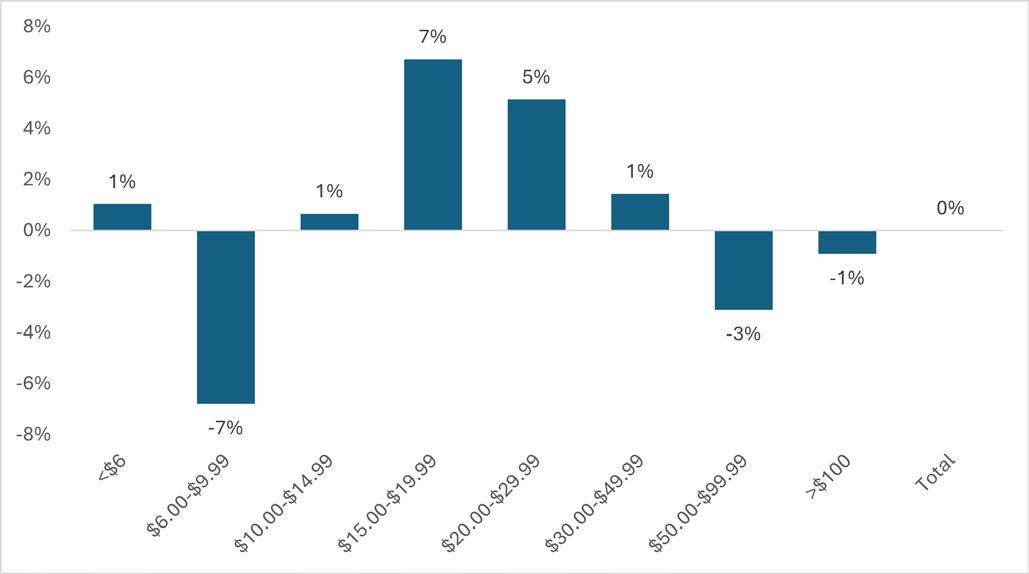
Our analysis of the figures showed that the flat overall result hides variations in the performance of different price segments. Most notably, the mid-range price segments (between $10 and $50 per 750ml) all grew, while the higher and lower price segments declined, with the exception of the lowest category – below $6 per 750ml –which grew slightly – see Figure One.
Figure One: Change in volume of retail sales of Australian wine in Australia by price segment (Year-end 29 September 2025)
“Of
the top 20 varieties by volume, Pinot Noir, Pinot Grigio and Prosecco showed the strongest growth, while Merlot, Tawny (fortified) and Shiraz blends declined the most.”
There were also differences in the performance of the main varieties. Of the top 20 varieties by volume, Pinot Noir, Pinot Grigio and Prosecco showed the strongest growth, while Merlot, Tawny (fortified) and Shiraz blends declined the most (see Figure Two). Generally, more of the varieties in growth are white, while the growth in dry red (average value $2.54 per 750ml) is likely to underpin the growth in the <$6 price segment. ■
Figure Two: Change in volume of retail sales of Australian wine in Australia by variety (Year-end 29 September 2025)
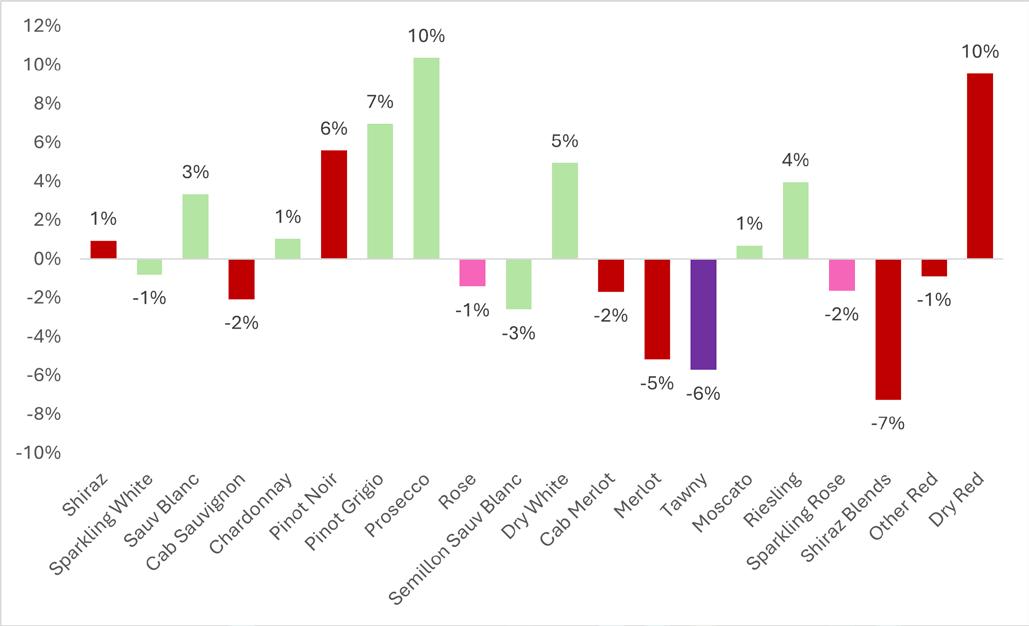
Industry Consultant Peter Hall explores the differences between a customer-focused interface and a mirror interface, focused on our systems and our perspective.
I would like to ask a question to all those who deal with customers on a daily basis and, I presume that is going to be the majority of those reading this article. This question is in regard to your customer interface. So, the question; is your interface a mirror or a window?
Now, I’ll define those in a moment, but I can easily give you some examples that may make it clear in the first instance. First example; you are waiting at a bank or have a medical appointment and, after giving your name, you are faced with an operative very concerned with what’s on their screen, often for a minute or two, maybe with extra questions and solely concerned with their systems. Classic mirror interface, they don’t really see you, as their focus is totally on their business. Just for fun, they might even offer up a “computers really slow today” – this applies even more if you’re on the phone to someone in customer service.
The second example relates more to the retail liquor industry, and it’s the classic response to a product that a customer may not be able to find in-store; “out of stock” comes the reply or maybe even “sorry, out of stock”. Again, classic mirror interface, the employee’s response relates solely to their side of the equation.
In customer service (or, as I prefer, customer satisfaction) training, we call a response like that a Level One response as in, “have you got the time?”, “yes”. It’s an answer but it’s no damn good. Those with a mirror interface never get away from Level One responses.
A window interface simply means we can see the
customer and gives us an opportunity to become more customer focused. A mirror interface means we only see ourselves; we focus on our systems and our perspective.
So, what is the response to the customer request for an item of stock they can’t find? Well, maybe it is out of stock, it will happen, hopefully not on a regular basis. A Level Two response might be “sorry, out of stock of that one, but in a similar style and price we have this one”. A Level Three response might take this a little further along these lines: “Sorry, out of stock of that one but, in a similar style and price we have this one. Or have you tried…?”
The focus now is fully on the customer and his or her preferences. As we know, switch selling is a vital part of our sales skills armoury and these days it’s actually one aspect of business that’s getting easier.
The typical customer (if there is even such a thing) now has a larger stable of product that they will buy from, so handling an ‘out of stock’ situation should be simpler for even a junior or new staff member, depending on their level of training of course.
I know that this wouldn’t happen in your store however customers are routinely told (in a mirror manner), when asking about a category and its placement in-store, “in the fridge, down the back”. The customer is then faced with a bank of fridges, and it can be confusing when you don’t know the store. How much simpler would it be (in a window way) to come up with “down the back, in fridge eight”. Numbering your fridges isn’t for you, it’s for them. ■

“A window interface simply means we can see the customer and gives us an opportunity to become more customer focused.”
As the mortgage buffer thins, consumers are trading-in rather than trading-up, swapping the $150 bistro bill for a $50 premium bottle at home.

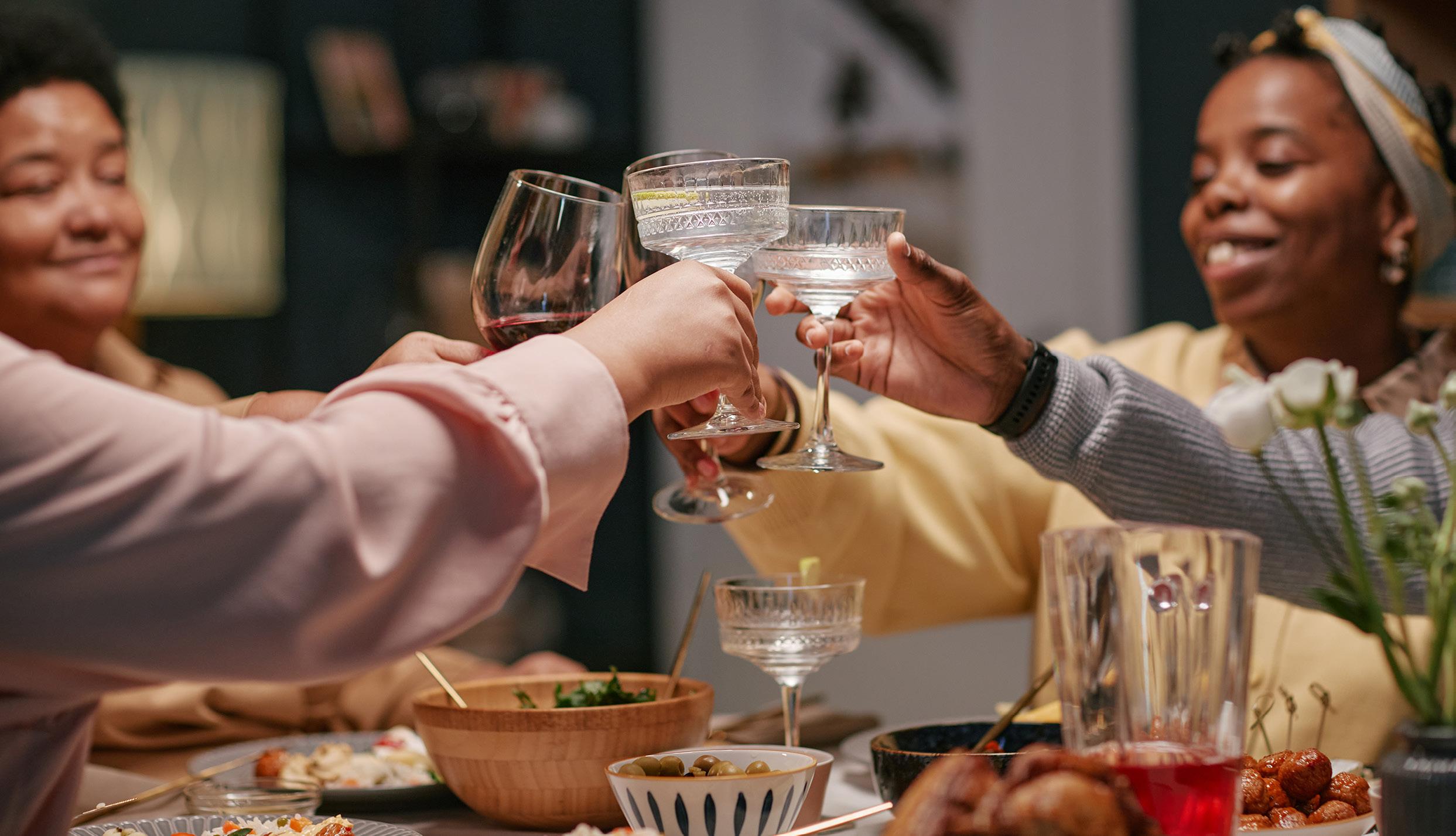
With the Reserve Bank recently raising the official cash rate and headline inflation lingering higher than hoped, Australian household belts are tightening. Retail data shows that while the total volume of alcohol consumption is plateauing, the value of the premium night-in is evolving.
Recent 2025-26 data from Deloitte Access Economics and ABS Retail Trade reports shows that while big-ticket discretionary spending has dropped, specialty liquor spending remains a resilient affordable luxury.
For liquor brands, this shift presents an opportunity to capture the discretionary spend that is shifting from the on-premise to off-premise.
In this environment, sampling acts as a critical de-risking mechanism. By providing a physical taste, brands remove the psychological barrier of the unknown. It transforms a speculative $80 purchase into a guaranteed one. Data suggests that in high-inflation periods, conversion rates from tastings increase because the consumer is actively looking for a reason to justify a premium spend that provides emotional comfort and a treat status.
When a consumer walks past a tasting station for a botanical-infused vodka or a limited-edition barrel-aged stout, they aren’t just comparing it to the generic $40 option; they are comparing it to the $120 they would have spent on a night out. By providing a sample, retailers help the consumer complete this value calculation, instantly at the shelf.
A prime example of this strategy in action is the recent success of premium RTD and craft spirit activations. A static bottle on a shelf cannot communicate the complexity of a cold-press espresso martini or the heritage of a botanical gin. It requires a sensory interruption.
The success of these activations lies in precision messaging. By targeting the ‘home mixologist’, brands can reposition their premium price point as a bargain. The instore ambassador shows the shopper how a single bottle can turn a quiet night in into a restaurant-quality experience.
Of course, as budgets tighten, loyalty to brand names can erode. Inflation is the greatest recruiter for private label and cleanskin alternatives. Recent Australian consumer surveys indicate that nearly 65
per cent of shoppers have switched to home brands or value-tier liquor to save money. This makes branded experiential activations even more critical. To prevent a permanent loss of market share to retailer private labels, brands must reinforce their ‘premium-ness’ through human connection. You cannot taste the story of a private-label gin, but you can be sold on the craft and passion of a branded one through a guided tasting.
Ultimately, the role of liquor sampling has shifted from passive discovery to active de-risking. By delivering a superior sensory experience and an undeniable ROI for the consumer, brands can empower shoppers to elevate their pour, justifying every dollar of the spend. ■
Daniel Cormack is General Manager of Extravert, the shopper engagement arm of Strikeforce. He has led hundreds of campaigns across FMCG, liquor, consumer electronics and retail brands. Extravert creates immersive, insight-led brand experiences that drive conversion, trust and loyalty, backed by Strikeforce’s industry-leading retail marketing and shopper solutions expertise.
Despite decline, premiumisation, flavour and format innovation are creating new opportunities for cider growth, writes
Deb Jackson.
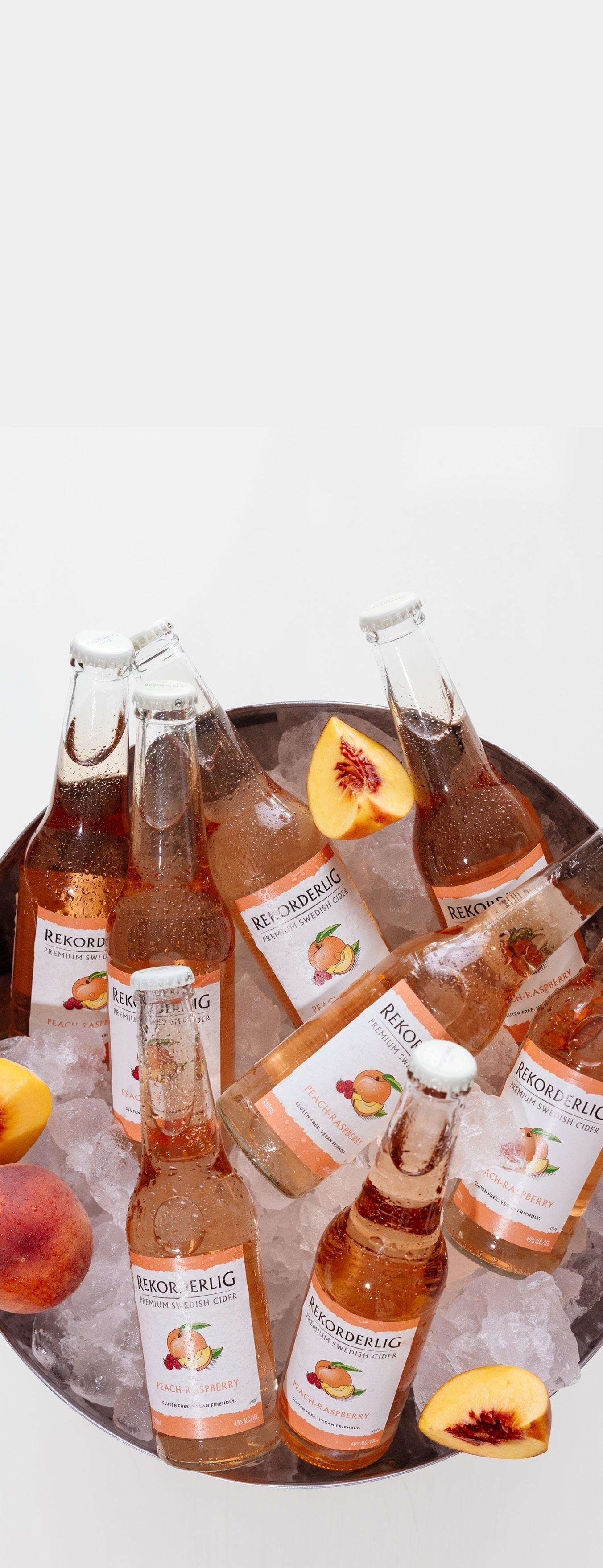
Cider in Australia is at a crossroads. Once a highgrowth category, it is now navigating a period of decline, increased competition and shifting consumer expectations. Yet beneath the surface, there are clear signs of evolution – and for retailers willing to adapt their ranging, merchandising and positioning, there remains significant untapped potential.
According to Circana data, the category is under pressure. Andrew Gerrard, Senior Consultant, Liquor & Tobacco, Circana, says cider declined by 3.8 per cent in the latest MAT, making it one of the weaker performers across total liquor. With just two per cent share of the total liquor category – equivalent to $449 million in retail sales value – cider is losing ground to both beer and RTDs, which have delivered single-digit growth over the same period.
However, to view cider purely through the lens of decline is to miss the more nuanced story emerging within the category. While overall performance has softened, premium cider is showing resilience.
Mick McKeown, GM Sales & Marketing at Good Drinks Australia, says: “There’s no denying the cider category has faced its challenges over the past year. In a tougher economic environment, drinkers are becoming more selective. But despite that, they’re still willing to trade up for quality and authenticity, and so we’re definitely seeing premium cider emerge as a bright spot, with significant untapped potential.”
He also points to strong growth across Magners and Rekorderlig, reinforcing the continued appeal of trusted, globally recognised brands at a premium price point.
Jessica Cross, Assistant Brand Manager – RTD, Beer & Cider at Casella Family Brands, says: “They’re looking for products with genuine provenance and quality credentials. That’s reflected in the growth of classic apple cider, while pear and heavily flavoured variants have softened.”
Flavour has long been central to cider’s appeal, but its role is evolving as the category faces increasing competition from RTDs.
McKeown says: “We’re seeing a lot of momentum in higher ABV options as the category looks to reconnect with a younger-skewing drinker and reclaim some share from RTDs. Along with ABV, the RTD boom has also shown us that today’s drinkers are certainly not afraid of sweetness and full flavour.”
This is supported by Circana data, which shows pockets of growth in higher ABV segments (six per cent and above), as well as low-carb options, with some shoppers seeking “more bang for buck”.
Andrew Skehan, Head of Marketing at Drinkworks, adds that innovation is playing a key role, pointing to “innovation in high ABV cider and flavours” alongside growing interest in “lower carb cans”.
However, not all flavour segments are performing equally. Gerrard highlights that pear and fruit (excluding apple) have been among the biggest decliners, while apple – still accounting for 72 per cent of the category – has remained comparatively stable.
Cross reinforces this shift back to core styles, saying: “Flavourwise, apple is absolutely leading. There’s renewed appreciation for balanced, authentic apple styles that let the fruit speak for itself.”
Format is another area of change, with cans now accounting for just over half of cider sales and continuing to grow in popularity due to convenience.
McKeown says format innovation has been critical for unlocking new occasions: “For Magners it’s more about format and occasion. Last year we introduced Magners Irish Cider in 330ml cans, which has been pivotal in opening up new occasions for the brand, translating its strong on-premise equity into the at-home occasion, while also making the brand more accessible to new drinkers.”
Cross adds that cider continues to perform strongly in relaxed, social settings such as barbecues and casual gatherings.
Despite these positive signals, a consistent theme across suppliers and data is that cider is not always being presented in a way that reflects how consumers shop today.
Gerrard identifies a key misconception: “Retailers shelve and market cider alongside beer, potentially missing out on appealing to non-beer shoppers: including wine drinkers, gluten-free consumers, and cocktail enthusiasts.”
He also warns that assuming all cider is sweet can limit ranging
effectiveness: “The category spans bone-dry to very sweet. Stocking only sweet brands leaves money on the table,” he says.
McKeown believes retailers should rethink cider’s role within the broader flavoured alcohol space, saying: “With the right price, positioning and promotion, there’s a real opportunity to recruit those drinkers back into cider and drive higher retail sales value at the same time.”
Merchandising is another missed opportunity, particularly through adjacency with RTDs.
“We see particular opportunity for merchandising alongside RTDs, where flavour-led shoppers are already browsing,” McKeown says.
Local and craft momentum builds
Beyond the major brands, there are encouraging signs within the independent and craft cider segment.
Warwick Billings, President of Cider Australia, says: “Feedback from bottle shops is that there is growth in more boutique ciders. The new area of non-alc ciders is growing well.”
Billings also points to supply pressures and competitive intensity from other categories, including RTDs, seltzers and evolving beer styles, but remains optimistic about cider’s long-term role.
“Cider has a place in the Australian drinking culture that is a lot bigger than 10 years ago, and is currently supporting 100+ producers, across the country.”
For retailers, the message is clear: cider is not a lost cause, but it does require a reset. The opportunity lies in leaning into premium, simplifying ranges around strong apple propositions, embracing higher ABV and functional trends, and merchandising the category in line with how consumers actually shop – particularly alongside RTDs. ■
As the RTD market matures, communicating format, flavour and value is more important now than ever, writes Sienna Martyn.
Once considered an emerging segment, RTDs are now firmly established as a sustainable growth engine in the Australian liquor market.
The category’s strong ties to flavour, format, discovery and value have kept customers engaged, achieving steady volume growth even as the category matures.
Andrew Gerrard, Senior Consultant at Circana said according to recent data, the total RTD category in Australia is valued at approximately $5b and over the last two years has grown 3.1 per cent (about three times faster than the total liquor category).
He said consumers are also increasing spend within the category: “Shoppers are now allocating 20 per cent of spend to RTD, which has increased by one percentage point over the last two years, and we expect to see this share of wallet to increase as growth rates are forecast to continue to beat the total alcohol growth.”
According to a recent report from IWSR, new consumer recruitment however has slowed, but existing consumers – particularly younger legal drinking age (LDA+) cohorts – are still expected to drive sustained volume growth through frequency of consumption as they unlock new drinking occasions.
Alepat Taylor’s Marketing Manager Sarah Walton said as consumers become familiar with the RTD format and more discerning in terms of value, demand for ‘more’ in the can will drive the category’s next phase.
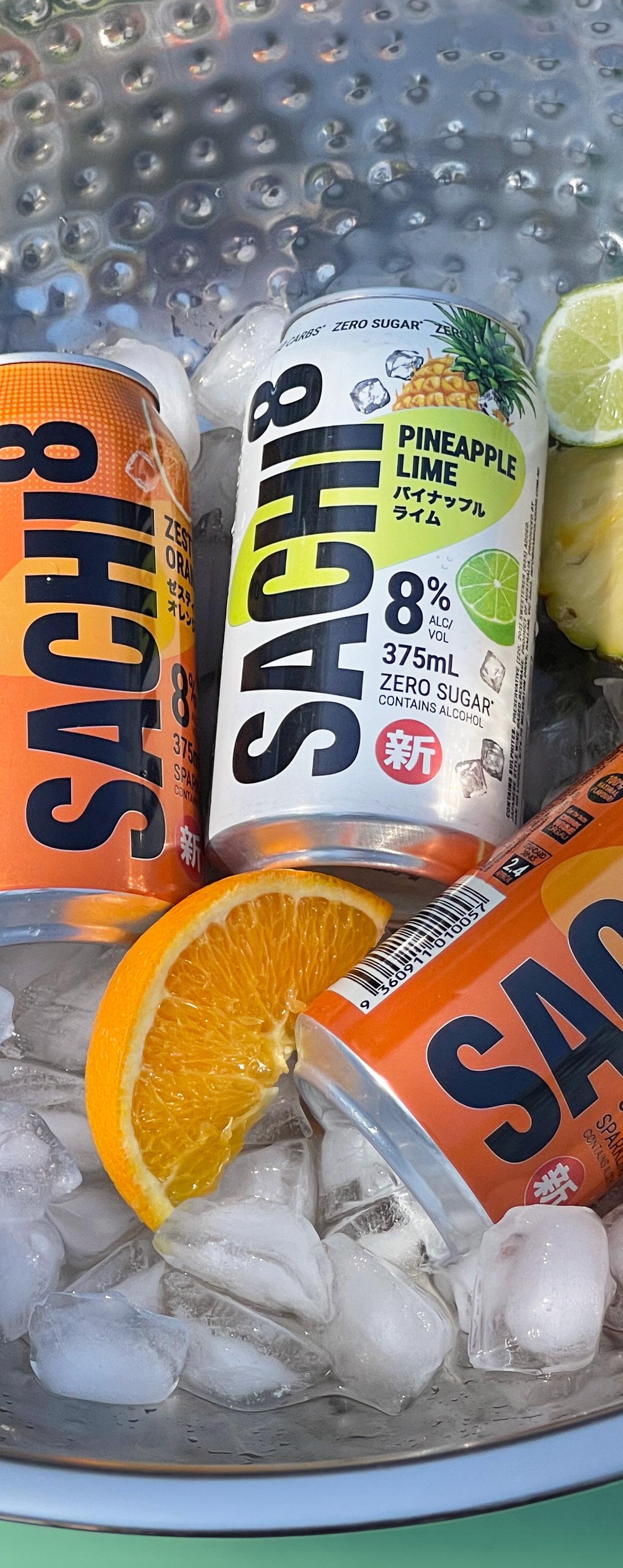
“The category is becoming saturated so if there isn’t something extra, consumers will find their needs met elsewhere. RTD buyers now seek authenticity, betterfor-you credentials, higher ABV, more contemporary flavours, sustainability and provenance all in one.”
The flavour formula
In the early stages of the RTD boom, LDA+ consumers led the way seeking light, refreshing RTD flavours and innovative formats.
Sarah Wilcox, Head of RTD at Asahi Beverages, stated that the same citrus-led flavour profiles will continue to dominate and underpin strong performance in 2026.
“Our top performing flavour off-premise remains lemon, accounting for nearly 50 per cent of the Hard Rated portfolio (across full sugar, zero sugar and six per cent). The lemon 4.5 per cent full sugar variant is the top overall flavour, however, the new orange 4.5 per cent full sugar variant is a close second despite only launching in H2 2025.”
Trevor Hannam, Head of Commercial at Archie Rose agreed that citrus profiles will continue to
outperform but noted that beyond flavour, RTD drinkers today are equally interested in a product’s base spirit, seeking authenticity and credibility.
“We’re seeing strong momentum behind premium Australian spirit-led RTDs that deliver lighter alcohol and lower sugar without compromising flavour,” he said.
In terms of spirit segments, Circana’s Gerard confirmed that Bourbon continues to be the number one spirit base in terms of volume and spend.
“Dark RTD customers are consistently shopping with more than twice the frequency of purchase per shopper, per year and are spending more overall per year. They know what they want before they enter the store,” explained Maddy Stockwell, Jack Daniel’s Marketing Manager.
However, over the past two years, Gerard said vodka has led the charge.
“While Bourbon has the largest share of spend it is losing ground to vodka as shoppers have been enticed by a large number of innovations and product extensions.”
Wilcox explained that where light RTDs typically appealed to Gen Z adults, older generations who typically enjoyed dark RTDs are bridging the gap between bases.
“Dark RTD customers are consistently shopping with more than twice the frequency of purchase per shopper, per year and are spending more overall per year.”
Maddy Stockwell, Jack Daniel’s Marketing Manager
Demand for higher-ABV, premium serves in convenient formats has given pace to the cocktail RTD category, offering classic bar serves suited to several social drinking occasions.
Calvin Koder, Co-founder and Director of cocktail RTD brand Quips, said the product was born to meet today’s Gen Z drinkers where they are.
Fitting naturally into any social occasion, he said Quips is designed for convenience, portability, and versatility, all while “literally fitting in your pocket” as a result of their pouch format.
“Most [RTD] options were carbonated, relatively low ABV, and centred around seltzers or lemon-based profiles. They often left you feeling bloated and required you to drink lots of liquid to get a buzz. We saw an opportunity for something different – a higherstrength, non-carbonated, lower-volume, flavourful RTD,” explained Koder.
With consumers drinking less liquid and expecting higher quality, Quips heroes classic cocktails like the Tommy’s Margarita and Mango Daiquiri with premium spirit bases.
Koder said: “Consumers are increasingly drawn to spirits that feel more ‘cocktail-led’ and authentic, which is driving interest in tequila and other more characterful bases.”
He recommends retailers capitalise on the growth of cocktail RTDs by embracing more versatile and unique formats that stand out on shelf.
“We are starting to see older consumers show increased interest in the category due to great flavours that have broad appeal, particularly Hard Rated. Similarly, there is still opportunity to expand Light RTDs into lower tempo social settings, where beer and wine have typically dominated their drinking occasion.”
A key selling point for the RTD category since its inception has been its role in social drinking occasions as a result of shareable formatting and convenience.
Tony Lau, Sales & Marketing Director, Brewguru, said brands that clearly articulate their role in social settings, sessionability and encourage trade up are primed to outperform.
“Consumers are shopping with intent for barbecues, long lunches,
festivals, dinner parties and selecting products that fit those moments. They are also increasingly trading up. The shift is no longer about convenience alone, it’s about quality cues, flavour balance and brand trust. Premium RTDs with clear differentiation will continue to gain share.”
As consumers continue to weigh up value propositions at the shelf, Michael Newbold, Senior Brand Manager at Vok, said high ABV formats will continue to play a significant role in driving growth across both light and dark RTDs.
“Value doesn’t only mean shelf price but how a product fits drinking occasions,” he explained. “Some drinkers aren’t looking for a carton or even a 10- or six-pack. What we’re seeing is a trend toward lower volume but higher strength. We’ve just released our new UDL Double Crush range,
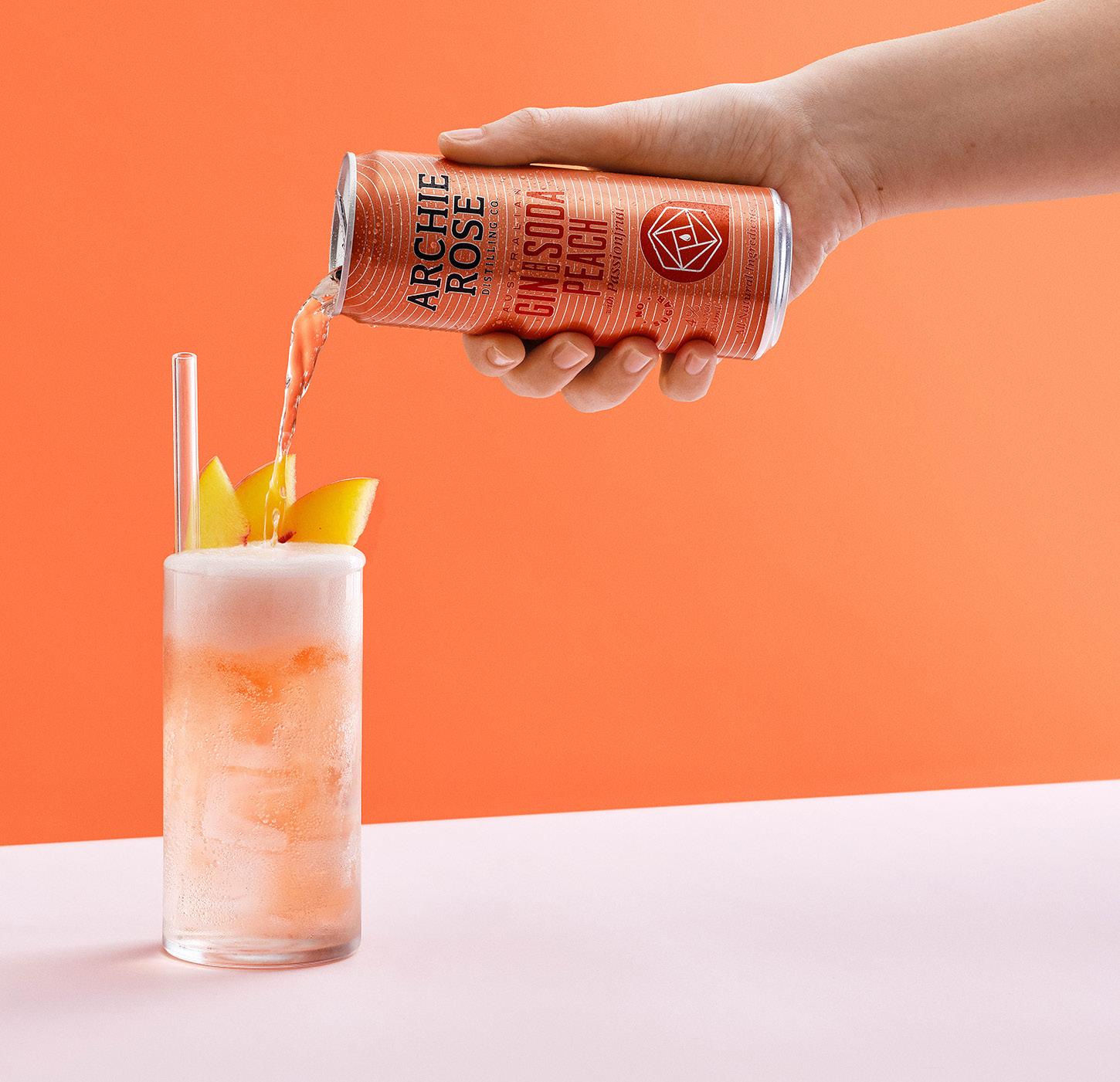

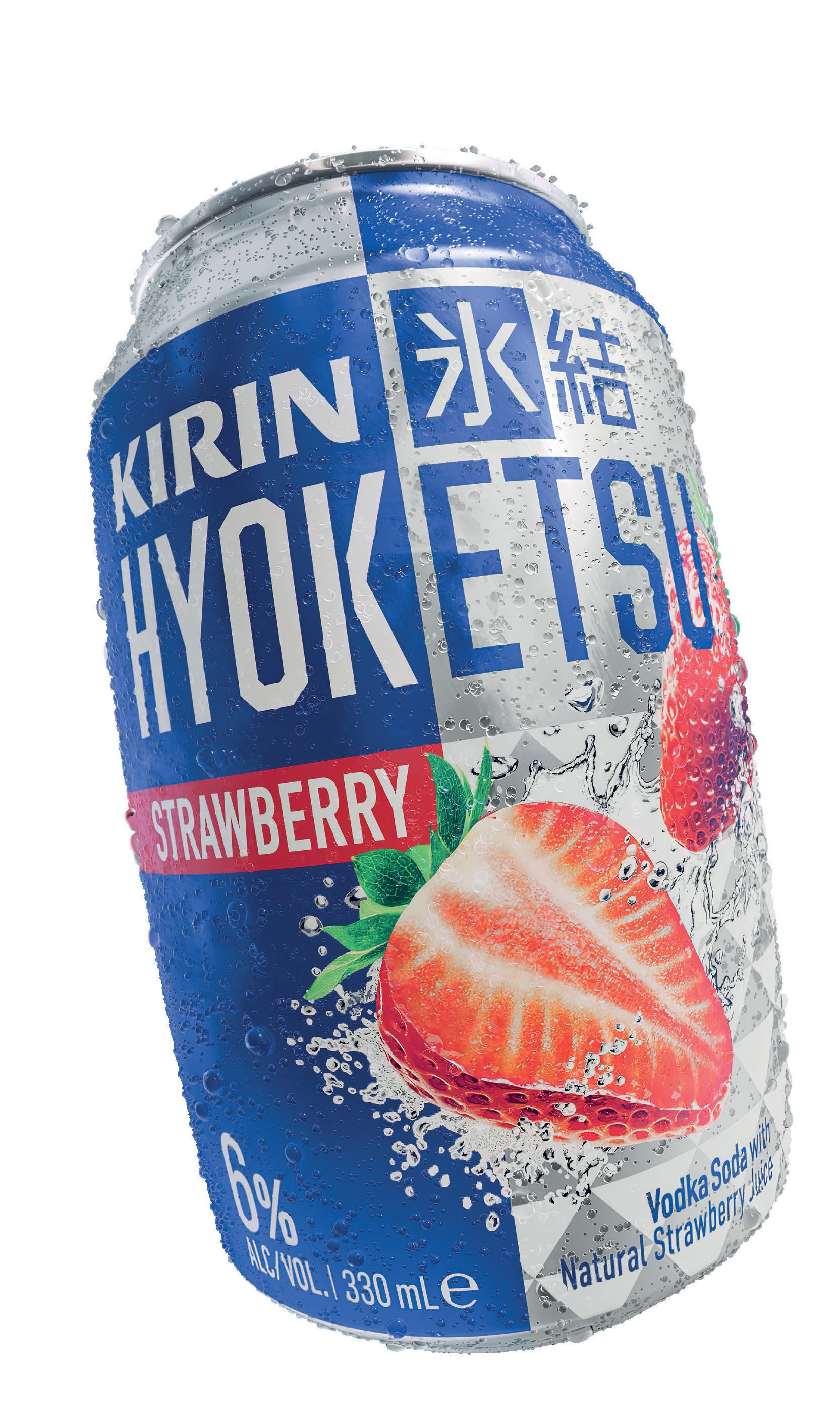


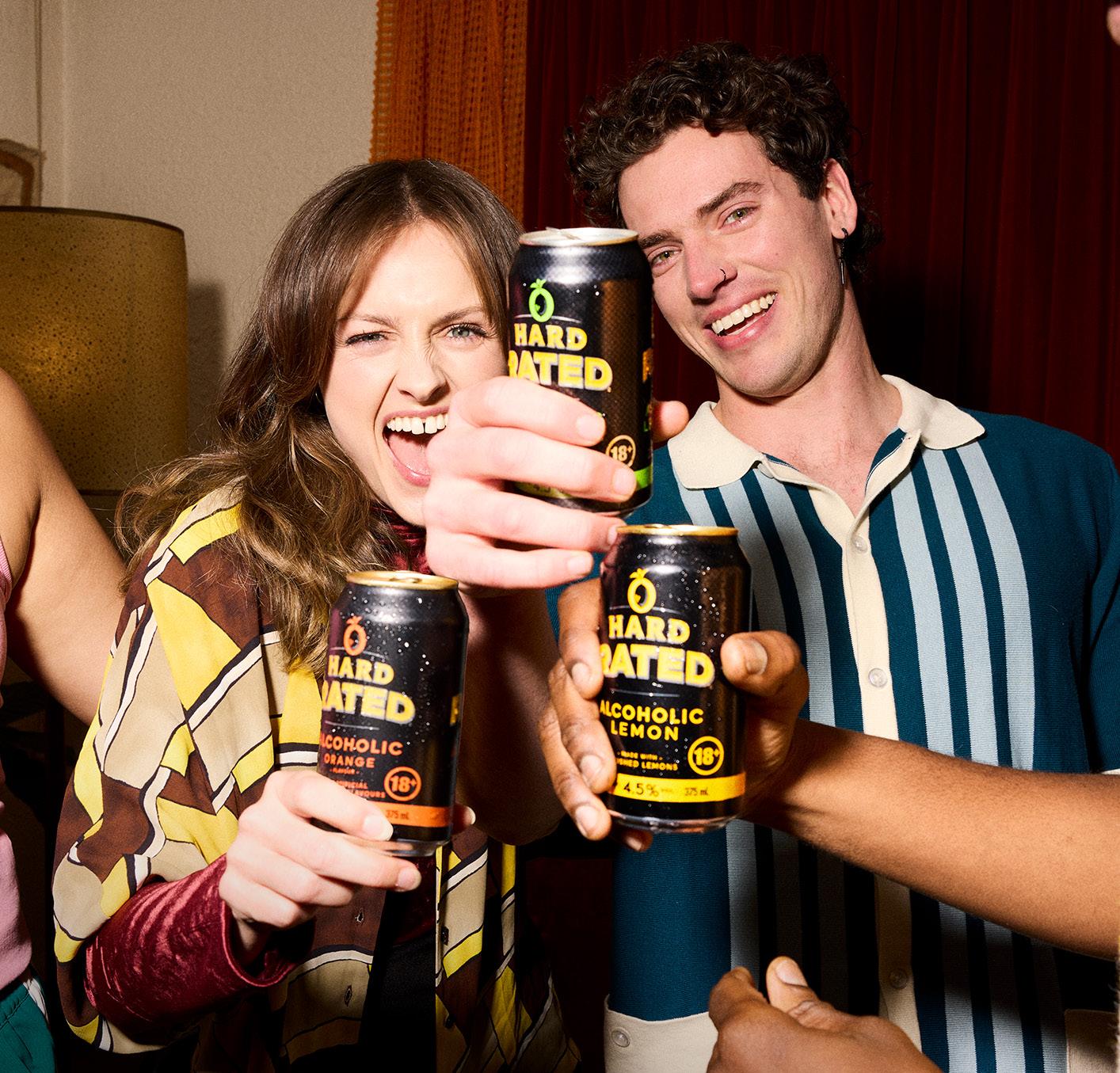
Circana’s Gerard said sugar free is one of the key format drivers across the RTD category with $1 in every $10 now spent on sugar free or zero sugar offers – almost doubling over the last two years.
This extends to dark RTDs as Stockwell said zero sugar has continued to gain consumer interest within the segment.
“No sugar is growing, especially for Jack Daniel’s as more consumers are changing up their purchases depending on the occasion. This is resulting in a lot of cross-shopping between full sugar and no sugar, within favourite brands.”
Brewguru’s Lau said the popularity of light RTDs have traditionally been instrumental in attracting customers seeking moderation in sugar and ABV, however those preferences are evolving.
“Consumers want something that is not only healthier but tastes good. Successful brands balance flavour rather than just lower calories, focusing on authenticity and a premium product over health washing.”
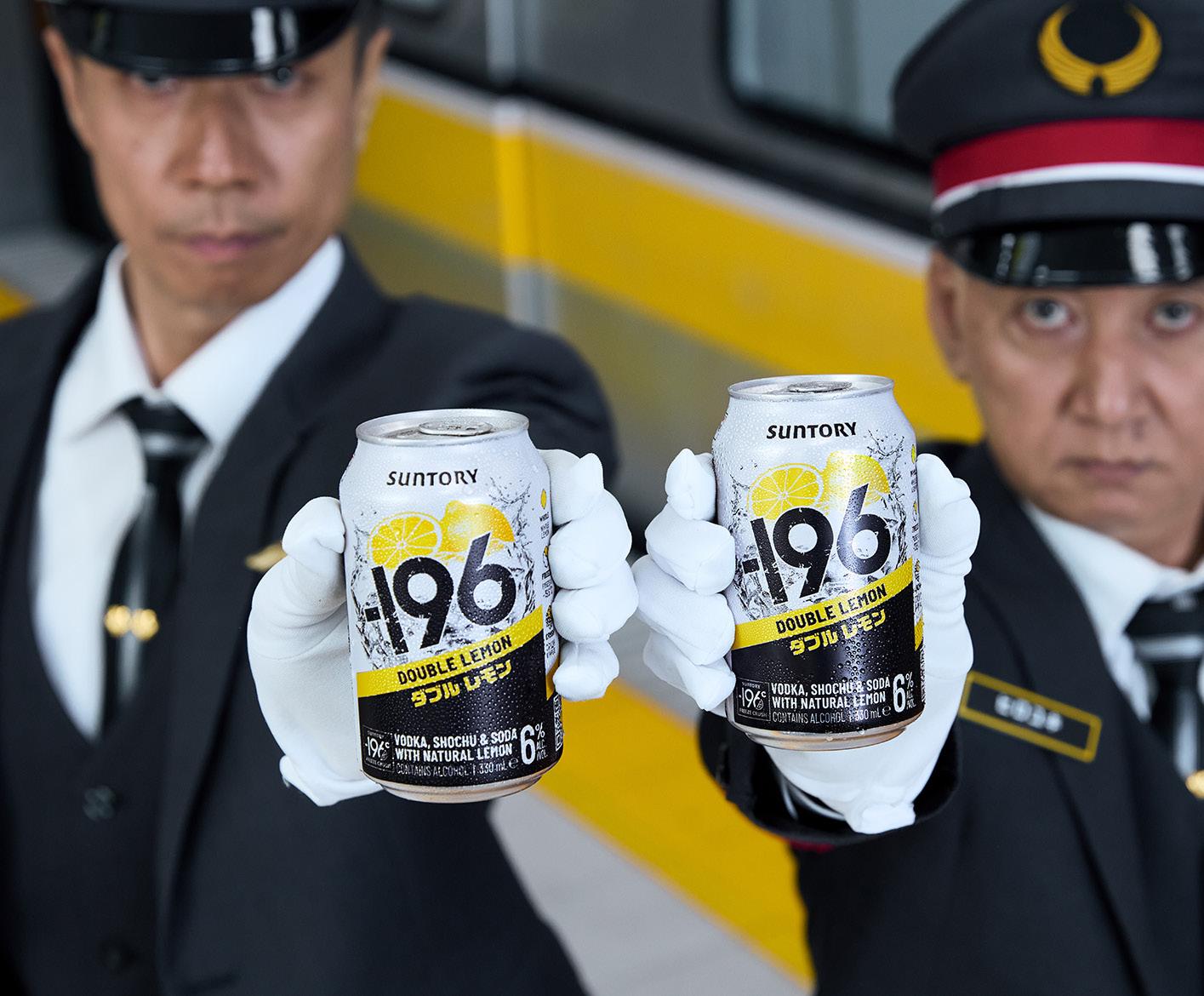
which is an eight per cent ABV four-pack product that delivers great value on the shelf.”
Circana’s Gerrard said data shows: “Shoppers appear to be seeking more ‘bang for buck’ as the mid strength ABV segment is losing share of sales to the higher ABV segments (six per cent and above).”
Stockwell says Ultra High ABV is seeing rapid growth as a result in the dark RTD segment, with the brand launching Jack Daniel’s & Cola Tennessee Serve 12 per cent 200ml cans to meet demand.
“This segment caters to premium Bourbon consumers who have previously preferred to mix their own drinks at home, because they can’t find the right premix in a convenient format,” she says.
“We also know that 12 per cent drinkers are regularly cross-shopping with 10 per cent ABV and we want to work with our retailers to help them leverage increased basket size and upselling to a premium product.”
Prue Andrews, Head of National Sales, Diva Beverages, said high ABV products with a value advantage will continue to perform well in highenergy occasions, where RTDs continue to over-index.
“Consumers are seeking premium bar-like serves at an accessible price point, and higher-strength RTDs deliver a clear, comparable value equation across alcohol categories. Our Sachi8 Crisp Yuzu in a 375ml eight per cent, delivers 2.4 standard drinks per serve at an RRP of $5 per can and is highly competitive against beer and many mainstream RTDs.”
She added: “Mixed flavour multipacks also add value and align with how RTDs are consumed. The ability to offer multiple taste profiles in one purchase keeps the category fresh and supports repeat engagement.”
Looking ahead, Andrews said in a category characterised by low brand loyalty, consumers will be increasingly willing to switch products if they do not meet their expectations for experience, price and flavour.
“Strength alone is not enough. To sustain growth, a product must deliver bold, full flavour to justify repeat purchase. For example, citrus-led profiles will continue to lead, because they resonate strongly when paired with higher ABV both in impact and refreshment.”

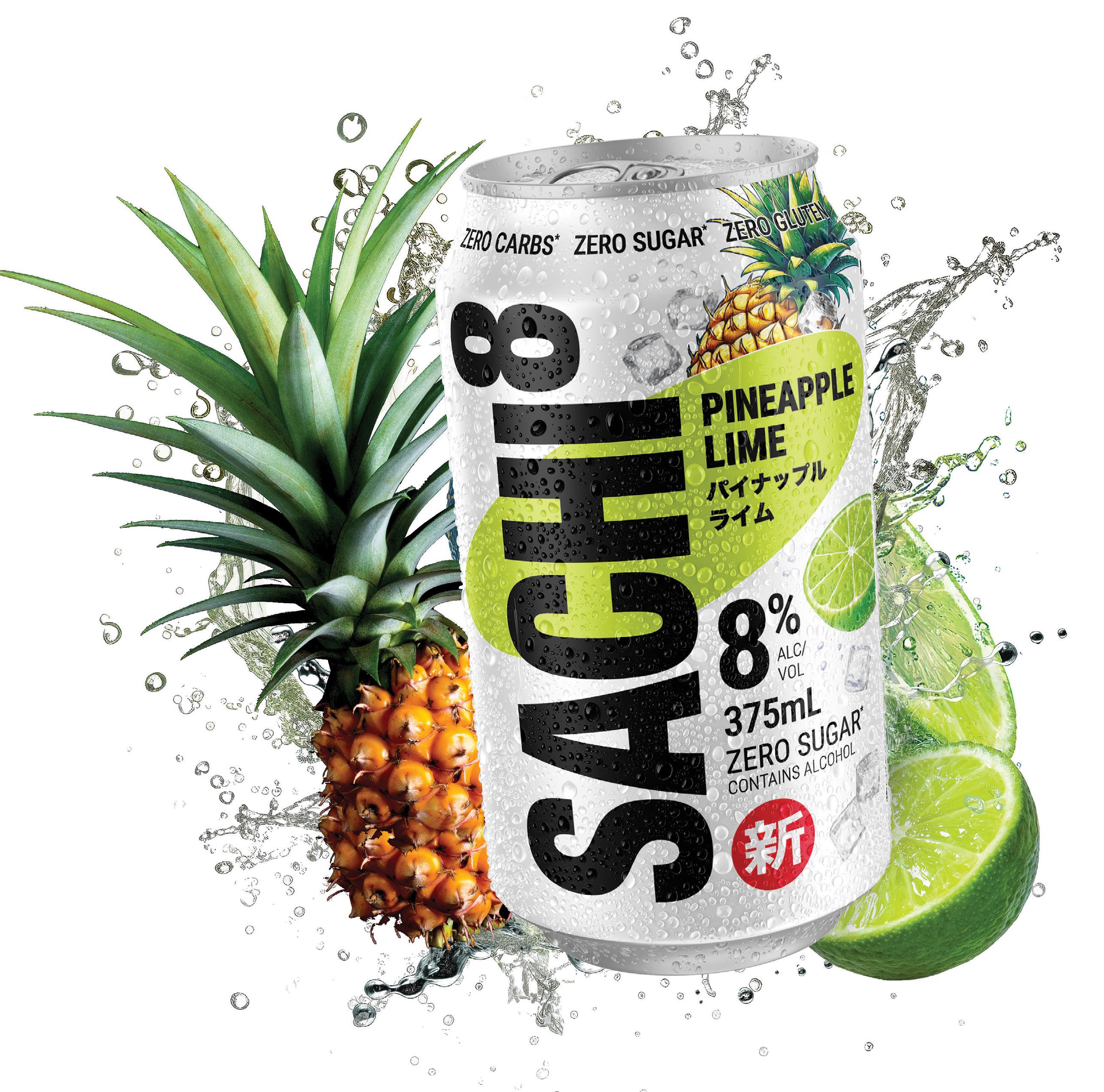
For retailers looking to curate a dynamic and relevant range Vok’s Newbold offers simple advice: “Know your customers, know their preferences and tailor an offer that keeps them coming back into store.”
In a category defined by experimentation and value sensitivity, Diva Beverage’s Andrews said agility, relevance and commercial sustainability should sit at the heart of an RTD ranging strategy.
“RTD shoppers are highly exploratory, so ranges need to be dynamic, flavour-led and commercially viable. Smaller suppliers with standout products can play a meaningful role in driving category recruitment and keeping the offer fresh.”
Brewguru’s Lau added: “Agility doesn’t mean constant change; it means disciplined curation. Retailers who treat RTDs as a strategic growth engine rather than a promotional category will outperform.”
Suntory’s Treanor also emphasised the importance of a balanced range.
“Trusted brands, alongside innovations backed by strong consumer insight, continue to present the greatest opportunity for sustainable growth. When innovation builds on familiar foundations, shoppers are more confident navigating the range and more likely to return.”
While light RTDs and better-for-you options have become a shelf staple, Stockwell reminds retailers to keep dark RTD front of mind.
“Keep a strong range across ABVs and sugar/no-sugar. They’re a valuable and loyal customer to win and keep. Within dark RTD shoppers, we know that Ultra High ABV shoppers are the most valuable to retailers so ranging premium options to capture their repeat business is vital for retailers when it comes to curating their fridges.”
With ongoing cost-of-living challenges, Wilcox said the next phase of RTD growth and innovation will be further cemented in delivering value in terms of price and flavour experience.
“I expect to see higher ABV offerings in smaller vessels continue to prompt value growth in dark, alongside easier drinking, refreshing dark RTD propositions, further blurring lines between light and dark.”
She added that despite market maturity and saturation, targeted innovation in flavour will continue to drive growth.
“Space and pace will continue to be a key challenge for retailers as innovation continues apace. NPD and ‘new news’ however remain a key component of winning in light RTDs, and so launches such as Hard Rated Lemon Mango 4.5 per cent zero sugar has been well received by Aussies,” she said.
Gordon Treanor, Licensed Sales Director – AU at Suntory Beverage & Food Oceania agreed that flavours people recognise, when combined in more distinctive or contemporary ways, are proving effective at encouraging trial and repeat purchase.
“The recent launch of -196, Lemon and Passionfruit is a good example of this approach building on the strong appeal of citrus while offering something that feels fresh and modern.
“Bringing new products to market with strong visibility, clear storytelling and consistent execution is critical to helping innovations land well and build momentum over time,” he explained.
NPD focused on familiarity of spirit and mixer brand is also gaining traction with combinations like Bacardi Rum mixed with Coca-Cola released in 2025 and the recent launch of Absolut Vodka Mixed with Sprite.
“Vodka-based RTDs have been a continued source of growth for retailers over the past few years, and citrus-flavoured varieties have been a key driver of that momentum, so Absolut Vodka mixed with Sprite plays perfectly into that space,” said Mitchell Lenaghan, Director of Licensed at Coca-Cola Europacific Partners (CCEP).
“Bringing together globally recognised spirits with iconic mixer brands in formats consumers already know and enjoy is incredibly powerful at shelf –shoppers immediately understand the flavour profile
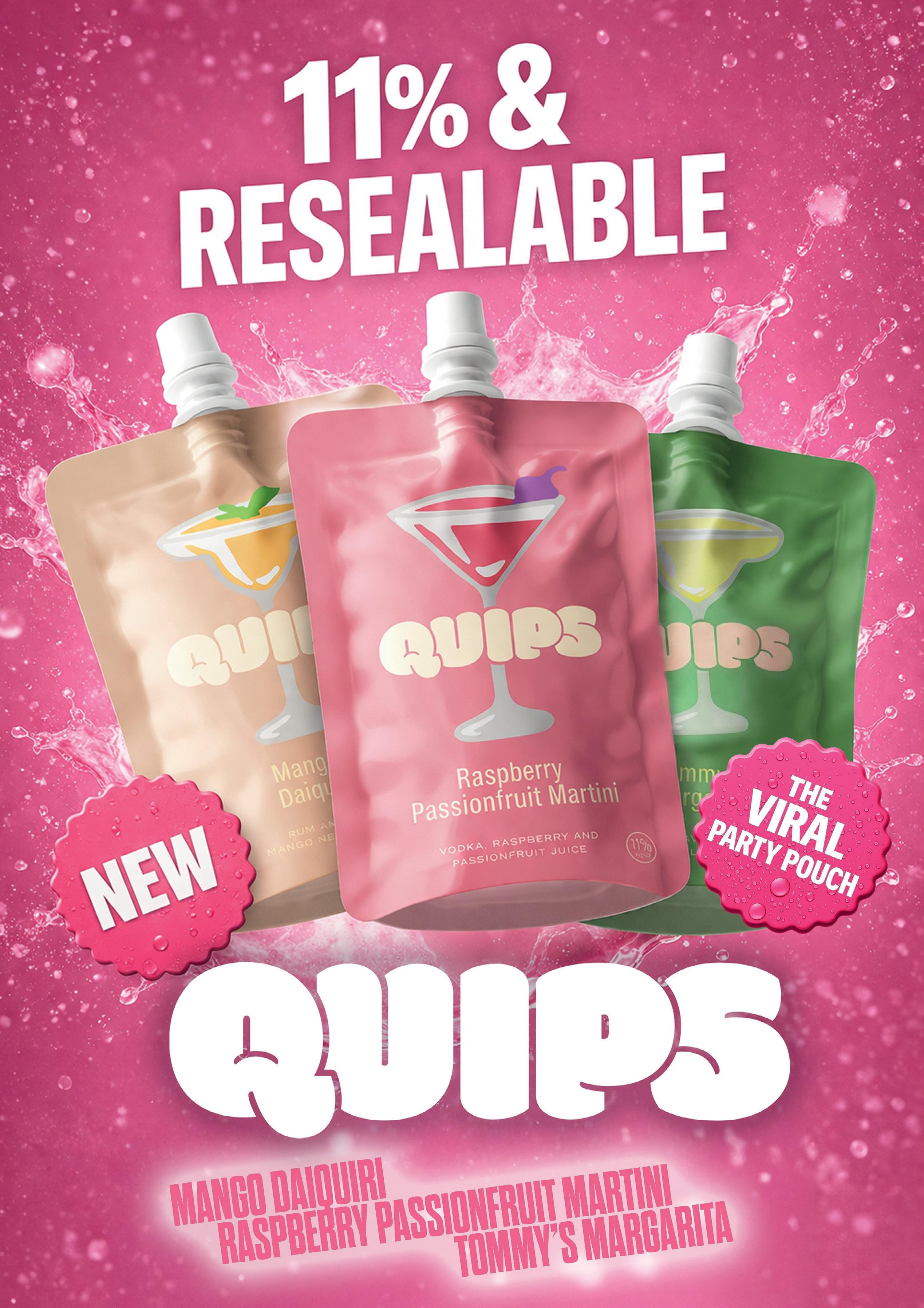

and have confidence in the quality and refreshment that these products deliver.”
Lengahan said Absolut Vodka Mixed with Sprite also delivers on format and variety that targets the market of sessionable, drinkable varieties of the same product.
“We’re leaning into that demand with both full sugar and zero sugar options, available in a 330ml sleek can at five per cent ABV. The full sugar variant will also be available in convenient 10-packs, which are ideal for social occasions and group gatherings.”
In a mature market, the ongoing challenge for retailers will be managing the pace of innovation and keeping shelves easy to shop. Andrews recommends innovation that encourages flavour discovery and occasion expansion with greater reliance on promotional mechanics.
“Multi-buy offers, pick-and-mix bays and mixed-flavour multipacks encourage exploration and reduce the barrier to trial. In a category with low brand loyalty and high flavour curiosity, giving shoppers permission to experiment, particularly for
social occasions where there may be five people looking to try a different flavour, drives both recruitment and basket size.”
Brewguru’s Lau advises that those navigating the next phase of RTD volume growth to focus on brands that deliver, “tangible innovation, maintain execution discipline, understand occasion-based consumption and build long-term trust with both consumers and retailers”.
As the category demands more discernment and intention Alepat Taylor’s Walton concluded that the dynamic nature of the RTD category means there is still growth opportunity to be unlocked.
“These are not just mixed drinks, each RTD is a singular concept that speaks to a different market segment. Some consumers want dark, some want light. Some want strong, others low-cal. Some want cheap, others will pay for quality. Know your own consumers and balance your lines accordingly. And don’t let your own range stagnate – the category is innovating fast, so keep up.” ■
To disrupt shopper behaviour and encourage engagement with the RTD category, Jack Daniel’s Stockwell recommends visual communication such as POS and floor displays.
“For Ultra-High ABV customers, try redirecting bottle shoppers to the fridge with neck tags and wobblers to drive trial. Can glorifiers at the point of purchase, and loyalty program mechanisms are also a no-brainer,” she said.
Brewguru’s Lau added: “Try merchandising RTDs based on social moments rather than solely by brand.”
Suntory’s Treanor said to assist customers navigating new products, simple visual and service communication through flavour messaging and shelf blocking is essential.
“Innovation performs best when shoppers notice, understand and engage with it. When suppliers and retailers are aligned on what a product is and why it exists, new RTDs are more likely to translate curiosity into trial and repeat purchase.”
Hannam agreed, stating that local provenance and storytelling paired with in-store tasting and shelf position are most effective in converting shoppers.
“There is continued appetite for locally made RTDs crafted with quality ingredients that deliver on taste. Highlighting spirit provenance, authentic brand credentials and use of local ingredients, encourage trade-up and reinforces value beyond price.”
He added: “Segmenting by spirit base and ABV tier helps to simplify consumer choice and avoid fatigue. The opportunity lies not in stocking more RTDs, but in stocking the right ones – ideally aligned to evolving consumer values around flavour, approachability and locally sourced ingredients.”
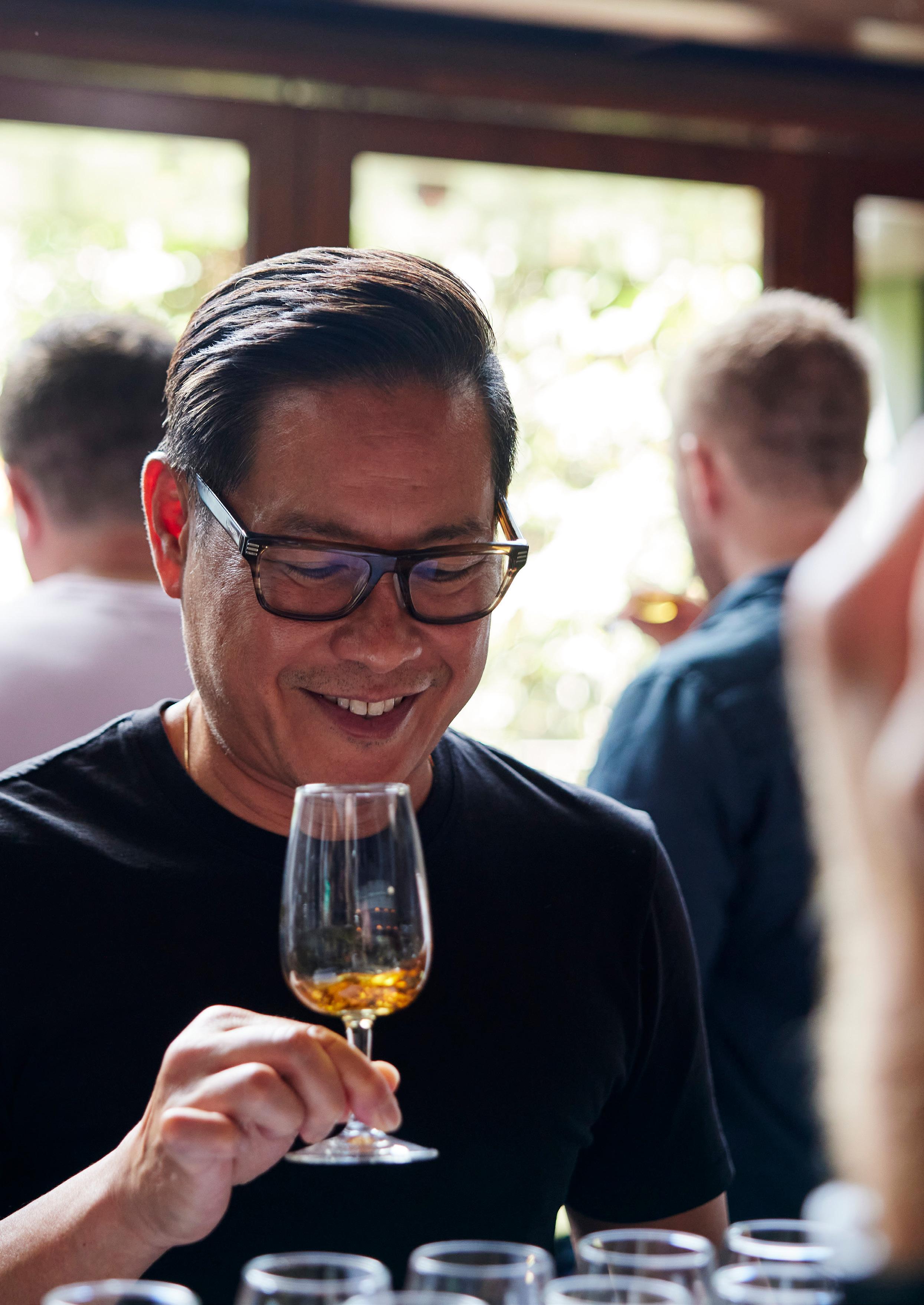
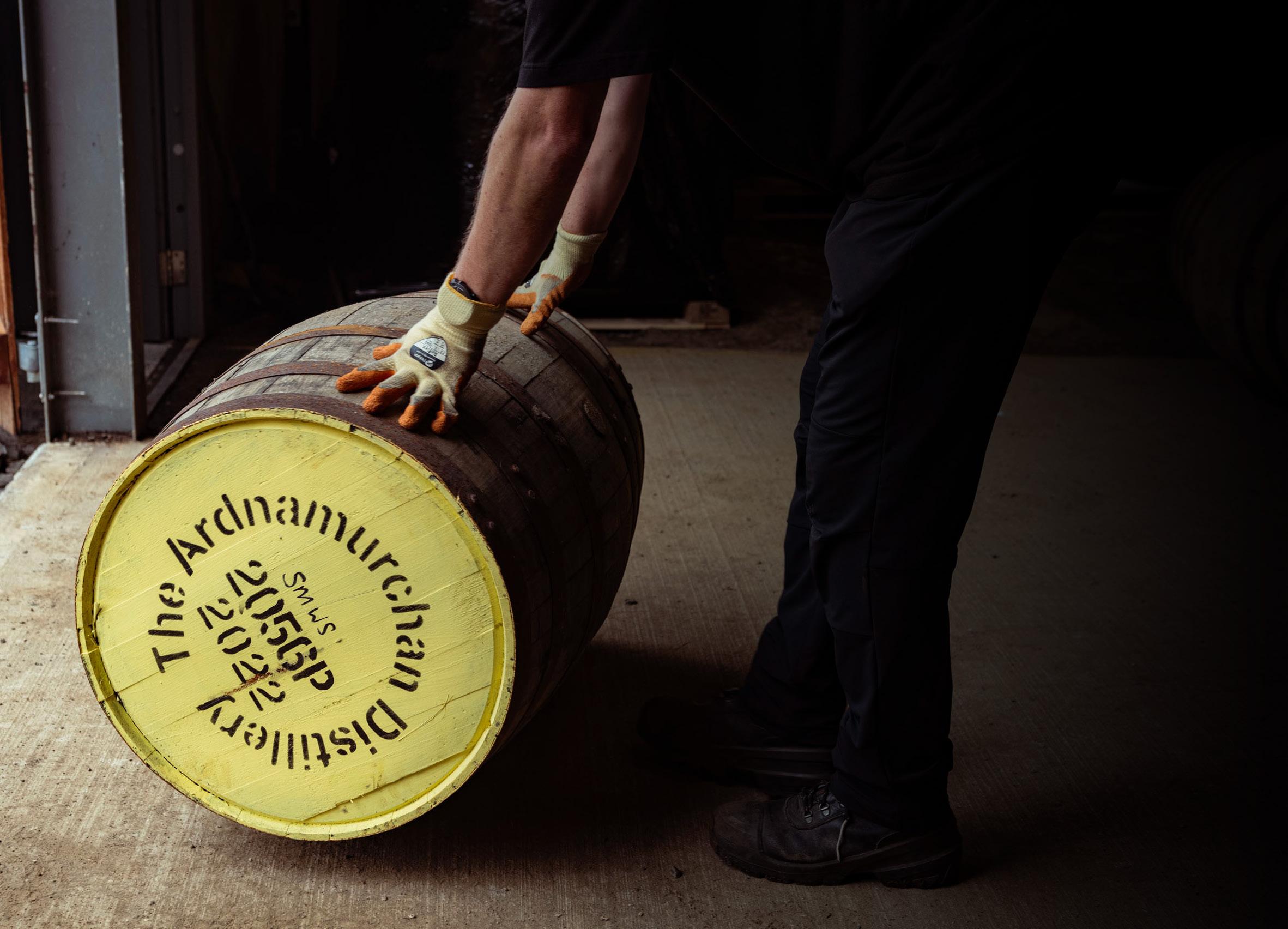
Born from centuries of distilling tradition across Scotland and Ireland, Scotch and Irish whisk(e)y have long set the benchmark for quality, provenance and craftmanship – shaping the way the world understands and enjoys whisky.
Today, heritage remains central to their appeal, but as they evolve, Scotch and Irish whisk(e)y remain key categories for the Australian trade.
In an increasingly competitive market, Select Scotch Whisky Owner Simon Spier has seen both categories demonstrate resilience and maintain positive momentum into 2026. He says Scotch whisky’s focus on premiumisation has delivered strong category health and consumer trade-up.
“[Scotch whisky] growth is most pronounced in the premium space (RRP $100+), where engaged consumers continue to prioritise quality and authenticity in their purchasing decisions.
“Irish whiskey is also emerging as a standout performer, with innovation and accessible flavour profiles fuelling steady uplift across retail and onpremise,” Spier stated.
Withstanding challenging trading conditions,
In a competitive spirits landscape, the unique narrative of Scotch and Irish whisk(e)y makes them cornerstone categories, writes Molly Nicholas.
IWSR data shows Irish whiskey driving growth in dark spirits with volumes up 27 per cent in 2024, while Scotch remained flat.
A spokesperson for Proximo Spirits Australia said: “What’s even more compelling, is this growth is coming from Gen Z, Millennials and women – which signals a long-term healthy growth trajectory for Irish whiskey.”
Though Scotch and Irish whisk(e)y share deep Celtic roots, their flavour profiles diverge in distinctive ways, shaped by distillation traditions and regional influences. While Irish is typically celebrated for its approachable profile – making the category a gateway for new whisk(e)y drinkers, Scotch delivers a broader spectrum of styles.
“Irish whiskey is famed for its exceptionally smooth flavour profile, we owe this to the Irish timehonoured tradition of triple distillation, meaning Irish whiskeys are extra smooth,” a Proximo Spirits Australia spokesperson told National Liquor News
“Irish whiskey delivers a huge amount of flavour variety to discover with a range of finishing casks
“With over 50 distilleries operating in Ireland now you can imagine the variety of whiskey still to come as the category expands its global footprint.”
Stuart
Reeves, Brand Manager –Scotch & Irish Whisk(e)y, Brown-Forman
from Oloroso Sherry to Marsala across different age ranges and a strong archive collection of barrels to draw from.”
One of Scotch whisky’s defining characteristics is its strong sense of place shaped by distinct regional traditions. When helping consumers explore this, Whyte & Mackay’s Global Single Malt Specialist Andrew Lennie finds that it helps to begin with flavour.
“From there, we can explore how production choices shape what ends up in the glass. While a distillery’s region doesn’t influence flavour as directly as terroir does in wine, Scotch’s regional styles have deep historical and cultural roots. Local ingredients, equipment choices, and techniques gradually shaped house character and consumer expectations,” Lennie continued.
Over the years, heritage has proven to be a defining strength. In modern portfolios, and particularly in Australia where the local whisky industry is still young, the heritage of Scotch and Irish whisk(e)y has played a significant role in category growth.
“In the Australian market – where provenance, authenticity and craft storytelling significantly influence purchasing decisions – historical depth is a powerful differentiator. Consumers recognise the legitimacy that comes with generations of distilling knowledge, and this translates directly into trust and brand loyalty,” Spier explains.
In a landscape where consumers value brands with a distinct identity and authentic provenance, Suntory Global Spirits’ Senior Marketing Director Johnny Morgan says historical relevance has been influential in building familiarity.
“One of Scotch whisky’s enduring strengths is the value consumers place on age statements and distillery identity, which continues to underpin premium demand.
“Australian whisky drinkers are increasingly interested in the origins of their whisk(e)y, including its production methods and the traditions involved. Distillery heritage, regional character and production philosophy all contribute to trust and perceived value,” Morgan stated.
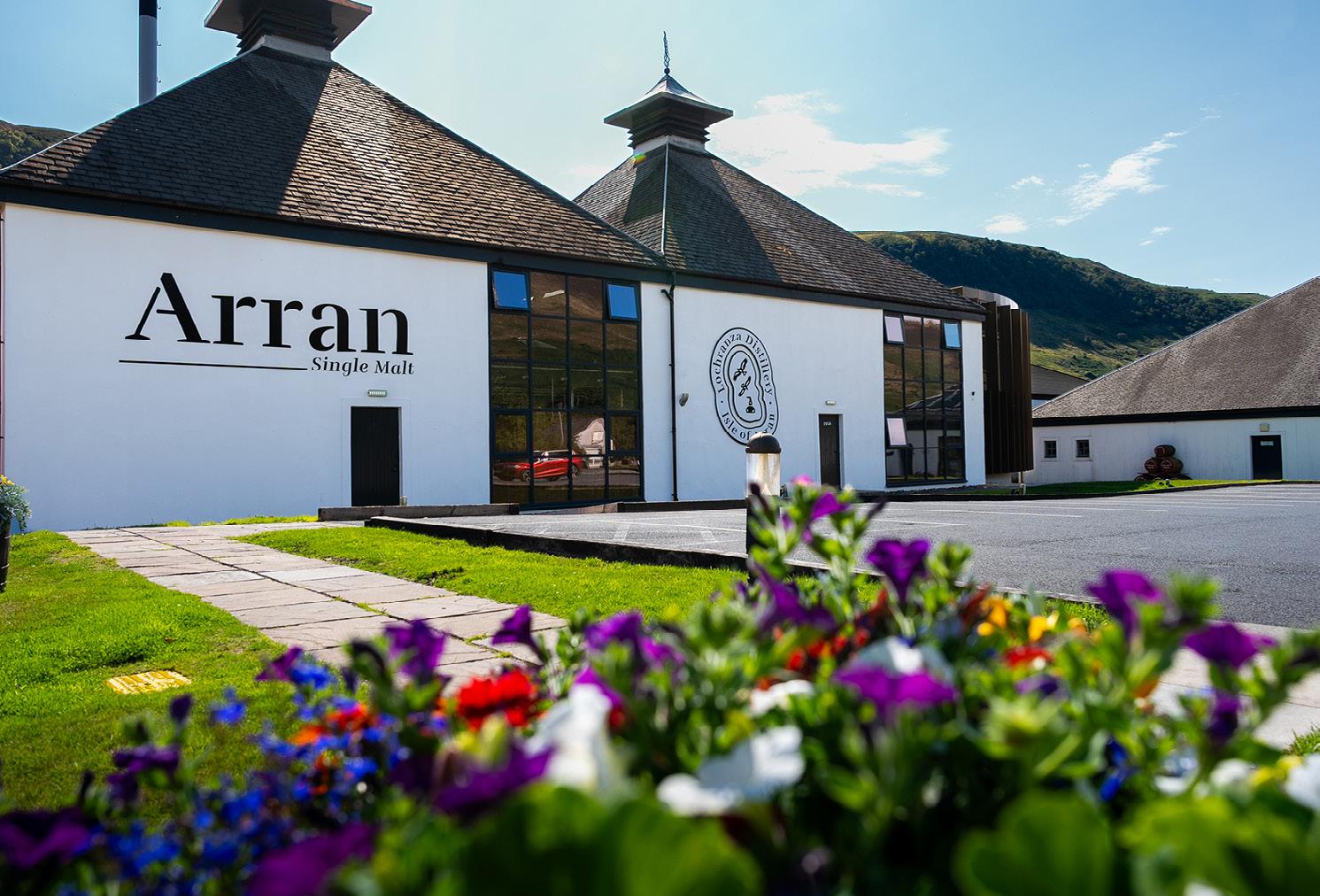

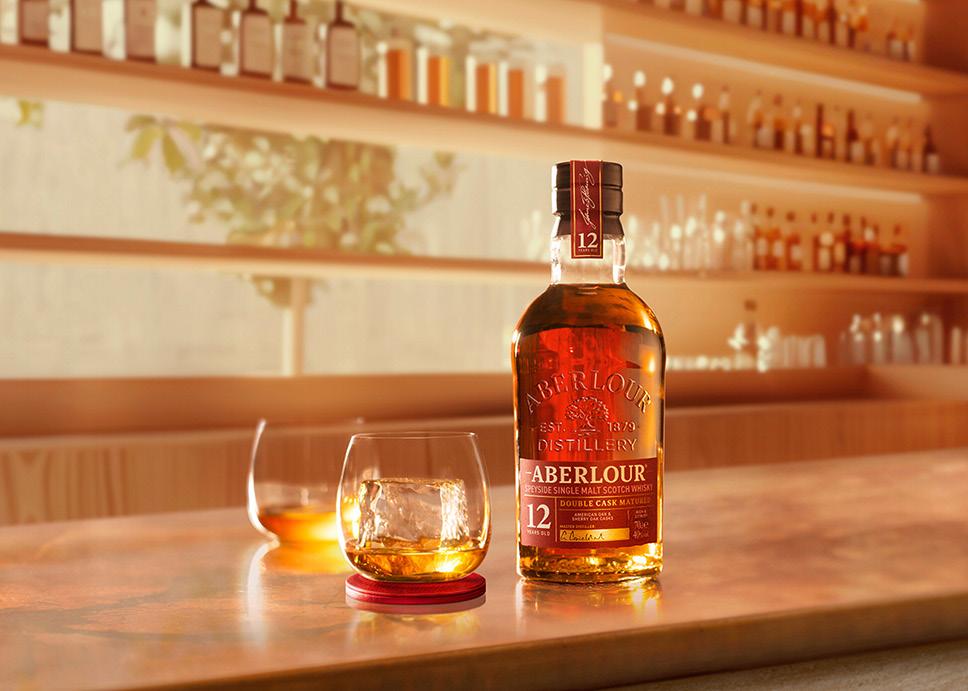
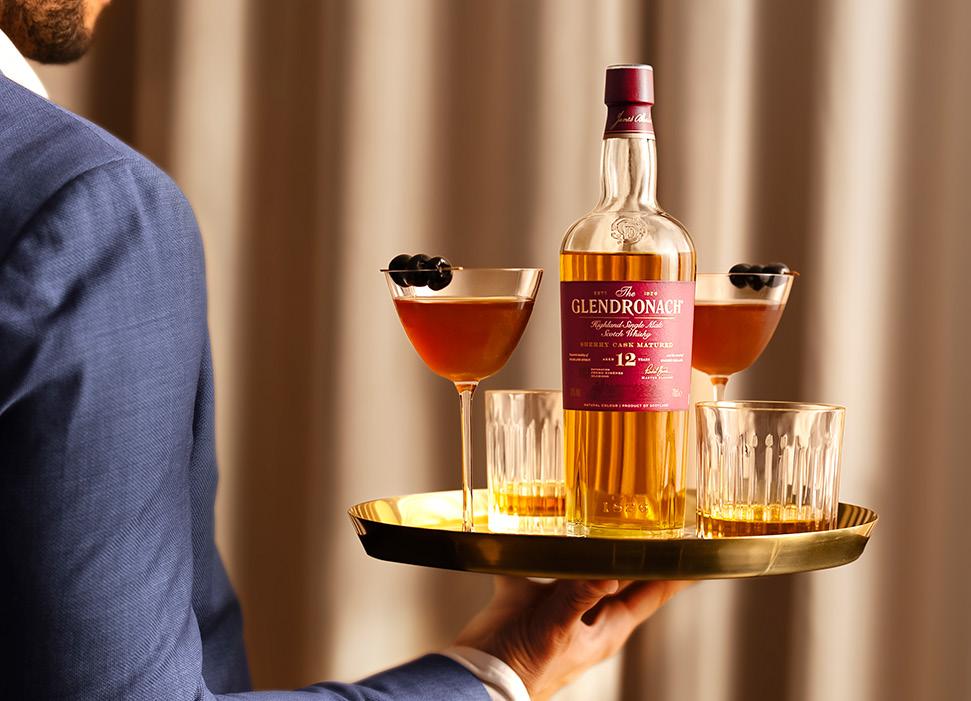
In January, Casa de Vinos became the official Australian importer of Thompson Bros. whisky and Dornoch Distillery. The independent Scottish bottler is renowned for small-batch whiskies that prioritise transparency, quality and traditional whisky-making practices.
For Boadle, such independent bottlers offer the trade a chance to showcase diverse age statements, styles and rare expressions.
“From a storytelling perspective, independent bottlers bring a lot of depth to the category. Each cask has its own story, whether it’s the distillery origin, the maturation process, or the selection philosophy behind the bottling. That narrative element is extremely valuable in both retail and hospitality settings,” he stated.
“Most customers respond best to flavour profile. If you can keep it simple with something like smoky, rich, fruity or smooth, it helps people choose quickly.”
Garth Oldfield, Owner, Oldfield Cellars
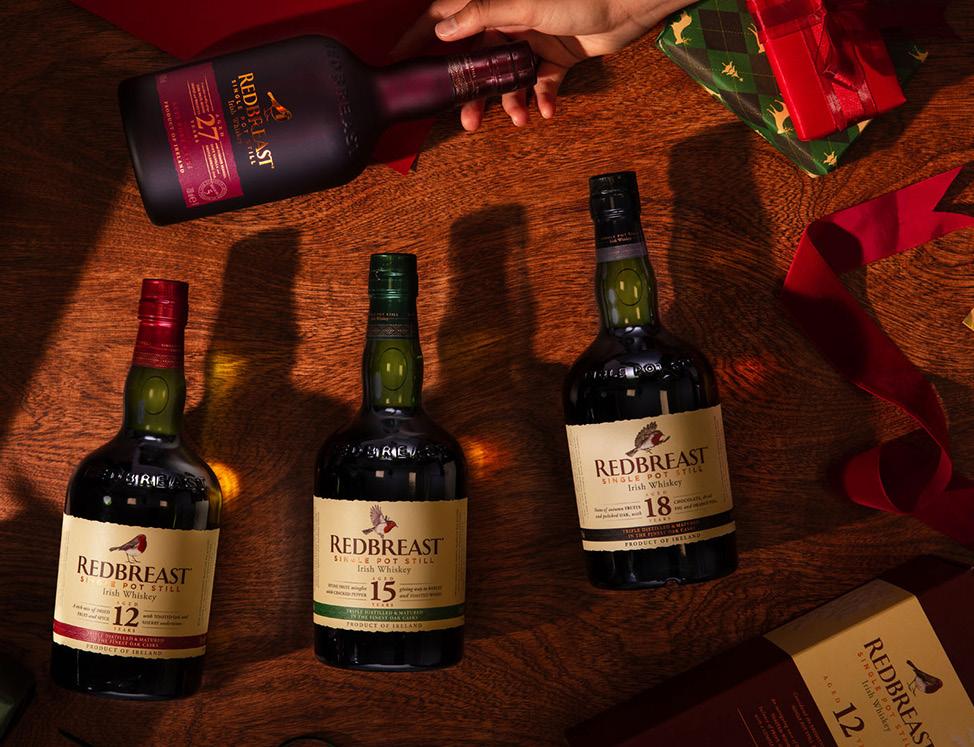
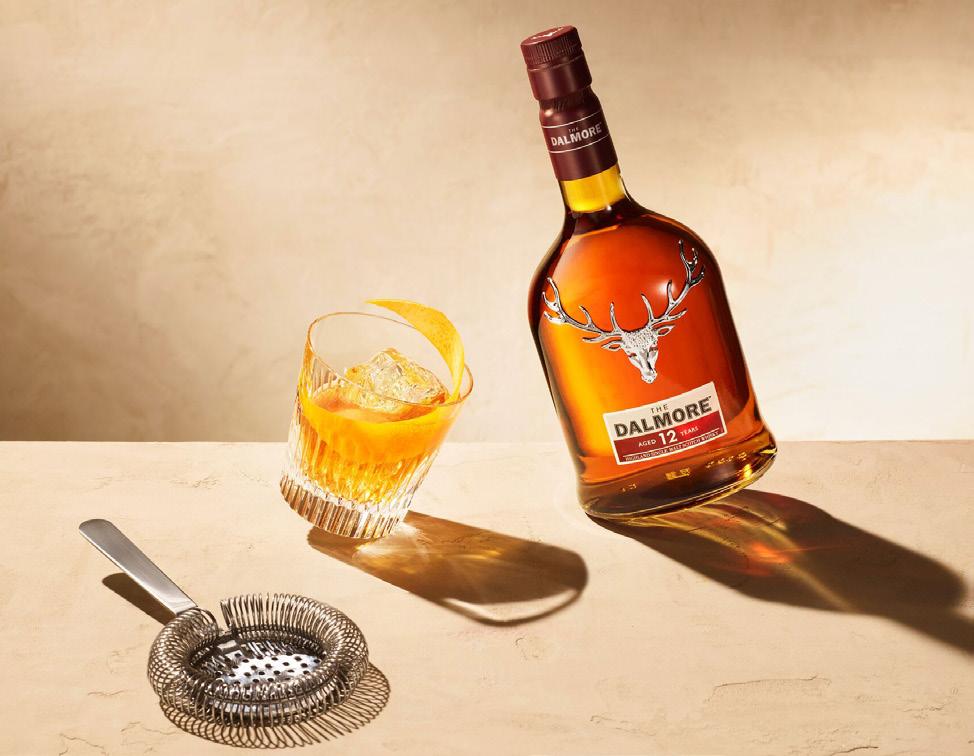
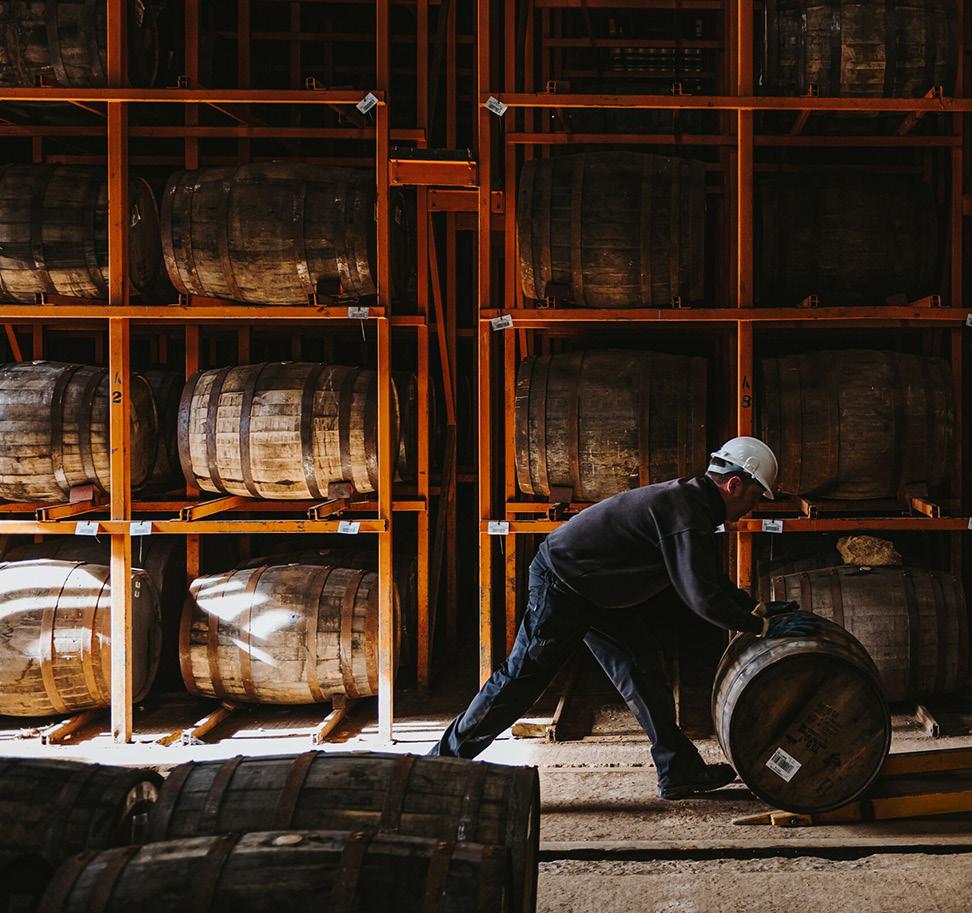
And it’s not just the more established brands leaning into storytelling –
The Whisky List’s National Brand Ambassador Jimmy Shore argues that newer distilleries are evolving to appeal to modern consumers while still honouring their traditional roots.
“I think the rise and popularity of relatively new distilleries like Arran, Ardnamurchan, Ardnahoe, Hinch and many others demonstrate how successfully you can appeal to the market whilst championing their heritage in meaningful and authentic ways. Whether it’s through the use of local barley, distilling techniques, telling their history, they have connected with the market and the market responded,” says Shore.
Global Dalmore Specialist Craig Swindell sees heritage as an opportunity to explain not only where a whisk(e)y comes from, but why it tastes the way it does. He says the distilling and multicask maturation principles established by the distillery in 1867 continue to shape how the brand matures spirit today.
“That continuity informs better whisky making decisions, reassures retailers and consumers, and builds trust that supports premium positioning and long-term loyalty,” Swindell continued.
Using heritage as an asset, Spier believes those who invest in category
education and storytelling are positioned to capture sustained growth.
“A working knowledge of Scotch whisky’s evolution – whether the development of blends versus single malts, or the regulatory frameworks that govern the category – empowers staff to guide customers with clarity and confidence.
“Today, the gradual innovation permitted by the Scotch Whisky Association (SWA) is especially relevant. Staying informed about emerging cask types approved for finishing, and understanding the reasoning behind those regulatory shifts, allows buyers and sales teams to anticipate consumer interest and identify new releases with strong market potential,” he continued.
In Scotch and Irish whisk(e)y, historical innovations and production techniques continue to define category benchmarks today. As these categories evolve, innovation is less about creating something entirely new but reinterpreting the past.
Shore says: “When talking about Scotch and Irish, personally I can’t go past worm tub condensers and triple pot distillation. I just love the effects these have on their respective whisk(e)ys’ flavours, from Mortlach

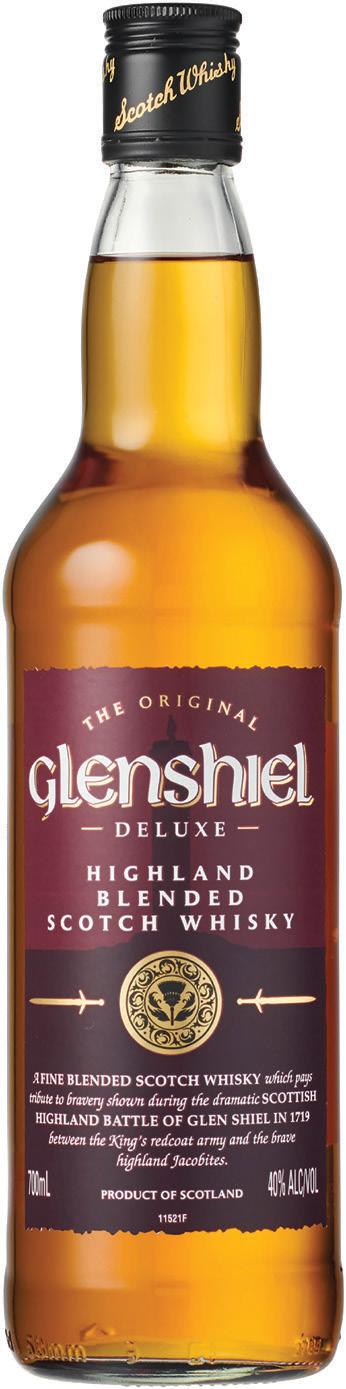

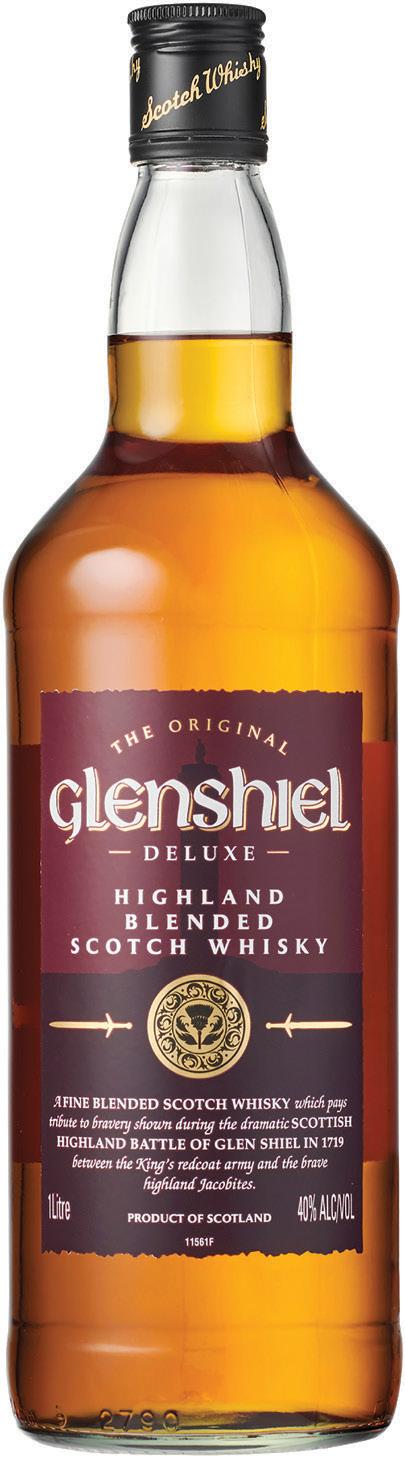


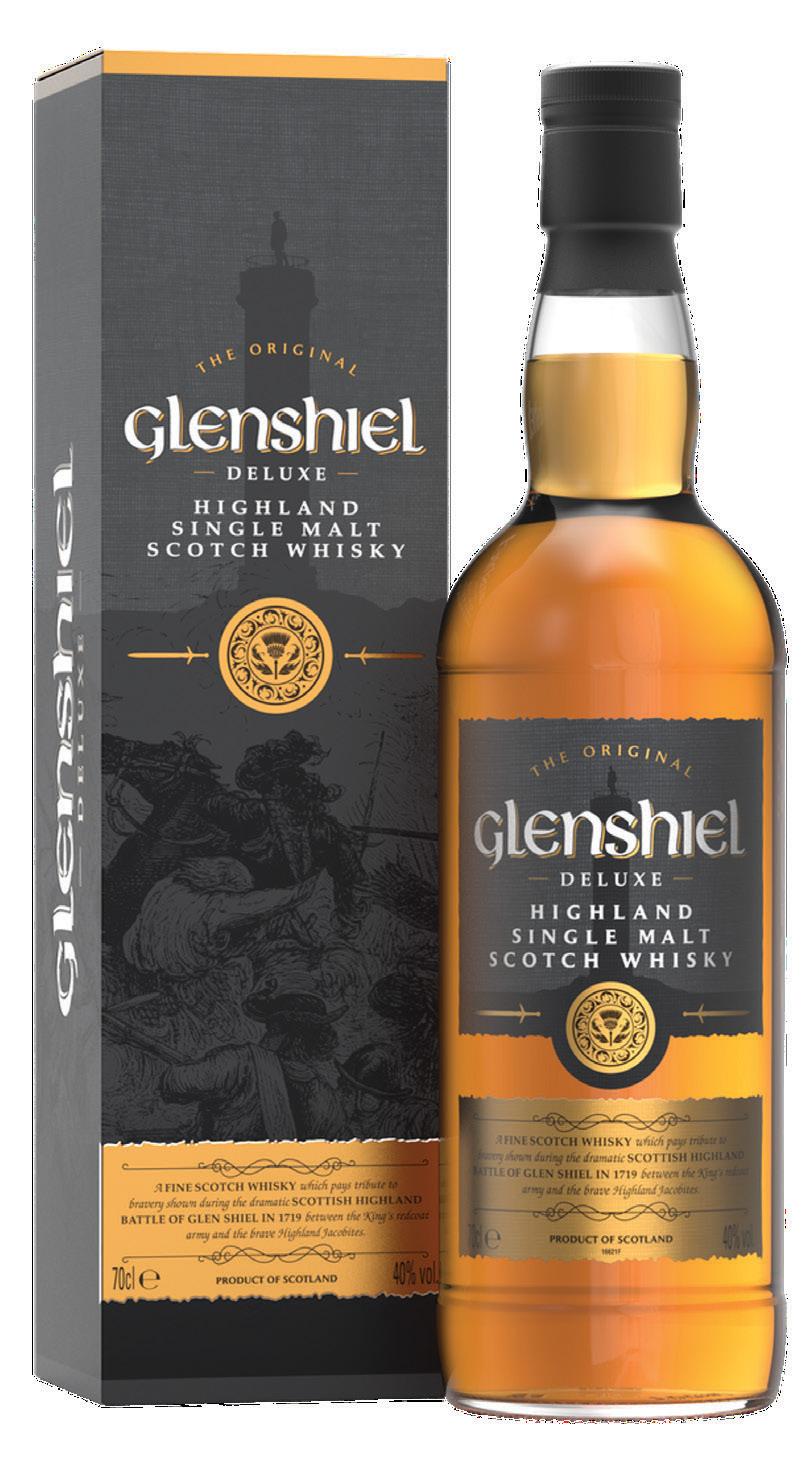

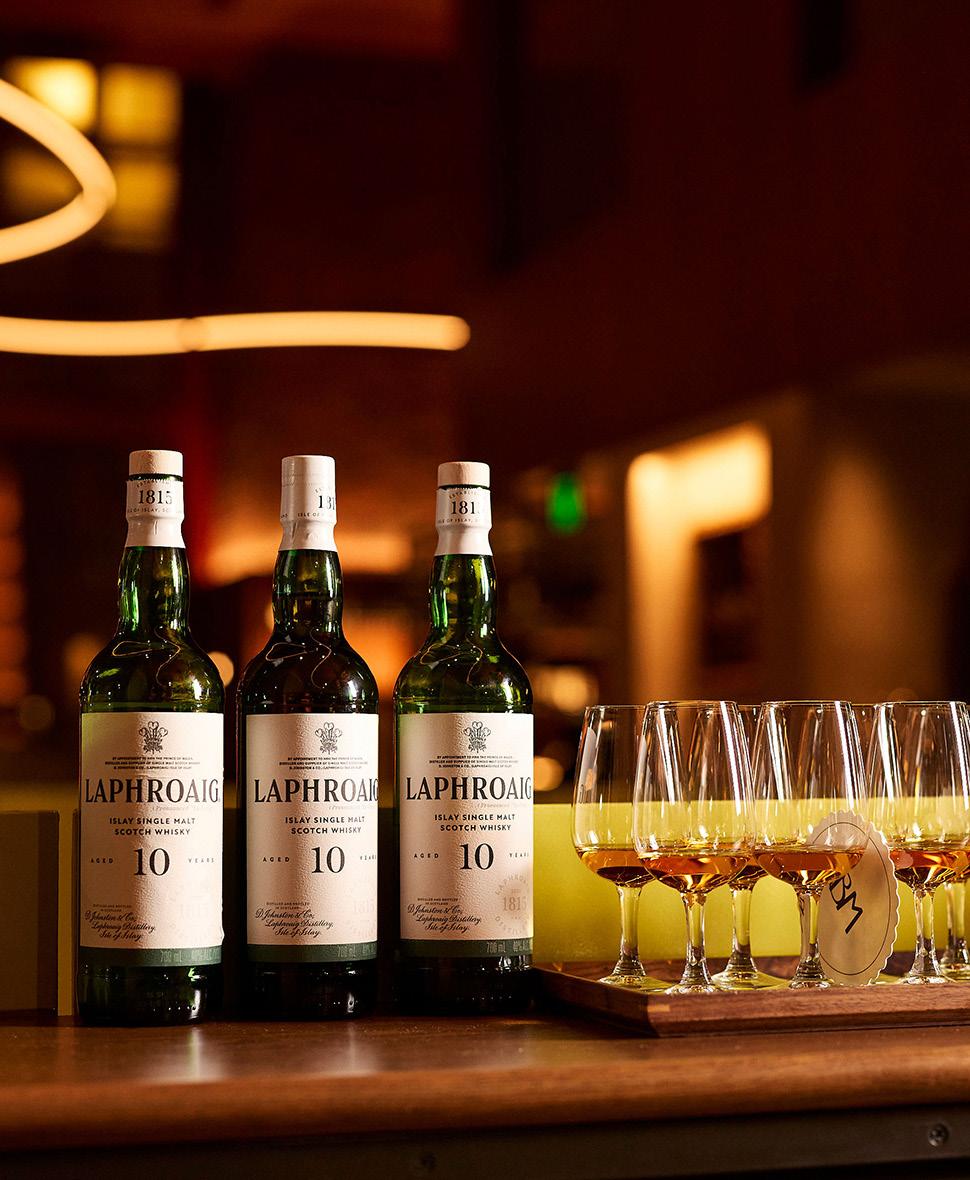
With customers willing to spend more for quality and provenance, this trend plays directly to the strengths of Scotch and Irish, says Sanderson.
“While parts of the spirits market are softening, whisk(e)y segments are bucking the trend. Growth is coming through diverse origins and elevated price points, showing that Australian consumers aren’t retreating –they’re refining. They’re seeking quality, they’re exploring, and they’re investing in better.
“Compared to other spirits, whisk(e)y is leading. It outperforms categories like vodka, grows alongside high-energy segments such as Tequila and aperitifs, and continues to anchor the premium end of the glass spirits market. It delivers both scale and value, which is a powerful combination.”
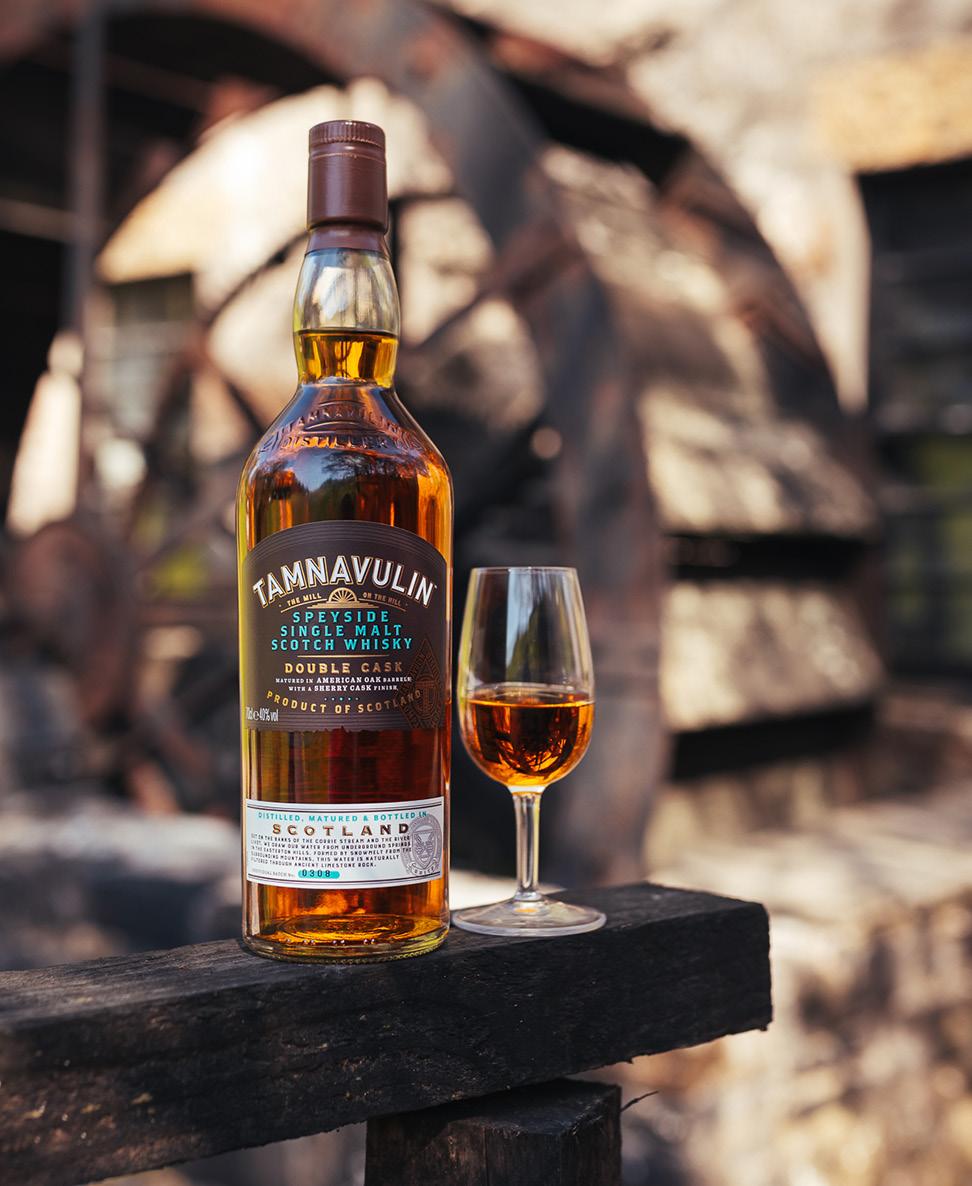
“Australian whisky drinkers are increasingly interested in
the origins of their whisk(e)y, including its production methods and the traditions involved. Distillery heritage, regional character and production philosophy all contribute to trust and perceived value.”
Johnny Morgan, Senior Marketing Director, Suntory Global Spirits
and Craigallachie which have those rich, meaty characteristics, to the clean and elegant whiskies of Bushmills and Redbreast.”
In Scotch, particularly single malt, Brown-Forman’s Brand Manager – Scotch & Irish Whisk(e)y, Stuart Reeves, highlights the growing number of innovative non-aged statement releases that offer variation on a distillery’s house style.
“There is a continued innovation trend and a lot of excitement in the category, especially in single malt which is back in growth as a segment. We have seen new releases from several established brands, continuing a trend of innovative products with higher age statements within their core ranges.”
And with Irish whiskey seeing an uptake in consumer interest, he expects to see more local styles of whiskey native to Irish traditions, such as single pot still.
“With over 50 distilleries operating in Ireland now you can imagine the variety of whiskey still to come as the category expands its global footprint,” Reeves continued.
For a small store, Oldfield Cellars in Gosford – which was awarded Best Liquor Retail Store at the 2025 Australian Liquor Industry Awards – carries a large Scotch and Irish whisk(e)y range. While customers once stuck with
familiar brands, they are beginning to show more curiosity, and staff recommendations are a key sales driver.
Owner Garth Oldfield says: “Whisky can feel complicated, so staff who can translate it into simple flavour descriptions make a big difference. We also have printable tasting notes in our POS which we give to customers if the staff member has not sampled.
“Most customers respond best to flavour profile. If you can keep it simple with something like smoky, rich, fruity or smooth, it helps people choose quickly. Region also helps as a guide.”
Jonathan Boadle, General Manager of specialised liquor store Casa de Vinos, has found that guidance from staff gives customers the confidence to explore.
“When guiding customers, we usually start by understanding what they already enjoy – whether that’s something smoky and peaty, sherried and rich, or lighter and more fruit-forward. From there we can recommend bottles that align with those preferences while also introducing them to something new or interesting.
“We have every bottle open in the store, and the best way to make sure guests end up with something they truly love is for them to try it. Whisk(e)y is a very personal thing, so it really is about getting people to taste while educating them along the way,” says Boadle.
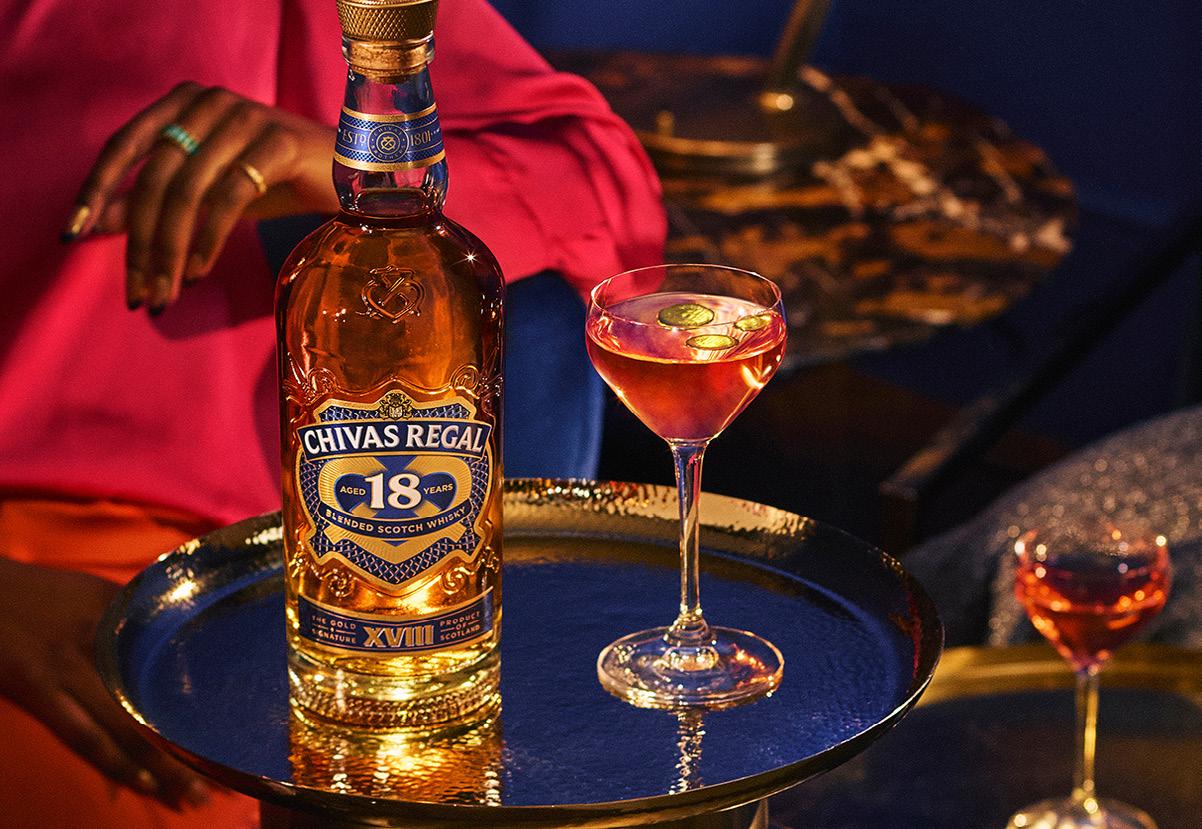
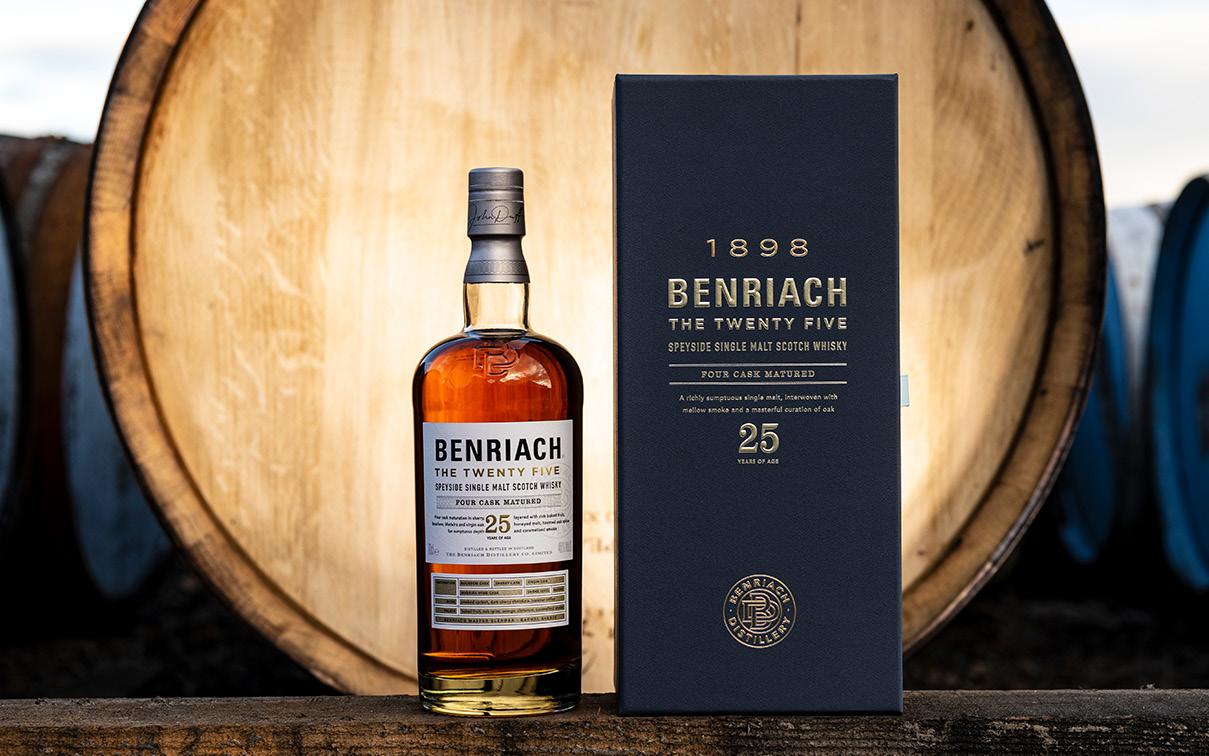
In retail, Reeves emphasises the importance of representing different purchase limits, flavour preferences and price points.
“Whilst Speyside is a big category (and whisky producing region of course) it’s all too easy to see all Speyside whiskies as the same and ignore the varying styles within the region. There are many such options, which can provide great trade-up opportunities for consumers in-store, and a good educational angle for retailers when interacting with them.”
Meanwhile, he sees untapped opportunity in the on-premise for Irish whiskey to be more prevalent in mixed drinks and cocktails.
“The essence of the Irish style offers so much to spirit-forward drinks and gives bartenders a great storytelling angle to help with the upsell,” Reeves continued.
The opportunity across the on- and off-premise is clear, but as Belinda Sanderson, Head of Dark Spirits, RTD and Prestige for Pernod Ricard, highlights – even these heritage-rich categories require thoughtful range building to maintain relevance.
“The challenge is competition. Tequila, agave spirits and lowerABV options are all chasing the same consumers. Whisk(e)y must stay relevant, leaning into occasions, flavour exploration and approachable premium positioning rather than relying on past generational swings.
“For retailers and on-premise operators to win, they need to showcase accessible favourites alongside aspirational expressions, create clear trade-up pathways, and make whisky visible, approachable and exciting across every occasion,” Sanderson concluded. ■










Amanda Matral, Brand & Portfolio Manager, Independent Beverage Partners
Anastasia Savkova, Educator (Wines & Spirits) and Owner, Wine Symfonia
Andrew Graham, Wine Buyer and Journalist
Andy Milne, Customer Activation Manager, Lion
Benji Kinoial, Bar Manager, Tailor Room
Dan Roche, Spirits Strategy Consultant
Emma Sefton, Trade Marketing Specialist, Independent Beverage Partners
Geoff Bollom, Wine & Spirits Expert, Chambers Cellars
Jim Butcher, Co-founder, Mr & Mrs Romance
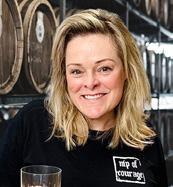







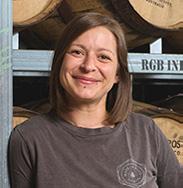
Jimmy Shore, National Brand Ambassador, The Whisky List Scan to learn more about our judges
Kathleen Davies, Founder, Nip of Courage
Loy Catada, National Brand Ambassador, Proximo Spirits Australia
Lucas Bucton, Sales Representative, Banks & Solander Distillery/Solander Rum Company
Reece Griffiths, Group Bars Manager, Solotel
Samantha Stefani, Distiller, Banks & Solander Distillery
Samm Creasey, Founder, Crease & Form
Scott Allan, Events Director, The Whisky List/ The Whisky Show
Sean Forsyth, Managing Director, Oakburn Distillery
Silvia Segato, Senior Spirit Blender, Archie Rose Distilling Co
Zach Mynott, National Bartender Engagement & Trade Advocacy Manager, Campari
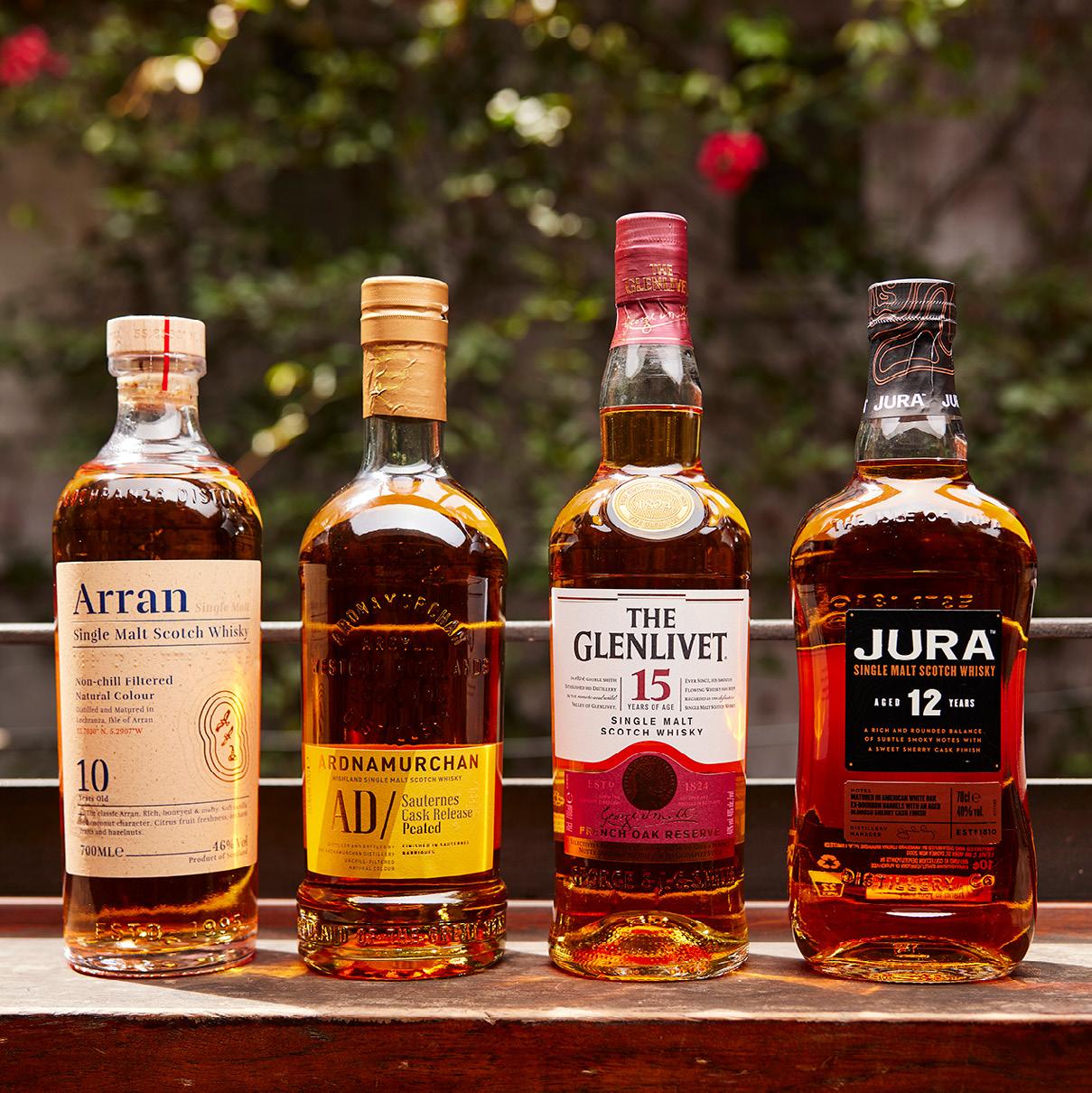
The 2026 Scotch and Irish Whisk(e)y Buyer’s Guide tasting was hosted at The Clock in Surry Hills, Sydney. A huge thank you to the team for their hospitality.
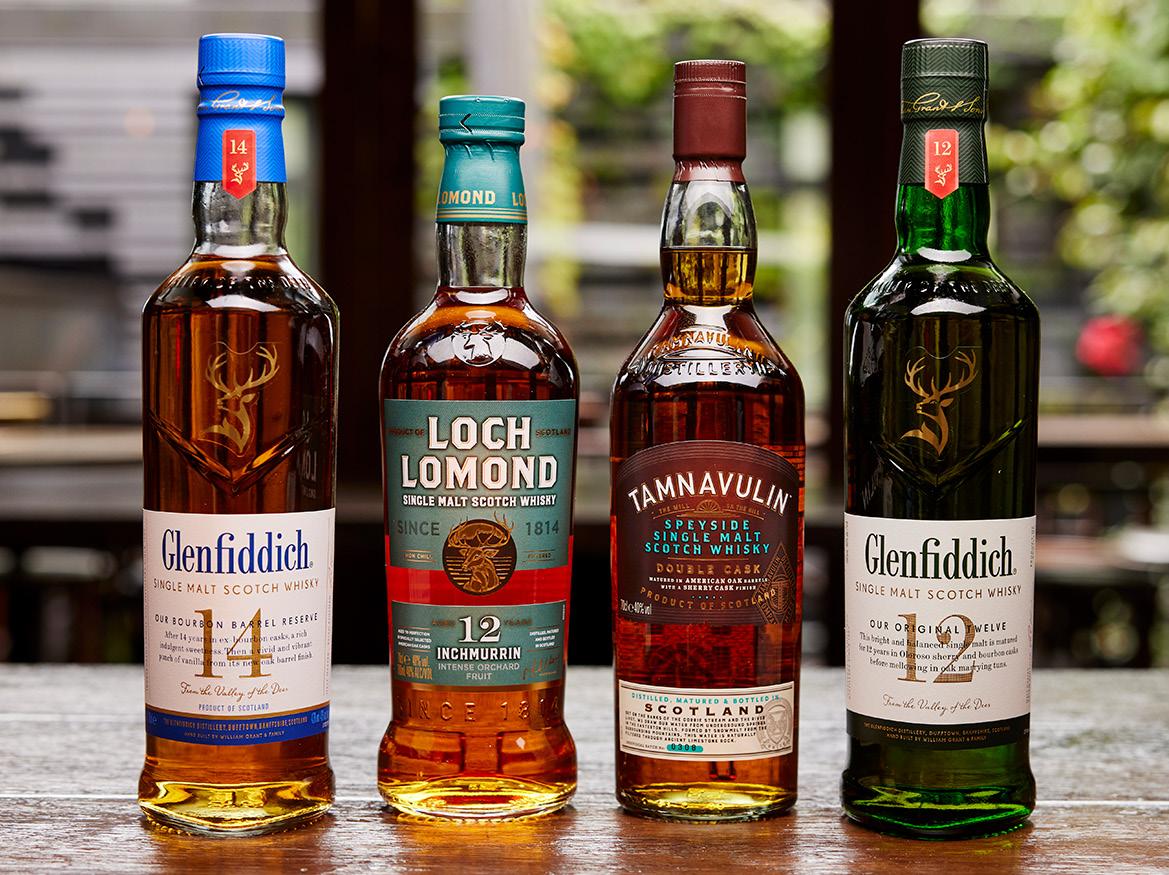
Isle of Raasay Hebridean Single
Malt Scotch Whisky – Cask Strength
Isle of Raasay Distillery, Scotland
61.6% ABV | 700ml Gold 97 points
Distributor: Select Scotch Whisky
“A delicate whisky – slightly peated with subtle fruit. Marmalade, poached pears and alcohol spice but not too aggressive. A touch of set-heather, honey and vanilla. Best enjoyed neat.” – Andy Milne
Isle of Raasay The Draam Single
Malt Scotch Whisky
Isle of Raasay Distillery, Scotland
46.4% ABV | 700ml Gold 97 points
Distributor: Select Scotch Whisky
“Forest floor and corn on the nose. A savoury and gently peated palate. Wonderful characteristics and complexities. If this isn’t one for everyone – from beginners to aficionados – then such a whisky doesn’t exist.” – Jim Butcher
Laphroaig 10 Year Old Single
Malt Scotch Whisky
Laphroaig Distillery, Scotland
40% ABV | 700ml Gold 96 points
Distributor: Suntory Oceania
“Extremely smoky on the nose, bonfire aromas. Hints of coffee and tobacco on the palate – warming and smooth. Iodine minerality, herbaceous.” – Emma Sefton
Redbreast 15 Year Old Single Pot
Still Irish Whiskey
Midleton Distillery, Ireland
46% ABV | 700ml Gold 96 points
Distributor: Pernod Ricard
“Dried flowers, apricot, cinnamon and marzipan on the nose. Dry palate with lovely softness, almond meal. Delicate, floral whiskey with stone fruit flavours, sweet spice, oak, and silky texture. Vibrant yet elegant.” – Anastasia Savkova
The Balvenie 21 Year Old
Portwood Single Malt Scotch Whisky
The Balvenie Distillery, Scotland
40% ABV | 700ml Gold 96 points
Distributor: William Grant & Sons
“Lifted spice and pretty cedar, cinnamon, star anise, ginger. Complex with lots of aroma. Luscious, textural, lots of length and persistence of flavour.”
– Amanda Matral
Aberlour A’bunadh Speyside
Single Malt Scotch Whisky –Cask Strength
Aberlour Distillery, Scotland
61% ABV | 700ml
Gold 95 points
Distributor: Pernod Ricard
“Luscious, sweet notes – tropical fruit. Big hit of sweet spice –nutmeg and cinnamon. A big, brash whisky but very well made. With water this becomes a creamy, tropical fruit bomb, full of passionfruit.” – Andy Milne
Benriach 12 Year Old Single Malt Scotch Whisky
The Benriach Distillery, Scotland
46% ABV | 700ml
Gold 95 points
Distributor: Brown-Forman
“Caramel on the nose, it smells rich and sweet. Such an opulent style with a lavishly oaky palate. Such a crowd pleaser, what a wonderful and lavish, layered style of whisky.”
– Andrew Graham
Glen Scotia Victoriana
Campbeltown Single Malt
Scotch Whisky – Cask Strength
Glen Scotia Distillery, Scotland
54.2% ABV | 700ml
Gold 95 points
Distributor: ALM Connect/
Paramount Marketplace (via Bitoo Group)
“Leathery, stewed dark fruit. Lactic butter, plum, raisin and sherry. The balance with the proof is fantastic.”
– Zach Mynott
Glenglassaugh 12 Year Old
Single Malt Scotch Whisky
Glenglassaugh Distillery, Scotland
45% ABV | 700ml
Gold 95 points
Distributor: Brown-Forman
“Maple, caramel and some vanillin on the nose. Lifted sweetness, figs and burnt crème caramel. Oaky and slightly smoky notes. Lovely viscosity and persistence.”
– Amanda Matral
Loch Lomond Inchmoan 12 Year
Old Single Malt Scotch Whisky
Loch Lomond Distillery, Scotland
46% ABV | 700ml
Gold 95 points
Distributor: ALM Connect/ Paramount Marketplace (via Bitoo Group)
“Beautiful colour, textural. Nose works beautifully; palate weight is stunning with hints of dried fruit, smoke and sherry. Sensationally rounded.” – Zach Mynott
The Balvenie Doublewood 12 Year
Old Single Malt Scotch Whisky
The Balvenie Distillery, Scotland
40% ABV | 700ml
Gold 95 points
Distributor: William Grant & Sons
“Very complex and layered. Figs, ripe fennel and charred pineapple. Silky with some vanillin, cinnamon and warm spice on the palate. Delicious!” – Amanda Matral
The Dalmore 15 Year Old Single
Malt Scotch Whisky
Dalmore Distillery, Scotland
40% ABV | 700ml
Gold 95 points
Distributor: Vanguard Luxury Brands
“Golden brown in colour. Caramel and vanilla notes. Super smooth, elegant. A classic Highland whisky –very good.” – Geoff Bollom
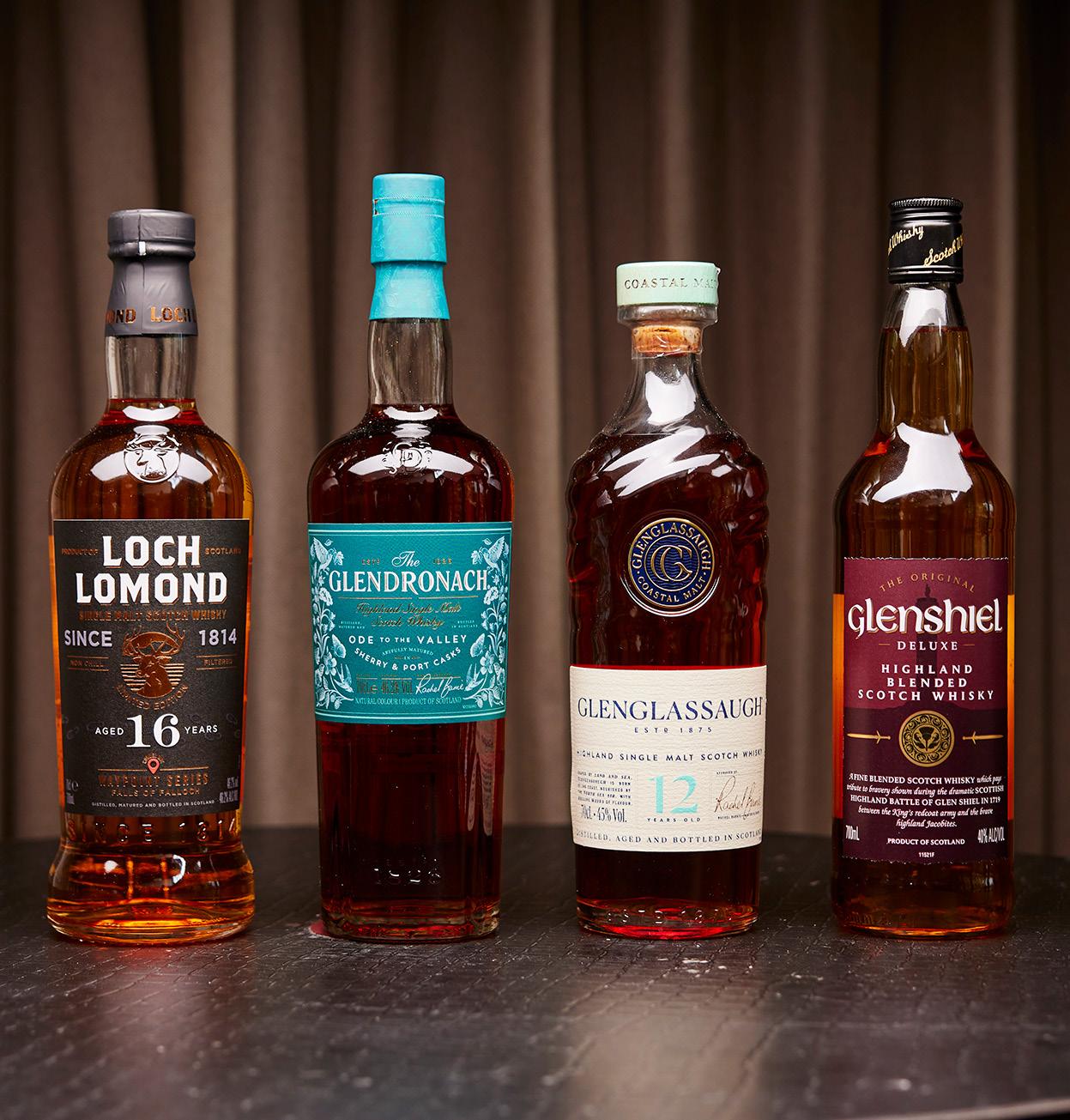
Glenshiel Scotch Whisky was named in honour of the bravery shown in the dramatic Scottish Highland battle of Glen Shiel in 1719, between the King’s Redcoat army and the brave Highland Jacobites – classed as the most significant battle of the Jacobite rebellion.
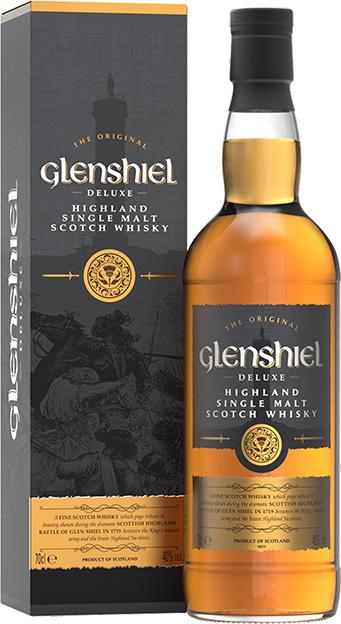
Paying tribute to the country’s rich heritage and the importance of Scottish battles, Glenshiel Scotch Whisky celebrates the fighting spirit and quest for justice that is still prevalent among the Scottish people today.
Crafted at 40 per cent ABV, the range includes two whiskies – Highland Single Malt Scotch Whisky and Highland Blended Scotch Whisky.
Scooping a silver medal in National Liquor News’ inaugural Scotch and Irish Whisk(e)y Trade Buyer’s Guide, Glenshiel Highland Single Malt Scotch Whisky has notes of ripe orchard fruit and silky honey, followed by candied lemon peel, before a gentle smoke and oak spice finish.
Another smooth and versatile example of Scotch whisky, Glenshiel Highland Blended Scotch Whisky offers aromas of malted barley with a fruity sweetness complemented by a complex mix of sweet fruits balanced with smooth toffee on the palate. Lightly smoked, this whisky has a warming finish.
Distributor: Independent Beverage Partners
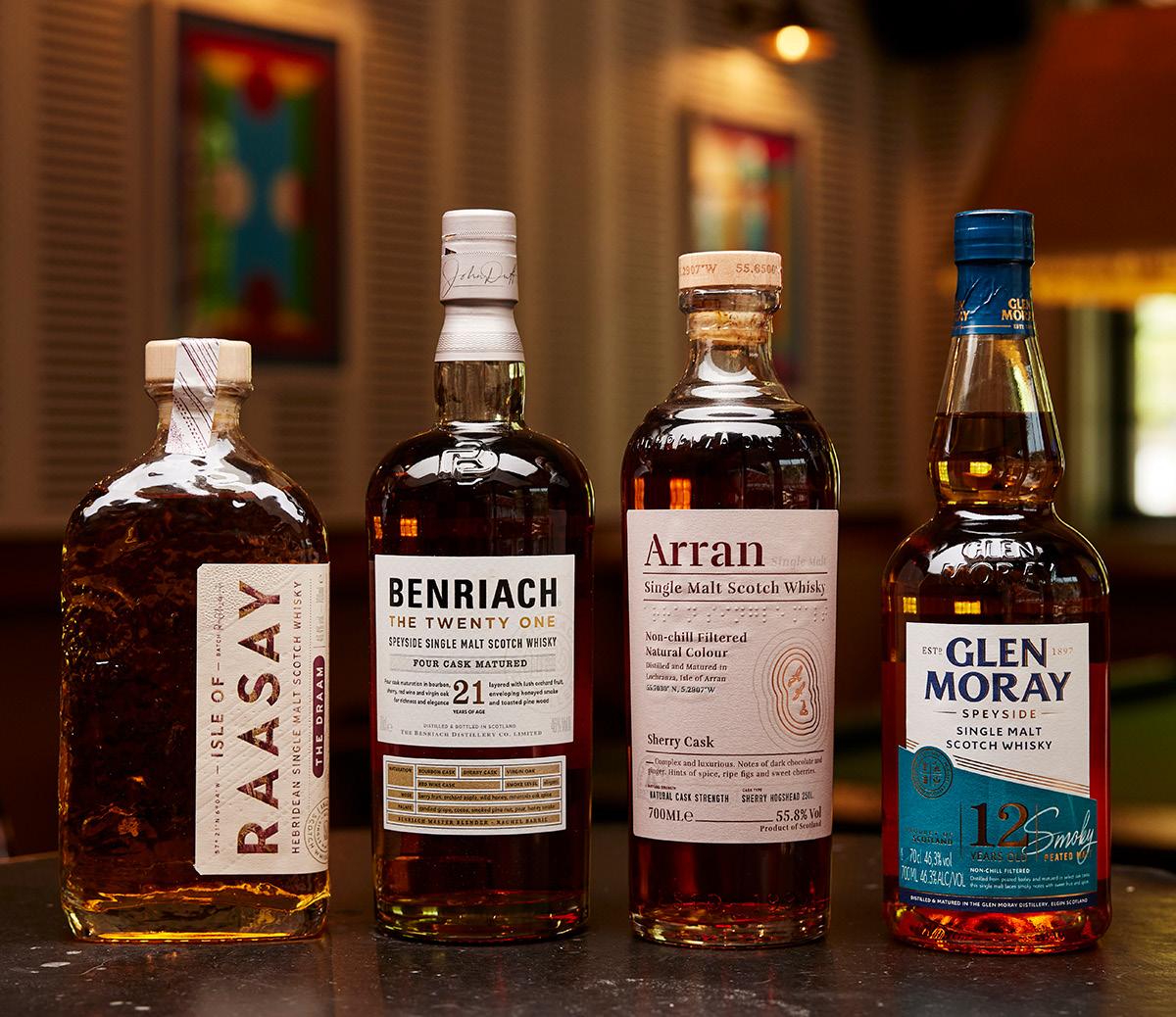
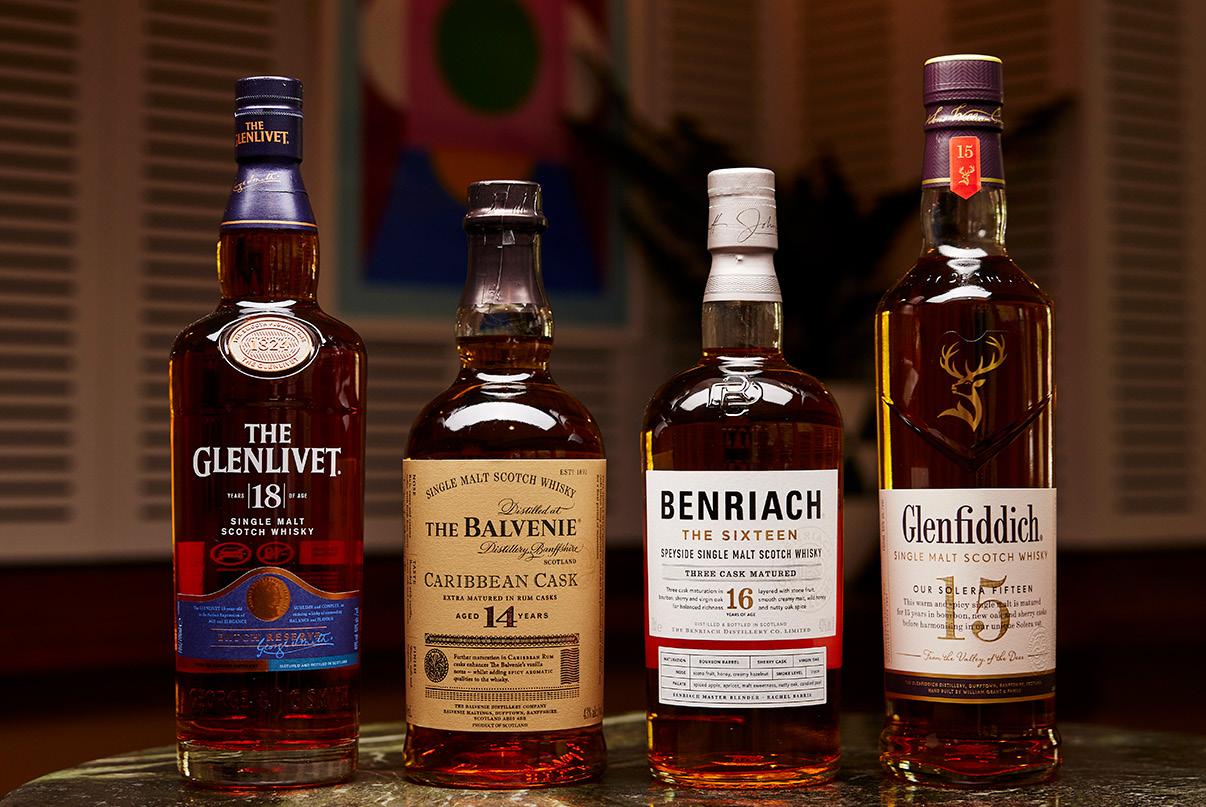
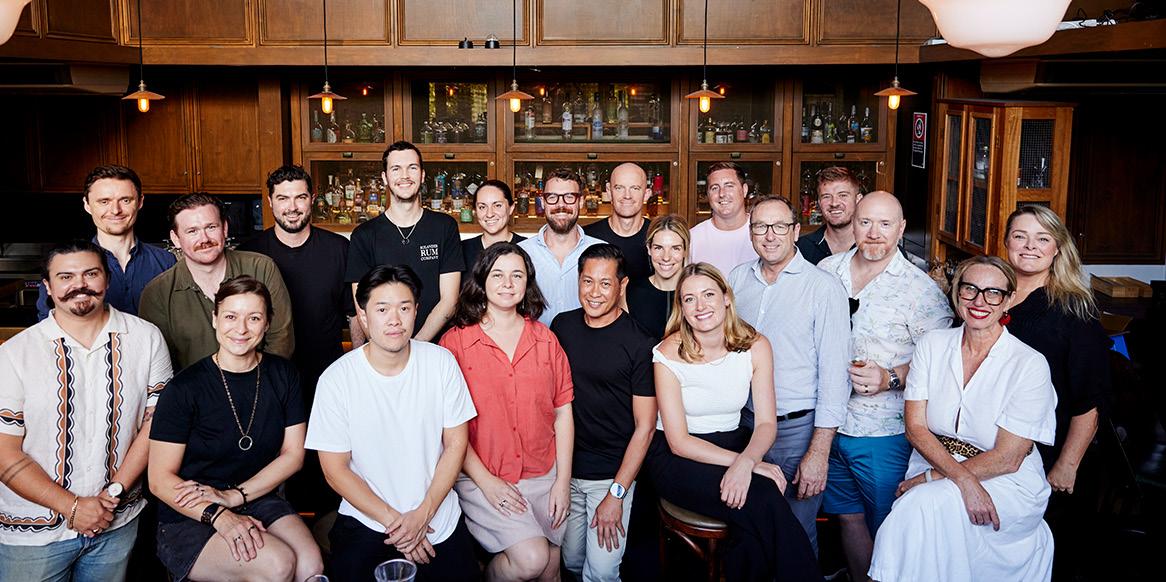
What does this lineup reveal about the current stylistic direction of Scotch and Irish whisk(e)y?
“Cask type seems to have shifted. The majority were spirit-led, allowing this to sing and let the cask play second fiddle. The range and variety of flavour is superb and not overbearing. Complexity reigns supreme alongside approachability. No more sweet sherry bombs!” – Andy Milne
“A lot of the Speyside styles shared strong, similar characteristics, making it easy for people to find comfort in that particular category if that’s what they like.”
– Lucas Bucton
“I found it interesting that fewer than expected of today’s whisk(e)y lineup were heavily peated. And even the spirits that were peated weren’t overburdened with it. I wonder if this is either because distilleries are seeing a trend towards less smoke in the glass and are reacting to that or if the Australian palate is changing thus attracting the whiskies with less peat. Perhaps both.” – Jim Butcher
“Scotch and Irish whisk(e)y is in such a good place for quality. Perhaps the only challenge is how ever-increasing premiumisation and special bottles might dilute value.”
– Andrew Graham
“A lot of the peated whisk(e)ys were only lightly peated –maybe there is a change in how much peat the younger generations can tolerate.” – Samantha Stefani
“The lineup highlighted the diversity and evolution of the categories and a clear direction of the move to balance both tradition and innovation to cater to different consumers.”
– Loy Catada
Benriach 21 Year Old Single Malt
Scotch Whisky
The Benriach Distillery, Scotland
46% ABV | 700ml
Silver 94 points
Distributor: Brown-Forman
“Gentle peat and crème caramel on the nose. Warm peat and a lovely chili tingle on the palate. A perfect introduction to peated whisky, but also a lovely dram generally.” – Jim Butcher
Isle of Jura 12 Year Old Single
Malt Scotch Whisky
Jura Distillery, Scotland
40% ABV | 700ml
Silver 94 points
Distributor: Vanguard Luxury Brands
“Bright, vibrant with flavours of dried flowers, apricots, oatmeal, sawdust. Sweet spice and delicate smoky bite, plush texture on the palate.” – Anastasia Savkova
Loch Lomond Waypoint Series 16 Year Old Single Malt Scotch Whisky – Cognac Cask Finish
Loch Lomond Distillery, Scotland
46.2% ABV | 700ml
Silver 94 points
Distributor: ALM Connect/ Paramount Marketplace (via Bitoo Group)
“Stewed tropical fruits on the nose. Chocolate covered pineapple and green apple makes for a beautiful flavour on the palate. Extremely drinkable.” – Samantha Stefani
The Glendronach 15 Year Old
Single Malt Scotch Whisky
The Glendronach Distillery, Scotland
46% ABV | 700ml
Silver 94 points
Distributor: Brown-Forman
“Deep chestnut colour with a rich nose that opened up to hints of dark fruit/forest floor. Palate was balanced and subtle with a strong finish.” – Zach Mynott
Ardnamurchan AD/ Peated
Sauternes Cask Release Single
Malt Scotch Whisky
Ardnamurchan Distillery, Scotland
50% ABV | 700ml
Silver 93 points
Distributor: The Whisky List
“While shrouded in smoke there is still a delicate citrus and floral element on the nose. Thick texture, smoke isn’t dominating on the palate, allowing some apple to come through. A fair balance of smoke and fruit undertones, citrus and apple.” – Lucas Bucton
Bushmills 21 Year Old Single Malt Irish Whiskey
Old Bushmills Distillery, Ireland
40% ABV | 700ml
Silver 93 points
Distributor: Proximo Spirits
“The nose is generous with barley and red apple notes, balanced very well with raisin and walnut aromas. The palate is simple and the texture is velvety. The flavours are robust with a short length and dry finish from the wood maturation.”
– Silvia Segato
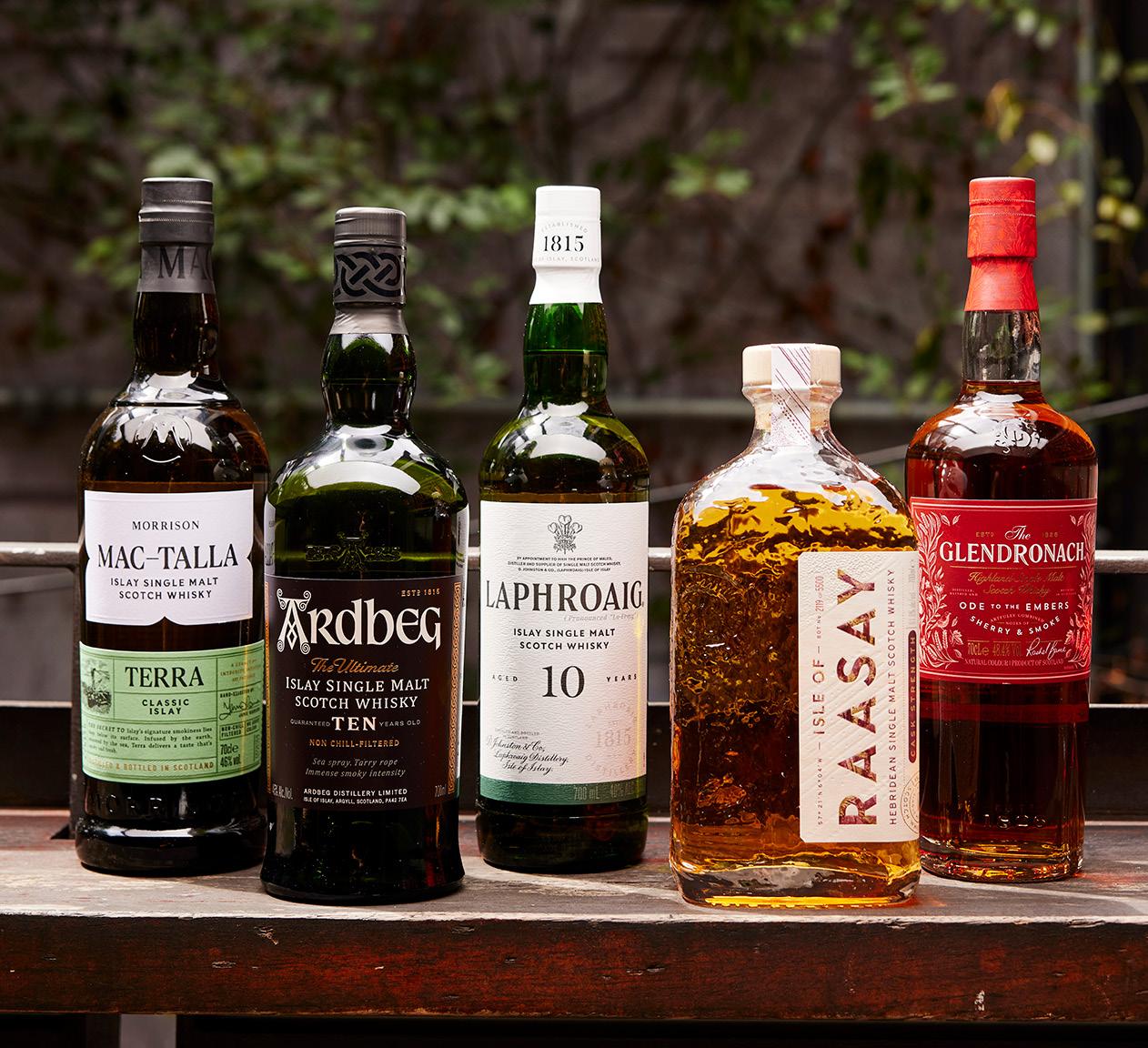
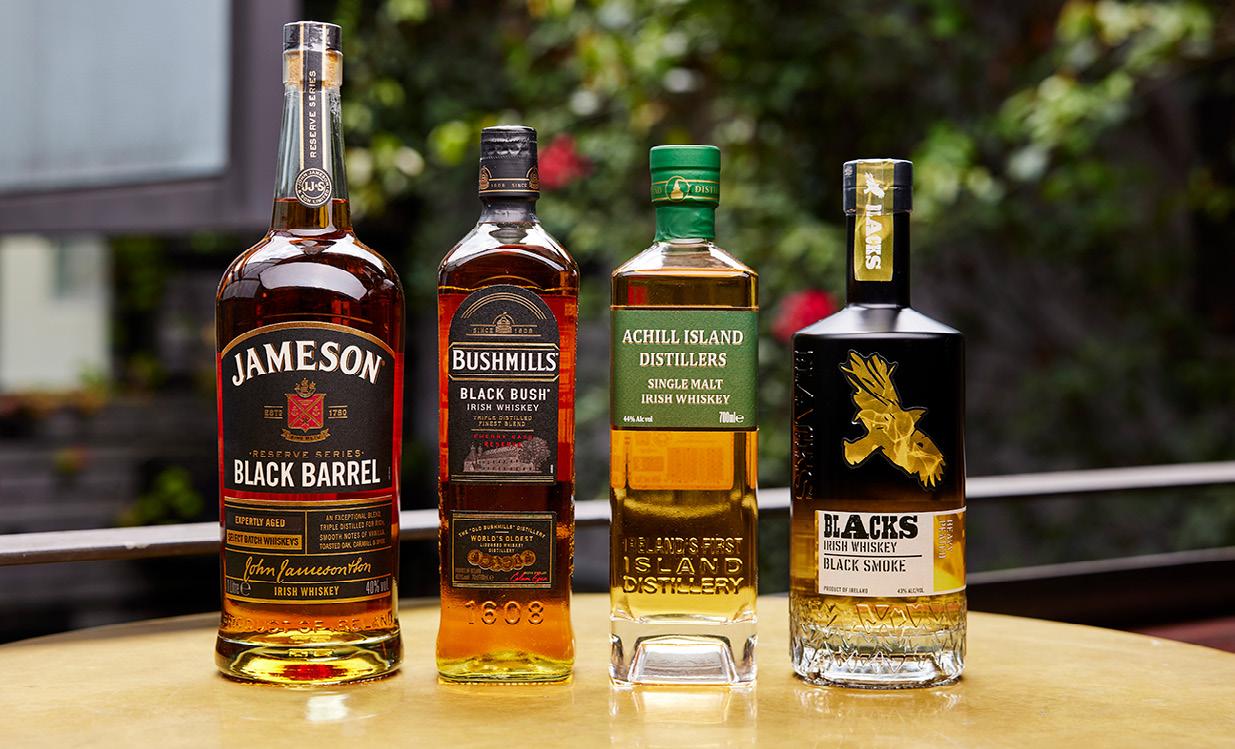
Glen Moray 12 Year Old Smoky
Single Malt Scotch Whisky
Glen Moray Distillery, Scotland
46.3% ABV | 700ml
Silver 93 points
Distributor: Not yet imported in Australia
“Balanced fresh vegetable mixed with soft peat. Coastal, would pair well with smoked mackerel and oysters. Extremely complex, especially after letting it open.”
– Samantha Stefani
Highland Park 12 Year Old Single Malt Scotch Whisky
Highland Park Distillery, Scotland
40% ABV | 700ml
Silver 93 points
Distributor: Spirits Platform
“Engaging aroma, chocolate and salt. Balanced on the palate – great grain/wood/ester integration.”
– Sean Forsyth
Loch Lomond Steam and Fire
Single Malt Scotch Whisky
Loch Lomond Distillery, Scotland
46% ABV | 700ml
Silver 93 points
Distributor: ALM Connect/ Paramount Marketplace (via Bitoo Group)
“Lovely textured whisky. Rich oak character with warming spice –clove, all spice. Touch of orchard fruit and a nice bitey finish.”
– Andy Milne
Mac-Talla Terra Islay Single Malt
Scotch Whisky
Morrison Scotch Whisky Distillers, Scotland
46% ABV | 700ml
Silver 93 points
Distributor: Select Scotch Whisky
“Pale straw in colour but don’t let your eyes be fooled – a young and expressive whisky. Slight peat, toast, milk bottle lolly and Bourbon on the nose, slight peat on the palate and good balance. Close your eyes and taste the Bourbon influence.” – Kathleen Davies
The Glenlivet 15 Year Old Single Malt Scotch Whisky
The Glenlivet Distillery, Scotland
40% ABV | 700ml
Silver 93 points
Distributor: Pernod Ricard
“Simple toasty nose which has some lovely citrus oak notes to it. Nice and fragrant. Has a nice citrusy creamy texture – really quite inviting. Quality whisky.” – Andrew Graham
Ardnamurchan AD/ 10 Year Old
Single Malt Scotch Whisky
Ardnamurchan Distillery, Scotland
46.8% ABV | 700ml
Silver 92 points
Distributor: The Whisky List
“Honeysuckle, delicate floral notes on the nose, apricots, apple, cinnamon. Warming palate, mouth-coating texture with oak astringency and savoury finish. Alcohol well integrated.”
– Anastasia Savkova
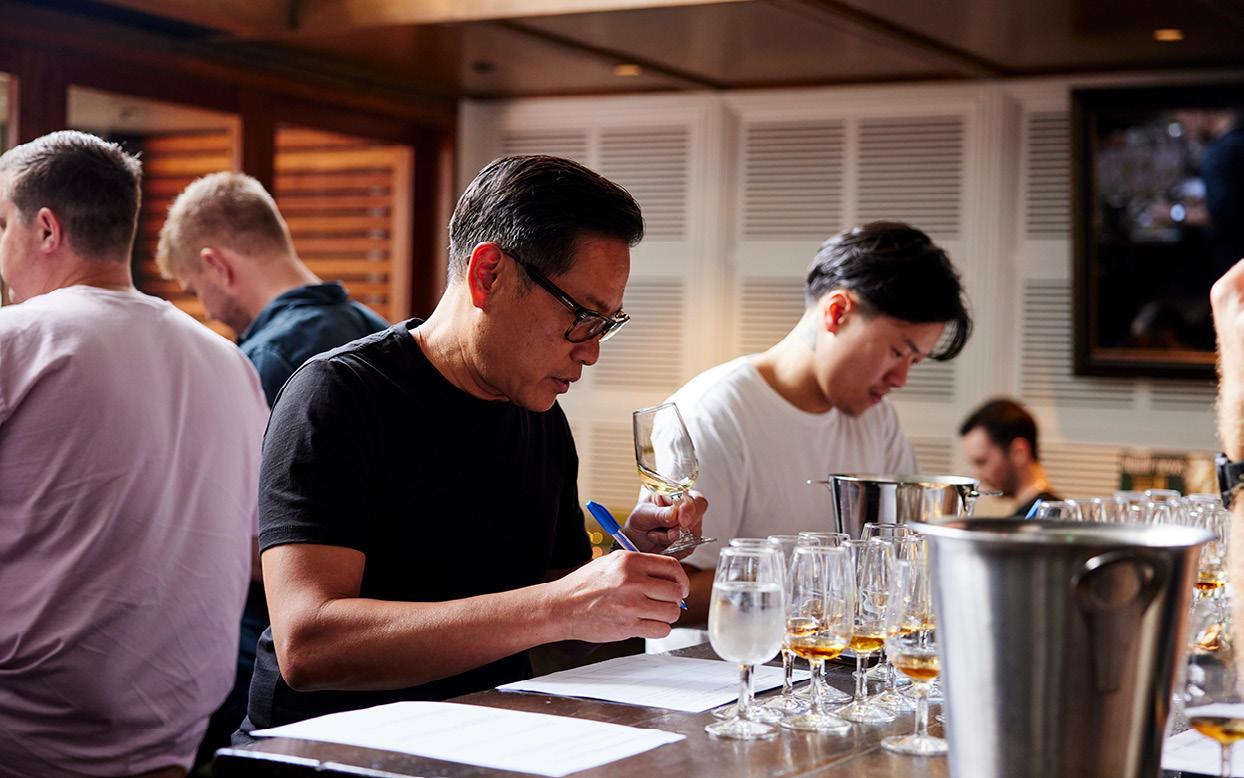
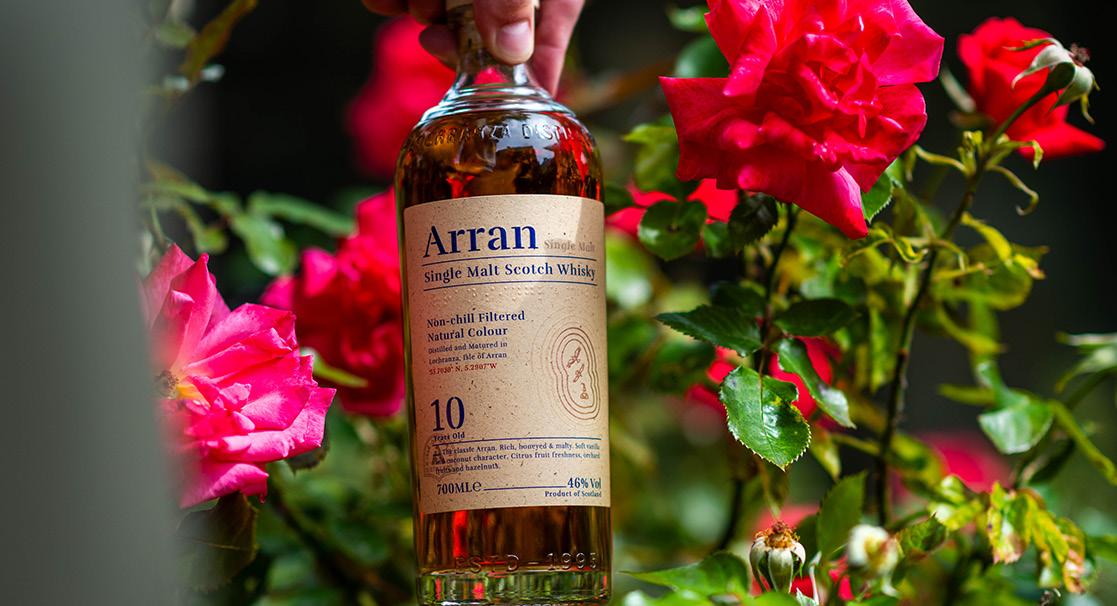
Independent Scottish producer Isle of Arran Distillers is continuing to strengthen its presence in Australia with the arrival of two core single malt expressions: Arran 10 Year Old and Arran Sherry Cask ‘The Bodega’. As demand grows for provenancedriven spirits and naturally presented whiskies, the island distillery offers retailers a distinctive and premium single malt proposition.
Arran 10 Year Old (RRP $109) sits at the heart of the range. Bottled at 46 per cent ABV, non-chill filtered and naturally coloured, it delivers a bright and approachable flavour profile of orchard fruits, citrus zest and soft vanilla sweetness. The expression has also built strong global credibility through consumer-led recognition, winning ‘Best Value Whisky’ at the Online Scotch Whisky Awards for three consecutive years (2021–2023), alongside multiple recent People’s Choice awards driven by community voting. These accolades reinforce its positioning as a high-quality yet accessible single malt Scotch Whisky.
At the premium end, Arran Sherry Cask ‘The Bodega’ (RRP $149) offers a richer, full-bodied alternative. Fully matured in Oloroso sherry casks and bottled at natural cask strength – also without chill-filtration or added colouring – it showcases layers of dark chocolate, dried fruits and warming spice, aligning with continued demand for higher-strength, flavour-forward whiskies.
The wider Arran portfolio available locally includes a whisky cream liqueur, limited edition Arran 10 Year Old Local Barley (50 per cent ABV) and Arran 18 Year Old, with further age statement expressions scheduled to launch in Australia later in 2026.
Distributor: The Whisky List
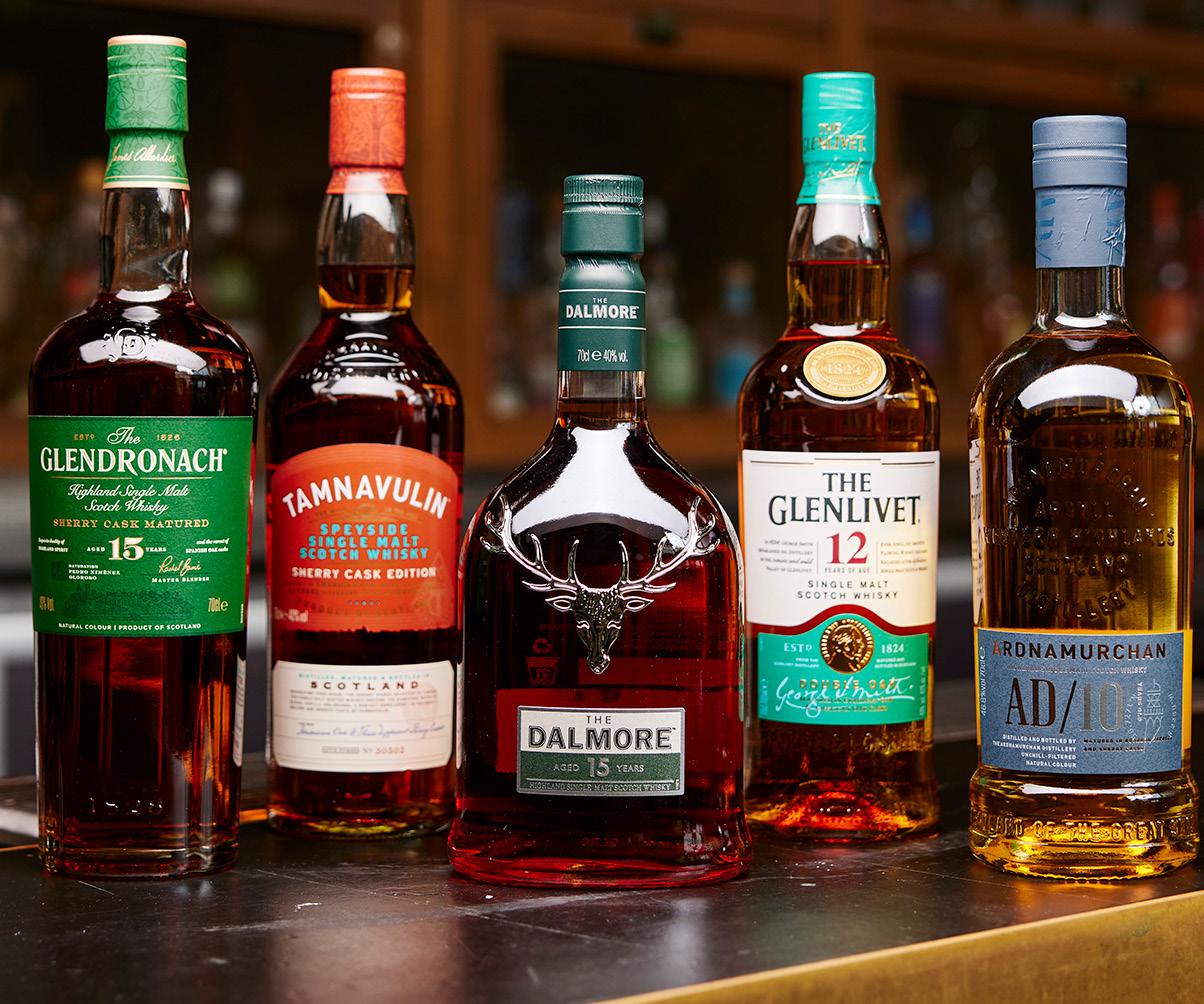
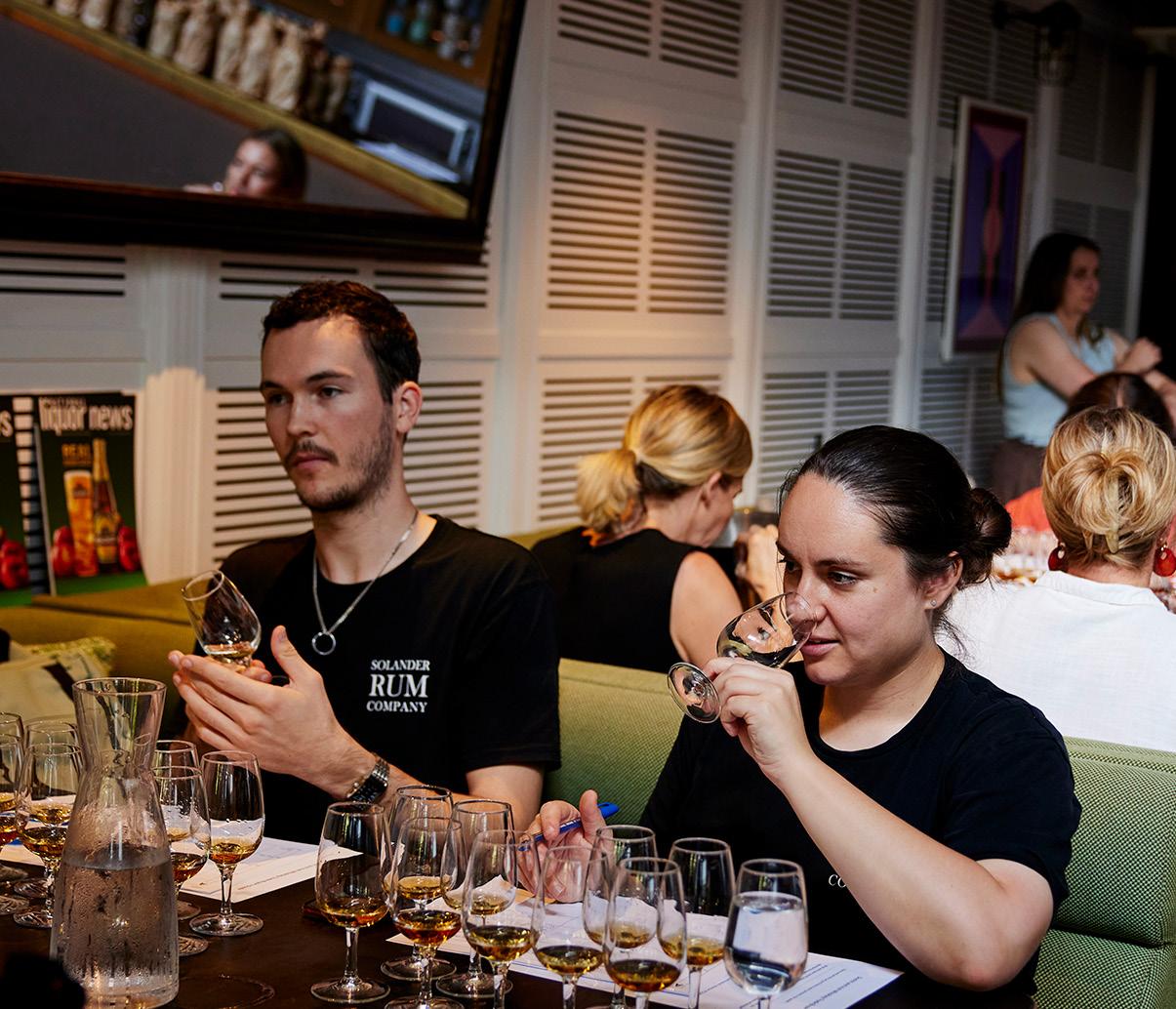
Bruichladdich The Classic Laddie
Single Malt Scotch Whisky
Bruichladdich Distillery, Scotland
50% ABV | 700ml
Silver 92 points
Distributor: Spirits Platform
“Rich, sweet notes on the nose from the barley with nice saline and floral accents. Peated barley on the palate with nutty aromas of walnut and stone fruit – earthy honey with caramel and a leathery finish. A well balanced combination of flavour without going over the top.”
– Silvia Segato
Glen Moray Rum to Cognac Cask
Private Cask Collection Single Malt Scotch Whisky
Glen Moray Distillery, Scotland
57.9% ABV | 700ml
Silver 92 points
Distributor: Not yet imported in Australia
“Doesn’t show the cask strength on the nose. A lovely golden mouthful of flavour with great balance. Such a complete whisky with excellent flavour integration.”
– Andrew Graham
Aberlour 12 Year Old Double Cask
Single Malt Scotch Whisky
Aberlour Distillery, Scotland
40% ABV | 700ml
Silver 91 points
Distributor: Pernod Ricard
“On the nose, poached pineapple and papaya, creamy banana. Lovely chewy viscous texture full of cream – as that dissolves there’s red grape and passionfruit. This offers a lovely balance between a diverse selection of fruit and bakery sweets with great texture that holds everything together.”
– Lucas Bucton
Arran 10 Year Old Single Malt
Scotch Whisky
Arran Distillery, Scotland
46% ABV | 700ml
Silver 91 points
Distributor: The Whisky List
“Malted barley and floral nose with earthy notes and baking spice. Rich aroma of barley with apple, peach and apricot on the palate, robust leatherwood, honey, caramel and vanilla with walnut. The nose and palate are well joint giving a great experience. The rich viscosity and smooth texture are warming.”
– Silvia Segato
Glenfiddich 12 Year Old Single
Malt Scotch Whisky
Glenfiddich Distillery, Scotland
40% ABV | 700ml
Silver 91 points
Distributor: William Grant & Sons
“Great aroma, well integrated –hints of apple/pear and malt. Well balanced and a great example of a Speyside malt.” – Sean Forsyth
Glenfiddich Gran Reserva 21 Year
Old Single Malt Scotch Whisky
Glenfiddich Distillery, Scotland
40% ABV | 700ml
Silver 91 points
Distributor: William Grant & Sons
“Copper appearance with a platinum tint. Honey, dried figs and honey suckle aromas. Hazelnut, chocolate and currant flavours, with a zesty, short finish and light bitterness.” – Loy Catada
What were your overall impressions of the whisk(e)ys in this tasting? Can you describe the qualities and characteristics that stood out across this lineup?
“Overall, the whisk(e)ys showed a really impressive range of characteristics without losing their identity. There was distinct variety, some amazing flavours and well-balanced drams across the lineup.” – Loy Catada
“Overall, the lineup was high quality and very drinkable. Cask-led sweetness stood out, along with lots of vanilla, butterscotch, caramel, gingerbread and toasted notes.”
– Sam Creasey
“Good variety with a wide range of ABVs and regions. The variety of ABV opened options for a great nose and good palate range.” – Zach Mynott
“What a seriously high-quality bracket of whisky. I loved seeing the distinct characters of more fresh Irish whiskey, peated Islay and bold Speyside modes. It’s pleasing to see cask strength styles that aren’t just fire water.”
– Andrew Graham
“Overall, high quality and well-made spirits with clear postdistillation decisions made. Some impressive high proof entries managing high ABVs and barrels well.”
– Reece Griffiths
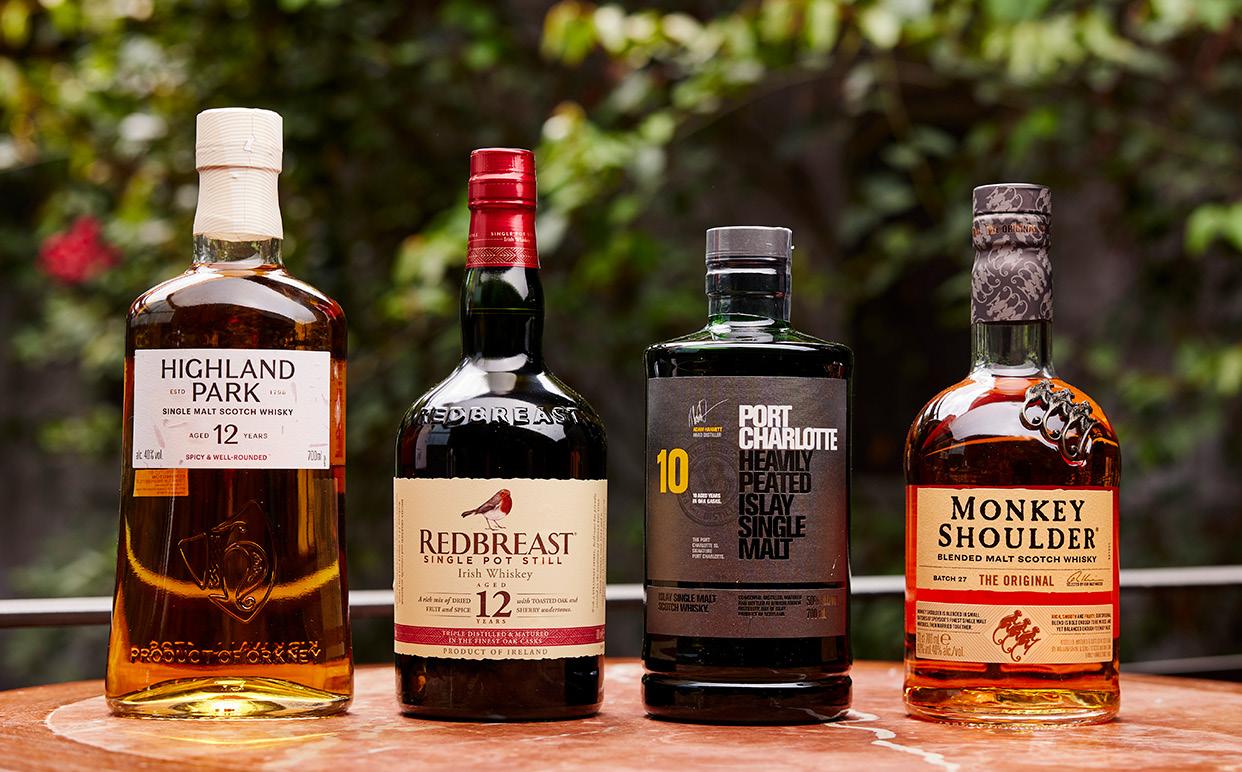
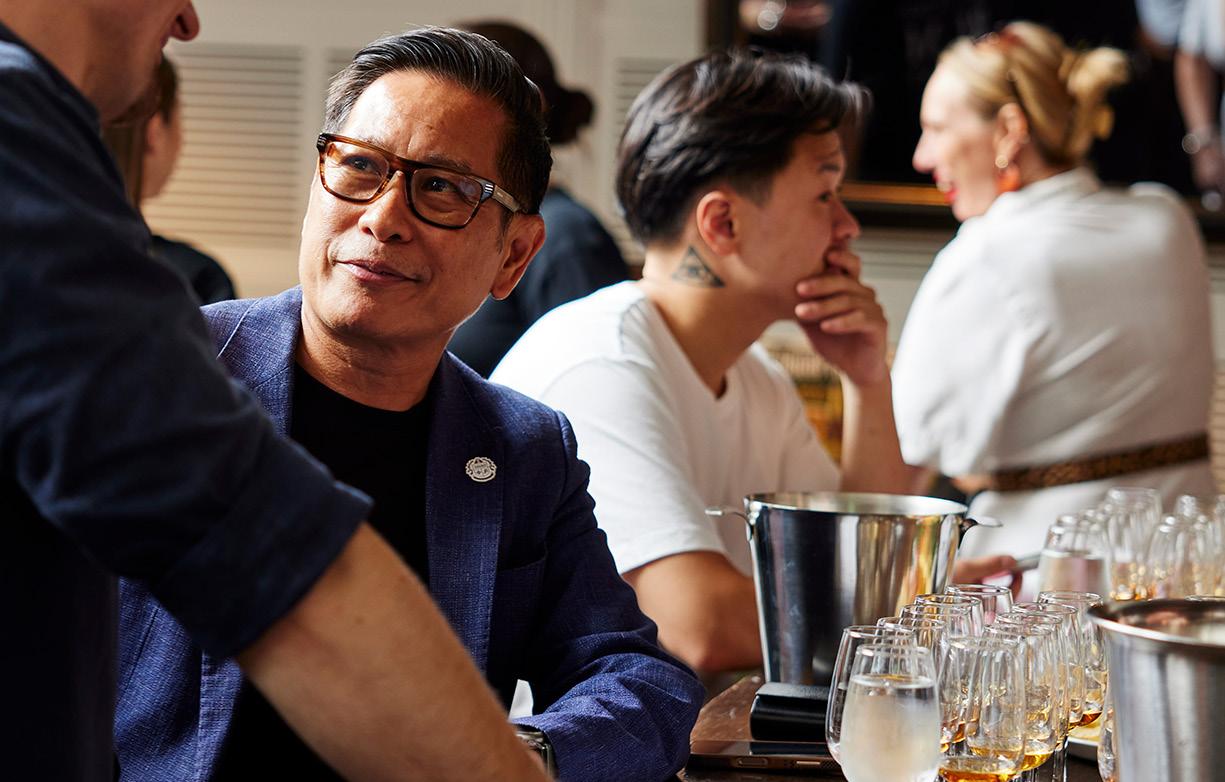
Glenshiel Highland Single Malt Scotch Whisky
Loch Lomond Distillery, Scotland
40% ABV | 700ml
Silver 91 points
Distributor: Independent Beverage Partners
“Big hit of ripe, juicy tropical fruit on the nose with a lovely leather finish. Very complex and well balanced. Palate delivers notes of chocolate covered pineapple – nice level of peat.” – Samantha Stefani
Loch Lomund Inchmurrin 12 Year
Old Single Malt Scotch Whisky
Loch Lomond Distillery, Scotland
46% ABV | 700ml
Silver 91 points
Distributor: ALM Connect/ Paramount Marketplace (via Bitoo Group)
“Notes of oat and porridge on the nose with dry orange, heather and leather. Warmth and oily palate with a complex combination of barley, orchard fruit, honey and vanilla aromas. The nose and palate aromas are well balanced with oily viscosity that leads to long length. A nice complex spirit.” – Silvia Segato
Monkey Shoulder Blended Malt Scotch Whisky
William Grant & Sons, Scotland
40% ABV | 700ml
Silver 91 points
Distributor: William Grant & Sons
“Vinous flavour profile, some vanillin oak with some delicate floral notes. Lovely, smooth continuation from nose. Nice length and persistence, lovely and oily.” – Amanda Matral
The Glendronach 12 Year Old Single Malt Scotch Whisky
The Glendronach Distillery, Scotland
43% ABV | 700ml
Silver 91 points
Distributor: Brown-Forman
“A burst of sherry on the nose alongside old oak, with the palate carrying through with impressive length.” – Scott Allan
The Glendronach Ode to the Embers Single Malt Scotch Whisky
The Glendronach Distillery, Scotland
48.4% ABV | 700ml
Silver 91 points
Distributor: Brown-Forman
“Sour grapes, salted caramel and burnt butter on the nose. Rich, creamy palate – red velvet, overripe papaya. Very complex, balanced texture. Bit of funk that makes it interesting and something to keep going back to.” – Samantha Stefani
Arran Sherry Cask The Bodega
Single Malt Scotch Whisky
Arran Distillery, Scotland
55.8% ABV | 700ml
Silver 90 points
Distributor: The Whisky List
“Deeper colour. Cedar, sea spray and jasmine on the nose. Well integrated booze, salted caramel, peppercorn and seaweed on the palate. Great length and complexity.” – Reece Griffiths
Black Bush Irish Whiskey
Old Bushmills Distillery, Ireland
40% ABV | 700ml
Silver 90 points
Distributor: Proximo Spirits
“Marzipan and honey notes. Quite smooth and balanced – nice length of flavour and some caramel notes on the finish.” – Amanda Matral
The Dalmore 12 Year Old Scotch Whisky
Dalmore Distillery, Scotland
40% ABV | 700ml
Silver 90 points
Distributor: Vanguard Luxury Brands
“Dark copper, honey colour. Dried apricot and walnut aromas. Orchard, nutty, dry and fruity flavours. A sherry finish, dry and fruity.” – Loy Catada
Bushmills 10 Year Old Single Malt Irish Whiskey
Old Bushmills Distillery, Ireland
40% ABV | 700ml
Bronze 89 points
Distributor: Proximo Spirits
“Lovely, creamy butterscotch notes on palate. Warming finish but well balanced. Nice orchard fruit and toffee notes come through.”
– Andy Milne
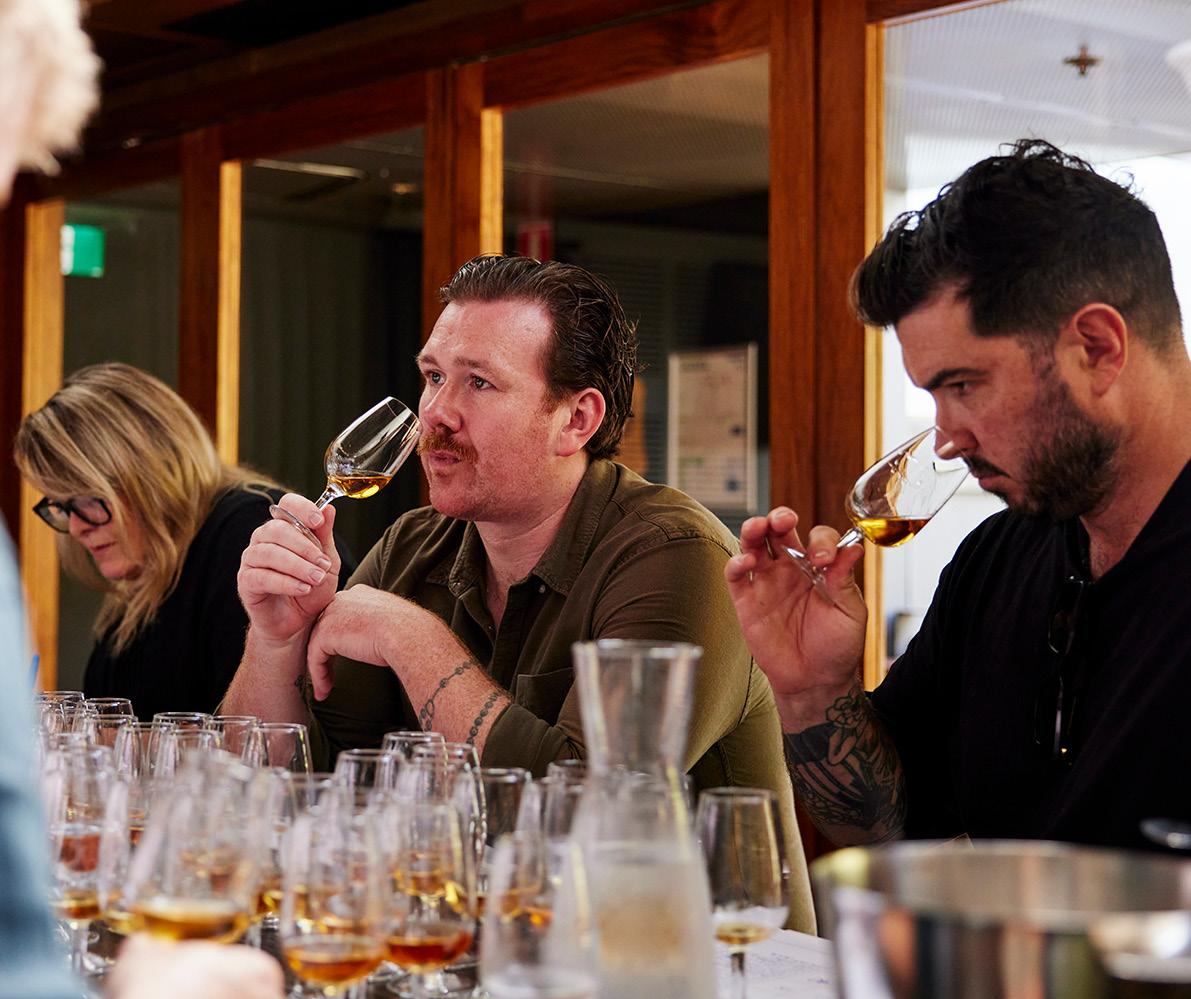
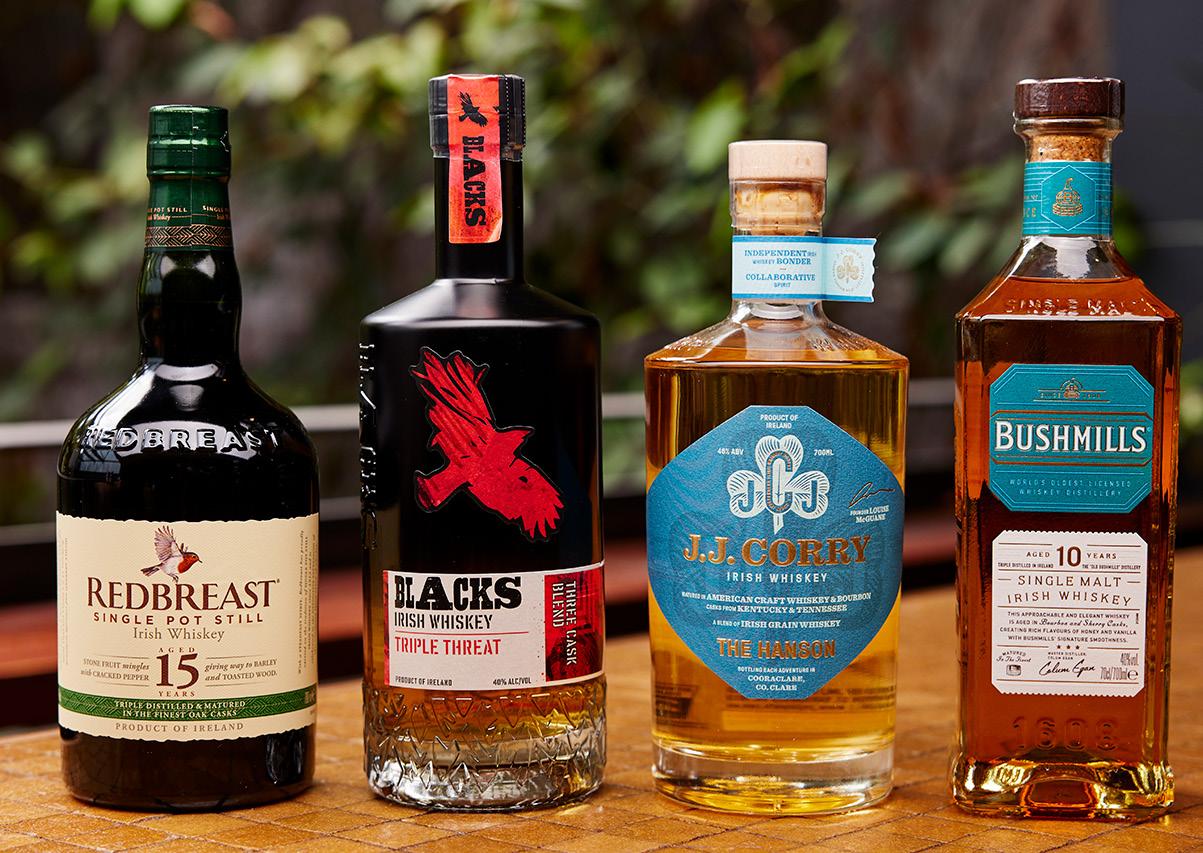
“We have every bottle open in the store, and the best way to make sure guests end up with something they truly love is for them to try it. Whisk(e)y is a very personal thing, so it really is about getting people to taste while educating them along the way.”
Jonathan Boadle, General Manager, Casa de Vinos
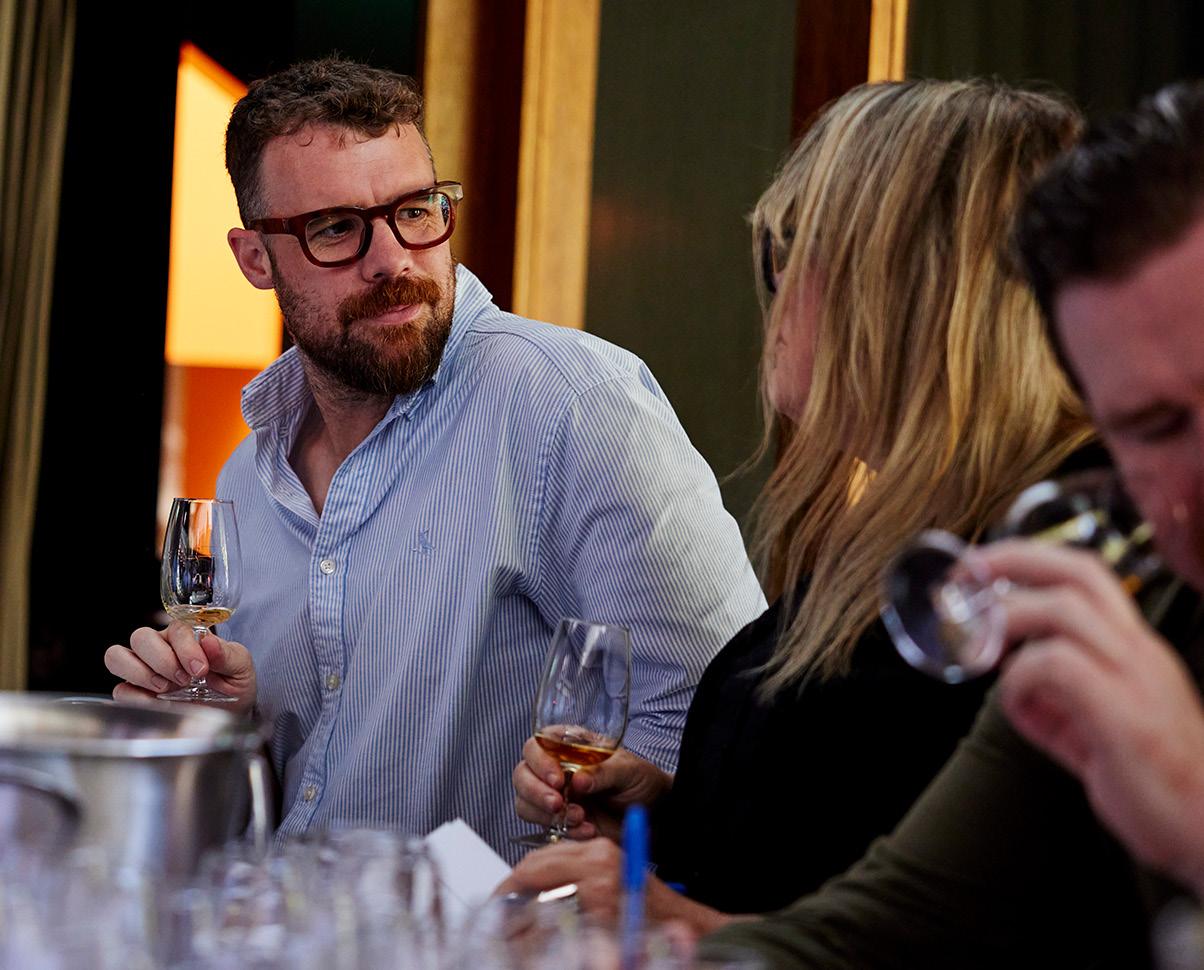
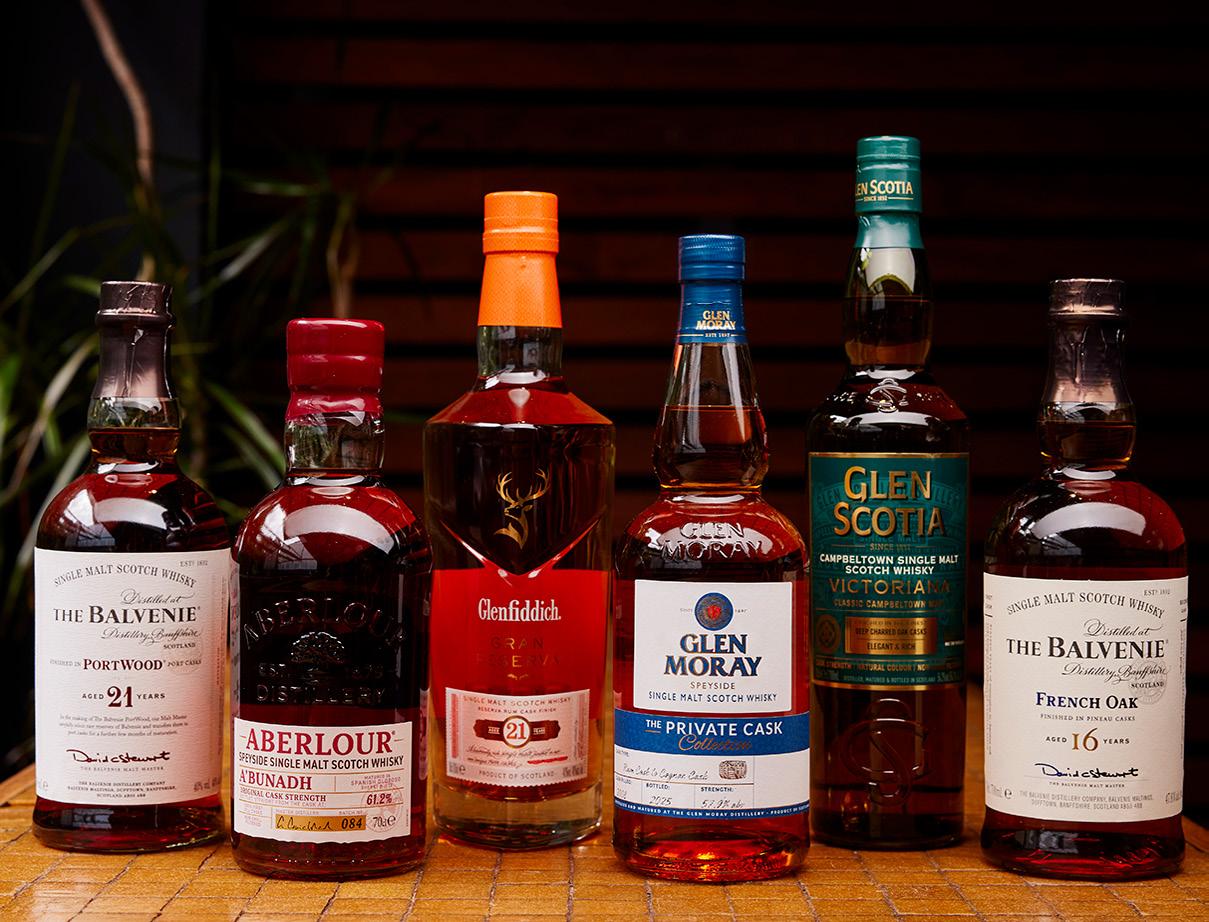
What does this lineup suggest about how to structure a balanced Scotch and Irish whisk(e)y range?
“While products with stereotypical notes from a region are important, finding whiskies that venture beyond the classic notes can bring in fans of other whisky categories.” – Scott Allan
“I think the gap in styles is closing, with Irish making more layered and complex styles. There is definitely space for Irish as a sipper.” – Reece Griffiths
“Looking at your core range – whether you’re on- or off-premise –and seeing if there’s a different style available under that brand will encourage consumers to try something that’s still a label they know, but with a different barrel finish or age for example.”
– Jim Butcher
“A balanced Scotch and Irish range should be built around flavour diversity as much as regional diversity – today’s lineup showed each region can deliver a variety of different styles.”
– Samm Creasey
“There is an opportunity to range your more introductory blends and then take customers on the whisk(e)y journey through to single malt Speyside, and eventually onto Islay’s or single cask.”
– Daniel Roche
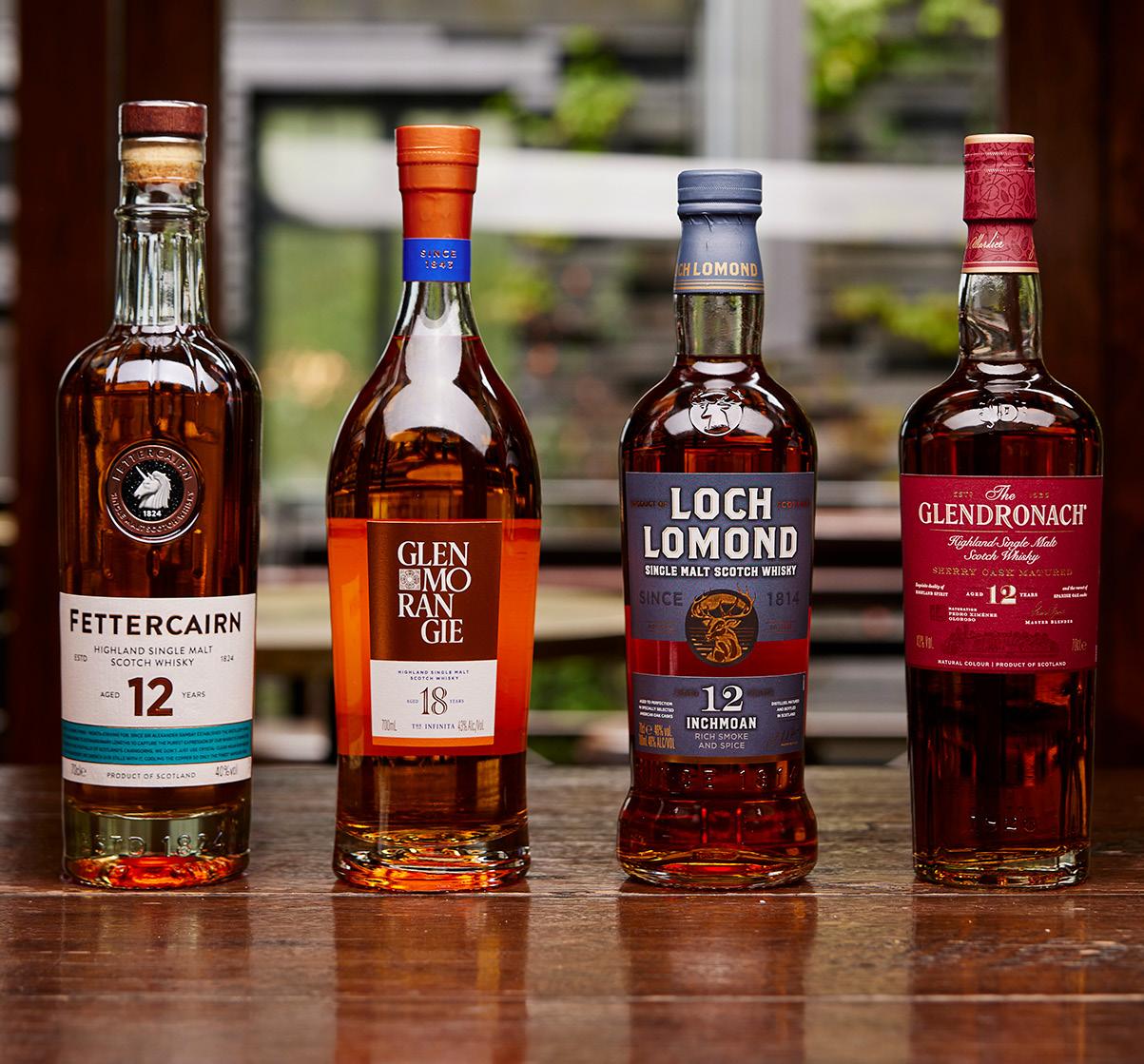
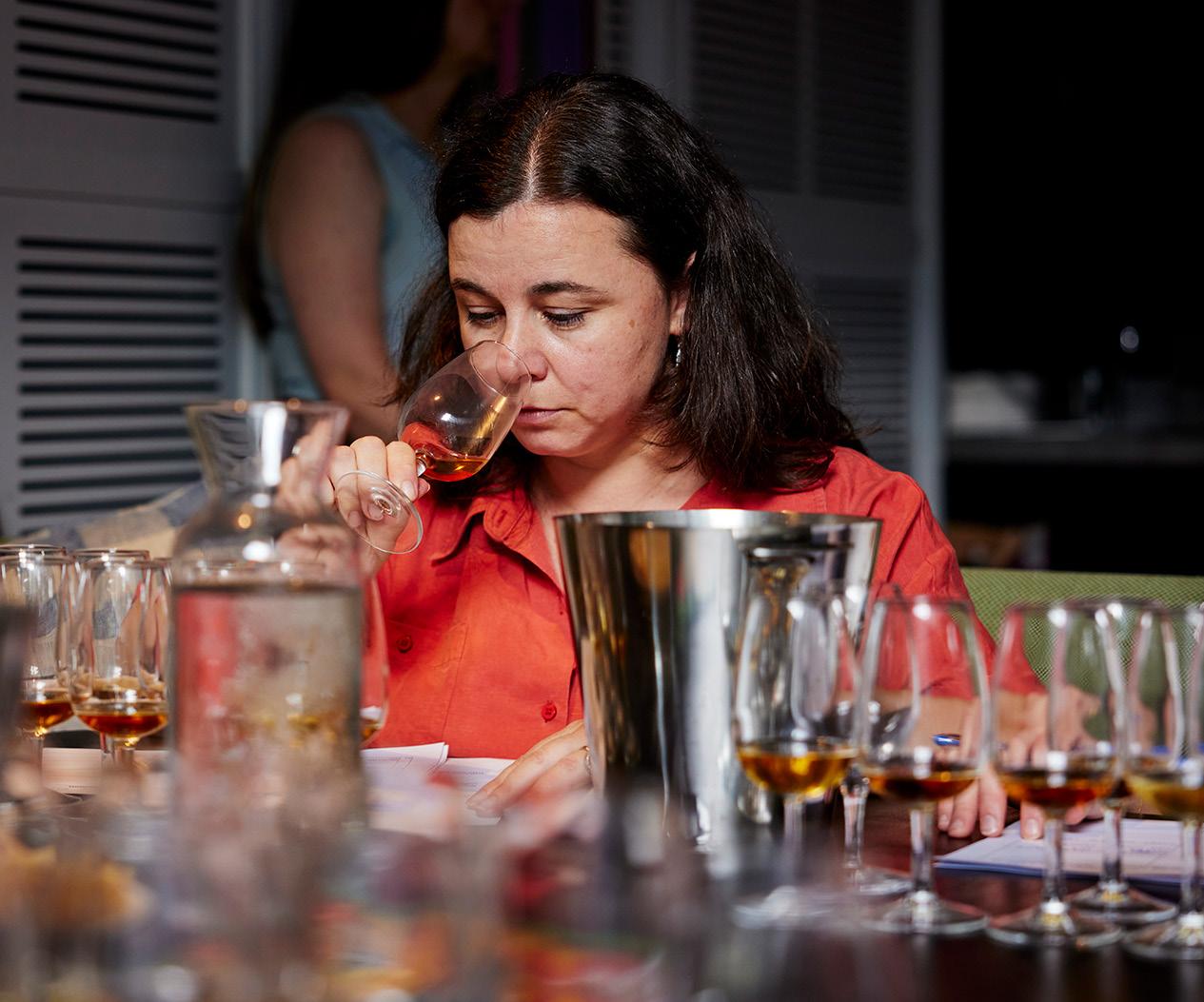
Bushmills 16 Year Old Single Malt
Irish Whiskey
Old Bushmills Distillery, Ireland
40% ABV | 700ml
Bronze 89 points
Distributor: Proximo Spirits
“Stewed stone fruits, deep gold in colour. Smooth honey finish and a slight hint of pastry. A very good, balanced whisky.” – Geoff Bollom
Chivas Regal 18 Year Old Blended
Scotch Whisky
Strathisla Distillery, Scotland
40% ABV | 700ml
Bronze 89 points
Distributor: Pernod Ricard
“Nice classic style of blended whisky. Subtle green fruit and some cream. A touch of tropical notes on the finish. Well balanced.” – Andy Milne
Glenfiddich 14 Year Old Bourbon
Barrel Reserve Single Malt
Scotch Whisky
Glenfiddich Distillery, Scotland
43% ABV | 700ml
Bronze 89 points
Distributor: William Grant & Sons
“Complex aroma and great finish/ palate weight. This whisky is best served neat – a complex whisky to explore.” – Sean Forsyth
Glenfiddich 15 Year Old Single
Malt Scotch Whisky
Glenfiddich Distillery, Scotland
40% ABV | 700ml
Bronze 89 points
Distributor: William Grant & Sons
“Golden appearance. Rockmelon, fresh flower and pineapple lollies on the nose – tropical. Cream, caramel and vanilla oak on the palate. This whisky would pair well with grilled pineapple with caramel sauce.” – Kathleen Davies
Glenmorangie The Infinita 18 Year
Old Single Malt Scotch Whisky
Glenmorangie Distillery, Scotland
43% ABV | 700ml
Bronze 89 points
Distributor: Moët Hennessy
Australia
“Medium intensity notes of porridge, barley, toasted oat with apricot and peach aromas, wildflower, honey, vanilla and spices. On the palate, a nice warmth – aromas of barley and toasted oat with stone fruits like peached apricot, nutmeg and char from the maturation. A whisky that combines well, classic aroma and approachable expectation.”
– Silvia Segato
Old Perth 12 Year Old Blended
Malt Scotch Whisky
Morrison Scotch Whisky Distillers, Scotland
46% ABV | 700ml
Bronze 89 points
Distributor: Select Scotch Whisky
“A nice deep amber colour. Deep, dried fruit notes on the palate. Chocolate on the palate at the start, you can really taste the barrel which must be sherry oak. Quite spicy on the palate with hints of cloves and cinnamon.” – Benji Kinoial
Highland Park 15 Year Old Single
Malt Scotch Whisky
Highland Park Distillery, Scotland
44% ABV | 700ml
Bronze 89 points
Distributor: Spirits Platform
“Smoky and Christmas spices on the nose. A balance of smoky and sweet on the palate with flavours of candied nuts.” – Emma Sefton
Tullamore D.E.W Irish Whiskey
Tullamore Distillery, Ireland
40% ABV | 700ml
Bronze 89 points
Distributor: William Grant & Sons
“Caramels and hints of fruit on the nose, palate of confectionery fruit lollies. Lovely, approachable dram that suits as an easy daily drinker.”
– Jimmy Shore
Achill Island Single Malt Irish Whiskey
Achill Island Distillers, Ireland
44% ABV | 700ml
Bronze 88 points
Distributor: Drinkwell Beverages
“Medium/light intensity on the nose with nice barley, dried floral and orchard fruit notes. Barley and grassy notes on the palate with medium length and oily viscosity. Very approachable, well balanced aromas and texture with medium complexity and intensity. An everyday whisky.” – Silvia Segato
Ardbeg 10 Year Old Islay Single Malt Scotch Whisky
Ardbeg Distillery, Scotland
46% ABV | 700ml
Bronze 88 points
Distributor: Moët Hennessy Australia
“Light straw colour. Intense peat, briny and seaweed notes on the nose. A salty and smoky palate with a medicinal finish – very well balanced.” – Daniel Roche
Blacks 8 Year Old Single Malt –Rocketship IPA Cask Finish Irish Whiskey
Blacks Distillery, Ireland
43% ABV | 700ml
Bronze 88 points
Distributor: JMJ Imports
“Nutty, almond, biscuit and milk on the nose. Good, balanced palate with heavy charred cask. A modern twist on an Irish whiskey – experimental and carefree. I would pair this with rockmelon and prosciutto.” – Kathleen Davies
Blacks Maple Mayhem Irish Whiskey
Blacks Distillery, Ireland
43% ABV | 700ml
Bronze 88 points
Distributor: JMJ Imports
“Light in colour. Some tropical notes on the nose, honey. A grain-forward profile with a hint of peat – nice length and developing flavours.” –Reece Griffiths
Fettercairn 12 Year Old Single
Malt Scotch Whisky
Fettercairn Distillery, Scotland
40% ABV | 700ml
Bronze 88 points
Distributor: Vanguard Luxury Brands
“Sweet and floral aromas. Great finish, lots of length. A great whisky for entry level whisky drinkers.”
– Sean Forsyth
Glenshiel Highland Blended
Scotch Whisky
Loch Lomond Distillery, Scotland
40% ABV | 700ml/1L
Bronze 88 points
Distributor: Independent Beverage Partners
“Great oak presence, stone fruit. Classic complexity, like you would hope for in a blended whisky, bringing elements from all Scottish regions. Islay smoke, Highland robustness, Speyside fruit and Lowland clarity.” – Scott Allan
J. J. Corry The Gael Irish Whiskey
J. J. Corry, Ireland
46% ABV | 700ml
Bronze 88 points
Distributor: JMJ Imports
“Light gold in colour. Honey and white flowers on the nose, very subtle. Integrated alcohol and creamy mouthfeel. Good length and warming heat, some cacao and baking spice.” – Reece Griffiths
Redbreast 12 Year Old Irish Whiskey
Midleton Distillery, Ireland
40% ABV | 700ml
Bronze 88 points
Distributor: Pernod Ricard
“Presents a bit of depth, chocolate powder, blackberry and sweet red plum. On the palate, silky, rich and well-integrated texture. With a nice long finish that feels oily, this whiskey is really carried by its impressive texture and palate-coating flavour. A pleasing finish that lingers in the right way.” – Lucas Bucton
Tamnavulin Double Cask Single
Malt Scotch Whisky
Tamnavulin Distillery, Scotland
40% ABV | 700ml
Bronze 88 points
Distributor: Vanguard Luxury Brands
“Delicate, floral whisky. Touch of orchard fruit, apple and pear, balanced by vanilla and honey, and rockmelon notes. Lovely, delicate finish.” – Andy Milne
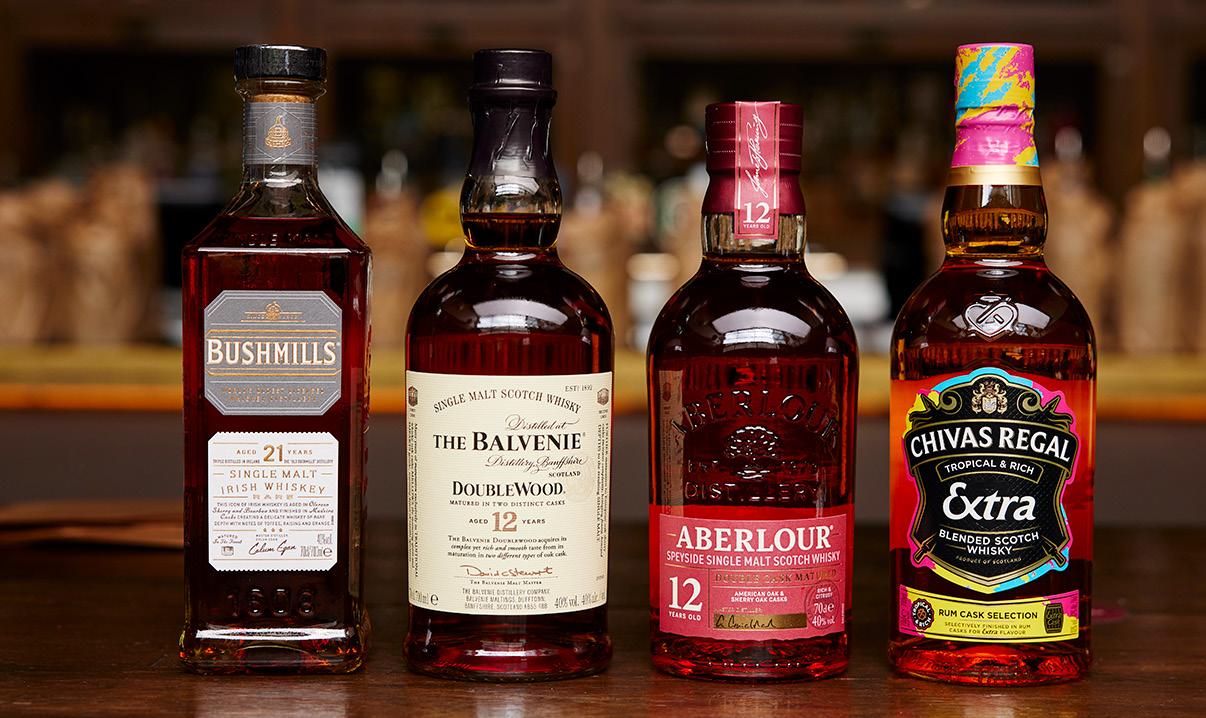
How could retailers and venue operators frame and present these categories to make them feel approachable to Australian drinkers?
“Consider writing your own tasting notes in a way that makes sense to you. Relatability is the first step towards trying something new.”
– Scott Allan
“For the on-premise it’s about serve strategy – whisk(e)y flights, perfect serves. For retail it’s about finding unique SKUs and driving promotion through whisky of the month or region of the month promotions.” – Sean Forsyth
“Having a rating or scale from the more sweet and caramel styles through to more smoky styles. Adapting some iconography to assist in navigation could be helpful too.” – Amanda Matral
“Present them as a dessert option and maybe do whisk(e)y and fruit tastings and pairings. People nowadays are really into experiences, so presenting these as a flavour experience could be fun and helpful.” – Samantha Stefani
“I feel a lot of the ex-Bourbon matured whiskies would be super approachable and welcoming to the Australian palate.”
– Lucas Bucton
“Seeing such a big range of Irish whiskey and Scotch on display in one place really hits home just how diverse these categories are. This is a great opportunity to challenge consumers to try something different beyond their usual purchase. Creating an ‘if you like [x whisk(e)y] then you’ll love this lesser-known alternative’ menu will drive people to expand their knowledge and experience in these spirits.” – Jim Butcher
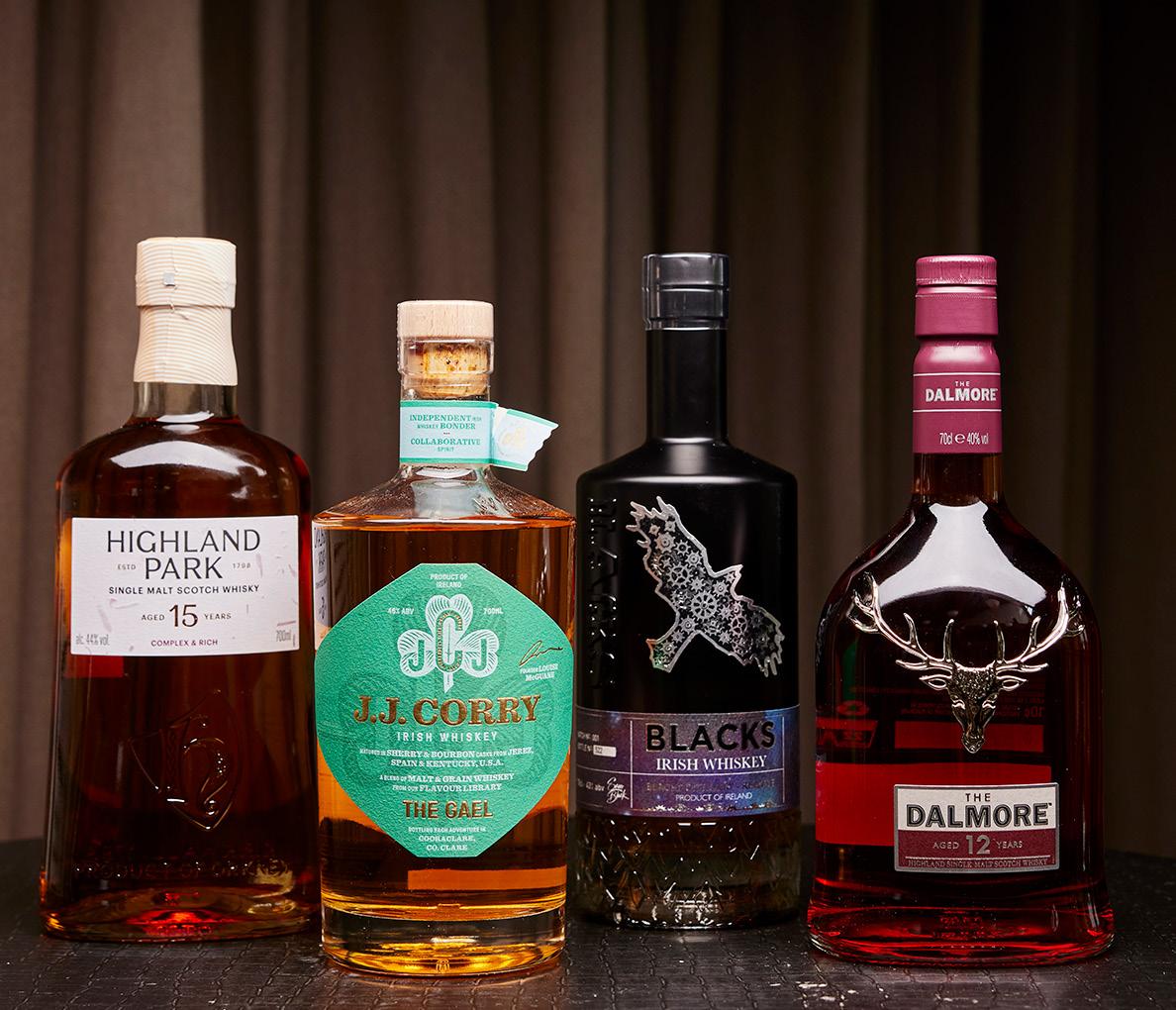
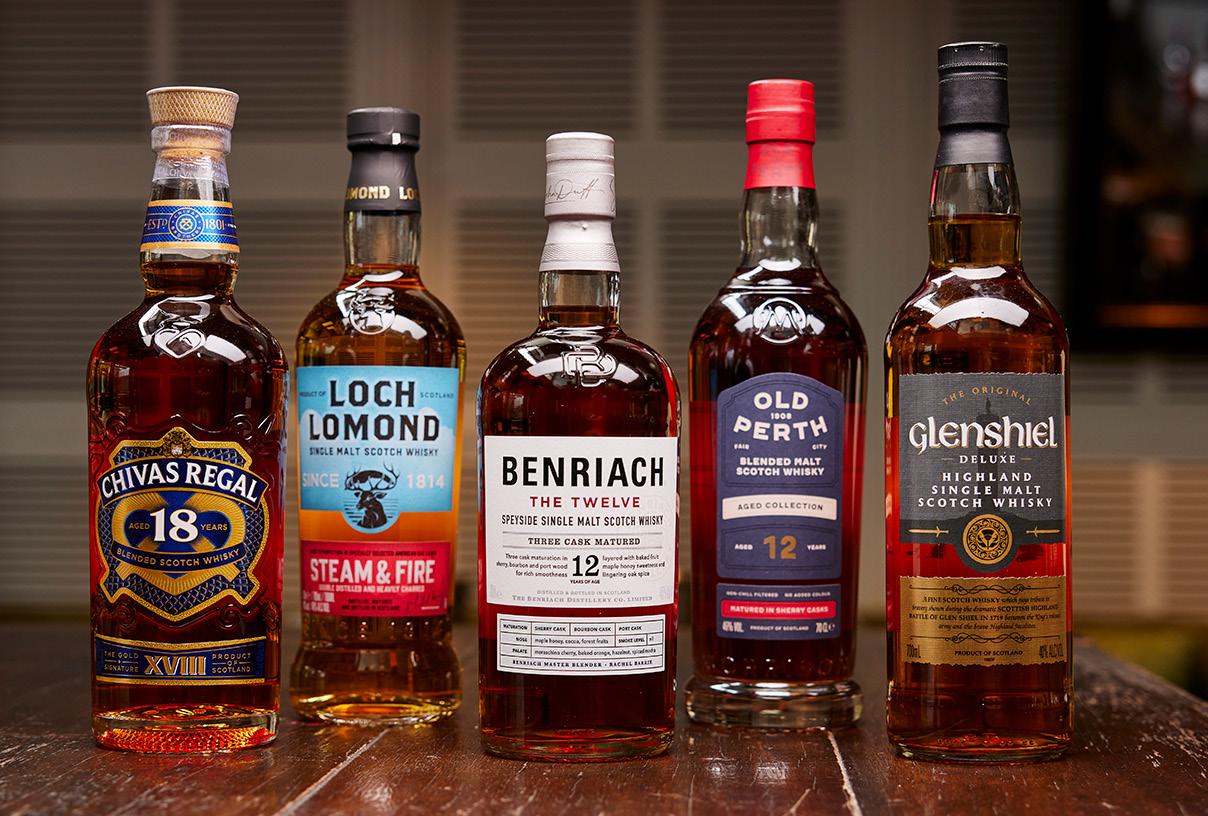
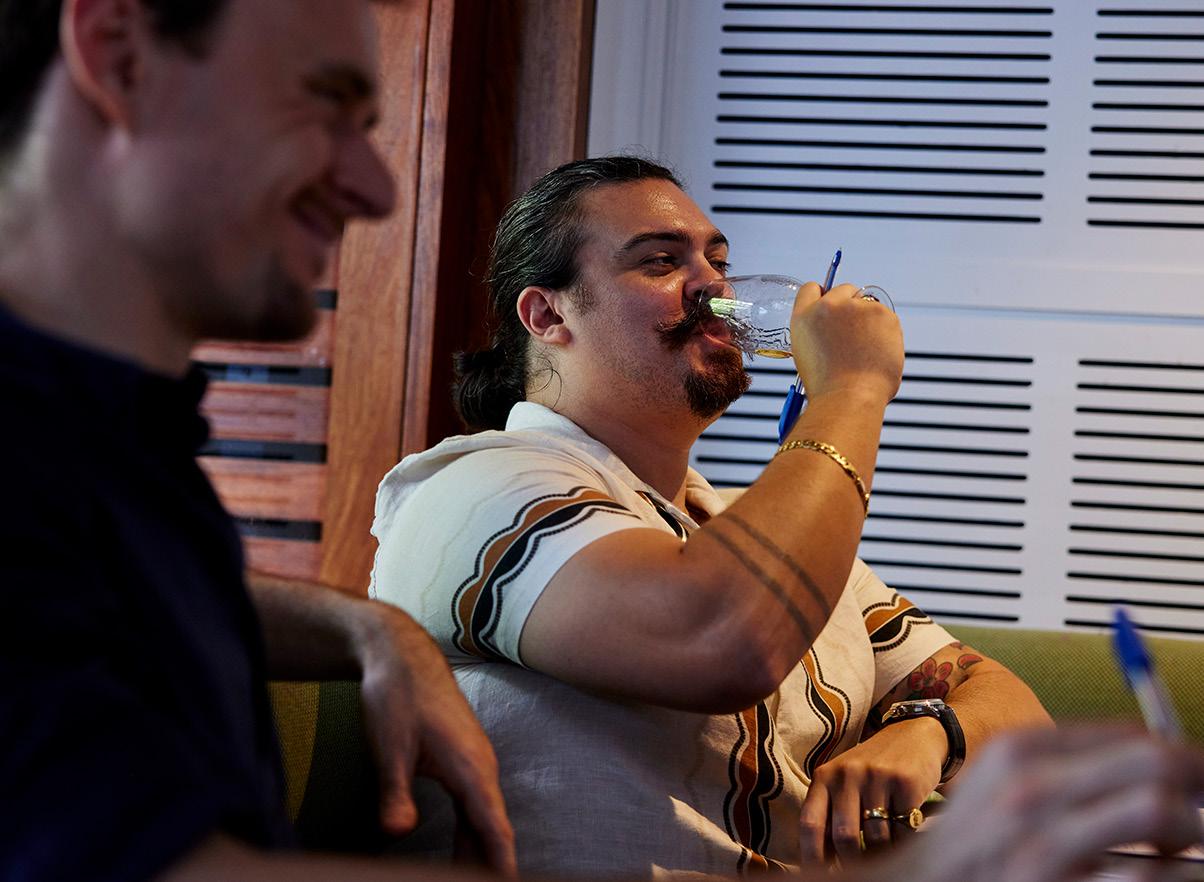
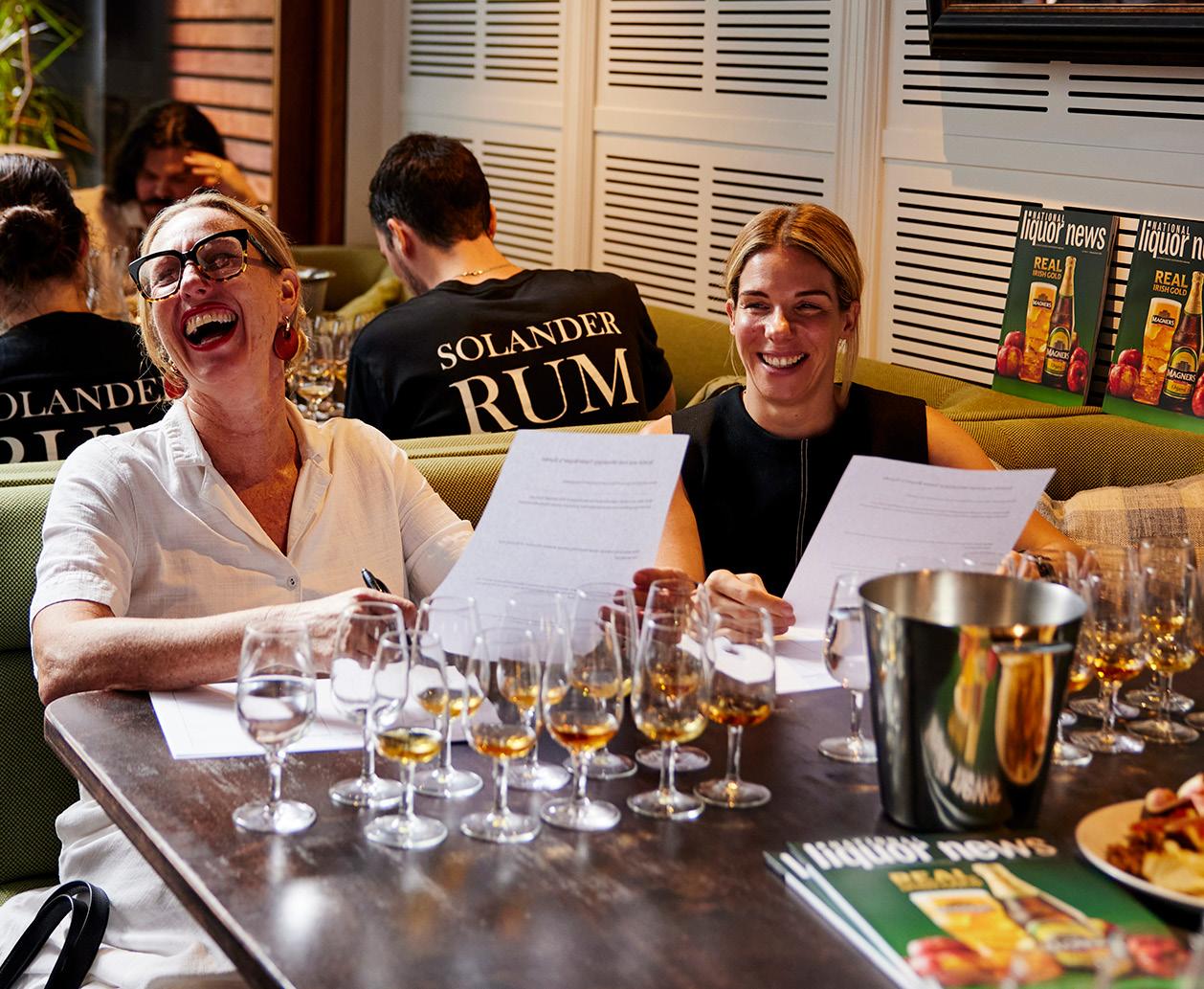
Tamnavulin Sherry Cask Single
Malt Scotch Whisky
Tamnavulin Distillery, Scotland
40% ABV | 700ml
Bronze 88 points
Distributor: Vanguard Luxury Brands
“Notes of cedar spice, clove, nutmeg and pepper. Smooth on the palate, oily and rich.” – Samm Creasey
The Glenlivet 18 Year Old Single
Malt Scotch Whisky
The Glenlivet Distillery, Scotland
40% ABV | 700ml
Bronze 88 points
Distributor: Pernod Ricard
“Medium-to-dark caramel appearance. Caramel nose with hints of dried fruit. Medium caramel palate with dry fruit, short finish but well integrated.” – Daniel Roche
Benriach 16 Year Old Single Malt
Scotch Whisky
The Benriach Distillery, Scotland
43% ABV | 700ml
Bronze 87 points
Distributor: Brown-Forman
“Savoury whisky – sulphur influence on the nose. Grilled nuts, tobacco, mushroom, dried apricot. Deep flavours and long, malt finish.”
– Anastasia Savkova
Blacks Black Smoke Irish Whiskey
Blacks Distillery, Ireland
43% ABV | 700ml
Bronze 87 points
Distributor: JMJ Imports
“Pale gold in colour with platinum highlights. Smoky, vanilla and red apple aroma. Orchard, red apple and smoky on the palate, with a smoky, toffee finish. Very smooth for 43% ABV.” – Loy Catada
Port Charlotte 10 Year Old
Heavily Peated Islay Single Malt
Scotch Whisky
Bruichladdich Distillery, Scotland
50% ABV | 700ml
Bronze 86 points
Distributor: Spirits Platform
“An industrial whisky with oils, heavy smoke and tar at the forefront. Lots of smoke for the peat-heads.”
– Scott Allan
Blacks Triple Threat Irish Whiskey
Blacks Distillery, Ireland
40% ABV | 700ml
Bronze 85 points
Distributor: JMJ Imports
“Sweet on the nose, developing on the palate and quite spicy.”
– Samm Creasey
Chivas Regal Extra Rum Cask
Selection Blended Scotch Whisky
Strathisla Distillery, Scotland
40% ABV | 700ml
Bronze 85 points
Distributor: Pernod Ricard
“Light amber appearance. Some malt character – caramel and butterscotch. Soft and sweet on the palate, hint of caramel.”
– Reece Griffiths
Jameson Black Barrel Irish Whiskey
Jameson Midleton Distillery, Ireland
40% ABV | 700ml/1L
Bronze 85 points
Distributor: Pernod Ricard
“Medium amber colour, biscuit and ginger on the nose. Warming alcohol, some citrus notes – spice, stone fruit and dried apricot on the palate. Vanilla and toast.”
– Reece Griffiths