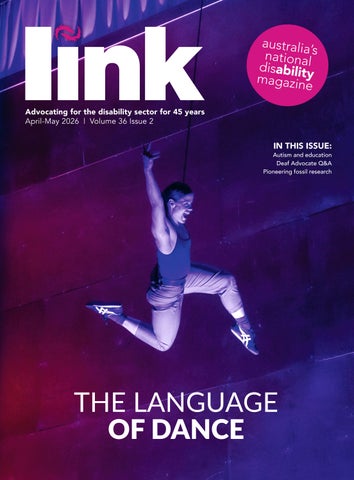
Advocating for the disability sector for 45 years
April-May 2026 | Volume 36 Issue 2

![]()
Advocating for the disability sector for 45 years
April-May 2026 | Volume 36 Issue 2


Maddy loves going off the beaten track. But her old wheelchair was holding her back. It couldn’t handle uneven terrain, making her excursions bumpy, uncomfortable and downright dangerous. So our specialist consultant got to know her needs and set her up with a new wheelchair (which we delivered in her favourite colour: electric blue).
With off-road settings and all-wheel suspension, it stays steady when the going gets tough. Now, Maddy can glide right over the rough patches and is, in her own words, as “free as a bird”. Made for nature’s ups and downs, made for Maddy.


Having a diverse workforce really creates an opportunity for everyone to collaborate their unique set of skills and experience that they bring into the team. NOVA have been fantastic.
Sarah - Head of People & Culture –Custom Denning


Group Publisher
Mark Ryu
Executive Advisor
Simon Cooper
Editors
Heidi Bain
hbain@intermedia.com.au
Kymberly Martin
kymberly@intermedia.com.au
Advertising
Michelle Stevens
mstevens@intermedia.com.au 0419 822 717
Design
Leanne Hogbin
Prepress
Tony Willson
Production Manager
Jacqui Cooper
Subscribe To subscribe visit www.intermedia.com.au
P: 1800 651 422 or E: subscriptions@intermedia.com.au www.linkonline.com.au
Link is published six times a year by Positive Impact Media Pty Ltd
ABN: 51 063 279 630
A: 41 Bridge Road, Glebe NSW 2037 P: +61 2 9660 2113
Reprints from Link are permitted only with the permission of the publisher. In all cases, reprints must be acknowledged as follows: ‘Reprinted with permission from Link Magazine’, and must include the author’s byline.
The opinions expressed in this publication are those of the authors and do not necessarily represent those of the publisher.
The Intermedia Group takes its Corporate and Social Responsibilities seriously and is committed to reducing its impact on the environment. We continuously strive to improve our environmental performance and to initiate additional CSR based projects and activities. As part of our company policy we ensure that the products and services used in the manufacture of this magazine are sourced from environmentally responsible suppliers. This magazine has been printed on paper produced from sustainably sourced wood and pulp fibre and is accredited under PEFC chain of custody.
PEFC certified wood and paper products come from environmentally appropriate, socially beneficial and economically viable management of forests. PEFC/21-31-119
As Link enters its next chapter, I am honoured to step into the role of Publisher and continue the work of a publication that has served Australia’s disability community for decades.
First, I would like to acknowledge the contribution of Simon Cooper, whose commitment and belief in the importance of an independent voice for the disability sector helped bring Link back to life. Re-establishing a publication with such a long history is no small undertaking, and the work of the team has ensured Link continues to inform, connect and inspire readers across the country.
I am happy to share that this experience and knowledge will remain part of the journey ahead, with Simon continuing as Executive Advisor.
The strength of Link has always come from the people behind it. The editorial, commercial and production teams who work tirelessly to bring each issue together, along with the contributors who share their stories and insights. I would also like to acknowledge the ongoing support of Assistive Technology Suppliers Australia (ATSA). The association has long been a valued partner and Link is proud to continue its role as official media partner for ATSA and its expos.

For more than 45 years, Link has shared the stories, innovations and ideas shaping Australia’s disability community.
The mission remains clear: to provide trusted information and highlight the people, organisations and technologies helping Australians live well with disability.
Looking ahead, we see significant opportunity to expand how these stories are shared. Alongside the magazine, Link will continue to strengthen its digital presence to reach wider audiences while maintaining the depth, independence and credibility readers value.
Most importantly, Link will continue to champion the voices and experiences of the disability community.
Thank you to our readers, contributors, advertisers and partners who continue to support Link . I look forward to meeting many of you across the sector throughout the year.
Mark Ryu Publisher, Link
Advertising booking date: May 1, 2026
Advertising material deadline: May 8, 2026
Publication date: May 25, 2026
For article proposals, contact the Editor: kymberly@intermedia.com.au
For advertising, contact the Advertising Manager: Michelle Stevens 0419 822 717 mstevens@intermedia.com.au


By Heidi Bain
Growing up in regional Victoria, Jana Castillo’s career path to becoming one of Australia’s top contemporary dancers was anything but smooth.
In an era when neurological conditions like autism were often undiagnosed and school children were labeled ‘quirky’ and rarely encouraged by teachers to push for their ambitions, Castillo shaped her own mould.
Through trial and error, she created a collection of systems to best manage her neurological function and physical disability. This meant she was able to keep showing up for herself – and achieve the professional dance level she was determined to reach.
As well as autism, Castillo has dystonia, a movement disorder characterised
by involuntary muscle contractions that twist the body, a functional neurological disorder, and POTS - a condition where the body fails to properly regulate blood flow.
After a decade of misdiagnosis and feeling dismissed by the medical world, Castillo attributes her stubbornness that pushed her though to reaching the professional dancer level at 22 years old.
“In the beginning it was hard. I would get home from the studio after dancing all day and lose control of my legs. I would crawl up the stairs with my arms and once in the kitchen open the fridge door from the floor. I would eat, have seizures, take a shower, go to bed. Wake up and do it all again.” she told Link
The dance industry perceptions of her were challenging too, “In the first
half of my career I was ‘tolerated’. My supporters in the industry would literally vouch for me, they would say ‘yes, she might have these unusual conditions, but she delivers.
Castillo recalls the importance these now mentors had on her success. The ones who helped pull her through and keep her fighting for the roles she deserved. ‘Keep going’ was something I heard from them so often.” she said.
“When you live with a disability, it’s not just about you” is a view Castillo holds across her professional dance career and at home with her supporters.
BUILDING STRATEGIES AND SYSTEMS FOR REGULATION
Although Castillo likes to highlight that autism is a spectrum for a reason, she notes that it’s not a linear experience.

“People with autism have different ways of processing things. Most are either sensory seeking or sensory avoiding; it’s really a matter of trial and error to discover which it is” she said. “For people who have meltdowns like me, if you don’t channel your overwhelm, you either shut down or melt down.”
Castillo found that predictability and reducing surprises in her routine, help her to regulate. “I watch shows like Friends [the sitcom] because I’ve watched every episode already, and it’s highly predictable.” Scheduling this time is one of her regulation go-tos, and she encourages people with autism to experiment and find the mechanisms that work for them.
“It’s like shaking up a jar of water and mud, you have to allow it to settle,” she said.
DIAGNOSIS LEADS TO AWARENESS
Medical confirmation leads to growth in public perception of an illness, which in turn supports inclusion and understanding for those living with the conditions. For Castillo in the professional dance world, evolving terminology and increased disease recognition of her conditions made
priceless. Early on, I couldn’t easily say to the group what would help me work with my conditions. So things would ‘come out sideways, and that’s harder for everyone,” she said.
There’s a narrowing bridge between publicly understood terminology and the individual’s experience of conditions like autism. Measures like ‘spectrum’ are helpful because they recognise that conditions present differently from person to person.
However, a lot of public assumptions remain. In Castillo’s experience, she sees that society assumes autism equates to being amazing with numbers. “My version of autism leaves me with issues reading screens. The numbers and letters move around a lot, so I can’t get through a spreadsheet” she said. Even with greater awareness of autism and its more common presentations, she reminds us that it’s rarely straightforward. “Autism is a pie, not a straight line” she said.
As terminology improves community understanding, that condition recognition also equates to invaluable support too. “I first called the NDIA and they said it sounded like I was eligible, so they sent me the paperwork. But my neurological condition prevented me from getting through the paperwork. So I battled on for a few more years, and it wasn’t until my partner and parents helped me process the application that I finally got an autism diagnosis. From there, I


NDIS support helped Castillo manage her condition so she could achieve professionally while maintaining the energy needed for her life outside of dance as well. “Seizures cause me the biggest problem in getting around. There’s a fatigue that comes with ensuring you are in top shape for a dance commitment, and to spend all your energy just to get to the venue is risky” she said.
Castillo leans on the spoon theory to outline energy use and where incorrect calculations can lead to issues, “To get out of bed maybe that’s one spoon. Two spoons to make tea, five to shower spoons…you get the idea. That’s all fine if you’ve got a thousand spoons a day, but for someone dealt only 102 spoons that day, you must spend carefully.
“I can safely say that being accepted onto the NDIS is why I’ve been able to continue my dancing career.”
From the early days of being tolerated in a cutthroat and competitive industry to being part of its transformation to acceptance and increased openness to dancers with invisible disability.
As one of Australia’s top female contemporary dancers and an advocate for Australians with disability, Castillo keeps the public conversation moving and evolving regarding autism.
She encourages people with autism to ask themselves, “what can you try that will help regulate you? We need to show up for ourselves first, if you’ve been given an autism diagnosis and you’re on the level of the spectrum where you’re able to manage yourself, don’t let it hold you back.”
And Dubai becomes the next destination

Self-determination is not defined by policy documents but by everyday realities and the ability to move independently, to communicate freely and to organise support in ways that fit individual lives. Around the world, disability systems face similar challenges: rising demand, reform processes, workforce pressures, and the question of how technology can meaningfully strengthen participation.
For decades, REHACARE INTERNATIONAL in Düsseldorf has been one of the most visible global platforms for rehabilitation, inclusion and assistive technology (AT). With more than 50,000 visitors from 88 countries and over 800 exhibitors from 40 nations, it has established itself as a leading international meeting point for innovation. Yet its importance lies not only in its scale, but in the exchange it enables.
Across the exhibition halls, AT is presented not as a futuristic promise but as a practical tool. Intelligent prosthetics allow for more precise
movement. Digital support systems streamline care processes. Sensorbased solutions enhance safety at home. Innovation is framed not as an end in itself, but as a means of strengthening autonomy and improving quality of life.
These developments are equally relevant for Australia. The NDIS was designed as a person-centred support system and continues to evolve through ongoing reform and refinement. Questions around access to AT, sustainability, and quality outcomes remain central. International platforms such as REHACARE INTERNATIONAL provide valuable perspectives, not as blueprints, but as sources of insight and comparison.
What distinguishes REHACARE INTERNATIONAL is the close interaction between community, professionals, researchers and industry. People with disabilities are not simply attendees; they are active contributors to discussion and development. Innovation grows through dialogue
– between lived experience and technological design.
This global network is now expanding further. Through a strategic partnership between Messe Düsseldorf and the AccessAbilities Expo in Dubai, REHACARE INTERNATIONAL is extending its international footprint. Alongside Düsseldorf and China, Dubai becomes a new global hub within the network. The AccessAbilities Expo is recognised as the leading AT event in the Middle East and is increasingly positioning itself as a centre for international innovation.
For Australian organisations, professionals and community representatives, this development opens an additional pathway for international engagement. Geographically closer than Europe and strategically located between Europe, Asia and Africa, Dubai offers access to emerging markets and diverse perspectives. Connected to the global REHACARE INTERNATIONAL network, it becomes a gateway for shared ideas and collaboration.
This expansion represents more than economic opportunity. It creates new spaces for exchange. When ideas from different regions intersect, fresh approaches to self-determination emerge. International collaboration strengthens not only markets, but voices.
Self-determination is a global endeavour. Through its growing network, from Düsseldorf to China and now Dubai, REHACARE INTERNATIONAL is building a platform that connects innovation, community and policy across continents. For Australia’s disability sector, looking towards Dubai may offer an opportunity to engage more deeply in this global conversation and to shape the future of inclusive innovation together.
International Trade Fair for Rehabilitation and Care
Düsseldorf, Germany
23–26 September 2026
Self-determined living


For more than 60 years, the Intellectual Disability Foundation of St George (IDF St George) has been creating opportunities for people with intellectual disabilities across southern Sydney.
What began in 1962 as St George Special Industries, started by families seeking real employment opportunities for their loved ones, has grown into a modern organisation focused on skills, training and meaningful work.
Today, IDF St George operates with a simple belief. People learn best by doing real work in real businesses.
CEO Spiro Pissas said one of the biggest challenges young people with intellectual disabilities face is the transition from school into adult life.
“For many students, school finishes and suddenly the pathway forward becomes unclear,” he said. “For parents, that moment can be incredibly worrying. They spend years supporting
their child through school and then ask the same question every family asks. What happens next?” he told Link
“Our goal is to give families confidence that there is a real pathway forward. A place where their sons and daughters can continue learning, build real skills and take their place in the workforce.”
Students are introduced to a range of environments including process manufacturing, printing, product development, horticulture, digital marketing, photography and packaging.
For some students it is the first time they see themselves participating in a workplace alongside others, rather than observing from the sidelines.
For Pissas, the work is also deeply personal. His brother Peter, who has an intellectual disability, has worked at the organisation for more than 30 years.
He is also surrounded by colleagues who share a similar connection.
“Many of the people I work alongside every day are parents, siblings or relatives of someone with an intellectual disability,” he said.
“They’re not here because it’s a job. They’re here because they genuinely want to help build a better future for people like their own children, their friends and their communities. That shared understanding drives what we’re building.”
Participants at IDF are not just attending programs. They are working inside social enterprises that operate in the wider community.
The philosophy is simple: real jobs in real businesses, where people can build skills, contribute meaningfully and take pride in the work they produce.
Products are manufactured, packaged and sold through brands such as Specially Made, Knight and Georgie and Hamper Co. These businesses produce candles, confectionery, gift

hampers and personalised products sold to customers across Australia.
Through these businesses participants learn practical workplace skills including production, packaging, quality control, retail and logistics.
“This isn’t a program. It’s a workplace built from the ground up to give people with intellectual disabilities the chance to succeed in the workforce,” Pissas said.
The goal is not to teach tasks, but to help people develop real capabilities and take pride in their contribution. Over time participants can progress into more responsible roles within the businesses.
“Some people will move into open employment, which we actively support. Others may choose to stay within the environment here and take on greater responsibility running these operations alongside our team. Both outcomes are positive.”
The long-term vision is for participants to increasingly take leadership roles within the organisation’s social enterprises.
“We want to see participants not just working in the businesses but helping to run them.”
Alongside these business activities, IDF St George delivers School Leaver Employment Supports (SLES) and Certificate III training programs that combine formal training with hands-on workplace experience.
These programs allow participants to apply their learning in real environments while developing the confidence needed to move into employment.
Partnerships with organisations such as Bayside Council, local businesses and major food brands help support these pathways.
The organisation is also expanding into new areas that reflect modern industries.
One of the most innovative initiatives is Game On Academy, a gaming and digital skills program for young people with intellectual disabilities.
While gaming is the starting point, the program focuses on developing confidence, teamwork, communication and digital capability.
“Gaming is a powerful way to engage young people,” Pissas said. “But it also opens the door to teamwork, problem solving, digital skills and creative thinking.”

Participants take part in structured sessions, coaching and holiday programs designed to build both social and technical skills.
The vision is to build a national esports league for players with intellectual disabilities, with teams, competitions and pathways across Australia similar to how the NRL or AFL operate.
Participants currently travel from across Sydney to attend programs, particularly from the Bayside, Georges River and Sutherland regions.
Across Australia, many families are still searching for meaningful pathways after school for their children with intellectual disabilities. IDF of St George is working to change that by building a model where training, businesses and employment pathways exist within the same environment. The aim is to show what is possible when people are given the right opportunities, expectations and support to succeed in the workforce.
Looking ahead, the organisation’s focus is on expanding opportunities while ensuring participants are recognised for the value of their work.
The goal is to continue building businesses where people with intellectual disabilities can develop skills, take on responsibility and be valued as genuine members of the workforce.
“We want to see a future where people with intellectual disabilities are not only included in workplaces but properly recognised for the work they do and the value they bring,” he said.
For Pissas, the goal is simple.
“We want people to leave here with skills, confidence and pride in what they have achieved. Whether that leads to open employment or a long-term role within our businesses, the important thing is that they have genuine opportunities.
“When people are given the chance to learn, contribute and lead, the question is no longer what they can’t do. It becomes what is possible.”
When care becomes smarter and more human

The future of care may not look like what science fiction once imagined. It is not about robots replacing nurses. Instead, it is about intelligent systems working quietly in the background, giving professionals more time and giving people more dignity.
In a large-scale German pilot project known as ‘Care 2030’, researchers from the Fraunhofer Institute for Integrated Circuits (IIS) asked nursing staff what would genuinely improve their daily work. The answers were practical rather than futuristic.
At the top of the list was a voicecontrolled tablet. Instead of typing documentation at fixed terminals, nurses can now record residents’ conditions hands-free. Less time spent on paperwork means more time spent with people.
Across the care facility, sensors detect when someone leaves their bed at night and gently activate lighting to reduce fall risks. A smart
mattress adjusts pressure points to help prevent ulcers. Even a toilet seat fitted with discreet sensors can record cardiac activity through everyday use. Each solution addresses a specific challenge, not by replacing staff, but by supporting them. The aim is not automation. It is relief.
This shift, from spectacle to practical support, reflects a broader transformation in rehabilitation and assistive technology. Innovation is increasingly shaped around lived experience.
At REHACARE INTERNATIONAL, the world’s leading trade fair for rehabilitation and inclusion, these developments move from research settings into international dialogue. Held annually in Düsseldorf, Germany, the event brings together innovators, care professionals, researchers and people with disabilities from around the globe.
Recent editions have featured AIsupported robotic arms that enable people with severe physical impairments to regain independence in eating and drinking. Wearable reminder systems help individuals with cognitive disabilities organise their day autonomously. Sensor-based solutions support bladder management, improving safety and confidence in everyday life.
Mobility continues to evolve as well. Lightweight electric wheelchairs, balance systems for uneven terrain and AI-driven stair-climbing devices demonstrate how engineering can expand access to environments once considered out of reach.
Across these technologies, one principle stands out: autonomy comes first.
From September 23-36, 2026, REHACARE INTERNATIONAL will once again take place in Düsseldorf, bringing together more than 800 exhibitors and tens of thousands of visitors. As care systems worldwide face growing pressure, the focus is shifting from efficiency alone to dignity and sustainability.
Initiatives like Care 2030 illustrate how care professionals are actively shaping the integration of technology in everyday practice. At the same time, REHACARE INTERNATIONAL in Düsseldorf provides the international stage where advancements in AI-driven support systems, robotics and smart assistive technologies are presented, discussed and further developed.
The future of care is no longer theoretical. Across digital nursing tools, intelligent mobility systems and AI-supported robotics, solutions are already being refined and brought into real-world application. Their common purpose remains clear: technology should strengthen independence and make care more human.


To ensure Australians get the best experiences in store
Telstra has long been a flagbearer for greater equality and accessibility in its services and technology. But its latest efforts to improve its ‘Future Retail Environment’ may be its boldest move yet.
It should come as no surprise that the art of communication is a prized asset in a chain of stores selling smartphones and mobile plans. But it may be a pleasant revelation to discover just how much effort Australia’s leading telecoms company is putting into creating safe and comfortable spaces where its customers can have discreet conversations about their needs.
On Level 36 of Telstra’s Corporate Centre, a quiet revolution has been underway for the past 12 months, which is already transforming the way Australians shop for their communications technology. The “Lab Store” has seen an entire floor of the company’s Melbourne headquarters repurposed as a mock store, where Telstra can test and refine floorplans, furnishings and customer experiences, not just with frontline staff, but with design consultants, health and safety specialists, and real-life customers.
A big part of that involves customers whose circumstances make it difficult to use a physical store.
THE
While online shopping has radically shifted retail practices in recent years, human nature and technical complexity
have ensured that telecommunications customers still value shopping in store, particularly for more complex purchases or support, according to Sam Nolan, design lead for Telstra’s Future Retail Environment.
“The numbers show our customers still want to go into a store and speak to an expert if they’re looking at a new product or service,” Nolan said. “That’s why our 2026-30 Accessibility and Inclusion Action Plan has a prominent focus on improving our retail experience, and making our stores more accessible, safe and productive for everyone.”
In early 2025, the company launched a major upgrade of its in-store experience, initially building a Styrofoam store where furnishings of the lightweight plastic could be moved around to test their efficiency and appeal. After two months of testing, the “Styrofoam dreamland” was replaced with the permanent Lab Store, a fully functioning 140m² retail space, with 30m² of equally authentic back-ofhouse areas.
In July and August, strategic CX designer Inez Litjens led a series of tours and interviews in the Lab Store with 70 “store testers” representing different demographics, abilities, and shopping preferences to gauge their feelings about specific layouts, furnishings, technology and displays. Inez described it as “deeply qualitative” research, conducted by turns in an empty store and a store full of actors.
“Different people have very different needs in terms of how they want to be served,” she said. “If you include people with disability, people in crisis, those facing financial hardship or natural disasters, people with different cultural or gender identities, those who may need extra privacy or online security…if we really want to personalise our services to people’s individual preferences, the challenge becomes very big very quickly.”
While the mock store environment is familiar to the supermarket chains that use it to test new retail concepts and inform the “quiet” or “sensory-friendly” hours that have become a popular fixture in local supermarkets, Telstra is believed to be the first telco to travel down this path.
Since late last year, testing in the Lab Store has helped to fine-tune the floorplans, furniture and displays in five new Telstra stores: in Coomera Qld, Fountain Gate shopping centre in Narre Warren Vic, Morayfield Qld, Joondalup WA, and East Maitland NSW. Another 12 “early adopter” stores will be opened over the coming year each with layouts and furnishings refined in Melbourne, along with integrated capabilities for switching off lights, screens, scents and music for neurodiverse shoppers.
“We asked a lot of customers about this, and the response was overwhelmingly positive,” Litjens said.
“I remember one shopper categorically telling me that ‘retail stores aren’t for people like me’, but after testing our low-sensory experience he said, ‘maybe I do belong here, after all’. He loved the low lighting, the screens being off, the attendants staying at a discreet distance and just these small changes made it a whole different experience for him.”
Litjens, who has worked in the telecoms industry for over 15 years, said: “I’d never heard of a telco creating a lab store, and bringing frontline staff and customers with different needs and abilities to try it out – it’s very cool. Many places come up with amazing concept drawings, but you don’t feel the floor under your feet, what it’s like to navigate in a wheelchair or with a pram. It’s a big undertaking to have a whole floor of your headquarters not trading but I’m confident that this work is so important, it will pay itself back over time.”
Perhaps the most obvious benefit lies in the customer consultation settings, which have evolved from bright, techy spaces to more quiet, homely zones: with earthy colours, hard-wearing fabrics, and always with safety and comfort front of mind.
With the guidance of Australia’s leading ergonomist, David Caple, whose attention to comfort and safety
is widely revered, and more recently universal design specialists Jensen Hughes, Nolan’s team has designed five in-store consultation settings, with three primary settings for longer consults:
Lounges: Casual, relaxed hard-backed lounges with armrests and attachable tables, where staff can sit side by side with customers and a tablet, identified by many staff as the best way to chat intimately with customers.
Booths: Built for longer, more complicated, or privacy-sensitive conversations, the booths have desktop PCs and allow two customers to sit across a table from a single staff member. The single seat arrangement also ensures that team members can never be trapped in a corner by an irate customer.
Workbenches: These table-based settings enable up to six customers to complete tasks alone or with a team member, with four chairs supplemented by comfy ottomans to accommodate larger groups.
With each space, the team considered not only the access and comfort of customers with specific needs, but staff safety, occupational health, the typical length of time spent there, and the most effective tech support. In the longer-serving lounges and booths, for example, the seat cushions have curved backrests, which provide sturdy lumbar
“Customers shouldn’t have to contact us and say ‘I have this disability’ or ‘I need this kind of support’ that support should be available anyway. No matter their disability, they should be able to engage with us independently and complete whatever task they came into the store to do.” – Ben Pintos-Oliver, general manager, Digital Systems and Accessibility, Telstra.
support for longer conversations or individuals prone to back pain.
“This is the first time Telstra has brought its store design completely in house, which has brought our retail, technology and accessibility teams much closer together, and we’ve also created a steering committee with area and store managers from all over Australia,” Nolan said.
“It’s an amazingly collaborative and empathetic initiative, bringing designers, management, frontline staff, and customers together to improve everyone’s experiences.”
It hasn’t all been smooth sailing, but that’s the nature of true human-centred design. “When we first launched the Lab Store, there was a music speaker right next to the booth, which some customers pointed out didn’t work if they were trying to have a quiet conversation,” Litjens said. “That was a design flaw, but it alerted us to make sure it didn’t happen in a real store.”
The team is currently fine-tuning a ‘hitlist’ of solutions for future stores, which go far beyond accessibility and OHS regulations. They include a series of ‘good’, ‘better’ and ‘best’ targets for everything from aisle widths and display heights to smart tables and screens, fittings and plugs, quiet hours, staff training, back-of-house facilities, and navigation aids. The list is endless and constantly evolving.
“We’re hitting at least 90 per cent of our good and better targets, but some of our more ambitious targets such as tactile maps and augmented navigation are still a work in progress,” Nolan said. “The ‘good’ benefits are clearly there to see in the improved access, the purpose-built seating, the safety considerations for people with different needs. But I’m also noticing how this same emphasis elsewhere in the business is having positive effects in our stores with more accessible content on the screens, better access to shelves and displays.
“So much is improving naturally and organically with the growing accessibility focus across the business, the emphasis on trying to do better for everyone.”

With the holiday period over, kids back at school and 2026 in full swing the Expo team at ImpactInstitute headed to Liverpool in the South West Sydney to host its biennial South West Sydney My Future, My Choice Disability Expo in February.
“It’s important that expos like this can run locally within the community which has the highest need for disability services,” event director Kathryn Carey said.
“At ImpactInstitute we continue to expand into new regions, with four of the nine expo’s located in smaller regional or suburban areas, to ensure it’s not just those in the major capital cities that can access the benefits of meeting providers in a face-to-face environment,” she said, adding that thousands came over two days to “connect with providers, learn from experts, find a community and most importantly, have some fun”.
The highlight was Ambassador Hannah Diviney. The writer, actress, media personality and disability advocate, is probably best known for her viral petition to encourage Disney to create a disabled Disney Princess and a successful campaign encouraging both Lizzo and Beyoncé to change ableist lyrics.
"Interviewed by expo MC Mel Harrison, founder of Sitting Low, Reaching High, we got to know Hannah as a person, what makes her tick and hear more about her plans for the future,” Carey said.
“Over the 11 years we have been running Australia’s largest disability expo program, we have had many requests for us to host an expo in the South East of Melbourne and we are pleased to announce that we will be heading to the South East Melbourne Disability Expo in Cranbourne, Victoria on March 27-28.
“As with all our expos we will showcase a variety of exhibitors,
“It’s important that expos like this can run locally in within the community which has the highest need for disability services,” Carey said.
offering everything from accessible travel and transport, aids and equipment, allied health and support services, housing, mental health, technology, transport, financial and legal services, education, training and employment.
“Whether you’re exploring mobility aids, home modifications or support networks, this event is your one-stop shop for enhancing your quality of life.
"With such a diverse line-up of exhibitors and activities, the expo will offer something for everyone,” Carey said.
"All our expos are designed to be fully accessible, creating a welcoming environment where everyone is valued and supported. From wide aisles, accessible bathrooms, wheelchairs to rent at no charge, Auslan interpreters, Live Captioning, assistance animal friendly zones to quiet sessions for those with sensory sensitivities, we ensure all attendees can enjoy the experience at their own pace."
Join an inclusive community that celebrates diversity, connection and possibility.
FOLLOWING THE SOUTH EAST MELBOURNE DISABILITY EXPOS THE NEXT EVENTS FOR 2026 WILL BE:
• Hunter (Newcastle) – May 8-9
• Gold Coast – June 5-6
• Adelaide – June 26-27
• Sydney – August 7-8
• Canberra – September 25-26
• Brisbane – October 30-31
• Melbourne – November 20-21
If you want to get in front of thousands of people with disability and showcase your product or services at one of these expos, please contact the team at events@impactinstitute.com.au

Get ready for an unforgettable year of connection, empowerment, and opportunity as ImpactInstitute proudly presents the 2026 My Future, My Choice Disability Expo series - now bigger and better than ever! We’ve expand to two exciting new locations: South East Melbourne (held earlier this year) as well as Adelaide coming up in June.

APerth -based, award-winning deaf advocate, educator and speaker, her work focuses on language rights, civic inclusions and Deaf-led leadership. Bilingual in Auslan and English, Drisane Levitzke-Gray brings lived experience to policy, education and public life. She was the first Deaf recipient of Young Australian of the Year and is the 2026 WA Award recipient of the Australian Awards for Excellence in Women’s Leadership.
In 2014 she became the first Deaf Auslan user in Australia to serve jury duty with support of an interpreter and is the only Deaf person to reach the ballot stage and not be excluded outright.
Q: ARE CHANGES IN PROGRESS TO DEAF PEOPLE SERVING ON A JURY?
In Australia, Deaf people remain largely excluded from jury service. Only the Australian Capital Territory has implemented law reform that enables Deaf jurors to serve with Auslan interpreters present during
deliberations. In other states and territories, Deaf people are excused on the basis that the presence of an interpreter is said to interfere with jury secrecy or the integrity of deliberations. This position reflects outdated assumptions about communication access rather than evidence. Interpreters are bound by strict professional and ethical obligations, including confidentiality. New Zealand and the United States allow Deaf people to serve on juries with interpreter support. There may be additional jurisdictions globally that do so, and this is evolving. If we are serious about reform, we need sustained advocacy at both state and federal levels. Reform does not happen accidentally it happens when communities are resourced to lead it.
Q: WHAT DOES EARLY ACCESS TO AUSLAN ENTAIL AND WHAT ARE THE CIRCUMSTANCES FOR GAINING ACCESS?
Early access to Auslan should begin
from day one, as soon as parents learn their child is Deaf, regardless of whether the child is mildly or profoundly Deaf. Over 90 per cent of Deaf children are born to hearing parents. Many families are navigating medical information, technology options and uncertainty. At that critical moment, they should also be introduced to Deaf adults and role models. Families need to see that their child has a positive future and that Deaf children can grow up bilingual, bicultural, confident and successful. Currently, information provided at diagnosis is often framed through a medical lens and what is missing is balanced, culturally informed guidance. We need dedicated funding for hospitals and early intervention services to engage Deaf consultants who can meet families at the point of diagnosis. These consultants can provide unbiased information, lived experience, and reassurance. Language access in early childhood is critical for cognitive, emotional and social development and delaying access risks language deprivation, which has lifelong consequences.
Q: SHOULD PROMINENT DEAF LEADERS TAKE ON A HIGHER PROFILE, AND WHO ARE THEY? Deaf leaders are already here, and we have always been here. What has been inconsistent is access to permanent, meaningful space in the public spotlight. Visibility matters but visibility alone is not enough. Many mainstream platforms remain inherently inaccessible and, at times, unsafe spaces for Deaf people to fully thrive. When I was named Young Australian of the Year, I received emails from hearing parents who told me they began learning to sign after seeing me on television. They realised their Deaf child could grow up positive, successful and thriving. Representation changed their expectations. That is why higher profiles matter. Not for ego, but for generational change.
Q: YOU OFTEN SPEAK ABOUT “DEAF GAIN” RATHER THAN “HEARING LOSS” WHY IS THIS IMPORTANT WHEN IT COMES TO GOVERNMENT POLICY?
‘Deaf Gain’ reframes deafness from deficit to contribution. It recognises that Deaf ways of being, such as visual communication, spatial

awareness, bilingualism and strong community networks add value to society. To embed a Deaf Gain lens in government policy, we need structure, not symbolism. I am advocating for government-funded councils of Deaf people at both state and federal levels. These councils would provide formal advice on legislation, education, health, justice and public services where Deaf people are impacted.
Q: WHAT EXACTLY ARE ‘DEAF-LED’ SOLUTIONS ACROSS EDUCATION?
Deaf-led solutions in education mean that Deaf professionals are not peripheral to programs, they lead them. For example, the National Auslan Curriculum developed by Australian Curriculum, Assessment and Reporting Authority (ACARA) clearly states that Auslan is best taught by qualified Deaf teachers. That principle should not be a guideline it should be adopted. This means investing in pathways for Deaf people to become qualified Auslan teachers. At present, government funding has largely prioritised interpreting courses and general Auslan programs, but we do not have strong, dedicated pipelines that nurture and grow highly qualified Deaf Auslan educators across early childhood, primary, secondary, TAFE and university sectors. Education is not confined to schools.
Q: WHAT DO YOU LIKE DOING … HOBBIES?
I love creating Auslan-based products that people can use and wear with pride, designing and producing art alongside my Deaf husband, Braam
Jordaan. There’s something special about seeing our tote bags and other pieces “out in the wild” — it’s a quiet but powerful form of cultural visibility. I also value attending Deaf community events, locally and internationally. Gathering with friends and colleagues at events such as the World Federation of the Deaf Congress and other Deaf arts, networking and advocacy spaces energises me. Those spaces remind me that our community is global, creative and resilient. Reading is another passion. I love translating music from English into Auslan. There’s something powerful about interpreting rhythm, emotion and storytelling through a visual language. I would like to carve out more time to focus on that creative work and perhaps do more performances in the future.
Q: IS THERE ANYONE YOU ADMIRE, WHO HAS GIVEN YOU ADVICE YOU HAVE CARRIED WITH YOU?
I deeply admire the Deaf community
as a whole. Every generation has contributed to shaping the world we live in, often in the face of significant barriers. Our progress is collective. But I must give special recognition to my mother who is also Deaf. She has been my unwavering support throughout my life. I am incredibly fortunate to have her not only as my parent, but as a mentor who continues to share wisdom that guides me. One piece of advice she has given me, and one I carry with me constantly, is to keep moving forward. Advocacy is rewarding, but it is also tiring and, at times, emotionally heavy especially when issues directly affect you and your community. My mother taught me resilience. She reminds me that progress is not always loud or immediate, but persistence matters.
Q: WHAT IS THE BIGGEST CHALLENGE FACING DEAF PEOPLE IN AUSTRALIA?
One of the greatest challenges is language deprivation when Deaf children are not given full access to language early in life. Without accessible language from the beginning, the impacts can be lifelong. Alongside this is persistent negative stigma and low expectations. When society views deafness through a deficit lens, it limits opportunity before potential is realised. We need authentic representation and sustained visibility of Deaf people in leadership, education, media and policy. When Deaf people are consistently present at decisionmaking tables and in public life, attitudes shift, and with that shift comes real change.


For many women with disability, the person who provides support can also be the person who causes harm. Domestic and family violence (DFV) does not always present in obvious ways. In disability contexts, coercive control may be hidden within systems of care: a partner who withholds mobility aids, restricts medication, monitors communication devices, or isolates a woman from services under the guise of “protection.” These patterns can be subtle and easily rationalised and can also be missed.
Women with disability experience significantly higher rates of intimate partner violence and coercive control. Abuse is often compounded by dependency, social isolation and systemic barriers. Too often, warning signs are misunderstood as behavioural issues or complex support needs, rather than recognised as indicators of violence.
Disability support workers, carers, allied health professionals and community staff are uniquely positioned to notice when something
is not right. But recognising DFV within disability settings requires more than awareness. It requires knowledge, confidence and clear response approaches.
TAILORED TRAINING FOR FRONTLINE DISABILITY WORKERS
Lifeline’s DV-alert 1-Day Women with Disability Focused Workshop is designed specifically to strengthen domestic and family violence capability within the disability and community sectors. The workshop focuses on DFV experienced by women with disability, strengthening frontline workers’ understanding of how violence intersects with disability and equipping them with practical strategies to respond safely and appropriately.
By the end of the workshop, learners will be able to:
• Identify and respond appropriately to women with disability who may be experiencing, or at risk of, domestic and family violence
• Create accessible and safe spaces for women with disability to share their experience of DFV
• Use strength-based approaches to empower women with disability, and
• Refer women with disability to appropriate services and support.
The 1-Day Focused Workshop is part of DV-alert’s Assessment Pathway, which gives learners the opportunity to achieve a nationally recognised Statement of Attainment for the unit of competency CHCDFV001: Recognise and respond appropriately to domestic and family violence. To attend this 1-Day Focused Workshop, learners must have completed a DValert 2-day workshop.
The workshop is delivered nationally, either face-to-face or virtually. An eLearning Women with Disability course is also available for those who prefer self-paced study, with dedicated student support provided throughout a nine-week period.
BUILDING SAFER PRACTICE ACROSS THE DISABILITY SECTOR
Strengthening DFV capability within disability services is not an added extra. It is essential to safe practice. When frontline workers are equipped with the right knowledge and skills, women with disability are more likely to be heard, believed and supported safely.
Creating safer futures begins with confident, informed frontline responses.
DV-alert is funded by the Department of Social Services and delivered on behalf of Lifeline Australia (RTO 88036). Training is offered at no cost to eligible frontline workers, with financial assistance for travel reimbursement or staff backfill available in some circumstances.
To learn more about upcoming workshops and delivery options, visit www.dvalert.org.au


30% of women with disability had experienced partner violence since the age of 15.
DV-alert is a free, nationally recognised training program to help frontline workers and general public to recognise the signs of domestic and family violence – and know what to do next.


RECOGNISE
DV-alert Disability Training:


DV-alert Disability Training: 1-Day Women with Disability Focused Workshop
1-Day Women with Disability Focused Workshop
• Face-to-face & virtual delivery
• Workshops delivered in all states
* You must have previously completed either a 2-day DV-alert workshop, an accredited DV-alert eLearning course, or attained the Unit of Competency CHCDFV001: Recognise and respond appropriately to domestic and family violence from another education provider.
• Receive a nationally recognised Statement of Attainment upon successful completions for unit of competency CHCDFV001: Recognise and respond appropriately to domestic and family violence. You’ll Learn How
* You must have previously completed either a 2-day DV-alert workshop, an accredited DV-alert eLearning course, or attained the Unit of Competency CHCDFV001: Recognise and respond appropriately to domestic and family violence from another education provider.
eLearning Women with Disability
• Self-paced training course within 9 weeks
• Receive a nationally recognised Statement of Attainment upon successful completions for unit of competency CHCDFV001: Recognise and respond appropriately to domestic and family violence.


Around 50,000 Australians live with a tic disorder. These conditions are characterised by involuntary, repetitive movements or vocalisations. A common public misconception is that all tics equate to Tourette syndrome, yet tics are symptoms of various neurological conditions, and Tourette syndrome is just one of many.
Symptoms often begin with actions like eye blinking (typically starting between ages 2 and 22) before progressing to motor centric tics such as head jerking, foot stamping, or body twisting. Vocal tics can range from throat clearing and sniffing to barking or shouting, while some individuals find themselves obsessively repeating specific physical actions.
Perhaps the most misunderstood aspect of tic disorders is coprolalia. This specific condition involves involuntary swearing, derogatory remarks, or socially inappropriate references.

Researchers believe that in cases of coprolalia, the brain’s social and decision-making networks, responsible for processing cues and inhibiting impulses, develop differently. This can cause the brain to ‘let through’ misinterpreted social communications that the individual does not intend to convey.
Link spoke with Mandy Maysey, president of Tourette Australia, to understand tic conditions, and how, as a society, we can be more tic aware.
“It’s important to highlight that Tourette syndrome is a complex
neurological condition with no bearing on a person’s intelligence or their ability to live a fulfilling life.”
She suggests adopting the same inclusive models used for the autism community. “We encourage that same respect and support to be extended to the Tourette community.” Maysey said.
Link asked Maysey what the community’s preferred response is when they have tics episodes, “We suggest ignoring tics in the same way you’d ignore someone hiccupping or blinking. We also like to stress that there is absolutely no malice behind the tics; they should be treated as if they are in the background and unimportant.”
These social actions help the individual feel more at ease; however, a less understood aspect of the condition is the significant physical toll it takes.
“People with Tourette syndrome become very fatigued, either from the tics themselves or from the immense effort required to suppress them,” she said.
Considering the exhaustion experienced by those with the condition, specific adjustments in workplace environments can make a profound difference. Maysey suggests the implementation of ‘tic breaks,’ where individuals are granted personal space to rest or safely release suppressed tics if they become particularly stressed.
In disability services
Across Australia’s disability sector, expectations around safety, quality and accountability continue to grow. Providers are operating in an increasingly complex environment, balancing regulatory requirements, participant choice and organisational risk while striving to deliver highquality, person-centred support.
In this context, strong clinical governance has become a critical foundation for disability organisations.
Clinical governance refers to the systems, leadership and culture that ensure services are delivered safely, effectively and with continuous improvement in mind. When embedded well, it enables organisations to identify risks early, respond to incidents effectively and maintain oversight of safety and quality across all levels of service delivery.
For disability providers, however, implementing clinical governance can present unique challenges. Support is often delivered by diverse teams, many of whom may not come from traditional clinical backgrounds. Ensuring everyone understands their role in safety and quality, from support workers to senior leadership, is essential.
The Australian Institute of Clinical Governance (AICG) works with organisations across health, aged care and the disability sector to strengthen clinical governance capability and support safer, higher-quality services.
Through a combination of practical education programs, governance resources and advisory services, AICG partners with disability providers to build governance systems that are both robust and practical. This includes supporting Boards and executives to strengthen oversight, while also equipping
Disability organisations operate in an increasingly complex regulatory and risk environment. Strong clinical governance is essential — not just for compliance, but for delivering safe, high-quality care.
The Australasian Institute of Clinical Governance (AICG) partners with disability providers to build clinical governance capacity and capability to improve safety and quality systems and provide better outcomes for participants.
Embed clinical governance and a culture of continuous improvement at every level of your organisation.
operational leaders and point-of-care teams with the tools and knowledge to embed clinical governance principles in everyday practice.
AICG’s approach recognises that effective clinical governance is not simply about policies or compliance. It is about building a culture where safety, accountability and learning are embedded across the organisation.
When leaders prioritise governance capability and empower staff to contribute to safety and quality, organisations are better positioned to deliver consistent, participant-centred services and adapt to the evolving expectations of the sector.
For disability providers looking to strengthen their clinical governance foundations, investing in capability development is an important step forward.


Order online and delivered to your door
Accessing the right healthcare equipment shouldn’t feel complicated, especially when it plays such an important role in daily comfort, safety and independence.
Crescent Healthcare’s new online store has been created with end users in mind, making it easier than ever to purchase trusted healthcare products from the comfort of home and have them delivered straight to your door.
Whether you are supporting a loved one, planning ahead for recovery, or simply looking to make everyday routines safer and more manageable, the ability to order essential equipment online brings welcome convenience. Instead of coordinating phone calls or travelling to multiple suppliers, you can now browse a wide range of products in one place, compare options, select quantities and complete your order in just a few simple steps.
The online store features a comprehensive selection of practical, everyday healthcare essentials. Customers can shop mobility aids
such as walkers to support steady movement and independence, as well as bathroom safety products including shower chairs, transfer benches, bathboards and raised toilet seats. For added support and comfort, the range also includes over-toilet frames, commode seats and toilet accessories designed to make personal care safer and more dignified.
Incontinence products are also readily available, offering discreet and reliable solutions delivered directly to your home. For those requiring more specialised support, patient slings and transfer aids can be ordered online, helping make assisted care safer and more efficient.
The website is designed for easy navigation, allowing you to search by product category and clearly view the items most relevant to your needs. Once you’ve chosen what you need, simply add it to your cart, review your selection and complete checkout securely. There are no complicated forms or unnecessary steps, just a straightforward process that respects your time.
Delivery is arranged directly to your nominated address, giving you the reassurance of knowing your equipment is on its way without the need to organise transport or collection. For many families and carers, this convenience reduces stress and allows you to focus on what matters most, providing care and maintaining quality of life.
To welcome new customers, Crescent Healthcare is offering 10 per cent off your first online order* when you register via the QR code. The offer only applies to products available for purchase through the online store. It’s an opportunity to experience a more convenient way of ordering trusted healthcare equipment, delivered directly to your home. (*Terms & Conditions Apply.)
For further information, Crescent Healthcare can be contacted on 03 8365 9990, via email at hello@crescenthealthcare.com.au, or through the website at www.crescenthealthcare.com.au

Supporting you, to support others.


“Ijust need a manual wheelchair.”
This is something we hear often at Linds Rehabilitation Equipment, and it makes sense. When you’re new to wheelchairs, it can feel like they’re all basically the same. But the right wheelchair can make a huge difference to your comfort, independence, and confidence. If this is your first manual wheelchair, here are some important things to think about before you choose.
WILL YOU BE PUSHING YOURSELF?
One of the first questions we ask is whether you plan to self-propel (push yourself) or whether someone else will usually push you. If you want to move independently, you’ll likely need larger rear wheels that allow you to grip and push comfortably. These wheels make it easier to navigate outdoors and give you more control. If someone else will mostly be pushing you, smaller ‘transit’ rear wheels may suit. These make the chair lighter and more compact and that is especially helpful when transporting it in a car, but they’re not designed for independent propulsion over longer distances. There’s no right or wrong here, it’s about what suits your lifestyle.
WHERE WILL YOU USE IT?
Think about your everyday environments. Will you mainly use your wheelchair:
• Indoors at home?
• At appointments and shopping centres?
• Out in the community on footpaths and uneven ground?
Small transit wheels work well in smooth indoor spaces, hospitals, and accessible venues. But they don’t perform as well over gutters, grass, rough paths, or uneven terrain. If you’re planning regular outdoor use, larger wheels will provide better stability and comfort.
How long you expect to be in your wheelchair each day is important. If it’s for occasional use, for example, short outings under 2–4 hours, a standard ‘out-of-the-box’ manual wheelchair may be appropriate. If you will be using it for longer periods, your seating, posture support and pressure care become much more important. Sitting for extended periods can increase pressure on your sit bones and affect your spinal alignment. Features like a supportive cushion, appropriate seat depth, and backrest support can help protect your skin and improve comfort. Your body deserves the right support.
Knowing your approximate weight helps ensure the wheelchair frame is appropriate and safe for you. It also affects how the chair performs. Total weight (your weight plus the wheelchair’s weight) impacts:
• Starting movement
• Stopping safely
• Managing slopes and ramps
• Controlling speed downhill.
For chairs pushed by a carer or family member, features like dual hand brakes can improve safety and control, especially on hills or uneven surfaces.
If you’ll be lifting your wheelchair into a car boot, ask about:
• Total product weight
• Removable rear wheels
• Folding or removable footplates
• Fold-down backrests
• Fold-down push handles.
A lighter configuration can make a big difference to your energy and safety when lifting. If you’re planning to remain seated in the wheelchair while travelling in a vehicle, such as a
modified vehicle or taxi, it’s essential that the chair is crash tested and has clearly labelled tie-down points. Not all wheelchairs are designed for occupied transport. If you can transfer safely into a car seat, that is generally the safest travel option.
For people who need a manual wheelchair for occasional use and community access, options like the Adept Propel and Adept Transit from Linds Rehabilitation Equipment are worth considering.
These ultra-lightweight frames, from 8kg, are designed to be strong without being bulky. They are crash tested to support individuals up to 136kg and include:
• A cushioned seat for comfort and pressure distribution
• Ergonomically designed push handles
• Dual hand brakes for attendant control
• Push-to-lock brakes for safety.
Whether you want independence or reliable support from someone assisting you, these features are designed to make everyday use easier.
Choosing your first wheelchair isn’t just about “getting one.” It’s about finding a chair that fits your body, your lifestyle, and your goals.
Ask questions. Try different options. Think about how and where you will use it. And most importantly, make sure it feels right for you.
At Linds Rehabilitation Equipment, we’re committed to helping you find the manual wheelchair that supports not just your mobility, but your independence and confidence too.


In the early hours of November 29, 2025, a devastating fire tore through an industrial area in St Marys, NSW. Described by emergency services as a “once-in-a-career” inferno, the blaze caused widespread destruction. Among the businesses affected was Freedom Motors Australia, a family-run company that has been modifying vehicles for wheelchair accessibility since 1997.
Thankfully, no one was injured. But the impact on the business, and the customers it serves, was profound.
Fourteen vehicles, all mid-conversion, were written off due to fire, smoke, soot and water damage. Some were in the early stages of modification; others were almost complete. In addition, Freedom Motors lost its two main production areas - the conversion department, where vehicles are modified on hoists, and the finishing department, where refitting and upholstery take place, along with its main storeroom and office spaces. Machinery, tooling and equipment were written off, and stock was only minimally restored.
For a business built on restoring independence, the loss was deeply felt.
As a family-owned company approaching 30 years of operation, the impact was not just operational, it was personal. Behind every vehicle in the workshop is a person or family waiting for greater mobility, employment access, healthcare access and daily freedom. The loss of 14 vehicles represented more than material damage; it represented disruption to lives.
All affected customers are currently working through insurance claims, and Freedom Motors is supporting them in sourcing replacement vehicles. Each of these customers will be prioritised as number one as soon as their new vehicle arrives for rebuilding.
The fire has also affected the broader customer community. With an existing waitlist of approximately 10 months, the disruption has created an estimated additional delay of around two months. The team recognises that this impact extends beyond those who lost vehicles and is grateful for the patience and understanding shown during this time.
Rather than pause operations indefinitely, the team made an immediate decision: rebuild and continue.
By late December, Freedom Motors had secured a temporary commercial premises and began the significant task of starting again from scratch. During a period when many suppliers were closed for the holidays, the team worked tirelessly to source and install new hoists, purchase equipment and tooling, and reestablish production capability. The Malaga, WA branch, slightly affected due to parts supply disruption, has continued supporting operations as systems are restored.
The rebuilding process is ongoing, but it is also an opportunity. Plans are underway to relocate to a new permanent premises in due course, with improvements to production workflow designed to move vehicles through each stage of modification more efficiently. “Freedom Motors is only going to get bigger and better from this horrible experience, and our customers are going to be the beneficiaries”, director Robert Van Mullekom said.
What has emerged most strongly from this experience is the resilience of a team united by a shared purpose. Employees, suppliers and customers have rallied together with one common goal: getting back to business so independence can be restored as quickly as possible.
Freedom Motors Australia remains committed to the community it has served for nearly three decades. While the events of November 29 were disheartening, the company’s mission remains unchanged, and its determination is stronger than ever.
To every customer on the waitlist and every family affected, the message is simple: thank you for your patience, your trust and your continued support. The road back is underway and the future is being rebuilt to be stronger than before.
See Freedom Motors at ATSA Sydney and Brisbane.


True accessibility means more than meeting minimum requirements, it means creating environments where everyone can move confidently, safely, and independently. For wheelchair users, temporary or uneven surfaces such as grass, gravel, sand, or wet ground can present unnecessary barriers at events, public spaces, and community venues.
GOtrax access matting is designed to remove those barriers and make inclusive access achievable wherever it’s needed. The matting provides a smooth, stable, and slip-resistant surface that supports wheelchair users, mobility scooters and carers.
By transforming soft or uneven ground into reliable pathways, GOtrax enables individuals with mobility challenges to navigate spaces with ease and dignity.
“A
Whether used at outdoor events, festivals, parks, or temporary public installations, the system helps ensure that access is not an afterthought but a priority.
A key strength of GOtrax is its adaptability. The mats can be installed quickly and adjusted to suit different layouts, gradients, and site conditions. Interlocking panels create seamless routes that reduce vibration and resistance, improving comfort for wheelchair users and reducing strain for those assisting them.
This flexibility allows organisers and facility managers to respond to changing needs without compromising accessibility standards.
Sustainability also plays an important role in the GOtrax solution. Reusable and durable, the matting offers an environmentally responsible alternative to disposable or damaging access methods. By protecting underlying surfaces while providing dependable access, GOtrax supports inclusive design without sacrificing environmental care.
As awareness of accessibility and inclusion continues to grow, practical solutions are essential.
GOtrax access matting delivers a simple yet powerful way to ensure that everyone, regardless of mobility can fully participate in the spaces and experiences around them.
Phone 0488 375 223 or email enquiries@uniquiphealth.com.au


Transporting a loved one should feel easy and secure, and the Breezy Carbon lightweight wheelchair has been designed with that goal in mind. Combining innovative materials with thoughtful ergonomics, the Breezy Carbon brings a new level of practicality and comfort to everyday mobility.
Weighing just 8.6kg, this super light foldable carbon transport chair makes daily outings, appointments and travel easier to manage. Caregivers benefit from its effortless manoeuvrability, allowing smooth navigation through homes, corridors and community spaces. Lifting the chair into a car or storing it between uses is equally simple, reducing strain and saving valuable time.
For users, comfort is just as important as convenience. The Breezy Carbon features an ergonomic seat and supportive armrests designed to
promote a relaxed, well-supported sitting position. The precision-crafted carbon fibre frame delivers strength and stability, helping to ensure a smooth, confident journey across a variety of surfaces.
The chair’s modern design, with beautiful lines and iconic carbon fibre look, will have you traveling in style and turning heads. Elegance is matched by its durability as carbon fibre not only keeps the weight exceptionally low but also provides the strength and resilience needed for reliable daily use.
The result is a super light foldable transport chair that feels secure, handles beautifully, and supports both caregiver and user alike. The Breezy Carbon demonstrates how advanced engineering and thoughtful design can make mobility simpler, safer, and more comfortable, helping families and care


professionals focus on what matters most: spending quality time together with confidence and ease.
Learn more about the Breezy Carbon Wheelchair at https://www.sunrisemedical.com. au/wheelchairs/breezy/manualwheelchairs/breezy-carbon

Modern, stylish, and built for adventure—the Sterling S800 by Scoozy takes mobility to the next level.

Scan the QR code to download the Sterling S800 by
By Danielle Kutchel

When you’re struggling, you should be able to get the support you need to overcome these barriers and live life to the fullest again.
But often, finding help isn’t as easy as it should be – as Lowami knows all too well.
Lowami has PTSD, schizoaffective disorder, anxiety and depression, borderline personality disorder and a number of chronic health issues and has been a NDIS participant since 2019. Prior to her diagnosis, she lived in hospital mental health rehabilitation facilities. Before that, she told Link , she was homeless. She was also under a financial guardianship which complicated matters further.
For Lowami, life was a stressful and overwhelming process peppered with services that felt disconnected from
each other. “I felt trapped and couldn’t make the choices I wanted to make for myself. I knew I needed a ‘break in the wall’ or some help,” she said.
But then she found Disability Gateway. This centralised national service connects people with disability, their families, and carers to information and support. Free to use and available to people of all ages whether they’re a NDIS participant or not, the Gateway links people to mainstream services in their area when they need it.
It was codesigned with people with disability and the broader sector as a central point to improve access to relevant information, including housing, education, legal rights and more, for all Australians with disability.
Since launching in 2021, its phone support service has fielded over
107,000 calls, while over 1.6 million people have accessed the website.
Lowami described the Disability Gateway as a “godsend”.
“I had a semblance of calmness, knowing the Disability Gateway could connect me with the right people to help me put my mind at ease. The client service officers were kind, patient, and listened. They were compassionate to my needs and took care of me,” she said.
She connected with a local advocacy organisation and quickly secured housing, employment and other support. She was also referred to a financial counsellor to help manage her finances and was able to resolve her guardianship.
With a safe home, meaningful work and the right support behind her, Lowami was able to build a community of friends who continue to support her on her journey.
“Sometimes I have to pinch myself,” she said. “If you’d told me 10 years ago that I would be gainfully employed, seeing a psychiatrist, and living my best life, I would’ve told you, pfft!”
Lowami is now well on her way to achieving her goals, studying a Certificate IV in Business Administration at TAFE NSW with plans to take on a diploma next year and focus on her health and wellbeing. She hopes to volunteer with a local community organisation to support others on their own paths to stability and independence.
“Life is good now. It is much better after the Disability Gateway,” she said. “If you don’t know where to start… start here.”
For more information on how to find the support and services you need, visit www.disabilitygateway.gov.au

Innovation in assistive technology is accelerating. Lighter materials, smarter controllers and increasingly sophisticated mobility solutions are expanding what is possible for people of all ages and abilities. Globally, the scale of need is significant. A joint report by the World Health Organization (WHO) and UNICEF estimated that 2.5 billion people required at least one assistive product in 2021, with demand expected to grow.
Innovation matters. When well applied, technology can reduce effort, improve access, enhance safety and support participation. But innovation alone does not guarantee better outcomes. In practice, the most successful AT is not always the most advanced – it is the one that is used consistently and confidently in everyday life. The real measure of success is not what a device can do on paper, but how well it is made for the person using it.
International reviews of AT outcomes suggests that a notable proportion of devices are not used long term or as intended, even when funded
and delivered. In Australia, research into AT services similarly highlights that access, effective matching and ongoing support – not just the technology itself – are key determinants of whether devices are adopted and used over time. Abandonment is rarely about people being “non-compliant”. More often, it reflects a mismatch between the device and the user’s physical needs, cognitive load, environment, lifestyle, or the level of training and follow-up provided. When technology is not experienced as made for me, even the most impressive features struggle to translate into lasting benefits.
Advanced features can dramatically improve outcomes when they are thoughtfully matched. However, they can also introduce friction:
• Cognitive load: multiple modes, settings and decisions
• Set-up demands: charging, pairing, alignment and transport
• Maintenance complexity: more components and potential failure points
• Context mismatch: what works in a showroom may not work at home, school or in the community.
Innovation delivers its greatest value when complexity is either invisible to the user or clearly outweighed by meaningful functional gain.
The WHO emphasises that access to AT is not just about devices, it also depends on appropriate services, trained professionals and effective matching. This philosophy sits at the heart of Astris PME’s Made for Me mission: recognising that real outcomes emerge when technology is shaped around the individual, not the other way around. Time and time again, the message is clear – AT performs best when it is embedded within clear goals, good set-up and real-world routines.
Progress in AT should be measured less by novelty and more by:
• Sustained use over time
• Reduced effort and increased participation
• Reliability and serviceability
• Confidence, comfort and dignity in daily life.
The next wave of innovation will not simply add more features. It will bring Made for Me to life through smarter matching, better fit and stronger support systems for both prescribers and end users, ensuring innovation translates into real, lasting benefit long after delivery day.
To learn more about Astris PME’s Made for Me philosophy and how personalised AT can support real-world outcomes, contact our team on 1300 131 884 or email sales@astris-pme.com.au
Visit Astri PME at ATSA Expo Sydney on Stands 2 and 10.
13-14 MAY
20-21 MAY
ATSA Independent Living Expo has long been respected for offering one of the most comprehensive collections of topics and presentations in Australia. This May, we’re proud to present over 60 hours of incredible education—all at absolutely no cost! The calibre of our seminars is so exceptional that you might have paid a hefty price for similar education elsewhere. But ATSA Independent Living Expos’ makes knowledge accessible to all.
Pre-register now and not only will you gain access to this unparalleled educational experience, but you’ll also receive a complimentary coffee and you will skip the queues!
Mark your calendars, spread the word, and join us this May to experience an ATSA Independent Living Expo firsthand. It’s an opportunity you won’t want to miss.


Katie Hammond Spinal Life Australia and Sporting Wheelies

Julie Jones Have Wheelchair Will Travel

Kate McMahon Kids + Co.Laba


Peta Hardy Coast Rehab

Karen LarsenTruong ATSA

Oliver MortonEvans Remarkable


Lauren Henley ATSA

Josephine Layton Qantas

Natasha Nutt Movementum


Brittney Hilliard Occupational Therapist and OT Driver Assessor

Liza Maclean Remarkable

Dr Nicola Postol Cerebral Palsy Alliance

Pete Horsley Remarkable

Fenil Mangukiya Infinite Automation

Joyjit Sarkar Glide Products SYDNEY BRISBANE

Stuart Hurst The Travelling Para

Jennifer McKee Posture and Mobility

Dmitry Shibanov SMPLS Innovation
Dr. Pooja Viswanathan
Che Turner Olive Express Mary Velez Novis Healthcare
Braze Mobility Inc.

As Assistive Technology Suppliers Australia (ATSA) embarks on a new chapter, it has announced the appointment of Blake Wilson as Board Chair. With a diverse career spanning public service, entrepreneurship, executive leadership, and not-for-profit governance, Wilson intends bringing fresh perspectives and proven strategic expertise to ATSA.
His professional journey spans more than 20 years of driving transformative growth across multiple sectors. As founder and managing director of Gradatim, a business consulting firm, he specialised in strategic planning, corporate governance and operational excellence. He founded and scaled organisations in technology, energy, healthcare and consulting, including leading primary care providers and serving as CEO of the national healthcare peak body Wounds Australia.
His expertise in people management and strategic collaborations has enabled him to guide teams in delivering outcome-focused results across public, private and not-forprofit sectors.

“I hope to foster greater collaboration between suppliers, policymakers and end-users to improve access and affordability,”
“I’ve always been passionate about industries that empower people and drive positive change,” he said. “While my experience is diverse, I see strong parallels: the need for innovation, accessibility and collaboration to support those who rely on essential services. ATSA’s purpose to ensure equitable access to AT for people with disabilities and older Australians strongly resonated with me.
When the opportunity arose in 2025 to join as an appointed director, and now as Chair, I applied to leverage my healthcare leadership experience, particularly from scaling not-for-profit peak bodies alongside my governance and strategic skills to amplify ATSA’s voice in a sector vital for independence and quality of life.
It’s about bridging gaps, much like I’ve done in primary care, energy and trade to deliver broader societal benefits.”
Looking ahead, he is eager to make meaningful contributions and aims to strengthen ATSA’s advocacy, particularly in navigating NDIS regulatory challenges and promoting innovation in AT solutions.
Earlier in his career, Wilson spent over a decade in the public sector, including roles with the Australian Trade and Investment Commission (Austrade), where he drove commercial outcomes for Australian businesses globally. He has contributed to academia by teaching Business and Government subjects at the University of Canberra and continues to support social enterprise development as a business mentor. He holds business qualifications from the University of Canberra and is a graduate of the Australian Institute
of Company Directors (AICD). His achievements include building highperforming organisations from the ground up, implementing efficiencyenhancing strategies and advocating for innovation in complex industries.
Despite a background primarily in healthcare, energy, defence, IT and consulting, rather than the assistive technology (AT) sector, he was drawn to the ATSA board role by his deep commitment to social impact.
“I hope to foster greater collaboration between suppliers, policymakers and end-users to improve access and affordability,” he said. Key priorities include enhancing member support through education and networking, and positioning ATSA as a leader in sustainable practices. He envisions an even more resilient and influential ATSA: “One where AT is viewed not merely as equipment, but as a gateway to empowerment, enabling more Australians to live independently and thrive.”
ATSA is bringing Australia’s foremost exhibition for assistive technology, rehabilitation and aged care equipment back to Sydney and Brisbane this May.
13-14 MAY 2026
SYDNEY SHOWGROUND
Sydney Olympic Park, The Dome & Hall 2
20-21 MAY 2026
BRISBANE CONVENTION & EXHIBITION CENTRE South Bank, Brisbane

FREE ENTRY
• Opening Hours: Wednesday 8.30am – 4.30pm | Thursday 8.30am – 3.00pm
• 150+ exhibitors with products and services designed to get more out of life
• FREE seminar program
• FREE coffee when you pre-register
• Catering available on site
• Collect Continuing Professional Development (CPD) Points
events@atsa.org.au www.expo.atsa.org.au
WILA Innovations is the Australian distributor for VICAIR pressure care products, FOCAL dynamic arm supports, the OBI robotic feeding device, VELA work and medical chairs, SKAFIT special clothing, TiPY one hand keyboard and MindSpeaker.
Vicair O2 cushions are a unique combination of high-quality pressure redistribution, and optimal positioning and comfort. Available in several models, these are extremely effective at protecting the skin.
The Vicair O2 wheelchair cushion range offers optimal hygiene, temperature and moisture regulation due to the cushions being 100 per cent breathable and machine washable. Focal arm supports assist with reduced arm and/ or hand function. In line with its motto ‘listen, create, improve’, the focus is on personal needs to achieve an improved quality of life.
Obi is a revolutionary eating device for individuals with upper extremity strength and mobility limitations. Using customisable accessibility switches, Obi allows the user to control what and when they eat. Eating should be personal, fun, joyful, exciting and independent, and Obi makes this possible. Now available in the new Gen 3 model which comes with four utensils.
The Vela chair range comprises the Vela 700E, suitable for those up to 160kg, the Vela 310E appropriate for users up to 200kg, and the Vela 600ES children’s chair for users up to 85kg. Designed to create independence at home, work or school, and enhance overall quality of life - thoughtfully designed with comfort and functionality top of mind. The VELA 600ES and 700ES are also available with Power Wheels.
NEW TO WILA: SKAFIT
SKAFIT is a high-quality clothing range designed to assist people with chronic skin

conditions, helping them to lead a better and more comfortable life. This is achieved through garments made with silver yarn that have a unique antibacterial effect and improved temperature regulation. Thanks to the unique properties of silver, these garments can stimulate circulation, support skin recovery, and reduce cold related discomfort. The product range supports the care of conditions such as Raynaud’s syndrome, Systemic sclerosis and rheumatoid arthritis.
All SKAFIT products are exclusively available in Australia via WILA Innovations.
WILA Innovations will be exhibiting at the ATSA Expos in Sydney on stand #760 and Brisbane on stand #52.
For more details visit: www.wila-products.com.au or info@wila-products.com.au


For many people with disability, something as simple as turning over or moving in bed can be a daily challenge and that’s where the Wonder Sheet and Wonder Plus from Neeki Designs can make a real difference.
At its core, they feature a 90cm satin panel beneath the shoulders, back, and hips, nestled between soft, durable cotton-poly sheeting. This combination reduces friction and allows users to glide with minimal effort, perfect for those who find pivoting, turning over, or getting out of bed challenging.
But the benefits extend beyond smooth movement. This design encourages greater independence and comfort, enabling users to manage bed transitions with dignity and fewer physical hurdles. Carers also enjoy its advantages: repositioning becomes easier and safer, reducing strain and risk of injury.


Neeki Designs built both designs not just on innovation, but on reallife need. Inspired by the designer’s father living with Parkinson’s disease who struggled with friction-laden cotton sheets, the Wonder Sheet was born from compassion and creative problem-solving.
Practicality is also key. The elasticated edges secure a snug fit,

accommodating for different mattress depths and care instructions are simple, just a normal wash, with no treatments required.
From enhancing safety and comfort to promoting independence, the Wonder Sheet and Wonder Plus prove that the simplest solutions often make the most meaningful difference by making life in bed easier for so many.


Technology is continuing to have a dramatic effect on literacy. Text-tospeech pens are used by those with reading difficulties such as SpLD’s, autism, dyslexia, ADHD, processing and working memory issues, or users with a low reading level. The pens enable users to read independently – boosting self-confidence and reducing stress and reading anxiety.

The latest C-Pen Reader 3 from Scanning Pens can now connect via Wi-Fi to the internet, opening the door for AI enhancements. AI can recognise complex characters and layouts, ensuring the pen reads text accurately and multiple languages if required. Translation can be achieved through scanning or verbally. It reads aloud in

a natural-speaking voice, offering independence and discreet support while maintaining a consistent tone.
Besides AI capabilities the new C-Pen has Bluetooth connectivity and colour touch screen navigation. The pen can be tailored to individual needs with variable replay speed, multiple English accents, and left-hand/right hand settings. Built-in dictionaries allows the pen to instantly provide definitions of words when scanned.
Scanning Pens has received prestigious awards and recognition for its innovative impact. Notably, the C-Pen has been named as Assistive Technology Product of the Year in the Australian Disability
Service Awards and a finalist in ATSA’s Best New Product award.
The C-Pen comes highly recommended by health professionals and NDIS service providers including speech pathologists, OT’s, psychologists and paediatricians.
Scanning Pens is a registered NDIS provider and claims can be made directly from the NDIS portal for agency managed participants. Most participants claim under Core Funding, Assistive Technology, Daily Living or Consumables. Healthcare professionals can also access a 30-day obligation free trial of the C-Pen and 25 per cent discount for purchasing the pen for their clinic or practice.
Contact: 02 8855 7100 or alicia@scanningpens.com or visit https://www.scanningpens.com.au Table 25 at ATSA Expo Sydney


The Frontier V6
Crossover MWD
Electric Wheelchair is built tough with articulating suspension and high-capacity batteries that provide reliable performance and impressive range.
Features include full power seating (tilt, recline, elevating leg rests) and customisable controls to support diverse needs, from rehabilitation setups to active lifestyles.
Reviews praise their comfort, battery endurance in extreme tests, and overall Built for durability, power, and customisation

build quality, often calling models like the Extreme X8 the best off-road option available.
In summary, Magic Mobility chairs empower greater independence and adventure, blending rugged engineering with practical innovation for superior freedom across all terrains.
The Frontier V6 is available now from Wheelchair Sales Indesign or: magicmobility.com.au.
Visit Wheelchair Sales Indesign at Stand 284 at the ATSA Expo Sydney.
Whether you need tilt-in-space, height-adjustable, or fully custom-moulded seating, we deliver bathroom mobility solutions with precision and compassion.
For over 35 years, we’ve specialised in complex rehab and high care needs across NSW & QLD. Spinal injury and neuro care focused, pressure relief and postural support, NDIS and therapist preferred. Tailored commode wheelchair fittings.
We take on the jobs others won’t.

Kevrek Australia is dedicated to delivering reliable, high-performance safety solutions, supported by exceptional customer service.
The latest news is the addition of Koller Engineering restraints to its product portfolio, a partnership that reinforces its ongoing commitment to the Australian mobility transport industry.
Established in 1980 by Max Koller and still family-owned today, Koller shares the same core values as Kevrek, a multi-generational dedication to safety, quality, and customer satisfaction.
A leading specialist in wheelchairaccessible vehicle restraint systems, Koller brings more than 40 years of expertise to the Australian market.
The introduction of Koller restraints enhances Kevrek’s capability to deliver
comprehensive, compliant solutions for mobility transport providers, vehicle modifiers, and fleet operators nationally. Each product is precisionengineered and rigorously tested to ensure optimal occupant safety, ease of use, and long-term reliability.


This addition complements the range of Ricon Corporation wheelchair lifts, enabling Kevrek to offer more complete accessibility solutions.
Ricon combines world-class technology with an extensive inventory of new stock and is the only supplier in Australia to hold all genuine spare parts for Ricon wheelchair lifts, providing confidence and peace of mind that vehicles will remain operational for longer.
As the mobility landscape continues to evolve with more diverse wheelchair designs, higher safety expectations and Kevrek is committed to the industry with its Perth-based headquarters and national support network ensuring that innovation is always paired with local responsibility.

The Consumer Electronics Show (CES) 2026 technology trade event took place in Las Vegas, where companies from around the world presented new consumer products, prototypes and software updates.
CES featured hundreds of announcements focused on artificial intelligence, consumer electronics and smart home upgrades, but the event also included several technologies that may support accessibility, independent living and health monitoring.
Several companies revealed robots intended to assist those with physical disability with household tasks. ReviMo showcased Niko, a robotic lift designed to help users transfer independently between a bed, wheelchair or chair. SwitchBot demonstrated its Onero H1
robot performing tasks such as picking up clothes, loading washing machines and serving food. Smart home software updates were another area with potential accessibility implications. Amazon announced a redesigned Fire TV interface with performance improvements of up to 20 to 30 percent, along with continued voice interaction.
The company also revealed a browserbased version of Alexa+, allowing users to access the assistant without a dedicated Amazon device. Google detailed upcoming Gemini-powered features for Google TV, including the ability to adjust TV settings using voice commands, search Google Photos by people or moments, and automatically generate slideshows, reducing reliance for on-screen menus and remote controls.
Philips announced upcoming Apple Home support for its Hue Secure cameras, doorbells and contact sensors, allowing device management through a single platform.
Samsung emphasised expanded automation and voice-enabled controls across home appliances such as refrigerators, laundry systems and vacuums, reducing the need for repeated manual adjustments.
Wearable and vision-based accessibility technology also stood out at CES.
Hapware demonstrated Aleye, a haptic wristband designed to work with Ray-Ban Meta smart glasses to help users interpret facial expressions and nonverbal cues during conversations.
The system uses the glasses computer vision capabilities to stream video to an app, which detects facial expressions and gestures and translates them into distinct vibration patterns on the wristband. Aleye is aimed at people who are blind, have low vision or are neurodivergent. Users can customise which expressions and gestures they want to receive feedback for, and the app helps users learn the vibration patterns.
Hapware reports that many users can learn several patterns within minutes. The app can also provide vocal cues using Meta AI, although this option may be distracting for some users.
Tools for labelling and identification were another accessibility-focused area.
Mangoslab showed the Nemonic Dot, a braille label printer designed to
“…will these innovations translate to real-world impact?”
help people who are blind distinguish between everyday items such as medication bottles. The device is intended as a lower-cost alternative to traditional electronic braille label makers. A small, rectangular plastic printer about the size of a stack of drink coasters, it wirelessly connects to a smartphone.
Using a proprietary app, users speak the label content aloud, which is converted to text and translated into braille before being printed onto a sticky strip. These labels can be attached to pill bottles, food containers or household objects. Unlike conventional braille label makers that rely on typed input using braille buttons or a QWERTY keyboard, the
Nemonic Dot uses an entirely voicebased interface.
CES 2026 also showcased tech trends leaning into voice control, automation, assistive hardware, wearable intelligence and experimental form factors, potentially boosting accessibility and independence.
The big question is: will these innovations translate to real-world impact? Affordability, availability and real-life functionality will be key.
* This article first appeared in the Centre for Accessibility Australia newsletter. It has been edited for space purposes.
NaviCane is an AI-powered smart mobility aid with GPS/ BLE for precise sensing terrain, surfaces and hidden hazards. The device carries Dual haptic motors and a Braille dial UI for minimising reliance on voice guidance, and for navigation in noisy and quiet spaces. There is an SOS button for emergency alerts, and the device comes in a lightweight and modular design.
ReviMo had a robotic lift that is said to help people move themselves from for example, a bed to a wheelchair, without relying on assistance.
For a new mode of wheelchair transport there was Strutt ev1 with AI features including copilot technology inspired by the auto industry. Designed to smooth your ride it warns of obstacles like people, furniture and bumps in the road. It also responds to voice commands and uses two lidar units that shows a view of the environment on a touchscreen. Other features are allterrain wheels quad motors.
One for the accessibility technology list for wheelchair users is WheelMove, a device with a large front wheel that can be easily attached to any manual wheelchair. It raises the wheelchair’s smaller front wheels off the ground, assisting users navigate rough terrain.


By Olivia Karaolis
Walk into any classroom, and you will find a constellation of learners, each one absorbing the world in their own way. Autistic children and young people are an essential part of that constellation. They may communicate differently, interact differently, play differently, and respond to sensory information in ways that set them apart from their peers. But “different” is not a deficit. It is a description. And it is one that every educator should be equipped, and willing to receive.
April is Autism Awareness Month, a global moment to promote understanding and acceptance of autistic individuals. For educators, it is also an invitation to reflect, not simply on what we know about autism, but on how we care for every student in our classrooms.
I am reminded of philosopher and educator Nel Noddings, whose foundational work on the ethics of care has quietly shaped progressive education for decades. For Noddings, caring was not simply an attitude or a feeling; it was a relational act with a specific obligation: the cared-for must experience a sense of being cared for. Good intentions, in other words, are not enough. If a student does not feel seen, heard, and valued the relationship of care has not yet been fully realised.
This is a challenging standard, and a clarifying one. It shifts the question from, “am I trying to support this student?” to “is this student experiencing my support?” For autistic young people in particular,
this distinction matters enormously. A classroom designed with neurotypical norms at its centre may be filled with the best of intentions and still feel alienating, overwhelming, or simply incomprehensible to a child whose mind works differently. Genuine care requires us to follow the student’s lead.
The most important starting point is also the simplest: listen. Autistic students, whether through words, behaviour, or the quiet signals of discomfort and engagement, are constantly communicating what helps them and what doesn’t. Building classrooms and school cultures that truly include them means paying close attention to those signals and being willing to adapt.
The following are practical starting points, not exhaustive prescriptions. Every autistic student is an individual, and the most effective approach will always be shaped by the child in front of you.
Many autistic students process language more literally than their neurotypical peers, which means that idioms, sarcasm, and colloquialisms, phrases that grease social interaction for others, can create genuine confusion. “Pull your socks up,” “keep your eyes peeled,” or “use your head” are best avoided. Prioritise clarity and literalness in instructions and feedback. Where possible, diversify the modalities through which you communicate and teach with visual supports, demonstrations, written schedules, and hands-on, sensory-rich experiences can remove barriers to learning.
Most classrooms are designed with scant regard for sensory experience and for many autistic students, sensory differences can make a standard classroom environment genuinely painful or distracting. Fluorescent lighting that flickers, a strong cleaning product, and the visual noise of an overcrowded display board are not minor inconveniences. They can be distracting and drain the energy of a student that would otherwise be directed towards learning.
It is worth conducting an honest audit of your classroom environment: What does the room look like from the perspective of a sensory-sensitive student? How is the lighting managed? Is there excessive noise, either from within the room or outside it? Are there strong or unexpected smells? Is the layout cluttered or calming? Small adjustments such as dimming lights, creating quieter work zones, decluttering wall displays, introducing soft furnishings to absorb sound can make a disproportionately large difference.
Equally important a deliberate ‘get-away’ space: a corner of the room, a reading nook, or even a designated area, where a student can take physical and social distance from the group when they need it. This is not a place of banishment.
All students benefit from structured breaks, and there is growing evidence that regular rest from sustained cognitive effort improves attention, retention and emotional regulation. For autistic students, who may be expending considerable energy managing the social and sensory demands of a classroom environment in addition to the academic ones, the need for breaks is frequently more acute.
Build breaks into the rhythm of the day as a matter of course, and when a student is visibly overwhelmed or dysregulated, allow them to step back without penalty, without negotiation, without an audience. The objective is to remove stress, not to manage it publicly. A student who has had the chance to regulate will return to learning far more effectively than one who has been pushed through distress. Never force continued engagement when a student has clearly reached their limit.
One of the most distinctive and delightful features of many young people is the depth and specificity of their interests. When a student wants to share this knowledge with you, it is an act of trust and connection. Receive it as such. You may learn something remarkable. I had absolutely no idea, for example, that there are more than 200 distinct species of anglerfish, a fact delivered to me with great authority by a fiveyear-old who had clearly done the research. “Thank you for telling me,” I said. “I had no idea. I need to head out for lunch duty now, but can you tell me more later?”
There will be times when a conversation needs to be redirected and a classroom is not always the right context, and boundaries around time are legitimate. But before you redirect, pause to interrogate your own assumptions. Is your discomfort about the topic itself, or about its length, or about your own expectations of what engagement should look like? Be honest with the student about why you are ending the discussion and be genuinely open to what they might teach you.
Stimming self-stimulatory behaviour such as rocking, hand-flapping, tapping, humming or fidgeting is a natural and important part of autistic experience. It serves a range of regulatory functions: it can soothe anxiety, release physical tension, support focus, and help a student process and respond to a demanding environment. It is not a behaviour to be suppressed.
A practical and inclusive approach is to make sensory tools and fidgets available to all students with tactile objects, wobble cushions, stress balls, fidget rings. When these are normalised as classroom resources rather than singled out as accommodations, they remove stigma and often benefit a far wider group of students than you might expect. Watch what happens to the concentration and calm of your room when students have access to the physical outlets they need.
None of the above requires extraordinary resources or specialist training to begin. What it does require is leaving our judgment at the door. Noddings insight was that care is not a feeling; it is a relationship, and relationships are reciprocal. To teach is to be taught. To care for a student is, at its best, to be changed by knowing them. The autistic students in your classroom will, if you let them, expand your understanding of how minds work, how people communicate, how knowledge is held and expressed and shared. That is not a burden on the educator. It is a gift.
Difference is not a problem to be managed. It is a feature of every classroom, every community, every human life. The task of education has never been to iron it out, it has been to help it flourish. This Autism Awareness Month, let that begin in the way you set up your classroom, in the words you choose, in the curiosity you extend to the child who just wants to tell you about anglerfish.
Dr Olivia Karaolis, senior lecturer, Special and Inclusive Education, University of Notre Dame.
Children and adults with autism, developmental delay, and executive or emotional regulation challenges, including ADHD, often face preventable barriers to participation in education, work, and community life. Sensory overload, communication differences, difficulties with transitions, and challenges with motor skills or emotional regulation can significantly restrict everyday engagement. Low-cost assistive technology (AT) offers a practical, evidence-informed and cost-effective way to reduce these barriers, particularly when introduced early, matched to individual need, and supported with appropriate training.
Early childhood (0–9 years) is a critical developmental window. During this time, sensory processing, communication, mobility, and selfregulation skills are emerging. When children cannot access timely supports, whether due to delays in eligibility for the NDIS or because they do not meet funding thresholds participation gaps widen. Low-cost AT can bridge this divide. It provides rapid, practical solutions that may prevent secondary difficulties such as school refusal, social withdrawal, and family stress. Importantly, many supports cost relatively little compared to the longterm social and economic cost of unmet need.
For many autistic individuals, sensory environments can be overwhelming. Noise-attenuating headphones, quiet tents, portable acoustic panels, and structured sensory toolkits can dramatically reduce distress and improve attention and learning participation. Research demonstrates that noise reduction strategies
can decrease physiological stress responses in autistic children. Access to retreat spaces and improved classroom acoustics enhances communication and engagement. Sensory tools such as fidgets or deeppressure items work best when guided by occupational therapists or trained allied health professionals. Structured trials and short-term loan pools ensure that supports are safe, appropriate, and effective.
For minimally verbal children or those with expressive communication differences, Augmentative and Alternative Communication (AAC), including tablet-based speech-generating apps, can be transformative. Systematic reviews consistently show improvements in expressive language, social interaction, and participation when AAC is paired with training for families and educators. Loan pools that allow families to trial multiple AAC apps and devices reduce financial risk and ensure the right match. Access must extend across preschool, school, and home-school settings, as communication needs do not pause outside the classroom.
Low-cost digital supports such as pre-configured smartwatches can assist children and adults with ADHD or executive functioning challenges. Prompting systems support transitions, task initiation, and independence in daily routines. Parents report improved autonomy during home learning and reduced conflict around routines when wearable prompts are used consistently. These technologies are relatively inexpensive but highly impactful when implemented with guidance and training.
Early movement matters. Adapted bikes, supportive seating, anklefoot orthoses, mobility aids, and accessible feeding equipment promote exploration, physical development, and social inclusion. Evidence shows that early mobility access improves participation and developmental outcomes. Short-term hire programs allow families to trial equipment before purchase, ensuring cost-effectiveness and proper fit.
AT is most effective when embedded within professional assessment and training frameworks. Allied health AT advisors require validated assessment tools, telehealth capability, and training in sensory, AAC, mobility, and executive-function supports. Low-cost AT is not “low value.” When properly implemented, it reduces long-term support costs, strengthens educational participation, and promotes independence across the lifespan.
While the NDIS must remain accessible for complex or high-cost AT, there is an urgent need for a rapid-access, lowcost AT pathway to prevent children and adults from falling through service gaps.Low-cost assistive technology represents smart policy, sound economics, and inclusive practice. With the right systems in place, including trial pools, professional guidance, and early access, we can ensure that children and adults with autism and related disabilities are not merely coping, but truly thriving.
ARATA, Phone (03) 9586 6075, email office@arata.org.au, website www.arata.org.au
World Autism Understanding Month is about creating a more inclusive Australia. One where autistic people are understood, valued and supported to thrive.
For Aspect Ambassador Angus Hamill, that begins with recognising that autism looks different for everyone.
“No two people on the spectrum are exactly the same,” he said. While there may be shared traits, autism affects each person uniquely.
Autism is a lifelong neurodevelopmental difference that can influence how someone communicates, responds in social situations and processes emotions. And he sometimes finds it challenging to read social cues or produce the “right” reaction in conversations. “It has led to some awkward moments, but the positives outweigh the negatives.”
He is proud of his attention to detail, strong memory and deep knowledge in areas he’s passionate about.

Strengths that have supported his growing media career, including his experience on ABC’s The Assembly
Hamill also challenges stereotypes. “There’s an assumption that autistic people can be cold or emotionless,” he said. “But many of the people I’ve met are bright, funny and incredibly empathetic.”
This World Autism Understanding Month, Hamill encourages schools, workplaces and communities to move beyond assumptions and create environments where autistic people feel capable, respected and able to advocate for themselves.
After all, an autism-friendly Australia benefits everyone.
Visit www.aspect.org.au/waum


By Danielle Kutchel
Thriving Kids – the government’s first phase of Foundational Supports – will start rolling out this year.
The Thriving Kids program was announced by Minister for Disability Mark Butler last August. According to the government it will provide support for kids aged eight and under with developmental delay and autism with low to moderate support needs. This support will run alongside the NDIS, which will still cater to people with significant disability and developmental delay or autism with high support needs.
State services that form part of Thriving Kids will begin being rolled out on 1 October. The program is expected to be fully operational by 1 January 2028.
The Federal government says Thriving Kids will identify children who need help earlier in life and then connect them with services and supports. It says the program will combine existing and new services and would
“If we look at the accounts of some of us who were involved in the consultation, it’s pretty poor.”
focus on better awareness and earlier identification of any developmental delays. These will include a mix of parenting supports and programs –delivered through different modes like online courses, playgroups and videos – and targeted supports for children and families who need more help, including speech pathology and physiotherapy.
Thriving Kids has been designed based on findings from the NDIS Review, national consultations with the disability community and representative organisations, and an Inquiry by the House Standing Committee on Health, Aged Care and Disability.

‘WE
The rollout has caused concern for many parents and caregivers. Link spoke to the Australian Neurodivergent Parents Association (ANPA), to find out about some of these concerns.
ANPA president Sarah Langston said the organisation doesn’t believe Thriving Kids is being adequately codesigned with those who are going to be most impacted by the new program.
“If we look at the accounts of some of us who were involved in the consultation, it’s pretty poor,” she said.
“If you look at what codesign means under the United Nations Convention on the Rights of Persons with Disability (UNCRPD)… one of the things they talk about is whether consultation and codesign are meaningful. It’s defined by disabled people themselves. [And] if you want to know if a process was a meaningful consultation, the best way to know is to go and ask the disabled people who were involved.”
Langston said neurodivergent parents are worried about the impact of the change in supports and funding for their children.
“I would say the main response from the neurodivergent parent community… has been devastation, dismay, horror, absolute rejection. We do not want this. We know that block funding is not good for our kids, we know it’s not in the best interests of the child. We know that it is a cheap, cookie cutter version,” she said.
She added that parents are worried about whether the workforce capacity of the services that kids will be shifted to when Thriving Kids begins, and the lack of consistency in supports from state to state will be.
Langston said ANPA will be watching closely as Thriving Kids is implemented and will potentially consider legal action if children are left worse off.
“We are focused on monitoring how decisions are made in practice, supporting families to understand their review rights, documenting patterns of children being made worse off, continuing engagement with oversight
“The test is simple: are children equally protected and no worse off? It is our view thus far that they will not be. That is a problem.”
bodies, and public education about safeguards,” she said.
“If supports are reduced, redirected or made less reviewable without clear statutory basis and individualised decision-making, for one category of child, and because of a cohort’s disability type - that creates legal vulnerability. International engagement, including with relevant UN Special Rapporteurs, is one accountability pathway available where systemic rights concerns arise and others fail. Any action would depend on evidence and timing. We are discussing with legal professionals regarding challenge pathways.”
She stressed that community-based supports like the ones being rolled out as part of Thriving Kids are not “inherently problematic”.
“Properly funded, voluntary, rightsbased supports that comply with the standards set out in the UNCRPD, outside the NDIS can be positive. The concern is structural. If Foundational Supports operate as a gatekeeping mechanism, narrow eligibility without legislative change, or create weaker review rights, that is where risk arises.
“The test is simple: are children equally protected and no worse off? It is our view thus far that they will not be. That is a problem.”
Langston said ANPA has four recommendations for the government as the rollout of Thriving Kids gets closer:
1. Preserve existing entitlements during transition. A breach of the principle of non-retrogression in the UNCRPD and ICCPR is inexcusable.
2. Publish clear safeguards and review pathways before redirecting children. Observe the principle of the best interests of the child being paramount.
3. Fund community supports transparently with enforceable standards and increase the level of funding allocated.
4. Centre autistic-led organisations in implementation design. At minimum, provide choice so families may opt out of behavioural interventions and opt into neuro-affirming approaches. Fund them and support them equally so they are real options.
“Autistic children grow into autistic adults. Good policy invests in longterm wellbeing rather than short-term cost containment,” she said.
Link put these concerns to the Department of Health, Disability and Ageing.
A spokesperson said the proposed model for Thriving Kids has been designed and recommended by the Thriving Kids Advisory Group, a compilation of various sectors including paediatrics, child development, research, disability and education.
They said it has also been informed by submissions received during the Thriving Kids Inquiry.
“The Advisory Group recommends that Thriving Kids will be the best way to help parents and families build their own skills and networks and better connect with targeted services that support Australian children,” the spokesperson said.
“Engagement with the parents, families, the disability community and relevant sectors will continue as governments plan for implementation. Access criteria for Thriving Kids are being developed as part of a staged rollout, with the program fully commencing on 1 January 2028.”
Find out more about Thriving Kids on the Department of Health, Disability and Ageing’s website.

Unique modular construction gets the go ahead.
ASpecialist Disability Accommodation development in Victoria will be the first Australian project to use Autobox, a modular system that is pre-assembled, virtually eliminating on-site construction waste.
The five-storey NDIS Specialist Disability Accommodation development at 81 Henry Street in Pakenham, Victoria, is being developed by Gan Capital.
The full development is expected to be delivered in roughly half the time of a traditional construction program, with most mechanical and electrical services pre-installed off site and minimal construction waste generated.
For Gan Capital founder Galen Gan, those efficiencies were critical to the project’s viability. “With construction costs escalating, traditional methods simply weren’t stacking up,” he said. “Autobox gave us engineering certainty, speed and cost control without sacrificing design quality. For disability housing, that combination is particularly important.”
The time and cost savings have allowed the design team to focus on resident outcomes rather than value engineering.
“The apartments have been designed to meet NDIS SDA standards for High Physical Support and Improved Liveability, with adaptable layouts intended to support independence over time,” he said.
AN ENABLER OF INCLUSIVE DESIGN
“Our aim was to create homes that feel chosen, not institutional,” VIA Architects senior associate Graeme Heatley said. “The system allowed us to prioritise liveability and accessibility, rather than compromise on design.”
He said systems like Autobox prove that sustainability and liveability don’t need to compete. “They can coexist, shaping architecture that is adaptable, enduring and human-focused.
“The real opportunity is not only in efficiency gains it’s about rethinking how we design and deliver buildings to support both people and the environment.”

A NEW MODEL OF CONSTRUCTION AutoBox was developed by Robert Bird Group (RBG) to address the longstanding limitations of modular design and is engineered so the entire buildings can be dismantled, relocated, and reassembled, potentially decades after initial construction.
RBG estimates that reusing Autobox structures could reduce the embodied carbon of future buildings between 60 to 80 per cent. “The structure can be completely disassembled and transported elsewhere to reassemble for another 50 years of use,” RGB sustainability specialist, CJ Wilson said.

VIP Access is dedicated to enhancing your quality of life through unique disability renovations.
Led by owner Scott, a registered builder and wheelchair user, we offer a perspective that blends expertise with personal understanding. Our commitment to Australian standards ensures the safety and functionality of every modification, from minor adjustments to major renovations.
With a focus on creating accessible spaces, VIP specialise in adapting bathrooms, kitchens, laundries, lift installations and more to meet the diverse needs of our clients by removing obstacles and incorporating modifications to foster independence and convenience in daily life. VIP not only complete major modifications but also minor modifications including, but not limited to installing grab rails,
“Our commitment to Australian standards ensures the safety and functionality of every modification, from minor adjustments to major renovations.”
ramps, bidet installation, stair lifts, pool hoists and rails.
We also have our Careports and Access Pods which are accessible bathrooms available to hire while works take place.
VIP Access works closely with a wide range of clients, ranging from private clients, My Aged Care, Insurance
Creating Independence at Home – with Experience You Can Trust
For over 15 years, VIP Access has been helping people live more freely and safely in their own homes. From major renovations to small changes, we specialise in home modifications that make a real difference.
We also offer flexible rental options for essential equipment, including accessible bathrooms, ramps & more – delivered and set up with care.
Led by Scott, who brings personal insight into every project, we focus on practical, tailored solutions that remove barriers and empower independence.


and NDIS clients. As a trusted NDIS provider, we prioritise safety and accessibility in every project, ensuring that homes are transformed into secure and welcoming environments.
Our team is dedicated to supporting you through every step of the process, from initial consultations to the completion of renovations.
If you’re considering modifications for yourself or a loved one, reach out to VIP Access. We operate in the SouthEast Queensland from the border at the Gold Coast, Scenic Rim and Ipswich to south of the Brisbane River, and are ready to help you create a safer, more accessible home.

Contact us at: enquiries@vipaccess. net.au or (07) 3807 4309 to discuss how we can assist you in making your home accessible.


…a movement that uses film as a force for positive change

The Focus on Ability Short Film Festival is back for 2026 and it’s inviting filmmakers, schools, community groups and storytellers of all backgrounds to be part of one of Australia’s most inclusive and impactful film festivals.
Now in its 18th year, Focus on Ability challenges filmmakers to tell stories that highlight the abilities of people with disability. The result? Short films that shift perceptions, spark conversations and reach audiences far beyond the screen. From heartfelt documentaries to creative dramas and animations, these are stories that stay with you.
And participation couldn’t be easier or more accessible. All entries are free, and every screening event around the country is free to attend. So, no entry fees, no ticket costs, just powerful storytelling and open doors.
Thanks to the generosity of supporters, Focus on Ability remains free and accessible for filmmakers and audiences nationwide. All donations are gratefully received through the Focus on Ability website and directly support the festival’s impact.
Selected films will be showcased at live screening events across Australia during September and October, giving filmmakers the rare opportunity to see their work on the big screen, connect with audiences, and be part of vibrant,
“For students, firsttime filmmakers or seasoned professionals, Focus on Ability is a genuine launchpad.”
inclusive events that celebrate creativity and diversity. Many films also receive huge exposure, including the chance to be broadcast on national television, placing filmmakers and their stories in front of audiences nationwide.
There’s more than recognition on offer. The festival features cash prizes, alongside unforgettable money-can’t-buy experiences, from exclusive industry opportunities to unique platforms that help emerging filmmakers take the next step in their creative journey. For students, first-time filmmakers or seasoned professionals, Focus on Ability is a genuine launchpad.
The festival’s reach continues to grow each year, engaging schools, universities, disability organisations, media partners and communities across Australia. It’s not just a competition — it’s a movement that uses film as a force for positive change.
Focus on Ability offers a powerful opportunity to align your brand with inclusion, creativity and social impact. Sponsors gain national exposure, meaningful community engagement, and the chance to support authentic storytelling that truly matters. If you’re looking to connect with diverse audiences and be part of something with heart and purpose, now is the time to get involved.
Whether you’re behind the camera, in the classroom, in the community, or in the boardroom, the Focus on Ability 2026 is your invitation to be part of something special.
Entries for the Focus on Ability Short Film Festival close July 1, 2026.
Find out more, get involved, or reach out to sponsor at: focusonability.com.au
Over the past year, many people with disability, families, support coordinators and plan managers have been left confused about one big question: Can you still use NDIS funding to support holidays and travel?
The short answer is yes - support funding can still be used while you’re on holiday, as long as it relates directly to your disability support needs. The NDIS has never paid for holidays. Things like accommodation, flights, meals and activities have always been a personal cost. What has remained unchanged is that NDIS funding can be used for supports while you’re away, such as personal care, assistance with daily activities, supervision and support to participate safely.
Unfortunately, changes in messaging and recent plan tightening have led many participants to believe holidays

are no longer allowed at all, and some service coordinators and plan managers are understandably cautious. This has caused people to cancel trips, lose confidence, or miss out altogether.
At Leisure Options, we spend a lot of time helping people understand what is allowed and how to plan travel properly. The key is ensuring your holiday aligns with your NDIS
goals, such as building independence, social connection, confidence, and wellbeing, and that supports are clearly documented.
Good planning makes all the difference. When travel is well organised, paced appropriately and supported by experienced staff, holidays can be incredibly positive. We often see people more relaxed, more engaged, and more confident while travelling, because it’s something they’ve chosen and feel excited about.
If you’re unsure about what your funding can be used for, don’t assume the answer is no. Ask questions, seek clarification, and get advice from people who understand supported travel.
Holidays are still possible - and for many people, they are more important than ever.

With more than 30 years’ experience in both the travel and disability industries, Leisure Options is Australia’s only national award-winning, accredited travel agent specialising in supported travel for the disability sector.
• Focus on providing holidays that allow maximum choice, loads of fun, high staffing ratios, commitment to individual needs, and a supportive holiday environment
Choice of either group or individualised touring
Respite care offered in a stimulating and fun-filled environment
Over 80 departures annually to local, national and international destinations
• Passionate, energetic, and professional tour leaders with extensive qualifications and a world of experience
Registered service provider with the NDIS


How Eleanor Beidatsch is breaking down the barriers
Eleanor Beidatsch has had a fascination with the ocean’s giants, whales and dolphins, since the age of nine. From then on, her intrigue only grew. It was not because of their majestic beauty, but the science. These ocean giants once looked like giant dog and roamed around on four legs, and she wondered why this evolutionary flip had happened.
The science bug had bitten her. Beidatsch’s fascination was with ‘how and why’ of the animal world. “I internalised the process of evolution and how it works more as I grew older,” she told Link .
Pulled by her interest with marine evolution, she completed an undergraduate degree in marine biology at the University of Western Australia. However, the pursuit of a scientific career came with physical challenges.
Beidatsch lives with spinal muscular atrophy type 1, a rare genetic condition that impacts around one in 10,000 people. She’s wheelchair bound, without the use of her legs, and her arm movement is limited.
The accessibility obstacle for Biological sciences are heavily reliant on sample collections and laboratory analysis and neither professional space is adequately fitted for people with physical disability. In marine biology, fieldwork means expeditions on research boats and ocean diving, which are not options for her.
Beidatsch completed the degree in the subject that fascinated her. She excelled and found her strengths shone through in areas like writing, data analysis and other intellectually focused parts. To keep progressing in a direction where she was skilled and
passionate, meant a strategic career decision was needed.
A natural “people person” she finds connecting and talking with people, easy.
She combined this skill, her curiosity about the biology of life, and attraction to facts and analytics which led to a career in science communication.
She studied journalism at Curtin University and began working as a freelance journalist. “I worked in news reporting and writing for radio. And that worked well, because it was all writing based. I wrote an article on International Say of People with Disabilities for the ABC, and I have written for other publications.” she said.
The ABC offered her a contract to cover disability affairs.

They appreciated the additional depth a disability reporter with lived experience brought to their department and the insights that emerged in her writing.
With her evolutionary curiosity still strong, the sciences remained her core passion, and ultimate professional goal.
“Through my journalism qualifications, I got into palaeontology. It was a more accessible sector than marine biology, at least at the postgraduate level, and that surprised me,” she said.
On top of her marine biology degree, Beidatsch completed her honours in palaeontology at the University of New England in 2023. Today, as she works through her master’s, and a chance industry meeting that led to a dream professional collaboration.
At a palaeontology conference in Perth where Beidatsch was presenting her research data, she met Professor Kliti Grice from John Curtin University.
“I studied a particular species of extinct animal as part of my palaeontology honours, yet it was entirely digital analysis of the species,” she said. While discussing this work with Grice, she learnt of an intention to deepen knowledge of the fossils of that same species, through an analysis of its mineral composition.
“That means researching into what minerals like iron, phosphorus and calcium

were in the fossil. This analysis can also tell us how the animal’s tissue was formed, the soil’s mineral breakdown at the time it died and started to preserve, verses what’s on it now,” she said.
Grice proposed that Beidatsch get involved in the project, outlining that no one had achieved this level of analysis before. Beidatsch was immediately excited by the opportunity. Samples were extracted from the fossil where it resides in China and transferred to Curtin University in Western Australia.
This collaboration combining Grice’s prior research, the lab facilities at Curtin University with Beidatsch’s digital analysis and specialised skills, marked a groundbreaking stage of development. “I can’t quite describe what it feels like to be part of foundational research like this. The lab and the facilities were great, and the analysis showed things that I didn’t expect. Some elements aren’t

yet finished, so we don’t have a clear picture just yet, and that’s exciting.”
Beidatsch has found the benefits of a career path that takes multiple turns. “Journalistic writing doesn’t translate to academic writing. Nevertheless… keeping up my writing skills is always beneficial, and being a skilled writer is helpful at various times.”
“As a journalist, I find it easy to contact people out of the blue for interviews. Thanks to this experience, I have no trouble emailing academics around the world when I want to look at their fossils or borrow their data” she said.
With a skill base that’s always expanding, Beidatsch appreciates that her success combined with her physical disability, allows her to represent a specific sector.
“Palaeontology and the sciences in general don’t have a high representation of people with disability, and there is an underrepresentation of women. It’s easier to highlight the problems with representation across the board through journalism than it is as an academic or scientific researcher, where you are the representation of your work,” she said.
In her experience, there is still a way to go in society’s perceptions of people with disability. She told Link that, “Being able to contact someone with the phrase ‘ABC disabilities affairs reporter’, that person understood I’m a professional, and they were far more receptive to me. This is quite a contrast to being in the street, where people ignore me because they assume that I’m non-verbal.”
Talking Vision, a weekly radio program from Vision Australia Radio, is celebrating a significant milestone. Five years of hosting by Sam Colley and more than 250 weekly episodes amplifying voices from across the community.
Since taking the microphone, Colley has continued the legacy of a well-respected national reference point for thoughtful conversation, practical information and authentic lived experience. Each week, listeners tune in for engaging interviews that explore accessibility and inclusive design, health, technology, employment, culture and social participation, alongside stories of achievement from people living with vision loss.
Hosted by a range of community members since its inception in 2010, Talking Vision has featured conversations with advocates, researchers, artists and service providers who are shaping a more accessible and inclusive Australia. The program has remained grounded
in everyday lived experience, reflecting the diversity, resilience and creativity of the blind, low vision and print disability community.
A defining strength of Talking Vision is its host, Sam Colley who brings his lived experience of low vision to every conversation, shaping discussions with insight, empathy and curiosity. His journey with Vision Australia Radio began as a Career Start graduate, a pathway that launched his broadcasting career and strengthened his connection to the community the program serves. That background continues to inform his approachable hosting style and his ability to ask the questions that matter most to listeners.
Reflecting on the milestone, he said: “Hosting Talking Vision for the past five years has been an incredible privilege. Reaching more than 250 episodes is something I’m proud of, but what matters most to me is the trust listeners place in the program.
Every week I get to share conversations that inform, challenge and celebrate our community, and that’s something I never take for granted.”
Talking Vision is broadcast nationally on Vision Australia Radio and available as a podcast. Episodes are released weekly and streamed or downloaded via the Vision Australia Radio website or major podcast platforms.
Whether the focus is policy change, new services, creative projects or everyday lived experience, the program continues to reflect the strength and diversity of the community it serves.
If you are part of something meaningful within the blind, low vision or print disability community and would like to share it with listeners across Australia, get in touch.
E: sam.colley@visionaustralia.org and be part of the conversation on Talking Vision.

Uber, disability advocates and community members presented findings of a rideshare trial at NSW Parliament House in February.
The trial tested whether rideshare features like precise location tracking and fixed pricing would boost confidence to travel. Outcomes found that 95 per cent of participants felt Uber met their transport needs, and 92 per cent reported feeling more empowered.


As Vision Australia’s Chris Edwards noted, pinpoint accuracy is ‘life-changing’ for the blind, while trial participant Scott Erichsen said this helps to put them at the same level as their peers in society.
With 98 per cent of participants in support of rideshare in their state schemes, the message to policymakers is clear: it is time to modernise.
Impact Institute’s Disability Expo returned to Liverpool, Sydney in February. Lightmare Studios showed off their digital platform where people with disability can have fun and make new friends by playing video games, with the guidance and encouragement of a game mentor.

The main stage alternated between a high energy catwalk show from Model Mates, introductory talks on navigating the NDIS, and self-care tips for carers and families.
There was lots of buzz around the accessible fit-out of a transporter van and with facepainting, sensory centric games, and monstersized paper flowers being handed out thanks to Valentine’s Day, with something for everyone.
Link and F2L contributor Danielle Kutchel is a recipient of the 2025 National Awards for Disability Leadership for Social Impact. This award is given to those who use the media and digital platforms to bring disability into focus. Kutchel works with the regional ABC bureau in Gippsland, Victoria.
Speaking about the award she said: “It was a huge honour to receive the award. I've been working in this sector for many years and have grown to know and admire so many other changemakers. It is a privilege to share people's stories, ups and downs and vulnerable moments, so thank you to everyone who has trusted me to do that.”
MAY
8-9: Hunter Disability Expo hunterdisabilityexpo.com.au
11-12: International Conference on Disability & Diversity Sydney waset.org/disability-and-diversity-conference-in-may-2026-in-sydney
13-14: ATSA Independent Living Expo Sydney www.expo.atsa.org.au
19: Aged & Disability Expo Gold Coast disabilityexpo.com.au/expo/aged-disability-expogold-coast
20-21: ATSA Independent Living Expo Brisbane www.expo.atsa.org.au