


















How premium, all-day dining is becoming the new standard













Three respected awards, one clear result. Money magazine, Finder and Mozo have all called it: Hostplus is their Best Super Fund winner. That’s three big wins for your super. That’s a plus.
Compare Hostplus


THERE WAS A time when food and beverage in clubs served a simpler purpose. That hasn’t disappeared, but it has evolved. In this issue, we explore how clubs are leading in this dining revolution.
Across the sector, restaurants within clubs are no longer just another bistro serving classics. They are venues with their own distinct identities, considered fitouts, and menus that tell a story about where the ingredients come from and who is behind the pass. Similarly, drinks lists are carefully curated with craft offerings, signature cocktails, and creative nonalcoholic options.
Clubs in cafes, too, are stepping up. Today, they are delivering premium coffee, fresh highquality fare, and all-day offering that’s servicing early-morning regulars to those late afternoon catchups. And yet, for all the refinement, the core purpose of cafes remains unchanged. These spaces are still meeting places and a place for members to unwind.
Meanwhile, gaming rooms are undergoing their own quiet transformation. While they may seem to
have taken a back seat in broader conversations, they are, in many cases, more sophisticated than ever. New technologies, high-end furnishings, and carefully considered layouts are uplifting what the experience can be. At the same time, tightening gaming regulations are prompting clubs to think differently. While compliance is non-negotiable, the opportunity to design spaces that are welcoming, entertaining, and responsible remains.
The return of the Australasian Hospitality and Gaming Expo this quarter also provides a timely moment for the industry to come together, showcase the latest innovation and draw inspiration from one another.
If the opening months of 2026 are anything to go by, this year is already shaping up to be one of the most ambitious yet.
Signing out.
Aimee
Editor, Club Management
aimee@intermedia.com.au www.clubmanagement.com.au
Published by: Food and Beverage Media Pty Ltd 41 Bridge Road GLEBE NSW Australia 2037 Tel: 02 9660 2113
Publisher: Paul Wootton
Managing Editor: Vanessa Cavasinni vcavasinni@intermedia.com.au
Editor: Aimee Chanthadavong aimee@intermedia.com.au
Commercial Director - Hospitality Group: Simon York Tel: 02 8586 6163 Mob: 0431 219 328 syork@intermedia.com.au
Group Art Director –Liquor and Hospitality: Kea Webb-Smith kea@intermedia.com.au
Production Manager: Jacqui Cooper jacqui@intermedia.com.au
While compliance is nonnegotiable, the opportunity to design spaces that are welcoming, entertaining, and responsible remains.
Cover image: Cabravale Club Resort Photography: Ryan Hua
Subscription Rates: 1yr (4 issues) for $36.00 (inc GST) 2yrs (8 issues) for $72.00 (inc GST)
To subscribe and to view other overseas rates visit www.intermedia.com.au or Call: 1800 651 422 (Mon – Fri 8:30-5pm AEST) Email: subscriptions@intermedia.com.au



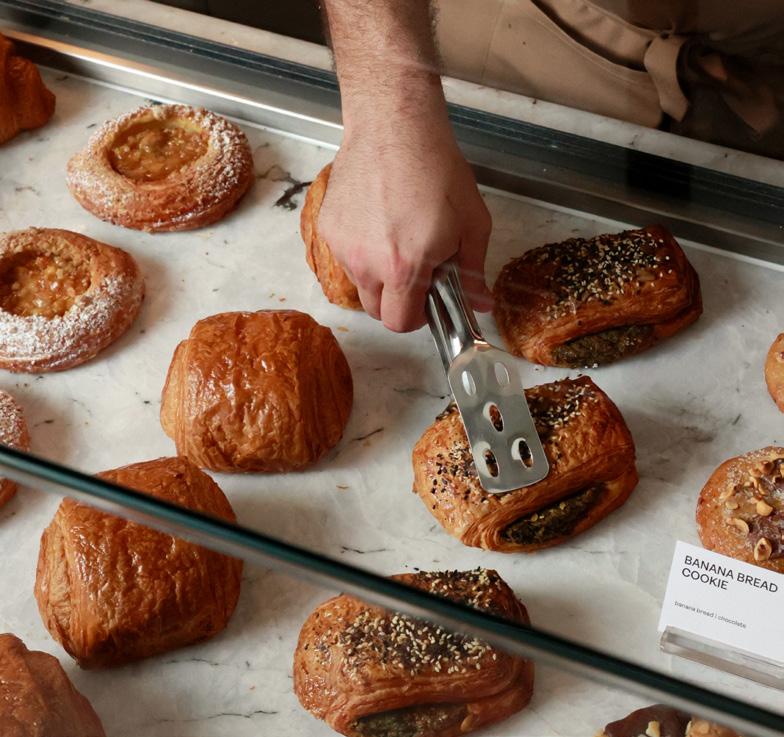
12 / News Briefs: Club news from across the country.
20 / The Foyer: The best new products on the market.
22 / The Bar: Fantastic new drinks products to stock behind the bar.
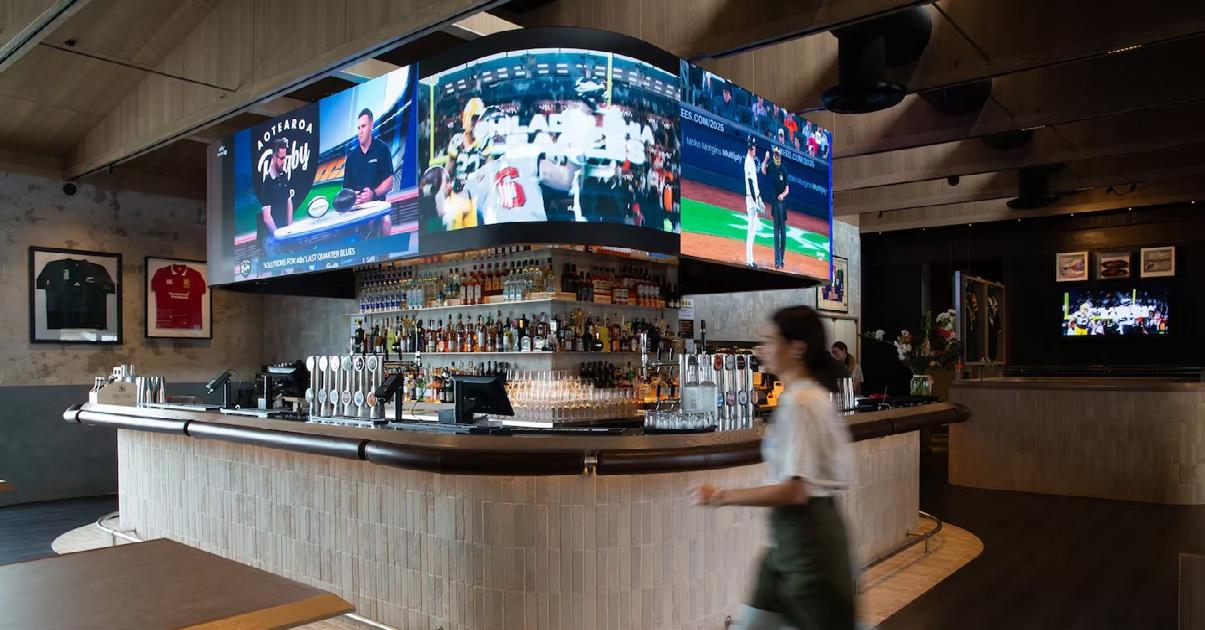
24 / On The Big Screen: The sporting fixtures that will make visitors flock to your sports bars.
74 / Q&A: Melanie Rose looks back on 10 years at Norths Leagues and Services Club.
Features
18 / AHG Expo 2026: Expect the same energy, but on a bigger stage.
28 / CEO Profile:
Daniel Paton chats about what it’s like to take the top job at Holman Barnes Group.
32 / Gaming Rooms: Service, comfort and aesthetics are shaping the modern gaming room.
40 / Dining Renaissance: How clubs are redefining what is considered “club food”.
50 / Cafes:
They might look a little different these days, but cafes remain the go-to spots for patrons.
58 / Best In Practice:
The impact that systems and procedures can have on performance and margins.
60 / Chef Profile:
Michelin-trained chef Mark Penna on changing things up at Broncos Leagues Club.
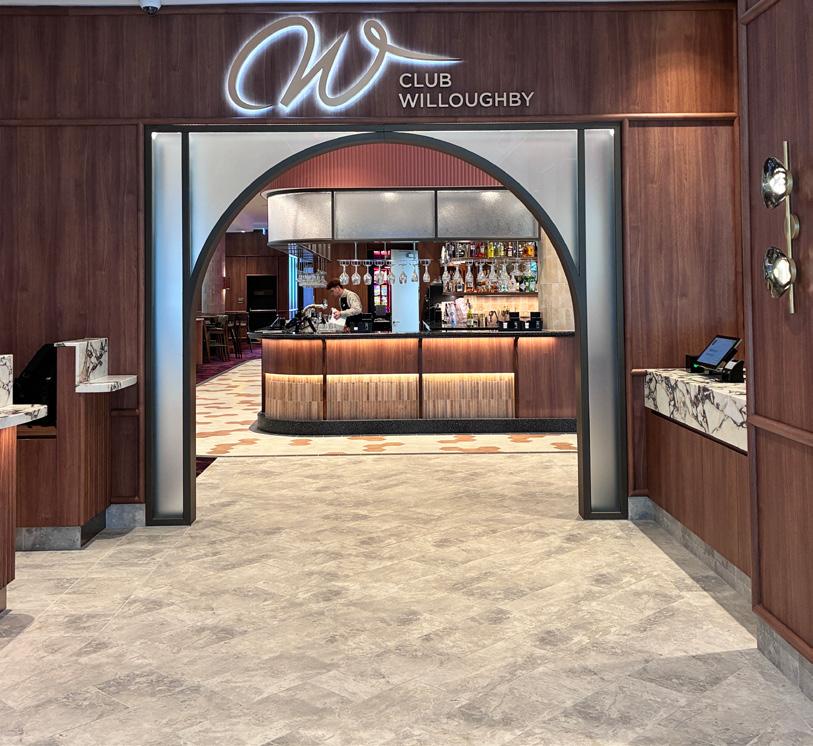
64 / Club Willoughby:
A first look at the new space in Sydney’s lower north shore.
70 / Parkside Community and Services Club:
Inside Coorparoo RSL’s new home and why it changed its name.




ClubsNSW has unveiled a landmark partnership with Allara, a global leader in workforce education, to provide hospitality staff with access to world-class training courses and more opportunities to cultivate a career within hospitality.
The new partnership emerged from a competitive tender process and an extensive review of ClubsNSW’s education offerings to examine how hospitality workers, leadership teams and club directors can be upskilled to ensure the long-term viability of the sector.
Purpose-built for the hospitality industry –taking in all licensed venues across the sector – Allara will deliver education and training aimed at ensuring workers go well beyond simply meeting their compliance obligations, encouraging them to grow professionally and seek a long-term career in hospitality, creating a pipeline of future industry leaders.
“Over the past few years, the New South Wales club industry has made a concerted effort to upskill the dedicated volunteers who serve on the board of their local club –and this partnership will ensure that those learning and development opportunities are made available to anyone working in the hospitality industry,” said ClubsNSW CEO Rebecca Riant.
“Whether you’re serving on the board
of a club, working behind the bar at a hotel, or operating in a front-of-house role, this partnership will ensure that you are supported to further your education and develop a long-term career in the hospitality industry.
“In turn, it will help to secure the future success and viability of the whole hospitality sector by addressing labour shortages and enabling workers to meet evolving governance and oversight demands, while also reducing the cost and complexity of regulatory compliance and reporting,” said Riant.
Allara CEO Andrew Lewis echoed Riant’s sentiments.
“This partnership is about attracting, nurturing and retaining talent in an industry we love,” said Lewis.
“By working collaboratively with ClubsNSW, we can strengthen the sector’s ability to bring new people into hospitality, support clear career pathways for growth, and create a stronger funnel of talent into the industry for the long term.”
The new partnership will focus on providing a streamlined best-practice approach to education and training –including online and in-person delivery of accredited qualifications, micro-
credentials, masterclasses and professional development programs.
One of the aims of this new partnership is to effectively create a ‘hospitality passport’, with training credentials that can easily follow a person from venue to venue, club to hotel, bar or restaurant – minimising the need to retrain at every new job or venue.
ClubsNSW and Allara are finalising the required agreements and approvals, with the aim to be operational by 1 July 2026.
ClubsNSW member clubs who currently have a ClubEducation (formerly Club Education Institute) membership will continue to book and access these products and services as per normal for now. It’s proposed that ClubEducation membership training and benefits will be transitioned and managed by Allara, but this is subject to regulatory and contract approval.
“Our valued ClubEducation members would have received an email earlier today advising them that their membership will remain unchanged. In fact, the range of member benefits will only be enhanced once the new partnership officially launches,” said Riant.
Further announcements on the ClubsNSW and Allara partnership will be made in due course.
From local heroes to landmark venues, every club deserves a winning food & hospitality strategy.
“We engaged Future Food to run our Expression of Interest (EOI) process for catering operations at the RSL. From the very beginning, they demonstrated exceptional professionalism, communication, support and deep industry experience.
The quality of caterers brought to us through the well-executed EOI campaign was fantastic. The transition was seamless and we found ourselves in the fortunate position of having multiple top-tier candidates to choose from.
I highly recommend anyone considering engaging with or changing caterers to speak with Future Food. Their expertise made all the difference.”
David Hanson | General Manager, Altona RSL Sub-branch



South Tamworth Bowling Club and West Tamworth Bowling Club have formally amalgamated, with the merged entity operating under South Tamworth Bowling Club.
Since mid-2025, South Tamworth has been lending West Tamworth a helping hand as it assessed its long-term viability. The support included business and operational assistance, additional staffing, and executive and managerial oversight.
Speaking with Club Management, South Tamworth CEO Matthew Hill said it was during that period “it became pretty evident to our board that there was a lot of strategic opportunity”.
A due diligence investigation was undertaken before a memorandum of understanding was issued to members.
Hill said, in addition to the existing camaraderie and sportsmanship that exist between the two clubs, the merger unlocks new capacity for South Tamworth. The club currently operates two natural bowling greens but is constrained by space, while West Tamworth offers abundant land and a newer synthetic green.
“When we really started to assess the benefits ... we thought merging these two great clubs would start a new era of bowls in Tamworth. We’re excited to drive and explore that with access to all these greens to host regional and state-level bowls events. It’s exciting because we’ve never had that opportunity before.”
Beyond bowls, Hill said the amalgamation creates scope to strengthen West Tamworth’s hospitality offering.
“It’s something that we’ve done very well here at South Tamworth, which is create and drive a culinary engine – we’ve won Perfect Plate [Awards] a couple of years in a row. We focus on catering hospitality, and it’s paying us back,” he said.
“We’ve come up with a 90-day action plan to establish a catering and hospitality offering in West Tamworth, and rejuvenate, revive and market West Tamworth.
“There’s also a function centre, and we believe there is a gap in the market for a space for 120 people, and with a bit of engineering and marketing, we’ll be able to do quite well.”
Hill said the decision was also about preserving a valued community asset.
“We’re always going to support bowls, but we’ve also got the opportunity here to create new products and be a positive force in the market, and engage back with the community,” he said.
“It’s an absolutely beautiful bowling club. Rather than see it go by the wayside, we thought we could pool the efforts of South Tamworth and be supported by the members from West Tamworth, which we are, and we can breathe fresh life into that club.
“Our hope is to get it to be a viable space by [the end of this year] and make it a really exciting entertainment venue.”

The Western Australian government has announced that it will conduct an independent review of the state’s racing industry to ensure it has a framework for long-term financial sustainability.
“The WA racing industry generates $1.3 billion for the state’s economy every year and sustains thousands of local jobs,” WA racing and gaming minister Paul Papalia said.
“We want to ensure the long-term financial stability, viability, and integrity of racing in our State.
“I encourage all stakeholders to play an active role in this process to ensure a thriving future for the industry.”
The financial sustainability and governance review will explore ways thoroughbred, harness and greyhound racing can be sustained long-term across WA. It will also examine structures established under the Racing and Wagering Western Australia Act 2003, which support and develop the racing industry in WA. Jockey and animal welfare won’t form part of the review.
Former Mandurah MP David Templeman along with Professor Warren Harding have been appointed to lead the review.
Racing and Wagering Western Australia CEO Ian Edwards has welcomed the review, and said the industry looks forward to working with government to establish a sustainable future for the state’s three racing codes.
“The WA racing industry supports more than 10,000 full-time jobs and plays a vital role in connecting communities, delivering significant social value,” he said.
“This review will help ensure the financial and governance structures supporting thoroughbred, harness and greyhound racing, while providing long-term sustainability for the industry.”
The Financial Sustainability and Governance Review will be managed by the Department of Local Government, Industry Regulation and Safety, and the Department of Treasury and Finance.

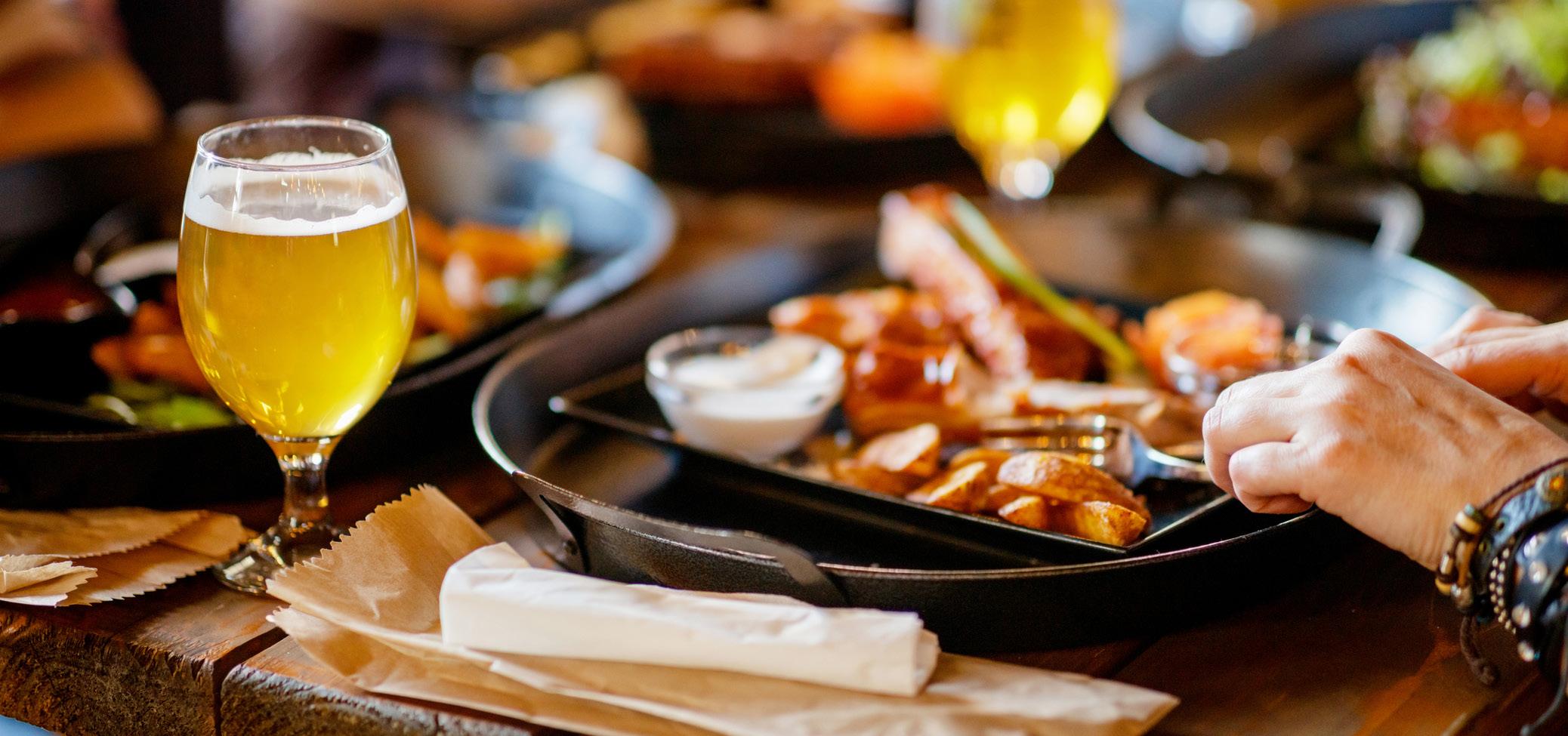
The Northern Territory Liquor Commission has varied the conditions of 20 licensed venues in Alice Springs, requiring fullstrength alcoholic beverages to be served with a meal.
The NT Liquor Commission made the decision to vary the conditions of 20 licensed venues, by inserting a condition that on Wednesdays, Thursdays and Fridays between the hours of 11:30am to 3pm, fullstrength liquor must not be supplied, sold, served or consumed on the premises. This restriction applies except when served with a full meal, as opposed to a light meal, which has been defined as “a meal that may be eaten with the hands while standing”.
Exemptions will also be made for: bona fide accommodation guests (including for minibar and room service); and groups of four or more patrons who have ordered shared food and are seated while consuming liquor.
The venues affected include Alice Springs Golf Club, Club Eastside, Gillen Club, several pubs, Lasseters Hotel Casino, as well as a number of restaurants.
The Liquor Commission’s decision is the outcome of an inquiry conducted after receiving a letter from Yeperenye Shopping Centre, alleging instances of heavy drinking and intoxication in their vicinity, prior to 3pm opening trading hours of retail liquor outlets.
Hospitality NT CEO Cathy Simmonds expressed her disappointment with
the decision, which was overseen by chairperson Russell Goldflam.
“We are disappointed by the decision to continue down this path – but not particularly surprised, considering the previous conduct of the current Liquor Commission chairperson.
“It’s one thing to vary the conditions of one license as a disciplinary action, but it is quite unprecedented for the Liquor Commission to add conditions to 20 licenses at once when there is no allegation of wrongdoing or license breach.”
Simmonds has derided the complexity of the new variations, suggesting that they are setting up the venues and their teams to make unintended mistakes.
“For hospo staff trying to serve a beer over the bar, this rule will be difficult to explain to customers and tourists, and easy to make a mistake,” the CEO stated.
“A casual staffer working 15 hours a week will need to check the day, the time, the rest of your order, the number of people you’re present with, and whether you’re sitting down, then determine whether your drink is legal.”
A second condition has been imposed on Todd Tavern, The NT Rock Bar, Bojangles Saloon and Dining Room, and Uncles Tavern, after a letter was sent by the Central Australian Aboriginal Congress alleging disturbances in the vicinity of these venues due to intoxication.
The additional condition imposes that these venues must establish an on-premises identification system to determine whether a person is prohibited from purchasing or consuming alcohol by way of a banned drinker order, bail condition, court order or other Liquor Act order.
The identification system must be used to screen people entering the premises between the days and times outlined above.
Simmonds criticised the method with which the NT Liquor Commission has addressed a particular issue with a broadbrush approach.
“Crime and anti-social behaviour in Alice Springs has gotten much better over the past 12 months, and that’s due to more investment in policing – not over-regulation of businesses serving a legal product in a responsible way,” she said.
“We talk up our reputation of being the wild north, but in practice most Territorians drink responsibly and moderately.
“A solution needs to be tailored to addressing the problem and the people causing the problems, not a broadbrush approach that punishes everyone in the community including visitors to Alice Springs.”
The clubs affected were contacted, but had not responded at the time of publication.
This piece was first published by our sister publication, Australian Hotelier.

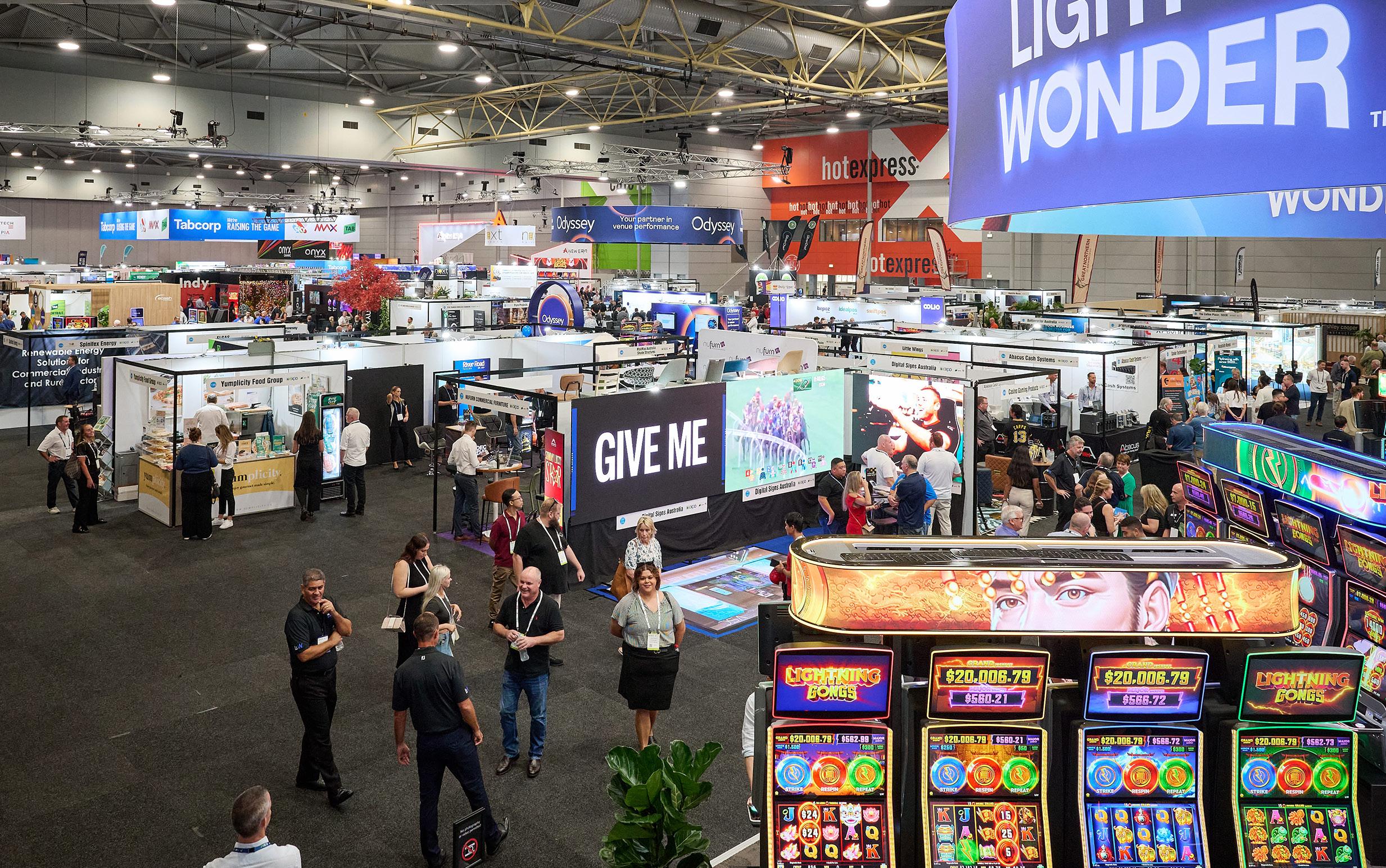
Visitor registration is now open for the Australasian Hospitality and Gaming (AHG) Expo 2026, brought to you by TAB, MAX and SKY.
IN SUCH A dynamic sector driven by new and exciting experiences, it’s the innovations across all disciplines – from food and beverage to construction, gaming, financial tech, design, and entertainment – that truly keep the cogs of clubs, hotels, and pubs turning.
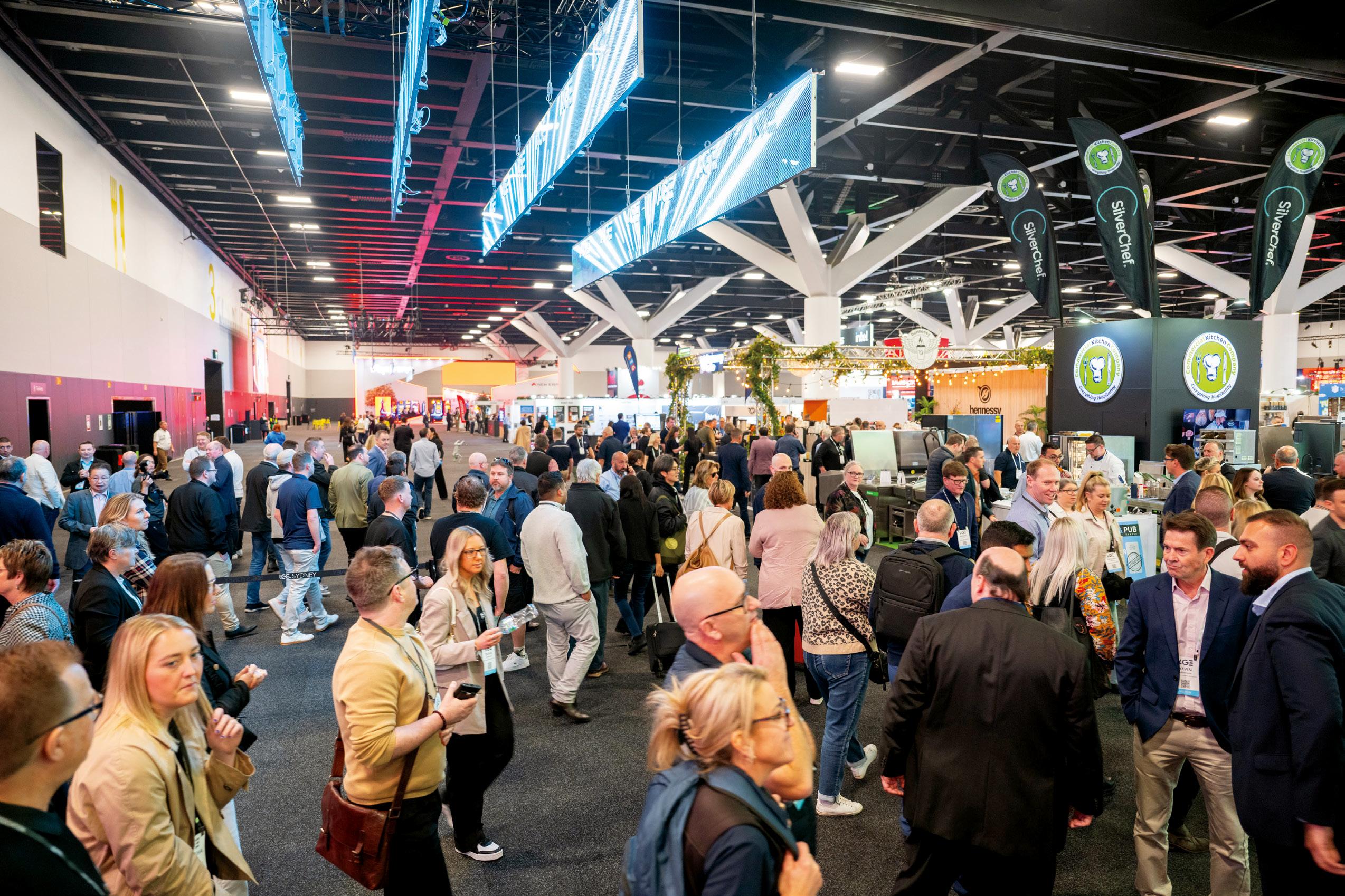
That’s why, at the Australasian Hospitality and Gaming (AHG) Expo 2026, the industry will come together on 25 and 26 March at the Brisbane Convention and Exhibition Centre for a cornerstone event that shines a spotlight on so much more than just gaming. Registration is free, so don’t miss out!
Last year, the expo celebrated its tenth anniversary with its biggest and best occasion yet, attended by over 3,000 visitors from overseas and right across Australia – from venue managers and their teams to hospitality businesses, luminaries, and key decision makers.
Of course, alongside this ever-changing industry, the expo is keen to adapt, helping attendees discover all the exciting opportunities, services, products, and technology out there while remaining at the top of their game.
Presented by TAB, MAX and SKY, this year is shaping up to bring a fresh, new approach to the colourful floorplan you know and love, made complete with a diverse array of exhibitors from all corners of the hospitality sector whose creative, outside-of-the-box stands will be just as engaging as the products themselves. This show is sold out, however if you still want to be a part of the action, there’s a waitlist for potential exhibitors.
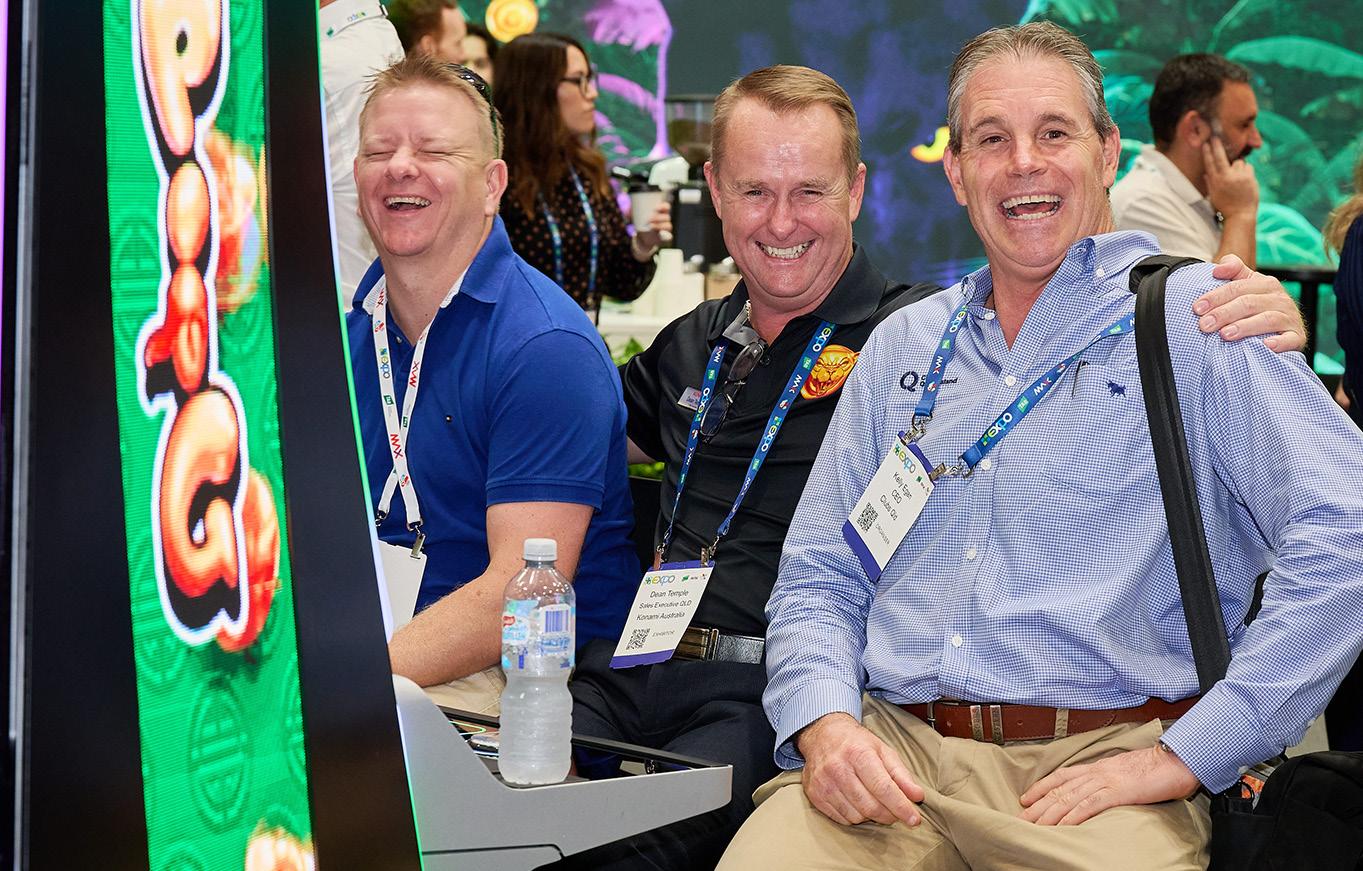
But really, it’s the people who keep you coming back, which is why the AHG Expo 2026 will be fostering an even more engaging environment with an inviting, friendly atmosphere for both new and familiar faces to network, learn, and mingle.
Let’s chat
This year, as part of AHG’s effort to encourage a better, more interconnected industry with opportunities available for everyone, the expo has introduced AHG Talks, which is again, free for all those working in the sector.
Taking place across both days of the expo, AHG Talks will give attendees more of an insight into our exhibitors, what they do, and their advice for thriving in all areas of hospitality.
A few of the innovators who have enthusiastically put their hands up to share their insight, include:
Director of Cooking the Books by Quantaco, Andrew Briese
Kitchen profitability – the art of kitchen management
Did you know the most important tool a chef can have in the kitchen is an iPad? Is it cheaper to make or to buy? Are those mushrooms fit for purpose? Find the answer to these questions, plus how you can control transparency on your costs in the kitchen, during this energetic and engaging session.
Gambling Health Services Manager at Clubs Queensland, David McAnalan
Beyond compliance – gambling health in venues
Learn how to empower your staff to recognise gambling-related behaviours, minimise potential harm, and foster a safe, supportive environment for both patrons and employees. This highly engaging and informative session is ideal for anyone involved in gaming operations.
Chief Visionary Officer of the StandbyU Foundation, Chris Boyle
Building connected community partnerships
Discover how collaboration can strengthen your venue’s impact and reputation through meaningful partnerships. This session explores practical ways to connect with local organisations, suppliers, and community groups to create shared value. Learn strategies to turn community engagement into lasting relationships that drive both social and business success.
Global Gaming Network (GGN)
Women in leadership – knock out imposter syndrome
Step into your power and silence the inner critic. Whether you’re an individual contributor ready to grow, an aspiring manager seeking clarity, or a seasoned people manager, this dynamic session will help you lead with confidence.
Shake it off
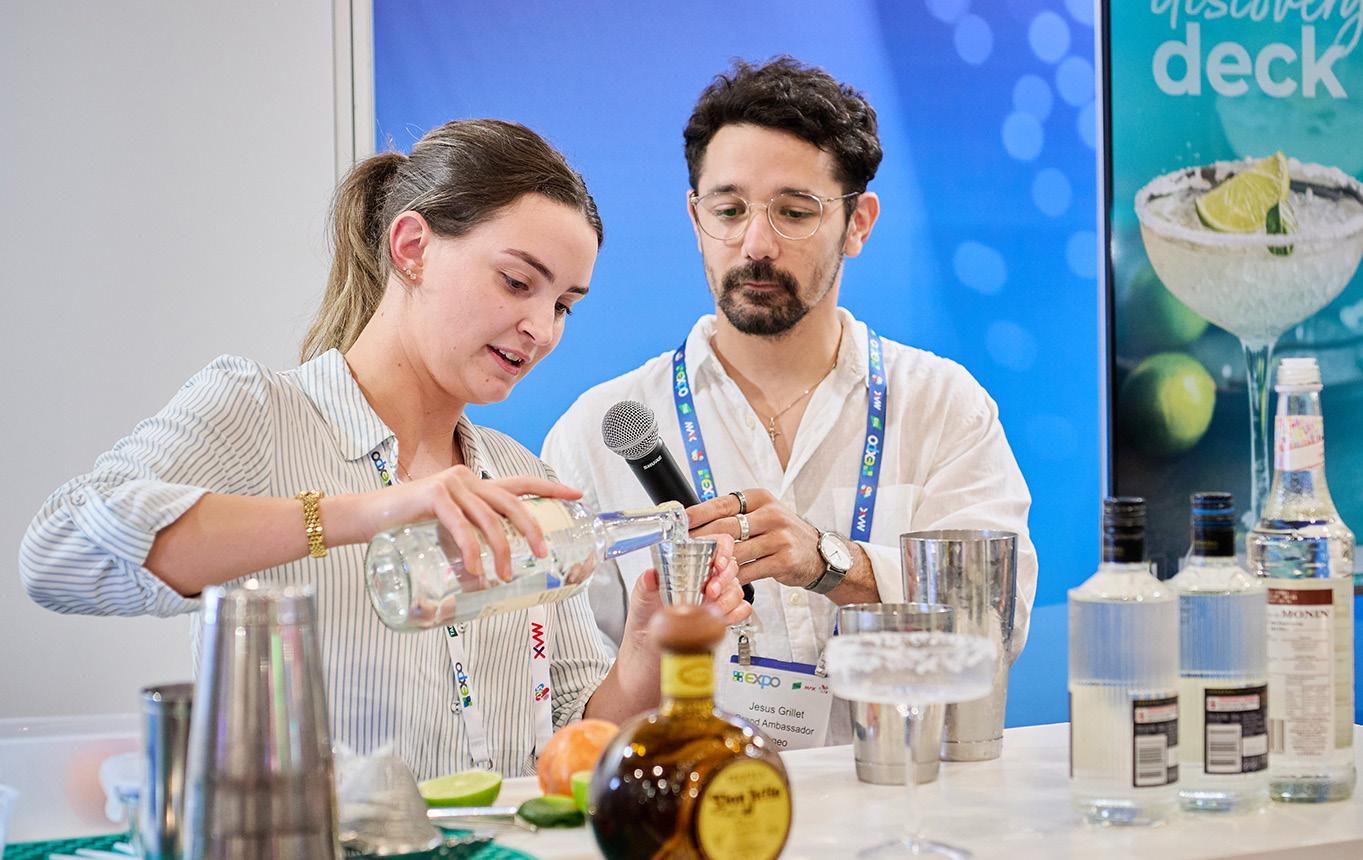
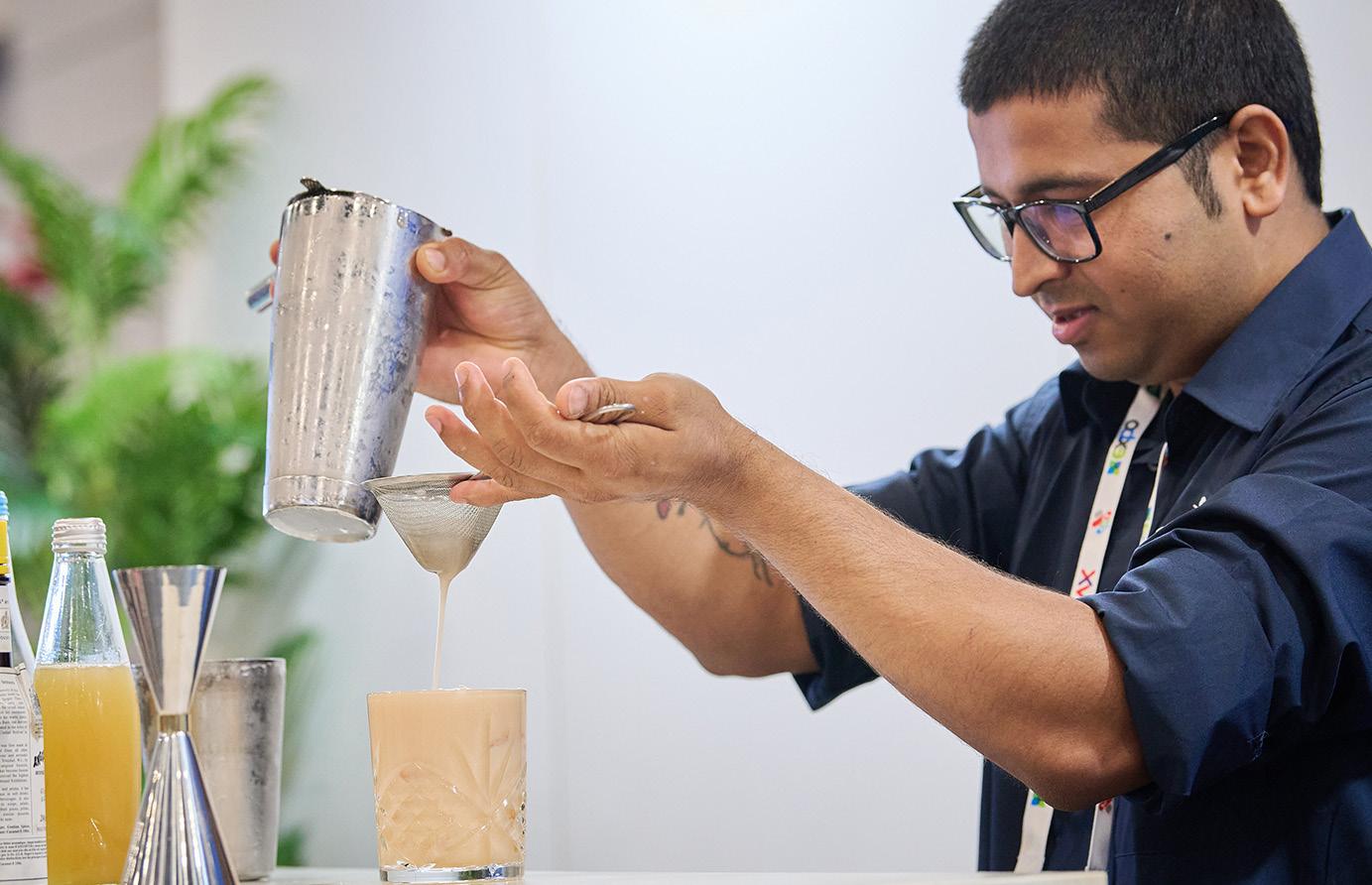
Making a return to this year’s AHG Expo is the popular Diageo Cocktail Competition. With 2026 predicted to be the year of the spritz, this year’s competition will see mixologists and cocktail enthusiasts showcase their interpretation of this classic summer cocktail. Finalists will battle it out on the live stage at AHG Expo on Thursday 26 March for the chance to win up to $1,000 in cash prizes.
“From its humble beginnings on the Gold Coast to the sprawling event in the heart of Brisbane that we look forward to every year, the AHG Expo has certainly come a long way, but it only gets better from here,” event manager Kelly-Anne Mott said.
“There are sure to be many world-first debuts, and we can’t wait to discover more, connect more, and see you there.”
More speakers, opportunities, competitions, and other exciting announcements about the AHG Expo 2026 will be revealed closer to the expo. Visit ahgexpo.com to stay up to date.

Visa has opened applications for its $200,000 Visa Vibe Grants Program, a national initiative designed to support small businesses at the heart of Australia’s night-time economy. The program will award eight grants of $25,000 to small and growing businesses – one in each state and territory –to help create safer, more inclusive and innovative experiences after dark.
Highlighting a shift to action for the night-time economy, Visa’s country manager for Oceania Alan Machet said: “The Visa Vibe Grants Program opens at an integral moment for Australia’s night-time economy. Businesses operating after dark play a critical role in local culture, employment and community connection, yet face a distinct set of pressures – from regulatory complexity and council restrictions to the added expense of safety, security and compliance during late-night trading hours.”
The grants aim to provide targeted funding for businesses to trial new ideas, activate precincts and deliver safer, more inclusive experiences.
Applications are open to eligible businesses and organisations delivering night-time experiences across retail, arts, hospitality, culture and communityled initiatives. Projects must demonstrate impact across at least one of the program’s core pillars: safety, affordability, inclusivity or innovation.
Applications close on Tuesday 24 March 2026. mainstreetaustralia.org.au/visavibegrantsprogram

Quantaco has acquired a controlling interest in Grub Lab, an in-venue kids’ dining and family entertainment technology company.
Quantaco has further expanded its suite of hospitality solutions, reinforcing its commitment to innovation and value creation for the sector.
Grub Lab integrates technology with brands such as Universal Studios, Netflix, the AFL, and the NFL, making family dining more engaging and ensuring high repeat visitation for venues.
Grub Lab provides hospitality operators with access to flagship global brands, customised kids’ menus, and interactive technology, providing distinctive family-friendly dining experiences. Under the guidance of founder and CEO Mick Carr, this unique model allows independent venues to leverage major brands that would otherwise be out of reach.
Carr said Grub Lub’s products helped attract families to venues, and encouraged repeat visitation.
“We know that families are hungry for experiences that go beyond the plate, and restaurants are looking for new ways to attract the lucrative family market,” he said.
“With Grub Lab’s exclusive NBA kids’ menu, plus evergreen hits like Jurassic World and Shrek, we see bigger smiles and more visits.” quantaco.co

EzTenda and Paramount Liquor have partnered to launch EzTenda Match, Australia’s first automated brand and venue matching feature for the drinks industry. Now live on the Paramount Liquor website, the new capability connects brands and venues with relevant drinks deals at the exact moment venues browse and order.
EzTenda Match uses live wholesale data across Paramount Liquor’s network of more than 10,000 venues and over 18,000 products. The platform automatically matches brand offers to venues based on targeting criteria such as region, venue type, category, and purchase volume, creating more meaningful and commercially valuable partnerships.

Moving beyond traditional price-driven deals, EzTenda Match enables venues to discover relevant brand support when they need it most. Offers can include marketing budgets, point-of-sale materials, free stock, exclusive programs, and pricing support, all presented seamlessly within the Paramount ordering experience. paramountliquor.com.au/about-ez-tenda
Adrenalen Group, a new sports and entertainment technology company, has launched as an independent business under the leadership of ex-Entain Venues managing director Mark Sturdy.
The establishment of Adrenalen comes after global wagering and entertainment group Entain divested its live sport broadcast and vision technology division (LED Screens) to the newly formed entity.
The transaction marks the creation of a holistic venue-focused sports technology platform within Australia, combining an established IPTV (Internet Protocol Television) broadcast network, national LED vision technology, and a soon-to-be launched new media arm under a single brand.
Adrenalen will continue to be the exclusive distributor of Paramount+ sports products, DAZN’s boxing content and several other direct-to-venues deals; while also servicing hotels, pubs and clubs across Australia, retaining the technology, operational teams and infrastructure that supported the businesses within Entain.
The company will continue to distribute curated sports channels in partnership with DAZN and Paramount+, which includes Global boxing, the 2026 AFC Women’s Asian Cup, the A-Leagues, the Hahn Australia Cup, Socceroos and Matildas matches, and Coppa Italia. adrenalen.com.au

Today’s clubs are more complex than ever. As venues expand their hospitality offer and member expectations rise, leadership teams face mounting pressure to balance compliance, operational efficiency and financial transparency, often with the same resources they’ve always had.
• From back office to the floor - how streamlined systems are giving managers their time back
• Confidence over compliance - why real-time data is becoming the backbone of modern club governance
• Connected and in control - the shift towards integrated platforms is driving accountability and growth What’s changing is how clubs think about visibility. Clearer financial oversight isn’t simply a reporting function; it’s a foundation for confidence at every level of the organisation. “We’ve taken managers out of the back office and put them back on the floor,” says one club executive, a shift made possible by streamlined, intelligent processes.
When boards and management teams have access to reliable, real-time data, they respond faster. Across gaming, food and beverage, and venue operations, decisions improve. Connected platforms like Wirely are central to this evolution, helping clubs strengthen governance, drive accountability and build for sustainable growth.
wirely.com.au
Daikin Australia has enhanced its refrigeration capabilities, announcing it can now support customers with a full equipment turnkey solution following the introduction of its new DeVap evaporator range.
The national launch marks a milestone for Daikin Australia, bringing evaporators into its existing condensing unit portfolio and enabling a complete refrigeration solution for the local market.

“Refrigeration is an important and growing focus for Daikin in Australia,” said Kevin Sultana, refrigeration sales manager at Daikin Australia. “By adding evaporators to our lineup, we can now deliver a more complete solution that reflects local operating conditions and the real-world needs of installers and business owners.”
The launch introduces DeVap, Daikin’s new range of evaporators designed specifically for Australian conditions. Its development was informed by extensive on-site research conducted across metro and regional New South Wales and Queensland, including fish markets, supermarkets, meat wholesalers, delicatessens, wineries, liquor outlets, produce specialists and ice cream manufacturing facilities.
“These insights shaped a design suited to local climate factors, including ambient humidity levels, and everyday operating demands,” Sultana added.
daikin.com.au
news and promotions

Siphon Spirits made with the rail in mind
Australia’s newest indie spirits label, Siphon Spirits, has launched with products built by and for bartenders. The brand arrives with a clear purpose: to deliver spirits crafted by people who care about every pour.
Refined, reliable, and built for those who pour with pride, Siphon’s debut collection includes Gin, Vodka, Coffee Liqueur, Hazelnut & Macadamia Liqueur, Coconut Liqueur and Blood Orange Cello.
A trade-only range created for bartenders, each product has been crafted under the guidance of awardwinning distiller Hugh Lumsden, with a simple promise - premium quality, priced for the trade. siphonspirits.com.au
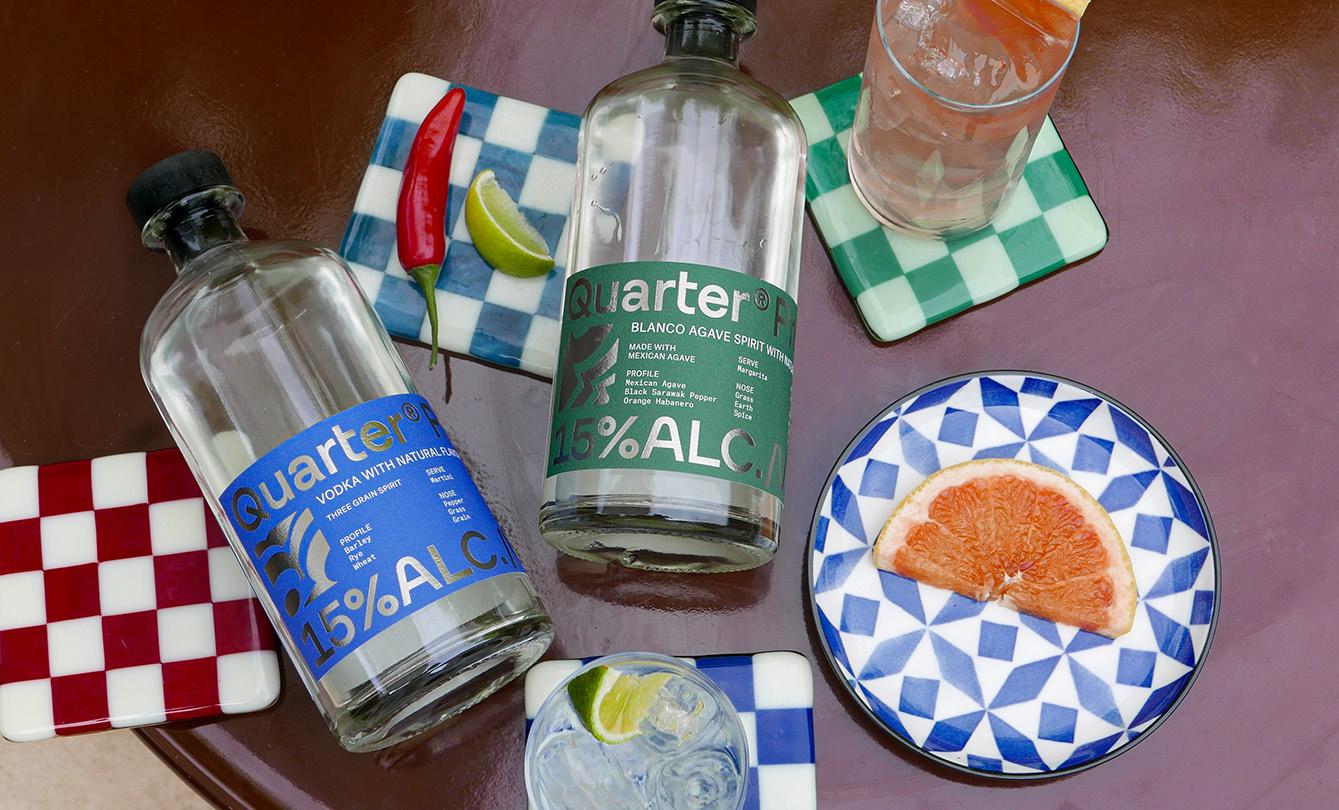
Quarter Proof partners with Proof Drinks to bring mid-strength spirits to Australia
Quarter Proof has announced a new partnership with Proof Drinks Australia, making it their first international distribution agreement and a major step in global expansion. Quarter Proof has a midstrength spirits portfolio, including a 15 per cent ABV Tequila, Vodka and Gin, made for those who want to partake in alcoholic beverages in moderation.
This partnership reflects growing global momentum behind mindful drinking and the rise of loweralcohol alternatives that don’t compromise on flavour or experience. proofdrinks.com.au

Adelaide Hills winery Petaluma has launched a brand-new wine collection, Lumos by Petaluma, centred around lighter styles of wine and sophisticated drinking occasions. Comprising three wines with an ABV of 9.9 per cent, the collection caters to consumers seeking a premium, lower alcohol wine.
Designed to reflect the brand’s focus on craftmanship and modern wine enjoyment, the collection has launched with three varietals: Sauvignon Blanc, Pinot Gris and Prosecco. Lumos by Petaluma takes its name from the Latin word lumen, meaning ‘light’.
Reflecting contemporary tastes, the Sauvignon Blanc is described as having tropical passionfruit and zesty citrus flavours, while the Pinot Gris offers notes of pear and quince with a crisp, clean finish. Bright and refreshing, the Prosecco has a palate of generous cool-climate fruit. vinarchy.com

Billson’s continues to energise the on-premise landscape with the newest addition to its expanding draught lineup: Creamy Raspberry. The beloved heritage brand is bringing its trademark nostalgia-meets-innovation approach to taps nationwide, offering venues a flavour that’s creamy, vibrant and unapologetically fun. Expect berry rich sweetness balanced with a smooth, velvety finish – a crowd-pleasing profile designed to stand out both on the bar and on the palate.
The launch of Creamy Raspberry marks another milestone in Billson’s journey into draught, a format traditionally dominated by beer and one that represents fresh potential for ARTDs. While canned offerings remain strong, draught unlocks faster service, consistent quality and greater variety for consumers looking for something a little different. It also gives venues strong visual impact and an opportunity to broaden their tap mix with something playful and premium.
Creamy Raspberry joins the existing Billson’s Draught range –including the much-loved Tangle – reflecting increasing interest in flavoured drinks with broad appeal.
Dreamy, creamy and berry delicious, Billson’s newest flavour crush is now on tap, offering clubs a fresh way to expand choice at the bar.
cocacolaep.com/au
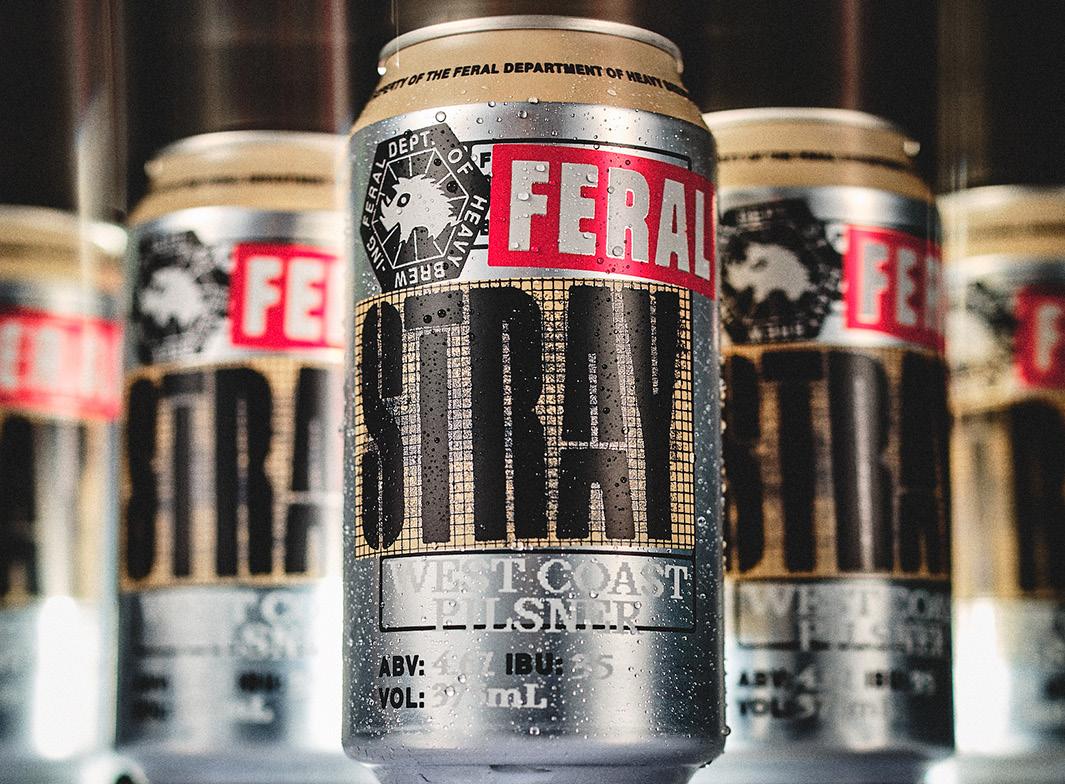
Feral has added the Stray West Coast Pilsner to its core range, a modern pilsner built for 2026 drinkers.
Light in body and crisp in finish, Stray sits comfortably in the gap between mainstream lager and flavour-forward craft. It’s designed for repeat rounds, broad appeal, and the kind of consistency that matters at busy bars and bottle shops.
At 4.6 per cent ABV, Stray delivers clean refreshment without sacrificing character. Trial batch feedback shows strong conversion from traditional lager drinkers, while still resonating with drinkers looking to explore the tap lineup. It’s a beer designed to work across public bar, restaurant and bottle-shop formats.
The release of Stray follows the addition of Smalls to Feral’s core range late last year, further strengthening the brewery’s focus on pairing highly drinkable, everyday beers with more experimental limited releases. Together, Smalls and Stray round out the lighter end of the portfolio, offering craft-forward options that prioritise balance and sessionability without stripping away character.
Perfect as a modern house lager or an alternative option for drinkers purchasing summer ales and XPAs. Bridges classic lager drinkers and hop-forward craft fans.
feralbrewing.com.au
Creating an elevated take on a classic Australian serve, Fever-Tree and Angostura aromatic bitters have created a world-first premium Lemon, Lime & Bitters soda.
As voted by top bartenders, Fever-Tree and Angostura are the world’s top trending, bestselling mixer and spirit brands and have come together to create a new product that puts both brand’s unique stamp on an Australian club classic.
Launching in mid-March 2026, the soda features Sicilian lemons and Mexican lime flavours layered with the complexity of bitters, creating a balance of zesty, sweet citrus and bitter spice.
At only 19 calories per 100ml, the premium mixer is an addition to Fever-Tree’s growing range of better-for-you soda’s – perfect for mixing or enjoyed as a non-alcoholic option for consumers seeking moderation and full-flavour. fever-tree.com/en-au

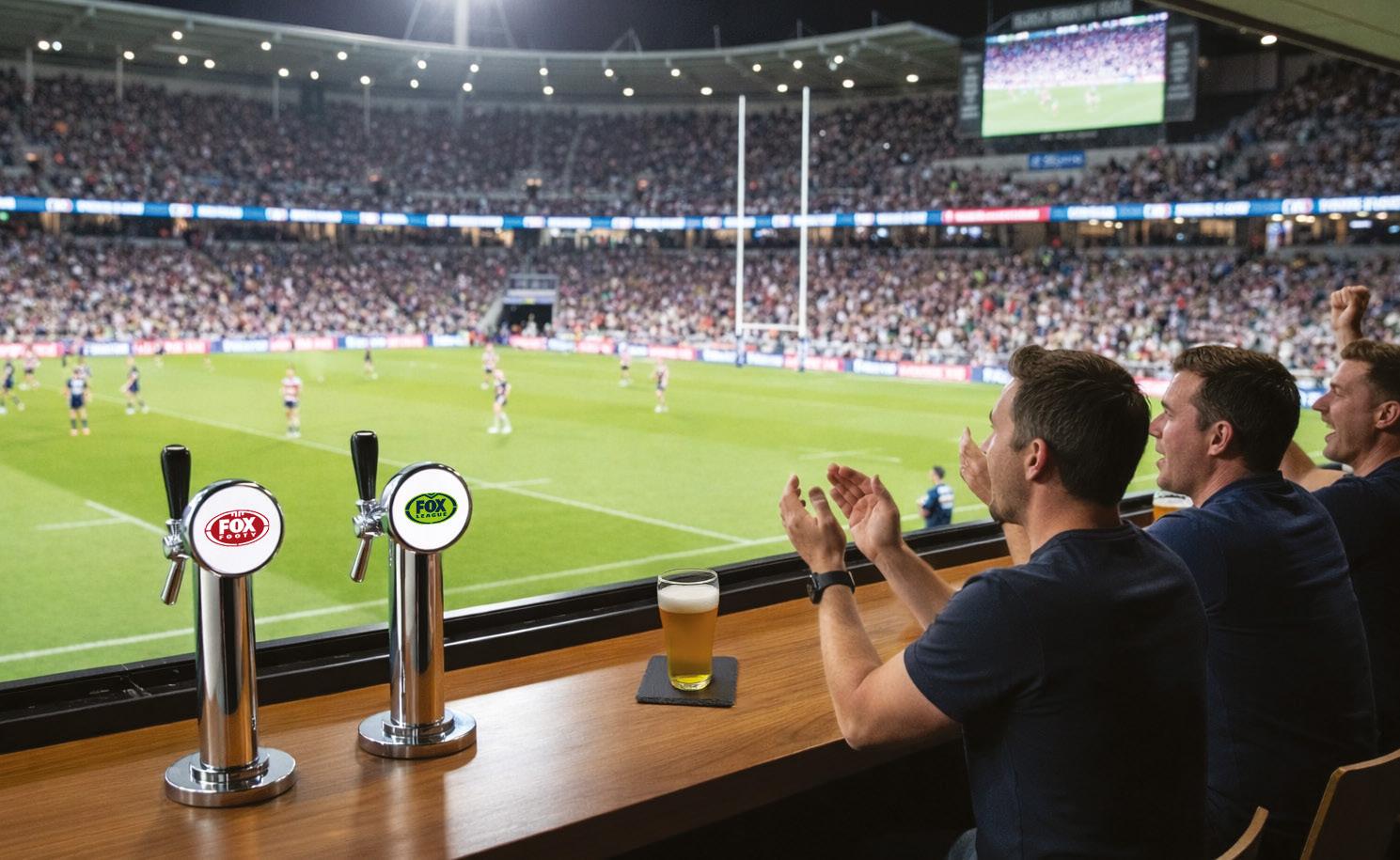
NRL is back – and all bets are off!
The NRL season kicked off on Sunday 1 March, and with no runaway Premiership certainty this year, it promises to keep fans invested from the first kickoff to the last full-time whistle.
The Brisbane Broncos have come into the season as early favourites thanks to roster depth and recent form. But the Broncos can once again expect to be closely shadowed by Penrith, Melbourne and the Sydney Roosters. Behind those four, a competitive middle tier including the Bulldogs, Raiders and Sharks creates a ladder that could shift dramatically throughout the year.
For venues, that unpredictability is key. It means:
• more meaningful regular-season games
• strong supporter engagement across multiple clubs
• sustained interest beyond traditional powerhouses
As always, star power will help drive engagement.
Players like Reece Walsh, Nathan Cleary, Cameron Munster, Latrell Mitchell and Payne Haas bring highlight-reel moments that fans love to see and share with friends.
Show it now on Fox League, via Foxtel.


The AFL enters 2026 with a compelling story: a clear benchmark team and a pack of challengers ready to chase.
The Brisbane Lions dominate the premiership conversation as the team pushes for another three-peat, but the competition behind them is fierce. Geelong, Hawthorn, Sydney, Adelaide, GWS and Gold Coast all sit firmly in the contender bracket.
The league’s star midfielders and young talent will again be central to the narrative.
Names like Nick Daicos, Marcus Bontempelli, Matt Rowell and Will Ashcroft are expected to dominate headlines and attract casual fans as well as die-hards.
For clubs, the AFL’s national footprint means strong cross-state interest, with travelling supporters and mixed fan bases creating consistent demand for live viewing. Cover all the action on Fox League, via Foxtel.

Arguably one of Australia’s most popular sporting teams, the Matildas are back in action in March, with Australia hosting the AFC Women’s Asian Cup. Aussies are treated to a couple of massive names back in the squad, with Sam Kerr and Mary Fowler returning to the team after long injuries.
The Tillies should make quick work for the group stages, facing off with Philippines, Iran and Korea Republic, with Australia the highest ranked of the four teams. Having last won the tournament in 2010 – and being the runnerup a couple of times since – the Matildas will be wanting to go all the way and be named champions on home soil.
The Matildas always garner a lot of support, so showing the matches – all at Aussie-friendly times – is a no-brainer. It’ll make for an action-packed three weeks.
Catch all the action until Sunday 21 March. Show all the games via Adrenalen Sport.

The 2026 season of Formula 1® began with the Australian GP in Melbourne. The motorsport series has been gaining popularity among Australians in the last couple of years, due in part to the success of the Netflix Drive To Survive series, as well as the increasing success of Aussie driver Oscar Piastri.
The homegrown hero was unlucky not to be crowned World Driver Champion in 2025, and will be looking to fight for the title once again this year. But with a new set of regulations, Formula 1’s pecking order could be upended. Will Piastri and McLaren continue to dominate? Or will Mercedes, Ferrari or Red Bull nail the new set of regulations?
Subsequent races in China and Japan, following the Australian opener, make for great Sunday afternoon and evening viewing in your club. As the season progresses and the times get later, take advantage of Foxtel’s Business iQ feature The Vault, and make quiet Monday nights your F1 replay night.
The Chinese and Japanese Grands Prix will take place on 15 and 29 March, respectively. Show all the action via Foxtel.
Zuffa Boxing is the latest martial arts competition from UFC boss Dana White, in partnership with WWE president and TKO board member Nick Kahn. White argued that the boxing promotional landscape was broken, and wanted to create a centralised model for the sport similar to the UFC. The inaugural event under the Zuffa Boxing banner was a fight between Canelo Álvarez and Terence Crawford.
Adrenalen Sport has announced it has secured distribution rights to Zuffa Boxing for clubs and pubs across Australia, distributed exclusively through Paramount+.
Mark Sturdy, founder and CEO of Adrenalen, said this is the opportunity venue operators have been waiting for, with UFC and boxing fans both likely to take an interest in Zuffa Boxing events.
“For venues, this means guaranteed foot traffic from a crossover audience that’s already primed to watch,” he said.
“Early adopters will capture the UFC crossover audience while competitors scramble to catch up. The venues that act now will own this audience.”
Australian coverage for venues starts with Z04 on Monday 9 March, featuring IBF cruiserweight champion and Australian boxing figure Jai Opetaia facing American Brandon Glanton.
Zuffa Boxing events are available to venues via Adrenalen Sport.

Conversations around Rugby Union in Australia for the last couple of years have suggested the sport is on its last legs. But last year’s Lions Tour showed there’s massive appetite here for good Union comps – particularly when viewed at your local club or pub.
Rugby fans will get their latest fix with the Super Rugby Pacific competition, which kicked off in mid-February. With weekly rounds until the Grand Final in late June, Super Pacific Rugby is a steady weekly offering to your sports-loving punters every weekend this autumn and early winter.
Clubs should also make the most of the Super Round, held in late April, with all 10 teams playing across three days at One New Zealand Stadium in Christchurch. It’ll make for a ripper weekend of fun for all Rugby fans.
All matches are available through Stan Sport. The Super Round will take place 24-26 April.

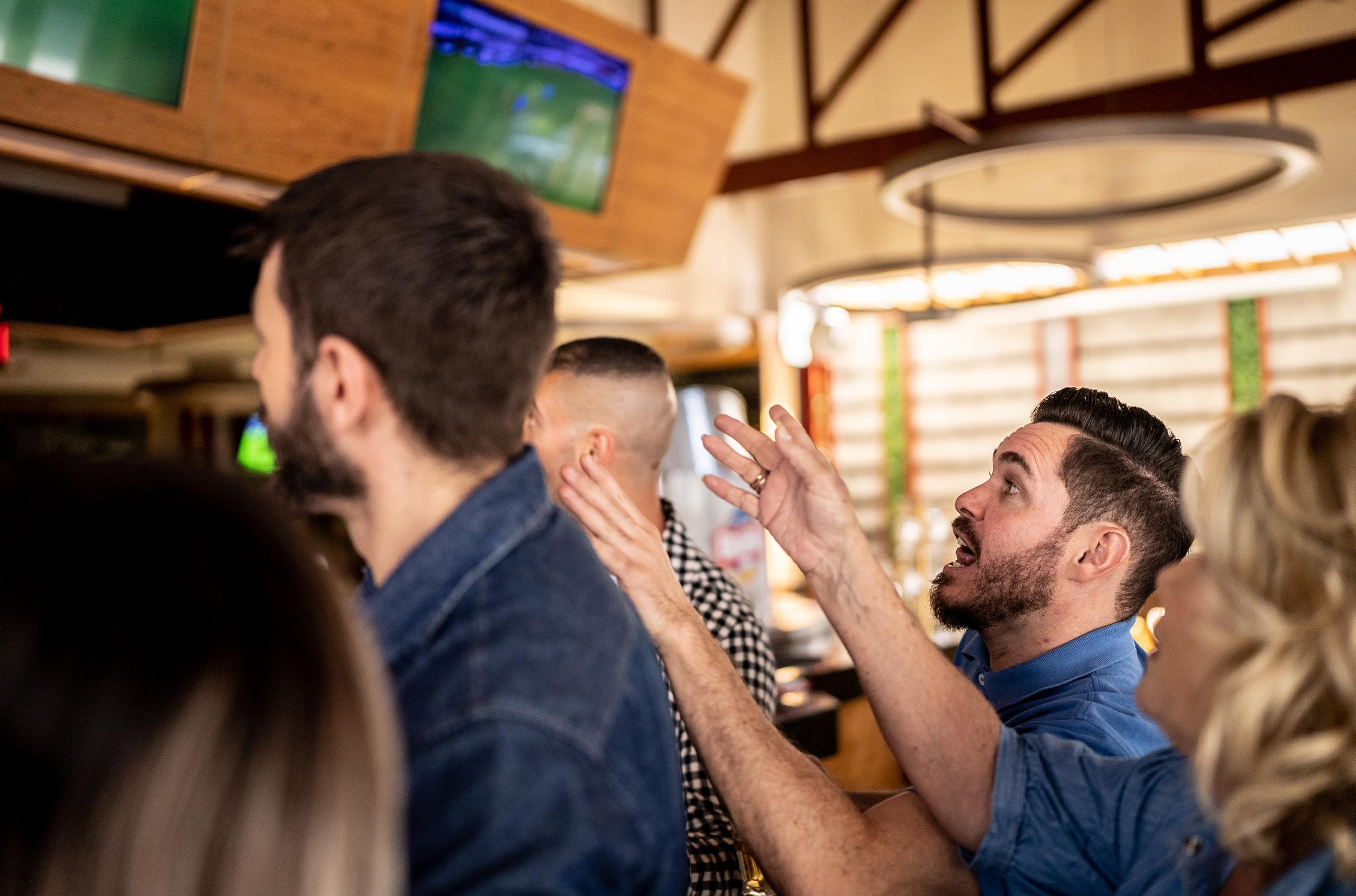
With Foxtel Business iQ, your club can do more than just show the game.
WITH THE NRL and AFL seasons now underway, there are plenty of opportunities for venues to stand out.
As the sports landscape becomes more fragmented, clubs are under more pressure than ever to navigate multiple platforms, rights arrangements, and services. Foxtel is investing in codes where it can deliver comprehensive, venue-ready rights. For clubs, that simplicity matters. Having confidence that a single Foxtel Business subscription allows them to show every game of every round removes complexity and gives venues the certainty on game day.
Place patrons closer to the action
With Business iQ, you can do more than show the game. It’s a chance for clubs to elevate the entire match-day experience by bringing the stadium experience into your venue.
With Foxtel’s 4K coverage of NRL and AFL, clubs can deliver an immersive and premium game-day experience that feels as close as being in the stadium. Big moments land harder, the atmosphere lifts, and match day becomes a shared experience that keeps patrons around for longer and returning week after week.
But the stadium experience isn’t just about what happens between the first kick and the final whistle. It’s about building anticipation and atmosphere before kick-off and keeping the energy high well beyond full-time.
The Vault keeps screens engaging beyond live play, with a library of sporting replays, minis and talk shows that maintain momentum in your venue, and ensure your screens are always adding to the experience pre- and post-game.
On-screen messaging allows clubs to promote drink specials, food offers or upcoming fixtures directly on your TVs, reaching customers at the exact moment they’re already watching. It’s a simple way to drive awareness and spend to a captive audience.
Built for the season ahead
Foxtel remains the only way that lets clubs show every AFL and NRL game, every round. Combined with Business iQ, it gives your venue everything you need to deliver a premium, stadium-like experience throughout the 2026 footy season.
Sign up to Business iQ today and keep your venue match-day ready all season long. For more information or to arrange a demo, call 1300 761 056 or visit www.foxtel.com.au/venues.


Daniel Paton is shaping the next chapter of the Holman Barnes Group with a people-first mindset and major redevelopment plans underway.
JUST OVER SIX months into the role, Daniel Paton has already transitioned from being the new CEO to a leader steering the Holman Barnes Group through what is shaping up to be one of its most active periods of change. He has been overseeing new and existing major redevelopment plans, assembling a new executive team, and sharpening the group’s focus on customer experience.
It might sound like a lot of work for someone who has only recently stepped into the top job, but Paton is no stranger to the group and its venues: Wests Ashfield Leagues Club, Croydon Sports Club, and The Markets Club. He joined the group nine and a half years ago as chief financial officer, working closely with the board and former chief executive Simon Cook on strategy and long-term master planning. That exposure, he said, ultimately reshaped his career ambition.
“Coming through the finance discipline and very early on, I had always aspired to be a CFO,” Paton said. “Along that journey, as I gained more exposure to strategy and leadership it became evident to me that I could really influence culture and values and the community, well beyond the numbers.
“The CEO role allows me to bring that peoplefirst perspective to the entire business where I can deliver sustainable outcomes.”
Before joining Wests Ashfield, Paton’s career was grounded in senior finance roles across casino, gaming, technology and media businesses. He spent several years at The Star Casino as a financial controller and previously held corporate finance roles at Ticketek, IGT, and APN News and Media.
“Coming to Wests Ashfield was my first move into clubland,” he said. “I was looking for
something more local, something more involved in the community.”
That decision, he admitted, proved pivotal.
“I’ve really found a home here,” Paton said. “That probably says a lot about the people, the staff, and our patrons.”
Paton’s financial background is proving invaluable as the group pushes major redevelopment projects from concept into execution.
“In the CFO role you are very much across contracts, planning and analysis, and then setting and tracking to budgeted costs and timelines,” he said. “[It’s] half the battle.”
The group recently completed renovations at The Markets Club, formerly known as Tigers Club, ahead of schedule. Located within the Sydney Markets precinct in Homebush, the club’s footprint was expanded to include a new bar, lounge, additional seating and restaurant, which Paton said has been “well received by members and the broader Sydney Markets precinct”.
At Croydon Sports Club, development approval has been granted for a substantial upgrade aimed at improving accessibility and customer experience. The project includes a new lift, extended outdoor terrace areas, an uplifted façade. There will also be extensive work internally, including new furniture, as well as restaurant and kitchen upgrades.
The group’s most ambitious project, however, is centred at the group’s main club, Wests Ashfield. A development application has been lodged to extend the club’s footprint and deliver a 130-room hotel, marking the group’s first move into the accommodation space.
“The CEO role allows me to bring that people-first perspective to the entire business where I can deliver sustainable outcomes.”
“It’s an exciting project and we are really keen to get this up and running to provide new facilities for our members and local community,” Paton said.
According to Paton, there is an opportunity to bring quality accommodation to the area, particularly given Wests Ashfield’s proximity to the Sydney CBD.
“We’re not too far from the city,” he said. “I think there is a lack of good accommodation in the inner west. We see a lot of apartments going up, but I feel that there is an opportunity for a hotel in the market.”
While the hotel will sit within and be owned by the club, Paton outlined plans to partner with an established hotel group.
“It’s important to play to your strengths,” he said. “Partnering with somebody that is an expert in that area is really the right choice, while we focus on what we know best, which is food and beverage, customer service, and hospitality.”
The proposed hotel forms part of a broader diversification strategy, as clubs respond to changing expectations around experiences, entertainment and hospitality.
“People are looking for experiences beyond gaming,” Paton said. “Clubs are adapting with that and looking more at diversifying with their hospitality and live entertainment and family-friendly spaces, which is something we’re certainly doing at Wests Ashfield.
“I really believe there’s a good opportunity now for us to do that.”
Paton’s appointment coincided with a period of board renewal and the arrival of a new senior management cohort. He describes
them as “highly credentialed in the industry” and sees this mix of refreshed governance and experienced operators as essential to the group’s next phase.
“We have had some recent changes with our board, and the current board we’ve got are quite progressive,” he said.
“They all come individually highly credentialed in the industry. I’m proud of the management team we’re building.
“I now feel this sense of we need to push forward with our projects, with our standards, and really being industry best practice, which is something I’m driving with our staff at the moment.”
That leadership refresh has been accompanied by a revived focus on customer experience across all the group’s venues.
“As a leadership team we have focused on elevating our standards and from the positive feedback we’ve been getting from our patrons this is clearly taking effect,” Paton said.
Operational improvements have been supported by a more active events and entertainment program. Across the group’s venues, live entertainment has returned alongside curated experiences such as sold-out comedy nights, wine dinners and milestone celebrations.
“We have a great series of performers currently lined up for 2026,” Paton said.
More visible changes have also been introduced, including new staff uniforms rolled out across the group.
“Our guests have commented on the new uniforms,” Paton said. “And the staff are really enjoying being part of the changes.”
Alongside these changes, compliance remains a priority. “The welfare of our patrons remains paramount,” Paton said.
CEO
However, Paton’s first months in the role has not been completely smooth sailing.
In early December, Holman Barnes Group, as controlling stakeholder of the West Tigers, made headlines after it removed a number of independent board members, including chair and former NSW premier Barry O’Farrell. After criticism, O’Farrell was reinstated days later, while director Dennis Burgess stepped down.
Paton later explained in a video statement that while the appointment of independent board members had worked well in some areas, it had not in others. He said the group had been “left in the dark around a number of commercially sensitive announcements”, and that Holman Barnes Group believed communication from the Wests Tigers board had “not been satisfactory”.
Paton said the intention was never to interfere with football operations, but to ensure appropriate consultation on decisions with longterm implications.
“We don’t want to micromanage the football operation,” he said in the video. “But we do need to be consulted on decisions that will impact the club’s financial future.”
Despite the turbulence, Paton is careful to keep the focus forward.
“I’m not going to go into detail as we’re continuing to work through matters,” he said. “What I will say is that we are collectively united in our focus and support of the Wests Tigers heading into the season ahead.
“Our attention is firmly on the future, supporting football operations, strengthening alignment between stakeholders, and ensuring the club is set up to perform on and off the field.”
The group’s commitment to long-term performance is not limited to the West Tigers. Most recently, it secured a new partnership with APIA Leichhardt FC, including taking an equity stake and entering into a long-term sponsorship agreement.
The partnership has seen the club rebranded as Wests APIA FC, with the venue positioned as a home base for players, supporters and the wider football community.
“It’s such an exciting partnership,” Paton said.

/ Daniel Paton
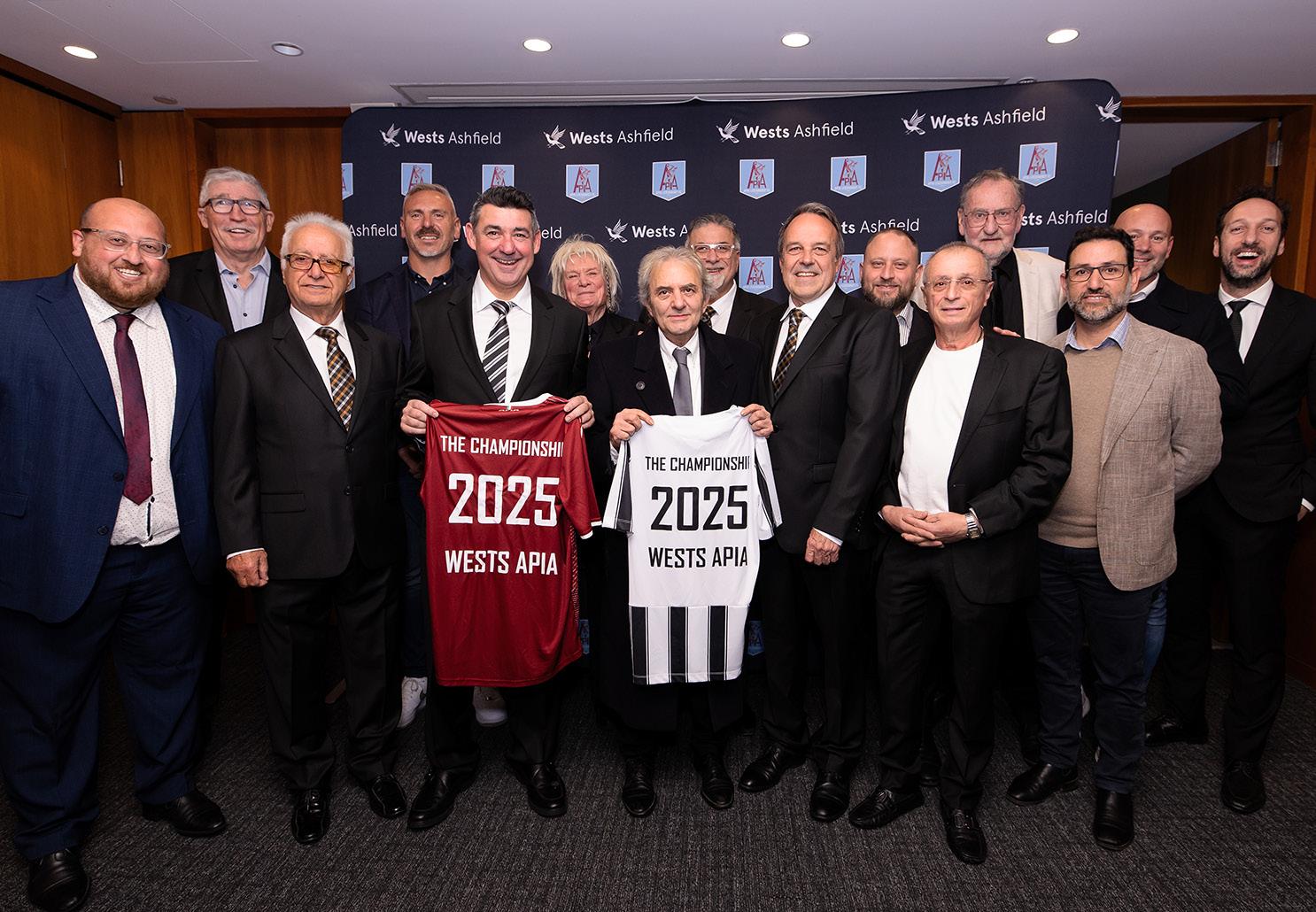
“The timing is great, and the feeling in the room when we signed the agreement was fantastic.”
Beyond headline partnerships, the group continues to support grassroots sport. In 2025, it contributed more than $2 million across 33 sporting organisations, from junior pathways through to professional codes.
Looking ahead, Paton’s priorities are clear.
“I really want to see the projects through,” he said. “They’re a really good offering for our patrons.”
At the same time, he remains focused on the less tangible elements of leadership, including culture within the organisation and relationships with members and community.
“There is a real sense of family here,” Paton said. “Even coming from a corporate background, that’s something you really feel across our venues.”
“People are looking for experiences beyond gaming; clubs are adapting with that.”
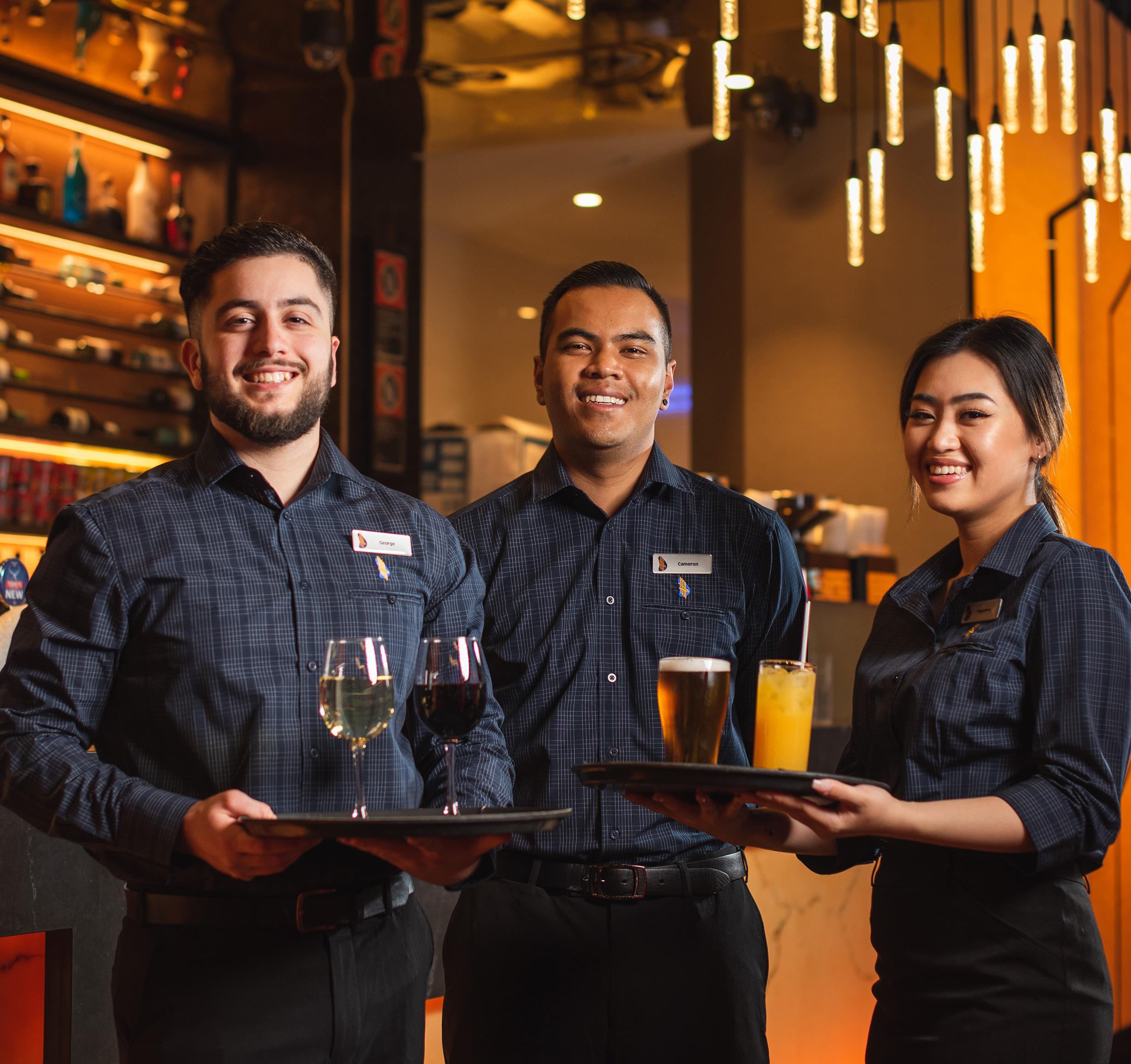
The modern gaming room is now defined by service, space and strategy.
GAMING ROOMS HAVE long been an anchor for clubs, and for many, they still are. But tightening regulation and shifting community expectations have placed venues under increasing pressure to diversify revenue.
For clubs that continue to include gaming as part of their entertainment offering, the conversation has shifted. The question is no longer simply how many machines fit on the floor, but how to deliver the best possible experience.
What was once a numbers game – machines per metre, turnover per hour – is now about how layouts, upgraded furniture and
the latest technology can help clubs deliver a premium gaming experience for patrons, while also keeping operations compliant and accountable.
Merrylands RSL, in Sydney’s west, was forced to confront this reality quickly during Covid. When restrictions mandated 1.5 metres between gaming machines, the club had little choice but to rethink its layout. This ultimately led to the introduction of the Eight Lounge, alongside its existing gaming room, the Spinners Lounge.
“We had the need to space our machines at 1.5 metres, which

“The way we operate gaming is that it’s very much about the customer experience now.”
– Chris Debrincat, Merrylands RSL group gaming manager
was a frustration at the time and a challenge… but it suddenly turned from a challenge into something that I would never change in the future,” Merrylands RSL group gaming manager Chris Debrincat said.
Today, Debrincat said that if he had his time again, he would still design a gaming room with at least 1.3-1.4 metres between machines.
He explained how the additional spacing has done more than improve comfort. It has fundamentally altered how staff interact with patrons. Conversations about drinks, welfare checks or how machines operate are no longer delivered awkwardly between chairs.
“People have come to appreciate the space,” Debrincat said.
The new layout also reinforced how the club thinks about gaming more broadly.
“The way we operate gaming is that it’s very
much about the customer experience now,” Debrincat said.
He said while “old-school thinking” focused on metrics such as serving a patron a drink within three minutes of siting at a gaming machine, the real point of difference lies in customer service.
If patrons are left to work systems out for themselves, he said, the experience slows and frustration builds.
“You’ve got to be engaging with customers. Customers will get frustrated if they wait too long to get paid out or if they’re underpaid,” Debrincat explained.
“You need staff to be able to be there and explain how it all works and guide them through the process because if you’re just going to rely on customers to work it out themselves, then it’s going to be a bad experience.”
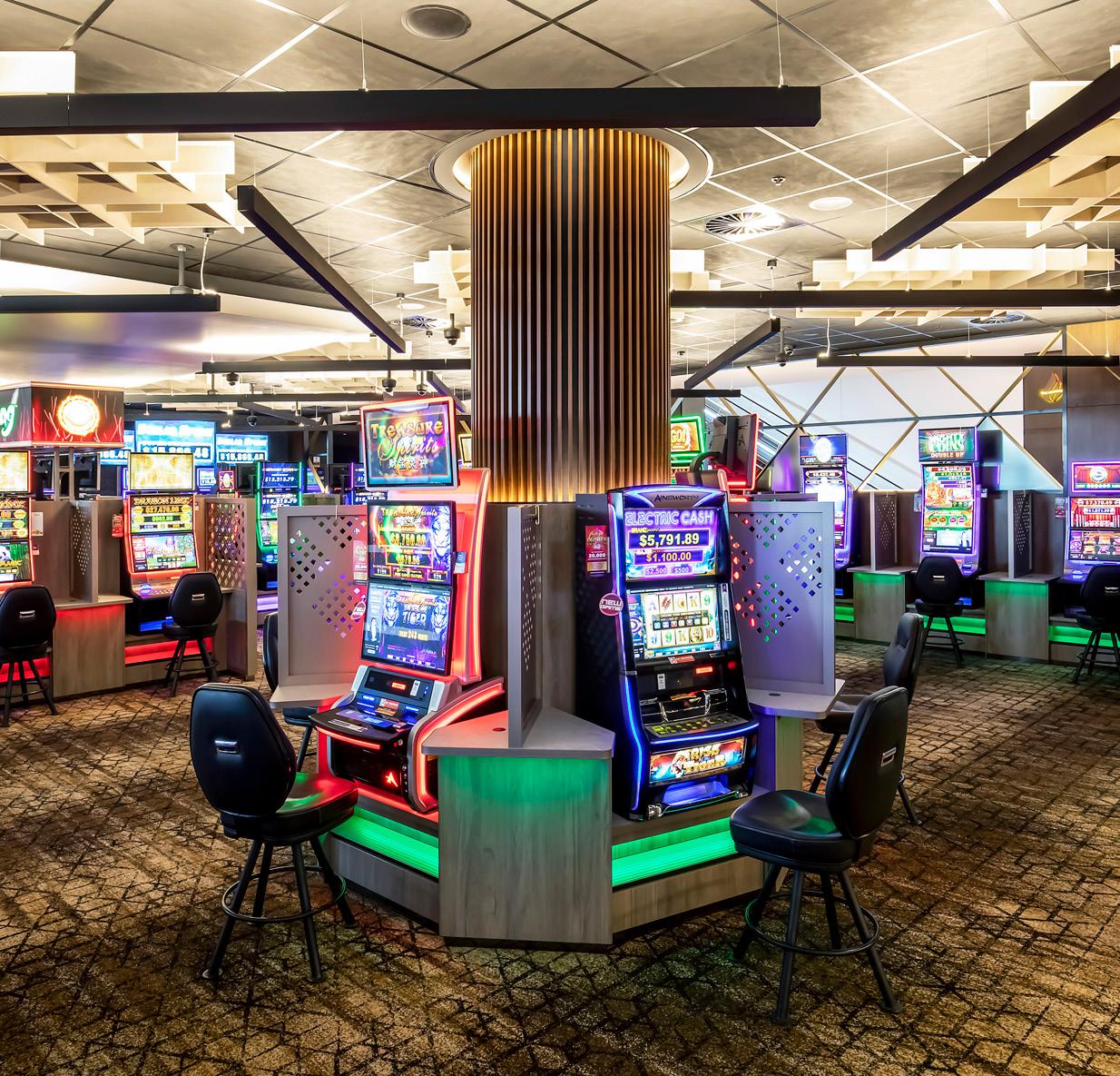
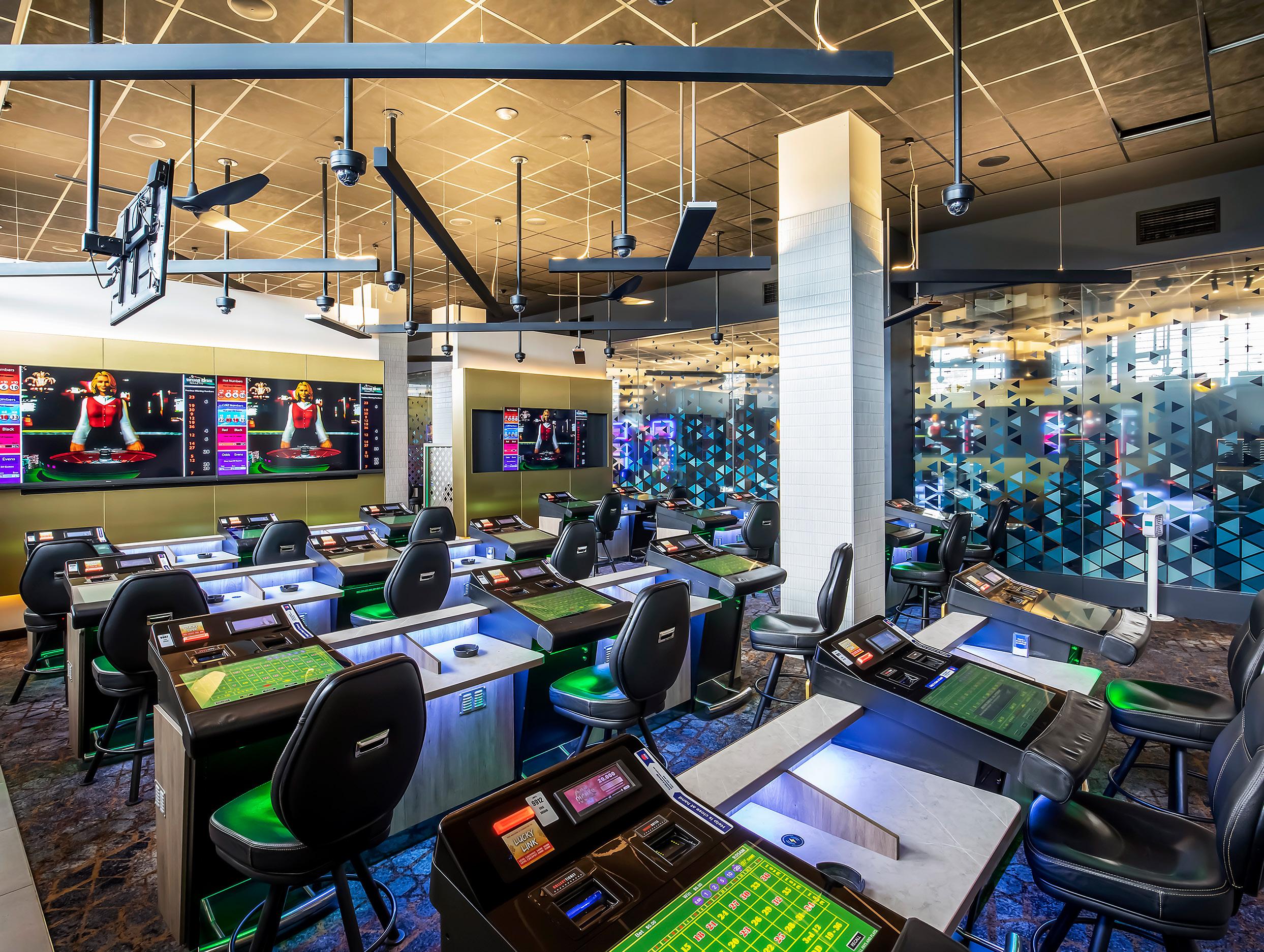
Kathy Sollars from Nufurn Commercial Furniture shares what clubs should be thinking about when considering a gaming room refresh.
1. Start with the experience brief. What is the patron mix? How long do they sit? What does premium mean for your venue?
2. Design for space first, then seating. Confirm the spacing between machine, circulation and service access before selecting stool sizes, backs or arms.
3. Invest in what you can’t see. Mechanisms, foam and frame construction determine durability and long-term comfort. “That’s where comfort and durability actually come from,” she said.
4. Mix stool types strategically. Include standard stools alongside a small percentage of luxurious, arm, or VIP positions, if your layout and budget allow.
5. Trial before committing to a full roll out and build a simple maintenance plan for cleaning, inspection, and glide replacement.
For Sollars, the key mistake operators make is focusing on aesthetics or unit price alone. A gaming room refresh, she said, should be approached as a long-term investment in comfort and performance.
Removing friction with technology
To support that customer-focused approach, the club partnered with Next Payments to upgrade its payment infrastructure, a move Debrincat said was initially driven by accountability.
To support that customer-focused approach, Merrylands RSL partnered with Next Payments to upgrade its payment systems, a move Debrincat said was initially driven by accountability.
The club began using Next Payments’ recyclers almost 10 years ago to improve security and strengthen audit controls. An upgrade to Next ATMs happened soon after. This was followed by the introduction of GSL loyalty card, known as Lucky Pay, to allow members to use points for purchases inside or outside the club.
More recently, the club began trialling a new cash redemption terminal (CRT) in one of its busiest locations within its gaming room floor.
Reducing back-end friction ultimately protects the front-of-house experience, according to Debrincat.
“Eighty per cent of our issues or discrepancies come from human error,” he said. “If we can remove or minimise that, we should reduce our errors by 60 to 70 per cent.
“The more time the staff can spend on the floor with customers, the better.”
The club’s approach to gaming compliance has also been reframed. Rather than treating regulation purely as restriction, he said the club tries to understand the intent and realise the opportunity.











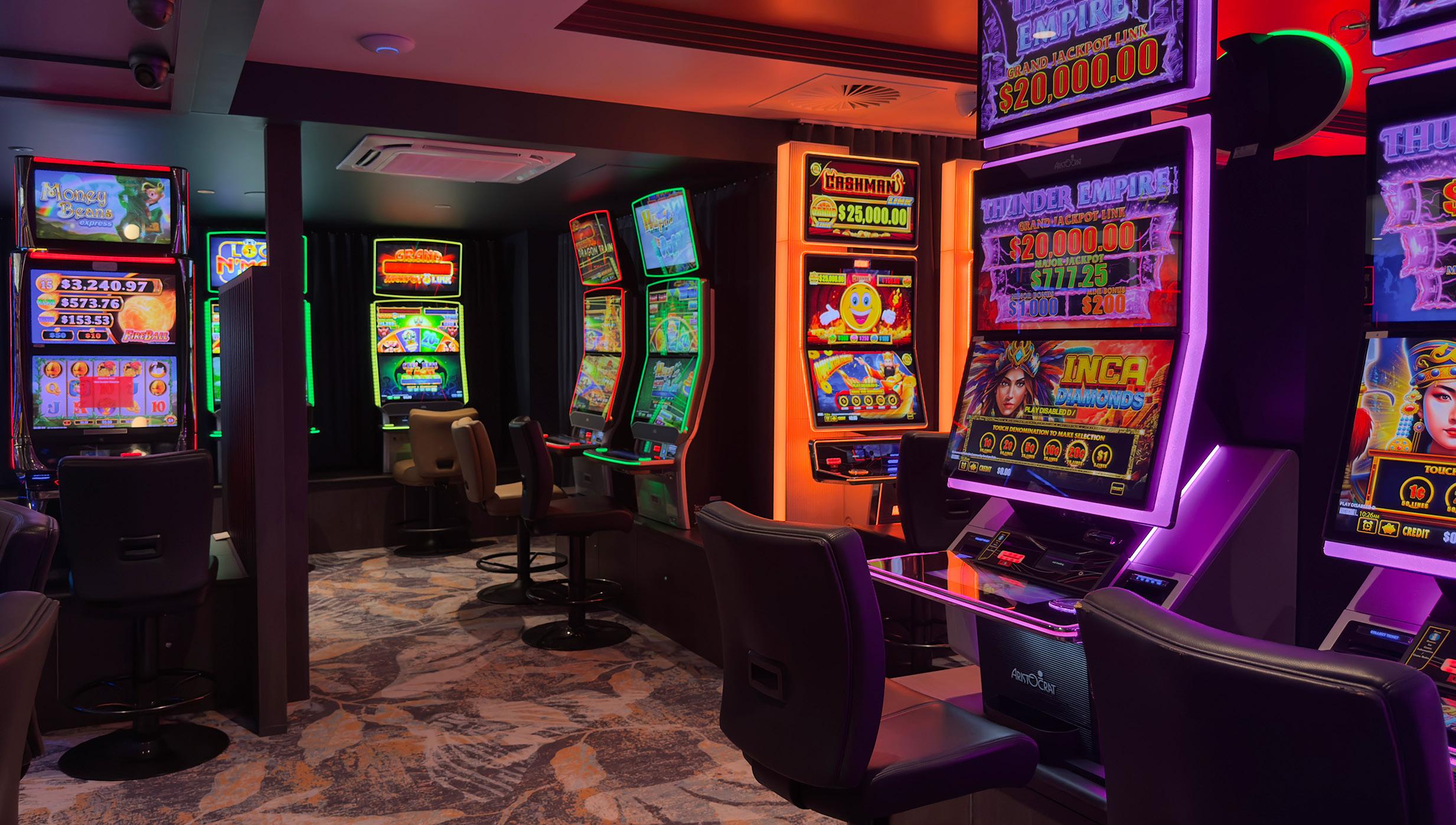
The integration between service, systems and compliance is not unique to Merrylands RSL. As Roisin Selvarajoo, marketing manager at Next Payments, explained, payment infrastructure increasingly influences gaming room design from the outset.
“It begins with compliance. Operators must understand state-based regulations surrounding EGMs, ATMs and CRTs, including what can and cannot be placed within or near the gaming area. These requirements immediately influence layout, visibility, and positioning,” she said.
“From there, practical considerations come into play, including spatial planning, power and data requirements, ease of servicing, and how equipment placement supports natural patron flow across the floor.”
Beyond compliance, Selvarajoo said payment touchpoints can also directly influence patron behaviour.
“Across thousands of gaming venues throughout Australia and New Zealand, we consistently see that friction at payment touchpoints directly impacts revenue,” she said.
When devices are slow or unreliable, she said patron confidence erodes, even if the issue is not caused by the venue itself.
“Consistent, easy-to-use payment solutions help maintain uninterrupted play,” she said.
Importantly, she added, the value of payment technology extends beyond hardware.
“Tying it altogether is data … with real performance insights guiding decisions, venue operators can design gaming rooms that are compliant, efficient and strategically optimised, driving stronger outcomes well beyond aesthetics alone,” Selvarajoo said
While technology is reshaping how gaming rooms operate, some clubs are also reconsidering who those spaces are designed for.
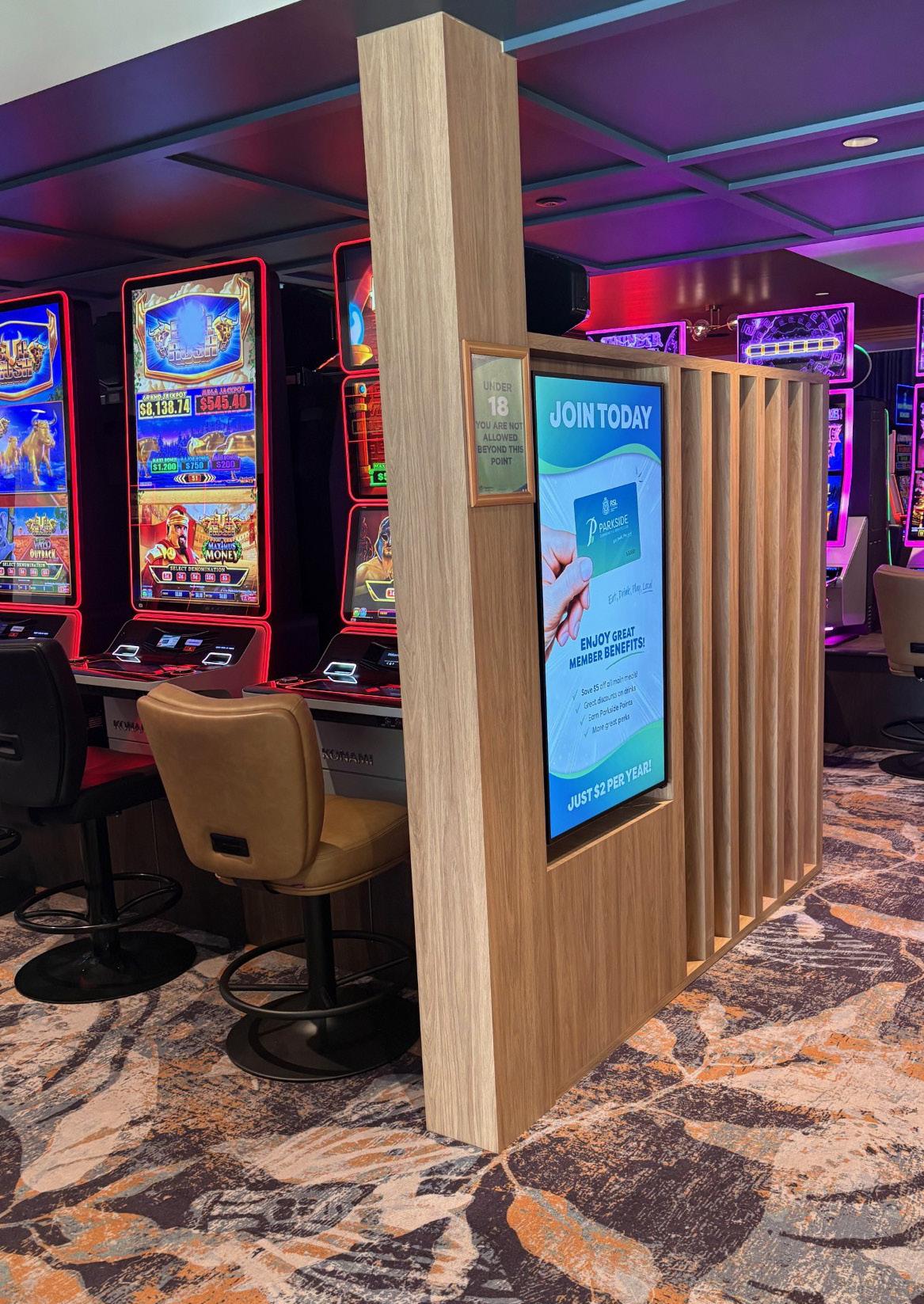
When Parkside Community and Services Club, formerly known as Coorparoo RSL, moved into its new home, it had the opportunity to rethink who its gaming environment was designed for.
CEO Chris Sartori said that following a feasibility study of the surrounding suburb and broader strategic planning, the inner Brisbane club realised it was “really dropping the ball when it came to the female market”.
“When we were building the new club, it was to make sure that the decor and the feel of the club was a little softer and, unashamedly, a little bit more feminine,” he said.
That thinking extended into the design of the club’s new gaming lounge.
“Nowadays, the gaming player is looking for comfort,” Sartori said. “Creating space between machines was important. Parts of the floor maintain a level of privacy, which is important to a lot of players. But there’s an element of connection too that some players appreciate.”
“Venues are pushing gaming rooms to feel like a destination.”
– Kathy Sollars, Nufurn Commercial Furniture general manager

That shift toward comfort and intentional design is something that Kathy Sollars, general manager of Nufurn Commercial Furniture, is also seeing. She said gaming rooms are increasingly being designed to feel more like premium lounges than a “pokies corner”.
“Venues are pushing gaming rooms to feel like a destination with warmer lighting, softer finishes, and seating that looks intentional –not purely functional,” she said.
The aesthetic shift, she said, reflects rising patron expectations, with higher backs that offer better lumbar support, plusher seats and improved ergonomics, not merely as luxury add-ons but as standard features.
Sollars added that commercial-grade vinyls and heavy-duty upholstery are being selected for longevity and ease of cleaning in high-touch environments, while moulded fire-retardant foams are preferred for their ability to retain shape and comfort over time.
“Venues are much more aware that the mechanism is where cheap stools fail first,” she said.
Aesthetically, she said, the look has also matured. “Customisation is increasingly popular. Venues want stools to look like it belongs specifically to their room and brand, rather than a generic off-theshelf fit.”
Together, these shifts show how gaming rooms are evolving. Clubs are increasingly taking a holistic approach to balancing comfort, design, and technology with maintaining compliance to create a superior gaming experience for patrons.
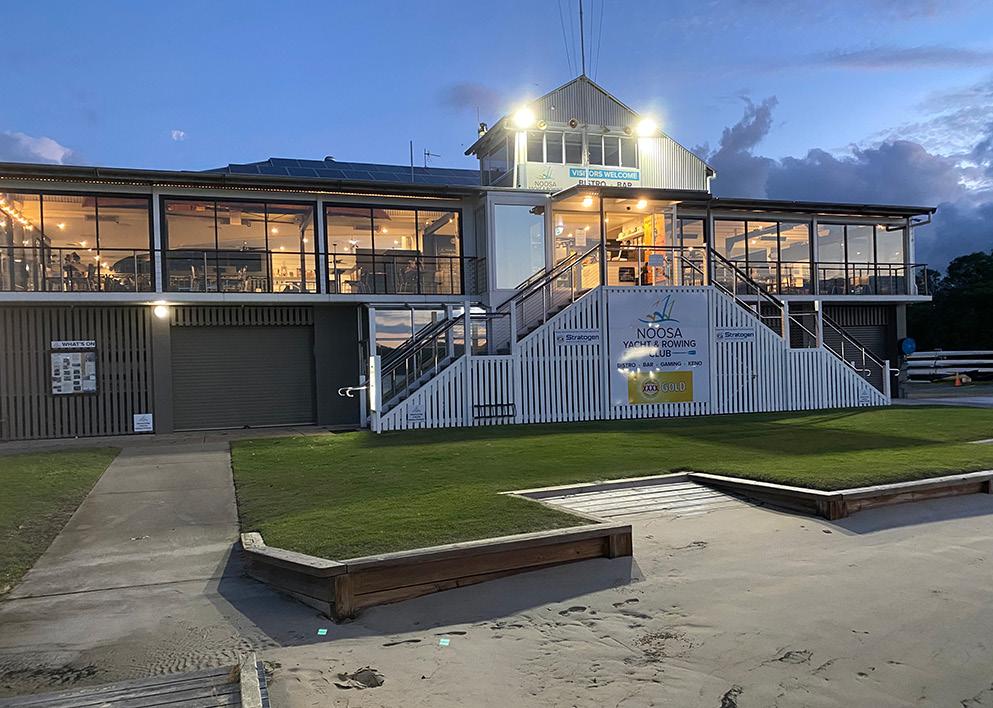
While many clubs continue to reinvest in their gaming floors, Noosa Yacht and Rowing Club has chosen a different path.
As part of its recent renovation, the club made the bold decision to remove its gaming room entirely. Venue manager Ashley Little said the decision had been years in the making.
“I planted a seed with the board approximately 10 years ago,” Little said. “I asked them if they realised the club could survive without pokies. They were unaware and thought pokies were a necessity to survive.”
When renovation planning began, the opportunity to test that assumption became real.
“Financial forecasts were extensively calculated, and it was a calculated risk that the club could survive without gaming,” Little said.
The numbers told a compelling story.
“The club’s food sales netted three times that of the net revenue from gaming,” Little said. “The club’s beverage sales netted five times that of the net revenue from gaming.”
From those calculations, the club decided as part of the renovations it would double down on its hospitality offering.
“The idea was to build a venue that focused on exceptional food and beverage offerings, which in turn could replace the lost revenue from gaming,” Little said.
The transition away from gaming was staged. Keno was removed approximately 18 months before the renovations took place, and the club became a non-smoking venue 12 months prior. Initial feedback from patrons validated the club’s direction.
“[It was] overwhelmingly positive, which is why we continued down this path,” Little said. “The positive feedback wasn’t limited to staff and members; it was from the greater community.”
While acknowledging that many clubs rely heavily on gaming revenue, Little said the strategy is clear.
“We are going to provide exceptional food and beverage offerings,” he said. “Our goal is to provide these offerings better than most other pubs or clubs can, while keeping pricing affordable.”

Cognitec uses ground-breaking facial image matching and analysis technologies to identify persons of interest in real time, cluster images of the same person over time, and compute demographic and behavioral data.
Let us show you a live demo at the Australasian Hospitality Expo!
Cognitec is the only company worldwide that has worked exclusively on face recognition technology since its inception in 2002. www.cognitec.com | sales@cognite.com
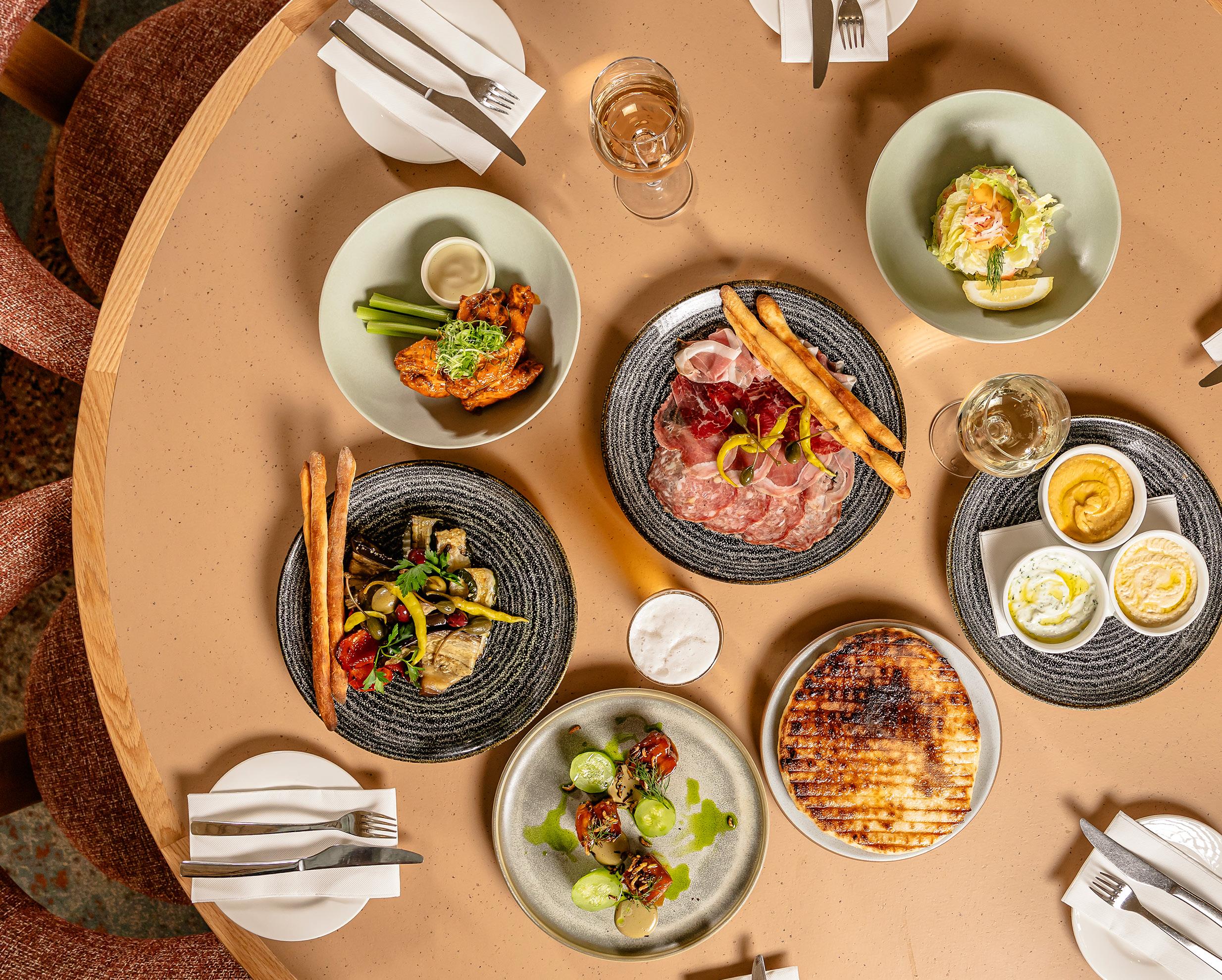
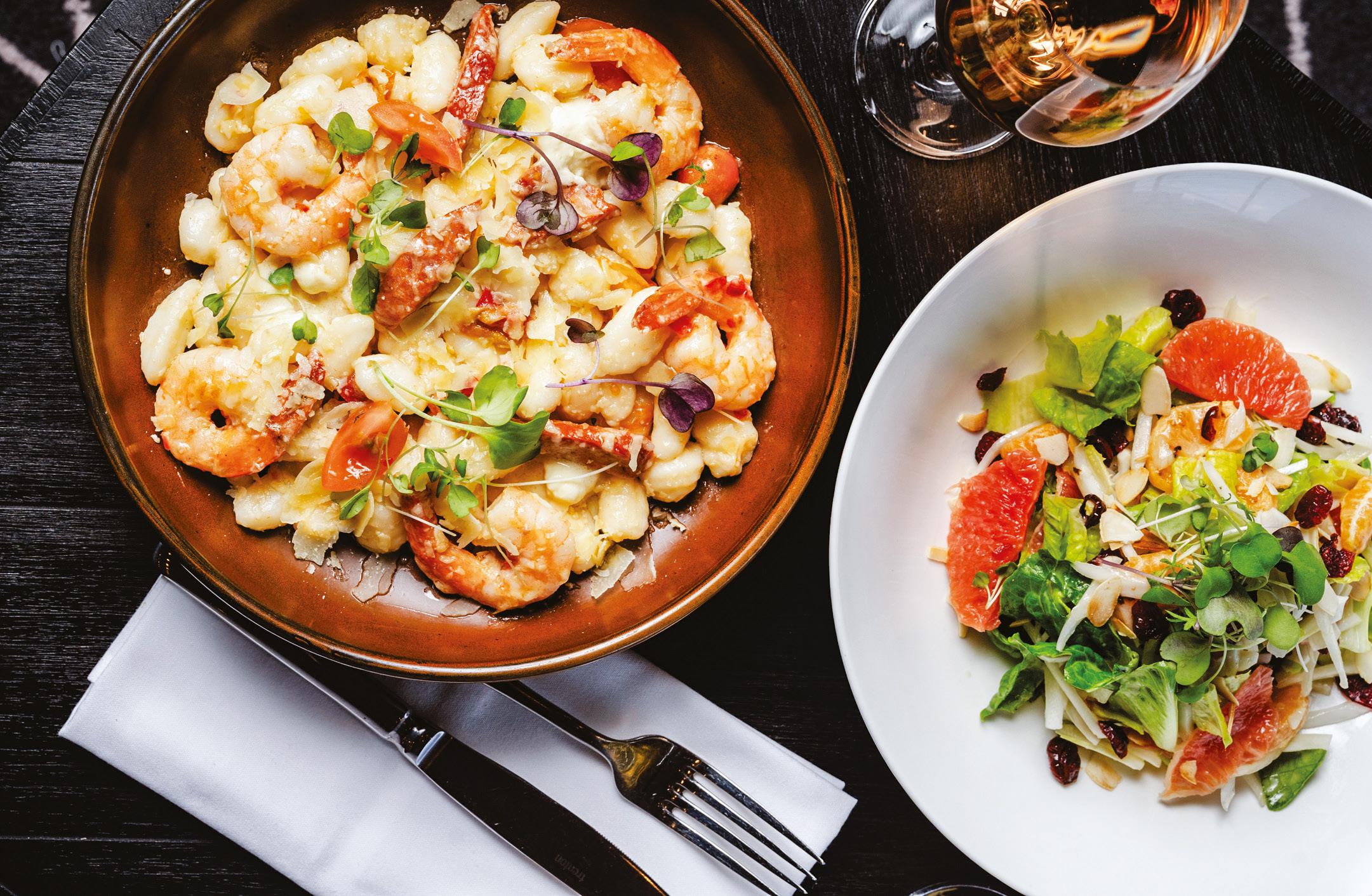
Once known for predictable bistro fare, clubs are repositioning food and beverage at the heart of their offering with chef-driven menus and dining experiences at prices still affordable to patrons.
FOR THE LONGEST time, dining at a club followed a familiar script. Clubs were dependable, affordable and local, but rarely aspirational. Menus leaned heavily on comfort staples, often relying on pre-packaged or pre-made ingredients. Food was largely viewed as a supporting act to gaming, sport and other entertainment.
That model is being dismantled.
Across the industry, clubs are shifting food and beverage to be at the centre of their strategy. Creative chef-driven menus, premium ingredients, inventive cocktails, and stylish interiors are turning the local club bistro into a dining destination.
That change is already underway at the Broncos Leagues Club, which recently appointed Michelin-trained chef Mark Penna as executive chef (Turn to page 60 to read more about Penna)
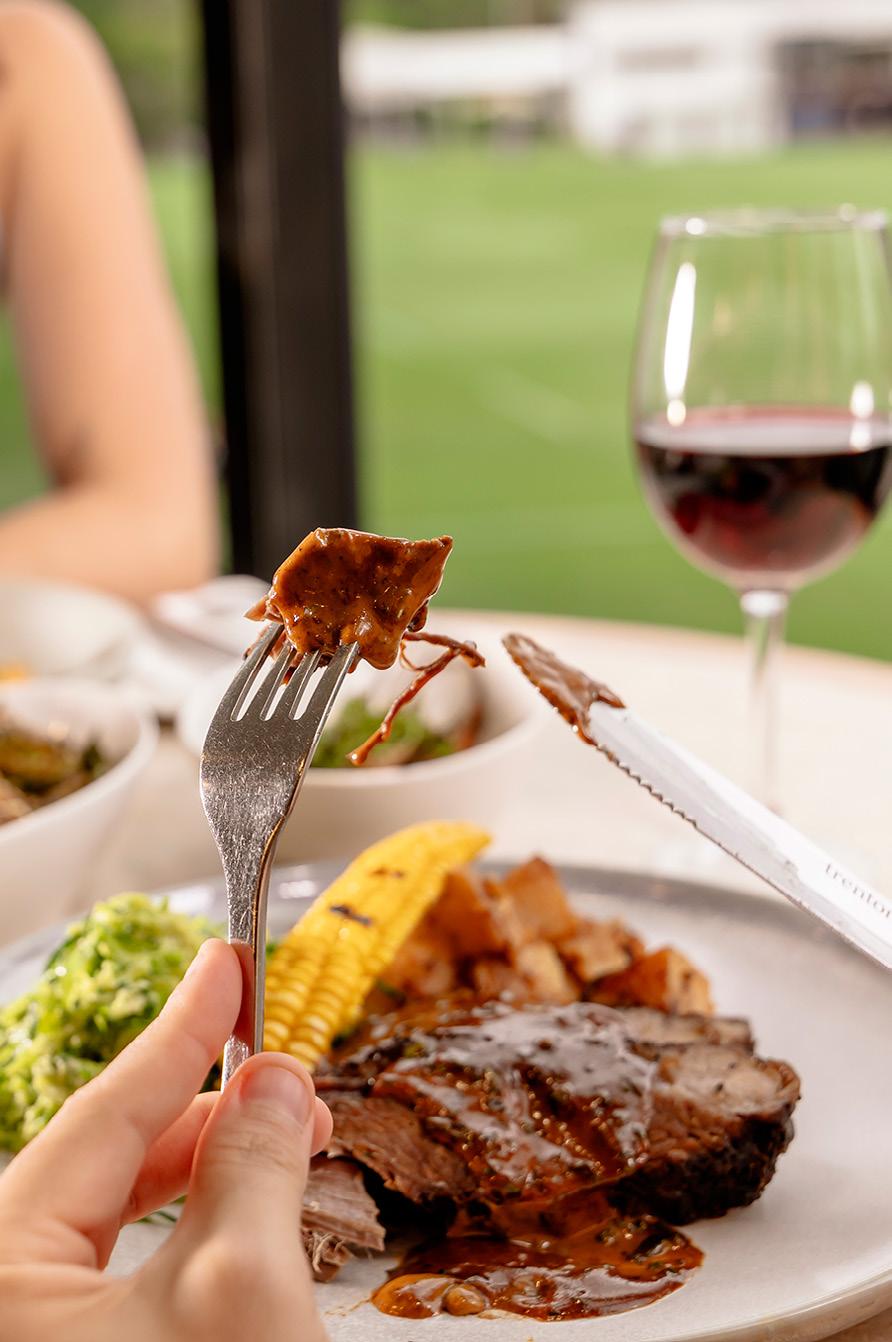
At The Grill, the club’s newly renovated restaurant, Penna is delivering what he describes as elevated dining, anchored by highquality steaks, including a chef’s selection of premium and awardwinning wagyu cuts.
Rather than relying solely on a fixed menu, Penna complements The Grill’s core offering with a rotating blackboard menu that allows flexibility week to week.

“It is really expensive to provide a service, so we have to be smart about how we do it.”
– Mark Penna, Broncos Leagues Club executive chef
“We’ll have things like rissoles, sausages and stroganoff,” he said. “It might be stroganoff one week and beef bourguignon the next.”
That flexibility, he said, reduces waste and improves margins.
“I’m cutting my own meats here, so from that I’ll end up with offcuts,” he said. “I can put those offcuts into a mincer and turn it into bolognese, rissoles or sausages. It’s about being smart and using everything.”
Penna said delivering high-quality food in a club environment is not without its challenges, particularly amid rising supply chain costs.
“It is very tricky, because everything is expensive. [Clubs] can’t buy ingredients any cheaper,” he said.
“Then, we have to pay someone to deliver it here and pay someone to cook it. It is really expensive to provide a service, so we have to be smart about how we do it.”
For Penna, the distinction between simply cooking and considering cost control is critical.
“Being a chef and being a cook are two different things,” he said. “You need to be able to take waste and turn it into money. A lot of chefs these days have lost the ability to actually
cook and therefore lose the ability to control their costs because everything comes preportioned or packaged.”
Penna’s approach to cost control also extends to sourcing. He avoids frozen products, opting instead for fresh, daily-prepared items.
“I’m meeting with suppliers and asking if they can give me freshly crumbed schnitzels every day. If they say no, okay, next supplier.”
Years working in Brisbane has helped Penna develop a strong supplier network, which he said has been essential to keeping prices down.
“It allows me to keep the prices of the blackboard menu approachable,” he said. “On the flip side of that, I can also offer new dishes to new guests and bring back people to the club … and get them to sign back up.”
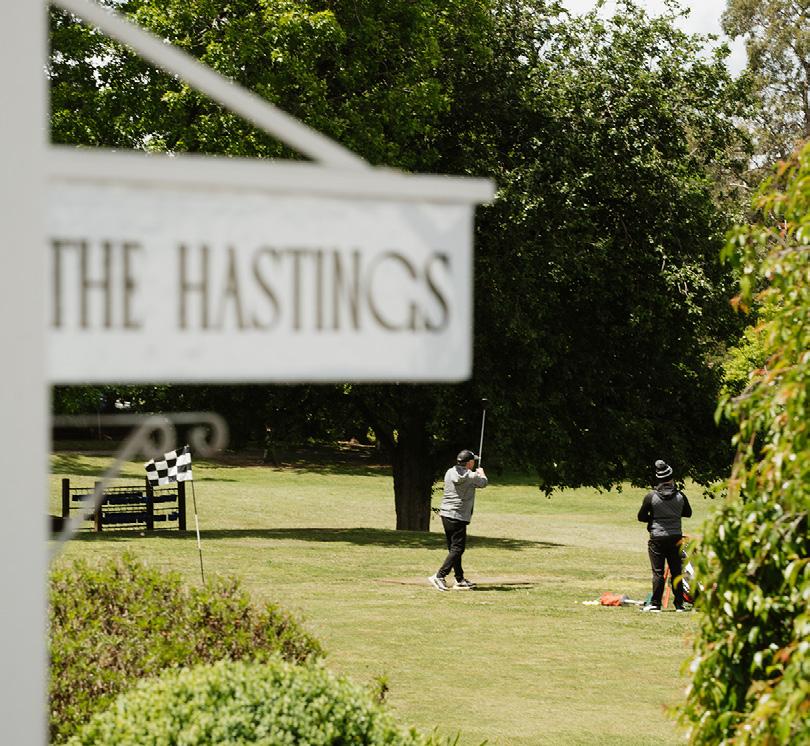
Bowral Golf Club in the Southern Highlands of NSW is another venue that has reconsidered the role of food and beverage. After years of using a mix of in-house and external caterers, the club engaged Barrington Group Australia to deliver the latest iteration of its on-site restaurant, The Hastings.
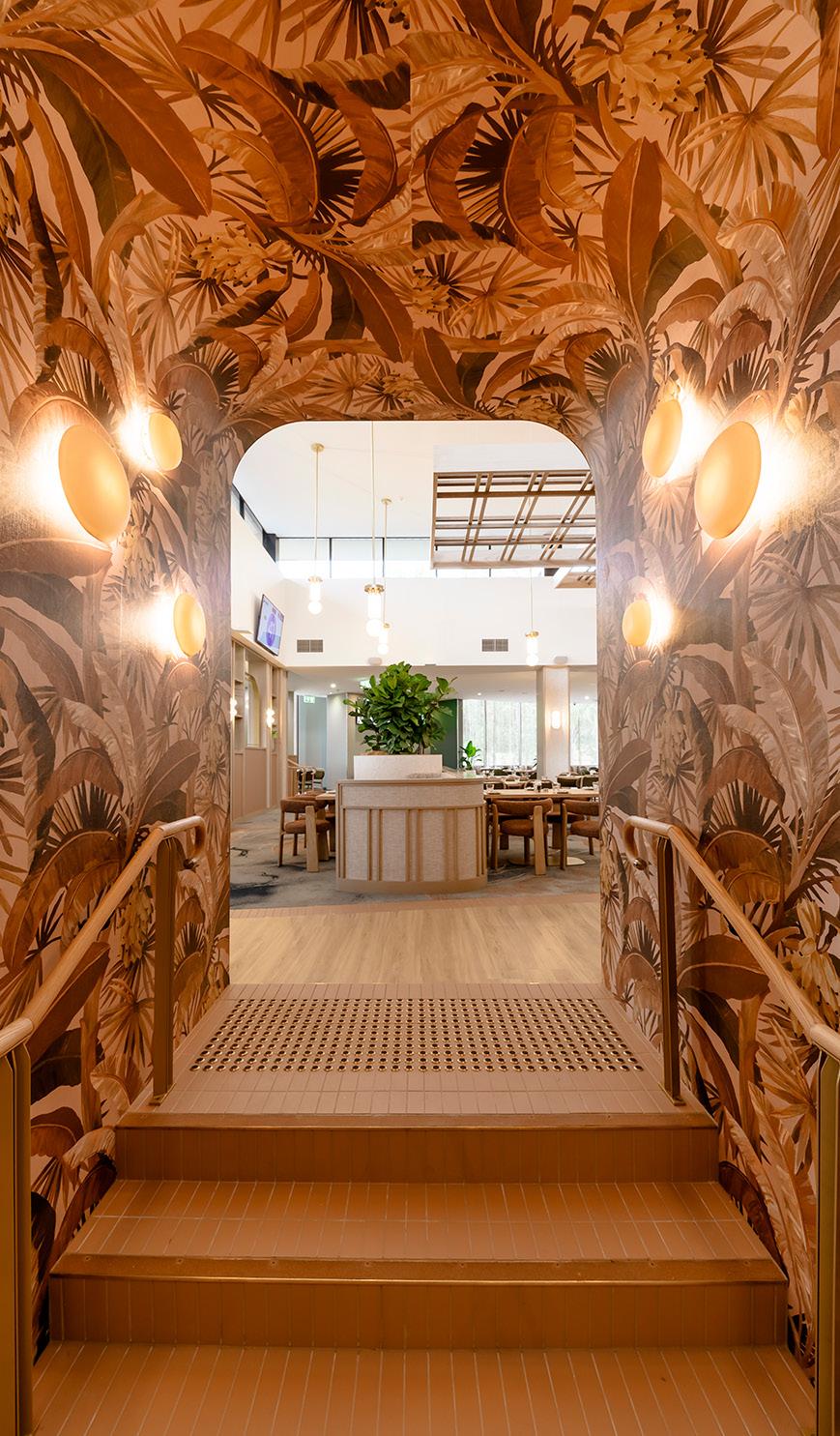
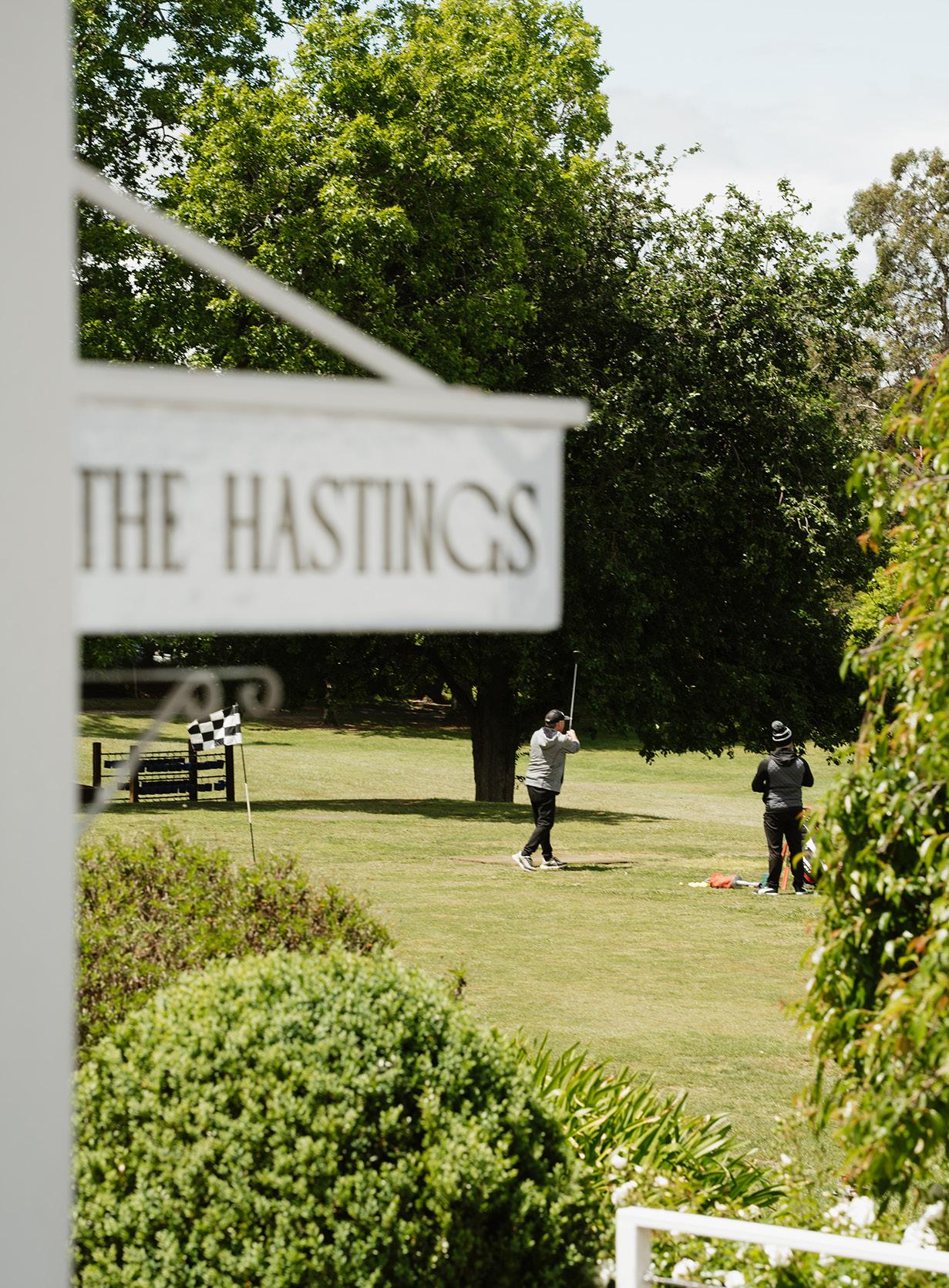
“At the time, the club was seeking a fresh approach to food and beverage and an opportunity to enhance the overall member experience,” Barrington Group Australia marketing lead Talia Reedy explained.
“Together with Bowral Golf Club, we have reimagined the club as a refined social destination, featuring a vibrant bar and restaurant, a coveted wedding location, and the Southern Highlands’ go-to venue for curated events from birthdays and engagement parties to milestone celebrations.”
The venue pays tribute to local legend Hastings Clark, a pivotal figure in Bowral Golf Club’s history who served as its golf professional for more than 50 years.
“Naming the clubhouse in his honour gives the venue a meaningful connection to the club’s history and the region’s sporting legacy,” Reedy said.
Unlike the club’s previous dining concepts, The Hastings operates as a standalone identity, which Reedy said was intentional.
“Establishing The Hastings as a standalone identity allowed us to differentiate it from the traditional club and create a space that works for a wide range of experiences,” she said.
At The Hastings, that shift is visible in both the menu and the setting. The menu features family-style share plates such as triple cheese croquette; rockmelon carpaccio with prosciutto and stracciatella; and crab cakes with creme fraiche.
This is supported by a beverage program featuring local wines, celebrated vintages and classic cocktails, alongside an alwaysreliable selection of cold beer.
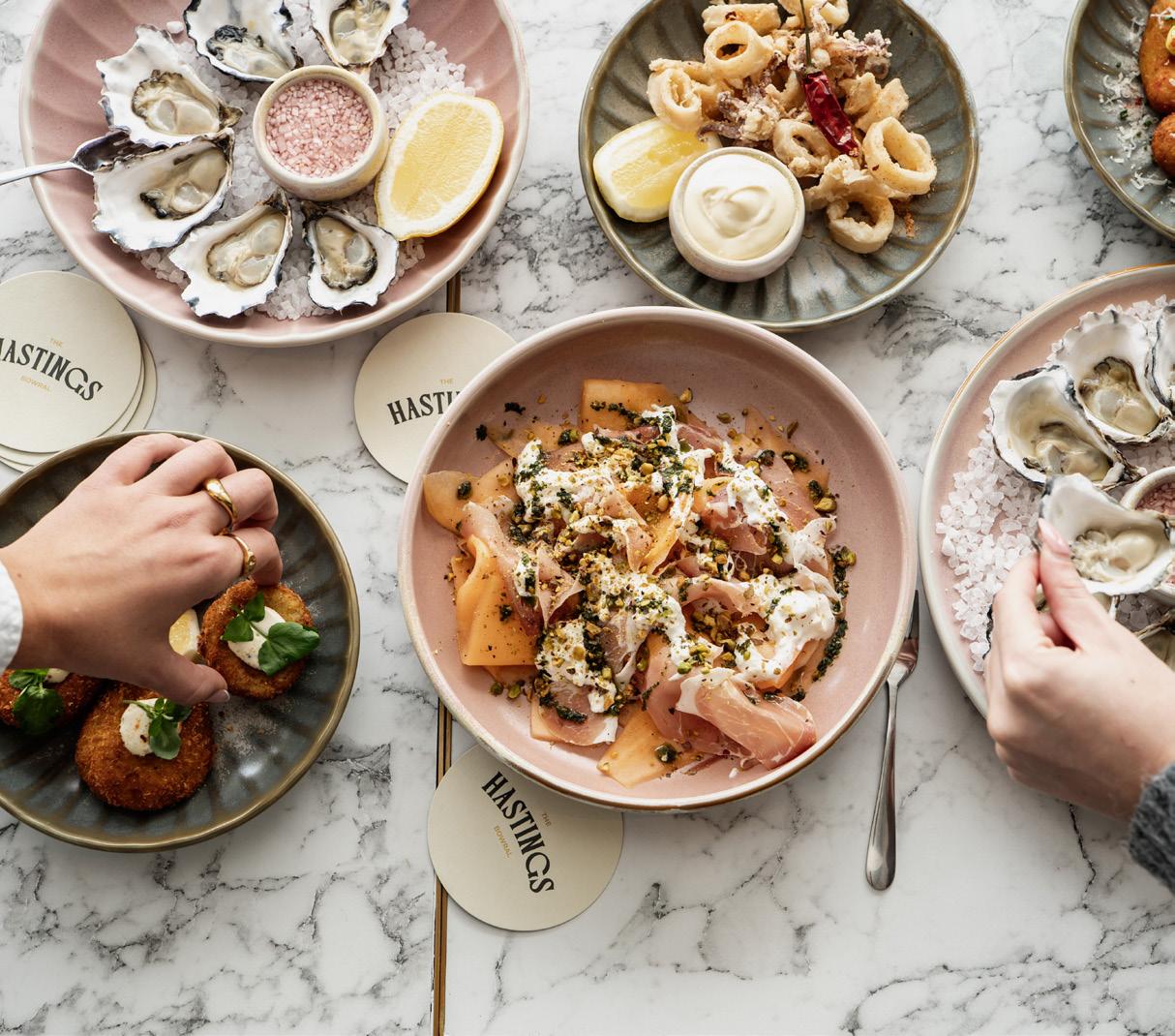
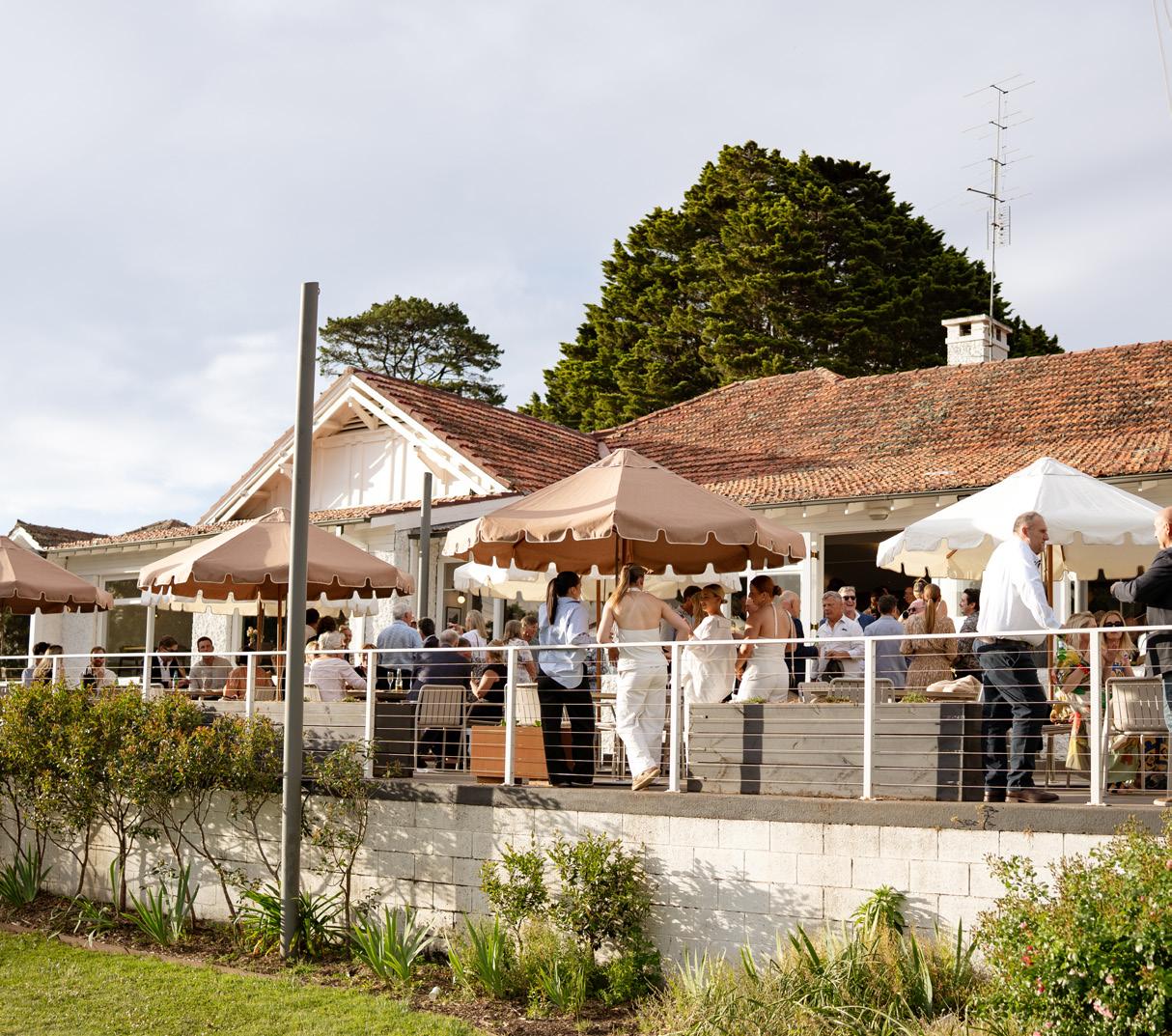
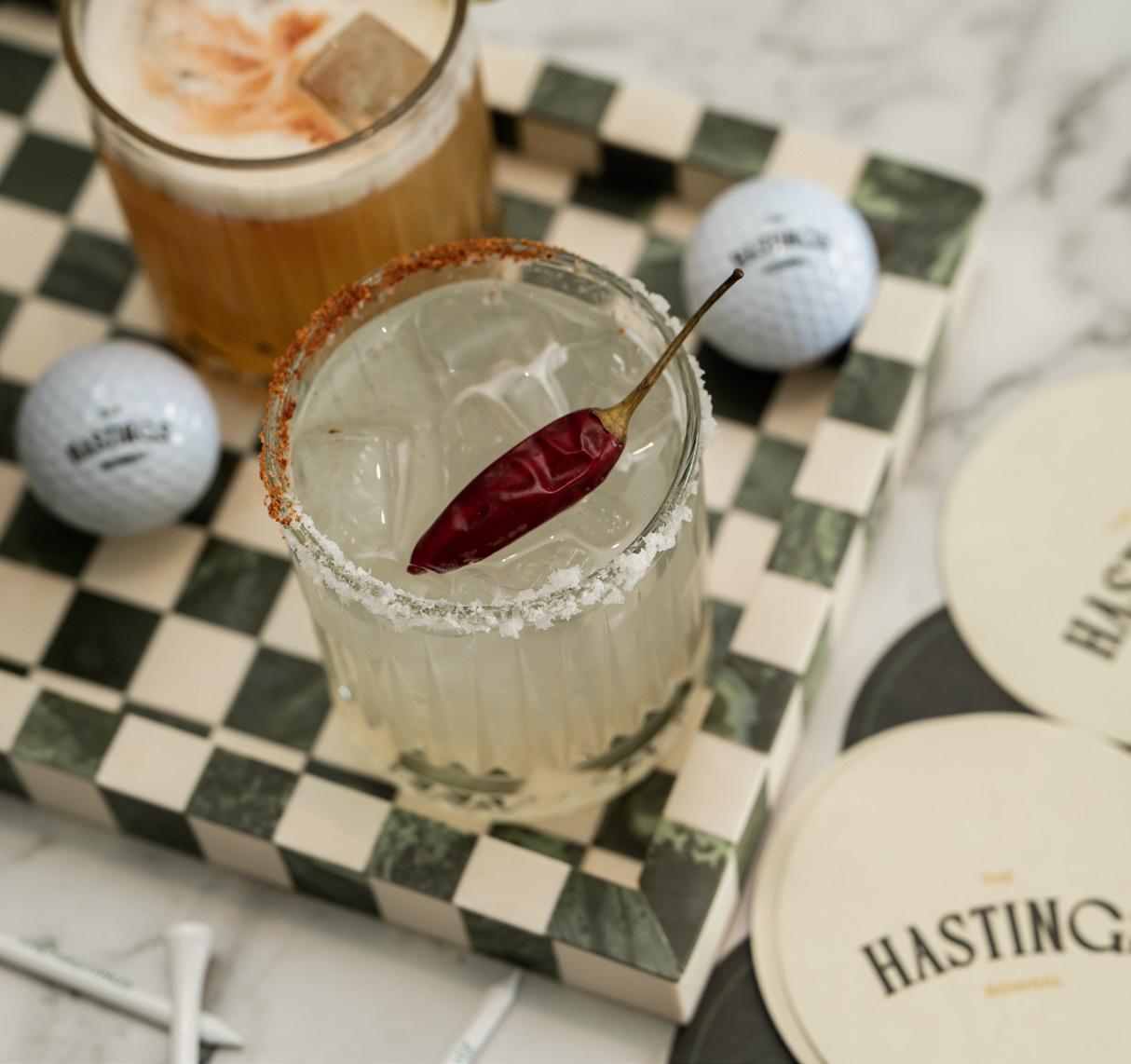
“Whether it is a casual catch-up, post-golf drinks, or a styled celebration, every offering is designed to enhance the relaxed yet refined atmosphere and create memorable experiences for guests,” Reedy said.
Reedy believes the restaurant’s repositioning reflects a wider industry movement.
“Club dining is evolving as members expect high-quality food, memorable experiences, and flexible spaces, driven by changing expectations and increased competition from restaurants, cafes, and other hospitality venues,” she said.
“Delivering a distinctive, well-rounded experience has become essential for clubs to stand out.”
Georges River Sailing Club in Sydney’s south has taken a similarly ambitious view of what club dining can be, with the introduction of Porta Dining, a Mediterraneaninspired restaurant.
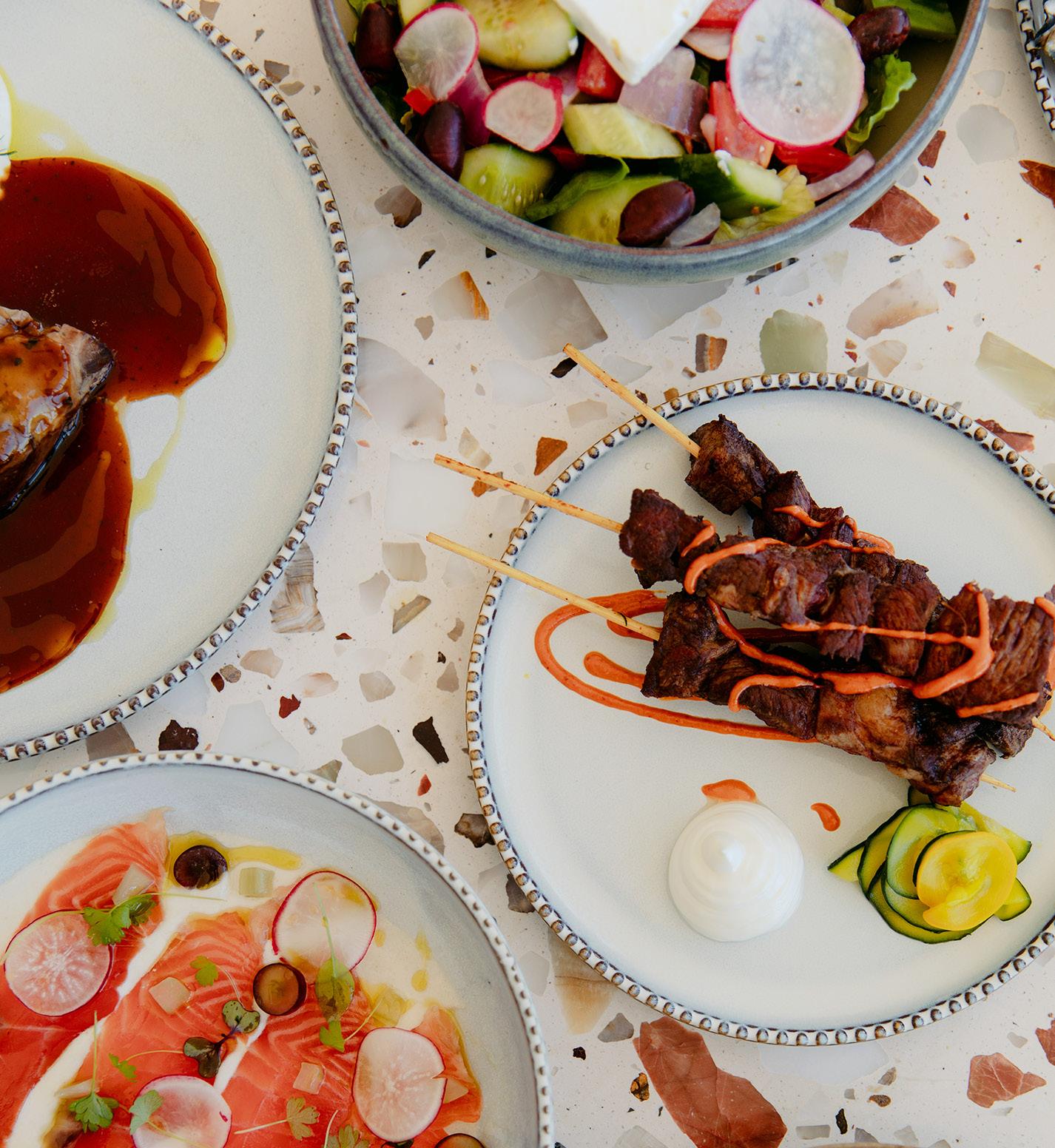
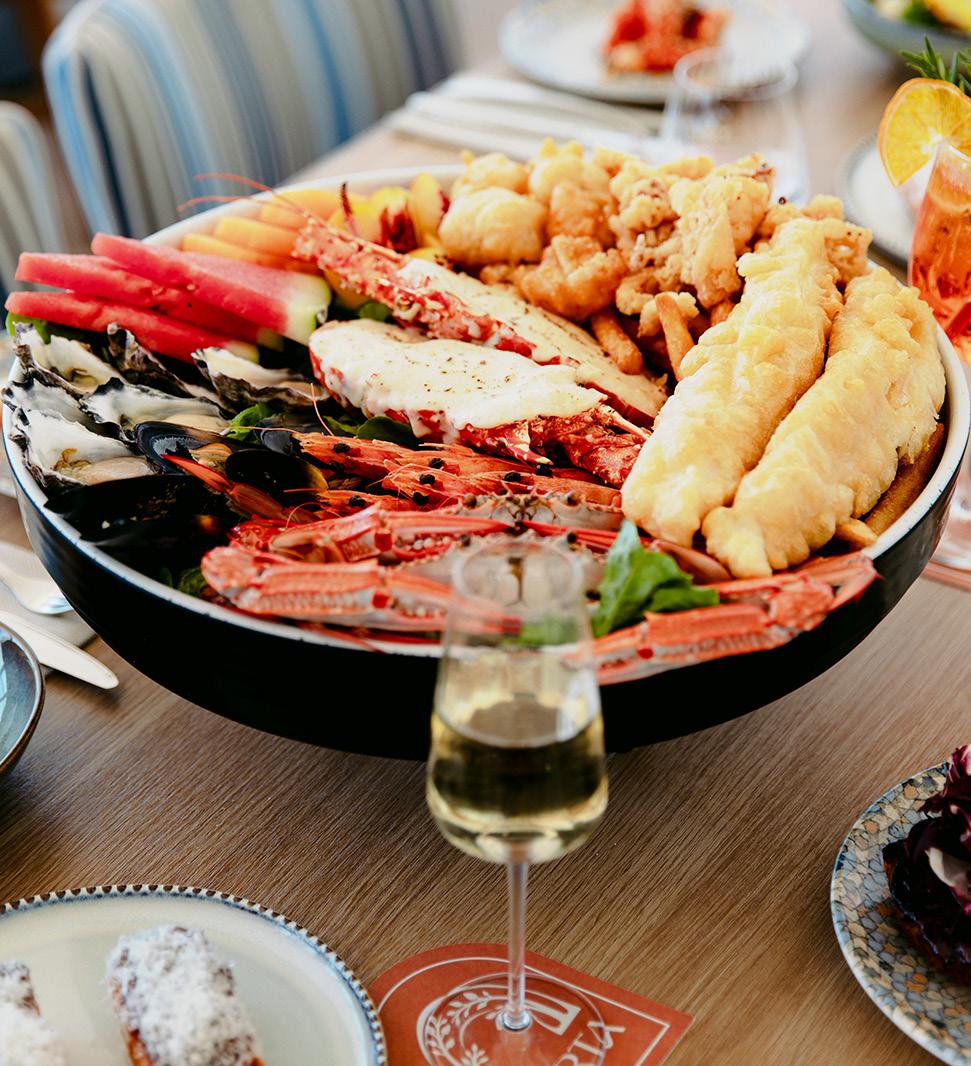
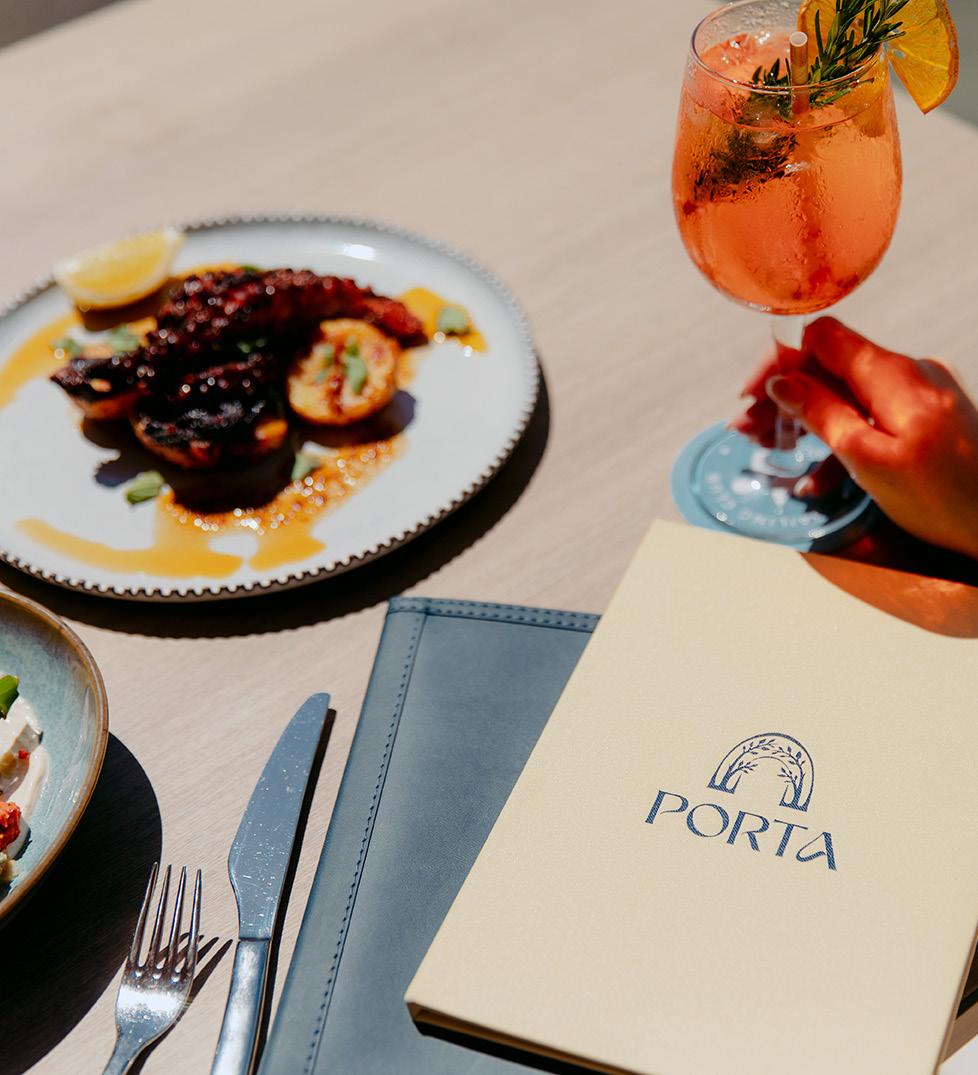
When it launched, the club took a punt and introduced a dining experience more akin to a standalone restaurant than a club bistro. It replaced traditional counter ordering with full table service and embraced a shared food concept. The menu itself also steered away from traditional bistro fare, instead nodding to the club’s local Greek community, with dishes such as grilled Fremantle octopus, slow roasted lamb shoulder, and Daintree Saltwater Barramundi, which all emerged as early favourites.
Potato bun 4.5"
Super soft, savoury taste
Distributor (9108)
Direct (2012)


MILK Style BUN 4.5"
Slightly sweet flavour & glazed
Distributor (9141)
Direct (3009)
gourmet BUN 4.5"
Soft white, seeded & glazed
Distributor (9142)
Direct (3010)
brioche style bun 4.5"
Sweet buttery taste & glazed
Distributor (9295)
Direct (2011)


“When people go out, especially to their local club, they want … a really great experience, something unique to them.”
– Steve Dabin, Georges River Sailing Club general manager
The club also partnered with acclaimed mixologists Maybe Sammy Group to develop a more elevated cocktail program, bringing a style of bar experience rarely associated with traditional club spaces.
General manager Steve Dabin said the decision to do something a little different reflected the changing expectations of patrons around food.
“Going back even 10 or 15 years, [club food] was very traditional, based on your basics, your club classics, your parmigianas, fried food, your burgers,” he said.
“But the way it has really evolved now is when people go out, especially to their local club, they want to feel welcome and they want to feel like they have had a really great experience, something unique to them. That’s what we’ve tried to achieve.”
While the model was initially well received, member feedback revealed that tradition still carried weight.
“What we were doing previously was offering full table service, and whilst that was spectacular and well received, people still valued the traditional way of ordering,” he said. “They are still going to their club to be at a club, rather than going to a restaurant.”
Rather than resist that feedback, the club adapted. A more traditional bistro-style experience was reintroduced through QR code ordering and counter service, the menu was simplified and a number of bistro classics added back in.



“We get a lot of group bookings here of sometimes 20-plus [people], and there’s always three or four that just want something traditional, so we want to cater to those people as well,” Dabin said.
Despite the operational changes, head chef Khanh Nguyen said Porta’s core philosophy has remained unchanged, with the menu still built around using fresh local produce and creativity.
“Old school clubs brought in products and relied on pre-bought food,” he said. “We try to emphasise fresh ingredients. Freshness is always going to win. Yes, on the labour side it’s harder, but it speaks for itself when you make everything.”
Nguyen said the evolution of Porta has also been a personal and professional challenge, after working in high-end kitchens and choosing to apply those skills in a club environment. For him, the role was an opportunity to shift both the mindset of his staff and patrons.
“It’s the challenge of coming in here and changing the mentality of the guys in the kitchen,” he said. “Even though you’re in a club, it doesn’t have to be like that. You can use your restaurant skills and slowly build it up. It’s about educating the customers and the staff.”
Dabin added that mindset shift is also evident beyond the kitchen.
“Clubs are not viewed how they were before,” he said. “It is not just the traditional place to go down and have a beer. It is the place to be part of the social fabric in your community. The expectations of what our members and guests get out of that now are through the roof, and so we just try to aim to provide that.”
“It is not just the traditional place to go down and have a beer. It is the place to be part of the social fabric.”
– Steve Dabin, Georges River Sailing Club general manager
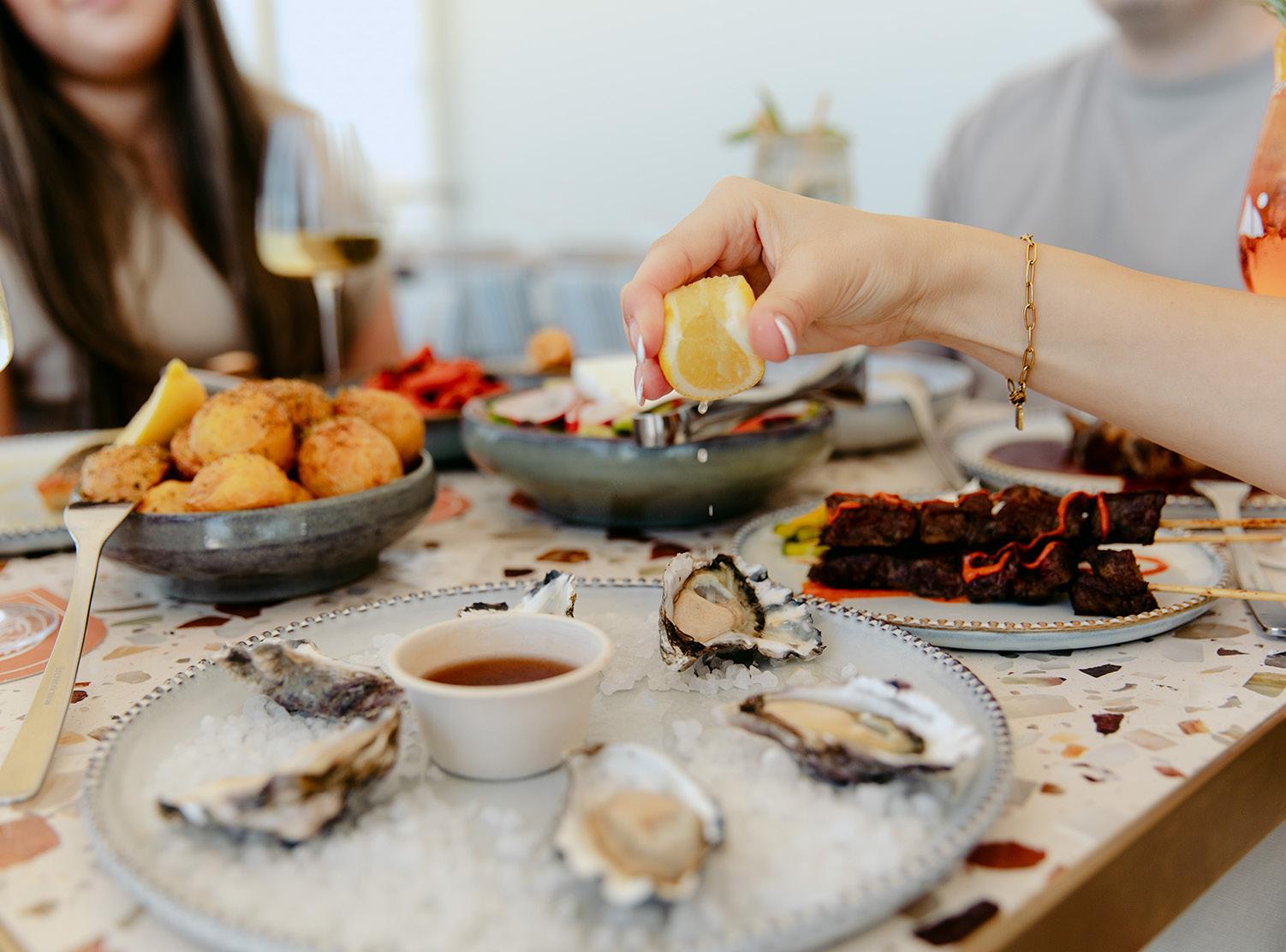
Australian diners are tightening their belts when it comes to everyday spending, but they are still willing to pay more for premium, experience-driven dining, according to data from SevenRooms’ 2025 Australia Restaurant Industry Trends Report.
The national survey of 1,000 Australian consumers and 258 hospitality operators found most Australians are prepared to spend up to $97 per person for a meal out, reflecting a more mindful approach to dining spend amid ongoing economic pressures.
But while price sensitivity is shaping everyday choices, consumers are still selectively splurging on luxe moments and elevated experiences. More than half of diners said they are willing to spend more than usual for special occasions such as holiday menus.
At the same time, the research highlights a growing return to “back-to-basics” hospitality, with human connection emerging as a core driver of loyalty. More than 82 per cent of Australians said they value personal interactions with staff when dining out. However, the operational reality tells a different story, with 39 per cent of operators reporting they struggle to personalise guest experiences due to time pressures during busy service periods.
Among diners, simple moments of recognition are proving highly influential. More than a quarter said being welcomed in or welcomed back by staff is one of the most valued interactions they experience when dining out.
The report also found hospitality and service is the primary way 53 per cent of Australians connect with restaurants, followed by design aesthetic and atmosphere for 39 per cent of those surveyed.

success of your establishment are too important to trust to any cooking oil.
For over 25 years, Formula 40, our flagship frying oil has built a reputation on consistent frying quality oil, which is why Formula 40 is the preferred brand of oil for chefs who understand the value of a good reputation.
Formula 40 is a uniquely formulated oil:
• Ideal for heavy-duty deep frying.
• It has a thicker, robust base ensuring a longer fry life and superior drain-off.
• A neutral oil taste helps retain food's natural flavour.
• It’s the frying oil of choice for the William Angliss Institute, the specialist training provider of tourism, hospitality and events industries.




Formula 40 is vegan and Halal certified and available in a 20L tin or in a lighter OH&S friendly 15 litre bag-in-box, which is a fully recyclable carton.
To order Formula 40 contact your local distributor For further oil advice or technical support contact Peerless Foods on 1800 986 499 or go to: peerlessfoodservice.com.au / peerlessfoodservice


Club cafes may look refined, but their role hasn’t changed – they’re still the spots to go to for everything, from early-morning coffee to late-night catchups.
AUSTRALIANS DON’T JUST visit cafes for caffeine and a feed; they make it a ritual. Cafes have become the reliable place for a good coffee, a familiar menu, and the quiet permission to linger. From early-morning walkers to midafternoon regulars and postactivity catchups, the cafe culture in Australia today has become an all-day constant.
Increasingly, clubs are being asked to meet those expectations, and ensure their cafes are not an afterthought of their main bistro, but as a core part of their food and beverage experience.
Across the club sector, cafes are going above what’s expected with sharper new looks and more contemporary menu offerings. They’re opening earlier, serving later, and being designed to be visited multiple times in a single day.
At West Beach Surf Life Saving Club, food and beverage manager Kate Taylor is clear about who the club’s all-day eatery is for.
“We’re not here to be a high-end restaurant,” she said. “We serve locals. It’s very pub vibes, so it’s important that we stick to that middle range.”
That philosophy became even more important following the club’s $8.5 million redevelopment last year, which gave the team the opportunity to rethink how the cafe and kitchen operated across the day.
While dietary needs and expectations have
broadened, Taylor said the fundamentals still matter most. “You’ve got to keep your favourites on the menu. You can’t change the world,” she said. “But you’ve got to have something unique and different.”
For West Beach, located west of Adelaide CBD, that point of difference comes naturally from its beachfront location where seafood plays a leading role.
“We do a seafood chowder that sells really well, and a sizzling prawn dish – it’s seafood, but slightly different – alongside the classics like fish and chips, and salt and pepper squid,” Taylor said.
The move to an all-day menu also reflects how members and visitors use the venue. Before the renovation, food service ended at 2pm; today, the club caters from breakfast through to dinner.
“When you’re coming off the beach or when you’re on holidays, you don’t care what time it is,” Taylor said.
“On our busiest days we do around 1,000 to 1,200 meals. There’s always someone in this venue eating. We start service at eight o’clock in the morning until nine o’clock at night.
“It might be breakfast, lunch, dinner, your nippers in the afternoon eating chips, or people in the afternoon having a drink and some snacks.”
There were also practical realities to extending its operating hours. “It was a revenue reason,” Taylor admitted. “But it was also because we were booking out for lunch – we didn’t have the space.”
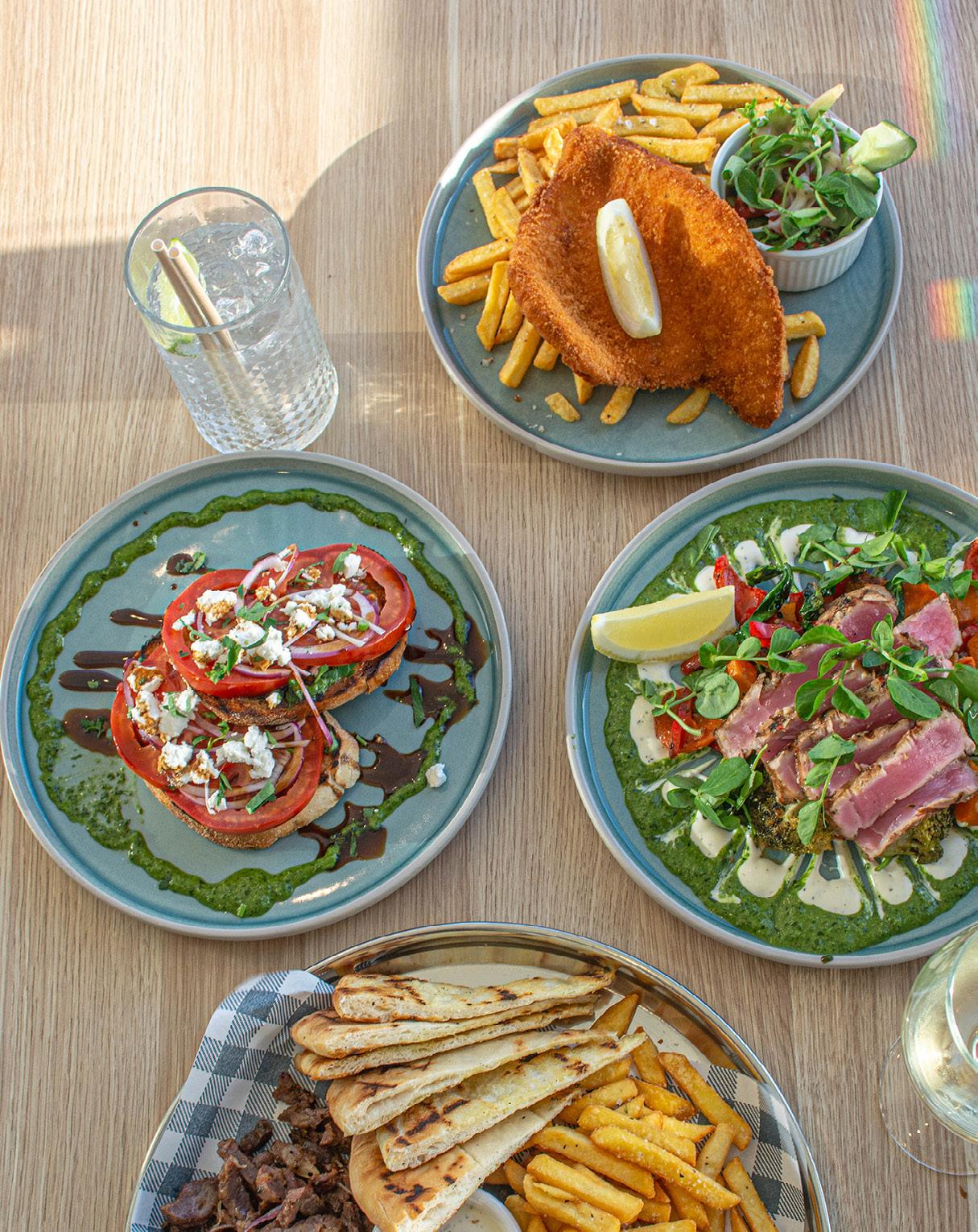
“There’s always someone in this venue eating. We start service at eight o’clock in the morning until nine o’clock at night.”
– Kate Taylor, West Beach SLSC food and beverage manager
That level of access is not always typical for surf clubs, according to Taylor, who said many still operate with limited trading hours. For Taylor, consistency is a competitive advantage.
“We open exactly the same time every day of the year, apart from Christmas,” she said. “People need to know that you’re always open. You’ve got to be consistent.”
That same philosophy applies behind the scenes. West Beach has retained a long-standing core kitchen team, something Taylor sees as foundational to the cafe’s success. “Your kitchen team is huge,” she said. “If you don’t have a solid base, it’s really hard.”
Since reopening, the scale of the operation has grown rapidly. Taylor said the club has effectively doubled its turnover and is now doing close to four times the volume it once did.
“We didn’t quite think we were going to get that far ahead,” she said.
At Wenty Leagues Club in Sydney’s west, the newly launched Arbor cafe has been designed as a quieter counterpoint to the club’s bustling Plaza food precinct.
“While the Plaza precinct offers casual dining options like Chef’s Grill, Pizza Mama and Red Panda Noodles, Arbor provides something quieter and more personal,” building and facilities manager Paul Felice said.
“It is a space to enjoy a quality coffee, a light meal, or a quick bite in a peaceful setting. It’s designed to be a space where members can pause and recharge.”
To support that intent, Arbor has been designed to feel bright and open. “We want members to feel like they’ve stepped into a space that was made for them, essentially their home away home,” Felice said.
“A calm, welcoming environment where they’re greeted with quality food, friendly service, and thoughtful design.”
On the food front, the menu remains anchored in familiar cafe classics, including sandwiches, wraps, toasties, cakes and baristamade coffee. Additionally, the club has added some new and more substantial offerings to the menu, such as pan-fried barramundi, lamb souvlaki, a selection of pasta dishes, and the return of buildyour-own sandwich.
Member feedback played a central role in shaping the offering, Felice said. “Many of our long-standing members have cafe favourites they return to time and again, so it was important to retain those staples.”
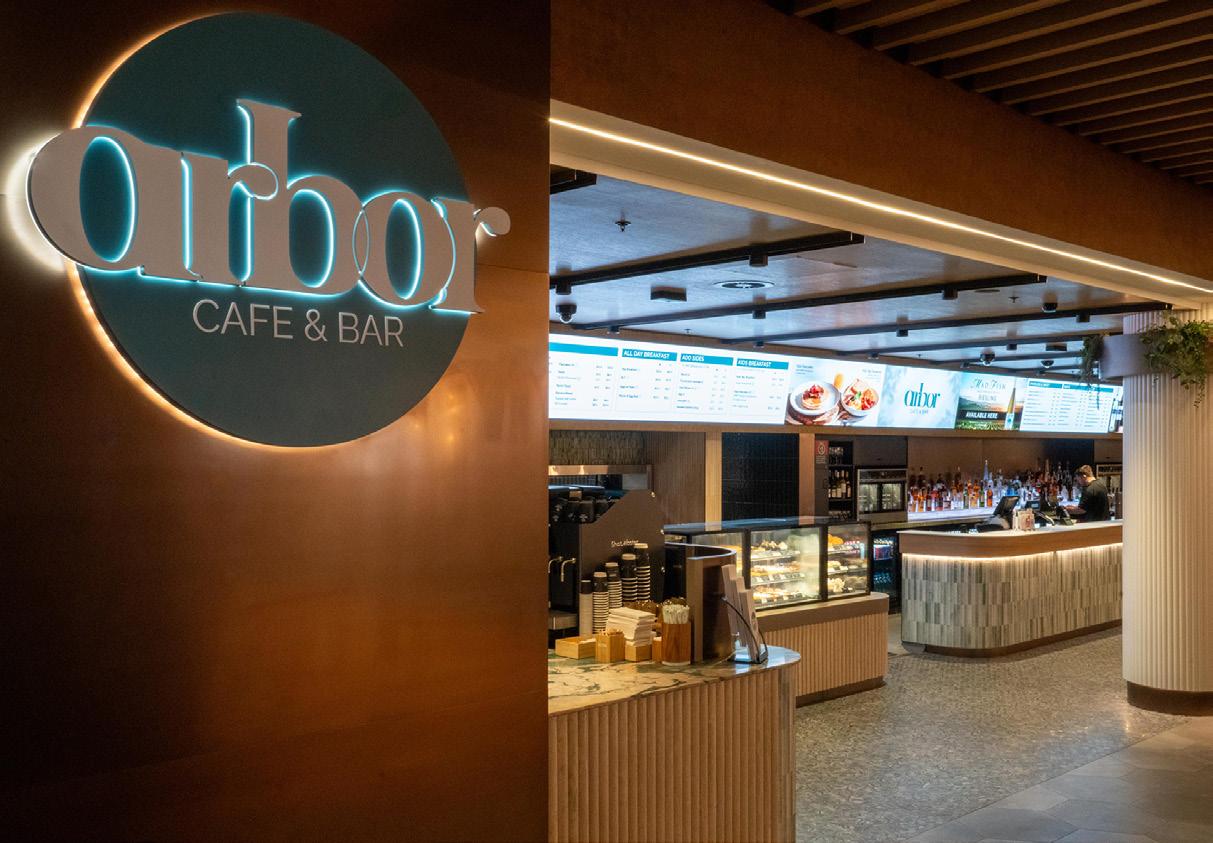
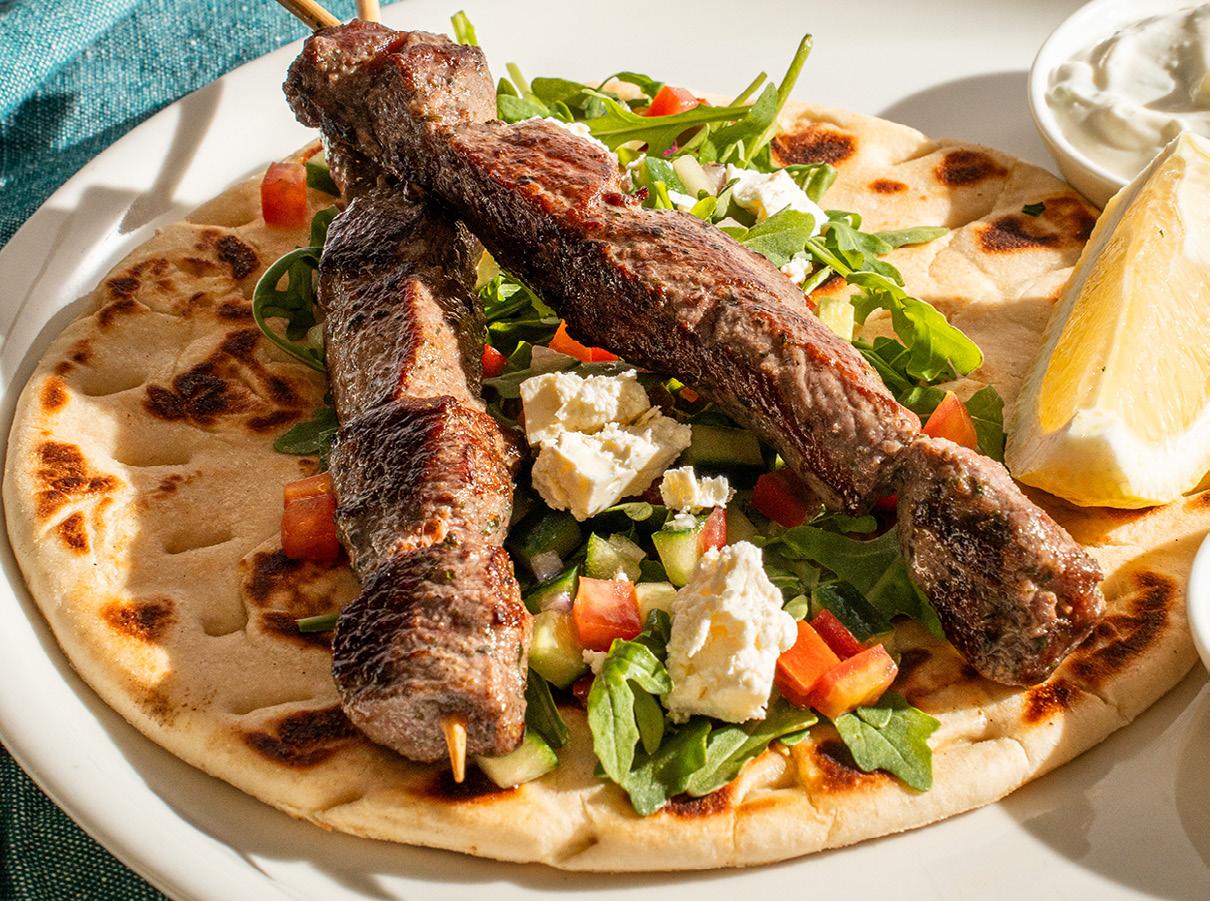



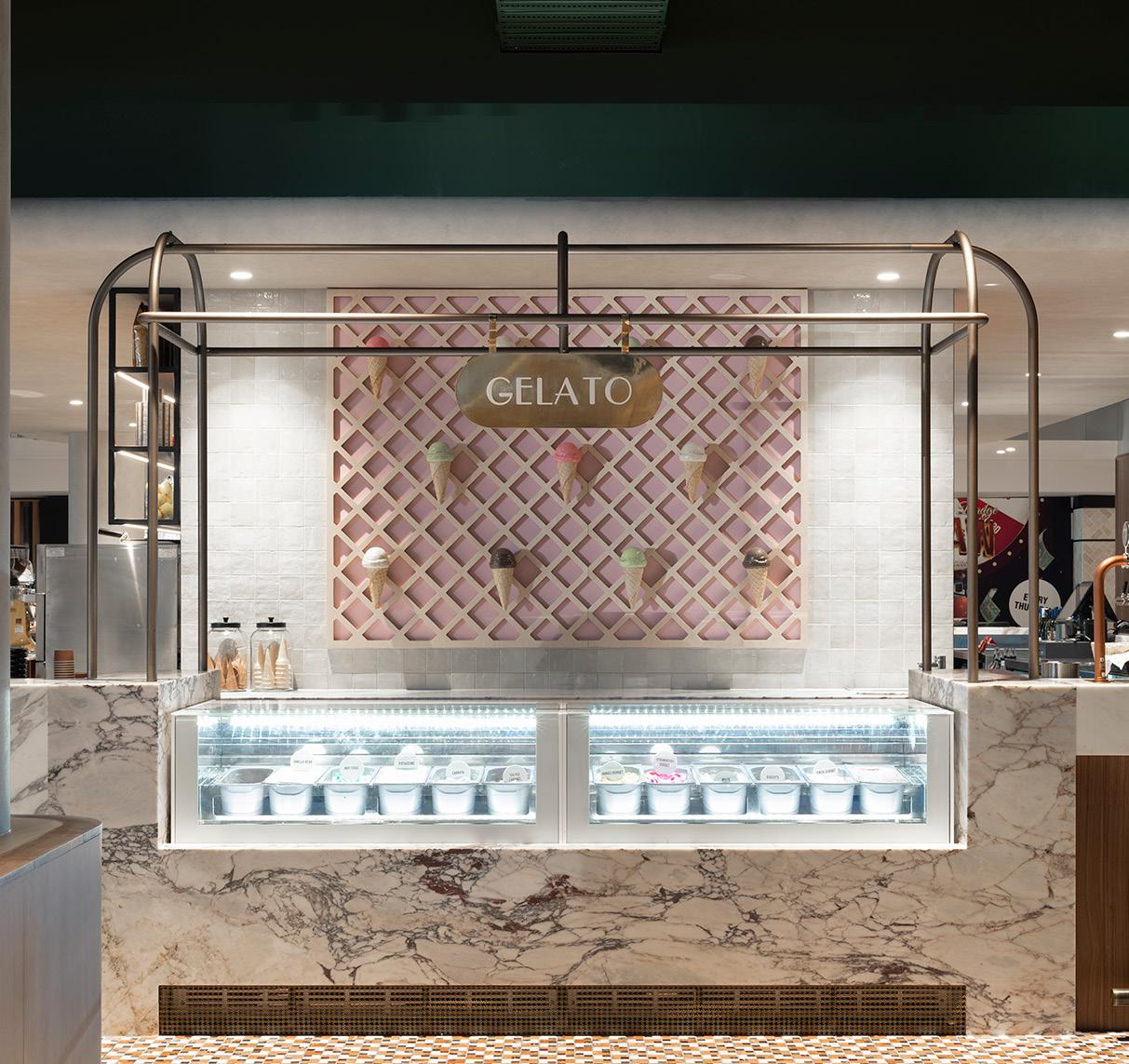
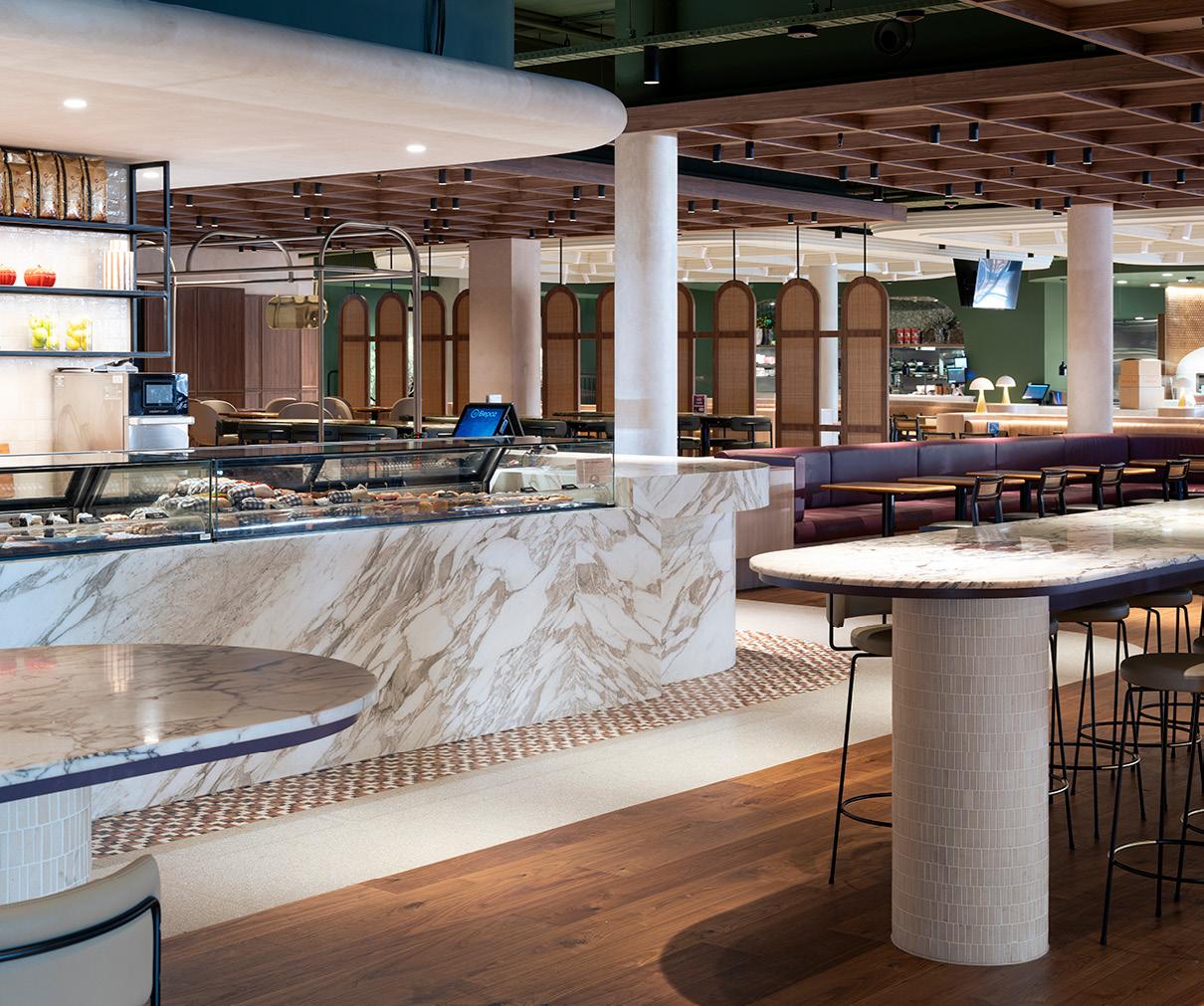
Meanwhile, Club Marconi’s new cafe, Piazza Cafe, which was introduced as part of the club’s multi-stage renovation mid-last year, has been shaped by evolving customer expectations, while also leaning into the club’s Italian identity.
“The Piazza Cafe menu has been designed to align with current dining trends while reinforcing our overall food strategy,” food and beverage manager Andrew Sofi explained.
“Featuring authentic Italian street food, a convenient 24/7 offering, and menu options that reflect today’s demand for bold flavours.”
A major part of the transformation is visual. A three-metre-long display fridge showcases freshly prepared items including arancini, lasagne, polpette, focaccia slabs, quiches and pasta salads, shifting the offering in a more gourmet, European-inspired direction.
“Creating a strong visual presence was essential in drawing customers into the space,” Sofi said. “The deli-style display showcases the freshness and quality of the offering, immediately capturing attention and stimulating appetite.

Importantly, everything in the deli selection is made fresh in-house.
“The visual impact not only attracts guests but also builds trust and confidence in the freshness of the product,” he said.
Since launching, favourites have quickly emerged, with the chicken schnitzel panini, house-made arancini, and freshly baked focaccia slabs proving especially popular.
The cafe also plays into what Sofi describes as Club Marconi’s thriving coffee culture. Equipped with two new Vittoria machines, the cafe delivers what he said is “premium, consistently highquality coffee”.
And for a proudly family-focused club, the addition of a gelato bar was non-negotiable.
“Gelato adds to the sense of tradition, celebration and shared moments that define the club experience,” he said.
For Sofi, staying relevant comes down to balance.
“The key is balancing innovation with consistency,” he said.
“By continually introducing new ideas and refreshing the menu seasonally, the cafe stays aligned with market trends while showcasing the freshest produce available.”
Similarly, Cabravale Club Resort is placing craftsmanship and theatre at the centre of its newest food and beverage offering, Caffe Vicini – with a deliberate move upmarket.
Owned and operated by Cabravale Club Resort executive chef Dany Karam, the all-day eatery features an open kitchen, silos showcasing whole coffee beans, and displays of freshly baked pastries and deli-style sandwiches.
The menu features more than 50 specialty pastries and tarts, which change daily depending on the availability of fresh ingredients. Deli-style house-made sandwiches are another hero


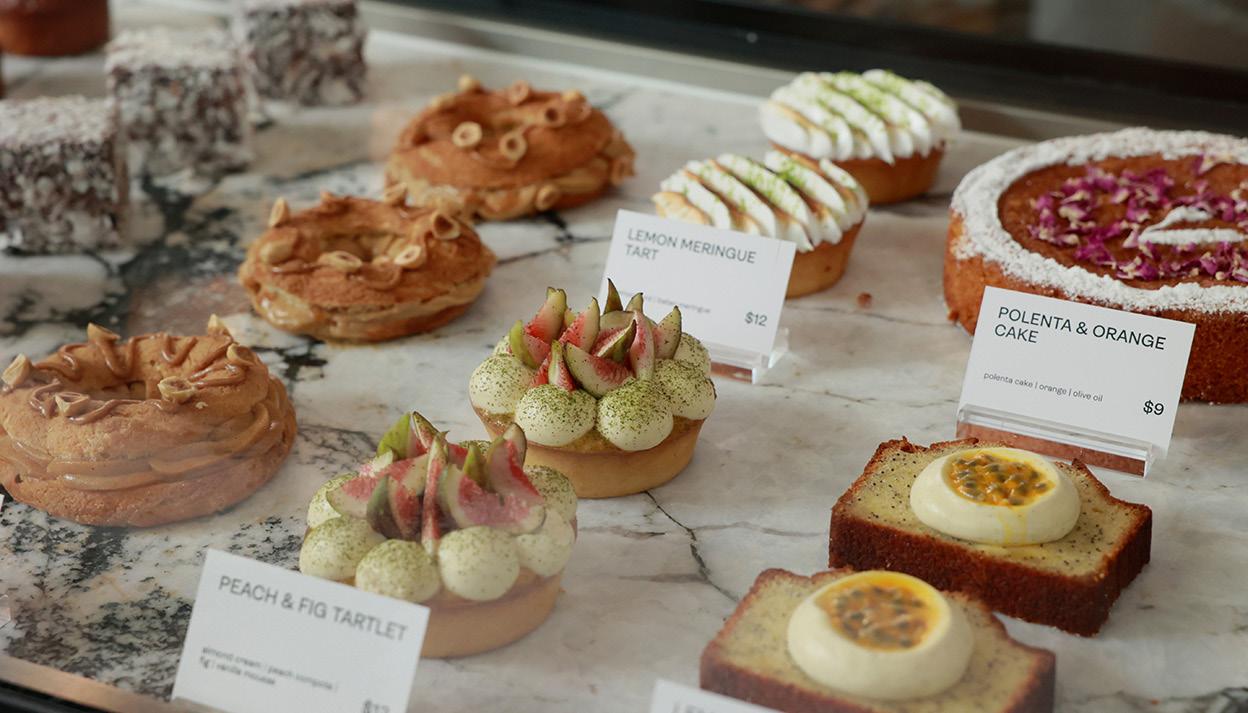

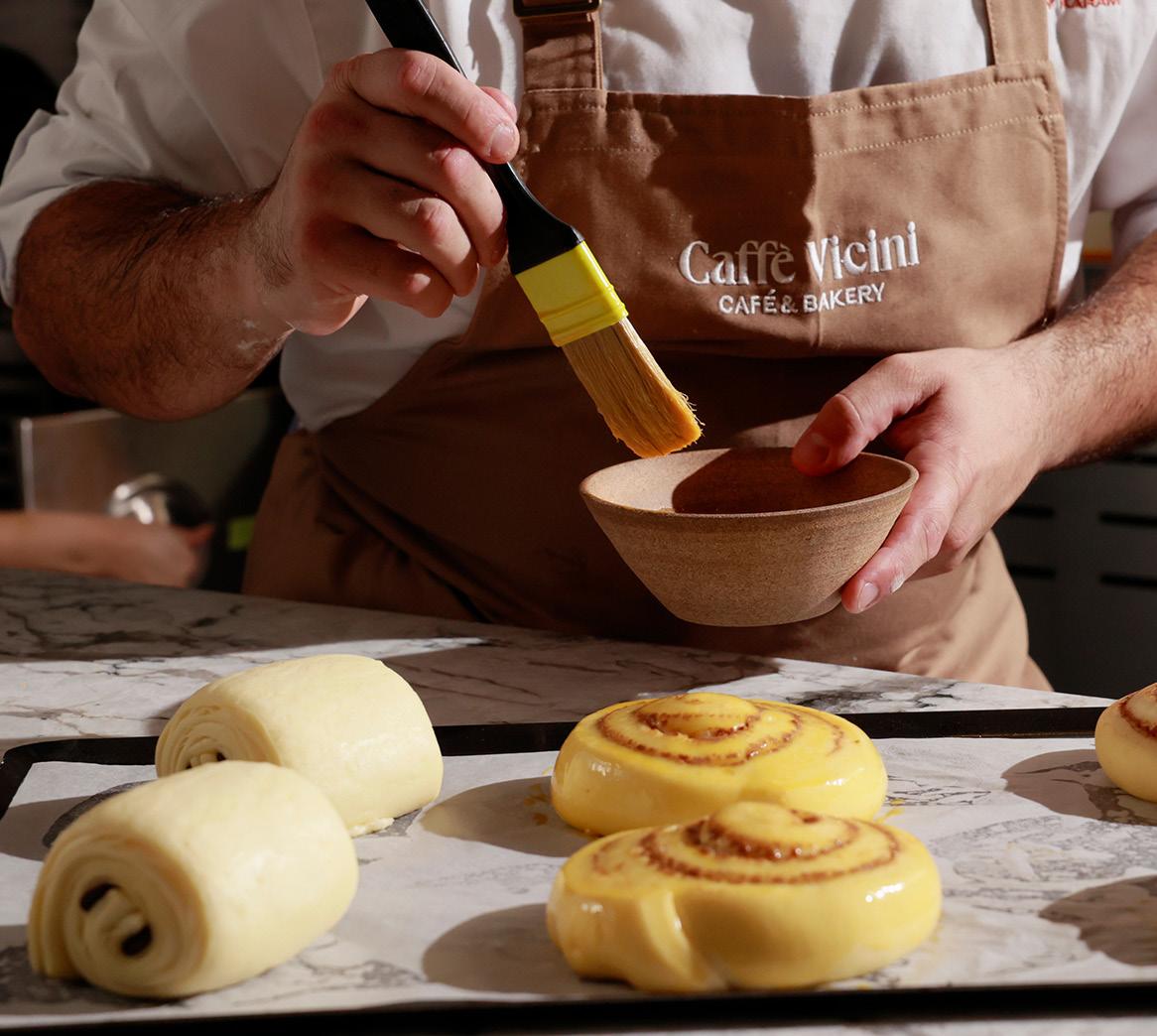
“People expect to see the theatre of their food being made before they eat it.”
–
chief commercial officer
category, with cold meats prepared using Karam’s dry-ageing facilities at his Cabravale Club Resort restaurant, Magma.
Caffe Vicini has also partnered with Vittoria Coffee to serve Vittoria Lab Release, the “Rolls Royce” of its portfolio, a small-batch experimental blend. The drinks list extends to juices, teas and matcha variations such as coconut and salted coconut strawberry.
The emphasis on in-house production and premium offerings reflects what chief commercial officer Vicki Le describes as rising expectations among patrons.
“People now have different standards, particularly around breakfast,” she said. “With the rise of [popular bakeries] such as Lune and Flour and Stone, people expect to see the theatre of their food being made before they eat it. A normal cafe wouldn’t cut it.
Le added that the introduction of Caffe Vicini also reflects the local demographic’s changing lifestyle.
“In [Sydney’s] west, we see an increase in disposable income,” she said. “People can afford more of that lifestyle. They want to go out for better food, and now they don’t have to go to the city anymore.”
The premium positioning marks a clear departure from the club’s existing cafe, Poppy.
“It’s actually two very different offerings to patrons,” Le said. “This one is elevated, premium, all Italian, and everything is baked in-house. At Poppy, everything is quick, convenient, and it’s slightly cheaper.”
Despite the shift upmarket, Le believes the cafe role within the club remains the same.
“It’s always been a community hub,” Le said. “You would see people waiting for the doors to open at nine just to get a coffee with their friends.”
Now it has expanded into “a business meeting place” and a late-night dessert destination, serving freshly made crepes and waffles, where patrons “can sit here until midnight without having to worry”.
2026 Australian Barista Champion and Veneziano Coffee Roasters brand ambassador Gabrel Tan shares what cafes and baristas should be thinking about when selecting coffee this year.
After a year defined by cold drinks and convenience, Tan believes 2026 will be about refinement rather than reinvention.
“Last year we really saw cold drinks and convenience formats take off, with cafes getting far more creative around iced coffees and ready-to-drink options as customers looked for great flavour on the go,” he said.
“At the same time, cafes continued to evolve into spaces for connection and community, not just quick caffeine stops.
Automation will continue to evolve, he said, becoming “smarter and more seamless”, helping cafes achieve consistent quality with less friction behind the bar.
While ready-to-drink and functional coffee will continue to grow, Tan expects a shift in emphasis.
“[There’ll be] a stronger focus on flavour and provenance rather than convenience alone,” he said. He also anticipates a more mature approach to signature drinks.
“I expect signature drinks to become more thoughtful and coffee-led, not just sweet or gimmicky, as consumers become more educated and selective,” Tan said. “People are willing to spend more, but only when there’s a clear story, great taste and a memorable experience behind it.”
The driving force behind these shifts? Betterinformed customers who want both convenience and quality, Tan said.
“Social media continues to influence drink trends and cafe culture, while younger coffee drinkers are increasingly curious about sourcing, sustainability and the story behind what they’re drinking,” he said.
“From what I see at our cafes, it’s this mix of lifestyle shifts and growing specialty coffee knowledge that’s really shaping where the industry is heading.”
For cafes trying to stay ahead, Tan’s advice is simple.
“Stay curious and keep evolving,” he said. “Pay attention to what your customers are responding to, experiment with signature drinks, and don’t be afraid to refresh your menu seasonally.”
He also highlighted the importance of investing in staff. “Invest in training and knowledge sharing within your team, because great coffee always starts with great people.”
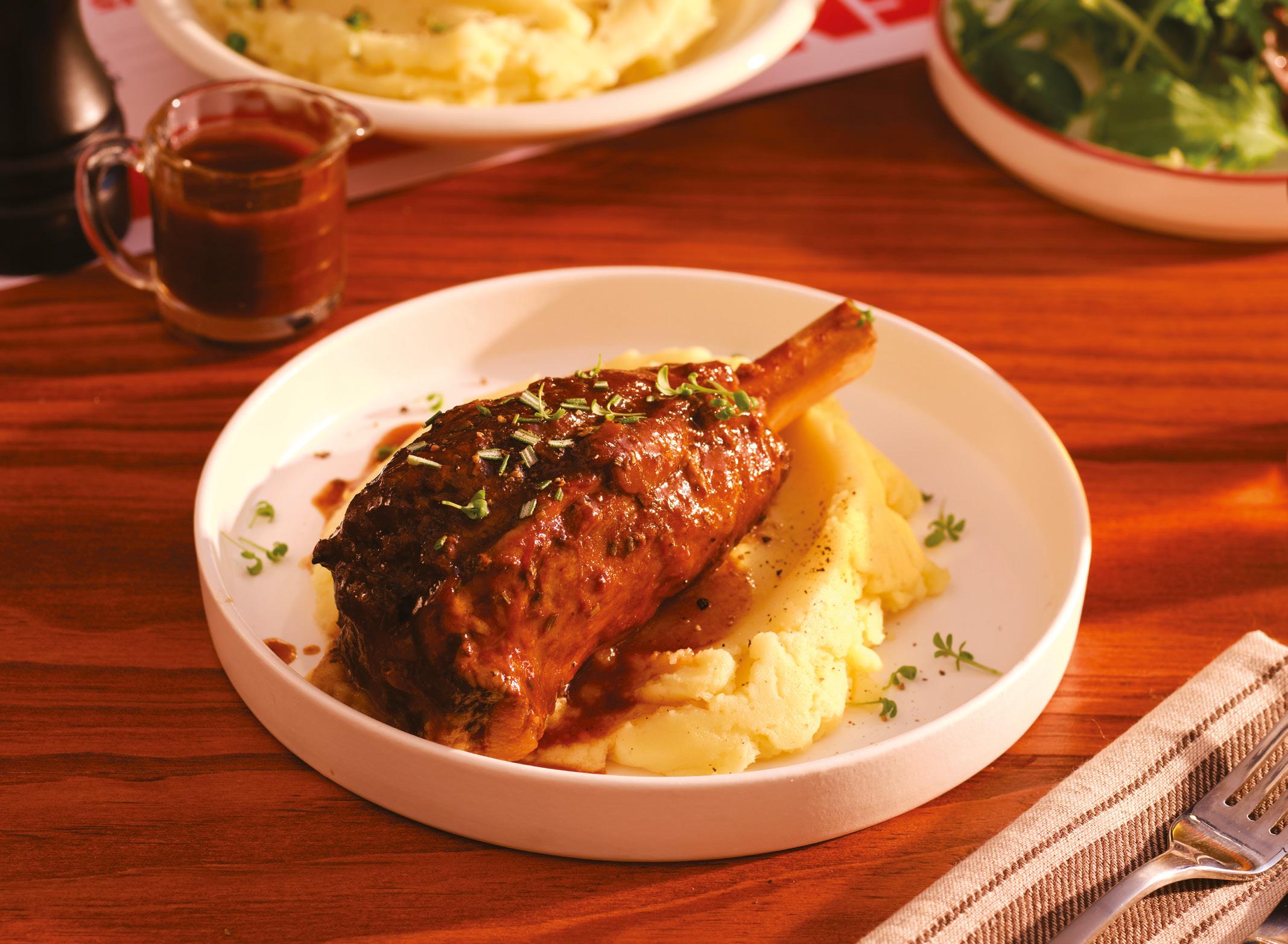

Steve Sidd, managing director of Catering HQ, writes how structured systems, disciplined procedures, and operational visibility can protect performance and strengthen margins.
IN 2026, CLUBS are operating under sustained cost pressures. Rising wages, increasing food prices, and tighter regulatory requirements are reshaping how venues manage operations and protect profitability.
As operations grow, complexity naturally increases. Managing multiple venues brings challenges in ordering, stock management, portioning, labour allocation, and reporting. From my experience running Catering HQ, this complexity quickly exposes the need to maintain consistent performance and cost control.
Clear, repeatable processes allow managers to maintain standards, measure results, and respond efficiently to changes in demand, creating both operational stability and stronger margins. This consistency is not only operationally important but critical to protecting food margins, reducing unnecessary spend, and ensuring profitability is not left to chance as the business scales.
With the right systems in place, scaling operations becomes seamless. Real-time visibility into food costs, stock levels, labour, and ordering becomes a foundation for informed decision making.
Accurate and timely data helps managers identify opportunities to optimise performance and avoid waste while ensuring each venue consistently delivers high-quality experiences for
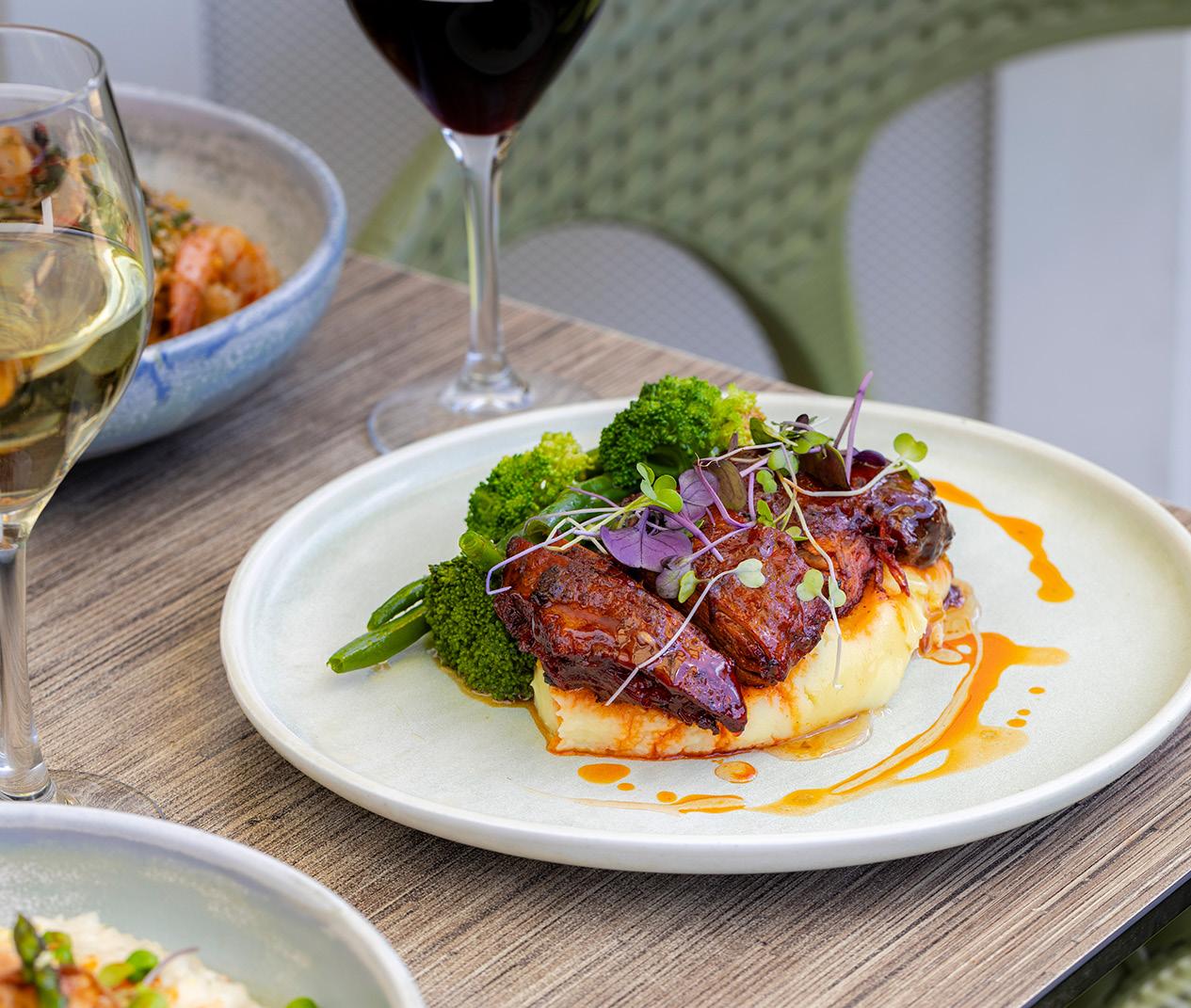
members. This level of visibility shifts cost control from reactive review to proactive management, allowing teams to address variances early before it impacts the bottom line.
Standardised procedures are essential for reliable performance. Processes for ordering, portioning, rostering, and reporting are simplified, repeatable, and applied consistently across all sites.
Clear accountability means managers can see the impact of their decisions, from purchasing to labour efficiency. Performance improvement is rarely the result of a single initiative. It comes from aligning systems, processes, and accountability.
The benefits of disciplined operations are tangible: streamlined ordering reduces waste, portion control protects food margins, and labour management ensures staffing aligns with operational demand.
Consistent reporting across venues allows leadership to track performance in real-time, enabling early interventions that safeguard results. Locked-in pricing, consistent portioning, and improved stock accuracy help prevent margin leakage and make financial performance more predictable as operations grow.
Embedding these practices through training and communication ensures teams understand how adherence to processes directly supports efficiency, consistency and profitability.
To meet the operational demands of growth, we developed an internal system, Hospitality Genie, to address the challenge of maintaining consistent procedures, visibility and accountability across multiple venues. The aim was to ensure food costs, purchasing and operational spend were actively controlled day to day.
Centralising operational data and standardising ordering, pricing, stock management and reporting strengthens margin protection and gives operators confidence in their numbers as the business scales.
Tighter control on over ordering, pricing, stock, and reporting actively improves profitability by reducing waste, preventing margin leakage, and ensuring more revenue flows through to the bottom line.
Simplicity and visibility are the foundations of consistent performance.
In 2026, best practice is defined not by ambition alone, but by the ability to execute consistently across every operational area.
Disciplined systems, structured procedures and transparent accountability, supported by the right operational tools, allow clubs to control costs, strengthen margins, and deliver reliable high-quality experiences even as pressures on the industry continue to rise.
Clear systems. Consistent procedures.
Complete visibility.
Hospitality operations rely on clear systems, consistent procedures and reliable visibility across food, labour and purchasing.
Hospitality Genie is used by clubs to centralise ordering, pricing, stock and reporting, supporting consistency and control across daily operations.



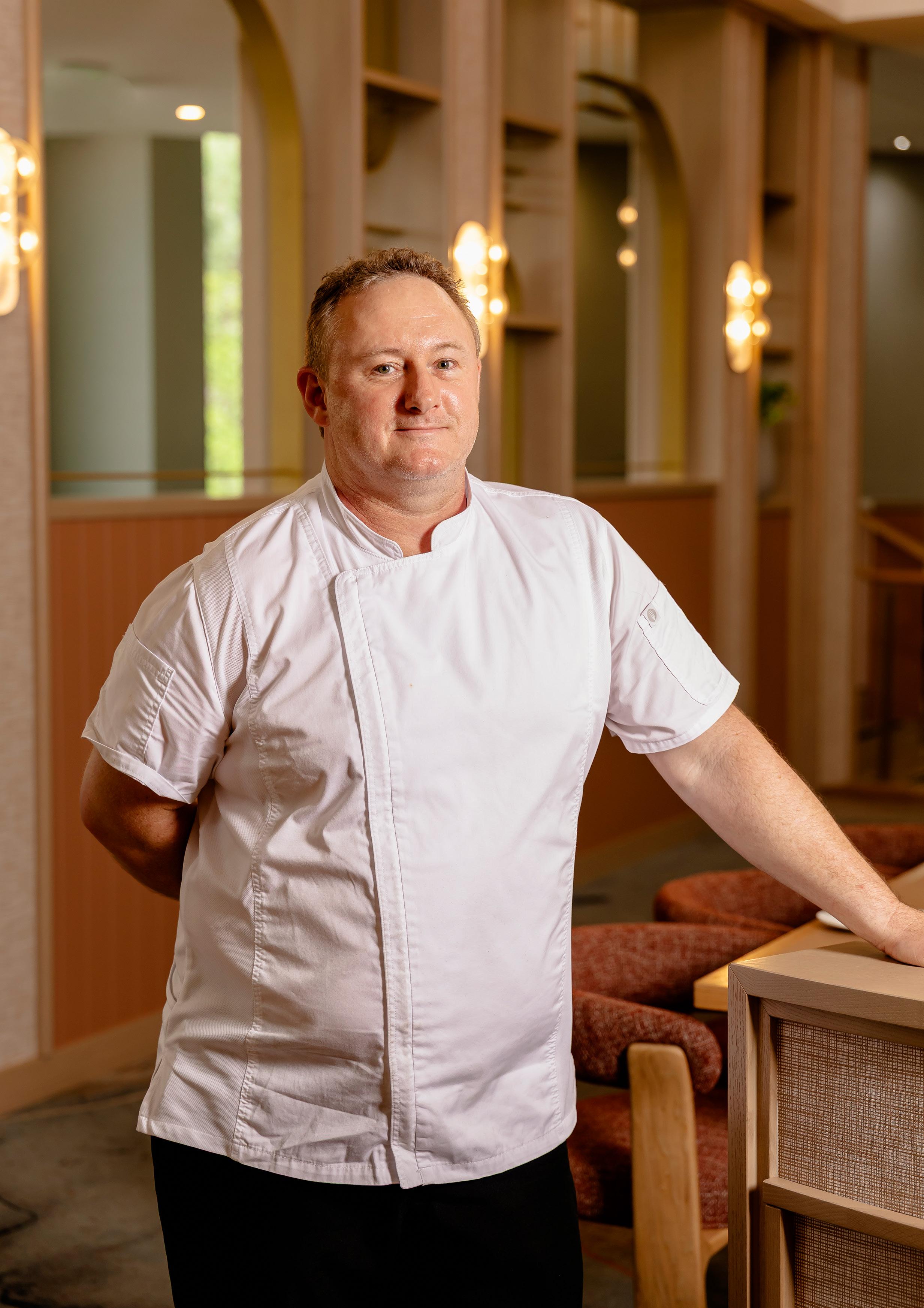
THE BRONCOS LEAGUES Club in Red Hill might be the official home of the Brisbane Broncos, but since its restaurant, The Grill, underwent what the club has described as a “premiership-worthy” upgrade, there might be another reason for members to be walking through the door – and it’s all thanks to their newly appointed, Michelin-trained head chef, Mark Penna.
Staying true to the restaurant’s name, steaks are the hero of the menu – from entry-level to high-grade signature wagyu reserves.
For Penna, serving “some of the best wagyu steaks in Australia” is an opportunity to fill a gap that exists in the local market.
“I just see that in this area around Red Hill … there’s nowhere to go for a really good steak; I have to go across town and go all the way to the Normanby Hotel or Breakfast Creek Hotel for one.”
In addition to the extensive steak offering, the menu offers a selection of carefully curated signature main dishes such as a smoked brisket braised overnight, before it’s served with grilled corn rib, brussels sprout slaw dressed with goat curd and chive oil, and farmhouse-style potato, all topped with a gravy made from the brisket’s dripping.
A blackboard menu, meanwhile, covers off all the classic club dishes such as schnitzel, pasta, and shared platters that also feature on the menu of the club’s new-look sports bars, Alfie’s Bar.
Penna shares with Club Management that his vision is to transform the club into its own dining destination.
“I remember when I first came to Brisbane 25 years ago as a 20-something-year-old, I remember [the club] as being one of the places to go, and I want to turn the clock back and make it one of the hot spots to dine again,” he said.
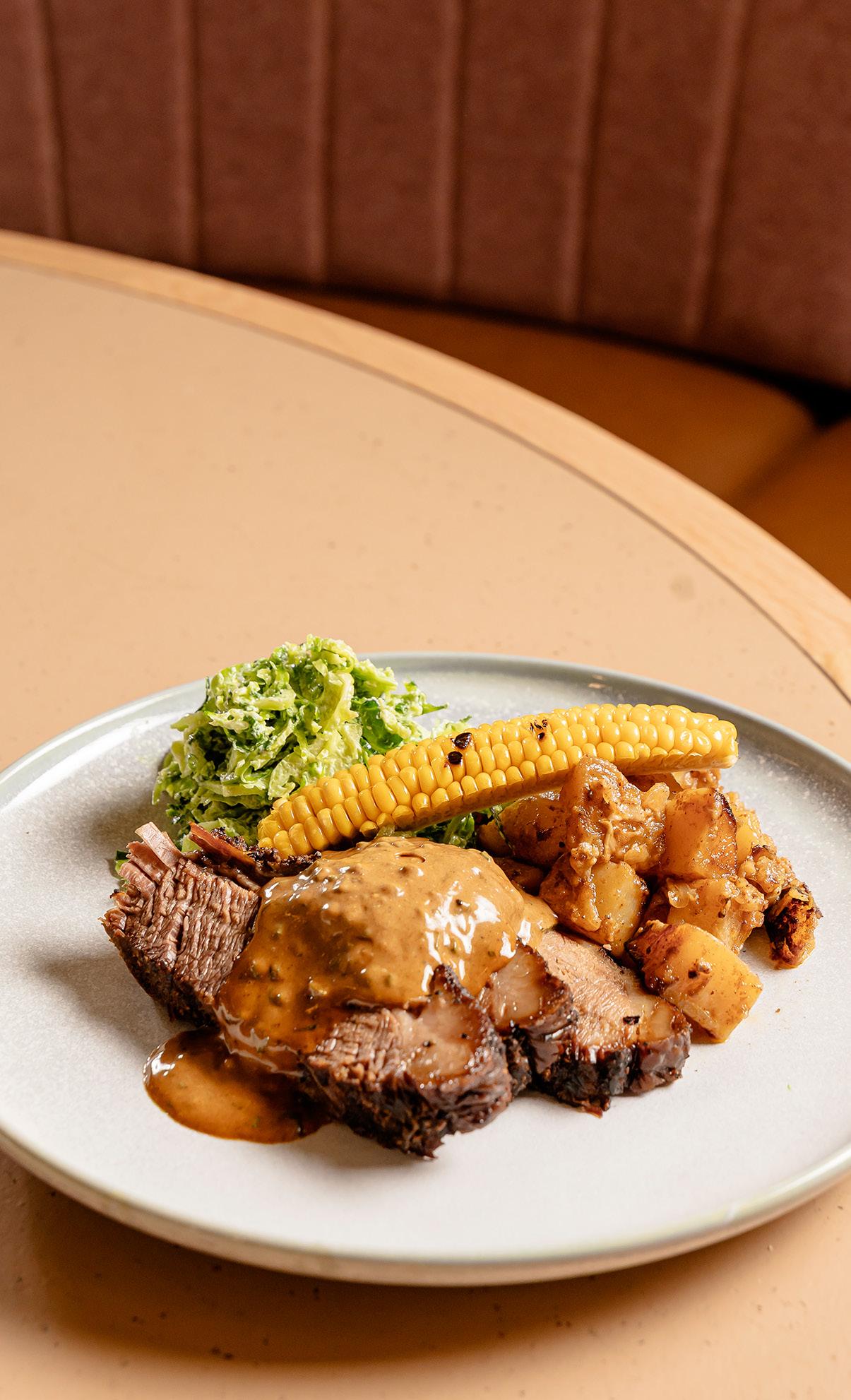
The panache that Penna brings to the club can be attributed to his expansive career, which started when he first got behind the pans at 15 years old. He was an apprentice in a small restaurant in the Atherton Tablelands, run by a Swiss-German chef whose standards were uncompromising.
“He’d drag you around the kitchen by the ear and literally kick you up the backside for not being fast enough or having an attitude,” he recalled. “The good thing about him was everything that he taught me back then I still remember. He really instilled a lot of really good practices in me.”
Another defining chapter came when Penna moved to London, where he worked at then-Michelin-starred restaurant One Lombard under Herbert Berger, an experience that tested both his technical ability and his leadership style.
Back in Australia, Penna’s career moved between some of Queensland’s best-known kitchens, including Aria Restaurant, Pier Nine, Baguette and Bacchus, before expanding into large-scale operations at The Star on the Gold Coast where he was part of the opening team. Later, he stepped into a role running the events department, a position that came with a clear brief.
“[The Star] wanted to up the ante, and basically, they don’t
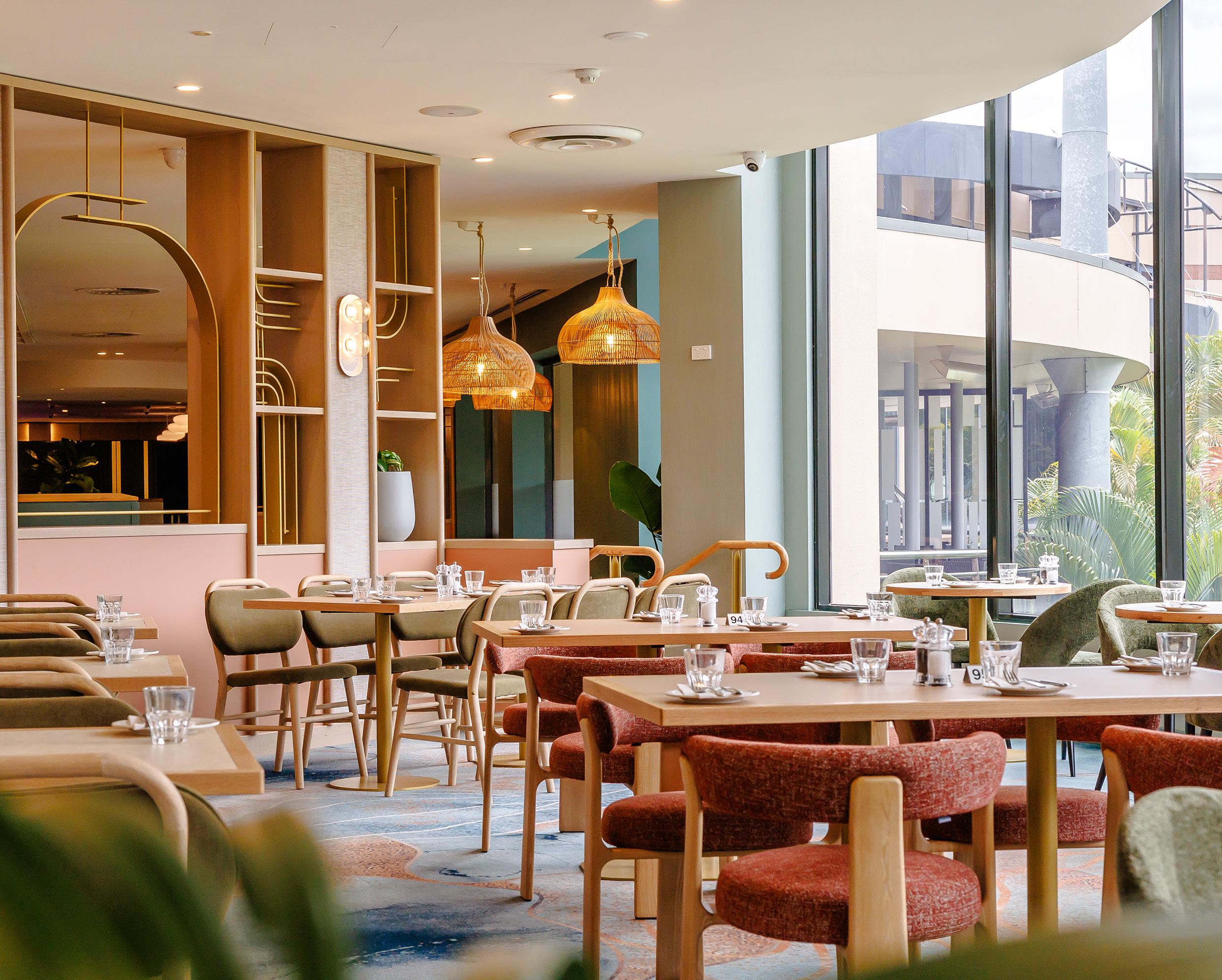
“I want to turn the clock back and make [the club] one of the hot spots to dine again.”
hire function chefs for their events team – they hire restaurant chefs. So, they wanted me to come in there and change the food, and just change the look, feel and touch of everything,” he said. “The agreement was that I’d come and do that for a year, while simultaneously working on the project of The Darling [at The Star Gold Coast].”
The role also came with moments far removed from the pass, including catering for the penthouse and brushing shoulders with Hollywood royalty.
“We would be serving $400 steaks to Matt Damon and Chris Hemsworth,” Penna said. “They’d be like, ‘We don’t want any garnish. Can you just send meat?’. I remember bumping into them in the elevator one time, being like, ‘Yep, hey boys – I feed you guys.’”
Still, even international kitchens and marquee venues weren’t enough to satisfy every ambition. Keen to tick off another bucket-
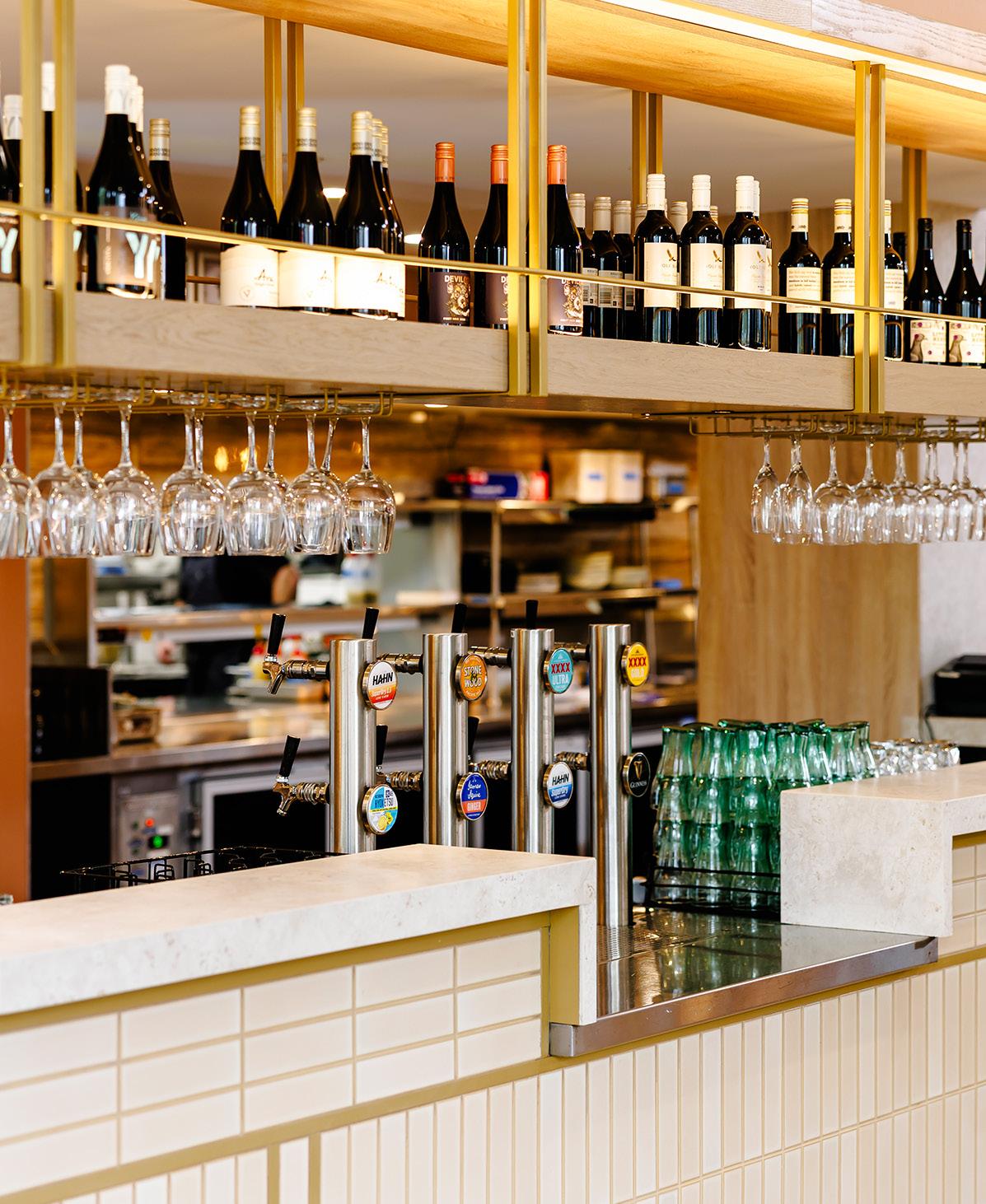
list experience, Penna spent time working on tropical Lizard Island, before realising it wasn’t the lifestyle he wanted.
On his return to the mainland, he was appointed head chef at St Lucia Golf Course, where the role became less about prestige and more about building something tangible.
“The whole place was renovated – the conference and catering kitchen – and everything was brought up to scratch,” he said. “I designed the kitchen with the architect and then demolished the [old] kitchen. I was in there with a nineinch grinder cutting the hoods out of the roof.”
Then, at 44, Penna’s career was abruptly interrupted.
He was diagnosed with stage-three bowel cancer, a battle that took him out of the kitchen for two years. Still in recovery,
Penna pushed himself to return, driven by a long-held ambition to be part of the opening of Queen’s Wharf Brisbane.
“I rushed my operation … came back to Brisbane and jumped into the kitchen to be a part of the opening.” Eventually, though, the pace became unsustainable.
“It reached a point where it was time to leave,” Penna said. “I just needed to give myself a break. I knew I wanted to wait for the right job to come along, something I really believed in and something I wanted to be a part of.”
That opportunity arrived quietly, in the form of a job ad for a sous chef at the Broncos Leagues Club. “I saw the ad come up and thought, ‘You know what? I would love to work at the Broncos,’” he said. “I wasn’t applying for an exec or head chef role. I just wanted to get in, have a conversation, be a sticky beak and
see what was going on. One thing led to another, and now I find myself in the hot seat. I’m pretty happy.”
For Penna, the new role also carries a sense of full-circle significance. As a 15-year-old apprentice, he once rushed back from TAFE just to work a function catering that was attended by Broncos legends Wally Lewis and Alfie Langer. “I had my mum race down from Cairns and pick me up so I could get back in time to work that night,” he recalls. “I was starstruck shaking Wally’s hand.
To a 15-year-old, that was everything.” Looking back now, Penna said even his teenage self would approve of where he’s landed. But this time, he’s not just feeding the players and their fans – he’s helping set the tone in the kitchen.
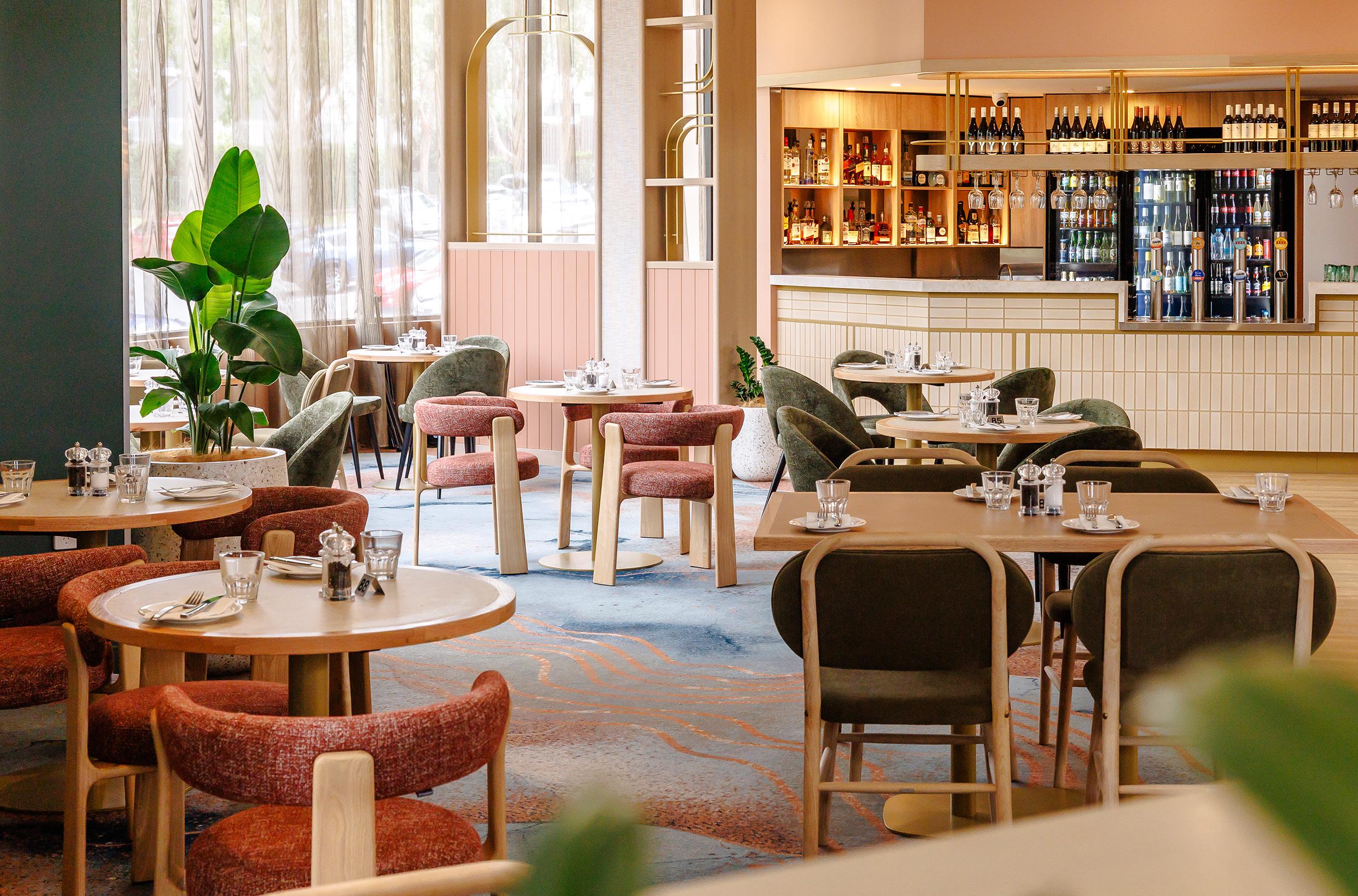
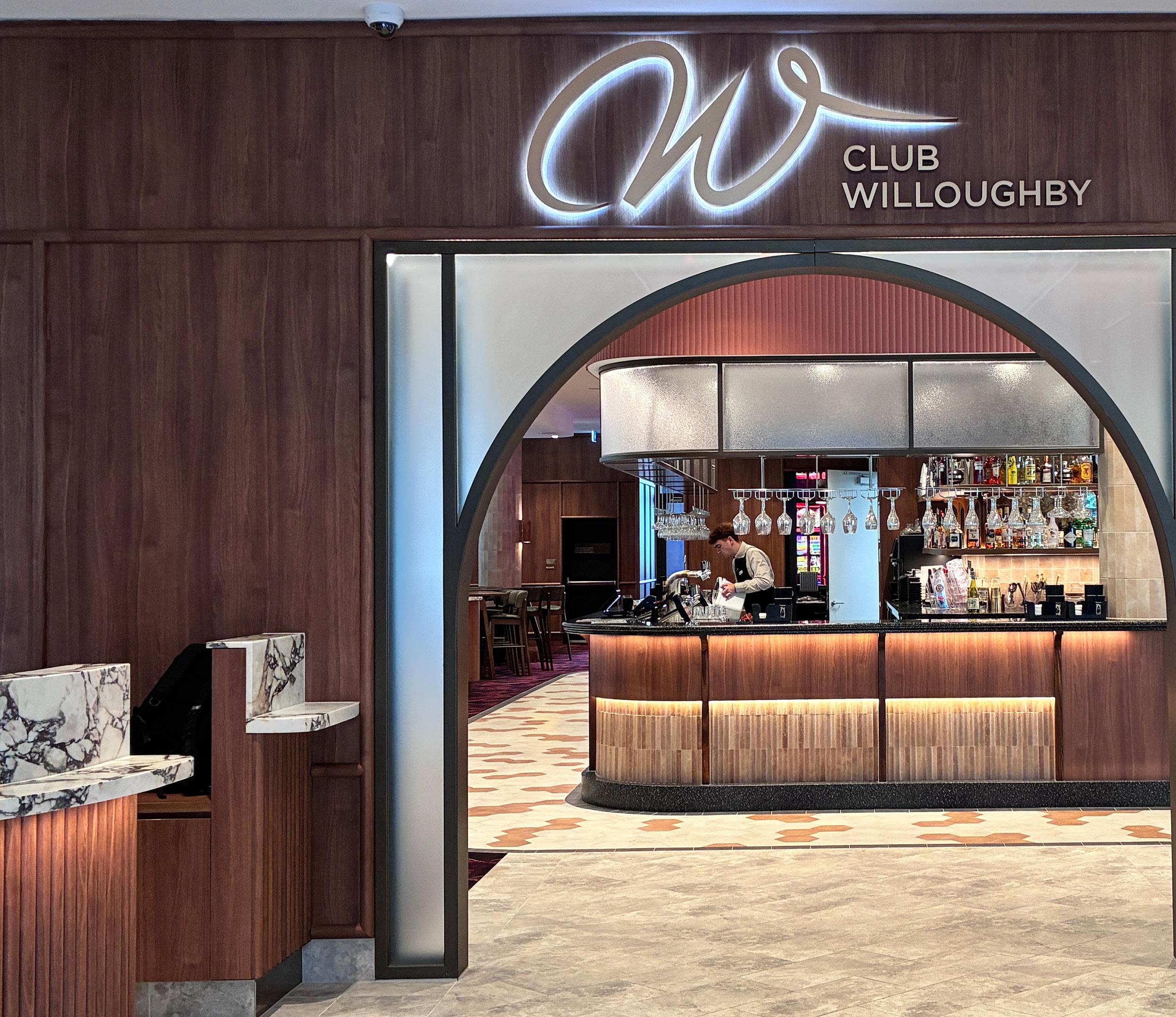

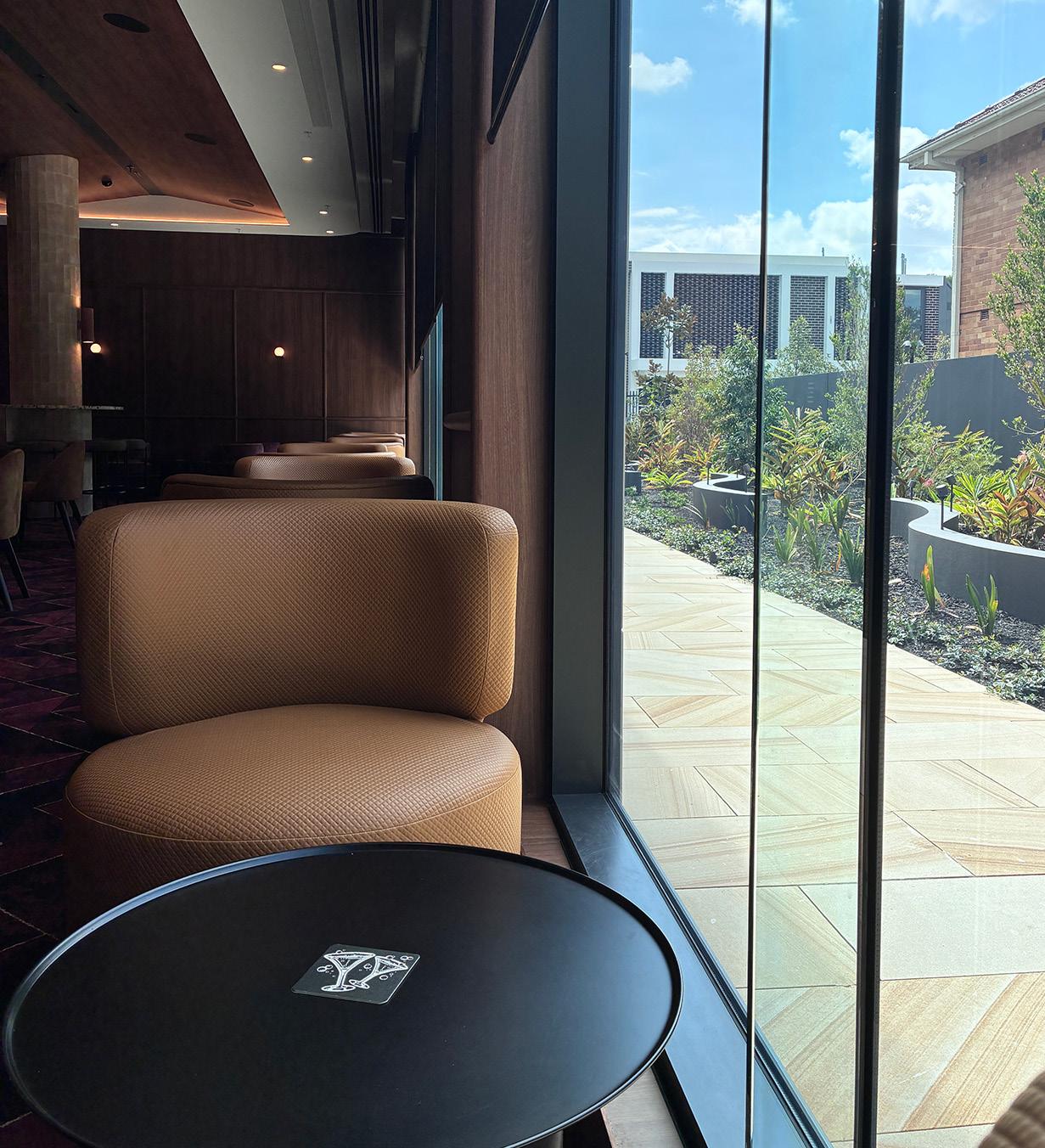
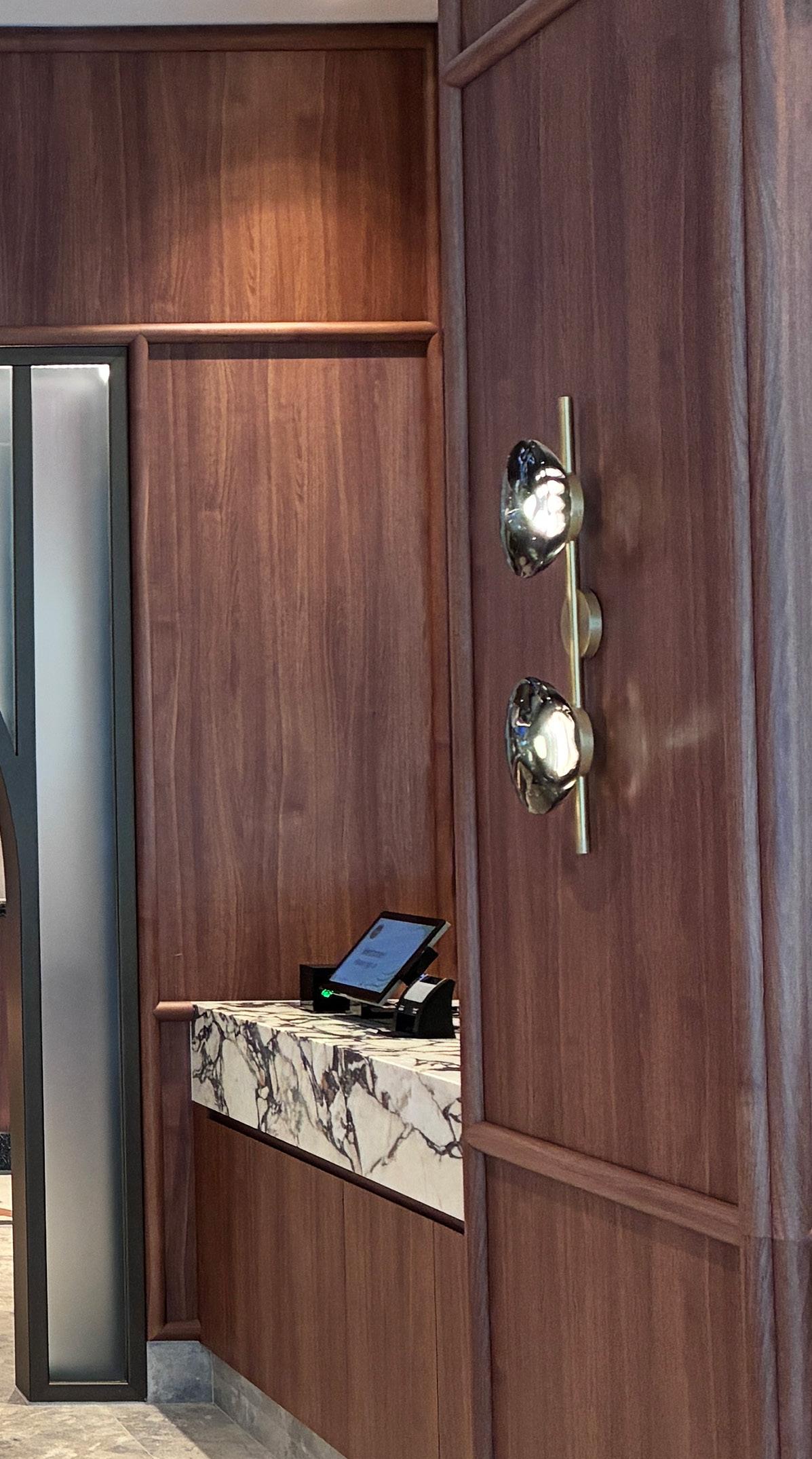
More than a decade in the making, Club Willougby has finally reopened its doors.
ON A PROMINENT corner in Sydney’s lower north shore, a project more than a decade in the making is finally welcoming its local community back.
Known as the Heart of Willoughby, the $95 million redevelopment of Club Willoughby has transformed a 1960s-era exservices club into a mixed-use lifestyle precinct comprising a new three-level club, a luxury retirement village and aged-care facility, as well as open memorial parkland.
While development approval was secured in late February 2021 and construction commenced in mid-2022, the project’s origins stretch back more than a decade when residential developer Hyecorp Property Group first approached the club with an interest in its adjoining land.
“Ten years ago, on 11 February 2013, that was when [Hyecorp] had the first meeting with the club. There was also an earlier meeting with the Legion in 2008,” Stephen Abolakian, co-managing director at Hyecorp explained.
“Like all clubs, Club Willoughby was asset rich, cash poor. The club was built to suit the demographic of the ‘60s, which at the time was the place to be.
“When we met, the club had a very clear mandate, which was we don’t want to sell … we want to have a new club … they wanted to make sure they could have a club that wouldn’t exclusively rely on just the club’s operations, and have some form of non-trading income for tough times that may come in the future.”
What followed that initial meeting wasn’t a transaction, but a prolonged period of relationship-building, planning and trust.
“We shook hands with the club in 2013, but we didn’t actually sign a contract until 2017. It was a trust-based relationship where we worked together to work out what we all wanted to do,” Abolakian said.
Under the agreement, the club retained ownership of the land, granting Hyecorp a long-term lease to develop and operate the retirement village component of the precinct.
At the centre of the new precinct sits a new 4,500 square metre club over three levels, plus three levels of underground parking.
The ground floor includes a 200-seat main lounge and sports bar offering a mix of high and low seating, a 160-seat indoor-outdoor bistro overlooking the precinct’s leafy exterior, a gaming room, and two foyers.
Level one is home to a tenanted restaurant that will feature a Chinese restaurant offering live seafood and yum cha.
The top level houses a flexible event centre comprising one large room that can be divided into three spaces, accommodating 300 guests banquet style and about 400 theatre style. The level also features a generous bridal suite and cityscape views.
Throughout the club, warm timber finishes and soft lighting create an inviting atmosphere, complemented by brass detailing, marble surfaces and textured ceilings.
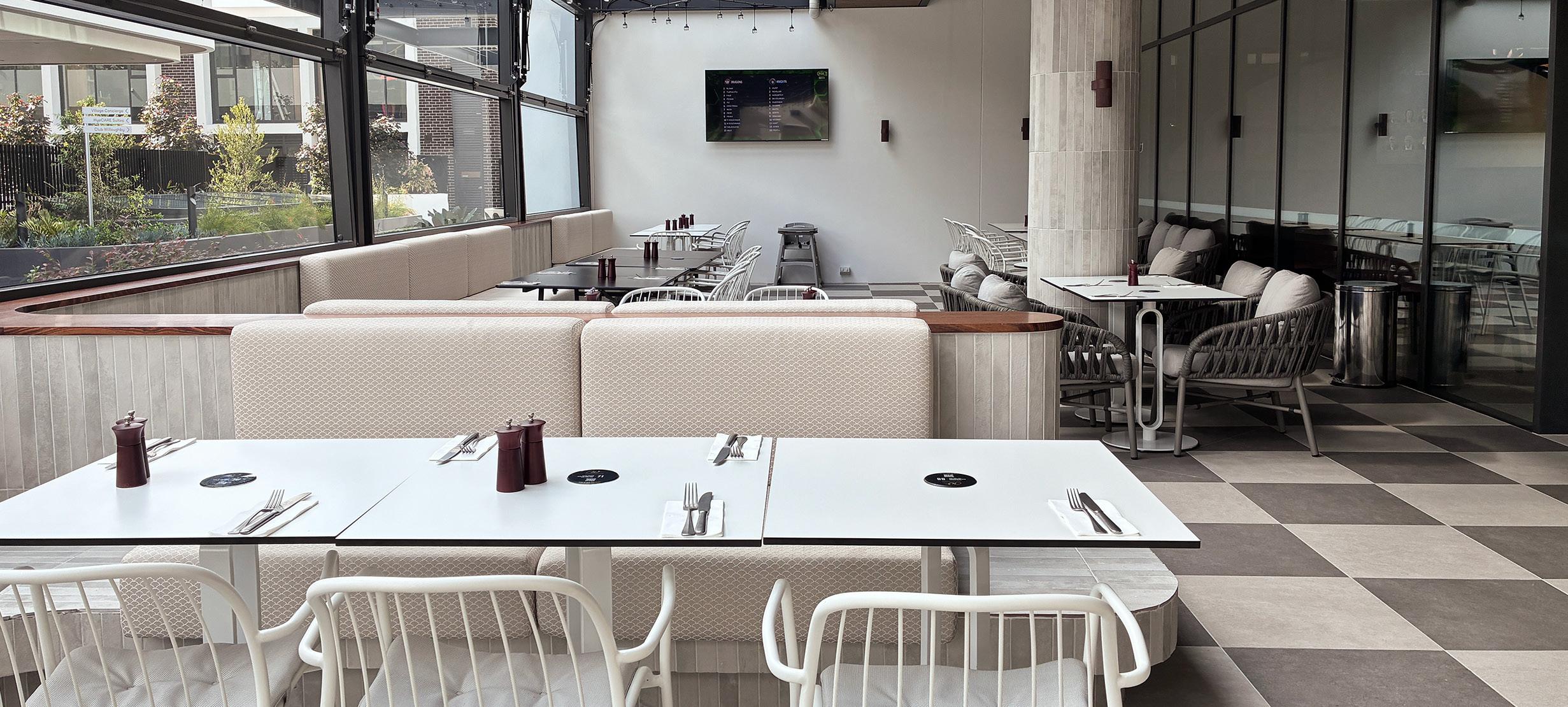
Overseeing the build has been industry veteran Mario Machado, who joined the project in July 2024, initially as a consultant before he was appointed as CEO in October 2024. His brief was to assess the plans and improve functionality. The long planning timeline also meant adapting to legislative change, particularly around gaming compliance and operational requirements.
“We’re very fortunate to get Mario on board to lock in how this was all going to work,” Abolakian said.
Club Willoughby’s origins date back to the immediate post-war years, when the Willoughby Sub-Branch of the Australian Legion of Ex-Servicemen and Women was formed in July 1945. The current site was purchased in 1950, with a modest single-level clubhouse opening on 30 April 1955. A larger two-storey club followed in 1969.
The redevelopment has been designed to honour that lineage. During construction, 26 sets of ashes were uncovered, including those of the club’s original president. They were respectfully relocated to a nearby cemetery during the build and have since been returned.
Today, the precinct features a memorial walk that is home to those ashes and 76 plaques commemorating ex-servicemen, watched over by a statue of a soldier. At its entrance stands a Lone Pine, symbolically linked to Anzac remembrance, alongside rosemary preserved from the original club gardens and replanted along the memorial walk. The original iron gates from the former clubhouse have also been reinstated.
For Machado, preserving that legacy was non-negotiable.
“It is our identity. It gives the staff a sense of pride because they understand the history and feel connected to it. It’s part of our induction program and something we want to carry forward for future generations,” he said.
“We want scout groups and school groups coming in, particularly around Anzac Day and Remembrance Day, so young people can learn about the various conflicts and understand what a sub-branch or legion means.”
“I have always been of the view that joint ventures don’t really work for clubs; I’ve been pleasantly surprised.”
– Mario Machado, Club Willoughby CEO
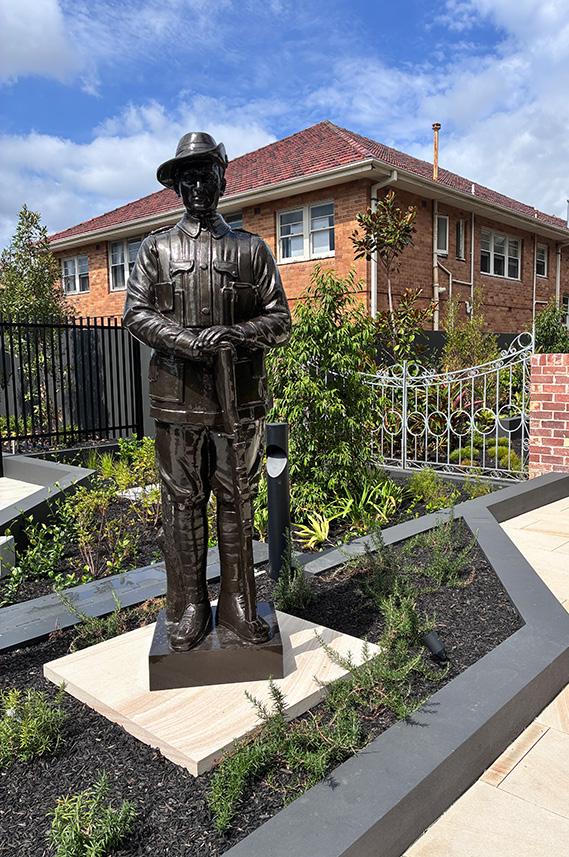
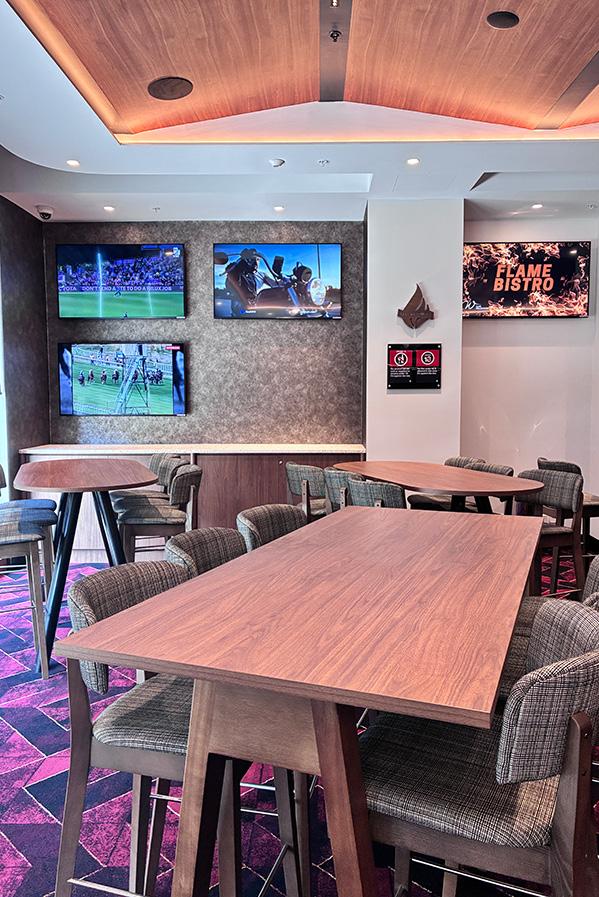
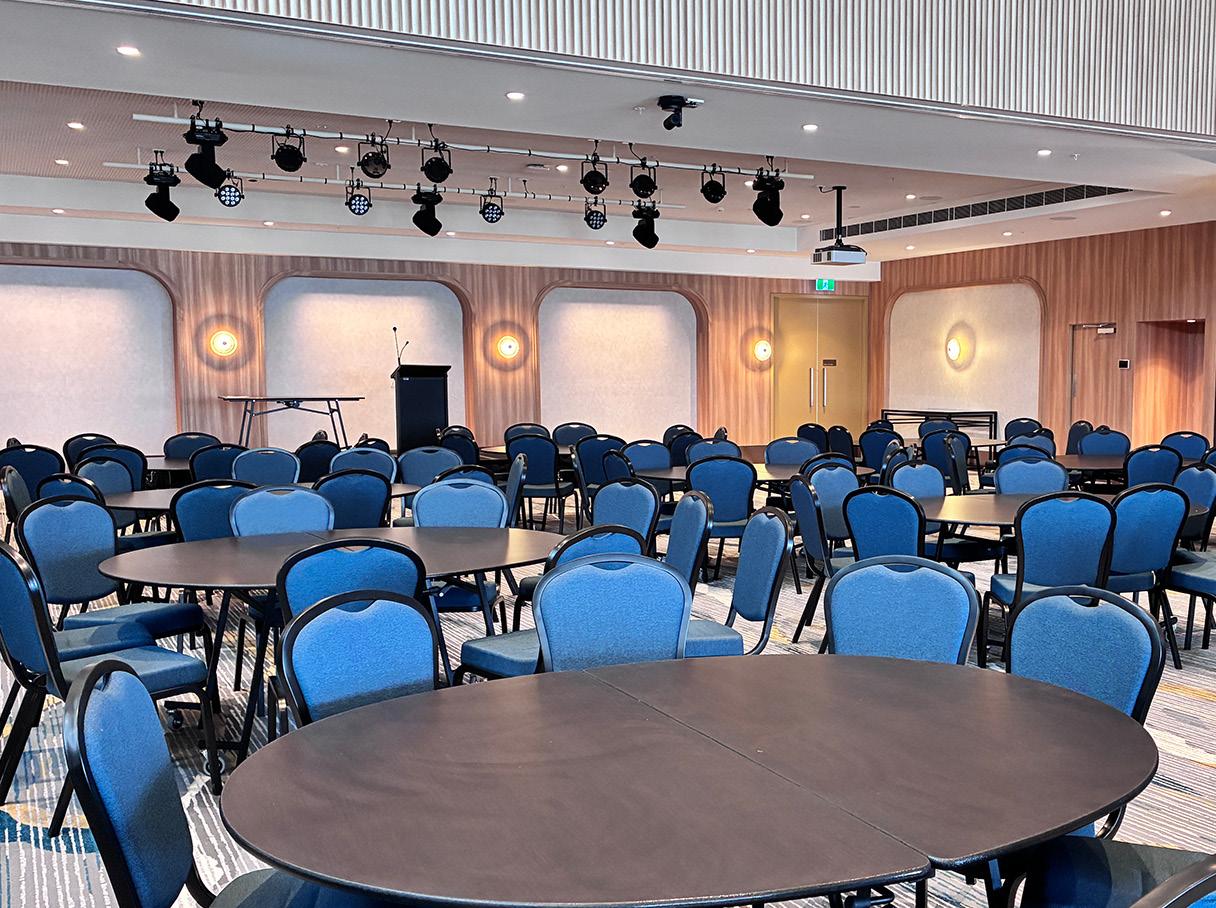








SCAN FOR A FREE SAMPLE
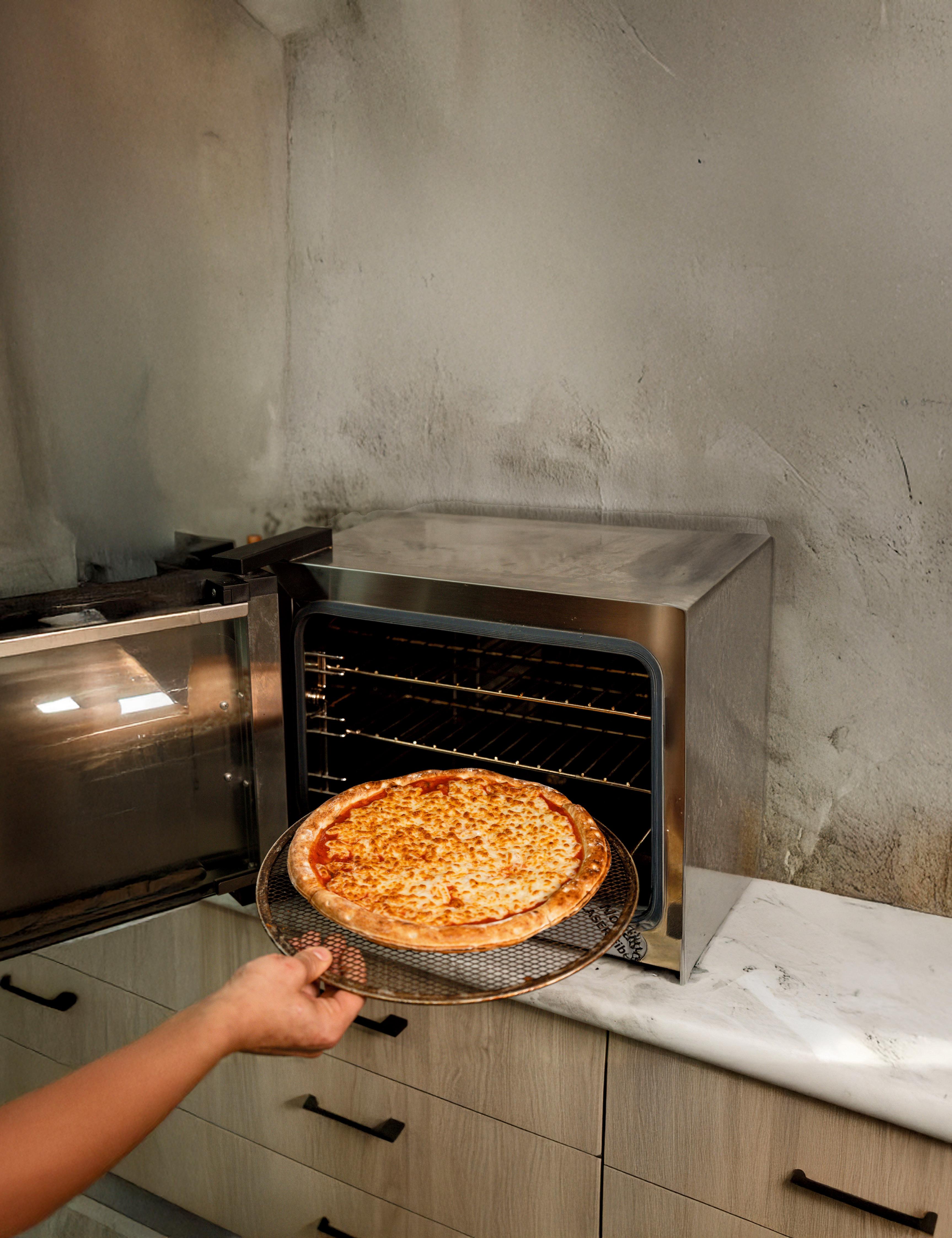
In addition to the club, the precinct incorporates four retirement village buildings comprising 111 apartments, supported by 47 high-care suites. Residents have access to shared amenities including a lounge, pool, gym, cinema, wine room, arts and craft room, café, tinker shed and hair salon. A row of tenant shops lines the site, anchored by a medical precinct with a GP, pathology, dentist and physiotherapist.
From a financial perspective, the model provides the club with diversified income streams, including one-off proceeds from apartment sales, recurring deferred management fees and a percentage of village operational income.
The joint venture has also reshaped Machado’s own ideas about what these partnerships can achieve.
“I have always been of the view that joint ventures don’t really work for clubs. I’ve been pleasantly surprised in that the club got a pretty good deal, and the outcome will hopefully secure the club financially for decades to come,” he said.
He is careful to frame that the success of joint venture depends on context.
“In this particular case, it’s worked very well because the club retains its identity,” Machado said.
“A lot of clubs struggle with that, in that you can amalgamate, but then you lose somewhat part of your identity. Even though these days, most clubs try to accommodate everybody, it’s still a marriage of convenience.
“A club wanting to secure their future, if they’re in the right location and if they do the sums and it all adds up, [a joint venture] is certainly a way out.”
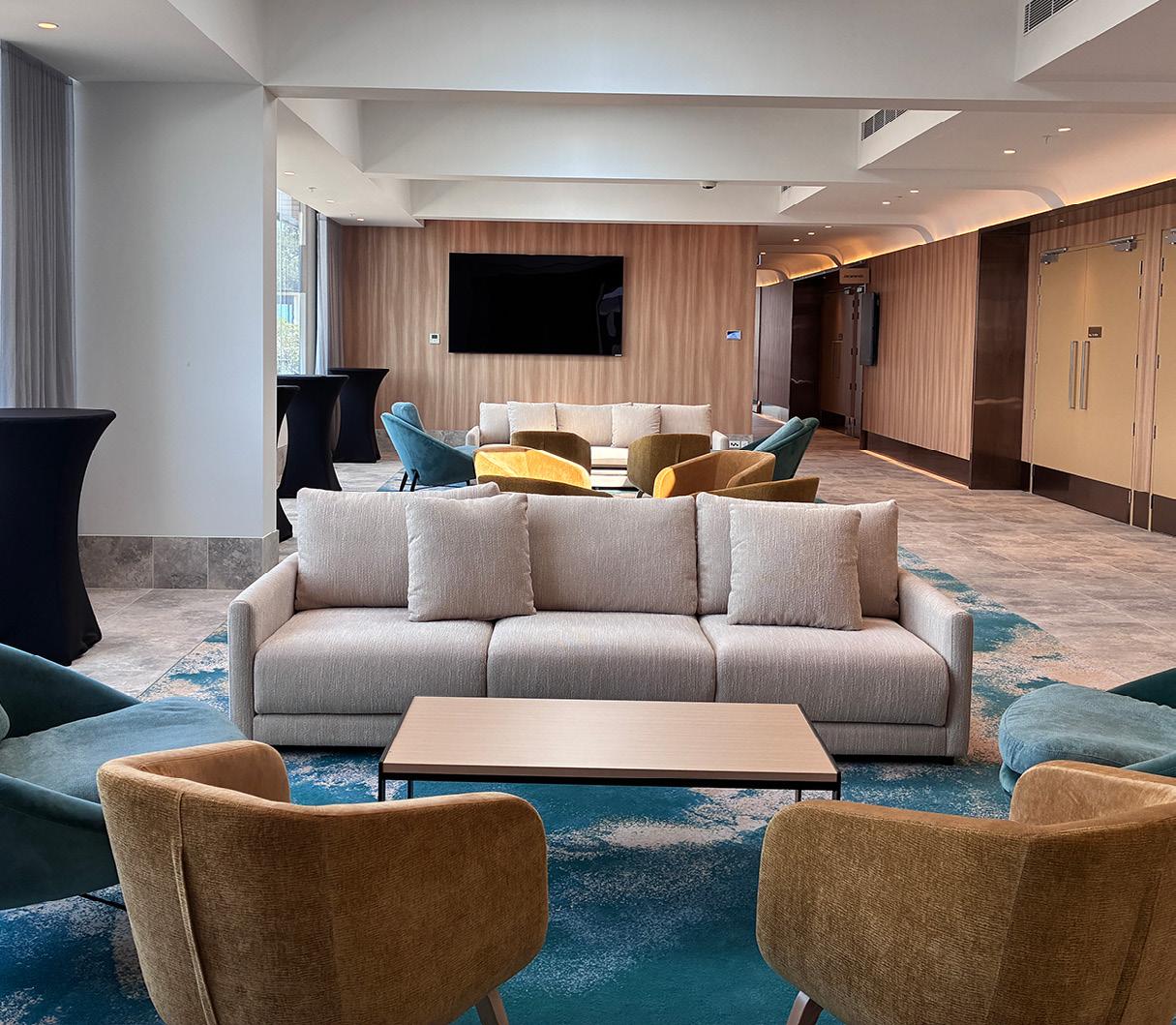
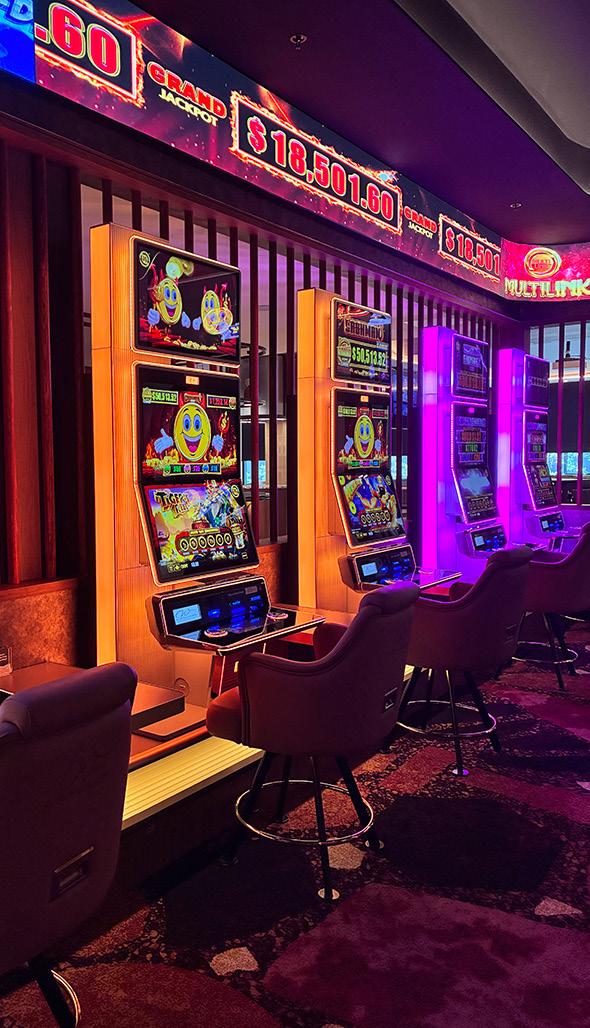
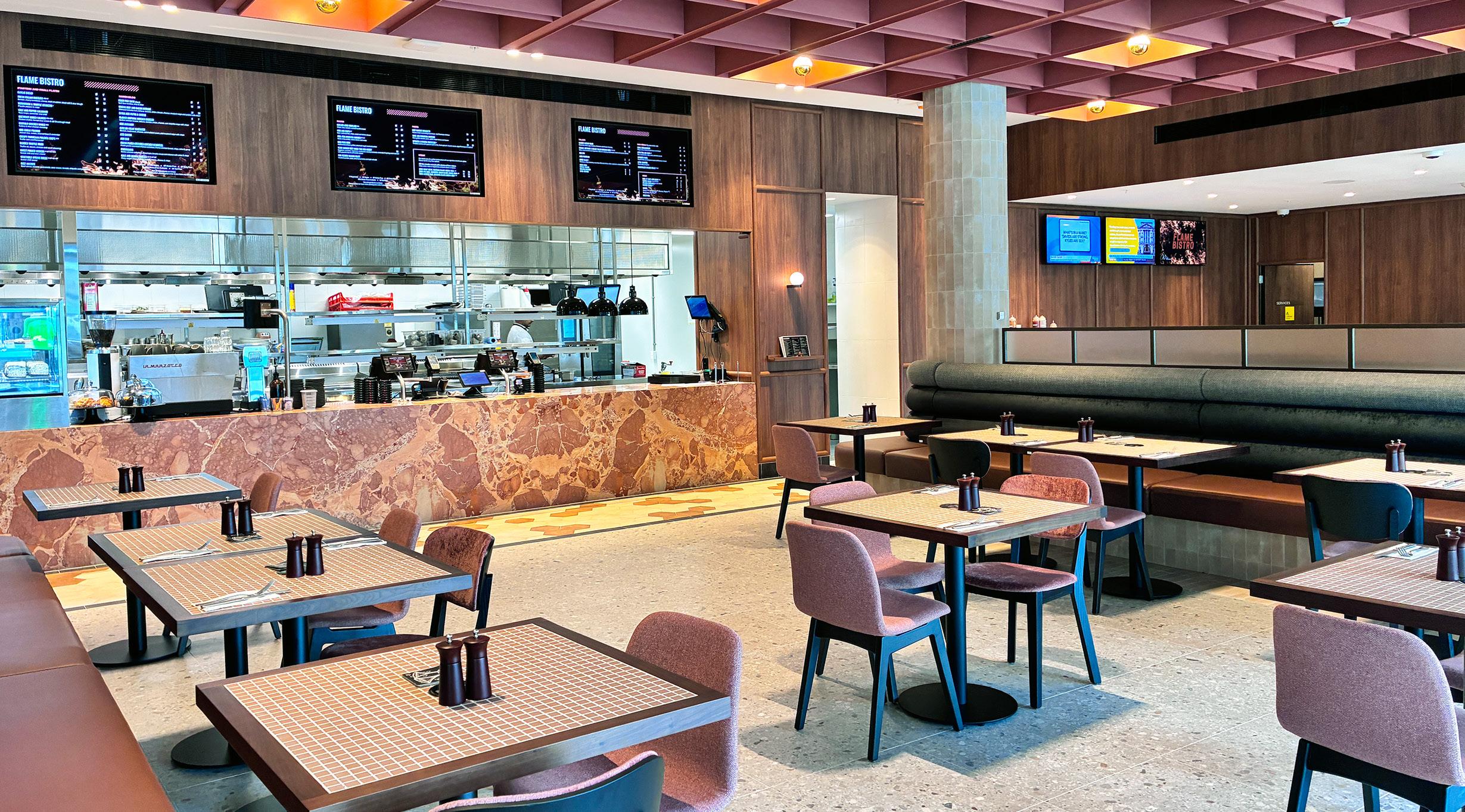

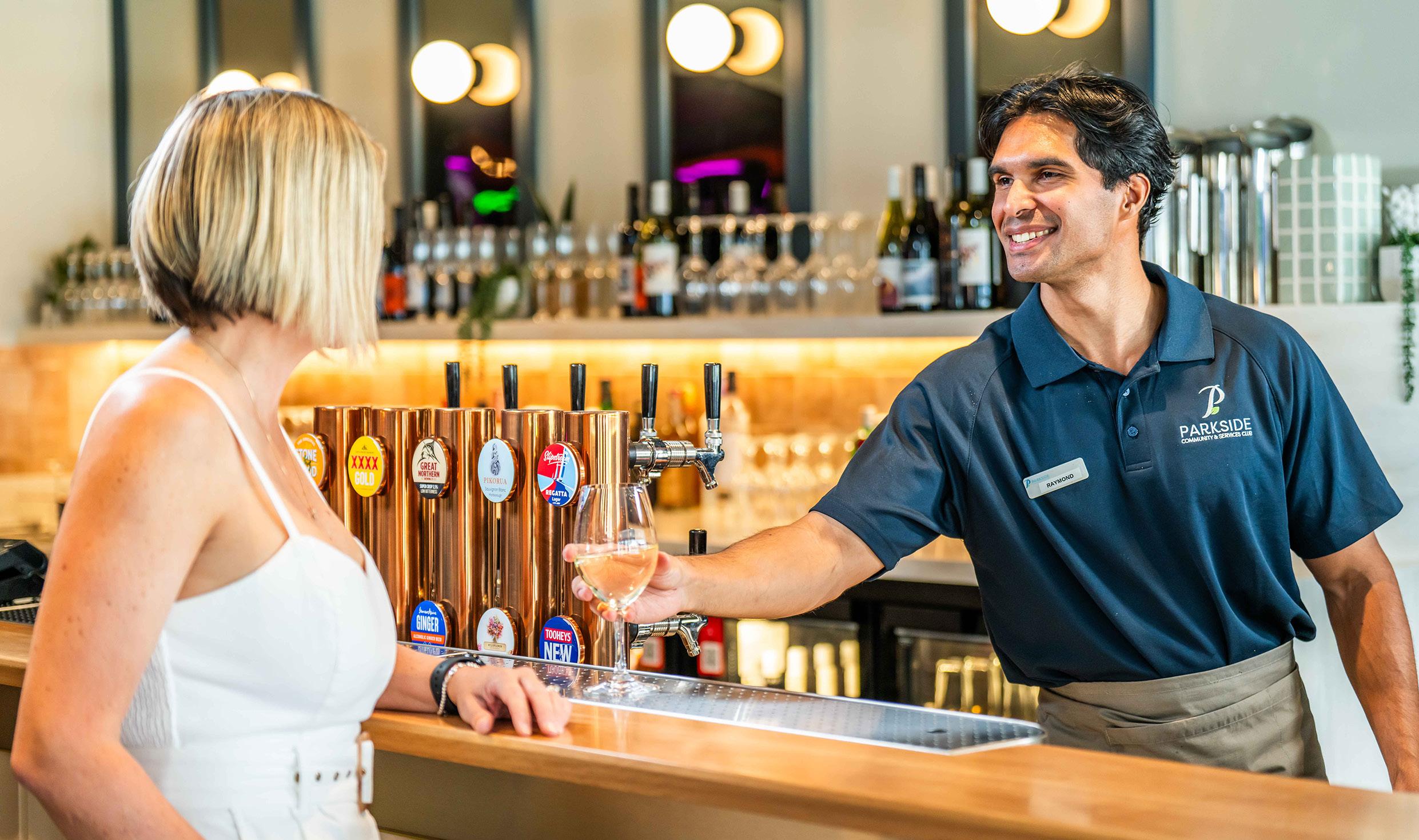
After years of planning, Coorparoo RSL’s move to Greenslopes marks not just a relocation, but the start of a new identity.
IT’S NOT OFTEN that a club gets a chance to start fresh, but Coorparoo RSL did just that when it moved into its new home, reopening on 1 December at a site just five minutes from its original venue.
The move to what was formerly Greenslopes Bowls Club in Brisbane’s inner south was years in the making. Speaking with Club Management, chief executive Chris Sartori said the club sold its original clubhouse nearly five years ago to pay down debt, a decision that ultimately paved the way for a relocation.
“The old site at Coorparoo RSL was bought by Bolton Clarke, the commercial arm of RSL Care,” Sartori said. “They have a development application in to build an 18-storey aged care facility, so for the last three to four years the club has been on the lookout for a new home.”
That search eventually led the club to Greenslopes, just minutes from its former base.
“About two years ago, we found the site where we are today. It’s about five minutes away from our old club. We negotiated a lease with Brisbane City Council before making arrangements to start the relocation.”
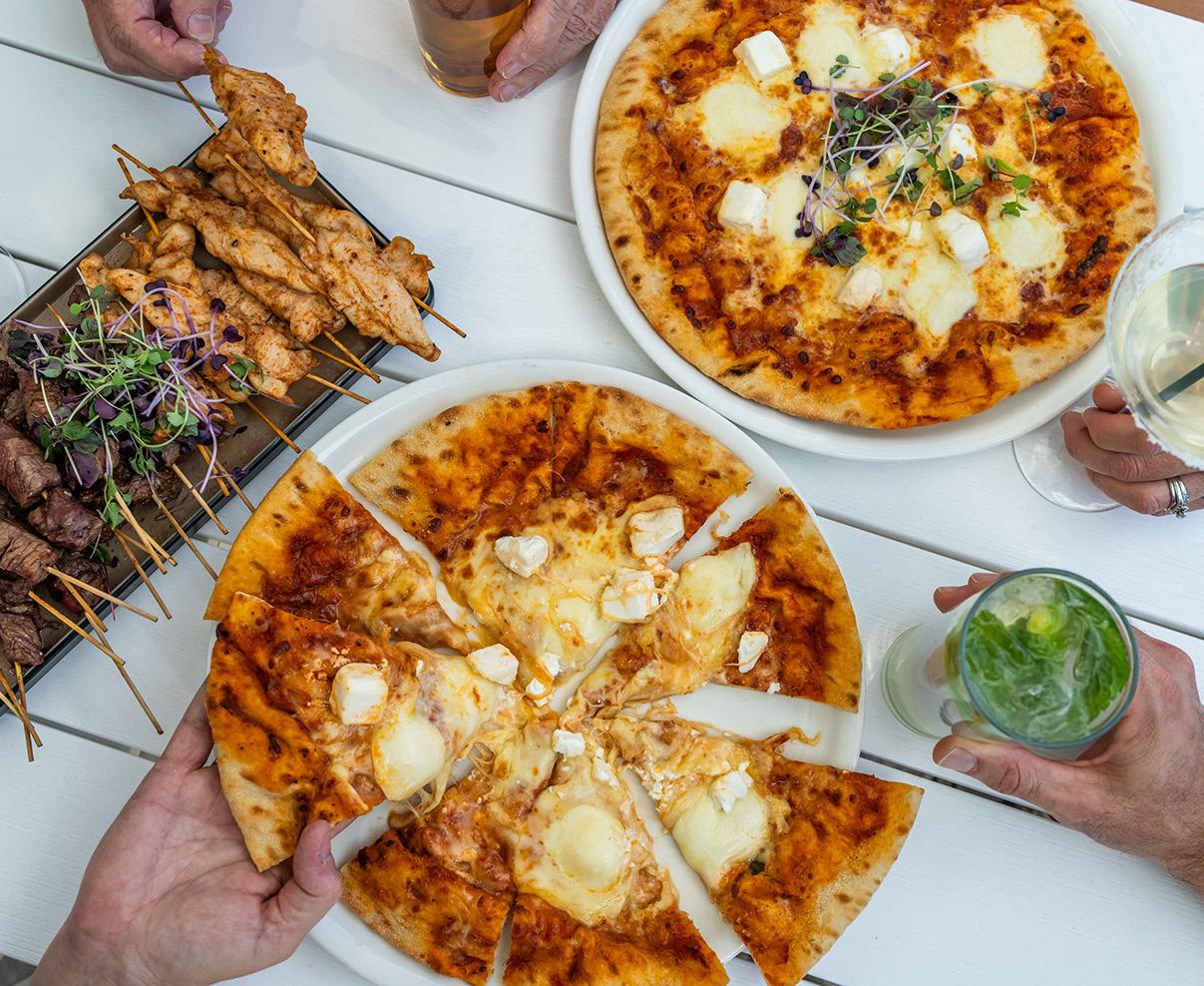

“Activities, like barefoot bowls that incorporates the whole family, are really starting to drive visitation.”
– Chris Sartori, Parkside Community and Services Club CEO
The sale predates Sartori’s time at the club. He joined in mid-2022 with a clear mandate to “take on the responsibility of finding a new home and relocating”.
“It has been a very long journey,” Sartori said.
Working with Paynters, the club invested just over $5 million to overhaul the former bowls club, which had been out of operation since 2023. The venue now features the Greenhouse Bistro and Terrace, seating 85 in the bistro and a further 35 on the terrace. Alongside this, there is a cafe, lounge bar, and a gaming room with 50 gaming machines.
As part of the redevelopment, the club has also repurposed its two bowling greens to support a mix of social, commemorative, and community uses.
“As part of the lease arrangement and zoning, the site is classified as sports and recreation, so we’ve undertaken to maintain one of the [bowling] greens for social and function barefoot bowls,” Sartori said. “That’s been really well supported by families from day one, and we’ve had a mixed demographic using that space.”
The second green has been designed purposefully to be a flexible, multi-purpose space.
“We’re using it for special events like Anzac Day and Remembrance Day services, but also
for community events,” Sartori said. “We had a community fun day over the Australia Day weekend, and during day-to-day operations we have kids’ activities out there with balls and cricket bats.
“It’s also available for other community activities like Pilates or mums and bubs sessions. We want it to be used by the community and be flexible.”
For Sartori, having open green, family-friendly spaces was a priority. Extensive feasibility studies and demographic analysis of Greenslopes and its surrounding suburbs showed the area was popular with young families and young couples, a finding that directly helped shape the club’s design and offering.
“A lot of our facilities and services are created to make sure we are giving them a reason to come into the club,” Sartori said.
“Having open areas was really important. Inside, the bistro has plenty of natural light. Outdoors we wanted spaces where children could still be welcomed – whether they’re kicking or hitting a ball, playing activities – and be part of it all while mum and dad are having coffee or a bite to eat.”
That family focus extended beyond the physical design. Food and activities have been deliberately positioned to work hand in hand, reflecting broader shifts across the club industry.
“We’re still in the infancy stage because
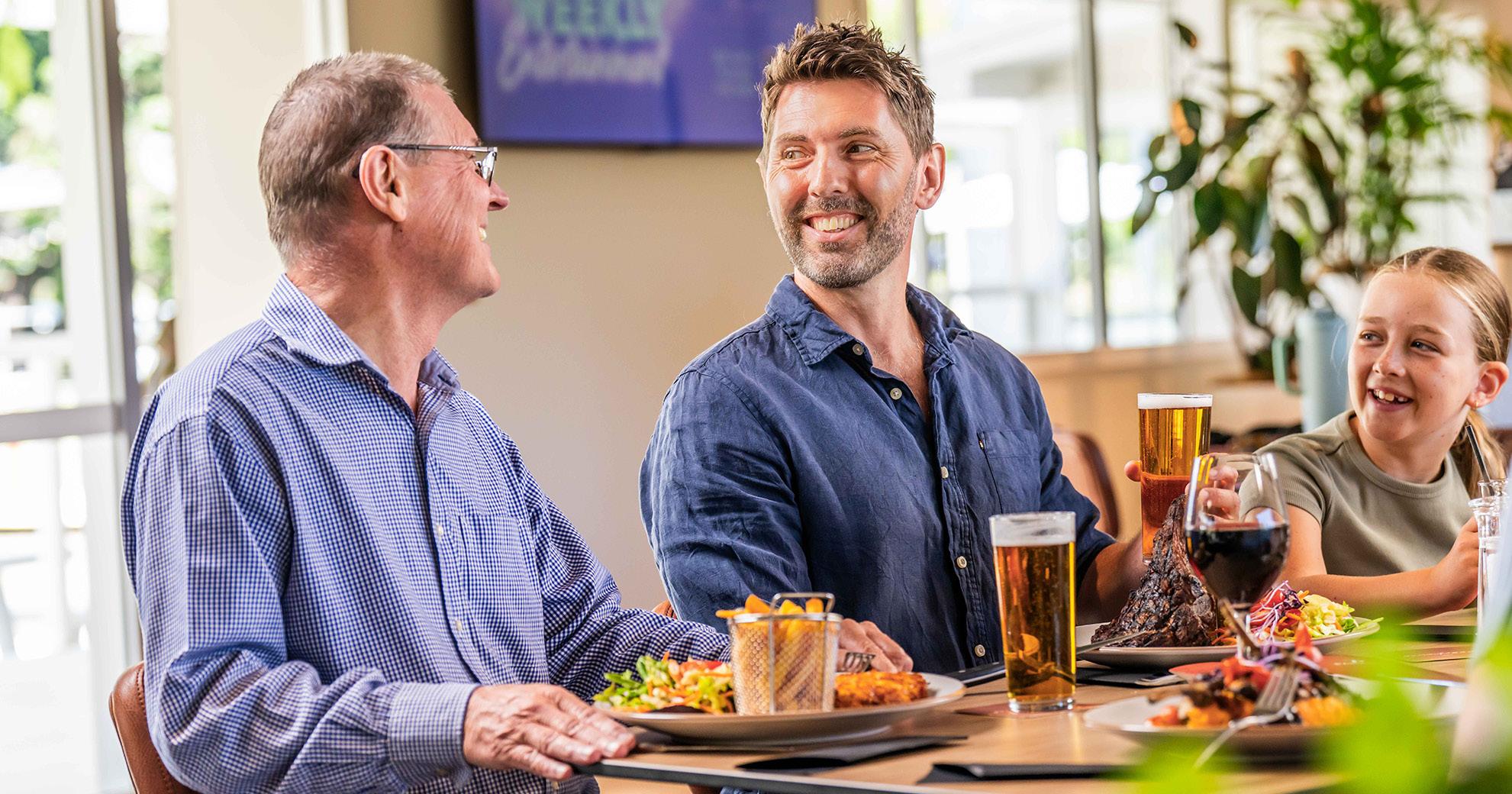
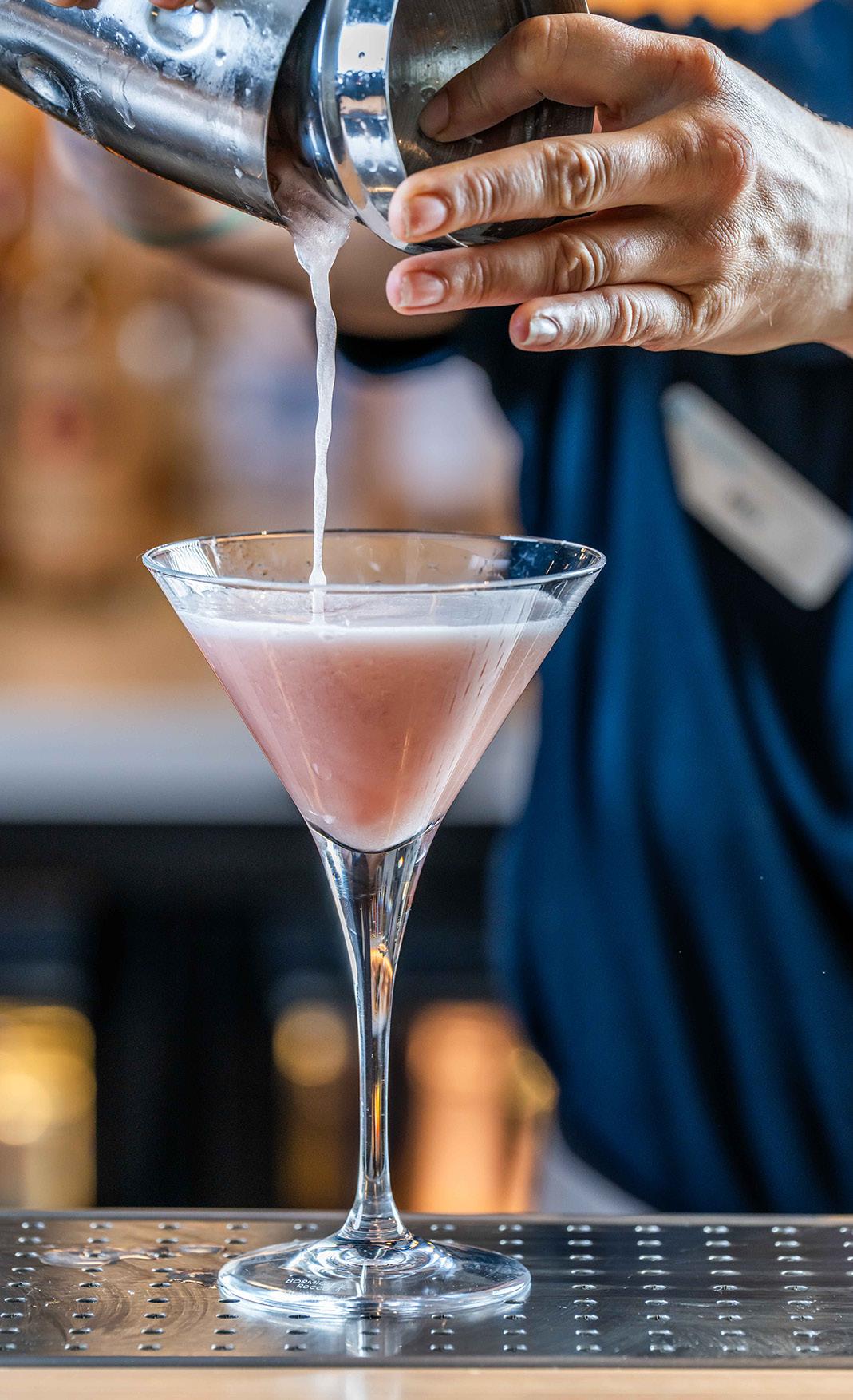

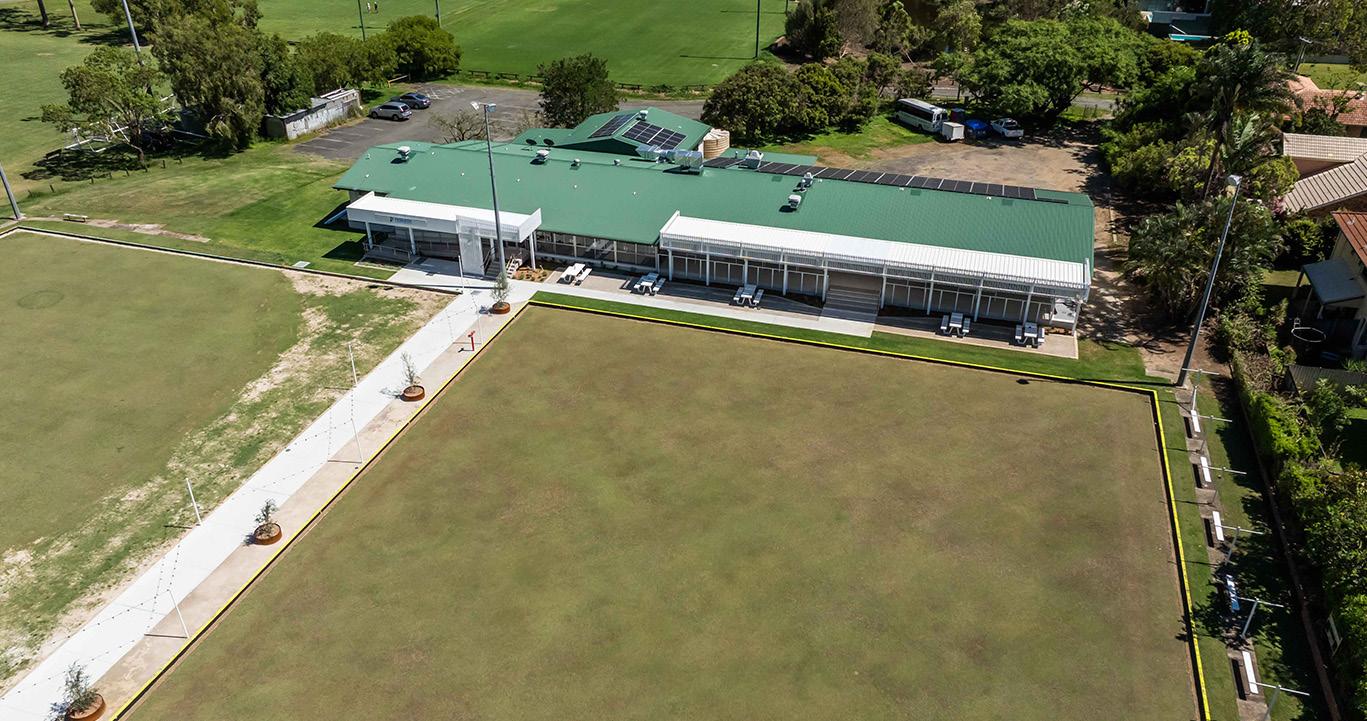
we’ve relocated, but what we’re seeing is that activities, like barefoot bowls that incorporate the whole family, are really starting to drive visitation. Marrying that up with the food element is really important.
“We gained around 1,000 members leading up to opening, and it’s continued to increase since.”
– Chris Sartori, Parkside Community and Services Club CEO
“Obviously, the bigger clubs are doing things around bowling alleys and movies, but we’re starting small with barefoot bowls, and we’ll grow that in the future.”
Same same, but different
But the physical move was only part of the refresh. Alongside the move, the club also adopted a new trading name, Parkside Community and Services Club.
“We did consider keeping the same trading name, but with a new beginning, being in a different area, we thought it was appropriate to find another trading name,” Sartori said. “After some marketing work, we landed on Parkside Community and Services Club.”
The name was chosen to reflect both the club’s purpose and its new surroundings.
“It was about retaining the community aspect and the services element, which is part of our
RSL charter, while also tying it back to the neighbourhood we’re in, adjacent to parklands, soccer fields and a sporting precinct.”
Despite all the changes, Sartori reassures that the club and what it stands for remains the same.
“We still focus on our charter being an RSL, so particularly around RSL welfare and the wellbeing of veterans and their families,” he said.
“What we’ve done now is broaden that into other parts of the community, particularly those supporting us here at Greenslopes, including sports associations and not-for-profit and charity organisations.”
Even though the club has only been open for a few months, early signs suggest the club’s approach is resonating with patrons.
“We were doing three times what we forecasted in the first month,” Sartori said.
“We forecasted conservatively to grow from about 1,000 members to 3,000 within the first 12 months, and we’re already just over 2,000.
“We gained around 1,000 members leading up to opening, and it’s continued to increase since. The support has been really great.”





Melanie Rose recently celebrated 10 years at Norths Leagues where over the past decade she’s contributed to multiple departments, from bar and dining through to accounts. Q&A / Melanie Rose
Gaming systems and analysis Norths Leagues and Services Club
Behind the scenes at Norths Leagues and Services Club, Melanie Rose plays a role that keeps both numbers and operations running smoothly.
What is your role at Norths?
My current role is split between the gaming team and the finance team. In my gaming role, I am responsible for producing gaming statistical reports for the gaming and marketing teams across the Queensland Clubs Management (QCM) group, as well as providing support for the systems the QCM group uses.
In my finance role, I am primarily performing the role of accounts payable for Norths Leagues, along with other finance tasks as they arise.
Describe what a typical workday looks like for you.
Each day is different, which I like. For example, one day I might be building reports for all the QCM clubs, and then another day might be filled with invoice processing for the finance team. One constant is a 9:15 am coffee.
What was your first job?
My very first job was at KFC while I was at school. My first industry role was once I finished school and started working on the gaming helpdesk for a company called Getronics, which, at the time, provided maintenance [service] for all the pokies in Queensland.
Can you share what other roles you’ve held at Norths?
I started as a casual employee in the restaurant at Norths, not long after my daughter was born. We then opened an outlet called Barrel N Vine, an outdoor bar and dining area, which I moved into for a while.
I eventually moved into the bar and gaming team, on the floor, as a cashier and behind the bar. Eventually, I moved into a gaming supervisor role.
About four years ago, I was given the opportunity to assist with the reporting requirements for gaming once a week, while still working several shifts on the gaming floor. This role eventually expanded to multiple days a week, and then eventually the opportunity arose to join the finance team as well, leading to the dual role I hold now.
What do you enjoy most about working in the clubs industry?
I enjoy the change; every day is different. There are always new ideas or new products being brought forward.
What have been the most significant changes you’ve seen happen to the clubs industry in the last 10 years?
Technology is one of the biggest changes. The changes over the years have allowed more time to interact and focus on the service we provide to customers.
The image of clubs has been another change over the years. I’ve gone from seeing a bistro-style restaurant turn into an award-winning dining venue, and gaming rooms evolving into amazing and beautiful spaces.
How do you spend your time outside of work?
I spend a lot of time exploring outdoors, either hiking, at the beach, or finding a secluded stream or river to explore. I love finding new places I’ve never been before.
What advice would you give your younger self?
Not to take life too seriously.

Expand your menu offerings with the versatile TurboChef Sota. The Sota can replicate multiple cooking styles, allowing you to dial in dual fan speeds, oven, and microwave settings for consistent & ideal results.