








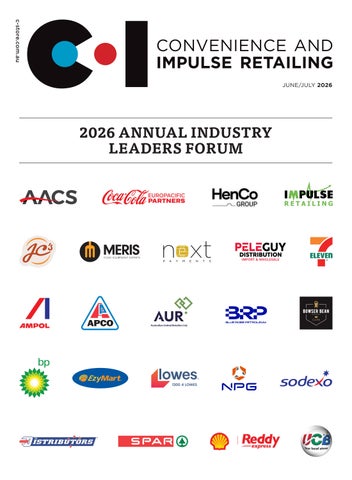























From category leaders to key retailers, P&C’s most influential people share their perspectives on navigating the challenges of a dynamic landscape, driving growth in a competitive sector, and shaping the future of their businesses.
From page 20.
June/July 2026
08 Face Time Zan Lewarn, Member Engagement Manager, AACS
12 Store Review
Mood Food Flight Deck Cambridge
16 AACS State of the Industry Report
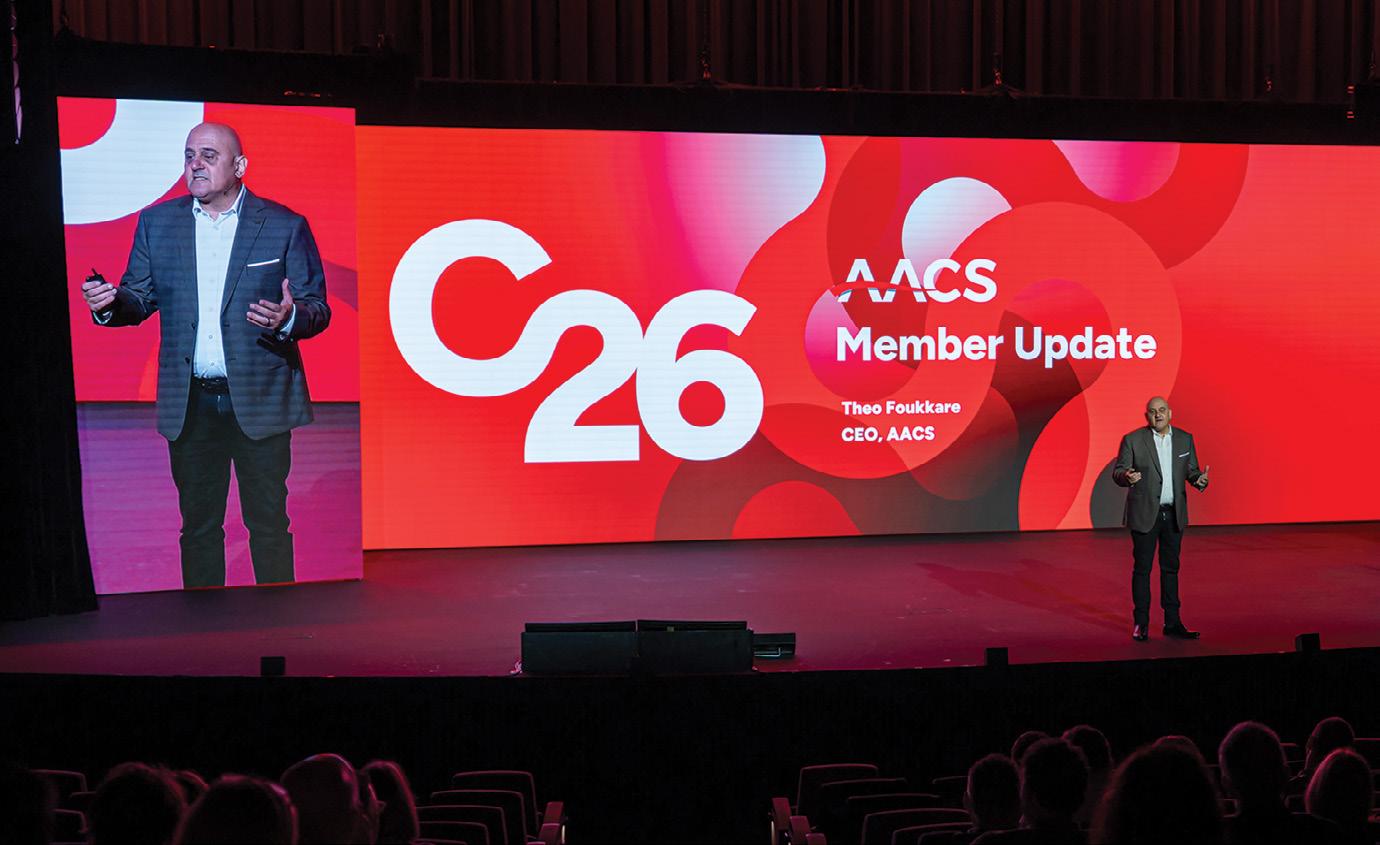
Theo Foukkare, CEO, AACS, shares insights from the 2025 AACS State of the Industry Report prepared by CMA
20 Leaders Forum
Industry leaders share their thoughts on the state of the convenience and roadside retail industry
50 Chocolate
A key driver of sales within the confectionery category
54 Snack Food
A crucial part of the mix for convenience retailers
58 Product Ranging
We bring you all of the latest new product launches
68 Opinion
Theo Foukkare, AACS; Brad Jones, Fuel Retail Solutions
72 Industry Updates
UCB Conference; Bowser Bean; Metcash; EG/Ampol deal; JC’s Quality Foods; Illicit tobacco
78 Petrol News
Fuel compliance; Night n’ Day; Ampol’s Lytton refinery; Fuel security; NPD
Published by C&I Media Pty Ltd
(A division of The Intermedia Group)
41 Bridge Road (PO Box 55)
Glebe NSW 2037
Tel: 02 8586 6292
Fax: 02 9660 4419
E: magazine@c-store.com.au
Group Publisher
C&I Media Pty Ltd
Safa de Valois
Commercial Director
Safa de Valois
safa@c-store.com.au
Editorial Director
James Wells james@intermedia.com.au
Managing Editor
Thomas Oakley-Newell tom@c-store.com.au
Art Director
Alyssa Coundouris alyssac@intermedia.com.au
Production Manager
Jacqui Cooper jacqui@intermedia.com.au
Production Assistant
Tazlin Cantrill magazine.material@intermedia.com.au
Prepress
Tony Willson
PROUD MEMBERS OF:
INFORMATION PARTNERS:
The Intermedia Group takes its Corporate and Social Responsibilities seriously and is committed to reducing its impact on the environment. We continuously strive to improve our environmental performance and to initiate additional CSR based projects and activities.
As part of our company policy we ensure that the products and services used in the manufacture of this magazine are sourced from environmentally responsible suppliers. This magazine has been printed on paper produced from sustainably sourced wood and pulp fibre and is accredited under PEFC chain of custody. PEFC certified wood and paper products come from environmentally appropriate, socially beneficial and economically viable management of forests.
This publication is published by C&I Media Pty Ltd (the “Publisher”). Materials in this publication have been created by a variety of different entities and, to the extent permitted by law, the Publisher accepts no liability for materials created by others. All materials should be considered protected by Australian and international intellectual property laws. Unless you are authorised by law or the copyright owner to do so, you may not copy any of the materials.
The mention of a product or service, person or company in this publication does not indicate the Publisher’s endorsement. The views expressed in this publication do not necessarily represent the opinion of the Publisher, its agents, company officers or employees. Any use of the information contained in this publication is at the sole risk of the person using that information. The user should make independent enquiries as to the accuracy of the information before relying on that information. All express or implied terms, conditions, warranties, statements, assurances and representations in relation to the Publisher, its publications and its services are expressly excluded save for those conditions and warranties which must be implied under the laws of any State of Australia or the provisions of Division 2 of Part V of the Trade Practices Act 1974 and any statutory modification or reenactment thereof. To the extent permitted by law, the Publisher will not be liable for any damages including special, exemplary, punitive or consequential damages (including but not limited to economic loss or loss of profit or revenue or loss of opportunity) or indirect loss or damage of any kind arising in contract, tort or otherwise, even if advised of the possibility of such loss of profits or damages. While we use our best endeavours to ensure accuracy of the materials we create, to the extent permitted by law, the Publisher excludes all liability for loss resulting from any inaccuracies or false or misleading statements that may appear in this publication.
Copyright © 2026 - C&I Media Pty Ltd.
’day and welcome to the June/July issue of Convenience & Impulse Retailing magazine.
We’ve got a chock-ablock edition for you – full of insights, news, trends, and our much-anticipated Leaders Forum. But first up, we get to know Zan Lewarn, Member Engagement Manager at AACS, a little better. From working on super yachts to Commonwealth Games to landing at AACS, Zan’s story is a fun one.
Then we hop the Bass Strait to check out the unique Mood Food Flight Deck Cambridge, where Bennett’s Petroleum has transformed a small, unmanned fuel site into one of the most distinctive convenience destinations in Tasmania.
Our Leaders Forum section features an exclusive series of interviews with some of the most influential leaders across the petrol and convenience channel. From the challenges of the illicit tobacco market to strategies for driving growth in a competitive market, these conversations offer a unique look behind the scenes at how our industry’s top minds are navigating change and leading innovation.
Chocolate continues to be a cornerstone of the impulse aisle, and our feature explores how brands are tapping into premiumisation, indulgence, and seasonal innovation to keep customers engaged.
Snack Foods remains a staple category, and our coverage dives into the ever-evolving grab-and-go snacks. We look at how suppliers are meeting demand for variety and convenience, as well as catering to a growing betterfor-you demand, and how retailers can merchandise more effectively to capture sales across dayparts.
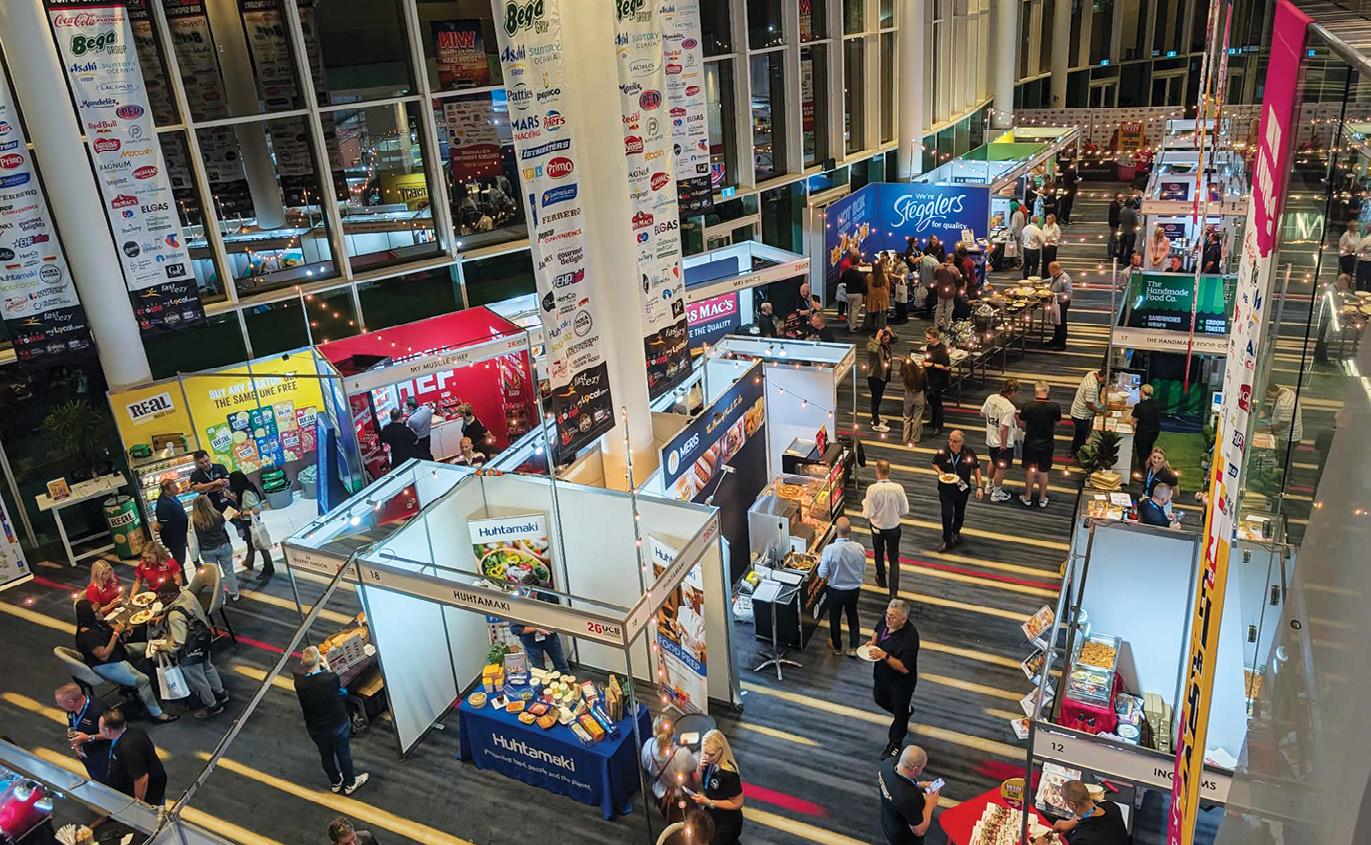
We also make our way to the 2026 UCB National Member Conference at the Royal Pines Resort on the Gold Coast, which saw the industry come out in force for a few days of learning, networking, and fun.
A big thanks to our columnists for this issue – Theo Foukkare, CEO of the Australian Association of Convenience Stores (AACS) and Brad Jones, Lead Consultant at Fuel Retail Solutions –who share some timely and interesting insights into our industry.
Enjoy the read!
Thomas Oakley-Newell
Join us for more Scan the code to explore the website and get social.






The new Milkybar Cookies 20g is filled with the delicious flavour combination of cookie bits covered in the smooth and creamy goodness of Milkybar white chocolate. Fall in love with the creamy taste of Milkybar –deliciously smooth white chocolate made with the goodness of real milk.
Perfect for the busy consumer looking for a sweet treat at their local petrol and convenience store. www.nestle.com.au/en
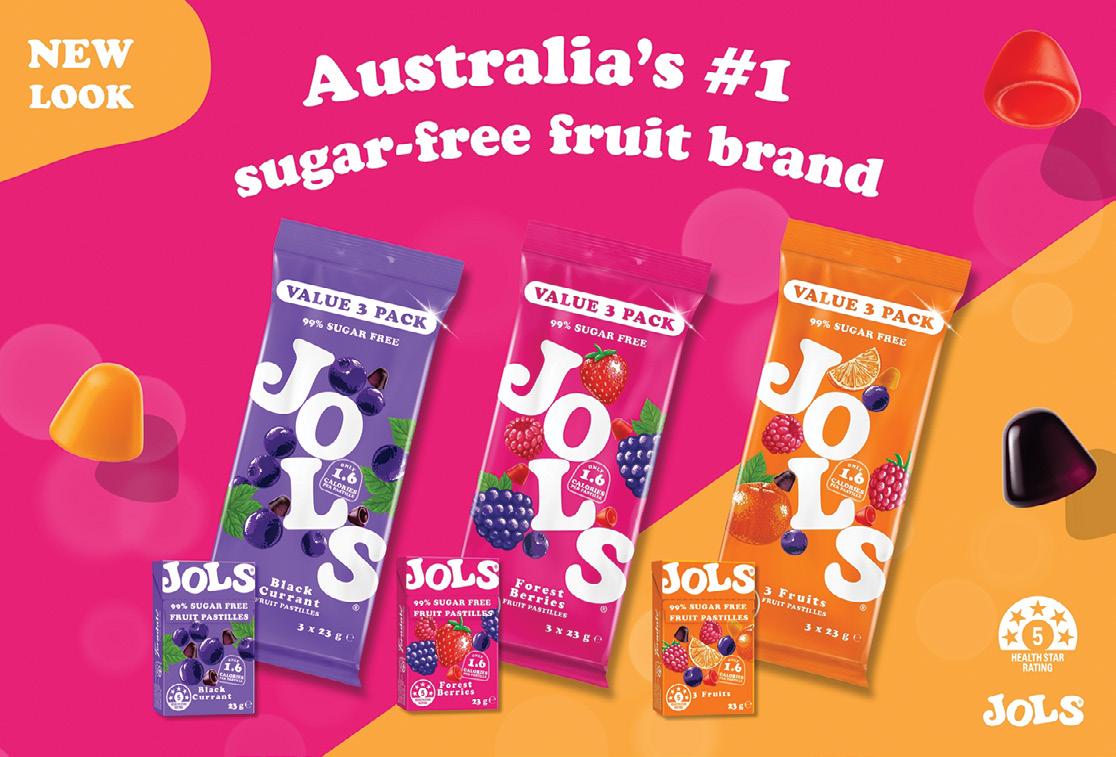
JOLS has unveiled a vibrant new makeover across its sugar-free pastille range, and it is impossible to miss.
Forest Berries, 3 Fruits and Blackcurrant now land on shelves with louder colours, value three packs and the same juicy chew Australians have loved since 1995. As Australia’s number one sugar-free fruit brand, JOLS delivers big flavour without the sugar. The refreshed packs are designed to stop shoppers fast and spark instant impulse buys across supermarkets, convenience and independents. Order your JOLS today from The Distributors! www.the-distributors.com.au | 1800 989 022


Twist, crunch, and chew your way into a new lolly obsession with Allen’s Speckled Snakes. These colourful snakes combine crunch speckles with a soft fruity gummy centre for a fun twist on every bite.
Bursting with grape and strawberry jelly flavours, plus fruity speckles on the outside, they deliver a mix of texture and taste that keeps snack time exciting.
The 130g packet is perfect for sharing with friends, adding to party tables or enjoying on the go. Allen’s Speckled Snakes are packed with chewy, crunchy fun from head to tail. www.allenslollies.com.au
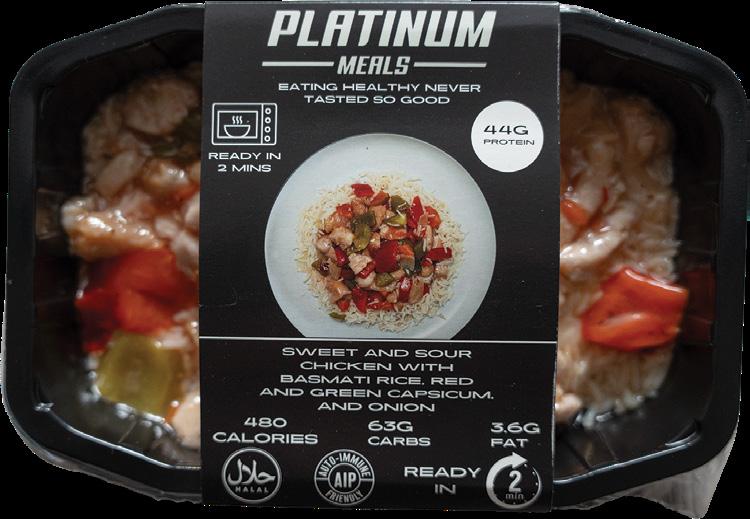
Platinum Meals is proudly Australian made and owned, offering a premium range of ready-made meals that deliver convenience without compromise.
Every dish is handcrafted using fresh, locally sourced ingredients, never mass produced, to ensure authentic flavour and quality. The meals are gluten-free, dairy-free, preservative-free, and halal certified, providing clean and nourishing options for all.
Already stocked in gyms, retail outlets, corporate sites, and health food stores, Platinum Meals is trusted for wholesome, balanced, and delicious meals that fuel busy lifestyles. Experience convenience made with real craftsmanship. platinum.meals@gmail.com | 0434 847 644






From super yachts to service stations, Zan Lewarn, Member Engagement Manager at the Australian Association of Convenience Stores (AACS), has always enjoyed being bringing people together.
I WAS BORN in Plymouth, England, before my family made the move to Australia. My dad, Barrie, was the Director of the Australian Maritime College, and my mum, Esther, somehow managed to keep my two brothers, Michael and Jon, and me in line, with plenty of adventure along the way.
I had a fantastic childhood. Our first home in Australia was in Cronulla, where we had both the surf beach and Gunnamatta Bay at our doorstep. Ironically, I wasn’t a fan of the water at first, but eventually I grew to love it. We spent many NRL games at Shark Park playing in the clay behind the hill before it was all redeveloped, and I’m still a Sharkies fan to this day.
I started school at Cronulla South before we moved to Launceston, Tasmania, where I stayed until I was a young adult. I have many fond memories of Tasmania and still have friends from school to this day, although I definitely do not miss the cold weather.
My very first work experience was at a local vet clinic in Launceston, but my first paid job was at the good old corner store – a fitting start considering where my career eventually ended up.
I’ve been very fortunate to travel extensively, visiting more than 30 countries for both work and leisure. I also spent a couple of years living in Antibes, France, and Sanremo, Italy, while working on super yachts. And yes, it really is like Below Deck. Italy remains one of my favourite places in the world, and

I’m already looking forward to heading back there next year for the AACS International Study Tour.
As much as I’m a sun seeker, some of the most breathtaking places I’ve ever visited have been the Swiss Alps and New Zealand’s South Island. I’ve also completed the loop of Australia and have lived in four different states, but I’ve called Queensland home for more than 20 years now.
My career path has taken a varied path. I started out in hospitality, worked at the Marriner Theatre Group in Melbourne, ran a high-end catering business in both Melbourne and on the Gold Coast, worked on super yachts and ships, and even had my own homemade cookie company. No matter where I worked though, I always gravitated towards events and people-focused roles.
I’ve also always loved reading and writing, which led me into writing diploma coursework and assessments in events, business, and travel and tourism for several years. Later, working on the Commonwealth Games opened the door to roles within associations, which ultimately led me to my current position as Member Engagement Manager at AACS.
Looking back, there have been quite a few standout moments throughout my career. Working on the Commonwealth Games was an incredible experience – the scale, energy and teamwork involved was unlike anything else.
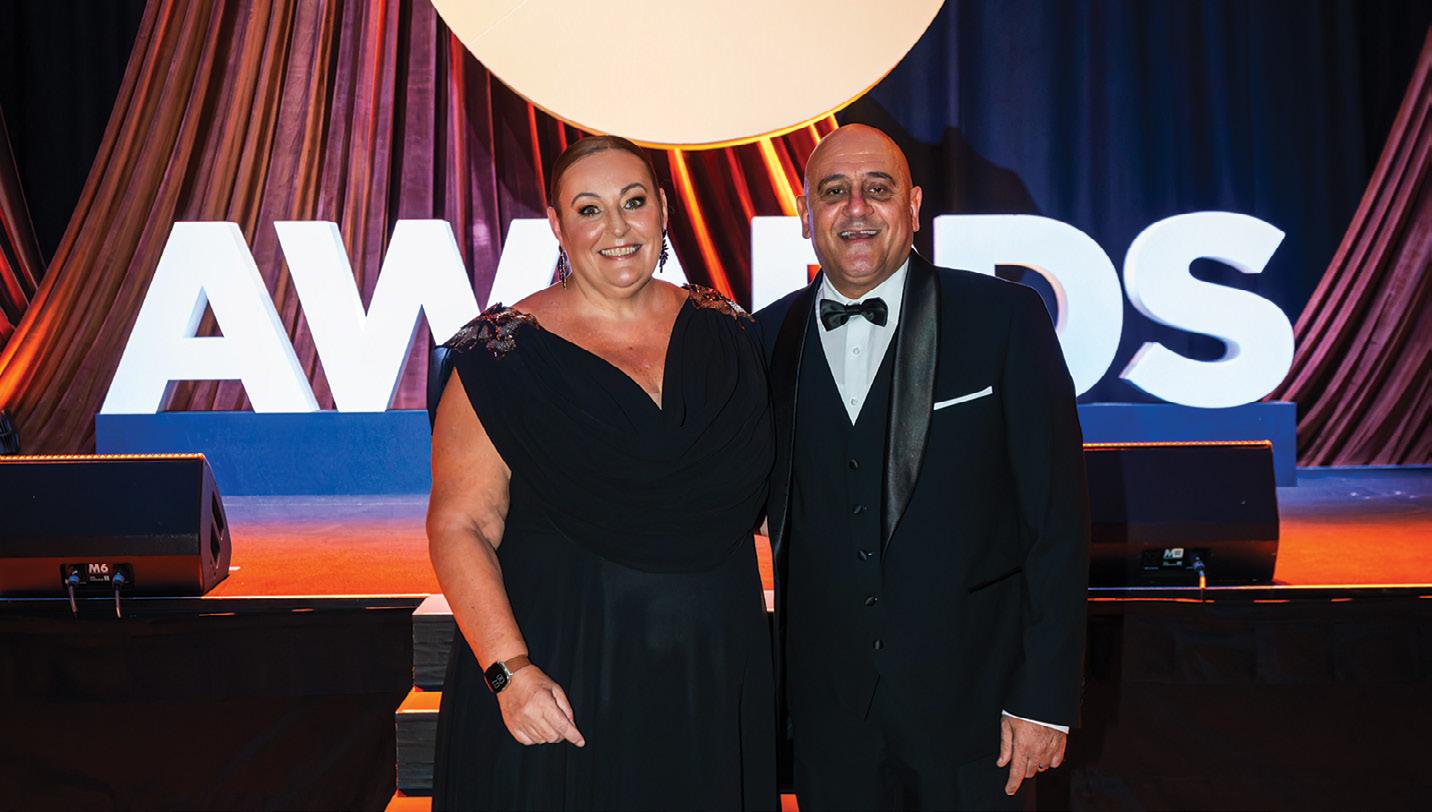



“Seeing people genuinely connect, collaborate and enjoy the experience makes all the hard work worthwhile.”
Deciding to leave my senior role as the Event Manager at a 5-star property and move into training and course development was a scary but ultimately career defining decision. Without making that move, I wouldn’t be where I am today.
More recently, being part of the continued growth of AACS and helping deliver major industry events with record attendance and strong engagement has been especially rewarding. Seeing people genuinely connect, collaborate and enjoy the experience makes all the hard work worthwhile.
Outside of work, I love spending time with family and friends, travelling and camping whenever I get the chance, discovering great food and wine spots, and being near the water. I’m definitely happiest when I’m planning the next holiday – preferably somewhere sunny.
I also love exploring art and galleries and dabble in drawing and painting myself. Cooking has always been another passion, thanks to my mum for teaching me. These days though, my happy place is my little back garden, where I love pottering around. Now I’m definitely showing my age!
Family remains a huge part of my life. I’m very close to my two amazing adult kids, Tabitha and Blair, and I head down to Tasmania whenever I can to see family. My best friend’s family on the Gold Coast have also absolutely adopted us as part of their family.
Then there’s the pets. I have a 17-year-old cat, Nakkers – whose real name is Napoli – who completely rules the house, along with a 16-year-old dog called Orinoco and another cat, Pickles.
Looking ahead, professionally I’d love to continue growing within the industry and delivering even bigger and better experiences for members and partners. I genuinely love working with AACS, and having Theo Foukkare, our CEO, as such a font of knowledge means I’m continually learning about an industry I only entered for the first time two and a half years ago.
Personally, I hope there’s still plenty of travel on the horizon and that I can continue watching my kids thrive.
If there’s one thing I’ve learned from working in the convenience industry, it’s that the businesses willing to adapt, innovate and genuinely listen to their customers are the ones that continue to thrive. Although honestly, I think I should probably be asking retailers and suppliers what advice they could give me! ■

The
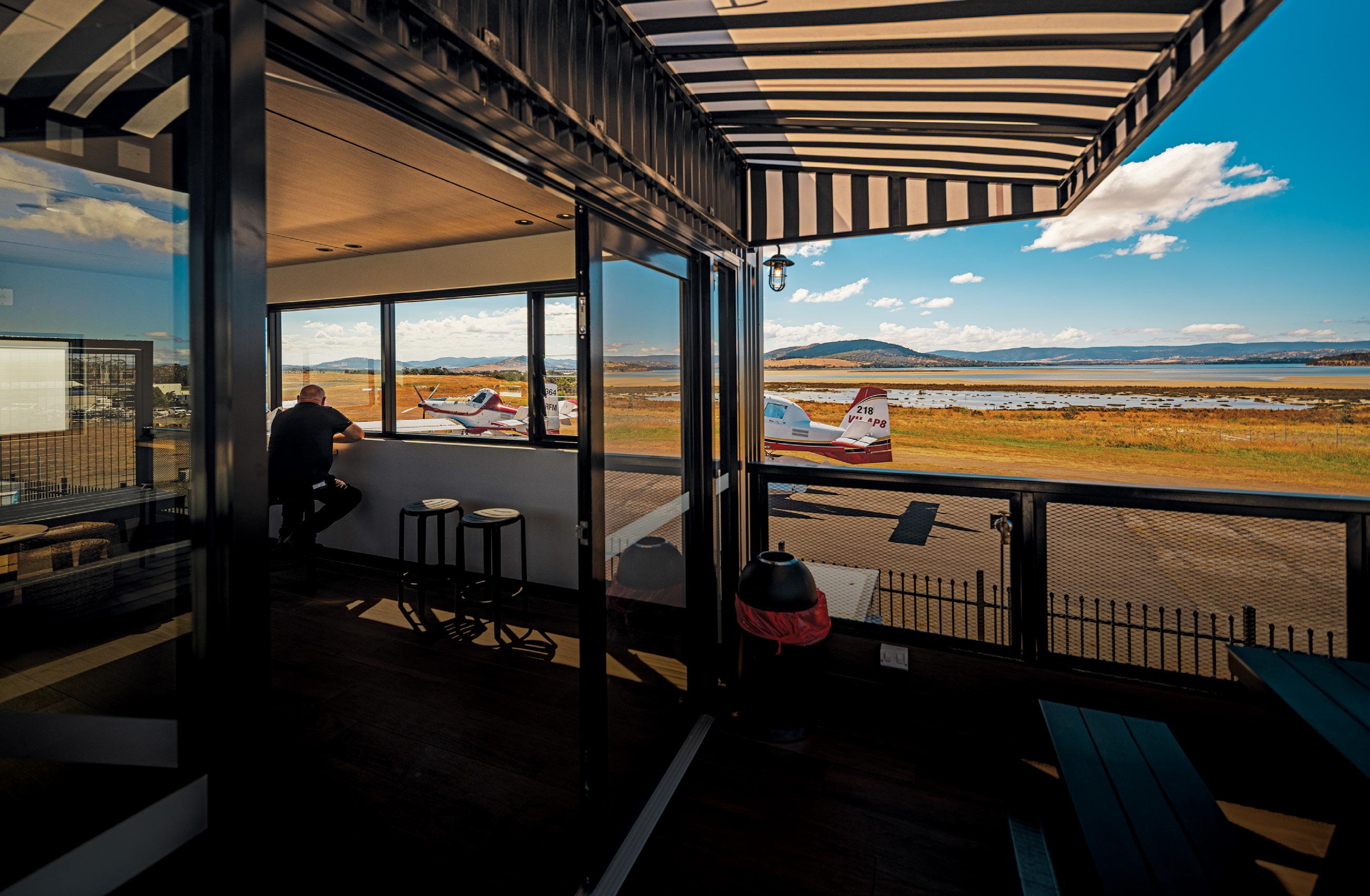
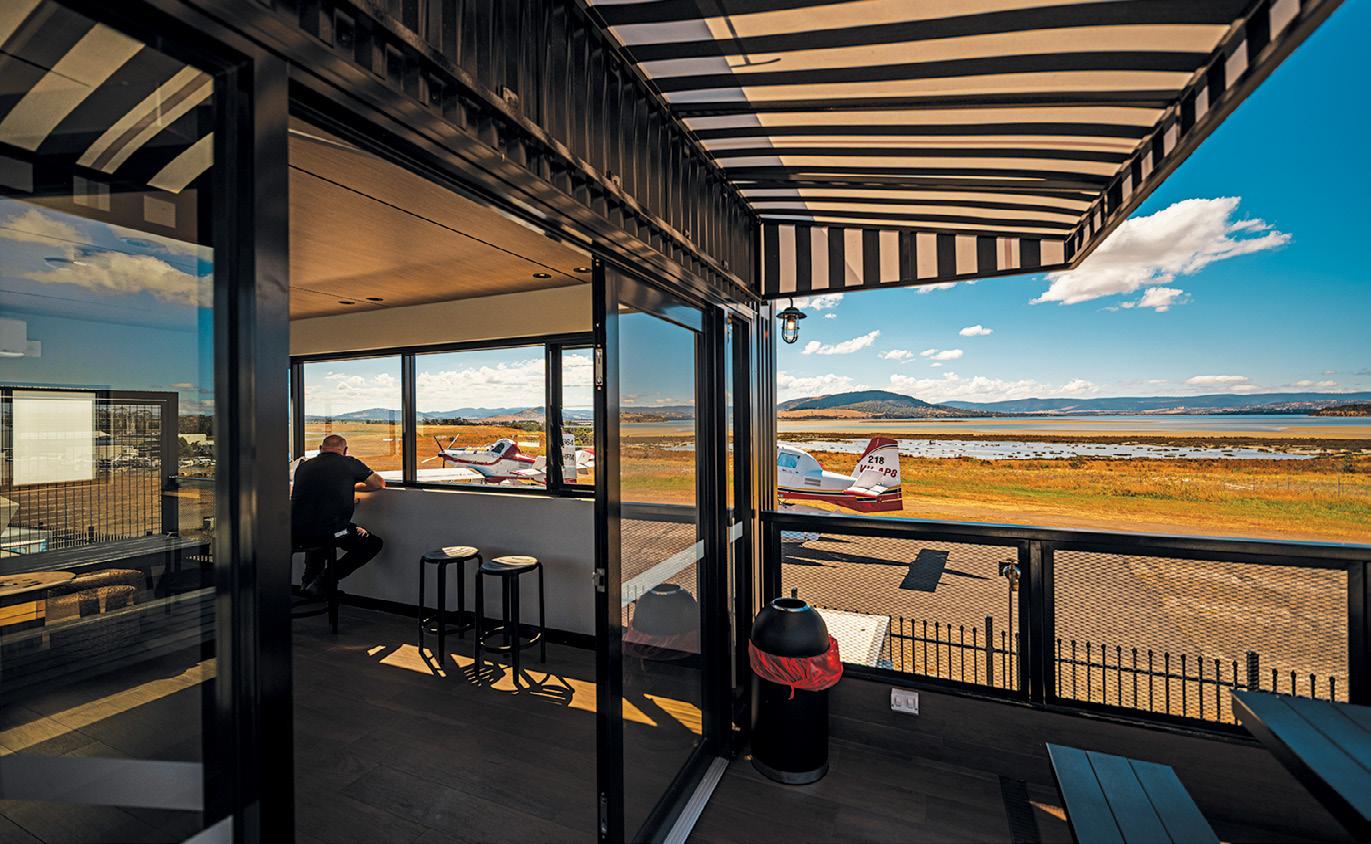
JUST BEYOND THE southern end of the Cambridge Aerodrome runway, where planes descend low over Kennedy Drive on approach to Hobart Airport, a service station has begun to behave less like a pit stop and more like a destination.
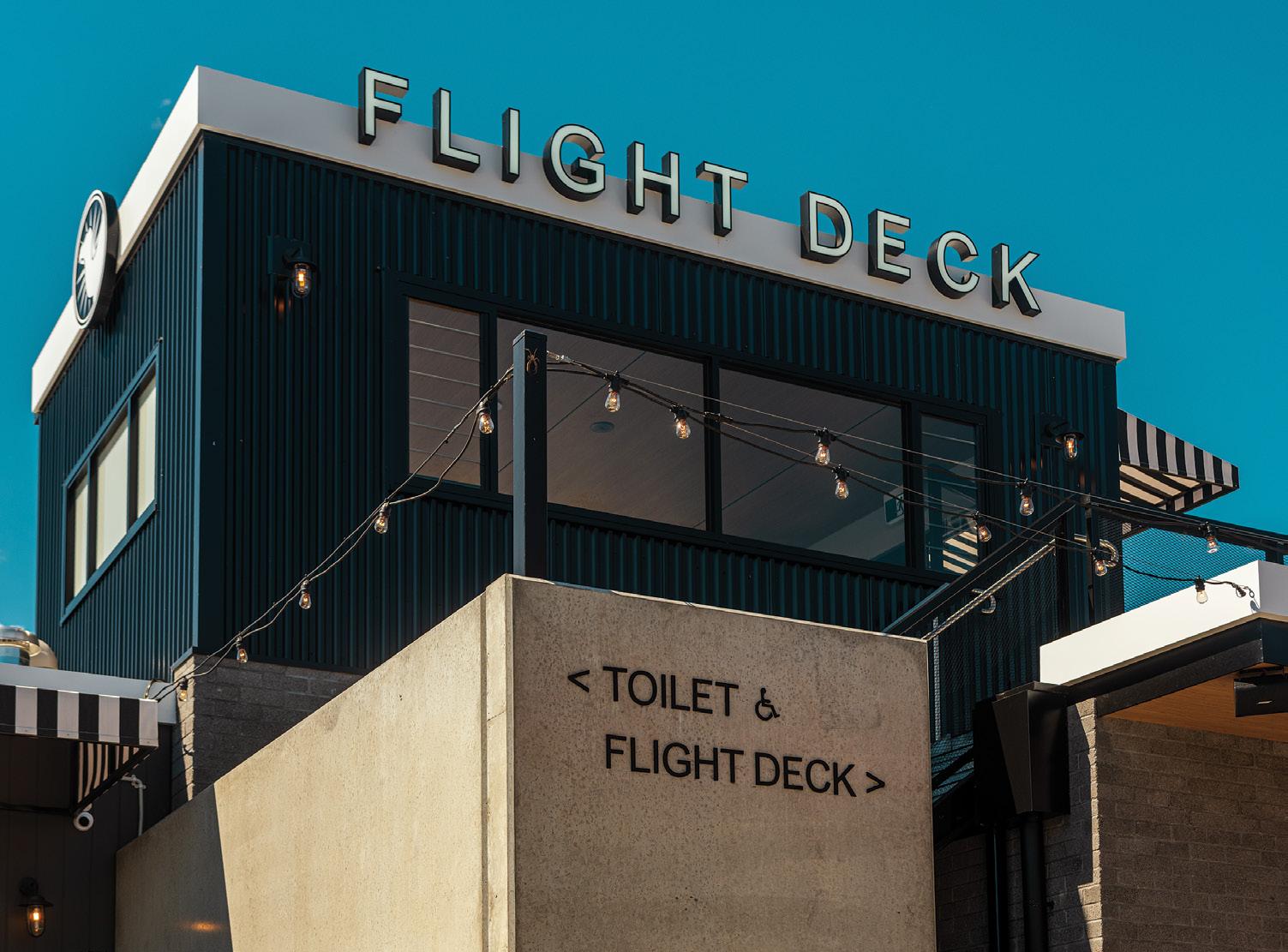
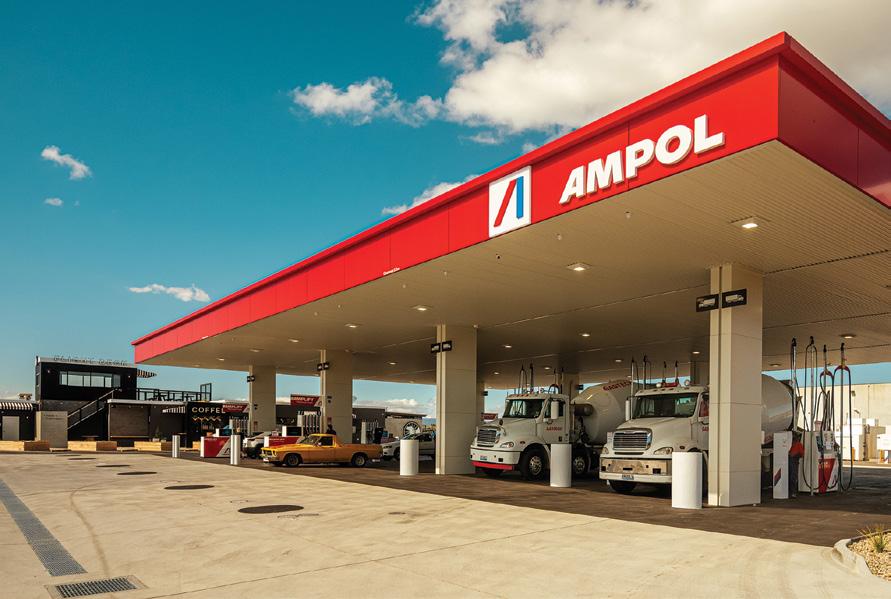
Mood Food Flight Deck Cambridge opened earlier this year following a $5.5 million redevelopment that transformed what had once been a small, unmanned fuel site into one of the most distinctive convenience destinations in Tasmania. There are 90 fuel hoses beneath one of the largest service station canopies in Australia, six outdoor payment terminals and a compact retail offer built around fresh food, barista coffee and a real sense of atmosphere.
But the most intriguing feature may be upstairs, explains Troy Bennett, CEO of Bennett’s Petroleum.
“Visitors have been loving the chance to sit up on the flight deck, enjoying lunch or a coffee while catching a glimpse of planes passing overhead, a real sensory experience that combines great views, quality food and a setting unlike any other service station in the country.”
The site sits just two minutes from Hobart International Airport and only seconds from one of Tasmania’s busiest highways, making it as convenient as can be.
Mood Food Cambridge draws inspiration from a piece of local aviation history. Hobart Airport’s former terminal once featured an observation deck where
families and travellers gathered to watch aircraft arrive and depart. That memory became the foundation for the Flight Deck concept.
The outdoor seating area carries subtle French influences through its lighting and décor, while indoors the atmosphere leans into a richer, warmer palette inspired by Moulin Rouge-style interiors.
As aircraft fly overhead, and barista-made lattes are poured, Bennett explains he believes that every store in a network should offer a different design and vibe.
“Locations are all different based on their customer base – every site should be its own art piece in the collection. If the coffee is good and the value is there, you’re on the right track,” says Bennett.
That philosophy has become central to the broader Mood Food network, now eleven stores strong under Bennett’s Petroleum. While larger Mood Food sites may offer more expansive retail floors, the Cambridge location deliberately embraces a smaller footprint, while delivering the expected service, comfort, and security.
For commercial drivers, four outdoor payment terminals operate around the clock, allowing customers to refuel quickly without entering the store if they choose. Once the retail offer closes, the remaining terminals continue providing 24-hour fuel access.
The store itself operates from 5am to 8pm on weekdays and from 6am to 8pm on weekends, employing 20 staff members.
Yet even with the scale of the fuel infrastructure, the emphasis inside remains firmly on food and hospitality. Classic bain-marie offerings sit alongside freshly prepared sandwiches, salads and roast meats, all cooked and assembled daily in-store.
Troy Page, Retail Operations Manager, says sandwiches, salads and roast meats are all cooked and prepared daily in-store to ensure top-quality food is available all day.
“The menu strikes a balance between healthy options and classic fried favourites - a combination that works well in a convenience store setting.”
That balance extends into the drinks category, where customer demand continues shifting rapidly.
“The drinks range continues to expand, with brands responding to growing demand for sugar-free and protein-based options.
“The protein category in particular has seen significant growth over the past 12 months, whether in snack bar or flavoured milk form,” says Page, however value continues to remain important.
“Customers are increasingly drawn to value for money deals, particularly 2 for and 3 for offers or discounted single items.”
The human element
Across Australia’s fuel and convenience industry, automation increasingly dominates the customer experience. Self-checkouts, app-based payments and unmanned sites continue spreading across metropolitan and regional networks alike.
Mood Food is moving in a different direction.
“That same emphasis on human connection carries through to the customer experience,” Bennett says.
“At a time when self-service is becoming the new norm across the fuel retail industry, Mood Food continues to invest in genuine, friendly service.
“The belief is simple: being served by another person and being served well – still matters. That starts internally – listening to staff, investing time in the people you employ, and always hiring on attitude before skill.
“At a time when self-service is becoming the new norm across the fuel retail industry, Mood Food continues to invest in genuine, friendly service.”
- Troy Bennett, CEO, Bennett’s Petroleum
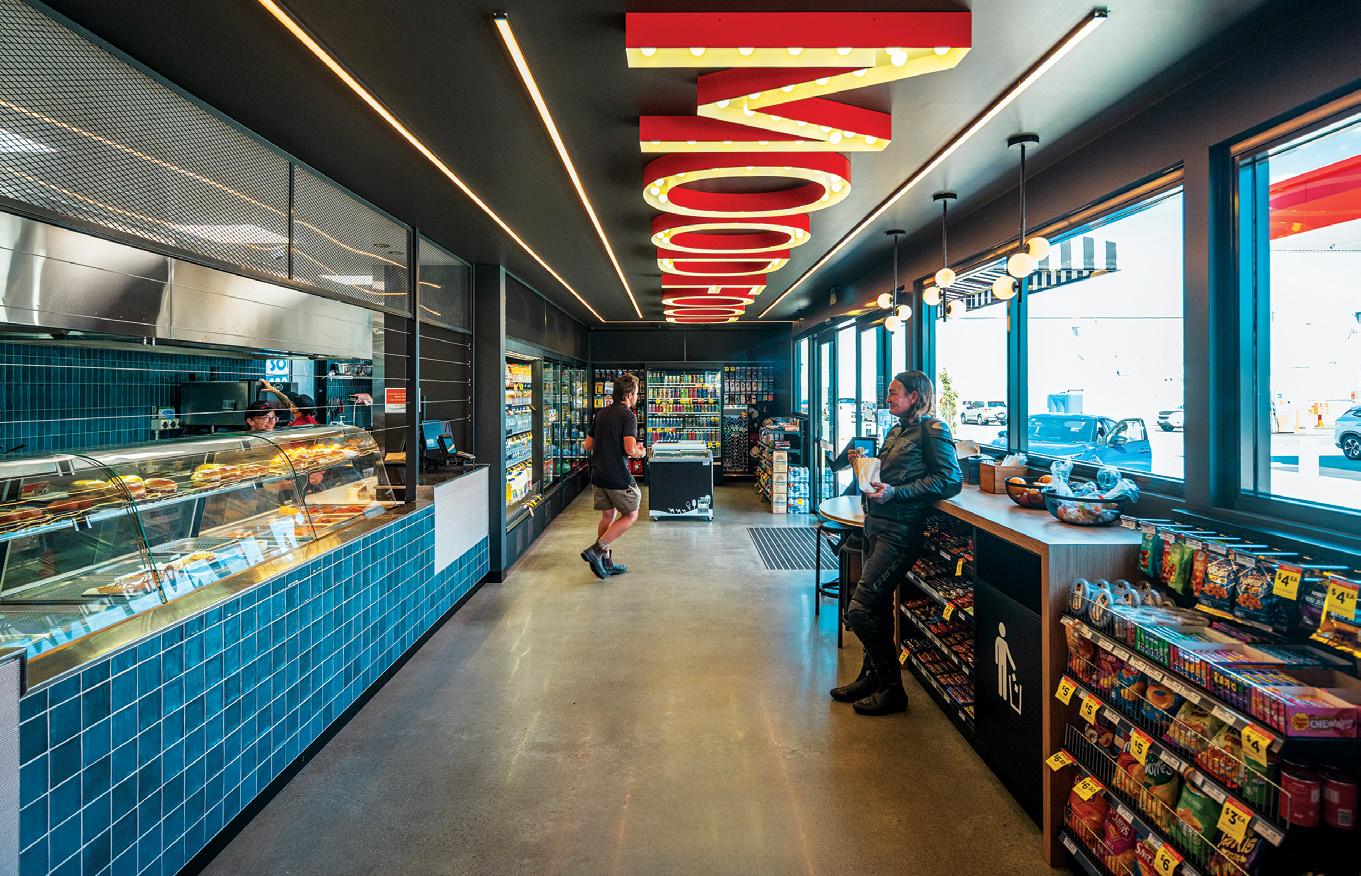
“The expectation is mutual: no task is asked of a team member that a manager wouldn’t do themselves. Strong supplier relationships form another part of the operation’s culture. Monthly meetings with partners are treated as essential rather than optional, helping maintain communication and strengthen long-term collaboration.
“Strong supplier relationships sit at the heart of the Mood Food operation,” Page says. “Monthly catchups keep communication open and partnerships tight –something the Bennett’s Petroleum team considers non-negotiable.”
There is a temptation within the P&C channel to measure success purely through speed: faster transactions, quicker refuelling, shorter dwell times.
Mood Food Cambridge seems designed around a different idea. While efficiency still matters – the fuel site operates around the clock, handles heavy traffic volumes, and caters to commercial drivers – there’s an emphasis on connection.
“Mood Food Cambridge isn’t just a place to fill up and move on,” Bennett says. “For a lot of people, it’s becoming regular destination to visit and enjoy!” ■







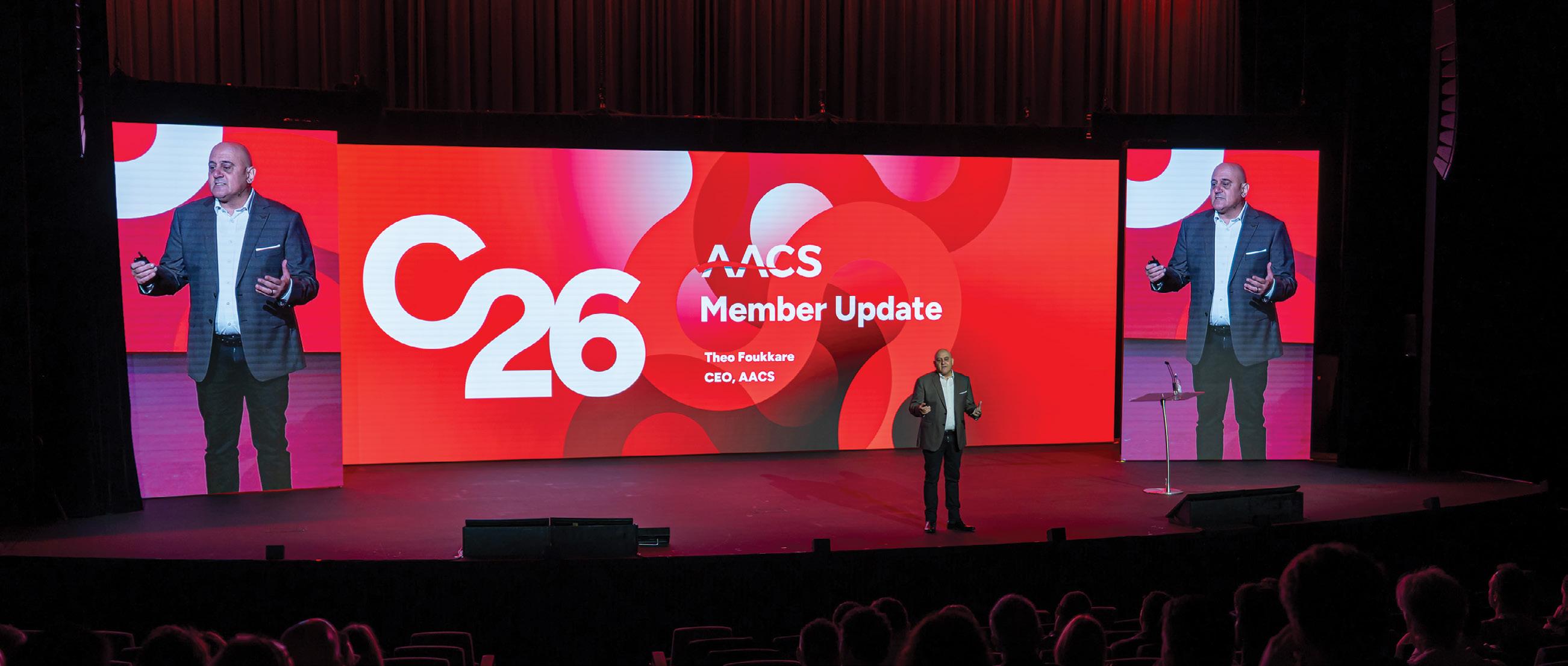
Theo Foukkare, CEO of the Australian Association of Convenience Stores (AACS), shares insights from the 2025 AACS State of the Industry Report, prepared by Convenience Measures Australia (CMA).
THE 2025 CALENDAR year for convenience was defined by resilience, disruption and continued transformation. In a year shaped by cost-of-living pressure, declining tobacco sales and shifting consumer expectations, the industry again demonstrated its ability to adapt and evolve.
Australians remained highly value conscious and increasingly selective in how and where they spend, reinforcing the critical role convenience retail plays in meeting everyday needs with speed, relevance and reliability. Across the channel, businesses navigated a complex operating environment, balancing operational efficiency with continued investment into strategic priorities. Rising costs across labour, energy, compliance and supply chains remained the dominant pressure for both retailers and suppliers.
These dynamics reshaped shopper behaviour, with mission-based shopping, value seeking and channel switching becoming more embedded. In response, the industry leaned into stronger collaboration, sharper execution and more targeted promotional activity to maintain relevance and drive foot traffic. Retailers of all sizes continued investing in new stores and evolving their customer offers across all states and territories, with sustained focus on food, coffee, technology, loyalty and emerging categories.
Total convenience retail in store sales declined -3.9 per cent (-$403m) in 2025,
closing the year at $9.88 billion, driven primarily by the accelerated decline in tobacco. However, when excluding tobacco, total in store sales delivered strong growth of +4.5 per cent (+$349m), reaching $8.02 billion and reinforcing the structural strength of the channel.
Food & Beverage remained the growth engine, increasing +6.5 per cent (+$413m) and extending its share of the channel to 68.8 per cent, further cementing its role as the cornerstone of modern convenience retailing. Non Food declined -21.0 per cent (-$816m), largely driven by a $750m tobacco decline. Packaged Beverages remained the channel’s top growth engine at +8.7 per cent, while Foodservice rebounded strongly to +6.6 per cent, lifting its share to 15.0 per cent.
Store growth remained positive, with the network expanding +1.3 per cent (+98 stores) to 7,541 outlets, largely driven by independent retailers and continued investment into new to industry sites and evolving mobility formats. Overall margin improved from 38.9 per cent to 39.8 per cent, reflecting the reduced share of tobacco and the growing contribution of higher margin Food & Beverage categories.
A sincere thank you to all retailers who contributed data in confidence, ensuring this report remains the most comprehensive view of convenience retail in Australia, to Brett Barclay and the team at CMA for their continued partnership, and to Coca-Cola Europacific Partners for their exclusive sponsorship of the report.
Future Fuels and EV Infrastructure
Investment into EV charging continued through 2025 at a more measured pace, reflecting evolving adoption curves and broader economic conditions. The market continues to trend towards hybrid and plugin hybrid vehicles as part of a more gradual, multi-layered transition. Convenience and mobility retailers remain focused on deploying fast charging infrastructure at strategic forecourts and large travel centre style mobility hubs – aligned with what consumers expect: speed, convenience and quality amenities. AACS maintains the view that EVs will represent only one component of the future energy mix. Biofuels, low and zero emission liquid fuels and hydrogen continue to attract growing global and domestic investment, with convenience and mobility retailers playing a central enabling role in supporting that transition.
Tobacco remains a material but rapidly declining category for convenience retailers. The accelerated $750m decline in 2025 further reduced its contribution, driven largely by continued migration from the regulated market to illicit tobacco and unregulated vaping
channels. The category fell -28.8 per cent, its steepest annual drop to date, with dollar share falling from 25.4 per cent to 18.8 per cent.
The scale and growth of the illicit market continues to distort the category, eroding legitimate retail sales and government excise while undermining responsible retailing standards. AACS continues to advocate for a nationally consistent, enforcement led approach centred on stronger licensing frameworks, harmonised regulation and significantly increased enforcement activity. A regulated consumer model for vaping – underpinned by strict product, safety and retailing standards – remains essential to restoring balance and protecting responsible retailers.
The opportunity for convenience retailers to participate in packaged alcohol remains one of the most significant structural growth opportunities for the channel, estimated at up to $1 billion in annual retail sales. AACS continues progressing a nationally aligned responsible retailing framework that would allow modern convenience formats to compete on a more level playing field with other retail channels. Engagement with governments and regulators is ongoing, with increasing →
“Foodservice will continue to mature as retailers expand quality, freshness and variety, while personalisation, loyalty and retail media further reshape how retailers engage with customers.”
– Theo Foukkare
recognition that contemporary convenience stores are well placed to deliver responsible, community aligned outcomes supported by strong compliance and operating standards.
7,541 +1.3%
7,541 +1.3%
Retail crime remained a significant and growing issue across all retail channels in 2025, extending beyond theft and property damage to include increasing aggression towards frontline retail workers. Evidence continues to show that a relatively small cohort of repeat offenders is responsible for a disproportionate share of harm and loss. Youth crime and organised retail crime remain key drivers, particularly impacting Victoria, Queensland and Western Australia. The safety and wellbeing of frontline teams remain paramount. AACS continues working closely with governments, law enforcement and broader retail stakeholders to strengthen legislation, improve enforcement and support safer retail environments for both workers and customers.
While 2025 reflected continued disruption driven by tobacco decline and broader macroeconomic pressures, the underlying strength and adaptability of the convenience channel remains clear. We expect continued growth across core categories, supported by sustained investment in foodservice, coffee, technology and store evolution. Foodservice will continue to mature as retailers expand quality, freshness and variety, while personalisation, loyalty and retail media further reshape how retailers engage with customers.
The migration away from traditional tobacco is expected to continue, although stronger enforcement may help stabilise illicit market impacts over time. While the environment remains complex, the longterm outlook for the convenience channel is strong. With continued investment, strong advocacy and a clear focus on the future, convenience retail will remain one of the most dynamic and essential parts of Australia’s retail landscape. ■
Chart of coverage
Chart of coverage
7,541
66
67
Over the past 12 months, total site numbers increased by +1.3%, reaching 7,541 locations, with growth once again led by the Independents, particularly the two major buying groups. New to industry sites totalled 66, down -16.5%, while site closures fell by -22.1% to 67, indicating a slower rate of network contraction.
Major Retailers now account for 48.8% of all sites and declined slightly by -0.2%, whereas Independents represent 51.2% of the market and recorded a solid +2.8% increase in store numbers over the year.
Major Retailers: 7 Eleven, Ampol, BP, BP Buying Group, Chevron Australia, EG Australia, OTR Group
Major Retailers: 7 Eleven, Ampol, BP, BP Buying Group, Chevron Australia, EG Australia, OTR Group
Independent Retailers: AA Petroleum, APCO, Metro Petroleum, New Sunrise, Night Owl, UCB, United Petroleum and Other known groups
Independent Retailers: AA Petroleum, APCO, Metro Petroleum, New Sunrise, Night Owl, UCB, United Petroleum and Other known groups












From suppliers, retailers, wholesalers, and industry groups, C&I has gathered insights from leaders across the convenience and roadside retail industry.


“The channel has faced changes in the past, it faces changes now, and it will continue to work through changes in the future. It’s all about how you respond.”
Words Thomas Oakley-Newell
The petrol and convenience channel rarely stands still, and the insights gathered in this year’s Leaders Forum are a timely reminder of just how many challenges our industry is navigating.
Each year, we invite some of the most influential minds from across the supplier and retail landscape to share their perspectives in our annual C&I Leaders Forum. To every leader who gave their time to contribute, thank you. Your willingness to discuss the challenges and opportunities ahead is what makes this an essential read for anyone in the channel.
And the challenges are real. Rising fuel and diesel costs continue to pressure margins at the forecourt, while increased labour costs are reshaping how operators think about staffing, rostering, and the broader economics of running a site. These are not new pressures, but they are intensifying.
Elsewhere, artificial intelligence is no longer a conversation for the distant future. Leaders across the channel are beginning to explore
what AI means for everything from inventory management to customer experience, and the early movers are already finding an edge. But it’s not here to replace humans. If there’s one thing this channel thrives on, it’s face-toface connection. Now it’s about allowing AI to complement that connection.
Then there is tobacco. Black market tobacco remains a serious and growing concern. It undercuts legitimate retailers, distorts competition, and demands a coordinated response from industry and government alike.
Despite all this, and as you’ll see after reading through these conversations, the channel is resilient and adaptable. It has faced changes in the past, it faces changes now, and it will continue to work through changes in the future. It’s all about how you respond. Enjoy and I hope you find it an energising and insightful read.
Cheers,
Thomas Oakley-Newell

CEO, Australian Association of Convenience Stores (AACS)

Q. What are the most pressing challenges currently facing the Australian P&C channel?
The Australian P&C channel is facing one of the most challenging periods in its history. The biggest issue right now is the explosion of the illicit tobacco market, which has created a multi-billion-dollar black economy that is funding organised crime, threatening legitimate retailers, and putting frontline retail workers at risk. We are also dealing with rising operating costs, escalating retail crime, workforce pressures, energy transition uncertainty, and increasingly complex regulation.
At AACS, our role is to advocate strongly and practically on behalf of our members. We are constantly engaging with Federal and State Governments, law enforcement agencies, regulators, and stakeholders to push for policy settings that protect legitimate businesses, improve community safety, and ensure the channel remains viable and competitive. Advocacy is no longer optional for our industry — it is critical.
Q. How would you assess the overall health of the P&C channel in Australia?
Overall, the Australian P&C channel remains resilient, but there is no question it is under pressure. Excluding tobacco, many convenience categories are performing strongly, particularly food to go, packaged beverages, ready-made meals, and convenience led fresh offers. Consumers continue to value speed, convenience, accessibility, and trusted neighbourhood retailing. However, store profitability is increasingly challenging. Tobacco value decline, shrinking fuel margins, inflationary pressures, wage growth, utilities, and compliance costs are all impacting operators. The indicators we watch most closely are basket composition, foodservice growth, customer frequency, fuel volumes and consumer behaviours, and category mix evolution. We are also closely monitoring retail crime trends and the impact of illicit tobacco on legitimate store traffic and profitability.
Q. What policy or regulatory changes are having the greatest impact on the industry right now, and where is further reform needed?
The single biggest policy failure impacting the industry today is the Federal Government’s tobacco excise strategy and vaping prohibition. Excessive excise increases without effective enforcement have unintentionally fuelled organised crime and created an illegal tobacco market worth $10 billion annually. Legitimate retailers are losing sales while criminals are profiting.
At the same time, vaping policy settings remain highly problematic. Australia urgently needs a regulated retail vaping framework that removes control from criminal networks and places products into controlled, licensed retail environments. Beyond nicotine policy, the industry is also navigating industrial relations reform, environmental regulation, energy transition policy, payment regulation and crime related issues.
“The single biggest policy failure impacting the industry today is the Federal Government’s tobacco excise strategy and vaping prohibition.”
Q. How is AACS supporting members through structural shifts, such as illicit tobacco, the energy transition, and changing consumer behaviour?
AACS is heavily focused on helping members navigate structural disruption and the transition from convenience into Foodvenience. On illicit tobacco, we continue to push governments for stronger enforcement, practical policy reform, and recognition that the current settings are unsustainable. On energy transition, we are working with retailers to better understand how EV charging, alternative fuels, and changing mobility behaviours will reshape forecourts and customer missions in the convenience store.
Changing consumer behaviour is also transforming the channel. Convenience retail is no longer just about fuel, tobacco, a drink, and a snack. Consumers increasingly want quality food, fresh coffee, digital engagement, frictionless experiences, and destination-style convenience. We support members through insights, benchmarking, international learnings, education programs, and industry events that help businesses adapt faster.
Q. What will define a successful P&C business in Australia over the next decade?
A successful P&C business over the next decade will be defined by adaptability. The businesses that thrive will be operationally disciplined, customer obsessed, digitally enabled, and highly agile. They will understand that convenience is no longer simply proximity – it is relevance, speed, quality, and experience.
Foodvenience, a strong culture, investment in people, and community trust will matter more than ever. The future belongs to retailers who can evolve quickly while maintaining a clear value proposition for increasingly time poor consumers and underpinned by a consistent customer offer at scale. ■
Join us for an immersive industry experience.
Gain fresh insights into local market trends, operational best practices, and evolving retail strategies, as you connect with industry peers.
From coast to c-store - return with more.
Attendance is exclusive to AACS members




Manager

Q. What has been the most challenging aspect of doing business in the P&C channel over the past 12 months, and how have you navigated it?
Like many of our partners, the biggest challenge has been navigating the macro environment and anticipating how shoppers are responding in real time, particularly over recent months. When fuel price volatility hit earlier this year, we saw more frequent visits as customers opted for smaller fills, but importantly, conversion in-store declined.
That reinforces a simple truth in the convenience channel –every visitor represents a genuine opportunity to unlock a shop transaction. Our focus has been partnering closely with retailers to strengthen the in-store proposition, using our scale, insights and execution capability to drive conversion, particularly in high-traffic areas like fridges and front-of-store.
Beverages are playing an increasingly important role. They consistently drive impulse, lift basket value and support overall shop performance. Getting the fundamentals right – range, availability and visibility – is what unlocks growth, with a clear opportunity for retailers to make it easier for shoppers to purchase in the moment.
Q. What key decision or strategic shift has had the biggest impact on your business recently?
A major strategic focus has been leaning into the growing influence of Generation Z, who are fast becoming a dominant force in the convenience channel. As their spending power grows, their expectations around relevance, immediacy and brand connection are reshaping how the channel operates.
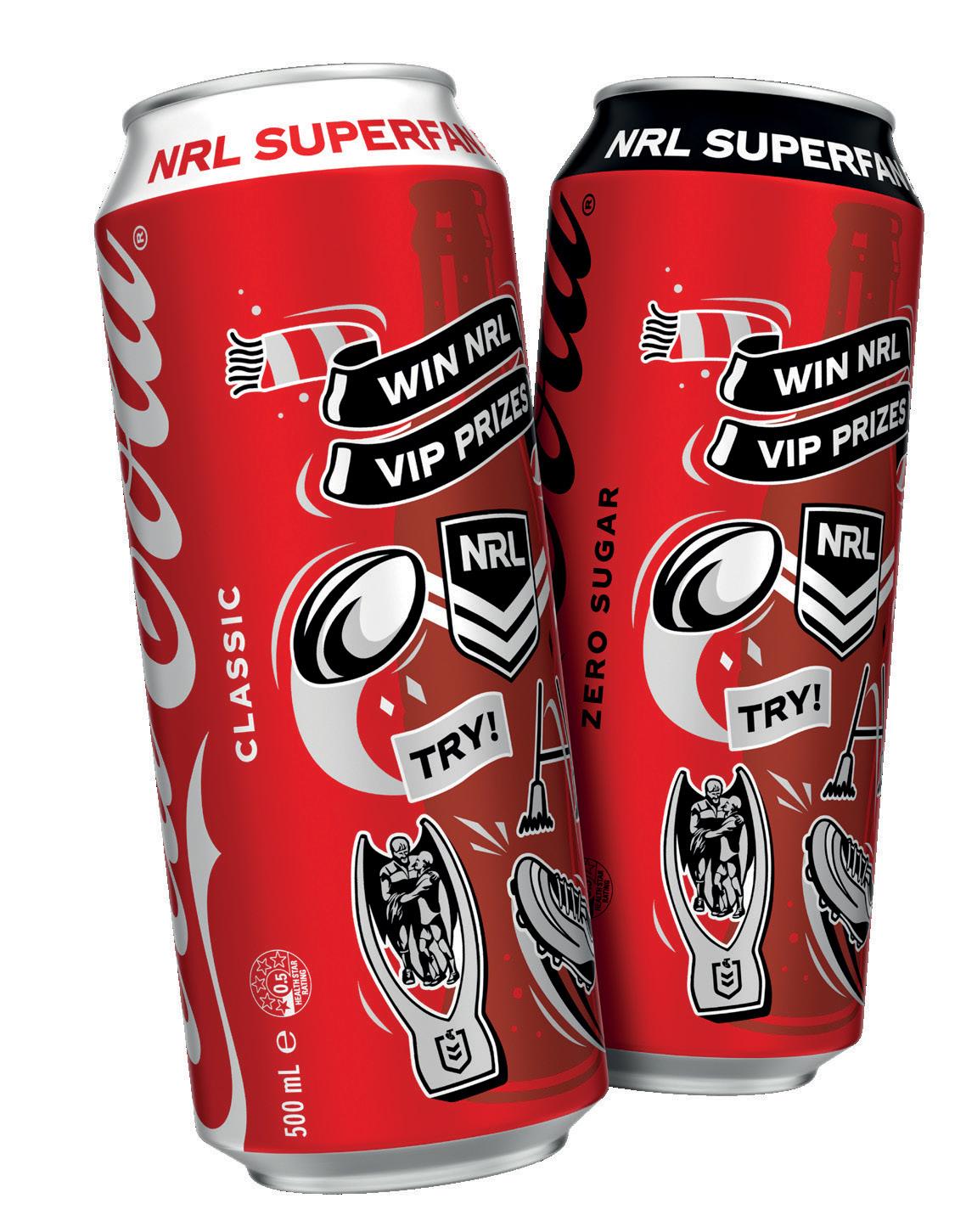
We’re well placed, with brands like Monster and Fanta already strongly resonating. We’ve sharpened our approach to ensure our innovation and partnerships connect culturally and commercially. Our newly announced NRL partnership and 500ml Coca-Cola NRL can are strong examples, bringing together relevance, occasion and impulse.
It’s about working with retailers to better connect with this next generation, using the right brands, formats and occasions to drive engagement today while supporting long-term category growth.
Q. How have your own leadership priorities evolved in response to the changing needs of P&C retailers?
My focus has been on ensuring we are truly outcomes-led. In a more dynamic environment, activity alone doesn’t drive results, clarity on what delivers impact does.
That means aligning our teams around the metrics that matter most to customers, particularly conversion and rate of sale, while also deepening our understanding of each retailer’s strategy.
Ultimately, our role is to be a genuine growth partner –bringing together category insights and strong execution to deliver tangible commercial outcomes.
Q. Where are you currently choosing to invest, whether in people, innovation or capability, and why do you see those areas as critical?
We continue to invest in the convenience channel because of the role it plays – it’s where trends are formed, innovation lands first, and habits are built. It’s highly impulse-driven, so getting innovation right here has an outsized impact.
Excitingly, our pipeline reflects this. Products like the NRL 500ml Coca-Cola can and upcoming launches such as Powerade Sours are designed with convenience occasions in mind.
At the same time, our core portfolio remains critical. Brands like Monster continue to lead and grow, reinforcing category momentum. This combination of innovation and scale enables us to create value with our partners.
Q. What’s one trend in the P&C channel that has genuinely surprised you, and how has it influenced your thinking or strategy?
The resilience of the channel has been a standout. As tobacco declines, we’ve seen a shift towards beverages and food, with retailers continuing to elevate their offer – and we see significant headroom for growth here.
The channel is increasingly competing with QSR, particularly through stronger food offers and better bundling with beverages. That shift to mission-based purchasing presents a real opportunity to drive value and frequency.
It’s influenced how we think about growth, supporting retailers to deliver more complete, occasion-led solutions.
Q. Looking ahead, what are you personally most focused on achieving in your role, and how does that align with the needs of your customers?
My focus is on ensuring beverages continue to be the growth engine of the channel for our retailers.
Core categories like cola, sports and water remain fundamental, they drive penetration and conversion. At the same time, there’s an opportunity to unlock new occasions through formats like multipack cans and stronger links to food missions.
Ultimately, it’s about working with retailers to drive immediate performance while building long-term category value and a more competitive future for the channel. ■


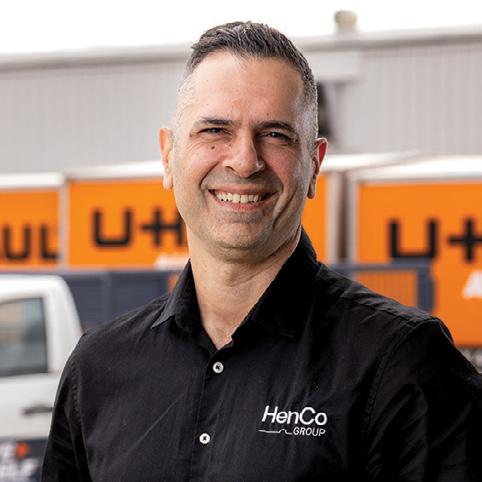
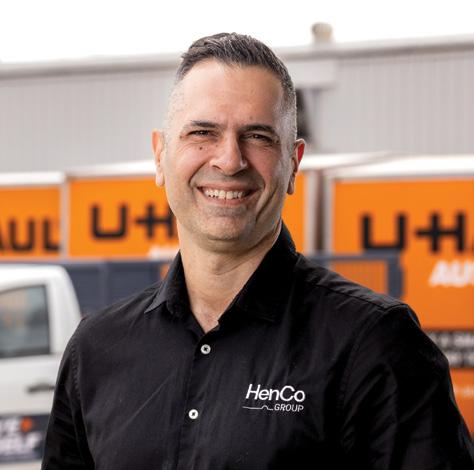
Rob Cowie CEO, HenCo Group




Q. What has been the most challenging aspect of doing business in the P&C channel over the past 12 months, and how have you navigated it?
One of the biggest challenges for our business over the past 12 months has been managing theft across our trailer hire network.
Operating within the P&C channel means our assets are highly accessible and spread across a large footprint of convenience retail locations, so protecting those assets while still maintaining a seamless customer experience has been critical.
To address this, HenCo has invested heavily in new security initiatives, and working closely with our agency partners to improve on-site security procedures and ensure equipment is secured correctly at all times.
Pleasingly, the sites that have embraced these measures have seen stronger operational performance and improved revenue outcomes due to reduced downtime and better fleet availability.
Q. What key decision or strategic shift has had the biggest impact on your business recently, and what prompted that move?
As consumer expectations continue to evolve toward faster, simpler and more self-service experiences, we believe the trailer hire industry must adapt alongside the broader P&C sector.
In response, HenCo has been developing technology platforms and operational systems including the development of a new booking system, improving customer self-service capabilities and integrated technology projects, all currently under development within the business.
We see this as an important evolution of our operating model and a key opportunity to create greater convenience for both customers and retail partners.
Q. How have your own leadership priorities evolved in response to the changing needs of P&C retailers?
At its core, our business is relatively simple - we provide trailer hire solutions at convenience retail sites with minimal downtime and maximum ease of use. However, behind that simplicity is a complex supply chain and operational network that must run efficiently every day.
As a leader, my focus is ensuring the entire HenCo team understands the strategy, remains aligned to our operational goals and works collaboratively toward maintaining fleet availability and customer convenience. In a fast-moving P&C environment, consistency and responsiveness are critical, and strong internal alignment is what allows us to deliver reliable outcomes for our customers and agents.
Q. Where are you currently choosing to invest, whether in people, innovation or capability, and why do you see those areas as critical?
HenCo is currently making significant investments into technology, systems development and innovation. We have expanded our IT team considerably because we genuinely view ourselves as a technology-enabled business that hires trailers. Technology is fundamental to how we improve customer experience, increase operational efficiency and support future growth.
We are also investing heavily in trailer manufacturing innovation, focusing on ways to produce equipment faster, more efficiently and with greater durability to meet growing demand. These investments are critical because they strengthen both sides of our business – the customer-facing technology experience and the physical asset network that supports it.
“My focus is ensuring the entire HenCo team understands the strategy, remains aligned to our operational goals and works collaboratively toward maintaining fleet availability and customer convenience.”
Q. What’s one trend in the P&C channel that has genuinely surprised you, and how has it influenced your thinking or strategy?
One trend that has genuinely surprised me has been the rapid momentum toward unmanned or low-labour convenience retail sites. Traditionally, the P&C channel has focused heavily on driving in-store sales and higher-margin retail opportunities, so seeing operators successfully evolve around primarily fuel and automated service models has been very interesting.
We, however, remain focused on increasing customer foot traffic to our agent sites to maximise their car park return and increase shop sales where possible. Trailer hire sales are great opportunities for in-store upsells for your FMCG products.
Q. Looking ahead, what are you personally most focused on achieving in your role, and how does that align with the needs of your customers?
My primary focus is delivering the major technology projects currently underway at HenCo. Once completed, these projects will provide a management system that supports faster and more reliable fleet availability.
Ultimately, our goal is to make trailer hire as simple and frictionless as possible for both customers and our retail partners. Whether through U-Haul Australia, Move Yourself Australia, or U-Tow New Zealand, we want our agents to be able to offer hire solutions with minimal operational input while maximising revenue opportunities and customer satisfaction. ■
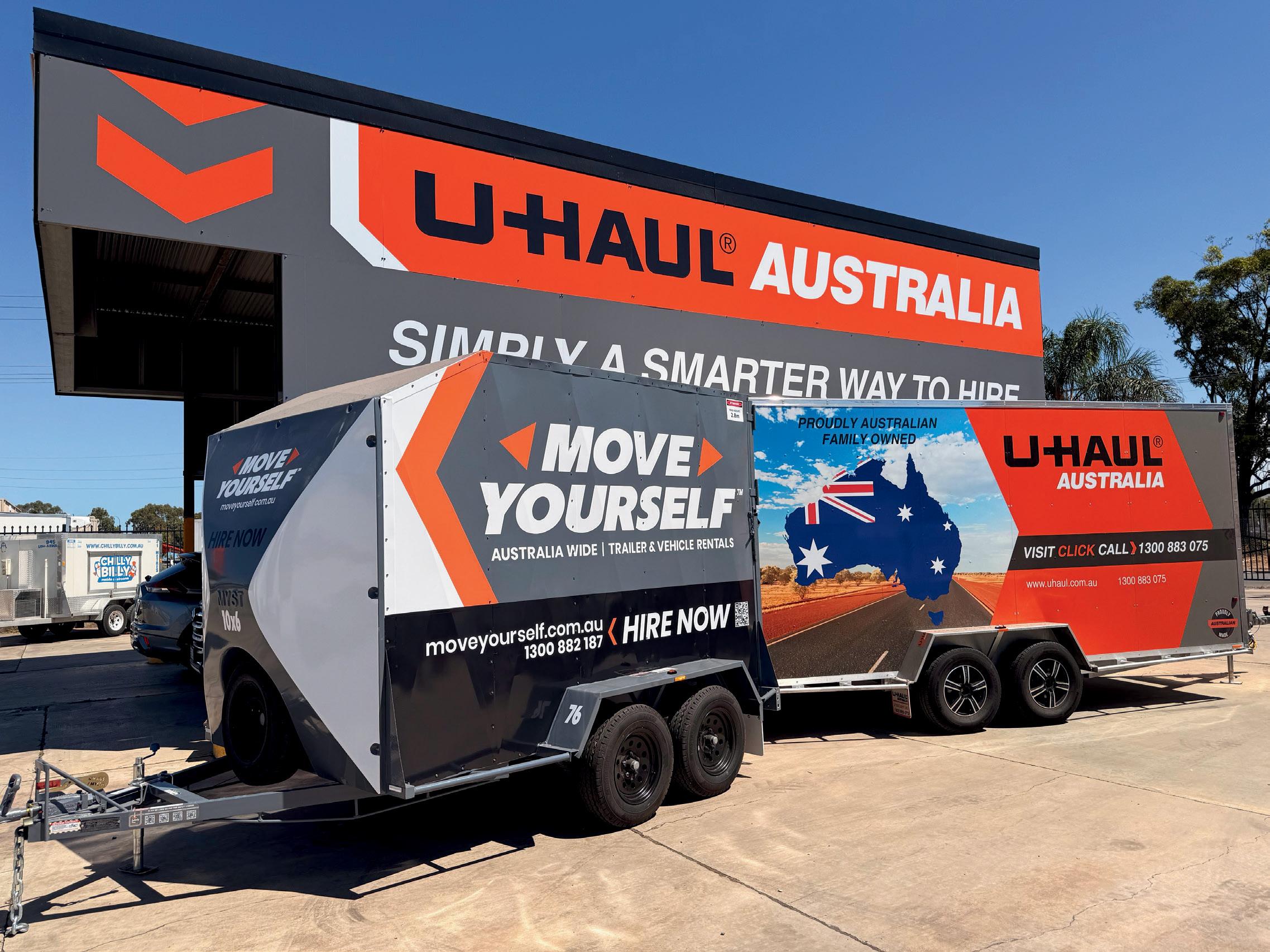

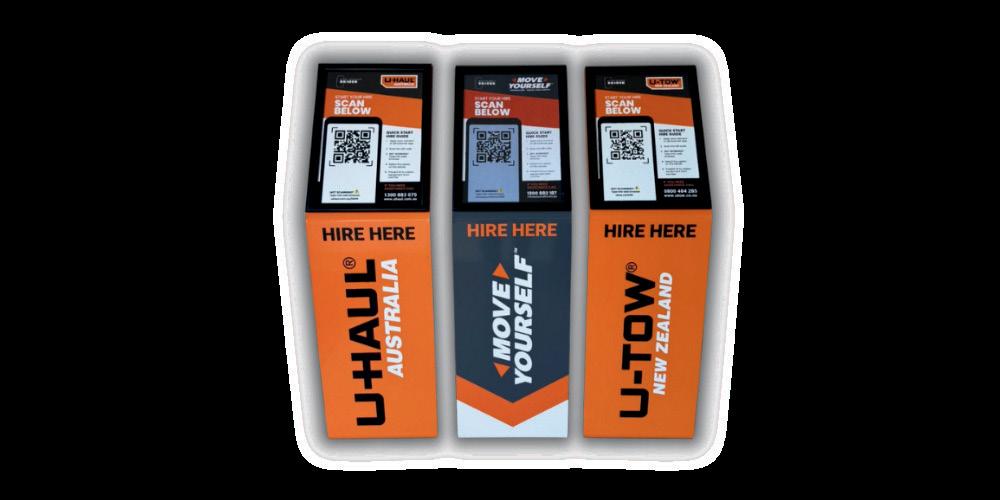
Maximise revenue while minimising counter workload with HenCo’s eKiosk. This compact, space-saving solution allows customers to scan a QR code, browse available trailers, complete payment, and hire directly from their smartphone.
With faster checkout times, improved reliability, 24/7 accessibility, and higher conversion rates, eKiosk delivers a smarter, more efficient hire experience for both customers and agents.




Peter Paulicki Director, Impulse Retailing

“Sites are becoming convenience destinations where fuel is one revenue line among several, EV charging is entering the forecourt mix, and loyalty data is becoming the genuine asset.”


Q. What have been the main highlights for Impulse Retailing over the past 6 to 12 months?
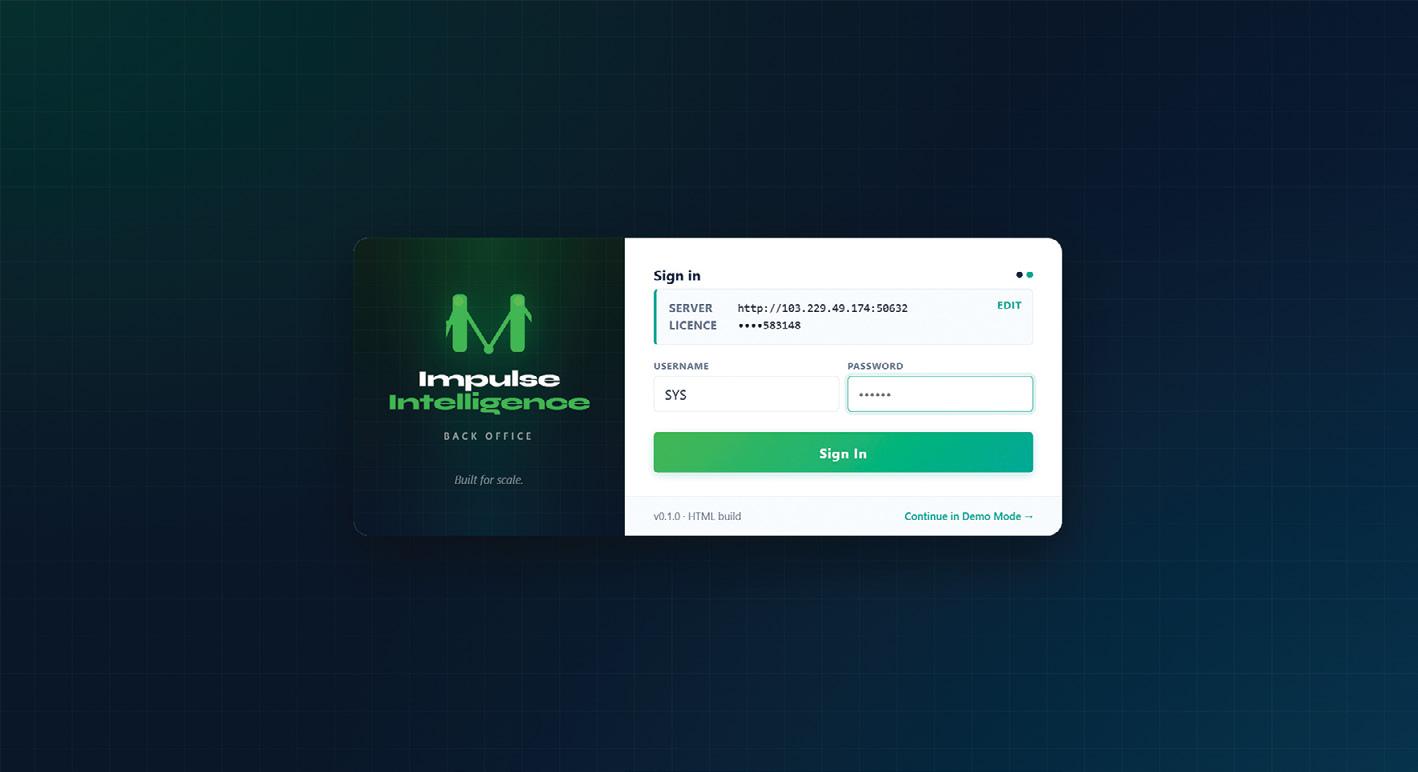
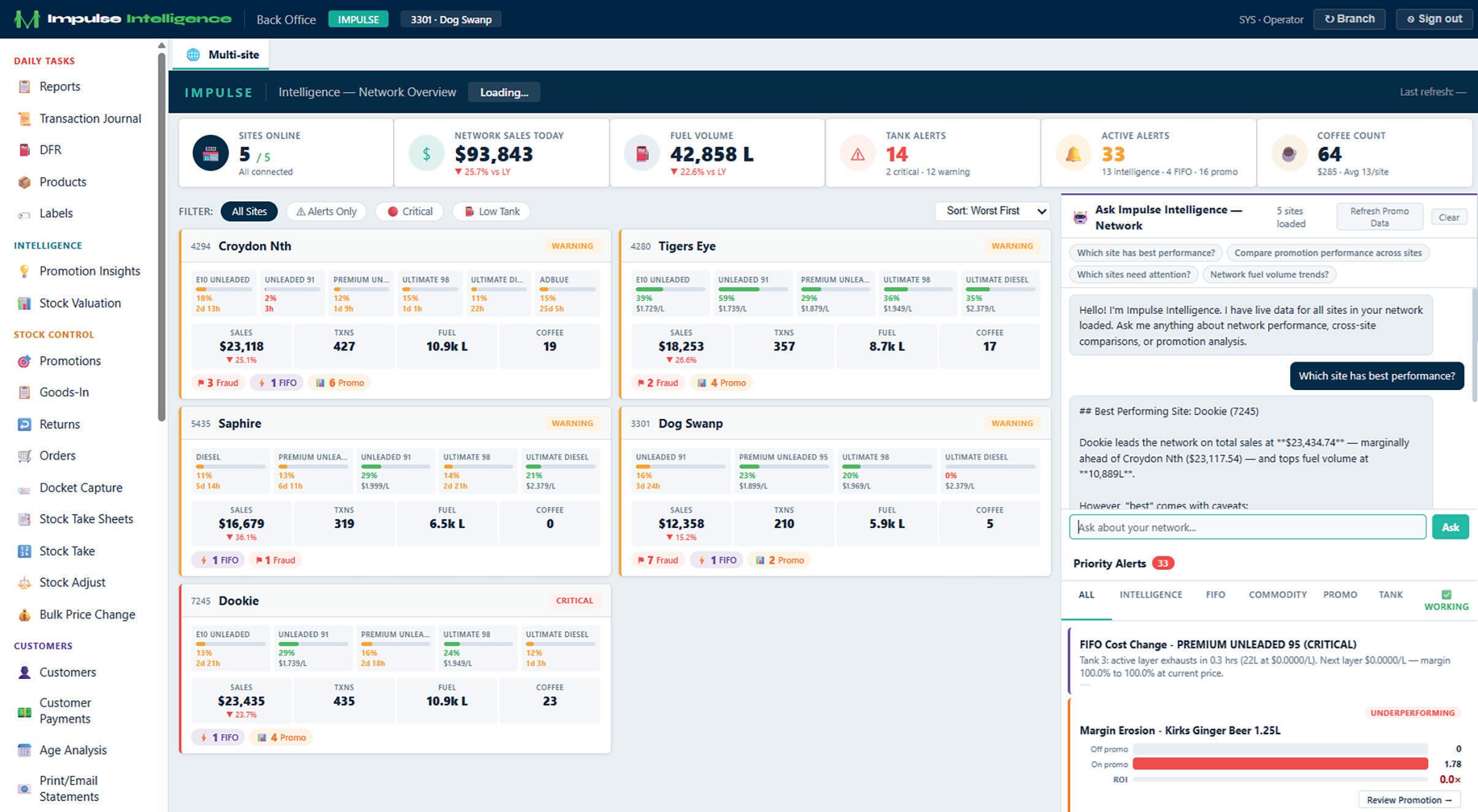
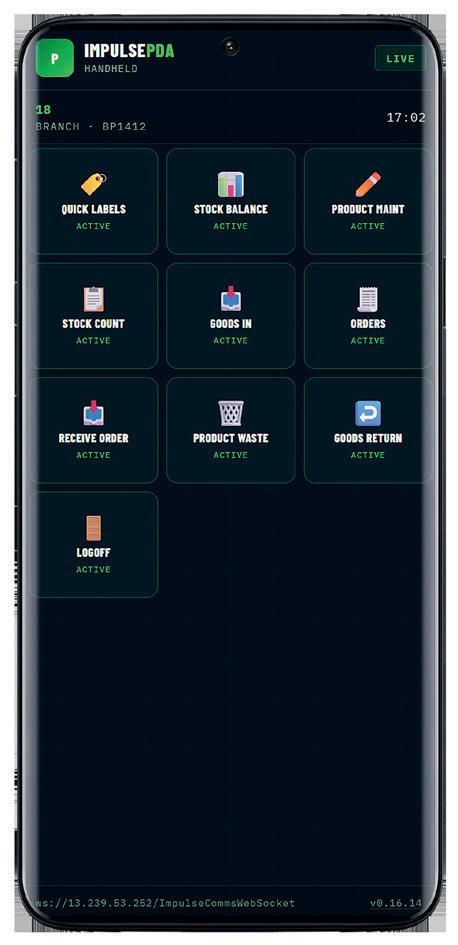
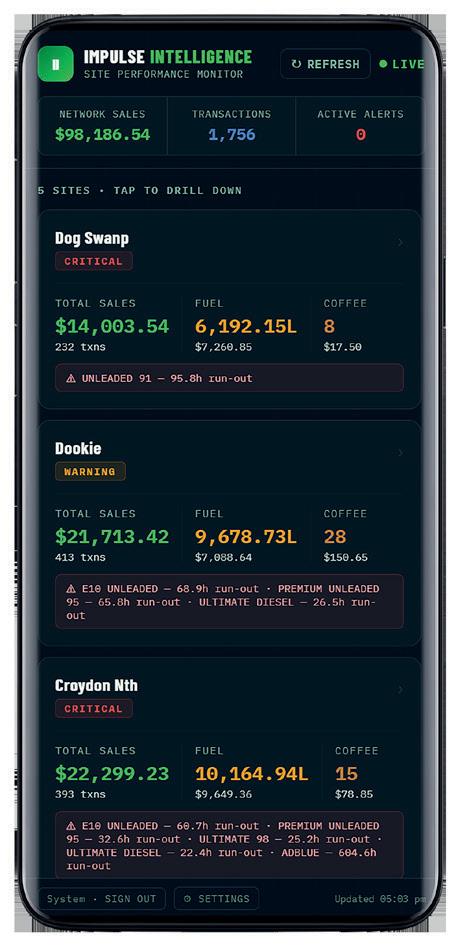
The past year has been about scale and modernisation. Impulse Retailing has been rolling out across more than 500 ANZ sites under a major enterprise contract, which has pushed us to harden every layer of the platform. We’ve completed a significant rebuild of our cloud architecture, dramatically reducing the server load behind real-time data flowing between sites and head office. We’ve launched Impulse Intelligence, our cloud-based analytics dashboard with a conversational AI assistant that lets retailers simply ask questions about their business and get answers instantly. And our mobile inventory app now runs fully offline, so staff in back rooms and cool stores aren’t held up by patchy wi-fi.
Q. What are the most significant shifts you’re seeing in the needs and expectations of P&C retailers and customers, and how is your business adapting?
Retailers want enterprise-grade tools delivered through the cloud – real-time visibility across every site, accessible from any device, with intelligence built in rather than buried in reports nobody reads. Customers expect seamless loyalty, app-based payment, and a consistent experience site to site. Impulse Retailing has responded by moving the entire platform to the cloud, embedding AI directly into the back office, and treating phones and tablets as first-class tools for the workforce.
Q. How are cost pressures, supply chain challenges and inflation shaping your approach to pricing, innovation and partnerships?
Fuel and convenience margins are thin, so anything we ship must lower operating cost – not add to it. That’s driven a relentless focus on efficiency: our cloud rebuild alone significantly reduced the infrastructure cost of running our platform at scale. We’ve added AI-powered tools like automated invoice processing, where the system reads supplier invoices and books them in without manual entry. And we’ve leaned into partnerships –
picking best-in-class providers for hardware, payments, and loyalty rather than reinventing those wheels – so our innovation budget goes into the software layer where we move fastest.
Q. What will be the main focus for Impulse Retailing for the remainder of 2026?
Three priorities: continuing the rollout across the 500-plus sites already committed; deepening the cloud capabilities of the platform so retailers can manage their entire estate from a browser anywhere; and maturing Impulse Intelligence into a true network benchmarking tool – giving operators a view of how their sites perform against the wider market. Growing the team to support all of that is its own focus.
Q. Is the evolving P&C landscape, including the energy transition and changing shopper behaviour, influencing your long-term strategy? Absolutely. Sites are becoming convenience destinations where fuel is one revenue line among several, EV charging is entering the forecourt mix, and loyalty data is becoming the genuine asset. Our roadmap reflects that – stronger convenience and foodservice capability, readiness for EV charging integration, and an analytics layer that helps retailers compete with grocery and quickservice food for the same shopper.
Q. What do you enjoy most about what you do?
The problems are real and the scale is meaningful – operators rely on what we ship to keep their business running every minute of every day. Solving hard problems that have a direct commercial impact, with a team that genuinely cares about the craft, is what keeps me in it.
Q. Is there anything else happening at Impulse Retailing that you’d like to highlight?
We’re investing heavily in AI as a native part of the platform – not a bolt-on. That’s where the next chapter of P&C software gets written, and we intend to lead it. ■

of Marketing and Corporate Sales, JC’s Quality Foods

Q. From your perspective as a leader, what has been the most challenging aspect of doing business in the P&C channel over the past 12 months, and how have you navigated it?
Not just within P&C but across the broader business, rising commodity costs and ongoing supply pressures have been the most significant challenges over the past 12 months.
These increases have put pressure on margins not only for us but for our retailers. The P&C channel has remained highly price sensitive, making it critical to strike the right balance between cost recovery and maintaining value for the end consumer.
“A key strategic shift for us has been doubling down on the convenience channel, with a strong focus across on-the-go snacking formats.”
To navigate this, we took a more strategic and disciplined approach to our range and pricing by reviewing pack formats and specifications to ensure we remain competitive at key price points and prioritising high performing SKUs that deliver strong rotation instore.
At the same time, we’ve focused on operational efficiency and supplier relationships to help manage cost pressures where possible.
Q. What key decision or strategic shift has had the biggest impact on your business recently, and what prompted that move?
A key strategic shift for us has been doubling down on the convenience channel, with a strong focus across on-the-go snacking formats.
Over the past 12 months, we’ve seen increased demand for portable, portion controlled products that deliver both convenience and value so we’ve made a deliberate decision to prioritise this space.
JC’s have always been strong within this segment with our 35g snack packs and cups, however we’ve placed a greater emphasis on it as sales have continued to grow and customer demand for new product innovation has accelerated.
In the past six months alone, we’ve launched eight new on-the-go snacking SKUs, designed specifically for the needs of the P&C shopper. These products are built around strong impulse appeal, clear price point architecture and formats that suit immediate consumption.
Q. Where are you currently choosing to invest, whether in people, innovation or capability, and why do you see those areas as critical?
At JC’s, we have ambitious growth targets, and we’re confident our current infrastructure provides a strong foundation to achieve them, with a key area of focus moving forward being innovation.
As a snacking business, we’re constantly monitoring consumer trends and purchase drivers, ensuring we bring relevant, high performing products to market, particularly within the convenience and on-the-go space.
We’ve already made significant investments in capability and automation, allowing us to handle a broader range of products while improving efficiency and maintaining consistency in quality. These investments have been critical in helping us manage scale and remain competitive. Looking ahead, with ongoing cost pressures, there is also a strong focus on operational efficiency and overhead management. This ensures we can continue to deliver commercially competitive pricing to our customers, without compromising on the quality and reliability that we’re known for.
Ultimately, our investment strategy is about balancing innovation, efficiency and execution, all of which are essential to sustaining long term growth in the P&C channel.
Q. Looking ahead, what are you personally most focused on achieving in your role, and how does that align with the needs of your customers?
I’m particularly focused on bringing new, relevant products to market that continue to drive growth for both JC’s and our retail partners.
As we scale, it’s important that we maintain a strong focus on our core, high performing range, but innovation plays a critical role in driving incremental sales, shopper engagement, and brand awareness. My goal is to further establish JC’s as a recognised and trusted snacking brand within the market, particularly in the P&C channel.
A big part of that is building on the legacy that Joe Cannatelli created over 30 years ago. There’s a real sense of pride in continuing to grow a business that has helped shape the category, while ensuring it remains relevant in today’s market.
We’re also seeing a growing preference from consumers to support Australian owned brands, which positions us strongly. Being locally owned allows us to stay close to our customers, respond quickly to trends, and deliver products that resonate with the Australian shopper. ■
Big on flavour, perfectly portioned
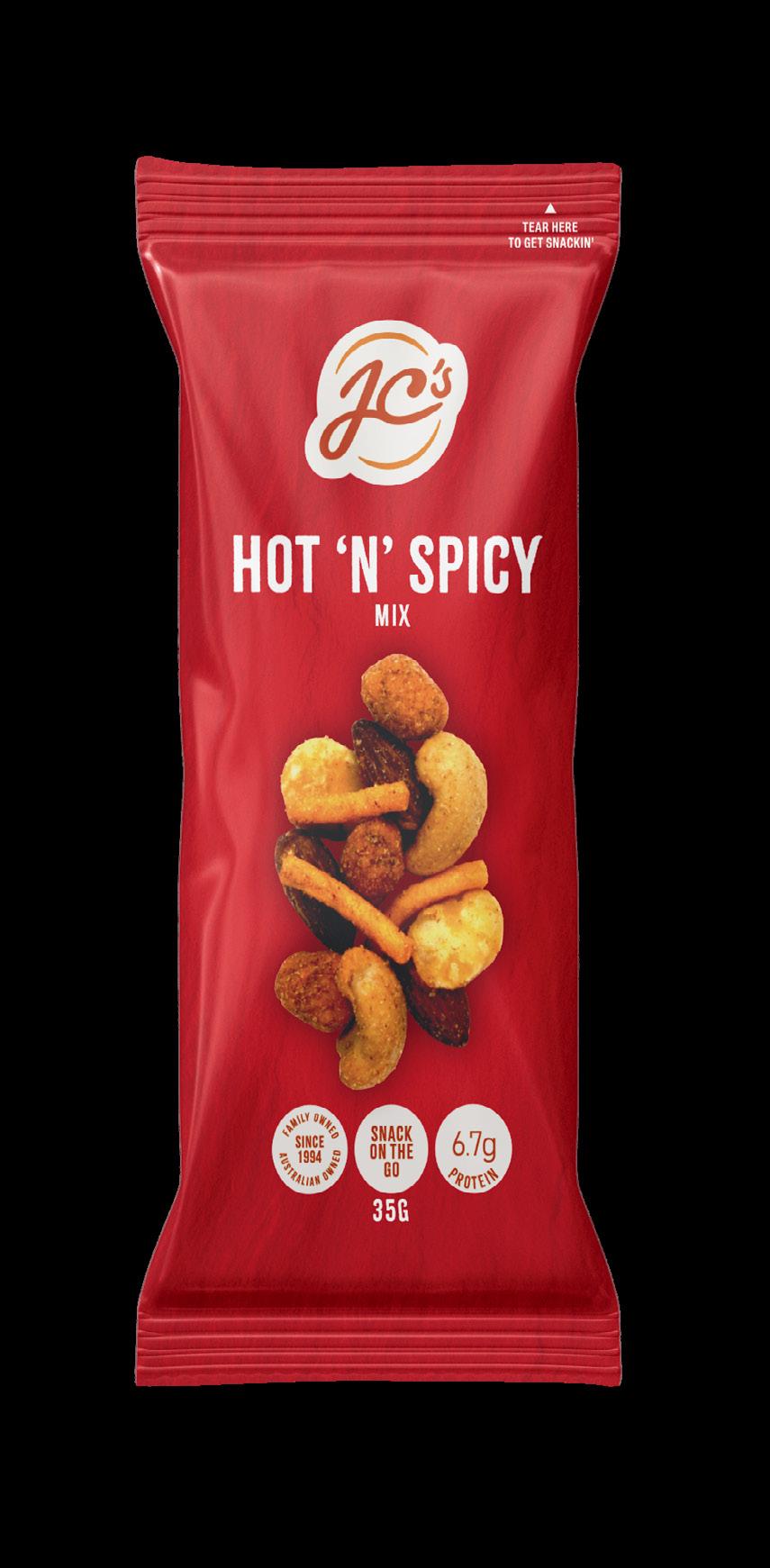
JC’s snack packs are your go to for a delicious, nutritious boost anytime, anywhere. Whether you're on the move, at work, or just craving a satisfying snack, our convenient packs make smart snacking easier than ever. From crunchy almonds to protein packed mixes and our best selling Quality Outback mix, every pack delivers the perfect balance of taste and convenience. Just grab, snack, and go!








Manager, Meris Food Equipment

Q. What have been the main highlights for Meris over the past 6 to 12 months?
Over the past 12 months, the conversation around foodservice in P&C has fundamentally shifted.
Retailers are no longer asking whether they should invest in food. They are asking how to build scalable, profitable food offers that can compete with QSR, supermarkets, and evolving customer expectations.
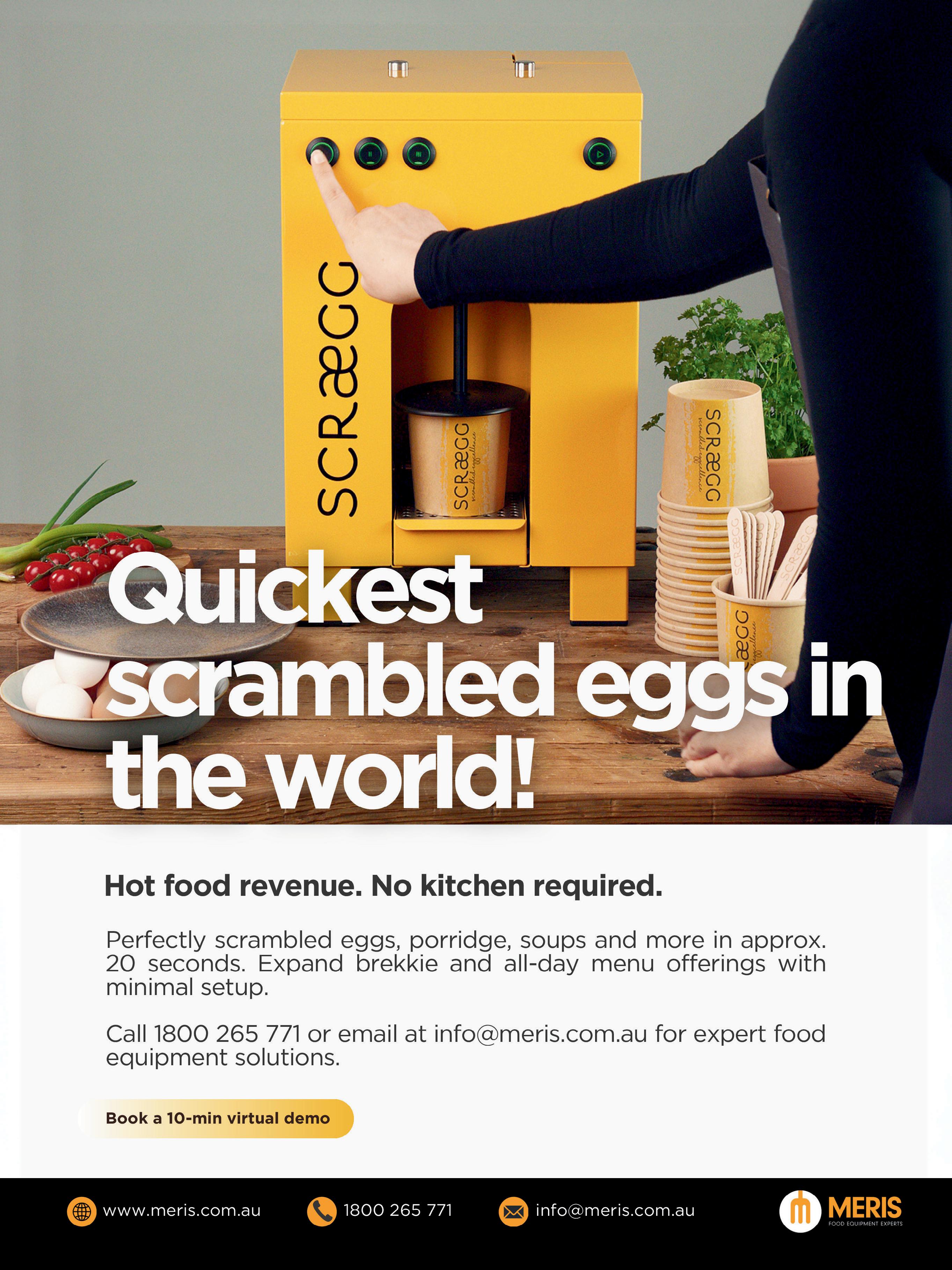
We’ve introduced exciting technologies into the Australian market this year, including SCRAEGG, a compact steam-based solution capable of preparing scrambled eggs, porridge, soups and more in approx. 20 seconds without the need for a full kitchen.
The bigger story is not the equipment itself. It’s the growing recognition that successful foodservice is built through operational simplicity, consistency, and strong execution.
Q. What shifts are you seeing in the needs and expectations of P&C retailers and customers?
Customers now expect fresh, high-quality food almost everywhere they go. The competitor is no longer just the service station down the road. Globally, the highestperforming convenience retailers are positioning themselves as food destinations first, fuel retailers second.
At Meris, we’re helping operators build food offers designed around operational reality, not ideal scenarios.
Q. How are cost pressures, supply chain challenges and inflation shaping your approach to pricing, innovation and partnerships?
Labour, utilities and food costs are continuing to push operators toward simpler, efficient foodservice models. We see this as an opportunity as much as a challenge.
Innovation in 2026 is less about adding complexity. The retailers performing best are typically the ones simplifying operations, reducing unnecessary SKUs and focusing on repeatable models that can scale.
Q. What will be the main focus for Meris for the remainder of 2026?
Our focus for the remainder of 2026 will continue to centre around helping operators improve and build stronger foodto-go offers while reducing in-store complexity.
This includes introducing more innovative technologies, expanding support across menu development and training, and more.
Breakfast in particular remains significantly underdeveloped within Australian convenience retail despite being one of the highest-frequency and highest-margin dayparts. We see strong opportunity in helping operators build scalable breakfast offers moving forward.
Measurement is another key focus. Food needs to be managed like a business unit – GP%, waste, sales by daypart and contribution per square metre matter.
Q. Is the evolving P&C landscape, such as the energy transition and changing shopper behaviour, influencing your long-term strategy?
Absolutely. We believe foodservice will become one of the defining competitive battlegrounds within P&C over the next decade.
Fuel and tobacco are becoming less reliable growth drivers. We are investing heavily in solutions that simplify operations and our focus is increasingly centred around helping operators transition toward stronger, more scalable foodservice models that can drive repeat visitation, customer loyalty, and long-term profitability.
Q. What do you enjoy most about what you do?
The transformation piece. When retailers move from viewing food as a side category to something that genuinely drives traffic, basket growth and customer loyalty, that’s exciting to be part of.
Foodservice is dynamic – every site, customer base and operational environment is different, which means every solution requires collaboration, problem-solving and practical execution.
Q. Is there anything else happening at Meris that you’d like to highlight?
We’ve launched SCRAEGG into the Australian market this year. We’ve also introduced dynamic display technology for Flexeserve systems, helping operators improve food visibility and drive impulse purchase. New models of Flexeserve allow for smaller grab and go hot offers to be placed in more convenient locations near POS, coffee machine and around the store.
We continue to assist building and improving food offers from the ground up, creating transparent relationships and partnerships where we understand the client’s objectives and work as part of their team to help achieve those goals.
The opportunity within foodservice for P&C remains significant and, for many operators, it’s sitting right in front of them. ■

Q. From your perspective as a leader, what has been the most challenging aspect of doing business in the P&C channel over the past 12 months?
Without doubt the constant battle with illegal tobacco. Not only has it hurt the innocent law-abiding operators I truly feel that not enough has been done from an enforcement perspective for the last few years.
Through consulting with key industry stakeholders and associations we were given guidance on how to detect illegal operators, including ensuring that all of our customers that were selling tobacco actually had tobacco licences. It was amazing how many ‘tobacconists’ who were listed online with highly visible street signage did not actually have licences yet were free to operate illegally without fear of prosecution.
Even more staggering was the number of operators that had been provided tobacco licences, and we therefore assumed were legitimate but were later found to be supplying illegal tobacco and vapes.
Eventually we had to physically audit our own sites and establish transaction monitoring of our ATMs to detect illegal operators which resulted in the removal of 180 of our ATMs from non-compliant operators. Unfortunately, our competitors were quick to install their ATMs soon after we had removed which was extremely disappointing for the industry. We all need a level playing field.
Q. What key decision or strategic shift has had the biggest impact on your business recently, and what prompted that move?
Cash Logistics costs are on the rise and that rise will be significant. The merger of Armguard and Prosegur two years ago essentially left us with a monopoly provider of Cash Logistics across the country and it has been a bumpy road since with a number of big bailouts from the major retailers and banks.
The undertakings made to the ACCC as part of this merger expire soon and most operators would have already been notified of increases to their cash collection services.
Add to that a couple of interest rate rises, sites now need to engage in a delicate balancing act between reducing the frequency of costlier cash collections or needing to get cash to the bank faster to service debt.
It simply means we need to get smarter on how we manage cash and produce creative and innovate strategies and products on how best do to this including self-cashing ATMs and cash recycling where possible.
I am really excited to announce that we’ve developed a solution that alleviates a number of those pain points by safely depositing notes into a Smartsafe which then transfers deposited funds to your bank account on the next day. We essentially reduce the frequency of and in turn the cost of cash collections whilst being able to get funds to your bank daily. We also look after the reporting, reconciliation and maintenance of the devices. We are confident many older devices can be given a new lease on life and converted to this arrangement negating the need for costly hardware upgrades.
Q. Where are you currently choosing to invest, whether in people, innovation or capability, and why do you see those areas as critical?
It is imperative to continually invest, innovate and invigorate. Thankfully we have built a solid business over the last 15 years that allows us to support creative development, and we have always prided ourselves on internal promotion and development of our staff. This results in having highly experienced and skilled staff that have worked in areas of high product exposure whether that be technical, product management and/or administration climbing the ranks and then contributing to strategy, product enhancement and developments.
“We have built a solid business over the last 15 years that allows us to support creative development, and we have always prided ourselves on internal promotion and development of our staff.”
Q. What’s one trend in the P&C channel that has genuinely surprised you, and how has it influenced your thinking or strategy?
Resilience! Fuel prices shot through the roof, cost of living pressures all around, interest rate rises, illegal tobacco impacting revenue and the list goes on. Despite this the majority of retailers both large and small have withstood the battle and I certainly don’t underestimate the magnitude of the battle that many have faced, especially small independent businesses. I have visited a number of tradeshows of late, both as a visitor and where Next Payments has exhibited and I was comforted by the better-than-expected attendance rates along with the positive energy and attitudes held by the majority of operators. ■


Introducing the Deposit range from Next Payments. The smarter way to manage your cash.



Got reliable hardware but outdated software? Upgrade the intelligence, without replacing your safe!
Ready to make the complete upgrade? Get started with us today!
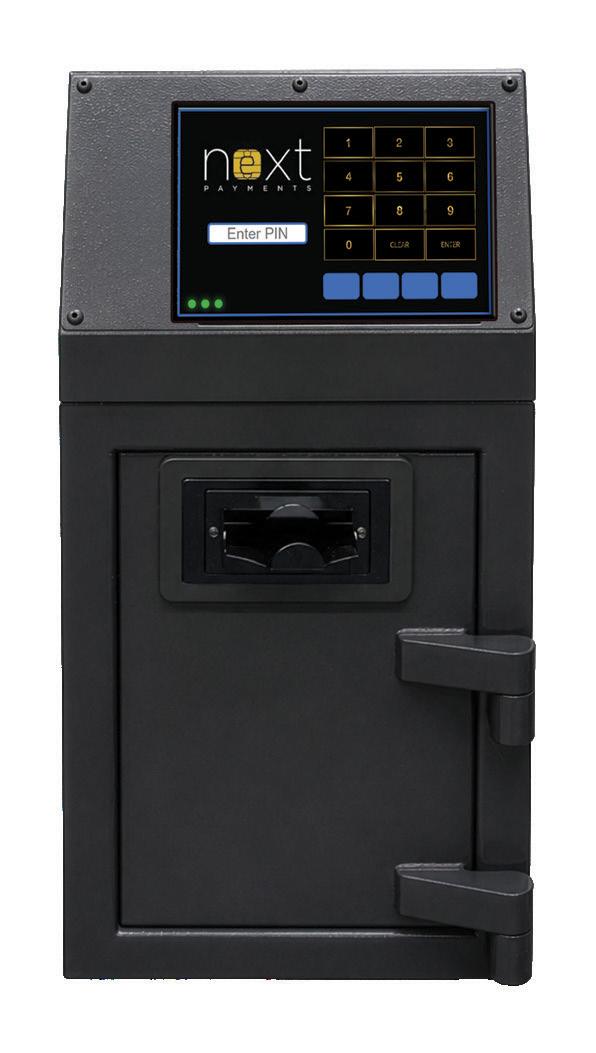
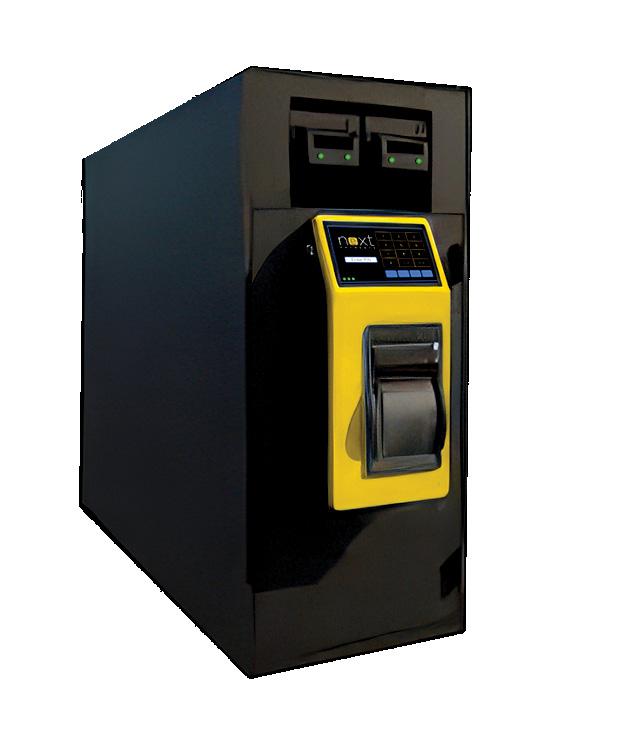

Talk to us about upgrading your safe today!

Director, PeleGuy Distribution

Q. From your perspective as a leader, what has been the most challenging aspect of doing business in the P&C channel over the past 12 months?
There’s no sugarcoating it – the economy and government policy decisions have made life genuinely tough for anyone operating in the P&C space. Two things hit us hard: rising fuel costs and the illegal tobacco crisis. When petrol prices climb, fewer customers pull into service stations – and that flows through to every category on the shelf. Meanwhile, the black market has exploded, pulling tobacco shoppers away from legitimate P&C outlets and into backstreet stores. Our retailers are playing by the rules and getting punished for it. The way we’ve navigated it is by focusing on what we can control – helping our partners diversify their range – giving customers more reasons to walk in beyond fuel and tobacco.
Q. What key decision or strategic shift has had the biggest impact on your business recently, and what prompted that move?
We’ve reworked our visit schedule to bring better coverage, more flexibility and improved service to country and regional customers. As travel costs soared, we shifted to a smarter model – using phone, WhatsApp and our B2B ordering platform to manage accounts efficiently and saving the physical visit for when it genuinely adds value – a ranging review, a new product launch, or when a customer needs face-to-face support. It’s not about doing less; it’s about doing it smarter.
We also reviewed our entire cost of doing business to stay lean and keep offering competitive pricing to our customers. Efficiency and profitability have to walk hand in hand.
Q. How have your own leadership priorities evolved in response to the changing needs of P&C retailers?
If there’s one thing I’ve learned after two decades in this industry, it’s that standing still is not an option. You must do more and become more. My focus has shifted to making sure every interaction we have with a retailer genuinely adds value. That means going the extra mile to understand what each retailer actually needs right now, not what worked six months ago. I’ve pushed our whole team to think commercially – because our success
is directly tied to our customers’ success. If their shelves aren’t moving, we’re not doing our job.
Q. Where are you currently choosing to invest, whether in people, innovation or capability, and why do you see those areas as critical?
We’re investing across the board, but with real intention. Our philosophy is simple: invest in anything that makes your business faster, sharper, and more relevant.
On the product side, we’ve made some bold moves this year. We have expanded our best-selling Tiko range, launched a dedicated international food and drinks department, significantly expanded our health and beauty range, and brought Bouncibles into the mix –they’ve been a massive hit, exactly the kind of fast-moving, high-visibility impulse product that P&C thrives on. We’ve also kept refreshing our Vibe cable range, offering quality comparable to our competitors at roughly half the price – and in this cost-of-living environment, that’s a real point of difference.
We’re also investing in our B2B digital platform so customers can order easily around the clock. And we’re always investing in our people –because at the end of the day, great products still need great humans behind them.
Q. Looking ahead, what are you personally most focused on achieving in your role, and how does that align with the needs of your customers?
I want to see our retail partners genuinely thriving – not just surviving. That means getting Peleguy running as efficiently as possible to make life better and more profitable for the stores we serve. I want our customers to genuinely look forward to seeing our reps walk through the door – because when we show up, something good happens. New products that move. Smart ideas. Competitive pricing. Real support.
There’s no better feeling in this business than visiting a store and seeing empty shelves where your products used to be. A happy retailer who’s selling through is our whole purpose. After more than 20 years at this, the ambition hasn’t changed. We want to be the wholesale and distribution partner that P&C retailers can’t imagine doing business without. ■




“Key to maintaining this connection is having offers that resonate with customers, differentiated and tailored to specific markets and customer segments.”
Matt Keogh
Chief Commercial Officer, 7-Eleven Australia
Q. What does a successful convenience offer look like today, and how has that definition changed in recent years?
Our aspiration is to become the leading food and beverage destination for Australians, offering foodvenience and meeting customers needs.
We want to be there for customers with the right products, at the right time, in the right place, helping them to shop the way they want to whether that’s in store, through 7Now Delivery or frictionless transactions via the My 7-Eleven App. We want to be known as a destination for easy, quality food and beverage and everything we do is focused on how we get the products our customers want, where they want them, how they want them, giving them value and rewarding their loyalty every time they shop with us.
Convenience for us is about transforming our in-store experience and design and exploring new formats that are tailored to local neighbourhoods and how our customers live, work and move.
We want every customer experience with us to be seamless, convenient and exceptional, whether it’s in-store, online or delivered; it’s what customers today expect.
This means expanding our range and innovating our fresh food offer, so our customers have access to a range of high quality, fresh food and grocery options. We want to be the convenient neighbourhood food destination for all meals throughout the day – from the moment our customers wake up, to the moment they go to bed. ■
Q. What does a successful convenience offer look like today, and how has that definition changed in recent years?
A key strategic focus for Ampol’s retail convenience network is the continued investment in shop offer segmentation.
Convenience ranging, quick service restaurant availability and site design are all aspects being explored and invested in across our wider retail convenience network.
This has been framed with customercentricity at the core. Key to maintaining this connection is having offers that resonate with customers, differentiated and tailored to specific markets and customer segments.
The breadth and importance of our network segmentation strategy is also particularly important for Ampol currently and is demonstrated through the performance of our

unstaffed U-GO offering, which is designed to support value-oriented fuel missions with a streamlined experience for customers, through to the recently relaunched premium highway destination sites at Eastern Creek in Sydney’s West, which were officially opened in January.
Commuters travelling east and west along Sydney’s busiest road, the M4 Motorway, now have access to Ampol Foodary and a range of high-profile quick service offerings with Hungry Jack’s, Oporto, Boost Juice and, in an Ampol first, Soul Origin, all together under one roof. The refreshed offer can be enjoyed in the revitalised food court with indoor and outdoor dining options, a dedicated children’s play area, and enclosed off-leash dog parks. Brand new, separate car and truck canopies ensure a seamless experience for commuters no matter their journeys. ■

“Customers now expect more than convenience alone – they are seeking quality coffee, fresh food, speed, value and a stronger overall customer experience.”
Q. What are the biggest challenges currently facing the Australian petrol and convenience industry, and how is your business responding?
The Australian petrol and convenience industry has faced significant challenges over the past six months, driven by global fuel volatility, cost-of-living pressures, rising operating expenses and changing consumer behaviour. International conflict and supply uncertainty have impacted fuel pricing and margins, while also affecting in-store sales. Combined with continued wage growth and increasing operational costs, this has created substantial financial pressure for retailers operating within an already low-margin environment.
At the same time, consumers are becoming increasingly value conscious and more selective with discretionary spending, accelerating the industry’s shift beyond traditional fuel retailing. Customers now expect more than convenience

Jon Yarnall
alone – they are seeking quality coffee, fresh food, speed, value and a stronger overall customer experience.
For APCO Cafe 24/7, these challenges also present opportunities. APCO’s strategy is focused on continuing to evolve from a traditional service station model into a true convenience and hospitality destination. Through award-winning barista-made coffee, fresh food innovation, strong community engagement and a customerfirst culture, APCO is creating compelling reasons for customers to visit beyond fuel alone.
The business continues to invest in digital opportunities, delivery platforms, store refurbishments and operational efficiencies to meet changing customer expectations while navigating rising costs.
As the industry evolves, APCO Cafe 24/7 remains focused on innovation, experience and convenience – ensuring it stays relevant, resilient and connected to the communities it serves. ■

Executive General Manager Merchandise, Australian United Retailers
Q. What does a successful convenience offer look like today, and how has that definition changed in recent years?
We’re expanding grab-and-go by putting foodfor-now and food-for-later solutions at the front of the store.
Traditionally, the easily accessible items were just chocolate bars and soft drinks. Now, the healthconscious tradie who’s got 20 minutes for lunch can pop in and pick up a sandwich, snack pack of nuts or sushi, just metres from the store’s entrance.
Mum or Dad on the way home from work can pick up a hot roast with veggies dinner, cooked freshly on site.
The old perception of convenience being cheap and low quality is gone. Customers

expect premium food offerings and that’s what FoodWorks offers.
Q. What are the biggest challenges currently facing the Australian petrol and convenience industry?
Online delivery of ready-to-eat-food and groceries is one of the biggest challenges for convenience stores. People can pretty much get whatever they need without leaving the house.
FoodWorks has responded by offering highquality food-to-go options, fresh, healthier snacking choices and a faster shopping experience.
A Friday night Uber dinner delivery can be $100. We are countering this by making it easier to get in and grab a dinner to-go for less. ■

“A successful convenience offer today is built around speed, quality, and relevance.”
Q. What challenges are facing the Australian P&C industry, and how is your business responding to them?
One of the biggest challenges facing the Australian P&C industry is rising operating costs, particularly wages, utilities, and ongoing inflation, while customers remain highly price-sensitive. Recent global events have demonstrated to Australian families that fuel costs are volatile, with the growth of EVs also beginning to shift long-term thinking for alternatives to petrol vehicles. Fuel margins continue to be competitive, so profitability increasingly relies on the convenience offer rather than fuel alone. Due to aforementioned volatility of living cost challenges consumers are expecting greater value in convenience purchases – meaning faster, fresher, and now.
Claire Hatty
Marketing Manager, Bowser Bean
Q. What are the biggest challenges currently facing the Australian petrol and convenience industry, and how is your business responding to them?
The current fuel and economic climate are putting real pressures on customers; as such, Bowser Bean is ensuring maintained focus on the overall value we deliver. Our focus is on making sure our food, coffee and convenience offer continues to be strong enough that Bowser Bean is genuinely worth stopping for.
Relevance is the other big challenge. With supermarkets and QSRs expanding their convenience offers and tobacco no longer the drawcard it once was, P&C has to work harder to stay front of mind. For us, the answer is staying focused on what we do well – fresh, quality food; barista coffee; clean and comfortable shops; and
Q. What does a successful convenience offer look like today, and how has that definition changed in recent years?
Recent global events have significantly influenced a dynamic shift in the definition and expectations of P&C.
Since the pandemic, customers are shopping more locally and appreciate accessing a greater number of services at one location, evolving from ATM’s and cigarettes to, carwashes, dogwashes, EV charging, postal lockers, Lottery and foodservice.
A successful convenience offer today is built around speed, quality, and relevance.
At Blue Robe Petroleum, food and coffee, strategic partnerships, and service accessibility and relevance, now play a greater role in driving repeat business and loyalty. ■

crew that love their community and making their customer smile.
Q. Where do you see the greatest opportunities for growth in the P&C channel over the next 3–5 years?
Capturing the next generation of customers is a key opportunity within P&C. Gen Z and Gen Alpha shop, think, and spend differently to any generation before them. Their projected economic footprint is significant, with research predicting that Gen Z will be the wealthiest in history. For P&C, it is about thinking about how the offer resonates with a younger customer, who has high expectations and plenty of alternatives.
Getting that right now is how P&C builds its customer base for the next decade. ■

Q. What does a successful convenience offer look like today, and how has that definition changed in recent years?
We define success as meeting customers wherever they are in their mobility journey. For bp, our focus is on supporting all forms of mobility. As we look forward, both fuels and EV charging, are playing a role in our customers’ lives.
Convenience has evolved a lot in recent years, as our customers look for variety, availability and accessibility. Our priority is making our customers’ journey seamless, from refuelling or recharging, to stopping in for a break or to pick up snacks on their way.


“We are also placing greater emphasis on strategic ranging, exclusive deals, and promotional activity that better aligns with the convenience model.”

We’ve worked to ensure our network keeps customers moving, no matter where they might be. In the last few years, we’ve strengthened our footprint across the major East-West corridor, supporting more customers as they move across the country. With quality fuels, loyalty offers and a growing EV charging network, our customers know they can rely on bp.
We’ve invested in upgrading our larger sites on key transport routes to improve our customers endtoend experience, with better amenities, easier access and greater flexibility.
We’re also designing new sites that support different mobility choices side by side, to ensure customers can rely on us today while we continue to evolve for the mobility needs of tomorrow. ■
CEO and Founder, EzyMart
Q. What are the biggest challenges currently facing the Australian petrol and convenience industry, and how is your business responding to them?
One of the biggest challenges currently facing EzyMart and the wider Australian petrol and convenience (P&C) industry is the pricing imbalance between convenience stores and major supermarkets. Manufacturers and suppliers often prioritise high volume supermarket chains, offering them significantly lower pricing due to the scale of their orders and sales. While this makes commercial sense from a volume perspective, it undeniably creates a difficult environment for P&C operators who are purchasing at much higher unit costs.
As a result, it is not uncommon for store managers to find that they can buy the same products cheaper from major supermarkets
rather than directly from suppliers. With weekly promotional cycles alternating between large retailers, the market is highly competitive, and pricing is constantly being driven down at the supermarket level. Many operators feel that the channel is overlooked despite its importance in delivering accessibility and convenience to consumers. Meanwhile, convenience stores are left trying to maintain margins while remaining competitive for customers who are increasingly price aware.
In response, EzyMart is focusing on strengthening supplier relationships and advocating for more equitable pricing structures. We are also placing greater emphasis on strategic ranging, exclusive deals, and promotional activity that better aligns with the convenience model, ensuring we continue to offer value while maintaining sustainable margins. ■





Head of Sales and Marketing, Lowes Petroleum
Q. What are the biggest challenges currently facing the Australian petrol and convenience industry, and how is your business responding?
The petrol and convenience industry is no stranger to change, but the pace and complexity of that change has stepped up significantly in recent years. What was once a relatively stable, fuel-led model is now being reshaped by shifting demand, rising costs and increasing customer expectations.
While fuel demand remains resilient, we’re seeing gradual shifts driven by improved vehicle efficiency and changing travel patterns, alongside ongoing volatility in global energy markets impacting pricing and margins.
At the same time, rising operating costs, particularly labour, energy and compliance, are putting sustained pressure on site profitability. For regional operators, these challenges are often amplified by scale and access to resources.
At Lowes Petroleum, our focus is on what we can control: efficiency, network quality and customer relevance. We’re investing in technology and data to improve pricing accuracy, streamline operations and support faster decision-making across the business. This reduces administrative burden and improves consistency at site level. We’re also continuing to upgrade key locations, with a strong focus on retail.
Our Local Hub concept is designed to reflect local community needs, rather than a one-size-fits-all offer. In parallel, we are investing in our unmanned self-serve network – upgrading existing sites and developing new locations – which provides a lower cost model to operate. Ultimately, the industry isn’t short of demand: it’s short of disciplined execution. The operators who will succeed are those who focus on running better sites, controlling costs, and delivering a sharper, more relevant customer offer every day. ■


Eddy Nader Managing Director, NPG Retail
Q. What are the biggest challenges currently facing the Australian petrol and convenience industry, and how is your business responding to them?
The most significant challenge currently facing the Australian petrol and convenience industry is the ongoing growth of the tobacco black market. Addressing this issue requires urgent action from the government, particularly in reviewing and fixing tobacco excise legislation so legitimate retailers can compete on a level playing field and resume proper trading of tobacco products. This remains both the
greatest challenge and, if resolved, a major opportunity for the channel.
In the meantime, businesses must focus on creating a strong point of difference. With QSRs, cafés, and competing service stations all targeting the same customer base, standing out is critical. The key lies in in-store innovation – developing a compelling and differentiated offer that gives customers a clear reason to choose your store over others. Delivering a unique, high-quality customer experience will be essential to driving traffic and maintaining competitiveness in the current environment. ■
“Delivering a unique, high-quality customer experience will be essential to driving traffic and maintaining competitiveness in the current environment.”

“To capitalise on emerging trends and products, the decision to engage suppliers is more important than ever.”
Senior Director, Tech, Supply and Services, Sodexo Australia
Q. What are the biggest challenges currently facing the Australian petrol and convenience industry, and how is your business responding?
We are seeing consumers become more discerning, with preferences and tastes evolving at an unprecedented pace. To capitalise on emerging trends and products, the decision to engage suppliers is more important than ever. On one hand you need to develop meaningful partnerships with suppliers who align with your strategy and are prepared to invest in your offer, but you also need to maintain a balance of flexibility to quickly bring emerging products to market and develop a strong position in the eyes of consumers.
At Sodexo we are selective about the partners we work with, choosing those who share our vision and are committed to investing alongside us. At the same time, we maintain a flexibility in

Lou Jardin Managing Director, SPAR Australia
Q. What does a successful convenience offer look like, and how has it changed?
A good convenience offer today is pretty simple –fair price, the right range, and easy to shop. That’s changed. It used to be about location and impulse. That’s still part of it, but customers are a lot sharper now. They still want speed, but they also want to know they’re not getting ripped off on the basics. If they don’t trust the price, they don’t come back as often.
What we’re seeing is less clutter and less noise. Too many lines, too many deals – it doesn’t help. The stores that are working have tightened their range and focused on what actually sells. Keep it in stock, make it easy to find, and price it properly.
our ranging and commercial structures to support new, often smaller, but agile and innovative companies in bringing their products to market.
Gone are the days of consumers with fixed expectations of retailers. Nowadays, advances in technology and personalisation across all facets of retail in our daily lives is supercharging consumer expectations and reshaping how value is offered.
Retail omnichannel has been around for a long time but at Sodexo, we are increasingly pairing online channels with advances in physical technology. Through our investment in 24/7 frictionless retail and delivery robots, we’re evolving our offer to give our customers more access to our products, and at a point which is more convenient for them. And no doubt next year their expectations will evolve and we’ll need to be ready to match this with new technologies that genuinely improve their consumer journeys. ■


That’s where we’ve focused at SPAR. Sharpen the core range, simplify the offer, and back it with consistent pricing. What sets us apart is our Payless Everyday program –it gives even the smallest stores the ability to compete on price. Our private label also gives retailers a solid value option while still protecting margin.
Fresh and food-to-go are important, but only if done properly. A good offer drives traffic and margin. A poor one does the opposite.
At the end of the day, it comes down to trust. Customers want to get in, get what they need, and feel okay about what they paid. Get the basics right every day – that’s what wins. ■

CEO, The Distributors
Q. Where do you see the greatest opportunities for growth in the P&C channel over the next 3–5 years
The Australian petrol and convenience channel continues to evolve, and I believe the greatest opportunities will come from retailers that successfully combine convenience, digital engagement and local relevance with an offer tailored to the outlet’s local consumer.
This presents opportunities for wholesalers such as The Distributors. As retailers look for ways to remain competitive against larger chains, there is increasing demand for strong wholesale partners that can provide national efficient supply chain solutions and local service.
From a supplier perspective, the convenience channel continues to outperform many traditional retail channels in terms of innovation and speed to market. We are seeing

“I’m proud of how our teams have come together, supporting one another and maintaining focus on keeping Australians moving and making their lives easier.”
growing demand for premium products, healthier options, energy and functional beverages, and emerging categories that align with changing consumers.
The Distributors’ national network and local presence provide a unique ability to service communities that larger, centralised supply models often find challenging to reach effectively or carry the range required.
Over the next three to five years, I believe the winning retailers will be those that continue to adapt to changing consumer expectations while maintaining the personal service and community connection that have always been at the heart of the convenience industry.
The Distributors’ role is to ensure our members, customers and supplier partners have the capability, technology and support to capitalise on those opportunities. ■
Jennifer Gray Interim CEO, Viva Energy Retail
Q. What are the biggest challenges currently facing the Australian petrol and convenience industry, and how is your business responding to them?
The Australian petrol and convenience industry is navigating a period of heightened complexity, shaped by both global volatility and local operational pressures. Ongoing geopolitical disruptions, including the conflict in the Middle East, continue to influence supply chains and energy markets, while unforeseen events closer to home highlight the importance of resilience and adaptability.
These factors can place pressure on cost structures and supply continuity, however, we have worked hard with our suppliers and the Government to avoid customer disruption as much as possible. Always with our guests and team members in mind, we have done our best to focus on agility, resilience and collaboration across our growing business of brands – Shell Reddy Express, OTR and Smoke Mart Gift Box (SMGB).
I’m proud of how our teams have come together, supporting one another and maintaining focus on keeping Australians moving and making their lives easier.
During this time, we have also evolved how we operate, transitioning to a more unified retail model, bringing together our multiple brands under a single, aligned structure to deliver benefits to our suppliers, guests and staff. Sharpening our commercial focus to deliver strong outcomes is always a key priority. Although illicit tobacco continues to be an issue for many retailers, our security and operations teams are working with authorities through a combination of compliance, advocacy, operational changes and risk mitigation. By continuing to invest in operational excellence, strong partnerships and a compelling guest offer, our convenience retail businesses are well placed not only to navigate ongoing disruption, but also to help shape the future of the sector. ■
CEO, UCB Stores


“While the environment may be difficult, there is still a path forward for businesses prepared to move with confidence.”
AT THE RECENT UCB National Member Conference, I delivered a keynote to our Members about the industry we love. The convenience industry is changing rapidly, but with that change comes opportunity. Fuel and tobacco once carried the entire business, but the industry is now being rebuilt around food, beverages, and fast everyday convenience. Rather than seeing this as a negative shift, I believe it represents a chance for businesses to rethink what they can become and where future growth will come from.
One of the strongest themes I wanted to highlight was adaptation. Businesses cannot afford to stand still and wait for the market to improve around them. The pressure facing the industry is real, but the businesses that will succeed are the ones willing to evolve, think differently, and respond faster than the market around them. I used a video excerpt from The Dark Knight Rises movie, showing Bruce Wayne climbing out of a pit to reinforce the idea that progress comes from changing the way we think and act. While the environment may be difficult, there is still a path forward for businesses prepared to move with confidence.
Another theme I focused on was value, especially from the shopper’s perspective. Shoppers today are more informed, more selective, and more aware of how they spend their money. They compare prices, use apps, and actively search for the best offers before they even walk into a store. However, value is not simply about being the cheapest. It is about creating an experience where customers feel satisfied with what they purchased
and comfortable returning. Businesses that understand this can build stronger loyalty and stronger long-term growth.
I also emphasised the importance of execution. Strong ideas only matter if they are carried out properly. Every part of the shopper journey, from the forecourt to the counter, is a chance to create a better experience and drive stronger sales. Small improvements in presentation, service, and consistency can make a significant difference. Success in this industry often comes from doing simple things extremely well, every single day.
Another key theme is focus. Businesses do not need to become everything at once. Sometimes the most successful operators are the ones known for doing one thing exceptionally well, whether that is coffee, fresh food, or customer service. There is real strength in mastering the basics and building trust with shoppers over time.
And when we talk about basics, a real example is being famous for something. I think we need to keep reinforcing that as an industry we need to be the best pie and sausage roll sellers in the country – and we won’t do that by being empty at 11am. Shoppers will never trust us on food if we can’t get pies right.
Overall, my message is realistic but always with an optimistic perspective. The industry is changing, but there is still enormous opportunity for businesses willing to adapt, improve standards, and move forward together. The future will belong to those who understand their shoppers, embrace change, focus and continue finding better ways to compete. ■








Chocolate remains a key impulse purchase as innovation, value and convenience drive shopper demand.
Words Deb Jackson

CHOCOLATE CONTINUES TO hold its position as one of the most important impulse categories in Australia’s petrol and convenience channel, holding more than half of all confectionery sales even as growth across the broader category slows and shoppers become increasingly selective with discretionary spending.
According to the AACS State of the Industry Report 2025, chocolate accounted for 52.8 per cent of confectionery sales during the year, retaining its position as the category’s largest segment. Its share eased from 54.2 per cent a year earlier, while chocolate value sales edged down 0.4 per cent after growth of 5.6 per cent in 2024, signalling a more cautious consumer environment.
Across the wider confectionery category, value growth slowed to 2.1 per cent in 2025, adding $15m and taking the category to $749m. While still positive, that was well below the $40m added in 2024 (+5.8 per cent) and the $79m added in 2023 (+12.8 per cent), reflecting softer discretionary spending conditions.
Beneath the headline value growth, unit sales tell an even clearer story. Confectionery unit sales fell six per cent in 2025, almost double the decline recorded in 2024, meaning the channel has shed more than 20 million units over the past two years. Much of the category’s value growth has been driven by price increases rather than shoppers buying more products.
Theo Foukkare, CEO of the Australian Association of Convenience Stores (AACS), says the category remains resilient despite more challenging trading conditions.
“Chocolate remains the dominant confectionery segment in convenience retail, accounting for more than half of category sales. The category has proven resilient, but growth clearly moderated through 2025 as consumers

became more selective with discretionary purchases – and the fall in units shows shoppers responding to cost-of-living pressure,” he says.
Even as volumes softened, confectionery lifted its share of total channel value to 7.6 per cent. Within the category, the mix continued to shift and, while chocolate’s share eased, sugar confectionery grew to lift its share to 34.5 per cent.
“While confectionery remained in growth during 2025, the pace slowed considerably compared with previous years. That reflects a more cautious consumer environment and softer spending across discretionary categories – but chocolate’s scale, familiarity and impulse appeal continue to make it a cornerstone of the convenience offer,” Foukkare says.
The importance of impulse purchasing cannot be overstated in the P&C environment.
Unlike grocery shoppers, who often enter stores with a planned basket, convenience shoppers are typically seeking immediate consumption solutions. That behaviour continues to underpin chocolate’s performance across the channel.
Adam Niederer, National Sales Manager at Menz Confectionery, says the category’s strength is closely linked to the way shoppers interact with convenience stores.
“While we don’t have access to comprehensive channelwide data across petrol and convenience, the category appears to remain resilient within P&C due to the strength of impulse purchasing behaviour. Compared with grocery, convenience shoppers are typically mission-driven and looking for immediate consumption, which continues to support chocolate sales, particularly in single-serve formats,” he says.


Single bars continue to perform strongly, reflecting both the nature of the channel and growing price sensitivity among consumers.
“These formats align well with immediate consumption occasions and offer an accessible price point for consumers looking for a quick treat or snack while on the go,” Niederer says.
Despite ongoing economic pressures, consumers are not abandoning the category altogether. Instead, many are adjusting how they purchase chocolate, favouring formats that deliver an affordable treat without stretching the budget.
“We’re seeing consumers become increasingly price-conscious, with shoppers gravitating towards smaller pack sizes and lower out-of-pocket spend. In convenience, this is translating into stronger demand for single bars and compact formats that still deliver an indulgent treat without a significant spend commitment. Consumers are still looking for moments of enjoyment, but they’re being more selective about pack size and value,” he says.
Retailers are seeing similar behaviour at store level. According to an OTR Group spokesperson, customers continue to view chocolate as an affordable indulgence despite becoming increasingly conscious of spending.
“Customers are definitely looking more for value now – for special offers – but still using chocolate and snacks as a little treat during tough economic times. They might just add one additional item to their basket, particularly with a fuel purchase, rather than grabbing a few chocolate bars to share or keep for later,” the spokesperson says.
While value remains important, innovation continues to play a vital role in maintaining shopper engagement and encouraging trial.
Manufacturers are investing heavily in new products, limited editions and exclusive formats designed specifically for the convenience channel.
Laura Ronan, Head of Commercial Development – Confect at Nestlé Oceania, says innovation remains a priority for the business.
“Our confectionery products continue to perform strongly in the P&C space, with innovation being a key driver. Circana data shows that in 2025, P&C exclusives Aero Strawberry and KitKat Mint Crush Share Bars ranked as number one and number two best performing new products in the Share Bars segment,” she says.
Nestlé has continued to expand its pipeline of exclusive and limitededition products, including the launch of the KitKat F1 Chocolate Car, developed as part of the brand’s global Formula 1 partnership.
“Collaborations are always a key consideration, with insights showing that brand collaborations drive higher trial rates. Whether it’s combining KitKat and Aero or pairing our confectionery brands with other Nestlé favourites like MILO or Nesquik, we are always on the lookout for something new and novel,” Ronan says.
The focus on innovation extends beyond major brand collaborations. Across the category, manufacturers are using limited-edition releases, seasonal products and exclusive formats to maintain shopper interest, create excitement at shelf and encourage consumers to try something different during routine store visits.
Niederer says: “Limited-edition and seasonal products can help create a sense of urgency and encourage trial among consumers looking for something new or different.”
OTR Group says trending products and viral flavours are increasingly helping drive traffic into stores.
“Shareable bags are very popular right now, but we’ve also seen some uptake in chocolates and lollies that are trending on social media, for example the Clinkers trend. We keep our eye on what’s hot with influencers so we can make sure we have the right products in-store,” the spokesperson says. →






The retailer also expects the category to benefit from seasonal conditions, noting that chocolate sales typically strengthen during the cooler months.
As consumer habits evolve, manufacturers are increasingly tailoring formats to suit the convenience channel.
Mars Snacking points to the success of its Grab and Go 100g format, which has helped create new consumption occasions within the chocolate sharing segment.
“Our ‘Grab and Go’ 100g format for our bitesize sharing brands has been a standout success in the convenience and impulse retail environment, growing the entire chocolate sharing segment,” a Mars Snacking spokesperson says.
“It has successfully expanded our much-loved sharing brands like M&M’S and MALTESERS into accessibly priced, self-consumption moments that Australians can enjoy on the go.”
The format reflects a broader trend emerging across the category, where traditional distinctions between single-serve and sharing products are becoming increasingly blurred.
Consumers continue to seek value, but they also want flexibility. Products that can be consumed individually while still offering perceived value through a larger format are becoming increasingly attractive.
While innovation can help drive trial, OTR Group says execution remains critical.
“Promotions definitely help to drive sales, and the placement in-store is paramount to success, particularly for sweet treats. Front counters and areas where customers naturally look can make a huge difference to the uptake of products,” the retailer says.
As convenience retailers look to future growth, younger consumers are becoming an increasingly important focus.
According to Nestlé, Gen Z will represent the largest generation by 2035 and will bring significant purchasing power to the channel. However, their expectations will differ.
“We know they are looking for the ability to test and try products, engage in themed activities or events in-store, and rely on the recommendation of influencers and social media advertising more than traditional ads,” Ronan says.
Nestlé also points to Kantar data showing that 76 per cent of Gen Z consumers are seeking food and beverage products that fit their lifestyle and support functional self-care needs without sacrificing taste.
“Collaborations are always a key consideration, with insights showing that brand collaborations drive higher trial rates.”
– Laura Ronan, Head of Commercial Development – Confect, Nestlé Oceania
For retailers, this presents opportunities to think differently about merchandising and engagement. Exclusive products, limited time offers and social media driven campaigns are increasingly influencing purchase decisions among younger shoppers. The challenge will be creating experiences that feel relevant while maintaining strong execution on core ranging and availability. At the same time, manufacturers continue to invest in promotions, innovation and local manufacturing to keep the category relevant and engaging for consumers.
OTR Group is also seeing opportunities emerge at the premium end of the category despite broader cost-of-living pressures.
“There’s been an increase in more indulgent products, particularly brands from overseas such as Whittaker’s or the Dubai chocolate trend and anything with pistachio flavouring. Again, with the cost of living, this can be a little affordable treat for them,” the retailer says.
For Menz, future growth opportunities lie in formats that balance affordability and indulgence.
“We see strong opportunity in smaller sharing and snackable formats, particularly bag sizes around 60-80g, which sit at a more accessible price point compared with traditional 120-150g bags,” Niederer says.
As convenience retail continues to evolve, chocolate’s role appears secure. The category’s ability to deliver a low-cost treat, combined with ongoing innovation and strong impulse appeal, means it remains very valuable.
For retailers navigating a more cautious consumer environment, chocolate continues to offer something few categories can match: a proven combination of familiarity, affordability and spontaneous purchase behaviour. ■






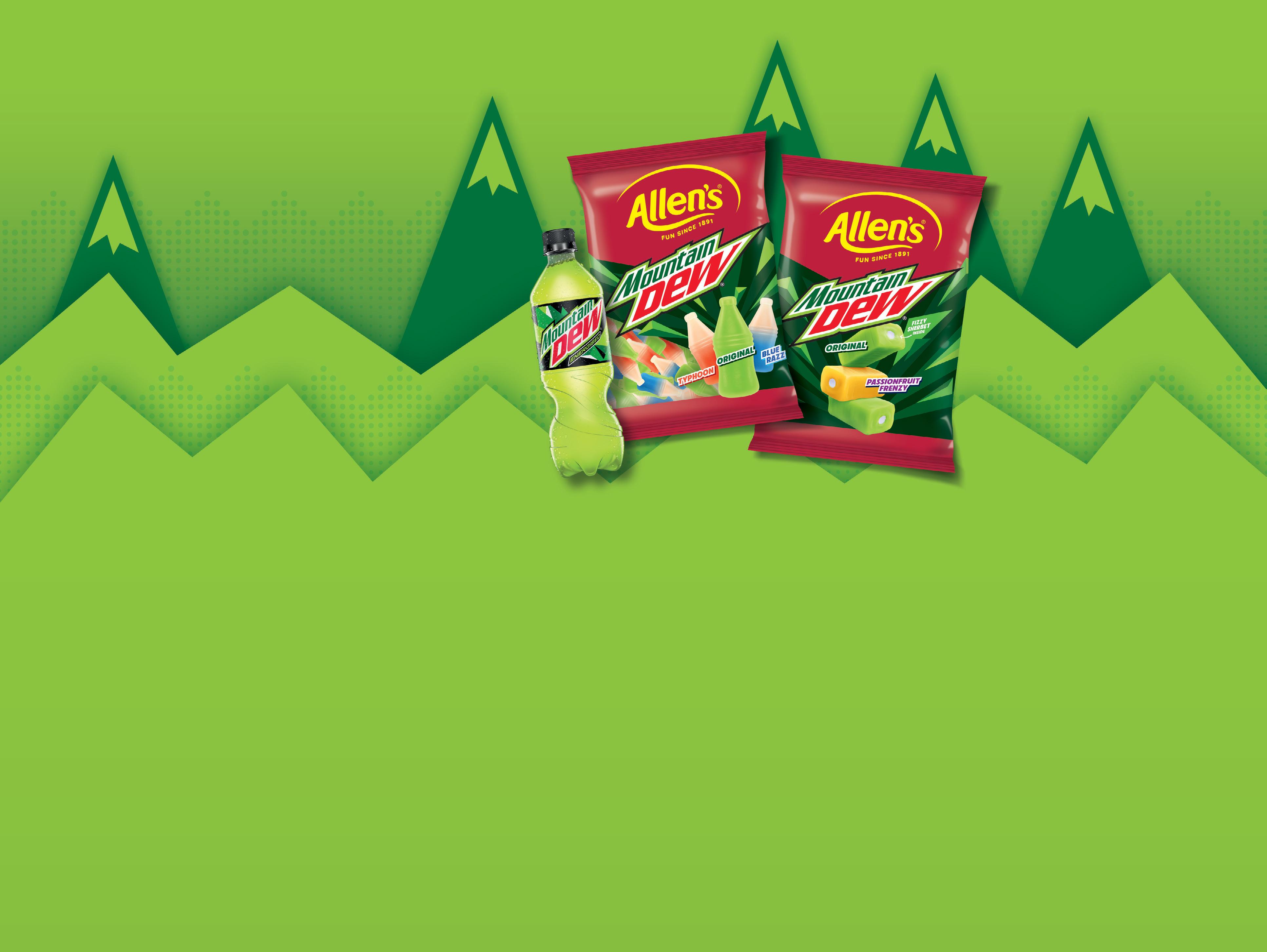
Innovation, protein and convenience are reshaping snackfoods as retailers capture evolving consumer demand.
Words Deb Jackson

THE SNACKFOODS CATEGORY continues
• Snackfoods sales increased 6.0 per cent in 2025
• Category value reached $335m
• Added $19m in annual growth
• Growth rate doubled compared with 2024
• Category share increased from 3.1 to 3.4 per cent
• One of the channel’s strongestperforming categories
• Fifth consecutive year of growth
Source: Australian Association of Convenience Stores (AACS), State of the Industry Report 2025.
to prove its resilience in Australia’s petrol and convenience channel, delivering strong growth despite ongoing pressure on household budgets and increasing competition for discretionary spending.
According to the AACS State of the Industry Report 2025, snackfoods sales increased six per cent during the year, adding $19m in value and taking the category to $335m. The result effectively doubled the growth rate recorded in 2024 and positioned snackfoods among the channel’s strongestperforming categories.
Theo Foukkare, CEO of the Australian Association of Convenience Stores (AACS), says changing consumer preferences are helping reshape the category.
“Category dynamics continue to shift, with nuts, jerky and rice snacks driving the majority of growth and steadily increasing their share.”
While chips remain dominant, accounting for 80.8 per cent of category value, it is the rapid growth of alternative snack formats that is attracting attention. According to AACS data, nuts, jerky and rice snacks grew 31.7 per cent during the year and now represent 18.2 per cent of category value.
The trend reflects growing demand for products that combine convenience with protein, satiety and better-for-you positioning, while still delivering on taste and portability.
As snacking occasions become more frequent and diverse, retailers are finding new opportunities to drive incremental purchases through carefully curated ranges that cater to both indulgence and wellbeing.
While convenience remains a key purchase driver, value has become increasingly important as consumers scrutinise every purchase.
Dia Vatana, Head of Marketing and Corporate Sales at JC’s Quality Foods, says shoppers are becoming more selective about the snacks they buy.
“The biggest drivers are convenience, value, protein, and impulse appeal,” she says.
“Consumers are still looking for quick snacks they can eat on the go, but they are becoming more selective about what they buy. Products that feel filling, portion controlled, high in protein, or better value are getting more attention. Our premium on the go snack formats offer something different to the traditional confectionery or chip offer.”
Cost-of-living pressures are undoubtedly influencing purchasing decisions, particularly in a channel where impulse purchases have traditionally played a significant role.
“Shoppers are more conscious of value. They are still buying snacks, but they want products that justify the spend, whether that’s through a bigger pack, better quality, stronger flavour, or a more filling option,” Vatana says.
“In P&C, impulse purchasing is under more pressure because fuel and essentials take priority, so snack products need to work harder on shelf. Strong value, clear benefits and trusted brands are more important than ever.”
The challenge for manufacturers and retailers alike is delivering products that offer a compelling reason
to purchase while maintaining profitability in an increasingly competitive environment.
One of the most significant shifts within snackfoods is the growing importance of functional benefits.
For Go Natural, the rise of health-conscious snacking has fundamentally changed what consumers expect from the category.
Mitch Morgan, Brand Manager for Go Natural, says protein has become a baseline expectation rather than a point of difference.
“Protein is no longer a value-add; it’s the price of admission. Consumers don’t just look for protein anymore; they expect protein in any better-for-you offering.
“Fibre is very quickly becoming a sales driver, largely due to the trends we’ve seen emerge on social media over the past three to four months,” Morgan says.
Manufacturers are increasingly responding by developing products that satisfy multiple consumer needs simultaneously.
Morgan continues: “The third trend we’re seeing is benefit stacking. It’s about adding more value through functional ingredients, superfoods or meal-replacement credentials.
“Consumers are looking for products that deliver multiple benefits rather than just one.”
According to Morgan, consumers are increasingly expecting more from snacks, particularly in the convenience channel where products often command a premium price.
“Consumers are already paying a premium in convenience, so brands need to justify that premium by delivering more value.
“The only sustainable way to justify a higher price point is through products that offer multiple benefits and meet multiple consumption occasions.”
Importantly, the shift towards healthier snacking does not mean indulgence is disappearing from the category.
“In convenience, we’re seeing growth across both better-for-you products and some of our more traditional indulgent ranges. Consumers
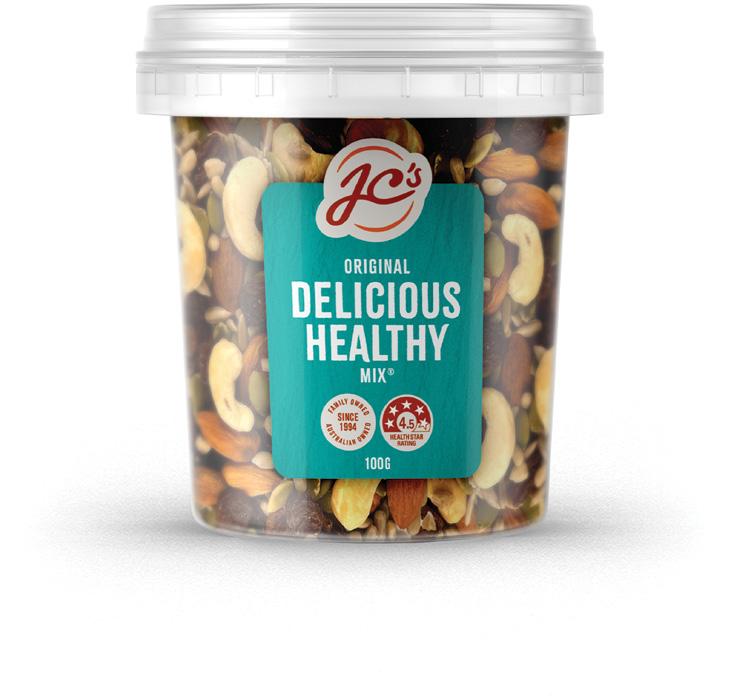




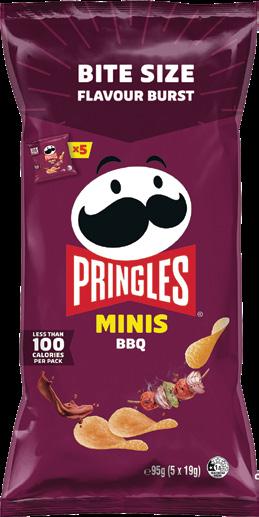
still want indulgence, but they’re increasingly looking for products made with real food ingredients,” says Morgan.
“Protein is no longer a value-add; it’s the price of admission. Consumers don’t just look for protein anymore; they expect protein in any betterfor-you offering.”
– Mitch Morgan, Brand Manager, Go Natural




Alongside health and functionality, innovation continues to play a critical role in driving excitement and encouraging trial.
Vatana says flavour innovation is one of the strongest growth drivers currently shaping the category.
“High protein snacks, meat snacks such as jerky, nut mixes, popcorn, portion-controlled packs, and products with bold or indulgent flavours are all performing well.
“Flavour led innovation is one of the strongest drivers we are seeing in snacking. Consumers are increasingly looking for products that feel new, exciting and different, particularly through bold and trending flavours such as dill pickle, hot honey, chilli, loaded cheese, and sweet and spicy combinations.”
Major brands are responding with increasingly adventurous product launches designed to capture attention and stimulate impulse purchases.
Arnott’s recently introduced Bizza Shapes, combining two of its most popular flavours, Barbecue and Pizza, into a single product. The launch reflects growing consumer appetite for flavour mashups and novelty-driven snacking experiences.
Similarly, Pringles has expanded its offering with a range of limited-edition Flavour Loaded products, including Sizzling Meat Lovers Pizza, Sweet & Salty Butter Caramel and Kickin’ Peri Peri varieties, alongside a reformulated Salt & Vinegar flavour and new BBQ Minis.
These launches highlight the increasingly important role innovation plays in maintaining shopper engagement and encouraging repeat store visits.
For convenience retailers, limited-edition products can create urgency, generate conversation and drive incremental purchases from shoppers seeking something new. →
Retailers are seeing many of these trends play out in real time as consumers increasingly seek out products they’ve discovered through social media and online channels.
An OTR Group spokesperson says new product development has become one of the most powerful drivers of customer engagement.
“They are keen to try new products first so NPD is a huge opportunity for us.
“Consumers see something online and will come into our stores to buy and try it so we need to ensure that we are ahead of the trends.”
The retailer says protein-focused products remain one of the strongest-performing segments across OTR and Reddy Express stores.
“Protein snacks are now mainstream, and we’ve seen this category grow substantially over the past few years with bars, functional drinks, snacks and dehydrated meats being part of everyday snacking,” said the OTR Group spokesperson.
High-protein formats are proving particularly popular among consumers looking for more substantial snacking options.
“Dehydrated meats such as beef jerky are very popular at the moment as people are looking for high protein snacks.”
At the same time, international products are helping drive discovery and excitement within the category.
“International brands, especially in the salty snacks category, are also growing. We see this as a great space for innovation and bringing in new flavours and textures.”
Promotions remain an important tool for driving both value perception and basket size.
“Meal deals, add on combos and promotions all help to drive sales and provide value to our customers so these are a key part of what we do at both OTR and Reddy Express.
“These deals are a big driver during lunch time when customers can buy a hot food item or sandwich, drink and snack at a very reasonable price.”
While healthier products continue to gain traction, indulgence remains an important part of the category mix.

• Protein-rich snacks
• Nuts and trail mixes
• Jerky and meat snacks
• Rice snacks
• Portion-controlled formats
• Fibre and gut-health benefits
• Functional ingredients and “benefit stacking”
• Convenience and portability
“Customers are craving true treats for themselves –indulgent chocolate and premium brands that feel like an actual treat, not just everyday snacks. International flavours and trends continue to drive a lot of innovation,” says OTR Group.
This highlights the breadth of today’s snackfoods category, which now spans everything from functional nutrition and high-protein products through to indulgent treats and globally inspired flavour experiences.

The snackfoods category is entering a new phase of development, shaped by changing consumer expectations around health, value, convenience and flavour.
Vatana believes the greatest opportunities lie at the intersection of functionality, flavour and convenience.
“The biggest opportunities are in products with functional benefits, bold flavour profiles and snacking formats,” she says.
While traditional impulse purchases remain important, future growth will increasingly come from offering products that deliver value, nutrition, innovation and convenience in equal measure.
As snacking occasions continue to expand and consumers become more selective about their purchases, retailers that successfully balance indulgence, health, innovation and value will be best positioned to capture the next phase of category growth. ■
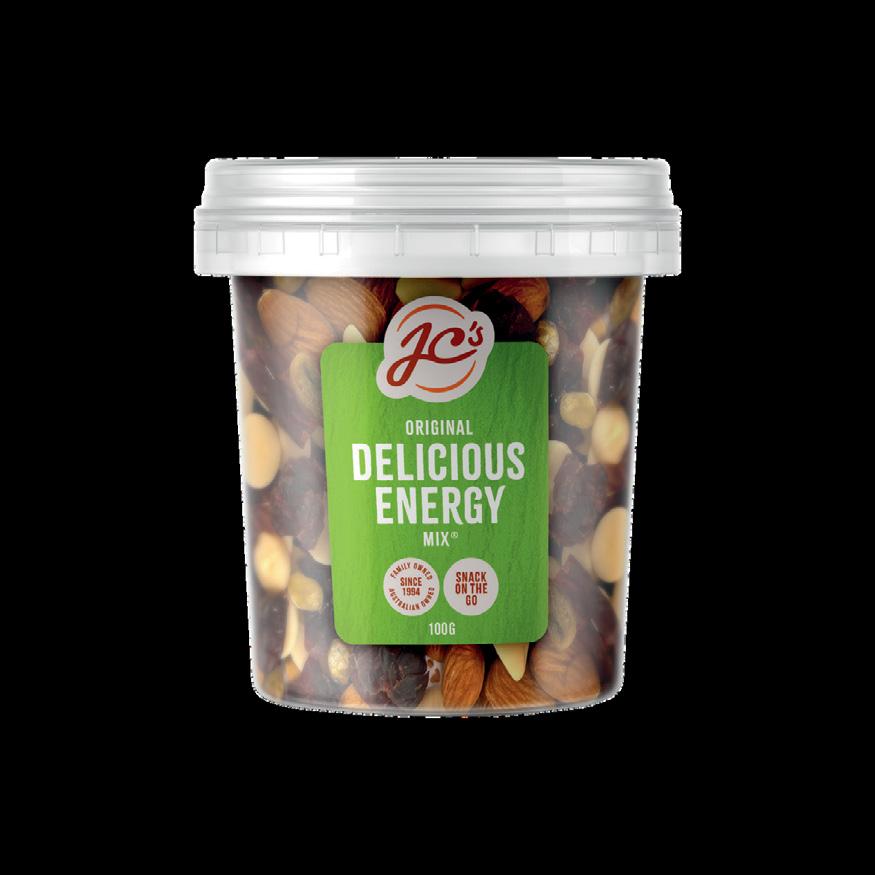

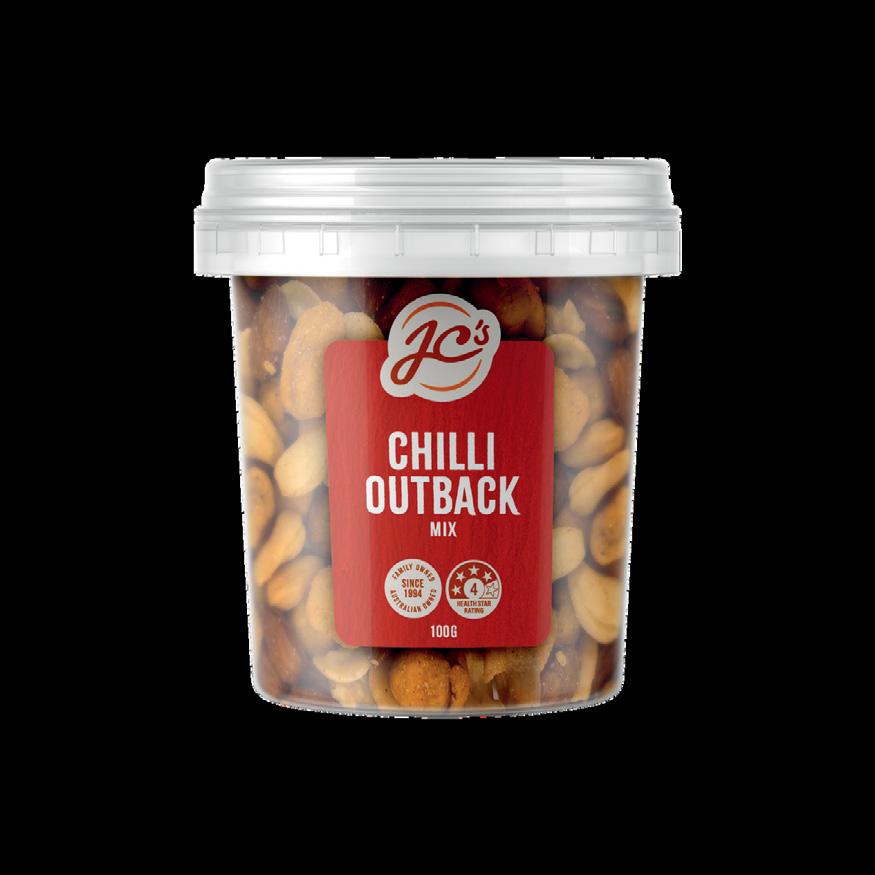
JC’s Snack Cups
Big on flavour, made for sharing.
JC’s Snack Cups are the perfect choice for delicious, satisfying snacking wherever you are. Packed with generous portions of your favourite nuts, mixes, and our best selling Quality Outback Mix, they’re ideal for sharing with friends, family, or enjoying throughout the day. Each resealable cup is designed to keep your snacks fresh and ready whenever hunger strikes. They’re the ideal companion for road trips, lunchrooms, movie nights, and everything in between. Just grab, share, and enjoy!
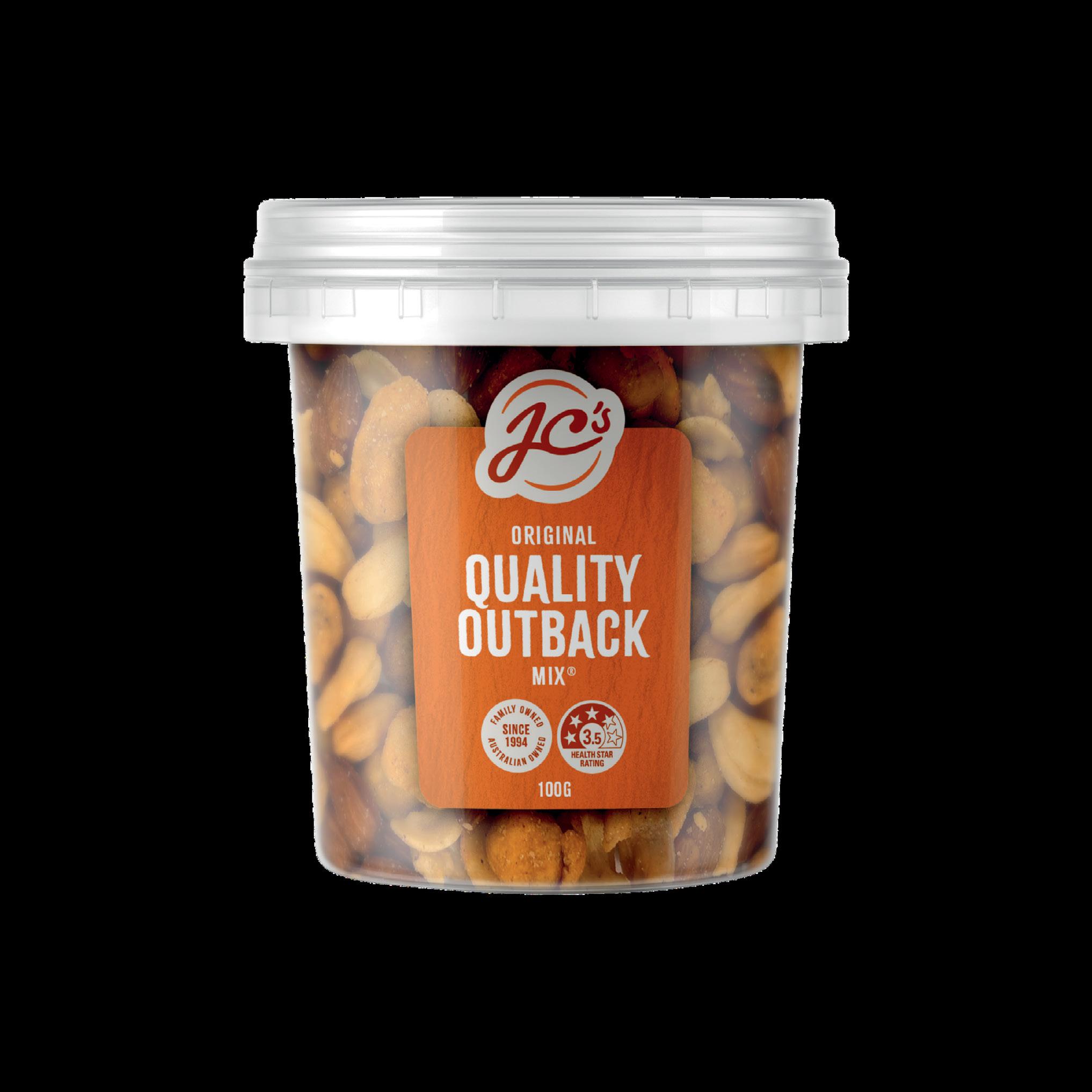



Our C&I Choice this issue is the innovative new release from Pacific Optics, in partnership with The Gummy Co., that we think has the potential of being the next evolution in functional food in the P&C channel.
Pacific Optics has built a strong track record of identifying emerging consumer trends early and converting them into high-performing, retail-ready categories. Creatine Gummies represents exactly that opportunity, a proven supplement re-engineered into a convenient, impulse-friendly format designed for today’s on-the-go shopper.
Traditional creatine products have largely been limited to powders and tubs sold through specialty fitness retailers. Pacific Optics recognised a clear gap that consumers want the benefits of creatine without the hassle of scoops, shakers, or preparation.
Creatine Gummies solve this completely. Each serve delivers 5 grams of creatine monohydrate in just three gummies, matching clinically supported daily doses with no mixing and no mess. With only 15 calories, low sugar, and zero fat, the product fits seamlessly into modern health-conscious routines while remaining perfectly suited to grab-and-go convenience.
For P&C operators, this represents incremental sales, not substitution. Creatine Gummies introduces a new functional food purchase occasion, sitting comfortably in impulse or alongside energy drinks, protein bars, and wellness snacks while appealing to a broader consumer base.
Backed by quality manufacturing and distributed nationally by Pacific Optics, Creatine Gummies sets a new benchmark for functional innovation in convenience retail.
Following Coca-Cola Australia’s three-year partnership with the NRL and NRLW, the convenience and petrol channel is set to bring the energy of rugby league into everyday purchase occasions.
With millions of engaged fans across the season, rugby league creates memorable moments from March through to the finals. This provides a timely platform for Coca-Cola to show up in ways that are relevant to how consumers watch, travel and come together around the game.
In convenience, this comes to life through the 500mL Coca-Cola Superfan Edition can. Designed for on-the-go occasions, the limited edition pack is supported by a national consumer promotion, giving fans the chance to engage with the brand during key moments such as State of Origin and the finals series.
For P&C customers, the focus is on driving visibility and instore relevance. A suite of point of sale materials has been developed to help retailers bring the campaign to life, integrate into the shopper journey and elevate the instore experience during peak sporting periods. By aligning brand, occasion and execution, the program gives shoppers another reason to reach for a Coke when the game is on. Retailers can speak with their CCEP representative to explore how to get involved, including access to stock and POS support.
All that’s left is to get game day ready.


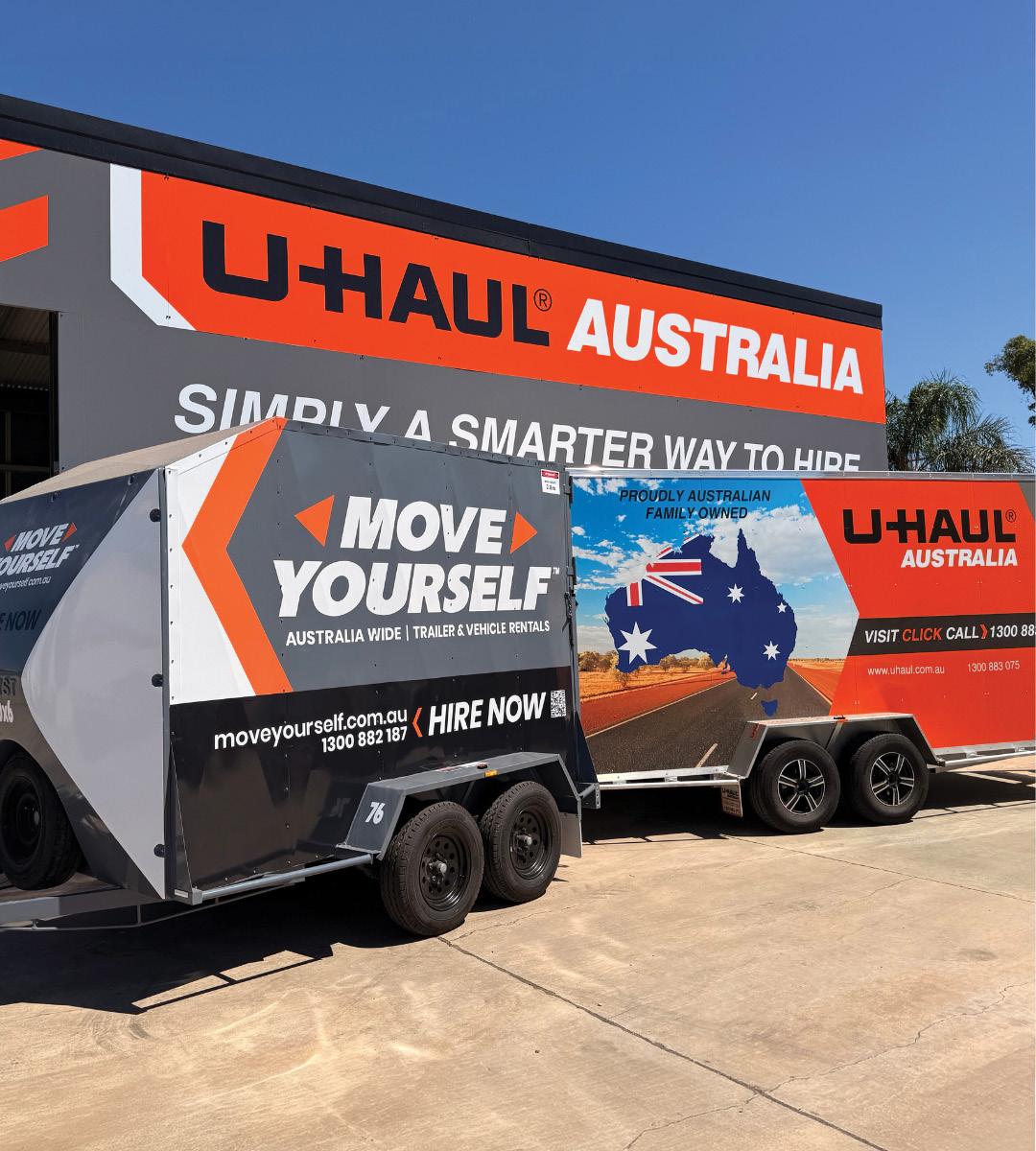
As we move through winter, one trailer category continues to stand out across the HenCo network - the Large Enclosed Trailer.
Despite ongoing fuel price pressures, Australians remain highly mobile, with strong demand for both local and interstate moves. This has resulted in increasing demand for its Large Enclosed Trailers, particularly for one-way hires, helping agents generate strong revenue from a single category, trailer asset.
The Large Enclosed Trailer is the ideal solution for customers moving household furniture, business equipment, or valuable goods, offering security, weather protection, and impressive carrying capacity. Its versatility makes it one of the most requested trailers across the network.
To support this growing demand, HenCo continues to invest heavily in fleet expansion and refurbishment. New trailers are being supplied into the network every month, while existing assets are being refurbished and redeployed to maximise earning opportunities for agents.
If you’re an existing HenCo agent and don’t currently offer a 16x6, 12x6, or a 10x6 Enclosed Trailer, now’s the time to explore the opportunity.
For more information, contact Jarod Barke, Chief Operating Officer, at jarod.barke@hencogroup.com.au or call 0431 082 030.
indulgence, perfectly portioned
Introducing the new Fruit Choc Love Snack Packs, the perfect combination of fruity goodness and smooth white chocolate, now available in convenient, portion perfect packs designed for today’s busy lifestyles. Created for consumers looking for a delicious nut free snack option, these new additions to the Fruit Choc Love range are ideal for lunchboxes, afternoon pick me ups, desk drawers, travel, or on the go snacking.
Golden Delight features a carefully selected blend of dried Mango, Pineapple and Apricot, delivering a naturally sweet and vibrant flavour profile, perfectly paired with creamy white choc pieces for an indulgent finish.
Tropical Treat offers a delicious tropical twist, combining juicy Pineapple, Paw Paw and Fig with smooth white choc for a satisfying balance of fruity sweetness and creamy texture.
Packed with flavour and presented in eye catching snack sized packaging, these new Fruit Choc Love Snack Packs are a great addition to petrol and convenience shelves and vending, catering to growing demand for convenient snacking options and ideal for impulse purchases. Perfect for shoppers seeking a sweet treat with a fruity twist, they’re an easy grab and go option customers will keep coming back for.
For more information, please contact salessupport@jcsqualityfoods.com.au


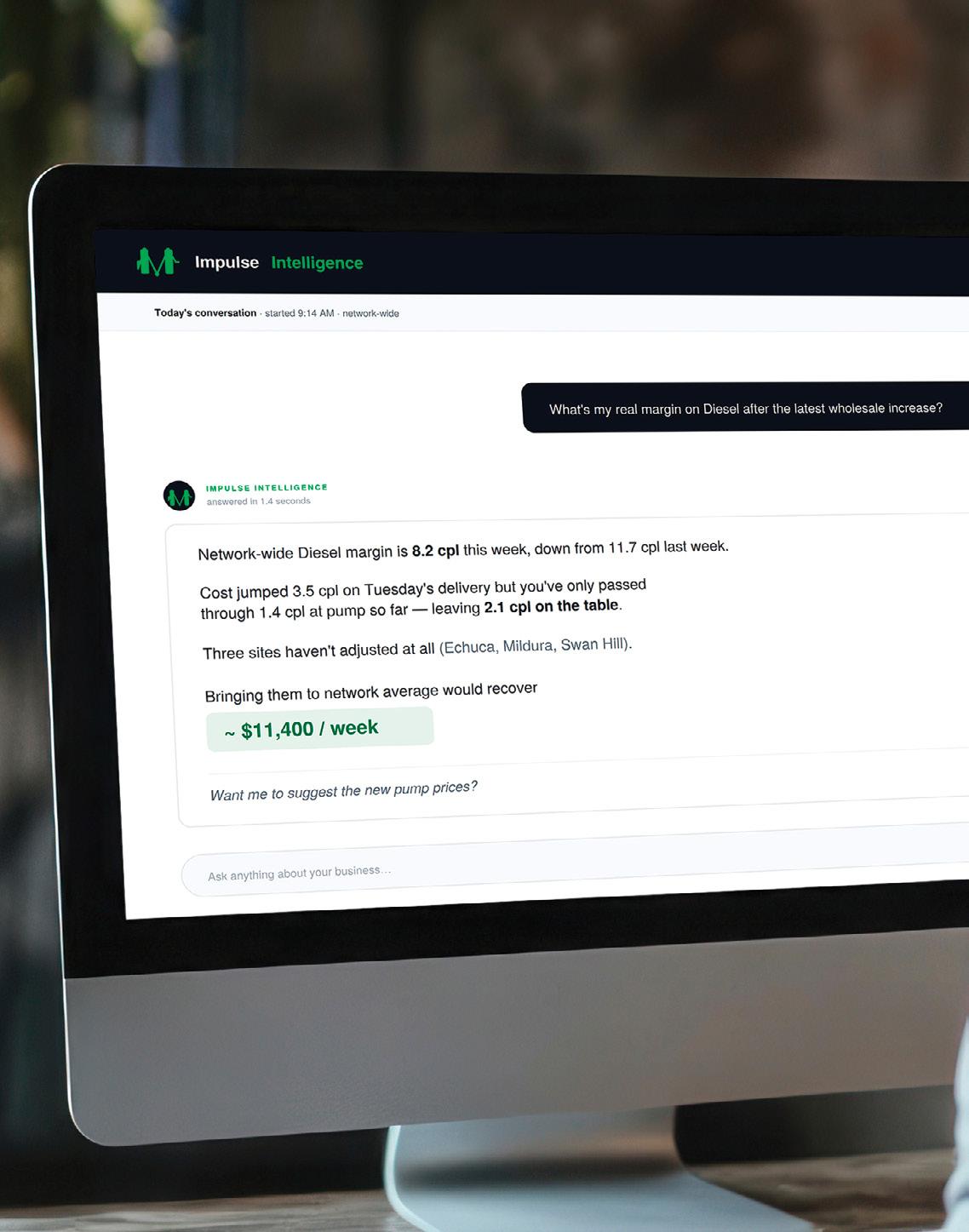

Impulse Retailing builds the software that runs the forecourt, the shop, and the back office for some of the largest fuel and convenience operators in Australia and New Zealand.
The Impulse cloud platform brings together everything a modern P&C site needs: a fast, reliable point-of-sale; a back office accessible from any browser; a mobile inventory app that works even when the wi-fi doesn’t; and a real-time communications layer that keeps every site connected to head office. It’s a single, integrated ecosystem – not a patchwork of bolted-together products.
What sets Impulse apart is intelligence. Impulse Intelligence, a cloud-based analytics platform, puts an AI assistant in every operator’s hands. Ask a question in plain English about fuel margins, basket size, promotion performance, tank levels, fraud patterns – and get an answer instantly. No more waiting for the weekly report nobody reads.
Impulse Retailing is trusted to deliver at scale, currently rolling out across more than 500 sites under a major enterprise contract, while continuing to support independent operators and mid-sized groups with the same enterprise-grade tools.
Whether you run one site or five hundred, you get the same platform, the same intelligence, and the same partnership-first approach that has kept Impulse customers with them for years.
Impulse Retailing – the cloud-native platform powering Australasia’s most demanding fuel and convenience retailers.
For more information contact sales@impulseretailing.com, call 1300 369 755, or visit www.impulseretailing.com
Allen’s has partnered with Mountain Dew to launch a new range of lollies inspired by the drink’s citrus flavours.
The collaboration includes Allen’s x Mountain Dew Soda Bottle Gummies and Allen’s x Mountain Dew Chews. The Soda Bottle Gummies come in Original Mountain Dew, Blue Razz and Typhoon flavours, while the chew range includes Original Mountain Dew and Passionfruit Frenzy.
Shannon Wright, Head of Marketing Confectionery at Nestlé, said the collaboration was designed to bring together the two brands’ identities.
“Allen’s exists to make lollies more fun, and this collab does exactly that. We’ve taken Mountain Dew’s cult-fave flavour and turned it into something chewy, zingy and packed with attitude. It’s big flavour, big energy, no chill.”
The chews include sherbet fizz and tangy flavours, while the gummies use the traditional soda bottle lolly shape.
To promote the launch, Allen’s has also partnered with Sindy Sinn, an Archibald Prize finalist, to create limited-edition Allen’s x Mountain Dew packs.
The collaboration is rolling out across major retailers from mid-May with a RRP of $5 for 190g packs.
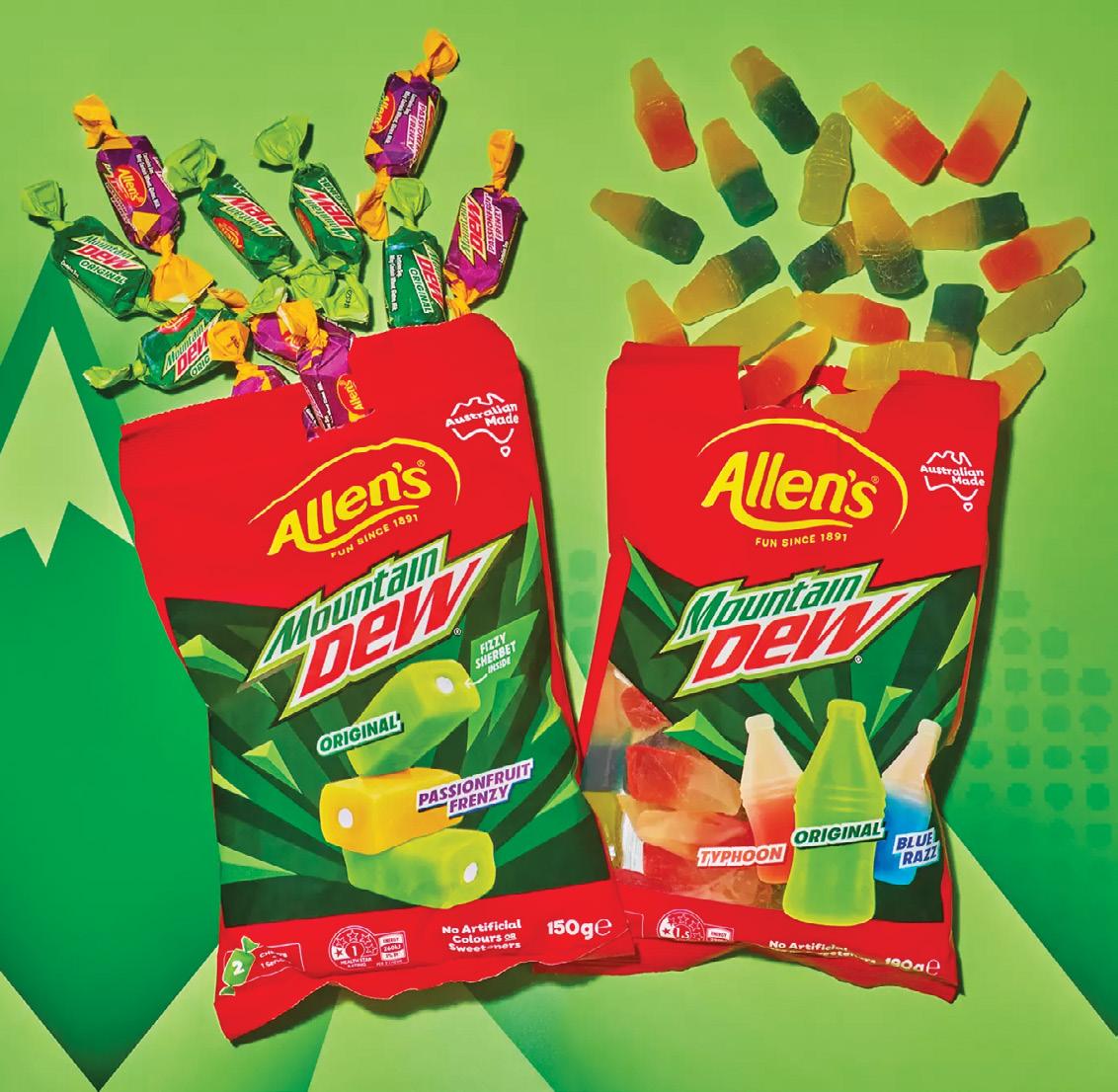


With winter driving demand for warm, fresh food on the go, Meris Food Equipment is giving petrol and convenience operators a smarter, simpler way to grow their hot food offer, without the complexity of a traditional kitchen.
SCRAEGG IS A compact hot food system designed for businesses with limited space, minimal staff training and no commercial kitchen. It delivers fresh scrambled eggs, porridge, creamy soups, breakfast bowls and more in approx. 20 seconds – consistently, every single time.
Winter is one of the strongest trading periods for hot food in petrol and convenience. Customers who stop in for coffee want something warm to eat alongside it. SCRAEGG turns that demand into a new revenue stream without adding operational complexity.
Unlike traditional hot food setups, SCRAEGG requires no kitchen fit out, no extraction and no plumbing. It plugs into a standard 10-amp outlet and sits on any counter with a 30x30cm footprint. Staff can operate it with minimal training from day one.
SCRAEGG is ideal for petrol and convenience operators looking to add a breakfast and all-day food offer, including:
• Scrambled eggs
• Porridge
• Creamy soups
• Breakfast bowls
• Rice cups and noodle cups
• and more!
Hot food categories offer potential gross margins of 70 per cent+. With strong customer demand across the P&C channel and coffee already driving morning trade, SCRAEGG gives operators a practical, profitable way to grow basket size and capture more of the food-to-go opportunity.
Designed and manufactured in Germany using steam preparation technology, SCRAEGG delivers reliable texture, temperature and portion consistency regardless of who is on shift.
“SCRAEGG is built for operators who want the revenue of a hot food offer without the complexity of a commercial kitchen,” says Michael Brick, General Manager of Meris Food Equipment.
For 30 years, Meris has been the exclusive supplier of premium food equipment to businesses throughout Australia and New Zealand. When you add SCRAEGG you also get end-to-end Meris support: an in-house development chef, training, installation support and ongoing service.
Be among the first to experience SCRAEGG. Contact Meris Food Equipment today for a product demonstration on 1800 265 771 or visit meris.com.au/brands/scraegg
“SCRAEGG is built for operators who want the revenue of a hot food offer without the complexity of a commercial kitchen.”
– Michael Brick, General Manager, Meris Food Equipment
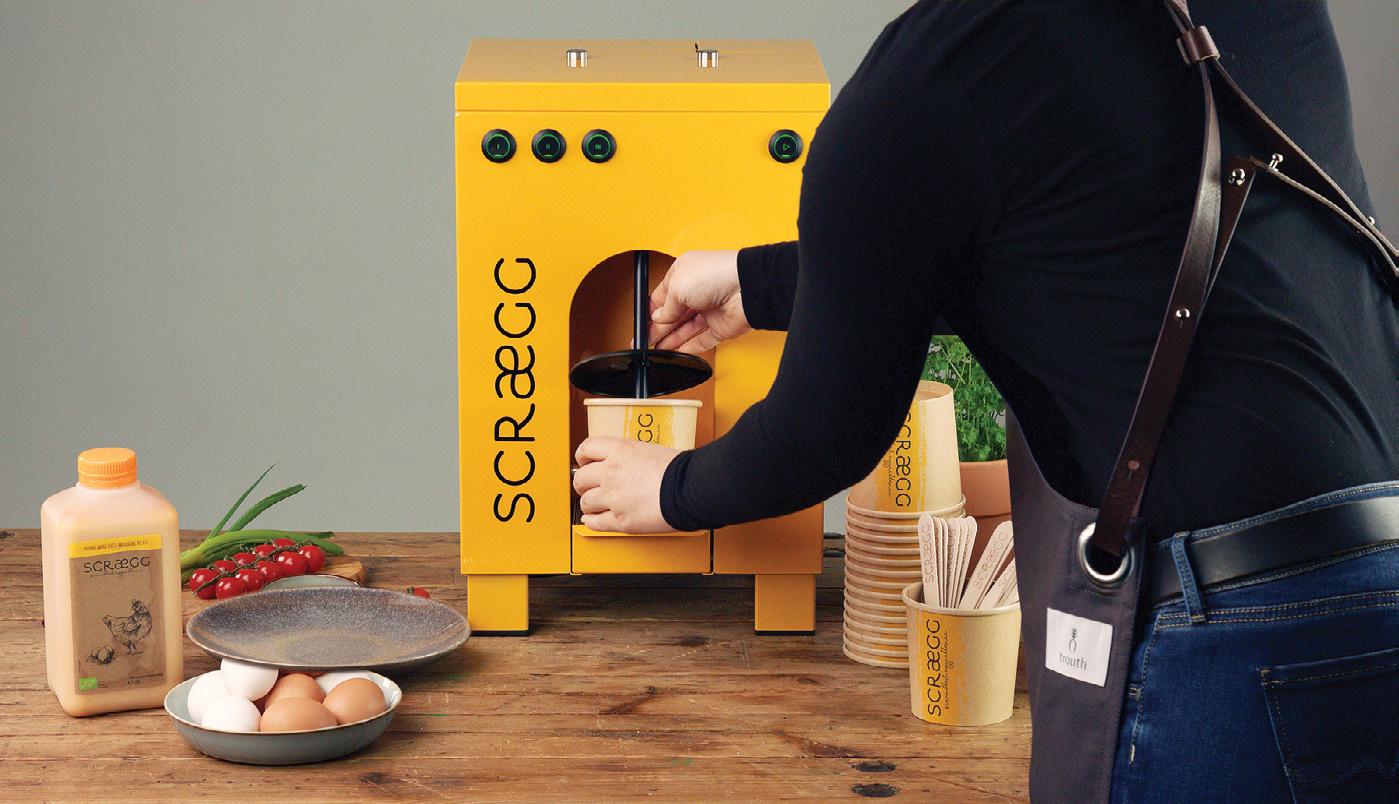
Introducing Wash ME – an innovative way to transform your unused space into a reliable stream of passive income. Designed for both large and small business owners, Wash ME helps you make every square metre work harder without adding operational stress.
With Wash ME, everything is taken care of. From installation to daily operations, including customer service and marketing, ME Group manages it all. You can earn without lifting a finger.
Our machines are built for convenience and performance, offering multiple laundry options to suit your customers’ needs. Choose from 9kg and 20kg washers, along with high-efficiency dryers, all paired with eco-label detergents to enhance customer satisfaction and sustainability.
Engineered for durability, each unit weighs approximately 1700kg, making it safe and reliable for outdoor use. For businesses looking to reduce energy costs and environmental impact, optional solar panels are also available.
Wash ME is flexible, with various sizes and configurations to match your space. Plus, we offer a unique addition to expand your offering – the Dog Wash – perfect for customers who want the same convenience for their pets.

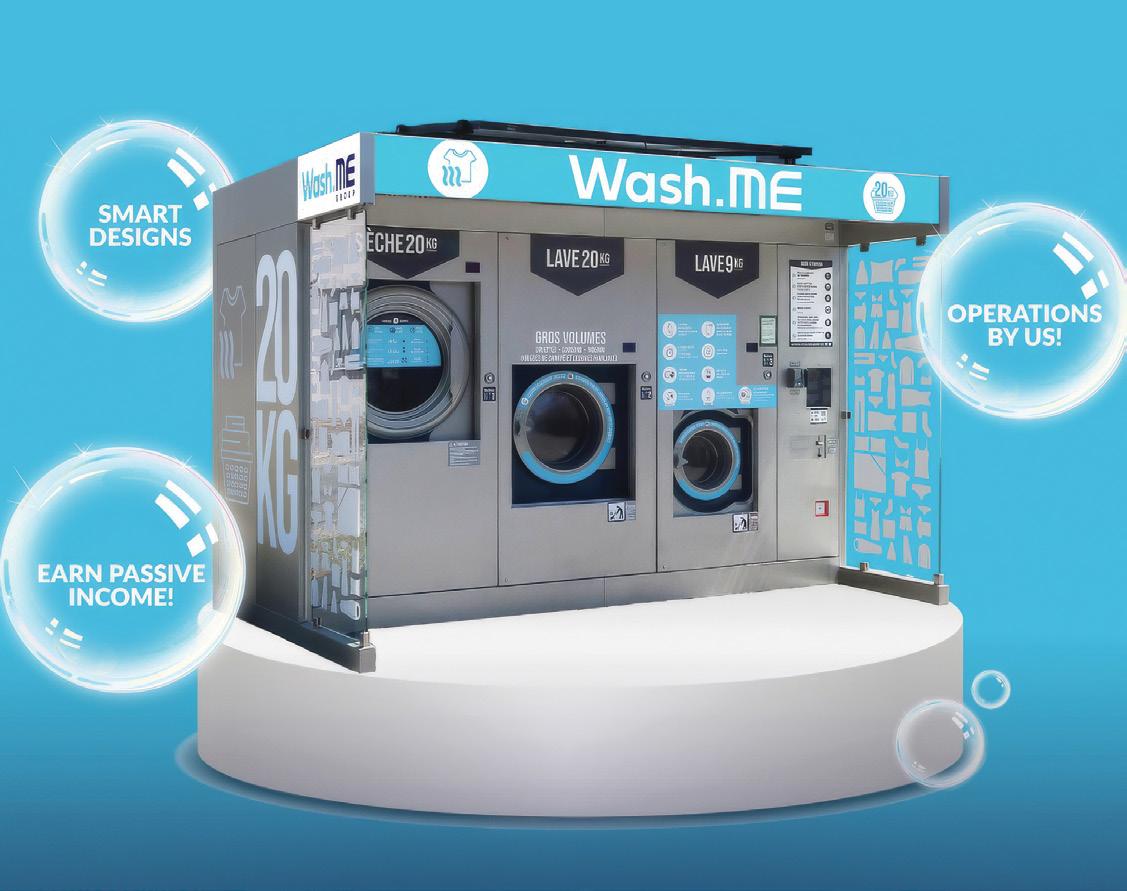
Beyond laundry, ME Group provides a wide range of automated solutions to further boost your business appeal, including fresh juice machines, photo booths, and charging stations.
Upgrade your space. Attract more customers. Generate income effortlessly with Wash ME. Contact sales@me-group.au to install your machine today.
SOLO Energy is turning up the citrus dial with the launch of its bold and zesty new Orange flavour, fuelling the brand’s fast-growing presence in Australia’s $1.4B energy category.
Since entering the market, SOLO Energy has introduced one of Australia’s most iconic soft drink flavours into an energy format –shaking up the energy aisle with a great-tasting range of energy drinks.
SOLO Energy Orange builds on that momentum, delivering a greattasting, big orange energy hit for consumers seeking refreshment with functional energy. Each 500ml can contains guarana, caffeine and B-vitamins, delivering SOLO’s signature “thirst-crushing” experience alongside a caffeine kick of 150mg – equivalent to approximately two shots of espresso.
Jarrod Dooley, Asahi Beverages Head of Marketing – Non-Alcoholic Brands, said:
“Over the past 12 months, SOLO Energy has established itself as a distinctive new player in energy – bringing an iconic Aussie attitude to the category. We’re giving Aussies a great range of energy drinks that fuel them to Crush Whatever’s Next in their day.
“Orange is a natural next step for SOLO Energy. It doubles down on what we’re known for – big, thirst-crushing citrus flavour – while giving energy drinkers another great-tasting option when they’re looking for a refreshing hit in the energy aisle.”
SOLO Energy Orange joins the existing range of Lemon, Lemon Mango and Grape flavours and will be rolling out nationally from July across petrol stations, convenience stores, Coles, Woolworths and independent retailers.



lighters. Always first. Always best.
Ask any retailer who has stocked Tiko for more than a season and they’ll give you the same answer – it sells, it holds up, and the counter conversations are never about a lighter that let someone down. In retail, that kind of consistency is worth more than any sales pitch.
Tiko success doesn’t happen by a fluke. Behind every Tiko unit is a level of development that most importers simply don't invest in. Peleguy Distribution has spent fifteen years working directly with the manufacturer – not placing orders and hoping for the best, but being close enough to the process to influence it. That relationship is what separates a product that performs from one that looks the part in a display box and lets you down six weeks later.
The 2026 Tiko range is where that investment becomes very visible. Seven new models designed with genuine variety – the TK1046 novelty gun lighter for the impulse buyer, the TK1040 designer series torch lighter for those who wants something that turns heads and five further models covering everything in between. Each one developed for this market, not lifted from a generic catalogue and relabelled.
There’s no shortage of lighter options available to retailers right now. But volume and variety without the quality behind it creates a problem that lands directly on the retailer – returns, exchanges, and customers who don't come back. Tiko exists to solve exactly that problem. Fifteen years of proof is hard to argue with.
Tiko Lighters. Distributed exclusively in Australia by Peleguy Distribution. 1300 377 341 | www.peleguy.com.au
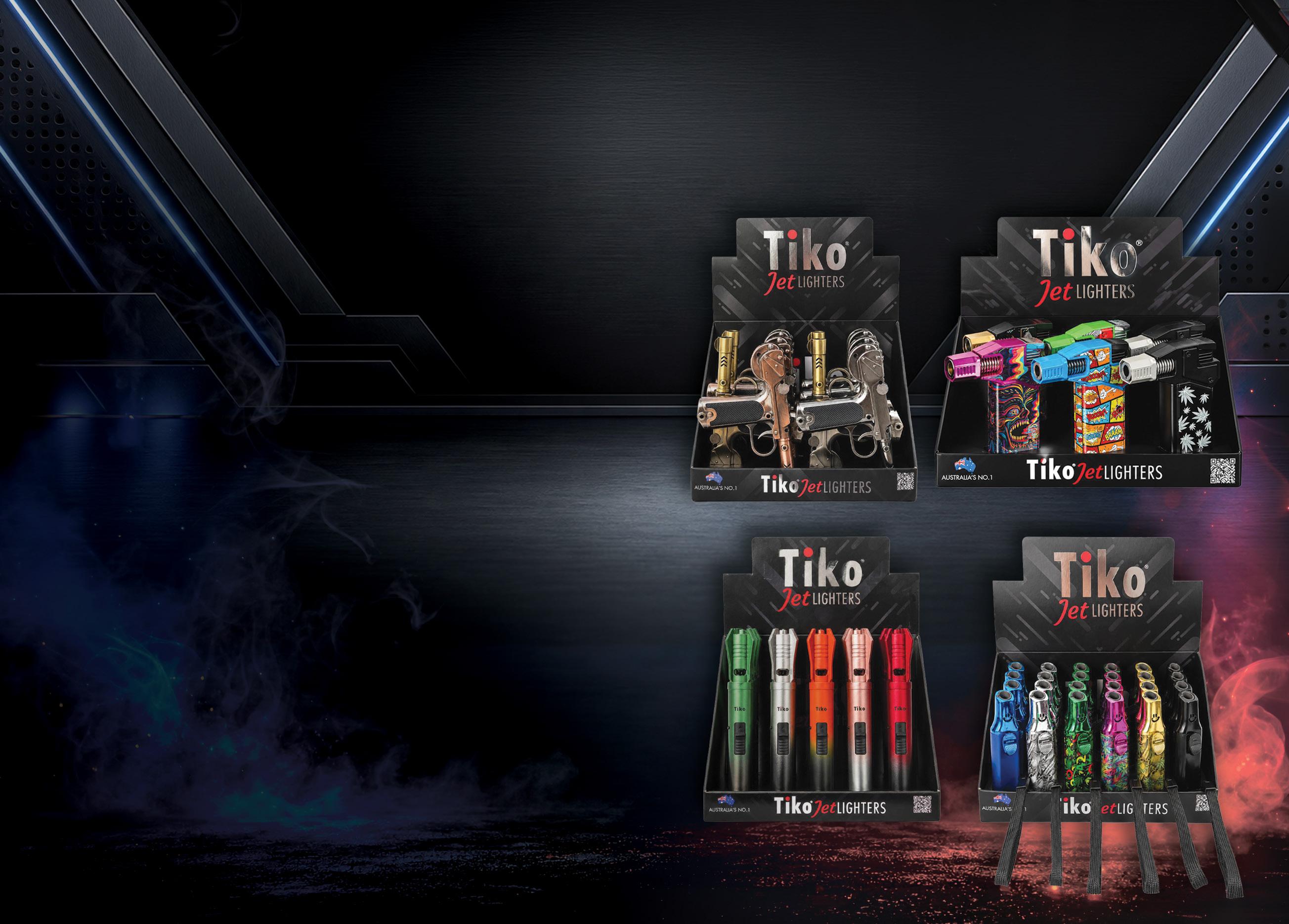
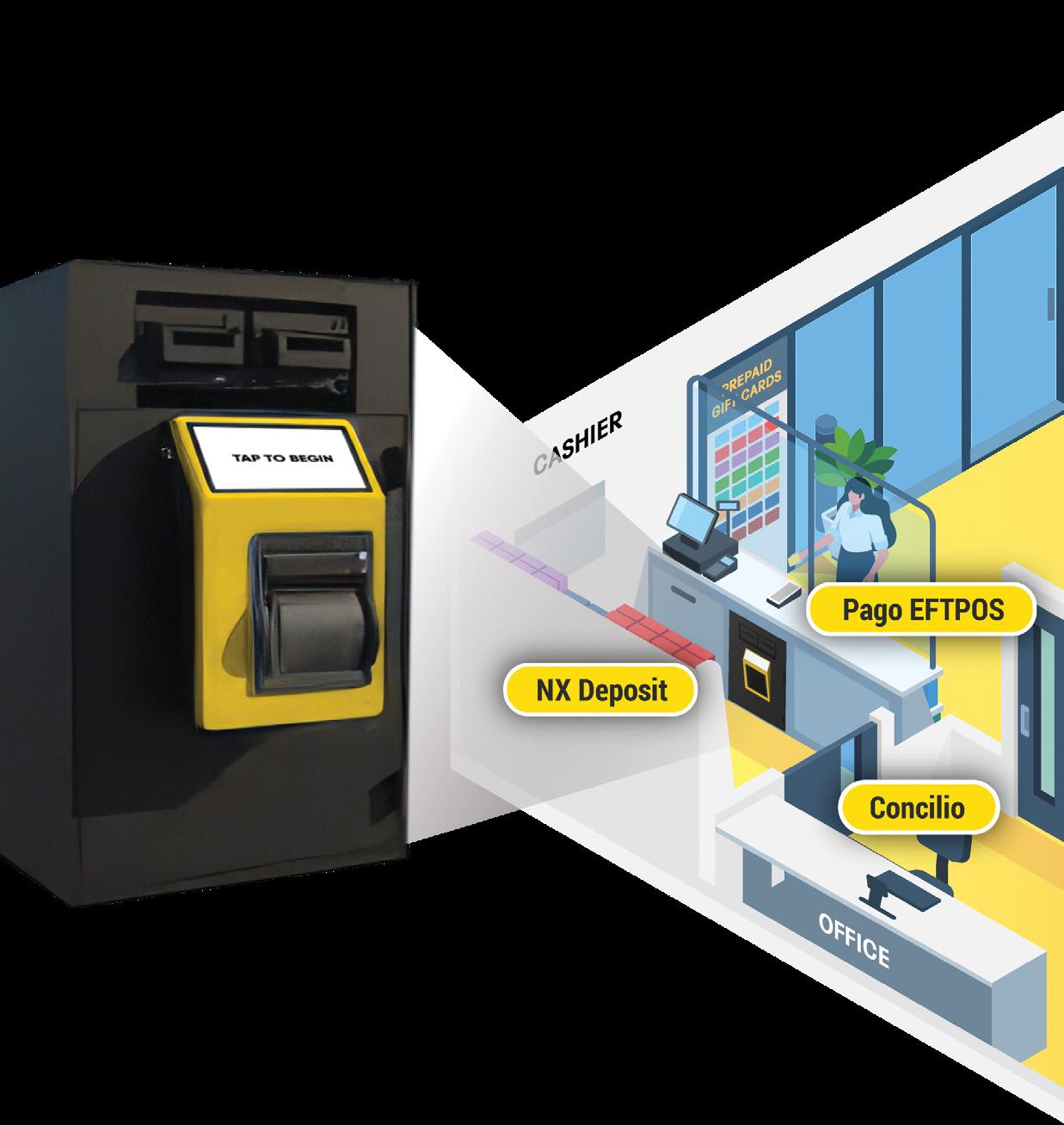

For many businesses, cash handling is still time-consuming, manual, and costly - from the moment cash is taken at the till through to banking and cash-in-transit. Frequent cash collections, delayed banking, and manual processes all add cost and slow access to funds.
That’s exactly what the NX Deposit is designed to change.
The NX Deposit is an intelligent, under-counter cash deposit safe that supports single or bulk note feeds and holds up to 15,000 notes. Built as part of Next Payments’ end-to-end cash management ecosystem, it uses same day bank transfers to reduce bank runs and provide faster access to your funds. Every deposit is automatically recorded and visible in real time via cloud-based reporting - removing manual counting and uncertainty around daily takings.
• Cash counted, secured and validated at deposit
• Real-time visibility across stores and head office
• Fewer cash collections and lower costs
• Faster access to funds and cash in bank sooner
• Reduced errors, shrinkage, and manual handling nextpayments.com.au | 1300 659 918 | info@nextpayments.com.au
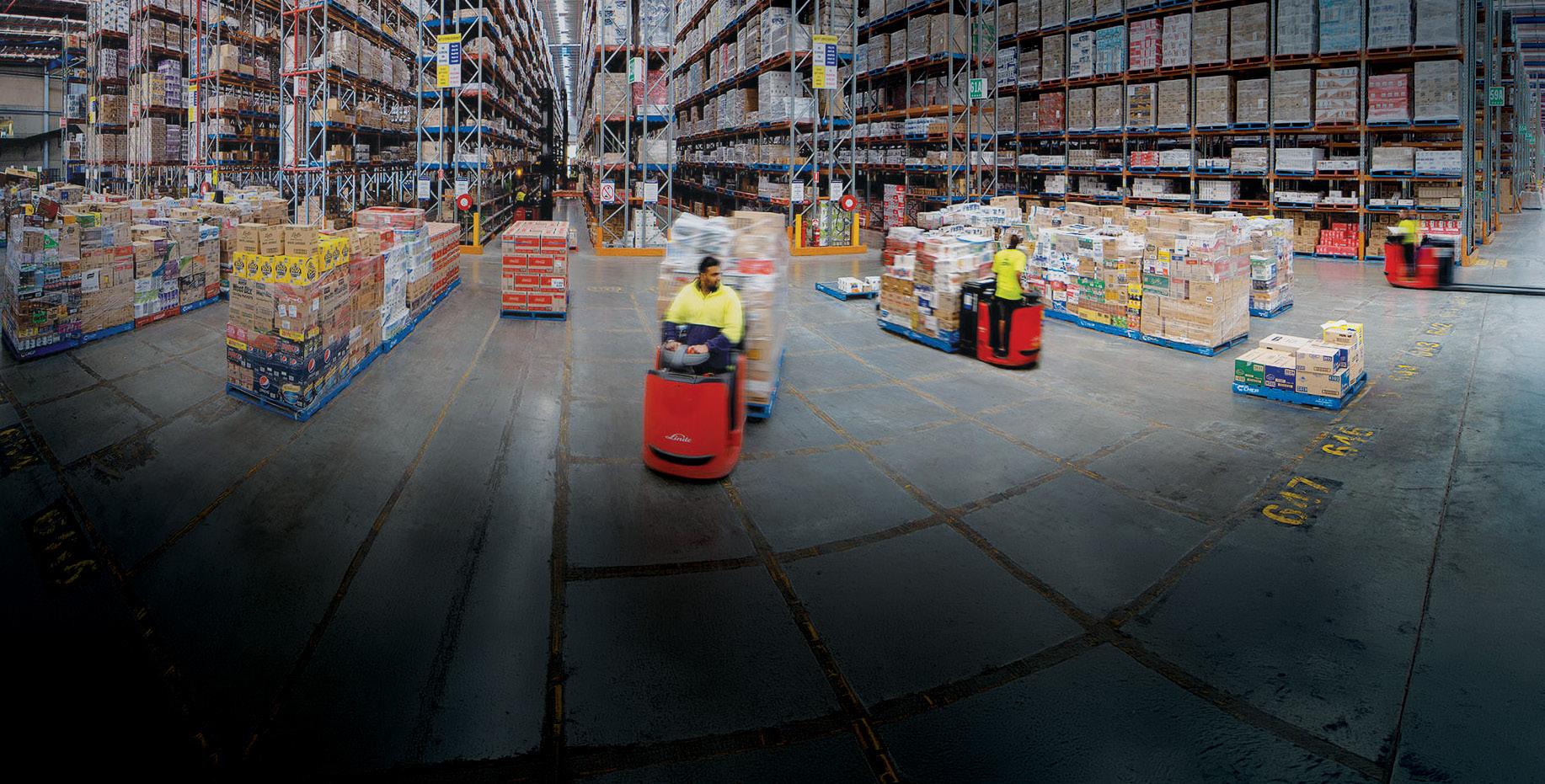
As a major wholesale distribution partner, Metcash Foodservice & Convenience helps connect suppliers and retailers across Australia’s fast-moving petrol and convenience channel.
IN THE FAST-MOVING world of petrol and convenience, the spotlight naturally falls on the brands and products consumers see every day. But behind every fully stocked fridge, grab-and-go meal and impulse purchase sits a critical partner working behind the scenes – the wholesaler.
At Metcash Foodservice & Convenience, that role is central to the business.
As one of Australia’s leading wholesale distribution partners, Metcash Foodservice & Convenience connects suppliers with convenience and fuel retailers efficiently, reliably and at scale. Its role as “the middle man” is simple in concept but essential in execution: ensuring the right products reach the right stores at the right time, helping retailers stay competitive while enabling suppliers to grow their reach across the market.
The business does not manufacture the products Australians know and trust – it makes sure they are available where and when consumers expect them. Acting as the link between hundreds of suppliers and thousands of convenience and fuel retailers nationwide, Metcash Foodservice & Convenience helps manage the complexity of supply chain, distribution and ranging so its customers can focus on serving their communities and running their businesses.
Each week, its network moves significant volumes of goods across multiple channels, delivering everything
from beverages and snacks to foodservice essentials. Across the business, this translates into thousands of deliveries and a broad product range spanning multiple categories – helping convenience retailers respond to changing shopper expectations around convenience, immediate consumption and food-on-the-go.
A key strength of Metcash Foodservice & Convenience is its ability to support different customer needs through a number of complementary wholesale services, with its approach tailored to geographical location and customer requirements.
CSD provides a delivered wholesale service tailored to convenience retailing, with a curated range focused on impulse, immediate consumption and high-turnover categories. The offer is designed around speed, availability and relevance – helping retailers keep shelves stocked and customers satisfied.
Campbells offers independent retailers and small businesses the flexibility to shop in-store or online. With a broad assortment and competitive pricing, it suits operators who prefer a more hands-on approach to purchasing while still benefiting from the scale and support of a national wholesale network.
Superior focuses on the foodservice sector, servicing QSR, café and catering operators with scale and expertise. As the overlap between convenience and foodservice continues to grow, Superior complements retailers looking to expand their food offer and meet evolving consumer demand.
Together, these businesses allow Metcash to support a wide range of customer needs while maintaining a strong and efficient supply chain network.
Being “the middle man” today means more than logistics. It is about helping retailers access the right range, supporting suppliers in reaching market effectively and ensuring stores have reliable supply in a fast-moving environment. Metcash Foodservice & Convenience works closely with both suppliers and retailers to help keep shelves stocked, promotions running and products available where consumers expect them.
For suppliers looking to grow their reach, and retailers looking for dependable wholesale support, Metcash Foodservice & Convenience offers the scale, capability and service expertise to help businesses succeed in an increasingly competitive market.
In an industry built on speed and convenience, its role may sit behind the scenes – but it remains an important part of keeping Australia’s petrol and convenience network moving.
Cadbury Old Gold and Diageo’s Bundaberg Rum have come together for the first time with the launch of Cadbury Old Gold inspired by Bundaberg Rum dark chocolate block.
The limited-edition Cadbury Old Gold inspired by Bundaberg Rum is a bold Aussie taste sensation and combines 45 per cent Cadbury Old Gold dark chocolate with a Bundaberg Rum inspired centre.
Katrina Watson, Mondelēz International Everyday Chocolate Director, said Cadbury Old Gold is Australia’s own dark chocolate, founded in 1916 by philanthropist MacPherson Robertson.
“To celebrate that rich heritage, we’ve brought together two iconic brands with deep local roots – Cadbury Old Gold and Bundaberg Rum. This collaboration unites two great Australian-made products and the people and characters behind them, from the makers of Cadbury Old Gold to Bundaberg Rum’s famous Bundy Bear. It’s been a pleasure working with Diageo, Asembl, WPP and Bulletproof to bring this launch to life.”
Cadbury Old Gold inspired by Bundaberg Rum is now available in independent supermarkets, Coles, and Woolworths nationally for RRP $8.



Life got you going nuts? Fire On All Cylinders with the NEW Dare Charged Hazel-Nutty!
Introducing Dare Charged Hazel-Nutty – the newest limited edition flavour in the Dare Charged range. Coming to you with a bold hazelnut flavour and powerful caffeine kick, Dare Charged Hazel-Nutty gives you a real coffee kick without the café queue.
This launch marks the much-awaited 2nd LTO in the Dare Charged range and we can’t wait for you to try it. This limited-edition flavour is only here while stocks last, so run in-store and grab it today.
Keep your eyes peeled for Erebus V8 Supercars star Cooper Murray – The Dare Charged Brand Ambassador. Made with real coffee and proudly Aussie owned, DARE delivers the kick you need without the fluff, the expensive price tag, or the small talk with a barista you’ve never met.
Available in the fridge at your local servo, petrol station, or convenience store nationwide. Dare and Dare Charged are proudly owned and made by the Bega Group – an Australian-owned food and beverage company home to some of the country’s most iconic brands.
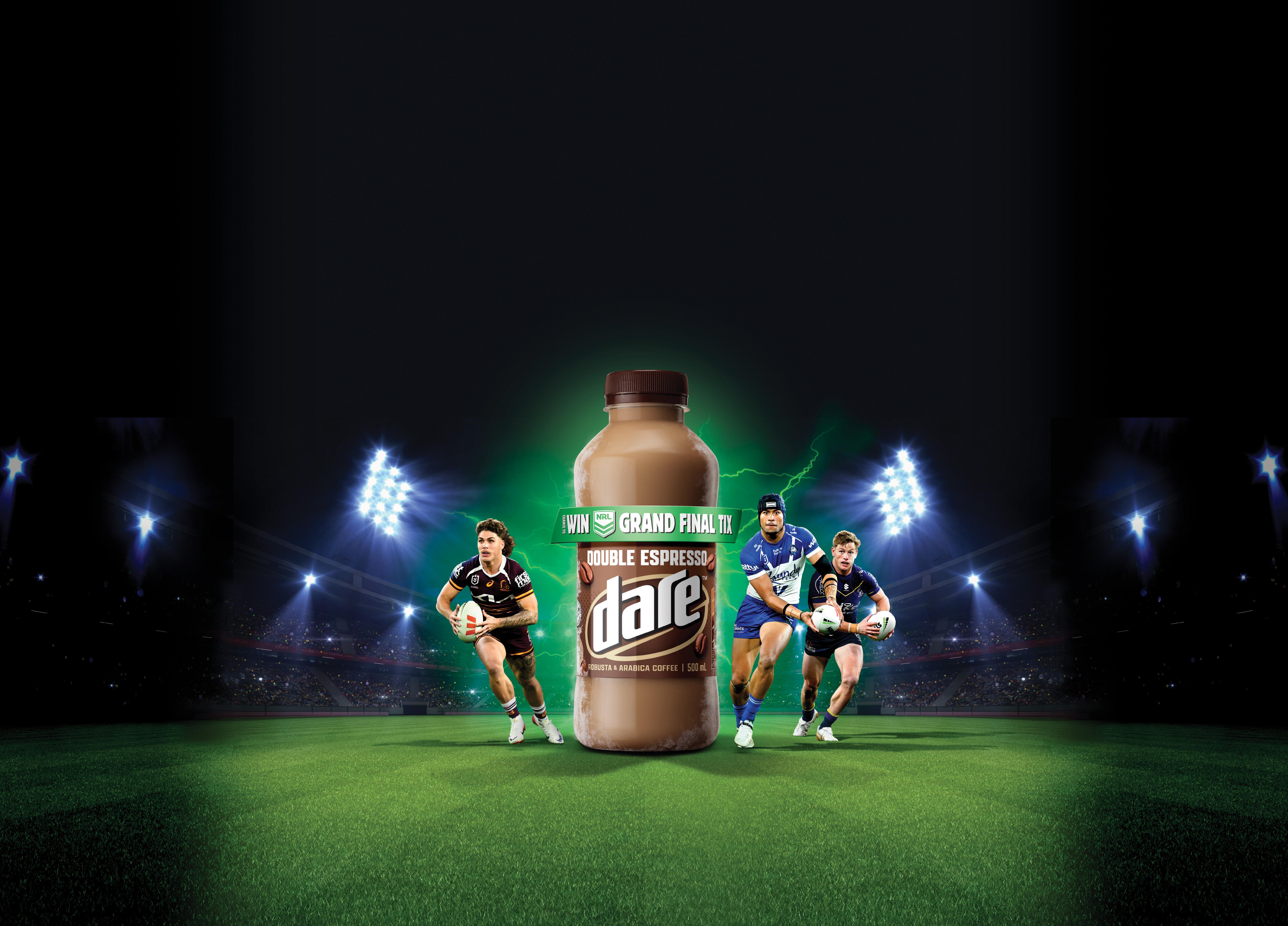

Where the 2026 Federal Budget does, and doesn’t, deliver for the petrol and convenience channel.
By Theo Foukkare, CEO, AACS

THE FEDERAL BUDGET always creates winners, losers, headlines and political spin. But for Australia’s convenience industry – made up largely of small family businesses operating 24/7 in every community across the country – the real question is simple: Does this Budget make it easier or harder to run a small business?
There are certainly measures in this year’s Budget designed to stimulate confidence and support consumer spending. Small tax cuts, energy bill relief and measures aimed at easing household pressure are all intended to keep money circulating through the economy. When consumers feel more confident, convenience retailers feel it immediately through stronger foot traffic, improved basket spend and increased impulse purchasing.
But beneath the headline announcements, there remains growing concern across the small business community about the long-term direction of economic policy and what it means for investment confidence, aspiration and risk-taking.
The convenience industry is built on small business entrepreneurship.
Many of Australia’s convenience retailers are family-owned operators who have spent decades building businesses, employing local people and reinvesting back into their stores and communities. These are businesses that operate long hours, absorb enormous operational pressures and often take significant personal financial risk to grow.
Right now, many of those operators are facing rising uncertainty. Wages continue to increase. Insurance costs remain elevated. Energy prices are volatile. Retail crime continues to escalate. And margins remain under significant pressure.
At the same time, ongoing discussion around changes to capital gains tax, the treatment of trusts and broader taxation reform is creating growing unease across the small business sector.
Whether intended or not, uncertainty around these issues can have a big effect on investment confidence.
When business owners become unsure about future tax settings, succession planning or the long-term value of building an asset, many simply delay investment decisions altogether. That impacts everything from store refurbishments and technology upgrades through to hiring decisions and expansion plans.
Aspiration matters in small business.
Australia has long been built on the idea that people who work hard, take risks and invest in themselves should have the opportunity to build something meaningful over time. Small business owners do not expect guarantees, but they do expect policy stability and a fair environment that rewards effort and investment.
The concern for many in our industry is that the conversation is increasingly shifting away from encouraging aspiration and toward penalising success.
That sends the wrong message to the next generation of entrepreneurs.
The other major topic emerging from this Budget is productivity.
The Government is clearly signalling a stronger focus on productivity reform, business investment and economic resilience.
For the convenience industry, that means accelerating investment in automation, AI, foodservice innovation, digital loyalty and operational efficiency.
The days of relying purely on fuel and tobacco sales are long gone.
Today’s leading convenience retailers are becoming sophisticated food, beverage and service businesses focused on customer experience, convenience and speed. Retailers are investing heavily in fresh food, ready to eat meals, digital engagement and alternative revenue streams to remain competitive in an evolving consumer environment.
But transformation requires confidence.
Small businesses will only continue investing if they believe the policy environment supports long term growth and rewards the risk involved in building a business.
The Budget also comes at a time when Australia’s small business sector is already under pressure from slowing consumer spending and declining business confidence. Many operators are not looking for handouts or special treatment. They are simply looking for certainty, stability and policies that support sustainable growth.
There is also no doubt that illegal tobacco and vaping remain major issues impacting many convenience retailers and creating significant disruption across the broader retail environment. Additional enforcement funding is welcome even though nowhere near enough to make a real difference, but the industry continues to call for a balanced and practical long-term solution that protects legitimate businesses while reducing the influence of organised crime.
Australia’s convenience industry employs more than 80,000 people and operates over 7,500 stores nationally. These businesses are often the first to open, last to close and serve communities every single day.
Budgets matter because policy settings matter.
And for many small businesses right now, confidence, certainty and aspiration may be just as important as the numbers themselves. ■
This August, AACS Women in Convenience invites you to a series of engaging Multi-Generational Panel Conversations across Sydney, Melbourne and Brisbane. These sessions will bring together voices from across the industry to share perspectives, experiences and insights on navigating careers, leadership and change across generations.
Sydney Panel
Tuesday, 4 August
3:00pm – 5:30pm
Melbourne Panel



As unmanned fuel formats gain traction in Australia, the real question for retailers isn’t whether to automate – it’s knowing which sites should make the switch.
Brad Jones, Lead Consultant, Fuel Retail Solutions

“The next phase of thought leadership in fuel retail should be less about automation itself and more about decision discipline.”
– Brad Jones
THAT a portion of the EG Australia network it is acquiring will be converted to its unmanned U-GO brand is an early but important signal for the fuel and convenience sector.
Rather than suggesting a broad-based market shift, it points to a more targeted strategic question now emerging for retailers: which sites are fundamentally fuel missions, and which are genuine convenience destinations.
New Zealand offers the clearest reference point. The growth of unstaffed sites there has shown that a meaningful segment of motorists will trade away the convenience store in exchange for sharper pricing and a fast, card-atpump experience.
The New Zealand Commerce Commission found that areas with at least one unstaffed fuel station within a five-minute drive had prices that were, on average, six cents per litre lower than areas without one, indicating that these formats can have a real competitive effect on local pricing.
That matters for Australia because it reframes the debate. The issue is not whether unmanned formats will replace traditional service stations, but how retailers should decide which sites are better suited to a low-cost, fuel-only model and which should remain manned with a stronger convenience proposition.
Ampol’s own positioning suggests U-GO will sit alongside, rather than replace, its full-service formats, which reinforces the idea that network design is becoming more segmented by local customer missions.
The most important decision criterion is local demand composition. Catchments with a high share of price-sensitive commuters, trade
vehicles, fleet customers and routine refuelling trips are more likely to reward a stripped-back, low-friction model where the primary customer expectation is value and speed. In those markets, the convenience store may add cost more readily than it adds loyalty or margin.
The reverse is also true. In affluent suburban trade areas, regional hubs and key highway locations, the convenience store can still be central to the site’s economics because the mission is broader than buying fuel alone. Coffee, fresh food, parcel collection, amenities and a sense of comfort or safety can all justify a staffed model where the non-fuel offer contributes meaningfully to both revenue and brand strength.
This is why the next phase of thought leadership in fuel retail should be less about automation itself and more about decision discipline. The retailers that respond best will not be those that simply copy an unmanned format, but those that build a clear framework for conversion decisions based on demographics, trip mission, traffic patterns, competitive intensity and the true contribution of the store to site profitability.
Ampol’s move matters because it brings that strategic framework into sharper focus for the Australian market at a very early stage of the trend. ■
References
1. Ampol. “Ampol enters agreement to acquire EG Australia.”
2. Ampol. “Our Strategy.”
3. New Zealand Commerce Commission. “ComCom shows the way to go for fuel savings – unstaffed stations.”
4. ACAPMA / ACAP. “Discount U-GO delivers for Ampol as motorists drag heels on EVs.”
5. Australian Financial Review. “Ampol to grow U-Go discount chain after getting tick for EG deal.”

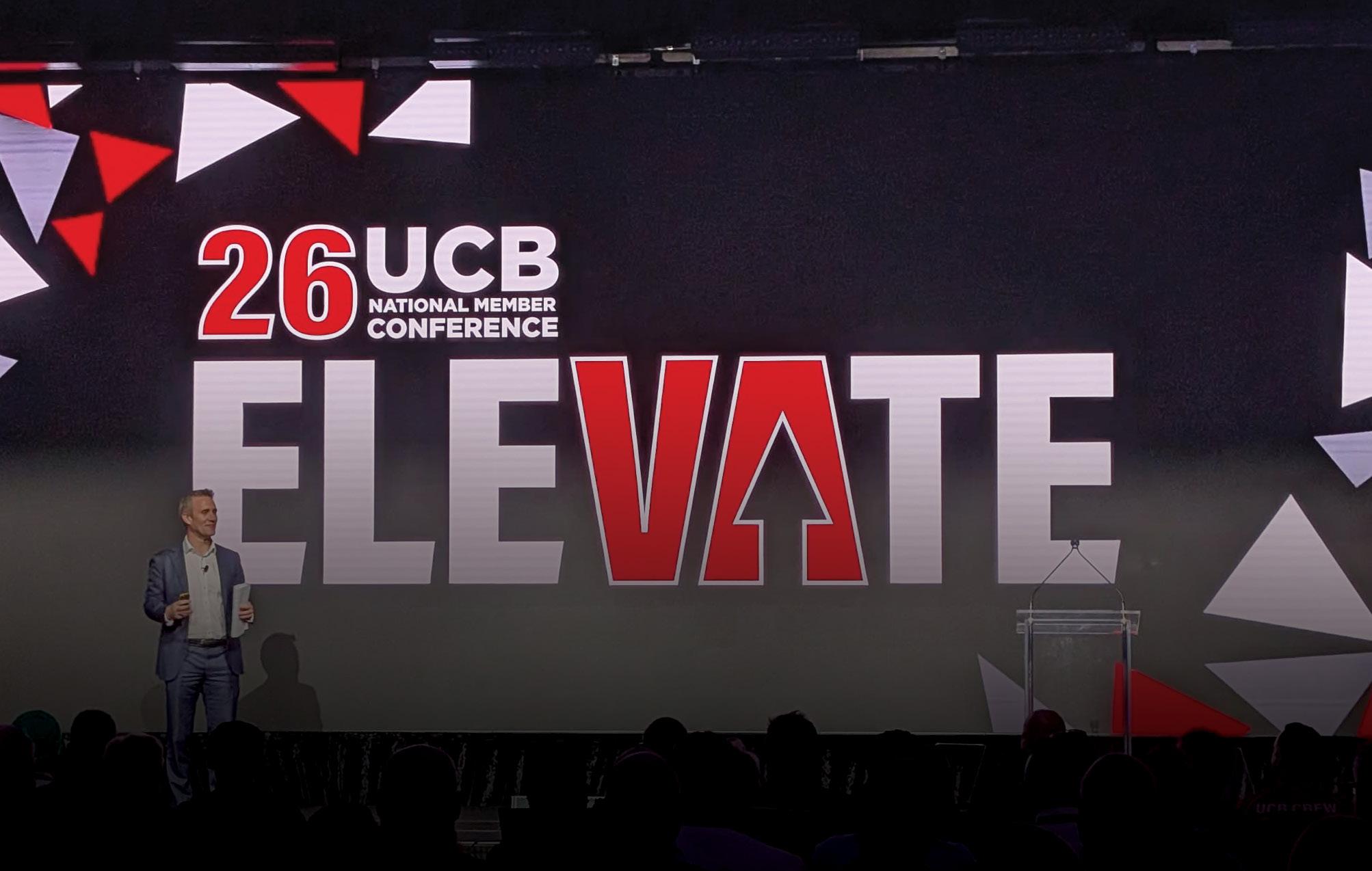
The 2026 UCB National Member Conference at the Royal Pines Resort on the Gold Coast, saw the industry come out in force.
HELD FROM 21–24 April, with the theme of Elevate, this year's UCB Conference featured a diverse range of speakers, from business moguls to sports stars and motivational speakers, all offering insights to help attendees grow both their businesses and themselves.
Darren Park, CEO of UCB, discussed how the petrol and convenience retail industry is undergoing a structural shift away from fuel and tobacco toward food, beverages and immediate consumption, and that businesses must adapt quickly rather than wait for conditions to improve.
He said the winners will be those who execute well, move faster than competitors, and build strong food and beverage offers.
“It’s about value for money. Value doesn’t mean cheap. That’s a mistake a lot of us make. Value means the customer walks away believing that what they paid was worth it.”
On day one, guests heard from Dan Tripolitano from Asahi Lifestyle Beverages, Elisha Radwanoski from ACAPMA, Theo Foukkare from AACS, analyst Craig Woolford, and motivational speaker John Coutis.
Following the business session, guests were invited to enjoy canapés and refreshments while making their way around the bustling trade show. As part of the trade show, the newly introduced Food Alley proved a hit. Offering attendees the chance to sample and connect with a number of food brands in the one place.
The trade show wasn’t the only place with a branded presence, across the entirety of Royal Pines, there were signs of Big Brands everywhere. From the eye-catching wrapping of the lift doors to the hotel door keys branded with M&Ms, guests were treated to a visual feast wherever they looked.
Day two saw a special breakfast with Australian cricketing legend Steve Waugh. Waugh discussed his leadership of the Australian cricket team, shared stories of past players, and delved into the mindset needed to elevate anyone – not just athletes – to the next level.
Networking activities were on the menu for day two, with attendees able to choose from a number of different experiences, from go-karting to cocktail making. Whatever was chosen, fun was had. The evening continued into the night with the poolside Coca-Cola “Fire & Ice” dinner party.
The impressive line-up of speakers continued on day three, with Ashley Fell from McCrindle, Mark McKenzie from Freedom Fuels, mentalist Anthony Laye, and businessman and podcaster Mark Bouris.
Full of insights and knowledge from that group of speakers, attendees made their way back into the trade hall for lunch to wheel, deal and network with suppliers before the evening’s gala dinner.
The gala dinner was the perfect way to cap off several days of learning, networking and fun, with the event truly bringing the conference to a sparkling close.
During the evening, attendees were treated to classic disco hits, free-flowing drinks and impressive entertainment, with the dance floor well and truly staying alive as the night went on.
UCB also recognised its trade partners that have gone above and beyond to provide excellent service over the past year. Award winners were chosen based on feedback from UCB members, making the recognition all the more valuable. ■
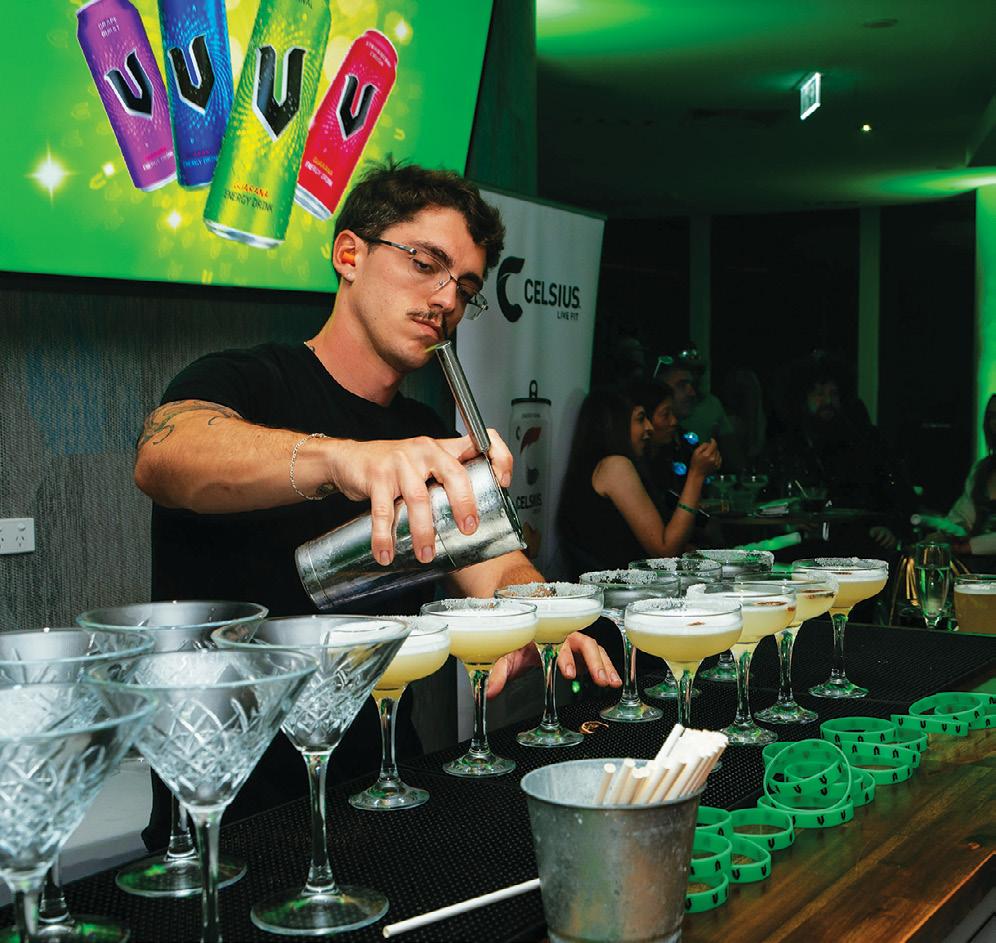
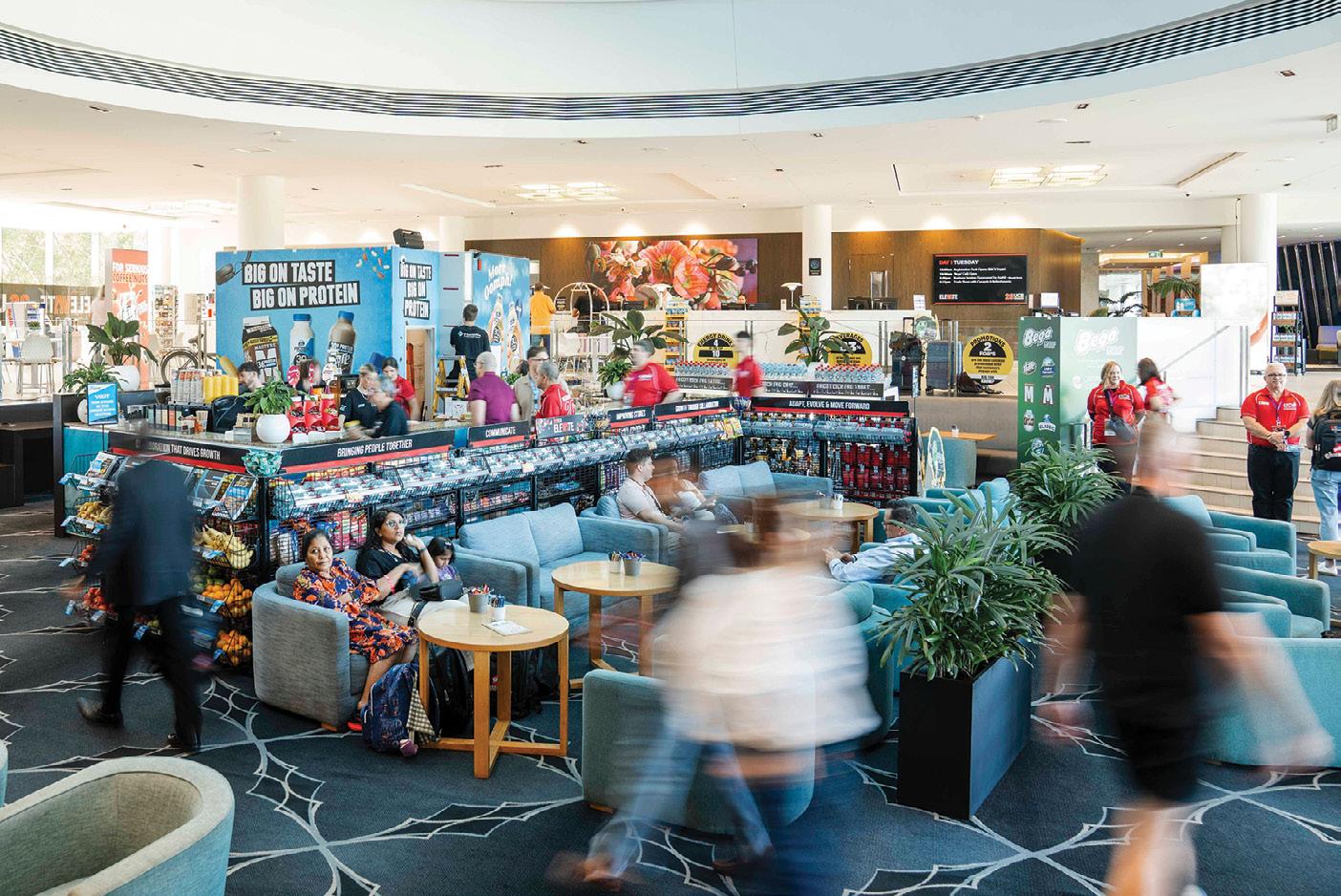

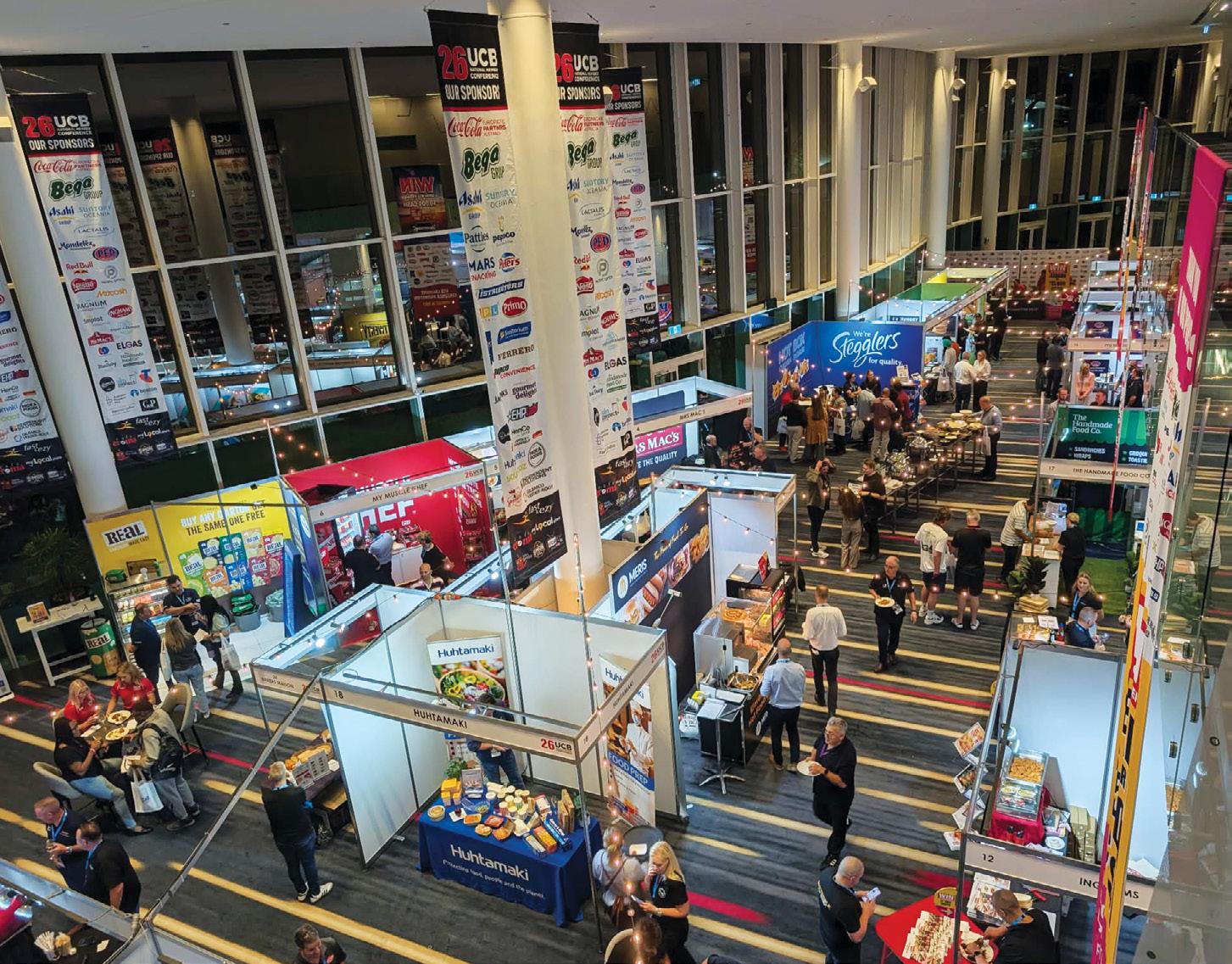
Trade Partner of the Year: Coca-Cola Europacific Partners
Overall Trade Stand of the Year: Coca-Cola Europacific Partners
Carbonated Soft Drinks and Sports Drinks: Coca-Cola Europacific Partners
Energy Drinks: Suntory Oceania
Functional Drinks & Water: Asahi Beverages
Snacking: PepsiCo
Confectionery: Mondelēz International
Food Manufacturer: Inghams Group Limited
Flavoured Milk & Iced Coffee: Bega Group
New Product of the Year: Bega Group
General Merchandise: Pacific Optics
Communications: SimConnect National
Wholesaler / Distributor: The Distributors
Trade Partner Representative of the Year: Alistair Pavey (Coca-Cola Europacific Partners)
BOWSER BEAN HAS raised $1 million for Make-A-Wish Australia, marking a major milestone in the retailer’s 15-year partnership with the charity.
The fundraising effort has been supported through Bowser Bean’s network of more than 30 sites, with customers, staff and local communities contributing to annual campaigns, in-store initiatives and local events.
The company celebrated the milestone on 1 May with a dedicated $1M Party at Red Energy Arena in Bendigo, bringing together crew members, Make-A-Wish representatives and stakeholders. The event included presentations, commemorative plaques, personal testimonials and a display of photographs documenting fundraising activities across the Bowser Bean network.
Chris Richardson, Bowser Bean’s former General Manager and Make-A-Wish Relationship Partner, said the partnership had evolved significantly since it began.
“What started as a charity fun-run collaboration has grown into an ongoing partnership, raising funds, building awareness and in doing so punching well above our weight as independent regional network.”
Fundraising initiatives over the partnership have included lolly bag sales, donation boxes, trivia nights, sporting events and support for World Wish Day. Coffee promotions, themed dress-ups and raffles across the Bowser Bean and Vantage Fuels network have also contributed to the total.
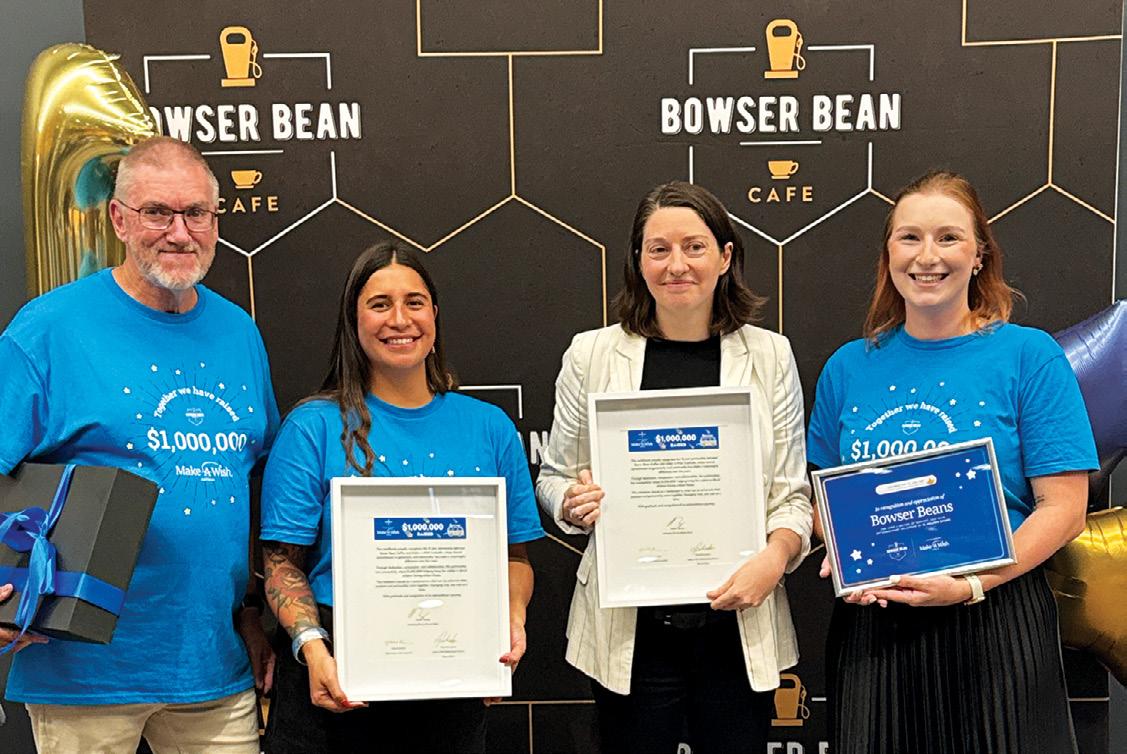
Bowser Bean said a key part of the partnership’s longevity had been integrating fundraising into everyday customer interactions while maintaining locally focused campaign activity.
“The ongoing support shown by Bowser Bean’s teams, customers and stakeholders year after year for such an important cause has been extraordinary.
“Knowing those efforts have helped critically ill children and their families through some of life’s most difficult moments is a feeling that can hardly be described, but one that Bowser Bean is tremendously proud of,” Richardson said.
METCASH HAS REACHED an agreement to acquire three Daly’s IGA supermarkets in regional Victoria.
The acquisition includes supermarkets in Portland, Heywood and Koroit, with the stores set to remain under the Daly’s brand following the sale. Existing staff and day-to-day management will remain in place during the transition.
Grant Ramage, CEO of Metcash Food, said the company wanted to keep the stores within the IGA network.
“We are thrilled to be able to retain these three high-quality supermarkets as part of the IGA network.
“We’re looking forward to working with the Daly’s IGA team and continuing to support the local communities they have been serving for generations.”
Daly’s IGA has operated in the region for more than 100 years and is described by Metcash as a family-founded business with strong community ties.
Peter and Michael Daly, Directors of Daly’s IGA Group, said the business’s identity and customer experience would remain intact under the new ownership structure.
“We are incredibly proud to see our three stores welcomed into the Metcash family and to know the Daly’s brand, identity, values and customer experience that our shoppers know and trust will continue.
“This change will bring added support and stability for our employees and the local communities my family has been part of for more than 100 years.”
Metcash said its operations team would work with Daly’s IGA to ensure a seamless transition for customers and staff.
The company also flagged potential future investment in store improvements, equipment, systems and refurbishments.
Completion of the sale is expected between late June and early July 2026.
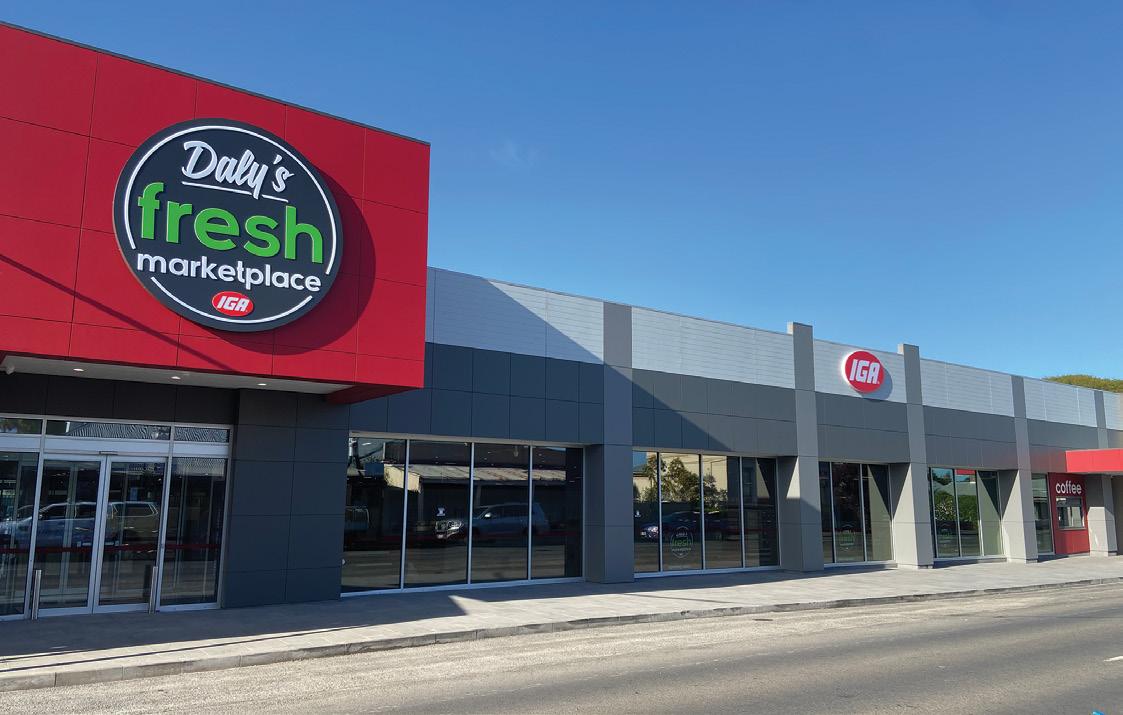
THE AUSTRALIAN COMPETITION and Consumer Commission (ACCC) has approved Ampol’s acquisition of EG Australia, subject to the divestment of 41 retail fuel sites to Metro Petroleum.
The regulator said the $1.115 billion acquisition could have substantially reduced competition in 39 local markets where Ampol and EG Australia sites overlap if the divestments were not required.
Dr Philip Williams, ACCC Commissioner, said without the conditions, the ACCC considered the acquisition could have the effect of substantially lessening competition in the retail supply of petrol or diesel in 39 local markets, where 41 EG Australia sites overlap with Ampol sites.
“The ACCC was concerned the acquisition could materially reduce competition and reduce choice for Australian motorists. We are very conscious of community concern about fuel prices and cost of living, and we are continuing to closely monitor and report on the fuel industry.”
Ampol operates 576 sites under its main brand and 46 U-GO sites across Australia, while EG Australia owns and operates 512 retail fuel and convenience sites.
Ampol has entered into a binding agreement to sell those locations to Metro Petroleum, operated by the Dib Group. The ACCC said it approved Metro Petroleum as the purchaser after concluding the acquisition would help maintain competition in affected markets.
“We believe Metro Petroleum’s acquisition of the divested sites would result in the creation, or expansion, of a strong,
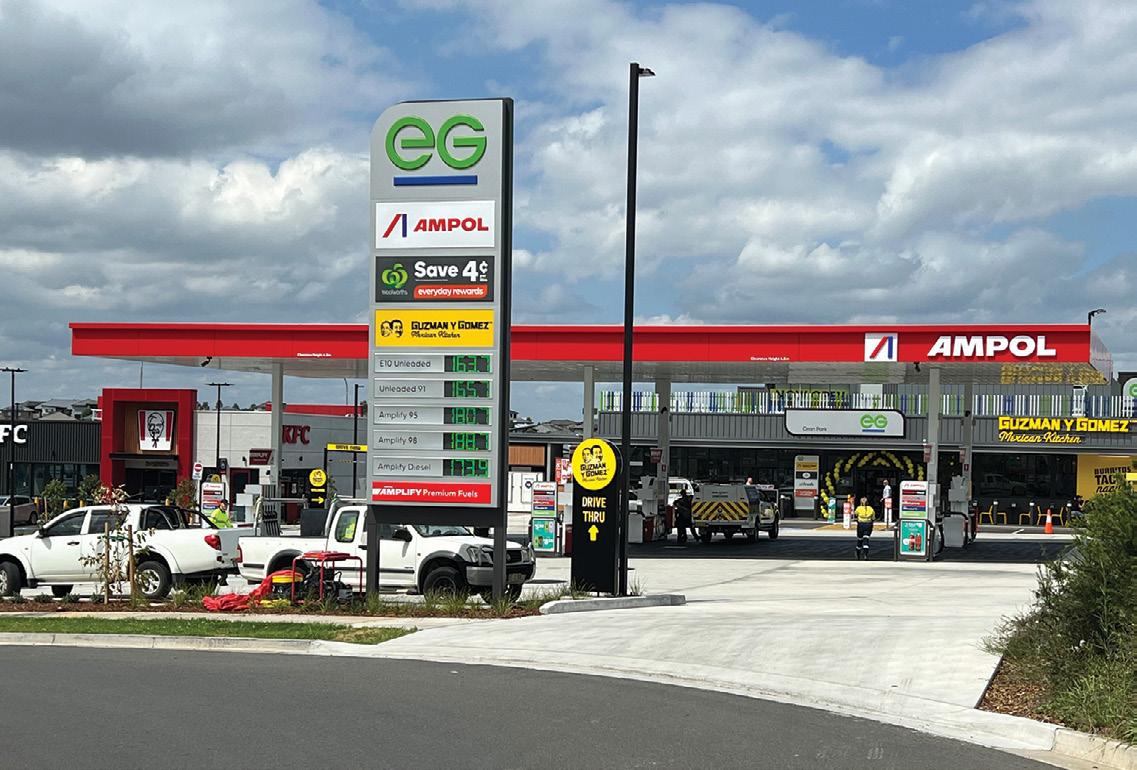
independent and viable long-term competitor in the 39 local markets,” Dr Williams said.
Ampol originally proposed divesting 19 sites but increased the number to 41 during the ACCC’s Phase 2 review of the transaction.
Matt Halliday, Managing Director and CEO of Ampol, said the acquisition would strengthen the company’s retail network.
“This transaction is a major step in delivering Ampol’s strategy by strengthening our retail network and enhancing our segmented customer offer. The performance of our existing U-GO sites also gives us greater confidence in delivering the expected synergies from the transaction and creating value for Ampol shareholders,.
Australia’s illicit tobacco market now accounts for an estimated 80 per cent of total tobacco and nicotine consumption, according to new data from the Australian Bureau of Statistics (ABS).
The ABS data found nicotine consumption increased by almost 40 per cent between 2017 and 2025, while Australia’s population grew by 14 per cent over the same period. It also found illicit tobacco’s share of the market rose from 12 per cent to 80 per cent, per capita nicotine consumption increased by 22 per cent, and legal tobacco prices have almost tripled since 2016 while illicit tobacco prices remained relatively stable.
Theo Foukkare, CEO of the Australian Association of Convenience Stores (AACS), said the figures supported concerns raised by retailers about the growth of the illicit market.

“Minister Mark Butler in the past has claimed rising smoking rates are just about population growth, but this report blows that argument apart. Population growth was 14 per cent – nicotine consumption rose almost 40 per cent.
“The government can no longer pretend this is under control. Organised crime is winning and everyday retailers are paying the price.”
AACS is continuing to advocate for a 50 per cent reduction in tobacco excise, a regulated retail vape model in place of
the current pharmacy model, a single legislative framework across all states and territories, a Commonwealth-funded national enforcement body, and the closure of illegal tobacco and vape websites.
Foukkare said retailers were experiencing the consequences of the expanding illicit trade.
“We’ve had businesses firebombed, workers threatened, shopping strips destroyed and staff terrified to go to work –all while organised crime groups continue making millions.
“The tobacco control has evolved far beyond a health issue and is now a full-scale crime and safety crisis.
“Law-abiding retailers are being squeezed from every direction while criminals operate with virtually no overheads, no excise, no regulation and no regard for community safety.”
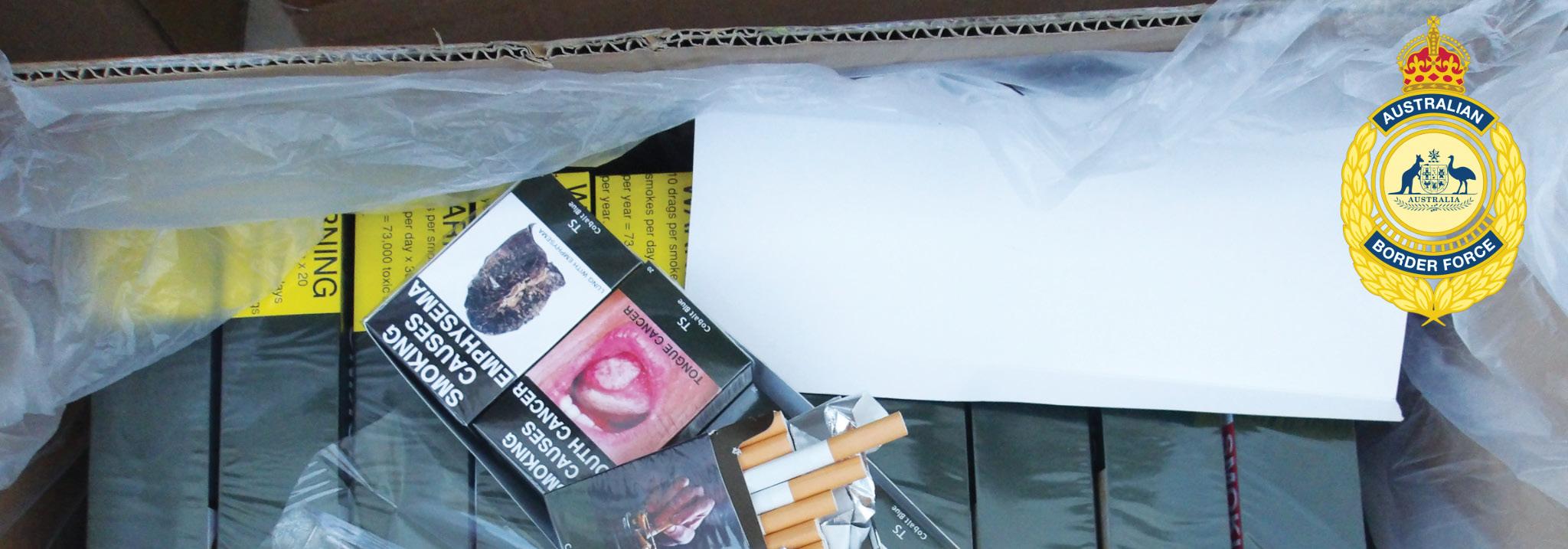
THE AUSTRALIAN BORDER Force (ABF) has disrupted an illicit tobacco operation in Darwin, seizing more than 433,000 cigarettes, 686 kilograms of loose-leaf tobacco and 50,000 disposable vapes during warrant activity last month.
The ABF estimates the goods represent about $1.8 million in evaded duty and about $3.7 million in potential proceeds of crime.
On 28 May 2026, Australian Border Force Regional Investigations Northern Territory, supported by the Detector Dog Unit, executed Customs Act 1901 warrants at a Darwin premises identified through intelligence-led targeting.
Graeme Campbell, ABF Commander, said the operation disrupted criminal activity in the Northern Territory.
“This seizure is proof that through our intelligence led

operations, ABF officers are detecting and disrupting criminal supply chains before these goods ever reach the community.
“Our Detector Dog Unit played a critical role in this operation, with the highly trained dogs and handlers detecting concealed illicit goods across a range of environments.”
Campbell said illicit tobacco and vaping products were linked to broader criminal activity.
“Illicit tobacco and vapes undermine legitimate businesses and fund broader criminal activity. The ABF will continue to use every capability at our disposal to protect the Australian community.”
The seizure follows a separate ABF disruption in the Northern Territory earlier this month, where more than 100,000 cigarettes and 39 kilograms of loose-leaf tobacco were seized from the international mail stream.
JC’S QUALITY FOODS has appointed National Account Manager Michael Pearce to oversee the convenience and impulse channel, focusing on adding value and support for customers.
With over 30 years in the retail industry, Pearce brings a wealth of experience and a deep understanding of the challenges and opportunities across both retail and supplier environments. He began his career in supermarkets, spending 12 years in various roles before progressing to manage an independent supermarket.
Over the following 18 years, Pearce transitioned to the supplier side, joining Simplot as a sales representative before advancing through the business into leadership roles across NSW Independents and Key Accounts throughout NSW and Queensland. Today, as National Account Manager at JC’s Quality Foods, he leads his team with a strong focus on customer success and commercial growth.
A strong believer in culture and people development, Pearce is passionate about building capable teams, fostering positive behaviours, and creating an environment where individuals can grow and take the next step in their careers. His retail background gives him a unique perspective and genuine understanding of the dayto-day pressures faced by customers instore.
Retail is also in Pearce’s blood, having followed in his father’s footsteps into the industry, with his son now doing the same. Above all, he is a proud family man, sharing life with his wife and three boys.
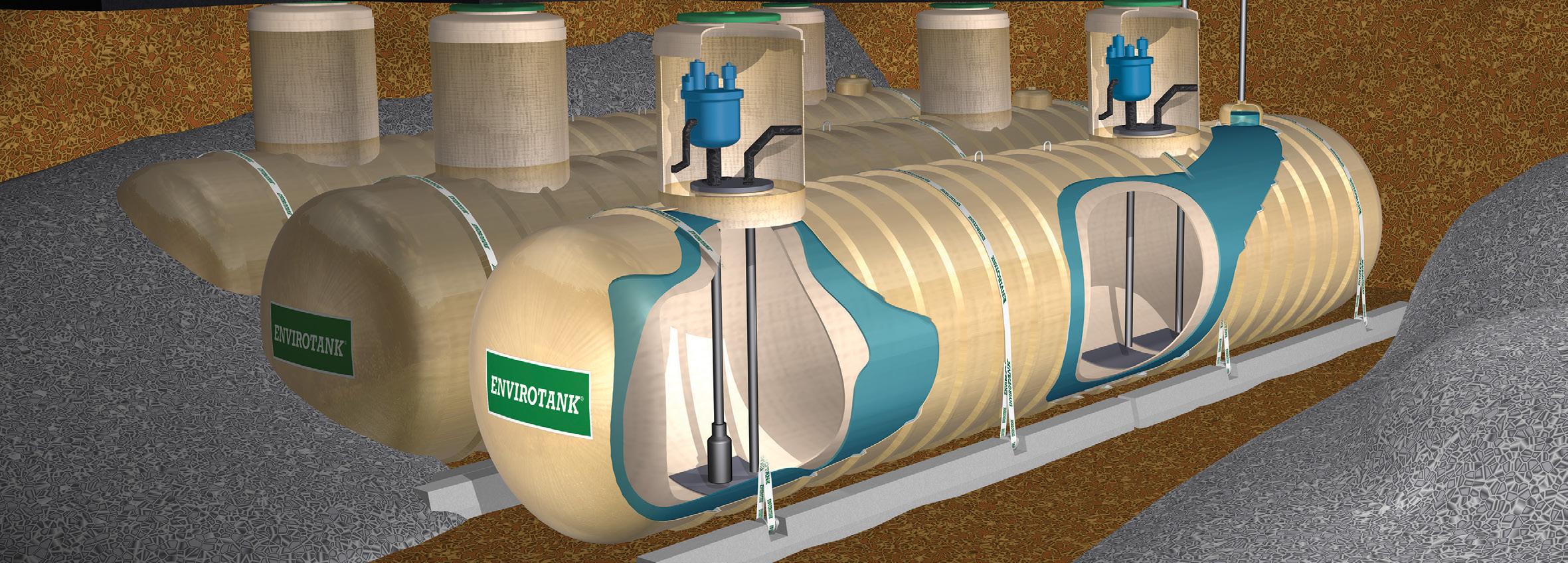

Ü Clereflo™ forecourt and full retention separators.
Ü Third-party peer reviewed and certified by UniSA as exceeding BSEN-858 compliance.
Ü Suitable for use in all Australian conditions.
Ü Envirotank double-wall tanks are fully compatible with all modern fuel types including alcohol blends and low sulphur diesel.
Ü Double-Walled Envirotanks fully comply with the secondary containment requirements of AS 4897. This is in addition to the design meeting AS 1940 and UL 1316.
Ü Two (2) 100% corrosion proof and structural walls provide the ultimate in leak protection.
Ü The Hydroguard® System is a proven hydrostatic testing system that continuously monitors the integrity of the inner and outer tank walls in all installed conditions.
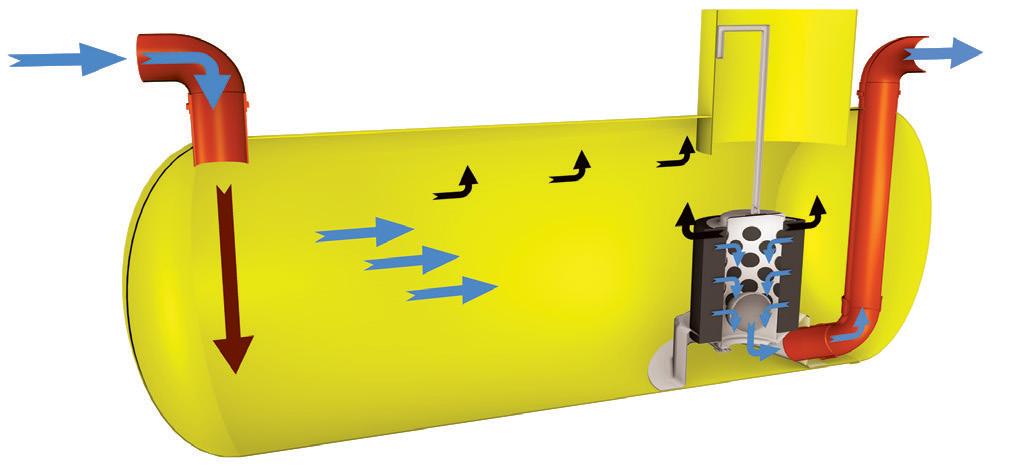
WEST RYDE HAS emerged as one of Sydney’s worst-performing areas in a statewide FuelCheck inspection blitz, with about onethird of service stations fined for mismatches between pump prices and the government app.
The findings form part of a broader compliance sweep that has also identified strong performance in several Sydney suburbs, where no breaches were recorded.
In Liverpool and surrounding suburbs, including Chipping Norton, Moorebank, Prestons, Casula, Lurnea and Mount Pritchard, all 35 service stations were compliant, with no fines issued. All 15 stations across Greystanes, Girraween, Pendle Hill and Wentworthville were also compliant, as were the 15 stations in the Windsor area.
Natasha Mann, NSW Fair Trading Commissioner, said inspectors were targeting non-compliance across the state.
“Our inspectors have been working around the clock and in every corner of the state checking for compliance in petrol stations to ensure motorists are getting the right price at the pump,” she said.
“FuelCheck gives motorists confidence that the prices they see in the app are the prices they’ll pay at the pump.”
Alongside West Ryde, the 2142 postcode — covering Granville, Rosehill, Camellia, Clyde and Holroyd — also recorded breaches, with two of 12 stations fined.

NSW Fair Trading said stations displaying “red flag” behaviour, including fines or repeated complaints, would continue to face reinspections.
Across the state, inspectors have conducted more than 4,100 field inspections and re-inspections, with about half in the Sydney metropolitan area. More than 245 fines have been issued, around 80 per cent of them for price mismatches.
A public reporting program known as Bowser Busters has also contributed to enforcement, with almost 100 fines issued based on consumer reports.
THE WESTERN AUSTRALIAN government has struck a deal with fuel supplier Cambridge Gulf to purchase and store 4 million litres of diesel in the Kimberley.
Under the agreement, Cambridge Gulf will import additional diesel from overseas suppliers and store it free of charge. The fuel will be fully owned by the state, allowing it to be directed where it is most needed.
Premier Roger Cook said the agreement would improve the state’s ability to respond to supply disruptions.
“Having access to this fuel now, with the ability to store more in the future, is a crucial step towards shoring up our State’s fuel security for the future.
“It’s diesel that will be 100 per cent State owned and reserved for those who need it most such as remote communities and the agriculture sector, allowing us to act quickly when we need to.”
The shipment is expected to arrive in the coming weeks. The government said the reserve would support remote Aboriginal communities and key industries such as agriculture that rely on uncontracted fuel supplies.
Shane Love, Leader of the WA Nationals, said the move came after weeks of inaction and paralysis from the Cook Labor Government.
“The reality is 4 million litres won’t touch the sides. It is woefully inadequate.
“The WA agricultural sector alone is already more than 10 million litres short of diesel, and that’s before you factor in remote communities and essential services.
“At best, this supply will last less than four days.
“Unless the Albanese Labor Government guarantees these 4 million litres will not be clawed back from Western Australia’s share of the national fuel reserve (MSO) it will be a futile action by the Cook Labor Government.”
The arrangement also includes the potential to expand storage capacity to up to 12 million litres, as part of a broader push to establish a strategic stockpile of liquid fuel in Western Australia.
NIGHT ’N DAY is set to expand its South Island presence in New Zealand with seven NPD convenience retail sites transitioning into the Night ’n Day network over time.
The sites are located in Blenheim, Nelson, Christchurch and Queenstown, including Redwood in Blenheim, Lower Queen Street and Waimea in Nelson, Rolleston, Yaldhurst and Moorhouse in Christchurch, and Frankton in Queenstown.
Matthew Lane, General Manager of Night ’n Day, said the move reflected a strong alignment between the two businesses.
“There are a lot of similarities between the two businesses. Both are proudly family-owned, customer-focused, and built around strong local operators. These are high-quality sites with excellent fit-outs and standards that complement the Night ’n Day brand extremely well.”
Founded in Dunedin in 1990, Night ’n Day has grown into one of New Zealand’s best-known convenience retail brands, while NPD has established a strong presence across the South Island through its fuel and retail operations.
Lane said the transition would be gradual, with elements of both businesses retained.
“This isn’t about replacing everything overnight. There are components from both sides that we see real value in continuing. We’ll retain successful foodservice concepts customers already know and enjoy, while gradually introducing Night ’n Day’s wider offering across the network.”
He added that local ownership would remain central to the stores’ operations.
“Owner-operators are at the heart of what we do. These stores will continue to be locally operated, and we’re excited about the opportunities this creates for both existing and future operators.”
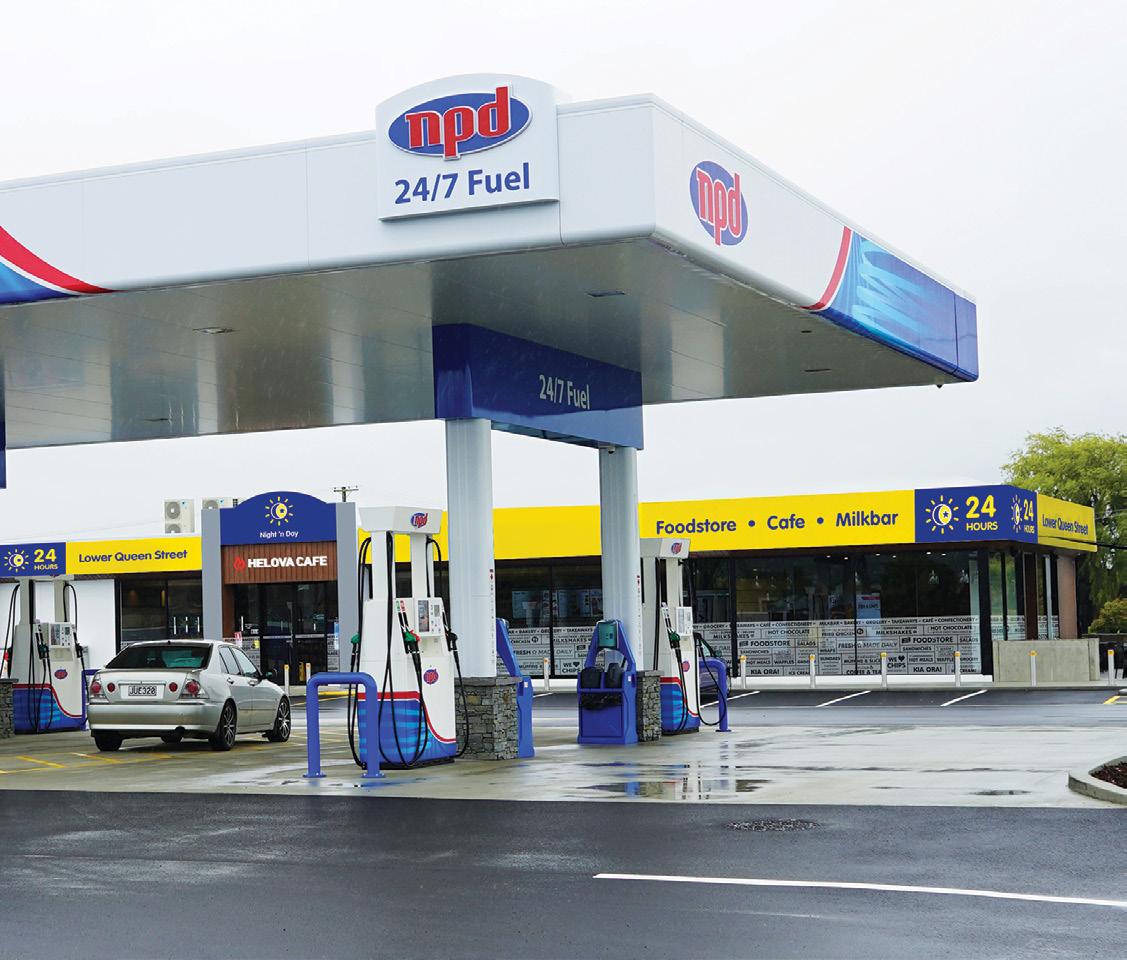
to concentrate on its fuel offering while maintaining a convenience retail presence through
“Night ‘n Day is a strong fit, they’re a nationwide, familyowned business with values that align closely with ours, and we’re confident they’ll continue delivering a great convenience offering for customers.
“This transition allows NPD to sharpen our focus on what we do best – providing Kiwis with quality fuel at competitive prices through our growing self-serve network, while Night ‘n Day brings its expertise in convenience retailing to these locations.”
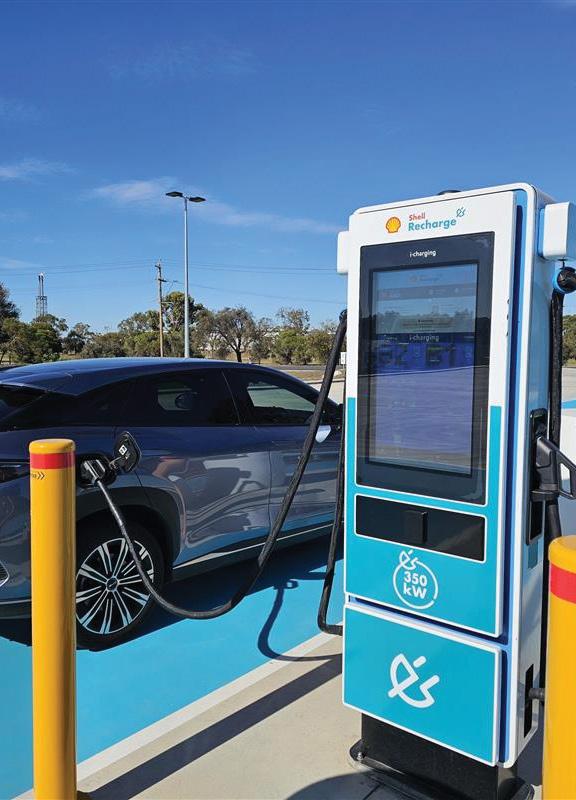
chargers have been added to the Chargefox network, giving drivers access to new fastcharging locations through a single app.
The integration means drivers can now locate and use Shell Recharge charging plugs – including ultra-fast chargers of up to 350kW – directly in the Chargefox app, without needing to create additional accounts or use separate platforms.
Four Shell Recharge sites are currently live on the platform: Reddy Express Mt Annan in NSW, Viva Energy Hub Corio in Victoria, and OTR sites at Linden Park and Pulteney Street in South Australia. Shell Recharge is backed locally by Viva Energy.
The chargers include high-powered units and have been designed for a range of vehicles, including those towing trailers, caravans and boats.
The companies say the move is part of an effort to simplify access to public charging as EV uptake grows across Australia.
The platform connects chargers operated by energy providers, governments and private operators. With the addition of Shell Recharge sites, Chargefox said it continues to bring separate networks into a single system for drivers.
Alongside Shell Recharge, Chargefox has recently added access to networks including bp pulse, EVX and AGL, expanding coverage across metropolitan, regional and rural areas.
Chargefox said the integration is part of its aim to support more consistent public charging access across different networks and locations. More Shell Recharge sites are expected to come online over the next 12 months as the network expands.
THE SA GOVERNMENT has secured access to a strategic diesel reserve of up to 20 million litres to strengthen South Australia’s fuel security.
Under a commercial agreement with fuel supplier IOR, the state will use spare capacity at the company’s existing storage facility at Port Bonython in the Upper Spencer Gulf.
The government will immediately purchase and store 10 million litres of diesel, with an option to expand the reserve to 20 million litres. The arrangement also allows for the reserve to be refilled if required.
Peter Malinauskas, Premer of SA, said the reserve will help build confidence for South Australia’s primary producers as they confront the international fuel crisis.
“While diesel continues to arrive on our shores, and the Commonwealth has committed to a $10 billion plan to ensure Australia’s long-term fuel security, it is prudent that we invest in our own reserve to provide a buffer in the case of unforeseen events.
“This has been done in a coordinated and thoughtful manner to ensure we are not competing against the Commonwealth, or our farmers to purchase fuel.”
The reserve is intended to operate alongside the Federal Government’s broader fuel security package, which aims to establish a permanent national reserve and ensure at least 50 days of fuel supply, including diesel and aviation fuel.
Tom Koutsantonis, State Energy and Mining Minister, said negotiations with IOR began shortly after the state election.

“This is a practical step to strengthen South Australia’s fuel security at a time when global supply chains remain uncertain.
He said the agreement makes use of existing infrastructure that is currently underutilised and provides an immediate source of additional diesel supply.
“Having additional diesel available locally means greater resilience for our industries, our regions and our essential services.”
The government said the reserve would be able to be directed to areas of need under the National Fuel Security Plan if supply conditions deteriorate.
While fuel continues to arrive in the state at significant volumes, officials said the reserve is intended as an additional buffer during periods of heightened uncertainty, including ongoing geopolitical tensions affecting global energy markets.
ASTRA ENERGY GROUP Limited has been granted clearance to acquire Gull and NPD after New Zealand’s competition watchdog found the deal was unlikely to substantially lessen competition in fuel markets.
The Commerce Commission said it had approved Astra Energy’s acquisition of all shares in GNZ Holdco Limited, including its subsidiaries Gull, and all shares in NPD Group Investments Limited, including its subsidiaries NPD.
The regulator examined the proposed merger’s impact on retail and wholesale fuel supply markets, including whether the combined business could raise prices or reduce service quality.
Dr John Small, Chair of the Commerce Commission, said the agency conducted a “thorough investigation” into the deal after earlier raising provisional concerns.
“Our investigation included looking at the markets within which NPD and Gull currently operate and assessing whether there would still be adequate competitive alternatives postmerger to constrain the new company’s ability to raise prices and reduce the quality of its service.
“Following this work, we are satisfied that the proposed merger is not likely to substantially lessen competition in any market in New Zealand in which the parties compete or are likely to compete in future.”
The Commission also assessed whether the merger could make coordinated behaviour between fuel suppliers more likely, including the possibility of competitors collectively restricting output or increasing prices.
It found it would not alter market conditions in a way that would make coordination “more likely or sustainable”.
Dr Small said the merged business would continue to face competition from major fuel companies and independent suppliers in both retail and wholesale markets.
“The Commission’s investigation indicated the merged entity will be constrained in the retail and wholesale supply of fuel by the presence of other competitors, including the majors, as well as independent fuel suppliers.”
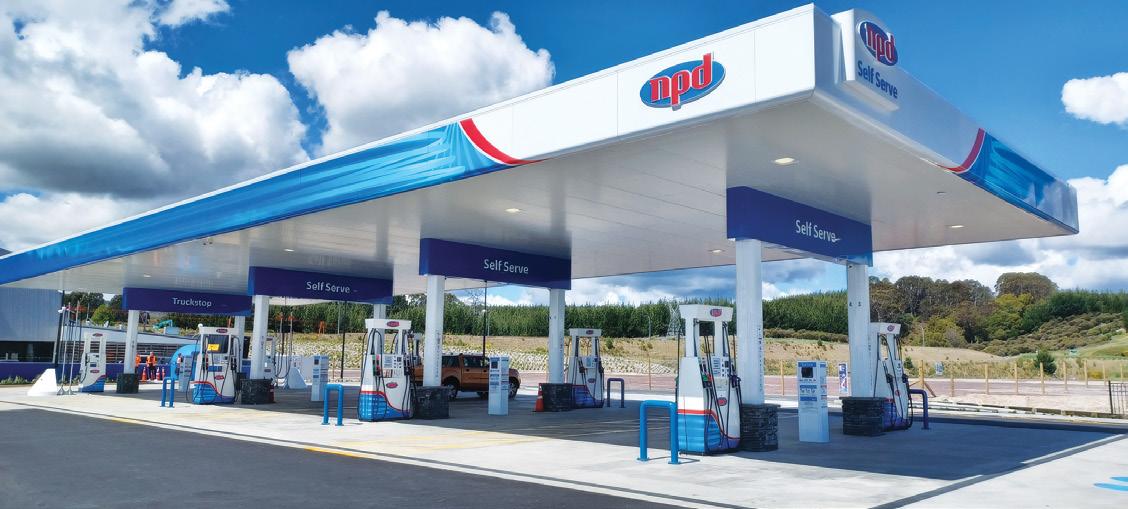
REGIONAL NSW SERVICE stations account for the majority of penalties issued for fuel price mismatches, despite only half of all inspections taking place outside Sydney.
More than 270 fines have been issued through the state government’s FuelCheck compliance campaign, with around 80 per cent relating to differences between advertised prices and those charged at the bowser.
The Central Coast recorded the state’s strongest compliance rate, with only one fine issued through the Bowser Busters campaign. The Southern Highlands and Shoalhaven regions followed, with three fines since March.
By contrast, the Southern Tablelands and South Coast recorded the highest number of penalties statewide, with 33 fines issued. The Riverina and Central West regions also recorded high levels of non-compliance, with 30 and 21 penalties respectively.
Anoulack Chanthivong, Minister for Better Regulation and Fair Trading, said the government would continue targeting fuel retailers failing to comply with pricing rules.

“We know that fair pricing starts with fair behaviour at the bowser.
The inspection program has now carried out more than 4,600 field inspections and re-inspections across the state, including remote regional areas.
Single service stations in Cooma, Lismore, Kelso, Newcastle, Goulburn and Port Kembla were issued multiple fines during inspections. A retailer in the Murray region received a penalty after inspectors found a 24-cent diesel price mismatch.
Service stations flagged through repeated fines or consumer complaints will continue to face re-inspections by NSW Fair Trading.
Chanthivong said the government’s proposed legislative changes were designed to strengthen compliance and deter misleading fuel pricing.
“We’re pushing this into the farthest corners of the state. Our proposed laws, coupled with our inspection program, are all about deterring service stations from taking motorists for a ride.
The proposed laws, which passed the Legislative Assembly this week, would make it illegal for service stations to fail to notify FuelCheck of standard fuel prices or fuel unavailability. The legislation would also increase maximum fines for individuals from $22,000 to $55,000.
On-the-spot fines for service stations would rise to $3,300 for a first offence and $11,000 for a second offence within 12 months.
The Minns government said it had also invested $2.2m to upgrade FuelCheck and was encouraging motorists to report price discrepancies directly through the app and NSW Fair Trading website.
THE QUEENSLAND GOVERNMENT will invest $25m to support the production of renewable diesel at Ampol’s Lytton refinery.
The project, backed through the state’s $180.6 million Sovereign Industry Development Fund, will involve modifying the refinery’s existing diesel hydrotreater to co-process conventional diesel with biogenic feedstocks including waste and plant oils and animal fats.
Once operational, the facility is expected to produce up to 20 million litres of renewable diesel a year from 2028, processing 15–20 kilotonnes of feedstock annually.
Premier David Crisafulli said fuel security means restoring Queensland’s ability to drill, refine and store, and this project means more fuel produced locally for Queenslanders.
“These projects are important to ensure we are never again left at the mercy of foreign nations, at the end of a global supply chain.
“Across the short, medium and long-term we’re getting projects moving to produce oil, refine it and store fuel locally.”
The government has also declared the initiative a Prescribed Project, enabling the Coordinator-General to streamline approvals.
Construction is expected to begin by mid-2027, with the project forecast to create 46 jobs, including 40 during construction and six ongoing operational roles.

16-17 March 2027
Melbourne Convention & Exhibition Centre
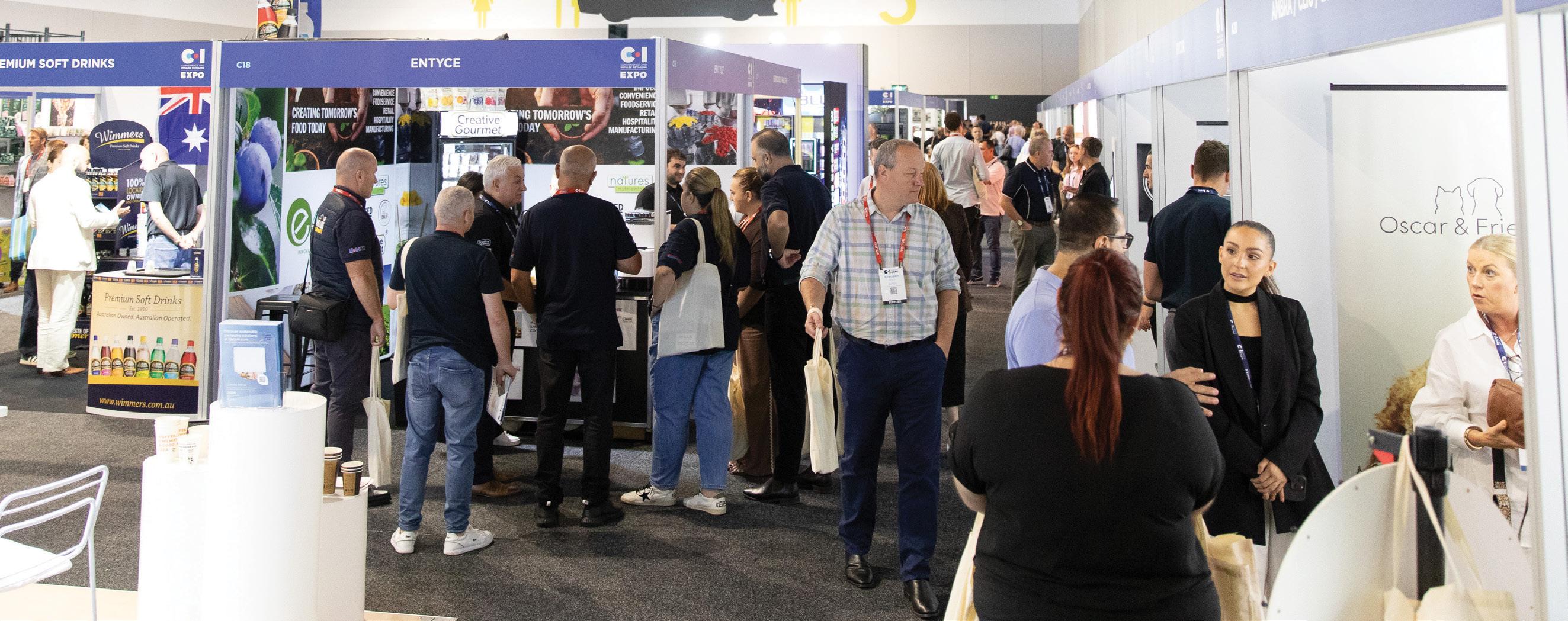
THE BIGGEST SHOW YET
✓ NEW CATEGORIES
✓ MORE EXHIBITORS
✓ GREATER NETWORKING
We will once again be co-locating with AACS Connect, maximising your time and minimising your costs.
CONNECT 27
Only C&I Expo welcomes exhibitors and retailers from all groups and brands, with a particular strength in launching new brands and suppliers to the industry. The breadth and depth of our audience gives exhibitors unmatched exposure, with visitors traveling from Asia Pacific seeking innovation in C-retail products, equipment, services, and technology.
You won’t find a better opportunity to make the connections that could transform your business.
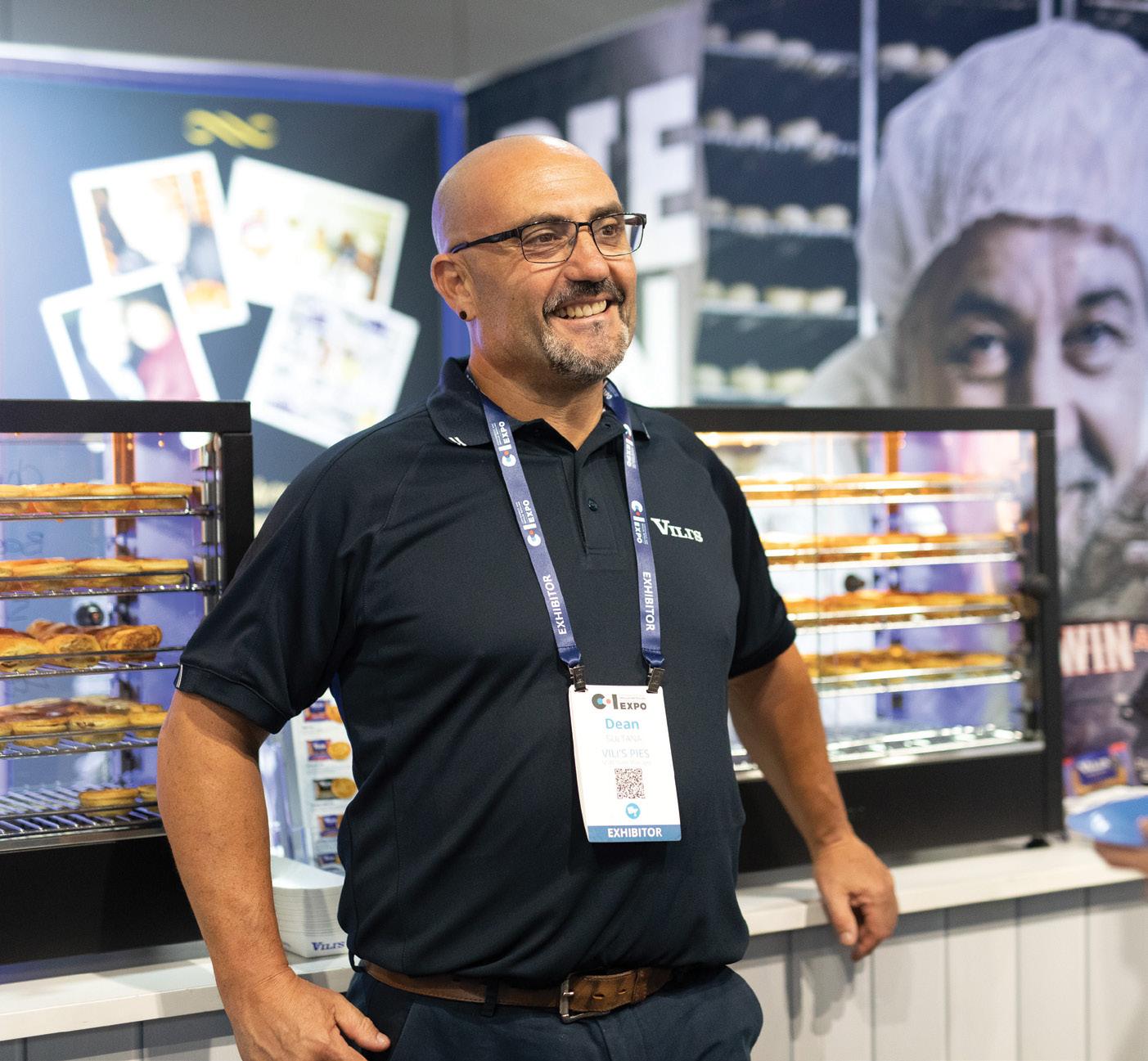
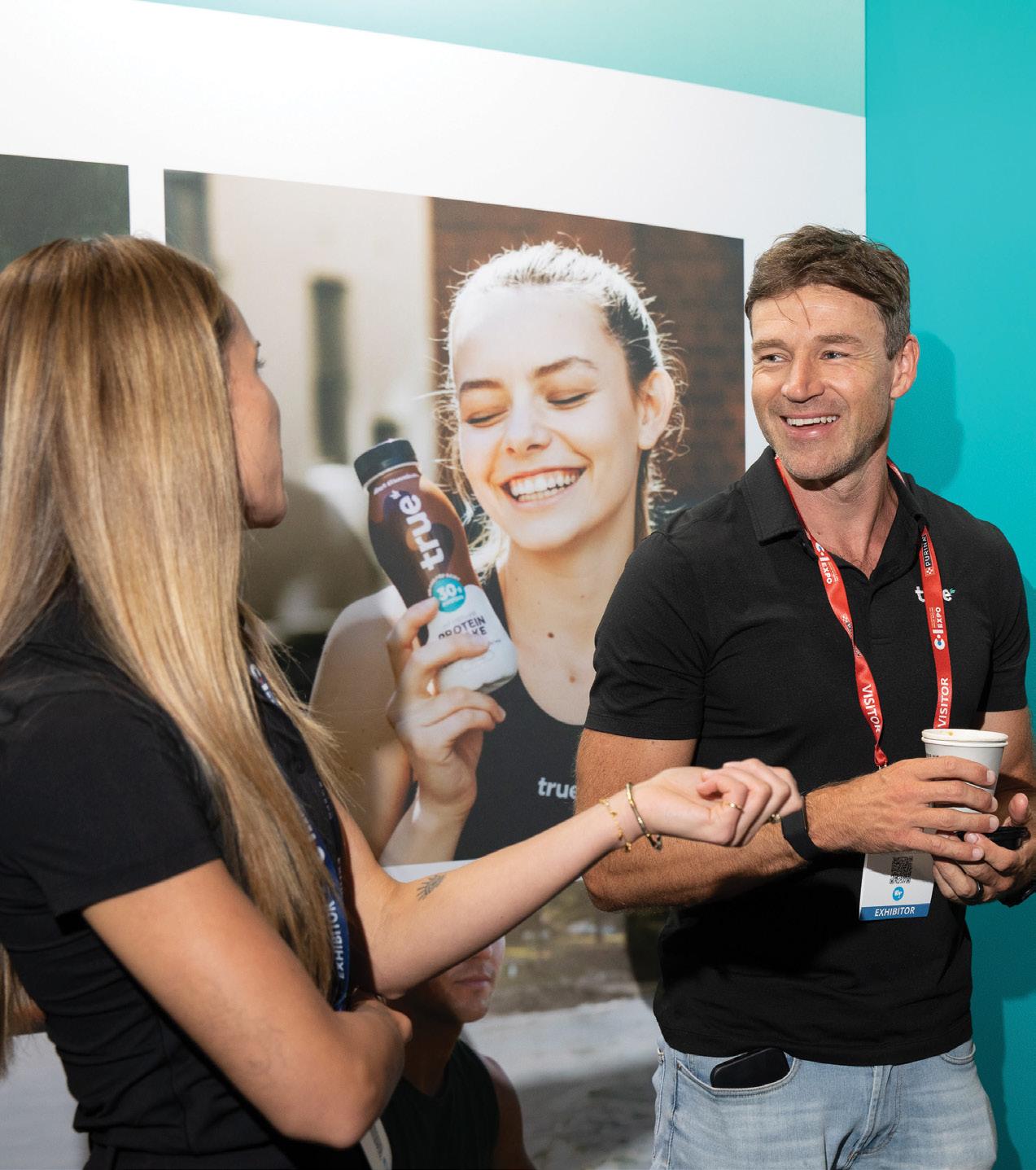
In addition to major operators and independent retailers in P&C, grocery and route, C&I Expo attracts airlines, universities, government departments, hotels, cafes, bars, restaurants, mining, and foreign trade delegations.
C&I EXPO 2027 WILL SELL OUT
Scan the QR Code to get in touch for the exhibitor prospectus before it does.
candiexpo.com.au of visitors are purchasing decision makers 80%