
08 Face Time
Nick Ryan, Head of P&C, Suntory Oceania
12 Store Review
bp Baldivis Southbound
16 Hot Food
This category is redefining customer expectations across Australia
20 Alternate Revenue
P&C operators are looking to new services to boost revenue
24 Regional P&C
The unique challenges rural and regional operators face
28 Product Ranging
We bring you all of the latest new product launches
44 Opinion
Theo Foukkare, AACS; Brad Jones, Fuel Retail Solutions; Joshua Bruce, Detmold Group
50 Industry Updates
C&I Expo; AACS Connect 26; ME Group; Card surcharges; APCO; Junior pay rates;
64 Petrol News
AA Holdings; Fuel excise cut; ACCC crackdown
Published by C&I Media Pty Ltd
(A division of The Intermedia Group)
41 Bridge Road (PO Box 55)
Glebe NSW 2037
Tel: 02 8586 6292
Fax: 02 9660 4419
E: magazine@c-store.com.au
Group Publisher
C&I Media Pty Ltd
Safa de Valois
Commercial Director
Safa de Valois
safa@c-store.com.au
Editorial Director
James Wells james@intermedia.com.au
Managing Editor
Thomas Oakley-Newell tom@c-store.com.au
Art Director
Alyssa Coundouris alyssac@intermedia.com.au
Production Manager
Jacqui Cooper jacqui@intermedia.com.au
Production Assistant
Tazlin Cantrill magazine.material@intermedia.com.au
Prepress
Tony Willson
PROUD MEMBERS OF:
INFORMATION PARTNERS:
The Intermedia Group takes its Corporate and Social Responsibilities seriously and is committed to reducing its impact on the environment. We continuously strive to improve our environmental performance and to initiate additional CSR based projects and activities.
As part of our company policy we ensure that the products and services used in the manufacture of this magazine are sourced from environmentally responsible suppliers. This magazine has been printed on paper produced from sustainably sourced wood and pulp fibre and is accredited under PEFC chain of custody. PEFC certified wood and paper products come from environmentally appropriate, socially beneficial and economically viable management of forests.
This publication is published by C&I Media Pty Ltd (the “Publisher”). Materials in this publication have been created by a variety of different entities and, to the extent permitted by law, the Publisher accepts no liability for materials created by others. All materials should be considered protected by Australian and international intellectual property laws. Unless you are authorised by law or the copyright owner to do so, you may not copy any of the materials.
The mention of a product or service, person or company in this publication does not indicate the Publisher’s endorsement. The views expressed in this publication do not necessarily represent the opinion of the Publisher, its agents, company officers or employees. Any use of the information contained in this publication is at the sole risk of the person using that information. The user should make independent enquiries as to the accuracy of the information before relying on that information. All express or implied terms, conditions, warranties, statements, assurances and representations in relation to the Publisher, its publications and its services are expressly excluded save for those conditions and warranties which must be implied under the laws of any State of Australia or the provisions of Division 2 of Part V of the Trade Practices Act 1974 and any statutory modification or reenactment thereof. To the extent permitted by law, the Publisher will not be liable for any damages including special, exemplary, punitive or consequential damages (including but not limited to economic loss or loss of profit or revenue or loss of opportunity) or indirect loss or damage of any kind arising in contract, tort or otherwise, even if advised of the possibility of such loss of profits or damages. While we use our best endeavours to ensure accuracy of the materials we create, to the extent permitted by law, the Publisher excludes all liability for loss resulting from any inaccuracies or false or misleading statements that may appear in this publication.
Copyright © 2026 - C&I Media Pty Ltd.
’day and welcome to the latest issue of Convenience & Impulse Retailing magazine.
It’s been a whirlwind few months and there doesn’t seem to be any signs of it slowing down. From events and expos to fuel challenges and supply chain issues, the P&C channel is certainly in the eye of the storm.
In this issue we meet Nick Ryan, Head of P&C at Suntory Oceania. We take a look at Nick’s career to this point and his growth from a young basketballer to leading the P&C channel for one of the biggest beverage companies. Heading to Perth, we check out bp Baldivis Southbound, a newly renovated site designed to meet the evolving expectations of modern motorists, from time-poor commuters to long-haul drivers navigating Western Australia’s vast distances.
We then explore the growing role of hot food in the P&C environment. Once considered an add-on, it is now a central driver of foot traffic and basket size. From elevated grab-andgo options to made-to-order meals, retailers are leaning into quality, consistency and speed to compete not just with other convenience outlets, but with quick-service restaurants.
We also take a closer look at alternate revenue streams, an area gaining real
traction across the channel. Whether it’s dog washes, crypto ATMs, or other nontraditional services, operators are finding creative ways to maximise site potential. These additions are more than novelties, they are strategic plays to diversify income, increase dwell time, and futureproof businesses in a competitive and margin-sensitive market.
Regional Australia remains a critical part of the P&C landscape, and in this edition, we shine a light on the unique challenges and opportunities facing operators outside metropolitan areas. From supply chain considerations to community connection, regional sites often serve as more than just fuel stops, they are essential hubs.
We then take a look back at the 2026 C&I Expo, held over two days in March at the ICC Sydney. Retailers and suppliers from across the country came together to discover new products, gain meaningful insights, and connect with their peers.
As always, a big thankyou to our columnists – Theo Foukkare from AACS, Brad Jones from Fuel Retail Solutions, and Joshua Bruce of Detmold Group – who have all provided timely and thought-provoking opinion pieces.
Enjoy the read.
Cheers, Thomas Oakley-Newell




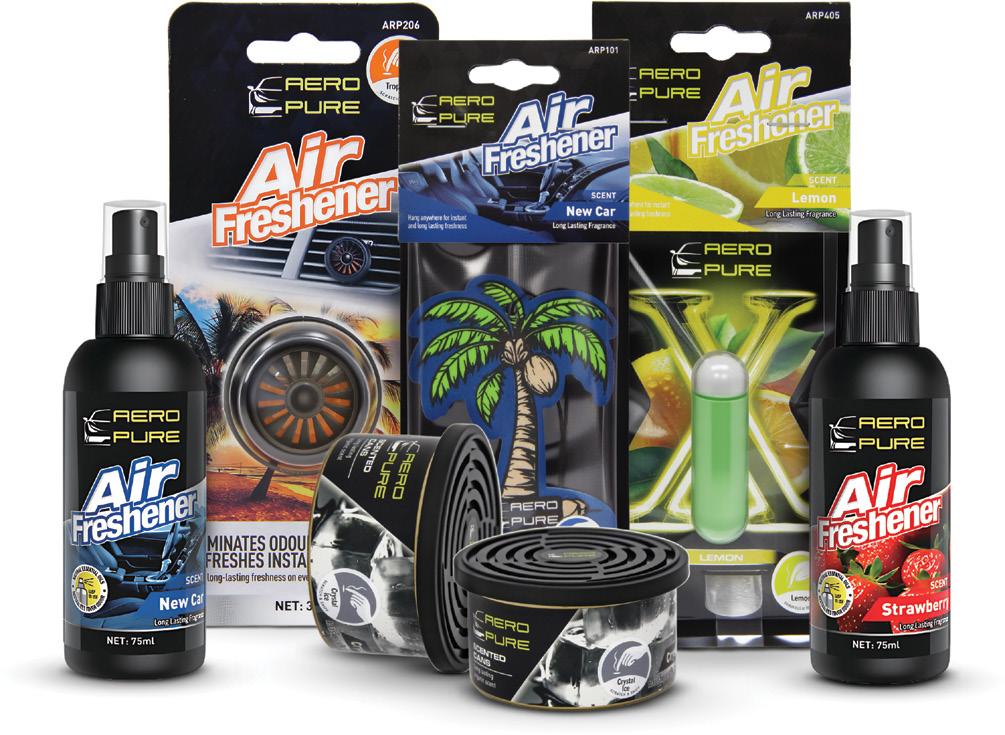
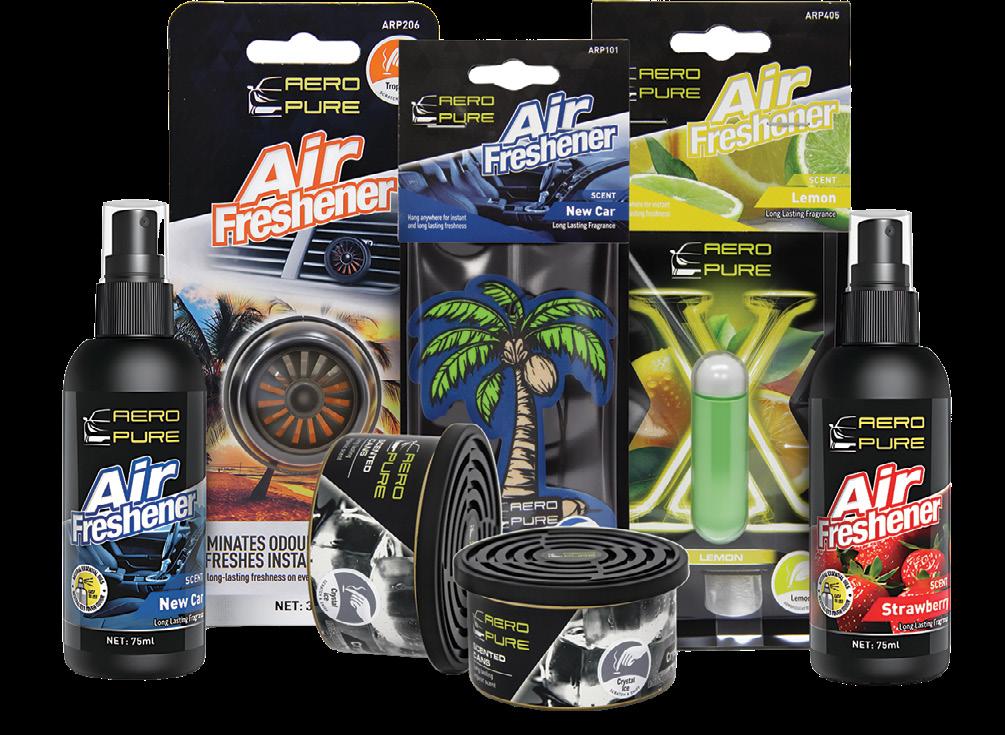
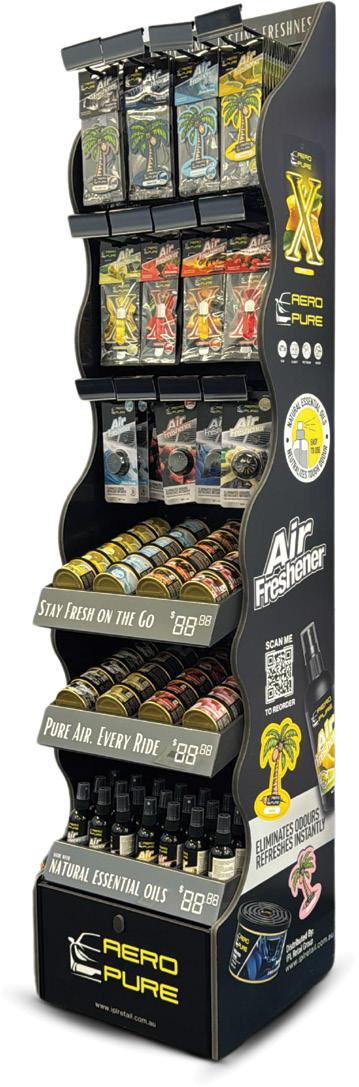
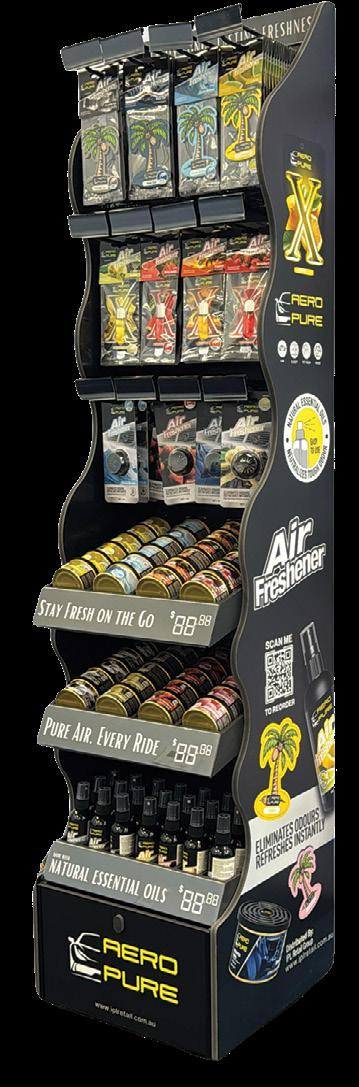
Aero Pure® by IPL Retail Group introduces a modern air freshener range designed for both everyday drivers and convenience retailers. Combining long-lasting fragrances with eye-catching packaging, the Aero Pure® range helps eliminate unwanted odours while creating a strong impulse purchase opportunity for service stations and convenience stores.
The range includes hanging air fresheners, vent clips, sprays, and fragrance cans, available in popular scents such as Lemon, Strawberry, Ocean Breeze, and New Car. Compact, stylish and easy to merchandise, Aero Pure® products are designed to deliver consistent performance while helping retailers expand their automotive accessory category.
With strong shelf presence and dependable fragrance quality, Aero Pure® offers retailers a fresh way to drive customer interest and repeat purchases.
www.iplretail.com.au

Introducing the new KitKat Cookies & Crème Crush Share Bar – a delicious fusion of creamy white chocolate sprinkled with cookie crumbs on a smooth milk chocolate base, in the iconic four finger share bar format.
Building on the love for cookie-centric flavours alongside strong concept testing with consumers, this innovation presents a diversified flavour offering and taps into Gen Z’s preference for crunchy inclusions.
On the back of P&C’s previous success with share bar exclusives and share bars being the channel’s largest choc bars sub-category, this launch will drive strong category growth among the next generation of chocolate lovers. kitkat.com.au
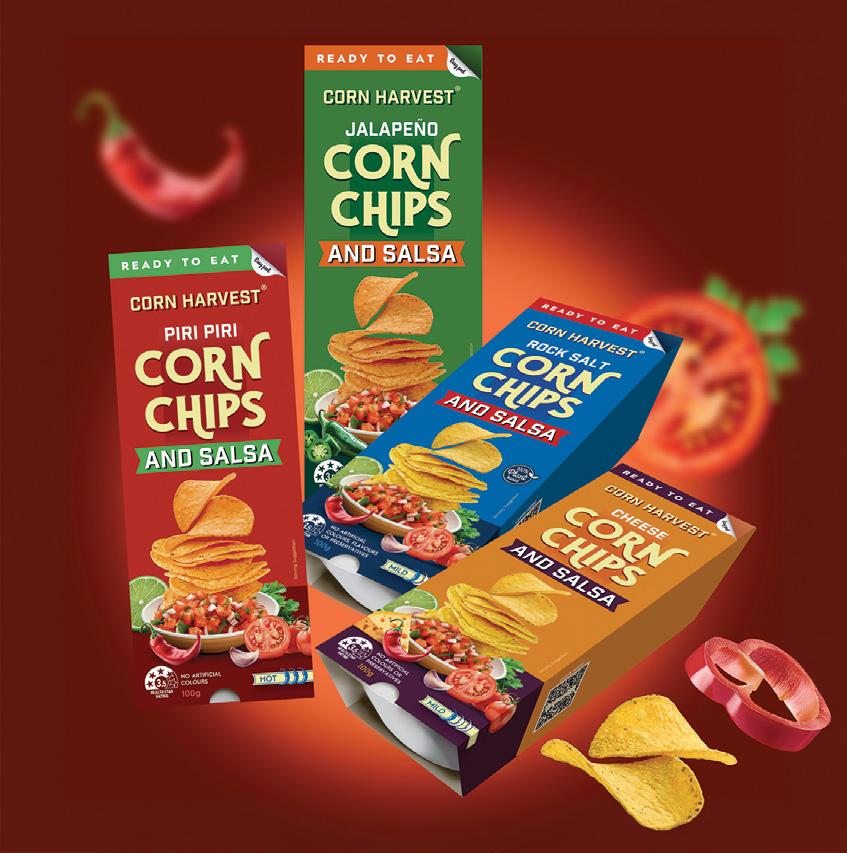
CORN HARVEST® – The complete snack in one pack
CORN HARVEST® brings a new format to the convenience channel – Corn Chips and Salsa together in a ready-to-eat 100g grab-and-go pack.
Made for snacking anywhere. Dip. Crunch. Go. Each pack combines 40g seasoned corn chips with 60g mild salsa, delivering a complete ambient snack solution designed for impulse and off-location display.
Available in Rock Salt, Cheese, Jalapeño and Piri Piri, with a 3.5 Health Star Rating and no artificial colours, flavours or preservatives. Brought to you by Arthur Brunt Quality Grocer Pty Ltd – an Australian family business for over 100 years.
For ranging enquiries contact 03 9010 5757 or cornharvest@brunt.com.au www.brunt.com.au
Alka Power is set to expand its range with the launch of its new 1 litre flip cap bottle in June/July, delivering a first-to-market format designed for convenience.
Responding to strong demand following the success of its 1.5 litre range, the new size offers a practical, on-the-go hydration solution that fits easily into car cup holders.
With its user-friendly flip cap and sleek design, it’s built for busy lifestyles. For retailers, it presents a fresh opportunity to meet evolving shopper needs in the P&C channel. www.alkapower.com.au







From a basketball scholarship in the US to leading petrol and convenience, Nick Ryan, Head of P&C at Suntory Oceania, has built a career on pace, partnerships and performance.
I WAS BORN in Perth, Western Australia, and grew up in a tight-knit family of five – Mum, Dad, my brother, my sister and me. Growing up, a lot of my time was spent on the basketball court. I played at a high level and was fortunate enough to earn a basketball scholarship to attend college in the USA. That experience shaped a lot of who I am today, in terms of discipline, resilience and learning how to perform in competitive environments.
My first jobs were a mix of sport and getting my foot into the workforce. I worked as a basketball umpire and also as a merchandiser for Strikeforce.
I’ve been lucky enough to travel quite a bit over the years, both for work and personally. I’ve spent time in the USA, travelled across Europe, and also had the chance to visit Japan for work. Those experiences have given me a broader perspective, both culturally and professionally.
These days, I’m the Head of Petrol and Convenience, a role that feels like a natural fit given the path my career has taken. I’ve spent more than 10 years working in FMCG, starting out on the ground as a merchandiser and sales rep at Unilever. From there, I worked my way into
account management roles, learning the fundamentals of the industry and building strong customer relationships.
For the past eight years, I’ve been with Suntory, where I’ve had the opportunity to work across a range of Key and National Account Manager roles. Building strong customer partnerships and getting a real understanding of what drives growth across different channels.
Most recently, I’ve been leading our partnership with Coles and sitting on the Grocery Leadership Team, which has been a great step into broader business leadership. The part of my career I’ve enjoyed the most has been my time in petrol and convenience. It’s a fast-paced, handson channel and one I naturally gravitate towards. It’s also why I’m genuinely excited about getting back into the convenience space.
In terms of career highlights, I’ve been fortunate to achieve some individual success and pick up a few awards along the way, which I’m proud of. But the biggest highlight for me has been being part of the Petrol and Convenience team at Suntory. As a team, we secured the AACS Overall Supplier of the Year award
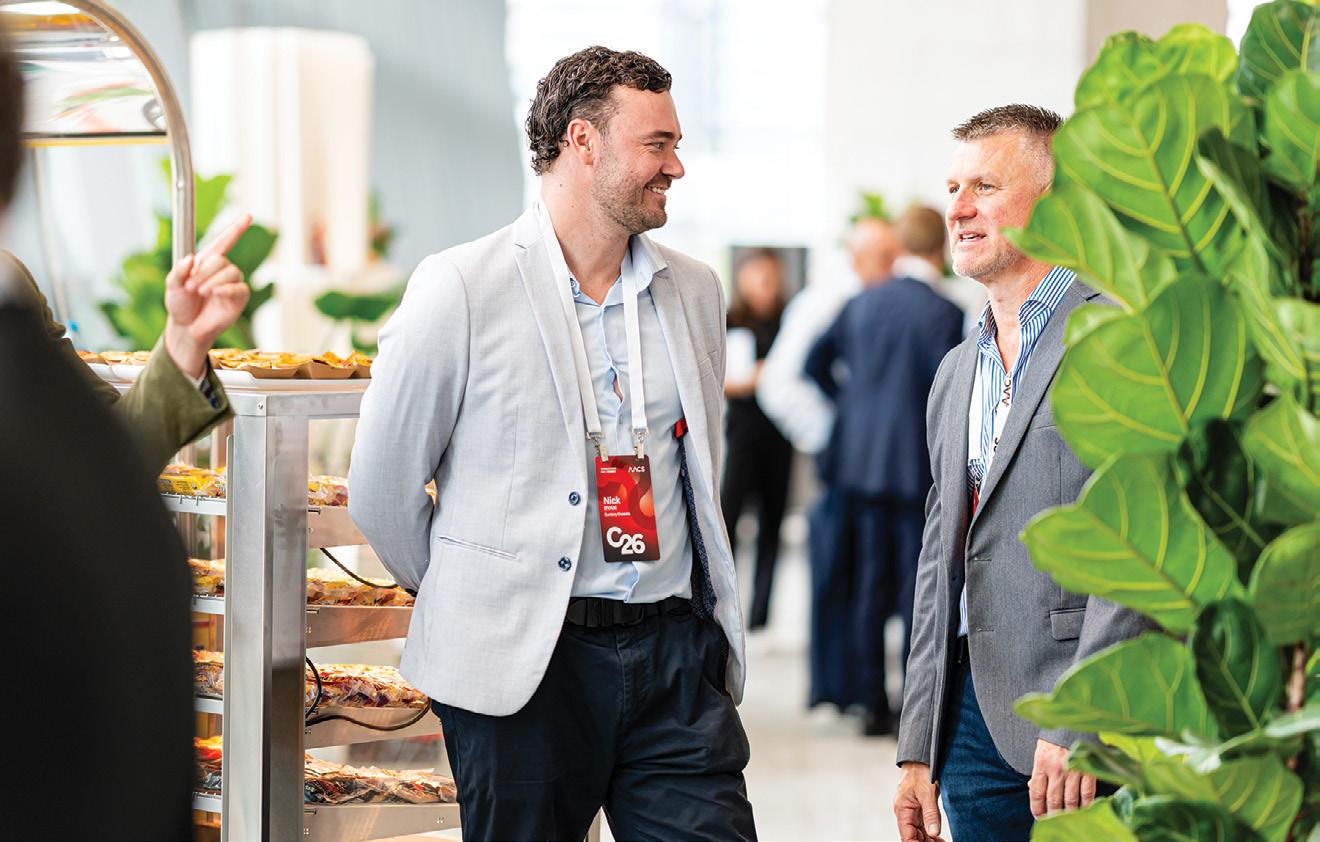
“I’ve had the chance to work across a range of Key and National Account Manager roles, building strong customer partnerships and getting a real understanding of what drives growth across different channels.”


four years in a row, which was a huge achievement and something that’s become a real legacy for the business. It was also one of the best-performing and most enjoyable teams I’ve been part of in my career. That experience is a big reason why I’m so excited to be back in the convenience channel. It’s an industry I genuinely love being part of.
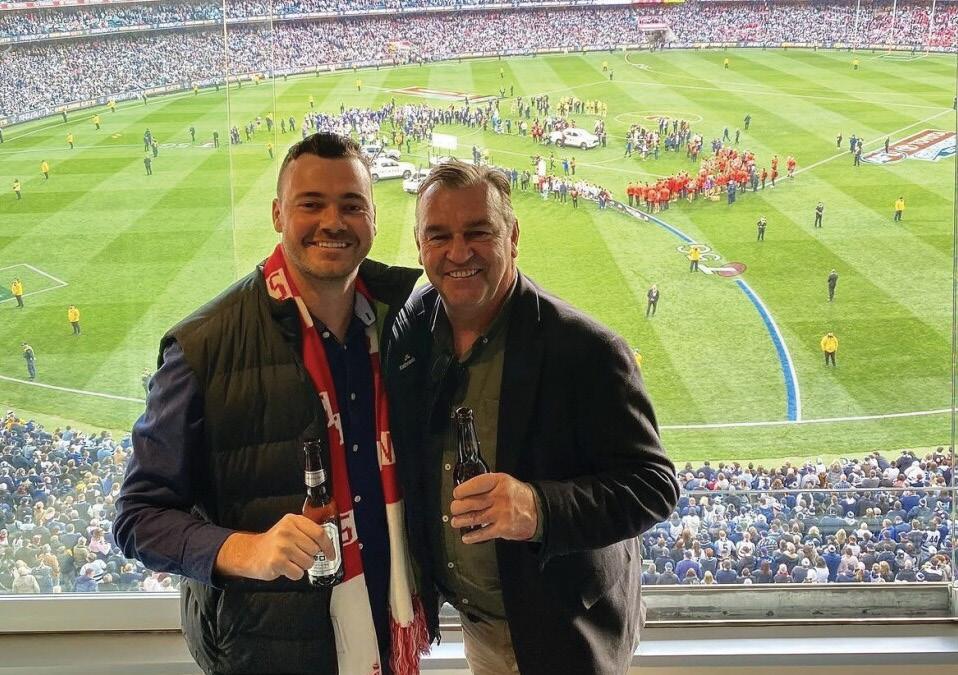
Outside of work, you’ll usually find me down at the beach with my partner, catching up with friends and family over a beer, or chasing around our very energetic six-month-old cocker spaniel, Franklin. He genuinely thinks he’s human, which keeps things entertaining.
Looking ahead, I’d say I’m pretty career-driven. I’m always looking to keep growing and challenging myself. For me, it’s about being in roles where I’m learning, being challenged, and genuinely adding strategic value to the business, while also leading great people. As long as I have that, I’m happy.
My advice for retailers would be to be really clear on what’s strategically important to your business over the next three to five years and how your suppliers can help you get there. In my experience, most suppliers genuinely want to build long-term, sustainable partnerships. My advice would always be to lean into that – focus on building a true partnership rather than just short-term, tactical wins. You’ll almost always see better outcomes on both sides when you take that longer-term approach.
For suppliers, my advice is simple: listen, ask questions, and stay genuinely curious about what matters most to your customers. It’s very hard to build a winning strategy if you don’t truly understand what’s important to them. My main advice would be to really take the time to understand their priorities, be transparent in how you work, and focus on building trust. From there, it’s about finding mutually beneficial outcomes that set both sides up for long-term success. ■
When you stay connected with AutoRecharge.
45Gb $39
28 day expiry. 45GB first 3 recharges only.
Prepaid SIM for phones, tablets and modems.*

Fair Go Policy applies. All for use in Australia. Activate SIM within 30 days of purchase or by the date advertised, whichever is earlier, to receive advertised inclusions. Data: New services only. Reverts to standard data after 3 rd recharge. For $39, $49 and $59 plans, data on first 3 recharges must be within 90 days of activation. Unlimited Data Weekend: Available each weekend from 12.01am Sat to 11.59pm Sun (local time) when you activate/recharge with AutoRecharge on 28 day Optus Flex Plus plans (excl. expired and manual recharges). *Unlimited Data Weekends requires compatible phone/tablet. International Calls: Charged per minute. Excludes non-standard calls (premium/special/ satellite/overseas toll-free numbers and video calls). *Talk & text: May not be accessible on certain tablets/modems. Network and Speed Caps: Speed capped as specified above, actual speeds will vary and may be slower. Uses Optus 4G and Standard 5G (non-standalone) Networks only. 5G avail. in select areas with compatible device and plan. Coverage varies, see optus.com.au/coverage
Device must be compatible with the Optus Network, see optus.com.au/compatibility General: SIM swaps not available for value SIMs. See optus.com.au/ prepaidplans for more plan info.
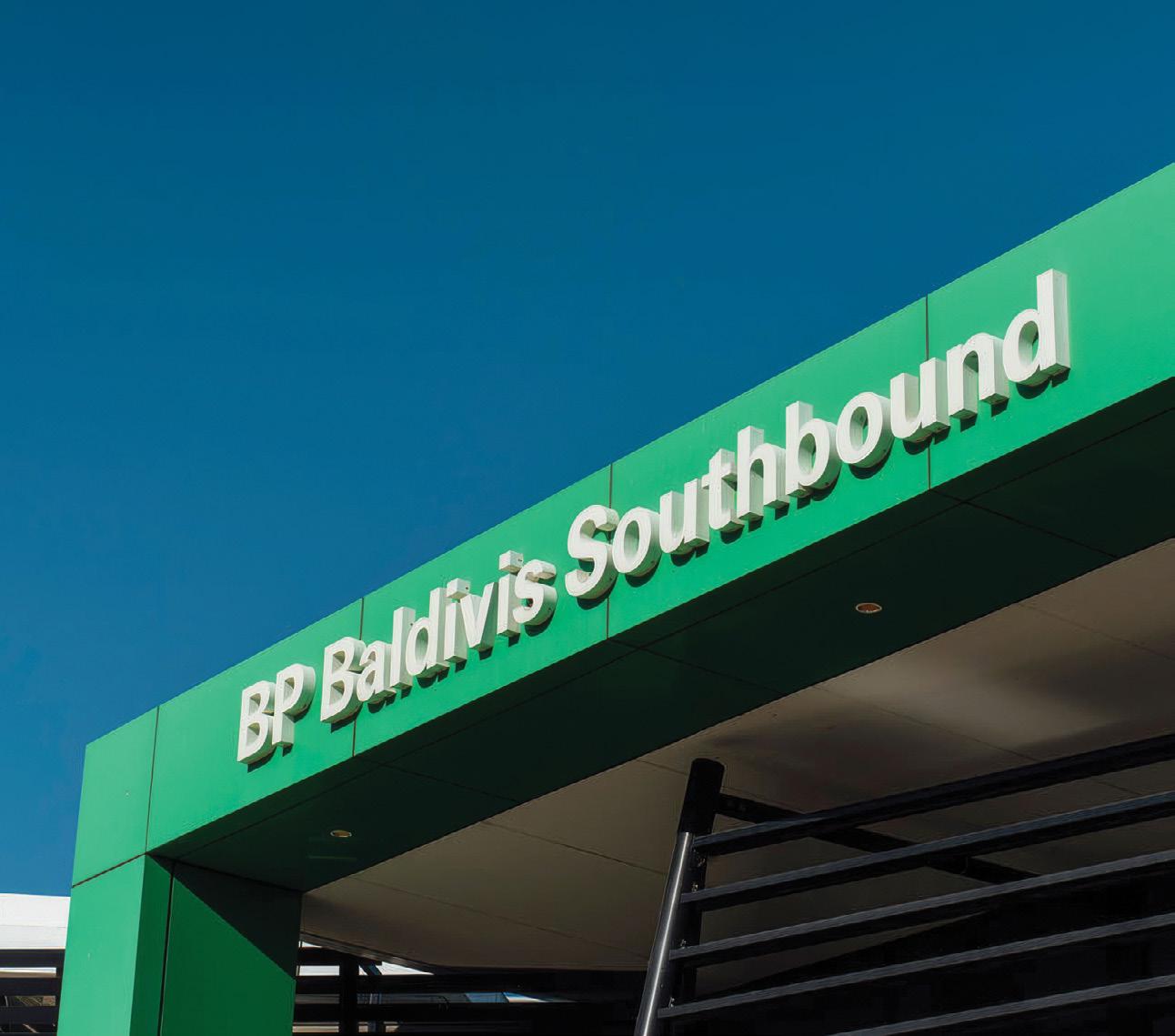
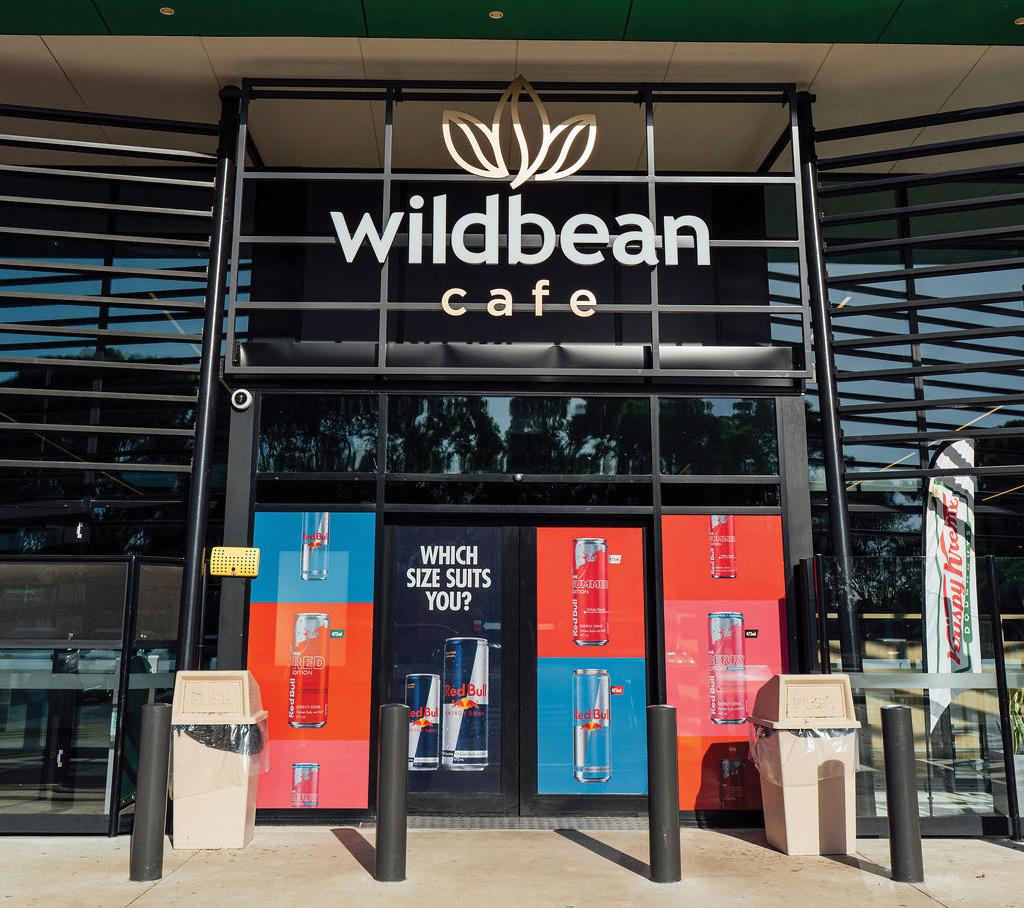
On a busy stretch of road south of Perth, bp Baldivis Southbound has been reimagined as something more than just a place to refuel.
Words Thomas Oakley-Newell
BP BALDIVIS SOUTHBOUND is a carefully orchestrated stop designed to meet the evolving expectations of modern motorists, from time-poor commuters to long-haul drivers navigating Western Australia’s vast distances.
Every element of the site, from its food offering to its digital infrastructure, speaks to a broader ambition: to turn a functional visit into a seamless and even restorative experience.
“We’ve designed bp Baldivis Southbound with customers in mind,” says Lisa Archbold, VP Customer, bp Australia and New Zealand.
At its core, the site is built around ease. The layout and in-store experience have been engineered to reduce friction, guiding customers intuitively from forecourt to counter. Digital screens and signage are positioned throughout, to promote key offers to the customer, inform decision-making, and subtly shape the customer journey.
The result is a space that feels responsive rather than static. Customers are not left searching for what they need. Instead, the environment anticipates their movements, whether they are stepping in for a quick coffee or navigating a longer stop.
“We’re committed to providing a convenient place where they can easily refuel or recharge and pick up food, drinks and convenience items whenever they need them,” Archbold says.
That commitment extends beyond traditional fuel. With six EV charging bays installed on-site, bp Baldivis Southbound acknowledges the growing shift in mobility. The offering ensures that drivers, regardless of how they power their vehicles, are accommodated without compromise.
Food has become central to the site’s identity, anchored by the wildbean cafe. Here, the proposition moves beyond standard convenience fare into something more considered. Coffee is prepared by professional baristas, served in a space designed to feel welcoming rather than transactional.
“Our customers can stop by our wildbean cafe for barista-made coffee, pastries and snacks, or choose from our selection of grab-and-go options,” Archbold says. “We’re preparing meals in our on-site kitchen with options for breakfast, lunch, and dinner such as wraps, gourmet sandwiches, hot meals, and sweet treats.”
The breadth of the offer reflects the diversity of the customer base. There are indulgences, such as Krispy Kreme donuts, alongside practical, time-saving options like fresh sushi, salads, and ready meals. Traditional convenience staples remain in place, ensuring that customers can still pick up familiar favourites, from cold drinks to confectionery and grocery essentials.
This abundance of choice is not incidental. It is a recognition that convenience today is not only about speed, but also about relevance and quality.
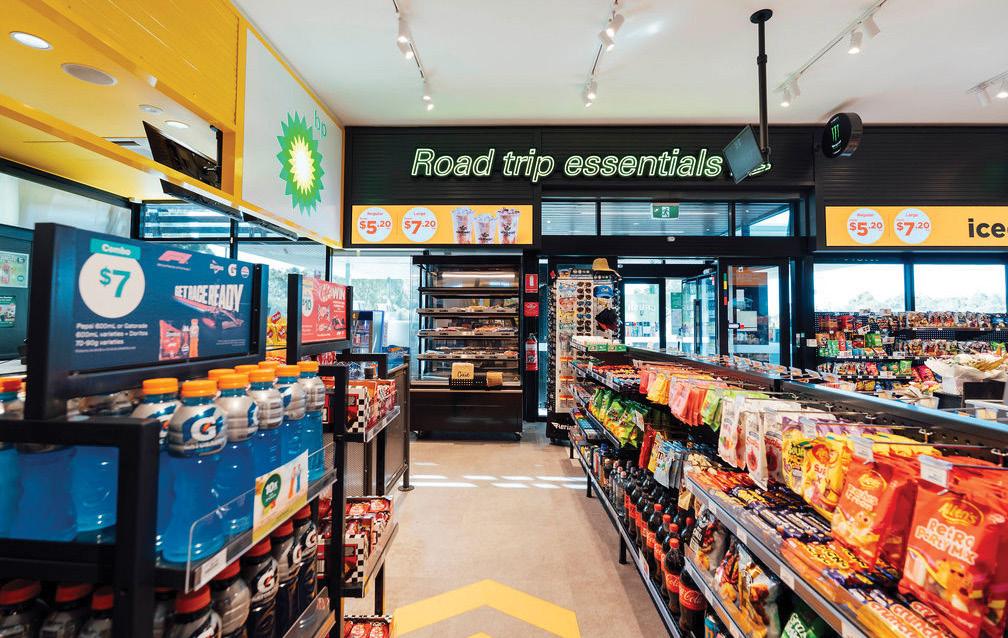
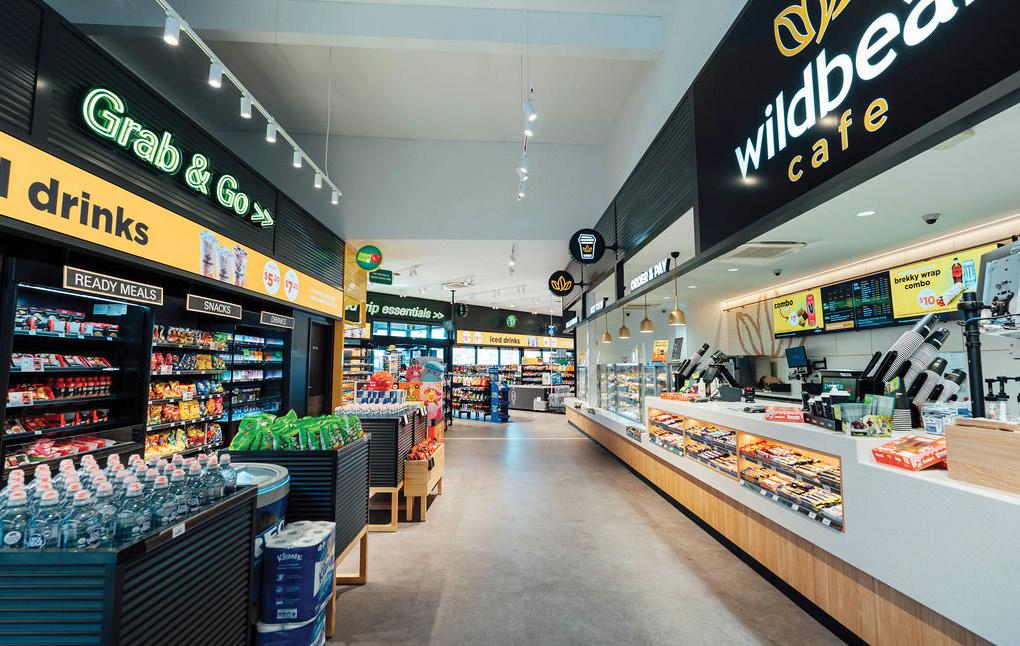
Perhaps the most distinctive feature of the site is its dedicated Truck Drivers Retreat. In an industry where long hours on the road are the norm, the inclusion of showers, laundry facilities, and a comfortable rest area signals a deeper understanding of customer needs.
Offering more than amenities, it provides a sense of dignity and care for professional drivers who rely on such stops as essential waypoints in their journeys. It transforms the site into a place where drivers can genuinely pause, rather than simply pass through.
For EV drivers, the experience is similarly considered. Charging takes time, and bp has used that window to integrate its food and beverage offering into the wait. The proximity of the wildbean cafe ensures that the charging period becomes an opportunity to recharge personally as well.
“For drivers who have made the switch to an EV, we’re supporting them with six dedicated EV charging bays and our on-site wildbean cafe means they can easily grab a drink or snack while their vehicle charges,” Archbold says.
Beyond the physical environment, bp Baldivis Southbound leans heavily into digital engagement. Customers can pre-order food and coffee through the BPme app, reducing wait times and adding another layer of convenience to the experience.
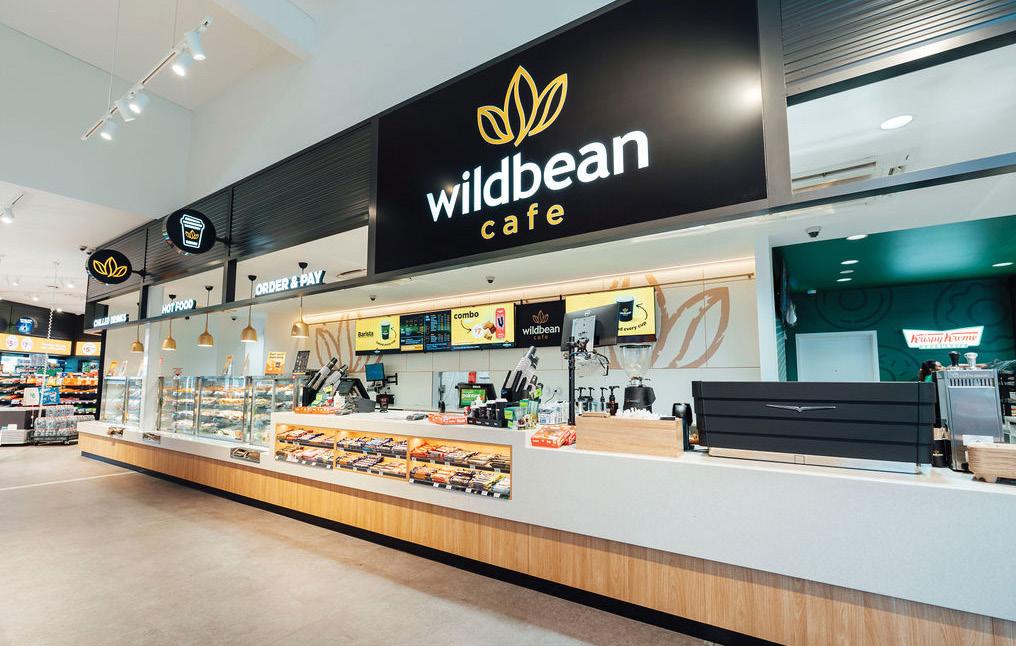
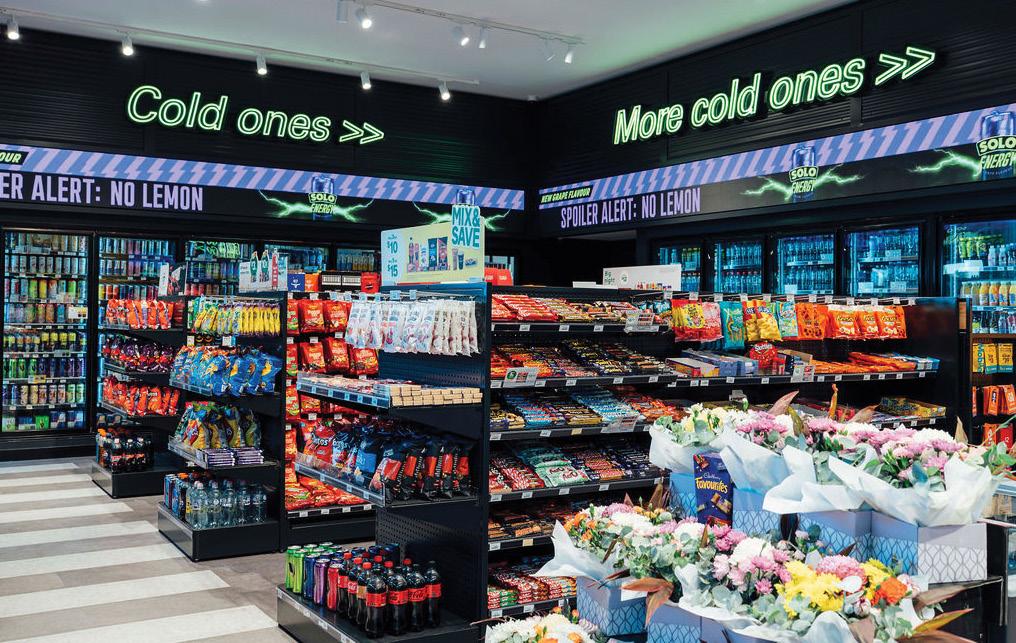
“We’re committed to providing a convenient place where they can easily refuel or recharge and pick up food, drinks and convenience items whenever they need them.”
- Lisa Archbold, VP Customer, bp Australia and New Zealand
Loyalty is also a central pillar. The site integrates bp’s full suite of rewards programs, creating multiple pathways for customers to derive value from their visit.
“At bp Baldivis Southbound, customers can access all our loyalty offers, including exclusive member offers, BP Rewards, BP Rewards Unlocked, and the bp Plus Qantas Business Rewards partnership, meaning they have more ways to reap the rewards,” Archbold says.
This focus reflects a broader trend in the sector, where customers are increasingly motivated by tangible benefits and personalised offers. Convenience alone is no longer enough. Value must be visible and immediate.
bp Baldivis Southbound is not defined by a single feature. Its strength lies in how its elements come together. The food offer, digital integration, driver amenities, and innovation all serve a common purpose: to make the customer journey smoother and more rewarding.
In doing so, it reflects a broader shift in petrol and convenience retail. The modern forecourt is no longer just a place to refuel. It is a destination in its own right, one that must balance efficiency with experience. ■









food


• Hot food now contributes more than 40 per cent of total food sales in the P&C channel (Source: Theo Foukkare, AACS)
• It delivers higher margins than fuel and many packaged goods categories
• A strong food offer increases customer visitation and repeat purchase
• It drives larger baskets through linked purchases like drinks and coffee
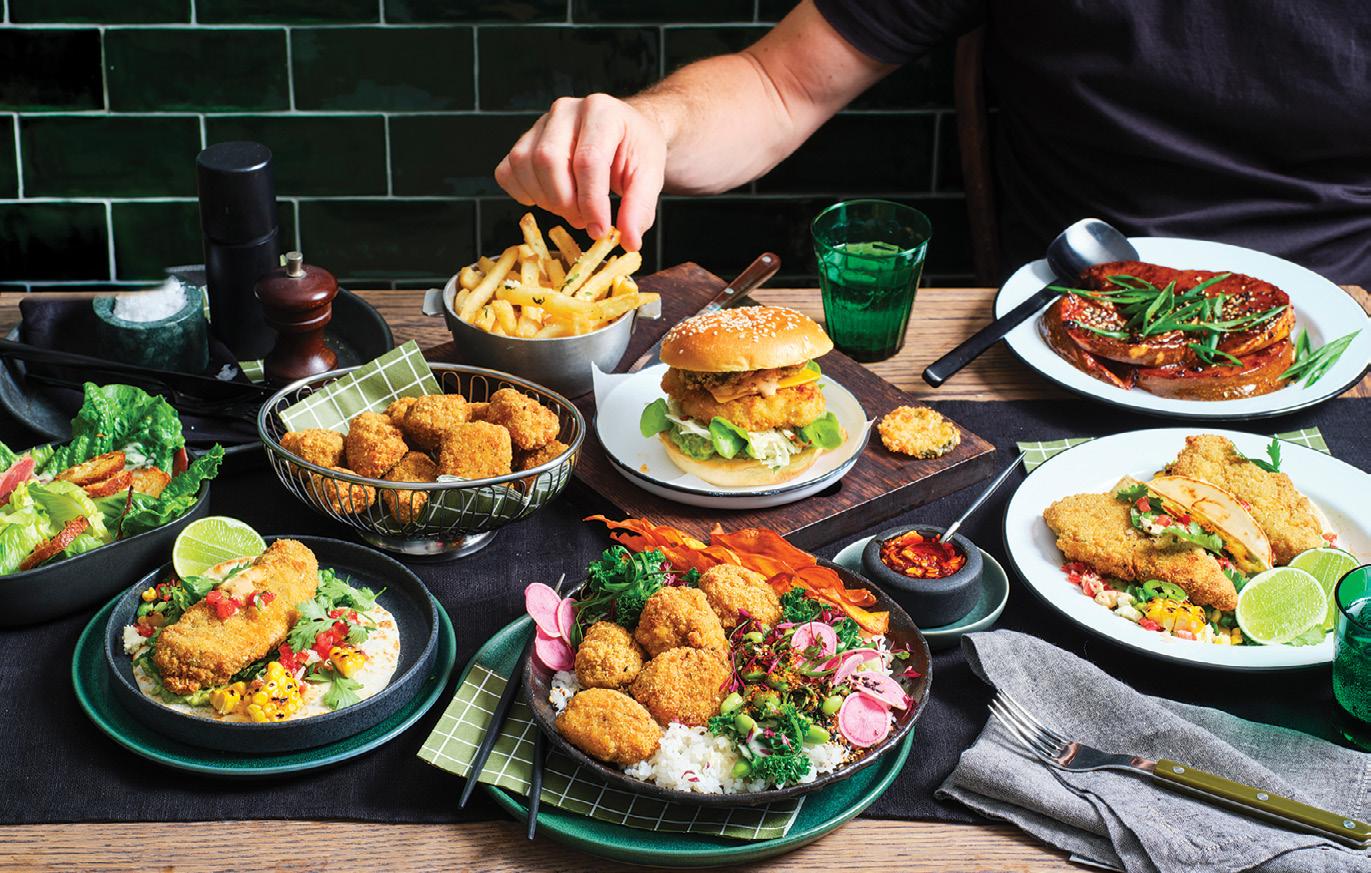
HOT FOOD HAS undergone a fundamental transformation within Australia’s petrol and convenience channel, shifting from a secondary, impulse-driven offer into a central pillar of store strategy. What was once anchored in a limited range of pies and sausage rolls has evolved into a sophisticated, multi-layered category that is now influencing how retailers think about traffic, margin and long-term growth.
At an industry level, this shift is both structural and financial, with hot food now playing a central role in how retailers build more resilient and diversified earnings models. Theo Foukkare, CEO of the Australian Association of Convenience Stores (AACS), says the category has moved well beyond its traditional role as a simple add-on to fuel and packaged goods.
“Hot food has become a core profit driver – not a bolt-on or side show, as it drives increased customer visitation when the offer is done well,” he explains. “It also delivers materially higher margins than fuel and most packaged goods. For many retailers, it’s now central to the shift toward a more resilient, diversified earnings model. Hot food, including prepared meals, now contributes to more than 40 per cent of total food sales for the channel.”
This growing importance is reshaping how retailers approach store investment, with food now viewed as a primary driver of both traffic and profitability rather than a supporting category.
That shift is clearly reflected in how major operators are scaling their food propositions, moving beyond legacy formats to deliver broader, more contemporary offers that align with changing consumer expectations. At 7-Eleven, this evolution has been a deliberate, multi-year process focused on building both capability and consistency.
Sarah Chilcott, Area Lead Food at 7-Eleven, says the retailer has steadily expanded its offer while maintaining the strong foundations of its traditional range.
“Our customers have always loved our Hot Food On The Go offer with classic products such as pies and sausage rolls, and our capability in this space continues to grow significantly. What began 10 years ago as a simple pie offer has scaled into one of the strongest hot food platforms in convenience.”
That growth has been supported by a steady expansion of food-enabled stores, alongside the introduction of more diverse menu options designed to capture more occasions.
“We now have more than 170 expanded foodenabled stores, including around 100 with some of our newer product offerings such as hot chips, fried chicken and pizza, and we’ve been steadily increasing that footprint for the past 18 months.”
Delivering this expanded offer has required a continuous process of refining equipment, workflows and execution to support a more complex food proposition.
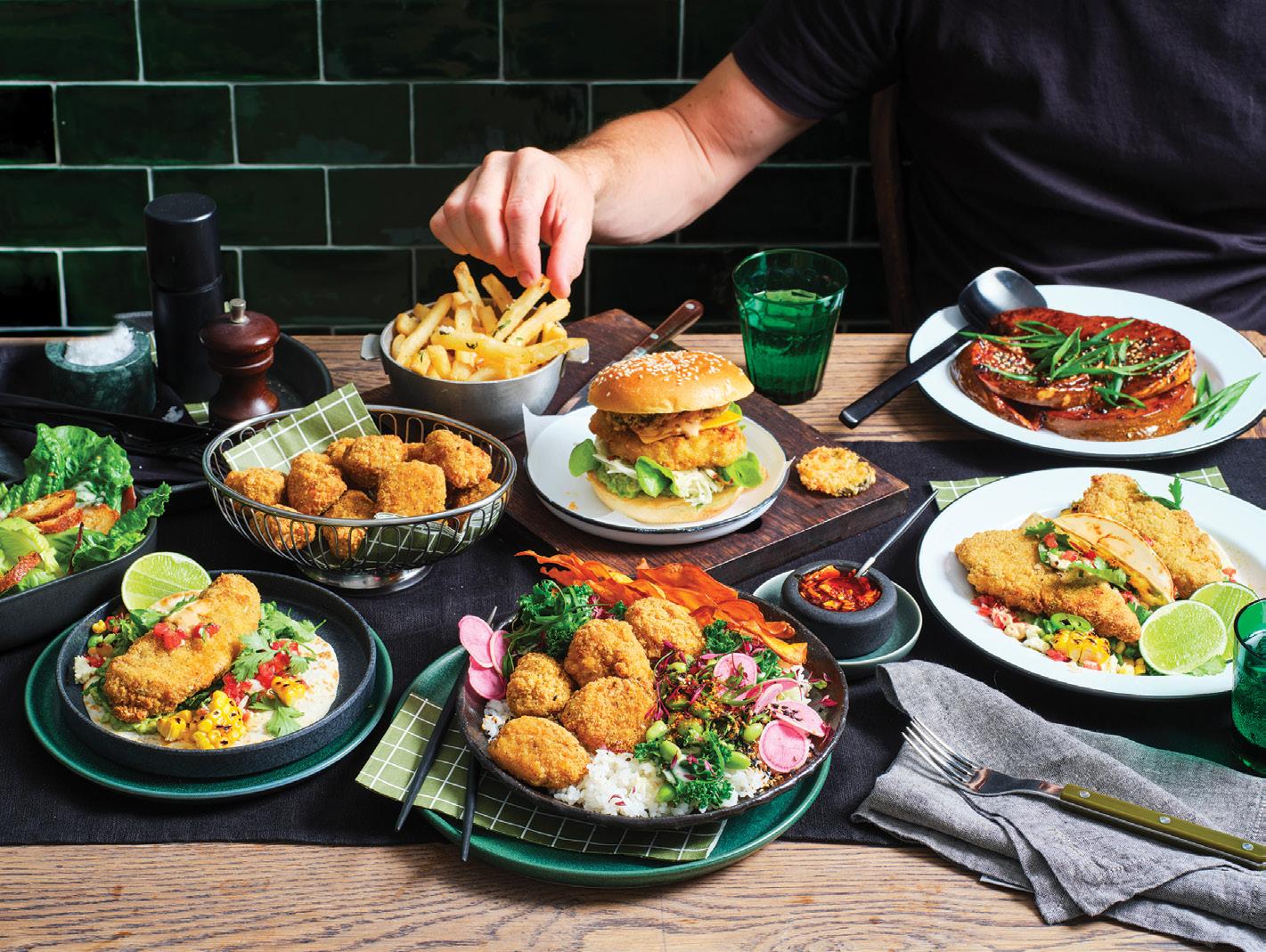
“Simplicity is definitely key. Successful operators focus on a small number of core products that can be used across multiple formats.”
- Rheyanan Hancox, National Account Manager – Foodservice, Baiada
“This has been an iterative, test-and-learn journey. We needed to solve some big challenges – from heating a large six portion pizza in under five minutes, to finding the best hot-holding equipment, packaging solutions and store workflows. All while keeping the optimal customer experience front of mind for our local neighbourhood stores,” Chilcott explains.
As the category evolves, this level of operational discipline is becoming increasingly critical as retailers compete on more than just convenience.
Customer expectations have shifted significantly, with convenience food now more critically judged. According to Foukkare, this is redefining what success looks like in the category.
“The bar has been lifted – customers now benchmark against QSR and cafés, not traditional servos and they expect freshness, speed, and consistency as non-negotiables,” he says.
While classic products continue to underpin the category, growth is increasingly being driven by premium and differentiated offers that broaden both appeal and relevance.
“The classics still anchor the category as the largest sub segment – pies and sausage rolls remain high-volume, reliable sellers,” Foukkare notes.
“Where we are seeing real growth is in premium and differentiated offers – fried chicken, chicken tenders, chicken chippies, loaded snacks, pizzas, dim sims and meal-style options.”
• Consumers are trading down but still willing to pay for perceived quality
• Value is increasingly defined by portion size, quality and satisfaction
• Premium items can drive higher spend when positioned as affordable treats
• Retailers balancing indulgence with accessibility are capturing more occasions
This diversification is closely linked to changing consumer behaviour, particularly as cost-of-living pressures reshape spending across foodservice. Speaking at the C&I Expo, Matthew Dodson, General Manager – OOH, Patties Foods, said consumers are increasingly moving between channels in search of better value.
“What we started to see is consumers trading down through different foodservice options as cost pressures increased, looking for ways to maintain the occasion but spend less overall,” he said.
At the same time, rising prices in QSR are creating opportunities for convenience operators to capture more meal occasions.
Above: As the category evolves, operational discipline is becoming increasingly critical as retailers compete on more than just convenience
Below: What was once anchored in a limited range of pies and sausage rolls has evolved into a sophisticated, multilayered category
“When you look at a family going through a drivethrough and spending close to $100, the consumer starts to question whether that still represents value, and that’s where other channels – including convenience – can step in,” Dodson explained.
Importantly, this shift is not purely price-driven, with consumers still willing to spend more when the offer feels justified.
“What we’re seeing is that consumers are still willing to spend a little more if they feel like they’re getting something better – it’s about finding that balance between premium and value,” he added.
This balance between value and quality is particularly evident in supplier strategies, where premiumisation is emerging as a key growth driver. Rheyanan Hancox, National Account Manager – Foodservice at Baiada, says higher-quality protein is leading the way. →

“Whole muscle, natural chicken products are driving the most growth, particularly burgers and tenders… as retailers look to premiumise,” she explains.
At the same time, expectations around quality and presentation continue to rise, requiring retailers to rethink both product and delivery.
“Consumers expect convenience food to feel closer to a café or QSR experience. Natural and ‘better for you’ poultry lines, premium branding and freshly prepared menu items are key quality cues.”
For operators, this reinforces the importance of simplicity and execution.
“Simplicity is definitely key. Successful operators focus on a small number of core products that can be used across multiple formats,” Hancox says.
At the same time, ongoing advances in kitchen technology are supporting this shift, allowing retailers to deliver higher quality food with greater consistency and less operational complexity.
“Advanced deep fryers, combi ovens and advanced holding cabinets are continually evolving – helping stores deliver better quality food with less labour,” she adds.
Consistency remains a defining factor in success, as delivering a reliable experience day in and day out is what ultimately builds trust and repeat purchase.
Hancox says: “Ultimately, execution is the hardest part to get right but it is the most important – stores that get their consistency right, every day, will win.”
Hot food is also increasingly integrated into broader retail strategy, particularly through meal deals and bundled offers that drive both traffic and basket size. At Ampol, the category plays a key role in

DIFFERENTIATOR
• Consistency across quality, availability and speed is critical
• Simple menus are easier to execute at scale
• New equipment is improving quality while reducing labour
• Strong execution drives repeat purchase and long-term growth

“Customers are now seeing greater variety, improved consistency, and a more contemporary food and beverage selection that reflects how Australians eat today.”
- Sarah Chilcott, Area Lead Food, 7-Eleven
Above: Rising prices in QSR are creating opportunities for convenience operators to capture more meal occasions
Below: Ongoing advances in kitchen technology are supporting this shift, allowing retailers to deliver higher quality food with greater consistency and less operational complexity
“As a highly competitive category, we see hot food as an important component to our value and combo offers across the network in order to meet the needs of our customers,” an Ampol spokesperson says.
This is supported by a diverse range designed to meet different needs while balancing mainstream and premium appeal.
“The majority of our hot food products available across our Ampol Foodary network are manufactured in Australia, with a good mix across mainstream and premium segments including vegetarian and halal.”
Portion size is also becoming more important as consumers look for more substantial meal solutions.
“Providing a range of hot food product sizes has also become an increasingly important factor of the category. An example of a larger variant to our hot food category is our recently launched exclusive Foodary Meal in a Pie Spaghetti Bolognese, which has provided customers with a sizeable premium option,” says the spokesperson.
Looking ahead, the opportunity lies in owning the “meal on the move” occasion and becoming a credible alternative to traditional foodservice, according to Foukkare.
However, differentiation will be critical as more retailers invest in similar offers.
“Simply doing what everyone else is doing well is now not good enough,” he says. “Retailers need to focus on providing their customer something unique to them. Retailers need to determine how they can stick out in a sea of sameness if they want to survive.”
Ultimately, the evolution of hot food reflects a broader shift in the role of the petrol and convenience channel itself.
“Customers are now seeing greater variety, improved consistency, and a more contemporary food and beverage selection that reflects how Australians eat today,” Chilcott says. ■

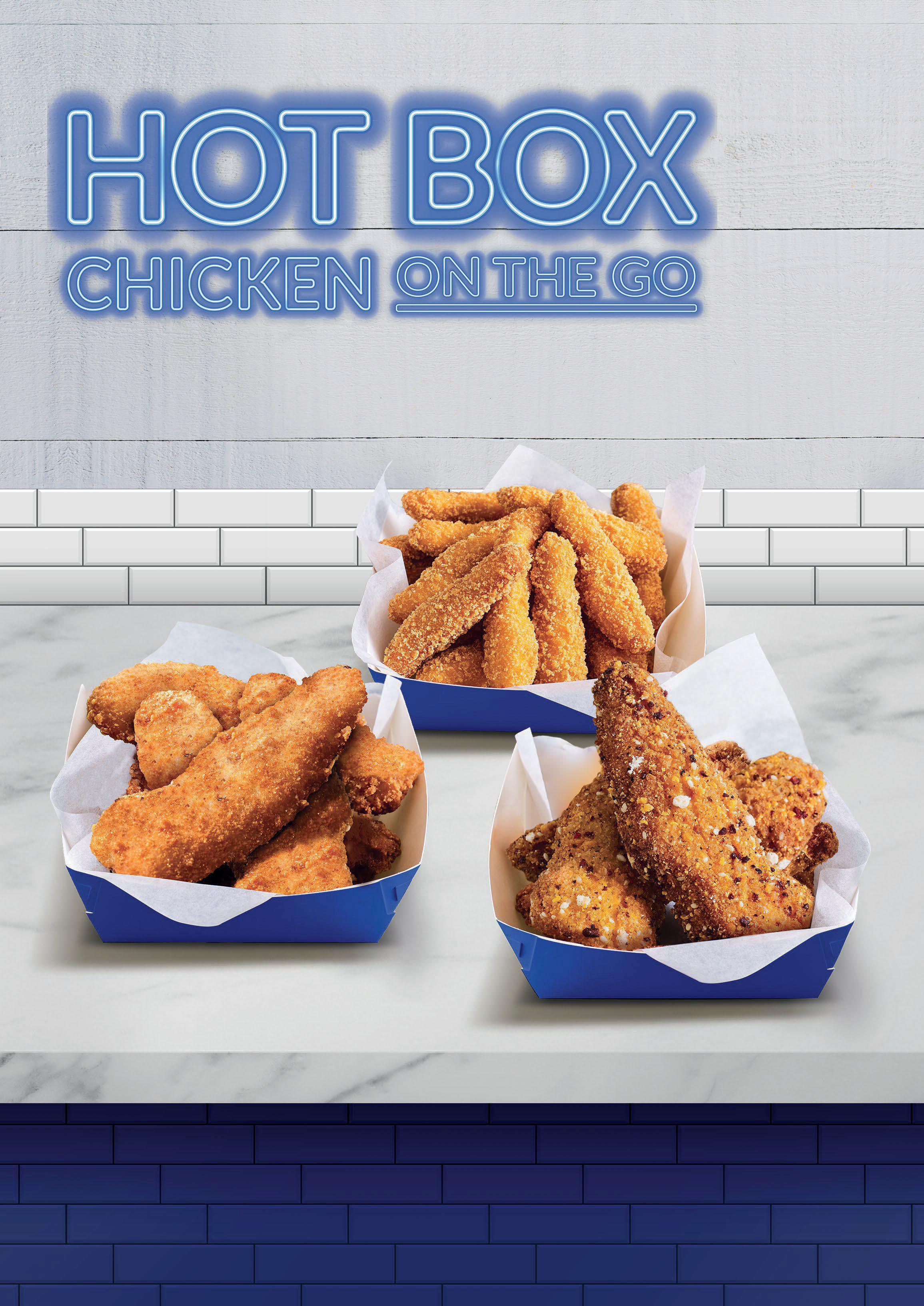
Steggles has provided high quality, convenient poultry solutions to the Australian market since 1919. With a focus on taste, consistency, and ease of preparation, Steggles offers a range of fully cooked chicken products ideal for grab & go meals, hot food displays, and quick service menus.

As margins tighten, P&C operators are turning to services to drive revenue, relevance and foot traffic.
Words Deb Jackson
• Crypto ATMs and kiosks require less than 1m² footprint
• Many models operate with zero capex for retailers
• Revenue can begin from month one depending on structure
AS FUEL VOLUMES fluctuate and in-store categories face margin pressure, Australia’s petrol and convenience (P&C) sector is rethinking what a service station can be. Alternative revenue streams are becoming central to long-term viability, reshaping how operators think about space, service and customer engagement.
“Alternative revenue streams are no longer optional – they’re strategic,” says Theo Foukkare, CEO of the Australian Association of Convenience Stores (AACS). “With ongoing fuel margin volatility, retailers are being forced to diversify how they continue to remain relevant.”
He says: “The model is shifting quickly: fuel still plays a strong role in bringing consumers to the store, but it’s the in-store offer and adjacent services that increasingly drive profitability and long-term resilience.”
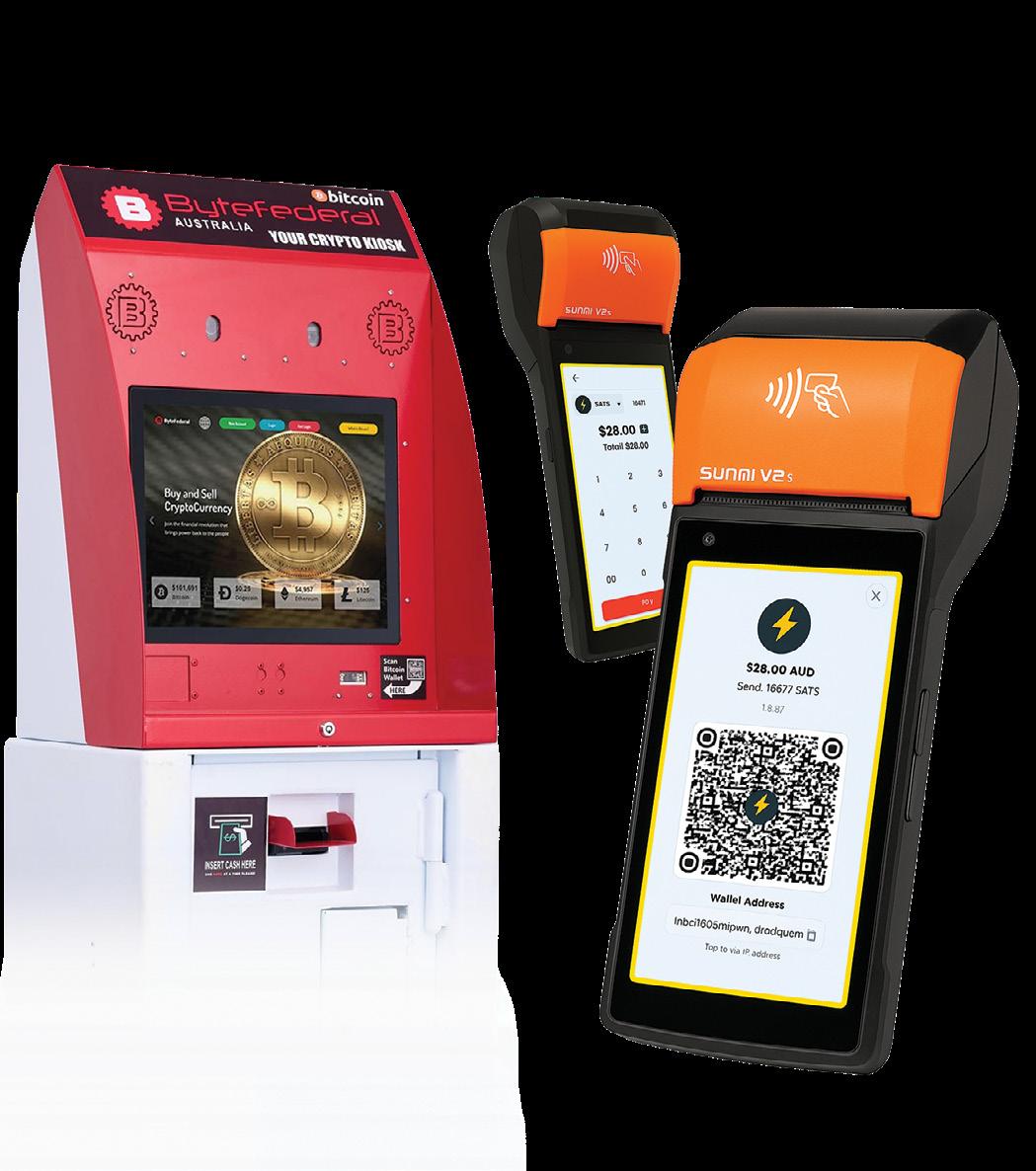
This shift is playing out across a growing range of alternative services, from crypto ATMs and outdoor laundromats to vending concepts and EV charging, as operators explore new ways to increase site utilisation, extend dwell time and unlock additional revenue streams.
One of the most immediate opportunities lies in rethinking how under-utilised space can be transformed into revenue-generating assets without compromising core retail operations.
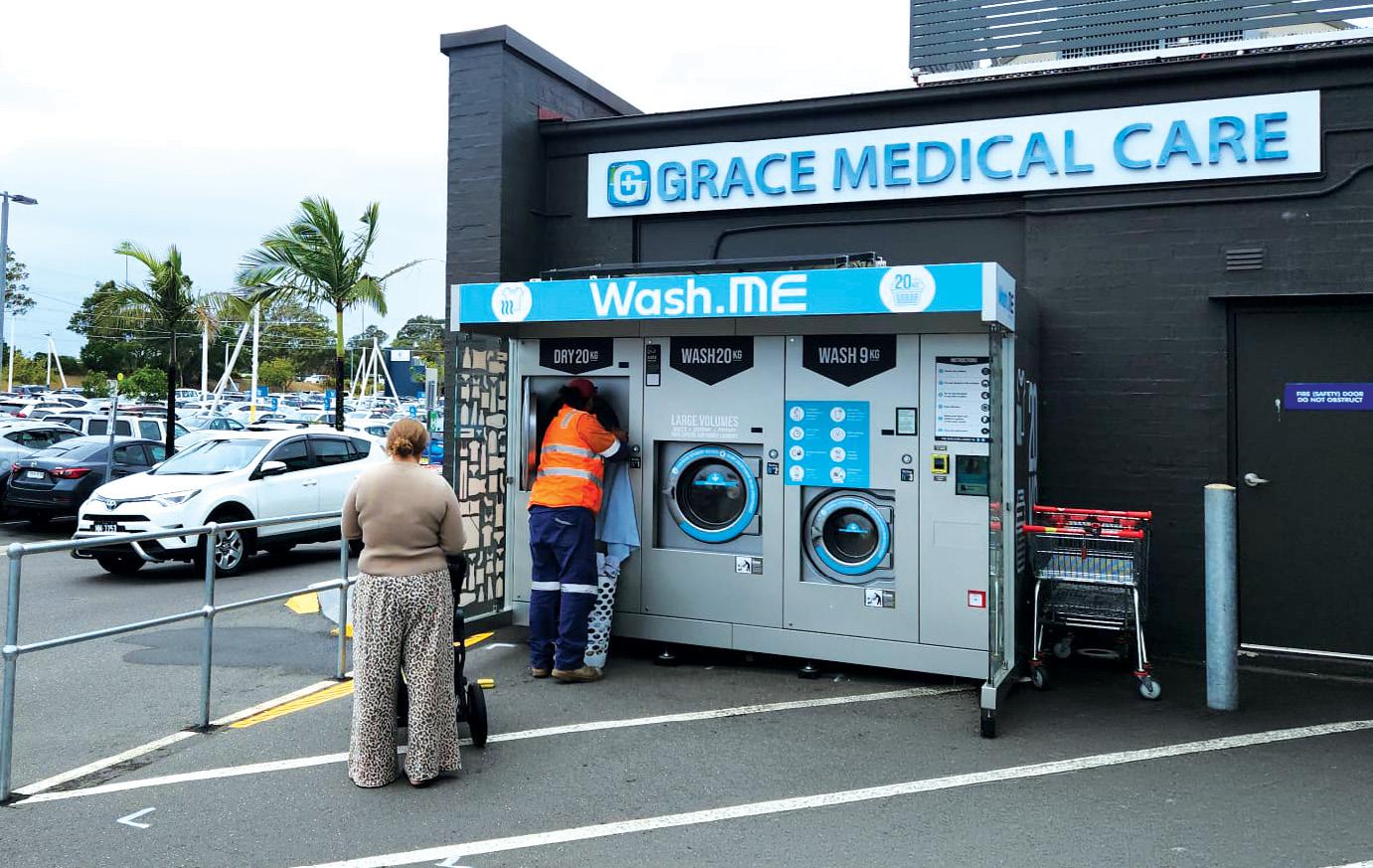
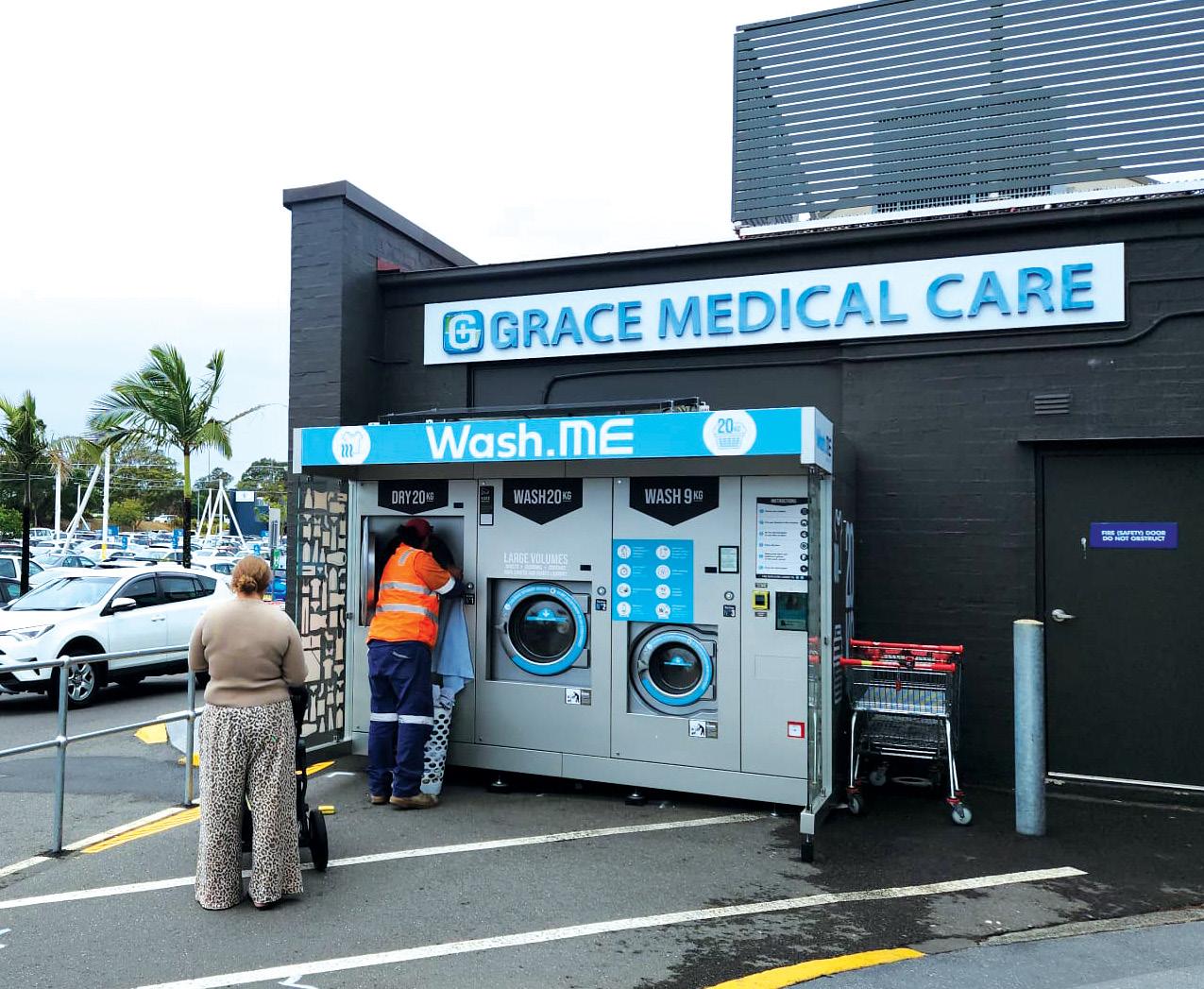
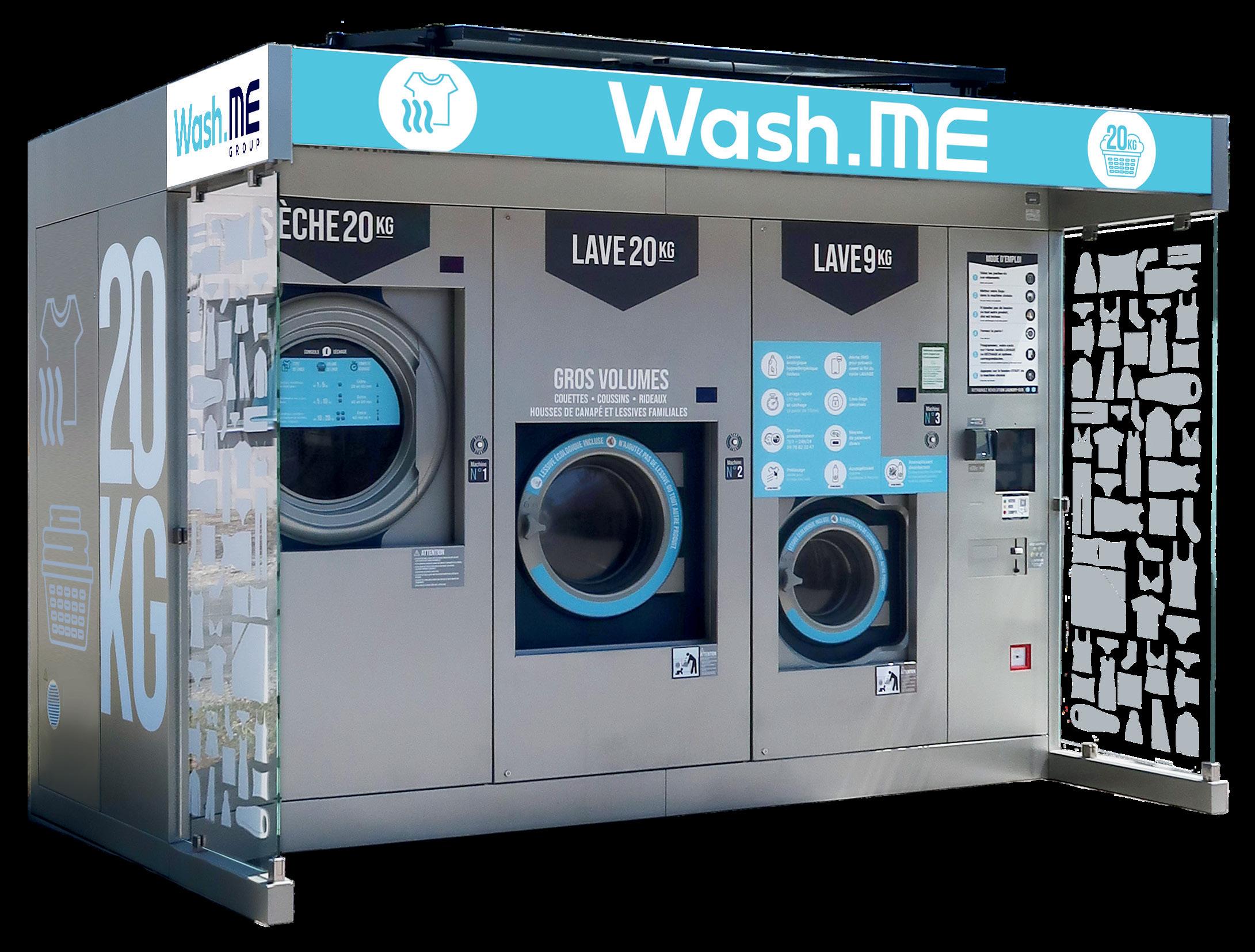
ME Group’s Wash.ME units are outdoor, selfservice laundromats designed for high-traffic P&C sites. Installed in under-utilised forecourt space, they generate passive income without impacting core instore activity. Operating on a revenue-share model, they require no upfront capital while also driving additional foot traffic.
“Petrol stations have a lot of space on site that is currently unused, and the machine was designed to stay outdoors so retailers can use that space to generate new income,” explains Melanie Mattiuzzo, Managing Director of ME Group Australia.
“They’re generating two new income streams –the passive income from the machine itself but also increasing turnover by attracting more customers to the site,” she says.
“By deploying the machine, they attract more customers, increase dwell time, and generate more money through the revenue share.”
As the channel looks to diversify, demand is growing for automated, self-service solutions that deliver income without adding operational complexity.
“Retailers are increasingly looking for ways to monetise under-utilised areas of their stores without adding operational complexity or labour costs,” says Naveed Ahmed from Localcoin.
“As a result, there’s growing interest in hands-off solutions such as crypto ATMs, automated parcel lockers, EV charging infrastructure and other selfservice kiosks.”

• Clear customer need and relevance
• Strong integration with food and coffee offer
“When done well, these services absolutely drive incremental revenue –bringing in new customers and new occasions.”
–
Foukkare, CEO, AACS
A key part of that appeal lies in predictability, particularly in an environment where other revenue streams can be volatile.
“In most cases we operate on a fixed monthly rent… the retailer receives a guaranteed payment regardless of transaction volume,” Ahmed explains.
“Localcoin covers the cost of the ATM, installation, maintenance, compliance and electricity, so there is no capital investment required.”
ME Group’s model similarly removes both financial and operational barriers, making it easier to trial new services without additional risk.
“They can start offering the service without any capex, which significantly decreases the risk,” says Mattiuzzo.
“From the first month, our partners start to make money without having to spend any money. And from an operational standpoint, our partners do not have to do anything.”
Beyond passive income, the broader value of these services lies in their ability to influence customer behaviour and drive additional in-store spend.
“It depends on execution,” says Foukkare. “When done well, these services absolutely drive incremental revenue – bringing in new customers and new occasions.
“But if they’re not aligned to a clear customer need, they risk simply redistributing existing spend within the store.”
This distinction is increasingly important as more operators experiment with new services, with the most successful sites focusing on how these additions integrate into the overall customer journey.
• High visibility and accessibility on site
“EV charging and parcel lockers are increasing dwell time, which creates a real opportunity for retailers,” Foukkare explains. “The key is converting that time into spend.”
Laundry services provide a clear example of how extended dwell time can translate into additional purchases across multiple categories.
“When customers use the machines, they tend to stay on site, which creates opportunities for additional spend,” says Mattiuzzo. “People are going to stick around – they’ll buy a coffee, get a newspaper, fill their car up.”
Crypto kiosks are delivering similar outcomes, particularly by attracting customers who may not otherwise visit the store.
“Customers typically visit the store specifically to access cryptocurrency services, which often creates additional foot traffic rather than replacing existing purchases,” says Ahmed.
“In many cases, customers who come in to use the ATM will also pick up convenience items such as drinks or snacks.”
Ace Gorgievski, Head of Operations of ByteFederal Australia – a digital asset and crypto infrastructure provider focused on blockchain-enabled financial services – says the same pattern is emerging across its network.
“In many cases these services bring new customers into the store while building and cementing relationships with existing clientele,” he says.
“People who visit a location specifically to use a kiosk often purchase other items while they are there.” →

• Capital and infrastructure requirements (especially EV)
• Regulatory and compliance complexity
• Risk of redistributing, not growing, spend
Taken together, these developments point to a broader transformation in the role of the service station, as sites evolve beyond traditional retail formats into multi-functional service destinations.
“Customers increasingly expect convenience locations to provide access to services, not just retail products,” says Gorgievski.
This expectation is being reinforced by the rapid adoption of self-service technology across retail categories.
“Consumers increasingly expect services to be instant, convenient and self-serve,” adds Ahmed.
Foukkare believes this evolution is already well underway and will continue to accelerate.
“The modern convenience site is becoming a true multi format and service destination,” he says. “It’s no longer just about fuel – it’s about food, coffee, services, and connection to the local community.”
Importantly, success depends heavily on location and local customer needs rather than a one-size-fitsall approach.
“Metropolitan sites are best suited to high frequency services like parcel lockers and strong food offers,” Foukkare explains. “Highway locations lend themselves to EV charging and longer dwell time services. And regional sites often play a broader role, acting as essential service hubs for their communities.”
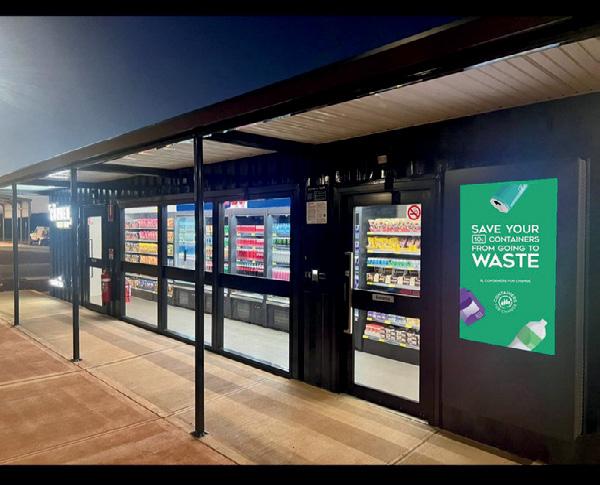
Bp has implemented a number of CardBot vending machines at sites along Australia’s East Coast, recently expanding to Western Australia with its first installation at bp Baldivis Southbound.
The site is currently leading the bp network nationally for CardBot transactions, highlighting strong customer engagement with the concept and its ability to drive incremental sales.
The machine introduces a curated, automated retail experience, allowing customers to purchase trading cards and collectibles through a selfserve format, extending the product mix beyond traditional convenience categories.
Despite growing momentum, operators must carefully assess both the commercial opportunity and the potential challenges associated with each model.
“There are a few key challenges,” says Foukkare. “Upfront capital and infrastructure requirements –particularly for EV – can be significant.
“Regulatory complexity is another factor… then there’s operational execution – ensuring these services fit within the site and don’t disrupt the core offer.”
Even for lower-risk, outsourced models, long-term viability depends on selecting the right sites and ensuring consistent performance.
“They’re generating two new income streams – the passive income from the machine itself but also increasing turnover by attracting more customers to the site.”
– Melanie Mattiuzzo, Managing Director, ME Group
“It’s not just about deploying machines everywhere… we have to ensure they’re profitable for us and our partners,” says Mattiuzzo. “We have very specific criteria that all sites have to meet.”
Location fundamentals remain critical, particularly for services that rely on consistent usage.
“The best locations tend to be high-traffic environments where customers already feel comfortable handling cash,” says Ahmed. “Service stations and convenience locations work particularly well, especially when they operate extended hours.”
While fuel remains a critical traffic driver, its role within the broader model continues to evolve.
“Traditional fuel is not going anywhere in a hurry… the country runs on liquid fuels,” says Foukkare.
However, margin pressure is accelerating the pace of change.
“Ongoing margin pressure is one of the biggest catalysts for innovation we’re seeing across the channel,” he says.
Globally, diversified models are becoming the norm, with early adopters already redefining the modern convenience site.
“The retailers who lean into that shift early, and execute it well, will be the ones who lead the channel forward,” says Foukkare.
For operators, the question is no longer whether to diversify, but how to do so in a way that enhances the customer experience while delivering sustainable commercial returns. ■


Running a service station outside the cities means higher costs, tighter margins and a much bigger role in daily life.
Words Thomas Oakley-Newell
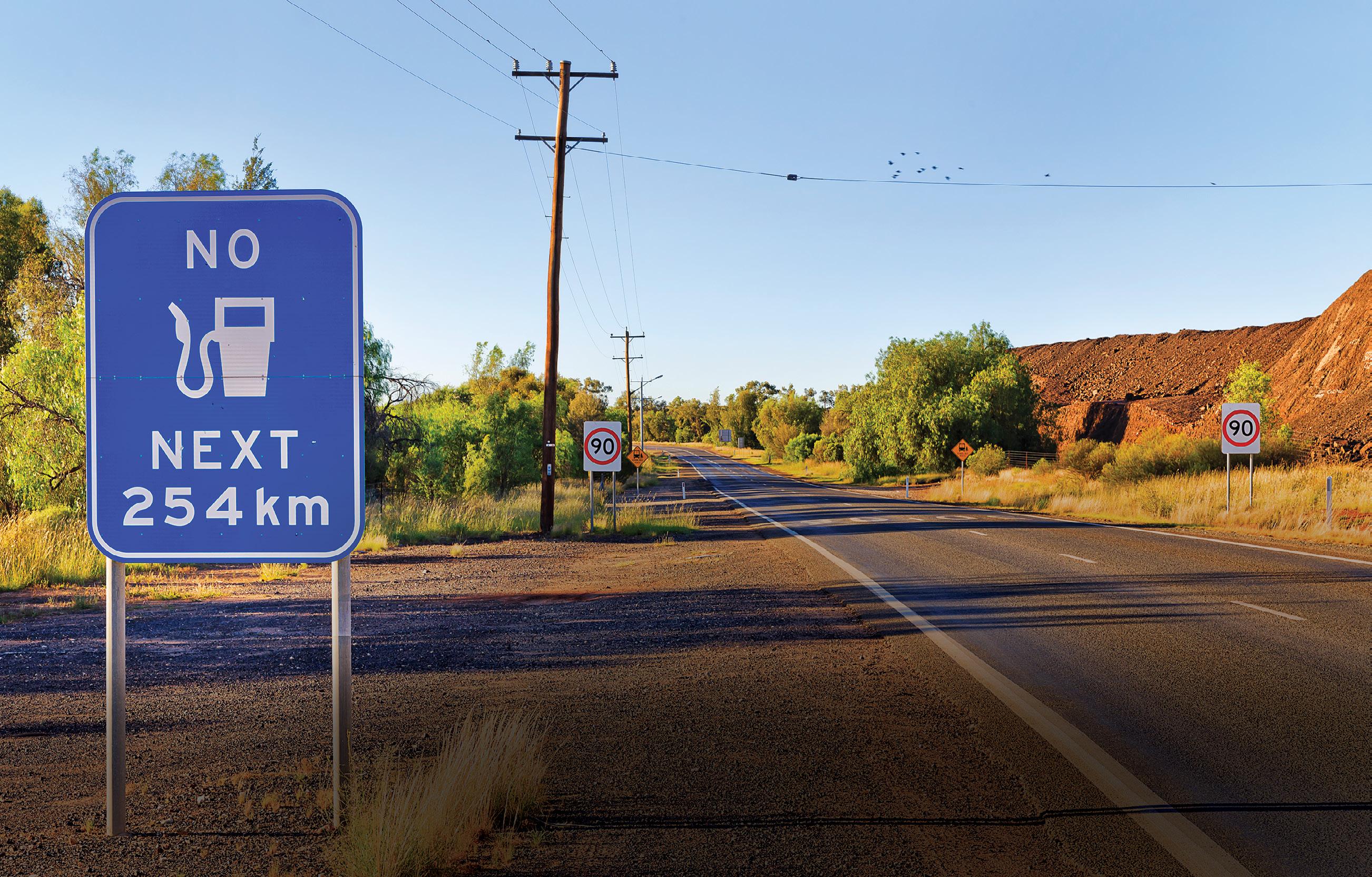
REGIONAL PETROL AND convenience stations in Australia sit at the edge of the country’s population and infrastructure. They serve smaller towns, remote communities and tourism corridors where distances are long, supply chains are stretched, and customer needs can vary widely.
While metro sites benefit from scale and frequent deliveries, regional operators must manage higher costs, limited labour pools and less predictable demand, all while still acting as essential local services.
One of the biggest challenges for regional sites is the cost of getting products to store. Freight, in particular, stands out as a major pressure.
“Freight is consistently one of the biggest cost pressures in regional and remote locations, particularly given distance, lower drop densities and rising transport costs,” said Sharon White, Head of Sales and Marketing at Lowes Petroleum. She also noted that regional operators often have less ability to spread costs across large volumes.
“Unlike metropolitan sites, regional operators often have fewer opportunities to offset these increases through scale or higher volumes.”
Labour is another key cost. Smaller teams mean each role matters, and it can be harder to find and keep staff. Utilities and compliance costs have also increased, adding further pressure.
In remote environments, the challenge can be even greater. Adrian Lorenzin, Senior Director Supply Management, Tech and Services at Sodexo explained that many of their sites are far from distribution centres.
“Most of our sites are around 1,500 kilometres from the nearest distribution point, so transport costs are significantly higher.”
Because deliveries are less frequent, operators must also carry more stock. This creates a balancing act: too much stock leads to waste, while too little risks missed sales. Managing inventory becomes a core daily task rather than something handled occasionally.
Finding and keeping staff is a consistent issue across regional locations. Unlike cities, where there is a larger pool of workers, regional towns often have limited hiring options.
White said labour pressure goes beyond wages. It includes availability and retention, particularly in smaller teams where every staff member plays an important role.
At remote sites, staffing models are often structured differently. Lorenzin described how Sodexo uses rosterbased systems rather than casual staff. These rosters typically involve extended periods on site followed by time off, which helps make remote work more practical but also increases labour costs per hour.
Recruitment can also be difficult because the lifestyle does not suit everyone.
“There’s natural attrition, particularly in the first three months, when people realise the lifestyle isn’t what they expected,” Lorenzin said.
To address this, operators focus on onboarding and support. Training programs, clear expectations before arrival and on-site support systems help new employees adjust. Culture also plays a key role in retention. When teams feel supported and connected, they are more likely to stay.
Local hiring is also common in regional retail sites such as those operated by Shell Reddy Express, where staff often live in the same community as customers.
“Recruitment and retention can be challenging in regional areas, particularly in smaller towns with less residents who may be looking for work, however the majority of our team members live locally, so they can build trust and support with job seekers. We invest in training and upskilling, and we promote from within wherever possible,” a Shell Reddy Express spokesperson said.
A role in the community
In regional Australia, petrol stations often act as more than just places to refuel. They can become informal community hubs, especially in towns with limited retail options.
White described how these sites often provide a range of services beyond fuel.
“It’s often a key access point for essentials –from groceries and foodservice through to parcel collection, local information and a safe, well-lit place to stop.”
Shell Reddy Express said that being part of the local community is hugely important for their regional Shell Reddy Express, OTR, Liberty and Dealer Operator sites.
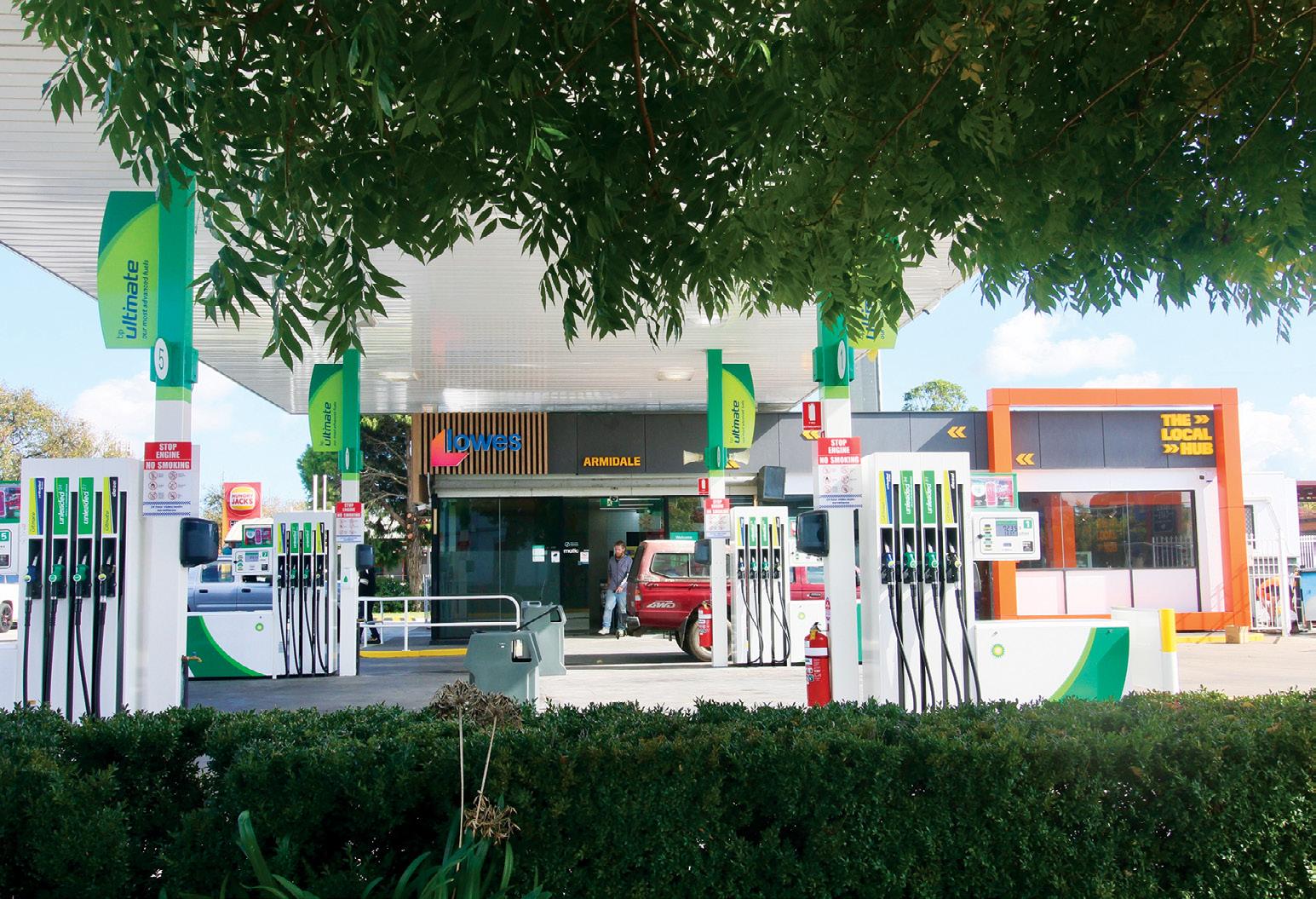
“It’s often a key access point for essentials –from groceries and foodservice through to parcel collection, local information and a safe, well-lit place to stop.”
- Sharon White, Head of Sales and Marketing, Lowes Petroleum
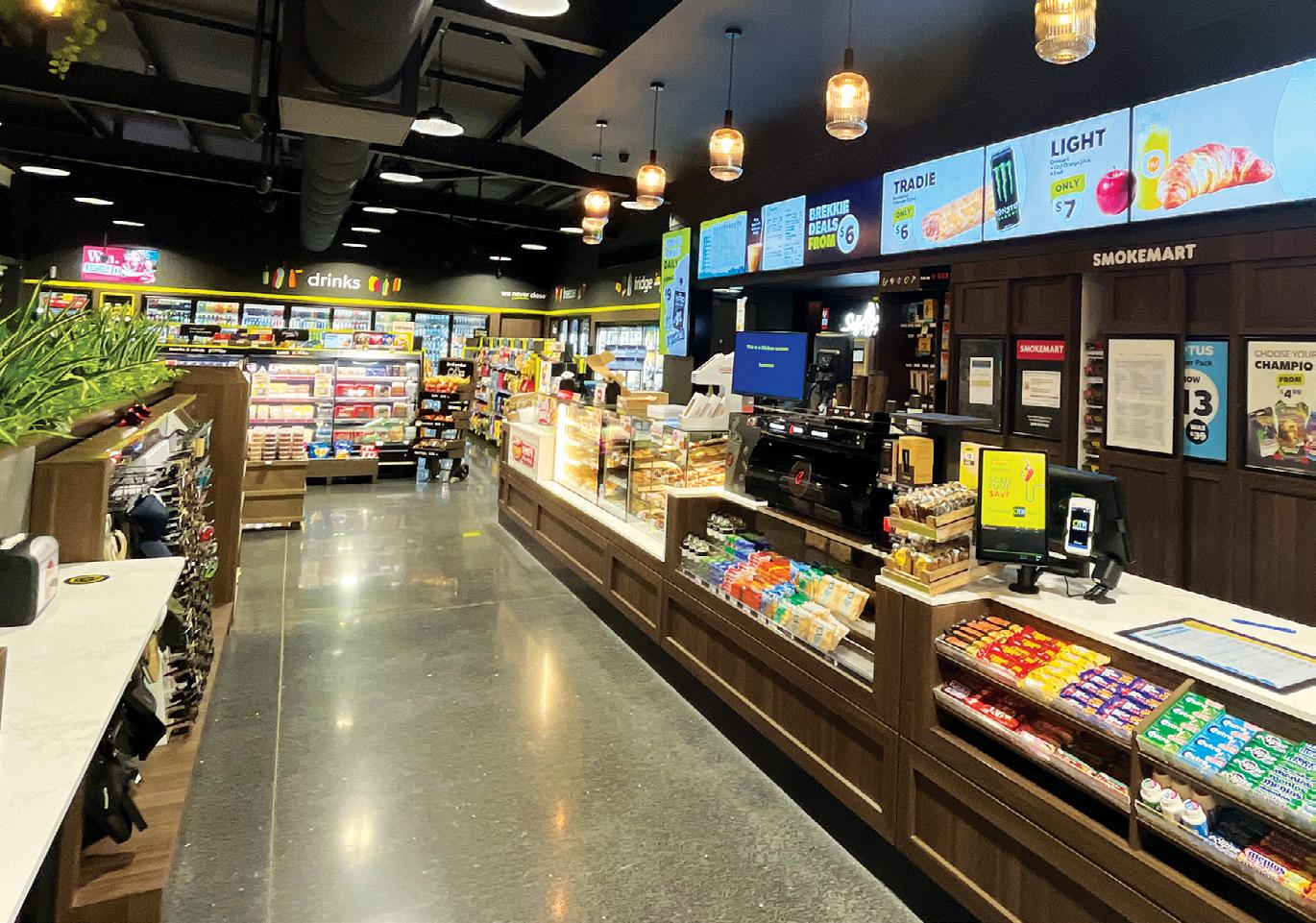
“They provide employment for locals, sell fuel and household staples like coffee, milk, bread and groceries. Most importantly, they engage with locals, building relationships and being involved in their own region. Running a regional site is incredibly rewarding because of the relationships you build and the role you play in keeping local towns moving.”
In many cases, they are also among the few businesses that remain open during disruptions. Whether due to weather events, supply chain issues or emergencies, these sites can play a critical role in keeping communities supplied.
Lorenzin described a similar function in Sodexo’s remote communities, where retail is part of a broader offering that includes food services and shared spaces. The aim is to provide everyday services that people would normally access at home.
“That’s where innovation comes in. Whether it’s delivery, technology, or expanded services, the goal is to improve quality of life for people working in remote environments.”
The Shell Reddy Express spokesperson says that they always try to tailor their offerings to customer missions, however, they do stock slightly different products in some sites.
“For example, some Shell Reddy Express sites on the coast stock fishing supplies. Our teams work with suppliers to make sure we’re providing the products and services our customers need.”
This kind of tailoring helps ensure the store remains relevant to its community rather than following a one-size-fits-all model.
Regional petrol and convenience sites must also deal with fluctuations in demand. Seasonal tourism is a major factor in some locations, while others experience more stable but lower volumes year-round. →
White said tourism can lift sales during peak periods, particularly in towns that see increased visitors during holidays.
“Peak periods often deliver higher fuel volumes and stronger convenience spend,” she said. However, these gains must be balanced against higher costs such as extended trading hours, additional labour and increased freight.
Shell Reddy Express agreed that these peak periods create higher demand for fuel, and also coffee and food to go, sometimes offsetting quieter trading periods.
“Profitability depends on strong supply chains, accurate forecasting and planning to ensure the right stock and eliminating wastage wherever possible. Our supply and operations teams plan well ahead to ensure regional sites are adequately resourced during these peaks.”
Planning is key. Operators need to prepare well in advance to ensure they have enough stock and staff during busy periods, while also maintaining efficiency during quieter times.
Supply chain disruptions can have a bigger impact in regional areas compared to cities. In metropolitan areas, stock can often be replenished quickly. In regional areas, deliveries may only occur weekly, and delays can be harder to manage.
Lorenzin noted that weather events such as floods and road closures can disrupt access to sites for extended periods.
“Flooding and road closures can cut off sites for weeks,” he said. These disruptions require operators to hold extra inventory and plan for contingencies.
“Most of our sites are around 1,500 kilometres from the nearest distribution point, so transport costs are significantly higher.”
- Adrian Lorenzin, Senior Director Supply Management, Tech and Services, Sodexo
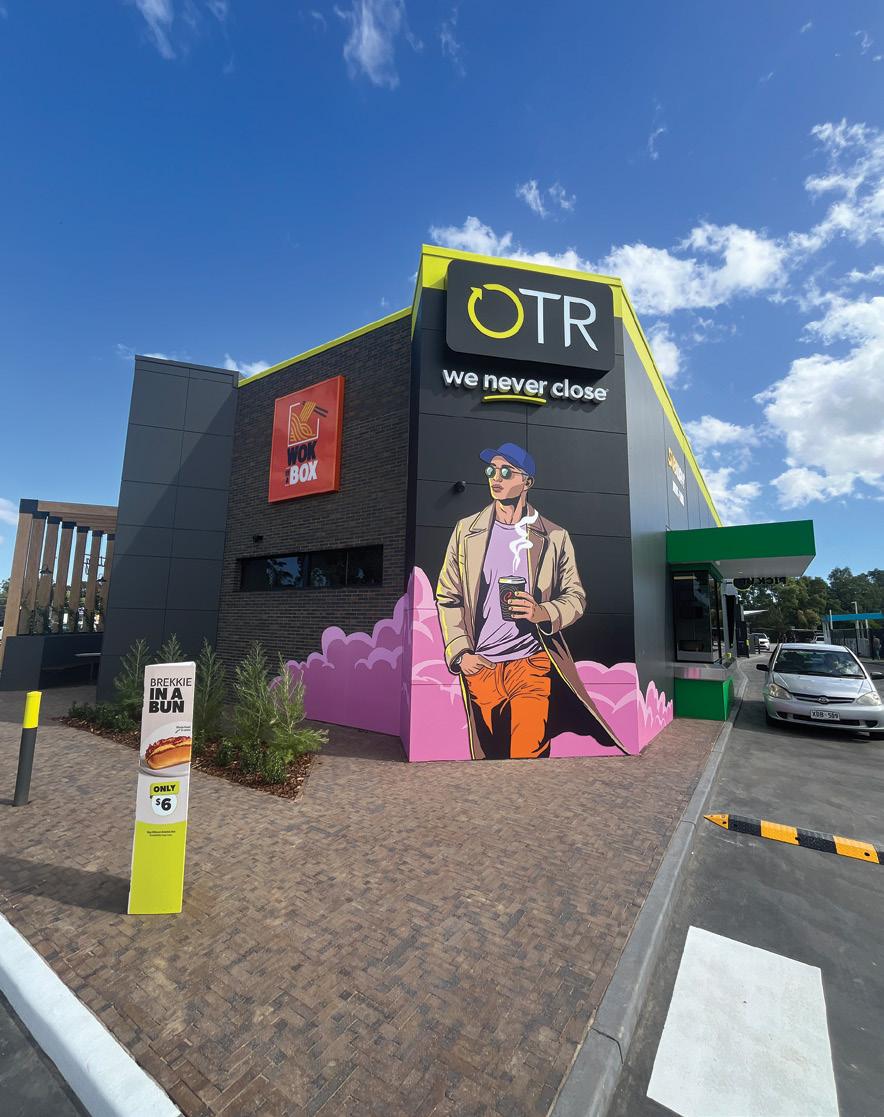
Because of these limitations, some products, particularly fresh food, are handled differently. At Sodexo sites, food is often prepared on-site rather than transported long distances. This helps maintain quality but requires more labour and kitchen infrastructure. Consumer behaviour is also shifting. Cost-of-living pressures are influencing how people spend, with customers becoming more price aware.
White said fuel is a non-discretionary purchase, meaning even small price changes are noticed. At the same time, regional customers tend to value fairness and consistency.
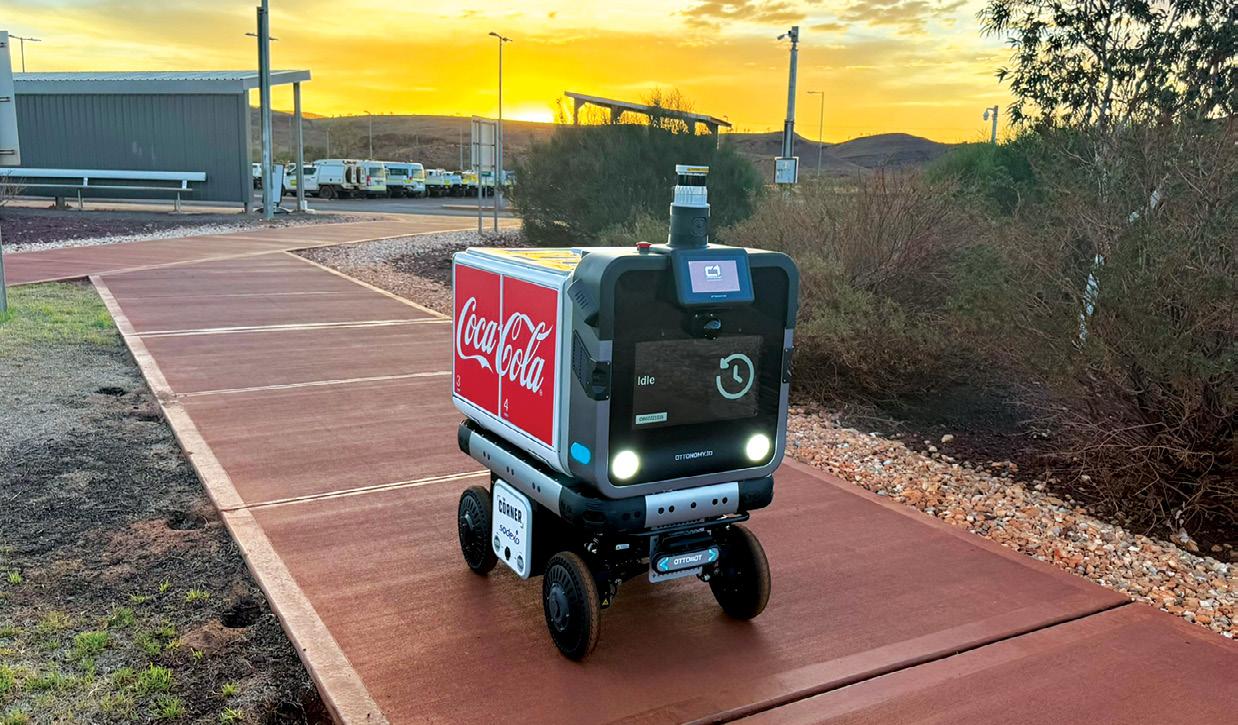
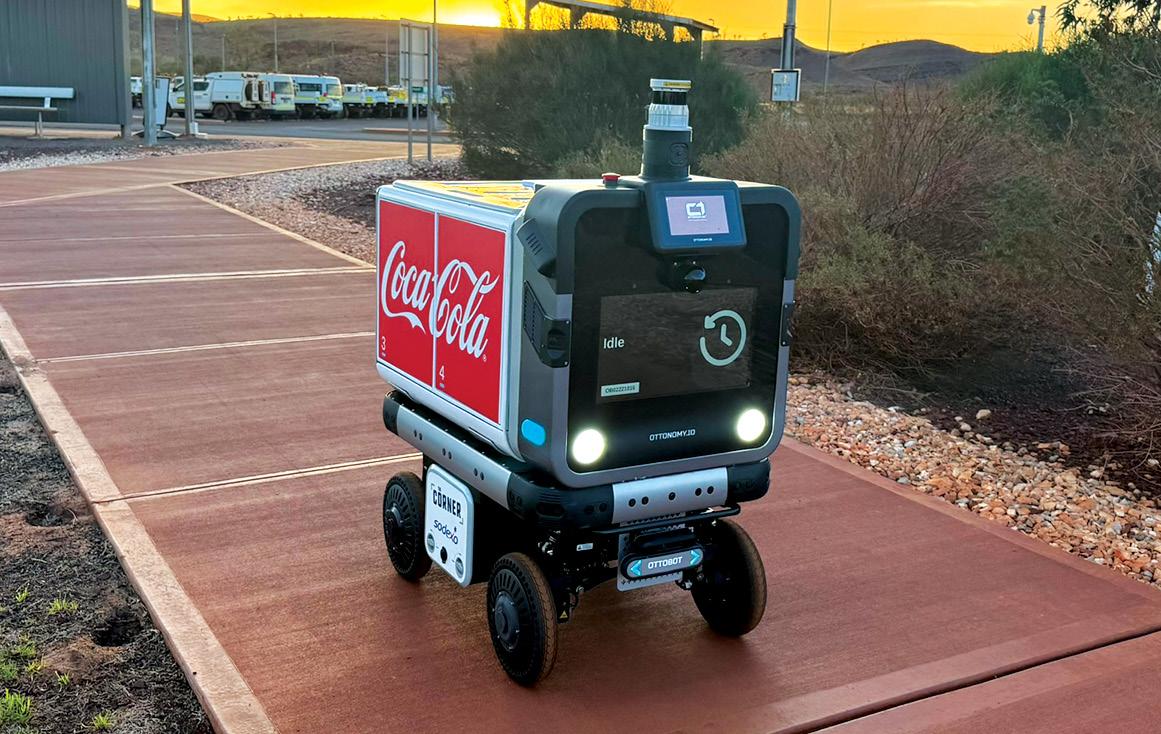
Sodexo is trialling Ottobot, an autonomous delivery robot, at Rio Tinto’s Gudai-Darri village in Western Australia’s Pilbara region.
The pilot will see Ottobot deliver food, non-alcoholic beverages and other items across the remote mining village, north-east of Newman. The company says it is the first time an autonomous food and beverage delivery robot has been deployed in a mine site village.
“They understand the realities of operating in regional areas, but they expect operators to do what they can to remain competitive. For us, that means balancing price with service, reliability and community presence – recognising that trust and long term relationships matter just as much as the number on the price board.”
Operators are responding by offering a range of products at different price points, allowing customers to choose based on their budget while still accessing essential goods.
Regional petrol and convenience stations operate under conditions that are very different from those in major cities. Distance affects cost, staffing is more complex, and supply chains are less flexible.
At the same time, these sites play a wider role in their communities, providing essential goods, local jobs and, in many cases, a sense of connection in places where options are limited. Balancing these demands requires careful planning, local adaptation and a focus on both efficiency and service. ■





















This issue’s C&I Choice is True Protein’s latest innovation – the True All Natural Protein Shake. An RTD protein shake that Founder Ben Kiereth says took five years to develop.
“For over five years, we have been working on a ready-todrink protein that stays true to our standards: real ingredients, ultra-filtered grass-fed dairy, zero artificial additives, nothing that doesn’t belong in your body,” said Kiereth.
The product was made possible by advancements in ultra-filtration technology, enabling the brand to deliver an RTD aligned with its ingredient philosophy. Designed for convenience, the shake is intended for a range of everyday occasions, from the gym to the office or while travelling.
True Protein’s RTD delivers 30g of protein sourced from ultra-filtered, grass-fed dairy and is made from real milk rather than reconstituted powders. It contains no added sugar and is free from artificial additives, gums, stabilisers and carrageenan. The formulation is also lactose and gluten free, with a smooth texture and clean finish.
Available in Rich Chocolate and French Vanilla, the True All Natural Protein Shake offers a natural, ready-to-drink option for consumers seeking convenient nutrition.
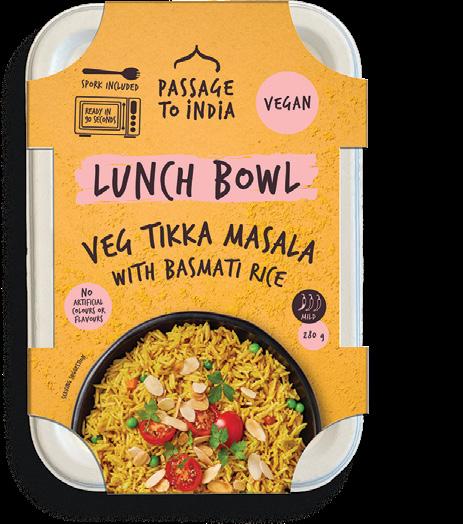
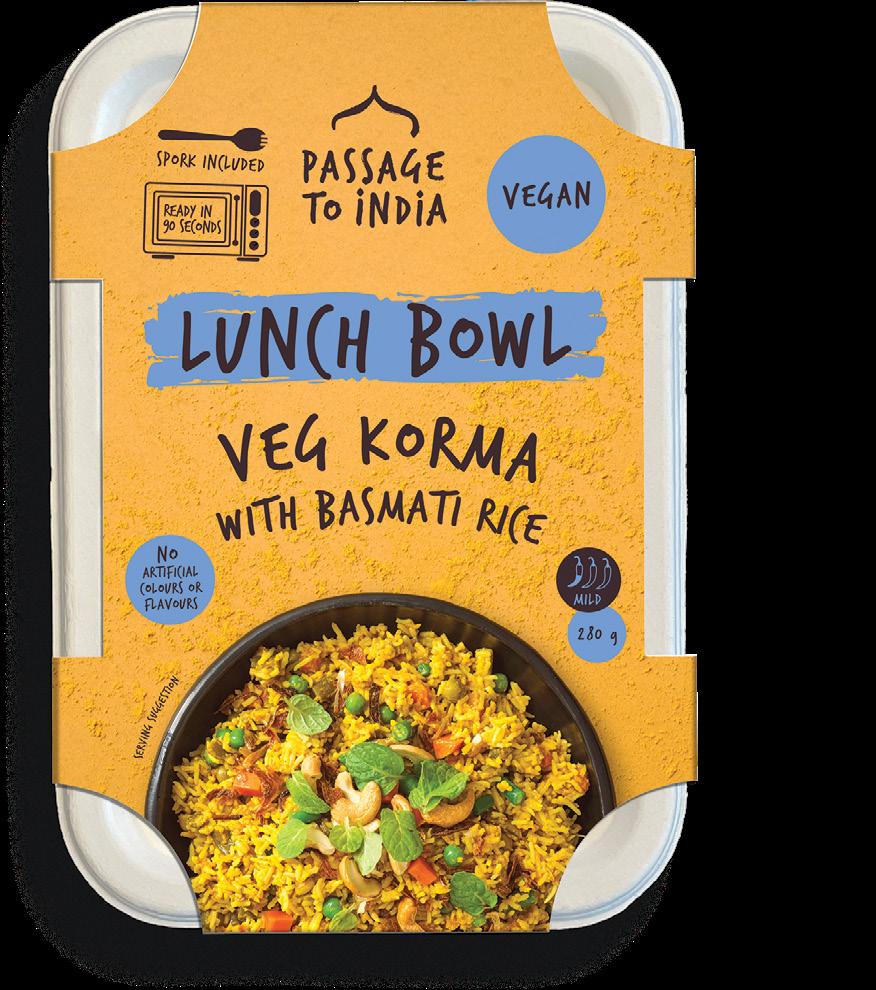
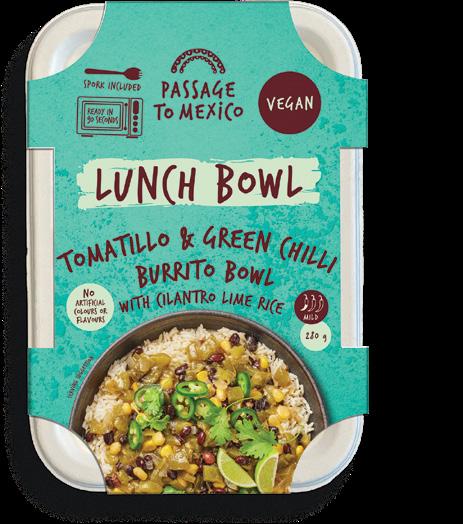
New Lunch Bowls from Passage Foods deliver authentic, globally inspired meals in just 90 seconds – purpose-built for the convenience and vending channel.
Designed for today’s time-poor consumer, these shelf-stable bowls provide a complete lunch or dinner solution that is microwaveable, mess-free and ready to eat straight from the pack. With a spork included and a compostable bagasse bowl, they are ideal for office environments, hospitals, universities, micro-markets and high-traffic convenience locations.
The range spans popular cuisines including India, Mexico, Italy and Asia, alongside better-for-you “Celebrate Health” options featuring ancient grains.

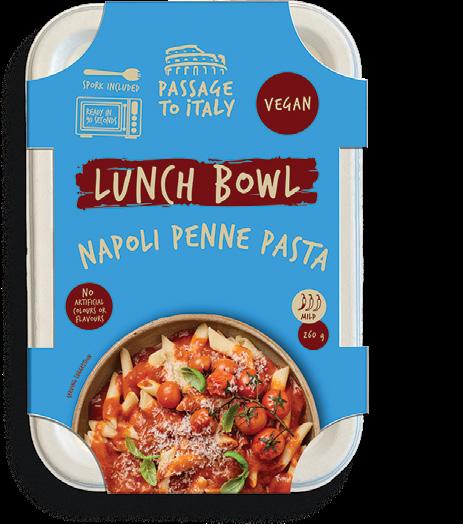
All products contain no artificial colours or flavours. Strong vegan offers align with demand for plant-based, better-for-you meal solutions on the go.
The bowls provide a satisfying portion size while maintaining a compact footprint for vending machines and tight shelf space.
For retailers and operators, they offer ambient storage, minimal operational complexity and strong margin potential. For consumers, they deliver authentic flavour, convenience and great value –transforming vending from snack-only to a true meal destination.
For more information email Passage Foods at contact@passagefoods.com or visit www.passagefoods.com



Chemist-owned and Australian-made, Maxiblock gives shoppers reliable sun protection without overthinking it. Maxiblock is a family-owned brand that’s been making sunscreen right here in Australia since the 1970s.
Available in a compact 100mL tube, the Essential SPF 50+ delivers broad-spectrum protection and 4 hours of water resistance. It’s a non-greasy formula that rubs in fast and won’t leave white marks, meaning customers can apply on the go and get right on with their day.
Australians are wearing sunscreen more often than ever, and that’s good news for convenience. More daily use means more people running out mid-week and ducking into a store to grab a replacement. A 100mL tube at a fair price fits that moment.
Maxiblock has built its convenience footprint around exactly this. Currently ranged in 7-Eleven, IGA, and SPAR, Maxiblock provides a formula at a competitive RRP that keeps moving off shelf.
Available to order now through Metcash C-Store and The Distributors. For direct enquiries or to become a stockist, contact maxi@maxiblock.com.au or call 1300 628 882.

More than just a plush – It’s a revolution in play!
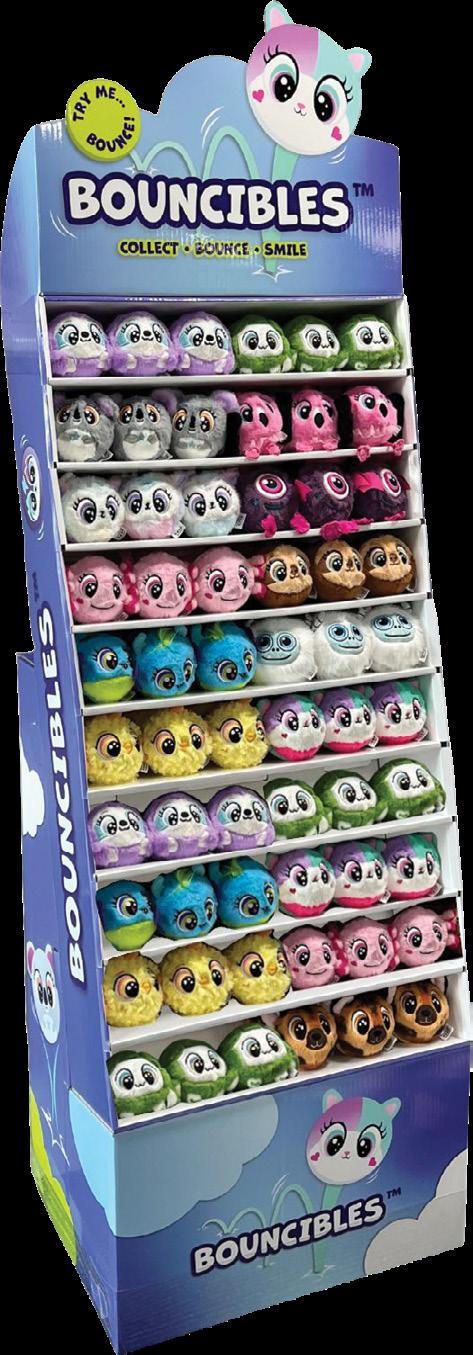
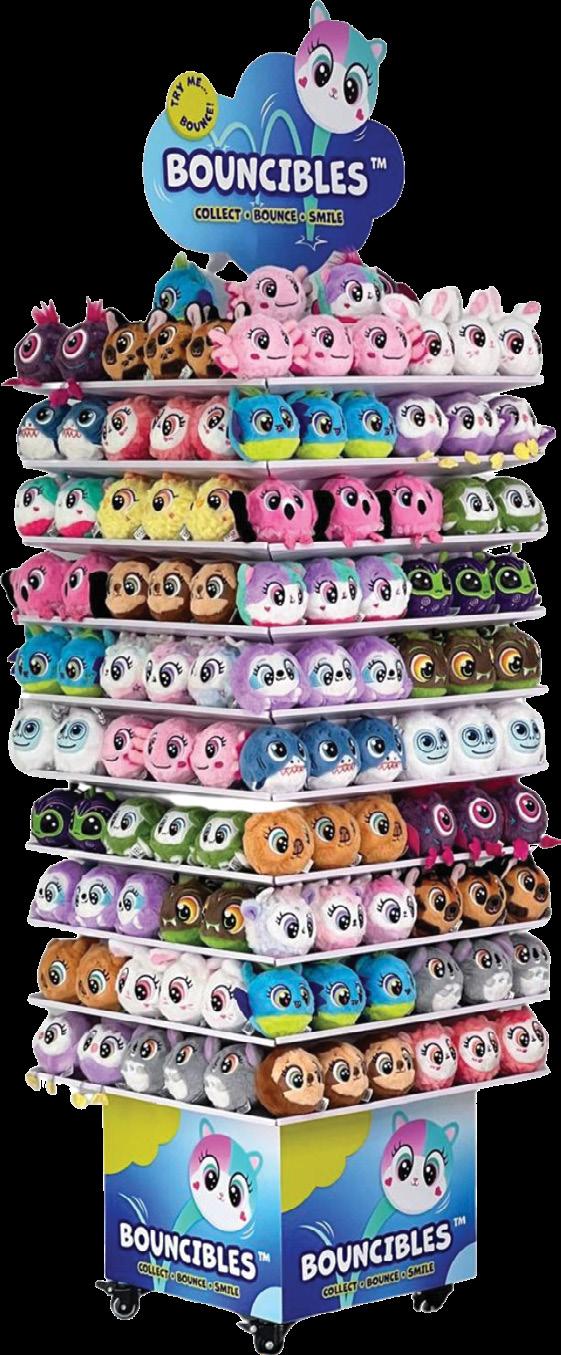
Bouncibles is a forward-thinking brand built for today’s kids and tomorrow’s trends. It has blended softness, imagination, and energy into one joyful product – a premium plush that doesn’t just sit on a shelf, but springs to life.
Born in the magical Bounciverse, every Bouncible is truly one-of-a-kind. Each character celebrates their very own “Bounciversary,” a special day that marks their unique personality and place in the growing world. It’s this attention to detail that makes Bouncibles more than just a toy; they are characters kids can truly connect with.
As global demand grows for active, screen-free play, Bouncibles invites kids to move, imagine, and interact. No batteries. No chargers. Just 100 per cent kid-powered fun.
Bouncibles identified a gap in the market for something truly fresh in the collectible category and responded accordingly. The result is a new line of plush toys that bounce as joyfully as the kids who play with them.
Whether it’s through vibrant character designs or trend-driven social content, Bouncibles presents itself as fun, modern, and visually irresistible every single time. This is why it is quickly becoming a favourite for families looking for high-quality play at an accessible price point.
Ready to join the Bounciverse?
Contact Peleguy Distribution today on 1300 377 341, orders@peleguy.com.au or visit our website www.peleguy.com.au.
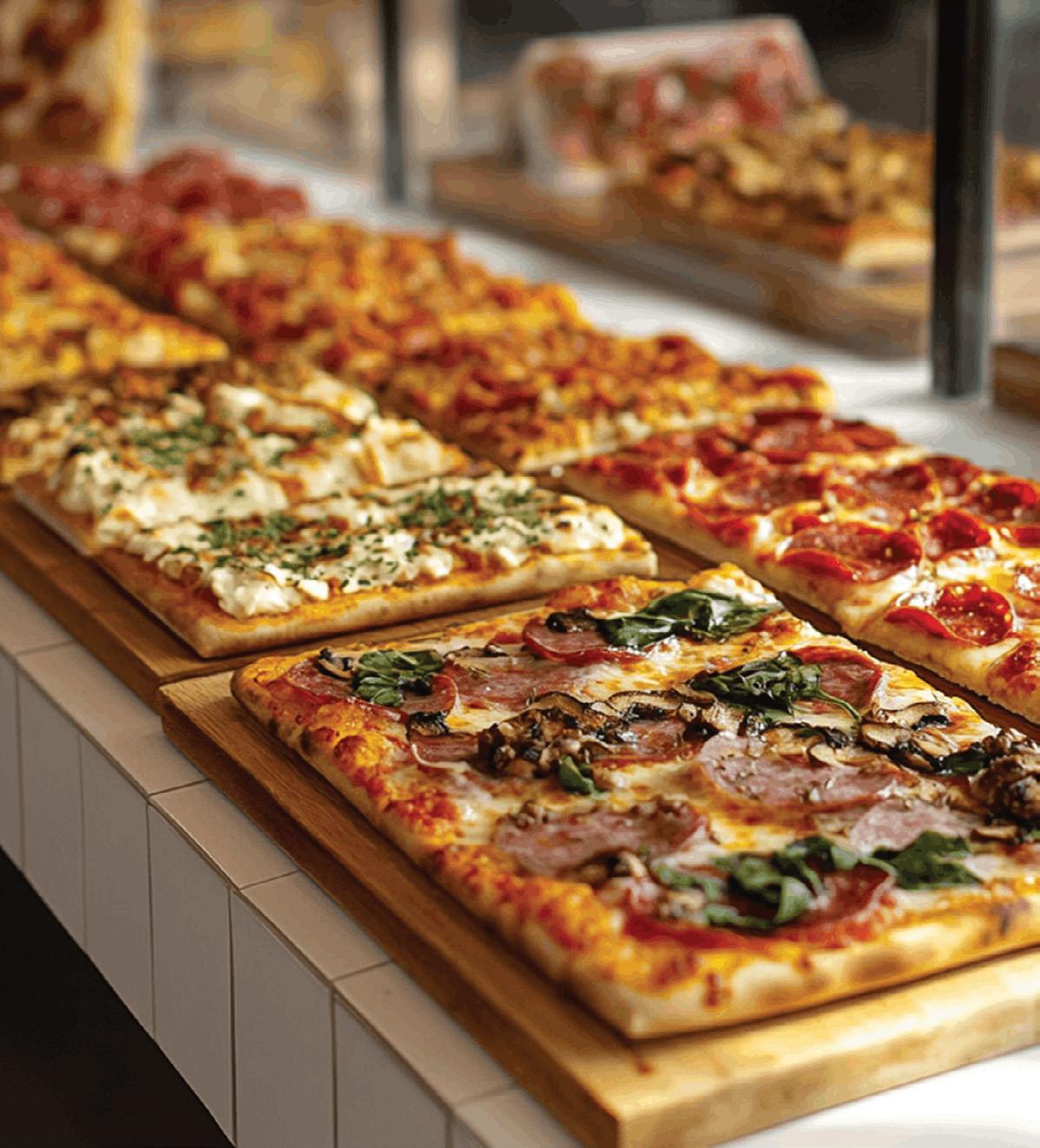
Add a high-margin pizza business to your store without the cost, complexity, or extra staff. Dough Tribe Instant Pizzeria is a plug-and-play solution built for petrol and convenience retailers, designed to work seamlessly with your existing setup. No major capex. No chef required – just fast, consistent, premium pizza your customers will love.
Operate using your current assets with just one staff member, serving slices in under 60 seconds and whole pizzas in 2-4 minutes. With up to 70 per cent gross profit potential and the ability to generate $600+ per day, it’s a simple way to unlock a new revenue stream.
The offer spans hot, chilled, and take-home formats, from pizza by the slice and hot box favourites to frozen options – capturing every daypart from breakfast through to dinner. Built on Italian-made artisan bases and topped fresh in Australia, Dough Tribe delivers premium quality at convenience-store speed with consistency in every serve. With no prep, low waste, and a system designed for untrained staff, it performs across all store types while maintaining strong margins. Pizza in petrol and convenience is still underdeveloped; early adopters will lead. If you can serve coffee, we promise you can serve pizza with ease.
Want a slice of the action? For more information, please contact: Melissa Longhurst on or 0414 942 561.
Mocha’s always had flavour, now it has strength to match
Dare Iced Coffee levels up its mocha flavour with a powerful protein boost. Australia’s favourite iced coffee brand*, Dare, is giving its iconic mocha a bold new evolution with the launch of Dare Iced Coffee Protein Mocha.
Long celebrated for its smooth, cocoa-forward profile, mocha has always had its own loyal following. Now, Dare has taken its number one flavour* and given it a serious upgrade – adding real functional muscle** without touching the Dare taste Australians know and love.
Meet Dare Protein Mocha. The smooth cocoa taste of a classic Dare Mocha, backed by a powerful protein fix. It’s mocha – just turned up a notch.
Building on the success of Dare Protein Double Espresso, launched in November 2024, Dare is showing mocha fans they can lift their game without changing flavours. Available in 500ml and 750ml bottles, Dare Protein Mocha delivers 30g and 45g of protein respectively, with no added sugar and the signature mocha flavour.
Designed for early risers, commuters, gymgoers, and anyone wanting to turn their mocha moment into a power move, this iced coffee pulls its weight.

Dare Protein Mocha 500ml is now available in Coles and select retailers, with 750ml following in May.
*Circana Grocery Unweighted Scan data to 11/01/26
**Protein supports muscle repair and growth as part of a balanced diet and active lifestyle

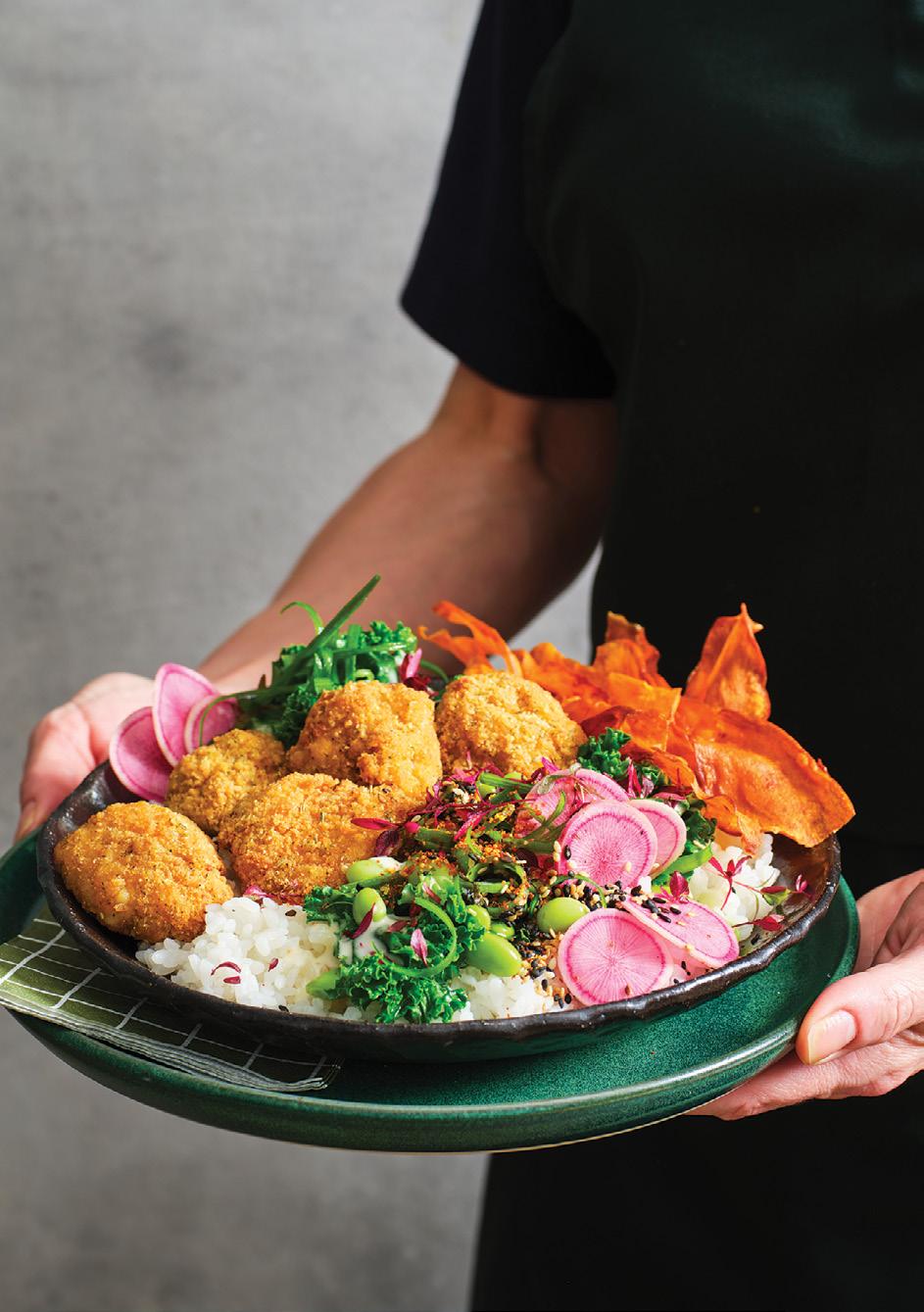
In today’s petrol and convenience environment, operators need menu solutions that deliver on quality, simplicity and margin. The Lilydale Foodservice range brings all three together, premium Australian chicken products designed to perform in fast paced kitchens while elevating the eating experience.
Made from Lilydale’s trusted free range chicken, this range offers wholemuscle quality that customers can see and taste. With growing consumer demand for higher quality protein and ethically raised poultry, Lilydale provides operators with a brand that carries strong recognition and trust across Australia.
Designed specifically for Foodservice, the range delivers consistent cook performance, excellent hold time and strong plate appeal, making it ideal for petrol and convenience outlets looking
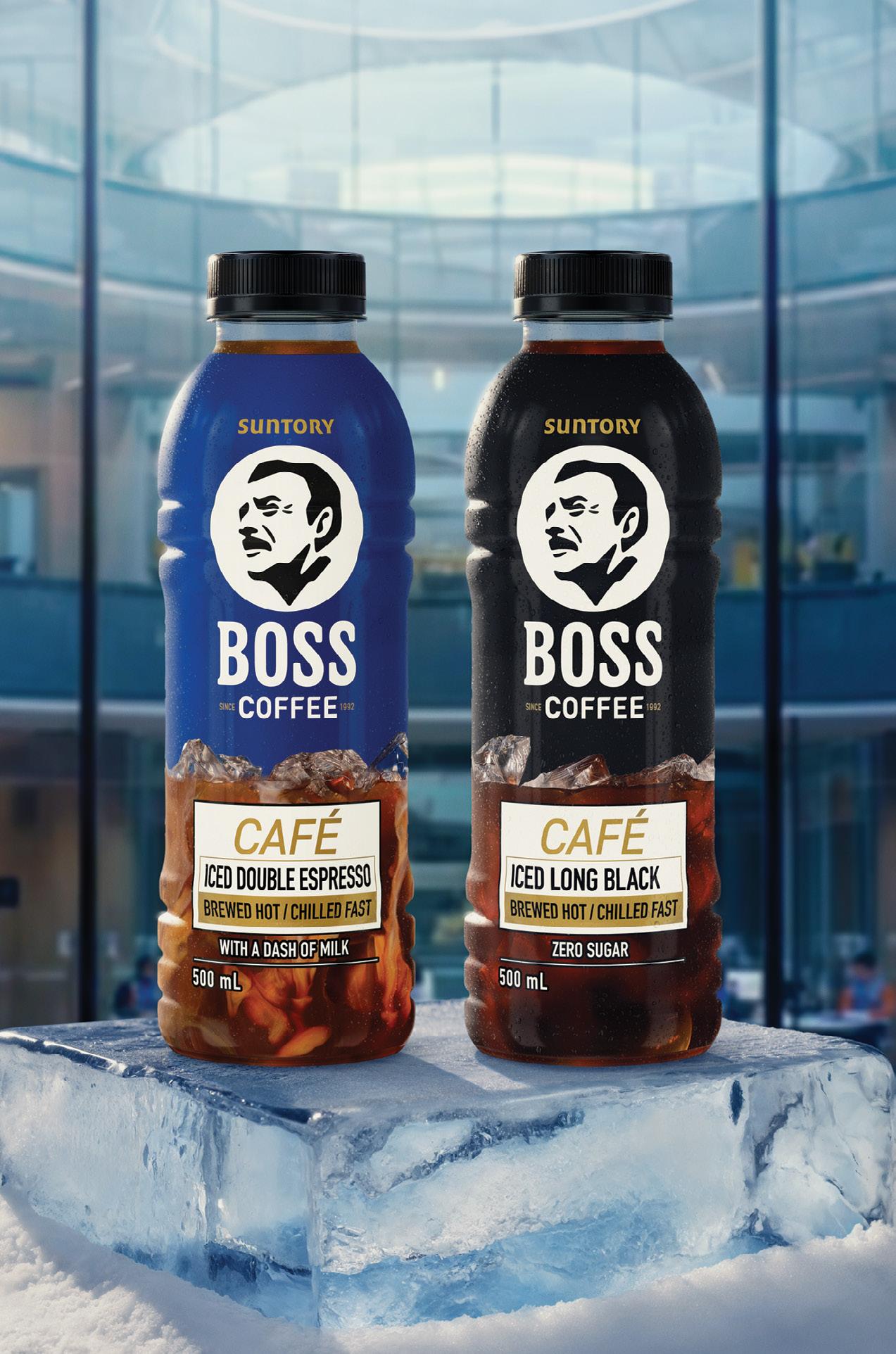
Suntory BOSS Coffee has launched a new café-style iced coffee range in Australia and New Zealand, introducing a larger, resealable format.
The new Café range includes two variants – Iced Long Black Café and Iced Double Espresso Café – and is positioned as offering a lighter, more refreshing alternative within the readyto-drink category.
Morgan Loveridge, Head of Suntory BOSS Coffee & Future Brands at Suntory Beverage & Food Oceania, said the launch reflects changing consumption habits.
“We are challenging the packaged iced coffee status quo of overly milky by offering a more refreshing and smooth café style coffee. As iced coffee continues to grow in popularity, we identified an opportunity to introduce a larger, resealable ready to drink format that better suits longer consumption occasions.”
The company said the original canned range remains focused on quick consumption, while the new format is designed to be consumed over a longer period.
The 500mL Iced Double Espresso Café and Iced Long Black Café are available now in supermarkets, petrol and convenience outlets across Australia and New Zealand.
to upgrade their hot food offering without adding complexity.
Whether served in burgers, wraps, snack boxes or loaded meals, Lilydale Free Range Chicken helps operators create premium menu items that drive higher spend per customer. The products are easy to prepare, versatile across multiple menu formats and deliver strong yields for busy sites.
For retailers wanting to move beyond standard fried offerings, Lilydale offers a simple way to introduce a premium free range option that resonates with today’s consumer.
Elevate your hot food menu with the Lilydale Foodservice range. Quality you can trust, performance you can rely on, and flavour your customers will come back for.
For more information and pricing please contact Rheyanan Hancox on 0418 118 212.
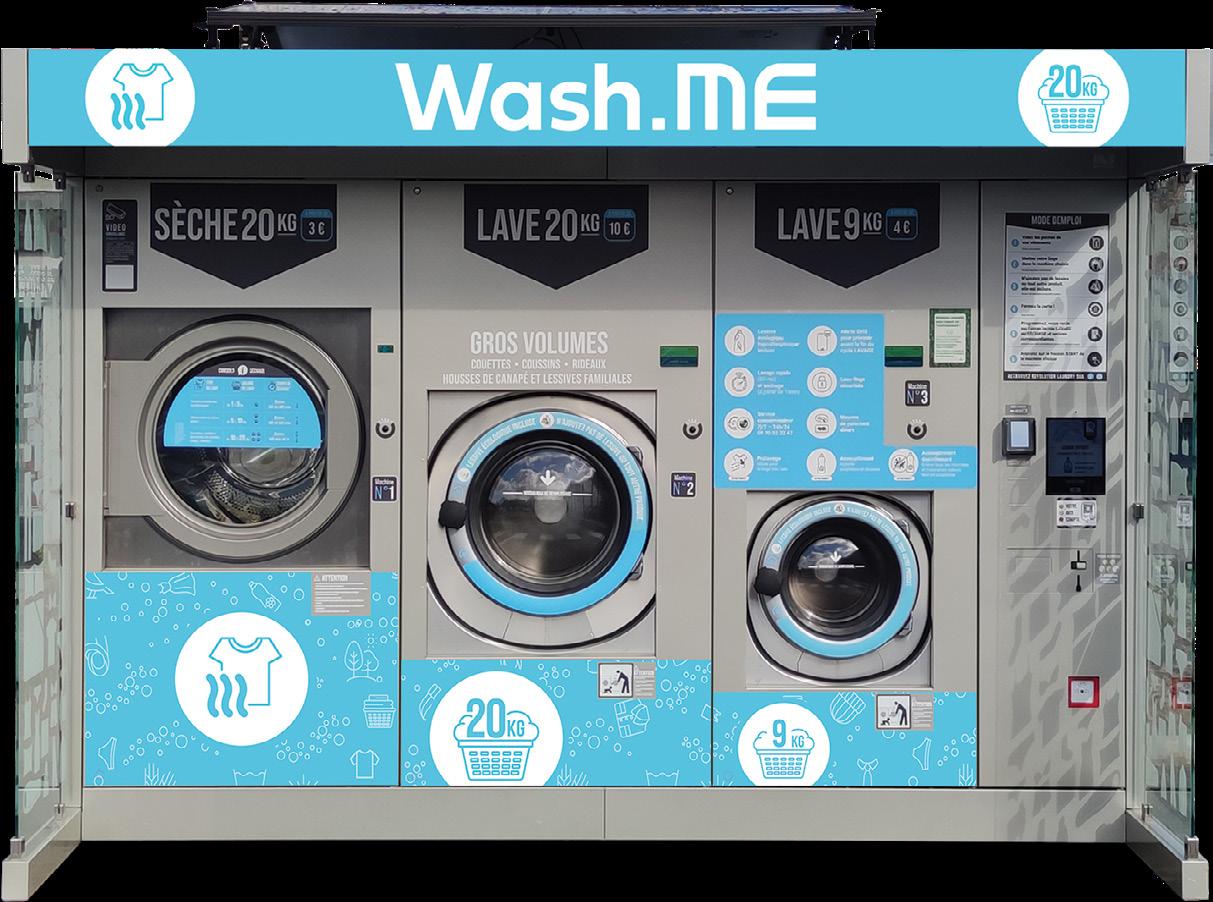
With over 8,000 self-service laundrette units deployed across Europe, ME Group is bringing its proven Wash.ME concept to Australia – offering convenience retailers and petrol stations a smart way to boost customer traffic while generating passive income.
AFTER SUCCESSFUL TESTS in the Sydney region, the global leader in outdoor self-service laundrettes, is now launching nationwide, delivering essential services directly into the heart of local communities. Designed for high-traffic locations, each compact unit occupies less than 5sqm and includes two washers (9kg and 20kg) and one 20kg dryer – ideal for everyday laundry as well as bulky items such as duvets, curtains, and bedding.
Engineered for convenience, every Wash.ME unit comes with included detergent and laundry sanitiser, along with a fully cashless payment system – eliminating the need for coins and reducing the risk of theft. Customers also benefit from an SMS notification at the end of each cycle, allowing them to return only when their laundry is ready for collection.
Sustainability is also built in, with integrated solar panels capable of generating up to 30 per cent of the machine’s energy requirements, helping reduce environmental impact while keeping operating costs efficient.
Backed by strong customer behaviour data, Wash.ME drives consistent, repeat business.
Approximately 46 per cent of users live within 2km of their local laundrette, while 36 per cent return every two weeks or more – creating a reliable and recurring revenue stream for site partners.
For retailers, the model is simple and risk-free. ME Group fully funds the installation, investing
between $70,000 and $100,000 per site, with no capital expenditure required from the partner. There are no hidden costs or fees, and partners earn commission on every transaction. The only requirement is the provision of utilities, making Wash.ME a turnkey solution with minimal operational involvement.
ME Group manages all servicing and upkeep, including detergent refills, routine maintenance, cleaning and customer support, ensuring machines remain in optimal condition and deliver a consistently high-quality user experience.
By increasing dwell time and encouraging additional in-store purchases, Wash.ME enhances overall site performance. For operators looking to unlock under-utilised space and introduce a dependable income stream, it offers a fully managed, zero-risk investment in modern convenience.
For more information contact your ME Group Australia Sales Team at sales@me-group.au or visit www.me-group.au/contact
“Backed by strong customer behaviour data, Wash.ME drives consistent, repeat business.”
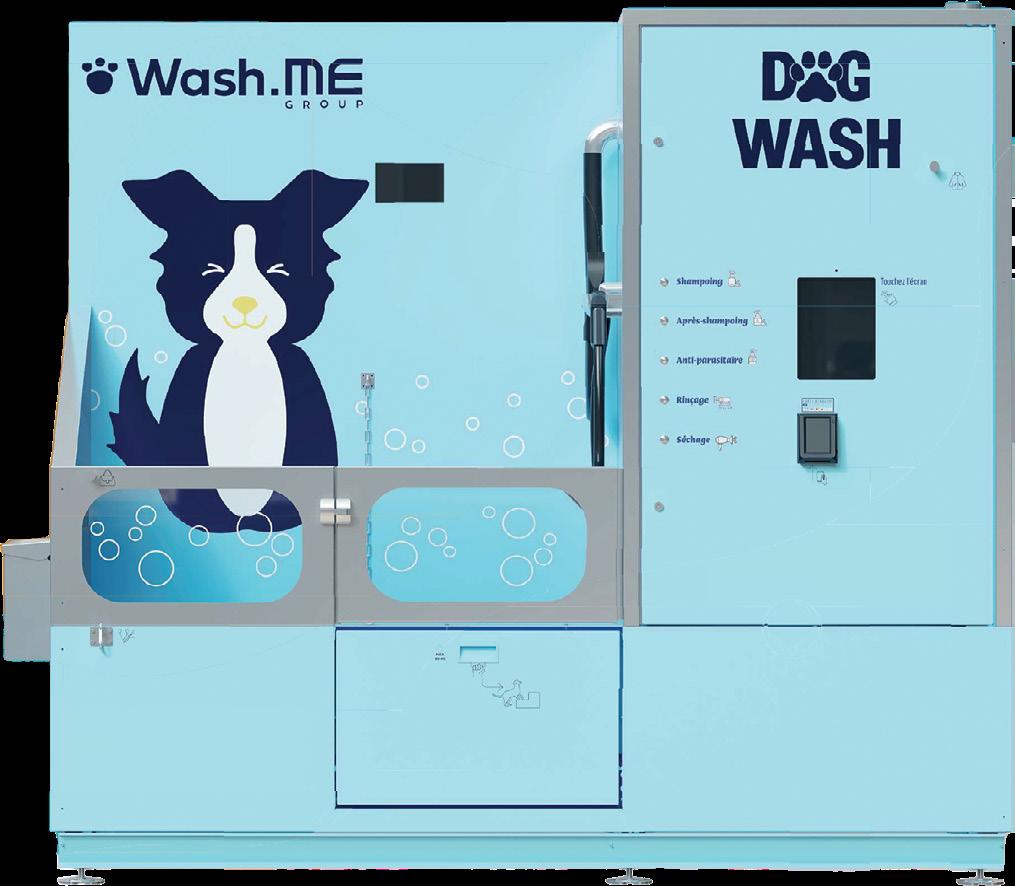
Australia’s 7.4 million dogs and $4,200 average annual spend per pet make Dog Wash a high-demand service. Fully managed by ME Group, it delivers a convenient experience for customers and passive income with zero investment for partners.




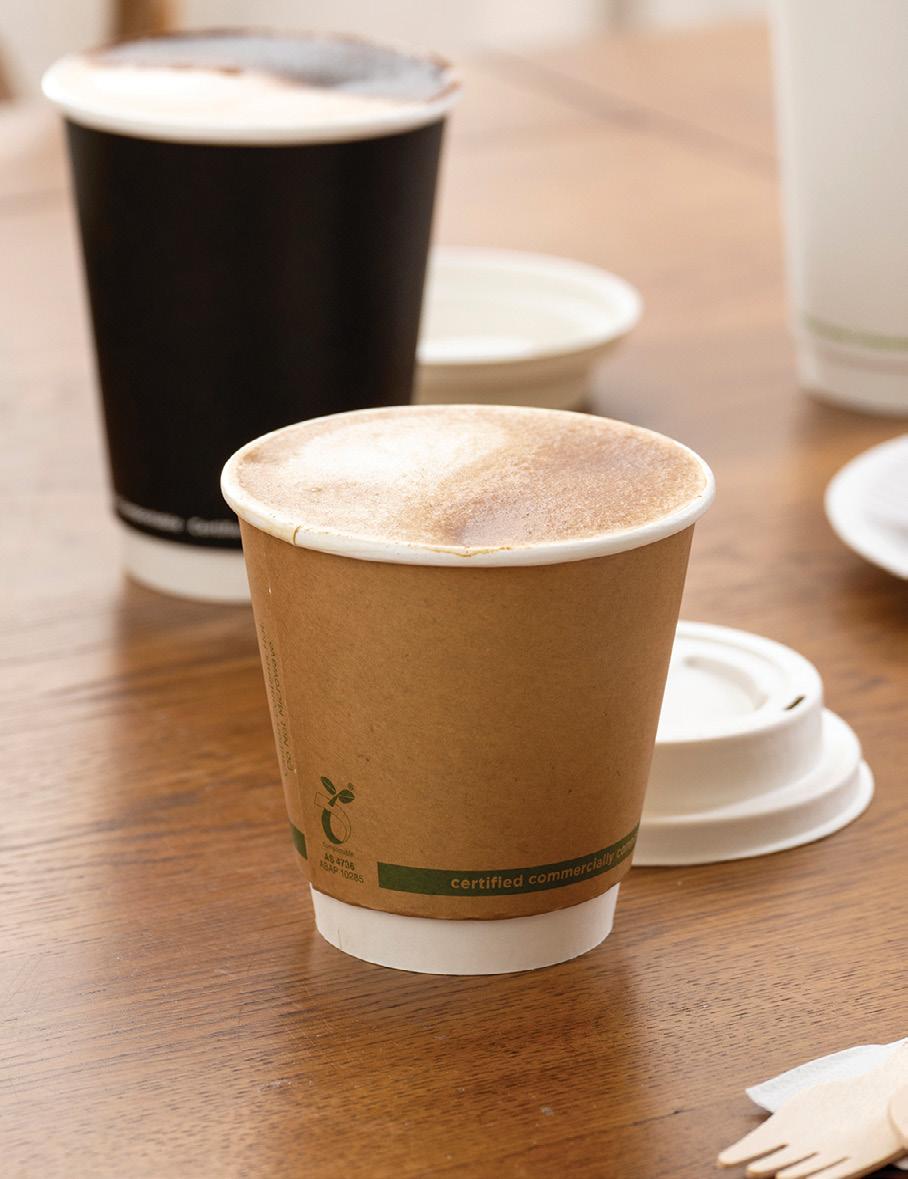
Detpak’s PLA Hot Cups offer a sustainable solution for businesses looking to serve hot beverages with the confidence of Detpak’s dependable performance. Crafted from paperboard and lined with a plant-based PLA bioplastic, these cups provide premium performance while reducing reliance on traditional fossil fuel plastics. The result is a sturdy, reliable hot cup that pairs everyday convenience with forward-thinking design.
Perfect for petrol stations, convenience stores, coffee roasters, and cafés, Detpak PLA Hot Cups are available in single-wall and double-wall options, crafted to keep beverages warmer for longer.
Their sleek, clean aesthetic complements any brand style and can become a valuable branding tool via Detpak’s custom print options. Detpak are custom print experts with decades of experience bringing brands to life.
PLA Hot Cups are certified commercially compostable, helping businesses support responsible waste management pathways when paired with appropriate collection infrastructure. By choosing PLA Hot Cups, operators can rely on a packaging solution that is accepted under Australia’s Single Use Problematic Plastics legislation.
With Detpak’s trusted reputation, consistent manufacturing standards, and Australian market expertise, PLA Hot Cups offer a dependable, sustainability conscious choice for forward thinking brands. Serve your hot drinks with confidence and make sustainability part of every sip.
For more information contact Tara Koger at Tara.Koger@detpak.com

Today’s shoppers are actively seeking snacks that deliver high protein, lower sugar and fewer carbohydrates – without sacrificing taste. Quest Nutrition was built to meet exactly that demand.
Quest has reimagined everyday favourites into smarter nutritional choices, offering an extensive product range that includes protein bars, soft-baked cookies, savoury chips, crackers, milkshakes, brownie bars and peanut butter cups. This breadth of range allows retailers to meet multiple snacking occasions, from on-the-go fuel to crave-worthy treats.
At the core of every product is a commitment to complete protein. Quest uses high-quality dairy-based proteins to provide essential amino acids that support muscle maintenance and keep hunger at bay. Each formulation is purposefully designed to maximise protein while minimising sugar and
carbohydrates – delivering products that align with modern wellness goals.
Taste remains non-negotiable. Quest invests heavily in product development to ensure flavour and texture that rivals traditional snacks, helping drive repeat purchase and customer loyalty.
Innovation is ongoing, with continuous exploration of cuttingedge ingredients that offer metabolic advantages and support evolving consumer trends.
For retailers, Quest represents more than a protein brand. It is a recognised, trusted name that attracts health-conscious shoppers, expands category reach and drives incremental growth in the better-for-you snacking space.
Want to learn more? Please contact Tony on: ttaranto@simplygoodfoodsco.com.au
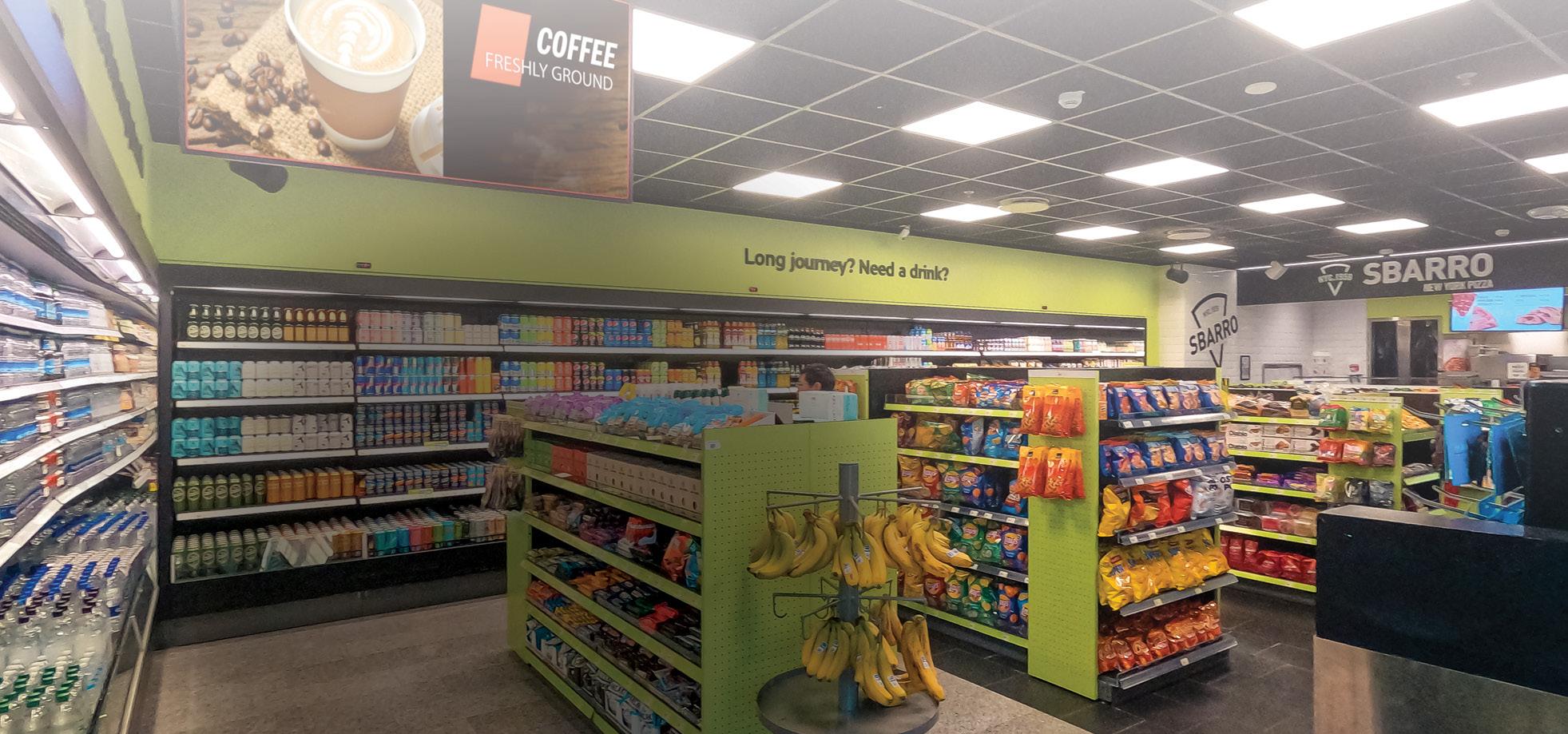
Fujivision’s purpose-built digital communications systems deliver fast transactions in high foot traffic areas, with thin margins.
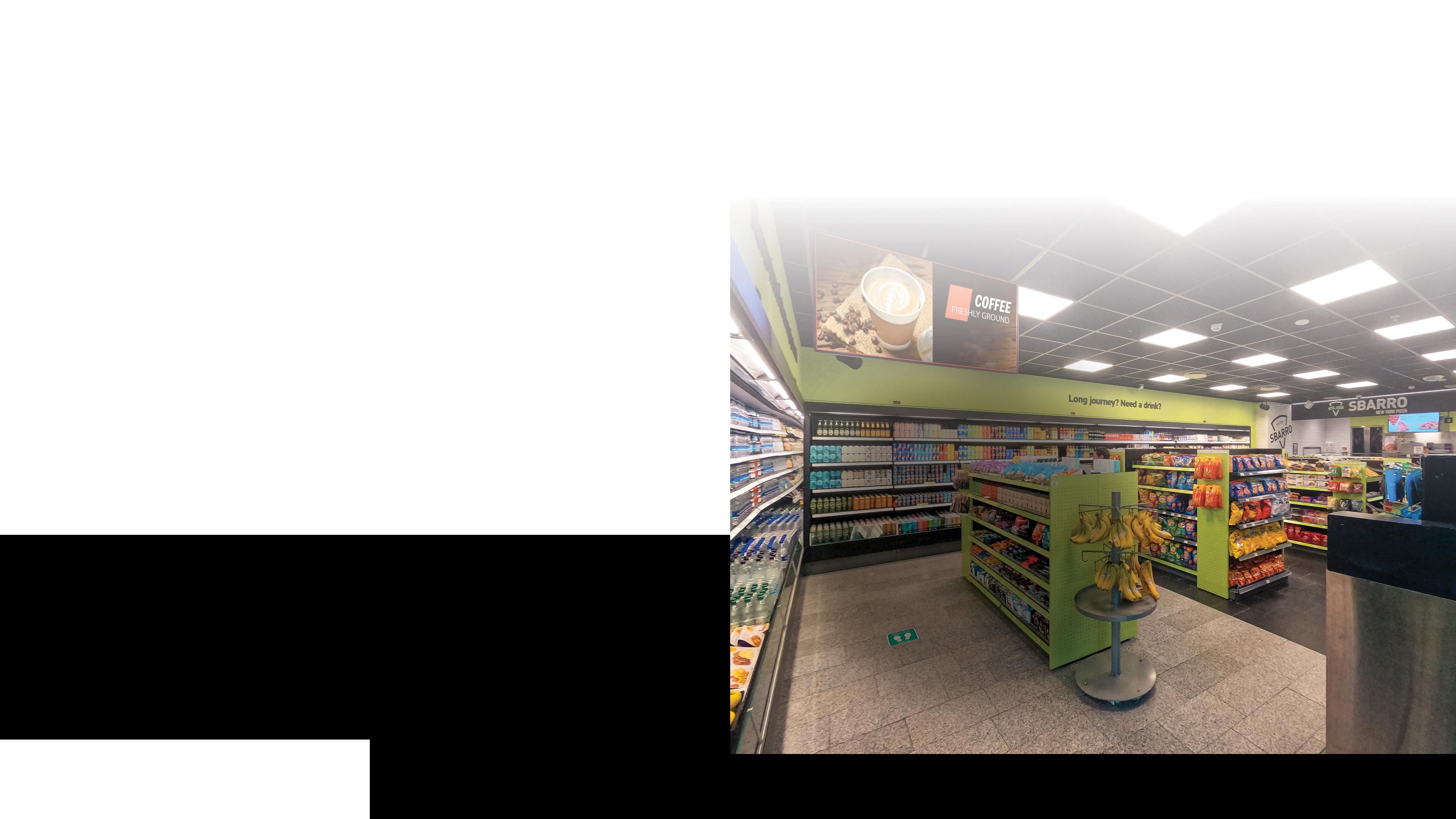
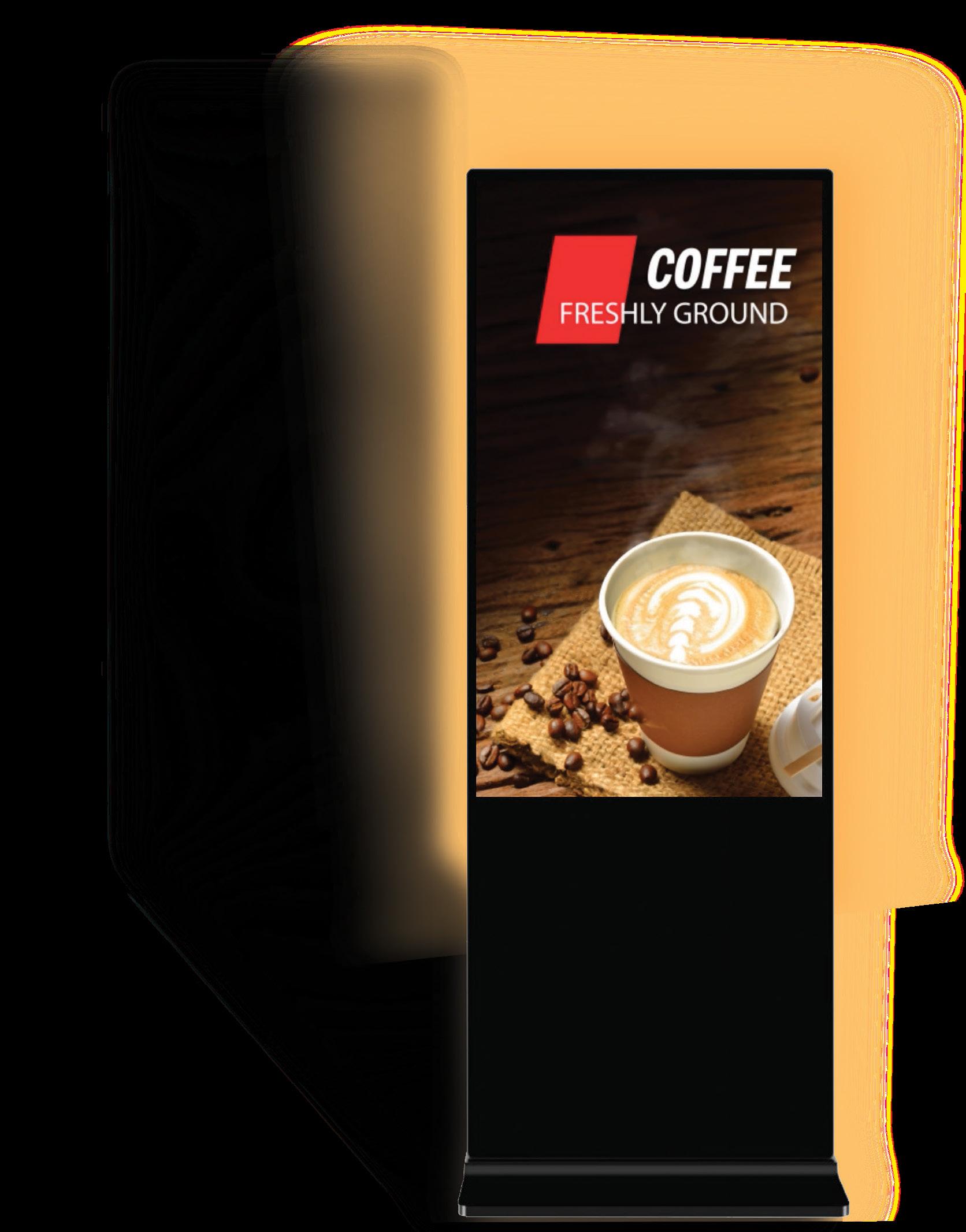
PETROL AND CONVENIENCE retail demands speed, visibility and reliability at every touchpoint. Fujivision delivers purpose-built digital communication systems designed specifically for the P&C environment – helping operators drive impulse purchases and unlock new revenue streams. From forecourt to counter, every screen becomes an opportunity to influence, engage and convert.
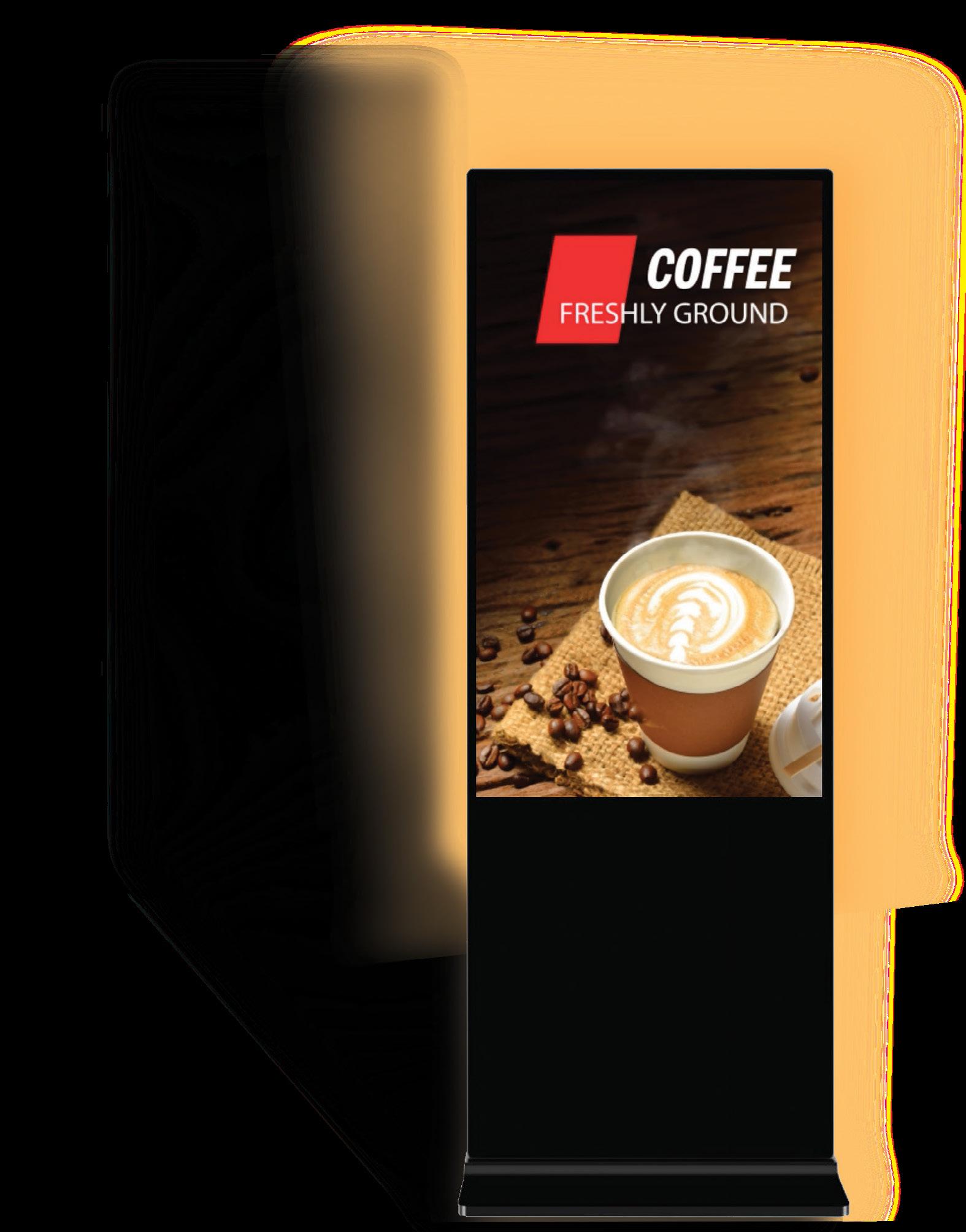
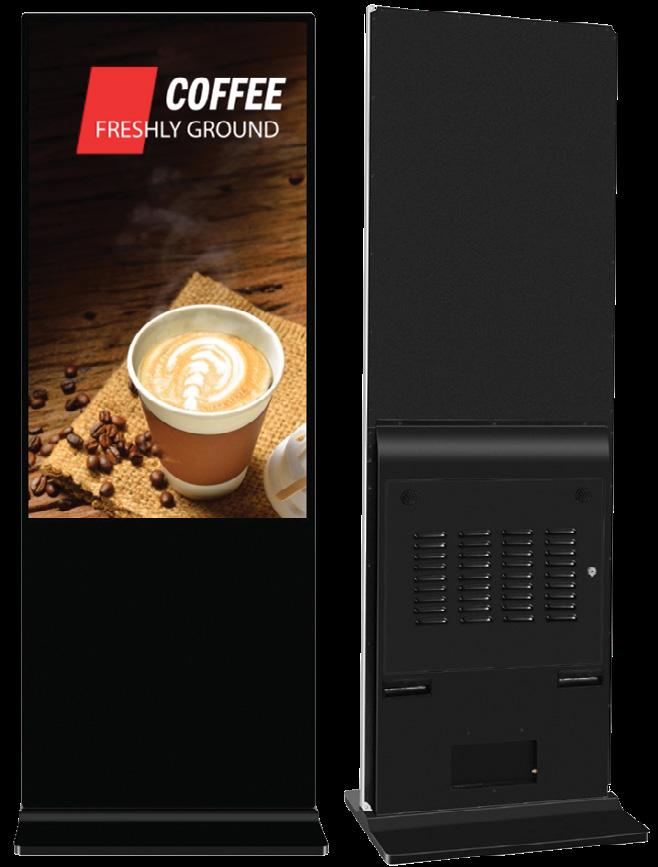
More than just screens, Fujivision offers a complete retail ecosystem tailored to the unique needs of petrol and convenience operators. It is a full-service digital signage solution that brings together commercialgrade LCD and LED displays with an industry-leading cloud CMS, alongside installation and staging, training and ongoing national support, plus data analytics and audience measurement.
Everything is managed, connected and scalable – giving retailers full control across single sites or entire networks.
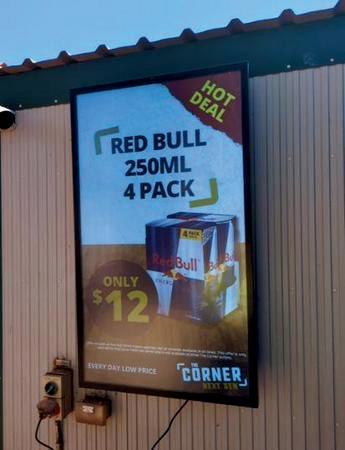
On the forecourt, high-brightness window and outdoor screens cut through sunlight and glare to capture attention at the pump. Fuel offers, meal deals and impulse categories are presented clearly and dynamically, ensuring customers engage during those valuable dwell-time moments.
Inside the store, Fujivision helps drive in-store impulse by promoting high-margin categories such as coffee, QSR, drinks and snacks. Content can be deployed instantly across one location or rolled out nationally,
creating consistency while allowing for local flexibility.
Real-time updates are another key advantage. Pricing, promotions and supplier campaigns can be changed remotely by store, region or time of day through the cloud-based CMS – ensuring messaging is always relevant and timely.
Designed for the realities of petrol and convenience retail, Fujivision’s commercial duty-cycle screens are built for continuous operation. With 3-year onsite warranty support, operators can rely on performance around the clock.
Beyond in-store benefits, the platform also enables retailers to monetise their network. By introducing branding, advertising and media sales across screen networks, businesses can generate incremental revenue while maximising existing assets.
National service support underpins the entire offering, with installation, training and proactive maintenance teams working to minimise downtime and protect investment.
Fujivision is engineered to scale as your business grows. Whether it’s forecourt highbright LED, window-facing LCD, in-store promotional screens, portable LED posters or large-format custom installations, the solution adapts to suit any footprint.
In a channel where every second counts, Fujivision ensures every screen works harder – delivering impact, efficiency and measurable return.
For more information visit fujivision.com.au
“In a channel where every second counts, Fujivision ensures every screen works harder – delivering impact, efficiency and measurable return.”
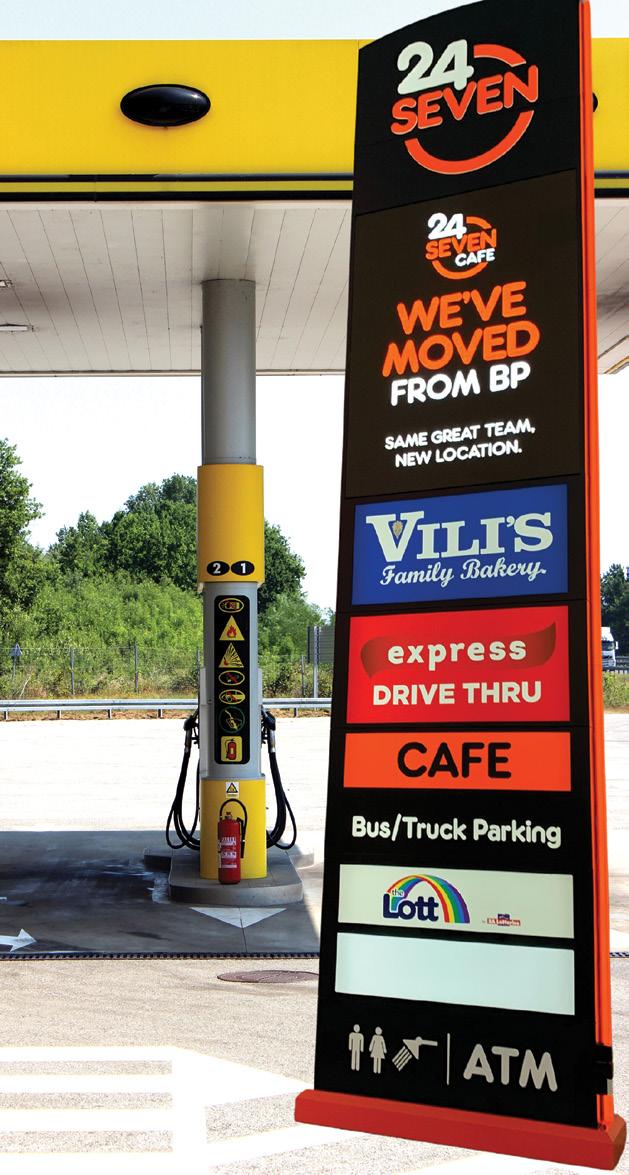
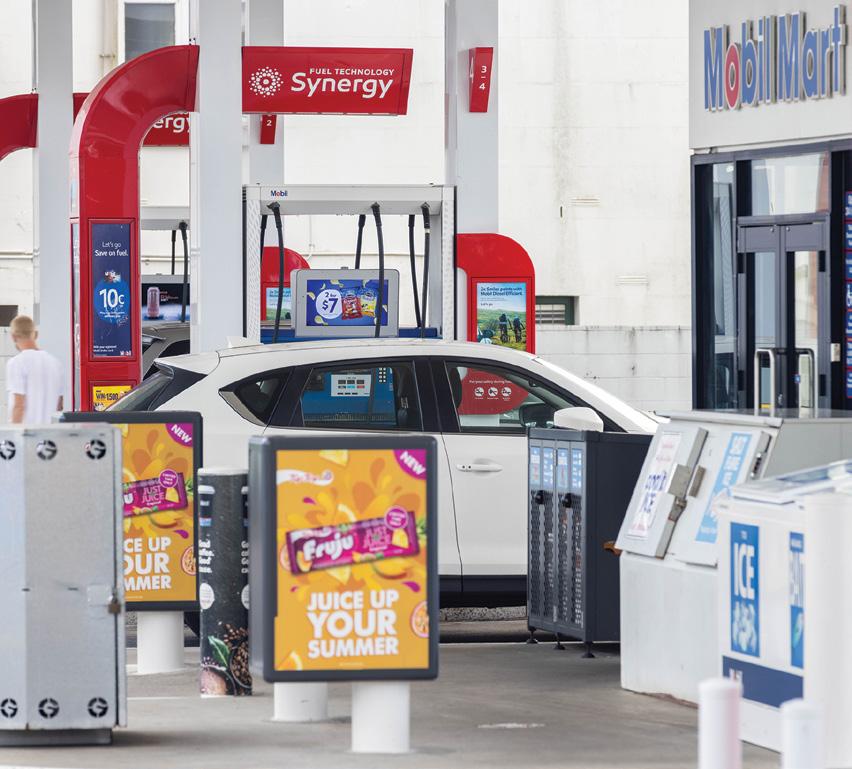
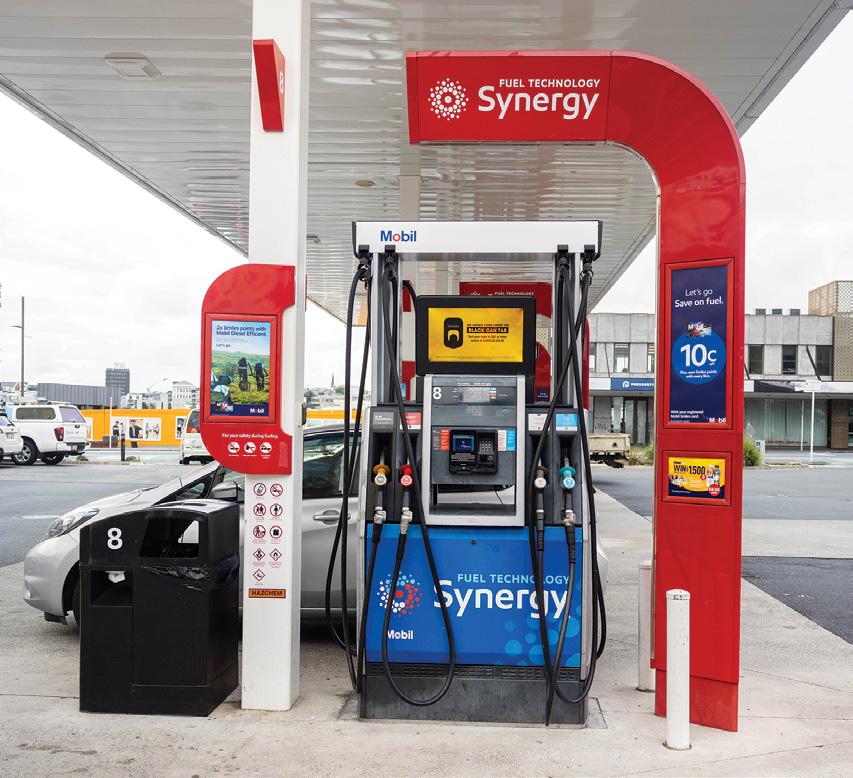
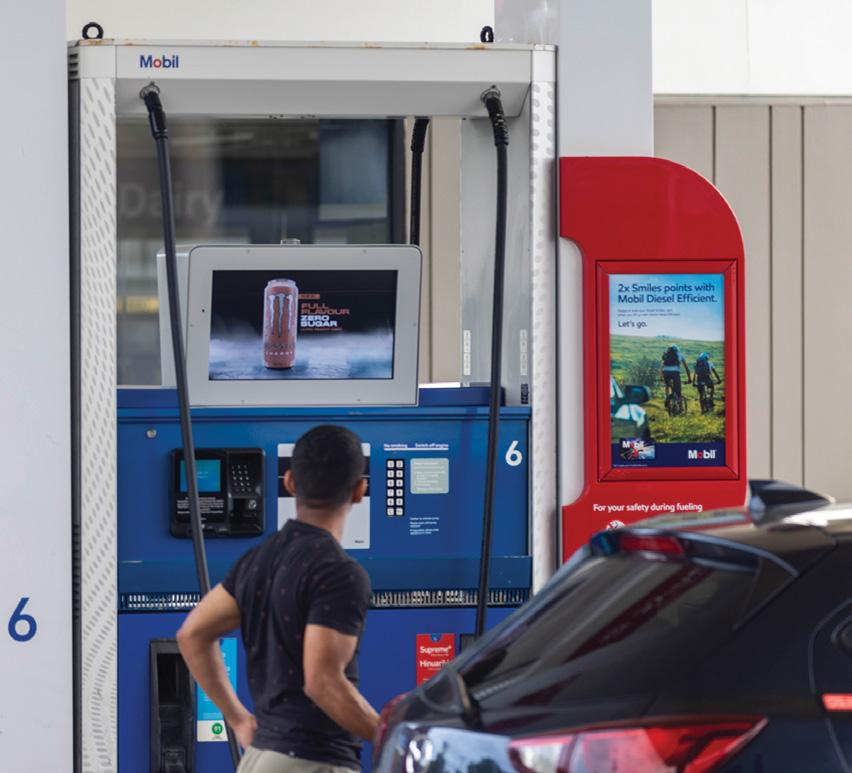
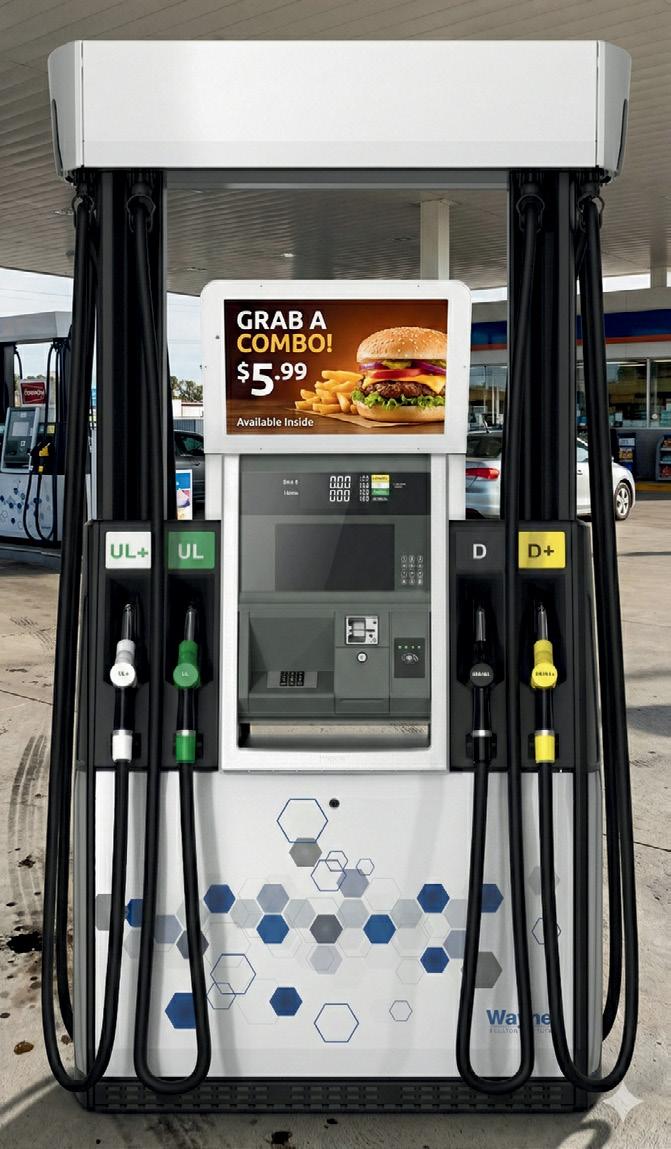
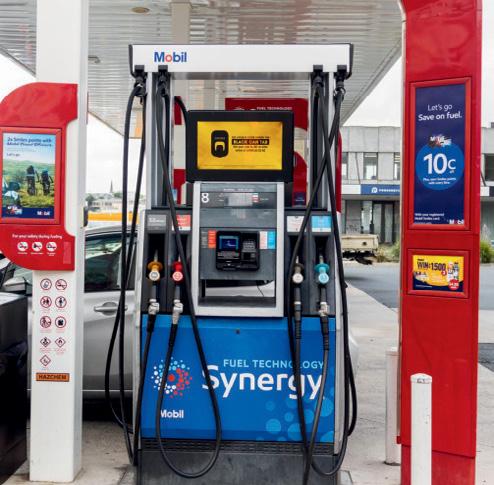
Adverto can help you turn every fuel stop into a captive marketing moment with digital pump displays.
IN AN INDUSTRY driven by convenience and impulse, fuel retailers are constantly looking for new ways to increase customer engagement and drive in-store spend. While significant investment has gone into store layouts, product ranging, and digital promotions, one of the most valuable touchpoints on the forecourt has largely remained untapped – the fuel pump itself.
For the duration of a standard fill, customers are stationary, engaged, and waiting. It’s a rare moment of undivided attention in an otherwise fast-moving retail environment, yet in many cases, this opportunity is not being utilised.
This is where digital forecourt media is beginning to reshape the conversation.
Australian company Adverto has been at the forefront of this shift, developing and manufacturing pump-mounted digital displays designed specifically for petroleum environments. With over a decade of experience in the category, including early-generation hardware still in operation today, the company has continued to evolve its technology to meet the needs of modern forecourts.
Its latest release, the GEN6 pump-mounted display, has been engineered to deliver both performance and reliability in harsh outdoor conditions. Featuring a fully sealed aluminium enclosure, passive cooling, and high-brightness output, the system is built to withstand extreme temperatures, dust, and daily wear typical of fuel retail environments.
Recent upgrades have focused on improving efficiency and longevity. By optimising thermal performance, the GEN6 operates at a cooler temperature while consuming less power, allowing for
the removal of active cooling components. This reduces maintenance requirements, eliminates operational noise, and increases overall reliability.
From a retailer’s perspective, however, the real value lies in what the technology enables.
Brendan McCurdy, General Manager at Adverto, said forecourts have always been high-traffic environments, but historically they haven’t been fully leveraged from a media or engagement perspective.
“At the pump, you have a captive audience for several minutes. That creates a genuine opportunity to influence purchasing behaviour before the customer even walks into the store.”
By delivering targeted messaging at the point of refuelling, pump-mounted displays can promote in-store offers, highlight key products, and reinforce brand campaigns in real time. This creates a seamless connection between the forecourt and the convenience store, helping drive incremental sales and improve overall customer experience.
In addition, the integration of content management and remote monitoring platforms allows networks to manage campaigns efficiently across multiple locations, providing flexibility and control for both operators and advertisers.
As convenience retail continues to evolve, the role of technology in shaping customer behaviour is becoming increasingly important. For fuel retailers looking to maximise the value of their forecourt, the pump is no longer just a functional asset – it is a powerful, and previously overlooked, media channel.
For more information contact Brendan McCurdy on +61 439 139 327 or b.mccurdy@adverto.com.au



18-20g Protein 3.5-4 g Carbs BAKED

Loaded with 18-20g protein and 4g of carbs per serving, these chips are an excellent alternative to regular savoury snacks. Can be enjoyed in place of regular potato chips, corn chips, popcorn and crackers. Available in 4 delicious flavours: Nacho Cheese, Ranch, Loaded Taco and Chili Lime.
Fuel your day the smarter way with OxyShred Protein – where performance meets exceptional nutrition. Designed for those who want more from their protein, this shake delivers a powerful combination of taste, functionality, and industry-leading macros.
Each serve packs a solid 30g of high-quality protein to support muscle recovery, strength, and lean muscle maintenance. With less than 2g of sugar and no more than 160 calories per serve, it’s built to help you stay on track with your goals – whether that’s fat loss, toning, or simply making smarter daily choices. These are some of the best macros on the market, giving you maximum nutritional benefit without unnecessary extras.
OxyShred Protein also goes beyond standard shakes, with added thermogenic support to help naturally boost metabolism and keep your energy levels up throughout the day. It’s low in sugar, easy on digestion, and perfectly suited for busy lifestyles.
Smooth, satisfying, and available in great-tasting flavours, this is a protein shake you’ll actually look forward to. Clean, convenient, and results-driven –OxyShred Protein isn’t just another shake, it’s your daily advantage.
Order your OxyShred Protein through The Distributors! Call 1800 989 022 or emails us info@the-distributors.com.au or find your local wholesaler at www.the-distributors.com.au to order.
Australian food retailers are navigating rising energy costs, tighter compliance requirements, and increasingly impulsedriven shoppers. Refrigeration that combines efficiency, flexibility and strong merchandising has become essential for stores looking to control costs while maximising sales.
The Bonnet Névé NordicStarSV8 from Epta is designed with these challenges in mind. The SV8 achieves one of the highest efficiency classifications in commercial refrigeration, using natural refrigerant R290, high-efficiency fans, LED lighting, and automatic



defrost water evaporation. Together, these features deliver reliable cooling while helping retailers reduce energy consumption and environmental impact.
But performance alone does not drive retail results – placement matters. The SV8’s semi-vertical cabinet presents products at eye level, helping trigger impulse purchases while maintaining easy shopper access.
Retailers can configure open chillers, swing doors or sliding doors chillers, corner units, back-to-back islands, dualtemperature chiller/freezer combinations, and dry-shelf types in widths from
600mm to 1200mm, creating a unified cross-merchandising display zone without requiring a separate machine room.
Suitable for convenience stores, independent grocers and service stations, the SV8 provides a flexible refrigeration solution aligned with operational and regulatory demands facing Australian food retail in 2026. It balances efficiency, merchandising impact and compliance in one platform.
Upgrade your store today and discover how the NordicStarSV8 can boost efficiency and drive impulse sales. Contact Bruce Cowley at +61 484 999 903.
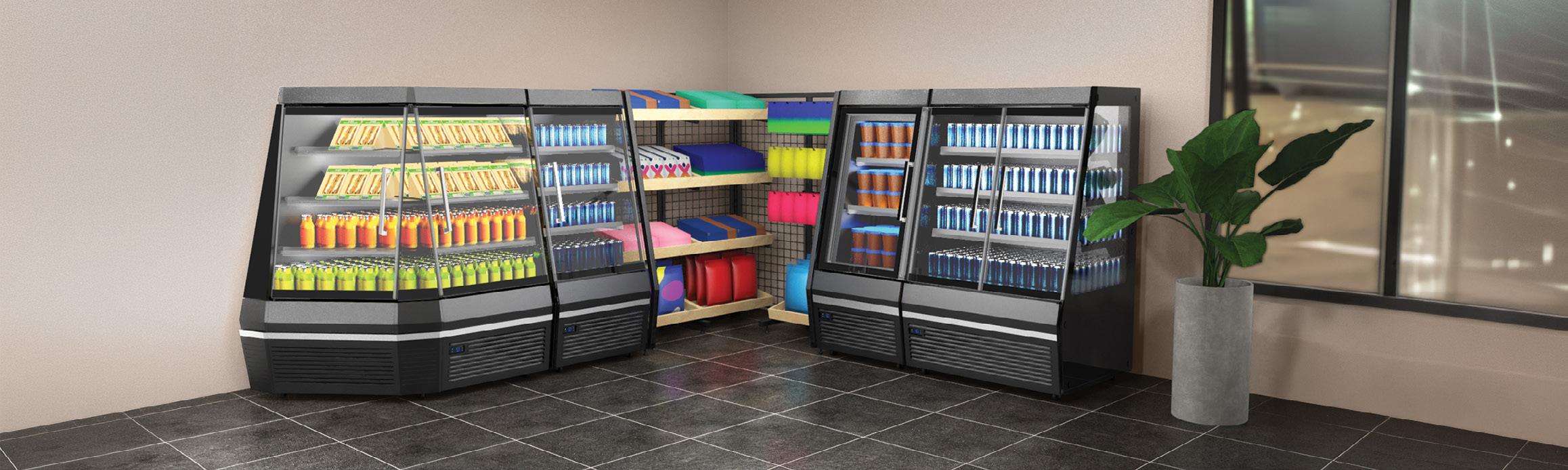

The specialist in commercial refrigeration solutions. Our product portfolio includes traditional refrigerated display cases, integral display cases, low to high power systems and solutions for Retail, Convenience, Food & Beverage, and Ho.Re.Ca. segments.

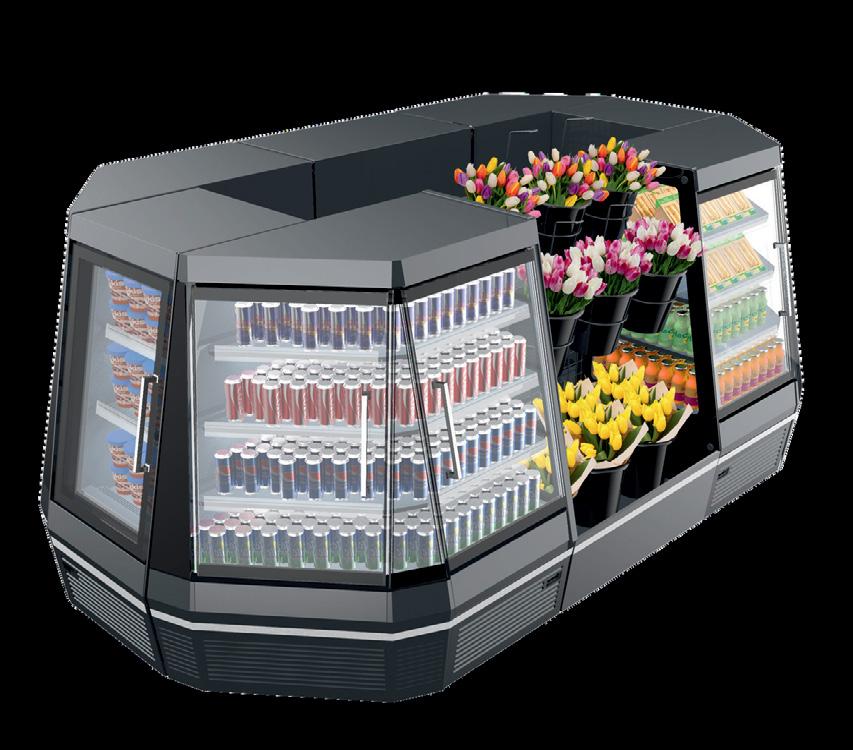
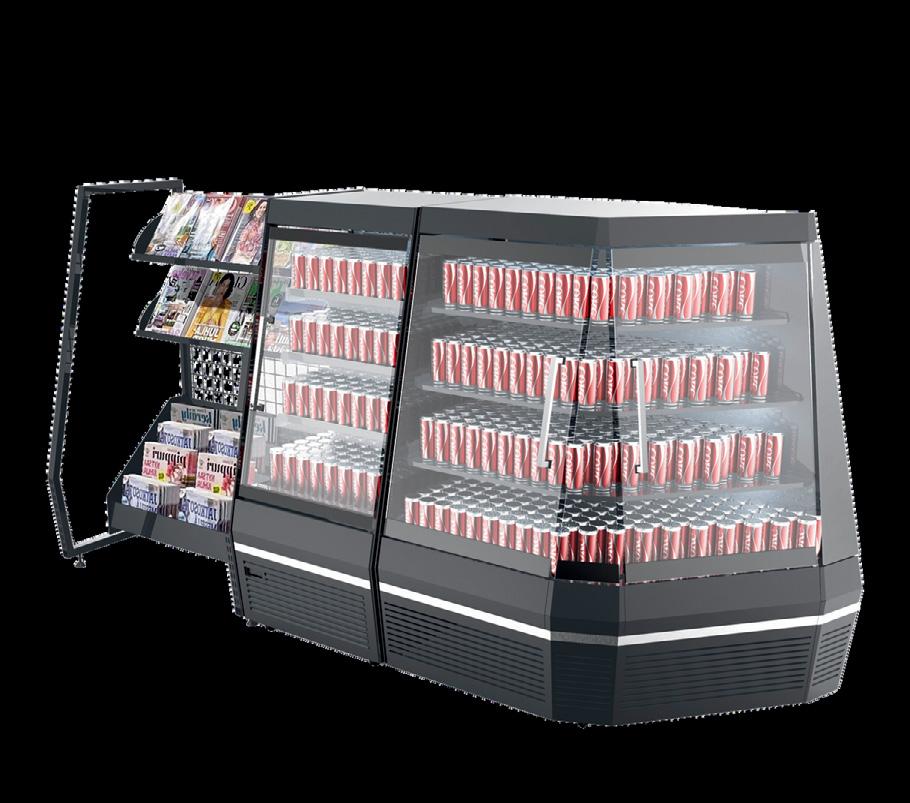

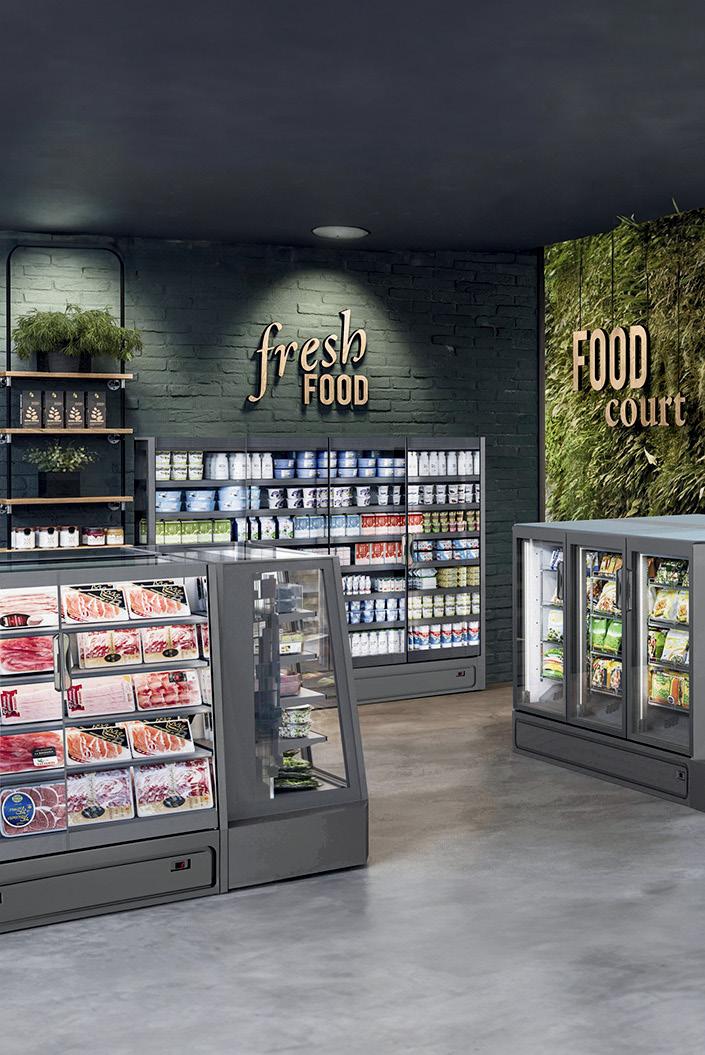
Plug-in semi-vertical cabinet range offering excellent product visibility and variations in different configurations, helping retailers maximise merchandising impact across multiple product categories while providing shoppers with a comfortable and intuitive shopping experience.

NININ GL
Plug-in refrigerated cabinet for Drinks & Dairy, designed to put your products center stage. With a focus on excellent visibility and effortless branding, it is the perfect versatile solution for any seasonal campaign or retail promotion.
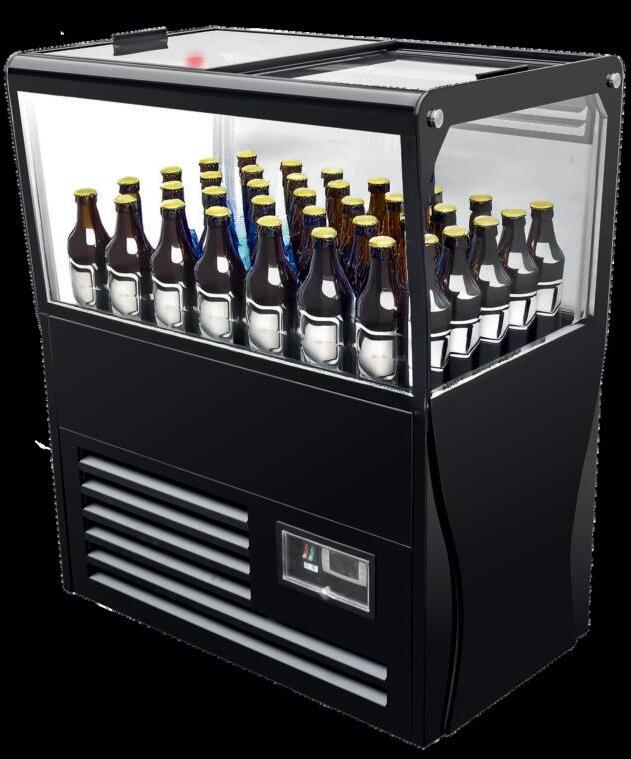

Unit 2, 5 Salisbury Road, Castle Hill NSW 2154, Australia
Tel: (02) 9659 5428 l E-mail: info.australia@epta-asiapacific.com

A limited-time collaboration is bringing together two cult favourites, pairing Dare’s new White Choc Mocha flavoured iced coffee with a specially crafted range of Daniel’s Donuts.
The exclusive release features two limited-edition donuts inspired by Dare’s signature flavours. The White Choc Mocha flavoured donut offers a silky coffee-flavoured creamy white chocolate filling, finished with sweet white chocolate icing for a smooth mocha experience. For those after a stronger hit, the Dare Inspired Double Espresso flavoured donut delivers a bold, full-bodied flavour with rich coffee filling and smooth coffee icing.
Perfect for sharing, the Dare Inspired 4-Pack combines both limited-edition options with two
Pacific Optics is proud to introduce the next evolution in functional food for the P&C channel – Creatine Gummies, launched in exclusive partnership with The Gummy Co.
Pacific Optics has built a strong track record of identifying emerging consumer trends early and converting them into high-performing, retail-ready categories. Creatine Gummies represents exactly that opportunity, a proven supplement re-engineered into a convenient, impulse-friendly format designed for today’s on-the-go shopper.
Traditional creatine products have largely been limited to powders and tubs sold through specialty fitness retailers. Pacific Optics recognised a clear gap that consumers want the benefits of creatine without the hassle of scoops, shakers, or preparation.
Creatine Gummies solve this completely. Each serve delivers 5 grams of creatine monohydrate in just three gummies, matching clinically supported daily doses with no mixing and no mess.
classic cinnamon sugar donuts, making it ideal for road trips, group moments or an afternoon treat.
Complementing the range is Dare’s returning White Choc Mocha iced coffee – a long-requested fan favourite with a decadent white chocolate twist.
Patrick Davis, Marketing Manager; Iced Coffee at Bega Group, said Dare Iced Coffee is all about big flavour and fun, so teaming up with Daniel’s Donuts was a no-brainer.
“Our new limited-edition White Choc Mocha flavour and matching flavoured donuts bring together the best of both brands in one delicious moment and we can’t wait for Aussies to try them.”
The range is available exclusively at 7-Eleven stores nationwide for a limited time.


With only 15 calories, low sugar, and zero fat, the product fits seamlessly into modern health conscious routines while remaining perfectly suited to grab-andgo convenience.
For P&C operators, this represents incremental sales, not substitution. Creatine Gummies introduces a new functional food purchase occasion, sitting comfortably in impulse or

alongside energy drinks, protein bars, and wellness snacks while appealing to a broader consumer base.
Backed by quality manufacturing and distributed nationally by Pacific Optics, Creatine Gummies sets a new benchmark for functional innovation in convenience retail.
This is not just a product launch. It’s a category opportunity.

















As the cost-of-living crisis tightens its grip on Australians, there’s one line we cannot afford to cross – turning frustration into abuse of the very workers keeping our communities running.
Words Theo Foukkare, CEO, AACS

“Because when respect disappears at the counter, something bigger goes with it. We lose the sense of community that this channel is built on, and that matters.”
– Theo Foukkare
LET’S CALL IT what it is. Right now, Australians are under pressure. Fuel prices are volatile. Grocery bills are up. Rent, mortgages and insurance keep climbing. The cost-of-living squeeze is real – and it’s hitting households across the country.
We get it. But here’s the line we cannot allow to be crossed: taking that frustration out on frontline retail workers.
Because that’s exactly what’s happening.
Across Australia, more than 75,000 people work on the front line across our petrol and convenience channel. They open stores before sunrise. They serve late into the night. They keep communities moving, safe and supported – 24 hours a day, seven days a week.
They are the face of our industry. And increasingly, they are copping abuse.
Verbal attacks. Intimidation. Aggression.
All directed at people who have zero control over the very things customers are frustrated about. They didn’t set fuel prices. They didn’t create inflation. They’re not responsible for supply chains or government policy.
They’re there to do a job. To serve. To help. To get you on your way. And they deserve better.
Let’s be clear – this is not part of the job. It never has been. It never will be.
No one should come to work expecting to be abused. No one should feel unsafe serving a customer. No one should have to accept that this behaviour is “just how it is now”.
It’s not. It’s unacceptable.
As an industry, we see the pressure Australians are under every single day. Convenience retail sits at the heart of local communities. We’re part of people’s daily routine – the quick coffee, the fuel stop, the grab-and-go meal.
We’re there in the moments that matter. But respect must go both ways.
We expect – and we insist – that our people are treated with the same decency and respect that anyone would expect for their own family. Because that’s exactly how we see them.
Behind every counter is a person. A son. A daughter. A parent. A mate.
And the vast majority of Australians get this. They show patience. They show understanding. Even when things are tough. But it only takes a small minority to cross the line – and we’re seeing that happen more often than we should.
So here’s the ask. Simple. Clear. Non-negotiable. Take a breath. Show patience. Treat the person in front of you with respect.
If there’s an issue, raise it properly. If you’re frustrated, direct it where it belongs – not at the individual behind the counter.
Because when respect disappears at the counter, something bigger goes with it. We lose the sense of community that this channel is built on, and that matters.
Our industry will continue to step up. We are investing in safer stores. Better training. Stronger protections for our people. We are working with government and law enforcement to address retail crime and ensure there are real consequences for those who cross the line.
But let’s be honest. Policy can only do so much. Culture is set by people. By everyday interactions. By small moments. By the choices we all make.
So next time you walk into a convenience store –for fuel, coffee or a quick bite – remember this: The person serving you is doing their best. Just like you are. A smile costs nothing. Respect is free. And kindness goes a long way.
Let’s bring that back to the counter.
J o i n u s f o r a n i m m e r s i v e i n d u s t r y e x p e r i e n c e .
G a i n f r e s h i n s i g h t s i n t o l o c a l m a r k e t t r e n d s ,
o p e r a t i o n a l b e s t p r a c t i c e s , a n d e v o l v i n g r e t a i l
s t r a t e g i e s , a s y o u c o n n e c t w i t h i n d u s t r y p e e r s .
F r o m c o a s t t o c - s t o r e - r e t u r n w i t h m o r e .
A t t e n d a n c e i s e x c l u s i v e t o A A C S m e m b e r s


Words Brad Jones, Lead Consultant, Fuel Retail Solutions

UNMANNED PETROL STATIONS have reshaped fuel and convenience retail in New Zealand and are now poised to do the same in Australia, forcing every major player to reassess the true value of the forecourt convenience offer.
Lessons from New Zealand’s unmanned revolution
New Zealand has been a test bed for low-cost, unmanned fuel retail, with independents like Gull and Waitomo building dense networks of self-service, fuel-only sites operating on a low-overhead, payat-pump model. Gull now runs a largely unmanned network and moves about eight per cent of New Zealand’s liquid fuel volume, proving a discount, no-frills proposition can scale nationally. These challengers have consistently undercut majors on price, drawing volume away from full-service brands such as Z Energy, bp and Mobil and creating the “discount effect” in local price cycles. The result has been sustained pressure on legacy networks and a reset of consumer expectations around normal pump prices in contested markets.
Rather than cede the value segment, Z Energy introduced U-GO, a no-frills, unstaffed brand positioned directly against independents. Former Caltex and Z sites are being rebadged as U-GO, removing stores and labour costs to deliver a simple, low-price fuel offer under a separate banner.
This dual-brand strategy allows Z to retain a premium full-service offer under the Z brand while competing in the discount segment through U-GO. Consumers increasingly choose between formats rather than brands: staffed with a shop or unmanned with savings.
Unmanned growth in New Zealand has revealed a clear divide: for many motorists the shop is optional, but a lower pump price is not. Price-sensitive commuters, fleets and regional drivers
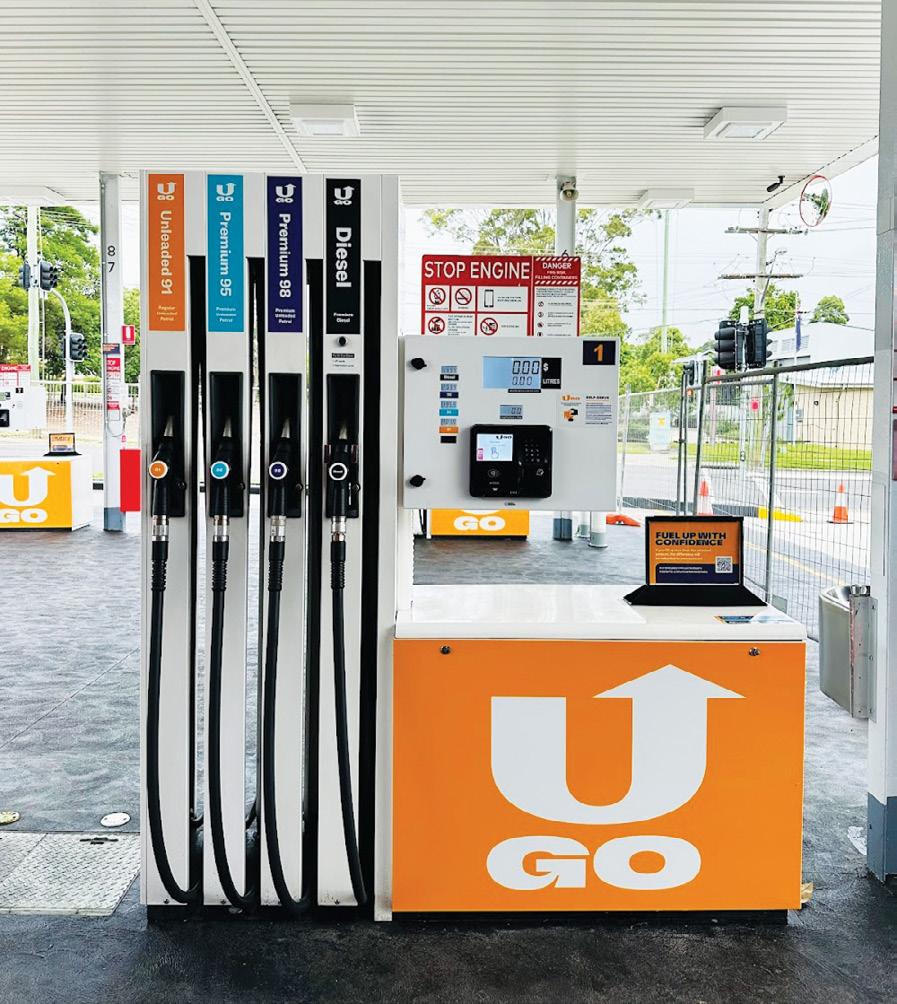

have gravitated toward unmanned sites offering 24/7 access, fast refuelling and lower prices.
Premium formats still perform where there is a strong food, coffee or services proposition, suggesting the market is splitting into “experience” and “efficiency” missions rather than converging on one model.
Through its acquisition of Z Energy, Ampol now owns both a mature New Zealand operation and the U-GO brand, and it has begun rolling the model out in Australia. By early 2026, Ampol had converted 27 Australian sites to U-GO and was operating 46 unmanned locations nationally, with sites showing around a 50 per cent uplift in fuel volumes and average earnings improvements of about $350,000 per site after 12 months. These sites are pay-at-pump, card-only, fuel-only locations targeting the value end of the market, while Ampol’s core network continues to push a full-service Foodary convenience offer. The shift highlights how automation is moving from niche trial to mainstream strategy in Australian fuel retail.
The New Zealand experience shows that once unmanned fuel reaches scale, it can permanently reset price expectations and accelerate share shifts away from fully staffed formats. Ampol’s early results suggest unstaffed sites can lift volume and earnings by lowering cost-to-serve and sharpening local competitiveness. For Australian retailers, the key questions are which sites should migrate to unmanned formats, how to protect high-margin convenience missions, and what balance between “experience” and “efficiency” will work in each catchment.
If New Zealand is any guide, delaying that decision risks discovering too late that consumers are willing to trade the shop for cheaper, faster fuel. ■
Fuel Retail Solutions help retailers decide which locations are suited to unmanned operations using a data-driven approach that combines market surveys, site performance metrics and local demand analysis. This identifies sites most likely to benefit from reduced on-site staffing while maintaining competitiveness.
Once a transition is approved, the focus shifts to implementing automation that protects efficiency and customer experience. This includes deploying fuel pricing
software for real-time price management and installing pay-at-the-pump terminals to streamline transactions and support seamless, low-cost operations.
Brad can be reached at brad@fuelapac.com
1https://gull.nz/about-us
2https://michaelwest.com.au/ampol-motors-ahead-with-unstaffed-fuel-stations

No artificial colours or flavours
Compostable bagasse bowl


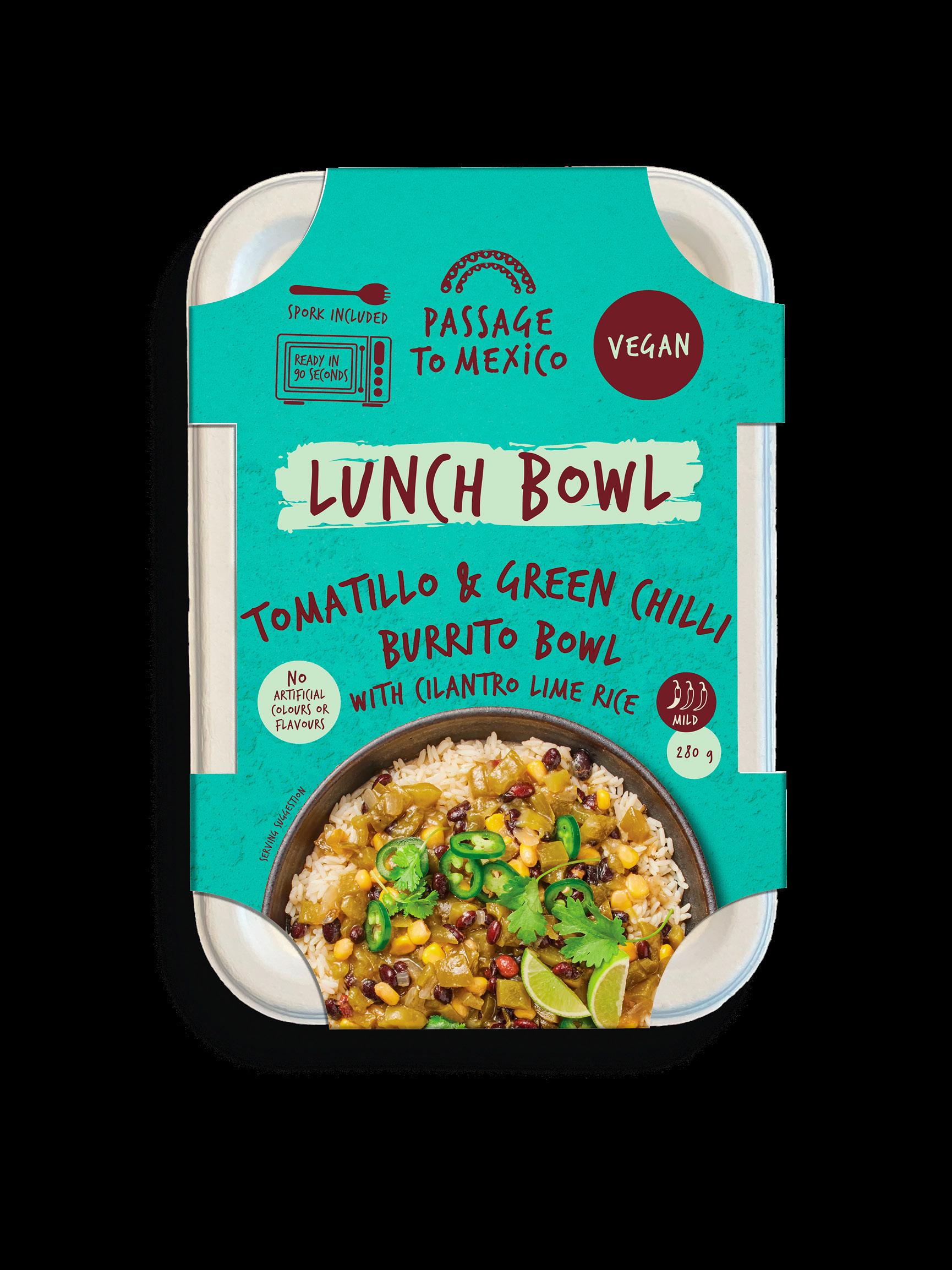
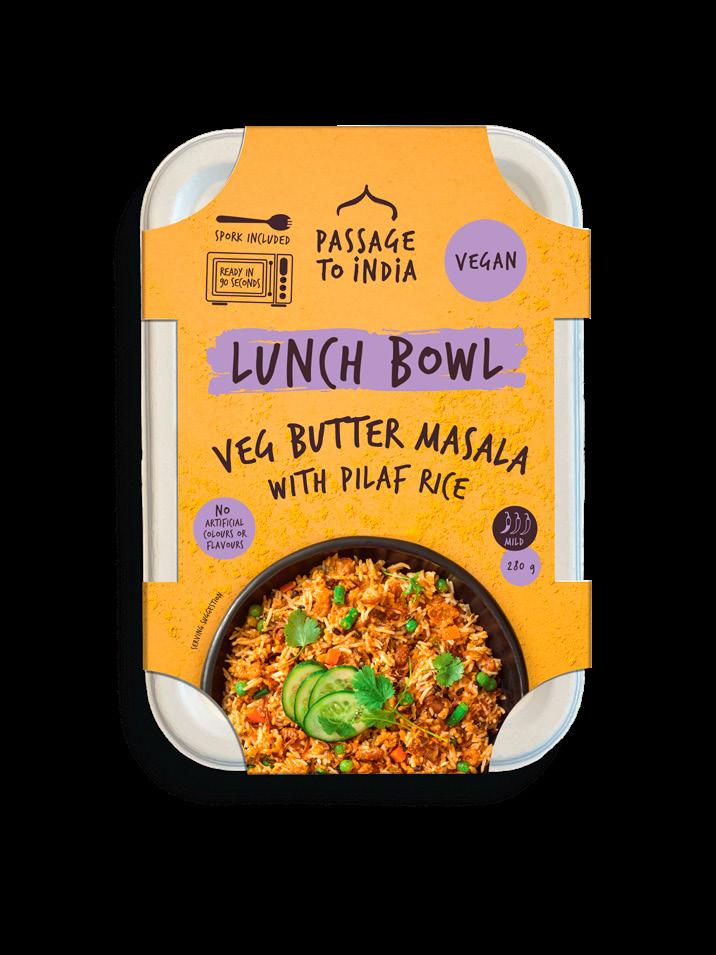
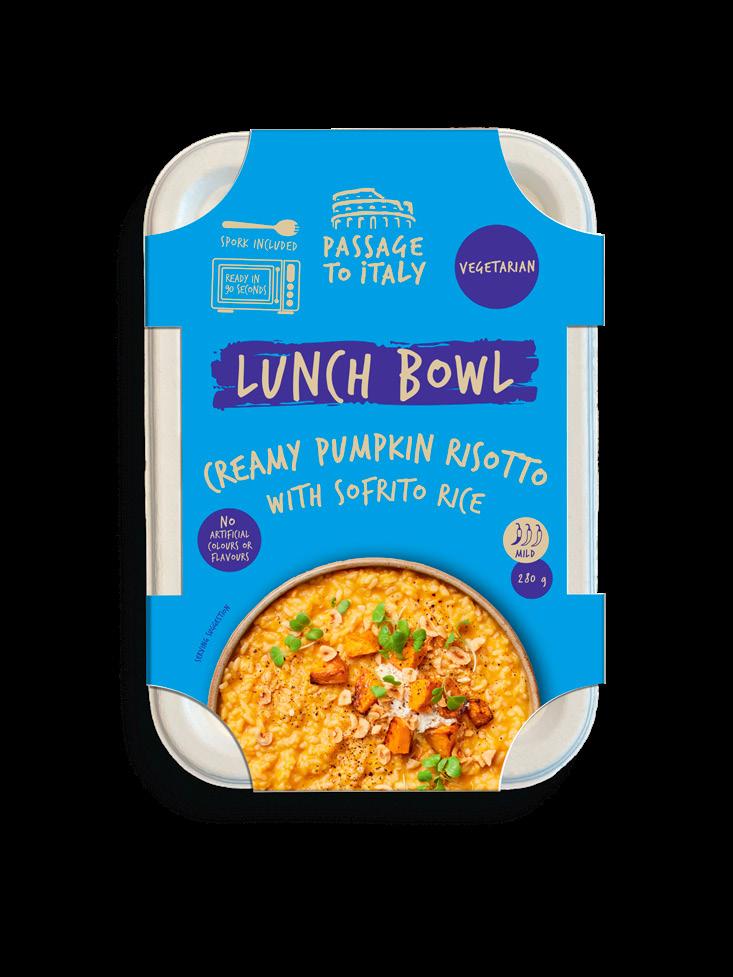


Authentic & convenient
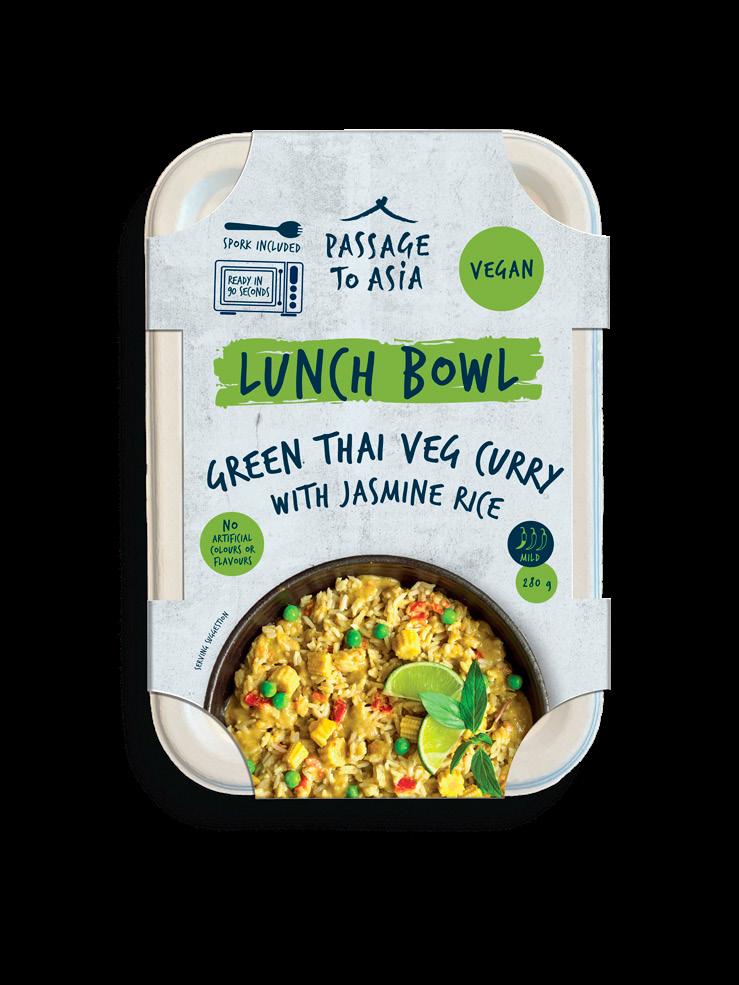



new lunch bowls from passage foods deliver authentic, globally inspired meals in just 90 seconds – purpose-built for the convenience and vending channel.

Australia’s packaging shake-up is offering the P&C channel a chance to seize a lead on sustainability, transparency and long-term resilience.
Words


AUSTRALIA’S PACKAGING AND waste landscape is undergoing one of the most significant transformations in decades. For the Petrol & Convenience (P&C) sector, this isn’t simply another compliance challenge, it is a strategic turning point. The sector is uniquely positioned to move faster than supermarkets, influence supplier behaviour, and meet evolving customer expectations in ways that strengthen both brand trust and commercial resilience.
Across the country, change is accelerating, though not always consistently. The continued lack of national harmonisation for Single-Use Problematic Plastic bans leaves retailers navigating a patchwork of rules; one State may prioritise recycling, while another strongly favours compostability. For national and multi-state operators, this could create operational friction, additional cost, and a level of complexity that simply can’t be absorbed indefinitely.
Layered on top of this is the rapid shift toward Extended Producer Responsibility. This marks a new reality where brand owners, and in some cases retailers, pay directly for the end-of-life impact of their packaging. In this environment, packaging knowledge transitions from “nice-to-have” to “commercially essential”.
“In an Extended Producer Responsibility world, ignorance is both a compliance risk and a cost centre.” Retailers will need to know the exact material makeup of every component: coatings, additives, recycled content, and realistic end-of-life outcomes. PFAS remains under the regulatory microscope, adding another layer of technical scrutiny to packaging decisions.
Cups clearly illustrate the gap between policy ambition and realworld system performance. While technically recyclable formats exist, recovery rates remain low due to limited infrastructure and
investment. Compostable cups provide an alternative pathway, but inconsistent acceptance in Food Organics & Garden Organics systems restricts genuine recovery. “Paper-based disposable cups are the perfect example of the gap between technical recyclability and practical recoverability.”
Extended Producer Responsibility may shift this dynamic by directing funds toward improved collection, sorting and reprocessing infrastructure. In the meantime, fibre-based packaging options, such as polylactic acid (PLA) lined cups or fibre foodservice items, offer the P&C sector an alternative that reduces fossil-based content and provides a stronger platform for customer engagement.
P&C faces constraints: branded promotional items dictated by suppliers, SKU complexity, and material variation. These challenges also create opportunity: a clearer sustainability narrative can differentiate the channel, making packaging transparency, recyclability, material type, and PFAS status a point of trust.
“Transparency is now a commercial strategy, not just a nice-to-have.”
The benefits of acting early are compelling. Retailers that align packaging choices with Extended Producer Responsibility principles reduce long-term liability, strengthen supplier partnerships, and build more resilient product ranges. Dual-claim packaging that suits both recycling and composting systems helps navigate State misalignment while simplifying instore operations.
Most importantly, P&C can lead. “The retailers who act now have the chance to become the trusted brands of tomorrow.” By positioning themselves as agile pilots for new low-impact materials, early adopters gain access to innovation and shape the product landscape.
To seize this moment, operators should start now:
• Audit current packaging – materials, linings, additives, recovery pathways.
• Strengthen data management systems for Extended Producer Responsibility, APCO and upcoming national regulation.
“The winners will be the retailers who understand their packaging data better than anyone else.” ■
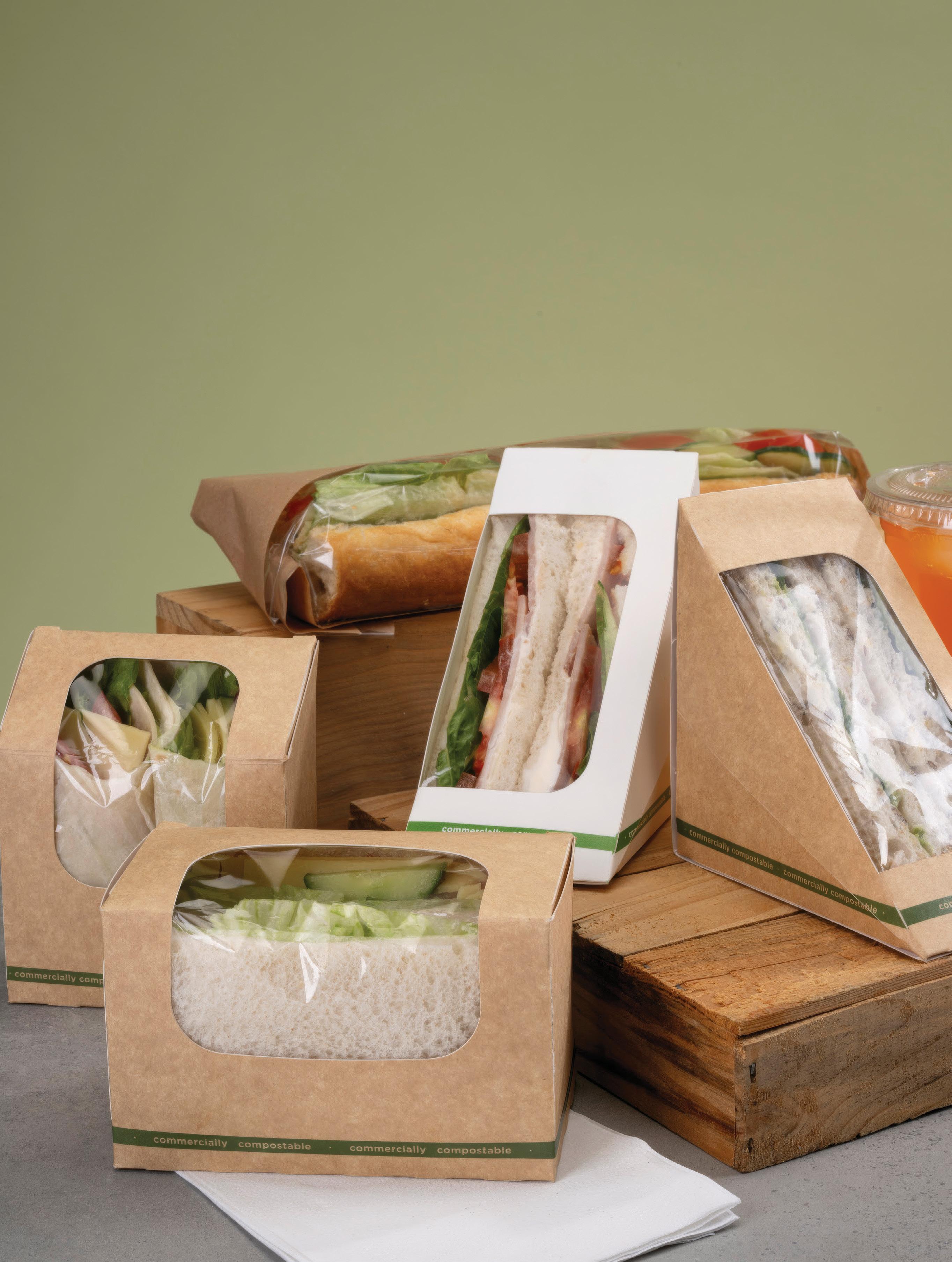

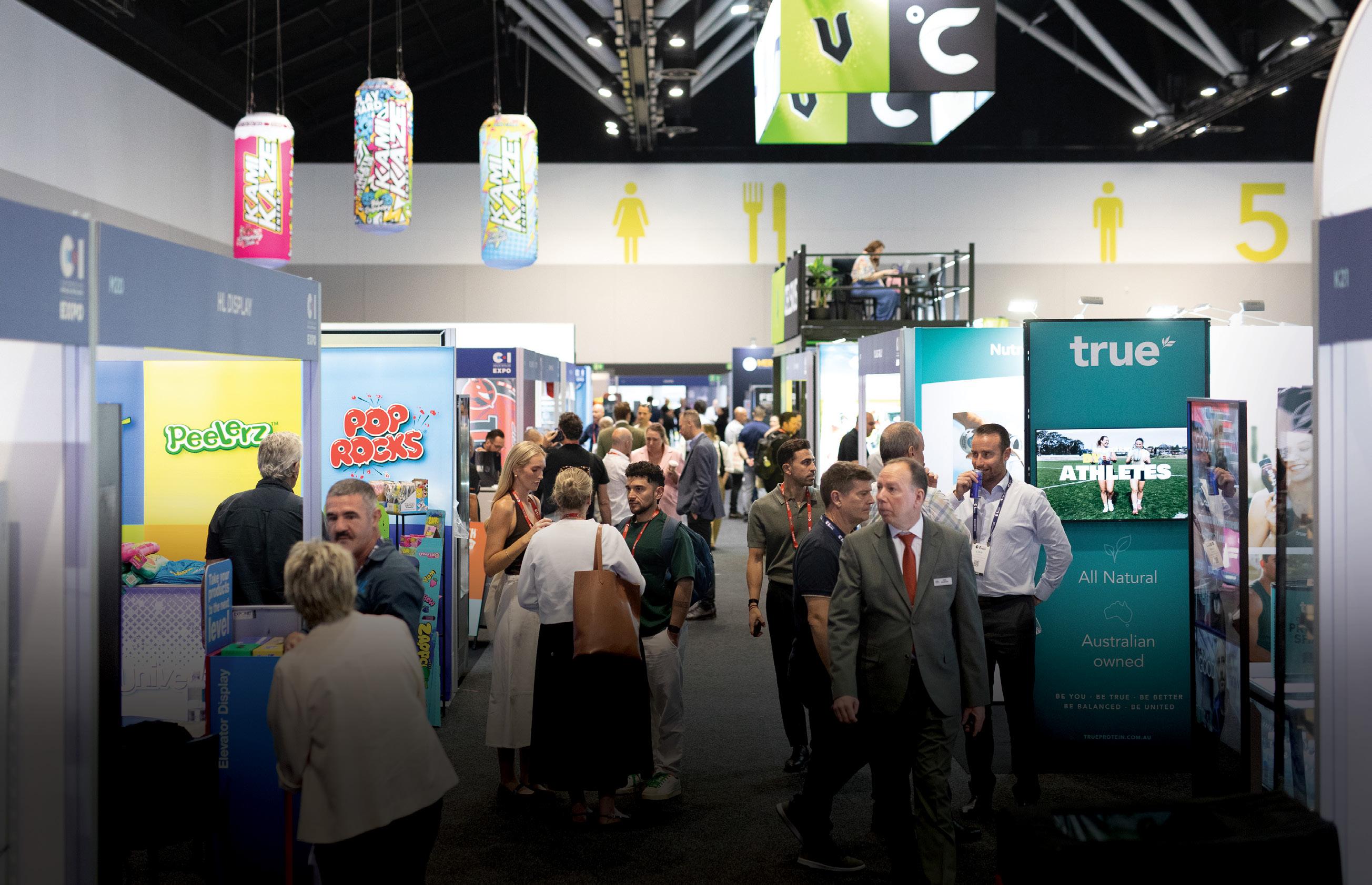
After a year-long hiatus, the C&I Expo made a triumphant return in 2026, showcasing the best the P&C channel has to offer.
THE 2026 C&I EXPO has wrapped up following two days of strong attendance, product innovation and industry engagement at ICC Sydney on 17–18 March.
This year’s event brought together more than 1200 attendees, with over 120 suppliers showcasing new products, services and equipment across the show floor, giving retailers the opportunity to explore the latest in foodservice, beverages, technology and in-store solutions aimed at driving growth and differentiation.
Safa de Valois, Group Publisher of C&I Media, was incredibly pleased with what the show delivered, both for suppliers and retailers.
“For over 32 years, the C&I Expo has proudly evolved into the only true independent expo for the petrol and convenience industry. This year, the show delivered strong insights, valuable connections, and meaningful learnings for retailers and exhibitors across the channel.
“I’d like to thank everyone who made this show a success – from the exhibitors, to the events team, to the retailers who took time out of their schedule to attend – it’s truly wonderful to be part of an industry that supports one another.”
Jodie Bailey, National Account Manager at Universal Candy, said the show went amazingly well.
“It’s been very beneficial. Connection I think is the keyword. Connection with our customers and with
other suppliers as well to see what the trends are out in the field.”
Craig Brunt, CEO at Arthur Brunt Quality Grocer, said they’ve had a lot of independent petrol stations fill up their order book.
“I’ve talked to a number of what we’ll call mini chains. People that have five, twelve, fifteen stations. They’ve been very excited by the Corn Harvest Chips and Salsa, especially the displays they come in.
“So excited in fact, that they’ve put their money where their mouth is and ordered cases of them that we’re going to be delivering into their stores tomorrow and the day after.”
A key feature of the Expo was its Power Sessions program, which delivered a series of targeted, practical presentations from industry leaders across both days.
On Tuesday 17 March, sessions covered retail crime, recruitment, foodservice and digital display. Speakers included Sean Singh of Auror, Rachel Quinn of 3P Partners, Michael Brick of Meris Food Equipment, and Mary Georgievski of Fujifilm Australia.
Wednesday 18 March continued with sessions focused on hot food, energy and packaged beverages, featuring Matt Dodson of Patties Foods, Travis MacLachlan of Flow Power, and Brad Cooper from CCEP. Sean Singh also returned to the stage for an encore session of his retail crime presentation. ■
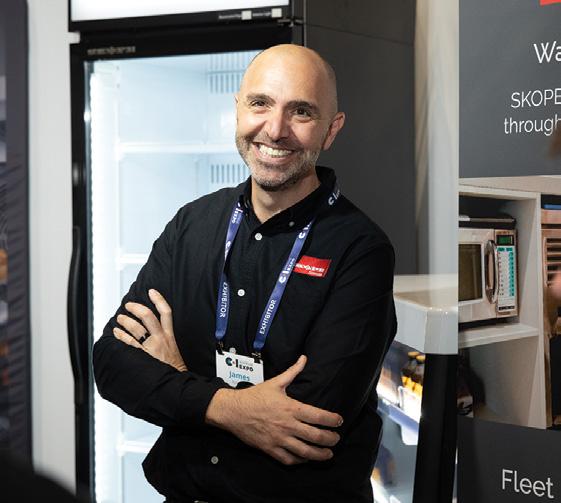
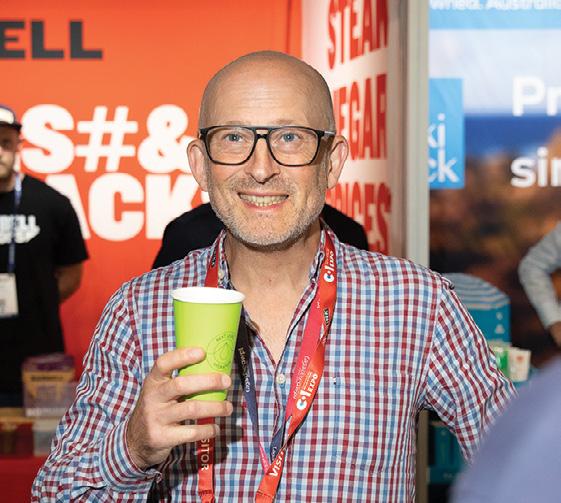
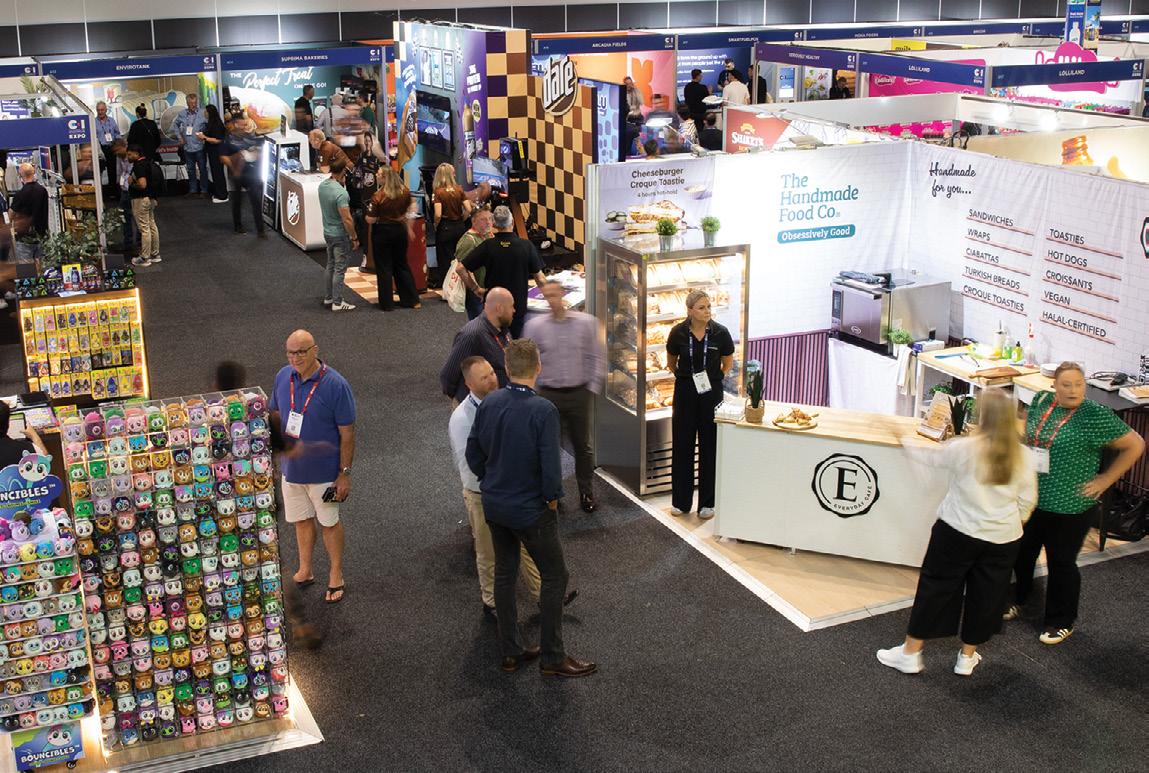
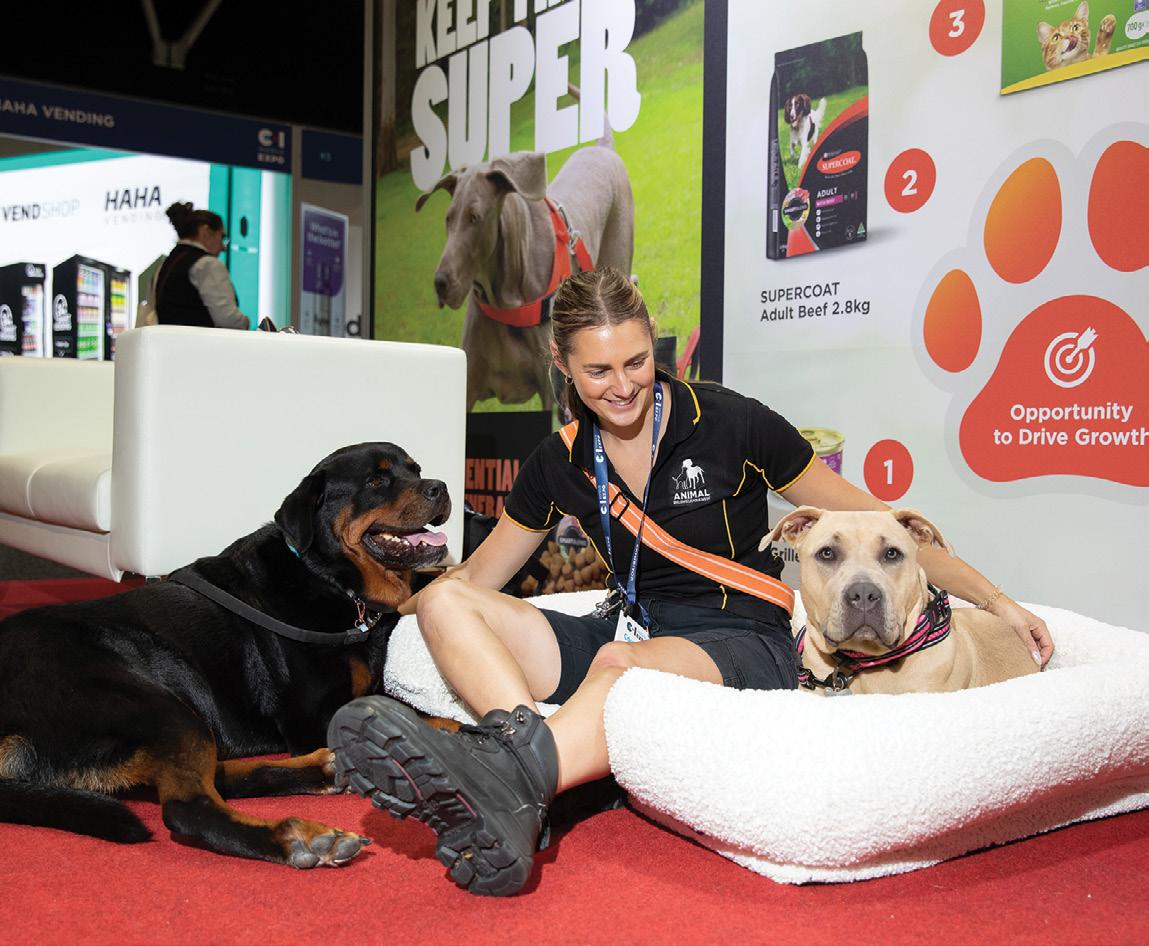
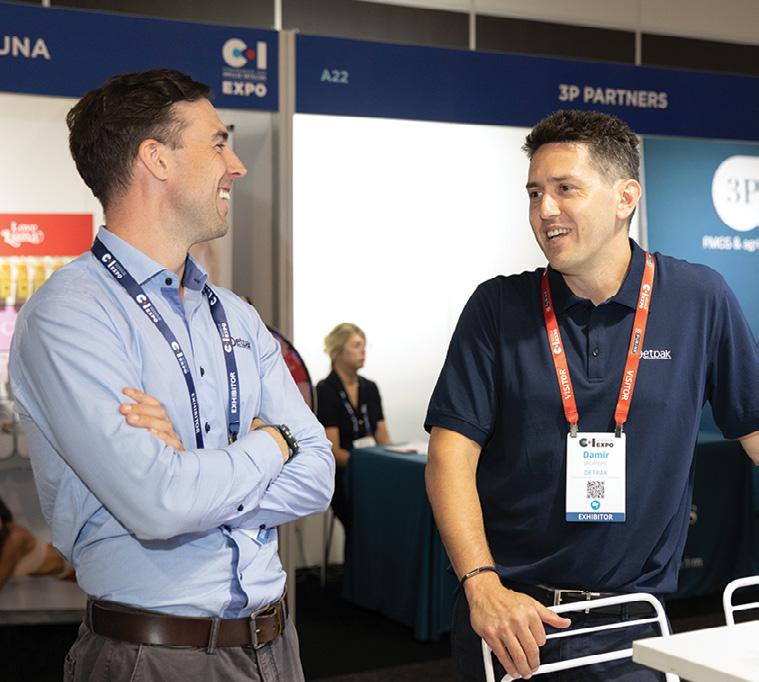
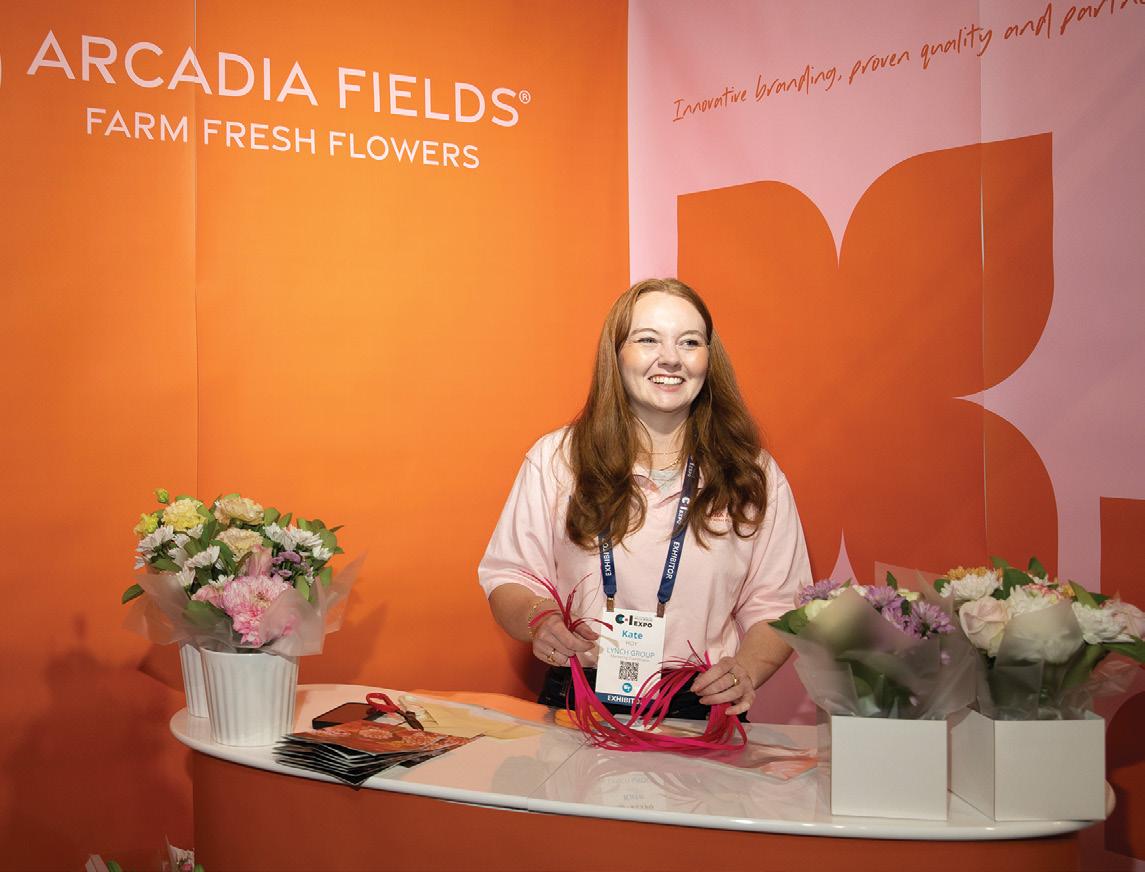
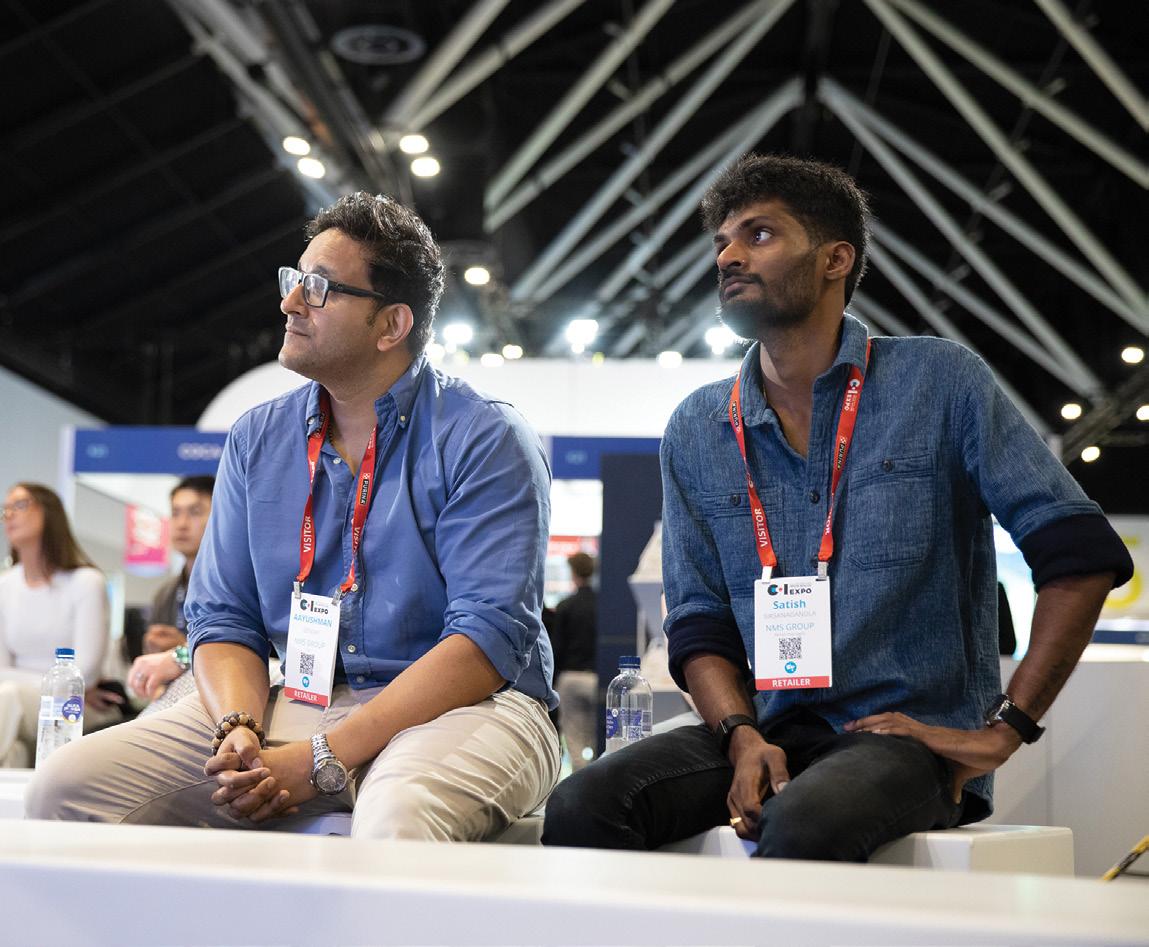
“For over 32 years, the C&I Expo has proudly evolved into the only true independent expo for the petrol and convenience industry.”
–
Safa de Valois, Group Publisher, C&I Media
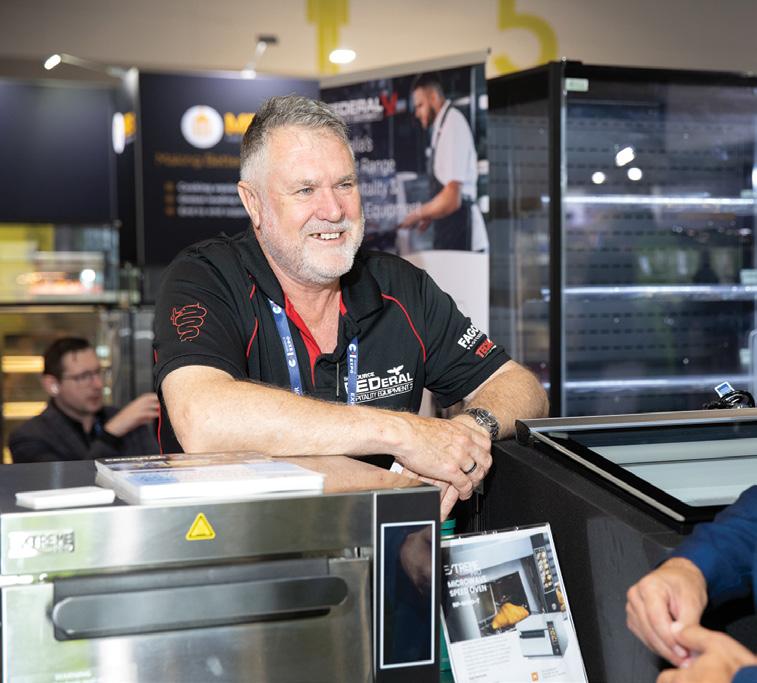
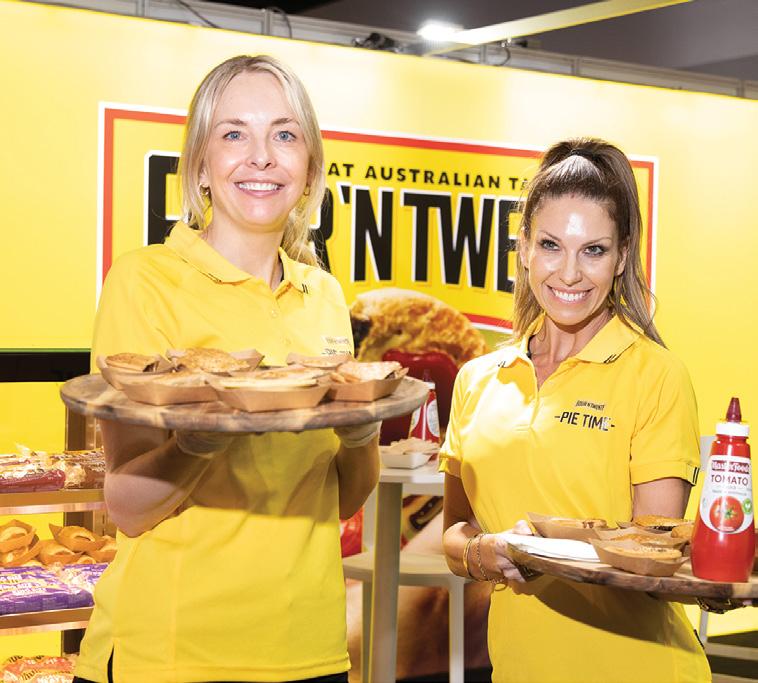
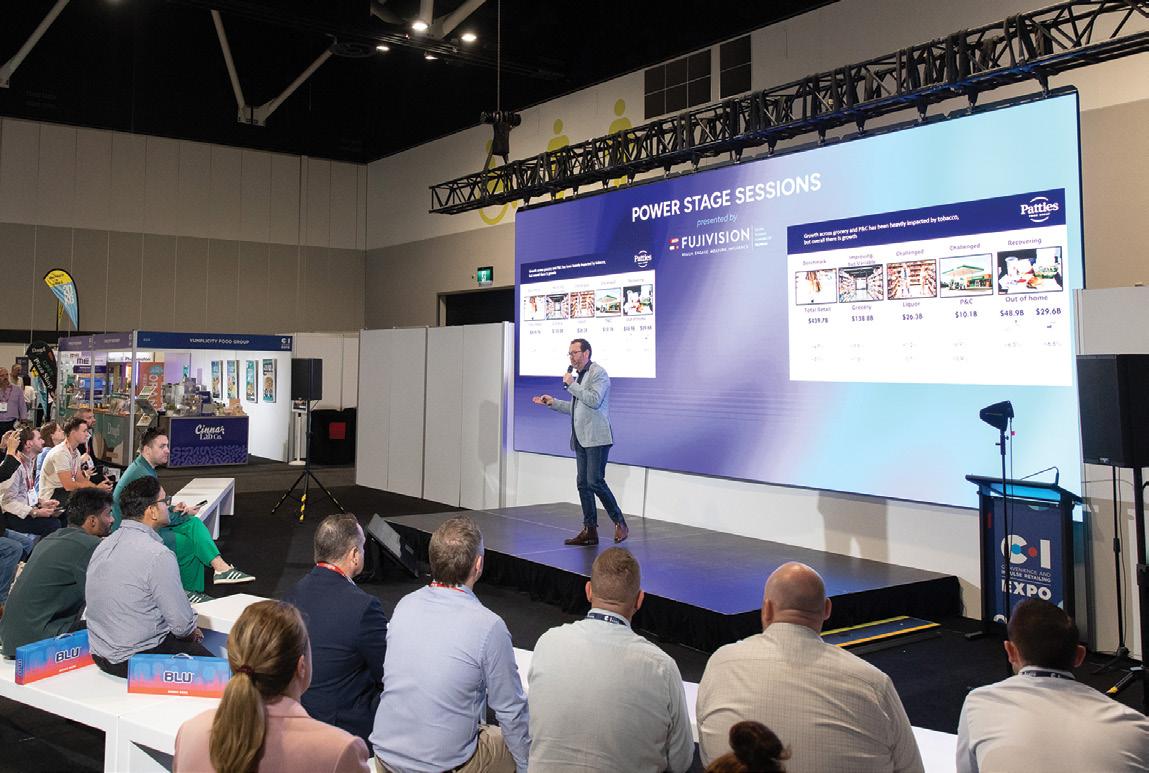
“It’s been very beneficial. Connection I think is the keyword. Connection with our customers and with other suppliers as well to see what the trends are out in the field.”
– Jodie Bailey, National Account Manager, Universal Candy
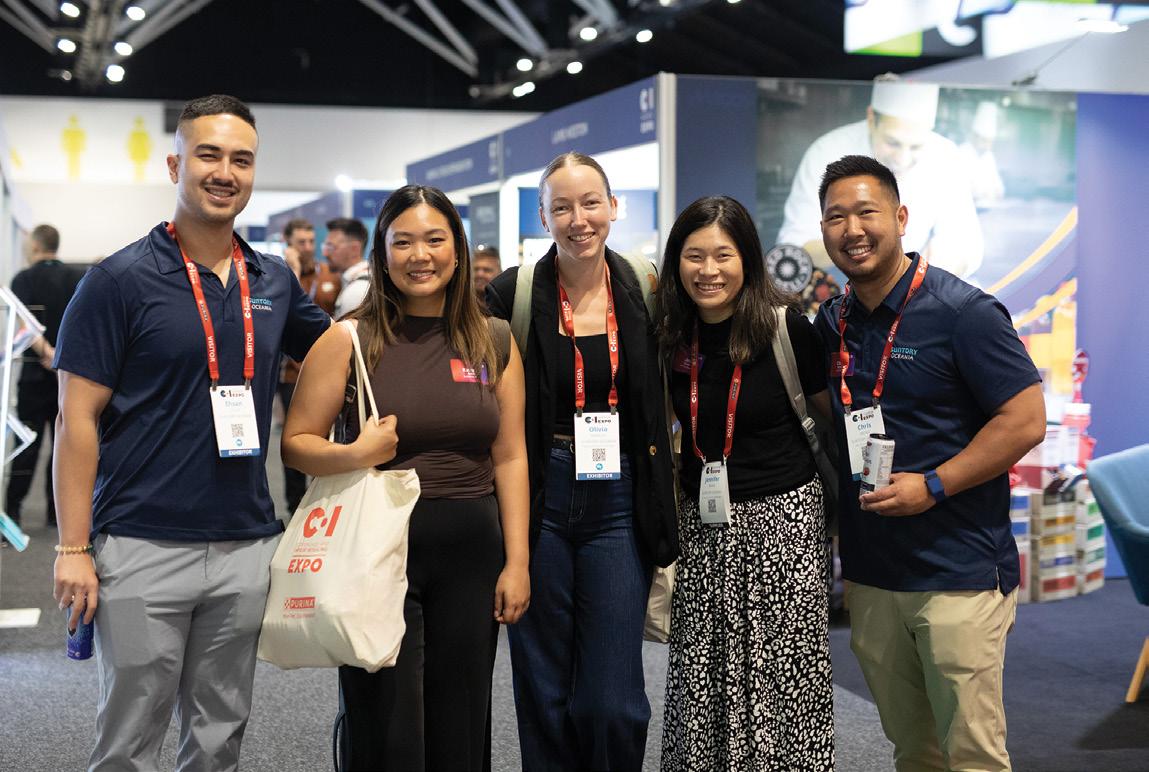
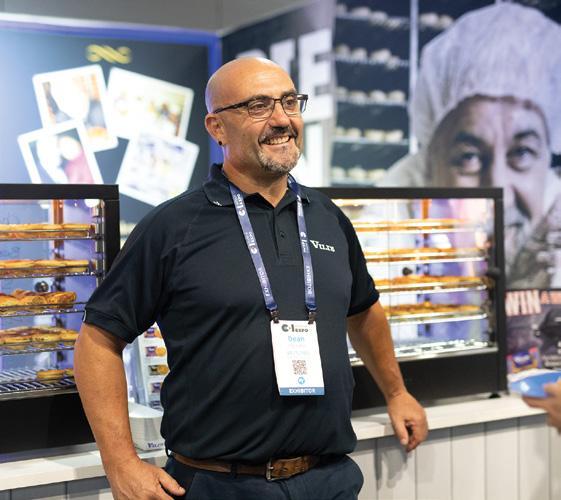
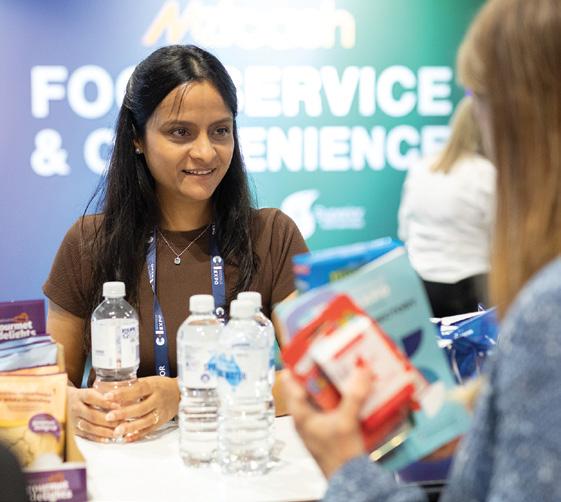
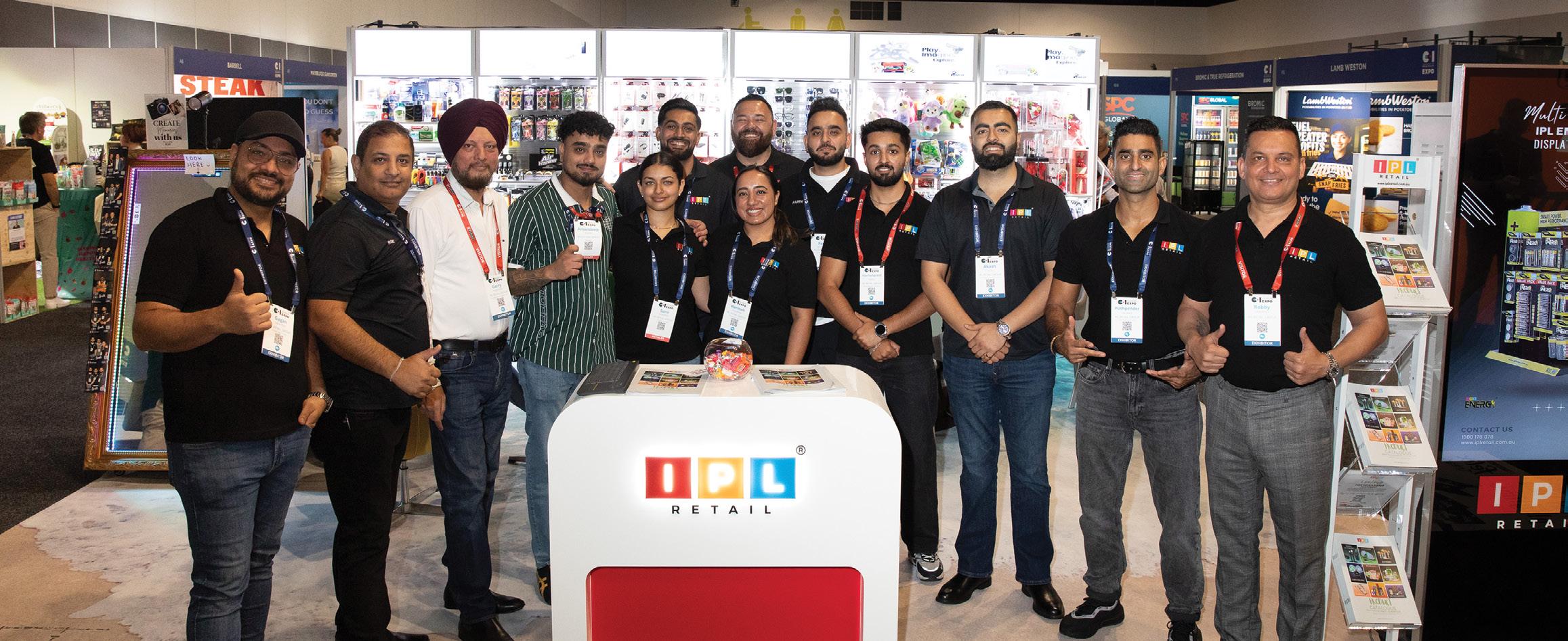
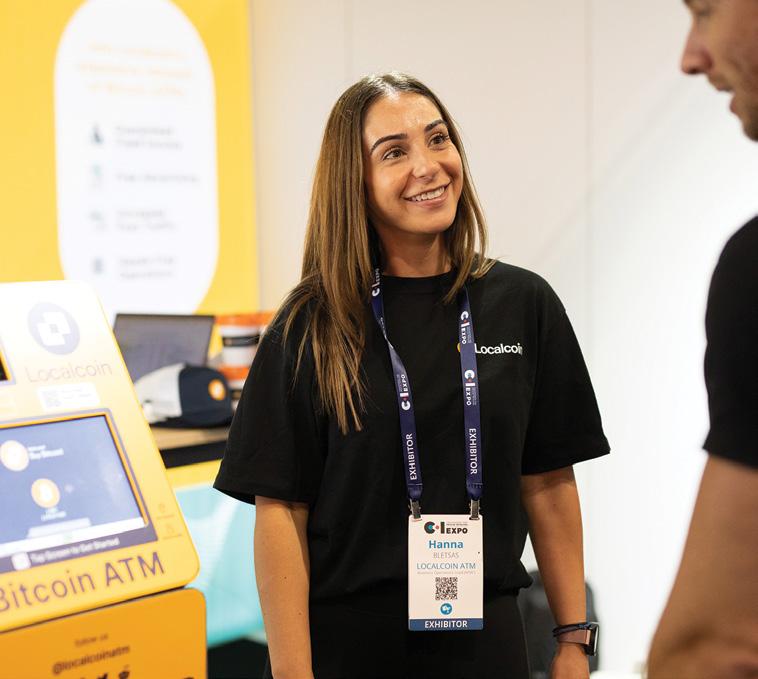
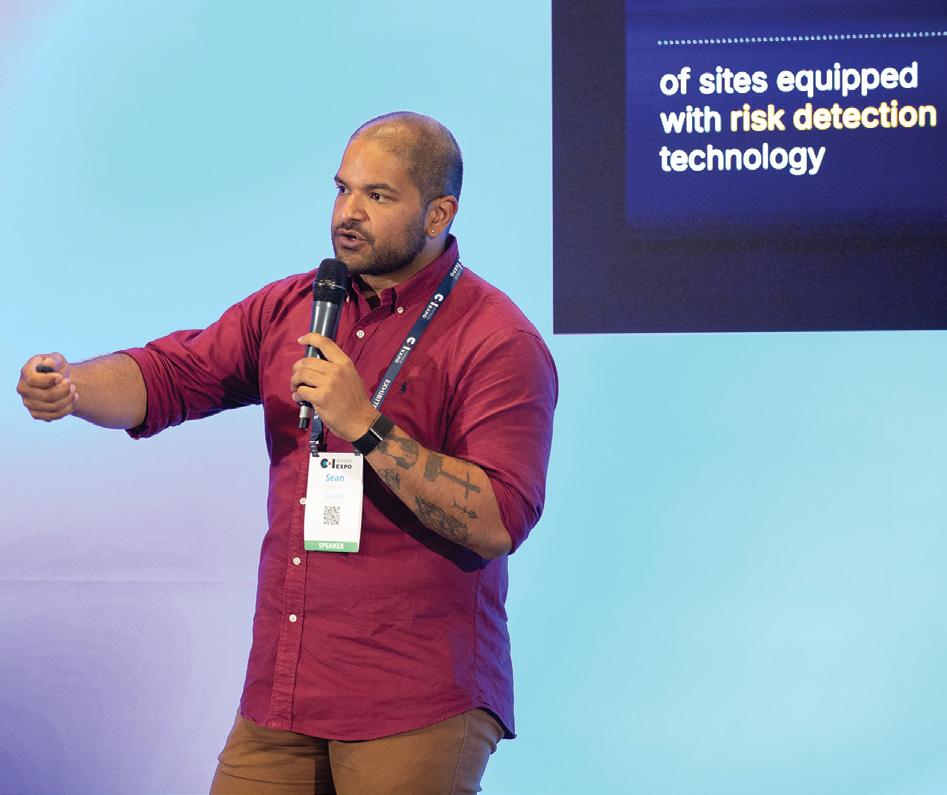
Speaking at the 2026 C&I Expo, Sean Singh of Auror said one in 10 retail incidents in Australia now involves weapon carrying, aggression or physical abuse, with incidents rising sharply across all states.
“That is a really big number,” Singh said, pointing to a 17 per cent increase in weapon-related and aggressive events over the past year, following an even steeper rise the year prior.
“10 per cent of offenders are causing 62 per cent of your external loss. What that means is that if you implement tools and strategies to identify that top 10 per cent you can then drive the most impact to your bottom line.”
These repeat offenders are also three times more likely to be involved in safety incidents, making them the key focus for retailers.
Singh outlined three key foundations for retailers: improving reporting, turning data into actionable intelligence, and strengthening information sharing across networks.
Technology is playing a growing role, particularly AI-enabled reporting, number plate recognition and facial recognition systems, allowing staff to identify repeat offenders earlier and respond before incidents escalate.
However, Singh stressed that technology alone is not enough. Staff training, particularly in deescalation, and stronger engagement with reporting processes are critical.
“Incentivising reporting is probably the most important one,” he said, noting that staff are more likely to engage when they see outcomes such as arrests or police follow-ups.
With crime trends continuing to rise, Singh said retailers must focus on repeat offenders, equip frontline teams and use data more effectively to protect both people and profits.
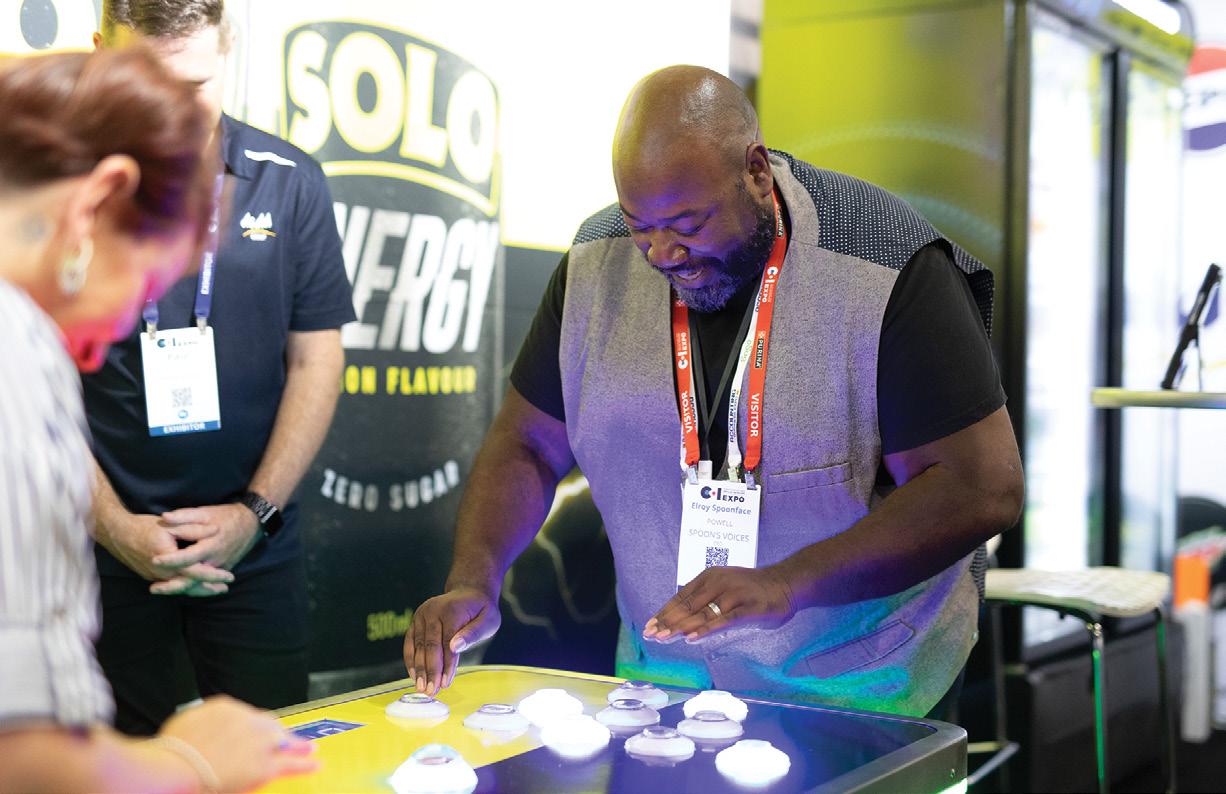
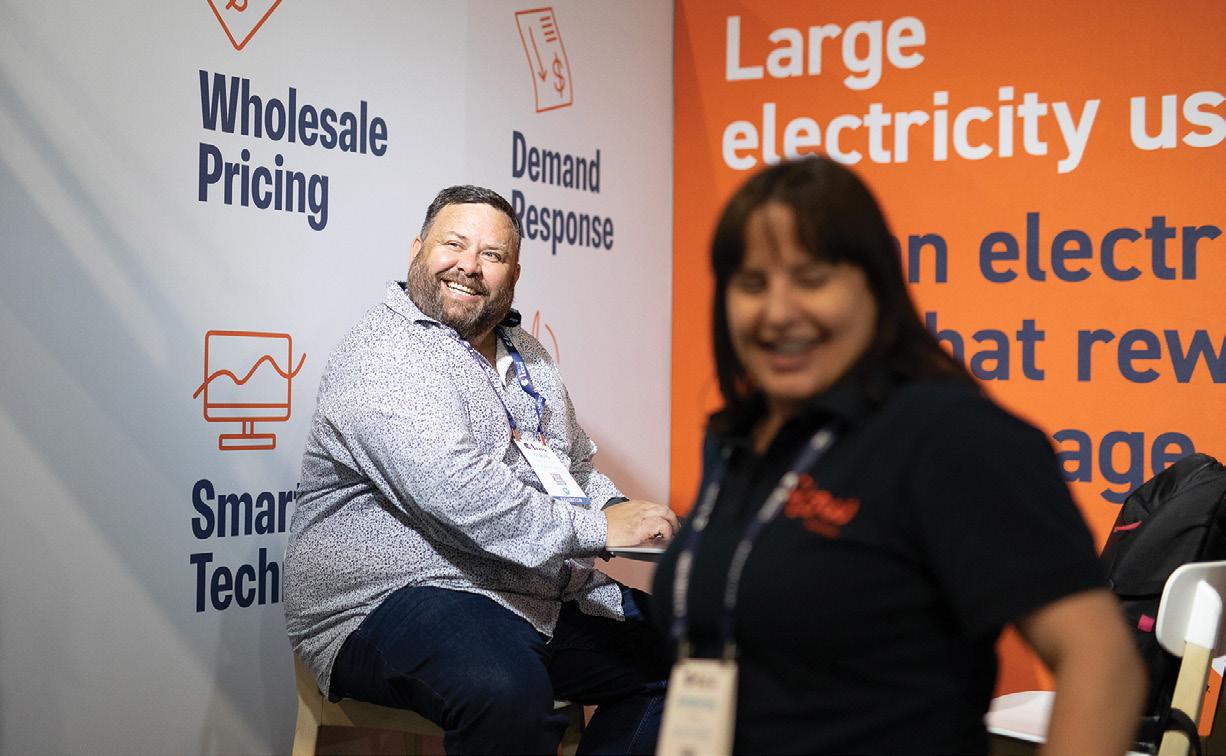
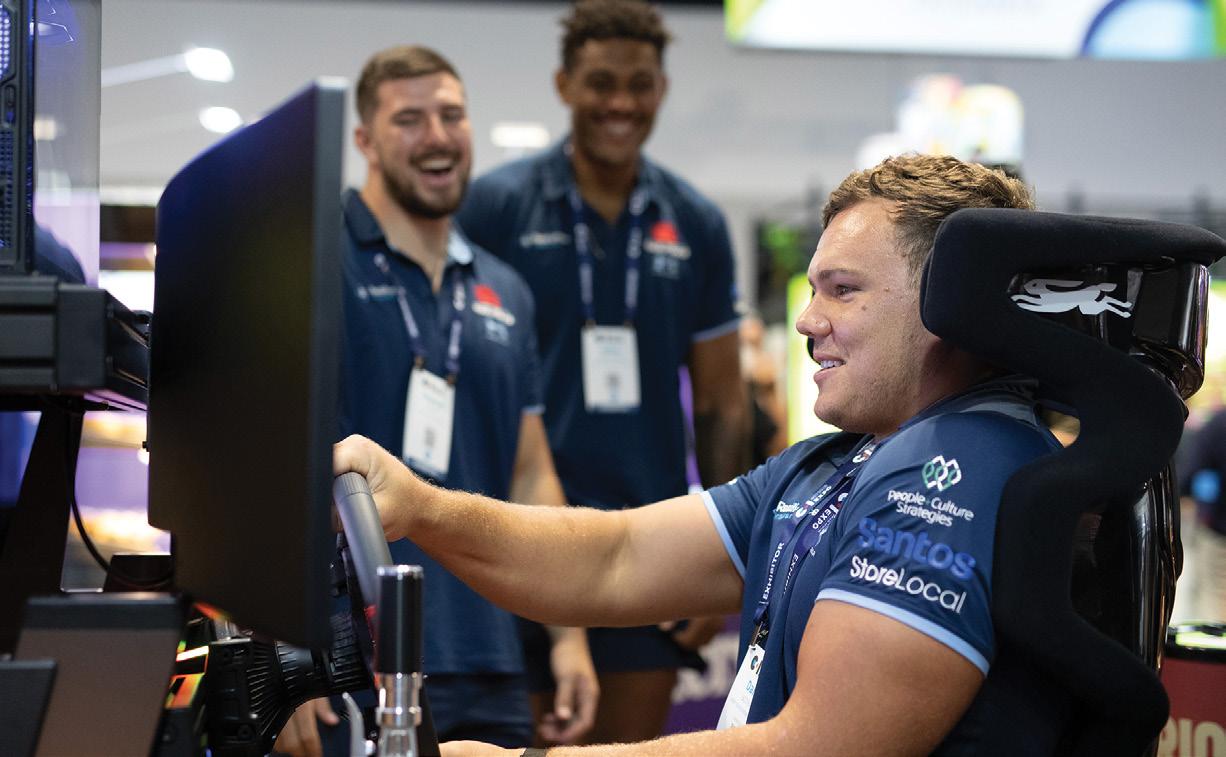
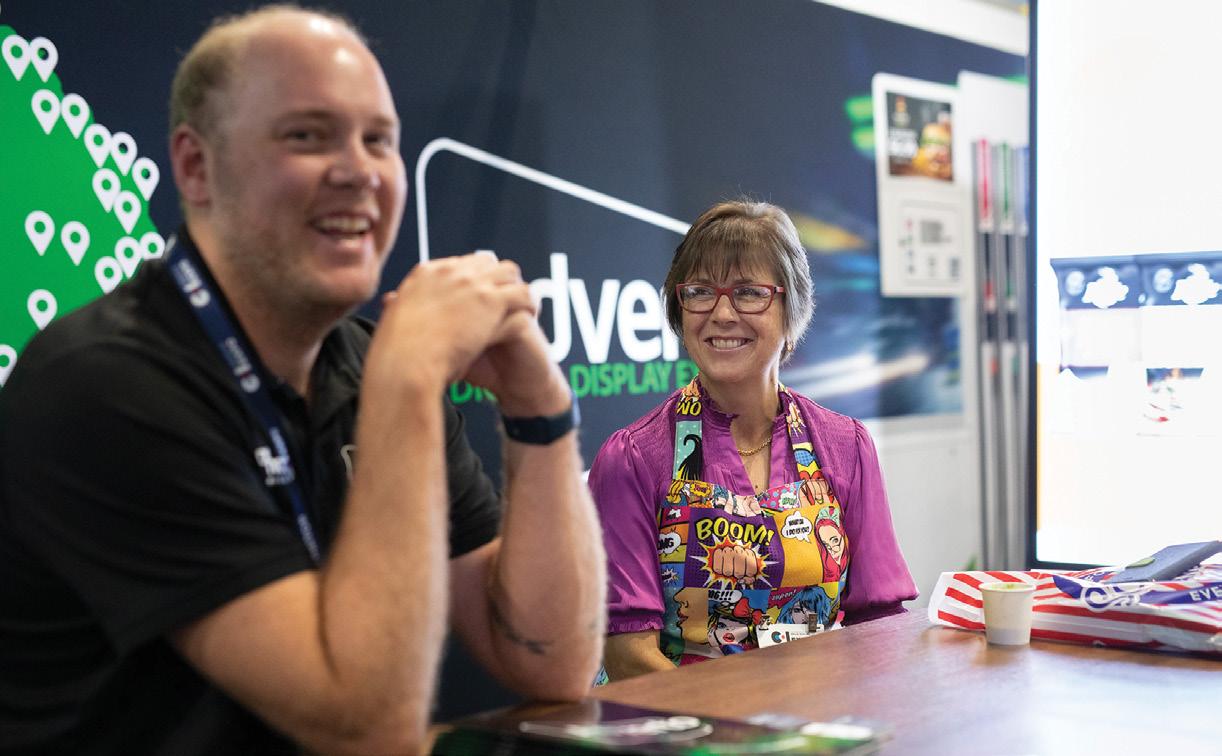
Voices from the expo floor
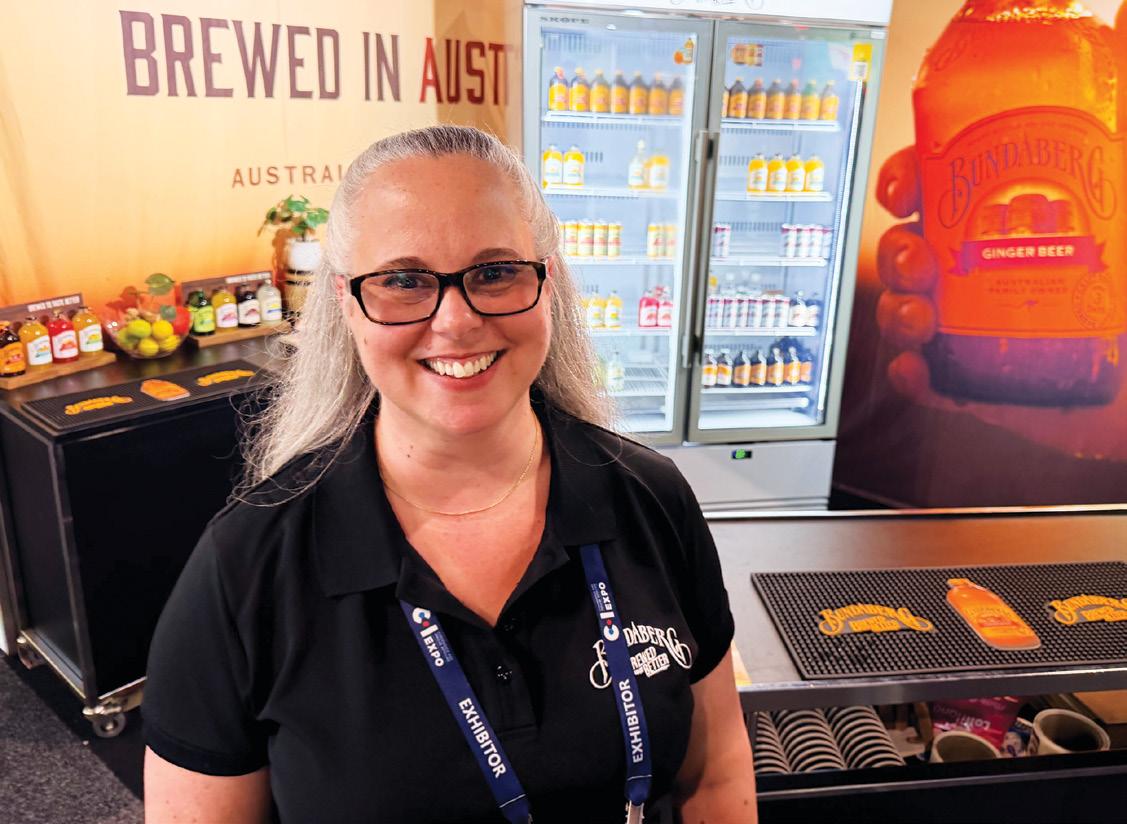
“Our core aim with the C&I Expo is to engage and have brand awareness. Petrol and convenience is a strong portion of our portfolio, but we’ve actually picked up some really good leads from other channels as well, such as airlines and mining, which we’re excited to pursue.”
– Angela Warner, Bundaberg Brewed Drinks
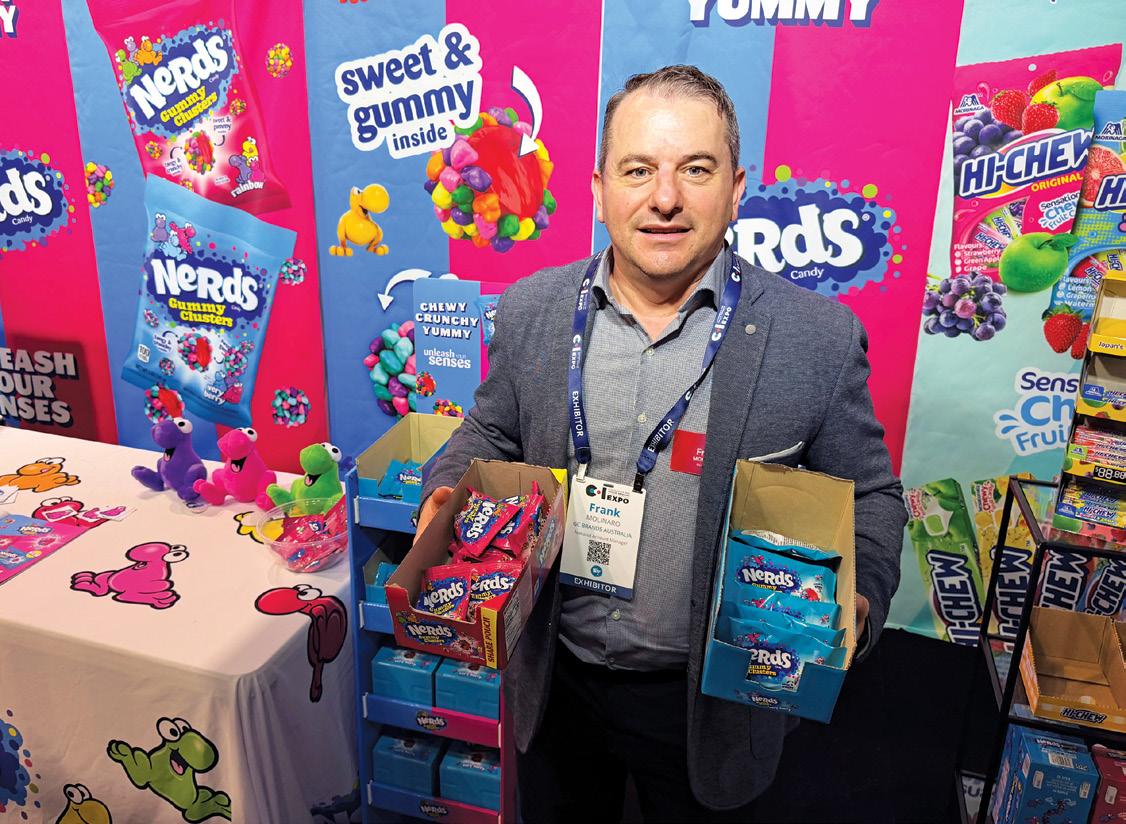
“Over the two days at the C&I Expo, what we’ve found is that retailers have popped by sporadically, which is great as it’s given us, as a supplier, the opportunity to arrange meetings and spend more quality time with those retailers.”
- Frank Molinaro, GC Brands
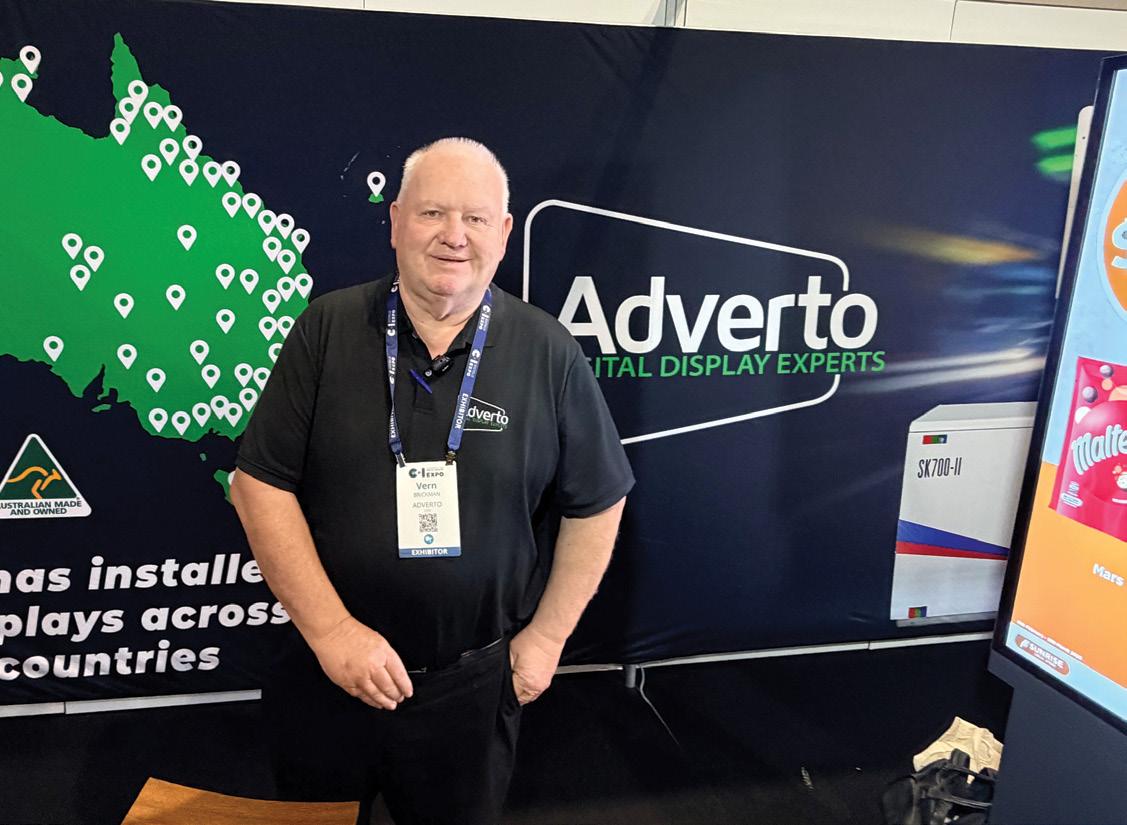
“This year was very good for us again, as it has been in previous years. This year was a little bit different though as we had a lot of enquiries, not only in regards to hardware sales, but also for advertising and networking. We’ve had a different mix of people coming to enquire with us but they’re all very enthusiastic.”
– Vernon Brickman, Adverto Group
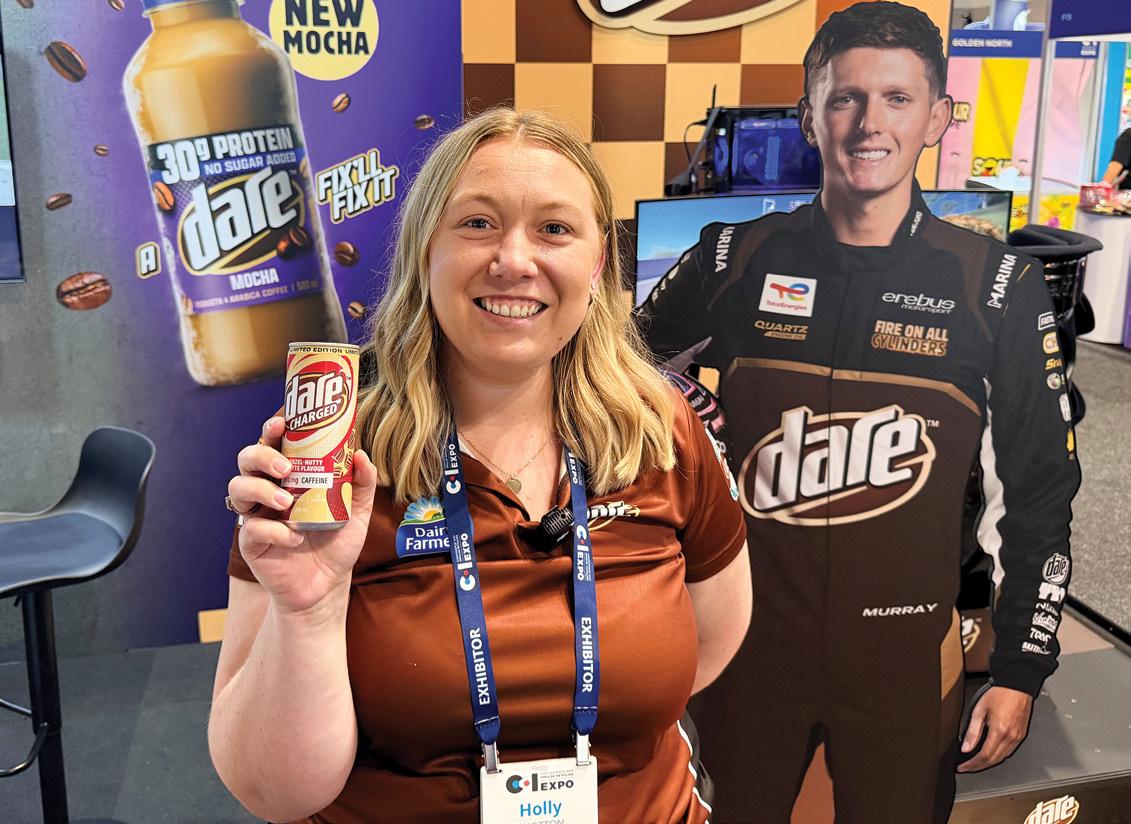
“We’ve seen a broad variety of customers. Everyone from our structured convenience through to our unstructured smaller banner groups as well. So it’s really exciting meeting new customers, connecting with people, and putting faces to names.”
– Holly Shotton, Bega Group

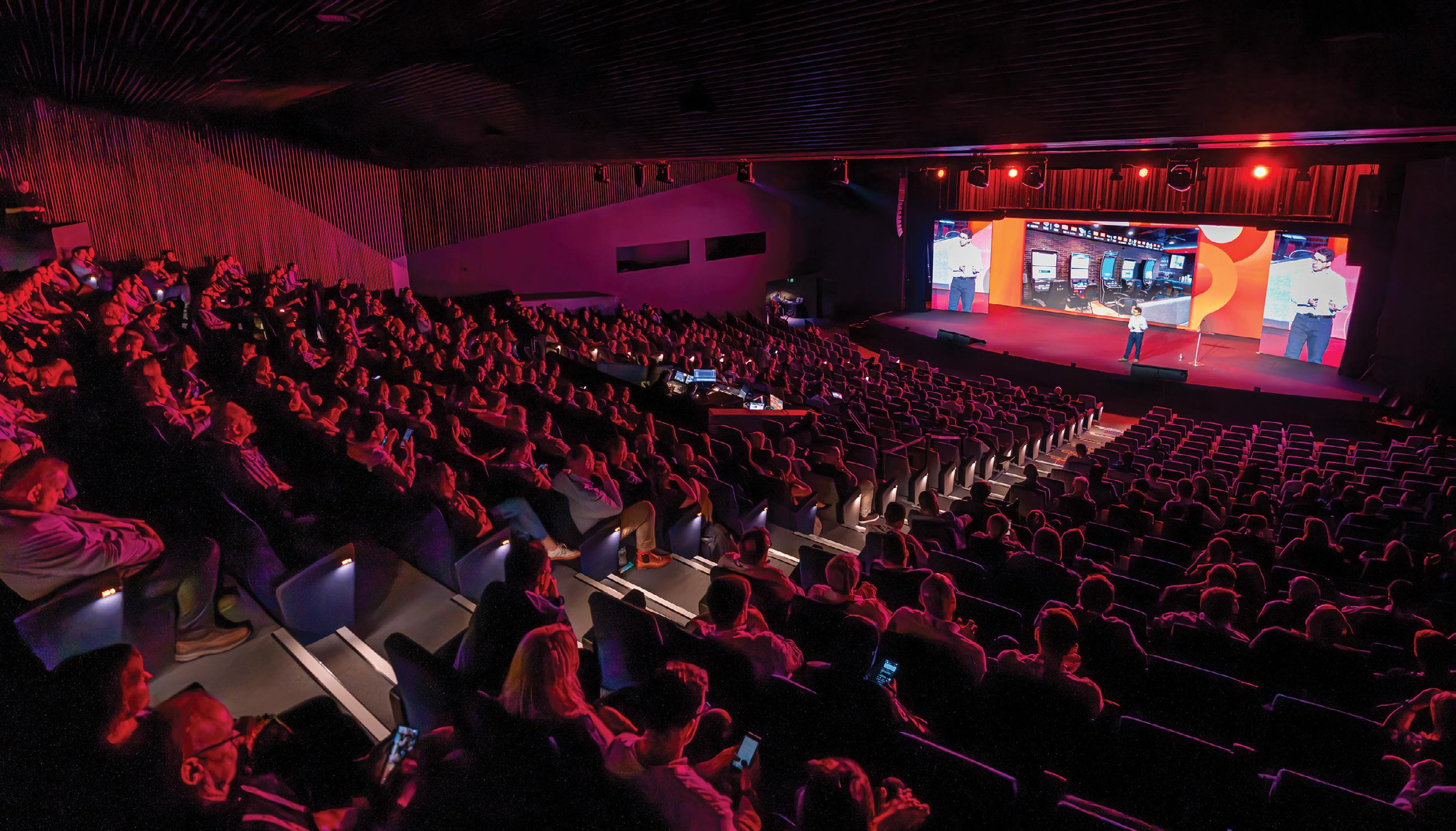
The
Australian Association of Convenience Stores
(AACS)
hosted its annual summit on March 19 at ICC Sydney.
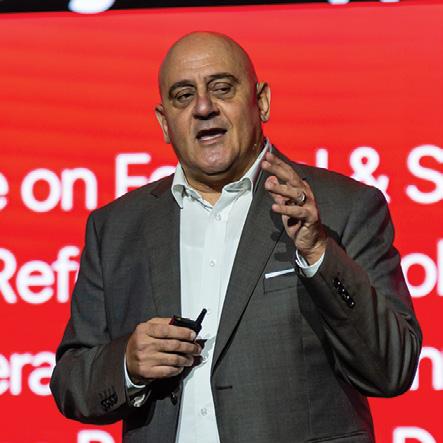
“Bringing together leaders of the industry to connect, educate and share insights is what AACS is all about.”
- Theo Foukkare, CEO, AACS
AACS CONNECT 26 brought a record-breaking 700 delegates to Sydney and provided the opportunity to celebrate and showcase the very best within the convenience industry for both retailers and suppliers, while providing opportunities to learn from global and local experts in their field.
Theo Foukkare, CEO of AACS, kicked things off with a current state of play for issues affecting the industry including retail safety, tobacco, and alcohol, before discussing the association’s goals for the coming year. Foukkare said that the Connect 26 summit was its largest yet.
“Bringing together leaders of the industry to connect, educate and share insights is what AACS is all about. The content for the Summit was curated to provide global and local insights, the state of the convenience
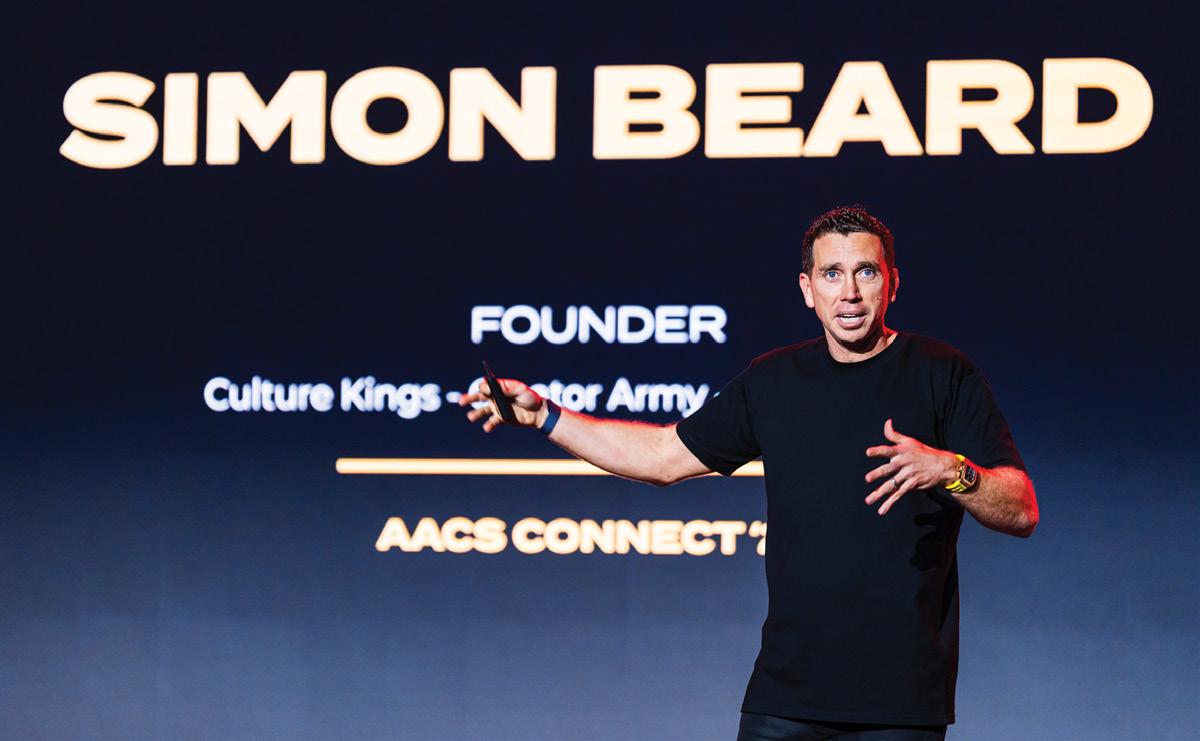
industry, and insights into culture, leadership, and what’s next with technology.”
Paul Bloxham, Chief Economist (ANZ and Global Commodities) & Managing Director, HSBC Australia, provided an informative, yet somewhat bleak, update on both the global and Australian economy. Bloxham however did say that Australia’s long-term outlook could be positive, due to its resources and proximity to Asia, but only if the government addresses its structural issues.
The Peter Jowett Award winners, Tamara Williams from Suntory Oceania and Isabella Zaatini from Metro Petroleum, then delivered their presentations on the topic – How should the convenience industry evolve to attract and retain the next generation of consumers while staying relevant to existing customers?
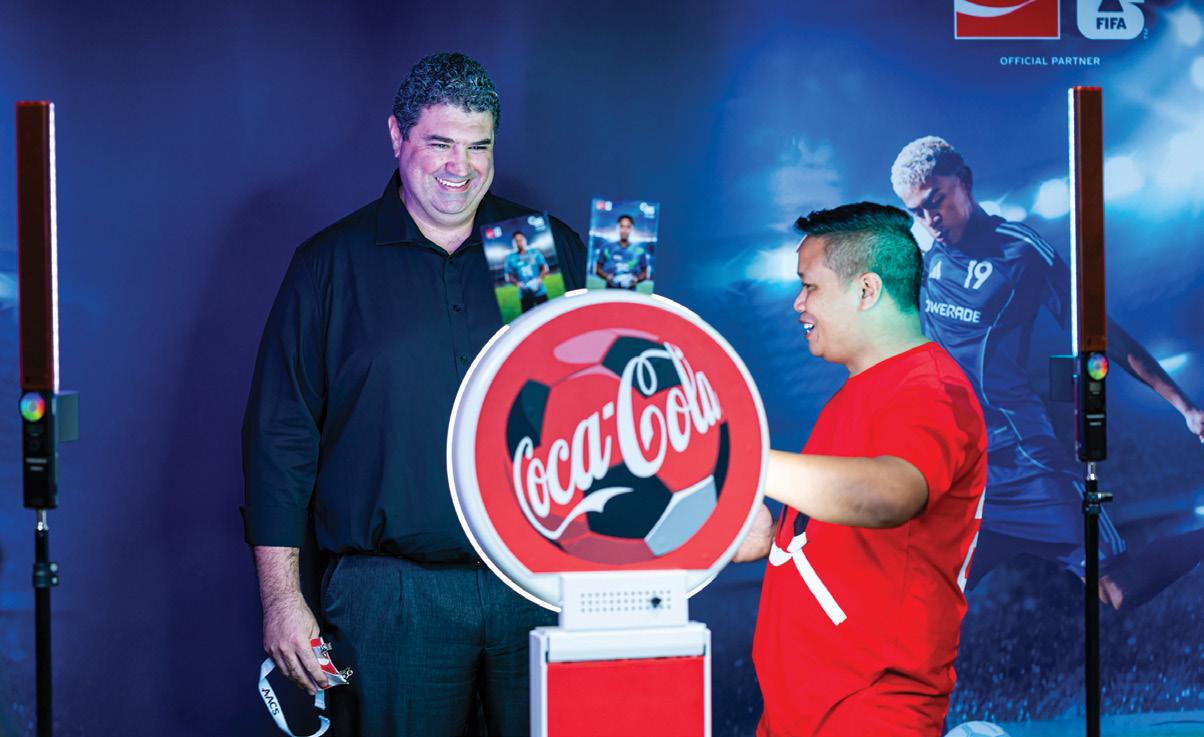
2025 Overall Store of the Year
Jack & Co Northwood
2025 Corporate Store of the Year 7-Eleven Geraldton North
2025 Independent Store of the Year Jack & Co Northwood
2025 Retail Group of the Year AA Holdings
2025 Supplier of the Year Suntory Oceania
2025 New Product Launch of the Year: Asahi Solo Energy
2025 Supplier of the Year – Grocery & General Merchandise Pacific Optics
2025 Supplier of the Year – Snacking PepsiCo
2025 Supplier of the Year –Telecommunications Sim Connect
2025 Supplier of the Year – Tobacco Philip Morris
2025 Supplier of the Year – Food on the Go Patties Food Group
2025 Supplier of the Year – Beverages
Suntory Oceania
2025 Supplier of the Year – Confectionery Mondelēz
2025 Supplier of the Year – Distributors
The Distributors
Brett Barclay, Director at Convenience Measures Australia (CMA), launched the AACS 2025 State of Industry Report, exclusively sponsored by CCEP, which showed -3.9 per cent value growth and a +0.2 per cent increase in unit sales with total sales value of $9.88 billion.
Corinne Barclay, Director at Convenience Measures Australia (CMA), provided an insightful presentation on how retailers are competing for the modern convenience shopper and that while value remains critical for the P&C channel it’s not synonymous with being the “cheapest”.
Dan Munford, CEO of Insight Research and Global Convenience, explored the global shift in convenience retail toward food-led, hospitality-style destinations with examples from Ireland, Argentina, the US and beyond.
To cap the day off, Simon Beard, Founder of Culture Kings, delivered a rousing presentation detailing the growth of Culture Kings, which grew from a Gold Coast market stall to selling for $600 million. Beard gave his assessment of AI, saying businesses, founders, and entrepreneurs should be utilising it to streamline their workflows.
It was then off to celebrate excellence at the AACS Connect 26 Awards Dinner. The black-tie event offered a chance for the industry to not only catch up over dinner and drinks but also to celebrate the outstanding achievements of their peers in the sector.
Picking up both Overall Store of the Year and Independent Store of the Year was Jack & Co Northwood, while Suntory Oceania once again won Supplier of the Year. ■

From global scale to local streets, ME Group is embedding automated retail into daily life.
“Ultimately, we are solving for convenience, accessibility and time efficiency – providing 24/7, frictionless services that integrate seamlessly into modern lifestyles.
– Mélanie Mattiuzzo, Head of the Australian subsidiary of ME Group
IN A RETAIL landscape increasingly defined by speed, automation and frictionless access, ME Group Australia is steadily building a network of self-service machines designed to deliver everyday essentials in high-footfall environments across the country.
Part of a global organisation founded in 1962 by CEO Serge Crasnianski, ME Group has grown from a single machine into an international operator spanning 21 countries with more than 50,000 automated self-service machines. Its client base includes major international retail and property groups such as Shell, TotalEnergies, Tesco, Morrisons, Auchan, Aldi, Lidl and Westfield.
For Mélanie Mattiuzzo, Head of the Australian subsidiary, that scale is central to understanding the company’s positioning in the market.
“What truly differentiates ME Group is that, through our sister company specialising in R&D and manufacturing, we control the full value chain – from concept and design through to deployment and operation. This gives us both the financial strength and operational capability of a global organisation, combined with deep technological expertise.”
Within Australia, the company operates 330 machines across New South Wales, Victoria, Queensland, Tasmania and the ACT. The focus, Mattiuzzo says, is on embedding essential services into the environments where people already spend time.
“Within the broader automated retail landscape, our role is to bring essential, everyday services into convenient, self-service formats, directly into the environments where customers already spend time.”
The proposition is deliberately simple: reduce friction in everyday tasks while maintaining consistency at scale.
“Ultimately, we are solving for convenience, accessibility and time efficiency – providing 24/7, frictionless services that integrate seamlessly into modern lifestyles.”
While ME Group’s global footprint spans a diverse mix of automated retail formats, the Australian business has sharpened its focus. The company evaluates categories through three lenses: customer demand and frequency, operational scalability, and location synergy. As Mattiuzzo explains, “Is this a recurring need or impulse purchase? Can the product be delivered
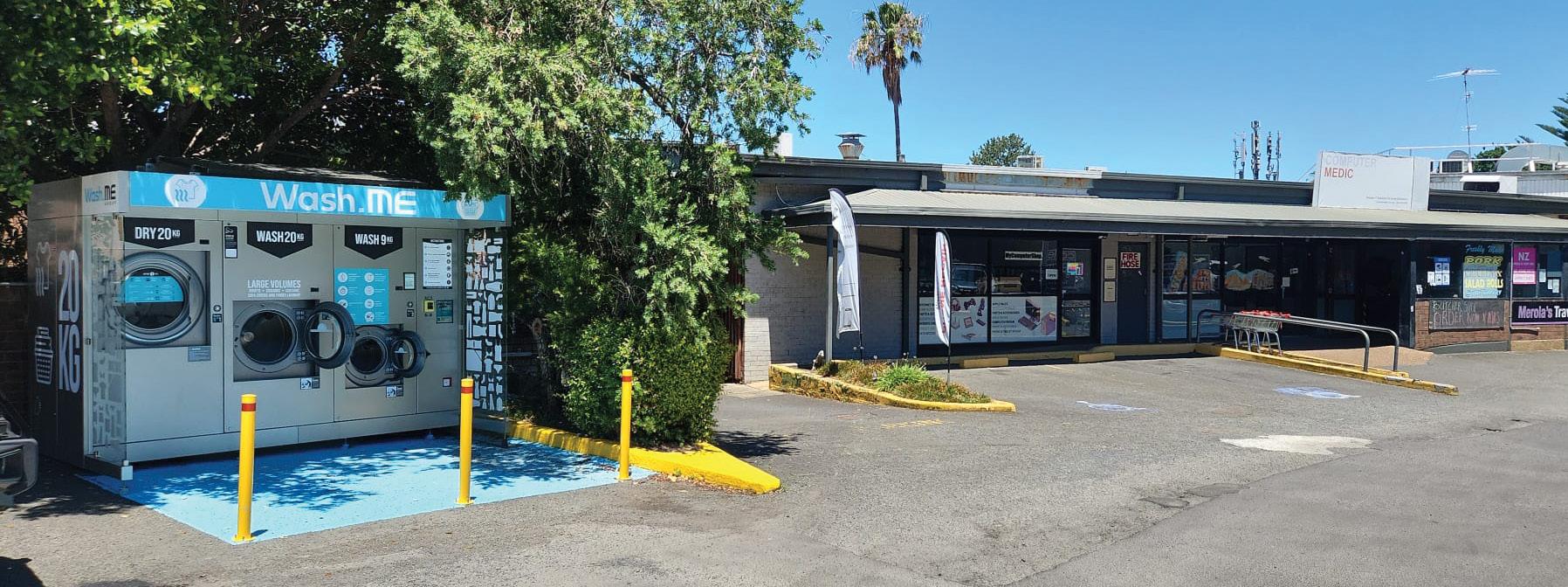
consistently through automation with minimal friction? Does it align with high-footfall environments like convenience & service stations, shopping centres, transport hubs, or residential precincts?”
In practice, that has led to a prioritisation of services where automation enhances, rather than replaces, human behaviour.
“We prioritise categories where automation enhances the customer experience, not just replaces labour. If we can deliver a faster, more convenient version of an existing service – while maintaining quality – it becomes a strong candidate for expansion.”
In Australia, the strongest momentum is currently coming from Wash.ME laundry services and Photo.ME photo booths. The shift reflects broader structural changes in how Australians live and consume services.
“Wash.ME is performing strongly due to lifestyle and housing trends – with more people living in apartments or smaller dwellings, there’s increasing reliance on convenient, high-quality external laundry solutions,” Mattiuzzo says. “It’s also a high-frequency, repeat-use service, which drives consistent demand.”
Location strategy remains central to performance. Viability, the company says, depends on foot traffic, dwell time, demographic alignment and visibility. Just as important is contextual fit – laundry near residential hubs, for example, or services embedded within transport or retail precincts.
Partnerships with property and convenience landlords are structured around shared value. For landlords, the benefit lies in improved amenity, activation of under-utilised space and increased dwell time. For ME Group Australia, it is access to high-quality, high-traffic environments. Success is measured in usage, customer feedback and the contribution to the broader site experience.
Consumer expectations are also reshaping the company’s innovation roadmap. “People expect services to be: always available, fast and intuitive, seamless to use,” Mattiuzzo says. That shift is driving investment in contactless payments, faster service delivery and expansion into high-frequency categories.
Ultimately, the company sees automated retail evolving into something broader than vending-style machines.
“We’ll see machines becoming more than vending – they’ll be mini retail hubs delivering high-quality products and services instantly,” says Mattiuzzo.
For ME Group Australia, the ambition is clear: to make automated retail an invisible but indispensable part of everyday life. ■
“We’ll see machines becoming more than vending - they’ll be mini retail hubs delivering high-quality products and services instantly.”
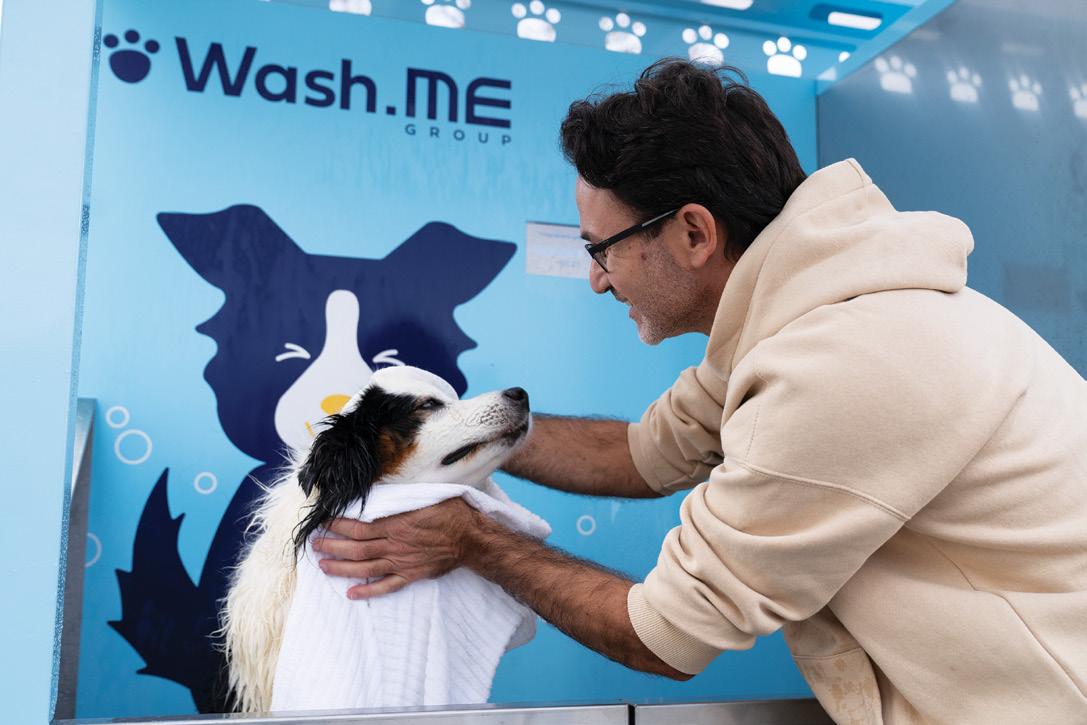

THE RESERVE BANK of Australia plans to remove card surcharges as part of broader reforms intended to cut payment costs and boost competition.
In a Conclusions Paper released last month, the central bank’s Payments System Board said removing surcharging, lowering interchange fees and increasing transparency would be in the public interest.
Most changes, including the removal of surcharges on debit, prepaid and credit cards across eftpos, Mastercard and Visa networks, will take effect from 1 October 2026. Further reforms, including caps on interchange fees for foreign cards, are scheduled for 1 April 2027.
Theo Foukkare, CEO of the Australian Association of Convenience Stores (AACS), said the decision will result in Australian small businesses and their customers handing over even more money to the banks and overseas card companies and would undoubtedly drive up prices for everyday essentials.
“This RBA decision fails a fundamental test – to deliver real cost relief for consumers – and instead risks embedding higher prices across the economy.
“Without banning the banks from demanding excessive fees for the interchange and other back-end tech, the RBA has just shifted the cost from the being passed on as a surcharge to recover costs and given the banks permission to hide their disproportionate fees behind the scenes.

“If retailers can’t recover the cost of expensive payment methods at the point of sale, those costs don’t disappear, they get baked into prices.”
The board said the current surcharging framework, introduced more than two decades ago, is no longer achieving its intended purpose. It pointed to the widespread practice of businesses applying the same surcharge to all card types, enforcement challenges and declining cash use as factors reducing its effectiveness.
THE FAIR WORK Commission has moved to abolish junior pay rates for 18 to 20-year-olds, with the changes to come into effect in December.
The Commission will retain existing junior rates for workers aged 16 and 17, while the 18 to 20-year-olds will move to 100 per cent adult rates after six months with the same employer, with changes phased in over several years.
Chris Rodwell, CEO of the Australian Retail Council (ARC), says the decision will increase costs for retailers, particularly small and medium-sized businesses already facing financial pressure.
“The reality is, this decision does add another layer of cost at a time when many retailers are dealing with a cost-of-doingbusiness crisis.
“When wage costs rise faster than productivity in this environment, it compounds the pressure on hiring, investment and ultimately prices.”
Retail employs more than 500,000 Australians under 24, with one in eight young people getting their first job in the sector. Youth unemployment stands at 10 per cent, compared with a national rate of 4.3 per cent.
Rodwell said the outcome reflects a balance between supporting employment pathways and recognising business conditions.
“Junior rates have served Australia well for generations. They recognise that younger workers often have little or no workplace experience and help employers, particularly small businesses, give young people their first opportunity.
“Crucially, junior rates for workers aged 17 and under will remain in place. That’s important. Early work experience is critical, and we cannot afford to make it harder for young Australians to get their first job.
“The move to 100 per cent adult rates is linked to experience with the same employer, and the long transition period gives businesses time to adjust. That is a practical approach that reflects current trading conditions.”






“All Envirotank’s come complete with, and are transported and delivered to site with, a fully filled and working and true 360° hydrostatic monitoring system.”
Envirotank has been providing safe, cost-effective underground containment of petroleum, chemical, water and related products for more than 35 years in Australia and New Zealand.
ALL ENVIROTANKS HAVE an internal mould cured surface that is smooth and highly corrosion resistant, which provides the best possible environment for the storage of petroleum products that maintains fuel quality.
The major benefit of an internal mould cured surface is that the surface cure occurs in an oxygen deficient atmosphere. That process prevents internal surface pitting that is caused by oxidisation during cure. That smooth internal surface provides superior corrosion resistance to all modern fuel types and added protection for the issues associated with Ethanol blended and low sulphur diesel products.
In addition to corrosion resistance there is no rough or uneven surface to catch dirt, debris or to hang up moisture that can create an environment for bacteria to flourish. Any moisture or debris that may enter an Envirotank will move to the bottom 6 o’clock position of the tank making it easier to detect and remove by normal maintenance processes.
Included in Envirotank’s propriety manufacturing process, is a licensed and approved mandatory resin and glass fibre system that includes the whole tank, the inner and outer walls, structural ribs, manways and containment collars and sumps.
All Envirotanks come complete with, and are transported and delivered to site with, a fully filled and working and true 360° hydrostatic monitoring system that completely monitors 100 per cent of the inner and
outer surfaces including the integral double walled bulkheads and structural ribs on all tanks produced. With Envirotank there is zero area or unmonitored surface that may hide faults until it is too late.
Envirotank has been manufacturing and supplying quality products made to a high standard for over 35 years in Australia and New Zealand, with over 10,000 tanks currently in service with approx. 25,000 compartments and have been installed and unaffected by hostile acid sulphate soil conditions, earthquakes and ground water. Envirotanks have been installed across all parts of Australia & New Zealand. Contact Envirotank on 1800 818 354; 61 3 9550 0800, or fax: 61 3 9550 0816. www.envirotank.com.au
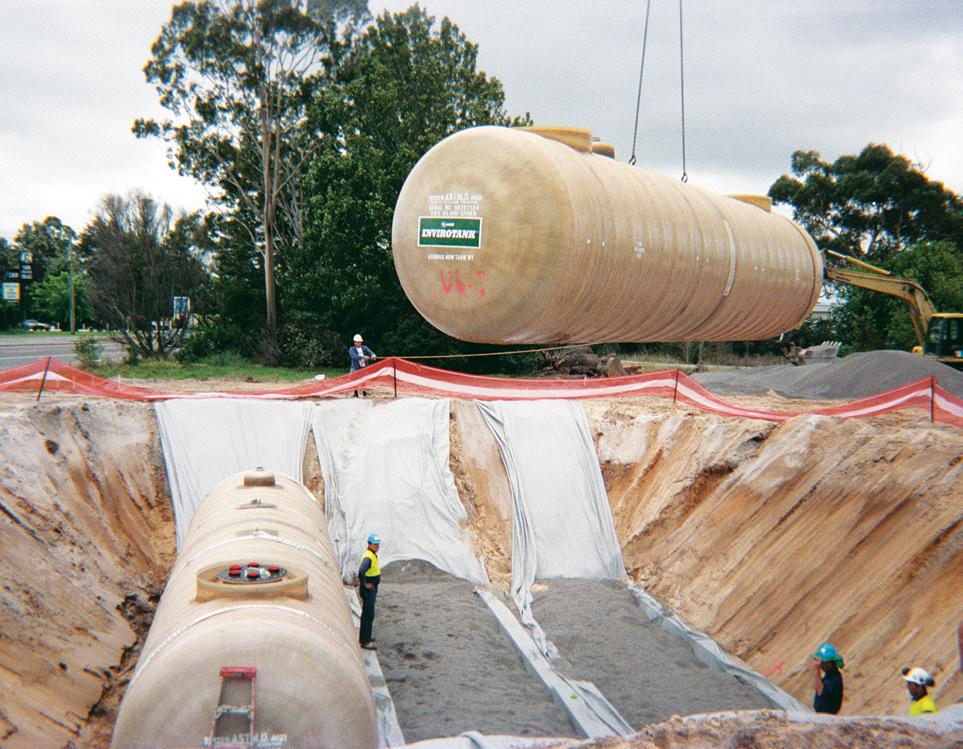
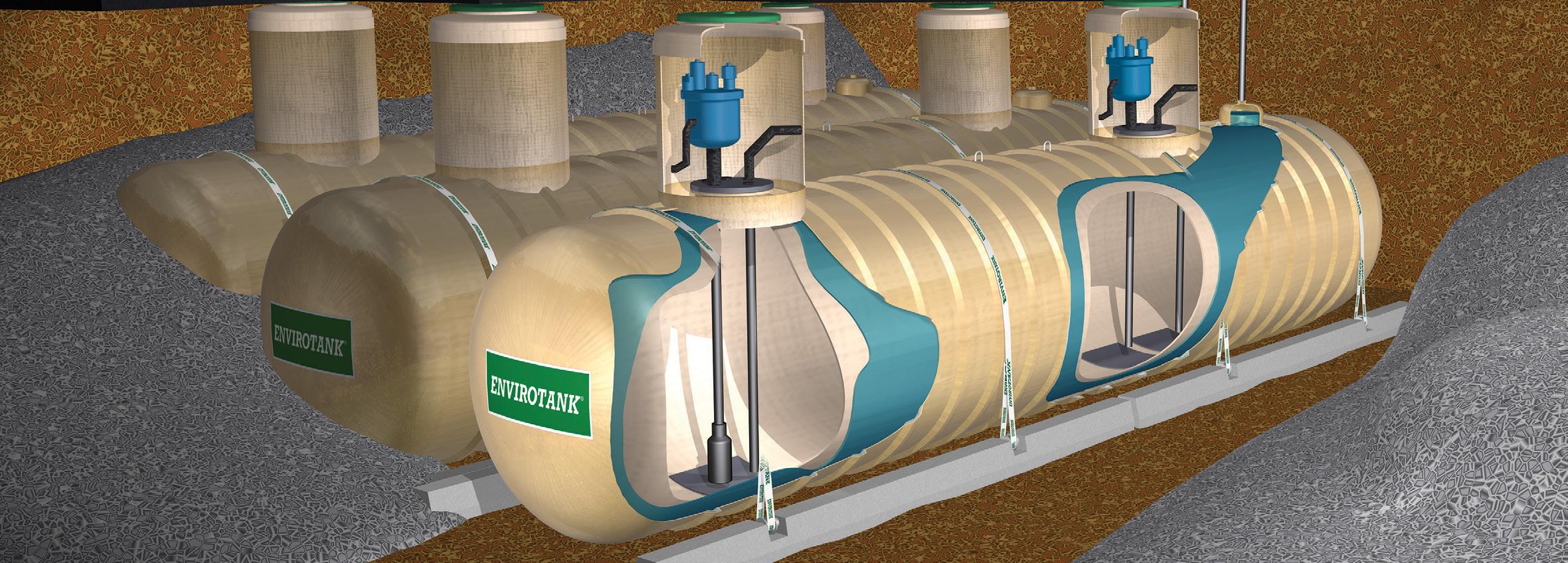
Ü Envirotank double-wall tanks are fully compatible with all modern fuel types including alcohol blends and low sulphur diesel.
Ü Double-Walled Envirotanks fully comply with the secondary containment requirements of AS 4897. This is in addition to the design meeting AS 1940 and UL 1316.
Ü Two (2) 100% corrosion proof and structural walls provide the ultimate in leak protection.
Ü The Hydroguard® System is a proven hydrostatic testing system that continuously monitors the integrity of the inner and outer tank walls in all installed conditions. The
Ü Clereflo™ forecourt and full retention separators.
Ü Third-party peer reviewed and certified by UniSA as exceeding BSEN-858 compliance.
Ü Suitable for use in all Australian conditions.
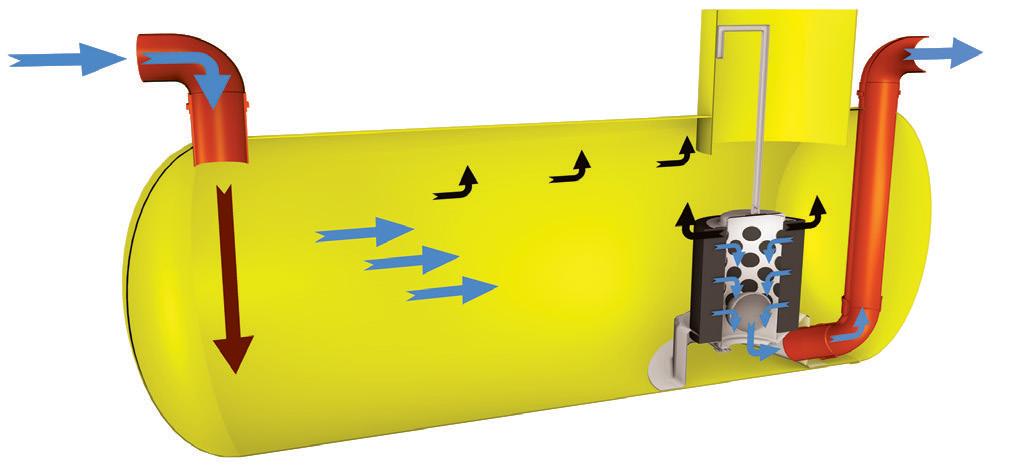
THE FEDERAL GOVERNMENT and the ACCC will increase their scrutiny of petrol pricing as the government doubles penalties for misleading conduct.
As global oil volatility linked to conflict in the Middle East triggers sharp swings in fuel costs, the government says it will double penalties for false or misleading conduct and cartel behaviour across the economy to a maximum of $100 million per offence.
“The conflict overseas shouldn’t be an excuse to profit off Australians. We’re putting petrol companies on notice. We won’t cop big corporates treating Australian consumers like mugs,” said a joint statement by Jim Chalmers, Chris Bowen, and Dr Andrew Leigh.
The government said the measures were intended to deliver “fairer petrol prices for Australian motorists and more fuel supply at servos, particularly in regional areas”.
The regulator said it had been closely watching pricing behaviour since hostilities began in the Middle East and would act against companies that mislead consumers or breach competition laws.
Anna Brakey, ACCC Commissioner, said they know the impact that higher prices are having on Australian consumers.
“We are closely watching market behaviour and if there is conduct that is collusive or misleading or deceptive, we will investigate it and take action where appropriate.”
It is also examining diesel distribution issues in regional areas and is working with other agencies on possible solutions.
“We are aware of concerning reports about diesel availability in regional and rural Australia. We know how critical diesel supply is to primary producers, transport businesses and many others, so we are prioritising our work to assist with this,” Brakey said.
She said the regulator could authorise coordination between companies where it produced a public benefit.
“We are now calling the industry into an emergency meeting to explain their actions during this period of volatility,” Brakey said.
“The petrol industry should be under no illusions. We will act decisively and to the fullest extent of the law.”
THE FEDERAL GOVERNMENT will halve the fuel excise on petrol and diesel for three months, reducing prices by 26.3 cents per litre.
The measure, which was made following a national cabinet meeting convened by the prime minister, will run from 1 April to 30 June, and is expected to cut nearly $19 from the cost of filling a 65-litre tank.
The government said the change was aimed at easing financial pressure caused by rising global fuel prices linked to the war in the Middle East.
“The spike in fuel prices as a result of the war in the Middle East is hurting Australians and causing financial stress. This will help to provide some relief,” said the government in a joint statement.
In a parallel move, the heavy vehicle road user charge will be reduced to zero for the same three-month period. The government will also defer the next scheduled increase in the charge by six months.
Australians have been encouraged to use public transport where possible “to help conserve fuel for the regions”, with the government welcoming existing efforts to lower public transport costs.
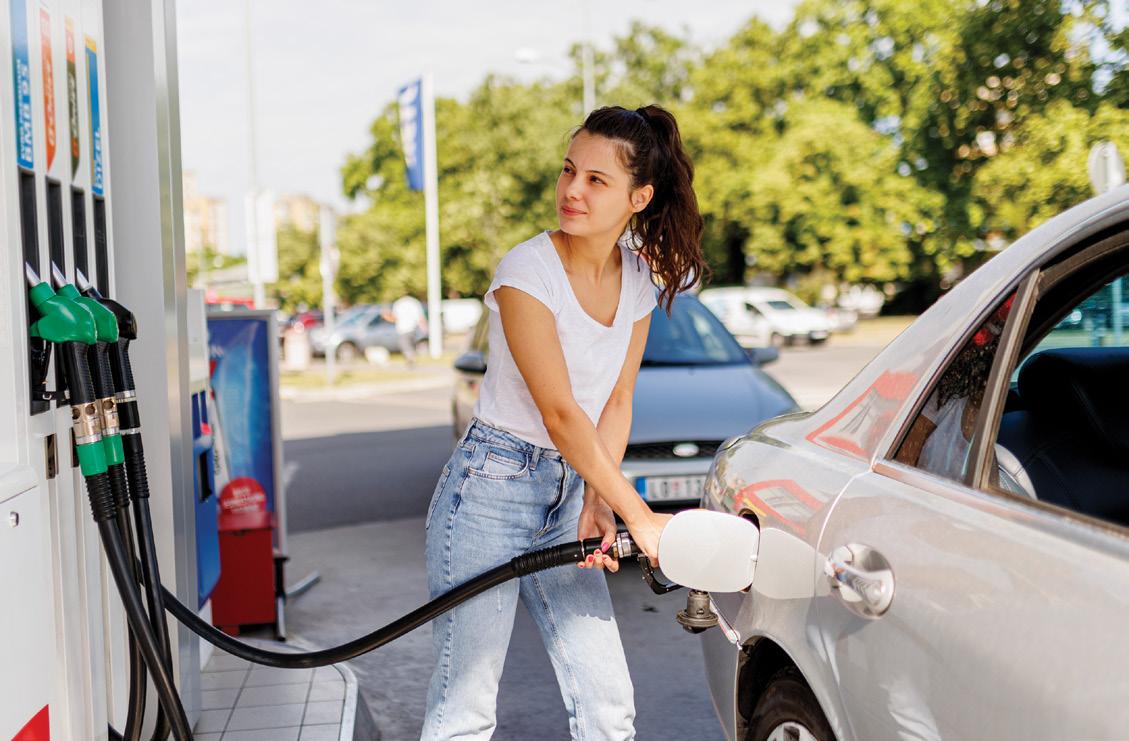
The consumer watchdog will continue monitoring fuel prices to ensure the reduced excise is passed on to consumers at the bowser.
“While Australia’s fuel supply outlook remains secure in the near term because of the actions the Albanese Government has taken, the longer this war goes the worse the impacts will be.”
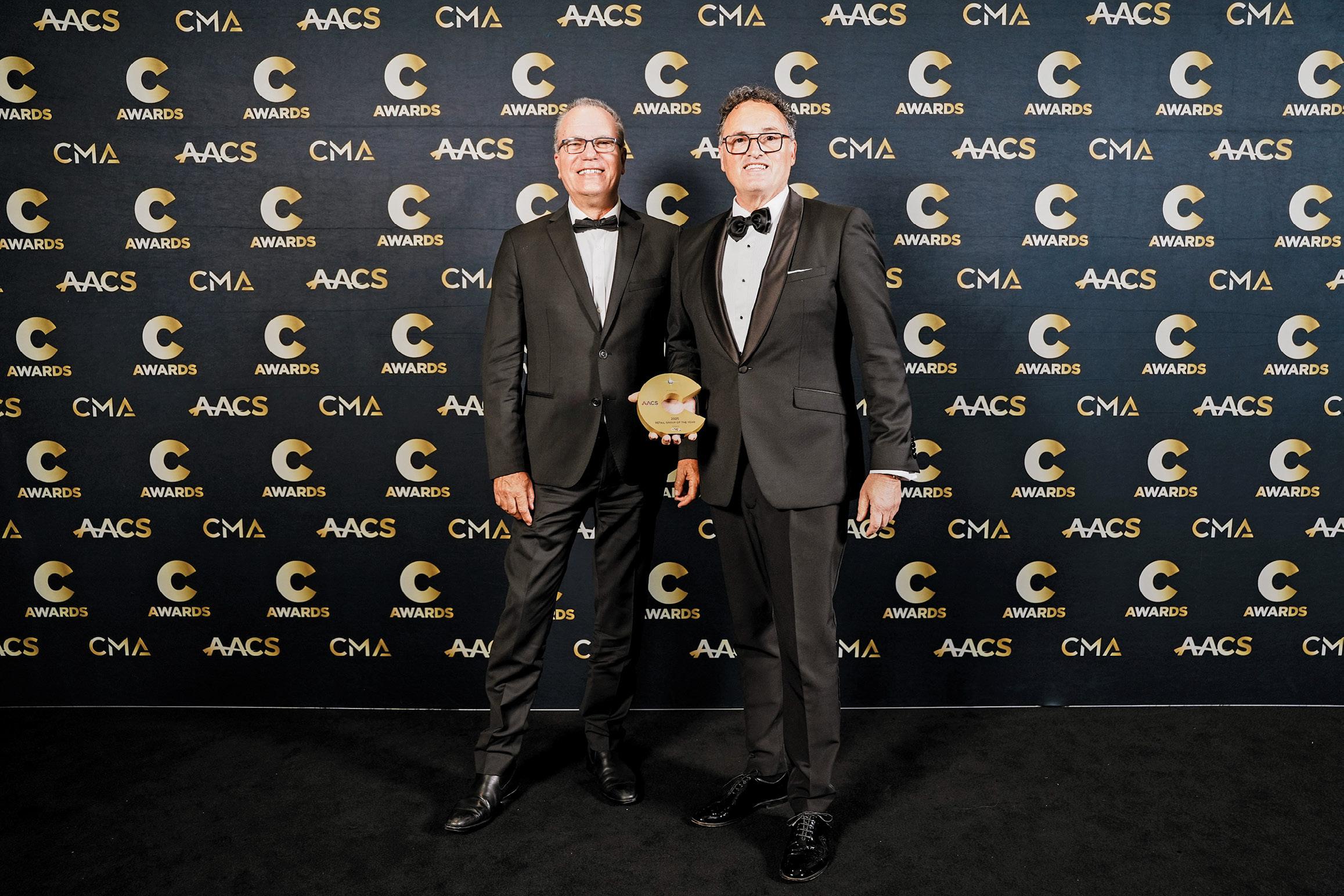
AA Holdings’ Retail Group of the Year win at AACS Connect 26 is a testament to the value of true convenience.
“We are very blessed to be dealing with many amazing people with common sense in this industry.”
- George Cass, Sales and Marketing Manager at AA Holdings
AA HOLDINGS HAS taken out Retail Group of the Year for the second time in the company’s history at the 2025 AACS Connect Awards, held at ICC Sydney on 19 March, besting the two other finalists – Ampol and 7-Eleven.
George Cass, Sales and Marketing Manager at AA Holdings, attributes the win to the company’s hands-on approach.
“We have total control of everything in our stores, from ranging, price, planograms and, most importantly, all stock weight in every store. I am lucky enough to employ four full-time field staff to monitor all aspects of compliance in all stores.”
Competing against major fuel retailers with vastly greater scale and resources has not slowed the family-owned business, with Cass explaining that they have their own distribution areas within the distributor’s warehouse.
“This enables me to bulk buy and hold pricing for long periods of time. We also deliver to all our stores five days a week and are connected to scan for an auto-replenishment system.”
At the heart of AA Holdings’ approach is a focus on genuine convenience, designed to save customers time and streamline their experience.
Being a smaller, more agile operator can offer significant advantages, but only under the right conditions. As Cass notes, scale alone is not enough; success depends on having excellent store locations and achieving high volumes per site, something AA Holdings manages consistently.
“It also helps that we are only in and around Melbourne and not interstate.”
Technology plays a key role in both security and customer engagement, with AA Holdings designing bespoke systems “not in the market” for advertising and operational efficiency, Cass revealed.
Yet challenges remain. “The main challenge is staying relevant to the younger markets, who seem to be spending incredible amounts of time online now. Grocery is our biggest competitor, and they seem to be transforming to be more convenient,” he said.
Despite these pressures, Cass credits strong partnerships across the industry for AA Holdings’ success.
“We are very blessed to be dealing with many amazing people with common sense in this industry. From supply chain to manufacturers and major brand corporations, we are well supported in business partnerships.” ■
Don’t miss your chance to be featured in the biggest issue of C&I this year – sign up to the 2026 Leaders Forum and have your say on the state of the industry.


C&I is bringing together the key voices of the Petrol & Convenience industry for our 2026 Industry Leaders Forum, featured in the June/July edition of C&I Magazine – the biggest issue of the year. The 2026 Leaders Forum will feature a select group of respected voices in the Australian Petrol & Convenience channel. It’s an invaluable platform to position your company as a thought leader, highlight your recent successes, and engage in the conversations that are shaping the industry.
Contact Safa de Valois on 0405 517 115 or safa@c-store.com.au