Australian Hotelier April-May 2026

Page 1


MIXED

AUSTRALIA’S

THREE BIG WINS FOR YOUR SUPER

Three respected awards, one clear result.  Money magazine, Finder and Mozo have all called it: Hostplus is their Best Super Fund winner. That’s three big wins for your super. That’s a plus.

Compare Hostplus

‘Give to Gain’.

Beer Trends: Beer is still king in the pub –but values and sale motivations within the category are changing.

20 Food Wastage: Reducing food waste isn’t just responsible – it’s good for business.

24 Chef Profile: The Glen Hotel’s executive chef Brad Casey prioritises good produce and good team culture.

26 Breakfast: Coogee Bay Hotel’s new breakfast offer sees the pub slinging food from sun-up. 28 Accommodation: Emerging as a high-performing revenue stream for pubs, accommodation is turning beds into business.

REGULARS

8 News: What’s happening in pubs across Australia.

32 Design & Build: Hobart Town Hotel’s renovation is all about preserving the past.

34 Tales from the Top: The Khartoum Hotel in the Hunter Valley region is celebrating 100 years of history.

Editor’s Note

IN THE last twelve months we’ve been talking a lot about affordability and perceived value when we discuss patrons’ purchasing decisions. The silly season may have seen both consumers and venues forget about those factors for a while, but interest rate hikes and skyrocketing petrol prices has sharply brought ‘value’ back into focus. Pubs remain a hospitality stronghold when it comes to matters of value and affordability; they’re built into the concept. But publicans should not take those perceptions for granted. Promotional deals or a special reason to visit – a one-off event or some form of entertainment – are becoming increasingly important not just as a means for repeat visitation, but as factors that increase the perceived value of a session at the pub. Does

a couple want to go to the pub for a meal and a couple of drinks, if they know they’re going to spend somewhere in the vicinity of $150? If you throw in a live band or a boogie on the dancefloor, then yes probably. Value is becoming the key factor when it comes to beer sales, with pricing and quality having a lot to do with it. Read all about it in our beer trends piece from p 14. You know what else is good value? Pub accommodation. It’s a step down price-wise from traditional hotel stays, yet can give the traveller a more curated experience. Read about it from p 28. From start to finish, there’s good value in this issue.

PUBLISHED BY: Food and Beverage Media Pty Ltd 41 Bridge Road GLEBE NSW Australia 2037 Tel: 02 9660 2113 Fax: 02 9660 4419

PUBLISHER: Paul Wootton

EDITOR: Vanessa Cavasinni vcavasinni@intermedia.com.au

NATIONAL SALES

MANAGER: Jason Wild Tel: 02 8586 6213 jwild@intermedia.com.au

GENERAL MANAGER SALES –LIQUOR & HOSPITALITY GROUP: Shane T. Williams

GROUP ART DIRECTOR –LIQUOR AND HOSPITALITY: Kea Webb-Smith kea@intermedia.com.au

PRODUCTION MANAGER: Jacqui Cooper jacqui@intermedia.com.au

SUBSCRIPTION

(Mon

Pub Leaders Summit celebrates ten years – with a new sister event!

TEN YEARS since the Pub Leaders Summit launched in 2016, the event is returning to Sydney from 13-14 July, held at the Hyatt Regency.

The Pub Leaders Summit has evolved immensely in the last decade, and for this latest chapter of the event’s evolution, Food and Beverage Media – publishers of Australian Hotelier and organisers of the Pub Leaders Summit – are launching a sister event, HospoNEXT.

While Pub Leaders Summit continues to bring hospitality venue owners and executives a conference dedicated to thought leadership and growth within the on-premise landscape, HospoNEXT is a broader show that will have exhibits, activations and a content stage aimed at all on-premise venue staff.

HospoNEXT covers every facet of the hospitality industry, helping venue teams discover what the future of the hospitality landscape looks like. Whether you work in pubs, clubs, bars or restaurants, HospoNEXT has all your operations

covered – from F&B and entertainment, to back-of-house tech and staffing solutions.

“On-premise venues are increasingly looking for that one new idea that will give their business a competitive advantage or take revenue and efficiency to the next level – as are the teams on the floor and in the back-of-house,” stated Food and Beverage Media managing director Paul Wootton.

“HospoNEXT will present a wide variety of ideas, products and services in an array of engaging formats. Bring your teams down for some inspiration!”

Open to all licensed venue operators and their teams, HospoNEXT has something for everyone, with an expo floor, workshops and stage-floor presentations. As well as its own set of free talks, HospoNEXT will host the Future Leaders Scholarship ceremony – this year opened up to anyone working within a venue across all sectors of the onpremise. HospoNEXT will also host ‘The Top 50 Gastropubs’, an awards ceremony that will shine a light on the best food-led pubs across Australia.

Co-located with the Pub Leaders Summit, a national conference for venue owners and decision-makers, the two events are a fantastic way to get team members of every level thinking about what the future of your venue looks like.

HospoNEXT is brought to you Australian Hotelier, Hospitality, Club Management, Bars & Cocktails and TheShout.

The Pub Leaders Summit (ticketed) and HospoNEXT (free) will be held at the Hyatt Regency Sydney.

For sponsor and exhibitor enquiries, please email Jason Wild at jwild@intermedia.com.au

For more information and tickets, scan the QR code.

Australia’s national drink goes premium with Fever-Tree

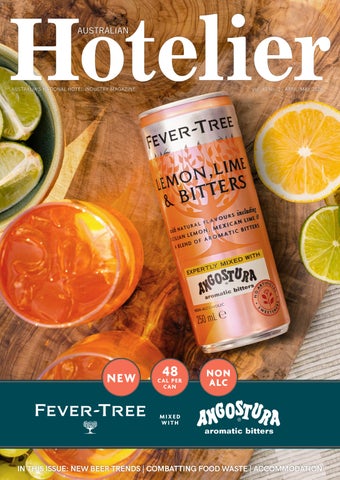
Fever-Tree has upgraded the classic Lemon Lime & Bitters, using premium ingredients and ANGOSTURA® Bitters.

AUSTRALIA’S MOST beloved pub serve – the Lemon Lime & Bitters – has been upgraded by Fever-Tree. The classic drink hasn’t been reinvented; instead Fever-Tree has used only the most premium ingredients to ensure it’s the best version of a Lemon Lime Bitters any pub can serve.

As always, Fever-Tree goes to the ends of the earth to source the finest ingredients, and this latest addition to the range is no different. Made with Sicilian lemons and Mexican limes, and finished with ANGOSTURA® aromatic bitters, Fever-Tree’s Lemon Lime & Bitters delivers zesty citrus balanced with aromatic depth – expertly mixed for a crisp, refreshing drink for the discerning drinker.

Created exclusively for the Australian market, the launch represents a strategic expansion of Fever-Tree’s premium drinks portfolio beyond traditional mixers and into the fast-growing premium adult soft drink space.

“Fever-Tree has built its global reputation by premiumising the mixer category, launching the world’s first premium tonic water in 2005 and redefining expectations around quality and ingredient provenance. With the launch of Lemon Lime & Bitters, we are applying the same philosophy to Australia’s most iconic grown-up soft drink,” stated Caroline Wood, head of marketing – Australia for Fever-Tree.

Lemon Lime & Bitters remains a pub favourite thank to its versatility. Use it as a mixer for an easy simple serve, or – more commonly – it’s an elevated option for anyone not drinking alcohol.

“The launch responds to a structural shift in consumer behaviour. Increasing numbers of Australians are moderating their alcohol intake, creating demand for sophisticated, non-alcoholic options that sit comfortably within adult drinking occasions,” stated Woods.

“Fever-Tree Lemon Lime & Bitters is positioned to serve both standalone refreshment and mixed drink versatility, including as a premium Vodka lemon lime bitters serve within licensed venues.”

Non-alcoholic and containing 19 calories per 100ml, FeverTree’s Lemon Lime & Bitters also aligns with contemporary healthconscious preferences.

Contact Fever-Tree at aussales@fever-tree.com to stock FeverTree’s Lemon Lime & Bitters.

Did you know?

Lemon, Lime & Bitters remains a mainstay across pubs, bars and dining rooms in Australia, with more than 100 million serves enjoyed annually.

Fever-Tree’s range of premium soft drinks and sodas
Fever-Tree’s Lemon, Lime & Bitters

Give to Gain

The 2026 International Womens Day global theme was ‘Give to Gain’. Female industry leaders reflected on how that resonates with their own experiences.

Building support networks

I’ve been incredibly fortunate to have had great support through my career which has been practical and genuine.

From the start of my career working in our family business led by my Mum, who is a strong and decisive leader in her own right. I feel so lucky to have grown up in a business with such a strong female leader. I’ve also had excellent support from the wider industry, people like David Basheer and the whole AHA community. They’ve always taken the time to listen to my views and encouraged me to get more involved.

Facilitating long-term hospo careers

I’ve worked in hospitality for over 25 years and the “Give to Gain” theme has evolved significantly over that period. Until more recent years, IWD and paid parental leave was not a thing. Spoken or not, the dynamic for women who wanted to build a long-term career and a family at the same time was ultimately, pick one. That’s what made parental leave feel urgent and meaningful for Sonnel.

We’ve built our benefit around what actually happens when you become a parent, with a focus on when parents come back, because that’s where most workplaces drop the ball. Flexible rosters, phased returns, real conversations about what each person needs, inclusive of casual employees and secondary carers which many parental policies do not include. It takes more leaders to think longer term and some weeks it’s complicated, but the alternative is losing great people from a fantastic industry.

Across our organisation, women, including those with families are leading our venues, teams and departments. Our ambition is to pave the way for a future that enables women at all stages of life and career to have choices. That’s why ‘Give to Gain’ resonates so strongly with me. When we give support, we gain stronger teams, deeper loyalty, and a more equal and equitable industry.

I think the Women in Hotels network, built by the Australian Hotels Association SA branch, has been especially important. This is a great community which helps women build the networks they need to succeed in the industry. It also brings women together to discuss issues affecting the industry and how we can get great outcomes for the industry as a whole.

We’re still working out how to get this right. But the way I think about it is simple: if someone has to choose between this career and having a family, we’ve already failed them. We’d rather build something they don’t have to choose between.

Fostering talent

For me, the theme Give to Gain reflects the idea that progress rarely happens in isolation. It comes from the people around us who open doors, share opportunities and encourage us to step into spaces we may not have felt entitled to enter.

Hospitality has traditionally been a male-dominated industry and at times it has still felt challenging to be a woman within it. What made a difference for me was having people who recognised my value and ensured I had a seat at the table. My husband in particular always encouraged that. He believed that successful businesses require diverse perspectives and that expertise matters far more than gender.

At The Glen Hotel, that philosophy continues today. Our industry is evolving and hotels are increasingly family oriented spaces where women play a major role both as customers and leaders. We actively encourage women within our team to step forward, develop their skills and pursue leadership opportunities.

I also believe in calling out talent when I see it. Women are often conditioned to downplay their strengths, so sometimes a simple acknowledgement of someone’s ability can be the moment that unlocks their confidence. Taking the time to recognise that in others is one of the most powerful ways we can support the next generation of women in hospitality. This is something I personally endeavour to practice daily in our business and I like to have hope in the thought that this is what every woman does also.

Investing in women and young people

It is my deep passion that when we invest in women and young people - especially in their mental health and wellbeing –so we strengthen not just the hospitality sector, but also our community and the world in which we live. The Celebrate Her report highlights two compounding challenges in our industry. Firstly, structural barriers remain, with 3 in 10 female employees prevented from progressing due to discrimination or bias. Alongside this, mental wellbeing is under strain across the board, with 49 per cent of employees reporting dissatisfaction with their work-life balance. For young people, many of whom step into hospitality as their first job, these pressures shape their confidence, resilience, and long-term career choices. In the hospitality industry, mental health support is lacking: while 85 per cent of employees believe mental health support is important, only 40 per cent feel they receive enough of it. When young people enter fastpaced, emotionally demanding environments without the right support, the risk of burnout increases. Yet the same research shows that two-thirds of employees ultimately build long-term careers in hospitality when given encouragement and pathways to grow.

For me, the theme ‘Give to Gain’ means giving women and young people safe environments where their voices are valued and celebrated and diversity of thought is treasured. It means giving women equitable opportunities so they can lead without barriers. As leaders, regardless of gender, when we give this support generously, we gain stronger teams, healthier workplaces, and more inclusive societies. Giving generously is how society grows.

Read on

For more industry perspective on Give To Gain, scan the QR code.

THE FUTURE OF HOSPITALITY, TOGETHER

A brand-new, free industry show bringing together operators and teams across pubs, clubs, bars and restaurants – featuring ideas, products and connections shaping the future.

MONDAY 13 JULY 2026

Hyatt Regency Sydney

Tapping into new tastes

Beer is still king at the public bar, but how and what we drink within the category is changing.

THERE’S BEEN a lot made in the cultural landscape about the price of beer at the pub, mostly thanks to excise. And while, yes, it is a cause for concern for publicans and patrons alike, figures show that on-premise beer sales aren’t slowing down any time soon. Beer is still the lifeblood of the pub.

NIQ’s OPM solution measures beer, RTD and spirit sales in the on-premise, and it’s 52-week data to 30 December 2025, shows that beer sales have had a significant +10.7 per cent growth in value vs YA, compared to Spirits with losses of -3.1 per cent. Within the on-premise, it’s pubs that have driven the growth in beer sales, stealing value share away from restaurants and accommodation hotels.

The stats reinforce what we all know instinctively – beer is king at the pub. However, what we’re drinking within that broader category is shifting.

Simpler, cleaner beers

The biggest shift in general drinking preferences in Australian pubs is the move away from the more intense craft styles and flavour profiles, to cleaner, more classic styles like lager where you know exactly what you’re going to get.

At the Bat & Ball Hotel in Sydney’s inner suburb of Redfern, a large portion of the tap banks support smaller local breweries, but co-owner and licensee Rachael Paul says the shift to simpler beer styles is evident.

“Generally, there is a trend towards the kind of straight-shooter lagers, and moving away from craft beers,” she suggested.

In a further move away from the local craft scene, NIQ’s OPM report also showed that imported beers were seeing a higher rate of growth in the on-premise than domestic beers, with a year-onyear value increase of 15.9 per cent, compared to 9.5 per cent growth for domestic beer. Beers from Ireland – with Guinness dominating – enjoyed a 38.8 per cent increase in value, with Japanese beers also increasing in value by 18.3 per cent. The latter is expected to do well this year, as it naturally lends itself to that crisper, cleaner preference.

Beer still makes up more then 70 per cent of beverage sales at the Bat & Ball Hotel, Redfern. Image: Brewcasa

Brett Freeman, the ANZ region manager for Orion Beer, said the interest in Japanese beer has been aided by a wave of Australian tourism to the nation, where beer drinkers have sampled Japanese beers first-hand.

“The lift in Australian tourism into Japan in recent years has really enhanced the Australian love for Japanese quality which has led to consumers and of course, venues, seeking to explore Japanese beers in a way they hadn’t before. This has created a great opportunity for brands like Orion to find followers and drinkers here in Australia and give beer lovers another side of Japan to engage with,” stated Freeman.

To capitalise on this growing trend, Orion is making a real play into the Australian market, and making it simple for venues to sample its beers.

“With the category momentum, we’re aiming at expanding from the restaurant channel into the wide on-premise channel with an offering that allows venue to try a product on tap without having to stump up for a full 50L keg. Orion Draft is available in 20L kegs in most metro areas through our distributors. We’ll be supporting both on and off premise with a major promotional campaign in the latter half of the year called the Karii Moment campaign.”

Mid-strength mainstays and NOLO options

The biggest shift within the on-premise is the preference for mid-strength beers, which feeds into the moderation and well-being trend. Across the board at Redcape pubs, mid-strength beers have had a significant growth in sales.

“We’re seeing more guests lean into mid-strength and lower-alcohol options, particularly midweek, around lunch, and during sport. Across our group, we’ve seen mid-strength volume share up 13% year on year,” stated Redcape’s group bars manager, Joshua McMahon.

Paul agrees, saying that mid-strength beers like Great Northern are best-sellers at the Bat & Ball Hotel, and she expects the trend to strengthen due to lifestyle choices.

“Mid strengths and lower-alc beers – even 2.0% beers – could potentially have a bit of a moment. Although it is often the case that a mid-strength beer isn’t necessarily cheaper, that choice is largely influenced by someone not wanting to have too much alcohol, but still wanting to enjoy a beer.”

Non-alc beers have also found a small but steady niche, for those who don’t want to drink alcohol, but still partake in the social aspect of a round at the pub.

Nicholas Rhodes, venue manager of The Terminus Hotel in Fitzroy North, says that non-alc beers sell well enough to stock a variety of brands and styles, singling out Guinness Zero and the Heaps Normal range as favourites among pub patrons.

“It’s just good that there’s a lot of variety. A couple of years ago it was just lagers, but now you can get hazy pales, XPAs, lagers – everything in the non-alc section.”

Stocking non-alc beer options also helps with sales at times in the weeks where more significant social drinking is not expected.

“We sell quite a bit [of non-alc beers] on Mondays to Wednesday nights, because we have a lot of sports teams coming in after training. People are wanting the pub experience, but not necessarily wanting to drink, so they do definitely go for the non-alc,” stated Paul.

“Consistently, our number one seller each month is our Beer of the Month… It doesn’t matter if that was sitting in the bottom five sellers the month before. Now it’s the top seller. So overall, consumers just want a good deal.”

Nicholas Rhodes, venue manager, The Terminus Hotel

Events like the Superbowl drive mid-strength sales. Image: The Terminus Hotel

Having a good range of beer at different ABV points also helps with extending the occasion-based visit, argues McMahon.

“We’re seeing the same guest make different beer choices across a single visit. A full-strength schooner during the footy, a mid-strength in the next round, maybe packaged later in the night. That shows up in more mixed baskets rather than one brand dominating the whole session.”

Price points

Pricing of beer has increased across the industry, but the bigger shift is in how closely guests are paying attention to value. It’s a point of intense scrutiny for Redcape.

“We spend a lot of time understanding each local market, looking at customer behaviour, competitor activity and overall trading conditions before making any adjustments,” stated McMahon.

“For us, it’s less about blanket increases and more about getting the balance right between affordability for our guests and sustainability for the business.”

The group bars manager says that when it comes to affordability, beer’s perceived value compared to other categories comes down to a clear, logical price architecture across the tap bank and a consistently great serve, cold and fast. The latter point is so important, that Redcape is investing in staff to ensure the ideal schooner is served up every time.

“When guests are watching their spend, they’re often choosing brands they know

and trust. But they still expect a quality serve. That’s why we’re investing in experienced bar managers across our pubs. Their focus is on standards, training and consistency, because if you’re asking guests to pay more for a schooner, it has to be spot on every time.”

The last point in the affordability conversation is the efficacy of simple, compelling promos tied to occasions, events and partnerships. It’s a strategy that has had a lot of success at The Terminus, particularly their Beer of the Month promotion.

It began with the introduction of its house beer, Fitzroy Lager. It was introduced via a Beer of the Month promotion, for $10 a schooner, and ever since has sat in the top three of bestselling beers at the pub.

Rhodes suggests that the popularity of the rotating beer of the month shows just how important pricing when patrons order.

“We rotate our Beer of the Month around and use it to showcase other new products we’ve got on tap and work with suppliers. And consistently, our number one seller each month is our Beer of the Month. It doesn’t matter what the beer is. It doesn’t matter if that was sitting in the bottom five sellers the month before. Now it’s the top seller. So overall, consumers just want a good deal.”

In terms of motivation NIQ’s recent On-Premise User Survey (OPUS) found that overall consumers are looking towards more

casual pub occasions, with half (52%) of beer consumers stating that the most important reason for choosing beer is to relax.

Rhodes argues industry and government need to continue to work on making this as accessible for consumers as possible.

“[Growth] has got to be linked to not making going out for two beers, an extortionate experience. So anything we can do as an industry, and, the government of Australia, to make it an easily accessible part of the working week rather than prohibitive, then that’s what needs to be done.”

Tap bank strategy

Joshua McMahon, Redcape’s group bars manager, shares his thoughts on the simple strategies that aid in beer sales growth in pubs.

The tap bank is still the strongest signal in a pub

When a guest walks in, the taps tell them what kind of venue they’re in. A clean, uncluttered, well-presented tap bank anchored by leading brands builds instant trust.

Simplicity is powerful

In the current climate, too much choice can actually slow decision-making. A disciplined tap strategy, focused on the highest-performing core lines, often outperforms a crowded bank with longtail products. A strong tap optimisation program focusing on customer sentiment and data ensures this happens.

Redcape has made investment in experienced bar managers a priority
Breakfast at Coogee Bay Hotel’s Beach Bar. Image supplied.

Waste not, want not

With dining now a major driver of pub revenue, reducing food waste isn’t just responsible –it’s good for business. By Molly Nicholas.

AS PUBS become increasingly food-led, a stronger dining offering typically means larger menus, higher volumes and more complex operations. With that shift comes an often overlooked challenge – food waste – and what was once a relatively small issue for pubs is becoming a growing concern.

Each year in Australia, 7.6 million tonnes of food are wasted – equal to more than 300kg per person, at a cost of $36.6 billion. According to Food Innovation Australia’s National Food Waste Strategy Feasibility Study, the hospitality industry is responsible for 16 per cent of this waste, equivalent to $6.4 billion.

Food waste carries environmental and social implications, from wasted resources across the supply chain to greenhouse gas emissions. But beyond environmental impact, food waste also represents lost revenue and unnecessary pressure on margins.

Food system sustainability organisation End Food Waste Australia found that hospitality venues discard the equivalent of 4.6 million meals every day, typically wasting 140 grams of food per cover. With each kilogram of food waste expected to cost venues between $8.50 and $17, the financial impact is substantial.

Plate waste is often assumed to be the biggest cause, but Charlton Honig, industry director for End Food Waste, highlights how evenly waste is split across front- and back-of-house, and the potential to reduce cost and gain margin in both areas.

“There are several surprising (but common) waste patterns in pub-style operations, including overproduction during peak trading periods such as weekends and events – often a ‘just in case’ response to unpredictable demand; large portion sizes leading to significant plate waste – one of the most preventable forms of waste; and prep waste from complex menus,” Honig stated.

A smarter approach

When it comes to food waste, there are clear implications across sustainability, profitability and efficiency, and Honig identifies key areas of concern for the pub sector, including overproduction, menu design and incorrect portioning.

“When menus are broad and fast-moving kitchens prep more than necessary, driving waste from batch cooking, excess mise-en-place, and items cooked but not sold.

“Large pub portions are a cultural expectation, but also a key source of unnecessary cost and in a

cost-of-living crisis guests might not want to pay for portions that are much bigger than what they can eat.

“Also, poor inventory rotation and storage practices – spoilage from improper storage, lack of first-in, first-out rotation and unclear labelling is a major waste driver,” Honig stated.

When tackling the issue, the first step is understanding it. Tracking waste, identifying which metrics matter most for your venue, and recognising patterns can provide the insights needed to make meaningful improvements – and this has worked especially well for Perth hospitality operator Nokturnl.

Using dedicated software to track wastage across venues, and a POS system that allows for group-level reporting, Nokturnl found that a large portion of waste came back to human error, helping the group to refine its training and accountability.

Smart menu design has also been critical to Nokturnl’s waste reduction efforts, and

accurate tracking of wastage against cost of goods and revenue has allowed the group to design its menus more intentionally.

“One of the biggest levers is ensuring ingredients are used across multiple dishes. If one item sells less one week and another sells more, we’re still turning that product and avoiding unnecessary wastage,” says Nokturnl director and cofounder Ross Drennan.

“We look at secondary dishes when we serve proteins. For example, when breaking down proteins in the kitchen, offcuts or secondary elements are used across other menu items rather than discarded.”

Nokturnl’s group hospitality manager Siobhan Needham added: “We also look at menus holistically across precincts. Cross-precinct menu planning allows ingredients to be used in multiple venues or formats; from à la carte dishes through to functions and sauces – which can significantly reduce waste.”

Accurate reporting has allowed Nokturnl

to make fact-driven decisions and menu realignment has had a positive operational flow-on, but not without the need to make cultural changes.

“The biggest challenge is always the human element,” says Needham. “Systems are only effective if people understand why they exist. As such, we’ve focused heavily on ‘train the trainer’ –ensuring our head chefs understand the financial and operational importance of waste reduction so that mindset flows through their teams – and that ‘trickledown’ effect comes into play.”

Drennan says while operational adjustments have made a big difference, ensuring staff understand the impact of waste on the overall business helps to create a culture where cost awareness and creativity sit side by side.

“Chefs are naturally creative people, but in a commercial kitchen they also need to understand the impact of waste on the overall business,” he added.

“Ultimately, reducing waste doesn’t usually come from one big change. It’s the result of lots of small, thoughtful decisions in menu design, purchasing and kitchen operations.”
Ross Drennan, director and co-founder, Nokturnl

Communicating sustainable practices

The Royal Mail Hotel’s philosophy on sustainability is clear, and the venue is amplifying the message further with Food Made Good Standard certification. Created by the Sustainable Restaurant Association, the certification is globally recognised with a network of more than 7,000 venues.

Having launched in Australia in April 2025, Food Made Good Standard certification is tailored for the hospitality sector and allows pubs and other foodservice providers to communicate their responsible environmental and social practices.

Taking patrons on the journey

As consumer awareness grows, sustainability is no longer just a behindthe-scenes operational concern. Located in Victoria’s Grampians (Gariwerd) National Park, patrons of Dunkeld gastropub the Royal Mail Hotel have an expectation that sustainability is embedded in operations, and they’re looking to be taken along for the journey.

From kitchen garden tours to noseto-tail butchery, the Royal Mail Hotel is transparent about its efforts to reduce waste, subsequently deepening connections with the community it serves.

General manager Peter Dillon says:

“Our guests are offered behind-the-scenes tours of our organic kitchen garden, the largest servicing a restaurant in Australia. There they hear about our circular approach, such as composting organic matter from the kitchens with shredded paper from the front office, which makes its way into the garden, producing ingredients that feature on the menus in our two-hatted restaurant, Wickens, and our casual restaurant, Parker St Project.

“Having access to the garden daily means we only pick what we need. We have a dedicated production chef who makes all of our kimchi, pickles, ferments, jams, stocks and lots more, meaning food wastage is at a minimum, plus we have access to wonderful ingredients year-round. The team also use a dehydrator as another method of

preserving, to turn excess fresh ingredients into flavourful powders, seasonings and garnishes for restaurant dishes and cocktails,” Dillon continued.

“We also buy whole fish which our chefs’ fillet. The frames (bones) and scraps are then used to make what we call ‘fish tea’, an infusion used as an insect repellent in the garden.”

Getting a handle on waste

Creating visibility around what’s being wasted – and where – is the first step when looking to reduce it, and encouragingly, industry resources are available to help operators take action.

Helping identify where food waste occurs, End Food Waste Australia launched its national Hospitality Hub platform in 2025, offering nine practical guides designed for real-world application. The organisation’s Pubs and Clubs Food Waste Reduction Project also creates a major opportunity for impact. As the first venue to join the project, Opera Bar – operated until recent months by Solotel –introduced AI-powered tracking technology to identify key sources of waste.

“With a Bin Trim Equipment Rebate grant from the NSW EPA, Opera Bar introduced an AI-powered weighing system to help the team understand what was being wasted. After a few months, the system showed just how big the problem was, both in weight and cost, and revealed

There are several surprising (but common) waste patterns in pubstyle operations, including overproduction during peak trading periods such as weekends and events…

End Food Waste Australia

which items were being wasted the most,” Honig explains.

A better understanding of what was being wasted led to behavioural changes, including once-discarded trimmings being reused, and changes made to ingredient prep to reduce off-cuts. In the first month, Opera Bar saw a 33 per cent reduction in waste – dropping from 69 grams to 46 grams per cover, while kitchen-generated waste saw a decline from 32 to 10 per cent.

Like Opera Bar, Nokturnl’s success in this space stemmed from accurate tracking and accountability, and from here the group has implemented strategies across surplus ingredients, portion control, batch preparation, variability in trade and more.

Needham says: “Once you have clear reporting in place, you can start identifying patterns – whether that’s ordering issues, training gaps or certain dishes consistently generating waste... When everyone is accountable and has visibility over the numbers, it naturally leads to better decisions.”

“Ultimately, reducing waste doesn’t usually come from one big change. It’s the result of lots of small, thoughtful decisions in menu design, purchasing and kitchen operations,” Drennan concluded.

Royal Mail Hotel’s executive chef Robin Wickins takes guests on a tour of the kitchen garden

Setting new standards

On a mission to make pub dining memorable,

The Glen Hotel’s executive chef Brad Casey prioritises good produce and good culture.

BRAD CASEY’S culinary career began with a fast-food job at 15, later securing an apprenticeship that would see him progress through restaurants and five-star hotels before realising where his heart lies – in pubs.

Having joined The Glen Hotel in 2018, the executive chef shares owners Brian and Cathy Fitzgibbons’ vision to redefine what great pub food can be, and he’s been a key driver of the venue’s strong food trade.

“One of the focuses for us is to push the envelope in a strategic way with pub food,” says Cathy.

“There’s no doubt that because there are so many large corporate-owned hotels, pub menus can look fairly standard – and it’s a good thing for customers to know that we will always have those reliable pub favourites, but with Brad, he’s very creative. He will always talk us through things that he might be trying. He’s got great relationships with suppliers, and they know that he’s not afraid.”

Shaping the next generation of chefs

When taking up the role of executive chef, serving restaurant quality food in a pub environment was a major drawcard for Casey, whose ethos is produce-driven.

“We’ve got our schnitzels, we’ve got our parmis, but we also have our restaurant-style food, and to be honest it’s up there with our best sellers,” he told Australian Hotelier

“I try to keep it simple and use good ingredients and let the produce do the speaking... I like to make everything from scratch – I know in this industry we can buy a lot of things in to make it easier, but my philosophy is that when you make things from scratch you have more control over the flavour. Everything about the dish you have more control over, and the passion really comes out when you feel that you have created it.”

From a memorable pig’s trotter broth paired with toothfish, to the more traditional pub dishes, it’s paramount to Casey that both his customers and his team of aspiring chefs are exposed to ingredients of all kinds. While produce is central to his food philosophy, he also believes that good food starts with good culture.

“If you can get the culture right, you can pump out some really good food,” he says.

Leading a team that serves more than 5,000 meals a week, his drive to create a positive culture means mentoring the next generation of chefs and giving them the agency to own their work.

“We had about nine apprentices here at one point –for me, these guys are the future. I want to train them and give them every opportunity that the industry has given me. I’m trying to pass on every bit of knowledge that I have to these young kids,” Casey stated.

The Glen Hotel’s menu blends pub classics and more sophisticated dishes
Brad Casey, executive chef, The Glen Hotel

“I give them some of the old school training that I got, but we also have different training styles. We nurture these guys a lot more, we spend a lot of time on them. I may be the boss of the kitchen, but I let them have their say – their input is so important to our outcome. My goal is to make the industry as good as I believe it is.”

One way that Casey affords his young chefs’ ownership is through his monthly specials program – heroing produce that wouldn’t usually have a place on the menu, rather than being price-driven.

“Brad is a great mentor to his team,” says Cathy. “He will say ‘this is the produce we’re going to feature this month’ and take it around the kitchen and give each of his junior team members a turn to come up with a special for the month. He’ll sit down with them, make suggestions, and it’s been fantastic because the team really feel like they’re learning something.”

Brian added: “With us changing menus regularly, our customers come along for the journey. You can spoil them by giving them so many different foods to try, but it builds great loyalty and keeps them coming back.”

Standing in the spotlight

In 2025, his drive to elevate the pub dining experience saw Casey named Queensland’s Chef of the Year at the Queensland Hotels Association (QHA) Awards for Excellence – which Cathy describes as the team’s highlight of the year.

“We’ve always had that excellence in food; it’s always been a really strong pillar for our business. We know that Brad has brought that to the next level, we know how great he is, but for him to get that recognition, we were just thrilled,” Cathy explained.

Casey added: “I don’t do this job for awards, but it was great to be awarded. It was something I was very, very proud of. Everything that we’re doing here with these young chef apprentices coming up through the ranks – I believe that’s what got me the award.”

There’s no doubt that Casey’s commitment to nurturing young chefs helped achieve this recognition, but Brian also praises his ability to collaborate across all levels of the business.

“Brad loves to be able to pass things by us, and he’s always open to suggestions or criticism. His collaboration, particularly with Cathy, is part of the key to his success. He’s understanding, and he’s always wanting to improve. We never ever have a

Bringing butchery back

Looking ahead, Casey believes butchery could be the next big thing in the pub world –so much so that he brings butchers into the kitchen to train his apprentices how to cut meat down.

“You can see on socials now, the whole butchery thing coming back to life. Yes, we’re chefs, but if I can teach my young guys butchery skills, it gives them a skill that’s going to put them pretty far ahead compared to a lot of chefs out there who don’t tend to do that anymore,” Casey stated.

static venue, and competitors probably don’t like that because they don’t know what we’re going to do next. That’s how we like to be.”

Beyond kitchen development, Casey’s collaborative nature also has a positive impact on external communications.

“We’ve got a really great marketing team and Brad works well with them –he’s very happy to be involved and showcase what we produce in the kitchen, which flows on,” suggested Cathy.

“People see it in the outside world, they come to try it, and the consistent reviews we get – which every hotelier I think has this goal – is that it exceeds customer expectations.”

January’s special –crispy-skinned duck breast
Collaboration with the marketing team has driven dining visitation to the pub

The brekky run

Coogee Bay Hotel has extended its dining coverage to include breakfast – meaning the beachside pub is slinging food from sun-up to well past sundown.

Coogee Bay Hotel in Sydney’s east has introduced a daily sit-down breakfast experience at the pub’s Beach Bar, from 7-11am, thanks to executive chef Justin Schott.

“We’re thrilled to be now dishing up meals from sunrise to sunset. We wanted to offer a relaxed early service for all our local swimmers, dog walkers, families, and visitors who are up with the sun,” said Schott.

The breakfast menu focuses on fresh plates to go with the coastal lifestyle, like Coconut Chia Pudding with strawberry compote, toasted coconut, almonds and maple syrup; or a Beach Bar Breakfast with leg ham, avocado, pickles, eggs your way, cheese, herbs, salad, pickles, sourdough roll and CopperTree Farms butter. Comforting breakfast favourites are also on the menu, like Eggs Benedict; a Spicy Sausage and Egg Roll, with hash brown, onion relish and jalapeño mayo; and a Golden Cheese and Leek Toastie with mature cheddar, mozzarella, braised leeks and onion relish.

Breakfast cocktails are also on offer, with signature drinks including: a Morning Margarita with 1800 coconut tequila, orange, pineapple, lime, agave and orange bitters; Seaside Bloody Mary with vodka, tomato and lemon juice, Worcestershire, green jalapeño Tabasco, muddled baby capers and celery salt; Bayside Hard Tea with jasmine iced tea, vodka, elderflower liqueur, apple, lemon and honey; as well as non-alc options more complex than a juice. Mimosas are available with prosecco and rotating flavour pairings and guests can elevate any mimosa with a freshly shucked oyster.

Schott said the decision to add a breakfast offering at the Beach Bar made sense for a community that was active and about in the morning.

“We’re so lucky to be located directly across from Coogee Beach, and giving locals and visitors what they want – which is more of Coogee Bay Hotel’s great food and beverage offering, for more hours in the day.  A delicious breakfast offering just made sense for us, and the community.

“We’re humbled by how well it has been received already, and we’re seeing our breakfast regulars embracing the fresh sea air with our newly furnished alfresco dining area on Arden Street.  It has been a huge hit with our locals, and we’re glad to be feeding Coogee from morning ‘til late now.”

Turning beds into business

Combining thoughtful design, operational discipline and planning, accommodation has emerged as a high-performing revenue stream for pubs.

FROM METROPOLITAN centres to regional towns, pub accommodation has evolved into a valuable asset for operators and an appealing option for guests seeking quality, convenience and connection.

With less patrons drinking and gambling in today’s trading environment, publicans agree that diversification is increasingly necessary, embracing the opportunity to elevate their offerings.

For Harris and Narvo Hotels, accommodation is a priority among its portfolio of regional New South Wales venues.

In August 2025 the group acquired The Panorama Hotel in Bathurst, undergoing a full rebrand with a staged refurbishment soon to commence.

Group general manager Jordan Harris explained the asset’s commercial appeal ultimately came from its existing accommodation.

“Guests who stay on-site engage more deeply with the venue, increasing overall spend and loyalty. We see regional accommodation as a significant growth opportunity and an important part of building resilient, experience-led hospitality assets for the future.

“Regional tourism continues to grow strongly, yet in many centres quality room supply remains limited. By integrating accommodation with our food, beverage and entertainment offering, we create a more complete guest experience. Our focus is on delivering a refreshed, high-quality offering that enhances both the accommodation and the pub experience.”

Taking a similar approach, The Victoria Hotel in the Victorian border town of Rutherglen recently underwent four years of major redevelopment, reopening to guests in 2024.

For owners Kate and Matt Halpin, accommodation was a fundamental part of their business model from day one and has underpinned the resilience of the pub.

A Banjo Patterson Inn room, Jindabyne, by Harris and Narvo Hotels

Kate told Australian Hotelier: “We didn’t see it as an add-on; we saw it as the stabiliser. A pub offering food and beverage is transactional by nature; accommodation turns it into a destination. In a location like Rutherglen, you’re operating in cycles so we weren’t simply adding keys; we were building a stayand-dine destination that could stabilise revenue across seasons. And most importantly, deepen the relationship with the guest.”

Modernising the pub room

To elevate the experience at The Victoria Hotel, Halpin focused on creating a contemporary, boutique hotel that redefined what a pub could offer.

“Design and comfort are fundamental. Quality beds, generous bathrooms, considered lighting and strong acoustic separation from the pub below. We offer pet-friendly and accessible suites, EV charging, gourmet add-ons and we’ve diversified room types and floorplans to cater to couples, families and groups travelling together.”

With a similar focus, Sydney’s oldest pub Fortune of War underwent a major refresh in 2025 and after five years of closure, reopened its accommodation, The Russell Hotel in May.

Almost a year on, WDS Hotels co-owner Fiona Speed said a focus on elevating the guest experience through design and operation unlocked opportunities for sustainable growth across the board.

“Our accommodation was outdated and needed updating to keep up with guest demands and expectations,” stated Speed.

“We have really focused on our guests’ needs and providing modern amenities while maintaining the old-world charm and boutique style. The inclusion of joinery wardrobes in most rooms to house minibar fridges, safes etc provided the modern conveniences that are now expected by all travellers. We also added air conditioning to more rooms and made power points more accessible.”

Speed said finding balance between the hotel’s history and providing a modern experience plays an important role in setting the venue apart.

“Guests love to know about our history and engage with our staff to find out more. Each room has a beautiful unique antique piece of furniture that is a nod to the past and takes our hotel from being a cookie-cutter style to very individual and boutique – no two rooms are the same.

Among Harris and Narvo’s accommodation portfolio, clear distinction in the in-room experience between hotels reflects the history and structure of each property.

“Rather than forcing consistency across the portfolio, we lean into each property’s strengths to create distinct, complementary offerings aligned to their local market.

“Our three traditional pub-style venues – The Lakes, Hotel Gosford and Hotel Jesmond – have around 95 per cent shared bathrooms, which naturally targets the affordable, short-stay market. By contrast, Banjo Paterson Inn and The Panorama offer ensuite rooms, allowing us to appeal more strongly to corporate and leisure travellers seeking greater comfort,” explained Harris.

Unlocking opportunity

Despite ongoing economic and trading challenges, publicans agree that

accommodation assets have underpinned strong performance over the past 12 month.

Welsby Mather, national revenue manager of listing platform Pub Rooms, explained that venues with strong occupancy focused on authenticity, value and presentation.

“Top venues treat accommodation as a core revenue stream, not spare rooms above the bar. With disciplined pricing, strong presentation and managed distribution, pub accommodation becomes a high-performing asset.”

For Harris and Narvo Hotels, accommodation has delivered consistent growth and outpaced other revenue streams across the group’s portfolio.

“A key reason is the continued strength of regional travel, particularly across both corporate and leisure segments. At the same time, we’ve become more focused and disciplined in how we operate our accommodation businesses. We’re leveraging the differences and strengths of each property to refine the offering across the group – whether that’s room presentation, pricing strategy or guest experience,” said Harris.

Halpin noted that seamless integration to the overall venue experience and operational strategy has delivered strong occupancy and revenue generation.

At The Victoria Hotel, Rutherglen, accommodation is viewed as a revenue stabiliser. Images: Georgie James.

“Accommodation has been a strong performer for us because it captures higher yield spend in one transaction. A two-night stay coupled with dining and beverages often outweighs a standard wet-led visit. However, it’s not a competition between streams – they underpin each other. Accommodation drives midweek trade. It fills tables on quieter nights, and it builds a pipeline of forward bookings.”

She added: “Diversification isn’t about adding complexity; it’s about strengthening the core offer. Relying on one revenue stream is risky. Costs are rising and consumer behaviour is shifting. People are still travelling, but they’re more discerning. They expect value and quality.

Leaning into traditional public house service, Speed said personal touches have been critical in attracting visitors seeking authentic and genuine connection within Sydney CBD’s concentrated accommodation market.

“We like to think that The Russell is an extension of our home with all our guests receiving the same welcome and engagement. We instil in all our staff that customer service is our number one priority.

“Our guests check in and out with a person, breakfast is included in all our rates, we have fresh fruit on our reception

desk, guests are given a chocolate on their pillow each evening. There are some things we can’t compete with the big hotels, but where we can stand apart is the personalised touches and service.”

Halpin agreed that the intentional management of the guest journey from beginning to end has been a key to success.

“We offer contactless check-in for convenience. We take the time to understand why someone is visiting before they arrive – whether they’re corporate, on a wine weekend, travelling with friends or simply passing through. That insight shapes room allocation, dining reservations and local recommendations.”

She added that thoughtful planning is essential for regional centres as the greatest challenge to accommodation is seasonality.

“Regionally, you benefit from destination travel. Generally, people don’t just pass through, they plan to be here. That creates longer stays and higher spend per guest.

“As a result, we need to actively create reasons for people to travel midweek or out of peak season. That’s where our signature events, dining activations and packages become commercially important.”

Not just another room

For operators looking to include

accommodation or elevate their existing offer, Harris says start the process now.

“If you have an unused level in your pub, you could be sitting on opportunity. Even a small amount of accommodation can make a significant difference to your bottom line.

“Land next to your venue? Run the numbers. You might be surprised how much value an accommodation offering can add. It’s one of the most effective ways to diversify revenue and enhance the overall guest experience.”

To get started, Speed advises taking the time to understand the market in which you operate.

“You can’t be everything to everyone so know your guest and do it well, look at ways you can value add and make the experience personal,” she said.

Halpin agreed adding that a successful accommodation offering needs a defined identity, with design and operational decisions reflecting that clarity.

“What’s the concept? Who is it for? What should a guest feel from the moment they book to the moment they check out? That needs to run consistently through every touchpoint, including photography, booking platforms, confirmation emails, room design, amenities, dining and communication.

WDS Hotels have balanced modern expectations with a heritage finish at The Russell Hotel.
Bathrooms in Victoria Hotel’s suites.

“Guests will compare you to boutique hotels and high-end shortstay platforms, not to the pub down the road. Invest properly in design, bedding, linen, quality bathroom amenities, soundproofing, and bathrooms. These are not areas to cut corners,” she emphasised.

While ensuring the guest experience is seamless, Halpin suggests treating accommodation as its own business, while investing in cross-training between accommodation and food and beverage staff.

“Yield management, online presence, reviews, housekeeping standards all require focus and expertise. Most importantly, integrate it with the broader venue experience. The magic happens when

the room, the restaurant, the bar, and the brand all feel cohesive.

“We’ve spent a lot of time ensuring our team has a solid understanding of the guest journey. But remain visible – owner presence and leadership set the tone. Guests notice when there’s accountability and pride behind the operation.”

She concluded: “Accommodation changes your business rhythm. It requires systems, consistency and foresight; but when integrated properly, it can transform the stability and scale of a venue.

“Done well it shifts the perception of what a pub can be. We’re no longer just places to drink; we’re social anchors, regional ambassadors, and increasingly, boutique accommodation providers.”

Why guests are choosing to stay in pubs

Besides relative affordability, guests choose to stay in pubs over other short-stay alternatives as a result of:

• Connection: “Pubs are inherently social spaces. When people choose pub accommodation, they’re choosing atmosphere. They want warmth, energy, and authenticity.” – Halpin

• Community: “The character and energy of a traditional pub setting, creates a stay that feels more immersive and connected to the local community.” – Harris

• Convenience: “Guests enjoy having everything in one place – quality food and beverage, live sport, entertainment and a social environment – without needing to leave the venue.” – Harris

• Balance: “For business travellers, efficiency matters: strong connectivity, streamlined arrival, proximity to dining. For leisure travellers, it’s immersion and authenticity. Pub accommodation, when done well, delivers both.” – Halpin

Preserving the past

Hobart Town Hotel’s heritage restoration invoked the booming pub culture of the Tasmanian capital in the 1960s and 70s.

GENERAL MANAGER Michal Stelmasinksi has quite a bit of experience working on restoring old pubs in Tasmania, having taken on a few pub restoration pubs in his time, most recently the Cascade Brewery Bar in South Hobart. Hobart’s historic love of pubs has meant that pub restoration is a common form of pub redevelopment.

“Seventy years ago, Hobart had some of the most pubs per capita in Australia. So there’s a lot of beautiful heritage pubs around.”

With his expertise, Stelmasinksi was happy to get on board with the Hobart Town Hotel project – including the return to the original 19th century name – a building that has stood for 200 years (first as a post office, and later converted to a pub with the building of a kitchen), and was once his favourite pub in town.

The restoration project has been two years in the making. From researching the building in the State Archives, to working with Heritage Tasmania, it was a year before works got underway. The idea was not to reinvent the wheel, but preserve the look and feel of a Hobart pub from a different era – while making it appealing to today’s patron.

“Our first goal was to try to preserve as much as possible from that classic corner pub, and make sure we can just enhance rather than make it new. Yeah. So first and foremost, we had to make sure that we retain the heritage feel

This meant the front-of-house component of the layout didn’t really change. With the help of Melbourne-based Studio Sestra, the redevelopment focused on refining the textures, colours, finishes and layout that would enhance that old-world feel.

UNCOVER, ENHANCE, RENEW

The internal renovations focused on the floor up. Tasmanian oak and hardwood floors were uncovered an restored. In the main public bar area, a new Tartan carpet was added, in a nod to the area’s Scottish history. New tiles and brass foot rails were added around the bar. The wainscoting on the walls was restored, repainted and filled in where necessary. A large portion of the pub has pressed tin ceilings – original from 1924 – that had been neglected, so these were also restored and repainted to become a main feature of the venue’s internal look once again.

Hobart Town Hotel’s public bar
General manager Michal Stelmasinksi

Besides the restoration work, Stelmasinksi said the new materials and finishes used were to amp up the heritage feel.

“We just needed to keep it as natural as possible. We wanted to bring it back to that more heritage feel.”

This included using a walnut stain on the timber bartop from the 1970s, and adding more white to the ceiling and walls. Finishes included brass beer fonts and bentwood furniture.

For the GM, less was more at Hobart Town Hotel to create a timeless look within the pub.

“For me, one of the most important parts of this project is trying to preserve as much as possible for what this pub used to be,” explained Stelmasinksi.

“Unfortunately in pub renovations, sometimes people go a little bit too far, and you can turn a pub into more of an airport lounge. So for us, it was very important to avoid that, to make sure that whatever we do with the restoration design, those features all age well and within the next five years they will still feel natural and like they’ve been here for many, many years.”

Since opening in September, the pub has found a great base of loyal patrons who have responded well to the pub’s heritage restoration. One of the most popular spots – and the GM’s favourite – is a section in the dining room with leather banquet seating and historic pictures of Hobart up on the walls. It’s a great way to enjoy a traditional Hobart pub experience.

Behind the scenes

The most significant component of the renovation at Hobart Town Hotel is not evident to patrons – the kitchen. Stelmasinksi says that the kitchen made up two-thirds of the renovation, as it was so old. Some components, like the rangehood, were more than 40 years old.

“We had to have to basically start from the beginning, gut the whole kitchen and start again.”

The kitchen was redesigned and extended, with a new walk-in freezer and cool room, and new dishwasher section. It still also had to fit within the heritage requirements. Some original wallpaper from 1924 was discovered on the door between the kitchen and dining room, which needed to be preserved. It was challenging, but worthwhile.

“We wanted to make sure that everything is easier for us in the future, to become the pub we want to be. It was the biggest part of the project.”

Celebrating a century of community spirit

To celebrate the 100-year anniversary of The Khartoum Hotel, its newest co-owners have uncovered and honoured its rich family and community history.

ESTABLISHED IN 1926, The Khartoum Hotel in the Hunter Valley suburb of Kitchener is this month celebrating 100 years serving the community.

Local brothers Michael and Daniel Heathwood along with their friend and licensee Chris White took ownership of the pub in July 2024.

Coming from different industries and levels of experience, the trio wanted to try something new and in turn have kept the venue in local hands and honoured its long-held tradition of being a family pub.

“The Khartoum Hotel itself has a really rich history in Kitchener and is a classic country pub. It’s one of the main reasons that drew us to it,” Michael told Australian Hotelier

With its old country charm, he said the pub and accommodation on offer play a vital role in the social fabric of the community for locals and tourists alike.

“It’s a place where the locals come to meet for a few beers and a nice meal while catching up about what’s happening around town. We have seen a steady influx of tourists either heading to the pub

for the same reason or to stay upstairs on their journey though the Hunter Valley. The pub offers a historic style and comfortable stay upstairs and we see tourists from all parts of the spectrum stopping in.”

Piecing together the past

To honour the venue’s heritage and celebrate its centenary, Heathwood said the trio enlisted the help of the local community and their deep connection to place to piece together the pub’s rich past. They discovered that the town was settled to support the Aberdare Central Colliery, developed by Caledonia Collieries Ltd during World War I.

Heathwood explained that the pub earns its name from British secretary of war Horatio Herbert Kitchener, 1st Earl Kitchener of Khartoum.

He continued: “On the 27th of May 1921 the licence authorities gave permission for Joseph William Brooke to transfer the licence of the Central Hotel, Morpeth to premises to be erected at Kitchener.”

In July and October 1924 Brooke

applied to transfer the licence to venues in Weston and Abernethy respectively and was rejected on both occasions.

“Late in March 1926 Brooke received permission to change the name of his new hotel at Kitchener to the Khartoum Hotel. Brooke’s licence was then confirmed with the opening of the Khartoum Hotel on 1st of April 1926,” he stated.

To celebrate the milestone the team behind The Khartoum have been focused on giving back to the community.

They plan to share what they have learned about the venue’s history via social media in the lead up to the hundred-year anniversary and host a weekend-long festival style celebration.

“We will have live music on for the three days, and it will be very family friendly so the parents can either sit back and relax or get right into it with the live bands that will be playing,” said Heathwood.

Excited for the venue’s future, Heathwood said: “We are extremely proud to be the custodians of an iconic local country pub during its 100-year celebration. Long live The Toum.”

The Khartoum Hotel is marking its 100th anniversary in April
(l-r) Co-owners Dan Heathwood, Chris White and Michael Heathwood

Turn static files into dynamic content formats.

Create a flipbook