Free Admission Presented by Nantucket Atheneum curtis.edu/Nantucket
Curtis in Nantucket
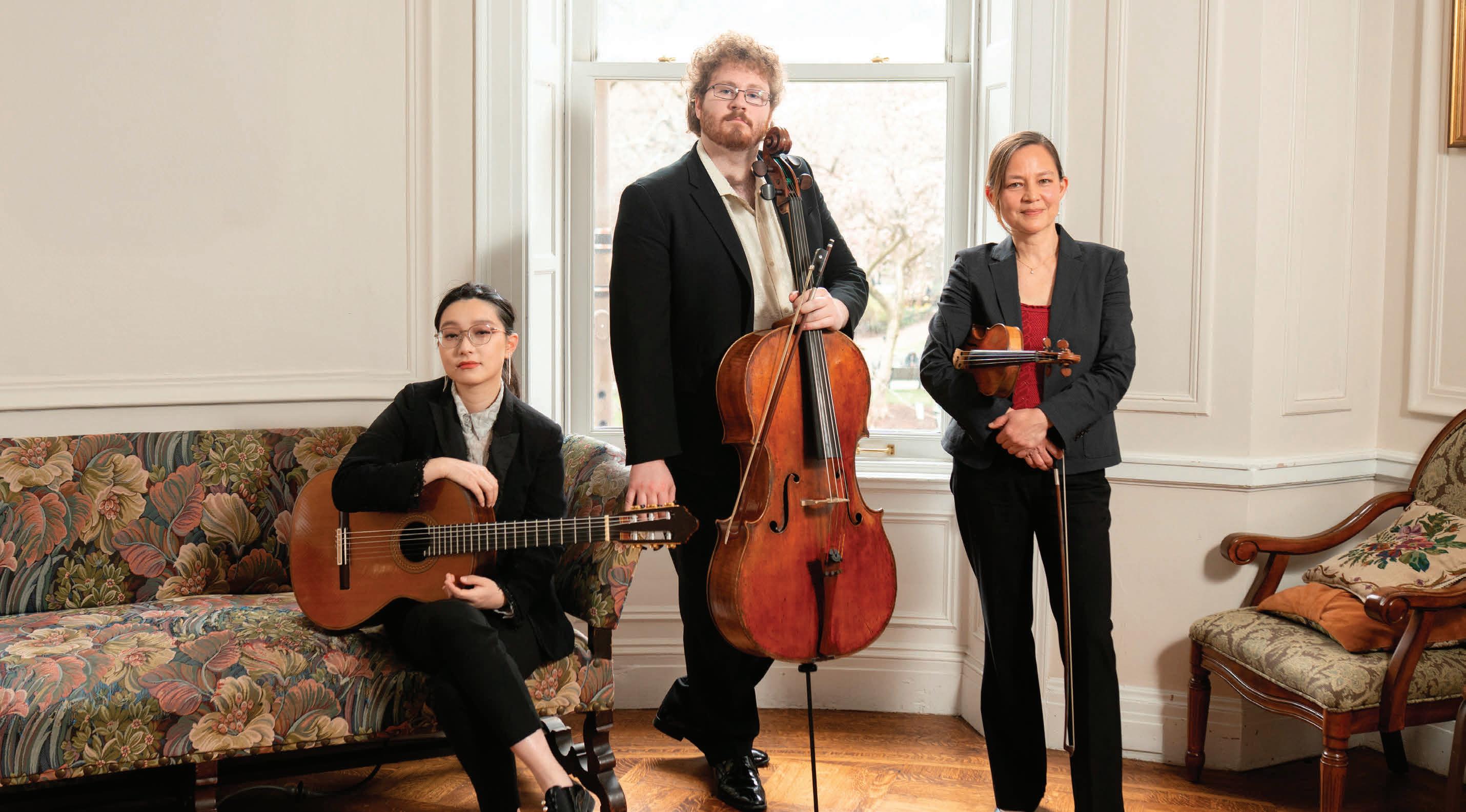
Join us for Curtis in Nantucket, the island’s highly anticipated annual week of classical music. Extraordinary performers from the worldrenowned Curtis Institute of Music present a series of captivating concerts featuring works by Bach, Piazzolla, and more, alongside a special program celebrating the 250th anniversary of the United States with music by American composers including Coleridge-Taylor Perkinson, Gershwin, and Curtis alumnus George Rochberg
Elissa Lee Koljonen (’94), violin
Hao Yang (’22), guitar
Romain-Olivier Gray, cello
Thursday, July 9
Nantucket Dance Festival
Through July 12, various locations. A week of dance performances, classes and social events. Visit www.nantucketdancefestival.org for complete schedule, tickets and more information.
Nantucket Garden Festival
Final day, various venues around town. The island’s annual celebration of gardening includes three days of talks, tours and social events to benefit the Nantucket Lighthouse School. Many events are already sold out. For a complete schedule or to join the waiting list, visit www.nantucketgardenfestival.org
Sunrise Yoga
7:30 a.m. daily, Children’s Beach, Harborview Way. Bettina Broer leads this early-morning yoga session. Bring your own mat.
Pick Your Own Vegetables
8:30 a.m. Tuesday, Thursday, Saturday, Bartlett’s Ocean View Farm, 33 Bartlett Farm Road. Journey on the Bartlett’s Farm hay wagon into the heart of its produce fields, with plenty of time to fill your own bag.
Island Calendar
All Levels Yoga Flow
9 a.m. Location provided upon registration. The Nantucket Conservation Foundation presents this 60-minute class of mindful, controlled movement and breath with an emphasis on lengthening postures, fluid breathing and smooth transitions. Register on events page of www.nantucket conservation.org
Feeding Frenzy at the Aquarium
9 a.m. Monday-Saturday, Maria Mitchell Aquarium, 32 Washington St. Join MMA aquarists and staff as they feed the creatures at the aquarium and learn about their feeding behaviors. Registration required on calendar page of www.mariamitchell.org
Ravenous Reptiles
9 a.m. Monday-Saturday, Hinchman House Natural Science Museum, 7 Milk St. Join MMA staff as they feed the hungry animals at the museum and learn about the adaptations of turtles, frogs, snakes and more. $20. Registration recommended on calendar page of www.mariamitchell.org
THURSDAY, PAGE 14
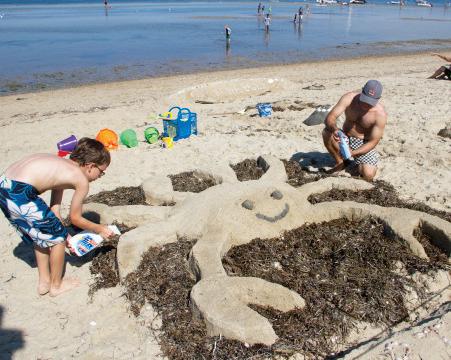
File photo
The Nantucket Island School of Design and the Arts’ 51st Sandcastle and Sculpture Contest will be held Saturday at Jetties Beach.
A bit of natural beauty in the middle of town
By Neil Foley I&M Columnist
I am a big proponent of getting out of town once summer sets in. Foregoing the crowds and lines for The Juice Bar, I head to the solace and calm of conservation land.
I have said many times that there is a rite of passage for deviating from the normal Nantucket routines and getting lost in the moors.
Not all wild spaces, however, are separated from the bustle of town, and not all commotion drains my patience. With this in mind, I bee-lined for Lily Pond, a busy natural setting in a crowded space.
When I arrive at the parking lot off North Liberty Street and walk down the sloping lawn, a Coopers hawk glides effortlessly over the entrance to the park, spooking several songbird residents.
A bold red-winged blackbird flew up to attack the small hawk as it sailed by, proving that the best defense is a good offense.
The heart of this property is a dense and lush cattail wetland with long green leaves emerging from the rich muck.
On the end of sturdy stems sway the long brown cattail flowers coated with yellow pollen. Each passing breeze sends clouds of pollen into the air, to the chagrin of those still plagued by seasonal allergies.
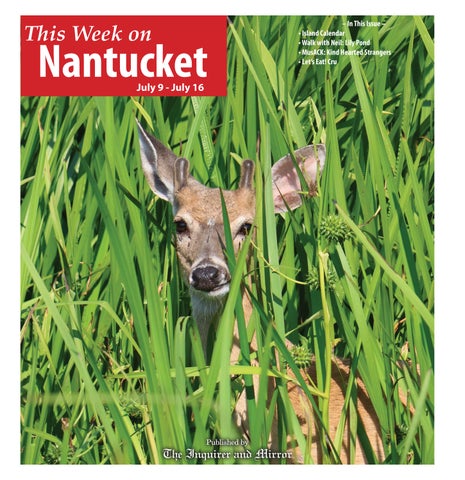
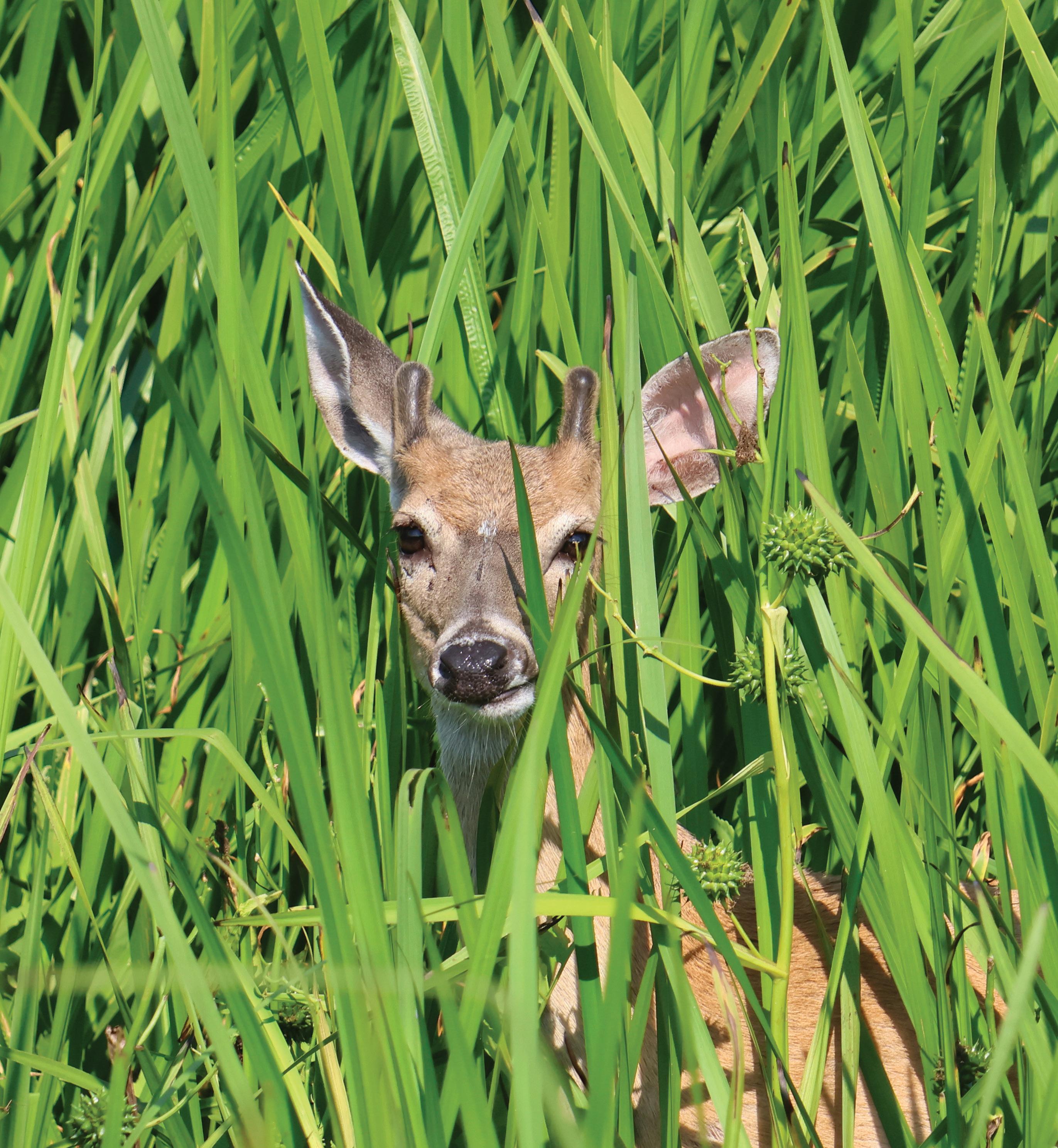
A yearling white-tailed deer with small growing antlers trudges through the cattails close to the boardwalk edge.
It notices me watching it and looks up while chewing a mouth full of ferns. The young buck senses that I am not about to bound into the marsh after it so it lowers its head to continue munching.
The Nantucket Land Bank is currently seeking bids for its phased restoration of the wetlands here at Lily Pond. This exciting
Photo by Neil Foley
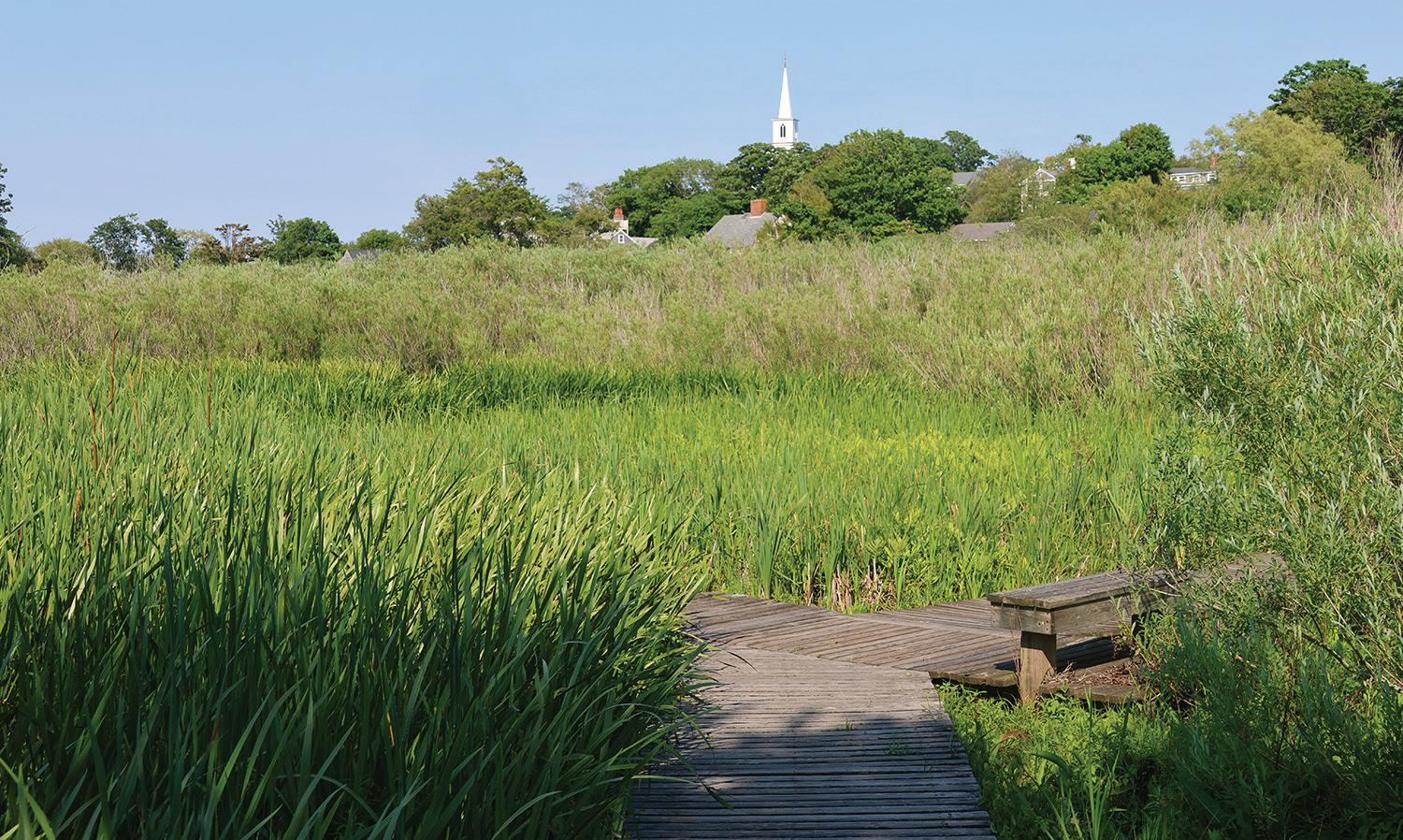
The boardwalks and wetlands of Lily Pond tucked into a dense, historic downtown Nantucket neighborhood.
Photo by Neil Foley
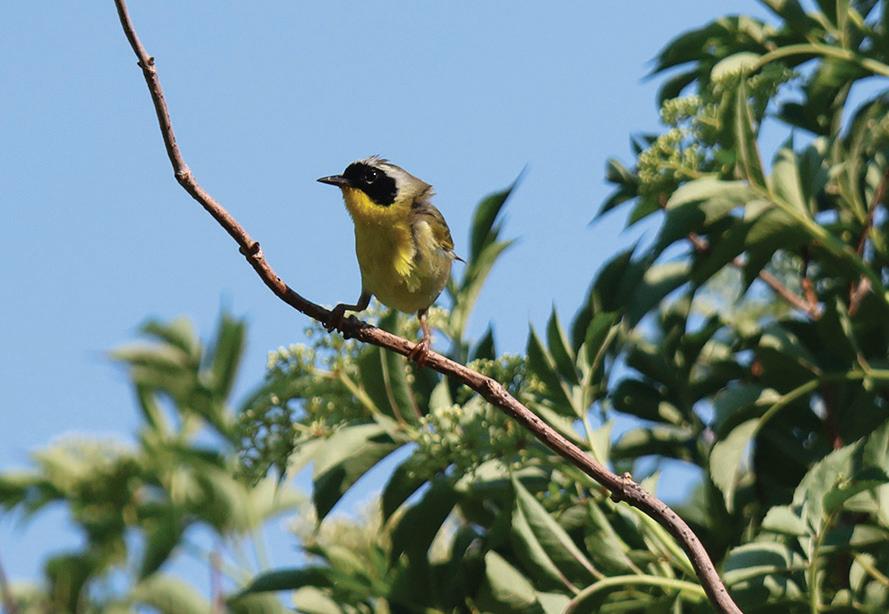
A male common yellowthroat, one of the many songbirds of the Lily Pond basin.
Walk with Neil WALK, PAGE 30
Women+Wellness
Join Us: Nantucket Cottage Hospital’s annual lecture series, featuring two renowned Harvard experts sharing the latest research on healthy aging, nutrition, intermittent fasting, cancer prevention, and women’s health.
Date: Monday, July 20, 2026
Doors Open: 4:30 p.m.
Program: 5:00 p.m. – 6:00 p.m
Reception: 6:00 p.m. – 7:00 p.m.
Location: Great Harbor Yacht Club
Tickets: Thanks to our generous sponsors, tickets are free but reservations are required. For tickets and more information, visit nantuckethospital.org/womenandwellness
Heather Eliassen, ScD
Courtney Peterson, PhD, MSc, MS, MA
Presenting Sponsor
Photo by Neil Foley
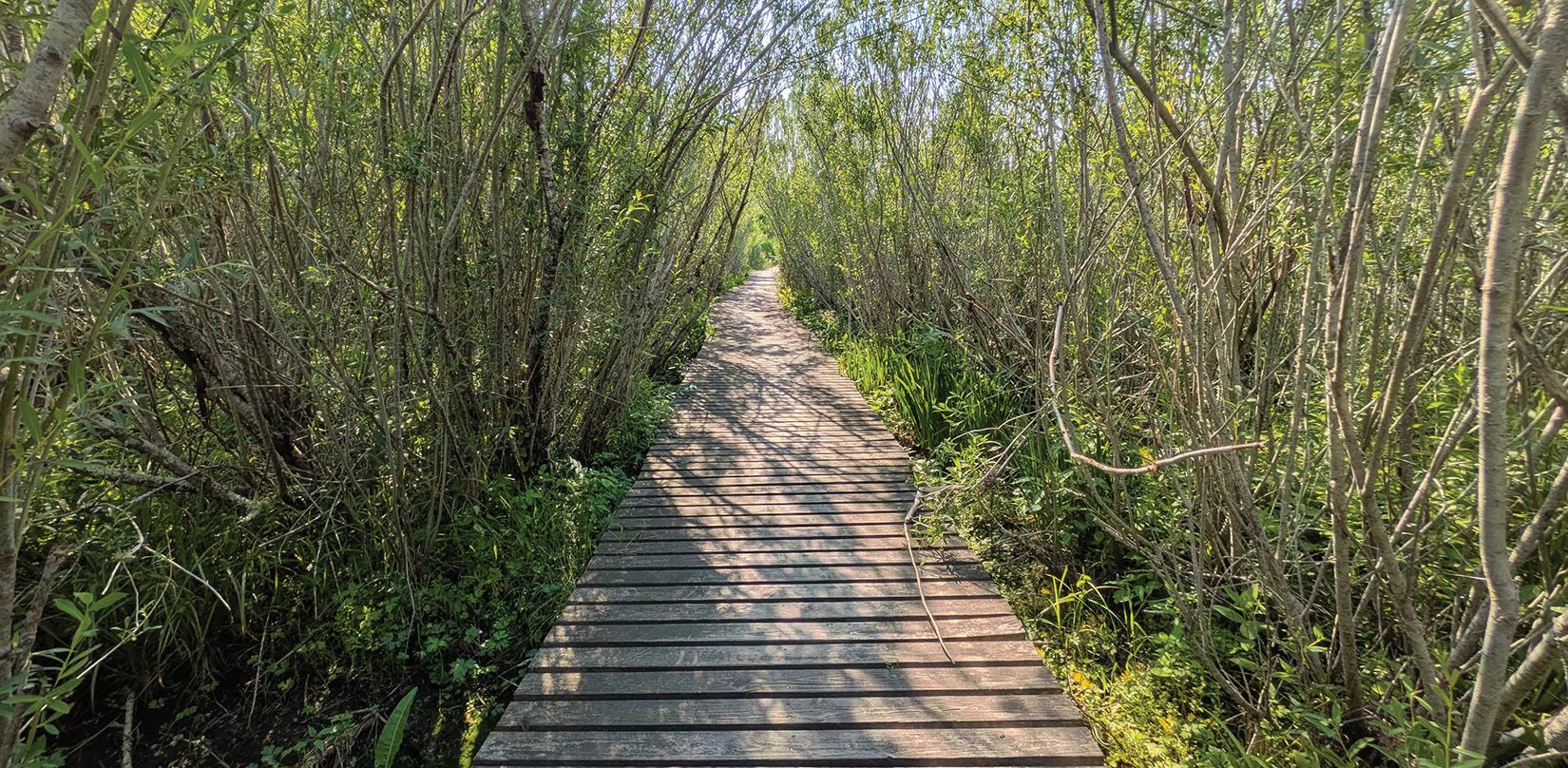
The willow thickets of Lily Pond.
Cru at 15: Crucumbers still flowing, focus on seafood
By Francesca Giangiulio fgiangiulio@inkym.com
It would be easy to define Cru by its most recognizable calling card.
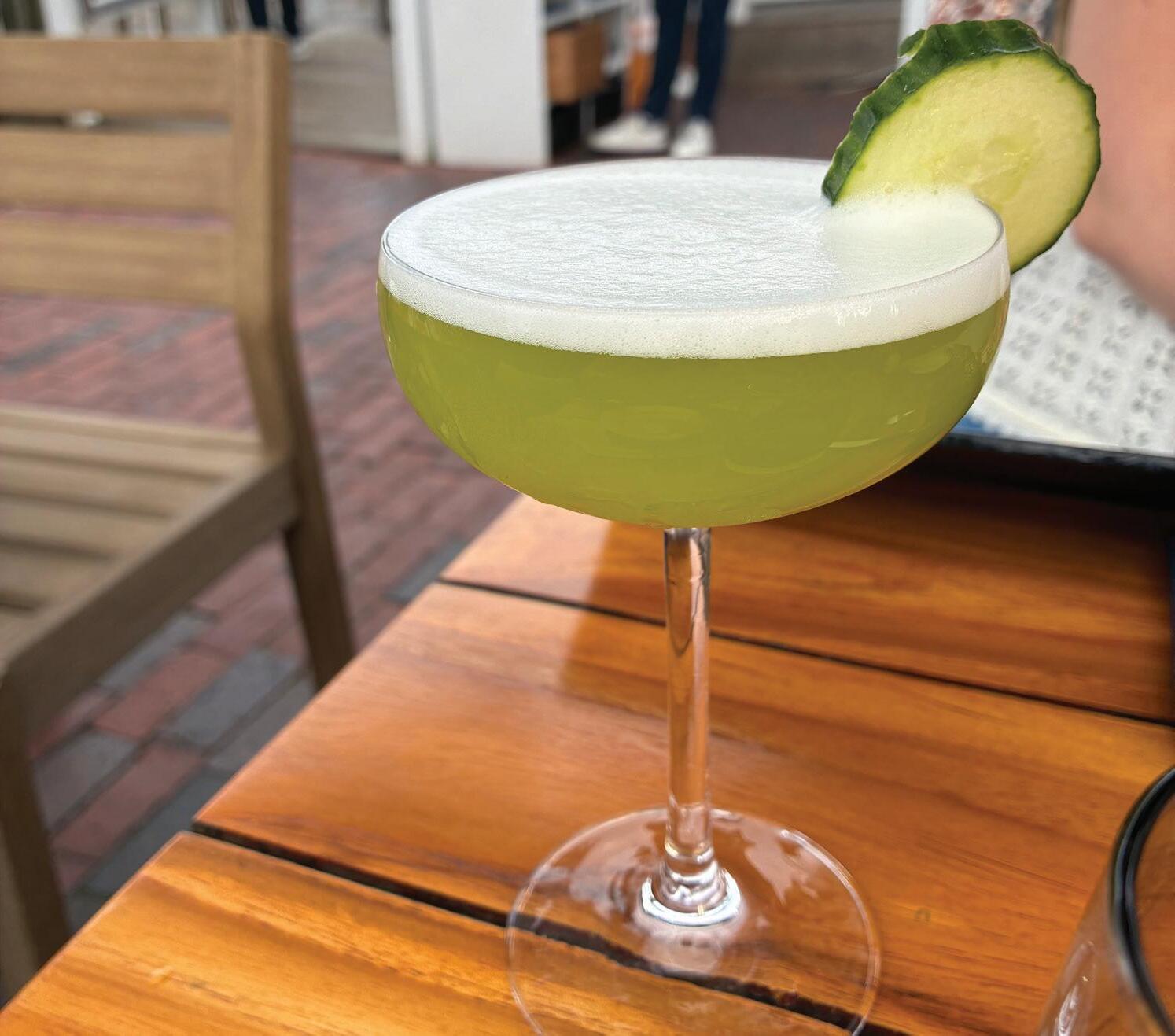
Spend an afternoon on Straight Wharf and you’ll spot the familiar scene: blue patio couches filling up before sunset, trays of bright green Crucumber cocktails making their way across the dining room and diners perched at tiny tables so close to the harbor they might as well be floating on it.
Fifteen seasons after opening its doors, the waterfront restaurant remains one of Nantucket’s most recognizable dining destinations.
But while the Crucumber may be an island icon, it’s not the whole story.
From the beginning, co-founder and owner Jane Stoddard envisioned Cru as something more than a beautiful place to sip cocktails on the water. She wanted a restaurant with seafood that could appeal to every person for almost any type of occasion, whether it’s a milestone celebration or a quick post-beach snack.
“When we opened, there weren’t as many venues that you could have lunch at 2 o’clock or dinner at 10 p.m.,” Stoddard said. “We wanted to be a venue that you could have a
Let’s Eat!
Bud Light and a chowder, but you could also have three courses and Champagne and caviar and raw bar.”
Fifteen seasons later, that flexibility may be the secret to Cru’s longevity.
Stoddard moved to Nantucket year-round in 2003 after visiting with friends and quickly falling in love with the island. Working first at the Boys & Girls Club before spending years in restaurant management, she never set out with the singular goal of opening her own restaurant.
But when the former Rope Walk space on Straight Wharf became available, everything seemed to align.
“It was the perfect kind of culmination of this space. Nantucket’s my home, and it was a great opportunity to continue what I was already doing in a new way,” Stoddard said. “It was the perfect venue for an all-day waterfront seafood restaurant. It’s really evolved from what we thought it would be to where it is now.”
That evolution has been intentional. “You have to let the space and the clients speak to you a little bit,” Stoddard said.
EAT, PAGE 28
Photo by Francesca Giangiulio
Cru served more than 40,000 iconic Crucumber cocktails last season.
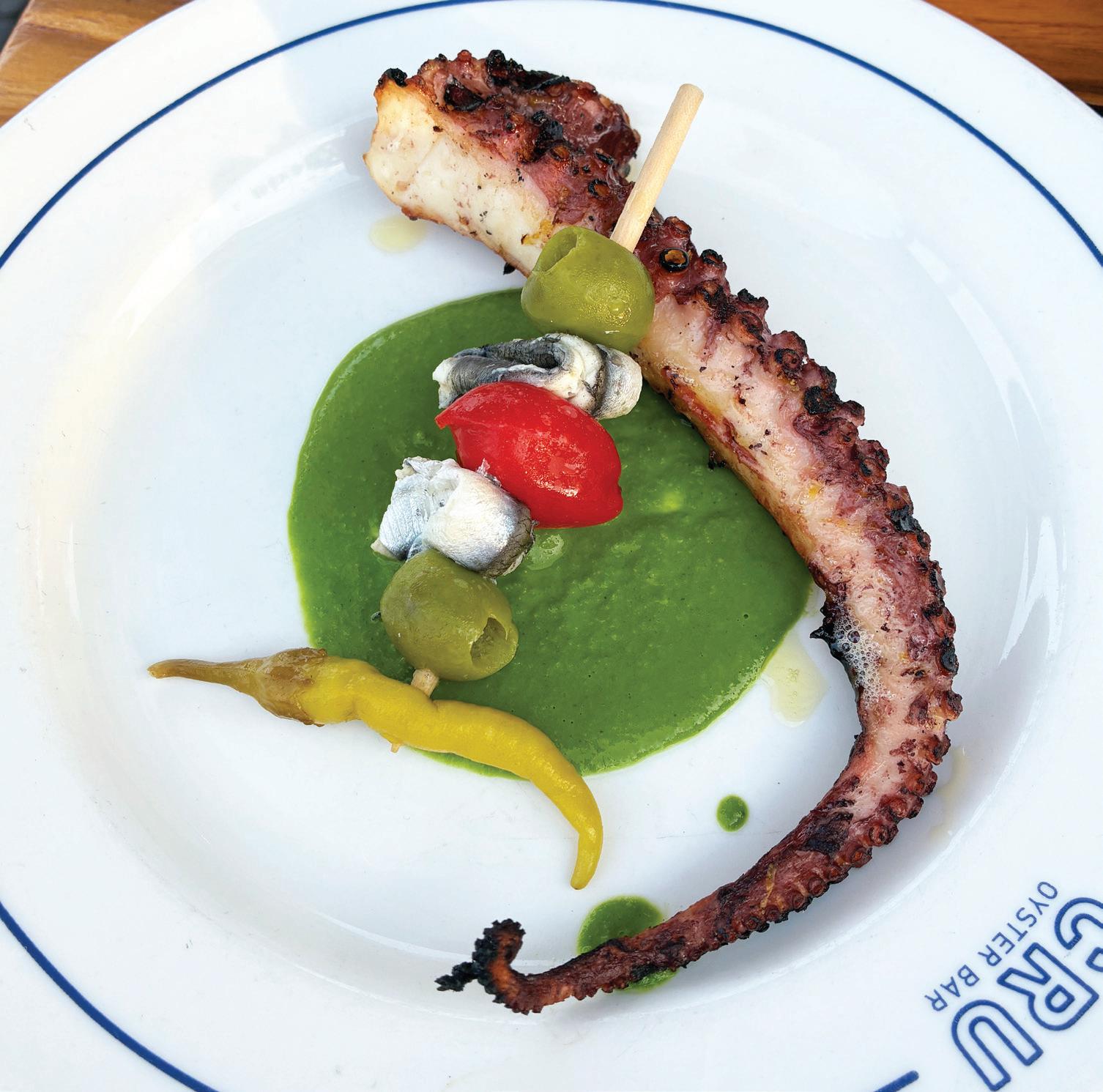
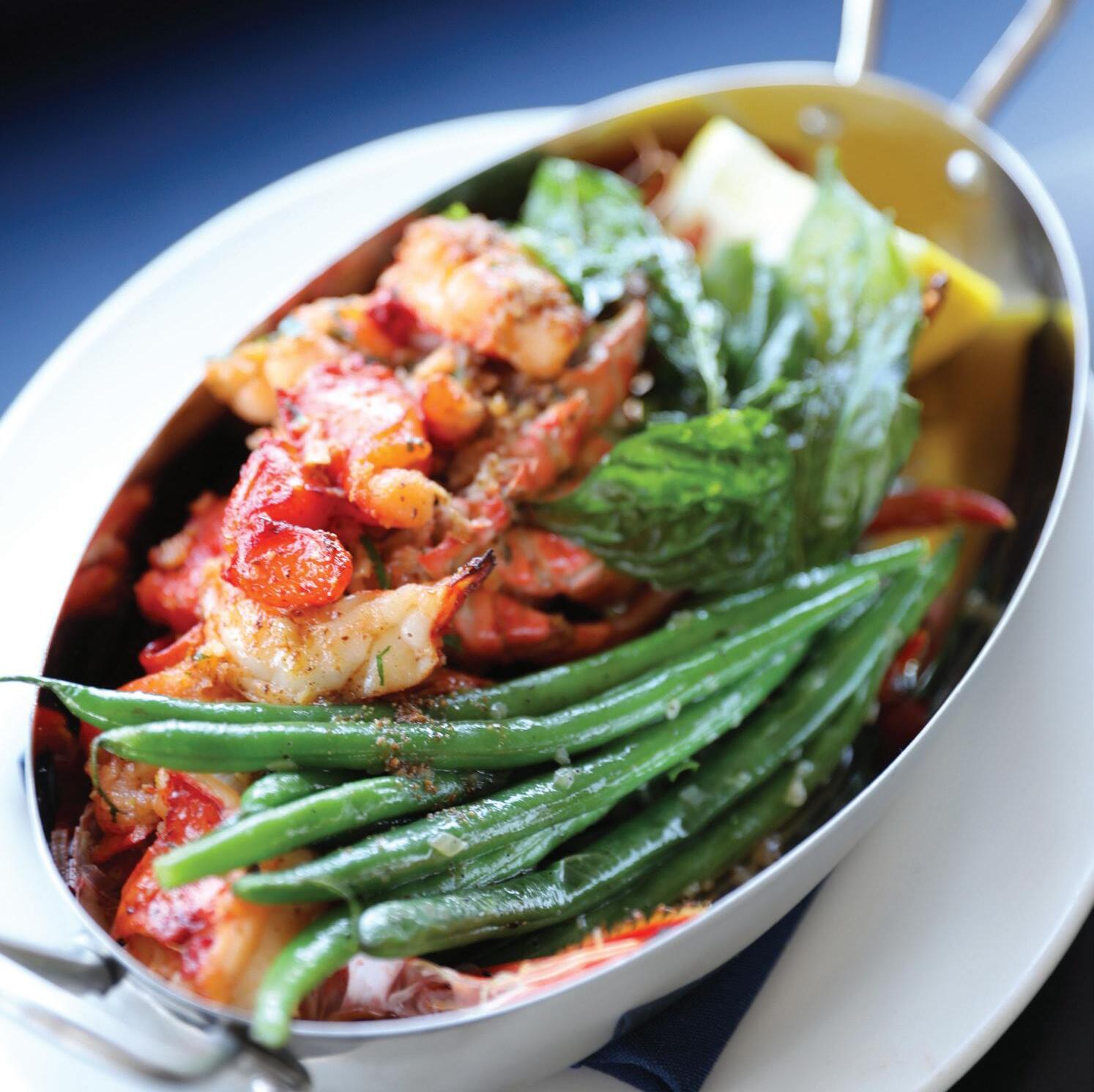
Left photo by Francesca Giangiulio, right courtesy of Cru Seafood takes center stage on head chef Eric Korsch’s Cru menu, including grilled octopus, left, and fresh lobster.
Paint Lab for Kids: Creative adventures for summer fun
By Shannon Ross Contributing Writer
“Paint Lab for Kids: 52 Creative Adventures in Painting and Mixed Media for Budding Artists of All Ages” is a book I genuinely love.
With 52 painting activities, it stands out from other art activity books because of the variety of ideas it offers and how easily those ideas can be expanded.
Each activity is a full lesson, with adaptations for younger children and clear stepby-step visual instructions. It’s a thoughtful collection of art techniques taught through engaging activities.
Take “Glue Batik” fabric painting. In this activity, author Stephanie Corfee adapts batik painting, which traditionally involves creating a wax design, dyeing the cloth and then removing the wax to reveal a negative design.
Instead, readers use liquid glue, let it dry and then paint with fabric paint. When the paint dries, they peel off the glue to reveal their design. This activity could be done with cotton aprons, tote bags or T-shirts and is a lot of fun.
What I appreciate most is that the projects are not just one-off crafts; they can become starting points for deeper exploration.
The book is organized into units: technique-based labs, idea-based labs, color-based “Palette Play” labs, mixed-media projects and inspirational “Express Yourself” activities.
Each art lab includes both the activity itself and an “Inspiring Artist” who uses the technique in their work.
For example, the “Drip Drop Water Techniques” activity explores painting with water and acrylics to create drips and flowing color. Lesley Grainger, a contemporary abstract painter, is featured as the artist inspiration for the lesson.
There are also a few STEM-style activities, like the “Mystical Potion Painting” activity, which combines watercolor with a baking soda and vinegar mixture to create a fizzy paint effect.
I also love the mixed-media variety, which encourages artists to experiment with materials like wood stain, printmaking and even pattern making with a lint roller.
I tried the lint-roller activity and had lots of fun creating foam shapes to glue on the roller and paint for a printmaking project that younger artists could easily enjoy.
All the activities are accessible and are not just for kids. I gave this book to a friend recovering from a surgery to have an accessible creative outlet without the stress of perfectionism.
She took to a few techniques and went on to explore them in more depth with other books and online resources.
Good Reads
One of the best things about this book is how adaptable it is. Each activity includes ideas for younger artists, which makes it especially valuable for families, classrooms or anyone working with mixed-age groups.
Overall, “Paint Lab for Kids” feels like a gateway book: an accessible, playful introduction to art techniques that can grow with the artist. It is a book full of lessons you can return to again and again.
Of course, you can find this book and other books by the author in the Weezie Library for Children at the Nantucket Atheneum.
Shannon Ross is a library associate in the Atheneum’s Weezie Library for Children.
Stephanie Corfee
MONDAYS WITH MAGIC MARK
Mon | 10:00 - 10:45 AM | 6.29 - 8.31
TUESDAY TIE-DYE
Tue | 10:00 AM - 12:00 PM | 6.30 - 9.1
WEDNESDAY WELLNESS CHILDREN’S
YOGA WITH PHOEBE STROBINO
Wed | 9:30 - 10:30 AM | 7.1 - 9.2
TERRIFIC THURSDAY CRAFTING
Thu | 10:00 AM - 12:00 PM | 7.2 - 9.3
MUSIC AND MOVEMENT WITH COOL CORY
Fridays | 10:00 - 10:30 AM | 7.10 - 8.21
CAPOEIRA ON THE BANDSTAND WITH WERDUM Sat | 9:00 - 10:30 AM | 6.13 - 10.03 No Class: 7.4, 7.11, 8.8, 8.22, 8.29, 9.5, 9.12
SUMMER CONCERT SERIES
Sundays | 6:00 - 7:15 PM | 6.21 - 9.6
The kindness behind Kind Hearted Strangers
By Kendall Graham kgraham@inkym.com
Kind Hearted Strangers was born from a persistently optimistic mindset.
Led by singer-songwriter Marc Townes, the band’s sole constant member, the project blends acoustic folk, roots rock and jamband energy into a sound that is as fluid as its lineup.
The project traces its roots back to the foothills of Boulder, Colo. where, a little over 10 years ago, Townes was working security at a local music venue. The positive experiences he had with concert-goers there, moments of unexpected connection and camaraderie, ultimately inspired the band’s name.
“I was getting a lot of high-fives and hugs, literally just being the door guy, and basically I noticed that if you were nice to people, they were nice back to you,” Townes said.
“I believe that people are inherently good, and this was at an important time in my life where I was living on my own and experiencing the world, and I was like, ‘This is beautiful’.”
Since those early days in Colorado, Kind Hearted Strangers has transitioned from a regional act to a full-time touring project now heavily active in Nashville, although it has always been nomadic at heart.
The band will bring its hybrid sound to
the Gaslight tonight for an evening set at 9 p.m.
That people keep showing up again and again to the shows is, to Townes, the difference between having a following and building a community.
“That’s a really cool thing about us coming to Nantucket again,” he said. “We’re seeing the same faces when we come back a year later, and that’s such a beautiful thing, people being like, ‘Oh, we’re gonna plan a summer vacation and go the week that they’re playing’.”
For Townes, the band’s evolution has been shaped less by industry milestones than by miles on the road. Years spent crisscrossing the country have reinforced the band’s belief that its songs are living things, changing
subtly from one audience to the next.
“We play a different show every single night,” he said. “We don’t ever go out and do the same thing.”
Townes views touring as both a livelihood and an essential artistic practice, often allowing songs to evolve through live performance rather than keeping them fixed. This philosophy is central to the band’s tenets, which prioritize presence over perfection and seek to build genuine community through music.
“We’ve played on mountaintops while it’s snowing, we’ve played literally on the beach and it’s just a beautiful way to see the country,” he said. “I couldn’t think of a more fun thing to do in my life than making music and
Photo by Charla Harvey
Born in the foothills of the Rocky Mountains in Boulder, Colo., Kind Hearted Strangers returns to Nantucket to play the Gaslight tonight.
MusACK
Support the Inky Local Journalism Fund
The Inky Local Journalism Fund was established to help maintain a vibrant, informed and connected Nantucket by ensuring the long-term strength and independence of local journalism at The Inquirer and Mirror, Nantucket’s trusted news source since 1821 and the island’s only locally-owned, independent, multi-platform news organization that incorporates print, digital and special publications into its content portfolio. The Fund supports reporting on the issues that matter most to our island community – including health, education, the environment, development, arts and culture. Your gift supports core priorities, including developing the next generation of storytellers through summer internships for high school and college students. This provides meaningful mentorship and hands-on newsroom experience at The Inquirer and Mirror while cultivating future leaders in journalism.
Through the Community Foundation for Nantucket, you can help make an impact on local journalism by making a tax-deductible contribution.
Source Since
The heartbreak grape, and why it’s worth every tear
By Peter McEachern I&M Columnist
I was 22, living in Leysin, Switzerland, a small mountain village in the canton of Vaud, perched above the Rhône Valley at roughly 1,400 meters, the kind of place where the air is thin, the winters are long and the local grocery store stocked an astonishing variety of Swiss and French wines at prices that, even on a student’s budget, were not entirely out of reach.
I was attending school there, and for the first time in my life I was close enough to Burgundy to make it feel real and accessible rather than an abstraction from books.
Burgundy was a few hours to the west. The wines of the Côte d’Or were in the shops. And I was 22, curious and willing to skip lunch twice a week if it meant I could afford another bottle of something red and Burgundian to study in the evenings.
I tasted as many Pinot Noirs as my slim budget could afford, which was not as many
as I would have liked, but more than most 22-year-olds have any business drinking.
I started, as one does on a student’s budget, with the village wines – Gevrey-Chambertin, Chambolle-Musigny, Vosne-Romanée – and worked my way through them with the focused intensity of someone who, even then, understood he was in the presence of something important.
The wines were not all great. Some of them, at the prices I could afford, were merely interesting. But occasionally – on an evening when the stars aligned and the wine had been transported gently and opened at the right moment – I would taste something that made everything else stop.
A moment of pure, lucid beauty in a glass, as specific and irreproducible as a piece of music heard once in a particular place. Those moments are why I have been chasing Pinot Noir for 40 years.
Photo by Luca Piccini Basile
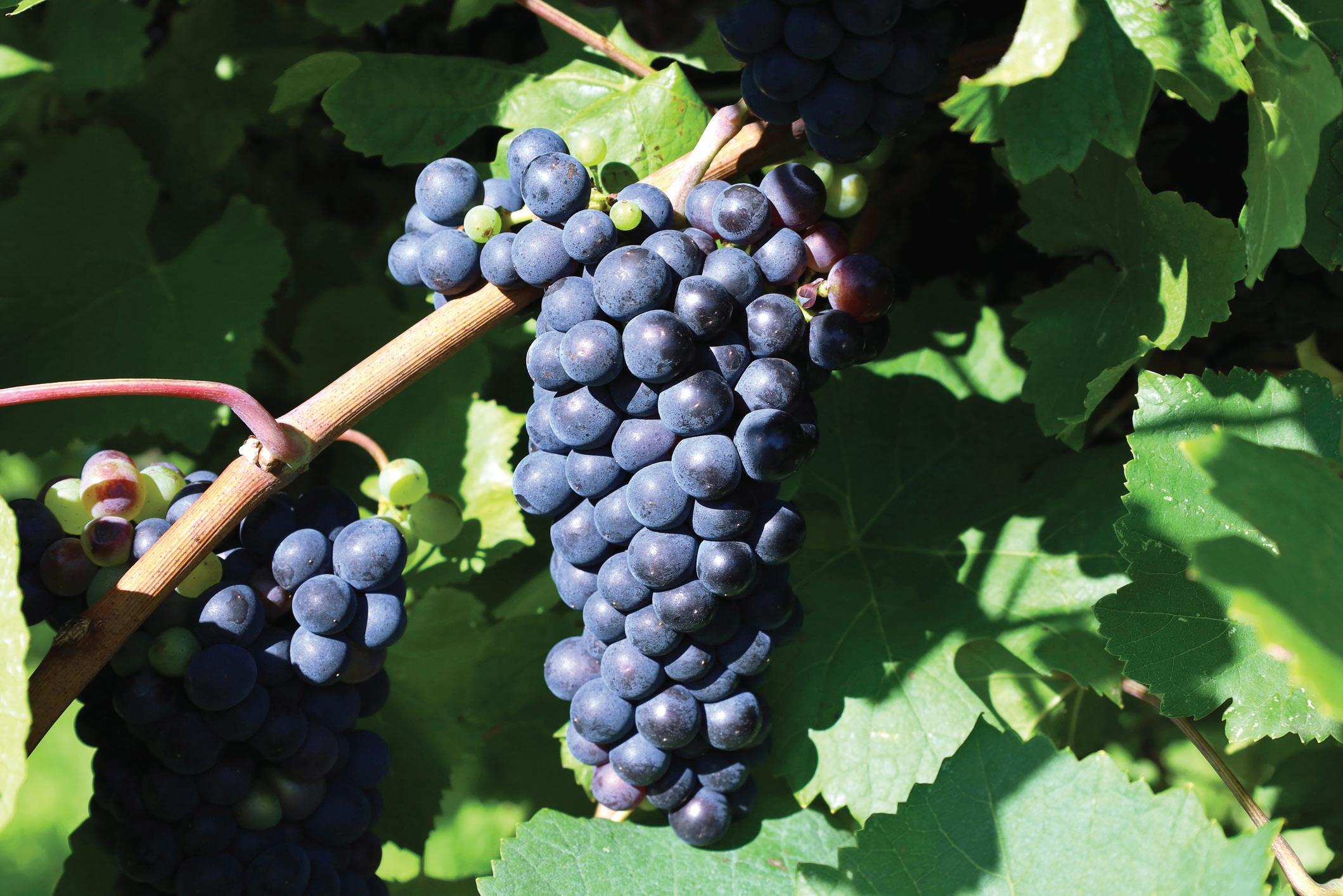
A bunch of Pinot Noir grapes ripening on the vine under the French sunlight.
Courtesy of Peter McEachern
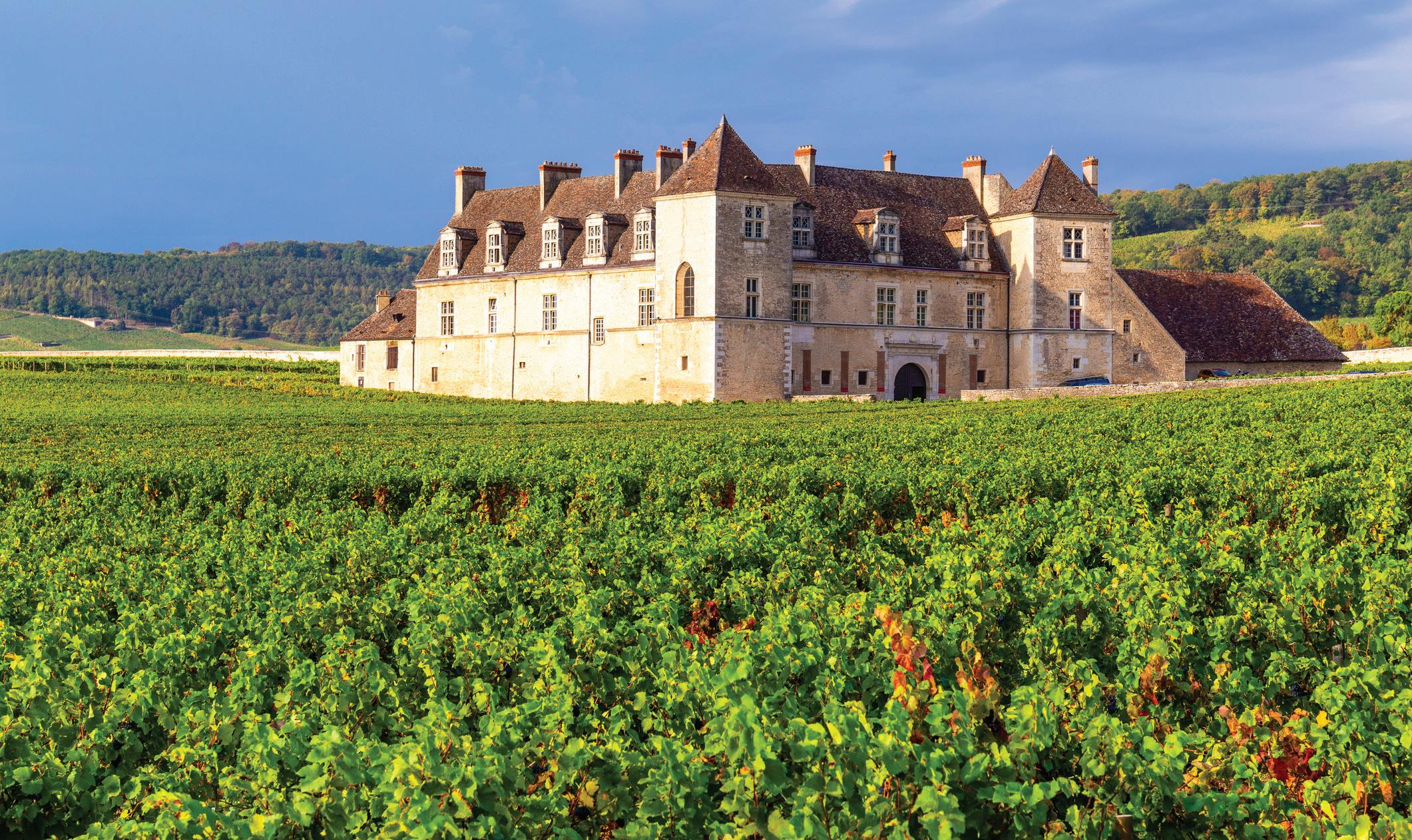
Vougeot castle in Burgundy, France, the heart of Pinot Noir wine country.
Wine Cellar: The Noble Grapes
The grape earns that pursuit and then some. Pinot Noir is the most difficult noble grape to grow, the most challenging to vinify, the most sensitive to every variable the winemaker cannot control – soil, climate, vintage, fermentation temperature, the precise moment of harvest – and the most capable of transcendence when everything goes right. It is also, when things do not go right, a wine of spectacular mediocrity. The distance between a great Pinot Noir and a bad one is greater than the distance between a great and a bad Cabernet Sauvignon, and the path between those two outcomes is strewn with the humbled ambitions of winemakers who thought they understood the grape and learned otherwise.
This is why serious wine people love it with a devotion bordering on the irrational. You do not love Pinot Noir casually. You love it the way you love anything that requires you to earn it.
What Makes Pinot Noir Pinot Noir
The grape is genetically ancient and structurally unstable. It mutates readily, which is why Pinot Gris and Pinot Blanc exist as color mutations of the same variety. It is thinskinned, making it susceptible to rot in wet conditions and sunburn in excessive heat. It also produces wines of lighter color and lower tannin than most red grapes. Those lighter tannins and that transparency of color are not weaknesses. They are the physi-
cal expression of the grape’s most important quality: its capacity to transmit the character of the soil in which it grows with a clarity and specificity that no other red grape can match.
This is why the Burgundians have spent nine centuries mapping their vineyards with obsessive precision, identifying the specific parcels – the grands crus, premiers crus and village lieux-dits – where the combination of soil, aspect, and microclimate produces something that cannot be replicated 50 meters away.
The concept of terroir – the idea that wine tastes of the place it comes from – finds its most convincing expression in Pinot Noir.
A Chambolle-Musigny and a Gevrey-Chambertin are made from the same grape, grown in vineyards just 20 minutes apart, yet they taste as different as chalk and iron. That difference is the village, not the grape. Understanding that is the first step toward understanding Burgundy.
The world in three glasses
• The Côte d’Or, Burgundy, France. This is where Pinot Noir found its identity, and 40 years after those student evenings in Leysin, it still makes its most complete and compelling case.
The Côte d’Or – the golden slope running 30 miles from Dijon to Santenay – contains, in its most celebrated parcels, some of the CELLAR, PAGE 26