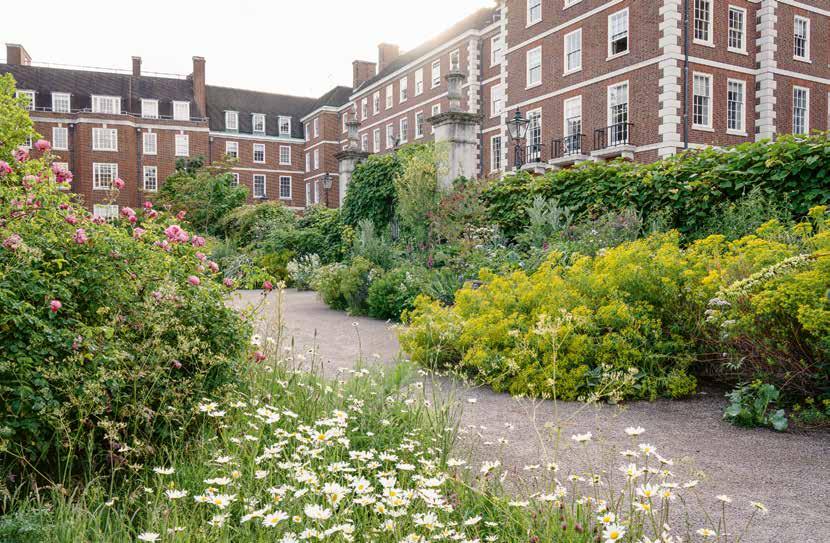
Ox-eye daisies and other meadow plants flourish under the partial shade of trees, offering a veritable feast for pollinators in the heart of London
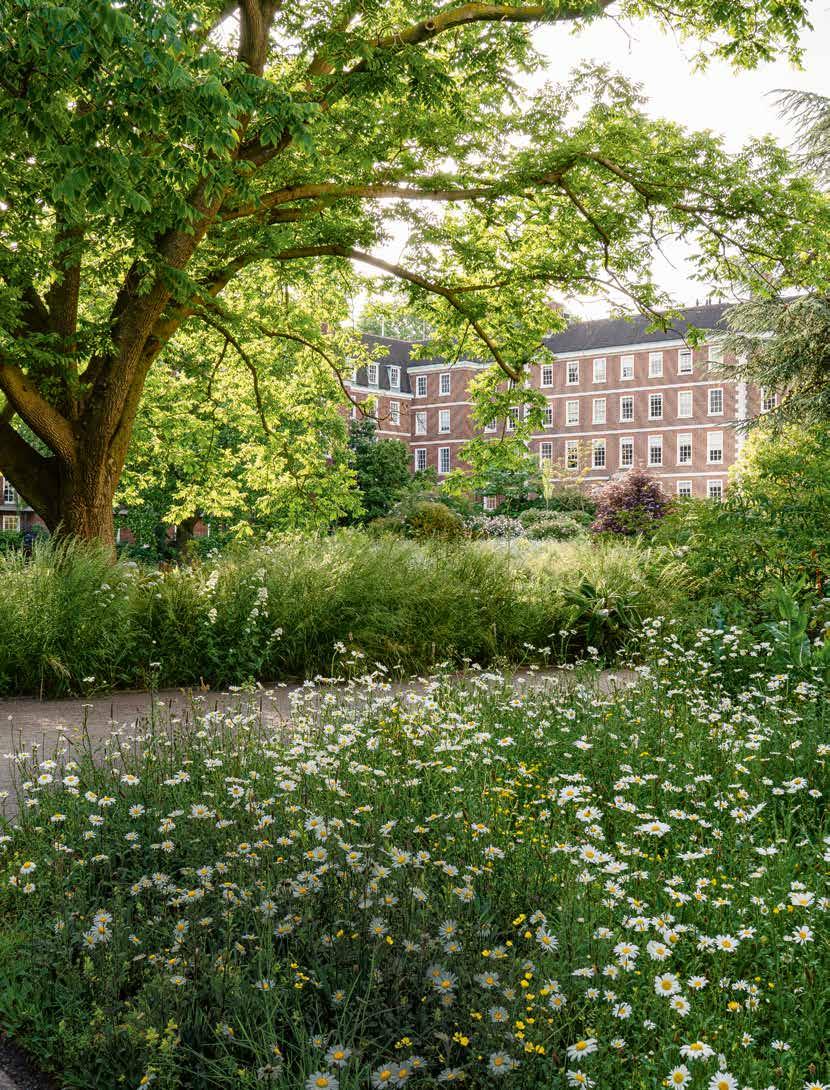
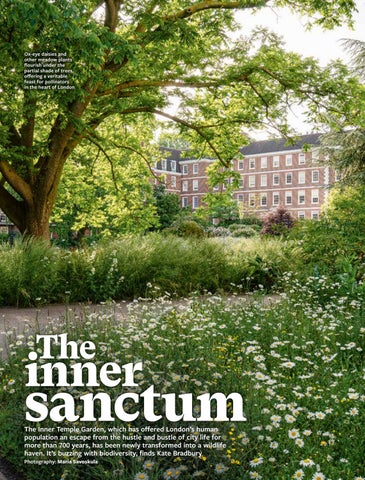
Ox-eye daisies and other meadow plants flourish under the partial shade of trees, offering a veritable feast for pollinators in the heart of London
The Inner Temple Garden, which has offered London’s human population an escape from the hustle and bustle of city life for more than 700 years, has been newly transformed into a wildlife haven. It’s buzzing with biodiversity, finds Kate Bradbury
Photography: Maria Savoskula
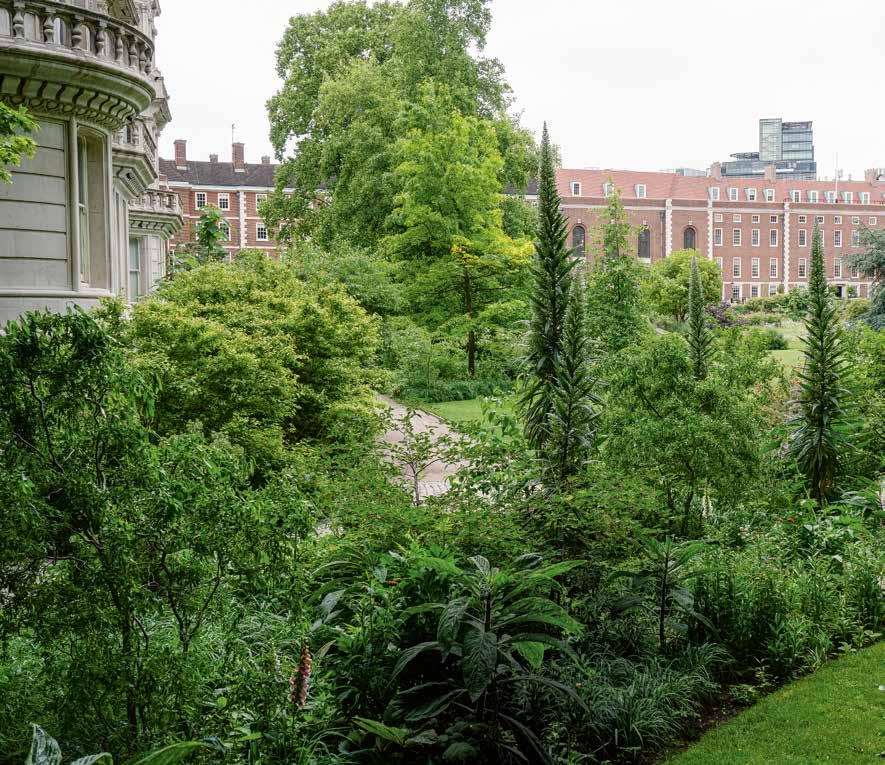
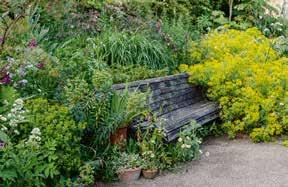
Framing one entrance to the garden, biodiverse tall borders provide forage for a range of pollinators
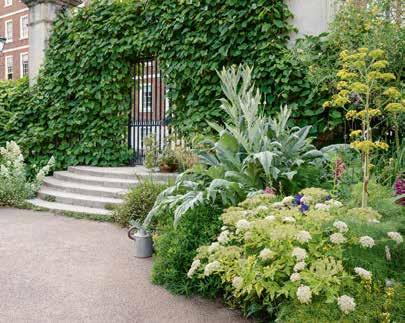
Nestled in London’s ancient legal district, on the edge of the River Thames, The Inner Temple Garden is an oasis of trees, meadows and vast ornamental tall borders. Beyond its walls, traffic roars and people rush about their business, but within, there’s a rich variety of wildlife. The happy chattering of blue tits and great tits is all around, while an audible hum of bees and flies emanates from a Euphorbia ceratocarpa rhs c in nearby borders. Look more closely, and you’ll notice a fantastic array of fauna, all making itself at home in the pulsing heart of the country’s biggest, busiest city.
It may be surprising to find so much wildlife here, but it’s no coincidence. Head Gardener Sean Harkin has recently re-envisioned the centuries-old garden for biodiversity as well as beauty. A sign at the entrance proudly mentions a sighting of a black redstart, while some of last year’s seedheads blend

effortlessly with this season’s fresh growth. “When I arrived eight years ago, the garden was more traditional with striped lawns and a long border with bedding,” says Sean. “We began changing it for aesthetic reasons, to make the garden more romantic, and found wildlife was benefitting from things being a bit less controlled. So we set about thinking about the garden through a new lens and encouraging biodiversity alongside the plants.”
This is a garden steeped in horticultural history. Since 1601 the garden has been home to The Inner Temple – officially the Honourable Society of the Inner Temple – which is one of four Inns of Court that working barristers in England and Wales must belong to. But its gardening roots go deeper still. Originally an orchard – from at least as early as the 12th century – the first recorded gardener on the site was appointed in 1307. By the 14th century there are several mentions of its roses. Significant redesigns took place in 1591, when a more formal design was laid out, which included a top terrace and walks, and then in the early 18th century when it was restyled with three rectangular lawns dotted with trees and dissected by gravel paths. In 1889 William Robinson, famous for his naturalistic style of anti-Victorian planting, was hired to advise The Inner Temple Garden following disturbance
A
natural plantedFormally areas have been transformed into more versions
Name: Sean Harkin.
Size of garden: 3 acres.
Age of garden: There has been a garden on this site since at least 1307. The current layout was defined as part of the creation of the Victoria Embankment in 1870.
Location: The Inner Temple, London, EC4Y 7HB.
Maintenance: Spring is a busy time with meadows meticulously edged and weeded, over-dominant plants cut back, and wildlife monitored
– including placing out moth traps. Certain wildflowers are allowed to flower but are then deadheaded before setting seed – a process that Sean calls ‘mindful weeding’. The meadows are then scythed from early August, with strewings used to improve less diverse areas of the garden. In autumn, the vast amount of leaf litter collected up from the garden’s plane trees is shredded and turned into leaf mould. Paths are hand-weeded throughout the year.
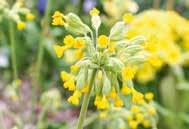
Sean’s tips for creating a wildlife sanctuary: Grow native wildflowers. Do it in a meadow, if you have space for one, but equally in borders, pots, path edges, or all of the above. Primroses, cow parsley, ox-eye daisies and valerian are all beautiful and nature friendly. Get dead creative. Standing dead wood – a stump, for example, or some half-buried logs – is valuable to a whole host of wildlife. Dead hedges can form an attractive
form of screening, while also supporting a range of insects and birds. They can be artistically turned into a feature, or hidden in an out-of-the-way corner. Keep your eyes peeled. Observe and monitor what different species you already have and then make adjustments to accommodate them. For instance, when scything the meadow, we noticed ground nesting bees and so decided not to cut that area as we did not want to disturb them.
Have a water source. Ideally this would be a wildlife pond, but bird baths or even upturned bin lids full with water can all be beneficial.
Enjoy it! It is possible to have both a beautiful garden and one that is a sanctuary for wildlife. Consciously tuning into wildlife in the garden will bring a new level of enjoyment.
Visiting: Free to visit on weekdays 12.30–3pm, alongside a handful of weekend open days in summer. The Plant Fairs Roadshow will be at the garden on 31 May, 11am–4pm.
The garden has become a hotspot biodiversity for
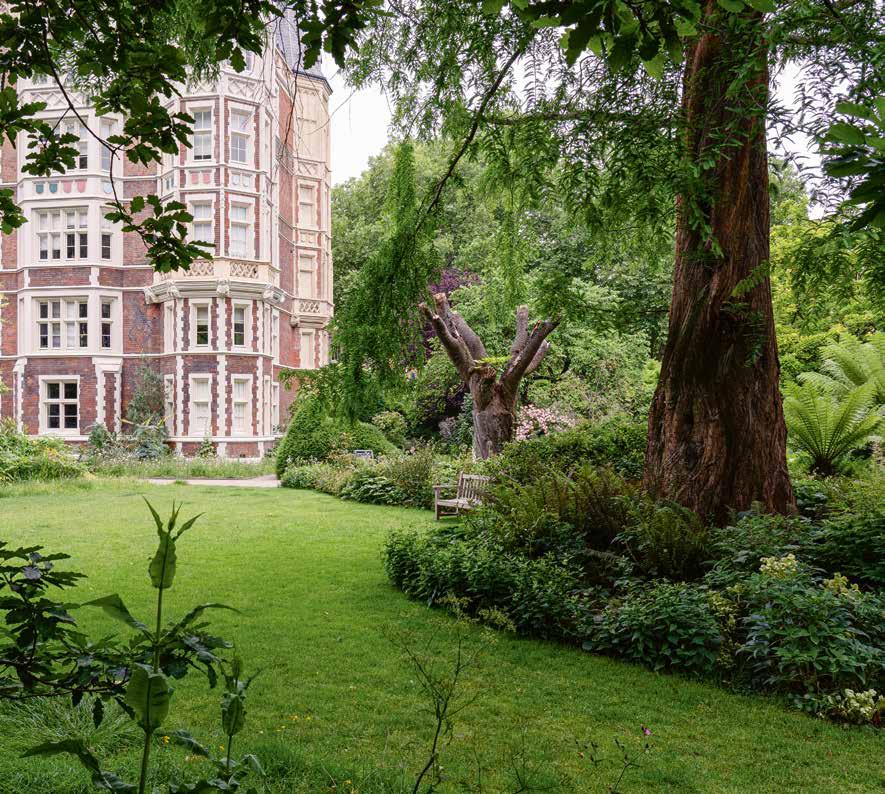
from laying a new electricity supply. At the time, the garden was home to a series of glasshouses, in which traditional display chrysanthemums were grown, and he expressed his dislike for these. He also advised against growing evergreens, as they would not cope well with the pollution levels of the time. The garden became the venue for the RHS Spring Flower Show from 1888 to 1911, before it moved to the Royal Hospital grounds in Chelsea. Today, the garden slopes gently towards the Thames and comprises a large expanse of lawn with paths and borders around its perimeter. Trees include several large London planes – the oldest planted in the 1770s – and a huge Arbutus menziesii (an American species of strawberry tree), plus an impressive Ginkgo biloba. There’s a formal pond with enclosed seating areas, with nods to the garden’s ancient roots including the Queen Anne sundial and decorated iron gates that date from 1730. All of which befits a space with such legacy within its walls, but this is far from a garden stuck in its ways.
During the last eight years, Sean and his team have transformed many formally planted areas into more natural and sustainable versions. Now, where once there was a huge expanse of lawn, there are meadows seeded using meadow strewing (green hay containing seeds) from Great Dixter. Where bedding plants were bisected by small yew hedges there are now borders with a mix of last year’s
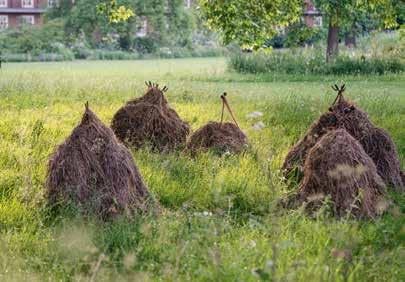
seeding plants and this year’s flowering perennials. Elsewhere there is a dead hedge, a large bay for making leaf mould from the plane leaves, and a sculptural monolith comprising a dead cherry tree, left in situ to attract fungi and beetles. Big borders have been designed around some specimen trees, and recently a small wildlife pond has been added to a border at the edge of the garden. Haystacks act as both sculptural focal points and helpful habitat.
“Before mechanised bailing in the 1950s, haystacks were a feature of the countryside to provide winter feed for livestock, alongside ecological benefits,” explains Sean. “We continue the haystack tradition as part of our meadow management so insects can complete their lifecycles, and to provide valuable habitat for invertebrates, small mammals and fungi.” These haystacks are a permanent feature of the garden, even in spring. Meadow plants and spring bulbs grow around their perimeter, while wrens hop between them, gathering insects to feed their young.
Standout features at this time of year are the shrub roses set in the meadows. They are trained using the lauded Sissinghurst method, where
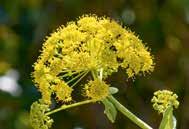
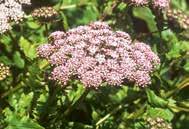
one-year-old stems are bent and tied into basketlike patterns, giving a free and cascading look to what was previously regimented and formal. Euphorbia ceratocarpa rhs c, an all-you-can-eat buffet for pollinators, spills onto paths, further relaxing the display, while giant fennel towers skyscraper-like up into the London sky.
The garden’s horticulturists are always watching, observing their plants and how wildlife interacts with them. But while Sean may be the mastermind behind the garden as it is today, he always takes his cues from nature. “Giant fennel and echiums have seeded themselves into deciduous shade,” he says. “They seem to get all they need from the early sun and then, as the emergent leaves begin to shade the area, they continue to flower and seed. It’s amazing, so we planted more to mimic nature’s behaviour.”
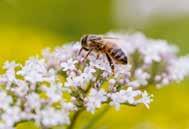
The garden is already a haven for wildlife and a hotspot for biodiversity, but this is only the start for Sean and his team. Since 2022, they’ve been working with Pollinating London Together, who have been using the garden to research diversity of pollinators in the City of London, while also commissioning a full biodiversity audit of the garden. Notable species identified to date include the hairy-footed flower bee ( Anthophora plumipes)
and ashy mining bee ( Andrena cineraria), which both forage and nest in the garden. In the tall trees, there are at least two resident species of bats, and the dead hedges are alive with wrens. “They also sometimes nest in the bundles of seedheads that we keep and tie up into our shed rafters during the year,” Sean says proudly.
The reaction from visitors is overwhelming, Sean says. “We have so much positive feedback and questions about the changes we’re making. You get an occasional grumble from those that liked the neat bedding of years gone by, but people grumbled about William Robinson’s changes, too. I see this as a nice nod to our horticultural history.”
On top of all the life already enjoying this innercity sanctuary, Sean hopes the introduction of new wildlife ponds will attract amphibians, too. It shows what can be accomplished in even the most urban spaces, and what our cities could look like if we managed them more with wildlife in mind. Towns and cities are already wonderfully diverse places – with more gardens like this one, they could be wonderfully biodiverse, too.
Kate Bradbury is author of several books, including One Garden Against the World