







“I am a local builder. This is a true account of a few seconds that felt much longer while reversing my truck at home. It is not journalism or opinion, simply a personal account of an incident that stayed with me.
“TUESDAY
I climbed into my truck and reversed slowly.
Almost immediately I heard a soft, vague thud beneath the truck. So soft that at first I wasn’t even sure I had heard anything at all.
Then, beside the passenger window, I suddenly saw the twoyear-old child.
My mind hit panic instantly.
“Christ… where did she come from?” “And what was that noise?” “There was a noise!” “It was a thud.”
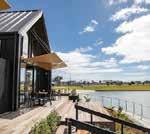
Then I looked up toward the tiny house balcony and saw one of the women rise from her seat
and begin approaching.
A second later, another toddler stood on the balcony.
Relief crashed through me again. Then another thought arrived.
“Three?”
By then my brain was running faster than reality. Every new thing I saw reopened the horror before the last relief had even settled.
But her mum was coming, completely unaware of the hell unfolding inside my head. Can they see all their kids? F…! Is there two? Or three?
With weakened knees I step from the sheltered seat of the cab and scoop the little girl into my arms.
As her mother arrives, I wrap them both in a hug, not yet willing to let her see beneath the truck.
At first she doesn’t understand why I’m holding them so tightly.
Then we pull apart and she sees the tear in my eye, wondering what had put it there, and together we turn toward the truck.
Beneath my truck sat only the little tricycle, and with it, my undeniable escape from Hell. Thank you for your time. Writing as: Iant Telling”
RISKING WHAT WE VALUE
This is a very impactful account. First of all the writer is brave enough to share his fallibility and the terror he felt that could have been a lifetime of inconsolable grief and regret. He thought he had accidentally run over a child.
It highlights that intrinsic humanity that resides in the psyche of our society – the value of human life is paramount. That value dwarfs the possession of things; at our best –everything we own.
Of course, in our everyday rela-




Tours and B&B
866 5343
STAR and SPACE STATION GAZING IN 2026 – your guide to the night sky
Tues. 23 June: Jupiter has now moved to be just above faint Mercury with bright Venus well above in the western dusk sky. Wed. 24 June: There will be a Tiangong pass from 6:02pm in the west. Thurs. 25 June: There is a Tiangong pass from 6:39 in the west. Fri. 28 June: Jupiter and much fainter Mercury are at their closest at dusk today with much brighter Venus well above. Sat. 27 June: We have a Tiangong pass from 6:17 in the west. Sun. 28 June: We have a very low and short ISS pass from 6:28pm in the south. Mon. 29 June: There will be another low ISS pass from 5:42pm in the south. Tues. 30 June: Binoculars will show Mars and the Pleiades or Matariki at the closest they will be until 2038 at predawn very low down in the east. Full Moon tonight with the Moon at its
furthest point from us so will appear about 7% smaller than usual for a Full Moon. From 6:29pm in the SW we have a good ISS pass. The early evening sky still has brilliant Venus continuing to rise higher each night in the NW. It is now unmistakable around dusk while fainter Jupiter has sunk ever lower with even fainter Mercury just below it. Venus currently appears as a half disk in a small telescope as it moves on its seven month journey around the Sun.
The predawn sky has faint Saturn high overhead and fainter but slightly reddish Mars just above the horizon. It sits just to the left of the slightly brighter red giant star Antares while the Pleiades or Matariki sit just below the red planet.
tionships and dealings, it can be hardly evident but when it comes down to life and death, I have found that empathy, compassion and kindness remain the bedrock of our society. It hasn’t always been our history; but it is there for everyone to choose.
I am finding the matter of what shape our new local government will take, demanding and consuming. There are many in the same boat.
The Informer is committed to engaging you by providing information and the opinions of experience and knowledge from others; but also to reassure you that you have the right to claim a role by voicing your hopes and ideas. In the long run, a resourceful and empowered local community will endure and thrive. A dependent, disengaged one will not own its future, Complaining
It’s winter. Your advertising with us will help your business and help The Informer report all the news and events in Mercury Bay and the Peninsula. Especially at this time, the Local Government Reform challenge. Contact info@theinformer.co.nz or sales@theinformer.co.nz 07 866 2090


Editorial/News: Contact Pauline Stewart, Editor/owner ph 027 271 6182 info@theinformer.co.nz
Advertising/advertorial in The Informer: Phone (07) 866 2090, Email sales@theinformer.co.nz
Letters to the Editor: 200 words or less please. Name and town of residence required. Email info@theinformer.co.nz
Published weekly. Distributed throughout the Coromandel Peninsula to Waihi. Readers’ contributions of articles and letters are welcome. Publication
will fade to disconnection and then a community dies and governing is not accountable. We do need to develop some of our natural resources and we also cannot keep the Peninsula to ourselves. We don’t own it; we are stewards and responsible to keep it pristine and beautiful but also enable its people to thrive economically, culturally and socially. There are risks to take for all of us to achieve this balance. The hardest risk is moving our ideologies closer to those whose stance we totally disagree with. However, our writer above reminds us of what and who are of the greatest value. I am an Australian in my heart –I won’t change that. However, I am very committed to helping build a Coromandel with a leaner government, thriving businesses, thriving education and contented industrious people. I think there are quite a few in that team.


BY LYNDA AND JOHN GRANT, CFM RADIO
Warren Male, known as Coromandel’s Mr Radio and to friends as the Maleman, died on Friday 12 June, a week before his 76th birthday.
For five decades his voice and vision defined local radio on the peninsula. At CFM he was more than a colleague – family, mentor, and the driving force behind the coast’s first station, Radio Sam, which launched from Pauanui’s shopping centre in summer 1977.
On Boxing Day 1990 the original Coromandel FM (CFM) began 24 hour broadcasting from three sites, and under Warren’s leadership it became a permanent full time station based in Thames, with transmitters across Paeroa to Coromandel town. His belief that the peninsula deserved its own voice turned a risky local venture into a lasting fixture.
He sold CFM to MediaWorks, which later rebranded it as Coromandel’s
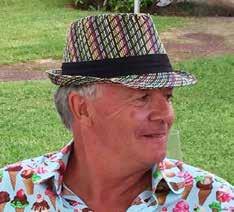
More FM. He also ran a popular summer promotional business that brought extra cheer to locals. In recent years he returned to CFM, handling campaigns, promotions and his summer business, while sharing his humor and drive. Everyone in local radio stands on the foundations he built. He is survived by his partner Angie Tailby. Their home is in Pauanui. His influence continues to shape the industry today. He will be remembered for his generosity and spirit.
“MRS JOHNSON FROM INVERCARGILL” A PERSONAL STORY ABOUT MY FRIEND WARREN MALE
BY SHAUN FAY
We met in Hamilton in 1978 at Radio Waikato, broadcasting from London Street. I was working in creative, Warren was on air, the drive shift 4 to 7. It was the early days of private radio in New Zealand, and it was exciting to be at the dawn of an industry. Each city had its own private radio station. Radio Windy, Avon, Otago, Hauraki and the NZBC was also getting its act together. Warren loved it. And for a young country kid from Canterbury, the drive show with Warren was cutting edge. He was so professional, tall, good looking with colourful clothes. Of course, it ran in the family, his brother Kevin Male founded Route 66.
As a junior I would wander into the studio while Warren was on and we would have fun on air with lots of things, we wouldn’t get away with now. It was the early days of private radio, and it was all on. Outdoor broadcasts, huge competitions, car stickers.
Kiwis, Americans, Aussies on our radio stations. Warren was all over it - always ready to compare something be it Keymania or The Melbourne Cup, which is where Mrs Johnson from Invercargill comes in.
One Melbourne Cup he talked me onto being Mrs Johnson and he would be Selwyn Toogood and we were in ‘The Invercargill Town Hall’.
Selwyn (Warren): Hello listeners from The Invercargill Town Hall. Mrs Johnson from Invercargill to get you to LA, Air New Zealand, all expenses paid-where is it that ladies have curly hair?
Mrs Johnson: Um ah… um Fiji?
Selwyn: You’re in LA Mrs Johnson!!! Now, to get you to New York, flying Air New Zealand, all expenses paidwhat do cows have four of and women have two of?
Mrs Johnson: Um ah... legs?
Selwyn: You’re in New York Mrs Johnson! Now, London, Air New Zealand, all expenses paid. What were your exact words when you came out of the shower on your honeymoon night and
found your husband lying totally naked on the motel bed?
Mrs Johnson: oh gee ohhh… mmm….. that’s a hard one. Selwyn: You’re off to London, Mrs Johnson!!
The skit which we performed many times remains a huge highlight for me from our time together. The last 20 years we have rekindled our friendship with his Coromandel Radio and my bach in Whangamata. It’s been fun to reconnect, older, wiser, smarter. We would often just call each other for a chat and a Coromandel catch-up. In a world of people not taking calls, Warren would always take it or call straight back.
I’m going to miss those calls, Warren. Thanks for being part of my life.
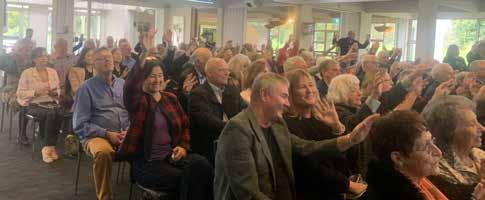
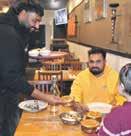
A big crowd turned out for Warren Male’s Memorial at the Pauanui Club on Sunday. A radio was set up on stage and friends and family shared stories. The club was full of colour, music and laughter with many people having travelled a long way to remember this icon of The Coromandel.













































BY PAULINE STEWART
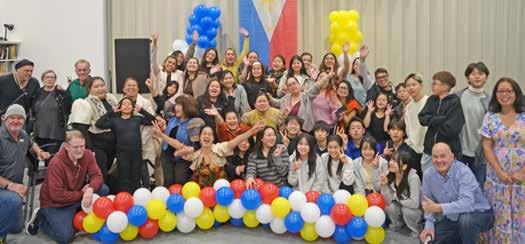
Every year the Filipino people on The Coromandel invite the wider community to share in their Independence Day celebrations. The event is always joyful, generous, colourful, informative and hospitable. And so are the Filipino people when you meet them through their work and in their homes. The Coromandel Peninsula is incredibly fortunate to have them - with a large community in and around Whitianga. Their desire to succeed, their hard work, their Christian faith which is practised by all of them, and their love for their country makes a real difference to this community and to the local economy.
This year, with not being able to be in the Whitianga Town Hall due to the renovations there, the

Filipino community organized a slightly smaller scale event at the Crossroads Church. It had all the characteristics of the larger annual celebration, however. Everyone enjoyed the smorgasbord of Filipino food and music. A highlight was an all-age Pacifica/Filipino dance that not only included Filipino dancers but local Pacific Islanders, Japanese students, and Māori.
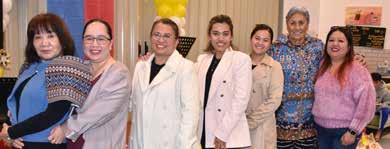
Jocelyn Mahmud, the Chair of the Filipino community organized some brief speeches, and the event team had a bountiful supply of raffle prizes. Thank you to Christopher Suson, Sonia Paris, and Mabel Murie. To everyone’s delight, the Crossroads’ large dining hall became a very swinging and full dance floor for several karaoke minutes with the energetic and spot-on tones of Alan Hopping
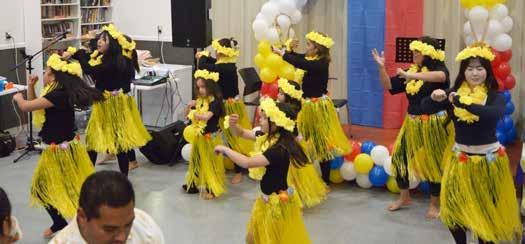
doing a vocalization of Chuck Berry. Alan, who is the creator of The Lost Spring could take on an extra ‘day job’ with his singing talent.
In 2027, Filipino Independence Day will be back in the Whitianga Town Hall.
A big thank you to the sponsors of this annual event as well as the many fund-raising goodwill occasions that the Filipino people hold to add to our community and to help the plight of their home villages back in the Philippines with the effects of natural disasters. Take a look at the poster on Page 12, News in Brief for their next event.
Sponsors: Paper Plus Whitianga, Greenstone, The Warehouse, The Lost Spring, The Coromandel Informer, Mercury Bay Builders, The Lost Spring, Marissa McLachlan.



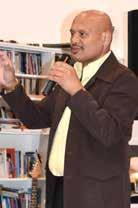


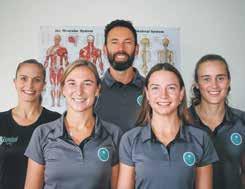





















Local boys Reice McKinnon and Jeter Reid are sixteen years old and have been given a once in a lifetime opportunity representing U17s Te iti Rearea Waikato Rugby League team.
In October 2026, Reice and Jeter will be heading on tour to Australia for two weeks to train alongside NRL clubs – Canterbury Bulldogs in Sydney and Brisbane Broncos in Brisbane.
As well as showcasing some of their talents against some of Australia’s best talent in highschools, they will be exposed to elite coaching professional facilities and NRL scouting. For two kids from Mercury Bay 1st XV plus Waikato League, this is their dream full of possibilities.
The cost of $2,800 for each of them for flights, accommodation plus gear is a goal they are striving for and with the help of our awesome community, family and friends, they are sure to make it happen.
Reice plays both codes for Mercury Bay 1st XV every Saturday plus Waikato League every Sunday travelling all over the Waikato and Bay of Plenty. He works hard and is a responsible and respectful young man to all who know him.

Reice’s background is on the world class podium in Kyokushian karate in Japan participating in the world championships. He also ranks in the top ten in Waka Ama Worlds Championships held in Hawaii in 2023. He is no stranger to resilience, commitment and determination.
Jeter is also a gold medalist in Jiu Jitsu in New Zealand wide competitions representing Toa Martial Arts Whitianga.
FUNDRAISING EVENT
The boys are holding a fundraiser on Saturday, 4 July at Woolworths 10:00am-3:00pm. Yummy food on sale.

As tough times roll around, Reice and Jeter are seeking for local businesses or organisations or individuals to sponsor them.
$250 – Supporter: $500 Gold Sponsor; $1,000 Major Sponsor
What supporters get:
1. Logo on their jerseys worn at Bulldogs and Broncos comps.
2. Shoutouts plus photos from Australia tagging your business.
3. Certificate plus thank you from Reice and Jeter.
Please email Ihipera Watene at charmcherishadore@gmail. com or Ph: 022 373 9707 if you can help to get two local kids to a pathway to NRL.



BY CHRISTINE LOWE
The New Zealand warriors have become so popular that every game held at Go Media Stadium in Auckland is completely Sold Out. 25,000 loyal fans attend every sell-out game. Locally, 6 Warriors fans from Whitianga travel to Auckland to watch the WAHS at most of their home games.
FAMILY FAN CLUB
Max Bromley from Auckland and his two daughters, Winne and Frankie are also part of the Warriors Fan Club. Both girls have grandparents in Whitianga and Frankie is quite often heard yelling at the TV, “Up the WAHS!”


By Ananda Laberge

We are living in an age of unprecedented convenience. With a few taps on a screen, we can have groceries delivered to our door, adjust our home’s temperature without leaving the couch, and distract ourselves from boredom with an endless feed of curated content. Comfort has become the default setting of modern existence. Yet, in our pursuit of a seamless, friction-free life, we may be inadvertently stifling a critical component of our humanity: our capacity for resilience.
I have been reading a great deal lately about the benefits of cold-water immersion. The literature is compelling, spanning from the physical – documented reductions in systemic inflammation and accelerated muscle recovery – to the profound mental shifts, specifically in the form of elevated mood and a buoyed spirit. It is a practice that turns the concept of "self-care" on its head, swapping a warm, bubbly bath for a shivering, teeth-chattering confrontation with reality.
Residing here in Whitianga, I am fortunate to have the Pacific Ocean as my backyard. As of today, the water temperature sits at a crisp 14 degrees Cel-


sius – a temperature that serves as a polite but firm reminder that nature is not designed for human comfort. I grew up in cold water, having spent my youth as an ocean swimmer and a beach lifeguard on the rugged coast of California. I was accustomed to the sting of the Pacific, the way it wakes up every nerve ending in your body before you’ve even fully submerged. But getting in it now, as a matured adult? That is a different psychological hurdle entirely.
I have been part of a casual ocean swimming group here in town for some time, but I had long ago resigned myself to being a "summer swimmer." I treated the ocean like a seasonal amen-
ity, much like a restaurant with a patio that only opens when the weather is polite. Until recently, that is.
I began to realize that I was becoming too comfortable, perhaps even a little complacent. There is a quiet, dangerous erosion of spirit that happens when we never challenge our boundaries. We settle into routines that make our days predictable and our minds stagnant. I started to wonder: Would a literal shock of cold water act as a catalyst for a broader, metaphorical awakening? It turns out that the intuition behind this "shock to the system" is supported by more than just anecdotal bravery. There is a growing body of data sug-
gesting that breaking the status quo is essential for neuroplasticity. When we force ourselves to engage in an uncomfortable activity, we aren't just enduring a moment of stress; we are actively helping our brains forge new neural pathways. By voluntarily stepping into a situation that signals "danger" to our primitive brainlike 14-degree water - we compel our nervous system to recalibrate. We move from a state of passive existence to active, high-alert engagement.
This is the art of discomfort. It is the conscious decision to introduce friction into our lives to prevent the rust of complacency from setting in.
When you walk toward that shoreline in the middle of winter, your brain will scream at you to stop. It will present every logical reason why staying in your warm, dry clothes is the superior option. That internal dialogue is the most important part of the process. Ignoring that voice - not because you are reckless, but because you are intentional – is where character is built.
The moment you submerge, the world shrinks. All the anxieties about life, the looming to-do lists, and the trivial stresses of the dig-
ital world vanish, replaced by the singular, overwhelming necessity of breathing through the cold. In that state, you are entirely present. You are not "doing" a task; you are existing in the absolute sharp edge of the "now."
Emerging from the water, you feel a clarity that no cup of coffee can replicate. It is a biological cocktail of endorphins and adrenaline, a reminder that your body is capable of adapting to conditions that it originally labelled as unbearable.
We don't need to live in a state of perpetual struggle, but we do need the occasional jolt. Whether it is a cold plunge, learning a new skill that makes you feel clumsy, or stepping into a social situation that challenges your perspective, seeking out discomfort is an act of defiance against the slow fade of middle-age complacency.
So, I’ll be at the beach tomorrow. The water will still be 14 degrees. It will still be cold, and I will still shiver. But I have realized that the shivering isn't something to be avoided; it is the feeling of my comfort zone expanding. And in that expansion, I find a little more of myself.
Feel free to reach out to me at: ananda.laberge@gmail.com
BEDROOM VILLAS AND 1 BEDROOM APARTMENT

Phone us to view by appointment!
Come and experience the difference!
Living the lifestyle, loving the choice... ALL ENQUIRIES WELCOME, VIEW OUR VILLA AND APARTMENT OPTIONS TODAY! 82 Richmond St, Thames Phone 0800 868 5484 richmondvillas.co.nz
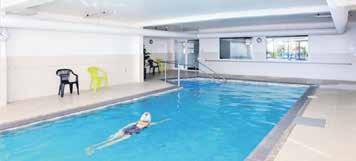
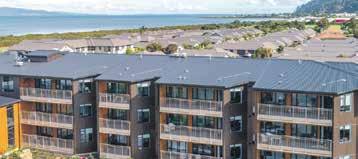
All villas and apartments are within walking distance to Thames’ shops, cafes, and walkways. The perfect location to enjoy your fun-filled retirement. Our open plan, single level apartments feature covered balconies with fantastic views of the sea, Kauaeranga River and mountains. Each unit’s elegantly finished kitchen, lounge, bedroom and bathroom offer stylish warmth and light. All residents enjoy scenic views from each level’s shared lounges, use of the Village Community Lodge and participation in all activities and amenities at your leisure








If you are thinking of selling, be sure to call Arizto Real Estate as we will save you thousands of dollars. Guaranteed.
When you sign up with Arizto Real Estate Whitianga to sell your home, you secure our vendor package that will let you keep thousands in your pocket.
2%+GST Commission* is our standard rate, not a deal, not a special. What does this mean in real dollar terms?
$650,000
$850,000
$950,000
$1,000,000
$1,500,000
$13,000 +GST
$17,000 +GST
$19,000 +GST
$20,000 +GST
$30,000 +GST
• Trade Me Platinum (payable ONLY upon sale)
• FREE professional photography
• FREE professional drone and video
• FREE floorplan
• FREE For Sale sign, the biggest in town.
• NO fixed term contract, cancel at any time
• No sale, No fee.
Call us for a free market appraisal. You’ll be very pleased you did.
Trail enthusiasts are set to get a one-off chance to explore an under-construction section of the Tairua River Trail along the north bank of the river.
The open day, from 10am to midday on Saturday 4 July, will offer cyclists a peak at just under 2km of new trail between Tanners Farm and the Tairua River, while building work is paused for the winter. It’s part of a 2.7km section that organisers hope to have fully open to the public this summer.
The open day is free but donations to the trail’s ongoing construction are welcome. There’s no need to register ahead of time but those planning to go can help give organisers an indication of numbers by clicking “attending” on the open day Facebook page.
Hikuai District Trust Chair Derrick Adams encourages locals from both sides of the river to get on their bikes and check out what the great team of volunteers have built over the past year.
“The north bank trail is coming along really well and built to a high standard, and it’s exciting to see progress toward Tairua continuing,” Mr Adams says.
“The open day will also be a chance for riders to ride down-
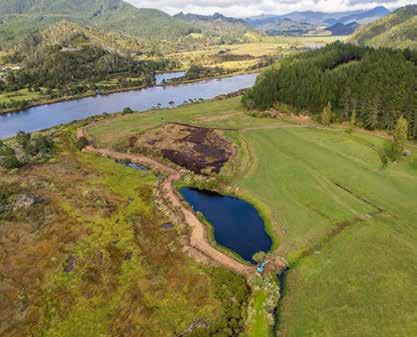
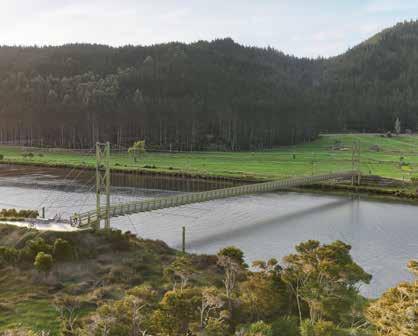
stream to the site of a future 120metre suspension bridge across the Tairua River that will link to the south bank trail on the other side. Depending on funding, we hope to start building that bridge this summer.”
Once this 2.7km section is open, and the bridge is built, attention will turn to completing several more kilometres of trail
and boardwalk sections heading downstream to Tairua School, from where walkers and cyclists will be able to continue into the heart of Tairua on local roads and paths.
“We have real momentum to complete the trail and the public support continues to be amazing, including nearly $24,000 raised at a recent Great Gatsby-themed
fundraiser at Puka Park in Pauanui,” Mr Adams says. Those interested in attending the open day can learn more by visiting the Tairua River Trail Facebook page.
DIRECTIONS:
Access is via the Tanners Sawmill carpark at 2994 Tairua Road. Turn off from SH25 towards the
carpark and look out for marshals who will show you where to park. You will then be guided to the starting point of the trail. Please note trail access is via a private, working farm –please stick to the access route and do not attempt to get there on your own. Unfortunately dogs are not welcome on this day.






























BY VERNA CARR
atariki — the Māori New Year, heralded by the rising of the Pleiades star cluster in the pre-dawn sky is celebrated across New Zealand with a public holiday on 10 July It is one of the most profound events in the Māori calendar: a time of remembrance for those who have passed, of celebration with whānau and community, and of setting intentions for the year ahead.
The nine stars of particular significance - among them Matariki herself (health and wellbeing), Hiwa-i-te-rangi (aspirations), and Pōhutukawa (connection to those no longer with us) - have guided Māori through the rhythms of seasons and sky for centuries.
On 21 June, the southern hemi-

sphere observed the Winter Solstice - the shortest day and longest night of the year. In the Northern Hemisphere, where winter is genuinely brutal, the solstice falls in mid-December,
PAUANUI’S MATARIKI BONFIRE FRIDAY 10 JULY
All are welcome to The annual Pauanui Volunteer Fire Brigade Matariki Bonfire held at the South End Reserve. This event kicks off in the early evening around 5:00 PM to 5:30 PM, bringing the local community together for a fun evening of fire, food, and celestial celebration.
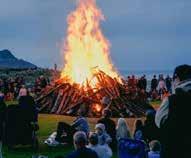
close to Christmas. It is celebrated as the moment the darkness has peaked and the light is finally on its way back. Hope. Rebirth. The cyclical resilience of life.
Here in New Zealand, we put
on an extra jumper, buy a hot water bottle with a knitted cover, and call it character building. We debut our matching jacket, scarf and beanie with a brisk walk along the beach - still warm enough 9 for some) for bare feet or jandals. We tell our overseas friends it’s been snowing. Technically true, if you count the frost on the car windscreen at 7.00am. We scrape it off, call it “bracing,” and feel quietly heroic for the rest of the day.
Winter also gives us permission to cancel plans because “it’s a bit cold out.” To order the extra latte. To cuddle on the couch with the heat pump humming; read the book that’s been sitting on the nightstand; eat soup and watch a long film in a onesie or comfy pyjamas.
The Winter Solstice marks half-
time. Half the year is gone. Matariki and the solstice carry the same ancient message in different languages.
The stars of Matariki were read by Māori navigators, farmers and communities as signs of the season ahead: a bright Tupuānuku promised a good harvest from the ground; Ururangi spoke to the winds to come. Matariki was a time to give thanks to land and sea, to honour those who had passed – their spirits carried to the heavens by the stars themselves - and to set intentions for the year ahead alongside the returning light.
The darkness has peaked. The light is returning. The second half begins. And somewhere up there, Hiwa-i-te-rangi – the wishing star, the star of aspirations – is watching to see what you do with it.
Make sure you mark 10 July in your calendar for the Matariki Festival happening in Kūaotunu. An opportunity for the community to come together to celebrate the Māori new year – Te Toi o Matariki.
6AM - HAUTAPU CEREMONY COMMUNITY CELEBRATION AT DAWN Gather at 5:45am for 6am start on Kūaotunu Reserve




(opp. Luke’s Kitchen). To finish when the sun has risen (7.29am sunrise).
9AM - EXHIBITION OPENING AT KŪAOTUNU HALL, ALL WELCOME
Nine local artists have created artwork around each of the Matariki stars. Art show running through the weekend, 10 to 12 July.
10AM - 4PM WĀNANGA RUNNING IN THE GARDEN OF THE HALL
Demonstrations of harakeke, uku (clay), korero around kaitiakitanga.
6PM (TIME TBC) - BONFIRE KŪAOTUNU BOAT RAMP BYO guitar and marshmellows. Supported by: Creative Coromandel – He Mana Toi Moehau Trust and Coromind.




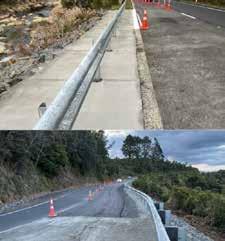
A big shout out to our contractors who last week completed the various storm recovery works at SH25 Pumpkin Hill and SH2 Karangahake Gorge.
There were initially 8 repair sites at Pumpkin Hill, just north of Tairua, and the team has been chipping away to reduce the length of the lane closure and stop/go traffic management.
Contractors at Karangahake Gorge also packed up by the end of last week. All 9 initial flood recovery sites are complete, as well as the 5 additional sites needing stabilisation.
Thanks for your patience on both these jobs where the roads have been kept open during the repairs, using lane closures and stop/go.
Meanwhile, the retaining wall protection work in Karangahake Gorge, requiring a daytime closure, has been delayed until suitable weather and river flows. This may not be completed until next summer.
A couple who live on the Coromandel Peninsula are Lotto NZ’s latest Powerball winners, scoring themselves a sweet $4.5 million earlier this month.
The couple, who wish to remain anonymous, are regular players who buy a
Triple Dip ticket.
“I was in the shop in Thames when I noticed they had about six first division trophies on the shelf.
“I asked the woman if they were genuine, and she said they were and that they had sold a few first
division tickets over the years.
“So I said, ‘Well you’d better give me a ticket then!’”
It’s taking the couple a while to come to terms with their win, but they say the future now looks very different.

Alan Proctor has resigned from his role as Manager of the Mercury Bay Club and in mid-July will be taking up the Manager role at the Mercury Bay Game Fishing Club, the club where he was previously manager.
From Alan: “This year we will have a new President (Doug Pascoe) and a new Committee member (Hayley Tukiri) – welcome aboard! Whilst I won’t get the opportunity to work closely with these people, Club members should feel confident that the Club is in good hands and heading on the right track. I genuinely appreciate the support I have had from both the Committee and Staff, and I wish the Mercury Bay Club all the best in the years to come.”
For the winter months Gallery 6 members are enjoying the experience of sharing their space with locals artists this month their guest is Amelia Smith.
“I am delighted to be asked to be the July Guest Artist at the wonderful Gallery 6 in Coromandel. “I began my art journey when I moved to Coromandel Town 6 years ago and have mainly focused on my painting alongside some sculpture and pottery work to satisfy my need for exploring my ideas and experimenting with the potential of mediums, textures and designs.
“I am inspired by the subtle shifts in nature’s colours, light, surfaces and textures and I let my materials guide each piece, balancing my intentions with unpredictability. My work is largely abstract however organic forms often emerge which I hope creates an intrigue and individuality to each piece.
Come in to Gallery 6 to view all the stunning works on display and I hope you will find interest in my selected works.

You are also welcome to follow my Instagram page @ameliasmithstudio Gallery hours: 10.00am to 2.00pm Friday, Saturday, Sunday, Monday. Facebook page Gallery6. Coromandel. After hours contact 027 777 1572
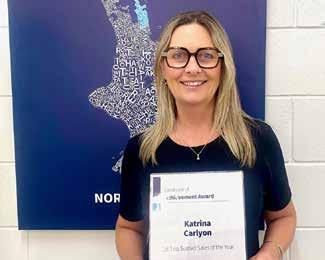
Local Real Estate agent, Katrina Carlyon of Harcourts, recently received the Whitianga Certificate of Achievement Award for achieving first place as Top Settled Sales Agent for Harcourts across Mercury Bay, Tairua, Cooks Beach and the Coromandel region for the 25-26 year.
Katrina is a long standing local resident working in Real Estate for over twenty years and deserves our congratulations as does the Harcourts Whitianga office.
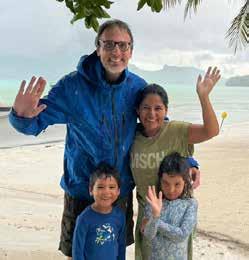
Mercury Bay says farewell and thank you to Dr Alexis Molha and his wife Noellia and their children Nina and Louis. After three years of being a part of our community and both parents providing excellent care and service in the medical field, Dr, Alexis and family are off to Canada to take up a new appointment.
From the time they arrived, all the family came to many social functions to meet people and as a doctor, Alexis went the extra mile so many times for people who needed his care and assurance.
The Informer spoke briefly to Alexis and he shared how much they loved their time here and hoped to return not only for a holiday but perhaps to live her again.
Continued from front page
THIS INFORMATION IS FROM THE DOCUMENT RELEASED BY TCDC ON FRIDAY 19 JUNE
RATIFIED TUESDAY 23 JUNE
It is not the complete information available from TCDC. It is all the space available in The Informer.
OPTION ONE
10 Councils
Population 530,000, 230,000 rating units
Existing rates $960m
Potential Opportunities
This option aligns with the Government’s Head Start guidance that the simplest option is for all territorial authorities in a region form a single unitary authority, potentially simplifying decision-making.
Supports a stable and coordinated planning process across the whole region which makes planning more streamlined and efficient.
We already know that regional functions such as flood management, natural resources and pest/plant control are efficient at this scale.
Builds on operations, processes and service delivery that already exist.
Potential challenges
A large city will have different priorities and challenges to those of the provincial and rural councils and the balancing of the two may be difficult.
Ensuring local voices are heard – especially across such a large
area.
The area covers many river catchments.
The Waikato region is complex and diverse and this option may be difficult to reach agreement on structure in time for the 2028 elections.
OPTION TWO
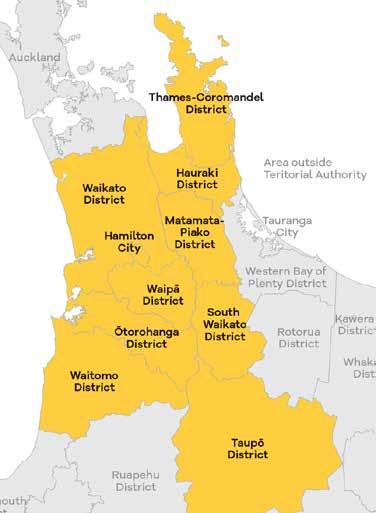
4 Councils (part Hauraki)
Population 256,000 116,000 rating units
Existing rates $546m
Potential opportunities
Each council in this option brings scale and supports stronger regional functions and services. These councils share similar coastal communities of interest and tourism and marine-based industry are important economic drivers.
Our Local Waters Done Well direction aligns with this grouping.
Potential challenges
This option does not align with existing regional council bound-
aries which results in potential complexity for delivering against the proposed new planning systems.
City priorities and challenges can be very different from those faced by provincial and rural communities.
There is some fragmentation of catchments meaning the management of some natural waterways would need to be shared across boundaries.
4 Councils
Population 120,000
66,000 rating units
Existing rates $260m
Potential opportunities
These councils have a history of working together.
This option aligns well with water catchments and the model can support regional spatial planning and coordination – even though it only covers part of the regional spatial plan area.
With almost 120,000 population it is sufficiently large to create efficiencies.
Potential challenges
We will need to ensure individual local communities are given a real voice. Other governance arrangements would be required for regional functions such as roading and planning.
PROVIDING FEEDBACK -
CLOSING DATE IS 15 JULY
”Our first opportunity to hear from you was via the survey we sent out - asking for what you want to see in any local govern-
ment reform process. The full survey summary can be viewed on the TCDC website.
Our second opportunity to hear from you is via the three options and additional information.
Provide feedback now via the TCDC website or by picking up a form at our services centres and libraries, or by calling Customer Services team on 07 868 0200.
Social media comments will also be considered and summarised, but cannot all be formally reported to Council.
WHAT YOU HAVE TOLD US SO FAR - THE KEY POINTS YOU RAISED:
(We received 527 responses to our Simplifying Local Government community survey.)
• 70% named rates control as a priority for any new council and nearly 50% listed rates affordability as a top concern
• Losing local representation (53%) and decisions being made further away (49%) were the two most-ticked concerns
• People want real simplification (not another layer of bureaucracy) and clearer, more transparent decisions.
• People favour partnering with councils of similar size, character and coastal geography and want to avoid taking on others’ debt or being absorbed by a big inland or urban council
• 50% split between keeping council to core services and wanting council to have an active role in wellbeing, arts and the environment
• Most who raised Māori involve-
ment supported strong iwi relationships and upholding Treaty arrangements
• Only small numbers were firmly for or against change
– most focused on how to ‘do reform well’
Your views have been included in the final weightings we gave the Government’s criteria for proposals.
GOVERNMENT’S CRITERIA FOR ASSESSMENT - USED TO JUDGE WHETHER A PROPOSAL IS VIABLE OR NOT
1. Deliverability
2. Supports the new planning system: – includes progress on spatial and natural environment plan development – and avoids or minimises disruption to that work.
3. Simplifies local governance: More efficient regional governance arrangements…
4. Economies of scale Supports regional strategic planning and effective delivery of key regional functions (such as transport and catchment management) and demonstrates asset management, infrastructure investment and service delivery.
5. Maintains local voice: Demonstrates fair and effective representation for communities of interest and how decisions will be made at the local level, balancing urban and rural interests.

Comparing existing rates, expenses, staff costs and debt.
BY DIRK SIELING
TCDC has presented 3 options for Council amalgamations.
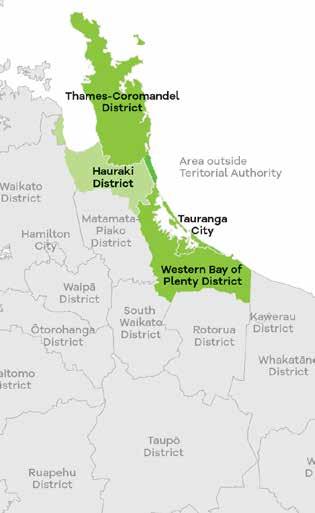
The choices and wording suggests to me that the working group leans to Option 3 including Hauraki, Matamata-Piako and South Waikato with Option 2 the next favourite which includes Hauraki, Western Bay of Plenty and Tauranga. Unfortunately there is little financial context to assist in choosing. Below are some financial comparisons for those 2 options. I have included Hamilton for interest's sake. Let's look at residential rates first. It would seem at first glance that if rates were averaged out in an amalgamation TCDC ratepayers could benefit under both options as they have the highest rates:
COUNCIL FINANCIAL
COMPARISON SUMMARY
(2026 RATEPAYERS' DATA)
1. Average Annual Residential Rates Bill
• Thames-Coromandel (TCDC): $4,932.60 per year (~$75.46 per week)
• Tauranga City Council:
$4,534.04 per year
• Matamata-Piako District Council: $4,313.81 per year
• Hamilton City Council:
$4,193.57 per year
• Hauraki District Council: $4,087.11 per year
• South Waikato District Council:
$3,736.34 per year
• Western Bay of Plenty District Council: $3,234.00 per year
However, when we look at debt per household the picture darkens considerably. TCDCs relatively light debt burden would
increase under all the options. Only Western Bay of Plenty has lower debt per household. Any option would have to involve Hauraki complete with its relatively high debt. Option 2 involving Tauranga would increase the debt burden even more:
2. Average Debt Burden per Household
• Tauranga City Council:
$22,857.23 per household
• Hamilton City Council:
$18,058.13 per household
• Hauraki District Council:
$14,392.85 per household
• Matamata-Piako District Council: $5,606.12 per household
• South Waikato District Council:
$5,044.39 per household
• Thames-Coromandel (TCDC):
$3,391.85 per household
• Western Bay of Plenty District Council: $3,274.00 per household
Now let's turn to costs of staff including external contractors. Again the cities appear the least cost effective:
3. Combined Manpower Cost per Household (Internal Staff + External Contractors/Consultants)
• Tauranga City Council:
$2,572.93 (Staff: $2,046.93 | Contractors: $526.00)
• Hamilton City Council:
$2,530.14 (Staff: $1,955.14 | Contractors: $575.00)
• Thames-Coromandel (TCDC):
$2,398.09 (Staff: $985.09 | Contractors: $1,413.00)
• Hauraki District Council:
$2,272.69+ (Staff-heavy model)
• Matamata-Piako District Council: $1,787.82+ (Staff-heavy model)
• South Waikato District Council:
$1,652.95+ (Staff-heavy model)
• Note: Western Bay of Plenty District Council (WBoP) did not provide complete data for the staffing breakdown.
WHERE WILL OUR VOICE BE STRONGEST?
There are other factors to consider as well. Under Option 3 TCDC would have a stronger voice. Option 2 means all amalgamating Councils would be coastal regions with a continual coastline from the Bay of Plenty to the Firth of Thames. A very relevant issue to consider is the willing-
ness of other Councils to buy into any of these options. An Option 4 including Hauraki and Western Bay of Plenty with optionally Matamata-Piako and possibly South Waikato would be very attractive in terms of location and commonality of economic activity as well as make good financial sense. But undoubtedly Tauranga will have its eyes on Western Bay of Plenty or at least the greater part of it. WBoP has choices to make but to date has shown limited interest in its northern neighbours. Then of course there is Option 1 – creating a Super Council based on the current Waikato Regional Council boundaries. Such an entity would be powerful and have considerable leverage with the central government. In theory it could achieve good efficiencies. The big challenge would be to ensure that our local voice carries enough weight around the table. It is up to TCDC to provide more context. I haven't made up my mind, have you?
From the Editor: This opinion was sought by The Informer
BY GEOFFREY ROBINSON
As the saying goes, better late than never. After seven weeks of virtual silence on the biggest issue to face local government in decades, and while neighbouring councils have been advancing their own agendas, Thames-Coromandel District Council has put forward three options for council amalgamation, asking for public feedback as they work toward a final decision on which plan – if any –to put to the government by a 9 August deadline.
But while TCDC goes through the motions of public engagement, the question of whether any of the three will emerge as a net positive for Coromandel communities depends on the degree to which clear-eyed analysis and raw political skills can be brought to bear in negotiations with potential partners in the coming weeks.
The three options approved last week for further consideration are no surprise:
1) “GREATER WAIKATO” 10-council supercity.
2) “NORTH BAY OF PLENTY” Down the east coast to Tauranga.
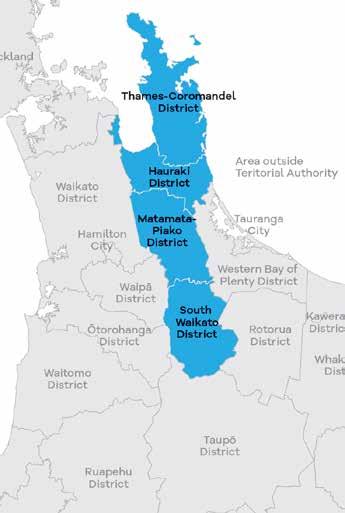
3) “EAST WAIKATO”
With the three Hauraki Plains districts.
The supercity scenario is little more than a straw man option, included on most councils’ short lists to demonstrate an open mind toward big amalgamations, but completely lacking public and local authority support. If a favoured proposal does eventuate, it will be based on option 2 or 3.
As explained by one member of Council’s working group, defining the borders of a proposed unitary authority is just the starting point.
Whether either proposed grouping is ultimately acceptable to TCDC for submission to the government depends on whether, and to what degree, district interests are met through negotiations with neighbouring councils. The most important question is power apportionment (by population, by rating units, by total capital valuation or otherwise). Further issues include how rural and urban interests are balanced, council structure, local and much more. TCDC negotiator(s) will finalise an extensive list of due diligence items and then enter into discussions shortly with leadership of potential partner councils in both proposed configurations. If a preferred option is negotiated that would provide broad benefits to district communities and mitigate downstream risks, TCDC would put that plan forward.
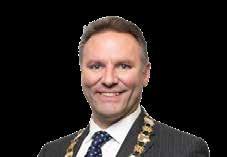
The “East Waikato” option comprising Hauraki, Matamata-Piako, South Waikato, and Thames-Coromandel districts is the top choice of HDC and its Mayor Toby Adams and likely to be put forward in some form, with or without the agreement of TCDC. But there will be issues before TCDC signs on – first and foremost being apportionment of power. Thames-Coromandel represents only 27% of the four-council population, but based on rating units the Coromandel represents a commanding 43.6% of the group. Allocation of leadership seats will be subject to negotiation. And what about local decision-making – a big priority on the peninsula? HDC has done away with community boards completely, and Adams has made it clear he has no interest whatsoever in reestablishing them in any new unitary council.
Hauraki goes even further, keeping the “great unwashed” at arm’s length.
Unlike most neighbouring districts, Hauraki council meetings do not include a public forum – considered by many to be the cornerstone of basic public participation. Instead, Adams hosts an annual meeting in each of his three wards, with updates by staff and a Q&A period providing short answers to previously submitted queries on potholes and footpaths (as the minutes attest), plus a few bonus questions allowed from the floor. Adams also hosts a brief annual meet-and-greet for the Whiritoa community. Whether and how the public is afforded the opportunity to participate in a new unitary council will again be subject to negotiation.
AN EAST COAST UNITARY: ARE THERE WILLING PARTNERS?
As for TCDC’s “North BOP” option, whether a co-sponsor council (either Western Bay of Plenty or Tauranga City) will emerge is again going to depend on negotiations – TCDC cannot submit any plan by itself. Hauraki Mayor Adams, whose district would be partially included (Whiritoa), has already indicated he will actively oppose any plan that would take a bite out of his district (see page 15).
While the Coromandel may be attractive to Bay councils from a rating perspective, it is not part of the natural Tauranga urban catchment.
Back on June 10, TCDC Mayor Peter Revell stunned his Council and peninsula residents with a surprise pilgrimage to Rotorua to attend the Bay of Plenty Mayoral Forum, a regular meeting of that region’s mayors and regional council CEO. Although his own
initial survey of Coromandel residents’ priorities was still three days from completion, the mayor jumped the gun and asked BOP leaders to consider two big amalgamation options – a merger of Thames-Coromandel with the entire Bay of Plenty Region minus Taupo, or a “coastal” grouping extending east through Ōpōtiki.
The Mayor’s embarrassing speed-dating “pitch”, as reported by the Rotorua Daily Post, included a cringeworthy “I Heart BOP” screen slide. Both of Revell’s BOP proposals wound up on the TCDC cutting room floor last week.
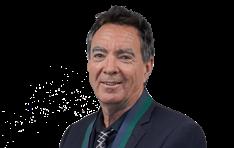
Revell leaves this week for a month-long trip overseas. Negotiations during this next critical period will fall to Deputy Mayor
John Grant, very likely with strong support from Mercury Bay Cr Flemming Rasmussen.
THERE’S
After all is said and done, if the best possible deals with neighbouring councils fail to adequately protect the interests of Coromandel ratepayers and provide tangible benefits, there is still another option for TCDC councillors – do not submit a plan on August 9, roll the dice, and press ministers for a bespoke solution that will meet government simplification objectives and work for the district.
For years, Coromandel residents and many of their representatives have favored a standalone
unitary council for the Peninsula. Preliminary analysis has shown a Coromandel Council would be financially viable, providing both district and regional services with the rates available.
In 2025-26, district ratepayers paid more than $19.2 million to Waikato Regional Council, including over $2.5 million for Waihou River catchment management. That would be enough to handle pest control, water quality, civil defense, and harbour management with a few dollars to spare. Should the government change or the re-organisation process be revised – or TCDC leadership be sufficiently persuasive – a Coromandel unitary council could once again be on the table.
I’m thrilled that the Government’s Budget is delivering more classrooms for schools in the Coromandel electorate.
Education Minister Erica Stanford has announced that two new classrooms will be built at both Katikati Primary School and Paeroa College. I had an opportunity to visit the schools and to speak with the Principals about the new funding and what it means for them and their students. These classrooms will ensure students are learning in safe, warm, dry and fit-for-purpose classrooms.
This is part of a wider programme which will see the redevelopment of up to 10 schools and the delivery of up to 232 new classrooms across New Zealand. Our Government is committed to fixing the school property system that was nearing a crisis point when we came into office. We have turned this around by reducing the cost of building new classrooms through offsite manufacturing and have now reached a milestone with nearly 1400 new classrooms funded since we were elected.
This is about investing in students, backing communities, and making sure school property is fit for the future.
I also attended the Fieldays event at Mystery Creek which was a terrific showcase of the innovation that is taking place in the primary sector, which is


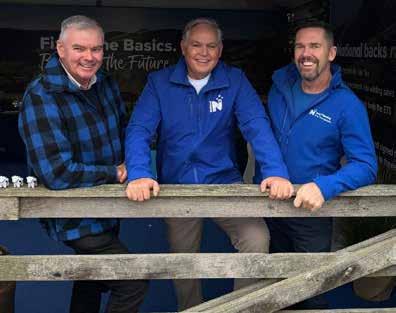
being driven by hardworking, passionate New Zealanders.
Whether it’s in agriculture or horticulture, our region is home to so many people who are making their mark in the primary sector. It’s always a pleasure to catch up with local farmers, growers and all those connected to these industries.
Talking with the men and women who are on the ground is a great opportunity to hear about the present and future state of the sector, and it only takes a few moments with these people to understand that they passionate about what they do each and every day.
The Government recognises
the importance of the primary sector. Over the last two years we’ve signed new trade deals, such as the India Free Trade Agreement, which creates more opportunities for Kiwi farmers and growers to sell their produce to the world. We’ve also removed agriculture from the ETS, disbanded He Waka Eke Noa, and we’re replacing the RMA with a new planning system to reduce costs and drive on-farm growth.
We’re committed to fixing the basics and building the future for rural New Zealand, because when our farmers and rural communities are doing well, all of New Zealand does well.

Interview with Toby Adams, Mayor of Hauraki District, TCDC’s closest neighbour.
As central government advances its nationwide local government reform, councils across the country are being asked to rethink how services, representation, and regional responsibilities will be restructured in the years ahead. The Informer spoke with Hauraki District Mayor Toby Adams (Friday 5 June), whose Hauraki District borders Thames-Coromandel and shares many community, economic, and environmental connections.
Mayor Adams says the goal is simple: give people a head start, give them options, and give them a voice
That is exactly what he has done as their survey had gone out with four options for Hauraki Plains residents to consider (see shaded box).
WHY HAURAKI MOVED EARLY
“We wanted to make sure we are part of the heads up. So as a council, we’ve come up with four options. With this, people can make a more informed response, and with their responses we’ll be able to design what our more detailed preferences for the future should be.”
He emphasises that the reform timeline set by central government is extremely tight. Getting options out early, he says, is essential to ensuring communities are not left behind. “The head start is important. With our preferences out there, we believe we can meet the objectives set by central government.
UNDERSTANDING LOCAL IDENTITY AND CATCHMENTS
A key part of Hauraki’s approach has been recognising how communities naturally connect.
“Our community knows where its catchment areas are, and that helps them respond to the survey. We have a strong affiliation with Waikato. We haven’t worked closely with Western Bay of Plenty, so they’re not part of the options.”
He notes that Thames–Coromandel District Council (TCDC) is Hauraki’s closest neighbour, and that Hauraki has already reached out to them.
”They (TCDC) are yet to offer their people some options. We share catchments, and they’re included in our preferences. We’re happy to work with anybody who shares our common interests and alignments. We’re more rural and developing than urban and industrial.”
THE ROLE OF REGIONAL COUNCILS
One of the biggest unknowns in the reform is how regional councils – such as the role of Waikato
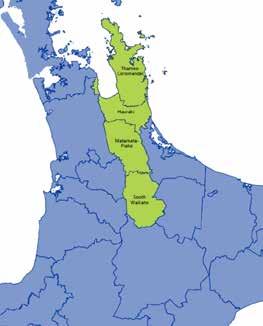
1. EASTERN WAIKATO UNITARY AUTHORITY:
Merging Hauraki with Matamata-Piako, South Waikato, and Thames-Coromandel districts. This option combines local councils into a single unitary authority that handles both district and regional responsibilities, sharing services like kerbside collection and civil defence.
Regional Council (WRC) – will fit into the new structure.
“We know what WRC does in our region, and now we need to work out what their role will be going forward. Flood protection is very important for Hauraki. We rely heavily on it, and WRC does a lot of work in that space. We may have to partner up in terms of flood protection, but that’s ahead of us.”
COMMUNITY CONCERNS AND THE NEED FOR CONNECTION
Across the district Mayor Toby says people are feeling uncertain.
“There’s a level of anxiety. People ask what is going to happen and what it will look like. I get those questions from other districts too.
“In some ways it doesn’t matter who does the detail – it’s the value of feeling connected to the process, feeling informed, and being able to have a say.
“The overarching question is: What will local democracy look like?”
REPRESENTATION: WHY HAURAKI PREFERS ITS CURRENT SYSTEM
Hauraki District no longer has Community Boards, and Adams is clear that Hauraki does not intend to bring them back under the new reform.
“Community Boards dis-
1 2 3
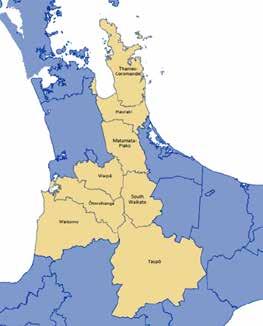
2. PROVINCIAL UNITARY AUTHORITY:
A broader expansion of the Eastern Waikato model. This would merge the aforementioned districts with Taupō, Waipa, Ōtorohanga, and Waitomo to create a larger, cohesive provincial council.
banded themselves in 1989, before my time. We have 13 ward based councillors – four from the Hauraki Plains, three from Paeroa, four from Waihi, and two Māori councillors. These councillors set budgets, and the decisions are made at council by these elected people who actually live in the wards affected.”
Mayor Toby believes this structure keeps decision making close to the people.
“There’s no second level of bureaucracy. Different wards have different needs at different times.
“With Community Boards, people aren’t as connected to the actual councillors. Our system gets decisions made more easily. There’s no mention of Community Boards in our preferences –we’d rather empower councillors to make decisions on behalf of their communities. I am speaking for Hauraki District.”
One recurring question is whether Waihi Beach – currently part of Western Bay of Plenty –might return to Hauraki.
“Waihi Beach has made an approach to Hauraki a number of times asking if they could come back.
“We would welcome them, but we don’t intend to split up different parts of our communities. It can be considered in options, and we welcome anyone who wants to work with us.”
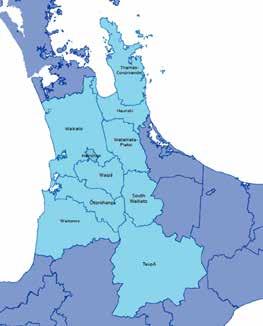
3. WAIKATO-WIDE UNITARY AUTHORITY:
A massive "mega-council" amalgamating all district, city, and regional councils across the entire Waikato region into a single entity. It has been reported that Hauraki and Matamata-Piako have already said they did not want to be a part of that.
4. NO CHANGE: Keeping the status quo.
Adams says he hopes the reform will reduce duplication and create clearer national standards.
“If we can eliminate some of that governance layer, it would really help better decision making. I’d also like central government to set national direction across regional councils. If you want a resource consent for a house in Hauraki, it should be the same process in the South Island. That saves layers of infrastructure and bureaucracy.”
He remains cautious about long term affordability. “I’m not yet convinced our rates can be sustained without rising, but with the right economy of scale, I believe they can be better managed.”
Water remains one of the most contentious parts of the reform.
“I think this government wanted fewer water entities than they’ve got. But in terms of doing water well, I don’t think we have to partner with everyone going forward.”
Above all, Adams wants residents to take part.
“A 70% response to the survey
would give us a very big steer. I know people are busy, but this is a huge issue. It’s as big as a change of government-and perhaps more long lasting.”
On Friday, 12 June, Mayor Peter Revell presented this pitch to Bay of Plenty Regional Council leadership and several other councils including Tauranga and Opotiki, even before the survey results had been gathered up from TCDC residents.
“The reality is we think we, more than anywhere else in the Waikato region, are a genuine option to be viewed as part of the Bay of Plenty.”
TCDC Mayor highlighted two scenarios – A “greater Bay of Plenty” option that includes current Bay of Plenty districts but not Taupo. The second was a “coastal option” stretching from the top of the Coromandel down to the Bay’s most eastern point. Both options would also include the coastal part of the Hauraki District.
Hauraki Mayor Toby Adams had this to say to The Informer. “I don’t have a view on TCDC’s option. I am not their Mayor; but we are not interested in having a conversation that splits up our community in any shape or form.”
Compare these options with those that have been sent out by TCDC – see page 13.
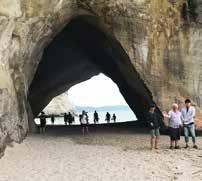
Hahei Residents & Ratepayers Association (HRRA) has made a submission to DOC to keep the Hahei Beach and Gems tone Bay tracks open through their Chair, John Jonassen. There is a great deal of local support for this including the Mercury Bay Business Association.
The Hahei Beach Track has enormous historical, cultural and educational significance to the Hahei Community. Some of the HRRA members have been walking this track since the 1970s in order to access Cathedral Cove and also Gemstone and Stingray Bays.
As recently as ten days ago, a number of members walked the track. It is important to note that since its closure, large numbers of people visitors and locals alike have continued to use the track. These members found that apart from one major slip near the bottom of the track, the track itself was in remarkably good condition. The infrastructure (steps and bridges) was carefully examined and also found to be in good condition - no damage or deteriora-
tion since all recent storm events (including Gabrielle). The HRRA acknowledges the longer- term land geotechnical risk along some of the cliff section of this track. They are committed to dialogue with DOC that listen to her point of view as to why DOC would should keep these tracks open. The wider community is mindful that this area was a gift to the people of New Zealand by the Harsant family. DOC does have a responsibility to consult with the local people before any high-handed decisions are made regarding usage, charging and closures. DOC is aware that con-
sultation and the good will of local people paramount to ongoing usage, access and availability of the track. This community is asking for wider support.
This submission is proposed as a way forward for discussion with DOC.
1. That the track remains open and under DOC management with a bypass included to avoid the major slip. We have identified two possible 'simple' bypass routes.
2. That DOC retain the existing infrastructure until the alternative track route bypassing the cliff section of the track (possibly modified to better align with major slip bypass route), as originally proposed by DOC, is constructed.
3. Should DOC decide to continue with a 'closure', then that closure should be limited until funds become available to undertake the cliff bypass route and that DOC notify on-line and on site that the track is no longer maintained by DOC and that persons
enter at their own risk.
4. That DOC agree to HRRA and the Hahei Reserves Group taking over the basic maintenance of the track including weed and pest control and that these groups fund and build the slip bypass steps. A simple MOA or MOU would be acceptable setting out the parties responsibilities etc. (After all ,this level of agreement s enough for Iran and the USA)
5. HRRA agree that access to Gemstone Bay and Stingray Bay is difficult and proposes that DOC also notify that these tracks are no longer maintained by DOC and that visitors enter at their own risk.
6. That the proposal to remove asphalt on the main track is not proceeded with. We believe that the cost of removal will be significant and the expected improvements of storm water management will not be realized; that the track will be less 'stable' to walk on and that the access for emergency services harder to extract any patient.
7. We contend by removing DOC's
responsibility for maintenance and by retaining the asphalt on the main track, considerable savings would be made which could be utilised for other works.”
“We note the weight of the response objecting to the proposed closures, in particular th e community's 'Don't close our Cathedral Cove tracks' Petition (currently 1270+ signatures) and the Mercury Bay Business Association's submission.” HRRA Chair Email: chair@haheirate payers.co.nz. Ph: 021 610 021
CORRECTION RE LAST WEEK’S ARTICLE RE’ HAHEI SPEAKS OUT ON DOC ACCESS CHARGING AND KEEPING TRACKS OPEN
The four areas being considered by central government for Access Charging for international visitors were listed as: Milford Sound, Tongaririo Crossing, Mount Taranaki, and Cathedral Cove
One correction needed – NOT Mount Taranaki but Aoraki, Mount Cook.
Editor
BY TREVOR AMMUNDSEN
There has been much political noise lately about two issues, one being the central government led amalgamation of local authorities and corresponding elimination of Regional Councils, and the other being the issue of the recent disempowerment of Community Boards within the TCDC. Both are related so should be considered together, which I will do; firstly, with the Community Board issue.
A Community Board has a statutory purpose to represent, advocate for and engage with its community. Its specific functions typically include submissions on the council’s long-term plan, advising the council on local concerns and carrying out specific powers delegated to them by Council. It is the changes to specific powers in the recent Accord which is central to the concerns raised by many. The previous situation was managed by a Terms of Reference that were described by former councillor Tony Fox in issue 1212 of The Informer. He explained that all District/Core functions funded by the district,
genuine non-core services, were to be managed locally by Community Boards.
Under this situation the Community Boards had authority over local matters but the problem, especially during the last council term, was they were not observed by the Council and ignored. Working with and communicating with council and staff became more difficult. A Whangamata Mayoral candidate, Patrick Kerr, recently confirmed in a letter to the Informer (Issue 1212) that he “campaigned for Boards to receive up to 5% of the district rate take” to address this issue. He obviously understood the funding issue.
Funding for TCDC communities appears to be totally wrong. The number of residents on the eastern coast is 55% of the total to 45% on the west coast. However, the rates burden is totally out of kilter with 75% of rates being extracted from the east coast. This leaves the east coast paying $13,931 per resident per year to the west coast’s $3,638. Despite this imbalance, capital expenditure budgets in the latest longterm plan swings the other way;
59% to the west coast with only 41% to the east coast. Something appears to be wrong and this is behind much of the current dissent.
To address the problem of communications an Accord was submitted for Council consideration which sought to improve communications between Community Boards and Council but also removed the previous authority given to CBs. This was described by one correspondent as trading in a Ferrari for a skateboard. One Mercury Bay councillor, John Grant, supported the Accord, writing in The Informer (Issue 1212) that the “Primary job of a Community Board is to represent and advocate”. Councillors Rasmussen and Brijevich did not favour the Accord with its resultant disempowerment of the Community Boards. So where do we go from here?
Well, we also have another major issue to consider which is the central government directed move to amalgamate with other local government entities and take over regional council responsibilities. I have had people write to me to suggest Mercury
Bay should be using this time to push for independence from our Thames dominated Council. While I sympathise with this, I cannot see it happening. Once a government decides it wants bigger, it will very rarely accept smaller as an option. Also, the current TCDC entity would not be keen on losing a cash cow that pays 36% of its rates income. Our efforts therefore should be aimed at using the transition demanded by amalgamation to improve the current imbalance of authority that exists between communities and central powers.
There is a model for the improvement of the situation where central local body power gets more imposing and communities’ risk being swamped. This model is the Auckland super city. The act that created the current Auckland situation also created Local Boards, a change of wording to avoid confusion with the Community Boards throughout the rest of the country. These Local Boards have much more authority than Community Boards. Their legal core responsibilities are to make budget decisions and plans tailored to their area,
managing local amenities (parks, libraries and pools etc) and distributing grants to community organisations. They must hold monthly public meetings and seek public feedback on local projects. This contrasts dramatically with the current situation at TCDC. Currently our communities are able to submit re funding for long term planning whereas the Local Boards have a legal power to make budget decisions for their area. Currently our communities must hope the central powers that be allow them to do stuff whereas the Local Boards have a legal power to make such decisions. Currently our communities seem to be able to have meetings only when the staff feel they are able to fit these in, whereas Local Boards are legally bound to have monthly public meetings. Independence is most likely not an answer for communities but a Local Board structure that is identical to Auckland’s would be a major step forward for all communities, giving us a certain amount of independence and insulating us from the central powers, be they located in Thames, Paeroa or Hamilton.


































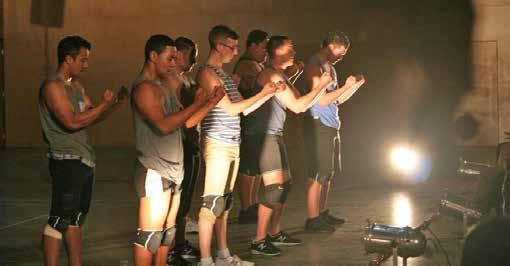
BY JAN WRIGHT, MERCURY BAY ARTS DEVELOPMENT TRUST
Work towards establishing a purpose-built arts and creative facility for Mercury Bay and the wider Eastern Coromandel took a positive step forward earlier this month following a meeting between Mercury Bay Arts Development Trust (MBADT) and Thames-Coromandel District Council representatives. Community members now have the opportunity to add their voice to the project through a public petition.
MBADT is a charitable trust established from the former Mercury Bay Arts Hub Steering Committee following a comprehensive feasibility study. The study demonstrated both a strong need and widespread support for a dedicated arts and creative venue in Whitianga serving communities from Whangapoua to Pauanui.
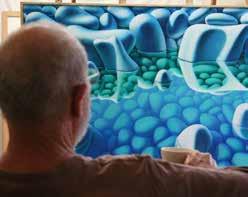
Whitianga and encourage people to spend time in our town centre, supporting local cafes, restaurants and retailers."
Jan says recent concerns about the closure or reduced accessibility of some popular nature-based attractions highlight the importance of diversifying the region's visitor offering.










Consultation with artists, creatives and the wider community identified a strong preference for a centrally located facility. During that process, and through subsequent community discussions, the land currently occupied by the former Fire Brigade building in Monk Street and land behind the town hall emerged as the preferred site for many members of the community and has since been adopted by the Trust as its preferred site for the project.
"Mercury Bay's natural environment will always be one of our greatest assets. An arts and creative hub would complement those attractions by providing a high-quality, all-weather experience for residents and visitors, helping to strengthen the local economy while placing little additional pressure on the environment."


MBADT has advised Council that it is not seeking ratepayer funding to develop the project. Instead, the Trust is seeking access to suitable Council-owned land through a long-term lease or similar arrangement, enabling the Trust to undertake fundraising and development of the facility.
The proposed hub would include flexible spaces for visual and performing arts, workshops, learning opportunities, exhibitions and community events, creating a vibrant and welcoming place for people of all ages.
"What we want to achieve is something that already exists successfully in many communities throughout New Zealand – a welcoming and inclusive space that brings people together through creativity, strengthens community wellbeing and provides an enriching experience for visitors," says MBADT Chair Jan Wright.
"A centrally located facility will be easily accessible for residents and visitors alike. It will add vibrancy to the heart of
The Trust, which has undertaken considerable work to demonstrate community mandate to represent the arts and creative sector, met with elected members and Council staff on 10 June. Jan says trustees left the meeting encouraged by the discussion and with a clearer understanding of the information required to progress the project for consideration through Council’s upcoming Long-Term Plan process.
"For more than 25 years, generations of local artists, performers, makers and creative groups have dreamed of having a dedicated place to create, perform, learn, exhibit and connect. Much of the groundwork has been done, the vision is clear, and we now have a genuine opportunity to move this project forward. We encourage people to sign the petition and help us show that Mercury Bay is ready to turn a long-held community aspiration into reality."
For further information: Jan Wright jan.creativecoromandel@gmail.com


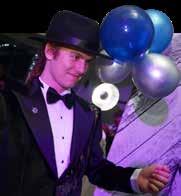


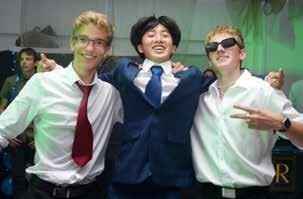


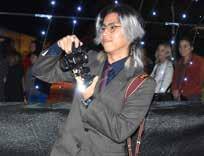
It was a very successful relocation to the Hangar – part of the Coro Club at the Whitianga airport – for the annual Mercury Bay Area School Ball last week. Renovations at the Whitianga Town Hall mean it is not available for events for a few weeks. Twin-
kling white lights were tastefully everywhere for what was like a ‘other world’ environment. It was a beautiful space for the senior students. Togo Kubota, The Informer’s student photographer, captured some images to share with readers.


BY RAY VAN BEYNEN
One of the most frequent subjects of correspondence and community commentary is the current state of our TCDC run roading network. It’s all well and good to point the finger but criticism needs to be evidence based and as an old chef (boss) of mine used to say, ‘”Don’t bring me a problem without some solutions.”
Hahei’s Snake Gully is a case in point. Seriously damaged by Cyclone Gabrielle, it took our roading people over 2,000 days to effect a so-called permanent repair. That was after repeated pressure from local communities and a bunch of failed promises from Council and finally some strong lobbying from our Community Board Chair, Richard Shelford Woodcock.
The Community provided a well thought out engineering solution but the TCDC went with the cheaper fix option. The traffic management crew finally turned up in support of the repair crew; - all four of them to run an automated system while they snoozed and communed with their phones. Interestingly our local contrac-
tors, Donovan and weren’t used despite decades of experience on previous temporary repairs.
After about a week of work, the barriers were removed, traffic management ceased and Snake Gully was open for business. However, when the barriers were removed a large build up of clay on both sides of the barriers was left across the downhill lane with large clods quickly ground into the chip seal by descending traffic thus ending a few hours of dodgems.
Local knowledge quickly identified that this fine clay turns into a dangerous greasy surface once wet and sure enough this happened.
TCDC were advised in writing of this situation last Monday and a prompt response was received from Mo the Roading Chief. He explained a mistake had been made and that the contractor hadn’t seen the clay as it was under the barriers. Really! He accepted that traffic management would need to be returned obviously at great cost.
It is unclear whether the road was then swept as it should have been done in the first place under existing traffic management but if
so, a poor job was done.
The very next day a small SUV travelling down Snake Gully following a wee shower, lost control and ended upside down in the ditch at the bottom of the gully.
The driver wasn’t badly hurt but the SUV looked to be a write off. The driver made it very clear that the road was so greasy he couldn’t maintain control of his car. If another vehicle or cyclist had been coming up the gully there would inevitably been serious injuries or worse.
The traffic incident (no such thing as traffic accidents) can be directly attributed to TCDC’s handling of the repairs.
On closer inspection even to an untrained eye, there are still large numbers of rocks and other debris above the road just waiting for another heavy down pour or even a mild earthquake for this farce to continue.
The rest of the week had a number of reports from locals all over the Eastern Seaboard around the ineptitude of our roading services.
The Tapu Coroglen Road has just had major repairs carried out. Locals pointed out to the roading crews at the time that a major cul-
vert had been completely blocked by their work. Nothing was done resulting in major damage to the road surface when the surface flooding had nowhere to go.
For years the Boat Harbour Road community has been pressing TCDC to repair their road to a driveable standard and recent attempts at a fix have been unsuccessful. One of the locals, an engineer by training, had the temerity to suggest that the road crew might like to use a grader to start repairing the surface properly, but to no avail.
Hot Water Beach Road leading down to the iconic Hot Water Beach was severely damaged after Cyclone Gabrielle. Despite extensive slips and damage, the road is still not repaired safely. This is not a quiet country lane but a busy 2 lane highway with thousands of vehicles a year visiting one of Coromandel’s gems.
On to solutions
One: TCDC need to take ownership of their roading network and all of its defects.
Two: Lack of funding is not an excuse. Cutting back on some of the mid and upper management numbers would provide huge savings including areas such as
Governance, Economic Development and Communications. The elected members need to focus on community priorities and should the Mayor decide to keep to his election promises, he needs to give the CE and senior team a direction that they need to cut spending on staff by 10% over the next financial year.
Three: The Roading Contractors including Traffic Management need to be properly managed and held to account.
Four: The young crash victim should be compensated. Thames Toyota and Farmers Auto have some good deals on at present.
Five: Communities need to speak up more and document their concerns to: Peter.revell@ tcdc.govt.nz Aileen.Lawrie@ tcdc.govt.nz
There is also a huge amount of community concern about the way Building Consents are being processed and managed and this will be covered next week. There is talk of a class action being taken by building consent applicants. If you have any relevant information, please pass them on to Tthe Informer on email info@ theinformer.co.nz Stay safe.
© Lovatts Puzzles 5370
Last weeks winner CONGRATULATIONS Meru Barker
For last week’s solutions see page 25
Proudly sponsored by

Win a $5.60 Wednesday Lotto ticket. Hand deliver, mail, scan/photograph or email your entry to The Coromandel Informer, 14 Monk Street, Whitianga, or info@ theinformer.co.nz to reach us by 12:00pm on Monday each week. The winner must please claim their prize from the New World checkout manager directly.
ACROSS
1. Escapees (8)
5. Comedians, the ... Brothers (4)
7. Uterus (4)
8. Cotton head scarf (8)
9. Churchman (6)
12. Stuck (to) (7)
15. Piled up (7)
19. US prairie state (6)
21. Rewrote (8)
22. Burial vault (4)
23. Proportional, pro ... (4)
24. Peak traffic time (4,4)
DOWN
1. Benefit received (6) 2. Monastery superior (5) 3. Yellow shade (5) 4. Detected (6) 5. Measly (6) 6. Took images of bones (1-5) 10. Castro’s land (4) 11. Pig noise (4)
12. All-wheel drive (1,1,1)
13. Exercise ring, ... hoop (4)
14. Shark relatives, manta ... (4)
15. More tart (6)
16. Cocktail, pina ... (6)
17. Any of two (6)
18. Weather map line (6)
19. Prestige (5)
20. Belt hole (5)

Proudly sponsored by

Welcome to our new Sudoku sponsors Snapper Jacks and Mat’s Cafe! They will be alternating every week.
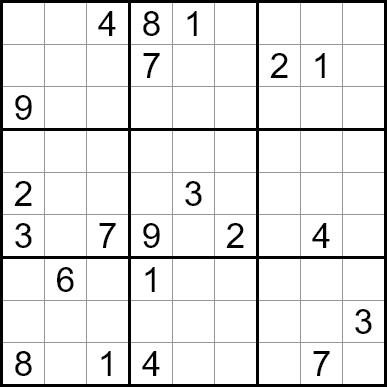
Name:
Phone no:
Win a fish and chips for one from Snapper Jacks in Whitianga. Hand deliver, mail, scan/photograph or email your entry to The Coromandel Informer, 14 Monk Street, Whitianga, or info@theinformer. co.nz to reach us by 12.00 noon on Monday each week. The winner must claim their prize from Snapper Jacks directly with ID with their published name.
Sudoku instructions
Fill in the boxes using the numbers 1 to 9. Every row and column, and every group of 9 boxes inside the thick lines, must contain each number only once.











The three questions posed to them
1. "What is your favorite way to spend your time outside of school, and what has that hobby taught you about yourself?"
2. "What is your 'big dream' for your career or life after school, and what inspired you to chase it?"
3. "If you could change or improve one thing for the next generation of students in our town/school, what would it be?"
INDIA PERCIVAL
- COMMUNICATIONS LEADER
My favourite way to spend time outside of school would be reading. It has taught me about patience and how it's always good to have some sort of escape from school and social activities.
My 'big dream' for after school is to become a family lawyer. I was inspired to do this as it allows me to help people, which is something I've always been passionate about. One thing I'd like to change at this school for future generations would be creating something for students who aren't interested in sports, as our school is very sports-focused. I think it's important for all students to get opportunities in whatever area they want to excel in.
PHOEBE MCDOUGALL
My hobbies outside of school consist mostly of art stuff, like painting and making things out of clay. I think it has taught me to think through the journey and that the big picture isn’t the stuff that makes you appreciative.
My ‘big dream’ for my career/ life after school would be to either become an Emergency or Oncology Healthcare Worker. What I hope for students in the future is to have the next generation motivated for life and for them to understand and discover what they are passionate about.
SAVAHNA HULL - SENIOR STUDENT LEADER
Outside of school, I’ve always spent my time playing netball. After getting injured last year, coaching younger players and being manager for the school development team has given me a new way to stay involved. It’s taught me how to lead and support others.
My goal after school is to study medical imaging and become a radiographer. I'm interested in this field because it combines healthcare and technology and plays a role in diagnosing and helping patients. I like the idea

of working in a medical environment while using practical skills and equipment.
I’d like to see more emphasis on practical life skills alongside academic learning. While school gives us a strong foundation, many students leave without feeling fully prepared for things like managing money, understanding taxes, or living independently.
TOM LAMASON
- SENIOR STUDENT LEADER
My favourite way to spend time outside of school is playing basketball. When I play it, I feel more relaxed and I really enjoy it. This has helped me to stay more active and I am able to keep on trying to make a shot no matter how many times I miss. It is also a great way of meeting other people.
My big dream would be to become successful in whatever job I choose whether it is engineering or something else. My dad inspired me to work hard in everything that I do as he works hard for me and my family every single day.
If I were to change one thing for future students in my school, I would choose to change how the school looks by adding more nature to the surroundings instead of just concrete and open fields everywhere.


ISOBEL ROCHE - SENIOR STUDENT LEADER
My favourite way to spend time outside school is relaxing with friends and listening to music. It helps me unwind after school and has taught me the importance of a work life balance.
My big dream is to have a career that I enjoy and that gives me financial stability. I was inspired by wanting a future where I can be independent and do something I’m passionate about.
I would improve school facilities and opportunities, such as more engaging activities or better learning resources, so students have a more enjoyable and supportive school experience.
ELIZABETH TILL - SENIOR STUDENT LEADER
My favorite way to spend time outside of school is dancing. It’s taught me discipline, structure, and perseverance. Dance has pushed me to show up and always give my best,. and taught me that growth comes from consistency and stepping outside of my comfort zone.
My big dream is to work in healthcare, specifically as an anesthetist in surgery. I’ve always known I wanted to go into medicine and help people, but what

really inspired me was attending a career expo where I got the chance to try inserting an airway device to help someone breathe. That hands-on experience made everything feel real, and I was instantly drawn to the role. I also like that it’s a challenging career that makes a meaningful difference in people’s lives.
If I could improve one thing, it would be better support for student wellbeing and mental health. A lot of students deal with stress and pressure but don’t always feel comfortable asking for help. I’d want to create a school environment where support is more accessible and students feel supported both academically and personally.
ANGEL SCOBIE
- SENIOR STUDENT LEADER
One of my favourite ways to spend time outside of school is playing sports and keeping active. This hobby has taught me the value of personal motivation and how this leads to achievement.
My big dream for my life after school is still pending, although I do know it will be to help others to reach their desired achievements. One thing I would like to see an improvement in is the building up of self-confidence that would help students give everything a go.
Last month, China switched on the world's first commercial underwater AI data centre. 2,000 servers, cooled entirely by surrounding seawater and powered by an adjacent offshore wind farm. The facility cuts energy consumption by 90% compared with conventional onshore sites. They’re already planning a 500-megawatt expansion.
The engineering logic is sound. Conventional land-based data centres consume enormous energy just managing heat, so passive ocean cooling eliminates most of that cost.
But the ocean is a fragile resource to exploit. Scientists have warned that heat generated by these facilities could trigger toxic algae blooms and create de-oxygenated conditions that suffocate marine life, AKA “deadzones”. A report published alongside the launch found data

centre water consumption could hit 9.3 trillion litres by 2030, which makes it hard to argue against these underwater sites.
On our end, Datagrid has secured approval for what is being
described as New Zealand's first AI factory, a $3.5 billion facility in Makarewa, north of Invercargill, sited close to major high-capacity transmission lines originally developed to support the nearby
The likely power source is the Manapōuri hydro-electric power plant, which also powers Tiwai, raising questions about what the data centre's requirement for constant electricity could do to household power bills. Once built, the facility will require around 2.45 TWh of electricity based on a capacity of 280MW, making it New Zealand's second-largest industrial consumer of electricity. Invercargill's cold climate makes it genuinely attractive for this purpose, but it doesn’t seem enough.
The question New Zealand hasn't adequately answered is: who benefits? The data centre will generate far more value for its Singapore-based owners than for New Zealand Inc, generating around $24 per MWh for the local economy, compared with $105 per MWh from the smelter it is
effectively replacing.
And if underwater data centres become a global norm and degrade marine ecosystems in Asian waters, displaced fishing fleets don't simply stop fishing, THEY MOVE. New Zealand's EEZ is the fourth-largest in the world, covering over 4 million square kilometres, and hosts extraordinary marine biodiversity. Less than 1% of that economic zone is currently protected in marine reserves. These are credible threats to our food sources, potentially needing more military intervention than we are prepared for.
We must watch China's underwater experiment carefully and use the evidence to get ahead of the regulatory question before it arrives uninvited. Our ocean and our electricity grid are sovereign assets. We should decide who they serve, before someone else does it for us.
Letters to the Editor enable members of the public to express an opinion, about an article or a topic of interest/concern. Please keep them to 200 words or less. They do not reflect the view of the Editor who reserves the right to edit and decide what is published.
In response to the lack of understanding of what makes a dynamic living beach which is evident in Suzanne Hansen’s article (The Informer, 9 June) I’d love to invite Suzanne, and others who may share her views, to join our Beachcare Group for a few Friday mornings.
Kolbie Fraser is seventeen and until the beginning of 2025 she was in Cooks Beach preparing to go to Wellington for her post-MBAS college studies at the New Zealand School of Dance.
It is a constant learning opportunity which I have loved during the more than 5 years I have been volunteering with this Peninsula-wide project especially as I started this learning process over 20 years ago during the first experimental plantings when erosion along Buffalo Beach became apparent.
She is quietly proving that talent backed by grit goes far. Late last year almost at the end of her first year at the dance school, Kolbie earned the invitation to a fiveweek paid professional contract with Rising Ballet Company BIG Live, performing Nutcracker productions across Australia.
I’m proud of what we are achieving led by very competent people, including Kim Lawry from Mercury Bay Environmental Trust . You are right to be concerned about forestry slash and sedimentation generally that comes from the surrounds of our catchment, but that is an issue for other players.


and committed people, who can make meaningful decisions and hold both elected Councillors and non-elected bureaucrats accountable, demanding sensible budget decisions and transparency. I, and many others I have spoken to, would never have voted for Councillors who, only a few months after the elections, have sort to disempower the excellent team that has been elected to our Community Board.
If this is the agenda that they intended to pursue on this extremely important matter, then they should have made this clear at the time they were seeking to be elected. They do not have a mandate among voters to push for the enfeeblement of Community Boards.
Kolbie’s success is inspiring others back home. Eight-year-old Harlow Macaw from Tairua also joined the Adelaide and Sydney legs of BIG Live’s Nutcracker tour, a remarkable achievement for someone so young. Performing in the Party scene’ in front of thousands each day, Harlow thrived on stage and says she loved every minute of it. She has since returned home full of inspiration and will continue training under Sarah Fitzsimons at Thames Hauraki Dance Theatre where all the girls have come from, united by their love of dance.
Helen Vivian, Wharekaho
I will add that many tourists stop to chat and leave with photos and appreciation of what we are doing.
Under directors Joel Burke and Khalid Tarabay, part of one of the highest-selling ballet companies in the Southern Hemisphere, she completed 45 performances, dancing five ballet roles, some lasting nearly seven minutes, performing to around 80,000 people. She was also trusted with partner work, which was an honour and embraced wholeheartedly.
community discussion for their submissions. Sadly this is now pointless since feedback submissions were due by the 19 June. However, transparency needs to be upheld and this matter is of concern to residents at Hahei.
cal decision our Council and all NZ Councils will face in nearly 50 years, making it essential for community engagement.
Graeme Harsant, Hahei refer to page 16
Kolbie could hardly believe the experience she was getting and being chosen to be part of the elite ballerinas in the country.
She knows her achievements to this point are not just about hours in the studio. There were
I think I’d be more worried about the potential effect of selling off our DOC hinterland which is a real possibility under the current Conservation Amendment Bill which could open our district up to increased mining. This would have a huge impact on tourism for the Coromandel. (submissions close Thursday, 2 July.
Meantime, come and join us on the beach this coming Friday Anna Horne, Whitianga
nights walking 30 minutes uphill after training, soaked by Wellington rain and buffeted by wind, legs burning and body exhausted. Shared houses, different cul-
I don’t want this further amalgamation of Councils or the removal of Regional Councils! They were both installed on the ‘saving money’ reason. The old adage, “economies of scale” was trotted out and has proved mistaken.
Are you land and water rates less since the amalgamation that produced the TCDC?
I find it ironic that, as our Council begins the engagement process to shape this vital decision, the Mercury Bay Community Board Deputy Chair (currently Acting Chair) and the TCDC Mayor are on leave during this crucial time. I do not question how much time our Mayor and Councillors put in. However, their absence during this critical decision-making process will rightly make the community feel uncertain about leadership’s commitment.
ever, although there was time to spare, Richard’s statement was not presented. It would seem that he was blocked from voicing his concerns at every level.
The Coromandel Peninsula’s presence in national dance continues to grow, with Kolbie training in ballet and Liarah Anderson – 2nd year, Izzy Fitzsimons and Neka Woolf - now accepted into the New Zealand School of Dance, first year contemporary programs.
tures, and strict dancer nutrition became unexpected hurdles, and Kolbie made the tough call to move, prioritising her health and training.
Is this showing leadership? Is it any wonder that the ‘tail continues to wag the dog’.
MP For Coromandel
Tony Fox, Whitianga
Cr. John Freer was also denied the opportunity to speak. Yes, he did vote for the Accord, but why was he not allowed to qualify his decision? Many had concerns, but caved in to pressure to get “anything”, underway that would allow Community Boards to achieve “something” after a stagnant 7 months of frustration.
People are talking but no-one seems to be asking. Why is a new roundabout being constructed on Joan Gaskell Drive? I have yet to see even one accident or even a near-miss, when vehicles enter or exit from either grocery shopping or getting their bargain from the red building.
That resilience and decision to change her situation, soon turned into opportunity as it was after that she earned the invitation to dance in Australia
What about Moewai Road intersection?
Proudly carrying her Coromandel roots into every lesson, Kolbie’s journey is proof that big dreams are being built right here at home. Kolbie has just now begun her second year – carrying with her the lessons of life away from home and the experience of professional dancing for several weeks and there will be more to come!
Well done!
MAUTOHE CATHEDRAL COVE PROPOSED TRACK CLOSURES
COROMANDEL-COLVILLE
I am against the proposal to remove asphalt on the main track. Many residents believe that the cost of removal will be significant and the expected improvements of stormwater management will not be realised.
Access to healthcare is one of the biggest concerns for people in rural and remote areas and our government is committed to ensuring New Zealanders can get the care they need, when they need it, no matter where they live.
Will the asphalt actually be removed or just not resealed and patched where needed?
When that happened, a Mayor and Community boards were put in place to placate the public’s cry for representation in the original concept.
THE ACCORD DID NOT HAVE FULL SUPPORT
Now we have the government imposing their undemocratic wishes on us with the push to have larger areas to work with the resultant byproduct being more debt.
I am requesting clarification about the removal of the asphalt on the main track and whether this includes removal around the Grange Road car park also?
I am not a great fan of the asphalt but it was put down a number of years ago to reduce maintenance on the well-used track.
Last year’s Budget invested $164 million to strengthen urgent and after-hours care nationwide, meaning 98 per cent of New Zealanders will be able to access these services within one hour’s drive of their home. One of the initiatives funded was a pilot programme to enhance urgent and after-hours healthcare in six rural communities, including Coromandel and Colville.
I have asked for minutes about the small consulting meeting on the 25 May and a response to my Official Information Act request on track closure information is still to be provided.
In terms of the Coromandel pilot programme, it began in mid2025 and is being delivered at the Coromandel Family Medical Centre and Colville Health Clinic practice. They’ve been benefiting from extra support, better access to information and working more closely with an Emergency Care Paramedic which can treat urgent care patients in the clinic, while also available to respond to local 111 calls.
This dominating action from the top down, avoids proper consultation with the people it affects most, and they did not ask for, or receive, a mandate for this manipulation of the electorate. Will it be too late at the election to change it? And where is comment from our representative, Scott Simpson?
Following Cr. John Grant’s factually incorrect statement in The Informer (p17 issue 1212, 2 June) that “all 4 Mercury Bay CB members supported the Accord unanimously” and that they “backed this document without reservation” needs to be addressed.
I requested a public retraction from Cr. Grant on both statements – which he declined to provide.
Peter Wood, Whitianga
A QUESTION OF LEADERSHIP
I was thrilled to hear the announcement from Associate Health Minister Matt Doocey that these pilots have been rolled out and have shown the positive impact that locally led approaches can make, with faster care, better access to treatment, and stronger links between rural health services.
I’m hoping that there will be even more support for similar projects around our region and the rest of the country in the coming year. People in rural areas can often travel long distances for care and rely on small teams supporting large regions, that’s why this investment is so important.
This would have been quite important information to have for
Many readers of The Informer and CFM listeners will be well aware of the topic ‘Simplifying Local Government’, or, as many may know, Local Government Reform.
This issue is the most criti-
In other news, our region is still recovering from January’s heavy weather event, but it’s encouraging to see communities rebound so quickly and contractors working to stabilise our roads. There are parts of the Peninsula which are still affected by storm damage, and I visited these areas a
MBCB Chair, Richard Shelford-Woodcock, had strong reservations about the Accord and voiced his concerns, even though he was on recovery leave after heart surgery. As he was on leave he did not, on the day, have a vote. His request to speak as an individual person at the Council Meeting in Thames was denied by Mayor Peter Revell, although he finally agreed that Richard could write a statement which would then be read out by the Deputy Chair. Richard complied with this. How-
A major part of last year’s election was the Empowerment of Community Boards. We all voted accordingly. Mayor Peter Revell announced immediately after being elected, that we were not to contact Council or Council staff- all our local matters must be directed to our Community Boards. We happily complied and at the first Public Forum meeting we were there with our projects to be presented. What happened? NOTHING. In a matter of weeks it was clear that “EMPOWERMENT”, before it was ever IN - was OUT, and we were back to chasing our tails trying to follow up on details of our presentations. This is not Democracy. It is not honesty; and it certainly does not relate to transparency.
While the ‘tail ‘currently continues to ‘wag the dog’ - ‘docking’ is looking to be an increasingly appropriate action.
couple of weeks ago alongside the Associate Minister of Emergency Management and Recovery Chris Penk.
We received a briefing from the Thames-Coromandel District Council, which outlined the impact of the storm and the work ahead. It was stressed throughout these visits that support is available, such as Civil Defence payments through the Ministry of Social Development.
Ady Cole-Ewen, Wharekaho
Addition to Scott’s column Excerpt from his Press release Wed 11 Feb.
HOPE AND DEMOCRACY DASHED
I put a great deal of thought into who would receive my vote to be on our Council and Community Board. Why? Because I believe strongly in local democracy - the shaping of local matters by able
“I’m excited that the Coromandel will once again host the Whitianga Oceans Festival in September 2026, attracting visitors from around New Zealand and overseas, as part of the national $70 million Major Events and Tourism Package. “
Just a few months ago, a man’s life was lost at the intersection of Moewai Rd and SH25. At the time this unnecessary death prompted a lot of discussion, questions and suggestions about rectifying the serious nature of approaching this intersection where 50kph cross-roads meet 80kph without a single warning of danger. Since this tragic loss of life, nothing has changed regarding this dangerous intersection whether it be signage, speed reductions or extra policing of excess speeds which literally happen every single day. So I ask, how can the convenience of shopping be a higher priority than the concern and protection for life, be a logical decision by TCDC? This tells me that in this matter, our council has their priorities in the wrong order. I thought we voted for common sense?
“Major events are critical for our hospitality and tourism sectors, especially here in the Coromandel. Accommodations fill up, restaurants and cafés thrive, and local businesses see more customers, creating jobs and lifting incomes.”
“Across New Zealand, Tourism directly contributes $17 billion to national GDP and just under 200,000 jobs. Tourism makes up almost 12% of Coromandel’s GDP. The economic ripple effect of major events is huge, supporting our local businesses and growing our economy.”
Yes, I admit that for me this is a bit emotional because the deceased man was a friend of the men at the MenZshed, but he was also a husband, father, brother and son. He could have been yours. One death is one too many. Surely people shouldn’t have to die before we recognize dangerous situations and put improvements in place.
“Events such as the Whitianga Oceans Festival don’t just bring visitors; they bring life and energy to our region and to our towns which helps to create vibrant communities and unforgettable experiences.”
I repeat, why are we giving priority to convenience for businesses over safety? To me, it doesn’t make any sense.”
Ken Andrew, Whitianga
“This funding is a significant boost to Whitianga and the wider Coromandel, and I’m looking forward to our region hosting another great event which encourages locals and visitors to celebrate all that we have offer.”



Servicing











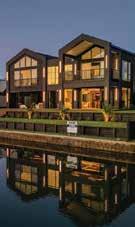






















































C3 Church Whitianga Join








www.anglicanchurchwhitianga.org.nz


The 97th Annual General Meeting of the Mercury Bay Bowling & Sports Club Inc. will be held on Saturday June 27th 2026, 1.00pm at the Clubrooms, 92 Cook Drive, Whitianga BUSINESS of the MEETING • To receive the Annual Reports • Election of Officers • Notices of Motion All Welcome N. Chaney, Secretary
On behalf of TCDC, Second Nature NZ will be carrying out weed control spraying on the Vista Paku median, from Sheppard Avenue to Centreway, Pauanui. Spraying will target grass and weeds and will be undertaken on one day, weather permitting, between 22 June and 30 July 2026, excluding weekends. The area will be signposted, and a site-specific spray plan is available on request.
For further information, please contact TCDC on 07 866 0200
KIWI
To be held on Thursday 02 July at 7pm at the residence of L. Bristow at 8 Rangihau Road, Coroglen. All welcome.
Business: 1. To receive the reports from the Chairman 2. Election of Officers 3. General Business Lorraine Bristow, Secretary bristowd@xtra.co.nz 07 866 3767
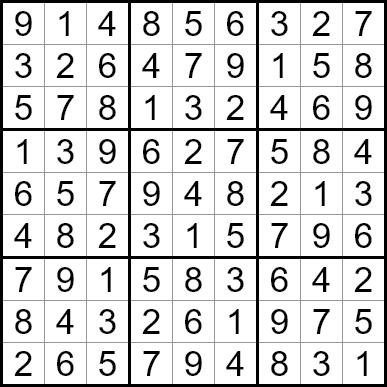
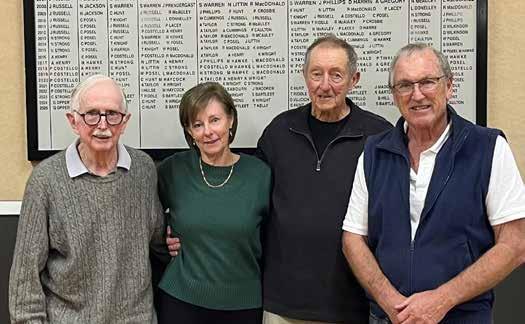
TAIRUA BRIDGE CLUB
2nd round Coromandel Pairs
Monday 15 June
North/South: 1, Chris Death & Peter McNeil 60.76; 2, Rob Stewart & Ron Baker 53.47; 3=, Donna Harvey & Lynnette Flowers, Jocelyn Taylor & Jenny Hemmings 51.74.
East/West: 1=, Kim van Diepen & Peter Clark, Robyn Waters & Suze MacLean 56.75; 3=, Sonia Botica & Jean Myles, Jill Huston & Diny Naus 53.57.
HAHEI BRIDGE CLUB
Week 3 of the Bright Pairs
Tuesday 16 June
North/South: 1, Robyn and Peter Hogg 61.98%; 2, Jenny Hemmings and Bev Dickie 55.73%; 3, Val Dwight and Johanna Bonnar 51.56%
East/West: 1, Peter Clark and Robyn Waters 60.00%; 2, Carol Henwood and Tia Ormsby 55.00%; 3, Lee Hughes and Sue Gill 54.38%
MERCURY BAY INDOOR BOWLS
Thursday 18 June
Winners: Maureen Lack, Cheryl Henderson and Ian Mitchell
Runners Up: Ray Rout, Sue Webb , Shirley Marshall and Betty Simpson
Good Sports: Ian Pudney, Wayne Fisher and Robert Jackson.
COOKS BEACH INDOOR BOWLS CLUB
On Wednesday 17 June the Cooks Beach Indoor Bowls Club held their Club Champion Pairs Tournament in a fun and relaxed afternoon and concluded with a lovely afternoon tea. Winners were Phil Costello and Jude Leabourn; runners Up were Frank Caulton and Phillip Keall.
MERCURY BAY CLUB DARTS
16 players this week, so 501 singles were played. Two players went through unbeaten in all four sets and they were Peter Reekers and Rex Donaldson. A one game final was played with Peter Reekers coming away with the win. Highest finish for the men was 112, scored by Rex Donaldson. No finishes over 50 for the ladies this week. Two players managed to score a 180 this week and they were Bluey Stratton and John McGregor. New players most welcome, register at the club by 6,15pm on Tuesdays. Play starts at 6.30pm.
MERCURY BAY CLUB SNOOKER
Wednesday 17 June
After 3 rounds of section play, it was veterans Brian Codyre and Peter Challis who came through undefeated to meet in a play-off final. A closely contested frame
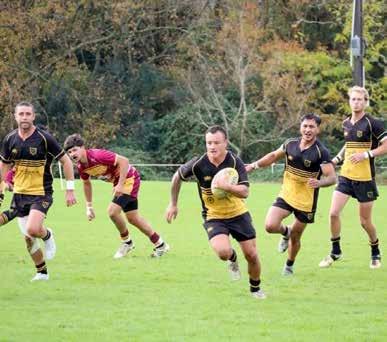

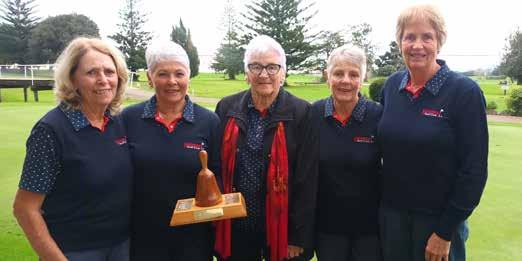
The Winner of the Thames Valley Women’s Handicap Matchplay were Hauraki Golf Club who beat Coromandel at a playoff. The team from left to right are Claire Williams, Debbie Gascoigne, Shona Dalgety (Life Member Hauraki and presenter of Trophy), Robyn Taylor and Karen MacInnes. There were 7 teams throughout the Coromandel who competed for the trophy. They were Coromandel, Thames, Whangamata, Mercury Bay, Hauraki, Tairua/Pauanui and Paeroa.
ended on the black with Peter taking the win and the day’s top prize over his long-time rival Brian. Players with 2 wins each were Greg Murphy and Dave Colman who also struck the High Break Jackpot with a break of 26.
Saturday 20 June
Four rounds of matches were completed in section play with Bob Haase winning 3 out of 4 to take the day’s top prize. Players with 2 wins included Doug Pascoe, Denis Rush, Phil Jones and Greg Murphy.
MERCURY BAY GOLF CLUB
9 hole Ladies Stableford
Tuesday 16 June
Div 1: 1, Alison Goodlet; 2, Raewyn Hill; 3, Audrey Vickers. Div 2: 1, Jean Hancock; 2, Sharon Morrissey; 3, Cathy Breeuwer.
9 hole Men’s Stableford
1, Eddie Lyle; 2, Bob Holiday; 3, Roderick Bott.
18 hole Men’s Stableford
Wednesday 17 June
1. Kevin Wallace 38; 2=, Jimmy Duncan & Carl Mitchell 35 Gross – Snr: Mark Boe; Jnr: Kevin Wallace.
Twos: Mark Boe, Dom Szparagowski, Patrick Gonthier & Graham Eccles
9 Hole Men’s Stableford
Friday 19 June
1, Gavin Brinkley 21; 2, Gordon Brain 19; 3, Kelvin O’Leary 17

NTP #2 Jeff Dixon. 18 Hole Men’s Stableford
Saturday 20 June
1, Sam Murphy, 41pts & 69 off the stick; 2= Les walbridge, Neal Robinson & Matty Menzies 38pts; 3, Wayne Kearney, Kevin Smith & Ron “Mr 89” Watson 37
Twos: Neal Robinson, Mark Boe, Nathan Wilson, Sam Murphy & Aslan Coubray.
What a great day that was had by Sam Murphy and Alan Coubray. Both of these guys swept the NTP and Long Drive so well done, however, a top mention could go to Greg “Snakey” Peterken who arrived full of enthusiasm, whilst that quickly waned, he is still smiling. Great to see our legendary course convenor, who at 89 years young, got up with another under par round. On ya Ron!!
THE DUNES MATARANGI
GOLF CLUB
Bowen Trophy Strokeplay Round 2
Net Medal Wednesday 17 June
1, Robert Fisken 67; 2, Tim Bartlett 69; 3, Steve Moss 71; 4, Raymond Fanning 72; 5, Tony Joblin 72.
Twos: Allan Trow #5, Selwyn Knaggs #7, Nick Lambert #7, Raymond Fanning #7.
NTP: Tony Joblin Best Gross: Allan Trow 79 Overall Division Senior (0.0-15.3)
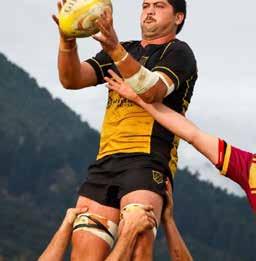
1, Graham Harrison 141; 2, Brian Tomlinson 141; 3, Tracey Mulligan 143; 4, Nick Lambert 146; 5, Charlie Chilwell 146. Overall Junior Division (15.454.0)
1, Robert Fisken 141; 2, Brian Keucke 144; 3, Kevin Adlam 144; 4, Norman Gilbert 146; 5, Steve Moss 148.
9 Hole Men’s Stableford Thursday 18 June
1, Rey Bertling 23; 2, Graham Kemp 22; 3, Richard Cummins 20; 4, Harry Karl 17; 5, Noel Rogers 15.
Saturday Haggle Mixed Stableford Saturday 20 June 1, Mary Coughlan-Mason 39; 2, Nick Lambert 38; 3, Kayleen Smith 37; 4, Tracey Mulligan 36; 5, Tony Nicholson 32.
Twos: Allison Drake-Wells #7, Nick Lambert #14, Mary Coughlan-Mason #18, Tracey Mulligan #18, Kerry Mason #18.
NTP: Nick Lambert
PURANGI GOLF AND COUNTRY CLUB
Nine-hole Stableford Tues 16 June
1, Annabel Wharton; 2=, Di Gilmour, Mark Bell, Ryan Cochran.
Nine-hole nett plus putts Thurs 18 June
1 Callum Murray, 2 Mark Bell, 3 Di Gilmour.
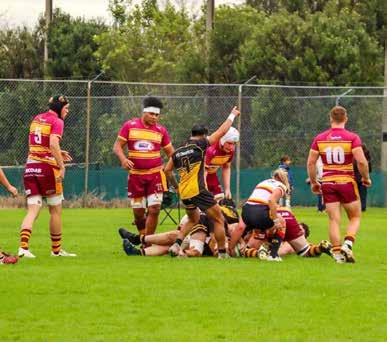


The MBAS Senior Boys football team hosted Hamilton Boys High School Maroon on Saturday. After a tight tussle early on we scored twice before halftime to take a 2-0 lead into the break. The second half was much the same as the first with our speed and skill being a bit much for the visitors, scoring three more unanswered goals. Special mention to our defence who have kept four clean sheets in a row and our tireless midfield who fight for every ball. Goal scorers were Noah Palmer (2), Lui Yamada, Ben Collins and an unfortunate own goal.
Mercury Bay U13 Stingrays
The Ray’s made the trip over the hill to Kuaotunu to play Te Rerenga on Saturday. The two teams were quite evenly matched throughout the first half, trading attacking plays and both finding the back of the net. The game opened up in the second half with the ‘Rays putting together some clinical attacking play, mixed together with slick passing, causing issues for the Te Rerenga defense.
Player of the day went to Charlee Marr for his improved defensive play, being vocal, and encouraging his team mates.
Mercury Bay Sharks
Mercury Bay Sharks hosted the Tairua Turbos on a bright, sunny winter’s morning and were eager to continue the good form they have shown this season.
The Sharks embraced Coach Carl’s enhanced game plan from the opening whistle, stepping up their style of play and dominating the midfield for large portions of the match. Their strong tackling techniques, combined with excellent communication across the field, allowed them to control possession and keep the Turbos under constant pressure.
The hard work paid off with an out-

standing performance from Sarico Chiet, who scored a superb hat-trick. While the forwards took their chances well, the result was built on a genuine team effort, with every player contributing through determination, teamwork, and support for one another.
Tairua Turbos continued to battle hard throughout the game and were rewarded with a goal of their own, but the Sharks’ organisation and control of the midfield proved the difference.
Player of the Day was awarded to Leo Skelton for his exceptional leadership as captain. Leo led by example with his communication, organisation, and encouragement of his teammates, helping the Sharks maintain their structure and intensity throughout the match.
Coach Carl was extremely pleased with the team’s performance, particularly their willingness to embrace new ideas, work together, and play with confidence. The victory was a great reward for the effort and commitment shown by the entire squad.
Mercury Bay U11 Marlins
Saturday 20 June
Marlins played Tairua Tuatara at Moewai today. Tairua brought a great challenge and showed up with strong play, which meant the Marlins had to focus on everything they’ve learnt so far this season and work together as a team.
It was a great game to learn from and gave the team new goals and challenges to work towards moving forward. Well done to both teams on an awesome game!
Player of the Day went to Phoebe, who brought energy from start to finish and gave 110% throughout the game. Phoebe also received a special mention from the Tairua team
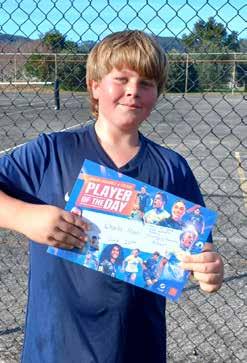


BY MATT & ANNE-MAREE
We were absolutely blown away by the success of the French Film Festival this year. 2026 was the 20th anniversary of the festival in New Zealand, and the 4th year we have hosted it at MTC - Mercury Twin Cinemas. This year's numbers swelled to just under 1800 over the 21 days, which is around 400 higher than last year.
We know the success of this year's event was fuelled
by the enthusiasm of our community. From the meetings at local cafes choosing movies with friends, conversations in the foyer or on the ferry, quick chats while picking up takeaways or coffees between movie. Your thoughts on the movies you saw encouraged many others to look at the schedule and commit to a movie or two.
Words cannot express how deeply we appreciate the support given to us. We look forward to seeing you all at next year's festival!