Park University International Center for Music Presents
Park University International Center for Music Presents
Friday, April 17, 2026 • 7:30 p.m.
Graham Tyler Memorial Chapel

P ARK UN IVERS IT Y
INTERNATIONAL CENTERFOR M USIC
ICM CONCERT SEASON SPONSORS






At Park University’s International Center for Music, our purpose is simple yet profound: to shape the future of classical music by nurturing extraordinary talent and sharing it with the world. Each season, our students — rising artists from across the globe — come to Kansas City to learn, perform and inspire. Their artistry enriches our community, connecting hearts through music and leaving a lasting impact far beyond the stage.
This season, we invite you to witness their brilliance alongside renowned guest artists and faculty who join us in advancing our mission. Every performance you attend supports not only world-class music, but also the dreams of the next generation of great musicians.
Thank you for believing in the transformative power of music and for being part of this remarkable journey with us.
With gratitude,
Stanislav Ioudenitch Founder and Artistic Director International Center for Music at Park University
ICM Spring Orchestra Concert with Guest Conductor Jason Seber
Wolfgang Amadeus Mozart (1756-91)
ARR. FOR
...........................................................
Giuseppe Tartini (1692-1770)
Larghetto affettuoso
Allegro moderato
Grave; allegro assai
Mumin Turgunov, violin
Ludwig van Beethoven (1770-1827)
Adagio – Allegro Vivace
Adagio
Menuetto: Allegro vivace/Trio: un poco meno Allegro
Allegro ma non troppo
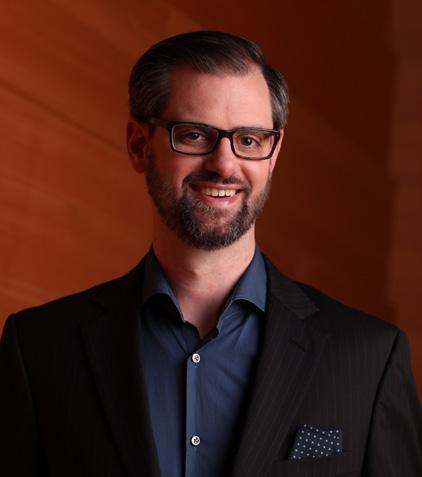
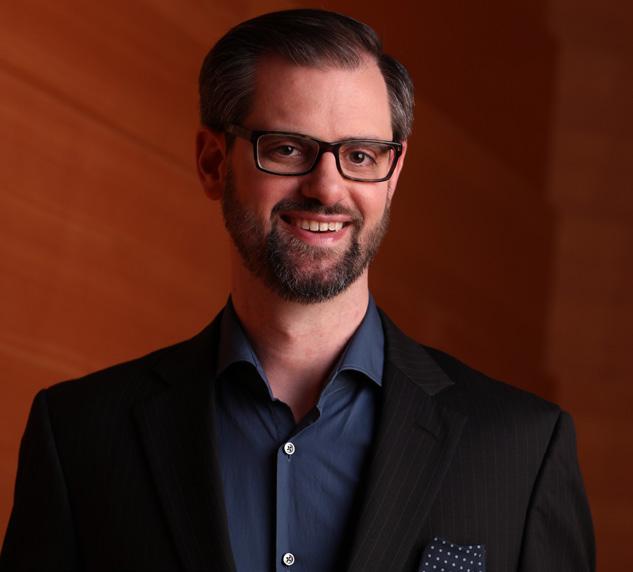
Jason Seber is known for his inviting and engaging approach on and off the podium. A strong believer in the eclectic experiences which today’s symphony orchestras offer their communities, he strives to make music of many genres and styles accessible, relevant, and meaningful to diverse audiences across the country.
Seber has conducted many leading American orchestras, including the Colorado, Detroit, Houston, Indianapolis, Kansas City, Milwaukee, Nashville, National, San Diego and St. Louis symphonies, the Louisville and Minnesota orchestras, the Cincinnati Pops and the Buffalo Philharmonic among others. Upcoming performances include debuts with the North Carolina Symphony, Baltimore Symphony, and Phoenix Symphony. Seber has conducted more than 20 full feature films and has had the pleasure of performing with a wide range of artists including Patti Austin, Mason Bates, Andrew Bird, Boyz II Men, Jinjoo Cho, Melissa Etheridge, Ben Folds, Cody Fry, Renee Elise Goldsberry, Indigo Girls, Paul Jacobs, Wynonna Judd, Lyle Lovett, Katharine McPhee, Natalie Merchant, Brian Stokes Mitchell, My Morning Jacket, Leslie Odom Jr., Aoife O’Donovan, Pink Martini, Ben Rector, Stephen Schwartz, Doc Severinsen, Conrad Tao, Bobby Watson and Joyce Yang.
Seber served as associate conductor of the Kansas City Symphony from 2016 to 2022. In this position he led the Symphony in more than 300 performances on the Classical, Pops, Classics Uncorked, Family, Film + Live Orchestra, Education and Christmas Festival series. He also served as co-host for the Symphony’s podcast, “Beethoven Walks into a Bar.” Prior to Kansas City, Seber was the
education and outreach conductor at the Louisville Orchestra from 2013 to 2016 and music director of the Louisville Youth Orchestra from 2005 to 2016.
A passionate advocate for music education, Seber has led the Honors Performance Series Orchestra in concert at Carnegie Hall, Sydney Opera House and Royal Festival Hall in London. He is a frequent guest conductor of the National Repertory Orchestra each summer and he has served as the All-State Orchestra conductor for Georgia, Kansas, Missouri and Pennsylvania.
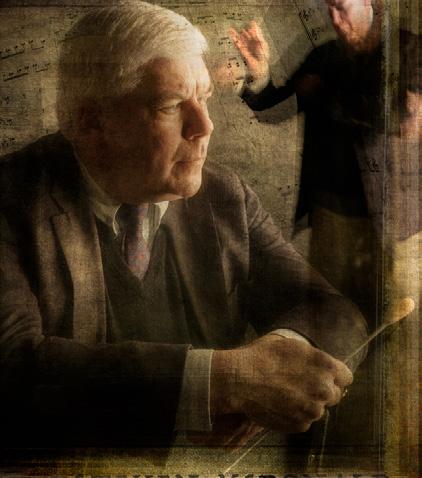
Originally from Reading, Mass., Steven McDonald, director of orchestral activities, has served on the faculties of the University of Kansas, Boston University and Gordon College. While in Boston, he conducted a number of ensembles, including Musica Modus Vivendi, the student early music group at Harvard University. McDonald also directed ensembles at the Massachusetts Institute of Technology, serving as founder and music director of the Summer Opera and Independent Activities Period Orchestra, and conductor of the MIT Chamber Orchestra and the Gilbert and Sullivan Players. At the University of Kansas, McDonald served as assistant conductor of the KU Symphony, and was the founder and music director of the Camerata Ensemble of non-music majors, and of the chamber orchestra “Sine Nomine,” a select ensemble of performance
majors. Additionally, he has conducted performances of the KU Opera. He has also served as vocal coach at the Boston University Opera Institute and at Gordon College.
McDonald served as music director of the Lawrence (Kan.) Chamber Orchestra from 2007-14, during which time the group transformed into a professional ensemble whose repertoire featured inventive theme programs and multimedia performances. In 2009, he was selected to conduct the Missouri All-State High School Orchestra, and in 2011 was the first conductor selected as guest clinician at the Noel Pointer Foundation School of Music which serves inner-city students in Brooklyn, N.Y. An avid proponent of early music, McDonald has also taught Baroque performance practice at the Ottawa Suzuki Strings Institute summer music program, and regularly incorporates historically informed practice into his performances. McDonald is a graduate of the Boston University School for the Arts, the Sweelinck Conservatory of Amsterdam (The Netherlands) and the University of Kansas School of Fine Arts.
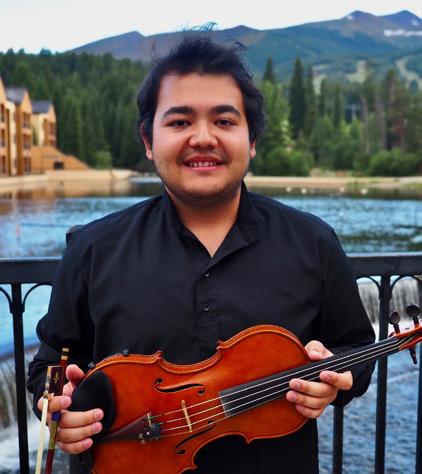
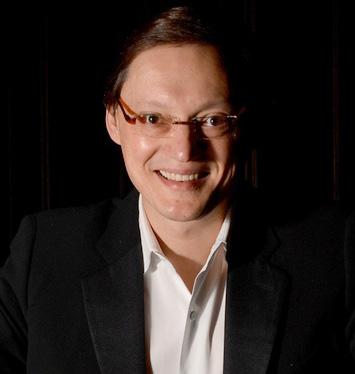
Mumin Turgunov is a distinguished violinist whose artistry bridges the traditions of Uzbekistan with the global stage as his journey reflects a steadfast commitment to excellence and musical expression. Born and raised in Tashkent, Uzbekistan, Turgunov began his violin studies at the Glier School of Music, where
he trained for 11 years. His early career was marked by significant milestones, including being appointed concertmaster of the Consonanza Chamber Orchestra for the Tashkent and Uzbekistan Diocese in 2018. That same year, he was honored with the Diploma for Best Musician of the Season, recognizing his leadership and artistry in orchestral performance.
In 2019, he earned second prize in the Republican Competition of Uzbekistan, showcasing his technical brilliance and musical sensitivity on a national platform. In 2020, Turgunov joined the State Symphony Orchestra of Uzbekistan as a full-time violinist, where he further honed his skills in large-scale orchestral repertoire. His passion for music and dedication to his craft led him to Park University’s International Center for Music in 2021. In 2022, Turgunov secured a position as a substitute violinist with the Kansas City Symphony, followed by a similar role with the New World Symphony in Miami in 2023. Beyond his orchestral work, Turgunov is a passionate advocate for solo and chamber music, delighting audiences with his dynamic interpretations. Turgunov, who earned a Bachelor of Music degree in 2025 from the Park ICM, is currently pursuing a Master of Music degree in violin performance under the guidance of violinist Ben Sayevich.
Flute
STEVEN MCDONALD, MUSIC DIRECTOR
Christina Webster
Gina Hart-Kemper
Oboe
Emily Foltz
Jessica Jo Darmon
Clarinet
Jane Carl
Loucas Vasilarakos
Bassoon
Austin Way
Luke Frith
Horn
Kayla Howell
Jordan Dinkins
Trumpet
Hyojoon Park
Jena Vangjel
Mark Lowry
David Brill, concertmaster
Aviv Daniel
Yuren Zhang
Ilvina Gabrielian
Jose Ramirez
Mumin Turgunov
Noelle Naito, principal
Yiyuan Zhang
Vincent Cart-Sanders
Yin-Shiuan Ting
Alla Wijnands
Emma Andersen
Grace Hemmer
Iana Korzukhina, principal
Victor Diaz
Chung-Wen Lee
Kathryn Hilger
Fedor Solonin-Oliichuk, principal
Ainaz Jalilpour
Mardon Abdurakhmonov
Nikita Korzukhin
Diyorbek Nortojiev
Otabek Guchkulov
Bass
Kassandra Ferrero
Minjoo Hwangbo
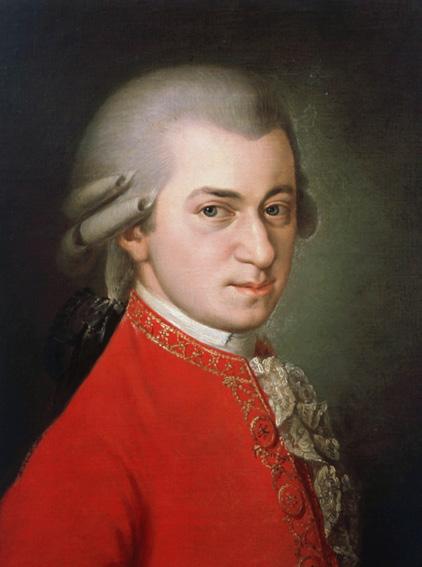
Wolfgang Amadeus Mozart (1756-91): Overture to Le nozze di Figaro
Opera was central to Mozart’s activities as a composer, as it was for many successful composers during the time of Emperor Joseph II. By the late-18th century, this relatively new art form was becoming an increasingly viable outlet for composers striving to rely less on patronage and more on popular acclaim. Young Mozart yearned to present more of his operas internationally and, in particular, on the Imperial stage in Vienna. By the 1780s this ambition was reaching fruition: His German comedy Die Entführung aus dem Serail (1781) spread his renown throughout Europe more effectively than anything he had written up to that time.
And it was so popular in Vienna that the Imperial theaters began to commission the composer to write Italian operas—the first of which, The Marriage of Figaro, scored an equivocal success at its first performance in May 1786. Its popularity was quickly eclipsed by the usual network of court intrigue—but also perhaps by the appearance of Singpspiele such as Dittersdorf’s Doktor und Apotheker, which however silly they may have been were imbued with a light-spirited charm similar to that of opera buffa but were sung in the audience’s native German.
The Overture to The Marriage of Figaro is one of Mozart’s most scintillating works, with all of the opera’s fierce wit and propulsive spirit—though perhaps little of its serious character-development
or dark social commentary. Figaro and Mozart’s subsequent collaborations with librettist Lorenzo da Ponte, Don Giovanni and Così fan tutte, were aimed at a more sophisticated public. These operas would only gradually find their “niche” among an opera audience that was at that time still more concerned with light amusement than serious edification.
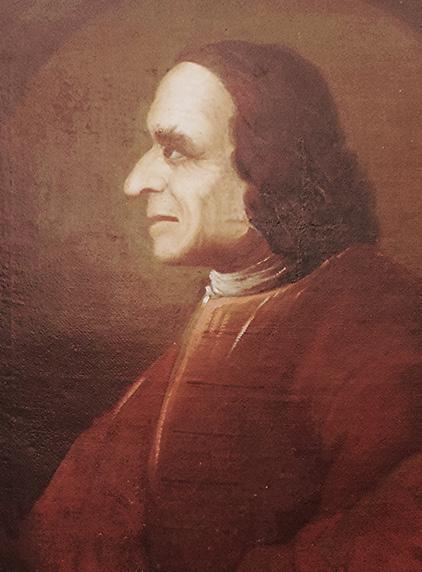
Violin Sonata in G minor (“The Devil’s Trill”), arr. for violin and chamber orchestra
Composers through the ages have made mostly credible claims of having experienced certain musical themes or concepts in dreams. Beethoven purported that he dreamt the subject of his threepart vocal canon O Tobias (WoO 182), and Wagner composed the famous rollingE-flat-major opening of Das Rheingold after the idea came to him in a dream. Schumann notoriously stated that he had received the theme to his Ghost Variations from angelic beings while in a dream-like state—whether asleep or not. (He attempted suicide shortly afterward.) Stravinsky states that the repetitive little violin tune in The Soldier’s Tale appeared in a dream being played by a Roma woman. More recently, Paul McCartney tells of dreaming the opening of the song “Yesterday,” which at first he feared was just a “remembered melody” but after checking with a number of musicians determined that it was indeed original.
Photo: Emil Matveev
Few composers have as vivid a tale as Giuseppe Tartini, however,
who said he dreamt that the devil himself had played music of such beauty and power to him that, upon waking, he immediately tried to write it down. Alas, his memory of the dream quickly faded, and he was able to capture only part of its essence. It was published much later as the Violin Sonata in G major, later subtitled l trillo del diavolo. For the rest of his life Tartini, who composed some 300 concertos, sonatas, and sacred works, continued to hold that this sonata was his greatest composition.
Tartini was born in Pirano—then part of the Republic of Venice and now Piran, Slovenia—and trained first in Padua, where he studied violin in that city’s renowned violin “school.” Later he studied composition with the Bohemian master Bohuslav Černohorský in Assisi. He subsequently lived and worked in Venice and Prague, re-settling in Padua during his later years where he established a prestigious violin studio. Tartini also penned influential treatises on music, including the Treatise on Music According to the True Science of Harmony (published in 1754), known for its somewhat esoteric focus on applying mathematical principles to music.
By the time critic and music scholar Charles Burney visited Padua, just months after Tartini’s death in 1770, the Classical style with its light galanterie was already taking root. But Tartini was still widely regarded as one of the great violinists of the century, and in addition to his copious musical output he left a legacy of gifted violinists he had taught. As a composer, Burney writes, “he was one of the few original geniuses of this age. … His melody is full of fire and fancy, and his harmony, though learned, simple and pure. … He was one of the first who knew and taught the power of the bow, and his knowledge of the fingerboard is proved by a
thousand beautiful passages to which that alone could give birth.” Tartini recounted his famous dream to Joseph Jérôme Delalande thus: “One night, in the year 1713, I dreamed I had made a pact with the devil for my soul. Everything went as I wished: my new servant anticipated my every desire. Among other things, I gave him my violin to see if he could play. How great was my astonishment on hearing a sonata so wonderful and so beautiful, played with such great art and intelligence, as I had never even conceived in my boldest flights of fantasy. I felt enraptured, transported, enchanted: my breath failed me, and I awoke. I immediately grasped my violin in order to retain, at least in part, the impression of my dream. In vain! The music which I at this time composed is indeed the best that I ever wrote, and I still call it the ‘Devil’s Trill,’ but the difference between it and that which so moved me is so great that I would have destroyed my instrument and have said farewell to music forever if it had been possible for me to live without the enjoyment it affords me.”
Originally for violin and keyboard, the sonata is often performed in arrangements for chamber orchestra. Though its style argues for a later date than 1713, perhaps as late as the 1740, it begins in a Baroque manner, with a siciliano-style Larghetto and a vigorous Allegro energico. The “devilish” part begins in the Grave—Allegro moderato, and especially in the cadenza with its fiendish onslaught of double stops and trills-over-melodic passagework.
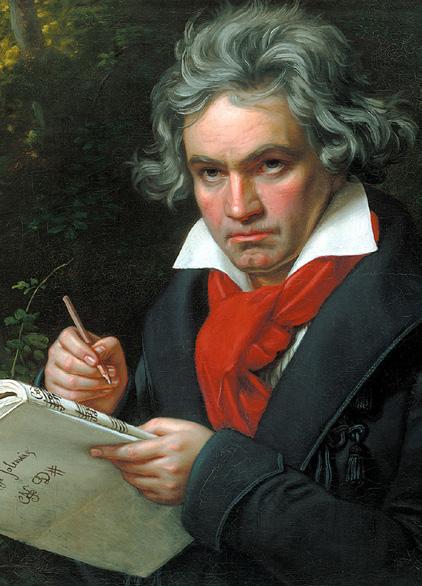
Ludwig van Beethoven (1770-1827): Symphony No. 4 in B-flat major, Op. 60
From 1802 to 1806 Beethoven not only transformed his own style but began defining a new course for music. The essence of “middle-period” Beethoven, as it has come to be called, was a synthesis of the composer’s mastery of Classical procedures with his new vision of art as a heroic achievement. Few works express this confluence of ideas more successfully than the Fourth Symphony, which Beethoven wrote during the late summer and fall of 1806 in rural Silesia—at the palaces of Prince Carl Lichnowsky and Count Franz von Oppersdorff.
Beethoven’s sketchbooks reveal that at first he worked simultaneously on the Fourth and Fifth Symphonies, but that he eventually set the latter aside. He had embarked upon the mighty C-minor Symphony to fulfill a request from Count Oppersdorff for a large work for his court orchestra; but when the composer realized the complexity of problems he had set up for himself in the (ultimately revolutionary) Fifth, he decided to fill the commission with the more straightforward B-flat-major Symphony, which came to be known as the Fourth. The Fifth was not finished until nearly two years later.
It was not uncommon for Beethoven to sketch out two works of widely disparate character at the same time, and this was no exception: But no two pieces could be more dissimilar than these symphonies. Where the Fifth is defiant, nervous, relentless, full
of sprung-wound energy, the Fourth is tranquil, expansive, confident. “Beethoven had now arrived at a new Classic style of a more personal and individual cast,” as biographer Maynard Solomon wrote in attempting to characterize the Fourth. The symphony was performed for the first time at a concert in the Lobkowitz Palace in Vienna, in March 1807; also on this ambitious program was the Fourth Piano Concerto (also a premiere, with the composer at the keyboard) and the “Coriolan” Overture. The audience responded with enthusiasm, as well they might have!
Not everyone was convinced by the piece at first. Carl Maria von Weber wrote a famous review of the Fourth that he cast in the form of a “dream sequence,” in which the instruments of the orchestra came to life and rose up in protest against the piece. “The second-chair cello is of the opinion that the Symphony is a musical monstrosity, revolting both to the nature of the instruments and to the expression of thought,” Weber wrote, perhaps with tongue firmly in cheek. “After this the attendant enters and threatens them with the ‘Eroica’ Symphony if they are not quiet.” Ironically, the Fourth Symphony is rather tame next to the musical novelties that Weber himself was to introduce just a few years later in his bizarre early-Romantic operas.
Listening to the Fourth today, it is not Weber but Haydn who comes to mind. A number of commentators have found striking parallels, in fact, between Beethoven’s Fourth and Haydn’s Symphony No. 102 in the same key. This similarity begins with the first bars of Beethoven’s Adagio introduction, which seems to take inspiration from Haydn’s own first movement. The idea of a slow introduction was of course a standard Classical-period procedure by this time, common in the symphonies of Haydn and Mozart. But
the stabbing harmonies of the introduction and the lavishly outfitted thematic material of the Allegro vivace mark this as one of the Beethoven’s greatest achievements. The glowering, gripping drama of the Fifth Symphony has perhaps unjustly eclipsed the majesty of the Fourth, first conceived at roughly the same time. We should not forget that Beethoven’s genius-strokes are also found in his most joyous music.
The Adagio finds Beethoven in a pastoral mood, as expressed gracefully in the aria-like second theme. The third movement (Allegro vivace), poised halfway between scherzo and minuet, contains some of the foot-dragging wit that we will later find in the composer’s Eighth Symphony; its Trio is like a Beethovenian gloss on Haydn’s humor. The symphony ends with a Allegro ma non troppo filled with an almost manic patter of sixteenth notes.
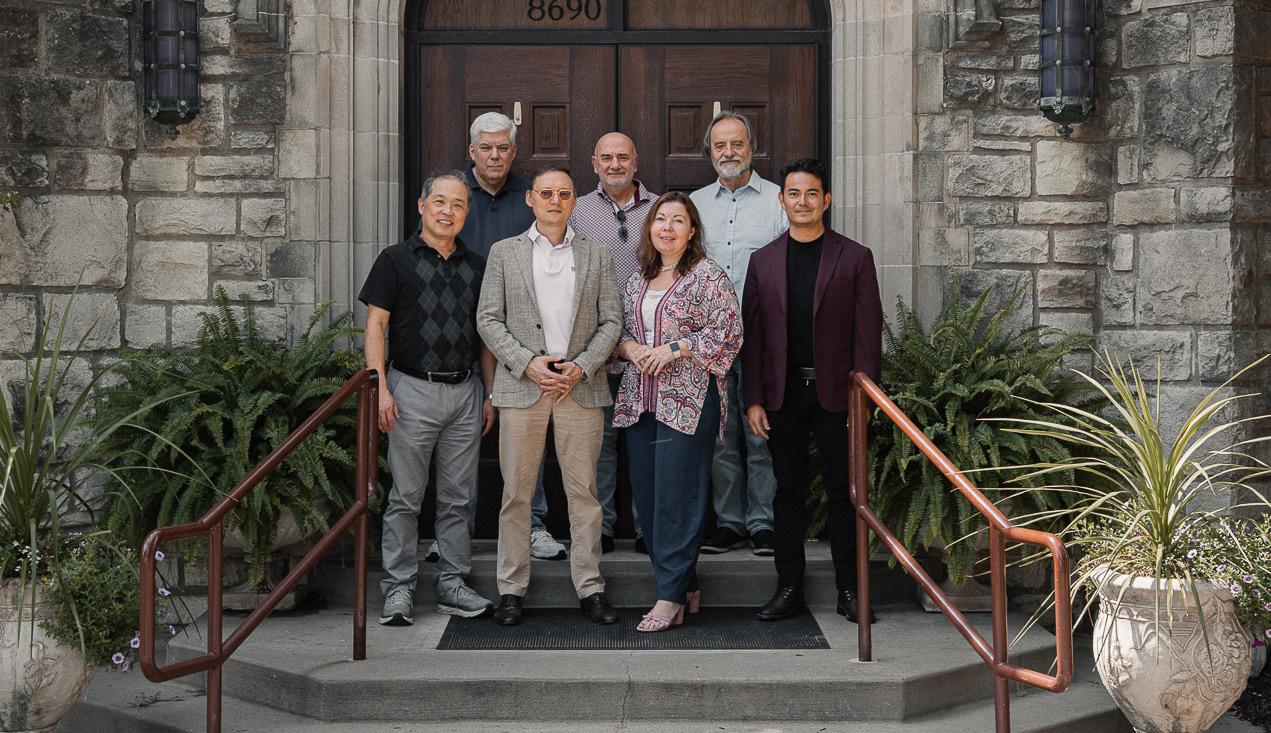
Stanislav Ioudenitch
Founder & Artistic Director
Piano Studio
Behzod Abduraimov Artist-in-Residence
Gustavo Fernandez Agreda
ICM Coordinator
Shmuel Ashkenasi
Distinguish Visiting Artist, violin
Peter Chun, Viola Studio
Christine Grossman Orchestral Repertoire, viola
Lolita Lisovskaya-Sayevich Director of Collaborative Piano
Steven McDonald Director of Orchestra
Ben Sayevich
Violin Studio
Daniel Veis
Cello Studio

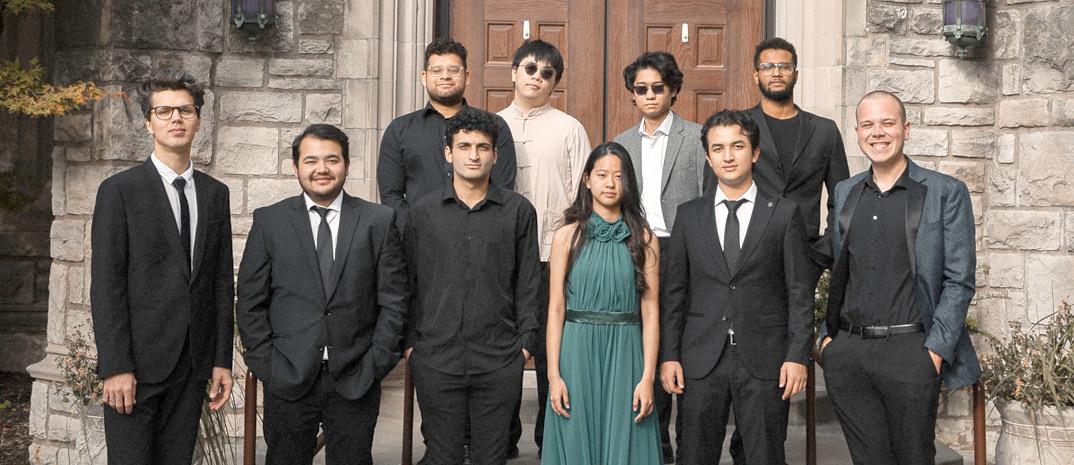
Park University International Center for Music Presents
Friday, April 24, 2026 | 7:30 p.m. | 1900 Building
Park ICM’s concert season continues with an esteemed lineup of string musicians under the tutelage of studio professors violinist Ben Sayevich, cellist Daniel Veis and violist Chung-Hoon Peter Chung. Our talented string students will take the stage to present a diverse and rich program, showcasing the broad spectrum and emotional depth of compositions written for string instruments. The Park Quartet will also make an appearance.

For additional information, visit ICM.PARK.EDU
General Admission $30. Students $10 with I.D.










The Patrons Society makes it possible for Park International Center for Music students to pursue their dreams of professional careers on the concert stage.
Our Patrons provide essential support for scholarships, faculty, and performance opportunities, ensuring world-class music thrives in Kansas City and beyond.
We are deeply grateful for the generosity of each member listed below.
Richard J. Stern Foundation for the Arts - Commerce Bank, Trustee *
Ronald and Phyllis Nolan *
Jerry M. White and Cyprienne Simchowitz
EXCEPTIONAL
Brad and Marilyn Brewster *
SUPREME
Commerce Bank *
Brad and Theresa Freilich
Barnett and Shirley Helzberg
Benny and Edith Lee *
John and Debra Starr *
Joe and Jeanne Brandmeyer *
Thomas and Mary Bet Brown *
Vincent and Julie Clark *
Stanley Fisher and Rita Zhorov *
Stephen L. Melton *
Mira Mdivani/Mdivani Corporate
Immigration Law Firm *
Susan Morgenthaler*
Rob and Joelle Smith
Nicole and Myron Wang *
Andrew and Peggy Beal *
Deborah Borek and David Wiseman *
Lisa Browar *
Rich Coble and Annette Luyben *
Paul S. Fingersh and Brenda Althouse *
Patty Garney *
David and Lorelei Gibson *
Ihab and Colleen Hassan *
Ms. Lisa Merrill Hickok
Robert E. Hoskins, ‘74 *
Walter Love and Sarah Good *
John and Jacqueline Middelkamp *
Patrick and Teresa Morrison *
Holly Nielsen *
Charles and Susan Porter *
James and Laurie Rote *
John and Angela Walker *
Barbara and Phil Wassmer *
Joyce Weiblen *
John and Karen Yungmeyer *
We gratefully acknowledge these donors as of March 25, 2026.
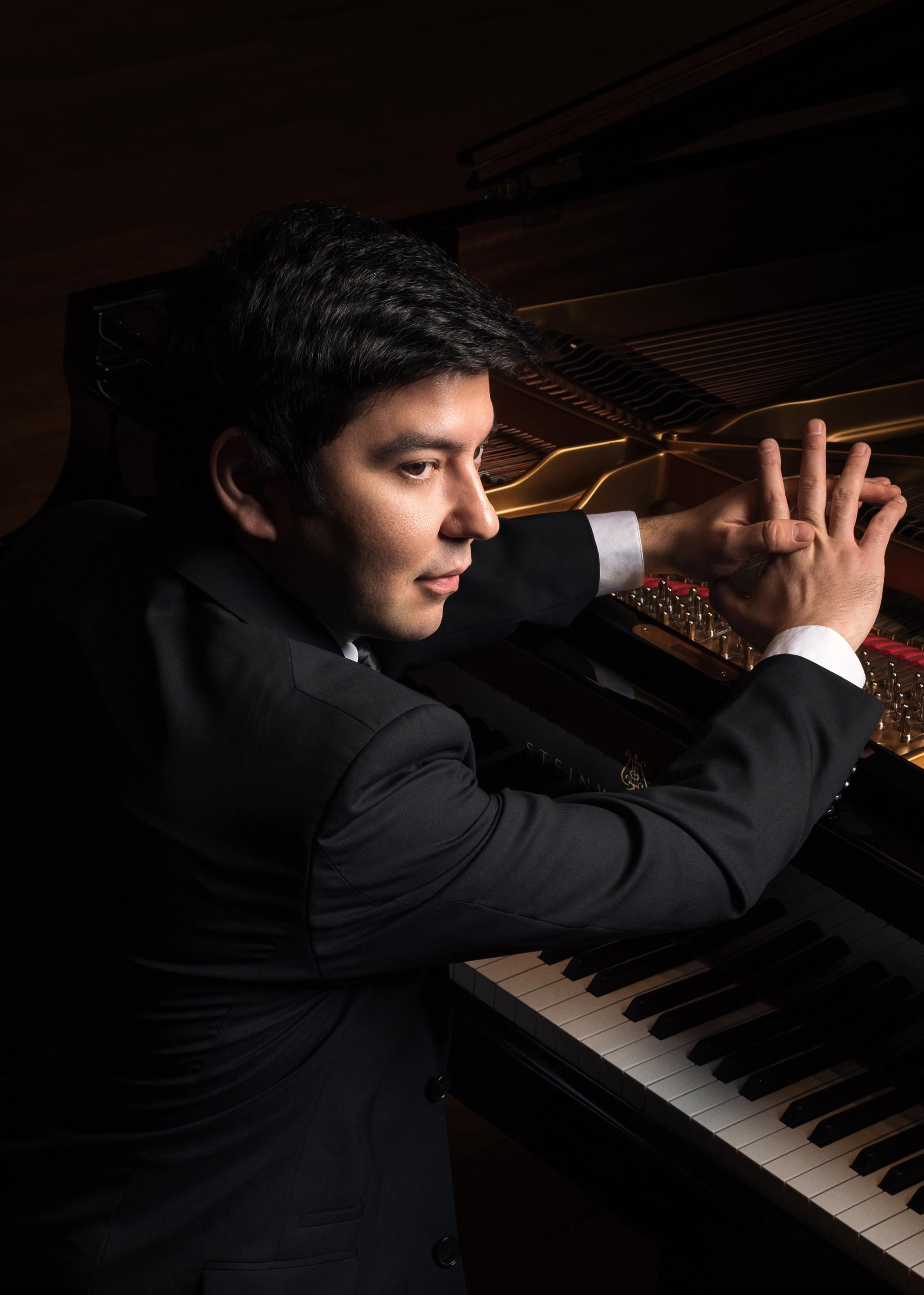

“Behzod Abduraimov has the magic touch.” The Times (UK)
Behzod Abduraimov’s performances combine an immense depth of musicality with phenomenal technique and delicacy. He performs with many of the world’s leading orchestras and conductors, and his critically acclaimed recordings have set a new standard. Abduraimov has a number of notable debuts in the 2025/26 season including with the New York Philharmonic and National Symphony Orchestra (Washington, D.C.).
THE 1900 BUILDING
Friday, May 1, 2026 • 7:30 P.M.