Park University International Center for Music Presents
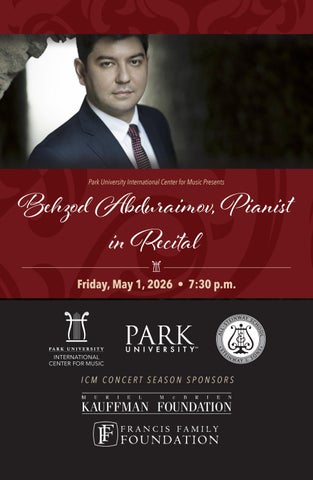
Park University International Center for Music Presents
Friday, May 1, 2026 • 7:30 p.m.

P ARK UN IVERS IT Y

ICM CONCERT SEASON SPONSORS





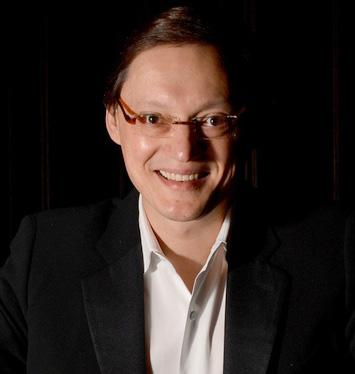
At Park University’s International Center for Music, our purpose is simple yet profound: to shape the future of classical music by nurturing extraordinary talent and sharing it with the world. Each season, our students — rising artists from across the globe — come to Kansas City to learn, perform and inspire. Their artistry enriches our community, connecting hearts through music and leaving a lasting impact far beyond the stage.
This season, we invite you to witness their brilliance alongside renowned guest artists and faculty who join us in advancing our mission. Every performance you attend supports not only world-class music, but also the dreams of the next generation of great musicians.
Thank you for believing in the transformative power of music and for being part of this remarkable journey with us.
With gratitude,

Stanislav Ioudenitch Founder and Artistic Director International Center for Music at Park University
Johannes Brahms (1833-97)
VARIATIONS
Carl Czerny (1791-1857)
...................................................................................................
Franz List (1811-86)
Prélude, Moderato tempo rubato
Menuet, Andante
Clair de lune, Andante très expressif
Passepied, Allegretto ma non troppo
Claude Debussy (1862-1918)
Igor Stravinsky (1882-1971)
Danse russe (Russian Dance)
Chez Pétrouchka (Petrushka’s Room)
La semaine grasse (The Shrovetide Fair)
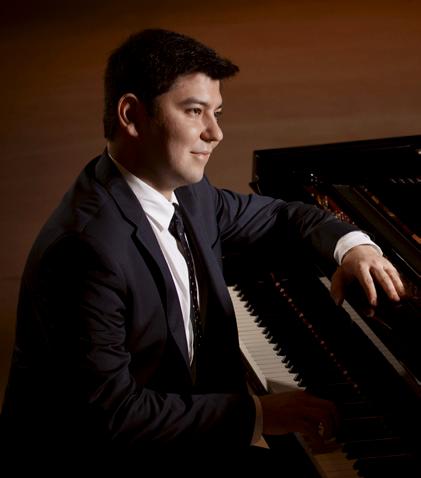
“Behzod Abduraimov’s performances combine an immense depth of musicality with phenomenal technique and delicacy. He performs with many of the world’s leading orchestras and conductors, and his critically acclaimed recordings have set a new standard for the piano repertoire. Behzod has a number of notable debuts in the 2025/26 season including with the New York Philharmonic and National Symphony Orchestra (Washington, D.C.), both with Gianandrea Noseda. Other concerto performances include Houston and Pittsburgh Symphonies as well as Orchestra dell’Accademia Nazionale di Santa Cecilia, Frankfurt Opern- und Museumsorchester and Hong Kong Philharmonic.”
The Times UK
Recital highlights this season include his fourth solo recital at Carnegie Hall’s Stern auditorium, a return to the Queen Elizabeth Hall in London as well as other appearances in the U.S. and Europe, including the Scherzo series in Madrid. He has performed in many of the most important international recital series presented by Alte Oper Frankfurt, Amsterdam’s Concertgebouw, CAL Performances (Berkeley, Calif.), La Società dei Concerti di Milano, Los Angeles Philharmonic, Seoul Arts Centre, Shanghai Concert Hall and Toppan Hall (Tokyo). He regularly appears at the leading international festivals including Aspen, La Roque Antheron, Lucerne, Ravello, Rheingau and Verbier. In September 2025, he opened the Tsanandali Festival with Tchaikovsky’s Piano Concerto No.1 at the invitation of Gianandrea Noseda and also gave two chamber music concerts.
Abduraimov has performed with leading orchestras including the Chicago Symphony Orchestra, The Cleveland Orchestra, Royal Concertgebouw Orchestra, Bamberger Symphoniker, Czech Philharmonic, Deutsches Symphonie-Orchester Berlin, Los Angeles Philharmonic, NHK Symphony,
Philharmonia Orchestra, Rundfunk-Sinfonieorchester Berlin, San Francisco Symphony and Wiener Symphoniker. Conductor collaborations include Semyon Bychkov, Constantinos Carydis, Gustavo Dudamel, Edward Gardner, Gustavo Gimeno, Jakub Hrůša, Stanislav Kochanovsky, Vasily Petrenko, Aziz Shokhakimov, Juraj Valčuha and Long Yu.
Abduraimov’s critically acclaimed recordings have won numerous international awards including the Choc de Classica and Diapason Découverte. He records for Alpha Classics. “Shadows of My Ancestors,” his second recital recording for Alpha Classics released in January 2024, features works by Ravel, Prokofiev and Uzbek composer Dilorom Saidaminova. It was recognized as a Gramophone Editor’s Choice, shortlisted for a Gramophone Award, and named one of Apple Music’s “10 Classical Albums You Must Hear This Month.” His first recital album for Alpha Classics in 2021 includes Mussorgsky’s Pictures at an Exhibition. In 2020, two of his albums were nominated for the 2020 Opus Klassik awards in multiple categories: Rachmaninov’s Rhapsody on a Theme of Paganini with Lucerne Symphony Orchestra under James Gaffigan, recorded on the composer’s own piano from Villa Senar for Sony Classical, and Rachmaninov’s Piano Concerto No.3 with Concertgebouw Orchestra, for the RCO live label.
Abduraimov’s recitals have been streamed and broadcast on international channels, including medici.tv, and a DVD of his 2016 BBC Proms debut (2016) with the Münchner Philharmoniker was released in 2018.
Born in Tashkent, Uzbekistan, in 1990, Abduraimov began playing the piano at the age of 5 as a pupil of Tamara Popovich at Uspensky State Central Lyceum in Tashkent. In 2009, he won first prize at the London International Piano Competition with Prokofiev’s Piano Concerto No.3. He is artist-in-residence at the International Center for Music at Park University where he studied with Stanislav Ioudenitch.
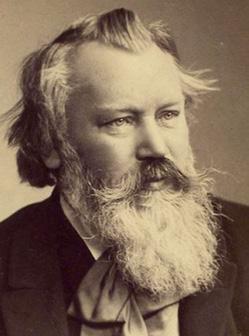
In the summer of 1890, the 57-year-old Brahms impetuously declared that the String Quintet, Op. 111 would be his final composition. “With this letter you can bid farewell to my music,” he wrote to his publisher, Simrock, later that year, “because it is high time for me to stop.” Though he was at the peak of his creative powers, with exaggerated finality he (allegedly) cleared his house of unfinished works, having “torn up and thrown a lot of manuscripts into the river.” But inspiration struck again in March 1891, when Brahms started to befriend the celebrated clarinetist Richard Mühlfeld, a member of the Meiningen Court Orchestra who was known for his particularly sweet and lyrical clarinet tone. With renewed enthusiasm, Brahms wrote four chamber masterpieces for Mühlfeld—the Clarinet Trio and Quintet and the two Sonatas for Clarinet (or Viola) and Piano, Op. 120.
But he was not finished. Returning to the piano, the instrument that had long occupied the center of his life, from 1891 to 1893 he produced four sets of character-pieces (Opp. 116, 117, 118, and 119) that plumb emotional depths that few piano works had explored by the early 1890s. These 20 pieces represent not just a crown on Brahms’ career, they stand as a sort of final bejeweled diadem of 19th-century piano music. “In these pieces, at last I feel musical life stir again in my soul,” wrote Clara Schumann of the Op. 117 pieces.
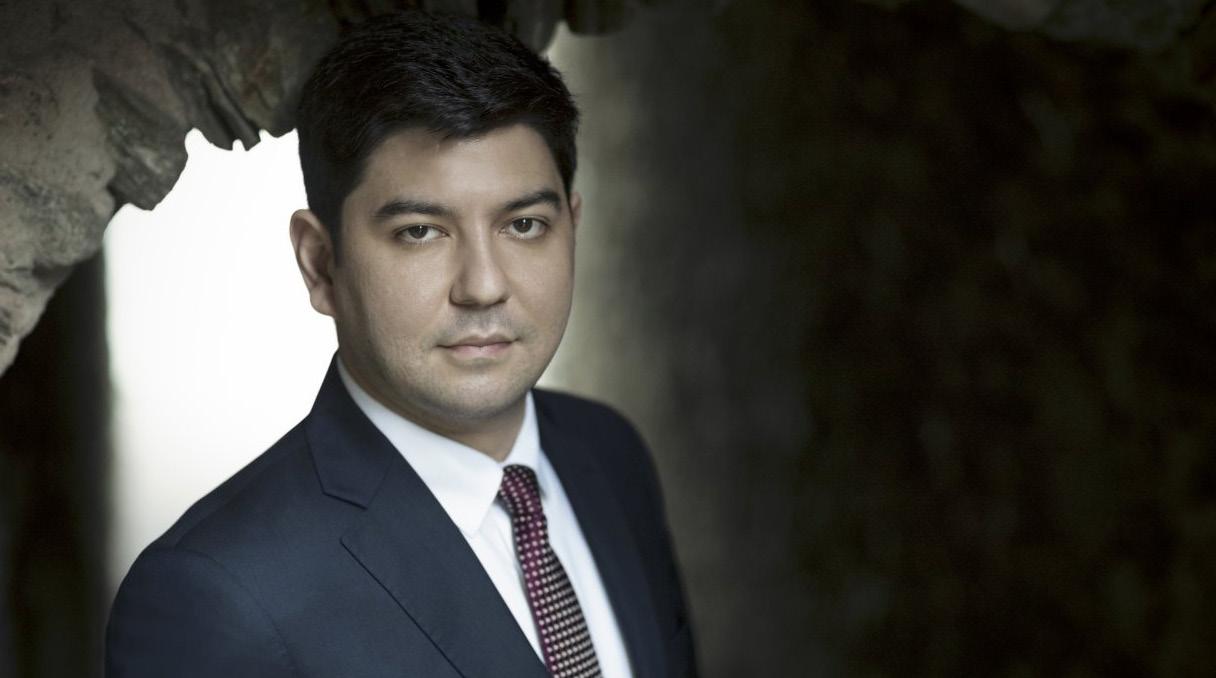
Photo: Damian Gonzalez
Most ernsthaft of all are the four pieces of Op. 119, four intermezzi and a rhapsody written in 1893 at the composer’s summer retreat at Bad Ischl. “Exceptionally melancholic … ‘to be played very slowly’ is not an understatement,” he wrote to Clara of the first piece of the set. “Every bar, every note must sound like a ritardando, as if one wanted to draw melancholy out of every passage.” This Intermezzo is indeed the closest Brahms came to the post-Romantic tonal “stretching” we were soon to hear from Mahler and the young Schoenberg. There is vigor among the tristesse in the second Intermezzo, and gentle humor in the third—giving credence to Clara’s statement that these works “combine passion and tenderness in the smallest of spaces.” The stately opening of the Rhapsodie (Brahms’ spelling) signals a sort of summing-up: This is indeed one of his subtlest and most marvelously crafted works.
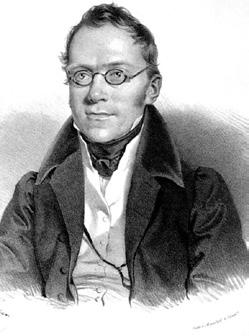
Czerny was born in Vienna into a musical family and first learned piano from his father, a gifted pianist, organist, and oboist of Czech heritage. Carl started piano at age three and by seven he was composing. At 10 he came to the attention of Beethoven, who was so impressed the lad’s gifts at the keyboard that he became his teacher and, later in life, a friend and colleague. Czerny was one of the major virtuosos of his day, and although he barely toured as concert pianist, he performed frequently in Vienna. He presented the premieres of several of Beethoven’s works, including the First and Fifth Piano Concertos and the Piano/Wind Quintet. His writings also became a valuable source of information about the composer and his world (On the Proper Performance of All Beethoven’s Works for the Piano, Recollections from my Life). Czerny was known by his contemporaries for his vibrant piano studio, established in the early 1820s: He worked out a system of pedagogy involving technical studies some of which are still in use today (School of Velocity, Op. 299, School of Virtuosity, Op. 365). Among his pupils were the young Franz Liszt, Beethoven’s reluctant nephew, Karl, and the 11-year-old Theodor Leschetizky. Many pianists of the 20th and 21st centuries can trace their pedagogic roots back to Czerny and his students.
Among Czerny’s 1,000 or so compositions are masses and other vocal works, symphonies, concertos, chamber music, and piano works. Many of his works help form a bridge between Classic and Romantic styles; large portions of his output remain unknown, accessible in manuscript only. Czerny was one of the first to title works études, a practice later taken up by Chopin, Liszt, and others. He composed nearly 200 sets of variations, among them the Variations on a Theme by Rode, completed around 1822 or 1823. It employs a winning Air varié attributed to the violin virtuoso and composer Pierre Rode. Czerny had recently heard the great Italian soprano Angelica Catalani perform vocal variations on this same theme: La Ricordanza refers to Czerny himself reminiscing about the event. The set was made popular in the 20th century by Vladimir Horowitz and others. It presents an elegant theme that is elaborated in five variations of increasing complexity—scales, argeggios, reharmonizations, and highly decorated melodies that enhance a sense of forward-motion. It concludes with a florid coda into which is tucked a reiteration of the theme.
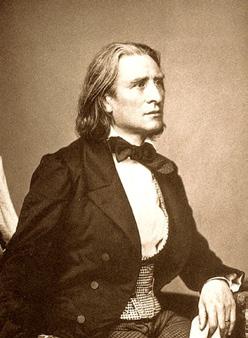
Après une lecture du Dante, fantasia quasi sonata” from Années de pèlerinage, deuxième année: Italie (Dante Sonata)
Literature stands at the center of a large portion of Liszt’s output. From the Faust Symphony to the Three Sonnets of Petrarch, from the Dante Symphony to tone poems such as Tasso (Byron), the range of sources reveals a literary appetite that was the norm for musicians of the 19th century. His two favorite sources were Goethe’s drama Faust and Dante Alighieri’s 14thcentury epic The Divine Comedy. Between 1855 and 1857 he composed symphonies inspired by each of these classics: ambitious, large-scale works with chorus. A few years earlier, Liszt had completed a one-movement piano work inspired by Dante that he called Après une lecture de Dante—“after reading Dante.” It drew its title from a Victor Hugo poem reflecting on impressions of reading Dante’s masterpiece.
Liszt’s piece also deals directly with the narrative of Dante and Virgil’s journey through hell, purgatory, and paradise. He produced a first version of the sonata in 1839, writing to his friend Marie d’Agoult that he was “so consumed” with his fragment dantesque that he canceled a scheduled trip to Naples. It was not until after his move to Weimar in 1849, where he spent the most productive years of his life, that Liszt would thoroughly revise and expand the sonata into the work we know today.
The sonata serves primarily as a sort of musical rumination on the poet’s journey. Hugo’s 33-line poem offers a general summary of things seen on this pilgrimage, the “white gnashing of teeth in the dark night … the visions, the dreams, the chimeras … ambition, pride, filthy lust, and infamous avarice.” Structurally the piece is “at once a single sonata movement and a multimovement sonata cycle,” as theorist Carl Dahlhaus has suggested. It begins with a harsh insistence on the tritone (Andante maestoso), the so-called “devil in music.” A Presto agitato assai of great turmoil gives way to a rapturous Andante—which is both second theme and a encapsulation of the joy experienced by those in heaven. After a glowering climax (Allegro moderato), the composer lifts us to a noisy, virtuosic conclusion in what (we hope) is to be our final resting-place in paradise.
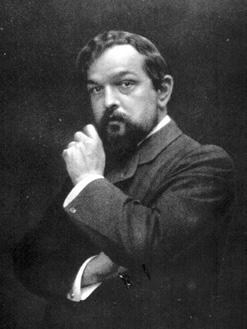
In the waning years of the 19th century and the first decade of the 20th, Debussy forged an aesthetic that strove to balance form and feeling, architecture and color. With works such as Pelléas et Mélisande, the orchestral works (Nocturnes, La Mer, and Ibéria), and piano works such as Images and the first book of Préludes, he established himself not only as France’s foremost composer but also as one of great innovators of modern times. The impact of his music on 20th- and 21st-century composers remains inestimable. “The seductive influence of Debussy’s style spread quickly throughout the Western world,” writes the scholar William Austin. So ubiquitous and natural is the dream-like, coloristic style Debussy created that some composers have written “Debussian” music without even realizing it.
The Suite bergamasque is pastoral in outlook and Chopinesque in texture, but unique in its free use of alternative scales. It was composed initially in 1890 but not published until 1905, by Fromont. Bergamasque here refers not to the dance from Bergamo but to a phrase in Paul Verlaine’s 1869 poem Clair de lune, whose ecstatic tone finds apt expression here—and whose title was used for the third piece in the set.
Your soul is an anointed landscape, where masques and bergamasques charmingly tread, playing the lute and dancing, and almost sad beneath their fantastical disguises.
Singing all the while in minor mode, of all-conquering love and privileged lives; it’s as if they do not believe in their good fortune, as their song mingles with the moonlight.
In the calm moonlight, sad and lovely, which makes birds dream in the trees, and sob ecstatic fountains of tears, great tendrils of water among the marble carvings.
The Prélude (Moderato tempo rubato) is the quintessential foray into the sensuous, impressionistic world of France around the turn of the 20th century. “The primary aim of French music should be to bring pleasure,” Debussy
famously said in 1904. The Menuet: Andantino is less dance than nocturne (or arabesque, some have suggested). The third movement (Claire de lune: Andante très expressif) is one of the most familiar of all piano works—a moment of stillness, perhaps, yet there is something disquieting about its cool sadness, a melancholy that seems to lurk beneath the surface. The spell is broken by the final Passepied, a gregarious dance in 4/4 (and F-sharp minor) that attempts to capture the brisk feel of, rather than the triple meter of, that traditional 18th-century dance.
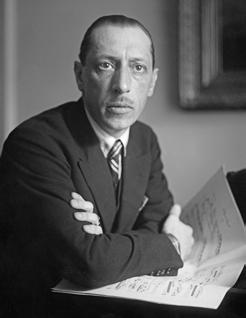
When Sergei Diaghilev visited Stravinsky in Switzerland in the summer of 1910, he expected the composer to have made progress on the score that was to be their next big collaboration after The Firebird, namely The Rite of Spring. Instead, he found the composer engrossed in another piece altogether. Realizing perhaps that the Rite was going to be a huge project, Stravinsky had been procrastinating at the keyboard, doodling with bitonal chords and crazy pianistic roulades for a new piece to be called Petrushka. He initially thought of the piece as a concerto-like work for piano and orchestra, “a sort of Konzertstück,” as he later stated. “I had in my mind a distinct picture of a puppet, suddenly endowed with life, exasperating the patience of the orchestra with diabolical cascades of arpeggi. The orchestra, in turn, retaliates with menacing trumpet-blasts ... and it ends in the sorrowful and querulous collapse of the poor puppet.” (The pianistic nature of this initial concept is, in part, why this transcription of three movements for piano felt like a natural progression.)
Diaghilev was pleased with what he heard, and he happily suggested to the composer that he turn the music into a ballet: the story of Petrushka, a sad and much-abused puppet who comes to life and meets a bad end. Vaslav Nijinsky danced the title role in the work’s premiere in June 1911, at Paris’ Théâtre du Châtelet, with Pierre Monteux conducting. It made a deep impression among the mystified public. Later that year Stravinsky returned to Rite, which would occupy him for another 18 months. In 1921, Artur Rubinstein paid Stravinsky a generous sum to create a three-movement piano suite, which has become one of the most popular works in the repertoire. It includes the “Russian Dance” that forms the final part of the ballet’s First Tableau; “Petrushka’s Room,” where the boy rails awkwardly against his dependence on the puppet-master; and a final sequence of dances (“The Shrove-Tide Fair”) in which the puppets come to life and Petrushka battles the Moor for his ballerina girlfriend. Unsuccessfully, as it turns out—although in the fulllength ballet his spirit returns to blurt out a taunting mockery of the whole affair.
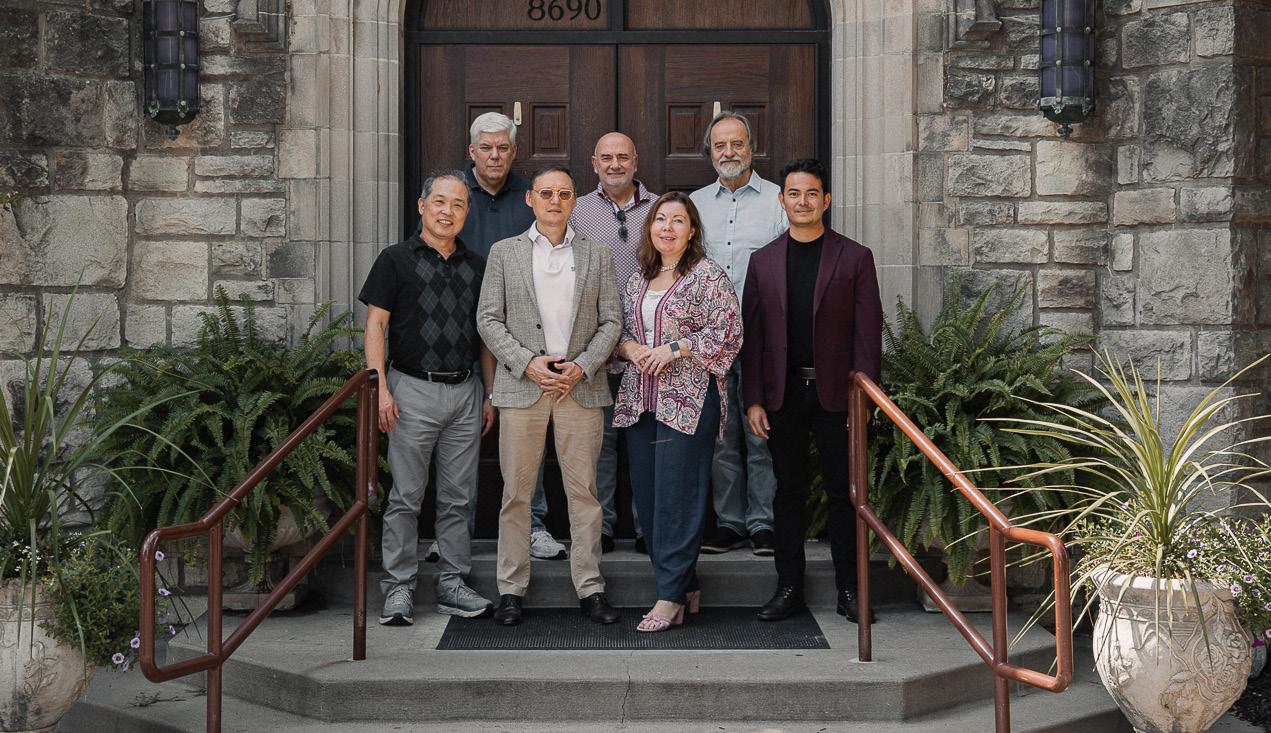
Gonzalez
Stanislav Ioudenitch
Founder & Artistic Director
Piano Studio
Behzod Abduraimov Artist-in-Residence
Gustavo Fernandez Agreda
ICM Coordinator
Shmuel Ashkenasi
Distinguish Visiting Artist, violin
Peter Chun, Viola Studio
Christine Grossman Orchestral Repertoire, viola
Lolita Lisovskaya-Sayevich Director of Collaborative Piano
Steven McDonald Director of Orchestra
Ben Sayevich
Violin Studio
Daniel Veis
Cello Studio
The Patrons Society makes it possible for Park International Center for Music students to pursue their dreams of professional careers on the concert stage.
Our Patrons provide essential support for scholarships, faculty, and performance opportunities, ensuring world-class music thrives in Kansas City and beyond.
We are deeply grateful for the generosity of each member listed below.
Richard J. Stern Foundation for the Arts - Commerce Bank, Trustee *
Ronald and Phyllis Nolan *
Jerry M. White and Cyprienne Simchowitz
EXCEPTIONAL
Brad and Marilyn Brewster *
SUPREME
Commerce Bank *
Brad and Theresa Freilich
Barnett and Shirley Helzberg
Benny and Edith Lee *
John and Debra Starr *
Joe and Jeanne Brandmeyer *
Thomas and Mary Bet Brown *
Vincent and Julie Clark *
Stanley Fisher and Rita Zhorov *
Stephen L. Melton *
Mira Mdivani/Mdivani Corporate
Immigration Law Firm *
Susan Morgenthaler*
Rob and Joelle Smith
Nicole and Myron Wang *
Andrew and Peggy Beal *
Deborah Borek and David Wiseman *
Lisa Browar *
Rich Coble and Annette Luyben *
Paul S. Fingersh and Brenda Althouse *
Patty Garney *
David and Lorelei Gibson *
Ihab and Colleen Hassan *
Ms. Lisa Merrill Hickok
Robert E. Hoskins, ‘74 *
Walter Love and Sarah Good *
John and Jacqueline Middelkamp *
Patrick and Teresa Morrison *
Holly Nielsen *
Charles and Susan Porter *
James and Laurie Rote *
John and Angela Walker *
Barbara and Phil Wassmer *
Joyce Weiblen *
John and Karen Yungmeyer *
We gratefully acknowledge these donors as of March 25, 2026.