Park University International Center for Music Presents
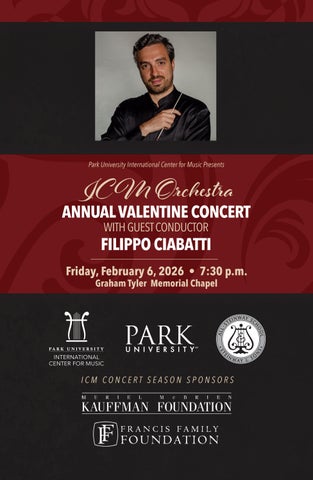
Park University International Center for Music Presents
Friday, February 6, 2026 • 7:30 p.m.
Graham Tyler Memorial Chapel

SPONSORS






At Park University’s International Center for Music, our purpose is simple yet profound: to shape the future of classical music by nurturing extraordinary talent and sharing it with the world. Each season, our students — rising artists from across the globe — come to Kansas City to learn, perform and inspire. Their artistry enriches our community, connecting hearts through music and leaving a lasting impact far beyond the stage.
This season, we invite you to witness their brilliance alongside renowned guest artists and faculty who join us in advancing our mission. Every performance you attend supports not only world-class music, but also the dreams of the next generation of great musicians.
Thank you for believing in the transformative power of music and for being part of this remarkable journey with us.
With gratitude,

Stanislav Ioudenitch Founder and Artistic Director International Center for Music at Park University
ICM Orchestra Annual Valentine Concert with Guest Conductor Filippo Ciabatti
................................................ George Frideric Handel (1685-1759)
A tempo giusto
Allegro
Adagio
Allegro
Allegro
Béla Bartók (1881-1945)
Allegro moderato
Allegro
Moderato
Moderato
Allegro
................................................................ Gustav Holst (1874-1934)
Jig: Vivace
Ostinato: Presto
Finale on “The Dargason”: Allegro
CHRYSANTHEMUMS
Giacomo Puccini (1858-1924)
Aaron Copland (1900-90)
Jan Sibelius (1865-1927)
Pyotr Ilyich Tchaikovsky (1840-93)
FIDDLE-FADDLE
Leroy Anderson (1908-75)
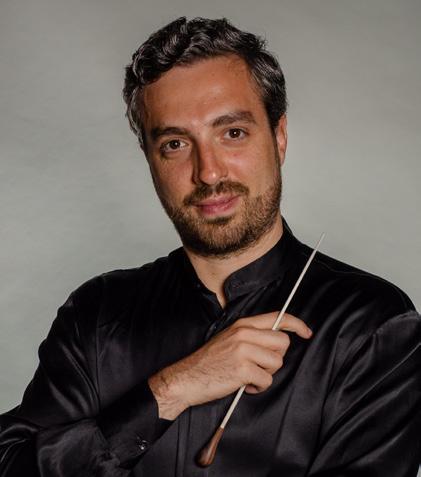
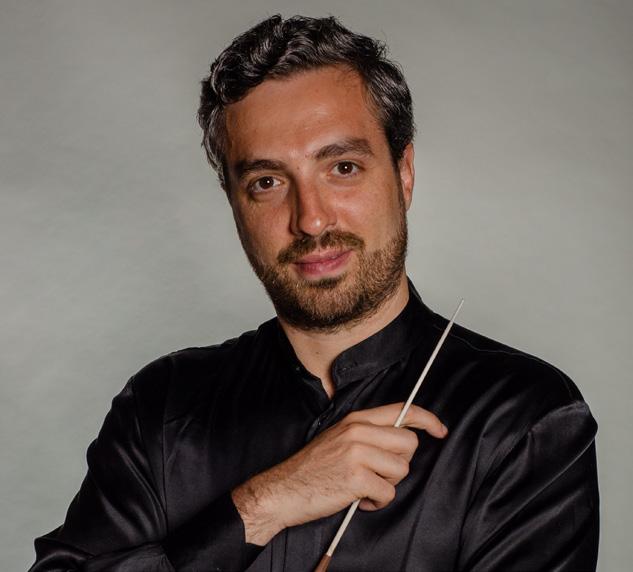
Praised for his “sensitive and nuanced” musicianship and for delivering performances “with admirable sweep and tension,” Filippo Ciabatti is a dynamic and versatile conductor with a multifaceted career.
A native of Florence, Italy, Ciabatti has appeared as a guest conductor with orchestras across Europe, North America and South America. and the Americas, and in summer 2024, he was awarded the Joel Revzen Conducting Prize and engaged to conduct the Festival Orchestra Napa (Calif.).
Ciabatti has collaborated with internationally renowned artists such as Gabriel Cabezas, Ray Chen, Nathan Gunn, David Kim, Tommy Mesa, Jean-Yves Thibaudet, Time for Three and Karen Walwyn. An advocate for contemporary music, he commissioned a cello concerto by Noah Luna, which aired on NPR’s “From the Top.” He also promotes cross-genre collaborations, having premiered a secular oratorio by jazz composer Taylor Ho Bynum and hosted MacArthur Fellow Tomeka Reid for a performance of her cello concerto.
In October 2023, Ciabatti was appointed assistant conductor of Boston Baroque, the first such appointment in the ensemble’s 50-year history. He is also the founding artistic director of Upper Valley Baroque (based in Hanover, N.H.), a professional orchestral and choral ensemble.
Equally at home in opera, Ciabatti is the music director of the Opera Company of Middlebury (Vt.), where he made his debut with a production of Fidelio in June 2023. He has also conducted productions with Opera North (N.H.) and the Lyric Theatre at Illinois, including Tosca, Madame Butterfly, A Midsummer Night’s Dream and Don Giovanni.
As director of orchestral and choral programs at the Hopkins Center for the Arts at Dartmouth College, Ciabatti has spearheaded innovative, cross-disciplinary projects, collaborating with the Martha Graham Dance Company and Associazione Figli d’Arte Cuticchio, an award-winning Sicilian puppet company. In 2018, he led the Dartmouth Symphony Orchestra on tour in Italy, performing Mahler’s Fifth Symphony at major festivals in collaboration with the Orchestra Toscana dei Conservatori.
Ciabatti is also an accomplished coach and collaborative pianist. He was on the faculty of Opera Viva! (Verona, Italy) for several seasons and he joined the Seagle Festival (N.Y.) faculty this summer. In addition, he has served as a vocal coach at institutions such as the Cherubini Conservatory, Florence Opera Academy and Maggio Musicale Formazione.
Ciabatti holds advanced degrees in piano, choral conducting and orchestral conducting from schools in both the U.S. and Italy. In 2018, he was a conducting fellow at the Aurora Music Festival (Sweden), and he won the American Prize in Conducting (college/university division) in 2021.
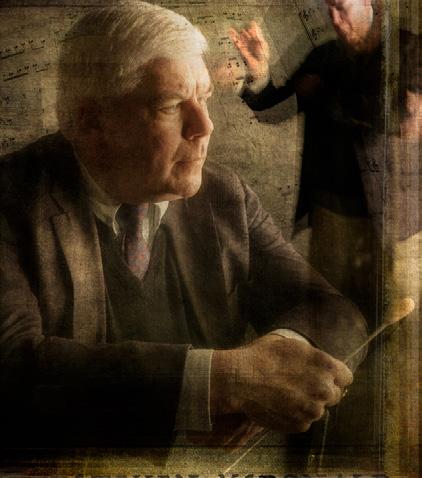
Originally from Reading, Mass., Steven McDonald, director of orchestral activities, has served on the faculties of the University of Kansas, Boston University and Gordon College. While in Boston, he conducted a number of ensembles, including Musica Modus Vivendi, the student early music group at Harvard University. McDonald also directed ensembles at the Massachusetts Institute of Technology, serving as founder and music director of the Summer Opera and Independent Activities Period Orchestra, and conductor of the MIT Chamber Orchestra and the Gilbert and Sullivan Players. At the University of Kansas, McDonald served as assistant conductor of the KU Symphony, and was the founder and music director of the Camerata Ensemble of non-music majors, and of the chamber orchestra “Sine Nomine,” a select ensemble of performance majors. Additionally, he has conducted performances of the KU Opera. He has also served as vocal coach at the Boston University Opera Institute and at Gordon College.
McDonald served as music director of the Lawrence (Kan.) Chamber Orchestra from 2007-14, during which time the group transformed into a professional ensemble whose repertoire featured inventive theme programs and multimedia performances. In 2009, he was selected to conduct the Missouri All-State High School Orchestra, and in 2011 was the first conductor selected as guest clinician at the Noel Pointer Foundation School of Music which serves inner-city students in Brooklyn, N.Y. An avid proponent of early music, McDonald has also taught Baroque performance practice at the Ottawa Suzuki Strings Institute summer music program, and regularly incorporates historically informed practice into his performances. McDonald is a graduate of the Boston University School for the Arts, the Sweelinck Conservatory of Amsterdam (The Netherlands) and the University of Kansas School of Fine Arts.
Violin I
STEVEN MCDONALD, MUSIC DIRECTOR
Mumin Turgunov, concertmaster*
Noelle Naito
Aviv Daniel
Yuren Zhang
Ilvina Gabrielian
Violin
David Brill, principal*
Yin-Shiuan Ting
Yiyuan Zhang
Nathan Humphrey
Jose Ramirez
Viola
Iana Korzukina, principal
Victor Diaz
Chung-Wen Lee
Kathryn Hilger
Cello
Fedor Solonin-Oliichuk, principal*
Diyorbek Nortojiev
Ainaz Jalilpour
Nikita Korzukhin, Otabek Guchkulov
Mardon Abdurakhmonov
Bass
Kassandra Ferrero
Minjoo Hwangbo
*=soloists in Handel
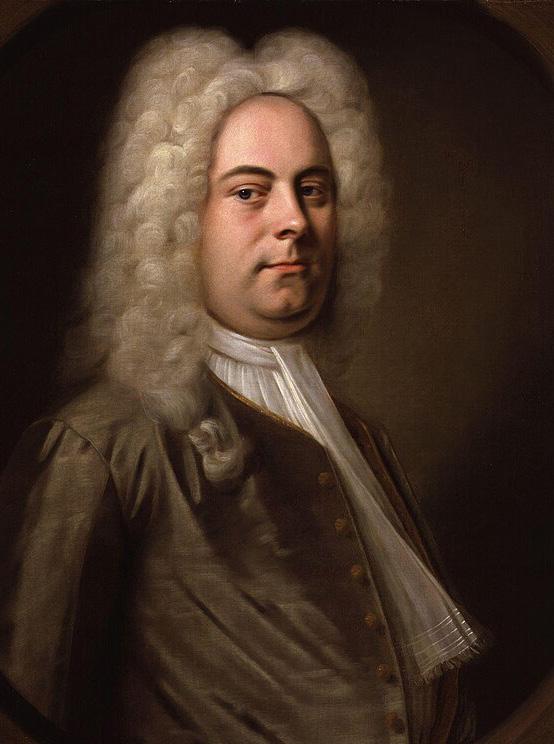
George Frideric Handel (1685-1759): Concerto grosso in G Major, Op. 6, No. 1
Handel suffered an alarming physical and (possibly) mental breakdown in April 1737, evidently the result of overwork, artistic failures, and near-bankruptcy. Even his beloved Italian operas, once fabulously popular in England, were waning in appeal, as the public began to embrace entertainment in English such as ballad operas. But the composer made a full recovery before returning to London to wrestle his way back into public favor. His series of oratorios in English (beginning with Saul, L’Allegro il Penseroso ed il Moderato, Israel in Egypt, Messiah, and Samson) displayed a fresh synthesis of German, Italian, French, and English musical styles.
This is relevant this evening because the series of inspired concertos Handel wrote during this period were designed, initially, to entertain and to sustain interest during intermissions of these oratorios. This concept had already grown in popularity with the twelve Organ Concertos, Op. 4, in performances of which the composer himself served as soloist—thus offering audiences something they could not experience at the rival Opera of the Nobility. Spurred by these successes, for the 1739-1740 season he composed twelve Concerti grossi for a wide range of formats, all but two of which were presented at oratorio premieres that season. They helped establish Handel—already recognized as a master of vocal styles—as a genius of instrumental music as well.
Accordingly, these works are extroverted almost to extravagance: Juxtaposing two solo violins and solo cello against the group, they strive to pack a maximum amount of content into the shortest space of time. The Concerto in G major, the first of the Op. 6 published in 1739, consists of five contrasting movements. The stately A tempo giusto
permits the three concertino instruments to establish their individuality before launching into a brilliant, outgoing Allegro. The Adagio, calling to mind the tristesse of an opera aria, leads into a contrapuntal Allegro and a spirited Gigue.
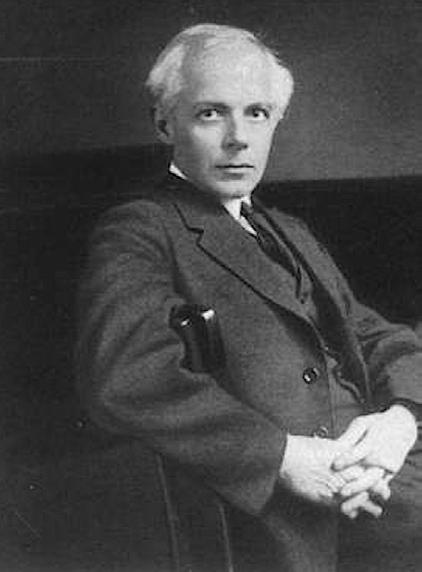
Before World War I altered the face of Central and Eastern Europe irrevocably, Béla Bartók spent several years researching, recording, and codifying the folk music of Hungary, Romania, Bulgaria, and even Turkey. He and his colleague, fellow composer Zoltán Kodály, were no armchair scholars: They traveled extensively throughout the villages of these regions, living in the field for long periods and establishing a model for later ethnomusicologists. The thousands of pages of meticulously transcribed tunes—complete with texts, commentary, and often accompanying recordings—still form the foundation of the study of this music.
Of course these studies impacted Bartók’s own music. Folk-inspired melodies form the solar plexus of nearly everything he wrote: Large-scale compositions employ tunes that are, if not actual quotations, at least inspired by folk melodies. Bartók also composed arrangements of actual folk tunes, and the Romanian Folk Dances fall into this category. He wrote the current set of six short tunes from Transylvania in 1915 and arranged them for small ensemble in 1917. Dance with Sticks is a solo dance for a young man, Waistband Dance draws on a spinning song, and On the Spot involves stomping in place. Hornpipe Dance evokes Middle Eastern flavor, Romanian Polka is a children’s dance, and Fast Dance is a couples “courtship” dance.
Photo: Emil Matveev
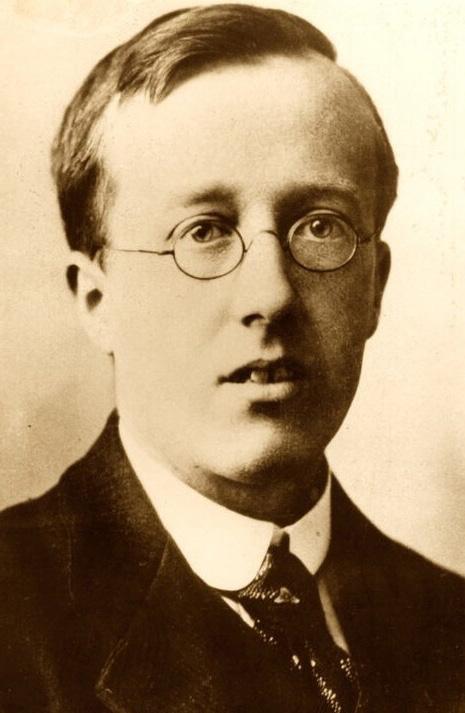
Circa 1901
Great Britain was blessed with at least five marvelous composers during the first half of the 20th century, of whom Elgar and Vaughan Williams have become a regular part of our concert life and Delius and Bax are making inroads. No British master is known through fewer works than Gustav Holst, who despite a large and excellent output (nine operas, four ballets, and dozens of works for chorus, orchestra, band, and chamber ensembles) remains for most listeners the author of the one work: The Planets. Born in England of Swedish and German parentage, Gustavus “von Holst” received his schooling at the Royal College of Music, where he studied with Charles Villiers Stanford. A severe case of neuritis forced him to give up his ambition of becoming a pianist. He took up composition and later played trombone in a professional opera orchestra: The latter was valuable experience for later ventures into orchestration.
The St. Paul’s Suite was written in 1913 to mark the opening of a new wing at St. Paul’s Girls School, where Holst served as music master for 30 years. The new building contained a sound-proof studio for the composer, who taught at the school nearly to his dying day. The Suite is cast in four brief movements. The opening Vivace is a lively Jig, and the playful Ostinato (Presto) tasks the second violins with providing the “perpetual motion” figure. The Intermezzo provides a moment of reflection, with a Vivace section alternating with dark solo passages. The Finale uses resourceful snippets of folk tunes (The Dargason, Greensleeves).
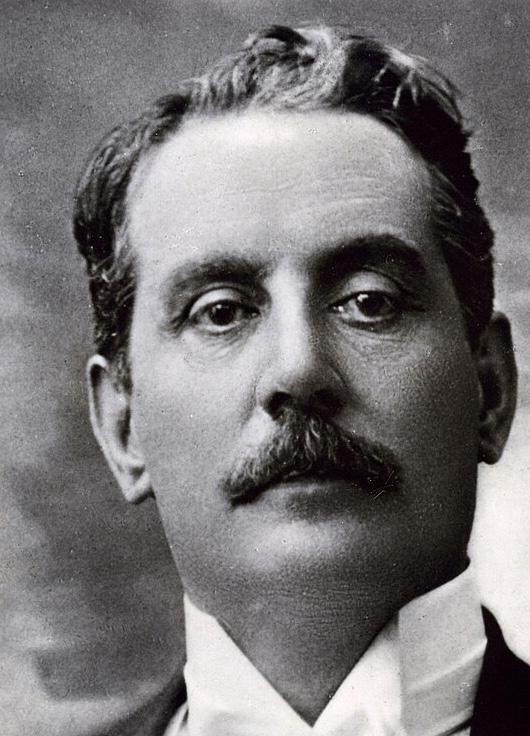
Giacomo Puccini (1868-1924): Chrysanthemums
A few years before he began composing the operatic masterworks that were to establish him as the primary Italian heir to Giuseppe Verdi, Puccini composed a handful of student works, including a Capriccio sinfonico written as a thesis for his studies at Milan Conservatory. His initial attempts at verismo operas (Le Villi and Edgar) brought him little success. But shortly after the failure of Edgar, he began the opera that would become his first hit, Manon Lescaut. No sooner was this underway than Amadeo I of Spain, the dynamic second son of the late Italian King Vittorio Emanuele II (1820-1878), died at the age of 44. Puccini wrote this dirge to commemorate the regent’s death, reportedly in a single night—white chrysanthemums being commonly used at Italian funerals. It was so well received at its premiere that Puccini used material from it in Manon Lescaut, which was already underway.
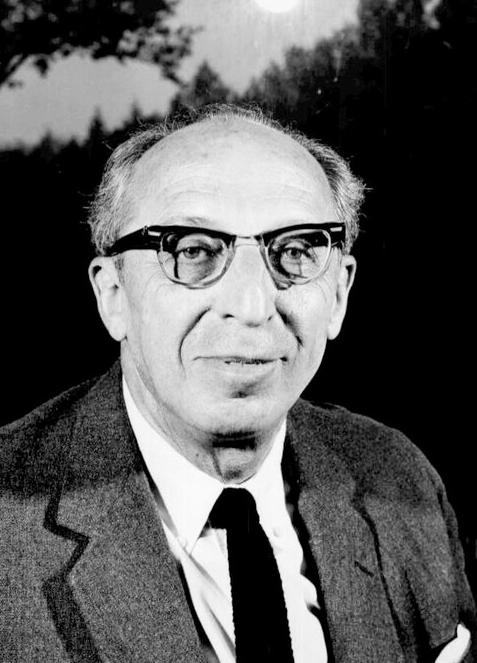
Aaron Copland (1900-90): “Hoedown” from Rodeo
When modern dance took hold in the United States, choreographers from Martha Graham to Doris Humphrey, Katherine Dunham to Agnes de Mille, sought out composers whose music was as adventurous as their dance. De Mille initially studied dance in Hollywood and later explored adventurous dance styles in New York and London. In the late 1930s she received a commission from the Ballets Russes de Monte Carlo, which was already presenting pioneering works of Léonide Massine, Michel Fokine and
Vaclav Nijinsky. De Mille’s choreography drew on a loose-limbed, whimsical style that had become her trademark, including horsebackriding gestures. She was adamant about enticing Aaron Copland into the commission—whose recent score for Billy the Kid seemed neatly attuned to what she had in mind.
Copland, who was going through a bit of a stylistic crisis himself, was looking for a simpler, more direct musical style than the modernism that had marked his works of the 1920. First performed in New York in 1942, Rodeo was as critical a moment for music as for dance: Its influential style helped solidify the fresh, open-air sound that would come to represent, for many, the American West. The “Hoe-Down” occurs toward the end of the ballet, when the Cowgirl spurns the headstrong Head Wrangler and instead dances with the gentle Champion Roper.
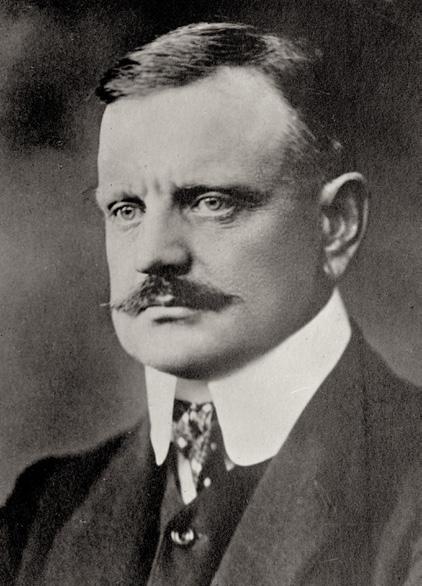
Photo by Daniel Nyblin
When Sibelius composed the humble Romance in 1904, he had spent a decade forging an epic orchestral style, in his first two symphonies, his Violin Concerto, and in symphonic poems of unprecedented scale and grandeur. Works such as En saga, the Lemminkäinen Suite and Finlandia had made him into a sort of native hero in Finland during the nationalistic years of the late 19th century. In early 1904 he and his wife, Aino, were building a country home outside Helsinki, Ainola, which would become their favorite residence for the next half century.
To fund the construction, Sibelius presented a series of concerts in Helsinki, Turku, and Vaasa but also in Tallinn, Latvia, and Estonia. It was on one such program, on March 26 in Turku, that the unusually moody and dark-hued Romance, Op. 42, was first performed, with the composer
conducting. The score bears a dedication to José Eibenschütz, who was music director of the Turku Philharmonic. The five-minute piece opens tenderly before presenting a central theme that builds to a welcoming climax and a tender resolution.

Throughout its history the serenade — initially designed as a musical greeting performed outside the home of one’s beloved — has retained something of the light-hearted serenity of its origins. By the late-19th century, the serenade had become an opportunity for composers to relax from the structural rigors of the “serious” symphony. The serenades of Brahms, Dvořák, and Tchaikovsky are works that call for supreme skill yet also permit a free, unfettered concentration on melodicism and charm.
Tchaikovsky, who said he often struggled with the formal aspects of large-scale works, welcomed the more relaxed genres of suite, serenade, or tone poem. His Serenade in C was completed in November 1880; Eduard Nápravník led the public premiere in St. Petersburg in October 1881. The music begins with a stately introduction that looks back to the 18th-century serenade. The first movement proper begins with a “Piece in the form of a sonatina,” which is to say a sonata-like structure, followed by a Waltz that contains all the flavor and charm of the composer’s beloved ballets.
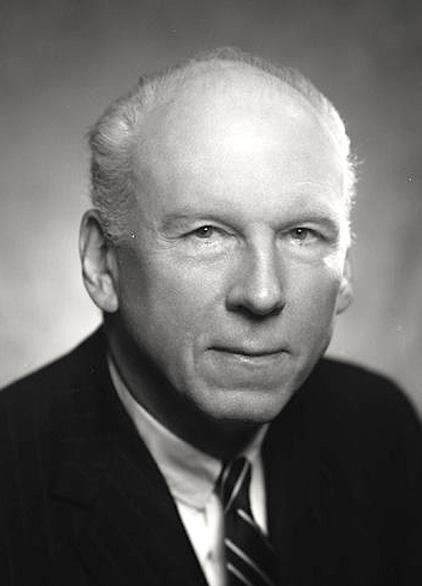
We often undervalue composers of light music, forgetting that it can take just as much mastery to write a perfectly crafted march or waltz as it does an excellent symphony. Leroy Anderson was a sort of American Johann Strauss Jr.—a classically trained pianist, conductor, composer, and arranger who happened to excel in what we think of as “pops” music. Born in Cambridge, Massachusetts, he studied composition at Harvard with Walter Piston, Edward Burlingame Hill, and George Enescu and worked toward a Ph.D. before enlisting in the U.S. Army. He wrote a few hit songs and during the 1950s even wrote music for the Broadway show Goldilocks.
But it was his association with Arthur Fiedler and the Boston Pops Orchestra that sent Anderson down a path of almost inadvertent immortality. His uncanny mastery of melodic craft and orchestral textures can be traced back to his formal training, but his musical sense of humor was all his own. Fiedler solicited works from him beginning in the 1930s, but it was not until the 1940s and ’50s that Anderson began writing the pieces for which he is best known: The Syncopated Clock, The Typewriter, Sleigh Ride, and Fiddle-Faddle.
First written for string orchestra and later arranged for full orchestra, Fiddle-Faddle received its first performance in March 1947, with Fiedler on the podium. Contrary to the implication in the punning title (a term for something silly or trivial), this piece is a seriously virtuosic workout for the strings, as the composer wrote: “The title of the composition shows that I intended an interpretation of this piece by violins, since string players can play faster and longer without tiring.”









The Patrons Society makes it possible for Park International Center for Music students to pursue their dreams of professional careers on the concert stage.
Our Patrons provide essential support for scholarships, faculty, and performance opportunities, ensuring world-class music thrives in Kansas City and beyond.
We are deeply grateful for the generosity of each member listed below.
Richard J. Stern Foundation for the Arts - Commerce Bank, Trustee *
Ronald and Phyllis Nolan *
Jerry M. White and Cyprienne Simchowitz
EXCEPTIONAL
Brad and Marilyn Brewster *
SUPREME
Commerce Bank *
Brad and Theresa Freilich
Barnett and Shirley Helzberg
Benny and Edith Lee *
John and Debra Starr *
Joe and Jeanne Brandmeyer *
Thomas and Mary Bet Brown *
Vincent and Julie Clark *
Stanley Fisher and Rita Zhorov *
Stephen L. Melton *
Mira Mdivani/Mdivani Corporate
Immigration Law Firm *
Susan Morgenthaler*
Rob and Joelle Smith
Nicole and Myron Wang *
Andrew and Peggy Beal *
Deborah Borek and David Wiseman *
Lisa Browar *
Rich Coble and Annette Luyben *
Paul S. Fingersh and Brenda Althouse *
Patty Garney *
David and Lorelei Gibson *
Ihab and Colleen Hassan *
Ms. Lisa Merrill Hickok
Robert E. Hoskins, ‘74
Walter Love and Sarah Good *
John and Jacqueline Middelkamp *
Patrick and Teresa Morrison *
Holly Nielsen *
Charles and Susan Porter *
James and Laurie Rote *
John and Angela Walker *
Barbara and Phil Wassmer *
Joyce Weiblen *
John and Karen Yungmeyer *
We gratefully acknowledge these donors as of January 14, 2026.
Your gift brings world-class music to life.
Your gift makes an impact:
Supporting scholarships that bring gifted students from around the world to Kansas City
Sustaining performances that connect our community to international artistry
Advancing communication and outreach that inspires the next generation of musicians
Ways to support Park ICM:
Annual Gifts - Every contribution, no matter the size, fuels our students’ success
Patrons Society - join with a commitment of $1,000 or more annually and enjoy the unique opportunities to connect more deeply with Park ICM
Sponsorships - support a concert, artist or special event and receive recognition for your leadership.
Planned Giving - leave a legacy through bequests, estate plans or endowed funds

Together our donations sustain Park ICM’s mission and ensure that the music continues for generations.
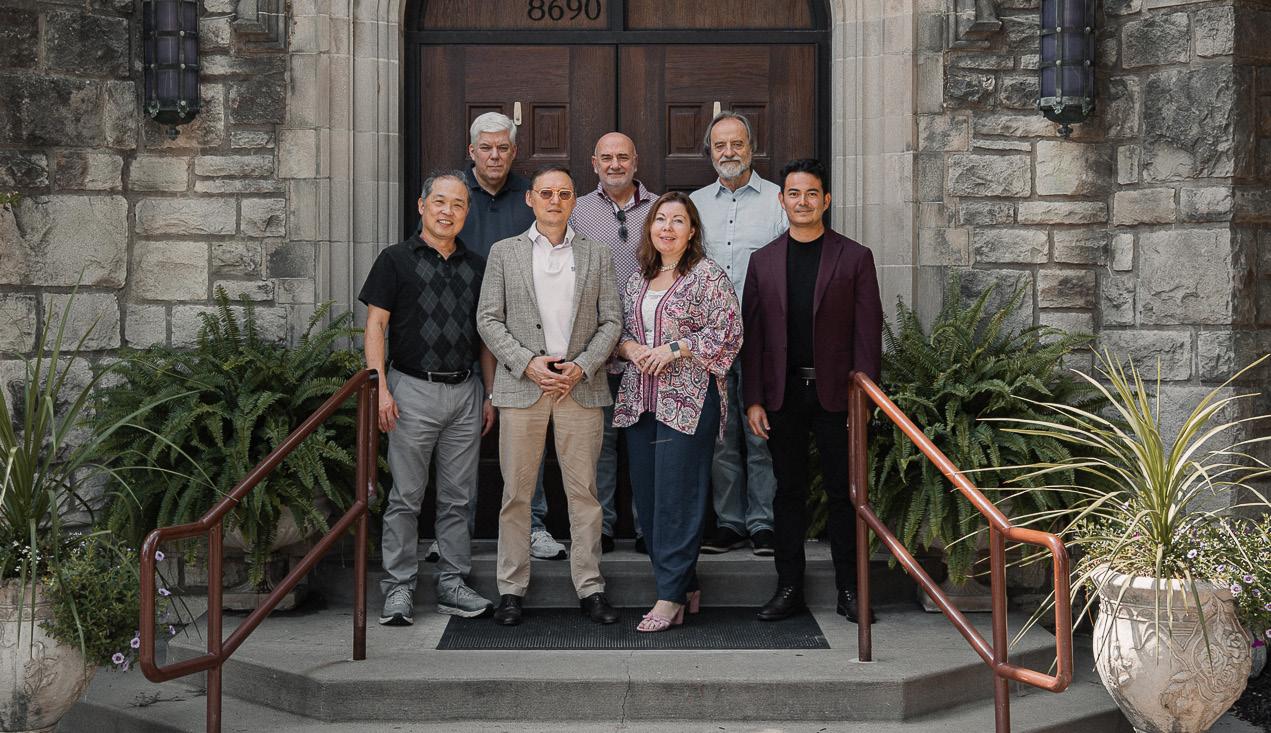
Stanislav Ioudenitch
Founder & Artistic Director
Piano Studio
Behzod Abduraimov Artist-in-Residence
Gustavo Fernandez Agreda
ICM Coordinator
Shmuel Ashkenasi
Distinguish Visiting Artist, violin
Peter Chun, Viola Studio
Christine Grossman Orchestral Repertoire, viola
Lolita Lisovskaya-Sayevich Director of Collaborative Piano
Steven McDonald Director of Orchestra
Ben Sayevich
Violin Studio
Daniel Veis
Cello Studio

PRESENTED
Experience an unforgettable evening of world-class artistry as Stanislav Ioudenitch, Park ICM founder and artistic director, joins acclaimed alumnus Michael Davidman ’21, winner of the 2025 American Piano Awards.
This year’s Stanislav & Friends will also recognize the distinguished career of Daniel Veis as he retires from the Park ICM faculty.
KAUFFMAN CENTER
Proceeds from the event support Park ICM’s renowned program and student scholarships, ensuring the continued excellence and impact of this world-class institution.
FOR THE PERFORMING ARTS