Insti-News is published by the Institute of Municipal Assessors with assistance from the Communications Services Committee, chaired by Justin Graham, A.I.M.A.
Any opinions or recommendations expressed in this issue are those of the contributors and do not necessarily reflect the views of the IMA.
Submissions
Interested in submitting an article?
Have a great idea for a hot topic? Make your submission to:
communications@theima.ca
Be sure to put “Insti-News Submission” in the subject line or contact the IMA office by phone to discuss.
Reprints
Written permission must be obtained before reproduction or use of any content.
Graphic Design
Harvey Visuals harveyvisuals.ca
Stay Connected
Contact
Institute of Municipal Assessors 16 Industrial Parkway South Aurora, Ontario, L4G 0R4
905-884-1959
1-877-877-8703 info@theima.ca
Photo credit: Jack Winbow
President’s Report
As I sit down to write my final President’s Report for InstiNews, I find myself reflecting on just how much our profession, and our association, has evolved over the past year. Serving as President of the Institute of Municipal Assessors has been both an honour and a privilege. It has given me the opportunity to connect with members from across Canada, hear firsthand about the challenges and opportunities facing the profession, and witness the passion, professionalism, and commitment that continue to define assessment practitioners across the country.
This past year has been one of momentum for the IMA. Together, we continued expanding the IMA’s national presence and strengthening relationships across the assessment and property taxation community. We deepened collaboration with partner organizations across Canada and internationally, while also beginning important conversations around how we work more collectively as a profession moving forward.
One of the highlights of the year was the continued growth of the IMA’s national and international learning initiatives. This year’s “Valuing Canada’s Future – Canadian Assessment Associations Summit” brought together 206 participants from across the country for important discussions on the future of assessment practice, collaboration, and emerging challenges facing the profession. The summit also reflected the growing spirit of collaboration among assessment organizations across Canada.
I want to recognize and thank the partner associations and organizations that contributed to these important conversations and continue to support stronger national dialogue within the profession. Bringing together professionals from different jurisdictions and perspectives creates valuable opportunities to learn from one another while strengthening the profession collectively.
We also partnered with IPTI once again to host the International Virtual Symposium – Embracing Global Innovation, which welcomed 239 participants from Canada and around the world. The level of engagement and participation in these events reinforced the growing appetite within the profession for collaborative dialogue, practical learning, and forwardlooking conversations around innovation, technology, ethics, and public trust.
These events also demonstrated something I knew all along: while jurisdictions may differ, many of the challenges and opportunities facing assessment professionals are increasingly shared. Bringing professionals together to exchange ideas and experiences continues to be one of the IMA’s greatest strengths and one of the most important ways we can support the profession moving forward.
Drew Samuels M.I.M.A. President Institute of Municipal Assessors
A major focus this year was the growing impact of technology and artificial intelligence on our profession. Through webinars, ethics sessions, symposium discussions, and ongoing dialogue, the IMA has worked to ensure these conversations remain grounded in professional responsibility, transparency, accountability, and public trust. While tools and technologies will continue to evolve, our profession’s foundation must remain rooted in ethical judgment, tenable practice, and service to the public.
This year also saw the official launch of the IMA’s national mentorship program through the Mentorship Rocket platform, developed in collaboration with partner assessment associations across Canada. The program is designed to connect professionals across jurisdictions, experience levels, and areas of practice in a more flexible and accessible way. Early participation and feedback have been incredibly encouraging and reinforce the importance of creating stronger connections within the profession.
I encourage members interested in participating as either mentors or mentees to learn more at https://mentorshiprocket.com/PAX .
I am inspired that this year’s conference in Windsor will mark the launch of the IMA’s new Emerging Professionals Committee. This initiative reflects an important investment in the future of the profession and creates a dedicated space for newer professionals to connect, contribute ideas, and help shape the future direction of the IMA and the broader assessment community. Supporting and empowering the next generation of leaders will be critical to the continued strength of our profession.
We also continued important work around education and professional standards. The ongoing collaboration with the UBC Real Estate Division and the broader discussions around the future of assessment education have created valuable opportunities to better understand the evolving competencies required within the profession. These conversations will help ensure the IMA continues to support members not only today, but well into the future.
Another area that stands out to me is the increasing role the IMA is playing as a catalyst for professional dialogue. Whether discussing reassessment challenges, emerging technologies, ethics, public trust, valuation complexities, or legislative issues,
the IMA continues to create space for thoughtful, respectful, and forward-looking conversations across the country. That role matters.
From my vantage point, we are facing a pivotal and consequential moment in our evolution. The pace of technological change, evolving public expectations, workforce transitions, and increasing complexity within the property assessment landscape will require all of us to continue adapting and learning. At the same time, these changes create enormous opportunities for innovation, collaboration, and professional growth. I have every confidence that this profession is well positioned to meet those challenges.
What has impressed me most throughout this year, however, is the resilience and professionalism of our members. Assessment professionals continue to work in increasingly complex environments, expectations continue to grow, technology continues to accelerate, and public scrutiny remains high. Despite this, across the country, our members continue to approach their work with integrity, professionalism, and an unwavering commitment to fairness and public service. That commitment deserves recognition.
As I prepare to conclude my term as President, I want to sincerely thank the many volunteers, District Executives, committee members, instructors, mentors, speakers, and Board members who contribute their time and expertise to support the IMA and the profession as a whole. Our association is only as strong as the people willing to step forward and contribute, and I continue to be inspired by the dedication shown by so many within our community.
I also want to thank the IMA head office team for their continued dedication, professionalism, and commitment throughout the year. The amount of work happening behind
the scenes to support members, volunteers, education, events, and operations is significant, and I am deeply appreciative of their efforts.
What continues to give me confidence in the future is the people within this profession. Across Canada, I continue to see professionals who care deeply about fairness, public service, collaboration, and continuous improvement. That foundation matters, and it is what will continue to move our profession forward.
The future of assessment will not be shaped by technology alone. It will be shaped by professionals who are ethical, adaptable, collaborative, and committed to serving the public with integrity.
As I conclude my term as President, my message to members is this: stay curious, stay engaged, and continue investing in your professional growth. Continue asking difficult questions. Continue embracing innovation thoughtfully and responsibly. Most importantly, continue supporting one another.
It has been my pleasure to serve as your President this past year. It has truly been a privilege.
As summer begins, I wish everyone a safe and enjoyable season. I am excited to move into the Past President role and continuing to contribute to the profession and the IMA in the future.
Drew Samuels , M.I.M.A. IMA President
Photo credit:
Hun ter Shroeder
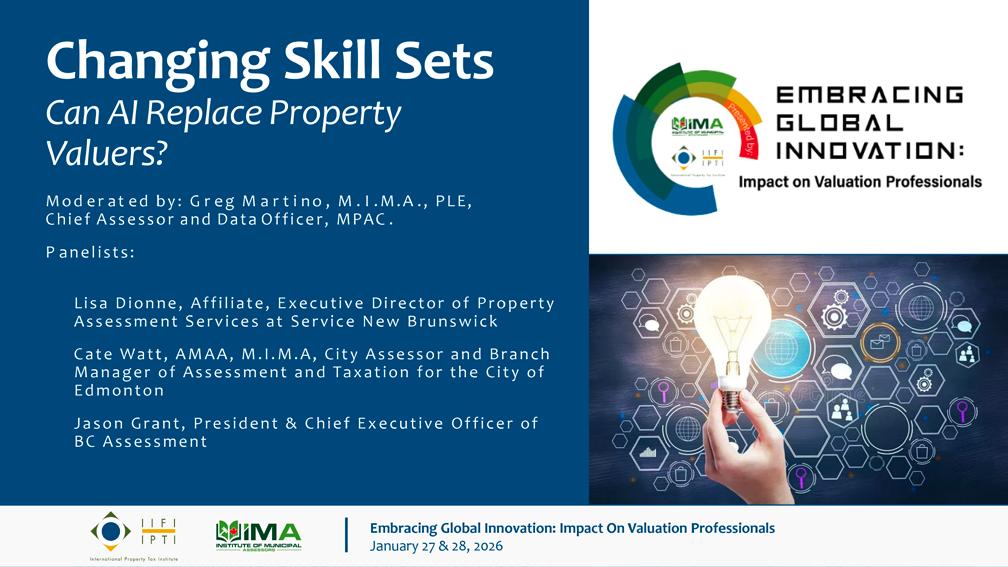
Can AI Replace Property Valuers?
Reflections from the 2026 IMA–IPTI Global Innovation Symposium
At the January 2026 joint Global Innovation Symposium hosted by the Institute of Municipal Assessors (IMA) and the International Property Tax Institute (IPTI), I had the opportunity to moderate a panel discussion that examined a question that is increasingly relevant to assessment professionals: Can artificial intelligence (AI) replace property valuers?
The session brought together senior leaders from across Canada, including Lisa Dionne, Executive Director of Property Assessment Services at Service New Brunswick; Cate Watt, City Assessor and Branch Manager of Assessment and Taxation for the City of Edmonton; and Jason Grant, President and CEO of BC Assessment. The discussion focused on how AI is beginning to influence assessment practices, and what these developments mean for the profession.
AI in Property Assessment: From Exploration to Application
A key theme emerging from the discussion was that AI is no longer a conceptual or future consideration. It is here and, like organizations in other industries, assessment organizations are actively exploring and, in some cases, implementing AI-assisted tools to support operational efficiency, data management, and workflow optimization.
Jason Grant highlighted several practical applications currently being considered at BC Assessment. These include the use of AI to process large volumes of inbound data, identify inconsistencies in records, recognize similar property identifiers, and support imagery analysis and verification processes. While these applications are largely operational in nature, they can deliver meaningful efficiencies in jurisdictions responsible for maintaining large property inventories.
Despite these advancements, Jason emphasized that AI is not expected to replace assessment professionals. Drawing parallels to the introduction of earlier technologies, he noted that the profession has historically leveraged innovation to enhance business processes while continuing to rely on professional expertise and judgment. In this context, AI is another enabling tool—one that can reduce the administrative burden providing professionals with additional time to focus on higher-value analytical work.
Value of the Professional in a Technology-Enabled Environment
The panel consistently reinforced the importance of professional expertise and oversight within an increasingly technologyenabled environment.
Cate Watt underscored the growing importance of adaptability and the evolving skillset required within the profession.
Greg Martino M.I.M.A., PLE IMA Past President
Chief Assessor and Data Officer
Municipal Property Assessment Corporation
She emphasized that while technical competencies remain important, the ability to apply professional standards, ethics, and critical thinking to the decision-making process is becoming even more essential.
As Cate noted, the value of the expert and the profession lie not only in technical execution, but in the ability to interpret results, understand context, and make insightful decisions. She cautioned against overreliance on automated outputs, highlighting that conclusions must be critically assessed rather than accepted at face value. Simply put, “the model told me” is not a defensible answer. The ability to explain and justify valuation outcomes remains fundamental to maintaining credibility, public confidence, and trust in the system.
Accountability and Maintaining Public Trust
The discussion also highlighted the importance of transparency, explainability, and accountability in assessment practice.
The industry and assessment organizations operate within established frameworks grounded in professional standards, ethics, and public accountability. While, as a tool, AI may support elements of the valuation process, panelists agreed that responsibility for the final assessment outcome remains with the professional.
Lisa Dionne emphasized the continued importance of human oversight, noting that the application of professional judgment is essential to ensuring quality and accountability. She further observed that, despite technological advancements, local knowledge and contextual understanding remain critical components of the assessment process.
The panel also acknowledged the uncertainty that can accompany rapid technological change. However, it was broadly agreed that the foundational principles of the profession— particularly those related to professional standards, ethics, and accountability—provide a strong basis for navigating this evolution.
The Importance of Explainability and Public Engagement
An additional area of focus was the role of explainability in maintaining public confidence and trust.
Jason Grant noted that, notwithstanding the adoption of new technologies, BC Assessment continues to prioritize direct engagement between property owners and knowledgeable staff. These interactions are essential for explaining valuation outcomes, addressing inquiries, and providing context related to local market conditions.
This emphasis reflects a broader recognition that, while technology can enhance processes, effective communication remains critical to public confidence in the assessment system. While technology can streamline a business process, trust is built through understanding – and understanding is often built through people.
Emerging Considerations: Disclosure and Governance
The panel also explored emerging questions related to AI governance and disclosure. These included considerations such as how AI should be defined within the context of assessment practice, what level of transparency is appropriate, and how organizations can balance innovation with accountability.
Cate Watt noted that assessment organizations have long relied on various forms of modeling and analytical tools, and that distinguishing AI from existing methodologies may not always be straightforward. She emphasized the importance of
clearly defining objectives and standards before establishing formal disclosure requirements.
Positioning the Profession for the Future
A consistent message throughout the discussion was that the assessment profession is well positioned to respond to these developments while continuing to flourish and add value to stakeholders.
The profession’s established foundations—rooted in professional standards, ethics, transparency, public accountability and trust— align closely with the principles required for the responsible use of AI. Professional associations, including the IMA, have an important role to play in supporting this evolution through knowledge sharing, standard setting, and the development of appropriate ethical frameworks.
Conclusion
While AI will continue to influence and evolve assessment practices, the panel concluded that professionals will continue to play a critical role. The core elements of the profession— professional judgment, critical thinking, ethical decisionmaking, and accountability—remain essential.
As technology continues to evolve, maintaining public trust will depend not only on the tools used, but on the expertise and integrity of the professionals applying them. Trust will always depend on the people behind the work.
Photo credit: Introspective Design
Award Winners IMA Recognition Awards
M.I.M.A.
W.J.
M.I.M.A. category
This award is truly an honour. I am deeply grateful to the many mentors and colleagues in assessment who have guided and supported me throughout my career. Earning a senior assessment designation has been an important milestone for me, not simply because of the credential itself, but because of the growth, discipline, and confidence gained along the way.
To those earlier in their professional journey, I encourage you to pursue your next step. The process can be challenging, but the opportunities, credibility, and personal development it brings are well worth the effort.
W.J.
A.I.M.A. category
I am honoured to receive the W. J. Lettner Memoria Award. The A.I.M.A. program provided an excellent opportunity to deepen my understanding of property assessment theory and practice.
I appreciate the recognition and look forward to continuing to build on this knowledge through further professional development.
M.I.M.A.
M.I.M.A. category
I am honoured to receive the Larry Hummel Award this year. It means a lot to me. Taking on four courses through the Fast Track Program was a heavy load, but this makes me feel like hard work does pay off!
I want to thank the IMA for all the opportunities they have given me throughout the years. I look forward to continuously learning and advancing my career with the help of the IMA.
I hope others take advantage of the Fast Track Program and all the education the IMA offers. The assessment knowledge I’ve gained through these courses is truly invaluable and has helped to make me a more confident assessor.
Larry Hummel Award
Robyn Anderson
Lettner Memorial Award
Jashen So
Lettner Memorial Award
Michelle Paquette A.I.M.A., OCT
Photo credit: Burst
Larry Hummel Award A.I.M.A. category
Winning the Larry Hummel Award is incredibly meaningful to me, and I’m very grateful to the IMA for this recognition. Completing the A.I.M.A. fast track program allowed me to earn my designation efficiently while continuing to grow professionally in the property assessment field.
The program gave me valuable knowledge, confidence, and a strong foundation that I continue to apply in my work every day. I’m proud to be part of a profession that values learning, growth, and service, and I’m honoured to receive this award.
Thank you to the IMA for awarding me the 2026 Carl B. Davis Award for Excellence. I am deeply honoured and truly privileged to receive this recognition. Being selected for such a distinguished award is both humbling and meaningful, and I extend my sincere appreciation to the IMA for this acknowledgement.
I would also like to recognize and thank the exceptional educators, mentors, and peers who have supported and guided me throughout my journey. Their knowledge, encouragement, and commitment to excellence have played a significant role in shaping my professional development and continued growth. This achievement is a reflection not only of my efforts, but also of the strong support system that has surrounded me.
Receiving this award has further strengthened my commitment to advancing within the profession and completing my journey toward becoming a fully accredited member of the IMA. It has also inspired me to give back by seeking opportunities to support, mentor, and encourage new and prospective members as they navigate their own IMA paths.
I am sincerely grateful for this recognition and for the honour and distinction it represents. I look forward to continuing my professional journey with dedication, and a commitment to excellence.
Kirsten Johnstone A.I.M.A.
Carl B. Davis Award
Ajay Maudhoo M.I.M.A.
Award Winners Seneca College Awards
Changing careers is rarely easy, but receiving the Mario Vittiglio Achievement Award has been the ultimate validation that I am exactly where I’m supposed to be. I’ve poured my heart into the Real Property Administration program at Seneca Polytechnic, and being recognized as the top student is an incredible honor that has helped me build more trust in myself.
This award represents more than just academic success; it represents a bridge between my past experience and my future goals within the IMA. I am deeply grateful for the supportive environment at Seneca and for the IMA’s commitment to recognizing the hard work students put in. This recognition fuels my drive to complete my designations and contribute to our industry with the same passion that brought me here.
Thank you for this honour, it means the world to me.
Receiving the Christian G. Schulze Award for Excellence is a deeply humbling milestone. To me, this recognition validates a long-standing commitment to the complexities of property assessment and the challenging work involved in appeals.
I am incredibly grateful to the faculty at Seneca Polytechnic for their guidance; this award is as much a reflection of their mentorship as it is of my own dedication. My sincere thanks also go to IMA for this honour; it is a true privilege to be recognized by this community as I continue to advocate for excellence and integrity in our profession.
Mario Vittiglio Achievement Award
Peace Park
Christian G. Schulze Award
Photo credit: Andrew Scozzari
Simmi Gaind
IMA Assessors Recognition Awards
I’m truly grateful to receive this recognition from the Institute of Municipal Assessors. I would also like to sincerely thank the Seneca RPA faculty for their support, guidance, and encouragement throughout the program. This recognition means a great deal to me, and I couldn’t have reached this point without their mentorship.
Through the RPA program, I was able to build a strong foundation in property assessment and gain a deeper understanding of the profession. The support and insight from both Seneca and the IMA have not only strengthened my knowledge, but also inspired me to pursue this field with confidence and a sense of purpose. I’m very thankful for the opportunity and encouragement I’ve received along the way.
I am honoured to receive the IMA Assessors Recognition Award, a milestone that I share with the incredible RPA faculty members at Seneca Polytechnic. This award is a direct reflection of the mentorship and wisdom shared by my professors, who didn’t just teach the curriculum but truly invested in my professional development. Their expert advice and willingness to share real-world industry insights gave me the confidence to excel in this field.
I am profoundly grateful for their guidance, which has become the foundation of my career and this recognition.
Receiving the IMA Assessors Recognition Award is truly meaningful to me. It’s a reminder that the day-to-day work of assessment, being fair, accurate, and respectful, has a real impact on people and communities. I’m grateful for the professors and my class from Seneca who supported me, challenged me, and helped me grow.
This recognition motivates me to keep learning and to continue contributing with integrity and professionalism.
Bill Choi
David Bui
Jiahao Li
Property Taxation After Cowichan From Uncertainty to Response
by Paul Sullivan Principal – Practice Leader Advocacy and Tax Policy Canada Ryan ULC
When the British Columbia Supreme Court released its decision in Cowichan Tribes v Canada (Attorney General), 2025 BCSC 1490 (“Cowichan Tribes”) in August 2025, the immediate focus was on its legal significance. Recognition of Aboriginal title over a developed area of Richmond, combined with findings that aspects of Crown-granted title were defective, marked a notable development in Canadian property law. The more immediate question that followed was practical: how would this effect property values and, by extension, property tax assessments?
In the months since, that question has evolved. The issue is no longer confined to legal interpretation, but to how governments, assessors, lenders, and property owners are responding in practice. That shift has exposed a more immediate challenge. The property tax system, built on assumptions of stable ownership and predictable valuation, is now operating in conditions where those assumptions are less certain.
Early Impact: A Market and Assessment System Under Pressure
The earliest impacts from the Cowichan Tribes decision can be measured in the volume of market activity. Transaction activity slowed and, in some instances, stalled. Lenders reassessed exposure, particularly for properties within or adjacent to the recognized title area.
These responses across various dimensions of the market were not coordinated, but they were trending in a consistent direction. This trend and general uncertainty began impacting market prices.
This market change matters when a yearly assessment cycle is intended to reflect market value. Where market participants are discounting value due to uncertainty whether related to title, enforceability, or financing constraints that impact should, in principle, be reflected in assessed values.
The challenge is that this type of uncertainty is not present as a typical valuation input. It is not uniform, predictable and it is highly specific in the context of a current and evolving situation that does not easily fit into a valuation date, alongside other legal and policy concerns.
Government bodies have, to date, taken a measured approach. That caution is understandable. The appellate process is ongoing, the scope of impact continues to be defined, and broad-based adjustments carry implications for municipal revenue stability.
In the absence of clear, system-wide guidance, the appeal process has become the primary mechanism for addressing these issues.
Markets are not unfamiliar with risk. Environmental factors, zoning uncertainty, and pending expropriation are routinely reflected in value. What distinguishes Cowichan Tribes is the scale of the uncertainty that is not limited to an asset class or singular set of properties.
As a result, individual appeals are increasingly being used to translate a broad legal development into property-specific valuation impacts.
An Evolving Policy Response
At the policy level, responses have been measured and incremental. This incremental approach reflects both the complexity of the issue and a degree of institutional caution surrounding a legal narrative that has not yet fully concluded.
Municipalities have acknowledged the issue but have generally refrained from implementing broad relief measures. Existing
provincial legislative tools, such as the ability to create permissive exemptions remain available, but their use raises questions of fairness across the tax base and the sustainability of municipal revenues.
At the provincial level, the focus has been on monitoring developments and participating in the appellate process. To date, there has been limited formal guidance on how titlerelated uncertainty should be addressed within the assessment framework, leaving assessors and taxpayers to navigate the issue through existing processes.
A Practitioner’s Perspective
From a practitioner’s standpoint, the issue is less about the existence of uncertainty and more about how it is treated within the system.
Risk is not new to valuation. It is routinely considered in the context of environmental factors, zoning constraints, or market inputs in the three approaches (i.e. cap rates in the income approach, land value and obsolescence in the cost approach, as well as adjustments to sales). What distinguishes the current situation is not the presence of risk, but its source. It is legal, not physical, and it is still evolving, making quantifying this risk a challenge.
There is a natural inclination to wait for clarity. In practice, the market does not wait. It adjusts in real time, incorporating uncertainty into pricing decisions, financing terms, and transaction activity. The challenge for the assessment system is keeping pace with those adjustments in a way that is both consistent and supportable.
The Process of Getting Clarity
More recently, the trajectory of the issue has begun to take clearer shape. Public statements from both the provincial government and Cowichan leadership emphasized that the decision was not intended to displace private property ownership, but to compel governments to address longstanding obligations through negotiation.
The issue is no longer framed as one of competing ownership, but as one of reconciling overlapping interests. Private property continues to exist. The question is how it coexists with recognized Aboriginal title.
For property taxation, this distinction is important. Markets respond not only to legal outcomes, but to perceived risk. As clarity improves, some of that distortion may begin to unwind.
For property taxation, the challenge is to keep pace with that evolution. This requires recognizing where traditional assumptions no longer fully apply and adapting assessments, where necessary, to reflect real-world conditions.
Member Elevations
The IMA would like to congratulate the recently elevated and newly appointed members!
M.I.M.A. Members
Name Company
Ryan Edwards MPAC Kingston
Katherine Flagler MPAC Peterborough
Joe Harrington MPAC Trenton
Sylvia Verhulst MPAC Windsor
Jennifer Vincent MPAC Hamilton
A.I.M.A. Members
Name Company
Steven Jacob Infrastructure Ontario
Shanthi Swaroop Reddy Malgari MPAC London
Aynur Mustafayeva MPAC Toronto
Maharani Singh MPAC Pickering
A.I.M.A. Candidates
Name Company
Simmi Gaind Yeoman & Company
Aman Minocha Student
Peace Park Accurity Canada
Su Jeong Yang New graduate
Heather Zhu New graduate
Affiliate Members
Name Company
Sheridan Anderson MPAC Barrie
Esther-Maureen Appenteng MPAC Hamilton
Damian Bouwers MPAC Hamilton
Melissa Briggs MPAC Pickering
Kathy Chiasson Service New Brunswick
Jaquelina Escobar City of Toronto
April James-Earle Government of Newfoundland and Labrador
Keena Levesque Service New Brunswick
Cydele Marchant Town of Whitby
Melanie Shankar City of Toronto
Taylor Snider Property Tax Review Services
Beyond Carbon Sustainability and the Future of Valuation Practice
Jeffrey S. Climans
M.I.M.A., MRICS
Laura MacLean MBA. AACI, P.App Assistant Director of Operations
Sustainability is becoming an increasingly important part of valuation practice, shaping how professionals think about risk, market performance, and long-term value. That theme was front and centre in the Institute of Municipal Assessors’ recent Earth Month webinar, Beyond Carbon: Sustainability Standards Affecting Valuation Practice, featuring Jeffrey S. Climans, M.I.M.A., MRICS, and Laura MacLean, MBA, AACI, P.App.
The session also supported the future of the profession in a tangible way. Registration proceeds raised $500 for the IMA Scholarship Trust Fund, and the IMA office matched that amount, bringing the total contribution to $1,000.
One message came through clearly during the discussion: expectations around sustainability are changing quickly, even as the profession continues to work through how these ideas can be applied consistently in practice. What was once seen as a topic of interest is now becoming part of the conversation around standards, client expectations, and value itself.
At the international level, that shift is already well underway. Climans highlighted how sustainability is being incorporated into professional standards through organizations such as the Royal Institution of Chartered Surveyors. Various environmental, social, and governance (also referred to asESG) considerations are increasingly reflected in practice guidance, continuing professional development, and accreditation pathways. For valuation professionals, that marks a meaningful change. Sustainability is no longer viewed as a separate or optional area of knowledge, but as something becoming more closely connected to day-to-day practice.
At the same time, the profession is still working through what this looks like in practical terms. Climans observed that sustainability does not affect every valuation assignment in the same way. Its relevance can vary depending on the property type, market, and valuation approach. In some cases, it may influence operating costs or marketability. In others, it may relate more directly to resilience, energy efficiency, or longterm risk. That creates challenges for practitioners, but also
opportunities to better understand how sustainability-related factors may influence value over time.
MacLean brought the discussion into the Canadian assessment context, where many of these conversations are still evolving. While sustainability is increasingly recognized as important, clear guidance and consistent market evidence are still developing in many areas. For now, many assessors are drawing on a mix of research, industry guidance, and professional judgment as they navigate these questions.
One area receiving growing attention is the impact of energy efficiency and retrofits on property value. As clean energy programs and building upgrades become more common across Canada, assessors are beginning to explore whether the market recognizes and rewards these investments. Do energyefficient systems influence sale prices? Do lower operating costs translate into measurable value? These are important questions for a profession grounded in market evidence, even if the data is still emerging.
MacLean also addressed the growing impact of extreme weather events across Canada. Wildfires, flooding, and other climate-related events are creating new challenges for assessment professionals, particularly when it comes to timing, property condition, and consistency in valuation. In practical terms, these events can require assessors to make decisions quickly while working with incomplete information and rapidly changing market conditions. Their effects may also extend across multiple assessment cycles, adding another layer of complexity to valuation work.
International experience may offer some insight into where the profession is heading. In the European Union, energy performance ratings are already influencing real estate transactions, with measurable differences between high- and low-efficiency properties. In some markets, these ratings can affect both sale prices and rental potential. Canada has begun moving in a similar direction, though on a smaller scale, and adoption still varies significantly across jurisdictions.
Sustainability Working Group lead across the Americas
for the Royal Institution of Chartered Surveyors (RICS)
with the Property Valuation Services Corporation (PVSC)
Across both presentations, there was a shared recognition that the profession is in an important period of transition. Sustainability is becoming part of everyday conversations about value, risk, and market behaviour, even as the tools, standards, and data continue to evolve. That creates a valuable opportunity for collaboration, research, and shared learning across the profession.
For many assessors, that shift may begin with relatively small changes: recognizing energy-efficient features during inspections, asking different questions during sales investigations, or staying informed about emerging standards and programs. Over time, those incremental steps can help build a broader understanding of how sustainability interacts with market value.
The discussion also highlighted a broader opportunity for the profession. Property assessment and taxation systems can help shape behaviour through incentives, policy alignment, and data collection. As sustainability continues to influence investment and development decisions, assessment professionals are well positioned to contribute to those conversations in meaningful ways.
The webinar reflected a profession adapting to a changing environment. While many questions remain, the direction is becoming clearer. Sustainability is increasingly influencing how value is considered, analyzed, and communicated, and the profession will continue working through what that means in practice in the years ahead.
Photo credit: Tom Fisk
Accredited to Lead
The Benefits of M.I.M.A. Accreditation
Accredited to Lead highlights how the M.I.M.A. Accreditation supports confident decision-making, strengthens professional judgment, and enables career-long growth.
Interested in advancing your own leadership journey? Learn more about M.I.M.A. Accreditation at the IMA Website.
Drew Samuels M.I.M.A. IMA President 2025-26
Director of Litigation and Administration at DuCharme, McMillen & Associates Canada Ltd
How has earning your accreditation transformed your approach to leadership?
I initially pursued the M.I.M.A. Accreditation as a means of demonstrating to the industry and my peers that I possess the requisite expertise in the field. While the process seemed daunting at first, I strongly recommend it to others, as both knowledge and accreditation are key to accessing senior roles within many organizations.
Can you share a moment when your accreditation made a difference in a leadership decision?
Reflecting on my journey, earning this accreditation has equipped me with advanced knowledge and a refined skill set that aligns with my career objectives, particularly in providing legal services related to property tax and assessment. When reviewing resumes, candidates who hold the M.I.M.A. accreditation stands out as individuals with the pedigree to excel in this industry.
How would you describe the impact of accreditation on your professional growth?
From a litigation perspective, the insights gained through these courses significantly enhance my ability to manage appeals, negotiate settlements, and provide effective legal services in court for my employer and clients. That said, I highly recommend pursuing the M.I.M.A. accreditation to anyone seeking to advance their career in this specialized area.
Greg Martino M.I.M.A., PLE IMA Past President
Chief Assessor and Data Officer
Municipal Property Assessment Corporation
How has earning your accreditation transformed your approach to leadership?
Accreditation through IMA is a robust process supporting growth and development in technical competencies while also highlighting professional standards and a code of ethics.
My accreditation journey has provided me with a strong framework reinforcing the importance of integrity, transparency, accountability, and trust. It has also helped guide me to ensuring my decisions continue to promote an environment where continuous learning and development is both valued and celebrated.
Can you share a moment when your accreditation made a difference in a leadership decision?
As I have noted, accreditation places an emphasis on professional standards and best practices where decisions are made based objectively on examination of all relevant facts. As a mentor to other assessment professionals, my accreditation journey and continuing professional development has provided me with a strong code of ethics that help guide my decisions. This foundation has helped me support my team and other mentees in navigating complex valuation issues while upholding professional standards where accountability and integrity are front and centre.
How would you describe the impact of accreditation on your professional growth?
My accreditation journey has been instrumental in helping to shape my career. It has provided a clear path towards professional growth and development enhancing my technical skills and helping me evolve into a recognized expert in this filed. It has also given me the opportunity to develop a strong network of colleagues who have supported my career development. Finally, and perhaps most rewarding, my accreditation has given me meaningful opportunities to mentor and contribute to the professional development journey of the next generation of leaders in our industry.
IMA Conference 2026
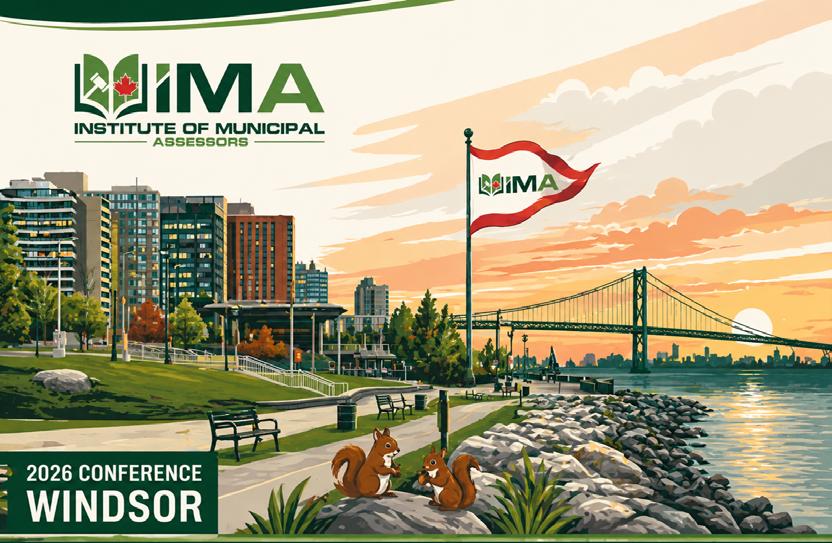
Caesars Hotel, Windsor, Ontario: June 7-9
The Institute of Municipal Assessors Annual Conference returns to Caesars Windsor on June 7–9, 2026
This year’s theme—A Time to Strengthen Our Practice —reflects the profession’s strong foundation in experience, professional standards and public trust.
The conference will bring together property assessment and taxation professionals from across Canada for practical learning, thoughtful discussion and valuable networking opportunities.
CPD Credits Available:
• IMA Members: 9.0 Learning Credits and 1.5 Ethics Credits (half of current cycle requirements)
• IAAO Members: 10.5 Continuing Education Credits
• LSO Members: 1hr 30mins Professional Credits
The program features educational sessions, industry updates and opportunities to connect with colleagues from across the country.
District Updates District 2
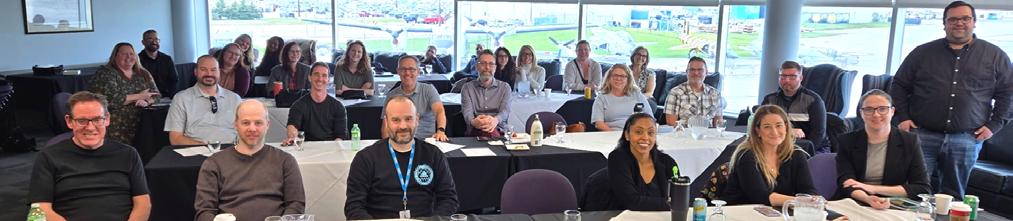
On Friday, May 8, members of IMA District 2 gathered at the Canadian Warplane Heritage Museum in Hamilton, Ontario, for their Hybrid Spring Meeting. The meeting provided members with an opportunity to connect with colleagues, hear updates on current issues affecting the profession, and take part in a full day of learning and discussion. All while surrounded by the remarkable collection of historic aircraft at the Museum!
Attendees explored the implications of renewable energy development, received insights into current economic trends, and heard updates on land valuation considerations. These sessions provided practical perspectives on the evolving issues shaping assessment practice across Canada.
In the afternoon, participants took part in an interactive ethics workshop led by the Institute of Municipal Assessors. Through facilitated discussion and small-group breakout activities, members considered real-world scenarios involving professional judgment, accountability, and ethical decision-making.
The hybrid format also enabled members to participate virtually, helping to ensure broad access to the day’s programming.
The IMA extends its sincere thanks to all speakers, volunteers, and District Executive members who contributed to the success of the event. Their time and contributions helped make the day both informative and engaging for everyone who attended.
Districts 3 and 4
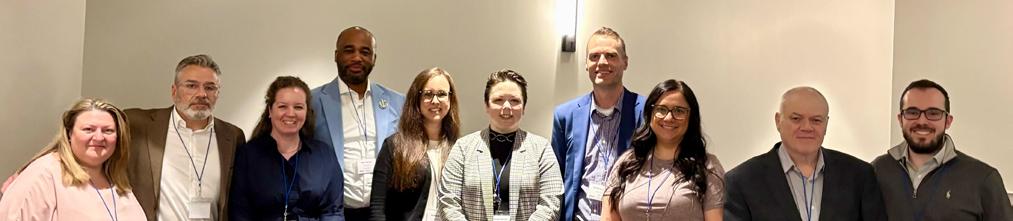
On Thursday, May 7, IMA Districts 3 and 4 held their combined in-person Spring Meeting and Elections. Members gathered at Venu Event Space in Vaughan, ON.
Attendees heard updates from partners in property assessment and taxation, as well as broader economic insights. In the afternoon, the IMA delivered an interactive ethics workshop, led by President Drew Samuels, M.I.M.A., followed by updates on roadway infrastructure and Metrolinx.
District elections also took place during the meeting. The IMA is pleased to welcome the new District Executive for Districts 3 and 4 for the upcoming term.
District 3 Executive
Chair: Patrizia Tempio, M.I.M.A.
Co-Vice Chairs: Sarah Lake-Mitchell, M.I.M.A. Chantelle MacMillan, Affiliate
Secretary/Treasurer: Garrett Goericke, M.I.M.A.
District Director: Tomas Baca, M.I.M.A.
District 4 Executive
Co-Chairs: Maria Covello, M.I.M.A. & Darryl Ramos, M.I.M.A.
Co-Vice Chairs: Anthony DiFonzo, M.I.M.A. Maria Romano, M.I.M.A.
Secretary/Treasurer: Garrett Goericke, M.I.M.A. District Director: Nick Bougiouklis, M.I.MA.
District Updates
We extend our sincere thanks to Jessica Martini, M.I.M.A. & Debbie Simone, M.I.M.A., for generously volunteering their time and expertise as District Directors for 3 & 4 over the last few years. Their leadership and commitment have made a meaningful and lasting impact on both Districts, and we are sincerely grateful for all they’ve contributed.
They shared a few words on their experience:
“As the outgoing District 3 and 4 Chairs, we would like to extend our thanks to everyone on the board, in the executive office and at the IMA. Serving on the board over the past four years has been a very rewarding experience and we are both grateful for the opportunity to work alongside such a dedicated group of professionals.
To the newly elected team members, congratulations and welcome! We are confident you will find this a positive and engaging environment. We wish you every success in your new roles and in the work ahead!”
– Jessica Martini & Debbie Simone
IMA District 10 is excited to announce its upcoming in-person District meeting!
Wednesday, September 23, 2026
Sandman Signature St. John’s Hotel
227 Kenmount Rd, St. John’s, NL A1B 3P9
Stay tuned for registration and agenda details!
credit:
Design
Photo
Introspective
IMA SPONSORS
Thank you to the IMA Districts for generously supporting our conference once again this year!