
MATTHIESSEN ENVIRONMENTAL SCIENCE SCHOLARS
SCHOLARS / INS
Sasha Carmel
Sofia Clark
Isabella Deng
Isis Fenner
Dillon Guenther
Asta Huang
Caleigh Lane
Robert Lazar
Adam Moriarty
Taylor Pang
Lillian Perkel
Ellie Prinz
Harper Semlies
Sophie Yang
Rebecca Barnes, Chris Tripler, Olivia Brinks
TABLE OF CONTENTS
2: A Note from Dr. Barnes
3: Interview with Dr. Tripler
4-5: Research at GMF
6-9: Notes from our Scholars
10: Scholarly Side Quests
11-12: Special Guests
A Note from Dr. Barnes
In its inaugural year, the Matthiessen Environmental Science Scholars program brought fourteen rising Hotchkiss seniors to Great Mountain, six thousand acres of contiguous forest just 30 minutes east of our home in Lakeville, CT. Using the historic Yale Camp as our home and the forest as our laboratory, the students collaboratively collected data to understand how disturbance shapes the forests around us.
Over the course of the two weeks at Great Mountain, students developed individual research questions examining the role of forest disturbance ranging from logging and beaver dam construction to invasive pests such as beech leaf disease and hemlock woolly adelgid. Many of these questions stemmed from their own observations while in the field (why do the beech trees seem healthier in wet sites?), while processing samples (there is charcoal in the soils!), or from one of our many guest speakers (how will a changing climate impact the viability of carbon credits?).
Next year these scholars will enroll in a year-long advanced environmental science course During this time students will learn the necessary context and underlying mechanisms behind the relationships they observe in their dataset as well as the statistical and modeling skills necessary to analyze said data. The students will continue to learn from guest speakers, not only about the science they’re interested in but also about their life experiences and journeys. By the end of the program, students will each produce a scientific paper that shares more similarities with a peer reviewed scientific article than a high school term paper
Reflecting back on the last two weeks, I could not be more impressed by the ability of these students to dive into the field work, embrace the interconnectedness of forest ecology, and support each other as they venture beyond their comfort zones. The students’ success would not be possible without the expertise and enthusiasm of my co-instructors Dr. Chris Tripler and Ms. Olivia Brinks, the endless sustenance provided by Kevin Stawitz, and the logistical support from Russell Russ, Mike Zarfos, and Jeff Blevins I am incredibly grateful to each of them and hope that this is the first of many summers spent educating Hotchkiss students under the canopy at Great Mountain
Until next year

holars Program
An Interview with Dr. Tripler
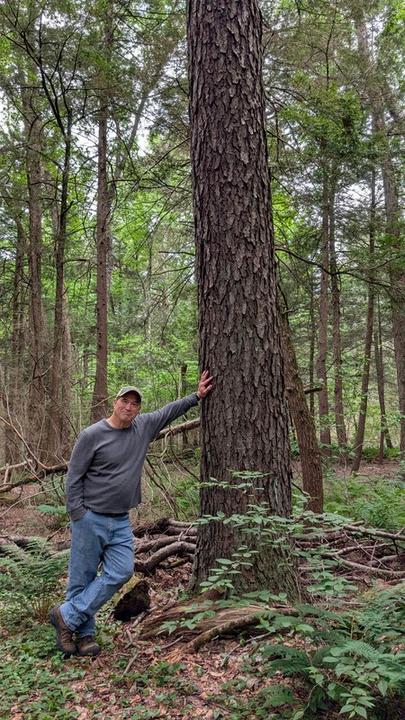
Scholars Sofia Clark and Harper Semiles sat down with instructor Dr. Chris Tripler to discuss his career in environmental science. Dr. Tripler earned his undergraduate degree in ecology and evolutionary biology at the University of Connecticut, then completed his PhD at Idaho State University studying the forests at Great Mountain! He has worked all over the world, including 12 years teaching biology and ecology at Endicott College
Can you walk us through your path to environmental science and what drew you to Forestry?
My path to science started pretty young– maybe, seven or eight years old. I was already wandering around the woods quite a bit as a child, and my summers were spent in Connecticut state forests In my free time, where other children were reading Nancy Drew, I recall very distinctly asking my mom to buy me a chemistry book. In my college years, I found the forest near the Fetton River. It was located near my university, and I started working there with some scientists I’ve been with it ever since and have no regrets.
What research are you most proud of, and what do you think the significance is in relation to the Matthissien program?
My proudest scientific moment was a literature review on the importance of potassium. In ecosystem science, we already knew how important nitrogen and phosphorus are in agricultural systems, and to a lesser extent, potassium. In my paper, we discovered that potassium is an important element that warrants more research in its relationship to tree health and growth. Gene Likens, a member of the National Academy of Sciences, signed on as a co-author on my paper and mentored three other scientists and me.
In the same way I went about researching potassium, the Matthissen scholars are doing the same While it’s easy to make assumptions and want to jump to conclusions quickly, and sometimes you don't like the tediousness of scientific processes, it's what keeps science pure and reliable.
What has been your favorite part of these past two weeks?
Entering the program, I didn't know what to expect with a group of 14 seniors in high school. I haven’t been with students in an immersive way for a long time, long before COVID I didn't know what COVID had done to the learning process, and the best thing in my past two weeks was seeing that the students’ desire to learn and their curiosity are just as present as in previous generations. They have shown me that science still matters to students and that there is a role for it in the future
What do you want scholars who work with you to walk away knowing?
I hope whatever they pursue in their adult lives has some component of what they learned here I hope they remember that the environment matters and that they continue to involve themselves in nature, even if it's just taking their children out in the woods and making sure we have woods to walk in.
Research at Great Mountain Forest
Great Mountain Forest (GMF) is composed of 6000 acres of land in Norfolk and Canaan, CT. The land was first used in the 1800s for logging and charcoal, which fueled the production of industrial metals at the time In 1909, Frederick Walcott and Starling Childs purchased the land, constructing ponds and breeding birds and ducks for hunting purposes. In 1941, Starling Childs’s son, Ted Childs, and Walcott constructed the Yale Forestry Camp and transformed GMF into a nonprofit entity for conservation and research. In 2016, GMF joined the California Air Resources Board Carbon Offset program as part of their commitment to sustainability In order to calculate the standing carbon at GMF, a grid of 150 plots was set up to track its carbon inventory and the forest’s progress.
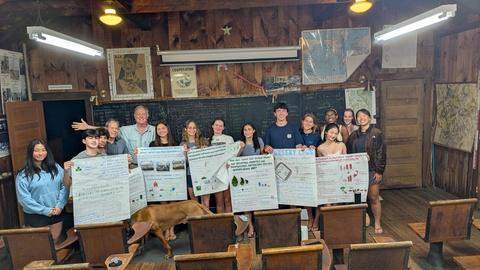
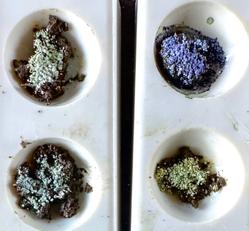
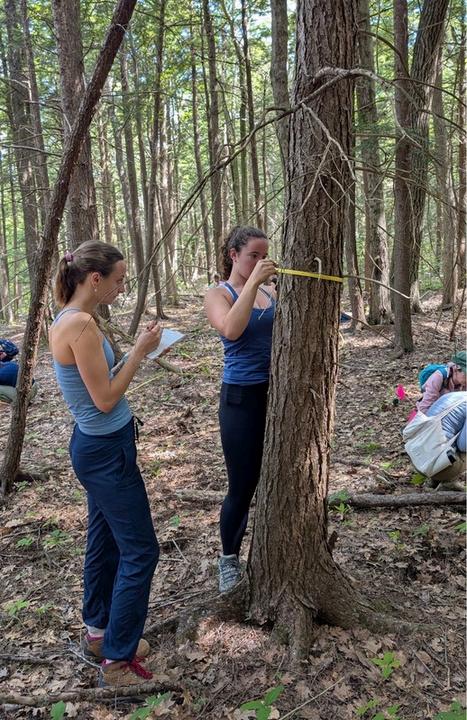
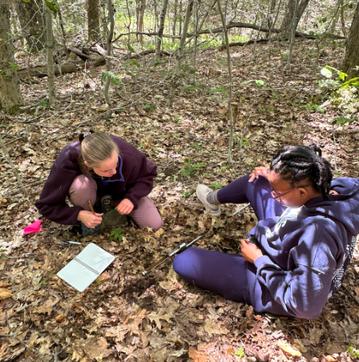
During our two weeks at GMF, we characterized the forest in 32 ~10 m diameter plots, 16 pairs of plots, half of which are GMF carbon plots At each plot, we took soil cores, measured the diameter of trees to track their growth rates, characterized the herbaceous cover, and measured light availability. The class will use this data throughout the year to answer our various research questions.
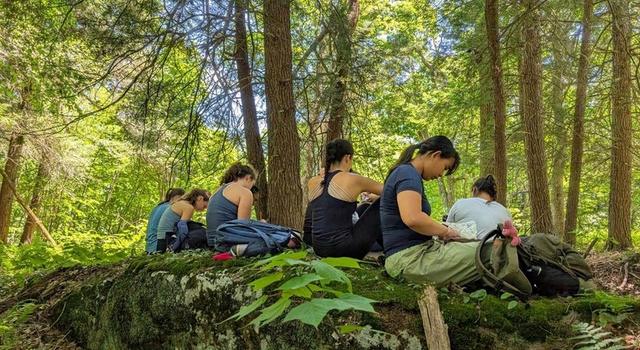
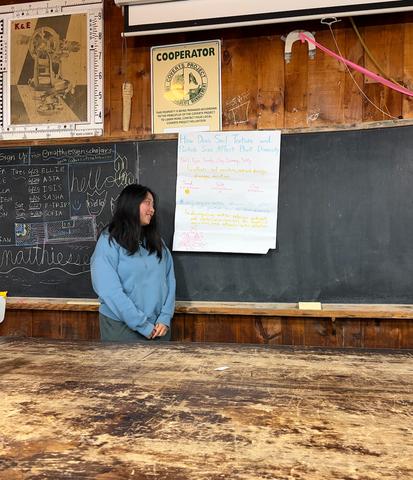
During the Matthiessen program, we learned how to become field scientists In a classroom, learning ecology is often described as memorizing species names, running labs to obtain the “correct” results, and cramming nutrient cycles the night before a test. However, in the field, these facts are often the starting point of research, but not the end goal. When we encounter several beech trees showing signs of beech leaf disease dark bands between leaf veins or shriveled up leaves–we learned not only how to identify the species, but consider questions such as: how does the incline or moisture level of this specific site accelerate the trees’ decline? Field scientists need to consider multiple variables at once by noticing what is different about the site and designing a method of inquiry to actually capture what we’re seeing The decision of what to collect and why is one that requires understanding not just what a species is, but what makes its presence in this particular forest, at this particular moment, meaningful. In the past two weeks, the program has emphasized this particular skill as we’ve visited thirty-two plots to gather data for further research.
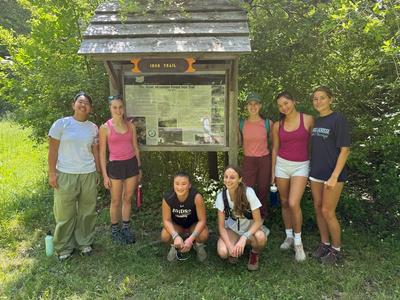
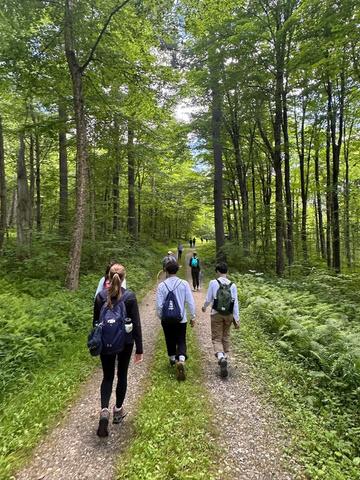
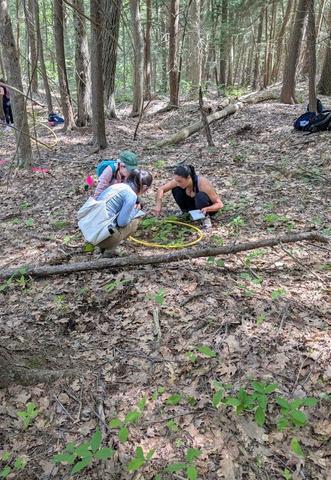
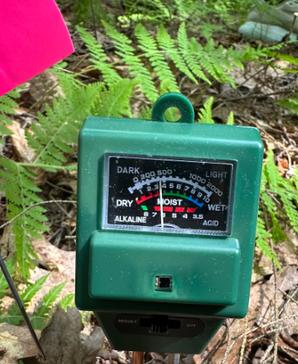
In the field we collected the following data to characterize the forest: tree ID & diameter at breast height (DBH), herbaceous cover, soil probes to measure light availability, moisture and pH in the field, leaf litter depth, and soil cores to measure soil moisture, pH, texture, and carbon and nitrogen in the lab. We had the most fun tossing hula hoops into different quadrants of each plot to randomly sample herbaceous cover, identifying every plant species within the hoop In the second week of the program, we deployed decomposition bags envelopes filled with oak and maple leaves at varying mesh thickness to measure how quickly organic matter breaks down with different sized decomposers. We also collected data on beech leaf disease by measuring the thickness and weight of each leaf. After a long day of field work, we returned to the lab to input our data, building the dataset that would drive our research for the next year
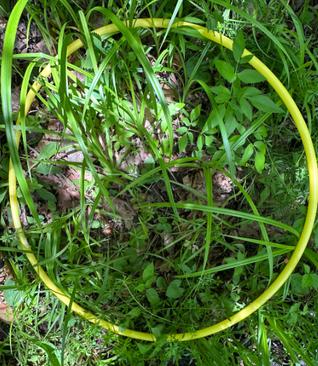
Now, at the end of the program, we are happy to report that each one of us will be pursuing a different research question about the GMF environment.
Notes from Our Scholars
Sasha Carmel
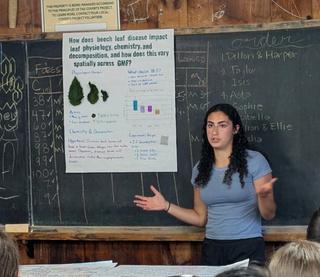
My research focuses on beech leaf disease which is caused by a foliar nematode that currently affects almost 100% of beech trees in GMF, but to varying degrees. My research question asks: How does beech leaf disease impact leaf physiology, chemistry, and decomposition, and how does this vary spatially across GMF? The two metrics I am using as a proxy measure for the extent of the disease is the mass by area and thickness of leaves from each plot, which both increase almost 500% in diseased leaves. Additionally, I hypothesize that the disease decreases the carbon to nitrogen ratio of leaves, increasing decomposition rate. To test this hypothesis and measure decomposition rate across a spectrum of diseased leaves, I am conducting in situ decomposition experiments over the next 6 months.
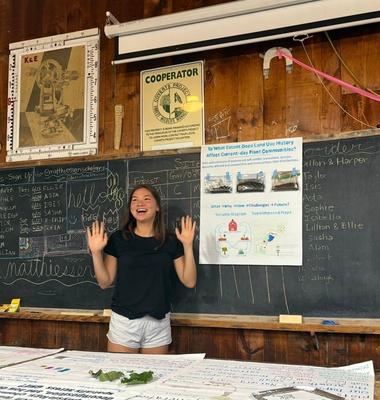
Knowing that I want to focus on the unique environmental aspects of Great Mountain Forest, I began my two weeks investigating charcoal in soil as evidence of Great Mountain Forest land use. Faced with a lack of data, I broadened my scope. Ultimately, I will test the hypothesis that GMF sites with a history of pasture use will exhibit lower plant species diversity, altered soil composition, and more uniform DBH distributions compared to never-farmed forest sites. I began with qualitative data, comparing maps and written records of the forest from 1850 to current-day Google Maps and our own observations After compiling this data, I narrowed my focus down to four of our plots, which display evidence of pasture use.
From this, I will contrast soil properties (C/N, texture, moisture), tree age, and species diversity of pasture-use plots compared to non-farmed land. This will work toward answering the central question: to what extent does land use history affect current-day plant communities?
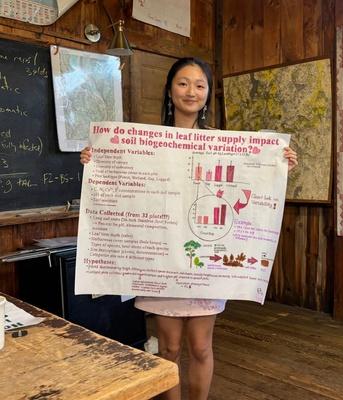
My research investigates how changes in leaf litter supply drive soil biogeochemical variation. As beech leaf disease, beech bark disease, and hemlock woolly adelgid restructure canopy composition, the quality and quantity of litter inputs changes and with them, the chemical properties of the soils below. Data from soil cores, litter depth measurements, and herbaceous cover sampling across the plots will inform my question More specifically, I am interested in measurements of soil pH, carbon, nitrogen, and calcium content in each sample. I hypothesize that plots dominated by high nitrogen content species (e.g. birch, red maple, Canada Mayflower, dewberry) will exhibit lower soil C:N ratios, and wetland plots will show greater soil organic carbon and higher pH relative to upland plots
Sofia Clark
Isabella Deng
Isis Fenner
Notes from Our Scholars
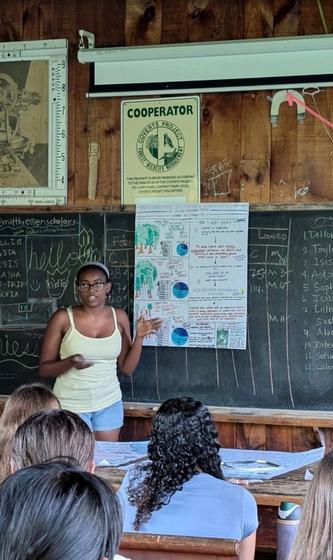
My research focuses on examining the veracity of the Intermediate Disturbance Hypothesis (IDH) at Great Mountain Forest (GMF) The IDH proposes that local species diversity is maximized when the frequency and intensity of environmental disturbance is moderate. Thus, my research asks “to what extent can canopy disturbance & light availability affect the diversity of new understory growth in GMF?” To address this, I will analyze our understory species and open sky data within forest, gapped, and logged zones, which will provide GMF with insights for optimizing their forest diversity
Dillon Guenther
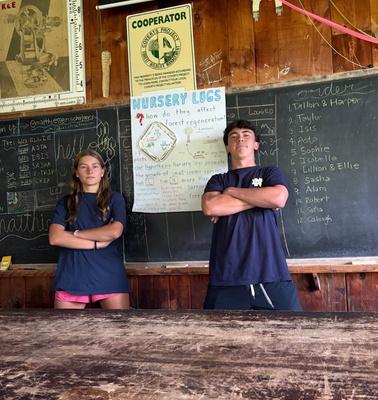
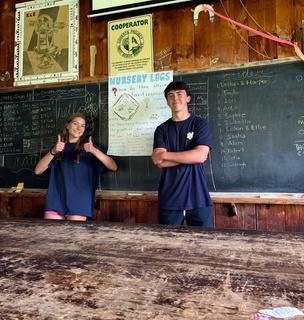
My research focuses on how nursery logs affect forest regeneration at Great Mountain Forest. To answer this, I am comparing plant growth on nursery logs with growth on the adjacent forest floor. We collected data using small quadrats placed on each log and then beside the log, recording seedling/sapling counts, percent cover, log diameter, softness, insect activity, and tallest sapling height This data will help show whether nursery logs create different regeneration microsites and their role in shaping the next generation of the forest.
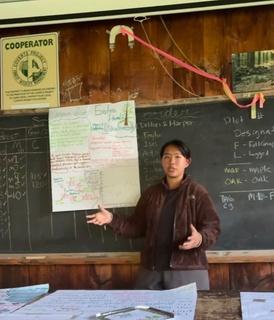
The Eastern Hemlock, conventionally considered a climax successional tree, aiding its reputation of engineering its surroundings to conform to its ecological niche But, in recent years the successional understanding of forests has been challenged. Thus, I want to determine if Hemlocks amplify or suppress biodiversity. To answer this, I will calculate biodiversity metrics from our herbaceous cover data and use soil pH, depth of the soil O-horizon, light availability, canopy tree diversity, and the elemental composition of soils in Hemlock present stands.
Caleigh Lane
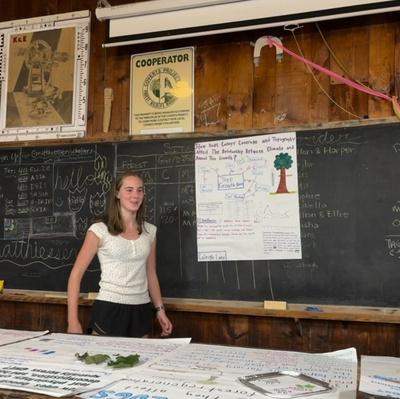
My research focuses on how topography and canopy coverage affect the relationship between climate and tree growth Using academic articles, GMF’s long-term weather data, and DBH measurements in 2017, 2023, and 2026, I found that climate change lengthens the growing season and promotes tree growth. However, this tree growth does not necessarily mean the forest is improving, as wetter snowfall is resulting in trees with reduced structural integrity. In my research, I aim to look into how things like topography and canopy coverage can improve tree structural integrity and further increase tree growth To do this, I will use GIS to calculate the slope of each plot, light images to calculate light availability in each plot, and soil loss on ignition to understand how soil nutrients may impact tree growth and strength.
Asta Huang
Notes from Our Scholars
Robert Lazar
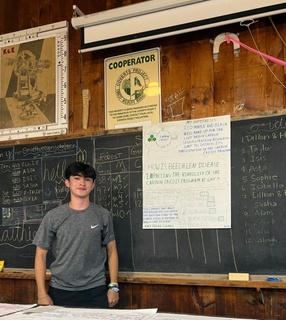
My research focuses on how GMF can sustain or increase the value of its current forest holdings, given the number of challenges facing the forest, utilizing our tree DBH and herbaceous cover data collected within the 32 plots in GMF. I will use this data to calculate the carbon value in each species we found in the forest. Eastern Hemlock currently dominates GMF but has a poor outlook given Hemlock Woolly Adelgid and is thus a risky asset for GMF to manage as part of its carbon offset program. I plan to use the literature to determine what, if any, species could replace the Hemlocks at GMF, while also studying carbon markets and the future of climate change.
Taylor Pang
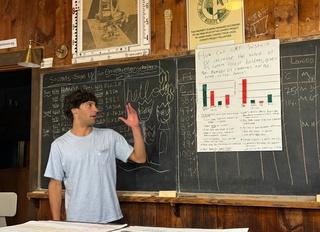
My research focuses on how beech leaf disease impacts the viability of the carbon credit program at Great Mountain Forest. GMF generates carbon credits by storing carbon in its trees, which are sold on the California Regulated Carbon Market. Beech leaf disease serves as an unexpected liability to the program with all beech trees being infected with the disease. However, I believe future Red Maple and Birch regeneration will make up for any lost Beech carbon sequestration. To better understand carbon sequestration over time, I am analyzing DBH measurements in 2017, 2023, and 2026 and our surveys of woody tree seedlings across our 32 plots
I am interested in understanding how the return of beavers to the northeastern US is impacting plant community diversity. Beavers are ecosystem engineers, building dams and flooding the landscape I set up three parallel 25-meter transects perpendicular to five beaver-made or man-made ponds within GMF and characterized the plant community at five-meter increments away from the edge of the water. I hope to collect similar data around the beaver impoundments on campus this Fall to determine if the patterns I’ve observed at GMF hold true in Beeslick and Suckerbrook forests.
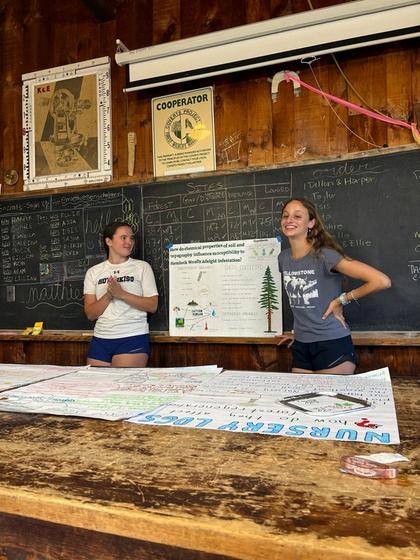
My research focuses on an invasive insect, the Hemlock Woolly Adelgid (HWA), and its impact on Eastern Hemlocks in Great Mountain Forest Hemlock trees are among the most important in the Northeast, lowering forest temperatures, supporting biodiversity, and thriving across a range of conditions. Over these two weeks, I assessed each hemlock’s infection rate and crown vigor, while taking 30cm soil samples beneath trees with varying HWA infestation levels in 26 of our 32 forest plots By analyzing relationships between soil moisture, pH, nitrogen, topography, and forest type, I hope to identify which conditions drive HWA infestation and how we might better protect these critical trees.
Lillian Perkel
Adam Moriarty
Notes from Our Scholars
Harper Semlies
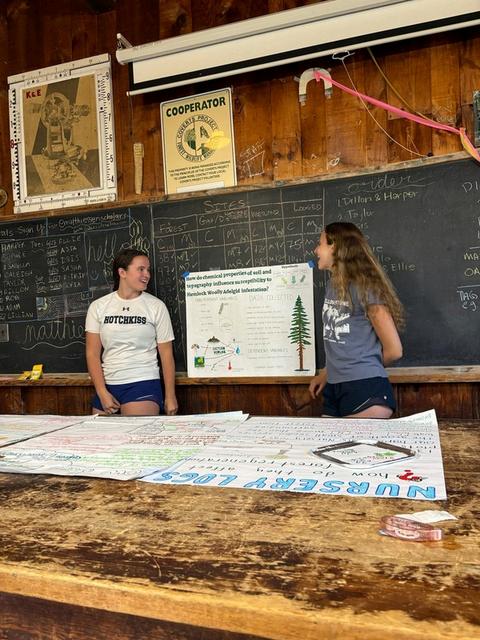
My research focuses on nursery logs as a way to combat climate change while maintaining biodiversity Nursery logs are downed trees that, over time through colonization by moss, fungi, and insect activity, decompose and transform into mini "nurseries" perfect for new forest growth. We collected additional data from in and around 13 logs from different plots at GMF including samples of the logs themselves (moisture and C/N) and surveys of saplings and other herbaceous cover components on and around the logs I plan on answering the question, How do nursery logs affect forest regeneration?
Sophie Yang
Ellie Prinz
My research focuses on the Hemlock Woolly Adelgid, an invasive insect that is currently decimating the population of Eastern Hemlocks in the United States. I am researching how factors like forest type, slope, soil moisture, soil nitrogen content, and pH of the soil beneath hemlocks in GMF affect the rates of HWA infestation To obtain this information, I collected long core soil samples from beneath hemlocks of varying infestation severities, each categorized by an infestation rating between 0 and 4. Those soil samples have been dried to determine water content and will be analyzed in the fall for elemental makeup. By correlating soil and topographic conditions of hemlocks with their rates of infestation, I aim to determine the environmental conditions in which HWA thrive and those in which they do not in hopes of aiding in the mitigation of this disastrous threat to both GMF and forests across the East Coast.
After sifting soil samples collected at each of our plots, I grew increasingly interested in learning about why it was important to ovenbake dirt, shake it around in a tiered cylindrical container, and note its differences in particle size and composition. My research question investigates how differences in soil particle size and texture affects plant biodiversity. Using data collected about the mass of different layers of soil particles from short soil cores that rarely broke the first organic layer, and counts of different plant species in the understory within a randomized circular area in the given plot, I’m hoping to understand how these differences in soil type might affect different species’ ability to grow effectively. Knowing what soils certain species thrive within best furthers understanding about forest make-up and biodiversity, as well as informing us about how these plants may respond and adapt to differing soil textures
Scholarly Side Quests
Farmington River Valley Tubing
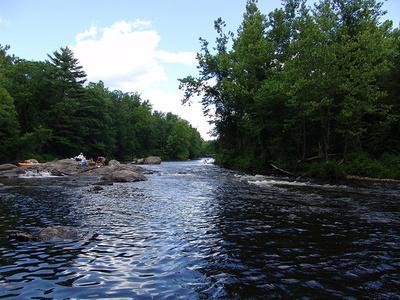
After spending our morning sampling plots that focused on Beech trees with Wesleyan Professor Dr. Helen Poulos and her student, Asher, we went tubing in the Farmington River. The tubing experience consisted of 4 rapids, during which we would speed up and experience turbulence in our tubes. We entered the water and enjoyed the surrounding nature as we tried to identify the trees we were tubing past As we approached the end, our entire Matthiessen group decided to form a circle that connected everyone and allowed for group bonding.
Trivia Night
To close out our first week, Dr. Tripler hosted a trivia night where teams wagered points on each question across six rounds of four questions each Topics ranged from science and geography to Love Island USA and Super Bowl halftime shows, keeping everyone on their toes. After a competitive night, team SET (Sasha, Ellie, and Taylor) took the top spot with 71 points.
Disaster Movie Night
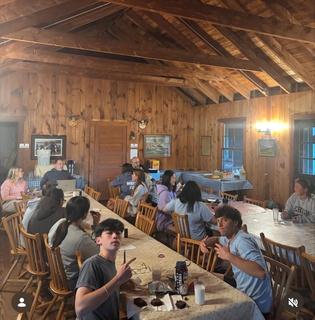
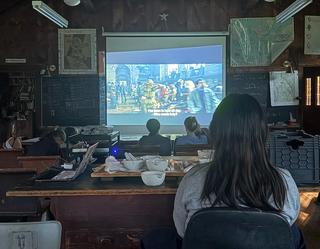
After a long day immersed in our research, we wound down with The Day After Tomorrow. We were fascinated by how the film wove climate science together with themes of family, friendship, and trust under extreme conditions Furthermore, the timing of our movie night could not have been more perfect.Standing at the start of our own scientific work in Great Mountain Forest, the film reminded us why studying and listening to our planet matters.
Beach Day
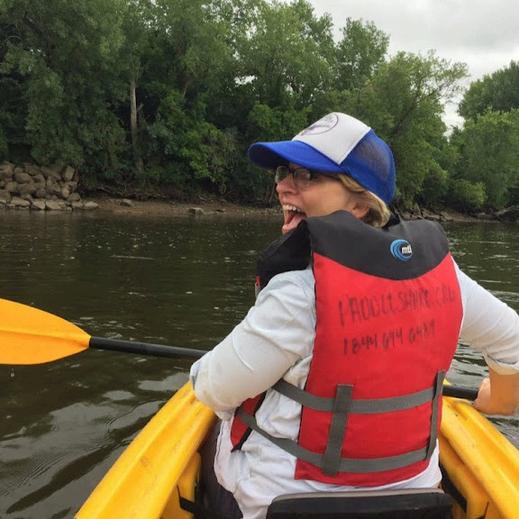
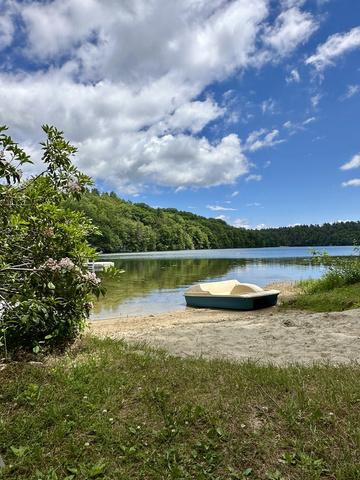
After lunch with Mr Childs, we changed into our swimming suits, and raced to the pond together. Choosing our boat of choice from the kayaks, paddle boards, canoes, and even a paddleboat, we launched into the cool, refreshing pond. The sun was out and shining bright on all of us, and some of us decided to swim over and climb onto the platform in the middle of the lake so we could tan and nap right there on the water
Special Guests
Kate Regan-Loomis
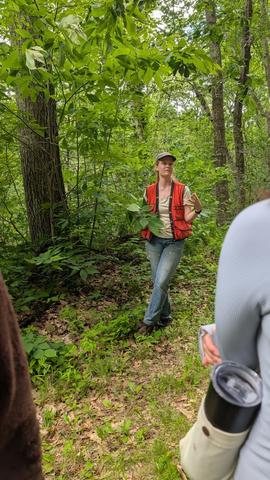
Head forester Ms. Kate Regan-Loomis led us along the Yankee Trail, teaching us plant and tree identification, invasive species, land use history, and forest treatments. She walked us through the diseases reshaping GMF's canopy chestnut blight, emerald ash borer, beech leaf and bark disease, and hemlock woolly adelgid and seeing the damage firsthand made the crisis of invasive species viscerally real Ms ReganLoomis also shared her management philosophy: selectively cutting surrounding trees to open light and resources for the most wildlife-valuable species.
On our first Monday, GMF executive director Dr. Mike Zarfos spoke with us about the forest's mission "to be a leader in forest stewardship " He described GMF's many functions sustainable logging, maple syrup production, education, research, and recreation and explained how GMF generates revenue by storing carbon in its trees and selling credits through the California Air Resources Board's regulated market. His goal is to expand GMF's educational programming, partnerships, and funding.
Venom
Tom Blagden
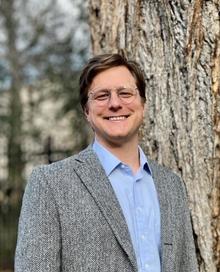
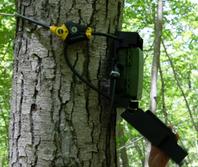
Venom, a rising UConn senior working under Dr. Tracy Rittenhouse, joined us for dinner to present her bat research at GMF. Over five weeks, she has set up recording sites across the forest capturing bat echolocation, which she converts to audible frequencies She has identified at least five bat species at GMF all endangered and on some evenings records more than 600 bat calls.
We met with Hotchkiss alumnus ('69) and professional conservation photographer Mr. Tom Blagden. After discovering photography at Hotchkiss and studying at Harvard, he has spent over 40 years documenting the natural world His slideshow brought GMF’s landscapes and wildlife to life across all four seasons, exploring themes of light and reflection, motion and stillness, and the tension between the physical and the representational. His photographs capture the forest's biodiversity and sense of place with remarkable tenderness and it was a joy to experience GMF through an artistic lens amid our science-focused two weeks.
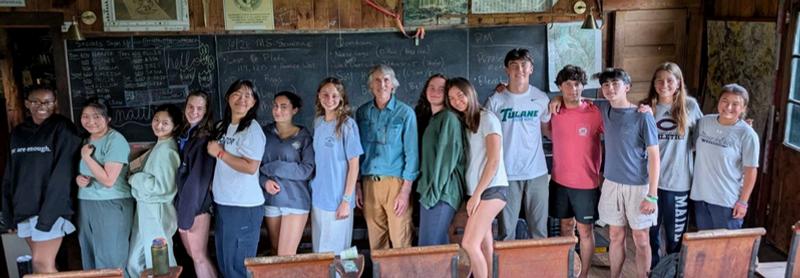
Dr. Mike Zarfos
Dr. Helen Poulos
We spent a morning with Dr. Helen Poulos, an environmental studies professor at Wesleyan University researching beech leaf disease across the Northeast She talked to us about the nematode responsible for BLD and current research on how the disease spreads. We helped collect leaf pigment data from two transects using chlorophyll, carotenoid/anthocyanin, and red-versus-far-red absorption meters, as well as a light availability scope
Raymond Lab
Near the end of our Yale visit, we met three PhD students from the Raymond Lab. Samuel Tsao (5th year) studies drivers of alkalinity change in rivers and enhancedrockweatheringasacarbonremovalstrategy. BenjaminSaalidong(3rdyear)usescarbonisotopesto trackmethaneoxidation wecaughthimfreshoffhis qualifying exam that morning Mingyu Zhang (2nd year) researches inorganic carbon exchange in coastal bluecarbonsystems.Allthreeweresuperinformative andenthusiasticabouttheirwork.
Starling (Star) Childs
We visited Tobey Pond to meet GMF board member Starling (Star) Childs, who walked us through the forest with his dog, Keeper His grandfather, Starling W Childs,acquired400acresaroundthepondin1909 with Frederic C. Walcott to preserve wildlife for hunting and fishing what Mr. Childs called the “Teddy Roosevelt” approach to conservation. His father, Ted C. Childs, later gifted seven acres at the heartofGMFtoYalefollowingthehurricaneof1938 that destroyed Yale's eastern Connecticut research forest,creatingtheforestrycampwestayedin.GMFis nowanonprofitthatmakesresearchlikeourspossible. Onourwalkwelearnedaboutthearea’sglacialhistory, sawaquakingbogandtreecores,andcrawledundera remarkable“mother”tree
Dr. Eli Ward
Dr.Elisabeth(Eli)Ward,Hotchkissclassof2009, wentontoearnaB.S.inBiologyfromBrown,a Master of Forest Science from Yale, and her doctorate from Yale in 2023 becoming CT Agricultural Experiment Station's first female forestecologist.Herresearchfocusesonbeechleaf disease, regeneration, and forest carbon cycling, includingacollaborativestudywithDr.Poulosat GMFmonitoringbeechtrees,invasiveplants,and soilcarbon
Dr. Sparkle Malone
At Yale we had lunch with Dr. Sparkle Malone, an Assistant Professor in the School of the Environment studying carbon dynamics and ecosystem function for naturalclimatesolutions.Oneofherpostdocs,Dr.Boya Zhang,stoodout:hebuiltaGPSsystemstillusedbythe Hong Kong government today, navigating the literal interference of skyscrapers on satellite signals before coming to the U.S. to complete his PhD on Florida Everglades hydrology and vegetation. He drew a memorablecontrastbetweenhis"man-made"GPSwork and the mangrove swamps he studies now, which he described as "God-made" and even more complex. He waswarm,curious,andapleasuretotalkwith.