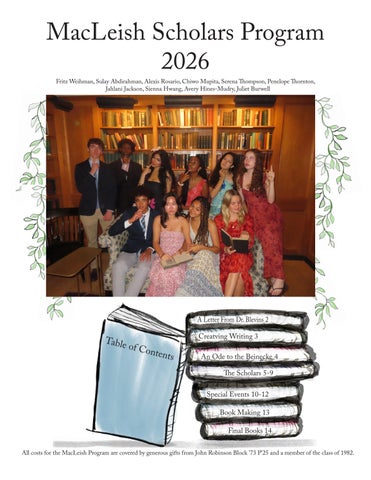

MacLeish Scholars Program 2026
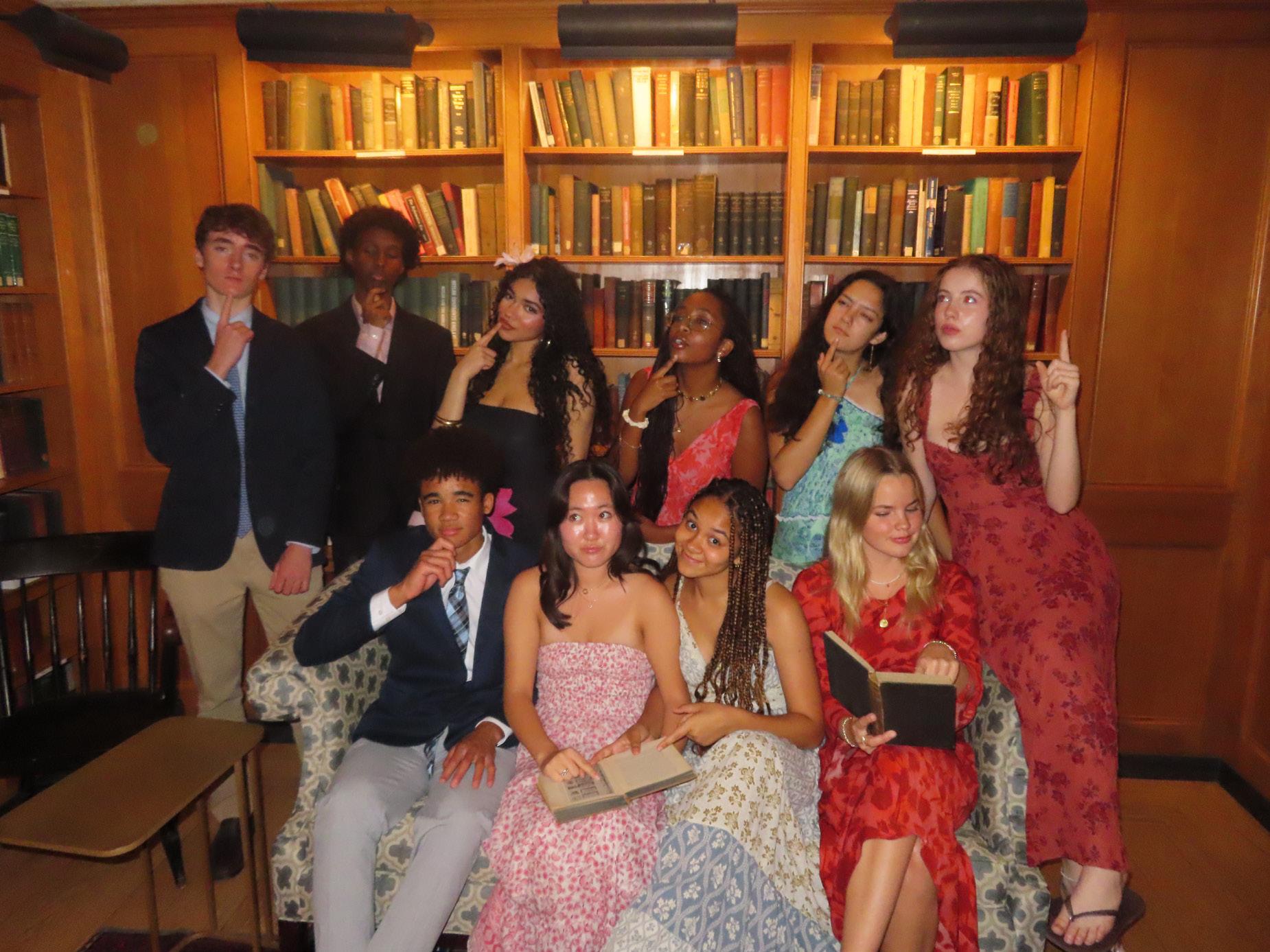
Fritz Weihman, Sulay Abdirahman, Alexis Rosario, Chiwo Mupita, Serena Thompson, Penelope Thornton, Jahlani Jackson, Sienna Hwang, Avery Hines-Mudry, Juliet Burwell
What AI Cannot Discover A Letter From Dr. Blevins
Dear Friends of the MacLeish Scholars Program, Merriam-Webster’s word of the year is “slop,” defined as low-quality content produced with the help of AI. It’s the perfect word for our times, which have been called an “age of inauthenticity,” when less and less of what we read and see feels trustworthy, sincere, or human.
As a teacher, I particularly worry about what this all means for students. It is one thing for an adult to write or think with the help of a machine; it is another for a child, whose brain is still developing, to do so. We are only now, after two decades, seeing the full effects of social media on children, with bans on use under 16 going into effect around this country and the world. The way in which AI markets itself to kids feels eerily similar. What will authenticity end up meaning to a generation raised on slop and encouraged to produce it themselves?
The MacLeish Program offers a strong response to that question. The unpublished drafts, notebooks, journals, diaries, and letters with which our students work—these are quite literally not available to AI. Students work with handwritten documents that have a weight to them, a smell, a texture,
and they do so in a specific place and with physical presence. They have only their wits and a camera as they move through these papers, sorting and puzzling all on their own about the patterns and gaps that they see: a changed word, a mysterious symbol, a strange letter, an unpublished poem. All of these findings are there for them and only them in the moment of discovery, and their effort to understand and put that understanding into words is their own.
MacLeish is a special experience, one that we’ve thankfully opened up to more of our students by creating more Scholars Programs: Hersey for history, Euclid to Einstein for math/ physics, Matthiessen for environmental science, and next year, a new program in art history at Princeton. Well over a third of Hotchkiss students now get to have this kind of experience. All of these programs try to do the following, which, taken together, form one recipe for combating the encroachment of slop in education today:
Ground learning in a particular place or set of materials that is local and physical: a set of old documents, a research forest, etc.
Remove immediate grade pressure so that students
have periods of time when they feel free to explore and take chances without risk of failure.
Give students a choice of topic, autonomy over the path they take, and true ownership of what they produce.
Communicate the interconnectedness of rigor and joy, or that effort is something to be embraced and not avoided.
Mentor students closely so that they receive oneon-one guidance all along the way (much like the relationship between a coach and a
player).
Finally, believe that students can actually do it. Believe that they can be scholars or scientists, mathematicians or poets. Tell them that what they’re producing is important and real and that we value their authentic voice above all else.
I’m happy to say that this year’s cohort has had precisely this experience. I hope you enjoy reading about all the incredible things they’ve done and discovered these last two weeks.
Sincerely, Dr. Blevins/Jeff
Creative Writing with Anna Godberson
How do you get over writer’s block?
I just don’t believe in it! The world is full of books and writing, so I don’t think anyone needs to push through when they don’t have anything to say. But I am happier when I’m writing regularly, and I rely on practices like “morning pages” from The Artist’s Way, making lists of issues and images that compel me, doing other forms of writing that go beyond just drafting what I hope will be a final, publishable piece. When I am trying to get back into drafting, I ask myself questions rather than getting hung up on whether I have any answers. What is this scene about, why is it necessary, how can it be better, where can it go? And of course reading authors I admire, whose sentences and ideas excite me, often makes me want to begin again.
How does teaching influence your own writing, and does your writing influence the way you teach?
Teaching influences my writing in the sense that I regularly have to articulate what it is I think I’m doing anyway (to paraphrase Toni Cade Bambara). Publishing a book takes years and years– even once you’ve sold a book, it’s usually a year and a half before you get to talk about it, and that’s a strange and lonely process. But when you teach writing, you get to have a much more immediate exchange with other readers and creators of literature, and that’s really energizing. And my experience as a writer definitely influences the
way I teach. I started ghost writing when I was twenty-four, published my first book when I was twenty-seven, and I’ve been publishing regularly since, so I have a working writer’s background, and I try to bring that practical knowledge to the classroom. I want to demystify the process for students, help them think through the mechanics– how do you build a piece of writing, and how does it work? If it’s not working, how can you identify the issue, and problem solve for that issue? I want my lessons to be grounded in those basic practices.
When you were my age, what did you misunderstand about writing that you know now?
I thought everyone was smarter than I was
to the pursuit of writing. And I suppose it’s like any other field in that way– if you know and talk to other people who are serious about what you want to do, you will do better at that field whatever it is.
What keeps you motivated to write when a project isn’t going well?
and knew what they were doing! Turns out, most people who spend time alone obsessing over words do it because they fear they aren’t smart enough, or won’t be understood– there’s something frustrated in their intellectual and emotional expression that requires a real commitment to making art with language. And most writers are figuring it out for the first time over and over again.
What advice would you give to young writers who are serious about pursuing writing?
Read a lot, practice being alone and obsessive with language, and try to meet and support other writers. The literary world is still relatively small and it’s possible to meet your heroes if you give yourself
Sometimes projects need to be abandoned, and sometimes it’s just a matter of getting to the heart of the thing– what’s it about, why do I care, why do I think readers should care, what was the original inspiration or intention? But also, writing fiction in particular is invention first, and then a lot of problem-solving, and I love that process– fighting out what belongs and what doesn’t, who a character is, why they behave the way they do. I’ve published eleven novels and I’ve ghostwritten and book doctored several more, so my confidence that I can figure out what’s not working is built on that knowledge that I’ve done it so many times before.
What is your favorite form of writing?
Historical fiction– I love going to other worlds and times, and I love the way historical fiction can draw on a whole new vocabulary and way of seeing the world. That’s eternally interesting to me and satisfying, as reader and writer.
By JAHLANI JACKSON
The MacLeish Scholars program, founded in 2021, is dedicated to inspiring literary exploration and analytical acumen in rising Hotchkiss seniors. Selected scholars utilize archival material, in conversation with published text, to develop a 40-page research paper—presented to the school community in their senior spring. The program would not be possible without its generous supporters; thank you to those whose contributions make this program possible!
MacLeish is split in two. During the summer, students are immersed in two weeks of extensive research at Yale University. The following academic year, students enroll in a two-semester Honors English course taught by Dr. Jeffrey Blevin; the final paper is published in the Hotchkiss archive.
During the summer session—‘Saybrook Summer’ as one might call it—MacLeish scholars engage directly with archival material at the Beinecke Rare Book and Manuscript Library. Research is carried out each weekday, 9:00 am to 12:30 pm. The experience is carefully facilitated by the Beinecke reading room staff—a tedious task of utmost importance, so thank you! A majority of the time was spent sifting through drafts and early manuscripts of published work. Most
An Ode to the Beinecke
importantly, we searched for significant edits, changes in diction or syntax, and or other objects that could have informed the former.
On the final day, scholars delivered presentations to parents and supporters of the program, highlighting a variety of “archival gems” with potential to propel their final projects. In addition to archival research, we spent each day developing a final artistic book; the book is meant to showcase and enhance a set of creative writing pieces, which were refined with Anna Godbersen’s guidance. During the presentation, students displayed their book, explaining the relationship between its form and content.
To reach this mixedmedia creative project, creative writing and bookmaking worked in close succession—in fact, each weekday, scholars had two hours of creative writing followed by two hours of bookmaking, or vice versa. With creative writing, scholars studied structure and form in relation to a piece’s substance. Reading from a selection of short excerpts, chosen by Ms. Godbersen, students were encouraged to mimic and or build off existing work. In book-making, we explored various stitching and binding methods—key techniques include the Coptic Switch (the most formidable), Stab Binding, and the Accordion
Fold. Neil Orians, our wonderful instructor, made each class a new and exciting experience!
Alongside this work, scholars went on several excursions! During our first week, described as the MyStErY bOnDiNg EvEnT, we fought through two escape rooms: Before Moonrise and The Game Show. With great speed, scholars Abdirahman, Hwang, Burwell, and Mupita finished The Game Show. The rest, with little efficiency, were tasked to save a man-turned-werewolf in Before Moonrise—they survived just in the nick of time. Though those in Before Moonrise lost the interMacLeish timed escape challenge, we all had a blast.
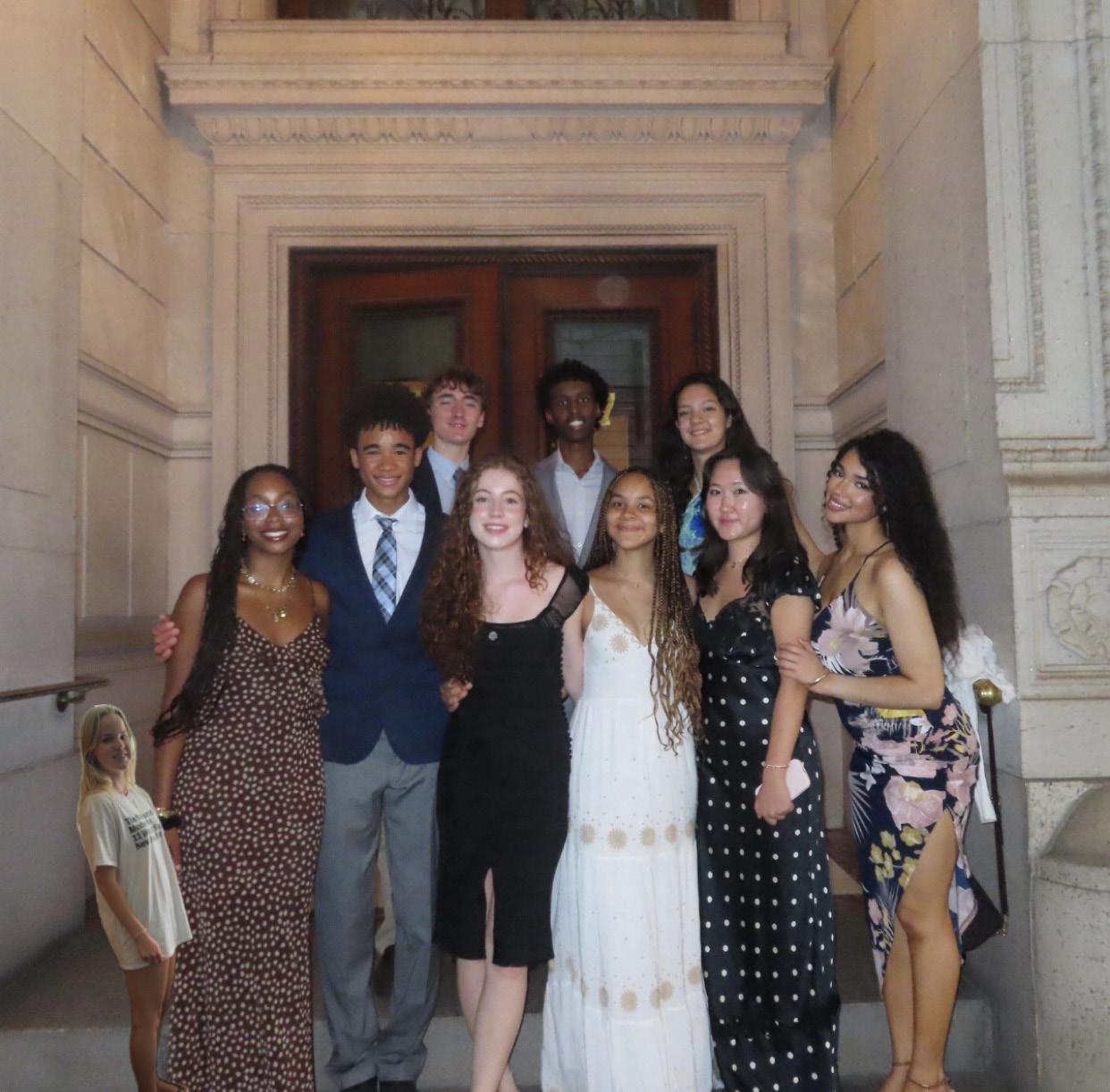
During the second week, MacLeish was in New York City! On the 12th, scholars were lined up for a visit to The Morgan Library & Museum and dinner at the infamous Century Association. While both events were exciting, each student had to memorize a poem of their choosing to present during the dinner.
As a result of this tradition, our train ride from New Haven to the Big Apple was a bit stressful—we all muttered under our breath in an attempt at memorization. When we finally arrived at 43rd St., and made it through the recital, we thoroughly enjoyed the dinner, company, and felt closer as a cohort— thank you Luke!
The final week went by exceptionally quickly. Each morning we scrambled to scan boxes, and make it through our archives. Book making grew a daunting countenance, as many faced challenges putting together their final works, and the days were ever fleeting.
Overall, MacLeish 2026 was a fabulous week of adventure, discovery, and growth—scholars assumed expertise over their material and authors, bonded as a diverse group, and did so under the wing of Dr.Blevins, Ms. Godbersen, Neil, and the many supporters along the way. Thank you so much, and we are looking forward to an incredible year together!
MacLeish Scholars
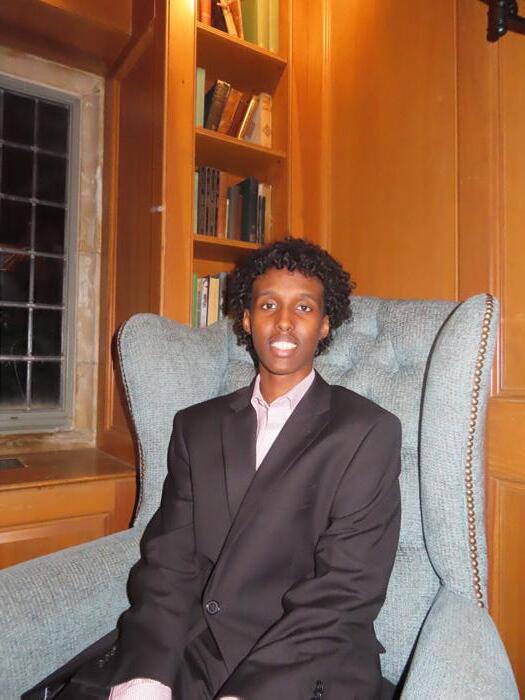
M My research at the Beinecke was centered around author Claude McKay. Claude McKay – a double threat in both prose and poetry – was born and raised in Jamaica, moved to America when he was a teenager, became
y research project examines the work of Modernist author James Joyce, focusing on the intersection between philosophy and literature. Joyce was a pioneer of the Modernist movement, mentoring and forging close relationships with authors such as Ernest Hemingway, Ezra Pound,
a major literary figure in the Harlem Renaissance, and continued to travel around Europe, North Africa, and even spent time with the Communist Party in Russia at one point, before moving back to Harlem and converting to Catholicism. His most famous work was Harlem Shadows, which contained poems such as “If We Must Die” and “To the White Fiends.” Although he stopped when he moved to America, Claude McKay is often considered the first person to publish literature in the language of Jamaican Patois. He was advised to do so by his mentor, Walter Jekyll, an English noble who decided to move and stay in Jamaica for 34
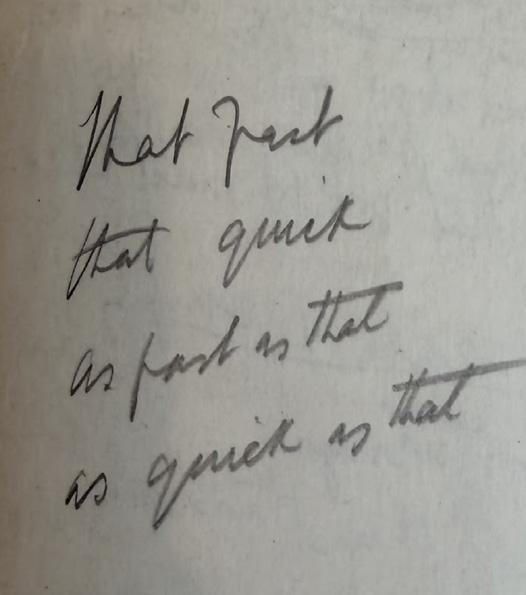
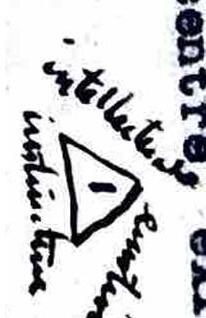
and T.S. Eliot. He is best known for his novels Ulysses, A Portrait of the Artist as a Young Man, and most infamously, Finnegan’s Wake, a 628 page book that he wrote in an attempt to capture the human consciousness and a single night’s dreams and realities. While I originally began my research at the Beinecke with drafts of Ulysses and A Portrait, I eventually began deciphering Joyce’s drafts of Wake, which were much more cryptic and unfinished compared to drafts of the former. I explored 15 different
years until his death. After finding what can only be described as an absolute gem in the archives – a note page where Claude McKay asks “Who gave me my instructions”, and “Who instructed me,” and answers “Rousseau” and “Lycidas, ” I delved into the path of Walter Jekyll’s influence in Claude McKay’s works. Rousseau, representing the philosophical idea of primitivism (that human’s inherent, primitive nature is good, and that advanced civilization brings evil), and Lycidas, representing classic European fine literature, correspond directly to what Walter Jekyll imposed on Mckay, as described in drafts of “My
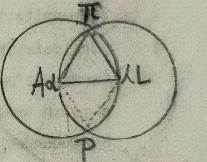
versions of several sections of Wake, using each one to interpret a variety of symbols and in particular, a single illustration that appears in all published versions of this book. In searching for the context, I pored over newspaper clippings of Joyce’s fourteen unanesthetized eye operations in hopes of repairing his vision (explaining his terrible handwriting in the final drafts) and his daughter’s diagnosis of schizophrenia (supposedly, she was his muse for this novel). I hope that I will be able to dissect
Green Hills of Jamaica,” and autobiographical book my Claude Mckay I found in the Beinecke that was published posthumously. I tracked the contradiction of primitivism vs literary elegance throughout my research in the Beinecke, as well as many other subjects, and I’m excitewd to dig deeper into my scans throughout the rest of the year!
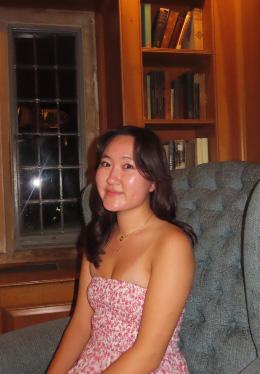
Sienna Hwang
and understand Finnegan’s Wake more fully and its place at the crossroads of naturalism, human psychology, and fictional literature.
Sulay Abdirahman
My project examines the work of poet Mei-mei Berssenbrugge, focusing on how she uses concepts from physics, philosophy, and cosmology to make sense of our relationship to the world around us. A contemporary poet
My author, Claudia Rankine, is a twentieth-century poet, essayist, and playwright whose prominent works include Citizen: An American Lyric and Just Us: An American Conversation. The throuhline across Rankine’s works is the exploration of the Black American experience rooted in art, history, everyday experiences, and self-
living in New Mexico, Berssenbrugge has generously agreed to speak with me about my research throughout the coming year, giving me the rare opportunity to study her work alongside the poet herself. Digging through her boxes at the Beinecke felt strangely like rummaging through my own closet—if I happened to be a poetic,philosophical, and scientific genius! There were coffee stains, envelopes holding dried flowers, unflattering film photographs, newspaper clippings torn out and circled, and scraps of ideas tucked between drafts. Looking passively, one might simply find clutter. I found a map of a mind
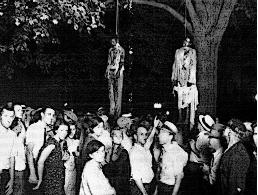
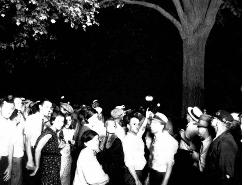
identity. I conducted my research using her notebooks, teaching material, and drafts of her literary works. One of my first findings in the archives was an early draft of Citizen containing an image of two black men being lynched above a crowd of white spectators. In the published version, Rankine edited the lynched figures out of the image, leaving
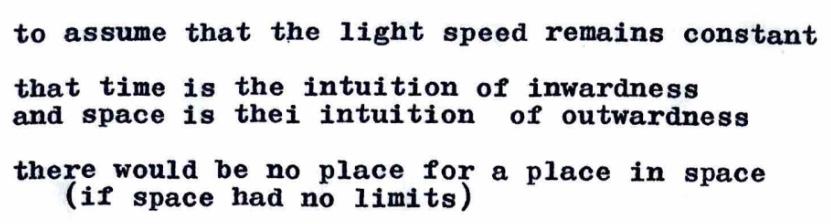
at work. Before arriving at the Beinecke, I had closely read Berssenbrugge’s poem Perpetual Motion, intrigued by its image of a mountain whose sandstone is “tattooed with waves” and whose summit somehow “moves with the tide.” The poem appeared to suggest that motion might not be physical at all, but preserved within matter itself. In the archives, I discovered typed notes in which Berssenbrugge places figures such as Copernicus, Galileo, Einstein, Kant, and Charles Olson into conversation with one another. Again and again, she writes,“to assume that,” questioning scientific and philosophical assumptions
behind a photograph of a group of white spectators staring up at a dark sky. No trace of the original lynching, Rankine was able to separate the historical and perceived narratives of the image. Rankine also made significant stylistic changes to Citizen: the first drafts were written in the first person, but the published work is notably written almost entirely in the second person. In looking at her process, I’ve found it to be fascinating how Rankine uses pronouns to differentiate between racialized and unracialized versions of
about space, time, and perception. Suddenly, Perpetual Motion became less mysterious. The mountain was no longer merely a mountain. It was a record of movement, memory, and time embedded within stone. My project now asks how Berssenbrugge uses poetry to challenge inherited ways of thinking about inwardness and outwardness, and whether, like science itself, poetry can revise its assumptions about what it means to perceive, remember, and love.
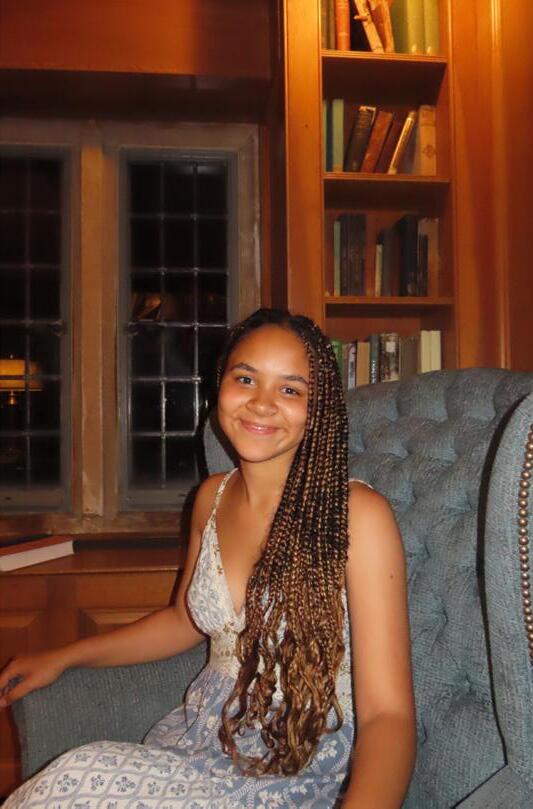
the self. In the later part of my research, I hope to continue exploring Rankine’s definition of the boundary between the first person “I” and the second person “you”.
Penelope Thornton
Avery Hines-Mudry
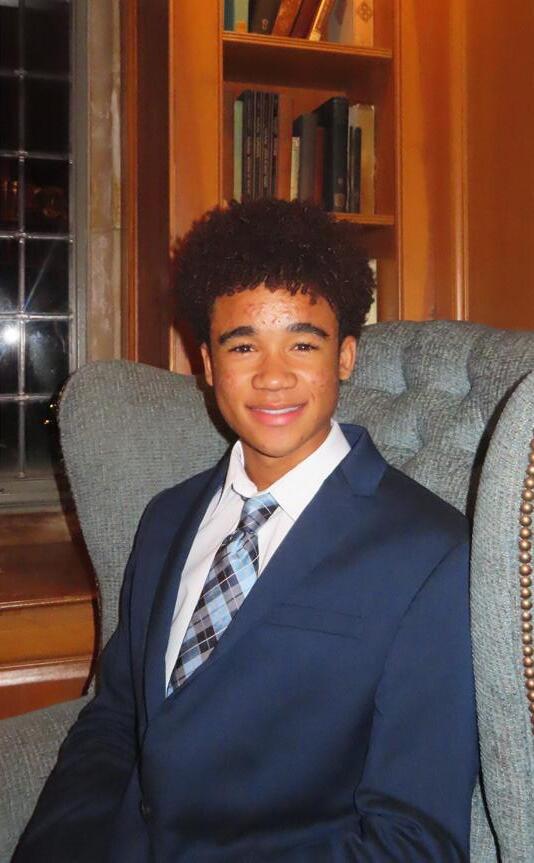
My author, James Baldwin, across a range of literary forms—essay, play-script, novel, and poetry— centers his narrative on the African-American identity. Throughout his work, Baldwin deliberately intersects class, religion, sexuality, and
During my two weeks at the Beinecke, I have focused my research on American modernist writer Hilda Doolittle (most commonly known as H.D.). H.D. was an American modernist poet, novelist, and memoirist whose career began after moving to London in 1911. She co-founded the Imagist movement with Ezra Pound and gained recognition for her minimalist freeverse poems inspired by
race to develop nuanced portraits of a shared—and deeply personal—black experience. In his first essay, “Everybody's Protest Novel,”ofNotesofaNative Son,hestates,“Wetakeour shape,itistrue,withinand against that cage of reality bequeathedusatourbirth.” Thisconceptdrivesmanyof his following works and is centraltohisfirstnovel,Go TellitontheMountain,” publishedin1953.
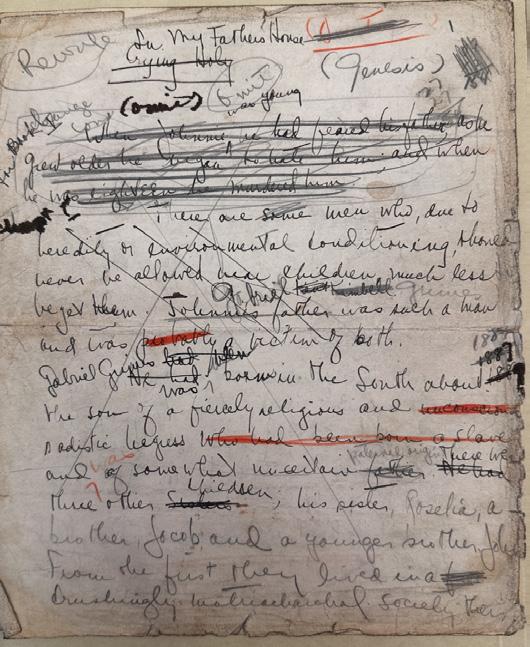
Go Tell it on the Mountain was central to my work at the Beinecke, andcomprisedthemajority of Baldwin’s six-box holding—the smallest of the 2026 cohort! Despite the holdings' size, it was mighty Whilemuchofthe material related to Crying Holy,the unpublished first draft of Baldwin’s 1953 novel,Ifoundanextensive
classical themes. Later, she expanded into fiction, memoir,and verse drama, and her World War IIera poetry evolved into complex, pacifist works shaped by her experiences during the The Blitz.
I was particularly interested in H.D.’s psychoanalytic period, one of the most important phases of her life and writing. In the 1930s, she underwent psychoanalysis with Sigmund Freud in Vienna, seeking help for anxiety, trauma, and
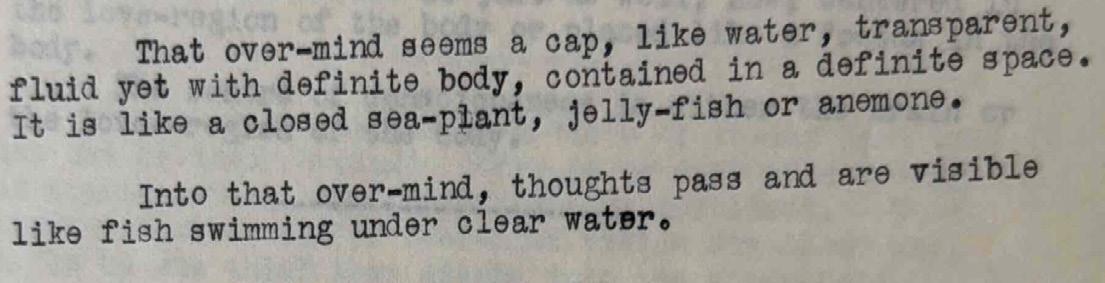
collection of unreleased poetry and prose, some of which connected to Giovanni’sRoom.
The synopsis of Crying Holy differs completely from that of its published sibling. In the former, the narrative follows its protagonist, “Johnnie,” across a number of months to his rather morbid demise—with the sacrilegious murder of his father, “Johnnie” is subject to alcoholism In the published text, “John” arrivesatastateofreligious exculpation with the novel’s conclusion— “The ThreshingFloor.”
A number of boxes contained Baldwin’s unreleased poetry, art, and documents,manyofwhich, in some manner, related to Crying Holy Several epigraphs—written in
recurring emotional struggles. Their sessions profoundly influenced her understanding of memory, identity, gender, and creativity,themes that later appeared in works such as TributetoFreud, whereshereflectedonher relationship with Freud and the insights gained throughanalysis.
Atthesametime,H.D. developedastronginterest in mysticism, the occult, and spiritual experiences. She participated in séances and believed she could receive messages and visions from spiritual sources, especially during and after World War I. I have observed how these experiences
succession—connect to ‘blind dogmatic worship’ present within the novel. In addition, a philosophy journal titled “ENQUIRY” has potential application to warrant and or develop my thesis. The journal presents an argument about human development, relating one’s growth to the sum of one's environmental experiences and adherence to religion. Overall, my experience in the Beinecke was wonderful, and I’m so excited to continue my
shaped many of her later writings, particularly her long poems, where psychological exploration blended with spiritual symbolism, mythology, and esoteric ideas.
Juliet Burwell
Jahlani Jackson
My research was initially focused onJeanToomerandZora Neal Hurston. Toomer had one fully published novel, Cane, but possessed an extensive archive with over 200
Mboxes, some of them containing unpublished manuscripts. On the other hand, Hurston published a myriad of novels, plays and short stories such as Their Eyes Were Watching God, Mule Bone, and Tell My Horse to name just a few. However, her archive is scarce with only 2 available boxes. Because of this, I unfortunately had to abandon her as one of my authors :( Throughout my time in the Beinecke, I connected deeply with Jean Toomer. I learned about Toomer’s very eclectic spiritual
ideologies that came from his teaching with George Ivanovich Gurdjieff. He studied astrology, numerology, Buddhism, and even spent some time in India, Russia, and Mexico. Consuming different cultures and their different cultural practices added more nuance to his unpublished writing.
Being a Macleish scholar is really a once in a lifetime opportunity, and because of that I focused on finding as many of Toomer’s unpublished novels as possible. I read Caromb, an eerie 280 paged book
that is dedicated to his wife about a couple’s honeymoon gone wrong, his autobiography Second River Later written in 1941. I am excited to continue my reading over the summer and into the fall!
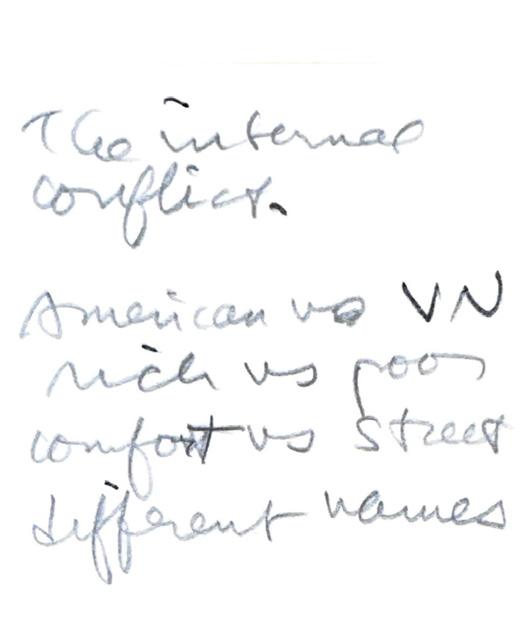
y research at the Beinecke centers around novelist Robert Olen Butler. Butler is known for having served in the Vietnam War, where he worked as a linguist and developed an intimate connection with Vietnam’s culture and people. This experience —in combination with his immersion in American communities of Vietnamese expatriates— has profoundly shaped his literary exploration of physical and temporal estrangement. Butler’s work includes Perfume River, Hell, and Severance, but he is most well-known for A Good Scent from a Strange
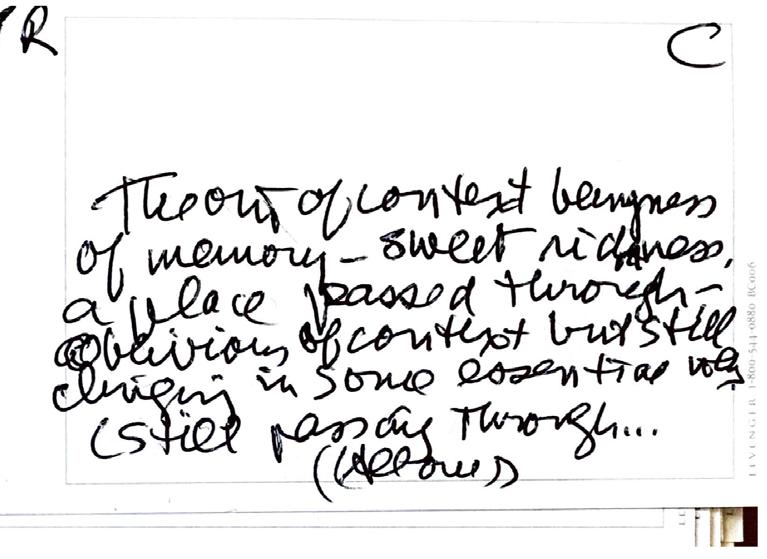
Mountain, a collection of short stories that won the Pulitzer Prize in 1993. It has been a pleasure to explore Butler’s archive over the past two weeks. His collection is vast, spanning 142 boxes, and I spent most of my time reading the edited manuscripts and notes for his published novels. Butler’s comparison of American and Vietnamese values, as well as his use of fragmented memory, has struck me as particularly interesting. These concepts have appeared throughout his notes, in combination with intriguing name changes of characters tied to etymological
considerations. His notes also contain personal definitions of Vietnamese cultural symbols that appear throughout his work, in addition to different codes, which will be exciting to decipher in the coming year.
Chiwo Mupita
Fritz Weihman
In the Beinecke archives, I’ve been researching Leslie Marmon Silko, a mixed white and Laguna Pueblo woman, whose work
Before entering the Beinecke, I had a research theme at a rather unusual intersection: literature and neuroscience. I wanted to explore how twentieth-century authors attempted to explain experiences with mental illness before the clinical language existed to define them. With dreams of becoming a neurosurgeon, medicine has always been a passion of mine, and I was struck by the idea that the very authors I would be studying were, in their
intertwines stories about the effects of colonialism, indigenous spirituality, and the natural world. Silko has published eight books, created original films, and taught throughout her career, and now lives in Tucson, Arizona. Her archive was quite intimidating, as she worked on Almanac of the Dead for over 10 years, along with other novels throughout that period. Her archives included everything from draft fragments and large note sheets to poems, artwork, and even amuletlike constructions. I spent
own way, doing what doctors do: searching for a framework to make sense of the mind.
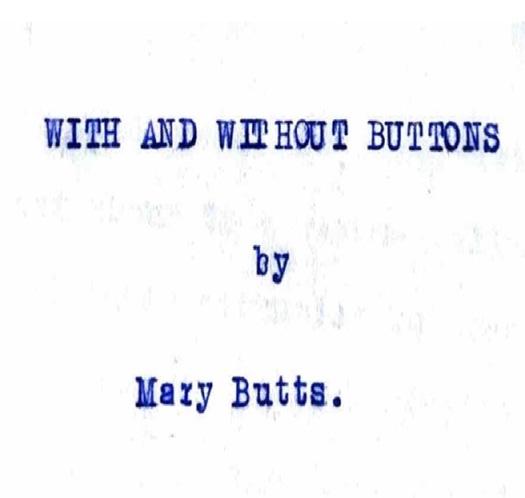
This led me to Mary Butts (1890–1937) and Ruth Pine Furniss (1893–1957), two early twentieth-century modernists who developed deeply idiosyncratic systems to manage what conventional language could not contain. What initially piqued my interest was their backstories. Butts, a British modernist deeply immersed in occultism and substance abuse, left behind documented symptoms— erratic behavior, grandiosity, periods of intense creativity followed by collapse, and reliance on opium and heroin—that closely resemble DSM-5 criteria
the first few days looking at Silko’s thoughts on landscape, artworks, and unpublished drafts, and reading materials from Ceremony. In continuing to expand my research, I found strong threads of spiritual and scientific questions throughout the archives, along with really interesting notes on “code” and an “inner text” within Almanac. One striking question that appeared multiple times was “Who has spiritual possession of the Americas?”, which made me wonder where this question appeared in her
for Bipolar I Disorder. Furniss, an American novelist, presented similar symptoms in her semiautobiographical novel *Gay*. She also underwent institutionalization, electric shock therapy, a topectomy, and ultimately a lobotomy. Knowing this, I was eager to examine their journals, notes, and drafts. In Butts's journals at the Beinecke, I discovered symbols scattered across the pages that appeared to function as a form of spiritual self-fashioning, a private scaffolding for experiences she could not otherwise put into words. Furniss, meanwhile, concealed her most vulnerable writing beneath layers of pseudonymity, using anonymity as a shield against a medical
books, as Ceremony and Almanac both involve struggles with addiction and mental/spiritual health. She also had a lot of notes scattered throughout about scientific theories related to Einstein’s theory of relativity, and time being a sort of dimension, which is much more complex than we often acknowledge. There are so many unique and complex aspects to Silko’s work, and I’m very excited to explore their convergence and significance to her writing over the next year!
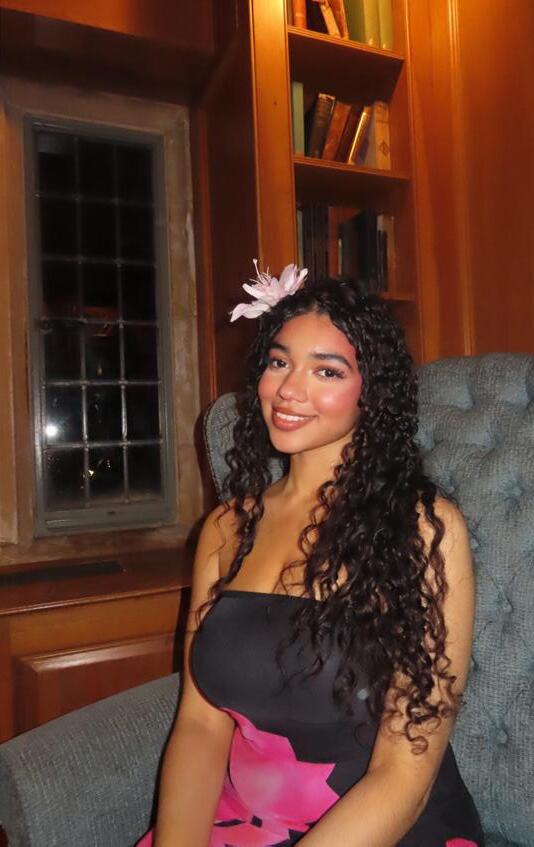
Alexis Rosario
establishment she found deeply condescending. With months of work still ahead to unpack the whys, whats, and hows of these materials, I am more excited than ever to continue exploring the box holdings and uncovering patterns that will help shape the thesis to come.
Serena Thompson
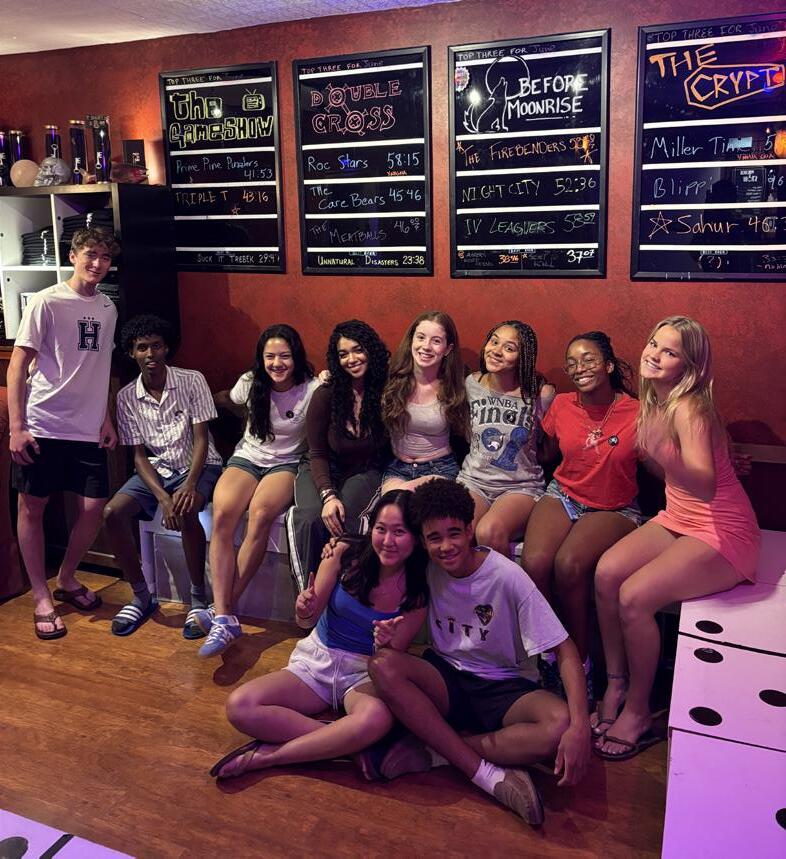
Before Moonrise vs. The Game Show
By JAHLANI JACKSON
The Morgan Library & Museum is an architectural genius! Despite its slender profile, the Museum is home to works of art that occupy the entirety of the artistic spectrum. During the hour of exploration we were allotted, Sienna, Chiwo, and I explored a variety of exhibits: “Friends Who Came to See Me: Drawings from John Ashbery’s Collection,” the J. Pierpont Morgan Library, and most notably, the “Hujar: Contact exhibit.” Peter
Special Events
By SERENA THOMPSON
To kick off the program, Dr. Blevins organized a mystery-themed bonding event at an escape room in New Haven. We split into two groups: six scholars played Escape Moonrise and four played Gameshow. Both teams worked together to solve creative puzzles and challenges while getting to know one another. In Esc ape Moonrise, we uncovered clues in a family cabin, explored a magical garden, and mixed a potion to stop a werewolf just in time. Meanwhile, the Gameshow group competed in
Museums
Hujar’s exhibit, the former, was an homage to his brilliance as an artist and—I felt—his ability to capture and portray queer figures. Though I wasn’t familiar with his work prior to visiting The Morgan, his work’s impact was significant, and changed my view of art. Besides, Chiwo and I took some cool photos in front of his work!
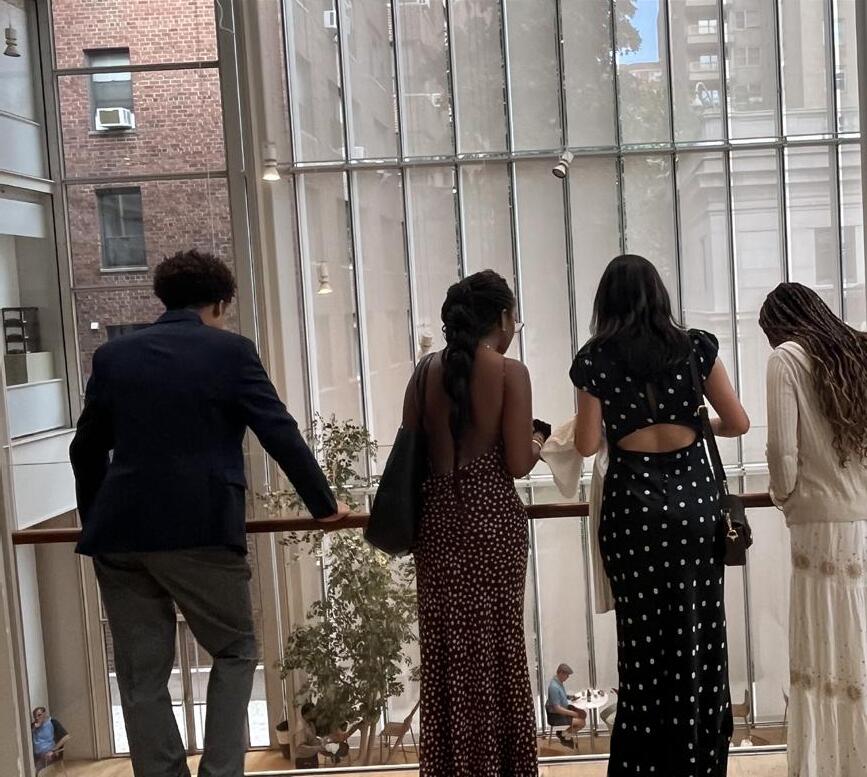
Back in New Haven, the following day, we visited the Yale Center for British Art and the Yale University Art Gallery. The purpose was to practice ekphrastic writing—writing in response to, or informed by, an existing artistic work. I really enjoyed the exercise! Apart from the beautiful objects we saw, I used “By the Sea” (1909) by Piet
team-based challenges and escaped so quickly that they earned a spot on the monthly leaderboard with a time of about 40 minutes.

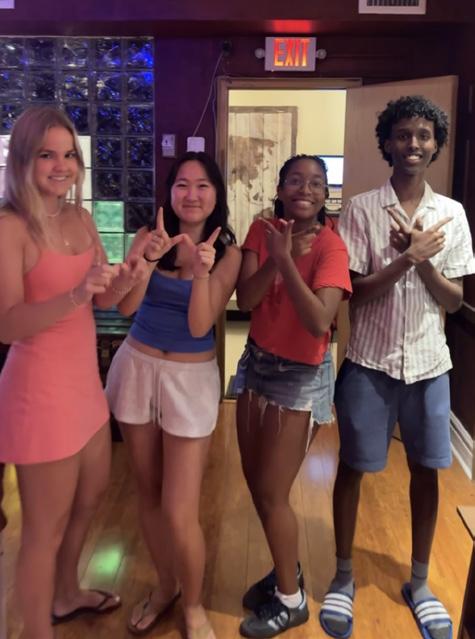

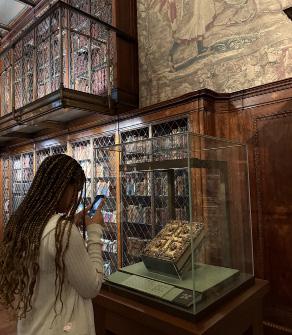
Mondrian as inspiration for one of my poems—ultimately featured in my final book! In the Yale University Art Gallery, our access to art spanned the globe—again, with Chiwo and Sienna, I moved through African Art, Indo-Pacific Art, European Art, Asian Art, and Ancient Art collections. We had six hours between both museums, but surprisingly, I only lost steam at the very end—the day was thoroughly enjoyed.
New York Public Library
By SIENNA HWANG
On the first weekend of our program, the scholars left Yale for a two-day excursion to the depths of New York City’s greatest archival holdings. The scholars split up, exploring the New York Public Library’s (NYPL) Berg Collection and Manuscripts and Archives Division as well as the Schomburg Center Literary Festival. Six scholars were in the Berg Collection, which is one of the world’s renowned archives for English and American literature. Not only does it contain rare
treasures, it is famous for containing a lock of Walt Whitman’s hair and Virginia Woolf’s walking cane. Two scholars worked in the Manuscripts and Archives Division, which holds the papers and records of individuals, families, and organizations from the New York region, and also houses approximately 700 clay cuneiform tablets dating back to ancient Mesopotamia. Finally, one scholar, Jahlani Jackson, attended the Schomburg Center Literary Festival at the Schomburg Center for Research in Black Culture. The Festival is a celebration of the African Diaspora, and features writers encouraging literacy and book-writing to expand the influence of Black culture and highlight the significance of Black history. While most scholars explored archives and manuscripts of authors related to their primary author of focus, I was fortunate enough to be able
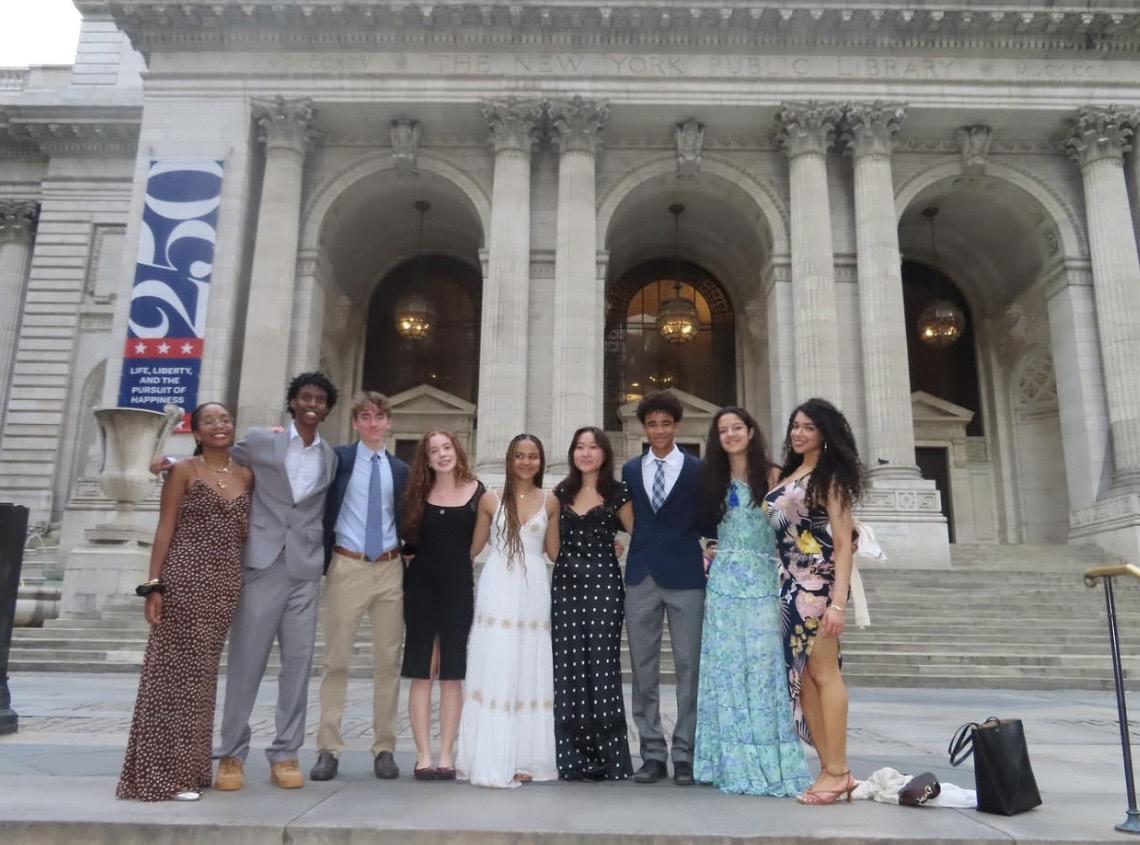
to conduct research on James Joyce, my original author at the Beinecke, in the Berg Collection. I read letters of correspondence between him and his publishers in the United States that lent context to his essay, “The Curious History,” and also translated several unpublished poems he wrote in French. All-in-all, the scholars were able to deepen their understanding of their authors and learn research thoroughly despite being in a new archive.
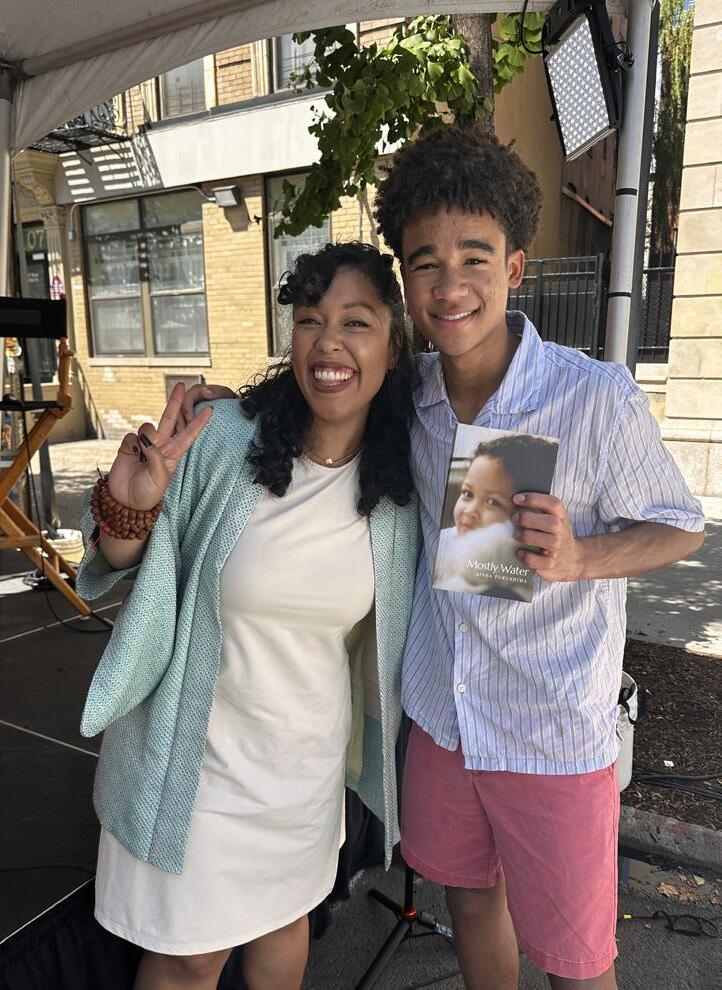
Jahlani Jackson with poet Aisha Fukushima during the Schomburg Festival
By SULAY ABDIRAHMAN
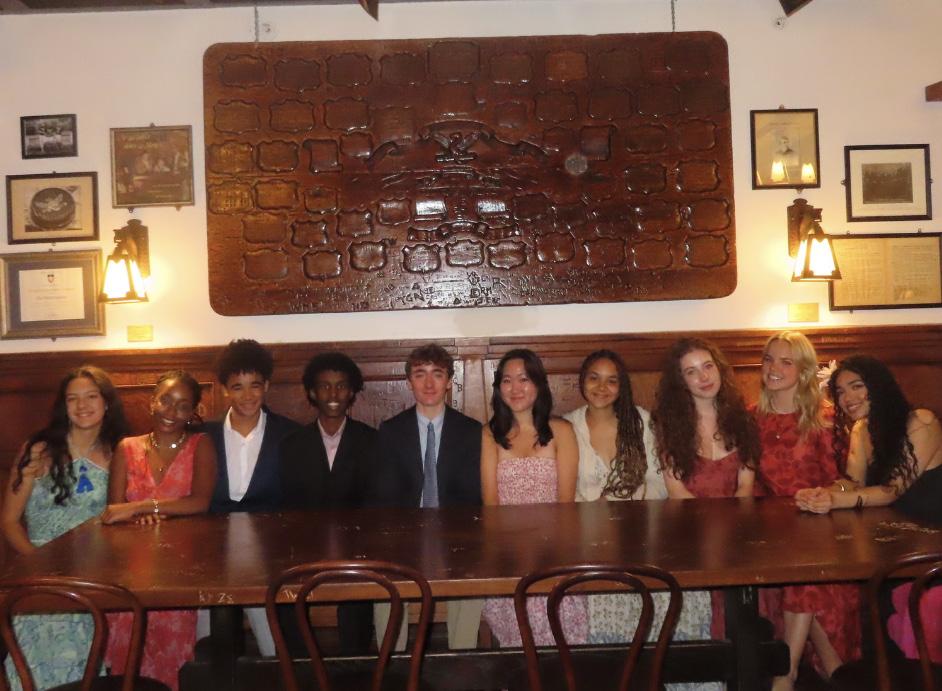
During our New York Trip, we attended a formal dinner at the Century Association – a prestigious private literature club in New York City, founded in 1847. It primarily serves as a gathering place for distinguished authors and artists. We were hosted by Luke Pontifell, a member of the Century Association and founder of the Thornwillow Press. We were also lucky enough to have had three special guests: Ms. Hines, and two former Macleish Scholars, Richardine Nbiba and Ilene Park. The Century Association was absolutely stunning, with an elegant and intellectual architectural style.Breathtaking works of art covered the walls, and books – whether from members of the club or just classic works – lined all the shelves. We had our din ner on the 4th floor, where we were greeted graciously by Mr.
Special Events The Century Association
Pontifell. We started off with appetizers: salmon with caviar on crackers, bites of duck with fig jam, and pigs in blankets. We then had a flavorful gazpacho soup, and for our entree we had perfectly cooked chicken on creamy
mashed potatoes and green beans, with a rich gravy. Lastly, we finished off with some ice cream paired with delicious fruits. The conversation during dinner was riveting –we spoke about former and current Macleish
experiences, Hotchkiss traditions, and literature. The table was lined with various poems, offering several to each person. I was fortunate to receive Sonnet 18 by Shakespeare, although my favorite that we read was Jabberwocky by Lewis Carroll. Additionally, The Macleish Scholars each memorized a poem of their choosing to read aloud to the table; Richie gave an outstanding rendition of her poem, humbling the remainder of the table and giving us a snapshot into the world of competitive poetry recitals. To conclude, we were given a tour of the building, and we were able to see works from former and current members of the association.
Overall, theexperience was undoubtedly extraordinary – being able to discuss literature in such a fun and fancy manner.

Morry’s Dinner
By CHIWO MUPITA


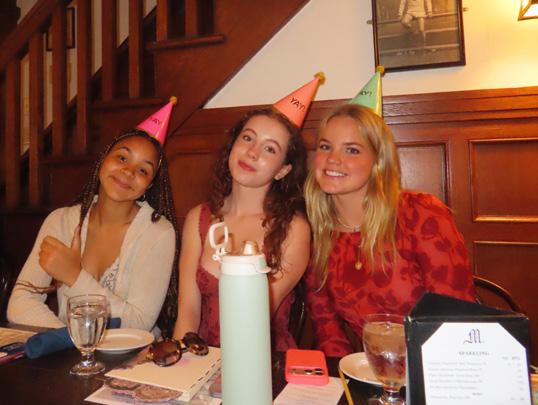
On Saturday, June 20th, after the Scholars shared some of their archival findings (commonly referred to as gems) and samples of their creative writing to a collection of guests and parents, the cohort was
treated to a delicious dinner at Mory’s Association. Mory’s is a private membership club affiliated with the broader Yale community, from faculty and students to alumni. In 1912, when the building faced demolition, its owner sold it to Yale alumni, who then transformed the club into what it remains today. The Scholars were joined
by donor Mr. Block P’25, Chris Mitchell ‘24, and esteemed English teacher Michelle Repass. The evening offered an amazing assortment of food, ranging from steak frites to burrata. The dinner served as a lovely final conclusion to the Scholars' nearly two week experience at Yale, a time of reflection and gratitude over a memorable meal.
JEFF BLEVINS
Book Making with Neil Daigle Orians
In a post-digital era, it may be difficult to understand the value of hand crafted objects and printed matter beyond the novelty of having a physical object. The benefits of a visual arts practice range from improving fine motor skills to strengthening creative and critical thinking skills. But creative practices have value beyond welldocumented auxiliary benefits to other fields in STEM and beyond. These skills are becoming increasingly important for the next generation of the workforce. Despite this, arts programs across the country are being defunded or otherwise neglected. Materiality continues to, pun intended, matter in the 21st century. Where physics tells us our atoms are never actually touching but instead repelling, our sensation of the world belies this notion of atomic repulsion. My brain is telling me that my fingers are making direct
contradiction can be found in the intangible. What we see, feel, and hear can all have a materiality all their own, even if we cannot actually touch our emotions or the light in front of us or the soundwaves from the orchestra. Creative practice allows us to engage with the world through emotional and philosophical lenses that empower critical thinking and innovation. Simply put, it’s what makes us human.
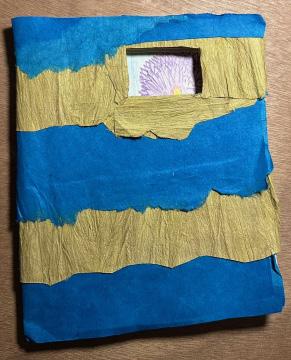
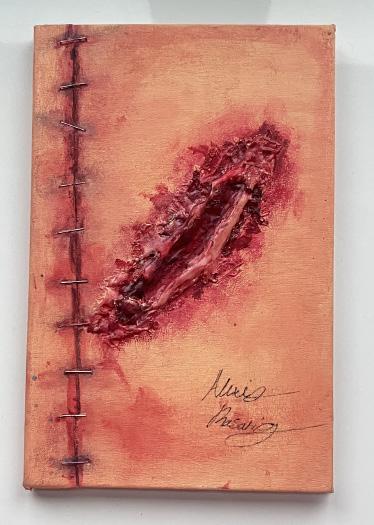
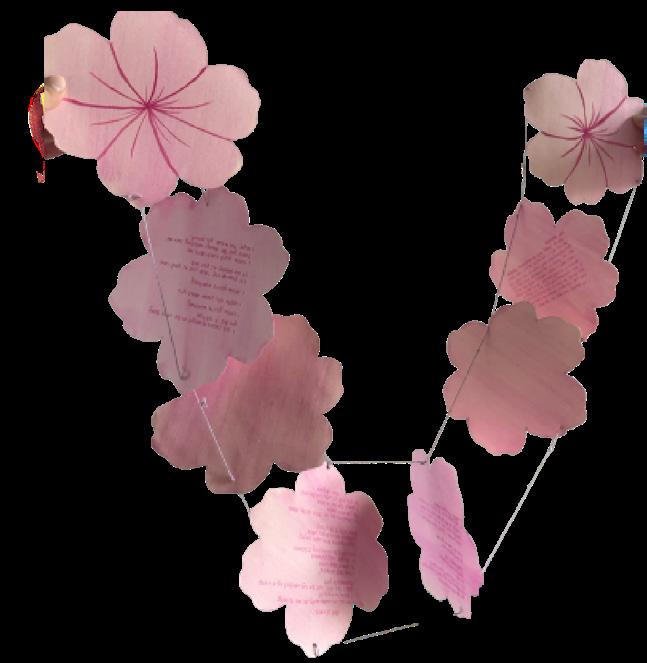
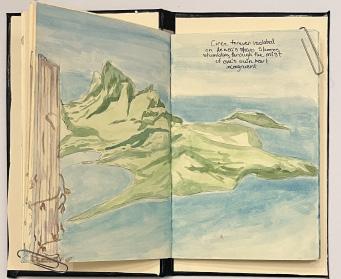
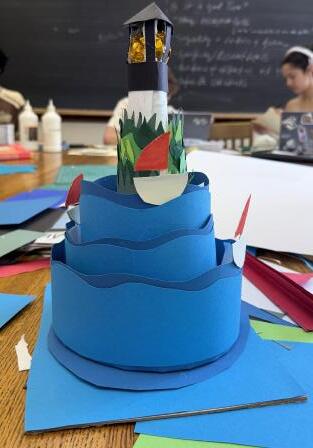
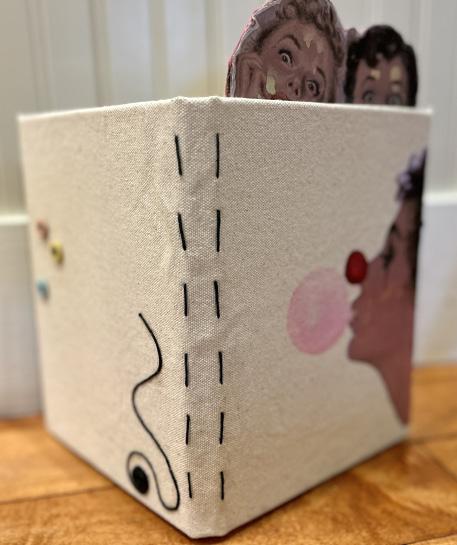
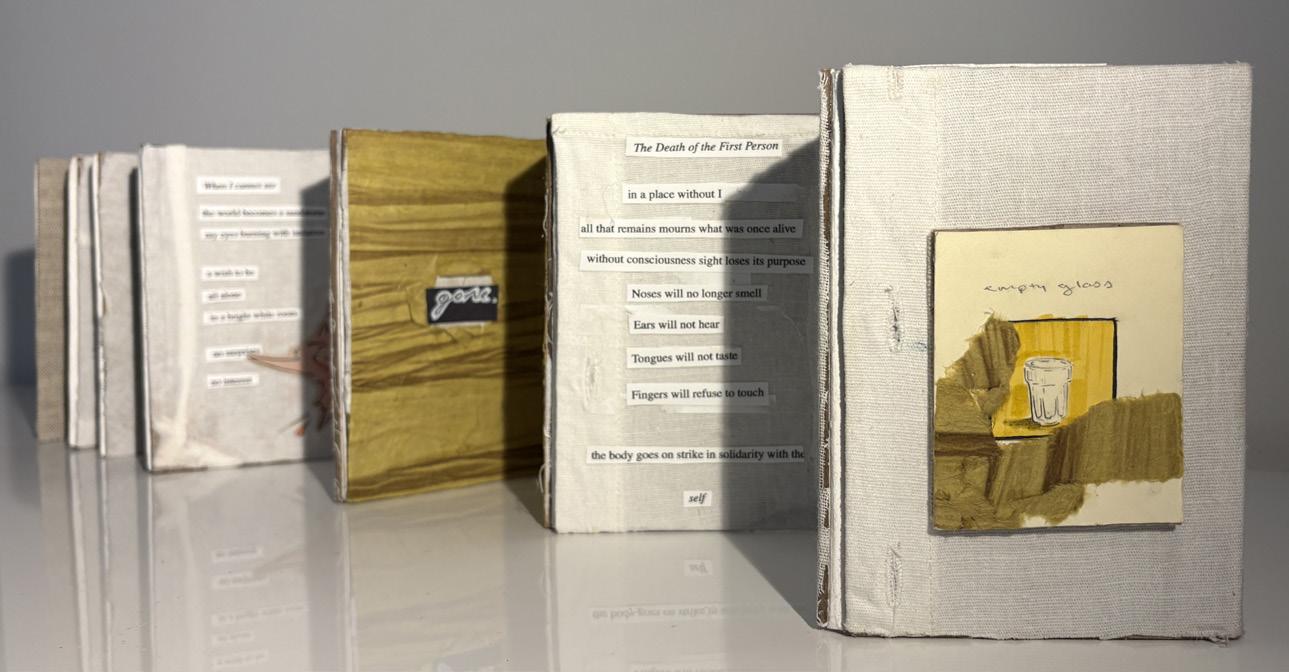
The bookmaking component of the MacLeish Scholars Program often acts as a capstone to our 2-week adventure, taking everything Scholars experienced and distilling it into a final object. Before this, we engage in discussions surrounding what a book can be, take in examples from the collection of artist books at Yale’s Arts Library, and explore how working artists utilize book forms at Printed Matter in New York City. We engage in a variety of exercises utilizing
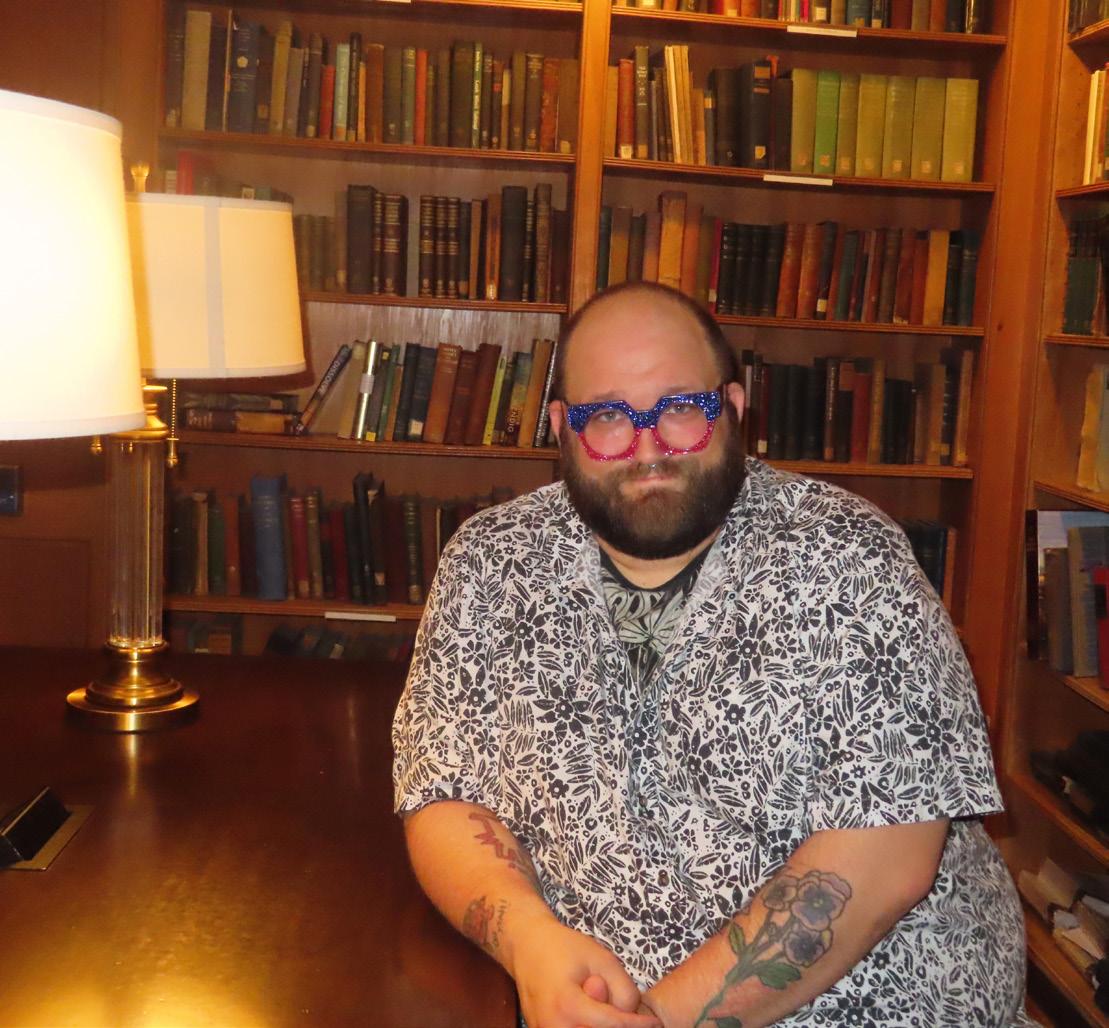
academics, we are often required to have teaching statements alongside research statements and CVs when applying for jobs or otherwise. My statement emphasizes a blurring of lines between my artistic, teaching, and research practices – I keep them neither fully separate from each other. For the last 6 years, the MacLeish Scholars Program has been an excellent example of this collaborative approach to teaching and making. I always return to my office in Ohio energized and fully inspired. I often utilize scholars’ work as examples for my undergrads (and vice versa), sharing possibilities of what art, bookmaking, and research mean in today’s
These creative components of the program are integral to imagining potentiality –it is through creative
scholarship that archival research can reach its fullest potential. It continues to critically reflect on my own practice, leading to joining the Scholars at the Beinecke and conducting my own research alongside them. Through exploring bookmaking, students in both the MacLeish program and beyond can critically examine the way information is relayed to others, both within and outside their specific research interests. It offers opportunities to consider material and embodied experiences in connection with that information, something vital in an increasingly digital age. By exploring the materiality of language through bookmaking, Scholars can approach any future opportunities with a unique sense of criticality.
Final Creative Projects & Books
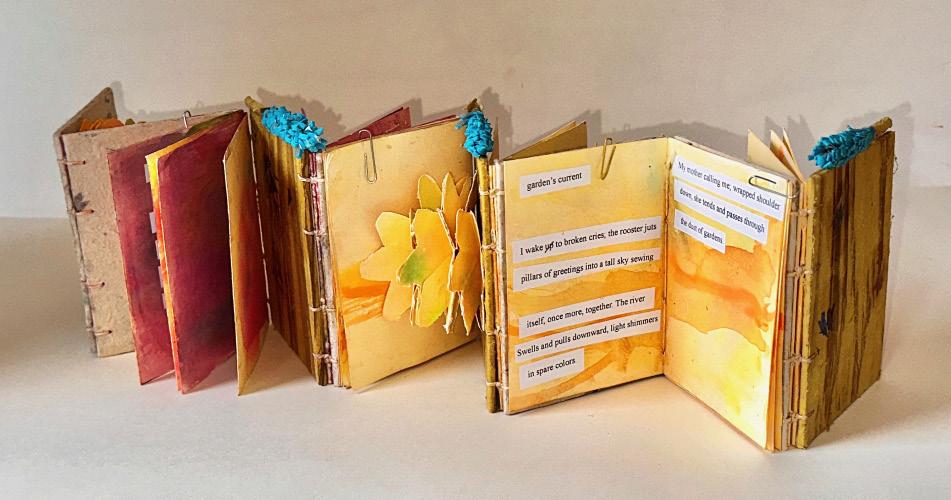
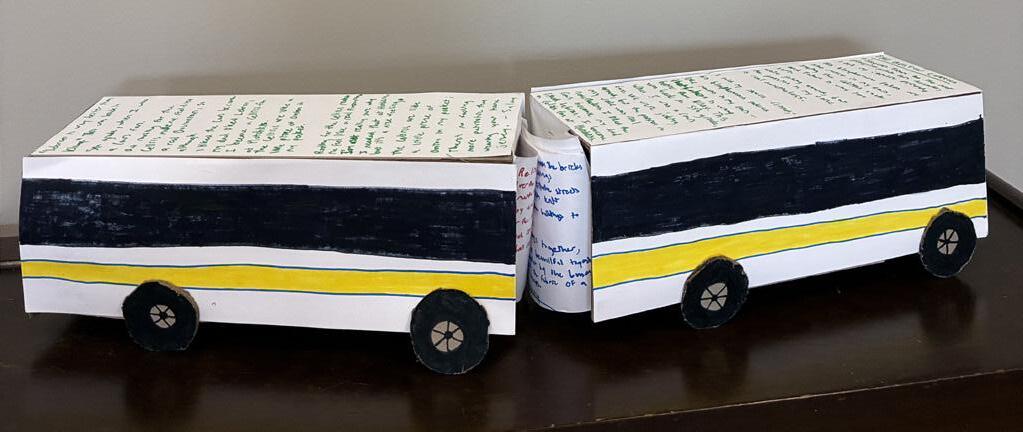

F.W.
C.M.
A.H.M.