Table of Contents 2: A Note From Dr. Fisher 3: Bio for Dr. Green and Madison Julio 4-5: Library Overviews
6-8: Scholar Spotlights
9-10: Photo Collage
Instructors
Dr. Casey Green & Dr. TM Fisher
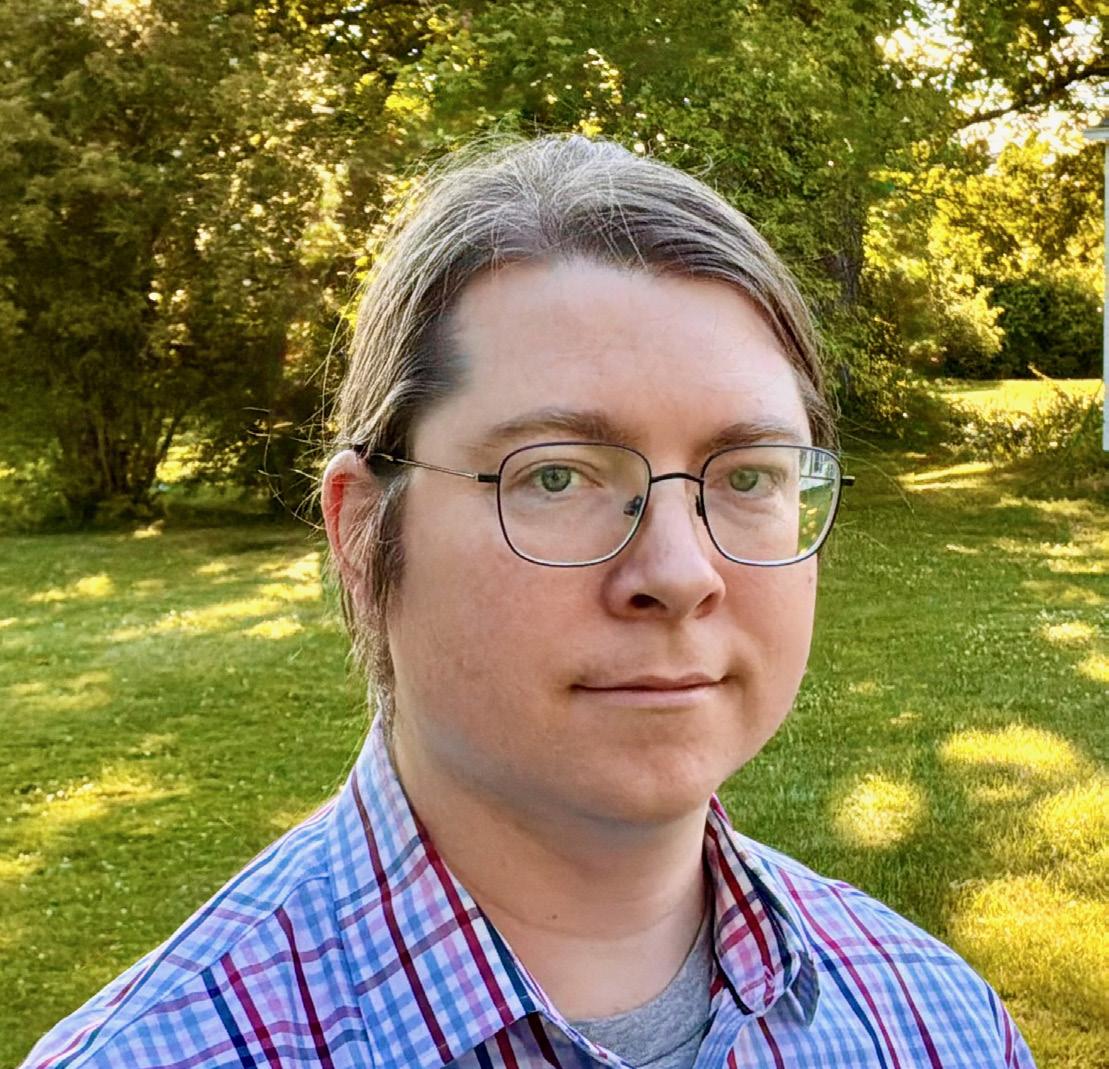
A Note From Dr. Fisher
The Hersey Scholars Program is now in its fifth year, and the summer program has fallen into a cadence. As this year’s scholars dig through archives at Houghton, Schlesinger, Boston Public Library, and the Massachusetts Historical Society, I sit in a nearby coffee shop, typesetting last year’s scholars’ final works for a book that will sit in Hotchkiss’s own library alongside the work from scholars of years past.
While I was writing this, our Director of Academic Research Programs, Jeff Blevins, texted me from Yale’s Beinecke Library to say he’d run into one of those scholars from years past—our inaugural year, in fact. The former scholar is working in the archives of his college library while finishing an archive-based thesis, and this summer he will intern at Choate, teaching an archival studies course. The Hersey Scholars Program, he says, changed his life.
What a privilege this is: To change lives by offering students an opportunity to pursue their scholarly interests in ways that few other high schools could support. Students need not become archival specialists to reap the benefits of such
an experience, of course. Any student who is ready to take up a serious intellectual interest of their own choosing, to commit to a year-long investigation, to join a conversation of historians and other scholars, and to build an argument that rewards the reader’s attention for 30 pages will find themselves at the end of the program changed from a student to a scholar.
And as AI has become more and more a fact of everyday life, I have gained a new appreciation for other ways the Hersey Scholars Program benefits our students. The projects our scholars pursue are projects they care about for their own sake. It would be possible to produce a passable final paper in short order by turning the project over to an LLM, but that would not satisfy the students’ curiosity or their desires to discover something new. The pride I see on our scholars’ faces when they present their work at the end of the school year is not pride in having completed a selective program by some means or another; it is pride in their own work, in their own effort, their own thoughts, revisions, and conclusions.
What is next for the scholars in the libraries now? In the fall, these scholars will enroll in an advanced research methods course to learn how to put their archival research in conversation with existing scholarship. Then, in the spring, they will complete the Hersey Seminar, an academic writing workshop designed to teach students the norms and methods of academic writing. By the end of the program, they will each produce a twenty-five to thirty-page paper that is closer to what one might find in an academic journal than a class essay. Those who choose to have their papers preserved in a book in our library will send their final versions to me to typeset next summer, in this same coffee shop, as the sixth cohort of scholars dig into the archives for the first time.
Until next summer,
TM Fisher Director, Hersey Scholars Program
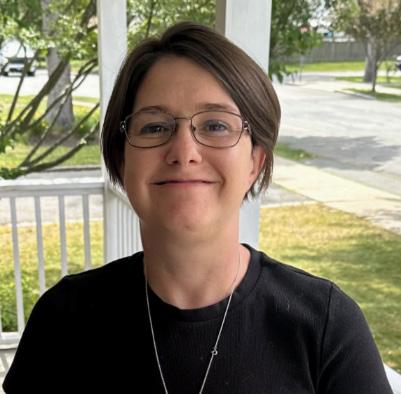
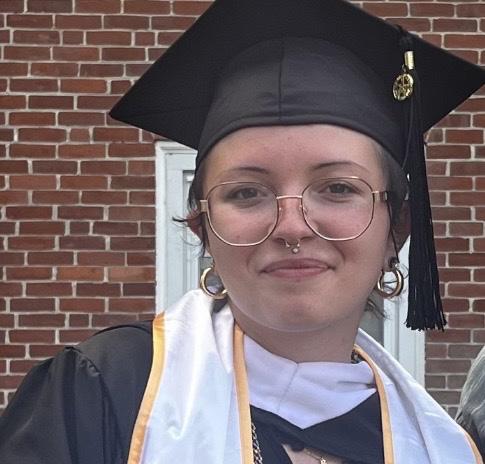
Biography for Dr. Green
Our assistant teacher, Casey Green, teaches history at the Louisiana School for Math, Science, and the Arts, a college preparatory boarding school. She holds a PhD in history from the University of Connecticut and conducted most of her dissertation research, which was on disabled men in 18th-century New England, in Boston-area archives. While teaching at Hersey, she also conducted her own research at MHS. She was examining the papers of William Hickley Prescott, who became blinded when a hard roll hit his eye during a Harvard food fight in 1814. While he went on to publish many works of history, he struggled to accept himself as a disabled man. She studies his identity crisis. Dr. Green particularly enjoys researching along with the students because they form a community of scholars. That is what the program is all about showing students the world of professional historians and inviting them to join the conversation. She notes, “This is a self-directed program where students largely work independently. Students must have a passion for history but also a willingness to embrace the challenges of archival research and be able to problem solve when challenges arise.” She enjoys working for the Hersey program becasue she loves
hearing about the students’ research and learning about their findings everyday. As she says “These students are so enthusiastic about their project, and it is fun to see their excitement grow.”
Biography of Madison Julio
I am a recent Smith College graduate with a BA in history. In the Fall, I will begin my PhD in History at SUNY Stony Brook, where I will focus on interfaith interaction and identity in medieval Iberia.
My previous experience includes working and interning in public libraries, digital archives, and historical societies. I have also served as a residential assistant for Smith College’s Pre-College summer program for students in grades 9-12, and I helped plan and facilitate Smith College’s new student orientation for two years.
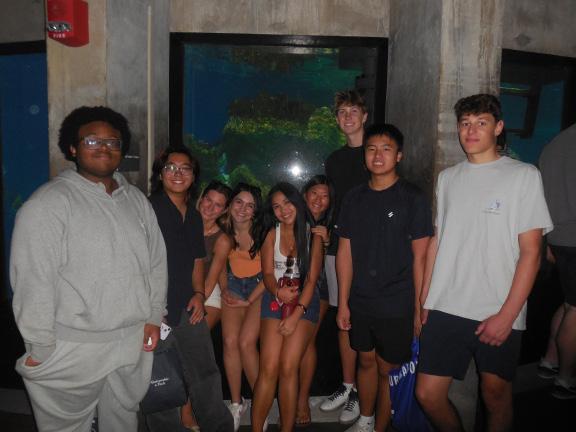
This summer, I worked with the Hersey Scholars Program as a residential assistant, supporting student life outside of the archives in the International Guest House (our hostel) and on trips such as the New England Aquarium and Isabella Stewart Gardner Museum. I also assisted Dr. Fisher and Dr. Green in meeting with the students to help them think through their research questions, begin developing their arguments, navigate archival challenges, and identify next steps when they felt stuck in their research. It was a pleasure to work with such a bright group of young scholars and to see their projects develop over the two weeks in Boston. Witnessing their excitement when they found a source that was either exactly what they were looking for or pushed their research in a new, unexpected direction was the most rewarding aspect of the program for me.
The Massachusetts Introducing Our Libraries
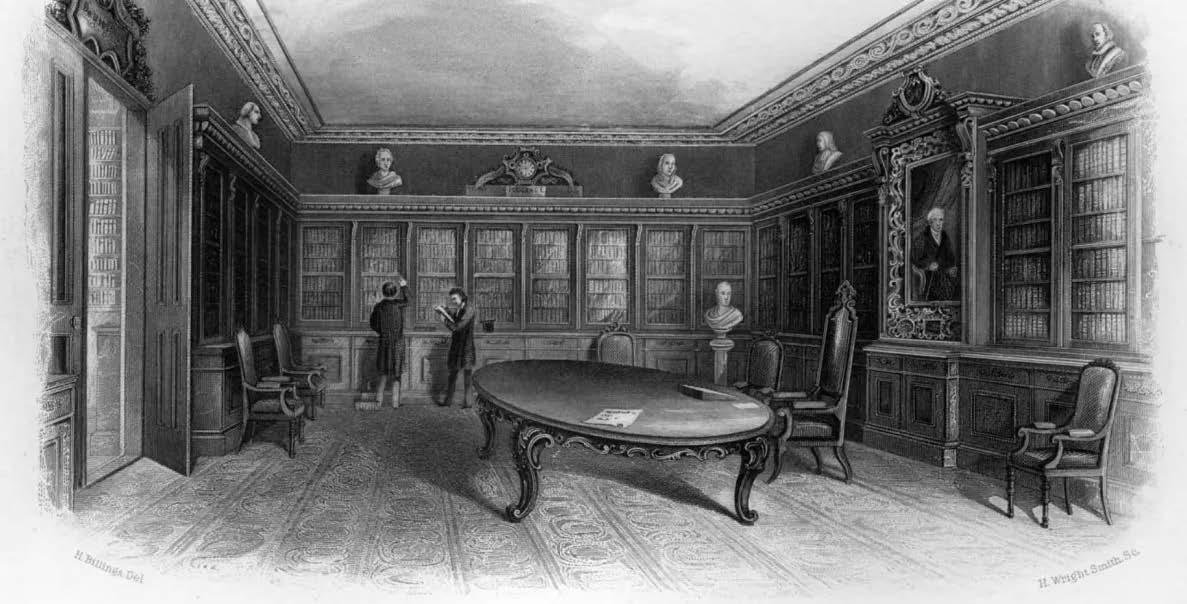
The Massachusetts Historical Society (MHS) was founded in 1791 by Reverend Jeremy Belknap, becoming the oldest organization in the United States with the mission to collect material for the study of American history. MHS contains an extensive collection of manuscripts and
rare books, chronicling American history from the colonial period to the present day. MHS is particularly renowned for extensive holdings of personal papers from John Adams, John Quincy Adams, and Thomas Jefferson. The building is located in Back Bay, Boston and is home to
millions of family papers, books, and artifacts. In 2026, two scholars engaged in archival research at MHS: Charlie MacColl and Clover Curry. MacColl said, “The MHS was a perfect library
Harvard’s Houghton Library
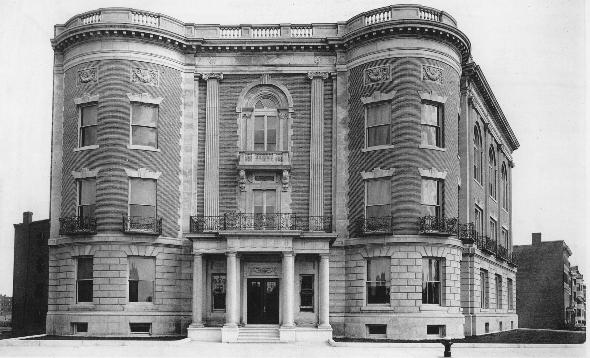
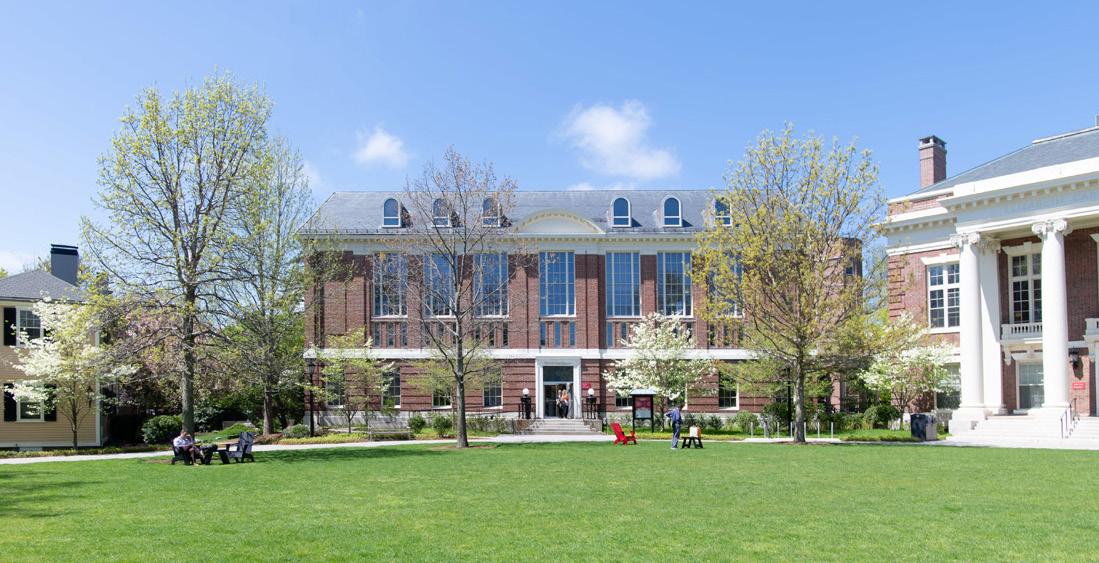
Harvard’s Houghton Library holds the university’s principal library for rare books and manuscripts. Arthur A. Houghton Jr., an American industrialist who served as president of Steuben Glass Works, primarily funded the library, which opened in 1942. The library was built with increased storage space and a unique climate control system, which none of the other Harvard libraries had at the time, making Houghton the storage place for Harvard’s most prized collections. Notable items include a full
copy of the Gutenberg Bible and the papers of renowned authors, including Emily Dickinson, James Joyce, and T.S. Eliot. Houghton also holds the papers of President Theodore Roosevelt, ancient papyri dating back to the 3rd century BCE, and manuscripts from the Middle Ages and the Renaissance. The library is located near Harvard Yard and holds exhibitions for visitors. Houghton boasts one of the best reading rooms among the libraries in the Hersey program, and the library has five main departments: Early
Books and Manuscripts; Early Modern Books and Manuscripts; Modern Books and Manuscripts; Printing & Graphic Arts; and the Harvard Theatre Collection. This year, three scholars conducted research at Houghton: Jake Glazer, Stella Liao, and Luke Valesco. Scholars this year engaged with a wide variety of collections, from the papers of the Immigration Restriction League to the records of Harvard’s 22nd president, Abbott Lawrence Lowell. Hersey scholar Liao said, “My time at Houghton Library immersed me in
for a novice researcher like me and thoughtfully supported me throughout the Hersey program which allowed me to dive into my topic as best as I could.”
the daily work of historians and researchers. Witnessing their dedication inspired me to approach my own archival research with greater curiosity and persistence.”
Introducing
Our Libraries
Harvard’s Schlesinger Library
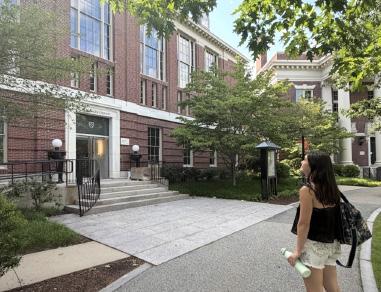
Three blocks off of Harvard’s main campus and secluded behind the all too over-trafficked Admissions Office lies one of the many gems of Harvard University: Schlesinger Library. Named in honor of Elizabeth Bancroft Schlesinger, a feminist and historian who believed in the preservation of women’s stories, the library has long been the leading center for scholarship on the history of women in the United States.
The library holds thousands of manuscript collections, books, photographs, and oral histories from pivotal
female figures ranging from Angela Davis to Betty Friedan. But the Library’s resources go beyond these sources, reflecting what one might think of as a sort of “traditional feminism.” It examines powerful women’s lives and endeavors through a variety of lenses: activism, of course, but also athletics,
the military, art, and more. Even apart from the physical archives themselves, female empowerment is evident everywhere you look in the building. The vast majority of staff and researchers are women, but even those who aren’t all share the same common desire: to uplift and better understand the
The Boston Public Library
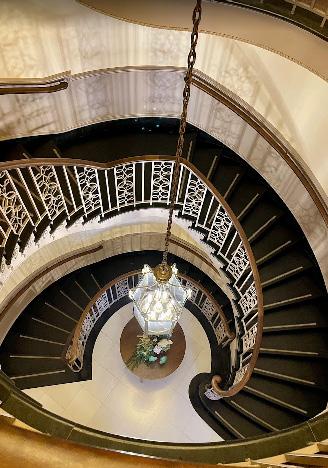
The Boston Public Library, founded in 1848, was the first large, free, municipal library in the United States. Originally, the concept was proposed by French ventriloquist M. Nicholas Marie Alexandre Vattemare as a way to exchange books and other printed materials with French libraries. Today, the BPL is one of the biggest public libraries in the United States and offers a variety of services to the public, from book lending to notary services.
The first floor boasts a bright lobby that welcomes patrons with a café, a live radio stage, and colorful book displays. Also on the first floor is the book lending desk,
shelves of visual media, and a tech center that not only provides Internet access to all, but also includes technology education services and assistance for those unacquainted with it. The centerpiece of the second floor is the mezzanine, surrounded by workspaces, a children’s room, and a teen center that provides a safe, adultfree environment for local adolescents. The second floor is also home to the delivery desk and Washington Room, where our researchers Justin Kearse and Alex Jiao spent most of their time when not in the archives, working with librarians in
women in the archives. Two scholars researched at the Schlesinger Library this summer: Tate Collins and Phuong Nguyen. Tate Collins said on the last day “I’m sentimental about leaving. Researching in the archives has become so comfortable and enjoyable for me, yet it was such a once-in-a-lifetime, novel experience—certainly one I’ll never forget.”
each department to acquire secondary sources and examine microfilm.
The third floor houses the BPL’s special collections, where Alex pulled a majority of his primary sources surrounding the Boston Red Light District. The basement floor of the BPL houses the business library, where Justin spent a good amount of his time reviewing business documents.
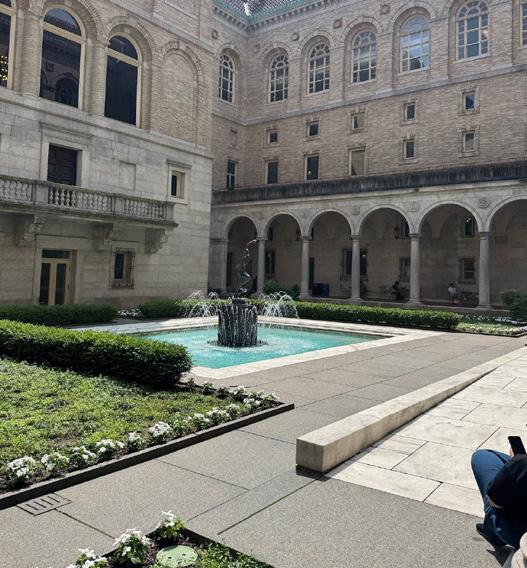
The beauty of the BPL expands beyond its offerings and services, however, and is complemented by the beautiful architecture, art galleries, and an outdoor courtyard. Initially an effort to demonstrate culture and superiority to the early
United States’ European peers, the murals, carefully chiseled details, and artwork that paint the walls and ceilings of the BPL remain an important piece of the building and its history
Tate Collins – Schlesinger Library, Harvard
The advanced participation of women in the Navy through the “Women Accepted for Volunteer Emergency Service” program was
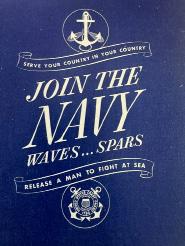
never meant to go beyond that: emergency, temporary service, specific to WWII. By the end of 1948, though, the WAVES had proved their doubters wrong when President Truman signed into law an Act making female service permanent. But how did this consequential shift in the longterm standing of women in the military occur? And what was the cost of such rapid advancement? These are the questions I’ve been working to answer in my past two weeks researching at the Schlesinger Library. Initially, much of the WAVES advertising I saw struck me as awfully misogynistic. Ads repeatedly focused on “releasing
a man to fight,” which largely struck me as supporting a specific patriotism that reinforced the patriarchy. And certainly, I wasn’t the only one who interpreted these advertisements in this way. Across all the collections I saw, I noted several letters between Waves and friends that described Waves as “little.” One Wave even went so far as to write that, in the Navy, “If we [Waves] learned to adjust to nothing else, it was to a world of men in a man’s world.” Through looking at the internal marketing papers in Barton’s collection, however, I began to see the value of such a gender dynamic. Waves were crucial to ensuring on-shore jobs were filled so men could continue fighting,
but a year into the program, with only 3,000 Waves in total, the government was far behind its recruiting goals. Defining the WAVES program in this way— where it serves the men who serve our country—catered directly to women’s perspectives at the time, assuaging women’s concerns that it would make them look undesirable, and demonstrating the tangible value of becoming a Wave. Without such marketing — along with magazines’ focus on femininity through repeated discussion of uniforms and other internal memos to Waves about upholding a pristine image — it’s likely women couldn’t have advanced as immediately and as forcefully as they did.
Clover Curry – Massachusetts Historical Society
My research at the Massachusetts Historical Society examines how Christian missionaries and educators portrayed Indigenous religion from the seventeenth century through the boarding school era. Beginning with Puritan missionary efforts in New England, figures such as John Eliot sought to convert Native communities and establish praying towns structured around Christian religious and social principles. Although separated by more than two centuries, many of the assumptions underlying these early missions reappeared in later boarding schools, where educators continued to view
Indigenous spiritual traditions as barriers to moral and social progress.
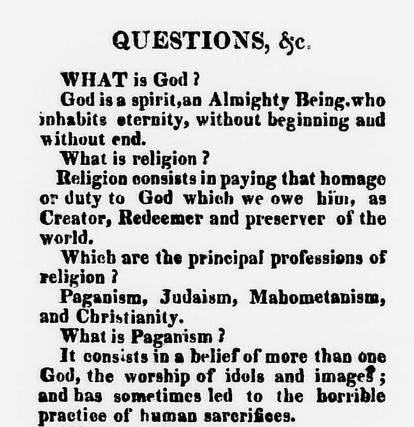
In missionary writings such as A Narrative of the Progress of the Gospel amongst the Indians (1670), Native peoples were described as “poor blind Indians” in need of Christian salvation. These sources reveal how missionaries justified conversion by portraying Indigenous beliefs as spiritually deficient. Similar attitudes appear in nineteenth- and twentiethcentury boarding school materials. Religious examination questions instructed students to distinguish Christianity from
“paganism,” which was associated with idol worship and human sacrifice, while school officials praised students who adopted the “white man’s ways.” In the papers of Samuel A. Eliot, the transformation of Native children through Christian education is repeatedly presented as evidence of social and moral improvement. By examining missionary correspondence, religious publications, and boarding school records, I hope to understand how representations of Indigenous religion changed - or remained consistent - over time. Ultimately, this project explores how Christian institutions used education and
Jake Glazer - Houghton Library, Harvard
My research is centered around anti-Jewish immigration sentiment and antisemitism at Harvard University. I am primarily examining the Immigration Restriction League records located in Houghton Library and the records of Abbott Lawrence Lowell’s Harvard presidency, which are housed in Harvard’s University Archives. The Immigration Restriction League was a highly influential nativist organization founded in 1894 by three Harvard alumni. Through examining the league’s records, I have gained a deeper understanding of how and why
anti-Jewish sentiment grew during the early 1900s. Notable items in this collection include the league’s public pamphlets, which I aim to compare to the league’s members’ private correspondence, and the league’s communication with university administrators, including those at Harvard. Additionally, the correspondence between the founder of the Immigration Restriction League, Prescott F.
Hall, and the Jewish leader of the pro-immigrant National Liberal Immigration League has been deeply revealing. To complement the Immigration Restriction League records, I have also examined the records of Abbott Lawrence Lowell’s Harvard presidency. Under the Lowell administration, Harvard enacted its limitation of numbers policy, which capped admission at 1,000 students. However, in order to fulfill this policy, Lowell sought
religious instruction to redefine Indigenous identity and justify the suppression of Native spiritual traditions.
to restrict Jewish admission as he believed too many Jews attended the university. In this collection, I have examined Lowell’s correspondence with others outlining the reasoning for his antisemitic beliefs, statistics on the number of Jews at the university and how many Lowell sought to restrict, and the deeply troubling methodology used to identify Jewish students, in which they examined students’ last names. Through this research, I aim to investigate the connections between nativist organizations and Harvard’s restrictive admissions policies.
Lowell, Abbott Lawrence. Limitation of Numbers—Original Documents. 1925–1928. Records of the President of Harvard
Alex Jiao – Boston Public Library
My research focuses on the neighborhoods of Boston as a case study for the nationwide urban renewal movement that emerged in the late 1950s. The Boston Redevelopment Authority (BRA) was formed to clear, redevelop, and rehabilitate neighborhoods identified as “blighted,” “decadent,” or “substandard.” The BRA had broad powers to take private land through eminent domain, sign contracts with outside developers, and reshape communities. My initial goal was to examine the disparate
impacts of redevelopment projects on different ethnic enclaves, comparing neighborhoods like Chinatown, the Black neighborhoods of the South End, and Jewish and Italian immigrant neighborhoods in the West End. During my time in the archives, however, I quickly became overwhelmed by the sheer amount of reports, maps, and grant applications from the BRA itself. For a while, it felt like my research could go in several directions, as there were over a hundred redevelopment
projects across the city of Boston, spanning three decades. I also faced challenges absorbing the institutional perspective while reading their logic and justification for plans, while the perspective of individuals being affected was harder to find. Reading through neighborhood and ethnic newspapers helped with both problems. I was able to focus on a specific project that faced controversy, a proposed development in Park Plaza in the Back Bay neighborhood. I read a variety of perspectives
Justin Kearse - Boston Public Library
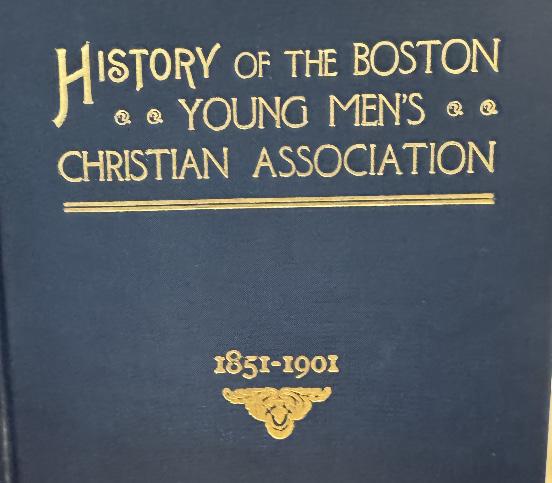
Prior to entering the Washington Room of the Boston Public Library (BPL), I was interested in how American organizations such as the Young Men’s Christian Association (YMCA) integrated the doctrine of Muscular Christianity into their practices of indoctrination towards immigrants. Today, my research sets out to uncover the more specific effect that the Great Depression and WWII had on the Young Men’s Christian Association (YMCA) and other religious organizations’ practices in
regarding the admission and indoctrination of young men. Thus far in the archives, I’ve found sources such as newspaper articles, advertisements, posters, and retrospective analyses of the time. As I look over these documents in the archives, I’ve noticed a distinct shift in how these institutions adapted to their messaging during eras of national crisis. The economic devastation of the 1930s and the military mobilization of the 1940s forced a re-evaluation of what it meant to shape the character of young immigrant
men.
Behind the scenes, I’ve found that these resources reveal exactly how the YMCA navigated the pressures of a changing world. During the Great Depression, advertisements and articles would highlight the organization as a refuge for the unemployed, as it shifted its focus towards economic survival and the morale of the general population. With the looming danger of World War II, the imagery transformed again, as posters and newsletters shifted their messaging to one of
Stella Liao– Houghton Library, Harvard
My research focuses on how Americans interpreted the Chinese Revolution and the Cultural Revolution during the Cold War. I initially arrived at the archives intending to study how the Cultural Revolution (1966-1976) attacked China’s education and intellectual life. However, as I worked through archival collections at Houghton Library, my project evolved into an investigation of how influential scholars and public figures constructed competing narratives about modern China.
The majority of my research has focused on the papers of Harvard historian John King Fairbank, one of the most influential American scholars of China in the twentieth century.
One of the major discoveries has been the consistency of Fairbank’s interpretation of Chinese Communism across nearly four decades. In articles written during the late 1940s, as the Chinese Civil War drew to a close, Fairbank challenged the widespread American belief that Chinese Communists were simply agents of Moscow. In one article, he argued that “Chinese Communists are not only real Communists, they are also really Chinese,” emphasizing the importance of nationalism and peasant support in explaining Communist success. By tracing Fairbank’s writings from the late 1940s through the Cultural Revolution and into the 1980s, I found that Fairbank
on the economic impact, the politics of the city, and the effects on current residents. Looking at patterns in the newspaper discourse, I’ve noticed that the “combat zone” (Boston’s red light district) has had noticeable impacts on policy decisions and the way that people discuss the neighboring areas of South Cove and Chinatown. As I continue my research, I will further investigate how these perceptions influenced redevelopment discourse, decisions, and outcomes in downtown Boston.
repeatedly urged Americans to understand China through its own historical circumstances rather than through Cold War assumptions.
Another interesting discovery came from Fairbank’s correspondence regarding Anne Thurston’s manuscript on victims of the Cultural Revolution, later published as Enemies of the People. In one letter, Fairbank expressed concern that describing all of the book’s subjects as “intellectuals” might alienate readers because many of the individuals themselves would not have identified with that label. These exchanges revealed that even among scholars critical of Maoist policies, there were ongoing debates about
hospitality and care. My thesis still has room to expand, but the BPL digital and physical archives have helped me move the goalpost in my vision for my final project.
who should be considered a victim and how the Cultural Revolution ought to be remembered.
I also encountered materials related to Anna Chennault, whose writings promoted a very different vision of modern China rooted in anticommunism and wartime U.S.-China cooperation. Together, these sources shifted my project from studying the Cultural Revolution itself to examining the struggle over its interpretation. By tracing competing narratives about revolution, nationalism, and historical memory, I hope to better understand how Americans came to understand modern China during the Cold War.
Doggett, Laurence Locke. History of the Boston Young Men’s Christian Association, 1851–1901. Young Men’s Christian
Charlie Maccoll – Massachusetts Historical Society
In the mid-nineteenth century, the Irish Famine Migration brought nearly two million immigrants to the United States, especially to major cities such as New York and Boston. As Irish immigration increased throughout the Civil War, anti-Irish and anti-Catholic sentiment intensified. As a result, Irish societies and communities emerged as a means to provide economic and social support for these immigrants.
My research at the Massachusetts Historical Society centers around these Irish communities and studies the ways in which these societies enabled immi-
grants to thrive in the United States during the nineteenth century, despite the presence of anti-Irish rhetoric. In particular, I studied the Charitable Irish Society (CIS), the oldest Irish organization in North America. In the archives, I discovered many letters, manuscripts, and official records on the experiences of Irish immigrants as well as the organizational structure of these societies. In the CIS Constitution and By-Laws, I discovered that organizations similar to the CIS functioned through the distribution of resources to institutions such as the Sisters of Charity and the Home for Destitute
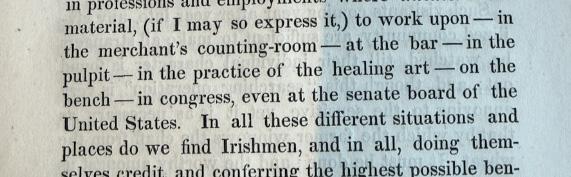
Children, creating networks and allowing an Irish Catholic society to take shape. Another key source that helped guide my research was an 1837 address from James Boyd, the president of the CIS. In this address, Boyd celebrates Irish immigrants as a pivotal part of American society through labor, education, and political in-
fluence. Boyd highlights that the role of these Irish societies was to cultivate a network of successful Irish persons and provide financial support to those in need. My research so far has given me a more focused understanding of my topic and has provided direction for my future exploration of Irish-American history.
Phuong Nguyen – Schlesinger Library, Harvard
When I first entered the archive, I expected to study American women’s participation in the antiwar movement during the Vietnam War. I imagined my research would focus mainly on what women wrote, said, or did as activists. However, the sources I found complicated that assumption. Many of the materials were not authored by women, but collected, arranged, and circulated by them: soldiers’ testimonies, reports on torture, classroom packets, photographs,
posters, and proposals for women volunteers to travel to Vietnam. This made me realize that women’s political work was not limited to producing their own statements against the war. It also involved shaping how other people’s experiences of violence could be seen, felt, and understood by American audiences. My research now investigates how American women antiwar activists transformed emotional testimony into political evidence. In folders such
as “Anti-War. Vietnam in the Classroom,” accounts of burned villages, civilian suffering, and military violence were placed alongside educational materials, suggesting that feeling was not treated as separate from knowledge. Horror, grief, anger, and care became tools for challenging official narratives of strategy and national interest. Women activists used these materials not only to teach, organize, write to Congress, and imagine forms of direct
Luke Velasco –Houghton Library, Harvard
In the Houghton Library Archives, I am researching the Chinese diaspora, specifically highlighting immigration to the United States during the late 19th and early 20th centuries, with a focus on immigrant labor rights. Originally, as I began my research, I wanted to examine Chinese immigrants’ voices during a period of
both struggle and resilience. However, I soon realized that the library’s repository did not contain such sources, leading me to explore other facets of Chinese immigration policy. The largest portion of my research comes from the Immigration Restriction League (U.S.) Records 18931921, where I examined various clippings and correspondences, all of which were proponents
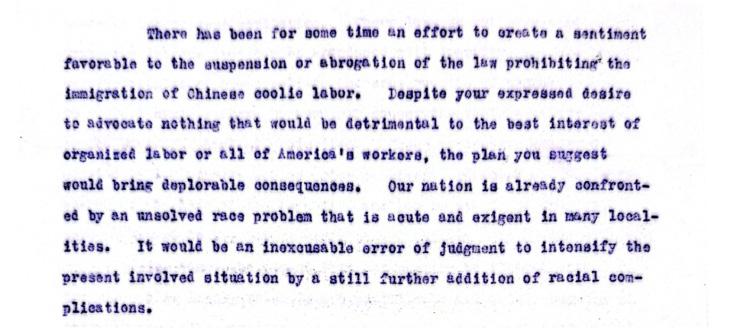
for the Chinese Exclusion Act, and anti-immigration as a whole. Specifically, American army officer Noroton Parker Chipman writes to Robert DeCourcy Ward (a proponent for anti-immigration), “With such determined opposition to keeping out a class so clearly harmful to the labor element, it might well be doubted whether legislation looking to a broader exclusion would meet in favor.”
Chipman’s quote represents a key prejudice, within not only the Immigration Restriction League’s records, but also the rest of my sources, that Chinese immigrants were not only taking American citizens’ jobs, but also disrupting the American economy, needing harsher exclusion to remedy their perceived
aid, but also to uplift other women into political action by framing empathy as a reason to resist.
Although my final claim is still developing, I am interested in how women’s antiwar labor worked through mediation: selecting what should be witnessed, taught, and remembered. These sources suggest that American women not only protested the Vietnam War; they helped create the emotional and moral framework through which others could understand it.
harms. Not only did Chinese immigration raise economic worries amongst American policymakers, but it also introduced the race question of whether Chinese migrants could ever assimilate into a predominantly white country. Through my research, I hope to convey the experiences of Chinese migrants and laborers navigating a place where they weren’t accepted, yet still sometimes had to provide for a family back home. Although I cannot utilize sources directly from Chinese migrants, my research on how policymakers and employers treated them will help me better understand their harsh conditions and resilience in establishing a community in the United States.
Boyd, James. Mr. Boyd’s Address Before The Charitable Irish Society In Boston. Massachusetts Historical Society, Boston, MA.
Gompers, Samuel. Compositions, 1917, Immigration Restriction League (U.S.) Records. Houghton Repository, Harvard University, Cambridge, Massachusetts