Euclid to Einstein Scholars 2026
JUNE NEWSLETTER
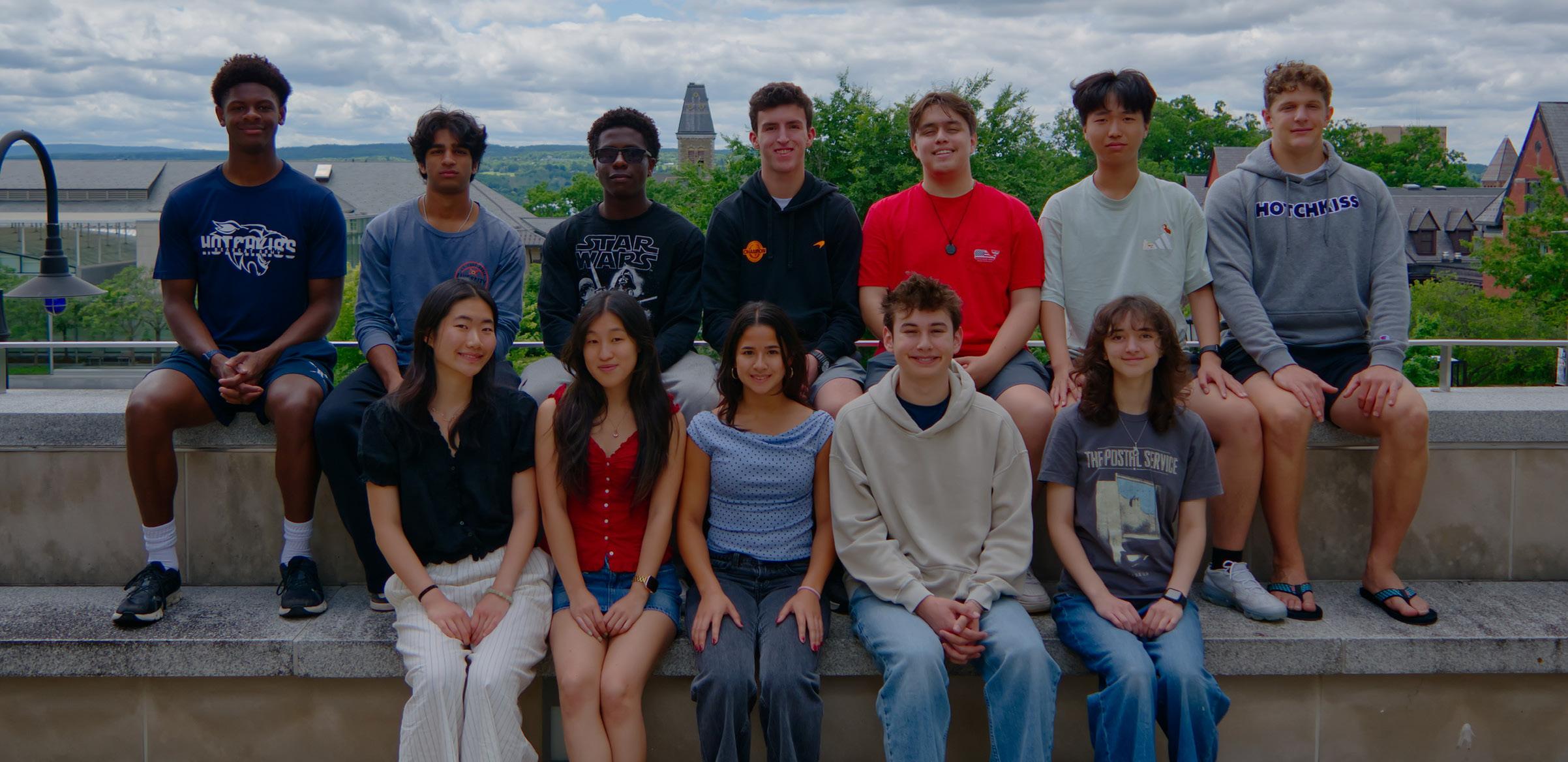
Evan Williams
Autumn Hemelt
Kiki Burkard
Rodolfo Paiz
Tyler Rosenblum
Jack Lykouretzos
Mr. Alexander Ginzburg,
Deven Patel
Noah Pessin
David Ayodele
Sophie Chen
Bruce Zhang
Yaoyao Yuan

A Note From Mr. Ginzburg
Dear friends,
This June, twelve Hotchkiss rising seniors descended on Cornell campus for the second run of our Euclid to Einstein Cornell camp. This camp is the first part of the Euclid to Einstein Scholars Program. The second part, as last year, will be the course in history of math and physics which students will take in the spring. The leadership team of the camp was the same as last year: Luc Barrett, who is pursuing his Ph.D. in Applied Physics at Cornell, Mika Misawa, last year’s Cornell graduate with a double-major in mathematics and philosophy, and me.
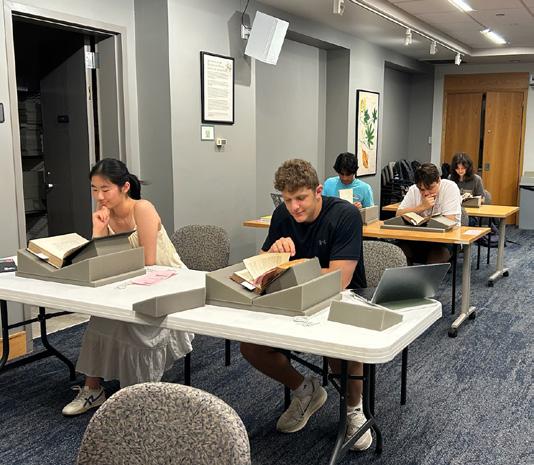
We were, again, warmly welcomed by our Cornell colleagues and friends. Dr. Henrik Spoon, the head librarian for Mathematics, Physics, and Astronomy, oversaw our library research, helped students get the materials they needed, and advised them on specific questions. Taylor Johnson, a librarian at Cornell’s outstanding Rare books and Manuscripts Collection, organized and oversaw students’ work with primary sources (among them were Isaac Newton’s Principia Mathematica, Daniel Bernoulli’s dissertation on Fluid Mechanics, and the list goes on). Beth Sprankle managed the logistics of our stay, making sure that our students were comfortable in their dorm, and that we had the classrooms we needed for our lessons and presentations. We cannot be more grateful for their
attention, care, and commitment to our success! Last (but not least!), we wanted to thank, once again, our sponsor Nisa Leung for her deep and unwavering support of this program!
As before, we have laid out a challenging agenda of advanced math classes and library research. Each student researched the life and work of their favorite leading mathematician and/or physicist of the past, with an emphasis on their foundational discoveries and contributions that continue to underpin mathematics and physics of today. In math classes, we covered complex numbers, Taylor series, ordinary and partial differential equations and examples of their use in physics, as well as calculus of variations, which will help us tackle the principle of least action during the spring class.
Cornell is one of the world leading research universities, and this year we had an opportunity to visit some of Cornell’s worldclass labs. We had great visits to the CNF (a nano-manufacturing facility) and to an electron microscopy facility (part of Cornell’s Materials Research lab). More on these visits in the article below. We saw science in action and learned about (very cool!) projects that researchers are working on, while using cutting edge technologies that bordered on the fantastic. Next year, if things go according to plan, we will have a chance to visit Cornell’s Particle Accelerator (!). Towards the end of our stay, we had a guest lecture by Nils Deppe, Professor of Theoretical Physics at Cornell specializing in Cosmology. The topic of his talk was “Gravitational waves.” It was a wonderful opportunity for all of us to learn about gravitational waves (what is actually doing the “waving”?) and about the state of play in this mindbending and exciting field. Despite Einstein’s magnificent work a century ago, there are still plenty of big unanswered questions about the Universe we all live in. Thank you, Professor Deppe!
While carrying out our academic work, we also had time
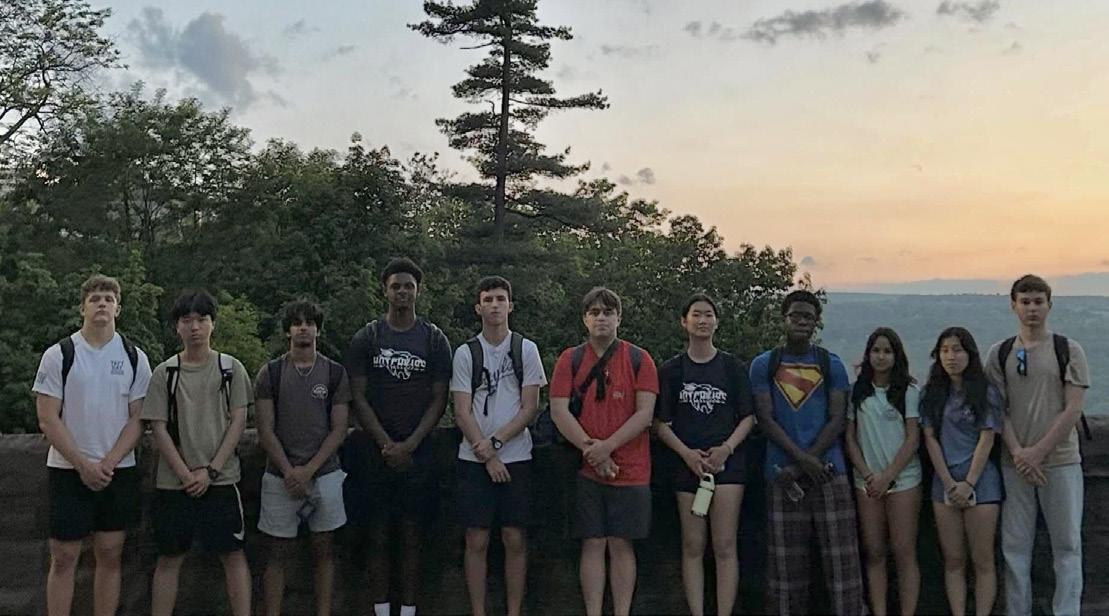
to enjoy various non-scientific activities available on Cornell campus and in the beautiful town of Ithaca, NY. We visited Cornell’s dairy farm and consumed delicious ice cream made on site (this went well). We had an introductory circus arts session at Circus Culture, learning how to juggle (this was not quite as successful as consuming ice cream). We also went on an evening hike to watch the sunset. The weekend in the middle of the program was a much needed break to relax and recharge, explore Ithaca, visit the Farmer’s Market, go bowling, watch a movie, or do nothing at all, which can also be quite enjoyable!
On our last day, everyone delivered a short presentation on their research. Students spoke about their favorite mathematician and/or physicist, and we covered a great constellation of leading thinkers from the past, ranging from Archimedes (III century BCE) to Emmi Noether (XX-
century prominent mathematician and physicist, and a close colleague of Hilbert and Einstein).
The camp introduced students to spectacular developments in mathematics, physics, and engineering, which today underpin just about everything we see around us. All of us are beneficiaries of the genius and hard work of the people who discovered and developed these ideas over the long history of human inquiry and research. And it was clear to everyone after spending time at Cornell, that the discovery process continues unabated!
We will reconvene in January 2027 for the semester-long course on the history of mathematics and physics. In the meantime, I wish everyone a wonderful summer, and I look forward to seeing everyone back on Hotchkiss campus in September.
- Alex Ginzburg
Time at Cornell
During our stay at Cornell, our time was filled with research, as we explored our chosen luminaries, along with daily math and physics lessons. However, we found that outside of our work, there were plenty of ways to have fun and bond together as a team.
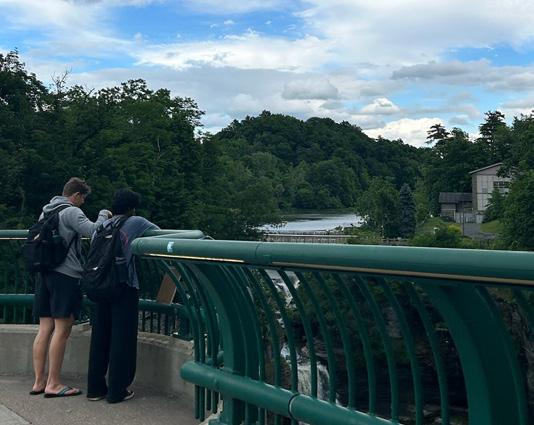
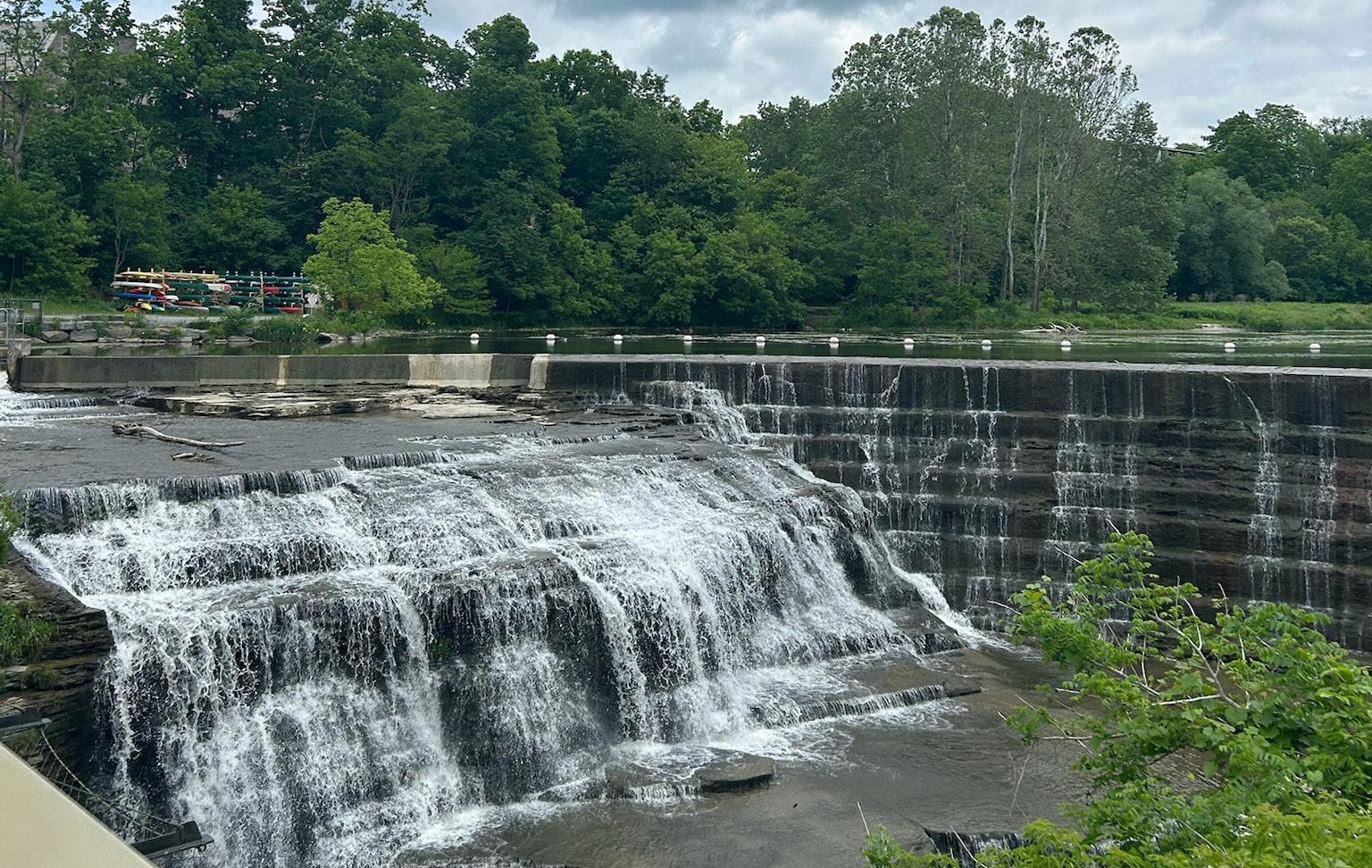
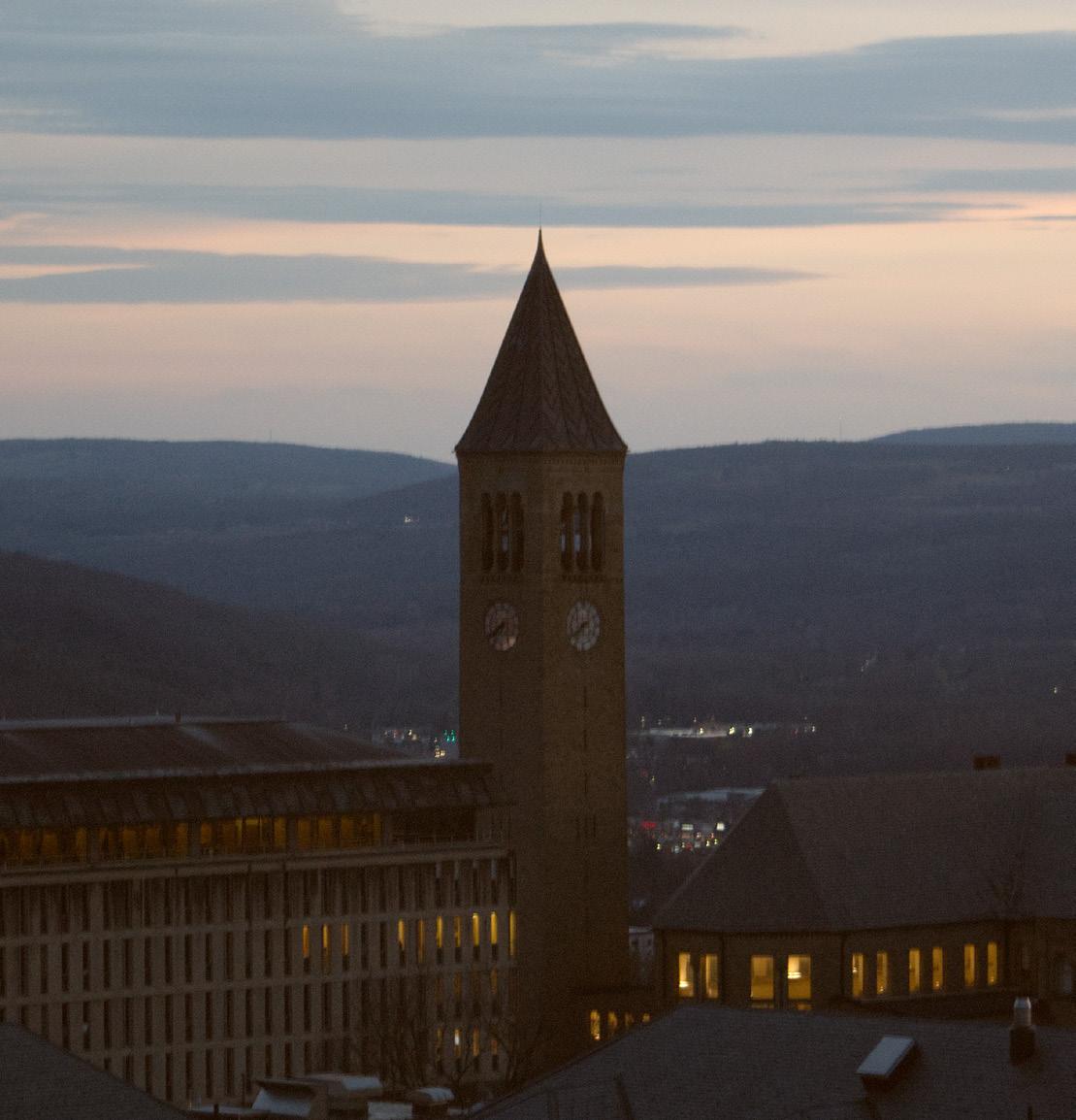
From the minute we stepped foot on campus, we were struck by its natural beauty. Running through the campus were magnificent gorges and Beebe lake, which never failed to make us stop and appreciate its view. Central campus also featured a fantastic mix of modern and ancient architecture, headlined by McGraw Tower, Cornell’s very own bell tower.
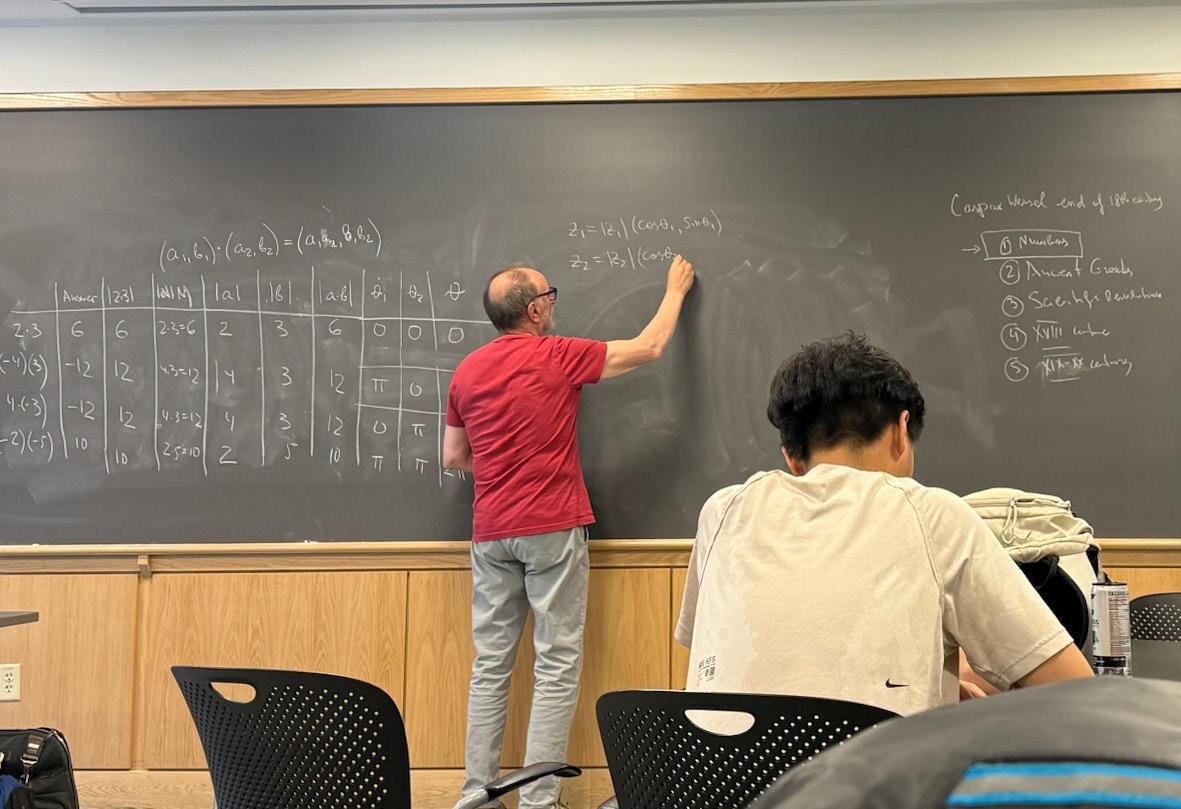
Every day, after breakfast in Morrison Dining Hall, we began with a trek to Clark Hall, Cornell’s Physical Sciences building, for our first class of the day. We ended the day with two more afternoon classes, taught by Mr. Ginzburg or Luc. Our classes weren’t the normal classes we were accustomed to, but far more interesting and engaging. The classes moved at a fast pace, as we explored complex numbers, induction, differential equations, and much more. It felt like every class we came to a new crazy discovery, with many of us leaving class in disbelief. For instance, we found out imaginary numbers aren’t imaginary at all, and that exponential and trigonometric functions are close cousins of each other when analyzed over complex numbers!
In between our classes, we headed over to Cornell’s Mathematics Library for our independent research. Inside the library, we met with Dr. Henrik Spoon, Cornell’s head librarian for Mathematics, Physics, and Astronomy, to help guide our research. The library was filled with thousands of books, ranging from personal diaries to biographies to complex textbooks, and we were eager to learn as
much as we could. Cornell’s library gave us unique access to such a wide collection of sources, and truly changed our perspectives on our research. We came to understand that math and physics have been evolving for millennia, as ideas and concepts get passed down and reshaped from generation to generation.
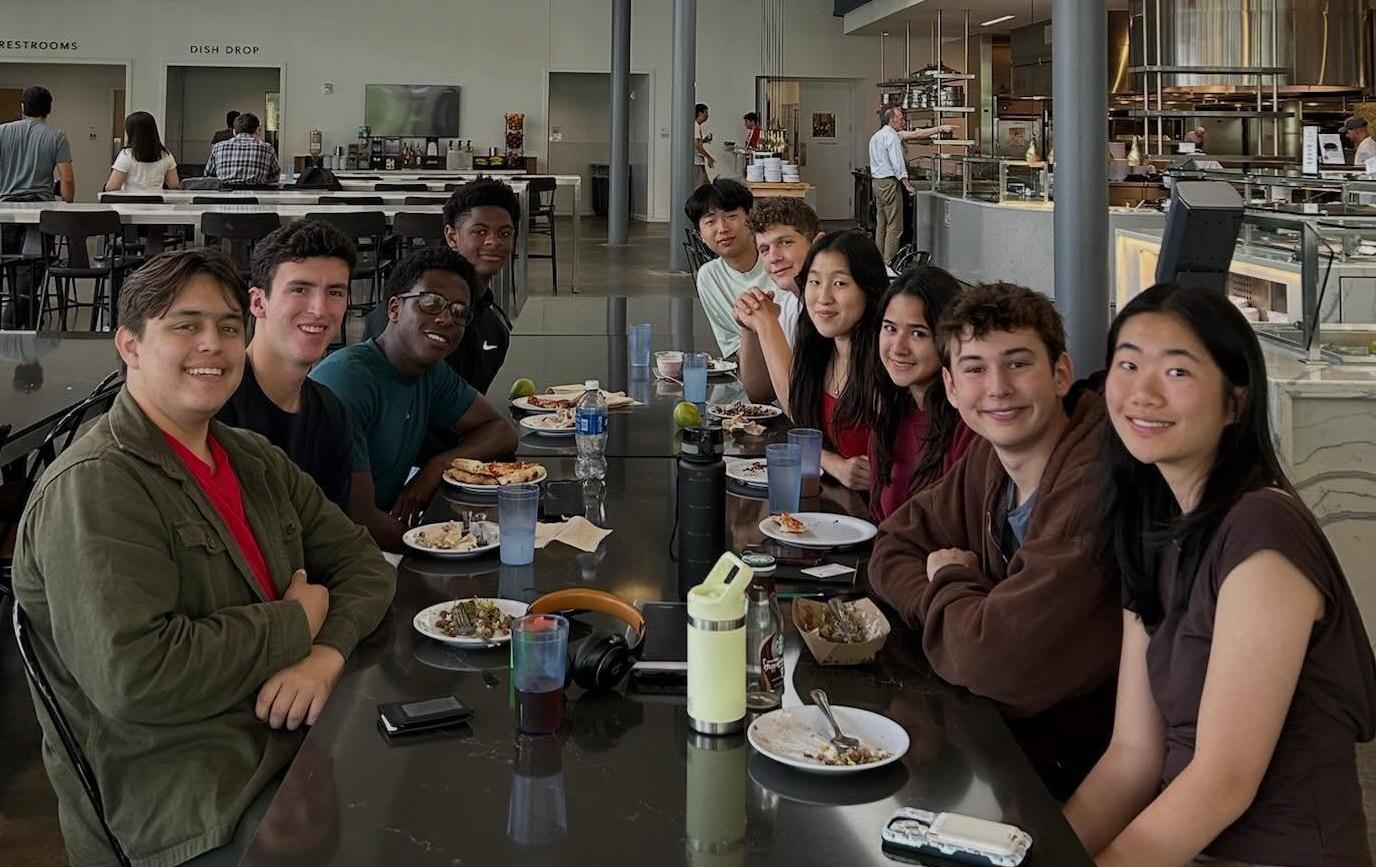
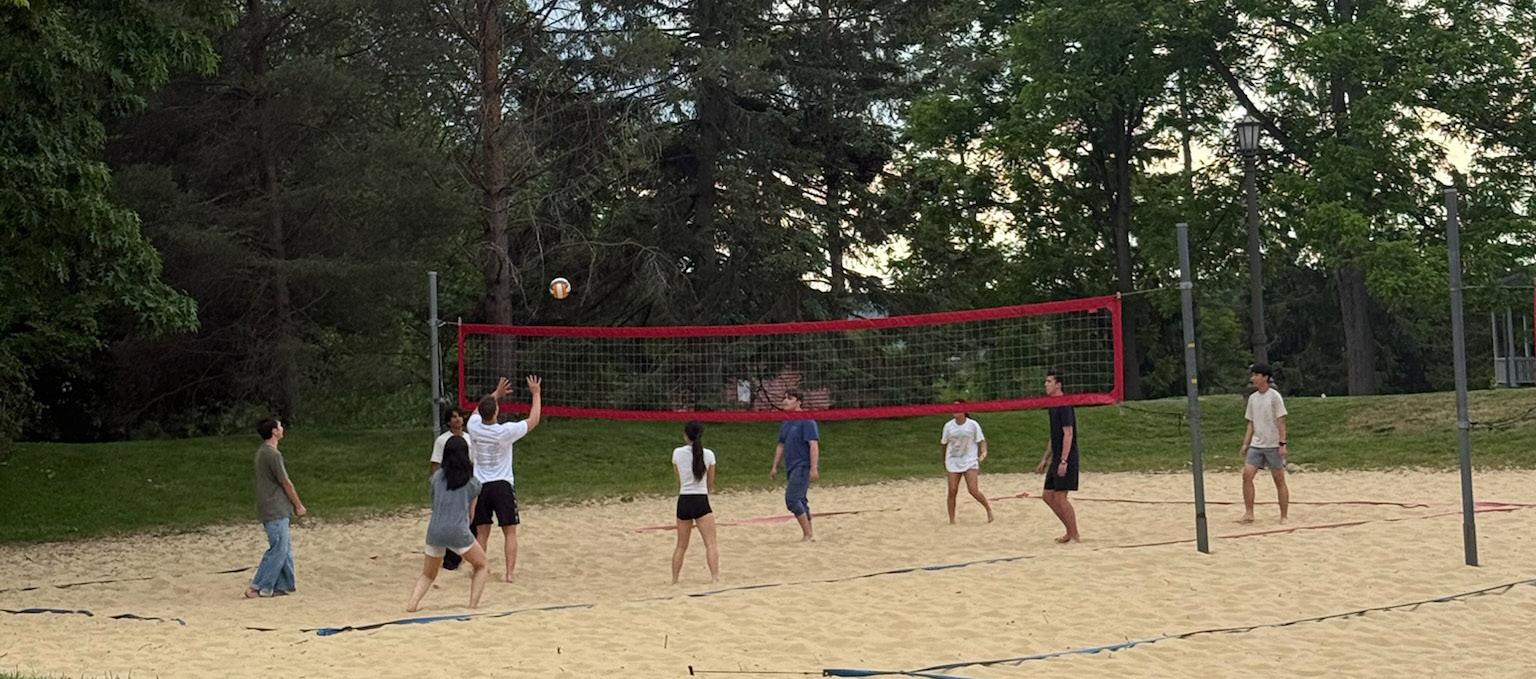
To give us a break from our research, we had frequent breaks throughout the day, including a three hour lunch break. After group lunch, we split up, with some of us heading off to the gym, some taking the bus into Collegetown, and others heading back to the dorm for a much needed nap. During our dinner breaks, after another visit to Morrison Dining Hall, we went off to take full advantage of Cornell’s amazing campus. Sometimes we played beach volleyball, and other times we became invested in very competitive bowling matches in the Helen Newman Fitness Center.
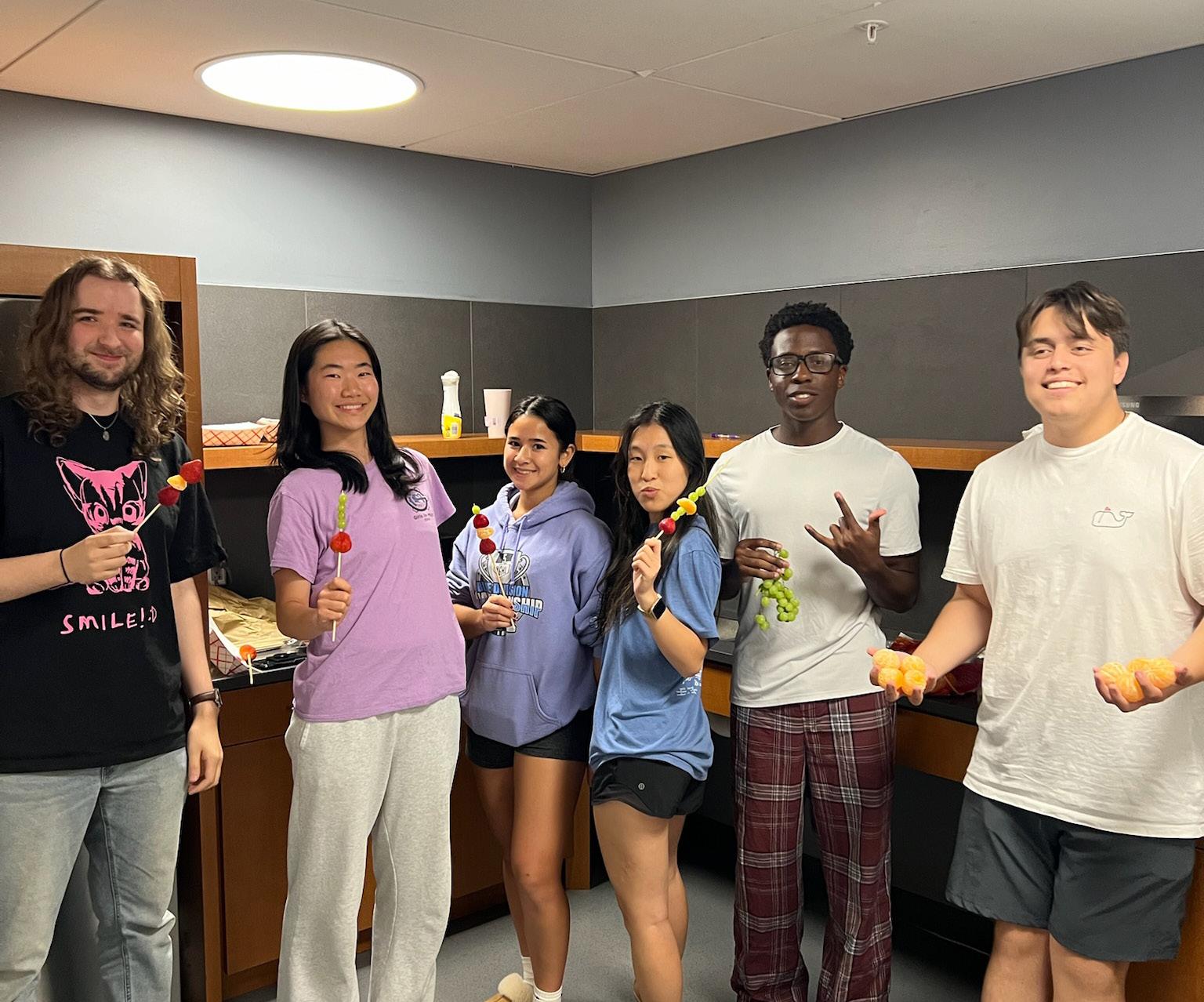
Finally, we found that the nights, after study hall had ended and work was finished, were the most rewarding aspect for us. During these two weeks, Barbara McClintock Hall, our beloved dorm, became our home, and our common room was always full. Whether it was a NBA Finals watch party, playing Taboo, or our failed attempts at making tanghulu, we created memories that will last with us forever.
Euclid to Einstein Scholars
Special Events
Beyond our work in the libraries and classroom, our trip was made special through several trips outside of Cornell’s campus, exploring all Ithaca has to offer.
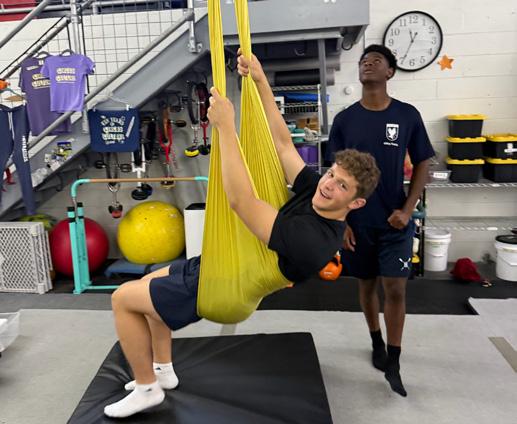
On our very first day, we traveled to Circus Culture, Ithaca’s very own circus school, to begin our bonding as a group. At Circus Culture, we spent the majority of our time learning how to juggle, and by the end of the day, some of our scholars had quickly mastered the drills. We also learned how to aerial dance, a skill that was new to all of us. We partnered up and tried to spin and dance in the air, even though most of our attempts ended with a fall back to the ground. This trip was an amazing experience, and really helped us bond before our two weeks together.
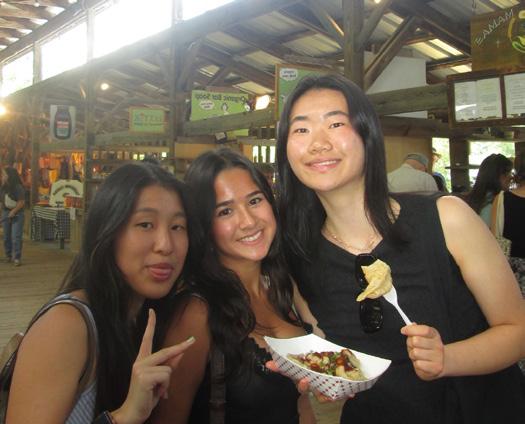
Over the weekend, free from all classes and work, we got the opportunity to further explore the city of Ithaca, checking out the local farmers market on Saturday. At the farmers market, we got to try all kinds of delicious snacks, including some unforgettable crepes, topped with chocolate, strawberries, and powdered sugar. We traveled downtown again on Sunday night, this time to Cinemapolis, to watch some
new horror movies. Some of our scholars handled the movies a bit better than others, and we greatly enjoyed watching the movies together.
In Ithaca’s downtown area, we also enjoyed dinners at restaurants, a nice change from Morrison dining hall. Some of us went out for Korean BBQ, and others for hot pot. Sunday night featured a full group dinner, heading over to Creola Southern Steakhouse for some steaks, burgers, and amazing desserts.
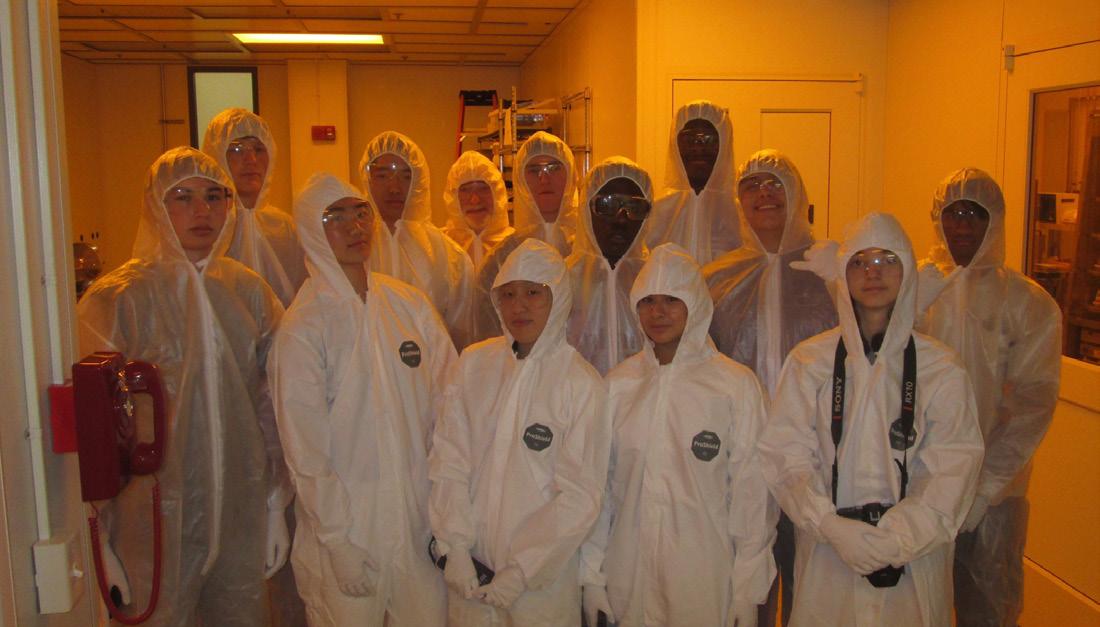
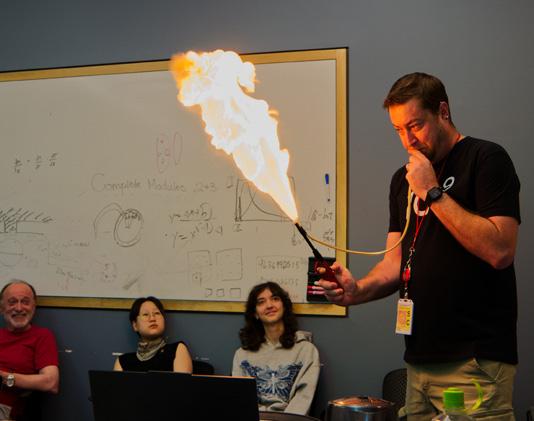
Additionally, we got opportunities for special visits to some of Cornell’s amazing facilities, getting to tour Cornell’s nano-manufacturing facility, the electron microscopy lab, and Fuertes Observatory. Our tour at the nano-manufacturing facility began with a lecture by Mr. Tom Pennell, where we learned of the importance of nanomanufacturing for the future of science. We also got to play with nitinol wire, known as “memory metal”, which completely unbends itself when placed in hot water, and watch Mr. Pennell “breathe fire”.
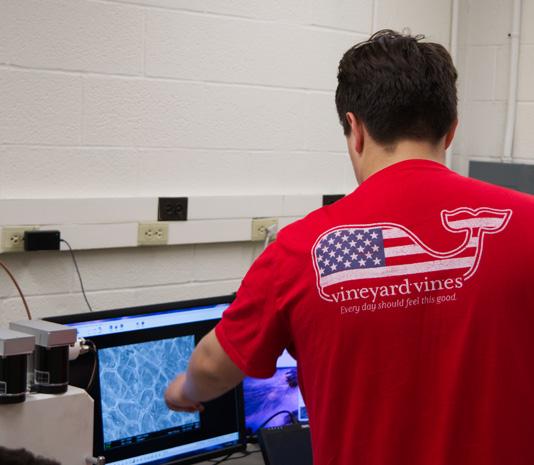
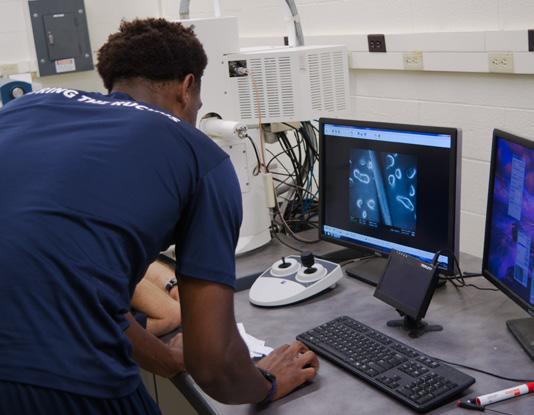
Our visit to the electron microscopy lab was also special, as we got to bring our own
samples to study under one of the most powerful microscopes Cornell has to offer. We looked at leaves, pear stems, pencil lead, and even eye shadow. We had received a lecture on electron microscopy earlier that morning, so the opportunity to play with an electron microscope ourselves was very rewarding.
On Friday night, we checked out Fuertes Observatory, Cornell’s observatory, where we got the chance to look at stars under very powerful telescopes. Lucky for us, the night sky was very clear that night, and we were able to take some amazing pictures.
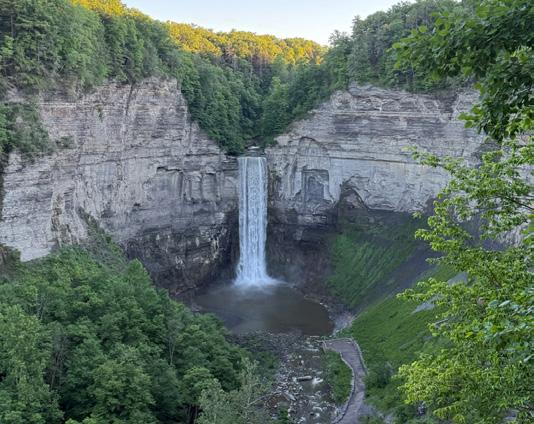
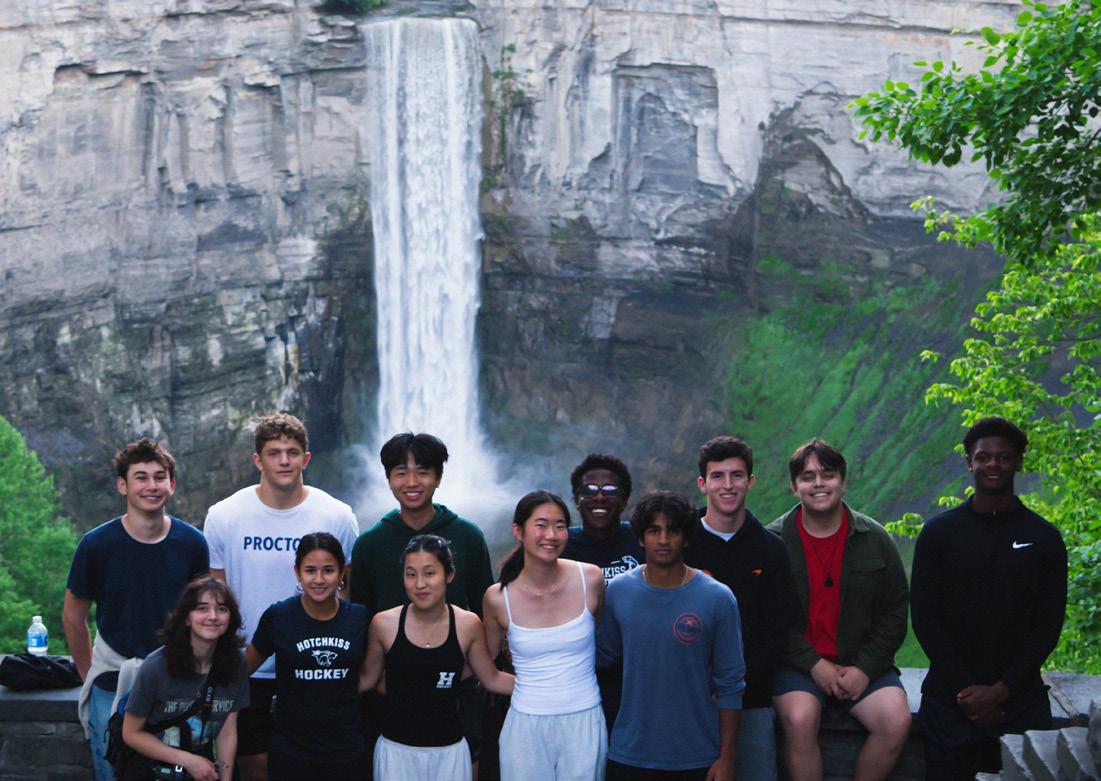
Our favorite special event was definitely the Monday afternoon hike to Taughannock Falls, a beautiful waterfall just twenty
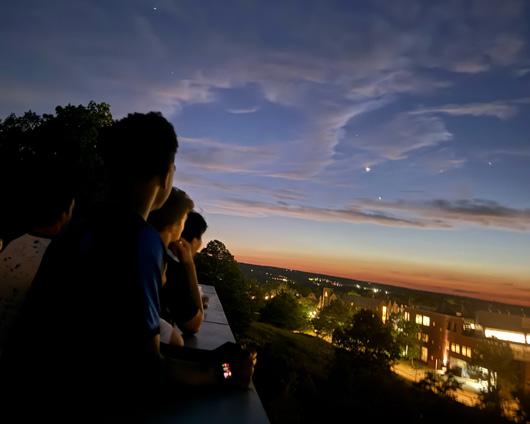
minutes from Cornell’s campus. We were amazed to learn that Taughannock Falls was the tallest waterfall in the northeast, standing at a staggering 215 feet, which is 33 feet taller than Niagara Falls! We endeavored in a calm hike up the mountain, to a lookout point that gave us a breathtaking view of the waterfall at sunset. We spent a lot of time here, appreciating the natural beauty together, and made sure to take plenty of pictures.
We are so grateful for the opportunities to tour Cornell’s unique facilities, explore downtown Ithaca, and engage in the natural beauty of New York’s Finger Lakes region. These events created unforgettable memories, and truly helped us bond together as a team.
Euclid to Einstein Scholars Guest Speakers
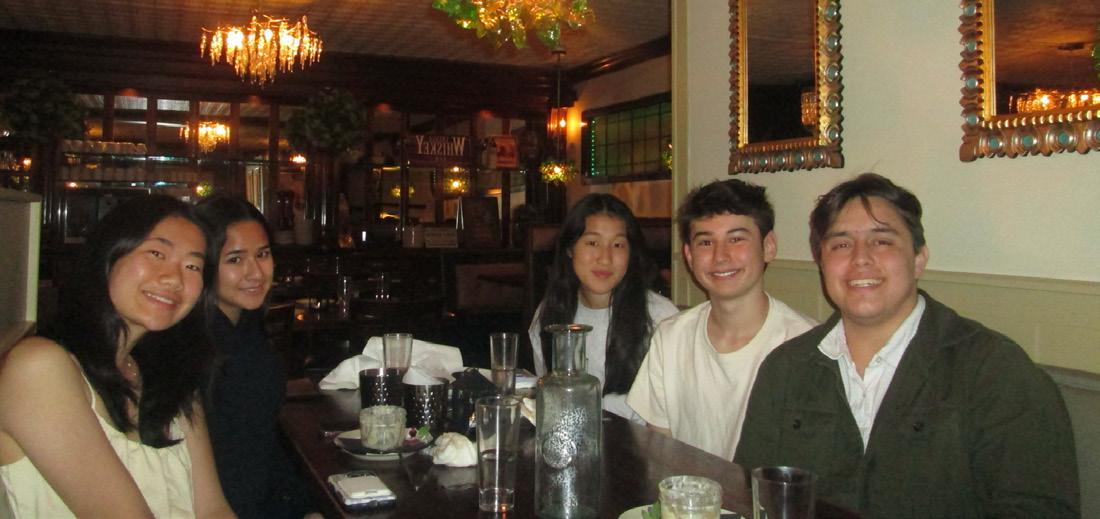
Beyond our typical classes from Luc and Mr. Ginzburg, our program featured two guest lecturers, Zev GoldhaberGordon, a Ph.D. Student at Cornell University, and Nils Deppe, Professor of Theoretical Physics at Cornell specializing in Cosmology.
Zev, who is currently studying electron microscopy, taught a morning class on scanning and transmission electron microscopes, to prepare us for our visit to the electron microscopy lab. Many of us, who were unfamiliar with the field of electron microscopy as a whole, found Zev’s class to be very interesting and informative. Even better was how we were able to apply the knowledge and understanding taught from him later that day. The experience of actually being able to handle an electron microscope ourselves was much more fulfilling after we had gained the understanding of how they actually work.
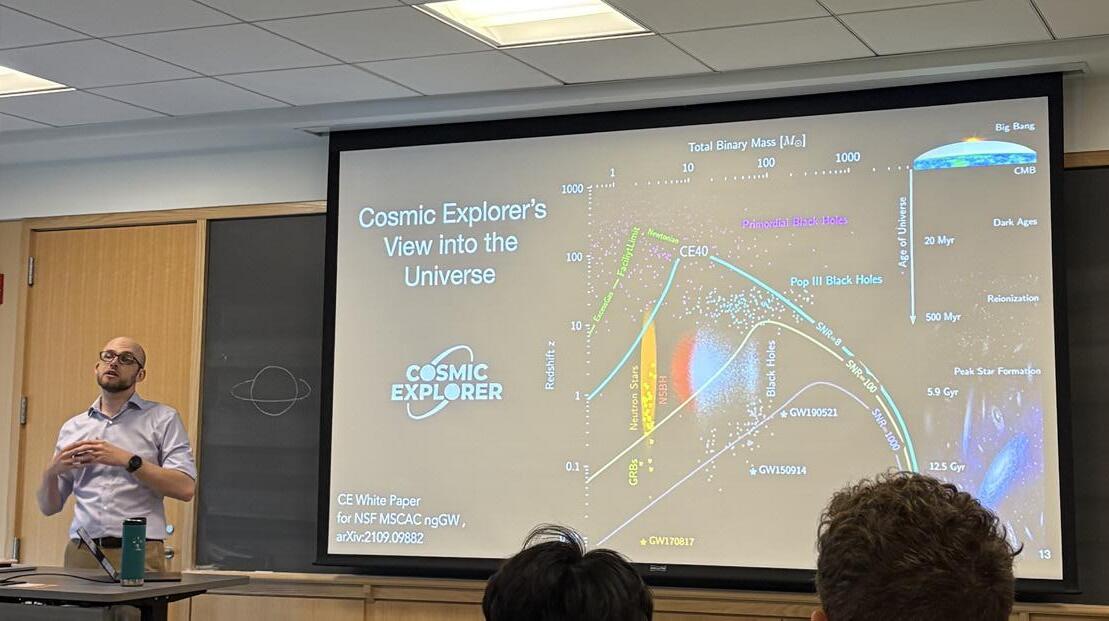
On our final day of classes, we met with Professor Nils Deppe, who led a presentation on gravitational wave modeling and black holes. Although it took a while for us to grapple our minds around the true magnitude of black holes and their properties, we were super curious to learn more. We learned that black holes are essentially invisible, as their gravitational pull is so strong even light can’t escape. Professor Deppe showed us that in order for Earth to have the same gravitational pull as a black hole, it would have to be compressed to the size of a marble!
During his lecture, Professor Deppe also taught us about the
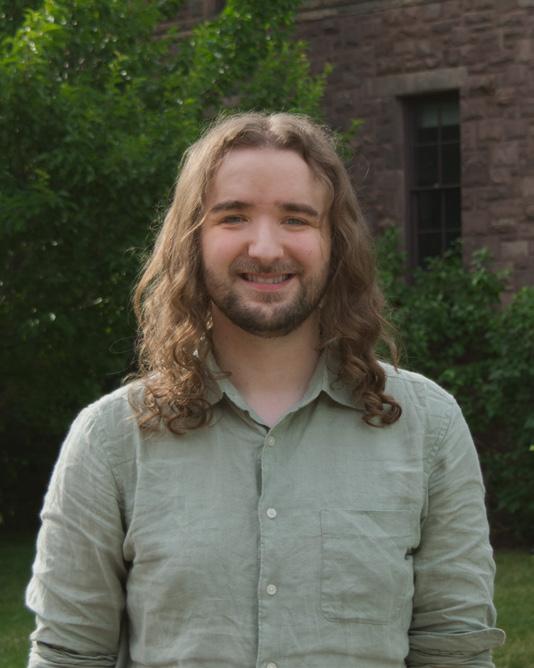
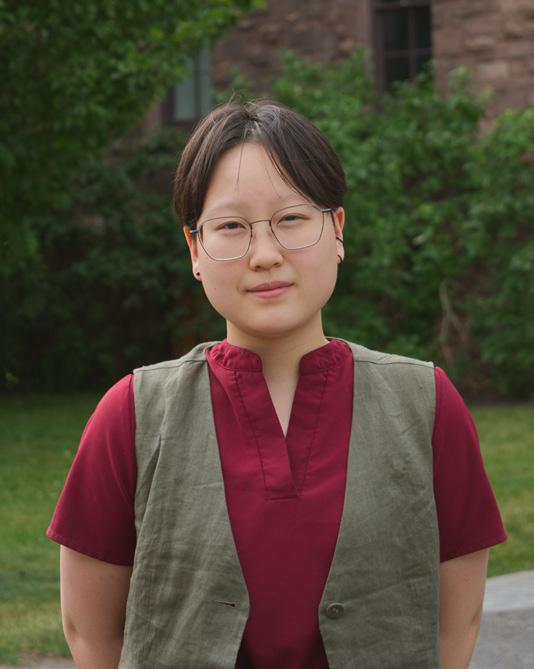
Luc Barrett is currently pursuing a Ph.D. in Applied Physics at Cornell. Mika Misawa is a Cornell graduate with a double-major in mathematics and philosophy. Both Luc and Mika were a part of the Euclid to Einstein program in 2025. Throughout the two weeks at Cornell, Luc instructed about half of the total classes, teaching about applied physics, calculus, and geometry. As the residential assistant, Mika stayed in the dorm with the scholars, helping to plan events and manage our stay. In addition, Mika taught a class about mathematical induction.
twin facilities of LIGO (Laser Interferometer GravitationalWave Observatory), which feature two massive, 4 kilometer “arms”. He showed us how they can be used to detect insanely small gravitational waves when two black holes orbit and collide, advancing black hole research to higher limits. He explained the future plans of gravitational wave modeling, which include LISA (Laser Interferometer Space Antenna), basically a space station version of LIGO, and plans for an even bigger LIGO on Earth. We asked no shortage of questions, and left the room amazed by what phenomena lie out there in the universe.
In the end, we found all of our classes interesting, but these two guest lecturers opened our minds to even more amazing concepts, showcasing the true potential of math and physics.
Thank you to Luc and Mika for scaffolding new knowledge in mathematics in a way that ignited excitement and new perspectives for where math could take us.
Thank you Mika for teaching us mathematical induction through a logician’s perspective, showing us how to prove a claim true for infinitely many cases.
Thank you Luc for extending our geometric intuition well beyond two-dimensional coordinates through multivariable functions. The ideas you taught us made it easier to appreciate how mathematics can project order onto chaos, allowing humans to have control over nature, achieving clarity that couldn’t otherwise be achieved.
To both of you, thank you again, for engaging in late night conversations and patiently answering our questions ranging from what is life like at Cornell to how superconducting quantum devices work. Thanks for taking us on beautiful hikes in Ithaca amongst other recreational activities. We left camp with a wealth of new mathematical knowledge and an insightful realization: the universe functions on an elegant, underlying structure, and rigorous mathematics grants us the language to understand it. Thank you both for sharing that persepctive with us.
- 2026 Euclid to Einstein Scholars
Luc Barrett
Mika Misawa
Nils Deppe
Scholar Reflections
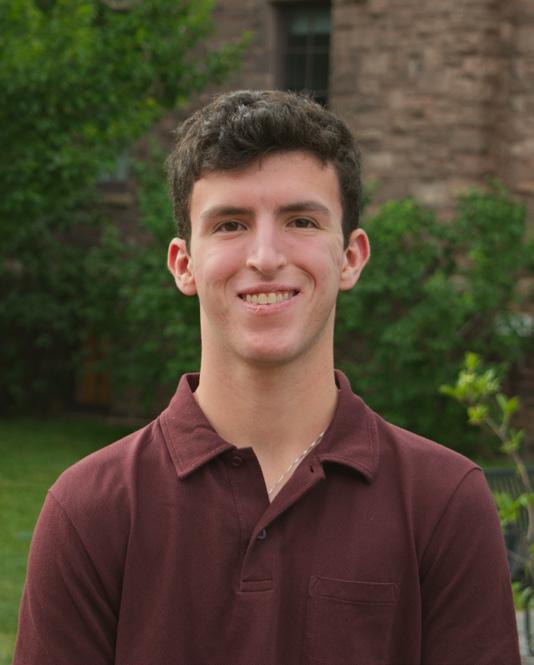
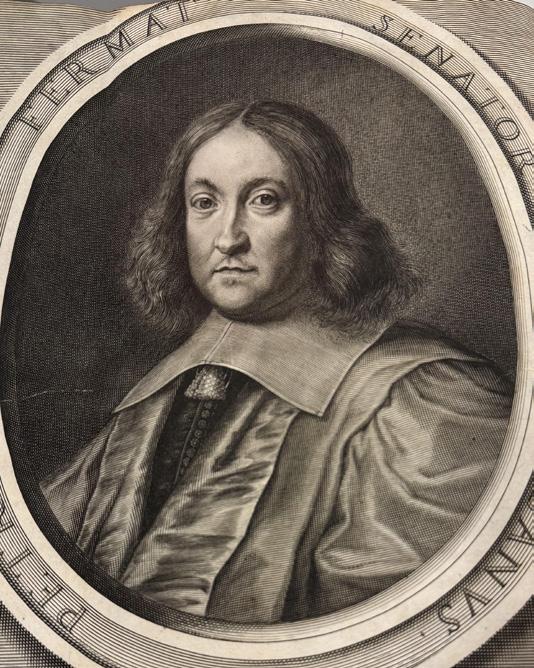
Pierre de Fermat: The Great Amateur
Although Pierre de Fermat was known for his incredible breakthroughs and genius in the field of mathematics, his main
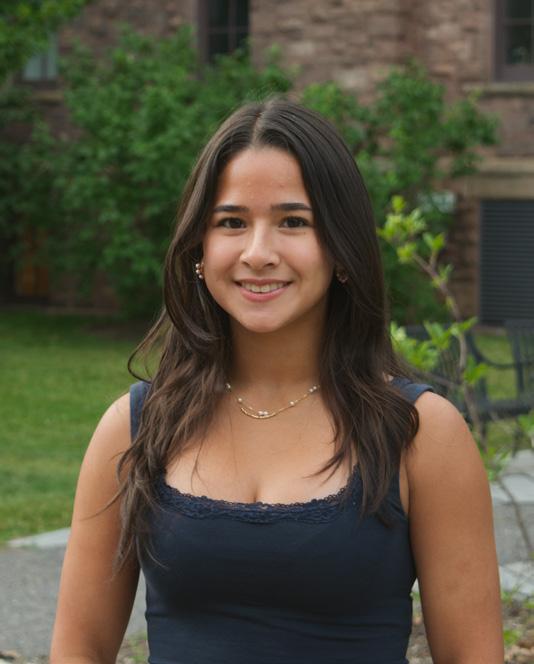
I chose Blaise Pascal as my luminary of interest. Before arriving on Cornell’s campus, I was intrigued by Pascal because of my prior knowledge of Pascal’s triangle and its relation to the binomial theorem. While Pascal is most
pursuit was in the legal world. It was fascinating to see how a successful judge could revolutionize number and probability theory, as well as lay the groundworks for analytical geometry and calculus.
At the Rare Books and Manuscripts Collection, I found original and copied versions of Fermat’s letters to his colleagues. Even though he avoided publishing any of his findings, it was insightful to read Fermat’s specific thought processes and the development of his work compared to the final product.
At the Cornell Math Library, Michael
famous for his work with the Arithmetical Triangle, he was a highly regarded physicist and a prolific inventor.
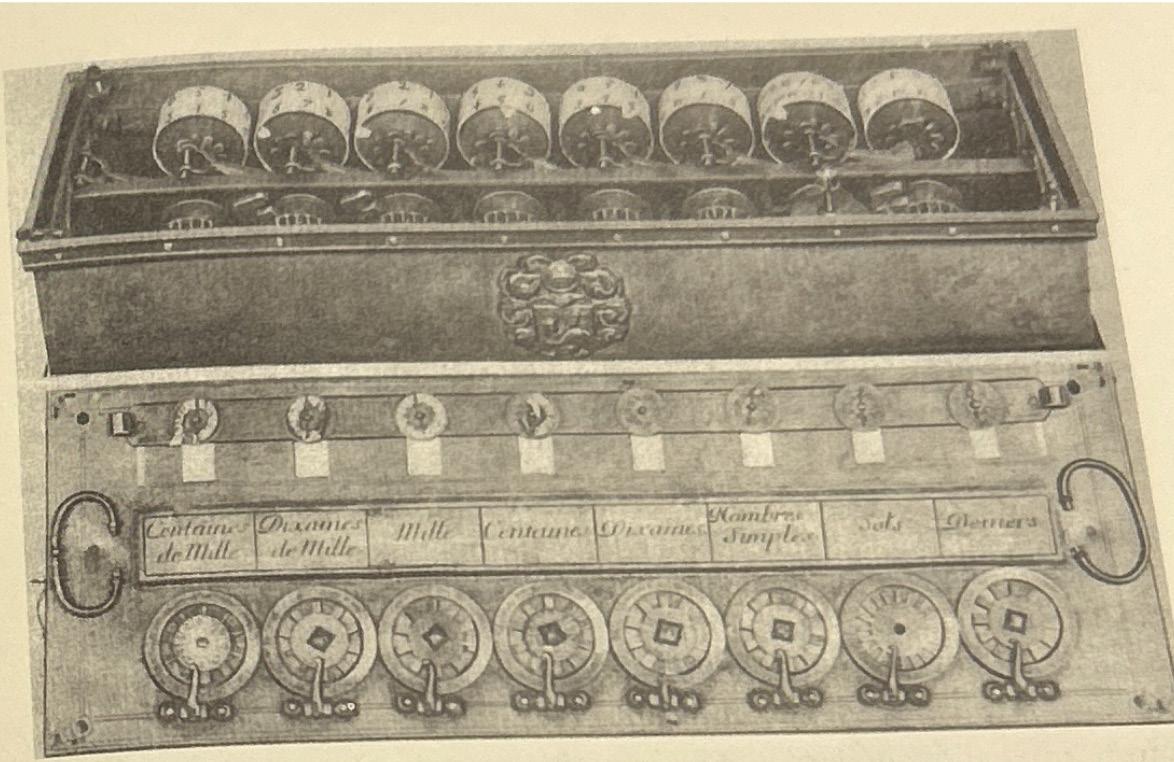
I began my studies in the Mathematics library, where I read various books about probability and the life of Pascal. I traced back his math skills to when he was younger, and I learned Pascal invented the first mechanical calculator in 1645, called the Pascaline. He created this invention to help his father do taxes, showing how he used his math knowledge and curiosity to solve everyday problems.
Another big part of my research was his ability to solve probability problems. I especially find clever how he saw the connection between the triangle and
Sean Mahoney’s The Mathematical Career of Pierre de Fermat and Keith Devlin’s The Unfinished Game guided my understanding of Fermat’s work. Both books led me to dive into probability theory and the Problem of Points which Pierre de Fermat solved, alongside Blaise Pascal. Fermat Numbers were key to understanding number theory and how Fermat made a false conjecture that was later proven wrong. Fermat’s methods on tangent lines and minima and maxima paved the way for development in calculus. And, he connected the worlds of
probability. Since Pascal worked very closely with Fermat in the Probability of Points, I conferred with Noah, as he chose Fermat as his luminary, and I enjoyed researching how they both solved the problem in different ways. Later in life, interestingly, Pascal began to focus on theology and became more influenced by religion. I
geometry and algebra with both the Fermat Point and the study of three-dimensional space. Fermat’s innovations were amazing to learn about while at Cornell and I’m excited to continue my research this spring.
read about how Pascal applied his ideas from probability in his famous argument, Pascal’s Wager, to explain why he believed it was rational to believe in God.
Using the knowledge I gathered from the past two weeks, I look forward to uncovering more about Pascal’s life and work for my final paper.
Noah Pessin
Pascal’s Trinity: Taxes, Triangles, and Theology
Kiki Burkard
Scholar Reflections
Leonhard Euler: Father of Mathematics
Rodolfo Paiz
Growing up, I spent a lot of time watching math videos online, and no matter the topic, Euler’s name kept appearing. Whether it was number theory, geometry, calculus, or graph theory, he was everywhere. It’s not really an exaggeration. Euler wrote more pages of mathematics than anyone in history, even after going blind. He is the reason we write f(x) for a function, e for the base of natural logarithms, and π for the ratio of circles. He found the bridge between the exponential function and
trigonometry, launched graph theory by solving a puzzle about seven bridges in a city he never visited, and proved a relationship between a polygon’s vertices, edges, and faces, that later became one of the founding principles for the study of topology. That’s why I chose to study Euler at Cornell for Euclid to Einstein.
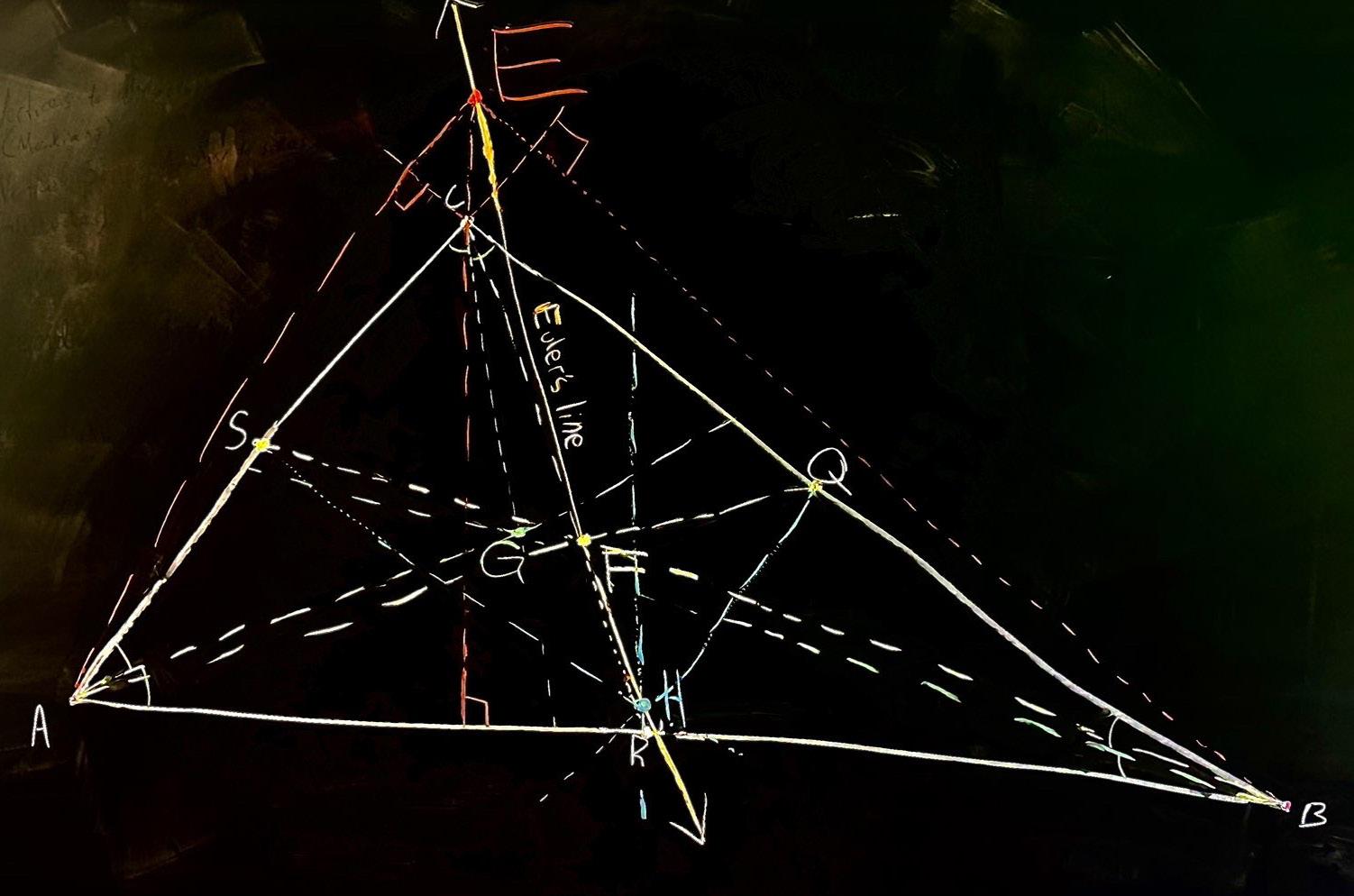
One of the first things I encountered was the Euler line, a result from a paper he wrote in 1763 proving how to reconstruct a triangle given only its centroid, orthocenter, incenter, and circumcenter.
At the Rare Books and Manuscripts Collection, I studied an early edition of Euler’s Elements of Algebra, where I saw Euler summarize all of the fundamentals of Algebra, where he also began standardizing the notation we know so well today. In fact, I even got to do some practice problems written hundreds of years ago by Euler himself.
This spring, I plan to dig further into Euler’s original reconstruction problem and into how later geometers, a century afterward, turned his passing remark into a named theorem.
Albert Michelson: Master of Light
Bruce Zhang
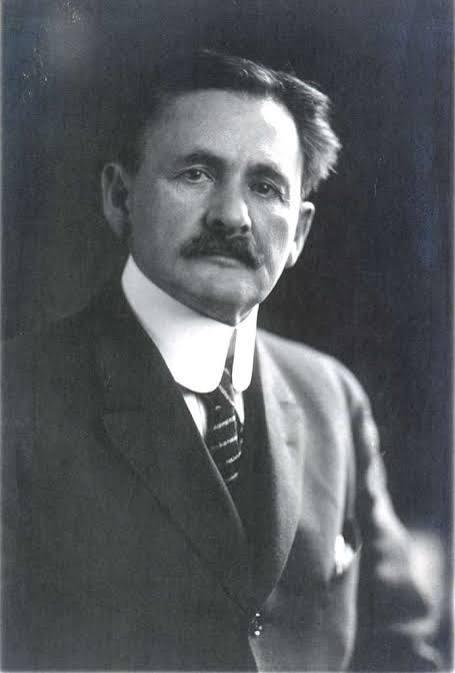
My research centers on Albert Michelson, the first American scientist to win the Nobel Prize in Physics. What drew me to Michelson was his 1887 experiment with Edward Morley, which set out to detect the luminiferous ether, the medium scientists back then believed light required in order to travel. This experiment famously produced a null result that forced physicists to reconsider the nature of light and motion.
My primary source was the original 1887 paper, On the Relative Motion of the Earth and the Luminiferous Ether, which gave me direct access to Michelson and Morley’s interferometer design, their raw fringe-shift measurements, and their own interpretation
of why the expected result did not appear.
At the Rare Books and Manuscripts Library, I examined a second paper from 1889, co-authored with Morley and published in the American Journal of Science, proposing that a wavelength of light replace physical artifacts as the standard unit of length. Seeing how Michelson moved from a failed detection of the ether to a practical redefinition of measurement itself showed how a single experimental apparatus can open more than one line of inquiry.
In the spring, I plan to trace how Michelson’s null result shaped the theoretical work that followed, particularly through correspondence and commentary from physicists who drew on his data in the years before Einstein’s 1905 paper on special relativity.
Scholar Reflections
René Descartes:
The Renaissance Man
René Descartes was a true Renaissance man, as he made fundamental contributions across philosophy, mathematics,
Archimedes: Learning to Move the World
Archimedes was a man that could only have been limited by time and setting. He had a deep intense love for solving the mysteries of the universe through mathematics and despite the limited resources he had, he was able to do stuff that no else could
music, and the sciences. I was fascinated at first by his Compendium of Music , a text I came across at the Sidney Cox Library of Music. This text exemplifies his early attempt to apply quantitative mathematical analysis to sensory perception. It details his experiments exploring how precise arithmetic ratios of string lengths impose the human experience of harmony and dissonance.
At the Rare Manuscript Collections, I examined preserved copies of Descartes’ Geometry, Treatise on Man , and his letters to Marin Mersenne. I was fascinated by his Geometry , which unified two branches of mathematics—algebra
have fathomed at the time, setting the stage for the future of mathematics, physics and engineering. I first discovered him through a fictional novel about Greeks and Romans but I was fascinated by his inventions and ingenuity. He’s famously known for defending his hometown of Syracuse from Roman oppression through his inventions, coming up with the foundational theorems for buoyancy, providing the best approximation of the size of Pi and using Geometric and Arithmetical proofs to solve real mechanical problems.
and geometry—that had developed separately for centuries by demonstrating that geometric shapes could be expressed as algebraic equations. Beyond mathematics, his Treatise on Man featured an early 3D paper model of the human heart, while his correspondence revealed how Mersenne served as an intellectual intermediary between Descartes and Pierre de Fermat. Studying these primary sources ultimately revealed not just Descartes’ ingenious scientific conjectures; they provided a clear window into his remarkably sassy personality. Looking ahead, I hope to pivot from a broad survey
of his theories to a deeper understanding of his methodology. During the camp, I was spread too thin, learning what he concluded rather how he got there. In the spring course, I plan to focus closely on his music theory and his solution to the Pappus problem, analyzing more of the why and the how rather than the what.
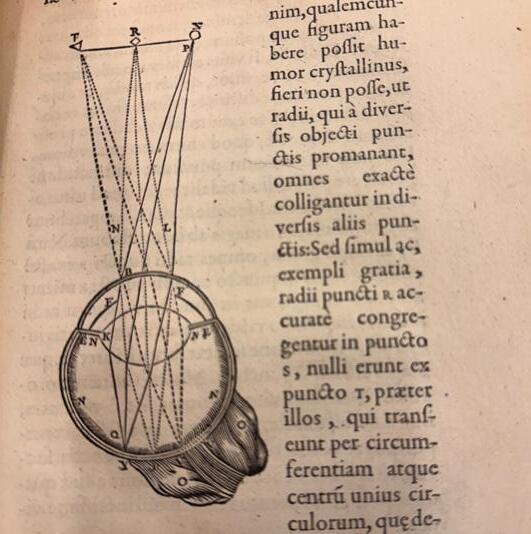
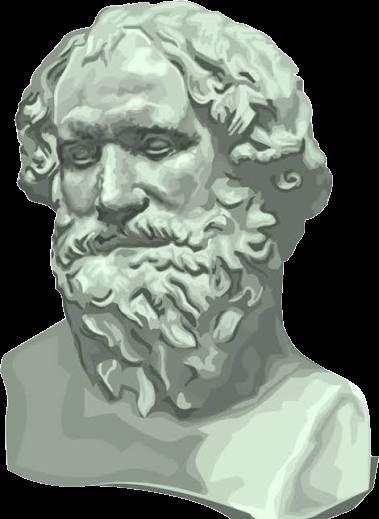
When I started researching him, I learnt about the limited amount of information available about him because of all his work being destroyed. However, in the Cornell Library, I was able to discover translated versions of his work, alongside some explanatory notes that really made it clear. In the Rare Books and Manuscripts library, I discovered his crowning jewel, the Method, in which he related the volumes of a cone, sphere and cylinder alongside his famous levers and his postulates. It was really interesting to see him explain
methods to find the volume of the Sphere and his proofs, particularly that using the Lever Law was very fascinating. I based my final presentation on that proof. In the Spring, I look forward to learning more about him during the course and in my research as I prepare for my final essay.
Yaoyao Yuan
David Ayodele
Scholar Reflections
Beyond the Bernoulli Principle
Evan Williams
My research at Cornell was on the Dutch-born Swiss mathematician and physicist Daniel Bernoulli. I have always been interested in aviation, and Bernoulli’s work in fluid dynamics laid the foundation for the modern-day aviation industry. During my research, I was delighted to learn more about the influential aspects of his life that eventually led to his discovery of his famous principle.
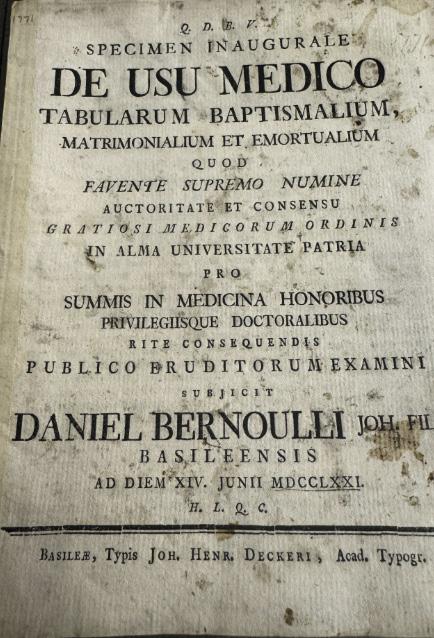
I looked at primary sources in the Rare Books and Manuscripts Collections library. I was greatly impressed by an original copy of Hydrodynamica , a collection of Bernoulli’s most influential work on fluid dynamics.
The book is written in Latin, a language I cannot read, but the pictures at the end of the book were very helpful. I also analyzed a copy of his original doctoral dissertation, but the largest part of my research centered around his work in Hydrodynamica.
In addition to the RMC, I learned much of the information for my project from an English translation of Hydrodynamica that I found in the Mathematical Library. I used the translated version and the pictures in Bernoulli’s original book to gain a greater understanding of some of his experiments. I look forward to continuing my research, and my final paper will combine aspects of his experiments and his fraught relationship with his father.
Noether’s Linkage of Symmetry and Conservation
Sophie Chen
My research at Cornell centered on Emmy Noether, the German mathematician and physicist whose work heavily impacted both modern algebra and theoretical physics. Because she worked in the early twentieth century, there were no manuscripts of her work in Cornell’s Rare Books and Manuscripts Collections. Instead, I focused my research in the Mathematics Library, beginning with her early academic career at the Universities of Erlangen and Göttingen, where she faced significant discrimination because of her gender. Despite making groundbreaking contributions to mathematics, she was initially allowed to
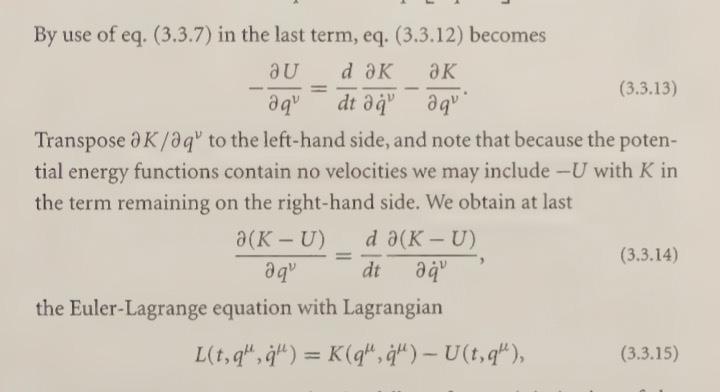
lecture only under David Hilbert’s name and without pay. I originally chose Noether because of my interest in her work in abstract algebra. However, as I looked through books and papers in the Mathematics Library, I became drawn to her physics work, and decided to study Noether’s Theorem. To understand her proof, I first had to build the mathematical foundation behind it by studying the Lagrangian functional and how infinitesimal coordinate transformations affect it. I also studied the Euler-Lagrange equation, which combines with the Lagrangian to determine the path a physical system naturally follows and recovers the familiar Newtonian law (F=ma). I also studied the Rund-Trautman Identity, which combines first-order Taylor expansions of invariant transformations into a singular expression.
Only then was I finally able to combine all this knowledge to understand Noether’s insight that every continuous symmetry of nature corresponds to a conserved physical quantity. For example, time symmetry gives rise to the conservation of energy, while spatial translation leads to the conservation of linear momentum. Looking ahead to the spring, I am excited to continue my research by returning to the abstract algebra that first inspired me to study her work.
Scholar Reflections
Ada Lovelace: The Visionary of Modern Computing
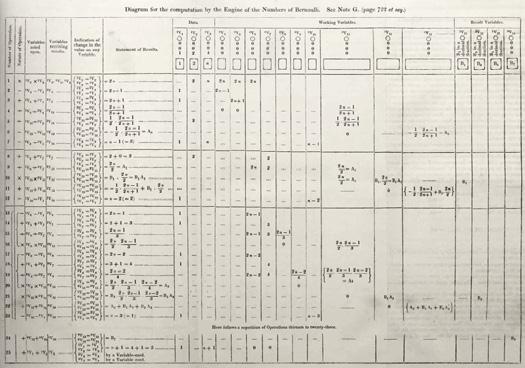
I chose to study Ada Lovelace because of my fascination with the inner workings of modern computers. In order to understand her work, I first focused on the work of Charles Babbage, who is often credited with designing the first computer called the Analytical Engine whose ideas Lovelace built directly upon. Although the device was never built,
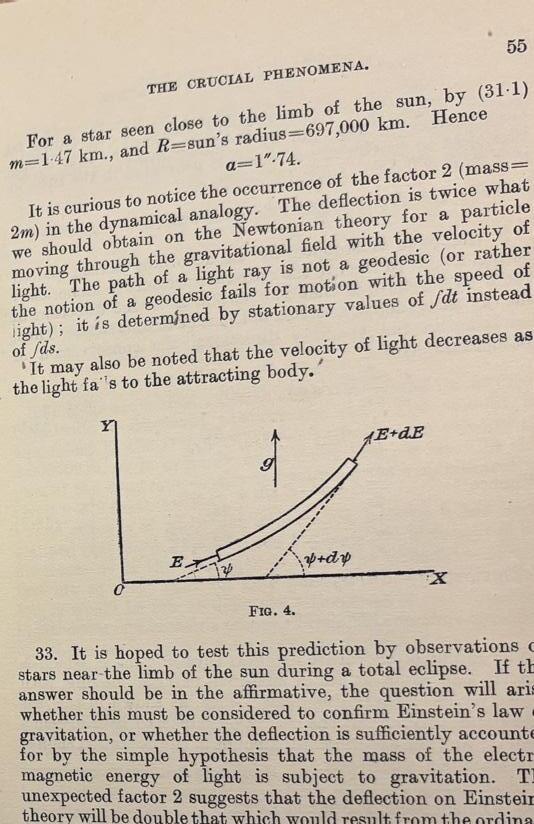
Arthur Eddington: A Luminosity Luminary
Arthur Eddington, a prevelant astronomer in early twentieth century England, was my chosen luminary.
Babbage’s work contains a myriad of notes on how such a machine would function, performing operations on stored variables according to instructions from a set of punched cards. These ideas closely mirror the fundamentals of current computing. After I had a solid understanding of his work, I turned my attention to Ada Lovelace. Lovelace and Babbage were in close communication, and in 1843 Lovelace released a translation of an article on the Analytical Engine to which she appended a series of her own notes that was three times longer than the original article. I spent a large amount of my time reading through this publication, in which Lovelace articulates various ideas that are now the foundation of modern computing, such as looping and branching, as well as including a detailed program to calculate Bernoulli numbers which is often considered the first
My primary focus was on Eddington’s work theorizing about the internal constitution of stars before nuclear fusion was discovered. To understand the thought processes which led him to discover the MassLuminosity Relation of what are called “main sequence stars,” I spent much of my time in Cornell’s math library reading about and discussing the
computer program to be written. I was especially captivated by her unique life and upbringing which had a profound effect on her approach to science and mathematics. She was the daughter of the very celebrated yet controversial author Lord Byron, and her mother heavily pushed mathematics onto her in an attempt for her to not end up like her father. Her mother’s scientific influence coupled with her father’s artistic influence gave rise to what Lovelace herself called “poetical science,” a concept that permeates her publication - a text infused not just with math but with philosophy and creativity. This allowed her to see beyond just a machine that calculated numbers in her visionary idea that such machinery could also manipulate symbols, relating directly to how modern computers utilize binary to represent not just numbers but also symbolic information such as letters and images. Her work
history of astronomy with Mr. Ginzburg and Dr. Spoon, a Cornell astronomy specialist. With their help, and with many secondary sources on Eddington and related astronomers, I found not only an understanding of the Mass-Luminosity Relation, but also on his related Eddington Limit, his influence on the world of astronomy, and the extend of his thirst for knowledge: all of which inspire me to know more
also connects directly to modern debates on artificial intelligence and creativity, inspiring Alan Turing to write what he titled “Lady Lovelace’s Objection” on whether computers can generate original ideas. Cornell’s resources were instrumental throughout my research, providing access to Babbage’s and Lovelace’s own original works as well as biographies and analyses on their lives and insights. I thoroughly enjoyed getting to know Lovelace throughout my time at Cornell and am excited to further my knowledge of her work, her unique approach to science, and how her work echoes developments and discussions of modern day technology.
about his work. I’m excited to continue putting the pieces of Eddington’s puzzle in place in the Spring.
Tyler Rosenblum
Autumn Hemelt
Scholar Reflections
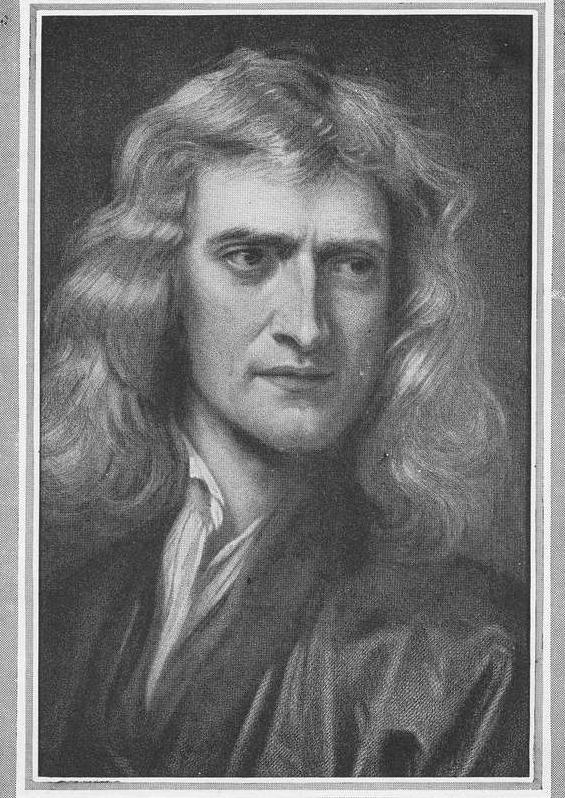
Sir Isaac Newton: The Man With the Apple
Jack Lykouretzos
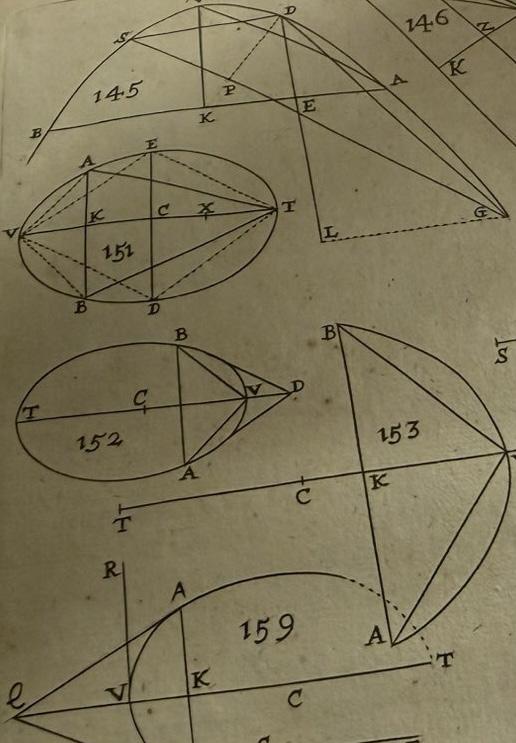
I chose Sir Isaac Newton as my luminary for my research at Cornell. During my time in the Rare Manuscript collection and Mallot library I specifically focused on Philosophiæ
Naturalis
Principia
understand more of Newton’s physics than just the three laws we all hear about, I also got to read secondary sources about his life outside of science. Surprisingly Newton was Master of the Royal Mint and also President of the Royal Society during the end of his life. Additionally, like many other geniuses, I learned about how he was quite antisocial in his childhood and as an adult would frequently remain in his room for days focused solely on his work. This probably contributed to his mental breakdown in 1693.
Mathematica , arguably his most famous book where he proposes his three laws of motions and the universal law of gravitation. I learned about how Isaac Newton was the first person to ever realize that the forces that cause objects to fall on Earth must also govern the interaction between planets. He applies his laws of motion and gravitation to explain why planets orbit each other in ellipses and how the force of gravity is inversely proportional to the distance squared. While I was able to
Once we are back in the spring I plan to expand my research to include some of his other works and also his personal philosophies. I am excited to dive into his two other famous books Fluxions , which describes one of the first versions of calculus, and Optics , which describes his theories on light using prism based experiments.
Pierre-Simon Laplace: The French Newton
Deven Patel
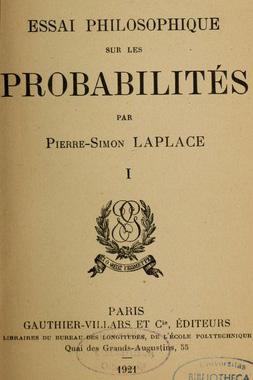
When I was first assigned to pick my luminary, I immediately knew I wanted to choose someone who had studied probability, my favorite area of mathematics. However, Simon Laplace was not a name I was familiar with, and it took me a bit of research to finally stumble upon him as my final pick. At first I wanted to do Gerolamo Cardano, the first man to really study probability and a fanatic for gambling, or Andrey Kolmogorov, who is known as the ‘father of modern probability theory’. For differing reasons, I eventually ruled these names out and decided to do Thomas Bayes, of whom the Bayes Theorem, the foundational theorem for inverse probability, is named. Yet, as I looked into the theorem, I learned that it was actually Simon Laplace who had formalized the theorem, not Bayes, and from that, I made my pick.
Spending time in Cornell’s mathematics library and rare manuscripts collection was very interesting, and I truly learned the broad range of Laplace’s work. Over the
course of his career, he engaged in the fields of astronomy, mathematics, engineering, politics, philosophy, and, of course, probability. Even though he is most known for his work with celestial mechanics, earning him the title of “The French Newton”, I wanted to shine light on his work with inverse probability and Bayesian inference. Through studying his Essai philosophique sur les probabilités and Théorie analytique des probabilités, I learned about his basic principles of probability, which included his approach to posterior beliefs, the formalization of Bayes theorem, his formula for probabilistic prediction, and proof for the rule of succession. Additionally, I discovered his fascination with philosophy, and his philosophical perspectives on probability and science. In his books, he referred to probability theory as mere “common sense”, and even hypothesized a supreme, deterministic intellect, now referred to as “Laplace’s Demon”.
After learning about Laplace these past two weeks at Cornell, I am excited to learn more about him in the spring, and dive into his numerous other works.