Hillsdale in DC hosts annual Constitution Day Celebration
 By Ashley Kaitz Senior reporter

Roe v. Wade and Planned Parenthood v. Casey deprived people of the right to make their own choices, the Missis sippi solicitor general who persuaded the Supreme Court to overturn Roe said at Hillsdale in D.C.’s annual Constitution Day Celebra tion last week.
Scott Stewart, who spoke to alumni, students, faculty, and friends of the college at the Waldorf Astoria Wash ington D.C., aligned the fight for states to regulate abortions with the struggle for independence and civil rights.“I’ve never worked on a case like this,” he said. “As the case was unfolding, person after person who talked to me about the case said ‘I’m praying for you.’ That sticks with you.”
Stewart, who graduated from Stanford Law School and clerked for Associate Justice Clarence Thomas, began working for Dobbs v. Jackson Women’s Health Organization during his first year in office.
Stewart began his speech by laying out the back ground of Dobbs, saying Roe and Casey made it difficult for states to make their own laws about abor tion – especially during the first 23 weeks of pregnancy, when a baby is much less likely to survive outside the womb.“The states kept try
ing. They tried after Roe, they tried after Casey. The issue was just too import ant not to try, and so it went for decades,” he said.
“Mississippi is one of the states that has long tried to protect life and health in the medical profession by regulating abortion.”
When Mississippi proposed a law prohibiting abortion after 15 weeks, lower courts struck it down because it fell outside of the viability window set in place by Roe and Casey. That’s when Stewart picked up the case.
“It didn’t matter that the 15-week law applies when an unborn child is undeni ably human – when risks to women surge and when the common abortion pro cedure is brutal,” he said.
“The lower courts held that because the law prohibits abortions before viability, it was unconstitutional no matter
Afterwhat.”months of delib eration, Stewart said, the Supreme Court agreed to hearHeDobbs.recounted the argu ments he used to win the case, starting with Roe and Casey’s lack of constitu tional“Roebasis.and Casey adopt a unique right, a right to end a human life. Nowhere else does the court recognize this,” Stewart said. “No where else does the right to privacy, liberty, dignity, or autonomy mean a right to take a Second,life.”
Roe and Casey
robbed the people of their constitutional right to make their own decisions. “Roe and Casey undermine democratic government,” said Stewart. “The Con stitution leaves the most important issues to the people, and Roe and Casey ended that. They block people from deciding one of the most important issues we face.”
Third, supporters of Roe and Casey argue that wom en couldn’t be successful without a right to abortion, Stewart said. He disagreed.
“The clinic quoted, ‘A right to abortion is critical to women’s success, and its absence would shackle women.’ That is all wrong,” he said. “Countless women and mothers have achieved both major career suc cess and a rich family life without needing a right to abortion.”Stewart said the con troversy surrounding the case was one of the greatest challenges he has faced. He said he was struck by the amount of people who cared more about main taining a right to abortion than about remaining faith ful to America’s founding documents.“I’mtalking about people who know what our Constitution is, what our judiciary is, how vital they are, and yet act to destroy them. I don’t have to describe all that happened these past few months,” he said.
Alumnus starts one of America's fastest growing companies
 By Alex Deimel Collegian Reporter
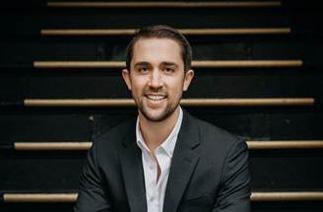
A Hillsdale alumnus founded a multi-million dollar company which ranked as one of fastest growing companies in America.In2014, Hillsdale alumni Alex Linebrink founded Passage, a ticketing com pany designed for medi um-sized events. After eight years of hard work, the com pany sold its six millionth ticket this past summer and landed on the Inc. 5000 list of fastest-growing compa nies in the country.
At the time of its found ing, Passage primarily focused on ticket sales for haunted houses, which played a big role in Line brink’s“Mychildhood.father’sbirthday is on Halloween, so when I was growing up, instead of cake and ice cream, ev ery year we would build a haunted yard,” Linebrink said. “It became pretty pop ular. We were on the front page of the Hillsdale Daily News almost every year, and by the end of it, we would have around 1,500 people show up just on Halloween night.”Prior to starting Passage, Linebrink was the CEO and co-founder of Core Mer chant, a payment technology company based in Detroit. After selling the company in 2014, Linebrink noticed someone attempting to sell haunted house tickets on Eventbrite, and realized how limited the platform was for events that were not one day,
one time, and one price.
“My thesis with our Chief Technology Officer when we started this was that we can’t just make a business for haunted houses,” Linebrink said, “but if we can prove this works for haunted houses, then we can repeat this for all different types of eventLinebrink’scategories.”idea took off.
Five years after its founding, Passage had $800,000 in revenue from $11.6 million of ticket sales. In 2022, the company expects to earn $4.5 million in revenue.
In addition to live events and attractions, Passage has made headway in the sports world.The company has be come the official ticketing partner of NBC Sports and League Two of the United SoccerAccordingLeague.to Linebrink, the COVID-19 pandemic allowed Passage to excel. He and his business partners took advantage of live events being canceled by creating virtual event platforms.
“2020 was a time for us to really take advantage and excel instead of pulling back,” Linebrink said. “We built out ways for smaller to mid-sized event organizers and businesses to continue to connect with their audi ences during a tough time, and we began working on a virtual events platform.”
During the pandemic, Passage allowed venues to have time slots for their tickets in order to keep their customers socially dis tanced.InJanuary 2020, Line
brink hired Shane Smith as senior event expert, who worked in ticket sales for the Tennessee Titans and Detroit Red Wings prior to Passage.“When the pandemic began, the soccer teams we were partnered with stopped playing, so I began reaching out to different bands and performance venues pitch ing our virtual event system, which was able to keep many of these places afloat while they were unable to host live, in-person events,” SmithPassage’ssaid. Head of Mar keting Kat Rembacki called Passage a “disruptor” in a “stale and old” industry.
“The biggest differentia tor for smaller to mid-sized events is that we are one solution for everything,” Rembacki said. “You can do all of your payments through one platform, whether that’s online ticket sales, in-person ticket sales, or concessions—you have it all on one Passagesystem.”wasone of Michigan Celebrates Small Business' “50 Michigan Companies to Watch” earlier this year, and nearly tripled its revenue growth in the past three years, putting it at 2,055 on the Inc. 5000 list.
“I think that the six millionth ticket milestone is super exciting because we’re showing the world what Michigan is capable of,” Rembacki said. “The innovation, the growth, and vision we’ve had is direct proof that it's possible to build something huge right here in Michigan.”
Unvaccinated alumni held from service in Marine Corps
By Libby McGivern Collegian freelancer

The United States Marine Corps removed two Hills dale graduates from their occupational specialties because they refused to comply with the military’s COVID-19 vaccination mandates.Brothers Alex Buchmann ’17 and Adam Buchmann ’20 were also blocked from deployment, promotion, transfer, or release from active“Myselfduty.and the other Marines in my command were told that if we submit ted religious exemptions we would be kicked out by Thanksgiving,” Adam said. “We submitted them anyway,
believing that it would be the end of our military careers.”
On Sept. 14, the Marines rolled back punishments for service members seeking religious exemptions to the vaccine, including ending involuntary terminations and delays of promotions.
But the change will not restore the positions of the Buchmanns in the Marines, according to “MaximumAlex.vaccination of the force will reduce trans mission of disease, reduce the severity of disease among personnel who become infected, preserve medical resources, and facilitate mission accomplishment at the individual, unit, and organizational levels,” Capt. Ryan Bruce, Marine Corps spokesperson, told the Col
legian on Wednesday.

Alex graduated from Hillsdale with a major in politics and joined the Marines the following Sep tember, earning the status of captain. His younger brother, Adam, also majored in poli tics and rose to the position of firstAlex’slieutenant.training for his po sition as a fighter pilot took him across the country. He began training in Pensacola, Florida, and continued in Kingsville, Texas, where he flew his first jet, the T-45, and later the F-35B.
Alex and his wife Oliv ia ’15 left Texas with their children for Beaufort, South Carolina.
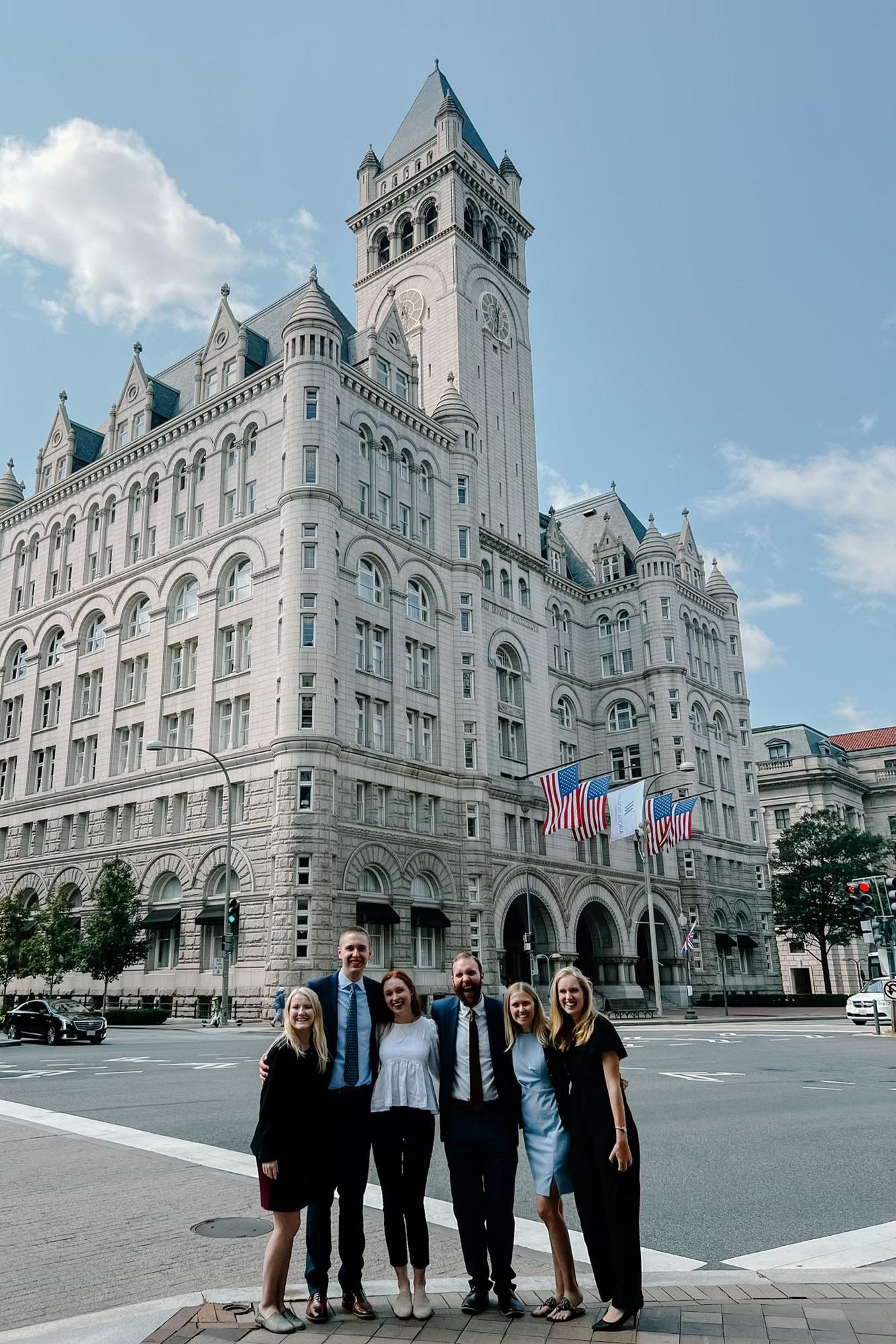
 Senior George Washington Fellows Abbee Elwell, David Swegle, Ashley Kaitz, Josh Barker, Gabs Bessette, and Emily Marsh (left-to-right) stand outside the Waldorf Astoria before assisting staff at the celebration.
Courtesy | Emma Eisenman
Alex Buchmann stands in front of a F-35B jet.
Courtesy | Alex buchmann
Senior George Washington Fellows Abbee Elwell, David Swegle, Ashley Kaitz, Josh Barker, Gabs Bessette, and Emily Marsh (left-to-right) stand outside the Waldorf Astoria before assisting staff at the celebration.
Courtesy | Emma Eisenman
Alex Buchmann stands in front of a F-35B jet.
Courtesy | Alex buchmann
www.hillsdalecollegian.comVol. 146 Issue 5 - September 22, 2022Michigan’s oldest college newspaper Band Spotlight: Grunge Musicians Debut on campus See B2 Courtesy | jack Hammons Localvores: Hillsdalians source Food Locally See B3 Courtesy | Emma Widmer
Rufo Report: Michigan Transgenderismdepartmenteducationpromotes See A7 Courtesy | Manhattan Institute
See Constitution A2 See Marines A2
Pro-life legal scholar speaks on abortion and women's rights
By Michaela Estruth Assistant Editor
Abortion and women’s rights do not fit “hand in glove,” said Erika Bachiochi in her speech on Sept. 19, “Roe, Dobbs, and Com peting Visions of Women’s Rights.”Bachiochi is a fellow at the Ethics and Public Policy Center and the director of The Wollstonecraft Project at the Abigail Adams Institute in Cambridge, Massachu setts. She specializes in equal protection, jurispru dence, feminist legal theory, Catholic social teaching, and sexual ethics.

In her talk, Bachiochi said American culture argues women’s equality requires free access to abortion.
“Abortion has become the privilege response to the reproductive asymmetries between men and women— that is the basic biological fact that a man and woman engage in the same sexual act, but it is the woman who gets pregnant,” Bachiochi said.Bachiochi countered this argument with historical context.“This is not at all how women’s equality, indeed women’s rights were always understood,” Bachiochi said. “The earliest women’s rights advocates both in our country and abroad opposed abortion.”Thetwo U.S. Supreme Court cases which legal ized abortion, Roe v. Wade and Planned Parenthood v. Casey, both interpreted the clause of the 14th Amend ment to include women’s access to abortion.
Bachiochi said the Dobbs decision examined the 14th Amendment in its proper historical context which led to the overturning of these two court cases.
“No one, including the early American women’s rights advocates, thought that the 14th Amendment liberty included the right to intentionally end the life of one’s own child,” Bachiochi said.Bachiochi quoted sev eral women from the 19th
inequality and offered birth control and abortion as the solution.“Sanger’s widely suc cessful campaign for birth control fundamentally and dramatically shifted our cul tural response to reproduc tive asymmetry, no longer demanding chastity and social supports for mothers, as 18th and 19th century women’s rights advocates had, but technologically ‘freeing’ women from the burdens of sex just like men,” Bachiochi said.
In step with this radi cal change, abortion rates, extramarital sex, and single motherhood dramatically increased, Bachiochi said.
“Women are designed, unlike men, to nurture a vulnerable human being in our bodies, even if we never do so,” Bachiochi said.
President of the Catholic Society Noah Hoonhout said he met Bachiochi this summer at a seminar for the Abigail Adams Institute.
Steele argues list of conservative principles violates free-market economics
By Anna MacPhee Collegian Freelancer
National conservatives could empower govern ment bureaucrats if they follow the advice of their founding
whichofwithPresidentradGovernmentAndelHillsdaleandwereAmongofdetailStatementNationalFoundationsaid.rancerooteddiscussionmultipleeconomicSteele,summer.ofSept.Organization,tolectureCharlesBusiness,Chairmandocument,ofEconomics,andAccountingSteelesaidinalastweek.Steele,facultyadvisertheClassicalLiberallecturedon15abouttheNationalConservativeStatementPrinciplesissuedlastAccordingtothestatementlackedfoundation.“Afterreadingthisthingtimes,tome,theseemstobeinthesheerignoofeconomics,”SteeleTheEdmundBurkeissuedtheConservativeofPrinciplestothecommonvaluesNationalConservatives.thesignatoriesassistantprofessorresearchfellowatCollege’sVanGraduateSchoolofDavidAzerandHillsdaleCollegeLarryArnn.Steelesaidhedisagreesthesixthprincipleconservatism,Plank6,saysthefreemarket
cannot be “Butactions,”Steele“What’sabsolute.thealternative?”asked.“Willbureaucratsdecide?EPA,OSHA,SEC?Itwilleitherbebureaucratsorpoliticians.”SteelecomparedtheconsequencesofPlank6toenvironmental,social,andgovernancestandardsforassessingbusinesses.Insteadofevaluatingbusinessesbasedonprofitandloss,theESGevaluationsarebasedonabusiness’senvironmentaleffects,likecarbonemissions;socialstandards,likethehiringofwomenandminorities;andgovernance,suchasunionizingwithinthebusiness,Steelesaid.“ESGevaluatesbusinessoncriteriasetbythirdpartieswhodon’tbeartheconsequencesoftheirhesaid.“It’satoolofsocialengineering.It’satoolofcentralplanning.Anditbasicallypromotesleftistgoals,”Steelesaid.SteelesaidtheNationalConservativeStatementofPrinciplescouldeasilyimposethirdpartyregulations:anotherformofESG.“ItmattersbecauseNationalConservatismistalkingaboutsomereallygravethreatsthatneedtobeconfronted,”Steelesaid.donewrong,NationalConservatismfallsintotheverysametrap.Notonlywillitbepowerlessagainst
ESG, but it will end up promotingProfessorit.”of Political Economy Gary Wolfram, who attended Steele’s lecture, agreed with Steele's assessment.“IthinkDr. Steele did a good job of pointing out the unintended con sequences of what the national conservatives are embedding in their document,” Wolfram said. “That’s a lot of why you learn economics – because you can see the unintended consequences.”Accordingto Steele, the basic economic principle National Conservatives are missing is that trade is better for both parties.
“Exchange from trade is mutually beneficial,” Steele said. “If the trade isn’t ben eficial to one side or to the other, they won’t trade.
While Arnn said he ad mired Steele’s remarks, he supports the National Con servative movement despite flaws in the document.
“People must have government,” Arnn said. “If the government is to be restrained, it must operate under the consent of the governed made effective through a stable constitu tion. There is no interna tional way to go about this. The nation is the necessary unit of self government.”
Cryptography Club promotes mystery
By Nathan Stanish Collegian Reporter
In Beaufort, Alex began training to be in the Fleet Replacement Squadron, the Navy and Marine pilots who train to fly a specific aircraft as replacement aviators for deployed squadrons.
On Aug. 9, 2021, the De partment of Defense released the military vaccination mandate. Pentagon Press Secretary John F. Kirby told the Department of Defense News at the time of the man date’s release it may include religious mandatorythehasaircraft“grounded”backmilitaryits“Whenaccommodation,”oratheysomethingconscientiousafordate’sShortlyexemptions.afterthemanrelease,Alexappliedareligiousexemption.“Ifanindividualhasreligious,personal,orobjectiontointhemilitary,canfilepaperworkforreligiousaccommodationaconscientiousobjectorAlexsaid.thatpaperworkranlegalcoursethroughthebureaucracy,itcamedenied.”AlexwasofficiallyfrommilitaryinApril2022andnotflownsince.“Whenwordcamedownforvaccinationfor
and 20th centuries who wrote against the practice of abortion, including Alice Stockholm, one of the first female OB-GYNs, and Mary Wollstonecraft, author of “A Vindication of the Rights of Woman.”Bachiochi said these women believed women were equal to men because they both served the same God.Bachiochi said Planned Parenthood founder Marga ret Sanger blamed women’s fertility as the source of
COVID-19, we felt convicted by the Holy Spirit and just had a huge uneasiness about this thing for a variety of reasons,” Alex said.
The military assigned Alex to a “low-intensive job” while he awaits the result of his court case.
“It's extremely basic,” Alex said. “Really nothing more than intern work.”
Alex said legislative ac tion in Congress is the only way to eliminate vaccine mandates. He encouraged students to talk to their representatives about what the military can legally make soldiers do to their bodies.
Alex said his Hillsdale ed ucation has influenced how he approaches the mandate and religious exemption denial.“Adesire to read primary documents actually played a huge factor in this entire thing,” Alex said. “From even before there was a court or der going about, we started diving deep into basically all the laws that govern what the military can medically do to Adamyou.”said he shared his brother’s concerns.
“After a lot of prayer and much uncertainty, I submit ted my religious exemption
How to: Advertise with The Collegian
To advertise in The Collegian, please contact Carly Moran at cmoran3@hillsdale.edu.
“She is a fantastic speaker and has some really sharp, unique thinking that seri ously impressed me. I asked if she were interested in speaking through the Cath olic Society,” Hoonhout said. “I think talking about Dobbs and Roe was great because it’s pertinent to Catholics and all humanizing.”tivenandesmodernmetricallyfirst-wavehowfirst-wavefromsaidJuniorChristians.”LucyFernandesourculturemustlearntheexampleofthefeminists.“Ifounditfascinatingtheopinionsofthefeministsdiaopposedthatoffeminists,”Fersaid.“Theirperspecismuchfullerandmore
request in September 2021 and was removed from training the very next week,” AdamAdamsaid.was a student naval aviator in his first phase of flight school before the mili tary removed him.
“Since being removed from training, I have twice been billet promoted within my command and am serv ing as the Marine Aviation Training Support Group-21, Marine officer control com pany commander,” Adam said. “I am responsible for around 350 Marine officers working through the first phase of flight school.”
Adam attributed his deci sion to not get vaccinated to the moral code he developed at Hillsdale.“Ithinkthe primary influence from Hillsdale that contributed to my decision was that choices matter,” he said. “The decisions we make form and shape our charac ter, and I believe in my case I would have violated and dis honored God and myself if I took the COVID-19 vaccine without having faith in it.”
Josiah Lippincott ’16, a graduate student at Hills dale who formerly served in the Marines, has been friends with Alex for almost
The cryptography club started an augmented real ity game on Sept. 2 which leads students around campus to find clues, crack codes, and solve puzzle.s The prize for the first participant to finish is a $25 gift card to an undis closed location. Subse quent participants will also receive prizes relevant to later puzzle events.
“The cryptography club’s goal in this game is to promote mysterious events across campus,” Sopho more Henry Ahrabi, one of the club’s organizers, said. Junior Ryan Bagley, founder of the club, also emphasized the impor tance of mystery in the club’s“Weevents.likethe thrill of discovery, the thrill of the hunt,” he said. “It takes ordinary campus life, student life, and gives it a little twist, especially for
10 years. Lippincott said he disagrees with the military’s mandate.“Itisa means to tyrannize over the men who volun teered to serve this country,” Lippincott said. “It treats healthy people like biohaz ards and violates the right to liberty and true bodily freedom.”According to Alex, the Marine order released last week is “Thedeceiving.newMarine order doesn’t change circumstances,”presentAlexsaid. “It simply provides amplifying guidance for how com mands should navigate the preliminary injunction from the federal judge. Though the Marine Corps may be barred from kicking people out, for now, they are legally allowed to move Marines to career-ending jobs in a back office of some random building.”Adamagreed the new Marine order is misleading.
“The most recent Marine administrative message being spoken about mainly explains how the process by which they review religious exemption requests is basi cally paused until the injunc tion works its way through the courts,” Adam said.
How to: Subscribe to The Collegian
To receive weekly issues of Hillsdale College’s student newspa per, please contact Linnea Shively at lshively@hillsdale.edu
people who are inquisitive and want to indulge their innerForspy.”Sophomore Jacob Fox, one of the challenge participants, that twist adds new fun to campus.
“I think it adds a level of mystery that we typically don’t get in everyday life,” he said. ”There are charac ters and places and things that you begin to look at in a new way because that’s what you have to do to solve these puzzles. It really uses Hillsdale to make it unique.”Thisfirst puzzle, the Phoenix Initiative, has two phases.“The first phase is getting people in a bit of a trust exercise and the second phase is when the competition kicks in, and that’s when you're going for the prize,” Bagley said.
The first phase official ly ended on Sept. 18, but students can still join the second phase by visiting the club website, bit.ly/
hillsdalecryptography, or Instagram, @hc_cryptog raphy.Bagley said he hopes to make the club official and offer more public events.
“We want to do these events that are like these games and puzzles, but open to all of campus, a one and done kind of thing,” Bagley said.
For students not already trying the puzzle, Fox rec ommends starting now.
“Give it a go, don’t feel too intimidated by it,” he said. “Don’t view it as this gatekeeping intellectu al thing for people that know how to do all these complicated code solving stuff because at the end of the day, it’s a lighthearted, casualAhrabipuzzle.”said people don’t need to connect with a club organizer to participate.
“Our offer is, you play the game and we will find you,” Ahrabi said. “There’s no limit. The more the merrier.”
“We all saw it," Stewart said. "It reveals a darkness, and the darkness lies in a warped view of the Su preme
AccordingCourt.”to Stewart, many people falsely believe the Supreme Court’s job is to make decisions for Americans – to “pick win ners and losers even when the Constitution does not pick winners and losers.”
Stewart said this does not discourage him.
“In my view, we should see darkness, sinister ex pectations and controversy as opportunities – they’re not reasons to be discour aged or retreat,” he said. “These are opportunities to stand for what is right.”
Mary Greco, Hillsdale in D.C.’s undergraduate program coordinator, said she was interested to hear about the polarizing reac tions Stewart encountered when he took the case.
“When he first got the case, and people were coming up to him, I was surprised to hear that some of them said ‘this isn’t worth it,’ and ‘what are you doing?’” she said. “On the
other hand, a lot of people came up to him and said, ‘I’m praying for you.’ I think, ultimately, this was a moralJuniorbattle.”Olivia Hajicek, a WHIP student who attend ed the lecture, said Stew art’s courage in bringing Dobbs before the Supreme Court inspired her.
“I was most affected by the fact that he challenged Roe v. Wade because he thought it was the right thing to do, even though a lot of attorneys thought it was foolish,” she said.
“I hope we keep fighting abortion with that kind of courage until every human being is recognized as a person under the law.”
For Stewart, the United States’ most controversial moments have become its most noble memories.
“The battle for Amer ican independence, the fight against slavery, the struggle for civil rights – these were all fraught, hard, and controversial,” Stewart said. “We now see them as the greatest moments for our country. Easy things are not great. And that’s why Dobbs was a great decision.”
How to: Join The Collegian
To find out more about how to contribute to The Collegian through writing, photography, or videography, please contact Maggie Hroncich at mhroncich@hillsdale.edu
bothrightsearliest“Thewomen'sadvocatesinourcountryandabroadopposedabortion,”Bachiochisaid.
Marines from A1
Constitution from A1
www.hillsdalecollegian.com
A2 September 22, 2022
Erika Bachiochi speaks in Plaster. Courtesy | Rosemary Surdyke
Tower
By Hannah Cote Outreach Director
Tower Light is hosting its first Authorial Convivi um this Friday, Sept. 23, from 4:30-5:30 p.m. in the formal lounge with Patricia Bart, associate professor of english, as the emcee.
The convivium aims to deepen social networking among writers in a creative writing workshop, as well as help students understand the great offering they can make as a writer, Bart said.
By looking at a variety of texts — including a Psalm, a passage from “Beowulf,” a Shakespearean sonnet, an excerpt from T.S. Eliot’s “The Wasteland and “Little Gidding,” and a selection from Flannery O’Connor’s “Good Country People” — Bart plans to lead students through different writing exercises, which she calls “parlor games.” These exer cises help develop a circle of trust and audience among students that many famous
authors had, Bart said. “When you’re speaking to someone, you’re showing signs of understanding, and you’re responding,” Bart said. “We are born natively expecting that immediate feedback. Then we try to become great writers. We sit here and look at our writing, but it doesn’t give us immediate feedback. We need to be able to imagine our audience in order to get over probably 95% of what writer’s block is.”
Bart will end the convivi um with a brief lecture on Eliot’s “Tradition and Indi vidual Talent,” discussing how to flourish as a modern writer, said Meera Baldwin, editor-in-chief of the fall Tower Light edition.
Baldwin said any student can benefit from the con vivium.“Inthe past, we’ve hosted workshops for students to come in and review their poetry or prose with edi torial members,” Baldwin said. “While those events
were good, they did not really speak to the basics of writing creatively. I want ed to introduce a more lecture-style element to our event so students could learn how to get started.”
When King David talked to God personally in prayer, he wrote about it, Bart said.
“Thank heaven he decid ed to expose his prayer to a wider audience, instead of writing it all to himself,” Bart said. “We all suffer rejections, but an important way of offering oneself is to put your writing out there.”
Baldwin said she’s ex cited to see what Bart will teach her and those that attend.“The number one thing I hear from other students is that they do not know where to begin with writing creatively,” Baldwin said. “I am excited to see how Dr. Bart’s lecture and the discussion will help us feel more confident with begin ning any creative work.”
Alexandra DeSanctis to speak about post-Roe America
By Michael Bachmann Assistant Editor
The pro-life movement has more responsibility in the wake of the Supreme Court’s Dobbs v. Jackson Women’s Health decision than ever before, said Alexandra De Sanctis, a fellow at the Ethics and Public Policy Center and writer for the National Review.
DeSanctis, the fall Eugene C. Pulliam Distinguished Vis iting Fellow in Journalism, will speak about "The Direction of the Pro-Life Movement After Dobbs" at 8 p.m. on Tuesday, Sept. 27, Plaster Auditorium.
“We have two pathways forward,” DeSanctis said. “One is legal — passing as many laws as possible to protect life — and another is cultural. You can’t understand these separately.”
According to DeSanctis, her lecture will explore why so many people believe abortion is necessary.“Wehave to build a pro-life culture where woman, partic ularly those in crisis pregnan cies, feel supported to bring their children into the world,” DeSanctis said.
The end of Roe marks the beginning of a new phase of the pro-life movement, according to DeSanctis.
“In many ways, Roe v. Wade being overturned took us back to the beginning of what should have been the beginning of the abortion debate,” she said. “For 50 years we certainly worked hard as pro-lifers, but we couldn’t really change Sophomoremuch.”Rachel Schro der, leader of Hillsdale College for Life, agreed the pro-life
movement has to continue to fight.“The reversal of Roe and Casey returned to the states their responsibility to protect babies in the womb,” Schroder said. “Sadly, pro-abortion forc es are using this time to doubly push their radical policy, particularly in Michigan with a deceptively written ballot proposal in this November's election.”Atthis moment in the pro-life movement, there is a responsibility for everyone to act, especially young people, DeSanctis said.
“Look around in your com munity,” she said. “Are there young parents who you can babysit for or can you throw a baby shower for students who are unexpectedly pregnant? How can you be welcoming where you are?”
Alexander Hamilton Society hosts annual 'War Games'
By Erin Osborne Collegian Reporter
China convinced the United States to withdraw military aid and its war fleet from Taiwan in the Alex ander Hamilton Society’s annual “War Games” Sept. 17.The games simulate dif ferent foreign policy crises every year. This year’s theme was “Crisis in the Taiwan Strait,” inspired by Nancy Pelosi’s visit to Taiwan in August.“Wechose Taiwan because Taiwan and the In do-Pacific are representative of the greatest diplomatic challenges that the United States faces,” said Alexander Hamilton Society president and senior Conner Bolanos. “There are at least 10 differ ent ways that this scenario couldThisend.”isthe first time the Alexander Hamilton Society has done an original simu lation centered on military action rather than diploma cy and covert action.
“This year was more militaristic, although there were no assassination plots this year,” senior Stephen Pearson said.
The games began with the movement of military exercises and ballistic tests by China into the East Chi na Sea, threatening Japan.
Approximately 40 stu dents participated in the war games this year.
“Most of the people who come to the War Games aren’t members of the Al
exander Hamilton Society,” BolanosStudentssaid.participated as members of six teams, representing Japan, the Peoples’ Republic of China, the Republic of China, the Russian Federation, South Korea, and the United States of America. Each country had different conditions and objectives throughout the game. For example, China had to either conquer Tai wan or convince the United States to withdraw from Tai wan, while the United States had to maintain Taiwanese independence and alliances in the Indo Pacific.
“The small team size of three-to-four people allows students to participate more in the actual game itself,” Bolanos said.
The game’s structure contained two periods, one containing unmoderated discussion time between delegates, and the other with moderated debate and formal speeches and policy announcements.Pearsonwonthe best delegate for the first com mittee, and senior Noah Schleusener won the best delegate for the second committee.Russiaand Taiwan won in the first committee, while Russia and China won in the second committee.
“Taiwan is an incredibly complex issue,” said Alexan der Hamilton Society vice president and junior Josh Hypes. “A lot of our allies are nowhere near ready for war in Taiwan, and the War
Games simulation shows that lack of preparation and the United States’s immense role in the defense of Tai wan.”Russia’s goal was not related to the Taiwan Strait at all, but to Ukraine.
“Russia successfully con vinced the delegates of the United States to aid Russia in the fight against Ukraine,” Pearson said. “From there we were able to unite all the delegates against those of China.”Some of the negotiations were more diplomatic than others.“Russia tried to send 1,500 nuclear missiles to North Korea, but that did not work,” Pearson said. “In the end, there was a blood bath, and the United States and Chinese economies both crashed. The game was wild.”Within the three hour simulation, three wars, an arrest of Michael Jordan's daughter, and Black Lives Matter riots leading to the destruction of Minneapolis occurred in the first com mittee’s simulation.
“It was truly tragic,” HypesMemberssaid. of the Alexan der Hamilton Society con sider the games a success, despite the chaos.
“At the end of the day, people should understand more about where the United States stands on geopolitical issues and what the challenges are in inter national politics,” Bolanos said.
Education department starts a new substitute teacher certification class
By Christina Lewis Collegian Freelancer
The Hillsdale Education Department launched a new substitute teacher certifica tion program for students.
“Part of learning how to be a substitute teacher is learning how to present that material,” Coupland said.
By Sofie Kellar Collegian Freelancer
On Saturday, Sept. 10, Hillsdale College For Life sent students door-knock ing in Jonesville to secure votes against Proposal 3, an amendment that would add abortion rights to Michi gan’s“ThisConstitution.isthebest use of our time until November,” said sophomore Rachel Schroder, leader of Hillsdale College for Life.
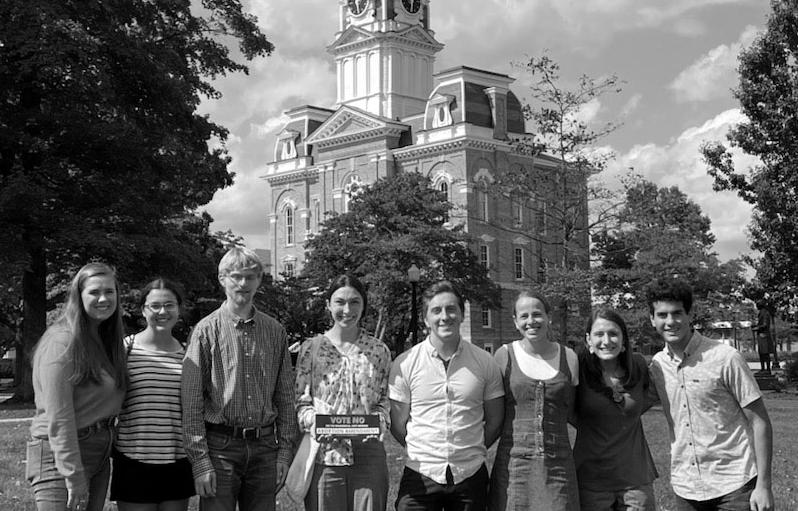
Students reached 224 voters in Jonesville this weekend. There were 170 doors knocked and 26 conversations.
Last Sat urday, students knocked on 561 doors and had 155 conversations with voters in Hillsdale. When residents didn’t respond, students left pro-life literature at their door and planned to return.
The goal of door knock ing is to mobilize poten tial voters who might not know how or where to vote against Proposition 3, SchroderProposalsaid.3, also known as the Right to Reproduc
tive Freedom Initiative, would allow abortion through all nine months and partial-birth abortion. In addition, the proposal would decrease safety and health regulations and elim inate parental consent for minors and proper certifi cation for doctors, Schroder said.If the person answer ing the door is extremely pro-choice or extremely pro-life, the student thanks them and moves on. When someone answers the door who seems on the fence about abortion, the stu dent provides information about the bill, according to Schroder and Grace Marks, HCFL secretary.
If the person says they are pro-choice, Schroder said the student will follow up with questions to find common ground.
“We’re trying to snag as many swing votes as we can,” sophomore Bank BodorAccordingsaid. to Marks, the ballot for Proposal 3 is designed to confuse voters and even contains strings of words without spaces be tween them. Two years ago,
that was enough to keep it from getting through the Michigan Supreme Court. But after getting enough signatures, it has moved forward.Marks said the ballot was unfairly represented to its signers.“This amendment is so extreme that even if you are pro-choice, you should be against it,” Marks said. “Be cause of a pro-life law being thrown out, nothing is set in stone regulating abortion. But this amendment would end the generationsviolencepre-borndoomConstitutioninprevent“It’sbutit’scampusalsoagainstMichigan,changeliveingSchroderconversation.”isencouragHillsdalestudentswhoinnon-purplestatestotheirresidencytosotheycanvotetheproposal.Sheencouragedthewholetouniteinprayer.“It’sreallyeasytothinkoverwithRoev.Wade,it’snot,”Schrodersaid.vitallyimportanttoapermanentchangetheMichiganStatethatwouldtensofthousandsofchildrentotheofabortionfortocome.”
Career Services and Edu Staff, an organization seeking to train the next generation of substitute teachers, hosted the certification training on Sept.
“The15.program is for students that are interested in going potentially into a ca reer teaching path. Because Hillsdale doesn't have a cer tified teaching program, this is a great way for them to get introduced to the classroom,” said Sharon Rupp, assistant director of Career Services.
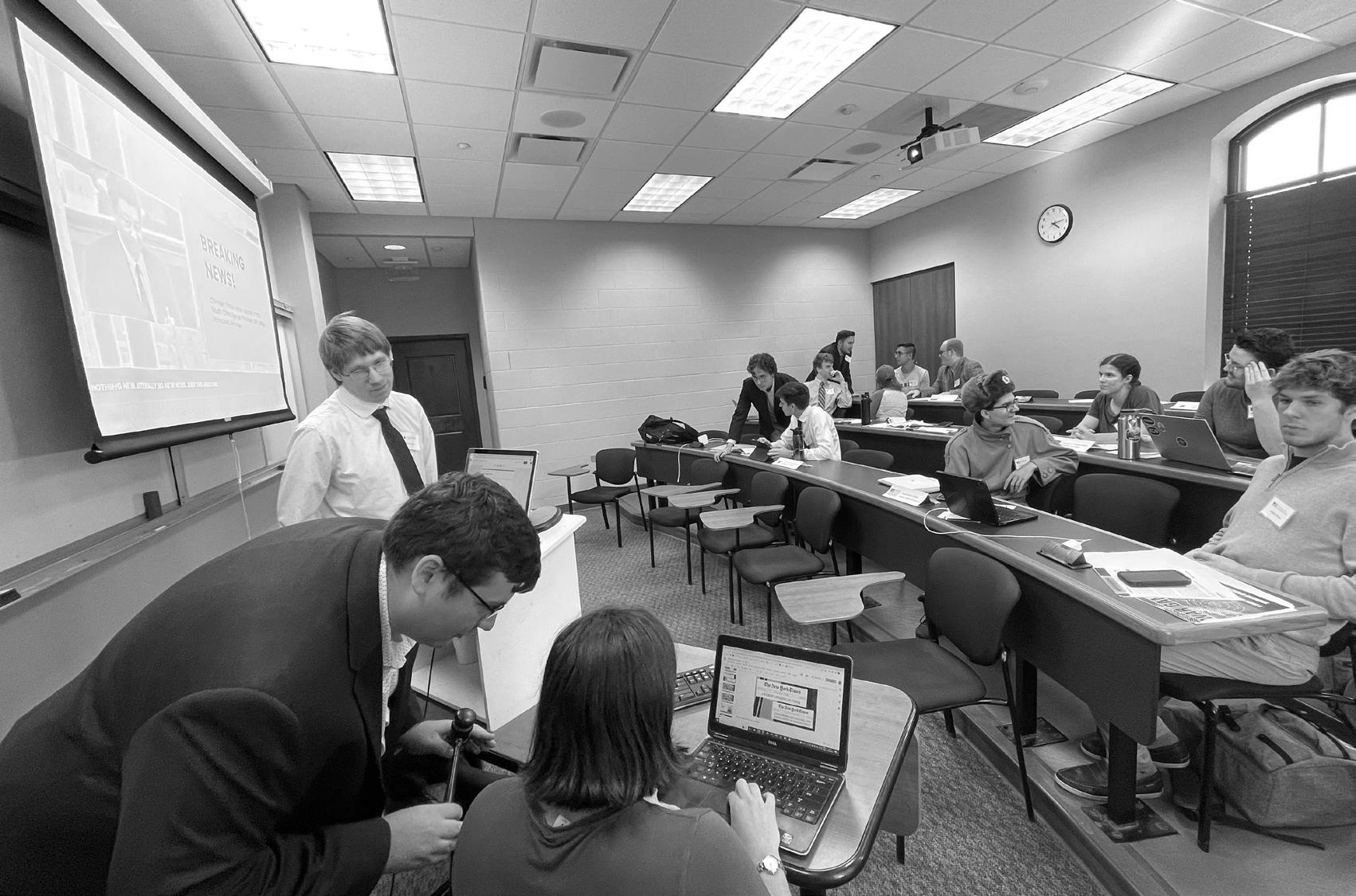
The program goes over the fundamentals of teach ing in a classroom. Students learn basic safety tips online. In-person training consists of a two-hour course on how a typical school day is structured. This program will allow students to apply their skills at local schools in Hillsdale.DanCoupland, professor and chair of education, said classroom experience played a vital role in his decision to become a teacher.
“There was just some thing about being in a class room that was really exciting to me,” Coupland said.
His experience as a stu dent-teacher allowed him to examine the classroom dy namics from the perspective of the teacher. He described student-teaching as “an eye opening experience.”
“But I think the much more valuable element of that is learning how to manage a classroom because that's of ten one of the hardest things to learn as a ofthat’slikeclassroomstandingmechanceingexperienceteachingwithmostsubstitutesaidWarrenteachingmorewouldclassroomputbutloteducationteaching.sureeducationwhotoislearnofbyronment,classroomCouplandteacher.”saidtheisasocialenviwhichisfosteredtheteacher.Hesaidonethegreatestthingsonecanasasubstituteteacherhowtomotivatestudentslearn.SeniorRachelWarren,ispursuingaclassicalminor,saidsheiseagertogetmoreexpototheins-and-outsof“Whenyou'restudyinghere,youlearnaofthetheoreticalthings,topotentiallybeabletothatintopracticeinaisreallycoolandmakemefeelalotconfidentgoingintoaftergraduation,”said.SeniorEamonnWeedheislookingforwardtoteaching.“IthinkthethingI’mlookingforwardtoregardtosubstituteishavingclassroombeforecompletundergradandhavingatogetmyfeetunderandhaveabetterunderofwhatleadingtheisgoingtolookandwhattoexpectwhenthedayinanddayoutmylifeinaboutayear,”
Weed said. In order for students to gain a substitute teacher’s certification, they must have at least 60 credit hours as of this semester. If a student has not yet met this required amount, they can become a paraprofessional. This role allows students to assist the teacher rather than teach material and lead classroom instruction, Rupp said. Career Services is consid ering giving students who did not meet the 60 credit requirement this semester another opportunity to attain their certification next semester, Rupp said. Students are required to pay for the certification. There is a $45 application fee and $60 fingerprint fee which is a state requirement. Students are expected to make at least $100 per full day they substitute.“Afterone day of teach ing, they've pretty much made up for that fee,” Rupp said.Once students get their certification, they can substitute teach at any public school in Michigan. If students wish to teach in another state, they will have to adhere to the state’s rules and regulations and Edu staff’s
“Substitutepolicy. teaching would be a good way to get my foot in the door and just try it out and see if I enjoy it and actually want to pursue that,” sophomore Abby Rich ardson said.
Hillsdale College for Life reaches more than 200 voters during 'Operation Blitz'
Students participating in Operation Blitz met outside of Central Hall after canvassing in Jonesville. Sofie Kellar | Collegian
September 22, 2022 A3www.hillsdalecollegian.com
Light plans new writers' workshop Senior Hunter Law watches senior Conner Bolano and sophomore Katrin Surkan play "War Games." Erin Osborne | Collegian
Opinions
The Collegian Weekly
The opinion of The Collegian editorial staff
Hillsdale students need more parking
Hillsdale College hopes its students will grow. Students, on the other hand, hope Hillsdale’s parking lots willTheregrow.is a parking problem on campus. Some students routinely find themselves circling lots, looking for an empty spot but knowing they’re not likely to find one. The crux of the issue is that students are only allowed to park in
dorm lots where they are registered, and each student can only register to park in one dorm lot.
In some parking lots, it can be difficult for students to find a place to park, even if they are registered to park in that lot.
We greatly appreciate Hillsdale College’s efforts to improve campus life, and encourage the college to further these efforts by
addressing the need for more parking spaces and for clearer expectations for usage of the existing lots.
Since adding new lots to campus may be costly either in time or money, a more immediate solution would be to either number the parking spaces and assign each student a specific parking space, or to get rid of the requirement that students park only in their
dorm’sParkinglot. spaces should be guaranteed to paying students. At the very least, it should be abundantly clear at the time of registration that a parking spot is no guarantee.Thecollege has proven that it can provide high quality services and re sources for students; it should let students drive without driving them
Electric vehicles are not as bad as everyone says
By Josh Newhook
Here in Hillsdale, it might appear that the transforma tion of the automotive in dustry is progressing rather slowly, but large, top-down systemic changes will bring a tidal wave of new norms within the next 10 years. In the first few months of 2022, electric vehicle regis trations shot up a huge 60% even as the overall market was down 18%, accord ing to Automotive News.
BloombergNEF predicts the number of EVs on the road worldwide to quadruple by 2025.It’s time for conserva tives to see the sign of the times and embrace electric vehicles, supporting pro grams that will set up these impending infrastructure changes for success.
First of all, people need to wake up to the legislation that has already set these things in California,place.in which approximately 11% of new car sales in the U.S. happen each year, according to USA Today, has been a trendsetter in emissions requirements, beginning with former gov ernor Ronald Reagan, who signed the Mulford-Carrell Act in 1967 to help protect the public from exposure to toxic air and smog. This legislation changed how the
United States would go about emissions regulations with the Clean Air Act of 1970.
A similar radical change is happening today, start ing with California. With Gov. Gavin Newsom’s 2020 statement set to phase out the sale of all new internal combustion engine cars by 2035, automakers and other states are reacting to make changes. This will mean tripling EV sales to make 35% zero-emissions vehi cles by 2026 and increasing about 8% year over year up to 2035.California is not the only jurisdiction to set its sights on an EV-only market. Twelve states, from Maine to Oregon, have set similar bans on ICE cars within the next decade or so. Whole countries are taking action, like the United Kingdom, which will ban the sale of diesel and petrol cars by 2030.Car manufacturers are responding to these changes. General Motors, America’s biggest vehicle manufactur er, will phase out ICE cars by 2035. Volkswagen, the world’s largest automaker by volume in 2022, has invested more than $100 billion in electric vehicle development and announced its last prod uct start for an ICE model that will occur in 2026, just three model years away. As the world prepares to
embrace EVs entirely, it’s too late to try to reverse what is already coming to pass.
While it might be a bleak future for “petrolheads” who idolize the internal combus tion engine and love to work on their own cars, electric cars are not the enemy to the common folk. Actually, there are a lot of benefits to electric vehicles.
First off, you can say goodbye to oil changes and the complex mechanical repairs associated with
And, they are rapidly getting more affordable. The average price for a new electric car is $54,000 in 2022, according to Kelly Blue Book. Sound expensive? Well, the average new car purchase in the United States in 2022 is now $48,000, not that far off. New models like the Volkswagen ID 4 and Hyundai Ioniq 5 both start at less than $40,000 and have available ranges well over 300 miles, and these are just the beginning of many new
internal combustion engines. EVs require very little reg ular maintenance, and their powertrains are simple and reliable.Inaddition, electric vehicles are quieter, more efficient, and offer 100% of their torque from a stop, something even the sportiest ICE car can’t do.
models manufacturers are about to release.
But what about budget cars? No one can argue that electric cars are coming down in price. It used to cost $33,600 for a Nissan Leaf, versus less than $17,000 for a gas-powered Sentra in 2011. Now, the Leaf starts at $28,495, while the Sentra’s
price has risen to $21,045, according to Car and Driver. That new Leaf has more than twice its original range and comes with a federal tax credit of $7,500, which covers the difference in price. This doesn’t even account for the more than $1,500 in savings from not going to the pump. While the average gas price has gone up and down in the 11 years, residential electric ity has stayed remarkably stable, from $0.12 in 2011 to just over $0.15 per kilowatt hour on average in 2022, according to the U.S. Energy Information Administra tion.But what if you live in a rural area like Hillsdale? At this point, the infrastruc ture is only beginning to get underway. But the govern ment’s power to change this will mean the next five to 10 years will dramatically enlarge the availability of high-speed electric chargers nationwide. The U.S. gov ernment is spending more than $1 trillion to fix some of these problems associated with EV infrastructure in its Federal Infrastructure Bill. Through the National Electric Vehicle Infrastruc ture Formula Program, funded by the bill, Michigan received a $16 million grant to add to its 769 electric charging stations at the beginning of 2022.
“There’s no doubt that the future of the auto industry is electric – and the bipartisan infrastructure law will pro vide needed investments to build charging stations across our state,” U.S. Sen. Gary Peters said in response to the passing of the Infrastructure Investment and Jobs Act.
This might sound like too large a task to under take, but it’s no bigger than when Dwight D. Eisenhower created the National System of Interstate and Defense Highways, opening more than 21,000 miles of road from 1956 to 1965, almost half of the total mileage of the system we see today.
A lot can happen in 10 years, and if the United States pulls this off, it will undoubt edly create its greatest feat of transportation since the interstateElectricproject.carscreate a chal lenge that is making us inno vate in a way the car industry has not in more than 50 years, but with the determination that the governments and manufacturers have shown, I have no doubt that your fam ily will embrace EVs sooner than you think. It’s not just a question of opinion: there will be only one way forward.
Josh Newhook is studying German and journalism. He is the digital editor at the Collegian.
By Michaela Estruth
While the rate of in fection and deaths due to COVID-19 is steadily decreasing, the rate of poor reading comprehension and failed

CentersWhite12cinationrecommendsCOVID-19phaseannouncedignoringcussingbuttalharmedfromin1990estsinceadministeredmathematicalanddroptisticsCentertion.defendmoneyCOVID-19Insteadperformancemathematicalisontherise.offundingannualvaccines,ourshouldbeusedtoandsupporteducaOnSept.1,TheNationalforEducationStareportedafive-pointinreadingassessmentsaseven-pointdropinassessmentsto9-year-olds2020.Thisisthelargreadingscoredropsinceandthefirst-everdropmathematics.Thehaltededucation2020through2021hasourchildren’smenandsocialdevelopment,ournationisstilldisthepandemicandtheconsequences.PresidentJoeBidenonSept.6,anewinresponsetothepandemicwhichanannualvaceveryfallforagesandup.AccordingtotheHousebriefing,theforDiseaseControl
and Prevention released a “new, updated vaccine.”
“The administration is launching a comprehensive effort to make sure that these vaccines are free, widely available, and easy to access for all Americans,” the briefing said. “The administration has secured over 170 million doses of the updated COVID-19 vac cines, which will be made available to the American people for free at tens of thousands of convenient
locations nationwide.”
The administration re quires all school districts to host at least one vaccination clinic before Thanksgiving, the briefing reports. The administration is also using the funding to supply more at-home COVID-19 tests as well as improve air quality and ventilation in schools.

Biden has called on con gress for additional funding for the COVID-19 response.
“Last week, we sent an updated $22.4 billion
request to Congress to meet immediate short-term domestic needs, including testing; to accelerate the research and development of next-generation vaccines and therapeutics; to increase our understanding of Long COVID-19; to prepare for future surges and variants; and to support the global response to COVID-19,” the briefing reports.
In August, the CDC qui etly abolished the differing guidelines for vaccinated
and unvaccinated people. The guidelines are now the same for vaccinated and unvaccinated people: test, isolate for five days until symptoms end, and return to normal life.
The logical response to a disease is now recommend ed on the CDC website whether or not you are vaccinated. Not only was the change unannounced, but the Biden administration is also now calling on Con gress for additional funding
for COVID-19 responses, including vaccinations. Why is none of this funding going to education? Our children lost almost two years of critical educa tion and development, as indicated by these scores. We should at least be more aware of this and shift our focus from the previous two-year dialogue of the pandemic onto the rising generation who is lacking in academic
forforfundingPerhapscompetency.usesomethatisintendedthevaccinationclinicadditionaltutoringor ac ademic clubs outside of the classroom. As continually discussed throughout these past two years, our children’s health is not at risk, but their development is. Most chil dren, except those with un derlying health conditions, will easily defeat COVID-19 as a mild cold. The odds are against them as they strive to recover from lost years of education. We must help them, lest they face years of struggle because of poor response to the pandemic.
Michaela Estruth is a sophomore studying history and journalism. She is assistant news editor at the Collegian.
“Electric vehicles are quieter, more efficient, and offer 100% of their torque from a stop, something even the sportiest ICE car can’t do.”
Editor-in-Chief | Maggie Hroncich Associate Editor | Christian Peck-Dimit Design Editor | Tracy Wilson Digital Editor | Josh Newhook News Editor | Elizabeth Troutman Opinions Editor | Elyse Apel City News Editor | Logan Washburn Sports Editor | Claire Gaudet Culture Editor | Megan Williams Features Editor | Meghan Schultz Social Media Manager | Jillian Parks Circulation Managers | Linnea Shively | Micah Hart Ad Manager | Carly Moran Staff Photographer | Jack Cote Outreach Director | Hannah Cote Assistant Editors | Michael Bachmann | Michaela Estruth | Lauren Scott | Evalyn Homoelle | Tess Owen | Olivia Pero | Isaac Green | Alexandra Hall | Maddy Welsh Faculty Advisers | John J. Miller | Maria Servold Online : www.hillsdalecollegian.com(517)607-2415 The editors welcome Letters to the Editor but reserve the right to edit submissions for clarity, length, and style. Letters should be 600 words or less and include your name and number. Send submissions to the Opinions Editor at ehawkins@hillsdale.edu before Saturday at 3 p.m.
www.hillsdalecollegian.comcrazy.A4 September 22, 2022
COVID-19 funding should go to education, not vaccines Education standards are falling. Courtesy | Drazen z igi C on Freepik
War in Ukraine was inevitable
By Liam Martin
Western commentary on the Russian war in Ukraine has often neglected a key factor in any conflict: history.Pundits and analysts have suggested nostalgia for the Soviet Union, oppo sition to NATO expansion, Putin’s need to solidify his regime, naked imperialism, or any number of other motives as the cause of Russia’s invasion, perhaps correctly. But the war in Ukraine is easily explain able from the standpoint of Russian history.
Since the days of Tsar Peter the Great in the early 18th century, when Russia first became a major player in European politics, the territory now known as the Ukraine has been the center of Russian foreign policy. The Crimean penin sula and the Black Sea port of Odesa have been the main objectives of Russian strategy, as controlling
them would open up Russia to warm water trade.
From 1686-1700, Peter the Great fought for control of Crimea and its key fortress, Azov, which gave its name to the modern Ukrainian paramilitary group, eventually taking it from the Mongol Khanate of Crimea and building Russia’s first-ever naval base.Tsarina Catherine the Great of Russia formally incorporated Crimea into the Russian Empire in 1783 after driving out the Ottoman Turks, until it became the center of the Crimean War, in which Russia was defeated by an alliance of France, Britain, and the Ottomans. Ukraine only became an indepen dent country in 1991 after the fall of the Soviet Union, and even then it retained close ties to Russia until the “Orange Revolution” of 2005. In this light, the 2014 annexation of Crimea by Russia, and Russia’s attempt
to take Odesa in 2022, are more of the historical rule than an exception.
The area of Ukraine around Kiev, the home base of the Nordic Kievan Rus, who founded Russia, has also been a major concern of Russian regimes. Home to more than 8 million ethnic Russians and farm land that generates 25,000 metric tons of wheat every year, Ukraine, the name of which comes from the Rus sian oukraina, “outskirts,” has long been considered the breadbasket of Russia.

For past Russian re gimes, failing to control Ukraine has meant trade dependency, economic ruin, and openness to invasion from enemies ranging from the Ottoman Empire to Nazi Germany. History makes clear that Russian attempts to control Ukraine should be far from surprising.IftheAmerican foreign policy establishment had paid attention to these
lessons from history, much of the violence in Ukraine might have been avoided.
For example, while Russia accepted an inde pendent Ukraine for 23 years, American support of anti-Russian policies and raising the possibility of admission into NATO provoked a much stronger reaction than many dip lomats seemed to expect. From the Russian stand point, looking at nearly 400 years of history, foreign meddling in the Ukraine region is an existential threat that necessitates a response.NATO and the Unit ed States have pursued an expansionist policy in Ukraine since 2014. If our elites had studied their history, they would have known that such actions would make war inevitable and could have pursued a more prudent policy.
Liam Martin is a junior studying history.
Modesty is important
By Isabella Helms
Every woman knows the struggle of getting ready in the morning. Every woman knows the relief of finding the perfect outfit. Every woman knows the boost of confidence that accom panies the compliments of her friends. What every woman does not know is that the outfit which makes her feel the cutest may not always be the most mod estlyInbeautiful.today’ssociety, the standard of what is appro priate for women to wear publicly has evolved into booty shorts, crop tops, and the occasional “free the nip.” This should not be the standard for women of Western Civilization and, more importantly, of Hillsdale College.
The cultural standard of what is appropriate for a woman to wear in public has been lowered to accommodate apparel that is the “truest expression of one’s self.” Because of our flawed human nature, this “truest expression” often results in the obscene hor ror of Theimmodesty.loweringof this standard is due to not only immodesty in the female fashion industry, but also a change in cultural values. Today, beauty no longer gives shape to pleasure; instead, pleasure gives shape to beauty. With so few looking to beauty for instruction, modesty has lost its appeal.
A woman’s sense of modesty has an indispens able role in shaping the way the world views human sexuality. In Karol Wojty la’s, who became Pope John Paul II, book “Love and Responsibility,” he defines modesty as the “constant eagerness to avoid what is shameless,” lest a person is reduced “to the role of an object for enjoyment.” Modesty has a much more potent effect on society than most people realize, the humanizing nature of modesty powerful enough to keep sexual desire free from perversion. By celebrating femininity and
Proposition 1: Term limits
By Micah Hart
Politicians are cor rupt. There, I said what we were thinking. And that’s why Michigan voters should approve Proposal 1 in November.
If approved, the con stitutional amendment would limit lawmakers to a total of 12 years of service in either cham ber of the state legisla ture.Right now, Michigan legislators can serve as many as 14 years; six years in the house of representatives and eight years in the requests.areandlegislature,Michigan,uponumentstainofbattleinofcountsLiveAnlusterstateneysecretarysuchforfinancialwouldMichigan,Accordingsenate.toBridgetheproposalalso“strengthendisclosurerulesstateelectedofficials,asthegovernor,ofstate,attorgeneral,andall110lawmakers.”Transparencyislackinthestateasis.articlebyMichiganinMarch2022reseveralinstancestransparencyfailuresthestate,includingaovertheFreedomInformationAct.FOIAallowsforcerrecordsanddoctobereleasedrequest.ButintheMichigangovernor,lieutenantgovernorexemptfromFOIAWhileFOIArequests
are not part of this pro posal, this example em phasizes the dire need for transparency in Michigan stateWXYZpolitics.Detroit out lined how the proposed amendment would “Require members of the legislature, governor, lieu tenant governor, secretary of state, and attorney general file annual public financial disclosure
Government offi cials need to be held more accountable, and they should not be able to make careers out of politics.14years is not a career in politics, but this pro posal would allow legisla tors to decide where they want to spend their time in office and not contin ually be focused on the next election or switching to the other branch.
By Josh Hypes
Term limits are not the answer to Michigan’s prob lems: they are the cause.
reports after 2023, in cluding assets, liabilities, income sources, future employment agreements, gifts, travel reimburse ments, and positions held in organizations except religious, social, and po litical
byofrestrictlegislaturedoesTheorganizations.”newamendmentnotrequirethetolimitortherequirementsreporting,asdescribedWXYZDetroit.
This proposal would also hold officials ac countable to their con stituents. Elected officials need to remember that they serve the people. Constituents deserve answers, and this propos al would be a step in the right direction in mov ing toward a Michigan government focused on integrity and the will of theSetpeople.term limits are not the perfect fix for gov ernment corruption, but they are a start. Financial disclosures would aid in transparency, but they are not the perfect forcivicallycialstorealizeMichigandersanswer.mustthatitistheirjobholdtheirelectedoffiaccountablebybeingengagedandvoteProposal1.
Micah Hart is a soph omore studying politics and journalism. He is assistant circulation man ager at the Collegian.
Michigan voters will decide whether to enact stricter term limits for rep resentatives and financial reporting requirements for state-elected officials on the ballot this MichiganNovember.legislators can serve six years in the state House of Representatives and eight years in the state Senate. The new proposal would limit legislators to 12 total years serving in the legislature in any combina tion between the two hous es. It would also require all state officials, including the governor, lieutenant governor, secretary of state, attorney general, and all 148 state legislators, to file annual financial disclosure forms.Advocates for Michigan’s proposal 1 argue that the initiative is an important step toward lawmakerslimitsenceprofessions,interestmoretion,willtermstermdevastatingaccountTheseaccountabilityimprovinginLansing.argumentsfailtoformanyofthedrawbacksoflimits.Cappingthenumberofpoliticianscanserveleadtoweakerlegislalessbipartisanship,andinfluencebyspecialgroups.Legislating,likeotherrequiresexperitohonetheskill.Termrequirenewfreshmentoquicklypick
up the same amount of institutional knowledge as theirTopredecessors.fillthisgapin institu tional knowledge, new rep resentatives seek guidance from special-interest groups and executive withprovideincreasedafterexperiencedautomaticallybecomingthetotermofcialgroups.ofstrengthentivecontrollingtothisGoodicallybringwalkothermealsrepresentativesfederalthisDebbieUptonpassandtoRelationshipsnecessaryperingchargedulatesInexperienceagencies.alsostimmoreideologicallychambers,hamthebipartisanshiptopasslaws.areessentialfinalizingabill’sdetailsbuildingcoalitionstoit.RepublicanRep.FredandDemocraticRep.Dingellexemplifybipartisanshiponthelevel.BothMichiganoftendotogether,sitwitheachduringdebates,andtovotestogether.Theycivilitytoanideologchargedatmosphere.legislationrequirestypeofbipartisanworkgetpassed.Insteadoflegislatorsthelegislaprocess,termlimitstheinfluencespecialinterestlobbyingInadditiontospeinterestsfillingthevoidinstitutionalknowledge,limitswouldalsoleadasubstantialincreaseinnumberofpoliticianslobbyistsbykickingoutlawmakerstheirtermsexpire.Theturnoverwouldlobbyinggroupsagreatersupplyof
preserving masculinity, modesty dignifies man and humanizes sexuality.
The woman whose sex ual maturity is made man ifest in her modesty has chosen to separate herself from the realm of sexual appetite. A modest woman is a thing of beauty because she does not provoke base sexual desire divorced from virtue and love. She should cover up what is most likely to provoke sexual desire, leaving that which is hidden as a mystery. The modest woman is a para gon of beauty because she introduces order into the world of sexual values by measuring herself against beauty and striving to match its ideals through imitation.Inmany cases, a wom an’s lack of modesty is not entirely her fault.
Wojtyla connects a woman’s strong orien tation toward emotion with her inability to see how immodesty obscures others’ perception of her as a person. “But this very trait in her mentality may in a certain sense make modesty more difficult for her,” Wojtyla says. “For since a woman does not find in herself the sensuali ty of which a man as a rule cannot but be aware of in himself she does not feel so great a need to conceal ‘the body as an object of enjoyment.’”Thelesson to take from this, ladies, is that even though you might not think that outfit is immod est, next time, instead of having your roommate double check the length of your skirt, return to the time-tested tradition of asking yourself the ques tion, “What Would Jesus Do?”Ifyou can’t imagine showing up to the gates of heaven in it, don’t show up to class in it either.
Isabella Helms is a sopho more studying the liberal arts and journalism.
influential politicians with connections in the state house to advance their legislative interests.
The proponents of Pro posal 1 argue that the new proposal broadly grants state lawmakers more flexibility when determin ing whether they will serve in the Michigan House of Representatives or the Senate. Advocates even go so far as to suggest that the initiative would cut the number of dreaded career politicians populating Lansing. In reality, the pol iticians will simply move across Capitol Avenue to their new lobbying offices, abandoning their districts and establishing a life-long career in Lansing.
The initiative disregards the disastrous consequenc es of term limits, instead charging headfirst to create a legislature dominated by special interest groups and incompetent lawmakers. Rather than encouraging the cultivation of insti tutional knowledge and respect, term limit advo cates are willing to impose a rigid increasingoflimitsrejectlegislativeideologically-drivenbranch.Michigandersshouldproposal1.Termreducethequalityourpoliticianswhilethequantity.
Josh Hypes is a junior studying politics and journalism. He is the po litical correspondent at the Collegian.
September 22, 2022 A5
“Government officials need to be held andaccountable,moretheyshouldnotbeabletomakecareersoutofpolitics.” Voting yes solves nothing
Vote yes for accountability The West has neglected Russian history. Courtesy | C alhealthreport www.hillsdalecollegian.com
City News
State, county prepare for abortion vote
Michiganders will vote on Proposal 3, which would codify the right to “reproductive freedom” in the state.
By Elyse Apel
Opinions Editor
Abortion is on the Michigan ballot in November, and both sides are gearing up for a political fight.Michigan
Proposal 3, also called the Right to Reproductive Freedom Initiative, is an amendment that will change the state constitution.Theamendment claims to “establish [a] new individual right to freedom”reproductiveandwould allow the state to regulate abortion only after “fetal viability.”
If passed, the proposal could reverse the state’s current 1931 abortion law banning all abortion, even in cases of rape and incest. A judge ruled against that law on Sept. Hillsdale7. Mayor Adam
Stockford said he doubts the proposal will have any impact on the Hillsdale community“Abortionitself.hadbeen legal via Supreme Court decision for 50 years, and there were no abortion services in Hillsdale,” Stockford said. “It is now illegal in Michigan per state law with the overturning of Roe, and there are no abortion services in Hillsdale, and if it’s codified into law per ballot proposal, there will still be no abortion services in Hillsdale. That’s just not the culture of our town.”
A statement from the Hillsdale County Democratic Party said it condemns bans or restrictions on women’s reproductive rights.
The county Democrats opposed an ordinance proposed in Hillsdale
August, 2021, which sought to outlaw abortions or abortion clinics within city limits.“Last year’s horrific attempt to ban abortions in the city of Hillsdale along with the overturning of Roe v. Wade has made evident that there must be changes to the state constitution to protect reproductive freedom,” the statement said.
Dr. Bud Vear, President of Right to Life of Hillsdale expressed concern with the extent of the proposal.
“Proposal 3 is the most radical abortion legislation we have ever faced in Michigan,” Vear said. “If it passes, it would essentially wipe out all the restrictions to abortion in Michigan, including parental consent for minors, informed consent, and
health restrictions on where abortions are performed.”
If passed, the proposal will also allow anyone to perform abortions, something which greatly concerns Bryce Asberg, executive director
Proposal 3; it is too extreme. Proposal 3 will make Michigan the abortion capital of the Midwest and lead to many more women and children being hurt by the shoddy practices and substandard care of the abortion industry,” Asberg said.Vear added to this concern.
decided by the Michigan Supreme Court on Sept. 8 after the Board of State Canvassers had a tied vote on whether or not it should appear on the ballot.
By Josh Hypes CorrespondentPolitical
The Hillsdale City Council voted on Monday night to renovate two parks near Baw Beese Lake, add new stop signs, and purchase a new street sweeper.
The new machine, worth $343,000, will be able to maintain the highways and the city’s streets systems while also helping during fall leaf collection.
The city council also approved an order to add new stop signs that will replace the yield signs at the intersection of North Manning and River Streets. The new stop signs will halt east and westbound traffic on River HillsdaleStreet.Chief of Police Scott Hephner said the large number of vehicles parked on North Manning Street causes a visual obstruction on River Street, leading to the sign change.
“We have had accidents at this intersection, nothing serious at least,” Hephner said. “So this seems very viable since they were yield signs.”The council approved the replacement of the two yield signs with stop signs unanimously.Thecouncil also approved a plan to renovate the playground equipment at Waterworks and Owen Memorial Parks near Baw Beese
TheLake.renovation will remove and replace outdated, unsafe pieces of playground equipment in the two parks, according to
city documents. The new equipment will be up to Americans with Disabilities Act standards and meet the needs of people with disabilities.Thecitywill replace the ship, fish, and slide at Owen Memorial Park, the merrygo-round and swing set at Waterworks Park, and the rockets in both parks, according to city documents.
Citing the historical value of the parks’ playground equipment, Mayor Adam Stockford said he was hesitant about implementing the park
originatedplaygroundStockfordrenovation.saidtheequipmentinthe1960s
Owens are an important part of that.”Stockford said he would be more inclined to support the restoration of the equipment, rather than its removal.Additionally, the plan seeks to create a new 18hole disc golf course on undeveloped city property adjacent to Waterworks Park, city documents show. City funds, local businesses, and a disc golf league will fund the new golf course.
of Helping Hands, a crisis pregnancy center located in Hillsdale that provides local women and children with essential“Helpingservices.Hands opposes
“It would allow abortions throughout pregnancy and would not allow anyone performing an abortion to be prosecuted, even if a baby lives through an abortion and is allowed to die,” Vear said. “Passage of Proposal 3 would be a death sentence for many future unborn babies in Michigan. It must be defeated.”Morethan 700,000 people submitted signatures in favor of the proposal, but its place on the ballot was eventually
The battle over abortion access in Michigan has been a heated one, with Gov. Gretchen Whitmer and Planned Parenthood filing suits to strike down the 1931 law in April of this year, more than two months before the Dobbs v. Jackson ruling overturned Roe v. Wade.
Stockford said while he thinks the proposal will have little direct impact on Hillsdale, it could lead to a larger overall voter turnout on Nov. 8.
“I don’t think it will have any effect on Hillsdale, except turning out people on both sides of the aisle to vote,” Stockford said.
County National Bank chooses new leader
By Evalyn Homoelle Assistant Editor
County National Bank announced a new president and CEO on Sept. 16.
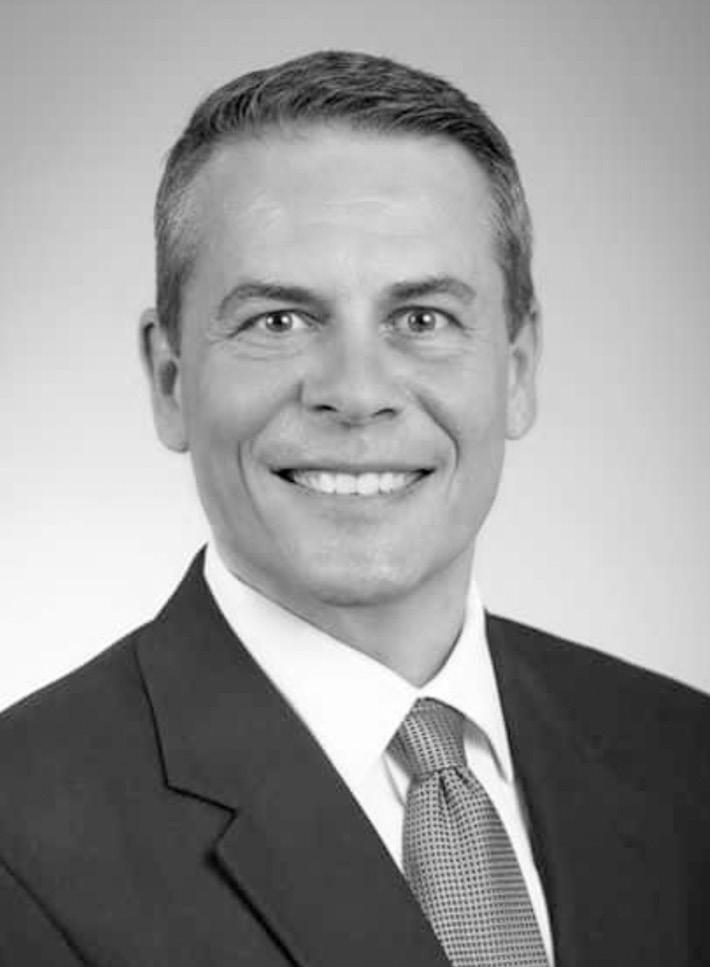
Joseph Williams will serve as the new leader of CNB Community Bancorp, which has several locations in south central Michigan and is headquartered in Hillsdale. Williams will begin his duties in early October.
amid
the space race between the United States and the Soviet Union. A manufacturer in Litchfield offered to donate the equipment to Hillsdale and feature it in their catalog they sent to other cities.
“I’ve been very disappointed throughout the years that we’ve removed a lot of that equipment because I think that is as big a part of Hillsdale’s history,” Stockford said. “We have put such an emphasis on trying to safeguard our history, and I think that Waterworks and
“Several business owners who have wanted this for several years have gone out, at their own expense, and hired a professional designer to design the golf course,” said Alan Beeker, the city’s zoning administrator.OwenMemorial Park already has a heavily used nine-hole course, Beeker said. A professional disc golf league told the city that it would be willing to host professional tournaments in the park after constructing the new couldpiecesBeekercourse.saidseveraloftheequipmentremainifproper, safe areas are created around them while removing some equipment.Thecitycouncil voted 6-1 to approve the park renovation plan, with Stockford in opposition.
Finally, Lance Lashaway resigned from the Tax Increment and Financing Authority, and the council filled the vacancy with Hillsdale Pub and Grub owner Kevin Conant.
Williams has 40 years of banking experience and currently serves on the CNB board of directors. He said his goals include focusing on individual client experience, increasing inengagement,shareholderandinvestingtheprofessionalgrowth of current CNB associates.
“When we do all of these things, everyone wins:
“Weshareholders,”clients,communities,associates,andhesaid.wanteveryoneto see our values come to life, no matter what office or what market you are in.”
Williams said he looks forward to bringing his experience in community
service and leadership experience to the banking company.“Iamexcited to join CNB full time. They understand community banking and I am looking forward to serving alongside a great executive team,” he said in a statement. “Our focus will be community impact, employee development, client experience, and shareholder return. I am honored and humbled to be part of a great team and build upon the tremendous foundation that has been developed over the last 88 years.”
The chairman of the company and bank’s board, Craig Connor, said he and the board of directors are excited to welcome Williams to his new leadership role.
“Our entire board of directors is so very pleased with the selection of Joe as our new president and CEO. He is a talented, experienced hehowalways,whatsaid,won'ttoMayaagenda.becustomerlittleshareholdersemployees,stakeholders:“Thesaidthebuilding,ofbankerknowledgeableandcommunitywithatrackrecordstrongleadership,teamandservicetocommunity,”Connorinastatement.futureforallourcustomers,communitiesandjustbecameabrighter.”Williamssaidprioritizingrelationshipswillattheforefrontofhis“MyfavoritequotebyAngelouthatIhopeliveoutatCNBis,‘Peoplerememberwhatyoupeoplewon'trememberyoudid,butpeoplewillalwaysrememberyoumadethemfeel,’”said.
Crash injures driver, 5 children
By Logan Washburn City News Editor
A crash injured a driver and five children near the Camden-Frontier Elementary School on Sept. 20. Bradley James Lemley, 25, was driving a Cadillac Escalade with five children inside when he collided with a Republic Waste Services garbage truck on W. Montgomery Road, according
to a Hillsdale County Sheriff’s Office press release. Ryan Jeffrey Harris, the 42-yearold garbage truck driver, had stopped on the side of the road to pick up trash.
HCSO deputies responded to the scene just after 7:45 a.m., according to the press release. At the same time, the Reading Emergency Unit sent three ambulances to the crash, according to the REU. The Wright-
Waldron Fire Department and Montgomery Fire Department assisted with the response.TheREU and MFD brought Lemley and the five children to Hillsdale Hospital for treatment, according to the press release. The sheriff’s office is still investigating the crash.The sheriff’s office could not be reached for comment in time for publication.
Mayor Adam Stockford wins Saturday Night Slam
By Colman Rowan Collegian Freelancer
also faced off, and one team nearly left the arena before throwing trash cans at each
other.Stockford
and Dukes fought as a tag team against two wrestlers, who played proud Russians.

The crowd booed as Stockford’s opponents came out waving a Russian flag. The adversaries
insulted the town of Hillsdale, then Stockford and Dukes entered the ring accompanied by Rick Derringer’s song, “Real American.”Stockford defeated his opponents, who embarked on a bout of illegal tricks while the referees were distracted. After Stockford won, teenagers in the crowd chanted “Rocky IV,” referencing the movie in which American fighter Rocky Balboa defeats his Russian opponent.
“I’m an athlete, a former boxer, former highschool wrestler as well, so it was really great at 42 years of age to be able to get back into a ring,” Stockford said. The crowd seemed thrilled to see the fights, and carefully followed along
with each
employer.”antreatknowhardofStockfordupcomingconfidentNovember.forsensecostumes,fullHamiltonunexpectedlystudentssaidfreshmanHillsdalematch.CollegePatrickHamiltonbothlocalsandenjoyedtheevent.“Thefightwasthrilling,”said.“Itwasofamazingactsandandjustarealofpatriotism.”Stockfordisrunningasecondtermthis“I’mfeelingveryabouttheelection,”said.“ThepeopleHillsdaleknowhowI’veworked.TheyI’mavailable,andI'llthemwiththerespectemployeeisduehis
City council approves road work, new street sweeper, new park equipment
“We have put such an emphasisimportantontryingtosafeguardourhistory.”
Mayor
Mayor Stockford and his fighting partner won their match. Courtesy | Adam Stockford
“It was full of amazing acts and costumes, and just a real sense patriotism.”of
“Proposal 3 will make Michigan the capitalabortionoftheMidwest.”
Williams said he encourages customer relationships.
Courtesy | Joseph Williams
www.hillsdalecollegian.com
Adam Stockford and his fighting partner Desmond Dukes faced off against two wrestlers on Saturday cop.aring,“micro”wrestledawrestledthecharacters.matchesshow17.CountyNightWrestlingChampionshipStockfordnight.joinedInternationalfora“SaturdaySlam”attheHillsdaleFairgroundsSept.CIWputonaone-hourthatfeaturedwrestlingbetweenuniqueAmanfrom“HeartofAmerica”aCalifornian,andgoose-themedcharacter“BaronVoodoo.”AfightertooktotheonlytobearrestedbywrestlerplayingacorruptTeamsofwrestlers
A6 September 22, 2022
State education department promotes gender ideology
By Elizabeth Troutman News Editor
The Michigan Department of Education is promoting gender “fluidity” and transgenderism without parental consent starting in elementary school, according to a new report from Chris Rufo, who was the college’s Eugene C. Pulliam Distinguished Visiting Fellow lastInspring.aCity Journal article published Sept. 14, Rufo exposed a series of training videos and documents from the MDE in which presenters claim the idea of binary gender oppresses minorities, and encourage educators to teach “intersectionality” to “dismantle systems of oppression.”Rufotaught a one-credit “Journalism, Activism, and Power” course at Hillsdale in spring 2022. He is best known for his investigative journalism on critical race theory and gender theory in schools and corporations.
Rufo is a contributing editor for City Journal and a senior fellow at the Manhattan Institute, a free-market think tank.The teacher training videos say the first step in dismantling oppressive systems is to disrupt the

gender binary. Trainer Armorie Robinson in one presentation says “we’ve been conditioned and we’ve been acculturated in this particular culture that gender is binary” and instructs teachers that gender is a spectrum, including identities such as “gender non-binary,” “gender fluid,” “gender queer,”
anddemiromantic,questioning,gay,“asexual,wideorientationgender.”non-conforming,”“genderand“bi-Robinsonsayssexualhasasimilarlyrange,includinglesbian,straight,bisexual,queer,demisexual,aromantic,skoliosexual.”Next,
Local lawyer, county GOP leader arrested on Florida warrant
By Tess Owen Assistant Editor
The Hillsdale County Sheriff’s Office arrested local attorney and Republican official Daren Wiseley on Sept. 8 on a warrant from Osceola County, Florida.
The Ninth Judicial Circuit Court of Osceola County issued a warrant on Wiseley for failure to face arraignment on charges of assaulting a firefighter. Court records show Wiseley sought a waiver for his initial arraignment and entered a not guilty plea Sept. 5, and a judge recalled the warrant Sept. 8.
Wiseley said he thinks the incident has been exaggerated.
“It was totally unnecessary, and a political hack job,” Wiseley said. “The recent coverage has been a blatant character assination attempt.”
Wiseley was first arrested on Aug. 7 in Kissimmee, Florida, for allegedly assaulting an on-duty firefighter, according to an Osceola County police report.
The firefighter was responding to a 1:30 a.m. call for Wiseley’s friend, who appeared to be sick.
“While he was on the scene assisting the patient, a friend of the patient, later identified by his Michigan’s Drivers License as Daren Wiseley… ran towards the truck [sic] and entered,” the report reads.
According to the police report, Wiseley attempted to enter the truck a second time, and assaulted a firefighter who tried to prevent Wiseley from doingWiseley,so. who serves
as chairman of Hillsdale County’s contested Republican “America First” party, declined to discuss the details of either arrest.
“It is an ongoing criminal case,” Wiseley said. “I have nothing to hide, and I am fighting the case and the false allegations.”Wiseley’s arraignment was scheduled for Sept. 6, according to the Osceola County Circuit Court, but Wiseley filed a waiver to not appear at the arraignment and a plea of not guilty on Sept. 5. A warrant for his arrest was issued on Sept. 6, even though court records show Wiseley had filed the necessary paperwork.“Thisissomething a 10-minute phone call could have fixed. If they had just treated me with courtesy and as a human, I could have made the necessary phone calls to clear this up,” Wiseley said. “Is it really necessary to send four police officers to my house? I’m not a flight risk.”
HCRP “America First” Parliamentarian Jon-Paul Rutan said he believes the Sept. 8 arrest was a poor use of the sheriff’s authority.
“Why have the taxpayers use up all our resources for an unnecessary arrest warrant?” RutanAccordingsaid. to the Osceola County Circuit Court, the case is ongoing, and Wiseley is scheduled to face a pretrial on Oct. 27 and a jury trial on Nov. 7 in Florida.
The Hillsdale County Sheriff’s Office could not be reached for comment in time for publication.
Dawn Theater to host Celtic concert Friday
By Evalyn Homoelle Assistant Editor
The Dawn Theater will host a Celtic concert on Friday, featuring Scottish folk singers Jim and Susie Malcom.Theconcert begins at 7:30 p.m. and tickets can be purchased for $15 in advance or for $20 at the door. Student tickets can be purchased at a special rate of $10.Mary Wolfram, a member of the Dawn Theater governance board, said she hopes Hillsdale College students will take advantage of this exciting event.
Jack Coker ‘21, operations manager for the Dawn Theater, said the concert also functions as a fundraiser to continue preservation of the historic theater.
“This event will be used to help raise funds for the continued preservation of this historic theater,” he said.
“It’s a really cool space and we’re excited to provide fun entertainment for the people in town.”
Robinson and Kim PhillipsKnope, both of whom work for the MDE’s LGBTQ training group, share TikTok videos of adolescents exploring their sexual identities.“Arational observer might suspect that these youths are in a state of confusion or distress,” Rufo wrote in his City Journal piece, “but rather than explore this line of reasoning, the education department trainers promote a policy of immediate and unconditional affirmation.”
Both criticizedopponent,WhitmerMichiganDemocraticGov.GretchenandherRepublicanTudorDixon,theMDEfor
the videos. On Sept. 16, Whitmer's administration called the department to make changes to “continue bringing parents' perspectives into the work you do.” Dixon called Rufo’s article “astonishing.”“DoesGretchen Whitmer agree with me? Will she condemn this radical and dangerous nonsense? She owes parents an answer,” Dixon said on Sept. 15. Dixon even called for the resignation of Michael Rice, the Michigan superintendent, following Rufo’s report.
The MDE is pushing an ideology that affects a variety of school policies, such as whether teachers can refer to
students as “boys and girls,” according to Rufo.
Rufo’s article found that state education officials also used the videos to encourage teachers to help children transition between genders without telling their parents. The trainers told teachers to keep a student’s new name, pronouns, and sexual identity secret, even if the student is experiencing suicidal thoughts. Rufo called this “pure“Theradicalism.”presenters know that parents would reject their theories in any open discussion, so they go to great lengths to conceal their efforts from the public,” Rufo wrote. “They have chosen
The MDE issued a news release responding to Rufo’s article, calling his allegations “patently false and deliberately divisive.” School staff do not facilitate the sexual transition of children and more than a thousand school staff members seek training to learn how the best respond to LGBT students, according to the press release.

“Our local educators and support staff care deeply about their students and seek to better understand how to reach students and help them feel accepted, safe, and cared for,” State Superintendent Michael Rice said. “Children deserve safe and inclusive environments to minimize their fears and anxieties and to focus on schoolwork, grow academically, and achieve success.”Rufo’s Chief of Staff Armen Tooloee told The Collegian the MDE is attempting to cover its tracks.
to create a secret genderradicalism pipeline that uses state resources to push a destructive ideology onto public-school children.”
“The department instructs teachers to facilitate child gender transitions without the consent of parents, even if the child is suicidal,” Tooloee said. “The MDE is using euphemisms like ‘inclusion’ to hide the true nature of their training program.”
Watkins challenges Rep. Fink, hopes to represent Hillsdale in state House
By Christina Grattan Collegian Freelancer
Andrew Watkins, a Democrat running to represent Michigan’s 35th District in the state House of Representatives, hopes to beat the odds and make a difference in the Hillsdale community.“Ijustneed to give the Democrats a voice,” Watkins said. “There are lots of them around. They just haven’t been comfortable coming out.”Watkins will face Republican incumbent state Rep. Andrew Fink in the November election.
The 35th District is heavily Republican. Two years ago, Fink won more than 71% of the vote against Democrat Tamara Barnes.
“I’m doing a grassroots campaign,” Watkins said. “It’s a little tough right now because I’m just relying on supporters to help. But I think once you get into the money side of things, you can change your whole perspective.”Watkinslacks previous political experience, but he said his father, brother, and sister were involved in local government. He grew up in Hillsdale, where he attended local schools before joining the Army as a petroleum supply WatkinsWhilespecialist.intheArmy,wasdeployed to Iraq
and Afghanistan, which he said prepared him for a life in politics“There are lots of politics in the military,” Watkins said. “Some of it’s good, and some of it’s bad. But it helps you because you get more diversity, especially compared to where I grew up in Hillsdale. You get introduced to other cultures and ethnicities and start learning that the world is big.”
After serving for seven years, Watkins settled back in Hillsdale and took a job in manufacturing.“Ihadopportunities to go to plenty of other places, but coming back to your roots is what everybody wants to do,” Watkins said. “It’s great.”
If elected, Watkins said he hopes to tackle the issue of housing in Hillsdale. According to Rocket Homes, local property values have increased by almost 25% since August 2021. By distributing state grants to renters,
Watkins said he hopes to lower housing costs so locals can afford to live, work, and support a family.
“Say somebody owns a second home and wants to rent it out, but they need to renovate it,” Watkins said. “They could possibly get a grant from the state to help them do that. Then when they rent it, it will adjust that rent closer to the median income.”
Watkins also aspires to overcome polarization in the nation and county by uniting the two fractured sides.
He believes in “people over politics,” according to his Facebook page.
The Hillsdale County Republican Party remains fractured and may fight each other in court. In August, HCRP’s “America First” executive committee accused delegates of being “Trochky [sic] International Socialists,” and prevented them from attending the local convention.Withthe current HCRP schism, Watkins said he hopes Democrats can serve as an example of leadership, cooperation, and bipartisanship.“Everybody should just come together and listen,” Watkins said. “Yes, we are going to have differences, but our common goal is going to be the same, which is life, liberty, and the pursuit of happiness.”Ratherthan advocating
wealth Watkinsredistribution,saidhetakes a more moderate approach by embracing equality of opportunity.“I’mnotnot going to say everybody has to pay for everything for everybody,” Watkins said. “It’s more in the middle. Whether you have $5 or $1 million, you should still be able to have the same
followingthemselvesindividualsopportunity.”Watkinsencouragedtothinkforinsteadofthedominant
party orientation of their family or “fake“Innews.”thisarea, whether conservative or Democrats, a lot of people feel stuck,” Watkins said. “They are diehard. Either, ‘This is how my family was,’ or ‘I will live this way,’ because they are so dead set on that way. With that being the status quo, they don’t want to stir the pot.”
Fink, Watkin’s opponent, is a Hillsdale College alumnus running on a conservative platform. According to Fink's campaign website, he is pro-life, and supports law enforcement, election integrity, the weupcomingcomemandates.taxes,Amendment,SecondloweringandendingvaccineWatkinsurgedvoterstotogetheraheadoftheelection.“Unitedwestand,dividedfall,”hesaid.
Lakewater Correctional Facility guards find drugs, contraband on garbage truck
By Kamden Mulder Collegian Reporter
Lakeland Correctional Facility officers found drugs on the side of a garbage truck outside the facility on Aug. 26.
Officers found drugs and other contraband on the side of a Waste Management truck at the Lakeland County Correctional facility, according to Chris Gautz, public information officer for the Michigan Department of Corrections.Afterofficers discovered the drugs and contraband, they contacted the Michigan State Police, Gautz said. The MSP is currently investigating the incident.Gautz said officers inspected the truck upon arrival at the facility, noticed the contraband, and removed
it. After the removal, officers parked the truck in its usual spot and waited to see if any of the prisoners would approach it. One prisoner did approach the vehicle, and started searching for contraband that the officers had removed.
Officers took the suspect into custody, but believe this individual is not behind the operation.“Wejust waited and watched until we saw a prisoner go towards it and start crawling underneath it looking for the package,” Gautz said. “We then apprehended that prisoner and contacted the Michigan State Police and began our investigation.”
The August incident is similar to another case in January, when another incident“Theseoccurred.aretwopretty
egregious examples where they were able to secure pretty large packages onto these trash compactors, which allows a lot of things to come in,” Gautz said.Officers apprehended suspects after both incidents.
Mia Jankowiak, Waste Management area communications manager, said the company is monitoring the situation.“WMis aware of this incident and is supporting the Michigan State Police in their investigation,” Jankowiak said.
In an interview with WTVB, Gautz said the Lakeland Correctional Facility does not intend to replace Waste Management as their provider.“Inboth cases, we believe that that individual was just hired by another prisoner to
retrieve the material and didn't even really know what it was. They were just told, ‘Hey, go over here at this time and you know, pick up something and then bring it back to me,’” Gautz
Thesaid.prison is a level-two facility with a double fence, electronic detection systems, and razor wire, according to Michigan.gov. Gautz said the prison is combatting contraband and drugs daily.
The MSP and corrections officers are attempting to determine where these trucks were and who contacted them prior to their arrival at the facility, according to Gautz.
“There's a lot of money to be made from criminals taking part in this,” Gautz said.
“We’ve genderthisacculturated,beeninparticularculture,thatisbinary.”
Watkins said he hopes to bring unity to local politics. Christina Grattan | Collegian
“Jim and Susie sing traditional Celtic music, and I know many of the college students would enjoy this concert,” she said.
Kim Phillips-Knope worked with MDE to provide teacher trainings on gender ideology. Courtesy | Twitter
www.hillsdalecollegian.com City News
September 22, 2022 A7
Golf team splits for Findlay and Gaylord, finishes 9th and 6th
By Thomas McKenna Collegian FreelanCer
Head coach Matt Thomp son said the men’s golf team needs to stay patient after two frustrating performanc es this week.
“I think sometimes we might get a little bit too result-focused, rather than just taking it one step at a time and doing the best we can and making sound deci sions,” Thompson said.
The A team traveled to Findlay, Ohio, to compete in the Doc Spragg Memorial Invitational, tying for ninth place out of 17 teams in the tournament. The Chargers shot a combined 875, fin ishing 11 over par and tying their best score at the event. Thompson said the team was let down by its performance.
“We’re a little disappoint ed after yesterday,” Thomp son said. “I felt like we had a good opportunity to put our selves in a good position and in our region. There’s a lot of golf left. By no means can we not continue to put ourselves in a good Hillsdale’sposition.”Bteam compet ed in Gaylord, Michigan, at the Lawrence Tech Blue Dev ils Classic, finishing sixth out of seven at the tourna ment. The tournament was a
shorter 36-hole invitational, where the Chargers finished 32 over par for a combined score of 592. It was sopho more Peyton Houston’s first tournament in a Charger uniform after transferring from Wright State over the summer.“Wecame into the tour nament with some pretty high expectations,” Houston said. “We thought we had a good opportunity to win. We didn’t play as well as we wanted to, but it was a good experience playing my first tournament in a Charger uniform.”Thecompetition of a Beam is unusual for the Chargers. The players will normally compete against each other individually on the preceding Friday and Saturday to determine who will be in the lineup at the tournament the next week.

Sophomore Filippo Reale said he was glad all ten of the players were able to compete this“We’reweek.all grateful to the coaches that we got to have two tournaments at the same time,” Reale said. “It meant everyone got to play, and everyone always wants to play. Going forward we’re all gonna be trying to get onto the Aeam, but it was good to
get the Seniorpractice.”GerryJones, Jr. said each player has a chance of being in the lineup each week.“This is probably the most competitive I’ve seen the entire team,” Jones said. “All ten guys have a very good chance of qualifying for the top five for a tournament. If I have to sit out a week be cause one of my teammates is just playing really well, I'm all for that because I know in the long run for the team that's going to help the team win.”Senior MonaghanDarraghperformed best out of all the Chargers, shooting a 69 in his second round and taking 18th place in the Findlay tournament.
Junior Will Veduzco put up a 70 in his final round for a combined score of 217, finishing 25th in the same tournament.Afterabreak next week end, the team will head to Tiffin, Ohio, for the Kyle Ryman Invitational Oct. 3-4.
Senior Carson Stohler said the team is looking forward to the rest of the fall season.
“All of us are really going to try and contribute to finishing these last three tournaments strong,” Reale said.
Sports Opinion
By Paul Moreno ProFeSSor oF HiStory
Aaron Judge stands as the 6’ 7” face of the Yankee franchise and he’s threatening his prede cessor, Babe Ruth’s, legacy.
Judge was unanimously chosen Rookie of the Year in 2017, and should have been the MVP as well. He deserves that award again for this season, in which he might win the Triple Crown, among the rarest of baseball achievements.
And, before you dismiss this as Yankee-fan propaganda, rest assured that nobody has ever disputed that my love of historical truth exceeds my love of the Yankees.
Cycling
Furthermore, before you dismiss baseball as trivial, remember this bon mot of Jacques Barzun, among the greatest historians of the last century. “Whoever wants to know the heart and mind of America had better learn base ball, the rules, and reality of the game.” After the Constitution, and perhaps jazz, baseball has been America’s greatest contri bution to human civilization.
Yankee Aaron Judge is on pace to set a single-season home-run record. But what is theBaberecord?Ruth revolutionized the game in 1920 when he hit 54 home runs in his debut season with the Yankees.
Fifty-four was more than most teams hit that year. Ruth had been principally a pitcher for the Red Sox; the Yankees turned him into a full-time outfielder. It was almost double his 1919 total of 29, which was itself a record, with only one player having hit more than 20 since the modern major leagues were formed in 1901. Ruth hit 59 the next year, and 60 in Historians1927. still dispute the cause of the baseball revolution of the 1920s — a livelier ball, the prohibition of spitballs and other trick pitches, or a change in hitting style. It arguably helped save the game from the 1919 “Blacksox” scandal, the
revelation that players on the Chicago White Sox had been bribed to throw the World Series. It turned Ruth into a national icon and cemented baseball’s status as the Ameri canInpastime.proper historical perspec tive, Ruth’s 60 home-run season remains the MLB record. Ruth did it in a 154-game season. When Roger Maris appeared to break it in 1961, he did so in the first 162-game season (the number that remains today). Maris had 58 home runs at the 154-game mark. He had 50 more at-bats than Ruth (or, if you prefer, seven more “plate appearances.” Walks don’t count as at-bats, and Ruth drew
a lot more walks than Maris did).Even more significantly, the 1961 season was extended be cause it was the first year of “ex pansion.” MLB had eight teams in each league since 1901. In 1961 the American League added two teams. This signifi cantly diluted the quality of the players — sabermetricians call this “talent decompression.”
Maris benefited from facing a lot of inferior-quality pitchers. Baseball Commissioner Ford Frick thus imposed the first “asterisk” in MLB history.
It goes without saying that we need not consider the Na tional League records claimed by Mark McGwire (70), Sam
my Sosa (63, 64, and 66), and Barry Bonds (73). They were all steroid-induced, corked-bat ted, and who knows what else.
So the question is: can Judge hit his 61st home run within the 154-game frame? If he hasn't done it by the time you are reading this, the odds are that he will do it at home against the Red Sox. And that would be... justice. Babe Ruth's home run record be broken?
Ironically, the real (162-game) National League record belongs to the Yankees’ Giancarlo Stanton, whose recent walkoff grand slam shows that he can hit his way out of a wet paper bag. The classic, 154-game record belongs to the amiable Cub, Hack Wilson.
Hillsdale's unknown National Champion
By Christopher Chavey Collegian FreelanCer
National Champion is a title that many strive for, yet very few people hold. The amount of hard work and determina tion it takes to achieve such a purpose deters many from even attempting. Yet, here on Hillsdale campus, freshman Matthew Redfield can claim that title in cycling.
Redfield was born in Troy, Michigan, where he grew up cycling with his dad. Cycling, unbeknownst to many, has three different major disci plines: mountain biking, road biking, and track. Redfield competed in all three, but his best event became track. The track event entails racing a cer tain distance around a track, very similar to running.
As Redfield began to
Men's Tennis
specialize in track, his im provement steadily increased. He worked with his trainer and began to separate himself from his competition. During his junior year of high school, he raced in the Cycling Junior Nationals with his club team.

In the four-person team pur suit of 4 kilometers, his team placed second with a time of 4:56, six seconds behind first place.After this unsatisfactory re sult in Nationals, Redfield and his teammates decided that something needed to change.
“Next year, we are going to win,” Redfield said to his teammates. They made a plan and worked with each other hours upon hours in order to perfectly execute it so that the next year would be different. In the summer of 2022 following his senior year, the
moment came for his team to settle what they had prom ised the year previous. They got to the track and when the time came, they performed perfectly, taking first place in Nationals with a time of 4:43.6.
Redfield also placed third in individual time trials with a time of 1:11 in one kilometer, just out of second place.
Matt had his heart set on Hillsdale, and his junior year he received a call from Dr. Doug Dobrozsi, the staff over seer and founder of the Endur ance Sport Club at Hillsdale. Dr. Dobrozsi asked Redfield if he would be interested in riding for Hillsdale, and the rest is history. Redfield rode in the Collegian Nationals right before entering his freshman year at Hillsdale, proudly rep resenting the Chargers.
“There’s a certain quality
that you learn to see,” Dobrozsi said. “I’ll just call it a desire to win.” During the last stretch of the race, when all the compet itors are tired, is when this de sire and intensity is on display, Dobrozsi said. Matthew has a special talent, yet he will not accept mediocrity, and works extremely hard at his sport.
“Every time I come back from tennis, he is on his bike in the room,” freshman Nik Wastcoat who is Redfield’s roommate said.
The Hillsdale Endurance Sport Club is always looking for more athletes with riding experience. If you have expe rience and are interested, you can contact the club president Gabe Dobrozsi at gdobrozsi@ hillsdale.edu.“Itisupto students like Redfield to keep up the tradi tion,” Dobrozsi said.
Chargers win big at ITA Midwest Regional
By Jillian Parks SoCial Media Manager
The Hillsdale men’s tennis team picked up at least one win from each of the six sin gle players and four double pairs over the course of three days at the ITA Midwest Regional in Indianapolis, Indiana this weekend.
The ITA Midwest Regional sent junior Brenna Cimpea nu to nationals last year for
the first time in Hillsdale Men’s Tennis history. The de fending champion made it to the A Singles Draw quarter finals this year, again repre senting the Chargers well.
“I believe this week’s per formance was very promis ing,” Cimpeanu said. “Every guy competed well and had a strong weekend. I’m looking forward to the spring season and seeing what we can ac complish together.”
Senior Tyler Conrad also made it to quarterfinals for the singles consolation bracket.“Iplayed very well in the two matches I won against quality opponents,” Conrad said. “It was very heartening to get those wins because we will see those schools again in the spring and there is a chance I’ll play against the same players.”
In the B Singles bracket,
junior Daniel Gilbert kept up with the streak and made it to quarterfinals. The B Sin gles draw saw both freshman Aidan Pack and junior Sean Barstow make it to the top 16. Freshman Nik Waistcoat reached the finals in the C Singles draw.
“I think that Daniel’s nine match-points-saved was a huge standout this week end,” Pack said. “The team's support for one another was
huge this past weekend. We all watched, and supported each other's matches when we were not on court play ing.”The Chargers also found success in the Doubles. Cim peanu and Barstow made it to the quarterfinals. In the B Doubles draw, senior Brian Hackman and Waistcoat also made it to “Travelingquarterfinals.isgoodfor the team which helps with team
bonding,” coach Keith Turner said. “It’s a good group that supported each other well.”
The Chargers will contin ue the fall season Sunday, Sept. 25 at 1 p.m. with a home match against Indiana
Tech.“The highlight of the weekend was the fact that our entire team had a good showing, which shows our depth,” Turner said.
Senior
Redfield
www.hillsdalecollegian.comSports Golf
A8 September 22, 2022
You be the Judge: Will
Drew Gandy at Doc Spragg Memorial Invitational. Courtesy | Hillsdale Athletic Department
in competition. Courtesy | Matthew Redfield
Football loses halftime lead, drops home game
By Christian Peck-Dimit assoCiate editoR
After taking a 13-point lead into halftime, the Hillsdale Chargers football team gave up 21 unanswered points to the Truman State Bulldogs, dropping its first out-of-conference game of theTheseason.Chargers were unable to recapture momentum after a difficult start to the second half, and now fall to 2-1 overall, though they re main undefeated in G-MAC play.The Bulldogs started the second half with a 17-play, 88-yard drive that took near ly 10 minutes off the clock. It ended with the team’s first score, and changed the dynamic of the game.
“They had that long drive, we had some chances to get off the field, but we kind of got tired a little bit,” head coach Keith Otterbein said. “I think our defense lost a little bit of focus, and we weren’t able to help with the offense by staying on the field, so a double whammy there.”Hillsdale had used a balanced attack to dominate the first half of play. They opened up the game’s scor ing with a 25-yard touch down strike from fifth-year senior quarterback Luke Keller to freshman wide receiver Sam Lee.
“He’s done a good job as a young kid picking up on what we’re trying to accom plish,” Otterbein said. “He’s talented and we’re excited to get him in the mix. He adds another weapon that doesn’t allow teams to focus on WithIsaac.”under eight minutes to go in the second quarter, sophomore defensive back Jackson Gillock stepped in front of Truman quarter
Softball
back Nolan Hair's pass and grabbed his first interception of the season, setting the Charger offense up with a shortThefield.Chargers worked their way down to the ten, where Keller found soph omore wide receiver Isaac TeSlaa who stretched out for the pylon and picked up his nation-leading sixth touch down of the season, putting the team up 13-0. TeSlaa finished with the game with 49 yards on five catches, keeping him near the top of the nation’s receiving yards leaderboard, tied for third with 395 yards.
“We want to spread the ball around, we don’t want to be predictable as an offense, but at the end of the day, Isaac’s a great player, he’s gonna make plays,” Keller said. “If teams double-cover him, it’s only going to work to our advantage, because that opens up the run game and opens up other receiv ers.”Hillsdale’s defense put together another stop before halftime, and went into the locker room pitching a shutout.“Obviously the first half was really good for us,” soph omore defensive lineman Riley Tolsma said. “That was a really good team, so the fact that we could have a half like that, it’s good.”
Tolmsa led the Chargers with a career-high 2.5 of the team’s four total sacks.
Truman, however, came out of halftime a different team, taxing the Chargers defense with a long touch down drive. By the time the Chargers first touched the ball in the second half, less than five minutes remained in the third. Hillsdale’s of fense went three-and-out, its only three offensive plays of the third quarter.

The Chargers’ defense had less than two minutes of game time to rest between drives. Truman’s offense took advantage, driving 46 yards in 7 plays to take a 14-13 lead. Another Truman touchdown off of a short field in the middle of the fourth effectively put the game away.
“A loss is frustrating, we want to go into every single game thinking that we’re going to win and we want to come out on top,” Keller said. “But at the end of that day, it’s not a conference opponent, so it’s not going to hinder our goal of winning a G-MAC Championship.”
After two weeks of out sourcing opponents in the second half — especially the fourth quarter — the team posted its first scoreless fourth of the season.
“Truman elevated their play in the second half and we’ve got to match that,” Otterbein said. “We’ve got to find that next gear. When somebody elevates their game like Truman did, we’ve got to be able to dig a little deeper and execute better in order to match a good team that knows how to win.”
The team will be on the road this week in Missou ri against the Missouri S&T Miners for ofreadyourfromjustthebringearly-seasonWesleyan.ofthetimes.eachstraightup.out-of-conferenceanothermatchItwillbethefirstoftworoadnightgames,with6p.m.kickoffTheMinersare1-2onseasonandcomingoffa6-11losstoKentucky“Wedon’twanttoletanlossdefeatusorusdownfortherestofseason,”Kellersaid.“Wewanttolearnandgrowitandusethattoboostconfidenceandgetustokeepgoingtheresttheseason.”
Chargers open season with DI win
By Olivia Pero assistant editoR
The Hillsdale softball team hosted the Grand Val ley Lakers and the Oakland Grizzlies on Sunday, beating the Division I Grizzlies.
The team lost the first game to Grand Valley 4-0 but beat Oakland in the sec ond game 9-6. Grand Valley is a top Division II team in the NCAA Midwest region and Oakland is a Division I team.“Facing them early on in the fall gives us some things to work on,” head coach Kyle
FootballSportsOpinion
Gross said. “Overall, we did well.”According to Gross, the pitching staff was solid, although the team faced tougher pitching in the first game than in the second game.Junior pitcher and team captain Erin Kapteyn had a strong outing. She started the game against Grand Val ley where she pitched four innings, not giving up any runs, Gross said.
“I thought that I start ed the season pretty well,” Kapteyn said. “It seemed like I picked up right where I left
off last season. Grand Valley had a very strong lineup with a lot of good hitters. I think I matched their per formance and our defense really stepped up against all of those hits they had.”
Kapteyn posted a 12-2 record in the spring and a mark of 7-0 in G-MAC play.
In the second game, the team had many big hits, scoring nine runs against Oakland, Gross said. Fresh man Maggie Olaveson had a crucial double play in the fifth“Oaklandinning. had runners on first and second, Maggie
caught a line drive and dou bled off the person on first base,” Gross said. “That was an exciting school,theintegratedmygetlotfirst“ObviouslyprettyfirstnervesherAccordingmoment.”toOlaveson,goalwastoletgoofheranddoherbestthisweekend.“IwouldsayIplayedwell,”Olavesonsaid.sinceitwastheweekendtherewereaofnerves.Iwashopingtothemalloutandjustdobest.”ThefreshmenarebeingverywellwithteamaswellaswiththeKapteynsaid.
“It definitely is an ad justment being in the new environment, but the girls have made the transition so much easier,” Olaveson said. “Joining this group of girls has been different from oth er teams that I have played with because they essentially are the people I spend all my time
Grosswith.”said he is seeing really good things this fall from practice and these two games.“We still have six more games to play in the fall,” he said. “I'm looking to see them improve from now
until we play Michigan State at Michigan State. That's a big step up for us and we're going to work to improve from this first weekend all the way to that last fall game. As a Division II school we’re excited to play a power five conference school in a pre season game.”
On Saturday Oct. 1, the team will play a double header at the University of Northwestern Ohio. They will play the Concordia Cardinals and the Lansing Community College Stars on Sunday Oct. 2 at Concordia University.
MLB's new rules: two steps forward, one step back
By Thomas McKenna Collegian RepoRteR
America’s pastime is in trouble. Games are stretch ing longer and the bursts of action seem farther and fewer between. Last week, Major League Baseball took two steps forward and one step back in an attempt to stem its decline.Lastweek, the MLB announced three main rule changes for next season— each of which have been tested in the minor leagues in recent years. Their first move: expand the bases from 15 inches square to 18 inches. Second, institute a pitch clock to speed up the game. Finally, ban fielders from shifting out of position to better defend against a pull hitter — a player who tends to hit the ball to the same side of the field they bat from.Two cheers, but not three, for the new changes to base ball.
One cheer for bigger bases expanded for safety and increased action. Players now have an extra 3 inches square to avoid collisions, especially at first base. A bunt down the first base line has often set up dangerous plays for the first baseman and the fielder. The extra leeway should give of fensive and defensive players more room to maneuver on those tight plays.
But bigger bases will also invite more action. Baseball is a game of inches, and with first and second base 4.5 inch es closer to each other, stolen bases are expected to mar ginally increase. With larger bases in the minors this sea son, steal attempts per game increased by 27% compared to 2019. The success rate also in creased from 68% to 77%. In the majors, players stole 1000 fewer bases last year than they did ten years ago, a 33% decline. In a game that could use some more exciting, bangbang plays, I’d love to hear the
broadcaster say “runner goes” 27% more often.
The basepaths will be shorter, and so will the games. The average length of a nine-inning game reached a record three hours and ten minutes last year. Yeah, no bueno. New MLB rules will require pitchers to begin their motion only 15 seconds after stepping on the pitching rubber when runners aren’t on base, and 20 seconds with baserunners. The batter is on a timer too: he needs to be “alert to the pitcher” after only 8 seconds.It’sworked so far. With the pitch clock ticking every atbat, the average minor league game lasted only two hours and 38 minutes, a decrease of a whopping 26 minutes compared to the year before. Could we start seeing a large chunk of games under 2.5 hours next season? Let’s hope.
Yet the new changes aren’t all rainbows and unicorns. MLB’s final change, banning
the shift, runs directly against the nature of the game. Under current rules, all fielders — except the catcher — may position themselves anywhere in fair territory. A smart defense will shift almost all of their fielders to one side of the field if a pull hitter comes to the plate. Joey Gallo is a prime example: he pulls or hits up the middle almost 90% of the time.In the words of Yankees broadcaster Michael Kay, the MLB has decided to “legis late against smart.” All four infielders will be required to have both feet on the infield dirt, and two must be on each side of second base. No shifts, no
alike can wonder about and strategize for the next play. Is this a sacrifice fly oppor tunity? What about a bunt in this scenario? Will the batter pull the ball? Do you shift the infield, then? The soul of the sport is not material, but mental.Theslow death of that mental, strategic element of baseball will gradually suck the soul out of the sport. You are soon left with an insip id spectacle of thwacks and thumps, like watching The Office just for the slapstick humor – you miss most of the show.MLB has decided to suffocate the strategic side of the game in order to bail out hitters who can’t slap the ball oppo. Here’s a timeless piece of advice to the pull hitters: learn to hit it where they ain’t.
One other change that seeks to speed up the pace of play should quickly be men tioned. Pitchers will be limited to three pickoff attempts per at
bat. If on the third, the pitcher is unsuccessful, the runner is given the next base. The rule may increase stolen bases, but it may also have little effect – few pitchers are frequently picking off three times in one at-bat. Fans should remain skeptical, for now.
If it hopes to remain popu lar, MLB will eventually have to fix its ultimate problem: the game is owned by strikeouts, walks, and home runs, also known as the “Three True Outcomes”. 1 in 3 at-bats last year ended in one of the TTOs.There’s no clear solution yet. Adjust the field? Maybe. Lower the mound? Sure. Keep the sticky stuff off pitchers’ hands? Absolutely. Everyone should be open to suggestions.
With all this being said, MLB is 2 for 3 this time around. A step in the right direction, yes. But let’s hope there are more to come.
Mike Herzog jumps would-be tackler. Anthony Lupi | Collegian
www.hillsdalecollegian.com Sports
mind,comespassively.fantoGallo’stoalmostfour-outfielder-formations,nopositionalstrategybetterdefendagainsttheofthegame.Shiftingaddsanelementbaseballthatcanexcitethewhowatchesactively,notThejoyofbaseballfromthetheaterofthewherefansandplayers
A9 September 22, 2022
C harger S port S
Volleyball
Chargers take six straight sets to finish road stretch
By Isaac Green Assist A nt editor
The Hillsdale volleyball team completed a fourmatch road stretch last weekend with two sweeps, improving to 11-2 overall and 4-0 in conference.
On Friday, Sept. 16 and Saturday Sept. 17 the Char gers competed in a pair of away matchups against the Malone University Pioneers and the Walsh University Cavaliers. They won both in three sets with final scores of 25-21, 25-13, 25-16 and 25-17, 25-19, encouraging.”wementworksomethingcompleteGravelwin,”was“Obviously25-22.thepositivethatwewereabletoheadcoachChrissaid.“Executingagameplanisstillthatweneedtoon,butwedidimplesomeofthethingsthatpracticedandthatwas
Sophomore Marilyn Popplewell, who recorded a match-high 13 kills against Malone on Friday, agreed with Gravel that consistency is an area of the team’s game which will require more work. However, she also noted her optimism about the improvement she has already begun to see.
“I think we have strug gled a little with consistency throughout an entire week end,” Popplewell said. “But, after this weekend I think we are coming out of that. We've done a good job of working really hard in prac tice to pick out each other's weaknesses and it's making us better when it comes to gameGraveltime.”noted last week that practices were going to be intense leading up to the Malone and Walsh match es as the team focused on remaining in peak physical
Sports Opinion

condition. According to se nior Linnea Larson, he made good on that statement.
“Our practices last week were challenging,” Larson said. “Especially in middle reps, our coaches have been pushing us to keep getting faster and build more trust with the setters. I think this really helped us last week end, as we established more of an offensive presence on theThecourt.”Charger’s offense certainly did show up strong in both outings as it record ed kill totals of 44 and 42 respectively and bested both opponents in service aces 6-0 and 8-3.
Now 13 matches into the season, Hillsdale has shown that even after losing many impact players from last year's lineup, depth will not be a problem. In fact, the current roster’s selection of talent has given Gravel
the opportunity to work creatively with the lineup between and sometimes even during matches.
“One of our strengths this season has been our depth and our ability to change different people with different matchups,” Gravel said. “The players are doing a nice job of adapting and doing the best they can in whatever lineup I throw out there.”Gravel continued, saying that he plans to keep this useful strategy available but will also ensure that he can use a consistent lineup when it is the better option.
“We have to be able to have one lineup that can be consistent through at least three sets,” Gravel said. “So that's what we're looking to do, to stay one step ahead of them with those changes by our choice, not because we have to make them.”
The Chargers now pre pare to bring the excitement of conference play back home in matches against the Kentucky Wesleyan Panthers and the Trevecca Nazarene Trojans. These matches will be played in Hillsdale on Friday, Sept. 23 and Satur day, Sept. 24.
In preparation Gravel noted that they will be mak ing some adjustments to the practice
“We'reschedule.shortening our practice times just a little bit, but we're also having individual groups come in throughout the day,” Grav el said. “We’ll be working specifically with people on things that they might not get too much focus on in the 18- or 19-person team aspect.”Inaddition to these adjustments, Gravel again noted that they will continue to work on conditioning.
“We'd like to be the best conditioned team at the end of the season,” Gravel said. “We start out the year every year and really focus on playing and getting together but during that time there's a lot of standing around. So, we're actually going to go back to conditioning a little bit harder this week.”
Holding onto a 75-match win streak in conference play, and with no hint of slowing down, Popplewell said she believes that the atmosphere surrounding the team is good right now.
“I think we're all excit ed as we dive deeper into conference play. A few of us have had some colds so trying to stay healthy is a big thing right now,” Popplewell said. “But we're all trying to keep pushing to make each other better every day.”
Which Detroit team will be the next to make it to the playoffs?
The Pistons
By Christian Peck-Dimit AssociAte editor
After more than a decade of horrible losses and pain fully bad seasons, nearly all of Detroit’s sports teams are, finally, on the upswing.
While teams like the Lions and Red Wings are full of young talent and potential, the Pistons are out-swinging all of them, and will be the next Detroit team to make theOverplayoffs.the past three years, the Pistons have collected a deep and versatile talent pool and have a front office set up to perfectly match the team’s timeline.Withthe NBA season less than a month away, hope for the future of the Pistons has reached a high not seen since the days of the Going to Work era, whose defense and balanced play brought the franchise an NBA Champi onship in 2004.

The team is led by rising second-year guard Cade Cunningham, who General Manager Troy Weaver took with the No.1 overall pick in last year’s draft. After just a year in the league, Cun ningham is already a bona fide all-star, whose versatile offensive attacks and scrappy defense allowed him to finish top three among the league’s rookies in nearly all statisti cal Nocategories.stat,however, can show the amount of heart the 20-year-old has for the team. After being drafted, Cunningham famously donned a pair of buffs, — a style of sunglasses significant to Detroit’s culture — point ed at the camera, and said “Detroit Pistons, I’m all the way in, let’s do it,” on nation al Everytelevision.second of every play
Bey was training so hard that the team told him to take a couple weeks away from basketball. He responded by spending those weeks in the mountains of Colorado, altitude training.
In his two years with the team, Stewart has already spent time standing over former Piston Blake Griffin — to a standing ovation from the Detroit crowd — and ran over nearly every member of the Pistons trying to pay back LeBron James for the elbow and fist that left Stewart face covered in a mosaic of blood.
Bey and Stewart could not more perfectly embody the blue-collar, get-your-handsdirty approach that has de fined the franchise’s culture for more than 30 years. Not only that, but they’ve also put up the stats to match. Stewart averaged nearly a double-double with more than a block a game, and Bey became the first Piston in nearly four years to drop 50 points in a game.
To top it all off, the addi tion of combo guard Jaden Ivey in this year’s draft spells trouble for teams in the East for years to come. Ivey is a lightning-quick walking bucket with underrated dis tribution skills that seem to
compliment Cunningham’s game
Moreperfectly.thanjust raw talent and individual passion, the fiscal side of the teamwhich has prevented so many great teams from becoming dynasties - is more than in order.Thanks to shrewd moves on Weaver’s part, the team has more than $6 million in cap space, a number that explodes to nearly $40 mil lion next season. This gives the team more than enough room to make a move for the team’s missing piece either next offseason or the one after.The team is set up perfect ly to mirror the trajectory of the Cleveland Cavaliers, who are now a force to be reckoned with in the East. The Cavs stayed patient, accumulating young talent and draft capital, until the opportunity presented itself, and they made a move for all-star Donovan Mitchell to help launch them to the next level.That opportunity, for the Pistons, is — at most— two years away, at which point the team will be poised to enter not just the play-in, but to claim a top six seed.
The Red wings
 By Alex Deimel c ollegi A n reporter
After finishing 7th in the Atlantic Division in 2016, the Detroit Red Wings end ed their streak of making the playoffs for 25 consecu tive years–a period during which they won three Stanley Cup champion ships–and began what has become a six-year playoff drought.Nowthe “Yzerplan” of Red Wings, legend and current General Manager Steve Yzerman, is about to take the NHL by storm. Fans are eager for the team to play its first game of the new season on Sept. 27 at 7 p.m.Detroit finished 6th in the Atlantic last year with a 32-40-10 record, total ing 74 points. This was a drastic improvement from the 48 total points they fin ished with in the prior sea son. This was not enough for Yzerman because he decided to not resign Head Coach Jeff Blashill in order to make Tampa Bay Light ning Assistant Coach Derek Lalonde his new head coach.After officially hir
ing Lalonde on June 30, Yzerman continued his tradition of drafting across the pond, selecting Austri an forward Marco Kasper with the 8th overall pick. Yzerman then made a trade for St. Louis Blues goalie Ville Husso, who finished the 2021-2022 season with a .919 save percentage.
Then came free agen cy. Yzerman brought Ann Arbor native Andrew Copp back home to Michigan with a 5 year deal. Copp finished with a career high of 53 points last season with the New York Rangers and the Winnipeg Jets. He will reunite with his former college teammate from the University of Michigan, Dylan Larkin.
In addition to Copp, the Red Wings signed forwards David Perron and Dominik Kubalik to 2 year deals, and brought in defensemen Ben Chiarot and former first round pick Olli Määttä.
Detroit fans will most likely see Larkin, Lucas Raymond, and Tyler Ber tuzzi as the starting forward line, just like last season. The three combined for 188 points total last season. Ray mond, who finished fourth in voting for the
Left wing Jakub Vrána, who missed most of last season due to a shoulder injury, is expected to play alongside Copp and Perron on the second line. Kubalik is expected to join for wards Pius Suter and Filip Zadina on the third line, while Adam Erne, Michael Rasmussen, and Oskar Sundqvist round out the bottom line.
On defense, the Red Wings will get to watch Calder Trophy winner Moritz Seider play in his second full season. Seider led all NHL defenseman with 43 assists and 50 total points last season, and was the first Red Wings player to win the Calder trophy since the 1960s.
Seider is joined by Chiarot and Määttä, as well as the Red Wings first pick in the 2021 draft, Simon Edvinsson. Filip Hronek and Gustav Lindström will round out the defense for the Red Wings this season. Sharing the net with Husso will be Alex Ned eljkovic, who started the majority of games for the Red Wings last season, and finished with a .901 save
percentage.Theveteran ability of Copp, Larkin, and Chiarot, combined with the youthful energy of Seider, Edvins son, Raymond, and possi bly Kasper, are exactly what Detroit fans were hoping for when Yzerman was announced as the team's General Manager in 2019. This year, I believe it is safe to say that we will see play off hockey in Hockeytown this season.
of his rook ie
Stewart.BeyplayersrisingHethanforbeenthesuperstarisboasted.thatlevelprovedcampaigntheofpassionthatmoveCunninghamtherisingthatfranchisehassearchingformoreadecade.isjoinedbythird-yearSaddiqandIsaiahThissummer,
Charger cheerleaders don ponchos to combat rain. Courtesy | s ummer Fields
A10 September 22, 2022
teenagers.trickscorehistoryRedplayersonlybeingYzermanandround2020RedwasTrophy,CaldertheWings'firstpick,joinedinthetwoinWingtoahatas
www.hillsdalecollegian.com
Culture
Greek welcome events unite all of campus
By Isaac Green Assistant Editor
Each year as the semes ter begins, the seven Hills dale Greek life chapters host events that welcome fresh faces and old friends to campus. Gatherings like the Sigma Chi Annual Welcome Bonfire, Kick off with Chi O, and Blue 42 give each house the chance to show off a dose of style and creativity that offers support to the Hillsdale culture.“Wereally want to make sure that we have a thriving campus com munity when it comes to events and things that are happening here,” Dean of Women Rebekah Dell said. “We want to give students a chance to meet one an
other and have healthy and engaging environments.”
Dell said these events serve as a reminder of what unites the various pockets of campus life.
Regardless of the different organizations students engage with, there is al ways something to hold in common.“OurGreek chapters aren’t looking for students to identify themselves with a sorority or fraternity above identifying them selves as Hillsdale Col lege students,” Dell said. “The reality is that being Greek should be an added enhancement and not a distraction from what it means to be a Hillsdale student.”President of Chi Ome ga Rho Gamma, Jaiden Frantz agreed, noting
that these events create a great opportunity to bring together both the Greek and independent Hillsdale communities.“Ifeellikeat times there can be a kind of divide between Greek life and independents,” Frantz said. “I think these events are really helpful with getting everyone together.”
In addition to bridging this gap, the gatherings unite members of the various Greek houses, according to the President of Kappa Kappa Gamma Kappa chapter, Meghan Dudzic“It’snot just indepen dents that will come to the all campus events,” Dudzic said. “Kappa will have a bunch of Chi Os and a bunch of Pi Phis and a bunch of Delts and so
people come who are part of different organizations to support.”Butbeyond simply providing a social space, welcome events help bring depth to even the most general campus acquain tances. Mercedes Bryan, president of Pi Beta Phi Michigan Alpha, said fall events present a wonder ful opportunity to be come more meaningfully acquainted with fellow students whom one might see around campus but not know much “Welcomeabout.events bring individuals greater ex posure to one another, allowing for personal and tangible connections with groups that everyone on a small campus assumes to know,” Bryan said. “These events take assumptions a
step further and put reality behind the people who make up our community with both Greek and inde pendents alike.”
Daniel Frandle, presi dent of Sigma Chi Alpha Kappa chapter, said that in bringing students together, Greek houses are able to find ways to bless a broad er range of communities as well. The Hillsdale Sigma Chi chapter uses some of its welcome events to sup port its national philan thropic efforts.
“Our national philan thropy is for the Hunts man Cancer Institute and so we raise money by hosting different events like Shave a Sig, where you can pay a couple bucks to cut off somebody’s hair,” Frandle said. “We do stuff like that to involve the
wider community and also promote a cause that we believeFundamentally,in.” the fall welcome events give Hillsdale’s Greek chapters a chance to do their part in the important work of bringing unity to campus life, Bryan said.
“Unlike other student organizations, Greek Life has a lot of its own infrastructure, systems, and traditions that can sometimes make it seem that each house is separate from one another and sep arate from campus,” Bryan said. “But these welcome events serve as excellent opportunities to remind the houses and campus that we all represent one community of Hillsdale.”
‘LEGEND’ has it
By Victoria Watson Collegian Reporter
Maker’s Market returns
By Elyse Apel Opinions Editor
Maker’s Market, an event for Hillsdale College artisans to sell their hand made goods, will be this Saturday, Sept. 24, from 10 a.m. to 1 p.m. in front of the chapel on the quad.

Around 25 students, faculty, and staff members will be running booths selling a wide range of items like jewelry, food,
hand-painted cards and more.Maddie Clark, director of student activities, said the market is a great way for the Hillsdale commu nity to support its peers.
“The student vendors are selling a wide range of handmade goods,” Clark said, “so head on over this Saturday!”Thisyear is the fourth time SAB will host the Maker’s Market.
Junior Kiri Forrester will be selling homemade goods crafted by her and her roommate at the mar ket this weekend.
“My roommate Jenny and I are going to have a table together,” Forrester said. “She is selling some of her embroidery and sachets, and I am selling homemade lip balm, sugar scrub, and a few crochet creations.”Forrester said the market is a nice way to
share her goods with the community and see what others are selling.
“I really enjoy crafty projects, but I never know what to do with all the things I make afterward,” Forrester said. “I’m really excited for the opportunity to share some of my little projects with others. A lot of people here have hidden talents that we would nev er know about without an opportunity to share them like this.”
Tower Players open season
By Gianna Dugan Collegian Freelancer
Starting next week, the Tower Players will perform “Translations,” by David Friel, a drama that docu ments the English coloni zation of Ireland.
Set in 1833, the plot re volves around British sol diers who, while surveying Ireland, anglicize the Gaelic town names. The play follows the tensions that“Weresult.find out as we explore the names of these places that there’s a whole story that goes along with
why this place was named that, and when you trans late it into English, it’s lost,” theatre department chairman James Brandon said.The loss of these stories causes great upheaval among the Irish people. The audience is taken through the emotional journey of the Irish peo ple’s oppression in a his torically accurate fashion.
Senior Brooklyn Little said the opportunity to put on a play with these themes is uncommon in Hillsdale.
“It’s a rare occasion the Tower Players are going to do a serious, realistic drama,” Little said.
The play poses philo sophical questions about communication, language, and culture, junior Niko leta Klikovac explained. It asks how man preserves culture while also learn ing to adapt. Despite not speaking the same language, one surveyor, an Englishman named Yolland, falls in love with an Irish peasant named Máire— which only exac erbates growing tensions. Their romance over the
course of the play proves the complexity of human connection.“Iwantpeople to leave the show understanding that there’s more to a con nection with somebody than the spoken word,” Klikovac said.
All shows will take place in Markel Audito rium, located in the Fine Arts Center. The show runs from Sept. 28 - Oct. 2, with a discussionfaculty-ledfollowing the performance on Sept. 29.
After I heard my fiance’s initially unenthusiastic re view of John Legend’s new album, I had low expec tations. Since then, I have listened to the album in its entirety several times, and I can say that it is one of my favorite albums of the year.Legend’s new double-al bum, titled “LEGEND,” is his first in more than two years. Since his summer 2020 release “Bigger Love,” he has only put out a few singles.After listening to “LEG END,” it’s easy to see what he’s been working on this wholeThetime.album contains 24 new tracks and comes in at almost an hour and a half long, making it his lon gest album to date. It also features 12 guest artists, including Saweetie, JID, and Ty Dolla $ign.
In traditional Legend fashion, the album is a mix of R&B and pop with a romantic flare, focusing on the intersections of love, sex, and relationships.
After listening to the album several times, it became clear the order of the album’s songs tells a story of deepening love. In the beginning, the songs discuss quick flame, purely sexual relationships, and can be pretty explicit at times. As the album goes on, lust transforms into a slow burn, long-term love, and Legend references his wife and their growing family.The three songs that stand out to me the most are “Dope (feat. JID),” “Splash (feat. Jhené Aiko & Ty Dolla $ign),” and “Wonder Woman.” They all use intense imagery such as lights, water, and superheroes to lead the listener to see the portrait he paints of the woman or relationship he is describ ing.Legend married Chrissy Teigen in 2013 and has since solidified her as his
muse. She’s the subject of his most romantic and popular songs, including “All of Me” and “Wild (feat. Gary Clark Jr.).”
After watching the music video for “Wonder Wom an,” it is obvious that he wrote this song about Tei gen, as she is featured in the video along with their twoHechildren.usesthe play on words, referencing both the DC Comics superhe ro Wonder Woman and saying “You make me wonder, woman / How do you do well?” He seems to be referencing her job as a mother to their two kids and her work as a model and television sayingyear.favoritebecomecloser,listenshouldLegend’safancupmightmyalbum,listenedWhilewholeweddingstheyloveshowbeautiful“AlltodeserveI“Iinthathefocusesthroughculture,itagedon’tAlthoughhisLegendThroughoutpersonality.hiswork,lovestofeaturewifeandtheirfamily.heandhiswifealignwiththeaverHillsdalestudentwhencomestopoliticsanditdoesn’tcomeinhismusic.Heonthelovethatandhiswifeshare,andisespeciallyapparentthelasttwosongs.Thelasttwotracks,Don’tLoveYouLikeUsedTo”and“Home,”aseatrightnexthismostpopularsong,ofMe.”They’retrulyworksofartthatthedepthoftheheandhiswifeshare;couldbeplayedatandbringtheaudiencetotears.they’renothismosttosongsonthistheyarecertainlyfavorite.Thistypeofmusicnotbeeveryone’softea,butifyou’reaofEdSheeranorarecasuallistenerofanyofothermusic,youexplorethisalbum.Aftermyrequeststotothetracksabit“LEGEND”hasalsooneofmyfiance’sreleasesoftheOrmaybehe’sjustthat.
Seniors Hannah Douthitt, Meera Baldwin, and Mat thias Rhein enjoy all-campus Greek events.
Courtesy | Chi Omega Sorority
Emma Turner sells her handmade jewlery at Makers Market last year. Courtesy | SAB
www.hillsdalecollegian.com September 22, 2022 B1
Health is the GOAL
By Sydney Green Collegian Freelancer
Not surprisingly, aca demics at Hillsdale College are the top priority for the majority of students. However, time outside of the classroom setting is vital, and volunteering is a wonderful outlet for those looking to put down their books.
Community Health holds a unique mixture of volunteer healthcarethederstandingbroadensexplainedbecomeinagedHealthleaderPotwardowski,preparenatingpatientstients,inopportunityofCountyingLossClinic,suchcare-relatedlectionbycommunities.withinthatseveraledopportunitieshealthcareforintereststudentsandisoneofGOALprogramsservetosupportthosethesurroundingTheprogramworkspartneringwithacolofsmallerhealthorganizations,asSt.Peter’sFreeEarlyPregnancyAssociation,HelpHands,andHillsdaleHospice.Becausethis,volunteershavethetoparticipateassistinghospicepahelpingtranslateforanddoctors,doblood,andhelpingforpro-lifeevents.SeniorElizabeththestudentoftheCommunityprogram,encourstudentsinterestedpre-healthstudiestoinvolved.Shehowthisworkstudents’unofsomeofdeeperdetailsofthesystem.
“For people interested in going into the medical field, this is probably the best litmus test you can do,” said Potwardowski. “It tests you on both the prac tical side of things in car ing for the patient but also the emotional side. Unless you have experienced that, you’re not going to really
“It’s really rewarding to go in there and just bright en someone’s day,” said Catherine Draghiciu, a junior and student volun teer for Hillsdale County Hospice.The work of the volunteers is greatly appre ciated by the organizations that Community Health seeks to serve, as it helps accomplish a greater end.
Flipping through Autumn
By Olivia Pero Assistant Editor
The best reading ma
terial and TV series to set the fall mood must feature a bygone era.
know what it’s like.”
Allowing students to become involved in such a practical way outside of an academic setting high lights how special the pro gram is. Students have the opportunity to use what they have learned inside the classroom and apply it in real-life situations.
The GOAL program doesn’t just cater to students interested in pre-health stud ies. It also supplies students with a program in which they can positively impact people in the community.
“It has been a blessing to work with the Com munity Health GOAL program over the years to serve women and fami lies in Hillsdale,” Maria Servold, president of the Early Pregnancy Loss Association commented. “The GOAL programs are such an integral part of the college and ence,”once-in-a-lifetimeyouserved.thelastingencouraged,howPotwardowskitodentsfarcollegesimplytheservescommunityhelpedmunityourpartnership,communityandwehopeworkwiththeComHealthteamhasfurtherthat.”Helpingtheinthiswayasareminderthatpointofcollegeisnotabouttheself.Theexperienceextendsbeyondourlivesasstuandpushesstudentsliveinservicetoothers.describedthispursuitshouldbeasitholdsaimpactnotonlyforoneservingbutthose“SeeingthefamiliesthatimpacteverydayisaexperisaidPotwardowski.
The culture of Ameri ca in the mid-1900s best compliments the fall experience. It was a time vastly different than today; the towns were quaint, life was simpler, and people dressed
Manywell.people general ly seek a fall experience that involves the simple and natural experiences this season offers: pick ing apples in an orchard, wearing cozy sweaters, and reading a good book. It’s the uncomplicated nature of the fall that people enjoy. By reading a book or watching a TV series featuring an earlier time, you can supplement your fall experience with even more simple pleasures.
The “olden days” present a autumnthatfromhorroritynaturallybecometheelementicaltoolasthavebooksbooksorqualityintriguing,mysterious,andunpolishedthatcan’tbefeltgainedfrommodernandTV.Fall-themedandTVseriesthatbeenproducedinthefiveyearsorsofocusmuchonthestereotypHalloweenandhorrorassociatedwithfall.Thiscanquicklytiresome.Thereisamysteriousqualtothefall,buttoomuchandgoredetractthenaturalenjoymentcanbegainedfromtheseasononitsown.
Students typically do not have an abundance of extra time to read for pleasure. Quick reads that provide relief from Aristotle are good to keep in mind when forming a fall reading list. “The Most Dangerous Game” is a short story written by Richard Connell in 1924. It features Sanger Rainsford, a man who stumbles upon a general’s private island. The general invites Rains ford into his chateau for dinner and reveals to him that he likes to hunt men for pleasure. Rainsford then becomes the prey of the general. It’s an unset tling, bold, and creative story that offers the prime opportunity to indulge in a good, easy read.
W.W. Jacobs’ short story “The Monkey’s Paw” published in 1902, features the White family, which is burdened by a shrunken monkey paw that can grant its owner three wishes. It’s a quick read that con templates the dangers of meddling with fate.
Most people have probably read Edgar Allan Poe’s “The Raven,” at some point. Published in 1845, it’s an alluring and ill-omened poem about a narrator descending into madness out of grief for his lost love, Lenore.
The imagery of the poem tastefully compliments the gray skies and chill air of theThefall.best TV series to watch in the fall are a combination of a quaint,
mid-1900s town setting plus an element of eeriness and“Themystery.Alfred Hitchcock Hour,” which was pro duced from 1955-1965, is a collection of TV episodes with unrelated plots and characters. They feature mysteries, thrillers, and dramas that were written, produced, and hosted by English filmmaker Alfred Hitchcock.“TheTwilight Zone” is another TV series of unrelated episodes host ed and mostly written by American screenwriter and TV producer Rod Serling. The episodes were produced from 1959-1964 and contain a variety of genres from science fiction to horror, all with unpre dictable conclusions.
The 2013 BBC series “Father Brown” starring Mark Williams is based on G.K. Chesterton’s book series of the same name. The show features a peaceful 1950s English village where a Catholic priest, Father Brown, gets involved in solving the various scandals that upset the unsuspecting town. All of these creative works contain the perfect combination of elements that set the fall mood: they feature older, simpler times and have the classic and tastefully executed element of mystery and foreboding that accompa nies the fall.
James Bulleit and the Dirty Blondes debuts
By Jillian Parks Social Media Manager
It wouldn’t be a year at Hillsdale College with out singing along to a live cover of The Killer’s 2004 hit “Mr. Brightside” at least three times. That is partially thanks to the effort of stu dent bands like James Bulleit and the Dirty Blondes.
Carrying the torch of a seven-year legacy, the student band upholds the tradition of the former Phi Mu Alpha bands with the main goal of keeping an ap preciation for grunge music alive – and having a good time while doing it.
“We want people to show up and we want people to jump up and down and sing along and have fun,” senior guitarist Michael Thelen said. “That’s sort of the driving thing at the end of the day. So if we can have people doing that, then we’re happy.”Made up of Thelen, senior lead singer Mathias Rhein, senior drummer Na than Bly, junior guitarist Av ery Miller, and sophomore bassist Matthew Byrne, the group performs at a diverse range of campus events.
From house parties to Battle
of The Bands to Centralhal lapalooza, James Bulleit and the Dirty Blondes know how to put on a show.
“I think the legacy is cool,” Miller said. “It’s cool to cheer on people that you know. Yeah, it’s just a music fraternity, but at the same time, it’s really cool to be like, ‘hey, I know that guy on a personal level. He’s my friend, but he also rocks.’”
The band name follows the formula set by their Phi Mu Alpha predecessors: a two-worded name plus an alcohol-related phrase.
Examples from past years include Deaf Davey and the Wine Boxes, Dick Whiskey and the Short Stacks, Art Morgan and the Rum Run ners, and last year’s contri bution, Stella Ann and the Half Pints. Unfortunately, the proposed name “Spiked Jäger and the Rack Chasers” didn’t make the cut.
“It’s funny because if I was choosing the name just from scratch, I’d pick a name that is a lot shorter and snappier and kind of more memorable, but when you’ve got a tradition that’s that long standing, you just can’t touch it,” Thelen said.
Part of the members’ pull to do music at Hillsdale
stemmed from their encoun ters with the Phi Mu Alpha bands at Welcome Party and CHP during their early years on “Johncampus.Szczotka was the reason I started singing here,” Rhein said. “Watching him, I was like, ‘Wait, that’s really cool. That’s hot. I need to doBlythat.’”agreed, remembering
there are and what kind of musicians are needed to complete the band.
“I was looking around like, ‘Who have I played with? Who am I tight with? Who’s a good musician that I can trust?’” Thelen said. “We’re not exclusive in terms of we only play with each other because Phi Mu gives us a lot of opportunities to
specific genre that you can play live, still get people to jump up and down, and make it sound good. A lot of what we’ve found this year that has been really fun is doing covers of songs that you wouldn’t normally see as covers, and coming up with some cooler instrumental versions of those.”
The band could not agree on whether or not “Shut Up and Dance” by Walk The Moon deserved any more chances at one of their performances, but they were able to agree that playing alongside competent musi cians made the experience far more enjoyable.

also anticipating the thrill of the spring semester’s CHP Showdown and CHP.
“I think people here give a lot of energy to the things that they are passionate about,” Thelen said. “If someone’s passionate about playing their instrument or being in a band, then they will give that their all. Between that and SAB fos tering and encouraging that with Welcome Party, CHP showdown, and CHP and Phi Mu doing things like Battle of The Bands, there’s just really good infrastruc ture for that to happen.”
drummer alumnus Drew Godsell ’21.
“I’ll never stick out my tongue as much as Drew,” Bly said. “Every time Drew Godsell drummed, he would start making this face. He made the best faces. It was incredible.”Whenit comes to select ing new members, the band agreed that it comes together organically. Typically, the remaining members of the band, only Thelen this year, assess how many openings
play with other people that might not be in the same dedicated bandwidth.”
After musician selection comes the task of choosing songs that balance both the integrity of their skill with ones that can be widely enjoyed and recognized. The band also takes into account their own personal style preferences in order to amplify their performances.
“It’s actually surprising how few songs are like that,” Rhein said. “It’s a very
“A week ago, I mentioned that it’d be cool to play ‘Viva la Vida’ sometime,” Rhein said “Then Michael was like, ‘well what about like this?’ and just started chugging away at the song. All the boys hopped on, and it was awesome. It was a couple hours before the gig that we were rehearsing for.”
The band is most excited for the Phi Mu Alpha-spon sored Battle of The Bands in November, where a handful of bands compete for applause and the status of being Hillsdale’s favorite student band. But they’re
James Bulleit and the Dirty Blondes will continue to play Hillsdale classics and hope that future students will continue the tradition after the members graduate.
“I’m really happy to see Schizmatics take up the mantle, like the younger guys doing it, and their style of music is definitely more pop-y, so I hope to see more bands carry on the grunge tradition and the emo stuff,” Rhein said. “We will contin ue to play ‘Mr. Brightside’ until our fingers dry out and our voices crack, because that’s what the people want.”
“We will continue to play ‘Mr. Brightside’ until our fingers dry out and our voices crack, because that’s what the people want.”
“ Helping the community in this way serves as a reminder that the point of college is not simply about the self.”
Avery Miller, Nathan Bly, Matthias Rhein, and Matt Byrne wow at Welcome Party. Courtesy | Jack Hammons
Culture www.hillsdalecollegian.comB2 September 22, 2022
FEATURES
The Well overflows with local, Christian community for young adults
By Sarah Katherine Sisk Collegian Reporter
Colorful spotlights brightening the room and hands raised in prayer means another Wednesday night at The Well, a Christian com munity for the young adults of Hillsdale.In2021,soon after gradu ating from Hillsdale himself, Braden VanDyke felt God tugging on his heart to return to his college town. VanDyke had the vision to create a faithful young adult commu nity, responding to what he observed to be a dire need in Hillsdale. Without a full-time job laid out, he returned to his college stomping grounds, trusting that God would provide.After sharing his vision with friends Caitie Dugan, Gabs Bessette, and Ethan Lehman, the group created the framework for VanDyke’s vision, christening it “The Well,” a religious non-profit organization centered around faith and fellowship.
“The Well was born from a very simple idea,” VanDyke said. “We want to encounter Jesus. We want to encounter Jesus here in Hillsdale, believ ing that an encounter with Jesus changes everything.”
In 2021, due to the isolat ing routines left in the wake of Covid, young adults in Hillsdale were hungry for more community, VanDyke said. Soon, more joined the
mission of leading people to encounter Jesus.
“The Well is a new chan nel,” VanDyke said. “It points to an age-old, timeless, and timely solution to the world’s problems–more of Jesus.”
Following a structure sim ilar to most Christian young adult programs, The Well weaves praise and worship to gether with new lessons from the Gospel each week.
“God and the message of his gospel are central to our focus spiritually,” VanDyke said. “Every aspect of our ministry, whether teaching or in worship, aims to reflect the message of the Gospel and its protagonist, Jesus Christ.”
Kamden Mulder, a Hills dale sophomore, has regu larly attended The Well since its kick-off last spring. This semester, she began volun teering“Everyone’sthere. doing different things,” Mulder said. “Some of us are working on social media. Some of us are doing AV and lighting. Some of us are leading worship.”
New volunteers are welcomed each week. The diversity of volunteers’ skill sets creates an engaging and passionate work dynamic, according to Mulder.
“If you’re looking for a mid-week break to engage in fellowship with peers from the college and other young adults in the community, this is the place to do it,” Mulder said. “It’s a great opportunity
for anyone, from any denom ination, to come together and appreciate the blessings that we are Locatedgiven.”less than 10 minutes from campus, The Well takes place at Hillsdale United Brethren’s Activity Center, although they have no direct affiliation with the center. Every Wednesday night at 7 p.m., 40-50 young adults gather to learn about Jesus and worship togeth er. According to VanDyke, attendees come from all spiritual“We’vebackgrounds.fellowshipped with both Protestants and Catho lics, other faith backgrounds and those who claim no faith, individuals who have never left this county, to people whose permanent residenc es are from a half dozen different countries abroad,” VanDyke said. “We’re incred ibly grateful The Well has an international following, as God fulfills his will for a universal church, while also keeping what we do intimate andThelocal.”Well continues to meet over holidays and breaks, ministering to all of the young adults that live in Hillsdale county full time. According to VanDyke, hun dreds more engage with their online presence, via platforms such as Instagram @thewell hillsdale and weekly Spotify playlists curated from each week’s worship setlist.
“We’re excited about the
community we’ve built at The Well- one’s that large and intimate, versatile and wide-reaching,” VanDyke said.Bessette, social media and marketing director of The Well, said The Well fills a de sire for community in her life.
“When I came to Hillsdale, I had a hard time finding the same community and spiritual environment that I fell in love with at home through Young Life,” Bessette said. Young Life is a Christian ministry program that works with all young people, from middle schoolers to college students. “So when it began, Braden pulled me in because of my marketing experience and desire to serve in the body of Christians at Hills dale. I saw that The Well would fill exactly the gap that I was missing freshman year.”
The Well offers a unique avenue for the community, given that it is not associated with any church or campus group.“There are athletes wor shiping with people in Greek life, RAs, people involved elsewhere on campus, and in the larger Hillsdale area,” Bessette said. “We focus on gathering in community, worshiping, and diving into the word. It’s really cool to experience all three of those things with people who usu ally aren’t gathered together in one room together.”
Siblings reunite to teach together at Academy
By Lauren Scott Assistant Editor
After living on opposite sides of the country for the past four years, the Grzesiak siblings are reunited at Hills dale Academy doing what they love best: Tomekteaching.Grzesiak ’14 moved back to Michigan and started working as an assistant direc tor with the Barney Charter School Initiative in 2018. Przemek Grzesiak ’12 soon followed his brother to Hills dale, where he had a split role between the K-12 office as the curriculum coordinator and part-time teacher at Hillsdale Academy. Now, each of them teach different grades at the Academy. Monika Grzesiak moved from Texas to Mich igan this summer to teach at Hillsdale Academy as a 7th grade English teacher.
“As far as siblings go, we get along pretty well,” Przemek said. “So I think we’re all quite glad to be in each other’s com pany on a daily basis.”
Soon after getting married, Przemek and his wife decided they wanted to move to Hills dale in “We2019.lovethe idea of living in a small town and we are very attached to Hillsdale College,” he said. “The oppor tunity to work with the K-12 office was special as I had long admired the work of that office, I just never thought I’d find myself working in it.”
Przemek accepted a fulltime position at Hillsdale Academy this summer. He teaches physical education full time and one 7th grade history course.“Even when I was working in the K-12 office, I looked forward to those days when I got to teach at the Academy. So when the opportunity to teach full time presented itself, I took it.” Przemek said.
Tomek also made the tran sition from the K-12 office to Hillsdale Academy where he is a 4th grade teacher.
“It was my experience at Hillsdale that made me think that I’d want to spend my life being a teacher,” Tomek said.
Przemek, Tomek, and Monika last worked together in 2017 when they taught at the first-ever established
Barney Charter school, Founders Classical Academy in Lewisville, Texas.
Przemek became a 6th grade history teacher at Founders in 2013, and Tomek joined him in 2014 as a 7th grade English teacher. Monika eventually became an 11th grade English and rhetoric teacher in Przemek2017.said when he and his siblings were teaching at the same school in 2017, he enjoyed their company and seeing them every day.
Although the Grzesiaks en joyed working together, when Tomek was presented with the opportunity to move back home to Michigan, he could not pass it up. While the Grzesiak sib lings were at Founders, they served their students well and maintained good rapport with other faculty members, said Jason Caros, headmaster at Founders Classical Academy in Lewisville, Texas.
“All three Grzesiaks made their individual marks on our students, but their presence on campus together added a unique and positive element to our school culture, which I suspect will carry on for the students at Hillsdale Acade my,” Caros said.
The Grzesiak siblings are great teachers who share a passion for education and their students, said Alex Misko, assistant headmaster at Founders Classical Academy in Lewisville, Texas.
“As siblings, one might assume that they stood apart,” Misko said. “Instead they fit seamlessly and indeed helped to create the faculty culture.”
Tomek said it is a comfort knowing his daughter’s aunt and uncle are teaching at the same place she attends school.
Although Przemek knew he wanted to become a teach er since he was in 9th grade, he credits many of his profes sors at Hillsdale for inspiring him to be where he is today.
“When you’re learning from a great professor, and their love for the subject is on full display, it inspires a stu dent to love the same.” he said. “It made me want to teach all the more, and to share these beautiful things which I was learning.”
St. Anthony’s brings week-long retreat experience to town
By Adriana Azarian Collegian Freelancer
The flickering red candle, set alongside an open-handed statue of gentle St. Joseph, quietly drew attention to the shine of the gold monstrance on the Onealtar.man’s rosary beads clinked against one other as he moved to kneel. A young woman sat, head bowed, pen moving quickly across the pages of a journal. Scattered between pews, members of the college and local commu nities spent a week in prayer, their days filled with talks, Mass, and reconciliation.
Last week, St. Anthony of Padua Catholic Church in Hillsdale held its third parish mission since 2018. The par ish hosted speaker Rev. Wil liam Casey of the Fathers of Mercy to preach and provide
opportunities for sacraments and spiritual guidance for parishioners.“Aparishmission is sort of like a retreat come to the parish. So many people can’t get away to do a more intense retreat, so the intention is that you bring the priest, you have numerous talks a day, you have Mass, you have access to confession. It’s meant to be a time of spiritual renewal,” said parishioner Kelly Cole, who advertised and organized the parish mission.
St. Anthony’s hosted priests from the Fathers of Mercy in both its previous missions, as well. The order has been preaching missions for more than 200 years and sends its priests out to various locations to preach on faith.

This year, the Fathers of Mercy sent Casey, who appears often on Catholic net
work Eternal Word Television Network and radio programs. Casey also recently published the book, “You Shall Stand Firm: Preserving the Faith in an Age of Apostasy.” At the mission, Casey gave a differ ent talk each day, addressing the topics of prayer, divine mercy, the Eucharist, pride and humility, and seculariza tion.“The Fathers of Mercy are trained to preach, and they’re trained in spiritual direction,” Cole said. “It’s a huge gift to the parish that another con fessor comes in who will talk with you for a long time if you need to. Every day there was at least three hours of confes sion available. And then in the evenings the priests just stay as long as they need to.”
The mission began on the evening of Sept. 11 with Casey’s first talk on prayer.
During the weekdays, attend ees had the opportunity to hear Casey’s talk twice each night and go to confession, daily Mass, adoration, and benediction.Deanofmen Aaron Peters en, who serves as a deacon at St. Anthony’s, reflected on Casey’s talk on prayer.
“You can almost get an insight into Fr. Casey’s own spirituality, which is to pray always and never lose heart,” Petersen said. “He talked about the power of prayer and how it is a real force in this world. We can forget the importance of and the power behind prayer to make change in our lives and in others’ lives.”On Thursday night, Casey addressed the increasing number of people leaving the Catholic faith, prevalent immorality, scandals within
the Church, and the growing separation between Western culture and God.
“Today we see our holy faith in the East being driven out by persecution and exile and in the West by a new paganism: secularism. God knows these truly are times of crisis and confusion in the Church,” Casey said during hisFreshmantalk. Veronica Fogo, who attended the talk and adoration on Thursday, the last night of the mission, reflected on the importance of Casey’s talk on apostasy and the decrease in practicing Catholics.“It’sreally good to realize that you can be lukewarm in your faith and that there’s a real battle going on,” she said.
“The way Father spoke was very powerful and forceful, so it was a reminder that you
have to fight for your faith.” Casey also argued for the authority of the Church, ap ostolic succession, Christian morality, and the truth found within sacred scriptures. He exhorted the audience to remain loyal to the Church even in difficult times, citing Revelation 2:10, “Be faithful until death and I will give you the crown of life.”
Fogo reflected on Casey’s arguments for the Catholic faith and their relevance to Catholic Hillsdale students.
“Even though most of us are Christian here at Hills dale, there are differences between denominations. There are challenges. And it’s a good reminder to become even stronger in my own faith and learn to defend it, even to people who may share some similar views.”
Rev. William Casey spoke at the parish mission. Jack Cote | Collegian
Braden VanDyke leads The Well community in worship.
Courtesy | Gabs Bessette
www.hillsdalecollegian.com September 22, 2022 B3
Meet the ‘localvores’ of Hillsdale
By Carly Moran Collegian Reporter
They pride themselves on gardening, small ranching, and picking up fruits along the side of the road. They try to eat organic, in-season food.They’re called the local vores.Junior Emma Widmer counts herself among them. She hopes to be a large an imal vet one day and own a small farm.
“I try to source locally as much as I can, especially when I’m at home,” Widmer said. “It’s obviously a lot different as a college student, but I do have the ‘good, bet ter, best’ mentality. Like yeah, getting organic chicken from the grocery store is good. That would be a good thing to do, because health wise, in regard to nutritional density, all that content, that’s good. ‘Better’ would be getting a locally raised chicken from somebody. ‘Best’ would be raising your own.”
For Widmer, the farm to fork lifestyle started as a family affair.
“It’s especially hard as a college student, but when I’m home, we raise our own eggs, get honey from a person on the side of the road, raise our own herbs and get vegetables and fruits from a local or chard. We buy our beef from local butchers,” she said.
Though organic living can seem impossible with the campus meal plan, Widmer believes otherwise.
“Just Google, ‘local orchard’ and you can call someone,” she said. “A lot of times they would say yes, for a smallStudentsfee.” might have res ervations about paying a pre mium for food on a college budget. Widmer recognizes this but offers a counterargu ment.
“It’s not always cheaper if you’re comparing it to the stuff that you get from the store. You can get a really cheap jar of jam from the grocery store, but if you were to get it locally, you are getting fruit picked at the peak of ripeness,” she said.


In fact, Widmer’s family started buying locally to save money.“Alot of it started as a bud get thing for us, like buying the grains in bulk,” she said. “Whole chickens are cheap er than buying just chicken breasts, especially when you learn how to break them

raised her first brood of hens.
“Living in the suburbs of Sacramento is definitely not the country, so it’s fun to have a little bit of farm life at home,” Fickenscher said.
In order to establish a literal “pecking order,” she chose three different breeds of chickens, balancing their personalities.“Twobreeds are definitely more assertive and dominant, and then the others are much more chill,” she said. “They re ally like it when they’re held, which is kind

hundred pounds of red meat if you get a whitetail deer,” Morrison said. “It’s lean meat. My goal this season is four or five deer, with one being made into ground venison, and anotherMorrisonjerky.”already went on his first hunt this season. The state of Michigan opened up rifle hunting for one extra week this year in order to manage the excessive doe population. Morrison took
especially with whitetail deer. Some people can always afford to buy food at the grocery store, but not all can.”
Like Widmer, Morrison grew up in a rural community. He was a butcher at his first few jobs, which taught him to process any game he takes down. According to Morrison, this keeps the cost of organic meat
“Whenlower.people debate the cost of eating local organic food, I tell them to think of other costs–the medical costs down the road of unhealthy eating,” Morrison said. “There’s a controversial argu ment that this local meat should not be more expensive. There are unjust regulations on small scale farmers that prevent them from slaughtering locally, but instead at a
good,tionsthisconsumers.muchorganicmakesarately.privatecattle,livepeoplewhichbutcheringexplainedslaughterhouse.”USDAMorrisonthenthe“customloophole,”allowsfortopurchaseanimals,suchasandthenpayabutchersepTheprocesssmallscale,farmmeatcheaperfor“Itdidn’tusedtobeway.Theregulaweremeantforbuthavemade
of unusual for chickens.”
Sophomore Caris Ficken scher is also on a journey to eat locally. This summer, she

Morgan Morrison ’21 is a staff writer in the institutional advancement office. Outside gardening and raising chick ens, he also loves hunting.
“It’s an easy sport to get into, so you can get up to one
advantage of this opportunity.
“I grew up hunting in Pennsylvania,” he said. “Peo ple like to emphasize that we’re no longer hunters and gatherers. Well, that’s not true. We still do it for pleasure and management. Without hunt ers, there is rampant disease,
local meat more expensive and put out of business small butchers,” Morrison said.Al Stewart, director of Hills dale College’s Nimrod Center, uses local eating to grow closer with his family. Like Morrison, he loves to hunt. By going on trips with his son, they have made lifelong memories.
“I get to watch the world come alive in the morning when I go turkey hunting,” Stewart said. “It’s a clean process. I get to serve it at Thanksgiving for the whole family. My son goes with me; it’s been tradition for over 30 years. Both of us are able to share that with our family.”
Stewart grew up on a farm, with his small property acting as an extension of his child hood. He continues in his father’s footsteps of hunting, while his wife gardens and bakes. She grows green beans, pumpkins, and various berries in her garden. She then uses the harvest to make salads and tarts for the family.
“This pandemic brought people to evaluate time with their families and nature, so naturally there’s been an increase in the number of hunting and fishing licenses,” said Stewart. “It goes back to the core needs of what humans
Whenare.”itisn’t hunting sea son, Stewart enjoys catching salmon in Lake Michigan and walleye in Lake Erie. He sees self-sustainment as an opportunity to connect with both the land and a broader community.“Realistically, we’re not off the grid. We could be if we wanted, but we do oth er things too,” Stewart said, laughing. “An 80-acre farm back in the day would have done it. Your money was on the farm and you would barter for what you didn’t produce.”
For Stewart, the benefits of growing and harvesting food ultimately stems back to family.“These things have been passed down–long family recipes from one generation to the next,” Stewart said. “We forage, raise our own animals and harvest them. Today, ev eryone wants to know where their food comes from, but we know exactly.”
Humanities professors share musings on C.S. Lewis

Nathan Schlueter of philosophy and religion
Compiled by Cassandra Devries
Matthew Gaetano Associate professor of history ProfessorColeof and religion
down yourself. Then I got involved in 4-H and Future Farmers of America, and I would raise my own chickens.”
“His blending of poetry, fiction, and philosophy and his understanding of how they relate to one another really makes him singular.”
“The way he can be claimed by evangelicals, high church Anglicans, and Roman Catholics is remarkable. I can’t really think of many famous theological writers with that kind of reception.”
“Lewis is quite adept at finding common ground between Christians without pretending that Christianity is something generic.”
Emma Widmer makes baked goods and jam with friend Jacqueline Hearne.
Courtesy | Emma Widmer
Caris Fickenscher raised her own brood of hens this summer.
Courtesy | Caris Fickenscher
Mossey Library features a collection of C.S. Lewis’ work.
Courtesy | Cassandra Devries
September 22, 2022 B4www.hillsdalecollegian.com
FEATURES
Lee
philosophy
Professor
| Collegian Freelancer
