Farewell, Class of 2023
Members of the Class of 2023 sing the National Anthem at EA Day’s water polo match

The Class of 2023 has made its mark on the school community, whether it be through student leadership in the classroom, the sports eld, or the arts. roughout the year, the class remained devoted to the ideals of the community.





“Every group put their all into what they were going to leave behind them. And even if it didn’t turn out as well as they wanted
it to, it was undeniable that everybody tried their hardest to improve Haverford in the way that they wanted to,” Sixth Form Honor Council Chairman Ryan Davey said.
The Sixth Form led the upper school in claiming victories across multiple divisions, including winning the Heyward Cup, an accolade awarded to the top Inter-Ac school athletically, and selling out all three shows of the spring musical Les Misérables

“Overall, I think that we had more wins than losses this year,” Student Body President Luka Sekulic said. “On average, we had more of the student body at bigger sporting events and school events, which I think is big.”

The class set high standards for itself at the beginning of the year. The virtue of the year, integrity, pushed each student to act according to his definition of morality.
“I think what we shined in was the real
meaning of integrity—of following your own morals. I think we did a phenomenal job of that, as a class, as a whole. And it goes back to the Reflections, how many of those we had and how many people were willing to step out of their comfort zone,” Davey said.


con’t on p. 3
Asa Winikur takes the helm as student body president
As the school year comes to a close, new community leaders are budding.
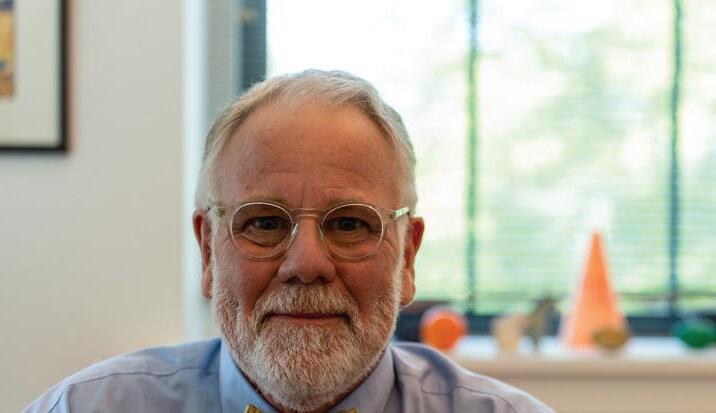



Most notable is the new student body president, rising Sixth Former Asa Winikur. After being selected by his own form to advance to the final round of elections, Winikur spoke in front of the whole upper school in an election with two other strong candidates. Despite the speeches and impressive backgrounds of each candidate, Winikur came out in front to assume his new role as the next student body president.
The student body president’s role requires effort, time, and dedication. The president represents the entire student body and strives to be the best role model they can be for the entire upper school, bringing the community together and holding it to a

higher standard.
“I have been going to this school for a long time, and one thing I always remember about the president is that they give that opening day speech when the whole school gathers around, and I just thought that would be a cool opportunity for me,” Winikur said. “Both my brothers go here, and my mom teaches here, so I have a family connection here and it’s just a place that I care about so much. When I gave my election speech to the seniors to get to the final election stage, I spoke about how it’s our turn to give back to the community… I felt it was my turn to give back to the place which has done so much for me.”
The student body president also has the responsibility of advocating for students.
“I wanted to make sure that I didn’t

make any promises that I knew were going to be out of my control,” Winikur said. “The main message that I wanted to get across was that students would feel represented and they would feel like they are part of an inclusive community that cares about everyone, from the freshman who is new to the school all the way to someone who feels really comfortable here.”
To achieve the sense of community, Winikur has his eyes set on specific, achievable goals. To do this, Winikur plans on consistently meeting and establishing a strong bond with the faculty leaders.
“[One goal I have is] meeting with someone like Mr. Kolade, Mr. Fifer, and Mr. Casertano, to make sure that I have a good relationship with them because they are at the top of their fields in parts of this school,”
Winikur said. “Also, recently, I sent out an email to get a student’s perspective on what they want out of me, what they expect from me, what they think could be improved on from the past, and what they thought was successful with the past leaders. I plan on communicating with past student body presidents like Mitav Nayak and Vincent Scauzzo, to learn from presidents in the past and then putting my own spin on things and giving my best, honest effort.”
con’t on p. 4


COMMUNICATIONS
The Haverford School · Haverford, PA 19041 · June 2023 · Volume 90, No. 9 · thsindex.org the index e student voice since 1888
Milan Varma ’25
Joey Kauffman, Connor Pinsk, Jingyuan Chen ’23
Baseball, p. 24 RIYADH ROLLS ’26 Ms. Cheryl Saunders , p. 6 PIERCE LAVERAN ’24 Brody Murphy '24, p. 25 PIERCE LAVERAN '24 Mr. Neal Cousins, p. 6 PIERCE LAVERAN ’24
the index
2023–2024 Sta
Ethan Lee ‘24
Editor-in-Chief
Adi Nayak ‘24
Editor-in-Chief
Christopher Schwarting ‘24
Editor-in-Chief
Arsh Aggarwal ’24

Senior Managing Editor
Casey Williams ’24
Senior Managing Editor
Ian Rosenzweig ’24
Managing Editor
Connor Simpkins ’24
Managing Editor
Milan Varma ’25
News Editor
Tate Conklin ’24
Features Editor
Elliot Lee ’25
Academics Editor
Ryan Hu ‘26
Junior Academics Editor
Tripp Ronon ’24
Neighborhood Editor
Luke Ganley ‘25
Campus Opinions Editor
Abdullah Kanchwala ‘25
Campus Opinions Editor
Grayson Morgan ‘26
Junior Campus Opinions Editor
Talan Maury ‘26
O -Campus Opinions Editor
Tommy Saul ‘26
O -Campus Opinions Editor
Russell Yoh ’24
Arts Editor
Liam French ‘25
Junior Arts Editor
Charlie Keidel ‘24
Sports Editor
Quinn Sullivan ‘25
Junior Sports Editor
Pierce Laveran ’24
Senior Photography Editor
Riyadh Rolls ‘26
Junior Photography Editor
Ms. Emily Harnett
Faculty Advisor
Mr. Thomas Stambaugh
Faculty Advisor
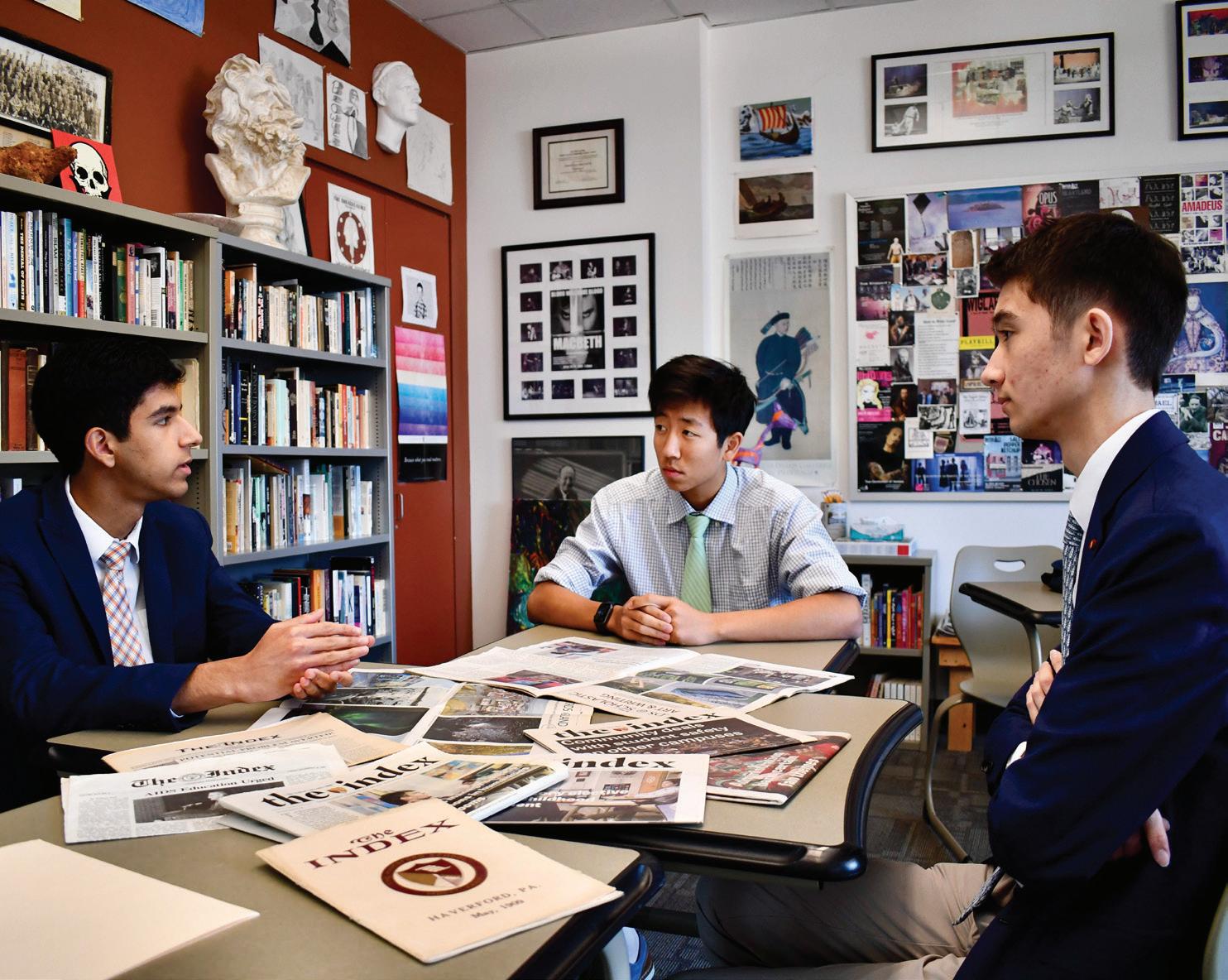
The Index is a student-run publication of the Haverford School that does more than bring news: it provides the diverse perspectives of the Haverford student body. It is an outlet for student writers to take stands on issues they deem important. It chronicles the daily struggles and accomplishments of the Haverford community. The Index also provides a forum for discussion of pertinent issues, such as student culture, academic policy, and Haverford’s place in world a airs. The Index presents new ideas and aspires to in uence constructive change.
All opinions and viewpoints expressed herein do not necessarily re ect those of The Index or the school. The Index is designed and produced digitally. Photographs may be retouched. Submissions and letters to the editors regarding any and all articles are welcomed at index@haverford.org
The Index, a member of the Columbia Scholastic Press Association, is composed using the applications of Google Suite and Adobe Creative Cloud. Its surveys are conducted via Google Forms and are advertised on email to current Haverford students. Graphic designs are created by Index sta via Canva. Southern Dutchess News prints 200-400 copies of each issue, and its editorial sta distributes them in the Upper School on the day of release. The Index serves the needs of a total school population of 1152 community members, consisting of 952 students and 200 faculty and sta members.
Contact The Index: 450 Lancaster Ave, Haverford, PA 19041 index@haverford.org
Twitter: @Haverford_Index
Instagram: @Haverford_Index
Volume 90, No. 9 - June 7, 2023
editorial
Stay connected
In just a matter of days, the Class of 2023 will embark on a new chapter of their lives and become alumni of The Haverford School, while the familiar annual tradition of grades moving up will occur. Students will transition into the summer months, spreading out across jobs, family visits, and athletic tournaments.
We recognize the importance of the culture and community that the Class of 2023 has created over the past year. Over the past
year, events like the exhilarating performances of the sports teams on EA Day, the dramatic opening night of Les Misérables, and thought-provoking student Reflections
have forged the bonds between the forms to be stronger than ever before.
As this transformative year draws to a close, we urge students to stay connected this summer and not lose what the Sixth Formers have worked hard to build over the last year. The importance of the community created cannot be understated. The unity and sense of community and belonging created must not be lost over the summer.
The Index plays a vital role in keeping the community connected—we will strive to represent accurately what happens in the community and share your story with integrity, authenticity, and precision.
During the summer, reach out to a friend and stay connected, and we can start the school year further than we left off. With the foundation of the Class of 2023, we can create a legacy and community that will transcend our eventual graduation.
With the support of one another and the dedication to preserving our unique community experience, the possibilities for the future are limitless. Let us embrace this opportunity to further strengthen our community bonds and make the upcoming year truly extraordinary.
Letter from the student body president
Summer break: a three-month pause from all the noise, pressure, and stress that school can bring out of us at times.
Having this pause, I believe that this is the best time for reflection and development. Go do something that you want to do. Set a goal at the start of the summer and make it your mission to achieve it.
Thomas J. Watson, the former CEO of IBM once suggested, “Double your rate of failure.”
Bruce Lee once said, “Don’t fear failurenot failure, but low aim is the crime. In great attempts, it is even glorious to fail.”
I find it interesting how the people most successful in this world are the ones who handle failure the best.
Failure is an innate aspect of the human experience. Bruce Lee and Thomas J. Watson are humans just like the rest of us.
What makes them special is their ability to accept failure, learn, and move on.
When we are back in school this September, hopefully we can all look back on how we spent our summer and be proud of something we did.
Being proud does not equate to successfully reaching one’s goal.
The pride should come in the fact that we all chased something that was a true desire of ours. The pride should come in the fact that we did something for us and nobody else.
At this age, especially in a high school environment, sometimes it can be hard to make decisions solely for yourself.
This summer do something for yourself. You’ve earned it. Roll Fords.
June 2023 Page 2 the index · editorial
PIERCE LAVERAN ‘24
asa winikur ’24
2023-2024 Editors-in-Chief Adiyan Nayak ’24, Ethan Lee ’24, and Christopher Schwarting ’24
MR. THOMAS STAMBAUGH
With the foundation of the Class of 2023, we can create a legacy and community that will transcend our eventual graduation.
e unity and sense of community and belonging created must not be lost over the summer.
Farewell, Class of 2023 cont. from first page
The class also tried to embody some of the spirit of the Class of 2020, whom the Class of 2023 watched lead the school into the uncertain territory of the COVID pandemic. While many in the Class of 2023 spoke highly of the Class of 2020, we also had to make our own legacy.
“At least for me, I really tried to step away from that idea [of comparing ourselves to the Class of 2020], and I think our class tried to do what we can do best, which is be ourselves and make improvements on ourselves,” Sixth Form student council member Love McCune, Jr. said.
The Class of 2023 experienced the entirety of the upper school’s struggle with the COVID pandemic, as the outbreak started in its Third Form year. Entering Sixth Form year, the class had to lead the student body out of the world of social distancing and mask-wearing we had experienced the previous two years.

“You guys have persevered; you stepped up in so many ways,” Sixth Form Dean Ms. Brooke Kenna said.
ple for people below you and around you— I think the class of 2023 did a phenomenal job in terms of stepping up from our junior year,” Davey said.
When evaluating how successful the class was in leadership, it is important to take note of the small moments as well as the big ones.
“Watching certain seniors have little moments of mentoring with the younger guys, or just having somebody stop by to say hello… I love the little moments that aren’t always noticed or celebrated, but those are the most meaningful,” Ms. Kenna said.
Some of the bigger moments were times when the entire school gathered, like speeches, EA Day, and the spring musical.
on the playing field and in the stands.
“EA [Day] is always a time where we come together and, given the situation at Episcopal this year, watching everybody step up and bond and make the best of a difficult situation, especially physically, that was pretty impressive,” Ms. Kenna said.
The class did have its fair share of obstacles, one being the restriction of fan-section themes at sporting events. The biggest obstacle the Sixth Form faced may not have been the restrictions themselves but the reaction to those restrictions.
demic, I felt like we have faced every type of adversity and have come out victorious,” McCune said.
The class was at its best when it was together. Les Mis did this, as it brought many different groups of students together to sing and dance, an activity that some would not have expected from some of the individual students in the cast.
Throughout the year, the class focused on interpersonal relationships with other members of the community and setting a good example for younger students.
“What leadership is on a fundamental level—connecting with and setting an exam-
“Our first [assembly], where [Joey], Luka, and myself were able to speak. I felt at that time like I had no other time throughout my Haverford career. We had an ability to all come together and speak to different parts and different students,” McCune said.
EA Day brought the class together, as a diverse group of students worked together
“What was the obstacle though was just a lot of the reactions to [things being taken away], ‘cause that just make a lot of people resentful… I think overcoming those reactions and the sense of entitlement that follows that, that was a big obstacle we had,” Davey said.
The biggest lesson learned was that obstacles may arise and adaptation is necessary.
“Our school has always done a great job at teaching us how to adapt, especially coming from facing things like a global pan-
“One of my favorite memories is watching this whole group of students up on stage for Les Mis and they’re from so many different overlapping groups at Haverford… it’s been a cool vibe watching you guys transcend a particular group and really work together,” Ms. Kenna said.
As we look forward to college and the wider world, it’s important to remember the lessons Haverford has taught us and the community it has given us.
“Just remember that, wherever you go in your adventures, Haverford is still here— physically, and the people here, the spirit here—we’re always here if you guys need a place to come back to,” Ms. Kenna said.
VIA HAVERFORD SMUGMUG news the index · news June 2023 Page 3
The class of 2023 in the football student section during EA Day
COMMUNICATIONS
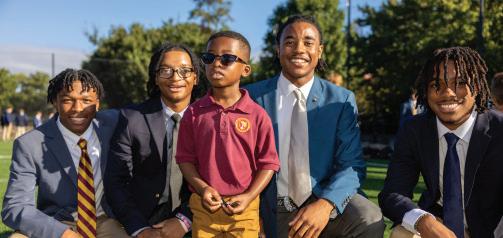
Sixth Formers Bryce Ford, Yasir Denmark, Love McCune, Jr., and Ali Islam pose with Kindergartner Amir at opening day
“Just remember that, wherever you go in your adventures, Haverford is still here— physically, and the people here, the spirit here—we’re always here if you guys need a place to come back to”
MS. BROOKE KENNA
The student body president sets the environment for a school year by their actions, plans, and the virtue they select to focus on for the year.
“I think the school is in a great position,” Winikur said. “There are a lot of great people who come out of this school, and I think the faculty leaders in the school do a great job in curating that environment.”
Winikur has already done some thinking.
"One virtue that stands out to me at this stage, and I am obviously not fully decided, is confidence,” Winikur said. “I think when you have an environment where a lot of people are confident and a lot of people are willing to take risks, you get an environment where people are able to do things they don’t normally do.”
Winikur himself has already begun to experience the honor but also the uphill battle that comes with being student body president.
“One challenge is now, I have to think that I have a lot more people looking up to me, and I want to set the best example that I can,” Winikur said. “I am a guy who is very outgoing and loud, so grappling with the benefits of that but also learning how to channel that in the right way…Before I became president, I was a guy who fell into a specific friend group of athletes and people who were very similar to me, but a part of being student body president is that I have my friends, but I also have to represent and
appeal to the people who didn’t vote for me, and a lot of different people in this school who aren’t that similar to me.”
New student council makes plans
Ajay Chakraborty '26
The student council is comprised of passionate boys motivated to make the school a better place. is year, Fifth Formers Asa Winikur, Arsh Aggrawal, and Quin Bongiovani, along with Fourth Formers Josh Williams, Devon Li, and Colin Decker, and ird Formers Charlie Neel, Jeremy Chapman, and Michael Abboud all are trying to uphold this standard.
But how do they plan to do that?
It starts with goal setting.
“We’re trying to make sure that everyone finished out the year strong,” Class of 2025 Representative Devon Li said. “We’re trying to prevent Honor Council cases from coming up, and we’re trying to make sure that every student has the resources they need to finish the year on a high note.”
Li also wants to continue to build the school’s sense of brotherhood.
“For next year, we want to build a great community,” Li said. “We want people to show up to events such as sports games and concerts. The goal of the student council any year is to simply make life more enjoyable for the students, along with being their voice.”
Fifth Former Asa Winikur, the student body president for this upcoming school year, is focused on reliability.
“My main goal as student body president is to simply serve the community in the best way I can,” Winikur said. “Whether it takes coordinating form activities, helping run assemblies, or just being there for someone one on one. I just want to be reliable.”
When asked about the same topic, Class of 2026 President and Third Former Charlie Neel emphasized inclusion.
“I want to make sure everyone feels welcome,” Neel said. “I want them to feel that they are a part of the Haverford com-
munity. I want to help facilitate the building of relationships between upperclassmen and underclassmen, and make sure that the younger students aren’t afraid of talking with the older ones.”
At the end of the day, the governing student body serves as the voice of the students, which becomes much easier when there is a clear plan for communication.
Winikur has some ideas.
“I plan to take many approaches—including visiting freshman advisories, sending out surveys to the student body, and consistently being in contact with both the faculty and administration,” Winikur said.

Another important aspect of this year’s student council is that they are a team.
“We plan to make the most out of our many ways of communication,” Li said. “We want to be very collaborative in our weekly meetings, as we try to get the most possible
ideas out on the table. We also have a group chat, where anyone on the student council can talk about their concerns.”
Winikur also elaborated on this idea of a team.
“I plan to utilize our student council meetings to the maximum. I also am looking forward to collaborating with the CMP, Honor Council, and Signet Society,” Winikur said. “Overall, I am truly excited to work with a special group of guys next year, and I wouldn’t be able to do this job without them.”
Neel has some goals as well.
“As an underclassman, I understand that I will not be running the show in terms of the student council,” Neel said. “I want to build on the ideas that the upperclassmen student council representatives present, and give my two cents on it.”
Winikur
cont. from front page
presidency,
Asa Winikur '24
PIERCE LAVERAN ’24
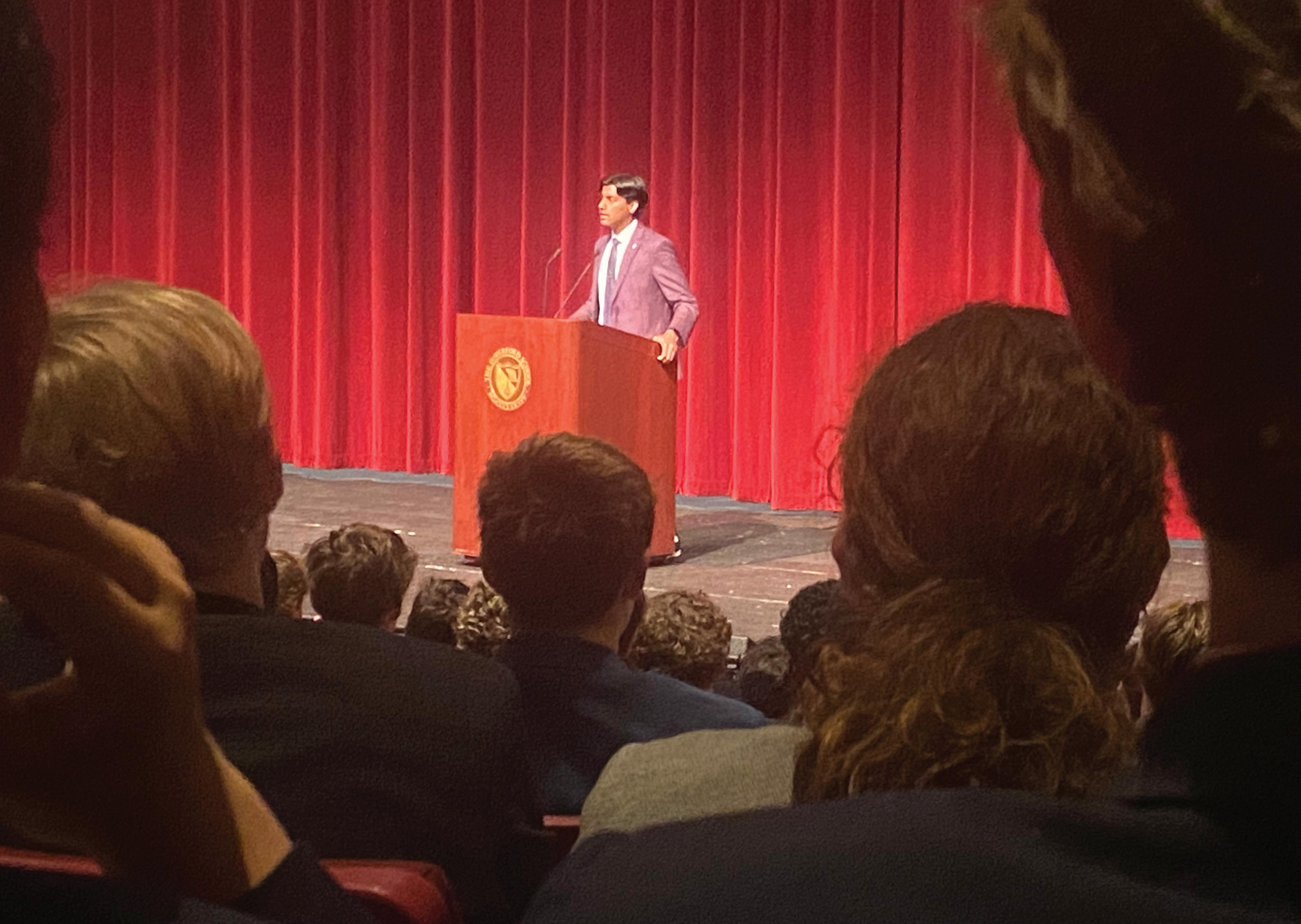
Sixth Form student council representative Arsh Aggarwal '24 speaks in a May 22 assembly RIYADH ROLLS ‘26 the index · news June 2023 Page 4
“I have to think that I have a lot more people looking up to me, and I want to set the best example that I can.”
features
34 years later, Mr. Jay Brown bids farewell to his second home
From swim instructor to the dean, the past 34 years for Lower School Dean of Students Mr. Jay Brown have been a remarkable journey.
Before entering the community in the Summer of 1989, Mr. Brown was juggling many responsibilities.
“I was a swimmer and lifeguard at the time, and I had about four different parttime jobs,” Mr. Brown said.
Upon hearing word that The Haverford School day camp was looking for swim instructors, Mr. Brown couldn’t pass the opportunity up.
“It was just another job I thought I could take up,” Mr. Brown said.
A stranger to the community, Mr. Brown spent the next eight weeks in the basement of the old Ryan Gym at Haverford College. His ability to guide these children stood out to the camp director, an upper school teacher who extended another offer that he couldn’t turn down.
“She told me I did a great job with the kids and that there was an opening in the lower school for a computer teacher,” Mr. Brown said. “I wasn’t sure what this would entail, but I saw it as an opportunity.”
“I actually interviewed in my bathing suit and flip-flops,” Mr. Brown said. “A couple of weeks later I got a call from the headmaster offering me the job.”
Mr. Brown began teaching kids coding, involving basic mathematical applications and ultimately creating small games.
As he integrated into the school culture, many aspects struck him.
“The first thing that stood out to me was that Pre-K through twelfth grade are all on the same campus,” Mr. Brown said. “I had never experienced anything like that before in my educational background having gone to a public school.”
He believes that this fosters a tight-knit community that allows younger kids to have role models.
“My mindset is just who can I help and where can I help. It’s not about me and my schedule, but how I can break out of that and help other people in and around the school.”
MR. JAY BROWN
“My mindset is just who can I help and where can I help. It’s not about me and my schedule, but how I can break out of that and help other people in and around the school.”
Mr. Brown believes strongly in the importance of our service-learning projects.
“It’s not just the can drive, but the times we’ve gone further than our community which are extremely important,” Mr. Brown said.
ily and is truly a second home,” Mr. Brown said. “What astounds me day in and day out is that it doesn’t matter if it’s 1989 or 2023, the boys are always exuding positive energy.”
“If a kid had a tough day the day before, he is able to get over it and bounce back. ey’re able to move past things and support each other.”
MR. JAY BROWN
Every student’s ability to overcome obstacles and still remain positive has stood out to Mr. Brown.
and parents,” Mr. Brown said. “It’s people being able to help each other and rely on each other; it’s a family feel and that’s a wonderful thing we have.”
Mr. Brown’s role in the community has changed significantly since his first days. He feels an immense sense of gratitude for the division heads that have made his success possible.
“You always have people that you need to thank for getting you to where you are and being a part of your journey.”
MR. JAY BROWN
“Because my school system was separated, the kids never really saw each other at any part of their growth. Here, kids can look around and see what an upper schooler looks like,” Mr. Brown said. “Having everything all on campus, especially with the sports teams, really astounded me.”
In 2010, Mr. Brown was named Lower School Dean of Students and has since then taught Decision Education.
In his year of teaching, he has learned many lessons that will follow him into the next chapter of his life.
“One lesson I’ve learned from being here is to be other-centered,” Mr. Brown said. “I’m always thinking about how I can help other people, which sometimes is just as simple as helping out in the dining hall.”
These acts of charity have held a lot of significance to Mr. Brown and have made him appreciate the community’s willingness to support those around them.
“There was a time when we, as a whole school, decided we were going to go out in the fall and help the neighbors clean up branches and rake leaves,” Mr. Brown said. “Things like that and getting out of the classroom to help others have always stood out to me. Kids get involved without thinking twice about helping people they don’t even know.”
In the last 34 years, the school has changed in many ways. Despite many physical changes, Mr. Brown believes that unity and a sense of family have been constant.
“There’s one thing that’s consistent about [Haverford] all the way through, and that’s that as much as things change and people come and go, this place is like a fam-
“If a kid had a tough day the day before, he is able to get over it and bounce back. They’re able to move past things and support each other. These are the kinds of things that remain consistent along the way.”
“It’s people being able to help each other and rely on each other; it’s a family feel and that’s a wonderful thing we have.”
MR. JAY BROWN
Another aspect of Haverford life that Mr. Brown cherishes is the strong sense of brotherhood.
“The brotherhood is not just among the students, but it’s also amongst the faculty
“You always have people that you need to thank for getting you to where you are and being a part of your journey,” Mr. Brown said. “All five of the division heads that I’ve been under have helped me tremendously, and I’m grateful for every one of them in their own ways.”
Mr. Brown has played a large role in contributing to Haverford’s selfless and close-knit community over multiple decades. His wisdom and tutelage have helped many students navigate the lower school, and his lessons in Decision Education provide lifelong knowledge.
One final group of people that Mr. Brown owes credit to are the students.
“[The faculty’s] strength comes from the kids. When they come in, their energy is what keeps you going,” Mr. Brown said. “Ultimately, it’s about the boys.”
Tate Conklin ’24
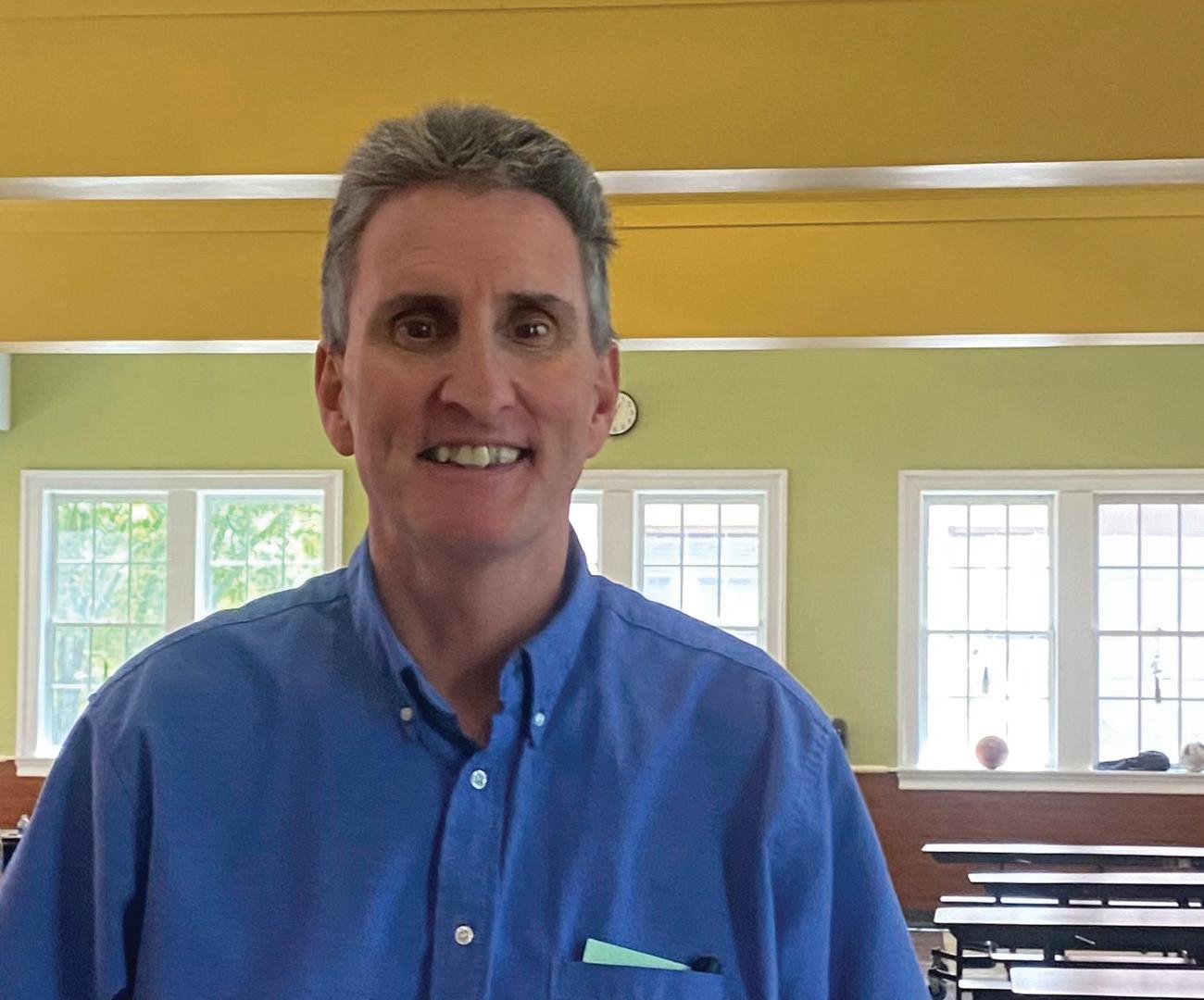
Mr. Jay Brown
RIYADH ROLLS ‘26
the index · features June 2023 Page 5
“Here, kids can look around and see what an upper schooler looks like. Having everything all on campus, especially with the sports teams, really astounded me.”
MR. JAY BROWN
Mr. Neal Cousins leaves his mark as director of college counseling
Adiyan Nayak ’24
For over two decades, Mr. Neal Cousins has worked within the walls of the school to alleviate the pressures that come with being a high school student, and, more specifically, a college applicant. Students in Wilson Hall have grown accustomed to his warm, welcoming presence in the college counseling office, as he has played a pivotal role in hundreds of upper school journeys. After twenty-five years of wisdom and enthusiasm, Mr. Cousins is ready to retire from his role as the director of college counseling.
Initially drawn to admissions work, Mr. Cousins started his journey in college counseling at the Trinity-Pawling School in New York, where he familiarized himself with an all-boys environment.
“At the age of twenty-eight, I said, ‘I’d like to do some admissions work’, and they said, ‘Well, we don’t have any space in our
admissions office, but we do have an opening in college counseling.’ And of course my response was, ‘Sure, what’s that?’” Mr. Cousins said.
After a decade in New York, Mr. Cousins made the transition to what would become a second home for the next twenty-five years.
“Ms. [Karen] Ley called me and said, ‘We’re looking for a college counselor, are you interested?’ I came down, had a conversation, met Ms. Ley, met Mr. [Mark] Thorburn, a few other people, and I thought, ‘Wow, what a great place,’” Mr. Cousins said.
The college counseling department has always been characterized by a willingness to adapt, which Mr. Cousins believes is one of the chief reasons for their success.
“When Mr. [Matt] Green was here as Head of Upper School, one thing that he always said about what we do in this office
is, ‘We’re always looking for ways to build a better mousetrap’, and I think that’s indicative of the people in this office,” Mr. Cousins said. “It’d be very easy to do the same thing year after year after year, but we’re constantly looking for ways to say, ‘Ok, this has changed. How are we going to respond to that?’”
Throughout his career, Mr. Cousins has observed several changes in his field of work.
“College counseling has changed a lot in the thirty-four years I’ve been doing this,” Mr. Cousins said. “When I started, it was like, ‘Ok, what are your test scores, what’s your grade point average, how many honors courses do you have, and can you get into this school?’ What has changed really significantly in the last ten years is that students need to tell their story. We spend a lot of time with students saying, ‘How are you going to tell your story? What is it that’s important to you? What is it that you like to dig into in the classroom? What is it that you like to dig into outside of the classroom?’”
Along with his line of work, Mr. Cousins has also experienced a personal evolution.
“It’s funny, after two years of being a college counselor, I said, ‘Oh, I’ve got this. I know everything there is to know,’” Mr. Cousins said. “And then after about five years, you realize, ‘There’s a lot of stuff I still don’t know,’ and you spend the rest of your career trying to keep getting better at those things.”
The most significant growth that Mr. Cousins feels he has made is his approach to conversation, by emphasizing listening over simply giving advice.
“I think I’ve become a much better listener,” Mr. Cousins said. “Usually students and parents know the answers to the ques-
tions they’re asking, and learning how to not just give an answer, but to listen and let you come to the conclusion on your own, I think is the most effective skill that any counselor or teacher can have.”
Despite the excitement of professional adaptation, it can be difficult to perform the same job every year. Mr. Cousins credits much of his passion to the new wave of students that he gets to meet every year.
“The best time of year is January and February, because that’s when we start with a new group of students, and that’s when we hear the new stories,” Mr. Cousins said. “That’s the part of the process that I like more than anything else, working through that very initial stage of discovery, as they start to think about who they are, who they really want to be, and how they want to tell that story.”
In all his years as a college counselor, the rush of satisfaction that comes with making an impact on students’ lives has never waned. “Walking through the doorway here, it’s been close to 2500 students that we’ve all worked with that have gone on to college,” Mr. Cousins said. “Still, after thirty-four years, when a student comes in and says, ‘I got in,’ it’s those moments that to me are the best.”
As he prepares to depart from the school this summer, Mr. Cousins is still imparting valuable lessons to the student body.
“We say it all the time: work hard, play hard,” Mr. Cousins said. “Get involved in the classroom, get involved outside the classroom, get involved outside the walls of this school, and constantly ask yourself: ‘Did my involvement today make this better?’ If you can ask yourself that question, then you’re going to be on the right track.”
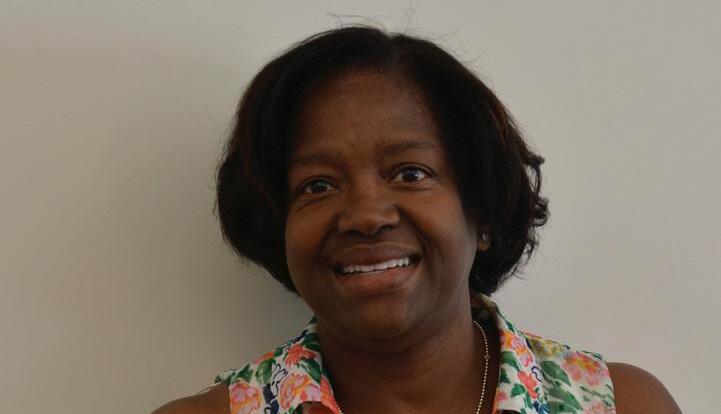
For the past 24 years, Ms. Cheryl Saunders has been fostering emotional and academic intelligence in the hearts and minds of her second graders. She has been a cornerstone of the lower school community—someone whom teachers can rely on for support or mentorship.
Ms. Saunders initially didn’t apply to work at Haverford—her story is rather intriguing.
She was first introduced to the community when one of her students applied to come to Haverford. “A woman from Haverford reached out to me to get some more information about the student. She asked to do an observation of him at our school,” Ms. Saunders said. “What I did not know was that while she was observing the student, she was paying attention to what I was doing too.”
Not long after, Ms. Saunders received a call from the lower school head. He told her that they were opening up two classrooms and asked if she would be interested in coming out and visiting.
“At first I was a little hesitant,” Ms. Saunders said. “I agreed to come out and have a conversation with him over spring break. We talked about the school; I wanted to know a little more about the makeup of the school because that was a concern for me. He told me the vision moving forward and asked if I would be interested in coming back to a formal interview. I agreed, and that’s how it all unfolded.”
Ms. Saunders’ second-grade class is something still cherished by many upper schoolers.
When asked about their favorite lower school memories, many students will say the Walk for Water. This event coincided with the second-grade social studies unit focusing on the freshwater crisis in Africa.
Unbeknownst to most, Ms. Saunders has played an integral role in helping to plan, organize, and execute this tradition.
Through creating moments that gather the community, Ms. Saunders has strived to improve her students’ understanding of those around them.
“My one strong desire was to truly make a difference in students that are here,” Ms. Saunders said. “We have to take the time to see the whole boy.”
Haverford used to have a black and white poster: “The Whole Boy,” which Ms. Saunders displays in her room.
“The Whole Boy” expresses everything a Haverford boy could represent to Ms. Saunders.
“I truly believe that it’s not just one part of the student—it’s all of the student,” Ms. Saunders said. “If we can reach that part of the boy, and if that’s what I’ve done—helped those boys who’ve struggled—and made a difference, that’s what’s important to me.”
Head of Lower School Dr. Pam Greenblatt believes that Ms. Saunders has had a large impact on the growth of her students.
“Ms. Saunders’ greatest impact on her
students has been her ability to maintain the delicate balance between creating a warm, loving, and nurturing environment while also being firm and setting clear boundaries,” Dr. Greenblatt said. “[These boundaries] teach the boys how to meet the expectations of being a Haverford boy.”
Ms. Saunders believes that on top of performing well academically, learning how to interact socially is something that all boys need to be successful.
“Of course academics are of utmost importance, but social skills are just as important,” Ms. Saunders said. “We should never neglect that because it can interfere with their development. If I can help the
boys build relationships with one another and respect each other, it affects them tremendously.”
In her final days on campus, Ms. Saunders has taken some time to reflect on what Haverford means to her.
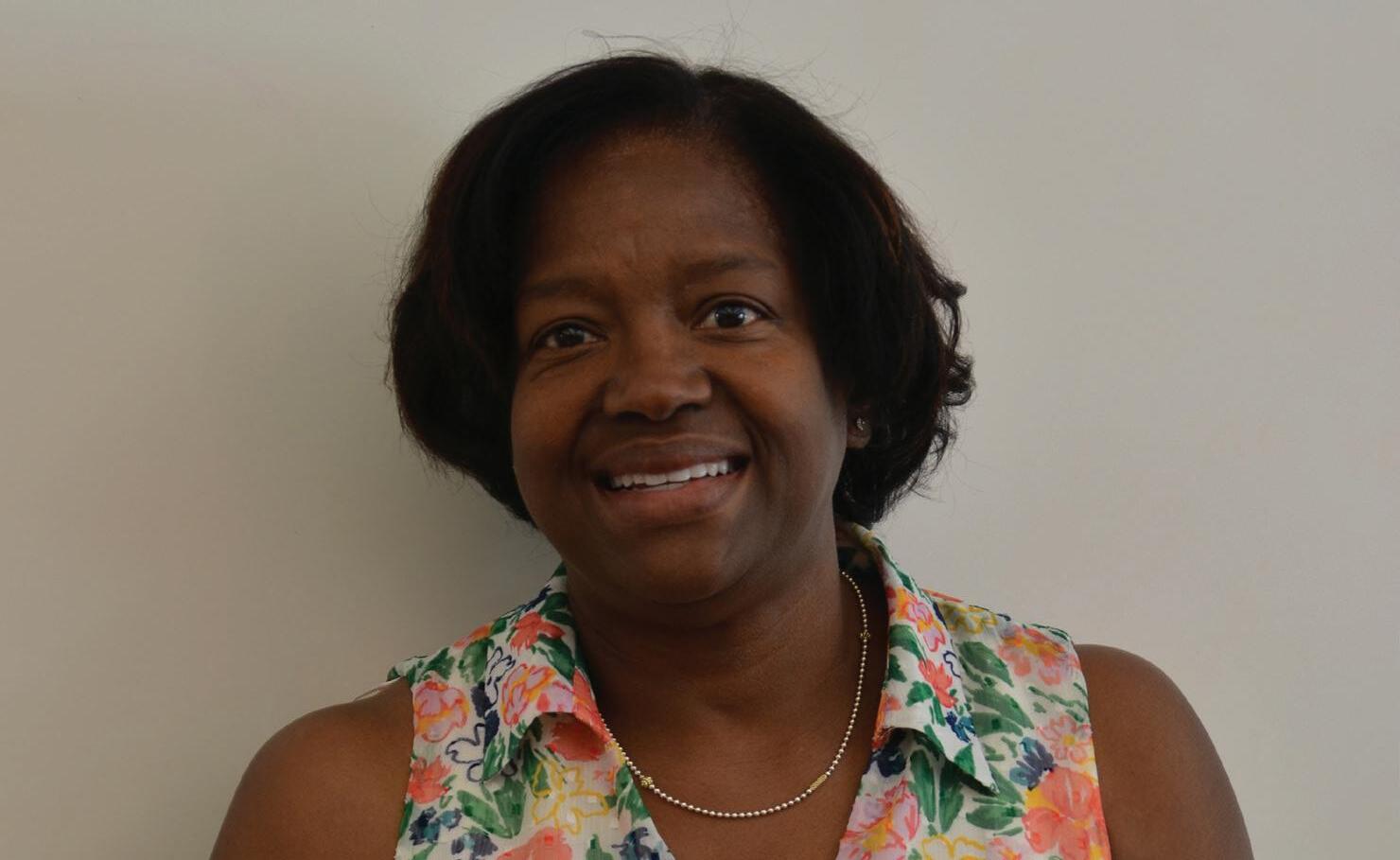
“Haverford is a great school; they’re very invested in their students,” Ms. Saunders said. “The teachers are very involved, and they go out of their way to support their students. We have sleepless nights thinking about ways that we can help [our students] move to the next level.”
“We help them reach their full potential, and really try to do what’s best,” Ms. Saunders said.
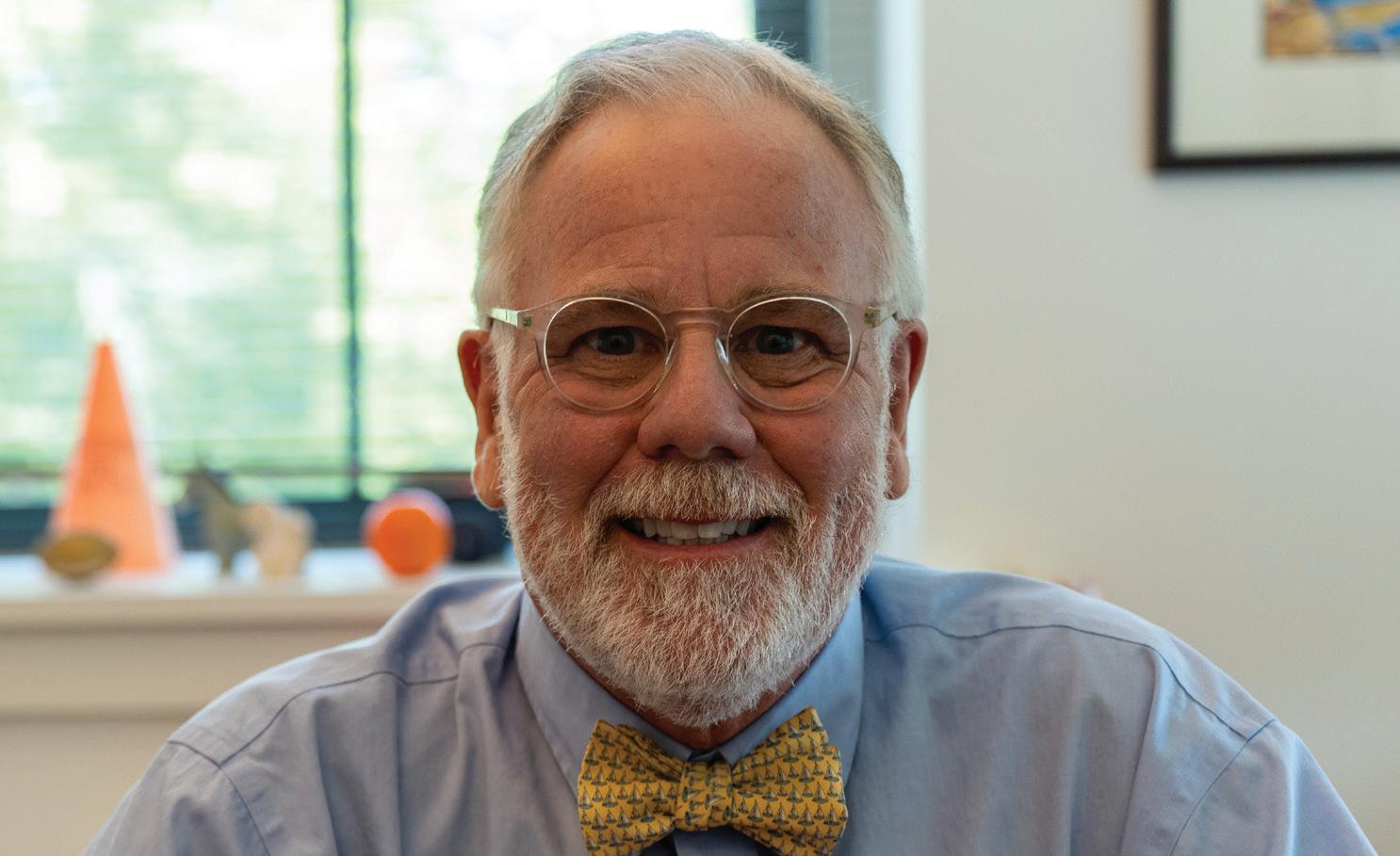
Director of College Counseling Mr. Neal Cousins
the index · features June 2023 Page 6
PIERCE LAVERAN ’24
Liam French ’25
Ms. Cheryl Saunders to retire after 24 years of supporting “the whole boy”
RIYADH ROLLS ’26
Second grade teacher Ms. Cheryl Saunders
Ms. Heather Stinson leaves college counseling with humanity and compassion
From her corner-tucked office in the college counseling suite to the mindful spaces she curates across campus, Ms. Heather Stinson’s compassionate smile is familiar to all those who have met her. Whether it be through evaluating college choices and revising essays or joining her for a Mindfulness Club session and good chat, she has left a lasting mark of warmth in the community. After eleven years advising upper schoolers, she will now join the Sanford School outside of Wilmington, Delaware, as their Director of College Counseling.
Ms. Stinson’s primary role is and has always been college counseling. However, her perception of this role transcends college specifically.
“The most important thing to me is knowing students outside the realm of the college counseling office,” Ms. Stinson said.
In fact, her transition from her role in collegiate admissions to counseling at an independent school was driven by that exact vision.
“I wanted my reach in the community to be broader than just my office,” Ms. Stinson said, “and that’s something Haverford has really supported me in.
To achieve that goal, Ms. Stinson has engaged with the community in a multitude of ways.
“I’ve taught yoga to everybody— from faculty and staff to ninth graders and the lacrosse team. I’ve had the distinct privilege to co-lead two trips: one to Cuba and one to Iceland. I’ve gotten to chaperone prom, [and] I’ve led IC Day excursions,” Ms. Stinson said.
These experiences have proven the most rewarding for Ms. Stinson.
“All of these things complement my work in the college counseling office,” she said. “My path crosses with students’ paths, which makes me better at my job. That’s been the most rewarding experience.”
Among Ms. Stinson’s favorite communal activities is her advisorship of the Mindfulness Club, which provides an often undiscovered break for students.
“Mindfulness Club and teaching yoga has been so much fun,” she said. “It’s so rewarding to give students an opportunity to not only calm their minds and bodies, but also to maybe introduce them to something that could be super helpful to them.”
In a college admissions scene that
appears increasingly mechanical, she has used such community experiences to remind her students of their humanity.
sometimes spend more time with each other than we do with our spouses.”
For Ms. Stinson, this family has cemented deep friendships.
“There are people that I’ve met here at Haverford who have become my absolute closest friends, so understanding that those relationships are not going to fade away, but are going to change, [I’m] trying to really enjoy being in the same space with those folks for the next couple of days. I’m realizing this is it. It’s my responsibility to know that I have to make the most of this time I have left.”
“I love reminding students of their humanity and encouraging them to be comfortable with their imperfections and making sure that they understand that no one is expecting them to be perfect,” Ms. Stinson said. “Being able to put a little more counseling and a little less college in this role is something I’ve really enjoyed doing here.”
As Ms. Stinson completes her final preparations before her departure in July, her focus remains on her students as they make a transition to a new counselor.
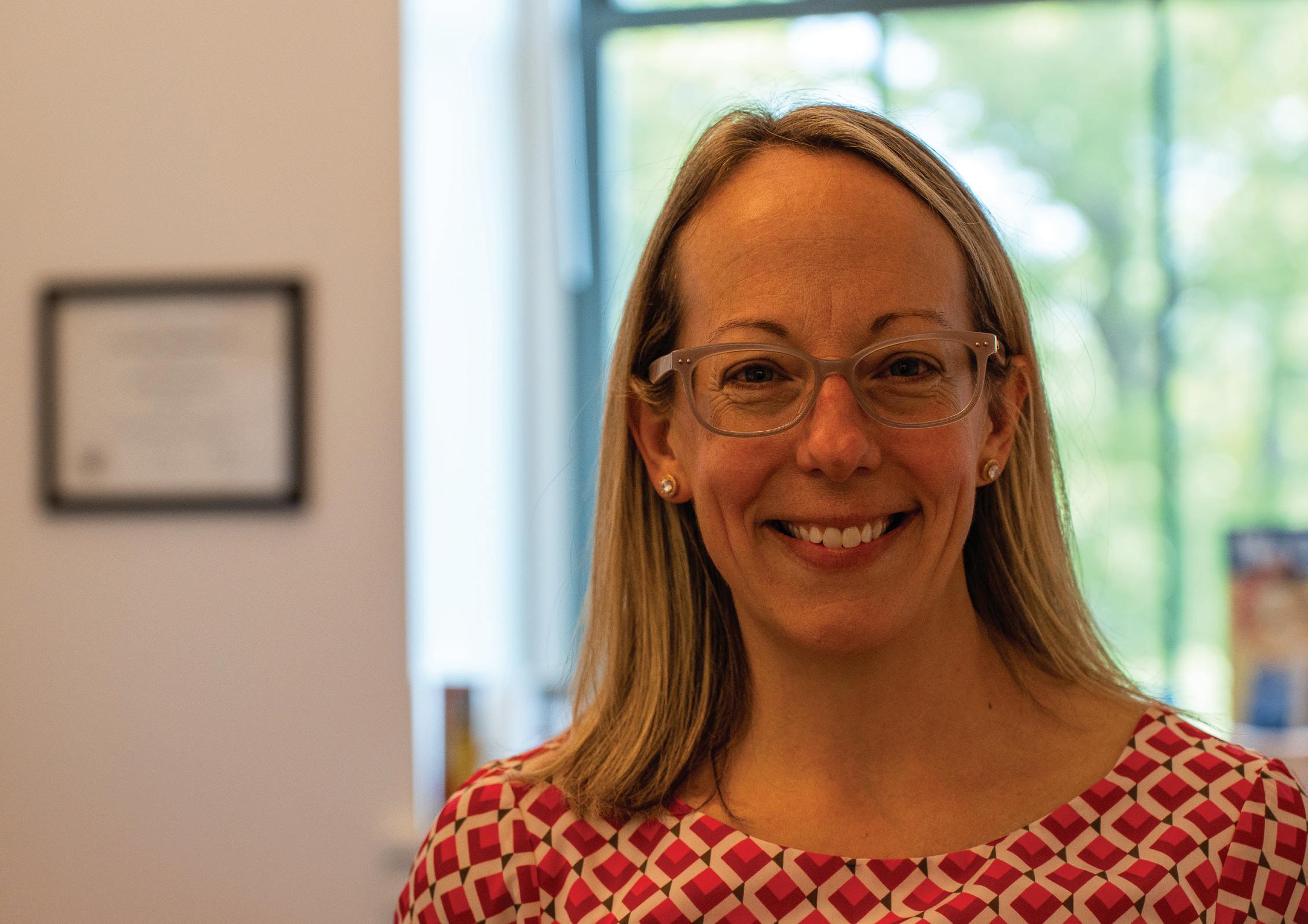
“My primary focus right now is making sure that all of my college counselees and advisees are feeling calm and confident about the transition—knowing that they have everything that they need, and knowing that the transition between me and a new counselor [or advisor] in the fall is going to be seamless,” she said.
In addition, Ms. Stinson has also found an opportunity to reflect on her relationships at the school.
“I’m trying to go about my days in a way that allows me to really appreciate being here with students and with my colleagues. These folks are my family,” she said. “Mr. Cousins, Ms. Ley, and I joke about how we
Ms. Stinson sees the transition as an opportunity of excitement, looking happily at her time at Haverford.
“I leave [Haverford] feeling really excited about the next steps but also very happy and satisfied with what I’ve been able to do here—the mark I’ve left on the school,” Ms. Stinson said. “I leave with a very fond place for Haverford in my heart.”
For students still in the college search, she would like to remind them of the important message she shared in her Reflection earlier this year.
“I would like Haverford students to know: where you go is not who you’re going to be and that it’s the student [who] makes the college, the college doesn’t make the student,” Ms. Stinson said. [The college search] always works out. It absolutely does. That doesn’t mean it’s perfect or without bumps, but students always end up whole and challenged and embraced and supported.”
“Let the wind blow you where it blows you,” Ms. Stinson said. “Be intentional, but also know you’re going to land where you need to land.”
VIA
Christopher Schwarting ’24
MS. SARAH LEONARD
“Where you go is not who you’re going to be and that it’s the student [who] makes the college, the college doesn’t make the student”
the index · features June 2023 Page 7
MS. HEATHER STINSON
“Being able to put a little more counseling and a little less college in this role is something I’ve realled enjoyed doing here.”
MS. HEATHER STINSON
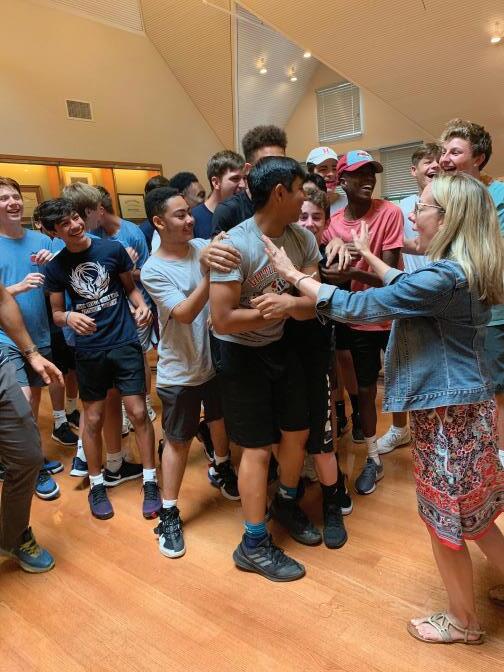
Ms. Heather Stinson with new Third Formers during the Bridge program, July 7-11, 2019
Ms. Heather Stinson PIERCE LAVERAN '24
“It’s my responsibility to know that I have to make the most of this time I have left.”
MS.
HEATHER STINSON
Mr. Jeremy Hart leaves a legacy of honor
Connor Simpkins ’25
AOver the last six years Mr. Jeremy Hart has filled many roles at Haverford: history teacher, Fourth Form Dean, Honor Council advisor, lacrosse coach, and college counselor. He prepares to move on to a new role as Dean of Students at St. Anne’s-Belfield School in Charlottesville, Virginia.
“I arrived at Haverford when I was twenty-five years old, and I was still figuring out what I believed about education. I am leaving with a good sense of what I value most in education, which is the relationships and preparing students to be good citizens. I strongly believe we need more good people, not necessarily more smart people,” Mr. Hart said.
Mr. Hart comes from a family of educators, which gives him a unique understanding that school communities are not just made up of students or teachers, administrators, or staff, but rather the connections and collaborations these separate groups form with one another.
“My time here has allowed me to gain perspective on not only teaching and student life but also how the parts work behind the scenes,” Mr. Hart said. “It has given me a deep sense of the community. The sum of the parts here come together really well.”
Mr. Hart’s popular International Relations class reflects his fun and laid-back personality as well as his approach to relationship-based teaching. “It is current events oriented; it helps explain the world. A lot of students really enjoy having a class where
there is not necessarily a right answer but a perspective to be formed and an argument to be made,” Mr. Hart said.
Mr. Hart’s work with the Honor Council has been most meaningful to him.
“When I came here, the Honor Council was focused on discipline and discipline alone. I am proud of the work Honor Council representatives have done over the last six years to implement cross divisional programming with the middle school as well as educational programming in the upper school about the Honor Council process and its intention to be a supportive body rather than a punitive one.”
Mr. Hart contributes the growth of the Honor Council to past student leaders.
“I give so much credit to Sixth Former Ryan Davey, John Zhang ’22, Gabe Gowen ’21, and other past Chairmen for moving the Honor Council from a discipline focus to an education focus,” Mr. Hart said.
In addition to taking pride in the group’s
growth over the years, Mr. Hart believes that there is still room to improve.
“I think the Honor Council has done a really good job of bridging a lot of gaps between students, and I think there remains great opportunity for it to bridge gaps between students and faculty in the future,” Mr. Hart said.
While he is quick to pass credit for positive changes with Honor Council onto students, Mr. Hart’s positive influence and impact on students is significant.
“Mr. Hart is the kind of mentor who doesn’t just guide you, he pushes you to come to your own conclusions and make decisions for yourself. Mr. Hart has shown me how to be a great man my own way,” outgoing Honor Council Chairman Ryan Davey said.
Rising Sixth Former and Honor Council Chairman Luke Fesnak concurs.
“Mr. Hart has taught me principles that make a great chairman,” Fesnak said. “His
experience and his ability as a leader has helped curate me into a better leader myself. Even better, he is the kind of teacher I feel as if I can fail around and harvest growth from it.”
While he is moving on to a co-ed school, Mr. Hart remains a strong advocate for single-sex education. “Schools like Haverford give boys space to approach learning with camaraderie, to ask questions and not worry about social repercussions and spaces for guys to explore passions in ways they otherwise might not.”
When I first joined his Advisory, Mr. Hart offered me some advice: “Have boots on the ground at Haverford. Don’t wish away your time by focusing on what is coming after high school, engage and enjoy everything our school has to offer.”
It is exactly this type of guidance that reveals Mr. Hart’s lasting and honorable legacy at Haverford.
Mastronardi moves on to new productions
Mr.
at all to any of us,” Fifth Former Anthony Carter said.
With less than a week to prepare, Mr. Mastronardi took on the job.
He crafted curricula from scratch for multiple music classes, learned new facets of music theory and production, and stepped into the role of Notables Director.
“Even with so little time [to prepare the curricula], the classes were fun, and we still got to learn a lot,” Carter said. “Mr. Matt came up with fun assignments for us to do while testing our skills in both musical theory, instruments, and quality of work.”
Alongside Sixth Form Co-Presidents Harvey Pennington and Alphonso Evans, Mr. Mastronardi arranged and implemented new repertoire for the Notables.
“The fact that he did this with so little time shows the amount of care and dedication he has for things he is passionate about, and how he isn’t afraid of a challenge,” Carter said.
His dedication to the group has been evident in the Notables’ performances for the year.
conducted the orchestra in the spring production of Les Misérables
“It was very fun and a really challenging piece,” Mr. Mastronardi said. “It took some getting used to, but in the end it was really just a joy to be a part of and was really rewarding.”
Out of all these accomplishments, Mr. Mastronardi is most proud of his students’ progression this year. He is also thankful for how much he has learned from his peers and students.
“Having been through the school year as a teacher, it really helped me find a pathway forward,” Mr. Mastronardi said. “I know what I need to work on, for myself. I have learned so much from them and feel very grateful to have had the time with them. The performing arts department here at Haverford has some of the most generous and talented people I have ever met. I will miss working beside them all.”
Mr. Mastronardi hopes that his time at Haverford will leave a lasting impression.
After stepping into his role as upper school music director in August of last year, Mr. Matt Mastronardi will leave the school to pursue his goals in the theater industry.

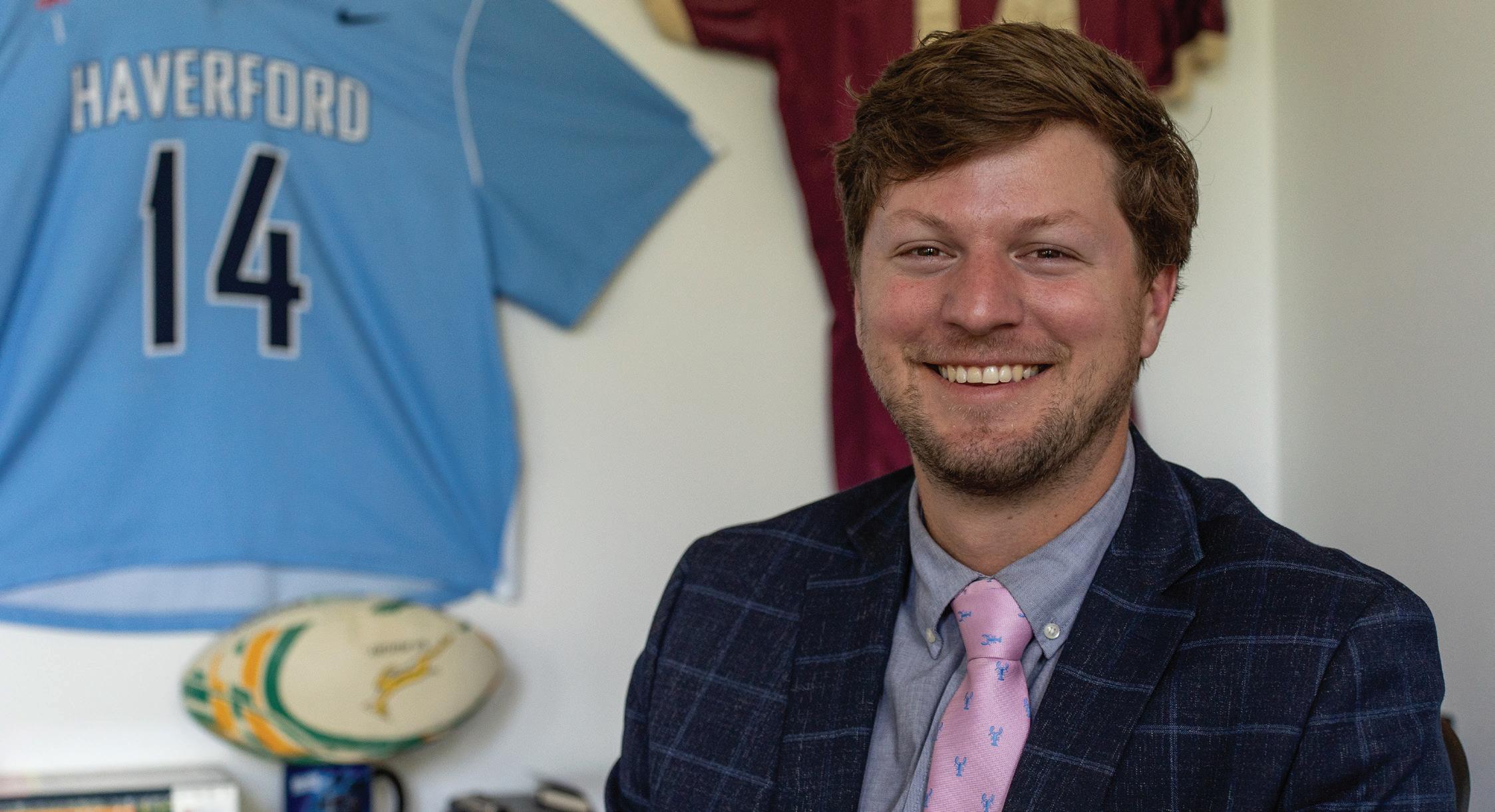
Mr. Mastronardi has always worked as an actor and musician, first contributing to the school’s theater program in 2017. As the music director for Seussical, Willy Wonka, The Addams Family, and Peter and the Starcatcher, Mastronardi has been instrumental in mem-
orable Centennial Hall productions.
Late last summer, Mr. Mastronardi was asked to fill the role of Upper School Music Director, and his commitment to his new duties has helped propel the music department through the last year.
“At the beginning of this year, before school even started, we had no idea what would happen to Notables, Glee Club, or any of the music classes, as the previous director was MIA and didn’t communicate
“One story that I feel perfectly reflects his character is when he came in on a Saturday to help us learn repertoire required for an upcoming concert,” Pennington said. “He practiced with us—without being on payroll, may I add—and ensured that the whole group was prepared.”
Mr. Mastronardi led the group through an uncertain time with confidence, bringing his background knowledge and spin to the group’s performances.
“I will definitely miss him, as he brought a new perspective to our group being from a musical theater background,” Carter reflected. “He was very fun to be around.”
In addition to his music class and Notables related duties, Mr. Mastronardi also
“I hope that some of the songs we learned and made, in both the Notables and in music class, will stay even when I am gone,” Mr. Mastronardi said.
“Keep exploring. There’s always something else to learn, or a different point of view to gain knowledge from. I think it’s important to be yourself, and continue to grow into who you are,” Mr. Mastronardi said. “Don’t run away from your individuality and who you are.”
PIERCE LAVERAN ’24
Mr. Jeremy Hart
Matt
Mr. Ma Mastronardi
PIERCE LAVERAN ’24
the index · features June 2023 Page 8
Elliot Lee ’25
The gaming world of George Vollmer
Most people spend their Saturdays sleeping and relaxing.
Sixth Former George Vollmer is not like most people.
Vollmer returns home at 8 a.m., hungry after working out at his local Planet Fitness. He opens the fridge and grabs the last of the raspberries and a watermelon Celsius. This is his second Celsius of the day. He knows he has a long day ahead of him.
Vollmer sits down in his gaming chair. All of the lights are off, making it almost impossible to see. He turns on his computer
and the room turns red. His desk is red and black. On the desk sit two adjacent monitors, a white keyboard that glows purple, and a Razer mouse with green RGB lights. Under his desk sits his gaming PC with bright red lights.
Vollmer begins every gaming session with nger and wrist stretches to prevent any hand cramping. He then opens up Aim Labs on his computer to warmp up his aim for 30 minutes before he plays.
Vollmer begins every gaming session with finger and wrist stretches to prevent any hand cramping. He then opens up Aim Labs on his computer to warm up his aim for 30 minutes before he plays.
“It’s just a game where you can practice your aim and you just shoot balls,” Vollmer said.
Vollmer is on a gaming team with fellow Sixth Formers Matt Kang and Dylan Kao and two others they found online.
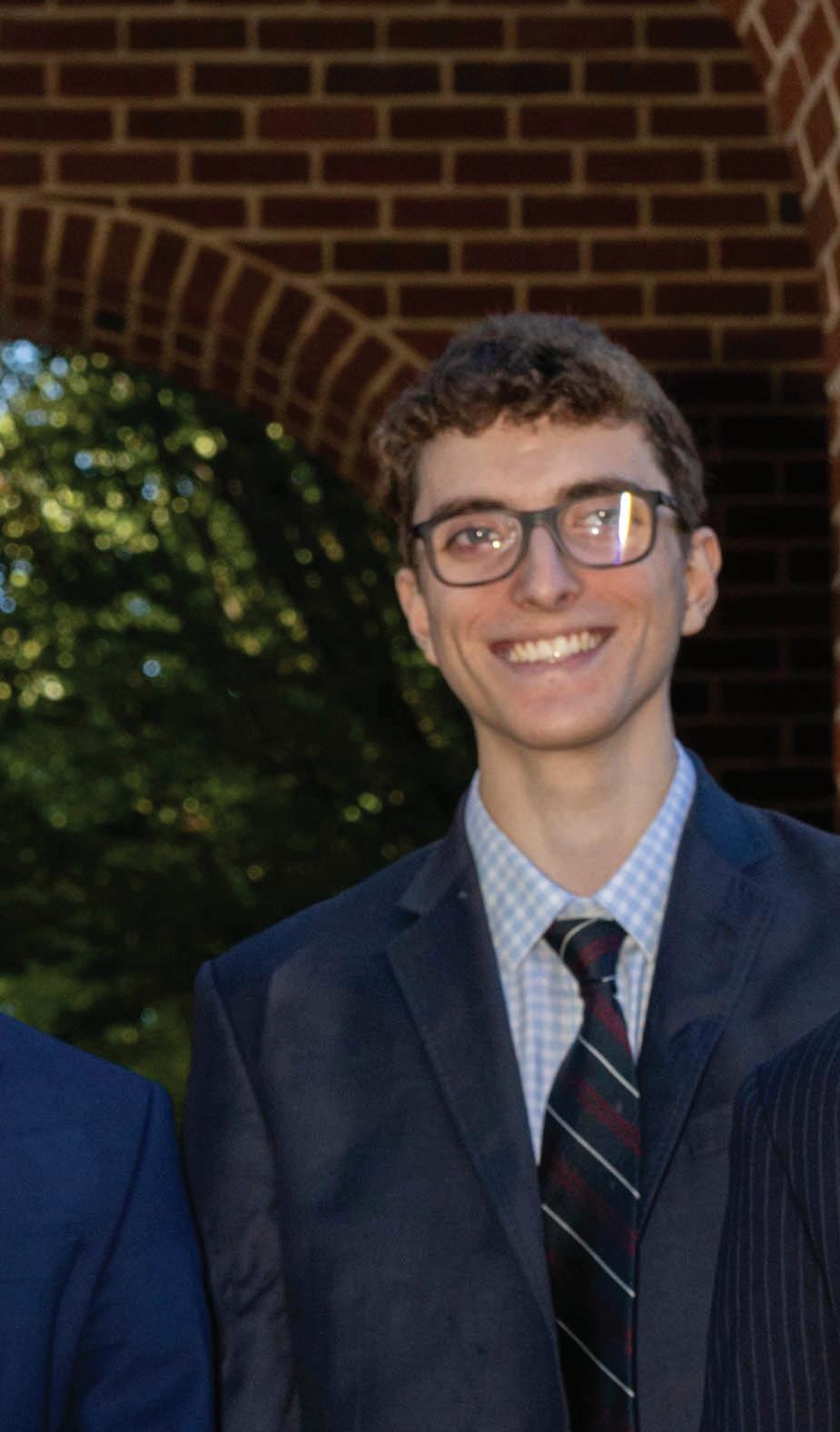
“There are different communities that you can look at for a certain type of player that fits a certain role, so we just posted an ad in there,” Kao said.
Vollmer and his team play the game Valorant.
“Valorant is a five vs. five competitive shooter,” Kang said. “There is a defending team and an attacking team. The defending team wins the game if they eliminate all attacking players or by preventing the attack-
ing team from planting a bomb. The attacking team wins if they eliminate all defending players or by planting and defending a bomb until it explodes.”
Before every match begins, every player picks a character with different abilities and roles.
“I usually play the support characters,” Vollmer said.
Vollmer’s character heals his teammates and helps create a cover for his team.
Once Vollmer feels warmed up, he joins a Discord call with the rest of his teammates.
“We will go over our strats on each map, our team comms, and who does what,” Vollmer said.
maging with other competitive Valorant teams. Vollmer and his team always record whenever they play.
They also discuss how they can improve.
“There are three different aspects of the game: your mechanical skill, your game sense, and your mental,” Kao said. “A big part of the game is how good of a mental state you are in. If your mental breaks, you have lost the game for yourself.”
After thirty minutes of discussing strategy, Vollmer and his team are ready to get on the game and start practicing.
They spend the next four hours scrim-
Connor Rall ’23, unsuspecting farmer
Across from the old covered bridge only open on Sunday, there is an ordinary house. Same as the ones to the left and right of it, and even the one across the street.
The house has white siding with a brick front door at the end of a long circular driveway. Nothing is out of the ordinary.
Walking to the back of the house, you might hear the water rushing through the small creek a few yards away. It is a calm sound. A small shed is stationed near the creek.
Getting closer, you may even hear the sounds of animals. Turning the corner, they reveal themselves, strutting and nesting. Chickens.
Having a chicken coop is no standard feature of suburban Newtown Square, yet Sixth Former Connor Rall takes care of these chickens. He had no prior experience with farm animals until his Fifth Form year—only dogs roamed about his house. His biology teacher had been raising farm animals for a while, and Rall decided he wanted to get involved like no student had before.
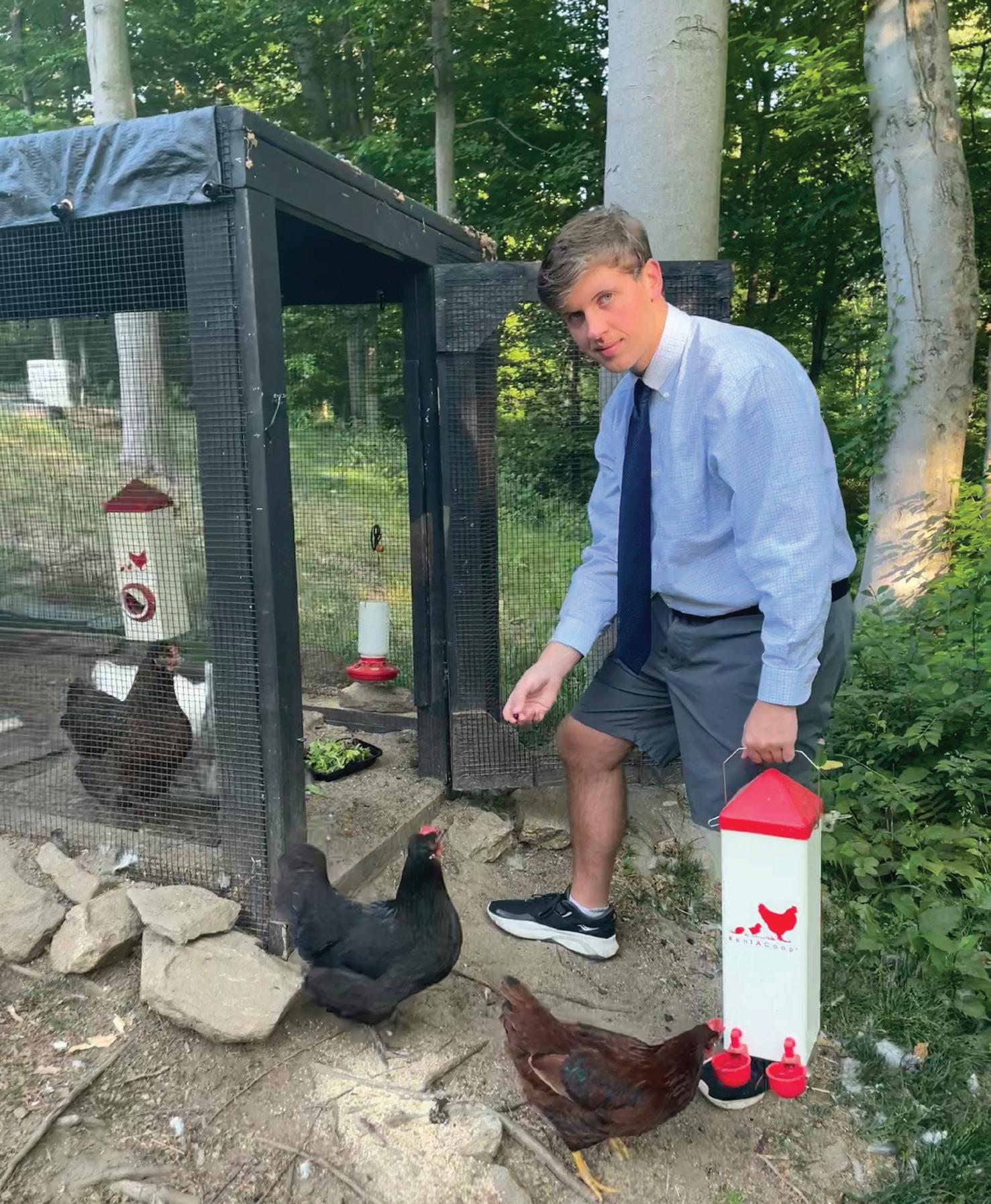
His classmates did not believe he would actually take the chickens and raise them.
Rall took a chance.
“I got them because it would be fun,” Rall said. “My family has always wanted to have chickens.”
Every day, Rall had to check a monitor for any movement or cracks as the eggs got closer to their expected hatch date.
“Waiting for them to hatch was exciting but stressful because I had to get everything ready for them,” Rall said.
Chickens need certain conditions to hatch with incubation. Providing the right amount of heat and time under light allows them to hatch at the best rate. Chicken eggs usually have a 75% chance of hatching and living.
He was relieved to hatch numerous eggs.
Rall has had to adapt to his new responsibility of watching over wildlife. After a long day of school, Rall has many tasks to do.
“My routine is: I go out and give them food and water, then I come back home from school, give them more food and water, let them out to run around for a bit, then let them inside before night.”
Tending the chickens can sometimes feel like a chore, but to Rall, it can also be the highlight of his day.
Sometimes the sun is almost completely set by the time Rall gets home. After a drive from the boathouse after a long crew practice, the chickens are still there. Even if they are a chore, they help Rall recover from the mental stress of his everyday life.
Rall plans to continue caring for his chickens. While he heads off to Scotland’s Saint Andrew’s University, he expects his family to continue raising them.
Even when a few chickens die from illness, it does not deter Rall. He makes sure the flock perseveres.
“We usually record it, and we will watch it over and try to fix our mistakes for the next time,” Vollmer said.
Once the team has finished, Vollmer watches all of the games he played from the day to see what he can improve on. After reviewing his gameplay, he gets on Valorant again and plays online to practice on his own time, separate from his team.
“I just enjoy playing with my friends and winning,” Vollmer said.
COURTESY OF CONNOR RALL ’23
Connor Rall ’23 tends to his flock of chickens
Charlie O’Brien ’23
George Vollmer ’
23
COMMUNICATIONS
the index · features June 2023 Page 9
Cameron Douglass ’23
“ ere are three different aspects of the game: your mechanical skill, your game sense, and your mental. A big part of the game is how good of a mental state you are in.”
DYLAN KAO ’23
“We usually record it, and we will watch it over and try to x our mistakes for the next time.”
GEORGE VOLLMER ’23
“I just enjoy playing with my friends and winning.”
GEORGE VOLLMER ’23
After a year of ASB, a review academics
It has been just under a year since the upper-school administration implemented a new schedule and Academic Support Block (ASB), moving away from a quarter-based system into a semester-based schedule.
Originally, ASB set a block of time for students to meet with teachers once per day, providing opportunities for students to receive extra help. Upper School Head Mr. Mark Fifer, one of the architects of ASB, believes that, based on his own experiences, the period had mixed uses.
“At least, in my class, I saw students scheduling appointments with other teachers, which was good to see. Maybe sometimes, students used it as a break after seventy-five minutes of class, and not as productively as we would have liked,” Mr. Fifer
said.
After a year’s worth of experience with the new structure, students are still mixed in opinion about which schedule they prefer.
Fourth Former Alex Borghese believes ASB was positive.
“The addition of ASB into the Haverford schedule was probably the best change I have seen implemented in the upper school,” Borghese said. “It’s a great time to either get work done or have a good time with my friends.”
Fifth Former Anthony Carter is also happy with the addition of ASB.
“It gave us more time to complete our work and an allotted block period to meet with teachers to ask them whatever questions you had,” Carter said. “I used ASB this year to do any homework that I didn’t complete the night before or wanted to do for future
classes, meet with teachers about my grades, take tests/quizzes that I missed the day for, and give presentations that I missed.”
On the other hand, Fourth Former Conor McDonald is critical of ASB. He wished that there was a bit more schedule flexibility.
“It often felt like some of the Reflections and presentations during Community time were rushed in order to get back to ASB on time,” McDonald said. “But when Community ran into ASB, it was hard to get work done because ASB would only be twenty or so minutes long.”
When students have homework or meetings during ASB, it can often skew their plans and schedules, forcing them to scramble to reschedule appointments and find times in their busy days.
Another criticism of ASB is the lack of freedom, when some students have little-tono work.
“I think more freedom during ASB would improve it tremendously, as it would feel more like a free block,” Borghese said. “It could serve as both a time to catch up or as a way to relax for a bit before heading off to class again.”
Carter agrees.
“While most teachers don’t mind if you leave the classroom after checking in with them and they have nothing for you to do, some teachers make you stay in the room the whole time and/or mark you absent if you miss ASB, resulting in a lunch detention,” Carter said. “I think this is pretty pointless, because if you don’t have any work that you need to do, you shouldn’t have to stay in the room.”
Some groups like the Notables use ASB as a time to rehearse. Carter found it was often a hassle to get excused from ASB and get over to the music room in time for rehearsal.
Mock Trial rebounds in growing year
Colin Toth ’25
In room 200, court has been adjourned for the summer.
Team One of the Mock Trial Team lost in a nailbiter to Lower Moreland in the semifinals of the Montgomery County Mock Trial Competition.
Mock Trial has been in full swing since October 2022. The season started after the Pennsylvania Bar Association published the case file for all Pennsylvania schools. This year, the team argued a wrongful death case. The basic premise of the case is “Alejandro Desafios tragically drowns on an obstacle course owned and operated by Storm Chase LLC.”
The team faced an early disadvantage, with three returning members. The team had to balance practicing the case while learning the basics of mock trial. Luckily, Haverford has strong and experienced leaders, from the faculty, students, and attorney advisors.
Mr. Benjamin White and Mr. Jamison Maley have coached mock trial for several years now. Assisting Mr. White and Mr. Maley, the team has three attorney advisors. People who practice law for a living. Mr. Garth Hoyt ’89, Parent ’24), Mrs. Betsy Toplin P’22, and Mr. Kevin Toth P’26, all dedicated their Tuesday and Thursday afternoons to the team.
Mock Trial’s competition began in January, with a scrimmage against Penn Charter
and Episcopal Academy. This competition was truly for the sole purpose of improvement. It was not scored, and notes were allowed. The team used this scrimmage to see how they compared to other teams. It was also critical for the team to get some experience before the upcoming Benjamin Franklin Invitational.
The following weekend, the team traveled to the University of Pennsylvania. The Ben Franklin Invitational was a weekendlong tournament against schools from all across the region. There was even a team from New York City at this competition. The format of the tournament was two days of two trials. The team would arrive at Penn in the morning and have a trial. The team would reconvene at Raising Canes for a strategy session before their afternoon trial. They would then try their second trial of the day. The team continued to show constant growth throughout the competition. It could have come at a better time, as the Montgomery County Competition was around the corner.
The Montgomery County Competition is the culmination of mock trial. For the first round of the competition, each team has two trials regardless. After a defeat in the first trial, the team believed their season was over. Despite this, the team put up a valiant effort, resulting in victory in the second trial of the first round.
The team went their separate ways over Presidents' Day weekend, thinking the season was over. The team was delighted to find out their season was still alive, after barely sneaking into the next round.
On March 7, 2023, the music finally stopped. Haverford's mock trial team's historic run ended.
"It was incredible because we had so many new people, we had to start all over again with a new group," Mr. White said.
He hopes that in the future, more flexibility will be allowed during ASB.
“If you’re still on campus, I don’t think it really matters where you go specifically, since many teachers let you do it anyway after you check in,” Carter said.
Like Carter, many students use ASB as a time to participate and meet for other extracurricular activities that they cannot do after school because of other commitments like sports.
“Sometimes I want to work in the robotics shop during ASB because I can’t after school because of crew,” McDonald said. “However, teachers often don’t let me.”
Mr. Fifer and the administration are cautious to make any major changes.
“I think that ASB needs to have some parameters. The intention of this block was not to make it a break for students. If you pull off the parameters, more and more students will use the time improperly,” Mr. Fifer said.
However, Mr. Fifer is willing to open up the period to certain students.
“We can look at and think about how we can gradually take some of the parameters away, based on things like age level and the student’s standing in the course, so there are definitely opportunities to open the period up,” Mr. Fifer said.
Mr. Fifer is against the idea of making the block a true “free” period.
Over the summer, Mr. Fifer hopes to consolidate feedback from teachers and students alike to determine his next moves in refining ASB.
“[The teachers] are going to reflect over the summer,” Mr. Fifer said, “and we’re going to discuss the feedback of students and our own experiences and make a change where necessary.”
By the end of the season, though, Mr. White was pleased with the team's effort. "They were motivated and they learned quickly, and that is why we had so much success."
Elliot Lee ’25
the index · academics June 2023 Page 10
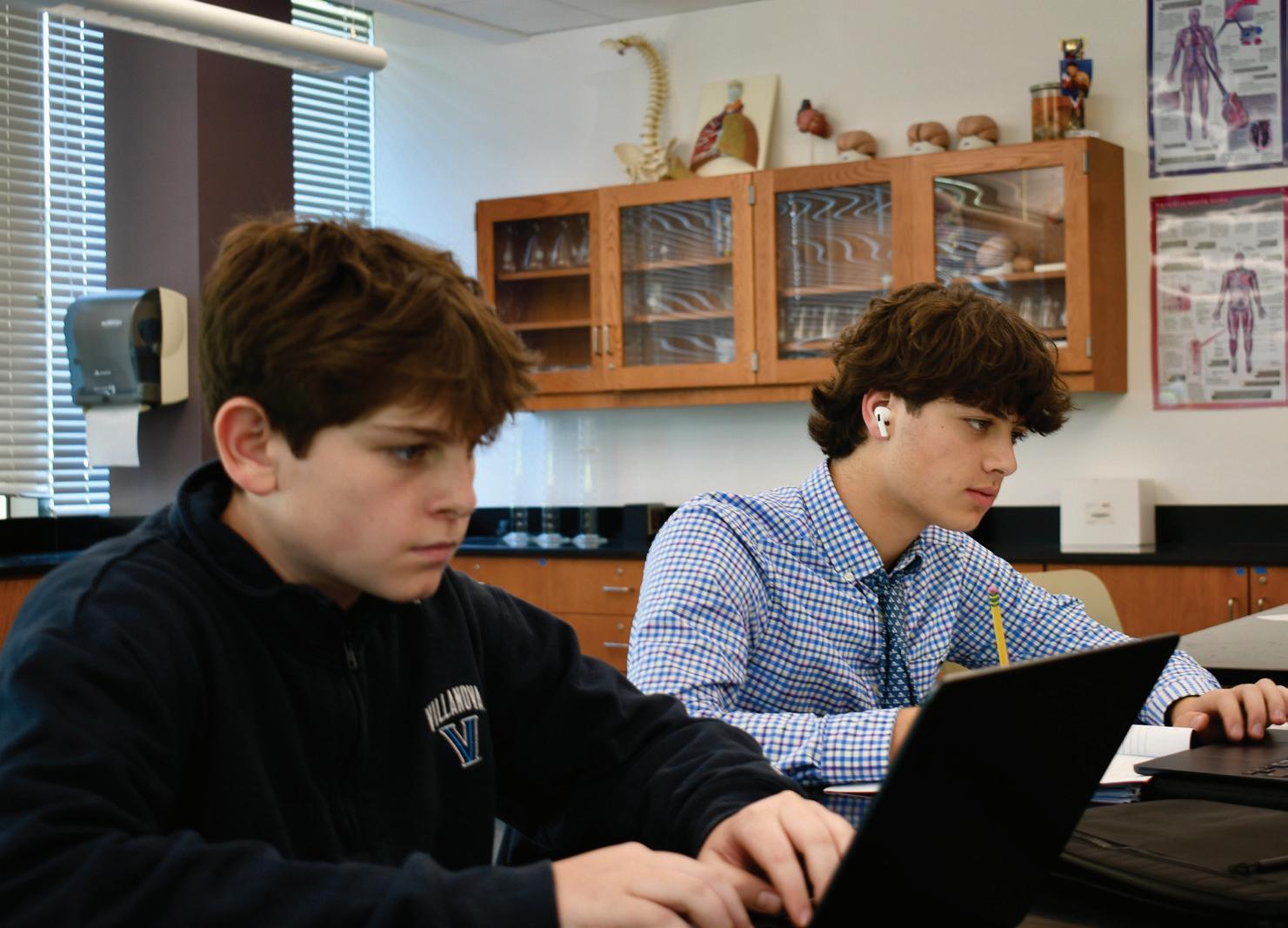
Jack Levensten ’26 and Avery Paul ‘26 at work during ASB
RIYADH ROLLS
COURTESY OF MOCK TRIAL
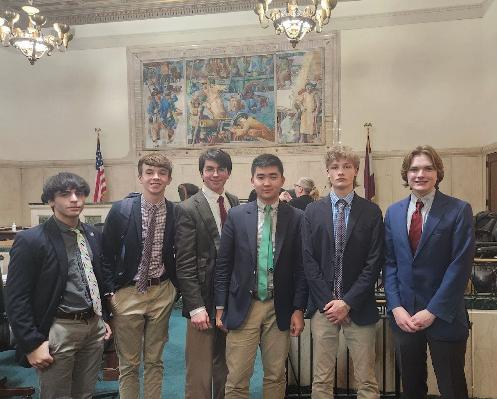
Mock Trial Team One at Montgomery County Competition: (Nicholas Mignucci '24, Colin Toth '26, Reilly Pryma '24, Nicholas Lu '25, Nicholas Hayne '24, Tripp Ronon '24)
’26
Robotics: over, under, and everything in between
Some members of the school community ask themselves, “What is Robotics?”
Haverford Robotics competes in the VEX Robotics Competition, or VRC for short. VRC is intended for high school teams, but plenty of middle school teams compete as well.
The 2022-2023 VEX Robotics season, ending at the end of April with the VEX Robotics Competition World Championship, was successful.
The game for the 2022-2023 VRC Season was called VRC Spin Up.
“Spin Up was an intricate game with the primary objective being centered around foam yellow discs. These discs can either be scored in the high goal, which is worth five points, or the low goal, which is worth one point,” Fourth Former Milan Varma said. “One could also flip cylindrical rollers to a certain position to gain ten points. Three points were given to a robot for every tile they were touching at the end of the match.”
Members are split into teams usually ranging from three to seven people. Teams in VRC are identified with a number symbolizing the organization of robotics, and a letter to symbolize the specific team. Haverford’s number is 169, nicknamed “The Cavalry,” and individual teams choose which letter they want to represent their team.
Haverford Robotics has consistently had some of the best teams in the country. The program has been around for over a decade, and coaches, chemistry teacher Mr. Will Leech, engineering teacher Mr. Adam Myers, biology teacher Ms. Alexandra Surdel and students work tirelessly to uphold a level of excellence.
The Cavalry’s journey started at a Signature Event in Worcester, Massachusetts. This event is called “The WAVE at WPI.” It took place on December 2-3, 2022. Signature Events are unique because three teams that attend the event will obtain a direct qualification for the VRC World Championship. Haverford sent four teams: 169A, 169B, 169C, and 169E.
In previous years, Haverford Robot-
ics dominated the event. The Cavalry had a four-year winning streak at WPI. Although they didn’t win the tournament this year, they were still successful. 169A, led by Sixth Formers Arnav Sardesai, Zach Shah, and Megh Tank, made the highly selective Elimination Round but lost in the first round.
So, what did Haverford learn from this event?
“We learned that the competition is very good. We learned that if we wanted to compete for spots at Worlds, we would have to have a high-quality, efficient, and consistent robot,” Fourth Former Kevin Covington said. “ It gave us motivation to work harder and build a robot to get us to Worlds.”
The heart of the VRC tournament season started a month after the event. Local tournaments, competitions with teams from within the tri-county area, took place every two or three weeks. The end of this part of the season was marked by the State Championship.
The first local tournament was on January 7, 2023, at New Foundations Charter School. 169A made the tournament finals, which qualified them for states. The second local tournament was on February 4, 2023, at Holy Ghost Preparatory School. No teams qualified for States there, but 169C and 169E both quickly cemented reputations for being some of the better teams in the state.
A week later, on February 11, 2023, the third and last local tournament occurred. It was located at Spring-Ford High School. All 169 teams recorded a high skills score—skills are when your robot is the only robot in the field, and the goal is to just score points— especially 169E. Led by Varma and Covington, 169E’s skill score was top five in the competition. This qualified them for States.
On February 17, 2023, all 169 teams had qualified for States due to their skills score being top 80 in Eastern Pennsylvania.
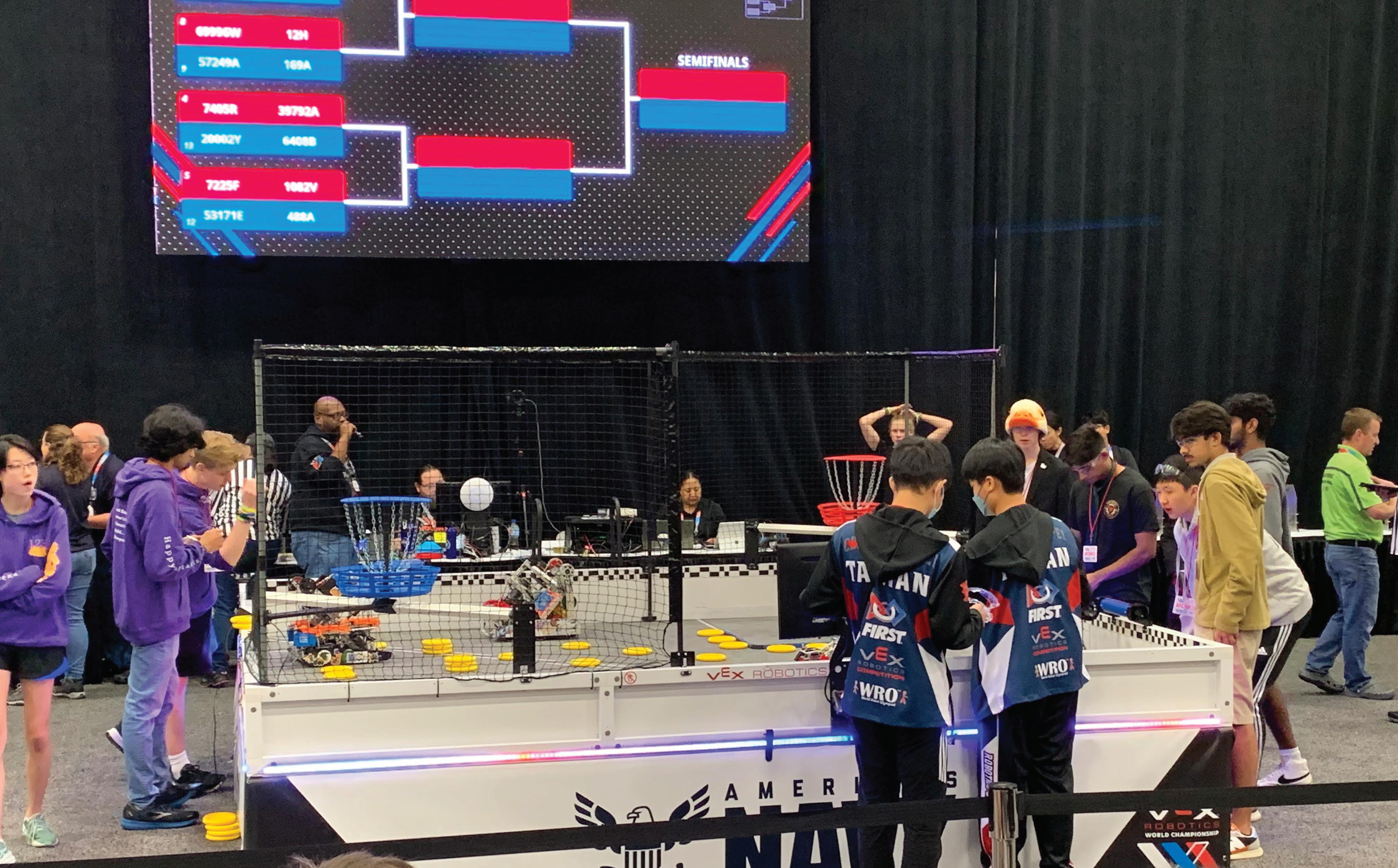
For most teams, States is the last chance to qualify for Worlds. Teams have to have a top-five robot in the state if they wanted a chance at a Worlds qualification. 169A was especially motivated to get to this level, as they were expecting to qualify for Worlds
before the States.
States took place at Norristown High School. Teams arrived on Friday, March 3, to set up their workstations along with possibly running a few skills rounds. The actual matches took place on the March 4.
All 169 teams did well. 169A and 169E were the two best-performing teams at this event; both qualified for the elimination rounds (three and four seeds out of sixteen, respectively). 169C just barely missed the elimination round.
169E was upset in the first round by the thirteenth seed. It was a tough loss, and the members of that team still wonder what they could have done to not lose that match. As Covington said, “We worked tireless hours in order to have a chance at a Worlds qualification. It pains me to think about how we could have done things differently.”
that every team spends a lot of time in those two areas to stand out against the competition.”
With their qualification at States, 169A moved on to preparing for Worlds. They built a new robot with an aesthetic black and red color. The design was the same as what they had for States, except it was sturdier, a little more consistent, and had a little more power. Their Worlds Reveal, where they showcased the capabilities of their robot, is on YouTube. It is called “169 Spin Up VEX Worlds Reveal” on the channel MZFishing.
The VRC World Championship changes location every four years. From 20212024, it will be located in Dallas, Texas. Before that, it was located in Louisville, Kentucky. The new location has yet to be announced.
There are ten divisions at Worlds, and each division essentially functions as an individual tournament. In the end, the winners of each division play in a big bracket to determine who wins the entire tournament.
The team flew to Dallas on April 23 and set up that same day. They then had a full day to practice and refine code. By April 25, they were ready to compete.
The big win from that tournament was that 169A’s skills score qualified them for the World Championships.
Third Former Ryan Shams and builder for 169Z had a lot of takeaways from this part of the season.
“Our team learned that we needed to spend more time with drive practice as well as testing autonomous programming,” Shams said. “If we had spent more time in those specific areas, we would have been more prepared for the events.”
He then went on to talk about what Haverford learned.
“Haverford Robotics as a whole was reminded of the importance of drive practice and testing code for large sums of time before the competitions,” Shams said. “As robotics in Eastern Pennsylvania is becoming more and more competitive, it is essential
In their first two games, the Cavalry struggled. They lost their first game 173-13 and lost their second game 168-75. However, they bounced back and won six of the last eight qualifying games, which was good enough to get them into elimination rounds as the ninth seed.
In the first round, they lost a hardfought battle to the eventual champions of the division. The final score was 191-152.
That run gave Fifth Former Max Zhang and Fourth Formers Conor McDonald and Elliot Lee extremely valuable robotics experience.
Overall, the Cavalry’s season had its ups and downs, but it was unforgettable. Many team members look forward to coming back next year to compete in the new game, VRC Over Under. They also look forward to welcoming new team members, including a new coach, Computer Science teacher Mr. Stuart Alden.
Ajay Chakraborty ’26
the index · academics June 2023 Page 11 MEGH TANK ’23
Team 169A (right) se ing up for the autonomous round
e big win from that tournament was that 169A’s skills score quali ed them for the world championships.
Students use statistics to make essay writing recommendations
Students from Mr. Stuart Alden’s Honors Statistics course recently used statistical analysis to enhance the study of history by examining survey data gathered from about sixty upper school students.
The goal of the survey—initiated by history instructor Mr. Bhelly Bagbonon— was to identify trends in successful history essays. The results shed light on effective research and composition techniques.
The survey consisted of anonymous questionnaires focusing on aspects of historical research and essay construction, as well as performance and satisfaction levels.
initial draft writing process.
In the survey’s most striking revelation, most students admitted to never taking advantage of the Enrichment Learning Center’s resources. This observation suggests that more students should understand the writing-support offered by the ELC.
Among the noteworthy findings were results concerning the use of tools by history students. More than 60% of respondents indicated regular use of tools like dictionaries, Grammarly, and other writing aids to check definitions, spelling, grammar, punctuation, and sentence/paragraph structure during the
Learning specialist Mr. Stephen Cloran is aware of the problem.
“It is my fear that students feel intimidated or unsure of what the ELC can provide and, therefore, don’t inquire with any of the three members of the US ELC Team about writing support,” Mr. Cloran wrote in a recent email.
Still, Mr. Cloran hopes students will come to the ELC whenever they may need help with writing assignments.
“I encourage each and every boy to email a member of the ELC or simply just stop by and say hello to a member of the ELC in the event they need writing support. All three ELC Team members—Ms. Nichole Pugliese, Ms. Julia Salamone, and Mr. Steve Cloran—have over 100 years of writing experience both as former students and current
Above: Graph of student use of aids, like Grammarly, on a scale of 1-5;
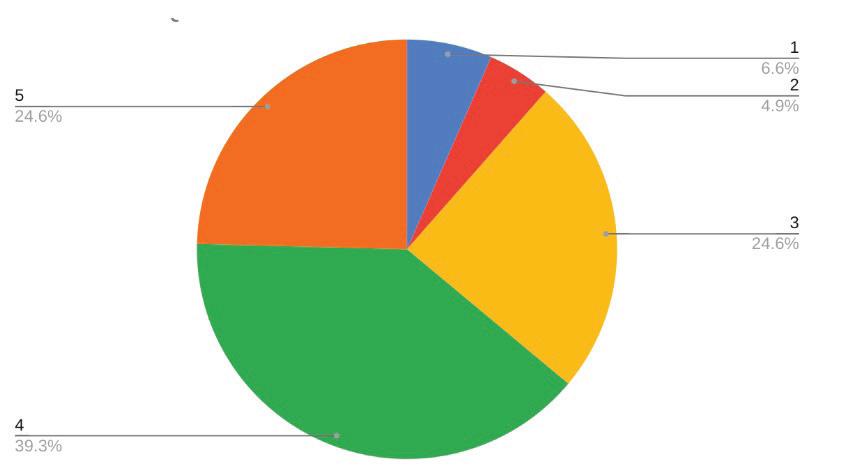
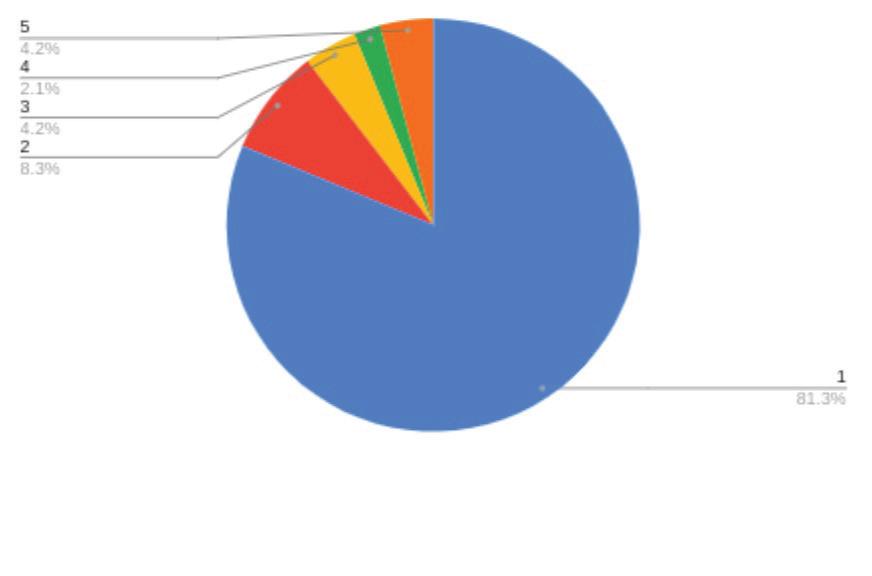
Below: student familiarity with the ELC, on a scale of 1-5
professionals,” Mr. Cloran wrote. “The ELC is ready, willing, and able to support every student with their writing skills.”
Mr. Alden’s Honors Statistics class demonstrated the power of an interdisciplinary approach in fostering improved history essay-writing practices. By analyzing survey data, the student researchers gained insights into the statistical aspects of history and the importance of integrating subjects to promote a comprehensive education.
Mr. Alden thinks application projects like these are dually helpful: they build core
Hydrogen fuel cell car goes 48.5 meters
Finn
’25
In the last weeks of the 2022-2023 school year, students noticed length markers in Wilson Hall’s rst- oor hallways.
Fourth Form Chemistry students participated in the annual fuel cell car project, where students use a hydrogen fuel cell to power a homemade car. The car that drives the furthest distance wins.
The length from the starting line to the doors of Severinghaus Library is 50 meters. This year, Fourth Formers Colin CampbellWilliams, Kai Degenhardt, and Ben McDade built the farthest-traveling car.
“Our car…went 48.5 meters,” McDade said.
“After ASB, there’s a lot of Gatorade bottles in the trash, so basically I went around and gathered five Gatorade bottles from out of the recycling bin and the trash, and we made our car,” Campbell-Williams said. Finally, this project was one that re-
quired students to work well collaboratively. The groups that had the best teamwork often performed the best.
McDade said, “I think we worked really well as a team. We listened to each other’s ideas, and split up work.”
FRED JORDAN ‘24
competencies while also having beneficial applications.
“We spend a lot of time in class learning the mathematical fundamentals of statistics, but there we work with ‘toy’ problems that are simple and clean and—frankly—not very realistic,” Mr. Alden said. “Constructing a survey like this one allows us to see the ‘real-life’ side of statistics, where we need to address tricky problems like sampling bias and missing or corrupt data before we go ahead and apply our mathematics.”
The Fuel Cell Car project necessitates patience, tenacity, and teamwork.

These skills are key to not only the success in group projects, but also for success in the future, whether in engineering or in another field.
The construction of each group’s car was a long process of designing, prototyping, and refining until reaching a final design.
“The main thing we were thinking about was the wheels,” Degenhardt said. “We wanted something big. We were originally thinking CD’s, but they were too thin, and we thought they would just not work too well. So eventually we decided on the bottoms of Gatorade bottles.”
Campbell-Williams, Degenhardt, and McDade focused on recycled materials.
Henry Newhall ’24, Fred Jordan ’24, Christopher Schwarting ’24
the index · academics June 2023 Page 12
Kelly
“I encourage each and every boy to email a member of the ELC or simply just stop by and say hello to a member of the ELC in the event they need writing support.”
MR. STEPHEN CLORAN
“Constructing a survey like this one allows us to see the ‘real-life’ side of statistics...”
MR. STUART ALDEN
PIERCE LAVERAN
Parts from the hydrogen fuel-cell cars, including the fuel cell and syringes.
’24
“I think we worked really well as a team. We listened to each other’s ideas, and split up work.”
BEN MCDADE ’25
tutoring, and level of accountability. The second piece of the application requires candidates to create a five-minute video demonstrating a skill.
Academic Mentorship Program connects divisions
The school values strong, interpersonal bonds in and out of the classroom.
Still, connections between the divisions of grade schooling in the lower, middle, and upper schools are limited. Fortunately, the new Academic Mentorship Program (AMP) has shown promising results.
The AMP, founded just last year by Sixth Formers Owen Yu, Arnav Sardesai, and Joey Kauffman, bridges the gap between middle and upper-school students through academic tutoring. Upper-school students take time before school and during free periods to teach assigned middle school advisories in curriculum-related subjects like reading, math, science, and language, as well as time management and organizational skills.
The group maintains an exhaustive application process for upper-school students wanting to become tutors. First, students write three one-hundred-fifty word answers to prompts about the student’s desire to tutor, academic abilities that would help with
According to math teacher Mr. Matt Ator, the accountability piece of the written application, as well as the demonstrative video, is a unique addition.
“It’s most important to us to see how you explain things,” Mr. Ator said.
Last year, AMP’s first, the program struggled with attendance for tutors following winter break, possibly due to midterm burnout and vacation. This year, the group promoted transparency about weekly time required for AMP tutors—at least one free period per week for every tutor.
workload and the organizational skills anyone might need. AMP takes the experience one step further.

As a program, AMP hopes to help students adjust to higher levels of academic
Pegasus prepares to fly again
The school’s literary magazine Pegasus is a valued hub for the upper school’s creative community. e magazine’s spring issue will grace Wilson Hall in the coming days.

Faculty advisor Ms. Taylor Smith-Kan thinks the editors value many different forms of art and writing.
“We think about something called flash fiction, which we have in every fall magazine, which is a fifty words or fewer fiction piece where we give the student body three different words that they must use in the fiction piece to see if you can get into Pegasus,” Ms. Smith-Kan said.
This process is continued on a “read night.”
and whether or not it should be in the magazine.”
As soon as editors select the magazine’s contents, the design process starts. The staff uses the Adobe InDesign platform.
“We start to lay out pieces in the magazine so that means we have to go into InDesign, which is a complicated document if you don’t know what it is, and from scratch. We have to put together art pieces, layouts, font choice, image choice, and make it all look very beautiful,” Ms. Smith-Kan said.
“We have all of the submissions from everybody at the school, and we read them all,” Ms. Smith-Kan said. “We come in and we eat pizza, and we discuss each piece
This methodical process was especially challenging this year because Ms. Smith-Kan was on parental leave for the first half of the year.
“A lot of that got pushed back late, and we were a little bit late with our last magazine,” Ms. Smith-Kan said.
Pegasus isn’t just about writing.
Sixth Form Pegasus Editor-in-Chief Nate Mirin said, “I came into Pegasus not knowing things like InDesign, but after the years in Pegasus, I am glad I was able to learn more about these useful programs.”
Mirin was most proud of the “strong pipeline that Pegasus has, and that I was a part of and helped out in making sure it con-
Tutors talk to middle school advisories about not just academics, but about the upper school experience. The conversations can involve anything, from the difficulty of courses to the availability of outside resources to nice places to work, relax, or spend time with peers.
By giving middle school students this kind of insider information, upper school tutors form bonds with the younger students. The relationship assumes an older-toyounger brother dynamic, where the older and wiser students look out for the younger students while still holding strong expectations.
Above all else, “making a connection with upper school boys” is by far the most important piece for middle school students according to middle school reading teacher Ms. Karen Suter.
“The middle school sometimes gets jumped over with planning for interdivisional projects [between the upper school and the lower school],” Ms. Suter said, “and we just kind of are here. The middle school faculty really love the idea of the upperschool boys coming down to be mentors for the younger guys.”
tinued.”
Mirin is also proud of the leadership that Pegasus members displayed this year, with Fourth Former Elliot Lee and Fifth Former Christopher Schwarting leading the last issue.
“Their leadership will lead Pegasus to amazing places for future years,” Mirin said.
Talan
Maury '26
Sean Ngo ’24
AMP Mentor Ian Rozenzweig ’25 enters the new middle school MILAN VARMA ’25
the index · acaademics June 2023 Page 13
The winter 2023 issue of the Pegasus literary arts
magazine
As a program, AMP hopse to help students adjust to higher levels of academic workload and the organizational skills anyone might need.
By giving middle school students this kind of insider information, upper school tutors form bonds with the younger students. e Relationship assumes an older-to-younger brother dynamic.
“ e middle school faculty really love the idea of the upperschool boys coming down to be mentors for the younger guys.”
MS. KAREN SUTER
PIERCE LAVERAN
Tutors talk to middle school advisories about not just academics, but about the upper school experience.
’24
“We have to put together art pieces, layouts, font choice, image choice, and make it all look very beautiful.”
MS. TAYLOR SMITH-KAN
“I came into Pegasus not knowing things like InDesign, but after the years in Pegasus, I am glad I was able to learn more about these useful programs.”
NATE MIRIN ‘23
neighborhood
The caddiemaster of St. David's
Miles Balachandran ’23
When you get out of your car and walk up to St. David’s Golf Club in Wayne, the first face you will see is that of Sean Cooke, the caddiemaster.


Cooke, who goes by Sean, stands behind his pedestal, which contains towels, golf tees, divot fixers, and the tee-time sheet. Behind him is the caddyshack, which contains members’ bags along with a room for caddies to relax while on break. The room has a dust-covered, blurry television, magazines dating back to the early 2010s, a water cooler, and a bathroom covered in grass and dirt.
Every morning, Sean arrives at St. David’s at 5:45 to set up the tee-time sheet to make sure he knows who is playing when. Before the first members arrive, Sean loads their bags onto the carts or has them out ready for caddies to carry them. He also has a cooler filled with water and Gatorades for members’ first nine holes, before they get to the halfway house.
When the first golfers arrive, Sean greets them with a smile and a firm handshake, always ending his sentences with “sir.” The players always greet him back, calling him by his first name and cracking a joke or two.
“I’ve known Sean for a while now,” St. David’s member Robert Grossi says. “He always knows what to put in my cart before I start my round.”
Sean has built many relationships at St. David’s, getting to know every single member on a personal level. Members are excited to see him before and after rounds, no matter if they played badly or not.
“I remember one time when I played a really bad round, Sean said that I had to
work on my swing more, and I could not help but laugh,” member Jack Fleming says.
Sean practically lives at St. Davids. Even on Mondays when the course is closed, Sean trains new caddies or helps the maintenance crew.
“I see him there every time I go to the course,” St. David’s member Mark Anderson says. “Every time I go to work on my swing at the range, I see him near the caddyshack cleaning members’ clubs or cleaning carts.”
Sean also spends time with members in
the clubhouse after long days, enjoying his burger with lettuce, tomatoes, and caramelized onions, which he washes down with a few pints of Guinness.
“I love Sean,” Grossi says. “I always invite him to have a few beers with me after my rounds because he is a great person to be around.”
The members at St. David’s have nothing but good things to say about Sean. Visiting players always want to come back because of the energy that Sean embodies when
Good times, good cuts at Mario’s
For the past seventeen years, Joe has been driving to work and parking in the same lot. He walks past the Domino’s, a karate studio, and a doctor’s office into the doors of Mario’s Barber Shop in Havertown.

Before work, he has his decaf coffee and a bowl of Grape Nuts cereal. He then puts on his plain black button-down, a pair of jeans, and black shoes. His ride takes about 25 minutes from his home in Glen Mills.
As you walk in under the red, white, and blue barber’s pole, a bell rings and everyone in the shop looks at you before offering a few hellos.

You walk to the back where there are twelve chairs with a coffee table in the middle. On top of the table lies The New York Times, Sports Illustrated, and a few other things to read. The TV plays either Wheel of Fortune, HGTV, or the news.
The fascinating part of a barber shop is its diversity. One man walks in wearing a suit. Soon after, a customer takes off his hard hat and high-vis vest. Then a father walks in with his two boys.
All the regulars have their usual barber.
If you’re one of Joe’s regulars, he will likely just start cutting without even asking what you want. He remembers everyone’s preferred haircut.
Mario’s Barber Shop opened in 1968. With a framed first dollar now turning yellow, you can sense how old the place is. After some pandemic renovations, Mario’s is in good shape.
The founder, Mario, was fresh off the boat when he decided to open up the shop. His sister Rita still works there alongside Joe, John, Paul, and a fifth seat that might feature a new barber every once in a while.
Rita has owned Mario’s since her brother’s passing. She seems to know everyone that walks in.
“I made a promise to myself and my
brother that I wouldn’t let this place die,” Rita says. “Mario was always happy here and countless memories have been made here.”
Mario’s today, however, looks a little different. There are no old men smoking cigars, no Playboys on the coffee table, and no Italian men speaking with heavy accents.
Joe was not around in the old days. Before Mario’s, Joe used to work at a barber
players arrive.
“I remember meeting Sean for the first time and thinking that he was one of the nicest guys that I have ever met,” Sixth Former Billy Beifeld says. “He called me ‘sir’ and offered me tees and a towel before the round.”
Sean enjoys his time when he is at the course. It is his home away from home. While it may seem unhealthy for a person to spend that much time in one place, Sean seems to think otherwise, as he believes it keeps him sane.



shop in South Philadelphia. His cheerful face and conversational abilities make him the perfect barber for any shop.
“I plan to work here until I can’t work anymore,” Joe says. “This place feels like home.”
the index · neighborhood June 2023 Page 14
Jac Campbell ’23
VIA GOOGLE MAPS
The St. David’s Golf Club in Wayne
VIA GOOGLE MAPS
Mario’s Barber Shop in Havertown
Meaningful retirement at Ruh Ro’s Pet Shoppe

It’s 11:30 on a Saturday morning at Ruh Ro’s Pet Shoppe at a strip mall in Conshohocken, just off the Butler and Ridge Pike intersection. Mary “Beth” Licata is dragging a gray, fold-up table into the store, placing it behind the store window’s two cat cages, which hold two tuxedoed siblings. Next come the crates, litter, bowls, and supplies. Finally, the cats arrive.

Today is an adoption day, where volunteers attempt to get customers interested in adopting cats rescued by Spay and Save. Beth has been working at the organization for over six years and has rescued, fostered, and cared for dozens of cats. Today, she hopes some more faces will get “furever” homes.

The first hour starts slowly, but Beth still finds ways to be informative in the absence of potential adoptees. When a couple asks why all the cats are spayed if they’re female, Beth calmly explains, “If there are stray cats around, then she’ll get territorial and mark her territory and that’ll stink. And she could also get out and go into heat.”
Beth’s teaching ways started in 1971 in the Philadelphia parochial school system, teaching chemistry and AP Biology. When she retired in 2011, Beth decided she needed to continue to pursue something.
“When I retired, I was so worried that I’d be bored,” she says.
She was going to Barnes and Noble to
get books she had wanted to read but never had the time for when she found her calling.

“I was about to get a couple books and there was Spay and Save right there,” Beth
recalls. “I said ‘this is what I want to do.’”

Spay and Save works with dogs and cats, but Beth spends most of her time with the cat division of the all-volunteer organization. She has organized the group’s events at PetValu and Ruh Ro’s location for five years, including adoption days.

The day starts picking up as a woman and her two children come into the store and ask about the event. Beth is the first one to greet them, answering questions and letting them hold a black and white shorthair they took an interest in. When the kitten rejects the attention, Beth quickly steps in and swaps her out for her calmer sibling and pacifies her with a Temptations treat pouch.
“The first set of kittens that I fosteredwere black and white, we called them the dairy cow kittens. I was able to get all [six] of them homes,” Beth says. “It was such a rewarding experience.”
Beth’s favorite stories include getting a three-legged cat adopted and fostering dayold kittens and their mother.
Beth extends her volunteering beyond the animal community. She previously volunteered for bingo nights at St. Mary of the Assumption in Phoenixville and drove senior citizens around.
Even in these contexts, Beth finds her way to helping animals.
“There was one senior citizen who had


a cat, and I was able to help her with the cat [when] she got pregnant, twice,” Beth recalled. “I was able to help her take care of the babies and find them homes.”
At 3:00 p.m., the event comes to a close, but for Beth, the day is never over. As it wraps up, she takes charge of getting two new cats on display, a large orange tabby and a solid white shorthair.
Then, it’s getting all of the crates broken down and into the back of her hatchback. Then, the cats are loaded into the car in personal carriers and redistributed to their foster families.
“I’m picking up kittens this weekend!” Beth says. “I don’t know how many.”
the index · neighborhood June 2023 Page 15
Kiran Mistry ’23
“ e rst set of kittens that I fostered were black and white, we called them the dairy cow kittens. I was able to get all [six] of them homes. It was such a rewarding experience.”
BETH LICATA
Saving Oakwell: Lower Merion’s environmental treasure

If you spend any time driving on County Line Road in Villanova, you have likely driven by Oakwell, “sister to Stoneleigh,” a Natural Lands Trust site. Oakwell, owned by Dr. John Bennett for 25 years, was recently acquired by the Lower Merion School District via the threat of eminent domain.
I had the pleasure of meeting Dr. Bennett personally a few weeks ago when I saw the “ESTATE SALE - OPEN” sign on Oakwell’s fence and drove in. The home was open and Dr. Bennett was there, meeting with a scattering of people to peruse whatever was left following an auction of his home’s contents. The Oakwell mansion, built in 1919, is currently protected under Lower Merion’s Historic Preservation Ordinance of 2000.
his collections. Primarily he collected items from China including art and jade. Of his travels in China, he said, while shaking his
Upon entering the home, I was first struck by the tile floors. They were made by the historic Moravian Pottery and Tileworks (also referred to as Mercer Tileworks), and while Oakwell has much to offer in natural beauty, the tiles alone are a treasure. The intricacy of the woodworking along the grand staircases and lining the walls was a wonderful sight. What was left of the art on the walls reflected the worldly life of an established traveler. Dr. Bennett is a historian, though he admits coming to it recently.
“In school, I only learned about American history,” Dr. Bennett said. “Now I am fascinated by world history.”

Traveling the world, Dr. Bennett is a collector, though he has recently sold most of
head, “I remember when the skies were blue. Now it’s smog.” This general mood seemed to fit how he was feeling.
While the mansion itself is protected, the Lower Merion School District has plans to convert the grounds and other structures of his former estate into auxiliary playing fields.
“There are three heritage trees on the property,” Dr. Bennett said.
According to the Arbor Day Foundation, heritage trees are those that “are important because of their great size, notable longevity, unusual form, location at the extreme of their natural growing range, or association with history.”
“I had to, wanted to, work around these trees when I built my pool house, and had to have plans approved that showed I would not harm these trees,” Dr. Bennet said. “Now the school district wants to cut them down.”
He wanted people to know about the grounds, partly why he opened his doors nearly every day in April and May, welcoming people to view the beautiful 13+ acre property.
As stated on Preserve Oakwell’s Website, and reiterated during my visit with Dr. Bennett, the cost in tax dollars to develop the fields would be “upwards of 10 million dollars” on top of the 13 million dollar cost of the tract. In addition, the fields do not
connect to the new middle school and would still require busing and additional taxpayer costs.

Dr. Bennett stressed that the number of middle school students who would actually use the fields does not justify the steep cost to taxpayers. But the cost is more than just tax dollars.
Of additional concern is the effect on the surrounding community. Having attended St. Joseph’s University and living in the area for a long time, Dr. Bennett cares deeply about the local environment.
The trees and grounds at Oakwell support a cleaner watershed, as well as a thriving population of local wildlife including foxes, rabbits, insects, birds, coyotes, brown bats, frogs, and snakes, each of which contributes to the local ecosystem in a valuable way. Notable, irreplaceable old-growth trees include maple, hornbeam, redbud, cedar, hickory, dogwood, magnolia, spruce, cherry, and, of course, the mighty oaks.
“You just can’t replace these old-growth trees,” Bennett said regarding the school dis-
trict’s plan to plant some new trees on the property following the planned demolition of the grounds. Dr. Bennett said that he is not opposed to the school district finding other uses for the property, including “STEM education, arts, horticulture, literature, and other activities that are not competitive.”
Sadly, Dr. Bennett has moved out and the property has been taken over by the school district. It is now surrounded by a chain link fence and signs to “KEEP OUT.”
“Of course I’m worried about looters and vandals,” Dr. Bennett said. “Do you think the school district is going to have surveillance of the property while it sits empty?”
If you, too, feel moved to speak up about preserving Oakwell for the community to enjoy, and to protect the historic and natural resources it contains, consider attending the facilities meeting on June 15 at 8:30 a.m. and the school board meeting on June 20 at 8 p.m., both at the Administration Building, 301 E Montgomery Avenue in Ardmore.

the index · neighborhood June 2023 Page 16
Jack suter ’23
COURTESY OF PRESERVE OAKWELL
e intricacy of the woodworking along the grand staircases and lining the walls was a wonderful sight.
Lower Merion students in support of saving Oakwell
“I remember when the skies were blue. Now it’s smog.”
COURTESY OF PRESERVE OAKWELL
DR. BENNETT
Trees surrounding Oakwell mansion
campus opinions
How should the passing of club leadership be handled?
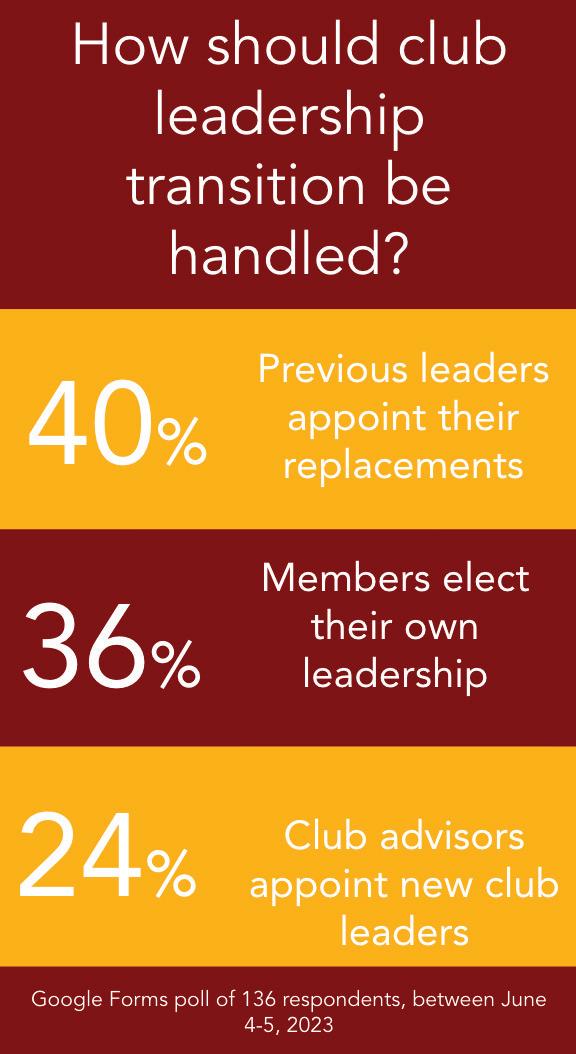
Once every Friday, students are allowed to pursue their interests during clubs period. The clubs are student-run, and upheld with the help of faculty advisors who oversee the activity. Most of the time, they host the club in their classroom. Another thing that the faculty advisors control is club leadership. Each year, with the graduation of seniors, a new student or group of students must come along to manage the club.
While researching who would be leading clubs for next year, I came across my friend Fourth Former Abdullah Kanchwala, who will be leading the Entrepreneurship club, which I am also a part of. I asked him what the faculty advisor of the club, Ms. Brooke Kenna, thinks that she saw fit about him for the position.
“I was attentive and was one of the only members who were loyal to the club and went to every meeting,” Kanchwala said. “A lot of people just came for the food, but I came to learn the content because I am genuinely passionate about entrepreneurship. The club leaders and advisor asked me to take on the duties a few weeks ago, and I have been brainstorming about how I can
improve the club next year. The process was very informal and friendly, which I liked.”
To be a student leader of a club is a light responsibility for upperclassmen but still is an important one based on the goals of that club for the school year. Only a student who embodies dedication to the club can lead it.
“I am still in the process of making a timeline but we are going to be very structured as opposed to last year with a very tight schedule,” Kanchwala said. “We are planning to have a bunch of guest speakers and content and learning days for the club. Our culminating project will be making a sustainable real-world business as a club that we can hopefully pitch to the upper school and launch at the end of the year.”
Specifically for the Entrepreneurship club, bringing in speakers is a key part of the year, especially for Haverford alumni who have started businesses after graduation. Another club that I’m a member of is Fishing Club, headed by Mr. Keith Belson.

“Clubs are very much student-led, especially with Fishing, it’s less about what I want it to be and more about what they want. Making sure there were several fishing trips and making sure all students can get to
the outings and ensuring that these students can all participate and enjoy the sport they love,’’ Mr. Belson said.
With this club he also feels that the passing of leadership should also be in the students' hands.
“It’s in conversation with the current leaders of the club, but it’s really up to the leaders to decide who it is,’’ Mr. Belson said.
As shown on a large scale, clubs and their futures with incumbent leaders are very different in which processes they use, both of which seem to be successful based on this year’s results. Mr. Belson added that much of his responsibility is to create a supportive, enjoyable atmosphere.
“My goal as the advisor is to advise the leadership group about the logistics of meetings inside and outside of school, making sure there are creative ways to go out fishing and creative ways for kids to have fun, so it’s not cliquey but it’s a safe enjoyable environment for everyone,” Mr. Belson said.
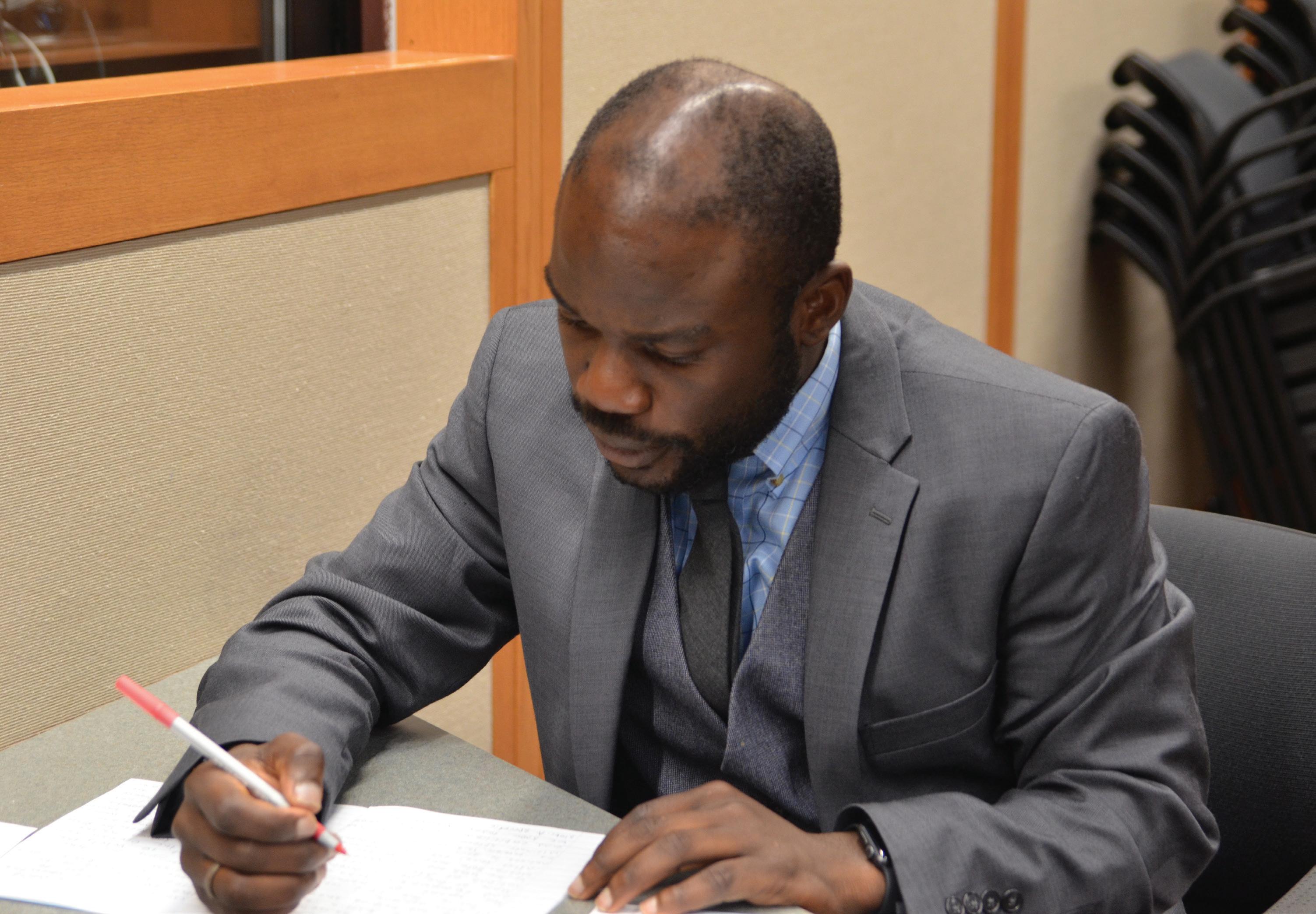
Ultimately the passing of student leadership at the school is a dynamic process that showcases the diverse talents and skills of each generation. It highlights the commitment of our students to uphold traditions
community.
the index · campus opinions June 2023 Page 17
while fostering innovation and growth within our school
Quinn Sullivan ’25
RIYADH ROLLS
Mr. Bhelly Bagbonon introduces a new way of electing leadership roles
’26
In recent years, controversy about transgender individuals’ participation in sports has become a pressing matter, especially in the United States. Some people who identify as transgender undergo physical changes to their bodies, which can cause physical disparities between themselves and other athletes. However, limiting gender expression within communities can fundamentally deny a part of someone’s identity.
But why do people transition? What exactly is the problem?
The meaning of gender and sexuality is debated worldwide. However, according to the National Center for Transgender Equality, having a different understanding of gender than the one they were assigned at birth is medically defined as gender dysphoria.
For some, gender dysphoria can be a great contributor of serious stress or anxiety that causes depression or even suicidal thoughts, sometimes causing them to seek medical care like hair growth and removal, surgery, or hormone therapy.
Gender dysphoria can be even worse for athletes, who make up sport communities that are mostly single-sex dominated.
Unfortunately, for these athletes, transitioning is not as simple as gender affirmation. Hormone therapy can involve testosterone, a hormone present in male bodies that has a significant biological effect on physical and mental growth and athletics. According to Joshua Safer from the National Library of Medicine, “There does not seem to be any reason to expect advantage for transgender people prior to puberty of or for transgender people whose gender-affirming treatment begins at the onset of puberty.”
However, gender-affirming treatment can affect athletic performance post-puberty, which risks undermining the integrity of sports separated by sex to balance the playing field for the disadvantaged female athletes without testosterone.
The conflict of interest centers around individuals who transition after puberty, and where they should compete in their sports communities. Someone who is assigned male at birth and transitions to female can have the physical advantage of male testosterone. A similar situation occurs for someone assigned female at birth who transitions, only this time, the female athlete may be left disadvantaged in their new male community. Whether the transgender person considers themself a man or a woman, they are likely biologically different from the rest of their peers. Since transitioning is a treatment that people go through by choice, some believe transitioning gives transgender athletes an unfair physical advantage.
On the other side of the argument,
opinions
Transgender athetes: inclusion and fairness
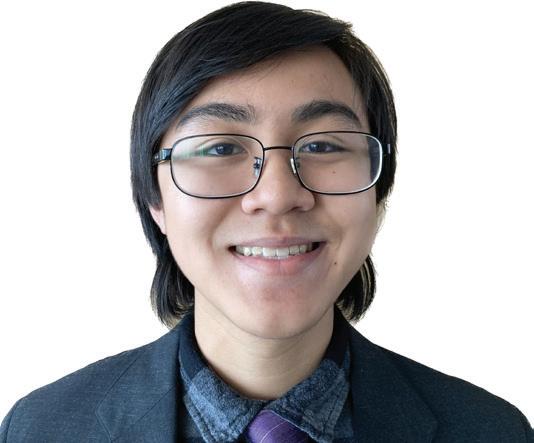
athletes who would prefer to transition but don’t (due to gendered-division restrictions in sports) now compete in a body and a community they are uncomfortable with. Regardless of assigned gender at birth, athletes who do not transition despite desiring to can face further gender dysphoria. Without transitioning, these athletes may be secluded among peers and forced to stop playing their sport altogether. They might be forced to choose between continuing playing or feeling right in their own bodies.
One very famous example of this difficult situation surrounds college swimmer Lia Thomas. Thomas identified as a transgender female in 2019. She started her swimming career at the University of Pennsylvania on the men’s team, and in 2020, transferred to the women’s team, where she found massive success: she became the first publicly transgender athlete to win an NCAA Championship after winning her freestyle event, and she holds multiple achievements for UPenn’s women’s swim team, including the title of All-American.

In an ESPN interview, Thomas opened up about her decisions.
“Being trans is not a choice. I didn’t have any other choice because not transitioning was not leading me anywhere.”
Thomas’s sudden switch from the men’s team to the women’s team obviously sparked controversy—her decision was either unjust and potentially fraudulent, or showed bravery in the face of opposition and was a step forward in society.
Lia Thomas was one of the first athletes to take this debate nationwide. For some, it was a revelation believing that the youth should be able to freely express and feel comfortable with themselves. For others, it was an unparalleled travesty.
“Every event that transgender athletes participated in was one spot taken away from biological females throughout the meet,” said Reka Gyorgy, who received 17th place at the same NCAA event that Lia Thomas won the title of All American. In the same statement, Gyorgy requested that the NCAA change its rules regarding transitioned individuals like Lia Thomas. She acknowledged the efforts by Thomas, but considering the biological differences between Lia and the rest of the female division, she has every right to be frustrated.
While one cannot deny the unfairness of the situation for Gyorgy and her peers, many respect Lia Thomas’s decision. Simply due to both of their situations being fundamentally different, it becomes impossible to compare each of their sufferings or to rationalize any decisive decision in policy. It’s like comparing apples to oranges—you cannot weigh or value one individual’s experience to another’s if they both suffer from different problems. In any hypothetical world, it’s either that Gyorgy and her peers are denied their hard work, or that Lia Thomas and other individuals looking to transition are caught in a catch-22. Even so, many believe that Lia Thomas’s comfort outweighs the unfairness.
For many though, the idea falls short.
A number of people saw the switch as a scandal because Lia Thomas would have an incredible advantage in such a physical sport like swimming. Thomas herself stated, “People will say, ‘She just transitioned so she could win.’ I transitioned to be happy, to be true to myself.”
Despite this, many believe this still does not justify allowing medically-based physical disparities in a sport where strength and physique is crucial for victory. In a 2022 article from The Washington Post featuring UPenn’s swim team, sixteen anonymous teammates of Thomas said that she should not be allowed to compete with them. The swimmers themselves, the ones most affected by Thomas’s presence in the woman’s division, agreed that having a transgender woman participate with them was problematic. Thomas’s participation is not fair to the other swimmers, as they have worked just as hard their whole lives to reach this stage, only to get their spot taken or to lose a race to someone with a significant advantage over them. Until a solution is reached to resolve this issue, many believe transgender athletes should participate in the division of their sex designated at birth.
The debate continues on even in the legal sense. A recent court ruling upheld Connecticut’s transgender athletes policy, stating
that transgender athletes are allowed to participate with the sex of which they identify. Biological females then sued the transgender athletes, arguing they were deprived of state titles and qualifying scholarships due to the transgender athletes’ victories. However, this suit was difficult to prove in court and the case was dismissed. There are still issues and controversy on the topic of proving the unfair advantage. Since it is possible for transgender women to dominate in many female sports, this heated situation among others proves that thus far no good solutions have been found. In the future, there are hopes of a similar systematic change that can satisfy both parties, but until then many concede that there is no solution.
Fortunately, there is some promise for solutions: as more and more transgender individuals emerge in society, new sports divisions could be created solely for said athletes. While it is a radical change, it could succeed in satisfying both the needs, beliefs, and desires of athletes and maintain the integrity of sports. Additionally (and perhaps more radically), some sports like volleyball which are not necessarily dominated by those with testosterone could adopt divisions that are totally gender-neutral.
But why should a high school athlete care? What about non-athletes? Will any of this matter in our lives?
Young people, the most affected by policies, will determine this debate’s fate.
While there may not be consensus over this issue, young students and athletes should be as educated and informed as possible. Without it, misinformation, differing logic, and actual, physical conflicts could arise. Only the informed have the ability and responsibility to form educated opinions, with any and all problems in the world.

This is but one example of a conflict that can change our lives.
Not just because it changes the world around us, but because the decisions we make define the way we and the future generations will live.
Luca Aloi ’25 and Sean Ngo ’24
ISZAC HENIG VIA WIKIMEDIA COMMONS off
the index · o -campus opinions June 2023 Page 18
University of Pennsylvania swimmer Lia Thomas, who is transgender, photographed in 2022
-campus
The United States National Library of Medicine, where Joshua Safer, an expert on transgender medicine, works, pictured in 1999
WIKIMEDIA
Fortunately, there is some promise of solutions.
Nearly one in ten humans in the world have dyslexia. Some of the most intelligent and revolutionary people in history have dyslexia, likely including such notable figures as Pablo Picasso, Leonardo da Vinci, Benjamin Franklin, Tom Cruise, Steve Jobs, and Albert Einstein. Over half of the NASA team are diagnosed with dyslexia, and, according to CEO Magazine, “In a survey of 69,000 self-made millionaires, 40% of entrepreneurs were found to show signs of dyslexia.”

As you can tell, dyslexia can lead to extraordinary accomplishments. But what exactly about dyslexia causes this?
The International Dyslexia Association defines dyslexia thusly: “Dyslexia is a specific learning disability that is neurobiological in origin. It is characterized by difficulties with accurate and/or fluent word recognition and by poor spelling and decoding abilities.”
Junior Learning says that “[people with dyslexia] find themselves making great use of their imaginations as their way of processing and understanding information. This activates the areas of the brain that most people do not frequently use.”
Because people with dyslexia are able to use said part of the brain more frequently, it leads to a high level of problem-solving skills.

“Rather than being a sequential thinker going from one idea to the next, many dyslexics thrive in environments that allow and foster simultaneous thinking in which ideas are connected via different routes than a straight line. This is why we see so many entrepreneurs with dyslexia,” according to the University of Michigan’s Dyslexia Help.
When you think of dyslexia, you probably relate it to education. Dyslexia is some-







The upside to dyslexia
times misunderstood, and at an early age can even be misdiagnosed as a behavioral concern.
At early stages in childhood, how a student with dyslexia is supported is extremely imperative. Director of the ELC Ms. Nichole Pugliese and ELC Instructional specialist, Ms. Julia Salamone agree that noticing and properly supporting students with dyslexia at an early age is vital.
“If you’re in a system that supports you, that’s successful, but if you’re in a system that constantly makes you feel bad about your learning difference, then you will feel like you are somehow robbed of something,” Ms. Pugliese said.
How dyslexia impacts your life is reliant on how it is taught. Learning can still be a struggle and it can sometimes be challenging for students to get ahead.
“Dyslexia is like speaking a different language almost because the way you perceive the world can be very different from others,” said an anonymous Fourth Former. “But unlike other languages, it’s not something that other people who don’t have dyslexia can just learn, so instead of them being able to adapt to me in some ways, I have to fully adapt to the world which I try my best at but it doesn’t always work 100% of the time.”
Many different learning programs teach students with dyslexia how to unlock their abilities. One of these programs is called Wilson.
According to Wilson Language’s website, “Wilson programs utilize research on effective instructional content and practices to ensure students become proficient readers and writers.”
As a former Wilson student, I can con-


firm it is true. Wilson is a systematic and integrated program for decoding and encoding. The program focuses on teaching students the basics of language. In my experience, a lot of sensory and interactive learning was incorporated to enhance memory along with learning the written language—which provided liveliness and built a passion for language as a whole.
Creative thinking, however, isn’t the only special skill dyslexia can ensure. People with dyslexia may have very good spatial reasoning when it comes to images. This skill comes in handy within the design industry, engineering, architecture, and more. Additionally, dyslexia could possibly help with conversational skills and a high understanding of story elements like plot when read aloud to a dyslexia student. According to author Gail Saltz who wrote, The Power
of Different: The Link Between Disorder and Genius, people with dyslexia have proven to show higher levels of compassion.
A team of researchers from the University of Cambridge embarked on a study to discover the evolutionary side of dyslexia. The study found that dyslexia was, at one point, a vital trait that allowed early humans to develop new technologies, and these enhanced problem-solving skills allowed them to survive and adapt to a changing world.
Dyslexia can lead to amazing life skills. When discovered at an early age, a student can be taught how to embrace dyslexia’s many gifts.
When a person with dyslexia has a prosperous education, they can take the skills they learned and use the advantages to succeed.
Dyslexia is a true advantage.
Concerns about Ukraine military support
The war in Ukraine has brought death, destruction, and instability to Europe over the past year. Something has to be done—we must find a way to end this war.
You might be thinking that the biggest threat to U.S. citizens is the fighting in Ukraine, and you might also be thinking that posting Ukraine flags on your Instagram story is doing something—that donating to support groups is getting things done and that you’re truly helping save lives.
But you’d be wrong.
The U.S. government’s silence on war funding threatens American citizens due to censorship. After searching on the internet for three hours, looking for a single source of opposition, I could not find any.
First, let’s get the obvious out of the way: no, I am not pro-Russia in the war against Ukraine, and I do not think we should stop helping a country that desperately needs us in order to protect its sovereignty. But the censorship about our aid to Ukraine cannot go unnoticed.
According to a New York Times article by Michael Crowley and Edward Wong, a senior defense official said last fall that “The United States requires Ukrainian officials to log all military equipment they receive, track its progress to the front lines, and report ammunition expenditure and any damage or
destruction of weapons.”
But what about the financial aid we send?
I discovered corruption involving U.S. tax dollars. On January 22nd, 2023, Ukrainian Minister of Infrastructure Oleksandr Kubrakov, and deputy minister Vasyl Lozynsky resigned for accepting bribes and corruption.
should not be funding Ukraine’s war effort to protect its sovereignty, but the U.S. government and taxpayers need to be given input as to what the money is being used for, and there also needs to be more rigid regulations when it comes to sending aid.
If we allow Ukraine to continue using us as a group of donkeys wearing blinders we will be funding lavish lives of corrupt Ukrai-
nian politicians that benefit from this war. The war has brought the most violence and death to Europe since WWII along with thousands of casualties to the world as a whole.
If the money that the U.S. sends to Ukraine is not being spent properly, who knows how many more could die?
On January 24, the deputy head of Zelensky’s office, Kyrylo Tymoshenko, also resigned for misusing a donated SUV intended for humanitarian missions.
Do you think the average, tax-paying American citizen who supports the country’s interests is aware that we are funding corruption in Eastern Europe?
As I stated earlier, I’m not saying we

Luka
Sekulic ’23
the index · o -campus opinions June 2023 Page 19 Do you
the
SCIENTIFIC AMERICAN VIA WIKIMEDIA COMMONS 3D medical animation still showing differences between normal brain and dyslexic brain THE WHITE HOUSE VIA WIKIMEDIA COMMONS
Max Sides '26
think
average tax-paying American citizen who supports the country’s interests is aware that we are funding corruption in Eastern Europe?
President Biden met with President Zelenskyy of Ukraine outside the Mariinskyi Palace in February 2023
An appreciation for Tina Turner, the queen of rock and roll
On May 24, 2023, “Queen of Rock and Roll” Tina Turner passed away. Her music still radiates in the hearts of her fans worldwide. Her journey inspired millions to speak out about domestic abuse, and empowered many women across the world to be themselves fearlessly.
Turner was not born into stardom. She had to ght for it, tooth and nail.
Turner was not born into stardom. She had to fight for it, tooth and nail. Born Anna Mae Bullock to sharecroppers in Nutbush, Tennessee, Turner had a hard and depressing childhood.
“My father was a sharecropper and actually when I grew up, I worked in the fields picking cotton, and I always dreamed of being an actress while in the fields,” Turner told ABC News in 1982. “I hated that. I didn’t like it at all!”
While she was only performing during intermission and as a backup singer, it had always been Turner’s dream to be the lead vocalist of the group.
After being kicked out of the house at 15, Turner moved to St. Louis. It was there that she met Ike Turner and his band, The Kings of Rhythm. While she was only performing during intermission and as a backup singer, it had always been Turner’s dream to be the lead vocalist of the group.
Ike Turner had written a song titled “A Fool In Love”— which would later become Tina Turner’s debut single, charting at number two on the Billboard Hot R&B Sides— but the person he wrote it for, Art Lassiter, was a no-show.
Dying to perform, Tina Turner suggested that she sing it. This demo would be played at the Club Imperial at St. Louis, gaining immediate recognition by Sue Records president Juggy Murray, who offered a $20,000 advance for the rights to the song.
Ike Turner, who saw the potential before his eyes, decided to give Turner her stage name, “Tina Turner.”
Having children together and nally marrying in 1962, Ike and Tina Turner created some of the most memborable songs.
Having children together and finally marrying in 1962, Ike and Tina Turner created some of the most memorable songs.
Hits like “Proud Mary,” “Nutbush City Limits,” and “River Deep - Mountain High” were sung in stadiums across the world, and were often more popular in Europe than
they were in America.
“Proud Mary” starts out slow and spoken, then blasts through a second time with power and the energy of a rhythm guitar and hi-hats. “Nutbush City Limits” depicts the rural life of the town Tina Turner grew up in. The song is credited with starting a line dancing tradition in Australia, sparking the dance “The Nutbush.” Though many people adore the song now, “River Deep - Mountain High” was originally unsuccessful in the United States, even though it was produced by the critically acclaimed producer Phil Spector.
Her name was in the lights and her songs were screamed at the top of the audiences’ lungs. But past the facade of fame and fortune, she was suffering.
It seemed that Turner had it all. She was a star.
Her name was in lights and her songs were screamed at the top of the audiences’ lungs. But past the facade of fame and fortune, she was suffering. She suffered domestic abuse at the hands of her husband for about 20 years. “I did as I was told,” Turner said in a 1982 ABC News interview. “It’s almost as if you can put yourself in the position of always being told, and it just doesn’t feel good all the time to be under someone’s hand.”
She cared about her kids and her career but had to live under the abusive control of her husband. “I felt that I couldn’t leave because too many things would be destroyed,” Turner said. “I stayed because I cared. And when the time actually arrived I had no longer cared because I was living death anyway.”
Tina left Ike Turner in 1976 and their divorce finalized in 1986, leaving Tina penniless. She opened up about her domestic abuse, bringing national attention to a taboo subject. This injustice faced by women across the world, highlighted by Turner, was finally being noticed. Women started to come forward with stories about the abuse because Turner broke the silence. She made those suffering feel not alone, and told victims that they shouldn’t have to suffer in silence.
After leaving Ike, Tina Turner became a global phenomenon. In 1985, at the 27th annual Grammys, she won Song of the Year and Record of the Year, as well as Best Female Pop Vocal Performance for her smash hit “What’s Love Got To Do With It.” In 1988, she performed to a crowd of 188,000 in Rio de Janeiro on her Break Every Rule World Tour. She went on to be inducted into the Rock & Roll Hall of Fame, not once, but twice. The first time was in 1991, alongside her ex-husband.
In 2021, after the success of the Broadway musical “TINA: The Tina Turner Musical,” Tina Turner was inducted again. From becoming the first woman and Black musician to be featured on the cover of Rolling Stone magazine in 1967 to being honored by the Kennedy Center in 2005 for her lifetime of contributions to American culture, Tina Turner is undisputedly the Queen of Rock and Roll.
 Tina Turner concert in Hamburg, Germany in 1971
HEINRICH KLAFFS VIA WIKIMEDIA COMMONS
the index · arts June 2023 Page 20
Liam French ’25
arts
Les Mis wins big at the 2023 Independence Awards

Every year, the Philadelphia Independence Awards at Temple University highlight the best high school theater productions throughout the region, in categories ranging from lighting and tech to actors and songs. The event consists of the awards and speeches, along with performances by many of the schools.
Last year, Haverford scored sixteen nominations and won five awards for its production of the musical Something Rotten. The awards included Best Supporting Actor for Sixth Former Thomas Pendergast, Best Supporting Actress, Best Vocalist, Best Song for Notre Dame senior Grace Morley, and Best Dance Ensemble. This year, the department earned fourteen nominations for its March production of Les Misérables These nominations included Best Lighting, Best Costumes, Best Ensemble, Best Musical, and more.

In a night of awards and performances, they scored four awards. Morley once again won Best Song for her performance of “On My Own,” along with Best Vocalist. Sixth Former Harvey Pennington also picked up Best Male Vocalist. Along with this, director Mr. Darren Hengst, won Theater Educator of the Year.
Morley was thrilled to be able to win awards again this year, especially in her last year on the Centennial Hall stage.
“Really, it was an absolute honor. Out of all of the shows that I’ve had the opportunity of doing, Les Mis is the one that I was most proud of, both in terms of the work that I had put into it and the hard work and dedication of every single person in the cast and crew,” Morley said. “So, being able to see all of those people at The Independence Awards again was so amazing.”
Morley also got to perform her rendition of “On My Own,” a ballad that comes at the top of the second act. This meant a lot to her.
“For Best Song specifically, ‘On My Own’ and the role of Eponine have always been so special to me, as they have been performed by many of my idols,” Morley said. “So, winning Best Song meant so much to a sixth-grade me who looked up to the women who played this role. It was also an honor to represent Haverford at the awards with the song (hopefully well), and to perform in the opening number alongside Harvey Pennington.”
Mr. Hengst was flattered to win the Theater Educator of the Year award.
“It was really surprising to win the award
because of the amount of people that were nominated. It was overwhelming because the award is decided based on the information provided by our respective communities, so it was very touching that the feedback provided was so great that I was able to win the award,” Mr. Darren Hengst said. “It was humbling, amazing and overwhelming, but I feel like it was also a testament to the work that we all did together on Les Mis together, so it was beautiful.”
Students were excited to see Mr. Hengst take home such an important award.
“It was so well deserved. Mr. Hengst put







so much time and effort into the show and worked with us to make sure we looked good and enjoyed ourselves,” Fifth Former Chase Nelson said.
Students thoroughly enjoyed this year’s awards ceremony.
“It was really fun to meet up with the cast again, some of whom I haven’t seen in months,” Fourth Former Luke Ganley said. “I really liked the spirit that our group brought to the event, and it definitely made me happy knowing we left with some awards under our belt.”
the index · arts June 2023 Page 21
COMMUNICATIONS
Russell Yoh ’24
Follow @haverford_index on Instagram for the latest articles right in your feed!
Trouble at the barricades - Les Misérables
sports
Spring crew closes out a strong season
For the athletes on the crew team, the last two regattas of the season are among the most competitive. e Stotesbury Cup and Scholastic Rowing Association of America Nationals bring the best of the country together to compete for a national title.

The Stotesbury Cup Regatta, nicknamed “Stotes,” dates back to 1927. Haverford has a storied history at Stotesbury. In the late fifties through the nineties, Haverford dominated the regatta, even winning the Varsity Quad event for eleven straight years under Coach Jim Barker.
For the Fords today, it represents a challenge, but also a chance to prove themselves as the best in the nation and in School rowing history.
“No matter how good you are, Stotes is scary. It’s the biggest scholastic regatta and competition comes from all over the U.S. and Canada just for a chance of reaching the finals,” Sixth Former Evan Wang said.
Held annually on Schuylkill River, the competition attracts hundreds of teams and around 5000 athletes from across the country. Winning an event requires iron-hard discipline and dedication to the sport and one’s teammates, at practice and at the race course.
“Every day, as soon as the boat hits the water, the next two hours require mental and physical resilience,” Fifth Former William Walker said. “It’s all for one goal, which is to bring home a medal for your boat.”
High school crew teams can travel thousands of miles and row tens of thousands of meters, only to be eliminated after one race. Rowers leave everything they have on the water.
“[After Cities], every practice was done with the purpose of pushing ourselves beyond what a race would. If we weren’t gasping for air after a piece, we knew we needed to push ourselves even further in the next one regardless of how fast we already were going,” Wang said.
Fourth Former Ben Erskine agrees.
“Over this year we’ve had challenges with many things like blisters, many bad strokes, and being tired.”
The team’s hard work and dedication paid off. Fourth Formers Ben Erskine, Noah Kanefsky, and Fifth Formers Joseph Herd, and Jackson Harrington won the Varsity Quad, bringing the Sonzogni Trophy back to Haverford and Fifth Former Ethan Lee and Sixth Former Evan Wang won the Varsity Lightweight Double for the first time in
Haverford Crew history, bringing the Jim Barker trophy home and securing their place in high school rowing history.
“Winning Stotes was such an amazing feeling after our final was a little closer than we had expected,” Herd said.
Head Coach Jonathan Stephanik attributes the success at the regatta to the team’s motivation and camaraderie. “I think the three most important things that lead to success this season were hard work, willingness to improve, and doing their best to support one another in a boat and during practices,” Mr. Stephanik said. “As lineups started gaining confidence and boats got faster, the team started feeling the reward of their hard work.”
Just a few days later, the Varsity Quad, Varsity Lightweight Double, JV Four (Will Walker ’24, Michael Bartholdson ’25, Anders Bartholdson ’24, Patrick Cohen ’25), and JV Double (Charlie Gord ’25, Ryan Brewington ’24) packed their bags and headed off to Tennessee, where they raced in the SRAA Regatta for the national title. The JV Four and JV Double were hungry for revenge after missing the podium at Stotesbury and the Varsity Quad and Varsity Lightweight Double were just a regatta away from sweeping all three “playoff” regattas.
For them, this was all the motivation they needed.
“We knew the competition and we knew we wanted to complete the sweep of winning Cities, Stotes, and SRAAs,” Wang said.
Winning all three is a rare occurrence. However, the Varsity Quad and Varsity Lightweight Double overcame the competition, taking gold in both their semi and grand finals, and the JV Four edged out their competitors to win a bronze medal.
For the Varsity Quad, it was a culmination of their hard work.
“Winning nationals felt amazing for our quad, seeing all of the work we put in come to life was truly an out-of-body experience,” Kanefsky said. “We had faced most of the teams before and it was just a final chance to prove ourselves at a national level.”
The team’s many successes did not come easily. The team had to overcome many obstacles.
“One of the largest challenges the team faced was that the team is mostly sophomores and juniors, which forced underclassmen to step up into seats in varsity boats with expectations to win,” Fourth Former Michael Bartholdson said.
In addition, finding the right lineups on the water is a time-consuming task that requires methodical planning from the coaches and humility from the rowers.
“Athletes need a willingness to learn and grow,” said Assistant Coach and middle school history teacher Mr. John Suter. “Understanding strength is great, but it must be applied correctly in the boat.”
Mr. Stephanik stresses the importance of team camaraderie to success on the river.
“As guys started to have more trust for the coaching and changes [and in each other] the boats started to gel,” Mr. Stephanik said. “I think this is what led to our four wins and three third-place finishes at our League Championship.”
Wang and Lee both underwent the mentally and physically draining process of adapting to each other in the double.
“It was pretty frustrating, and I think everyone watching and involved knew that. But about two weeks before Cities was when Ethan and I really locked in and found our rhythm,” Wang said.
The boat found obvious success, attesting to the athletes’ ability to work together, solve problems, and dedication.
“Ethan and Evan were never complacent. The double did not lose a race for over a month [roughly eight races]. This type of success can often lead to complacency and a dip in performance. However, the guys stayed focused and as a result continued to separate themselves from their competition each time they hit the water,” Assistant Coach Mr. Robert Moore said.
Members of the Varsity Quad believe that their willingness to learn and grow is also what brought them success.
“We faced challenges with line-up changes early in the season along with some incorrect rigging. Once placed in our final lineup, we were undefeated,” Fifth Former Jackson Harrington said.
To Harrington, winning SRAAs is more than a trophy and medal.
“Winning our championship obviously means a lot, especially being able to carry the legacy of our seniors who won the quad last year,” Harrington said.
The team’s victories set an even higher bar than last year. Kanefsky hopes to continue the momentum.
“Winning was a great way to wrap up our season and give us momentum moving into next season,” Kanefsky said. “We’re going to compete and hopefully win at even larger regattas like Head of the Charles, Youth Nats, and hopefully Henley in England.”

For Herd, he is more motivated than ever to keep the win streak going.
“We all have high expectations for our next seasons in the fall and spring and have the drive and determination to keep our winning streak alive.”
The Varsity Quad celebrates after winning the Stotesbury Rega a, Saturday, May 20
COURTESY OF ROW2K INSTAGRAM
the index · sports June 2023 Page 22
Elliot Lee ’25
The Varsity Lightweight Double lift the Barker Trophy after winning the Stotesbury Rega a, Saturday, May 20
COURTESY OF ETHAN LEE ’24
“As guys started to have more trust for the coaching and changes [and in each other] the boats started to gel.”
MR. JON STEPHANIK
The tennis team turns toward a brighter future
With thirteen consecutive InterAcademic League titles, the tennis team has had a history of success. Led by Sixth Form Captains Neil Sawhney and Jay Crowther, the 2023 season—in which the team finished with a record of 14-1 and tied for the Inter-Ac title—was no exception.
Still, the success did not come easily. With a young team filled with freshmen and sophomores playing on the varsity level, team chemistry and experience had to be developed throughout the season.
“We have a lot of younger guys,” Sawhney said. “The freshman class at tennis is really big and the sophomore class is pretty big—not many juniors—so it’s been a young team.”
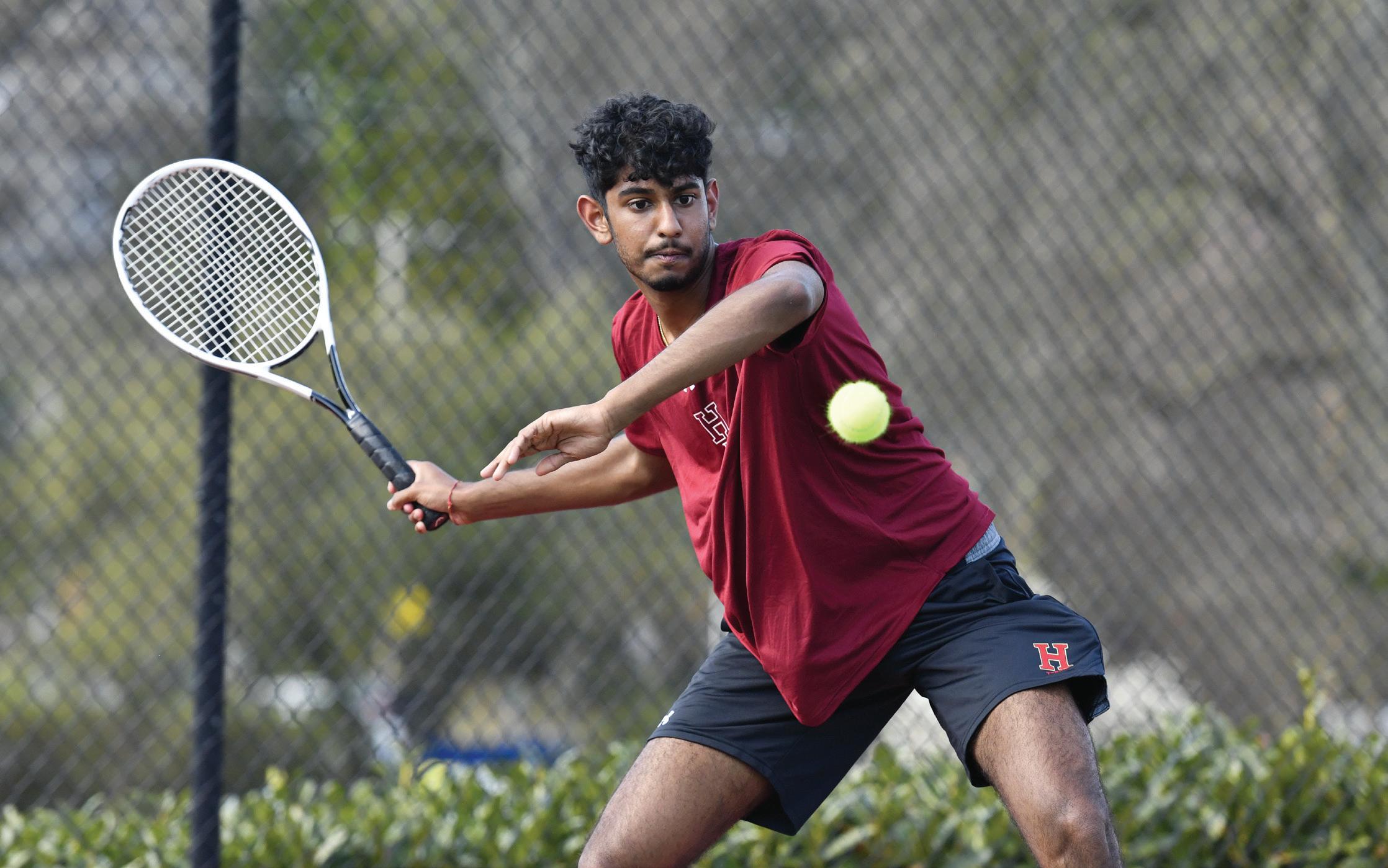
With such a young group of players, the team initially struggled maintaining a mature and respectful environment.
“[The team culture] started off a little poor, to put it bluntly. ” Sawhney said. “The team’s culture and attitude just had a problem with being respectful.”
Crowther echoed that sentiment.
“We had lots of young talent, but the problem was that they weren’t acclimated to team culture, so there was a disconnect,” Crowther said. “At the beginning of the season, everyone was super competitive with one another. Everyone was trying to figure out how to beat one another, instead of how to beat the other team.”
Part of the upperclassmen’s frustration comes from the fact that the tennis team has always radiated a positive, supportive environment, and the Sixth Formers have re-
membered that throughout all four of their years.
“The community of the tennis team represents exactly what Haverford tries to be at its core: instilling the values of brotherhood and support,” Crowther said. “It’s really cool to have 20 guys on the varsity level and everyone has their backs. Everyone loves spending time with one another and it feels like a family, and it feels really nice.”
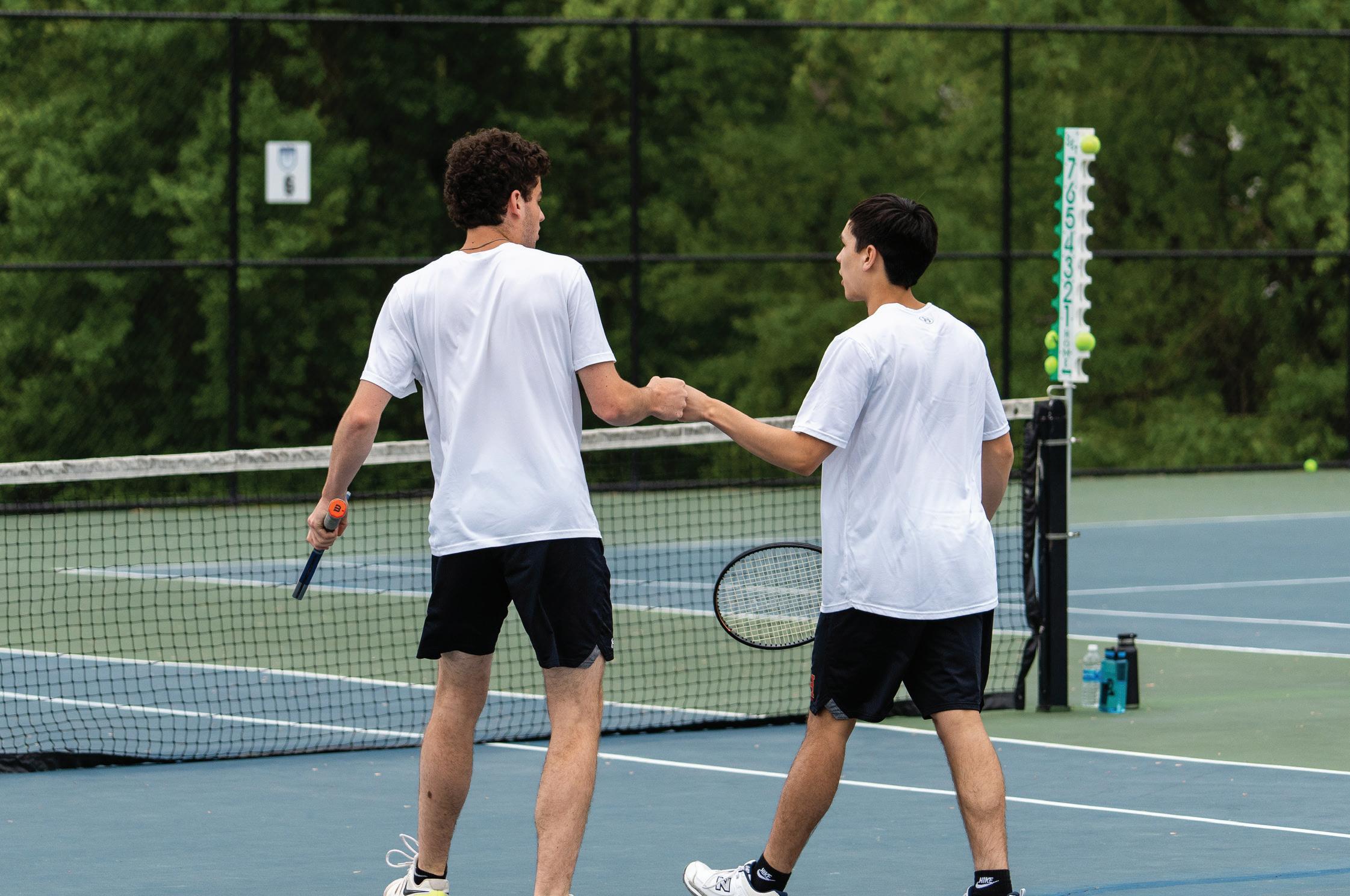
With the season on the line, the Sixth Formers knew that they had to set an example. They made a commitment to fostering a supportive and positive environment.
“The seniors as a whole, not just the captains, had to step up and drill the mentality in,” Sawhney said.
“Because when we’re gone, that’s our legacy that we’re leaving behind. I think it’s been about passing the torch and [creating] a good team mindset.”
The Sixth Form class brought an experience hard to replicate, with some of the Sixth Formers having played on varsity since they
were Third or even Second Formers.
“When I played in eighth grade, 13 or 14 years old, being around all these giants, was terrifying,” Crowther said. “But coming full circle and being that senior was one of those big moments. It felt really cool to go from younger brother to older brother.”
“Everyone started playing better, not just in games, but in practice as well,” Crowther said. “Obviously, comparing the first matches we played to the last, there was a huge improvement.”
Early on, the team found steady success. Building off the momentum of being 3-0, the team beat its biggest competition for the season.
“When we beat [Germantown Academy] on the road, 5-2, that was a huge moral victory for us,” Crowther said. “That gave us a chance to win the Inter-Ac since we could beat them at home [the] next time we played them, but we kind of let our guard down, and ended up losing. That forced us to reset going into the final and helped us realize that as good as we are, we’re still human.”
As the season progressed, and matches began, some of the problems began to resolve themselves. Not only did the team chemistry improve, but the team found more success in practice.
Although the team finished the season sharing the Inter-Ac title, the season stands as a success. And with such a young group of athletes, the future of Fords’ tennis looks strong.
“To think that the top-four players after me are all freshman and sophomores—that feels great,” Crowther said. “Even though the team loses me next year, I think most of the talent is retained. We have an equal amount of freshmen and sophomores that are just as talented as the seniors.”
The underclassmen are ready for the challenge.
Fifth Former Nolan McCloskey said, “To fill the gap that they left, I think everybody just has to use what they taught us and take a step up.”
As for what they aim to achieve next season, along with winning another Inter-Ac title and an undefeated season are the hopes of building a supportive and positive environment, just as the Sixth Formers before them have tried to develop.
“The tennis team certainly has a culture of winning, and [we] of course aim to continue that. There are so many talented players on the team, not even taking into account the incoming freshman, so I believe we’ll have another great, winning season,” McCloskey said. “One big goal I would like to see accomplished is a positive and respectful team atmosphere [we] have to create by fostering that positivity and calling out negative events, but I’m also confident that every single guy on the team can contribute towards a great team culture.”
PIERCE
Casey Williams ’24
LAVERAN ’24
PIERCE LAVERAN ’24
“Everyone started playing better, not just in games, but in practice as well.”
JAY CROWTHER ’23
“ e community of the tennis team represents exactly what Haverford tries to be at its core: instilling the values of brotherhood and support.”
JAY CROWTHER ’23
the index · Sports June 2023 Page 23
Arnav Sardesai ’23 returns a volley in a 6-1 win over Penn Charter
Thomas Pendergast ‘23 and Ma hew Collier ‘23 fist-bump during a match
Baseball winds up successful season behind athletes like Fred Jordan ’24
In the realm of sports, few endeavors can capture fans quite like the game of baseball. From the crack of the bat to the roar of the crowd, there’s a magic that fills the air, weaving history, strategy, and athleticism.
The Diamond Fords just closed their successful season on a high note. At the same time, the team dynamic is shifting as former stars and leaders graduate and aspiring ones take their place.
Fifth Form pitcher Fred Jordan threw 38 innings last season, leading the team in pitching. Still, Jordan went through a phase of “dead arm” and didn’t throw for the whole month of May
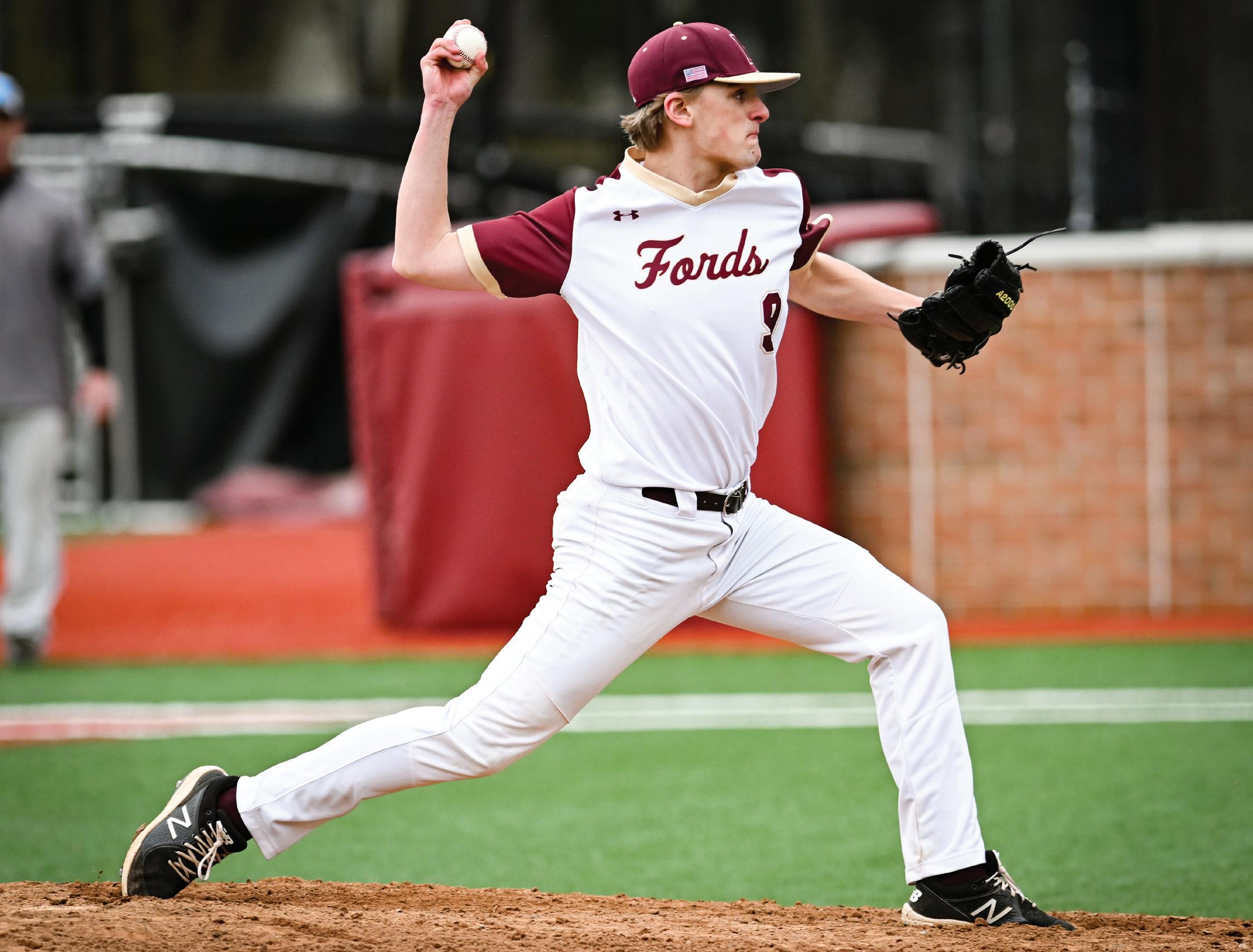
“I was just taking a little rest, but I still got the most innings for the team,” Jordan said. “I was a pretty prevalent pitcher, pitching once or twice a week. I went out there just trying to hold base runners on. I didn’t really throw as many pitches as I do now.”
Jordan’s workload saw a significant increase this season.
“The biggest change from last year is my location early in counts and the amount of pitches I have,” Jordan said. “Last year I had three pitches, just a slider, fastball, and change-up. This year, I have seven, so getting
to mix that up got hitters off balance enough that I got more outs. This season, I ended up throwing around 53 innings, and I was the inning leader this year.”
The increase in innings pitched is a quantifiable testament to Jordan’s hard work.
“In the middle of the week, I would do lifts, or I would run to burn off some lactic acid,” Jordan said. “So that was also a really big thing, making sure to keep myself as competitive as I could be every single time.”
Pitching played a large role in the success of the team, especially in building momentum during games.
“As much as the offense is important, which it is, it often comes down to the pitchers because no offense wants to go out there and hit for a pitcher who is getting hit as well, or walking people. They want a pitcher who’s going to go out there and get them outs, get a lot of ground balls and pop-ups so they keep the defense in the game, and so the game is close enough so that the offense doesn’t feel like they’re useless,” Jordan said. “So I tried to keep games close and get the hype at the right moments so the team gets some momentum going.”
This strategy yielded considerable success.
guy on the team. Shifting from the little guy who just went out there and threw to the guy who went out there every Tuesday was a big change,” Jordan said.
Jordan focused on setting an example every day with his attitude and consistency.
“Out of conference this season, I didn’t let up a run. We won 17 games and went 16-1 out of conference,” Jordan said.
Jordan also evolved this season as a leader, taking on a larger role as an upperclassman.
“From a leadership standpoint, I was a sophomore last year with three senior pitchers and a junior pitcher, so I was the little
“I had to build up some reliability, which was a big thing, and build a rapport of: I don’t mess around. Get right to business, in practice, you do what you can, never really sit around doing nothing. If you’re doing nothing, you have a problem,” Jordan said. “You never see major leaguers sitting around, they’re hitting in the cage, they’re fielding ground balls, they’re doing something. That’s what I try to preach by not really speaking up because I’ve never really been the guy who would go out there and get everyone in the huddle and start talking. I’m more of a guy who would see someone sitting down and say, ‘Hey let’s go field some ground balls.’ I’m more focused on the individual.”
Most recently, the baseball team competed in the Pennsylvania Independent Schools Athletic Association (PAISAA) tournament, which they had won the prior year. The team had a bye in the first round before losing 5-2 to Penn Charter.
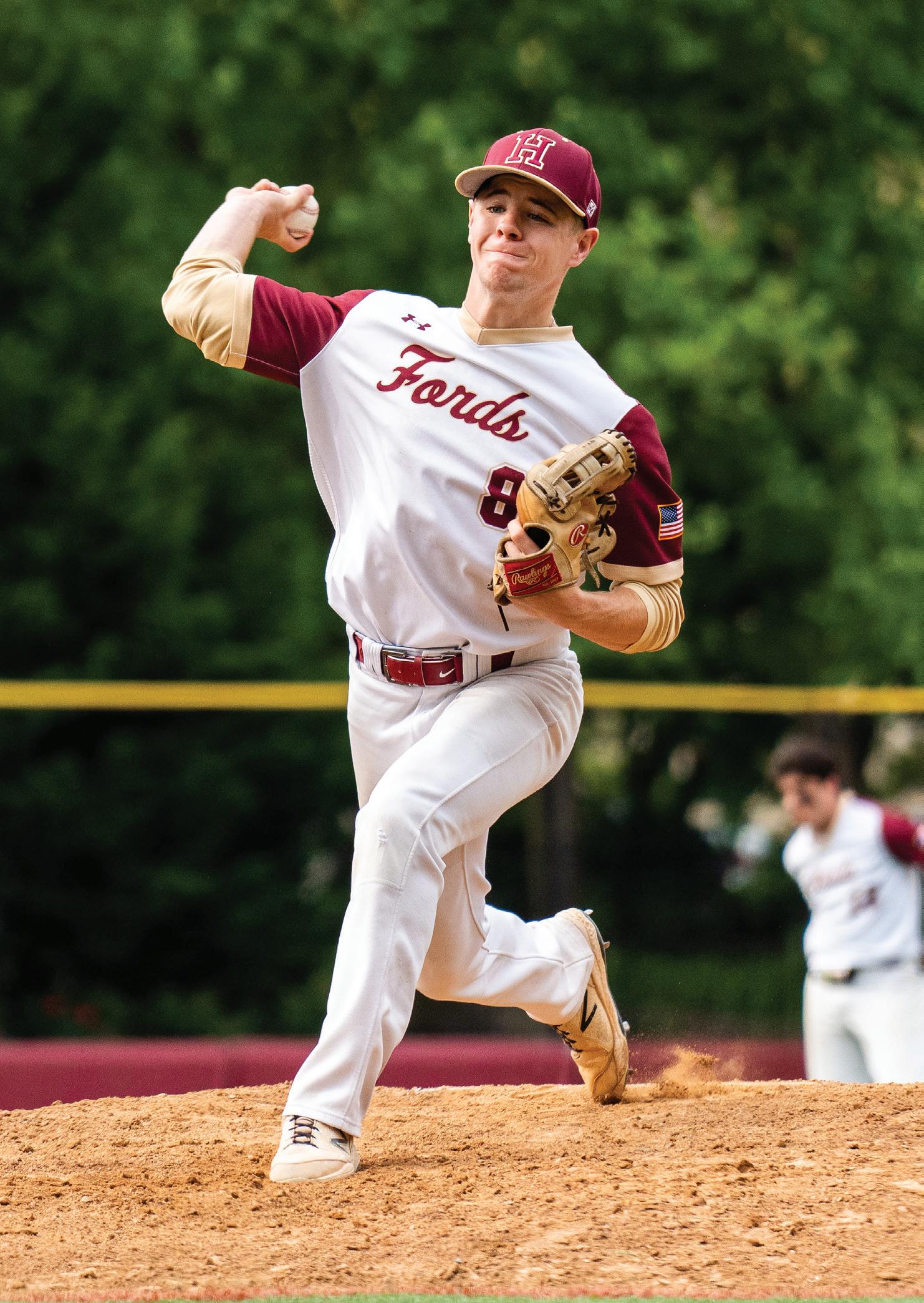
“I’d say that our placement in the PAISAA tournament was good, but we just needed that offensive jump that we get sometimes,” Jordan said. “In the Penn Charter game, we didn’t really get too many hits, which kind of killed the vibe.”
The PAISAA tournament may have not been the desired end to their season, but it serves to show that even the best of the best have off days and are not perfect. Jordan leaves the season with the common saying, “We’ll get them next time.”
PIERCE LAVERAN ‘24
Fred Jordan ’24 pitches
Milan Varma ’25
Jac Campbell ’23 winds up on the mound
the index · sports June 2023 Page 24
PIERCE LAVERAN ’24
“Get right to business, in practice, you do what you can, never really sit around doing nothing. If you’re doing nothing, you have a problem.”
FRED JORDAN ’24
“I’m more focused on the individual.”
FRED JORDAN ’24
“
e biggest change from last year is my location early in counts and the amount of pitches I have.”
FRED JORDAN ’24
Brody Murphy ’24 anchors strong Haverford defense
Charlie Keidel ’24
Every student who walked into the fieldhouse during the spring season saw the lacrosse statistic board.
The board consisted of statistical targets the Fords had set out before the season. After each game, marks that were hit would be given a check, while those that weren’t were left blank. What was left was a spreadsheet of sorts that determined performance from game to game. Among the targets on the board were winning the ground-ball battle, scoring thirteen goals a game, and assisting on at least eight of those goals.
The most important aim the Fords had rested upon the shoulders of Fifth Form goalie Brody Murphy. In hoping to give up less than eight goals a game, the Fords would need Murphy to play his best.
Murphy entered the year without the starting job, facing off against his two fellow goalies to gain the lion’s share of minutes between the pipes.
Murphy remained unfazed in his belief in his ability to perform.
“I felt comfortable because I knew I was playing well and had faith in myself,” Murphy said.
That core belief in his ability to make the saves when it counted most was something Head Coach Mr. Brendan Dawson relied upon often. In the Fords season-defining win on alumni weekend against #1 ranked Saint Anthony’s Prep, Murphy made thirteen saves, including a crucial save against a top-five player in the class of 2023 with 40 seconds remaining and the Fords up only one goal.
Moments like that defined Murphy’s impressive campaign.
To say Murphy was a core part of the Fords undefeated Inter-Ac season would be an understatement. His many double-digit save games kept the Fords afloat in times
when their high-powered offense struggled. Even in the Fords heartbreaking loss on May 20th at West Chester University in the Inter-Ac championship against Malvern Prep, Murphy kept the Fords in the game for as long as he could. He tallied fifteen saves while only allowing nine goals.

Acknowledging it can be hard to stay focused when all he can do is defend the deficit is hard, but Murphy reconciles that by telling himself that he can “only control what [he] can control and there’s no point in being frustrated with things [he] can’t impact.”
Coaches and teammates acknowledge Murphy’s level-headedness and cool demeanor both on and off the field.
Murphy faced high-level competition in practice—not only from other goalies (Fifth Former Kyle Morris and Fourth Former Colin Decker), but from all-league attackmen such as the Sixth Formers Ryan DiRocco (InterAc MVP), Wells Filnn, Colin Zeller,
and Wills Burt—all of whom will play Division-I lacrosse in college. He attributed his high level of play to the reps he got in against the players within the Fords program all year long.
“The level of offense I got to face in practice every day was arguably a top-five offense in the country. That helped so much with my development and seeing such highquality shots to prepare myself for coming games,” Murphy said.
The level of work he put in during the offseason was even more impressive, considering in his first game after winning the job he made fifteen saves in an 8-6 win at Loyola-Blakefield. His performance against Loyola-Blakefield and Malvern Prep and the Inter-Ac championship display Murphy’s sustained excellence.
Beyond what he contributes between the pipes, Murphy is an outstanding person off the field. Fifth Former Pierce Laveran’s
TikTok about Murphy’s embrace with a Malvern attackman at the end of the InterAc championship racked up millions of views on the social platform.
The video perfectly encapsulated Murphy’s poise and composure after he had done all he could to keep the Fords in the game. Moreover, teachers and fellow classmates rave about his kind-hearted demeanor and willingness to do the right thing.
Fifth Former John Rouse said, “(He’s) a very genuine guy I can trust with anything. Definitely one of the best guys I’ve met here at Haverford.”
It’s easy to say that for a young man with such talent, his incredible humility does not go unnoticed amongst his teachers.
“Having Brody in class for two years,” English teacher Ms. Emily Harnett said, “he’s an incredibly hard worker but an even more humble kid.”
Track and field’s support system pays dividends
Track and field, by nature an individual sport, fosters internal and external motivation. The team’s athletes spend their days striving toward personal goals while also supporting each other, understanding that their successes contribute to the larger team effort.
“The team culture is divided between groups for different events, but happily united under the name ‘track and field,’” Fourth Form captain Alex Dardarian said.
If nothing else, the team is unified by the work ethic and support systems that they built into their routines. Pole Vault Coach Mr. Christopher Fox noted that track
and field is a grueling sport, but that camaraderie forms around shared truths.
“Everyone knows it’s hard,” Mr. Fox said. “Track is every other sport’s punishment.”
The effort that each athlete puts into his event is a facet of Head Coach Mr. James Hawkins’s program.
“The team culture is made up of a philosophy which brings about work, belief, and a willingness to adopt a concept that works for the entire team. These concepts helped our team understand why we compete,” Coach Hawkins said.
The individualism of hard work—a
quality that Coach Hawkins impresses upon the team as a whole—is one of the most challenging aspects of the sport.
“Track is difficult because you have to rely on yourself because all the results are based on the work you put in. No one else is responsible for your progress,” Fifth Form Team Captain Jey Brown said.
But despite the individual responsibility that track and field demands, the team is supportive.
“Every student athlete exceeded all expectations and even reached goals that didn’t seem realistic until next year,” Coach Hawkins said. “I am super proud of how our team responded to adversities and challenges that we didn’t see coming. I’m proud of our young student athletes who believed in the process and allowed every inch to work for them. I’m also proud of how every student athlete represented The Haverford School and how each virtue of the school worked as a tool and stepping stone of balance.”
Mr. Fox also shared his pride in the team, specifically noting the young athletes who grew throughout the season.
“To see a young guy who was maybe a little clumsy at first kind of hit his stride, there’s always that kind of hope for the future,” Mr. Fox said. “As a teacher or coach, that’s what keeps us in the business.”
“[The culture] helps the team perform because teammates are always available to cheer during meets and push you to be better,” Dardarian said.
Mr. Fox added that the team relies on a support system from its older athletes.
“[The events] are all going on at the same time, so there’s no way that the coaches can be at every event at the same time helping guys, so that begins to fall on the older guys and team captains. So it is a team effort in that way,” Mr. Fox said.
Coach Hawkins set three main objectives for the season, one of which focuses on camaraderie and support. Coach Hawkins’s other objectives were more material, such as “Learn your event” and “Exceed your height, distance, or time (even if it was measured by a hair).”
In addition to a strong culture and work ethic, the track and field team boasts solid results. The team placed second at States, earning gold medals in three events, and fourth at Inter-Acs, earning gold medals in two events.

The team hopes to continue its positive results and continue to improve. Next year Brown wants to place first at the Pennsylvania Independent Schools Athletic Association event and win at Penn Relays.
“I want to break some more records too,” Brown said. “That was fun.”
Coach Hawkins plans to continue building a successful and hard-working team.
“I love this team,” Coach Hawkins said. “I love the growth of our program, and I love taking part in the tradition of preparing boys for life.”
Brody Murphy ’24 makes a save in a spring game.
Ahijah
start
PIERCE LAVERAN ’24 RIYADH ROLLS ’26 the index · sports June 2023 Page 25
Ian Rosenzweig ’25
Goins ’26 prepares for the
of a race
“No one else is responsible for your progress.”
JAY BROWN ’24
Mark Quatrani ’23: a process-focused individual in a result-focused world
Ping
“Good,” Coach Luke Kania says.
The time is 7:15 p.m., a Tuesday. Practice ended over an hour and a half ago, yet Sixth Former Mark Quatrani is still hitting. For Quatrani, baseball has been his life since elementary school.
For Quatrani, these long nights “are a quiet escape,” he said. “I love baseball—I love waking up every day ready to give it my all.”
guacamole between two slices of whole wheat bread. Mark has the same thing for breakfast every day, along with a protein bar and organic popcorn.
Unlike most teens, Mark doesn’t drink caffeine with breakfast.
“I don’t need it,” Quatrani said. “I get eight hours of sleep a night, and by sleeping 10-6 every night, my body wakes itself up. I’m very regulated with my sleep schedule.”
Mark’s regimented routine has paid dividends this year, as he was named MVP of the Inter-Ac in May.
On the weekends, the schedule remains the same. While he spends time with friends, he never drinks alcohol, nor does he ingest nicotine or CBD.
“While there’s definitely some temptation to live like a normal high schooler,” Quatrani says, “I understand that my longterm goals outweigh the short-term pleasure I would get from stuff like that.”
Quatrani thanks Coach Kania, who regularly volunteers his time to pitch to Quatrani long after practice has ended. The birds chirp, and the wind gently nestles in the trees as he heads back to his car, an ivy-green Nissan Pathfinder.
Quatrani came to Haverford as a Third Former, with the hope of someday playing college baseball. Over the years, his work ethic has paid off, as he will join Cornell’s baseball team in the fall of 2024.
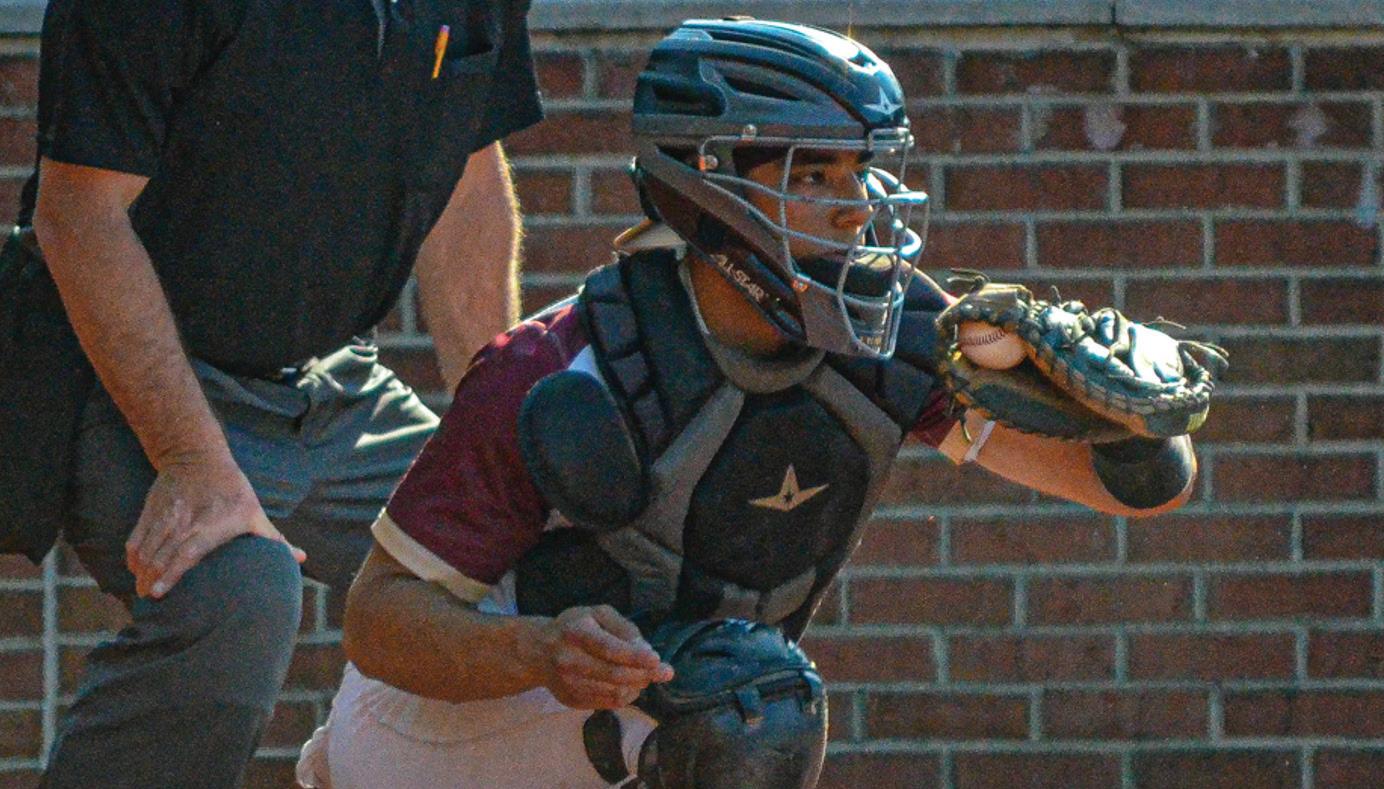
Twelve hours prior, Quatrani was in the gym. Each day, he wakes up at 6 a.m., takes a bottle of water from his fridge, and heads downstairs.
In the basement, Quatrani alternates between lower-body workouts, upper-body workouts, and power-based workouts.
“I feel at home down here,” Quatrani said.
He looks at home too, as he pushes up 250 pounds on a rusty bench press, sweat beading on his forehead.
Quatrani takes a cold shower after he works out, and heads back downstairs to make a sandwich: eggs, bacon, turkey, and
At the beginning of his time at Haverford, Quatrani struggled to find himself. As a slightly overweight fourteen-year-old, he decided he wanted a change.
“Motivation to lose weight started in November of my freshman year,” Quatrani said. “Our first football lift I wasn’t nearly as strong as I thought I should’ve been. Some people that weighed less than me lifted heavier than I did, and from then on, I knew I wanted to get more in shape. That’s when I started taking my diet seriously.”
ketchup.
Quatrani gets up and then returns to the lunch table, a small serving of Froot Loops in hand.
“I try not to get too crazy,” Quatrani said. “I diet flexibly. These, for example, have 8 grams of added sugar. I stay below 25 grams of added sugar each day, and these are a nice treat for me to have. Nothing too bad in here.”
Quatrani’s game day routine is always the same.
“I spend twenty minutes visualizing success before each game,” Quatrani said. “I feel that it locks me in and gets my mind ready.”
ever he hears the resounding ping. While he is hitting, Jac Campbell, the starting pitcher for the day, walks across the turf to talk.
“I always talk to my pitcher,” Quatrani said. “It’s important that we’re on the same page. I’ll also have a talk with my hitting coach in order to identify weaknesses in the other team’s pitcher.”
Quatrani’s focus before each game has paid dividends for him, as he boasts an otherworldly .569 batting average, in addition to being a valuable leader on the Fords’ baseball team.

At lunch, Quatrani sits down with four fish filets and a bottle of water. After scarfing them down, he smiles and knocks twice on the red laminate table top. “65 grams of protein,” he says.
Beside him, other students eat blackjack chicken and french fries, dipping them in
After putting himself in an optimal mental state, Quatrani moves on to the physical warm-up. In his maroon Haverford hoodie, with the strings taut, he uses a band to warm up his legs in the dugout, before heading over to centerfield to go through a team warmup.
Quatrani then takes some soft pitches from Coach Kania, who slowly nods when-
In today’s day and age, where it often seems like the norm to find loopholes in the system and do the bare minimum, Quatrani’s work ethic is a refreshing change of pace. For an eighteen-year-old, finding joy in the process of working towards a goal is a remarkably mature outlook.
“I just… like my life,” Quatrani said with a grin. “I like working hard. I’m not anything special.”
RIYADH ROLLS ’26
Peter Dunckel ’23
“I like working hard. I’m not anything special.”
the index · sports June 2023 Page 26
MARK QUATRANI ’23
PIERCE
Mark Quatrani ’23 catches a ball at home plate in a game this spring
LAVERAN
’24
Mark Quatrani ’23 winds up to hit a pitch
“I understand that my long-term goals outweigh the shortterm pleasure I would get from stu like that.”
MARK QUATRANI ’23
The training room: nobody wants to be here
After a long day in school, you are ready to head out to practice… but can’t.
You have suffered an injury, which means you can’t just walk from the locker room to Sabol Field. Before you walk through the doors that lead you to practice, you first must take a stop in a room nobody wants to be in.
Jerseys from the previous year’s teams hang from the ceiling.
Football players, lacrosse players, basketball players, and other student-athletes. They’re familiar with the scene. They all have, at one point or another, spent time in the training room.
They take care of every student-athlete in the room with efficiency and care.
Even while taping ankles, wrists, and shoulders, they ease everyone’s nerves through light conversation.
“We believe that trust and the relationship we have with the kids is what makes this room so effective,” Mr. Warner says.
Any day you can hear someone ask for “Dr. John.” “Dr. John” is a nickname for Mr. Warner for his doctor-like precision taping ankles or wrists.
Mr. Wardle laughs this nickname off, saying, “He is not a doctor!”
A student-athlete jokingly says “This sh** hurts!” while doing an exercise. Everyone laughs and points to the swear jar tucked away in the corner of the room. Everyone knows the protocol when someone curses.
Once the pre-practice rush dies down, all the taping finished, Mr. Warner and Mr. Wardle focus on the injured athletes by giving them their exercises for physical therapy.
Next to the door, a board holds pictures of the worst injuries the room has seen.
The feelings of nausea, nervousness, and fear are palpable in the air.
Five training tables fill up quickly. Three on the left side, two on the right.
A computer sits on the table next to the office. Everyone is supposed to sign in. Few do.
3:15 hits and the madness begins.
Student-athletes come in to get taped, get treatment for a preexisting injury, or have a quick conversation before heading out to practice.
The room is different when many people come in—it does not feel as lonely.
Athletic trainers Mr. Bill Wardle and Mr. John Warner take control of the chaos. It’s organized chaos.
Mr. Wardle has more than 30 years of athletic training experience, while Mr. Warner is a relative rookie.
The combination of experience and youth balance each other like yin and yang. They form a dynamic duo.
“Take a seat at one of the tables, and we’ll get you situated,” Mr. Wardle says to one student-athlete.
“What can I do?” Mr. Warner says to another.
The two of them are in their element.
“Three sets of ten shoulder raises,” Mr. Warner says to a student-athlete recovering from a shoulder injury.
“Four sets of six balance passes,” Mr. Wardle says to another.
The student looks lost.
Out of nowhere, Mr. Wardle performs his version of the exercise.
jury. It does not have to be a serious injury. Maybe just a sprained ankle.
The next step is the recovery process.
A couple of physical therapy sessions after school.
The injury is then healed, but you still come back to the room.
Why do people go to a place where so many people are injured? Why do people go
back after being healed from an injury?
So often, people go where they feel accepted. A place where there are people that understand and sympathize with a situation an injured athlete is going through. That place is the training room.
People return to repay the debt this room has given them. Mr. Warner and Mr. Wardle have created a space for student-athletes to support student-athletes.
This is the type of excitement that Mr. Wardle brings to a rather gloomy job. Mr. Wardle can bring joy to a person who is going through recovery’s mental and physical struggles.
Sixth Form football and wrestling captain Billy Brosko said, “It’s the people that make the training room what it is.”
The training room is one of Haverford’s special communities.
You don’t apply to join. The community picks you.
The initiation begins with the first in-

“We try to celebrate the little accomplishments in the recovery process,” Mr. Warner says, “By doing that, we boost the morale of the student-athlete and continue to push him forward along the road to returning to play.”
This community pushes each other, cares for each other, and is there for each other for each step of the recovery process.
Sixth Form training room community member Sean Dugery says, “We are extremely lucky to have a place at Haverford as athletes where we can go and be supported.”
the index · sports June 2023 Page 27
Matt Pante ’23
e feelings of nausea, nervousness, and fear are palpable in the air.
e training room is one of Haverford’s special communities. You don’t apply to join. e community picks you.
“We try to celebrate the little accomplishments in the recovery process. By doing that, we boost the morale of the student-athlete.”
MR. JOHN WARNER
PIERCE LAVERAN ’24
Enjoying this print issue? See our online exclusives at thsindex.org
Mick Barnes-Pace ’24 completes workout in weight room to prevent injury
