2025-26
JOHN NEAR GRANT Recipient
The Death of Romantic Comedy: Streaming, Social Media, and Modern Dating on the Demise of the Romcom Golden Era
Natalie Barth
“The Death of Romantic Comedy”: Streaming, Social Media, and Modern Dating on the Demise of the Romcom Golden Era
Natalie Barth
2026 Near Scholar
Mentors: Dr. Julie Turchin and Mrs. Meredith Cranston
April 13, 2026
A lover standing outside your window with a boombox, or waiting at the base of the staircase to whisk you away to Prom, or racing after you through traffic on a motorcycle before it’s too late . . . These scenes remain familiar to even a casual romcom enjoyer, decades after their releases, shaping the culture’s expectations of romance and the genre itself. While the referenced films maintain their cultural relevance, notably they were all produced in a twenty year period between the mid-1980s and early 2000s: Say Anything… (1989), She’s All That (1999), and How to Lose a Guy in 10 Days (2003).
Certainly, the romantic comedy declined by the start of the 2010s, in both studio production and audience ratings. Reaching a peak of 10% of total box office revenues in the US in 2002 during its golden era, the romantic comedy dropped to an all-time low of 0.6% by 2015.1 With such a dramatic drop-off in just over a decade, one cannot help but wonder the causes. Thus, this paper will address the underlying root of the decline in the American romantic comedy film beginning in the 2010s through both economic and social lenses. Specifically, shifts in the film industry around mid-budget slashes and the introduction of streaming have coupled with cultural changes regarding modern dating and social media, altogether lowering the American romantic comedy in both production and popular reception.
Before diving in, Donald Petrie defines a romantic comedy as a movie that includes at least one central romantic storyline, with an equal balance of tears and laughter.2 A well-known director of successful romcoms like the aforementioned How to Lose a Guy in 10 Days and Miss Congeniality (2000), Petrie values in equal measure the emotional beats of the film with the
1 Beatriz Oria, "Love on the Margins," Atlantis 40, no. 2 (2018): [Page 147], https://www.jstor.org/stable/26566967.
2 Scott Meslow, From Hollywood with Love: The Rise and Fall (and Rise Again) of the Romantic Comedy (New York: HarperCollins, 2022), [Page 3].
comedy, building a story both engaging and entertaining.3 Film studies researcher Claire Mortimer clarifies in her seminal work on the genre, aptly titled Romantic Comedy, that it “is differentiated from the romance and the melodrama by its emphasis on the generation of laughter,” and that the romance must be essential to the plot.4
I. History of the Genre
Not long after the birth of cinema itself, the modern conception of the romcom emerged in the 1930s with screwball comedy in which a couple verbally spar in a battle of the sexes, the witty banter building sexual tension between the main leads without direct contact or references. Suggestion, rather than the tangible reality, of attraction created the chemistry. It Happened One Night (1934) is a foundational work in the genre, with the top comment on Letterboxd aptly noting that it seems to be “the prototype for every romantic comedy ever;”5 masterfully combining trope upon trope, from enemies-to-lovers to forced proximity to fake identities, the film follows socialite Ellie Andrews and reporter Peter Warne as she struggles to reunite with her snobbish fiancé even while the mismatched pair grow closer.
By the 1970s, however, the screwball had long fallen out of fashion. Romcoms in the ‘60s and ‘70s gained a more cynical tone in response to, among other factors, economic stagflation that placed many traditional milestones like purchasing a house out of reach for some of the younger generation. Still, romance prevailed in its new form with beloved pictures like Audrey Hepburn’s classic Breakfast at Tiffany’s or the 1970 hit Love Story. Both include hints of
3 Goetz, Kevin. "Donald Petrie's Blueprint for Comedy Success: From Mystic Pizza to Miss Congeniality." Kevin Goetz 360, Substack, August 11, 2025. https://kevingoetz360.substack.com/p/donald-petries-blueprint-for-comedy.
4 Claire Mortimer, Romantic Comedy (Oxford: Taylor & Francis Group, 2010), [Page 70], ProQuest Ebook Central.
5 Patrick Willems, August 16, 2020, comment on "It Happened One Night." Letterboxd.
realism with death, mob bosses, and class disparity, yet the style of this period was characterized by a certain irony layered with sentimentality that softened the darker elements. Still, although several films during this time like those above persist in the wider public memory, overall the genre was certainly not at its best. In 1978 critic Brian Henderson infamously assessed that the romantic comedy was dead. Believing increased frank sexuality, realism, and heteropessimism of the decade to be detrimental to the romcom, Henderson ironically made his proclamation just before the genre’s great reinvention and boom in the mid-1980s.
In the span of three years, from 1984 to 1986, renowned producer, director, and screenwriter John Hughes released the iconic films Sixteen Candles, The Breakfast Club, Pretty in Pink, and Ferris Bueller’s Day Off. Although The Breakfast Club and Ferris Bueller’s Day Off fall moreso into the category of coming-of-age, they nonetheless brought attention and praise to Hughes’ clear-cut romantic comedies. As of 2026, Pretty in Pink still has 75% and 81% from critics and audiences on Rotten Tomatoes, a testament to its long-standing reputation as a classic romcom.6 Shortly after, Nora Ephron cemented the new age romcom with When Harry Met Sally…, establishing golden era conventions, notably emphasizing atmospheric elements. From there, the genre only grew, producing more and more films to rapturous reception.
By the end of the 2000s, however, the public had largely moved on from the romantic comedy, which seemed to stagnate in the tropes of the golden era that no longer functioned in their updated culture. Industry reporters like Dave McNary were already announcing the stirrings of this situation toward the end of 2010, and others similarly called back Brian Henderson’s despairing report. Contemporary critics’ rising cries, growing in numbers and volume, surely reached the ears of the producers whose pockets begged them not to invest in a genre already
6 "Pretty in Prink," Rotten Tomatoes, Fandango, https://www.rottentomatoes.com/m/pretty_in_pink.
deemed to be in the morgue. Of course, it wasn’t killed off yet, nor was it inherently doomed, but by preemptively diagnosing its collapse, critics inadvertently gave executives reason to believe that the romcom was no longer profitable nor what audiences wanted; the negative feedback loop intensified.
II. The Cinematic Landscape
An excellent starting point for why the romcom genre started to break down in the 2010s would be looking at the more general cinema landscape at the time. Most crucial is the major production studios’ phasing out of the mid-budget movie in favor of massive blockbusters sure to rake in millions of dollars of profit. The average day at the box office may have consisted of superhero sagas– with the Marvel Cinematic Universe hitting its stride during the decade and putting out one to three films every year– or assorted reimaginings and sequels, particularly from Disney. These films carry recognizable intellectual property, including comic book inspiration; modernized remakes; and recycled, already commercialized characters. In fact the onslaught of unoriginal, nostalgia-riddled films produced in the past decade and a half stretches far beyond the predictable bad-actor corporations like Marvel and Disney. Acclaimed releases likewise fall into the pattern: Barbie (2023), blatantly about a beloved product; book-to-film adaptations like The Hunger Games (2012) or It (2017); and biopics like A Complete Unknown (2024) and I, Tonya (2017) capitalizing on an established fanbase for a public figure. The phenomenon has proved stronger than genre, production studio, or target audience, uniting movie-goers in an unavoidable wave of recognizable IP.
In the context of romcoms, not only are they by and large mid-budget, but they also struggle to cash in on recognizable IP as a result of the genre’s restrictions. If the happily ever
after of the first film fails, as a sequel necessitates, then convincing the audience to continue rooting for the couple who doesn’t seem to work becomes much more difficult. There are generally two outcomes: a series that worsens with each new addition or an embrace of realism that heavily leans towards straight romance or drama in genre rather than the romcom at the focus of this paper. Proving this point, Bridget Jones’s Diary (2001) received a respectable 79% from critics and 81% from general audiences on Rotten Tomatoes;7 in contrast, its sequel dropped these ratings to 27% and 60%.8 Richard Linklater’s 1995 Before Sunrise, on the other hand, certainly revolves around eternal romcom questions of chance encounters, falling in love, and romantic chemistry, but its thematic ties to the genre cannot outweigh the tonal and formal differences. The film consists of meandering conversations between the main couple as they wander the streets of Vienna, creating naturalistic dialogue and lacking comedic beats; Mortimer would certainly classify it as a straight romance.
Of course, there is the caveat that not every recent film is based on a direct precedent, and throughout history art has been derivative anyway, yet the fact still remains that in the past decade and a half, the sheer volume of reimaginings and the like has grown to be overwhelming–and there is a genuine reason for this age of recognizable IP outside of sheer corporate optimization; it is also a response to streaming.
The shift to watching films via streaming services as opposed to in theaters has tangible impacts on the viewing experience. In a 1967 Fordham University experiment, researchers aired a video with the mediums of both films and television to the participating class, randomly divided into two groups. They replicated the differing screening processes; while in theaters light
7 "Bridget Jones’s Diary," Rotten Tomatoes, Fandango, https://www.rottentomatoes.com/m/bridget_jones_diary
8 "Bridget Jones: The Edge of Reason," Rotten Tomatoes, Fandango, https://www.rottentomatoes.com/m/bridget_jones_the_edge_of_reason
reflects off the screen as cast by the projector, for television the light passes through the screen, emitted from inside the device out to the viewer.9 Their findings indicate that the presentation of a video can greatly alter the viewers’ perception of cinematic elements, passage of time, and sensation. Indeed, media theorist Eric McLuhan differentiates between a “low-definition information medium” and a “hi-def experience medium,” like television and film respectively.10 The television, and by extension the streaming, experience is altered by external elements like noise or light. On the other hand, high-immersion defines the cinematic experience;11 theaters close audiences into a consistently dark box and warn them to silence their phones, with talking during the movie being socially objectionable. Therefore, the environment as well as the literal screens of the two media transform the consumption of the same film. With the introduction of streaming, movies shift from the hi-def category to low-def, losing the associated quality of immersion.
The streaming phenomenon has also had a significant impact on the viewing behaviors of consumers, thus inevitably on the industry itself too. Nowadays, movie-goers generally don’t arrive at the theater without a plan of what to see gone are the days of seeing what’s showing as you buy the ticket. The habit has phased out, tickets are more expensive than ever, and film no longer holds the title of main visual content consumed, instead usurped by social media. The National Library of Medicine reports that television and smartphone screentime have comparable
9 Eric McLuhan, "The Fordham Experiment," Media Ecology Association, last modified 2000, https://www.media-ecology.net/publications/MEA_proceedings/v1/Fordham_experiment.html. 10 McLuhan, "The Fordham," Media Ecology Association. 11 Le, Mina. "elitism is the enemy of the people." High Brow, Substack, August 25, 2024. https://minale.substack.com/p/elitism-is-the-enemy-of-thepeople?utm_source=profile&utm_medium=reader2.
rates in American users,12 but that for TV time binge-watching outweighs traditional viewing associated with film.13 Thus, movies lag behind other short-form media. The American public plans ahead, having to be convinced to go by the offerings. Recognizable IP is a reliable draw for audiences who don’t want to risk spending hard-earned money on something new; it, along with franchises, remakes, etc, is comfortable, and viewers know what to expect. Not to mention, streaming undercuts in-theater experiences since the films almost always wind up on a service a couple months later. While cinephiles in the last century would have to go out to the theaters or wait a year for the on-demand release, modern audiences are comforted by the knowledge that in the blink of an eye, they can watch the release from their own sofa. Why spend twenty dollars going out to a theater for a single movie, when in a month or two it will enter an extensive streaming catalog with an equivalent subscription price? Thus, in addition to recognizable IP, the other sure-fire attraction remains the blockbuster, which contributes to the exclusion of the midbudget movie.
Journalist Neil Iyer reports that “in 1990, the inflation-adjusted average production budget of the top-20 grossing films was $63 million, but in 2019 it ballooned to $141 million.”14 These figures not only demonstrate the shifts within the industry to external viewers but also to executives; cinema may be an art form but it also functions within a capitalist society that necessitates transforming it into a business. CEOs see where money flows from and continue to produce films of this scale, leaving little room for the large output of mid-budget romcoms seen
12 Maricarmen Vizcaino et al., "From TVs to Tablets: The Relation between Device-specific Screen Time and Health-related Behaviors and Characteristics," BMC Public Health 20, no. 1 (2020): [Page 5], https://doi.org/10.1186/s12889-020-09410-0.
13 Bridget Rubenking and Cheryl Campanella Bracken, "Binge Watching and Serial Viewing: Comparing New Media Viewing Habits in 2015 and 2020," Addictive Behaviors Reports 14 (December 2021): [Page 4], https://doi.org/10.1016/j.abrep.2021.100356.
14 Neil Iyer, "The Demise of Mid-Budget Cinema," The Independent, October 22, 2022, https://independent-magazine.org/2022/10/22/the-demise-of-mid-budget-cinema/.
in previous decades, creating a negative feedback loop. As Iyer puts it, “if a celebrated director like Spike Lee can’t find a non-streaming distribution deal, how will anyone make a studiobacked movie that doesn’t feature Thanos or Green Lantern?”15
Thus, a large part of the issue for audiences looking for a classic, mid-budget romcom in theaters is that it simply won’t be there. In an effort to survive this current media landscape and capture the attention of audiences, many romantic comedies have melded key aspects of other genres into their framework. By trying to embody everything all at once to appeal to an array of audiences, they actually end up failing to encapsulate the central core and atmosphere of the golden era romcom. Take, for example, Lisa Frankenstein (2024), which tells the story of weird girl Lisa Swallows bringing her ideal boyfriend to life from the grave to a backdrop of ‘80s camp; the film defies clean genre lines, with one Letterboxd reviewer calling it a “gothic teen horror comedy romance,” a lengthy but accurate word salad.16 Likewise, the 2013 film Warm Bodies combines a central romantic storyline between the zombie R and survivor Julie with quintessential elements of the undead horror-action vein. Other mixed genre romcoms include Palm Springs (2020) and The Map of Tiny Perfect Things (2021) which recycle the sci-fi time loop into the romcom context.
All of these films, while popular within their niches, fail to claim the title of a classic romantic comedy; they follow the basic formula beats, from the meet-cute to the third-act breakup, but eschew other atmospheric elements that completed romcoms of the ‘80s through 2000s because they clash with the stylistic components of the other genres mixed in. Though not necessarily poor-quality films, these Franken-romcoms cannot satisfy the public yearning for the golden era romcom.
15 Iyer, "The Demise."
16 Kit Lazer, February 8, 2024, comment on "Lisa Frankenstein." Letterboxd.
III. Streaming
Rather than disappearing, however, the mid-budget moved elsewhere than theaters. These romcom stories are now often released directly to streaming services (or else made by the services), or shifted mediums into television series and romance novels. In listing the more popular or well-done romcoms of the past decade, defenders may cite the same few films like To All the Boys I’ve Loved Before (2018) or Set It Up (2018), both of which were produced by and released straight onto Netflix rather than following the traditional in-theater roll-out. In that way, they resemble guilty-pleasure Hallmark movies rather than the cultural juggernaut of the 90s and 2000s romcom; even if enjoyed on a personal level, their release format takes the wind out of their power to create a shared viewer experience. In the words of Nicole Kidman, audiences “come to [theaters] for magic… together,” which cannot be replicated when viewers watch the release separately in their own homes whenever they come across it.17
Instead of fostering a defined cultural moment, films easily become lost in the expansive offerings from streaming platforms. Choice fatigue occurs when viewers, overwhelmed by many options, find themselves unable to commit to any, so the experience runs rampant with services displaying row after row of films and series “for you.” In 2024 alone, Netflix produced 503 original movies and shows, an onslaught that makes finding the diamonds in the rough that much more difficult.18 For frame of reference, major studio Universal Pictures released 179 films between 1990 and 1999, significantly less than half of Netflix’s single-year output.19 With
17 AMC Theaters. We Make Movies Better. Performed by Nicole Kidman. AMC, 2021. https://genius.com/Nicole-kidman-amc-theatres-we-make-movies-better-annotated.
18 "Netflix Originals – year 2024," FlixPatrol, https://flixpatrol.com/streamingservice/netflix/originals/2024/.
19 "Genre Keyword: Romantic Comedy," Box Office Mojo, IMDbPro, https://www.boxofficemojo.com/genre/sg2111762689/.
20
romcoms joining the queue, they may end up taking a backseat in viewers’ overstuffed home screens.
What’s more, by subscribing to the Hallmark-style release, romcoms released directly onto streaming platforms may be suspected to be of the same Hallmark Channel quality, especially since the isolated experience of watching at home lacks the more extensive quality check of in-theater distribution. One finds themself on their own to determine the caliber of film without the cues and wide-spread reviews that come with a major theatrical release. Thus, it grows more common for a viewer to dismiss the average streaming romcom as low-quality or generic, and the exceptions to that assumption may be rejected along with it.
Netflix, for their own part, has been pumping out romantic comedies annually, saturating the service with films that lack charm and warmth. To drive home the comparison with Hallmark, a brand best known for their cheesy Christmas movies, in 2018 Netflix created The Princess Switch trilogy, set during the holiday season. As the title suggests, a pair of doppelgangers, one a baker and the other a duchess, trade roles and fall in love with the other’s partner. Commenters of Letterboxd reviewed the film, calling it trashy even when they enjoyed it; Emmy gave the film five stars and wrote that “this movie is like the dream u get when it’s christmastime and u fall asleep watching the parent trap and also u have a 105 degree fever and then die from the bubonic plague,” receiving over five hundred likes.21 Another concisely articulated the most common positive response the film received with “this movie is my kind of hot garbage.”22 In summation, audiences’ expectations of the Netflix romantic comedy and the golden era film starkly differ, with the collective assumption of ridiculous cheesiness for the
20 "Netflix Originals," FlixPatrol.
21 Emmy, December 1, 2018, comment on "The Princess Switch." Letterboxd.


22 Jade talks too much��, December 7, 2023, comment on "The Princess Switch." Letterboxd.
former which undermines viewer’s trust and openness for finding diamonds in the rough on streaming services.
IV. Building Atmosphere with Aesthetics
However, streaming has done more than hide high-quality romcoms in the onslaught of media– it’s actually lowered the quality of that content across the board on two fronts. Firstly and perhaps most obviously, for a single studio to produce the numbers addressed above (Netflix in 2024), one can make an educated guess that they are prioritizing quantity over quality. In his video essay addressing lighting changes in recent years, Robert Tolppi asserts that advanced technology has led cinematographers to eschew detailing each shot.23 Before the mid-1990s, movies exclusively employed film cameras, which meant that cinematographers needed to be very intentional since that medium cannot be altered in post for the desired look in the same manner as digital shots. The result was rich visuals that showcased the cinematographer and director’s vision. With the digital camera’s take-over, however, technology in Hollywood advanced so much that cinematographers are not forced to plan so carefully. They similarly favor reduced contrast, soft light, and high detail that creates a “commercial” effect reminiscent of advertisements, which appears smooth to the eye but uninteresting. With streaming services mass producing movies, it’s no wonder that the creators shirk the added labor of planning each shot.
Cue the obligatory counter: not all modern movies are filled with ugly lighting and shots, including romantic comedies. Production and distribution studio A24, which was established in 2012 and has only grown more popular since, is known for its stunning shots and attention to aesthetics. Still, the studio is far from dedicated to releasing romcoms, with the films closest to
23 "Netflix Lighting" and the Death of Cinematography, produced by Robert Tolppi, YouTube, 2025, MP4.
this category struggling to achieve its most basic balance between love and laughter. Its 2025 release Materialists, though marketed as a return to the pinnacle of romcoms with the classic love triangle between Dakota Johnson, Chris Evans, and Pedro Pascal, actually falls short of the romcom genre’s implicit requirements as discussed in section VIII. Still, while not all romcoms or recent releases are doomed to abysmal aesthetics and a clinical atmosphere, the onslaught of streaming slop from major studios has nonetheless dominated the film landscape. Lighting sends subliminal cues to the viewer to evoke an emotional response or connection. The loosened restrictions of the medium no longer necessitate designing shots with intention, rendering the wielding of such nonovert tools exceptional but rare.
Over the past twenty years, set design similarly devolved from intentionally crafted, lived-in interiors to inauthentic simulacrums of personal space. Romcom titan Nora Ephron’s 1998 You’ve Got Mail has long been praised for its comforting atmosphere, with a foundation in quaintly delightful sets. Pinterest features hundreds of stills from the film, from its autumnal New York streets to twinkle lights in the window of lead Kathleen Kelly’s bookstore to the climactic kiss amid blooming flowers in Riverside Park. Jon Hutman, who designed several of Nancy Meyer’s similarly acclaimed romcom sets, provides analysis and insight into the production designer Dan Davis’ work on the film in a YouTube video on his channel. He calls the aesthetic of Kathleen’s quintessential brownstone “shabby chic,” with the style making it feel genuinely inhabited and comfortable.24 He points out details like the quilt on her bed, the frilled lamp shades, and retro kitchen checkerboard as elements that build that look. Hutman likewise notes the incorporation of historic pieces– elaborate molding, wainscoting, stain glass– that work both to highlight Kathleen’s appreciation for tradition and to make the space feel lived-in and
24 “Meg Ryan's COZY Apartment | Design Expert Critiques 'You've Got Mail'”, produced by Daddy Stays Home, YouTube, 2025, MP4.
established. Not only is the lighting in the apartment very warm-toned, but many of its furnishings are also yellow; as Kathleen wanders through her home, viewers see the color pervasively, in her bedspread, walls, and flower prints. Commenter SDLayn remarked under Hutman’s break-down that Kathleen’s brownstone “was THE apartment that represented cosiness for [them] growing up.”25 Even leading man Joe Fox’s apartment, although decidedly more sleek and masculine, still plays into the cozy ambience of the film. The lighting maintains warm tones, and he decorates with an earthy suede headboard, a wooden grandfather clock, and gold accents. Ultimately, You’ve Got Mail serves as an example of set design’s role in the warm, charming atmosphere that drew and continues to draw audiences back to this prime of romcoms.
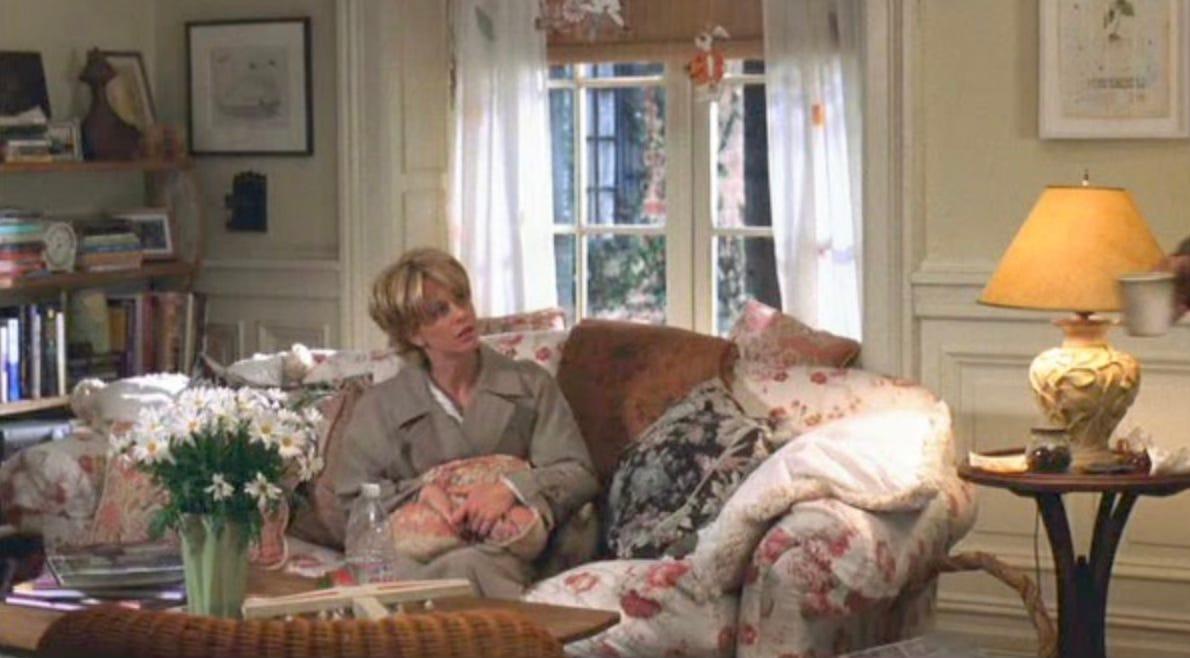
Figure 1. Meg Ryan as Kathleen Kelly in her apartment in You’ve Got Mail, dir. Nora Ephron. Conversely, Will Gluck’s 2023 Anyone But You does not invite the viewer in with warm, cozy shots. Rather, the writers decided to place the wedding of the film in Australia, thus interrupting crucial atmosphere-curating by placing the leads in an airbnb for the majority of the runtime and making the impersonal surroundings logical but uninviting. Even Ben’s loft in the beginning of the movie consists of an ultra modern aesthetic and a gray color palette. Ever the 25 SDLayn, June, 2025, comment on "Meg Ryan's COZY Apartment | Design Expert Critiques 'You've Got Mail'." YouTube.
minimalist, Ben leaves no clutter around his studio and stocks his shelves with streamlined appliances, files, and a singular plot-relevant momento; with only overhead lights, there’s also no ambient lighting. His apartment stands in stark, unflattering contrast to Kathleen’s.
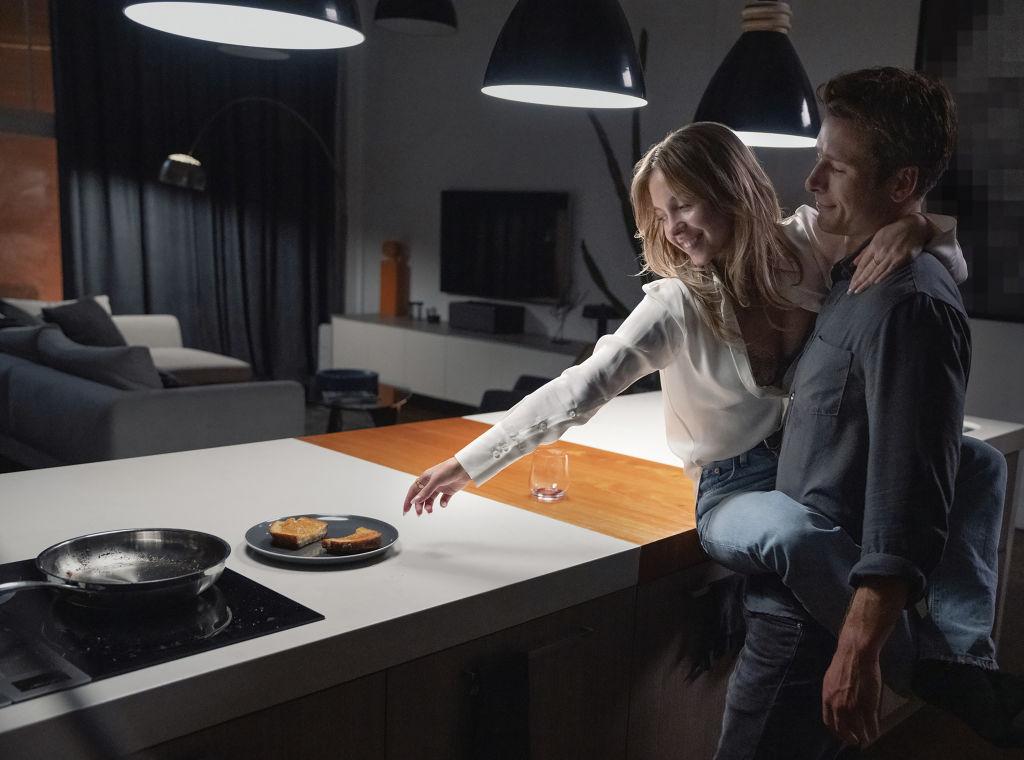
Figure 2. Sydney Sweeney as Bea and Glen Powell as Ben in his apartment in Anyone But You, dir. Will Gluck.
In the same visual vein as lighting and set design, costuming plays a crucial role in the collective nostalgia for classic ‘80s through 2000s romantic comedies. Because the current trend cycle moves so rapidly, the “20 year rule” has become all but obsolete; originally fashion fads would enter the popular mainstream around every other decade– such as ‘70s styles making a reappearance in the ‘90s– but with social media everything can be in vogue at once due to the endless corners of the Internet. Thus, modern audiences can look back on the fashion in golden era romcoms, although they stretch across a shifting period of twenty years, and still admire the trends and outfits.
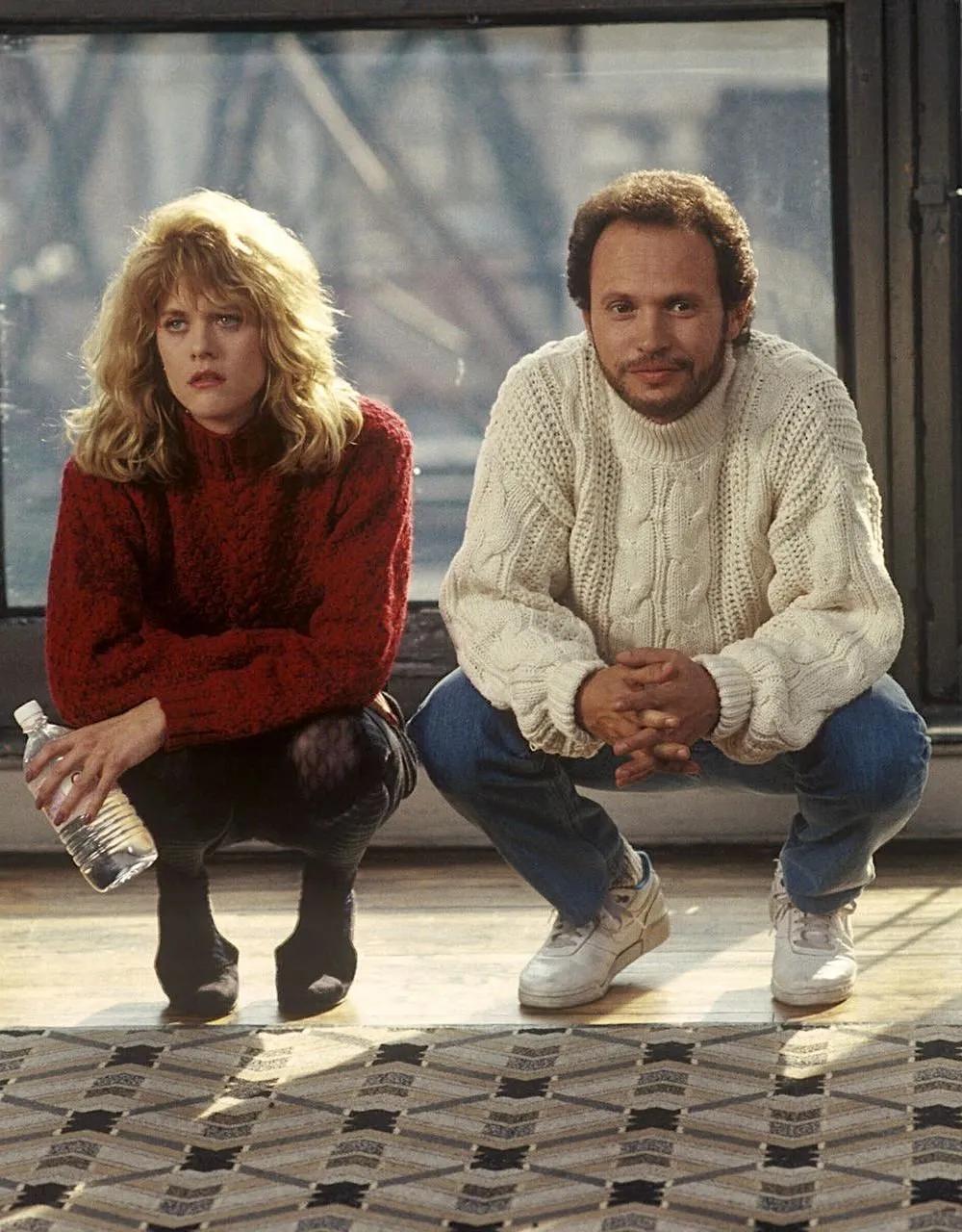
Specific items and ensembles have further captured the hearts and minds of romcom audiences. Nora Ephron’s 1989 When Harry Met Sally… maintains its place in current pop culture as a symbol of autumnal New York, and in line with being a hallmark of cozy classic romcoms, its styling remains relevant to this day. “I want every single outfit in this movie,” sits
among the top Letterboxd reviews on the film with over eight thousand likes;26 underneath, commenter Noami responds singling out “billy crystals white cable knit jumper” in particular.27
Figure 3. Billy Crystal as Harry wearing the iconic white sweater in When Harry Met Sally…, dir. Nora Ephron.
Every fall, images of this sweater circulate online as outfit inspiration on moodboards, confirming the piece’s versatility across decades of rotating trends. Likewise Kat Stratford from
10 Things I Hate About You serves as a style icon for teen girls since its release, regardless of the year. With casual but chic outfits, Kat’s costuming feels simultaneously aspirational and achievable to its young viewers; certainly, her cargo pants, tank tops, and color-blocked long sleeves are simple enough to encapsulate ‘90s fashion while appealing to later styles. With these subtly idealized elements, romantic comedies build an audience drawn into the fine details of the world, thus creating viewer attachment through the aesthetic atmosphere.
Not only do the aesthetics of classic romcom fashion seem to last, but the clothing proves higher quality than that of today, rendering the costuming even stronger in the memory of
26 anika, July 15, 2021, comment on "When Harry Met Sally…." Letterboxd.
27 Naomi, January, 2026, comment on “Review by anika.” Letterboxd.
viewers. Video essayist Mina Le, who often explores fashion history and pop culture, explains the recent decline in clothing quality using that same iconic Billy Crystal sweater and comedian Ben Schwartz’ 2024 Twitter recreation; she describes the contrast between their respectively heavy-weighted yarn with double ribbing and thin, likely acrylic polyester, yarn.28 The difference in material partly accounts for the visual discrepancies, with Crystal’s creamy sweater arms sitting loose and comfortably while Schwartz’ tapers and appears simply less warm. Where modern quality suffers from fast fashion practices, audiences reminisce on prior decades when clothing was made by smaller manufacturers that couldn’t cut costs on material or hemming.
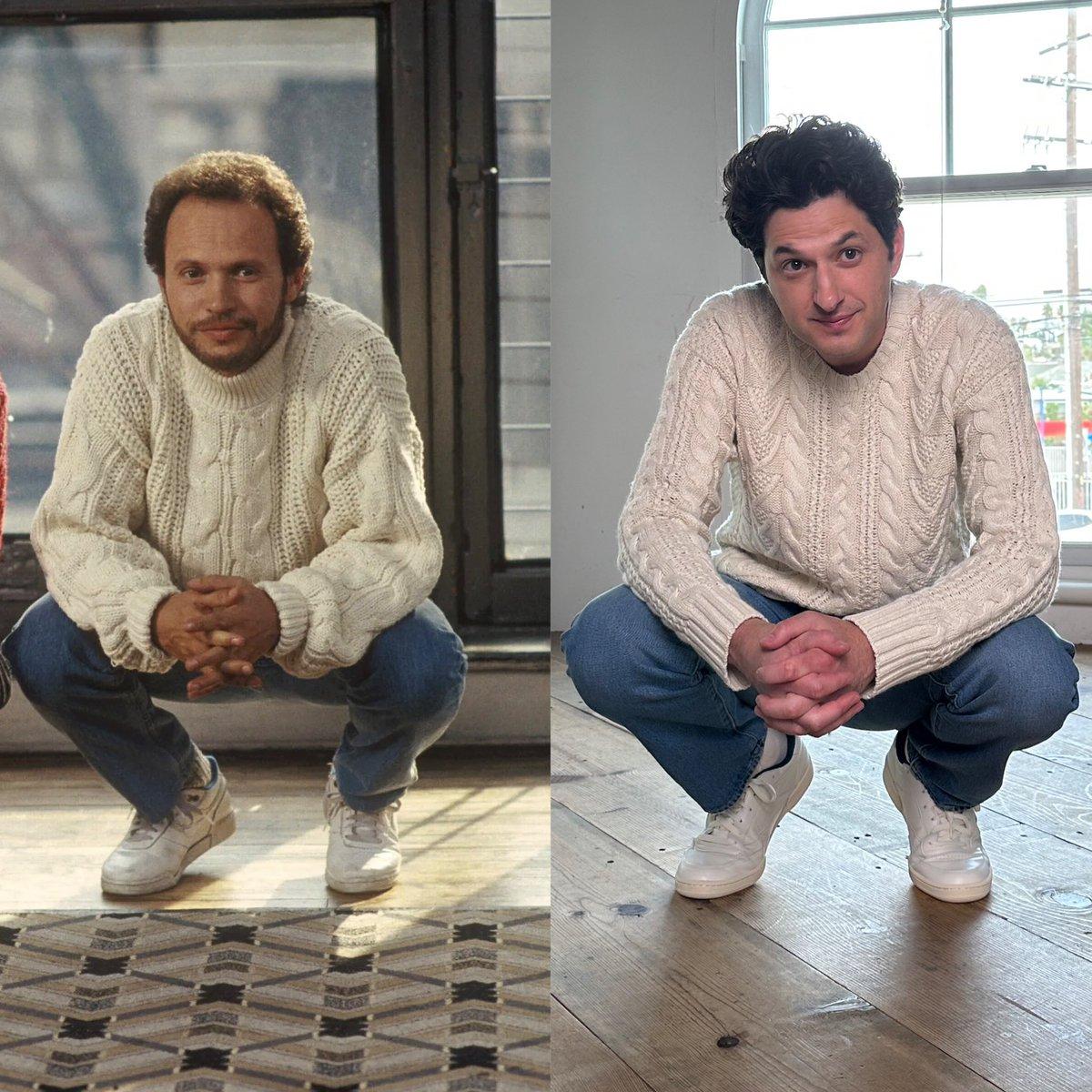
Figure 4. The infamous recreation, via Schwartz’ Twitter account, @rejectedjokes. Conversely, contemporary romcoms suffer because of the same rapid trend cycle that benefits the classics, especially those released after around 2019 when social media apps like TikTok and Instagram began producing short-form content. When costume designers attempt to dress their characters in the current fashion, their outfits quickly leave an almost cringe-inducing impression. For instance, He’s All That, the 2021 genderswap of the 1999 She’s All That, 28 “clothes are so much worse now � ”, produced by Mina Le, YouTube, 2024, MP4.

features a multitude of outfits that prove outdated just five years post-release. The protagonist Padgett Sawyer opens the film donning a mini dress with a chevron pattern in various shades of black, pink, and cream. Unfortunately, this outfit was not a one-off dud, but only the beginning of the passé looks in the film. Other particularly egregious offenders that date the movie include a polka dot bucket hat; very high-rise white jeans paired with a cropped long sleeve top; and a pair of thick, bedazzled wedge heels.
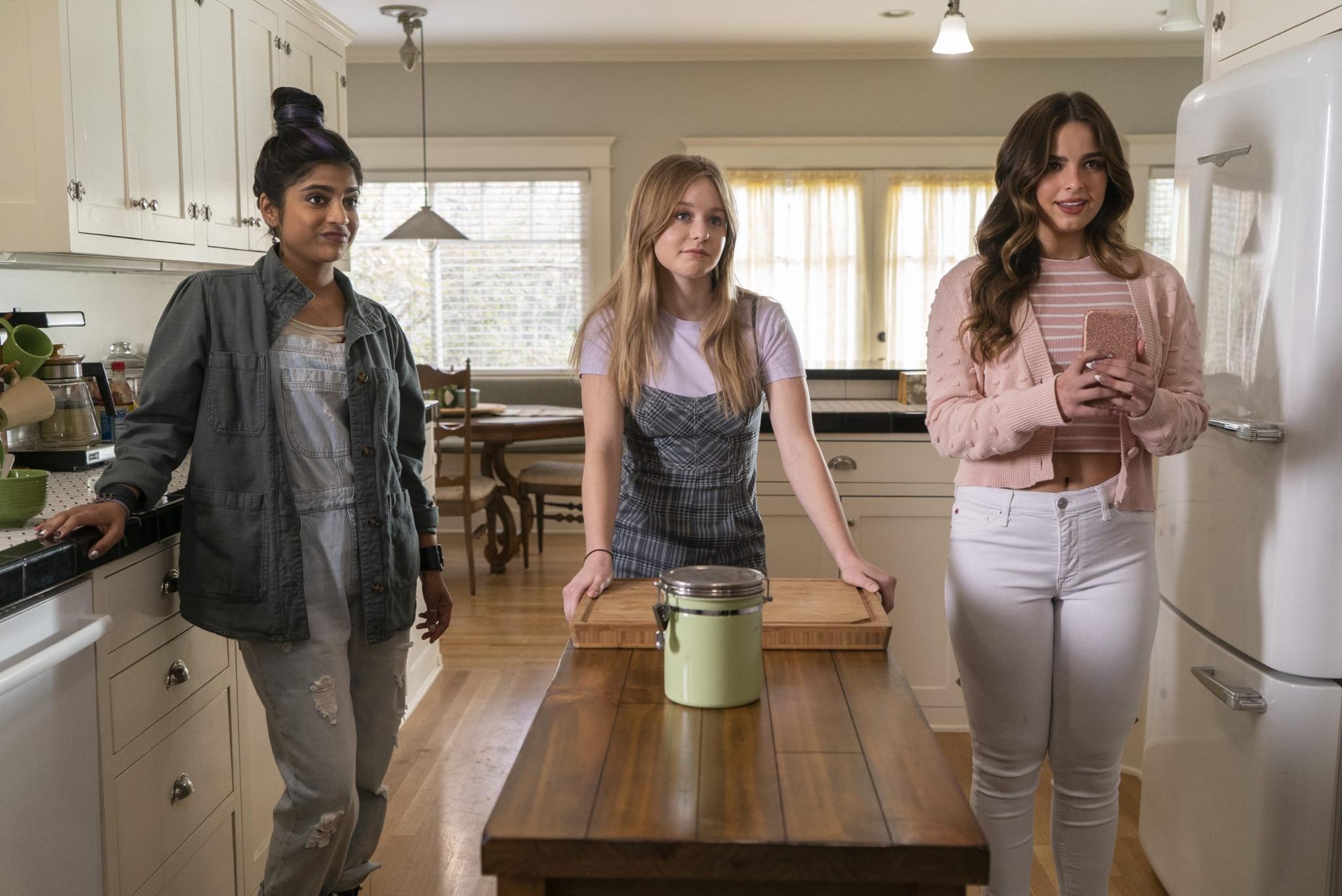
The costume designer Denise Wingate revealed that she turned to social media to accurately portray influencer fashion;29 although she pinned down the online fads of that particular moment, because she relied so heavily on those fleeting trends the styling quickly became démodé. Ironically, Wingate costumed the original 1999 She’s All That, which holds up stylistically decades later. In fact, she may have been better off recreating the looks featured in the original more closely, as opposed to following fickle TikTok trends.
29 Jamie Lerner, "The Costume Designer for 'He's All That' Was Very Clear on Her Inspiration," Distractify, August 30, 2021, https://www.distractify.com/p/hes-all-that-outfits.
The costuming of romcoms carries weight in regards to a movie’s success because the aesthetic atmospheric elements draw in viewers that return to the genre for comfort, charm, and coziness. In fact, they are a considerable part of what makes romcoms memorable in the popular cultural zeitgeist. On short-form content apps like Instagram Reels, for example, videos calling back to the classic romantic comedies’ costuming receive hundreds of thousands of likes.
Fashion influencer Isabela Juliana posted four outfits on March 4, 2026 with the caption “dressing like a 2000’s romcom love interest,” garnering upwards of 174 thousand likes.30
Similarly creator Karen Sumi posts a popular series on her page “dressing like protagonists from my favorite romcoms” that recreated looks from 10 Things I Hate About You (1999), Clueless (1995), How To Lose a Guy in 10 Days (2003), She’s the Man (2006), and 13 Going on 30 (2004), firmly cementing the romantic comedy style in line with the golden era decades.31 Comparing the atmospheric design of two romcoms twenty years apart, 2003’s How To Lose a Guy in 10 Days and 2023’s Anyone But You, delineates discrepancies between romcoms during their prime and their current slump. In the former, Kate Hudson’s Andie Anderson spins in her elegant butter-yellow evening gown in front of the golden glow of a hotel lobby for the quintessential Grand Entrance scene. The character also fills her New York City apartment with homey couches, knick-knacks, magazines, and lamps that of course emit warm light, all leaving the viewer with the impression not that it is a Hollywood set, but that she genuinely lives there. When Andie and Ben visit his parents on Long Island, the family home similarly appears like a regular house. Andie and Matthew McConaughey’s Benjamin Barry have electric chemistry,
30 Isabela Juliana (@belajuliana_), dressing like a 2000’s romcom love interest, Instagram reel, March 4, 2026, https://www.instagram.com/p/DVeD_s9kUH8/.
31 Karen Sumi (@karesdiaryx), a week of dressing like protagonists from my favorite romcoms!, Instagram reel, February 17, 2026, https://www.instagram.com/p/DU5nZlHk8q5/.
selling their love story. By building up the banter and chemistry between the two leads over the course of the film, the film earns the final grand gesture after they fall apart.
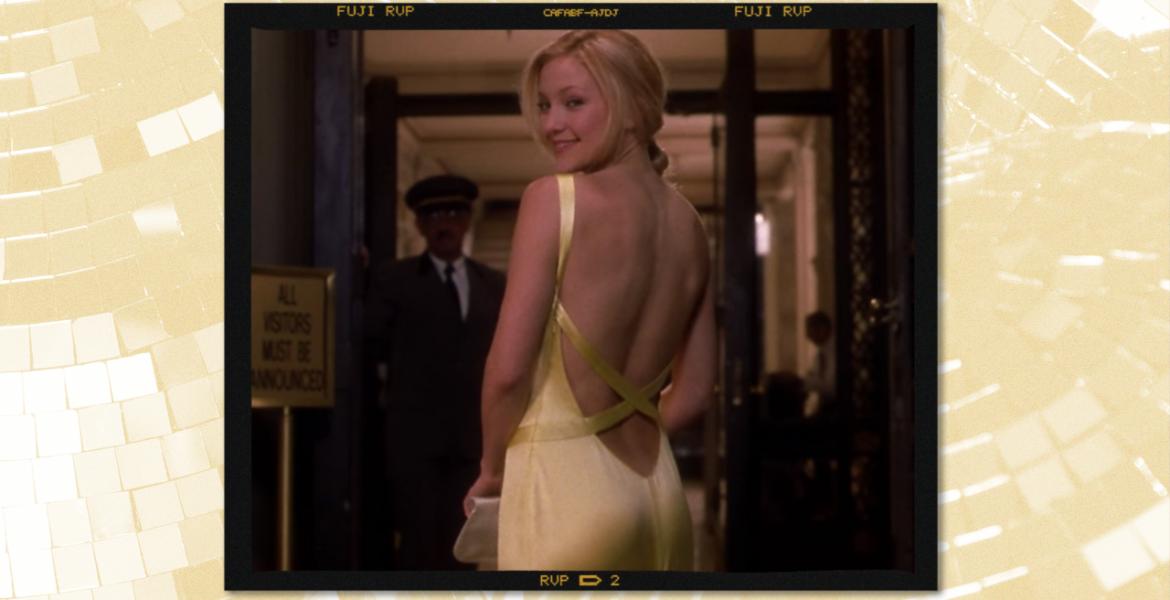
Figure 6. Kate Hudson as Andie in butter yellow silk evening gown for Grand Entrance in How to Lose a Guy in 10 Days, dir. Donald Petrie.
On the other hand, for the Anyone But You Grand Entrance, protagonist Bea emerges from a car in a baby blue cowl neck that, while stunning, flushes with the blue skyscrapers and ocean inlet behind her, resulting in overlit shots lacking depth. As established, this film also fails to curate a warm, lived-in surrounding for the characters. The two films epitomize the lighting struggle: warm versus cool, contrasted versus flat.

Figure 7. Sydney Sweeney as Bea in baby blue silk evening gown for Grand Entrance in Anyone But You, dir. Will Gluck.
Additionally, Sydney Sweeney as Bea and Glen Powell as Ben prove both bland and unbelievable. Their characters lack an established groundwork; the film tells the audience of the couple’s singular date where they fall in love and get to know each other, but the whole montage has music playing over it, preventing viewers from investing in the relationship and its dynamics. When the couple fights later on, the audience has little incentive to root for them outside of the ingrained cues and human desire for reconciliation. One Letterboxd review that gained over 10,200 likes aptly comments that Sweeney “reads every line like she hatched out of an egg five seconds before the cameras rolled.”32 Another remarks that “you could tell me there was a teleprompter behind the camera and I would 100% believe you,” receiving over 6,800 likes.33 The court of public opinion ruled the leads uncharismatic and justifiable for the roles only based on their surface-level attractiveness and off-screen chemistry. Even positive reviews skirt around the lack of connection between the couple, instead praising surface-level elements; zoë rose
32 David Sims, December 28, 2023, comment on “Anyone But You.”" Letterboxd. 33 ore ツ, December 24, 2023, comment on “Anyone But You.” Letterboxd.
bryant’s comment that she “came to watch hot people f*ck and fight and [she] got what [she] wanted” received over 20,000 likes and landed as the second highest review of the film on Letterboxd.34 Essentially half the reviews that liked the movie remark on the soundtrack’s inclusion of Natasha Beddingfield’s hit song “Unwritten,” and while the score is undoubtedly an important player in creating a charming atmosphere, it should elevate the work not save it.
Desperate audiences embrace mediocrity in the name of a romcom revival, but this exact uncritical acceptance contributes to producer’s unwillingness to invest more in improvements.
In total, the two films serve as a microcosm of the general divide between ‘80s through 2000s romcoms and those put out today. The former engages audiences with a rich visual palette, authentic set design, and strong rapport between the leads, while Anyone But You flounders in those realms. With companies pushing for mass production, creators have less time and money for the subtle world-building that earns romantic comedies their appeal. Putting care into the minutiae of each set background for instance, or verifying the intangible chemistry between leads, can be subjective and time-consuming with indirect effects on viewership, so studios simply invest less, banking on big stars and audiences desperate for the a return to the golden age of romcoms.
V. Phones and Social Media
More subtly than declining aesthetics, films and romcoms may actually be lowered in quality because of a larger presence in our lives that demands constant attention: phones. According to researchers Wilmer, Sherman, and Chein, the devices can significantly increase distractability; once someone shifts their attention to their iPhone to check a notification, for
34 zoë rose bryant, December 18, 2023, comment on “Anyone But You.” Letterboxd.
instance, they are 400% more likely to go into other unrelated apps.35 “Rich” distractions like images, as opposed to text, further distract from the original reason for opening the phone.
Scrolling serves as the ultimate “rich” distraction with constant stimulation and new images. In relation, social media addiction often derives not from the appeal of the content itself, but from the split second in between videos. The scroll triggers dopamine in a fashion similar to gambling due to the thrill and anticipation of not knowing what comes next.
While movies generally also strive to break predictability and create something new, they differ in that they cannot offer such constant change; each new video in a user’s feed has the potential to stand on its own, completely fresh and irrelevant to its predecessors, but a film is confined by narrative continuity. Similarly, a movie viewer likely has some level of expectations for a film, even as simple as the genre or a loose grasp of the plot, since they had to select it–with active selection growing in importance during the streaming age– but scrollers are served videos by the algorithm, passive consumers rather than active engagers. As movie watchers become increasingly accustomed to social media algorithms and dopamine-fuelled scrolling, more of them likewise experience discomfort during films. That anxious feeling, triggered by the film’s commitment to a single story and the viewer’s increased distractability, can cause movies to literally feel slower.36 Calling back to the Fordham Experiment, of the group who watched the television format, 36% reported feeling tense, as opposed to merely 6% of the movie group.37 That the presentation of a film on TV could evoke anxiety long before the advent of social media
35 Henry H. Wilmer et al., "Smartphones and Cognition: A Review of Research Exploring the Links between Mobile Technology Habits and Cognitive Functioning," Front Psychol, April 24, 2017, [Page 4], https://pmc.ncbi.nlm.nih.gov/articles/PMC5403814/.
36 Why The Movies Will Never Feel The Same Again, produced by Thomas Flight, YouTube, 2025, MP4.
37 McLuhan, "The Fordham," Media Ecology Association.
or streaming only emphasizes the extent to which those inventions impact the movie-watching experience.
In applying media ecology theory– the study of how different types of media inform our perceptions and behaviors, as well as how they interact with one another– the growth of algorithmic feeds has impacted films by rendering them second screen content, which is media consumed in the background while other content takes the primary attention. Most common nowadays are movies or television with social media or other phone activities in the forefront; a survey from YouGov in 2023 found that “91% of Americans at least sometimes look at their phones while watching TV.”
38 Film industry executives have wisened up to that reality, so instead of building complex worlds that require focus to understand, they put out content that can be followed when the viewer looks up from their phone lost: easily digestible to the distracted netizen. Joe Berkowitz of the Fast Company newspaper writes of the phenomenon that multiple Netflix screenwriters outright admit that script notes tell them to include more expository dialogue for inattentive viewers.39 He even uses the 2024 romantic comedy Irish Wish as an example, where Lindsay Lohan ridiculously summarizes the prior runtime with “I admit it was a beautiful day filled with dramatic vistas and romantic rain, but that doesn’t give you the right to question my life choices. Tomorrow, I’m marrying Paul Kennedy.” Clearly, even if an individual viewer does not watch the film as second screen content, it was already crafted with that audience in mind and so the quality of the experience remains compromised. In fact, a focused
38 Joe Berkowitz, "Netflix knows you're looking at your phone and it's changing how shows get made because of it," Fast Company, January 26, 2025, https://www.fastcompany.com/91264942/netflix-knows-youre-looking-at-your-phone-and-itschanging-how-shows-get-made.
39 Berkowitz, "Netflix knows."
watcher may be turned away from such degraded streaming romcoms, further entrenching them in a mental category of Hallmark-esque films.
Still more, modern technology again rears its head to undermine the classic romcom.
With tools like phones and social media gaining increasing use and importance in daily life, it likewise becomes increasingly difficult to capture them on film in a manner that doesn’t give the viewers an “iPhone ick.” In the context of movie-watching, the iPhone ick, itself a phrase essentially exclusive to online spaces, is when viewers find themselves cringing at the misuse of digital culture, like slang or memes, or even just uncanny incorporation of apps on screen.
Verified Tiktok creator duncanyounot’s video skit on the subject received over 2.1 million likes, where he satirizes the fake-looking interfaces and inaccurate dialogue around technology used in films and TV shows.40 Comments on the video similarly mock common iPhone misuse in media; TheEarthquake’s quip to “Just make sure you dont sent that texts to the ENTIRE SCHOOL” received over 119 thousands likes, jabbing at the oft incorporated misconception that there would be a group chat containing a whole high school.41 In a broader respect, studies estimate that on average Americans spend roughly five hours a day on their phones.42 However, although portable screens have irrevocably altered the way that people and society function, moviewatchers do not want to be confronted with their habits. Not only can technology’s incorporation feel clunky, but it also engenders cognitive dissonance between a viewer likely with similar addicted usage and their desire to distance themself from such “chronically online” behavior.
40 Duncan Joseph (@duncanyounot), POV: iPhones on Netflix Shows:, TikTok, October 2, 2023, https://www.tiktok.com/@duncanyounot/video/7285467780005006635?lang=en.
41 TheEarthquake, October 2, 2023, comment on “POV: iPhones on Netflix Shows:.” TikTok. 42 "Phone Screen Time Addiction and Usage - New Survey Data and Statistics," Harmony Healthcare IT, last modified January 8, 2025, https://www.harmonyhit.com/phone-screen-timestatistics/.
Productions thus feel conflicting pressures both to include phones, depicting daily modern life, but also to omit them to avoid making audiences cringe.
Especially for younger generations, much of this daily screentime can be chalked up to social media platforms such as Tiktok and Instagram. These two apps in particular wield significant influence over the rapidly changing trends and slang of youth culture, including its fracturing. By designing each feed with a for-you algorithm, the apps silo users by interests and engagement, leaving a void for monolithic pop culture once filled by media like Seinfeld or even Game of Thrones. Thus, with romcoms often focusing on young couples, any attempt to accurately portray the cultural context of an average twenty-to-thirty-something necessarily places them in some niche of the Internet and loses ground with others.
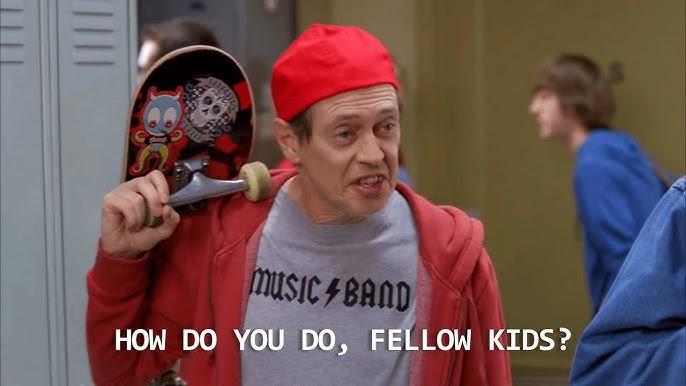
8. Apt meme of Steve Buscemi as Lenny Wosniak posing as a high school student in 30 Rock, dir. Tina Fey.
In regards to language, movie dialogue between young characters in our current decade often struggles to capture slang, ending up feeling unnatural. Script-writers tend to be middleaged or older because they have been in the industry longer, so incorporating Gen Z jargon derives not from personal experience but from an outsider perspective. Even if studios hire young interns to check their references, the same issue of fractured social media usage pops up again. Cultural references in films also feel constantly out-dated because the social media trend
cycle moves at a breakneck pace, leaving the typical multi-year movie-making process in the dust. The alternative, to avoid drawing from any cultural fragment, creates an off-putting liminal atmosphere as opposed to a grounded setting.
The struggle to overcome either a dated or void context for contemporary films becomes especially pressing for romantic comedies because the genre heavily relies on its characters and atmosphere to charm the audience. They cannot hide behind action, thus creating protagonists who talk, dress, and interact like modern young people becomes crucial to its success in relating to the audience. Audiences expect the leading couple to withstand their trials and end up together, instead returning for less tangible qualities like the charm, banter, chemistry, and coziness of the film. The New York Times writer Katherine Schulten created an open forum under her article Are You a Fan of Rom-Coms?, prompting students older than thirteen years old to comment on their relationship with the genre and its conventions. In 2023 Camryn Lynge from Hoggard High School in North Carolina revealed that he appreciates the repetitive nature of the romcom formula, thus “being able to not be surprised by something and trying to predict how the couple finally finds their way back to each other.”43 A peer of his similarly provided insight into why romcom fans return to the genre: “they bring a certain level of comfort that no other genre of movies delivers. Maybe it’s because they always have a “happily ever after” and people can just forget about their worries when watching them.”44 This commenter, LH, also noted that recent romantic comedies “just don’t have the same warm, nostalgic feeling.” In fact, modern romcoms are literally less warm, with streaming services’ production studios opting for cool,
43 Camryn Lynge Block 1, September 13, 2023, comment on “Are You a Fan of Rom-Coms?,” The New York Times. 44 LH, March 20, 2023, comment on “Are You a Fan of Rom-Coms?,” The New York Times
low-contrast lighting in lieu of the authenticity from homey, warm lighting seen in classic romcoms as discussed previously.
Notably, teenage romcom viewers tend to be drawn to movies that portray the adolescent experience. In the aforementioned discussion under Schulten’s article, the title 10 Things I Hate About You popped up again and again when commenters listed their favorites of the genre. This film, taking place in a Seattle high school, follows two sisters and their respective love interests as they navigate dating, a strict father, and ultimately coming of age. Seamlessly incorporating pieces of late ‘90s pop culture– such as the 1997 The Notorious B.I.G. song “Hypontize” playing during the party; fashion like chokers and slip dresses; and “angry girl music of the indie rock persuasion”45 that boomed with the emergence of the Riot Grrrl movement in Olympia, Washington– the film builds a tangible sense of temporal location that feels authentic even decades later. It balances portraying mundane teenage life, from walking in the school hallways between classes to Prom to detention, with the absurd shenanigans and grand gestures expected of the genre, making its love story both easy for the viewer to live through and also ridiculous enough to be exciting and idealized.
Again, modern romcoms struggle to maintain this equilibrium, integrating youth culture such that its unsubtle inclusion feels like a caricature based on older generations’ external perspective rather than a lived reality.
VI. Modern Romance and the Dating Scene
As noted, the working definition of a romantic comedy stands as a film balancing both laughter and at least one love story crucial to the plot. Already this understanding eliminates
45 10 Things I Hate About You, directed by Gil Junger, 34:00.
many movies often lumped into the genre, when what the person referencing them really means to say is “chick flick,” although romcoms are not inherently chick flicks either. For example, The Devil Wears Prada (2006) could be considered a chick flick but not a romcom, while She’s Out of My League (2010) is a romcom with a male target audience. While there are the only two flatout requirements of the genre, romance and comedy (who would’ve thought), the lengthy history of romantic comedies has cemented several de facto expectations that have complicated its ability to evolve in the past two decades. Over four hundred years ago, English playwright William Shakespeare established the tradition of a comedy with a happy ending as a wedding. While romcoms of the modern day do not enforce marriage as the culmination of the plot, union in some form remains the unspoken rule of the genre. The couple, far more often than not, will end up together by the time the credits roll, and in the cases where scriptwriters opt for a sense of realism and break the illusion, the films tend to fall into the category of drama or romance rather than strictly romantic comedy.
Think of La La Land (2016): a highly successful musical movie starring Emma Stone and Ryan Gosling as two up-and-coming artists in Los Angeles, striving to make their relationship and careers work. Ultimately, Stone’s character Mia marries another man, and Gosling as Sebastian imagines what their life could have been if they had gotten married, had a child, bought a house, etc. Closing decidedly with tears over laughter, the film falls short of comedy, despite the whimsy of its songs and dancing. Fun does not equate to comedy, and even though not a romcom, the tragedy of their failed relationship comes back to the fantasy of domesticity and the sanctity of marriage that realistic reworkings of the happy ending ostensibly seek to reconsider.
Indeed, many of the common romcom tropes seen in its golden era are rooted in longstanding Shakespearean traditions, rendering them steadfastly incorporated into the very understanding of the genre. For instance, Mortimer links the prevalence of “'battle of the sexes', the misunderstandings and disguises, farcical situations and happy endings” all back to the Bard’s comedies.46 A surprising portion of ‘90s and 2000s romcoms are literally adaptations of his plays, from 10 Things I Hate About You to She’s the Man to John Tucker Must Die. Even the typical trope of two highschoolers from different worlds, the nerd and the jock, has a history going back to Romeo and Juliet, where rigid cliques replace feuding families to conform to modern teen life.
However, these ingrained assumptions for the genre insufficiently satisfy current audiences as they had for centuries. Within the past few decades, dating culture and young people’s romantic expectations have undergone radical transformations due in no small part to the proliferation of feminist ideology and technological advancements. As explored below, romantic comedies are caught in a cultural moment of tension between tradition and audiences’ needs, resulting in stagnation.
Coupledom is on the chopping block, with the portion of single twenty-five- to fifty-fiveyear-old Americans rising from twenty nine percent in 1990 to around forty percent nowadays.47 While singlehood does not necessitate a willing lack of romance, cultural writer Megan Feeney reports that they in fact are “increasingly cynical about old romantic ideals such as True Love, The One, Completing Each Other, and Happily Ever After,” ideas vehemently espoused by the romcom genre. What’s more, “forty four percent of Millennials think marriage is obsolete,”
46 Mortimer, Romantic Comedy, [Page 22].
47 Megan Feeney, "The Plight of the Rom-Com in the Post-Romantic Era: The Metamorphoses of an Outmoded Genre," Cinéaste 47, no. 4 (2022): [Page 16], https://www.jstor.org/stable/27170422.
undermining the ethos behind Shakespearean comedies’ persisting union-centered finale.48 With young people, and especially young women, becoming evermore disillusioned by modern romance, the romcom simultaneously loses a significant sector of its target audience and finds itself struggling to accurately capture this bleak dating landscape.
Indeed, as younger generations stray further away from traditional paths toward marriage and coupling, they, in turn, increasingly participate in hook-up culture. Casual sexual relationships can represent an active choice to deny tradition, gender expectations, or simply to make the most of youth; modern romcoms that portray hook-up culture, however, fail to grasp the valid reasons people may have to partake in it. Instead, they clumsily attempt to reconcile the inherently disparate experiences of the golden era romcom’s monogamous Happily Ever After with a non-exclusive relationship, offending audiences as they hand wave away the choice of casual sex as an aversion to commitment that must be fixed before the end of the runtime.
Indeed, 2011’s Friends With Benefits and No Strings Attached both rely on the premise of two young people beginning casual sexual relationships before realizing they’ve fallen in love and must confront their fear of intimacy. As Meslow explains, the films “never seriously [grapple] with the idea that being comfortable in a casual relationship might be an actual choice, not a character flaw,”49 because their directors are striving to duplicate the traditional romantic ending without considering the context and agency behind such relationships. Instead of portraying hook-up culture as a genuine form of modern dating, they warp it into an obstacle for the main couple to overcome. The economic barriers standing between young adults and major milestones from previous generations, like marriage, buying a house, or having children, similarly receive no mention in these romcoms that purport to contend with modern dating
48 Meslow, From Hollywood, [Page 317].
49 Meslow, From Hollywood, [Page 314].
culture. In return, despite their star-studded casts, the films struggled in the box office, with Friends With Benefits releasing straight to on-demand.
Specifically, in regards to technology in dating, by 2012 one-third of American married couples met on an online matching site, a statistic that has likely only grown with the introduction of mobile apps like Tindr and Hinge that have tens of millions of users.50 Since match apps and social media dominate such a large sector of contemporary dating culture, the modern struggles in turn revolve around the associated issues like ghosting, swipe-fed commitment issues, and heightened isolation.
Furthermore, video essayist and cultural commentator Jordan Theresa explores the connection between match apps and gambling in her podcast episode “how am i supposed to pine and long in these conditions?” While specifically examining her theory in regards to male users, she perspicaciously asserts that the swipe-addiction on such apps derives not from a successful date, but from the chase of a potentially successful date.51 Like how social media users receive dopamine hits during the scroll between videos, dating app users find their thrill in the hope of a perfect partner appearing on the next swipe. Choice fatigue, just like with selecting a movie on a streaming service, sets in when users find themselves overwhelmed by the sheer volume of potential matches; furthermore, since apps like Tindr have such a large userbase, patrons feel that there is always a more attractive, more witty, more anything candidate out there, just one swipe away.
This perception then raises daters’ standards, since they believe there could be always be a better suitor just around the corner. Under this thinking, any flaw, even the slightest “ick,”
50 Aziz Ansari and Eric Klinenberg, Modern Romance (Penguin Books, 2016), [Page 76].
51 “how am i supposed to pine and long in these conditions? | Voicenotes with Jordan Theresa S03Ep09”, produced by Voicenotes with Jordan Theresa, YouTube, 2025, MP4.
warrants dropping the courtship. Social media services like TikTok and Instagram similarly encourage comparisons and the notion that a perfect partner remains just out of sight. Creators, by and large women, post short-form content that highlight their boyfriends. Trending taglines like “man written by a women” and “raising the bar” are flooded with thousands of videos praising men for various behaviors perceived as sweet, charming, and ultimately intended for the acceptance of women. Common features of these clips are yearning, bringing flowers, cooking, and caring for animals– all stereotypically associated with domesticity and womanhood. Partly these qualities feel particularly laudable in men because, despite women’s workplace advancements in the twenty-first century, they still take on a “double shift” of the majority of domestic labor. Thus, combined with alpha-male red-pilling under the propaganda of misogynistic manosphere media personalities like Andrew Tate, when straight men willingly display feminine traits or openly support women, they serve as a source of relief and reassurance to heterosexual women online. In summation, in the modern dating scene, social media and dating apps have driven users to seek the perfect partner, resulting in decreased pairings.
However, in making a “modern romcom” that captures its dating struggles, which are so extrinsically linked to gendered dynamics and technology, filmmakers inadvertently fall into a catch-22 of portraying a romanticized, unrelatable contemporary reality and of “icking” out audiences with their own social media habits.
VII. The #MeToo Movement and Problematic Elements of the Romcom
#MeToo also significantly impacted dating culture and the romantic comedy as it forced audiences to reckon with distasteful tropes. The movement originated with advocate Tarana Burke in 2006 but gained popularity and increased credence in 2017 due to its prevalence across
the social media app X, then Twitter, supported by several actresses.52 By encouraging survivors of sexual assault to share their stories, the movement boosted awareness around consent, rape culture, and harassment while providing solidarity for victims. Drawing attention to these conversations also primed audiences to re-examine films, and especially romantic comedies, through a more feminist lens. Pieces with titles like “22 Rom-Com Scenes Have Really, Really Not Aged Well”53 or “19 Problematic Rom-Com Movie Moments”54 abound, prompting the question of whether bringing back the “golden era” would include its pervasive harmful messaging.
In fact, many women point out that the genre as a whole can be incredibly male-centered even just by virtue of having the main lead’s primary character arc focus on ending up with the male love interest, since the mainstream romcom remains also largely heterosexual. The late 2010s in particular witnessed a rise in a specific strain of feminism, the Girl Boss, that pushed women to climb the corporate ladder and to prioritize their careers before their love lives, a development that complicated the union-focused genre’s success.
To be clear, feminism did not bring about the demise of the romantic comedy, nor should it shoulder the brunt of the blame. Rather, the deluge of retrospective think-pieces and Buzzfeed listicles with girl-boss undertones likely reinforced to studios what critics had already announced: “the romcom is dead.” Thus, their decision to decline its production was validated in a negative feedback loop; the genre lowered in production from mid-budget slashes, meaning progressive and of-the-time works couldn’t break into the mainstream, and the genre was
52 Sherri Gordon, "The #MeToo Movement: History, Sexual Assault Statistics, Impact," ed. Sean Blackburn, Very Well Mind, last modified May 22, 2025.
53 Marder, “22 Rom-Com Scenes.”
54 Das, “19 Problematic Rom-Com Movie Moments.”
subsequently proclaimed antiquated. The economic reality set the stage for social complaints that further entrenched studios’ reluctance to take on the risk of a romcom.
Critics also had valid arguments, as specific scenes that had previously been either lauded as bawdy jokes or glossed over took on a more sinister complicity in the normalization of sexual harassment in American culture upon re-evaluation. For instance, John Hughes’ 1984 classic Sixteen Candles contains multiple key story lines that now are rebuked as exploitative and generally icky; the ‘Geek,’ portrayed as a desperate but ultimately harmless underclassman, just hoping to get lucky, persuades protagonist Samantha to give him her underwear or else he will spread rumors that they had sex, branding her as loose. He then dons a Darth Vader mask and takes advantage of an extremely inebriated, unconscious popular girl Caroline whose boyfriend essentially trades her body for Sam’s panties. In the morning, a now responsive Caroline hooks up with the Geek, implying that she would have consented anyways so the audience can overlook the rape. The inclusion of such disgusting behavior in and of itself is not the issue, but rather that the film portrays the Geek’s actions as a dork simply making the most of his opportunities, humorously dismissing them with justifications along the lines of “boys will be boys” rather than criticizing them. By playing into the Geek’s place in the high school hierarchy, the film wants the audience to imagine Caroline with more social capital than him so that she maintains the power in their relations. The Geek believes he would never have a chance with her under other circumstances, with the framing of the film supporting him, then making her sober hookup a joking reversal of expectations. Despite the blatant lack of consent in the Geek’s exploitation of Caroline, and indeed in his blackmailing of Sam, this romantic comedy received widespread acclaim and earned a spot in the genre’s hall of fame.
Yet questionable portrayals of consent are not mere relics of older decades that society collectively progressed past, even if they are not as explicit as Sixteen Candles. More recently, generally beloved romcoms such as Bend It Like Beckham (2003) pair a fresh eighteen year old Jess with her post-college coach Joe, while the 2004 adaptation The Notebook paints the male lead Noah as charmingly persistent when he threatens to kill himself by hanging off the top of a ferris wheel until Ally agrees to go out with him.
These specific power imbalances and violations of consent are not fundamental to the genre as a whole, but heterosexual dating implicitly upholds cultural norms and gender roles that women are increasing questioning in tandem with #MeToo; even a quarter of the way into the twenty-firsty century, in straight relationships, women take on the burden of twice as much unpaid household labor as their male partners.55 Such social conditioning reaches beyond domestic work and into inter-relational care, too. Oftentimes women find themselves doing the emotional labor in a romantic relationship, from communicating to managing conflict to giving unreciprocated support. Such imbalances in romantic expectations as directed by cultural norms lead to fatigue and exasperation from women, becoming such a widespread modern experience that Asa Seresin coined the term “heteropessimism” to describe it in 2019.56 In essence, straight women on the dating scene are fed up with the minimal effort that men have been taught suffices; as Hazel Cills of NPR remarks, in this modern era where American women on average show higher levels of education and income than their male counterparts, they in turn can afford
55 "The Free-Time Gender Gap," Gender Equity Policy Institute, last modified October 2024, https://thegepi.org/the-free-time-gender-gap/.
56 Brittany Luse et al., "The embarrassing truth of dating men," NPR, December 19, 2025, It's Been a Minute, 1:39, https://www.npr.org/2025/12/19/nx-s1-5648400/the-embarrassing-truth-ofdating-men.
to be “more choosier about their partners and are sort of becoming radicalized to what a healthy relationship looks like.”
In contrast, although romantic comedies can serve as women’s fantasies for an ideal relationship, they work just as much to uphold traditional gender roles in relationships. Many of the genre’s conventions, including elements of the golden era that contribute to its appeal, portray the woman of the relationship in a position of forgiveness, idealized beauty, and feminine mystery while the man relies on a combination of masculine stereotypes with just enough female gaze to appeal to the film’s primarily female audience.
For instance, a staple of the classic romcom from its modern conception in the ‘80s is the make-over scene wherein the female protagonist transforms with new shiny straight hair, makeup, and feminine clothing, both adhering to the beauty standard while simultaneously propagating it. The Princess Diaries (2001) remains a notorious, although beloved, example with Mia Thermopolis losing her frizzy hair and glasses under the implicit understanding that they fall outside the beauty standards. Mia spends only about 25 of the 115 minute runtime with frizzy hair, with the underlying belief that a female lead appears more sympathetic and aspirational when more conventionally attractive. In the past twenty years, however, audiences have grown a distaste for this flagrant sustaining of rigid feminine beauty standards; as early as 2016 commenters under a YouTube clipping of the scene remarked how “she wasn't really ugly to begin with,”57 garnering twelve thousand likes, with more recent Letterboxd reviews affirming that notion with the likes of “i can’t believe they thought giving anne hathaway bushy brows, frizzy hair, and glasses would make her ugly.”58
57 AskSydneyLipton, 2016, comment on "Mia’s makeover." YouTube. 58 gillian, July 5, 2018, comment on "The Princess Diaries." Letterboxd.
However, a modern romcom producer would be caught in the throes of feminist discourse if they chose to add the classic make-over scene. While problematic in its upholding of a strict beauty standard, which would set off valid criticism like those above, this type of scene still appeals to a significant portion of romcom viewers as a steady aspect of the golden era romcom. Paired alongside re-assessments of the scene are comments gleefully quoting lines from it, calling the stylist Paolo a fairy godmother, and wishing they could have a similar make-over,59 ultimately receiving comparable like counts; in the modern era, the romcom’s audiences remain divided on whether the make-over scene feels classic and charming, or misogynistic and damaging.
Discord over elements of the golden era romcom stretches beyond feminine beauty standards into heterosexual dynamics. Under patriarchy, as films turning to male-female relationships for humor, romantic comedies often end up with women at the butt of the joke. Take How to Lose a Guy in 10 Days as an example. On the surface, the film supports female liberation, with its protagonist Andie openly striving for a position as a political journalist; breaking stereotypes regarding male-coded hobbies of sports and beer; and running her counterpart Ben in circles around her. Yet in Andie’s humorous attempts to chase Ben away, she relies on exaggerated, derogatory portrayals of women just to show the audience that she isn’t really like all those other crazy, clingy chicks who care about the superficial topics written about in her magazine “Composure” or who dare to leave feminine hygiene products in their boyfriend’s apartment. The film’s comedy paints Andie as a cool girl only in contrast to other women, including her own best friend Michelle, thus demonizing stereotypically feminine women.
59 “Mia’s Makeover,” produced by orlandolover06, YouTube, 2009, MP4.
What’s more, after the obligatory third-act break-up, Andie crosses the Manhattan Bridge to fly to an interview for her dream job in Washington D.C. when Ben swoops in on a motorcycle to stop her from leaving, confessing his love to her. In the end, the two reconcile and return to the city; Andie misses her interview, abandoning her aspirations with no note from the film, while Ben adds their relationship to his life without compromising. Despite the positive inclusions of Andie’s personal ambitions earlier in the movie, it ultimately forgets about them in its quest for romance, following suit with the real-life cultural expectations that women sacrifice their careers and personal lives for relationships as well.
Burke’s #MeToo movement brought increased awareness to problematic sexual scripts pervasive in the classic era of romcoms, and in drawing audiences to re-examine the films through a feminist lens they found still more other facets of misogyny embedded in them. The waters further muddy when considering that despite a strong sector of their viewers disavowing their sexist underpinnings, an equally vocal portion consider staples like the make-over scene and feminine sacrifice for love respectively classic and romantic. It is possible that, at least to some romcom lovers, a certain level of misogyny and objectification is inherent to the genre as a result of portraying dating in a sexist society, and thus attempting to eradicate these elements renders the film unable to recreate the golden era style for better or worse.
Indirectly as well, the consequences of #MeToo and contemporary feminist waves on dating culture are unavoidable. With the movement, rape culture and the question of consent took a foreground in conversation about dangers to women in American society, in all areas of life including relationships. Although within female-centered spaces these concerns already existed, during the 2010s they saw greater general public attention and as such, a film about dating culture would feel incomplete without some level of address. In a post-#MeToo world,
how could a romantic comedy not take into account the danger posed to women in a multitude of the genre’s tropes, from Love at First Sight to fake identities to age gaps? Anything less would stray from an idealized portrayal of the dating scene toward a total disconnect from reality.
VIII. A Case Study: Materialists
Thus, Celine Song’s 2025 release Materialists aims to examine this tension in a subplot revolving around matchmaker Lucy’s client, Sophie. After a string of underwhelming dates, Lucy pairs Sophie with another picky client Mark, who sexually assaults Sophie when they meet. Later in the film, he returns to her apartment, refusing to leave until Lucy and love interest John arrive. By addressing date rape and stalking, Song flips the stereotypically whimsical romcom job of matchmaking on its head to reveal its superficiality. In critiquing the profession, Song also points out the dangers of dating apps, which employ a similar arrangement of listing surfacelevel facts about their users without protecting them from the strangers they promote on their services. The inclusion of this storyline reflects the realities of making a film about dating culture in our post-#MeToo society. Song explained her choice to Today, revealing that “it wouldn’t have felt honest”60 to portray contemporary dating and love without in turn discussing the tangible risks to women’s safety. Taking into account the inherent self-objectification in crafting a dating profile and that globally a third of women suffer sexual assault during their life, she considers it her responsibility as the creator of a purported romcom to include that caveat to romance.
60 Liz Calvario, "Dark and 'Honest' Twist in 'Materialists' Explained by Director Celine Song," Today, June 13, 2025, https://www.today.com/popculture/movies/materialists-twist-explainedrcna212728.
However, while the film takes on the modern scene of dating apps through a more palatable lens of traditional matchmaking, the subsequent inclusion of its dangers lends the film a much darker tone. The moment where Lucy receives the call about Mark’s stalking evokes genuine terror; considering Sophie has already been assaulted, the audience feels no reassurance that when the duo return to her apartment she will be unharmed. Visually, Lucy leaves the warmth of the fairy lights on the outdoor dance floor, heading to the dark parking lot to take Sophie’s call. With pulsing tense music playing over it, the subsequent shot easily could have been taken out of a thriller.
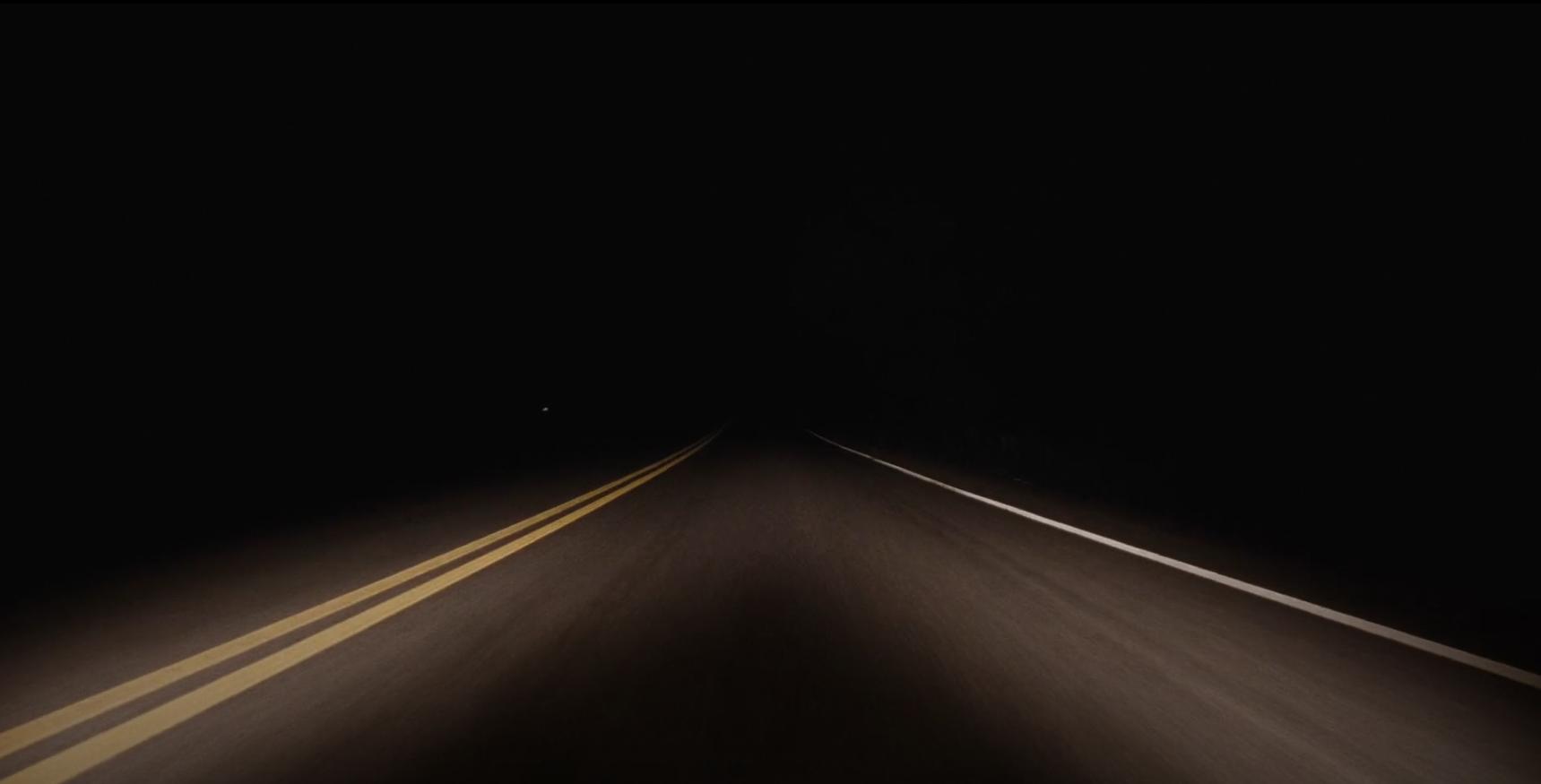
In order to suit the intensity and peril of the situation, Song compromises the escapism and lighthearted warmth that audiences desire when they seek out a romcom. Instead of committing to being a drama-romance, however, the film still attempts to follow the beats of the romcom genre. In the intensely jarring scene following, Lucy and John decide to recouple on Sophie’s stoop, passionately kissing where mere hours before– mere minutes in the movie’s
runtime– Mark harassed Sophie. Her situation is immediately forgotten in lieu of the culmination of the main relationship, undercutting the poignancy of its inclusion but failing to recover the heart-warming, safe mood of a classic romcom. Materialists proves a case study for the struggle in reconciling the escapist fantasy of the genre with the dangers of modern dating that were thrust into the spotlight by increased cultural conversations.
What’s more, despite its claims to be emulating the golden era of the romantic comedy, Materialists also fails to subscribe to the requirements of the genre. Not only does it depart from the blanket idealization of love by addressing the genuine safety concerns behind many tropes, but even more importantly, the movie lacks humor. Comedy is an essential component of the genre, establishing the beats of the story and the light-hearted atmosphere. Truthfully, the funniest parts of this movie were unintentional, and rare. For example, Lucy confronts her recent partner Henry, considered a “unicorn” in matchmaking due to his general dreamboat status, about his secret leg-lengthening surgery. Already a farcical situation, when she asks how tall he was before, Henry slowly squats until he’s about a head lower than her. The pacing of the conversation plays out like a gag, but the tone of the characters and its place in the story as a turning point in the couple’s relationship both make it clear that this moment is meant to be taken seriously.
Although eschewing half the essential factors in a romantic comedy, the movie’s marketing would have you believe it is the revival of the fallow genre, a return to the classics; its production and distribution studio A24 flooded its designated instagram page with trailers playing up the love triangle angle with the jaunty “My Baby” off the score under each video. Commenters embraced this nostalgia marketing, praising it with lines like “we are so bringing
back 2000s romcoms with this one.”61 While proving romantic comedies have an audience awaiting their return, the movie ultimately demonstrates that the genre has more internal work to do before it can successfully portray modern dating and fill our cinemas once again.
IX. Concluding Thoughts
Ultimately, attempts to emulate the golden era romcom, thriving between the mid-1980s and the early 2000s, flail under the current streaming media landscape which forces studios to compromise atmospheric qualities for mass output. Social media also gathers modern audiences onto short-form content apps, becoming the center of a fragmented online youth culture that defies authentic portrayal in film. Further contributing to their decline, the shifting dating scene places romantic comedy creators in a difficult position of reconciling widespread disillusionment with the by and large hetero-hopeful genre, in addition to dating’s increasingly digital elements. While the romantic comedy in film remains undeniably at a low point, all hope is not lost. As mentioned, the genre was similarly forced to undergo transformations to survive industry shifts in the 1970s when Brian Henderson proclaimed its death– and yet it was on the verge of its greatest peak in critical reception and public popularity. The reality is that such depressions demand evolution to progress; the golden era romcom cannot be replicated precisely as it was.
Elements that stick in the wider nostalgia, namely the warmth, costuming, and charm, can and should persist in the genre going forward, as audiences demand them, but the pervasive malecentered and misogynistic undertones that also characterize the films of the golden era romcom prevent forward progress and cannot.
61 arieljwile, August, 2025, comment on “Materialists.” Instagram.
With the mid-budget that previous generations of romcoms necessitated to accomplish their atmospheric-building disappearing in the wake of streaming, that visual vision has found promising new homes elsewhere; television shows in particular have filled that hole in audiences’ hearts. For instance, Jenny Han adapted her early 2010s young adult book series The Summer I Turned Pretty into a three-season Prime Video show that blew up across social media in 2022, enthralling its massive audience with the meandering relationship of Belly and Conrad. While a film on streaming can struggle to create a defined cultural moment, as mentioned, Prime released this series as weekly episodes; viewers all tuned in together before discussing the newest installments on social media, thereby drawing in new watchers as well. Similarly, as a book-to-screen adaptation, the series draws on a built-in viewerbase. The official TikTok page for the show, with over 3.8 million followers, thanked the viewers after the success of the final season, revealing that it reached “#1 in 140+ countries” with “70+ million global viewers.”62 In fact, shortly after the release of the final season, Han announced a movie in the works, further highlighting the potential for television to uplift the romantic comedy genre. Fans praised the aesthetics of the show, embracing its soundtrack, beachy location, and overall “vibes,” calling back to the nostalgia for comforting atmospheres of golden era romcoms in this new format. The future of the romantic comedy, thus may not lie in recreating the golden era, but in taking inspiration from its successful elements and recontextualizing them to the needs of a modern audience.
62 The Summer I Turned Pretty(@thesummeriturnedpretty), Thank you for being part of the 70+ million global viewers that made the third summer in Cousins reach #1 in 140+ countries on Prime Video, TikTok, October 9, 2025, https://www.tiktok.com/@thesummeriturnedpretty/photo/7559268579519089950?lang=en
Bibliography
Anyone But You, directed by Will Gluck (Columbia Pictures, 2023).
AMC Theaters. We Make Movies Better. Performed by Nicole Kidman. AMC, 2021. https://genius.com/Nicole-kidman-amc-theatres-we-make-movies-better-annotated.
anika, July 15, 2021, comment on "When Harry Met Sally…." Letterboxd. Ansari, Aziz, and Eric Klinenberg, Modern Romance (Penguin Books, 2016).
AskSydneyLipton, 2016, comment on "Mia’s makeover." YouTube. arieljwile, August, 2025, comment on “Materialists.” Instagram.
Before Sunrise, directed by Richard Linklater (Castle Rock Entertainment, 1995).
Bend It Like Beckham, directed by Gurinder Chadha (Kintop Pictures, 2002).
Berkowitz, Joe. "Netflix knows you're looking at your phone and it's changing how shows get made because of it," Fast Company, January 26, 2025, https://www.fastcompany.com/91264942/netflix-knows-youre-looking-at-your-phoneand-its-changing-how-shows-get-made.
"Bridget Jones’s Diary," Rotten Tomatoes, Fandango, https://www.rottentomatoes.com/m/bridget_jones_diary
"Bridget Jones: The Edge of Reason," Rotten Tomatoes, Fandango, https://www.rottentomatoes.com/m/bridget_jones_the_edge_of_reason
Calvario, Liz. "Dark and 'Honest' Twist in 'Materialists' Explained by Director Celine Song," Today, June 13, 2025, https://www.today.com/popculture/movies/materialiststwist-explained-rcna212728.
Camryn Lynge Block 1, September 13, 2023, comment on “Are You a Fan of Rom-Coms?,” The New York Times.
“clothes are so much worse now � ”, produced by Mina Le, YouTube, 2024, MP4.
Das, Debanjana. "19 Problematic Rom-Com Movie Moments," BuzzFeed, December 16, 2021, https://www.buzzfeed.com/debanjanadas8/19-problematic-rom-com-moviemoments.
David Sims, December 28, 2023, comment on “Anyone But You.”" Letterboxd.
Duncan Joseph (@duncanyounot), POV: iPhones on Netflix Shows:, TikTok, October 2, 2023, https://www.tiktok.com/@duncanyounot/video/7285467780005006635?lang=en.
Emmy, December 1, 2018, comment on "The Princess Switch." Letterboxd.
Friends with Benefits, directed by Will Gluck (Screen Gems, Castle Rock Entertainment, 2011).
Feeney, Megan. "The Plight of the Rom-Com in the Post-Romantic Era: The Metamorphoses of an Outmoded Genre," Cinéaste 47, no. 4 (2022), https://www.jstor.org/stable/27170422.
"Genre Keyword: Romantic Comedy," Box Office Mojo, IMDbPro, https://www.boxofficemojo.com/genre/sg2111762689/.
gillian, July 5, 2018, comment on "The Princess Diaries." Letterboxd.
Goetz, Kevin. "Donald Petrie's Blueprint for Comedy Success: From Mystic Pizza to Miss Congeniality." Kevin Goetz 360, Substack, August 11, 2025. https://kevingoetz360.substack.com/p/donald-petries-blueprint-for-comedy.
Gordon, Sherri. "The #MeToo Movement: History, Sexual Assault Statistics, Impact," ed. Sean Blackburn, Very Well Mind, last modified May 22, 2025, https://www.verywellmind.com/what-is-the-metoo-movement-4774817.
He’s All That, directed by Mark Waters (Miramax, Ethea Entertainment, Netflix, 2021).
“how am i supposed to pine and long in these conditions? | Voicenotes with Jordan Theresa S03Ep09”, produced by Voicenotes with Jordan Theresa, YouTube, 2025, MP4.
How To Lose a Guy in 10 Days, directed by Donald Petrie (Paramount Pictures, 2003).
Isabela Juliana (@belajuliana_), dressing like a 2000’s romcom love interest, Instagram reel, March 4, 2026, https://www.instagram.com/p/DVeD_s9kUH8/.
It Happened One Night, directed by Frank Capra (Columbia Pictures, 1934).
Iyer, Neil. "The Demise of Mid-Budget Cinema," The Independent, October 22, 2022, https://independent-magazine.org/2022/10/22/the-demise-of-mid-budget-cinema/.
Jade talks too much��, December 7, 2023, comment on "The Princess Switch." Letterboxd.
Karen Sumi (@karesdiaryx), a week of dressing like protagonists from my favorite romcoms!, Instagram reel, February 17, 2026, https://www.instagram.com/p/DU5nZlHk8q5/.
Kit Lazer, February 8, 2024, comment on "Lisa Frankenstein." Letterboxd.
La La Land, directed by Damien Chazelle (Summit Entertainment, 2016).
Le, Mina. "elitism is the enemy of the people." High Brow, Substack, August 25, 2024. https://minale.substack.com/p/elitism-is-the-enemy-of-thepeople?utm_source=profile&utm_medium=reader2.
Lerner, Jamie. "The Costume Designer for 'He's All That' Was Very Clear on Her Inspiration," Distractify, August 30, 2021, https://www.distractify.com/p/hes-all-thatoutfits.
LH, March 20, 2023, comment on “Are You a Fan of Rom-Coms?,” The New York Times. Lisa Frankenstein, directed by Zelda Williams (MXN Entertainment, Focus Features, 2024).
Luse, Brittany, et al., "The embarrassing truth of dating men," NPR, December 19, 2025, It's Been a Minute, 1:39, https://www.npr.org/2025/12/19/nx-s1-5648400/theembarrassing-truth-of-dating-men.
Marder, Hannah. "22 Rom-Com Scenes Have Really, Really Not Aged Well," BuzzFeed, November 6, 2021, https://www.buzzfeed.com/hannahmarder/rom-com-scenes-have-notaged-well.
Materialists, directed by Celine Song (A24, 2025).
McLuhan, Eric. "The Fordham Experiment," Media Ecology Association, last modified 2000, https://www.mediaecology.net/publications/MEA_proceedings/v1/Fordham_experiment.html.
“Meg Ryan's COZY Apartment | Design Expert Critiques 'You've Got Mail'”, produced by Daddy Stays Home, YouTube, 2025, MP4.
Meslow, Scott. From Hollywood with Love: The Rise and Fall (and Rise Again) of the Romantic Comedy (New York: HarperCollins, 2022).
“Mia’s Makeover,” produced by orlandolover06, YouTube, 2009, MP4.
Mortimer, Claire. Romantic Comedy (Oxford: Taylor & Francis Group, 2010), [Page 70], ProQuest Ebook Central.
Naomi, January, 2026, comment on “Review by anika.” Letterboxd.
"Netflix Lighting" and the Death of Cinematography, produced by Robert Tolppi, YouTube, 2025, MP4.
"Netflix Originals – year 2024," FlixPatrol, https://flixpatrol.com/streamingservice/netflix/originals/2024/.
No Strings Attached, directed by Ivan Reitman (Spyglass Entertainment, 2011).
Oria, Beatriz. "Love on the Margins," Atlantis 40, no. 2 (2018), https://www.jstor.org/stable/26566967.
ore ツ, December 24, 2023, comment on “Anyone But You.” Letterboxd.
Palm Springs, directed by Max Barbakow (Limelight, Lonely Island Classics, Sun Entertainment, Hulu, 2020).
Patrick Willems, August 16, 2020, comment on "It Happened One Night." Letterboxd.
"Phone Screen Time Addiction and Usage - New Survey Data and Statistics," Harmony Healthcare IT, last modified January 8, 2025, https://www.harmonyhit.com/phonescreen-time-statistics/.
"Pretty in Prink," Rotten Tomatoes, Fandango, https://www.rottentomatoes.com/m/pretty_in_pink.
Rubenking, Bridget, and Cheryl Campanella Bracken, "Binge Watching and Serial Viewing: Comparing New Media Viewing Habits in 2015 and 2020," Addictive Behaviors Reports 14 (December 2021): [Page 4], https://doi.org/10.1016/j.abrep.2021.100356.
Say Anything, directed by Cameron Crowe (Gracie Films, 20th Century Fox, 1989).
SDLayn, June, 2025, comment on "Meg Ryan's COZY Apartment | Design Expert Critiques 'You've Got Mail'." YouTube.
She’s All That, directed by Robert Iscove (Miramax Films, 1999).
Sixteen Candles, directed by John Jughes (Channel Productions, Universal Pictures, 1984).
TheEarthquake, October 2, 2023, comment on “POV: iPhones on Netflix Shows:.” TikTok.
"The Free-Time Gender Gap," Gender Equity Policy Institute, last modified October 2024, https://thegepi.org/the-free-time-gender-gap/.
The Map of Tiny Perfect Things, directed by Ian Samuels (FilmNation Entertainment, Weed Road Pictures, Amazaon Studios, 2021).
The Notebook, directed by Nick Cassavetes (New Line Cinema, Gran Via Productions, 2004).
The Princess Diaries, directed by Garry Marshall (Walt Disney Pictures, BrownHouse Productions, 2001).
The Princess Switch, directed by Michael Rohl (Motion Picture Corporation of America, Brad Krevoy Productions, Netflix, 2018).
The Summer I Turned Pretty, produced by Jenny Han and Gabrielle Stanton, (Amazon MGM Studios, 2022).
The Summer I Turned Pretty(@thesummeriturnedpretty), Thank you for being part of the 70+ million global viewers that made the third summer in Cousins reach #1 in 140+ countries on Prime Video, TikTok, October 9, 2025, https://www.tiktok.com/@thesummeriturnedpretty/photo/7559268579519089950?lang=e n.
Vizcaino, Maricarmen, et al., "From TVs to Tablets: The Relation between Devicespecific Screen Time and Health-related Behaviors and Characteristics," BMC Public Health 20, no. 1 (2020): [Page 5], https://doi.org/10.1186/s12889-020-09410-0.
Warm Bodies, directed by Jonathan Levine (Summit Entertainment, Mandeville Films, 2013).
When Harry Met Sally…, directed by Nora Ephron (Castle Rock Entertainment, 1989).
Why The Movies Will Never Feel The Same Again, produced by Thomas Flight, YouTube, 2025, MP4.
Wilmer, Henry H., et al., "Smartphones and Cognition: A Review of Research Exploring the Links between Mobile Technology Habits and Cognitive Functioning," Front Psychol, April 24, 2017, [Page 4], https://pmc.ncbi.nlm.nih.gov/articles/PMC5403814/.
You’ve Got Mail, directed by Nora Ephron (Warner Bros. Pictures, 1999).
zoë rose bryant, December 18, 2023, comment on “Anyone But You.” Letterboxd.
10 Things I Hate About You, directed by Gil Junger (Touchstone Pictures, Mad Chance, Jaret Entertainment, 1999).
30 Rock, Season 6, Episode 3, “Idiots Are People Three!”, produced by Tina Fey and Robert Carlock, (NBCUniversal, 2012).